Month: March 2026

  • Custom Recombinant Protein Production Services Market Outlook 2026–2030: Key Business Drivers and Trends

    Custom Recombinant Protein Production Services Market Outlook 2026–2030: Key Business Drivers and Trends

    Uncover key drivers, emerging technologies, and competitive movements shaping the custom recombinant protein production services market from 2026–2035 with trusted insights from The Business Research Company

    By how much is the Custom Recombinant Protein Production Services Market expected to grow between 2026 and 2030?

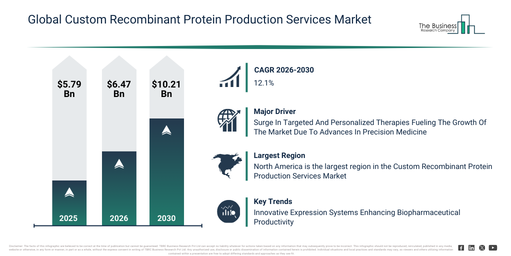
    The custom recombinant protein production services market size has demonstrated substantial growth in recent years. It is projected to expand from $5.79 billion in 2025 to $6.47 billion in 2026, reflecting a compound annual growth rate (CAGR) of 11.8%. This historical expansion can be primarily ascribed to the broadening of academic and clinical research, the greater application of recombinant proteins in drug discovery processes, the development of biopharmaceutical R&D pipelines, the accessibility of advanced expression technologies, and an escalating demand for specialized research offerings.

    The market for custom recombinant protein production services is projected to experience swift expansion over the coming years. This market is forecast to reach $10.21 billion by 2030, exhibiting a compound annual growth rate (CAGR) of 12.1%. Key factors driving this growth during the projection period include the escalating development of biologics and biosimilars, increased capital infusion into precision medicine, the broadening scope of contract research outsourcing, a heightened need for scalable protein production, and the wider integration of sophisticated purification technologies. Significant trends anticipated throughout the forecast period encompass a surging demand for personalized protein expression services, the growing prevalence of mammalian expression systems, an amplified focus on producing high-purity proteins, the extension of quick turnaround research offerings, and a stronger insistence on robust quality control and validation.

    Access Your Free Sample Report for In-Depth Market Insights:

    https://www.thebusinessresearchcompany.com/sample.aspx?id=33077&type=smp

    Which Drivers Are Influencing Market Acceleration In The Custom Recombinant Protein Production Services Market?

    An increasing emphasis on targeted and personalized therapies is anticipated to drive the expansion of the custom recombinant protein production services market in the future. These therapies involve medical interventions tailored to unique patient attributes, such as genetic makeup or particular disease indicators, aiming to enhance treatment efficacy and minimize adverse reactions. The emergence of targeted and personalized therapies stems from progress in precision medicine, allowing treatments to be customized for individual patient biology, thereby improving clinical results and therapeutic effectiveness. Custom recombinant protein production services facilitate targeted and personalized therapies by supplying meticulously engineered proteins essential for developing patient-specific drugs, targeting biomarkers, and administering advanced biologic treatments. For example, in February 2024, data from the Personalized Medicine Coalition, a US-based hospital and health care organization, indicated that in 2023, the FDA sanctioned 16 novel personalized treatments for rare disease patients, an increase from six in 2022. Consequently, the heightened focus on targeted and personalized therapies is fueling the expansion of the custom recombinant protein production services market.

    What Leading Segments Are Studied In The Custom Recombinant Protein Production Services Market?

    The custom recombinant protein production services market covered in this report is segmented –

    1) By Product: Antibodies; Enzymes; Cytokines; Growth Factors; Recombinant Hormones

    2) By Expression System: Mammalian; Bacteria; Insect; Yeast; Other Expression Systems

    3) By Application: Drug Discovery; Biopharmaceutical Production; Diagnostics Development; Academic Research; Industrial Enzymes

    4) By End User: Research Institutes; Biotechnology And Pharmaceutical Companies; Contract Research Organizations (CROs); Other End-Users

    Subsegments:

    1) By Antibodies: Monoclonal Antibodies; Polyclonal Antibodies; Chimeric Antibodies; Humanized Antibodies; Single Chain Antibodies

    2) By Enzymes: Proteases; Lipases; Amylases; Cellulases; Polymerases

    3) By Cytokines: Interleukins; Interferons; Tumor Necrosis Factors; Colony Stimulating Factors; Chemokines

    4) By Growth Factors: Epidermal Growth Factors; Fibroblast Growth Factors; Vascular Endothelial Growth Factors; Transforming Growth Factors; Platelet Derived Growth Factors

    5) By Recombinant Hormones: Insulin; Erythropoietin; Growth Hormone; Thyroid Stimulating Hormone; Follicle Stimulating Hormone

    Which Trends Are Expected To Influence The Custom Recombinant Protein Production Services Market In The Upcoming Years?

    Leading companies in the custom recombinant protein production services market are concentrating on unveiling advanced microbial expression platforms, such as specialized E. coli expression systems, to enhance protein output, improve production scale, and lower expenses, thereby expediting the provision of advanced biologics. Such a proprietary E. coli expression system is an engineered E. coli bacterial strain specifically designed for the efficient, high-yield, and stable production of recombinant proteins and plasmid DNA, frequently customized for particular biotechnological or pharmaceutical uses. An example of this is WuXi Biologics (Cayman) Inc., a China-based contract research, development, and manufacturing organization (CRDMO), which introduced its EffiX Microbial Expression Platform in March 2025. This platform delivers remarkable titers exceeding 15 g/L for non-mAb recombinant proteins and more than 1 g/L for plasmid DNA. EffiX is presented as a complete solution for the development and manufacturing of microbial-derived biologics, thereby improving scalability, quality, and productivity throughout the biopharmaceutical industry.

    Which Major Industry Participants Are Leading The Custom Recombinant Protein Production Services Market Growth?

    Major companies operating in the custom recombinant protein production services market are Thermo Fisher Scientific Inc., Merck KGaA, Applied Biological Materials Inc., R&D Systems Inc., GenScript Biotech Corporation, Sino Biological Inc, Biointron Biological Inc., OriGene Technologies Inc., Crown Bioscience Inc., Premas Biotech, Eurofins Discovery, ATUM, BPS Bioscience Inc., Novoprotein Scientific Inc., Kempbio Inc., Proteos Inc., Trenzyme GmbH, LakePharma Inc., Icosagen AS, and ProteoGenix SAS.

    Access The Complete Report For Deeper Market Insights:

    https://www.thebusinessresearchcompany.com/report/custom-recombinant-protein-production-services-market-report

    Which Region Is Expected To Experience The Fastest Growth In The Custom Recombinant Protein Production Services Market?

    North America was the largest region in the custom recombinant protein production services market in 2025. Asia-Pacific is expected to be the fastest-growing region in the forecast period. The regions covered in the custom recombinant protein production services market report are Asia-Pacific, South East Asia, Western Europe, Eastern Europe, North America, South America, Middle East, Africa.

    Request Your Customized Custom Recombinant Protein Production Services Market Research Report for Competitive Advantage:

    https://www.thebusinessresearchcompany.com/customise?id=33077&type=smp

    Browse Through More Reports Similar to the Global Custom Recombinant Protein Production Services Market 2026, By The Business Research Company

    Recombinant Proteins Market Report 2026

    https://www.thebusinessresearchcompany.com/report/recombinant-proteins-global-market-report

    Protein Engineering Market Report 2026

    https://www.thebusinessresearchcompany.com/report/protein-engineering-global-market-report

    Cell And Gene Therapy Supply Chain Or Logistics Market Report 2026

    https://www.thebusinessresearchcompany.com/report/cell-and-gene-therapy-supply-chain-or-logistics-global-market-report

    Get in touch with us:

    The Business Research Company: https://www.thebusinessresearchcompany.com/

    Americas +1 310-496-7795

    Asia +44 7882 955267 & +91 8897263534

    Europe +44 7882 955267

    Email us at info@tbrc.info

    Follow us on:

    LinkedIn: https://in.linkedin.com/company/the-business-research-company

    YouTube: https://www.youtube.com/channel/UC24_fI0rV8cR5DxlCpgmyFQ

    Global Market Model: https://www.thebusinessresearchcompany.com/global-market-model
  • Global Cuffless Blood Pressure Monitor Market Report 2026: Emerging Trends and Growth Scenarios

    Global Cuffless Blood Pressure Monitor Market Report 2026: Emerging Trends and Growth Scenarios

    Uncover key drivers, emerging technologies, and competitive movements shaping the cuffless blood pressure monitor market from 2026–2035 with trusted insights from The Business Research Company

    What is the estimated market size of the Cuffless Blood Pressure Monitor Market by the end of 2030?

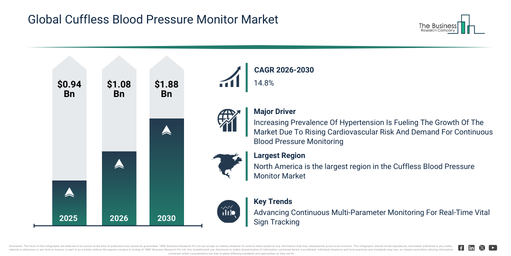
    The cuffless blood pressure monitor market has experienced substantial expansion over recent years. It is anticipated to increase in value from $0.94 billion in 2025 to $1.08 billion in 2026, demonstrating a compound annual growth rate (CAGR) of 14.6%. This historical growth can be linked to the increasing occurrence of hypertension, the spread of consumer wearable health devices, a heightened focus on preventive healthcare, the rise of digital health platforms, and enhancements in sensor miniaturization technologies.

    The cuffless blood pressure monitor market size is expected to experience swift growth in the upcoming years, expanding to $1.88 billion by 2030 with a compound annual growth rate (CAGR) of 14.8%. This growth during the forecast period can be attributed to the rising acceptance of remote healthcare services, increased demand for long-term cardiovascular monitoring, the broadening scope of AI-enabled health analytics, growing investments in connected medical devices, and a heightened focus on personalized health management. Key trends for the forecast period include the increasing adoption of continuous blood pressure monitoring devices, the rising integration of wearable health sensors, the expanding use of smartphone-integrated BP monitoring, the proliferation of remote patient monitoring applications, and an enhanced emphasis on user comfort and compliance.

    Access Your Free Sample Report for In-Depth Market Insights:

    https://www.thebusinessresearchcompany.com/sample.aspx?id=33076&type=smp

    What Drivers Are Shaping Future Opportunities In The Cuffless Blood Pressure Monitor Market?

    The growing incidence of high blood pressure is anticipated to drive expansion in the cuffless blood pressure monitor market in the future. Hypertension is defined as a medical state marked by persistently high blood pressure, which heightens the likelihood of developing cardiac issues, strokes, and kidney problems. An increase in hypertension, linked to inactive lifestyles and poor eating habits, is resulting in more people worldwide having high blood pressure, thereby increasing the burden on healthcare systems. Cuffless blood pressure monitors contribute to preventing the escalation of hypertension by offering continuous, non-invasive blood pressure tracking, which facilitates early diagnosis, improved management, and prompt intervention for at-risk individuals. For example, data from June 2025 by the British Heart Foundation, a UK-based organization dedicated to funding cardiovascular research, showed that over 15.0% of adults in the United Kingdom were diagnosed with hypertension in 2023, with around 10.9 million individuals registered on national health databases, underscoring the significant occurrence of this cardiovascular risk. Consequently, the rising prevalence of hypertension is a key factor boosting the expansion of the cuffless blood pressure monitor market.

    Which Segment Groups Are Influencing The Cuffless Blood Pressure Monitor Market?

    The cuffless blood pressure monitor market covered in this report is segmented –

    1) By Service Type: Screening And Imaging Services; Radiology Interpretation And Reporting; Diagnostic Follow-Up Procedures; Risk Assessment And Patient Counseling; Telehealth And Remote Consultation Services

    2) By Type: Automated; Manual

    3) By Size: Infants To Young Adults; Adults To Long Adults; Large To Extra-Large Adults

    4) By Distribution Channel: Health Facilities; Retail Pharmacies; Online Pharmacies

    5) By End Users: Hospitals; Home Care Setting; Ambulatory Care Centers; Urgent Care Centers; Primary Centers; Other End Users

    Subsegments:

    1) By Screening And Imaging Services: Preventive Blood Pressure Screening; Community Health Screening Programs; Workplace Health Screening Services; Mobile Screening Units; Home Based Screening Services

    2) By Radiology Interpretation And Reporting: Integrated Vital Sign Reporting; Cardiovascular Risk Imaging Support; Clinical Decision Support Reporting; Longitudinal Patient Data Reporting; Remote Diagnostic Reporting Services

    3) By Diagnostic Follow-Up Procedures: Continuous Blood Pressure Monitoring; Post Diagnosis Monitoring Services; Chronic Condition Follow Up; Treatment Response Monitoring; Physician Guided Follow Up Services

    4) By Risk Assessment And Patient Counseling: Hypertension Risk Evaluation; Lifestyle Modification Counseling; Preventive Health Risk Assessment; Personalized Patient Education Services; Term Cardiovascular Risk Counseling

    5) By Telehealth And Remote Consultation Services: Virtual Blood Pressure Monitoring; Remote Physician Consultation; Home Based Digital Health Services; Continuous Remote Patient Monitoring; Integrated Telemedicine Care Services

    What Trends Are Driving The Growth Trajectory Of The Cuffless Blood Pressure Monitor Market?

    Leading companies in the cuffless blood pressure monitor market are concentrating on advanced innovations, such as continuous multi-parameter monitoring, to achieve a competitive advantage. This continuous multi-parameter monitoring capability allows cuffless blood pressure devices to simultaneously assess heart rate, ECG, respiration, SpO2, activity, and sleep, offering a thorough perspective on a patient’s physiological condition. For example, in August 2023, Corsano Health BV, a MedTech company based in the Netherlands, released the CardioWatch 287-2, an EU-MDR-certified, medical-grade wearable intended for continuous, cuffless blood pressure monitoring as part of an extensive multi-parameter vital signs platform. The product was introduced at the European Society of Cardiology (ESC) Congress in Amsterdam, where Corsano revealed the incorporation of cuffless, non-invasive blood pressure measurement alongside uninterrupted tracking of heart rate, respiration rate, ECG, SpO2, body temperature, activity, and sleep. Data collected are transmitted wirelessly via an associated app or gateway to cloud-based systems for storage and sophisticated analysis.

    Who Are The Prominent Global Companies Shaping The Cuffless Blood Pressure Monitor Market Landscape?

    Major companies operating in the cuffless blood pressure monitor market are Samsung Electronics, Huawei Technologies, Medtronic plc, Philips Healthcare, Omron Healthcare, Withings, Valencell, Rockley Photonics, Sotera Wireless, Corsano Health, CardieX, Healthstats International, Biobeat, Biospectal, Charmcare, CardiacSense, SOMNOmedics, Aktiia, LiveMetric, and Movano Health.

    Access The Complete Report For Deeper Market Insights:

    https://www.thebusinessresearchcompany.com/report/cuffless-blood-pressure-monitor-market-report

    Which Geographic Areas Are Emerging As Strong Markets For The Cuffless Blood Pressure Monitor Market?

    North America was the largest region in the cuffless blood pressure monitor market in 2025. Asia-Pacific is expected to be the fastest-growing region in the forecast period. The regions covered in the cuffless blood pressure monitor market report are Asia-Pacific, South East Asia, Western Europe, Eastern Europe, North America, South America, Middle East, Africa.

    Request Your Customized Cuffless Blood Pressure Monitor Market Research Report for Competitive Advantage:

    https://www.thebusinessresearchcompany.com/customise?id=33076&type=smp

    Browse Through More Reports Similar to the Global Cuffless Blood Pressure Monitor Market 2026, By The Business Research Company

    Wearable Blood Pressure Monitors Market Report 2026

    https://www.thebusinessresearchcompany.com/report/wearable-blood-pressure-monitors-global-market-report

    Blood Pressure Monitoring Devices Market Report 2026

    https://www.thebusinessresearchcompany.com/report/blood-pressure-monitoring-devices-global-market-report

    Remote Cardiac Monitoring Market Report 2026

    https://www.thebusinessresearchcompany.com/report/remote-cardiac-monitoring-global-market-report

    Get in touch with us:

    The Business Research Company: https://www.thebusinessresearchcompany.com/

    Americas +1 310-496-7795

    Asia +44 7882 955267 & +91 8897263534

    Europe +44 7882 955267

    Email us at info@tbrc.info

    Follow us on:

    LinkedIn: https://in.linkedin.com/company/the-business-research-company

    YouTube: https://www.youtube.com/channel/UC24_fI0rV8cR5DxlCpgmyFQ

    Global Market Model: https://www.thebusinessresearchcompany.com/global-market-model
  • Viscosupplementation Treatment For Arthritis Market Forecast: How Big Will It Be by 2030?

    Viscosupplementation Treatment For Arthritis Market Forecast: How Big Will It Be by 2030?

    Uncover key drivers, emerging technologies, and competitive movements shaping the viscosupplementation treatment for arthritis market from 2026–2035 with trusted insights from The Business Research Company

    Starting from its 2026 valuation, what market size is the Viscosupplementation Treatment For Arthritis Market expected to reach by 2030?

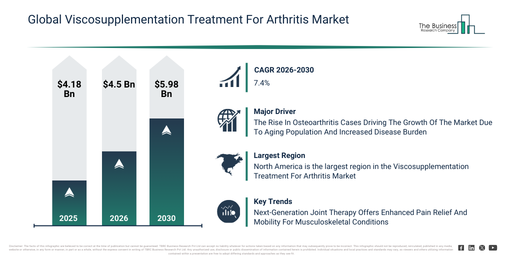
    The viscosupplementation treatment for arthritis market size has demonstrated significant expansion in recent years. It is forecast to grow from $4.18 billion in 2025 to $4.5 billion in 2026, achieving a compound annual growth rate (CAGR) of 7.7%. Historically, this market’s expansion can be ascribed to factors including the escalating prevalence of osteoarthritis, an expanding aging demographic, the early clinical adoption of hyaluronic acid injections, the evolution of orthopedic treatment practices, and the increased availability of injectable joint therapies.

    The viscosupplementation treatment for arthritis market is projected to experience robust expansion in the coming years. It will grow to $5.98 billion in 2030, demonstrating a compound annual growth rate (CAGR) of 7.4%. This anticipated growth during the forecast period is attributable to several factors, including a heightened demand for non-invasive arthritis therapies, an increase in healthcare spending dedicated to musculoskeletal conditions, the broadening of outpatient orthopedic provisions, a greater emphasis on enhancing patients’ quality of life, and continuous advancements in viscosupplement formulations. Key trends anticipated over this period involve the increasing embrace of single-injection treatment protocols, a surging need for enduring pain alleviation options, the proliferation of minimally invasive arthritis interventions, a concentrated effort on developing superior joint lubrication compositions, and a heightened focus on patient-centered therapeutic methods.

    Access Your Free Sample Report for In-Depth Market Insights:

    https://www.thebusinessresearchcompany.com/sample.aspx?id=30433&type=smp

    What Drivers Are Driving Adoption Within The Viscosupplementation Treatment For Arthritis Market?

    The rising incidence of osteoarthritis is projected to stimulate the expansion of the viscosupplementation treatment for the arthritis market. Osteoarthritis is defined as a persistent joint condition characterized by the progressive deterioration of cartilage, leading to discomfort, rigidity, and limited movement. The growing occurrence of osteoarthritis largely stems from an aging demographic, as the natural wear and tear on joints over time makes older adults more vulnerable to this ailment. Viscosupplementation treatment for arthritis assists in managing osteoarthritis by restoring joint lubrication, alleviating pain, and enhancing mobility. For instance, in February 2025, Springer Nature Group, a UK-based academic and professional publishing company, calculated knee osteoarthritis cases to be 12.94 million in males and 18.80 million in females. By 2046, these figures are anticipated to climb to 18.45 million in males and 25.60 million in females. Consequently, the increasing prevalence of osteoarthritis is propelling the growth of the viscosupplementation treatment for the arthritis market.

    What Segments Are Included Within The Viscosupplementation Treatment For Arthritis Market?

    The viscosupplementation treatment for arthritis market covered in this report is segmented –

    1) By Product Type: Single Injection, Three Injections, Five Injections

    2) By Application: Knee Osteoarthritis, Hip Osteoarthritis, Shoulder Osteoarthritis, Other Applications

    3) By End-User: Hospitals, Ambulatory Surgical Centers, Orthopedic Clinics, Other End-Users

    Subsegments:

    1) By Single Injection: High Molecular Weight Hyaluronic Acid, Low Molecular Weight Hyaluronic Acid, Cross-Linked Hyaluronic Acid

    2) By Three Injections: Standard Hyaluronic Acid, Buffered Hyaluronic Acid, Biofermented Hyaluronic Acid

    3) By Five Injections: Cross-Linked High Viscosity Hyaluronic Acid, Extended-Release Hyaluronic Acid, Multi-Dose Hyaluronic Acid

    Which Market Trends Are Opening Growth Opportunities In The Viscosupplementation Treatment For Arthritis Market?

    Leading companies active in the viscosupplementation treatment for the arthritis market are prioritizing the creation of innovative solutions, such as advanced hyaluronic acid formulations, to improve joint lubrication, lessen pain, and boost mobility. These sophisticated hyaluronic acid formulations are specifically engineered variants of hyaluronic acid, featuring an enhanced molecular structure and viscosity, designed to deliver more enduring joint lubrication and more potent pain relief in arthritis treatment. For instance, in February 2024, IBSA Group, a pharmaceutical firm based in Switzerland, unveiled the SINOVIAL range, a next-generation viscosupplementation treatment intended for musculoskeletal conditions. This range harnesses advanced NAHYCO technology, which merges high and low molecular weight hyaluronic acid to provide effective joint lubrication and extended pain relief. Developed to emulate the functions of natural synovial fluid, these treatments bolster joint cushioning and shock absorption. The injectable formulation offers optimal viscosity and exceptional tolerance, aiding in improved patient comfort, enhanced mobility, and better management of osteoarthritis and various other musculoskeletal disorders.

    Who Are The Prominent Global Companies Shaping The Viscosupplementation Treatment For Arthritis Market Landscape?

    Major companies operating in the viscosupplementation treatment for arthritis market are Johnson And Johnson, Sanofi S.A., LG Chem Ltd., Teva Pharmaceutical Industries Ltd., Chugai Pharmaceutical Co. Ltd., Zimmer Biomet Holdings Inc., IBSA Group, Bioventus Inc., Fidia Farmaceutici S.p.A., Ferring Pharmaceuticals A/S, Anika Therapeutics Inc., TRB Chemedica International S.A., Laboratoires VIVACY, Seikagaku Corporation, Regen Lab SA, Genzyme Corporation, Medtronic PLC, Orthogenix Inc., Hyundai Pharm Co. Ltd., DePuy Synthes

    Access The Complete Report For Deeper Market Insights:

    https://www.thebusinessresearchcompany.com/report/global-viscosupplementation-treatment-for-arthritis-market-report

    Which Geographic Areas Are Emerging As Strong Markets For The Viscosupplementation Treatment For Arthritis Market?

    North America was the largest region in the viscosupplementation treatment for arthritis market in 2025. Asia-Pacific is expected to be the fastest-growing region in the forecast period. The regions covered in the viscosupplementation treatment for arthritis market report are Asia-Pacific, South East Asia, Western Europe, Eastern Europe, North America, South America, Middle East, Africa.

    Request Your Customized Viscosupplementation Treatment For Arthritis Market Research Report for Competitive Advantage:

    https://www.thebusinessresearchcompany.com/customise?id=30433&type=smp

    Browse Through More Reports Similar to the Global Viscosupplementation Treatment For Arthritis Market 2026, By The Business Research Company

    Rheumatoid Arthritis Drugs Market Report 2026

    https://www.thebusinessresearchcompany.com/report/rheumatoid-arthritis-drugs-global-market-report

    Rheumatology Therapeutics Market Report 2026

    https://www.thebusinessresearchcompany.com/report/rheumatology-therapeutics-global-market-report

    Canine Arthritis Treatment Market Report 2026

    https://www.thebusinessresearchcompany.com/report/canine-arthritis-treatment-global-market-report

    Get in touch with us:

    The Business Research Company: https://www.thebusinessresearchcompany.com/

    Americas +1 310-496-7795

    Asia +44 7882 955267 & +91 8897263534

    Europe +44 7882 955267

    Email us at info@tbrc.info

    Follow us on:

    LinkedIn: https://in.linkedin.com/company/the-business-research-company

    YouTube: https://www.youtube.com/channel/UC24_fI0rV8cR5DxlCpgmyFQ

    Global Market Model: https://www.thebusinessresearchcompany.com/global-market-model
  • Consumer mHealth Market Forecast 2026: Where the Industry Is Headed

    Consumer mHealth Market Forecast 2026: Where the Industry Is Headed

    Uncover key drivers, emerging technologies, and competitive movements shaping the consumer mhealth market from 2026–2035 with trusted insights from The Business Research Company

    What was the valuation of the Consumer mHealth Market in 2026, and what figure is it projected to hit by 2030?

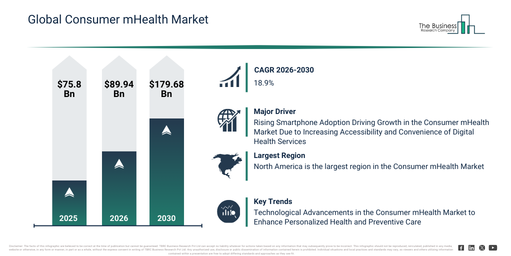
    The consumer mhealth market has experienced significant growth in recent years. It is projected to expand from $75.8 billion in 2025 to $89.94 billion in 2026, exhibiting a compound annual growth rate (CAGR) of 18.7%. This historic growth can be attributed to increased smartphone and wearable penetration, a rise in consumer health awareness, the expansion of fitness and wellness applications, the adoption of mobile health platforms, and an escalating demand for self-managed healthcare.

    The consumer mhealth market is anticipated to expand rapidly in the coming years, with its size projected to reach $179.68 billion by 2030, achieving a compound annual growth rate (CAGR) of 18.9%. This expansion throughout the forecast period can be attributed to several factors, including the rising adoption of personalized digital health solutions, the growing integration of artificial intelligence into consumer health applications, the broadening use of remote monitoring for chronic conditions, an increased emphasis on mental health management, and a surging demand for data-driven wellness insights. Prominent trends expected during this period encompass the increasing widespread use of wearable health tracking devices, a rise in the application of AI-based wellness analytics, the growing integration of remote health monitoring, the expansion of personalized health coaching platforms, and an enhanced focus on preventive healthcare management.

    Access Your Free Sample Report for In-Depth Market Insights:

    https://www.thebusinessresearchcompany.com/sample.aspx?id=33073&type=smp

    Which Drivers Are Affecting Market Participation In The Consumer mHealth Market?

    The rising use of smartphones is anticipated to stimulate the expansion of the consumer mHealth market in the coming years. Smartphone adoption describes the extent to which individuals or households own and actively use smartphones, commonly quantified as the share of mobile users equipped with smartphone-enabled devices. The widespread availability of affordable mobile internet and smartphones has substantially increased these adoption rates. Higher smartphone penetration allows for greater access to mobile health applications, remote monitoring tools, fitness trackers, and telehealth services, thereby enlarging the consumer mHealth market. For instance, in January 2025, according to Priori Data, a Germany-based market intelligence platform, Smartphone adoption in the U.S. maintained its steady growth, escalating from approximately 311 million users in 2023 to about 316 million in 2024. Therefore, the increasing smartphone adoption is a key factor driving the growth of the consumer mHealth market.

    What Segment Classifications Make Up The Consumer mHealth Market?

    The consumer mhealth market covered in this report is segmented –

    1) By Product Type: Wearable Devices; Mobile Health Apps; Telemedicine; Other Product Types

    2) By Technology: Bluetooth; Wireless Fidelity (Wi Fi); Near-Field Communication (NFC); Cloud-Based Platforms

    3) By Application: Healthcare; Fitness; Wellness; Chronic Disease Management; Mental Health

    4) By End-User: Hospitals; Clinics; Home Healthcare; Individuals

    Subsegments:

    1) By Wearable Devices: Smart Watches; Fitness Trackers; Smart Bands; Health Monitoring Patches; Wearable Medical Sensors

    2) By Mobile Health Apps: Fitness And Wellness Apps; Chronic Disease Management Apps; Medication Reminder Apps; Mental Health And Stress Management Apps; Nutrition And Diet Tracking Apps

    3) By Telemedicine: Virtual Doctor Consultation Platforms; Remote Patient Monitoring Solutions; Telepsychiatry Services; Teleconsultation And Follow Up Services; Digital Prescription And Reporting Platforms

    4) By Other Product Types: Connected Medical Devices; Home Health Monitoring Systems; Health Data Management Platforms; Wellness And Preventive Care Solutions

    What Upcoming Trends Are Likely To Define The Future Path Of The Consumer mHealth Market?

    Leading firms in the consumer mHealth market are concentrating on technological innovations, particularly AI-integrated preventive health diagnostics platforms, to address the growing need for individualized, real-time health information and early disease identification. This drive is fueled by consumers’ heightened awareness of proactive health management and the prevention of chronic conditions. These AI-integrated preventive health diagnostics platforms merge conventional biometric data gathering (such as from wearables or blood tests) with artificial intelligence. They deliver predictive analytics, long-term tracking, and actionable health insights. This approach surpasses standard single-point measurements by establishing correlations between lifestyle patterns and clinical biomarkers, offering a more comprehensive perspective on well-being. An example is Ultrahuman Healthcare, an India-based health-tech company, which introduced Blood Vision in July 2025. This inventive AI-enabled preventive blood-testing and diagnostics service combines information from over 100 biomarkers with real-time wearable lifestyle data gathered by its Ultrahuman Ring AIR and associated devices. It provides users with an extensive longitudinal health profile, complete with personalized advice and summaries suitable for clinicians.

    Which Key Players Are Driving Competition In The Consumer mHealth Market?

    Major companies operating in the consumer mhealth market are Apple Inc., Samsung Electronics Co. Ltd., Abbott Laboratories, Medtronic plc, Philips Healthcare, Omron Healthcare Inc., Dexcom Inc., Teladoc Health Inc., Athenahealth Inc., Masimo Corporation, Fitbit Inc, Veradigm Inc., Ada Health GmbH, Withings, MyFitnessPal Inc., AliveCor Inc., AgaMatrix Inc., DarioHealth Corp., Ovia Health Inc., Higi SH LLC

    Access The Complete Report For Deeper Market Insights:

    https://www.thebusinessresearchcompany.com/report/consumer-mhealth-market-report

    Which Region Is Projected To Lead The Consumer mHealth Market During The Forecast Period?

    North America was the largest region in the consumer mHealth market in 2025. Asia-Pacific is expected to be the fastest-growing region in the forecast period. The regions covered in the consumer mhealth market report are Asia-Pacific, South East Asia, Western Europe, Eastern Europe, North America, South America, Middle East, Africa.

    Request Your Customized Consumer mHealth Market Research Report for Competitive Advantage:

    https://www.thebusinessresearchcompany.com/customise?id=33073&type=smp

    Browse Through More Reports Similar to the Global Consumer mHealth Market 2026, By The Business Research Company

    Consumer Healthcare Market Report 2026

    https://www.thebusinessresearchcompany.com/report/consumer-healthcare-global-market-report

    Mhealth Apps Market Report 2026

    https://www.thebusinessresearchcompany.com/report/mhealth-apps-global-market-report

    Healthcare Advertising Market Report 2026

    https://www.thebusinessresearchcompany.com/report/healthcare-advertising-global-market-report

    Get in touch with us:

    The Business Research Company: https://www.thebusinessresearchcompany.com/

    Americas +1 310-496-7795

    Asia +44 7882 955267 & +91 8897263534

    Europe +44 7882 955267

    Email us at info@tbrc.info

    Follow us on:

    LinkedIn: https://in.linkedin.com/company/the-business-research-company

    YouTube: https://www.youtube.com/channel/UC24_fI0rV8cR5DxlCpgmyFQ

    Global Market Model: https://www.thebusinessresearchcompany.com/global-market-model
  • Clinically Isolated Syndrome Industry Growth Insights: Revenue Forecast to 2030

    Clinically Isolated Syndrome Industry Growth Insights: Revenue Forecast to 2030

    Uncover key drivers, emerging technologies, and competitive movements shaping the clinically isolated syndrome market from 2026–2035 with trusted insights from The Business Research Company

    What are the forecasted starting (2026) and ending (2030) market sizes for the Clinically Isolated Syndrome Market?

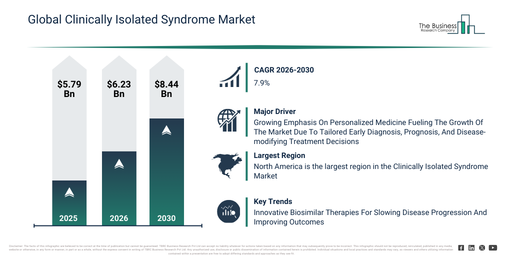
    The clinically isolated syndrome market has shown robust expansion over recent years. It is projected to expand from $5.79 billion in 2025 to $6.23 billion in 2026, demonstrating a compound annual growth rate (CAGR) of 7.6%. Several factors have contributed to this historical expansion, including improved access to magnetic resonance imaging diagnostics, a rise in awareness regarding early neurological symptoms, the proliferation of neurology specialty clinics, the adoption of disease-modifying therapies, and the availability of standardized diagnostic protocols.

    The clinically isolated syndrome market is projected to experience substantial expansion over the next few years. It is anticipated to achieve a value of $8.44 billion by 2030, growing at a compound annual growth rate (CAGR) of 7.9%. This expected growth during the forecast period stems from an increased emphasis on early multiple sclerosis prevention, the rising application of artificial intelligence in neurodiagnostics, the broader implementation of remote patient monitoring solutions, increased investment in biomarker research, and a growing demand for customized neurological care. Significant trends for the forecast period include the increasing use of advanced neuroimaging analytics, the rising adoption of early intervention treatment strategies, the expanding integration of digital patient monitoring platforms, the enlargement of biomarker-based risk assessment, and a heightened focus on personalized disease management.

    Access Your Free Sample Report for In-Depth Market Insights:

    https://www.thebusinessresearchcompany.com/sample.aspx?id=33067&type=smp

    What Drivers Are Supporting Technological Adoption In The Clinically Isolated Syndrome Market?

    The clinically isolated syndrome market is projected to expand due to the increasing focus on personalized medicine. This medical approach involves customizing treatment and prevention strategies based on an individual’s genetic makeup, lifestyle, and environment. The rising emphasis on personalized medicine stems from its potential to enhance treatment effectiveness and minimize adverse effects by tailoring therapies to specific patient profiles. Within clinically isolated syndrome, personalized medicine allows healthcare professionals to make individualized early diagnostic, prognostic, and disease-modifying treatment decisions, leveraging patient biomarkers, imaging patterns, and risk profiles to delay or prevent the progression to multiple sclerosis. An illustrative example occurred in February 2024, when the US Food and Drug Administration (FDA) approved 16 new personalized treatments for rare disease patients in 2023, a significant rise from six approvals in 2022, as noted by the Personalized Medicine Coalition, a US-based non-profit organization. This growing emphasis on personalized medicine is thus a key driver for the clinically isolated syndrome market. The rising healthcare expenditures are anticipated to boost the growth of the clinically isolated syndrome market. Healthcare expenditures represent the total financial outlays for the provision, management, and utilization of health services, products, and preventive care. These expenditures are increasing primarily because aging populations necessitate more medical attention and prolonged treatment for chronic conditions. In the context of clinically isolated syndrome, healthcare expenditures facilitate early diagnosis, ongoing monitoring, and access to disease-modifying therapies, thereby assisting in delaying the progression to multiple sclerosis and enhancing patient outcomes. For instance, in April 2025, the American Medical Association, a US-based professional association, reported that health spending in the U.S. in 2023 climbed by 7.5% to reach $4.9 trillion, or $14,570 per person, a notable increase compared to the 4.6% growth observed in 2022. Consequently, the increasing healthcare expenditures are propelling the expansion of the clinically isolated syndrome market.

    What Segment Types Are Examined In The Clinically Isolated Syndrome Market?

    The clinically isolated syndrome market covered in this report is segmented –

    1) By Product And Service Type: Diagnostic Services; Disease-Modifying Therapies; Monitoring And Management Services; Digital Monitoring And Decision Support Tools

    2) By Drug Class: Interferon Beta; Glatiramer Acetate; Monoclonal Antibodies; Oral Immunomodulators; Other Drug Classes

    3) By Route Of Administration: Oral; Injectable; Intravenous

    4) By End User: Hospitals; Neurology Clinics; Diagnostic Centers; Home Care Settings

    Subsegments:

    1) By Diagnostic Services: Magnetic Resonance Imaging Diagnostic Services; Cerebrospinal Fluid Analysis Services; Evoked Potential Testing Services; Neurological Examination Services; Laboratory Biomarker Testing Services; Advanced Imaging Interpretation Services

    2) By Disease-Modifying Therapies: Injectable Immunomodulatory Therapies; Oral Disease Modifying Therapies; Monoclonal Antibody Based Therapies; Corticosteroid Based Therapies; Emerging Pharmacological Therapies

    3) By Monitoring And Management Services: Clinical Follow Up Monitoring Services; Relapse Management Services; Physical And Cognitive Rehabilitation Services; Patient Counseling And Support Services; Long Term Disease Management Programs

    4) By Digital Monitoring And Decision Support Tools: Remote Patient Monitoring Platforms; Clinical Decision Support Software; Mobile Health Applications; Artificial Intelligence Based Analytics Tools; Electronic Health Record Integrated Solutions

    Which Trends Are Shaping Activity Within The Clinically Isolated Syndrome Market?

    Major companies are operating within the clinically isolated syndrome market, with a focus on creating innovative solutions such as biosimilar disease-modifying therapies to slow the progression of the disease, lower relapse rates, and improve long-term neurological outcomes. Biosimilar disease-modifying therapies are described as biologic drugs highly similar to an already approved reference biologic, designed to modify the underlying disease process rather than just providing symptom relief, while ensuring comparable safety, efficacy, and quality. For instance, in August 2023, Sandoz, a Switzerland-based generic and biosimilar medicines company, secured approval from the FDA for Tyruko (natalizumab-sztn), making it the first and only biosimilar for relapsing forms of multiple sclerosis (MS). Its aim is to reduce MS relapses by up to 70%, slow the progression of disability, and limit new brain lesions by preventing immune cells from entering the central nervous system. It is administered via IV infusion every four weeks under a REMS program due to PML risk. Key benefits include equivalent efficacy, safety, and immunogenicity to the originator, and its US launch in November 2025 is expected to offer significant cost savings and broader access for patients with highly active disease unresponsive to other therapies.

    Who Are The Top-Performing Companies In The Clinically Isolated Syndrome Market In Recent Years?

    Major companies operating in the clinically isolated syndrome market are F. Hoffmann-La Roche Ltd., Bayer AG., Sanofi S.A., Novartis AG., Bristol-Myers Squibb Company, Siemens Healthineers AG., Merck KGaA, GE HealthCare, Teva Pharmaceutical Industries Ltd., Laboratory Corporation of America Holdings, Biogen Inc., Atara Biotherapeutics, Cipla Limited, Lupin Limited, Alembic Pharmaceuticals, TG Therapeutics Inc., Metropolis Healthcare, Mapi Pharma, Cortechs.AI Inc., Polpharma Biologics

    Access The Complete Report For Deeper Market Insights:

    https://www.thebusinessresearchcompany.com/report/clinically-isolated-syndrome-market-report

    Which Region Currently Holds The Largest Share Of The Clinically Isolated Syndrome Market?

    North America was the largest region in the clinically isolated syndrome market in 2025. Asia-Pacific is expected to be the fastest-growing region in the forecast period. The regions covered in the clinically isolated syndrome market report are Asia-Pacific, South East Asia, Western Europe, Eastern Europe, North America, South America, Middle East, Africa.

    Request Your Customized Clinically Isolated Syndrome Market Research Report for Competitive Advantage:

    https://www.thebusinessresearchcompany.com/customise?id=33067&type=smp

    Browse Through More Reports Similar to the Global Clinically Isolated Syndrome Market 2026, By The Business Research Company

    Rare Diseases Treatment Market Report 2026

    https://www.thebusinessresearchcompany.com/report/rare-diseases-treatment-global-market-report

    Rare Neurological Disease Treatment Market Report 2026

    https://www.thebusinessresearchcompany.com/report/rare-neurological-disease-treatment-global-market-report

    Rare Disease Diagnostics Market Report 2026

    https://www.thebusinessresearchcompany.com/report/rare-disease-diagnostics-global-market-report

    Get in touch with us:

    The Business Research Company: https://www.thebusinessresearchcompany.com/

    Americas +1 310-496-7795

    Asia +44 7882 955267 & +91 8897263534

    Europe +44 7882 955267

    Email us at info@tbrc.info

    Follow us on:

    LinkedIn: https://in.linkedin.com/company/the-business-research-company

    YouTube: https://www.youtube.com/channel/UC24_fI0rV8cR5DxlCpgmyFQ

    Global Market Model: https://www.thebusinessresearchcompany.com/global-market-model
  • Visceral Pain Market Report 2026: Strategic Insights and Revenue Outlook

    Visceral Pain Market Report 2026: Strategic Insights and Revenue Outlook

    Uncover key drivers, emerging technologies, and competitive movements shaping the visceral pain market from 2026–2035 with trusted insights from The Business Research Company

    Across 2026–2030, what is the expected market valuation path of the Visceral Pain Market?

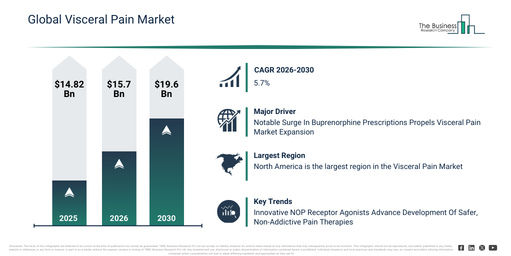
    The visceral pain market size has demonstrated robust expansion over recent years. It is anticipated to increase from $14.82 billion in 2025 to $15.7 billion in 2026, achieving a compound annual growth rate (CAGR) of 5.9%. This historical growth can be attributed to several factors, including the rising occurrence of gastrointestinal and pelvic disorders, broader utilization of NSAIDs and calcium channel blockers, improved clinical detection of visceral pain conditions, the proliferation of hospital-based pain management services, and the availability of diverse drug classes.

    The market for visceral pain is anticipated to experience substantial growth in the upcoming years, projected to reach $19.6 billion by 2030 with a compound annual growth rate of 5.7%. This expansion during the forecast period is attributed to several factors, including a rising demand for tailored pain therapies, an increased focus on chronic pain management, the broader implementation of precision medicine approaches, a greater adoption of advanced diagnostic instruments, and augmented investments in the creation of non-opioid drugs. Prominent trends throughout this period involve the increasing embrace of targeted pain management treatments, a growing reliance on multimodal drug combinations, a stronger emphasis on non-opioid treatment alternatives, the development of personalized visceral pain management strategies, and an enhanced focus on early diagnosis and intervention.

    Access Your Free Sample Report for In-Depth Market Insights:

    https://www.thebusinessresearchcompany.com/sample.aspx?id=13950&type=smp

    Which Drivers Are Supporting The Rise Of The Visceral Pain Market?

    The escalating demand for analgesics is anticipated to drive the expansion of the visceral pain market in the future. Analgesics are drugs designed to ease pain by lessening or blocking the brain’s interpretation of pain signals. These medications help control visceral pain by targeting the nervous system and adjusting pain signals originating from internal organs. For instance, in April 2024, as per the New England Journal of Medicine, a UK-based weekly medical journal, over 53,600 clinicians were prescribing buprenorphine by December 2023, which signifies an increase of 11,500 prescribers compared to December 2022. Therefore, the growing need for analgesics is propelling the growth of the visceral pain market.

    What Leading Segments Are Studied In The Visceral Pain Market?

    The visceral pain market covered in this report is segmented –

    1) By Drug Class: Calcium Channel Blockers, Nonsteroidal Anti-Inflammatory (NSAID), Other Drug Classes

    2) By Indications: Interstitial Cystitis, Crohn’s, Irritable Bowel, Chronic Prostatitis, Other Indications

    3) By End Users: Hospitals, Homecare, Specialty Clinics, Other End Users

    Subsegments:

    1) By Calcium Channel Blockers: Dihydropyridines, Non-Dihydropyridines

    2) By Nonsteroidal Anti-Inflammatory Drugs (NSAID): Selective COX-2 Inhibitors, Non-Selective NSAIDs

    3) By Other Drug Classes: Opioids, Tricyclic Antidepressants (TCAs), Serotonin-Norepinephrine Reuptake Inhibitors (SNRIs)

    How Are Emerging Trends Affecting The Progression Of The Visceral Pain Market?

    Entities operating within the chronic pain market are increasingly focused on conducting clinical trials to innovate products like NOP receptor agonists, aiming to provide effective pain relief while potentially mitigating the risks associated with opioid-based treatments. NOP receptor agonists are compounds designed to activate the nociceptin/orphanin FQ peptide receptor, which plays a role in modulating pain signaling in the nervous system; these help alleviate chronic and visceral pain without the high risk of addiction or severe side effects typically linked to traditional opioids. For instance, in October 2024, Grünenthal GmbH, a Germany-based pharmaceutical company, commenced a first-in-human Phase I clinical trial, enlisting 90 healthy participants to evaluate the safety, tolerability, and pharmacokinetics of its novel NOP receptor agonist. This study aims to assess the investigational compound’s potential to deliver potent and safe pain relief across various chronic pain conditions, thus introducing a new therapeutic approach for managing both somatic and visceral pain.

    Which Key Players Are Driving Competition In The Visceral Pain Market?

    Major companies operating in the visceral pain market are Pfizer Inc., Johnson & Johnson Services Inc., F. Hoffmann-La Roche Ltd., Merck & Co.Inc., AbbVie Inc., Novartis AG, Sanofi SA, Bristol-Myers Squibb Company, AstraZeneca PLC, GlaxoSmithKline PLC, Takeda Pharmaceutical Company Limited, Eli Lilly and Company, Teva Pharmaceutical Industries Ltd., Mylan N.V., Bausch Health Companies Inc., Sun Pharmaceutical Industries Ltd., Perrigo Company PLC, Dr. Reddy’s Laboratories Ltd., Endo International PLC, Grünenthal GmbH, Glenmark Pharmaceuticals Limited, Hisamitsu Pharmaceutical Co. Ltd., Chromocell Corporation, Addex Therapeutics Ltd.

    Access The Complete Report For Deeper Market Insights:

    https://www.thebusinessresearchcompany.com/report/visceral-pain-global-market-report

    Which Region Is Projected To Lead The Visceral Pain Market During The Forecast Period?

    North America was the largest region in the visceral pain market in 2025. The regions covered in the visceral pain market report are Asia-Pacific, South East Asia, Western Europe, Eastern Europe, North America, South America, Middle East, Africa.

    Request Your Customized Visceral Pain Market Research Report for Competitive Advantage:

    https://www.thebusinessresearchcompany.com/customise?id=13950&type=smp

    Browse Through More Reports Similar to the Global Visceral Pain Market 2026, By The Business Research Company

    Ulcerative Colitis Market Report 2026

    https://www.thebusinessresearchcompany.com/report/ulcerative-colitis-global-market-report

    Chronic Pain Market Report 2026

    https://www.thebusinessresearchcompany.com/report/chronic-pain-global-market-report

    Neuropathic Pain Market Report 2026

    https://www.thebusinessresearchcompany.com/report/neuropathic-pain-global-market-report

    Get in touch with us:

    The Business Research Company: https://www.thebusinessresearchcompany.com/

    Americas +1 310-496-7795

    Asia +44 7882 955267 & +91 8897263534

    Europe +44 7882 955267

    Email us at info@tbrc.info

    Follow us on:

    LinkedIn: https://in.linkedin.com/company/the-business-research-company

    YouTube: https://www.youtube.com/channel/UC24_fI0rV8cR5DxlCpgmyFQ

    Global Market Model: https://www.thebusinessresearchcompany.com/global-market-model
  • Global Visceral Leishmaniasis Industry Trends and Market Forecast 2026–2030

    Global Visceral Leishmaniasis Industry Trends and Market Forecast 2026–2030

    Uncover key drivers, emerging technologies, and competitive movements shaping the visceral leishmaniasis market from 2026–2035 with trusted insights from The Business Research Company

    What size range is anticipated for the Visceral Leishmaniasis Market from 2026 to 2030?

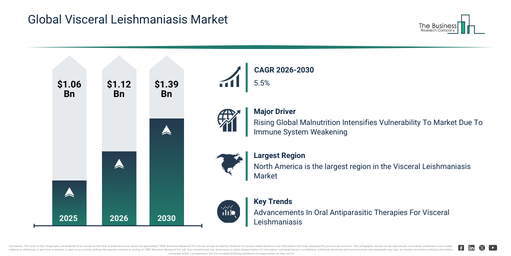
    The visceral leishmaniasis market has shown significant expansion in recent years. It is anticipated to grow from $1.06 billion in 2025 to $1.12 billion in 2026, reflecting a compound annual growth rate (CAGR) of 5.9%. The growth observed in the historic period is largely attributable to the expansion of endemic disease prevalence, increasing public health awareness initiatives, availability of established antiparasitic treatments, growth of hospital-based treatment programs, and international health organization support.

    The visceral leishmaniasis market is anticipated to experience robust growth in the coming years, reaching $1.39 billion by 2030, with a compound annual growth rate (CAGR) of 5.5%. This projected expansion during the forecast period is due to factors such as increased investments in novel therapeutics, a rising focus on vaccine and immunotherapy development, the broader adoption of molecular diagnostics, growing government funding for disease elimination efforts, and improved access to treatment in endemic regions. Significant trends during this period are expected to include the increasing use of advanced diagnostic techniques, a rise in the application of combination drug therapies, a heightened emphasis on early disease detection, the expansion of public health screening programs, and enhanced investment in treatment accessibility.

    Access Your Free Sample Report for In-Depth Market Insights:

    https://www.thebusinessresearchcompany.com/sample.aspx?id=23573&type=smp

    What Drivers Are Affecting Demand In The Visceral Leishmaniasis Market?

    The escalating issue of malnutrition is projected to boost the visceral leishmaniasis market’s expansion. Malnutrition refers to a state of health where the body receives inadequate or imbalanced nutrient intake, crucial for healthy physiological functioning. The surge in malnutrition can be attributed to food insecurity, which restricts access to wholesome food, resulting in undernourishment and a lack of vital micronutrients, thereby weakening the immune system. Compromised immune function due to malnutrition renders the body more susceptible to various infections, including visceral leishmaniasis. Inadequate nutrient levels diminish the body’s natural defense mechanisms, escalating the likelihood of severe illness and associated complications. As an illustration, the United Nations Children’s Fund (UNICEF), a U.S.-based specialized agency, reported in July 2024 that approximately 733 million individuals worldwide faced undernourishment in 2023. Consequently, the escalating incidence of malnutrition is acting as a key driver for the expansion of the visceral leishmaniasis market.

    Which Segment Groups Are Influencing The Visceral Leishmaniasis Market?

    The visceral leishmaniasis market covered in this report is segmented –

    1) By Treatment: Antiparasitic, Antifungal, Other Treatments

    2) By Diagnosis Method: Serological Tests, Molecular Tests, Microscopy, Culture Methods

    3) By Route Of Administration: Oral, Injectable, Other Routes Of Administration

    4) By Distribution Channel: Hospital Pharmacy, Online Pharmacy, Retail Pharmacy

    5) By End-User: Hospitals, Homecare, Specialty Clinics, Other End-Users

    Subsegments:

    1) By Antiparasitic: Pentavalent Antimonials, Miltefosine, Paromomycin, Sitamaquine, Combination Therapy

    2) By Antifungal: Amphotericin B, Liposomal Amphotericin B (AmBisome), Azoles, Echinocandins, Polyenes

    3) By Other Treatments: Immunotherapy, Monoclonal Antibodies, Vaccine-Based Approaches, Photodynamic Therapy, Gene Therapy

    Which Innovation Trends Are Advancing Developments Within The Visceral Leishmaniasis Market?

    Companies active in the visceral leishmaniasis market are prioritizing the development of enhanced treatment alternatives, such as antiparasitic drugs, to elevate their effectiveness and improve patient availability, particularly in endemic regions. Antiparasitic drugs are pharmaceuticals employed to manage infections caused by parasites, functioning by targeting the parasites’ biological processes and impeding their proliferation, reproduction, or viability within the host. For instance, in February 2024, Zydus Lifesciences Limited, an India-based pharmaceutical company, obtained World Health Organization (WHO) prequalification approval for the active pharmaceutical ingredient (API) and the formulation of miltefosine for managing leishmaniasis or kala-azar. Miltefosine is an oral antiparasitic drug that operates by disturbing the parasite’s cell membrane and interfering with its metabolism, ultimately leading to cell death. It further suppresses parasite growth and survival, establishing it as an effective oral treatment option for visceral leishmaniasis or kala azar.

    Who Are The Top-Performing Companies In The Visceral Leishmaniasis Market In Recent Years?

    Major companies operating in the visceral leishmaniasis market are Pfizer Inc., GSK plc, Sun Pharmaceutical Industries Ltd., Dr. Reddy’s Laboratories, Aurobindo Pharma Limited, Cipla Limited, Zydus Lifesciences Limited, Glenmark Pharmaceuticals Limited, Alkem Laboratories Ltd., Xellia Pharmaceuticals, Gufic Biosciences Ltd., United Biotech Private Limited, DNDi, Sanofi SA, Bharat Serums and Vaccines Limited, Emcure Pharmaceuticals Limited, Hetero Drugs Limited, Lupin Limited, Ipca Laboratories Limited, Intas Pharmaceuticals Limited, Macleods Pharmaceuticals Limited, Mankind Pharma Limited, Alembic Pharmaceuticals Limited

    Access The Complete Report For Deeper Market Insights:

    https://www.thebusinessresearchcompany.com/report/visceral-leishmaniasis-global-market-report

    Which Region Currently Holds The Largest Share Of The Visceral Leishmaniasis Market?

    North America was the largest region in the visceral leishmaniasis market in 2025. Asia-Pacific is expected to be the fastest-growing region in the forecast period. The regions covered in the visceral leishmaniasis market report are Asia-Pacific, South East Asia, Western Europe, Eastern Europe, North America, South America, Middle East, Africa.

    Request Your Customized Visceral Leishmaniasis Market Research Report for Competitive Advantage:

    https://www.thebusinessresearchcompany.com/customise?id=23573&type=smp

    Browse Through More Reports Similar to the Global Visceral Leishmaniasis Market 2026, By The Business Research Company

    Veterinary Parasiticides Market Report 2026

    https://www.thebusinessresearchcompany.com/report/veterinary-parasiticides-global-market-report

    Anticoagulant Market Report 2026

    https://www.thebusinessresearchcompany.com/report/anticoagulant-global-market-report

    Psoriasis Drugs Market Report 2026

    https://www.thebusinessresearchcompany.com/report/psoriasis-drugs-global-market-report

    Get in touch with us:

    The Business Research Company: https://www.thebusinessresearchcompany.com/

    Americas +1 310-496-7795

    Asia +44 7882 955267 & +91 8897263534

    Europe +44 7882 955267

    Email us at info@tbrc.info

    Follow us on:

    LinkedIn: https://in.linkedin.com/company/the-business-research-company

    YouTube: https://www.youtube.com/channel/UC24_fI0rV8cR5DxlCpgmyFQ

    Global Market Model: https://www.thebusinessresearchcompany.com/global-market-model
  • Virtual Rehabilitation Market Size and Demand Forecast 2026–2030

    Virtual Rehabilitation Market Size and Demand Forecast 2026–2030

    Uncover key drivers, emerging technologies, and competitive movements shaping the virtual rehabilitation market from 2026–2035 with trusted insights from The Business Research Company

    How is the Virtual Rehabilitation Market size predicted to change over the forecast window of 2026–2035?

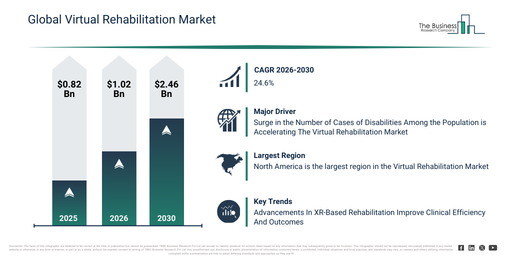
    The virtual rehabilitation market size has experienced significant expansion in recent years. It is anticipated to grow from $0.82 billion in 2025 to $1.02 billion in 2026, achieving a compound annual growth rate (CAGR) of 24.3%. The market’s growth during the historic period can be attributed to several factors, including an increased demand for rehabilitation services, the rising prevalence of chronic and mobility-related conditions, the expansion of outpatient therapy services, the growing adoption of digital health tools, and improved access to rehabilitation technologies.

    The virtual rehabilitation market is anticipated to experience substantial growth over the next few years, with its size projected to reach $2.46 billion in 2030, demonstrating a compound annual growth rate (CAGR) of 24.6%. This expansion during the forecast period can be attributed to an increased focus on remote patient care, greater investments in digital rehabilitation platforms, the wider availability of personalized therapy solutions, the rising adoption of home-based care models, and the expanded use of data-driven rehabilitation programs. Notable trends for the forecast period include the growing embrace of VR-based physical therapy programs, the increased utilization of gamified rehabilitation solutions, the deeper integration of remote monitoring tools, the proliferation of home-based virtual rehab platforms, and a stronger emphasis on personalized therapy plans.

    Access Your Free Sample Report for In-Depth Market Insights:

    https://www.thebusinessresearchcompany.com/sample.aspx?id=13949&type=smp

    Which Drivers Are Contributing To The Expansion Of The Virtual Rehabilitation Market?

    The rising occurrence of disability is expected to drive the growth of the virtual rehabilitation market in the future. Disability refers to a physical, cognitive, sensory, or mental condition that significantly impacts an individual’s capacity to perform daily tasks, participate fully in society, or engage in typical life roles. Virtual rehabilitation aids the disabled population by offering remote access to therapeutic interventions and personalized exercises via virtual platforms. For instance, in March 2023, the World Health Organization, a Switzerland-based international public health organization, reported that around 1.3 billion people across the globe, constituting 16% of the total global population, have disabilities. Therefore, the increasing prevalence of disability among the population is fueling the expansion of the virtual rehabilitation market.

    What Segment Classifications Make Up The Virtual Rehabilitation Market?

    The virtual rehabilitation market covered in this report is segmented –

    1) By Type: Physical Rehabilitation, Neuro And Cognitive Rehabilitation, Other Types

    2) By Patient Type: Short Term Patients, Long Term Patients

    3) By End-User: Inpatient Rehabilitation Hospitals, Rehabilitation Centers And Clinics, Home Care Settings

    Subsegments:

    1) By Physical Rehabilitation: Musculoskeletal Rehabilitation, Sports Injury Rehabilitation, Post-Surgery Rehabilitation

    2) By Neuro And Cognitive Rehabilitation: Stroke Rehabilitation, Traumatic Brain Injury (TBI) Rehabilitation, Memory And Cognitive Skills Training

    3) By Other Types: Pediatric Rehabilitation, Cardiac Rehabilitation, Geriatric Rehabilitation

    Which Competitive Trends Are Impacting The Structure Of The Virtual Rehabilitation Market?

    Key players in the virtual rehabilitation market are concentrating on creating sophisticated solutions, such as plug-and-play VR rehabilitation stations, to boost therapy access, lessen installation obstacles, and deliver uniform, top-tier rehabilitation across diverse healthcare environments. A plug-and-play VR rehabilitation station is a comprehensive, portable therapeutic system that provides immersive physical, occupational, and mental health treatments without needing IT setup, network configuration, or specific infrastructure, greatly simplifying usage compared to conventional in-clinic therapy equipment. For example, in September 2025, XRHealth, a U.S.-based extended-reality healthcare firm, introduced the XR CareCart, a complete mobile VR rehabilitation station designed for immediate use in clinics, hospitals, senior care facilities, and community health settings. This system comes with two VR headsets, a preloaded therapeutic platform, a patient tablet, two clinician monitors, and a built-in SIM-based router, offering FDA-registered programs for physical therapy, occupational therapy, and mental health interventions. The platform supports real-time oversight, session sharing, HIPAA-compliant data management, and adaptable multi-patient application, presenting an advanced, infrastructure-independent option to traditional therapy arrangements.

    Which Leading Companies Dominate The Virtual Rehabilitation Market Share?

    Major companies operating in the virtual rehabilitation market are SWORD Health, Hinge Health Inc., Meden-Inmed, BO&BO Ltd., Saebo Inc., Mindmaze, Motek Medical B.V., XRHealth (VRHealth), Tyromotion GmbH, LiteGait, GestureTek Health, Rehab-Robotics, Virtualware Group, MIRA Rehab Limited, Myelin-H, Motorika, Doctor Kinetic, Agile Virtual PT, Cogniv Technologies, Immersive Rehab, Neuro Rehab VR, Rehametrics, CoRehab srl, Accelerated Care Plus Corporation, Euleria S.R.L

    Access The Complete Report For Deeper Market Insights:

    https://www.thebusinessresearchcompany.com/report/virtual-rehabilitation-global-market-report

    How Does The Virtual Rehabilitation Market Perform Across Major Global Regions?

    North America was the largest region in the virtual rehabilitation market in 2025. Europe is expected to be the fastest-growing region in the forecast period. The regions covered in the virtual rehabilitation market report are Asia-Pacific, South East Asia, Western Europe, Eastern Europe, North America, South America, Middle East, Africa.

    Request Your Customized Virtual Rehabilitation Market Research Report for Competitive Advantage:

    https://www.thebusinessresearchcompany.com/customise?id=13949&type=smp

    Browse Through More Reports Similar to the Global Virtual Rehabilitation Market 2026, By The Business Research Company

    Rehabilitation Equipment Market Report 2026

    https://www.thebusinessresearchcompany.com/report/rehabilitation-equipment-global-market-report

    Behavioral Rehabilitation Market Report 2026

    https://www.thebusinessresearchcompany.com/report/behavioral-rehabilitation-global-market-report

    Rehabilitation Robotics Market Report 2026

    https://www.thebusinessresearchcompany.com/report/rehabilitation-robotics-global-market-report

    Get in touch with us:

    The Business Research Company: https://www.thebusinessresearchcompany.com/

    Americas +1 310-496-7795

    Asia +44 7882 955267 & +91 8897263534

    Europe +44 7882 955267

    Email us at info@tbrc.info

    Follow us on:

    LinkedIn: https://in.linkedin.com/company/the-business-research-company

    YouTube: https://www.youtube.com/channel/UC24_fI0rV8cR5DxlCpgmyFQ

    Global Market Model: https://www.thebusinessresearchcompany.com/global-market-model
  • Virtual Reality Vision Therapy Market Outlook: Growth and Forecast Highlights 2030

    Virtual Reality Vision Therapy Market Outlook: Growth and Forecast Highlights 2030

    Uncover key drivers, emerging technologies, and competitive movements shaping the virtual reality vision therapy market from 2026–2035 with trusted insights from The Business Research Company

    What market expansion outlook does the Virtual Reality Vision Therapy Market show for the 2026–2030 period?

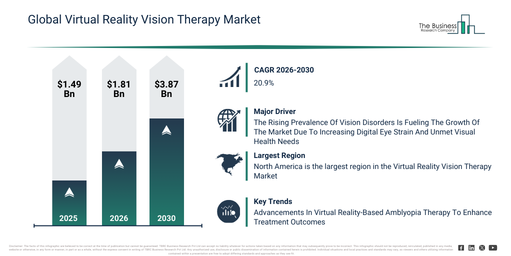
    The virtual reality vision therapy market size has experienced substantial expansion in recent years. It is anticipated to grow from $1.49 billion in 2025 to $1.81 billion in 2026, exhibiting a compound annual growth rate (CAGR) of 21.2%. This historical growth can be attributed to the increasing prevalence of visual disorders, rising adoption of digital therapeutic tools, growing acceptance of non-invasive vision treatments, expansion of pediatric vision therapy practices, and the availability of consumer-grade VR hardware.

    The virtual reality vision therapy market size is projected to experience substantial growth in the upcoming years. It is forecast to expand to $3.87 billion by 2030, exhibiting a compound annual growth rate (CAGR) of 20.9%. This expansion during the forecast period is driven by factors such as the increasing demand for home-based vision therapy, the rising integration of AI-driven visual assessments, the expansion of tele-vision therapy services, growing investments in digital healthcare platforms, and the increasing adoption of immersive healthcare solutions. Significant trends anticipated in this period include the growing adoption of immersive vision training platforms, an increase in the use of gamified therapy modules, the expanding integration of eye-tracking technologies, the further development of remote and home-based vision therapy, and enhanced personalization of therapy programs.

    Access Your Free Sample Report for In-Depth Market Insights:

    https://www.thebusinessresearchcompany.com/sample.aspx?id=28359&type=smp

    What Drivers Are Shaping The Development Of The Virtual Reality Vision Therapy Market?

    An increasing occurrence of vision problems is anticipated to fuel the expansion of the virtual reality vision therapy market in the future. These disorders are conditions that impede clear sight, affecting visual acuity, concentration, or the breadth of visual perception. A significant factor behind the increase in vision disorders is prolonged screen exposure, which causes eye strain and leads to digital eye fatigue, thus diminishing general visual well-being. Virtual reality vision therapy addresses vision disorders through immersive activities that enhance eye coordination, concentration, and depth perception, simultaneously stimulating neural connections to improve visual processing and overall ocular performance. For example, data from August 2023, provided by the World Health Organization, a government body located in Switzerland, indicates that more than 2.2 billion individuals worldwide suffer from vision impairment, affecting either near or distant sight. Approximately 1 billion of these instances, nearly 50%, involve impairments that were preventable or have not yet received treatment. Consequently, the growing occurrence of vision impairments is propelling the expansion of the virtual reality vision therapy market.

    What Segment Types Are Examined In The Virtual Reality Vision Therapy Market?

    The virtual reality vision therapy market covered in this report is segmented –

    1) By Product Type: Hardware, Software, Services

    2) By Therapy Type: Amblyopia, Strabismus, Convergence Insufficiency, Binocular Vision Dysfunction, Other Therapy Types

    3) By Distribution Channel: Direct Sales, Online Retail, Other Distribution Channels

    4) By End-User: Hospitals And Clinics, Vision Therapy Centers, Homecare Settings, Other End-Users

    Subsegments:

    1) By Hardware: Head-Mounted Displays (HMDs), Virtual Reality (VR) Glasses, Eye-Tracking Devices, Motion Sensors, Haptic Feedback Devices, Handheld Controllers

    2) By Software: Vision Therapy Applications, Virtual Reality (VR) Simulation Software, Eye Exercise Software, Gamified Vision Therapy Programs, Augmented Reality (AR) Integration Software

    3) By Services: Tele-Vision Therapy Services, Clinical Consultation Services, Rehabilitation Program Management, Training And Support Services, Software As A Service (SaaS) For Vision Therapy

    What Industry Trends Are Transforming The Virtual Reality Vision Therapy Market?

    Leading companies in the virtual reality vision therapy market are concentrating on developing advanced solutions, such as virtual reality-based amblyopia therapy, to boost treatment adherence and enhance visual outcomes. This virtual reality-based amblyopia therapy works by engaging the weaker eye through immersive visual exercises, thereby improving focus, coordination, and depth perception, while also stimulating neural pathways to refine visual processing and overall vision. For instance, in April 2025, Luminopia, Inc., a US-based digital therapeutics company, received approval from the Food and Drug Administration (FDA) for amblyopia treatment for children aged 8 to 12 years, expanding upon its previous clearance for ages 4 to 7. This regulatory clearance is founded on robust real-world evidence derived from Luminopia’s PUPiL Registry and its clinical trials. Luminopia’s digital therapy employs a VR headset, which allows patients to watch familiar TV shows as therapeutic algorithms simultaneously engage both eyes to improve vision in children diagnosed with amblyopia connected to anisometropia and mild strabismus.

    Who Are The Major Companies Operating In The Virtual Reality Vision Therapy Market?

    Major companies operating in the virtual reality vision therapy market are Meta Platforms Inc., Tobii AB, Varjo Technologies Inc., XRHealth Ltd., VR Vision Group, Floreo Inc., AmblyoPlay, Vivid Vision Inc., Luminopia Inc., NovaSight Inc., Virtualis VR Corp., Wow Vision Therapy, Cognihab Inc., Fusion VR, Computer Orthoptics Inc., SyncThink Inc., NeuraSim Private Limited, Neuro Rehab VR, MindMotion SA, AppliedVR Inc.

    Access The Complete Report For Deeper Market Insights:

    https://www.thebusinessresearchcompany.com/report/virtual-reality-vision-therapy-global-market-report

    Which Region Is Anticipated To See The Fastest Growth In The Virtual Reality Vision Therapy Market?

    North America was the largest region in the virtual reality vision therapy market in 2025. Asia-Pacific is expected to be the fastest-growing region in the forecast period. The regions covered in the virtual reality vision therapy market report are Asia-Pacific, South East Asia, Western Europe, Eastern Europe, North America, South America, Middle East, Africa.

    Request Your Customized Virtual Reality Vision Therapy Market Research Report for Competitive Advantage:

    https://www.thebusinessresearchcompany.com/customise?id=28359&type=smp

    Browse Through More Reports Similar to the Global Virtual Reality Vision Therapy Market 2026, By The Business Research Company

    Virtual Reality Vr In Medical Simulation Market Report 2026

    https://www.thebusinessresearchcompany.com/report/virtual-reality-vr-in-medical-simulation-global-market-report

    Virtual Rehabilitation Market Report 2026

    https://www.thebusinessresearchcompany.com/report/virtual-rehabilitation-global-market-report

    Virtual Reality Services Market Report 2026

    https://www.thebusinessresearchcompany.com/report/virtual-reality-services-global-market-report

    Get in touch with us:

    The Business Research Company: https://www.thebusinessresearchcompany.com/

    Americas +1 310-496-7795

    Asia +44 7882 955267 & +91 8897263534

    Europe +44 7882 955267

    Email us at info@tbrc.info

    Follow us on:

    LinkedIn: https://in.linkedin.com/company/the-business-research-company

    YouTube: https://www.youtube.com/channel/UC24_fI0rV8cR5DxlCpgmyFQ

    Global Market Model: https://www.thebusinessresearchcompany.com/global-market-model
  • Virtual Reality Therapy Post-Traumatic Stress Disorder (PTSD) Market Insights Report: Opportunities and Drivers 2030

    Virtual Reality Therapy Post-Traumatic Stress Disorder (PTSD) Market Insights Report: Opportunities and Drivers 2030

    Uncover key drivers, emerging technologies, and competitive movements shaping the virtual reality therapy post-traumatic stress disorder (ptsd) market from 2026–2035 with trusted insights from The Business Research Company

    What level of growth is expected in the Virtual Reality Therapy Post-Traumatic Stress Disorder (PTSD) Market between 2026 and 2030?

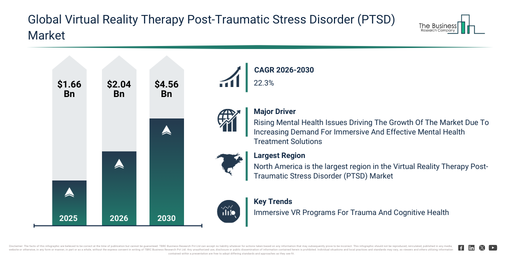
    The virtual reality therapy post-traumatic stress disorder (ptsd) market size has experienced exponential expansion in recent years. It is forecast to grow from $1.66 billion in 2025 to $2.04 billion in 2026, exhibiting a compound annual growth rate (CAGR) of 22.6%. The historical growth of this market is attributable to the increasing prevalence of ptsd cases, a rising acceptance of digital mental health therapies, the expansion of clinical research in vr psychology, ongoing advancements in vr hardware capabilities, and a greater utilization of simulation-based therapy.

    The virtual reality therapy post-traumatic stress disorder (ptsd) market size is anticipated to undergo significant expansion in the coming years. It is projected to achieve a valuation of $4.56 billion by 2030, demonstrating a compound annual growth rate (CAGR) of 22.3%. This expected growth during the forecast period can be linked to factors such as an escalating demand for scalable mental health solutions, the rising integration of VR within clinical psychology, the broadening of mental health programs for military personnel and veterans, the increasing incorporation of biometric feedback, and augmented investment in immersive healthcare technologies. Prominent trends throughout this period include the wider adoption of immersive exposure therapy platforms, the growing integration of AI-guided therapy customization, an increased utilization of multi-sensory VR environments, the expansion of remote and home-based ptsd therapy options, and an elevated focus on achieving measurable therapy outcomes.

    Access Your Free Sample Report for In-Depth Market Insights:

    https://www.thebusinessresearchcompany.com/sample.aspx?id=29239&type=smp

    Which Drivers Are Expected To Impact The Virtual Reality Therapy Post-Traumatic Stress Disorder (PTSD) Market During The Forecast Period?

    Rising mental health concerns are anticipated to drive the expansion of the virtual reality therapy post-traumatic stress disorder (PTSD) market. These issues encompass conditions influencing an individual’s emotional, psychological, and social well-being, thereby affecting daily thought, feeling, and behavior patterns. The escalation of mental health problems is predominantly fueled by heightened stress and pressures inherent in contemporary lifestyles. Virtual reality therapy for PTSD employs immersive, controlled settings, enabling patients to confront and process traumatic events, which helps in symptom reduction and improves overall mental well-being. As an illustration, data from October 2023 by the Australian Bureau of Statistics (ABS), an Australia-based statistical agency, indicates that approximately 43% of the population has encountered a mental illness at some point, with 21.5% reporting symptoms within the preceding 12 months. Consequently, the growing prevalence of mental health issues is propelling the expansion of the virtual reality therapy post-traumatic stress disorder (PTSD) market.

    Which Segments Are Driving Activity In The Virtual Reality Therapy Post-Traumatic Stress Disorder (PTSD) Market?

    The virtual reality therapy post-traumatic stress disorder (ptsd) market covered in this report is segmented –

    1) By Component Type: Hardware, Software, Services

    2) By Therapy Type: Exposure Therapy, Cognitive Behavioral Therapy, Stress Inoculation Training, Other Therapy Type

    3) By Technology Type: 3D Visualization, Haptic Feedback, Gesture Tracking, Eye Tracking, Artificial Intelligence, Machine Learning, Cloud Computing

    4) By Application Type: Military Trauma, Civilian Trauma, Phobias, Other Applications

    5) By End-User: Hospitals And Clinics, Military And Defense, Research And Academic Institutes, Other End-Users

    Subsegments:

    1) By Hardware: Head Mounted Displays, Motion Sensors, Haptic Devices, Computers And Consoles

    2) By Software: Virtual Reality Applications, Therapy Management Software, Simulation Programs, Analytics And Reporting Tools

    3) By Services: Training And Support, Consultation Services, Maintenance Services, Customization Services

    What Trends Are Reshaping The Dynamics Of The Virtual Reality Therapy Post-Traumatic Stress Disorder (PTSD) Market?

    Leading companies active in the virtual reality therapy post-traumatic stress disorder (PTSD) market are prioritizing the development of sophisticated solutions, particularly AI-powered VR solutions, to personalize exposure therapy, track patient progress instantly, and enhance treatment effectiveness for individuals experiencing trauma-related conditions. AI-powered VR solutions are virtual reality systems that utilize artificial intelligence to customize therapeutic experiences, analyze user feedback, and optimize treatment outcomes in real time. For example, in May 2025, X-Technology, a UAE-based technology startup, introduced an AI-powered VR platform across the MENA region designed to support emotional and cognitive health in clinical and rehabilitation settings. This innovation offers immersive VR therapy programs specifically tailored for PTSD, trauma recovery, stress, and cognitive decline, empowering patients to receive care in hospitals, wellness centers, or at home without requiring extensive physical infrastructure or travel. Featuring integrated AI and clinician-driven modules, it enables customization of therapeutic environments, real-time modification of exposure intensity, and ongoing observation of patient responses, all without demanding the deployment of new hardware per site.

    Which Major Firms Are Strengthening Their Position In The Virtual Reality Therapy Post-Traumatic Stress Disorder (PTSD) Market?

    Major companies operating in the virtual reality therapy post-traumatic stress disorder (ptsd) market are Ellie Mental Health PLLP, MindMaze SA., XRHealth Inc., AppliedVR Inc., Healium XR. LLC., Mieron Inc., SimX Inc., VREX Immersive Inc., MyndVR Inc., Foretell Reality LLC., PsyTechVR Ltd., Virtually Better Inc., Oxford VR Ltd., TheraVR Inc., oVRcome Ltd., Firsthand Technology Inc., Wundrsight Health Inc., PsyCurio GmbH, Limbix Inc., BehaVR Inc.

    Access The Complete Report For Deeper Market Insights:

    https://www.thebusinessresearchcompany.com/report/virtual-reality-therapy-post-traumatic-stress-disorder-ptsd-global-market-report

    Which Region Is Anticipated To See The Fastest Growth In The Virtual Reality Therapy Post-Traumatic Stress Disorder (PTSD) Market?

    North America was the largest region in the virtual reality therapy post-traumatic stress disorder (PTSD) market in 2025. Asia-Pacific is expected to be the fastest-growing region in the forecast period. The regions covered in the virtual reality therapy post-traumatic stress disorder (ptsd) market report are Asia-Pacific, South East Asia, Western Europe, Eastern Europe, North America, South America, Middle East, Africa.

    Request Your Customized Virtual Reality Therapy Post-Traumatic Stress Disorder (PTSD) Market Research Report for Competitive Advantage:

    https://www.thebusinessresearchcompany.com/customise?id=29239&type=smp

    Browse Through More Reports Similar to the Global Virtual Reality Therapy Post-Traumatic Stress Disorder (PTSD) Market 2026, By The Business Research Company

    Virtual Reality In Healthcare Market Report 2026

    https://www.thebusinessresearchcompany.com/report/virtual-reality-in-healthcare-global-market-report

    Virtual Reality Vr In Medical Simulation Market Report 2026

    https://www.thebusinessresearchcompany.com/report/virtual-reality-vr-in-medical-simulation-global-market-report

    Post Traumatic Stress Disorder Therapeutics Market Report 2026

    https://www.thebusinessresearchcompany.com/report/post-traumatic-stress-disorder-therapeutics-global-market-report

    Get in touch with us:

    The Business Research Company: https://www.thebusinessresearchcompany.com/

    Americas +1 310-496-7795

    Asia +44 7882 955267 & +91 8897263534

    Europe +44 7882 955267

    Email us at info@tbrc.info

    Follow us on:

    LinkedIn: https://in.linkedin.com/company/the-business-research-company

    YouTube: https://www.youtube.com/channel/UC24_fI0rV8cR5DxlCpgmyFQ

    Global Market Model: https://www.thebusinessresearchcompany.com/global-market-model