Month: March 2026

  • Sensory Rooms Market Outlook: Growth and Forecast Highlights 2030

    Sensory Rooms Market Outlook: Growth and Forecast Highlights 2030

    Uncover key drivers, emerging technologies, and competitive movements shaping the sensory rooms market from 2026–2035 with trusted insights from The Business Research Company

    What market expansion outlook does the Sensory Rooms Market show for the 2026–2030 period?

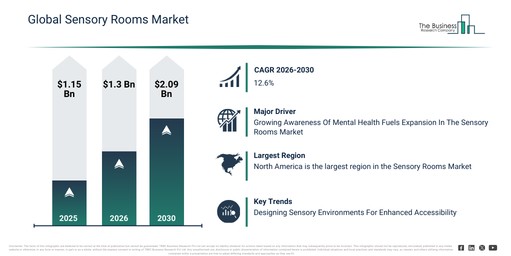
    The sensory rooms market has experienced rapid expansion in recent years. It is projected to grow from $1.15 billion in 2025 to $1.3 billion in 2026, at a compound annual growth rate (CAGR) of 12.9%. The market’s growth in previous periods can be linked to increasing awareness of sensory processing disorders, the expansion of special education infrastructure, a rising adoption of occupational therapy practices, a growing demand for inclusive therapeutic spaces, and increasing institutional investment in sensory therapy.

    The sensory rooms market is projected to experience substantial expansion over the upcoming years. Its valuation is forecast to ascend to $2.09 billion by 2030, driven by a compound annual growth rate (CAGR) of 12.6%. This projected expansion is attributable to several factors, including the increasing incorporation of immersive digital therapies, greater uptake in homecare settings, the broadening presence of sensory rooms within elderly care facilities, a heightened emphasis on mental health and wellness strategies, and an escalating need for individualized sensory interventions. Key trends anticipated during this period encompass the growing use of interactive sensory devices, a burgeoning need for bespoke therapeutic spaces, the increasing integration of digital systems for sensory control, an expansion in the applications of multi-sensory therapy, and an amplified focus on approaches for emotional regulation.

    Access Your Free Sample Report for In-Depth Market Insights:

    https://www.thebusinessresearchcompany.com/sample.aspx?id=20627&type=smp

    What Drivers Are Shaping The Development Of The Sensory Rooms Market?

    The increasing understanding and recognition of mental health issues are anticipated to fuel the expansion of the sensory room market in the future. Mental health signifies a state of overall well-being where individuals can effectively cope with life’s pressures, identify their capabilities, engage in productive learning and employment, and contribute meaningfully to their communities. Various elements contribute to the prevalence of mental health conditions, including heightened public awareness and diagnostic capabilities, pressures from society, inherited predispositions, environmental influences, and evolving social and economic landscapes. Patients dealing with mental health challenges utilize sensory rooms to foster tranquility, improve control over emotions, sharpen concentration, assist in healing from trauma, and support clinical treatments within an environment designed to be controlled and sensory-friendly. For illustration, data from May 2025, reported by the Australian Institute of Health and Welfare (AIHW), a US-based government agency, indicated that one in five Australians aged 16 to 85 (22%, equating to 4.3 million individuals) suffered from a mental illness. Specifically, 17% of Australians were impacted by anxiety disorders. Consequently, the escalating awareness surrounding mental health will propel the growth of the sensory room market.

    What Segment Types Are Examined In The Sensory Rooms Market?

    The sensory rooms market covered in this report is segmented –

    1) By Product Type: Sensory Modulation Rooms, Sensory Integration Rooms

    2) By Application: Education Sector, Rehabilitation Sector, Hospitals, Homecare Settings, Other Applications

    3) By End-User: Children, Adults, Elderly

    Subsegments:

    1) By Sensory Modulation Rooms: Calming Sensory Rooms, Multi-Sensory Environments (MSE), Snoezelen Rooms, Light And Sound Therapy Rooms, Aroma And Texture Exploration Rooms

    2) By Sensory Integration Rooms: Occupational Therapy Rooms, Motor Skills Development Rooms, Balance And Coordination Rooms, Play Therapy Rooms, Learning And Development Rooms

    Which Trends Are Influencing The Development Of The Sensory Rooms Market?

    Key players in the sensory rooms market are creating specialized designs for neuro-diverse individuals, aiming to establish inclusive settings that improve comfort, accessibility, and sensory experiences. A specialized design for neuro-diverse individuals involves crafting environments or spaces meticulously tailored to fulfill the requirements of people with various neurological distinctions, such as autism spectrum disorder (ASD), ADHD, dyslexia, and other cognitive variations. For example, in March 2024, Ascot Racecourse, a UK-based organization, introduced a permanent sensory room, showcasing its dedication to cultivating supportive environments that address the sensory needs of neuro-diverse individuals. This action not only signifies a growing understanding of the importance of inclusivity in public venues but also underscores the capacity of sensory rooms to elevate the overall experience for all guests.

    Who Are The Major Companies Operating In The Sensory Rooms Market?

    Major companies operating in the sensory rooms market are Sensory Spectrum Inc., Rompa Ltd., The Sensory Company, Serene Spaces LLC, SOUTHPAW Enterprises, Experia Innovations Pvt Ltd., Total Sensory UK Ltd., Apollo Creative Ltd., TFH Special Needs Toys Ltd., Little Room, Sensory Solutions LLC, The Therapy Room SG, Creative Therapy, Inspiration Space, Therapy Box Ltd, Mindful Spaces, Calm Space LLC, Sensory Oasis, Therapeutic Spaces LLC, Inclusive Spaces LLC, Therapy Tree PLLC, Calm Spaces, FlagHouse LLC, Bespoke Sensory Rooms LLC, Nurture UK

    Access The Complete Report For Deeper Market Insights:

    https://www.thebusinessresearchcompany.com/report/sensory-rooms-global-market-report

    Which Region Is Anticipated To See The Fastest Growth In The Sensory Rooms Market?

    North America was the largest region in the sensory rooms market in 2025. Asia-Pacific is expected to be the fastest-growing region in the forecast period. The regions covered in the sensory rooms market report are Asia-Pacific, South East Asia, Western Europe, Eastern Europe, North America, South America, Middle East, Africa.

    Request Your Customized Sensory Rooms Market Research Report for Competitive Advantage:

    https://www.thebusinessresearchcompany.com/customise?id=20627&type=smp

    Browse Through More Reports Similar to the Global Sensory Rooms Market 2026, By The Business Research Company

    Artificial Intelligence Ai In Iot Market Report 2026

    https://www.thebusinessresearchcompany.com/report/artificial-intelligence-ai-in-iot-global-market-report

    Artificial Intelligence Ai For Insurance Market Report 2026

    https://www.thebusinessresearchcompany.com/report/artificial-intelligence-ai-for-insurance-global-market-report

    Artificial Intelligence Ai In Energy And Power Market Report 2026

    https://www.thebusinessresearchcompany.com/report/artificial-intelligence-ai-in-energy-and-power-global-market-report

    Get in touch with us:

    The Business Research Company: https://www.thebusinessresearchcompany.com/

    Americas +1 310-496-7795

    Asia +44 7882 955267 & +91 8897263534

    Europe +44 7882 955267

    Email us at info@tbrc.info

    Follow us on:

    LinkedIn: https://in.linkedin.com/company/the-business-research-company

    YouTube: https://www.youtube.com/channel/UC24_fI0rV8cR5DxlCpgmyFQ

    Global Market Model: https://www.thebusinessresearchcompany.com/global-market-model
  • Senior Living Market Insights Report: Opportunities and Drivers 2030

    Senior Living Market Insights Report: Opportunities and Drivers 2030

    Uncover key drivers, emerging technologies, and competitive movements shaping the senior living market from 2026–2035 with trusted insights from The Business Research Company

    What level of growth is expected in the Senior Living Market between 2026 and 2030?

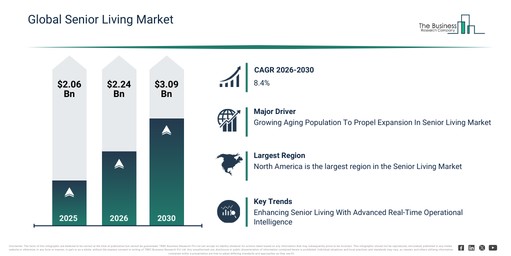
    The senior living market size has seen significant expansion recently. It is forecast to rise from $2.06 billion in 2025 to $2.24 billion in 2026, achieving a compound annual growth rate (CAGR) of 8.7%. The observed growth in previous periods stemmed from factors such as the increasing aging population demographics, rising life expectancy rates, a growing demand for assisted living services, the expansion of urban senior housing infrastructure, and increasing awareness of specialized elder care needs.

    The senior living market is projected to experience robust expansion over the coming years, reaching a valuation of $3.09 billion by 2030, driven by a compound annual growth rate (CAGR) of 8.4%. This anticipated growth during the forecast period is fueled by several factors, including increasing investments in digital healthcare integration, a rising preference for aging-in-place solutions, the expansion of memory care facilities, greater adoption of smart home technologies tailored for seniors, and a heightened demand for premium senior living communities. Key trends shaping the forecast period encompass the broader adoption of smart senior living facilities, an escalating demand for personalized care services, the increasing integration of remote health monitoring systems, an expansion of community-based living models, and a stronger emphasis on safety and wellness design.

    Access Your Free Sample Report for In-Depth Market Insights:

    https://www.thebusinessresearchcompany.com/sample.aspx?id=19693&type=smp

    Which Drivers Are Expected To Impact The Senior Living Market During The Forecast Period?

    The increasing elderly demographic is anticipated to propel the senior living market in the coming years. This phenomenon describes a growing percentage of older individuals within a population, primarily caused by extended lifespans and a reduction in birth rates. Senior living facilities cater to this demographic by providing customized housing and care solutions that meet their changing requirements, improve their well-being, and ensure access to vital services and social engagements. Illustratively, data from 2023 by the United Nations (UN), a US-based intergovernmental organization, indicates that the global population aged 65 and above is projected to more than double, escalating from 761 million in 2021 to 1.6 billion by 2050. Consequently, the expanding aging population will act as a significant catalyst for the senior living market.

    Which Segments Are Driving Activity In The Senior Living Market?

    The senior living market covered in this report is segmented –

    1) By Service: Assisted Living, Independent Living, Continuing Care Retirement Community (CCRC)

    2) By Facility Type: Adult Family Home, Community-Based Residential Facility (CBRF), Residential Care Apartment Complex (RCAC)

    3) By Application: Below 65 Years Old, 65 To 75 Years Old, 76 To 85 Years Old, Above 85 Years Old

    Subsegments:

    1) By Assisted Living: Personal Care Services, Memory Care Services, Respite Care Services

    2) By Independent Living: Retirement Communities, Active Adult Communities, 55+ Communities

    3) By Continuing Care Retirement Community (CCRC): Type A (Life Care), Type B (Modified), Type C (Fee-for-Service)

    What Trends Are Expected To Impact The Competitive Landscape Of The Senior Living Market?

    Major companies in the senior living market are concentrating on creating innovative technologies, including proactive intelligence for senior living, to enhance their capability to actively manage resident care, refine decision-making, and achieve improved outcomes for residents and staff. Proactive intelligence for senior living is a cutting-edge real-time system specifically engineered to provide advanced care and operational intelligence for senior living operators. For example, in March 2024, August Health, a US-based digital healthcare technology company, introduced August Health Insights, a real-time system designed to offer sophisticated care and operational intelligence to senior living operators, enabling them to proactively identify and address developing risks and unmet resident care needs. This real-time system enhances senior living operations by offering transparency into community care and daily activities. It identifies emerging risks, flags high-risk residents and incident clusters, and centralizes data into an actionable dashboard to improve care and operational effectiveness.

    Which Major Firms Are Strengthening Their Position In The Senior Living Market?

    Major companies operating in the senior living market are Genesis Healthcare Inc., Sunrise Senior Living, Brookdale Senior Living, Holiday Retirement, Senior Lifestyle Corporation, Five Star Senior Living, Enlivant, Atria Senior Living, Watermark Retirement Communities, The Arbor Company, Integral Senior Living, The Kensington, Cadence Living, Merrill Gardens, Erickson Senior Living, Life Care Services, Cedarhurst Senior Living, Sage Life, Belmont Village Senior Living, Solstice Senior Living

    Access The Complete Report For Deeper Market Insights:

    https://www.thebusinessresearchcompany.com/report/senior-living-global-market-report

    Which Region Is Anticipated To See The Fastest Growth In The Senior Living Market?

    North America was the largest region in the senior living market in 2025. The regions covered in the senior living market report are Asia-Pacific, South East Asia, Western Europe, Eastern Europe, North America, South America, Middle East, Africa.

    Request Your Customized Senior Living Market Research Report for Competitive Advantage:

    https://www.thebusinessresearchcompany.com/customise?id=19693&type=smp

    Browse Through More Reports Similar to the Global Senior Living Market 2026, By The Business Research Company

    Theranostics Market Report 2026

    https://www.thebusinessresearchcompany.com/report/theranostics-global-market-report

    Hip Replacement Market Report 2026

    https://www.thebusinessresearchcompany.com/report/hip-replacement-global-market-report

    Retail Clinics Market Report 2026

    https://www.thebusinessresearchcompany.com/report/retail-clinics-global-market-report

    Get in touch with us:

    The Business Research Company: https://www.thebusinessresearchcompany.com/

    Americas +1 310-496-7795

    Asia +44 7882 955267 & +91 8897263534

    Europe +44 7882 955267

    Email us at info@tbrc.info

    Follow us on:

    LinkedIn: https://in.linkedin.com/company/the-business-research-company

    YouTube: https://www.youtube.com/channel/UC24_fI0rV8cR5DxlCpgmyFQ

    Global Market Model: https://www.thebusinessresearchcompany.com/global-market-model
  • Senior Care Technologies Global Forecast: Market to Scale Up to $56.28 Billion by 2030 at 7.5% CAGR

    Senior Care Technologies Global Forecast: Market to Scale Up to $56.28 Billion by 2030 at 7.5% CAGR

    Uncover key drivers, emerging technologies, and competitive movements shaping the senior care technologies market from 2026–2035 with trusted insights from The Business Research Company

    How much is the Senior Care Technologies Market valued at in 2026, and what valuation is forecast for 2030?

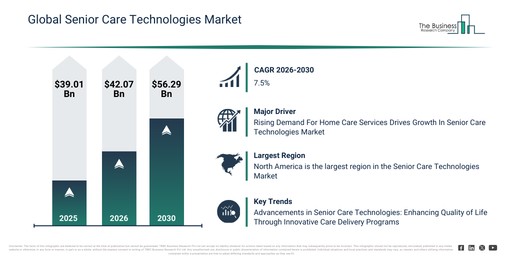
    The senior care technologies market has demonstrated significant expansion in recent years. This market is set to expand from $39.01 billion in 2025 to $42.07 billion in 2026, achieving a compound annual growth rate (CAGR) of 7.9%. The upward trend observed historically can be linked to factors like a growing aging demographic, the increasing occurrence of chronic illnesses among older individuals, the development of home-based care provisions, a heightened demand for assisted living solutions, and the increased acceptance of fundamental health monitoring devices.

    The senior care technologies market is projected to experience substantial expansion in the coming years. This market is predicted to reach $56.29 billion by 2030, exhibiting a compound annual growth rate (CAGR) of 7.5%. Factors contributing to this growth during the forecast period include an increasing need for independent living solutions for seniors, heightened investments in intelligent senior care technologies, a broader embrace of telehealth by older adults, a greater emphasis on proactive senior healthcare, and continuous advancements in interconnected care systems. Key trends anticipated over this period involve a surge in the use of remote monitoring systems for seniors, deeper integration of smart home technologies for care, an expansion of telehealth provisions specifically for elder care, a sharpened focus on solutions for fall detection and safety, and increased leveraging of data-informed care platforms.

    Access Your Free Sample Report for In-Depth Market Insights:

    https://www.thebusinessresearchcompany.com/sample.aspx?id=19692&type=smp

    What Drivers Are Influencing The Growth Of The Senior Care Technologies Market?

    The increasing inclination towards home care services is anticipated to boost the expansion of the senior care technologies market. Home care, also referred to as domiciliary care, encompasses a range of health and support provisions delivered within an individual’s residence, aiding them in maintaining independence and quality of life. The appeal of tailored care, the comfort of familiar surroundings, and technological advancements contribute to effective health management at home. Senior care technologies facilitate these services by enabling remote health monitoring, enhancing safety with fall detection systems, providing virtual consultations, and improving medication management, thereby ensuring seniors receive thorough and efficient home-based care. For example, in May 2025, the National Care Planning Council, a U.S.-based nonprofit advocacy organization, reported that in 2023, over 90% of seniors indicated a preference to age in place and receive care at home, a significant rise from previous years. Consequently, the rising preference for home care services is a key driver for the senior care technologies market.

    How Is The Senior Care Technologies Market Organized Into Various Segments?

    The senior care technologies market covered in this report is segmented –

    1) By Product Type: Safety And Security Systems, Fall Detection And Prevention Systems, Remote Health Monitoring Systems, Medication Management Systems, Socialization And Mental Stimulation Systems, Telehealthcare Systems, Other Products

    2) By Service Type: Home Care Services, Assisted Living Services, Skilled Nursing Services, Memory Care Services, Rehabilitation Services, Other Services

    3) By End-User: Home Care Settings, Senior Living Facilities, Hospitals And Clinics, Rehabilitation Centers, Other End-Users

    Subsegments:

    1) By Safety And Security Systems: Emergency Response Systems, Surveillance Systems, Access Control Systems

    2) By Fall Detection And Prevention Systems: Wearable Fall Detectors, Smart Home Fall Prevention Solutions, Alarm Systems

    3) By Remote Health Monitoring Systems: Vital Sign Monitoring Devices, Chronic Disease Management Systems, Telemonitoring Solutions

    4) By Medication Management Systems: Pill Dispensers, Medication Reminders, Digital Prescription Management

    5) By Socialization And Mental Stimulation Systems: Cognitive Training Tools, Social Engagement Platforms, Virtual Reality Experiences

    6) By Telehealthcare Systems: Video Consultation Platforms, Remote Diagnostics Tools, Integrated Health Management Systems

    7) By Other Products: Mobility Aids, Environmental Monitoring Systems, Assistive Technology Devices

    Which Trends Are Guiding The Evolution Of The Senior Care Technologies Market?

    Companies operating within the senior care technologies market are actively developing care delivery initiatives with the goal of improving the quality of life for older individuals, enhancing health outcomes, and making care services more efficient. These care delivery programs facilitate the integration of advanced tools and systems into comprehensive care plans, thereby improving health monitoring, enabling remote consultations, refining medication management, and offering personalized, proactive care to seniors. For example, in August 2023, Tata Consultancy Services (TCS), an India-based IT services and consulting company, launched Seniors Lab, an innovative digital care delivery program utilizing IoT-enabled sensors and wearables to monitor seniors’ activity, movement, and health parameters, and integrating these with healthcare systems and concierge services. This solution aims to enhance senior care by boosting safety, promoting independence, and improving overall well-being, marking a significant development in the senior care technologies market.

    Who Are The Primary Competitors In The Global Senior Care Technologies Market?

    Major companies operating in the senior care technologies market are McKesson Corporation, Medtronic plc, Koninklijke Philips N.V., Essity AB, OMRON Healthcare Co. Ltd., Demant A/S, GN Store Nord A/S, Cochlear Ltd, Alarm.com Inc., Invacare Corporation, Tunstall Healthcare Ltd., Permobil AB, Sunrise Medical LLC, Drive DeVilbiss Healthcare, Advanced Monitored Caregiving Inc., GrandPad Inc., MobileHelp LLC, GrandCare Systems LLC, Livongo Health Inc., VitalTech Affiliates LLC, Independa Inc., CarePredict Inc., BioSensics LLC

    Access The Complete Report For Deeper Market Insights:

    https://www.thebusinessresearchcompany.com/report/senior-care-technologies-global-market-report

    Which Global Regions Are Shaping The Competitive Landscape Of The Senior Care Technologies Market?

    North America was the largest region in the senior care technologies market in 2025. The regions covered in the senior care technologies market report are Asia-Pacific, South East Asia, Western Europe, Eastern Europe, North America, South America, Middle East, Africa.

    Request Your Customized Senior Care Technologies Market Research Report for Competitive Advantage:

    https://www.thebusinessresearchcompany.com/customise?id=19692&type=smp

    Browse Through More Reports Similar to the Global Senior Care Technologies Market 2026, By The Business Research Company

    Hypophosphatasia Treatment Market Report 2026

    https://www.thebusinessresearchcompany.com/report/hypophosphatasia-treatment-global-market-report

    Typhoid Vi Polysaccharide Vaccine Market Report 2026

    https://www.thebusinessresearchcompany.com/report/typhoid-vi-polysaccharide-vaccine-global-market-report

    Blood Screening Market Report 2026

    https://www.thebusinessresearchcompany.com/report/blood-screening-global-market-report

    Get in touch with us:

    The Business Research Company: https://www.thebusinessresearchcompany.com/

    Americas +1 310-496-7795

    Asia +44 7882 955267 & +91 8897263534

    Europe +44 7882 955267

    Email us at info@tbrc.info

    Follow us on:

    LinkedIn: https://in.linkedin.com/company/the-business-research-company

    YouTube: https://www.youtube.com/channel/UC24_fI0rV8cR5DxlCpgmyFQ

    Global Market Model: https://www.thebusinessresearchcompany.com/global-market-model
  • Semi-Solid Dosage Contract Manufacturing Market Future Outlook: Strong Growth Expected Toward $29.52 Billion by 2030

    Semi-Solid Dosage Contract Manufacturing Market Future Outlook: Strong Growth Expected Toward $29.52 Billion by 2030

    Uncover key drivers, emerging technologies, and competitive movements shaping the semi-solid dosage contract manufacturing market from 2026–2035 with trusted insights from The Business Research Company

    By how much is the Semi-Solid Dosage Contract Manufacturing Market expected to grow between 2026 and 2030?

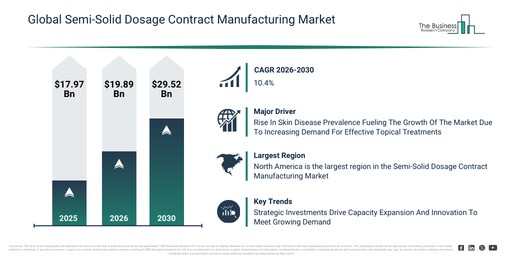
    The semi-solid dosage contract manufacturing market size has experienced rapid expansion over recent years. This market is projected to advance from $17.97 billion in 2025 to $19.89 billion in 2026, achieving a compound annual growth rate (CAGR) of 10.7%. The growth observed during the historic period can be primarily attributed to factors such as the increasing complexity within the pharmaceutical pipeline, rising cost pressures impacting in-house manufacturing, the expanding use of topical and transdermal drug formulations, a growing demand for contract manufacturing services, and the availability of specialized cmo capabilities.

    The semi-solid dosage contract manufacturing market is projected to experience substantial expansion in the coming years, reaching a valuation of $29.52 billion by 2030, driven by a compound annual growth rate (CAGR) of 10.4%. This anticipated growth during the forecast period is fueled by several factors, including a heightened demand for customized topical treatments, increased capital allocation towards innovative formulation techniques, the broadening scope of cosmeceutical outsourcing, a greater emphasis on using sustainable excipients, and intensified regulatory oversight concerning manufacturing standards. Key developments anticipated in this period encompass a rise in the outsourcing of semi-solid drug production, an escalating need for specialized dermatological preparations, wider integration of adaptable manufacturing processes, the proliferation of bio-based and natural formulation options, and a reinforced commitment to production methods that meet regulatory requirements.

    Access Your Free Sample Report for In-Depth Market Insights:

    https://www.thebusinessresearchcompany.com/sample.aspx?id=25899&type=smp

    Which Drivers Are Influencing Market Acceleration In The Semi-Solid Dosage Contract Manufacturing Market?

    The increasing occurrence of skin conditions is projected to stimulate the expansion of the semi-solid dosage contract manufacturing market in the future. These disorders involve conditions impacting the skin’s appearance or operation, frequently leading to signs like irritation, inflammation, or unusual skin growths. A rise in environmental pollution contributes to the increase in skin ailments, as it compromises the skin’s protective barrier, resulting in heightened sensitivity, allergic responses, and ongoing dermatological issues. The contract manufacturing of semi-solid dosage forms aids in preventing skin diseases through the provision of superior, consistently formulated topical treatments that effectively preserve and enhance skin wellness. For example, data from February 2023 by Cancer Research UK, a UK-based cancer research organization, indicates that the average annual incidence of melanoma skin cancer in the UK is predicted to increase from approximately 20,800 cases between 2023–2025 to about 26,500 cases by 2038–2040. Consequently, the widespread occurrence of skin conditions is a key factor propelling the expansion of the semi-solid dosage contract manufacturing market.

    What Segments Are Identified Within The Structure Of The Semi-Solid Dosage Contract Manufacturing Market?

    The semi-solid dosage contract manufacturing market covered in this report is segmented –

    1) By Type: Topical, Transdermal, Oral

    2) By Material Type: Synthetic, Natural, Bio-Based

    3) By Company Size: Large Size Companies, Medium And Small Size Companies

    4) By Therapeutic Application: Dermatology, Pain Management, Hormonal Therapy, Wound Care, Ophthalmic Disorders, Other Therapeutic Applications

    5) By End Use: Pharmaceutical Companies, Cosmeceutical Companies, Other End Uses

    Subsegments:

    1) By Topical: Creams, Ointments, Gels, Lotions, Pastes, Foams

    2) By Transdermal: Transdermal Gels, Transdermal Creams, Transdermal Sprays, Transdermal Emulsions, Medicated Patches

    3) By Oral: Oral Gels, Oral Pastes, Oral Suspensions, Oral Emulsions, Oral Jellies

    What Trends Are Projected To Support The Growth Of The Semi-Solid Dosage Contract Manufacturing Market?

    Major companies operating in the semi-solid dosage contract manufacturing market are emphasizing strategic investments to enter new markets and drive innovative solutions. Strategic investments are defined as long-term financial commitments made to support and strengthen a company’s core objectives, future growth, or competitive position. For example, in March 2025, LGM Pharma, a US-based provider of semi-solid dosage contract manufacturing services, declared an investment exceeding $6 million to expand its manufacturing plant in Rosenberg, Texas. This investment aims to significantly enhance production capacity for liquid, suspension, semi-solid, and suppository drug formulations to address the rising demand for domestic pharmaceutical manufacturing. This initiative aligns with LGM Pharma’s ongoing expansion in prescription drug development, including 505(b)(2) and ANDA programs. The upgrades at the Rosenberg site will enable increased output while ensuring full compliance with FDA requirements and current good manufacturing practices. The facility is expected to maintain continuous operation during the expansion period.

    Which Key Market Players Are Investing In Expansion And Innovation Within The Semi-Solid Dosage Contract Manufacturing Market?

    Major companies operating in the semi-solid dosage contract manufacturing market are The Lubrizol Corporation, Recipharm AB, Piramal Pharma Solutions Inc., Cambrex Corporation, ANI Pharmaceuticals, Aurigene Pharmaceutical Services Limited, DPT Laboratories Ltd., Douglas Pharmaceuticals Ltd., Mission Pharmacal Co., Bora Pharmaceuticals Co. Ltd., Ascendia Pharmaceuticals Inc., Fermion Oy, Ferndale Pharma Group, Sterling Pharmaceutical Services LLC, Aphena Pharma Solutions Inc., Eubioco LLC, Madras Pharmaceuticals, Quality CDMO, Axxelent Pharma Science, Tergus Pharma, MedPharm Ltd., Alcami Corporation

    Access The Complete Report For Deeper Market Insights:

    https://www.thebusinessresearchcompany.com/report/semi-solid-dosage-contract-manufacturing-global-market-report

    Which Regions Are Poised For Strategic Growth In The Semi-Solid Dosage Contract Manufacturing Market?

    North America was the largest region in the semi-solid dosage contract manufacturing market in 2025. Asia-Pacific is expected to be the fastest-growing region in the forecast period. The regions covered in the semi-solid dosage contract manufacturing market report are Asia-Pacific, South East Asia, Western Europe, Eastern Europe, North America, South America, Middle East, Africa.

    Request Your Customized Semi-Solid Dosage Contract Manufacturing Market Research Report for Competitive Advantage:

    https://www.thebusinessresearchcompany.com/customise?id=25899&type=smp

    Browse Through More Reports Similar to the Global Semi-Solid Dosage Contract Manufacturing Market 2026, By The Business Research Company

    Pharmaceutical Continuous Manufacturing Market Report 2026

    https://www.thebusinessresearchcompany.com/report/pharmaceutical-continuous-manufacturing-global-market-report

    Oral Solid Dosage Pharmaceutical Formulation Market Report 2026

    https://www.thebusinessresearchcompany.com/report/oral-solid-dosage-pharmaceutical-formulation-global-market-report

    Fill Finish Pharmaceutical Contract Manufacturing Market Report 2026

    https://www.thebusinessresearchcompany.com/report/fill-finish-pharmaceutical-contract-manufacturing-global-market-report

    Get in touch with us:

    The Business Research Company: https://www.thebusinessresearchcompany.com/

    Americas +1 310-496-7795

    Asia +44 7882 955267 & +91 8897263534

    Europe +44 7882 955267

    Email us at info@tbrc.info

    Follow us on:

    LinkedIn: https://in.linkedin.com/company/the-business-research-company

    YouTube: https://www.youtube.com/channel/UC24_fI0rV8cR5DxlCpgmyFQ

    Global Market Model: https://www.thebusinessresearchcompany.com/global-market-model
  • Revenue of the Self-Testing Market Predicted to Achieve $25.98 Billion by 2030, Driven by 8.7% CAGR

    Revenue of the Self-Testing Market Predicted to Achieve $25.98 Billion by 2030, Driven by 8.7% CAGR

    Uncover key drivers, emerging technologies, and competitive movements shaping the self-testing market from 2026–2035 with trusted insights from The Business Research Company

    What is the estimated market size of the Self-Testing Market by the end of 2030?

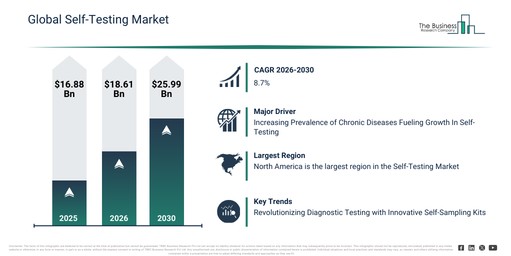
    The self-testing market has experienced substantial expansion in recent years. Its size is projected to increase from $16.88 billion in 2025 to $18.61 billion in 2026, exhibiting a compound annual growth rate (CAGR) of 10.3%. The historical growth of this market is attributable to heightened awareness of early disease detection, technological advancements in diagnostics, the increasing adoption of home-based testing, the broader scope of chronic disease monitoring, and regulatory approvals for OTC tests.

    The self-testing market is projected to experience robust expansion in the coming years. This market is anticipated to reach a valuation of $25.99 billion by 2030, exhibiting a compound annual growth rate (CAGR) of 8.7%. This expansion during the projection period is primarily driven by factors such as AI-integrated test interpretation, diagnostics compatible with smartphones, increased availability of infectious disease self-tests, testing linked to telemedicine, and customized testing solutions. Key developments expected in this period encompass rapid diagnostic kits, AI-powered test analysis, at-home lab testing, health tests connected via mobile devices, and specialized disease-specific test kits.

    Access Your Free Sample Report for In-Depth Market Insights:

    https://www.thebusinessresearchcompany.com/sample.aspx?id=14792&type=smp

    What Drivers Are Shaping Future Opportunities In The Self-Testing Market?

    The rising occurrence of chronic diseases is projected to fuel the expansion of the self-testing market moving forward. Chronic diseases are defined as long-term medical conditions that typically advance slowly and persist over an extended period. These illnesses stem from demographic shifts, lifestyle habits, environmental influences, and advancements in healthcare. Self-testing is employed in managing chronic diseases to enable individuals to actively oversee their health, improve adherence to treatment regimens, and facilitate the early detection of any complications or alterations in their condition. For instance, in April 2025, according to the Centers for Disease Control and Prevention, a US-based federal agency, data from 2023 showed that about 76.4% of U.S. adults reported having at least one of 12 selected chronic conditions, and 51.4% of U.S. adults reported multiple chronic conditions. Thus, the increasing prevalence of chronic diseases is a key driver for the growth of the self-testing market.

    Which Segments Are Gaining Traction In The Self-Testing Market?

    The self-testing market covered in this report is segmented –

    1) By Product: Kits, Devices, Strips

    2) By Sample Type: Blood, Urine, Stool, Other Sample Types

    3) By Distribution Channel: Online, Offline

    4) By Application: Blood Glucose Testing, Pregnancy And Fertility Testing, Cancer Testing, Drug Abuse Testing, Sexually Transmitted Disease Or Sexually Transmitted Infection Testing, Cholesterol Testing, HIV Testing, Thyroid Testing, Other Applications

    Subsegments:

    1) By Kits: Blood Glucose Testing Kits, Pregnancy Test Kits, Ovulation Test Kits, HIV Test Kits, COVID-19 Test Kits, Allergy Test Kits, Cholesterol Test Kits

    2) By Devices: Blood Glucose Meters, Thermometers (Digital, Infrared), Blood Pressure Monitors, Pulse Oximeters, ECG Or EKG Monitors, Pregnancy Test Devices (Electronic), Home Hearing Test Devices

    3) By Strips: Blood Glucose Test Strips, Urine Test Strips, Pregnancy Test Strips, Ovulation Test Strips, Cholesterol Test Strips, Urinary Tract Infection (UTI) Test Strips, Ketone Test Strips

    Which Trends Are Influencing The Performance And Direction Of The Self-Testing Market?

    Major companies operating in the self-testing market are concentrating on developing pioneering solutions, such as Cervicheck self-sampling kits, to deliver enhanced convenience, accessibility, and accuracy to users. This medical device enables individuals to gather biological samples, like blood, saliva, urine, or tissue, for diagnostic examination or analysis. For instance, in April 2023, Pragmatech Healthcare Solutions, an India-based biotechnology firm, introduced Cervicheck, a self-testing kit for screening women for the human papillomavirus (HPV), a significant cause of cervical cancer cases. This kit allows women to collect samples in the privacy of their homes, thereby addressing challenges of late detection resulting from reluctance to undergo sample collection at hospitals or clinics. Additionally, it features self-sampling and point-of-care detection. This kit also marks an important stride toward empowering women to identify cervical cancer early, with the aim of decreasing mortality rates and the burden associated with late-stage cancer detection.

    Who Are The Core Companies Influencing Trends In The Self-Testing Market?

    Major companies operating in the self-testing market are Roche Diagnostics, Abbott Laboratories, Quidel Corporation, OraSure Technologies, Meridian Bioscience, iHealth Labs, Everly Health, Helix OpCo, BioIQ, 23andMe, Pathway Genomics, Vitagene, Orig3n, LetsGetChecked, Cue Health, Ellume Health, OraQuick, Atomo Diagnostics, ACON Laboratories, SD Biosensor, OraSure Diagnostics

    Access The Complete Report For Deeper Market Insights:

    https://www.thebusinessresearchcompany.com/report/self-testing-global-market-report

    Which Regions Are Projected To Dominate The Self-Testing Market In The Coming Years?

    North America was the largest region in the self-testing market in 2025. Asia-Pacific is expected to be the fastest-growing region in the forecast period. The regions covered in the self-testing market report are Asia-Pacific, South East Asia, Western Europe, Eastern Europe, North America, South America, Middle East, Africa.

    Request Your Customized Self-Testing Market Research Report for Competitive Advantage:

    https://www.thebusinessresearchcompany.com/customise?id=14792&type=smp

    Browse Through More Reports Similar to the Global Self-Testing Market 2026, By The Business Research Company

    Esoteric Testing Market Report 2026

    https://www.thebusinessresearchcompany.com/report/esoteric-testing-global-market-report

    Software Testing Market Report 2026

    https://www.thebusinessresearchcompany.com/report/software-testing-global-market-report

    Testing Software Market Report 2026

    https://www.thebusinessresearchcompany.com/report/testing-software-global-market-report

    Get in touch with us:

    The Business Research Company: https://www.thebusinessresearchcompany.com/

    Americas +1 310-496-7795

    Asia +44 7882 955267 & +91 8897263534

    Europe +44 7882 955267

    Email us at info@tbrc.info

    Follow us on:

    LinkedIn: https://in.linkedin.com/company/the-business-research-company

    YouTube: https://www.youtube.com/channel/UC24_fI0rV8cR5DxlCpgmyFQ

    Global Market Model: https://www.thebusinessresearchcompany.com/global-market-model
  • Self-Improvement Products And Services Sector Forecast Shows Robust Momentum, Climbing to $93.74 Billion With 7.5% CAGR

    Self-Improvement Products And Services Sector Forecast Shows Robust Momentum, Climbing to $93.74 Billion With 7.5% CAGR

    Uncover key drivers, emerging technologies, and competitive movements shaping the self-improvement products and services market from 2026–2035 with trusted insights from The Business Research Company

    What was the valuation of the Self-Improvement Products And Services Market in 2026, and what figure is it projected to hit by 2030?

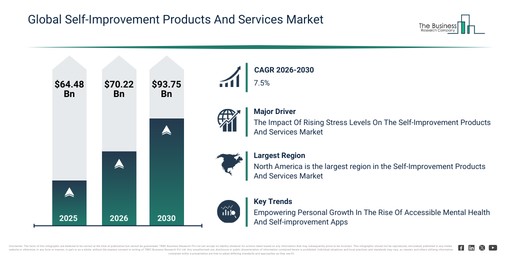
    The self-improvement products and services market size has demonstrated robust growth in recent times. This market is projected to expand from $64.48 billion in 2025 to $70.22 billion in 2026, exhibiting a compound annual growth rate (CAGR) of 8.9%. Historically, this expansion has stemmed from factors such as increasing awareness of mental health, a rise in disposable income, the proliferation of wellness apps, the development of online learning platforms, and a growing inclination towards self-care.

    The self-improvement products and services market is anticipated to experience robust expansion over the coming years. It is projected to grow to $93.75 billion in 2030, demonstrating a compound annual growth rate (CAGR) of 7.5%. The expansion during this forecast period can be attributed to elements like AI-driven personalized coaching, the integration of gamification, the global online learning expansion, wearable-based self-improvement tracking, and the increasing demand for holistic wellness programs. Key trends identified for the forecast period include virtual coaching platforms, mindfulness & meditation apps, online skill-building courses, personalized fitness programs, and subscription-based self-improvement tools.

    Access Your Free Sample Report for In-Depth Market Insights:

    https://www.thebusinessresearchcompany.com/sample.aspx?id=15266&type=smp

    Which Drivers Are Affecting Market Participation In The Self-Improvement Products And Services Market?

    Elevated stress levels are anticipated to propel the self-improvement products and services market in the future. A stress level defines the extent of mental and physical strain an individual experiences due to internal or external demands, typically measured across a spectrum from mild to intense. The increase in stress can be linked to greater work responsibilities, a growing presence of racism, economic concerns, sensations of social isolation, and uncertainty about the future. Self-improvement offerings assist in mitigating escalating stress by providing resources for mindfulness, developing resilience, and fostering personal growth, thereby encouraging feelings of empowerment and command. As an illustration, in November 2023, a report from the American Psychological Association (APA), a US-based scientific and professional body, indicated that 81% of older black adults perceived the U.S. racial climate as stressful in 2022. By 2023, discrimination emerged as a primary source of stress for 43% of black adults and 40% of Latino/a/e adults, exceeding the impact on Asian (31%) and white adults (19%). Furthermore, inflation caused stress for 83% of U.S. adults, with a majority also identifying the economy (69%) and money (66%) as considerable sources of tension. Consequently, increasing stress levels are fueling the expansion of the self-improvement products and services market.

    What Segment Categories Are Covered In The Self-Improvement Products And Services Market?

    The self-improvement products and services market covered in this report is segmented –

    1) By Type: Products, Services

    2) By Focus Area: Physical Health, Mental Health, Motivation And Inspiration, Self-Awareness, Skillset Enhancement

    3) By Application: Individuals, Enterprises, Other Applications

    Subsegments:

    1) By Products: Books And E-books, Audio And Video Learning Materials, Journals And Planners, Fitness And Wellness Products (Supplements, Equipment), Meditation And Relaxation Tools

    2) By Services: Coaching And Mentoring, Online Courses And Workshops, Counseling And Therapy, Fitness And Wellness Programs, Life Coaching And Personal Development Programs

    What Long-Term Trends Are Expected To Shape The Future Of The Self-Improvement Products And Services Market?

    Leading businesses within the self-improvement products and services market are prioritizing the creation of sophisticated solutions, such as the capacity to stream educational content from psychologists and mental health coaches, thereby offering users immediate entry to expert advice and assistance. This functionality enables individuals to interact instantly with mental health care providers, guaranteeing personalized help that addresses their unique requirements, accessible at any time and place. An example of this is Minds.et’s introduction of a new mental health and self-development application in June 2024. This app was specifically engineered to broaden access to mental health care and self-improvement for all, irrespective of their geographical location or economic standing. Key features of the application include an intuitive interface, customized resources, and direct opportunities to learn from psychologists and mental health coaches.

    Which Major Industry Participants Are Leading The Self-Improvement Products And Services Market Growth?

    Major companies operating in the self-improvement products and services market are BetterHelp, Weight Watchers, Dale Carnegie & Associates Inc., NutriSystem Inc., Udemy Inc., Coursera Inc., Duolingo, Calm, Noom Inc., Franklin Covey Co., Headspace Inc., Codecademy, Hay House Publishing, Mindvalley Inc., Landmark Worldwide, Gaia, Sandler Training, Insight Timer, Khan Academy Inc., The Chopra Center, Fred Pryor/Career-Track, Toastmasters International, SkillPath, Esalen Institute, Elevate Labs, Happify, Lumos Labs Inc.

    Access The Complete Report For Deeper Market Insights:

    https://www.thebusinessresearchcompany.com/report/self-improvement-products-and-services-global-market-report

    Which Region Is Expected To Experience The Fastest Growth In The Self-Improvement Products And Services Market?

    North America was the largest region in the self-improvement products and services market in 2025. Asia-Pacific is expected to be the fastest-growing region in the forecast period. The regions covered in the self-improvement products and services market report are Asia-Pacific, South East Asia, Western Europe, Eastern Europe, North America, South America, Middle East, Africa.

    Request Your Customized Self-Improvement Products And Services Market Research Report for Competitive Advantage:

    https://www.thebusinessresearchcompany.com/customise?id=15266&type=smp

    Browse Through More Reports Similar to the Global Self-Improvement Products And Services Market 2026, By The Business Research Company

    Product Engineering Services Market Report 2026

    https://www.thebusinessresearchcompany.com/report/product-engineering-services-global-market-report

    Self Services Technologies Market Report 2026

    https://www.thebusinessresearchcompany.com/report/self-services-technologies-global-market-report

    Self Service Technologies Market Report 2026

    https://www.thebusinessresearchcompany.com/report/self-service-technologies-global-market-report

    Get in touch with us:

    The Business Research Company: https://www.thebusinessresearchcompany.com/

    Americas +1 310-496-7795

    Asia +44 7882 955267 & +91 8897263534

    Europe +44 7882 955267

    Email us at info@tbrc.info

    Follow us on:

    LinkedIn: https://in.linkedin.com/company/the-business-research-company

    YouTube: https://www.youtube.com/channel/UC24_fI0rV8cR5DxlCpgmyFQ

    Global Market Model: https://www.thebusinessresearchcompany.com/global-market-model
  • Self-Administered Parenteral Market Anticipated to Record Steady Gains, Advancing to $32.19 Billion by 2030

    Self-Administered Parenteral Market Anticipated to Record Steady Gains, Advancing to $32.19 Billion by 2030

    Uncover key drivers, emerging technologies, and competitive movements shaping the self-administered parenteral market from 2026–2035 with trusted insights from The Business Research Company

    What are the forecasted starting (2026) and ending (2030) market sizes for the Self-Administered Parenteral Market?

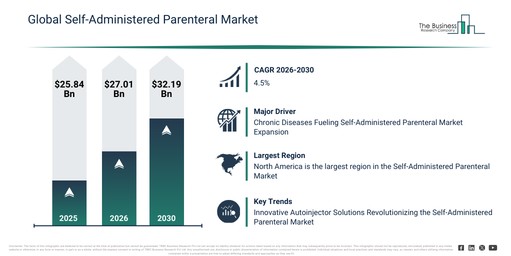
    The self-administered parenteral market has shown consistent expansion in recent years. Projections indicate it will grow from $25.84 billion in 2025 to $27.01 billion in 2026, with a compound annual growth rate (CAGR) of 4.5%. This market’s historical growth can be attributed to factors such as increasing chronic disease prevalence, the adoption of home-based treatments, advances in prefilled syringes, rising awareness of self-injection therapy, and the growth of biopharma.

    The self-administered parenteral market size is anticipated to experience consistent growth in the upcoming years. It is projected to expand to $32.19 billion by 2030, demonstrating a compound annual growth rate (CAGR) of 4.5%. This expansion over the forecast period is driven by the development of smart injector technologies, the integration with mobile health applications, customized dosage solutions, the broadening of autoimmune and oncology therapy, and regulatory encouragement for self-administration. Key developments during this period will encompass smart auto-injectors, increased adoption of prefilled syringes, on-demand therapy delivery, devices connected to telemedicine, and personalized drug dosage solutions.

    Access Your Free Sample Report for In-Depth Market Insights:

    https://www.thebusinessresearchcompany.com/sample.aspx?id=13927&type=smp

    What Drivers Are Supporting Technological Adoption In The Self-Administered Parenteral Market?

    The increasing prevalence of chronic diseases is anticipated to drive the expansion of the self-administered parenteral market in the future. Chronic diseases are enduring medical conditions that typically progress gradually and necessitate ongoing management and treatment. Self-administered parenteral products facilitate independent treatment management for chronic diseases, which can significantly enhance patient adherence compared to oral medication. For instance, in June 2023, the Institute for Health Metrics and Evaluation, a US-based public health research institute, reported that over half a billion people worldwide were living with diabetes. This figure is expected to more than double, reaching 1.3 billion individuals by 2050. Therefore, the escalating incidence of chronic diseases is a primary driver for the growth of the self-administered parenteral market.

    Which Segments Are Contributing To The Growth Of The Self-Administered Parenteral Market?

    The self-administered parenteral market covered in this report is segmented –

    1) By Product: Pre-Filled Syringes, Autoinjectors, Pen Injectors, Other Products

    2) By Usage: Disposable, Reusable

    3) By Distribution Channel: Hospital Pharmacies, Online Pharmacies, Home Healthcare Providers, Specialty Clinics, Other Distribution Channels

    4) By Application: Cardiovascular Diseases, Diabetes, Osteoporosis, Pain Management, Hormone Replacement, Other Applications

    Subsegments:

    1) By Pre-Filled Syringes: Glass Pre-Filled Syringes, Plastic Pre-Filled Syringes

    2) By Autoinjectors: Disposable Autoinjectors, Reusable Autoinjectors

    3) By Pen Injectors: Insulin Pen Injectors, Growth Hormone Pen Injectors, Other Pen Injectors

    4) By Other Products: Infusion Pumps, Needle-Free Injectors, Combination Devices

    Which Market Trends Are Opening Growth Opportunities In The Self-Administered Parenteral Market?

    Leading companies in the self-administered parenteral market are concentrating on developing innovative products, such as the UDENYCA autoinjector, to offer increased choice and control, thereby enhancing treatment accessibility for patients. An autoinjector is a medical device engineered to deliver a single dose of a specific drug, featuring an intuitive design where administration is triggered immediately and reliably by push-on-skin activation. For instance, in May 2023, Coherus BioSciences Inc., a US-based biotech company, introduced the UDENYCA autoinjector, a self-administered parenteral medication, in the US. The UDENYCA Autoinjector is a single-dose, prefilled autoinjector that provides patients with an additional administration option for pegfilgrastim. Its design is intuitive, with delivery initiated by push-on-skin activation, ensuring reliable and immediate dispensing of a full pegfilgrastim dose. Additionally, it includes several user-friendly features that facilitate successful delivery, such as fast dosing, intuitive design, dual coverage, suitability for at-home and in-office use, and a reduction in the risk of febrile neutropenia.

    Who Are The Prominent Global Companies Shaping The Self-Administered Parenteral Market Landscape?

    Major companies operating in the self-administered parenteral market are Pfizer Inc., Johnson & Johnson, Merck & Co. Inc., Sanofi S.A., AstraZeneca PLC, Roche Holding AG, Eli Lilly and Company, Novo Nordisk A S, Becton Dickinson and Company, Teva Pharmaceutical Industries Ltd., Mylan N V, Terumo Corporation, Catalent Inc., West Pharmaceutical Services Inc., Gerresheimer AG, Biocon Limited, Insulet Corporation, Halozyme Therapeutics Inc., Ypsomed AG, Antares Pharma Inc., SHL Medical AG, Owen Mumford Ltd., Novartis AG, Kaleo Inc., Haselmeier AG, ScPharmaceuticals Inc., Fresenius Kabi AG

    Access The Complete Report For Deeper Market Insights:

    https://www.thebusinessresearchcompany.com/report/self-administered-parenteral-global-market-report

    Which Geographic Areas Are Emerging As Strong Markets For The Self-Administered Parenteral Market?

    North America was the largest region in the self-administered parenteral market in 2025. The regions covered in the self-administered parenteral market report are Asia-Pacific, South East Asia, Western Europe, Eastern Europe, North America, South America, Middle East, Africa.

    Request Your Customized Self-Administered Parenteral Market Research Report for Competitive Advantage:

    https://www.thebusinessresearchcompany.com/customise?id=13927&type=smp

    Browse Through More Reports Similar to the Global Self-Administered Parenteral Market 2026, By The Business Research Company

    Large Volume Parenteral Lvp Market Report 2026

    https://www.thebusinessresearchcompany.com/report/large-volume-parenteral-lvp-global-market-report

    Parenteral Nutrition Market Report 2026

    https://www.thebusinessresearchcompany.com/report/parenteral-nutrition-global-market-report

    Small Volume Parenteral Market Report 2026

    https://www.thebusinessresearchcompany.com/report/small-volume-parenteral-global-market-report

    Get in touch with us:

    The Business Research Company: https://www.thebusinessresearchcompany.com/

    Americas +1 310-496-7795

    Asia +44 7882 955267 & +91 8897263534

    Europe +44 7882 955267

    Email us at info@tbrc.info

    Follow us on:

    LinkedIn: https://in.linkedin.com/company/the-business-research-company

    YouTube: https://www.youtube.com/channel/UC24_fI0rV8cR5DxlCpgmyFQ

    Global Market Model: https://www.thebusinessresearchcompany.com/global-market-model
  • Seizures Industry Poised for Rapid Growth, Forecast to Touch $5.74 Billion by 2030 at 5.7% CAGR

    Seizures Industry Poised for Rapid Growth, Forecast to Touch $5.74 Billion by 2030 at 5.7% CAGR

    Uncover key drivers, emerging technologies, and competitive movements shaping the seizures market from 2026–2035 with trusted insights from The Business Research Company

    What upper market value could the Seizures Market reach by 2030 starting from 2026 levels?

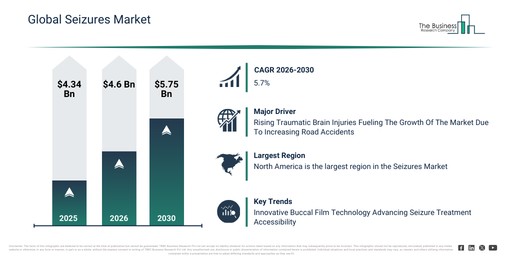
    The seizures market size has shown substantial growth recently. It is projected to expand from $4.34 billion in 2025 to $4.6 billion in 2026, progressing at a compound annual growth rate (CAGR) of 6.0%. The expansion observed in prior periods is attributable to the increasing prevalence of epilepsy, heightened diagnostic understanding, the accessibility of anti-epileptic drugs, a rise in healthcare expenditure, and technological progress in EEG devices.

    The seizures market is anticipated to exhibit robust expansion in the forthcoming years, with its size projected to reach $5.75 billion by 2030, reflecting a compound annual growth rate (CAGR) of 5.7%. This growth over the forecast period is primarily driven by factors such as AI-enabled seizure prediction tools, increased adoption of remote patient monitoring, the availability of personalized therapy solutions, the expansion of neurology-focused telehealth services, and the introduction of novel neurostimulation devices. Significant trends expected during this period include wearable seizure monitoring devices, home-based EEG solutions, AI-driven seizure prediction, tele-neurology consultations, and integration with health applications.

    Access Your Free Sample Report for In-Depth Market Insights:

    https://www.thebusinessresearchcompany.com/sample.aspx?id=23511&type=smp

    Which Drivers Are Influencing Long-Term Growth In The Seizures Market?

    A growing incidence of traumatic brain injuries is projected to drive the expansion of the seizures market in the future. Traumatic brain injuries (TBI) are defined as harm to the brain resulting from an abrupt external impact, such as a hit, shock, or piercing wound to the head. The rise in traumatic brain injuries is attributed to an escalation in road accidents, where high-speed impacts and inattentive driving contribute to more severe head trauma. Seizures can function as an early warning sign of traumatic brain injuries, assisting medical professionals in the more effective diagnosis and management of underlying brain damage. For example, in October 2023, the World Federation of Neurology, a UK-based organization dedicated to advancing neurological practice and research globally, reported that over 40% of the world’s population suffers from a neurological condition, a number expected to almost double by 2050. Consequently, the expanding occurrence of traumatic brain injuries is fueling the development of the seizures market.

    How Is The Seizures Market Divided Into Segments?

    The seizures market covered in this report is segmented –

    1) By Drug Type: First Generation Anti-Epileptics, Second Generation Anti-Epileptics, Third Generation Anti-Epileptics

    2) By Route Of Administration: Oral, Parenteral, Rectal Administration

    3) By Distribution Channel: Hospitals Pharmacies, Independent Pharmacies, Online Pharmacies

    4) By End-User: Hospitals And Clinics, Ambulatory Surgical Centers, Homecare Settings, Other End-Users

    Subsegments:

    1) By First Generation Anti-Epileptics: Phenytoin, Carbamazepine, Valproate, Phenobarbital, Primidone, Ethosuximide

    2) By Second Generation Anti-Epileptics: Lamotrigine, Levetiracetam, Topiramate, Oxcarbazepine, Zonisamide, Gabapentin, Pregabalin

    3) By Third Generation Anti-Epileptics: Lacosamide, Perampanel, Brivaracetam, Eslicarbazepine, Cenobamate

    How Are Emerging Trends Affecting The Progression Of The Seizures Market?

    Major companies in the seizures market are developing innovative products, such as buccal film, to improve treatment accessibility and patient compliance. A buccal film is a thin, dissolvable strip administered by placing it against the inner lining of the cheek (buccal mucosa), allowing the drug to be absorbed directly into the bloodstream. For example, in December 2024, Aquestive Therapeutics Inc., a US-based pharmaceutical company, obtained U.S. FDA approval for orphan drug exclusivity for Libervant (diazepam) buccal film, designated for pediatric patients aged two to five experiencing seizure clusters. This innovative formulation provides a non-invasive, easy-to-administer alternative to conventional diazepam delivery methods, ensuring rapid absorption through the buccal mucosa for a quicker onset of action. As the initial and sole orally administered diazepam film approved for this age group, Libervant aims to enhance caregiver convenience and improve patient compliance. This exclusivity additionally strengthens Aquestive’s standing in advancing oral film-based epilepsy therapies.

    Which Key Players Are Driving Competition In The Seizures Market?

    Major companies operating in the seizures market are Johnson & Johnson Service Inc., Sanofi S.A., Novartis AG, GlaxoSmithKline plc, Viatris Inc., Teva Pharmaceutical Industries Ltd., Bausch Health Companies Inc., UCB S.A., Eisai Co. Ltd., H. Lundbeck A S, Zydus Lifesciences Limited, SK Biopharmaceuticals Co. Ltd., Supernus Pharmaceuticals Inc., Taro Pharmaceutical Industries Ltd., Marinus Pharmaceuticals Inc., Eton Pharmaceuticals Inc., Sunovion Pharmaceuticals Inc., Pfizer Inc., Abbott Laboratories, Cipla Limited, Dr Reddy’s Laboratories Ltd., Aurobindo Pharma Limited

    Access The Complete Report For Deeper Market Insights:

    https://www.thebusinessresearchcompany.com/report/seizures-global-market-report

    Which Region Is Projected To Lead The Seizures Market During The Forecast Period?

    North America was the largest region in the seizures market in 2025. Asia-Pacific is expected to be the fastest-growing region in the forecast period. The regions covered in the seizures market report are Asia-Pacific, South East Asia, Western Europe, Eastern Europe, North America, South America, Middle East, Africa.

    Request Your Customized Seizures Market Research Report for Competitive Advantage:

    https://www.thebusinessresearchcompany.com/customise?id=23511&type=smp

    Browse Through More Reports Similar to the Global Seizures Market 2026, By The Business Research Company

    Antiepileptic Drugs Market Report 2026

    https://www.thebusinessresearchcompany.com/report/antiepileptic-drugs-global-market-report

    Epilepsy Drugs Market Report 2026

    https://www.thebusinessresearchcompany.com/report/epilepsy-drugs-global-market-report

    Grand Mal Seizure Treatment Market Report 2026

    https://www.thebusinessresearchcompany.com/report/grand-mal-seizure-treatment-global-market-report

    Get in touch with us:

    The Business Research Company: https://www.thebusinessresearchcompany.com/

    Americas +1 310-496-7795

    Asia +44 7882 955267 & +91 8897263534

    Europe +44 7882 955267

    Email us at info@tbrc.info

    Follow us on:

    LinkedIn: https://in.linkedin.com/company/the-business-research-company

    YouTube: https://www.youtube.com/channel/UC24_fI0rV8cR5DxlCpgmyFQ

    Global Market Model: https://www.thebusinessresearchcompany.com/global-market-model
  • Secure Messaging In Healthcare Market Performance Outlook 2026–2030: Revenue to Hit $2.35 Billion at 18.9% CAGR

    Secure Messaging In Healthcare Market Performance Outlook 2026–2030: Revenue to Hit $2.35 Billion at 18.9% CAGR

    Uncover key drivers, emerging technologies, and competitive movements shaping the secure messaging in healthcare market from 2026–2035 with trusted insights from The Business Research Company

    What level of CAGR-driven expansion is anticipated in the Secure Messaging In Healthcare Market between 2026 and 2030?

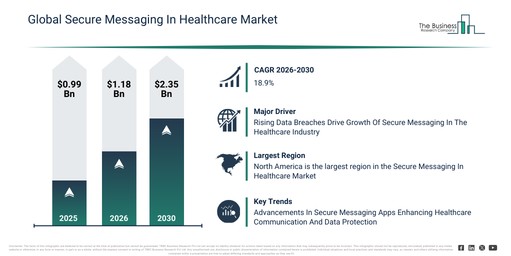
    The secure messaging in healthcare market has seen substantial expansion in recent years. It is projected to increase from $0.99 billion in 2025 to $1.18 billion in 2026, progressing at a compound annual growth rate (CAGR) of 19.0%. The historical growth of this market can be attributed to various factors such as the rising adoption of electronic health records, the increasing requirement for secure patient communication, regulatory mandates for HIPAA compliance, the expansion of telemedicine, and the growing penetration of smartphones in healthcare.

    The secure messaging in healthcare market is poised for significant expansion in the foreseeable future. Its size is expected to escalate to $2.35 billion by 2030, propelled by a robust compound annual growth rate (CAGR) of 18.9%. This projected increase during the forecast period is primarily driven by the integration of AI and machine learning into messaging, the adoption of cloud-native secure messaging platforms, the broader expansion of telehealth services, the rise of IoT-enabled healthcare devices, and increasing cross-border healthcare collaborations. Furthermore, key trends anticipated in this period include the integration of real-time communication, AI-powered clinical messaging, improved interoperability with EHR systems, the development of mobile healthcare solutions, and automation for regulatory compliance.

    Access Your Free Sample Report for In-Depth Market Insights:

    https://www.thebusinessresearchcompany.com/sample.aspx?id=19181&type=smp

    What Drivers Are Affecting Demand-Supply Dynamics In The Secure Messaging In Healthcare Market?

    An increase in data breaches within the healthcare sector is anticipated to fuel the expansion of secure messaging in the healthcare market in the future. These breaches specifically entail illicit access, revelation, or appropriation of confidential patient data, such as medical histories, personal identification, and financial particulars, thereby jeopardizing patient privacy and safety. The surge in healthcare data breaches is mainly attributed to factors like the greater digitization of health records, insufficient cybersecurity protocols, the significant worth of medical information in illicit markets, and the increasing complexity of cyberattacks aimed at susceptible healthcare infrastructures. Secure messaging in healthcare effectively minimizes data breaches by guaranteeing that sensitive patient data travels via encrypted and protected channels, thereby lessening the possibility of unauthorized entry. For example, in January 2025, as reported by the Identity Theft Resource Center (ITRC), a US-based non-profit organization, the volume of data compromises reached 3,205 in 2023, marking a 78 percentage points rise from 1,801 in 2022. Consequently, the escalating instances of data breaches within the healthcare sector are propelling the expansion of secure messaging in the healthcare market.

    What Segments Are Included Within The Secure Messaging In Healthcare Market?

    The secure messaging in healthcare market covered in this report is segmented –

    1) By Type: Medical Compliance, Direct Secure Messaging, Secure File Transfer, Secure Forms Processing, Secure Patient Information

    2) By Component: Software, Services

    3) By Application: Hospitals, Clinics, Nursing Homes, Long Term Care, Ambulatory Surgery Centers (ASCs) And Trauma Centers, Rehabilitation Centers, Home Healthcare

    Subsegments:

    1) By Medical Compliance: Regulatory Compliance Messaging, Patient Consent Management, Compliance Monitoring Notifications

    2) By Direct Secure Messaging: Secure Messaging for Physicians, Patient-To-Provider Messaging, Inter-Provider Messaging, Secure Messaging Platforms

    3) By Secure File Transfer: Patient Records Transfer, Laboratory Results Transfer, Referral And Consultation Documents Transfer

    4) By Secure Forms Processing: Patient Intake Forms, Insurance Verification Forms, Authorization Forms, Survey And Feedback Forms

    5) By Secure Patient Information: Health Information Exchange, Secure Communication With Patients, Electronic Health Record (EHR) Messaging

    Which Innovation Trends Are Advancing Developments Within The Secure Messaging In Healthcare Market?

    Key entities within the secure messaging in healthcare market are channeling their efforts into crafting innovative solutions, including secure messaging apps, to significantly advance healthcare communication. These secure messaging applications serve as communication instruments that utilize encryption to shield messages, thereby ensuring only designated recipients can view the content, thus preserving privacy and preventing unauthorized access. For example, in May 2024, Lumeca Health Inc., a Canada-based software company, unveiled Lumeca Messages, a secure messaging app developed specifically for healthcare professionals, which provides end-to-end encryption to safeguard patient communications. It incorporates features such as real-time messaging, secure file sharing, and effortless integration with electronic health records (EHRs), making sure all patient interactions comply with healthcare privacy regulations. Furthermore, the app presents a user-friendly interface with functionalities like message tagging and read receipts to boost communication efficiency among healthcare teams.

    Who Are The Top-Performing Companies In The Secure Messaging In Healthcare Market In Recent Years?

    Major companies operating in the secure messaging in healthcare market are Doximity, Imprivata Inc., Spok Holdings Inc., symplr Software LLC, PerfectServe Inc., Relatient LLC, Artera, TigerConnect Inc., QliqSOFT Inc., Virtru Corp, CipherHealth Inc., Luma Health Inc., OhMD Inc., Updox LLC, Medchat LLC, Paubox Inc., Kno2 LLC, Telmediq Inc., CareWire Inc., Medigram Inc., Spruce Health Inc., DrFirst Inc.

    Access The Complete Report For Deeper Market Insights:

    https://www.thebusinessresearchcompany.com/report/secure-messaging-in-healthcare-global-market-report

    Which Region Currently Holds The Largest Share Of The Secure Messaging In Healthcare Market?

    North America was the largest region in the secure messaging in healthcare market in 2025. Asia-Pacific is expected to be the fastest-growing region in the forecast period. The regions covered in the secure messaging in healthcare market report are Asia-Pacific, South East Asia, Western Europe, Eastern Europe, North America, South America, Middle East, Africa.

    Request Your Customized Secure Messaging In Healthcare Market Research Report for Competitive Advantage:

    https://www.thebusinessresearchcompany.com/customise?id=19181&type=smp

    Browse Through More Reports Similar to the Global Secure Messaging In Healthcare Market 2026, By The Business Research Company

    Medical Device Security Market Report 2026

    https://www.thebusinessresearchcompany.com/report/medical-device-security-global-market-report

    Healthcare Cyber Security Market Report 2026

    https://www.thebusinessresearchcompany.com/report/healthcare-cyber-security-global-market-report

    Mobile Healthcare Market Report 2026

    https://www.thebusinessresearchcompany.com/report/mobile-healthcare-global-market-report

    Get in touch with us:

    The Business Research Company: https://www.thebusinessresearchcompany.com/

    Americas +1 310-496-7795

    Asia +44 7882 955267 & +91 8897263534

    Europe +44 7882 955267

    Email us at info@tbrc.info

    Follow us on:

    LinkedIn: https://in.linkedin.com/company/the-business-research-company

    YouTube: https://www.youtube.com/channel/UC24_fI0rV8cR5DxlCpgmyFQ

    Global Market Model: https://www.thebusinessresearchcompany.com/global-market-model
  • Global Secondary Antibodies Market Set for Strong Expansion, Reaching $3.14 Billion With 9.5% CAGR by 2030

    Global Secondary Antibodies Market Set for Strong Expansion, Reaching $3.14 Billion With 9.5% CAGR by 2030

    Uncover key drivers, emerging technologies, and competitive movements shaping the secondary antibodies market from 2026–2035 with trusted insights from The Business Research Company

    What long-term size projections exist for the Secondary Antibodies Market covering 2026–2035?

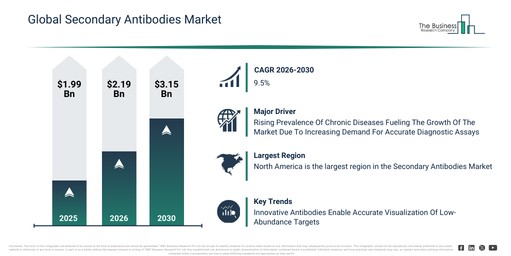
    The secondary antibodies market size has demonstrated significant growth in recent years. It is anticipated to expand from $1.99 billion in 2025 to $2.19 billion in 2026, registering a compound annual growth rate (CAGR) of 9.8%. Historically, this growth has been influenced by an increase in immunoassay-based research, the expansion of life science laboratories, a greater adoption of western blotting and ELISA, advancements in antibody purification technologies, and a rise in biomedical research funding.

    The secondary antibodies market size is anticipated to demonstrate substantial growth in the upcoming years. It is projected to expand to $3.15 billion by 2030, achieving a compound annual growth rate (CAGR) of 9.5%. This growth throughout the forecast period can be attributed to the rising demand for high-throughput diagnostics, the expansion of precision medicine research, increasing investments in proteomics and genomics, the growing adoption of automated assay platforms, and innovations in antibody engineering. Significant trends during this period include an increasing demand for highly cross-adsorbed secondary antibodies, a rising utilization of fluorophore-conjugated antibodies, their growing adoption in multiplex assays, the expansion of recombinant secondary antibody production, and an enhanced focus on signal sensitivity and specificity.

    Access Your Free Sample Report for In-Depth Market Insights:

    https://www.thebusinessresearchcompany.com/sample.aspx?id=30383&type=smp

    Which Drivers Are Impacting The Competitive Landscape Of The Secondary Antibodies Market?

    The increasing occurrence of chronic illnesses is anticipated to drive the expansion of the secondary antibodies market in the future. These conditions represent enduring health issues that manifest gradually and persist over a long duration, frequently necessitating ongoing medical attention. The expanding presence of chronic diseases is partially attributed to sedentary habits, since extended periods of sitting and insufficient exercise elevate the likelihood of developing ailments like heart conditions and diabetes. Secondary antibodies contribute to managing chronic diseases by facilitating the accurate identification of biomarkers, thereby becoming crucial for diagnostic testing and tracking the advancement of illnesses. They enhance the sensitivity and specificity of assays, thus enabling prompt and precise choices regarding treatment. As an illustration, data from June 2024 by the National Health Service, a government body in the UK, revealed that 3,615,330 people registered with a general practitioner (GP) received a diagnosis of non-diabetic hyperglycemia or pre-diabetes (a state characterized by elevated blood sugar levels, insufficient to be categorized as diabetes) in 2023. This represented an 18% rise from the 3,065,825 instances recorded in 2022. Consequently, the increasing incidence of chronic illnesses is fueling the expansion of the secondary antibodies market.

    What Leading Segments Are Studied In The Secondary Antibodies Market?

    The secondary antibodies market covered in this report is segmented –

    1) By Product Type: Monoclonal, Polyclonal, Other Product Types

    2) By Host Species: Goat, Rabbit, Donkey, Mouse, Other Host Species

    3) By Conjugate Type: Enzyme-Conjugated, Fluorophore-Conjugated, Unconjugated, Other Conjugate Types

    4) By Application: Western Blotting, Immunohistochemistry, Enzyme-Linked Immunosorbent Assay (ELISA), Flow Cytometry, Other Applications

    5) By End-User: Pharmaceutical And Biotechnology Companies, Academic And Research Institutes, Hospitals And Diagnostic Centers, Contract Research Organizations (CROs)

    Subsegments:

    1) By Monoclonal: Recombinant Monoclonal Secondary Antibody, Hybridoma Derived Monoclonal Secondary Antibody, Species Specific Monoclonal Secondary Antibody, Isotype Specific Monoclonal Secondary Antibody, Light Chain Specific Monoclonal Secondary Antibody

    2) By Polyclonal: Affinity Purified Polyclonal Secondary Antibody, Cross Adsorbed Polyclonal Secondary Antibody, Highly Cross Adsorbed Polyclonal Secondary Antibody, Species Specific Polyclonal Secondary Antibody, Isotype Specific Polyclonal Secondary Antibody

    3) By Other Product Types: Fragment Antigen Binding Secondary Antibody, Fc Fragment Specific Secondary Antibody, Single Domain Antibody Secondary Reagent, Nanobody Based Secondary Reagent, Pre Adsorbed Secondary Antibody

    Which Competitive Trends Are Impacting The Structure Of The Secondary Antibodies Market?

    Major companies within the secondary antibodies market are concentrating on developing advanced products, such as recombinant monoclonal antibodies, to enhance experimental reproducibility, boost specificity, and reduce lot-to-lot variability. Recombinant monoclonal antibodies are antibodies produced in a controlled cell line system using genetically defined sequences, ensuring high consistency and an unlimited supply. For instance, in October 2023, Proteintech Group Inc., a US-based company that manufactures and supplies high-quality antibodies, proteins, and ELISA kits, launched Multi-rAb Recombinant Secondary Antibodies. These antibodies deliver more consistent and reproducible performance because they are produced using controlled recombinant technology, rather than relying on animal-derived variability. They provide stronger and cleaner signal detection in immunoassays, enabling researchers to visualize low-abundance targets with greater clarity. This advancement improves the accuracy and reproducibility of experiments in applications like immunofluorescence and western blotting, supporting more reliable scientific conclusions.

    Which Leading Companies Dominate The Secondary Antibodies Market Share?

    Major companies operating in the secondary antibodies market are Thermo Fisher Scientific Inc., Merck KGaA, Agilent Technologies Inc., Bio-Techne Corporation, Miltenyi Biotec GmbH, GenScript Biotech Corporation, Promega Corporation, Sino Biological Inc., Cell Signaling Technology Inc., Fortis Life Sciences, OriGene Technologies Inc., Becton Dickinson and Company, GeneTex Inc., Proteintech Group Inc., Santa Cruz Biotechnology Inc., Creative Diagnostics Inc., Jackson ImmunoResearch Laboratories Inc., SouthernBiotech LLC, MyBioSource Inc., Biotium Inc.

    Access The Complete Report For Deeper Market Insights:

    https://www.thebusinessresearchcompany.com/report/global-secondary-antibodies-market-report

    How Does The Secondary Antibodies Market Perform Across Major Global Regions?

    North America was the largest region in the secondary antibodies market in 2025. Asia-Pacific is expected to be the fastest-growing region in the forecast period. The regions covered in the secondary antibodies market report are Asia-Pacific, South East Asia, Western Europe, Eastern Europe, North America, South America, Middle East, Africa.

    Request Your Customized Secondary Antibodies Market Research Report for Competitive Advantage:

    https://www.thebusinessresearchcompany.com/customise?id=30383&type=smp

    Browse Through More Reports Similar to the Global Secondary Antibodies Market 2026, By The Business Research Company

    Monoclonal Antibodies Market Report 2026

    https://www.thebusinessresearchcompany.com/report/monoclonal-antibodies-global-market-report

    Polyclonal Antibodies Market Report 2026

    https://www.thebusinessresearchcompany.com/report/polyclonal-antibodies-global-market-report

    Antibody Discovery Market Report 2026

    https://www.thebusinessresearchcompany.com/report/antibody-discovery-global-market-report

    Get in touch with us:

    The Business Research Company: https://www.thebusinessresearchcompany.com/

    Americas +1 310-496-7795

    Asia +44 7882 955267 & +91 8897263534

    Europe +44 7882 955267

    Email us at info@tbrc.info

    Follow us on:

    LinkedIn: https://in.linkedin.com/company/the-business-research-company

    YouTube: https://www.youtube.com/channel/UC24_fI0rV8cR5DxlCpgmyFQ

    Global Market Model: https://www.thebusinessresearchcompany.com/global-market-model