Month: May 2026

  • Magnetic Overband Separator Market Anticipated to Record Steady Gains, Advancing to $0.96 Billion by 2030

    Magnetic Overband Separator Market Anticipated to Record Steady Gains, Advancing to $0.96 Billion by 2030

    Uncover key drivers, emerging technologies, and competitive movements shaping the magnetic overband separator market from 2026–2035 with trusted insights from The Business Research Company

    What are the forecasted starting (2026) and ending (2030) market sizes for the Magnetic Overband Separator Market?

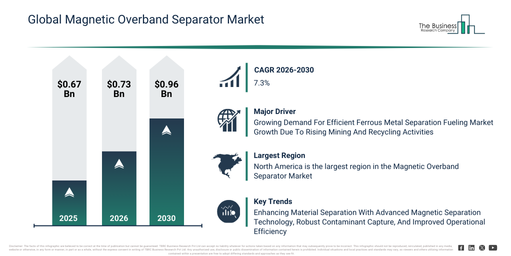
    The magnetic overband separator market has demonstrated strong expansion in recent years. Its valuation is set to rise from $0.67 billion in 2025 to $0.73 billion in 2026, at a compound annual growth rate (CAGR) of 7.6%. This growth experienced in the past can be attributed to the increasing demand within the mining sector, wider adoption in recycling processes, the growing requirement for equipment protection, the broadening of construction and manufacturing operations, and an enhanced focus on ensuring product purity.

    The magnetic overband separator market is anticipated to experience robust expansion over the coming years. By 2030, this market is projected to reach $0.96 billion, demonstrating a compound annual growth rate (CAGR) of 7.3%. This projected growth is largely driven by factors such as the rise in automation within material handling processes, increased use of both permanent and electromagnets, greater investment in smart separator technologies, wider applications in e-waste recycling, and heightened regulatory emphasis on safety and preventing contamination. Significant trends expected during this period involve enhancements in magnetic separator design, new developments in self-cleaning and automated solutions, the creation of more energy-efficient and long-lasting separators, exploration into hybrid separation methods and sensor-based sorting, and progress in integrating AI and IoT for predictive maintenance.

    Access Your Free Sample Report for In-Depth Market Insights:

    https://www.thebusinessresearchcompany.com/sample.aspx?id=30644&type=smp

    What Drivers Are Supporting Technological Adoption In The Magnetic Overband Separator Market?

    The magnetic overband separator market is anticipated to expand due to an increasing need for effective ferrous metal separation. This separation method involves employing magnetic force to extract iron-containing metallic impurities from bulk materials and scrap, thereby safeguarding machinery and preserving material quality. This heightened demand stems from an increasing global dependence on recycled ferrous scrap and greater mining production, leading to a larger quantity of metal-laden material needing separation. Magnetic overband separators facilitate this efficient separation by allowing for the continuous extraction of ferrous impurities, enhancing the dependability of processes, and guaranteeing a purer material flow within mining and recycling operations. For example, data from the World Steel Association, a Belgium-based steel industry body, indicates that in October 2024, global steel output in 2023 utilized around 630 million metric tons of recycled scrap, making up almost 30% of total crude steel production, an increase from approximately 28% in 2022. Consequently, the escalating requirement for efficient ferrous metal separation is fueling the expansion of the magnetic overband separator market.

    What Segment Types Are Examined In The Magnetic Overband Separator Market?

    The magnetic overband separator market covered in this report is segmented –

    1) By Magnet Type: Permanent Magnet, Electromagnet

    2) By Separator Type: Cross-Belt Separator, Over-Belt Separator, Inline Separator

    3) By Cleaning Mechanism: Self-Cleaning, Manual Cleaning

    4) By Application: Mining, Recycling, Material Handling, Power Generation

    5) By End Use: Construction, Manufacturing, Waste Management

    Subsegments:

    1) By Permanent Magnet: Ceramic Magnet, Alnico Magnet, Neodymium Magnet, Ferrite Magnet

    2) By Electromagnet: Solenoid Electromagnet, Coil Wound Electromagnet, Electro Permanent Magnet, Laminated Core Electromagnet

    What Trends Are Driving The Growth Trajectory Of The Magnetic Overband Separator Market?

    Leading companies active in the magnetic overband separator market are concentrating on developing advanced solutions, such as magnetic separation technology, to extract tramp metal and ferrous contaminants from bulk materials and conveyor lines. This endeavor aims to safeguard downstream equipment and enhance product quality. Magnetic separation technology refers to the application of permanent magnets or electromagnets to attract and secure metallic particles from material streams, thereby ensuring continuous operation and reducing wear on processing equipment. For instance, in September 2023, Magnetic Products Inc., a US-based manufacturer of industrial magnetic separation and material handling systems, introduced the Intell-I-Mag drawer magnet, which features two-inch-diameter magnetic tubes engineered to improve magnetic field strength and contaminant extraction performance. The Intell-I-Mag’s cavity design facilitates the effective capture of fine ferrous particles while also offering easy maintenance and removal, making it suitable for high-throughput operations in recycling, quarrying, mining, and other bulk material processing sectors. This launch underscores the growing industry emphasis on magnetic overband separator systems that integrate powerful magnetic separation technology with user-friendly designs to elevate material purity, minimize equipment downtime, and lower lifecycle costs.

    Who Are The Primary Competitors In The Global Magnetic Overband Separator Market?

    Major companies operating in the magnetic overband separator market are Metso Corporation, Multotec Group (Pty) Ltd, Eriez Manufacturing Co., Bunting Magnetics Co. Inc., Walker Magnetics Ltd., STEINERT GmbH, Saideep Magnetics Pvt. Ltd., Kumar Magnet Industries Pvt. Ltd., Jaykrishna Magnetics Pvt. Ltd., Vibromag Industries, Master Magnets Ltd., Goudsmit Magnetics Group B.V., Electro Flux Equipments Pvt. Ltd., IFE Aufbereitungstechnik GmbH, Excel Magnetics Pvt. Ltd., Dings Magnetics Group, Jaikar Magnet Equipments Pvt. Ltd., Shyam Magnet Pvt. Ltd., Magna Tronix Pvt. Ltd., Royal Magnetics Pvt. Ltd.

    Access The Complete Report For Deeper Market Insights:

    https://www.thebusinessresearchcompany.com/report/magnetic-overband-separator-market-report

    Which Global Regions Are Shaping The Competitive Landscape Of The Magnetic Overband Separator Market?

    North America was the largest region in the magnetic overbend separator market in 2025. Asia-Pacific is expected to be the fastest-growing region in the forecast period. The regions covered in the magnetic overband separator market report are Asia-Pacific, South East Asia, Western Europe, Eastern Europe, North America, South America, Middle East, Africa.

    Request Your Customized Magnetic Overband Separator Market Research Report for Competitive Advantage:

    https://www.thebusinessresearchcompany.com/customise?id=30644&type=smp

    Browse Through More Reports Similar to the Global Magnetic Overband Separator Market 2026, By The Business Research Company

    Magnetic Beads Market 2026

    https://www.thebusinessresearchcompany.com/report/magnetic-beads-market

    Magnetic Sensor Market Report 2026

    https://www.thebusinessresearchcompany.com/report/magnetic-sensor-global-market-report

    ultra wideband global market report

    https://www.thebusinessresearchcompany.com/report/ultra-wideband-global-market-report

    Get in touch with us:

    The Business Research Company: https://www.thebusinessresearchcompany.com/

    Americas +1 310-496-7795

    Asia +44 7882 955267 & +91 8897263534

    Europe +44 7882 955267

    Email us at marketing@tbrc.info

    Follow us on:

    LinkedIn: https://in.linkedin.com/company/the-business-research-company

    YouTube: https://www.youtube.com/channel/UC24_fI0rV8cR5DxlCpgmyFQ

    Global Market Model: https://www.thebusinessresearchcompany.com/global-market-model
  • Longevity Retreats Industry Poised for Rapid Growth, Forecast to Touch $17.79 Billion by 2030 at 12.6% CAGR

    Longevity Retreats Industry Poised for Rapid Growth, Forecast to Touch $17.79 Billion by 2030 at 12.6% CAGR

    Uncover key drivers, emerging technologies, and competitive movements shaping the longevity retreats market from 2026–2035 with trusted insights from The Business Research Company

    What upper market value could the Longevity Retreats Market reach by 2030 starting from 2026 levels?

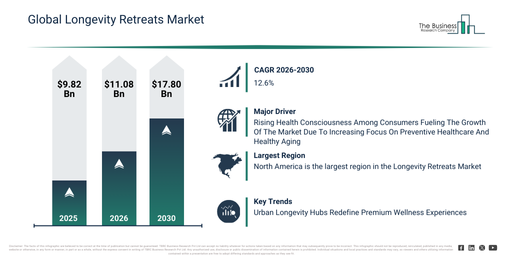
    The longevity retreats market has experienced substantial growth in recent years. It will grow from $9.82 billion in 2025 to $11.08 billion in 2026 at a compound annual growth rate (CAGR) of 12.9%. The market’s historical expansion is largely due to increasing awareness of preventive healthcare, a rising demand for personalized wellness programs, the growing occurrence of lifestyle-related diseases, the development of luxury wellness tourism, and an increase in disposable income among the affluent population.

    The longevity retreats market is set for substantial growth in the upcoming years, with projections indicating it will expand to $17.80 billion by 2030, exhibiting a compound annual growth rate (CAGR) of 12.6%. This expansion during the forecast period is primarily driven by the increasing integration of digital health and wearable technology, a heightened focus on mental health and stress management, the widespread adoption of holistic and integrative wellness practices, a rising interest in anti-ageing and longevity solutions, and the creation of corporate wellness and preventive healthcare packages. Prominent trends observed in this period include technological advancements in medical diagnostics, innovations in therapeutic treatments, ongoing research and development in biohacking and performance enhancement, the emergence of sustainable and eco-friendly retreat methodologies, and improvements in virtual and hybrid wellness program offerings.

    Access Your Free Sample Report for In-Depth Market Insights:

    https://www.thebusinessresearchcompany.com/sample.aspx?id=30642&type=smp

    Which Drivers Are Influencing Long-Term Growth In The Longevity Retreats Market?

    The increasing health consciousness among consumers is anticipated to fuel the expansion of the longevity retreats market moving forward. This consumer health consciousness signifies individuals’ awareness and proactive stance towards maintaining good health through their lifestyle and dietary choices. The surge in mindful eating habits is attributable to a heightened understanding of diet-related illnesses, prompting more people to select nutritious foods and decrease their sugar intake. Consumer health consciousness improves longevity retreats by boosting interest in preventive healthcare, holistic well-being, and proactive aging solutions. It creates a need for immersive retreat experiences that incorporate medical diagnostics, customized wellness programs, nutrition, fitness, and restorative therapies to uphold long-term health and vitality. For example, in June 2024, data from the International Food Information Council, a US-based nonprofit organization, revealed that most Americans are increasingly prioritizing protein consumption, with figures climbing from 59% in 2022 to 67% in 2023 and 71% in 2024. Hence, the growing health consciousness among consumers is propelling the growth of the longevity retreats market.

    Which Segments Are Driving Activity In The Longevity Retreats Market?

    The longevity retreats market covered in this report is segmented –

    1) By Type: Wellness Retreats, Medical Retreats, Holistic Retreats, Detox Retreats, Other Types

    2) By Service: Accommodation, Nutrition Programs, Fitness And Physical Activities, Spa And Therapies, Medical Consultations, Other Services

    3) By Age Group: Adults, Seniors, Others Age Groups

    4) By Booking Channel: Online, Offline

    Subsegments:

    1) By Wellness Retreats: Mindfulness Programs, Fitness Programs, Spa Treatments, Nutrition Plans, Yoga Sessions

    2) By Medical Retreats: Medical Assessments, Preventive Screenings, Therapeutic Treatments, Diagnostic Services, Lifestyle Counselling

    3) By Holistic Retreats: Meditation Programs, Energy Healing, Mind Body Therapy, Yoga And Breathing Sessions, Stress Management Programs

    4) By Detox Retreats: Detox Nutrition Plans, Cleansing Programs, Hydrotherapy Sessions, Body Detox Treatments, Digital Detox Programs

    5) By Other Types: Customized Wellness Packages, Corporate Wellness Programs, Family Wellness Programs, Adventure And Wellness Programs, Biohacking Programs

    What Upcoming Trends Are Likely To Define The Future Path Of The Longevity Retreats Market?

    Leading companies operating in the longevity retreats market are concentrating on innovative, experiential, and wellness-focused approaches, exemplified by urban Longevity Hubs, to address the increasing demand for preventive healthcare, tailored wellness programs, and upscale holistic living. These Urban Longevity Hubs integrate luxurious multi-floor wellness centers within hotels and resorts, offering diagnostic evaluations, AI-powered health scoring, and customized interventions like movement therapies, detoxification protocols, and aesthetic treatments. Their purpose is to extend healthspan while providing premium, accessible wellness experiences in city environments. For instance, in March 2024, Clinique La Prairie S.A., a luxury health and wellness company based in Switzerland, partnered with One&Only, an ultra-luxury hospitality company from the United Arab Emirates, to launch a Longevity Hub at One&Only One Za’abeel in Dubai. This hub features multi-level personalized assessments, cryotherapy, infrared therapies, and membership programs designed to target five key health markers for customized interventions. These urban centers enable year-round revenue generation for wellness brands, attracting health-conscious clients globally who seek data-driven, high-touch longevity services in major metropolitan markets.

    Which Key Market Players Are Investing In Expansion And Innovation Within The Longevity Retreats Market?

    Major companies operating in the longevity retreats market are Six Senses Douro Valley, Champneys, Canyon Ranch Holdings LLC, Lanserhof Management GmbH, Clinique La Prairie Group, Pritikin Longevity Center + Spa, SHA Wellness Clinic, Grand Resort Bad Ragaz Group, Fiuggi Palace S.r.l., YO1 Longevity & Health Resorts, The Ranch, Red Mountain Resort, Chenot Palace Weggis AG, Swissmed Health, Euphoria Retreat S.A, MAYRLIFE Medical Health Resort Altaussee, My Longevity Retreat, Palasiet, Your Longevity Retreat, Seven Springs

    Access The Complete Report For Deeper Market Insights:

    https://www.thebusinessresearchcompany.com/report/longevity-retreats-market-report

    Which Regions Are Poised For Strategic Growth In The Longevity Retreats Market?

    North America was the largest region in the longevity retreats market in 2025. Asia-Pacific is expected to be the fastest-growing region in the forecast period. The regions covered in the longevity retreats market report are Asia-Pacific, South East Asia, Western Europe, Eastern Europe, North America, South America, Middle East, Africa.

    Request Your Customized Longevity Retreats Market Research Report for Competitive Advantage:

    https://www.thebusinessresearchcompany.com/customise?id=30642&type=smp

    Browse Through More Reports Similar to the Global Longevity Retreats Market 2026, By The Business Research Company

    Nature Retreats Market Report 2026

    https://www.thebusinessresearchcompany.com/report/nature-retreats-global-market-report

    Wellness Retreat Market Report 2026

    https://www.thebusinessresearchcompany.com/report/wellness-retreat-global-market-report

    Retirement Communities Market

    https://www.thebusinessresearchcompany.com/report/retirement-communities-market

    Get in touch with us:

    The Business Research Company: https://www.thebusinessresearchcompany.com/

    Americas +1 310-496-7795

    Asia +44 7882 955267 & +91 8897263534

    Europe +44 7882 955267

    Email us at marketing@tbrc.info

    Follow us on:

    LinkedIn: https://in.linkedin.com/company/the-business-research-company

    YouTube: https://www.youtube.com/channel/UC24_fI0rV8cR5DxlCpgmyFQ

    Global Market Model: https://www.thebusinessresearchcompany.com/global-market-model
  • Longevity BioTech Market Performance Outlook 2026–2030: Revenue to Hit $34.82 Billion at 10.7% CAGR

    Longevity BioTech Market Performance Outlook 2026–2030: Revenue to Hit $34.82 Billion at 10.7% CAGR

    Uncover key drivers, emerging technologies, and competitive movements shaping the longevity biotech market from 2026–2035 with trusted insights from The Business Research Company

    What level of CAGR-driven expansion is anticipated in the Longevity BioTech Market between 2026 and 2030?

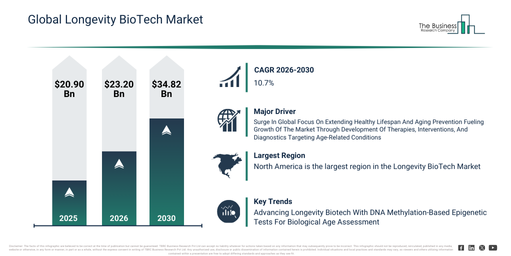
    The longevity biotech market size has observed significant expansion in recent years. It is projected to increase from $20.90 billion in 2025 to $23.20 billion in 2026, achieving a compound annual growth rate (CAGR) of 11.0%. The past growth can be linked to heightened investment in anti-aging research, a rise in the prevalence of age-related chronic diseases, growing public interest in extending healthspan, increased funding from biotech venture capital, and a rising uptake of genetic and cellular therapies.

    The longevity biotech market is poised for significant expansion in the upcoming years. It is forecast to achieve a size of $34.82 billion in 2030, exhibiting a compound annual growth rate (CAGR) of 10.7%. This expansion during the projection period is linked to the broadening scope of regenerative medicine pipelines, an uptick in collaborations between pharmaceutical companies and longevity biotech firms, a heightened need for gene-based therapies, the progression of personalized wellness diagnostics, and increased cooperation between research institutes and biotech companies. Noteworthy trends expected over the forecast period involve advancements in cellular rejuvenation therapies, developments in gene-editing technologies, progress in stem-cell-based regeneration, novelties in senolytic drug development, and innovations in epigenetic reprogramming tools.

    Access Your Free Sample Report for In-Depth Market Insights:

    https://www.thebusinessresearchcompany.com/sample.aspx?id=30639&type=smp

    What Drivers Are Affecting Demand-Supply Dynamics In The Longevity BioTech Market?

    A growing global emphasis on extending healthy lifespans and preventing age-related decline is anticipated to drive the expansion of the longevity biotech market. Healthy aging refers to the process of maintaining functional abilities, delaying the onset of age-related diseases, and fostering physical and mental well-being throughout one’s life. This heightened focus on healthy aging is influenced by demographic shifts, particularly rapidly expanding elderly populations, which have intensified the demand for medical advancements and preventive health solutions. Longevity biotechnology supports this aim by developing therapies, diagnostics, and preventive interventions that target the biological mechanisms of aging, enhance cellular resilience, and reduce the risk of age-related conditions. For example, in November 2023, according to the World Health Organization, a Geneva-based global health authority, the global population aged 60 years and older is projected to increase from 1.1 billion in 2023 to 1.4 billion by 2030 and reach 2.1 billion by 2050, underscoring the escalating magnitude of health challenges associated with aging. Therefore, the increasing worldwide focus on prolonging healthy lives and preventing aging is fueling the growth of the longevity biotech market.

    How Is The Longevity BioTech Market Organized Into Various Segments?

    The longevity biotech market covered in this report is segmented –

    1) By Service: Longevity Consultation, Biological Age Testing, Preventive Health Programs

    2) By Therapeutic Approach: Senolytics, Gene Therapies, Regenerative Medicine, Metabolic Modulators, Mitochondrial Therapies

    3) By Technology: Gene Editing Technology, Artificial Intelligence And Machine Learning, Stem Cell And Regenerative Medicine, Multi-Omics Analysis Platforms, Advanced Drug Screening

    4) By Application: Healthcare, Biotech, Pharmaceuticals, Wellness, Aging Population

    5) By End User: Clinics, Hospitals, Research Institutes, Direct-To-Consumer

    Subsegments:

    1) By Longevity Consultation: Initial Health Assessment, Personalized Longevity Planning, Lifestyle And Nutrition Counseling, Risk Assessment And Mitigation Planning, Follow-Up Longevity Monitoring, Genetic And Epigenetic Review

    2) By Biological Age Testing: DNA Methylation Age Testing, Telomere Length Testing, Metabolic Age Assessment, Inflammatory Biomarker Testing, Hormonal Age Profiling, Organ-Specific Aging Analysis

    3) By Preventive Health Programs: Chronic Disease Prevention Programs, Nutrition And Diet Optimization Plans, Fitness And Mobility Enhancement Programs, Stress And Sleep Management Programs, Immune Strengthening Protocols, Personalized Supplementation Programs

    Which Trends Are Shaping Activity Within The Longevity BioTech Market?

    Leading companies in the longevity biotech market are primarily engaged in creating biological-age diagnostics, including DNA methylation-based epigenetic Index tests designed to quantify biological age and specific aging rates within systems. Epigenetic Index tests analyze patterns of DNA methylation at CpG sites to produce an estimated biological age, which businesses then employ as a key metric for product advancement and gathering consumer insights. For example, in March 2023, Elysium Health, a U.S.-based life-science company, launched the TIME-A longitudinal research study, which is linked to its Index epigenetic test. This particular initiative recruits users of the Index test, merges survey data with epigenetic information for longitudinal tracking, and provides participants with access to system-level biological-age readouts.

    Who Are The Core Companies Influencing Trends In The Longevity BioTech Market?

    Major companies operating in the longevity biotech market are Insilico Medicine Inc., Calico Life Sciences LLC, Retro Biosciences Inc., Altos Labs Inc., LyGenesis Inc., NewLimit Inc., Halia Therapeutics Inc., Life Biosciences Inc., BioAge Labs Inc., Rubedo Life Sciences Inc., Juvenescence Limited, Cambrian BioPharma Inc., Elevian Inc., Oisin Biotechnologies Inc., Rejuvenate Bio Inc., Unity Biotechnology Inc., Cleara Biotech B.V., Junevity Inc., Liv Longevity Labs, Genflow Biosciences plc, Centenara Labs AG

    Access The Complete Report For Deeper Market Insights:

    https://www.thebusinessresearchcompany.com/report/longevity-biotech-market-report

    Which Regions Are Projected To Dominate The Longevity BioTech Market In The Coming Years?

    North America was the largest region in the longevity biotech market in 2025. Asia-Pacific is expected to be the fastest-growing region in the forecast period. The regions covered in the longevity biotech market report are Asia-Pacific, South East Asia, Western Europe, Eastern Europe, North America, South America, Middle East, Africa.

    Request Your Customized Longevity BioTech Market Research Report for Competitive Advantage:

    https://www.thebusinessresearchcompany.com/customise?id=30639&type=smp

    Browse Through More Reports Similar to the Global Longevity BioTech Market 2026, By The Business Research Company

    Bioenergy Market Report 2026

    https://www.thebusinessresearchcompany.com/report/bioenergy-global-market-report

    Biotech Ingredient Market Report 2026

    https://www.thebusinessresearchcompany.com/report/biotech-ingredient-global-market-report

    bionics global market report

    https://www.thebusinessresearchcompany.com/report/bionics-global-market-report

    Get in touch with us:

    The Business Research Company: https://www.thebusinessresearchcompany.com/

    Americas +1 310-496-7795

    Asia +44 7882 955267 & +91 8897263534

    Europe +44 7882 955267

    Email us at marketing@tbrc.info

    Follow us on:

    LinkedIn: https://in.linkedin.com/company/the-business-research-company

    YouTube: https://www.youtube.com/channel/UC24_fI0rV8cR5DxlCpgmyFQ

    Global Market Model: https://www.thebusinessresearchcompany.com/global-market-model
  • Global Long-Chain Polyamide Market Set for Strong Expansion, Reaching $3.42 Billion With 6.7% CAGR by 2030

    Global Long-Chain Polyamide Market Set for Strong Expansion, Reaching $3.42 Billion With 6.7% CAGR by 2030

    Uncover key drivers, emerging technologies, and competitive movements shaping the long-chain polyamide market from 2026–2035 with trusted insights from The Business Research Company

    What long-term size projections exist for the Long-Chain Polyamide Market covering 2026–2035?

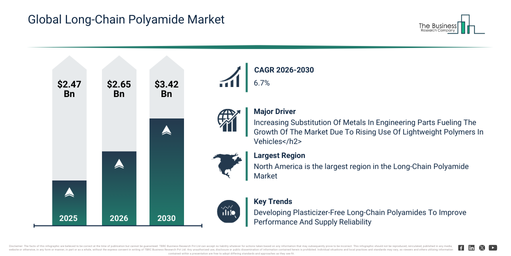
    The long-chain polyamide market size has experienced substantial growth in recent years. It is forecast to rise from $2.47 billion in 2025 to $2.65 billion in 2026, achieving a compound annual growth rate (CAGR) of 7.0%. This expansion during the historic period can be attributed to the escalating demand for lightweight materials, the increased application of high-performance polymers, a greater adoption within automotive applications, a heightened focus on fuel efficiency, and the continued development of durable plastic components.

    The long-chain polyamide market is projected to experience substantial expansion in the coming years. Its valuation is set to reach $3.42 billion by 2030, demonstrating a compound annual growth rate (CAGR) of 6.7%. This anticipated growth during the forecast period is fueled by several factors, including an increasing need for sustainable high-performance polymers, an intensified focus on components for electric vehicles, continuous progress in chemical processing technologies, a heightened demand for robust yet lightweight materials, and increased funding in material innovation. Key trends shaping the forecast period encompass breakthroughs in bio-based polyamide manufacturing, novel long-chain polymer formulations, the incorporation of advanced materials into contemporary manufacturing processes, improvements in recycling methods for engineered plastics, and creative approaches to lightweight polymer design.

    Access Your Free Sample Report for In-Depth Market Insights:

    https://www.thebusinessresearchcompany.com/sample.aspx?id=30638&type=smp

    Which Drivers Are Impacting The Competitive Landscape Of The Long-Chain Polyamide Market?

    The long-chain polyamide market is anticipated to expand due to the growing replacement of metals in engineering components. This substitution involves replacing conventional metal parts with high-performance polymers to achieve lighter weight, better resistance to corrosion, and more efficient manufacturing processes. The increasing use of alternative materials in engineering is driven by the demand for lightweight and cost-efficient options. Long-chain polyamide facilitates this trend by offering attributes such as high strength, durability, and low weight properties, creating affordable and corrosion-proof alternatives for mechanical and structural applications. For instance, as reported by the American Chemistry Council, a US-based trade association, in December 2024, an average automobile contains 429 pounds of plastics and polymer composites, making up 9.7% of the vehicle’s total weight, with the amount of polypropylene per vehicle increasing from 97 pounds in 2022 to 100 pounds in 2023. Consequently, the expanding replacement of metals in engineering parts is fueling the growth of the long-chain polyamide market.

    What Segments Are Identified Within The Structure Of The Long-Chain Polyamide Market?

    The long-chain polyamide market covered in this report is segmented –

    1) By Product Type: PA 12, PA 11, PA 610, PA 612, Other Product Types

    2) By Form: Chips, Powder, Other Forms

    3) By Application: Fuel Lines, Cooler Hoses, Corrugated Tubes, Oil And Gas Transportation, Sensors And Solenoids, Other Applications

    4) By End-User: Automotive, Electrical And Electronics, Consumer Goods, Industrial, Other End-Users

    Subsegments:

    1) By PA 12: Extrusion-Grade PA 12, Injection-Molding-Grade PA 12, Blow-Molding-Grade PA 12, High-Viscosity PA 12, Flame-Retardant PA 12, Reinforced PA 12 (Glass Fiber, Carbon Fiber), Flexible PA 12 Compounds

    2) By PA 11: Bio-Based PA 11 (100% Renewable Feedstock), Injection-Molding-Grade PA 11, Extrusion-Grade PA 11, High-Temperature PA 11, Impact-Modified PA 11, Reinforced PA 11 (Glass Fiber, Mineral Filled)

    3) By PA 610: Extrusion-Grade PA 610, Injection-Molding-Grade PA 610, Heat-Stabilized PA 610, Oil-Resistant PA 610, Lightweight PA 610 Compounds, Reinforced PA 610 (Glass Fiber, Carbon Fiber)

    4) By PA 612: Injection-Molding-Grade PA 612, Extrusion-Grade PA 612, Low-Moisture-Absorption PA 612, High-Fluidity PA 612, Reinforced PA 612 Compounds, Wear-Resistant PA 612 Grades

    5) By Other Product Types: PA 1010, PA 1012, PA 46/PA 410 Blends, Bio-Based Long-Chain Polyamides (Non-PA11), Specialty Copolyamides, Customized Performance LCPA Compounds

    Which Trends Are Influencing The Development Of The Long-Chain Polyamide Market?

    Leading companies active in the long-chain polyamide materials market are concentrating on evolving advanced materials, including plasticizer-free long-chain polyamides. This effort aims to enhance thermal performance, boost sustainability, and lessen dependency on imported specialty resins. Plasticizer-free long-chain polyamides are innovative nylon substances designed to offer high flexibility, chemical resistance, and elevated service temperatures without the incorporation of plasticizing additives, while also enabling increased bio-based content and more stable domestic supply chains. For example, in April 2024, Nylon Corporation of America Inc., a US-based manufacturer of engineered nylon resin, launched NXTamid L. This proprietary plasticizer-free long-chain polyamide was developed to substitute PA11 and PA12. The material provides a higher service temperature than PA12, equivalent or improved mechanical performance, and customizable formulations. Concurrently, it eliminates plasticizers and integrates over 50% bio content in specific grades to meet sustainability goals and mitigate supply chain disruptions.

    Which Major Industry Participants Are Leading The Long-Chain Polyamide Market Growth?

    Major companies operating in the long-chain polyamide market are BASF SE, LG Chem Ltd., Mitsubishi Chemical Group Corporation, Toray Industries Inc., Evonik Industries AG, DuPont de Nemours Inc., Arkema S.A., Nan Ya Plastics Corporation, Ningbo Kingfa Advanced Materials Co. Ltd., Solvay S.A, Huntsman Corporation, Kolon Industries Inc, Ascend Performance Materials LLC, Toyobo Co. Ltd, Sanyo Chemical Industries Ltd., Ensinger GmbH, RadiciGroup S.p.A., Domo Chemicals GmbH, Nylon Corporation of America Inc., UBE Corporation, Shenzhen Esun Industrial Co. Ltd.

    Access The Complete Report For Deeper Market Insights:

    https://www.thebusinessresearchcompany.com/report/long-chain-polyamide-market-report

    Which Region Is Expected To Experience The Fastest Growth In The Long-Chain Polyamide Market?

    North America was the largest region in the long-chain polyamide market in 2025. Asia-Pacific is expected to be the fastest-growing region in the forecast period. The regions covered in the long-chain polyamide market report are Asia-Pacific, South East Asia, Western Europe, Eastern Europe, North America, South America, Middle East, Africa.

    Request Your Customized Long-Chain Polyamide Market Research Report for Competitive Advantage:

    https://www.thebusinessresearchcompany.com/customise?id=30638&type=smp

    Browse Through More Reports Similar to the Global Long-Chain Polyamide Market 2026, By The Business Research Company

    Polyacrylamide Market Report 2026

    https://www.thebusinessresearchcompany.com/report/polyacrylamide-global-market-report

    Polyphthalamide Resin Market Report 2026

    https://www.thebusinessresearchcompany.com/report/polyphthalamide-resin-global-market-report

    polylactic acid global market report

    https://www.thebusinessresearchcompany.com/report/polylactic-acid-global-market-report

    Get in touch with us:

    The Business Research Company: https://www.thebusinessresearchcompany.com/

    Americas +1 310-496-7795

    Asia +44 7882 955267 & +91 8897263534

    Europe +44 7882 955267

    Email us at marketing@tbrc.info

    Follow us on:

    LinkedIn: https://in.linkedin.com/company/the-business-research-company

    YouTube: https://www.youtube.com/channel/UC24_fI0rV8cR5DxlCpgmyFQ

    Global Market Model: https://www.thebusinessresearchcompany.com/global-market-model
  • Large-Surface-Area Microcarrier Bioreactor Market Growth Projection: Expected to Surpass $3.73 Billion by 2030 at 15.5% CAGR

    Large-Surface-Area Microcarrier Bioreactor Market Growth Projection: Expected to Surpass $3.73 Billion by 2030 at 15.5% CAGR

    Uncover key drivers, emerging technologies, and competitive movements shaping the large-surface-area microcarrier bioreactor market from 2026–2035 with trusted insights from The Business Research Company

    What total market size is anticipated for the Large-Surface-Area Microcarrier Bioreactor Market in 2030?

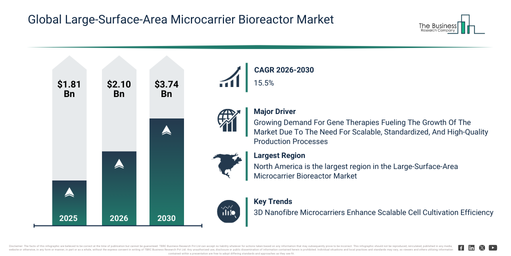
    The large-surface-area microcarrier bioreactor market size has experienced significant expansion recently. This market is projected to expand from $1.81 billion in 2025 to $2.10 billion in 2026, demonstrating a compound annual growth rate (CAGR) of 15.8%. Historic period growth was driven by factors such as the increasing embrace of large-surface-area microcarrier bioreactors, a rising need for high-density adherent cell cultures, increased investment in regenerative medicine research, the proliferation of automated cell expansion technologies, and the growing use of single-use microcarrier systems.

    The large-surface-area microcarrier bioreactor market is set for rapid expansion over the next few years. It is forecast to grow to $3.74 billion in 2030, achieving a compound annual growth rate (CAGR) of 15.5%. This growth throughout the forecast period can be ascribed to an intensified focus on scalable stem cell production, increasing investment in sophisticated microcarrier bioprocessing, a growing requirement for clinical-grade cell expansion, the broadening of biotechnology and pharmaceutical R&D activities, and a significant surge in the adoption of automated and high-precision platforms. Prominent trends anticipated in the forecast period include technological advancements within microcarrier bioreactors, innovations concerning automated cell expansion platforms, progress in high-density adherent cell culture methods, research and development efforts in single-use microcarrier systems, and enhancements in real-time monitoring and process control.

    Access Your Free Sample Report for In-Depth Market Insights:

    https://www.thebusinessresearchcompany.com/sample.aspx?id=30632&type=smp

    What Drivers Are Influencing Production Trends In The Large-Surface-Area Microcarrier Bioreactor Market?

    The increasing need for gene therapies is anticipated to boost the large-surface-area microcarrier bioreactor market in the coming years. Gene therapy is defined as a medical approach where faulty genes are altered or replaced to address or prevent illnesses. The heightened interest in gene therapy stems from progress in genetic sequencing and diagnostic methods, which facilitate accurate identification of disease-causing genes for targeted interventions. Large-surface-area microcarrier bioreactors aid gene therapy by offering a broad growth area for the effective expansion of adherent cells crucial for gene-modified therapies. These bioreactors improve therapeutic development by boosting cell output, guaranteeing uniformity, and enabling the mass production of gene therapy products. For instance, in December 2024, according to the American Society of Gene & Cell Therapy (ASGCT), a US-based non-profit medical and scientific organization, the Food and Drug Administration (FDA) approved six gene therapy products in 2023, up from five approvals in 2022. Consequently, the rising demand for gene therapies is propelling the expansion of the large-surface-area microcarrier bioreactor market.

    Which Segments Are Gaining Traction In The Large-Surface-Area Microcarrier Bioreactor Market?

    The large-surface-area microcarrier bioreactor market covered in this report is segmented –

    1) By Product Type: Single-Use Bioreactors, Multi-Use Bioreactors

    2) By Microcarrier Type: Synthetic Microcarriers, Natural Microcarriers, Hybrid Microcarriers

    3) By Distribution Channel: Hospital Pharmacy, Online Pharmacy, Retail Pharmacy

    4) By Application: Cell Therapy, Vaccine Production, Tissue Engineering, Stem Cell Research, Other Appplications

    5) By End User: Pharmaceutical And Biotechnology Companies, Research Institutes, Contract Manufacturing Organizations, Other End Users

    Subsegments:

    1) By Single-Use Bioreactors: Disposable Microcarrier Vessels, Pre-Sterilized Culture Chambers, Single-Cycle Expansion Units, Plug-And-Play Bioprocessing Modules, Disposable Agitation Systems

    2) By Multi-Use Bioreactors: Autoclavable Microcarrier Vessels, Cleanable Stainless Steel Chambers, Reusable Agitation Systems, Long-Term Operation Bioprocess Units, Reprocessable Culture Modules

    What Trends Are Expected To Impact The Competitive Landscape Of The Large-Surface-Area Microcarrier Bioreactor Market?

    Leading firms within the large-surface-area microcarrier bioreactor market are concentrating on creating sophisticated offerings, including 3D nanofibre scaffolds, with the aim of increasing efficiency, improving cell proliferation, and minimizing inconsistencies in processes and overall development durations. These 3D nanofibre microcarriers are defined as cutting-edge, biomimetic supports that furnish a three-dimensional setting conducive to cell attachment and growth, effectively replicating the body’s native extracellular matrix. An example of this is the launch of the Cellevat3D nanofibre microcarrier in February 2025 by Cellevate AB, a Swedish innovator in cell culture materials. This product is a synthetic, customizable microcarrier built for large-scale cell cultivation, distinguished by its unique nanofibrous structure that expands the surface area for superior cell attachment and output. It also offers precise control over biochemical and physical parameters, which facilitates ideal growth environments for diverse cell types, such as stem cells and therapeutic cells, eliminating the need for extensive process redesign. Furthermore, it incorporates xeno-free and animal-free material choices, thereby boosting product safety and compliance with regulations for both biopharmaceutical manufacturers and those producing cultivated meat.

    Who Are The Prominent Global Companies Shaping The Large-Surface-Area Microcarrier Bioreactor Market Landscape?

    Major companies operating in the large-surface-area microcarrier bioreactor market are Thermo Fisher Scientific Inc., Merck KGaA, Corning Incorporated, Lonza Group AG, Cytiva Sweden AB, Sartorius AG, Bio-Rad Laboratories Inc., Eppendorf SE, Repligen Corporation, Pall Corporation, PBS Biotech Inc., Applikon Biotechnology B.V., Esco VacciXcell, Meissner Filtration Products Inc., Distek Inc., Infors HT AG, Adolf Kühner AG, Kuhner Shaker GmbH, Cellexus Ltd., Solaris Biotech S.r.l.

    Access The Complete Report For Deeper Market Insights:

    https://www.thebusinessresearchcompany.com/report/large-surface-area-microcarrier-bioreactor-market-report

    Which Geographic Areas Are Emerging As Strong Markets For The Large-Surface-Area Microcarrier Bioreactor Market?

    North America was the largest region in the large-surface-area microcarrier bioreactor market in 2025. Asia-Pacific is expected to be the fastest-growing region in the forecast period. The regions covered in the large-surface-area microcarrier bioreactor market report are Asia-Pacific, South East Asia, Western Europe, Eastern Europe, North America, South America, Middle East, Africa.

    Request Your Customized Large-Surface-Area Microcarrier Bioreactor Market Research Report for Competitive Advantage:

    https://www.thebusinessresearchcompany.com/customise?id=30632&type=smp

    Browse Through More Reports Similar to the Global Large-Surface-Area Microcarrier Bioreactor Market 2026, By The Business Research Company

    Microcarrier Market Report 2026

    https://www.thebusinessresearchcompany.com/report/microcarrier-global-market-report

    Small Scale Bioreactors Market Report 2026

    https://www.thebusinessresearchcompany.com/report/small-scale-bioreactors-global-market-report

    airlift bioreactors global market report

    https://www.thebusinessresearchcompany.com/report/airlift-bioreactors-global-market-report

    Get in touch with us:

    The Business Research Company: https://www.thebusinessresearchcompany.com/

    Americas +1 310-496-7795

    Asia +44 7882 955267 & +91 8897263534

    Europe +44 7882 955267

    Email us at marketing@tbrc.info

    Follow us on:

    LinkedIn: https://in.linkedin.com/company/the-business-research-company

    YouTube: https://www.youtube.com/channel/UC24_fI0rV8cR5DxlCpgmyFQ

    Global Market Model: https://www.thebusinessresearchcompany.com/global-market-model
  • Kidulting Toys Market Forecast 2026–2035: How to Leverage Market Growth

    Kidulting Toys Market Forecast 2026–2035: How to Leverage Market Growth

    Uncover key drivers, emerging technologies, and competitive movements shaping the kidulting toys market from 2026–2035 with trusted insights from The Business Research Company

    What is the expected shift in the Kidulting Toys Market’s size between 2026 and 2030?

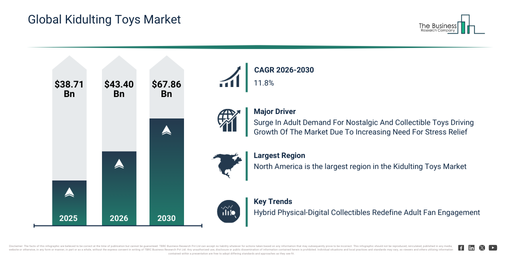
    The kidulting toys market has experienced rapid expansion in recent years. It is anticipated to grow from $38.71 billion in 2025 to $43.40 billion in 2026, achieving a compound annual growth rate (CAGR) of 12.1%. The historical growth can be attributed to factors such as rising disposable income, increasing demand for nostalgia, the growing popularity of pop culture franchises, the expansion of collectible product lines, and the increasing influence of social media.

    The kidulting toys market is projected to experience significant expansion over the coming years. Its size is anticipated to reach $67.86 billion by 2030, demonstrating a compound annual growth rate (CAGR) of 11.8%. This growth during the forecast period is propelled by factors such as the wider embrace of online sales, increasing enthusiasm for limited-edition collectibles, heightened investment in hybrid physical-digital playthings, broadened licensing and intellectual property (IP) collaborations, and an escalating need for stress relief and recreational pursuits. Additionally, key trends for the same period encompass technological progress in integrating virtual reality (VR) and augmented reality (AR), new developments in eco-friendly and high-quality materials, the creation of tailored customization options, exploration into product designs aimed at mental well-being, and the incorporation of gamified retail and unboxing interactions.

    Access Your Free Sample Report for In-Depth Market Insights:

    https://www.thebusinessresearchcompany.com/sample.aspx?id=30631&type=smp

    Which Drivers Are Shaping Strategic Decisions In The Kidulting Toys Market?

    The Kidulting Toys market is projected to experience growth due to the escalating trend of adults seeking nostalgic and collectible toys. This refers to a growing number of adult consumers acquiring and engaging with toys and collectibles that evoke past memories, offer playful experiences, and contribute to mental well-being. The heightened interest among adults in such nostalgic and collectible toys arises from an increased awareness of stress management and the value of leisure activities. Kidulting toys support this trend by offering playful, design-driven products that trigger childhood recollections while also appealing to mature tastes. They enhance consumer engagement by blending nostalgia, creativity, and collectibility, thereby stimulating demand among adult buyers. For instance, in September 2023, according to the Toy Association Inc., a US-based non-profit trade association, 89% of parents surveyed are buying toys for adults, with 43% shopping for their spouse or significant other. Additionally, 53% of men and 48% of millennial parents under 40 reported buying toys for themselves. Consequently, the increasing inclination of adults towards nostalgic and collectible toys is driving the expansion of the Kidulting Toys market.

    What Segment Categories Are Covered In The Kidulting Toys Market?

    The kidulting toys market covered in this report is segmented –

    1) By Product Type: Collectible Figures And Statues, Building Sets, Plush And Soft Toys, Games And Puzzles, Model Kits And Vehicles

    2) By Price Point And Quality: Mass-Market Nostalgia, Premium And Limited Edition, Ultra-Premium And Art Objects

    3) By Application: Online Sales, Offline Sales

    4) By End-User Age Group: Young Kidults, Core Kidults, Mature Kidults

    Subsegments:

    1) By Collectible Figures And Statues: Action Figures, Anime Figures, Movie Statues, Video Game Characters, Limited Edition Collectibles

    2) By Building Sets: Construction Kits, Modular Building Sets, Architectural Models, Mechanical Building Sets, Themed Assembly Sets

    3) By Plush And Soft Toys: Character Plush Toys, Customized Soft Toys, Comfort Plush Toys, Premium Fabric Plush Toys, Collectible Plush Series

    4) By Games And Puzzles: Strategy Board Games, Card Games, Jigsaw Puzzles, Brain Teaser Puzzles, Cooperative Games

    5) By Model Kits And Vehicles: Scale Model Kits, Die-Cast Vehicles, Hobby Assembly Kits, Remote Control Models, Replica Vehicle Models

    Which Trends Are Guiding The Evolution Of The Kidulting Toys Market?

    Major companies operating in the kidulting toys market are prioritizing the development of advanced products, such as hybrid physical-digital collectibles, with the aim of boosting consumer engagement, enhancing nostalgic feelings, and narrowing the gap between traditional collecting and digital ownership. Hybrid physical-digital collectibles are defined as integrated product strategies that combine detailed, tangible action figures with associated blockchain-based digital assets, thereby creating a new, interconnected form of fandom. As an illustration, in February 2024, McFarlane Toys, a US-based action figure company, formed a partnership with NBCUniversal Products & Experiences, a US-based media and entertainment company, to expand its Movie Maniacs brand. This launch introduces a new series of highly detailed 6-inch collectible figures based on iconic characters from movies like The Blues Brothers, The Big Lebowski, and The 40-Year-Old Virgin. A key innovative element is that each physical figure is paired with a redeemable digital collectible, empowering fans to own and exhibit their collections in both the physical and digital worlds. This hybrid methodology leverages the company’s new digital platform, McFarlane Toys Digital, to extend its classic brand beyond physical products and cultivate a new, integrated collecting experience for adult enthusiasts.

    Which Key Players Are Driving Competition In The Kidulting Toys Market?

    Major companies operating in the kidulting toys market are Bandai Namco Holdings Inc., Mattel Inc., Hasbro Inc., Spin Master Corp., Tomy Company Ltd., Funko Inc., Dream International Limited, JAKKS Pacific Inc., McFarlane Toys, Playmates Toys Limited, Playmobil, Ravensburger AG, Hot Toys Limited, Kidrobot Inc., Medicom Toy Corporation, Mezco Toyz LLC, Schmidt Spiele GmbH, Good Smile Company Inc., Super7, The LEGO Group, Sideshow Collectibles, Sonny Angel

    Access The Complete Report For Deeper Market Insights:

    https://www.thebusinessresearchcompany.com/report/kidulting-toys-market-report

    Which Region Is Projected To Lead The Kidulting Toys Market During The Forecast Period?

    North America was the largest region in the kidulting toys market in 2025. Asia-Pacific is expected to be the fastest-growing region in the forecast period. The regions covered in the kidulting toys market report are Asia-Pacific, South East Asia, Western Europe, Eastern Europe, North America, South America, Middle East, Africa.

    Request Your Customized Kidulting Toys Market Research Report for Competitive Advantage:

    https://www.thebusinessresearchcompany.com/customise?id=30631&type=smp

    Browse Through More Reports Similar to the Global Kidulting Toys Market 2026, By The Business Research Company

    Wooden Toys Market Report 2026

    https://www.thebusinessresearchcompany.com/report/wooden-toys-global-market-report

    Learning And Education Toys Market Report 2026

    https://www.thebusinessresearchcompany.com/report/learning-and-education-toys-global-market-report

    construction toys global market report

    https://www.thebusinessresearchcompany.com/report/construction-toys-global-market-report

    Get in touch with us:

    The Business Research Company: https://www.thebusinessresearchcompany.com/

    Americas +1 310-496-7795

    Asia +44 7882 955267 & +91 8897263534

    Europe +44 7882 955267

    Email us at marketing@tbrc.info

    Follow us on:

    LinkedIn: https://in.linkedin.com/company/the-business-research-company

    YouTube: https://www.youtube.com/channel/UC24_fI0rV8cR5DxlCpgmyFQ

    Global Market Model: https://www.thebusinessresearchcompany.com/global-market-model
  • Global Intravenous (IV) Compounding Automation Market 2026–2030: Forecast Insights for Business Planning

    Global Intravenous (IV) Compounding Automation Market 2026–2030: Forecast Insights for Business Planning

    Uncover key drivers, emerging technologies, and competitive movements shaping the intravenous (iv) compounding automation market from 2026–2035 with trusted insights from The Business Research Company

    What growth pattern is forecast for the Intravenous (IV) Compounding Automation Market size between 2026 and 2035?

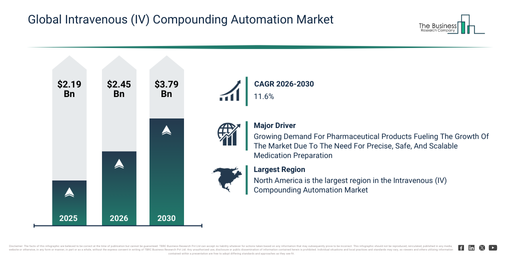
    The intravenous (IV) compounding automation market has witnessed substantial growth in recent years. This market is expected to expand from $2.19 billion in 2025 to $2.45 billion in 2026, achieving a compound annual growth rate (CAGR) of 11.9%. The past growth in this market can be attributed to several factors, including the increasing implementation of robotic compounding systems, a rising need for chemotherapy automation, a greater emphasis on medication safety, the expansion of automation in hospitals and pharmacies, and growing recognition of workflow efficiency.

    The intravenous (IV) compounding automation market is anticipated to experience substantial expansion in the coming years. The market is projected to expand to $3.79 billion in 2030, progressing at a compound annual growth rate (CAGR) of 11.6%. This growth throughout the forecast period stems from factors such as increasing investments in AI-enabled compounding solutions, the rising implementation of automated IV workstations, improved integration of software with hospital information systems, the expansion of remote monitoring and predictive maintenance capabilities, and the growing development of modular and customizable compounding systems. Significant trends anticipated in this period include innovations in AI and machine learning for compounding, advancements in robotic and automated devices, the evolution of smart pump and monitoring technologies, breakthroughs in sterile compounding isolators and safety cabinets, and progress in compact and space-saving automation solutions.

    Access Your Free Sample Report for In-Depth Market Insights:

    https://www.thebusinessresearchcompany.com/sample.aspx?id=30629&type=smp

    Which Drivers Are Impacting Market Performance In The Intravenous (IV) Compounding Automation Market?

    The increasing need for pharmaceutical products is anticipated to fuel the expansion of the intravenous (IV) compounding automation market in the future. A pharmaceutical product refers to a compound or mixture of compounds designed for the diagnosis, treatment, prevention, or relief of illnesses and medical conditions in humans or animals. IV compounding automation assists in the production of pharmaceutical products by facilitating the accurate, secure, and streamlined preparation of intricate intravenous medications, thereby ensuring precise dosages, minimizing contamination hazards, and enabling healthcare providers to satisfy the rising requirement for superior therapies. For example, in November 2023, data from the European Federation of Pharmaceutical Industries and Associations (EFPIA), a Belgium-based trade association, revealed that the overall pharmaceutical output in Europe reached €390,000 million ($422,803 million) in 2023, showing an increase from €363,300 million ($393,857 million) in 2022. Consequently, the escalating demand for pharmaceutical products is propelling the growth of the intravenous (IV) compounding automation market.

    Which Segments Are Contributing To The Growth Of The Intravenous (IV) Compounding Automation Market?

    The intravenous (iv) compounding automation market covered in this report is segmented –

    1) By Product Type: Robotic Compounding Systems, Automated Compounding Devices, Software Solutions, Other Product Types

    2) By Service: Installation, Maintenance, Training, Consulting, Support, System Integration, Validation, Software Updates, Calibration, Remote Monitoring

    3) By Application: Chemotherapy, Parenteral Nutrition, Antibiotics, Other Applications

    4) By End-User: Hospitals, Compounding Pharmacies, Oncology Centers, Other End-Users

    Subsegments:

    1) By Robotic Compounding Systems: Robotic Arm Based Systems, Closed System Robotic Compounding Units, Hazardous Drug Handling Robots, Sterile Preparation Robotic Platforms

    2) By Automated Compounding Devices: Volumetric Compounding Devices, Gravimetric Compounding Devices, Multi Chamber Compounding Units, Automated Parenteral Nutrition Compounding Devices

    3) By Software Solutions: Compounding Workflow Management Software, Dose Verification Software, Barcode Based Medication Safety Software, Compounding Data Analytics And Reporting Software

    4) By Other Product Types: Semi Automated Compounding Systems, Isolator Based Compounding Systems, Sterile Admixture Preparation Cabinets, Hybrid Compounding Assistance Devices

    Who Are The Top-Performing Companies In The Intravenous (IV) Compounding Automation Market In Recent Years?

    Major companies operating in the intravenous (iv) compounding automation market are Becton Dickinson and Company, Baxter International Inc., Grifols S.A., ICU Medical Inc., Omnicell Inc., Fresenius Kabi AG, Equashield Medical Ltd., Health Robotics S.r.l., Loccioni Group, Loccioni Group, OPTIMA pharma GmbH, Medimix Systems AG, ARxIUM Inc., General Healthy Co. Ltd., PharmaScope Onco Automation B.V., Comecer SpA, Syntegon Technology GmbH, Parata Pharmacy Automation, B. Braun SE, Aesynt Incorporated, Shenzhen Broadcare Robots Co. Ltd.

    Access The Complete Report For Deeper Market Insights:

    https://www.thebusinessresearchcompany.com/report/intravenous-iv-compounding-automation-market-report

    Which Region Currently Holds The Largest Share Of The Intravenous (IV) Compounding Automation Market?

    North America was the largest region in the intravenous (IV) compounding automation market in 2025. Asia-Pacific is expected to be the fastest-growing region in the forecast period. The regions covered in the intravenous (iv) compounding automation market report are Asia-Pacific, South East Asia, Western Europe, Eastern Europe, North America, South America, Middle East, Africa.

    Request Your Customized Intravenous (IV) Compounding Automation Market Research Report for Competitive Advantage:

    https://www.thebusinessresearchcompany.com/customise?id=30629&type=smp

    Browse Through More Reports Similar to the Global Intravenous (IV) Compounding Automation Market 2026, By The Business Research Company

    Automated Compounding Devices Market Report 2026

    https://www.thebusinessresearchcompany.com/report/automated-compounding-devices-global-market-report

    Intravenous Solutions Market Report 2026

    https://www.thebusinessresearchcompany.com/report/intravenous-solutions-global-market-report

    lab automation in drug discovery global market report

    https://www.thebusinessresearchcompany.com/report/lab-automation-in-drug-discovery-global-market-report

    Get in touch with us:

    The Business Research Company: https://www.thebusinessresearchcompany.com/

    Americas +1 310-496-7795

    Asia +44 7882 955267 & +91 8897263534

    Europe +44 7882 955267

    Email us at marketing@tbrc.info

    Follow us on:

    LinkedIn: https://in.linkedin.com/company/the-business-research-company

    YouTube: https://www.youtube.com/channel/UC24_fI0rV8cR5DxlCpgmyFQ

    Global Market Model: https://www.thebusinessresearchcompany.com/global-market-model
  • Intraoperative Neuromonitoring (IONM) Market Outlook 2026–2035: Growth Drivers and Industry Forecast

    Intraoperative Neuromonitoring (IONM) Market Outlook 2026–2035: Growth Drivers and Industry Forecast

    Uncover key drivers, emerging technologies, and competitive movements shaping the intraoperative neuromonitoring (ionm) market from 2026–2035 with trusted insights from The Business Research Company

    How much larger will the Intraoperative Neuromonitoring (IONM) Market be in 2030 compared with 2026?

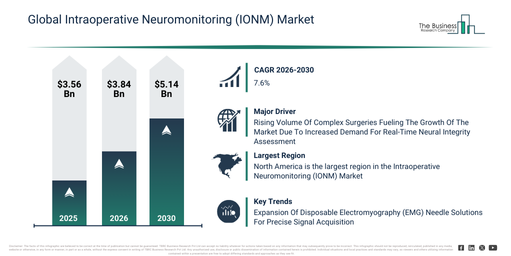
    The intraoperative neuromonitoring market size has demonstrated significant growth in recent years. This market is expected to expand from $3.56 billion in 2025 to $3.84 billion in 2026, reflecting a compound annual growth rate (CAGR) of 7.9%. Several factors contributed to this growth during the historical period, including an escalating demand for safer surgical procedures, the increased integration of intraoperative neuromonitoring in complex surgeries, a rise in the prevalence of neurological and spinal disorders, the expansion of hospital infrastructure in developed regions, and a heightened focus on patient safety during operations.

    The intraoperative neuromonitoring market is projected to experience substantial expansion in the coming years. By 2030, this market is anticipated to reach $5.14 billion, exhibiting a compound annual growth rate (CAGR) of 7.6%. This anticipated growth is driven by several factors, including the rising acceptance of multimodality neuromonitoring systems, the expanding application of artificial intelligence for interpreting signals, increased funding for research and development in neuromonitoring technologies, the proliferation of minimally invasive and robotic surgical procedures, and a greater supply of qualified neuromonitoring experts. Key trends expected during this period encompass enhancements in multimodality monitoring technologies, the deepening integration of artificial intelligence into neuromonitoring systems, the development of more portable and cloud-connected devices, a broader application of real-time data analytics during surgical operations, and continued advancements in wearable and intraoperative monitoring sensors.

    Access Your Free Sample Report for In-Depth Market Insights:

    https://www.thebusinessresearchcompany.com/sample.aspx?id=30628&type=smp

    What Drivers Are Guiding Growth Patterns In The Intraoperative Neuromonitoring (IONM) Market?

    The future expansion of the intraoperative neuromonitoring (IONM) market is anticipated to be driven by the increasing number of complex surgical procedures. These intricate medical procedures are characterized by elevated risks, a demand for specialized expertise, and frequently involve severe or multi-system health issues. This increase in complex surgeries stems from surgeons performing more operations on elderly individuals who often suffer from several chronic ailments such as diabetes, obesity, and heart disease, a trend supported by improved surgical methods that allow for high-risk interventions. Intraoperative neuromonitoring (IONM) facilitates complex surgical interventions by offering immediate data on neural activity, thereby reducing the potential for nerve injury during crucial operations. As an example, the Organ Procurement and Transplantation Network (OPTN), a national system in the US connecting professionals in organ donation and transplantation, reported in January 2025 that the total number of organ transplants in the United States reached 48,180 in 2024. This marked a 3.3% rise from the 46,632 transplants performed in 2023. Consequently, the expanding volume of complex surgical operations is a key factor propelling the intraoperative neuromonitoring (IONM) market’s growth.

    How Is The Intraoperative Neuromonitoring (IONM) Market Divided Into Segments?

    The intraoperative neuromonitoring (ionm) market covered in this report is segmented –

    1) By Type: Systems, Accessories And Consumables, Services

    2) By Source Type: Insourced Monitoring, Outsourced Monitoring

    3) By Modality: Somatosensory Evoked Potentials, Motor Evoked Potentials, Electroencephalography, Electromyography, Brainstem Auditory Evoked Potentials, Visual Evoked Potentials, Other Modalities

    4) By Application: Neurosurgery, Spinal Surgery, Vascular Surgery, Cardiothoracic Surgery, Ear, Nose, Throat Surgery, Orthopedic Surgery

    5) By End-User: Hospitals, Ambulatory Surgical Centers, Specialty Clinics, Other End-Users

    Subsegments:

    1) By Systems: Electromyography Monitoring System, Electroencephalography Monitoring System, Somatosensory Evoked Potential Monitoring System, Motor Evoked Potential Monitoring System, Brainstem Auditory Evoked Potential Monitoring System

    2) By Accessories And Consumables: Electrodes And Probes, Cables And Connectors, Monitoring Software, Disposable Sensors, Stimulators And Pads

    3) By Services: Preoperative Assessment Services, Intraoperative Monitoring Services, Postoperative Analysis Services, Remote Neuromonitoring Services, Consulting And Training Services

    Which Trends Are Influencing The Performance And Direction Of The Intraoperative Neuromonitoring (IONM) Market?

    Leading companies in the intraoperative neuromonitoring (IONM) market are focusing on developing product lines, such as specialized disposable concentric needle families, to enhance diagnostic precision and workflow optimization. These specialized disposable concentric needle families involve engineering disposable needles with consistent signal quality and precise recording capabilities, thereby eliminating the variability associated with reusable equipment while maintaining high fidelity in electromyography (EMG) and nerve conduction velocity (NCV) studies. For instance, in October 2023, Rhythmlink International LLC, a US-based designer and manufacturer of medical devices for intraoperative neuromonitoring, launched the Concentric Needle Family. This product line offers specialized disposable concentric needles in four sizes, designed to pair with a reusable cable specifically engineered for the system. The solution provides clinicians with a premium, customizable tool for identifying and recording from desired muscle areas with ultra-precise placement, thereby enhancing the reliability of intraoperative and diagnostic neurological assessments.

    Which Leading Companies Dominate The Intraoperative Neuromonitoring (IONM) Market Share?

    Major companies operating in the intraoperative neuromonitoring (ionm) market are Abbott Laboratories, Medtronic plc, Boston Scientific Corporation, Nihon Kohden Corporation, Nuvaise Inc., Natus Medical incorporated, Speciality care Inc., Brainlab AG, Neurosoft Ltd., Cadwell industries Inc., Neuromonitoring Associates LLC, Compummedics Ltd., Inomed medizintecknic Gmbh, Accurate Neuromonitoring Inc., Electrical Geodesics Inc., Blackrock NeuroTech LLC, Neuromonitoring Technologies Inc., Tucker Davis technologies Inc., Sentient Medical Systems Inc., Dr.Langer Medical Gmbh, Moller Wedel Gmbh, Ionm Solutions Inc., Axontronic GmbH & Co. KG, Alpha Omega Engineering Ltd.

    Access The Complete Report For Deeper Market Insights:

    https://www.thebusinessresearchcompany.com/report/intraoperative-neuromonitoring-ionm-market-report

    How Does The Intraoperative Neuromonitoring (IONM) Market Perform Across Major Global Regions?

    North America was the largest region in the intraoperative neuromonitoring market in 2025. Asia-Pacific is expected to be the fastest-growing region in the forecast period. The regions covered in the intraoperative neuromonitoring (ionm) market report are Asia-Pacific, South East Asia, Western Europe, Eastern Europe, North America, South America, Middle East, Africa.

    Request Your Customized Intraoperative Neuromonitoring (IONM) Market Research Report for Competitive Advantage:

    https://www.thebusinessresearchcompany.com/customise?id=30628&type=smp

    Browse Through More Reports Similar to the Global Intraoperative Neuromonitoring (IONM) Market 2026, By The Business Research Company

    Intraoperative Neuromonitoring Market Report 2026

    https://www.thebusinessresearchcompany.com/report/intraoperative-neuromonitoring-global-market-report

    Home Health Monitoring Devices Market Report 2026

    https://www.thebusinessresearchcompany.com/report/home-health-monitoring-devices-global-market-report

    medical electrodes global market report

    https://www.thebusinessresearchcompany.com/report/medical-electrodes-global-market-report

    Get in touch with us:

    The Business Research Company: https://www.thebusinessresearchcompany.com/

    Americas +1 310-496-7795

    Asia +44 7882 955267 & +91 8897263534

    Europe +44 7882 955267

    Email us at marketing@tbrc.info

    Follow us on:

    LinkedIn: https://in.linkedin.com/company/the-business-research-company

    YouTube: https://www.youtube.com/channel/UC24_fI0rV8cR5DxlCpgmyFQ

    Global Market Model: https://www.thebusinessresearchcompany.com/global-market-model
  • Internet Of Things (IoT)-Based Dialysis Machine Market 2026–2030: Emerging Trends and Forecast Opportunities

    Internet Of Things (IoT)-Based Dialysis Machine Market 2026–2030: Emerging Trends and Forecast Opportunities

    Uncover key drivers, emerging technologies, and competitive movements shaping the internet of things (iot)-based dialysis machine market from 2026–2035 with trusted insights from The Business Research Company

    Starting from its 2026 valuation, what market size is the Internet Of Things (IoT)-Based Dialysis Machine Market expected to reach by 2030?

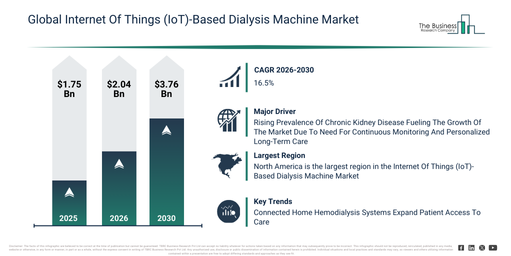
    The market size for IoT-based dialysis machines has experienced rapid growth in recent years. It is projected to expand from $1.75 billion in 2025 to $2.04 billion in 2026, exhibiting a compound annual growth rate (CAGR) of 16.8%. This historical growth can be attributed to factors such as the rising prevalence of chronic kidney disease, the growing adoption of home-based dialysis, an increasing demand for remote patient monitoring, the expansion of digital health infrastructure, and increased healthcare expenditure on renal care.

    The IoT-based dialysis machine market is projected to experience substantial expansion in the coming years. This market is expected to reach $3.76 billion in 2030, demonstrating a compound annual growth rate (CAGR) of 16.5%. Factors contributing to this anticipated growth include the increasing integration of IoT-enabled medical devices, a rising demand for home and portable dialysis options, the expanding embrace of telehealth and connected care services, the development of value-based renal care frameworks, and enhanced governmental backing for digital healthcare initiatives. Key trends expected during this period involve technological progress in connected dialysis systems, breakthroughs in real-time monitoring using sensors, advancements in artificial intelligence and data analytics, ongoing research and development into portable and wearable dialysis equipment, and the seamless integration of cloud platforms with electronic health records.

    Access Your Free Sample Report for In-Depth Market Insights:

    https://www.thebusinessresearchcompany.com/sample.aspx?id=30627&type=smp

    What Drivers Are Driving Adoption Within The Internet Of Things (IoT)-Based Dialysis Machine Market?

    The escalating prevalence of chronic kidney disease is anticipated to propel the expansion of the internet of things (IoT)-based dialysis machine market in the future. Chronic kidney disease is defined as a persistent ailment where kidneys fail to function optimally, leading to the accumulation of waste products and liquids within the body. The rise in this condition’s prevalence is largely due to the increasing incidence of diabetes and hypertension, which progressively harm renal blood vessels and hinder the organs’ ability to filter waste effectively. IoT-enabled dialysis machines assist in managing chronic kidney disease by allowing continuous monitoring of treatment variables and patient vital signs through remote data connections. These machines enhance patient outcomes by facilitating tailored therapy modifications, prompt complication identification, and streamlined long-term medical attention. For instance, in June 2023, Kidney Research UK, a non-profit organization based in the United Kingdom, reported that approximately 7.2 million individuals in the United Kingdom suffered from chronic kidney disease, accounting for over 10% of the populace. Among these, 3.25 million were in advanced stages and 3.9 million were in early stages, with projections indicating an increase to 7.61 million affected people by 2033. Consequently, the growing occurrence of chronic kidney disease is fueling the expansion of the internet of things (IoT)-based dialysis machine market.

    What Segments Are Included Within The Internet Of Things (IoT)-Based Dialysis Machine Market?

    The internet of things (iot)-based dialysis machine market covered in this report is segmented –

    1) By Component: Hardware, Software, Services, Consumables

    2) By Product Type: IoT-Enabled Hemodialysis Machines, IoT-Enabled Peritoneal Dialysis Machines, Portable And Wearable IoT-Based Dialysis Devices, Software Platforms And Connectivity Solutions, Accessories And Consumables

    3) By Connectivity: Wi-Fi And Broadband-Connected Dialysis Machines, Cellular Enabled Dialysis Devices, Cloud-Based Data Management And Analytics Platforms, Decision-Support Modules

    4) By Application: Chronic Kidney Disease Management, End-Stage Renal Disease Treatment, Acute Kidney Injury Management, Remote Patient Monitoring And Therapy Optimization

    5) By End User: Hospitals, Dialysis Centers, Home Care Settings, Ambulatory Care Centers, Specialty Clinics

    Subsegments:

    1) By Hardware: Dialysis Machine Units, Sensors And Monitoring Devices, Connectivity Modules, Embedded Control Systems, Power Supply Components

    2) By Software: Remote Monitoring Platforms, Data Analytics Software, Treatment Management Systems, Device Management Applications, Cloud Based Control Dashboards

    3) By Services: Installation And Integration Services, Maintenance And Support Services, Remote Monitoring Services, Training And Education Services, Data Management Services

    4) By Consumables: Dialyzers, Blood Tubing Sets, Dialysis Solutions, Filters And Cartridges, Disposable Sensors

    What Long-Term Trends Are Expected To Shape The Future Of The Internet Of Things (IoT)-Based Dialysis Machine Market?

    Leading companies active in the internet of things (IoT)-based dialysis machine market are concentrating on developing advanced products, such as connected home hemodialysis systems, with the goal of expanding patient access and improving treatment adherence. These connected home hemodialysis systems integrate intelligent software that guides patients through setup and treatment processes, thereby simplifying the learning curve and enabling remote monitoring by healthcare providers, which in turn fosters greater confidence and independence for patients managing kidney failure at home. For example, in September 2024, Fresenius Medical Care, a Germany-based healthcare company, launched its NxStage VersiHD with GuideMe Software. This platform is specifically designed to streamline connected home hemodialysis treatment by offering visual guidance and an easier learning experience, incorporating features that allow patients to complete training 7 to 10 days sooner than traditional methods. The solution also provides connected capabilities that support a growing network of over 14,000 U.S. patients, aiming to accelerate the adoption of home therapies and enhance the overall user experience for those requiring chronic renal replacement therapy.

    Who Are The Major Companies Operating In The Internet Of Things (IoT)-Based Dialysis Machine Market?

    Major companies operating in the internet of things (iot)-based dialysis machine market are Medtronic plc, Fresenius Medical Care AG & Co. KGaA, Toray Industries Inc., Toray Medical Co. Ltd., Baxter International Inc., B. Braun Melsungen AG, Nipro Corporation, Wego Group, Bellco S.p.A., Mar Cor Purification, Mozarc Medical Holding LLC, Poly Medicure Limited, Outset Medical Inc., Quanta Dialysis Technologies Ltd., Infomed SA, Allmed Medical Care Holdings Limited, Innovative Renal Care, Gambro, Nextkidney BV, Newsol Technologies

    Access The Complete Report For Deeper Market Insights:

    https://www.thebusinessresearchcompany.com/report/internet-of-things-iot-based-dialysis-machine-market-report

    Which Region Is Anticipated To See The Fastest Growth In The Internet Of Things (IoT)-Based Dialysis Machine Market?

    North America was the largest region in the IoT-based dialysis machine market in 2025. Asia-Pacific is expected to be the fastest-growing region in the forecast period. The regions covered in the internet of things (iot)-based dialysis machine market report are Asia-Pacific, South East Asia, Western Europe, Eastern Europe, North America, South America, Middle East, Africa.

    Request Your Customized Internet Of Things (IoT)-Based Dialysis Machine Market Research Report for Competitive Advantage:

    https://www.thebusinessresearchcompany.com/customise?id=30627&type=smp

    Browse Through More Reports Similar to the Global Internet Of Things (IoT)-Based Dialysis Machine Market 2026, By The Business Research Company

    Portable Dialysis Machines Market Report 2026

    https://www.thebusinessresearchcompany.com/report/portable-dialysis-machines-global-market-report

    Dialysis Devices And Equipment Market 2026

    https://www.thebusinessresearchcompany.com/report/dialysis-devices-and-equipment-market

    Internet Of Things IoT In Healthcare market

    https://www.thebusinessresearchcompany.com/report/internet-of-things-iot-in-healthcare-market

    Get in touch with us:

    The Business Research Company: https://www.thebusinessresearchcompany.com/

    Americas +1 310-496-7795

    Asia +44 7882 955267 & +91 8897263534

    Europe +44 7882 955267

    Email us at marketing@tbrc.info

    Follow us on:

    LinkedIn: https://in.linkedin.com/company/the-business-research-company

    YouTube: https://www.youtube.com/channel/UC24_fI0rV8cR5DxlCpgmyFQ

    Global Market Model: https://www.thebusinessresearchcompany.com/global-market-model
  • Global International Normalized Ratio (INR) Test Meter Market Forecast 2026–2035: Long-Term Growth Insights

    Global International Normalized Ratio (INR) Test Meter Market Forecast 2026–2035: Long-Term Growth Insights

    Uncover key drivers, emerging technologies, and competitive movements shaping the international normalized ratio (inr) test meter market from 2026–2035 with trusted insights from The Business Research Company

    Across 2026–2030, what is the expected market valuation path of the International Normalized Ratio (INR) Test Meter Market?

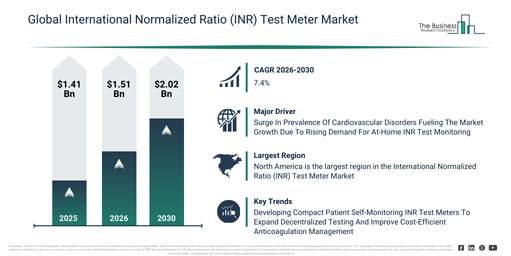
    The INR test meter market size has demonstrated significant expansion in recent years. It is anticipated to grow from $1.41 billion in 2025 to $1.51 billion in 2026, with a compound annual growth rate (CAGR) of 7.7%. Historically, this market’s development can be attributed to the rising prevalence of cardiovascular diseases, the increasing adoption of point-of-care testing, an expanding geriatric population, greater awareness of anticoagulant therapy, and a growing patient preference for home monitoring.

    The INR test meter market is anticipated to expand considerably over the coming years. Its valuation is projected to reach $2.02 billion in 2030, exhibiting a compound annual growth rate (CAGR) of 7.4%. This expansion during the projection period stems from factors such as increasing demand for at-home self-testing, the rising embrace of telemedicine, greater healthcare spending, the proliferation of point-of-care networks, and an enhanced emphasis on customized patient care. Key developments expected within this period involve progress in biosensor technology, the incorporation of technology with mobile applications, creative design of portable meters, ongoing research and development into non-invasive testing methods, and seamless integration with electronic health records.

    Access Your Free Sample Report for In-Depth Market Insights:

    https://www.thebusinessresearchcompany.com/sample.aspx?id=30626&type=smp

    Which Drivers Are Supporting The Rise Of The International Normalized Ratio (INR) Test Meter Market?

    The rising prevalence of cardiovascular disorders is anticipated to stimulate the expansion of the International Normalized Ratio (INR) test meter market. These conditions, which involve diseases of the heart and blood vessels, impair circulatory function and often necessitate long-term anticoagulant therapies to prevent serious complications such as stroke and thrombosis. The increase in cardiovascular disorders can be attributed to poor dietary habits, as excessive consumption of saturated fats, trans fats, added sugars, and sodium contributes to high blood pressure, obesity, and elevated cholesterol levels, all recognized as significant risk factors for heart-related conditions. INR test meters aid in the management of cardiovascular disorders by enabling frequent at-home monitoring of coagulation status, thereby ensuring safer and more effective anticoagulant treatment. For instance, in August 2025, the Centers for Disease Control and Prevention, a health agency based in Switzerland, reported that 90% of the nation’s 4.9 trillion dollars in annual health care spending is attributed to individuals with chronic and mental health conditions. Additionally, more than 84,000 Americans die each year from heart disease or stroke, with the costs associated with cardiovascular diseases projected to reach approximately $2 trillion by 2050. Consequently, the growing occurrence of cardiovascular disorders is a key factor driving the growth of the International Normalized Ratio (INR) test meter market.

    What Leading Segments Are Studied In The International Normalized Ratio (INR) Test Meter Market?

    The international normalized ratio (inr) test meter market covered in this report is segmented –

    1) By Product Type: Devices, Test Strips, Lancets, Reagents, Mobile App Integration

    2) By Technology: Electrochemical Biosensor-Based Meters, Photometric-Based Meters, Bluetooth, Non-Invasive

    3) By End User: Hospitals, Specialty Clinics, Ambulatory Surgical Centers, Homecare Settings

    Subsegments:

    1) By Devices: Handheld Meters, Portable Meters, Desktop Meters, Wireless Meters, Bluetooth Enabled Meters

    2) By Test Strips: Standard Test Strips, Ultra-Sensitive Test Strips, Fast-Acting Test Strips, Reusable Test Strips, Single-Use Test Strips

    3) By Lancets: Safety Lancets, Auto-Release Lancets, Adjustable Depth Lancets, Single-Use Lancets, Spring-Loaded Lancets

    4) By Reagents: Enzymatic Reagents, Chemical Reagents, Calibration Reagents, Buffer Solutions, Control Solutions

    5) By Mobile App Integration: iOS Applications, Android Applications, Cloud-Synced Applications, Real-Time Monitoring Applications, Personalized Health Recommendation Applications

    Which Market Trends Are Opening Growth Opportunities In The International Normalized Ratio (INR) Test Meter Market?

    Major companies operating in the International Normalized Ratio (INR) test meter market are directing their efforts toward developing advanced products, such as patient self-monitoring coagulation analyzers, with the aim of expanding decentralized testing and shifting recurring demand toward lower-cost consumables. These patient self-monitoring coagulation analyzers are portable devices that empower patients to conduct PT/INR testing at home using a small capillary blood sample, thereby supporting frequent monitoring and reducing reliance on clinical visits. For example, in March 2024, Universal Biosensors, an Australia-based medical device company, unveiled the Xprecia Prime 4U Coagulation Analyzer, intended for patient self-monitoring. This self-monitoring coagulation analyzer is designed to fit in the palm of the hand, provides rapid PT/INR results from a single drop of capillary blood, and utilizes an electrochemical strip format that supports various regulatory approvals, including 510(k) clearance and CLIA waiver for the U.S. market. This product launch signifies a crucial advancement in INR testing by facilitating broader access to home monitoring, increasing the frequency of tests, and improving cost efficiency through enhanced consumable utilization while ensuring clinical accuracy.

    Which Major Firms Are Strengthening Their Position In The International Normalized Ratio (INR) Test Meter Market?

    Major companies operating in the international normalized ratio (inr) test meter market are Abbott Laboratories, Siemens Healthineers AG, Roche Diagnostics International Ltd., Guangzhou Wondfo Biotech Co. Ltd., Nova Biomedical Corporation, Agappe Diagnostics Ltd., Helena Laboratories Corporation, Getein Biotech Inc., Transasia Bio-Medicals Limited, ACON Laboratories Inc., ERBA Diagnostics Mannheim GmbH, ARKRAY USA Inc., Genrui Biotech Inc., i-SENS Inc., Accurex Biomedical Pvt. Ltd., Trivitron Healthcare Private Limited, iLine Microsystems S.L, Meril Life Sciences Private Limited, Micropoint Biotechnologies Co. Ltd., Universal Biosensors Inc.

    Access The Complete Report For Deeper Market Insights:

    https://www.thebusinessresearchcompany.com/report/international-normalized-ratio-inr-test-meter-market-report

    Which Region Shows The Strongest Potential For Future Expansion In The International Normalized Ratio (INR) Test Meter Market?

    North America was the largest region in the INR test meter market in 2025. Asia-Pacific is expected to be the fastest-growing region in the forecast period. The regions covered in the international normalized ratio (inr) test meter market report are Asia-Pacific, South East Asia, Western Europe, Eastern Europe, North America, South America, Middle East, Africa.

    Request Your Customized International Normalized Ratio (INR) Test Meter Market Research Report for Competitive Advantage:

    https://www.thebusinessresearchcompany.com/customise?id=30626&type=smp

    Browse Through More Reports Similar to the Global International Normalized Ratio (INR) Test Meter Market 2026, By The Business Research Company

    Gas Meter Market Report 2026

    https://www.thebusinessresearchcompany.com/report/gas-meter-global-market-report

    Water Meter Market Report 2026

    https://www.thebusinessresearchcompany.com/report/water-meter-global-market-report

    digital multimeter global market report

    https://www.thebusinessresearchcompany.com/report/digital-multimeter-global-market-report

    Get in touch with us:

    The Business Research Company: https://www.thebusinessresearchcompany.com/

    Americas +1 310-496-7795

    Asia +44 7882 955267 & +91 8897263534

    Europe +44 7882 955267

    Email us at marketing@tbrc.info

    Follow us on:

    LinkedIn: https://in.linkedin.com/company/the-business-research-company

    YouTube: https://www.youtube.com/channel/UC24_fI0rV8cR5DxlCpgmyFQ

    Global Market Model: https://www.thebusinessresearchcompany.com/global-market-model