Month: June 2026

  • Lisinopril Market Growth Is Reshaping Competitive Advantage Across The Industry

    Lisinopril Market Growth Is Reshaping Competitive Advantage Across The Industry

    Delivering more actionable and strategically valuable research, The Business Research Company’s 2026 market reports feature market attractiveness analysis, total addressable market evaluation, company benchmarking matrices, interactive Excel dashboards, expanded supply chain intelligence, emerging startup coverage, and detailed product insights.

    Lisinopril Market Revenue Growth Supported By A CAGR Of 2.46% Through 2030

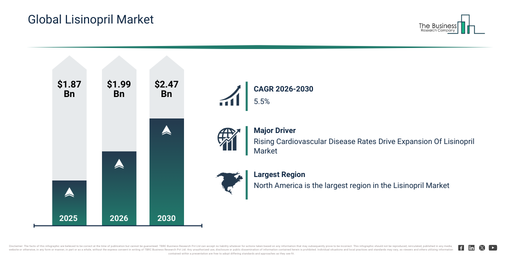
    The lisinopril market experienced robust expansion historically, projecting a rise from $1.87 billion in 2025 to $1.99 billion in 2026, reflecting a compound annual growth rate (CAGR) of 6.2%. This recent growth trajectory is largely underpinned by an escalating prevalence of hypertension, the established and widespread clinical trust in ACE inhibitors, a steadily aging demographic, its early integration into heart failure management protocols, and an improved reach of primary healthcare services.

    The lisinopril market is poised for significant expansion over the coming years, projecting a valuation of $2.47 billion by 2030, underpinned by a compound annual growth rate (CAGR) of 5.5%. This anticipated growth trajectory is fueled by several key factors, including the escalating prevalence of cardiovascular ailments, an increasing consumer preference for cost-effective generic medications, a heightened emphasis on proactive cardiac health initiatives, the broadened application of lisinopril in managing diabetic nephropathy, and augmented healthcare expenditure directed towards the management of persistent health conditions. Furthermore, emerging trends anticipated to shape this market during the forecast period encompass a greater incidence of hypertension and cardiovascular irregularities, a growing tendency to prescribe ACE inhibitors as initial treatments, a wider adoption of generic lisinopril formulations, its elevated utilization in the aftermath of myocardial infarctions, and improved patient compliance over extended treatment durations for chronic conditions.

    Download A Free Sample Report For Comprehensive Market Insights:

    https://www.thebusinessresearchcompany.com/sample.aspx?id=16465&type=smp

    Lisinopril Market Industry Drivers: What Is Driving Revenue Growth?

    The expanding incidence of heart and circulatory conditions is anticipated to fuel the advancement of the lisinopril market, as these ailments are becoming more common. Such conditions, affecting the heart and blood vessels, are on the rise due to factors including an increasing and aging global population, the presence of risk-promoting behaviors, and insufficient application of established preventive and therapeutic approaches. Lisinopril plays a crucial role in managing these cardiovascular issues, primarily by reducing blood pressure and thereby alleviating stress on the heart and kidneys. It achieves this by obstructing angiotensin II production, promoting blood vessel widening, decreasing blood volume, and shielding vital organs from harm. For illustration, data from May 2024 published by the Singapore Heart Foundation indicated that ischemic heart diseases were responsible for 5,302 fatalities, a marginal rise from the 5,290 deaths recorded in 2022, underscoring the growing burden of cardiovascular diseases which, in turn, fuels the lisinopril market.

    The escalating occurrence of hypertension is projected to be a key catalyst for the expansion of the lisinopril market. This condition, characterized by persistently elevated blood pressure within the arteries, is becoming more widespread owing to lifestyle factors such as poor dietary habits, lack of physical activity, demographic shifts towards older age groups, and chronic stress. Lisinopril is instrumental in controlling hypertension by impeding the creation of angiotensin II, which results in relaxed blood vessels, a diminished blood volume, and consequently, lower blood pressure. To provide context, the World Health Organization reported in March 2023 that approximately 1.28 billion adults globally between the ages of 30 and 79 years suffered from hypertension that year, highlighting the significant public health challenge that this condition presents and its direct impact on the lisinopril market’s growth.

    Lisinopril Market Segmentation: How Is The Market Structured Across Key Categories?

    The lisinopril market covered in this report is segmented –

    1) By Brand: Prinivil, Zestril, Other Brands

    2) By Disease: Hypertension, Heart Failure, Heart Attack

    3) By Dosage: Tablet, Liquid

    4) By End-Users: Hospitals, Specialty Clinics

    Subsegments:

    1) By Prinivil: Different Dosage Forms, Generic Versions Of Prinivil

    2) By Zestril: Different Dosage Forms, Generic Versions Of Zestril

    3) By Other Brands: International Brand Variants, Combination Drug Formulations

    Lisinopril Market Competitive Landscape And Leading Companies

    Major companies operating in the lisinopril market are Merck & Co. Inc., Pfizer Inc., Viatris Inc., Teva Pharmaceutical Industries Limited, Sun Pharmaceutical Industries Limited, Aurobindo Pharma Ltd., Cipla Inc., Hikma Pharmaceutical Plc, Apotex Inc., Amneal Pharmaceutical Inc., Lupin Ltd., Zydus Cadila Healthcare Ltd., Hetero Ltd., Dr. Reddy’s Laboratories Ltd., Torrent Pharmaceuticals Ltd., Alembic Pharmaceuticals Ltd., Glenmark Pharmaceuticals Ltd., Intas Pharmaceuticals Ltd., Mylan Pharmaceuticals Inc., Accord Healthcare Ltd., Sandoz International GmbH

    Access The Complete Lisinopril Market Report:

    https://www.thebusinessresearchcompany.com/report/lisinopril-global-market-report

    Lisinopril Market Regional Analysis: Which Region Leads By Revenue?

    North Americawas the largest region in the lisinopril market in 2025. Asia-Pacificis expected to be the fastest-growing region in the forecast period. The regions covered in the lisinopril market report are Asia-Pacific, South East Asia, Western Europe, Eastern Europe, North America, South America, Middle East, Africa.

    Get in touch with us:

    The Business Research Company: https://www.thebusinessresearchcompany.com/

    Americas: +1 310-496-7795

    Asia: +44 7882 955267 & +91 8897263534

    Europe: +44 7882 955267

    Email us at: marketing@tbrc.info

    Follow us on:

    LinkedIn: https://in.linkedin.com/company/the-business-research-company

    YouTube: https://www.youtube.com/channel/UC24_fI0rV8cR5DxlCpgmyFQ

    Global Market Model: https://www.thebusinessresearchcompany.com/global-market-model

  • Liraglutide And Semaglutide Market Forecast Signals New Revenue Opportunities Through 2030

    Liraglutide And Semaglutide Market Forecast Signals New Revenue Opportunities Through 2030

    Enhanced with market attractiveness analysis, total addressable market evaluation, company benchmarking matrices, interactive Excel dashboards, expanded supply chain intelligence, emerging startup coverage, and detailed product insights, The Business Research Company’s 2026 market reports deliver more actionable and strategically valuable research.

    Liraglutide And Semaglutide Market Value Expansion And Long-Term Growth Outlook

    The market for liraglutide and semaglutide has experienced swift expansion recently, projecting a rise from $16.94 billion in 2025 to $18.88 billion in 2026, fueled by a compound annual growth rate of 11.5%. This upward trajectory in the historical timeframe is primarily a consequence of the escalating incidence of type 2 diabetes mellitus, the inadequacies of conventional diabetes treatments, increasing rates of obesity, the demonstrated clinical efficacy of injectable GLP-1 medications, and heightened awareness regarding the reduction of cardiovascular risks.

    The market for liraglutide and semaglutide is poised for substantial expansion over the coming years, projecting a value of $28.98 billion by 2030, driven by a compound annual growth rate of 11.3%. This anticipated surge is fueled by several key factors, including the broadening scope of obesity treatment indications, an increasing desire for user-friendly dosage forms, the growing acceptance of oral semaglutide, a heightened emphasis on holistic metabolic health management, and increased healthcare expenditure dedicated to managing chronic conditions. During this forecast period, significant trends are expected to shape the market, such as the escalating use of GLP-1 receptor agonists in diabetes management, their expanding application in weight control strategies, a greater inclination towards injectable medications administered weekly, the development and availability of oral GLP-1 formulations, and their prolonged application for achieving both glycemic control and weight reduction.

    Download A Free Sample Report For Comprehensive Market Insights:

    https://www.thebusinessresearchcompany.com/sample.aspx?id=18400&type=smp

    Liraglutide And Semaglutide Market Growth Factors: Which Forces Are Supporting Market Expansion?

    The increasing prevalence of diabetes is anticipated to stimulate expansion within the liraglutide and semaglutide sectors. Diabetes, a persistent ailment defined by heightened blood glucose due to impaired insulin function or inadequate production, is surging owing to factors like inactive lifestyles, unhealthy eating patterns, and hereditary tendencies. Liraglutide and semaglutide play a crucial role in managing this condition by adeptly controlling blood sugar and mitigating the likelihood of diabetes-related health issues. A notable illustration of this trend comes from the UK’s National Health Service, which reported in June 2024 that England saw an additional 549,000 individuals identified as at risk for type 2 diabetes in 2023, raising the total count of individuals with pre-diabetes on GP records to 3,615,330, a substantial jump from 3,065,825 in 2022, indicating an approximate 20% increase. Consequently, the growing diabetic population directly fuels the demand for liraglutide and semaglutide.

    Liraglutide And Semaglutide Market Segmentation Trends And Revenue Drivers

    The liraglutide and semaglutide market covered in this report is segmented –

    1) By Type: Pills, Liquid

    2) By Administration: Parenteral, Oral

    3) By Application: Type 2 Diabetes Mellitus, Obesity, Other Applications

    4) By Distribution Channel: Hospital Pharmacies, Retail Pharmacies, Online Pharmacies

    Subsegments:

    1) By Pills: Oral Tablets (Liraglutide, Semaglutide), Extended-Release Oral Formulations

    2) By Liquid: Injectable Solutions (Liraglutide, Semaglutide), Pre-Filled Syringes, Vials For Injection

    Liraglutide And Semaglutide Market Industry Trends: What Changes Are Reshaping Demand?

    Pharmaceutical giants active in the liraglutide and semaglutide arenas are focusing on creating anti-diabetic biosimilar medications aimed at improving blood sugar management and mitigating cardiovascular dangers for individuals suffering from diabetes. These anti-diabetic biosimilars represent economical, virtually identical replicas of original biologic diabetes treatments, designed to offer equivalent therapeutic advantages. As an illustration, Glenmark Pharmaceuticals Ltd., a pharmaceutical firm headquartered in India, introduced a biosimilar of the widely used anti-diabetic medication, Liraglutide, marking its initial release in India during January 2024. This specific biosimilar targets Liraglutide, an anti-diabetic agent utilized to enhance glycemic regulation in adult patients diagnosed with type 2 diabetes mellitus. Through this introduction, the daily treatment expenses are lowered, thereby greatly broadening its availability to a larger patient population across the country. With a price point of roughly INR 100 for a typical 1.2 mg daily dose, this represents a considerable reduction in treatment expenditure, estimated at around 70%, and necessitates a medical prescription for acquisition.

    Liraglutide And Semaglutide Market Industry Leaders: Which Organizations Are Driving Competition?

    Major companies operating in the liraglutide and semaglutide market are Novo Nordisk A/S, Eli Lilly and Company, Pfizer Inc., Merck & Co. Inc., AstraZeneca Plc, Boehringer Ingelheim International GmbH, Sanofi S.A., Novartis AG, Teva Pharmaceutical Industries Ltd., Sun Pharmaceutical Industries Ltd., Dr. Reddy’s Laboratories Ltd., Biocon Ltd., Glenmark Pharmaceuticals Limited, Lupin Limited, Cipla Limited, Aurobindo Pharma Limited, Zydus Lifesciences Limited, Hikma Pharmaceuticals Plc, Viatris Inc., Amneal Pharmaceuticals Inc., Torrent Pharmaceuticals Limited, Intas Pharmaceuticals Limited

    Access The Complete Liraglutide And Semaglutide Market Report:

    https://www.thebusinessresearchcompany.com/report/liraglutide-and-semaglutide-global-market-report

    Liraglutide And Semaglutide Market Geographic Distribution And Regional Opportunities

    North Americawas the largest region in the liraglutide and semaglutide market in 2025. Asia-Pacificis expected to be the fastest-growing region in the forecast period. The regions covered in the liraglutide and semaglutide market report are Asia-Pacific, South East Asia, Western Europe, Eastern Europe, North America, South America, Middle East, Africa.

    Get in touch with us:

    The Business Research Company: https://www.thebusinessresearchcompany.com/

    Americas: +1 310-496-7795

    Asia: +44 7882 955267 & +91 8897263534

    Europe: +44 7882 955267

    Email us at: marketing@tbrc.info

    Follow us on:

    LinkedIn: https://in.linkedin.com/company/the-business-research-company

    YouTube: https://www.youtube.com/channel/UC24_fI0rV8cR5DxlCpgmyFQ

    Global Market Model: https://www.thebusinessresearchcompany.com/global-market-model

  • Liquid Biopsy For Cancer Diagnostics Market Growth Is Accelerating As Industry Transformation Continues

    Liquid Biopsy For Cancer Diagnostics Market Growth Is Accelerating As Industry Transformation Continues

    Through market attractiveness analysis, total addressable market evaluation, company benchmarking matrices, interactive Excel dashboards, expanded supply chain intelligence, emerging startup coverage, and detailed product insights, The Business Research Company’s 2026 market reports provide more actionable and strategically valuable research.

    Liquid Biopsy For Cancer Diagnostics Market Expected To Reach $22.99 Billion By 2030 At 16.4% CAGR

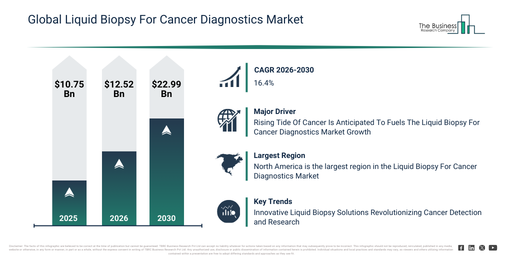
    The market for liquid biopsies in cancer diagnostics has experienced substantial expansion lately, projected to increase from $10.75 billion in 2025 to $12.52 billion in 2026, reflecting a compound annual growth rate (CAGR) of 16.4%. This recent growth trajectory is influenced by several factors, including the inherent limitations associated with traditional tissue biopsy methods, an escalating prevalence of lung and breast cancer diagnoses, the increasing uptake of molecular diagnostic tools for cancer, a heightened demand for detecting cancer in its nascent stages, and a surge in clinical investigations within the field of oncology diagnostics.

    The market for liquid biopsies in cancer diagnostics is poised for substantial expansion over the coming period, projecting a rise to $22.99 billion by 2030, fueled by a compound annual growth rate of 16.4%. This projected increase is largely driven by the widening application of liquid biopsies in standard cancer screening protocols, a heightened emphasis on individualized cancer treatment strategies, greater utilization for tracking treatment efficacy, escalating investments in the field of cancer diagnostics, and an increased deployment in the detection of gastrointestinal and ovarian cancers. Key developments anticipated during this forecast timeframe encompass the expanding use of liquid biopsies for diagnosing lung cancer, a surge in the adoption of blood-based screening techniques for cancer, a growing need for continuous cancer monitoring, the broadening application scope of liquid biopsies across various cancer types, and a prevalent shift in clinical practice towards favoring less invasive diagnostic methods.

    Download A Free Sample Report For Comprehensive Market Insights:

    https://www.thebusinessresearchcompany.com/sample.aspx?id=12205&type=smp

    Liquid Biopsy For Cancer Diagnostics Market Demand Drivers: What Is Fueling Industry Growth?

    The expanding prevalence of cancer is anticipated to be a significant catalyst for the advancement of the liquid biopsy market within the realm of cancer diagnostics. Cancer, a complex collection of diseases, can originate in virtually any part of the body as abnormal cells multiply without control, breaching their normal confines and subsequently metastasizing to distant sites or invading adjacent tissues. This escalating cancer burden underscores the necessity for advanced diagnostic tools like liquid biopsy, capable of facilitating early detection, assessing individual patient risk, and monitoring treatment efficacy. Liquid biopsy offers a comprehensive, real-time view of tumor evolution, including the identification of therapeutic targets and resistance mechanisms, by analyzing circulating tumor cells or their byproducts released from both primary and metastatic lesions, thus capturing the multifaceted nature of the disease. Supporting this trend, data from the National Cancer Institute indicated approximately 18.1 million cancer survivors in the U.S. as of May 2024, with projections suggesting this number will climb to 22.5 million by 2032 and anticipates a rise in new cancer cases to 29.9 million annually by 2040, accompanied by an estimated 15.3 million cancer-related fatalities, reinforcing the market’s upward trajectory due to increasing cancer incidence.

    Liquid Biopsy For Cancer Diagnostics Market Segment Analysis Highlighting Growth Areas

    The liquid biopsy for cancer diagnostics market covered in this report is segmented –

    1) By Type: Product, Services

    2) By Sample: Blood, Urine, Saliva

    3) By Cancer: Lung Cancer, Breast Cancer, Colon Cancer, Other Cancers

    4) By End-User: Hospitals, Diagnostic Centers, Other End-Users

    Subsegments:

    1) By Product: Circulating Tumor Cells (CTCs) Detection Kits, Circulating Tumor DNA (ctDNA) Detection Kits, Exosome Isolation Kits, Sample Collection Devices

    2) By Services: Testing Services, Analytical Services, Bioinformatics Services

    Liquid Biopsy For Cancer Diagnostics Market Innovation Trends: Which Developments Are Transforming The Industry?

    Key players in the liquid biopsy for cancer diagnostics sector are prioritizing the creation of groundbreaking technologies, specifically advanced liquid biopsy assays. These sophisticated diagnostic tools examine diverse elements within biological fluids like blood to identify and define unique cancer-related markers. As an illustration, in November 2023, Illumina Inc., a prominent American firm in the DNA sequencing field, unveiled ‘TruSight Oncology 500 ctDNA v2 (TSO 500 ctDNA v2)’. This groundbreaking research assay enables non-invasive, thorough genomic analysis of circulating tumor DNA found in blood samples, aiming to streamline user implementation and deepen the understanding derived from cancer research.

    Liquid Biopsy For Cancer Diagnostics Market Leading Companies: Who Holds Significant Market Presence?

    Major companies operating in the liquid biopsy for cancer diagnostics market are F. Hoffman La Roche Ltd., Thermo Fisher Scientific Inc., Agilent Technologies Inc., Illumina Inc., The Menarini Group, Bio-Rad Laboratories Inc., QIAGEN Inc., Exact Sciences Corporation, Bio-Techne Corporation, ArcherDX Inc., Neogenomics Laboratories Inc., Guardant Health Inc., Myriad Genetics Inc., Foundation Medicine Inc., Amoy Diagnostics Co. Ltd., Biocartis Group NV, Biodesix Inc., MDx Health Inc., Sysmex Inostics Inc., Biocept Inc., Agena Bioscience Inc., Laboratory for Advanced Medicine (LAM) Inc., MiRXES Pte Ltd., Inivata Limited, Resolution Bioscience Inc., SAGA Diagnostics AB, NuProbe Inc., Personal Gemone Diagnostics Inc., Pathway Genomics Corporation, Angle PLC

    Access The Complete Liquid Biopsy For Cancer Diagnostics Market Report:

    https://www.thebusinessresearchcompany.com/report/liquid-biopsy-for-cancer-diagnostics-global-market-report

    Liquid Biopsy For Cancer Diagnostics Market Largest Region By Revenue And Market Share

    North Americawas the largest region in the liquid biopsy for cancer diagnostics market in 2025. Asia-Pacificis expected to be the fastest-growing region in the liquid biopsy for cancer diagnostics market report during the forecast period. The regions covered in the liquid biopsy for cancer diagnostics market report are Asia-Pacific, South East Asia, Western Europe, Eastern Europe, North America, South America, Middle East, Africa.

    Get in touch with us:

    The Business Research Company: https://www.thebusinessresearchcompany.com/

    Americas: +1 310-496-7795

    Asia: +44 7882 955267 & +91 8897263534

    Europe: +44 7882 955267

    Email us at: marketing@tbrc.info

    Follow us on:

    LinkedIn: https://in.linkedin.com/company/the-business-research-company

    YouTube: https://www.youtube.com/channel/UC24_fI0rV8cR5DxlCpgmyFQ

    Global Market Model: https://www.thebusinessresearchcompany.com/global-market-model
  • Liquid Biopsy Market Outlook Highlights The Next Major Growth Opportunities

    Liquid Biopsy Market Outlook Highlights The Next Major Growth Opportunities

    Delivering more actionable and strategically valuable research, The Business Research Company’s 2026 market reports feature market attractiveness analysis, total addressable market evaluation, company benchmarking matrices, interactive Excel dashboards, expanded supply chain intelligence, emerging startup coverage, and detailed product insights.

    Liquid Biopsy Market Size And Revenue Forecast Through 2030

    The market for liquid biopsy has experienced a significant expansion recently, projected to increase from $1.46 billion in 2025 to $1.71 billion in 2026, reflecting a compound annual growth rate (CAGR) of 17.3%. This notable growth during the past period is largely due to the inherent drawbacks of conventional tissue biopsy methods, a

    The liquid biopsy market is poised for significant expansion, projected to reach $3.11 billion by 2030, driven by a robust compound annual growth rate (CAGR) of 16.2%. This forthcoming expansion is fueled by several key factors, including the escalating demand for personalized cancer therapies, a greater integration of liquid biopsy into standard cancer detection protocols, its broadened utility in tracking cancer recurrence, augmented expenditure on cancer diagnostics, and heightened understanding and acceptance among both medical professionals and patients. Within this projected timeframe, notable market developments are anticipated, such as the increased embrace of non-surgical cancer diagnostic methods, a heightened focus on leveraging liquid biopsy for the earliest possible identification of cancer, the growing need for continuous monitoring of therapeutic effectiveness, its wider application in tailored cancer treatment strategies, and its growing endorsement as a viable substitute for traditional tissue biopsies.

    Download A Free Sample Report For Comprehensive Market Insights:

    https://www.thebusinessresearchcompany.com/sample.aspx?id=2815&type=smp

    Liquid Biopsy Market Growth Drivers: What Factors Are Accelerating Expansion?

    Enhanced governmental financial support directed towards improving cancer detection capabilities stands as a principal factor propelling the expansion of the liquid biopsy sector. This heightened public investment in cancer detection advancements stems largely from the escalating worldwide prevalence of cancer, the critical necessity for early identification to optimize therapeutic results, and a concentrated effort to curb medical expenditures through the implementation of pioneering diagnostic methodologies. Such governmental backing facilitates the liquid biopsy market by expediting research and development initiatives, providing crucial support for clinical studies, and encouraging the uptake of sophisticated, minimally invasive diagnostic tools that aid in earlier cancer identification and the formulation of tailored treatment plans. A pertinent example is the £118 million (equivalent to $150.38) earmarked by UK Research and Innovation, as reported in October 2024 on the UK government’s official platform, gov.UK, where £54 million originated from governmental sources and an additional £64 million (or $81.55) was contributed by collaborating entities, underscoring the significant financial impetus provided for advancements in cancer diagnostics.

    Liquid Biopsy Market Segment Performance And Strategic Opportunities

    The liquid biopsy market covered in this report is segmented –

    1) By Product: Assay Kits, Instruments, Services

    2) By Clinical Application: Early Cancer Screening, Therapy Selection, Treatment Monitoring, Recurrence Monitoring

    3) By End User: Reference Laboratories, Hospitals and Physician Laboratories, Academic and Research Centers

    Subsegments:

    1) By Assay Kits: cfDNA Assays, ctDNA Assays, Exosome-based Assays, RNA-based Assays

    2) By Instruments: PCR Instruments, Next-Generation Sequencing (NGS) Instruments, Microarray Instruments

    3) By Services: Testing Services, Data Analysis Services, Laboratory Services

    Liquid Biopsy Market Trends: What Is Shaping Future Industry Growth?

    Key players in the liquid biopsy sector are prioritizing the creation of cutting-edge technologies, like extensive circulating tumor DNA (ctDNA) genomic-profiling assays, with the goal of expediting noninvasive cancer characterization, facilitating quicker medical treatment choices, and expanding the availability of precision oncology, particularly in situations where tissue is scarce or inaccessible. These comprehensive ctDNA genomic-profiling assays work by examining fragments of cell-free DNA originating from tumors present in the bloodstream, thereby identifying somatic small variants, alterations in copy number, insertions or deletions, and indicators relevant to immuno-oncology such as bTMB and bMSI. This approach provides a more extensive understanding of the tumor without the drawbacks of invasive procedures, potential sampling biases, and extended processing times associated with conventional tissue biopsies. Illustrating this, in November 2023, Illumina Inc., a prominent American company specializing in sequencing and genomics, introduced TruSight Oncology 500 ctDNA v2. This research-oriented liquid biopsy panel is designed for the noninvasive genomic assessment of solid tumors and features an enhanced hybrid-capture panel coupled with DRAGEN bioinformatics, enabling the analysis of 523 biomarkers even with minimal cell-free DNA input. The assay adeptly enriches and identifies structural variants, copy number variations, insertions/deletions, and immuno-oncology parameters with impressive analytical precision, offers simplified laboratory processes through a single hybridization step with a turnaround time of less than four days, and is compatible with NovaSeq systems and future automated platforms. It proves beneficial when tissue is not available or its testing is delayed, serves as a valuable supplement to tissue-based testing, and supports extensive pan-cancer research and clinical trial screening by delivering prompt insights, demonstrating efficacy with low-input samples, and facilitating widespread implementation across various laboratory settings.

    Liquid Biopsy Market Key Players: Which Companies Shape Industry Competition?

    Major companies operating in the liquid biopsy market are QIAGEN NV, Roche Diagnostics Ltd., Bio-Rad Laboratories Inc., Myriad Genetics Inc., Guardant Health Inc., Thermo Fisher Scientific Inc., Biocept Inc., Trovagene Inc., Fraunhofer-Gesellschaft, MDX Health SA, Agilent Technologies Inc., Illumina Inc., Oxford Nanopore Technologies Ltd., Quantum Biosystems Inc., Menarini Silicon Biosystems Inc., Pathway Genomics Corporation, Sysmex Corporation, Janssen Global Services LLC, Natera Inc., ANGLE Plc, Bio Techne Corp, Biodesix Inc., CellMax Inc., CIRCULOGENE, Exact Sciences Corporation, Epic Sciences Inc., Exosome Diagnostics Inc., GRAIL Inc., Inivata Ltd., NIPD Genetics, Oncocyte Corporation, Personal Genome Diagnostics Inc., RainDance Technologies Inc., Thrive Earlier Detection Corp.

    Access The Complete Liquid Biopsy Market Report:

    https://www.thebusinessresearchcompany.com/report/liquid-biopsy-global-market-report

    Liquid Biopsy Market Regional Analysis And Leading Geography

    North Americawas the largest region in the liquid biopsy market in 2025. Western Europewas the second largest region in the liquid biopsy market. The regions covered in the liquid biopsy market report are Asia-Pacific, South East Asia, Western Europe, Eastern Europe, North America, South America, Middle East, Africa.

    Get in touch with us:

    The Business Research Company: https://www.thebusinessresearchcompany.com/

    Americas: +1 310-496-7795

    Asia: +44 7882 955267 & +91 8897263534

    Europe: +44 7882 955267

    Email us at: marketing@tbrc.info

    Follow us on:

    LinkedIn: https://in.linkedin.com/company/the-business-research-company

    YouTube: https://www.youtube.com/channel/UC24_fI0rV8cR5DxlCpgmyFQ

    Global Market Model: https://www.thebusinessresearchcompany.com/global-market-model

  • Liposomal Doxorubicin Market Trends And Growth Drivers Point To Strong Future Potential

    Liposomal Doxorubicin Market Trends And Growth Drivers Point To Strong Future Potential

    Enhanced with market attractiveness analysis, total addressable market evaluation, company benchmarking matrices, interactive Excel dashboards, expanded supply chain intelligence, emerging startup coverage, and detailed product insights, The Business Research Company’s 2026 market reports deliver more actionable and strategically valuable research.

    Liposomal Doxorubicin Market Growth From $1.4 Billion In 2026 To $1.77 Billion By 2030 At A CAGR Of 5.9%

    The market for liposomal doxorubicin has seen robust expansion lately. Projections indicate a rise from its 2025 valuation of $1.32 billion to $1.41 billion by 2026, registering a compound annual growth rate of 6.8%. This historical growth trajectory is underpinned by factors such as the reduced toxicity associated with liposomal formulations compared to conventional doxorubicin, a rising worldwide prevalence of cancer, the early integration of advanced liposomal drug delivery systems, the broadening of chemotherapy treatment guidelines, and an increasing trend in chemotherapy administration within hospital settings.

    The market for liposomal doxorubicin is poised for significant expansion over the forthcoming years, projecting a valuation of $1.77 billion by 2030, a trajectory marked by a compound annual growth rate of 5.9%. This anticipated growth during the forecast period is propelled by a confluence of factors, including an escalating demand for enhanced safety profiles in cancer treatments, a heightened emphasis on improving patients’ overall quality of life, the broadening availability of oncological therapies in developing economies, advancements in the development pipelines for liposomal drugs, and a rise in the approvals of cost-effective generic oncology medications. Key trends anticipated to influence the market during this period encompass a growing inclination towards targeted chemotherapy formulations, an increased utilization of liposomal agents to mitigate cardiotoxicity, a rising application in managing ovarian and breast cancers, the proliferation of generic liposomal doxorubicin offerings, and a heightened demand for oncology treatments that exhibit improved tolerability.

    Download A Free Sample Report For Comprehensive Market Insights:

    https://www.thebusinessresearchcompany.com/sample.aspx?id=16464&type=smp

    Liposomal Doxorubicin Market Growth Factors Supporting Long-Term Expansion

    An increasing incidence of cancer is poised to fuel the expansion of the liposomal doxorubicin market. Cancer, characterized by the uncontrolled proliferation of abnormal cells that breach tissue boundaries and invade adjacent or distant sites, can affect virtually any bodily organ or tissue. This upward trend in cancer diagnoses can be attributed to various factors, including an aging demographic, shifts in lifestyle patterns, environmental influences, and advancements in detection technologies. Liposomal doxorubicin plays a crucial role in oncology by facilitating targeted drug delivery to tumors, thereby mitigating adverse effects and improving treatment efficacy. As an illustration, data from the American Cancer Society indicated that the estimated number of cancer cases in the United States rose to 2,001,140 in January 2024, an uptick from the 1,958,310 cases reported in 2023, signifying a 2.19% increase. Consequently, this escalating cancer burden is a primary driver for the liposomal doxorubicin market’s growth.

    Liposomal Doxorubicin Market Segment Landscape And Growth Potential

    The liposomal doxorubicin market covered in this report is segmented –

    1) By Product: Doxil Or Caelyx, Lipodox, Myocet, Other Products

    2) By Application: Breast Cancer, Kaposi Sarcoma, Other Applications

    3) By End-Users: Hospitals, Homecare, Other End-Users

    Subsegments:

    1) By Doxil Or Caelyx: Different Dosage Strengths, Branded Versions, Generic Versions

    2) By Lipodox: Different Dosage Strengths, Generic Versions

    3) By Myocet: Different Dosage Strengths, Branded Versions

    4) By Other Products: Newer Liposomal Formulations, Regional Brand Variants

    Liposomal Doxorubicin Market Industry Trends Shaping Future Revenue Growth

    Leading players within the liposomal doxorubicin sector are concentrating their efforts on creating novel liposomal injectable products, specifically pre-mixed liposomal doxorubicin solutions. Their aim is to enhance the benefit-risk profile of treatments, mitigate side effects affecting the entire body, and streamline the process of administering medication in healthcare facilities when contrasted with standard doxorubicin infusions. Liposomal doxorubicin represents a drug delivery system where doxorubicin is enclosed within lipid-based microstructures known as liposomes. This encapsulation modifies how the drug behaves in the body, by extending its presence in the bloodstream, facilitating its accumulation in tumors due to the enhanced permeability and retention effect, lessening harm to the heart, and changing how it interacts with tissues compared to unconcealed doxorubicin, in addition to being suitable for use alongside other treatments. An illustrative case is the FDA’s approval in July 2024 for DOXOrubicin Hydrochloride Liposome Injection, developed by ForDoz Pharma Corp., a pharmaceutical firm based in the United States. This approval covered ready-to-use presentations of 20 mg/10 mL and 50 mg/25 mL, intended for treating ovarian cancer, Kaposi’s sarcoma linked to AIDS, and multiple myeloma in combination with bortezomib. The liposomal formulation facilitates a continuous and targeted delivery of the drug to tumors, while simultaneously reducing toxicity associated with high concentration peaks. Furthermore, its pre-filled, standardized vials simplify the preparation and dosage administration procedures, translating to better patient tolerance, broader applicability in combination therapies, and an improved treatment process for both solid tumors and blood cancers.

    Liposomal Doxorubicin Market Competitive Landscape: Who Are The Leading Companies?

    Major companies operating in the liposomal doxorubicin market are Johnson & Johnson, Pfizer Inc., Teva Pharmaceutical Industries Ltd., Sun Pharmaceutical Industries Ltd., Cipla Ltd., Lupin Limited, Zydus Lifesciences Ltd., Accord Healthcare Limited, Dr. Reddy’s Laboratories Ltd., Hikma Pharmaceuticals PLC, Intas Pharmaceuticals Ltd., Mylan N.V., Apotex Inc., Natco Pharma Limited, Shanghai Fudan-Zhangjiang Bio-Pharmaceutical Co. Ltd., TTY Biopharm Company Limited, CSPC Pharmaceutical Group Limited, Luye Pharma Group Ltd., Qilu Pharmaceutical Co. Ltd., Chia Tai Tianqing Pharmaceutical Group, SRS Life Sciences

    Access The Complete Liposomal Doxorubicin Market Report:

    https://www.thebusinessresearchcompany.com/report/liposomal-doxorubicin-global-market-report

    Liposomal Doxorubicin Market Geographic Analysis: Where Is Demand Growing The Fastest?

    North Americawas the largest region in the liposomal doxorubicin market in 2025. Asia-Pacificis expected to be the fastest-growing region in the forecast period. The regions covered in the liposomal doxorubicin market report are Asia-Pacific, South East Asia, Western Europe, Eastern Europe, North America, South America, Middle East, Africa.

    Get in touch with us:

    The Business Research Company: https://www.thebusinessresearchcompany.com/

    Americas: +1 310-496-7795

    Asia: +44 7882 955267 & +91 8897263534

    Europe: +44 7882 955267

    Email us at: marketing@tbrc.info

    Follow us on:

    LinkedIn: https://in.linkedin.com/company/the-business-research-company

    YouTube: https://www.youtube.com/channel/UC24_fI0rV8cR5DxlCpgmyFQ

    Global Market Model: https://www.thebusinessresearchcompany.com/global-market-model
  • Lipid Nanoparticles Market Expansion Is Reshaping Competitive Dynamics Across The Industry

    Lipid Nanoparticles Market Expansion Is Reshaping Competitive Dynamics Across The Industry

    Through market attractiveness analysis, total addressable market evaluation, company benchmarking matrices, interactive Excel dashboards, expanded supply chain intelligence, emerging startup coverage, and detailed product insights, The Business Research Company’s 2026 market reports provide more actionable and strategically valuable research.

    Lipid Nanoparticles Market Expansion Outlook: What Revenue Opportunities Lie Ahead?

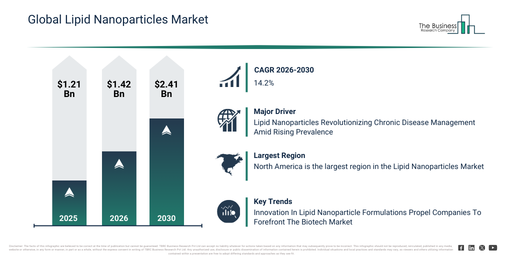
    The market for lipid nanoparticles has experienced significant expansion lately, set to progress from $1.21 billion in 2025 to $1.42 billion in 2026, exhibiting a compound annual growth rate of 16.9%. This expansion during the preceding period is largely due to progress in nanotechnology exploration, augmented investment in pharmaceutical research and development, initial acceptance of lipid-based delivery mechanisms, increased scholarly investigation into nanoparticles, and a heightened need for precise drug administration.

    The market for lipid nanoparticles is poised for substantial expansion in the coming years, projecting a rise to $2.41 billion by 2030, driven by a compound annual growth rate (CAGR) of 14.2%. This projected increase throughout the forecast period is largely due to the proliferation of gene and mRNA therapies, a heightened need for sophisticated drug delivery systems, a growing emphasis on personalized medicine, advancements in biopharmaceutical development, and strengthened partnerships between commercial entities and academic researchers. Key developments anticipated during this timeframe include a broader embrace of lipid nanoparticles in drug delivery applications, their increased utilization in nucleic acid-based treatments, a stronger concentration on improving drug stability and efficacy, the extension of lipid nanoparticle applications into research spheres, and a greater demand for formulations that are both scalable and consistently reproducible.

    Download A Free Sample Report For Comprehensive Market Insights:

    https://www.thebusinessresearchcompany.com/sample.aspx?id=15210&type=smp

    Lipid Nanoparticles Market Demand Drivers Creating New Revenue Opportunities

    The market for lipid nanoparticles (LNPs) is experiencing a surge in demand, largely attributed to the increasing incidence of chronic health conditions. These long-lasting ailments, often persisting for more than three months, encompass a range of illnesses such as diabetes and high blood pressure. A confluence of factors, including adverse health habits, an aging global population, lifestyle decisions, the use of tobacco, inadequate diets, sedentary routines, and excessive alcohol intake, are contributing to the escalating rates of these chronic diseases. LNPs present a valuable solution for managing these conditions, primarily by augmenting the efficacy of mRNA-based therapies and vaccinations. Consequently, LNPs are poised to significantly advance the treatment strategies for a multitude of chronic diseases, offering enhanced management possibilities and potentially leading to improved results for patients. To illustrate, consider the situation in the United Kingdom, where the National Health Service reported in June 2024 that in 2023, diagnoses for individuals at risk of type 2 diabetes rose by over half a million (549,000) in England, bringing the total registered cases of pre-diabetes to 3,615,330, a notable increase of almost 20% from the 3,065,825 recorded in 2022. This escalating burden of chronic illness is thus a key driver for the expansion of the lipid nanoparticle market.

    Lipid Nanoparticles Market Categorization By Product Type And Application

    The lipid nanoparticles market covered in this report is segmented –

    1) By Type: Nano-Structured Lipid Carriers (NLCs), Solid Lipid Nanoparticles (SLNs)

    2) By Application: Research, Therapeutics

    3) By End User: Pharmaceutical And Biotechnology Companies, Academics And Research Centers, Other End Users

    Subsegments:

    1) By Nano-Structured Lipid Carriers (NLCs): Hard NLCs, Soft NLCs

    2) By Solid Lipid Nanoparticles (SLNs): Conventional SLNs, Modified SLNs

    Lipid Nanoparticles Market Trends Driving Strategic Industry Expansion

    Companies at the forefront of the lipid nanoparticle (LNP) market are actively pursuing advancements in circular RNA (circRNA) and LNP formulations as a strategy to enhance their market standing. The availability of an expanded array of RNA formats, including circRNA, which is a single-stranded RNA characterized by a covalently closed circular structure, is a direct result of this development. As an illustration, GenScript Biotech, a prominent life sciences entity based in the United States, augmented its service offerings in September 2023 to encompass both circular RNA (circRNA) and lipid nanoparticle (LNP) formulation capabilities. These recently introduced services underscore GenScript’s dedication to supporting protein replacement therapies along with gene and cell therapy solutions, and they are now accessible through the company’s contract manufacturing services for reagents. Relative to conventional linear RNA, circRNA presents distinct benefits such as improved stability, a more extended half-life, and the capacity to elicit therapeutic protein levels effectively even with reduced dosing.

    Lipid Nanoparticles Market Company Landscape And Strategic Competition

    Major companies operating in the lipid nanoparticles market are Pfizer Inc., Johnson & Johnson, AbbVie Inc., Bayer AG, Abbott Laboratories, Amgen Inc, The Merck Group, Evonik Industries AG, BioNTech SE, Moderna Inc., Sanofi SA, Solid Biosciences Inc., AstraZeneca PLC, NOF Corporation, Alnylam Pharmaceuticals Inc., Nanomerics Ltd., CordenPharma International, Nippon Fine Chemical, Helix Biotech Inc., Dicerna Pharmaceuticals, Gattefossé SAS, Arbutus Biopharma, Avanti Polar Lipids, IOI Oleo GmbH, Evox Therapeutics Ltd.

    Access The Complete Lipid Nanoparticles Market Report:

    https://www.thebusinessresearchcompany.com/report/lipid-nanoparticles-global-market-report

    Lipid Nanoparticles Market Global Footprint: Which Region Holds Market Leadership?

    North Americawas the largest region in the lipid nanoparticles (LNPs) market in 2025. The regions covered in the lipid nanoparticles market report are Asia-Pacific, South East Asia, Western Europe, Eastern Europe, North America, South America, Middle East, Africa.

    Get in touch with us:

    The Business Research Company: https://www.thebusinessresearchcompany.com/

    Americas: +1 310-496-7795

    Asia: +44 7882 955267 & +91 8897263534

    Europe: +44 7882 955267

    Email us at: marketing@tbrc.info

    Follow us on:

    LinkedIn: https://in.linkedin.com/company/the-business-research-company

    YouTube: https://www.youtube.com/channel/UC24_fI0rV8cR5DxlCpgmyFQ

    Global Market Model: https://www.thebusinessresearchcompany.com/global-market-model

  • Lipid Disorder Treatment Market Forecast Reveals Where Future Industry Value Will Be Created

    Lipid Disorder Treatment Market Forecast Reveals Where Future Industry Value Will Be Created

    Delivering more actionable and strategically valuable research, The Business Research Company’s 2026 market reports feature market attractiveness analysis, total addressable market evaluation, company benchmarking matrices, interactive Excel dashboards, expanded supply chain intelligence, emerging startup coverage, and detailed product insights.

    Lipid Disorder Treatment Market Growth Potential: How Will Market Size Change Through 2030?

    The marketplace for addressing lipid disorders has witnessed substantial expansion lately. Projections indicate a rise from $12.06 billion in 2025 to $13.6 billion in 2026, reflecting a compound annual growth rate of 12.8%. Factors contributing to the expansion observed in the past include a surge in cardiovascular disease occurrences, the broad acceptance of statins in clinical settings, increasingly inactive lifestyles, a growing prevalence of obesity and diabetes, and enhanced methodologies for cholesterol detection.

    The market for treating lipid disorders is poised for significant expansion, projected to reach $20.47 billion by 2030, demonstrating a robust compound annual growth rate of 10.8%. This anticipated surge is fueled by several key factors, including an aging global population, an increasing demand for cutting-edge lipid management solutions, a greater emphasis on prompt detection and ongoing oversight of these conditions, the broader application of PCSK9 inhibitors, and augmented healthcare expenditures dedicated to managing long-term illnesses. Within this forecast period, notable trends encompass the escalating incidence of dyslipidemia and associated cardiovascular risks, a greater acceptance of combined approaches to lowering lipid levels, heightened attention toward proactive cardiovascular health strategies, wider availability and utilization of affordable generic statins, and improved patient engagement alongside sustained commitment to treatment regimens.

    Download A Free Sample Report For Comprehensive Market Insights:

    https://www.thebusinessresearchcompany.com/sample.aspx?id=15600&type=smp

    Lipid Disorder Treatment Market Expansion Supported By Key Demand Factors

    It is anticipated that the escalating prevalence of obesity and elevated cholesterol levels will serve as a significant catalyst for the expansion of the lipid disorder treatment market. Obesity, defined by an excessive accumulation of body fat, and high cholesterol, characterized by detrimental blood cholesterol concentrations, both present considerable health hazards. These conditions are increasingly prevalent due to factors such as poor dietary habits, inactive lifestyles, genetic vulnerabilities, and external environmental elements. The management of lipid disorders is instrumental in addressing obesity and high cholesterol; this involves a synergistic approach incorporating drug therapies, changes in lifestyle, weight control programs, patient awareness initiatives, and comprehensive healthcare coordination. For example, data from the Office for Health Improvement and Disparities in the UK indicates a concerning trend, with an estimated 64.5% of English adults aged 18 and above categorized as overweight or obese between the years spanning 2023 to 2024, an increase from the 64.0% recorded during the 2022 to 2023 period. Consequently, the burgeoning rates of obesity and high cholesterol are directly fueling the upward trajectory of the lipid disorder treatment market.

    Lipid Disorder Treatment Market Segment Analysis And Revenue Opportunities

    The lipid disorder treatment market covered in this report is segmented –

    1) By Drug Type: Atorvastatin, Fluvastatin, Rosuvastatin, Simvastatin, Pravastatin, Other Drugs

    2) By Indication: Familial Combined Hyperlipidemia, Familial Defective Apolipoprotein B-100, Familial Dysbetalipoproteinemia, Familial Hypertriglyceridemia, Heterozygous Familial Hypercholesterolemia, Other Indications

    3) By Distribution Channel: Hospital Pharmacies, Retail Pharmacies, Online Pharmacies, Other Distribution Channels

    Subsegments:

    1) By Atorvastatin: Generic Atorvastatin, Brand-Name Atorvastatin ( Lipitor)

    2) By Fluvastatin: Generic Fluvastatin, Brand-Name Fluvastatin ( Lescol)

    3) By Rosuvastatin: Generic Rosuvastatin, Brand-Name Rosuvastatin ( Crestor)

    4) By Simvastatin: Generic Simvastatin, Brand-Name Simvastatin ( Zocor)

    5) By Pravastatin: Generic Pravastatin, Brand-Name Pravastatin ( Pravachol)

    6) By Other Drugs: Ezetimibe, Pcsk9 Inhibitors ( Alirocumab, Evolocumab), Fibrates ( Gemfibrozil, Fenofibrate), Niacin (Vitamin B3), Omega-3 Fatty Acids ( Icosapent Ethyl)

    Lipid Disorder Treatment Market Growth Trends Influencing Competitive Dynamics

    Within the landscape of the lipid disorder treatment sector, prominent entities are actively engaged in the creation of PCSK9 inhibitors, aiming to fulfill the growing demand for sophisticated and precisely targeted treatments for elevated cholesterol. These PCSK9 inhibitors function by augmenting the body’s capacity to eliminate low-density lipoprotein (LDL) cholesterol from circulation, which in turn mitigates the likelihood of cardiovascular incidents among individuals at elevated risk. As a concrete illustration, March 2024 saw Regeneron Pharmaceuticals Inc., a biotechnology firm situated in the United States, secure authorization from the U.S. Food and Drug Administration (FDA) for its Praluent injection, specifically for the management of heterozygous familial hypercholesterolemia (HeFH) in pediatric patients aged eight years and older. The distinct mechanism of action of Praluent involves impeding the interaction between PCSK9 and the LDL receptor, leading to an increased presence of LDL receptors on the surface of liver cells, ultimately promoting the clearance of LDL and lowering LDL-C concentrations within the bloodstream.

    Lipid Disorder Treatment Market Leading Players Shaping Industry Direction

    Major companies operating in the lipid disorder treatment market are Pfizer Inc., F. Hoffmann-La Roche AG, Merck & Co. Inc., Sanofi S.A., AstraZeneca Plc, Fresenius SE & Co. KGaA, Abbott Laboratories Inc., Novartis AG, GlaxoSmithKline Plc, Wockhardt Ltd., Eli Lilly and Company, Amgen Inc., Boehringer-Ingelheim International GmbH, Viatris Inc., Teva Pharmaceutical Industries Ltd., Regeneron Pharmaceuticals Inc., Mylan N.V., Sun Pharmaceutical Industries Ltd., Glenmark Pharmaceuticals Limited, Emcure Pharmaceuticals Limited, Kowa Pharmaceuticals America Inc., Biocon Ltd., Ranbaxy Laboratories Limited

    Access The Complete Lipid Disorder Treatment Market Report:

    https://www.thebusinessresearchcompany.com/report/lipid-disorder-treatment-global-market-report

    Lipid Disorder Treatment Market Regional Distribution: Which Areas Drive Market Expansion?

    North Americawas the largest region in the lipid disorder treatment market in 2025. Asia-Pacificis expected to be the fastest-growing region in the forecast period. The regions covered in the lipid disorder treatment market report are Asia-Pacific, South East Asia, Western Europe, Eastern Europe, North America, South America, Middle East, Africa.

    Get in touch with us:

    The Business Research Company: https://www.thebusinessresearchcompany.com/

    Americas: +1 310-496-7795

    Asia: +44 7882 955267 & +91 8897263534

    Europe: +44 7882 955267

    Email us at: marketing@tbrc.info

    Follow us on:

    LinkedIn: https://in.linkedin.com/company/the-business-research-company

    YouTube: https://www.youtube.com/channel/UC24_fI0rV8cR5DxlCpgmyFQ

    Global Market Model: https://www.thebusinessresearchcompany.com/global-market-model
  • Light Therapy Market Growth Through 2030 Creates New Strategic Opportunities

    Light Therapy Market Growth Through 2030 Creates New Strategic Opportunities

    Enhanced with market attractiveness analysis, total addressable market evaluation, company benchmarking matrices, interactive Excel dashboards, expanded supply chain intelligence, emerging startup coverage, and detailed product insights, The Business Research Company’s 2026 market reports deliver more actionable and strategically valuable research.

    Light Therapy Market Value Analysis: What Growth Is Expected Over The Forecast Period?

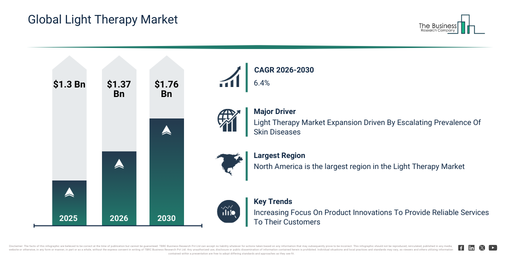
    The light therapy sector experienced robust expansion over recent years, and this upward trajectory is projected to continue, advancing from a valuation of $1.3 billion in 2025 to $1.37 billion by 2026, reflecting a compound annual growth rate of 6.0%. Key drivers behind the historical growth phase included a rising incidence of dermatological conditions, the initial integration of phototherapy into clinical practice, heightened public understanding of seasonal affective disorder, an increase in the number of dermatology facilities, and a growing inclination towards treatment options that do not involve pharmaceuticals.

    The light therapy sector is projected for significant expansion, reaching an estimated $1.76 billion by 2030, fueled by a compound annual growth rate of 6.4%. This anticipated surge is underpinned by several key factors including a greater embrace of at-home therapeutic solutions, an escalating need for user-friendly treatment apparatus, a rise in sleep disturbances and mood-related ailments, broadened uses for treating persistent skin issues, and increased consumer expenditure on wellness apparatus. Key developments expected within this timeframe encompass a heightened preference for at-home light therapy equipment, a growing application of light therapy in skin disease management, a greater acceptance of these non-invasive therapeutic methods, an extension of light therapy’s utility in addressing mental health concerns, and a mounting demand for mobile and wearable light therapy gadgets.

    Download A Free Sample Report For Comprehensive Market Insights:

    https://www.thebusinessresearchcompany.com/sample.aspx?id=10567&type=smp

    Light Therapy Market Growth Drivers And Industry Catalysts

    The expanding incidence of dermatological conditions is anticipated to fuel the advancement of the light therapy sector in the future. Dermatological conditions encompass a broad range of afflictions impacting the skin, often stemming from infections—bacterial, viral, fungal, allergic, or parasitic—or originating from the skin itself. Light therapy employs specific wavelengths of light to address various skin ailments, including psoriasis, eczema, mycosis, and vitiligo, among others. This treatment method involves exposing the skin to ultraviolet (UV) light for prescribed durations, often in conjunction with pharmaceutical agents that bolster the skin’s immune response and facilitate natural healing processes, thereby mitigating the cellular proliferation and inflammation characteristic of skin disorders. As an illustration, in August 2023, the Skin Health Institute Inc., a non-profit entity based in Australia, reported that approximately 2–3% of the Australian populace suffers from psoriasis, underscoring its prevalence as a common dermatological issue. Consequently, the heightened occurrence of skin diseases is serving as a significant catalyst for the expansion of the light therapy market.

    Light Therapy Market Segmentation And Category Breakdown

    The light therapy market covered in this report is segmented –

    1) By Product: Light Box, Floor And Desk Lamps, Handheld Devices For Skin Treatment, Light Visor, Light Therapy Lamps, Other Products

    2) By Light Type: White Light, Blue Light, Red Light, Other Light Types

    3) By Application: Psoriasis, Vitiligo, Eczema, Acne Vulgaris, SAD/Winter Blues, Sleeping Disorders, Other Applications

    4) By End User: Homecare Setting, Hospital, Dermatology Clinics, Other End Users

    Subsegments:

    1) By Light Box: Compact Light Boxes, Full-Spectrum Light Boxes, Adjustable Light Boxes

    2) By Floor and Desk Lamps: Floor Lamps, Desk Lamps, Adjustable Angle Lamps

    3) By Handheld Devices for Skin Treatment: LED Handheld Devices, Infrared Handheld Devices, Ultraviolet Handheld Devices

    4) By Light Visor: Wearable Light Visors, Adjustable Light Visors

    5) By Light Therapy Lamps: Portable Light Therapy Lamps, Stationary Light Therapy Lamps

    6) By Other Products: Phototherapy Masks, Light Therapy Glasses, Combined Light Therapy Devices

    #Light Therapy Market Trends Influencing Long-Term Demand

    In the realm of light therapy, leading corporations are concentrating their efforts on pioneering new offerings, specifically topical skincare solutions, as a means to boost their market earnings. These topical formulations are engineered to amplify the efficacy of the company’s scientifically proven LED light therapy regimens, such as omnilux men and omnilux contourface. To illustrate, June 2023 saw GlobalMed Technologies, a prominent US manufacturer and provider of assistive medical and aesthetic equipment, introduce a line of topical skincare products. This particular skincare range was developed with the explicit intention of complementing the brand’s established omnilux contour light therapy devices, which endeavor to reduce the appearance of wrinkles and fine lines, improve skin complexion, and furnish a comprehensive solution for both end-users and aesthetic practitioners. The topical skincare products are intentionally formulated to optimize the advantages derived from LED light therapy, functioning effectively before, during, and following treatment sessions. Grounded in clinical validation, these products are user-friendly and affordably priced for convenient at-home application, yet they yield outcomes comparable to professional treatments.

    Light Therapy Market Competitive Analysis Of Major Industry Participants

    Major companies operating in the light therapy market are Philips Healthcare, GE Healthcare Technologies Inc, Johnson and Johnson, Beurer GmbH, Lumie Limited, Northern Light Technologies Inc, Verilux Inc, Carex Health Brands Inc, Zepter International GmbH, BioPhotas Inc, Thor Photomedicine Ltd, Alaska Northern Lights Inc, Lucimed SA, Sunbox Company, Dymax Corporation, Valkee Oy, HoMedics LLC, Medical Indicators Inc, PhotoMedex Inc, LED Technologies LLC

    Access The Complete Light Therapy Market Report:

    https://www.thebusinessresearchcompany.com/report/light-therapy-global-market-report

    Light Therapy Market Leading Geography: Which Region Generates The Most Revenue?

    North Americawas the largest region in the light therapy market in 2025Asia-Pacificis expected to be the fastest-growing region in the global light therapy market report during the forecast period. The regions covered in the light therapy market report are Asia-Pacific, South East Asia, Western Europe, Eastern Europe, North America, South America, Middle East, Africa.

    Get in touch with us:

    The Business Research Company: https://www.thebusinessresearchcompany.com/

    Americas: +1 310-496-7795

    Asia: +44 7882 955267 & +91 8897263534

    Europe: +44 7882 955267

    Email us at: marketing@tbrc.info

    Follow us on:

    LinkedIn: https://in.linkedin.com/company/the-business-research-company

    YouTube: https://www.youtube.com/channel/UC24_fI0rV8cR5DxlCpgmyFQ

    Global Market Model: https://www.thebusinessresearchcompany.com/global-market-model
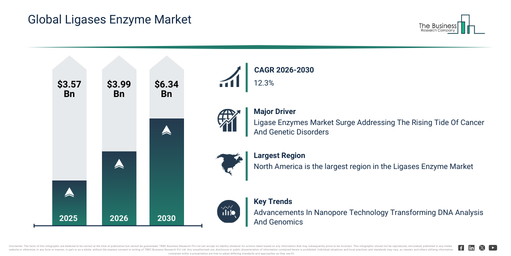
  • Ligases Enzyme Market Size Projected To Increase From $3.98 Billion To $6.34 Billion During The Forecast Period

    Ligases Enzyme Market Size Projected To Increase From $3.98 Billion To $6.34 Billion During The Forecast Period

    Through market attractiveness analysis, total addressable market evaluation, company benchmarking matrices, interactive Excel dashboards, expanded supply chain intelligence, emerging startup coverage, and detailed product insights, The Business Research Company’s 2026 market reports provide more actionable and strategically valuable research.

    Ligases Enzyme Market Size Forecast: How Large Could The Market Become By 2030?

    The market for ligases, a crucial type of enzyme, has experienced substantial expansion. Projections indicate a continued upward trend, with market value expected to ascend from $3.57 billion in 2025 to $3.99 billion in 2026, reflecting a compound annual growth rate of 11.7%. This historical growth trajectory has been fueled by several key factors, including the burgeoning field of molecular biology research, the early integration of ligase enzymes into cloning techniques, the proliferation of academic research facilities, escalating investment in pharmaceutical research and development, and the growing adoption of enzymatic methodologies within diagnostic applications.

    The market for ligases is poised for significant expansion, projected to reach $6.34 billion by 2030 with a compound annual growth rate of 12.3%. This anticipated surge is fueled by several key factors, including a heightened need for sophisticated genetic analyses, the broadening scope of next-generation sequencing technologies, escalating investments in biological research endeavors, a greater emphasis on tailored medical treatments, and the increasing integration of ligase-dependent diagnostic methods. During this projected period, prominent developments are expected to include a rising demand for these enzymes in molecular cloning procedures, their expanded utilization within genetic research, a greater uptake in diagnostic testing kits, the diversification of ligase applications in the pursuit of new pharmaceuticals, and a growing inclination towards enzymes exhibiting superior efficiency and specialized properties.

    Download A Free Sample Report For Comprehensive Market Insights:

    https://www.thebusinessresearchcompany.com/sample.aspx?id=12226&type=smp

    Ligases Enzyme Market Opportunity Drivers: What Is Creating New Revenue Potential?

    The expanding incidence of cancer and inheritable ailments is anticipated to stimulate the progress of the ligase enzyme market in the future. Cancer encompasses a range of conditions marked by the unrestrained multiplication and dissemination of aberrant cells, while genetic disorders represent a broad spectrum of health issues stemming from anomalies or alterations in an individual’s genetic makeup, particularly their DNA. Ligase enzymes are indispensable for the processes of DNA replication, repair, and recombination. Within the context of cancer, ligases can be utilized to mend damaged DNA, thereby contributing to the uncontrolled proliferation of cells. Moreover, ligases can be employed to specifically target and eliminate cells afflicted with genetic disorders. As an illustration, in July 2024, data from the Australian Institute of Health and Welfare, a governmental body in Australia, indicated that the count of cancer diagnoses in Australia escalated from 160,570 in 2022 to 164,694 in 2023, signifying a considerable increase over that year. This upward trajectory underscores the growing prevalence of cancer nationwide. Furthermore, there were 403 new cancer diagnoses and 144 cancer-related fatalities per 100,000 individuals. Additionally, in February 2023, Gene People UK, a registered charity in the UK, reported that approximately 1 in 25 children in the UK are impacted by a genetic condition, resulting in over 2.4 million children and adults in the UK living with a genetic disorder, with 30,000 infants and children receiving new diagnoses annually. Consequently, the escalating prevalence of cancer and genetic disorders is a key factor driving the expansion of the ligase enzyme market.

    The escalating volume of research and development endeavors is poised to invigorate the expansion of the ligase enzyme market moving forward. Research and development (R&D) activities involve investigative efforts undertaken by companies or organizations aimed at enhancing existing products and processes or pioneering the creation of new ones. Ligase enzymes, also referred to as DNA ligases, fulfill a vital function in the ligation of DNA molecules, establishing them as indispensable instruments for a multitude of research and development (R&D) pursuits across various disciplines. For example, in February 2025, a report issued by the National Science Foundation (NSF), a federal agency within the United States, revealed that total expenditures on research and experimental development (R&D) in the United States reached $892 billion in 2022, with projections indicating an increase to $940 billion in 2023. Thus, the intensification of research and development activities is serving as a catalyst for the growth of the ligase enzyme market.

    Ligases Enzyme Market Segment Outlook: Which Categories Are Expanding The Fastest?

    The ligases enzyme market covered in this report is segmented –

    1) By Type: E. coli DNA Ligases, T4 DNA Ligase, Mammalian Ligases, Thermostable Ligases

    2) By Source: Microorganisms, Animal

    3) By Application: Ligase Chain Reaction (LCR), Ligase Detection Reaction (LDR), Next-Generation Sequencing (NGS), Rolling Circle Amplification (RCA), Proximity Ligation Assay (PLA), Molecular Cloning, Ligation Mediated PCR, Mutation Detection

    4) By End-User: Research Laboratories And Institutions, Pharmaceutical And Biopharmaceutical Companies, Diagnostic Laboratories

    Subsegments:

    1) By E. coli DNA Ligase: Ligase I, Ligase II

    2) By T4 DNA Ligase: Wild-Type T4 Ligase, Modified T4 Ligase

    3) By Mammalian Ligases: Ligase IV, Ligase I

    4) By Thermostable Ligases: Taq DNA Ligase, Pyrococcus Furiosus Ligase

    Ligases Enzyme Market Innovation Trends Driving Future Development

    Within the ligases enzyme sector, leading corporations are advancing technologies like nanopore sequencing to boost the accuracy and effectiveness of both DNA sequencing and manipulation, thereby refining applications across genomics, synthetic biology, and personalized medicine. Nanopore technologies function by employing minuscule pores to identify and scrutinize molecules, including DNA and proteins, through the measurement of ionic current fluctuations as these molecules traverse the pore. As an illustration, Eurofins Genomics, a United States-based biotechnology firm, introduced its Express Oxford Nanopore Sequencing service in February 2023, a service that leverages Oxford Nanopore technology to enable the sequencing of extensive DNA fragments, offering significant advantages for tasks demanding thorough genomic evaluation, such as metagenomics and the identification of structural variations.

    Ligases Enzyme Market Key Companies And Competitive Benchmarking

    Major companies operating in the ligases enzyme market are New England Biolabs Inc., Promega Corporation, Takara Bio Inc., Thermo Fisher Scientific Inc., Merck KGaA, GenScript, Creative Enzymes, ArcticZymes Technologies ASA, BLIRT S.A., Jena Bioscience, Enzo Life Sciences, BioVision Inc., Bioneer Corporation, Sino Biological Inc., Genetix Biotech Asia Pvt. Ltd., Omega Bio-tek Inc., Canvax Biotech, NZYGene, Vivantis Technologies, Toyobo Co. Ltd.

    Access The Complete Ligases Enzyme Market Report:

    https://www.thebusinessresearchcompany.com/report/ligases-enzyme-global-market-report

    Ligases Enzyme Market Regional Outlook: Where Are The Largest Opportunities Located?

    North Americawas the largest region in the ligases enzyme market in 2025. Asia-Pacificis expected to be the fastest-growing region in the ligases enzyme market report during the forecast period. The regions covered in the ligases enzyme market report are Asia-Pacific, South East Asia, Western Europe, Eastern Europe, North America, South America, Middle East, Africa.

    Get in touch with us:

    The Business Research Company: https://www.thebusinessresearchcompany.com/

    Americas: +1 310-496-7795

    Asia: +44 7882 955267 & +91 8897263534

    Europe: +44 7882 955267

    Email us at: marketing@tbrc.info

    Follow us on:

    LinkedIn: https://in.linkedin.com/company/the-business-research-company

    YouTube: https://www.youtube.com/channel/UC24_fI0rV8cR5DxlCpgmyFQ

    Global Market Model: https://www.thebusinessresearchcompany.com/global-market-model

  • Lifestyle Diseases Apps Market Growth Outlook Reveals A CAGR Of 16.5% And A Market Value Of $15.48 Billion By 2030

    Lifestyle Diseases Apps Market Growth Outlook Reveals A CAGR Of 16.5% And A Market Value Of $15.48 Billion By 2030

    Delivering more actionable and strategically valuable research, The Business Research Company’s 2026 market reports feature market attractiveness analysis, total addressable market evaluation, company benchmarking matrices, interactive Excel dashboards, expanded supply chain intelligence, emerging startup coverage, and detailed product insights.

    Lifestyle Diseases Apps Market Revenue Outlook: What CAGR Is Expected Through 2030?

    The market for applications aimed at managing lifestyle diseases has experienced significant expansion. Projections indicate a rise from a valuation of $7.19 billion in 2025 to $8.4 billion by 2026, demonstrating a compound annual growth rate (CAGR) of 16.8%. Factors contributing to this historical growth trajectory include the increasing accessibility of smartphones, heightened public consciousness surrounding chronic conditions linked to lifestyle choices, the proliferation of digital health ecosystems, greater adoption of remote patient monitoring technologies, and a growing consumer emphasis on proactive health management.

    The market for applications designed to manage lifestyle-related illnesses is poised for substantial expansion in the upcoming years, projecting a valuation of $15.48 billion by 2030, driven by a compound annual growth rate of 16.5%. This projected surge is fueled by several key factors: a heightened need for customized digital treatment plans, the increasing incorporation of artificial intelligence in health data analysis, broader implementation of workplace wellness programs, greater utilization of remote patient monitoring technologies, and augmented governmental backing for digital health innovations. During this forecast period, several significant trends are anticipated to emerge, including a greater uptake of personalized health coaching functionalities, enhanced integration of data from wearable devices, expanded use of AI for symptom analysis, wider availability of apps focused on preventive health tracking, and a more concentrated effort on maintaining long-term user involvement.

    Download A Free Sample Report For Comprehensive Market Insights:

    https://www.thebusinessresearchcompany.com/sample.aspx?id=25809&type=smp

    Lifestyle Diseases Apps Market Growth Momentum: Which Factors Are Influencing Demand?

    The expansion of the lifestyle disease apps market is anticipated to be fueled by the escalating prevalence of smartphones and internet access. This surge in smartphone and internet usage signifies a growing number of individuals utilizing mobile devices with online capabilities to engage with digital resources and information. The increased availability and affordability of mobile data plans, driven by intense competition among telecommunication companies offering economical, high-speed internet, are key factors behind this trend. Consequently, broader mobile internet accessibility is empowering more individuals to utilize digital health instruments, consequently fostering the uptake of applications designed for managing lifestyle-related illnesses. For illustration, data from the Federal Communications Commission, a governmental body in the US, indicated that by May 2025, total connections experienced an approximate 2.5% increase from June 2023 to June 2024, reaching a total of 549 million. Specifically, mobile connections saw a year-over-year growth of 2.5% to 416 million by June 2024, with fixed connections also rising by roughly 2.3% to 133 million during the comparable timeframe. Thus, the expanding reach of smartphones and internet connectivity is undeniably a significant driver for the lifestyle disease apps sector.

    Lifestyle Diseases Apps Market Segment Landscape: Which Areas Lead Market Development?

    The lifestyle diseases apps market covered in this report is segmented –

    1) By Type: Prevention Apps, Management Apps, Monitoring Apps, Diagnostic Apps, Wellness Apps

    2) By Platform: iPhone Operating System (iOS), Android, Other Platforms

    3) By Device: Smartphones, Tablets, Wearable Health Trackers, Smartwatches

    4) By Applications: Diabetes Management, Cardiovascular Health, Hypertension Monitoring, Chronic Respiratory Diseases

    5) By End-User: Healthcare Providers, Individual Consumers, Corporate Wellness Programs, Insurance Companies

    Subsegments:

    1) By Prevention Apps: Health Risk Assessment Tools, Vaccination Reminder Apps, Diet And Nutrition Advisory Apps, Smoking Cessation Apps, Alcohol Reduction Apps

    2) By Management Apps: Chronic Disease Management Apps, Medication Management Apps, Mental Health Management Apps, Blood Pressure Control Apps, Diabetes Control Apps

    3) By Monitoring Apps: Physical Activity Tracking Apps, Heart Rate Monitoring Apps, Sleep Monitoring Apps, Glucose Monitoring Apps, Calorie Tracking Apps

    4) By Diagnostic Apps: Symptom Checker Apps, Artificial Intelligence (AI)-Based Diagnosis Apps, Skin Lesion Analysis Apps, Teleconsultation Diagnostic Apps, Lab Report Interpretation Apps

    5) By Wellness Apps: Mindfulness And Meditation Apps, Fitness And Exercise Coaching Apps, Stress Management Apps, Healthy Lifestyle Coaching Apps, Yoga And Breathing Apps

    Lifestyle Diseases Apps Market Trends Reshaping Industry Growth

    Leading players in the lifestyle disease applications sector are concentrating their efforts on creating sophisticated tools, like mobile platforms for remote patient monitoring, aiming to elevate the management of ongoing health conditions and foster better interactions between patients and their healthcare providers. These mobile remote patient monitoring (RPM) systems function as digital instruments designed to continuously gather patients’ vital statistics and health information utilizing smartphones or tablets. Such platforms contribute to the prompt identification of health concerns, refine the handling of chronic illnesses, and reduce the frequency of necessary doctor’s office appointments. As an illustration, during November of 2024, Mega Lifesciences Nigeria Ltd., a Nigerian firm involved in pharmaceuticals and healthcare services, introduced the We Care Diabetes App, a mobile utility dedicated to diabetes care. This application provides capabilities for immediate blood sugar recording, expert health guidance, and the safekeeping of medical documentation, thereby enabling individuals to take charge of their diabetes through insights derived from their own health data, particularly benefiting those in areas with limited healthcare access. The introduction of the We Care Diabetes App signifies a deliberate move to increase the availability and suitability of digital chronic care solutions for communities situated in economically developing regions.

    Lifestyle Diseases Apps Market Industry Leaders And Market Competition

    Major companies operating in the lifestyle diseases apps market are Apple Inc., Samsung Electronics Co. Ltd., Abbott Laboratories, Garmin Ltd., Dexcom Inc., Whoop Inc., Withings S.A.S., BetterMe Limited, Ada Health GmbH, MyFitnessPal Inc., Omada Health Inc., Qardio Inc., Lark Technologies Inc., 8fit GmbH, Glooko Inc., Visible Health Inc., HealthifyMe Wellness Private Limited, Fabulous, Sweat International Pty Ltd, Nudge Coach Inc.

    Access The Complete Lifestyle Diseases Apps Market Report:

    https://www.thebusinessresearchcompany.com/report/lifestyle-diseases-apps-global-market-report

    Lifestyle Diseases Apps Market Geographic Landscape: Which Region Dominates Industry Growth?

    North Americawas the largest region in the lifestyle diseases apps market in 2025. Asia-Pacificis expected to be the fastest-growing region in the forecast period. The regions covered in the lifestyle diseases apps market report are Asia-Pacific, South East Asia, Western Europe, Eastern Europe, North America, South America, Middle East, Africa.

    Get in touch with us:

    The Business Research Company: https://www.thebusinessresearchcompany.com/

    Americas: +1 310-496-7795

    Asia: +44 7882 955267 & +91 8897263534

    Europe: +44 7882 955267

    Email us at: marketing@tbrc.info

    Follow us on:

    LinkedIn: https://in.linkedin.com/company/the-business-research-company

    YouTube: https://www.youtube.com/channel/UC24_fI0rV8cR5DxlCpgmyFQ

    Global Market Model: https://www.thebusinessresearchcompany.com/global-market-model