Month: June 2026

  • Direct-To-Consumer (DTC) Laboratory Testing Market Forecast Signals New Revenue Opportunities Through 2030

    Direct-To-Consumer (DTC) Laboratory Testing Market Forecast Signals New Revenue Opportunities Through 2030

    Enhanced with market attractiveness analysis, total addressable market evaluation, company benchmarking matrices, interactive Excel dashboards, expanded supply chain intelligence, emerging startup coverage, and detailed product insights, The Business Research Company’s 2026 market reports deliver more actionable and strategically valuable research.

    Direct-To-Consumer (DTC) Laboratory Testing Market Revenue Growth Supported By A CAGR Of 18.4% Through 2030

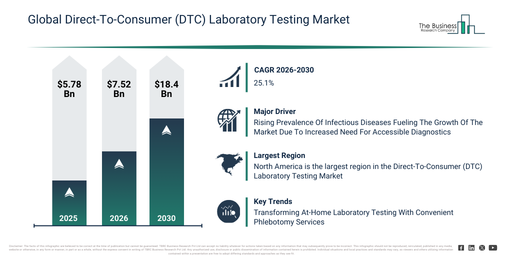
    The direct-to-consumer laboratory testing sector has experienced substantial growth lately, projecting a leap from $5.78 billion in 2025 to $7.52 billion in 2026, signifying a compound annual growth rate of 30.0%. Factors contributing to this expansion historically include restricted access to conventional clinical diagnostics, a surge in testing needs due to the pandemic, the early adoption of digital laboratory solutions, an increase in screening for chronic conditions, and a growing consumer preference for convenience.

    The direct-to-consumer laboratory testing sector is poised for substantial expansion, projecting a market valuation of $18.4 billion by 2030, with an anticipated compound annual growth rate of 25.1%. This anticipated surge is underpinned by several key drivers, including the increasing automation of laboratory processes, the burgeoning application of AI in diagnostics, the wider availability of convenient home sample collection options, growing regulatory endorsements, and a heightened focus on personalized health monitoring. Within this growth trajectory, prominent trends are expected to shape the market, such as a greater embrace of at-home diagnostic kits, the proliferation of online platforms for test ordering, an uplift in demand for preventive health screenings, a consumer desire for swift test outcome delivery, and the seamless integration of digital systems for reporting results.

    Download A Free Sample Report For Comprehensive Market Insights:

    https://www.thebusinessresearchcompany.com/sample.aspx?id=15556&type=smp

    Direct-To-Consumer (DTC) Laboratory Testing Market Growth Momentum: Which Factors Are Influencing Demand?

    The increasing incidence of infectious diseases is anticipated to be a significant catalyst for the expansion of the direct-to-consumer (DTC) laboratory testing market in the future, as these conditions, caused by disease-causing microorganisms like bacteria, viruses, parasitic organisms, or fungi that spread through direct or indirect contact or via carriers such as insects or animals, are affected by a multifaceted combination of biological, environmental, societal, and economic elements. DTC laboratory testing plays a crucial role in the prevention, identification, and handling of infectious diseases by improving accessibility to diagnostic procedures, facilitating prompt therapeutic actions, and bolstering public health initiatives through the accumulation of data and educational outreach; indeed, as an illustration, the World Health Organization, an international body focused on public health headquartered in Switzerland, indicated in October 2024 that an estimated 8.2 million individuals received new diagnoses for tuberculosis during 2023, a rise from the roughly 7.5 million cases documented in 2022, thus positioning tuberculosis as the foremost cause of mortality from infectious diseases. Consequently, the growing rate of infectious diseases is directly fueling the development of the direct-to-consumer (DTC) laboratory testing sector.

    Direct-To-Consumer (DTC) Laboratory Testing Market Segment Analysis Highlighting Growth Areas

    The direct-to-consumer (dtc) laboratory testing market covered in this report is segmented –

    1) By Sample Type: Blood, Urine, Saliva, Other Sample Types

    2) By Test Type: Genetic Testing, Disease Risk Assessment Testing, Complete Blood Count (CBC), Diabetes Testing, Thyroid-Stimulating Hormone (TSH) Testing, Other Test Types

    3) By Application: Diagnostics, Research And Development, Drug Discovery And Development

    4) By End User: Hospitals, Clinics, Specialty Labs, Diagnostic Centers

    Subsegments:

    1) By Blood: Blood Glucose, Cholesterol, Complete Blood Count (CBC), Blood Type, Vitamin and Mineral Levels, Hormone Levels, Liver And Kidney Function Tests

    2) By Urine: Pregnancy Tests, Urinalysis, Kidney Function Tests, Drug And Alcohol Testing, UTI (Urinary Tract Infection) Screening, Hormone Tests

    3) By Saliva: Hormone Testing, DNA Testing (Ancestry, Genetic Health Risks), Cortisol And Stress Level Tests, Food Sensitivity And Allergy Testing

    4) By Other Sample Types: Stool, Hair, Breath

    Direct-To-Consumer (DTC) Laboratory Testing Market Trends Reshaping Industry Growth

    In the direct-to-consumer (DTC) laboratory testing sector, leading enterprises are concentrating on pioneering advancements, including at-home phlebotomy, to elevate customer convenience and accessibility. This mobile phlebotomy entails bringing the service of blood collection directly to the individual’s setting, be it their residence or place of employment, thereby eliminating the necessity of travel to a healthcare establishment for blood sample acquisition. As a demonstration of this trend, in July of 2023, Quest Diagnostics Incorporated., a prominent American entity engaged in diagnostic testing, information, and associated services, introduced Quest Mobile, a novel offering engineered to simplify and optimize specimen collection procedures for laboratory analyses nationwide. Quest Mobile empowers individuals to conveniently book appointments for in-home sample collection facilitated by certified phlebotomists. This user-friendly alternative permits individuals to complete a broad spectrum of laboratory examinations without leaving their homes, thereby guaranteeing a hassle-free and readily available testing experience.

    Direct-To-Consumer (DTC) Laboratory Testing Market Leading Companies: Who Holds Significant Market Presence?

    Major companies operating in the direct-to-consumer (dtc) laboratory testing market are Laboratory Corporation of America Holdings (LabCorp), Quest Diagnostics Incorporated, PerkinElmer Inc, Genesis Healthcare Co., Natera Inc, Sonora Quest Laboratories, Ancestry.com LLC, 23andMe Holding Co, Thorne HealthTech Inc, Metropolis Healthcare Limited, Color Health Inc, LetsGetChecked Inc., MyHeritage Ltd, Everlywell Inc, Complete Genomics Incorporated, DanteLabs Inc, Gene by Gene Ltd., Veritas Intercontinental, DirectLabs LLC., WellnessFX Inc, Ulta Lab Tests LLC, Any Lab Test Now Inc, Vitagene Inc.

    Access The Complete Direct-To-Consumer (DTC) Laboratory Testing Market Report:

    https://www.thebusinessresearchcompany.com/report/direct-to-consumer-dtc-laboratory-testing-global-market-report

    Direct-To-Consumer (DTC) Laboratory Testing Market Regional Analysis: Which Region Leads By Revenue?

    North Americawas the largest region in the direct-to-consumer (DTC) laboratory testing market in 2025. Asia-Pacificis expected to be the fastest-growing region in the forecast period. The regions covered in the direct-to-consumer (dtc) laboratory testing market report are Asia-Pacific, South East Asia, Western Europe, Eastern Europe, North America, South America, Middle East, Africa.

    Get in touch with us:

    The Business Research Company: https://www.thebusinessresearchcompany.com/

    Americas: +1 310-496-7795

    Asia: +44 7882 955267 & +91 8897263534

    Europe: +44 7882 955267

    Email us at: marketing@tbrc.info

    Follow us on:

    LinkedIn: https://in.linkedin.com/company/the-business-research-company

    YouTube: https://www.youtube.com/channel/UC24_fI0rV8cR5DxlCpgmyFQ

    Global Market Model: https://www.thebusinessresearchcompany.com/global-market-model
  • Direct-To-Consumer (DTC) Genetic Testing Market Growth Is Accelerating As Industry Transformation Continues

    Direct-To-Consumer (DTC) Genetic Testing Market Growth Is Accelerating As Industry Transformation Continues

    Through market attractiveness analysis, total addressable market evaluation, company benchmarking matrices, interactive Excel dashboards, expanded supply chain intelligence, emerging startup coverage, and detailed product insights, The Business Research Company’s 2026 market reports provide more actionable and strategically valuable research.

    Direct-To-Consumer (DTC) Genetic Testing Market Value Expansion And Long-Term Growth Outlook

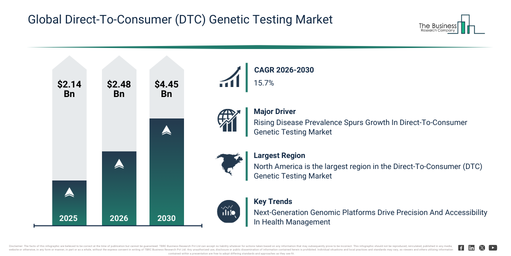
    The direct-to-consumer genetic testing sector has experienced substantial expansion lately, with projections indicating a rise from $2.14 billion in 2025 to $2.48 billion in 2026, reflecting a compound annual growth rate (CAGR) of 16.3%. Factors contributing to this expansion during the past period include reduced expenses for DNA sequencing, initial uptake of ancestry testing services, heightened public consciousness regarding health matters, greater accessibility through e-commerce, and inherent consumer interest in genetic information.

    The direct-to-consumer genetic testing market is poised for substantial expansion over the coming years, with projections indicating a rise to $4.45 billion by 2030, fueled by a compound annual growth rate of 15.7%. This anticipated surge is largely driven by advancements such as AI-powered genetic analysis, the broadening scope of precision medicine, evolving regulations governing genetic information, seamless integration with wellness applications, and a growing consumer appetite for tailored healthcare solutions. Key developments shaping this period include escalating consumer curiosity regarding genetic predispositions to health, a notable uptick in ancestry and relationship testing services, the proliferation of nutrigenomic and lifestyle-focused genetic assessments, increased reliance on online platforms for genetic testing, and a heightened emphasis on individualized health risk evaluations.

    Download A Free Sample Report For Comprehensive Market Insights:

    https://www.thebusinessresearchcompany.com/sample.aspx?id=8957&type=smp

    Direct-To-Consumer (DTC) Genetic Testing Market Expansion Drivers: What Is Shaping Future Growth?

    The expansion of the direct-to-consumer (DTC) genetic testing market is anticipated to be fueled by the increasing incidence of illnesses and conditions that are passed down genetically. A genetic disorder, stemming from alterations in an individual’s DNA, encompasses conditions affected by single genes, multiple factors, or chromosomal abnormalities. DTC genetic testing serves to elevate understanding of diverse genetic ailments, enabling health prognostication and delivering tailored insights into personal health, predispositions to illness, and other characteristics, thereby facilitating informed health and lifestyle choices to mitigate disease risk. To illustrate, data from the U.S. National Library of Medicine (NLM) in April 2023 indicated that approximately 6.7 million American adults aged 65 and over were projected to have Alzheimer’s dementia (AD) in 2023, a condition where genetic factors are notably influential; this figure could escalate to 13.8 million by 2060 without significant medical advancements for prevention, management, or treatment of AD. Consequently, the growing occurrence of genetically transmissible diseases and disorders is a primary driver for the burgeoning DTC genetic testing sector.

    Direct-To-Consumer (DTC) Genetic Testing Market Segment Performance And Strategic Opportunities

    The direct-to-consumer (dtc) genetic testing market covered in this report is segmented –

    1) By Type: Carrier Testing, Predictive Testing, Ancestry And Relationship Testing, Nutrigenomic Testing, Other Types

    2) By Sample: Saliva, Urine, Blood

    3) By Technology: Single Nucleotide Polymorphism Chips, Whole Genome Sequencing, Targeted Analysis

    4) By Business Model: Health Planning Model, Comprehensive Genome Tests Model, Medical Precision Tests Model, Restricted Trait Tests Mode

    5) By End User: Laboratories, Nursing Homes, Hospitals, Imaging Centers, Home Care, Cosmetics, Other End-User

    Subsegments:

    1) By Carrier Testing: Autosomal Recessive Disorders, X-Linked Disorders

    2) By Predictive Testing: Risk Assessment For Genetic Conditions, Adult-Onset Conditions

    3) By Ancestry And Relationship Testing: Ancestry Composition Analysis, DNA Matching For Relationships

    4) By Nutrigenomic Testing: Dietary Recommendations, Metabolism And Fitness Insights

    5) By Other Types: Pharmacogenomic Testing, Health Trait Testing

    Direct-To-Consumer (DTC) Genetic Testing Market Strategic Trends: What Is Defining The Next Phase Of Growth?

    Pioneering firms within the direct-to-consumer (DTC) genetic testing sector are dedicating their efforts toward creating cutting-edge offerings, specifically whole-genome sequencing (WGS) subscription models. These innovative platforms aim to deliver profound genetic understanding, facilitate bespoke health strategies, and foster greater user connection. Essentially, WGS subscription services involve sequencing almost the entirety of an individual’s genetic code, which unlocks detailed exploration of heritage, predisposition to illnesses, well-being characteristics, and how medications might be metabolized, vastly surpassing the scope of conventional SNP-chip tests that examine only curated genetic points. As a notable development in November 2024, ProPhase Labs, an American biotechnology and diagnostics enterprise, introduced DNA Complete, a distinct direct-to-consumer WGS service through its subsidiary, DNA Complete, Inc. This offering maps essentially the complete human genome for a client, features distinct subscription tiers (Essential, Pro, and Elite), provides continuous data enhancements, and incorporates access to genetic counselors for assistance in deciphering the findings. The service is built upon sophisticated bioinformatics and genealogical analysis capabilities, while also affording adaptability in sample handling, utilizing either ProPhase’s own Nebula Genomics laboratory or affiliated facilities. This integrated approach merges profound genomic knowledge with user-friendliness, ease of access, and sustained involvement from consumers.

    Direct-To-Consumer (DTC) Genetic Testing Market Key Players: Which Companies Shape Industry Competition?

    Major companies operating in the direct-to-consumer (dtc) genetic testing market are 23andMe, AncestryDNA, MyHeritage, FamilyTreeDNA, Living DNA, Vitagene, Orig3n, DNAfit, Helix, Color Genomics, Circle DNA, CRI Genetics, MapMyGenome, Invitae Corporation, TellmeGen, Pathway Genomics, Genebase Systems, EasyDNA, Nebula Genomics, Dante Labs, Veritas Genetics, Xcode Life, Genomic Express, Genomelink, Genomind, WellnessFX, LetsGetChecked, iGene, Dnadoc, OneOme

    Access The Complete Direct-To-Consumer (DTC) Genetic Testing Market Report:

    https://www.thebusinessresearchcompany.com/report/direct-to-consumer-dtc-genetic-testing-global-market-report

    Direct-To-Consumer (DTC) Genetic Testing Market Geographic Distribution And Regional Opportunities

    North Americawas the largest region in the direct-to-consumer (DTC) genetic testing market share in 2025. Asia-Pacificwas the second-largest region in the global direct-to-consumer (DTC) genetic testing market. The regions covered in the direct-to-consumer (dtc) genetic testing market report are Asia-Pacific, South East Asia, Western Europe, Eastern Europe, North America, South America, Middle East, Africa.

    Get in touch with us:

    The Business Research Company: https://www.thebusinessresearchcompany.com/

    Americas: +1 310-496-7795

    Asia: +44 7882 955267 & +91 8897263534

    Europe: +44 7882 955267

    Email us at: marketing@tbrc.info

    Follow us on:

    LinkedIn: https://in.linkedin.com/company/the-business-research-company

    YouTube: https://www.youtube.com/channel/UC24_fI0rV8cR5DxlCpgmyFQ

    Global Market Model: https://www.thebusinessresearchcompany.com/global-market-model
  • Direct To Consumer Testing Market Outlook Highlights The Next Major Growth Opportunities

    Direct To Consumer Testing Market Outlook Highlights The Next Major Growth Opportunities

    Delivering more actionable and strategically valuable research, The Business Research Company’s 2026 market reports feature market attractiveness analysis, total addressable market evaluation, company benchmarking matrices, interactive Excel dashboards, expanded supply chain intelligence, emerging startup coverage, and detailed product insights.

    Direct To Consumer Testing Market Expected To Reach $4.51 Billion By 2030 At 14.8% CAGR

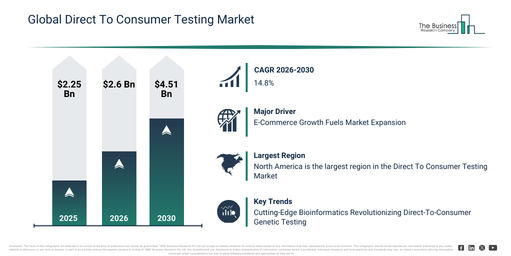
    The market for direct-to-consumer testing has seen considerable expansion lately, projected to increase from $2.25 billion in 2025 to $2.6 billion in 2026, reflecting a compound annual growth rate of 15.2%. Factors driving this expansion during the previous period included restricted diagnostic availability, heightened public consciousness about health, the early embrace of genetic testing, the burgeoning e-commerce sector within healthcare, and prevailing trends of consumer empowerment.

    The direct-to-consumer testing sector is poised for significant expansion in the upcoming years, projecting a market valuation of $4.51 billion by 2030. This impressive trajectory is fueled by a compound annual growth rate (CAGR) of 14.8%, a surge driven by advancements in testing precision, increased regulatory understanding, sophisticated AI for interpreting results, tailored health information, and the broadening availability of home-based diagnostic tools. Key developments shaping this period include an escalating consumer preference for conducting health tests in the comfort of their homes, a rise in genetic and biomarker testing kits, the proliferation of digital health testing services, a heightened emphasis on proactive health assessments, and a growing openness to independently accessible health data.

    Download A Free Sample Report For Comprehensive Market Insights:

    https://www.thebusinessresearchcompany.com/sample.aspx?id=20753&type=smp

    Direct To Consumer Testing Market Development Factors: Which Trends Are Supporting Demand?

    The expansion of online marketplaces is anticipated to be a primary catalyst for the direct-to-consumer testing sector’s advancement. These e-commerce solutions, designed for the digital exchange of products and services, are experiencing a surge driven by broader internet access, a growing consumer demand for convenience, the proliferation of mobile shopping, and a favorable regulatory landscape. By facilitating immediate feedback and enabling data-informed strategies, direct-to-consumer testing equips e-commerce entities with crucial intelligence regarding consumer tastes, actions, and product effectiveness. This, in turn, leads to an improved customer journey, refined product selections, and ultimately, higher sales figures alongside augmented customer contentment. As an illustration, ECommerce Europe, a Belgian non-profit organization, projected in October 2024 that European business-to-consumer e-commerce transactions would experience an 8% increase in 2024, totaling $992.8 billion (€958 billion), an uptick from the $916.80 billion (€887 billion) recorded in 2023. Consequently, the burgeoning e-commerce sector is acting as a significant driver for this market’s growth.

    #Direct To Consumer Testing Market Segment Landscape And Growth Potential

    The direct to consumer testing market covered in this report is segmented –

    1) By Test Type: Genetic Direct To Consumer Tests, Biomarker-Based Direct To Consumer Tests, Microbiome Direct To Consumer Tests

    2) By Distribution Channel: Online Channel, Retail Channel

    3) By Application: Health And Wellness Testing, Ancestry And Genealogy Testing, Disease Risk Assessment, Carrier Screening, Pharmacogenetic Testing, Whole Genome Sequence-Based Direct To Consumer Testing, Other Direct To Consumer Tests

    Subsegments:

    1) By Genetic Direct To Consumer Tests: Ancestry Testing, Health Risk And Carrier Screening, DNA Paternity And Relationship Testing

    2) By Biomarker-Based Direct To Consumer Tests: Hormonal Level Testing, Cardiovascular Risk Testing, Metabolic And Nutritional Testing

    3) By Microbiome Direct To Consumer Tests: Gut Health And Digestive System Testing, Skin Microbiome Testing, Oral Microbiome Testing

    Direct To Consumer Testing Market Transformation Trends: Which Innovations Are Driving Change?

    In the direct-to-consumer testing arena, leading entities are prioritizing the creation of innovative technological solutions, including sophisticated bioinformatics, to elevate the precision of data interpretation, deliver tailored recommendations, and enrich the customer journey. Bioinformatics, in essence, employs advanced computational methodologies and algorithms to process intricate biological information, like DNA sequences or protein configurations. A pertinent example from November 2024 involves ProPhase Labs Inc., a diagnostics firm headquartered in the United States, introducing DNA Complete. This new direct-to-consumer genetic testing offering is designed with several distinguishing characteristics intended to redefine the landscape of health, well-being, and ancestral discoveries. The platform leverages state-of-the-art bioinformatics capabilities to scrutinize the extensive datasets produced by comprehensive genome sequencing, thereby facilitating a deeper understanding of genetic predispositions and ancestral origins, all managed through a recurring subscription model that fosters continuous customer involvement via consistent updates and novel findings.

    Direct To Consumer Testing Market Competitive Landscape: Who Are The Leading Companies?

    Major companies operating in the direct to consumer testing market are Ancestry LLC, 23andMe Holding Co., Color Genomics Inc., Helix Inc., Everlywell Inc., LetsGetChecked Inc., MyHeritage Ltd., Viome Lifesciences Inc., GenePlanet, Orig3n Inc., Mapmygenome India Limited, Family Tree DNA, Xcode Life Sciences Private Limited, Living DNA, EasyDNA, DNAfit, Pathway Genomics Corporation, Veritas Genetics, CircleDNA, Vitagene Inc., Nebula Genomics Inc., CRI Genetics, Full Genomes Corporation, FitnessGenes Ltd., Atlas Biomed, DayTwo, Imaware Inc, Privapath Diagnostics, Segterra Inc.

    Access The Complete Direct To Consumer Testing Market Report:

    https://www.thebusinessresearchcompany.com/report/direct-to-consumer-testing-global-market-report

    Direct To Consumer Testing Market Largest Region By Revenue And Market Share

    North Americawas the largest region in the direct to consumer testing market in 2025. Europeis expected to be the fastest-growing region in the forecast period. The regions covered in the direct to consumer testing market report are Asia-Pacific, South East Asia, Western Europe, Eastern Europe, North America, South America, Middle East, Africa.

    Get in touch with us:

    The Business Research Company: https://www.thebusinessresearchcompany.com/

    Americas: +1 310-496-7795

    Asia: +44 7882 955267 & +91 8897263534

    Europe: +44 7882 955267

    Email us at: marketing@tbrc.info

    Follow us on:

    LinkedIn: https://in.linkedin.com/company/the-business-research-company

    YouTube: https://www.youtube.com/channel/UC24_fI0rV8cR5DxlCpgmyFQ

    Global Market Model: https://www.thebusinessresearchcompany.com/global-market-model
  • Direct Primary Care Market Trends And Growth Drivers Point To Strong Future Potential

    Direct Primary Care Market Trends And Growth Drivers Point To Strong Future Potential

    Enhanced with market attractiveness analysis, total addressable market evaluation, company benchmarking matrices, interactive Excel dashboards, expanded supply chain intelligence, emerging startup coverage, and detailed product insights, The Business Research Company’s 2026 market reports deliver more actionable and strategically valuable research.

    #Direct Primary Care Market Size And Revenue Forecast Through 2030

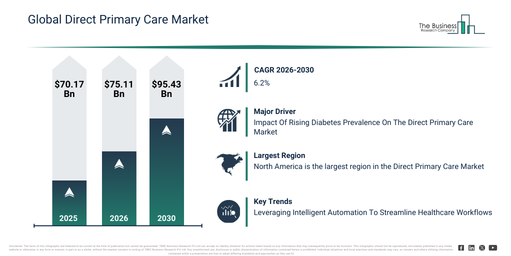
    The direct primary care market has experienced robust expansion historically and is projected to continue its upward trajectory, expanding from \$70.17 billion in 2025 to \$75.11 billion in 2026, reflecting a compound annual growth rate (CAGR) of 7.0%. Factors contributing to this growth during the past period include elevated insurance administrative expenses, the phenomenon of physician burnout, a general sense of patient dissatisfaction with conventional healthcare models, difficulties in securing timely appointments, and an increasing scarcity of primary care providers.

    Anticipated robust expansion characterizes the direct primary care market, projecting a valuation of 95.43 billion dollars by 2030, fueled by a compound annual growth rate of 6.2%. This projected surge is underpinned by several key drivers including the increasing embrace of value-based care methodologies, the proliferation of employer-sponsored direct primary care initiatives, advancements in digital practice management solutions, a growing consumer demand for personalized healthcare experiences, and an environment of regulatory adaptability. Within this forecast horizon, significant market dynamics are expected to manifest, such as a greater uptake of subscription-based healthcare arrangements, a heightened insistence on clear and accessible pricing for medical services, the broader implementation of individualized primary care offerings, an elevated utilization of telemedicine within primary care settings, and concerted efforts to alleviate the administrative overhead associated with healthcare provision.

    Download A Free Sample Report For Comprehensive Market Insights:

    https://www.thebusinessresearchcompany.com/sample.aspx?id=16037&type=smp

    Direct Primary Care Market Industry Drivers: What Is Driving Revenue Growth?

    The increasing incidence of diabetes is poised to significantly boost the expansion of the direct primary care sector. This chronic condition, defined by elevated blood glucose, is becoming more common owing to a combination of factors including escalating obesity, lack of physical activity, unhealthy eating habits, an aging global demographic, and inherited tendencies. Direct primary care models provide unrestricted access to physician services for a consistent monthly subscription, enabling individuals managing diabetes to benefit from frequent health assessments, meticulous medication oversight, advice on lifestyle adjustments, and ongoing guidance from their healthcare professionals. For example, the International Diabetes Federation reported in April 2025 that approximately 589 million adults between 20 and 79 years old globally had diabetes, a figure anticipated to climb to 853 million by 2050, thus underscoring the impact of this escalating health issue on the direct primary care market’s growth trajectory.

    Direct Primary Care Market Categorization By Product Type And Application

    The direct primary care market covered in this report is segmented –

    1) By Type: Clinical Services, Laboratory Services, Consultative Services, Care Coordination, Comprehensive Care Management

    2) By Practice Setting: Solo Practices, Group Practices, Other Practice Settings

    3) By Application: Cardiology, Internal Medicine, Primary Care, Osteopathy, Psychiatry, Pediatrics

    Subsegments:

    1) By Clinical Services: Preventive Care, Chronic Disease Management, Acute Care, Pediatric Care, Geriatric Care

    2) By Laboratory Services: Diagnostic Testing, Blood Tests, Imaging Services, Genetic Testing

    3) By Consultative Services: Telemedicine Consultations, Health Coaching, Wellness Consultations, Second Opinion Services

    4) By Care Coordination: Referral Management, Patient Navigation Services, Medication Management, Care Plan Development

    5) By Comprehensive Care Management: Case Management, Disease Management Programs, Care Transitions Management, Patient Education And Support

    #Direct Primary Care Market Growth Trends: What Is Influencing The Future Outlook?

    In the direct primary care market, prominent entities are concentrating on integrating cutting-edge technologies, specifically LLM-powered artificial intelligence, to bolster clinical effectiveness, refine documentation precision, and optimize patient engagement pathways. This advanced AI facilitates real-time speech-to-text conversions, automatic generation of clinical records, and enhanced operational workflows. An illustration of this trend is Hint Health’s introduction in September of 2023 of Hint AI, a US-based company’s AI tool engineered to simplify DPC record-keeping and alleviate administrative tasks. This new offering utilizes OpenAI Whisper for automated transcription, generates draft clinical notes via LLM, and is seamlessly integrated into their comprehensive DPC practice management system, ultimately boosting care delivery speed, documentation efficiency, and overall practice output.

    Direct Primary Care Market Company Landscape And Strategic Competition

    Major companies operating in the direct primary care market are Oak Street Health Inc., One Medical Group, Crossover Health Medical Group APC, Everside Health Inc., Elation Health, Paladina Health, SignatureMD, PeakMed, DPC Frontier, MedLion, Salud Healthcare LLC, Turntable Health, Atlas.md, Freedom Healthworks LLC, R-Health, EverMed DPC, Boston Direct Health, Nextera Healthcare, Forward Family Healthcare, Hint Health, Qliance Medical Management

    Access The Complete Direct Primary Care Market Report:

    https://www.thebusinessresearchcompany.com/report/direct-primary-care-global-market-report

    Direct Primary Care Market Regional Analysis And Leading Geography

    North Americawas the largest region in the direct primary care market in 2025. Asia-Pacificis expected to be the fastest-growing region in the forecast period. The regions covered in the direct primary care market report are Asia-Pacific, South East Asia, Western Europe, Eastern Europe, North America, South America, Middle East, Africa.

    Get in touch with us:

    The Business Research Company: https://www.thebusinessresearchcompany.com/

    Americas: +1 310-496-7795

    Asia: +44 7882 955267 & +91 8897263534

    Europe: +44 7882 955267

    Email us at: marketing@tbrc.info

    Follow us on:

    LinkedIn: https://in.linkedin.com/company/the-business-research-company

    YouTube: https://www.youtube.com/channel/UC24_fI0rV8cR5DxlCpgmyFQ

    Global Market Model: https://www.thebusinessresearchcompany.com/global-market-model
  • Direct Coombs Test (DCT) Antibody Market Expansion Is Reshaping Competitive Dynamics Across The Industry

    Direct Coombs Test (DCT) Antibody Market Expansion Is Reshaping Competitive Dynamics Across The Industry

    Through market attractiveness analysis, total addressable market evaluation, company benchmarking matrices, interactive Excel dashboards, expanded supply chain intelligence, emerging startup coverage, and detailed product insights, The Business Research Company’s 2026 market reports provide more actionable and strategically valuable research.

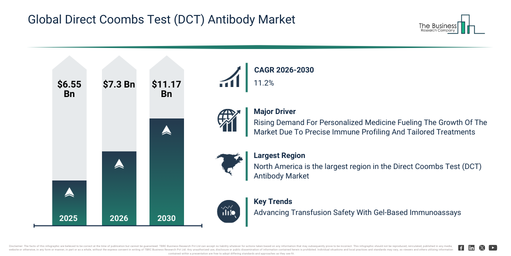
    Direct Coombs Test (DCT) Antibody Market Growth From $7.3 Billion In 2026 To $11.17 Billion By 2030 At A CAGR Of 11.2%

    The direct Coombs test (DCT) antibody market experienced substantial expansion, projecting a rise from $6.55 billion in 2025 to $7.3 billion in 2026, reflecting a compound annual growth rate of 11.5%. This historical growth trajectory has been propelled by escalating investment in biomedical research, an increasing number of cancer research initiatives, the broadening of academic lab facilities, a greater reliance on antibodies for diagnostic purposes, and advancements in antibody engineering technologies.

    The direct Coombs test (DCT) antibody market is poised for substantial expansion over the coming years, projecting a rise to $11.17 billion by 2030, propelled by a compound annual growth rate of 11.2%. This anticipated expansion during the forecast period is largely driven by the proliferation of precision oncology research, a surge in the need for advanced antibody formats, increased capital infusion into biologics manufacturing, the burgeoning field of personalized medicine, and innovations in antibody discovery methodologies. Key developments shaping this market outlook include a greater reliance on recombinant antibody technologies, escalating demand for highly specific monoclonal antibodies, a broadening scope of antibody applications within oncology research, a growing preference for bispecific antibody formats, and a heightened emphasis on optimizing large-scale antibody production.

    Download A Free Sample Report For Comprehensive Market Insights:

    https://www.thebusinessresearchcompany.com/sample.aspx?id=30259&type=smp

    #Direct Coombs Test (DCT) Antibody Market Growth Factors: Which Forces Are Supporting Market Expansion?

    The increasing inclination towards personalized medical strategies is anticipated to champion the expansion of the direct coombs test (DCT) antibody market moving ahead. Personalized medicine, characterized by the customization of therapeutic regimens to individual patients leveraging their genetic makeup, environmental influences, and lifestyle choices for enhanced results and superior healthcare, is experiencing a surge in demand fueled by breakthroughs in genomic sciences. These scientific advancements facilitate the accurate pinpointing of genetic differences and the subsequent development of individualized treatment plans. Within this context, DCT antibodies play a crucial role in empowering personalized medicine by offering a precise method for identifying antibodies or complement components attached to red blood cells, thereby aiding in the diagnosis of immune-related hemolytic disorders and empowering healthcare providers to tailor interventions according to a patient’s unique immunological signature, which consequently elevates diagnostic precision and refines treatment efficacy. As an illustration, data from the Personalized Medicine Coalition (PMC), a non-profit entity based in the United States, indicated that in February 2024, the U.S. Food and Drug Administration (FDA) granted approval to 26 novel personalized medicines throughout 2023, marking a substantial rise compared to the 12 approvals recorded in 2022. Consequently, this escalating demand for personalized medicine is serving as a significant catalyst for the growth observed in the direct coombs test (DCT) antibody market.

    Direct Coombs Test (DCT) Antibody Market Segment Analysis And Revenue Opportunities

    The direct coombs test (dct) antibody market covered in this report is segmented –

    1) By Type: Monoclonal Antibodies, Polyclonal Antibodies, Recombinant Antibodies, Bispecific Antibodies

    2) By Source: Human, Mouse, Rabbit, Other Sources

    3) By Application: Cancer Treatment, Autoimmune Diseases, Infectious Diseases, Transplant Rejection, Other Applications

    4) By End-User: Pharmaceutical Companies, Biotechnology Firms, Contract Research Organizations (CROs), Academic And Research Institutes, Diagnostic Laboratories

    Subsegments:

    1) By Monoclonal Antibodies: Mouse Monoclonal Antibodies, Rabbit Monoclonal Antibodies, Humanized Monoclonal Antibodies, Chimeric Monoclonal Antibodies, Fully Human Monoclonal Antibodies

    2) By Polyclonal Antibodies: Rabbit Polyclonal Antibodies, Goat Polyclonal Antibodies, Sheep Polyclonal Antibodies, Chicken Polyclonal Antibodies, Donkey Polyclonal Antibodies

    3) By Recombinant Antibodies: Mammalian Expression Recombinant Antibodies, Bacterial Expression Recombinant Antibodies, Yeast Expression Recombinant Antibodies, Insect Expression Recombinant Antibodies, Plant Expression Recombinant Antibodies

    4) By Bispecific Antibodies: Immune Cell Engager Bispecific Antibodies, Dual Variable Domain Bispecific Antibodies, Cross Format Bispecific Antibodies, Knob And Hole Bispecific Antibodies, Fragment-Based Bispecific Antibodies

    Direct Coombs Test (DCT) Antibody Market Industry Trends: What Changes Are Reshaping Demand?

    Leading entities within the direct antiglobulin test (DCT) antibody sector are prioritizing the creation of sophisticated technologies, exemplified by gel-based immunoassays. These advancements aim to bolster testing accuracy, optimize laboratory efficiency, and uphold rigorous quality benchmarks in pre-transfusion assessments. Gel-based immunoassays involve laboratory procedures where antibodies and antigens react within a gel medium, facilitating the visual identification of responses like agglutination. Illustrating this trend, QuidelOrtho Corporation, a United States-based diagnostics firm, secured FDA approval in October 2025 for its MTS DAT Card, designed for gel-based direct antiglobulin testing with the ORTHO VISION platform. This innovative card integrates pre-prepared, monospecific anti-IgG and anti-C3d reagents within a gel matrix housed in distinct micro-tubes, enabling unambiguous, quantitative, and concurrent discrimination between IgG and complement sensitization. Consequently, this product streamlines the diagnostic process for immune-mediated hemolytic anemias and hemolytic disease of the fetus and newborn (HDFN). Fundamentally, its function is to identify immunoglobulin G or complement molecules attached to red blood cells, thereby aiding in the diagnosis of hemolysis and improving the safety of blood transfusions.

    Direct Coombs Test (DCT) Antibody Market Leading Players Shaping Industry Direction

    Major companies operating in the direct coombs test (dct) antibody market are Johnson & Johnson, F. Hoffmann-La Roche Ltd, Merck & Co. Inc., AbbVie Inc., Bio-Rad Laboratories Inc., Fortress Diagnostics Limited, Lab-Care Diagnostics (India) Pvt. Ltd., SIFIN Diagnostics GmbH, Hemo Bioscience Inc., Rapid Labs Ltd, AnaMol Laboratories Pvt. Ltd., Jiangyin Libo Biotechnology Co. Ltd., MicroSidd India Pvt. Ltd., Atlas Medical GmbH, Lorne Laboratories Ltd, Sanquin Reagents B.V., BAG Diagnostics GmbH, CE-Immundiagnostika GmbH, Biolab Diagnostics (India) Pvt. Ltd., Singapore Biosciences Pte. Ltd.

    Access The Complete Direct Coombs Test (DCT) Antibody Market Report:

    https://www.thebusinessresearchcompany.com/report/global-direct-coombs-test-dct-antibody-market-report

    Direct Coombs Test (DCT) Antibody Market Geographic Analysis: Where Is Demand Growing The Fastest?

    North Americawas the largest region in the direct coombs test (DCT) antibody market in 2025. Asia-Pacificis expected to be the fastest-growing region in the forecast period. The regions covered in the direct coombs test (dct) antibody market report are Asia-Pacific, South East Asia, Western Europe, Eastern Europe, North America, South America, Middle East, Africa.

    Get in touch with us:

    The Business Research Company: https://www.thebusinessresearchcompany.com/

    Americas: +1 310-496-7795

    Asia: +44 7882 955267 & +91 8897263534

    Europe: +44 7882 955267

    Email us at: marketing@tbrc.info

    Follow us on:

    LinkedIn: https://in.linkedin.com/company/the-business-research-company

    YouTube: https://www.youtube.com/channel/UC24_fI0rV8cR5DxlCpgmyFQ

    Global Market Model: https://www.thebusinessresearchcompany.com/global-market-model
  • Diphtheria Market Forecast Reveals Where Future Industry Value Will Be Created

    Diphtheria Market Forecast Reveals Where Future Industry Value Will Be Created

    Delivering more actionable and strategically valuable research, The Business Research Company’s 2026 market reports feature market attractiveness analysis, total addressable market evaluation, company benchmarking matrices, interactive Excel dashboards, expanded supply chain intelligence, emerging startup coverage, and detailed product insights.

    Diphtheria Market Expansion Outlook: What Revenue Opportunities Lie Ahead?

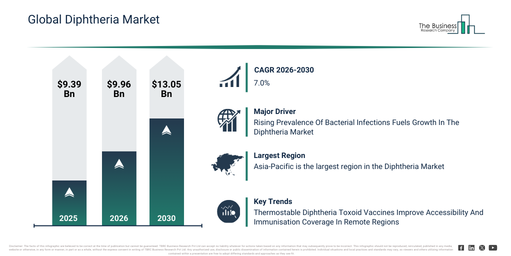
    The diphtheria market experienced robust expansion historically. Projections indicate this upward trend will continue, with the market value expected to rise from $9.39 billion in 2025 to $9.96 billion in 2026, reflecting a compound annual growth rate (CAGR) of 6.1%. Factors contributing to this past growth include the occurrence of disease outbreaks, insufficient vaccination rates, inadequate sanitation, delayed diagnoses, and disparities in healthcare accessibility.

    The diphtheria market is poised for substantial expansion over the upcoming years, projecting a valuation of $13.05 billion by 2030, propelled by a compound annual growth rate of 7.0%. This anticipated growth during the forecast period is underpinned by a confluence of factors including widespread immunization drives across the globe, enhanced accessibility to diagnostic tools, increased investment in public health initiatives, the digitalization of disease surveillance mechanisms, and robust programs aimed at epidemic preparedness. Key trajectories anticipated within this timeframe encompass a persistent requirement for vaccination and immunization schemes, a heightened emphasis on prompt diagnosis and vigilant monitoring, the escalating utilization of both antibiotic and antitoxin treatments, a broadening scope for public health awareness campaigns, and the continuous reinforcement of systems designed for infectious disease oversight.

    Download A Free Sample Report For Comprehensive Market Insights:

    https://www.thebusinessresearchcompany.com/sample.aspx?id=13016&type=smp

    Diphtheria Market Demand Drivers: What Is Fueling Industry Growth?

    The increasing incidence of bacterial infections is anticipated to be a significant catalyst for the expansion of the diphtheria market in the foreseeable future. Bacterial infections are generally defined as illnesses or health issues stemming from the proliferation of bacteria or the release of toxins by these microorganisms once they infiltrate the body. Diphtheria itself is identified as a severe ailment originating from specific bacterial strains that have the capacity to weaken the body’s defenses and foster the overgrowth of Corynebacterium diphtheria. A pertinent illustration of this trend is the data from March 2024 provided by the Centers for Disease Control and Prevention, a governmental body in the United States, which indicated a jump in tuberculosis cases from 8,320 in 2022 to 9,615 in 2023, marking an escalation of 1,295 documented instances. Consequently, the escalating occurrence of bacterial infections is poised to stimulate demand within the diphtheria market.

    Diphtheria Market Segmentation And Category Breakdown

    The diphtheria market covered in this report is segmented –

    1) By Type: Diphtheria, Skin Diphtheria, Other Types

    2) By Diagnosis: Physical Examination, Throat Culture, Other Diagnosis

    3) By Treatment: Antibiotics, Antitoxin, Other Treatments

    4) By Distribution Channel: Hospital Pharmacy, Online Pharmacy, Retail Pharmacy

    5) By End-Users: Hospitals, Homecare, Specialty Clinics, Other End-Users

    Subsegments:

    1) By Diphtheria: Respiratory Diphtheria, Non-respiratory Diphtheria

    2) By Skin Diphtheria: Cutaneous Diphtheria

    3) By Other Types: Diphtheritic Myocarditis, Diphtheritic Neuritis

    Diphtheria Market Innovation Trends: Which Developments Are Transforming The Industry?

    Leading entities within the diphtheria sector are prioritizing the integration of cutting-edge formulation approaches, including thermostabilisation technology, to elevate aspects such as distribution logistics, resistance to environmental temperatures, and reduced reliance on a continuous cold chain. These sophisticated formulation techniques, known as thermostabilisation technologies, work to shield vaccine antigens from damage attributable to heat or thermal variations, thus facilitating attributes like extended stability at ambient temperatures, decreased product spoilage, and more effective delivery to the final recipient. Illustrating this trend, Stablepharma Ltd, a biotechnology firm headquartered in the United Kingdom, initiated Phase 1 clinical investigations in April 2025 for SPVX02, a novel tetanus–diphtheria vaccine developed to retain its efficacy even after experiencing temperature fluctuations between -20°C and +40°C, offering a shelf life of up to 18 months at room temperature, characterized by its capacity for heat-resistant antigen preservation and the potential for deployment without the necessity of a cold chain. The development of SPVX02 consequently enhances vaccine longevity, strengthens the dependability of the supply chain, and broadens accessibility in areas with limited infrastructure.

    Diphtheria Market Competitive Analysis Of Major Industry Participants

    Major companies operating in the diphtheria market are Sanofi Pasteur, GlaxoSmithKline plc, Serum Institute of India Pvt Ltd, Biological E Limited, Bharat Biotech International Limited, Panacea Biotec Ltd, Mitsubishi Tanabe Pharma Corporation, KM Biologics (Meiji Holdings), AJ Vaccines, Bionet-Asia, Wuhan Institute of Biological Products, Walvax Biotechnology Co Ltd, Chengdu Institute of Biological Products Co Ltd, Minhai Biotechnology, Bio Farma Persero, Indian Immunologicals Ltd, LG Chem Ltd, Astellas Pharma Inc, Takeda Pharmaceutical Company Limited, MassBiologics, Shanghai Institute of Biological Products Co Ltd, Changchun Institute of Biological Products Co Ltd, Hualan Biological Engineering Inc, Valneva SE, Pasteur Institute of India, Beijing Tiantan Biological Products Co Ltd, Chongqing Zhifei Biological Products Co Ltd, Shenzhen Kangtai Biological Products Co Ltd.

    Access The Complete Diphtheria Market Report:

    https://www.thebusinessresearchcompany.com/report/diphtheria-global-market-report

    Diphtheria Market Global Footprint: Which Region Holds Market Leadership?

    Asia-Pacificwas the largest region in the diphtheria market in 2025. The regions covered in the diphtheria market report are Asia-Pacific, South East Asia, Western Europe, Eastern Europe, North America, South America, Middle East, Africa.

    Get in touch with us:

    The Business Research Company: https://www.thebusinessresearchcompany.com/

    Americas: +1 310-496-7795

    Asia: +44 7882 955267 & +91 8897263534

    Europe: +44 7882 955267

    Email us at: marketing@tbrc.info

    Follow us on:

    LinkedIn: https://in.linkedin.com/company/the-business-research-company

    YouTube: https://www.youtube.com/channel/UC24_fI0rV8cR5DxlCpgmyFQ

    Global Market Model: https://www.thebusinessresearchcompany.com/global-market-model
  • Digital Vaccination Credential Verification Market Growth Through 2030 Creates New Strategic Opportunities

    Digital Vaccination Credential Verification Market Growth Through 2030 Creates New Strategic Opportunities

    Enhanced with market attractiveness analysis, total addressable market evaluation, company benchmarking matrices, interactive Excel dashboards, expanded supply chain intelligence, emerging startup coverage, and detailed product insights, The Business Research Company’s 2026 market reports deliver more actionable and strategically valuable research.

    Digital Vaccination Credential Verification Market Growth Potential: How Will Market Size Change Through 2030?

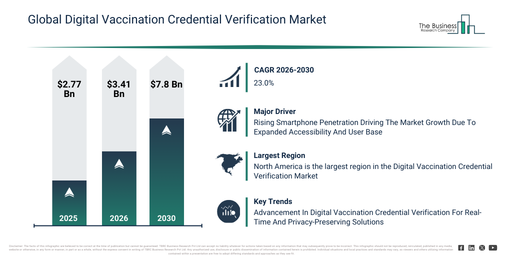
    The global market for verifying digital vaccination credentials has experienced substantial expansion recently, projecting a rise from $2.77 billion in 2025 to $3.41 billion in 2026, driven by a compound annual growth rate of 23.3%. This upward trajectory in the past is largely attributed to the proliferation of widespread vaccination initiatives, an increasing desire for accessible digital health documentation, the growing necessity for such credentials in international travel, the integration of QR code scanning technologies for verification, and the broader trend of digitizing public health infrastructure.

    The digital vaccination credential verification sector anticipates a period of significant expansion, reaching an estimated value of $7.8 billion by 2030, fueled by a robust compound annual growth rate of 23.0%. This projected surge is largely propelled by a heightened focus on creating interconnected digital health identity solutions, substantial capital flowing into blockchain technology for verification purposes, greater acceptance within professional environments and various organizations, the development of international frameworks for health data exchange, and a stronger regulatory push towards safeguarding data. Key developments anticipated during this timeframe involve the wider acceptance of secure digital health credentials, increased utilization of platforms that employ encrypted verification methods, deeper integration with systems managing border crossings and travel, broader implementation of compatible health data standards, and a reinforced commitment to authentication methods that protect user privacy.

    Download A Free Sample Report For Comprehensive Market Insights:

    https://www.thebusinessresearchcompany.com/sample.aspx?id=28205&type=smp

    Digital Vaccination Credential Verification Market Growth Drivers: What Factors Are Accelerating Expansion?

    The escalating rate of smartphone adoption is anticipated to fuel the expansion of the digital vaccination credential verification market. This trend, wherein a larger proportion of individuals possess and utilize smartphones, is largely attributable to enhanced affordability, thus broadening access across diverse demographics. With more people owning smartphones, the convenience of storing, retrieving, and sharing vaccination records is significantly improved, facilitating the wider implementation of digital verification systems. Data from Exploding Topics, a US-based platform monitoring emerging trends, indicates a notable surge in smartphone users, climbing from 6.974 billion in 2023 to 7.211 billion in 2024, which accounts for an addition of 247 million users and a year-over-year increase of approximately 3.4%. Consequently, this pervasive increase in smartphone penetration is acting as a primary catalyst for the growth observed in the digital vaccination credential verification market.

    Digital Vaccination Credential Verification Market Driver: Increase In Travel Activities Driving The Growth Of The Market Due To Rising Global Tourism And Accessibility Of Transportation

    A surge in travel activities is projected to be a significant driver for the burgeoning digital vaccination credential verification market. These travel activities encompass a wide array of pursuits undertaken by individuals when exploring new locales, such as cultural immersion, culinary exploration, and adventurous endeavors. The upward trajectory in travel is underpinned by greater ease of access and more economical transportation options, enabling a broader segment of the population to journey to new destinations and engage in varied experiences. In parallel with the rise in travel, digital vaccination credential verification offers substantial advantages by streamlining passenger processing at transportation hubs and border crossings, leading to expedited procedures, shorter waiting times, and a reduction in inaccuracies during health documentation checks. Illustrating this trend, the World Travel and Tourism Council, a UK-based non-profit entity, reported in September 2024 that investments in travel and tourism escalated by 13% in 2023, surpassing the one trillion US dollar mark, with projections indicating a return to pre-pandemic levels by 2025. Therefore, the expansion of travel activities is directly contributing to the momentum of the digital vaccination credential verification market.

    Digital Vaccination Credential Verification Market Segment Outlook: Which Categories Are Expanding The Fastest?

    The digital vaccination credential verification market covered in this report is segmented –

    1) By Component: Software, Hardware, Services

    2) By Deployment Mode: On-Premises, Cloud-Based

    3) By Application: Airports And Border Control, Healthcare Facilities, Educational Institutions, Corporate Offices, Hospitality, Other Applications

    4) By End-User: Government, Healthcare Providers, Employers, Individuals, Other End-Users

    Subsegments:

    1) By Software: Web Based Platforms, Mobile Applications, Analytics And Reporting Tools

    2) By Hardware: Near Field Communication Readers, Quick Response Code Scanners, Biometric Devices

    3) By Services: Implementation And Integration, Maintenance And Support, Consulting

    Digital Vaccination Credential Verification Market Trends: What Is Shaping Future Industry Growth?

    Leading enterprises within the digital vaccination credential verification landscape are prioritizing the creation of sophisticated technologies, including digital signatures, that facilitate immediate public health monitoring through the precise and consolidated collection of vaccination information while safeguarding personal data. This digital signature is a cryptographic method employed to confirm the genuineness and completeness of electronic records, acting as a secure electronic counterpart to a traditional ink signature. As an illustration, in November 2025, El Salvador and Costa Rica, in collaboration with a US-based development finance institution, and with backing from the Inter-American Development Bank (IDB) and the Pan American Health Organization (PAHO), introduced the initial digital yellow fever vaccination certificates. These certificates constitute an electronically stored and verifiable record serving as confirmation of an individual’s inoculation against yellow fever, thereby superseding the conventional paper-based international certificate of vaccination or prophylaxis (ICVP). Furthermore, this innovation provides remedies for the difficulties linked to paper documentation by empowering swift public health interventions through prompt and dependable validation of immunization status during critical situations.

    Digital Vaccination Credential Verification Market Key Companies And Competitive Benchmarking

    Major companies operating in the digital vaccination credential verification market are Microsoft Corporation, IBM Corporation, SAP SE, Salesforce Inc., Infosys Limited, DocuSign Inc., NEC Corporation, Clear Secure Inc., Entrust Corporation, MATTR Limited, ID.me Inc., Jumio Inc., Daon Inc., IntelliCentrics Inc., EverCheck Inc., Evernym Inc., The Commons Project Foundation, BioRugged, IDEMIA Identity & Security USA LLC, Vault Health, STChealth LLC.

    Access The Complete Digital Vaccination Credential Verification Market Report:

    https://www.thebusinessresearchcompany.com/report/digital-vaccination-credential-verification-global-market-report

    Digital Vaccination Credential Verification Market Regional Distribution: Which Areas Drive Market Expansion?

    North Americawas the largest region in the digital vaccination credential verification market in 2025. Asia-Pacific is expected to be the fastest-growing region in the forecast period. The regions covered in the digital vaccination credential verification market report are Asia-Pacific, South East Asia, Western Europe, Eastern Europe, North America, South America, Middle East, Africa.

    Get in touch with us:

    The Business Research Company: https://www.thebusinessresearchcompany.com/

    Americas: +1 310-496-7795

    Asia: +44 7882 955267 & +91 8897263534

    Europe: +44 7882 955267

    Email us at: marketing@tbrc.info

    Follow us on:

    LinkedIn: https://in.linkedin.com/company/the-business-research-company

    YouTube: https://www.youtube.com/channel/UC24_fI0rV8cR5DxlCpgmyFQ

    Global Market Model: https://www.thebusinessresearchcompany.com/global-market-model
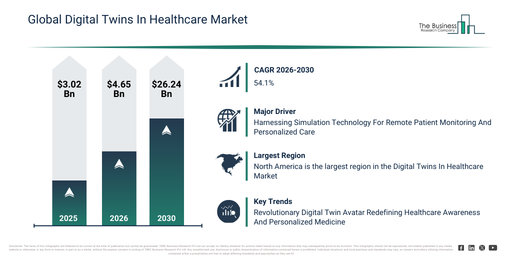
  • Digital Twins In Healthcare Market Size Projected To Increase From $4.65 Billion To $26.23 Billion During The Forecast Period

    Digital Twins In Healthcare Market Size Projected To Increase From $4.65 Billion To $26.23 Billion During The Forecast Period

    Through market attractiveness analysis, total addressable market evaluation, company benchmarking matrices, interactive Excel dashboards, expanded supply chain intelligence, emerging startup coverage, and detailed product insights, The Business Research Company’s 2026 market reports provide more actionable and strategically valuable research.

    Digital Twins In Healthcare Market Value Analysis: What Growth Is Expected Over The Forecast Period?

    The digital twins within the healthcare sector have witnessed remarkable expansion lately, with its market value projected to surge from $3.02 billion in 2025 to $4.65 billion in 2026, demonstrating a substantial compound annual growth rate of 54.3%. This expansion during the earlier timeframe was fueled by significant progress in medical imaging technologies, the development of initial simulation-driven planning solutions, a growing volume of accessible healthcare data, the intricate nature of treatment protocols, and a burgeoning demand for personalized medical approaches.

    Anticipate a period of substantial expansion for the digital twins within the healthcare sector, with projections indicating a market valuation reaching $26.24 billion by the year 2030, driven by a robust compound annual growth rate of 54.1%. Key factors fueling this rapid ascent during the projected timeframe include the proliferation of AI-driven modeling technologies, seamless integration of real-time data from IoT devices, the burgeoning field of personalized medicine, the widespread implementation of digital hospital strategies, and advancements in optimizing clinical processes. During this forecast period, significant trends likely to shape the market include a heightened utilization of virtual patient representations, a greater embrace of predictive analytics for healthcare management, the widening application of digital twins in hospital operational efficiency, an amplified concentration on simulating individualized patient treatments, and the incorporation of continuous clinical data streams.

    Download A Free Sample Report For Comprehensive Market Insights:

    https://www.thebusinessresearchcompany.com/sample.aspx?id=14089&type=smp

    Digital Twins In Healthcare Market Growth Factors Supporting Long-Term Expansion

    The increasing adoption of telehealth is anticipated to be a significant catalyst for the expanding use of digital twins within the healthcare sector. Telehealth, which involves the remote delivery of healthcare through telecommunications technology, covers a broad spectrum of services like remote medical advice, patient observation, educational programs, and the sharing of health data, all facilitated by digital communication. Digital twins possess the capability to create simulations of an individual patient’s real-time physiological reactions and how their conditions might advance. Telehealth systems can leverage these simulated insights for remote patient surveillance, empowering medical professionals to keep tabs on patients’ essential health indicators, their adherence to prescribed treatments, and their general well-being from afar. Illustrating this trend, data from the Australian Bureau of Statistics (ABS), a governmental body in Australia responsible for statistics, revealed that in the 2024-25 period, a notable 22.5% of Australians engaged with telehealth services. Furthermore, of those individuals who participated in a telehealth consultation, a substantial 90.3% expressed their intention to utilize telehealth again if the opportunity arose, a slight uptick from the 89.2% recorded in the 2023-24 fiscal year, thereby underscoring a growing willingness to embrace and a sustained trend in the utilization of these remote healthcare methods. Consequently, the broader implementation of telehealth is directly contributing to the advancement of digital twin technology in the healthcare market.

    Digital Twins In Healthcare Market Segment Landscape: Which Areas Lead Market Development?

    The digital twins in healthcare market covered in this report is segmented –

    1) By Type: Process And System Digital Twin, Product Digital Twin

    2) By Application: Asset And Process Management, Personalized Medicine, Drug Discovery

    3) By End-User: Clinical Research Organizations (CROs), Research And Diagnostic Laboratories, Hospitals And Clinics

    Subsegments:

    1) By Process And System Digital Twin: Patient Journey Digital Twin, Hospital Operations Digital Twin, Healthcare Workflow Digital Twin, Clinical Process Digital Twin

    2) By Product Digital Twin: Medical Device Digital Twin, Drug Development Digital Twin, Equipment Maintenance Digital Twin, Personalized Medicine Digital Twin

    Digital Twins In Healthcare Market Industry Trends Shaping Future Revenue Growth

    Leading enterprises within the digital twin healthcare sector are actively pioneering advanced digital twin integrated solutions, exemplified by Emma, aimed at underscoring the significance of virtual counterparts in expediting medical investigations and facilitating bespoke patient treatment. Emma represents a digital twin powered innovation, furnishing an engaging, realistic virtual representation augmented with supplementary data, perceptive findings, and analytical capabilities that enrich user engagement. This technology possesses the capacity to refine surgical interventions and equip individuals with a more profound comprehension of their therapeutic pathways. As an illustration, during September 2023, Dassault Systèmes SA, a software firm headquartered in France, introduced Emma, a digital twin avatar designed to foster greater understanding of health research. Emma functions as a digital replica meticulously mirroring the attributes of a physical organism. The creation of Emma involved the utilization of non-identifiable health information to perform extensive testing, thereby uncovering valuable insights into a diverse range of ailments and treatment modalities.

    Digital Twins In Healthcare Market Industry Leaders And Market Competition

    Major companies operating in the digital twins in healthcare market are Amazon.com Inc., Microsoft Corporation, IBM Corporation, Oracle Corporation, SAP SE, NVIDIA Corporation, Siemens AG, Koninklijke Philips N.V., GE HealthCare Technologies Inc., NTT DATA Corporation, Atos SE, Dassault Systemes SE, Ansys Inc., PTC Inc., Twin Health Inc., Faststream Technologies, Rescale Inc., ThoughWire Corp., Q Bio Inc., Verto Healthcare, Unlearn.AI Inc., PrediSurge, QiO Technologies Ltd., NUREA, Predictive Care Inc., Virtonomy GMbH

    Access The Complete Digital Twins In Healthcare Market Report:

    https://www.thebusinessresearchcompany.com/report/digital-twins-in-healthcare-global-market-report

    Digital Twins In Healthcare Market Leading Geography: Which Region Generates The Most Revenue?

    North Americawas the largest region in the digital twins in healthcare market in 2025. The regions covered in the digital twins in healthcare market report are Asia-Pacific, South East Asia, Western Europe, Eastern Europe, North America, South America, Middle East, Africa.

    Get in touch with us:

    The Business Research Company: https://www.thebusinessresearchcompany.com/

    Americas: +1 310-496-7795

    Asia: +44 7882 955267 & +91 8897263534

    Europe: +44 7882 955267

    Email us at: marketing@tbrc.info

    Follow us on:

    LinkedIn: https://in.linkedin.com/company/the-business-research-company

    YouTube: https://www.youtube.com/channel/UC24_fI0rV8cR5DxlCpgmyFQ

    Global Market Model: https://www.thebusinessresearchcompany.com/global-market-model
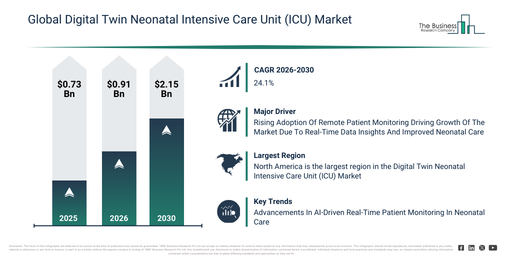
  • Digital Twin Neonatal Intensive Care Unit (ICU) Market Growth Outlook Reveals A CAGR Of 24.1% And A Market Value Of $2.15 Billion By 2030

    Digital Twin Neonatal Intensive Care Unit (ICU) Market Growth Outlook Reveals A CAGR Of 24.1% And A Market Value Of $2.15 Billion By 2030

    Delivering more actionable and strategically valuable research, The Business Research Company’s 2026 market reports feature market attractiveness analysis, total addressable market evaluation, company benchmarking matrices, interactive Excel dashboards, expanded supply chain intelligence, emerging startup coverage, and detailed product insights.

    Digital Twin Neonatal Intensive Care Unit (ICU) Market Size Forecast: How Large Could The Market Become By 2030?

    The market for digital twin neonatal intensive care units (NICUs) has experienced substantial expansion recently, projecting a rise from $0.73 billion in 2025 to $0.91 billion in 2026, reflecting a compound annual growth rate of 24.3%. This rapid growth throughout the historical period is associated with several key factors, including a rise in admissions to neonatal intensive care units, the enhancement of digital health capabilities within healthcare facilities, a greater abundance of patient monitoring information, a heightened emphasis on neonatal care focused on achieving specific outcomes, and increased financial commitment towards clinical simulation technologies.

    The digital twin neonatal intensive care unit (NICU) market is poised for remarkable expansion, projected to reach $2.15 billion by 2030, exhibiting a compound annual growth rate (CAGR) of 24.1%. This surge in the forthcoming years is fueled by several key developments, including the heightened utilization of AI-powered clinical decision support systems, a growing need for tailored neonatal care strategies, the proliferation of cloud-based healthcare infrastructure, a stronger emphasis on predictive and preventative healthcare approaches, and the increasing application of digital twin technology within hospital operational frameworks. Significant trends expected to shape this market during the forecast period encompass the wider implementation of real-time virtual NICU modeling, an escalated use of predictive analytics for identifying neonatal risks, the enhanced integration of diverse patient data sources, the expansion of simulation-based tools for clinical decision-making, and a more pronounced concentration on proactive management of neonatal care.

    Download A Free Sample Report For Comprehensive Market Insights:

    https://www.thebusinessresearchcompany.com/sample.aspx?id=29034&type=smp

    #Digital Twin Neonatal Intensive Care Unit (ICU) Market Demand Drivers Creating New Revenue Opportunities

    The increasing emphasis on remote patient monitoring is anticipated to be a significant catalyst for the expansion of the digital twin neonatal intensive care unit (NICU) market. Remote patient monitoring, essentially the utilization of digital technologies to gather and convey patient health information to medical professionals, facilitates continuous oversight and prompt interventions without the necessity for direct physical consultations. The growing acceptance of remote patient monitoring is fueled by the proliferation of IoT-enabled gadgets that transmit real-time patient metrics to healthcare providers, enabling continuous observation and timely actions. A digital twin NICU significantly enhances remote patient monitoring by constructing a virtual counterpart of a newborn’s health status and the NICU setting, empowering clinicians to perpetually track vital signs, model potential interventions, foresee adverse events, and make informed decisions grounded in data, all without causing physical disruption to the infant. As an illustration, in August 2025, data from the US Department of Health and Human Services indicated that nearly one million individuals received remote patient monitoring services in 2024, signifying a 27% surge compared to the previous year. Consequently, the heightened focus on remote patient monitoring is a key driver behind the expansion of the digital twin NICU market.

    Digital Twin Neonatal Intensive Care Unit (ICU) Market Driver: Growing Healthcare Spending Fueling Market Expansion Through Increased Investment in Sophisticated Patient Monitoring Systems

    Accelerating healthcare expenditure is poised to stimulate market advancement for digital twin neonatal intensive care units. This financial commitment to healthcare encompasses the overall outlay on medical services, necessary equipment, and the technological innovations designed to enhance patient well-being. The expansion of healthcare spending is largely attributable to a heightened demand for cutting-edge medical technologies, prompting healthcare facilities to allocate greater resources towards pioneering equipment and digital solutions aimed at refining patient care and yielding superior health outcomes. Increased healthcare spending directly supports the adoption of digital twin NICUs by providing the financial capacity to invest in advanced digital infrastructures, AI-powered monitoring systems, and sophisticated precision care technologies for newborns. For example, figures released in June 2025 by the Centers for Medicare & Medicaid Services revealed that in 2023, national health expenditures experienced a 7.5% increase, amounting to $4.9 trillion, which translates to an average of $14,570 per individual and constitutes 17.6% of the Gross Domestic Product (GDP). Medicare spending alone saw an 8.1% rise, reaching $1,029.8 billion, representing 21% of the total national health expenditures. Therefore, the upward trend in healthcare spending is a significant driver propelling the growth of the digital twin neonatal intensive care unit market.

    Digital Twin Neonatal Intensive Care Unit (ICU) Market Segments: Where Are The Largest Growth Opportunities?

    The digital twin neonatal intensive care unit (icu) market covered in this report is segmented –

    1) By Component: Software, Hardware, Services

    2) By Deployment Mode: On-Premises, Cloud-Based

    3) By Application: Patient Monitoring, Predictive Analytics, Workflow Optimization, Training And Simulation, Other Applications

    4) By End User: Hospitals, Specialty Clinics, Research Institutes, Other End-Users

    Subsegments:

    1) By Hardware: Monitoring Sensors, Imaging Devices, Computing Units

    2) By Software: Simulation And Modeling Software, Data Integration Platforms, Analytics And Visualization Tools

    3) By Services: Implementation And Integration Services, Consulting And Training Services, Maintenance And Support Services

    Digital Twin Neonatal Intensive Care Unit (ICU) Market Trends Driving Strategic Industry Expansion

    Key players in the digital twin neonatal intensive care unit (ICU) market are prioritizing the creation of sophisticated solutions, including AI-driven patient monitoring in real-time to enhance the continuous observation of vital signs and facilitate prompt actions for neonates in critical states. This real-time AI-assisted patient monitoring involves the ongoing assessment and interpretation of a patient’s vital signs and health metrics through artificial intelligence, which allows for the immediate identification of deviations and swift clinical responses. As an illustration, in April 2025, AngelEye Health Inc., a technology firm located in the United States, introduced AIVision, a groundbreaking upgrade to its existing system that incorporates artificial intelligence (AI) and computer vision technology within neonatal intensive care unit (NICU) and pediatric settings. This innovation leverages AI and computer vision integrated with NICU bedside cameras to deliver intelligent, real-time clinical data, thereby equipping healthcare professionals to discern early indicators of neonatal distress and potential neuromotor issues. The technology bolsters patient safety through functionalities such as virtual bed rails and AI-supported monitoring of pain levels, sedation, and respiratory conditions, leading to more timely interventions. Ultimately, the objective is to revolutionize neonatal and pediatric care by fostering a more interconnected, data-informed setting that optimizes operational processes, supports individualized patient care, and consequently enhances the health results for infants requiring specialized attention.

    Digital Twin Neonatal Intensive Care Unit (ICU) Market Major Participants And Competitive Dynamics

    Major companies operating in the digital twin neonatal intensive care unit (icu) market are Koninklijke Philips N.V., GE HealthCare Technologies Inc., Envision Health Inc., Sibel Health Inc., Genzeon Corporation, Gaumard Scientific Company Inc., Owlet Inc., Caregility Inc., Child Health Imprints Pte. Ltd., NeoLight, Eagle Telemedicine Inc., Wildflower Health Inc., AngelEye Health Inc., Amnion Life Inc., Elevate Healthcare, mOm Incubators Ltd., Pomelo Care Inc., AIIMS-Nagpur Tele-SNCU, Pediatrix & Obstetrix TeleNICU, Techginity Inc.

    Access The Complete Digital Twin Neonatal Intensive Care Unit (ICU) Market Report:

    https://www.thebusinessresearchcompany.com/report/digital-twin-neonatal-intensive-care-unit-icu-global-market-report

    Digital Twin Neonatal Intensive Care Unit (ICU) Market Regional Outlook: Where Are The Largest Opportunities Located?

    North Americawas the largest region in the digital twin neonatal intensive care unit (ICU) market in 2025. Asia-Pacificis expected to be the fastest-growing region in the forecast period. The regions covered in the digital twin neonatal intensive care unit (icu) market report are Asia-Pacific, South East Asia, Western Europe, Eastern Europe, North America, South America, Middle East, Africa.

    Get in touch with us:

    The Business Research Company: https://www.thebusinessresearchcompany.com/

    Americas: +1 310-496-7795

    Asia: +44 7882 955267 & +91 8897263534

    Europe: +44 7882 955267

    Email us at: marketing@tbrc.info

    Follow us on:

    LinkedIn: https://in.linkedin.com/company/the-business-research-company

    YouTube: https://www.youtube.com/channel/UC24_fI0rV8cR5DxlCpgmyFQ

    Global Market Model: https://www.thebusinessresearchcompany.com/global-market-model
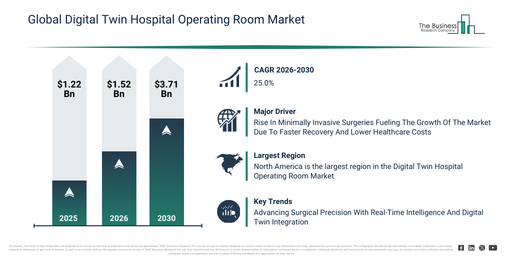
  • Digital Twin Hospital Operating Room Market Forecast Highlights Expansion From $1.52 Billion To $3.71 Billion Through 2030

    Digital Twin Hospital Operating Room Market Forecast Highlights Expansion From $1.52 Billion To $3.71 Billion Through 2030

    Enhanced with market attractiveness analysis, total addressable market evaluation, company benchmarking matrices, interactive Excel dashboards, expanded supply chain intelligence, emerging startup coverage, and detailed product insights, The Business Research Company’s 2026 market reports deliver more actionable and strategically valuable research.

    Digital Twin Hospital Operating Room Market Revenue Outlook: What CAGR Is Expected Through 2030?

    The market for digital twin hospital operating rooms has witnessed substantial expansion recently, with projections indicating continued robust growth. This sector is anticipated to surge from a valuation of $1.22 billion in 2025 to $1.52 billion in 2026, demonstrating a significant compound annual growth rate of 25.3%. Factors contributing to this upward trajectory during the earlier period included the proliferation of intricate surgical interventions, an escalating need for enhanced hospital operational effectiveness, a broader integration of networked medical equipment, increased utilization of robotic surgical systems, and proactive investments in digital hospital frameworks.

    The digital twin operating room market is poised for substantial expansion in the coming years, projecting a leap to $3.71 billion by 2030, driven by a robust compound annual growth rate of 25.0%. This anticipated surge is fueled by a confluence of factors, including a heightened emphasis on constructing smart hospitals, an escalating need for surgical process enhancement through data analysis, the proliferation of AI-supported surgical strategy development, broader acceptance of cloud-based hospital twin technologies, and a stronger commitment to analyzing patient safety metrics. Key developments shaping this market during the projected timeframe encompass a greater uptake of live or simulated platforms, increased utilization of tools for predictive equipment upkeep, widespread implementation of solutions designed to streamline operational processes, the growth of virtual education and simulation environments, and improved incorporation of systems that rely on sensor data and continuous monitoring.

    Download A Free Sample Report For Comprehensive Market Insights:

    https://www.thebusinessresearchcompany.com/sample.aspx?id=27280&type=smp

    Digital Twin Hospital Operating Room Market Expansion Supported By Key Demand Factors

    The expanding adoption of minimally invasive surgical techniques is anticipated to be a key driver for the digital twin hospital operating room market’s upward trajectory. These procedures, characterized by small incisions and minimized tissue trauma, offer advantages such as expedited patient recovery and reduced incidence of complications compared to traditional open surgeries. This surge in minimally invasive interventions is fueled by the recognition of shorter recuperation periods, which consequently lowers the duration of hospital stays and curtails overall healthcare expenditures. Digital twin operating rooms within hospitals are instrumental in supporting these advanced surgical methods by offering live simulations and three-dimensional visual representations, thereby facilitating meticulous pre-operative planning, enhancing intra-operative guidance, and ultimately improving surgical results. Illustrating this trend, data from the American Society of Plastic Surgeons, a U.S. entity, revealed that in June 2024, minimally invasive procedures saw a 7% increase in 2023, outperforming the growth of general surgical procedures by 2%. Consequently, the increasing prevalence of minimally invasive surgeries is directly contributing to the expansion of the digital twin hospital operating room market.

    Digital Twin Hospital Operating Room Market Segment Analysis: What Are The Major Market Categories?

    The digital twin hospital operating room market covered in this report is segmented –

    1) By Components: Software, Hardware, Services

    2) By Deployment Mode: On-Premises, Cloud

    3) By Application: Surgical Planning, Training And Simulation, Workflow Optimization, Asset Management, Patient Monitoring, Other Applications

    4) By End User: Hospitals, Ambulatory Surgical Centers, Specialty Clinics, Other End Users

    Subsegments:

    1) By Software: Simulation Software, Data Analytics Software, Workflow Management Software, Visualization And Imaging Software, AI And Machine Learning Platforms

    2) By Hardware: Sensors, IoT Devices, Imaging Devices, Surgical Robots, Workstations And Servers

    3) By Services: Consulting Services, Integration And Implementation Services, Support And Maintenance Services, Training And Education Services, Remote Monitoring Services

    Digital Twin Hospital Operating Room Market Growth Trends Influencing Competitive Dynamics

    In the competitive landscape of the digital twin hospital operating room sector, key players are concentrating their efforts on pioneering sophisticated offerings, exemplified by real-time intelligence platforms, designed to elevate surgical judgment, optimize operational flows, and ultimately achieve superior patient results via the seamless integration and presentation of dynamic data. This real-time intelligence platform functions as an intelligent system, analyzing incoming data instantaneously to empower users with prompt and correct decision-making capabilities. Highlighting this trend was the February 2025 announcement from VeroSource Solutions Inc., a Canadian software firm, which enhanced its proprietary VS Data-as-a-Service Platform with expanded Digital Twin functionality. Essentially, a digital twin represents a virtual replica of a healthcare system or facility, a digital counterpart enabling analysis and forecasting without impacting the actual operations of the medical establishment. Furthermore, VeroSource’s Digital Twin innovation incorporates diverse data streams, including population statistics, disease trends, and other significant external variables, thereby equipping healthcare professionals to make more refined and evidence-based selections.

    Digital Twin Hospital Operating Room Market Leading Companies Driving Competitive Growth

    Major companies operating in the digital twin hospital operating room market are Microsoft Corporation, Johnson & Johnson, International Business Machines Corporation, Oracle Corporation, Honeywell International Inc., Medtronic plc, Siemens Healthineers, Philips Healthcare, Stryker Corporation, GE Healthcare Technologies Inc., Zimmer Biomet Holding Inc., Olympus Corporation, Intuitive Surgical, Getinge AB, Karl Storz, Ansys Inc., AVEVA Group plc, Bentley Systems Inc., Dassault Systèmes SE, Schneider Electric SE, NVIDIA Corporation

    Access The Complete Digital Twin Hospital Operating Room Market Report:

    https://www.thebusinessresearchcompany.com/report/digital-twin-hospital-operating-room-global-market-report

    Digital Twin Hospital Operating Room Market Geographic Landscape: Which Region Dominates Industry Growth?

    North Americawas the largest region in the digital twin hospital operating room market in 2025. Asia-Pacificis expected to be the fastest-growing region in the forecast period. The regions covered in the digital twin hospital operating room market report are Asia-Pacific, South East Asia, Western Europe, Eastern Europe, North America, South America, Middle East, Africa.

    Get in touch with us:

    The Business Research Company: https://www.thebusinessresearchcompany.com/

    Americas: +1 310-496-7795

    Asia: +44 7882 955267 & +91 8897263534

    Europe: +44 7882 955267

    Email us at: marketing@tbrc.info

    Follow us on:

    LinkedIn: https://in.linkedin.com/company/the-business-research-company

    YouTube: https://www.youtube.com/channel/UC24_fI0rV8cR5DxlCpgmyFQ

    Global Market Model: https://www.thebusinessresearchcompany.com/global-market-model