Month: June 2026

  • Venous Leg Ulcer Treatment Market Growth Is Accelerating As Industry Transformation Continues

    Venous Leg Ulcer Treatment Market Growth Is Accelerating As Industry Transformation Continues

    Delivering more actionable and strategically valuable research, The Business Research Company’s 2026 market reports feature market attractiveness analysis, total addressable market evaluation, company benchmarking matrices, interactive Excel dashboards, expanded supply chain intelligence, emerging startup coverage, and detailed product insights.

    Venous Leg Ulcer Treatment Market CAGR Analysis And Future Market Development

    The market for treating venous leg ulcers has experienced robust expansion lately, projecting a rise from $4.29 billion in 2025 to $4.6 billion in 2026, reflecting a compound annual growth rate of 7.2%. This historical growth trajectory is largely due to a heightened incidence of chronic venous insufficiency, the extensive application of compression bandaging, an increase in specialized wound care facilities, a continually aging demographic, and enhanced accessibility to topical treatments for wounds.

    The market for treating venous leg ulcers is projected for substantial expansion in the upcoming years, anticipating a valuation of $6 billion by 2030, fueled by a compound annual growth rate (CAGR) of 6.9%. This projected expansion is largely propelled by escalating demand for sophisticated wound healing technologies, an increased reliance on home healthcare provisions, the broader availability of minimally invasive venous treatments, a heightened emphasis on preventing infections, and greater investment allocated towards managing chronic wounds. Key developments anticipated during this forecast period encompass a greater embrace of advanced compression therapy methods, augmented utilization of bioactive wound care items, a stronger emphasis on strategies for early intervention, the proliferation of wound management delivered at home, and a more cohesive integration of care from various medical disciplines.

    Download A Free Sample Report For Comprehensive Market Insights:

    https://www.thebusinessresearchcompany.com/sample.aspx?id=22167&type=smp

    Venous Leg Ulcer Treatment Market Demand Drivers: What Is Fueling Industry Growth?

    The expansion of healthcare infrastructure is anticipated to be a significant driver for the venous leg ulcer treatment market. This growth in healthcare facilities, which encompass the necessary physical structures, systems, and resources for delivering medical services, is fueled by technological progress in medicine. Innovations like telemedicine, robotic surgeries, and AI diagnostics necessitate improvements in facilities, specialized equipment, and healthcare delivery methods to boost patient results and operational effectiveness. Specifically, enhanced healthcare settings offer crucial support for venous leg ulcer treatment through access to contemporary wound care services, scientifically validated therapies, skilled healthcare providers, and novel treatment approaches, all culminating in superior healing rates and an improved quality of life for patients. For example, the American Hospital Association reported that the U.S. housed 6,120 hospitals in 2024, an increase from the 6,093 facilities recorded in 2022, indicating a clear trend of expanding healthcare capacity that directly benefits the venous leg ulcer treatment market.

    Venous Leg Ulcer Treatment Market Segment Outlook: Which Categories Are Expanding The Fastest?

    The venous leg ulcer treatment market covered in this report is segmented –

    1) By Treatment Type: Compression Therapy, Debridement, Medication, Surgery

    2) By Etiology: Venous Insufficiency, Arterial Insufficiency, Mixed Insufficiency, Other Etiologies

    3) By Mechnaism Of Action: Oxygenation Enhancers, Growth Factor Stimulators, Anti-inflammatory Agents, Antimicrobial Treatments

    4) By End Users: Hospitals, Clinics, Home Healthcare, Other End-Users

    Subsegments:

    1) By Compression Therapy Type: Short-Stretch Bandages, Long-Stretch Bandages, Multi-Layer Compression Bandages, Compression Stockings, Intermittent Pneumatic Compression (IPC) Devices

    2) By Debridement Type: Surgical Debridement, Autolytic Debridement, Enzymatic Debridement, Mechanical Debridement, Biological Debridement

    3) By Medication Type: Topical Antibiotics, Oral Antibiotics, Growth Factors, Anti-Inflammatory Agents, Wound Healing Agents

    4) By Surgery Type: Skin Grafting, Vein Ablation, Subfascial Endoscopic Perforator Surgery (SEPS), Sclerotherapy, Vein Bypass Surgery

    Venous Leg Ulcer Treatment Market Innovation Trends: Which Developments Are Transforming The Industry?

    Within the sector dedicated to venous leg ulcer therapeutics, leading enterprises are prioritizing the creation of novel wound coverings that incorporate biosynthetic cellulose, aiming to accelerate the healing process and provide effective support for the ongoing management of chronic wounds. This biosynthetic cellulose is a bio-engineered substance cultivated by microorganisms via fermentation, distinguished by its exceptional purity, compatibility with biological systems, and robust physical properties suitable for diverse uses. As an illustration, in June of 2023, Evonik Industries AG, a notable specialty chemicals firm based in Germany, introduced Epicite Balance, a wound dressing formulated from biosynthetic cellulose specifically engineered for the therapeutic intervention in chronic wound conditions like venous leg ulcers, diabetic foot ulcers, and pressure ulcers. This advanced dressing facilitates wound recovery by preserving an optimally moist environment, managing exudate effectively, and promoting enhanced cleansing, thereby rendering it appropriate for application in both institutional healthcare environments and at-home patient care scenarios.

    Venous Leg Ulcer Treatment Market Key Companies And Competitive Benchmarking

    Major companies operating in the venous leg ulcer treatment market are 3M Healthcare, Essity AB, B. Braun Melsungen AG, Smith & Nephew plc, Coloplast A/S, Convatec Group PLC, Molnlycke Healthcare, Integra LifeSciences, Hollister Incorporated, Bioventus LLC, Medi, Kerecis, Tissue Regenix Group, The Whiteley Clinic, Huntleigh Healthcare, Derma Sciences, Systagenix Wound Management, Kinetic Concepts, Orpyx Medical Technologies

    Access The Complete Venous Leg Ulcer Treatment Market Report:

    https://www.thebusinessresearchcompany.com/report/venous-leg-ulcer-treatment-global-market-report

    Venous Leg Ulcer Treatment Market Regional Distribution: Which Areas Drive Market Expansion?

    North Americawas the largest region in the venous leg ulcer treatment market in 2025. Asia-Pacificis expected to be the fastest-growing region in the forecast period. The regions covered in the venous leg ulcer treatment market report are Asia-Pacific, South East Asia, Western Europe, Eastern Europe, North America, South America, Middle East, Africa.

    Get in touch with us:

    The Business Research Company: https://www.thebusinessresearchcompany.com/

    Americas: +1 310-496-7795

    Asia: +44 7882 955267 & +91 8897263534

    Europe: +44 7882 955267

    Email us at: marketing@tbrc.info

    Follow us on:

    LinkedIn: https://in.linkedin.com/company/the-business-research-company

    YouTube: https://www.youtube.com/channel/UC24_fI0rV8cR5DxlCpgmyFQ

    Global Market Model: https://www.thebusinessresearchcompany.com/global-market-model

  • Vasovagal Syncope Treatment Market Outlook Highlights The Next Major Growth Opportunities

    Vasovagal Syncope Treatment Market Outlook Highlights The Next Major Growth Opportunities

    Enhanced with market attractiveness analysis, total addressable market evaluation, company benchmarking matrices, interactive Excel dashboards, expanded supply chain intelligence, emerging startup coverage, and detailed product insights, The Business Research Company’s 2026 market reports deliver more actionable and strategically valuable research.

    Vasovagal Syncope Treatment Market Expansion From $1.77 Billion In 2026 To $2.23 Billion In 2030

    The global vasovagal syncope treatment market experienced robust expansion recently, projecting a rise from $1.68 billion in 2025 to $1.78 billion in 2026, reflecting a compound annual growth rate of 6.1%. Factors contributing to this growth during the historical period include a better grasp of autonomic nervous system issues, a rise in syncope diagnoses, the widespread availability of tilt-table testing, the integration of lifestyle modification advice, and the extension of cardiology outpatient care services.

    The market for vasovagal syncope treatments is poised for significant expansion, forecasting a rise to $2.24 billion by 2030, driven by a compound annual growth rate of 5.9%. This projected growth stems from advancements in targeted drug development, heightened public and professional understanding of syncope prevention, the proliferation of at-home care solutions, greater incorporation of digital health monitoring, and a stronger emphasis on patient-centered healthcare. Key developments shaping the forecast period include a greater reliance on non-invasive diagnostic methods, an increased emphasis on lifestyle modifications for treatment, the growing utilization of individualized medication plans, the broadening scope of outpatient care, and more comprehensive integration of psychological support services.

    Download A Free Sample Report For Comprehensive Market Insights:

    https://www.thebusinessresearchcompany.com/sample.aspx?id=23563&type=smp

    Vasovagal Syncope Treatment Market Growth Drivers: What Factors Are Accelerating Expansion?

    The growing prevalence of cardiovascular conditions is anticipated to stimulate the expansion of the vasovagal syncope treatment market. These conditions encompass a spectrum of ailments affecting the heart and blood vessels, including but not limited to heart disease, high blood pressure, stroke, and irregular heartbeats. The increase in cardiovascular issues is largely attributed to suboptimal dietary practices, where the excessive intake of processed foods, saturated fats, and high levels of sodium contributes to conditions such as hypertension, obesity, and elevated cholesterol, all of which substantially elevate the risk of heart disease. Vasovagal syncope treatments contribute to managing cardiovascular issues by assisting in blood pressure stabilization, fostering improved autonomic nervous system regulation, and averting abrupt decreases in heart rate that can precipitate fainting and compromise blood flow to essential organs. To illustrate, as reported by the Centers for Disease Control and Prevention (CDC) in October 2024, cardiovascular diseases were responsible for 919,032 fatalities in the United States, accounting for approximately one in every three deaths nationally; consequently, the escalating incidence of cardiovascular issues is a key driver for the vasovagal syncope treatment market’s growth.

    Vasovagal Syncope Treatment Market Driver: Expansion Of Telehealth Services Fuelling The Market Due To Increasing Demand For Convenient Healthcare And Advancements In Digital Technology

    The proliferation of telehealth services is poised to accelerate the vasovagal syncope treatment market’s trajectory. Telehealth encompasses the utilization of digital communication technologies like video conferencing, telephone consultations, and online platforms for the remote delivery of healthcare, enabling patients to engage with medical professionals without the necessity of physical clinic visits. This expansion is fueled by a heightened demand for accessible and convenient healthcare solutions, as a greater number of individuals seek remote consultations, thereby diminishing the need for in-person appointments and offering enhanced flexibility, particularly for those in rural or underserved regions. Vasovagal syncope treatment leverages telehealth through remote patient monitoring and virtual consultations, thereby improving the timeliness of interventions and enabling personalized care, ultimately enhancing accessibility and reducing the frequency of in-person visits. As an indicator of this trend, data from the Australian Bureau of Statistics (ABS) in November 2025 revealed that 22.5% of Australians utilized telehealth services during the 2024–25 period, with a remarkable 90.3% of those who had a telehealth consultation indicating their willingness to use the service again if offered, an increase from 89.2% in 2023–24, signifying growing acceptance and sustained adoption. Therefore, the expanding reach of telehealth services is a significant contributor to the growth of the vasovagal syncope treatment market.

    Vasovagal Syncope Treatment Market Driver: Increasing Awareness Of Lifestyle Modifications Fueling The Market Due Due To Rising Health Concerns And Preventive Healthcare Trends

    The growing recognition of the importance of lifestyle modifications is expected to drive the growth of the vasovagal syncope treatment market. Lifestyle modifications refer to alterations in daily routines, such as adopting healthier dietary habits, engaging in regular physical activity, effectively managing stress, and ensuring adequate sleep, all aimed at improving overall health and managing existing conditions. This increasing awareness is propelled by escalating health concerns, leading individuals to embrace healthier practices as a means of preventing chronic diseases. Within the realm of vasovagal syncope treatment, these modifications include strategies like maintaining proper hydration, managing salt intake, identifying and avoiding personal triggers, and incorporating consistent exercise to avert fainting episodes and enhance well-being. For instance, a report from the Office of National Statistics in July 2023 indicated that between May and June 2023, over 86.5% of adults residing in Great Britain reported making personal lifestyle adjustments in response to environmental issues. Consequently, the heightened awareness surrounding lifestyle modifications is a key factor fueling the expansion of the vasovagal syncope treatment market.

    Vasovagal Syncope Treatment Market Segment Landscape: Which Areas Lead Market Development?

    The vasovagal syncope treatment market covered in this report is segmented –

    1) By Treatment Method: Medication, Lifestyle Modification, Surgical Intervention, Psychological Therapy

    2) By Diagnosis Type: Electrocardiogram, Tilt Table Test, Electrophysiological Study

    3) By Patient Age Group: Pediatric, Adult, Geriatric

    4) By Application: Cardiogenic, Neurological, Metabolic, Vasomotor, Other Applications

    5) By End User: Hospitals, Specialty Clinics, Home, Healthcare

    Subsegments:

    1) By Medication: Prescription Drugs, Over-The-Counter (OTC) Medications, Herbal Or Alternative Medications, Injections Or Infusions

    2) By Lifestyle Modification: Dietary Changes, Physical Activity, Sleep Hygiene, Stress Management, Substance Avoidance

    3) By Surgical Intervention: Minimally Invasive Surgeries, Major Surgical Procedures, Cosmetic Surgery, Bariatric Surgery, Orthopedic Surgeries

    4) By Psychological Therapy: Cognitive Behavioral Therapy (CBT), Psychodynamic Therapy, Dialectical Behavior Therapy (DBT), Interpersonal Therapy (IPT), Group Therapy, Family Therapy, Supportive Therapy, Play Therapy

    Vasovagal Syncope Treatment Market Industry Leaders And Market Competition

    Major companies operating in the vasovagal syncope treatment market are Medtronic plc, Boston Scientific Corporation, Biotronik SE & Co. KG, LivaNova plc, Abbott Laboratories, Philips Healthcare, GE Healthcare, Edwards Lifesciences Corporation, ZOLL Medical Corporation, Nihon Kohden Corporation, MicroPort Inc, Lepu Medical Technology Co Ltd, Osypka AG, Oscor Inc, Pacetronix Inc, AliveCor Inc, SmartMedical UK Ltd, Microlife Corporation, Vectorious Medical Technologies, Implicity Inc, Octagos Health Inc, Nihon Kohden Corporation

    Access The Complete Vasovagal Syncope Treatment Market Report:

    https://www.thebusinessresearchcompany.com/report/vasovagal-syncope-treatment-global-market-report

    Vasovagal Syncope Treatment Market Leading Geography: Which Region Generates The Most Revenue?

    North Americawas the largest region in the vasovagal syncope treatment market in 2025. The regions covered in the vasovagal syncope treatment market report are Asia-Pacific, South East Asia, Western Europe, Eastern Europe, North America, South America, Middle East, Africa.

    Get in touch with us:

    The Business Research Company: https://www.thebusinessresearchcompany.com/

    Americas: +1 310-496-7795

    Asia: +44 7882 955267 & +91 8897263534

    Europe: +44 7882 955267

    Email us at: marketing@tbrc.info

    Follow us on:

    LinkedIn: https://in.linkedin.com/company/the-business-research-company

    YouTube: https://www.youtube.com/channel/UC24_fI0rV8cR5DxlCpgmyFQ

    Global Market Model: https://www.thebusinessresearchcompany.com/global-market-model
  • Vasopressor Market Trends And Growth Drivers Point To Strong Future Potential

    Vasopressor Market Trends And Growth Drivers Point To Strong Future Potential

    Through market attractiveness analysis, total addressable market evaluation, company benchmarking matrices, interactive Excel dashboards, expanded supply chain intelligence, emerging startup coverage, and detailed product insights, The Business Research Company’s 2026 market reports provide more actionable and strategically valuable research.

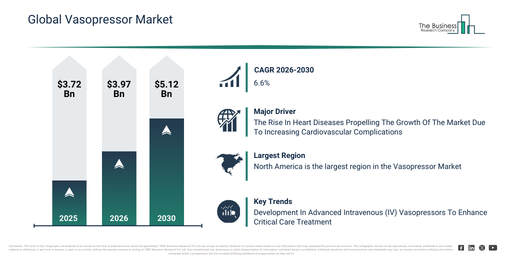
    Vasopressor Market Forecast Highlighting Growth From $3.97 Billion To $5.12 Billion

    The vasopressor market has experienced robust expansion recently, projecting a rise from $3.72 billion in 2025 to $3.97 billion in 2026, reflecting a compound annual growth rate of 6.7%. This growth trajectory in the past is largely due to a heightened prevalence of septic shock, the scaling up of critical care facilities, extensive utilization of catecholamine treatments, enhanced emergency medical services, and an upward trend in intensive care unit admissions.

    The vasopressor market is poised for considerable expansion in the coming years, projecting a reach of $5.12 billion by 2030, fueled by a compound annual growth rate (CAGR) of 6.6%. This anticipated increase stems from several key factors, including the ongoing development of advanced vasopressor medications, a heightened emphasis on personalized critical care approaches, the expansion of emergency medical response networks, the increasing incorporation of digital technologies within intensive care units, and a growing need for therapies that swiftly stabilize hemodynamic conditions. During this forecast period, prominent trends are expected to emerge, such as the greater utilization of sophisticated vasopressor formulations, a stronger focus on managing critical care through established protocols, the rising adoption of combined vasopressor treatments, enhanced integration of ICU monitoring systems, and a more pronounced emphasis on initiating prompt and effective treatments.

    Download A Free Sample Report For Comprehensive Market Insights:

    https://www.thebusinessresearchcompany.com/sample.aspx?id=23562&type=smp

    Vasopressor Market Growth Factors Supporting Long-Term Expansion

    A growing prevalence of cardiac ailments is anticipated to fuel the expansion of the vasopressor market in the future. These cardiac ailments encompass a range of conditions that impact the heart’s anatomy and performance, such as coronary artery disease, irregular heart rhythms, heart failure, and birth defects of the heart. The increasing adoption of sedentary lifestyles contributes to the rise in obesity and compromises cardiovascular well-being, substantially amplifying the likelihood of developing heart conditions. Vasopressors play a crucial role in managing heart disease by narrowing blood vessels, consequently elevating blood pressure and enhancing blood circulation to essential organs, thus bolstering cardiac function during acute situations. Illustratively, data from the Centers for Disease Control and Prevention (CDC), a prominent US federal health agency, indicated that in October 2024, cardiovascular diseases were responsible for 919,032 fatalities across the United States, translating to roughly one demise out of every three occurring nationwide. Consequently, the escalating incidence of heart disease acts as a significant driver for the vasopressor market’s growth.

    Vasopressor Market Segments: Where Are The Largest Growth Opportunities?

    The vasopressor market covered in this report is segmented –

    1) By Type: Catecholamines, Non-Catecholamines, Vasopressin

    2) By Route Of Administration: Intravenous (IV), Intraosseous, Inhalational

    3) By Applications: Hypotension Management, Septic Shock Treatment, Cardiogenic Shock Support, Post-Surgical Management, Other Critical Care Applications

    4) By End Users: Hospitals, Ambulatory Surgical Centers, Emergency Medical Services, Home Care Settings

    Subsegments:

    1) By Catecholamines: Norepinephrine, Epinephrine, Dopamine, Isoproterenol

    2) By Non-Catecholamines: Phenylephrine, Angiotensin II

    3) By Vasopressin: Vasopressin, Terlipressin, Selepressin

    Vasopressor Market Industry Trends Shaping Future Revenue Growth

    Leading firms within the vasopressor market are dedicating their efforts to creating sophisticated solutions, notably intravenous (IV) vasopressors, aimed at optimizing blood pressure management and improving patient recovery. These IV vasopressors function by narrowing blood vessels, thereby elevating blood pressure in individuals suffering from profound hypotension or shock, which is crucial for ensuring sufficient blood circulation to essential organs. Illustrating this market activity, Fresenius Kabi AG, a pharmaceutical entity headquartered in Germany, introduced Vasopressin Injection, USP, a bioequivalent version of Vasostrict, into the United States market in June 2023, thereby broadening its critical care offerings. This specific pharmaceutical is prescribed for adult patients in a state of vasodilatory shock who continue to exhibit low blood pressure even after receiving adequate fluid resuscitation and catecholamine therapy. It is supplied in a convenient single-dose vial, each containing 20 units of the active ingredient in 1 mL of solution.

    Vasopressor Market Major Participants And Competitive Dynamics

    Major companies operating in the vasopressor market are Pfizer Inc., Merck And Co Inc., Novartis AG, Baxter International Inc., Fresenius Kabi AG, Dr. Reddy’s Laboratories Limited, Hikma Pharmaceuticals PLC, Endo Inc., Amphastar Pharmaceuticals Inc., American Regent Incorporated, Celon Laboratories Ltd., Sagent Pharmaceuticals Inc., Civica Rx, Eton Pharmaceuticals Inc., Amomed Pharma GmbH, Health Biotech Limited, Samarth Life Sciences Pvt. Ltd, Pace Biotech Limited

    Access The Complete Vasopressor Market Report:

    https://www.thebusinessresearchcompany.com/report/vasopressor-global-market-report

    Vasopressor Market Regional Outlook: Where Are The Largest Opportunities Located?

    North Americawas the largest region in the vasopressor market in 2025. Asia-Pacificis expected to be the fastest-growing region in the forecast period. The regions covered in the vasopressor market report are Asia-Pacific, South East Asia, Western Europe, Eastern Europe, North America, South America, Middle East, Africa.

    Get in touch with us:

    The Business Research Company: https://www.thebusinessresearchcompany.com/

    Americas: +1 310-496-7795

    Asia: +44 7882 955267 & +91 8897263534

    Europe: +44 7882 955267

    Email us at: marketing@tbrc.info

    Follow us on:

    LinkedIn: https://in.linkedin.com/company/the-business-research-company

    YouTube: https://www.youtube.com/channel/UC24_fI0rV8cR5DxlCpgmyFQ

    Global Market Model: https://www.thebusinessresearchcompany.com/global-market-model

  • Vasomotor Menopausal Symptoms (VMS) Treatment Market Expansion Is Reshaping Competitive Dynamics Across The Industry

    Vasomotor Menopausal Symptoms (VMS) Treatment Market Expansion Is Reshaping Competitive Dynamics Across The Industry

    Delivering more actionable and strategically valuable research, The Business Research Company’s 2026 market reports feature market attractiveness analysis, total addressable market evaluation, company benchmarking matrices, interactive Excel dashboards, expanded supply chain intelligence, emerging startup coverage, and detailed product insights.

    Vasomotor Menopausal Symptoms (VMS) Treatment Market Revenue Growth Supported By A CAGR Of 26.47% Through 2030

    The market for treating vasomotor menopausal symptoms (VMS) has observed a robust expansion recently, projected to increase from $19.01 billion in 2025 to $20.16 billion by 2026, reflecting a compound annual growth rate of 6.0%. This historical growth trajectory is largely attributable to several key factors: a rising incidence of menopausal symptoms, the extensive utilization of hormone replacement therapy, escalating clinical investigations into treatments targeting neurotransmitters, the broader development of women’s health services, and enhanced accessibility to specialized medical facilities.

    The market encompassing treatments for vasomotor menopausal symptoms (VMS) is poised for significant expansion over the coming years, with projections indicating a valuation of $26.48 billion by 2030, reflecting a compound annual growth rate of 7.1%. This anticipated surge is fueled by several key factors including a burgeoning demand for therapeutic options that do not involve hormones, heightened public consciousness regarding menopause-specific health strategies, increased financial backing for research into women’s health issues, the wider application of remote healthcare for treatment administration, and advancements in the creation of innovative VMS therapies. During this projected timeframe, prevailing trends will likely involve a greater emphasis on the development of non-hormonal interventions, a growing inclination towards customized approaches for managing menopause, an increased utilization of digital health solutions for symptom control, the broader implementation of synergistic drug treatments, and a more pronounced consideration of the long-term safety aspects of VMS therapies.

    Download A Free Sample Report For Comprehensive Market Insights:

    https://www.thebusinessresearchcompany.com/sample.aspx?id=13051&type=smp

    Vasomotor Menopausal Symptoms (VMS) Treatment Market Demand Drivers Creating New Revenue Opportunities

    Anticipated advancements in the vasomotor menopausal symptom treatment sector are largely attributed to governmental strategies aimed at enhancing women’s health during menopause. These governmental programs focusing on menopausal well-being include financial support for pioneering research into the menopausal transition, strategies for disease prevention, and investigations into the pharmacological, clinical, and epidemiological dimensions of menopause. Such endeavors are integrated within wider women’s health agendas designed to tackle a range of health issues. Illustratively, in January 2023, the New South Wales Government of Australia announced a four-year investment of $40.3 million, spanning from 2022-2023 to 2025-2026, intended to establish up to sixteen new programs specifically for women experiencing significant menopausal symptoms, thereby underscoring how these governmental directives are a key catalyst for expansion within the market for treating vasomotor menopausal symptoms.

    Vasomotor Menopausal Symptoms (VMS) Treatment Market Segment Analysis: What Are The Major Market Categories?

    The vasomotor menopausal symptoms (vms) treatment market covered in this report is segmented –

    1) By Drug Class: Antidepressants, Fluoxetine, Paroxetine, Sertraline, Hormone Therapy, Anticonvulsant, Other Drug Classes

    2) By Distribution Channel: Hospital Pharmacy, Retail Pharmacy, Online Pharmacy, Other Distribution Channels

    3) By End-User: Hospitals, Specialty Clinics, Homecare, Other End-Users

    Subsegments:

    1) By Antidepressants: SSRIs (Selective Serotonin Reuptake Inhibitors), SNRIs (Serotonin-Norepinephrine Reuptake Inhibitors), TCAs (Tricyclic Antidepressants), MAOIs (Monoamine Oxidase Inhibitors), Atypical Antidepressants

    2) By Fluoxetine: Depression, Obsessive-Compulsive Disorder (OCD), Panic Disorder, Generalized Anxiety Disorder (GAD), Post-Traumatic Stress Disorder (PTSD), Social Anxiety Disorder, Premenstrual Dysphoric Disorder (PMDD)

    3) By Paroxetine: Depression, Obsessive-Compulsive Disorder (OCD), Panic Disorder, Generalized Anxiety Disorder (GAD), Post-Traumatic Stress Disorder (PTSD), Social Anxiety Disorder, Premenstrual Dysphoric Disorder (PMDD)

    4) By Sertraline: Depression, Obsessive-Compulsive Disorder (OCD), Panic Disorder, Post-Traumatic Stress Disorder (PTSD), Social Anxiety Disorder, Premenstrual Dysphoric Disorder (PMDD)

    5) By Hormone Therapy: Estrogen Replacement Therapy (ERT), Progestin Therapy, Combined Hormonal Therapy (CHT), Testosterone Replacement Therapy (TRT)

    6) By Anticonvulsant: Hydantoins, Barbiturates, Benzodiazepines, Valproates, Succinimides, Carboxylic Acid Derivatives

    7) By Other Drug Classes: Antibiotics, Analgesics, Antidiabetics, Antihypertensives, Anticoagulants, Immunosuppressants, Antipsychotics, Antihistamines

    Vasomotor Menopausal Symptoms (VMS) Treatment Market Trends Driving Strategic Industry Expansion

    In the competitive landscape of the vasomotor menopausal symptoms treatment market, leading pharmaceutical entities are actively engaged in launching innovative products, exemplified by Veozah, and securing regulatory endorsements to introduce novel therapeutic avenues and address the persistent medical requirements of individuals. The advent of new pharmaceutical interventions for menopause signifies advancements in both effectiveness and safety profiles when contrasted with established remedies. As an illustration, during May of 2023, Astellas Pharma Inc., a prominent pharmaceutical firm headquartered in Japan, obtained authorization from the Food and Drug Administration (FDA), a regulatory body within the United States, for Veozah (fezolinetant) administered at a dosage of 45 mg taken once daily, specifically targeting menopausal vasomotor symptoms (VMS) that can present with varying degrees of severity. What distinguishes this medication is its status as the inaugural nonhormonal neurokinin 3 (NK3) receptor antagonist to gain regulatory clearance for the management of VMS associated with menopause. This hormone-free therapeutic operates by inhibiting a specific neural pathway in the brain implicated in controlling these symptoms, thereby presenting a viable alternative for women experiencing these symptoms, especially those who are either unable or opt against utilizing hormone replacement therapy. The regulatory nod for Veozah underscores its promise as a groundbreaking pharmaceutical agent for the effective management of menopausal symptoms.

    Vasomotor Menopausal Symptoms (VMS) Treatment Market Leading Companies Driving Competitive Growth

    Major companies operating in the vasomotor menopausal symptoms (vms) treatment market are Pfizer Inc., Abbvie Inc., Novartis AG, Teva Pharmaceutical Industries Ltd., Mylan N.V., Sun Pharmaceutical Industries Ltd., Aurobindo Pharma Limited, Kyowa Kirin Co. Ltd., Dr. Reddy’s Laboratories Ltd., Alembic Pharmaceuticals Limited Inc., Apotex Inc., Hikma Pharmaceutical plc, Endo Pharmaceuticals plc, Amneal Pharmaceuticals LLC, Mundipharma International Ltd., Lupin Limited, Glenmark Pharmaceuticals Ltd., Hisamitsu Pharmaceutical Co. Inc., Emcure Pharmaceuticals Limited, Wockhardt Pvt. Ltd., QuatRx Pharmaceuticals Company, Bionovo Inc., Mithra Pharmaceuticals SA, EndoCeutics Inc., Zydus Group, Edgemont Pharmaceuticals LLC, MenoGeniX Inc., Agile Therapeutics Inc

    Access The Complete Vasomotor Menopausal Symptoms (VMS) Treatment Market Report:

    https://www.thebusinessresearchcompany.com/report/vasomotor-menopausal-symptoms-vms-treatment-global-market-report

    Vasomotor Menopausal Symptoms (VMS) Treatment Market Geographic Landscape: Which Region Dominates Industry Growth?

    North Americawas the largest region in the vasomotor menopausal symptoms (VMS) treatment market in 2025. The regions covered in the vasomotor menopausal symptoms (vms) treatment market report are Asia-Pacific, South East Asia, Western Europe, Eastern Europe, North America, South America, Middle East, Africa.

    Get in touch with us:

    The Business Research Company: https://www.thebusinessresearchcompany.com/

    Americas: +1 310-496-7795

    Asia: +44 7882 955267 & +91 8897263534

    Europe: +44 7882 955267

    Email us at: marketing@tbrc.info

    Follow us on:

    LinkedIn: https://in.linkedin.com/company/the-business-research-company

    YouTube: https://www.youtube.com/channel/UC24_fI0rV8cR5DxlCpgmyFQ

    Global Market Model: https://www.thebusinessresearchcompany.com/global-market-model

  • Vasoactive Intestinal Peptide Tumor Market Forecast Reveals Where Future Industry Value Will Be Created

    Vasoactive Intestinal Peptide Tumor Market Forecast Reveals Where Future Industry Value Will Be Created

    Enhanced with market attractiveness analysis, total addressable market evaluation, company benchmarking matrices, interactive Excel dashboards, expanded supply chain intelligence, emerging startup coverage, and detailed product insights, The Business Research Company’s 2026 market reports deliver more actionable and strategically valuable research.

    Vasoactive Intestinal Peptide Tumor Market Value Expansion And Long-Term Growth Outlook

    The market for vasoactive intestinal peptide tumors has experienced robust expansion recently, projected to advance from $1.61 billion in 2025 to $1.70 billion in 2026, reflecting a compound annual growth rate of 6.2%. This historical growth trajectory has been fueled by enhanced identification of neuroendocrine tumors, a greater proliferation of dedicated oncology facilities, escalating reliance on diagnostic imaging, the proactive implementation of somatostatin analog treatments, and progress in surgical procedures for pancreatic conditions.

    The market for vasoactive intestinal peptide tumors is projected for significant expansion over the upcoming years, anticipating a rise to $2.15 billion by 2030, driven by a compound annual growth rate of 6.0%. This forecasted growth is underpinned by several key factors: increased funding for research into rare cancers, advancements in the creation of innovative targeted drug therapies, the widening application of precision medicine strategies, the enhancement of specialized cancer care facilities, and a heightened understanding of uncommon endocrine conditions. Dominant trends expected to shape this market during the forecast period include a greater embrace of targeted therapy methods, increased utilization of sophisticated imaging technologies for early detection, a stronger emphasis on individualized treatment plans, the broader implementation of minimally invasive surgical procedures, and a more comprehensive incorporation of multidisciplinary care approaches.

    Download A Free Sample Report For Comprehensive Market Insights:

    https://www.thebusinessresearchcompany.com/sample.aspx?id=23561&type=smp

    Vasoactive Intestinal Peptide Tumor Market Expansion Supported By Key Demand Factors

    Anticipated advancements in targeted therapeutic strategies are poised to stimulate expansion within the market for vasoactive intestinal peptide tumors. A defining characteristic of targeted therapies is their precise focus on specific molecular elements or biological pathways integral to disease advancement, particularly in oncological contexts, aiming to eliminate aberrant cells while preserving healthy tissue. The proliferation of these targeted approaches is fundamentally linked to the principles of precision medicine, which elevates treatment effectiveness by concentrating on distinct genetic alterations and simultaneously mitigating undesirable adverse effects. Within the realm of VIP tumors, targeted therapies function by inhibiting critical signaling routes that sustain tumor proliferation and aberrant hormone production, thereby facilitating a reduction in VIP levels, alleviating debilitating symptoms like severe diarrhea, and impeding disease progression. To illustrate, the second quarter of 2024 witnessed the commencement of 76 gene therapy trials, a notable 25% surge from the preceding quarter, as reported by the American Society of Gene and Cell Therapy in July 2024. Consequently, the escalating adoption of targeted therapies is a significant contributor to the growth trajectory of the vasoactive intestinal peptide tumor market.

    The escalating prevalence of neuroendocrine tumors is projected to be a key catalyst for the expansion of the vasoactive intestinal peptide tumor market. Neuroendocrine tumors encompass a category of uncommon, slow-progressing malignancies originating from neuroendocrine cells, which exhibit dual characteristics of both neural and hormone-secreting cells. A growing recognition of neuroendocrine tumors stems from enhanced diagnostic methodologies that facilitate earlier and more precise identification of these neoplasms, which were historically subject to underdiagnosis. VIP tumors represent a specific, infrequent variant of neuroendocrine tumors, distinguished by the overproduction of VIP, leading to severe watery diarrhea and disruptions in electrolyte balance. For example, data from the American Cancer Society indicated that in August 2025, approximately 8,000 neuroendocrine tumors originating within the gastrointestinal tract, spanning the stomach, intestines, appendix, colon, and rectum, receive a diagnosis annually in the United States, with an overall reported incidence rate of roughly 1 to 2 cases per 100,000 individuals. Thus, the increasing incidence of neuroendocrine tumors directly contributes to the growth dynamics of the vasoactive intestinal peptide tumor market.

    Vasoactive Intestinal Peptide Tumor Market Segment Breakdown: Which Categories Generate The Most Revenue?

    The vasoactive intestinal peptide tumor market covered in this report is segmented –

    1) By Treatment: Surgical Intervention, Radiotherapy, Chemotherapy, Targeted Therapy

    2) By Diagnosis: Imaging Techniques, Biopsy, Endoscopic Ultrasound

    3) By Therapeutic Approach: Palliative Care, Curative Treatment, Adjuvant Treatment

    4) By End-User: Hospitals, Cancer Specialty Clinics, Diagnostic Laboratories

    Subsegments:

    1) By Surgical Intervention: Tumor Resection, Debulking Surgery, Minimally Invasive Surgery

    2) By Radiotherapy: External Beam Radiation Therapy (EBRT), Stereotactic Body Radiation Therapy (SBRT), Proton Therapy

    3) By Chemotherapy: Cytotoxic Chemotherapy, Combination Chemotherapy, Adjuvant And Neoadjuvant Chemotherapy

    4) By Targeted Therapy: Somatostatin Analog Therapy, Tyrosine Kinase Inhibitors (TKIs), Monoclonal Antibodies

    Vasoactive Intestinal Peptide Tumor Market Growth Trends Influencing Competitive Dynamics

    Leading entities within the vasoactive intestinal peptide tumor market are prioritizing the creation of sophisticated therapeutic options, including extended-release injectable formulations, aimed at boosting treatment efficacy, promoting patient adherence, and ensuring prolonged alleviation of symptoms. These extended-release injectables are formulated to steadily dispense therapeutic agents over a prolonged duration, thereby minimizing the necessity for frequent administration. Illustratively, in October 2024, Teva Pharmaceutical Industries Ltd., a prominent US pharmaceutical firm, introduced the inaugural and sole generic equivalent of Sandostatin LAR Depot (octreotide acetate for injectable suspension) in the United States. This pharmaceutical compound serves as a maintenance therapy for individuals diagnosed with acromegaly who have not achieved an adequate response through prior surgical or radiotherapeutic interventions. Furthermore, it is employed in managing the severe diarrheal episodes and flushing symptomatic of metastatic carcinoid tumors and tumors secreting vasoactive intestinal peptide. This product introduction underscores Teva’s proficiency in developing intricate generic medications and aids in its strategic objective of preserving a significant foothold within the generic pharmaceutical sector.

    Vasoactive Intestinal Peptide Tumor Market Key Players And Strategic Industry Positioning

    Major companies operating in the vasoactive intestinal peptide tumor market are Pfizer Inc., Novartis AG, Mayo Clinic, Mount Sinai Hospital, Cleveland Clinic Laboratories, Penn Medicine, Stanford Health Care, UCSF Health, ARUP Laboratories, Dr. Lal PathLabs, Cancer Research UK, Medicover Hospitals, Ganesh Diagnostic, Ipsen Pharma SA, F Hoffmann-La Roche Ltd, Eli Lilly and Company, Boehringer Ingelheim International GmbH, Bristol-Myers Squibb Company, Merck & Co

    Access The Complete Vasoactive Intestinal Peptide Tumor Market Report:

    https://www.thebusinessresearchcompany.com/report/vasoactive-intestinal-peptide-tumor-global-market-report

    Vasoactive Intestinal Peptide Tumor Market Largest Region: Which Geography Holds The Highest Market Share?

    North Americawas the largest region in the vasoactive intestinal peptide tumor market in 2025. The regions covered in the vasoactive intestinal peptide tumor market report are Asia-Pacific, South East Asia, Western Europe, Eastern Europe, North America, South America, Middle East, Africa.

    Get in touch with us:

    The Business Research Company: https://www.thebusinessresearchcompany.com/

    Americas: +1 310-496-7795

    Asia: +44 7882 955267 & +91 8897263534

    Europe: +44 7882 955267

    Email us at: marketing@tbrc.info

    Follow us on:

    LinkedIn: https://in.linkedin.com/company/the-business-research-company

    YouTube: https://www.youtube.com/channel/UC24_fI0rV8cR5DxlCpgmyFQ

    Global Market Model: https://www.thebusinessresearchcompany.com/global-market-model

  • Vascular Tissue Matrix Market Growth Through 2030 Creates New Strategic Opportunities

    Vascular Tissue Matrix Market Growth Through 2030 Creates New Strategic Opportunities

    Through market attractiveness analysis, total addressable market evaluation, company benchmarking matrices, interactive Excel dashboards, expanded supply chain intelligence, emerging startup coverage, and detailed product insights, The Business Research Company’s 2026 market reports provide more actionable and strategically valuable research.

    Vascular Tissue Matrix Market Expected To Reach $1.89 Billion By 2030 At 7.7% CAGR

    The market for vascular tissue matrices has experienced robust expansion in recent times, projecting a significant increase from $1.3 billion in 2025 to $1.41 billion in 2026, propelled by a compound annual growth rate of 8.1%. Factors contributing to this historical growth trajectory include a rising incidence of cardiovascular ailments, a greater number of reconstructive surgical interventions, breakthroughs in biomaterial development, increased research in regenerative medicine, and the accessibility of technologies for tissue processing.

    The market for vascular tissue matrices is poised for significant expansion over the coming years, projected to reach $1.89 billion by 2030 with a compound annual growth rate of 7.7%. This projected increase stems from several key factors including escalating demand for solutions in vascular regeneration, a surge in investment within the field of tissue engineering, the broadening scope of personalized medicine, increased utilization of sophisticated biomaterials, and continuous advancements in the technologies used for creating scaffolds. Key developments anticipated in the coming period involve a greater acceptance of biological vascular scaffolds, a rise in the need for regenerative therapies addressing cardiovascular conditions, a more widespread application of decellularized tissue matrices, the extended use of tissue engineering across various fields, and an elevated emphasis on ensuring biocompatibility and seamless long-term integration.

    Download A Free Sample Report For Comprehensive Market Insights:

    https://www.thebusinessresearchcompany.com/sample.aspx?id=19746&type=smp

    Vascular Tissue Matrix Market Growth Drivers And Industry Catalysts

    The increasing trend towards less invasive medical interventions is poised to significantly boost the vascular tissue matrix market. These procedures, characterized by minimal or no incisions, are becoming more popular because they offer quicker recovery periods, diminished complication rates, and less post-operative discomfort when contrasted with conventional surgical methods. Vascular tissue matrices play a crucial role in these minimally invasive techniques, facilitating the repair and regeneration of blood vessels without the necessity for major surgical undertakings. As an illustration, in January 2024, Intuitive Surgical Inc., a prominent American producer of robotic surgical equipment, announced the installation of 415 da Vinci surgical systems during the final quarter of 2023, marking a 12% year-on-year rise in placements. Consequently, the expansion of minimally invasive surgical practices is a key driver for the advancement of the vascular tissue matrix market.

    Vascular Tissue Matrix Market Segmentation: How Is The Market Structured Across Key Categories?

    The vascular tissue matrix market covered in this report is segmented –

    1) By Type: Biologic Matrix, Synthetic Matrix

    2) By Therapeutic Area: Orthopedics, Dermatology, Cardiology, Neurology, Other Therapeutics

    3) By Application: Hospital, Clinic, Other Applications

    Subsegments:

    1) By Biologic Matrix: Allograft Matrix, Xenograft Matrix, Autograft Matrix, Decellularized Matrix

    2) By Synthetic Matrix: Polymer-Based Matrix, Hydrogel Matrix, Nanofiber Matrix

    #Vascular Tissue Matrix Market Trends Influencing Long-Term Demand

    Leading entities within the vascular tissue matrix sector are intensifying their efforts toward pioneering novel solutions, exemplified by the creation of tissue matrices sourced from human umbilical cord extracellular matrix (ECM), as a strategy to enhance their market standing. Such a tissue matrix, originating from the human umbilical cord ECM, serves as a structural framework built upon the proteinaceous and molecular constituents present in the umbilical cord’s extracellular environment. As an illustration, in February of 2024, StimLabs LLC, a biotechnology firm headquartered in the United States, revealed that the U.S. Food and Drug Administration (FDA) had issued 510(k) clearance for their innovative wound treatment apparatus, designated as Corplex P. This particular device, representing the inaugural graft derived from human umbilical cord ECM, has been engineered for the therapeutic management of both acute and persistent wounds. Its composition includes elements of connective tissue matrix, such as collagenous proteins and glycosaminoglycans like hyaluronic acid, thereby forming a permeable matrix conducive to cell migration and the restoration of tissue. Corplex P is indicated for the comprehensive management of a spectrum of wound types, encompassing partial and full-thickness injuries, decubitus ulcers, diabetic foot ulcers, post-surgical wounds, and wounds resulting from trauma.

    Vascular Tissue Matrix Market Competitive Landscape And Leading Companies

    Major companies operating in the vascular tissue matrix market are Abbott Laboratories, Medtronic PLC, Baxter International Inc., Boston Scientific Corporation, Terumo Corporation, Edwards Lifesciences Corporation, W. L. Gore & Associates Inc., Getinge Group, Integra LifeSciences Corporation, Artivion Inc., CryoLife Inc., LeMaitre Vascular Inc., Cook Medical Inc., Humacyte Inc., BioCardia Inc., Organogenesis Holdings Inc., AxoGen Inc., Collagen Matrix Inc., ACell Inc., Reva Medical Inc.

    Access The Complete Vascular Tissue Matrix Market Report:

    https://www.thebusinessresearchcompany.com/report/vascular-tissue-matrix-global-market-report

    Vascular Tissue Matrix Market Regional Analysis: Which Region Leads By Revenue?

    North Americawas the largest region in the vascular tissue matrix market in 2025. The regions covered in the vascular tissue matrix market report are Asia-Pacific, South East Asia, Western Europe, Eastern Europe, North America, South America, Middle East, Africa.

    Get in touch with us:

    The Business Research Company: https://www.thebusinessresearchcompany.com/

    Americas: +1 310-496-7795

    Asia: +44 7882 955267 & +91 8897263534

    Europe: +44 7882 955267

    Email us at: marketing@tbrc.info

    Follow us on:

    LinkedIn: https://in.linkedin.com/company/the-business-research-company

    YouTube: https://www.youtube.com/channel/UC24_fI0rV8cR5DxlCpgmyFQ

    Global Market Model: https://www.thebusinessresearchcompany.com/global-market-model
  • Vascular Imaging Market Size Projected To Increase From $6.89 Billion To $8.66 Billion During The Forecast Period

    Vascular Imaging Market Size Projected To Increase From $6.89 Billion To $8.66 Billion During The Forecast Period

    Delivering more actionable and strategically valuable research, The Business Research Company’s 2026 market reports feature market attractiveness analysis, total addressable market evaluation, company benchmarking matrices, interactive Excel dashboards, expanded supply chain intelligence, emerging startup coverage, and detailed product insights.

    Vascular Imaging Market Size And Revenue Forecast Through 2030

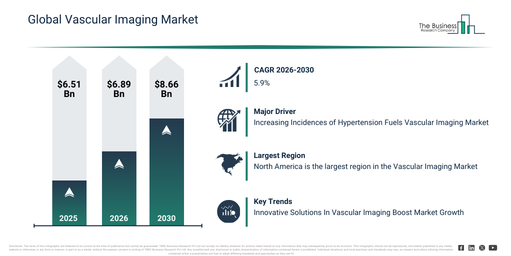
    The market for vascular imaging has experienced robust expansion recently, projected to increase from $6.51 billion in 2025 to $6.89 billion in 2026, reflecting a compound annual growth rate of 6.0%. Historical growth drivers for this sector include the enhancement of diagnostic imaging infrastructure, a rising incidence of cardiovascular ailments, greater adoption of angiography, improved accessibility to sophisticated imaging technology, and a heightened clinical need for precise diagnoses.

    The market for vascular imaging is poised for substantial expansion, projecting a valuation of $8.66 billion by 2030, driven by a compound annual growth rate of 5.9%. This anticipated growth stems from several key factors, including heightened investments in precise diagnostic tools, the increasing implementation of artificial intelligence within imaging software, the proliferation of outpatient diagnostic imaging facilities, a heightened emphasis on detecting diseases at their earliest stages, and the growing synergy between imaging technologies and treatment planning. Furthermore, the coming years will likely witness prevailing trends such as a greater embrace of sophisticated vascular imaging methods, expanded utilization of AI for image analysis, a surge in demand for high-fidelity diagnostic imaging, the wider application of non-invasive techniques for vascular assessment, and more profound integration of diverse imaging system types.

    Download A Free Sample Report For Comprehensive Market Insights:

    https://www.thebusinessresearchcompany.com/sample.aspx?id=16564&type=smp

    Vascular Imaging Market Opportunity Drivers: What Is Creating New Revenue Potential?

    The escalating prevalence of hypertension is poised to significantly boost the vascular imaging market. Hypertension, characterized by persistently elevated blood pressure against artery walls, presents a substantial risk for severe health complications such as heart disease and stroke. This condition is exacerbated by lifestyle choices including inadequate diet, sedentary habits, and stress, compounded by rising obesity rates and an aging global population. Vascular imaging is instrumental in addressing hypertension by enabling thorough evaluations of vascular structure and function, thereby facilitating the accurate diagnosis and effective management of vascular issues that contribute to high blood pressure. As an illustration, data from March 2024, released by the Centers for Disease Control and Prevention, indicated that hypertension affected 33.2% of men compared to 27.0% of women, 60.6% of adults aged 65 and over versus 14.5% of those aged 18–44 and 40.3% of those aged 45–64, 40.2% of Black adults compared to 22.7% of Asian adults, and 33.8% of individuals with less than a high school education contrasted with 31.2% of those with some college education and 25.5% of those with a college degree or higher. Consequently, the growing occurrence of hypertension is a key factor spurring advancements and expansion within the vascular imaging sector.

    Vascular Imaging Market Segmentation Trends And Revenue Drivers

    The vascular imaging market covered in this report is segmented –

    1) By Technique: Magnetic Resonance Imaging, Ultrasound, Computed Tomography, Nuclear Imaging, X-Ray

    2) By Procedure: Coronary Angiography, Peripheral Angiography, Neurovascular Angiography, Vascular Ultrasound Procedures, Micro Angiography, Other Procedures

    3) By Application: Diagnostic Applications, Therapeutic Applications

    4) By End User: Hospitals, Diagnostic Imaging Centers, Other End-Users

    Subsegments:

    1) By Magnetic Resonance Imaging: Magnetic Resonance Angiography (MRA), Contrast-Enhanced MRI, 3D MRI Imaging For Vascular Analysis

    2) By Ultrasound: Doppler Ultrasound, Color Doppler Ultrasound, 3D Or 4D Ultrasound Imaging, Elastography For Vascular Imaging

    3) By Computed Tomography: Computed Tomography Angiography (CTA), Contrast-Enhanced CT Imaging, 3D CT Vascular Imaging

    4) By Nuclear Imaging: Positron Emission Tomography (PET), Single-Photon Emission Computed Tomography (SPECT), Hybrid Imaging (PET Or CT, PET Or MRI)

    5) By X-Ray: Conventional X-Ray, Digital Subtraction Angiography (DSA), Fluoroscopy For Vascular Imaging

    Vascular Imaging Market Innovation Trends Driving Future Development

    Prominent players in the vascular imaging sector are concentrating their efforts on pioneering advancements, including the introduction of wireless ultrasound imaging equipment, to elevate diagnostic precision and elevate patient outcomes. These wireless ultrasound systems are essentially portable ultrasound units capable of transmitting images wirelessly, thereby affording enhanced adaptability and maneuverability within healthcare environments. A prime illustration of this advancement was the August 2023 release by GE HealthCare Technologies Inc., a prominent US medical technology entity, of the Vscan Air SL. This portable, wireless ultrasound imaging device is specifically engineered for rapid cardiac and vascular assessments directly at the point of patient care, assisting medical professionals in accelerating diagnostic processes and treatment strategies. As an upgrade within the Vscan range, the Vscan Air SL incorporates GE Healthcare’s proprietary SignalMax and XDclear technologies, which collectively provide outstanding imaging quality marked by exceptional depth penetration, clarity, and responsiveness, all driven by state-of-the-art single-crystal transducer technology.

    Vascular Imaging Market Industry Leaders: Which Organizations Are Driving Competition?

    Major companies operating in the vascular imaging market are Hitachi Ltd., Siemens AG, General Electric Company, Abbott Laboratories, Toshiba Corporation, FUJIFILM Corporation, Koninklijke Philips N.V., Stryker Corporation, Konica Minolta Inc., Terumo Corporation, Hologic Inc., Mindray Medical International Limited, Shimadzu Corporation, Canon Medical Systems Corporation, Samsung Medison Co. Ltd., Esaote SpA, BK Medical Holding Company Inc., Lumedx Corp, Alpinion Medical Systems Co. Ltd., CorVascular Diagnostics LLC

    Access The Complete Vascular Imaging Market Report:

    https://www.thebusinessresearchcompany.com/report/vascular-imaging-global-market-report

    Vascular Imaging Market Geographic Distribution And Regional Opportunities

    North Americawas the largest region in the vascular imaging market in 2025. The regions covered in the vascular imaging market report are Asia-Pacific, South East Asia, Western Europe, Eastern Europe, North America, South America, Middle East, Africa.

    Get in touch with us:

    The Business Research Company: https://www.thebusinessresearchcompany.com/

    Americas: +1 310-496-7795

    Asia: +44 7882 955267 & +91 8897263534

    Europe: +44 7882 955267

    Email us at: marketing@tbrc.info

    Follow us on:

    LinkedIn: https://in.linkedin.com/company/the-business-research-company

    YouTube: https://www.youtube.com/channel/UC24_fI0rV8cR5DxlCpgmyFQ

    Global Market Model: https://www.thebusinessresearchcompany.com/global-market-model
  • Vascular Embolization Market Growth Outlook Reveals A CAGR Of 9.9% And A Market Value Of $5.41 Billion By 2030

    Vascular Embolization Market Growth Outlook Reveals A CAGR Of 9.9% And A Market Value Of $5.41 Billion By 2030

    Enhanced with market attractiveness analysis, total addressable market evaluation, company benchmarking matrices, interactive Excel dashboards, expanded supply chain intelligence, emerging startup coverage, and detailed product insights, The Business Research Company’s 2026 market reports deliver more actionable and strategically valuable research.

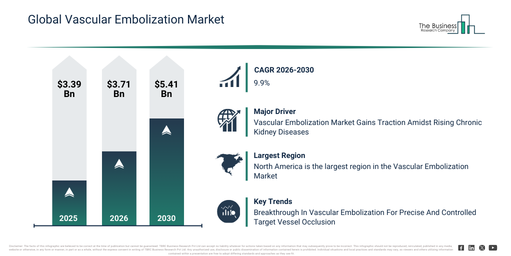
    Vascular Embolization Market Growth From $3.71 Billion In 2026 To $5.41 Billion By 2030 At A CAGR Of 9.9%

    The market for vascular embolization experienced robust expansion recently, projecting a rise from $3.39 billion in 2025 to $3.71 billion in 2026, reflecting a compound annual growth rate of 9.4%. This upward trajectory in recent years is underpinned by several key factors, including the broadening adoption of interventional radiology, a heightened incidence of vascular conditions, a greater volume of cancer treatment procedures, enhanced accessibility to catheter-based solutions, and a growing proficiency among physicians in performing embolization techniques.

    The vascular embolization sector is poised for significant expansion, projected to reach $5.41 billion by 2030, driven by a compound annual growth rate of 9.9%. This upward trajectory is fueled by a confluence of factors including a heightened demand for specialized treatment modalities, augmented financial backing within interventional oncology, the broader accessibility of outpatient embolization services, the increasing integration of sophisticated imaging technologies, and a greater emphasis on tailoring treatments to individual patient needs. Key developments shaping this market’s future encompass the escalating preference for minimally invasive embolization techniques, the burgeoning utilization of cutting-edge embolic agents, a growing call for image-guided interventions, the broadening scope of embolization in cancer treatment, and a reinforced commitment to enhancing the precision and security of these procedures.

    Download A Free Sample Report For Comprehensive Market Insights:

    https://www.thebusinessresearchcompany.com/sample.aspx?id=12660&type=smp

    Vascular Embolization Market Growth Momentum: Which Factors Are Influencing Demand?

    The increasing incidence of chronic kidney diseases is anticipated to be a significant catalyst for the expansion of the vascular embolization market. This condition, characterized by progressive and irreversible kidney damage, presents opportunities for vascular embolization techniques. Specifically, in cases of CKD, this procedure offers a less invasive alternative to traditional surgery for managing issues such as bleeding from renal tumors, arteriovenous malformations, or post-procedural complications from biopsies or transplants, thereby mitigating surgical risks for patients with already compromised renal function. Illustrating this trend, ZS Associates reported in June 2023 that approximately 7.19 million individuals in the UK were living with kidney disease in 2023, representing over 10% of the populace, with projections indicating an increase to 7.61 million by 2033. Furthermore, this projection includes a rise in the proportion of patients presenting with advanced stages of the disease, moving from 45% to 51%. Consequently, the substantial and growing burden of chronic kidney diseases is directly contributing to the upward trajectory of the vascular embolization market.

    Vascular Embolization Market Segment Analysis Highlighting Growth Areas

    The vascular embolization market covered in this report is segmented –

    1) By Product: Embolic Agents, Embolization Devices

    2) By Embolization Technique: Coiling Devices, Non-Coiling Devices

    3) By Application: Peripheral Vascular Diseases, Oncology, Urology, Neurology, Other Applications

    4) By End Users: Hospitals, Specialty Clinics, Ambulatory Surgical Centers, Diagnostic Centers

    Subsegments:

    1) By Embolic Agents: Particle Embolic Agents, Liquid Embolic Agents, Coil Embolic Agents, Gelatin Sponge Embolic Agents

    2) By Embolization Devices: Balloon Occlusion Devices, Catheters, Thrombin Injection Systems

    Vascular Embolization Market Trends Reshaping Industry Growth

    The primary players within the vascular embolization sector are actively pursuing market share growth through the development of novel embolic systems, which are integral to blocking blood vessels. These systems comprise both the embolic agents themselves and the specialized delivery mechanisms. Vascular embolization is the medical intervention that utilizes these embolic systems to deliberately obstruct or diminish blood flow to particular bodily regions. A notable development occurred in October 2023 when Sirtex Medical, a US entity specializing in medical devices, introduced its Lava liquid embolic system (LES). Available in 2-mL and 6-mL capacities, Lava is engineered to provide adaptable control for occluding target vessels in the peripheral vascular system. The product’s range of viscosities facilitates effective embolization distally, reaching even the most minute and challenging vessels. The U.S. Food and Drug Administration granted approval for the Lava LES, recognizing its demonstrated safety and effectiveness as evidenced by the LAVA Study, a single-arm, prospective, multicenter investigation focused on acute peripheral arterial hemorrhages.

    Vascular Embolization Market Leading Companies: Who Holds Significant Market Presence?

    Major companies operating in the vascular embolization market are Abbott Laboratories, Medtronic Plc., Stryker Corporation, Boston Scientific Corporation, B. Braun Melsungen AG, Kaneka Corporation, Terumo Corporation, W. L. Gore & Associates Inc., Teleflex Inc., Cook Group Incorporated, Merit Medical Systems Inc., Penumbra Inc., MicroPort Scientific Corporation, MicroVention Inc., Medikit Co Ltd., Silk Road Medical Inc., Galt Medical Corporation, Neuravi Ltd., Phenox GmbH, Spartan Micro Inc., EndoShape Inc., Shape Memory Medical Inc., Balt Group, Vascular Solutions Inc.

    Access The Complete Vascular Embolization Market Report:

    https://www.thebusinessresearchcompany.com/report/vascular-embolization-global-market-report

    Vascular Embolization Market Largest Region By Revenue And Market Share

    North Americawas the largest region in the vascular embolization market in 2025. Asia Pacific is expected to be the fastest-growing region in the forecast period. The regions covered in the vascular embolization market report are Asia-Pacific, South East Asia, Western Europe, Eastern Europe, North America, South America, Middle East, Africa.

    Get in touch with us:

    The Business Research Company: https://www.thebusinessresearchcompany.com/

    Americas: +1 310-496-7795

    Asia: +44 7882 955267 & +91 8897263534

    Europe: +44 7882 955267

    Email us at: marketing@tbrc.info

    Follow us on:

    LinkedIn: https://in.linkedin.com/company/the-business-research-company

    YouTube: https://www.youtube.com/channel/UC24_fI0rV8cR5DxlCpgmyFQ

    Global Market Model: https://www.thebusinessresearchcompany.com/global-market-model
  • Vascular Dementia Market Forecast Highlights Expansion From $3.65 Billion To $5.62 Billion Through 2030

    Vascular Dementia Market Forecast Highlights Expansion From $3.65 Billion To $5.62 Billion Through 2030

    Through market attractiveness analysis, total addressable market evaluation, company benchmarking matrices, interactive Excel dashboards, expanded supply chain intelligence, emerging startup coverage, and detailed product insights, The Business Research Company’s 2026 market reports provide more actionable and strategically valuable research.

    Vascular Dementia Market Expansion Outlook: What Revenue Opportunities Lie Ahead?

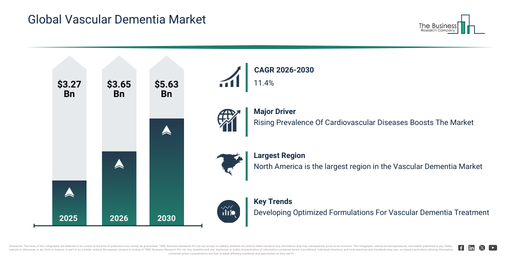
    The market for vascular dementia therapeutics has experienced substantial expansion lately, projecting a climb from $3.27 billion in 2025 to $3.65 billion in 2026, fueled by a compound annual growth rate of 11.8%. This historical surge is demonstrably linked to a greater frequency of stroke-induced cognitive impairment, the escalating occurrence of conditions like hypertension and diabetes, advancements in neurological research initiatives, enhanced diagnostic capabilities and awareness, and an increase in dementia care services provided within hospital settings.

    Anticipated to experience substantial expansion in the near future, the vascular dementia market is projected to reach a value of $5.63 billion by the year 2030, demonstrating a compound annual growth rate (CAGR) of 11.4%. This projected growth is underpinned by several key factors, including a steadily increasing elderly demographic, escalating investments directed toward the development of neurological therapies, a growing acceptance and utilization of digital tools for health monitoring, the wider implementation of precision medicine methodologies, and a heightened concentration on strategies for the long-term management of cognitive well-being. During this forecast period, prominent trends are expected to manifest, such as a greater emphasis on the early identification of cognitive impairments, the increasing incorporation of digital solutions for cognitive assessment, burgeoning research efforts focused on neurodegeneration linked to vascular issues, the further development of individualized treatment plans, and an intensified focus on proactive health maintenance strategies.

    Download A Free Sample Report For Comprehensive Market Insights:

    https://www.thebusinessresearchcompany.com/sample.aspx?id=20998&type=smp

    Vascular Dementia Market Expansion Drivers: What Is Shaping Future Growth?

    The increasing incidence of heart and blood vessel conditions is anticipated to fuel the growth of the vascular dementia market. These ailments, encompassing issues like narrowed arteries, weakened heart muscle, irregular heartbeats, and elevated blood pressure, are on the rise due to contributing elements such as sedentary lifestyles, inadequate nutrition, heightened stress, and an aging global population. Furthermore, escalating rates of related health concerns like obesity, diabetes, and hypertension exacerbate the problem. By compromising the brain’s blood supply, cardiovascular diseases elevate the likelihood of developing vascular dementia, ultimately causing a deterioration in cognitive function and neuronal damage from insufficient oxygen and nutrients. As an illustration, data released in September 2024 by the British Heart Foundation indicated that within the United Kingdom, approximately 7.6 million individuals grapple with heart and circulatory diseases, with 4 million being men and 3.6 million being women. These conditions account for a significant portion, approximately 27%, of all fatalities in the UK, amounting to over 170,000 deaths annually, or about 480 deaths each day, which is equivalent to one death every three minutes. Consequently, the escalating prevalence of cardiovascular diseases acts as a primary catalyst for the vascular dementia market.

    Vascular Dementia Market Segment Performance And Strategic Opportunities

    The vascular dementia market covered in this report is segmented –

    1) By Product: Small Molecules / Drugs, Lifestyle And Nutraceutical Interventions, Rehabilitation Therapies

    2) By Distribution Channel: Hospital Pharmacy, Retail Pharmacy, Online Pharmacy

    3) By End User: Hospitals And Clinics, Rehabilitation Centers, Specialty Clinics

    Subsegments:

    1) By Small Molecules Or Drugs: Antihypertensives, Anti-diabetic agents, Lipid-lowering agents, Anti-inflammatory agents, Neuroprotective small molecules

    2) By Lifestyle And Nutraceutical Interventions: Vitamins & Supplements, Omega-3 Or DHA formulations, Antioxidants

    3) By Rehabilitation Therapies: Cognitive enhancers, Physical therapy programs, Occupational therapy aids

    Vascular Dementia Market Strategic Trends: What Is Defining The Next Phase Of Growth?

    Within the vascular dementia market, leading pharmaceutical entities are dedicating resources toward innovating treatment methods, including the advent of multimodal therapeutic strategies, as a means to solidify their market standing. This approach involves the synergistic application of diverse intervention techniques, encompassing pharmacological treatments, rehabilitative exercises, and mental health support, to address the multifaceted nature of the disease. As an illustration, in January of 2023, Moleac, a biopharmaceutical firm headquartered in Singapore, introduced CognivAiD, a therapeutic intervention grounded in scientific evidence and specifically formulated for vascular dementia (VaD), a condition characterized by a scarcity of effective treatment choices. This novel formulation integrates beneficial components derived from ginkgo, ginseng, and saffron, all recognized for their capacity to substantially mitigate the progression of cognitive impairment in individuals diagnosed with VaD. The distinctive synergistic effect of CognivAiD addresses critical pathological pathways involved in vascular dementia, such as safeguarding blood vessels, regulating blood flow, and reducing inflammation within the nervous system. Backed by robust clinical investigations and a commendable safety record, CognivAiD offers a hopeful advancement in therapeutic care for those affected by VaD.

    Vascular Dementia Market Key Players: Which Companies Shape Industry Competition?

    Major companies operating in the vascular dementia market are Charsire Biotechnology Corp, ProNeurogen Therapeutics, Resverlogix Corp, Cyclerion Therapeutics Inc, CSPC-NBP Pharma, Johnson & Johnson Services Inc, Materia Medica Holding, Eisai Co Ltd, Shineway Pharmaceutical, Merz Pharma, Ever Neuro Pharma GmbH, Zhejiang Otsuka Pharma, Pfizer Inc, Biogen Inc, Novartis AG, Aurobindo Pharma, Sun Pharmaceutical Industries Ltd, Teva Pharmaceuticals, Zydus Cadila, Eli Lilly and Company

    Access The Complete Vascular Dementia Market Report:

    https://www.thebusinessresearchcompany.com/report/vascular-dementia-global-market-report

    Vascular Dementia Market Regional Analysis And Leading Geography

    North Americawas the largest region in the vascular dementia market in 2025. The regions covered in the vascular dementia market report are Asia-Pacific, South East Asia, Western Europe, Eastern Europe, North America, South America, Middle East, Africa.

    Get in touch with us:

    The Business Research Company: https://www.thebusinessresearchcompany.com/

    Americas: +1 310-496-7795

    Asia: +44 7882 955267 & +91 8897263534

    Europe: +44 7882 955267

    Email us at: marketing@tbrc.info

    Follow us on:

    LinkedIn: https://in.linkedin.com/company/the-business-research-company

    YouTube: https://www.youtube.com/channel/UC24_fI0rV8cR5DxlCpgmyFQ

    Global Market Model: https://www.thebusinessresearchcompany.com/global-market-model

  • Varicose Veins Treatment Market Expected To Reach $2.85 Billion By 2030 As Growth Accelerates At 6.1% CAGR

    Varicose Veins Treatment Market Expected To Reach $2.85 Billion By 2030 As Growth Accelerates At 6.1% CAGR

    Delivering more actionable and strategically valuable research, The Business Research Company’s 2026 market reports feature market attractiveness analysis, total addressable market evaluation, company benchmarking matrices, interactive Excel dashboards, expanded supply chain intelligence, emerging startup coverage, and detailed product insights.

    Varicose Veins Treatment Market Growth Potential: How Will Market Size Change Through 2030?

    The market for varicose vein treatments has experienced robust expansion lately, projected to ascend from a value of $2.11 billion in 2025 to $2.25 billion by 2026, indicating a compound annual growth rate of 6.4%. This historical growth trajectory has been fueled by a confluence of factors, including the escalating incidence of venous ailments, heightened public consciousness regarding vascular well-being, the proliferation of dedicated vein treatment centers, advancements in ablation technologies, and a surging interest in cosmetic vein correction procedures.

    The global market for varicose vein treatments is poised for significant expansion over the upcoming years, projecting a valuation of $2.85 billion by 2030, driven by a compound annual growth rate of 6.1%. This anticipated growth stems from a confluence of factors including a burgeoning elderly demographic, a heightened preference for non-invasive therapeutic approaches, augmented investments dedicated to vascular healthcare infrastructure, the proliferation of outpatient surgical facilities, and a greater emphasis on prompt detection and therapeutic intervention. Key developments shaping the market during this forecast period involve an increasing embrace of less invasive medical procedures, a surge in demand for laser-based ablation methods, a growing inclination towards receiving treatment in outpatient environments, the broadening availability of cosmetic vein correction services, and an intensified focus on facilitating patient recuperation and overall comfort.

    Download A Free Sample Report For Comprehensive Market Insights:

    https://www.thebusinessresearchcompany.com/sample.aspx?id=20997&type=smp

    Varicose Veins Treatment Market Development Factors: Which Trends Are Supporting Demand?

    The varicose veins treatment market is projected to see significant expansion due to a rising preference for minimally invasive treatments. These advanced surgical methods involve small incisions and specialized tools, leading to less tissue trauma, consequently offering patients less pain, faster healing periods, and less noticeable scarring in contrast to conventional open surgeries. This growing inclination towards less invasive techniques stems from advantages like shortened recovery durations, better patient results, and a continually increasing elderly demographic, all contributing to enhanced patient well-being, contentment, and greater healthcare effectiveness. Specifically for varicose veins, procedures like endovenous laser therapy (EVLT) and sclerotherapy provide an effective therapeutic option characterized by minimal patient discomfort, swifter recuperation, and a reduced incidence of adverse events. To illustrate, data from a June 2024 report by the American Society of Plastic Surgeons, a US-based non-profit professional organization, indicated that approximately 25.4 million cosmetic minimally invasive procedures were conducted in 2023, marking a 7 percent uplift from the preceding year, underscoring the increasing adoption of these methods, which in turn fuels the expansion of the varicose veins treatment market.

    Varicose Veins Treatment Market Segment Landscape And Growth Potential

    The varicose veins treatment market covered in this report is segmented –

    1) By Product: Ablation Devices, Radiofrequency Ablation Devices, Laser Ablation Devices

    2) By Procedure: Injection Sclerotherapy, Endovenous Ablation, Surgical Ligation Or Stripping

    3) By End-User: Hospitals, Specialized Clinics, Ambulatory Surgical Centers, Other End-Users

    Subsegments:

    1) By Ablation Devices: Endovenous Laser Therapy (EVLT) Devices, Sclerotherapy Devices

    2) By Radiofrequency Ablation Devices: Radiofrequency Catheters, RF Ablation Systems

    3) By Laser Ablation Devices: Laser Fiber Optic Devices, Laser Venous Ablation Systems

    Varicose Veins Treatment Market Transformation Trends: Which Innovations Are Driving Change?

    Leading entities within the varicose veins treatment sector are prioritizing the creation of novel approaches, including anesthesia-free interventions, aiming to elevate patient results, refine treatment supervision, broaden healthcare access, and implement tailored treatment strategies. Anesthesia-free procedures are conducted without administering anesthetic agents, thereby contributing to enhanced safety, accelerated recuperation, and elevated patient satisfaction. As an illustration, in April of 2024, VVT MEDICAL Ltd., a medical device firm based in Israel, secured authorization from South Korea’s Ministry of Food and Drug Safety for its ScleroSafe system, a sophisticated method for treating varicose veins with minimal invasiveness. This system employs a nonthermal, nontumescent (NT-NT) methodology, negating the necessity for heat or tumescent anesthesia, thus guaranteeing a pain-free, anesthesia-free process. Engineered for both medical and cosmetic applications, it places a premium on patient comfort and therapeutic effectiveness. The ScleroSafe system has garnered multiple regulatory endorsements, encompassing CE Mark certification and FDA 510(k) clearance, and adheres to Good Manufacturing Practices (GMP) standards, establishing ScleroSafe as a pioneering advancement in the management of varicose veins.

    Varicose Veins Treatment Market Competitive Landscape: Who Are The Leading Companies?

    Major companies operating in the varicose veins treatment market are Medtronic PLC, Becton Dickinson and Company, Boston Scientific Corporation, BTG Limited, Merit Medical Systems Incorporated, AngioDynamics Incorporated, Medi USA Limited Partnership, Dornier MedTech GmbH, Sciton Incorporated, Invera Medical Limited, Biolitec AG, Alma Lasers Limited, Won Tech Company Limited, F Care Systems S.A., Vascular Solutions Incorporated, Theraclion S.A., Lumenis Ltd, Syneron Medical Ltd, Quanta System S.p.A, Energist Group, LSO Medical

    Access The Complete Varicose Veins Treatment Market Report:

    https://www.thebusinessresearchcompany.com/report/varicose-veins-treatment-global-market-report

    Varicose Veins Treatment Market Geographic Analysis: Where Is Demand Growing The Fastest?

    North Americawas the largest region in the varicose veins treatment market in 2025. Asia-Pacificis expected to be the fastest-growing region in the forecast period. The regions covered in the varicose veins treatment market report are Asia-Pacific, South East Asia, Western Europe, Eastern Europe, North America, South America, Middle East, Africa.

    Get in touch with us:

    The Business Research Company: https://www.thebusinessresearchcompany.com/

    Americas: +1 310-496-7795

    Asia: +44 7882 955267 & +91 8897263534

    Europe: +44 7882 955267

    Email us at: marketing@tbrc.info

    Follow us on:

    LinkedIn: https://in.linkedin.com/company/the-business-research-company

    YouTube: https://www.youtube.com/channel/UC24_fI0rV8cR5DxlCpgmyFQ

    Global Market Model: https://www.thebusinessresearchcompany.com/global-market-model