Month: June 2026

  • Healthcare Technology Management Market Trends Are Creating New Opportunities For Industry Leaders

    Healthcare Technology Management Market Trends Are Creating New Opportunities For Industry Leaders

    Through market attractiveness analysis, total addressable market evaluation, company benchmarking matrices, interactive Excel dashboards, expanded supply chain intelligence, emerging startup coverage, and detailed product insights, The Business Research Company’s 2026 market reports provide more actionable and strategically valuable research.

    Healthcare Technology Management Market Value Expansion And Long-Term Growth Outlook

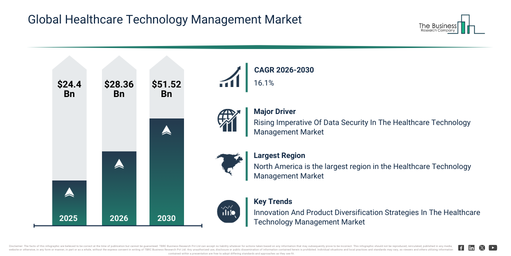
    The sector focused on overseeing healthcare technology has experienced substantial expansion lately. Projections indicate a progression from $24.4 billion in 2025 to $28.36 billion in 2026, driven by a compound annual growth rate (CAGR) of 16.2%. Within the historical timeframe, this expansion was fueled by several key factors, including the greater integration of medical devices in healthcare settings, the escalating intricacy involved in maintaining health technology, the proliferation of urgent care centers, a heightened imperative to manage technology-related expenditures efficiently, and the implementation of routine upkeep protocols.

    The healthcare technology management sector is poised for substantial expansion in the coming years, projecting a market value of $51.52 billion by 2030, driven by a compound annual growth rate of 16.1%. This upward trajectory is anticipated to stem from escalating investments in digital hospital infrastructure, a heightened need for interconnected healthcare systems, a growing emphasis on securing devices against cyber threats, the wider implementation of data-informed maintenance approaches, and increasing regulatory oversight of healthcare technologies. Key developments expected to shape this period include a greater uptake of unified HTM software solutions, a surge in demand for predictive equipment upkeep, a more pronounced focus on safeguarding medical devices from cyber risks, the broadened availability of asset lifecycle management tools, and an intensified commitment to adhering to regulatory mandates.

    Download A Free Sample Report For Comprehensive Market Insights:

    https://www.thebusinessresearchcompany.com/sample.aspx?id=7460&type=smp

    Healthcare Technology Management Market Development Factors: Which Trends Are Supporting Demand?

    The escalating demand for robust data security measures is anticipated to serve as a primary catalyst for the expansion of the healthcare technology management market. Data security fundamentally involves safeguarding information against unauthorized access and integrity compromise. This heightened security imperative stems from the increasing prevalence of cyber threats, where malicious actors target patient data for fraudulent purposes. Healthcare technology management plays a crucial role in combating these threats by employing production and operations management strategies to detect and report suspicious communications, often referred to as phishing. Illustratively, IBM’s report from July 2024 highlighted that the global average cost of a data breach in 2024 reached USD 4.88 million, a significant 10% increase from the prior year and the highest figure documented thus far. Consequently, the pressing requirement for enhanced data security is a key driver behind the growth trajectory of the healthcare technology market.

    Healthcare Technology Management Market Categorization By Product Type And Application

    The healthcare technology management market covered in this report is segmented –

    1) By Type Of Service: Maintenance and Repair, Capital Planning, Integrated Software Platform, Labor Management, Supply Chain (Procurement), Cyber Security, Quality and Regulatory Compliance

    2) By Component: Software, Hardware, Services

    3) By Facility Type: Acute Care Facility, Post Acute Care Facility, Non Acute Care Facility

    Subsegments:

    1) By Maintenance and Repair: Preventive Maintenance, Corrective Maintenance, Equipment Calibration and Testing, Asset Lifecycle Management

    2) By Capital Planning: Technology Assessment and Planning, Equipment Replacement Planning, Budgeting and Cost Optimization, Technology Standardization

    3) By Integrated Software Platform: Computerized Maintenance Management Systems (CMMS), Clinical Asset Management Software, Equipment Tracking and Analytics Platforms, Interoperability and Integration Tools

    4) By Labor Management: Biomedical Engineering Workforce Management, Staff Scheduling and Utilization, Training and Competency Management, Outsourced Technical Services

    5) By Supply Chain (Procurement): Medical Equipment Procurement, Spare Parts and Inventory Management, Vendor and Contract Management, Logistics and Distribution Management

    6) By Cyber Security: Medical Device Cybersecurity, Network and Endpoint Security, Data Protection and Encryption, Threat Monitoring and Risk Assessment

    7) By Quality and Regulatory Compliance: Regulatory Compliance Management, Quality Assurance and Audits, Documentation and Reporting Systems, Accreditation and Certification Support

    Healthcare Technology Management Market Transformation Trends: Which Innovations Are Driving Change?

    Within the healthcare technology management sector, leading corporations are innovating with automated management solutions; these advancements aim to broaden their customer reach, elevate sales figures, and amplify overall earnings. Such automated management solutions function as integrated systems, software, or technological frameworks designed to efficiently organize and improve diverse organizational tasks, thereby minimizing the necessity for manual labor. As a concrete illustration, in May of 2023, TeleVox Software Inc., an American enterprise specializing in patient engagement technology, introduced an automated reputation management capability. This offering empowers healthcare facilities, integrated health systems, and medical practices to effectively oversee and bolster their online presence and brand perception. The advanced reputation management framework from TeleVox equips healthcare professionals with the ability to initiate automated patient communications through text messaging and electronic mail, soliciting feedback following patient appointments. This automated mechanism can prompt individuals to submit their reviews or flag for healthcare providers any feedback requiring prompt action. Moreover, the technology incorporates natural language processing (NLP) to decipher received feedback and furnish insights into the sentiment expressed.

    Healthcare Technology Management Market Company Landscape And Strategic Competition

    Major companies operating in the healthcare technology management market are ABM Industries Inc., Agility Inc., Allscripts Healthcare Solutions Inc., Athenahealth Inc., InterMed Group, Januarynx Medical Systems Inc., Koninklijke Philips NV, Renovo Solutions Ltd., Siemens Healthcare GmbH, TRIMEDX Holdings LLC, Welldoc Inc., Advanced Ultrasound Electronics Ltd., Althea Group, Aramark Healthcare Technologies LLC, Asimily India Pvt. Ltd., Atlantic Biomedical Co., Clinical Technology Management, Comprehensive Technical Group, Conquest Imaging, DirectMed Parts Services LLC, GE Healthcare, Innovatus Imaging Corp., MasterPlan Healthcare, MedWrench LLC, Metis Medical Services, IQVIA Holdings LLC, Tech Knowledge Associates LLC, Healthcare Technology Management Company

    Access The Complete Healthcare Technology Management Market Report:

    https://www.thebusinessresearchcompany.com/report/healthcare-technology-management-global-market-report

    Healthcare Technology Management Market Regional Outlook: Where Are The Largest Opportunities Located?

    North Americawas the largest region in the healthcare technology management market in 2025. The regions covered in the healthcare technology management market report are Asia-Pacific, South East Asia, Western Europe, Eastern Europe, North America, South America, Middle East, Africa.

    Get in touch with us:

    The Business Research Company: https://www.thebusinessresearchcompany.com/

    Americas: +1 310-496-7795

    Asia: +44 7882 955267 & +91 8897263534

    Europe: +44 7882 955267

    Email us at: marketing@tbrc.info

    Follow us on:

    LinkedIn: https://in.linkedin.com/company/the-business-research-company

    YouTube: https://www.youtube.com/channel/UC24_fI0rV8cR5DxlCpgmyFQ

    Global Market Model: https://www.thebusinessresearchcompany.com/global-market-model
  • Healthcare Supply Chain Management Market Growth Is Reshaping Competitive Advantage Across The Industry

    Healthcare Supply Chain Management Market Growth Is Reshaping Competitive Advantage Across The Industry

    Delivering more actionable and strategically valuable research, The Business Research Company’s 2026 market reports feature market attractiveness analysis, total addressable market evaluation, company benchmarking matrices, interactive Excel dashboards, expanded supply chain intelligence, emerging startup coverage, and detailed product insights.

    Healthcare Supply Chain Management Market Expected To Reach $6.2 Billion By 2030 At 12% CAGR

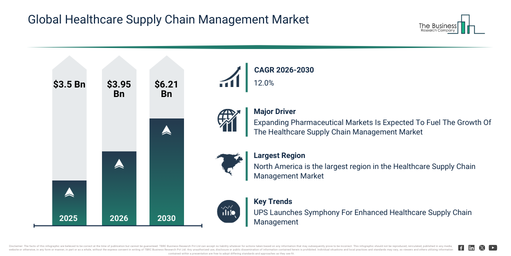
    The healthcare supply chain management sector has experienced significant expansion, projected to increase from a valuation of $3.5 billion in 2025 to $3.95 billion in 2026, reflecting a compound annual growth rate of 12.8%. This upward trajectory during the historical period was fueled by several key factors, including the escalating intricacy of healthcare logistics, a burgeoning need for cost reduction within hospital operations, the widening reach of pharmaceutical distribution channels, the increasing deployment of digital inventory management tools, and the broader incorporation of fundamental supply chain software solutions.

    Anticipate a swift expansion for the healthcare supply chain management sector in the forthcoming years, projecting a valuation of $6.21 billion by 2030, propelled by a compound annual growth rate of 12.0%. This projected surge is underpinned by several key drivers, including a heightened emphasis on forecasting demand with greater accuracy, augmented investments in digital health capabilities, the escalating necessity for robust medical supply networks, the broader implementation of procurement strategies informed by data analytics, and the increasing integration of comprehensive supply chain oversight solutions. During this forecast period, significant trends are expected to emerge, such as the wider adoption of inventory management systems hosted on the cloud, a greater utilization of real-time data for supply chain analysis, the enhanced integration of RFID and barcode technologies for tracking, the proliferation of consolidated procurement approaches, and a more pronounced focus on building supply chain resilience.

    Download A Free Sample Report For Comprehensive Market Insights:

    https://www.thebusinessresearchcompany.com/sample.aspx?id=6937&type=smp

    Healthcare Supply Chain Management Market Industry Drivers: What Is Driving Revenue Growth?

    Anticipated expansion within the pharmaceutical sector is poised to invigorate the healthcare supply chain management market’s trajectory. The pharmaceutical industry, encompassing the investigation, creation, manufacturing, and distribution of pharmaceuticals, is experiencing substantial growth. This burgeoning industry translates to a greater quantity of medicines being produced and disseminated, thereby creating a demand for more sophisticated supply chain operations to guarantee that pharmaceutical goods are delivered punctually and precisely to dispensing facilities and end-users. Illustratively, a January 2023 IQVIA Inc. report indicated that global expenditures and demand for pharmaceuticals are forecasted to ascend over the ensuing half-decade, approaching an estimated $1.9 trillion by 2027. Over the preceding ten years, enhanced availability of medicines has spurred a 36% increase in their consumption, quantified by defined daily doses. Projections suggest that by 2027, specialty pharmaceuticals will constitute approximately 43% of worldwide spending and a dominant 56% share within developed economies. Furthermore, worldwide spending on oncology therapeutics is slated to reach $370 billion by 2027, primarily propelled by the introduction and adoption of novel treatments, with minimal influence from emerging biosimilars. Consequently, the escalating demographic of elderly individuals is acting as a catalyst for the expansion of the healthcare mobility solutions market.

    Healthcare Supply Chain Management Market Segment Analysis And Revenue Opportunities

    The healthcare supply chain management market covered in this report is segmented –

    1) By Component: Software Application, Hardware Type

    2) By Delivery Mode: On-Premise, Cloud-Based

    3) By End-User: Healthcare Providers, Healthcare Manufacturers, Other End-Users

    Subsegments:

    1) By Software Application: Inventory Management Software, Procurement Management Software, Supply Chain Analytics Software, Order Management Software

    2) By Hardware Type: Barcode Scanners, RFID Systems, Mobile Computing Devices

    #Healthcare Supply Chain Management Market Growth Trends: What Is Influencing The Future Outlook?

    Leading players in the healthcare supply chain management sector are innovating with sophisticated solutions like cloud-based systems to boost efficiency, gain clearer real-time data insights, and optimize purchasing, stock management, and delivery workflows for healthcare entities. These cloud infrastructures function on remote servers, accessible through the internet, distinguishing them from local or on-site server setups. To illustrate, in March 2024, the American firm UPS Inc., recognized for its shipping and supply chain services, introduced UPS Supply Chain Symphony specifically for its UPS Healthcare division. This cloud-based platform aims to refine healthcare supply chain management by consolidating diverse logistics elements into a unified operational framework. The system empowers users to effectively oversee and visualize their warehousing and transportation data, offering valuable perspectives for enhancing supply chain performance. Individuals can track shipment journeys from their starting point to their final delivery, complemented by readily available reports detailing UPS shipments, warehouse condition, and inventory quantities.

    Healthcare Supply Chain Management Market Leading Players Shaping Industry Direction

    Major companies operating in the healthcare supply chain management market are SAP AG Group, Oracle Corporation, McKesson Corporation, TECSYS Inc., Global Healthcare Exchange LLC, Cardinal Health Inc., Epicor, Llamasoft Ltd., Manhattan Associates, Blue Yonder Group Inc., Cerner Corporation, Jump Technologies Inc., LogiTag Systems, Premier Ltd., Accurate InfoSoft Pvt. Ltd., Hybrent Inc., Arvato Systems, Jabil Inc., AmerisourceBergen Corporation, Infor Global Solutions, Henry Schein Inc., Becton Dickinson and Company, Owens & Minor Inc., Medtronic plc, Novo Nordisk AS, Stryker Corporation, F. Hoffmann-La Roche AG, Boston Scientific Corp., Biogen Inc., Johnson & Johnson Services Inc.

    Access The Complete Healthcare Supply Chain Management Market Report:

    https://www.thebusinessresearchcompany.com/report/healthcare-supply-chain-management-global-market-report

    Healthcare Supply Chain Management Market Geographic Landscape: Which Region Dominates Industry Growth?

    North Americawill be the largest region in the healthcare supply chain management market in 2025. Asia-Pacificis expected to be the fastest-growing region in the forecast period. The regions covered in the healthcare supply chain management market report are Asia-Pacific, South East Asia, Western Europe, Eastern Europe, North America, South America, Middle East, Africa.

    Get in touch with us:

    The Business Research Company: https://www.thebusinessresearchcompany.com/

    Americas: +1 310-496-7795

    Asia: +44 7882 955267 & +91 8897263534

    Europe: +44 7882 955267

    Email us at: marketing@tbrc.info

    Follow us on:

    LinkedIn: https://in.linkedin.com/company/the-business-research-company

    YouTube: https://www.youtube.com/channel/UC24_fI0rV8cR5DxlCpgmyFQ

    Global Market Model: https://www.thebusinessresearchcompany.com/global-market-model
  • Healthcare Staffing Market Forecast Signals New Revenue Opportunities Through 2030

    Healthcare Staffing Market Forecast Signals New Revenue Opportunities Through 2030

    Enhanced with market attractiveness analysis, total addressable market evaluation, company benchmarking matrices, interactive Excel dashboards, expanded supply chain intelligence, emerging startup coverage, and detailed product insights, The Business Research Company’s 2026 market reports deliver more actionable and strategically valuable research.

    Healthcare Staffing Market Size And Revenue Forecast Through 2030

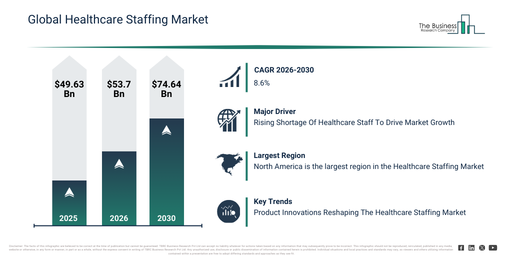
    The sector dedicated to healthcare staffing has experienced robust expansion over the preceding years, with projections indicating continued growth from a valuation of $49.63 billion in 2025 to $53.7 billion in 2026, reflecting a compound annual growth rate of 8.2%. This historical upward trend was propelled by several key factors, including the escalating scarcity of healthcare professionals, a surge in patient demand, the widening reach of hospital systems, a greater dependency on contingent workforce solutions, and the imposition of more stringent staffing mandates.

    The healthcare staffing sector is poised for substantial expansion in the forthcoming years, projecting a market value of $74.64 billion by 2030, driven by an 8.6% compound annual growth rate. This anticipated growth will be fueled by several key factors, including a heightened embrace of AI-powered workforce planning solutions, a surge in demand for healthcare professionals specializing in remote and telehealth services, the broadening scope of international healthcare staffing collaborations, intensified efforts to mitigate healthcare professional burnout, and a greater reliance on predictive analytics for staffing optimization. Furthermore, prominent trends anticipated during this forecast period encompass the increasing integration of digital staffing platforms, a growing need for travel and temporary healthcare personnel, the expanded utilization of workforce analytics instruments, the proliferation of agile and gig-economy staffing arrangements, and an elevated emphasis on ensuring workforce compliance and proper credentialing.

    Download A Free Sample Report For Comprehensive Market Insights:

    https://www.thebusinessresearchcompany.com/sample.aspx?id=10335&type=smp

    Healthcare Staffing Market Growth Factors: Which Forces Are Supporting Market Expansion?

    The increasing deficit in healthcare personnel is anticipated to be the primary catalyst for the expansion of the healthcare staffing market. Defined as individuals employed within healthcare or social care environments, this category encompasses medical students during their practical training, direct care providers, and other healthcare practitioners not directly interacting with patients, all of whom are tasked with disease prevention, health assessment, diagnosis, and therapeutic interventions. Recent years have witnessed a noticeable reduction in the number of available healthcare professionals in numerous healthcare facilities worldwide. As an illustration, data released in January 2023 by Oracle Corporation, an American technology firm, indicated that projections suggest if current employment patterns in the United States continue unabated, more than 6.5 million healthcare workers will depart from their positions permanently by the year 2026, contrasting with an anticipated influx of only 1.9 million new entrants, thereby creating a nationwide deficit exceeding 4 million healthcare workers. Consequently, this escalating scarcity of healthcare staff is the chief impetus behind the projected growth trajectory of the healthcare staffing market.

    Healthcare Staffing Market Segmentation And Category Breakdown

    The healthcare staffing market covered in this report is segmented –

    1) By Service: Travel Nurse Staffing, Per Diem Nurse Staffing, Locum Tenens Staffing, Allied Healthcare Staffing

    2) By Function: Patient Care Staff, Administrative Staff, Support Staff, Technicians, Allied Health Professionals

    3) By End User: Hospitals, Government Agencies

    Subsegments:

    1) By Travel Nurse Staffing: Registered Nurses (RNs), Licensed Practical Nurses (LPNs), Specialty Nurses

    2) By Per Diem Nurse Staffing: Temporary RNs, LPNs For Short-Term Needs, CNAs (Certified Nursing Assistants)

    3) By Locum Tenens Staffing: Physicians, Nurse practitioners (NPs), Physician Assistants (PAs)

    4) By Allied Healthcare Staffing: Physical Therapists (PTs), Radiologic Technologists, Medical Lab Technicians (MLTs)

    Healthcare Staffing Market Industry Trends: What Changes Are Reshaping Demand?

    In the competitive landscape of healthcare staffing, leading organizations are introducing novel solutions for adaptable staffing reserves to solidify their market standing. These reserves represent an agile and responsive approach to workforce management, wherein an entity like a healthcare provider cultivates a group of personnel ready for varied work arrangements. Illustratively, in August 2023, CareRev, a United States healthcare staffing firm, unveiled a groundbreaking workforce administration instrument designed to confront persistent difficulties in the healthcare labor force. This innovation empowers health systems to establish flexible staffing pools by utilizing their current internal personnel. While CareRev’s platform originally concentrated on matching healthcare facilities with qualified local professionals on an as-needed basis, its enhanced system now permits part-time or full-time W2 employees within a healthcare organization to accept additional shifts when demand surpasses the capacity of the regular full-time staff. The technology, conceived during the COVID-19 pandemic, is intended to furnish health systems with effective and immediate oversight of their flexible staffing assets, thereby mitigating nurse scarcity, enhancing staff retention, and alleviating clinician exhaustion. Key elements of CareRev’s inventive methodology encompass AI-driven shift cost determination and integrated in-app messaging, granting health systems enhanced visibility, command, and fluid communication for proficient workforce administration.

    Healthcare Staffing Market Competitive Analysis Of Major Industry Participants

    Major companies operating in the healthcare staffing market are Envision Healthcare Corporation, AMN Healthcare Holdings Inc., CHG Healthcare Services Inc., Maxim Healthcare Group Inc., Cross Country Healthcare Inc., Aya Healthcare Inc., Trustaff Inc., TeamHealth Holdings Inc., LocumTenens.com LLC, Jackson Healthcare LLC, Favorite Healthcare Staffing Inc., Medical Solutions LLC, Aureus Medical Group LLC, CompHealth LLC, CoreMedical Group LLC, CrossMed Healthcare Staffing Solutions LLC, Emerald Health Services LLC, Health Carousel LLC, HealthTrust Workforce Solutions LLC, KPG Healthcare LLC, MAS Medical Staffing LLC, MedPro Healthcare Staffing LLC, MedStaff Healthcare Solutions LLC, Next Travel Nursing LLC, NurseFly LLC, Onward Healthcare LLC, ProLink Healthcare LLC, Provenir Healthcare LLC, RNnetwork LLC, Soliant Health LLC, Supplemental Health Care LLC

    Access The Complete Healthcare Staffing Market Report:

    https://www.thebusinessresearchcompany.com/report/healthcare-staffing-global-market-report

    Healthcare Staffing Market Largest Region: Which Geography Holds The Highest Market Share?

    North Americawas the largest region in the healthcare staffing market in 2025. Asia-Pacific is expected to be the fastest-growing region in the global healthcare staffing market during the forecast period. The regions covered in the healthcare staffing market report are Asia-Pacific, South East Asia, Western Europe, Eastern Europe, North America, South America, Middle East, Africa.

    Get in touch with us:

    The Business Research Company: https://www.thebusinessresearchcompany.com/

    Americas: +1 310-496-7795

    Asia: +44 7882 955267 & +91 8897263534

    Europe: +44 7882 955267

    Email us at: marketing@tbrc.info

    Follow us on:

    LinkedIn: https://in.linkedin.com/company/the-business-research-company

    YouTube: https://www.youtube.com/channel/UC24_fI0rV8cR5DxlCpgmyFQ

    Global Market Model: https://www.thebusinessresearchcompany.com/global-market-model
  • Healthcare Services Market Growth Is Accelerating As Industry Transformation Continues

    Healthcare Services Market Growth Is Accelerating As Industry Transformation Continues

    Through market attractiveness analysis, total addressable market evaluation, company benchmarking matrices, interactive Excel dashboards, expanded supply chain intelligence, emerging startup coverage, and detailed product insights, The Business Research Company’s 2026 market reports provide more actionable and strategically valuable research.

    Healthcare Services Market Growth From $9338.49 Billion In 2026 To $11318.34 Billion By 2030 At A CAGR Of 4.9%

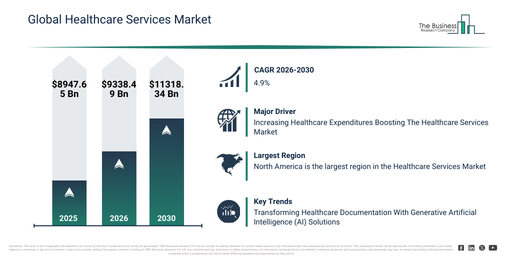
    Healthcare services across the globe experienced a consistent expansion recently, and this upward trajectory is projected to continue. Estimates indicate the market, valued at $8947.65 billion in 2025, is expected to reach $9338.49 billion by 2026, reflecting a compound annual growth rate of 4.4%. This sustained development throughout the past has been fueled by several key factors, including the escalating need for medical care stemming from an aging demographic, the broader establishment of both inpatient and outpatient medical facilities, increased government investment in health services, the significant rise of private healthcare offerings, and a pronounced emphasis on specialized medical practices.

    The global healthcare services market is poised for consistent expansion, projected to reach $11318.34 billion by 2030, advancing at a compound annual growth rate of 4.9%. This upward trajectory during the projected timeframe is driven by several key factors, including the escalating utilization of digital health solutions, the growing incorporation of artificial intelligence into medical processes, a surge in the demand for services delivered in home settings, the broadening scope of population health management initiatives, and augmented investments in healthcare infrastructure development. Furthermore, significant trends anticipated over this forecast period involve a heightened embrace of telehealth and remote patient monitoring, increased reliance on data-informed clinical judgment support systems, a more pronounced concentration on preventative healthcare strategies and value-based care models, the proliferation of comprehensive care coordination approaches, and an amplified focus on designing patient-centered services.

    Download A Free Sample Report For Comprehensive Market Insights:

    https://www.thebusinessresearchcompany.com/sample.aspx?id=3612&type=smp

    Healthcare Services Market Demand Drivers: What Is Fueling Industry Growth?

    An ongoing escalation in spending on healthcare is anticipated to be a key catalyst for the expansion of the healthcare services market in the future. This spending encompasses a broad spectrum of costs tied to delivering medical treatment, family planning initiatives, nutritional support, and crucial health-focused emergency assistance. Elevated healthcare spending inherently enhances the availability and accessibility of medical care, thereby diminishing impediments to receiving necessary services and potentially extending benefits to a wider demographic. Illustratively, the Office for National Statistics, a UK governmental body, reported in April 2025 that the overall healthcare expenditure saw a nominal increase of 6.5% from 2023 to 2024, a slight uptick from the 6.3% growth recorded in 2023. Consequently, this upward trend in healthcare expenditures directly fuels the growth trajectory of the healthcare services market.

    Healthcare Services Market Segment Outlook: Which Categories Are Expanding The Fastest?

    The healthcare services market covered in this report is segmented –

    1) By Type: Medical And Diagnostic Laboratory Services, Dental Services, Home Health Care And Residential Nursing Care Services, Residential Substance Abuse And Mental Health Facilities, Hospitals And Outpatient Care Centers, Physicians And Other Health Practitioners, Ambulance Services

    2) By Type of Expenditure: Public, Private

    3) By End User Gender: Male, Female

    Subsegments:

    1) By Medical and Diagnostic Laboratory Services: Clinical Laboratories, Diagnostic Imaging Services

    2) By Dental Services: General Dentistry, Specialized Dental Services

    3) By Home Health Care and Residential Nursing Care Services: Home Health Care, Nursing Care Facilities

    4) By Residential Substance Abuse and Mental Health Facilities: Residential Mental Health Facilities, Substance Abuse Rehabilitation Centers

    5) By Hospitals and Outpatient Care Centers: General Medical and Surgical Hospitals, Specialty Hospitals, Outpatient Care Centers

    6) By Physicians and Other Health Practitioners: General Practitioners, Specialist Physicians, Chiropractors and Other Health Practitioners

    7) By Ambulance Services: Ground Ambulance Services, Air Ambulance Services

    Healthcare Services Market Innovation Trends: Which Developments Are Transforming The Industry?

    Within the healthcare services sector, key players are significantly intensifying their efforts toward pioneering sophisticated offerings, including generative artificial intelligence (AI) capabilities, with the primary aim of enhancing profitability. Generative AI encompasses AI systems and algorithms engineered for the creation of diverse content like written material, visuals, sound, or video, frequently exhibiting creativity, logical consistency, and pertinent contextual application. As an illustration, during July 2023, Amazon Web Services, an information technology service management firm based in the United States, introduced AWS HealthScribe, a novel service specifically tailored for the healthcare industry and leveraging generative AI to automate the generation of clinical documentation. This particular service employs speech recognition alongside generative AI to process patient-physician dialogues, subsequently producing clinical notes, thereby accelerating documentation completion times and boosting professional efficiency. Furthermore, the service adheres to Health Insurance Portability and Accountability Act (HIPAA) regulations and is suitable for deployment in both remote (telehealth) and in-person medical consultations.

    Healthcare Services Market Key Companies And Competitive Benchmarking

    Major companies operating in the healthcare services market are Kaiser Permanente, HCA Healthcare, Tenet Healthcare, Mayo Clinic, Cleveland Clinic, Community Health Systems, Fresenius Medical Care, DaVita Inc., Quest Diagnostics, Laboratory Corporation of America, Ascension, CommonSpirit Health, Trinity Health, Universal Health Services, Encompass Health, Select Medical, LifePoint Health, Brookdale Senior Living, Amedisys, LHC Group

    Access The Complete Healthcare Services Market Report:

    https://www.thebusinessresearchcompany.com/report/healthcare-service-global-market-report

    Healthcare Services Market Regional Analysis: Which Region Leads By Revenue?

    North Americawas the largest region in the healthcare services market in 2025. Western Europewas the second largest region in the healthcare services market. The regions covered in the healthcare services market report are Asia-Pacific, South East Asia, Western Europe, Eastern Europe, North America, South America, Middle East, Africa.

    Get in touch with us:

    The Business Research Company: https://www.thebusinessresearchcompany.com/

    Americas: +1 310-496-7795

    Asia: +44 7882 955267 & +91 8897263534

    Europe: +44 7882 955267

    Email us at: marketing@tbrc.info

    Follow us on:

    LinkedIn: https://in.linkedin.com/company/the-business-research-company

    YouTube: https://www.youtube.com/channel/UC24_fI0rV8cR5DxlCpgmyFQ

    Global Market Model: https://www.thebusinessresearchcompany.com/global-market-model
  • Healthcare Satellite Connectivity Market Outlook Highlights The Next Major Growth Opportunities

    Healthcare Satellite Connectivity Market Outlook Highlights The Next Major Growth Opportunities

    Delivering more actionable and strategically valuable research, The Business Research Company’s 2026 market reports feature market attractiveness analysis, total addressable market evaluation, company benchmarking matrices, interactive Excel dashboards, expanded supply chain intelligence, emerging startup coverage, and detailed product insights.

    Healthcare Satellite Connectivity Market Expansion Outlook: What Revenue Opportunities Lie Ahead?

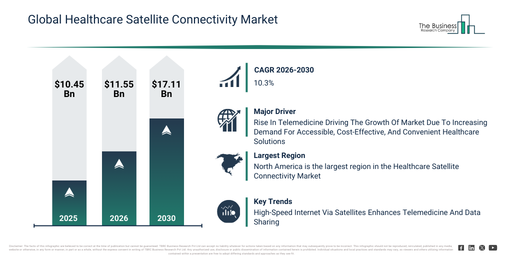
    Fueled by escalating demand for uninterrupted medical data transmission and the expansion of telehealth services, the healthcare satellite connectivity market has experienced substantial expansion, projecting a surge from $10.45 billion in 2025 to $11.55 billion in 2026, a compound annual growth rate of 10.6%. This growth trajectory in the historical period was significantly influenced by the limited availability of terrestrial networks in remote locations, the early integration of satellite communication within emergency healthcare responses, and the increasing proliferation of remote healthcare programs.

    Anticipate a swift expansion within the healthcare satellite connectivity sector over the forthcoming years, with projections indicating a market valuation reaching $17.11 billion by 2030. This growth trajectory is fueled by a compound annual growth rate of 10.3%, propelled by escalating investments in satellite broadband infrastructure, a heightened embrace of connected healthcare devices, the proliferation of robust communication systems for healthcare in disaster-prone areas, a burgeoning need for immediate remote diagnostic capabilities, and the seamless amalgamation of satellite communication with existing digital health frameworks. During this projected timeframe, key market developments will likely encompass the wider implementation of satellite-supported telemedicine, increased utilization of remote patient monitoring facilitated by satellite technology, greater integration of wearable health gadgets with satellite networks, advancements in emergency medical communication solutions, and a more pronounced emphasis on improving healthcare accessibility in underserved, remote locales.

    Download A Free Sample Report For Comprehensive Market Insights:

    https://www.thebusinessresearchcompany.com/sample.aspx?id=28242&type=smp

    Healthcare Satellite Connectivity Market Growth Drivers: What Factors Are Accelerating Expansion?

    The expansion of the healthcare satellite connectivity market is anticipated to be significantly boosted by the growing acceptance of telemedicine. Telemedicine encompasses the remote provision of health services and consultations, facilitated by digital technologies like video conferencing, mobile applications, and web-based portals. This surge in telemedicine’s popularity stems from a growing need for healthcare that is readily accessible, budget-friendly, and convenient, offering prompt medical attention by minimizing travel and wait times. Healthcare satellite connectivity plays a crucial role in enabling telemedicine, ensuring dependable, high-speed communication and data transmission, particularly in remote or underserved regions where ground-based networks are lacking or nonexistent. Illustrating this trend, FAIR Health Inc., a nonprofit organization based in the US, reported in April 2023 that national telehealth utilization saw a 7.3% increase, climbing from 5.5% of medical claim lines in December 2022 to 5.9% in January 2023, underscoring the direct correlation between increased telemedicine adoption and the growth of the healthcare satellite connectivity sector.

    Healthcare Satellite Connectivity Market Segment Landscape: Which Areas Lead Market Development?

    The healthcare satellite connectivity market covered in this report is segmented –

    1) By Connectivity: Mobile Satellite Services (Mss), Fixed Satellite Services (Fss), Specialty Markers

    2) By Component: Medical Devices, System And Software, Services

    3) By Frequency Band: Ku-Band, Ka-Band, C-Band, X-Band

    4) By Application: Telemedicine, Remote Patient Monitoring, Disaster Response And Emergency Communication, Asset Tracking And Supply Chain Management, Tele-Education

    Subsegments:

    1) By Mobile Satellite Services: Voice Services, Data Services, Broadband Services, Tracking And Monitoring Services

    2) By Fixed Satellite Services: Television Services, Data Transmission Services, Broadband Internet Services, Backhaul Connectivity Services

    3) By Specialty Markers: Remote Patient Monitoring, Telemedicine Services, Emergency Response Connectivity, Wearable Health Device Integration

    Healthcare Satellite Connectivity Market Trends: What Is Shaping Future Industry Growth?

    In the dynamic healthcare satellite connectivity sector, prominent players are prioritizing technological innovations, notably satellite broadband, to bolster high-speed internet availability in geographically isolated regions, facilitate instantaneous data exchange, and elevate telehealth and digital health capabilities. Satellite broadband fundamentally delivers robust internet access through satellites, extending connectivity to areas previously lacking it. A noteworthy development occurred in May 2024 when SpaceX, an American aerospace firm, introduced its Starlink satellite internet service on Indonesia’s Bali island, aiming to supply high-speed connections to remote and underserved locales. This deployment featured live speed assessments conducted with healthcare professionals in isolated communities, underscoring its capacity to foster improvements in healthcare, education, and commerce. Furthermore, this endeavor involved commitments to expand digital access within the healthcare and education domains, thereby contributing to Indonesia’s wider objectives for digital advancement.

    Healthcare Satellite Connectivity Market Industry Leaders And Market Competition

    Major companies operating in the healthcare satellite connectivity market are Thales Group, Space Exploration Technologies Corp., ST Engineering Ltd., Société Européenne des Satellites, Viasat Incorporated, Eutelsat Communications S.A., European Space Agency, Telesat, Comtech Telecommunications Corp., Speedcast International Limited, Globalstar Inc., Avanti Communications Group plc, Astrome Technologies Pvt. Ltd., IEC Telecom Group, Kacific Broadband Satellites Group, Skylo Technologies Inc., X2nSat Inc., Expedition Communications Inc., Connecta Satellite Networks, Monogoto Inc.

    Access The Complete Healthcare Satellite Connectivity Market Report:

    https://www.thebusinessresearchcompany.com/report/healthcare-satellite-connectivity-global-market-report

    Healthcare Satellite Connectivity Market Geographic Distribution And Regional Opportunities

    North Americawas the largest region in the healthcare satellite connectivity market in 2025. Asia-Pacific is expected to be the fastest-growing region in the forecast period. The regions covered in the healthcare satellite connectivity market report are Asia-Pacific, South East Asia, Western Europe, Eastern Europe, North America, South America, Middle East, Africa.

    Get in touch with us:

    The Business Research Company: https://www.thebusinessresearchcompany.com/

    Americas: +1 310-496-7795

    Asia: +44 7882 955267 & +91 8897263534

    Europe: +44 7882 955267

    Email us at: marketing@tbrc.info

    Follow us on:

    LinkedIn: https://in.linkedin.com/company/the-business-research-company

    YouTube: https://www.youtube.com/channel/UC24_fI0rV8cR5DxlCpgmyFQ

    Global Market Model: https://www.thebusinessresearchcompany.com/global-market-model
  • Healthcare Robotics Market Trends And Growth Drivers Point To Strong Future Potential

    Healthcare Robotics Market Trends And Growth Drivers Point To Strong Future Potential

    Enhanced with market attractiveness analysis, total addressable market evaluation, company benchmarking matrices, interactive Excel dashboards, expanded supply chain intelligence, emerging startup coverage, and detailed product insights, The Business Research Company’s 2026 market reports deliver more actionable and strategically valuable research.

    Healthcare Robotics Market Growth Potential: How Will Market Size Change Through 2030?

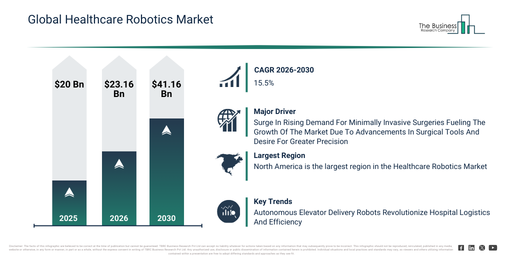
    The healthcare robotics sector has witnessed substantial expansion lately, projecting a significant increase from $20 billion in 2025 to $23.16 billion by 2026, driven by a compound annual growth rate of 15.8%. This historical growth trajectory has been fueled by several key factors including a greater need for less invasive surgical options, a rise in long-term health conditions, a scarcity of qualified medical staff, continuous improvements in robotic technology, and greater financial commitment from hospitals towards automated solutions.

    The healthcare robotics sector is poised for substantial expansion. Projections indicate a market valuation of $41.16 billion by 2030, driven by a compound annual growth rate of 15.5%. This upward trajectory is chiefly fueled by the escalating integration of artificial intelligence within robotic systems, a heightened acceptance of remote and teleoperated robots, a growing emphasis on tailored robotic therapies, the broader application of robotics in non-inpatient healthcare environments, and an increasing number of regulatory endorsements for robotic technologies. Key developments anticipated during this period include the wider implementation of robotic systems for surgical procedures, increased utilization of robots designed for rehabilitation and assistance, a growing role for robotics in managing hospital logistics, the proliferation of AI-powered robots that aid in clinical decision-making, and a more pronounced focus on delivering precise and less invasive medical care.

    Download A Free Sample Report For Comprehensive Market Insights:

    https://www.thebusinessresearchcompany.com/sample.aspx?id=23414&type=smp

    Healthcare Robotics Market Growth Factors Supporting Long-Term Expansion

    The increasing adoption of minimally invasive surgical techniques is anticipated to be a significant catalyst for the expansion of the healthcare robotics sector. These procedures involve creating tiny incisions to insert specialized tools, thereby minimizing patient discomfort and accelerating the healing process. The preference for minimally invasive approaches stems from their ability to reduce physical trauma and facilitate a more rapid reintegration into routine life. Within this context, healthcare robotics plays a crucial role in refining these surgeries by offering enhanced accuracy, superior maneuverability, and smaller entry points, ultimately contributing to quicker patient recovery, decreased complication rates, and more favorable health results. Illustratively, data from the British Association of Aesthetic Plastic Surgeons indicated that in 2024, women constituted 93.5% of individuals undergoing cosmetic procedures in the UK, with a total of 25,663 operations recorded, signifying a 6% increase compared to the previous year. Consequently, the escalating preference for less invasive surgical options is a key driver behind the growth trajectory of the healthcare robotics industry.

    Healthcare Robotics Market Segments: Where Are The Largest Growth Opportunities?

    The healthcare robotics market covered in this report is segmented –

    1) By Type: Non-Invasive Radiosurgery Robots, Emergency Response Robotic Systems, Hospital And Pharmacy Robots, Rehabilitation Robots, Neurosurgical Robotic Systems, Surgical Robots, Laparoscopy Robotic Systems, Other Types

    2) By Portability: Mobile, Fixed

    3) By Application: Neurosurgery, Orthopedic Surgery, Cardiology, Laparoscopy, Pharmacy Applications, Other Applications

    4) By End-Use Industry: Rehabilation Centers, Hospitals, Speciality Centers, Clinics, Other End-Use Industries

    Subsegments:

    1) By Non-Invasive Radiosurgery Robots: Stereotactic Radiosurgery (SRS) Systems, Proton Beam Radiosurgery Systems

    2) By Emergency Response Robotic Systems: Disaster Response Robots, Search and Rescue Robots, Patient Transport Robots

    3) By Hospital And Pharmacy Robots: Medication Dispensing Robots, Hospital Delivery Robots, Autonomous Cleaning Robots, Robotic Surgical Assistant Robots

    4) By Rehabilitation Robots: Exoskeleton Robots, Robotic Physical Therapy Devices, Stroke Rehabilitation Robots

    5) By Neurosurgical Robotic Systems: Robotic Brain Surgery Systems, Spinal Neurosurgery Robots, Cranial Neurosurgery Robots

    6) By Surgical Robots: Minimally Invasive Surgery Robots, Robotic-Assisted Surgery Systems, Robotic Endoscopic Surgery Systems

    7) By Laparoscopy Robotic Systems: Laparoscopic Surgical Robots, Robotic-Assisted Laparoscopy Devices

    8) By Other Types: Telepresence Robots, Diagnostic Robots, Caregiving Robots, Prosthetic And Orthotic Robots

    Healthcare Robotics Market Industry Trends Shaping Future Revenue Growth

    In the healthcare robotics sector, prominent players are concentrating on innovating sophisticated solutions, exemplified by elevator delivery robots, aimed at boosting operational effectiveness and refining hospital logistical processes. These autonomous units are engineered to convey goods across various levels of a facility, leveraging integrated elevator functionalities to navigate vertically. A notable illustration occurred in May 2024 when Richtech Robotics Inc., a US entity specializing in AI-powered service robots, unveiled the Medbo, a delivery robot equipped with elevator capabilities. This robot is specifically intended to facilitate round-the-clock medication distribution within medical environments, ensuring secure and accurate transit while simultaneously reducing operational expenditures and elevating the standard of patient care. By shouldering routine responsibilities, it liberates healthcare personnel, thereby augmenting overall productivity and contributing to the enhanced performance and smooth operation of healthcare institutions.

    Healthcare Robotics Market Major Participants And Competitive Dynamics

    Major companies operating in the healthcare robotics market are Intuitive Surgical Inc., Medtronic plc, Stryker Corporation, Zimmer Biomet Holdings Inc., Smith & Nephew plc, Johnson & Johnson, Accuray Incorporated, Brainlab AG, CMR Surgical Ltd., Vicarious Surgical Inc., Stereotaxis Inc., Globus Medical Inc., Titan Medical Inc., Medicaroid Corporation, Meerecompany Co. Ltd., Cyberdyne Inc., Hocoma AG, ReWalk Robotics Ltd., Ekso Bionics Holdings Inc., Aethon Inc., PROCEPT BioRobotics Corporation

    Access The Complete Healthcare Robotics Market Report:

    https://www.thebusinessresearchcompany.com/report/healthcare-robotics-global-market-report

    Healthcare Robotics Market Largest Region By Revenue And Market Share

    North Americawas the largest region in the healthcare robotics market in 2025. Asia-Pacificis expected to be the fastest-growing region in the forecast period. The regions covered in the healthcare robotics market report are Asia-Pacific, South East Asia, Western Europe, Eastern Europe, North America, South America, Middle East, Africa.

    Get in touch with us:

    The Business Research Company: https://www.thebusinessresearchcompany.com/

    Americas: +1 310-496-7795

    Asia: +44 7882 955267 & +91 8897263534

    Europe: +44 7882 955267

    Email us at: marketing@tbrc.info

    Follow us on:

    LinkedIn: https://in.linkedin.com/company/the-business-research-company

    YouTube: https://www.youtube.com/channel/UC24_fI0rV8cR5DxlCpgmyFQ

    Global Market Model: https://www.thebusinessresearchcompany.com/global-market-model
  • Healthcare Revenue Cycle Management Market Expansion Is Reshaping Competitive Dynamics Across The Industry

    Healthcare Revenue Cycle Management Market Expansion Is Reshaping Competitive Dynamics Across The Industry

    Through market attractiveness analysis, total addressable market evaluation, company benchmarking matrices, interactive Excel dashboards, expanded supply chain intelligence, emerging startup coverage, and detailed product insights, The Business Research Company’s 2026 market reports provide more actionable and strategically valuable research.

    Healthcare Revenue Cycle Management Market Value Analysis: What Growth Is Expected Over The Forecast Period?

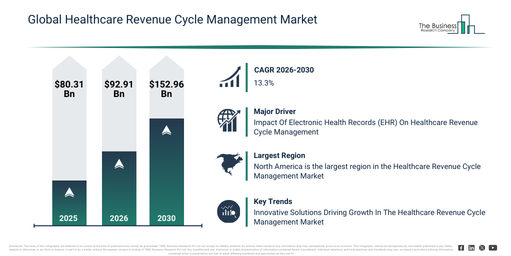
    The healthcare revenue cycle management sector has experienced a notable expansion, projecting a rise from $80.31 billion in 2025 to $92.91 billion by 2026, underpinned by a compound annual growth rate of 15.7%. This preceding growth trajectory can be linked to several key factors including the escalating intricacies of healthcare billing mandates, an uptick in denied insurance claims, an increase in the overall volume of healthcare services rendered, a broader adoption of electronic health record systems, and mounting financial pressures on healthcare providers.

    The healthcare revenue cycle management sector is poised for significant expansion, projected to reach a valuation of $152.96 billion by 2030, exhibiting a robust compound annual growth rate of 13.3% over the forecast period, fueled by escalating automation in revenue workflows, a heightened embrace of predictive analytics within RCM functionalities, a surge in the demand for system interoperability, expanded integration of value-based reimbursement models, and augmented investments in digital healthcare finance, while key trends shaping this growth trajectory encompass the increasing prevalence of cloud-based RCM solutions, a greater utilization of AI-powered coding and billing technologies, a growing need for comprehensive revenue visibility, a broader availability of outsourced RCM services, and a more concentrated emphasis on regulatory compliance and audit preparedness.

    Download A Free Sample Report For Comprehensive Market Insights:

    https://www.thebusinessresearchcompany.com/sample.aspx?id=14926&type=smp

    Healthcare Revenue Cycle Management Market Demand Drivers Creating New Revenue Opportunities

    The expansion of electronic health records (EHRs) is anticipated to be a significant catalyst for the healthcare revenue cycle management market’s advancement. These digital patient records, which offer authorized medical professionals comprehensive access to health information, are experiencing increased implementation. This widespread adoption is fueled by several key drivers: the increasing need for enhanced patient care accessibility, the demonstrable efficiency and effectiveness EHRs bring to healthcare service delivery, and their capacity for smooth information exchange. By enabling precise record-keeping, expediting the processing of insurance claims, and ensuring prompt payment for medical treatments, EHRs significantly simplify the complexities of healthcare revenue cycle management. A compelling illustration of this trend emerged in April 2024 when Queen Margaret University, a UK institution, reported that by November 2023, 189 National Health Service (NHS) trusts had integrated new electronic patient record systems, signifying a 90% adoption rate among all trusts. Consequently, the increasing integration of EHRs is directly contributing to the expansion of the healthcare revenue cycle management sector.

    Healthcare Revenue Cycle Management Market Segment Analysis: What Are The Major Market Categories?

    The healthcare revenue cycle management market covered in this report is segmented –

    1) By Component: Software, Service

    2) By Deployment Mode: On-Premises, Cloud Or Web Based

    3) By Function: Claims And Denial Management, Medical Coding And Billing Eligibility Verification, Payment Remittance, Other Functions

    4) By End-Use: Hospitals, Laboratories, Physicians, Other End-Users

    Subsegments:

    1) By Software: Billing And Coding Software, Patient Scheduling Software, Payment Processing Software, Claims Management Software, Revenue Cycle Analytics Software, Healthcare ERP (Enterprise Resource Planning) Software

    2) By Service: Consulting Services, Outsourcing Services, Managed Services, Training And Support Services, Revenue Cycle Optimization Services

    Healthcare Revenue Cycle Management Market Trends Driving Strategic Industry Expansion

    Leading players within the healthcare revenue cycle management sector are prioritizing the creation of cutting-edge solutions, encompassing AI-powered automated claim scrubbing and immediate analytics. These advancements are designed to minimize billing mistakes, speed up payment receipts, and grant healthcare providers comprehensive financial insight. AI-driven automated claim scrubbing involves the utilization of machine learning techniques for the validation and correction of claims prior to their submission, thereby reducing rejections and payment hold-ups. As an illustration, RCM Matter, a provider of healthcare management services based in the United States, introduced its advanced RCM and billing software in August 2025, specifically engineered for contemporary medical practices. The core functionalities encompass automated claim scrubbing to identify and rectify coding or data discrepancies before submitting claims, real-time analytical dashboards offering insights into claim status, rejection rates, and payer efficiency, effortless integration with prominent EHR and practice management software for unobstructed data exchange, and a protected, cloud-accessible framework ensuring HIPAA adherence and facilitating remote operation for billing departments. Through this product release, RCM Matter seeks to assist healthcare organizations in streamlining their administrative processes, decreasing claim denials, and enhancing financial performance, ultimately allowing them to dedicate more attention to patient well-being.

    Healthcare Revenue Cycle Management Market Leading Companies Driving Competitive Growth

    Major companies operating in the healthcare revenue cycle management market are McKesson Corporation, 3M Health Information Systems, GE Healthcare, Experian Health, Cerner Corporation, Epic Systems Corporation, Change Healthcare, R1 RCM Inc., Nuance Communications, Conifer Health Solutions, Allscripts Healthcare Solutions, Health Catalyst, Craneware, MEDHOST Inc., NextGen Healthcare, Greenway Health, MedeAnalytics, Source Medical, Patientco, Athenahealth Inc., eClinicalWorks, Optum, nThrive, Waystar, IBM Watson Health, Trizetto Provider Solutions, Quadax, Experity

    Access The Complete Healthcare Revenue Cycle Management Market Report:

    https://www.thebusinessresearchcompany.com/report/healthcare-revenue-cycle-management-global-market-report

    Healthcare Revenue Cycle Management Market Regional Analysis And Leading Geography

    North Americawas the largest region in the healthcare revenue cycle management market in 2025. Asia-Pacificis expected to be the fastest-growing region in the forecast period. The regions covered in the healthcare revenue cycle management market report are Asia-Pacific, South East Asia, Western Europe, Eastern Europe, North America, South America, Middle East, Africa.

    Get in touch with us:

    The Business Research Company: https://www.thebusinessresearchcompany.com/

    Americas: +1 310-496-7795

    Asia: +44 7882 955267 & +91 8897263534

    Europe: +44 7882 955267

    Email us at: marketing@tbrc.info

    Follow us on:

    LinkedIn: https://in.linkedin.com/company/the-business-research-company

    YouTube: https://www.youtube.com/channel/UC24_fI0rV8cR5DxlCpgmyFQ

    Global Market Model: https://www.thebusinessresearchcompany.com/global-market-model
  • Healthcare Reimbursement Market Forecast Reveals Where Future Industry Value Will Be Created

    Healthcare Reimbursement Market Forecast Reveals Where Future Industry Value Will Be Created

    Delivering more actionable and strategically valuable research, The Business Research Company’s 2026 market reports feature market attractiveness analysis, total addressable market evaluation, company benchmarking matrices, interactive Excel dashboards, expanded supply chain intelligence, emerging startup coverage, and detailed product insights.

    Healthcare Reimbursement Market Size Forecast: How Large Could The Market Become By 2030?

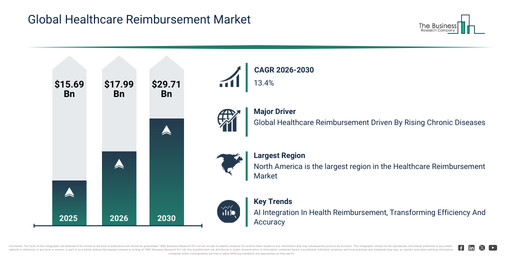
    The healthcare reimbursement sector has experienced substantial expansion. Projections indicate a rise from $15.69 billion in 2025 to $17.99 billion in 2026, reflecting a compound annual growth rate of 14.6%. Key factors contributing to the market’s ascent during the prior period included the broadened accessibility of health insurance, a surge in the use of medical services, the proliferation of government-sponsored healthcare initiatives, heightened complexities in managing insurance claims, and a greater emphasis on controlling healthcare expenditures.

    Anticipate a swift expansion of the healthcare reimbursement sector in the forthcoming years, reaching an estimated $29.71 billion by 2030 with a compound annual growth rate of 13.4%. This projected increase stems from several key drivers, including a pronounced movement toward value-based care arrangements, a greater integration of artificial intelligence in reimbursement technologies, heightened regulatory oversight concerning billing precision, the proliferation of digital health payment solutions, and a growing need for transparent, real-time reimbursement information. Throughout this forecast period, significant trends are expected to shape the market, such as a wider embrace of automated claims processing, increased attention dedicated to optimizing denial management strategies, expanded utilization of data analytics for reimbursement insights, the growth of value-based payment frameworks, and a stronger focus on adhering to regulatory mandates.

    Download A Free Sample Report For Comprehensive Market Insights:

    https://www.thebusinessresearchcompany.com/sample.aspx?id=3302&type=smp

    Healthcare Reimbursement Market Expansion Supported By Key Demand Factors

    The escalating incidence of long-term health conditions is currently stimulating growth within the healthcare reimbursement market. These persistent ailments, such as diabetes, cardiovascular issues, cancer, and respiratory ailments, necessitate sustained medical intervention and management, leading to increased utilization of healthcare services like consultations, hospital stays, pharmaceuticals, and medical interventions. Consequently, as the population experiencing chronic illnesses expands, so does the aggregate financial outlay for healthcare. Illustratively, Denmark’s Statens Serum Institut reported a jump in invasive pneumococcal disease cases from 553 in 2022 to 622 in 2023, as noted in May 2024. Similarly, Australia’s Bureau of Statistics indicated a surge in influenza cases from 426 in 2022 to 598 in 2023, accompanied by an increase in influenza-related fatalities within the same timeframe, as per their August 2024 data. This global trend of increasing chronic disease diagnoses is therefore anticipated to propel the demand for healthcare reimbursement services.

    Healthcare Reimbursement Market Segment Breakdown: Which Categories Generate The Most Revenue?

    The healthcare reimbursement market covered in this report is segmented –

    1) By Claims: Underpaid Claims, Full Paid Claims

    2) By Payers: Private Payers, Public Payers

    3) By Service Provider: Physician Office, Hospitals, Diagnostic Laboratories, Other Service Providers

    Subsegments:

    1) By Underpaid Claims: Denied Claims, Partial Payment Claims, Delayed Claims

    2) By Full Paid Claims: Timely Paid Claims, Properly Paid Claims

    Healthcare Reimbursement Market Growth Trends Influencing Competitive Dynamics

    The health reimbursement sector is witnessing a significant revenue boost as leading participants incorporate artificial intelligence into their operational frameworks. This integration of AI enhances health reimbursement by facilitating sophisticated data analysis for predictive fraud detection and streamlining claims processing for improved accuracy and operational speed. For example, in August 2023, Codoxo, a United States-based enterprise specializing in AI solutions, unveiled ClaimPilot. This innovative generative AI tool is designed to dramatically improve the effectiveness of healthcare cost containment and payment integrity initiatives, simultaneously alleviating pressures on healthcare staffing. Initially, ClaimPilot will concentrate on automating the audit of inpatient and facility-related claims. The overarching goal of ClaimPilot is to achieve a substantial acceleration in audit completion times and an increase in the number of clinician audits performed daily, all while removing dollar value limitations that currently confine claim analyses to higher-value cases.

    Healthcare Reimbursement Market Key Players And Strategic Industry Positioning

    Major companies operating in the healthcare reimbursement market are UnitedHealth Group Incorporated, Aviva plc, Allianz SE, CVS Health Corporation, BNP Paribas Group, Aetna Inc., Nippon Life Insurance Company, WellCare Health Plans Inc., AgileHealthInsurance, Blue Cross Blue Shield Association, Kaiser Foundation Health Plan Inc., Anthem Inc., Centene Corporation, Humana Inc., Health Care Service Corporation, Cigna Corporation, Molina Healthcare Inc., Independence Health Group Inc., Health Net LLC, Universal American Corporation, Blue Shield of California, Tufts Health Plan Inc., Fallon Community Health Plan Inc., CareSource, Health Alliance Plan (HAP), Geisinger Health Plan, SelectHealth

    Access The Complete Healthcare Reimbursement Market Report:

    https://www.thebusinessresearchcompany.com/report/healthcare-reimbursement-global-market-report

    Healthcare Reimbursement Market Geographic Analysis: Where Is Demand Growing The Fastest?

    North Americawas the largest region in the healthcare reimbursement market in 2025. Western Europewas the second largest region in the healthcare reimbursement market. The regions covered in the healthcare reimbursement market report are Asia-Pacific, South East Asia, Western Europe, Eastern Europe, North America, South America, Middle East, Africa.

    Get in touch with us:

    The Business Research Company: https://www.thebusinessresearchcompany.com/

    Americas: +1 310-496-7795

    Asia: +44 7882 955267 & +91 8897263534

    Europe: +44 7882 955267

    Email us at: marketing@tbrc.info

    Follow us on:

    LinkedIn: https://in.linkedin.com/company/the-business-research-company

    YouTube: https://www.youtube.com/channel/UC24_fI0rV8cR5DxlCpgmyFQ

    Global Market Model: https://www.thebusinessresearchcompany.com/global-market-model
  • Healthcare RCM Outsourcing Market Growth Through 2030 Creates New Strategic Opportunities

    Healthcare RCM Outsourcing Market Growth Through 2030 Creates New Strategic Opportunities

    Enhanced with market attractiveness analysis, total addressable market evaluation, company benchmarking matrices, interactive Excel dashboards, expanded supply chain intelligence, emerging startup coverage, and detailed product insights, The Business Research Company’s 2026 market reports deliver more actionable and strategically valuable research.

    Healthcare RCM Outsourcing Market Revenue Outlook: What CAGR Is Expected Through 2030?

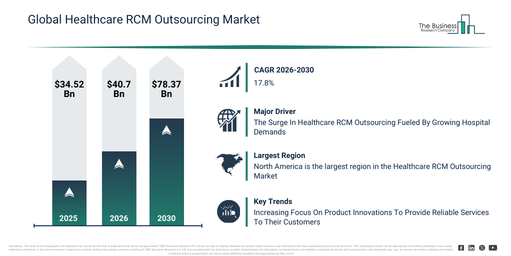
    The market for outsourced healthcare revenue cycle management experienced substantial expansion recently. Projections indicate a rise from $34.52 billion in 2025 to $40.7 billion in 2026, reflecting a compound annual growth rate of 17.9%. Factors contributing to its advancement during the past period include the intensifying intricacy of healthcare billing compliance, a mounting administrative workload for healthcare providers, the proliferation of private medical facilities, escalating volumes of insurance claims processed, and the increasing adoption of electronic billing systems.

    The healthcare revenue cycle management (RCM) outsourcing sector is poised for substantial expansion over the coming years, projected to reach $78.37 billion by 2030 with a compound annual growth rate (CAGR) of 17.8%. This upward trajectory is fueled by several key drivers, including a notable pivot towards value-based reimbursement models, escalating requirements for cost-effective revenue management solutions, the burgeoning implementation of AI-powered coding tools, increased utilization of cloud-based RCM platforms, and a heightened emphasis on financial clarity. During this forecast period, several significant trends are expected to shape the market, such as the growing tendency to outsource comprehensive RCM processes, a greater embrace of automation in medical coding, a more concentrated effort on refining denial management strategies, the broadening scope of analytics to provide deeper revenue insights, and improved integration capabilities with electronic health records (EHR) and billing systems.

    Download A Free Sample Report For Comprehensive Market Insights:

    https://www.thebusinessresearchcompany.com/sample.aspx?id=8589&type=smp

    Healthcare RCM Outsourcing Market Growth Drivers And Industry Catalysts

    The expansion of the healthcare RCM outsourcing sector is anticipated due to a rising need for hospital services. Hospitals function as dedicated institutions where medical experts deliver diagnostic, treatment-related, and preventative care to those who are unwell or have sustained injuries. Engaging in RCM outsourcing within healthcare offers advantages such as cost reductions, enhanced operational performance, and a better patient experience, coupled with the ability to scale and adapt, which then empowers hospitals to concentrate on providing superior medical care. Illustrating this, Interweave Textiles Limited, a UK-based firm involved in textile production, reported in August 2023 that the UK housed 1148 hospitals in that year, comprising 930 within the National Health Service and 218 private facilities. Consequently, the escalating requirement for hospital infrastructure is fueling the advancement of the healthcare RCM outsourcing market.

    Healthcare RCM Outsourcing Market Segmentation: How Is The Market Structured Across Key Categories?

    The healthcare rcm outsourcing market covered in this report is segmented –

    1) By Type: Pre-Intervention, Intervention, Post-Intervention

    2) By Service: Back-End, Middle, Front-End

    3) By End User: Clinics, Hospitals, Ambulatory Surgery Centers, Other End Users

    Subsegments:

    1) By Pre-Intervention: Patient Registration, Insurance Verification, Eligibility Verification, Pre-Authorization Services

    2) By Intervention: Charge Capture, Medical Coding, Billing And Collections, Claims Management

    3) By Post-Intervention: Accounts Receivable Management, Denial Management, Payment Posting, Reporting And Analytics

    #Healthcare RCM Outsourcing Market Trends Influencing Long-Term Demand

    Leading participants within the healthcare Revenue Cycle Management (RCM) outsourcing sector are emphasizing the development of cutting-edge solutions, specifically digital platforms, as a key strategy for revenue enhancement. A digital platform essentially functions as an internet-based software environment designed to streamline user engagement and commercial exchanges. An illustrative example occurred in October 2023 when Omega Healthcare Management Services, a prominent outsourcing firm in the US healthcare industry, introduced its Omega Digital Platform (ODP). This ODP leverages specialized technology alongside a leading claims management system to empower organizations in overseeing their entire revenue cycle, augmenting existing workflows with advanced capabilities, proactively mitigating claim rejections, accelerating payment cycles, and elevating both coding accuracy and regulatory adherence. The core objective behind the ODP is to furnish healthcare entities with sophisticated technological tools aimed at alleviating administrative expenses and boosting financial outcomes by tackling the sector’s most pressing challenges.

    Healthcare RCM Outsourcing Market Competitive Landscape And Leading Companies

    Major companies operating in the healthcare rcm outsourcing market are Conifer Health Solutions Inc., R1 Revenue Cycle Management Inc., McKesson Corporation, Parallon Business Solutions LLC, The SSI Group Inc., Cerner Corporation, Cognizant Technology Solutions Corporation, Optum360 Inc., Greenway Health LLC, Medvertex Inc., International Business Machines Corporation (IBM), MediRevv Inc., Drchrono Inc., Pulse Systems Inc., edgeMED Healthcare GmbH, Connvertex Technologies Inc., Meridian Management Group Inc., Bolder Healthcare Solutions LLC, Pyramid Healthcare Solutions Inc., Navigant Healthcare LLC, Cymetrix Corporation, BancTe Inc., Etransmedia Technology Inc., CCS Revenue Cycle Management LLC, MediGain Inc., CareCloud Inc., Change Healthcare Inc.

    Access The Complete Healthcare RCM Outsourcing Market Report:

    https://www.thebusinessresearchcompany.com/report/healthcare-rcm-outsourcing-global-market-report

    Healthcare RCM Outsourcing Market Global Footprint: Which Region Holds Market Leadership?

    North Americawas the largest region in the healthcare RCM outsourcing market share in 2025. The regions covered in the healthcare rcm outsourcing market report are Asia-Pacific, South East Asia, Western Europe, Eastern Europe, North America, South America, Middle East, Africa.

    Get in touch with us:

    The Business Research Company: https://www.thebusinessresearchcompany.com/

    Americas: +1 310-496-7795

    Asia: +44 7882 955267 & +91 8897263534

    Europe: +44 7882 955267

    Email us at: marketing@tbrc.info

    Follow us on:

    LinkedIn: https://in.linkedin.com/company/the-business-research-company

    YouTube: https://www.youtube.com/channel/UC24_fI0rV8cR5DxlCpgmyFQ

    Global Market Model: https://www.thebusinessresearchcompany.com/global-market-model
  • Healthcare Quality Management Software Market Size Projected To Increase From $1.97 Billion To $3.32 Billion During The Forecast Period

    Healthcare Quality Management Software Market Size Projected To Increase From $1.97 Billion To $3.32 Billion During The Forecast Period

    Through market attractiveness analysis, total addressable market evaluation, company benchmarking matrices, interactive Excel dashboards, expanded supply chain intelligence, emerging startup coverage, and detailed product insights, The Business Research Company’s 2026 market reports provide more actionable and strategically valuable research.

    Healthcare Quality Management Software Market Growth Analysis: How Will Revenue Expand During The Forecast Period?

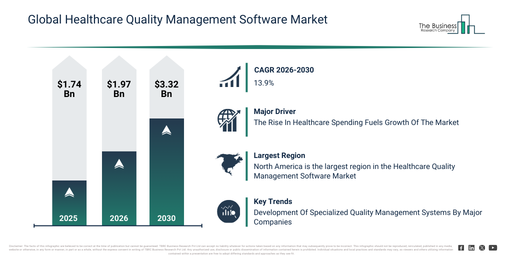
    The sector for healthcare quality management software has seen substantial expansion. Projections indicate a rise from $1.74 billion in 2025 to $1.97 billion in 2026, reflecting a compound annual growth rate of 13.8%. This upward trajectory during the past period is linked to several key factors: the increasing digitalization of healthcare processes, broader implementation of electronic health records, escalating requirements for quality reporting, enhanced utilization of data visualization technologies, and a heightened emphasis on optimizing operational efficiency.

    The market for healthcare quality management software is projected for substantial expansion, anticipating a reach of $3.32 billion by the year 2030, driven by a compound annual growth rate of 13.9%. This future expansion is fueled by several key factors, including a heightened need for artificial intelligence-driven quality insights, greater acceptance of cloud-native healthcare solutions, the growing prevalence of remote quality monitoring, a stronger emphasis on patient-centered care, and increased financial backing for healthcare analytics platforms. During this projected period, significant market trends are anticipated to include a wider implementation of cloud-based quality systems, increased utilization of predictive analytics for quality oversight, a more widespread adoption of automated compliance dashboards, the broadening of interoperable systems for quality reporting, and an intensified focus on frameworks for continuous improvement.

    Download A Free Sample Report For Comprehensive Market Insights:

    https://www.thebusinessresearchcompany.com/sample.aspx?id=13451&type=smp

    Healthcare Quality Management Software Market Opportunity Drivers: What Is Creating New Revenue Potential?

    Expanded financial allocations towards healthcare are fueling the expansion of the market for healthcare quality management software. This increased expenditure, representing the aggregate resources dedicated by nations, governments, and individuals to medical goods and services, positively influences the healthcare quality management software sector by empowering organizations to adopt innovations that elevate patient care standards. Illustratively, data from the UK’s Office for National Statistics revealed that between 2022 and 2023, UK healthcare spending saw a significant rise of 5.6%, a marked acceleration from the 0.9% growth observed in 2022. The total healthcare expenditure in the United Kingdom reached approximately $317.63 billion (£292 billion) in the year 2023, thereby underscoring the role of escalating healthcare investments in propelling the advancement of the healthcare quality management software market.

    Healthcare Quality Management Software Market Segmentation Trends And Revenue Drivers

    The healthcare quality management software market covered in this report is segmented –

    1) By Type: Business Intelligence And Data Analytics Solutions, Clinical Risk Management Solutions, Physician Quality Reporting Solutions, Provider Performance Improvement Solutions

    2) By Deployment Mode: Cloud-Based, On-Premises, Web-Based

    3) By Application: Data Management, Risk Management, Other Application

    4) By End-Use: Hospitals, Ambulatory Surgery Centers, Nursing Homes, Other End-Uses

    Subsegments:

    1) By Business Intelligence And Data Analytics Solutions: Data Visualization Tools, Predictive Analytics Solutions, Reporting And Dashboards

    2) By Clinical Risk Management Solutions: Patient Safety Management, Incident Reporting Software, Risk Assessment And Mitigation Tools

    3) By Physician Quality Reporting Solutions: Quality Reporting Software For Physicians, Physician Performance Tracking Tools

    4) By Provider Performance Improvement Solutions: Provider Performance Monitoring Software, Performance Improvement Dashboards, Benchmarking And Compliance Tools

    Healthcare Quality Management Software Market Innovation Trends Driving Future Development

    Leading entities within the healthcare quality management software sector are actively introducing advanced solutions, notably tailored Quality Management Systems (QMS), aimed at simplifying adherence to regulatory mandates and empowering informed choices based on data to elevate patient outcomes. This specialized QMS serves as a software framework engineered to optimize and simplify the quality assurance and regulatory conformity procedures inside healthcare entities. As an illustration, in the early part of 2023, Palantir Technologies Inc., a prominent software firm based in the United States known for its data integration platforms, unveiled a purpose-built quality management system (QMS). This particular system is formulated to assist clients in the life sciences domain by addressing their most crucial operational processes, encompassing comprehensive clinical data evaluation from beginning to end. Its purpose is to aid life sciences companies in fulfilling GxP (Good Practices) stipulations, which are indispensable for guaranteeing the security, caliber, and conformity of pharmaceutical and healthcare-related products. This system seamlessly combines with the established foundry platform, a robust instrument for data handling and interpretation, thereby augmenting proficiency in making decisions informed by data.

    Healthcare Quality Management Software Market Industry Leaders: Which Organizations Are Driving Competition?

    Major companies operating in the healthcare quality management software market are Wolters Kluwer Health Inc., Premier Inc., Vizient Inc., symplr LLC, Ideagen Ltd., Intelex Technologies Inc., Medisolv Inc., MetaStar Inc., Datix Limited, Quantros Inc., Effivity Technologies Pvt. Ltd., Orcanos Software Ltd., Title21 Health Solutions Inc., Radialogica Technologies Inc., IBM Corporation, Health Catalyst Inc., Press Ganey Associates LLC, RLDatix Group Limited, Riskonnect Inc., MCG Health LLC, Performance Health Technology Ltd.

    Access The Complete Healthcare Quality Management Software Market Report:

    https://www.thebusinessresearchcompany.com/report/healthcare-quality-management-software-global-market-report

    Healthcare Quality Management Software Market Regional Distribution: Which Areas Drive Market Expansion?

    North Americawas the largest region in the healthcare quality management software market in 2025. Asia-Pacificis expected to be the fastest-growing region in the forecast period. The regions covered in the healthcare quality management software market report are Asia-Pacific, South East Asia, Western Europe, Eastern Europe, North America, South America, Middle East, Africa.

    Get in touch with us:

    The Business Research Company: https://www.thebusinessresearchcompany.com/

    Americas: +1 310-496-7795

    Asia: +44 7882 955267 & +91 8897263534

    Europe: +44 7882 955267

    Email us at: marketing@tbrc.info

    Follow us on:

    LinkedIn: https://in.linkedin.com/company/the-business-research-company

    YouTube: https://www.youtube.com/channel/UC24_fI0rV8cR5DxlCpgmyFQ

    Global Market Model: https://www.thebusinessresearchcompany.com/global-market-model