Month: June 2026

  • Allergy Immunotherapy Market Forecast Highlights Expansion From $3.55 Billion To $5.64 Billion Through 2030

    Allergy Immunotherapy Market Forecast Highlights Expansion From $3.55 Billion To $5.64 Billion Through 2030

    Enhanced with market attractiveness analysis, total addressable market evaluation, company benchmarking matrices, interactive Excel dashboards, expanded supply chain intelligence, emerging startup coverage, and detailed product insights, The Business Research Company’s 2026 market reports deliver more actionable and strategically valuable research.

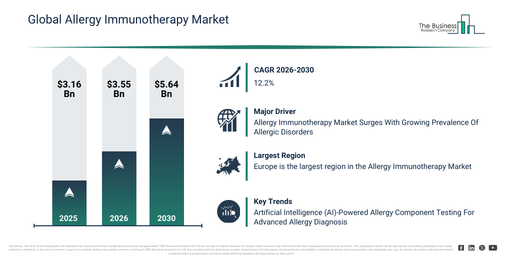
    Allergy Immunotherapy Market Growth From $3.55 Billion In 2026 To $5.64 Billion By 2030 At A CAGR Of 12.2%

    The global market for allergy immunotherapy has experienced significant expansion lately, with projections indicating continued robust growth from its 2025 valuation of $3.16 billion to a substantial $3.55 billion by 2026, reflecting a compound annual growth rate of 12.3%. This upward trajectory during the preceding period was largely influenced by factors such as a nascent understanding of allergy immunotherapy, an increasing prevalence of seasonal allergic rhinitis, a reliance on healthcare facility treatment pathways, the utilization of established therapeutic approaches, and the successful attainment of regulatory clearances for immunotherapy-based products.

    The allergy immunotherapy sector is poised for substantial expansion in the coming years, with projections indicating a market value of $5.64 billion by 2030, driven by a compound annual growth rate of 12.2%. This projected surge is fueled by advancements in tailored immunotherapy approaches, the increasing utilization of digital pharmacies, a broader focus on treating allergies in children, heightened investment in immunotherapy research, and the emergence of combined immunotherapy treatments. Key developments anticipated during this period include a greater embrace of both subcutaneous and sublingual immunotherapy methods, a rise in the incidence of allergic rhinitis and asthma, further development in treating food and insect venom allergies, a more pronounced emphasis on individualized allergy treatment plans, and heightened public awareness coupled with earlier detection of allergic ailments.

    Download A Free Sample Report For Comprehensive Market Insights:

    https://www.thebusinessresearchcompany.com/sample.aspx?id=9416&type=smp

    Allergy Immunotherapy Market Expansion Supported By Key Demand Factors

    Fueled by the increasing incidence of allergic conditions, the allergy immunotherapy market is poised for expansion. Allergic disorders are characterized by exaggerated immune system reactions to particular substances. In contrast, autoimmune diseases arise when immune responses mistakenly target the body’s own tissues. Allergy immunotherapy offers a treatment option for individuals with atopic conditions, such as those experiencing IgE-mediated allergic rhinitis and allergic asthma, which are triggered by airborne allergens like pollen and house dust mites. Illustrating this trend, data from August 2023 revealed that in the 2022-23 period, UK hospitals documented over 25,000 admissions for allergies and anaphylaxis, an increase more than double that observed in the preceding two decades, as reported by the Medicines and Healthcare Products Regulatory Agency. Furthermore, the Food Standards Agency’s May 2024 Patterns and Prevalence of Adult Food Allergy (PAFA) report indicated that approximately 6% of UK adults, equating to roughly 2.4 million people, suffer from food allergies. Consequently, the escalating rates of allergic disorders are a primary driver for the growth of the allergy immunotherapy market.

    Allergy Immunotherapy Market Segment Analysis: What Are The Major Market Categories?

    The allergy immunotherapy market covered in this report is segmented –

    1) By Allergy Type: Allergic Rhinitis, Allergic Asthma, Food Allergy, Venom Allergy, Allergic Conjunctivitis, Environmental Allergies

    2) By Treatment: Subcutaneous Immunotherapy (SCIT), Sublingual Immunotherapy, Specific Immunotherapy (SIT)

    3) By Channel: Hospital Pharmacy, Retail Pharmacy

    Subsegments:

    1) By Allergic Rhinitis: Seasonal Allergic Rhinitis, Perennial Allergic Rhinitis

    2) By Allergic Asthma: House Dust Mite–Induced Allergic Asthma, Pollen-Induced Allergic Asthma, Animal Dander–Induced Allergic Asthma

    3) By Food Allergy: Peanut Allergy, Tree Nut Allergy, Milk Allergy, Egg Allergy, Other Food Allergies

    4) By Venom Allergy: Bee Venom Allergy, Wasp Venom Allergy, Hornet Venom Allergy, Other Insect Venom Allergies

    5) By Allergic Conjunctivitis: Seasonal Allergic Conjunctivitis, Perennial Allergic Conjunctivitis

    6) By Environmental Allergies: House Dust Mite Allergy, Pollen Allergy, Mold Allergy, Animal Dander Allergy

    Allergy Immunotherapy Market Growth Trends Influencing Competitive Dynamics

    Leading players within the allergy immunotherapy sector are actively pursuing product advancements, including the development of artificial intelligence (AI) driven allergy component testing, as a strategy to solidify their market standing. This advanced AI-powered allergy component testing represents a sophisticated diagnostic approach rooted in component-resolved diagnostics (CRD), designed for the accurate identification of diverse allergic conditions. Illustrating this trend, Metropolis Healthcare Limited, a prominent medical laboratory firm based in India, introduced its AI-powered allergy component testing in May of 2023. This cutting-edge, fourth-generation allergy testing technology leverages artificial intelligence to support healthcare professionals in their clinical decision-making processes, offering profound insights that facilitate the selection and refinement of treatment plans for allergic disorders, and moreover, it demonstrates the capability to forecast the potential success of immunotherapy treatments and allergy vaccinations.

    Allergy Immunotherapy Market Leading Companies Driving Competitive Growth

    Major companies operating in the allergy immunotherapy market are LETI Pharma, Stallergenes Greer International AG, Allergy Therapeutics plc, ALK-Abelló A/S, HAL Allergy B.V., DBV Technologies, Circassia Pharmaceuticals Inc., Jubilant HollisterStier LLC, Allergopharma GmbH & Co. KG, Biomay AG, Anergis SA, HollisterStier Allergy, Desentum Oy, WOLW Pharma Limited, AllerGenics Inc., Greer Laboratories Inc., Aimmune Therapeutics Inc., Reliant Laboratories Inc., Mylan N.V., Adamis Pharmaceuticals Corporation, Endo Pharmaceuticals Inc., Sun Pharmaceutical Industries Ltd., Cipla Ltd.

    Access The Complete Allergy Immunotherapy Market Report:

    https://www.thebusinessresearchcompany.com/report/allergy-immunotherapy-global-market-report

    Allergy Immunotherapy Market Regional Distribution: Which Areas Drive Market Expansion?

    Europewas the largest region in the allergy immunotherapy market in 2025. Asia-Pacificis expected to be the fastest-growing region in the allergy immunotherapy market report during the forecast period. The regions covered in the allergy immunotherapy market report are Asia-Pacific, South East Asia, Western Europe, Eastern Europe, North America, South America, Middle East, Africa.

    Get in touch with us:

    The Business Research Company: https://www.thebusinessresearchcompany.com/

    Americas: +1 310-496-7795

    Asia: +44 7882 955267 & +91 8897263534

    Europe: +44 7882 955267

    Email us at: marketing@tbrc.info

    Follow us on:

    LinkedIn: https://in.linkedin.com/company/the-business-research-company

    YouTube: https://www.youtube.com/channel/UC24_fI0rV8cR5DxlCpgmyFQ

    Global Market Model: https://www.thebusinessresearchcompany.com/global-market-model
  • Allergy Diagnostics Market Expected To Reach $13.02 Billion By 2030 As Growth Accelerates At 13.2% CAGR

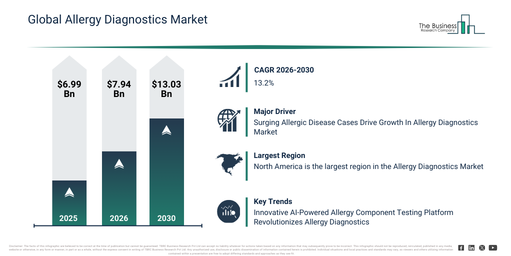
    Allergy Diagnostics Market Expected To Reach $13.02 Billion By 2030 As Growth Accelerates At 13.2% CAGR

    Through market attractiveness analysis, total addressable market evaluation, company benchmarking matrices, interactive Excel dashboards, expanded supply chain intelligence, emerging startup coverage, and detailed product insights, The Business Research Company’s 2026 market reports provide more actionable and strategically valuable research.

    Allergy Diagnostics Market Expansion Outlook: What Revenue Opportunities Lie Ahead?

    The sector dedicated to allergy diagnostics has experienced a significant upswing lately. Projections indicate a rise from a valuation of $6.99 billion in 2025 to $7.94 billion by 2026, reflecting a compound annual growth rate of 13.5%. Factors contributing to this expansion during the preceding period include the escalating incidence of allergic conditions globally, a greater uptake of skin prick and intradermal testing methodologies, the proliferation of laboratory facilities within hospital settings, heightened public consciousness regarding allergy management strategies, and the constrained accessibility of sophisticated in-vitro testing kits.

    The global market for allergy diagnostics is poised for substantial expansion over the coming years, projecting a reach of $13.03 billion by 2030, driven by a compound annual growth rate of 13.2%. This anticipated surge is a direct result of several key factors, including advancements in component-resolved diagnostics, the increasing integration of automated systems in allergy testing procedures, heightened investments in exploring novel allergens through research initiatives, the proliferation of academic and diagnostic laboratories, and a growing consumer desire for tailored allergy treatment plans. Throughout this forecast period, dominant trends will include a persistent demand for highly accurate diagnostic solutions, a widening embrace of in-vitro testing methodologies, the continuous expansion of food and drug allergen assessments, a more extensive utilization of ELISA, RAST, and CRD kits, and a pronounced focus on developing rapid, point-of-care allergy detection methods.

    Download A Free Sample Report For Comprehensive Market Insights:

    https://www.thebusinessresearchcompany.com/sample.aspx?id=5655&type=smp

    #Allergy Diagnostics Market Growth Drivers And Industry Catalysts

    The escalating incidence of allergic conditions is set to be a significant driver for the expansion of the allergy diagnostics market, with environmental factors such as industrial and vehicular emissions being key contributors to this upward trend in allergy prevalence, whereas an allergic reaction itself is characterized by an aberrant immune system reaction to a specific allergen, encompassing a range of conditions including anaphylaxis, allergic rhinitis commonly known as ‘hay fever,’ sensitivities to food, skin reactions, and allergic asthma, and the primary strategy for managing these allergic disorders involves stringent avoidance of the triggering allergen, underscoring the criticality of accurate allergy diagnosis for successful therapeutic interventions, for example, Anaphylaxis UK, a UK charity, reported in September 2024 that food allergy reactions manifest in school settings 20% of the time, with a concerning statistic of one in five children with food allergies facing bullying and an equivalent proportion of parents experiencing moderate to extreme anxiety, furthermore, nearly all parents of children with allergies exhibit symptoms of post-traumatic stress symptoms (PTSS), a rate sevenfold higher among those whose children require adrenaline auto-injectors (AAIs), consequently, the growing prevalence of allergic diseases will undoubtedly bolster the growth trajectory of the allergic diagnostics market.

    Allergy Diagnostics Market Segment Breakdown: Which Categories Generate The Most Revenue?

    The allergy diagnostics market covered in this report is segmented –

    1) By Test Type: In-Vivo Allergy Tests, In-Vitro Allergy Tests

    2) By Allergen: Inhaled Allergens, Food Allergens, Drug Allergens

    3) By Products: Consumables, Instruments

    4) By End User: Diagnostics Laboratories, Hospital-based Laboratories, Academic and Research Institutes

    Subsegments:

    1) By In-Vivo Allergy Tests: Skin Prick Tests, Intradermal Tests, Patch Tests, Oral Food Challenge Tests

    2) By In-Vitro Allergy Tests: Enzyme-Linked Immunosorbent Assay (ELISA), Radioallergosorbent Test (RAST), Component-Resolved Diagnostics (CRD), Basophil Activation Tests (BAT)

    #Allergy Diagnostics Market Trends Influencing Long-Term Demand

    Leading entities within the allergy diagnostics sector are actively pursuing novel technological advancements, exemplified by an AI-driven platform for allergy component analysis, as a strategy to enhance their market profitability. This sophisticated system leverages artificial intelligence to meticulously examine and interpret the outcomes of allergy testing. As a concrete illustration, Metropolis, a diagnostic provider situated in India, introduced in May 2023 an AI-powered allergy component testing solution capable of identifying 127 airborne allergens, 10 allergens causing skin reactions, and 158 food-related allergens, thereby offering profound insights for tailoring and refining patient treatment plans and assisting healthcare professionals in making informed clinical judgments through the integration of component-resolved diagnostics and artificial intelligence.

    Allergy Diagnostics Market Key Players And Strategic Industry Positioning

    Major companies operating in the allergy diagnostics market are bioMérieux SA, Danaher Corporation, HOB Biotech Group Corp. Ltd., HYCOR Biomedical, Lincoln Diagnostics Inc., Omega Diagnostics Group PLC, Siemens Healthineers AG, Thermo Fisher Scientific Inc., PerkinElmer Inc., R-Biopharm AG, Abbott Laboratories, HollisterStier Allergy, NEOGEN Corporation, AESKU.GROUP GmbH, ACON Laboratories Inc., Erba Group, Stallergenes Greer, HAL Allergy Group, INDOOR Biotechnologies Inc., MacroArray Technologies LLC, Phadia AB, Quest Diagnostics, Randox Laboratories Ltd., Eurofins Viracor Inc., VRL Laboratories

    Access The Complete Allergy Diagnostics Market Report:

    https://www.thebusinessresearchcompany.com/report/allergy-diagnostics-global-market-report

    Allergy Diagnostics Market Leading Geography: Which Region Generates The Most Revenue?

    North America was the largest region in the allergy diagnostics market in 2025. The regions covered in the allergy diagnostics market report are Asia-Pacific, South East Asia, Western Europe, Eastern Europe, North America, South America, Middle East, Africa.

    Get in touch with us:

    The Business Research Company: https://www.thebusinessresearchcompany.com/

    Americas: +1 310-496-7795

    Asia: +44 7882 955267 & +91 8897263534

    Europe: +44 7882 955267

    Email us at: marketing@tbrc.info

    Follow us on:

    LinkedIn: https://in.linkedin.com/company/the-business-research-company

    YouTube: https://www.youtube.com/channel/UC24_fI0rV8cR5DxlCpgmyFQ

    Global Market Model: https://www.thebusinessresearchcompany.com/global-market-model
  • Allergic Rhinitis Market Set To Grow From $16.28 Billion In 2026 To $19.57 Billion By 2030 At A CAGR Of 4.7%

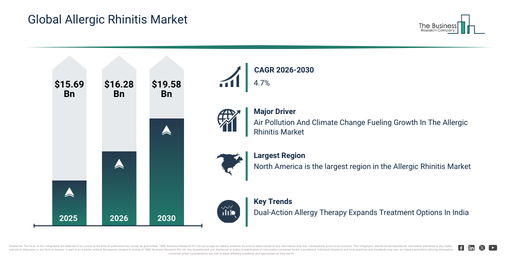
    Allergic Rhinitis Market Set To Grow From $16.28 Billion In 2026 To $19.57 Billion By 2030 At A CAGR Of 4.7%

    Delivering more actionable and strategically valuable research, The Business Research Company’s 2026 market reports feature market attractiveness analysis, total addressable market evaluation, company benchmarking matrices, interactive Excel dashboards, expanded supply chain intelligence, emerging startup coverage, and detailed product insights.

    Allergic Rhinitis Market Growth Potential: How Will Market Size Change Through 2030?

    The market for allergic rhinitis treatments has seen consistent expansion. Projections indicate a rise from $15.69 billion in 2025 to $16.28 billion in 2026, reflecting a compound annual growth rate of 3.8%. Factors contributing to this historical growth trajectory include heightened public awareness concerning allergies, amplified exposure to environmental allergens, widespread use of established antihistamines and corticosteroids, the expansion of hospital pharmacy infrastructures, and advancements in diagnostic skin testing techniques.

    The global market for allergic rhinitis is poised for consistent expansion, projected to reach $19.58 billion by 2030, exhibiting a compound annual growth rate of 4.7%. This anticipated growth over the forecast period is underpinned by several key drivers, including advancements in immunotherapy, a growing demand for tailored allergy management solutions, the increasing utilization of online pharmacies for medication access, enhancements in diagnostic technologies like IGE RAST and blood tests, and the overall expansion of international allergy treatment markets. Furthermore, emerging trends such as the escalating worldwide incidence of allergic rhinitis, a greater emphasis on immunotherapy alongside personalized treatment approaches, the widespread use of nasal corticosteroids and antihistamines, the burgeoning e-commerce sector for pharmaceutical distribution, and improvements in diagnostic capabilities, encompassing skin tests and IGE RAST, will significantly shape the market landscape.

    Download A Free Sample Report For Comprehensive Market Insights:

    https://www.thebusinessresearchcompany.com/sample.aspx?id=12926&type=smp

    Allergic Rhinitis Market Opportunity Drivers: What Is Creating New Revenue Potential?

    The increasing prevalence of airborne contaminants and shifting global weather patterns are anticipated to be key drivers for the expansion of the allergic rhinitis market. Air pollution, characterized by the introduction of detrimental elements into our atmosphere, poses risks to human well-being, ecological balance, and the general quality of breathable air. Simultaneously, climate change encompasses enduring modifications in Earth’s meteorological conditions, such as variations in temperature, rainfall, and other atmospheric variables. It is becoming widely acknowledged that air pollution plays a substantial role in both the occurrence and exacerbation of allergic rhinitis, underscoring the direct link between atmospheric conditions and the health of our respiratory systems. For example, data from the United States Environmental Protection Agency for August 2024 indicated that in 2023, the United States witnessed the release of roughly 66 million tons of pollutants into the air. Consequently, the escalating issues of air pollution and climate change are fueling the growth within the allergic rhinitis market.

    Allergic Rhinitis Market Segmentation: How Is The Market Structured Across Key Categories?

    The allergic rhinitis market covered in this report is segmented –

    1) By Type: Seasonal Allergic Rhinitis, Perennial Allergic Rhinitis, Occupational Allergic Rhinitis

    2) By Treatment: Antihistamines, Corticosteroids, Immunotherapy, Decongestants, Other Treatments

    3) By Test: Skin Test, IgE Radioallergosorbent (RAST) Test

    4) By Route Of Administration: Oral, Nasal, Other Route Of Administration

    5) By Distribution Channel: Hospital Pharmacies, Retail Pharmacies, Online Stores

    Subsegments:

    1) By Seasonal Allergic Rhinitis: Pollen Allergy, Mold Allergy

    2) By Perennial Allergic Rhinitis: Dust Mite Allergy, Pet Allergy, Mold Allergy

    3) By Occupational Allergic Rhinitis: Chemical Allergens, Biological Allergens

    Allergic Rhinitis Market Innovation Trends Driving Future Development

    Key players within the allergic rhinitis sector are concentrating their efforts on pioneering new offerings, specifically combination allergy treatments designed to amplify symptom alleviation across multiple pathways and bolster the sustained management of allergic ailments. Such a combination therapy represents a bimodal therapeutic approach, integrating distinct categories of active compounds to achieve more extensive and potent regulation of allergy-induced inflammation. As an illustration, during October 2025, Cadila Pharmaceuticals, a pharmaceutical entity headquartered in India, introduced its Dlorfast-M Tablets. This specific formulation synergizes Desloratadine and Montelukast, effectively impeding both histamine-driven and leukotriene-mediated pathways, thereby furnishing a more robust and all-encompassing respite compared to the efficacy of a single ingredient. The convenience of a once-daily regimen contributes to enhanced patient compliance, simultaneously expanding the therapeutic landscape for individuals afflicted with allergic rhinitis and urticaria.

    Allergic Rhinitis Market Competitive Landscape And Leading Companies

    Major companies operating in the allergic rhinitis market are Merck and Co. Inc., Bayer AG, Novartis AG, Sanofi-Aventis LLC., AstraZeneca PLC, GlaxoSmithKline plc., Boehringer Ingelheim International GmbH, Viatris Inc., Teva Pharmaceutical Industries Ltd., Regeneron Pharmaceuticals Inc., Sun Pharmaceutical Industries Limited, Menarini Group, Perrigo Company plc, Dr. Reddy’s Laboratories Ltd., Hikma Pharmaceuticals PLC, Cipla Limited, Zydus Lifesciences Ltd., Lupin Limited, Glenmark Pharma Ltd., Almirall S.A., Kyowa Kirin Co. Ltd., Hanmi Pharmaceutical Co. Ltd.

    Access The Complete Allergic Rhinitis Market Report:

    https://www.thebusinessresearchcompany.com/report/allergic-rhinitis-global-market-report

    Allergic Rhinitis Market Regional Outlook: Where Are The Largest Opportunities Located?

    North Americawas the largest region in the allergic rhinitis market in 2025. Asia-Pacificis expected to be the fastest-growing region in the forecast period. The regions covered in the allergic rhinitis market report are Asia-Pacific, South East Asia, Western Europe, Eastern Europe, North America, South America, Middle East, Africa.

    Get in touch with us:

    The Business Research Company: https://www.thebusinessresearchcompany.com/

    Americas: +1 310-496-7795

    Asia: +44 7882 955267 & +91 8897263534

    Europe: +44 7882 955267

    Email us at: marketing@tbrc.info

    Follow us on:

    LinkedIn: https://in.linkedin.com/company/the-business-research-company

    YouTube: https://www.youtube.com/channel/UC24_fI0rV8cR5DxlCpgmyFQ

    Global Market Model: https://www.thebusinessresearchcompany.com/global-market-model
  • Allergic Contact Dermatitis Market Opportunities Are Emerging Beyond Traditional Growth Areas

    Allergic Contact Dermatitis Market Opportunities Are Emerging Beyond Traditional Growth Areas

    Enhanced with market attractiveness analysis, total addressable market evaluation, company benchmarking matrices, interactive Excel dashboards, expanded supply chain intelligence, emerging startup coverage, and detailed product insights, The Business Research Company’s 2026 market reports deliver more actionable and strategically valuable research.

    Allergic Contact Dermatitis Market Value Analysis: What Growth Is Expected Over The Forecast Period?

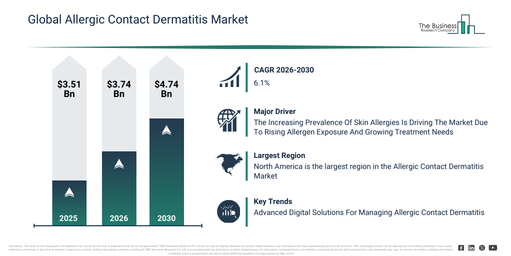
    The market for allergic contact dermatitis experienced robust expansion recently. Projections indicate a rise from $3.51 billion in 2025 to $3.74 billion in 2026, reflecting a compound annual growth rate of 6.4%. Key factors contributing to this historical growth include heightened exposure to metallic and chemical substances, a lack of comprehensive awareness regarding common skin allergens, a discernible increase in the utilization of patch testing procedures, intensified research endeavors within the field of dermatology, and a greater reliance on topical corticosteroid treatments.

    The global market for allergic contact dermatitis is projected for substantial expansion in the coming years, anticipating a reach of $4.74 billion by 2030, driven by a compound annual growth rate of 6.1%. This anticipated growth is bolstered by advancements in immunomodulatory therapies, increasing consumer demand for hypoallergenic options, the proliferation of tailored dermatological interventions, a rise in work-related skin allergies, and the incorporation of digital diagnostic tools in dermatology. Key developments shaping this market during the forecast period involve a global increase in allergic contact dermatitis cases, enhanced detection and diagnosis via patch testing, a growing need for topical corticosteroids and immunomodulators, the expanding scope of dermatological care for both pediatric and elderly populations, and a pronounced consumer shift towards natural and hypoallergenic product selections.

    Download A Free Sample Report For Comprehensive Market Insights:

    https://www.thebusinessresearchcompany.com/sample.aspx?id=21092&type=smp

    Allergic Contact Dermatitis Market Growth Momentum: Which Factors Are Influencing Demand?

    The allergic contact dermatitis market is poised for expansion, fueled by the escalating incidence of skin allergies. These conditions arise when the body’s immune defenses respond excessively to particular triggers, manifesting as redness, itching, swelling, and dermatological eruptions. A surge in skin allergy occurrences can be attributed primarily to amplified contact with allergens present in the environment, chemical components found in cosmetics, and various irritants, compounded by an increasing number of individuals presenting with sensitive skin and compromised epidermal barrier integrity. Therapeutic interventions for allergic contact dermatitis aim to mitigate these symptoms by decreasing inflammation, alleviating pruritus, averting repeated reactions, and repairing the skin barrier, employing methods such as topical applications, antihistaminic medications, and behavioral adjustments to limit exposure to triggering substances. For example, data from the Asthma and Allergy Foundation of America (AAFA) in April 2025 indicated that approximately one out of every five individuals in the United States experiences skin and contact allergies, with conditions like eczema affecting 18.9 million adults and 8 million children nationwide, underscoring a significant and growing health challenge. Consequently, the rising number of people suffering from skin allergies is a primary driver for the growth observed in the allergic contact dermatitis market.

    Allergic Contact Dermatitis Market Segmentation Trends And Revenue Drivers

    The allergic contact dermatitis market covered in this report is segmented –

    1) By Allergen Type: Metals, Chemicals, Latex, Fragrances, Preservatives

    2) By Diagnosis Method: Patch Testing, Clinical Evaluation

    3) By Treatment Type: Topical Corticosteroids, Immunomodulators, Oral Corticosteroids

    4) By Severity Level: Mild, Moderate, Severe

    5) By Patient Demographics: Children, Adults, Elderly

    Subsegments:

    1) By Metals: Nickel, Cobalt, Chromium

    2) By Chemicals: Pesticides, Solvents, Cleaning Agents

    3) By Latex: Natural Rubber Latex, Synthetic Latex

    4) By Fragrances: Synthetic Fragrances, Natural Fragrances

    5) By Preservatives: Parabens, Formaldehyde Releasers, Isothiazolinones

    Allergic Contact Dermatitis Market Trends Reshaping Industry Growth

    Leading entities within the allergic contact dermatitis market are prioritizing the creation of sophisticated digital platforms, accessible via the web and mobile applications, to enable virtual interactions with medical specialists. These web and app-based resource solutions are digital environments that furnish various functionalities, knowledge bases, and engaging elements designed to empower individuals managing the condition, thereby boosting their ability to independently manage their health and adhere to prescribed therapies. Illustratively, in November 2024, the American Contact Dermatitis Society, a US-based charitable organization committed to advancing the diagnosis and treatment of dermatitis through educational initiatives, research endeavors, and public advocacy, introduced CAMP 2.0, a revamped Contact Allergen Management Program aimed at aiding patients in navigating allergic contact dermatitis. This innovative tool empowers patients to discern suitable products by delivering comprehensive details and clear information regarding potential allergens. It now boasts an enhanced interface for providers, a more robust allergen search capability, organized cross-reactor classifications, and automatically generated allergen fact sheets. Furthermore, users are empowered to propose products, share their experiences through ratings, submit feedback, and utilize UPC code scanning for immediate product safety assessments. CAMP 2.0 has been further enriched with an explicit list flagging allergens prominently in red and monitors the broader effects of allergic contact dermatitis on patients’ overall well-being and perceived quality of life.

    #Allergic Contact Dermatitis Market Industry Leaders: Which Organizations Are Driving Competition?

    Major companies operating in the allergic contact dermatitis market are Bausch Health Companies Inc., GlaxoSmithKline plc, Pfizer Inc., Sanofi S.A., AbbVie Inc., Johnson & Johnson, LEO Pharma A/S, Novartis AG, Bayer AG, Eli Lilly and Company, Galderma SA, Astellas Pharma Inc., Ferrer Pharma, Stallergenes Greer International AG, HAL Allergy B.V., Hycor Biomedical Inc., HollisterStier Allergy, Dormer Laboratories Inc., Chemotechnique MB Diagnostics AB, Aesku.Diagnostics GmbH, AllergoTek

    Access The Complete Allergic Contact Dermatitis Market Report:

    https://www.thebusinessresearchcompany.com/report/allergic-contact-dermatitis-global-market-report

    Allergic Contact Dermatitis Market Geographic Landscape: Which Region Dominates Industry Growth?

    North Americawas the largest region in the allergic contact dermatitis market in 2025. Asia-Pacificis expected to be the fastest-growing region in the forecast period. The regions covered in the allergic contact dermatitis market report are Asia-Pacific, South East Asia, Western Europe, Eastern Europe, North America, South America, Middle East, Africa.

    Get in touch with us:

    The Business Research Company: https://www.thebusinessresearchcompany.com/

    Americas: +1 310-496-7795

    Asia: +44 7882 955267 & +91 8897263534

    Europe: +44 7882 955267

    Email us at: marketing@tbrc.info

    Follow us on:

    LinkedIn: https://in.linkedin.com/company/the-business-research-company

    YouTube: https://www.youtube.com/channel/UC24_fI0rV8cR5DxlCpgmyFQ

    Global Market Model: https://www.thebusinessresearchcompany.com/global-market-model
  • Alcoholic Hepatitis Treatment Market Expansion Is Opening New Pathways For Strategic Investment

    Alcoholic Hepatitis Treatment Market Expansion Is Opening New Pathways For Strategic Investment

    Through market attractiveness analysis, total addressable market evaluation, company benchmarking matrices, interactive Excel dashboards, expanded supply chain intelligence, emerging startup coverage, and detailed product insights, The Business Research Company’s 2026 market reports provide more actionable and strategically valuable research.

    Alcoholic Hepatitis Treatment Market Size Forecast: How Large Could The Market Become By 2030?

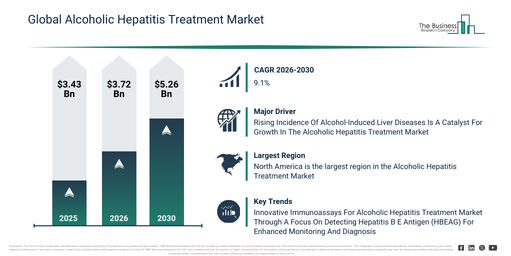
    The market for alcoholic hepatitis treatments experienced a robust expansion recently, projecting a rise from $3.43 billion in 2025 to $3.72 billion in 2026, demonstrating a compound annual growth rate (CAGR) of 8.5%. This historical growth trajectory is largely fueled by a higher incidence of alcoholic liver disease, heightened public consciousness regarding health problems linked to alcohol consumption, the increasing utilization of corticosteroids and alternative pharmaceutical interventions, the broader rollout of hospital-centric treatment initiatives, and the restricted access to stem cell therapeutic options.

    The worldwide market dedicated to treating alcoholic hepatitis is poised for substantial expansion over the upcoming years, projecting a leap to $5.26 billion by 2030, fueled by a compound annual growth rate of 9.1%. This anticipated surge is largely propelled by advancements in regenerative medicine and stem cell interventions, escalating investments in private care facilities, a wider embrace of individualized treatment strategies, augmented governmental efforts aimed at managing liver ailments, and the innovation of new biological agents designed for liver protection. Key developments expected within this forecast period involve a greater reliance on corticosteroid and hemorheologic treatments, increased utilization of stem cell therapies for hepatic regeneration, the proliferation of private treatment centers and specialized clinics, a heightened emphasis on customized therapeutic roadmaps for alcoholic hepatitis patients, and improved initiatives for public awareness and prompt diagnosis.

    Download A Free Sample Report For Comprehensive Market Insights:

    https://www.thebusinessresearchcompany.com/sample.aspx?id=12104&type=smp

    Alcoholic Hepatitis Treatment Market Expansion Drivers: What Is Shaping Future Growth?

    The rising incidence of liver ailments stemming from alcohol abuse is anticipated to be a primary catalyst for the expansion of the alcoholic hepatitis treatment sector. Alcoholic liver disease arises when the liver’s vital functions, including blood purification and bile production essential for digestion, are compromised. Treatments for alcoholic hepatitis aim to manage the inflammatory response in the liver for affected individuals. Severe cases may necessitate inpatient medical care. Illustrating this burden, data from the Office for Health Improvement and Disparities in the UK revealed that in 2022, there were 10,593 premature deaths attributed to liver disease, with males accounting for 6,664 and females for 3,929. Furthermore, during the fiscal year ending in 2023, England recorded 85,665 hospitalizations for liver disease, representing 155.2 per 100,000 individuals, of which 27,085 were specifically for alcoholic liver disease, translating to a rate of 49.4 per 100,000 population. Consequently, the escalating rates of alcohol-induced liver conditions are directly fueling the growth within the alcoholic hepatitis treatment market.

    Alcoholic Hepatitis Treatment Market Segment Analysis Highlighting Growth Areas

    The alcoholic hepatitis treatment market covered in this report is segmented –

    1) By Treatment Type: Drug Therapy, Supportive And Nutritional Therapy

    2) By Route Of Administration: Oral, Injectable

    3) By Severity Of Disease: Mild Alcoholic Hepatitis, Moderate Alcoholic Hepatitis, Severe Alcoholic Hepatitis

    4) By End-User: Hospitals, Specialty Clinics, Rehabilitation And De-Addiction Centers

    Subsegments:

    1) By Drug Therapy: Corticosteroid Therapy, Hemorheologic Therapy, Immunomodulatory And Anti-Inflammatory Therapy, Antioxidant And Hepatoprotective Therapy, Adjunctive Pharmacological Therapy

    2) By Supportive And Nutritional Therapy: Alcohol Abstinence And Detoxification Support, Nutritional Supplementation (Protein Vitamins And Minerals), Enteral Nutrition Support, Electrolyte And Fluid Management, Management Of Alcohol Withdrawal Symptoms

    Alcoholic Hepatitis Treatment Market Strategic Trends: What Is Defining The Next Phase Of Growth?

    The leading players in the alcoholic hepatitis treatment sector are focusing on pioneering new products, specifically immunoassays, to boost their financial performance within this market. Immunoassays function as sophisticated diagnostic tools, leveraging the precise interaction between antibodies and antigens to identify and quantify specific substances, known as analytes, within a biological sample. As an illustration, in November of 2023, F. Hoffmann-La Roche Ltd., a global healthcare firm headquartered in Switzerland, introduced its Elecsys HBeAg quant test. This particular immunoassay is designed to determine the levels of hepatitis B e antigen (HBeAg) present in human serum and plasma, offering both qualitative and quantitative results. Its utility extends to predicting the likelihood of chronic active hepatitis and serving as an early indicator of acute hepatitis B infection. When combined with other laboratory results and clinical information, this test can significantly assist in the diagnosis and ongoing management of individuals affected by hepatitis B virus infection. The Elecsys HBeAg quant is compatible with Roche’s Cobas e analysis systems and is suitable for use with samples from patients who have either previously tested positive for HBeAg or whose antibody status remains undetermined.

    Alcoholic Hepatitis Treatment Market Leading Companies: Who Holds Significant Market Presence?

    Major companies operating in the alcoholic hepatitis treatment market are Mallinckrodt Pharmaceuticals, Intercept Pharmaceuticals Inc., DURECT Corporation, BioVie Inc., Conatus Pharmaceuticals Inc., AbbVie Inc., Gilead Sciences Inc., Pfizer Inc., Merck And Co Inc., Bristol Myers Squibb Company, Johnson And Johnson, Sanofi SA, Novartis AG, Takeda Pharmaceutical Company Limited, Bayer AG, Boehringer Ingelheim International GmbH, Madrigal Pharmaceuticals Inc., Genfit SA, CymaBay Therapeutics Inc., Zydus Cadila, Dr Reddys Laboratories Ltd

    Access The Complete Alcoholic Hepatitis Treatment Market Report:

    https://www.thebusinessresearchcompany.com/report/alcoholic-hepatitis-treatment-global-market-report

    #Alcoholic Hepatitis Treatment Market Largest Region: Which Geography Holds The Highest Market Share?

    North America was the largest region in the alcoholic hepatitis treatment market in 2025. It is expected to be the fastest-growing region in the forecast period. The regions covered in the alcoholic hepatitis treatment market report are Asia-Pacific, South East Asia, Western Europe, Eastern Europe, North America, South America, Middle East, Africa.

    Get in touch with us:

    The Business Research Company: https://www.thebusinessresearchcompany.com/

    Americas: +1 310-496-7795

    Asia: +44 7882 955267 & +91 8897263534

    Europe: +44 7882 955267

    Email us at: marketing@tbrc.info

    Follow us on:

    LinkedIn: https://in.linkedin.com/company/the-business-research-company

    YouTube: https://www.youtube.com/channel/UC24_fI0rV8cR5DxlCpgmyFQ

    Global Market Model: https://www.thebusinessresearchcompany.com/global-market-model
  • Alcohol Wipes Market Trends Are Creating New Opportunities For Industry Leaders

    Alcohol Wipes Market Trends Are Creating New Opportunities For Industry Leaders

    Delivering more actionable and strategically valuable research, The Business Research Company’s 2026 market reports feature market attractiveness analysis, total addressable market evaluation, company benchmarking matrices, interactive Excel dashboards, expanded supply chain intelligence, emerging startup coverage, and detailed product insights.

    Alcohol Wipes Market Revenue Outlook: What CAGR Is Expected Through 2030?

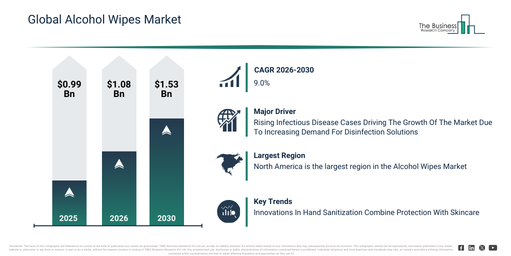
    The market for alcohol wipes has experienced robust expansion over the past few years. Projections indicate a continued upward trend, with the market anticipated to expand from $0.99 billion in 2025 to $1.08 billion in 2026, reflecting a compound annual growth rate (CAGR) of 9.3%. This historical expansion can be attributed to several key factors, including a heightened awareness of infection control measures, the pervasive use of disinfectants within healthcare settings, the amplification of personal hygiene habits, the development of hospital and clinical facilities, and a greater uptake of pre-moistened wipe products.

    The alcohol wipes sector is poised for substantial expansion in the coming years, projecting a market value of $1.53 billion by 2030, driven by a compound annual growth rate of 9.0%. This anticipated surge is fueled by several key factors: a heightened emphasis on preventative health and hygiene products, a greater commitment to surface disinfection protocols, the burgeoning home healthcare industry, a rising inclination towards user-friendly sanitation options, and advancements in environmentally conscious wipe materials. During this forecast period, prominent trends are expected to include a greater demand for disposable hygiene items, increased utilization of medical-grade disinfectant wipes, their expanded application within healthcare environments, the growth of accessible hygiene solutions for on-the-go use, and a more concentrated effort on developing disinfectant formulas that are gentle on the skin.

    Download A Free Sample Report For Comprehensive Market Insights:

    https://www.thebusinessresearchcompany.com/sample.aspx?id=24456&type=smp

    Alcohol Wipes Market Development Factors: Which Trends Are Supporting Demand?

    The rising occurrence of transmissible illnesses is anticipated to be a primary driver for the expansion of the alcohol wipes market. These infectious diseases, caused by detrimental microbes, can spread between individuals or via environmental contact. Factors such as increased urbanization, where concentrated populations foster closer contact and facilitate wider transmission, contribute to the escalating rate of these diseases. Alcohol wipes play a crucial role in curbing the spread of infectious diseases by efficiently eliminating or neutralizing pathogens like bacteria, viruses, and fungi. Their effectiveness stems from substantial concentrations of isopropyl or ethyl alcohol, usually between 60% and 90%, which compromise the integrity of microbial cell walls, ultimately leading to cell death. A pertinent example comes from the Centers for Disease Control and Prevention, which reported in March 2024 that tuberculosis cases in the United States climbed from 8,320 in 2022 to 9,615 in 2023, an increase of 1,295 cases. Consequently, the growing number of infectious disease cases directly fuels the demand and growth within the alcohol wipes market.

    Alcohol Wipes Market Segment Performance And Strategic Opportunities

    The alcohol wipes market covered in this report is segmented –

    1) By Product Form: Pre-Moistened Wipes, Dry Wipes

    2) By Fabric Material: Natural, Synthetic

    3) By Formulation Type: Isopropyl Alcohol Wipes, Ethyl Alcohol Wipes, Hydrogen Peroxide Wipe

    4) By Distribution Channels: Supermarkets And Hypermarkets, Convenience Stores, Specialty Stores, Online, Other Distribution Channels

    5) By End-Use: Personal And Household, Commercial

    Subsegments:

    1) By Pre-Moistened Wipes: Isopropyl Alcohol Wipes, Ethanol-Based Wipes, Benzalkonium Chloride Wipes, Multi-Surface Disinfecting Wipes, Skin Antiseptic Wipes, Equipment Cleaning Wipes, Medical Use Wipes, Personal Hygiene Wipes

    2) By Dry Wipes: Nonwoven Fabric Dry Wipes, Cotton-Based Dry Wipes, Spunlace Dry Wipes, Airlaid Dry Wipes, Refillable Alcohol Dry Wipes, Multipurpose Dry Sheets, Industrial Cleaning Dry Wipes, Medical-Grade Dry Wipes

    Alcohol Wipes Market Transformation Trends: Which Innovations Are Driving Change?

    Leading entities within the alcohol wipes sector are prioritizing the integration of advancements in clean and wellness, specifically by introducing skin-friendly alternatives like sanitizing wipes infused with botanical extracts. The goal is to elevate user experience through enhanced comfort, improved skin safety, and greater convenience, all while maintaining robust disinfection capabilities. These botanical-infused sanitizing wipes ingeniously merge the germ-killing power of alcohol with beneficial skincare components, thereby delivering both effective sanitization and skin hydration. As an illustration, in July of 2025, the American personal care company Noshinku, Inc. introduced its noshinku nourishing travel hand sanitizing wipes. This particular product is a botanical-infused wipe meticulously crafted to cleanse hands while simultaneously moisturizing and calming the skin, proving ideal for both travel and everyday use. It utilizes pharmaceutical-grade alcohol derived from sugar cane as its active antiseptic ingredient, complemented by a blend of aloe, green tea, and oat extracts for their hydrating properties. The formulation notably excludes dyes, parabens, synthetic fragrances, and aggressive antiseptics, and is presented in a conveniently portable package designed for maintaining hygiene while on the move. This offering significantly enhances the user journey by providing potent germ protection coupled with gentle skincare advantages, consequently broadening the market’s appeal among consumers who prioritize wellness.

    Alcohol Wipes Market Key Players: Which Companies Shape Industry Competition?

    Major companies operating in the alcohol wipes market are Cardinal Health Inc., Medline Industries, Kimberly-Clark Worldwide Inc., Reckitt Benckiser, The Clorox Company, Unicharm, Diversey Holdings, Hartmann Group, Gojo Industries, Kirkland Signature, GAMA Healthcare Ltd., Diamond Wipes International Inc., Pal International Ltd., Zogics, High-Tech Conversions, GermX, Robinson Healthcare Ltd., Clarisan Ltd., Hocleans

    Access The Complete Alcohol Wipes Market Report:

    https://www.thebusinessresearchcompany.com/report/alcohol-wipes-global-market-report

    Alcohol Wipes Market Regional Analysis: Which Region Leads By Revenue?

    North Americawas the largest region in the alcohol wipes market in 2025. Asia-Pacificis expected to be the fastest-growing region in the forecast period. The regions covered in the alcohol wipes market report are Asia-Pacific, South East Asia, Western Europe, Eastern Europe, North America, South America, Middle East, Africa.

    Get in touch with us:

    The Business Research Company: https://www.thebusinessresearchcompany.com/

    Americas: +1 310-496-7795

    Asia: +44 7882 955267 & +91 8897263534

    Europe: +44 7882 955267

    Email us at: marketing@tbrc.info

    Follow us on:

    LinkedIn: https://in.linkedin.com/company/the-business-research-company

    YouTube: https://www.youtube.com/channel/UC24_fI0rV8cR5DxlCpgmyFQ

    Global Market Model: https://www.thebusinessresearchcompany.com/global-market-model
  • Albumin And Creatinine Tests Market Growth Is Reshaping Competitive Advantage Across The Industry

    Albumin And Creatinine Tests Market Growth Is Reshaping Competitive Advantage Across The Industry

    Enhanced with market attractiveness analysis, total addressable market evaluation, company benchmarking matrices, interactive Excel dashboards, expanded supply chain intelligence, emerging startup coverage, and detailed product insights, The Business Research Company’s 2026 market reports deliver more actionable and strategically valuable research.

    Albumin And Creatinine Tests Market Growth Analysis: How Will Revenue Expand During The Forecast Period?

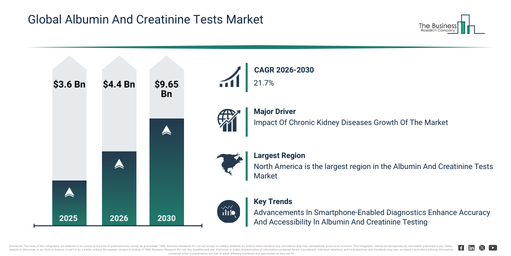
    Worldwide sales for albumin and creatinine testing experienced significant expansion historically, projecting a rise from $3.6 billion in 2025 to $4.4 billion by 2026, reflecting a robust compound annual growth rate of 22.2%. Factors contributing to this expansion during the past period included restricted access to point-of-care diagnostic tools, a prevailing dependence on conventional manual urine dipstick methods, a higher incidence of kidney ailments, enhanced infrastructure within hospitals and diagnostic facilities, and increased public knowledge regarding kidney disease detection.

    The market for albumin and creatinine testing is projected for substantial expansion in the upcoming years, with an estimated reach of $9.65 billion by 2030, propelled by a compound annual growth rate of 21.7%. This surge during the forecast period is anticipated due to several key drivers, including innovations in urine analysis technology and cartridges, the broader implementation of automated laboratory systems, a heightened embrace of glycated albumin testing, increased financial commitment to diagnostic reagent development, and the utilization of data analytics for the prompt identification of kidney ailments. Prominent trends shaping this market in the coming years involve a greater acceptance of on-site albumin and creatinine testing, a mounting need for automated urine analysis devices, the expanding use of microalbumin test kits for the early detection of kidney disease, a rise in the application of colorimetric and immunoassay reagents, and improvements in precision through standardized calibration and control solutions.

    Download A Free Sample Report For Comprehensive Market Insights:

    https://www.thebusinessresearchcompany.com/sample.aspx?id=21091&type=smp

    Albumin And Creatinine Tests Market Industry Drivers: What Is Driving Revenue Growth?

    The increasing prevalence of chronic kidney conditions is anticipated to fuel the expansion of the market for albumin and creatinine testing. Chronic kidney disease, which involves a progressive decline in renal function, impairs the body’s ability to eliminate waste and excess fluid from the bloodstream, consequently leading to toxin accumulation and potential systemic complications. This surge in chronic kidney disease is attributed to escalating risk factors including diabetes, high blood pressure, and obesity. Albumin and creatinine tests play a crucial role in identifying and tracking these conditions by quantifying protein levels, like albumin, in urine and evaluating kidney efficiency via creatinine measurements, thus facilitating prompt detection and effective management of renal impairment. For example, as reported by Kidney Research UK in June 2023, approximately 7.2 million individuals in the United Kingdom, representing more than 10% of the populace, currently have chronic kidney disease, with 3.25 million in advanced stages and 3.9 million in earlier phases, and this figure is projected to reach 7.61 million by 2033. Consequently, the growing number of chronic kidney disease cases is a primary driver for the albumin and creatinine tests market.

    #Albumin And Creatinine Tests Market Segment Landscape And Growth Potential

    The albumin and creatinine tests market covered in this report is segmented –

    1) By Product: Dipsticks And Kits, Analyzers, Cartridges, Reagents, Other Products

    2) By Test Parameter: Blood And Urine Creatinine, Urine Albumin

    3) By End-User: Hospital And Clinics, Diagnostic Laboratories, Research Laboratories And Institutes, Other End-User

    Subsegments:

    1) By Dipsticks And Kits: Urine Dipstick Tests, Microalbumin Test Kits, Point-of-Care Test Kits

    2) By Analyzers: Automated Urine Analyzers, Benchtop Analyzers, Handheld Analyzers

    3) By Cartridges: Single-Use Cartridges, Multi-Parameter Cartridges

    4) By Reagents: Colorimetric Reagents, Enzymatic Reagents, Immunoassay Reagents

    5) By Other Products: Control Solutions, Calibration Standards, Accessories And Consumables

    #Albumin And Creatinine Tests Market Growth Trends: What Is Influencing The Future Outlook?

    To enhance the early identification of chronic kidney disease and broaden access to convenient home-based testing, key players in the albumin and creatinine testing arena are prioritizing the creation of sophisticated digital diagnostic tools, exemplified by smartphone-integrated uACR testing. This innovative approach leverages the cameras on mobile phones, artificial intelligence for data interpretation, and specialized test strips to accurately quantify the urine albumin-to-creatinine ratio, thereby delivering swift and dependable outcomes without the necessity of clinical appointments. A pertinent illustration is Healthy.io, an Israeli digital diagnostics firm, which, in November 2024, shared compelling results from a recent clinical investigation at ASN Kidney Week 2024. These findings underscored that their smartphone-enabled Minuteful Kidney test achieved a level of precision equivalent to laboratory-based equipment for uACR measurement. Furthermore, the research indicated that this AI-assisted test effectively detected elevated albumin concentrations, contributing to the earlier diagnosis of CKD, mitigating impediments to widespread testing, and fostering proactive management of kidney health.

    Albumin And Creatinine Tests Market Competitive Landscape: Who Are The Leading Companies?

    Major companies operating in the albumin and creatinine tests market are Siemens Healthineers Company, Roche Diagnostics GmbH, Thermo Fisher Scientific Inc., Abbott Laboratories, FUJIFILM Corporation, Laboratory Corporation of America Holdings, Sysmex Corporation, Ortho Clinical Diagnostics Inc., Randox Laboratories Ltd., Nova Biomedical Corporation, Eagle Biosciences Inc., Sekisui Diagnostics LLC, BTNX Inc., RayBiotech Life Inc., ARKRAY Inc., PromoCell GmbH, Arbor Assays Inc., Teco Diagnostics Inc., J. Mitra & Co. Pvt. Ltd., Anamol Laboratories Pvt. Ltd.

    Access The Complete Albumin And Creatinine Tests Market Report:

    https://www.thebusinessresearchcompany.com/report/albumin-and-creatinine-tests-global-market-report

    Albumin And Creatinine Tests Market Geographic Distribution And Regional Opportunities

    North Americawas the largest region in the albumin and creatinine tests market in 2025. Asia-Pacificis expected to be the fastest-growing region in the forecast period. The regions covered in the albumin and creatinine tests market report are Asia-Pacific, South East Asia, Western Europe, Eastern Europe, North America, South America, Middle East, Africa.

    Get in touch with us:

    The Business Research Company: https://www.thebusinessresearchcompany.com/

    Americas: +1 310-496-7795

    Asia: +44 7882 955267 & +91 8897263534

    Europe: +44 7882 955267

    Email us at: marketing@tbrc.info

    Follow us on:

    LinkedIn: https://in.linkedin.com/company/the-business-research-company

    YouTube: https://www.youtube.com/channel/UC24_fI0rV8cR5DxlCpgmyFQ

    Global Market Model: https://www.thebusinessresearchcompany.com/global-market-model
  • Albumin Market Forecast Signals New Revenue Opportunities Through 2030

    Albumin Market Forecast Signals New Revenue Opportunities Through 2030

    Through market attractiveness analysis, total addressable market evaluation, company benchmarking matrices, interactive Excel dashboards, expanded supply chain intelligence, emerging startup coverage, and detailed product insights, The Business Research Company’s 2026 market reports provide more actionable and strategically valuable research.

    Albumin Market Forecast: What Market Value Is Expected By 2030?

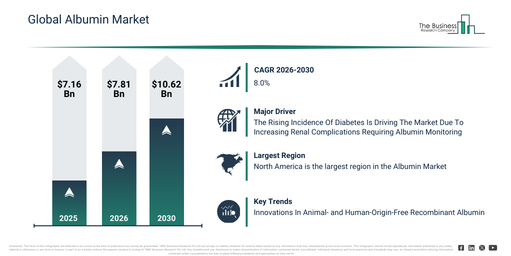
    The market for albumin has experienced robust expansion recently, projecting a rise from $7.16 billion in 2025 to $7.81 billion in 2026, demonstrating a compound annual growth rate of 9.1%. This historic growth trend has been fueled by factors such as restricted supplies of plasma-derived albumin, an increasing incidence of liver conditions and burn injuries, greater incorporation into diagnostic testing kits, intensified biopharmaceutical research and development, and early integration into laboratory and research settings.

    The albumin market is poised for substantial expansion in the ensuing years, with projections indicating a rise to $10.62 billion by 2030, driven by a compound annual growth rate of 8.0%. Factors fueling this anticipated growth include innovations in recombinant albumin technology, an increasing demand for personalized medical treatments, the broadened application of albumin within drug delivery mechanisms, an upswing in biopharmaceutical production, and escalating investments in therapeutic and cosmetic uses. Key developments anticipated within this timeframe encompass a heightened demand for human serum albumin in therapeutic applications, a greater utilization of albumin in vaccine and drug formulations, the expanding use of recombinant albumin across the biopharmaceutical sector, increased integration of albumin into cell culture media and diagnostic kits, and a concentrated emphasis on albumin-centric research initiatives and personalized healthcare approaches.

    Download A Free Sample Report For Comprehensive Market Insights:

    https://www.thebusinessresearchcompany.com/sample.aspx?id=16333&type=smp

    #Albumin Market Growth Factors: Which Forces Are Supporting Market Expansion?

    An increasing prevalence of diabetes is anticipated to be a primary catalyst for the expansion of the albumin market. This chronic metabolic condition, marked by persistently high blood sugar, frequently leads to kidney issues like diabetic nephropathy. A significant contributor to the growing diabetes rates is the surge in obesity, a link firmly established by epidemiological studies indicating a pronounced association between elevated body mass index and a substantially increased risk of developing diabetes. Albumin plays a crucial role in managing these patients by aiding in the assessment of kidney health and informing therapeutic strategies for individuals with diabetes. As an illustration, the International Diabetes Federation (IDF), a non-profit entity headquartered in Belgium, reported in April 2025 that approximately 589 million adults and 9.5 million individuals with type 1 diabetes, which includes 1.9 million children and adolescents, were impacted by the disease globally in 2024, with projections suggesting this figure will climb to 853 million by the year 2050. Consequently, the escalating global incidence of diabetes is directly fueling the growth trajectory of the albumin market.

    Albumin Market Categorization By Product Type And Application

    The albumin market covered in this report is segmented –

    1) By Type: Human Serum Albumin, Bovine Serum Albumin, Recombinant Albumin

    2) By Application: Therapeutics, Drug Formulation And Vaccines, Component Of Media, Other Applications

    3) By End-User: Hospitals And Clinics, Pharmaceutical And Biotechnology Companies, Research Institutes

    Subsegments:

    1) By Human Serum Albumin: Plasma-Derived Human Serum Albumin, Recombinant Human Serum Albumin, Human Serum Albumin For Therapeutic Use (In Liver Disease, Burns), Human Serum Albumin For Drug Delivery And Research Applications

    2) By Bovine Serum Albumin: Bovine Serum Albumin For Laboratory Use (In Cell Culture), Bovine Serum Albumin For Diagnostic Kits, Bovine Serum Albumin As A Stabilizer In Vaccines And Biopharmaceuticals

    3) By Recombinant Albumin: Recombinant Human Albumin For Therapeutic Applications, Recombinant Albumin For Biopharmaceutical Formulation, Recombinant Albumin For Cosmetic And Personal Care Applications, Recombinant Albumin For Research And Diagnostic Applications

    Albumin Market Industry Trends: What Changes Are Reshaping Demand?

    Leading players within the albumin sector are actively engaged in creating novel offerings, including a recombinant albumin free from animal and human origins, aimed at enhancing customer satisfaction through superior functionalities. This type of albumin is synthesized utilizing a non-mammalian host system, like yeast, and is entirely devoid of any animal or human-derived constituents. Illustratively, in March 2023, a collaboration was established between Albumedix, a UK entity specializing in recombinant human albumin (rHA) production, and Heartseed Inc., a Japanese biotechnology firm in its clinical development phase, to introduce Recombin. This essential excipient is slated for integration into the manufacturing process of Heartseed’s investigational cell therapy, HS-001, commencing with its initial human clinical trial. This partnership represents a pivotal advancement in the progression of HS-001, which holds considerable promise for transforming disease management approaches. The incorporation of recombinant technology throughout the production cycle guarantees the peak efficacy and durability of the cell therapy, thereby reinforcing its prospects for significant therapeutic outcomes.

    Albumin Market Company Landscape And Strategic Competition

    Major companies operating in the albumin market are Bristol-Myers Squibb Company, Thermo Fisher Scientific Inc., Takeda Pharmaceutical Company Limited, Merck KGaA, Baxter International Inc., CSL Limited, Grifols SA, Mitsubishi Tanabe Pharma Corporation, Octapharma AG, Kedrion S.p.A., Biotest AG, Jiangxi Boya Bio-Pharmaceutical Co. Ltd., BPL (Bio Products Laboratory), Kamada Ltd., Proliant Biologicals, SeraCare Life Sciences Inc., HiMedia Laboratories, Albumedix Ltd., Medxbio Pte Ltd., Ventria Bioscience Inc., China Biologic Products Holdings Inc.

    Access The Complete Albumin Market Report:

    https://www.thebusinessresearchcompany.com/report/albumin-global-market-report

    Albumin Market Largest Region By Revenue And Market Share

    North Americawas the largest region in the albumin market in 2025. Asia-Pacificis expected to be the fastest-growing region in the forecast period. The regions covered in the albumin market report are Asia-Pacific, South East Asia, Western Europe, Eastern Europe, North America, South America, Middle East, Africa.

    Get in touch with us:

    The Business Research Company: https://www.thebusinessresearchcompany.com/

    Americas: +1 310-496-7795

    Asia: +44 7882 955267 & +91 8897263534

    Europe: +44 7882 955267

    Email us at: marketing@tbrc.info

    Follow us on:

    LinkedIn: https://in.linkedin.com/company/the-business-research-company

    YouTube: https://www.youtube.com/channel/UC24_fI0rV8cR5DxlCpgmyFQ

    Global Market Model: https://www.thebusinessresearchcompany.com/global-market-model
  • AL Amyloidosis Market Growth Is Accelerating As Industry Transformation Continues

    AL Amyloidosis Market Growth Is Accelerating As Industry Transformation Continues

    Delivering more actionable and strategically valuable research, The Business Research Company’s 2026 market reports feature market attractiveness analysis, total addressable market evaluation, company benchmarking matrices, interactive Excel dashboards, expanded supply chain intelligence, emerging startup coverage, and detailed product insights.

    AL Amyloidosis Market Size Outlook: How Fast Will Revenue Grow Through 2030?

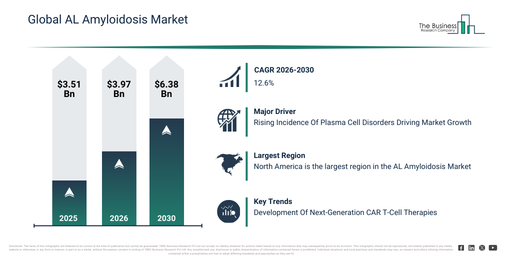
    The market for AL amyloidosis has experienced substantial expansion. Projections indicate a rise from approximately $3.51 billion in 2025 to $3.97 billion by 2026, demonstrating a compound annual growth rate of 13.0%. Factors that fueled this growth during the earlier period included a scarcity of therapeutic choices, a predominant reliance on traditional chemotherapy, insufficient understanding of the disease, and a lack of adequate organ-specific supportive interventions, coupled with limited availability of specialized treatment facilities.

    Anticipate a swift expansion in the al amyloidosis market over the coming years, projecting a valuation of $6.38 billion by 2030, fueled by a compound annual growth rate of 12.6%. This projected surge is largely influenced by advancements in innovative, precisely targeted treatments, a greater uptake of monoclonal antibodies and proteasome inhibitors, the broadening scope of stem cell transplant initiatives, enhanced healthcare infrastructure tailored for rare conditions, and more sophisticated diagnostic tools facilitating earlier identification. Key developments anticipated during this period encompass a heightened embrace of targeted therapeutic strategies for al amyloidosis, increased utilization of monoclonal antibodies and proteasome inhibitors, expanded application of stem cell transplant procedures, a growing emphasis on supportive care directed at specific organs, and a heightened level of awareness coupled with earlier diagnosis of al amyloidosis.

    Download A Free Sample Report For Comprehensive Market Insights:

    https://www.thebusinessresearchcompany.com/sample.aspx?id=20710&type=smp

    AL Amyloidosis Market Demand Drivers: What Is Fueling Industry Growth?

    The AL amyloidosis market is anticipated to experience expansion driven by an increasing prevalence of plasma cell disorders. These disorders are characterized by the production of aberrant antibodies from abnormal plasma cells, which can result in damage to vital organs. Factors contributing to the heightened occurrence of plasma cell disorders include an aging global population, longer lifespans, and improvements in diagnostic capabilities. AL amyloidosis itself develops as a consequence of these plasma cell disorders, stemming from the excessive creation of abnormal light chain proteins. This overproduction leads to the formation of amyloid deposits within organs and tissues, intensifying the impact of plasma cell dysfunctions. Illustrating this trend, The American Cancer Society (ACS) reported in August 2024 that an estimated 35,780 diagnoses of multiple myeloma, a type of plasma cell disorder, are expected in the United States for 2024, with projections of 7,020 male and 5,520 female deaths. Consequently, the escalating rates of plasma cell disorders are a key factor fueling the growth trajectory of the AL amyloidosis market.

    AL Amyloidosis Market Segment Analysis And Revenue Opportunities

    The al amyloidosis market covered in this report is segmented –

    1) By Treatment: Chemotherapy, Supportive Care, Stem Cell Transplant, Targeted Therapy

    2) By Drugs: Immunomodulatory Drugs, Monoclonal Antibodies, Proteasome Inhibitors, Other Drugs

    3) By Route Of Administration: Intravenous, Oral

    4) By Distribution Channel: Hospital Pharmacies, Retail Pharmacies

    Subsegments:

    1) By Chemotherapy: Conventional Chemotherapy Agents, High-Dose Chemotherapy

    2) By Supportive Care: Pain Management, Organ-specific Supportive Care (Cardiac, Renal)

    3) By Stem Cell Transplant: Autologous Stem Cell Transplant, Allogeneic Stem Cell Transplant

    4) By Targeted Therapy: Monoclonal Antibodies, Proteasome Inhibitors, Kinase Inhibitors

    AL Amyloidosis Market Innovation Trends: Which Developments Are Transforming The Industry?

    Key players within the AL amyloidosis market are prioritizing the advancement of groundbreaking treatments, including enhanced BCMA-targeted CAR T-cell therapies, with the aim of boosting treatment effectiveness and enhancing patient results. This sophisticated immunotherapy approach involves genetically modifying a patient’s T cells to identify and combat the BCMA protein found on cancer cells, particularly in the context of multiple myeloma. To illustrate, in September of 2023, Immix Biopharma Inc., an American biopharmaceutical firm, secured clearance from the U.S. Food and Drug Administration (FDA) for its NXC-201 therapy, designated for treating AL amyloidosis, a severe blood condition. NXC-201, characterized as a cutting-edge CAR-T cell therapy currently undergoing clinical evaluation for AL amyloidosis, has demonstrated encouraging outcomes, achieving a complete hematologic response in all participants and notable organ function improvements among individuals who had previously undergone unsuccessful therapies.

    AL Amyloidosis Market Leading Players Shaping Industry Direction

    Major companies operating in the al amyloidosis market are Johnson & Johnson, Bristol-Myers Squibb Company, Takeda Pharmaceutical Company Limited, Pfizer Inc., Amgen Inc., AbbVie Inc., Sanofi S.A., AstraZeneca PLC, Roche Holding AG, Novartis AG, Merck & Co. Inc., Eli Lilly and Company, GlaxoSmithKline plc, Genmab A/S, Prothena Corporation plc, BridgeBio Pharma Inc., Oncopeptides AB, Ionis Pharmaceuticals Inc., Neurimmune AG, Immix Biopharma Inc., Attralus Inc.

    Access The Complete AL Amyloidosis Market Report:

    https://www.thebusinessresearchcompany.com/report/al-amyloidosis-global-market-report

    AL Amyloidosis Market Regional Analysis And Leading Geography

    North Americawas the largest region in the AL amyloidosis market in 2025. The regions covered in the al amyloidosis market report are Asia-Pacific, South East Asia, Western Europe, Eastern Europe, North America, South America, Middle East, Africa.

    Get in touch with us:

    The Business Research Company: https://www.thebusinessresearchcompany.com/

    Americas: +1 310-496-7795

    Asia: +44 7882 955267 & +91 8897263534

    Europe: +44 7882 955267

    Email us at: marketing@tbrc.info

    Follow us on:

    LinkedIn: https://in.linkedin.com/company/the-business-research-company

    YouTube: https://www.youtube.com/channel/UC24_fI0rV8cR5DxlCpgmyFQ

    Global Market Model: https://www.thebusinessresearchcompany.com/global-market-model
  • Air Ambulance Services Market Outlook Highlights The Next Major Growth Opportunities

    Air Ambulance Services Market Outlook Highlights The Next Major Growth Opportunities

    Enhanced with market attractiveness analysis, total addressable market evaluation, company benchmarking matrices, interactive Excel dashboards, expanded supply chain intelligence, emerging startup coverage, and detailed product insights, The Business Research Company’s 2026 market reports deliver more actionable and strategically valuable research.

    Air Ambulance Services Market Size, Value And Growth Trends Through 2030

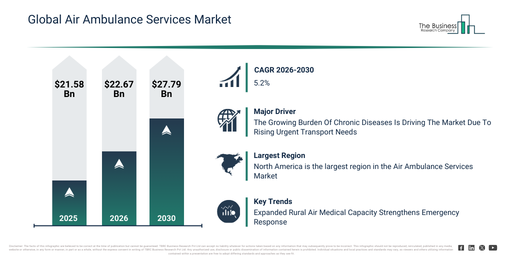
    The global air ambulance services market experienced robust expansion over the past few years, projecting a rise from $21.58 billion in 2025 to $22.67 billion in 2026, showcasing a compounded annual growth rate of 5.0%. This historical growth trajectory was fueled by several key factors, including the constrained accessibility of these vital services, escalating demands for emergency medical care, enhancements in hospital infrastructure, a surge in road accident incidents, and the crucial reliance on helicopter-based transportation for patients in critical conditions.

    The global air ambulance services sector is poised for significant expansion imminently, with projections indicating a market valuation reaching $27.79 billion by 2030, driven by a compound annual growth rate of 5.2%. This predicted surge is fueled by several key factors, including augmented investments in fixed-wing aircraft for ambulance services, a broader scope of international patient transportation, enhancements in medical technology equipping these aircraft, burgeoning collaborations between healthcare facilities and independent providers, and increased governmental backing for swift medical transport solutions. Emerging trends anticipated during this forecast period involve a heightened need for expedited emergency patient transfers, the scaling up of inter-facility medical transport capabilities, a greater uptake of specialized transport for neonates and infectious disease patients, growth in the logistical services supporting organ transplant procedures, and a strengthened emphasis on safety standards and formalized operational protocols for air ambulances.

    Download A Free Sample Report For Comprehensive Market Insights:

    https://www.thebusinessresearchcompany.com/sample.aspx?id=10330&type=smp

    Air Ambulance Services Market Growth Drivers: What Factors Are Accelerating Expansion?

    The increasing incidence of long-term health conditions is anticipated to be a significant driver for the expansion of the air ambulance services sector in the future. These persistent ailments, which necessitate ongoing medical attention, are becoming more prevalent globally, partly due to widespread adoption of inactive routines, supported by extensive research linking conditions like diabetes, heart disease, and obesity to a lack of physical activity. Air ambulances play a crucial role in expediting the transfer of individuals suffering from such chronic illnesses to advanced medical centers, thereby facilitating prompt treatment and improving recovery prospects. To illustrate, statistics from the British Heart Foundation in September 2025 revealed that over 7.6 million individuals in the UK were afflicted with cardiovascular disease, comprising over 4 million men and more than 3.6 million women. Forecasts suggest this figure could escalate by roughly 1 million by 2030 and an additional 2 million by 2040, attributed to an aging demographic and enhanced survival rates for those affected. Consequently, the escalating challenge posed by chronic diseases is fueling a greater need for air ambulance services, contributing to the market’s upward trajectory.

    Air Ambulance Services Market Segmentation And Category Breakdown

    The air ambulance services market covered in this report is segmented –

    1) By Type: Rotary-Wing, Fixed-Wing

    2) By Service Type: Domestic, International

    3) By Service Operator: Hospital Based, Independent, Government

    4) By Application: Inter-Facility, Rescue Helicopter Service, Organ Transplant Logistics, Overweight Patient Transport, Infectious Disease Service, Neonatal Transport, Patient Transport, Other Applications

    Subsegments:

    1) By Rotary-Wing: Helicopter Ambulance, Emergency Medical Helicopter

    2) By Fixed-Wing: Airplane Ambulance, Jet Medical Transport

    Air Ambulance Services Market Trends: What Is Shaping Future Industry Growth?

    In the air ambulance services sector, leading entities are concentrating on pioneering advancements like air medical helicopters, aiming to improve swift emergency responses and broaden access to sophisticated pre-hospital medical aid. These helicopters serve as aerial critical care transport systems, facilitating urgent medical interventions and expediting patient transfers from isolated or areas with limited medical resources. A relevant example is the introduction of Allegiance Air 1 by Allegiance Mobile Health, a US provider of emergency medical services, in November 2025. This service comprises a perpetually staffed helicopter outfitted with advanced pharmaceuticals, blood supplies, and superior critical care provisions that surpass those available through ground-based emergency transport. The implementation of this service has notably boosted response times and extended service reach within rural southeastern Texas, thereby reinforcing the broader emergency medical framework.

    Air Ambulance Services Market Competitive Analysis Of Major Industry Participants

    Major companies operating in the air ambulance services market are Air Methods Corporation, REVA Inc. – Air Medical Group Holdings, AirMed International LLC, European Air Ambulance, IAS Medical Ltd., American Air Ambulance, Guardian Air (Pty) Ltd., AirLink Ambulance USMX, Life Flight Network, Medicopter Air Ambulance, Air Evac Lifeteam, Global Medical Response, REACH Air Medical Services, ARCH Air Medical Service, CareFlight, Eagle Air Medical, Sky Medical Transport, California Shock Trauma Air Rescue, LifeNet Air, STAT MedEvac, Ornge, Royal Flying Doctor Service

    Access The Complete Air Ambulance Services Market Report:

    https://www.thebusinessresearchcompany.com/report/air-ambulance-services-global-market-report

    Air Ambulance Services Market Geographic Analysis: Where Is Demand Growing The Fastest?

    North Americawas the largest region in the air ambulance services market in 2025. Asia-Pacific is expected to be the fastest-growing region in the global air ambulance services market during the forecast period. The regions covered in the air ambulance services market report are Asia-Pacific, South East Asia, Western Europe, Eastern Europe, North America, South America, Middle East, Africa.

    Get in touch with us:

    The Business Research Company: https://www.thebusinessresearchcompany.com/

    Americas: +1 310-496-7795

    Asia: +44 7882 955267 & +91 8897263534

    Europe: +44 7882 955267

    Email us at: marketing@tbrc.info

    Follow us on:

    LinkedIn: https://in.linkedin.com/company/the-business-research-company

    YouTube: https://www.youtube.com/channel/UC24_fI0rV8cR5DxlCpgmyFQ

    Global Market Model: https://www.thebusinessresearchcompany.com/global-market-model