Month: June 2026

  • Smart Wearable Breathing Trainer Market Expansion Is Opening New Pathways For Strategic Investment

    Smart Wearable Breathing Trainer Market Expansion Is Opening New Pathways For Strategic Investment

    Through market attractiveness analysis, total addressable market evaluation, company benchmarking matrices, interactive Excel dashboards, expanded supply chain intelligence, emerging startup coverage, and detailed product insights, The Business Research Company’s 2026 market reports provide more actionable and strategically valuable research.

    The smart wearable breathing trainer market is experiencing significant growth as awareness about respiratory health and technology adoption rise. With advancements in wearable tech and increasing demand for personalized wellness tools, this market is set to evolve rapidly in the coming years. Let’s explore its current size, key growth factors, leading companies, and emerging trends shaping its future.

    Current Size and Expected Growth of the Smart Wearable Breathing Trainer Market

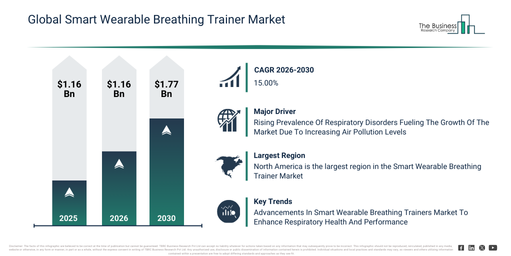
    The market for smart wearable breathing trainers has seen rapid expansion in recent years. Forecasts predict that the market will grow from $1.16 billion in 2025 to $1.34 billion in 2026, reflecting a healthy compound annual growth rate (CAGR) of 15.3%. This earlier growth phase was largely driven by limited consumer knowledge about respiratory health devices, dependence on traditional mechanical trainers, rising fitness and wellness trends, an increase in respiratory disorders, and the initial adoption of wearable technology.

    Looking ahead, the market is anticipated to surge further, reaching $2.35 billion by 2030 at a CAGR of 15.0%. Innovations such as AI-guided breathing trainers, sensor-integrated respiratory wearables, and devices combining electronic and mechanical feedback are key contributors. Additionally, integration with telehealth and mobile applications, along with growing interest in personalized rehabilitation and wellness solutions, are set to accelerate market expansion. Prominent trends include wider acceptance of smart respiratory devices, mobile app connectivity for customized training, increased use in sports and rehabilitation, emphasis on home healthcare, and enhanced user engagement through real-time and biofeedback features.

    Download A Free Sample Report For Comprehensive Market Insights:

    https://www.thebusinessresearchcompany.com/sample.aspx?id=27418&type=smp

    Key Factors Contributing to Growth in the Smart Wearable Breathing Trainer Market

    One significant driver of market growth is the rising incidence of respiratory disorders. These conditions, which include asthma, chronic obstructive pulmonary disease (COPD), and sleep apnea, affect lung function and breathing capacity. The increasing prevalence is partly attributed to growing levels of air pollution, which damages lung health and raises susceptibility to chronic respiratory diseases. Smart wearable breathing trainers assist individuals with these conditions by delivering real-time feedback and guided breathing exercises that strengthen respiratory muscles and improve lung capacity.

    For example, data from the US Centers for Disease Control and Prevention in March 2024 revealed a rise in tuberculosis cases from 8,320 in 2022 to 9,615 in 2023, an increase of 1,295. This growing burden of respiratory ailments strongly supports the demand for smart breathing trainers, facilitating better disease management and rehabilitation.

    Breakdown and Segmentation of the Smart Wearable Breathing Trainer Market

    This market is categorized based on various criteria:

    1) Product Type: Electronic Breathing Trainers, Hybrid Breathing Trainers, and Other Products

    2) Distribution Channel: Online Stores, Specialty Stores, Pharmacies, and Other Channels

    3) Application Areas: Sports and Fitness, Medical and Healthcare, Wellness and Rehabilitation, and Others

    4) End-User Groups: Adults, Children, and Elderly

    Further subcategories include types of electronic trainers such as sensor-enabled, mobile app-connected, feedback-based, and adaptive devices. Hybrid trainers are segmented into mechanical-electronic hybrids, sensor-assisted hybrids, smart hybrids, and multifunctional hybrids. Other products include portable trainers, wearable respiratory monitors, biofeedback-integrated trainers, and customizable devices.

    Access The Complete Smart Wearable Breathing Trainer Market Report:

    https://www.thebusinessresearchcompany.com/report/smart-wearable-breathing-trainer-global-market-report

    How Technology and Innovation Are Shaping the Smart Wearable Breathing Trainer Market

    Leading companies are making strides by incorporating Bluetooth-enabled adaptors that connect traditional respiratory trainers with mobile coaching apps. This fusion allows users to benefit from data-driven respiratory training, remote monitoring, and personalized lung health optimization. Unlike purely mechanical trainers, these smart devices provide real-time feedback, track progress, and deliver tailored workout plans.

    For instance, in December 2024, UK-based POWERbreathe International introduced its Smart Adaptor alongside the ActiBreathe app. This small, rechargeable adaptor connects existing POWERbreathe Plus (inspiratory muscle training) and EX1 (expiratory muscle training) devices to smartphones via Bluetooth. The app guides users through strength tests, breathing exercises with live feedback, and long-term progress tracking. It offers customized training programs suitable for medical patients, athletes, and general wellness users, motivating them with achievement tracking and detailed respiratory muscle performance insights.

    Key Players Leading Competition in the Smart Wearable Breathing Trainer Market

    Several prominent companies dominate the smart wearable breathing trainer market, including:

    Oxa Life Ltd., B-Arm Medical Co. Ltd., Airofit A/S, Powerbreathe International Ltd., Oumua Inc., CHASKi Health Technologies Inc., Hexoskin (Carré Technologies Inc.), Prana Tech LLC, SpiroTiger (Idiag AG), Tymewear Inc., ProSwimwear Ltd., Alvio Inc., Shenzhen Viatom Technology Co. Ltd., Opump Health Technology Co. Ltd., HelloEd Ltd., BRISH Co. Ltd., Zhongshan Huagong Technology Co. Ltd., GH Innotek Co. Ltd., and Shenzhen Lanxiaozhichuang Technology Co. Ltd. These companies are investing heavily in R&D to develop more advanced, connected respiratory training solutions.

    Geographical Markets and Regional Growth Prospects in the Smart Wearable Breathing Trainer Sector

    In 2025, North America accounted for the largest share of the smart wearable breathing trainer market. However, the Asia-Pacific region is expected to show the fastest growth during the forecast period. The market report covers key regions including Asia-Pacific, South East Asia, Western Europe, Eastern Europe, North America, South America, the Middle East, and Africa, providing a global perspective on demand trends and opportunities.

    Get in touch with us:

    The Business Research Company: https://www.thebusinessresearchcompany.com/

    Americas: +1 310-496-7795

    Asia: +44 7882 955267 & +91 8897263534

    Europe: +44 7882 955267

    Email us at: marketing@tbrc.info

    Follow us on:

    LinkedIn: https://in.linkedin.com/company/the-business-research-company

    YouTube: https://www.youtube.com/channel/UC24_fI0rV8cR5DxlCpgmyFQ

    Global Market Model: https://www.thebusinessresearchcompany.com/global-market-model
  • Smart Wearable Blood Pressure Monitor Market Trends Are Creating New Opportunities For Industry Leaders

    Smart Wearable Blood Pressure Monitor Market Trends Are Creating New Opportunities For Industry Leaders

    Delivering more actionable and strategically valuable research, The Business Research Company’s 2026 market reports feature market attractiveness analysis, total addressable market evaluation, company benchmarking matrices, interactive Excel dashboards, expanded supply chain intelligence, emerging startup coverage, and detailed product insights.

    The smart wearable blood pressure monitor market has seen impressive growth recently and is poised for even greater expansion in the coming years. With advancements in technology and increasing health awareness, these devices are becoming essential tools for monitoring cardiovascular health conveniently and accurately. Let’s explore the market’s size, key drivers, emerging trends, major players, and regional outlook to understand how this sector is evolving.

    Market Size and Growth Projections for the Smart Wearable Blood Pressure Monitor Market

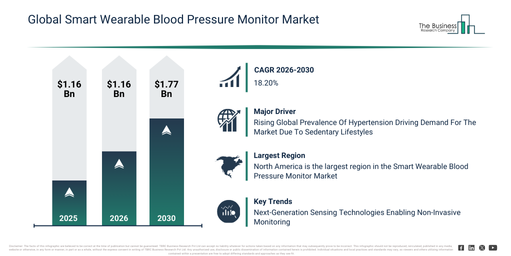
    The smart wearable blood pressure monitor market is experiencing strong growth, with its value expected to rise from $1.84 billion in 2025 to $2.18 billion in 2026, marking a compound annual growth rate (CAGR) of 18.4%. This rapid increase in recent years is linked to factors such as the rising prevalence of hypertension, greater adoption of wearable devices, a growing demand for home-based health monitoring, limitations associated with traditional cuff devices, and the broader acceptance of digital health technologies. Looking ahead, the market is projected to reach $4.25 billion by 2030, maintaining a CAGR of 18.2%. Growth in this forecast period is driven by expanding remote patient monitoring, the integration of AI-based cardiovascular insights, a stronger focus on preventive healthcare, enhanced smartwatch compatibility, and the adoption of value-based healthcare models. Key trends shaping the future include continuous blood pressure monitoring, cuffless measurement technologies, wearable cardiovascular tracking, real-time health alerts, and long-term analytics for hypertension management.

    Download A Free Sample Report For Comprehensive Market Insights:

    https://www.thebusinessresearchcompany.com/sample.aspx?id=29211&type=smp

    The Rising Impact of Hypertension on Market Demand

    A significant factor fueling the smart wearable blood pressure monitor market is the increasing prevalence of hypertension worldwide. Hypertension, a chronic condition marked by consistently high blood pressure in the arteries, contributes to elevated risks of heart disease, stroke, and other cardiovascular problems. This growing health concern reflects a broader population trend where more people experience persistent high arterial pressure, driven by lifestyle changes and improved detection methods. Smart wearable monitors assist patients by offering continuous, real-time blood pressure data, enabling early identification of fluctuations, personalized health feedback, and timely medical interventions. These features help improve medication compliance, optimize treatment plans, and reduce cardiovascular risks. For instance, the World Health Organization reported in September 2025 that about 1.4 billion adults aged 30–79 globally were living with hypertension in 2024, representing roughly one-third of that population segment. This widespread condition continues to underpin strong demand for smart wearable blood pressure devices.

    Key Segments Defining the Smart Wearable Blood Pressure Monitor Market

    This market is segmented based on product type, technology, distribution channels, applications, and end users. Product types include wrist-based, arm-based, and finger-based smart blood pressure monitors. Technology platforms cover Bluetooth, Wi-Fi, cellular, and other communication methods. Distribution spans online stores, pharmacies, specialty outlets, and additional channels. Applications range from home healthcare and remote patient monitoring to sports, fitness, and other uses. End users include hospitals and clinics, ambulatory surgical centers, individual consumers, and other groups. Subcategories expand further, for example, wrist-based monitors feature digital display wearables, touchscreen-enabled devices, and cuffless variants. Arm-based devices include upper-arm, lower-arm, and sensor-driven automatic monitors. Finger-based options consist of ring-style and clip-style wearable blood pressure tools.

    Access The Complete Smart Wearable Blood Pressure Monitor Market Report:

    https://www.thebusinessresearchcompany.com/report/smart-wearable-blood-pressure-monitor-global-market-report

    Innovations Shaping the Market Through Ultrasonic Monitoring

    Leading companies in the smart wearable blood pressure monitor sector are pioneering ultrasonic monitoring technology to improve user comfort and offer continuous, accurate readings. Ultrasonic blood pressure measurement is a non-invasive approach that uses ultrasound waves to detect arterial wall movement and blood flow changes, eliminating the need for traditional inflatable cuffs. An example of this innovation is Novosound’s October 2024 launch of an advanced ultrasonic monitoring solution based on its proprietary Slanj platform. This technology utilizes thin-film ultrasound sensors to miniaturize blood pressure measurement, integrating seamlessly into wearable devices like smartwatches and rings. It delivers accuracy comparable to cuff-based systems while enabling stable, continuous monitoring that enhances daily usability and encourages greater adoption.

    Key Players Leading the Smart Wearable Blood Pressure Monitor Industry

    The market features several prominent companies, including Aktiia SA, Biobeat Technologies Ltd, Corsano Health, HealthSTATS International, Blipcare, Omron Healthcare, Withings SA, Qardio Inc, iHealth Labs Inc, Beurer GmbH, A&D Company Limited, Samsung Electronics Co. Ltd, Huawei Technologies Co. Ltd, Xiaomi Corporation, YHE Technology, BPL Medical Technologies, Med-Watch, CareTaker Medical, Viatom Technology, and ForaCare Suisse AG. These organizations are at the forefront of innovation, product development, and expanding market reach.

    Regional Analysis Highlighting Market Leadership and Growth Potential

    In 2025, North America held the largest share of the smart wearable blood pressure monitor market. However, the Asia-Pacific region is expected to be the fastest-growing area during the forecast period. The market analysis also includes regions such as South East Asia, Western Europe, Eastern Europe, South America, the Middle East, and Africa, offering a broad view of the global competitive landscape and growth opportunities.

    Get in touch with us:

    The Business Research Company: https://www.thebusinessresearchcompany.com/

    Americas: +1 310-496-7795

    Asia: +44 7882 955267 & +91 8897263534

    Europe: +44 7882 955267

    Email us at: marketing@tbrc.info

    Follow us on:

    LinkedIn: https://in.linkedin.com/company/the-business-research-company

    YouTube: https://www.youtube.com/channel/UC24_fI0rV8cR5DxlCpgmyFQ

    Global Market Model: https://www.thebusinessresearchcompany.com/global-market-model
  • Smart Walker Balance Robot Market Growth Is Reshaping Competitive Advantage Across The Industry

    Smart Walker Balance Robot Market Growth Is Reshaping Competitive Advantage Across The Industry

    Enhanced with market attractiveness analysis, total addressable market evaluation, company benchmarking matrices, interactive Excel dashboards, expanded supply chain intelligence, emerging startup coverage, and detailed product insights, The Business Research Company’s 2026 market reports deliver more actionable and strategically valuable research.

    The smart walker balance robot industry is rapidly advancing, driven by technological innovation and rising healthcare demands. This market is gaining attention as it offers vital support for individuals facing mobility challenges, especially among the aging population. Let’s explore the current market size, key factors fueling growth, major players, and emerging trends shaping the future of this sector.

    Smart Walker Balance Robot Market Size and Projected Growth

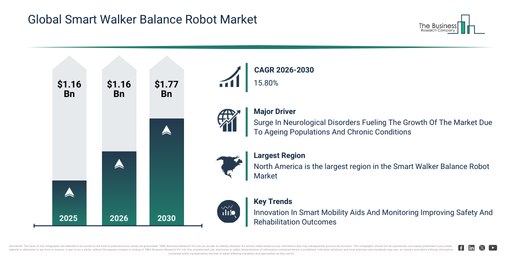
    The smart walker balance robot market has seen impressive growth recently and is expected to continue on this trajectory. Market revenue is forecasted to increase from $1.7 billion in 2025 to $1.98 billion in 2026, marking a compound annual growth rate (CAGR) of 16.1%. This expansion during the past years is largely due to demographic shifts such as an aging population, a rise in mobility impairments, wider adoption of rehabilitation technologies, increasing demand for assisted walking devices, and advancements in robotics. Looking ahead, the market is projected to reach $3.56 billion by 2030 with a CAGR of 15.8%. The anticipated growth is supported by innovations like AI-powered gait analysis, growth in homecare mobility solutions, rising demand for smart rehabilitation devices, integration with healthcare monitoring tools, and a stronger focus on elderly independence. Key trends expected to drive the market include dynamic balance control systems, sensor-assisted gait stabilization, obstacle detection and avoidance technologies, AI-based mobility support, and adaptive posture adjustment mechanisms.

    Download A Free Sample Report For Comprehensive Market Insights:

    https://www.thebusinessresearchcompany.com/sample.aspx?id=29210&type=smp

    The Rising Impact of Neurological Disorders on Market Demand

    One of the primary factors pushing the smart walker balance robot market forward is the increasing prevalence of neurological disorders. These conditions, which affect the brain, spinal cord, or nerves, often result in difficulties with movement, sensation, or cognitive function. Aging populations are particularly susceptible to neurological diseases such as stroke, epilepsy, and Alzheimer’s disease. Smart walker balance robots play a crucial role for these patients by offering gait assistance, fall prevention, and real-time feedback to enhance mobility and independence. For example, the World Federation of Neurology reported in October 2023 that over 40% of people worldwide suffer from neurological conditions, with this figure expected to nearly double by 2050. This growing health concern is directly influencing the increasing use of smart walker balance robots.

    How Increasing Healthcare Spending Supports Market Expansion

    Another important driver for the smart walker balance robot market is the steady rise in healthcare expenditures. Healthcare spending encompasses the total investment by individuals, organizations, and governments in medical services, treatments, and related activities over time. The surge in chronic diseases has led to higher demand for continuous medical care, long-term therapies, and prescription medications, all of which drive healthcare costs upward. This growing financial commitment enables hospitals and clinics to adopt advanced mobility aids like smart walker balance robots, which improve patient safety and rehabilitation outcomes. For instance, the UK’s Office for National Statistics reported in April 2025 that government-funded healthcare spending reached £258 billion in 2024, marking a 2.5% increase in real terms compared to 2023. Such increases in healthcare budgets are facilitating wider access to innovative mobility solutions, boosting market growth.

    Access The Complete Smart Walker Balance Robot Market Report:

    https://www.thebusinessresearchcompany.com/report/smart-walker-balance-robot-global-market-report

    Diverse Product Types and Distribution Channels Shape Market Segments

    The smart walker balance robot market is segmented by product type, distribution channel, application, and end-user categories. Product varieties include Sensor-Assisted Smart Walker Balance Robots, Motorized Smart Walker Balance Robots, AI-Enabled Smart Walker Balance Robots, and Autonomous Smart Walker Balance Robots. Distribution channels consist of specialty stores, direct sales, and other avenues. Applications cover elderly care, rehabilitation centers, hospitals, and other fields, while end-users range from individuals to healthcare facilities and other consumers. More detailed subsegments of sensor-assisted products include inertial sensor-based walkers, pressure-sensor gait support walkers, proximity-sensor obstacle-aware walkers, and multi-sensor fusion walkers. Motorized walkers are classified into power-assisted drive walkers, self-propelled motorized walkers, adaptive speed-control walkers, and terrain-responsive motorized walkers. AI-enabled walkers encompass AI gait-analysis models, predictive balance-correction devices, machine-learning adaptive walkers, and fall-risk detection walkers. Autonomous walkers include self-navigating smart walkers, obstacle-avoidance models, path-planning robotic walkers, and fully autonomous balance-stabilizing walkers.

    How Technological Innovations Are Transforming the Market’s Future

    Leading companies in the smart walker balance robot market are focusing on incorporating cutting-edge artificial intelligence (AI) technologies to improve mobility assistance and rehabilitation outcomes. AI-powered gait analysis uses algorithms and sensor data to assess walking patterns, enhancing safety and personalization. For example, in January 2023, Camino Mobility, a US-based company, introduced the world’s first smart walker equipped with embedded cameras and AI that monitor gait in real time. Features like adaptive auto-boost and intelligent braking promote safer movement. Its compact, folding design allows easy navigation through narrow spaces such as airplane aisles. Additionally, the device connects to a cloud-based AI health platform, providing mobility data, safety alerts, and remote monitoring for caregivers, enabling timely interventions to maintain user independence and promote healthy aging.

    Key Players Leading the Smart Walker Balance Robot Market

    Several prominent companies are shaping the competitive landscape of the smart walker balance robot market. These include UPnRIDE Robotics Ltd., Camino Mobility, Trexo Robotics, Rex Bionics, Wandercraft, Ekso Bionics Holdings Inc., UBTECH Robotics Corp. Ltd., Shenzhen Zuowei Technology Co. Ltd., Siyi Intelligent Technology, ReWalk Robotics, Bionik Laboratories, Cyberdyne Inc., Toyota Motor Corporation, Honda Motor Co. Ltd., Hyundai Motor Company, Panasonic Corporation, Walk-E, Roam Robotics, Indego, and Parker Hannifin. These organizations are investing heavily in research and development to enhance product functionality and user experience.

    Regional Dynamics and Growth Potential in the Smart Walker Balance Robot Market

    In 2025, North America held the largest share of the smart walker balance robot market, supported by advanced healthcare infrastructure and investment. Meanwhile, the Asia-Pacific region is anticipated to experience the fastest growth during the forecast period, driven by rising healthcare awareness, increasing elderly populations, and expanding medical facilities. The market analysis encompasses regions including Asia-Pacific, South East Asia, Western Europe, Eastern Europe, North America, South America, the Middle East, and Africa, providing a comprehensive understanding of the global market environment and growth opportunities.

    Get in touch with us:

    The Business Research Company: https://www.thebusinessresearchcompany.com/

    Americas: +1 310-496-7795

    Asia: +44 7882 955267 & +91 8897263534

    Europe: +44 7882 955267

    Email us at: marketing@tbrc.info

    Follow us on:

    LinkedIn: https://in.linkedin.com/company/the-business-research-company

    YouTube: https://www.youtube.com/channel/UC24_fI0rV8cR5DxlCpgmyFQ

    Global Market Model: https://www.thebusinessresearchcompany.com/global-market-model
  • Smart Thermometers Market Forecast Signals New Revenue Opportunities Through 2030

    Smart Thermometers Market Forecast Signals New Revenue Opportunities Through 2030

    Through market attractiveness analysis, total addressable market evaluation, company benchmarking matrices, interactive Excel dashboards, expanded supply chain intelligence, emerging startup coverage, and detailed product insights, The Business Research Company’s 2026 market reports provide more actionable and strategically valuable research.

    The smart thermometers market has been experiencing swift expansion lately, reflecting growing interest and innovation in healthcare technology. As remote monitoring and advanced connectivity become more common, the market is set to witness substantial growth and transformation in the coming years. Below, we explore the current market size, the factors fueling its rise, key segments, emerging trends, leading players, and regional highlights.

    Smart Thermometers Market Size and Expected Growth Trajectory

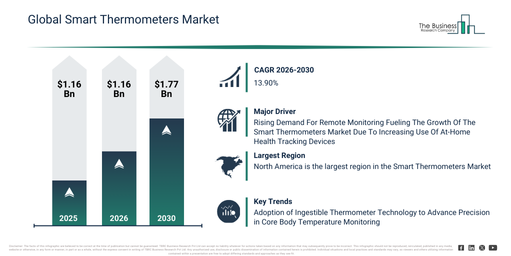
    The smart thermometers market has seen rapid growth in recent years and is projected to continue expanding significantly. It is anticipated to increase from $0.97 billion in 2025 to $1.11 billion in 2026, marking a compound annual growth rate (CAGR) of 14.2%. This historical growth phase was driven by limited adoption of smart health devices, dependence on traditional digital and contact thermometers, heightened awareness about fever management, the increasing prevalence of chronic illnesses, and greater clinical diagnostic requirements. Looking ahead, the market is forecasted to reach $1.87 billion by 2030, growing at a CAGR of 13.9%. This anticipated surge is fueled by the rise of remote patient monitoring solutions, expansion in telemedicine and home healthcare services, enhanced integration of artificial intelligence and data analytics, growing consumer interest in fitness and wellness tracking, and technological advancements in Bluetooth and Wi-Fi-enabled thermometers.

    Download A Free Sample Report For Comprehensive Market Insights:

    https://www.thebusinessresearchcompany.com/sample.aspx?id=24707&type=smp

    Key Drivers Behind Growth in the Smart Thermometers Market

    One of the primary factors boosting the smart thermometers market is the rising demand for remote health monitoring solutions. These solutions encompass technologies that facilitate the collection, transmission, and analysis of health data from patients outside traditional clinical environments. Increasing advancements in wearable and smart medical devices enable continuous and real-time health tracking, which supports early diagnosis and personalized care.

    Smart thermometers play a crucial role in this landscape by allowing patients to conveniently and accurately monitor their body temperature at home and instantly share this information with healthcare providers for timely assessment and intervention. For example, in August 2025, data from the U.S. Department of Health & Human Services showed that Medicare payments for remote patient monitoring exceeded $536 million in 2024, a 31% increase from the previous year. Nearly one million beneficiaries received remote patient monitoring services, reflecting a 27% rise compared to 2023, and around 4,600 medical practices regularly billed for these services. These trends underscore the influence of remote health care needs in propelling smart thermometer adoption.

    Detailed Segmentation and Growth Potential of the Smart Thermometers Market

    This market is categorized by product type, connectivity, application, and industry verticals to provide a comprehensive view of its scope.

    By product type, the segments include infrared thermometers, contact thermometers, smart wearable thermometers, smartphone-compatible thermometers, and digital thermometers.

    Connectivity options are divided into Bluetooth-enabled, Wi-Fi-enabled, and Near Field Communication (NFC) thermometers.

    Applications cover clinical diagnostics, fitness and wellness monitoring, clinical research, and telemedicine.

    Industry verticals consist of medical, food industry, industrial, laboratory, and other sectors.

    Further subcategories detail specific kinds of thermometers within the main groups, such as non-contact forehead and in-ear infrared devices, oral and rectal contact thermometers, continuous monitoring wearable patches, app-enabled infrared thermometers, and various digital thermometer designs.

    Access The Complete Smart Thermometers Market Report:

    https://www.thebusinessresearchcompany.com/report/smart-thermometers-global-market-report

    How Innovations Are Shaping Demand in the Smart Thermometers Industry

    Leading companies in the market are investing heavily in the development of ingestible thermometers, which offer a highly accurate and convenient method for internal temperature monitoring. These devices are small, pill-sized electronic sensors that continuously track core body temperature and transmit real-time data wirelessly to external devices.

    For instance, in February 2024, the French medical equipment company BodyCap S.A.S. introduced the eCelsius Performance Connect System designed for sports and occupational health research. This system uses a sub-gigahertz radio module for reliable data transmission from inside the body to wearable receivers. It supports Bluetooth connectivity and provides extended battery life, enhancing usability for long-term monitoring.

    Prominent Companies Leading the Smart Thermometers Market

    The market features several key players who dominate the smart thermometer landscape, including OMRON Corporation, Koninklijke Philips N V, Testo SE And Co KGaA, Braun GmbH, Beurer GmbH, Withings S A S, Microlife Corporation AG, Exergen Corporation, iHealth Labs Inc, Kinsa Inc, Tempdrop Ltd, iProven, VivaLNK Inc, BioIntelliSense Inc, Masimo Corporation, Abbott Laboratories, Medtronic plc, VivaCheck Labs, ForaCare Inc, and A And D Company Limited.

    Regional Market Leadership and Growth Outlook

    In 2025, North America held the largest share of the smart thermometers market, benefiting from high adoption rates and advanced healthcare infrastructure. However, the Asia-Pacific region is expected to emerge as the fastest-growing market during the forecast period, driven by expanding healthcare access and technological adoption. The market analysis spans multiple regions, including Asia-Pacific, South East Asia, Western Europe, Eastern Europe, North America, South America, the Middle East, and Africa, providing a global perspective on growth opportunities.

    Get in touch with us:

    The Business Research Company: https://www.thebusinessresearchcompany.com/

    Americas: +1 310-496-7795

    Asia: +44 7882 955267 & +91 8897263534

    Europe: +44 7882 955267

    Email us at: marketing@tbrc.info

    Follow us on:

    LinkedIn: https://in.linkedin.com/company/the-business-research-company

    YouTube: https://www.youtube.com/channel/UC24_fI0rV8cR5DxlCpgmyFQ

    Global Market Model: https://www.thebusinessresearchcompany.com/global-market-model
  • Smart Syringe Market Growth Is Accelerating As Industry Transformation Continues

    Smart Syringe Market Growth Is Accelerating As Industry Transformation Continues

    Delivering more actionable and strategically valuable research, The Business Research Company’s 2026 market reports feature market attractiveness analysis, total addressable market evaluation, company benchmarking matrices, interactive Excel dashboards, expanded supply chain intelligence, emerging startup coverage, and detailed product insights.

    The smart syringe market has seen significant progress in recent years, driven by advancements in healthcare and safety protocols. As the healthcare sector continues to evolve, the demand for innovative injection devices is rising sharply. This overview explores the market’s size, key growth factors, segmentation, technological innovations, major players, and regional opportunities shaping its future.

    Rapid Expansion and Projected Growth in the Smart Syringe Market

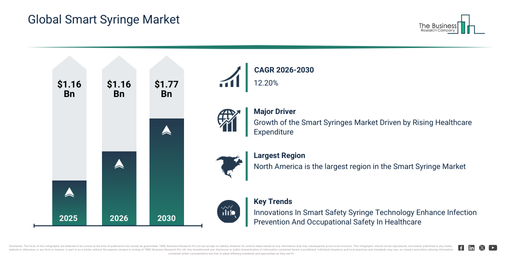
    The smart syringe market has expanded rapidly, with its value expected to increase from $12.15 billion in 2025 to $13.55 billion in 2026, reflecting a compound annual growth rate (CAGR) of 11.5%. This growth during the past period was largely fueled by widespread vaccination initiatives, a rising number of chronic disease cases, heightened awareness of healthcare worker safety, the adoption of single-use injection devices, and the growth of hospital-based injection procedures. Looking ahead, the market is projected to reach $21.46 billion by 2030, growing at an impressive CAGR of 12.2%. Factors contributing to this forecasted expansion include a rising demand for smart drug delivery devices, new government regulations mandating safety syringes, the growth of home healthcare services, an increased focus on digital medication tracking, and widespread use in mass immunization campaigns. Emerging trends during this period feature greater use of auto-disable and safety-engineered syringes, enhanced dose accuracy monitoring, stronger emphasis on preventing needlestick injuries, expanding smart delivery solutions, and stricter infection control measures.

    Download A Free Sample Report For Comprehensive Market Insights:

    https://www.thebusinessresearchcompany.com/sample.aspx?id=10821&type=smp

    Healthcare Spending as a Key Driver of Smart Syringe Market Growth

    One of the main forces propelling the smart syringe market is the rise in healthcare expenditure worldwide. Healthcare spending refers to the financial resources allocated by countries, organizations, or individuals toward medical services and products. This increase is influenced by factors such as an aging population, a higher burden of chronic diseases, advances in medical technologies, and growing consumer expectations for better quality care. The smart syringe market supports this trend by offering innovative tools that improve patient safety, boost procedural efficiency, and cut costs linked to complications from traditional syringes. For example, in November 2023, the Canadian Institute for Health Information reported that Canada’s total health spending was projected to reach $344 billion in 2023, marking a 2.8% increase over the previous year. Such rising healthcare budgets are driving demand for smarter, safer injection devices.

    Additional Factors Encouraging Market Expansion in Smart Syringes

    Apart from healthcare expenditure, increasing awareness about healthcare worker safety plays a crucial role in market growth. The widespread adoption of single-use syringes and enhanced safety features helps reduce needlestick injuries and the transmission of blood-borne infections. Moreover, expansion in vaccination programs and hospital-based injection procedures continues to create a steady demand for smart syringes globally.

    Access The Complete Smart Syringe Market Report:

    https://www.thebusinessresearchcompany.com/report/smart-syringe-global-market-report

    How the Smart Syringe Market Is Categorized by Products and End Users

    The smart syringe market is divided into several key segments to better understand its scope:

    1) By Product Type: Auto-Disable Syringes, Active Safety Syringes, Passive Safety Syringes

    2) By Age Group: Pediatrics, Adults

    3) By Application: Drug Delivery, Vaccination

    4) By End Users: Hospitals and Health Maintenance Organizations (HMOs), Diabetic Patients, Family Practices

    Subcategories include fixed-dose, variable-dose, and low dead space auto-disable syringes; retractable and shielded needle types under active safety syringes; and integrated safety mechanism and clamshell safety syringes within passive safety syringes.

    Innovative Developments Shaping the Smart Syringe Industry

    Leading companies in the smart syringe market are focusing on creating advanced safety injection devices aimed at improving patient protection, reducing needlestick injuries, and reinforcing infection control in healthcare settings. These innovations typically incorporate automated or built-in safety features designed to minimize accidental exposure to blood-borne pathogens and to improve workflow efficiency for healthcare professionals. For instance, in April 2024, Hindustan Syringes and Medical Devices from India launched Dispojekt Syringes, which feature a transparent, single-hand operable safety mechanism and a molded plastic shield to prevent blood splatter during use. This product significantly lowers the risk of accidental needlestick injuries, enhancing usability and workplace safety. Such advancements illustrate the company’s commitment to innovation and support India’s goal to strengthen its medical device manufacturing sector globally.

    Key Competitors and Market Players in the Smart Syringe Sector

    The competitive landscape of the smart syringe market features many major companies, including Becton Dickinson and Company, Terumo Corporation, B Braun Melsungen AG, Gerresheimer AG, Retractable Technologies Inc., Nipro Corporation, Sharps Technology, Revolutions Medical Corporation, Owen Mumford Ltd., Ypsomed Holding AG, Weigao Group, Shandong Weigao Group Medical Polymer Co Ltd, Jiangsu Huida Medical Instruments Co Ltd, Numedico Technologies Pty Ltd, AdvaCare Pharma, Star Syringe Ltd, Hindustan Syringes and Medical Devices Ltd, Albert David Ltd, Vitromed Healthcare, and Iscon Surgicals Ltd. These firms drive innovation and compete by enhancing product safety, functionality, and cost-effectiveness.

    Regional Dynamics and Growth Opportunities in the Smart Syringe Market

    In 2025, North America held the largest share of the global smart syringe market. However, the Asia-Pacific region is expected to register the fastest growth over the forecast period. The market report covers a broad geographic scope, including Asia-Pacific, South East Asia, Western Europe, Eastern Europe, North America, South America, the Middle East, and Africa, offering a detailed view of regional trends and opportunities.

    Get in touch with us:

    The Business Research Company: https://www.thebusinessresearchcompany.com/

    Americas: +1 310-496-7795

    Asia: +44 7882 955267 & +91 8897263534

    Europe: +44 7882 955267

    Email us at: marketing@tbrc.info

    Follow us on:

    LinkedIn: https://in.linkedin.com/company/the-business-research-company

    YouTube: https://www.youtube.com/channel/UC24_fI0rV8cR5DxlCpgmyFQ

    Global Market Model: https://www.thebusinessresearchcompany.com/global-market-model
  • Smart Sports Fitness Trackers Market Outlook Highlights The Next Major Growth Opportunities

    Smart Sports Fitness Trackers Market Outlook Highlights The Next Major Growth Opportunities

    Enhanced with market attractiveness analysis, total addressable market evaluation, company benchmarking matrices, interactive Excel dashboards, expanded supply chain intelligence, emerging startup coverage, and detailed product insights, The Business Research Company’s 2026 market reports deliver more actionable and strategically valuable research.

    The smart sports fitness trackers market has experienced remarkable growth recently, driven by increasing consumer interest in health and fitness technology. As wearable devices become more sophisticated and widespread, the sector is set to expand even further in the coming years. Let’s explore the current market size, key growth factors, influential companies, emerging trends, and geographic dynamics shaping this fast-evolving industry.

    Market Size and Projected Growth in the Smart Sports Fitness Trackers Market

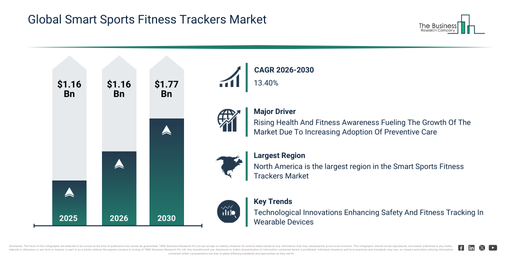
    The market for smart sports fitness trackers has expanded significantly, with its value rising from $53.2 billion in 2025 to $60.49 billion in 2026, reflecting a strong compound annual growth rate (CAGR) of 13.7%. This impressive rise can be linked to widespread adoption of wearable technology, growing fitness consciousness among consumers, advancements in sensor capabilities, greater smartphone penetration, and the development of sports clubs and gyms worldwide. Looking ahead, the market is forecasted to soar to $100 billion by 2030, maintaining a CAGR of 13.4%. Key contributors to this future growth include AI-powered coaching platforms, enhanced biometric sensors, increasing demand for personalized health data, expansion in emerging economies, and strategic collaborations with sports teams and fitness influencers. Important trends anticipated during this period encompass wearable health monitoring, customized fitness coaching, remote tracking of athletic performance, gamification of workouts, and integration with nutrition and wellness apps.

    Download A Free Sample Report For Comprehensive Market Insights:

    https://www.thebusinessresearchcompany.com/sample.aspx?id=25907&type=smp

    Health and Fitness Awareness as a Catalyst for Market Expansion

    One of the major forces driving the smart sports fitness trackers market is the rising awareness around health, fitness, and preventive healthcare. Today, more people recognize the importance of maintaining physical well-being through consistent exercise, balanced habits, and early health issue detection. This growing consciousness is partly fueled by the widespread availability of information on digital platforms such as apps, social media, and health websites, which educate users on the impact of daily choices on long-term health outcomes. Smart sports fitness trackers play a crucial role in this trend by monitoring physical activity, vital signs, and providing actionable feedback that encourages healthier lifestyles and timely interventions.

    Supporting this trend, data from June 2024 by the International Food Information Council (IFIC), a US-based nonprofit, highlights that 54% of Americans followed a specific diet or eating pattern over the past year. Interest in increasing protein intake has steadily risen, reaching 71% in 2024, up from 59% in 2022. Additionally, about half of consumers aim to consume more fresh foods, widely regarded as the healthiest option. This heightened health and preventive care awareness significantly contributes to the escalating demand for smart sports fitness trackers globally.

    Access The Complete Smart Sports Fitness Trackers Market Report:

    https://www.thebusinessresearchcompany.com/report/smart-sports-fitness-trackers-global-market-report

    Diverse Product Segments and Revenue Opportunities Within the Smart Sports Fitness Trackers Market

    This report categorizes the smart sports fitness trackers market into several segments based on product type, price range, application, distribution channel, and end-user groups. Products include wristbands, smartwatches, chest straps, and other types such as clip-on trackers, smart rings, and sensor-enabled smart clothing. Price segments range from economy to super-premium models, catering to different consumer budgets. Applications cover activity tracking, sleep monitoring, heart rate detection, and coaching functions. Distribution channels span hypermarkets, department stores, online retail platforms, and specialty sports shops. End-users are segmented into professional athletes, fitness enthusiasts, and other consumers. Further subcategories include wristbands that vary from basic fitness trackers to advanced waterproof models with heart rate monitoring, smartwatches featuring standalone or Bluetooth-connected capabilities, and chest straps designed for heart rate, respiratory, or multi-sensor monitoring.

    Industry Trends Shaping the Future Landscape of Smart Sports Fitness Trackers

    Leading companies in the smart sports fitness trackers market are concentrating on innovations that enhance smart connectivity and safety features. For example, emergency safety overhead system (SOS) functionality is being integrated to allow users to quickly send alerts to emergency contacts by pressing specific button sequences on their devices. This adds a critical safety dimension alongside accurate fitness and health tracking. A case in point is Samsung Electronics Co. Ltd., which introduced the Galaxy Fit 3 in India in February 2024. This entry-level fitness tracker boasts a 1.6-inch AMOLED display, various health sensors, and over 100 workout modes. It includes advanced features such as comprehensive sleep monitoring, fall detection for emergencies, blood oxygen tracking during sleep, and water resistance rated at 5 ATM with IP68 certification. Additionally, it offers seamless smartphone control, making it a versatile tool for health, fitness, and activity management in diverse environments.

    Key Market Players Driving Innovation and Competition in Smart Sports Fitness Trackers

    The smart sports fitness trackers market is shaped by a range of influential companies from across the globe. Prominent names include Apple Inc, Samsung Electronics Co Ltd, Huawei Technologies Co Ltd, Xiaomi Corporation, Garmin Ltd, Fossil Group Inc, Polar Electro Oy, TomTom International B V, Bellabeat Inc, MOKO Smart Technology Limited, COROS Wearables Inc, Amazfit by Zepp Health Corporation, Ultrahuman Healthcare Private Limited, Starmax Technology Co Ltd, Fitbit LLC, Withings SA, Whoop Inc, Suunto Oy, Oura Health Ltd, GoQii Technologies Pvt Ltd, Realme Chongqing Mobile Telecommunications Corp Ltd, and Noise Fitness India Pvt Ltd. Together, these companies are at the forefront of innovation, shaping industry trends and driving competitive growth.

    Regional Dynamics and Growth Outlook in the Smart Sports Fitness Trackers Market

    In 2025, North America accounted for the largest share of the smart sports fitness trackers market. However, the Asia-Pacific region is expected to experience the fastest growth during the forecast period. The market analysis encompasses multiple regions including Asia-Pacific, South East Asia, Western Europe, Eastern Europe, North America, South America, the Middle East, and Africa, providing a comprehensive perspective on global market trends and opportunities.

    Get in touch with us:

    The Business Research Company: https://www.thebusinessresearchcompany.com/

    Americas: +1 310-496-7795

    Asia: +44 7882 955267 & +91 8897263534

    Europe: +44 7882 955267

    Email us at: marketing@tbrc.info

    Follow us on:

    LinkedIn: https://in.linkedin.com/company/the-business-research-company

    YouTube: https://www.youtube.com/channel/UC24_fI0rV8cR5DxlCpgmyFQ

    Global Market Model: https://www.thebusinessresearchcompany.com/global-market-model
  • Smart Sleep Monitor Market Trends And Growth Drivers Point To Strong Future Potential

    Smart Sleep Monitor Market Trends And Growth Drivers Point To Strong Future Potential

    Through market attractiveness analysis, total addressable market evaluation, company benchmarking matrices, interactive Excel dashboards, expanded supply chain intelligence, emerging startup coverage, and detailed product insights, The Business Research Company’s 2026 market reports provide more actionable and strategically valuable research.

    The smart sleep monitor market is experiencing rapid growth, driven by increasing health awareness and technological advancements. As more people prioritize better sleep and wellness, demand for smart sleep monitoring devices is expanding significantly. Let’s explore the current market size, key drivers, leading players, and emerging trends shaping this dynamic industry.

    Current Market Size and Future Growth of the Smart Sleep Monitor Market

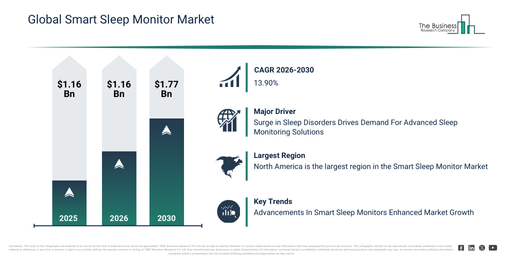
    The smart sleep monitor market has shown impressive expansion in recent years. It is projected to grow from $28.94 billion in 2025 to $32.99 billion in 2026, with a compound annual growth rate (CAGR) of 14.0%. This growth can be traced back to rising consumer awareness about sleep health, increased adoption of wearable health gadgets, the expansion of digital health platforms, a higher prevalence of sleep disorders, and greater smartphone penetration. Looking ahead, the market is set to accelerate, reaching $55.51 billion by 2030, driven by a CAGR of 13.9%. Factors fueling this surge include greater demand for preventive healthcare monitoring, deeper integration of sleep data with health platforms, growth in subscription-based digital health services, adoption of non-wearable monitoring options, and a heightened focus on mental wellness technologies. Prominent trends expected to shape the future landscape involve AI-driven sleep analytics, a preference for contactless monitoring, embedding sleep devices within smart home systems, increasing use of wearable sleep trackers, and enhanced personalized sleep insights.

    Download A Free Sample Report For Comprehensive Market Insights:

    https://www.thebusinessresearchcompany.com/sample.aspx?id=18736&type=smp

    Factors Behind the Expansion of the Smart Sleep Monitor Market

    One of the primary reasons behind the rapid growth in the smart sleep monitor market is the rising incidence of sleep-related disorders. These conditions disrupt normal sleep patterns, impacting sleep quality, duration, or timing, and often causing excessive daytime fatigue. The surge in sleep disorders is influenced by factors such as socioeconomic stress, lifestyle changes, and an aging demographic. Advanced sleep monitors assess numerous health parameters, including heart rate variability, breathing patterns, snoring, body temperature, and wakefulness periods, to analyze sleep quality and identify potential issues. For example, in May 2023, SleepFoundation.org, a US-based nonprofit focused on sleep health education and product testing, reported that between 50 million and 70 million Americans suffer from chronic sleep disorders, often connected with post-traumatic stress disorder (PTSD). Additionally, seasonal affective disorder (SAD) impacts approximately 70% of adults. These trends underscore the increasing need for smart sleep monitoring devices.

    Additional Drivers Supporting Market Growth

    The demand for continuous health monitoring and personalized wellness solutions is further propelling the smart sleep monitor market. Consumers seek devices that not only track sleep but also integrate seamlessly with other health and lifestyle platforms. This holistic approach to health management encourages adoption of innovative technologies, such as AI-powered analytics and contactless monitoring options. Furthermore, the growing awareness of mental health’s connection to sleep quality is pushing consumers towards devices that offer actionable insights and preventative care features.

    Access The Complete Smart Sleep Monitor Market Report:

    https://www.thebusinessresearchcompany.com/report/smart-sleep-monitor-global-market-report

    How the Smart Sleep Monitor Market Is Categorized

    This report breaks down the smart sleep monitor market into distinct segments for better analysis:

    1) By Type: Wearable Devices, Non-Wearable Devices

    2) By Technology: Sensing Technology, Computing Technology, Display Technology

    3) By Application: Sleep Quality Monitoring, Sleep Pattern Analysis and Insights

    More detailed subcategories under these segments include:

    – Wearable Devices such as smartwatches, fitness trackers, sleep headbands, smart rings, and wearable sleep sensors.

    – Non-Wearable Devices including sleep tracking mats, under-mattress sensors, smart pillows, non-wearable sleep bands, and bedside sleep monitors.

    Emerging Trends and Innovations in the Smart Sleep Monitor Market

    Leading companies in this sector are focusing on integrating advanced technologies like artificial intelligence to boost device capability and user experience. AI-powered sleep monitors analyze sleep patterns with greater precision, provide personalized recommendations, and predict sleep quality to help users improve their rest. For instance, in July 2024, Samsung Electronics Co. Ltd. introduced the Galaxy Ring, a health tracker that monitors sleep metrics such as movement, sleep latency, heart rate, and respiratory rate. It also tracks menstrual cycles by measuring overnight skin temperature, offers continuous heart rate monitoring with alerts for irregularities, automatically detects different exercises, and encourages activity through inactivity notifications.

    Key Players Influencing the Smart Sleep Monitor Market

    The market features a range of prominent companies driving innovation and expansion, including Apple Inc., Samsung Electronics Co. Ltd, Xiaomi Corporation, Koninklijke Philips NV, Garmin Ltd, ResMed Inc., Sleep Number Corporation, Fitbit LLC, Misfit Inc., Withings Corporation, Owlet Inc., Empatica Inc., Sibel Health Inc., Sleepiz AG, Eight Sleep, Early Sense Inc., Beddit Inc., Emfit Inc., Ultrahuman Inc., and Onera Health Inc.

    Regional Market Leadership and Growth Outlook

    In 2025, North America held the largest share of the smart sleep monitor market. The report covers key regions such as Asia-Pacific, South East Asia, Western Europe, Eastern Europe, North America, South America, the Middle East, and Africa, providing a comprehensive view of regional market dynamics. While North America remains dominant, other regions are also expected to witness significant growth opportunities as consumer awareness and technology adoption expand globally.

    Get in touch with us:

    The Business Research Company: https://www.thebusinessresearchcompany.com/

    Americas: +1 310-496-7795

    Asia: +44 7882 955267 & +91 8897263534

    Europe: +44 7882 955267

    Email us at: marketing@tbrc.info

    Follow us on:

    LinkedIn: https://in.linkedin.com/company/the-business-research-company

    YouTube: https://www.youtube.com/channel/UC24_fI0rV8cR5DxlCpgmyFQ

    Global Market Model: https://www.thebusinessresearchcompany.com/global-market-model
  • Smart Skin Analyzer Device Market Expansion Is Reshaping Competitive Dynamics Across The Industry

    Smart Skin Analyzer Device Market Expansion Is Reshaping Competitive Dynamics Across The Industry

    Delivering more actionable and strategically valuable research, The Business Research Company’s 2026 market reports feature market attractiveness analysis, total addressable market evaluation, company benchmarking matrices, interactive Excel dashboards, expanded supply chain intelligence, emerging startup coverage, and detailed product insights.

    The smart skin analyzer device market has been witnessing remarkable growth recently, driven by rising skincare awareness and technological advancements. As consumers and professionals alike seek better diagnostic tools, this sector is set to expand significantly in the coming years. Let’s explore the current market size, key drivers, leading companies, and emerging trends shaping the future of this industry.

    Significant Growth and Market Projections for Smart Skin Analyzer Devices

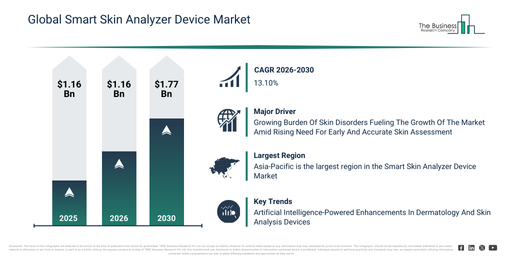
    The market for smart skin analyzer devices has expanded swiftly over recent years. It is projected to increase from $1.45 billion in 2025 to $1.64 billion in 2026, representing a compound annual growth rate (CAGR) of 13.4%. This growth during the historical period is largely due to rising skincare awareness, the proliferation of beauty clinics, increased demand for non-invasive diagnostics, the growth of cosmetic dermatology, and the integration of consumer electronics with skincare devices. Looking ahead, the market is expected to reach $2.68 billion by 2030, growing at a CAGR of 13.1%. Key factors fueling this forecast include advancements in AI-powered predictive skin analytics, tighter integration with beauty applications, the rise of direct-to-consumer devices, broader adoption of smart mirrors, and expanding beauty markets in emerging regions. Major trends anticipated during this period involve AI-driven skin assessment, personalized skincare recommendations, portable diagnostic tools, consumer-friendly at-home skin analysis, and imaging-based facial mapping technology.

    Download A Free Sample Report For Comprehensive Market Insights:

    https://www.thebusinessresearchcompany.com/sample.aspx?id=30398&type=smp

    Primary Drivers Behind the Growth of Smart Skin Analyzer Devices

    One of the main forces propelling the smart skin analyzer device market is the increasing prevalence of skin disorders worldwide. These conditions, which range from common ailments like acne and eczema to more serious diseases such as melanoma, affect the skin’s structure, function, and appearance. Rising exposure to harmful ultraviolet (UV) radiation has contributed to the surge in skin disorders, increasing the urgency for effective early diagnosis and monitoring solutions. Smart skin analyzers use advanced imaging and analytical technologies to detect early signs of skin problems, enabling more precise and personalized treatment plans.

    A clear example highlighting this demand comes from Australia, where in 2023, there were 1,527 melanoma-related deaths reported, including 1,038 males and 489 females, according to Cancer Australia. This underscores the critical need for improved skin health monitoring, which supports the ongoing expansion of the smart skin analyzer device market.

    Access The Complete Smart Skin Analyzer Device Market Report:

    https://www.thebusinessresearchcompany.com/report/global-smart-skin-analyzer-device-market-report

    Breakdown of Segments Expanding Rapidly in the Smart Skin Analyzer Device Market

    The smart skin analyzer device market is categorized by several key segments:

    1) Product Type: Handheld Devices, Desktop Devices, Portable Devices

    2) Distribution Channel: Online, Offline

    3) Technology: Artificial Intelligence (AI)-Based, Sensor-Based, Imaging-Based, Other Technologies

    4) Application: Dermatology Clinics, Beauty Salons and Spas, Home Use, Research and Academia, Other Applications

    5) End-User: Professional, Consumer

    Further product-specific subsegments include:

    – Handheld Devices like Compact Skin Scanners, Wireless Skin Analyzers, Pocket Diagnostic Tools, Moisture Meters, and Portable Imaging Devices

    – Desktop Devices such as Multi-Parameter Analysis Stations, High-Resolution Facial Imaging Systems, Professional Dermatology Units, Facial Mapping Systems, and Clinical Grade Platforms

    – Portable Devices including Travel-Friendly Analyzers, Battery-Operated Diagnostic Units, Compact Facial Imaging Devices, Moisture and Oil Meters, and Mobile Assessment Tools

    Innovative Trends Shaping the Future of Smart Skin Analyzer Devices

    Leading companies in this space are heavily investing in artificial intelligence to improve diagnostic precision, automate processes, and enable real-time evaluations. AI systems utilize machine learning algorithms trained on extensive skin image datasets to identify patterns, classify abnormalities, and assist clinical decisions. These capabilities include automated lesion analysis, enhanced imaging clarity, and personalized skin assessments. For instance, in May 2024, FotoFinder Systems GmbH from Germany introduced Skeen, an AI-powered wireless digital dermatoscope designed for advanced skin and hair analysis. This device incorporates AI-supported image evaluation, cloud-based data storage, and high-resolution wireless imaging, significantly enhancing clinical workflow efficiency, accuracy, and remote patient data access. Such technological advancements reinforce the growing role of AI-powered tools in professional dermatology and smart skin diagnostics.

    Competitive Landscape of the Smart Skin Analyzer Device Market

    Key players leading the smart skin analyzer device market include Perfect Corp., FotoFinder Systems GmbH, lululab Inc., Beijing ADSS Development Co. Ltd., Beijing Sanhe Beauty Science and Technology Co. Ltd., Shanghai May Skin Information Technology Co. Ltd., Zemits, Sylton Inc., Cortex Technology Inc., FitSkin Inc., Aram Huvis Co. Ltd., Bomtech Electronics Co. Ltd., Changsha GOMECY Electronics Co. Ltd., Guangzhou Mico AEST Technology Co. Ltd., Miramhoo Aesthetics, Medelink Enterprise Inc., Sea Heart Group, Callegari S.p.A., Canfield Scientific Inc., and Pixience SAS. These companies are shaping the market through innovation, expanding product offerings, and strategic collaborations.

    Geographical Insights: Leading Regions in the Smart Skin Analyzer Device Market

    In 2025, Asia-Pacific emerged as the largest regional market for smart skin analyzer devices. This region is also expected to experience the fastest growth during the forecast period. Other important regions covered in the market analysis include South East Asia, Western Europe, Eastern Europe, North America, South America, the Middle East, and Africa, providing a full global perspective on market trends and opportunities.

    Get in touch with us:

    The Business Research Company: https://www.thebusinessresearchcompany.com/

    Americas: +1 310-496-7795

    Asia: +44 7882 955267 & +91 8897263534

    Europe: +44 7882 955267

    Email us at: marketing@tbrc.info

    Follow us on:

    LinkedIn: https://in.linkedin.com/company/the-business-research-company

    YouTube: https://www.youtube.com/channel/UC24_fI0rV8cR5DxlCpgmyFQ

    Global Market Model: https://www.thebusinessresearchcompany.com/global-market-model
  • Smart Ring Hormone Tracker Market Forecast Reveals Where Future Industry Value Will Be Created

    Smart Ring Hormone Tracker Market Forecast Reveals Where Future Industry Value Will Be Created

    Enhanced with market attractiveness analysis, total addressable market evaluation, company benchmarking matrices, interactive Excel dashboards, expanded supply chain intelligence, emerging startup coverage, and detailed product insights, The Business Research Company’s 2026 market reports deliver more actionable and strategically valuable research.

    The market for smart ring hormone trackers is rapidly evolving as more people prioritize monitoring their hormonal health with innovative wearable technology. This sector is experiencing significant growth driven by advances in health tracking capabilities and a deeper understanding of hormonal influences on overall well-being. Let’s explore the current market figures, key growth factors, leading players, and emerging trends shaping this promising industry.

    Smart Ring Hormone Tracker Market Size and Future Growth Projections

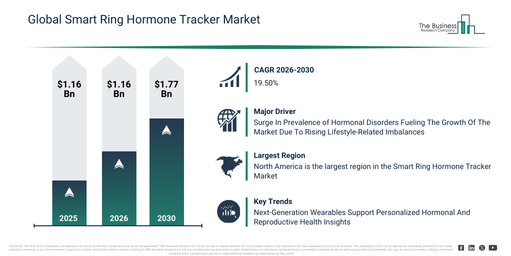
    The smart ring hormone tracker market has shown impressive expansion in recent years. Between 2025 and 2026, the market size is expected to increase from $1.36 billion to $1.63 billion, reflecting a strong compound annual growth rate (CAGR) of 19.8%. This growth during the historical period stems from heightened awareness of hormonal health, the rising popularity of wearable health devices, greater adoption of fertility tracking, the demand for non-invasive diagnostic tools, and the broadening landscape of women’s health solutions. Looking ahead, the market is projected to reach $3.32 billion by 2030, maintaining a CAGR of 19.5%. Key drivers in the forecast period include advancements in AI-driven hormone prediction, integration with digital health platforms, increasing demand for menopause monitoring, expansion of personalized healthcare services, and growing consumer use of health data. Noteworthy trends for the coming years feature continuous tracking of hormonal biomarkers, the rise of ring-based non-invasive wearables, real-time fertility and cycle insights, monitoring stress and recovery hormones, and tailored hormonal analytics.

    Download A Free Sample Report For Comprehensive Market Insights:

    https://www.thebusinessresearchcompany.com/sample.aspx?id=29207&type=smp

    Key Factors Fueling Market Demand for Smart Ring Hormone Trackers

    A primary factor propelling demand for smart ring hormone trackers is the increasing prevalence of hormonal disorders worldwide. These disorders arise due to imbalances caused by either excessive or insufficient hormone production, disrupting vital bodily functions such as growth, metabolism, and reproduction. Changing lifestyles characterized by poor diets, high stress levels, and sedentary habits contribute significantly to the rising incidence of these conditions. Smart ring hormone trackers play a crucial role in managing such disorders by offering continuous monitoring of hormone levels and physiological signals, enabling early detection and supporting tailored health interventions.

    Real-world data highlights this concern: In December 2023, the Australian Institute of Health and Welfare reported that endometriosis accounted for 8,213 Years Lived with Disability (YLD) in Australia, equating to 0.61 YLD per 1,000 females. The highest disease burden was found among women aged 30 to 34 years, at a rate of 1.71 YLD per 1,000 females. This growing prevalence of hormonal conditions is a significant driver encouraging the adoption of smart ring hormone trackers.

    Access The Complete Smart Ring Hormone Tracker Market Report:

    https://www.thebusinessresearchcompany.com/report/smart-ring-hormone-tracker-global-market-report

    Market Segmentation Overview of the Smart Ring Hormone Tracker Industry

    The smart ring hormone tracker market is divided into several important segments:

    1) Product Type: Fertility Tracking Rings, Menstrual Cycle Tracking Rings, Menopause Monitoring Rings

    2) Sensor Type: Temperature Sensors, Heart Rate Sensors, Other Sensor Types

    3) Application Areas: Women’s Health, Sports and Fitness, Other Applications

    4) End-User Categories: Individuals, Clinics, Hospitals, Other End-Users

    5) Distribution Channels: Online Stores, Pharmacies, Specialty Stores, Other Distribution Channels

    Further sub-segments include:

    – Fertility Tracking Rings such as Ovulation Prediction Rings and Conception Support Rings

    – Menstrual Cycle Tracking Rings including Period Prediction Rings, Cycle Symptom Tracking Rings, and Hormonal Fluctuation Monitoring Rings

    – Menopause Monitoring Rings like Hot Flash Detection Rings and Sleep Disruption Monitoring Rings

    Innovations Shaping Competitive Dynamics in the Smart Ring Hormone Tracker Market

    Leading market participants are heavily invested in technological innovation, focusing on smart sensing platforms that adapt dynamically to an individual’s physiology. These platforms combine advanced sensors with intelligent algorithms to deliver continuous, accurate biometric data and personalized insights related to hormonal and reproductive health. For instance, in October 2024, Oura Health from Finland launched Oura Ring 4, a next-generation smart ring featuring the Smart Sensing platform. This device continuously tracks temperature, heart rate, blood oxygen, and sleep metrics with adaptive sensors. Its lightweight titanium design offers comfort for 24/7 wear without compromising accuracy. Specifically designed for women’s health, it provides cycle insights, fertile window detection, and pregnancy-related tracking by analyzing basal body temperature and physiological signals. This enables users to identify hormonal imbalances and ovulation irregularities, supporting personalized reproductive wellness.

    Leading Companies Driving the Smart Ring Hormone Tracker Market

    The smart ring hormone tracker industry features a range of key players, including Oura Health Oy, Ultrahuman, Circular, Nova Smart Ring, RingConn, Kyri Cycles, Femometer, Movano Health, Belle Health, Luna Zone, Happy Health, Motiv Inc, BodiMetrics (circul+), Cloven Technology, Gabit, boAt, Samsung Electronics Co., Bellabeat, SLEEPON, and FYFIT. These companies compete by focusing on product innovation, expanding distribution, and enhancing consumer engagement with personalized hormonal health tracking.

    Regional Market Breakdown and Growth Opportunities

    In 2025, North America held the largest share of the smart ring hormone tracker market. However, the Asia-Pacific region is expected to demonstrate the fastest growth over the coming years. The market analysis spans several regions, including Asia-Pacific, South East Asia, Western Europe, Eastern Europe, North America, South America, the Middle East, and Africa, providing a comprehensive global perspective on market potential and development trends.

    Get in touch with us:

    The Business Research Company: https://www.thebusinessresearchcompany.com/

    Americas: +1 310-496-7795

    Asia: +44 7882 955267 & +91 8897263534

    Europe: +44 7882 955267

    Email us at: marketing@tbrc.info

    Follow us on:

    LinkedIn: https://in.linkedin.com/company/the-business-research-company

    YouTube: https://www.youtube.com/channel/UC24_fI0rV8cR5DxlCpgmyFQ

    Global Market Model: https://www.thebusinessresearchcompany.com/global-market-model
  • Smart Pulse Oximeter Ring Market Growth Through 2030 Creates New Strategic Opportunities

    Smart Pulse Oximeter Ring Market Growth Through 2030 Creates New Strategic Opportunities

    Through market attractiveness analysis, total addressable market evaluation, company benchmarking matrices, interactive Excel dashboards, expanded supply chain intelligence, emerging startup coverage, and detailed product insights, The Business Research Company’s 2026 market reports provide more actionable and strategically valuable research.

    The smart pulse oximeter ring market is gaining significant traction as health monitoring technologies become more integrated into daily life. These innovative wearable devices offer convenient and continuous tracking of vital signs, driving strong demand across various user groups and healthcare settings. Let’s explore the current market landscape, key growth factors, major players, and future trends shaping this expanding industry.

    Market Size and Growth Outlook for the Smart Pulse Oximeter Ring Market

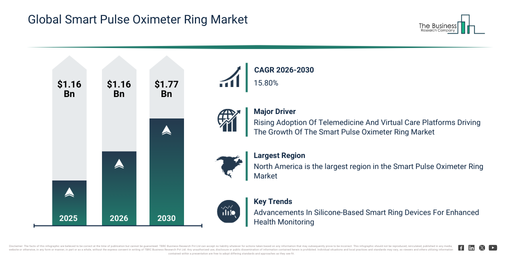
    The smart pulse oximeter ring market has been rapidly expanding in recent years. It is projected to grow from $1.14 billion in 2025 to $1.33 billion in 2026, representing a compound annual growth rate (CAGR) of 16.1%. This increase during the past period has been fueled by greater awareness of respiratory health, the need for COVID-19 related monitoring, widespread adoption of wearable health devices, growth in homecare monitoring, and the rising popularity of fitness tracking. Moving forward, the market is expected to reach $2.39 billion by 2030, growing at a CAGR of 15.8%. Key factors supporting this forecast include preventive health monitoring, managing chronic illnesses, diagnosing sleep disorders, telehealth integration, and advancements in miniaturized sensor technology. Emerging trends within this space consist of continuous SpO2 monitoring rings, wellness and sleep-tracking features, smartphone connectivity, compact non-invasive designs, and extended battery life wearables.

    Download A Free Sample Report For Comprehensive Market Insights:

    https://www.thebusinessresearchcompany.com/sample.aspx?id=29206&type=smp

    Driving Forces Behind the Smart Pulse Oximeter Ring Market Growth

    One major factor propelling the smart pulse oximeter ring market is the rising use of telemedicine and virtual care platforms. These digital healthcare services enable patients to consult with medical professionals remotely through online or mobile applications. Increasing accessibility and convenience have accelerated adoption, allowing patients to receive care without traveling. Smart pulse oximeter rings complement these platforms by offering continuous remote monitoring of vital signs such as oxygen saturation and heart rate, facilitating real-time health tracking. For instance, a survey conducted by Rock Health in February 2023 found that 76% of individuals over 55 had used telemedicine, while 80% of all respondents accessed care this way at some point during 2023. This growing reliance on virtual care is thus a significant driver for market expansion.

    Technology Innovation Encouraging Market Adoption

    Another important growth catalyst is the advancement in wearable health technologies that enhance comfort, accuracy, and ease of use. The development of silicone ring devices, which are soft and flexible, provides users with safe and comfortable options for continuous or spot health monitoring during physical activities or daily wear. For example, in February 2025, Viatom, a medical device manufacturer based in China, received FDA approval for its Smart Ring Pulse Oximeter-O2Ring. This lightweight silicone ring measures SpO2, heart rate, and perfusion index and is suitable for use in homes, hospitals, long-term care, and sleep labs. While not intended for continuous real-time tracking, the device features vibration alerts to notify users when readings surpass preset thresholds, helping adjust sleep posture discreetly. Its integrated SpO2 sensors and noise-reduction technology ensure precise data collection, which syncs instantly to the Vihealth app for detailed clinical reports.

    Access The Complete Smart Pulse Oximeter Ring Market Report:

    https://www.thebusinessresearchcompany.com/report/smart-pulse-oximeter-ring-global-market-report

    Key Segments Offering Opportunities in the Smart Pulse Oximeter Ring Market

    The market is segmented across multiple dimensions including product type, distribution channel, application, and end-user categories. Product types include Bluetooth-Enabled, Wi-Fi Enabled, and Standalone devices. Distribution channels span online retail, pharmacies, specialty stores, and others. Applications cover home care, hospitals and clinics, sports and fitness, along with other uses. End-users are divided into adults, pediatrics, and geriatrics. Further subcategories for Bluetooth-enabled rings focus on features like real-time data synchronization, smartphone integration, fitness tracking, sleep monitoring, and health alerts. Wi-Fi-enabled products emphasize cloud data uploading, remote monitoring, web portal access, home healthcare integration, and long-duration tracking. Standalone rings offer built-in memory, local display, vibration alerts, independent operation, and extended battery life.

    Market Leaders and Competitive Landscape in the Smart Pulse Oximeter Ring Industry

    Several prominent players are driving innovation and competition in this market. Notable companies include Ultrahuman Healthcare, Circular (Circulsense), RingConn, Amazfit (Zepp Health Corporation), Fitbit (Google LLC), Apple Inc., McLear Ltd., Motivi Inc., Prevention (Prevention Circul+ ring brand), Sleepon Inc., Go2Sleep (SleepOn rings), Movano Health, Happy Health (Happy Ring), ArcX Technology, Boogear, Dcare Smart Ring, Wellue, Omni Health Ring (in development), Owl Ring (upcoming), and SmartRing Labs. These firms focus on developing differentiated products with advanced features to capture a broad spectrum of consumers and institutional clients.

    Regional Insights Highlighting Market Potential and Trends

    In 2025, North America held the largest share of the smart pulse oximeter ring market by revenue. However, the Asia-Pacific region is expected to experience the fastest growth during the forecast period. The geographic analysis also includes key regions such as South East Asia, Western Europe, Eastern Europe, South America, the Middle East, and Africa, providing a comprehensive view of global market dynamics and opportunities.

    Get in touch with us:

    The Business Research Company: https://www.thebusinessresearchcompany.com/

    Americas: +1 310-496-7795

    Asia: +44 7882 955267 & +91 8897263534

    Europe: +44 7882 955267

    Email us at: marketing@tbrc.info

    Follow us on:

    LinkedIn: https://in.linkedin.com/company/the-business-research-company

    YouTube: https://www.youtube.com/channel/UC24_fI0rV8cR5DxlCpgmyFQ

    Global Market Model: https://www.thebusinessresearchcompany.com/global-market-model