Month: June 2026

  • Spectacle Lens Market Trends And Growth Drivers Point To Strong Future Potential

    Spectacle Lens Market Trends And Growth Drivers Point To Strong Future Potential

    Enhanced with market attractiveness analysis, total addressable market evaluation, company benchmarking matrices, interactive Excel dashboards, expanded supply chain intelligence, emerging startup coverage, and detailed product insights, The Business Research Company’s 2026 market reports deliver more actionable and strategically valuable research.

    The spectacle lens market is experiencing consistent growth, driven by rising vision-related health issues and technological advancements. As awareness increases around eye care and more innovative products enter the market, the demand for various types of spectacle lenses continues to climb. Let’s explore the current market size, key factors behind growth, major players, and emerging trends that are shaping the future of this industry.

    Steady Expansion of the Spectacle Lens Market Size

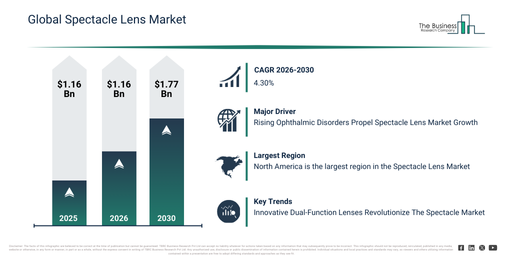
    The spectacle lens market has shown a steady upward trend in recent years. It is forecasted to grow from $62.02 billion in 2025 to $64.24 billion in 2026, marking a compound annual growth rate (CAGR) of 3.6%. This historical growth has been fueled by the growing prevalence of vision impairments, an aging global population, increased routine eye exams, the expansion of optical retail stores, and advances in lens manufacturing technologies. Looking ahead, the market is expected to continue its steady rise, reaching $75.91 billion by 2030 with a CAGR of 4.3%. Factors driving this forecast include the rising demand for premium and personalized eyewear, the uptake of digital eye testing solutions, growth in online eyewear sales, the focus on blue light protection lenses, and ongoing innovations in lens materials. Key trends anticipated during this period include a surge in demand for customized vision correction lenses, wider adoption of progressive and multifocal lenses, the use of lightweight high-index materials, expansion of digitally designed lenses, and increased emphasis on comfort and aesthetics.

    Download A Free Sample Report For Comprehensive Market Insights:

    https://www.thebusinessresearchcompany.com/sample.aspx?id=15674&type=smp

    Increasing Prevalence of Eye Disorders Boosting Spectacle Lens Demand

    One of the primary factors propelling the spectacle lens market is the rising occurrence of ophthalmic disorders. These conditions, which include common vision problems like refractive errors as well as more severe diseases such as glaucoma and macular degeneration, are becoming more widespread. The increase is linked to factors like extended screen time, frequent use of digital devices, and an aging population, all contributing to issues like digital eye strain, myopia, and age-related macular degeneration. Spectacle lenses serve an important role by correcting these disorders—such as myopia, hyperopia, astigmatism, and presbyopia—by properly focusing light on the retina, which enhances visual clarity and reduces eye strain. For example, in August 2024, the Welsh Government reported that ophthalmology departments in Wales recorded over 35,000 admissions in 2023-24, a 5.8% rise from the previous year, highlighting the growing need for vision care solutions.

    Additional Drivers Amplifying Market Growth

    Another factor supporting growth is the broader awareness surrounding eye health and the increasing number of routine eye check-ups worldwide. With more people getting their vision tested regularly, the demand for corrective lenses naturally increases. The expansion of optical retail networks further eases access to these products, while technological advancements improve the quality and variety of lenses available. These combined influences create a favorable environment for sustained market expansion.

    Access The Complete Spectacle Lens Market Report:

    https://www.thebusinessresearchcompany.com/report/spectacle-lens-global-market-report

    How the Spectacle Lens Market Is Categorized Across Segments

    This market is segmented across various dimensions to capture its diversity:

    1) By Product Type: Single Vision Lenses, Progressive Lenses, Bifocal Lenses, and Trifocal Lenses

    2) By Material: Plastic Lenses, Polycarbonate Lenses, Trivex Lenses, High-Index Lenses, and Glass Lenses

    3) By Sales Channel: Retail Sales and Institutional Sales

    4) By Application: Vision Correction, Fashion and Aesthetic Use, and Other Applications

    Further breakdowns include subcategories such as distance and near vision lenses under Single Vision, standard and custom options for Progressive and Trifocal lenses, and different styles like flat top and round segment under Bifocal lenses.

    Innovations and Trends Shaping the Future of Spectacle Lenses

    Leading companies are increasingly focusing on developing lenses that serve dual purposes, combining vision correction with protection against harmful blue light, glare, and UV radiation. These multifunctional lenses cater to growing consumer demand for health-conscious eyewear. For instance, in April 2023, Hoya Vision Care introduced the MiyoSmart Sun Spectacles, which use patented defocus incorporating multiple segments (DIMS) technology to slow myopia progression in children. Along with vision correction, these lenses offer UV protection—making them ideal for outdoor activities and supporting children’s eye health.

    Prominent Players Driving the Spectacle Lens Market

    The competitive landscape includes major global players such as EssilorLuxottica SA, Bausch Health Companies Inc., Hoya Corporation, Carl Zeiss AG, KODAK Lens, Rodenstock GmbH, Warby Parker Inc., Norville Group Ltd, Vision Rx Lab Pvt. Ltd., ABB Optical Group, Walman Optical, Younger Optics, Vision-Ease Lens Ltd, Mingyue Optical Lens Co Ltd, X-Cel Optical Company, Jiangsu Hongchen Optical Co Ltd, Visioneering Technologies Inc., Tokai Optical Co. Ltd., Kbco Lens Ltd, Sola Optical, and Seiko Optical Products Co. Ltd.

    Regional Market Leadership and Growth Outlook

    In 2025, North America was the largest market for spectacle lenses, demonstrating strong demand and well-established optical care infrastructure. Other important regions covered in market analyses include Asia-Pacific, South East Asia, Western Europe, Eastern Europe, South America, the Middle East, and Africa. Among these, Asia-Pacific is expected to see some of the fastest growth rates due to increasing urbanization, rising population, expanding healthcare access, and growing consumer awareness in these markets.

    Get in touch with us:

    The Business Research Company: https://www.thebusinessresearchcompany.com/

    Americas: +1 310-496-7795

    Asia: +44 7882 955267 & +91 8897263534

    Europe: +44 7882 955267

    Email us at: marketing@tbrc.info

    Follow us on:

    LinkedIn: https://in.linkedin.com/company/the-business-research-company

    YouTube: https://www.youtube.com/channel/UC24_fI0rV8cR5DxlCpgmyFQ

    Global Market Model: https://www.thebusinessresearchcompany.com/global-market-model
  • Specialty Catheters Market Expansion Is Reshaping Competitive Dynamics Across The Industry

    Specialty Catheters Market Expansion Is Reshaping Competitive Dynamics Across The Industry

    Through market attractiveness analysis, total addressable market evaluation, company benchmarking matrices, interactive Excel dashboards, expanded supply chain intelligence, emerging startup coverage, and detailed product insights, The Business Research Company’s 2026 market reports provide more actionable and strategically valuable research.

    The specialty catheters market has been witnessing substantial growth recently, driven by rising healthcare needs and technological advancements. As medical procedures become more sophisticated and patient populations age, the demand for specialized catheters continues to rise. Below is a detailed overview of the market’s size, key drivers, segmentation, emerging trends, and leading companies shaping its future.

    Specialty Catheters Market Size and Growth Prospects

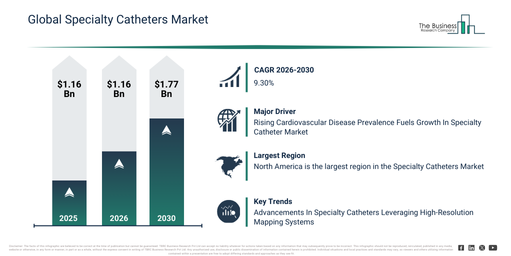
    The specialty catheters market has demonstrated significant expansion in the past years. It is projected to grow from $6.95 billion in 2025 to $7.62 billion in 2026, achieving a compound annual growth rate (CAGR) of 9.6%. This historical growth can be attributed to factors such as the increasing burden of cardiovascular diseases, the expansion of intensive care units (ICUs), rising surgical volumes, heightened focus on infection control, and the development of hospital infrastructure. Looking ahead, the market is expected to continue its strong upward trajectory, reaching $10.87 billion by 2030 with a slightly moderated CAGR of 9.3%. The forecasted expansion is fueled by an aging population, higher critical care admissions, advancements in surgical techniques, growing demand for precise medical interventions, and increased hospital capacities. Key trends shaping this growth include a rising preference for procedure-specific catheters, the surge in minimally invasive surgeries, adoption of multi-lumen catheters, expanded use in critical care environments, and customization of catheter designs.

    Download A Free Sample Report For Comprehensive Market Insights:

    https://www.thebusinessresearchcompany.com/sample.aspx?id=20646&type=smp

    Factors Supporting Specialty Catheters Market Expansion

    One of the primary forces propelling the specialty catheters market is the growing prevalence of cardiovascular diseases worldwide. These diseases encompass a variety of disorders affecting the heart and blood vessels, such as coronary artery disease, hypertension, and heart failure. The rise in these conditions is driven by risk factors including obesity, diabetes, high blood pressure, sedentary lifestyles, and an aging global population.

    Specialty catheters play a vital role in managing cardiovascular diseases by enabling targeted, precise interventions like drug delivery, angioplasty, and stent placement, all of which improve blood flow and lower the risk of severe cardiac events. For example, in May 2024, the US Centers for Disease Control and Prevention (CDC) reported that 702,880 people died from heart disease in the United States during 2022, while global deaths from heart disease are expected to reach 23 million by 2030. This increasing disease burden is a significant driver for the expanding specialty catheters market.

    Access The Complete Specialty Catheters Market Report:

    https://www.thebusinessresearchcompany.com/report/specialty-catheters-global-market-report

    Product and End-Use Segments Defining the Specialty Catheters Market

    This report categorizes the specialty catheters market into key segments as follows:

    1) By Product Type: Wound Catheters, Oximetry Catheters, Thermodilution Catheters, and Other Products

    2) By Lumen Type: Triple-Lumen, Quadruple-Lumen, and Other Lumens

    3) By End-Use Sector: Hospitals, Ambulatory Surgical Centers, and Other End Users

    Within these classifications, subcategories include negative pressure wound therapy catheters, surgical drainage catheters, catheters for wound irrigation, pulmonary artery catheters with oximetry, central venous catheters with oximetry, peripheral oximetry catheters, thermodilution catheters for cardiac output measurement, pulmonary artery thermodilution catheters, and those with continuous cardiac output monitoring. Other products consist of gastrostomy, urological, and infusion catheters.

    Innovations and Trends Reshaping Specialty Catheters Demand

    Leading players in the specialty catheters market are focusing on developing cutting-edge technologies to boost the functionality and precision of their devices. One notable example is the integration of TRUEref technology, which is an advanced high-resolution mapping system designed to improve electrophysiological accuracy in complex cardiac arrhythmias.

    For instance, in July 2023, Biosense Webster Inc., a US-based medical technology firm, launched the OPTRELL Mapping Catheter, featuring TRUEref technology. This high-density diagnostic catheter offers detailed electrophysiological mapping through a fixed array of electrodes, enabling accurate diagnosis and treatment of complicated arrhythmias such as persistent atrial fibrillation, atrial tachycardia, and ventricular tachycardia. This innovation illustrates how technology is advancing the capabilities and effectiveness of specialty catheters.

    Key Players Competing in the Specialty Catheters Market

    The specialty catheters market features several prominent companies driving competition and innovation. These include Cardinal Health Inc., Abbott Laboratories, Medline Industries Inc., Becton Dickinson and Company, Boston Scientific Corporation, B Braun Melsungen AG, Terumo Corporation, Edwards Lifesciences Corporation, Nipro Corporation, Smiths Medical Inc., Cook Medical, Teleflex Incorporated, ICU Medical Inc., Merit Medical Systems Inc., LivaNova plc, Cordis Corporation, Penumbra Inc., Asahi Intecc Co. Ltd., Spectranetics Corporation, AngioDynamics Inc., Bard Medical, and Vascular Solutions Inc. These companies are continuously enhancing their product portfolios to meet evolving clinical demands.

    Regional Insights and Growth Drivers in the Specialty Catheters Market

    In 2025, North America held the largest share of the specialty catheters market. Other regions covered in the market analysis include Asia-Pacific, South East Asia, Western Europe, Eastern Europe, South America, Middle East, and Africa. While North America currently dominates, regions such as Asia-Pacific and South East Asia are anticipated to experience notable market expansion due to increasing healthcare investments and growing prevalence of chronic diseases. This geographic diversity underscores the global nature of demand for specialty catheters and highlights opportunities for market players to expand their presence internationally.

    Get in touch with us:

    The Business Research Company: https://www.thebusinessresearchcompany.com/

    Americas: +1 310-496-7795

    Asia: +44 7882 955267 & +91 8897263534

    Europe: +44 7882 955267

    Email us at: marketing@tbrc.info

    Follow us on:

    LinkedIn: https://in.linkedin.com/company/the-business-research-company

    YouTube: https://www.youtube.com/channel/UC24_fI0rV8cR5DxlCpgmyFQ

    Global Market Model: https://www.thebusinessresearchcompany.com/global-market-model
  • Spatial omics Market Forecast Reveals Where Future Industry Value Will Be Created

    Spatial omics Market Forecast Reveals Where Future Industry Value Will Be Created

    Delivering more actionable and strategically valuable research, The Business Research Company’s 2026 market reports feature market attractiveness analysis, total addressable market evaluation, company benchmarking matrices, interactive Excel dashboards, expanded supply chain intelligence, emerging startup coverage, and detailed product insights.

    The spatial omics field is rapidly evolving, offering new ways to explore the spatial organization of molecules within tissues. This emerging technology is gaining traction thanks to advances in research funding, imaging methods, and data analysis tools. Let’s delve into the current market size, key growth drivers, segment breakdown, innovation trends, major players, and leading regions shaping the future of spatial omics.

    Spatial Omics Market Size and Growth Projections

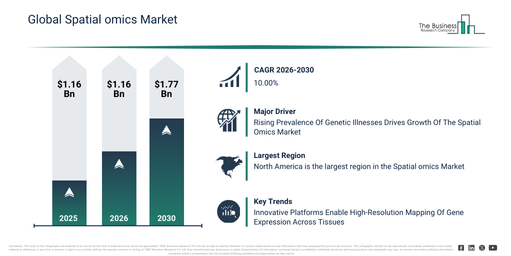
    The spatial omics market has witnessed swift expansion in recent years. It is projected to grow from $0.33 billion in 2025 to $0.37 billion in 2026, reflecting a strong compound annual growth rate (CAGR) of 11.3%. This historic growth has been driven by increased funding for genomics research, growth in academic life sciences, technological advancements in molecular imaging, broader access to omics consumables, and a heightened emphasis on disease biology studies. Looking ahead, the market is expected to reach $0.54 billion by 2030, maintaining a robust CAGR of 10.0%. Factors fueling this future expansion include the growing use of spatial omics in drug discovery, rising investments in precision medicine, the integration of AI for biological data analysis, increasing demand for spatially resolved biomarkers, and heightened pharmaceutical R&D expenditures. Key trends anticipated to influence the market include the adoption of spatial transcriptomics platforms, multi-omics data integration, utilization of high-resolution imaging technologies, development of advanced data visualization tools, and a stronger focus on tissue-level molecular mapping.

    Download A Free Sample Report For Comprehensive Market Insights:

    https://www.thebusinessresearchcompany.com/sample.aspx?id=15927&type=smp

    Key Factors Pushing Spatial Omics Market Growth

    The increasing prevalence of genetic disorders is a significant factor propelling the spatial omics market forward. Genetic diseases, caused by DNA abnormalities inherited from parents, are becoming more common due to heightened awareness, improved diagnostic methods, lifestyle changes, and environmental influences leading to mutations. Spatial omics technologies provide a powerful way to study these illnesses by generating detailed spatial maps of molecular and genetic features within tissues. For example, in July 2025, Australia’s National Blood Authority reported that the number of patients living with hereditary haemophilia A rose to 2,788 in 2023–2024, up from 2,681 in the previous year. This increase highlights the growing need for advanced tools like spatial omics to better understand and manage genetic diseases.

    Additional Factors Driving Spatial Omics Demand

    Alongside genetic disease prevalence, the demand for spatial omics is also fueled by its expanding applications in drug development and personalized medicine. Pharmaceutical companies are increasingly investing in spatial omics to identify new biomarkers and therapeutic targets, enhancing the precision of treatments. Furthermore, advances in artificial intelligence and machine learning are enabling more sophisticated analysis of spatially resolved biological data, making these technologies more accessible and valuable to researchers and clinicians alike.

    Access The Complete Spatial omics Market Report:

    https://www.thebusinessresearchcompany.com/report/spatial-omics-global-market-report

    Breaking Down the Spatial Omics Market by Segments

    This market can be categorized into several key segments:

    1) Product Types: Instruments, Consumables, and Software

    2) Sample Types: Formalin-Fixed Paraffin-Embedded (FFPE) and Fresh Frozen samples

    3) Workflows: Sample Preparation, Instrumental Analysis, and Data Analysis

    4) Technologies: Spatial Transcriptomics, Spatial Genomics, and Spatial Proteomics

    5) End-Use Sectors: Academic and Translational Research Institutes, and Pharmaceutical and Biotechnology Companies

    Within the instrument category, subtypes include spatial transcriptomics instruments, imaging systems, and mass spectrometers. Consumables cover reagents, kits, and preparation materials. Software options include data analysis platforms, visualization tools, and integration systems. This detailed segmentation allows stakeholders to target specific areas of opportunity within the spatial omics landscape.

    Innovation Trends Driving Spatial Omics Advancement

    Leading players in the spatial omics arena are focusing on developing integrated, end-to-end spatial transcriptomics platforms to provide comprehensive insights into gene expression within tissue contexts. These platforms streamline the entire process from sample preparation to data interpretation, enabling more precise biological analysis. For instance, in February 2025, Illumina Inc. introduced a groundbreaking spatial transcriptomics technology designed to transform tissue analysis and cellular mapping. This innovation offers unbiased whole-transcriptome profiling at single-cell resolution with remarkable sensitivity, allowing researchers to study complex tissues in unprecedented detail. The system features a capture area nine times larger and four times higher resolution than existing methods, facilitating analysis of millions of cells per experiment and identification of rare cell types. Additionally, the technology integrates seamlessly with Illumina’s NextSeq and NovaSeq sequencers and is supported by the Illumina Connected Multiomics platform, which enhances multiomic data visualization and analysis.

    Key Companies Influencing the Spatial Omics Market

    Several prominent companies are shaping the direction of the spatial omics market, including Agilent Technologies Inc., PerkinElmer Inc., Illumina Inc., Bruker Corporation, QIAGEN N.V., 10x Genomics Inc., Luminex Corporation, Takara Bio Inc., Oxford Nanopore Technologies, NanoString Technologies Inc., Standard BioTools Inc., Akoya Biosciences Inc., CrestOptics, Indica Labs Inc., Resolve Biosciences GmbH, Pixelgen Technologies, Ionpath Inc., RareCyte Inc., S2 Genomics Inc., Vizgen Inc., BioSpyder Technologies, and Ultivue Inc. These organizations are investing heavily in research and development to drive innovation and expand the capabilities of spatial omics technologies.

    Regional Market Insights Highlighting Leadership and Growth

    In 2025, North America commanded the largest share of the spatial omics market, serving as a hub for research institutions and pharmaceutical innovation. However, the Asia-Pacific region is anticipated to experience the fastest growth during the forecast period, driven by increasing investments in life sciences research and expanding biotechnology sectors. The market analysis covers a broad set of regions including Asia-Pacific, South East Asia, Western Europe, Eastern Europe, North America, South America, the Middle East, and Africa, providing a comprehensive view of global market dynamics.

    Get in touch with us:

    The Business Research Company: https://www.thebusinessresearchcompany.com/

    Americas: +1 310-496-7795

    Asia: +44 7882 955267 & +91 8897263534

    Europe: +44 7882 955267

    Email us at: marketing@tbrc.info

    Follow us on:

    LinkedIn: https://in.linkedin.com/company/the-business-research-company

    YouTube: https://www.youtube.com/channel/UC24_fI0rV8cR5DxlCpgmyFQ

    Global Market Model: https://www.thebusinessresearchcompany.com/global-market-model
  • Software As A Medical Device (SaMD) Market Growth Through 2030 Creates New Strategic Opportunities

    Software As A Medical Device (SaMD) Market Growth Through 2030 Creates New Strategic Opportunities

    Enhanced with market attractiveness analysis, total addressable market evaluation, company benchmarking matrices, interactive Excel dashboards, expanded supply chain intelligence, emerging startup coverage, and detailed product insights, The Business Research Company’s 2026 market reports deliver more actionable and strategically valuable research.

    The software as a medical device (SaMD) sector has witnessed remarkable expansion recently, driven by technological advancements and changing healthcare needs. As digital health solutions become more integrated into medical practices, this market is set for significant growth in the coming years. Here, we explore the current market size, key growth factors, segmentation, industry trends, major players, and regional insights shaping the future of SaMD.

    Steady Market Growth and Revenue Projections for Software as a Medical Device

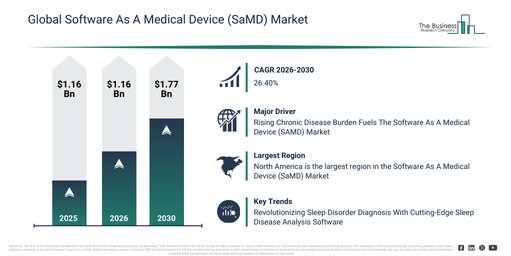
    The SaMD market has experienced rapid growth in recent times. From a valuation of $38.02 billion in 2025, it is expected to rise to $47.26 billion in 2026, reflecting an impressive compound annual growth rate (CAGR) of 24.3%. This growth during the historical period has been fueled by the widespread adoption of telemedicine, increased smartphone usage, substantial digital health investments, clearer regulations, and a growing demand for remote healthcare services. Looking ahead, the market is predicted to expand even more dramatically, reaching $120.54 billion by 2030 at a CAGR of 26.4%. This surge is anticipated to be supported by the expanding virtual care sector, advances in software-driven diagnostics, the adoption of cloud-based healthcare platforms, outcome-based reimbursement models, and modernization of hospital software systems. Emerging trends during this forecast period include the growth of clinical decision support software, increased use of remote diagnostic tools, enhanced regulatory approvals for medical software, subscription-based business models for SaMD, and greater integration with electronic health records.

    Download A Free Sample Report For Comprehensive Market Insights:

    https://www.thebusinessresearchcompany.com/sample.aspx?id=12446&type=smp

    Key Factors Propelling Growth in the Software as a Medical Device Market

    One of the main drivers behind the expanding SaMD market is the rising prevalence of chronic diseases. Conditions such as diabetes, heart disease, and arthritis are long-term illnesses that generally worsen over time, requiring continuous medical management and lifestyle adjustments. The increase in chronic diseases can largely be attributed to unhealthy habits including poor nutrition, lack of physical activity, and smoking, which elevate risks for diabetes, cardiovascular issues, and obesity. SaMD technologies play an important role by enabling constant monitoring of patient health metrics, facilitating early identification of potential complications. This continuous oversight improves treatment results through personalized guidance and supports remote care, reducing the need for frequent hospital visits. For example, in June 2024, the National Health Service in the UK reported that 3,615,330 people registered with a general practitioner had non-diabetic hyperglycemia or pre-diabetes in 2023, which is an 18% increase from 3,065,825 cases in 2022. This upward trend in chronic disease incidence is a strong catalyst for SaMD market growth.

    Detailed Breakdown of Software as a Medical Device Market Segments

    The SaMD market is categorized into several key segments for better clarity:

    1) Device Type: Wearable Devices, PCs and Laptops, Smartphones and Tablets

    2) Deployment Method: Cloud-Based and On-Premise solutions

    3) Application Area: Diagnostic and Clinical Management

    Access The Complete Software As A Medical Device (SaMD) Market Report:

    https://www.thebusinessresearchcompany.com/report/samd-software-as-a-medical-device-global-market-report

    Further subcategories include:

    – Wearable Devices such as smartwatches with health monitoring features, fitness trackers, and wearable ECG and blood pressure monitors

    – PCs and Laptops featuring medical diagnostic software, clinical decision support systems, and telemedicine platforms

    – Smartphones and Tablets hosting mobile health (mHealth) applications, remote patient monitoring software, and diagnostic imaging apps

    Emerging Trends Shaping the Future of the SaMD Market

    Leading companies in the SaMD industry are heavily investing in cutting-edge software to gain a competitive advantage. A notable example is SOMNUM, an advanced sleep disorder analysis software that combines the latest artificial intelligence (AI) research with diagnostic algorithms based on multi-channel sleep biosignal data rather than traditional video images. In September 2023, South Korean firm HoneyNaps Co. Ltd. received approval from the United States Food and Drug Administration (USFDA) for SOMNUM. This software utilizes deep learning AI to analyze various biosignals in real time—such as electroencephalograms, electrooculograms, electromyograms, electrocardiograms, respiratory airflow and effort, and oxygen saturation. It offers higher precision than conventional techniques and dramatically reduces the time needed for patient sleep data analysis to less than five minutes.

    Leading Industry Players Driving Innovation in SaMD

    Some of the major organizations active in the software as a medical device market include Apple Inc., Abbott Laboratories, Siemens Healthcare GmbH, GE HealthCare Technologies Inc., Roche Diagnostics, Cerner Corporation, Philips Medical Systems Ltd., Dexcom Inc., Carl Zeiss Meditec AG, Nihon Kohden Corporation, Viz.ai Inc., S3 Connected Health, Arterys Inc., BrightInsight Inc., Agfa HealthCare Corp., iSchemaView Inc., VitalConnect Inc., Volpara Health Technologies, Greenfinch Technology Ltd., MaxQ AI Ltd., and IDx Technologies Inc.

    Regional Market Insights Highlighting Growth Opportunities

    In 2025, North America held the largest share of the SaMD market. However, the Asia-Pacific region is expected to grow at the fastest pace during the forecast period. The comprehensive market overview includes key regions such as Asia-Pacific, South East Asia, Western Europe, Eastern Europe, North America, South America, the Middle East, and Africa, providing a global perspective on emerging trends and growth prospects.

    Get in touch with us:

    The Business Research Company: https://www.thebusinessresearchcompany.com/

    Americas: +1 310-496-7795

    Asia: +44 7882 955267 & +91 8897263534

    Europe: +44 7882 955267

    Email us at: marketing@tbrc.info

    Follow us on:

    LinkedIn: https://in.linkedin.com/company/the-business-research-company

    YouTube: https://www.youtube.com/channel/UC24_fI0rV8cR5DxlCpgmyFQ

    Global Market Model: https://www.thebusinessresearchcompany.com/global-market-model
  • Soft Tissue Allograft Market Size Projected To Increase From $5.24 Billion To $6.97 Billion During The Forecast Period

    Soft Tissue Allograft Market Size Projected To Increase From $5.24 Billion To $6.97 Billion During The Forecast Period

    Through market attractiveness analysis, total addressable market evaluation, company benchmarking matrices, interactive Excel dashboards, expanded supply chain intelligence, emerging startup coverage, and detailed product insights, The Business Research Company’s 2026 market reports provide more actionable and strategically valuable research.

    The soft tissue allograft market is experiencing notable growth fueled by advancements in medical procedures and increasing demand for effective tissue repair solutions. This sector is witnessing heightened attention due to rising orthopedic injuries and surgical interventions, paving the way for further expansion in the coming years. Let’s explore the market size, key growth drivers, major segments, emerging trends, leading companies, and regional dynamics shaping this industry.

    Soft Tissue Allograft Market Size and Projected Growth Trajectory

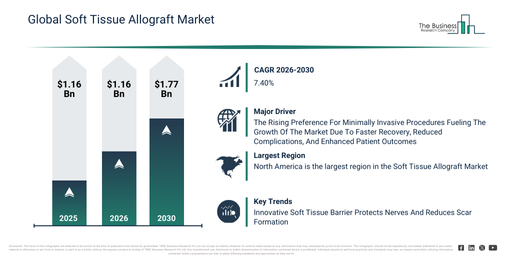
    The market for soft tissue allografts has seen strong expansion recently. In 2025, it was valued at $4.87 billion and is projected to reach $5.24 billion by 2026, growing at a compound annual growth rate (CAGR) of 7.7%. This past growth primarily stems from an increase in orthopedic injuries, rising numbers of sports-related surgeries, better availability of donor tissues, improvements in sterilization techniques, and enhanced hospital transplant programs. Looking ahead, the market is poised to continue growing steadily, expected to reach $6.97 billion by 2030 with a CAGR of 7.4%. The forecasted growth is driven by factors such as an aging population, growing demand for joint reconstruction procedures, expansion of sports medicine, innovations in tissue preservation methods, and harmonization of regulatory standards. Key trends anticipated during this period include a focus on orthopedic reconstruction surgeries, the use of sports medicine allografts, adoption of sterilized tissue processing, minimally invasive grafting procedures, and growth in hospital-based tissue banking.

    Download A Free Sample Report For Comprehensive Market Insights:

    https://www.thebusinessresearchcompany.com/sample.aspx?id=28335&type=smp

    Increasing Popularity of Minimally Invasive Procedures Bolsters Market Growth

    One significant factor propelling the soft tissue allograft market is the rising preference for minimally invasive surgeries. These procedures involve small incisions or entry points that reduce patient trauma and shorten recovery times, making them very attractive options. The benefits of minimally invasive surgeries—lower risk of complications, less pain, smaller scars, and quicker recuperation—are encouraging more patients to opt for these treatments. Soft tissue allografts align well with these procedures by providing ready-to-use, donor-derived tissues that facilitate faster healing and simplify the surgical process.

    The growing demand for minimally invasive options is clearly reflected in recent data. For example, according to the American Society of Plastic Surgeons in June 2024, minimally invasive procedures increased by 7 percent in 2023, outpacing traditional surgical procedures by 2 percent. Neuromodulator injections and hyaluronic acid fillers alone accounted for over 9 million and 5 million treatments, respectively. This trend reinforces the expanding role of soft tissue allografts in supporting less invasive, more efficient surgical techniques.

    Access The Complete Soft Tissue Allograft Market Report:

    https://www.thebusinessresearchcompany.com/report/soft-tissue-allograft-global-market-report

    Breakdown of Soft Tissue Allograft Market Segments and Categories

    The soft tissue allograft market can be segmented by several criteria to better understand where growth is occurring:

    – By Type: Cartilage Allograft, Tendon Allograft, Meniscus Allograft, and Other Types

    – By Processing Technique: Fresh Frozen, Irradiated, Dehydrated, Sterilized, and Other Methods

    – By Application: Musculoskeletal Repair and Reconstruction, Plastic and Reconstructive Surgery, and Other Medical Uses

    – By End-User: Hospitals, Ambulatory Surgical Centers, and Private Clinics

    Further subcategories within these groups include, for example, osteochondral, particulate, and juvenile types of cartilage allografts; specific tendons such as Achilles, anterior tibialis, posterior tibialis, and semitendinosus; lateral and medial meniscus allografts; and other types like skin, fascia, and nerve allografts.

    Innovations in Tissue Processing Shaping Soft Tissue Allograft Market Advancements

    Leading companies in the soft tissue allograft sector are heavily investing in new tissue processing and sterilization technologies. One notable advancement is the development of resorbable soft tissue allografts, which provide temporary structural support and gradually dissolve as the patient’s own tissue regenerates. This approach helps enhance tissue repair, speed up recovery, and improve clinical outcomes.

    For instance, in June 2024, Axogen Inc., a medical technology company based in the US, introduced the Avive Soft Tissue Matrix. This innovative product is a resorbable, multi-layer amniotic membrane allograft designed to act as a soft tissue barrier during peripheral nerve healing. It protects nerves from damage and reduces scar tissue formation, especially for patients with compression or non-transected nerve injuries. The matrix’s multi-layer structure ensures ease of handling and suturing during surgery, marking an important step forward in nerve protection and repair.

    Key Players Driving Competition in the Soft Tissue Allograft Industry

    The market features numerous influential companies that play a major role in advancing the soft tissue allograft field. These include Stryker Corporation, Zimmer Biomet, Arthrex Inc., Integra LifeSciences Holdings Corporation, CONMED Corporation, MTF Biologics, MiMedx Group Inc., RTI Surgical Holdings Inc., LifeNet Health, AlloSource Inc., Xtant Medical Holdings Inc., Acera Surgical Inc., Skye Biologics Inc., StimLabs LLC, Applied Biologics LLC, Human Regenerative Technologies LLC, AxoGen Inc., Aziyo Biologics Inc., BioTissue Holdings Inc., and Orthofix Medical Inc. This competitive landscape drives ongoing innovation and product development.

    Regional Overview Highlighting Market Leadership and Growth Hotspots

    As of 2025, North America held the largest share of the soft tissue allograft market, maintaining leadership due to advanced healthcare infrastructure and strong adoption of innovative treatments. Meanwhile, the Asia-Pacific region is predicted to be the fastest-growing market over the forecast period, supported by increased healthcare investments and rising awareness of advanced grafting techniques. The market analysis covers various regions including Asia-Pacific, South East Asia, Western Europe, Eastern Europe, North America, South America, the Middle East, and Africa to present a comprehensive picture of global market trends and opportunities.

    Get in touch with us:

    The Business Research Company: https://www.thebusinessresearchcompany.com/

    Americas: +1 310-496-7795

    Asia: +44 7882 955267 & +91 8897263534

    Europe: +44 7882 955267

    Email us at: marketing@tbrc.info

    Follow us on:

    LinkedIn: https://in.linkedin.com/company/the-business-research-company

    YouTube: https://www.youtube.com/channel/UC24_fI0rV8cR5DxlCpgmyFQ

    Global Market Model: https://www.thebusinessresearchcompany.com/global-market-model
  • Soft Contact Lenses Market Growth Outlook Reveals A CAGR Of 7% And A Market Value Of $13.49 Billion By 2030

    Soft Contact Lenses Market Growth Outlook Reveals A CAGR Of 7% And A Market Value Of $13.49 Billion By 2030

    Delivering more actionable and strategically valuable research, The Business Research Company’s 2026 market reports feature market attractiveness analysis, total addressable market evaluation, company benchmarking matrices, interactive Excel dashboards, expanded supply chain intelligence, emerging startup coverage, and detailed product insights.

    The soft contact lenses market has witnessed robust growth in recent times, driven by several key factors that enhance eye care and vision correction. As awareness around eye health expands and technological advancements continue, this sector is poised for sustained development. Let’s explore the current market size, the driving forces propelling growth, major trends, leading companies, and the regional outlook shaping the future of soft contact lenses.

    Steady Market Growth and Revenue Outlook in the Soft Contact Lenses Market

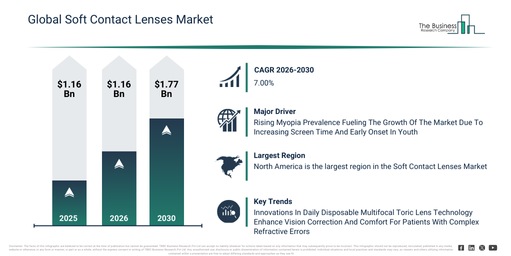
    The soft contact lenses market has experienced significant expansion, with its value forecasted to rise from $9.57 billion in 2025 to $10.28 billion in 2026, reflecting a strong compound annual growth rate (CAGR) of 7.4%. This growth in the historical period is mainly attributed to the increasing incidence of refractive errors, heightened awareness about eye care, innovations in hydrogel lens technology, wider availability of daily disposable lenses, and the broadening reach of optical retail networks. Looking ahead, the market is expected to continue its upward trajectory, growing to $13.49 billion by 2030 at a CAGR of 7.0%. Key factors driving this future expansion include the adoption of silicone hydrogel lenses, a surge in demand for cosmetic and colored lenses, rising e-commerce sales, innovations in smart and connected lenses, and growing use of therapeutic and specialty lenses. Upcoming market trends emphasize personalized lens development, improved oxygen permeability, optimized comfort and moisture retention, increasing popularity of cosmetic lenses, and advancements in therapeutic and medical contact lenses.

    Download A Free Sample Report For Comprehensive Market Insights:

    https://www.thebusinessresearchcompany.com/sample.aspx?id=25908&type=smp

    Rising Myopia Cases Power Growth in the Soft Contact Lenses Market

    One of the main forces behind the market’s growth is the growing prevalence of myopia. This common vision defect causes distant objects to blur due to the elongation of the eyeball or excessive curvature of the cornea, which results in light focusing in front of the retina instead of directly on it. The rise in myopia cases is closely linked to increased screen time and reduced outdoor activities among children and adolescents. Extended exposure to digital screens accelerates the onset and progression of this condition worldwide. By providing comfortable and effective vision correction through daily and extended-wear lenses, soft contact lenses play a crucial role in addressing myopia. Furthermore, some advanced lens designs are specifically engineered to slow myopic progression. For example, as reported by the National Institutes of Health (NIH) in February 2025, the global prevalence of myopia is projected to reach 36.59% by 2040 and 39.80% by 2050, with more than 740 million affected individuals expected by 2050. This escalating prevalence strongly supports the growing demand for soft contact lenses.

    Product and Segment Breakdown Key to Understanding the Soft Contact Lenses Market

    The soft contact lenses market is categorized into several key segments to better understand its landscape. These include:

    1) Product Type: Daily Disposable Lenses, Extended Wear Lenses, Frequent Replacement Lenses, Multifocal Lenses, and Toric Lenses for Astigmatism.

    2) Material Composition: Hydrogel Lenses, Silicone Hydrogel Lenses, Polyhema Lenses, Non-Ionogenic Lenses, and Ultraviolet Blocking Lenses.

    3) Age Group: Children, Teenagers, Young Adults, Middle-aged Adults, and Senior Citizens.

    4) Distribution Channels: Online Retailers, Optical Stores, Pharmacies, Hospital and Clinic Sales, and Direct-to-Consumer Brands.

    5) Applications: Corrective, Therapeutic, Cosmetic, Prosthetic, and Lifestyle-oriented uses.

    Access The Complete Soft Contact Lenses Market Report:

    https://www.thebusinessresearchcompany.com/report/soft-contact-lenses-global-market-report

    Further subcategories detail specific types within these segments. For instance, daily disposable lenses include single vision, multifocal, toric for astigmatism, colored, and ultraviolet blocking variants. Extended wear lenses are divided by wear duration such as seven-day, fourteen-day, and thirty-day continuous wear, including silicone hydrogel and overnight therapeutic options. Frequent replacement lenses consist of two-week and monthly replacements, custom designs, colored lenses, and hydrogel-based products. Multifocal lenses and toric lenses for astigmatism are further segmented by daily disposable, extended wear, monthly replacement, multifocal, and custom fit types, highlighting the market’s diversity.

    Innovations and Trends Accelerating Expansion in Soft Contact Lenses

    Leading manufacturers in the soft contact lenses market are focusing on creating advanced products that cater to evolving consumer needs, particularly those addressing astigmatism and presbyopia. A significant development is the introduction of daily disposable multifocal toric lenses, which combine correction for astigmatism with multifocal features that support near, intermediate, and distance vision. These lenses offer users the convenience of single-use products without the maintenance required by traditional lenses, enhancing comfort and hygiene.

    A notable example occurred in June 2025 when Johnson & Johnson launched ACUVUE OASYS MAX 1-Day MULTIFOCAL for ASTIGMATISM. This lens is designed specifically for individuals who have both astigmatism and presbyopia. It features high oxygen permeability, Blink-Stabilized technology for rotational stability, TearStable technology to retain moisture, an OptiBlue filter to reduce high-energy visible (HEV) light exposure, and a pupil-optimized multifocal design. These features combine to provide stable, sharp vision under various lighting conditions and ensure all-day comfort for wearers.

    Competitive Landscape and Leading Players in the Soft Contact Lenses Market

    The soft contact lenses sector is led by several major companies with a strong global presence. Prominent players include Johnson & Johnson, EssilorLuxottica SA, Alcon Laboratories Inc, Hoya Corporation, Bausch and Lomb Incorporated, The Cooper Companies Inc, Menicon Co Ltd, Polytouch Contact Lens Co, ABB Optical Group LLC, Contamac Ltd, Art Optical Contact Lens Inc, Clearlab SG Pte Ltd, X Cel Specialty Contacts, Daysoft Limited, Seed Co Ltd, Cantor and Nissel Ltd, Metro Optics Inc, SpecialEyes LLC, TruForm Optics Inc, UltraVision CLPL Limited, Viscon Contact Lens Manufacturing Ltd, and CooperVision Specialty EyeCare. These companies invest heavily in research and development to stay at the forefront of innovation and market growth.

    Regional Dynamics Highlight North America’s Dominance in Soft Contact Lenses Market

    In 2025, North America held the largest share of the soft contact lenses market, reflecting the region’s high awareness about eye care, well-developed healthcare infrastructure, and widespread adoption of contact lenses. Meanwhile, the Asia-Pacific region is expected to witness the fastest growth during the forecast period, driven by increasing urbanization, rising disposable incomes, and growing consumer interest in vision correction products. The market report encompasses key regions including Asia-Pacific, South East Asia, Western Europe, Eastern Europe, North America, South America, the Middle East, and Africa, providing a comprehensive overview of global market trends and growth opportunities.

    Get in touch with us:

    The Business Research Company: https://www.thebusinessresearchcompany.com/

    Americas: +1 310-496-7795

    Asia: +44 7882 955267 & +91 8897263534

    Europe: +44 7882 955267

    Email us at: marketing@tbrc.info

    Follow us on:

    LinkedIn: https://in.linkedin.com/company/the-business-research-company

    YouTube: https://www.youtube.com/channel/UC24_fI0rV8cR5DxlCpgmyFQ

    Global Market Model: https://www.thebusinessresearchcompany.com/global-market-model
  • Smart Wearable Snore Detector Market Forecast Highlights Expansion From $1.04 Billion To $1.64 Billion Through 2030

    Smart Wearable Snore Detector Market Forecast Highlights Expansion From $1.04 Billion To $1.64 Billion Through 2030

    Enhanced with market attractiveness analysis, total addressable market evaluation, company benchmarking matrices, interactive Excel dashboards, expanded supply chain intelligence, emerging startup coverage, and detailed product insights, The Business Research Company’s 2026 market reports deliver more actionable and strategically valuable research.

    The market for smart wearable snore detectors has been rapidly evolving, driven by growing consumer interest in sleep health and innovative wearable technology. As awareness of sleep-related disorders increases, this sector is poised to experience substantial growth in the coming years. Below is a detailed look at the market’s current size, growth drivers, key players, trends, and regional outlook.

    Smart Wearable Snore Detector Market Size and Projected Growth Through 2030

    The smart wearable snore detector market has seen significant expansion recently. It is expected to grow from $0.93 billion in 2025 to $1.04 billion in 2026, reflecting a compound annual growth rate (CAGR) of 12.4%. This growth in the past period has been driven by limited availability of these devices, dependence on conventional snore monitoring methods, increasing awareness of sleep apnea, a rise in home healthcare adoption, and early integration with mobile health applications.

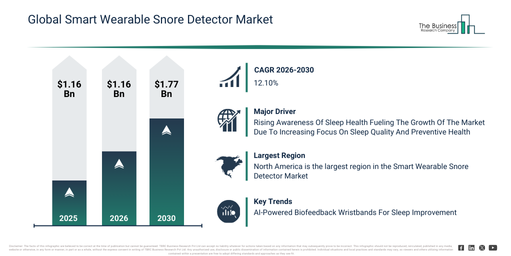
    Looking ahead, the market is forecasted to reach $1.64 billion by 2030, with a CAGR of 12.1%. This future growth will be supported by advancements in AI-driven snore detection algorithms, broader acceptance of wearable health technologies, growing investments in home sleep monitoring, integration with smart home systems, and collaborative efforts between technology and healthcare firms. Key trends expected to shape the market include the expanding use of wearable sleep trackers, integration of snore detection features with mobile apps, heightened awareness of sleep disorders, development of comfortable and non-invasive devices, and growth in sleep clinics and home care services.

    Download A Free Sample Report For Comprehensive Market Insights:

    https://www.thebusinessresearchcompany.com/sample.aspx?id=27420&type=smp

    Rising Awareness of Sleep Health as a Market Growth Catalyst

    Increasing public awareness about the importance of sleep health is a crucial factor propelling the smart wearable snore detector market. People are becoming more conscious of how quality and sufficient sleep impact overall wellness, productivity, and the prevention of chronic diseases such as obesity, diabetes, and cardiovascular conditions.

    Smart wearable snore detectors contribute to this awareness by providing real-time data and insights that help users identify potential sleep problems early. For example, in December 2023, the Sleep Foundation reported that around 37% of adults in the U.S. indicated a decline in sleep quality compared to 28% in previous years. This growing concern about sleep health is driving demand for effective snore detection technologies.

    Smart Wearable Snore Detector Market Segmentation Highlighting Growth Areas

    This market is divided into several key segments for better product and application analysis:

    1) By Product Type: Wristband Snore Detectors, Patch Snore Detectors, Headband Snore Detectors, and Other Product Types

    2) By Technology: Sound-Based, Vibration-Based, Motion Sensor-Based, and Other Technologies

    3) By Distribution Channel: Online Stores, Pharmacies, Specialty Stores, and Other Channels

    4) By Application: Home Care, Sleep Clinics, Hospitals, and Other Applications

    Further subcategories include specialized products such as vibration-based alerts and Bluetooth-enabled wristbands, adhesive chest patches and multi-sensor sleep patches, EEG-based and bone conduction feedback headbands, as well as other types like smart neckbands, in-ear monitors, jaw-support wearables, and smart sleep masks with snore detection.

    Access The Complete Smart Wearable Snore Detector Market Report:

    https://www.thebusinessresearchcompany.com/report/smart-wearable-snore-detector-global-market-report

    Market Trends Influencing Competition in the Smart Wearable Snore Detector Space

    Leading companies in this market are investing heavily in the development of advanced, AI-powered products aimed at improving sleep quality and reducing snoring episodes. Among these innovations are biofeedback-enabled wristbands that use artificial intelligence to monitor bodily signals and gently vibrate to encourage beneficial behavioral changes.

    For instance, in September 2024, Israel-based digital health company AppYea Inc. launched AppySleep, a sophisticated AI-driven wearable wristband designed to detect snoring and abnormal breathing. The device connects to a smartphone app, delivering gentle vibrations to encourage users to change sleep positions, which can improve airflow. Users can customize vibration intensity and receive detailed sleep analytics and long-term progress reports via a personal cloud account.

    Key Players and Competitive Landscape in the Smart Wearable Snore Detector Market

    The market features several prominent companies, including Samsung Electronics Co. Ltd., Koninklijke Philips N.V., Fitbit Inc., Zeus Sleep Inc., Ozlo Inc., Hupnos Inc., Imagimob AB, VVFLY Electronics Co. Ltd., Meditas Ltd., AppYea Inc., Beddr Inc., Shenzhen Xinhui Technology Co. Ltd., Snore Circle, Wellue Health, Go2Silence, Sleepmi, Walkervo, Snooor Ltd., ELBME, and AMAZHEAL. These players continue to innovate and compete by enhancing product features, improving user experience, and expanding distribution channels.

    Regional Market Analysis and Revenue Leadership

    In 2025, North America emerged as the largest regional market for smart wearable snore detectors. However, the Asia-Pacific region is anticipated to show the fastest growth throughout the forecast period. The market study also covers additional regions such as South East Asia, Western Europe, Eastern Europe, South America, the Middle East, and Africa, providing a well-rounded view of global trends and opportunities.

    Get in touch with us:

    The Business Research Company: https://www.thebusinessresearchcompany.com/

    Americas: +1 310-496-7795

    Asia: +44 7882 955267 & +91 8897263534

    Europe: +44 7882 955267

    Email us at: marketing@tbrc.info

    Follow us on:

    LinkedIn: https://in.linkedin.com/company/the-business-research-company

    YouTube: https://www.youtube.com/channel/UC24_fI0rV8cR5DxlCpgmyFQ

    Global Market Model: https://www.thebusinessresearchcompany.com/global-market-model
  • Smart Wearable Kidney Monitor Market Expected To Reach $2.47 Billion By 2030 As Growth Accelerates At 18.1% CAGR

    Smart Wearable Kidney Monitor Market Expected To Reach $2.47 Billion By 2030 As Growth Accelerates At 18.1% CAGR

    Through market attractiveness analysis, total addressable market evaluation, company benchmarking matrices, interactive Excel dashboards, expanded supply chain intelligence, emerging startup coverage, and detailed product insights, The Business Research Company’s 2026 market reports provide more actionable and strategically valuable research.

    The smart wearable kidney monitor market is gaining considerable traction as healthcare shifts toward more patient-centered and technology-driven approaches. This sector is evolving rapidly, driven by technological advances and increasing clinical demand, offering new possibilities for kidney health management. Below, we explore the current market size, key growth drivers, major players, trends, segments, and regional insights shaping the future of this industry.

    Current Market Value and Expected Growth in the Smart Wearable Kidney Monitor Market

    The smart wearable kidney monitor market has seen swift expansion in recent years. From a valuation of $1.07 billion in 2025, it is projected to reach $1.27 billion in 2026, growing at a compound annual growth rate (CAGR) of 18.4%. This impressive historic growth reflects the limited availability of wearable kidney monitoring devices, a heavy dependence on hospital-based kidney function assessments, increasing rates of chronic kidney disease, heightened patient awareness regarding kidney health, and widespread use of conventional dialysis monitoring.

    Download A Free Sample Report For Comprehensive Market Insights:

    https://www.thebusinessresearchcompany.com/sample.aspx?id=27419&type=smp

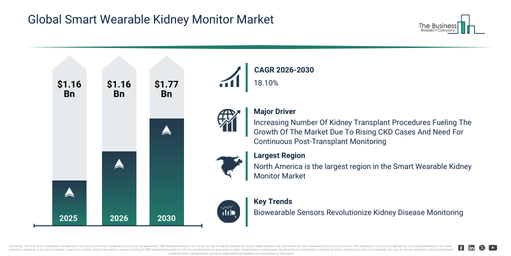
    Looking ahead, the market is poised for continued rapid growth. By 2030, it is forecasted to climb to $2.47 billion, maintaining a CAGR of 18.1%. This anticipated surge is driven by advancements such as miniaturized sensors, integration with mobile health apps, increasing adoption of AI-powered predictive analytics, expanded home care solutions, and strategic collaborations between healthcare providers and device manufacturers. Emerging trends include the rise of non-invasive kidney monitoring devices, multi-parameter biomarker integration, growing demand for remote monitoring, wider availability of ambulatory and home care services, and a greater focus on real-time data analytics for early detection.

    Rising Number of Kidney Transplant Procedures Fuels Market Demand

    One of the leading factors accelerating the smart wearable kidney monitor market is the increasing volume of kidney transplant surgeries. These procedures involve implanting a healthy donor kidney into patients suffering from kidney failure to restore renal function. The growing prevalence of chronic kidney disease (CKD), which often progresses to end-stage renal failure, has caused a rise in transplants as a life-saving intervention.

    Access The Complete Smart Wearable Kidney Monitor Market Report:

    https://www.thebusinessresearchcompany.com/report/smart-wearable-kidney-monitor-global-market-report

    Wearable kidney monitoring devices play a critical role in post-transplant care by offering continuous and non-invasive monitoring of kidney function. This allows for early identification of complications, supports personalized treatment plans, and reduces the need for frequent hospital visits, ultimately improving patient outcomes. For example, data from the U.S. Department of Health & Human Services reported that in 2024, the number of kidney transplants performed in the United States reached 27,759, marking a 1.6% increase compared to 2023. This upward trend in transplant procedures directly contributes to expanding demand for smart wearable kidney monitors.

    Segment Overview of the Smart Wearable Kidney Monitor Market

    The smart wearable kidney monitor market is structured into various segments based on product type, distribution channels, applications, and end-users.

    By product type, it includes Patch-Based Monitors, Wristband Monitors, Belt Monitors, and Other Types. Patch-Based Monitors are further split into Electrolyte Monitoring Patches, Hydration Monitoring Patches, Uremic Toxin Monitoring Patches, Hemodynamic Monitoring Patches, and Multi-Parameter Biomarker Monitoring Patches. Wristband Monitors cover Potassium Monitoring Wristbands, Fluid Balance Tracking Wristbands, Blood Pressure Monitoring Wristbands, Heart Rate and Vital Sign Monitoring Wristbands, and Smart Alert-Enabled Wristbands. Belt Monitors consist of Dialysate Flow Tracking Belts, Portable Hemodialysis Support Belts, Renal Function Monitoring Belts, and Wireless Data-Transmission Belts. Other Types include Smart Clothing with Embedded Renal Sensors, Implantable Kidney Monitoring Devices, Clip-On Monitoring Modules, Wearable Artificial Kidney Devices, and Sensor-Integrated Headbands or Chest Straps.

    Distribution channels are divided into online and offline methods, while application areas focus on Chronic Kidney Disease Monitoring, Dialysis Monitoring, Post-Transplant Monitoring, and other uses. End-users comprise Hospitals and Clinics, Home Care Settings, Ambulatory Surgical Centers, and other healthcare venues.

    Innovations and Technological Trends Shaping the Smart Wearable Kidney Monitor Market

    Leading companies within this market are heavily investing in the development of advanced biowearable sensors to boost monitoring accuracy, enhance patient care, and enable continuous real-time assessment of chronic kidney disease. Biowearable sensors are small, non-invasive devices that track vital kidney-related biomarkers such as creatinine and urea using sweat or interstitial fluid analysis.

    For instance, in April 2024, Metyos, a French biowearable technology firm, launched a lightweight wrist-worn biosensor that offers real-time measurement of key renal biomarkers. This device combines cutting-edge nanotechnology with AI-driven analytics to detect early kidney dysfunction signs, significantly reducing dependence on frequent blood tests and hospital visits. Moreover, it syncs with a mobile application, providing users and healthcare professionals with personalized health insights and alerts for abnormal biomarker levels, enabling timely interventions and proactive disease management.

    Prominent Players Leading the Smart Wearable Kidney Monitor Market

    The competitive landscape of the smart wearable kidney monitor market includes key companies such as KidneyX, GFR90 Inc., Kalium Health Ltd., WearTech Applied Research Center, RenalSense Ltd., Outset Medical Inc., Baxter International Inc., Fresenius Medical Care AG & Co. KGaA, Medtronic plc., B. Braun Melsungen AG, Nipro Corporation, Quanta Dialysis Technologies Ltd., AWAK Technologies Pte Ltd, CloudCath Inc., Diality Inc., Siemens Healthineers, Abbott Laboratories, Biotricity Ltd., Blood Purification Technologies Inc., and Wearable Artificial Organs Inc. These organizations are instrumental in pushing technological boundaries and expanding market reach through innovation and strategic partnerships.

    Regional Market Outlook and Growth Opportunities

    In 2025, North America was the dominant region in terms of market share for smart wearable kidney monitors. However, Asia-Pacific is expected to experience the fastest growth rate during the forecast period. The market report covers a comprehensive geographic scope, including Asia-Pacific, South East Asia, Western Europe, Eastern Europe, North America, South America, the Middle East, and Africa, providing a global perspective on market opportunities and regional dynamics.

    Get in touch with us:

    The Business Research Company: https://www.thebusinessresearchcompany.com/

    Americas: +1 310-496-7795

    Asia: +44 7882 955267 & +91 8897263534

    Europe: +44 7882 955267

    Email us at: marketing@tbrc.info

    Follow us on:

    LinkedIn: https://in.linkedin.com/company/the-business-research-company

    YouTube: https://www.youtube.com/channel/UC24_fI0rV8cR5DxlCpgmyFQ

    Global Market Model: https://www.thebusinessresearchcompany.com/global-market-model
  • Smart Wearable Glucose Patch Market Set To Grow From $2.62 Billion In 2026 To $5.08 Billion By 2030 At A CAGR Of 18%

    Smart Wearable Glucose Patch Market Set To Grow From $2.62 Billion In 2026 To $5.08 Billion By 2030 At A CAGR Of 18%

    Delivering more actionable and strategically valuable research, The Business Research Company’s 2026 market reports feature market attractiveness analysis, total addressable market evaluation, company benchmarking matrices, interactive Excel dashboards, expanded supply chain intelligence, emerging startup coverage, and detailed product insights.

    The smart wearable glucose patch market has witnessed significant expansion recently, driven by advances in technology and growing health awareness. As the demand for non-invasive and convenient diabetes management solutions rises, this market is set to experience substantial growth in the coming years. Below is a comprehensive overview of the market size, key growth drivers, major segments, innovation trends, leading companies, and regional outlook.

    Market Size and Growth Forecast for the Smart Wearable Glucose Patch Market

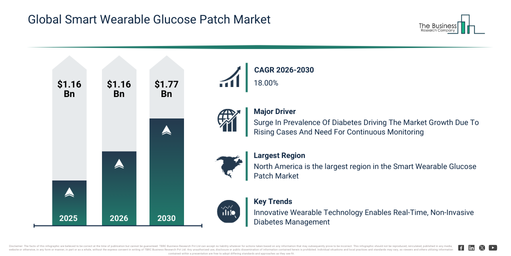
    The market for smart wearable glucose patches has surged dramatically, with its value expected to grow from $2.22 billion in 2025 to $2.62 billion in 2026, representing a compound annual growth rate (CAGR) of 18.3%. This rapid growth during the past period can be attributed to the increasing prevalence of diabetes, a rising preference for alternatives to traditional finger-prick methods, the expansion of wearable biosensors, growing chronic disease monitoring, and the adoption of patient self-care practices. Looking ahead, the market is anticipated to more than double, reaching $5.09 billion by 2030 at a CAGR of 18.0%. Factors propelling this expansion include advances in remote diabetes management, AI-powered glucose data analytics, integration with telehealth platforms, emphasis on preventive diabetes care, and stronger reimbursement policies supporting continuous glucose monitoring (CGM) devices. Emerging trends during this period comprise non-invasive glucose monitoring techniques, continuous glucose sensing, real-time glucose data transmission, long-lasting wearable patches, and tools for diabetes self-management.

    Download A Free Sample Report For Comprehensive Market Insights:

    https://www.thebusinessresearchcompany.com/sample.aspx?id=29213&type=smp

    How Rising Diabetes Rates Are Fueling the Smart Wearable Glucose Patch Market

    The growing number of individuals affected by diabetes is a primary factor driving demand for smart wearable glucose patches. Diabetes, a chronic metabolic condition characterized by elevated blood glucose levels due to insufficient insulin production or ineffective insulin use, poses serious health risks if unmanaged. Increasing rates of diabetes are linked to unhealthy lifestyles, including poor diet and lack of exercise, which contribute to obesity and insulin resistance. Smart wearable glucose patches play a vital role in diabetes care by enabling continuous, real-time glucose monitoring. This technology reduces reliance on invasive testing methods, supports stable blood sugar regulation, and empowers users to make timely adjustments to their lifestyle or medication, improving overall health outcomes. For instance, in June 2024, the UK’s National Health Service (NHS) reported that in 2023, over 549,000 additional people in England were identified as at risk for type 2 diabetes, increasing the total number of individuals with prediabetes registered with general practitioners to 3,615,330—a nearly 20% rise compared to 2022. This upward trend in diabetes risk underlines the expanding need for smart glucose monitoring solutions.

    The Role of Technology and Patient Empowerment in Market Growth

    Another key driver for the smart wearable glucose patch market is the increasing adoption of wearable biosensors and self-care technologies among patients. These devices offer a convenient and user-friendly approach to managing chronic conditions, encouraging proactive involvement in health monitoring. Continuous monitoring capabilities provide real-time feedback, which enhances treatment effectiveness and helps prevent complications. This shift towards patient-centered care is stimulating demand for innovative glucose patch solutions that are both reliable and easy to use.

    Access The Complete Smart Wearable Glucose Patch Market Report:

    https://www.thebusinessresearchcompany.com/report/smart-wearable-glucose-patch-global-market-report

    Understanding the Main Segments Within the Smart Wearable Glucose Patch Market

    The smart wearable glucose patch market is divided into various important segments that cater to different user needs.

    1) Product Type: This includes Continuous Glucose Monitoring Patches, Non-Invasive Glucose Patches, Disposable Glucose Patches, and Reusable Glucose Patches.

    2) Distribution Channel: Key channels are Online Retail, Pharmacies, Direct Sales, and other distribution avenues.

    3) Application: The primary uses are Diabetes Management, Remote Patient Monitoring, and Other Applications.

    4) End-User: This includes Hospitals and Clinics, Homecare Settings, and Other End-Users.

    Further breakdown within product types highlights subcategories such as real-time CGM patches, intermittently scanned CGM patches, Bluetooth-enabled CGM patches, and long-duration CGM patches. Non-invasive patches include optical sensor-based, ultrasound-based, and transdermal glucose patches. Disposable patches cover single-use, short-term wearable, adhesive, and sterile forms. Reusable patches include rechargeable types, sensor replacement models, long-life patches, and smart connected reusable patches.

    Innovations Shaping the Future of the Smart Wearable Glucose Patch Market

    Leading companies in this market are focusing heavily on developing over-the-counter (OTC) continuous glucose monitoring sensors. These devices, available without a prescription, aim to improve accessibility and support better diabetes management through proactive health tracking. OTC CGM sensors allow users, particularly those with type 2 diabetes or prediabetes, to monitor how lifestyle factors influence their glucose levels in real time, enabling more informed health decisions. For example, in September 2024, US-based Dexcom, Inc. introduced Stelo, its first OTC CGM biosensor, following FDA clearance earlier in the year. This discreet patch, worn on the upper arm, continuously records glucose data and syncs it with a smartphone app, eliminating the need for fingersticks or prescriptions. Designed for non-insulin-dependent type 2 diabetes and prediabetes patients, Stelo provides insights about the effects of diet, exercise, stress, and sleep on glucose levels. It offers a 15-day wear period, is waterproof, and features an intuitive app with daily trends and insights. Flexible payment options through Dexcom’s website make advanced glucose monitoring more affordable and widely available.

    Prominent Players Leading the Smart Wearable Glucose Patch Market

    The market includes several prominent companies shaping the industry landscape, such as F. Hoffmann-La Roche AG, Abbott Laboratories, Medtronic Public Limited Company, Dexcom Inc., Biolinq Inc., Ascensia Diabetes Care Holdings AG, AgaMatrix Inc., Senseonics Holdings Inc., Nemaura Medical Inc., Suzhou Novosense Microelectronics Co. Ltd., RSP Systems A/S, Nutromics Ltd., Cnoga Medical Ltd., GraphWear Technologies Inc., Stelo Technology Private Limited, Afon Technology Ltd., LifePlus Inc., PKvitality S.A.S., Movano Inc., and Transdermal Diagnostics Ltd.

    Regional Market Insights and Growth Patterns

    In 2025, North America held the largest share of the smart wearable glucose patch market, driven by high healthcare expenditure and adoption of advanced technologies. Meanwhile, the Asia-Pacific region is projected to experience the fastest growth throughout the forecast period. Other key regions covered in the market analysis include South East Asia, Western Europe, Eastern Europe, South America, the Middle East, and Africa, providing a comprehensive view of global market dynamics.

    Get in touch with us:

    The Business Research Company: https://www.thebusinessresearchcompany.com/

    Americas: +1 310-496-7795

    Asia: +44 7882 955267 & +91 8897263534

    Europe: +44 7882 955267

    Email us at: marketing@tbrc.info

    Follow us on:

    LinkedIn: https://in.linkedin.com/company/the-business-research-company

    YouTube: https://www.youtube.com/channel/UC24_fI0rV8cR5DxlCpgmyFQ

    Global Market Model: https://www.thebusinessresearchcompany.com/global-market-model
  • Smart Wearable Fetal Monitoring Patch Market Opportunities Are Emerging Beyond Traditional Growth Areas

    Smart Wearable Fetal Monitoring Patch Market Opportunities Are Emerging Beyond Traditional Growth Areas

    Enhanced with market attractiveness analysis, total addressable market evaluation, company benchmarking matrices, interactive Excel dashboards, expanded supply chain intelligence, emerging startup coverage, and detailed product insights, The Business Research Company’s 2026 market reports deliver more actionable and strategically valuable research.

    The smart wearable fetal monitoring patch market is experiencing rapid growth, driven by increasing technological advancements and rising awareness about maternal and fetal health. This sector is transforming how prenatal care is delivered, with innovations making monitoring more accessible and efficient for expectant mothers and healthcare providers alike. Let’s explore the current market size, key growth factors, segmentation, major industry trends, leading players, and regional developments shaping this dynamic market.

    Market Size and Growth Forecast for the Smart Wearable Fetal Monitoring Patch Market

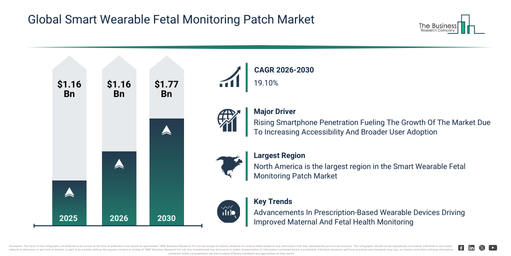
    The market for smart wearable fetal monitoring patches has expanded significantly in recent years. From $1.19 billion in 2025, it is projected to rise to $1.42 billion in 2026, reflecting a strong compound annual growth rate (CAGR) of 19.4%. This historical growth has been driven by factors such as an increase in high-risk pregnancies, greater demand for continuous fetal monitoring, expansion of hospital prenatal care services, heightened maternal health awareness, and advances in wearable sensor technology. Looking ahead, the market is expected to maintain its upward trajectory, reaching $2.86 billion by 2030 with a CAGR of 19.1%. Growth over this forecast period will be fueled by tele-maternity care expansion, AI-driven fetal analytics, growing interest in home pregnancy monitoring, adoption of remote obstetric care, and the rise of digital prenatal platforms. Key trends include continuous fetal heart rate tracking, non-invasive prenatal wearable devices, remote pregnancy monitoring, wireless maternal health tracking, and home-based fetal monitoring systems.

    Download A Free Sample Report For Comprehensive Market Insights:

    https://www.thebusinessresearchcompany.com/sample.aspx?id=29212&type=smp

    Factors Encouraging Growth in the Smart Wearable Fetal Monitoring Patch Market

    One important factor supporting the expansion of this market is the rising penetration of smartphones. Smartphones, which combine communication, internet access, and computing in one portable device, are becoming increasingly widespread due to broader internet availability. This growth allows more people to access online services and digital health applications conveniently. High smartphone adoption benefits the smart wearable fetal monitoring patch market by enabling smooth connectivity and real-time transmission of health data. Expectant mothers and healthcare professionals can easily track and manage fetal health details through mobile applications, improving prenatal care. For example, a February 2023 report by Uswitch Limited, a UK-based comparison and switching service, predicts that by 2025, 95% of the 68.3 million people living in the UK will own smartphones. This widespread smartphone use is expected to play a key role in driving market demand.

    Additional Drivers Fostering Demand for Smart Wearable Fetal Monitoring Patches

    Beyond smartphone penetration, the increasing need for continuous and accurate fetal monitoring is another critical driver. As more pregnancies are classified as high-risk due to factors such as maternal age or health conditions, healthcare providers are looking for reliable, non-invasive ways to monitor fetal well-being consistently. The expansion of hospital prenatal care facilities and growing maternal health awareness also contribute to market growth. Technological progress in wearable sensors has improved the comfort, accuracy, and functionality of monitoring devices, making these patches more appealing to both patients and clinicians.

    Access The Complete Smart Wearable Fetal Monitoring Patch Market Report:

    https://www.thebusinessresearchcompany.com/report/smart-wearable-fetal-monitoring-patch-global-market-report

    How the Smart Wearable Fetal Monitoring Patch Market Is Structured Across Key Segments

    This market is categorized by several important criteria. By product type, it includes single-use patches and reusable patches. Distribution channels divide into online and offline sales. Application areas cover home care, hospitals, clinics, and other settings. End users are segmented into pregnant women and healthcare providers. Within single-use patches, subtypes include adhesive sensor patches and hydrogel sensor patches. For reusable patches, there are electronic sensor patches, Bluetooth-enabled patches, and rechargeable sensor patches. These classifications provide a detailed framework for analyzing market dynamics and customer preferences.

    Innovations and Trends Shaping the Future of the Smart Wearable Fetal Monitoring Patch Market

    Leading players in the market are focusing on the development of advanced solutions such as prescription-based wearable devices that facilitate seamless data sharing with medical professionals. These prescription devices are preferred for their reliability and medical approval, offering monitoring tailored to individual patients and supervised by healthcare providers. For instance, in January 2024, Bloomlife, a US healthcare technology company, received FDA clearance for its Bloomlife MFM-Pro device. This prescription wearable tracks both maternal and fetal heart rates, providing continuous monitoring in home and clinical environments. This approval marks a significant milestone as the company transitions from consumer-focused products to regulated medical devices, enhancing the credibility and adoption of such wearables.

    Key Companies Leading the Smart Wearable Fetal Monitoring Patch Market

    Several prominent companies are active in this market, including iMec International, Nuvo Group, Monica Healthcare, Bloomlife, MindChild Medical, HeraMED, Janitri Innovations, NEMO Healthcare, Empathy Labs, Philips, GE HealthCare, Mindray, Edan Instruments, Samsung Medison, Analogic, Fetal Care Technologies, Sotera Wireless, Biolight Medical, Bionet, Comen Medical, Arjo, and Welch Allyn. These firms are driving innovation and expanding market reach through product development, strategic partnerships, and regulatory approvals.

    Regional Insights Highlighting Market Leadership and Growth Potential

    In 2025, North America held the largest share of the smart wearable fetal monitoring patch market. However, the Asia-Pacific region is anticipated to experience the fastest growth during the forecast period. The market analysis covers critical geographic areas including Asia-Pacific, South East Asia, Western Europe, Eastern Europe, North America, South America, the Middle East, and Africa, providing a comprehensive view of global market trends and opportunities.

    Get in touch with us:

    The Business Research Company: https://www.thebusinessresearchcompany.com/

    Americas: +1 310-496-7795

    Asia: +44 7882 955267 & +91 8897263534

    Europe: +44 7882 955267

    Email us at: marketing@tbrc.info

    Follow us on:

    LinkedIn: https://in.linkedin.com/company/the-business-research-company

    YouTube: https://www.youtube.com/channel/UC24_fI0rV8cR5DxlCpgmyFQ

    Global Market Model: https://www.thebusinessresearchcompany.com/global-market-model