Month: June 2026

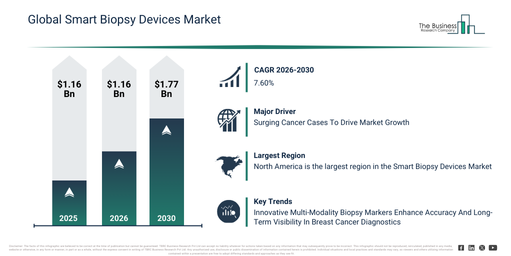
  • Smart Biopsy Devices Market Set To Grow From $3.23 Billion In 2026 To $4.32 Billion By 2030 At A CAGR Of 7.6%

    Smart Biopsy Devices Market Set To Grow From $3.23 Billion In 2026 To $4.32 Billion By 2030 At A CAGR Of 7.6%

    Through market attractiveness analysis, total addressable market evaluation, company benchmarking matrices, interactive Excel dashboards, expanded supply chain intelligence, emerging startup coverage, and detailed product insights, The Business Research Company’s 2026 market reports provide more actionable and strategically valuable research.

    The smart biopsy devices market is experiencing significant growth driven by advancements in medical technology and rising healthcare needs. This market’s expansion is fueled by improved diagnostic approaches and increasing demand for minimally invasive procedures. Let’s explore the current market size, growth drivers, key players, emerging trends, and regional insights shaping the future of smart biopsy devices.

    Steady Growth and Market Size Outlook for Smart Biopsy Devices

    The smart biopsy devices market has seen robust growth in recent years, with its value projected to rise from $3.01 billion in 2025 to $3.23 billion in 2026, representing a compound annual growth rate (CAGR) of 7.2%. This upward trend is largely attributed to the rising incidence of cancer, a greater shift towards minimally invasive diagnostic techniques, the expansion of advanced imaging technologies, wider adoption of core needle biopsies, and enhanced clinician training in image-guided procedures. Looking ahead, the market is expected to reach $4.32 billion by 2030, growing at an accelerated CAGR of 7.6%. This forecasted growth reflects increasing demand for precision oncology diagnostics, growing investments in smart surgical tools, the rise of robotic-assisted biopsy methods, heightened focus on early disease detection, and the integration of AI-driven diagnostic support systems.

    Download A Free Sample Report For Comprehensive Market Insights:

    https://www.thebusinessresearchcompany.com/sample.aspx?id=12271&type=smp

    Rising Cancer Cases as a Major Growth Catalyst

    One of the main factors propelling the smart biopsy devices market is the increasing number of cancer diagnoses worldwide. Cancer, characterized by uncontrolled cell growth that can spread to various organs, requires accurate sampling for effective diagnosis and treatment planning. This demand has driven innovation in smart biopsy tools that offer enhanced imaging, molecular analysis, and precision capabilities. For example, according to a January 2024 report by the World Health Organization, the global cancer burden is expected to exceed 35 million new cases by 2050—a 77% jump from the estimated 20 million cases and 9.7 million deaths recorded in 2022. This dramatic rise underscores the critical need for advanced biopsy technologies that can support better clinical outcomes.

    Detailed Market Segmentation by Product and Application

    The smart biopsy devices market is segmented into several key categories to cover the full spectrum of products and applications:

    1) By Product: Needle-Based Biopsy Instruments and Localization Wires.

    2) By Guidance Technique: Ultrasound-Guided Biopsy, Stereotactic-Guided Biopsy, Magnetic Resonance Imaging-Guided Biopsy, and other guidance methods.

    3) By Application: Breast Cancer, Skin Cancer, Liver Cancer, Prostate Cancer, and other uses.

    4) By End-User: Hospitals, Academic and Research Institutes, and Diagnostic and Imaging Centers.

    Further subcategories include types of needle-based devices such as core needle biopsy instruments, fine needle aspiration devices, and vacuum-assisted biopsy tools. Localization wires include hook wire, radar, and magnetic localization devices, offering clinicians a range of options tailored to specific diagnostic needs.

    Access The Complete Smart Biopsy Devices Market Report:

    https://www.thebusinessresearchcompany.com/report/smart-biopsy-devices-global-market-report

    Innovation and Trends Enhancing the Smart Biopsy Devices Market

    Industry leaders are focusing on developing sophisticated biopsy site markers that improve lesion localization and diagnostic reliability. These multi-modality markers are designed to be visible across ultrasound, mammography, and MRI imaging, which helps clinicians accurately track biopsy sites for better follow-up care. For instance, in March 2024, Mammotome, a U.S.-based medical technology firm, introduced LumiMARK—a next-generation, 510(k)-cleared breast biopsy site marker. LumiMARK is available in three unique 3D shapes, such as Tulip and Rose, offering consistent imaging visibility and enhanced long-term detectability in breast tissue and lymph nodes, supporting improved diagnostic confidence and clinical decisions.

    Key Market Players Driving Competition and Innovation

    The competitive landscape of the smart biopsy devices market features prominent companies such as Becton Dickinson and Company, Boston Scientific Corporation, Hologic Inc., Cook Medical Inc., Medtronic Plc, Olympus Corporation, B. Braun Melsungen AG, CONMED Corporation, FUJIFILM Holdings Corporation, Argon Medical Devices Inc., SOMATEX Medical Technologies GmbH, TSK Laboratory Europe B.V., INRAD Inc., Esaote SpA, Planmed Oy, Canon Medical Systems Corporation, Siemens Healthineers, General Electric Company, Intuitive Surgical Inc., Karl Storz SE And Co KG, and Stryker Corporation. These firms are continuously investing in research and development to introduce advanced biopsy solutions that meet evolving clinical needs.

    Geographical Market Distribution and Emerging Regional Opportunities

    In 2025, North America held the largest share of the smart biopsy devices market, supported by robust healthcare infrastructure and technological advancements. Meanwhile, the Asia-Pacific region is poised to be the fastest-growing market over the forecast period, driven by increasing healthcare investments, expanding medical facilities, and rising cancer awareness. Other significant regions analyzed in the market include South East Asia, Western Europe, Eastern Europe, South America, the Middle East, and Africa, providing a broad perspective on global market dynamics and growth potential.

    Get in touch with us:

    The Business Research Company: https://www.thebusinessresearchcompany.com/

    Americas: +1 310-496-7795

    Asia: +44 7882 955267 & +91 8897263534

    Europe: +44 7882 955267

    Email us at: marketing@tbrc.info

    Follow us on:

    LinkedIn: https://in.linkedin.com/company/the-business-research-company

    YouTube: https://www.youtube.com/channel/UC24_fI0rV8cR5DxlCpgmyFQ

    Global Market Model: https://www.thebusinessresearchcompany.com/global-market-model
  • Smart Adaptive Stairlift Market Opportunities Are Emerging Beyond Traditional Growth Areas

    Smart Adaptive Stairlift Market Opportunities Are Emerging Beyond Traditional Growth Areas

    Delivering more actionable and strategically valuable research, The Business Research Company’s 2026 market reports feature market attractiveness analysis, total addressable market evaluation, company benchmarking matrices, interactive Excel dashboards, expanded supply chain intelligence, emerging startup coverage, and detailed product insights.

    The smart adaptive stairlift market has been experiencing significant growth, driven by various demographic and technological factors. This sector is rapidly evolving as it addresses the mobility needs of aging populations and individuals requiring accessible home solutions. Let’s explore the current market size, key growth drivers, emerging trends, prominent players, and regional dynamics shaping the future of this industry.

    Market Size and Growth Outlook for the Smart Adaptive Stairlift Market

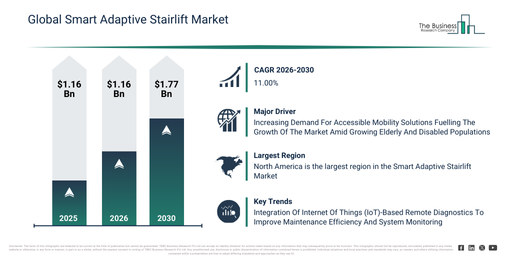
    The smart adaptive stairlift market has seen impressive expansion in recent years. It is projected to increase from $2.27 billion in 2025 to $2.53 billion in 2026, reflecting a compound annual growth rate (CAGR) of 11.3%. This growth during the historical period is mainly linked to the rising elderly population, increasing cases of mobility impairments, growing demand for home accessibility, solutions supporting independent living, and trends in residential renovations. Looking ahead, the market is expected to reach $3.84 billion by 2030, growing at a CAGR of 11.0%. Factors such as integration of smart home technologies, uptake in multi-story homes, installations in healthcare facilities, innovations in battery power, and ergonomic design improvements will support this expansion. Anticipated trends include sensor-based obstacle detection, customizable speed and seat settings, AI-enabled controls, compact foldable designs, and solutions designed for both indoor and outdoor use.

    Download A Free Sample Report For Comprehensive Market Insights:

    https://www.thebusinessresearchcompany.com/sample.aspx?id=29191&type=smp

    Growing Demand for Accessible Mobility Solutions in the Smart Adaptive Stairlift Market

    One of the primary drivers propelling the smart adaptive stairlift market is the escalating need for accessible mobility technologies. These solutions are designed to help people with limited mobility move safely and independently, especially within their own homes. This demand is closely linked to the increasing aging population worldwide, as older adults often face mobility challenges and seek assistive devices to preserve their independence and quality of life. Smart adaptive stairlifts meet these needs by incorporating intelligent sensors and adaptive controls that ensure safety, comfort, and reduced reliance on caregivers. For instance, in January 2024, the World Health Organization (WHO), based in Switzerland, projected that nearly 3.5 billion people globally will require assistive products by 2050, underscoring the growing market potential for such mobility solutions.

    Product and Technology Segmentation in the Smart Adaptive Stairlift Market

    This market report segments the smart adaptive stairlift industry into several categories to better understand revenue opportunities. By product type, the market includes Straight Stairlifts, Curved Stairlifts, and Platform Stairlifts. Technological classifications cover Sensor-Based, AI-Enabled, Internet of Things (IoT)-Connected, and other emerging technologies. Power sources are divided into Alternating Current (AC) Powered, Battery Powered, and Hybrid systems. Distribution channels consist of Direct Sales, Online Retail, Specialty Stores, and others. Lastly, end-users range from Residential to Commercial, Healthcare Facilities, and additional sectors. Further subsegments break down the types of stairlifts, such as single or dual rail straight stairlifts with foldable seats or outdoor models; curved stairlifts with custom or modular rails and swivel seats; and platform stairlifts including wheelchair platforms and foldable options.

    Access The Complete Smart Adaptive Stairlift Market Report:

    https://www.thebusinessresearchcompany.com/report/smart-adaptive-stairlift-global-market-report

    Technological Innovations and Trends Driving Smart Adaptive Stairlift Market Growth

    Leading companies in the smart adaptive stairlift sector are placing strong emphasis on adopting advanced technologies like IoT-based remote diagnostics to improve service responsiveness, system monitoring, and operational uptime. IoT-enabled stairlifts are equipped with internet-connected sensors and control units that transmit real-time data to remote service platforms, allowing for fault detection, performance tracking, and remote maintenance. For example, in June 2023, US-based Harmar Mobility introduced the UP Stairlift, an IoT-enabled modular curved stairlift designed for quick next-day installations. This model features internet connectivity for diagnostics, a power swivel seat, power-folding footrest, and a modular rail system that can be assembled on-site without custom fabrication. Such innovations enhance maintenance efficiency, installation flexibility, and user convenience by enabling technicians to proactively monitor and resolve performance issues.

    Key Players Leading the Smart Adaptive Stairlift Industry

    The smart adaptive stairlift market is shaped by numerous prominent companies, including Savaria Corporation, Acorn Mobility Services Limited, Handicare Group AB, Stannah Lifts Holdings Limited, Bruno Independent Living Aids Inc., Otolift Trapliften B.V., Harmar Mobility LLC, Platinum Stairlifts Limited, AmeriGlide Incorporated, Bespoke Stairlifts Limited, Vimec Srl, Cw Products Ltd., ThyssenKrupp Home Solutions, Brooks Mobility Products Inc., Lifeway Mobility, Global Stairlifts Ltd., Mobility Plus Stairlifts, Express Lifts and Stairlifts, Independent Stairlift Company, and Nova Lifts. These industry leaders continue to advance product development and market reach.

    Regional Market Leadership and Growth Prospects of the Smart Adaptive Stairlift Market

    In 2025, North America held the largest share of the smart adaptive stairlift market, serving as the dominant revenue region. However, the Asia-Pacific region is forecasted to experience the fastest growth throughout the forecast period. The comprehensive market analysis also includes other regions such as South East Asia, Western Europe, Eastern Europe, South America, the Middle East, and Africa, providing a global perspective on emerging opportunities and regional dynamics.

    Get in touch with us:

    The Business Research Company: https://www.thebusinessresearchcompany.com/

    Americas: +1 310-496-7795

    Asia: +44 7882 955267 & +91 8897263534

    Europe: +44 7882 955267

    Email us at: marketing@tbrc.info

    Follow us on:

    LinkedIn: https://in.linkedin.com/company/the-business-research-company

    YouTube: https://www.youtube.com/channel/UC24_fI0rV8cR5DxlCpgmyFQ

    Global Market Model: https://www.thebusinessresearchcompany.com/global-market-model
  • Small Volume Parenteral Market Expansion Is Opening New Pathways For Strategic Investment

    Small Volume Parenteral Market Expansion Is Opening New Pathways For Strategic Investment

    Enhanced with market attractiveness analysis, total addressable market evaluation, company benchmarking matrices, interactive Excel dashboards, expanded supply chain intelligence, emerging startup coverage, and detailed product insights, The Business Research Company’s 2026 market reports deliver more actionable and strategically valuable research.

    The small volume parenteral market has experienced robust growth in recent years and is set to continue expanding significantly. With increasing reliance on injectable therapies and advancements in healthcare, this market shows promising potential for the coming decade. Let’s explore the current market size, key growth drivers, segmentation, competitive landscape, and regional dynamics shaping its future.

    Current and Projected Market Size of the Small Volume Parenteral Market

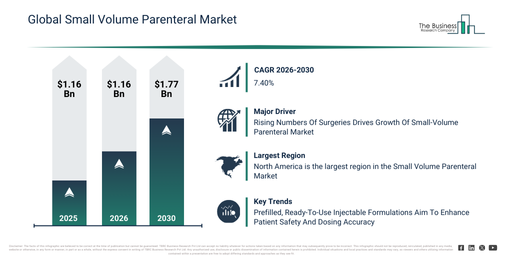
    The market for small volume parenterals has grown substantially, reaching $191.36 billion in 2025. It is anticipated to increase to $207.18 billion in 2026, reflecting a compound annual growth rate (CAGR) of 8.3%. This historical expansion is largely fueled by the rising use of injectable treatments, broader hospital drug administration, availability of glass ampule packaging, growth in acute care therapies, and heightened demand for parenteral nutrition. Looking ahead, the market is forecasted to reach $275.99 billion by 2030, expanding at a CAGR of 7.4%. Drivers during this period include increasing demand for biologics and vaccines, growing adoption of self-injectable therapies, expansion of aseptic manufacturing capacities, focus on advanced drug delivery systems, and investments in improved sterile packaging technologies. Key trends involve rising uptake of prefilled syringes, stronger demand for sterile injectable drugs, increasing use of single-dose parenterals, expanding vaccine and biologic administration, and enhanced attention to drug safety and stability.

    Download A Free Sample Report For Comprehensive Market Insights:

    https://www.thebusinessresearchcompany.com/sample.aspx?id=15925&type=smp

    Growth Factors Propelling the Small Volume Parenteral Market

    One of the main factors boosting the small volume parenteral market is the increasing number of surgical procedures performed globally. Surgery, which involves operative techniques to diagnose or treat diseases, injuries, and other conditions, is seeing growth due to medical advancements and an aging population. This rise in surgeries drives demand for precise administration of medications, nutrients, and electrolytes directly into the bloodstream via small volume parenteral solutions. For example, in June 2024, the American Society of Plastic Surgeons reported a 7% increase in minimally invasive procedures in 2023, surpassing the growth rate of traditional surgeries by 2%. Additionally, hand surgeries such as carpal tunnel release, arthritis treatments, and trigger finger procedures totaled 207,887 cases, marking a 2% rise from 2022. This trend clearly illustrates how the growing volume of surgeries is supporting the market’s expansion.

    Additional Factors Supporting Market Expansion

    Beyond surgery, the small volume parenteral market benefits from the broader use of injectable therapies in acute care settings. The availability of glass ampule packaging, favored for its sterility and safety, also supports market growth. Furthermore, increasing awareness of parenteral nutrition needs and the expansion of hospital-based drug administration contribute to the rising demand for these products.

    Access The Complete Small Volume Parenteral Market Report:

    https://www.thebusinessresearchcompany.com/report/small-volume-parenteral-global-market-report

    Detailed Segmentation of the Small Volume Parenteral Market

    This market is segmented into various categories to cover diverse product types and applications:

    1) By Type: Ampules, Vials, Prefilled Syringes

    2) By Dose Type: Single Dose, Multiple Dose

    3) By Indication: Pain Management, Cancer Care, Malnourishment, Gastrointestinal Disorders, Diabetes, Other Indications

    4) By Application: Local Anesthetics, Vaccines, Other Applications

    5) By End User: Hospitals, Clinics, Ambulatory Surgical Centers, Other End Users

    Further subcategories include:

    – Ampules: Glass Ampules, Plastic Ampules

    – Vials: Glass Vials, Plastic Vials, Single-dose Vials, Multi-dose Vials

    – Prefilled Syringes: Glass Prefilled Syringes, Plastic Prefilled Syringes

    Competitive Trends and Innovation in the Small Volume Parenteral Market

    Leading players in the small volume parenteral market are focusing on innovative solutions such as prefilled, ready-to-use injectable formulations. These products improve dosing accuracy, minimize contamination risk, and enhance patient safety by providing pre-measured doses in sterile syringes or vials, ready for immediate administration. For instance, in June 2025, Gland Pharma Limited, an India-based pharmaceutical company specializing in generics and injectables, received U.S. FDA approval for its Abbreviated New Drug Application (ANDA) for Angiotensin II Acetate Injection 2.5 mg/mL. This injectable is used to rapidly increase blood pressure in adults experiencing septic or distributive shock when other treatments have failed. It works by causing vasoconstriction and promoting aldosterone release, typically achieving target blood pressure within five minutes when administered intravenously, with dosage carefully adjusted to maintain desired levels. Such advancements highlight the market’s focus on critical care applications and patient-centered solutions.

    Leading Companies Shaping the Small Volume Parenteral Industry

    Several major pharmaceutical companies dominate the small volume parenteral market, including Pfizer Inc., AbbVie Inc., Bayer AG, Sanofi S.A., Bristol-Myers Squibb Company, Novartis AG, GlaxoSmithKline plc, Eli Lilly and Company, Baxter International Inc., Teva Pharmaceutical Industries Ltd., Fresenius Kabi AG, Sun Pharmaceutical Industries Ltd., Boehringer Ingelheim GmbH, Viatris Inc., Intas Pharmaceuticals Ltd., Aurobindo Pharma Limited, Dr. Reddy’s Laboratories Ltd., Cipla Limited, Hikma Pharmaceuticals PLC, Lupin Limited, Biocon Limited, Torrent Pharmaceuticals Ltd., Zydus Cadila, Alembic Pharmaceuticals Ltd., and Wockhardt Ltd. These companies contribute significantly through research, production, and distribution activities.

    Regional Market Insights and Growth Forecast

    In 2025, North America held the largest share of the small volume parenteral market. However, the Asia-Pacific region is expected to witness the fastest growth during the forecast period. The analysis covers major geographic areas including Asia-Pacific, South East Asia, Western Europe, Eastern Europe, North America, South America, the Middle East, and Africa, providing a comprehensive view of global market trends and opportunities.

    Get in touch with us:

    The Business Research Company: https://www.thebusinessresearchcompany.com/

    Americas: +1 310-496-7795

    Asia: +44 7882 955267 & +91 8897263534

    Europe: +44 7882 955267

    Email us at: marketing@tbrc.info

    Follow us on:

    LinkedIn: https://in.linkedin.com/company/the-business-research-company

    YouTube: https://www.youtube.com/channel/UC24_fI0rV8cR5DxlCpgmyFQ

    Global Market Model: https://www.thebusinessresearchcompany.com/global-market-model
  • Small Animal Imaging (In-Vivo) Market Trends Are Creating New Opportunities For Industry Leaders

    Small Animal Imaging (In-Vivo) Market Trends Are Creating New Opportunities For Industry Leaders

    Through market attractiveness analysis, total addressable market evaluation, company benchmarking matrices, interactive Excel dashboards, expanded supply chain intelligence, emerging startup coverage, and detailed product insights, The Business Research Company’s 2026 market reports provide more actionable and strategically valuable research.

    The small animal imaging (in-vivo) market has experienced impressive expansion in recent years, driven by advancements in research and technology. This growing sector plays a critical role in preclinical studies and drug discovery, and its future looks promising with ongoing innovations and increased investments. Below is an in-depth review of the market size, key drivers, industry trends, major players, and regional growth prospects shaping this dynamic field.

    Current Market Size and Projected Growth in the Small Animal Imaging (In-Vivo) Market

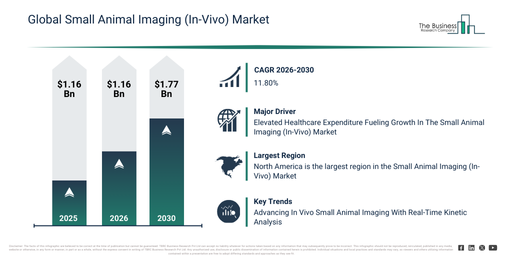
    The small animal imaging (in-vivo) market has witnessed rapid development, with its value rising from $3.15 billion in 2025 to an anticipated $3.54 billion in 2026, reflecting a compound annual growth rate (CAGR) of 12.4%. This historical growth has been fueled by an uptick in preclinical research activities, greater investments in drug discovery, increased funding for academic research, expanded use of animal models in disease exploration, and the availability of advanced imaging technologies. Looking ahead, the market is projected to reach $5.53 billion by 2030, growing at a CAGR of 11.8%. Factors expected to drive this growth include the rising demand for precision medicine tools, increased funding in translational research, expansion of oncology and neurological studies, growing adoption of AI-assisted diagnostic techniques, and heightened emphasis on real-time biological imaging. Key trends influencing the market will involve the adoption of multimodal imaging systems, broader use of non-invasive in vivo imaging methods, integration of AI-based image analysis, expansion of longitudinal disease monitoring, and a focus on enhancing high-resolution imaging capabilities.

    Download A Free Sample Report For Comprehensive Market Insights:

    https://www.thebusinessresearchcompany.com/sample.aspx?id=7303&type=smp

    Healthcare Spending as a Catalyst for Small Animal Imaging (In-Vivo) Market Expansion

    A significant factor propelling the small animal imaging (in-vivo) market’s growth is the rising expenditure in the healthcare sector worldwide. Healthcare spending encompasses both public and private costs as a percentage of GDP and reflects growing awareness around health management. This increased investment encourages self-care practices and the use of advanced imaging tools such as PET equipment in small animal imaging. By enabling real-time, noninvasive visualization of biological processes, small animal imaging supports faster drug development, deeper disease comprehension, and the formulation of more effective therapies. To illustrate, a May 2024 report from the UK’s Office for National Statistics highlighted that healthcare spending in the UK rose by 5.6% in nominal terms in 2023, with real-term growth of 2.8% in long-term health and social care expenditure in 2022. Such upward trends in healthcare funding are key growth drivers for the small animal imaging (in-vivo) market.

    Segment Breakdown Highlighting Key Areas in the Small Animal Imaging (In-Vivo) Market

    The small animal imaging (in-vivo) market is categorized into several important segments for better understanding:

    1) By Component: Micro-MRI, Optical Imaging, Nuclear Imaging, and Other Components

    2) By Application: Monitoring Treatment Response, Bio Distribution, Determining Drug or Target Engagement, Cancer Cell Detection, Biomarkers, Longitudinal Studies, Epigenetics

    3) By End User: Veterinary Clinics, Veterinary Hospitals, Veterinary Institutes and Research Centers

    Access The Complete Small Animal Imaging (In-Vivo) Market Report:

    https://www.thebusinessresearchcompany.com/report/small-animal-imaging-in-vivo-global-market-report

    Further subcategories include:

    – Micro-MRI: High-Field Micro-MRI Systems, Low-Field Micro-MRI Systems, MRI Contrast Agents

    – Optical Imaging: In Vivo Fluorescence Imaging Systems, Bioluminescence Imaging Systems, Optical Coherence Tomography Systems

    – Nuclear Imaging: Positron Emission Tomography (PET) Scanners, Single Photon Emission Computed Tomography (SPECT) Systems, Radioactive Tracers

    – Other Components: X-Ray Imaging Systems, CT Imaging Systems, Ultrasound Imaging Systems

    Innovations in Imaging Software Shaping Long-Term Trends in Small Animal Imaging (In-Vivo)

    Leading companies in the small animal imaging (in-vivo) field are increasingly enhancing their software capabilities, particularly focusing on real-time kinetic analysis platforms. These advanced software solutions are designed to support more precise, quantitative, and high-throughput preclinical studies, especially in oncology and neuroscience. Unlike traditional static imaging snapshots, these platforms continuously capture dynamic bioluminescent signals over time, delivering richer data sets, improving reproducibility, and aiding in the accurate identification of peak signal phases. For example, in April 2024, US-based company Spectral Instruments Imaging released Aura 4.5, an updated version of its in vivo imaging software. This edition features a Kinetics mode that automates the acquisition of bioluminescent signals throughout their entire time course, including rise, plateau, and decay phases. The software then identifies peak intensity, helping researchers optimize sensitivity and biological accuracy while reducing manual labor. This upgrade is particularly valuable for longitudinal studies such as pharmacokinetics, gene expression, and infection models, enhancing workflow efficiency and data quality.

    Key Players Driving Competition in the Small Animal Imaging (In-Vivo) Market

    The small animal imaging (in-vivo) market is shaped by several prominent companies, including Bruker Corporation, PerkinElmer Inc., Mediso Ltd., Aspect Imaging Ltd., Spectral Instruments Imaging LLC, Bioscan Inc., Gamma Medica-Ideas Inc., LI-COR Biosciences, Scanco Medical AG, TriFoil Imaging Inc., MR Solutions Ltd., MILabs B.V., Trifoil Imaging Inc., VisualSonics Inc., Fujifilm VisualSonics Inc., Sedecal S.A., Kubtec Medical Imaging, Carestream Health Inc., Thermo Fisher Scientific Inc., and Rigaku Corporation. These organizations compete by advancing technological innovations, expanding product portfolios, and strengthening global reach.

    Regional Demand Patterns and Growth Outlook in the Small Animal Imaging (In-Vivo) Market

    In 2025, North America held the largest share of the small animal imaging (in-vivo) market, driven by significant investments and established research infrastructure. However, Europe is expected to emerge as the fastest-growing region during the forecast period. The market report also covers other key regions including Asia-Pacific, South East Asia, Western Europe, Eastern Europe, South America, the Middle East, and Africa, providing a comprehensive view of global demand and growth trajectories.

    Get in touch with us:

    The Business Research Company: https://www.thebusinessresearchcompany.com/

    Americas: +1 310-496-7795

    Asia: +44 7882 955267 & +91 8897263534

    Europe: +44 7882 955267

    Email us at: marketing@tbrc.info

    Follow us on:

    LinkedIn: https://in.linkedin.com/company/the-business-research-company

    YouTube: https://www.youtube.com/channel/UC24_fI0rV8cR5DxlCpgmyFQ

    Global Market Model: https://www.thebusinessresearchcompany.com/global-market-model
  • Slimming Devices Market Growth Is Reshaping Competitive Advantage Across The Industry

    Slimming Devices Market Growth Is Reshaping Competitive Advantage Across The Industry

    Delivering more actionable and strategically valuable research, The Business Research Company’s 2026 market reports feature market attractiveness analysis, total addressable market evaluation, company benchmarking matrices, interactive Excel dashboards, expanded supply chain intelligence, emerging startup coverage, and detailed product insights.

    The market for slimming devices has been experiencing notable growth in recent years, driven by various health and lifestyle factors. As more people seek effective, non-invasive solutions for weight management and body contouring, this industry is set to expand further. Here is a detailed look at the market size, key growth drivers, major segments, innovation trends, leading companies, and regional dynamics shaping the future of slimming devices.

    Slimming Devices Market Size and Anticipated Growth Trajectory

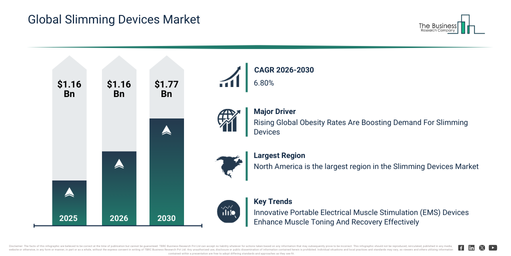
    The slimming devices market has shown strong expansion, with its value projected to increase from $8.75 billion in 2025 to $9.37 billion in 2026, representing a compound annual growth rate (CAGR) of 7.2%. This upward trend is largely fueled by rising obesity rates, growing demand for cosmetic procedures, technological improvements in fat reduction, a surge in fitness culture, and the proliferation of aesthetic clinics. Looking ahead, the market is expected to maintain its momentum, reaching $12.2 billion by 2030 with a CAGR of 6.8%. Factors driving this growth include heightened concerns over lifestyle-related health issues, the rising popularity of home aesthetics, advancements in energy-based slimming technologies, increased disposable incomes, and the influence of social media. Key market trends anticipated during this period involve a shift toward non-invasive body contouring techniques, a growing preference for home-use devices, the integration of combination slimming technologies, expansion of wellness and aesthetic centers, and greater emphasis on safety and user comfort.

    Download A Free Sample Report For Comprehensive Market Insights:

    https://www.thebusinessresearchcompany.com/sample.aspx?id=20636&type=smp

    Rising Obesity Rates as a Primary Growth Catalyst for the Slimming Devices Market

    A significant factor propelling the slimming devices market is the increasing prevalence of obesity worldwide. Obesity, defined by a body mass index (BMI) of 30 or above, results from excessive fat accumulation that can negatively impact health. Several contributors to obesity include unhealthy eating habits, sedentary lifestyles, high consumption of processed and calorie-dense foods, genetic factors, socioeconomic influences, and limited access to nutritious food and physical activity. Slimming devices serve as an important tool in managing obesity by promoting fat reduction and improving body contours through non-invasive methods. For example, the World Obesity Atlas 2023 by the World Obesity Federation projects that the global overweight and obese population will rise from 2,603 million in 2020 to 3,041 million in 2025, reaching 4,005 million by 2035. This growing health challenge is a core driver for market expansion.

    Additional Factors Boosting Demand in the Slimming Devices Industry

    Apart from obesity concerns, the market benefits from increasing consumer interest in cosmetic treatments and body image enhancement. Technological breakthroughs in slimming devices have made treatments more accessible, effective, and comfortable. Furthermore, the rising fitness culture encourages consumers to seek advanced solutions for body shaping and toning. The expansion of aesthetic clinics worldwide also contributes by providing easier access to these innovative slimming options.

    Access The Complete Slimming Devices Market Report:

    https://www.thebusinessresearchcompany.com/report/slimming-devices-global-market-report

    Segment Breakdown Highlighting Key Areas in the Slimming Devices Market

    The slimming devices market can be categorized into several segments to better understand its scope and diversity. These include:

    1) By Type: Electric Pulse Type Slimming Devices, Vibration Type Slimming Devices, Pneumatic Extrusion Slimming Devices, and Other Types.

    2) By Technology: Cryolipolysis, Low-Level Laser Therapy, Focused Ultrasound, and Radiofrequency.

    3) By Body Area Targeted: Abdominal, Hip, Thighs, and Other Body Areas.

    4) By Portability: Standalone devices and Portable devices.

    5) By End User: Gyms and Fitness Centers, Wellness Centers, Home Users, and Other Users.

    There are further subcategories such as:

    – Electric Pulse Type devices including Electrical Muscle Stimulation (EMS), Transcutaneous Electrical Nerve Stimulation (TENS), and Electric Abdominal Stimulators.

    – Vibration Type devices like Whole Body Vibration Machines, Localized Vibration Devices, and Vibration Platforms.

    – Pneumatic Extrusion devices such as Vacuum Therapy Devices, Suction Slimming Machines, and Pressure Therapy Systems.

    – Other types include Infrared Slimming Devices, LED Light Therapy Slimming Devices, and Combination Slimming Devices.

    Innovative Advances Shaping the Future of Slimming Devices

    Leading companies in the slimming devices sector are concentrating on creating cutting-edge products that enhance user convenience and effectiveness. For example, portable Electrical Muscle Stimulation (EMS) devices are gaining traction for their ability to help users tone muscles from home. These compact tools use electrical impulses to stimulate muscle contractions, improving strength, endurance, and recovery during workouts or rehabilitation. In June 2023, ShanDong EXFU Lasers Technology CO. LTD from China introduced the FIND S EMS Slimming Machine, which boasts advanced EMS technology, customizable intensity settings, portability, and a user-friendly interface. This device supports targeted muscle activation and improved body shaping, while also offering benefits like muscle relaxation and boosted blood circulation.

    Competitive Landscape and Major Players in the Slimming Devices Market

    The slimming devices arena features several key companies driving innovation and competition. Notable market players include Cynosure LLC, BTL Aesthetics, Cutera Inc., Candela Corporation, LPG Systems, Aesthetics Biomedical, Cryomed Manufacture s.r.o., R-slimming Medical Systems, Allergan Aesthetics, Alma Lasers Ltd, Lumenis Ltd, Syneron Medical Ltd, Hologic Inc, Solta Medical Inc, Venus Concept, InMode Ltd, Sciton Inc, Viora, Zimmer MedizinSysteme GmbH, Erchonia Corporation, Meridian Co, Biosculpture Technology Inc, Fotona d o o, Lutronic Corporation, Yolo Medical Inc, NivaSonix LLC, Jeisys Technology, Haifu Technology Co Ltd, and Sofwave Medical Ltd.

    Regional Market Leadership and Growth Prospects

    In 2025, North America led the slimming devices market in terms of size. The global market report also covers regions such as Asia-Pacific, South East Asia, Western Europe, Eastern Europe, South America, the Middle East, and Africa, providing insights into regional market shares and growth trends. The Asia-Pacific region is expected to witness significant expansion, driven by increasing health awareness and rising disposable incomes.

    In summary, the slimming devices market is positioned for robust growth fueled by rising obesity rates, technological innovation, and evolving consumer preferences. With a broad range of products and increasing adoption across various regions, this market offers promising opportunities for manufacturers and consumers alike.

    Get in touch with us:

    The Business Research Company: https://www.thebusinessresearchcompany.com/

    Americas: +1 310-496-7795

    Asia: +44 7882 955267 & +91 8897263534

    Europe: +44 7882 955267

    Email us at: marketing@tbrc.info

    Follow us on:

    LinkedIn: https://in.linkedin.com/company/the-business-research-company

    YouTube: https://www.youtube.com/channel/UC24_fI0rV8cR5DxlCpgmyFQ

    Global Market Model: https://www.thebusinessresearchcompany.com/global-market-model
  • Sleep Study Equipment Market Forecast Signals New Revenue Opportunities Through 2030

    Sleep Study Equipment Market Forecast Signals New Revenue Opportunities Through 2030

    Enhanced with market attractiveness analysis, total addressable market evaluation, company benchmarking matrices, interactive Excel dashboards, expanded supply chain intelligence, emerging startup coverage, and detailed product insights, The Business Research Company’s 2026 market reports deliver more actionable and strategically valuable research.

    The sleep study equipment market is witnessing remarkable growth, driven by increasing awareness of sleep health and advances in diagnostic technology. As more people seek effective solutions for sleep disorders, the demand for innovative equipment is rising steadily. Let’s explore the current market size, influential growth factors, key players, emerging trends, and regional outlook shaping this industry’s future.

    Sleep Study Equipment Market Size and Growth Trajectory

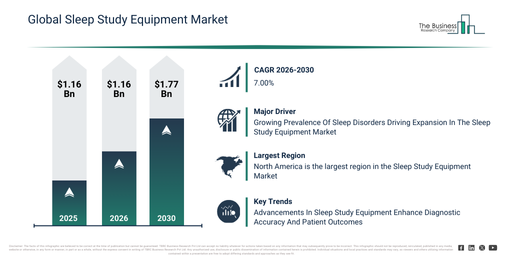
    The market for sleep study equipment has experienced significant expansion in recent years. It is projected to grow from $5.11 billion in 2025 to $5.47 billion in 2026, reflecting a compound annual growth rate (CAGR) of 7.1%. This upward trend is largely due to the rising prevalence of sleep disorders, heightened awareness about sleep health, the growth of sleep laboratories, and increased availability of polysomnography systems. Additionally, more widespread diagnosis of sleep apnea has contributed to this growth. Looking ahead, the market is expected to reach $7.18 billion by 2030, maintaining a steady CAGR of 7.0%. Factors propelling this forecast include growing demand for home-based diagnostic tools, expanded use of digital health platforms, telemedicine sleep services, AI-driven diagnostic integration, and a stronger focus on personalized sleep therapy. Key trends during this period will involve the wider adoption of home sleep testing devices, wearable sleep monitoring technologies, AI-based sleep analysis, smart beds and accessories, and enhanced remote diagnostic capabilities.

    Download A Free Sample Report For Comprehensive Market Insights:

    https://www.thebusinessresearchcompany.com/sample.aspx?id=18734&type=smp

    Factors Fueling the Expansion of the Sleep Study Equipment Market

    The high and rising prevalence of sleep disorders is a primary driver behind the growth of the sleep study equipment market. Sleep disorders disrupt the ability to maintain normal sleep patterns, affecting sleep quality and duration, which can lead to excessive daytime fatigue. Causes for the increasing rates of sleep disorders include socioeconomic stress, lifestyle changes, and an aging population. Sleep study equipment plays a vital role in diagnosing and managing these disorders by tracking sleep patterns and physiological signals, thereby supporting tailored treatment plans.

    For example, a May 2023 survey by SleepFoundation.org, a US-based non-profit dedicated to sleep health, reported that between 50 million and 70 million Americans suffer from persistent sleep disorders, with a noticeable rise linked to post-traumatic stress disorder (PTSD). Moreover, approximately 70% of adults experience seasonal affective disorder (SAD), further emphasizing the widespread nature of sleep-related issues and the subsequent demand for sleep study equipment.

    Sleep Study Equipment Market Segmentation and Growth Opportunities

    This market is categorized into several vital segments for detailed analysis:

    1) By Type: Sleep Monitors, Masks and Interfaces, Sensors and Accessories, Smart Beds and Pillows, and Other Types.

    2) By Distribution Channel: Online Sales and Offline Sales.

    3) By End User: Hospitals, Sleep Centers, Home Care Settings, and Other End Users.

    Access The Complete Sleep Study Equipment Market Report:

    https://www.thebusinessresearchcompany.com/report/sleep-study-equipment-global-market-report

    Further breakdowns include:

    – Sleep Monitors: Polysomnography (PSG) Devices, Home Sleep Testing (HST) Devices, Oximeters, Wearable Sleep Monitors, Sleep Tracking Apps.

    – Masks and Interfaces: CPAP Masks, BiPAP Masks, Nasal Cannulas, Full Face Masks, Nasal Pillow Masks, Hybrid Masks.

    – Sensors and Accessories: EEG Sensors, EKG Sensors, Pulse Oximeters, Respiratory Sensors, Temperature Sensors, Motion Sensors, Electrodes, and Leads.

    – Smart Beds and Pillows: Smart Mattresses, Smart Pillows, Adjustable Beds, Anti-Snore Pillows, Sleep Positioning Devices.

    – Other Types: Sleep Therapy Devices, Light Therapy Systems, Sound Machines, Aromatherapy Devices, Sleep Analysis Software, Sleep Data Management Platforms.

    This segmentation highlights areas with promising growth prospects as demand for personalized and technologically advanced sleep solutions continues to rise.

    Innovations and Trends Shaping the Sleep Study Equipment Market

    Leading companies in this field are increasingly focusing on integrating artificial intelligence (AI) into their products to improve diagnostic precision and treatment efficacy. AI-powered sleep scoring platforms are helping clinicians and researchers analyze sleep data more efficiently and accurately.

    For instance, in August 2023, Neurobit Inc., a US-based health analytics firm, introduced Neurobit PSG, an AI-driven sleep scoring system designed to revolutionize sleep analysis for healthcare providers, sleep labs, researchers, and enterprises. This platform delivers precise sleep scoring through sophisticated AI algorithms while securely managing patient data within internal systems, ensuring both reliability and data protection.

    Major Players and Competitive Landscape in the Sleep Study Equipment Industry

    The sleep study equipment market features numerous influential companies, including Koninklijke Philips N.V., ResMed Inc., Nihon Kohden Corporation, Fitbit Inc., Fisher and Paykel Healthcare Limited, Loewenstein Medical Inc., DeVilbiss Healthcare LLC, Natus Medical Incorporated, SleepMed Inc., Nox Health Group, Compumedics Limited, NovaSom Inc., Oventus Medical Limited, Responsive Surface Technology Inc., Braebon Medical Corporation, Apex Medical Inc., SOMNOmedics GmbH, Cadwell Industries Inc., Itamar Medical Ltd., and CleveMed Inc. These organizations compete by advancing technology, expanding product portfolios, and enhancing diagnostic capabilities to capture larger shares of the growing market.

    Regional Market Distribution and Expansion Outlook

    In 2025, North America dominated the sleep study equipment market, holding the largest share due to advanced healthcare infrastructure and rising awareness about sleep health. Meanwhile, the Asia-Pacific region is anticipated to register the fastest growth rate in the coming years, driven by increasing healthcare investments, rising prevalence of sleep disorders, and expanding telemedicine adoption. The market analysis also encompasses significant geographies including South East Asia, Western Europe, Eastern Europe, South America, the Middle East, and Africa, providing a comprehensive view of global market dynamics.

    Get in touch with us:

    The Business Research Company: https://www.thebusinessresearchcompany.com/

    Americas: +1 310-496-7795

    Asia: +44 7882 955267 & +91 8897263534

    Europe: +44 7882 955267

    Email us at: marketing@tbrc.info

    Follow us on:

    LinkedIn: https://in.linkedin.com/company/the-business-research-company

    YouTube: https://www.youtube.com/channel/UC24_fI0rV8cR5DxlCpgmyFQ

    Global Market Model: https://www.thebusinessresearchcompany.com/global-market-model
  • Sleep Apnea Devices Market Growth Is Accelerating As Industry Transformation Continues

    Sleep Apnea Devices Market Growth Is Accelerating As Industry Transformation Continues

    Through market attractiveness analysis, total addressable market evaluation, company benchmarking matrices, interactive Excel dashboards, expanded supply chain intelligence, emerging startup coverage, and detailed product insights, The Business Research Company’s 2026 market reports provide more actionable and strategically valuable research.

    The market for sleep apnea devices has experienced significant growth recently, driven by various health and technological factors. With increasing awareness and advancements in treatment options, this sector is set to expand further over the coming years. Here’s a detailed overview of the market size, key drivers, important segments, strategic trends, prominent players, and regional insights shaping the future of sleep apnea devices.

    Current Market Size and Growth Projections for Sleep Apnea Devices

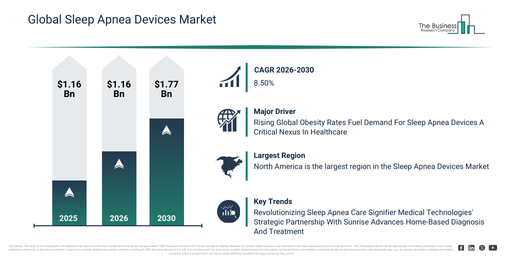
    The sleep apnea devices market has expanded steadily and is forecasted to continue this upward trend. From a market value of $8.37 billion in 2025, it is expected to reach $9.05 billion in 2026, growing at a compound annual growth rate (CAGR) of 8.0%. This positive momentum in recent years has been propelled by growing awareness of sleep apnea, rising obesity rates, the increasing number of sleep labs, technological enhancements in CPAP devices, and broader healthcare insurance coverage. Looking ahead, the market is predicted to hit $12.54 billion by 2030, with the growth rate slightly accelerating to a CAGR of 8.5%. Factors contributing to this future expansion include the rise of home healthcare services, an aging global population, more widespread adoption of portable sleep apnea devices, increased healthcare expenditure, and innovations in sleep monitoring technologies. Emerging trends that will influence this market include home-based sleep apnea diagnosis, increased preference for portable CPAP devices, a shift toward non-invasive oral appliances, growing attention to patient comfort and adherence, and the expansion of sleep clinics and diagnostic centers.

    Download A Free Sample Report For Comprehensive Market Insights:

    https://www.thebusinessresearchcompany.com/sample.aspx?id=10326&type=smp

    Factors Behind Market Growth Linked to Obesity

    One major factor driving the growth of the sleep apnea devices market is the escalating prevalence of obesity worldwide. Obesity, defined as an excessive accumulation of body fat that endangers health and commonly measured by body mass index (BMI), is a significant contributor to the development of sleep apnea. As obesity rates climb, so does the number of individuals affected by sleep apnea, thereby increasing the demand for effective treatment devices. For instance, data from May 2025 by the UK’s Office for Health Improvement & Disparities showed that approximately 64.5 percent of adults in England were overweight or obese in 2023–2024, up from 64.0 percent the previous year. This rise in obesity substantially fuels the need for sleep apnea management solutions, reinforcing market growth.

    Additional Drivers Influencing Sleep Apnea Device Demand

    Beyond obesity, other elements are also helping to push the market forward. The growing elderly population worldwide increases the number of patients requiring sleep apnea care, while rising healthcare spending supports access to advanced devices. Technological progress in portable and user-friendly sleep apnea treatments further encourages adoption. In addition, the expansion of healthcare infrastructure, such as sleep clinics and diagnostic centers, is improving diagnosis rates and treatment availability, creating more opportunities for market growth.

    Access The Complete Sleep Apnea Devices Market Report:

    https://www.thebusinessresearchcompany.com/report/sleep-apnea-devices-global-market-report

    Breaking Down the Sleep Apnea Devices Market Segments

    This market can be divided into several key categories for a better understanding of its structure:

    1) Product Type: Positive Airway Pressure (PAP) Devices, Adaptive Servo-Ventilation (ASV) Devices, Oral Appliances, Sleep Apnea Diagnostic Devices, PAP Interfaces and Accessories

    2) Patient Type: Pediatric, Adult, Geriatric

    3) Disease Type: Obstructive Sleep Apnea Syndrome, Central Sleep Apnea Syndrome, Complex Sleep Apnea Syndrome

    4) End User: Hospitals and Clinics, Ambulatory Care Centers, Specialty Care Centers, Home Healthcare

    Sub-segments further clarify product offerings, such as types of PAP devices including Continuous Positive Airway Pressure (CPAP), Bi-Level Positive Airway Pressure (BiPAP), and Auto-Adjusting Positive Airway Pressure (APAP) machines. ASV devices are classified by fixed, auto, and variable pressure support types. Oral appliances include Mandibular Advancement Devices (MADs) and Tongue-Retaining Devices (TRDs). Diagnostic devices encompass Polysomnography (PSG), Respiratory Polygraph Devices, and Home Sleep Apnea Testing (HSAT) units. Accessories like various PAP masks, headgear, tubing, humidifiers, filters, and disposable parts complete the market segmentation.

    Strategic Collaborations Steering Market Innovation

    Key players in the sleep apnea devices space are increasingly forming strategic partnerships to advance home-based diagnosis and treatment approaches. Such collaborations allow companies to combine expertise and resources, enhancing patient care and device effectiveness. A notable example occurred in May 2023 when US-based Signifier Medical Technologies entered into a partnership with Sunrise Healthcare Technology from Hong Kong. This alliance merged Sunrise’s AI-driven solutions with Signifier’s daytime sleep apnea therapy technology, eXciteOSA, aiming to improve diagnostic accuracy and treatment outcomes. The integration includes personalized home sleep testing and patient management platforms, enabling clinicians to gather detailed patient data and tailor therapies more effectively.

    Leading Companies Shaping the Sleep Apnea Devices Market

    The competitive landscape includes well-established firms such as ResMed Inc., Fisher and Paykel Healthcare Corporation Limited, Koninklijke Philips N.V., BMC Medical Co. Ltd., Lowenstein Medical Technology GmbH Co. KG, DeVilbiss Healthcare LLC, Drive DeVilbiss Healthcare, APEX Medical Corp., 3B Medical Inc., HOFFRICHTER GmbH, Circadiance LLC, Sleepnet Corporation, Oventus Medical Ltd., Inspire Medical Systems Inc., Provent Sleep Therapy LLC, Bleep LLC, Natus Medical Incorporated, Compumedics Limited, Braebon Medical Corporation, Cadwell Industries Inc., Itamar Medical Ltd., and Somnoware Healthcare Systems Inc. These companies play a vital role in driving innovation and expanding access to sleep apnea treatment globally.

    Regional Market Leadership and Emerging Growth Areas

    In 2025, North America held the largest share of the global sleep apnea devices market, reflecting its high healthcare spending and advanced infrastructure. However, the Asia-Pacific region is anticipated to experience the fastest growth during the forecast period, fueled by increasing healthcare investment, rising awareness, and expanding diagnostic facilities. The market report covers multiple regions including Asia-Pacific, South East Asia, Western Europe, Eastern Europe, North America, South America, the Middle East, and Africa, offering a comprehensive perspective on global market developments.

    Get in touch with us:

    The Business Research Company: https://www.thebusinessresearchcompany.com/

    Americas: +1 310-496-7795

    Asia: +44 7882 955267 & +91 8897263534

    Europe: +44 7882 955267

    Email us at: marketing@tbrc.info

    Follow us on:

    LinkedIn: https://in.linkedin.com/company/the-business-research-company

    YouTube: https://www.youtube.com/channel/UC24_fI0rV8cR5DxlCpgmyFQ

    Global Market Model: https://www.thebusinessresearchcompany.com/global-market-model
  • Skull Clamp Market Outlook Highlights The Next Major Growth Opportunities

    Skull Clamp Market Outlook Highlights The Next Major Growth Opportunities

    Delivering more actionable and strategically valuable research, The Business Research Company’s 2026 market reports feature market attractiveness analysis, total addressable market evaluation, company benchmarking matrices, interactive Excel dashboards, expanded supply chain intelligence, emerging startup coverage, and detailed product insights.

    The skull clamp market is experiencing significant development driven by advances in neurosurgical techniques and growing demand for precise head stabilization devices. As medical technology evolves, the need for more efficient and safer surgical tools is pushing this market toward considerable growth. Below is an overview of the market’s size, growth factors, leading players, innovations, and regional prospects.

    Significant Growth Projections for the Skull Clamp Market

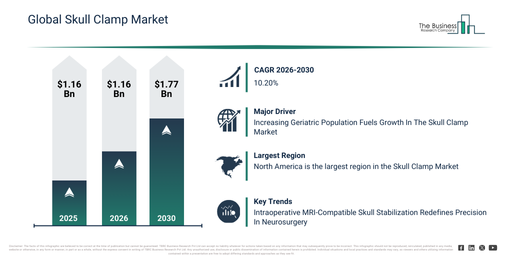
    The skull clamp market has seen strong expansion in recent years and is poised to continue this upward trajectory. Market value is projected to increase from $2.3 billion in 2025 to $2.53 billion in 2026, representing a compound annual growth rate (CAGR) of 9.8%. This increase reflects a rise in neurosurgical procedures, greater use of advanced imaging-guided surgeries, growth of specialty surgical centers, more availability of trained neurosurgeons, and improvements in surgical tools. Looking further ahead, the market is forecasted to reach $3.72 billion by 2030, growing at a CAGR of 10.2%. Factors behind this optimistic outlook include the expanding demand for minimally invasive neurosurgical techniques, increased use of intraoperative imaging, growth in ambulatory neurosurgical procedures, and a focus on durable, reusable devices coupled with investments in surgical technology innovation.

    Download A Free Sample Report For Comprehensive Market Insights:

    https://www.thebusinessresearchcompany.com/sample.aspx?id=12048&type=smp

    Demographic Trends Supporting the Skull Clamp Market Expansion

    One of the prominent factors boosting the skull clamp market is the rising global geriatric population. Older adults are more susceptible to neurological disorders such as brain tumors and neurodegenerative diseases, which frequently require neurosurgical interventions where skull clamps are essential for head stabilization. According to the World Health Organization, by 2030, one in six people worldwide will be aged 60 or older, and this segment is expected to double to 2.1 billion by 2050. This demographic shift is expected to generate increased demand for neurosurgical devices, including skull clamps, fueling market growth.

    Technological Advancements Shaping the Skull Clamp Market

    Leading manufacturers in the skull clamp industry are focusing on innovations designed to improve surgical precision and patient safety. A notable example is the development of intraoperative magnetic resonance imaging (MRI)–compatible cranial stabilization systems. These devices provide secure head fixation during surgery while allowing uninterrupted use of MRI, enhancing imaging accuracy intraoperatively. For instance, in October 2023, Black Forest Medical Group introduced the DORO LUCENT iMRI Set IMRIS, which supports image-guided surgery platforms with a lightweight and adjustable design, streamlining surgical workflow and improving ease of positioning during procedures.

    Access The Complete Skull Clamp Market Report:

    https://www.thebusinessresearchcompany.com/report/skull-clamp-global-market-report

    Skull Clamp Market Segmentation by Product, Material, and End User

    The market is categorized by product type into three pin, four pin, and two pin skull clamps, each with subcategories such as adjustable, fixed, and disposable variants. Accessories include skull pins, headrests, and other components. Materials used range from stainless steel, aluminum alloy, titanium to radiolucent materials. The main end users are hospitals, specialty clinics, and ambulatory surgical centers, reflecting the diverse applications and settings in which these devices are employed.

    Key Industry Players Driving the Skull Clamp Market

    Several major companies play important roles in the skull clamp market, including Stryker Corporation, B. Braun Melsungen AG, Integra LifeSciences Holdings Corp, Mizuho Medical Co. Ltd., and Black Forest Medical Group, among others. These firms compete through innovation, product quality, and strategic market positioning, driving the industry forward with new technologies and expanded offerings.

    Regional Market Dynamics and Opportunities

    In 2025, North America held the largest share of the skull clamp market due to the presence of advanced healthcare infrastructure and strong adoption of surgical technologies. However, the Asia-Pacific region is expected to exhibit the fastest growth rate during the forecast period, driven by increasing healthcare investments, expanding neurosurgical procedures, and rising awareness about neurological conditions. Other regions covered in the market analysis include South East Asia, Western Europe, Eastern Europe, South America, the Middle East, and Africa, providing a comprehensive global outlook.

    Get in touch with us:

    The Business Research Company: https://www.thebusinessresearchcompany.com/

    Americas: +1 310-496-7795

    Asia: +44 7882 955267 & +91 8897263534

    Europe: +44 7882 955267

    Email us at: marketing@tbrc.info

    Follow us on:

    LinkedIn: https://in.linkedin.com/company/the-business-research-company

    YouTube: https://www.youtube.com/channel/UC24_fI0rV8cR5DxlCpgmyFQ

    Global Market Model: https://www.thebusinessresearchcompany.com/global-market-model
  • Skin Grafting System Market Trends And Growth Drivers Point To Strong Future Potential

    Skin Grafting System Market Trends And Growth Drivers Point To Strong Future Potential

    Enhanced with market attractiveness analysis, total addressable market evaluation, company benchmarking matrices, interactive Excel dashboards, expanded supply chain intelligence, emerging startup coverage, and detailed product insights, The Business Research Company’s 2026 market reports deliver more actionable and strategically valuable research.

    The skin grafting system market has undergone significant expansion in recent years, driven by various factors linked to medical advancements and rising healthcare needs. As the demand for effective wound care solutions continues to grow, this market is set to experience steady progress over the coming years. Let’s explore the current market size, growth drivers, segmentation, emerging trends, key players, and regional dynamics shaping this industry.

    Steady Growth in the Skin Grafting System Market Size

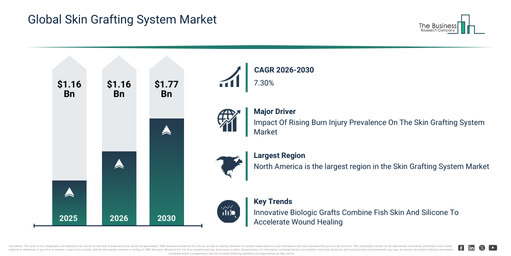
    The skin grafting system market has demonstrated robust growth and is projected to increase from $1.14 billion in 2025 to $1.23 billion in 2026, with a compound annual growth rate (CAGR) of 7.4%. This expansion during the historical period is mainly due to a rising number of burn injuries, increasing surgical interventions, the development of specialized wound care centers, availability of autograft methods, and broader adoption of mechanical debridement technologies. Moving ahead, the market is expected to reach $1.63 billion by 2030, growing at a CAGR of 7.3%. This future growth is anticipated because of the rising demand for advanced wound management systems, emphasis on faster healing, growth in reconstructive and plastic surgeries, higher investments in biologic graft innovations, and the increased use of minimally invasive grafting techniques. Key trends for the forecast period include growing use of advanced dermatomes, powered skin graft meshers, biologic skin substitutes, expanded burn and trauma care procedures, and a focus on precision wound treatment.

    Download A Free Sample Report For Comprehensive Market Insights:

    https://www.thebusinessresearchcompany.com/sample.aspx?id=18732&type=smp

    Increasing Incidence of Burn Injuries Boosts Skin Grafting System Demand

    One of the primary factors driving this market’s growth is the rising prevalence of burn injuries globally. Burns, caused by heat, chemicals, electricity, sunlight, or radiation, can severely damage skin and underlying tissues. The frequency of such injuries is increasing due to residential fires, workplace accidents, chemical exposures, electrical hazards, and natural disasters. Improved skin grafting systems support more precise and effective treatment of burn wounds, enhancing healing outcomes and patient care at specialized burn facilities. For example, in November 2024, the Welsh government (Llywodraeth Cymru) reported 18 fatal fire-related casualties in Wales during 2023-2024, an increase of 4 compared to the prior year, along with 366 non-fatal fire casualties. This rise in burn incidents is a key contributor to the growing demand for skin grafting technologies.

    Advancements in Surgical Procedures Fuel Market Growth

    In addition to burn injuries, the increasing number of surgical procedures requiring skin grafting is another significant market driver. With the expansion of reconstructive and plastic surgeries worldwide, there is a growing need for sophisticated grafting solutions that promote faster recovery and reduce complications. The availability and adoption of advanced autograft and allograft techniques, along with mechanical debridement devices, further stimulate market growth by improving the efficiency and outcomes of wound treatment.

    Access The Complete Skin Grafting System Market Report:

    https://www.thebusinessresearchcompany.com/report/skin-grafting-system-global-market-report

    Detailed Segmentation Defines the Skin Grafting System Market Structure

    This market is categorized into several segments based on product types, graft sources, wound types, and end users. The product segment includes dermatomes, wound debridement devices, skin graft mesher equipment, accessories, and other related products. Graft sources are divided into autografts and allografts. By wound type, the market covers burns, chronic wounds, surgical wounds, traumatic wounds, and other wound categories. End users comprise ambulatory surgical centers, hospitals, and specialty clinics. Subcategories under dermatomes include hand-held, powered, air-driven, and electric variants. Wound debridement devices are further segmented into surgical, mechanical, autolytic, and enzymatic types. Skin graft meshers are classified into manual and powered machines. Accessories cover grafting blades and replacement parts, grafting sheets and templates, bandages and dressings, and surgical trays and containers. Other products encompass skin graft storage solutions, cryopreservation equipment, biologic skin substitutes (artificial skin), and skin graft implants.

    Innovative Biologic Grafts Highlight Future Market Developments

    Leading companies in the skin grafting system space are focusing heavily on creating next-generation biologic grafts designed to improve healing while reducing infection risks and enhancing graft acceptance. A notable innovation is the development of silicone-fish-skin composite grafts, which combine fish skin rich in collagen and growth factors with a protective silicone layer that accelerates wound healing better than traditional grafts. For example, in December 2024, Kerecis Limited, a US-based medical device firm, introduced SurgiClose Silicone, a novel product that pairs a fish-skin graft with silicone backing for treating surgical and trauma wounds. This bilayer device supports tissue regeneration and optimal moisture control, simplifying surgical procedures by integrating both components into one unit and eliminating the need for additional dressings. Its gentle processing keeps the natural structure and key molecules intact, making it closely resemble human skin and effective for acute wound management in operating rooms.

    Key Players Shaping the Skin Grafting System Industry

    The skin grafting system market includes several prominent companies such as Johnson and Johnson Services Inc., Stryker Corporation, B. Braun Melsungen AG, Smith and Nephew Plc, Integra LifeSciences Holdings Corporation, ConvaTec Group Plc, Molnlycke Health Care AB, Kinetic Concepts Inc., Aesculap Inc., Organogenesis Inc., MiMedx Group Inc., Polynovo Ltd., Avita Medical, Tissue Regenix Group Plc, Osiris Therapeutics Inc., Exsurco Medical Inc., Rudolf Storz GmbH, Lohmann and Rauscher, De Soutter Medical Ltd., and Nouvag AG. These organizations contribute to ongoing product innovation, expansion, and competitive positioning within the market.

    Regional Market Snapshot Reveals Leadership and Growth Hotspots

    In 2025, North America led the skin grafting system market in terms of size, benefiting from advanced healthcare infrastructure and high adoption of cutting-edge medical technologies. Meanwhile, the Asia-Pacific region is expected to achieve the fastest growth over the forecast period, driven by increasing healthcare investments, rising incidence of wounds and burns, and expanding surgical procedures. Other regions highlighted in the market analysis include South East Asia, Western Europe, Eastern Europe, South America, the Middle East, and Africa, providing a comprehensive global perspective on market trends and opportunities.

    Get in touch with us:

    The Business Research Company: https://www.thebusinessresearchcompany.com/

    Americas: +1 310-496-7795

    Asia: +44 7882 955267 & +91 8897263534

    Europe: +44 7882 955267

    Email us at: marketing@tbrc.info

    Follow us on:

    LinkedIn: https://in.linkedin.com/company/the-business-research-company

    YouTube: https://www.youtube.com/channel/UC24_fI0rV8cR5DxlCpgmyFQ

    Global Market Model: https://www.thebusinessresearchcompany.com/global-market-model
  • Skin Graft Blades Market Expansion Is Reshaping Competitive Dynamics Across The Industry

    Skin Graft Blades Market Expansion Is Reshaping Competitive Dynamics Across The Industry

    Through market attractiveness analysis, total addressable market evaluation, company benchmarking matrices, interactive Excel dashboards, expanded supply chain intelligence, emerging startup coverage, and detailed product insights, The Business Research Company’s 2026 market reports provide more actionable and strategically valuable research.

    The skin graft blades market is witnessing impressive growth driven by increasing medical needs and technological advancements. As surgical procedures become more sophisticated and demand continues to rise globally, this sector is set to experience significant expansion in the coming years. Let’s explore the current market size, key factors influencing its growth, segmentation, emerging trends, leading players, and regional outlook.

    Market Size and Projected Growth in the Skin Graft Blades Market

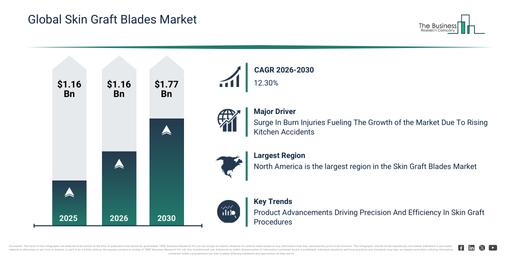
    The market for skin graft blades has shown rapid expansion recently, with its value climbing from $4.62 billion in 2025 to $5.2 billion in 2026 at a compound annual growth rate (CAGR) of 12.6%. This growth during the past years can be linked to limited options in blade materials, dependence on traditional scalpel designs, increased demand for burn and reconstructive surgeries, expanded capacities in hospitals and surgical centers, and heightened awareness regarding surgical precision and safety. Looking ahead, the market is expected to accelerate further, reaching $8.28 billion by 2030 at a CAGR of 12.3%. Factors propelling this future growth include the development of coated and reusable blades, wider adoption of advanced microsurgery tools, growth in dermatology and orthopedic surgeries, rising demand for home healthcare and outpatient procedures, and integration with smart surgical and robotic technologies.

    Download A Free Sample Report For Comprehensive Market Insights:

    https://www.thebusinessresearchcompany.com/sample.aspx?id=24700&type=smp

    Key Factors Fueling Expansion of the Skin Graft Blades Market

    One of the primary drivers is the increasing frequency and severity of burn injuries worldwide. These injuries, caused by heat, chemicals, electricity, radiation, or friction, require effective treatment methods such as skin grafting to promote healing. As more people engage in cooking activities without adequate safety measures, incidents of burn injuries are rising. Skin graft blades play a crucial role in harvesting healthy skin to cover damaged areas in severe cases. For instance, in October 2024, data from the International Burn Injury Database (iBID) revealed a 55% increase in hot water bottle burns among children in early 2024 compared to the previous year, prompting a warning from the Children’s Burns Trust. This trend emphasizes how growing burn injury prevalence is boosting demand for skin graft blades.

    Additional Factors Supporting Market Growth

    Beyond burn treatment, the market benefits from increased focus on reconstructive and plastic surgeries, along with advances in microsurgical techniques. The shift toward minimally invasive procedures encourages the adoption of precision skin graft blades. Furthermore, the expansion of outpatient care and home healthcare settings is creating new avenues for the use of specialized blades, contributing to sustained market momentum.

    Access The Complete Skin Graft Blades Market Report:

    https://www.thebusinessresearchcompany.com/report/skin-graft-blades-global-market-report

    Detailed Segmentation in the Skin Graft Blades Market

    This market is categorized into several key segments:

    1) Product Type: Scalpel Blades, Microsurgery Blades, Disposable Blades, Reusable Blades

    2) Material Type: Stainless Steel, Carbon Steel, Coated Materials

    3) Distribution Channel: Direct Sales, Online Retail, Medical Supply Distributors, Pharmacies

    4) Application: Burn Treatment, Plastic Surgery, Orthopedic Surgery, Wound Management

    5) End User: Hospitals, Ambulatory Surgical Centers, Dermatology Clinics

    Further breakdowns include subcategories such as stainless steel and specialty-shaped scalpel blades, ophthalmic and neurosurgical microsurgery blades, sterile and pre-attached disposable blades, and reusable blades with metal, autoclavable, or ceramic coatings. This detailed segmentation helps tailor products to specific clinical needs and preferences.

    Innovations and Trends Transforming the Skin Graft Blades Market

    Leading companies in this space are innovating by developing semi-automated skin harvesting devices that utilize micro-needle arrays. These advanced tools allow for precise collection of multiple small grafts with minimal trauma, improving patient outcomes and broadening clinical applicability. For example, in March 2024, Medline Industries received FDA approval for its Medline Autologous Regeneration of Tissue (ART) Skin Harvesting System, which uses a micro-needle array to extract numerous skin micrografts. This minimally invasive system can be used under local anesthesia and is suitable for a wider range of settings compared to conventional grafting methods.

    Key Market Players Driving Competition in Skin Graft Blades

    Several prominent companies dominate the skin graft blades market, including Zimmer Inc, Integra LifeSciences Corporation, B Braun Melsungen AG, Lutz Medical GmbH, De Soutter Medical Limited, pfm medical GmbH, Aygun Surgical Instruments, New Med Instruments, Swann Morton Limited, Paramount Surgimed Ltd, Nouvag AG, Ribbel International Ltd, Exsurco Medical Inc, Humeca B V, Robbins Instruments, Rudolf Storz GmbH And Co KG, Signel Biomedical Pvt Ltd, Specmed Medical Services Pvt Ltd, Surtex Instruments Ltd, Medicon eG, and Heinz Kurz GmbH Medizintechnik. These organizations are actively engaged in developing advanced products and expanding their market presence globally.

    Geographical Insights Highlighting Skin Graft Blades Market Leaders

    In 2025, North America held the largest share of the skin graft blades market, reflecting strong healthcare infrastructure and technological adoption. The report also covers regions such as Asia-Pacific, South East Asia, Western Europe, Eastern Europe, South America, Middle East, and Africa, each offering unique growth opportunities. While North America leads currently, emerging markets in Asia-Pacific and other regions are expected to show significant growth in the coming years due to increasing healthcare investments and rising surgical procedures.

    Get in touch with us:

    The Business Research Company: https://www.thebusinessresearchcompany.com/

    Americas: +1 310-496-7795

    Asia: +44 7882 955267 & +91 8897263534

    Europe: +44 7882 955267

    Email us at: marketing@tbrc.info

    Follow us on:

    LinkedIn: https://in.linkedin.com/company/the-business-research-company

    YouTube: https://www.youtube.com/channel/UC24_fI0rV8cR5DxlCpgmyFQ

    Global Market Model: https://www.thebusinessresearchcompany.com/global-market-model