Month: June 2026

  • Skin Biopsy Market Forecast Reveals Where Future Industry Value Will Be Created

    Skin Biopsy Market Forecast Reveals Where Future Industry Value Will Be Created

    Delivering more actionable and strategically valuable research, The Business Research Company’s 2026 market reports feature market attractiveness analysis, total addressable market evaluation, company benchmarking matrices, interactive Excel dashboards, expanded supply chain intelligence, emerging startup coverage, and detailed product insights.

    The skin biopsy market is witnessing rapid advancements driven by rising skin cancer cases and evolving diagnostic technologies. As awareness of early detection grows and healthcare infrastructure improves, this sector is set for sustained expansion. Below is an overview of the market’s current size, growth drivers, segmentation, innovation trends, key players, and regional outlook.

    Market Size and Growth Trajectory of the Skin Biopsy Market

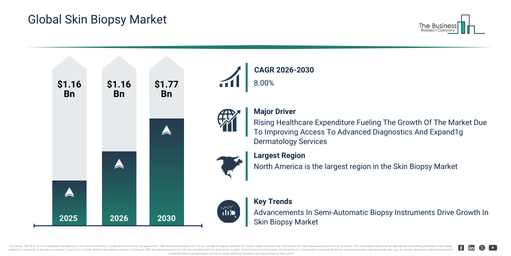
    The skin biopsy market has demonstrated robust growth in recent years. It is projected to increase from $1.86 billion in 2025 to $2.02 billion in 2026, marking a compound annual growth rate (CAGR) of 8.3%. Historical growth has been propelled by a rise in skin cancer incidence, expansion of dermatology clinics, greater adoption of outpatient diagnostic procedures, availability of biopsy instruments, and heightened awareness about early diagnosis. Looking ahead, the market is expected to reach $2.74 billion by 2030, maintaining a healthy CAGR of 8.0%. This anticipated growth is driven by the rising number of melanoma cases, incorporation of AI-powered diagnostic tools, growth of tele-dermatology services, an aging global population, and an increase in cosmetic dermatology procedures. Notable trends include the preference for minimally invasive biopsy methods, expansion in dermatology diagnostics, and wider acceptance of punch and shave biopsies alongside outpatient diagnostic techniques and AI-assisted pathology.

    Download A Free Sample Report For Comprehensive Market Insights:

    https://www.thebusinessresearchcompany.com/sample.aspx?id=28330&type=smp

    Key Factors Boosting Growth in the Skin Biopsy Market

    Increasing healthcare expenditure is playing a vital role in expanding the skin biopsy market. This spending encompasses investments in medical treatments, diagnostic technologies, research, and public health efforts aimed at improving patient outcomes. The growing burden of chronic diseases, which require long-term and costly management, is a significant contributor to rising healthcare costs. Enhanced healthcare budgets improve access to advanced biopsy technologies and broaden dermatology services, supporting early and accurate diagnosis of skin conditions. For example, in May 2024, the UK’s Office for National Statistics reported a 5.6% nominal increase in total healthcare expenditure for 2023, representing a 0.9% growth compared to 2022. This upward trend in healthcare funding underpins the expansion of the skin biopsy market.

    Additional Drivers Supporting Skin Biopsy Market Growth

    Another important factor fueling market growth is the increasing incidence of skin cancers worldwide, particularly melanoma. Early and precise biopsy techniques are essential for effective treatment planning and improved patient prognosis. The advent of AI-enabled diagnostics and tele-dermatology is revolutionizing how skin biopsies are performed, allowing for faster, more accurate evaluations and remote consultations. Furthermore, demographic shifts such as an aging population with higher susceptibility to skin disorders and the rising demand for cosmetic dermatology procedures continue to drive the need for advanced biopsy tools and services.

    Access The Complete Skin Biopsy Market Report:

    https://www.thebusinessresearchcompany.com/report/skin-biopsy-global-market-report

    Detailed Breakdown of Skin Biopsy Market Segments

    This market is categorized into different segments based on biopsy type, application, and end-user. By biopsy type, it includes excisional biopsy (subdivided into full-thickness and elliptical excision), incisional biopsy (wedge, longitudinal, and keyhole biopsy), punch biopsy (with sizes of 2 mm, 3-4 mm, and equal to or greater than 5 mm), and shave biopsy (including tangential, saucerization, and curved blade shave). On the application front, the market covers dermatology, oncology, and clinical research. Regarding end-users, hospitals, ambulatory surgical centers (ASCs), and dermatology clinics form the main categories.

    Innovations Driving Transformation Within the Skin Biopsy Market

    Leading companies in this sector are focusing on developing cutting-edge biopsy instruments that enhance diagnostic precision and improve tissue sample quality. Semi-automatic biopsy devices are gaining popularity as they provide more controlled and accurate tissue collection, facilitating reliable diagnoses and comprehensive pathological analysis. For example, in May 2023, Argon Medical Devices, a US-based provider specializing in interventional and oncology solutions, introduced the SuperCore Advantage Semi-Automatic Biopsy Instrument. This disposable, next-generation device offers superior tissue volume and comes in various lengths and gauge sizes to suit diverse clinical needs. Designed with input from healthcare professionals, it enables physicians to confidently collect larger tissue samples. The SuperCore Advantage complements Argon’s existing portfolio, which includes instruments like the BioPince Ultra Full Core Biopsy, Tru-Core Automatic, and Pro-Mag Ultra Biopsy Instruments, solidifying the company’s leadership in soft tissue biopsy solutions while improving patient outcomes.

    Prominent Players Holding Strong Positions in the Skin Biopsy Market

    Several notable companies lead the skin biopsy market with their extensive product offerings and innovation capabilities. These include AccuTec Inc., Delasco, KAI Medical, Medline Industries, Becton Dickinson and Company, Merit Medical Systems, Cook Medical, Hologic, Olympus Corporation, KARL STORZ, Richard Wolf, ConMed, Integra LifeSciences, Paramount Surgimed, Sklar Instruments, Hu-Friedy, Aesculap, World Precision Instruments, Miltex, and Integra Miltex.

    Regional Overview and Market Leadership

    In 2025, North America held the largest share of the skin biopsy market, driven by well-established healthcare infrastructure and high adoption of advanced diagnostic tools. Meanwhile, Asia-Pacific is expected to be the fastest-growing region during the forecast period, propelled by increasing healthcare investments, rising skin cancer incidence, and expanding dermatology services. The market analysis encompasses key regions including Asia-Pacific, South East Asia, Western Europe, Eastern Europe, North America, South America, the Middle East, and Africa, providing a comprehensive global perspective.

    Get in touch with us:

    The Business Research Company: https://www.thebusinessresearchcompany.com/

    Americas: +1 310-496-7795

    Asia: +44 7882 955267 & +91 8897263534

    Europe: +44 7882 955267

    Email us at: marketing@tbrc.info

    Follow us on:

    LinkedIn: https://in.linkedin.com/company/the-business-research-company

    YouTube: https://www.youtube.com/channel/UC24_fI0rV8cR5DxlCpgmyFQ

    Global Market Model: https://www.thebusinessresearchcompany.com/global-market-model
  • Skin Analysis Systems Market Growth Through 2030 Creates New Strategic Opportunities

    Skin Analysis Systems Market Growth Through 2030 Creates New Strategic Opportunities

    Enhanced with market attractiveness analysis, total addressable market evaluation, company benchmarking matrices, interactive Excel dashboards, expanded supply chain intelligence, emerging startup coverage, and detailed product insights, The Business Research Company’s 2026 market reports deliver more actionable and strategically valuable research.

    The skin analysis systems market has been experiencing steady growth, driven by technological advancements and increasing consumer focus on skincare. As innovations continue to emerge, this market is set to expand further, meeting the evolving needs of both consumers and healthcare providers.

    Market Size and Growth Outlook for the Skin Analysis Systems Market

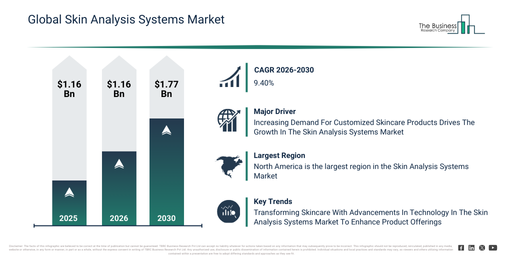
    The skin analysis systems market has shown considerable progress in recent years. It is projected to increase from $1.65 billion in 2025 to $1.81 billion in 2026, growing at a compound annual growth rate (CAGR) of 9.7%. This past growth has been supported by the flourishing cosmetics industry, a rise in skin disorders, more dermatology clinics, heightened demand for aesthetic treatments, and advancements in imaging technology. Looking ahead, the market is forecast to reach $2.59 billion by 2030, expanding at a CAGR of 9.4%. This future growth is expected to be fueled by trends such as personalized beauty regimes, the rise of tele-dermatology, increasing demand for anti-aging solutions, growing consumer awareness about skin health, and ongoing innovations in diagnostic imaging. Key trends shaping the market include a surge in personalized skincare, widespread adoption in aesthetic clinics, the rise of non-invasive diagnostic tools, preventive dermatology applications, and the popularity of portable skin analysis devices.

    Download A Free Sample Report For Comprehensive Market Insights:

    https://www.thebusinessresearchcompany.com/sample.aspx?id=20633&type=smp

    Factors Contributing to Growth in the Skin Analysis Systems Market

    One of the main forces behind the skin analysis systems market is the rising demand for customized skincare products. These personalized beauty solutions cater to the unique needs of each individual’s skin, allowing for more accurate skin assessments. By leveraging artificial intelligence (AI) and imaging technologies, skin analysis systems enhance product effectiveness and tailor solutions precisely.

    For example, a May 2023 report from Bolt, an Estonian checkout technology firm, highlighted that 75% of shoppers are willing to pay a premium for personalized online beauty and skincare experiences. Notably, 72% of Gen Z consumers would spend more than 10% extra, with 57% prepared to pay 11–20% more for curated products. Additionally, 62% of shoppers, including 80% of Gen Z, are more likely to purchase beauty items when technology helps identify the perfect formula. Furthermore, 43% prefer AI-based foundation shade matching online rather than testing in-store. These insights demonstrate how the growing preference for tailored skincare is propelling growth in the skin analysis systems market.

    Breakdown of Skin Analysis Systems Market Segments and Opportunities

    This market can be divided into several key segments:

    1) By Type: Skin Pigmentation, Skin Elasticity, Skin Imaging, and Skin Condition analysis systems

    2) By Application: Facilities such as Hospitals, Clinics, and other settings

    3) By End User: Dermatologists, Aestheticians, Skincare Professionals, and other users

    Within these categories, subsegments include:

    – Skin Pigmentation: devices for melanin measurement, hypo- and hyperpigmentation analysis

    – Skin Elasticity: instruments measuring elasticity, turgor, and skin resilience

    – Skin Imaging: 3D imaging systems, dermatoscopes, and high-resolution imaging devices

    – Skin Condition: tools for acne analysis, hydration measurement, and sensitivity assessment

    These classifications help to highlight specialized areas of technology and customer focus within the market.

    Access The Complete Skin Analysis Systems Market Report:

    https://www.thebusinessresearchcompany.com/report/skin-analysis-systems-global-market-report

    Innovations and Trends Shaping the Future of Skin Analysis Systems

    Leading companies in this sector are developing sophisticated technologies that combine high-resolution imaging with AI to improve the accuracy and consistency of skin evaluations. These AI-powered tools analyze moisture levels, elasticity, pigmentation, and pore size with great precision.

    For example, in April 2023, Singapore-based EveLab Insight Pte. Ltd. introduced a new feature in its AI skin analysis software to detect skin glossiness more effectively. This addition enhances personalized skincare recommendations by assessing factors like oiliness, skin texture, and tone uniformity. The system uses polarized light to examine surface and deeper skin layers, offering valuable insights for research and development, marketing, and brand promotion teams.

    Key Players Driving Competition in the Skin Analysis Systems Market

    Several prominent companies influence the competitive landscape of the skin analysis systems market, including Cynosure, Dermalumics, Michelson Diagnostics, Mela Sciences, Guangzhou Beautylife Electronic Technology, Visiomed Group SA, Canfield Scientific Inc., QuantifiCare, DermoScan GmbH, MHT Optic Research, Courage + Khazaka Electronic, FotoFinder Systems, Pixience, Verisante Technology, Meicet, 3Gen Inc (DermLite), MetaOptima Technology Inc., DermaSensor Inc., SkinVision B V, MedX Health Corp, and Caliber Imaging & Diagnostics Inc. These firms are at the forefront of driving innovation and market penetration.

    Regional Distribution and Growth Potential of the Skin Analysis Systems Market

    In 2025, North America held the largest share of the skin analysis systems market. The global market analysis also includes regions such as Asia-Pacific, South East Asia, Western Europe, Eastern Europe, South America, the Middle East, and Africa. While North America currently leads, emerging markets in Asia-Pacific and other regions are expected to offer significant growth opportunities in the coming years.

    Get in touch with us:

    The Business Research Company: https://www.thebusinessresearchcompany.com/

    Americas: +1 310-496-7795

    Asia: +44 7882 955267 & +91 8897263534

    Europe: +44 7882 955267

    Email us at: marketing@tbrc.info

    Follow us on:

    LinkedIn: https://in.linkedin.com/company/the-business-research-company

    YouTube: https://www.youtube.com/channel/UC24_fI0rV8cR5DxlCpgmyFQ

    Global Market Model: https://www.thebusinessresearchcompany.com/global-market-model
  • Sinus Tissue Resection Devices Market Size Projected To Increase From $1.29 Billion To $1.76 Billion During The Forecast Period

    Sinus Tissue Resection Devices Market Size Projected To Increase From $1.29 Billion To $1.76 Billion During The Forecast Period

    Through market attractiveness analysis, total addressable market evaluation, company benchmarking matrices, interactive Excel dashboards, expanded supply chain intelligence, emerging startup coverage, and detailed product insights, The Business Research Company’s 2026 market reports provide more actionable and strategically valuable research.

    The sinus tissue resection devices market is experiencing notable growth, driven by advancements in medical technology and increasing demand for effective treatments of sinus-related conditions. This report delves into the market’s current size, growth factors, segmentation, key industry trends, competitive landscape, and regional outlook, offering a comprehensive understanding of its future trajectory.

    Steady Growth in the Sinus Tissue Resection Devices Market Size

    In recent years, the sinus tissue resection devices market has expanded significantly. It is predicted to rise from $1.19 billion in 2025 to $1.29 billion in 2026, reflecting a compound annual growth rate (CAGR) of 8.4%. This growth during the past period has been influenced by the widespread use of traditional handheld tools, slower adoption of endoscopic techniques initially, the expansion of hospitals and specialty clinics, a growing number of chronic sinusitis cases, and the availability of conventional navigation and laser systems.

    Download A Free Sample Report For Comprehensive Market Insights:

    https://www.thebusinessresearchcompany.com/sample.aspx?id=24697&type=smp

    Future Market Expansion and Technological Advancements in Sinus Tissue Resection Devices

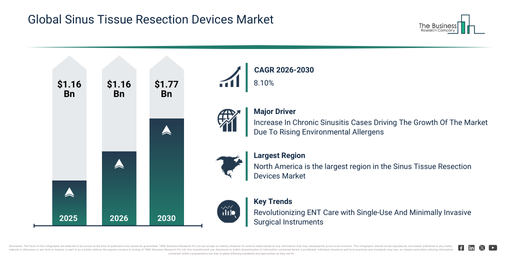
    Looking ahead, the market is expected to continue its robust growth, reaching $1.77 billion by 2030 with a CAGR of 8.1%. This positive forecast is largely due to innovations in powered microdebriders, increased integration of navigation and laser technologies, a rise in outpatient and ambulatory surgical procedures, the growth of ENT specialty clinics, and stricter regulatory and safety standards. Upcoming trends include greater adoption of powered instruments in sinus surgeries, expanded use of endoscopic methods for nasal treatments, rising demand for minimally invasive surgical options, growth of ambulatory surgical centers, and a heightened focus on precision and safety during tissue resection.

    The Rising Impact of Chronic Sinusitis on Market Demand

    A key driver of market growth is the increasing prevalence of chronic sinusitis, a prolonged inflammation of the sinuses lasting over 12 weeks. This condition causes symptoms such as nasal congestion, facial pain, and diminished sense of smell. Environmental factors like pollen and pollution contribute to the rising incidence by triggering inflammation and prolonging sinus infections. Sinus tissue resection devices play a vital role in managing chronic sinusitis by allowing precise removal of obstructive tissues, improving sinus drainage, and reducing inflammation, which helps alleviate symptoms and decrease recurrent infections. For example, data from December 2023 by TGH Urgent Care powered by Fast Track revealed that almost 29 million adults in the United States—accounting for 11.6% of the adult population—suffered from sinusitis in 2023, making it a leading cause of doctor visits and bolstering demand for sinus tissue resection solutions.

    Access The Complete Sinus Tissue Resection Devices Market Report:

    https://www.thebusinessresearchcompany.com/report/sinus-tissue-resection-devices-global-market-report

    Segmentation Overview of the Sinus Tissue Resection Devices Market

    This market is categorized into several segments to capture its scope comprehensively:

    – By Product Type: Powered Instruments, Handheld Instruments, Endoscopic Instruments, and Other Product Types

    – By Distribution Channel: Direct Sales, Distributors, Online Retailers, Hospital Procurement Departments, and Specialized Medical Supply Companies

    – By Application: Sinus Surgery, Nasal Polypectomy, Chronic Sinusitis Treatment, Septoplasty, and Other Uses

    – By End Use: Hospitals, Specialty Clinics, Ambulatory Surgical Centers, and Other Users

    Further breakdown includes powered instruments such as powered microdebriders and suction devices; handheld tools like forceps and scalpels; endoscopic instruments including endoscopes and cameras; and other products such as navigation and laser systems.

    Innovations Reshaping the Sinus Tissue Resection Devices Market

    Leading companies in this sector are focusing on developing advanced solutions, including single-use ENT instruments, which aim to improve efficiency and accessibility in ear, nose, and throat care. These disposable, sterile devices reduce infection risks and eliminate the need for reprocessing, making them ideal for outpatient procedures. For instance, in March 2024, Olympus Canada introduced the CELERIS Single-Use Sinus Debrider and Celon Elite systems, featuring a bendable tip for enhanced precision and reducing the need to switch instruments during surgery. This product launch offers healthcare providers a cost-effective and practical option for treating common ENT conditions like sinusitis outside traditional operating rooms.

    Top Players Competing in the Sinus Tissue Resection Devices Market

    The market is dominated by prominent companies including Johnson And Johnson, Medtronic Plc, Stryker Corporation, B Braun Melsungen AG, Olympus Corporation, Smith And Nephew plc, Cook Medical, Karl Storz GmbH And Co KG, Integra LifeSciences Holdings Corporation, Meril Life Sciences Pvt Ltd, Summit Medical Inc, PENTAX Medical, STILLE AB, Entellus Medical Inc, ClaroNav Kolahi Inc, Millennium Surgical Corp, Sinusys Corporation, Spiggle And Theis Medizintechnik GmbH, Beijing VCA Laser Technology Co Ltd, Medicon eG, Heinz Kurz GmbH Medizintechnik, and Rudolf Medical GmbH.

    Regional Market Distribution and Growth Patterns

    In 2025, North America held the largest market share for sinus tissue resection devices. Meanwhile, the Asia-Pacific region is anticipated to experience the fastest growth during the forecast period. Other key regions covered in the market analysis include South East Asia, Western Europe, Eastern Europe, South America, the Middle East, and Africa, providing a global perspective on market expansion.

    Get in touch with us:

    The Business Research Company: https://www.thebusinessresearchcompany.com/

    Americas: +1 310-496-7795

    Asia: +44 7882 955267 & +91 8897263534

    Europe: +44 7882 955267

    Email us at: marketing@tbrc.info

    Follow us on:

    LinkedIn: https://in.linkedin.com/company/the-business-research-company

    YouTube: https://www.youtube.com/channel/UC24_fI0rV8cR5DxlCpgmyFQ

    Global Market Model: https://www.thebusinessresearchcompany.com/global-market-model
  • Sinus Dilation Devices Market Growth Outlook Reveals A CAGR Of 9.1% And A Market Value Of $4.83 Billion By 2030

    Sinus Dilation Devices Market Growth Outlook Reveals A CAGR Of 9.1% And A Market Value Of $4.83 Billion By 2030

    Delivering more actionable and strategically valuable research, The Business Research Company’s 2026 market reports feature market attractiveness analysis, total addressable market evaluation, company benchmarking matrices, interactive Excel dashboards, expanded supply chain intelligence, emerging startup coverage, and detailed product insights.

    The market for sinus dilation devices is witnessing rapid growth, driven by advancements in medical technology and an increasing prevalence of sinus-related conditions. As more minimally invasive procedures gain acceptance, this sector is set to expand significantly in the coming years. Below is a detailed exploration of the market size, key growth factors, product segments, industry trends, leading companies, and regional outlook.

    Steady Growth and Future Outlook in the Sinus Dilation Devices Market

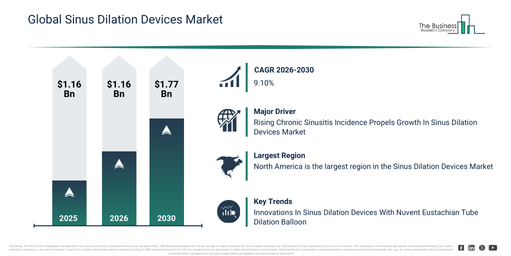
    The sinus dilation devices market has demonstrated strong growth recently, with revenues expected to rise from $3.15 billion in 2025 to $3.42 billion in 2026, marking a compound annual growth rate (CAGR) of 8.6%. This upward trend in recent years has been supported by the growing incidence of chronic sinusitis, wider adoption of endoscopic sinus surgeries, expansion of ENT specialty clinics, advancements in diagnostic imaging, and heightened awareness of minimally invasive treatment options. Looking ahead, the market is forecast to reach $4.84 billion by 2030, growing at a CAGR of 9.1%. Driving this future growth are factors such as increased demand for outpatient sinus treatments, emphasis on shortening procedure times, expansion of pediatric sinus care, adoption of sophisticated navigation systems, and greater investment in ENT medical devices. Key trends shaping the market include expanded use of minimally invasive sinus procedures, balloon-based dilation techniques, office-based ENT treatments, drug-eluting sinus implants, and a stronger focus on improving patient recovery outcomes.

    Download A Free Sample Report For Comprehensive Market Insights:

    https://www.thebusinessresearchcompany.com/sample.aspx?id=12233&type=smp

    Rising Prevalence of Chronic Sinusitis Influencing Market Demand

    One of the primary factors fueling the demand for sinus dilation devices is the high and rising prevalence of chronic sinusitis. This condition, characterized by prolonged inflammation and swelling of the sinuses lasting 12 weeks or more, often requires intervention to relieve blockages and improve drainage. Balloon sinuplasty, a technique that uses a balloon to gently open nasal passages, has become a favored treatment option. For example, in January 2023, Frontiers, a US-based open-access journal, reported that chronic sinusitis affected 10% of the population in China, with urban residents showing an 18% prevalence and rural residents 27%. Similarly, in February 2023, Pulse Notes, a UK medical data company, indicated that 10% of the UK population suffers from chronic sinusitis, with 4% affected by chronic sinusitis accompanied by nasal polyps. These statistics underline the significant patient base driving market expansion.

    Segmenting the Sinus Dilation Devices Market by Product and Application

    This market is categorized across several important segments. By product type, it includes Balloon Sinus Dilation Devices and Sinus Stents or Implants. The procedure segment is divided into Standalone and Hybrid methods. Application-wise, the market covers both Adult and Pediatric uses. In terms of end users, the devices are employed mainly in Hospitals, ENT Clinics, and other healthcare settings. Further product subcategories break down Balloon Sinus Dilation Devices into Balloon Catheters, Balloon Inflation Devices, and Balloon Sinus Dilation Kits. Sinus Stents or Implants are divided into Biodegradable Sinus Stents, Non-Biodegradable Sinus Stents, and Drug-Eluting Sinus Implants.

    Access The Complete Sinus Dilation Devices Market Report:

    https://www.thebusinessresearchcompany.com/report/sinus-dilation-devices-global-market-report

    Innovative Trends Enhancing the Sinus Dilation Devices Market

    Key players in the sinus dilation devices industry are focusing on introducing advanced technologies to improve patient outcomes and procedural success. One notable innovation is the development of flexible balloon sections designed to navigate the complex sinus anatomy with greater ease. For example, in February 2023, Ireland-based Medtronic PLC launched the NuVent Eustachian Tube Dilation Balloon, which received FDA approval. This device treats Eustachian tube dysfunction, a condition causing ear pain, pressure, and hearing difficulties. Its flexible balloon allows customized placement tailored to each patient’s anatomy and offers a minimally invasive alternative to traditional surgeries, benefiting patients who need more than just medication like nasal sprays.

    Competitive Landscape of the Sinus Dilation Devices Industry

    The sinus dilation devices market features several prominent companies leading innovation and competition. Major players include Medtronic plc, Johnson & Johnson Co, Olympus Corporation, Karl Storz GmbH & Co. KG, Richard Wolf GmbH, Cook Medical Inc., SinuSys Corporation, XION GmbH, Innovia Medical, Smith & Nephew PLC, B. Braun Melsungen AG, Teleflex Incorporated, Sklar Corporation, Meril Life Sciences Pvt. Ltd., Innaccel Technologies Pvt. Ltd., Poba Medical, Fujifilm Corporation, SPIGGLE & THEIS Medizintechnik GmbH, Heinz Kurz GmbH Medizintechnik, and Medicon eG, among others. These companies are instrumental in driving technological advancements and expanding market reach.

    Regional Market Insights Highlighting Growth Opportunities

    In 2025, North America led the sinus dilation devices market in terms of size and revenue. However, the Asia-Pacific region is projected to be the fastest-growing market during the forecast period. The market assessment covers several regions including Asia-Pacific, South East Asia, Western Europe, Eastern Europe, North America, South America, the Middle East, and Africa, providing a comprehensive understanding of global market trends and opportunities.

    Get in touch with us:

    The Business Research Company: https://www.thebusinessresearchcompany.com/

    Americas: +1 310-496-7795

    Asia: +44 7882 955267 & +91 8897263534

    Europe: +44 7882 955267

    Email us at: marketing@tbrc.info

    Follow us on:

    LinkedIn: https://in.linkedin.com/company/the-business-research-company

    YouTube: https://www.youtube.com/channel/UC24_fI0rV8cR5DxlCpgmyFQ

    Global Market Model: https://www.thebusinessresearchcompany.com/global-market-model
  • Single-Use Bioprocessing Connectors Market Forecast Highlights Expansion From $1.96 Billion To $3.92 Billion Through 2030

    Single-Use Bioprocessing Connectors Market Forecast Highlights Expansion From $1.96 Billion To $3.92 Billion Through 2030

    Enhanced with market attractiveness analysis, total addressable market evaluation, company benchmarking matrices, interactive Excel dashboards, expanded supply chain intelligence, emerging startup coverage, and detailed product insights, The Business Research Company’s 2026 market reports deliver more actionable and strategically valuable research.

    The single-use bioprocessing connectors market is experiencing rapid growth as the biopharmaceutical industry increasingly adopts advanced technologies to enhance manufacturing efficiency and maintain sterile conditions. This report delves into the current market size, key driving factors, segment breakdown, leading companies, and regional trends shaping the future of this vital sector.

    Market Size Expansion and Revenue Forecasts for Single-Use Bioprocessing Connectors

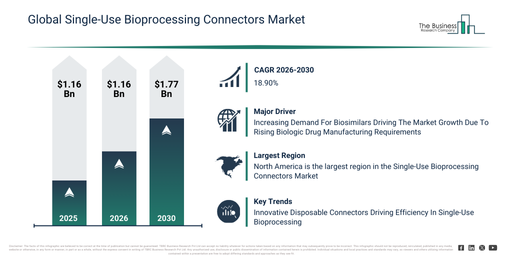
    The market for single-use bioprocessing connectors has expanded significantly in recent years. It is projected to grow from $1.65 billion in 2025 to $1.96 billion in 2026, reflecting a robust compound annual growth rate (CAGR) of 18.8%. This upward trend during the historical period can be linked to the increasing demand for sterile connectors, the rise of biopharmaceutical manufacturing, limited automation in upstream processes, continued reliance on traditional connectors, and strict regulatory requirements. Looking ahead, the market is expected to reach $3.92 billion by 2030 with a CAGR of 18.9%, driven by the expansion of single-use technologies, greater use of aseptic connectors in automated systems, rising contract manufacturing adoption, growth in biologics and cell therapies, and a focus on minimizing contamination risks. Emerging trends such as disposable bioprocessing systems, contamination-free fluid transfer, greater upstream automation, the shift to single-use fill-finish operations, and standardization of connector interfaces are shaping this growth phase.

    Download A Free Sample Report For Comprehensive Market Insights:

    https://www.thebusinessresearchcompany.com/sample.aspx?id=25902&type=smp

    Factors Contributing to the Growth of the Single-Use Bioprocessing Connectors Market

    One of the key growth drivers for the single-use bioprocessing connectors market is the rising demand for biosimilars. Biosimilars are biologic medicines that are highly comparable to already approved biologics, offering similar safety and effectiveness. The increasing prevalence of chronic diseases necessitates long-term biologic treatments, which makes cost-effective biosimilars more attractive to patients and healthcare providers. Single-use bioprocessing connectors play a crucial role in manufacturing biosimilars by enabling sterile and flexible fluid transfer, which streamlines production processes, ensures high product quality, reduces batch failure risks, and cuts operational costs, ultimately accelerating biosimilar availability in the market.

    Supporting data highlights this trend: as of January 2023, the US-based healthcare company Cardinal Health Inc. reported that FDA approvals for biosimilars had risen to 40, with 25 commercially available products. This growing acceptance and use of biosimilars are significantly boosting the demand for single-use bioprocessing connectors.

    Access The Complete Single-Use Bioprocessing Connectors Market Report:

    https://www.thebusinessresearchcompany.com/report/single-use-bioprocessing-connectors-global-market-report

    Segment Breakdown and Revenue Opportunities Within the Single-Use Bioprocessing Connectors Market

    This market is segmented by product type, application, and end user to provide detailed insights. Product categories include aseptic connectors and conventional connectors. Aseptic connectors further break down into genderless aseptic connectors, gendered aseptic connectors, and sterile disconnectors. Conventional connectors cover luer connectors, tube-to-tube connectors, and fittings and clamps. Applications are divided into upstream bioprocessing, downstream bioprocessing, and fill-finish operations. End users consist of biopharmaceutical and pharmaceutical companies, contract research organizations (CROs) and contract manufacturing organizations (CMOs), as well as academic and research institutes. This segmentation supports a comprehensive understanding of market dynamics and revenue prospects.

    Innovations and Trends Shaping Competitive Dynamics in the Single-Use Bioprocessing Connectors Market

    Leading players in this market are focusing on advancing product innovation to enhance operational efficiency and reduce contamination risks. A major development is the introduction of disposable bioprocess connectors—single-use components designed to connect fluid lines without requiring cleaning or sterilization. These connectors significantly lower the risk of cross-contamination, reduce cleaning validation needs, and boost efficiency in sterile fluid handling. For example, in April 2023, CPC Colder Products Company launched the AseptiQuik W Series, featuring the industry’s largest genderless aseptic connectors with a 1.5-inch flow path. This innovative product supports high-volume sterile fluid transfer, speeding up fluid transfer times and improving throughput, which benefits single-use bioprocessing applications by minimizing contamination risks and eliminating cleaning between batches.

    Key Industry Players Driving the Single-Use Bioprocessing Connectors Market

    The single-use bioprocessing connectors market includes several prominent companies shaping its future. Notable players are Compagnie de Saint Gobain S A, Thermo Fisher Scientific Inc, Danaher Corporation, Merck KGaA, Sartorius AG, Repligen Corporation, Pall Corporation, Nordson Corporation, Watson Marlow Limited, Colder Products Company, Shanghai LePure Biotech Co Ltd, Qosina Corp, SaniSure GmbH, Ami Polymer Private Limited, Foxx Life Sciences LLC, Bio Link LLC, Liquidyne Process Technologies Inc, PharSol Technology Solutions Private Limited, BioPulse Solutions Inc, CPC Biopharma Connectors, AdvantaPure, and Teknor Apex Healthcare. These companies drive innovation and compete by developing advanced solutions to meet evolving industry needs.

    Geographical Market Analysis and Regions with the Fastest Growth in Single-Use Bioprocessing Connectors

    In 2025, North America accounted for the largest share of the single-use bioprocessing connectors market. However, Asia-Pacific is anticipated to experience the fastest growth during the forecast period. The market report covers regions including Asia-Pacific, South East Asia, Western Europe, Eastern Europe, North America, South America, the Middle East, and Africa, providing a global perspective on emerging opportunities and regional market dynamics.

    Get in touch with us:

    The Business Research Company: https://www.thebusinessresearchcompany.com/

    Americas: +1 310-496-7795

    Asia: +44 7882 955267 & +91 8897263534

    Europe: +44 7882 955267

    Email us at: marketing@tbrc.info

    Follow us on:

    LinkedIn: https://in.linkedin.com/company/the-business-research-company

    YouTube: https://www.youtube.com/channel/UC24_fI0rV8cR5DxlCpgmyFQ

    Global Market Model: https://www.thebusinessresearchcompany.com/global-market-model
  • Artificial Intelligence-Powered Solutions For Elderly Care Market Expansion Is Reshaping Competitive Dynamics Across The Industry

    Artificial Intelligence-Powered Solutions For Elderly Care Market Expansion Is Reshaping Competitive Dynamics Across The Industry

    Enhanced with market attractiveness analysis, total addressable market evaluation, company benchmarking matrices, interactive Excel dashboards, expanded supply chain intelligence, emerging startup coverage, and detailed product insights, The Business Research Company’s 2026 market reports deliver more actionable and strategically valuable research.

    Artificial Intelligence-Powered Solutions For Elderly Care Market Growth Potential: How Will Market Size Change Through 2030?

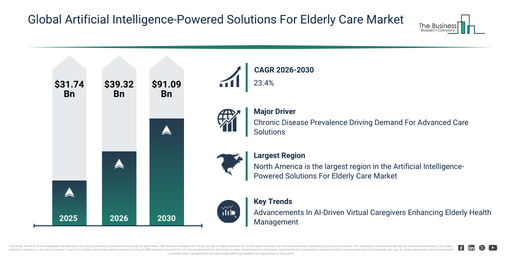
    The market for artificial intelligence-driven elder care solutions has experienced substantial expansion lately, projected to advance from $31.74 billion in 2025 to $39.32 billion in 2026, reflecting a compound annual growth rate of 23.9%. Key drivers behind this historical growth trajectory include an expanding elderly demographic, a higher incidence of chronic illnesses in older adults, the proliferation of in-home care services, the early embrace of remote health monitoring technologies, and the development of digital health ecosystems.

    The market for artificial intelligence-driven elderly care solutions is poised for significant expansion, anticipated to reach $91.09 billion by 2030 with a compound annual growth rate of 23.4%. This projected growth is propelled by several key factors, including a heightened demand for technologies that enable seniors to age independently, increased financial backing for smart home healthcare innovations, the wider application of AI in proactive health management, a concerted effort to alleviate the strain on caregivers, and the growing incorporation of robotic assistance for the elderly. During this forecast period, significant trends shaping the market include the escalating use of AI-powered remote patient monitoring, the broader integration of virtual assistants into care routines, the increased implementation of systems designed for fall detection and overall safety, the expansion of social robots intended for companionship, and a greater emphasis on tailoring care to individual needs.

    Download A Free Sample Report For Comprehensive Market Insights:

    https://www.thebusinessresearchcompany.com/sample.aspx?id=20715&type=smp

    Artificial Intelligence-Powered Solutions For Elderly Care Market Growth Momentum: Which Factors Are Influencing Demand?

    The escalating incidence of long-term illnesses is poised to be a significant catalyst for the expansion of the artificial intelligence (AI) solutions within the elderly care sector. These persistent health conditions, including widely recognized examples like diabetes and cardiovascular ailments, necessitate ongoing management and can profoundly affect an individual’s daily existence. Factors contributing to the growing burden of chronic diseases encompass an aging global population, evolving lifestyle patterns characterized by decreased physical activity and less healthy dietary choices, coupled with increasing urbanization trends. AI-driven tools designed for elder care play a crucial role in alleviating the challenges posed by chronic conditions through capabilities such as continuous health surveillance, the application of predictive analytics for proactive interventions, and the development of tailored care strategies, ultimately leading to improved health results and a better quality of life for seniors. To illustrate this point, data from September 2023, as reported by the World Health Organization, indicates that non-communicable diseases (NCDs), also referred to as chronic diseases, accounted for an alarming 74% of all global deaths annually, totaling 41 million. Specifically, cardiovascular diseases were responsible for 17.9 million fatalities, cancer for 9.3 million, chronic respiratory diseases for 4.1 million, and diabetes for 2.0 million deaths. Consequently, the increasing prevalence of chronic diseases is a primary driver propelling the market for AI-powered solutions in elderly care.

    Artificial Intelligence-Powered Solutions For Elderly Care Market Segment Analysis: What Are The Major Market Categories?

    The artificial intelligence-powered solutions for elderly care market covered in this report is segmented –

    1) By Technology: Machine Learning, Natural Language Processing, Robotics, Computer Vision, Other Technologies

    2) By Application: Fall Detection And Prevention, Remote Monitoring And Healthcare, Personalized Virtual Assistants, Medication Management, Social Interaction And Companionship, Other Applications

    3) By End Users: Home Care Settings, Assisted Living Facilities, Nursing Homes, Hospitals And Clinics, Other End Users

    Subsegments:

    1) By Machine Learning: Predictive Analytics, Personalized Health Monitoring, Data-Driven Decision Making, Adaptive Learning Systems

    2) By Natural Language Processing (NLP): Voice Assistants, Language Translation For Elderly Communication, Sentiment Analysis For Emotional Well-Being, Speech Recognition For Assistance Devices

    3) By Robotics: Social Companions (Companion Robots), Assistance Robots For Daily Activities, Robotic Prosthetics And Exoskeletons, Autonomous Mobility Robots

    4) By Computer Vision: Fall Detection Systems, Vision-Based Health Monitoring (Eye Health), Gesture Recognition For Communication, Environment Mapping And Navigation

    5) By Other Technologies: AI-Powered Wearables, Remote Monitoring Systems, Smart Home Devices Integration, Virtual Reality Therapy

    Artificial Intelligence-Powered Solutions For Elderly Care Market Trends Reshaping Industry Growth

    Leading entities within the artificial intelligence (AI) for elderly care sector are committed to creating cutting-edge solutions, exemplified by the development of AI-powered virtual caregivers designed to deliver tailored support, bolster oversight, and elevate the general living standards for seniors. Essentially, an AI virtual caregiver functions as an intelligent digital companion that assists with health tracking, medication reminders, social interaction, and emergency alerts, primarily empowering elderly individuals to live independently and maintain their health. To illustrate, November 2024 saw Electronic Caregiver Inc., a prominent American health tech firm, introduce Addison Care+ through the AWS marketplace, an sophisticated AI virtual caregiver system engineered to transform senior care by improving health oversight, user interaction, and autonomy for aging populations and those managing chronic conditions. This system offers continuous activity monitoring, early identification of potential health problems, and detailed care analytics, including prescription adherence and critical incident handling. By integrating AI-powered telecare services, it facilitates widespread deployment and equips care providers with proactive resources for overseeing patient health and refining service provision.

    Artificial Intelligence-Powered Solutions For Elderly Care Market Leading Companies Driving Competitive Growth

    Major companies operating in the artificial intelligence-powered solutions for elderly care market are Samsung Electronics Co Ltd, Siemens Healthineers AG, Koninklijke Philips N.V., Cera Care, Elder HQ, Aviva Health, AiCure LLC, GrandCare Systems, K4connect, Sensi AI, Orbita, Blue Frog Robotics, CarePredict, Anvayaa Kin Care, Emoha, Reemo Health, Walk With Path, Intuition Robotics, MiiCare, Care.Coach, MyndYou, ClinOne, PainChek, Somatix Inc., SmartQuare

    Access The Complete Artificial Intelligence-Powered Solutions For Elderly Care Market Report:

    https://www.thebusinessresearchcompany.com/report/artificial-intelligence-powered-solutions-for-elderly-care-global-market-report

    #Artificial Intelligence-Powered Solutions For Elderly Care Market Largest Region: Which Geography Holds The Highest Market Share?

    North Americawas the largest region in the artificial intelligence-powered solutions for elderly Care market in 2025. The regions covered in the artificial intelligence-powered solutions for elderly care market report are Asia-Pacific, South East Asia, Western Europe, Eastern Europe, North America, South America, Middle East, Africa.

    Get in touch with us:

    The Business Research Company: https://www.thebusinessresearchcompany.com/

    Americas: +1 310-496-7795

    Asia: +44 7882 955267 & +91 8897263534

    Europe: +44 7882 955267

    Email us at: marketing@tbrc.info

    Follow us on:

    LinkedIn: https://in.linkedin.com/company/the-business-research-company

    YouTube: https://www.youtube.com/channel/UC24_fI0rV8cR5DxlCpgmyFQ

    Global Market Model: https://www.thebusinessresearchcompany.com/global-market-model
  • Artificial Intelligence-Generated Personalized Prenatal Nutrition Guide Market Forecast Reveals Where Future Industry Value Will Be Created

    Artificial Intelligence-Generated Personalized Prenatal Nutrition Guide Market Forecast Reveals Where Future Industry Value Will Be Created

    Through market attractiveness analysis, total addressable market evaluation, company benchmarking matrices, interactive Excel dashboards, expanded supply chain intelligence, emerging startup coverage, and detailed product insights, The Business Research Company’s 2026 market reports provide more actionable and strategically valuable research.

    Artificial Intelligence-Generated Personalized Prenatal Nutrition Guide Market Value Analysis: What Growth Is Expected Over The Forecast Period?

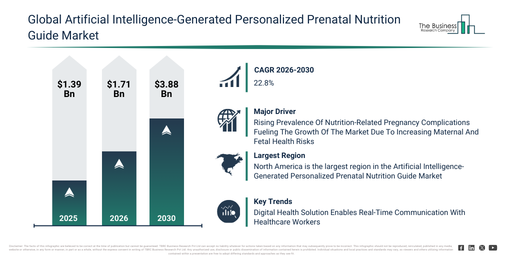
    The market for AI-driven personalized prenatal nutrition guidance has experienced substantial expansion lately, projecting a jump from $1.39 billion in 2025 to $1.71 billion in 2026, demonstrating a compound annual growth rate of 23.1%. This preceding growth trajectory is largely due to heightened public understanding regarding the significance of nutrition during pregnancy, the rapid embrace of health applications designed for expectant mothers, an increase in digital health proficiency, broader access to prenatal care services, and a growing consumer desire for tailored wellness plans.

    The market for AI-driven personalized prenatal nutrition guidance is poised for remarkable expansion, projecting a substantial increase to $3.88 billion by 2030, fueled by a compound annual growth rate of 22.8%. This upward trajectory during the projected timeframe is underpinned by several key factors: escalating investments in digital solutions for maternal health, a heightened reliance on analytical tools powered by artificial intelligence for nutritional insights, the proliferation of remote patient monitoring for expectant mothers, the increasing incorporation of genetic information into dietary strategies, and a growing consumer preference for pregnancy care informed by data. During this same period, dominant market trends are anticipated to include a greater embrace of AI for tailoring prenatal meal plans, a more widespread integration with wearable health monitoring devices, the broadening application of genetic profiling for nutrition advice, the expanded utilization of digital platforms dedicated to maternal well-being, and a concerted emphasis on proactive prenatal healthcare.

    Download A Free Sample Report For Comprehensive Market Insights:

    https://www.thebusinessresearchcompany.com/sample.aspx?id=27206&type=smp

    Artificial Intelligence-Generated Personalized Prenatal Nutrition Guide Market Expansion Drivers: What Is Shaping Future Growth?

    The increasing incidence of pregnancy complications linked to nutrition is poised to fuel the expansion of the market for AI-driven personalized prenatal nutrition guidance. These complications, encompassing issues like anemia, gestational diabetes, and abnormal birth weights stemming from insufficient, excessive, or unbalanced nutrient consumption, are on the rise. Such dietary-related challenges are exacerbated by modern eating habits that contribute to poor nutrient intake, unhealthy weight gain, and metabolic disruptions during pregnancy. AI-generated personalized prenatal nutrition guides serve to counteract these issues by delivering customized dietary advice, offering a valuable resource for expectant mothers. Through individualized tracking and support, these guides effectively lower risks, leading to improved health for both mother and child. For example, data from the Office for Health Improvement and Disparities in the UK indicated that in the 2023-2024 period, 26.2% of women were living with obesity at the early stages of pregnancy, a slight increase from 25.4% in 2022-2023. This escalating trend in nutrition-related pregnancy issues directly stimulates the market for AI-based personalized prenatal nutrition solutions.

    The increasing emphasis on personalized medicine is a key factor anticipated to drive the market for AI-powered personalized prenatal nutrition guides. This medical paradigm focuses on customizing therapies for individuals by considering their unique genetic makeup, environmental exposures, and lifestyle choices, aiming to enhance treatment efficacy and overall well-being. The growing adoption of personalized medicine is fueled by progress in genomic technologies, which facilitate the precise identification of genetic variations and the subsequent development of targeted therapies. AI-generated personalized prenatal nutrition guides significantly contribute to the personalized medicine approach by formulating diet plans specifically tailored to an individual’s health profile, making them exceptionally beneficial for expectant mothers. These guides enhance maternal and fetal health outcomes by providing meticulous monitoring and recommendations, thereby mitigating the risks associated with nutritional deficiencies or excesses during pregnancy. Illustrating this trend, the Personalized Medicine Coalition reported that in February 2024, the U.S. Food and Drug Administration (FDA) authorized 26 new personalized medicines in 2023, a notable rise from the 12 approvals seen in 2022. Consequently, the heightened focus on personalized medicine is a primary driver for the growth of the artificial intelligence-generated personalized prenatal nutrition guide market.

    Artificial Intelligence-Generated Personalized Prenatal Nutrition Guide Market Segment Breakdown: Which Categories Generate The Most Revenue?

    The artificial intelligence-generated personalized prenatal nutrition guide market covered in this report is segmented –

    1) By Product Type: Mobile Apps, Web-Based Platforms, Wearable Integration, Other Product Types

    2) By Deployment Mode: Cloud-Based, Hybrid Deployment Models

    3) By Application: Pregnancy Nutrition Management, Dietary Recommendations, Supplement Tracking, Other Applications

    4) By End User: Hospitals And Clinics, Homecare, Fitness And Wellness Centers, Other End Users

    Subsegments:

    1) By Mobile Apps: Artificial Intelligence-Driven Meal Planning Apps, Prenatal Nutrition Tracking Apps, Genetic-Based Nutrition Recommendation Apps, Microbiome Analysis Apps, Symptom And Health Log Apps For Pregnancy

    2) By Web-Based Platforms: Online Prenatal Diet Planning Portals, Genetic Test Result Dashboards, Artificial Intelligence (AI)-Powered Consultation Platforms, Nutrient Deficiency Monitoring Portals, Personalized Prenatal Recipe Platforms

    3) By Wearable Integration: Fitness Trackers With Prenatal Nutrition Sync, Continuous Glucose Monitoring (CGM) Integration, Smart Scales With Pregnancy Mode, Sleep Trackers Linked To Nutrition Recommendations, Hydration Monitoring Wearables

    4) By Other Product Types: At-Home Genetic Test Kits With Prenatal Focus, Microbiome Test Kits For Pregnancy Health, Artificial Intelligence-Enabled Supplement Dispensers, Voice-Assistant Guided Prenatal Nutrition Tools, Smart Kitchen Devices With Pregnancy Diet Presets

    Artificial Intelligence-Generated Personalized Prenatal Nutrition Guide Market Strategic Trends: What Is Defining The Next Phase Of Growth?

    In the realm of AI-driven personalized prenatal nutrition guides, leading enterprises are dedicated to pioneering sophisticated offerings, notably digital health solutions, designed to furnish customized dietary advice that enhances the well-being of both mothers and their unborn children. Such a digital health solution represents a tech-enabled framework that leverages data analytics and artificial intelligence to deliver individualized nutritional counsel for improved maternal and fetal health. As a concrete illustration, the Alliance for Artificial Intelligence and Medtech, a US-based group advocating for AI and medical technology, joined forces with the government of Andhra Pradesh in December 2024 to introduce the Janani Mitra healthcare application. This AI-endowed digital health solution is intended to support expectant mothers throughout the state, incorporating functionalities like nutritional intake logging via a food scanner and the early identification of anemia through AI analysis of ocular, lingual, and fingernail images. Furthermore, the application extends its capabilities to encompass health and medication oversight, enable immediate interaction between pregnant women and accredited social health activists (ASHAs) as well as auxiliary nurse midwives (ANMs), and maintain a record of prenatal care services, encompassing appointments and diagnostic imaging.

    Artificial Intelligence-Generated Personalized Prenatal Nutrition Guide Market Key Players And Strategic Industry Positioning

    Major companies operating in the artificial intelligence-generated personalized prenatal nutrition guide market are MamaWell, Appinventiv Technologies Pvt. Ltd., Maven Clinic Inc., Ritual Vitamins Inc., Nutrino Health Ltd., Ovia Health Inc., Vitagene Inc., Bump And Beyond Nutrition Limited., Nutrify LLC, Perelel, DayTwo Inc., Qua Nutrition, Baby2Body Limited., JM Nutrition, Rootine Inc., Suggestic Inc., Zaya Care, BellyFuel, Femia, Nuskha Kitchen

    Access The Complete Artificial Intelligence-Generated Personalized Prenatal Nutrition Guide Market Report:

    https://www.thebusinessresearchcompany.com/report/artificial-intelligence-generated-personalized-prenatal-nutrition-guide-global-market-report

    Artificial Intelligence-Generated Personalized Prenatal Nutrition Guide Market Regional Analysis: Which Region Leads By Revenue?

    North Americawas the largest region in the artificial intelligence-generated personalized prenatal nutrition guide market in 2025. Asia Pacific is expected to be the fastest-growing region in the forecast period. The regions covered in the artificial intelligence-generated personalized prenatal nutrition guide market report are Asia-Pacific, South East Asia, Western Europe, Eastern Europe, North America, South America, Middle East, Africa.

    Get in touch with us:

    The Business Research Company: https://www.thebusinessresearchcompany.com/

    Americas: +1 310-496-7795

    Asia: +44 7882 955267 & +91 8897263534

    Europe: +44 7882 955267

    Email us at: marketing@tbrc.info

    Follow us on:

    LinkedIn: https://in.linkedin.com/company/the-business-research-company

    YouTube: https://www.youtube.com/channel/UC24_fI0rV8cR5DxlCpgmyFQ

    Global Market Model: https://www.thebusinessresearchcompany.com/global-market-model
  • Artificial Intelligence-Enhanced Hospital Equipment Utilization Market Growth Through 2030 Creates New Strategic Opportunities

    Artificial Intelligence-Enhanced Hospital Equipment Utilization Market Growth Through 2030 Creates New Strategic Opportunities

    Delivering more actionable and strategically valuable research, The Business Research Company’s 2026 market reports feature market attractiveness analysis, total addressable market evaluation, company benchmarking matrices, interactive Excel dashboards, expanded supply chain intelligence, emerging startup coverage, and detailed product insights.

    Artificial Intelligence-Enhanced Hospital Equipment Utilization Market Size Forecast: How Large Could The Market Become By 2030?

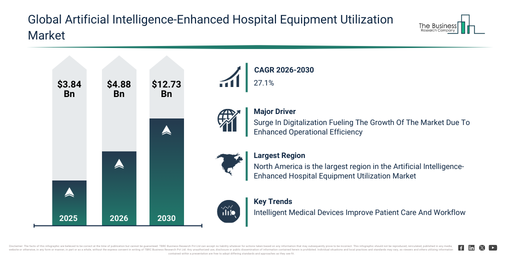
    Driven by advancements in artificial intelligence, the market for enhanced hospital equipment utilization has experienced substantial expansion. Projections indicate a rise from $3.84 billion in 2025 to $4.88 billion in 2026, reflecting a robust compound annual growth rate of 27.3%. Historically, this growth trajectory has been fueled by several key factors, including heightened rates of hospital equipment usage, increasing financial strain on healthcare operations, the early integration of internet-connected medical devices, a surge in digital transformation efforts within hospitals, and the expansion of unified systems for managing medical equipment.

    The expanding utilization of artificial intelligence within hospital equipment is poised for remarkable expansion, projecting a market value of $12.73 billion by 2030, driven by a robust compound annual growth rate of 27.1%. This projected surge is fueled by amplified investments in smart hospital infrastructure, a heightened demand for AI-powered operational enhancements, the proliferation of cloud-based equipment management solutions, deepening integration of comprehensive hospital data analytics, and a concentrated effort on optimizing healthcare expenditures. Key developments anticipated during this period encompass the accelerated adoption of predictive maintenance strategies for medical devices, a greater reliance on AI for asset tracking, increased implementation of real-time performance analytics for equipment, the expansion of platforms designed to optimize workflows, and a stronger emphasis on minimizing equipment downtime.

    Download A Free Sample Report For Comprehensive Market Insights:

    https://www.thebusinessresearchcompany.com/sample.aspx?id=28933&type=smp

    Artificial Intelligence-Enhanced Hospital Equipment Utilization Market Development Factors: Which Trends Are Supporting Demand?

    The expansion of the market for hospital equipment utilization augmented by artificial intelligence is anticipated to be significantly boosted by the ongoing trend of digitalization. Digitalization itself encompasses the incorporation of digital technologies into various aspects of business, including operations, service delivery, and everyday tasks, with the ultimate aim of improving efficiency and generating greater value. This surge in digitalization is largely attributed to the enhanced operational efficiency it facilitates, by refining processes and supporting more informed decision-making grounded in data. Artificial intelligence plays a crucial role in accelerating digitalization within hospital equipment utilization by integrating advanced analytical capabilities and systems for continuous monitoring, which in turn optimizes how equipment functions, boosts overall hospital efficiency, and establishes more robust data connections throughout healthcare systems. A relevant illustration of this adoption is evident in May 2025, when the Centers for Disease Control and Prevention (CDC), a key federal agency in the United States, reported that approximately 92% of state public health laboratories had implemented Electronic Test Orders and Results (ETOR) systems with at least one healthcare partner for a particular laboratory initiative, signifying a substantial increase from the 74% reported in early 2023. Consequently, this widespread digitalization is a primary catalyst for the growth observed in the artificial intelligence-enhanced hospital equipment utilization market.

    Artificial Intelligence-Enhanced Hospital Equipment Utilization Market Segmentation: How Is The Market Structured Across Key Categories?

    The artificial intelligence-enhanced hospital equipment utilization market covered in this report is segmented –

    1) By Component: Software, Hardware, Services

    2) By Deployment Mode: On-Premises, Cloud

    3) By Application: Asset Tracking, Predictive Maintenance, Workflow Optimization, Inventory Management, Patient Flow Management

    4) By End-User: Hospitals, Clinics, Ambulatory Surgical Centers, Diagnostic Centers

    Subsegments:

    1) By Software: Predictive Analytics Software, Imaging Analysis Software, Workflow Optimization Software, Patient Monitoring Software

    2) By Hardware: Imaging Devices, Robotic Surgical Systems, Intelligent Monitoring Equipment, Diagnostic Instruments

    3) By Services: Maintenance And Support, Training And Implementation, Data Management, Consulting

    Artificial Intelligence-Enhanced Hospital Equipment Utilization Market Transformation Trends: Which Innovations Are Driving Change?

    In the realm of hospital equipment utilization augmented by artificial intelligence, leading entities are channeling efforts into pioneering sophisticated medical innovations, with AI-driven imaging solutions emerging as a key differentiator. These AI-enhanced imaging systems leverage artificial intelligence to refine image interpretation, bolstering diagnostic precision and accelerating the identification of anomalies. A notable illustration of this trend occurred in April 2024 when GE HealthCare, a prominent US medical technology firm, integrated its Caption AI technology into the Vscan Air SL portable wireless ultrasound device. This intelligent feature empowers healthcare professionals to acquire superior cardiac imagery with enhanced precision and operational speed. Through its immediate feedback and automated computation capabilities, it empowers even novice users to conduct dependable cardiac evaluations, thereby elevating diagnostic potential and promoting the more effective application of ultrasound within healthcare environments.

    Artificial Intelligence-Enhanced Hospital Equipment Utilization Market Competitive Landscape And Leading Companies

    Major companies operating in the artificial intelligence-enhanced hospital equipment utilization market are Butterfly Network Inc., International Business Machines Corporation, Oracle Corporation, Medtronic Plc, Sectra AB, Siemens Healthineers AG, Fujifilm Holdings Corporation, Stryker Corporation, Philips Healthcare, GE Healthcare, Intuitive Surgical Inc., Hologic Inc., Canon Medical Systems Corporation, Carestream Health Inc., Qventus Inc., Agfa HealthCare NV, TRIMEDX Inc., Nuance Communications Inc., Sonitor Technologies AS, CenTrak Inc.

    Access The Complete Artificial Intelligence-Enhanced Hospital Equipment Utilization Market Report:

    https://www.thebusinessresearchcompany.com/report/artificial-intelligence-enhanced-hospital-equipment-utilization-global-market-report

    Artificial Intelligence-Enhanced Hospital Equipment Utilization Market Geographic Distribution And Regional Opportunities

    North Americawas the largest region in the artificial intelligence-enhanced hospital equipment utilization market in 2025. Asia-Pacificis expected to be the fastest-growing region in the forecast period. The regions covered in the artificial intelligence-enhanced hospital equipment utilization market report are Asia-Pacific, South East Asia, Western Europe, Eastern Europe, North America, South America, Middle East, Africa.

    Get in touch with us:

    The Business Research Company: https://www.thebusinessresearchcompany.com/

    Americas: +1 310-496-7795

    Asia: +44 7882 955267 & +91 8897263534

    Europe: +44 7882 955267

    Email us at: marketing@tbrc.info

    Follow us on:

    LinkedIn: https://in.linkedin.com/company/the-business-research-company

    YouTube: https://www.youtube.com/channel/UC24_fI0rV8cR5DxlCpgmyFQ

    Global Market Model: https://www.thebusinessresearchcompany.com/global-market-model
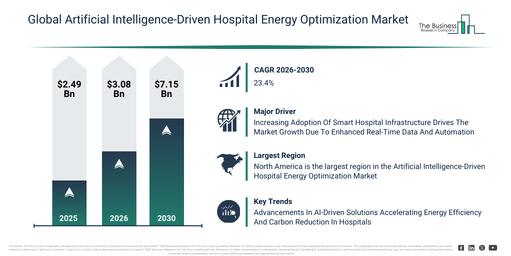
  • Artificial Intelligence-Driven Hospital Energy Optimization Market Size Projected To Increase From $3.08 Billion To $7.15 Billion During The Forecast Period

    Artificial Intelligence-Driven Hospital Energy Optimization Market Size Projected To Increase From $3.08 Billion To $7.15 Billion During The Forecast Period

    Enhanced with market attractiveness analysis, total addressable market evaluation, company benchmarking matrices, interactive Excel dashboards, expanded supply chain intelligence, emerging startup coverage, and detailed product insights, The Business Research Company’s 2026 market reports deliver more actionable and strategically valuable research.

    Artificial Intelligence-Driven Hospital Energy Optimization Market Revenue Outlook: What CAGR Is Expected Through 2030?

    Fueled by escalating hospital energy usage, mounting operational expense concerns, the initial embrace of building management systems, the expansion of digital hospital frameworks, and a heightened emphasis on operational effectiveness, the marketplace for artificial intelligence solutions in hospital energy management has experienced remarkable expansion lately, projected to advance from $2.49 billion in 2025 to $3.08 billion in 2026, reflecting a compound annual growth rate of 23.7%.

    The market for artificial intelligence solutions aimed at optimizing hospital energy consumption is poised for remarkable expansion in the coming years, projecting a rise to $7.15 billion by 2030 with a compound annual growth rate of 23.4%. This anticipated surge is fueled by several key factors, including augmented investments in sustainable healthcare facilities, a heightened imperative to decrease carbon emissions, the proliferation of smart hospital infrastructure, broader implementation of AI for facility operations, and increasing governmental emphasis on energy efficiency regulations. During this projected timeframe, significant market developments are expected to include a greater integration of AI-powered energy management systems, increased use of intelligent sensors and measurement devices, expanded application of predictive maintenance for crucial hospital systems, more seamless integration of automated building control systems, and a strengthened commitment to reducing energy expenditures.

    Download A Free Sample Report For Comprehensive Market Insights:

    https://www.thebusinessresearchcompany.com/sample.aspx?id=27205&type=smp

    Artificial Intelligence-Driven Hospital Energy Optimization Market Industry Drivers: What Is Driving Revenue Growth?

    The expansion of smart hospital frameworks is anticipated to stimulate the advancement of the market for artificial intelligence-powered hospital energy optimization in the future. Such a framework constitutes a sophisticated web of digital advancements dedicated to streamlining healthcare provision, enabling continuous oversight, and automating the administration of hospital assets. This proliferation of smart hospital infrastructure is motivated by the imperative to enhance patient results via real-time data tracking, which facilitates quicker diagnoses and customized therapeutic strategies, thereby elevating the caliber and effectiveness of medical attention. Smart hospital infrastructure facilitates AI-driven hospital energy optimization by incorporating interconnected sensors and sourcing real-time data from diverse systems, empowering AI algorithms to scrutinize energy consumption trends and automatically modify settings to curtail usage and boost efficiency. For example, per the Centers for Disease Control and Prevention (CDC), a principal US public health body, the proportion of office-based physicians utilizing electronic health records reached 88.2% in December 2024, while the adoption rate for certified EHR systems stood at 77.8%. Consequently, the escalating integration of smart hospital infrastructure is a primary driver for the growth of the artificial intelligence-driven hospital energy optimization market.

    The increasing adoption of remote patient monitoring systems is poised to accelerate the expansion of the artificial intelligence-driven hospital energy optimization market. These remote monitoring solutions utilize digital apparatus and technologies to track individuals’ health information beyond conventional healthcare environments, thereby facilitating uninterrupted care and prompt interventions. The rise in remote monitoring is bolstered by healthcare providers’ pursuit of immediate patient insights, permitting ongoing surveillance of health statuses and timely interventions, which leads to improved care quality and efficiency. Artificial intelligence-enabled hospital energy management offers real-time remote oversight of energy utilization and equipment functionality, identifying suboptimal performance and predicting maintenance requirements, while simultaneously permitting healthcare facilities to refine energy consumption and implement adjustments from afar. As an illustration, data from the National Health Service, a UK government entity, indicated that in December 2023, there were 33.6 million active users of their applications, experiencing a 54% increase in monthly logins during the preceding year, rising from 16.8 million to 25.8 million. Accordingly, the escalating trend towards remote monitoring solutions is a key factor driving the growth of the artificial intelligence-driven hospital energy optimization market.

    Artificial Intelligence-Driven Hospital Energy Optimization Market Segmentation Trends And Revenue Drivers

    The artificial intelligence-driven hospital energy optimization market covered in this report is segmented –

    1) By Component: Software, Hardware, Services

    2) By Deployment Mode: On-Premises, Cloud

    3) By Hospital Size: Small And Medium Hospitals, Large Hospitals

    4) By Application: Heating, Ventilation, And Air Conditioning Optimization, Lighting Control, Energy Management, Equipment Monitoring, Other Applications

    5) By End-User: Public Hospitals, Private Hospitals, Specialty Hospitals, Other End-Users

    Subsegments:

    1) By Software: Energy Management Software, Building Automation Software, Predictive Maintenance Software, Data Analytics and Visualization Tools, Artificial Intelligence Algorithms And Optimization Engines

    2) By Hardware: Smart Sensors And Internet Of Things Devices, Smart Meters, Controllers And Actuators, Heating, Ventilation, And Air Conditioning Systems, Lighting Control Systems, Edge Devices And Gateways

    3) By Services: Consulting And Advisory Services, Installation And Integration Services, Maintenance And Support Services, Energy Auditing Services, Training And Education Services

    #Artificial Intelligence-Driven Hospital Energy Optimization Market Growth Trends: What Is Influencing The Future Outlook?

    Key players within the Artificial Intelligence-Driven Hospital Energy Optimization sector are prioritizing sophisticated energy management strategies to hasten the adoption of eco-friendly solutions throughout healthcare institutions. This advanced energy management entails leveraging AI, cloud infrastructure, and IoT capabilities to oversee, scrutinize, and autonomously fine-tune hospital energy systems, including HVAC, thereby enhancing efficiency and curtailing energy usage. As an illustration, in April 2024, True Digital Group, a firm based in Thailand specializing in digital transformation and technology services, partnered with Alibaba Cloud, a cloud computing provider from China, to introduce the Climate Technology Platform. This platform integrates Alibaba Cloud’s AI-powered “Energy Expert” solution with cloud computing, IoT, and big data analysis to assist Thai businesses in pinpointing energy efficiency obstacles, lowering carbon footprints, and embracing sustainable technologies. It facilitates real-time energy oversight and forward-looking analytics designed to expedite Thailand’s green agenda and achieve a reduction in emissions of as much as 40% by the year 2030, with an ultimate goal of carbon neutrality by 2050. Initial trials, such as those implemented in Bangkok Hospital’s heating, ventilation, and air conditioning system, have already shown a decrease in energy consumption by up to 15%.

    #Artificial Intelligence-Driven Hospital Energy Optimization Market Industry Leaders: Which Organizations Are Driving Competition?

    Major companies operating in the artificial intelligence-driven hospital energy optimization market are Enel S.p.A., General Electric Company, Veolia Environnement S.A., Schneider Electric SE, Honeywell International Inc., ABB Group, Eaton Corporation Plc, Johnson Controls International Plc, Trane Technologies Plc, Centrica Business Solutions Ltd., Rockwell Automation Inc., Ameresco Inc., ENGIE Impact, GridPoint Inc., Optimum Energy LLC, Verdigris Technologies, Enerbrain, BuildingIQ Inc., Deerns, Resync

    Access The Complete Artificial Intelligence-Driven Hospital Energy Optimization Market Report:

    https://www.thebusinessresearchcompany.com/report/artificial-intelligence-driven-hospital-energy-optimization-global-market-report

    Artificial Intelligence-Driven Hospital Energy Optimization Market Largest Region By Revenue And Market Share

    North Americawas the largest region in the artificial intelligence-driven hospital energy optimization market in 2025. Asia-Pacificis expected to be the fastest-growing region in the forecast period. The regions covered in the artificial intelligence-driven hospital energy optimization market report are Asia-Pacific, South East Asia, Western Europe, Eastern Europe, North America, South America, Middle East, Africa.

    Get in touch with us:

    The Business Research Company: https://www.thebusinessresearchcompany.com/

    Americas: +1 310-496-7795

    Asia: +44 7882 955267 & +91 8897263534

    Europe: +44 7882 955267

    Email us at: marketing@tbrc.info

    Follow us on:

    LinkedIn: https://in.linkedin.com/company/the-business-research-company

    YouTube: https://www.youtube.com/channel/UC24_fI0rV8cR5DxlCpgmyFQ

    Global Market Model: https://www.thebusinessresearchcompany.com/global-market-model
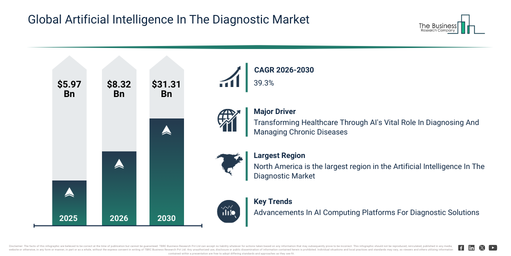
  • Artificial Intelligence In The Diagnostic Market Growth Outlook Reveals A CAGR Of 39.3% And A Market Value Of $31.3 Billion By 2030

    Artificial Intelligence In The Diagnostic Market Growth Outlook Reveals A CAGR Of 39.3% And A Market Value Of $31.3 Billion By 2030

    Through market attractiveness analysis, total addressable market evaluation, company benchmarking matrices, interactive Excel dashboards, expanded supply chain intelligence, emerging startup coverage, and detailed product insights, The Business Research Company’s 2026 market reports provide more actionable and strategically valuable research.

    Artificial Intelligence In The Diagnostic Market Growth Analysis: How Will Revenue Expand During The Forecast Period?

    Within the diagnostic sector, artificial intelligence has experienced remarkable expansion, projecting a significant increase from its 2025 valuation of $5.97 billion to $8.32 billion by 2026, demonstrating a compound annual growth rate of 39.5%. This upward trajectory in the recent past is propelled by several key factors: the burgeoning accessibility of medical imaging data, the pervasive digitization of healthcare records, a growing scarcity of proficient diagnostic specialists, the early integration of computer vision technologies in radiology, and the continuous enhancement of healthcare IT infrastructure.

    The artificial intelligence integrated within the diagnostic market is poised for remarkable expansion over the ensuing years, projected to reach $31.31 billion by 2030, exhibiting a compound annual growth rate of 39.3%. This surge during the projected timeframe is primarily fueled by the escalating need for prompt disease identification, a surge in financial contributions towards AI-powered healthcare innovations, the proliferation of tailored medical approaches, the increasing incorporation of AI diagnostics into established clinical procedures, and a greater number of regulatory endorsements for AI-enabled instruments. Key developments anticipated in the coming period involve a broader acceptance of AI-powered diagnostic imaging technologies, a heightened utilization of machine learning for aiding clinical choices, deeper integration of AI into radiology and pathology processes, the widening application of predictive analytics for identifying illnesses, and an intensified emphasis on achieving both precision and swiftness in diagnostics.

    Download A Free Sample Report For Comprehensive Market Insights:

    https://www.thebusinessresearchcompany.com/sample.aspx?id=13593&type=smp

    #Artificial Intelligence In The Diagnostic Market Growth Factors: Which Forces Are Supporting Market Expansion?

    The increasing incidence of chronic conditions is anticipated to stimulate the expansion of the AI in diagnostics sector in the future. Chronic diseases, characterized as long-lasting health issues that endure throughout a significant portion of an individual’s life, are becoming more common. The integration of AI-driven diagnostic workflows into the management of these chronic conditions facilitates earlier identification, forecasting of future health events, and improved diagnostic support mechanisms, alongside enabling remote patient surveillance, mitigating healthcare expenditures, and personalizing therapeutic approaches by scrutinizing genetic profiles and the advancement of illnesses. Illustratively, as of September 2023, the World Health Organization, a United Nations affiliate based in Switzerland, reported that 41 million deaths annually, representing 74% of global mortality from non-communicable or chronic diseases, occurred worldwide. Specifically, cardiovascular ailments accounted for approximately 17.9 million deaths, cancers for 9.3 million, chronic respiratory illnesses for 4.1 million, and diabetes for 2.0 million. Consequently, the escalating prevalence of chronic diseases acts as a significant catalyst for the growth within the AI in diagnostics market.

    Artificial Intelligence In The Diagnostic Market Segment Analysis Highlighting Growth Areas

    The artificial intelligence in the diagnostic market covered in this report is segmented –

    1) By Component: Hardware, Software, Services

    2) By Technology: Machine Learning, NLP (Natural Language Processing), Context-Aware Computing, Computer Vision

    3) By Diagnosis Type: Radiology, Pathology, Cardiology, Oncology, Neurology, Chest And Lung, Other Diagnosis Types

    Subsegments:

    1) By Hardware: Imaging Devices, Diagnostic Equipment, Wearable Devices

    2) By Software: Diagnostic Imaging Software, Data Analytics Software, Machine Learning Algorithms, Clinical Decision Support Systems

    3) By Services: Consulting Services, Integration Services, Maintenance And Support Services, Training Services

    Artificial Intelligence In The Diagnostic Market Industry Trends: What Changes Are Reshaping Demand?

    To secure a marketplace advantage, leading entities within the AI in diagnostics sector are actively creating novel technological solutions, specifically AI modules. These modules represent distinct software units designed to house particular artificial intelligence functions or abilities. As an illustration, in March of 2023, Qritive, a company based in Singapore specializing in AI-driven solutions, introduced QAi Prostate, a tool aimed at the diagnosis of prostate cancer. This solution is capable of effectively identifying the most prevalent type of prostate cancer, thereby offering the potential to enhance diagnostic precision and decrease instances of incorrect positive results. The utility assists pathologists in differentiating between malignant and benign tissue regions, supporting well-informed treatment strategies. Furthermore, QAi Prostate facilitates the prioritization of patient cases to expedite the diagnostic process and reporting, ultimately boosting operational efficiency and the quality of patient healthcare.

    Artificial Intelligence In The Diagnostic Market Leading Companies: Who Holds Significant Market Presence?

    Major companies operating in the artificial intelligence in the diagnostic market are Siemens Healthineers, Koninklijke Philips N.V., GE Healthcare Technologies Inc., Paige.AI Inc., HeartFlow Inc., Aidoc Medical Ltd., AliveCor Inc., Butterfly Network Inc., Imagen Technologies, Digital Diagnostics Inc., Brainomix Ltd., NovaSignal Corp., Enlitic Inc., Nano-X Imaging LTD., EchoNous Inc., Zebra Medical Vision Ltd., Aidence B.V., Neural Analytics Inc., IDx Technologies Inc., icometrix N.V., Vuno Inc.

    Access The Complete Artificial Intelligence In The Diagnostic Market Report:

    https://www.thebusinessresearchcompany.com/report/artificial-intelligence-in-the-diagnostic-global-market-report

    Artificial Intelligence In The Diagnostic Market Regional Analysis And Leading Geography

    North Americawas the largest region in the artificial intelligence in diagnostics market in 2025. Asia-Pacificis expected to be the fastest-growing region in the forecast period. The regions covered in the artificial intelligence in the diagnostic market report are Asia-Pacific, South East Asia, Western Europe, Eastern Europe, North America, South America, Middle East, Africa.

    Get in touch with us:

    The Business Research Company: https://www.thebusinessresearchcompany.com/

    Americas: +1 310-496-7795

    Asia: +44 7882 955267 & +91 8897263534

    Europe: +44 7882 955267

    Email us at: marketing@tbrc.info

    Follow us on:

    LinkedIn: https://in.linkedin.com/company/the-business-research-company

    YouTube: https://www.youtube.com/channel/UC24_fI0rV8cR5DxlCpgmyFQ

    Global Market Model: https://www.thebusinessresearchcompany.com/global-market-model