Month: June 2026

  • Artificial Intelligence In Radiology Market Forecast Highlights Expansion From $3.7 Billion To $10.69 Billion Through 2030

    Artificial Intelligence In Radiology Market Forecast Highlights Expansion From $3.7 Billion To $10.69 Billion Through 2030

    Delivering more actionable and strategically valuable research, The Business Research Company’s 2026 market reports feature market attractiveness analysis, total addressable market evaluation, company benchmarking matrices, interactive Excel dashboards, expanded supply chain intelligence, emerging startup coverage, and detailed product insights.

    Artificial Intelligence In Radiology Market Forecast: What Market Value Is Expected By 2030?

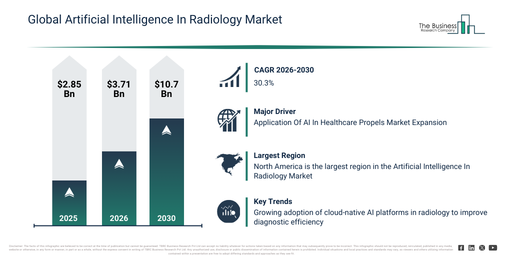
    The artificial intelligence within the radiology sector has experienced substantial expansion lately, with projections indicating a significant increase from $2.85 billion in 2025 to $3.71 billion in 2026, reflecting a compound annual growth rate of 30.2%. This historical growth trajectory has been fueled by several key factors including a heightened need for diagnostic imaging, a scarcity of qualified radiology specialists, the proliferation of digital radiology technologies, the escalating intricacy of imaging data, and the wider implementation of picture archiving systems.

    The AI in radiology market is poised for considerable expansion over the coming years, projecting a surge to USD 10.7 billion by 2030, driven by a robust CAGR of 30.3%. This upward trajectory is fueled by several key factors, including the escalating adoption of AI-powered radiology platforms, a heightened emphasis on enhancing productivity within imaging departments, the growing availability of cloud-based AI radiology solutions, the expanding application of predictive imaging analytics, and the increasing integration with hospital IT infrastructures. Key developments anticipated during this forecast period encompass the deeper integration of AI into radiology reporting processes, a greater reliance on computer vision for interpreting medical images, the wider implementation of AI for optimizing operational workflows, the proliferation of real-time decision support tools, and a strengthened commitment to improving diagnostic precision.

    Download A Free Sample Report For Comprehensive Market Insights:

    https://www.thebusinessresearchcompany.com/sample.aspx?id=13591&type=smp

    Artificial Intelligence In Radiology Market Demand Drivers: What Is Fueling Industry Growth?

    The growing application of artificial intelligence (AI) in healthcare is expected to propel the growth of artificial intelligence (AI) in the radiology market going forward. AI-powered algorithms demonstrate a remarkable capability to analyze and interpret medical images with precision, aiding radiologists in detecting subtle abnormalities and improving overall diagnostic outcomes. The efficiency and speed offered by AI technologies not only streamline radiological workflows but also contribute to faster and more accurate diagnoses. For instance, in July 2024, according to The Health Foundation, a UK-based independent charity, more than half of the UK public (54%) and three-quarters of surveyed NHS staff (76%) expressed support for the use of AI in patient care, while an even larger percentage endorsed its use for administrative tasks (61% of the public and 81% of NHS staff). Therefore, the growing application of AI in healthcare is driving the growth of artificial intelligence (AI) in the radiology market.

    Artificial Intelligence In Radiology Market Segment Performance And Strategic Opportunities

    The artificial intelligence in radiology market covered in this report is segmented –

    1) By Solution Type: AI Software, AI Hardware

    2) By Modality: Computed Tomography (CT), Magnetic Resonance (MR), X-Ray, Mammography, Ultrasound (US), Other Modalities

    3) By Application: Neurology, Chest And Lung, Musculoskeletal, Abdomen, Cardiology, Other Applications

    4) By End-User: Hospitals, Diagnostic Imaging Centers, Other End-Users

    Subsegments:

    1) By AI Software: Image Analysis Software, Workflow Optimization Software, Radiology Reporting Software, Decision Support Systems, Predictive Analytics Tools

    2) By AI Hardware: Imaging Devices, Servers And Computing Infrastructure, Robotics For Automated Imaging, Workstations For Radiologists

    Artificial Intelligence In Radiology Market Innovation Trends: Which Developments Are Transforming The Industry?

    Within the artificial intelligence in radiology sector, prominent entities are actively engaged in pioneering cloud-native radiology informatics solutions. These advancements, exemplified by AI-managed diagnostic environments, are designed to streamline imaging processes, expedite clinical judgment, and address the escalating demand for imaging services. Such cloud-native AI radiology systems merge conventional PACS or RIS capabilities with elastic cloud architecture, facilitating the immediate implementation of AI algorithms, sophisticated image transmission, automated report generation, and fluid integration with other healthcare IT frameworks. A concrete illustration of this trend is the introduction of Diagnostic Suite in February 2025 by DeepHealth, Inc., a U.S. health informatics firm. This AI-driven, cloud-native radiology workspace consolidates worklist coordination, patient summaries, rapid imaging displays, AI coordination, and intelligent reporting into a unified platform. It boasts substantial scalability, incorporates diverse AI diagnostic tools for various imaging areas like the lungs, prostate, brain, and breast, and boosts operational effectiveness through seamless compatibility with established radiology IT infrastructures.

    Artificial Intelligence In Radiology Market Key Players: Which Companies Shape Industry Competition?

    Major companies operating in the artificial intelligence in radiology market are Microsoft Corporation, IBM Corporation, NVIDIA Corporation, Siemens Healthineers AG, Koninklijke Philips N.V, GE Healthcare Technologies Inc., Canon Medical Systems Corporation, HeartFlow Inc., Viz.ai Inc., Aidoc Medical Ltd., EnvoyAI, Butterfly Network Inc., Digital Diagnostics Inc., Caption Health, Enlitic Inc., Arterys, Nano X Imaging Ltd., Subtle Medical Inc., CureMetrix Inc., DiA Imaging Analysis Ltd., Imagen Technologies, Gleamer Ltd., Quibim, Behold.ai, Intel Corporation

    Access The Complete Artificial Intelligence In Radiology Market Report:

    https://www.thebusinessresearchcompany.com/report/artificial-intelligence-in-radiology-global-market-report

    Artificial Intelligence In Radiology Market Geographic Analysis: Where Is Demand Growing The Fastest?

    North Americawas the largest region in the artificial intelligence in radiology market in 2025. The regions covered in the artificial intelligence in radiology market report are Asia-Pacific, South East Asia, Western Europe, Eastern Europe, North America, South America, Middle East, Africa.

    Get in touch with us:

    The Business Research Company: https://www.thebusinessresearchcompany.com/

    Americas: +1 310-496-7795

    Asia: +44 7882 955267 & +91 8897263534

    Europe: +44 7882 955267

    Email us at: marketing@tbrc.info

    Follow us on:

    LinkedIn: https://in.linkedin.com/company/the-business-research-company

    YouTube: https://www.youtube.com/channel/UC24_fI0rV8cR5DxlCpgmyFQ

    Global Market Model: https://www.thebusinessresearchcompany.com/global-market-model
  • Artificial Intelligence In Oncology Market Expected To Reach $10.24 Billion By 2030 As Growth Accelerates At 34.5% CAGR

    Artificial Intelligence In Oncology Market Expected To Reach $10.24 Billion By 2030 As Growth Accelerates At 34.5% CAGR

    Enhanced with market attractiveness analysis, total addressable market evaluation, company benchmarking matrices, interactive Excel dashboards, expanded supply chain intelligence, emerging startup coverage, and detailed product insights, The Business Research Company’s 2026 market reports deliver more actionable and strategically valuable research.

    Artificial Intelligence In Oncology Market Size Outlook: How Fast Will Revenue Grow Through 2030?

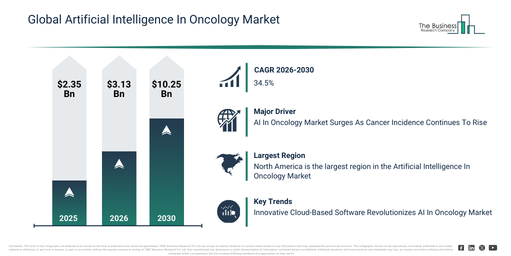
    In the realm of artificial intelligence within oncology, a significant expansion has been observed lately. Projections indicate a leap from a market valuation of $2.35 billion in 2025 to $3.13 billion in 2026, propelled by a formidable compound annual growth rate of 33.4%. This impressive growth trajectory in the preceding period has been fueled by a confluence of factors including the escalating worldwide prevalence of cancer, the proliferation of research endeavors focused on oncology, a broader uptake of digital pathology methodologies, an increased reliance on diagnostic tools informed by data analytics in cancer care, and substantial investments made in sophisticated oncology infrastructure.

    The oncology sector’s artificial intelligence market is poised for remarkable expansion in the coming years, projecting a valuation of $10.25 billion by 2030 with a compound annual growth rate (CAGR) of 34.5%. This upward trajectory is fueled by several key factors, including the wider embrace of precision oncology approaches, a heightened demand for tailored cancer treatments, the expanded application of AI within clinical oncology studies, greater synergy between genomic data and AI systems, and increased funding directed towards AI ventures specializing in oncology. Significant developments anticipated during this period encompass the greater utilization of AI-powered tools for cancer identification, the increased application of AI in refining treatment strategies, the accelerated integration of AI into the pharmaceutical research and development pipeline for cancer drugs, the proliferation of predictive analytics in oncology, and a reinforced emphasis on leveraging AI for precision oncology initiatives.

    Download A Free Sample Report For Comprehensive Market Insights:

    https://www.thebusinessresearchcompany.com/sample.aspx?id=13130&type=smp

    Artificial Intelligence In Oncology Market Growth Drivers: What Factors Are Accelerating Expansion?

    Anticipated increases in cancer diagnoses are poised to stimulate the expansion of the AI in oncology sector moving ahead. This complex category of illnesses is defined by the unrestricted proliferation and multiplication of aberrant cells within the organism. The incorporation of artificial intelligence into the field of oncology offers the capability to transform cancer treatment paradigms, enhancing accuracy, tailoring interventions, and boosting overall efficacy. Illustratively, statistics from the American Cancer Society Inc., a non-profit health entity headquartered in the US, indicated a rise in projected new cancer cases from 1.8 million to 1.9 million in 2023. Consequently, this upward trend in cancer occurrences is serving as a primary catalyst for the burgeoning AI in oncology market.

    #Artificial Intelligence In Oncology Market Segment Landscape And Growth Potential

    The artificial intelligence in oncology market covered in this report is segmented –

    1) By Component: Software Solutions, Hardware, Services

    2) By Treatment Type: Chemotherapy, Radiotherapy, Immunotherapy, Other Treatment Types

    3) By Cancer Type: Breast Cancer, Lung Cancer, Prostate Cancer, Colorectal Cancer, Brain Tumor, Other Cancer Types

    4) By Application: Cancer Detection, Drug Discovery, Drug Development, Other Applications

    5) By End-Users: Hospitals, Diagnostic Centers, Pharmaceutical Companies, Research Institutes, Other End Users

    Subsegments:

    1) By Software Solutions: Diagnostic Software, Treatment Planning Software, Patient Management Software, Data Analytics Platforms

    2) By Hardware: AI-Enabled Imaging Devices, High-Performance Computing Systems

    3) By Services: Consulting Services, Integration Services, Maintenance And Support Services

    Artificial Intelligence In Oncology Market Trends: What Is Shaping Future Industry Growth?

    Leading players within the AI in oncology market are concentrating their efforts on creating cutting-edge software solutions, including cloud-based platforms, to boost effectiveness and deliver superior outcomes. These cloud-based software offerings are instrumental in oncology AI by furnishing a robust, adaptable, and readily available environment for the complex processing and examination of extensive medical datasets. As an illustration, Illumina Inc., a prominent US biotechnology firm, introduced Connected Insights in March 2023, a novel cloud-based software designed to facilitate advanced analysis specifically for oncology applications. By incorporating external knowledge repositories, Connected Insights simplifies the interpretation and reporting of outcomes derived from diverse assay methodologies, thereby empowering laboratories to broaden their adoption of Next-Generation Sequencing (NGS) and accelerate the delivery of clinical reports.

    Artificial Intelligence In Oncology Market Competitive Landscape: Who Are The Leading Companies?

    Major companies operating in the artificial intelligence in oncology market are Azra AI, IBM Corporation, Siemens Healthcare GmbH, GE HealthCare, NVIDIA Corporation, Digital Diagnostics Inc., ConcertAI Inc., PathAI Inc., Median Technologies SA, Kheiron Medical Technologies Ltd, Tempus Labs Inc., Paige AI Inc., Prognos Health Inc., Enlitic, Inspirata Inc., Proscia Inc., Deep 6 AI Inc., Intel Corporation, Zebra Medical Vision, Ibex Medical Analytics, Nanox Imaging Ltd., Berg LLC

    Access The Complete Artificial Intelligence In Oncology Market Report:

    https://www.thebusinessresearchcompany.com/report/artificial-intelligence-in-oncology-global-market-report

    Artificial Intelligence In Oncology Market Global Footprint: Which Region Holds Market Leadership?

    North Americawas the largest region in the AI in oncology market in 2025. Asia-Pacificis expected to be the fastest-growing region in the forecast period. The regions covered in the artificial intelligence in oncology market report are Asia-Pacific, South East Asia, Western Europe, Eastern Europe, North America, South America, Middle East, Africa.

    Get in touch with us:

    The Business Research Company: https://www.thebusinessresearchcompany.com/

    Americas: +1 310-496-7795

    Asia: +44 7882 955267 & +91 8897263534

    Europe: +44 7882 955267

    Email us at: marketing@tbrc.info

    Follow us on:

    LinkedIn: https://in.linkedin.com/company/the-business-research-company

    YouTube: https://www.youtube.com/channel/UC24_fI0rV8cR5DxlCpgmyFQ

    Global Market Model: https://www.thebusinessresearchcompany.com/global-market-model
  • Artificial Intelligence In Medicine Market Set To Grow From $21.7 Billion In 2026 To $80.58 Billion By 2030 At A CAGR Of 38.8%

    Artificial Intelligence In Medicine Market Set To Grow From $21.7 Billion In 2026 To $80.58 Billion By 2030 At A CAGR Of 38.8%

    Through market attractiveness analysis, total addressable market evaluation, company benchmarking matrices, interactive Excel dashboards, expanded supply chain intelligence, emerging startup coverage, and detailed product insights, The Business Research Company’s 2026 market reports provide more actionable and strategically valuable research.

    Artificial Intelligence In Medicine Market Size, Value And Growth Trends Through 2030

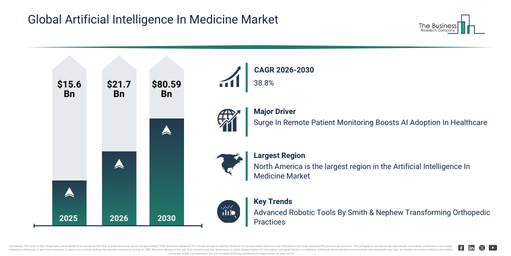
    The market for artificial intelligence in medicine has experienced a significant surge recently, projected to increase from $15.6 billion in 2025 to $21.7 billion in 2026, exhibiting a compound annual growth rate (CAGR) of 39.1%. This expansion during the past period was fueled by several key factors including the escalating digitalization of healthcare records, a rising need for enhanced clinical results, the broader adoption of healthcare data analytics, increasingly intricate treatment methodologies, and the accessibility of sophisticated computational capabilities.

    The artificial intelligence in medicine sector is poised for remarkable expansion, projected to reach a valuation of $80.59 billion by the year 2030, signifying a compound annual growth rate (CAGR) of 38.8% during this projected timeframe. This significant surge is anticipated to be fueled by several key drivers, including the escalating integration of AI for tailored medical treatments, a surge in financial backing for healthcare AI infrastructure, the broader implementation of telemedicine and digital health strategies, the amplified application of predictive analytics in managing public health initiatives, and a more pervasive incorporation of AI throughout various clinical processes. Emerging trends expected to shape this market’s trajectory involve a greater prevalence of AI-powered systems designed to aid in clinical decision-making, a heightened embrace of treatment algorithms that are individualized to patients, increased utilization of AI for anticipating health risks, a wider scope of AI applications within hospital administrative functions, and a more pronounced emphasis on patient care that is informed by comprehensive data analysis.

    Download A Free Sample Report For Comprehensive Market Insights:

    https://www.thebusinessresearchcompany.com/sample.aspx?id=13590&type=smp

    Artificial Intelligence In Medicine Market Growth Factors Supporting Long-Term Expansion

    The expanding focus on real-time remote patient monitoring (RPM) solutions is poised to significantly boost the expansion of the artificial intelligence in medicine sector. Remote patient monitoring systems represent a technologically advanced approach to healthcare that facilitates the tracking of patient well-being beyond conventional medical environments. Artificial intelligence (AI) has brought about a profound evolution in remote patient monitoring, utilizing sophisticated algorithms to interpret vast datasets from patients, thereby providing foresight into potential health issues and facilitating tailored treatment strategies. For illustration, in November 2025, data from Statistics Canada indicated that Newfoundland and Labrador (13.2%), British Columbia (10.6%), and Nova Scotia (10.4%) observed the highest percentages of residents who exclusively utilized virtual appointments. Conversely, Saskatchewan (2.1%), Alberta (2.4%), and Manitoba (3.3%) reported the lowest percentages of individuals solely opting for virtual consultations. Consequently, the escalating demand for real-time remote patient monitoring (RPM) systems is a key factor fueling the growth trajectory of artificial intelligence within the medical field.

    Artificial Intelligence In Medicine Market Categorization By Product Type And Application

    The artificial intelligence in medicine market covered in this report is segmented –

    1) By Type: Hardware, Software, Services

    2) By Technology: Machine Learning, Natural Language Processing, Context-Aware Processing, Computer Vision

    3) By Application: Medical Administration And Support, Patient Management, Research And Development, Other Applications

    4) By End User: Hospitals, Clinics, Research Institutions

    Subsegments:

    1) By Hardware: AI-Powered Imaging Devices, Robotics And Automation Devices, Wearable Health Devices, Servers And Computing Systems

    2) By Software: Machine Learning Algorithms, Natural Language Processing (NLP) Tools, Image Analysis Software, Predictive Analytics Software, Clinical Decision Support Systems

    3) By Services: AI Consulting Services, Integration Services, Maintenance And Support Services, Data Management Services, Training And Education Services

    Artificial Intelligence In Medicine Market Industry Trends Shaping Future Revenue Growth

    Leading corporations within the artificial intelligence in medicine industry are concentrating their efforts on creating cutting-edge offerings, exemplified by AI-driven platforms, as a means to deliver dependable services to their clientele. These AI-driven platforms represent sophisticated software systems that leverage artificial intelligence capabilities to streamline operations, interpret complex data sets, and forecast future trends. As a case in point, in April of 2023, OM1 Inc., a digital health enterprise headquartered in the United States, introduced PhenOM. This innovative system utilizes real-world data coupled with sophisticated analytical tools to pinpoint distinct digital phenotypes linked to specific medical conditions and their resulting outcomes, thereby generating unique profiles for diverse patient demographics. The PhenOM platform possesses the capacity to scrutinize individual patient information, enabling the prediction of potential health risks, the identification of opportune moments for proactive care, and the support of informed therapeutic choices.

    Artificial Intelligence In Medicine Market Company Landscape And Strategic Competition

    Major companies operating in the artificial intelligence in medicine market are Google LLC, Microsoft Corporation, Intel Corporation, IBM Corporation, Medtronic PLC, Nvidia Corporation, Siemens Healthineers AG, Philips Healthcare, Babylon Healthcare Services Ltd., Komodo Health Inc., Modernizing Medicine Inc., Viz.ai Inc., Butterfly Network Inc., Augmedix, AiCure LLC, HealthTap Inc., Welltok Inc., Enlitic Inc., PathAI Inc., Nano-X Imaging Ltd., Berg LLC, Insitro, Sense.ly Inc., Subtle Medical Inc., Medasense Biometrics Limited, Immunai, Atomwise Inc., Freenome Holdings Inc., CloudMedX Inc.

    Access The Complete Artificial Intelligence In Medicine Market Report:

    https://www.thebusinessresearchcompany.com/report/artificial-intelligence-in-medicine-global-market-report

    Artificial Intelligence In Medicine Market Regional Distribution: Which Areas Drive Market Expansion?

    North Americawas the largest region in the artificial intelligence in medicine market in 2025. Asia-Pacificis expected to be the fastest-growing region in the forecast period. The regions covered in the artificial intelligence in medicine market report are Asia-Pacific, South East Asia, Western Europe, Eastern Europe, North America, South America, Middle East, Africa.

    Get in touch with us:

    The Business Research Company: https://www.thebusinessresearchcompany.com/

    Americas: +1 310-496-7795

    Asia: +44 7882 955267 & +91 8897263534

    Europe: +44 7882 955267

    Email us at: marketing@tbrc.info

    Follow us on:

    LinkedIn: https://in.linkedin.com/company/the-business-research-company

    YouTube: https://www.youtube.com/channel/UC24_fI0rV8cR5DxlCpgmyFQ

    Global Market Model: https://www.thebusinessresearchcompany.com/global-market-model
  • Artificial Intelligence in Medical Imaging Market Opportunities Are Emerging Beyond Traditional Growth Areas

    Artificial Intelligence in Medical Imaging Market Opportunities Are Emerging Beyond Traditional Growth Areas

    Delivering more actionable and strategically valuable research, The Business Research Company’s 2026 market reports feature market attractiveness analysis, total addressable market evaluation, company benchmarking matrices, interactive Excel dashboards, expanded supply chain intelligence, emerging startup coverage, and detailed product insights.

    Artificial Intelligence in Medical Imaging Market CAGR Analysis And Future Market Development

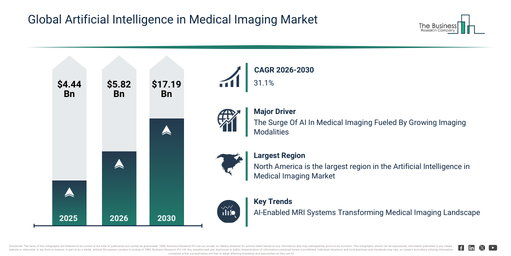
    The market for artificial intelligence within medical imaging has experienced remarkable expansion lately, projecting a leap from $4.44 billion in 2025 to $5.82 billion in 2026, fueled by a compound annual growth rate (CAGR) of 31.0%. This surge in growth over the past period is largely due to a greater number of medical imaging procedures being performed, a scarcity of qualified radiologists, an increase in the incidence of long-term and complicated illnesses, the broadening of digital imaging systems, and the increased capacity of hospital diagnostic imaging units.

    The medical imaging sector’s artificial intelligence market is poised for remarkable expansion, projected to reach $17.19 billion by 2030, exhibiting a robust compound annual growth rate of 31.1%. This anticipated surge is fueled by several key factors, including the heightened utilization of AI-driven clinical decision-making tools, escalating investments directed towards sophisticated precision diagnostics, the broader application of AI across a diverse array of imaging techniques, a concurrent rise in the need for expedited diagnostic processes, and the growing incorporation of AI solutions into hospital information systems. Furthermore, significant developments shaping this market over the forecast period encompass the increasing embrace of AI tools that aid in diagnostic imaging, the more frequent application of deep learning algorithms for analyzing medical images, the enhanced integration of AI into automating tasks within the radiology workflow, the development and implementation of AI-powered models for predictive diagnostics, and a heightened emphasis on improving the precision of early disease detection.

    Download A Free Sample Report For Comprehensive Market Insights:

    https://www.thebusinessresearchcompany.com/sample.aspx?id=13589&type=smp

    #Artificial Intelligence in Medical Imaging Market Demand Drivers Creating New Revenue Opportunities

    The expansion of AI within the medical imaging sector is anticipated to be fueled by the increasing adoption of various imaging techniques. These imaging modalities encompass the diverse medical procedures employed to obtain internal body visuals for both diagnostic evaluation and treatment planning. AI systems are integrated into these modalities to enhance processes such as image reconstruction, minimize noise, and correct distortions, ultimately resulting in superior clarity and precision in CT scans. Illustratively, data from the National Health Service indicated that from June 2025, England recorded 47.2 million imaging tests for the year concluding March 31, 2024, a rise of 4.8% from the 45.0 million tests conducted in the preceding year. Consequently, the proliferation of imaging modalities serves as a significant catalyst for the advancement of AI in the medical imaging market.

    Artificial Intelligence in Medical Imaging Market Segment Analysis And Revenue Opportunities

    The artificial intelligence in medical imaging market covered in this report is segmented –

    1) By Modality: Computed Tomography (CT) Scan, Magnetic Resonance Imaging (MRI), X-rays, Ultrasound, Nuclear Imaging

    2) By Technology: Deep Learning, Natural Language Processing (NLP), Other Technologies

    3) By Application: Neurology, Respiratory And Pulmonary, Cardiology, Breast Screening, Orthopedics

    4) By End-Use: Hospitals, Diagnostic Imaging Centers, Other End-Users

    Subsegments:

    1) By Computed Tomography (CT) Scan: Cardiac CT, CT Angiography, Lung CT, Abdominal CT, Head CT

    2) By Magnetic Resonance Imaging (MRI): Brain MRI, Spine MRI, Musculoskeletal MRI, Abdominal MRI, Functional MRI

    3) By X-rays: Chest X-rays, Dental X-rays, Mammography, Bone X-rays, Fluoroscopy

    4) By Ultrasound: Abdominal Ultrasound, Cardiac Ultrasound, Obstetric And Gynecological Ultrasound, Vascular Ultrasound, Musculoskeletal Ultrasound

    5) By Nuclear Imaging: Positron Emission Tomography (PET), Single Photon Emission Computed Tomography (SPECT), Bone Scans, Thyroid Scans, Cardiac Scans

    Artificial Intelligence in Medical Imaging Market Trends Driving Strategic Industry Expansion

    In the realm of AI within the medical imaging sector, leading enterprises are actively innovating with offerings like AI-powered MRI units aimed at enhancing patient care. These AI-enhanced MRI systems integrate artificial intelligence capabilities into conventional Magnetic Resonance Imaging equipment. A prime example occurred in December 2023 when GE Healthcare, a prominent American medical technology firm, introduced SIGNA Champion, an MRI system augmented with AI. Tailored to provide users, regardless of their expertise, with AI-driven workflow enhancements such as AIR Recon DL and Sonic DL, SIGNA Champion prioritizes both operational efficiency and superior image definition. This system distinguishes itself through a blend of ample patient space within the scanner and expedited examination durations.

    Artificial Intelligence in Medical Imaging Market Leading Players Shaping Industry Direction

    Major companies operating in the artificial intelligence in medical imaging market are Google LLC, Microsoft Corporation, IBM Watson Health, Intel Corporation, NVIDIA Corporation, Siemens Healthineers, Koninklijke Philips N.V, GE Healthcare, Agfa-Gevaert Group/Agfa HealthCare, Aidoc Medical, Arterys Inc., Lunit Inc., Butterfly Network Inc., Digital Diagnostics Inc., Caption Health Inc., EchoNous Inc., Covera Health Inc., Nanox Imaging LTD., AZmed, InformAI LLC, Avicenna AI, ImageBiopsy Lab, Nucleai, Icometrix NV., Gleamer

    Access The Complete Artificial Intelligence in Medical Imaging Market Report:

    https://www.thebusinessresearchcompany.com/report/artificial-intelligence-in-medical-imaging-global-market-report

    Artificial Intelligence in Medical Imaging Market Leading Geography: Which Region Generates The Most Revenue?

    North Americawas the largest region in the AI in medical imaging market in 2025. Asia-Pacificis expected to be the fastest-growing region in the forecast period. The regions covered in the artificial intelligence in medical imaging market report are Asia-Pacific, South East Asia, Western Europe, Eastern Europe, North America, South America, Middle East, Africa.

    Get in touch with us:

    The Business Research Company: https://www.thebusinessresearchcompany.com/

    Americas: +1 310-496-7795

    Asia: +44 7882 955267 & +91 8897263534

    Europe: +44 7882 955267

    Email us at: marketing@tbrc.info

    Follow us on:

    LinkedIn: https://in.linkedin.com/company/the-business-research-company

    YouTube: https://www.youtube.com/channel/UC24_fI0rV8cR5DxlCpgmyFQ

    Global Market Model: https://www.thebusinessresearchcompany.com/global-market-model
  • Artificial Intelligence In Medical Coding Market Expansion Is Opening New Pathways For Strategic Investment

    Artificial Intelligence In Medical Coding Market Expansion Is Opening New Pathways For Strategic Investment

    Enhanced with market attractiveness analysis, total addressable market evaluation, company benchmarking matrices, interactive Excel dashboards, expanded supply chain intelligence, emerging startup coverage, and detailed product insights, The Business Research Company’s 2026 market reports deliver more actionable and strategically valuable research.

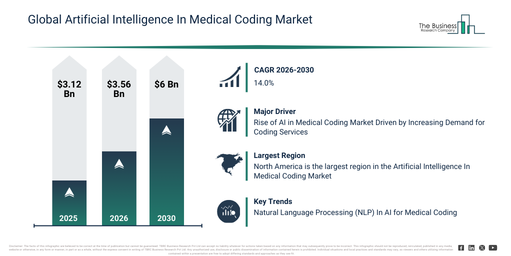
    Artificial Intelligence In Medical Coding Market Expansion From $3.55 Billion In 2026 To $6 Billion In 2030

    The market for artificial intelligence in medical coding has experienced substantial expansion recently, projecting a surge from $3.12 billion in 2025 to $3.56 billion in 2026, driven by a compound annual growth rate (CAGR) of 14.0%. This historical growth trajectory is attributed to several key factors, including the escalating volume of healthcare data, the increasing intricacy of medical coding standards, the mounting administrative responsibilities faced by healthcare providers, the widespread adoption of electronic health record systems, and a persistent need for enhanced revenue cycle efficiency.

    The domain of artificial intelligence within medical coding is poised for considerable expansion in the upcoming years, with projections indicating an increase to $6 billion by the year 2030, reflecting a compound annual growth rate of 14.0%. This upward trajectory during the specified forecast period is anticipated to be fueled by several key factors, including the heightened implementation of fully automated coding systems, escalating regulatory demands concerning the precision of billing processes, the expanding utilization of AI-assisted tools for clinical documentation, a broadening availability of outsourced AI-powered coding services, and a surge in financial commitments towards healthcare automation technologies. Prominent developments anticipated within this timeframe encompass the increasing reliance on AI-driven automated coding solutions, a more widespread integration of natural language processing (NLP) for analyzing clinical documentation, the growing application of generative AI to enhance coding accuracy, an expansion in AI-enabled tools for compliance and auditing purposes, and a more concentrated effort on minimizing coding mistakes and claim rejections.

    Download A Free Sample Report For Comprehensive Market Insights:

    https://www.thebusinessresearchcompany.com/sample.aspx?id=13588&type=smp

    Artificial Intelligence In Medical Coding Market Expansion Supported By Key Demand Factors

    The escalating need for medical coding services is anticipated to be a primary driver for the expansion of artificial intelligence within the medical coding sector. Medical coding itself encompasses the transformation of patient health information, including diagnoses and treatments, into standardized alphanumeric codes, a crucial step for precise financial transactions, insurance settlements, and rightful compensation. AI integration into this field promises to elevate the speed, correctness, and flexibility of coding operations, thereby offering advantages to healthcare providers, coding professionals, and ultimately, patient outcomes. Illustratively, projections from the American Bureau of Labor Statistics indicate that jobs for medical records specialists in the United States are forecasted to increase by 7 percent between 2024 and 2034, underscoring the upward trend in coding-related employment. Consequently, the heightened requirement for these specialized services is directly fueling the advancement and adoption of AI in the medical coding market.

    Artificial Intelligence In Medical Coding Market Segmentation And Category Breakdown

    The artificial intelligence in medical coding market covered in this report is segmented –

    1) By Component: In-House, Outsourced

    2) By Technology: Machine Learning, Natural Language Processing (NLP), Generative AI

    3) By End-User: Healthcare Providers, Medical Billing Companies, Payers

    Subsegments:

    1) By In-House: Internal Coding Teams, AI-Enhanced Coding Solutions, Integration With Existing Systems

    2) By Outsourced: Third-Party Coding Services, AI-Powered Outsourcing Solutions, Vendor Management For Coding Services

    Artificial Intelligence In Medical Coding Market Growth Trends Influencing Competitive Dynamics

    In the artificial intelligence medical coding sector, leading firms are pioneering advancements like Natural Language Processing (NLP) to grasp the contextual significance of language, thereby enhancing the precision with which patient dialogues are understood and the subtle intricacies of medical situations are identified. NLP, a sophisticated area within AI, empowers computational systems to comprehend and analyze human language in both spoken and written forms. A notable development occurred in March 2023 when Linguamatics, a software provider based in the UK, introduced its Healthcare Product Suite, designed to transform raw, unstructured electronic health record information into practical patient understandings. This product utilizes NLP to retrieve crucial data from diverse, unstructured formats including EHRs, patient portals, and records from call centers. Linguamatics’ NLP Data Factory facilitates efficient and automated NLP processing for critical functions, accommodating a broad spectrum of healthcare data types. Complementing these efforts, Wolters Kluwer’s Health Language Data Interoperability Solution offers a means for healthcare entities to standardize disparate data, encompassing structured, semi-structured, and unstructured information from various origins.

    Artificial Intelligence In Medical Coding Market Competitive Analysis Of Major Industry Participants

    Major companies operating in the artificial intelligence in medical coding market are CodaMetrix Inc., Fathom, Inc., AKASA, Inc., Aideo Technologies, Inc., M-Scribe Technologies, LLC, Dolbey Systems, Inc., Streamline Health Solutions, Inc., Talix, Inc., Health Record Services Corporation, Saince, Inc., Diagnoss, Inc., BUDDI AI, Inc., Oncora Medical, Inc., Epic Systems Corporation, CorroHealth, Inc., nThrive, Inc., Waystar Technologies, Inc., Thoughtful Automation, Inc., Solventum Corporation, Exponential AI, Inc.

    Access The Complete Artificial Intelligence In Medical Coding Market Report:

    https://www.thebusinessresearchcompany.com/report/artificial-intelligence-in-medical-coding-global-market-report

    Artificial Intelligence In Medical Coding Market Regional Outlook: Where Are The Largest Opportunities Located?

    North Americawas the largest region in the artificial intelligence in medical coding market in 2025. The regions covered in the artificial intelligence in medical coding market report are Asia-Pacific, South East Asia, Western Europe, Eastern Europe, North America, South America, Middle East, Africa.

    Get in touch with us:

    The Business Research Company: https://www.thebusinessresearchcompany.com/

    Americas: +1 310-496-7795

    Asia: +44 7882 955267 & +91 8897263534

    Europe: +44 7882 955267

    Email us at: marketing@tbrc.info

    Follow us on:

    LinkedIn: https://in.linkedin.com/company/the-business-research-company

    YouTube: https://www.youtube.com/channel/UC24_fI0rV8cR5DxlCpgmyFQ

    Global Market Model: https://www.thebusinessresearchcompany.com/global-market-model
  • Artificial Intelligence In Life Sciences Market Trends Are Creating New Opportunities For Industry Leaders

    Artificial Intelligence In Life Sciences Market Trends Are Creating New Opportunities For Industry Leaders

    Through market attractiveness analysis, total addressable market evaluation, company benchmarking matrices, interactive Excel dashboards, expanded supply chain intelligence, emerging startup coverage, and detailed product insights, The Business Research Company’s 2026 market reports provide more actionable and strategically valuable research.

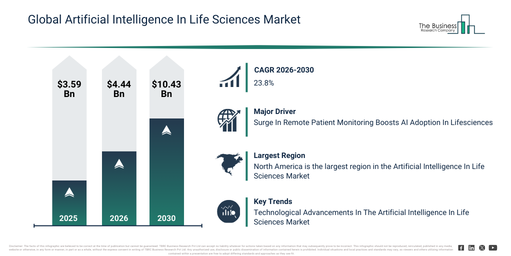
    Artificial Intelligence In Life Sciences Market Forecast Highlighting Growth From $4.44 Billion To $10.42 Billion

    In the realm of life sciences, the artificial intelligence market has experienced remarkable expansion, projected to ascend from $3.59 billion in 2025 to $4.44 billion by 2026, a trajectory defined by a compound annual growth rate of 23.6%. This significant upswing during the past period is underpinned by several pivotal factors, including the escalating intricacy of biological data, a broader engagement in genomics research, the increasing embrace of digital laboratory tools, the early incorporation of AI within biotechnology endeavors, and the persistent need for accelerated research timelines.

    Anticipate a period of substantial expansion for the artificial intelligence within the life sciences sector, with projections indicating it will reach a valuation of $10.43 billion by 2030. This impressive trajectory is fueled by a compound annual growth rate of 23.8%, driven by escalating investments in personalized medicine, the broader implementation of AI-powered laboratory automation, the proliferation of cloud solutions for life science applications, amplified partnerships between technology and life science organizations, and increasing regulatory endorsement of AI-derived findings. Key developments shaping this market during the projected timeframe encompass the deeper embedding of AI throughout life science processes, a surge in the utilization of AI-driven data analysis tools, greater reliance on automation in laboratory settings, the expanding application of AI in precision medicine, and a heightened emphasis on expediting research results.

    Download A Free Sample Report For Comprehensive Market Insights:

    https://www.thebusinessresearchcompany.com/sample.aspx?id=13587&type=smp

    #Artificial Intelligence In Life Sciences Market Growth Drivers And Industry Catalysts

    The expanding adoption of real-time remote patient monitoring (RPM) systems is poised to fuel advancements within the artificial intelligence in the life sciences market. These RPM systems represent a technologically advanced approach to healthcare, enabling health observation beyond conventional clinical environments. Artificial intelligence plays a crucial role in enhancing RPM by delivering ongoing, tailored, and data-informed perspectives that facilitate proactive health management. Illustrating this trend, data from the Peterson Center on Healthcare revealed a substantial increase in spending for remote therapeutic monitoring (RTM) within Traditional Medicare, escalating from $2.2 million in 2022 to $10.4 million in 2023. Moreover, in 2023, the utilization of RPM services was noted among 451,000 patients enrolled in Traditional Medicare, underscoring how the growing demand for contemporary remote patient monitoring solutions is directly stimulating the expansion of artificial intelligence applications in the life sciences sector.

    Artificial Intelligence In Life Sciences Market Segment Outlook: Which Categories Are Expanding The Fastest?

    The artificial intelligence in life sciences market covered in this report is segmented –

    1) By Offering: Software, Hardware, Services

    2) By Deployment: On-Premises, Cloud-Based

    3) By Application: Drug Discovery, Medical Diagnosis, Biotechnology, Clinical Trials, Precision And Personalized Medicine, Patient Monitoring

    Subsegments:

    1) By Software: Drug Discovery Software, Genomic Analysis Software, Clinical Trial Management Software, Personalized Medicine Software, Laboratory Information Management Systems (LIMS)

    2) By Hardware: AI-Enabled Laboratory Equipment, Robotics And Automation Systems, Imaging Devices And Equipment, Sensor Technologies

    3) By Services: Consulting Services, Data Analytics Services, Research And Development Services, Implementation And Integration Services, Training And Support Services

    #Artificial Intelligence In Life Sciences Market Trends Influencing Long-Term Demand

    Leading corporations in the AI within life sciences sector are prioritizing novel offerings equipped with cutting-edge technology, exemplified by drug discovery software solutions, as a strategy to maintain their market standing. This drug discovery software encompasses a suite of computational tools and platforms engineered to support pharmaceutical and biotech professionals throughout the drug discovery pipeline. As a prime illustration, in December of 2023, the German multinational science and technology firm Merck introduced AIDDISON, a revolutionary drug discovery software. This pioneering system, the first of its kind, integrates the creation of virtual molecules with practical manufacturing considerations by leveraging generative artificial intelligence, machine learning algorithms, and computer-aided drug design principles. AIDDISON excels at pinpointing potential drug candidates from an extensive array of options, taking into account essential attributes such as non-toxicity and solubility. Its capacity to effectively reconcile theoretical molecular design with tangible production realities represents a significant contribution of artificial intelligence to the life sciences field.

    Artificial Intelligence In Life Sciences Market Key Companies And Competitive Benchmarking

    Major companies operating in the artificial intelligence in life sciences market are Google LLC, Microsoft Corporation, Intel Corporation, IBM Corporation, Medtronic PLC, Nvidia Corporation, Novo Nordisk A/S, Siemens Healthineers AG, Philips Healthcare, Babylon Healthcare Services Ltd., Komodo Health Inc., Modernizing Medicine Inc., Viz.ai Inc., Butterfly Network Inc., Augmedix, AiCure LLC, HealthTap Inc., Welltok Inc., Enlitic Inc., PathAI Inc., Nano-X Imaging Ltd., Berg LLC, Insitro, Sense.ly Inc., Subtle Medical Inc., Medasense Biometrics Limited, Immunai, Atomwise Inc., Freenome Holdings Inc., CloudMedX Inc.

    Access The Complete Artificial Intelligence In Life Sciences Market Report:

    https://www.thebusinessresearchcompany.com/report/artificial-intelligence-in-life-sciences-global-market-report

    Artificial Intelligence In Life Sciences Market Geographic Landscape: Which Region Dominates Industry Growth?

    North Americawas the largest region in the Artificial Intelligence In Life Sciences market in 2025. Asia-Pacificis expected to be the fastest-growing region in the forecast period. The regions covered in the artificial intelligence in life sciences market report are Asia-Pacific, South East Asia, Western Europe, Eastern Europe, North America, South America, Middle East, Africa.

    Get in touch with us:

    The Business Research Company: https://www.thebusinessresearchcompany.com/

    Americas: +1 310-496-7795

    Asia: +44 7882 955267 & +91 8897263534

    Europe: +44 7882 955267

    Email us at: marketing@tbrc.info

    Follow us on:

    LinkedIn: https://in.linkedin.com/company/the-business-research-company

    YouTube: https://www.youtube.com/channel/UC24_fI0rV8cR5DxlCpgmyFQ

    Global Market Model: https://www.thebusinessresearchcompany.com/global-market-model
  • Artificial Intelligence For Healthcare Payer Market Growth Is Reshaping Competitive Advantage Across The Industry

    Artificial Intelligence For Healthcare Payer Market Growth Is Reshaping Competitive Advantage Across The Industry

    Delivering more actionable and strategically valuable research, The Business Research Company’s 2026 market reports feature market attractiveness analysis, total addressable market evaluation, company benchmarking matrices, interactive Excel dashboards, expanded supply chain intelligence, emerging startup coverage, and detailed product insights.

    Artificial Intelligence For Healthcare Payer Market Revenue Growth Supported By A CAGR Of 6.8% Through 2030

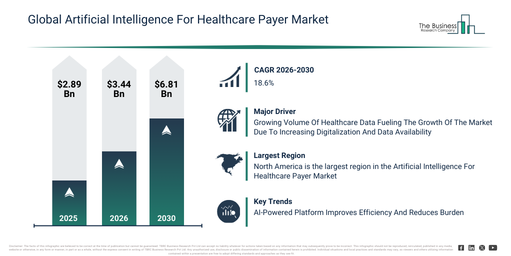
    The AI in healthcare payer sector has experienced substantial expansion recently. Projections indicate a rise from $2.89 billion in 2025 to $3.44 billion in 2026, demonstrating a compound annual growth rate of 18.9%. This upward trajectory, observed historically, stems from several key factors including the escalating volume of healthcare claims, the growing intricacy of reimbursement procedures, a proliferation of digital health data, the early embrace of payer platforms leveraging advanced analytics, and a persistent drive to curtail administrative expenses.

    The artificial intelligence for healthcare payer sector is poised for significant expansion, projecting a market valuation of $6.81 billion by 2030, a trajectory driven by an 18.6% compound annual growth rate during this period. This upward momentum is fueled by several key factors, including a pronounced move towards value-based care arrangements, augmented investments in cloud-based solutions for payers, a heightened emphasis on predictive risk assessment, the broader application of AI for tailoring member experiences, and a stronger regulatory push for fraud detection initiatives. Furthermore, the prevailing trends anticipated within this timeframe encompass the accelerated integration of AI-powered claims processing automation, increased utilization of sophisticated tools for fraud identification and risk analytics, the wider implementation of predictive financial management systems, the expanding capabilities of individualized member outreach platforms, and a concentrated effort towards streamlining administrative operations.

    Download A Free Sample Report For Comprehensive Market Insights:

    https://www.thebusinessresearchcompany.com/sample.aspx?id=30199&type=smp

    Artificial Intelligence For Healthcare Payer Market Opportunity Drivers: What Is Creating New Revenue Potential?

    The expansion of medical information is anticipated to be a key catalyst for the advancement of artificial intelligence within the healthcare payer sector. This wealth of medical information encompasses all data pertaining to an individual’s or a group’s health condition, past medical experiences, therapeutic interventions, and received healthcare services. The increasing generation of this data is largely attributable to the trend of digitization, where the widespread adoption of electronic health records and interconnected devices facilitates the rapid and precise gathering and interpretation of patient details. Artificial intelligence systems designed for healthcare payers capitalize on this burgeoning repository of medical information by employing extensive datasets from sources such as electronic health records, insurance claims, and wearable technology. Through the extraction of actionable intelligence from this data, AI significantly improves decision-making processes, leading to more precise risk evaluations, more effective identification of fraudulent activities, and streamlined claims processing. As a concrete illustration, the UK’s Department of Health and Social Care reported in June 2022 that, by December 2023, 90% of National Health Service (NHS) trusts had implemented electronic health records, with a full adoption rate expected by March 2025. Consequently, the increasing volume of healthcare data serves as a primary driver for the growth of artificial intelligence solutions tailored for healthcare payers.

    Artificial Intelligence For Healthcare Payer Market Segment Landscape: Which Areas Lead Market Development?

    The artificial intelligence for healthcare payer market covered in this report is segmented –

    1) By Component: Software, Services

    2) By Technology: Machine Learning (ML), Natural Language Processing (NLP), Other Technologies

    3) By Deployment: Cloud, On-Premises

    4) By Application: Claims Processing Optimization, Fraud Detection and Prevention, Revenue Management and Billing, Member Engagement and Personalization, Risk Adjustment And Predictive Analytics, Administrative Workflow Automation, Other Applications

    Subsegments:

    1) By Software: Predictive Analytics Platforms, Claims Management Solutions, Fraud Detection Systems, Risk Assessment Tools, Member Engagement Solutions

    2) By Services: Implementation And Integration Services, Consulting Services, Support And Maintenance Services, Training And Education Services, Managed Services

    Artificial Intelligence For Healthcare Payer Market Innovation Trends Driving Future Development

    Key players within the artificial intelligence for healthcare payer sector are prioritizing the creation of sophisticated digital offerings, including AI-driven patient navigation instruments, with the aim of increasing operational effectiveness, improving member satisfaction, and alleviating administrative overhead. These AI-powered patient navigation tools are sophisticated digital frameworks designed to assist individuals in comprehending their healthcare coverage, locating providers within their network, and forecasting potential expenses. As an illustration, in April of 2024, CVS Health Corporation, a prominent health solutions provider headquartered in the United States, unveiled a collection of innovative AI and digital functionalities. This new set of tools incorporates an AI-enhanced member experience engineered to streamline the process of identifying in-network medical services and clarifying associated costs. It presents a customized patient guidance mechanism that directs members toward suitable care facilities, such as primary care physicians, urgent care centers, or specialist appointments, taking into account their specific medical needs, insurance benefits, and regional availability, thereby facilitating uncomplicated access to healthcare services with diminished exertion.

    Artificial Intelligence For Healthcare Payer Market Industry Leaders And Market Competition

    Major companies operating in the artificial intelligence for healthcare payer market are Amazon Web Services Inc., Google LLC, Microsoft Corporation, Accenture plc, Oracle Corporation, Cognizant Technology Solutions Corporation, Wipro Limited, SAS Institute Inc., Hexaware Technologies Limited, Firstsource Solutions Limited, Innovaccer Incorporated, Cohere Health Incorporated, Softheon, MST Solutions LLC, Lyric AI Incorporated, Inovaare Corporation, Codoxo, Iatros Health Incorporated, Optum Inc., Cerner Corporation

    Access The Complete Artificial Intelligence For Healthcare Payer Market Report:

    https://www.thebusinessresearchcompany.com/report/global-artificial-intelligence-for-healthcare-payer-market-report

    #Artificial Intelligence For Healthcare Payer Market Largest Region: Which Geography Holds The Highest Market Share?

    North Americawas the largest region in the artificial intelligence for healthcare payer market in 2025. Asia-Pacificis expected to be the fastest-growing region in the forecast period. The regions covered in the artificial intelligence for healthcare payer market report are Asia-Pacific, South East Asia, Western Europe, Eastern Europe, North America, South America, Middle East, Africa.

    Get in touch with us:

    The Business Research Company: https://www.thebusinessresearchcompany.com/

    Americas: +1 310-496-7795

    Asia: +44 7882 955267 & +91 8897263534

    Europe: +44 7882 955267

    Email us at: marketing@tbrc.info

    Follow us on:

    LinkedIn: https://in.linkedin.com/company/the-business-research-company

    YouTube: https://www.youtube.com/channel/UC24_fI0rV8cR5DxlCpgmyFQ

    Global Market Model: https://www.thebusinessresearchcompany.com/global-market-model
  • Artificial Intelligence Clinical Trial Protocol Feasibility Tool Market Forecast Signals New Revenue Opportunities Through 2030

    Artificial Intelligence Clinical Trial Protocol Feasibility Tool Market Forecast Signals New Revenue Opportunities Through 2030

    Enhanced with market attractiveness analysis, total addressable market evaluation, company benchmarking matrices, interactive Excel dashboards, expanded supply chain intelligence, emerging startup coverage, and detailed product insights, The Business Research Company’s 2026 market reports deliver more actionable and strategically valuable research.

    Artificial Intelligence Clinical Trial Protocol Feasibility Tool Market Value Expansion And Long-Term Growth Outlook

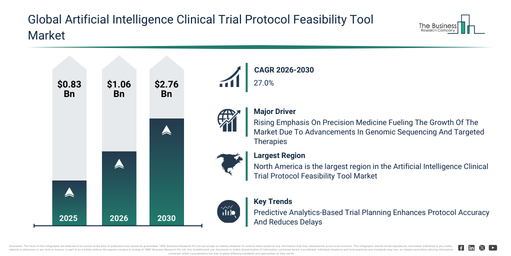
    The market for artificial intelligence tools designed to assess clinical trial protocol feasibility has experienced substantial expansion. Projections indicate this market will increase from $0.83 billion in 2025 to $1.06 billion in 2026, reflecting a compound annual growth rate of 27.3%. Key drivers identified for this growth during the preceding period include the increasing intricacy of clinical trial protocols, a rise in trial failure rates, a greater dependence on feasibility assessments powered by data, the broader scope of global clinical research endeavors, and the early integration of AI-driven planning solutions.

    The market for AI-driven clinical trial protocol feasibility tools is poised for significant expansion, projected to reach $2.76 billion by 2030, reflecting a robust compound annual growth rate of 27.0%. This anticipated surge is fueled by several key factors, including a greater need for accelerated trial approvals, the increasing embrace of decentralized clinical trial methodologies, the proliferation of AI-powered platforms designed to refine protocols, a heightened emphasis on mitigating trial expenses, and a more pronounced focus on predictive feasibility analysis. During this forecast period, notable trends are expected to emerge, such as the expanded application of artificial intelligence in evaluating protocol risks, a rise in the adoption of predictive models for patient recruitment, deeper integration of historical trial data, the broader availability of cloud-based feasibility solutions, and a refined focus on optimizing trial design.

    Download A Free Sample Report For Comprehensive Market Insights:

    https://www.thebusinessresearchcompany.com/sample.aspx?id=28142&type=smp

    Artificial Intelligence Clinical Trial Protocol Feasibility Tool Market Growth Momentum: Which Factors Are Influencing Demand?

    The market for artificial intelligence clinical trial protocol feasibility tools is poised for expansion, largely fueled by the growing importance of precision medicine. This personalized healthcare strategy relies on an individual’s genetic makeup, environmental factors, and lifestyle choices to deliver more accurate and effective treatments. Advances in genomic sequencing and the identification of biomarkers are central to this trend, facilitating the precise detection of diseases and the development of targeted therapies. AI-driven tools for assessing clinical trial protocol feasibility are instrumental in advancing precision medicine, as they facilitate the design of trials based on data insights, making them particularly well-suited for customizing treatments to specific patient groups. By forecasting patient recruitment, project timelines, and potential risks, these tools streamline clinical research, leading to enhanced accuracy and better outcomes. A notable example illustrating this trend is that in March 2024, Novotech reported that nearly half of the oncology therapies approved by the FDA in 2023 were precision oncology treatments, with a significant proportion of these utilizing DNA or next-generation sequencing biomarkers, underscoring the market’s upward trajectory.

    Artificial Intelligence Clinical Trial Protocol Feasibility Tool Market Segments: Where Are The Largest Growth Opportunities?

    The artificial intelligence clinical trial protocol feasibility tool market covered in this report is segmented –

    1) By Component: Software, Services

    2) By Deployment Mode: Cloud-Based, On-Premises

    3) By Application: Protocol Design, Site Selection, Patient Recruitment, Risk Assessment, Other Applications

    4) By End-User: Pharmaceutical And Biotechnology Companies, Contract Research Organizations, Academic And Research Institutes, Other End-Users

    Subsegments:

    1) By Software: Predictive Analytics, Machine Learning, Natural Language Processing, Data Integration

    2) By Services: Consulting, Implementation, Training And Support, Managed Services

    Artificial Intelligence Clinical Trial Protocol Feasibility Tool Market Trends Reshaping Industry Growth

    The key players within the artificial intelligence clinical trial protocol feasibility tool sector are actively engaged in creating advanced capabilities, exemplified by planning software that leverages predictive analytics to improve the precision of protocol development and shorten trial durations. This type of software utilizes both past and current clinical trial information to anticipate schedules, pinpoint potential challenges, and refine study blueprints for improved efficiency and fiscal responsibility. As an illustration, in June of 2024, Lokavant Inc., a prominent clinical intelligence firm based in the United States, introduced Spectrum, which is recognized as the inaugural artificial intelligence tool designed for optimizing clinical trial feasibility, guiding studies from initial strategic planning to mid-course adjustments. The Spectrum platform incorporates predictive analytics-driven trial planning software, facilitating ongoing, real-time assessment of feasibility, projected timelines and expenses, and financial projections without the need for manual input. Spectrum offers adaptive, up-to-the-minute updates and recalculations by incorporating live trial data, empowering study teams to track advancements, examine various possibilities, and enhance patient recruitment results. Furthermore, this sophisticated tool furnishes exceptionally precise forecasts for project timelines, expenditures, and operational hazards, thereby fostering swifter, evidence-based decision-making across the entire duration of a clinical trial.

    Artificial Intelligence Clinical Trial Protocol Feasibility Tool Market Major Participants And Competitive Dynamics

    Major companies operating in the artificial intelligence clinical trial protocol feasibility tool market are IQVIA Holdings Inc., SAS Institute Inc., Veeva Systems Inc., Tempus AI Inc., Cytel Inc., ArisGlobal LLC., Saama Technologies Inc., Norstella, ConcertAI, Komodo Health Inc., H1 Inc., TriNetX Inc., ObjectiveHealth LLC, Lokavant Inc., Inato Inc., Clinerion Ltd., Faro Health Inc., Lantern Pharma Inc., Ryght AI, BEKHealth Corporation

    Access The Complete Artificial Intelligence Clinical Trial Protocol Feasibility Tool Market Report:

    https://www.thebusinessresearchcompany.com/report/artificial-intelligence-clinical-trial-protocol-feasibility-tool-global-market-report

    Artificial Intelligence Clinical Trial Protocol Feasibility Tool Market Regional Analysis: Which Region Leads By Revenue?

    North Americawas the largest region in the artificial intelligence clinical trial protocol feasibility tool market in 2025. Asia-Pacific is expected to be the fastest-growing region in the forecast period. The regions covered in the artificial intelligence clinical trial protocol feasibility tool market report are Asia-Pacific, South East Asia, Western Europe, Eastern Europe, North America, South America, Middle East, Africa.

    Get in touch with us:

    The Business Research Company: https://www.thebusinessresearchcompany.com/

    Americas: +1 310-496-7795

    Asia: +44 7882 955267 & +91 8897263534

    Europe: +44 7882 955267

    Email us at: marketing@tbrc.info

    Follow us on:

    LinkedIn: https://in.linkedin.com/company/the-business-research-company

    YouTube: https://www.youtube.com/channel/UC24_fI0rV8cR5DxlCpgmyFQ

    Global Market Model: https://www.thebusinessresearchcompany.com/global-market-model
  • Artificial Intelligence Clinical Genomics Interpretation Market Growth Is Accelerating As Industry Transformation Continues

    Artificial Intelligence Clinical Genomics Interpretation Market Growth Is Accelerating As Industry Transformation Continues

    Through market attractiveness analysis, total addressable market evaluation, company benchmarking matrices, interactive Excel dashboards, expanded supply chain intelligence, emerging startup coverage, and detailed product insights, The Business Research Company’s 2026 market reports provide more actionable and strategically valuable research.

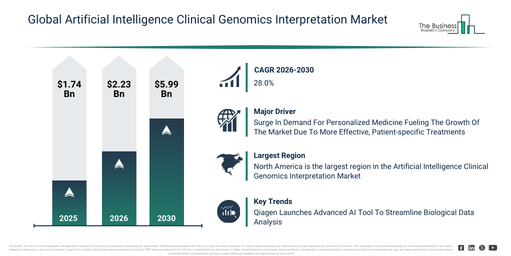
    Artificial Intelligence Clinical Genomics Interpretation Market Expected To Reach $5.99 Billion By 2030 At 28% CAGR

    The market for artificial intelligence in clinical genomics interpretation has experienced substantial expansion recently, with projections indicating continued robust growth. This sector is expected to increase from $1.74 billion in 2025 to $2.23 billion in 2026, reflecting a compound annual growth rate of 28.3%. Factors contributing to this upward trend during the past period include a greater abundance of genomic sequencing data, the broadening scope of precision medicine efforts, an increased uptake of bioinformatics platforms, the escalating application of genomic findings in clinical settings, and the early incorporation of AI into genomics processes.

    The market for artificial intelligence-driven clinical genomics interpretation is poised for remarkable expansion, projected to reach $5.99 billion by 2030, signifying a compound annual growth rate of 28.0%. This anticipated surge is fueled by several key factors, including a heightened demand for customized healthcare approaches, escalating investments in the analysis of genomic data, a broader application of genomics within oncology, the wider acceptance of cloud-based interpretation services, and an increased emphasis on generating clinically relevant genomic reports. Furthermore, significant trends expected to shape this market include the growing utilization of AI-powered tools for variant interpretation, enhanced integration of genomic insights with systems that support clinical decision-making, the increasing application of predictive analytics in genetic assessments, the proliferation of cloud-based genomics platforms, and a sharpened focus on tailoring treatments to individual patients.

    Download A Free Sample Report For Comprehensive Market Insights:

    https://www.thebusinessresearchcompany.com/sample.aspx?id=28141&type=smp

    Artificial Intelligence Clinical Genomics Interpretation Market Expansion Drivers: What Is Shaping Future Growth?

    The expansion of the artificial intelligence clinical genomics interpretation market is anticipated to be driven by the escalating need for personalized medicine. This individualized approach to healthcare focuses on customizing diagnostic, therapeutic, and preventative measures based on a person’s unique genetic makeup, environmental influences, and lifestyle choices. The heightened demand stems from the enhanced efficacy of treatments, as they are designed to align with an individual’s genetic blueprint, leading to better results and fewer negative reactions. Artificial intelligence plays a crucial role in advancing personalized medicine by swiftly processing intricate genomic information to pinpoint exact, individualized treatment avenues, thereby boosting therapeutic success and minimizing guesswork. As an illustration, in February 2024, the Personalized Medicine Coalition reported that the U.S. Food and Drug Administration (FDA) greenlit 16 novel personalized therapies for individuals with rare conditions in 2023, a notable surge from the six approvals seen in 2022. Consequently, the growing preference for personalized medicine is projected to fuel the market for artificial intelligence in clinical genomics interpretation.

    Artificial Intelligence Clinical Genomics Interpretation Market Segment Analysis: What Are The Major Market Categories?

    The artificial intelligence clinical genomics interpretation market covered in this report is segmented –

    1) By Component: Software, Services

    2) By Deployment Mode: Cloud Based, On Premises

    3) By Application: Oncology, Rare Diseases, Pharmacogenomics, Infectious Diseases, Other Applications

    4) By End User: Hospitals And Clinics, Research Institutes, Diagnostic Laboratories, Other End User

    Subsegments:

    1) By Software: Genomic Data Analysis, Variant Interpretation, Clinical Decision Support, Predictive Modeling, Reporting And Visualization

    2) By Services: Implementation And Integration, Consulting And Advisory, Training And Support, Data Management, Maintenance And Upgrades

    Artificial Intelligence Clinical Genomics Interpretation Market Strategic Trends: What Is Defining The Next Phase Of Growth?

    Key players within the artificial intelligence clinical genomics interpretation sector are prioritizing advancements designed to boost the capacity for extensive genomic research, thereby facilitating rapid data analysis, refining the precision of genetic findings, and accelerating the identification of crucial biomarkers and potential therapeutic avenues. This emphasis on scalability means that AI solutions are being developed to adeptly handle enormous and intricate genomic datasets, maintaining both speed and accuracy, which is increasingly vital given the escalating volume and complexity of genomic sequencing. Demonstrating this trend, in December 2024, QIAGEN, a company headquartered in Germany and specializing in life sciences, introduced an AI-driven add-on for its Ingenuity Pathway Analysis (IPA) software. This innovation automates the process of interpreting complex biological information by leveraging AI to pinpoint significant genes, biological pathways, and molecular interactions pertinent to various diseases, further bolstered by QIAGEN’s extensive Biomedical Knowledge Base, which encompasses millions of AI-generated connections to foster more precise and evidence-based discoveries.

    Artificial Intelligence Clinical Genomics Interpretation Market Leading Companies Driving Competitive Growth

    Major companies operating in the artificial intelligence clinical genomics interpretation market are F. Hoffmann-La Roche AG, NVIDIA Corporation, Illumina Inc., QIAGEN N.V., Tempus Labs Inc., GeneDx Inc., Freenome Inc., NantHealth Inc., SOPHiA GENETICS SA, Genomenon Inc., DNAnexus Inc., Lifebit Biotech Ltd., Deep Genomics Inc., SpeeDx Pty Ltd, PierianDx Inc., Genuity Science Inc., Karius Inc., FDNA Inc., SeqOne Genomics Inc., Nostos Genomics Inc.

    Access The Complete Artificial Intelligence Clinical Genomics Interpretation Market Report:

    https://www.thebusinessresearchcompany.com/report/artificial-intelligence-clinical-genomics-interpretation-global-market-report

    Artificial Intelligence Clinical Genomics Interpretation Market Geographic Distribution And Regional Opportunities

    North Americawas the largest region in the artificial intelligence clinical genomics interpretation market in 2025. Asia-Pacific is expected to be the fastest-growing region in the forecast period. The regions covered in the artificial intelligence clinical genomics interpretation market report are Asia-Pacific, South East Asia, Western Europe, Eastern Europe, North America, South America, Middle East, Africa.

    Get in touch with us:

    The Business Research Company: https://www.thebusinessresearchcompany.com/

    Americas: +1 310-496-7795

    Asia: +44 7882 955267 & +91 8897263534

    Europe: +44 7882 955267

    Email us at: marketing@tbrc.info

    Follow us on:

    LinkedIn: https://in.linkedin.com/company/the-business-research-company

    YouTube: https://www.youtube.com/channel/UC24_fI0rV8cR5DxlCpgmyFQ

    Global Market Model: https://www.thebusinessresearchcompany.com/global-market-model
  • Artificial Intelligence (AI)-Powered Tele-Intensive Care Unit (ICU) Monitoring Market Outlook Highlights The Next Major Growth Opportunities

    Artificial Intelligence (AI)-Powered Tele-Intensive Care Unit (ICU) Monitoring Market Outlook Highlights The Next Major Growth Opportunities

    Delivering more actionable and strategically valuable research, The Business Research Company’s 2026 market reports feature market attractiveness analysis, total addressable market evaluation, company benchmarking matrices, interactive Excel dashboards, expanded supply chain intelligence, emerging startup coverage, and detailed product insights.

    #Artificial Intelligence (AI)-Powered Tele-Intensive Care Unit (ICU) Monitoring Market Size And Revenue Forecast Through 2030

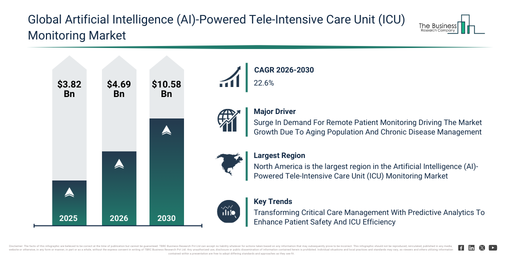
    Fueled by the increasing number of patients requiring critical care and a scarcity of intensivists, the artificial intelligence-driven tele-intensive care unit monitoring market is experiencing remarkable expansion. This market, valued at $3.82 billion in 2025, is projected to reach $4.69 billion by 2026, representing a compound annual growth rate of 22.8%. Key drivers contributing to this significant growth during the preceding period have included the early adoption of remote patient monitoring technologies, the ongoing development of digital health infrastructure, and increased financial commitments towards hospital information technology systems.

    The tele-intensive care unit (ICU) monitoring market, enhanced by artificial intelligence (AI), is poised for substantial expansion through the coming years, projecting a market value of $10.58 billion by 2030. This impressive growth trajectory, with a compound annual growth rate (CAGR) of 22.6%, is fueled by several key factors including a heightened need for critical care management driven by data insights, the increasing integration of cloud-based telehealth services, the broadened application of AI in clinical analytics, a concerted effort to lower ICU mortality rates, and escalating investments in virtual care methodologies. Over the projected timeframe, significant market developments are anticipated, such as the wider implementation of AI-powered predictive patient monitoring, the enhanced integration of remote ICU surveillance systems, a greater reliance on real-time clinical decision support tools, the expansion of consolidated tele-ICU command centers, and a heightened emphasis on the early identification of complications.

    Download A Free Sample Report For Comprehensive Market Insights:

    https://www.thebusinessresearchcompany.com/sample.aspx?id=28932&type=smp

    Artificial Intelligence (AI)-Powered Tele-Intensive Care Unit (ICU) Monitoring Market Development Factors: Which Trends Are Supporting Demand?

    The increasing adoption of remote patient monitoring solutions is anticipated to be a key catalyst for the expansion of the artificial intelligence (AI) driven tele-intensive care unit (ICU) monitoring sector. Remote patient monitoring, characterized by its utilization of digital tools for gathering and relaying patient health information to healthcare professionals for evaluation and care, is experiencing heightened demand. This escalation is largely attributed to the growing elderly demographic in developed nations, necessitating constant oversight of chronic ailments like diabetes, heart conditions, and respiratory diseases, which require continuous management beyond clinical settings. AI-powered tele-ICU monitoring enhances remote patient monitoring capabilities by employing real-time data and sophisticated algorithms to observe vital signs, identify signs of patient decline early on, and empower centralized medical teams to oversee numerous critically ill individuals from afar, thereby optimizing intervention times and broadening access to specialized critical care. Specifically, data from Vivalink, a US healthcare technology firm, indicated in August 2023 that 84% of those presently engaged with RPM intend to escalate their utilization in 2024, 45% of providers leverage RPM for acute care scenarios such as hospital-at-home initiatives, and a substantial 77% foresee RPM-integrated care surpassing conventional inpatient hospital services within a five-year timeframe, underscoring the significant upward trend in RPM usage. Consequently, the burgeoning demand for remote patient monitoring is a primary driver fueling the growth of the AI-enabled tele-ICU monitoring market.

    Artificial Intelligence (AI)-Powered Tele-Intensive Care Unit (ICU) Monitoring Market Segment Breakdown: Which Categories Generate The Most Revenue?

    The artificial intelligence (AI)-powered tele-intensive care unit (icu) monitoring market covered in this report is segmented –

    1) By Component: Software, Hardware, Services

    2) By Deployment Mode: Cloud-Based, On-Premises

    3) By Application: Patient Monitoring, Clinical Decision Support, Workflow Automation, Predictive Analytics, Other Applications

    4) By End-User: Hospitals, Specialty Clinics, Ambulatory Surgical Centers, Other End-Users

    Subsegments:

    1) By Software: Predictive Analytics Software, Clinical Decision Support Software, Data Management Software, Remote Patient Monitoring Software, Visualization And Dashboard Software

    2) By Hardware: Patient Monitoring Devices, Communication And Display Systems, Networking And Connectivity Devices, Servers And Storage Systems, Cameras And Sensors

    3) By Services: Implementation And Integration Services, Training And Education Services, Maintenance And Support Services, Remote Monitoring Services, Consulting Services

    Artificial Intelligence (AI)-Powered Tele-Intensive Care Unit (ICU) Monitoring Market Transformation Trends: Which Innovations Are Driving Change?

    Leading players within the artificial intelligence (AI)-driven tele-intensive care unit (ICU) surveillance sector are concentrating their efforts on deploying pioneering technologies, including predictive analytics designed to anticipate patient decline, with the dual aims of elevating patient health results and refining ICU operational efficiency. This predictive analytics approach for patient deterioration harnesses AI and thorough data examination to pinpoint individuals exhibiting a heightened likelihood of their health deteriorating, allowing for timely medical interventions. This proactive strategy aims to preempt critical events, thereby improving patient prognoses and mitigating complications within the ICU environment. A noteworthy development occurred in February 2023 when CLEW Medical Ltd., an Israeli med-tech firm, introduced its CLEW ICU Conversion and Accelerator initiative, an AI-enhanced Tele-ICU system incorporating these predictive capabilities for patient decline. This program facilitates the migration of healthcare organizations from older Tele-ICU systems to a more advanced solution, offering continuous patient oversight, enhanced workflow management, and pre-integrated electronic medical record (EMR) and bedside monitoring connections. By utilizing CLEW’s AI models, which have already received FDA clearance, medical facilities can identify patients most vulnerable to clinical deterioration, expedite communication and decision-making processes, and potentially achieve better clinical outcomes while simultaneously lowering operational expenses. The program further extends support through dedicated consulting and implementation services, empowering hospitals to implement the system efficiently, typically within a three-month timeframe, with minimal impact on current operations. The system’s versatile integration hub is designed to work seamlessly with prominent EMR platforms like Epic and Cerner, ensuring an uninterrupted flow of patient data from existing hospital IT infrastructures to the AI-powered platform.

    Artificial Intelligence (AI)-Powered Tele-Intensive Care Unit (ICU) Monitoring Market Key Players And Strategic Industry Positioning

    Major companies operating in the artificial intelligence (AI)-powered tele-intensive care unit (icu) monitoring market are Koninklijke Philips N.V., GE HealthCare Technologies Inc., Inova Health System, Teladoc Health Inc., Apollo Telehealth Services Private Limited, Masimo Corporation, UCSF Health, Spacelabs Healthcare Inc., AvaSure Holdings Inc., Hicuity Health Inc., Ceiba Healthcare US Inc., Cloudphysician Healthcare Private Limited, Equum Management Inc., RemoteICU Inc., INTeleICU Inc., Etiometry Inc., Clew Medical Ltd., Ambient Clinical Analytics Inc., DocBox Inc., HelloCare Inc.

    Access The Complete Artificial Intelligence (AI)-Powered Tele-Intensive Care Unit (ICU) Monitoring Market Report:

    https://www.thebusinessresearchcompany.com/report/artificial-intelligence-ai-powered-tele-intensive-care-unit-icu-monitoring-global-market-report

    Artificial Intelligence (AI)-Powered Tele-Intensive Care Unit (ICU) Monitoring Market Largest Region By Revenue And Market Share

    North Americawas the largest region in the artificial intelligence (AI)-powered tele-intensive care unit (ICU) monitoring market in 2025. Asia-Pacificis expected to be the fastest-growing region in the forecast period. The regions covered in the artificial intelligence (AI)-powered tele-intensive care unit (icu) monitoring market report are Asia-Pacific, South East Asia, Western Europe, Eastern Europe, North America, South America, Middle East, Africa.

    Get in touch with us:

    The Business Research Company: https://www.thebusinessresearchcompany.com/

    Americas: +1 310-496-7795

    Asia: +44 7882 955267 & +91 8897263534

    Europe: +44 7882 955267

    Email us at: marketing@tbrc.info

    Follow us on:

    LinkedIn: https://in.linkedin.com/company/the-business-research-company

    YouTube: https://www.youtube.com/channel/UC24_fI0rV8cR5DxlCpgmyFQ

    Global Market Model: https://www.thebusinessresearchcompany.com/global-market-model