Month: June 2026

  • Artificial Intelligence (AI)-Powered Spinal Surgery Market Trends And Growth Drivers Point To Strong Future Potential

    Artificial Intelligence (AI)-Powered Spinal Surgery Market Trends And Growth Drivers Point To Strong Future Potential

    Enhanced with market attractiveness analysis, total addressable market evaluation, company benchmarking matrices, interactive Excel dashboards, expanded supply chain intelligence, emerging startup coverage, and detailed product insights, The Business Research Company’s 2026 market reports deliver more actionable and strategically valuable research.

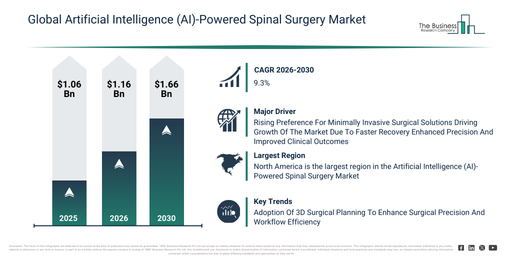
    Artificial Intelligence (AI)-Powered Spinal Surgery Market Growth From $1.16 Billion In 2026 To $1.66 Billion By 2030 At A CAGR Of 9.3%

    Fueled by a surge in spinal disorders and the increasing embrace of robotic-assisted procedures, the AI-powered spinal surgery sector has experienced robust expansion, transitioning from $1.06 billion in 2025 to a projected $1.16 billion in 2026, reflecting a compound annual growth rate of 9.6%. This upward trajectory during the historical period is further bolstered by advancements in medical imaging, a growing comfort level among surgeons with embracing digital surgical instruments, and a broader shift towards minimally invasive techniques for spinal interventions.

    Spinal surgery augmented by artificial intelligence is poised for significant expansion, projecting a market valuation of $1.66 billion by the year 2030, fueled by a compound annual growth rate of 9.3% over the upcoming years. This anticipated surge is largely propelled by the escalating need for highly accurate spinal interventions, augmented financial backing for AI-integrated surgical technologies, the broader implementation of data-driven clinical insights, a heightened emphasis on mitigating surgical risks, and the increasing incorporation of AI with robotic surgical apparatuses. Key developments shaping this market during the forecast interval encompass the growing embrace of AI-driven surgical guidance mechanisms, the escalating utilization of predictive analytics to forecast surgical results, the enhanced integration of imaging-reliant decision-making support instruments, a proliferation of minimally invasive procedures facilitated by AI, and a more pronounced concentration on tailoring spinal treatment strategies to individual patient requirements.

    Download A Free Sample Report For Comprehensive Market Insights:

    https://www.thebusinessresearchcompany.com/sample.aspx?id=30198&type=smp

    Artificial Intelligence (AI)-Powered Spinal Surgery Market Industry Drivers: What Is Driving Revenue Growth?

    The increasing demand for less invasive surgical procedures is anticipated to be a significant catalyst for the expansion of the artificial intelligence (AI) driven spinal surgery sector. These less invasive techniques, which involve smaller incisions compared to traditional open surgery, are gaining traction primarily due to their ability to facilitate quicker patient recovery. AI-powered spinal surgery plays a crucial role in supporting this trend by offering improved surgical accuracy and minimizing damage to surrounding tissues, consequently speeding up recovery and enhancing treatment results. A notable example illustrating this trend is the increase in procedures utilizing Intuitive Surgical’s “da Vinci” robotic systems, a key technology for minimally invasive surgery; these procedures grew from 1,532,000 in 2023 to 1,757,000 in 2024, as reported by the US biotechnology firm in June 2025. Consequently, the growing inclination towards minimally invasive approaches is a primary driver for the advancement of the AI-powered spinal surgery market.

    Artificial Intelligence (AI)-Powered Spinal Surgery Market Segmentation: How Is The Market Structured Across Key Categories?

    The artificial intelligence (AI)-powered spinal surgery market covered in this report is segmented –

    1) By Type Of Surgery: Spinal Fusion Surgery, Microdiscectomy, Laminectomy, Laminotomy, Lumbar Decompression Surgery, Transforaminal Lumbar Interbody Fusion, Oblique Lumbar Interbody Fusion, Vertebroplasty

    2) By Anatomy: Cervical, Thoracic, Lumbar

    3) By Indication: Degenerative, Trauma, Deformity, Tumor Or Oncologic, Infection, Other Indications

    4) By End User: Hospitals, Ambulatory Surgery Centers (ASCs), Orthopedic Centers

    Subsegments:

    1) By Spinal Fusion Surgery: Posterior Spinal Fusion, Anterior Spinal Fusion, Lateral Spinal Fusion, Cervical Spinal Fusion, Thoracic Spinal Fusion, Lumbar Spinal Fusion

    2) By Microdiscectomy: Open Microdiscectomy, Minimally Invasive Microdiscectomy, Endoscopic Microdiscectomy

    3) By Laminectomy: Cervical Laminectomy, Thoracic Laminectomy, Lumbar Laminectomy, Minimally Invasive Laminectomy

    4) By Laminotomy: Unilateral Laminotomy, Bilateral Laminotomy, Cervical Laminotomy, Lumbar Laminotomy

    5) By Lumbar Decompression Surgery: Open Lumbar Decompression, Minimally Invasive Lumbar Decompression, Microsurgical Lumbar Decompression

    6) By Transforaminal Lumbar Interbody Fusion: Open Transforaminal Lumbar Interbody Fusion, Minimally Invasive Transforaminal Lumbar Interbody Fusion, Endoscopic Transforaminal Lumbar Interbody Fusion

    7) By Oblique Lumbar Interbody Fusion: Anterior To Psoas Oblique Lumbar Interbody Fusion, Lateral Oblique Lumbar Interbody Fusion, Single Level Oblique Lumbar Interbody Fusion, Multilevel Oblique Lumbar Interbody Fusion

    8) By Vertebroplasty: Percutaneous Vertebroplasty, Balloon-Assisted Vertebroplasty, Image-Guided Vertebroplasty, Cement-Augmented Vertebroplasty

    #Artificial Intelligence (AI)-Powered Spinal Surgery Market Growth Trends: What Is Influencing The Future Outlook?

    In the realm of artificial intelligence-driven spinal surgery, leading enterprises are actively integrating progressive technologies, notably 3D surgical planning, to elevate accuracy, operational smoothness, and patient results. This sophisticated 3D surgical planning methodology leverages patient-specific three-dimensional anatomical representations, generated from imaging data, to meticulously simulate surgical interventions and refine the positioning of implants, thereby facilitating capabilities such as pre-operative visualization, tailored treatment strategies, and optimized intra-operative alignment. As an illustration, Alphatec Holdings, Inc. (ATEC), a prominent American medical technology firm concentrating on spinal surgery innovations, unveiled EOS Insight in July 2024. This AI-enhanced 3D surgical planning platform, built upon EOS imaging technology, is engineered to optimize the complete spine surgery process, encompassing pre-operative preparation through to post-operative evaluation, by harnessing intelligent imaging and data synergy. The system offers advanced functionalities, including AI-powered alignment evaluation, an interactive web-based 3D surgical simulation environment, and the creation of customized rod designs for individual patients, ultimately leading to enhanced clinical judgments, surgical exactitude, and a greater sense of efficiency in spinal care delivery.

    Artificial Intelligence (AI)-Powered Spinal Surgery Market Competitive Landscape And Leading Companies

    Major companies operating in the artificial intelligence (AI)-powered spinal surgery market are Johnson and Johnson, Medtronic plc, Stryker Corporation, Zimmer Biomet Holdings Inc., Globus Medical Inc., Orthofix Holdings Inc., Alphatec Holdings Inc., Brainlab AG, Spineart SA, Surgalign Holdings Inc, TINAVI Medical Technologies Co Ltd, Augmedics Inc., Proprio Inc., Surgical Theater Inc., Medivis Inc., Ortoma AB, OnPoint Surgical Inc., Katomed Inc., Surglasses, Illuminant Surgical Inc.

    Access The Complete Artificial Intelligence (AI)-Powered Spinal Surgery Market Report:

    https://www.thebusinessresearchcompany.com/report/global-artificial-intelligence-ai-powered-spinal-surgery-market-report

    Artificial Intelligence (AI)-Powered Spinal Surgery Market Regional Analysis And Leading Geography

    North Americawas the largest region in the artificial intelligence (AI)-powered spinal surgery market in 2025. Asia-Pacificis expected to be the fastest-growing region in the forecast period. The regions covered in the artificial intelligence (AI)-powered spinal surgery market report are Asia-Pacific, South East Asia, Western Europe, Eastern Europe, North America, South America, Middle East, Africa.

    Get in touch with us:

    The Business Research Company: https://www.thebusinessresearchcompany.com/

    Americas: +1 310-496-7795

    Asia: +44 7882 955267 & +91 8897263534

    Europe: +44 7882 955267

    Email us at: marketing@tbrc.info

    Follow us on:

    LinkedIn: https://in.linkedin.com/company/the-business-research-company

    YouTube: https://www.youtube.com/channel/UC24_fI0rV8cR5DxlCpgmyFQ

    Global Market Model: https://www.thebusinessresearchcompany.com/global-market-model
  • Artificial Intelligence (AI)-Powered Sleep Apnea Monitoring Market Expansion Is Reshaping Competitive Dynamics Across The Industry

    Artificial Intelligence (AI)-Powered Sleep Apnea Monitoring Market Expansion Is Reshaping Competitive Dynamics Across The Industry

    Through market attractiveness analysis, total addressable market evaluation, company benchmarking matrices, interactive Excel dashboards, expanded supply chain intelligence, emerging startup coverage, and detailed product insights, The Business Research Company’s 2026 market reports provide more actionable and strategically valuable research.

    Artificial Intelligence (AI)-Powered Sleep Apnea Monitoring Market Expansion Outlook: What Revenue Opportunities Lie Ahead?

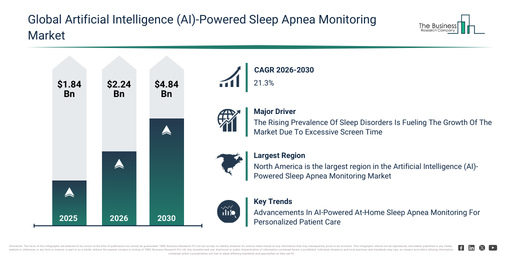
    The market for AI-driven sleep apnea monitoring solutions has experienced remarkable expansion, projected to increase from $1.84 billion in 2025 to $2.24 billion in 2026, reflecting a compound annual growth rate of 21.6%. This historical growth trajectory has been fueled by several key factors, including a rise in the incidence of sleep apnea, heightened public consciousness regarding sleep health, the expanding integration of wearable health technologies, increased utilization of at-home diagnostic tools, and the growing volume of accessible digital sleep data.

    The market for artificial intelligence (AI)-driven sleep apnea monitoring is projected to experience substantial expansion in the coming years, reaching an estimated value of $4.84 billion by 2030, fueled by a compound annual growth rate of 21.3%. This anticipated surge is largely a result of progress in AI-powered respiratory analysis, the increasing acceptance of remote sleep medicine services, the proliferation of cloud-based sleep tracking systems, a heightened need for continuous health oversight, and a greater emphasis on proactive management of sleep disorders. Key developments shaping this market during the forecast period include a greater uptake of AI for identifying sleep disorders, the growing incorporation of wearable devices for sleep tracking, a rise in remote diagnostic capabilities for sleep-related issues, the broader availability of home-based monitoring solutions, and an intensified focus on the early identification of sleep apnea.

    Download A Free Sample Report For Comprehensive Market Insights:

    https://www.thebusinessresearchcompany.com/sample.aspx?id=28931&type=smp

    #Artificial Intelligence (AI)-Powered Sleep Apnea Monitoring Market Growth Factors: Which Forces Are Supporting Market Expansion?

    The increasing incidence of sleep disturbances is anticipated to fuel the expansion of the AI-driven sleep apnea monitoring sector. Sleep disorders, encompassing conditions like insomnia, sleep apnea, and restless legs syndrome, significantly impair an individual’s capacity for restful sleep. The proliferation of these disorders is linked to heightened screen usage before bedtime, as the blue light emitted disrupts melatonin production, consequently delaying the onset of sleep. AI solutions for sleep apnea monitoring offer substantial benefits by consistently observing respiratory patterns, blood oxygen saturation, and sleep stages to detect apnea events instantaneously. This real-time identification facilitates prompt diagnoses and tailored therapeutic interventions, while simultaneously enabling remote patient oversight and enhancing overall sleep quality. Illustrating this trend, data from the National Health Service in November 2023 indicated a marginal rise in sleep difficulties among individuals aged 17 to 23 in the UK, with 64.9% reporting issues three or more times in the preceding week, up from 64.0% in the previous year. Consequently, the growing prevalence of sleep disorders is a key factor propelling the AI-powered sleep apnea monitoring market forward.

    Artificial Intelligence (AI)-Powered Sleep Apnea Monitoring Market Segmentation Trends And Revenue Drivers

    The artificial intelligence (AI)-powered sleep apnea monitoring market covered in this report is segmented –

    1) By Product Type: Wearable Devices, Non-Wearable Devices, Software Solutions

    2) By Technology: Machine Learning, Deep Learning, Natural Language Processing, Other Technologies

    3) By Distribution Channel: Online, Offline

    4) By Application: Home Care, Hospitals And Clinics, Sleep Centers, Other Applications

    5) By End-User: Adults, Pediatrics, Geriatrics

    Subsegments:

    1) By Wearable Devices: Wrist Worn Sleep Trackers, Finger Oximeter Rings, Adhesive Respiratory Patches, Chest Belt Respiratory Monitors, Headband Sleep Sensors, Smart Clothing Garments

    2) By Non-Wearable Devices: Bedside Radar Respiratory Monitors, Under Mattress Sensor Mats, Smart Bed Platforms With Physiological Monitoring, Pillow Embedded Acoustic Sensors, Nightstand Radio Frequency Sensing Units

    3) By Software Solutions: Event Detection And Scoring Platforms, Remote Monitoring And Adherence Portals, Clinical Decision Support Dashboards, Patient Engagement And Coaching Applications, Population Health Screening And Triage Modules, Care Coordination And Teleconsultation Tools, Data Management And Cloud Storage Services

    Artificial Intelligence (AI)-Powered Sleep Apnea Monitoring Market Industry Trends: What Changes Are Reshaping Demand?

    Leading players within the artificial intelligence driven sleep apnea monitoring sector are concentrating their efforts on creating sophisticated home-based sleep diagnostic tools, aimed at tailoring the management of sleep apnea and enhancing patient recovery. These solutions empower individuals to monitor their sleep habits and respiration in their own environment, gathering immediate physiological information crucial for precise identification of sleep disturbances and reducing the necessity for in-person medical appointments. As an illustration, in January of 2025, APNEAL, a French healthcare technology firm, introduced the inaugural AI-driven mobile application designed for sleep apnea detection at CES 2025. This application effectively converts a standard smartphone into a medical-grade diagnostic instrument, capable of assessing breathing rhythms, cardiac activity, and respiration sounds utilizing its integrated sensors, including the accelerometer, gyroscope, and microphone. The technology harnesses sophisticated artificial intelligence to achieve a diagnostic accuracy of 90 percent when contrasted with polysomnography, facilitating sleep apnea screening at home without requiring specialized apparatus or hospitalizations.

    #Artificial Intelligence (AI)-Powered Sleep Apnea Monitoring Market Industry Leaders: Which Organizations Are Driving Competition?

    Major companies operating in the artificial intelligence (AI)-powered sleep apnea monitoring market are Koninklijke Philips N.V., ResMed Inc., Nihon Kohden Corporation, Fisher & Paykel Healthcare Corporation Limited, Inspire Medical Systems Inc., Vyaire Medical Inc., BioSerenity, SomnoMed Limited, BMC Medical Co. Ltd., Compumedics Limited, Sibel Health, Sleepiz AG, EnsoData Inc., Onera Health B.V., SleepScore Labs LLC, SleepImage, Beacon Biosignals, Acurable, Wesper, Hexoskin.

    Access The Complete Artificial Intelligence (AI)-Powered Sleep Apnea Monitoring Market Report:

    https://www.thebusinessresearchcompany.com/report/artificial-intelligence-ai-powered-sleep-apnea-monitoring-global-market-report

    Artificial Intelligence (AI)-Powered Sleep Apnea Monitoring Market Geographic Analysis: Where Is Demand Growing The Fastest?

    North Americawas the largest region in the artificial intelligence (AI)-powered sleep apnea monitoring market in 2025. Asia-Pacificis expected to be the fastest-growing region in the forecast period. The regions covered in the artificial intelligence (AI)-powered sleep apnea monitoring market report are Asia-Pacific, South East Asia, Western Europe, Eastern Europe, North America, South America, Middle East, Africa.

    Get in touch with us:

    The Business Research Company: https://www.thebusinessresearchcompany.com/

    Americas: +1 310-496-7795

    Asia: +44 7882 955267 & +91 8897263534

    Europe: +44 7882 955267

    Email us at: marketing@tbrc.info

    Follow us on:

    LinkedIn: https://in.linkedin.com/company/the-business-research-company

    YouTube: https://www.youtube.com/channel/UC24_fI0rV8cR5DxlCpgmyFQ

    Global Market Model: https://www.thebusinessresearchcompany.com/global-market-model
  • Artificial Intelligence (AI)-Powered Rare Disease Diagnosis Market Forecast Reveals Where Future Industry Value Will Be Created

    Artificial Intelligence (AI)-Powered Rare Disease Diagnosis Market Forecast Reveals Where Future Industry Value Will Be Created

    Delivering more actionable and strategically valuable research, The Business Research Company’s 2026 market reports feature market attractiveness analysis, total addressable market evaluation, company benchmarking matrices, interactive Excel dashboards, expanded supply chain intelligence, emerging startup coverage, and detailed product insights.

    Artificial Intelligence (AI)-Powered Rare Disease Diagnosis Market Growth Potential: How Will Market Size Change Through 2030?

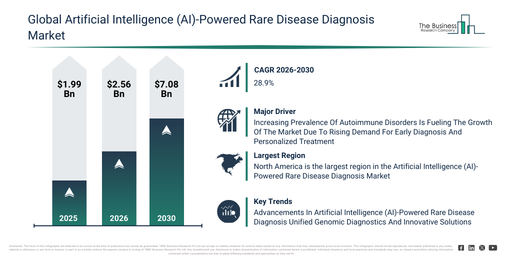
    The market for artificial intelligence in diagnosing rare diseases has experienced substantial expansion. Projections indicate a significant increase from $1.99 billion in 2025 to $2.56 billion in 2026, reflecting a compound annual growth rate of 28.9%. Factors contributing to this marked growth during the preceding period include the escalating complexities associated with diagnosing infrequent ailments, broader accessibility to genetic testing services, a surge in funding for rare disease investigations, the increasing integration of data analytics within the healthcare sector, and the early embrace of AI-facilitated diagnostic technologies.

    The market for artificial intelligence (AI) in diagnosing rare diseases is poised for significant expansion over the coming years, projected to reach $7.08 billion by 2030, reflecting a compound annual growth rate (CAGR) of 28.9%. This projected surge is driven by several key factors, including a heightened emphasis on personalized treatment approaches, a greater implementation of AI tools to aid clinical decision-making, the increasing incorporation of genomic sequencing technologies, a rise in investments dedicated to rare disease detection initiatives, and an overarching demand for more efficient diagnostic processes. Key developments anticipated within this period involve a more widespread application of AI for identifying patterns indicative of rare conditions, a growing acceptance of platforms that analyze genomic data, enhanced integration of diverse patient data sources, the proliferation of cloud-based diagnostic services, and a stronger commitment to achieving early and precise diagnoses.

    Download A Free Sample Report For Comprehensive Market Insights:

    https://www.thebusinessresearchcompany.com/sample.aspx?id=28139&type=smp

    Artificial Intelligence (AI)-Powered Rare Disease Diagnosis Market Demand Drivers: What Is Fueling Industry Growth?

    The expanding incidence of autoimmune conditions is poised to be a significant catalyst for the advancement of the market focused on artificial intelligence (AI) utilized in diagnosing rare diseases. These autoimmune disorders are characterized by the immune system erroneously targeting the body’s own healthy cellular structures, resulting in inflammation and tissue deterioration. The escalating numbers of individuals grappling with impaired immune system functions are driving this trend, subsequently heightening the need for prompt diagnostic capabilities, sophisticated therapeutic interventions, and ongoing patient observation for effective symptom management. AI-driven rare disease diagnostics contribute substantially to managing autoimmune disorders by expediting the identification of intricate medical states, facilitating tailored therapeutic strategies, and enhancing the precision of diagnostic outcomes. As an illustration, by January 2025, the Mayo Clinic, a prominent American non-profit academic medical institution, indicated that an estimated 15 million individuals are affected by at least one of 105 identified autoimmune diseases. Consequently, the burgeoning prevalence of autoimmune disorders is a key factor fueling the growth trajectory of the AI-powered rare disease diagnosis market.

    Artificial Intelligence (AI)-Powered Rare Disease Diagnosis Market Segment Analysis Highlighting Growth Areas

    The artificial intelligence (AI)-powered rare disease diagnosis market covered in this report is segmented –

    1) By Component: Software, Hardware, Services

    2) By Technology: Machine Learning, Deep Learning, Natural Language Processing, Computer Vision, Other Technologies

    3) By Deployment Mode: Cloud-Based, On-Premises

    4) By Diagnosis Type: Genetic Disorders, Autoimmune Disorders, Metabolic Disorders, Infectious Diseases, Other Diagnosis Types

    5) By End-User: Hospitals, Diagnostic Centers, Research Institutes, Specialty Clinics, Other End-Users

    Subsegments:

    1) By Software: Clinical Decision Support, Data Analytics Platforms, Genomic Interpretation Tools, Machine Learning Algorithms, Diagnostic Reporting Software

    2) By Hardware: Sequencing Instruments, Imaging Devices, Laboratory Equipment, Computational Servers, Diagnostic Sensors

    3) By Services: Consulting Services, Implementation And Integration, Training And Support, Data Management Services, Maintenance And Upgrades

    Artificial Intelligence (AI)-Powered Rare Disease Diagnosis Market Innovation Trends: Which Developments Are Transforming The Industry?

    Leading entities within the AI-driven rare disease diagnostics sector are concentrating on pioneering technological advancements, exemplified by unified genomic diagnostic platforms, with the objective of elevating diagnostic precision, shortening the time to diagnosis, and offering deeper understanding of intricate genetic conditions. A unified genomic diagnostic system represents a consolidated approach that merges whole-genome sequencing with AI-powered analytical capabilities to furnish complete genetic information. Illustratively, in October 2023, Oxford Nanopore Technologies plc, a biotechnology firm headquartered in the UK, collaborated with Fabric Genomics Inc., a US-based AI specialist, to introduce a combined whole-genome sequencing solution designed to expedite the diagnosis of rare diseases through the integration of swift sequencing techniques and AI-driven variant interpretation, thereby yielding more precise and clinically useful findings. This new offering seamlessly integrates real-time nanopore sequencing technology with AI-enhanced genomic analysis, facilitating the swift identification of rare genetic variations and providing clinicians with thorough, actionable information to improve diagnostic speed and accuracy, particularly in pediatric cases.

    Artificial Intelligence (AI)-Powered Rare Disease Diagnosis Market Leading Companies: Who Holds Significant Market Presence?

    Major companies operating in the artificial intelligence (AI)-powered rare disease diagnosis market are Ambry Genetics Corporation, MedGenome Inc., Sophia Genetics SA, Variantyx Inc., Atropos Health Inc., Congenica Ltd., Saventic Care Sp. z o.o., Rapid Innovation LLC, Centogene N.V., Impilo AB, ThinkGenetic Inc., ClairLabs Ltd., 3billion Inc., OpenEvidence Inc., GenomeUp S.R.L., Mendel.ai Inc., RareSum GmbH, DeepRare AI Solutions, Zebra-Llama Project

    Access The Complete Artificial Intelligence (AI)-Powered Rare Disease Diagnosis Market Report:

    https://www.thebusinessresearchcompany.com/report/artificial-intelligence-ai-powered-rare-disease-diagnosis-global-market-report

    Artificial Intelligence (AI)-Powered Rare Disease Diagnosis Market Global Footprint: Which Region Holds Market Leadership?

    North Americawas the largest region in the artificial intelligence (AI)-powered rare disease diagnosis market in 2025. Asia-Pacific is expected to be the fastest-growing region in the forecast period. The regions covered in the artificial intelligence (AI)-powered rare disease diagnosis market report are Asia-Pacific, South East Asia, Western Europe, Eastern Europe, North America, South America, Middle East, Africa.

    Get in touch with us:

    The Business Research Company: https://www.thebusinessresearchcompany.com/

    Americas: +1 310-496-7795

    Asia: +44 7882 955267 & +91 8897263534

    Europe: +44 7882 955267

    Email us at: marketing@tbrc.info

    Follow us on:

    LinkedIn: https://in.linkedin.com/company/the-business-research-company

    YouTube: https://www.youtube.com/channel/UC24_fI0rV8cR5DxlCpgmyFQ

    Global Market Model: https://www.thebusinessresearchcompany.com/global-market-model
  • Artificial Intelligence (AI)-Powered Hospital Asset Rental Market Growth Through 2030 Creates New Strategic Opportunities

    Artificial Intelligence (AI)-Powered Hospital Asset Rental Market Growth Through 2030 Creates New Strategic Opportunities

    Enhanced with market attractiveness analysis, total addressable market evaluation, company benchmarking matrices, interactive Excel dashboards, expanded supply chain intelligence, emerging startup coverage, and detailed product insights, The Business Research Company’s 2026 market reports deliver more actionable and strategically valuable research.

    Artificial Intelligence (AI)-Powered Hospital Asset Rental Market Value Analysis: What Growth Is Expected Over The Forecast Period?

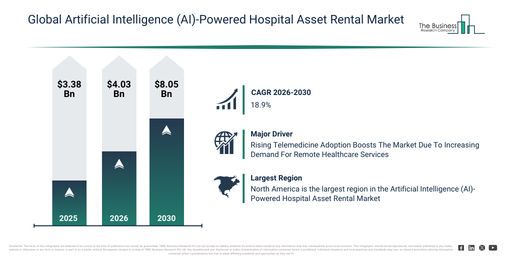
    Within the realm of artificial intelligence, the hospital asset rental sector experienced significant acceleration lately, demonstrating a projected expansion from $3.38 billion in 2025 to $4.03 billion in 2026, which represents a compound annual growth rate of 19.1%. This upward trajectory historically has been spurred by escalating expenses for healthcare equipment, the escalating need for hospitals to enhance operational efficiency, a broadening embrace of digital asset management strategies, a heightened utilization of rented medical devices, and a stronger emphasis on controlling hospital expenditures.

    The hospital asset rental market, driven by artificial intelligence, is poised for substantial expansion in the coming years, projected to reach $8.05 billion by 2030, with an anticipated compound annual growth rate (CAGR) of 18.9%. This upward trajectory during the forecast period is fueled by several key factors: the increasing implementation of AI in hospital operational processes, a broader acceptance of asset-as-a-service business models, the growing incorporation of these rental systems with existing hospital information infrastructures, increased financial commitments towards smart healthcare facilities, and a heightened need for analytics that predict asset usage. Furthermore, the period ahead will be characterized by several significant developments, including a greater reliance on AI for analyzing asset utilization, the expanding application of predictive maintenance strategies within healthcare settings, a surge in the requirement for platforms facilitating equipment sharing, the proliferation of cloud-based asset rental solutions, and an elevated emphasis on implementing tools designed for cost reduction.

    Download A Free Sample Report For Comprehensive Market Insights:

    https://www.thebusinessresearchcompany.com/sample.aspx?id=28929&type=smp

    Artificial Intelligence (AI)-Powered Hospital Asset Rental Market Growth Drivers: What Factors Are Accelerating Expansion?

    The expansion of telemedicine is anticipated to fuel the artificial intelligence (AI)-powered hospital asset rental market’s growth. Telemedicine involves delivering healthcare remotely through digital communication means, and its increasing adoption stems from the demand for accessible healthcare solutions, allowing patients to receive consultations and follow-ups from home, thereby saving time and travel burdens. AI-powered hospital asset rental aids telemedicine by ensuring essential medical equipment is available and utilized efficiently in real-time, empowering healthcare professionals to conduct remote diagnostics and virtual care effectively. An illustration of this trend is found in the Australian Bureau of Statistics data from September 2024, which indicated that in the 2023–24 period, 83.5% of males utilized telehealth services, a rise from the 78.6% in 2022–23, underscoring how telemedicine’s surge is consequently driving the AI-powered hospital asset rental market.

    Elevated healthcare expenditure is poised to be a significant catalyst for the expansion of the artificial intelligence (AI)-powered hospital asset rental market. Healthcare expenditure encompasses all financial outlays for medical services, devices, and technologies aimed at enhancing public health. This spending is on the rise due to a growing need for sophisticated medical technologies, as healthcare institutions increasingly allocate resources to pioneering equipment and digital advancements to elevate patient care and outcomes. Heightened healthcare spending facilitates the uptake of AI-powered hospital asset rental by permitting facilities to invest in advanced, cost-effective technologies that optimize equipment usage and reduce overall operational expenses, as demonstrated by the Centers for Medicare & Medicaid Services’ June 2025 report showing U.S. national health expenditures climbing 7.5% to $4.9 trillion in 2023, representing 17.6% of the GDP, with Medicare spending alone increasing by 8.1% to $1,029.8 billion. Consequently, escalating healthcare expenditure is a key driver for the growth of the AI-powered hospital asset rental market.

    An increase in government funding for healthcare infrastructure is predicted to stimulate the growth of the artificial intelligence (AI)-powered hospital asset rental market. Such governmental investments refer to public financial allocations directed towards enhancing and developing healthcare facilities, medical equipment, and operational systems to broaden access to and improve the quality of medical services. The escalation in these investments is driven by a mounting demand for high-quality healthcare, as expanding populations and an aging demographic necessitate more healthcare facilities, advanced medical technology, and upgraded infrastructures to meet patient needs effectively. Government investments in healthcare infrastructure benefit the AI-powered hospital asset rental sector by supporting the development of advanced facilities and digital systems, thereby enabling hospitals to adopt AI-integrated equipment through rental agreements without substantial initial capital outlay, consequently improving operational efficiency and patient outcomes. For example, as reported by the American Medical Association in April 2025, U.S. healthcare spending surged by 7.5% to $4.9 trillion in 2023, a notable increase from the previous year, thus indicating that augmented government investments in healthcare infrastructure are propelling the AI-powered hospital asset rental market forward.

    Artificial Intelligence (AI)-Powered Hospital Asset Rental Market Segment Performance And Strategic Opportunities

    The artificial intelligence (AI)-powered hospital asset rental market covered in this report is segmented –

    1) By Component: Software, Hardware, Services

    2) By Asset Type: Medical Equipment, Mobility Devices, Diagnostic Devices, Other Asset Types

    3) By Deployment Mode: On-Premises, Cloud-Based

    4) By Application: Equipment Tracking, Inventory Management, Predictive Maintenance, Utilization Optimization, Other Applications

    5) By End User: Hospitals, Clinics, Diagnostic Centers, Other End-Users

    Subsegments:

    1) By Software: Artificial Intelligence-Based Asset Management Software, Predictive Maintenance Software, Hospital Information System (HIS) Integration Software

    2) By Hardware: Artificial Intelligence-Enabled Medical Equipment, Iot Sensors And Devices For Asset Tracking, Robotics And Automation Equipment

    3) By Services: Installation And Deployment Services, Maintenance And Support Services, Training And Consultation Services

    Artificial Intelligence (AI)-Powered Hospital Asset Rental Market Key Players: Which Companies Shape Industry Competition?

    Major companies operating in the artificial intelligence (AI)-powered hospital asset rental market are Siemens Healthineers AG, Stryker Corporation, GE Healthcare Technologies Inc., US Med‑Equip, LLC, Agiliti Health, Med One Group, Hill‑Rom Holdings, Baxter International, Canon Medical Systems, Fresenius Medical Care, Cardinal Health, Avante Health Solutions, Block Imaging, Owens & Minor, Rentex Medical, WestCMR, Vanguard Healthcare Solutions, Trimedx, Althea Group, Prometheus Group, Cognosos, Kontakt.io, Asset Panda, CenTrak, Zebra Technologies Corporation

    Access The Complete Artificial Intelligence (AI)-Powered Hospital Asset Rental Market Report:

    https://www.thebusinessresearchcompany.com/report/artificial-intelligence-ai-powered-hospital-asset-rental-global-market-report

    Artificial Intelligence (AI)-Powered Hospital Asset Rental Market Regional Distribution: Which Areas Drive Market Expansion?

    North Americawas the largest region in the artificial intelligence (AI)-powered hospital asset rental market in 2025. Asia-Pacificis expected to be the fastest-growing region in the forecast period. The regions covered in the artificial intelligence (AI)-powered hospital asset rental market report are Asia-Pacific, South East Asia, Western Europe, Eastern Europe, North America, South America, Middle East, Africa.

    Get in touch with us:

    The Business Research Company: https://www.thebusinessresearchcompany.com/

    Americas: +1 310-496-7795

    Asia: +44 7882 955267 & +91 8897263534

    Europe: +44 7882 955267

    Email us at: marketing@tbrc.info

    Follow us on:

    LinkedIn: https://in.linkedin.com/company/the-business-research-company

    YouTube: https://www.youtube.com/channel/UC24_fI0rV8cR5DxlCpgmyFQ

    Global Market Model: https://www.thebusinessresearchcompany.com/global-market-model
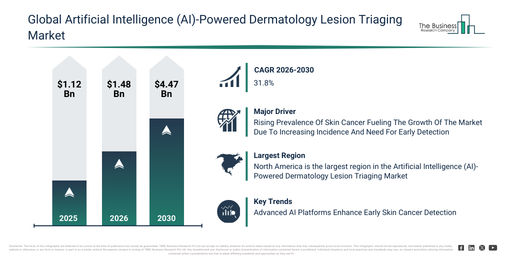
  • Artificial Intelligence (AI)-Powered Dermatology Lesion Triaging Market Size Projected To Increase From $1.48 Billion To $4.47 Billion During The Forecast Period

    Artificial Intelligence (AI)-Powered Dermatology Lesion Triaging Market Size Projected To Increase From $1.48 Billion To $4.47 Billion During The Forecast Period

    Through market attractiveness analysis, total addressable market evaluation, company benchmarking matrices, interactive Excel dashboards, expanded supply chain intelligence, emerging startup coverage, and detailed product insights, The Business Research Company’s 2026 market reports provide more actionable and strategically valuable research.

    Artificial Intelligence (AI)-Powered Dermatology Lesion Triaging Market Size Forecast: How Large Could The Market Become By 2030?

    Driven by several key factors, the market for artificial intelligence (AI) solutions in dermatology lesion triage is experiencing remarkable expansion. Projecting a leap from $1.12 billion in 2025 to $1.48 billion in 2026, this growth is underpinned by a compound annual growth rate (CAGR) of 32.1%. The historical trajectory of this market’s ascent can largely be credited to a confluence of elements including the escalating incidence of skin conditions, an amplified need for prompt cancer identification, a broader availability of dermatological diagnostic services, the increasing integration of digital imaging technologies, and a heightened consciousness surrounding proactive dermatological healthcare.

    The market for AI-driven dermatology lesion triage is poised for substantial expansion in the coming years, projected to reach $4.47 billion by 2030 with a compound annual growth rate of 31.8%. This upward trajectory is fueled by several key factors: the escalating integration of AI for diagnostic assistance, a surge in remote dermatology appointments, the proliferation of cloud-based clinical decision support systems, a growing requirement for automated dermatological workflows, and a heightened emphasis on refining diagnostic precision. Within this forecast period, significant trends are anticipated, including a greater embrace of AI in analyzing skin images, increased utilization of automated tools for categorizing lesion risk, more seamless integration of teledermatology platforms, the broader deployment of mobile dermatology applications, and a strengthened focus on the early identification of skin cancers.

    Download A Free Sample Report For Comprehensive Market Insights:

    https://www.thebusinessresearchcompany.com/sample.aspx?id=28138&type=smp

    Artificial Intelligence (AI)-Powered Dermatology Lesion Triaging Market Growth Factors Supporting Long-Term Expansion

    Anticipated advancements in the artificial intelligence (AI) driven market for dermatology lesion assessment are set to be invigorated by the escalating rates of skin cancer. This condition, characterized by the unchecked proliferation of aberrant skin cells, typically stems from harm inflicted by solar ultraviolet radiation or tanning equipment. The heightened incidence of skin cancer is predominantly attributable to prolonged sun exposure, a factor that results in detrimental ultraviolet (UV) radiation causing damage to the genetic material within dermal cells. AI-powered solutions for triaging dermatology lesions contribute to combating skin cancer by facilitating the prompt and precise identification of concerning skin abnormalities, thereby expediting diagnostic timelines through immediate risk evaluation, optimizing the process of referring patients to specialists, and reinforcing clinical judgment to achieve better patient results. As an illustration, in 2023, data from Cancer Australia, a governmental body in Australia, indicated that roughly 8,257 new diagnoses of cutaneous melanoma were made, contributing to 2.6% of all cancer-related fatalities. Consequently, the increasing occurrence of skin cancer is acting as a catalyst for the expansion of the artificial intelligence (AI)-powered dermatology lesion triaging sector.

    #Artificial Intelligence (AI)-Powered Dermatology Lesion Triaging Market Segment Landscape And Growth Potential

    The artificial intelligence (AI)-powered dermatology lesion triaging market covered in this report is segmented –

    1) By Component: Software, Hardware, Services

    2) By Deployment Mode: Cloud-Based, On-Premises

    3) By Lesion Type: Benign, Malignant, Pre-Malignant

    4) By Application: Skin Cancer Detection, Benign Lesion Identification, Teledermatology, Clinical Decision Support, Other Applications

    5) By End-User: Hospitals, Dermatology Clinics, Diagnostic Centers, Research Institutes, Other End Users

    Subsegments:

    1) By Software: Image Analysis Software, Diagnostic Support Software, Cloud-Based Software, Mobile Application Software, Patient Management Software

    2) By Hardware: Imaging Devices, Dermatoscopes, Cameras, Computers, Scanners

    3) By Services: Consulting Services, Implementation Services, Training And Education Services, Maintenance And Support Services, Data Management Services

    Artificial Intelligence (AI)-Powered Dermatology Lesion Triaging Market Industry Trends Shaping Future Revenue Growth

    Leading entities within the artificial intelligence-driven dermatology lesion assessment sector are prioritizing the creation of sophisticated tools, notably AI-enhanced imaging solutions, aimed at refining diagnostic precision, facilitating the early identification of malignant skin conditions, and optimizing healthcare operational efficiency. These AI-powered imaging systems represent sophisticated setups that employ machine learning algorithms to scrutinize dermatological anomalies, offer immediate diagnostic assistance, and help prioritize patient cases according to their potential for cancerous development. As an illustration, in the month of June in 2024, Enspectra Health Inc., a technology firm situated in the United States, secured the coveted Breakthrough Device Designation from the Food and Drug Administration for its cutting-edge VIO Skin Platform, which leverages artificial intelligence. This innovative platform merges reflectance confocal microscopy with multiphoton laser scanning microscopy to produce immediate, non-intrusive visual representations of dermal tissues at the cellular level. Seamlessly integrated with VIO.ai NMSC, a software module designed for computer-assisted diagnosis and triage (CADx/CADt), the system is capable of categorizing lesions suspected of being basal cell carcinoma (BCC) and squamous cell carcinoma (SCC) among individuals with heightened risk factors, thereby supporting medical practitioners in their diagnostic processes and potentially lowering the incidence of superfluous tissue sampling procedures.

    Artificial Intelligence (AI)-Powered Dermatology Lesion Triaging Market Competitive Landscape: Who Are The Leading Companies?

    Major companies operating in the artificial intelligence (AI)-powered dermatology lesion triaging market are Proscia Inc., SkinVision B.V., MetaOptima Technology Inc., SkinIO Inc., Skin Analytics Ltd., DermaSensor Inc., Dxcover Ltd., Skinive, Legit.Health, Veriskin, VivoSight, BelleTorus, First Derm, CureSkin, Skinopathy, DermLens AI, Enspectra Health Inc., Dermie.AI, DermTech, FotoFinder Systems

    Access The Complete Artificial Intelligence (AI)-Powered Dermatology Lesion Triaging Market Report:

    https://www.thebusinessresearchcompany.com/report/artificial-intelligence-ai-powered-dermatology-lesion-triaging-global-market-report

    Artificial Intelligence (AI)-Powered Dermatology Lesion Triaging Market Leading Geography: Which Region Generates The Most Revenue?

    North Americawas the largest region in the artificial intelligence (AI)-powered dermatology lesion triaging market in 2025. The regions covered in the artificial intelligence (AI)-powered dermatology lesion triaging market report are Asia-Pacific, South East Asia, Western Europe, Eastern Europe, North America, South America, Middle East, Africa.

    Get in touch with us:

    The Business Research Company: https://www.thebusinessresearchcompany.com/

    Americas: +1 310-496-7795

    Asia: +44 7882 955267 & +91 8897263534

    Europe: +44 7882 955267

    Email us at: marketing@tbrc.info

    Follow us on:

    LinkedIn: https://in.linkedin.com/company/the-business-research-company

    YouTube: https://www.youtube.com/channel/UC24_fI0rV8cR5DxlCpgmyFQ

    Global Market Model: https://www.thebusinessresearchcompany.com/global-market-model
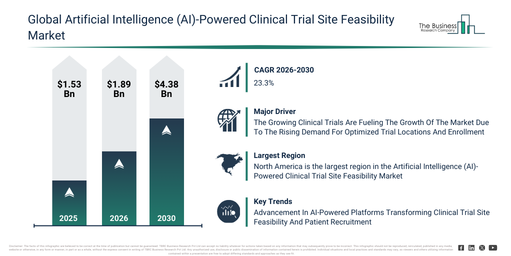
  • Artificial Intelligence (AI)-Powered Clinical Trial Site Feasibility Market Growth Outlook Reveals A CAGR Of 23.3% And A Market Value Of $4.37 Billion By 2030

    Artificial Intelligence (AI)-Powered Clinical Trial Site Feasibility Market Growth Outlook Reveals A CAGR Of 23.3% And A Market Value Of $4.37 Billion By 2030

    Delivering more actionable and strategically valuable research, The Business Research Company’s 2026 market reports feature market attractiveness analysis, total addressable market evaluation, company benchmarking matrices, interactive Excel dashboards, expanded supply chain intelligence, emerging startup coverage, and detailed product insights.

    Artificial Intelligence (AI)-Powered Clinical Trial Site Feasibility Market Revenue Outlook: What CAGR Is Expected Through 2030?

    The market for artificial intelligence powered tools used in assessing clinical trial site feasibility has experienced remarkable expansion. Projections indicate a significant increase from its 2025 valuation of 1.53 billion dollars to 1.89 billion dollars by 2026, reflecting a compound annual growth rate of 23.6%. This trajectory of growth throughout the historical period is fueled by several key factors: the escalating complexity inherent in clinical trial designs, mounting cost imperatives associated with drug development schedules, a heightened dependence on data to inform trial planning strategies, the proliferation of international multi site clinical trials, and the early integration of predictive analytics into the feasibility assessment process.

    The market for artificial intelligence (AI) solutions designed to assess clinical trial site feasibility is projected to experience substantial expansion in the coming years, reaching an estimated $4.38 billion by 2030, driven by a compound annual growth rate of 23.3%. This accelerated growth trajectory is anticipated due to several key factors, including the increasing implementation of decentralized clinical trial models, a heightened need for expedited site activation processes, a greater reliance on real-world evidence for making informed feasibility determinations, the proliferation of AI-powered trial planning instruments, and a strengthened commitment to minimizing trial-related risks. Within this forecast period, significant trends are expected to shape the landscape, such as the wider embrace of AI-driven methodologies for site selection, a surge in the utilization of predictive analytics for patient recruitment, the deeper incorporation of real-world data into feasibility evaluations, the advancement and adoption of cloud-based feasibility platforms, and a more pronounced concentration on forecasting trial performance metrics.

    Download A Free Sample Report For Comprehensive Market Insights:

    https://www.thebusinessresearchcompany.com/sample.aspx?id=28137&type=smp

    #Artificial Intelligence (AI)-Powered Clinical Trial Site Feasibility Market Demand Drivers Creating New Revenue Opportunities

    The surge in clinical trials is anticipated to be a primary catalyst for the advancement of the artificial intelligence (AI)-enabled clinical trial site feasibility sector. Clinical trials, which are research investigations undertaken worldwide to assess the safety and effectiveness of novel medical interventions, pharmaceuticals, and equipment, are experiencing an uptick. This expansion in clinical trial activity stems from amplified funding directed towards biomedical research and development, as governmental and commercial entities alike acknowledge the crucial necessity of novel therapeutic approaches to combat escalating health concerns. The proliferation of clinical trials consequently fuels a demand for AI-driven solutions designed for site feasibility, empowering research entities to pinpoint ideal study locations, evaluate the proficiency of these sites, and forecast the likelihood of participant enrollment for their trials. To illustrate, as of April 2025, the clinicaltrials.gov platform listed a total of 404,637 interventional clinical trials, according to data from the Multidisciplinary Digital Publishing Institute, a Swiss-based open-access scientific journal publisher. Consequently, this burgeoning landscape of clinical trials is directly contributing to the expansion of the AI-powered clinical trial site feasibility market.

    Artificial Intelligence (AI)-Powered Clinical Trial Site Feasibility Market Categorization By Product Type And Application

    The artificial intelligence (AI)-powered clinical trial site feasibility market covered in this report is segmented –

    1) By Component: Software, Services

    2) By Deployment Mode: Cloud-Based, On-Premises

    3) By Application: Site Selection, Patient Recruitment, Protocol Design, Performance Analytics, Other Applications

    4) By End-User: Pharmaceutical Companies, Contract Research Organizations, Academic Research Institutes, Hospitals, Other End-Users

    Subsegments:

    1) By Software: Predictive Analytics Software, Machine Learning (ML) Platforms, Natural Language Processing (NLP) Tools, Data Visualization Software, Clinical Trial Management System (CTMS) Integration Software, Real-World Data (RWD) Analytics Software, Risk-Based Monitoring (RBM) Software

    2) By Services: Feasibility Assessment Services, Site Selection Services, Patient Recruitment Support Services, Data Management And Analytics Services, Protocol Optimization Services, Regulatory Compliance Support Services, Consulting And Advisory Services

    Artificial Intelligence (AI)-Powered Clinical Trial Site Feasibility Market Trends Driving Strategic Industry Expansion

    Leading participants in the AI-driven clinical trial site feasibility sector are prioritizing the creation of sophisticated tools, notably an AI-powered platform for feasibility and recruitment, aimed at refining site selection processes and elevating the general operational effectiveness of clinical studies. This type of platform utilizes artificial intelligence and machine learning to meticulously analyze trial protocols and site-specific data, thereby pinpointing the most suitable clinical locations and bolstering patient recruitment by intelligently connecting suitable individuals, ultimately expediting trial durations and improving study outcomes. As an illustration, in June of 2023, ObjectiveHealth, a technology and research solutions provider headquartered in the United States, introduced ObjectiveScreen, an AI-centric platform engineered to boost clinical trial performance. This system achieves this by improving patient identification, pre-qualification, and retention through seamless integration with electronic health records and the application of AI and machine learning techniques, thereby enabling clinical research sites to directly access patient information, assess health risks, and identify the most appropriate participants, leading to faster enrollment and better trial results.

    Artificial Intelligence (AI)-Powered Clinical Trial Site Feasibility Market Company Landscape And Strategic Competition

    Major companies operating in the artificial intelligence (AI)-powered clinical trial site feasibility market are Oracle Corporation, Thermo Fisher Scientific Inc., NVIDIA Corporation, IQVIA Holdings Inc., Labcorp Holdings Inc., Dassault Systèmes SE, Parexel International Corporation, ZS Associates Inc., Veeva Systems Inc., Verily Life Sciences LLC, Signant Health Holding Corp., Saama Technologies LLC, Elligo Health Research Inc., ConcertAI Inc., Medable Inc., Science 37 Inc., Castor EDC Inc., Unlearn.AI Inc., Antidote Technologies Inc., Deep 6 AI

    Access The Complete Artificial Intelligence (AI)-Powered Clinical Trial Site Feasibility Market Report:

    https://www.thebusinessresearchcompany.com/report/artificial-intelligence-ai-powered-clinical-trial-site-feasibility-global-market-report

    Artificial Intelligence (AI)-Powered Clinical Trial Site Feasibility Market Regional Outlook: Where Are The Largest Opportunities Located?

    North Americawas the largest region in the artificial intelligence (AI)-powered clinical trial site feasibility market in 2025. Asia-Pacific is expected to be the fastest-growing region in the forecast period. The regions covered in the artificial intelligence (AI)-powered clinical trial site feasibility market report are Asia-Pacific, South East Asia, Western Europe, Eastern Europe, North America, South America, Middle East, Africa.

    Get in touch with us:

    The Business Research Company: https://www.thebusinessresearchcompany.com/

    Americas: +1 310-496-7795

    Asia: +44 7882 955267 & +91 8897263534

    Europe: +44 7882 955267

    Email us at: marketing@tbrc.info

    Follow us on:

    LinkedIn: https://in.linkedin.com/company/the-business-research-company

    YouTube: https://www.youtube.com/channel/UC24_fI0rV8cR5DxlCpgmyFQ

    Global Market Model: https://www.thebusinessresearchcompany.com/global-market-model
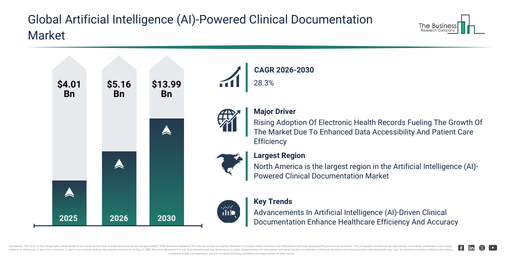
  • Artificial Intelligence (AI)-Powered Clinical Documentation Market Forecast Highlights Expansion From $5.16 Billion To $13.99 Billion Through 2030

    Artificial Intelligence (AI)-Powered Clinical Documentation Market Forecast Highlights Expansion From $5.16 Billion To $13.99 Billion Through 2030

    Enhanced with market attractiveness analysis, total addressable market evaluation, company benchmarking matrices, interactive Excel dashboards, expanded supply chain intelligence, emerging startup coverage, and detailed product insights, The Business Research Company’s 2026 market reports deliver more actionable and strategically valuable research.

    Artificial Intelligence (AI)-Powered Clinical Documentation Market Growth Analysis: How Will Revenue Expand During The Forecast Period?

    Fueled by an escalating administrative burden on healthcare professionals, the widespread implementation of electronic medical records, a burgeoning need for automated workflows, the ongoing development of digital health infrastructure, and a heightened emphasis on precision in clinical data, the artificial intelligence (AI)-powered clinical documentation market, valued at $4.01 billion in 2025, is projected for significant expansion, reaching an estimated $5.16 billion by 2026, reflecting a compound annual growth rate of 28.7% during this period of rapid advancement that mirrors its impressive historical trajectory.

    The market for artificial intelligence-driven clinical documentation is poised for significant expansion over the coming years, projecting a valuation of $13.99 billion by 2030, fueled by a compound annual growth rate of 28.3%. This anticipated surge is underpinned by several key factors: escalating investments in AI for healthcare automation, a heightened need for tools that boost clinician efficiency, the proliferation of cloud-based clinical platforms, a stronger push towards interoperability standards, and a greater embrace of ambient clinical intelligence. Furthermore, notable trends shaping this landscape include the increasing deployment of real-time speech-to-text clinical solutions, a rise in the utilization of natural language processing (NLP) for documentation, the broadening of voice-activated clinical processes, deeper integration with electronic health records, and an intensified focus on achieving both accuracy and compliance in documentation.

    Download A Free Sample Report For Comprehensive Market Insights:

    https://www.thebusinessresearchcompany.com/sample.aspx?id=27203&type=smp

    Artificial Intelligence (AI)-Powered Clinical Documentation Market Expansion Supported By Key Demand Factors

    The increasing integration of electronic health records is anticipated to be a significant catalyst for the expansion of the AI-driven clinical documentation sector. These digital repositories of patient medical histories and health data, maintained securely and accessible to authorized personnel, are instrumental in optimizing care delivery and treatment strategies. Healthcare entities are increasingly embracing electronic health records due to their capacity to provide efficient, readily available, and secure management of patient data, which in turn enhances care coordination and alleviates administrative pressures. AI-powered clinical documentation systems further augment these electronic health records by precisely capturing and structuring patient data in real-time, thereby optimizing operational processes and improving the coordination of care. Illustrating this trend, in October 2023, the UK’s NHS England reported that 90% of NHS trusts had implemented Electronic Patient Record (EPR) systems, backed by a substantial investment of £443.7 million (approximately USD $555 million) supporting 160 local EPR initiatives aimed at building crucial digital infrastructure for integrated care systems (ICSs). Consequently, the widespread adoption of electronic health records is a primary driver behind the market’s growth in artificial intelligence-powered clinical documentation.

    Artificial Intelligence (AI)-Powered Clinical Documentation Market Segment Analysis And Revenue Opportunities

    The artificial intelligence (AI)-powered clinical documentation market covered in this report is segmented –

    1) By Component: Software, Hardware, Services

    2) By Deployment Mode: Cloud-Based, On-Premises

    3) By Application: Hospitals, Clinics, Ambulatory Surgical Centers, Specialty Centers, Other Applications

    4) By End-User: Healthcare Providers, Healthcare IT Vendors And Health Systems, Other End-Users

    Subsegments:

    1) By Software: Integrated Software Platforms, Standalone Applications, Cloud-Based Software, On-Premise Software

    2) By Hardware: Input Devices, Output Devices, Servers And Storage Devices, Networking Equipment

    3) By Services: Implementation And Integration Services, Training And Education Services, Support And Maintenance Services, Consulting Services

    Artificial Intelligence (AI)-Powered Clinical Documentation Market Growth Trends Influencing Competitive Dynamics

    Key players within the artificial intelligence (AI) driven clinical documentation sector are prioritizing the creation of novel solutions, including natural language query editing, to furnish medical practitioners with sophisticated capabilities that optimize documentation processes, alleviate administrative duties, and elevate precision, thereby fostering better patient outcomes and more efficient clinical operations. The functionality of natural language query editing empowers individuals to alter and improve documents through the use of standard language instructions or inquiries, facilitating seamless interaction with the system without reliance on intricate commands or navigation menus. Illustrating this, in March 2025, the American technology giant Microsoft Corporation introduced Dragon Copilot, an AI powered voice assistant engineered for clinical staff. This new offering unites Microsoft’s established Dragon Medical One dictation platform with Nuance’s DAX Copilot ambient AI, thereby establishing the foremost integrated voice assistant for clinical record keeping in the field. Dragon Copilot facilitates the real-time capture of patient discussions involving multiple participants, automatically transcribing them into precise, specialized medical notes.

    Artificial Intelligence (AI)-Powered Clinical Documentation Market Leading Players Shaping Industry Direction

    Major companies operating in the artificial intelligence (AI)-powered clinical documentation market are Oracle Corporation, 3M Company, Epic Systems Corporation, IKS Health Services Pvt. Ltd., eClinicalWorks LLC, Commure Inc., Abridge AI Inc., DeepScribe Inc., Notable Health Inc., Pieces Technologies Inc., Suki AI Inc., Clinithink Ltd., Ambience Healthcare Private Limited, Artificial Medical Intelligence Inc., Dolbey Systems Inc., Hiteks Solutions Pvt. Ltd., Tali AI Inc., Ambient Clinical Analytics Inc., Robin Healthcare Inc., DeepCura Inc.

    Access The Complete Artificial Intelligence (AI)-Powered Clinical Documentation Market Report:

    https://www.thebusinessresearchcompany.com/report/artificial-intelligence-ai-powered-clinical-documentation-global-market-report

    Artificial Intelligence (AI)-Powered Clinical Documentation Market Geographic Landscape: Which Region Dominates Industry Growth?

    North Americawas the largest region in the artificial intelligence (AI)-powered clinical documentation market in 2025. Asia-Pacificis expected to be the fastest-growing region in the forecast period. The regions covered in the artificial intelligence (AI)-powered clinical documentation market report are Asia-Pacific, South East Asia, Western Europe, Eastern Europe, North America, South America, Middle East, Africa.

    Get in touch with us:

    The Business Research Company: https://www.thebusinessresearchcompany.com/

    Americas: +1 310-496-7795

    Asia: +44 7882 955267 & +91 8897263534

    Europe: +44 7882 955267

    Email us at: marketing@tbrc.info

    Follow us on:

    LinkedIn: https://in.linkedin.com/company/the-business-research-company

    YouTube: https://www.youtube.com/channel/UC24_fI0rV8cR5DxlCpgmyFQ

    Global Market Model: https://www.thebusinessresearchcompany.com/global-market-model
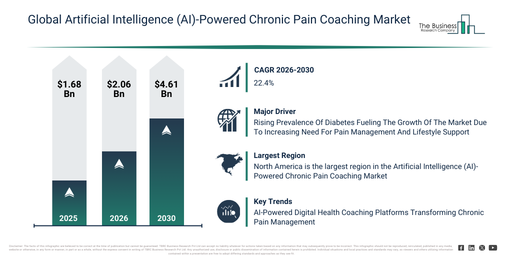
  • Artificial Intelligence (AI)-Powered Chronic Pain Coaching Market Expected To Reach $4.61 Billion By 2030 As Growth Accelerates At 22.4% CAGR

    Artificial Intelligence (AI)-Powered Chronic Pain Coaching Market Expected To Reach $4.61 Billion By 2030 As Growth Accelerates At 22.4% CAGR

    Through market attractiveness analysis, total addressable market evaluation, company benchmarking matrices, interactive Excel dashboards, expanded supply chain intelligence, emerging startup coverage, and detailed product insights, The Business Research Company’s 2026 market reports provide more actionable and strategically valuable research.

    Artificial Intelligence (AI)-Powered Chronic Pain Coaching Market Forecast: What Market Value Is Expected By 2030?

    The burgeoning field of AI-driven chronic pain management saw a substantial expansion, projected to surge from $1.68 billion in 2025 to $2.06 billion by 2026, reflecting a robust compound annual growth rate of 22.7%. This upward trajectory in previous years was fueled by a confluence of factors, including the widespread rise of chronic pain afflictions, an increasing embrace of digital healthcare solutions, a heightened demand for alternatives to medication in pain relief, the expanding utilization of mobile health applications, and advancements in tracking patient-reported outcomes.

    The AI-driven chronic pain coaching sector is poised for remarkable expansion, projecting a valuation of $4.61 billion by 2030, driven by an impressive compound annual growth rate of 22.4%. This upward trajectory is fueled by a confluence of factors including a heightened need for customized pain relief strategies, escalating investments in digital health solutions, the broader adoption of telehealth services, a greater emphasis on comprehensive pain management approaches, and sophisticated AI analytics for behavioral health. Key developments anticipated during this period involve the increasingly widespread use of dynamic pain management algorithms, the greater incorporation of ongoing patient input mechanisms, a rise in the integration of wearable devices for pain tracking, the development of more individualized coaching programs, and a strengthened commitment to sustained patient involvement.

    Download A Free Sample Report For Comprehensive Market Insights:

    https://www.thebusinessresearchcompany.com/sample.aspx?id=28136&type=smp

    #Artificial Intelligence (AI)-Powered Chronic Pain Coaching Market Growth Drivers And Industry Catalysts

    The expanding reach of diabetes is anticipated to be a key catalyst for the advancement of the artificial intelligence (AI) driven chronic pain coaching sector. Diabetes, a chronic condition marked by the body’s inability to effectively manage blood glucose, stems from issues with insulin production or its utilization. This escalating incidence of diabetes is linked to increasingly inactive lifestyles, involving minimal physical exertion and prolonged periods of sitting, which in turn foster weight accumulation and disrupt metabolic equilibrium, heightening the susceptibility to insulin resistance. AI-powered chronic pain coaching offers valuable assistance in diabetes management by equipping patients with strategies to handle pain and promoting beneficial modifications to their daily habits that enhance blood sugar control. To illustrate, data from the Office for Health Improvement and Disparities, a governmental body in the UK, revealed that in England, the proportion of adults aged seventeen and above diagnosed with type 2 diabetes stood at 7.0% as of March 2024, an increase from the 6.8% recorded in March 2023. Consequently, the growing prevalence of diabetes is fueling the market expansion for AI-powered chronic pain coaching solutions.

    Artificial Intelligence (AI)-Powered Chronic Pain Coaching Market Segmentation And Category Breakdown

    The artificial intelligence (AI)-powered chronic pain coaching market covered in this report is segmented –

    1) By Component: Software, Hardware, Services

    2) By Deployment Mode: Cloud-Based, On-Premises

    3) By Application: Healthcare Providers, Pain Management Clinics, Rehabilitation Centers, Home Care, Other Applications

    4) By End-User: Hospitals, Clinics, Individuals, Other End-Users

    Subsegments:

    1) By Software: Mobile Applications, Web-Based Platforms, Analytics And Reporting Tools, Integration And Application Programming Interface Solutions

    2) By Hardware: Wearable Devices, Smartphones And Tablets, Connected Medical Devices, Virtual Reality Equipment

    3) By Services: Consulting Services, Implementation And Integration, Training And Education, Technical Support And Maintenance

    #Artificial Intelligence (AI)-Powered Chronic Pain Coaching Market Trends Influencing Long-Term Demand

    Leading entities within the artificial intelligence driven chronic pain management arena are prioritizing the creation of sophisticated digital health platforms. These platforms are engineered to foster tailored patient care, boost user involvement, and leverage empirical data for superior pain control results. Such digital health coaching systems are essentially AI powered instruments that offer individualized advice, monitor advancements, and provide virtual assistance to aid individuals in more proficiently handling persistent pain. As an illustration, January 2025 saw Elyfia Ltd., a digital health coaching provider headquartered in the United Kingdom, introduce a pioneering digital health coaching system. This system is specifically developed for individuals affected by fibromyalgia, artfully merging human expertise with cutting edge artificial intelligence. The platform furnishes bespoke health guidance facilitated by a specialized cadre of medical professionals, fitness trainers, and accredited coaches. This is complemented by AI driven analytics that scrutinize data streams from wearable technology and user provided information in real time. This incorporation of artificial intelligence facilitates ongoing symptom monitoring, the identification of trends, and the generation of customized treatment suggestions precisely suited to each patient’s distinct circumstances. Through the strategic application of AI, Elyfia assists users in more effectively managing fibromyalgia manifestations, including diffuse discomfort, exhaustion, and sleep irregularities. It equips them to cultivate more salubrious routines via interactive educational components and readily available coaching, all accessible through their mobile devices.

    Artificial Intelligence (AI)-Powered Chronic Pain Coaching Market Competitive Analysis Of Major Industry Participants

    Major companies operating in the artificial intelligence (AI)-powered chronic pain coaching market are Hinge Health Inc., Sword Health Inc., Biofourmis Inc., Therabody Inc., Omada Health Inc., Vivira Health Lab, Kaia Health Software GmbH, XRHealth Inc., EcoAI Ltd., MyPainSensei, Meegle, Avari XR, Neurofit, Curable Health Inc., FeelBetter Ltd., Flok Health Ltd., JOGO Health Inc., Fern Health Inc., Karuna Labs Inc., FlexifyMe Ltd.

    Access The Complete Artificial Intelligence (AI)-Powered Chronic Pain Coaching Market Report:

    https://www.thebusinessresearchcompany.com/report/artificial-intelligence-ai-powered-chronic-pain-coaching-global-market-report

    #Artificial Intelligence (AI)-Powered Chronic Pain Coaching Market Largest Region: Which Geography Holds The Highest Market Share?

    North Americawas the largest region in the artificial intelligence (AI)-powered chronic pain coaching market in 2025. The regions covered in the artificial intelligence (AI)-powered chronic pain coaching market report are Asia-Pacific, South East Asia, Western Europe, Eastern Europe, North America, South America, Middle East, Africa.

    Get in touch with us:

    The Business Research Company: https://www.thebusinessresearchcompany.com/

    Americas: +1 310-496-7795

    Asia: +44 7882 955267 & +91 8897263534

    Europe: +44 7882 955267

    Email us at: marketing@tbrc.info

    Follow us on:

    LinkedIn: https://in.linkedin.com/company/the-business-research-company

    YouTube: https://www.youtube.com/channel/UC24_fI0rV8cR5DxlCpgmyFQ

    Global Market Model: https://www.thebusinessresearchcompany.com/global-market-model
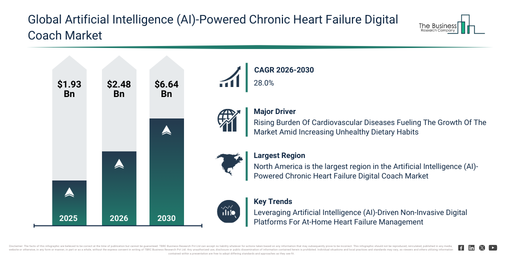
  • Artificial Intelligence (AI)-Powered Chronic Heart Failure Digital Coach Market Set To Grow From $2.47 Billion In 2026 To $6.64 Billion By 2030 At A CAGR Of 28%

    Artificial Intelligence (AI)-Powered Chronic Heart Failure Digital Coach Market Set To Grow From $2.47 Billion In 2026 To $6.64 Billion By 2030 At A CAGR Of 28%

    Delivering more actionable and strategically valuable research, The Business Research Company’s 2026 market reports feature market attractiveness analysis, total addressable market evaluation, company benchmarking matrices, interactive Excel dashboards, expanded supply chain intelligence, emerging startup coverage, and detailed product insights.

    Artificial Intelligence (AI)-Powered Chronic Heart Failure Digital Coach Market Size Outlook: How Fast Will Revenue Grow Through 2030?

    The market for artificial intelligence (AI)-driven digital coaching for chronic heart failure has experienced remarkable expansion. Projections indicate a significant upward trajectory, with the market value expected to climb from $1.93 billion in 2025 to $2.48 billion in 2026, reflecting a compound annual growth rate (CAGR) of 28.3%. This robust growth during the preceding period stems from several key factors, including a rise in heart failure diagnoses, the widespread adoption of remote patient monitoring systems, advancements in healthcare digitalization, the increasing prevalence of interconnected medical devices, and a heightened emphasis on proactive cardiac health management.

    The market for artificial intelligence driven chronic heart failure digital coaches is poised for remarkable expansion, projected to reach $6.64 billion by the year 2030. This significant increase, reflecting a compound annual growth rate of 28.0%, is underpinned by several key factors anticipated during the forecast period. These include progressive developments in AI-driven clinical analytics, a broadening embrace of personalized patient care, the increasing prevalence of cardiac monitoring conducted at home, escalated investments in digital cardiology infrastructure, and a heightened demand for ongoing patient engagement solutions. Key developments shaping this market’s trajectory are the wider implementation of AI-powered cardiac monitoring coaches, their greater integration with wearable heart sensors for real-time data capture, the expanding utilization of predictive health analytics for proactive interventions, the growth of remote platforms for managing chronic conditions, and an intensified emphasis on equipping patients with tools for effective self-management.

    Download A Free Sample Report For Comprehensive Market Insights:

    https://www.thebusinessresearchcompany.com/sample.aspx?id=28927&type=smp

    Artificial Intelligence (AI)-Powered Chronic Heart Failure Digital Coach Market Opportunity Drivers: What Is Creating New Revenue Potential?

    The escalating challenge posed by cardiovascular ailments is poised to invigorate the expansion of the AI-driven digital coaching sector for chronic heart failure. These cardiovascular conditions encompass a spectrum of heart and blood vessel issues, such as coronary heart disease, cerebrovascular disease, and other circulatory system ailments. The increasing incidence of such diseases is fueled by dietary habits rich in processed items and excessive salt, which contribute to heightened blood pressure and cholesterol levels, thereby amplifying the risk of heart ailments. An AI-powered digital coach designed for chronic heart failure facilitates the management of these cardiovascular conditions by continuously tracking an individual’s health and dispensing tailored advice on medication adherence and lifestyle adjustments. Such platforms also enable the early identification of potential complications and promote preventative healthcare strategies. Illustrating this trend, the Centers for Disease Control and Prevention, a prominent US public health organization, reported in October 2024 that cardiovascular diseases were responsible for the deaths of 919,032 individuals in the United States during 2023, representing roughly one-third of all national fatalities. Consequently, the growing weight of cardiovascular disease is acting as a significant catalyst for the market’s growth in AI-powered digital coaches for chronic heart failure.

    Artificial Intelligence (AI)-Powered Chronic Heart Failure Digital Coach Market Segment Outlook: Which Categories Are Expanding The Fastest?

    The artificial intelligence (AI)-powered chronic heart failure digital coach market covered in this report is segmented –

    1) By Component: Software, Hardware, Services

    2) By Deployment Mode: Cloud-Based, On-Premises

    3) By Application: Remote Patient Monitoring, Personalized Care Management, Medication Adherence, Patient Education, Other Applications

    4) By End-User: Hospitals And Clinics, Homecare Settings, Research And Academic Institutes, Other End-Users

    Subsegments:

    1) By Software: Cloud-Based Platforms, Mobile Applications, Data Analytics Tools, Patient Monitoring Dashboards, Integration Middleware

    2) By Hardware: Wearable Devices, Smart Sensors, Connected Medical Devices, Home Monitoring Equipment, Edge Computing Devices

    3) By Services: Implementation And Integration Services, Consulting Services, Maintenance And Support Services, Training And Education Services, Remote Patient Monitoring Services

    Artificial Intelligence (AI)-Powered Chronic Heart Failure Digital Coach Market Innovation Trends Driving Future Development

    Leading entities within the AI-driven digital coaching sector for chronic heart failure are prioritizing the creation of remote patient monitoring systems, specifically non-invasive platforms designed to enhance medication compliance and facilitate proactive health management. These digital tools employ sensors, wearable devices, and artificial intelligence analysis to continuously observe cardiac function and vital signs without surgical intervention, thereby tracking symptoms and offering guidance for timely therapeutic adjustments and more effective disease oversight. A prime example is Astellas Pharma Inc., a pharmaceutical firm headquartered in Japan, which, in September 2024, introduced DIGITIVA, a novel non-invasive digital health platform for heart failure management, subsequently achieving FDA listing. This integrated system, which includes the CORE 500 Digital Stethoscope, a mobile application leveraging Welldoc’s technology, educational resources from the American Heart Association, and a specialized clinical review team, empowers patients by centralizing their care and facilitating early interventions aimed at improving clinical results, such as a decrease in acute episodes and hospital admissions.

    Artificial Intelligence (AI)-Powered Chronic Heart Failure Digital Coach Market Key Companies And Competitive Benchmarking

    Major companies operating in the artificial intelligence (AI)-powered chronic heart failure digital coach market are Koninklijke Philips N.V., Boston Scientific Corporation, Astellas Pharma Inc., Best Buy Health Inc., Tempus AI Inc., Biofourmis Inc., Athelas Inc., Hello Heart Inc., Huma Therapeutics Limited, Welldoc Inc., Cleerly Inc., Cadence Solutions Inc., Lark Health Inc., One Drop, Binah.ai Ltd., Xealth Inc., Nanowear Inc., Cordio Medical Ltd., Kento Health Inc., my mhealth Limited, Implicity SAS.

    Access The Complete Artificial Intelligence (AI)-Powered Chronic Heart Failure Digital Coach Market Report:

    https://www.thebusinessresearchcompany.com/report/artificial-intelligence-ai-powered-chronic-heart-failure-digital-coach-global-market-report

    Artificial Intelligence (AI)-Powered Chronic Heart Failure Digital Coach Market Regional Analysis: Which Region Leads By Revenue?

    North Americawas the largest region in the artificial intelligence (AI)-powered chronic heart failure digital coach market in 2025. The regions covered in the artificial intelligence (AI)-powered chronic heart failure digital coach market report are Asia-Pacific, South East Asia, Western Europe, Eastern Europe, North America, South America, Middle East, Africa.

    Get in touch with us:

    The Business Research Company: https://www.thebusinessresearchcompany.com/

    Americas: +1 310-496-7795

    Asia: +44 7882 955267 & +91 8897263534

    Europe: +44 7882 955267

    Email us at: marketing@tbrc.info

    Follow us on:

    LinkedIn: https://in.linkedin.com/company/the-business-research-company

    YouTube: https://www.youtube.com/channel/UC24_fI0rV8cR5DxlCpgmyFQ

    Global Market Model: https://www.thebusinessresearchcompany.com/global-market-model
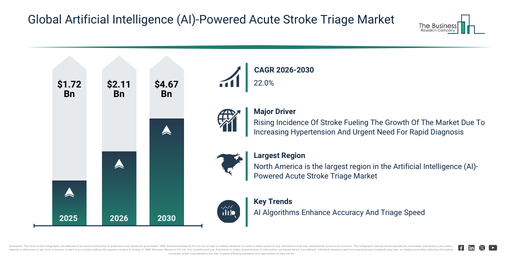
  • Artificial Intelligence (AI)-Powered Acute Stroke Triage Market Opportunities Are Emerging Beyond Traditional Growth Areas

    Artificial Intelligence (AI)-Powered Acute Stroke Triage Market Opportunities Are Emerging Beyond Traditional Growth Areas

    Enhanced with market attractiveness analysis, total addressable market evaluation, company benchmarking matrices, interactive Excel dashboards, expanded supply chain intelligence, emerging startup coverage, and detailed product insights, The Business Research Company’s 2026 market reports deliver more actionable and strategically valuable research.

    Artificial Intelligence (AI)-Powered Acute Stroke Triage Market Size, Value And Growth Trends Through 2030

    The market for AI-driven acute stroke triage solutions has witnessed substantial expansion, projecting a rise from $1.72 billion in 2025 to $2.11 billion in 2026, reflecting a robust compound annual growth rate of 22.3%. This historical growth trajectory has been fueled by several key factors, including a higher prevalence of acute stroke events, the proliferation of sophisticated imaging capabilities, increased integration of clinical decision support tools, greater financial backing for emergency care technologies, and advancements in the precision of machine learning algorithms.

    The market for artificial intelligence driven acute stroke triage solutions is poised for remarkable expansion over the coming years, projecting a surge to $4.67 billion by 2030, fueled by a compound annual growth rate of 22.0%. This anticipated growth is underpinned by several key factors, including a heightened need for expedited stroke diagnoses, escalating investments in emergency medical services augmented by artificial intelligence, the broadening reach of telestroke networks, a greater emphasis on healthcare outcomes, and significant progress in real-time medical data analysis. Significant developments shaping this period are expected to encompass the wider integration of AI for medical image interpretation, the increasing incorporation of immediate stroke alert mechanisms, the growing application of predictive tools in clinical decision-making, the proliferation of cloud based imaging systems, and a heightened commitment to optimizing care delivery in time sensitive situations.

    Download A Free Sample Report For Comprehensive Market Insights:

    https://www.thebusinessresearchcompany.com/sample.aspx?id=28135&type=smp

    Artificial Intelligence (AI)-Powered Acute Stroke Triage Market Growth Momentum: Which Factors Are Influencing Demand?

    The increasing prevalence of strokes is poised to be a significant catalyst for the expansion of the artificial intelligence (AI) enabled acute stroke triage sector. A stroke, characterized by disrupted blood circulation to the brain, results in neural damage and can lead to severe impairment or fatality if prompt medical intervention is not administered. Hypertension is a primary contributor to the escalating rates of stroke, as elevated blood pressure escalates the likelihood of obstructions or ruptures within cerebral blood vessels. AI-driven acute stroke triage systems are instrumental in facilitating stroke diagnosis through the swift examination of brain imaging, thereby proving indispensable for the early identification of stroke classification and its intensity. These advanced systems mitigate delays in diagnosis by expediting the assessment of critical situations, ultimately enhancing the swiftness of treatment and improving patient prognoses. Illustratively, in September 2024, data from the Stroke Foundation, a charitable organization based in Australia, indicated that approximately 45,785 individuals in Australia suffered a stroke during 2023, equating to an incident of stroke every 11 minutes, with 34,793 of these cases representing initial occurrences. Consequently, the escalating occurrence of strokes is directly fueling the growth trajectory of the market for AI-powered acute stroke triage solutions.

    Artificial Intelligence (AI)-Powered Acute Stroke Triage Market Segment Landscape: Which Areas Lead Market Development?

    The artificial intelligence (AI)-powered acute stroke triage market covered in this report is segmented –

    1) By Component: Software, Hardware, Services

    2) By Deployment Mode: On-Premises, Cloud-Based

    3) By Application: Hospitals, Diagnostic Centers, Emergency Medical Services, Research Institutes, Other Applications

    4) By End-User: Healthcare Providers, Radiology Centers, Academic And Research Institutes, Other End-Users

    Subsegments:

    1) By Software: Clinical Decision Support Software, Imaging And Diagnostics Software, Workflow Management Software, Data Integration And Interoperability Platforms, Predictive Analytics And Machine Learning Tools

    2) By Hardware: Medical Imaging Devices, Edge Computing Devices, AI Processing Units, Workstations And Servers, Networking And Storage Devices

    3) By Services: Implementation And Integration Services, Training And Education Services, Maintenance and Support Services, Consulting Services, Cloud-Based Deployment and Managed Services

    Artificial Intelligence (AI)-Powered Acute Stroke Triage Market Trends Reshaping Industry Growth

    Leading entities within the artificial intelligence-driven acute stroke triage sector are concentrating their efforts on innovating sophisticated technological offerings, including cutting-edge AI algorithms, with the primary aims of elevating diagnostic precision, expediting patient assessment, and ultimately improving patient recovery. These sophisticated computational methodologies, known as advanced AI algorithms, harness the power of data learning to identify recurring patterns, forecast potential outcomes, and facilitate informed clinical judgments. A prime illustration of this trend is evidenced by RapidAI Inc., a United States-based enterprise specializing in cerebrovascular imaging, which in April 2023 secured United States Food and Drug Administration (FDA) 510(k) clearance for its Rapid Noncontrast Computed Tomography (NCCT) Stroke product. This particular AI-powered tool is engineered to scrutinize non-contrast CT scans for the detection of potential intracranial hemorrhage (ICH) and large vessel occlusion (LVO), extracting valuable insights from routine CT imaging. The system’s automated analysis of NCCT images generates immediate triage and prioritization notifications through various communication channels, including PACS, email, and the dedicated Rapid mobile application, thereby significantly reducing the time required for patients to move from admission to imaging and subsequently to a diagnostic decision. Furthermore, this technology plays a crucial role in streamlining patient transfers and treatment planning, minimizing the wait for advanced imaging procedures, and broadening the availability of specialized stroke care across healthcare facilities of varying capacities.

    Artificial Intelligence (AI)-Powered Acute Stroke Triage Market Industry Leaders And Market Competition

    Major companies operating in the artificial intelligence (AI)-powered acute stroke triage market are Siemens Healthineers AG, GE HealthCare Technologies Inc., Shanghai United Imaging Healthcare Co. Ltd., Viz.ai Inc., Aidoc Medical Ltd., RapidAI Inc., Qure.ai Technologies Private Limited, Harrison.ai Pty Ltd, Infervision Inc., Circle Cardiovascular Imaging Inc., Behold.ai Ltd., Brainomix Ltd., JLK Inc., BioMind.ai Pte. Ltd., Sevaro Health Inc., Heuron Technologies Inc., Nicolab Inc., icometrix NV, Deep01 Inc., SNAC Medical Inc., BrainScan.ai Ltd., Cercare Medical Ltd., Avicenna.AI GmbH

    Access The Complete Artificial Intelligence (AI)-Powered Acute Stroke Triage Market Report:

    https://www.thebusinessresearchcompany.com/report/artificial-intelligence-ai-powered-acute-stroke-triage-global-market-report

    Artificial Intelligence (AI)-Powered Acute Stroke Triage Market Geographic Distribution And Regional Opportunities

    North Americawas the largest region in the artificial intelligence (AI)-powered acute stroke triage market in 2025. The regions covered in the artificial intelligence (AI)-powered acute stroke triage market report are Asia-Pacific, South East Asia, Western Europe, Eastern Europe, North America, South America, Middle East, Africa.

    Get in touch with us:

    The Business Research Company: https://www.thebusinessresearchcompany.com/

    Americas: +1 310-496-7795

    Asia: +44 7882 955267 & +91 8897263534

    Europe: +44 7882 955267

    Email us at: marketing@tbrc.info

    Follow us on:

    LinkedIn: https://in.linkedin.com/company/the-business-research-company

    YouTube: https://www.youtube.com/channel/UC24_fI0rV8cR5DxlCpgmyFQ

    Global Market Model: https://www.thebusinessresearchcompany.com/global-market-model