Month: June 2026

  • Aphakia Market Forecast Reveals Where Future Industry Value Will Be Created

    Aphakia Market Forecast Reveals Where Future Industry Value Will Be Created

    Delivering more actionable and strategically valuable research, The Business Research Company’s 2026 market reports feature market attractiveness analysis, total addressable market evaluation, company benchmarking matrices, interactive Excel dashboards, expanded supply chain intelligence, emerging startup coverage, and detailed product insights.

    #Aphakia Market Size And Revenue Forecast Through 2030

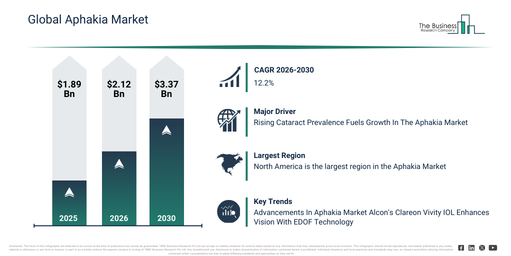
    The aphakia market is experiencing significant expansion, projected to increase from $1.89 billion in 2025 to $2.12 billion by 2026, reflecting a compound annual growth rate of 12.4%. This recent growth trajectory is underpinned by several key factors, including an increasing number of cataract surgeries being performed, advancements in surgical methodologies within ophthalmology, greater accessibility to vision correction technologies, the proliferation of eye care facilities, and a heightened public understanding of managing vision loss.

    The aphakia sector is poised for substantial expansion over the upcoming years, projected to reach a valuation of $3.37 billion by 2030 with a compound annual growth rate of 12.2%. This upward trajectory during the forecast period is anticipated to be fueled by advancements in intraocular lens innovations, a greater prevalence of minimally invasive ophthalmic procedures, the proliferation of tailored vision correction alternatives, an elevated emphasis on eye care for children, and augmented investments in sophisticated eye care infrastructure. Key developments shaping this market in the coming years include a surge in intraocular lens implantations, escalating demand for cutting-edge refractive surgery choices, a broadened application of custom-made contact lens solutions, evolving strategies for managing pediatric aphakia, and a heightened dedication to restoring vision after surgery.

    Download A Free Sample Report For Comprehensive Market Insights:

    https://www.thebusinessresearchcompany.com/sample.aspx?id=18957&type=smp

    Aphakia Market Demand Drivers: What Is Fueling Industry Growth?

    The increasing occurrence of cataracts is anticipated to be a key driver for the aphakia market’s expansion. Cataracts are characterized by clouding of the eye’s lens, which impairs vision. Factors contributing to the surge in cataract cases include aging demographics, an elevated prevalence of diabetes, prolonged exposure to sunlight, smoking habits, and inadequate nutritional intake. As cataracts necessitate the surgical removal of the eye’s natural lens to restore sight, the condition directly leads to aphakia, defined as the absence of the natural lens. Illustrating this trend, data from May 2024, released by the Office for Health Improvement and Disparities in the UK, indicated a significant increase in cataract surgery admissions for those 65 and older in England. Specifically, admissions rose from 516,073 in the fiscal year ending 2023 to 581,369 in the fiscal year ending 2024, underscoring a heightened demand for surgical procedures. Consequently, the growing incidence of cataracts is fueling the growth of the aphakia market.

    Aphakia Market Segment Analysis: What Are The Major Market Categories?

    The aphakia market covered in this report is segmented –

    1) By Type: Congenital Aphakia, Surgical Aphakia, Acquired Aphakia

    2) By Treatment: Spectacles, Contact Lenses, Intraocular Lens Implantation, Refractive Surgery

    3) By End User: Hospitals, Ophthalmic clinics, Other End Users

    Subsegments:

    1) By Congenital Aphakia: Primary Aphakia, Secondary Aphakia

    2) By Surgical Aphakia: Post-Cataract Surgery, Post-Lens Dislocation Surgery

    3) By Acquired Aphakia: Trauma-Induced Aphakia, Disease-Induced Aphakia

    Aphakia Market Innovation Trends: Which Developments Are Transforming The Industry?

    Within the aphakia marketplace, leading corporations are focusing on the creation of presbyopia-correcting intraocular lenses (IOLs) aimed at improving patient vision quality and overall contentment. These advanced IOLs address aphakia by not only restoring sight but also compensating for presbyopia, thereby enabling sharp vision across various distances without the need for supplementary eyewear. As an illustration, Alcon, a prominent surgical device manufacturer from Switzerland, introduced its Clareon Vivity lens in Canada during November 2023. This particular lens stands out as a novel, nondiffractive extended depth of focus (EDOF) intraocular lens (IOL) engineered to deliver exceptional visual clarity while minimizing common visual disturbances. The Clareon Vivity IOL serves as a treatment for aphakia, a condition characterized by the absence of the eye’s natural lens, a situation frequently arising after cataract surgery. Its sophisticated x-wave technology enhances the eye’s focusing capabilities by maintaining the integrity of the light wavefront, rather than splitting it, which in turn diminishes the occurrence of halos and results in a more refined visual experience, representing a notable stride forward in the aphakia sector by offering cataract surgery recipients an enhanced solution for presbyopia correction.

    Aphakia Market Leading Companies Driving Competitive Growth

    Major companies operating in the aphakia market are Johnson & Johnson Services Inc., Alcon Laboratories Inc., Hoya Corporation, CooperVision Inc., Carl Zeiss AG, Santen Pharmaceutical Co. Ltd., Appasamy Associates, Aurolab, Rayner Intraocular Lenses Limited, Ophtec BV, SIFI SpA, Aaren Scientific Inc., Mediphacos, Hanita Lenses Ltd., Menicon Co. Ltd., Lenstec Inc., Morcher GmbH, Bausch & Lomb Incorporated, Nidek Co. Ltd., Swiss Advanced Vision AG, UltraVision CLPL, Medennium Inc.

    Access The Complete Aphakia Market Report:

    https://www.thebusinessresearchcompany.com/report/aphakia-global-market-report

    Aphakia Market Geographic Landscape: Which Region Dominates Industry Growth?

    North Americawas the largest region in the aphakia market in 2025. Asia-Pacificis expected to be the fastest-growing region in the forecast period. The regions covered in the aphakia market report are Asia-Pacific, South East Asia, Western Europe, Eastern Europe, North America, South America, Middle East, Africa.

    Get in touch with us:

    The Business Research Company: https://www.thebusinessresearchcompany.com/

    Americas: +1 310-496-7795

    Asia: +44 7882 955267 & +91 8897263534

    Europe: +44 7882 955267

    Email us at: marketing@tbrc.info

    Follow us on:

    LinkedIn: https://in.linkedin.com/company/the-business-research-company

    YouTube: https://www.youtube.com/channel/UC24_fI0rV8cR5DxlCpgmyFQ

    Global Market Model: https://www.thebusinessresearchcompany.com/global-market-model
  • Aortic Stenosis Market Growth Through 2030 Creates New Strategic Opportunities

    Aortic Stenosis Market Growth Through 2030 Creates New Strategic Opportunities

    Enhanced with market attractiveness analysis, total addressable market evaluation, company benchmarking matrices, interactive Excel dashboards, expanded supply chain intelligence, emerging startup coverage, and detailed product insights, The Business Research Company’s 2026 market reports deliver more actionable and strategically valuable research.

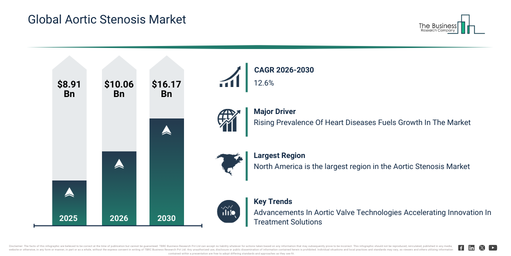
    Aortic Stenosis Market Growth From $10.05 Billion In 2026 To $16.16 Billion By 2030 At A CAGR Of 12.6%

    The market for aortic stenosis experienced substantial expansion historically and is projected to continue its upward trajectory, increasing from $8.91 billion in 2025 to $10.06 billion in 2026, driven by a compound annual growth rate (CAGR) of 12.9%. This robust growth during the preceding period was fueled by several key factors, including an increasingly elderly global demographic, a rise in the incidence of wear-and-tear related heart valve conditions, the proliferation of facilities for cardiac catheterization, advancements in surgical methods for valve replacement, and heightened medical awareness concerning valve dysfunctions.

    The global market for aortic stenosis is projected for substantial expansion in the upcoming years, anticipated to reach $16.17 billion by 2030, driven by a compound annual growth rate of 12.6%. This predicted growth trajectory is fueled by escalating investments in cutting-edge valve technologies, a marked increase in transcatheter aortic valve replacement (TAVR) procedures, the broadening scope of outpatient cardiac care, a heightened emphasis on proactive intervention strategies, and the growing integration of digital tools for cardiac monitoring. Key developments shaping this market during the forecast period involve a greater uptake of transcatheter valve replacement interventions, a surge in demand for minimally invasive cardiac treatments, more extensive utilization of sophisticated diagnostic imaging techniques, the development of tailored valve therapy solutions, and an intensified focus on detecting the disease at its earlier stages.

    Download A Free Sample Report For Comprehensive Market Insights:

    https://www.thebusinessresearchcompany.com/sample.aspx?id=21102&type=smp

    Aortic Stenosis Market Growth Drivers: What Factors Are Accelerating Expansion?

    The rising incidence of cardiac ailments is anticipated to stimulate the expansion of the aortic stenosis market. Cardiac ailments encompass a spectrum of conditions affecting the heart’s physical structure and operational capacity, potentially impairing its ability to circulate blood efficiently and resulting in adverse health outcomes. Common examples of such conditions include coronary artery disease (CAD), heart failure, irregular heart rhythms (arrhythmias), issues with heart valves (valvular heart disease), and diseases of the heart muscle (cardiomyopathy). Aortic stenosis specifically pertains to the constriction of the aortic valve, which obstructs the passage of blood from the heart’s main pumping chamber (left ventricle) into the body’s primary artery (aorta). This augmented impediment necessitates increased exertion from the heart, potentially culminating in heart failure and other cardiovascular complications as time progresses. Effective management of aortic stenosis, through interventions like valve replacement surgery or transcatheter aortic valve implantation (TAVI), contributes to enhanced cardiac performance and mitigates the likelihood of severe consequences associated with heart disease. To illustrate, data from January 2025, as provided by the British Heart Foundation, a UK-based organization dedicated to cardiovascular research, indicates that roughly 7.6 million individuals in the United Kingdom currently live with heart and circulatory conditions, comprising approximately 4 million men and 3.6 million women. These health issues are responsible for approximately 27% of all fatalities in the UK, leading to over 170,000 deaths each year, which equates to nearly 480 daily fatalities. Consequently, the growing prevalence of heart conditions is acting as a key driver for the aortic stenosis market.

    Aortic Stenosis Market Segment Breakdown: Which Categories Generate The Most Revenue?

    The aortic stenosis market covered in this report is segmented –

    1) By Type: Congenital Aortic Stenosis, Acquired Aortic Stenosis

    2) By Treatment: Surgical Aortic Valve Replacement, Transcatheter Aortic Valve Replacement, Balloon Aortic Valvuloplasty

    3) By End User: Hospitals and Cardiac Centers, Ambulatory Surgical Centers, Cardiac Surgeons and Interventional Cardiologists

    Subsegments:

    1) By Congenital Aortic Stenosis: Neonatal Aortic Stenosis, Infantile Aortic Stenosis, Juvenile Aortic Stenosis

    2) By Acquired Aortic Stenosis: Age-Related Aortic Stenosis, Degenerative Aortic Stenosis, Rheumatic Aortic Stenosis

    Aortic Stenosis Market Trends: What Is Shaping Future Industry Growth?

    In the realm of the aortic stenosis market, leading firms are actively engaged in pioneering novel aortic valve solutions, with a particular emphasis on transcatheter aortic valve implantation (TAVI) devices. The primary objective behind these advancements is to elevate patient results, mitigate treatment-related dangers, and bolster the efficacy of interventions for aortic conditions. The TAVI system represents a less invasive medical apparatus designed to substitute a compromised aortic valve, bypassing the necessity for open-heart procedures. As an illustration, in January 2023, Abbott Laboratories, a prominent American medical technology corporation, secured United States Food and Drug Administration (FDA) approval for its cutting-edge Navitor TAVI system. This Navitor system incorporates the NaviSeal fabric cuff, engineered to minimize or completely eradicate paravalvular leaks. Furthermore, its architectural configuration, featuring leaflets situated within the existing native valve, is intended to facilitate improved accessibility to the coronary arteries, thereby paving the way for future management of coronary artery disease.

    Aortic Stenosis Market Key Players And Strategic Industry Positioning

    Major companies operating in the aortic stenosis market are Abbott Laboratories, Medtronic plc, Edwards Lifesciences Corporation, Boston Scientific Corporation, Terumo Corporation, LivaNova PLC, CryoLife Inc, Anteris Technologies Ltd, Venus Medtech, Peijia Medical, MicroPort Scientific Corporation, Lepu Medical Technology Co Ltd, Symetis SA, Artivion Inc, HighLife SAS, Transcatheter Technologies GmbH, NaviGate Cardiac Structures Inc, Xeltis BV, Sorin Group, Meril Life Sciences Pvt Ltd, On-X Life Technologies Inc, Braile Biomédica, Colibri Heart Valve

    Access The Complete Aortic Stenosis Market Report:

    https://www.thebusinessresearchcompany.com/report/aortic-stenosis-global-market-report

    #Aortic Stenosis Market Largest Region: Which Geography Holds The Highest Market Share?

    North Americawas the largest region in the aortic stenosis market in 2025. Asia-Pacificis expected to be the fastest-growing region in the forecast period. The regions covered in the aortic stenosis market report are Asia-Pacific, South East Asia, Western Europe, Eastern Europe, North America, South America, Middle East, Africa.

    Get in touch with us:

    The Business Research Company: https://www.thebusinessresearchcompany.com/

    Americas: +1 310-496-7795

    Asia: +44 7882 955267 & +91 8897263534

    Europe: +44 7882 955267

    Email us at: marketing@tbrc.info

    Follow us on:

    LinkedIn: https://in.linkedin.com/company/the-business-research-company

    YouTube: https://www.youtube.com/channel/UC24_fI0rV8cR5DxlCpgmyFQ

    Global Market Model: https://www.thebusinessresearchcompany.com/global-market-model
  • Aortic Aneurysm Market Size Projected To Increase From $4.46 Billion To $6.61 Billion During The Forecast Period

    Aortic Aneurysm Market Size Projected To Increase From $4.46 Billion To $6.61 Billion During The Forecast Period

    Through market attractiveness analysis, total addressable market evaluation, company benchmarking matrices, interactive Excel dashboards, expanded supply chain intelligence, emerging startup coverage, and detailed product insights, The Business Research Company’s 2026 market reports provide more actionable and strategically valuable research.

    Aortic Aneurysm Market Expansion Outlook: What Revenue Opportunities Lie Ahead?

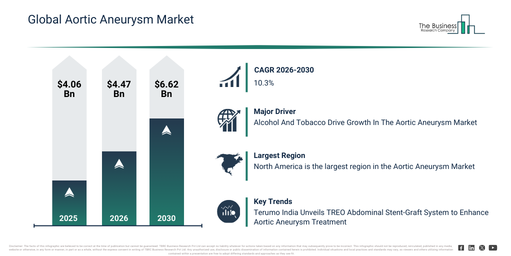
    Experiencing a significant surge, the aortic aneurysm market is projected to expand from $4.06 billion in 2025 to $4.47 billion in 2026, reflecting a compound annual growth rate of 10.0%. This robust historical expansion is underpinned by several key factors including an aging global populace, a rising incidence of cardiovascular ailments, advancements in diagnostic imaging, enhanced vascular surgical capacities, and the broader implementation of surgical repair methodologies.

    The market for aortic aneurysms is poised for substantial expansion, projected to reach $6.62 billion by 2030 with a compound annual growth rate of 10.3%. This predicted surge is fueled by several key factors: a growing demand for less invasive cardiac interventions, increased financial backing for sophisticated vascular technologies, broader implementation of screening to identify aneurysms, the wider use of artificial intelligence in diagnosis, and a heightened emphasis on improving patient results over the long term. During this upcoming period, significant developments are expected to include a greater acceptance of endovascular aneurysm repair (EVAR), more extensive use of advanced imaging for early identification, a rising tendency towards customized surgical strategies, continuous innovation in endovascular devices, and a stronger focus on monitoring patients after surgery.

    Download A Free Sample Report For Comprehensive Market Insights:

    https://www.thebusinessresearchcompany.com/sample.aspx?id=10559&type=smp

    Aortic Aneurysm Market Growth Factors Supporting Long-Term Expansion

    Increased alcohol and tobacco consumption is poised to be a significant catalyst for the expansion of the aortic aneurysm market. These habits, involving the intake of alcohol and tobacco products, are known to have a considerable effect on cardiovascular well-being. Factors such as greater social acceptance and widespread availability, despite recognized health hazards, contribute to the escalating use of these substances. The heightened consumption of alcohol and tobacco directly fuels the need for aortic aneurysm interventions, as prolonged exposure detrimentally affects arterial integrity and speeds up the deterioration of blood vessels, consequently increasing the occurrence of aneurysms that necessitate medical care. Illustrating this trend, UK government data from the Office for Health Improvement & Disparities revealed that from April 2023 to March 2024, 310,863 individuals aged 18 and over sought assistance for drug and alcohol issues, a rise of 7% compared to the 290,635 who sought help the preceding year. Consequently, the ascending rates of alcohol and tobacco usage are a key driver for the advancement of the aortic aneurysm market.

    Aortic Aneurysm Market Segmentation: How Is The Market Structured Across Key Categories?

    The aortic aneurysm market covered in this report is segmented –

    1) By Type: Thoracic Aortic Aneurysm (TAA), Abdominal Aortic Aneurysm (AAA)

    2) By Treatment: Open Surgical Repair (OSR), Endovascular Aneurysm Repair (EVAR)

    3) By End User: Hospitals And Clinics, Ambulatory Surgery Centers (ASCs), Other End Users

    Subsegments:

    1) By Thoracic Aortic Aneurysm (TAA): Ascending Aortic Aneurysm, Arch Aortic Aneurysm, Descending Aortic Aneurysm

    2) By Abdominal Aortic Aneurysm (AAA): Infrarenal Aneurysm, Pararenal Aneurysm, Juxtarenal Aneurysm

    Aortic Aneurysm Market Industry Trends Shaping Future Revenue Growth

    Key players within the aortic aneurysm sector are prioritizing the development and release of groundbreaking treatments, exemplified by the Stent-Graft System. This particular type of medical apparatus is engineered for addressing circulatory ailments, specifically those involving bulges or ruptures within arteries, by integrating a supportive stent with a synthetic graft material to reconstruct the vessel. To illustrate, August 2024 saw Terumo India, a prominent medical technology firm based in India, introduce its TREO Abdominal Stent-graft system, an advanced implant tailored for abdominal aortic aneurysms. The TREO system artfully combines a robust stent with a body-friendly graft, offering substantial reinforcement and effectively mitigating rupture hazards, ultimately striving to improve patient recovery through less intrusive surgical techniques and more enduring vascular repair.

    Aortic Aneurysm Market Competitive Landscape And Leading Companies

    Major companies operating in the aortic aneurysm market are Cardiatis SA, Cook Medical Inc., Endologix LLC, W L Gore & Associates Inc., JOTEC GmbH, Lombard Medical Limited, Medtronic plc, Terumo Corporation, MicroPort Scientific Corporation, Boston Scientific Corporation, Endospan Ltd., LifeTech Scientific Corporation, B. Braun Melsungen AG, EndoEvolution LLC, CryoLife Inc., Intuitive Surgical Inc., Synovis Micro Companies Alliance Inc., Meril Life Sciences Pvt. Ltd., Vitalitec International GmbH, Getinge AB, CONMED Corporation, TriVascular Technologies Inc., Vascutek Ltd., Aptus Endosystems Inc., Bolton Medical Inc., EndoVascular Technologies Inc., Endurant Energy LLC, LeMaitre Vascular Inc.

    Access The Complete Aortic Aneurysm Market Report:

    https://www.thebusinessresearchcompany.com/report/aortic-aneurysm-global-market-report

    Aortic Aneurysm Market Regional Analysis: Which Region Leads By Revenue?

    North Americawas the largest region in the aortic aneurysm market in 2025. The regions covered in the aortic aneurysm market report are Asia-Pacific, South East Asia, Western Europe, Eastern Europe, North America, South America, Middle East, Africa.

    Get in touch with us:

    The Business Research Company: https://www.thebusinessresearchcompany.com/

    Americas: +1 310-496-7795

    Asia: +44 7882 955267 & +91 8897263534

    Europe: +44 7882 955267

    Email us at: marketing@tbrc.info

    Follow us on:

    LinkedIn: https://in.linkedin.com/company/the-business-research-company

    YouTube: https://www.youtube.com/channel/UC24_fI0rV8cR5DxlCpgmyFQ

    Global Market Model: https://www.thebusinessresearchcompany.com/global-market-model
  • Anti-Snoring Treatment Market Growth Outlook Reveals A CAGR Of 8.2% And A Market Value Of $3.77 Billion By 2030

    Anti-Snoring Treatment Market Growth Outlook Reveals A CAGR Of 8.2% And A Market Value Of $3.77 Billion By 2030

    Delivering more actionable and strategically valuable research, The Business Research Company’s 2026 market reports feature market attractiveness analysis, total addressable market evaluation, company benchmarking matrices, interactive Excel dashboards, expanded supply chain intelligence, emerging startup coverage, and detailed product insights.

    Anti-Snoring Treatment Market Growth Potential: How Will Market Size Change Through 2030?

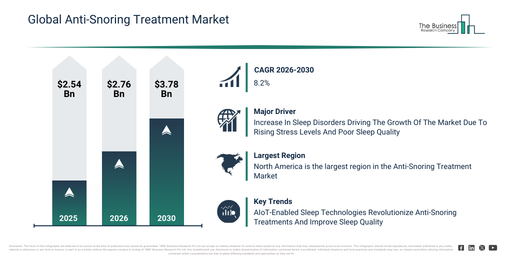
    The market for anti-snoring solutions has experienced robust expansion lately, with projections indicating a rise from $2.54 billion in 2025 to $2.76 billion by 2026, reflecting a compound annual growth rate of 8.5%. This expansion during the past period was driven by factors such as the escalating incidence of sleep-disordered breathing conditions, heightened consumer consciousness regarding sleep quality, increased accessibility of non-prescription snoring aids, the proliferation of specialized sleep centers, and the growing adoption of oral appliance therapy.

    The market for anti-snoring remedies is poised for considerable expansion over the ensuing years, projected to reach $3.78 billion by 2030, reflecting a compound annual growth rate of 8.2%. This upward trajectory in the upcoming period is expected to be propelled by several key factors, including the greater incorporation of digital sleep tracking systems, the increasing acceptance of tailored sleep therapy approaches, the broadening reach of e-commerce platforms for distribution, a heightened emphasis on proactive management of sleep health, and a growing demand for less invasive methods to address snoring. Significant developments anticipated during this forecast period encompass a rise in the use of smart wearable devices designed to combat snoring, a concurrent surge in the demand for non-invasive therapeutic options, a growing inclination towards at-home management of snoring issues, the wider availability of customized oral appliance treatments, and an intensified dedication to improving overall sleep quality.

    Download A Free Sample Report For Comprehensive Market Insights:

    https://www.thebusinessresearchcompany.com/sample.aspx?id=23310&type=smp

    #Anti-Snoring Treatment Market Demand Drivers Creating New Revenue Opportunities

    The surge in sleep disturbances is anticipated to be a key factor fueling the expansion of the anti-snoring treatment sector. Sleep disorders encompass a range of conditions that interfere with regular sleep cycles, impacting the quality, length, or timing of sleep, and consequently hindering daily performance. This growing incidence of sleep disorders can be linked to escalating stress levels, which boost the body’s stress hormones and impede the capacity to initiate and maintain sleep. Interventions for snoring contribute to enhanced sleep quality by minimizing breathing disruptions, thereby offering relief from sleep disorders like sleep apnea and averting associated health complications. For example, data from the National Health Service in the UK indicated that in November 2023, the percentage of individuals aged 17 to 23 experiencing sleep issues at least three times in the preceding week saw a slight increase to 64.9%, up from 64.0% in 2022, underscoring the upward trend in sleep disturbances and their subsequent influence on the anti-snoring treatment market’s progression.

    The escalation in healthcare spending is poised to be a significant catalyst for the anti-snoring treatment market’s advancement. This spending encompasses all outlays on health-related goods and services, such as hospitalizations, medical consultations, pharmaceuticals, and healthcare devices. The upward trend in health expenditures is largely driven by an increasingly elderly demographic, which naturally necessitates greater utilization of medical services due to the higher healthcare needs of older individuals. Heightened investment in healthcare translates directly into improved access to diagnostic tools and therapeutic interventions for conditions including snoring and sleep apnea. To illustrate, the US government agency Centers for Medicare & Medicaid Services reported in June 2025 that national health expenditures rose by 7.5% in 2023, reaching a total of $4.9 trillion, equating to $14,570 per person and constituting 17.6% of the Gross Domestic Product; furthermore, Medicare spending alone climbed by 8.1% to $1,029.8 billion, representing 21% of these total national health expenditures, thus demonstrating how increased healthcare expenditure fuels the anti-snoring treatment market’s growth.

    Anti-Snoring Treatment Market Segmentation Trends And Revenue Drivers

    The anti-snoring treatment market covered in this report is segmented –

    1) By Device: Mandible Advancement Devices, Tongue Stabilizing Devices, Nasal Devices, Continuous Positive Airway Pressure Devices, Chin Straps, Other Devices

    2) By Distribution Channel: Hospital Pharmacies, Retail Pharmacies, Online, Other Distribution Channels

    3) By Application: Somnoplasty, Maxillo-Mandibular And Genioglossus Advancement Surgeries, Radiofrequency Ablation Surgery, Other Applications

    4) By End-User: Hospital And Clinics, Ambulatory Surgical Centers, Day Care Centers, Other End-Users

    Subsegments:

    1) By Mandible Advancement Devices: Custom-Fitted Mandibular Advancement Devices, Semi-Custom Mandibular Advancement Devices, Over-The-Counter Mandibular Advancement Devices

    2) By Tongue Stabilizing Devices: Standard Tongue Stabilizing Devices, Custom-Fitted Tongue Stabilizing Devices

    3) By Nasal Devices: Nasal Strips, Nasal Dilators (Internal & External), Nasal Sprays

    4) By Continuous Positive Airway Pressure (CPAP) Devices: Auto-Adjusting CPAP Devices, Fixed Pressure CPAP Devices, Bi-Level Positive Airway Pressure (BiPAP) Devices

    5) By Chin Straps: Adjustable Chin Straps, Non-Adjustable Chin Straps

    6) By Other Devices: Positional Therapy Devices, Smart Wearable Anti-Snoring Devices, Vestibular Shields

    Anti-Snoring Treatment Market Trends Driving Strategic Industry Expansion

    Within the anti-snoring treatment sector, leading businesses are directing their efforts toward pioneering sophisticated offerings, including smart pillows and mattresses powered by AIoT technology, with the ultimate aim of elevating sleep quality, mitigating snoring, and diminishing the health complications linked to it. These AIoT-driven sleep innovations merge artificial intelligence capabilities with the connectivity of the Internet of Things to meticulously track vital physiological indicators, dissect sleep behavior, and implement immediate modifications for achieving superior restorative sleep. A notable illustration of this trend occurred in December of 2023 when The DeRUCCI Group, a publicly traded entity from China recognized for its sleep technology expertise, introduced an intelligent anti-snore pillow equipped with AI-powered surveillance and intervention mechanisms. This innovative pillow is designed to systematically alter head positioning for peak efficacy, facilitates sleep monitoring through a dedicated application, and integrates seamlessly with other smart home ecosystems to cultivate an individualized sleep ambiance. It features intelligent adjustments to pillow height, thereby supporting cervical contours and alleviating weariness, employs sophisticated AI algorithms to observe an individual’s body shape, sleeping posture, cardiac rhythm, and dermal temperature, and subsequently furnishes detailed sleep analyses alongside pertinent health alerts.

    #Anti-Snoring Treatment Market Industry Leaders: Which Organizations Are Driving Competition?

    Major companies operating in the anti-snoring treatment market are GlaxoSmithKline plc, Medtronic plc, Koninklijke Philips N.V, Mitsui Chemicals Inc, ResMed, Fisher & Paykel Healthcare​, PANTHERA DENTAL, SomnoMed, ProSomnus Sleep Technologies, Airing Inc., Apnea Sciences Corporation, Hupnos, MEDiTAS Ltd, MPowrx Health & Wellness, Sleeping Well LLC, Smart Nora Inc., The Pure Sleep Company, The Snore Reliever Company LLC, Theravent Inc, Oscimed SA, Zzoma.

    Access The Complete Anti-Snoring Treatment Market Report:

    https://www.thebusinessresearchcompany.com/report/anti-snoring-treatment-global-market-report

    Anti-Snoring Treatment Market Geographic Distribution And Regional Opportunities

    North Americawas the largest region in the anti-snoring treatment market in 2025. The regions covered in the anti-snoring treatment market report are Asia-Pacific, South East Asia, Western Europe, Eastern Europe, North America, South America, Middle East, Africa.

    Get in touch with us:

    The Business Research Company: https://www.thebusinessresearchcompany.com/

    Americas: +1 310-496-7795

    Asia: +44 7882 955267 & +91 8897263534

    Europe: +44 7882 955267

    Email us at: marketing@tbrc.info

    Follow us on:

    LinkedIn: https://in.linkedin.com/company/the-business-research-company

    YouTube: https://www.youtube.com/channel/UC24_fI0rV8cR5DxlCpgmyFQ

    Global Market Model: https://www.thebusinessresearchcompany.com/global-market-model
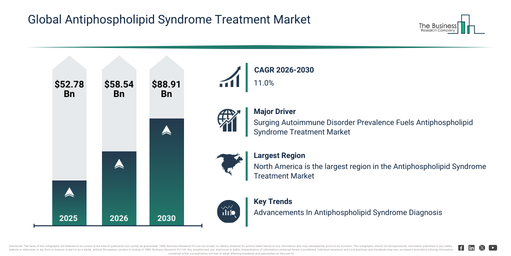
  • Antiphospholipid Syndrome Treatment Market Forecast Highlights Expansion From $58.54 Billion To $88.91 Billion Through 2030

    Antiphospholipid Syndrome Treatment Market Forecast Highlights Expansion From $58.54 Billion To $88.91 Billion Through 2030

    Enhanced with market attractiveness analysis, total addressable market evaluation, company benchmarking matrices, interactive Excel dashboards, expanded supply chain intelligence, emerging startup coverage, and detailed product insights, The Business Research Company’s 2026 market reports deliver more actionable and strategically valuable research.

    Antiphospholipid Syndrome Treatment Market Value Analysis: What Growth Is Expected Over The Forecast Period?

    The market for antiphospholipid syndrome treatments has experienced substantial expansion recently. Projections indicate continued robust growth, with the market expected to expand from $52.78 billion in 2025 to $58.54 billion in 2026, reflecting a compound annual growth rate of 10.9%. Factors contributing to this historical growth trajectory include heightened awareness surrounding autoimmune conditions, increased prescription of anticoagulant therapies, enhanced accessibility to diagnostic antibody testing, the proliferation of hospital-managed treatment approaches, and a greater understanding of pregnancy-associated complications.

    The market for treating antiphospholipid syndrome is poised for substantial expansion over the coming years, projected to reach $88.91 billion by 2030, exhibiting an 11.0% compound annual growth rate. This anticipated growth is fueled by several key drivers, including a surge in investments directed towards precision medicine research, the continuous development of innovative anticoagulant medications, a broadening acceptance of digital tools for patient supervision, the proliferation of specialized centers dedicated to autoimmune condition care, and a heightened emphasis on proactive thrombotic event management. Within this projection period, several significant trends are expected to shape the landscape, such as a greater reliance on targeted anticoagulation strategies, an increasing utilization of individualized treatment plans, a stronger emphasis on achieving prompt and precise diagnoses, the broader implementation of combination therapy methodologies, and a more rigorous assessment of enduring thrombotic risks.

    Download A Free Sample Report For Comprehensive Market Insights:

    https://www.thebusinessresearchcompany.com/sample.aspx?id=13368&type=smp

    Antiphospholipid Syndrome Treatment Market Expansion Supported By Key Demand Factors

    The escalating incidence of autoimmune conditions is anticipated to stimulate the expansion of the antiphospholipid syndrome treatment sector. Autoimmune disorders encompass a group of illnesses where the body’s immune system inappropriately identifies and attacks its own tissues and cells. Antiphospholipid syndrome (APS), itself an autoimmune condition, can manifest with gastrointestinal issues such as irritable bowel syndrome (IBS), a disorder affecting the digestive tract. The treatment for antiphospholipid syndrome is administered to patients with inflammatory bowel diseases undergoing therapy with anti-TNF drugs. Illustratively, by June 2023, Crohn’s and Colitis Canada reported that an estimated 322,600 Canadians were afflicted with inflammatory bowel diseases (IBD) in 2023, representing roughly 0.82% of the nation’s populace. Projections indicate that by 2035, approximately 470,000 Canadians, or about 1.1% of the population (a ratio of 1 in 91 individuals), will be living with IBD. Consequently, the heightened prevalence of autoimmune disorders is a key factor driving the antiphospholipid syndrome treatment market.

    The augmentation of healthcare spending is poised to energize the antiphospholipid syndrome treatment market. Healthcare expenditure encompasses the dedication of financial and human resources towards the provision of medical services and the enhancement of public well-being. Such expenditure is crucial for the holistic management of antiphospholipid syndrome, covering the costs associated with pharmaceuticals, diagnostic evaluations, and specialized consultations, thereby facilitating effective disease control and elevating the patient’s standard of living. As an example, the Office for National Statistics in the UK noted in April 2025 that the nation’s healthcare spending in 2024 approximated £317 billion, signifying a nominal rise of 6.5% from the preceding year. Therefore, escalating healthcare expenditure serves as a significant contributor to the growth of the antiphospholipid syndrome market.

    Antiphospholipid Syndrome Treatment Market Segment Analysis Highlighting Growth Areas

    The antiphospholipid syndrome treatment market covered in this report is segmented –

    1) By Treatment Type: Medications, Preventative (Prophylaxis) Therapy, Other Treatment Types

    2) By Indication Type: Primary Antiphospholipid Syndrome, Secondary Antiphospholipid Syndrome, Catastrophic Antiphospholipid Syndrome

    3) By Route of Administration: Oral, Parental, Other Routes of Administration

    4) By End-Users: Hospitals, Homecare, Specialty Centers, Other End-Users

    Subsegments:

    1) By Medications: Anticoagulants, Antiplatelet Agents, Immunosuppressive Drugs

    2) By Preventative (Prophylaxis) Therapy: Anticoagulation Therapy, Aspirin Therapy

    3) By Other Treatment Types: Plasma Exchange, Intravenous Immunoglobulin (IVIG)

    Antiphospholipid Syndrome Treatment Market Growth Trends Influencing Competitive Dynamics

    Within the automotive covers sector, leading entities are actively engaged in bringing forth novel offerings, including immunoglobulin reagents, to elevate the precision and dependability of diagnostic assessments. These immunoglobulin reagents function as essential laboratory instruments, housing antibodies crucial for identifying, measuring, or examining particular antigens in both diagnostic and research contexts. As an illustration, in February of 2024, Werfen, a diagnostics specialist headquartered in Spain, declared the attainment of the CE mark for its Aptiva Immunoglobulin G (IgG) and Immunoglobulin M (IgM) reagents tailored for Antiphospholipid Syndrome (APS). The distinctive characteristic of the Aptiva APS IgG and APS IgM reagents stems from their utilization of the Aptiva particle-based multi-analyte technology (PMAT), facilitating the semi-quantitative identification of anti-cardiolipin (aCL) and anti-beta 2 glycoprotein 1 (aβ2GP1) IgG and IgM autoantibodies within human serum and citrated plasma, thereby offering considerable assistance in the diagnosis of primary and secondary antiphospholipid syndrome (APS) when considered in conjunction with supplementary laboratory data.

    Antiphospholipid Syndrome Treatment Market Leading Companies: Who Holds Significant Market Presence?

    Major companies operating in the antiphospholipid syndrome treatment market are Pfizer Inc., Johnson & Johnson, F. Hoffmann-La Roche Ltd., AbbVie Inc., Bayer AG, Novartis AG, Merck & Co., Bristol Myers Squibb, Abbott Laboratories, Sanofi S.A., GlaxoSmithKline PLC, Eli Lilly and Company, Cipla Ltd., Baxter International, Teva Pharmaceutical Industries Ltd., CSL Limited, Boehringer Ingelheim International GmbH, Fresenius Kabi, Aurobindo Pharma, Dr. Reddy’s Laboratories, Hikma Pharmaceutics plc, Aspen Pharmacare, Zydus Lifesciences Limited, Leo Pharma, Daiichi Sankyo Company

    Access The Complete Antiphospholipid Syndrome Treatment Market Report:

    https://www.thebusinessresearchcompany.com/report/antiphospholipid-syndrome-treatment-global-market-report

    Antiphospholipid Syndrome Treatment Market Largest Region By Revenue And Market Share

    North Americawas the largest region in the antiphospholipid syndrome treatment market in 2025. The regions covered in the antiphospholipid syndrome treatment market report are Asia-Pacific, South East Asia, Western Europe, Eastern Europe, North America, South America, Middle East, Africa.

    Get in touch with us:

    The Business Research Company: https://www.thebusinessresearchcompany.com/

    Americas: +1 310-496-7795

    Asia: +44 7882 955267 & +91 8897263534

    Europe: +44 7882 955267

    Email us at: marketing@tbrc.info

    Follow us on:

    LinkedIn: https://in.linkedin.com/company/the-business-research-company

    YouTube: https://www.youtube.com/channel/UC24_fI0rV8cR5DxlCpgmyFQ

    Global Market Model: https://www.thebusinessresearchcompany.com/global-market-model
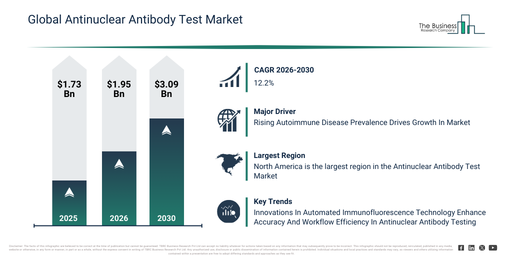
  • Antinuclear Antibody Test Market Expected To Reach $3.08 Billion By 2030 As Growth Accelerates At 12.2% CAGR

    Antinuclear Antibody Test Market Expected To Reach $3.08 Billion By 2030 As Growth Accelerates At 12.2% CAGR

    Through market attractiveness analysis, total addressable market evaluation, company benchmarking matrices, interactive Excel dashboards, expanded supply chain intelligence, emerging startup coverage, and detailed product insights, The Business Research Company’s 2026 market reports provide more actionable and strategically valuable research.

    Antinuclear Antibody Test Market Size Forecast: How Large Could The Market Become By 2030?

    The antinuclear antibody test sector is set for considerable expansion over the coming years, projecting an increase from $1.73 billion in 2025 to $1.95 billion in 2026, achieving a compound annual growth rate of 12.5%. This upward trajectory in the historical period is fueled by several key factors, including a rise in autoimmune disease incidence, the broad reach of clinical laboratory testing, increased physician trust in serological diagnostic methods, the accessibility of immunofluorescence assay technologies, and escalating patient demand for diagnostic tests.

    The global market for antinuclear antibody (ANA) testing is poised for substantial expansion in the coming years, projecting a reach of $3.09 billion by the year 2030, driven by a compound annual growth rate (CAGR) of 12.2%. This anticipated growth trajectory is largely fueled by several key factors including the escalating integration of AI in interpreting diagnostic results, a burgeoning demand for convenient point-of-care solutions for autoimmune disease assessment, the wider implementation of interconnected laboratory information systems, a heightened emphasis on tailoring diagnostic approaches for individual patients with autoimmune conditions, and significant capital infusions into cutting-edge assay technologies. During this foresighted period, significant market currents are expected to emerge, characterized by a greater embrace of both multiplexed and automated ANA testing methods, a growing necessity for proactive screening of autoimmune disorders in their early stages, increased utilization of digital pathology alongside laboratory information management system (LIMS) integration, the proliferation of advanced high-throughput diagnostic platforms, and a reinforced commitment to ensuring both the precision and consistency of diagnostic outcomes.

    Download A Free Sample Report For Comprehensive Market Insights:

    https://www.thebusinessresearchcompany.com/sample.aspx?id=21101&type=smp

    #Antinuclear Antibody Test Market Growth Drivers And Industry Catalysts

    A growing incidence of autoimmune conditions is anticipated to be a key factor in expanding the antinuclear antibody test market. These conditions occur when the body’s immune system erroneously targets its own healthy cells and tissues. Factors such as genetic predispositions, environmental exposures, hormonal shifts, and lifestyle choices including diet and stress are contributing to the increased occurrence of autoimmune diseases. The antinuclear antibody test is instrumental in identifying autoimmune disorders early on by detecting antibodies that are directed against the body’s own cellular components. As an illustration, Rheumatoid Arthritis Australia reported in February 2024 that an estimated 562,378 Australians, representing 14% of all individuals with arthritis, are projected to have rheumatoid arthritis by 2025. Consequently, the escalating rate of autoimmune diseases is fueling the advancement of the antinuclear antibody test market.

    Antinuclear Antibody Test Market Segment Performance And Strategic Opportunities

    The antinuclear antibody test market covered in this report is segmented –

    1) By Product: Assay Kits, Reagent Kits, Software And Services

    2) By Technology: Immunofluorescence Assay, Multiplex Assay, ELISA

    3) By Application: Rheumatoid Arthritis, Systemic Lupus Erythematosus, Other Applications

    4) By End-User: Hospitals, Clinical, Physician Laboratories

    Subsegments:

    1) By Assay Kits: Enzyme-Linked Immunosorbent Assay (ELISA) Kits, Immunofluorescence Assay (IFA) Kits, Western Blot Assay Kits

    2) By Reagent Kits: Antigen Reagents, Conjugated Antibodies, Detection Reagents

    3) By Software And Services: Data Management Software, Laboratory Information Management Systems (LIMS), Technical Support And Consulting Services

    #Antinuclear Antibody Test Market Trends Influencing Long-Term Demand

    Leading entities within the antinuclear antibody test sector are concentrating their efforts on pioneering sophisticated diagnostic tools, specifically incorporating semi-automated image analysis methodologies to elevate accuracy and optimize laboratory operational efficiency. This semi-automated image analysis capability within ANA testing involves the capture, organization, and preliminary categorization of patient samples according to their fluorescent signatures, thereby flagging those specimens necessitating in-depth examination by skilled personnel. A pertinent illustration of this trend emerged in June 2023 with Immuno Concepts, a prominent US developer of autoimmune diagnostics, introducing its IgG Anti-nDNA Fluorescent Test System, designed for integration with their Image Navigator semi-automated microscope. This comprehensive system aids laboratory professionals in both the qualitative and semi-quantitative identification of IgG antibodies targeting double-stranded DNA (dsDNA) in human serum, employing indirect immunofluorescence on a C. luciliae substrate coupled with a fluorescein-labeled anti-human IgG reagent. The Image Navigator systematically photographs each sample, efficiently segregating them into “potential negative” and “potential positive” classifications with a remarkable accuracy exceeding 97%, subsequently presenting these findings for definitive operator assessment, which ultimately fosters improved consistency, minimizes manual effort, and guarantees uniform interpretation protocols across diverse laboratory settings.

    Antinuclear Antibody Test Market Key Players: Which Companies Shape Industry Competition?

    Major companies operating in the antinuclear antibody test market are Hoffmann-La Roche Ltd., Thermo Fisher Scientific Inc., Abbott Laboratories, Becton Dickinson and Company, LabCorp, Quest Diagnostics Incorporated, Grifols SA, PerkinElmer Inc., Bio-Rad Laboratories Inc., Werfen SA, DiaSorin SpA, EUROIMMUN AG, Abcam plc, Trinity Biotech plc, Zeus Scientific Inc., ERBA Diagnostics Inc., Quidel Corporation, Antibodies Incorporated, Immuno Concepts Inc., Inova Diagnostics

    Access The Complete Antinuclear Antibody Test Market Report:

    https://www.thebusinessresearchcompany.com/report/antinuclear-antibody-test-global-market-report

    Antinuclear Antibody Test Market Regional Analysis And Leading Geography

    North Americawas the largest region in the antinuclear antibody test market in 2025. Asia-Pacificis expected to be the fastest-growing region in the forecast period. The regions covered in the antinuclear antibody test market report are Asia-Pacific, South East Asia, Western Europe, Eastern Europe, North America, South America, Middle East, Africa.

    Get in touch with us:

    The Business Research Company: https://www.thebusinessresearchcompany.com/

    Americas: +1 310-496-7795

    Asia: +44 7882 955267 & +91 8897263534

    Europe: +44 7882 955267

    Email us at: marketing@tbrc.info

    Follow us on:

    LinkedIn: https://in.linkedin.com/company/the-business-research-company

    YouTube: https://www.youtube.com/channel/UC24_fI0rV8cR5DxlCpgmyFQ

    Global Market Model: https://www.thebusinessresearchcompany.com/global-market-model
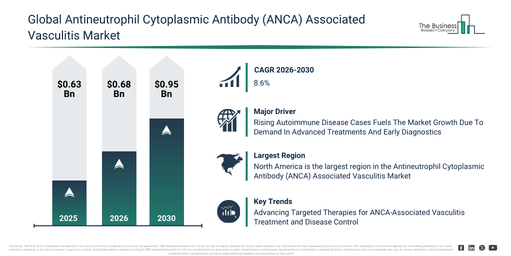
  • Antineutrophil Cytoplasmic Antibody (ANCA) Associated Vasculitis Market Set To Grow From $0.68 Billion In 2026 To $0.94 Billion By 2030 At A CAGR Of 8.6%

    Antineutrophil Cytoplasmic Antibody (ANCA) Associated Vasculitis Market Set To Grow From $0.68 Billion In 2026 To $0.94 Billion By 2030 At A CAGR Of 8.6%

    Delivering more actionable and strategically valuable research, The Business Research Company’s 2026 market reports feature market attractiveness analysis, total addressable market evaluation, company benchmarking matrices, interactive Excel dashboards, expanded supply chain intelligence, emerging startup coverage, and detailed product insights.

    Antineutrophil Cytoplasmic Antibody (ANCA) Associated Vasculitis Market Revenue Outlook: What CAGR Is Expected Through 2030?

    The market for antineutrophil cytoplasmic antibody (ANCA) associated vasculitis experienced robust expansion recently, projected to increase from $0.63 billion in 2025 to $0.68 billion in 2026, reflecting a compound annual growth rate (CAGR) of 8.7%. This historical growth trajectory is a result of several factors, including advancements in diagnosing autoimmune conditions, greater utilization of corticosteroids and immunosuppressive medications, the broadening scope of nephrology and rheumatology services, heightened professional recognition of uncommon vasculitis conditions, and the establishment of consistent treatment guidelines.

    The global market for antineutrophil cytoplasmic antibody (ANCA)-associated vasculitis is poised for substantial expansion, projecting a valuation of $0.95 billion by 2030, with a projected compound annual growth rate of 8.6% over the coming years. This anticipated growth trajectory is fueled by several key factors, including the ongoing development of precisely targeted biologic medications, increased financial backing for research into rare diseases, the broader implementation of individualized treatment plans, a heightened emphasis on strategies aimed at preventing disease relapses, and improved patient access to specialized medical facilities. Significant trends anticipated during this forecast period encompass a greater utilization of biologic therapies, a stronger commitment to achieving early and precise diagnoses, a more widespread application of targeted immunosuppressive regimens, the adoption of comprehensive multidisciplinary approaches to disease management, and an intensified focus on sustained, long-term monitoring of the condition.

    Download A Free Sample Report For Comprehensive Market Insights:

    https://www.thebusinessresearchcompany.com/sample.aspx?id=23309&type=smp

    Antineutrophil Cytoplasmic Antibody (ANCA) Associated Vasculitis Market Opportunity Drivers: What Is Creating New Revenue Potential?

    The increasing prevalence of autoimmune disorders is poised to propel the ANCA-associated vasculitis market’s expansion. These conditions occur when the body’s own immune system incorrectly targets healthy cells and tissues, perceiving them as foreign entities such as pathogens or environmental toxins. Factors such as lifestyle choices and environmental influences, including heightened exposure to contaminants and infections, are increasingly implicated in the rise of autoimmune diseases, as they can disrupt immune homeostasis and instigate aberrant immune system reactions. Antineutrophil cytoplasmic antibody (ANCA)-associated vasculitis contributes positively to the advancement of research and therapeutic interventions for autoimmune conditions by fostering the creation of specific immunosuppressive treatments, refining early detection methods, and enhancing comprehensive patient care approaches. This, in turn, leads to improved patient prognoses and a more profound comprehension of immune system regulation mechanisms. An illustrative example can be seen in the Inflammatory Bowel Disease (IBD) Clinical and Research Centre’s 2023 report published in September 2023, which indicated that in Canada, the prevalence of IBD, a type of autoimmune disease, stood at 825 per 100,000 individuals during 2023, impacting over 320,000 people. Projections suggest an annual prevalence increase of 2.44%, estimating that by 2035, around 470,000 Canadians, constituting 1.1% of the total population, will be affected by IBD. Consequently, the escalating incidence of autoimmune diseases is anticipated to be a significant driver for the ANCA-associated vasculitis market.

    #Antineutrophil Cytoplasmic Antibody (ANCA) Associated Vasculitis Market Segment Landscape And Growth Potential

    The antineutrophil cytoplasmic antibody (anca) associated vasculitis market covered in this report is segmented –

    1) By Type: Granulomatosis With Polyangiitis (GPA Or Wegener’s), Microscopic Polyangiitis (MPA), Eosinophilic Granulomatosis With Polyangiitis (EGPA Or Churg-Strauss), Other Types

    2) By Treatment: Immunosuppressants, Corticosteroids, Biologics, Other Treatments

    3) By Diagnosis: Blood Tests, Biopsy, Imaging, Other Diagnosis

    Subsegments:

    1) By Granulomatosis With Polyangiitis (GPA or Wegener’s): Limited Granulomatosis With Polyangiitis, Severe Granulomatosis With Polyangiitis, Refractory Granulomatosis With Polyangiitis

    2) By Microscopic Polyangiitis (MPA): Renal Microscopic Polyangiitis, Pulmonary Microscopic Polyangiitis, Neurological Microscopic Polyangiitis

    3) By Eosinophilic Granulomatosis With Polyangiitis (EGPA or Churg-Strauss): Cardiac Eosinophilic Granulomatosis With Polyangiitis, Pulmonary Eosinophilic Granulomatosis With Polyangiitis, Neurological Eosinophilic Granulomatosis With Polyangiitis

    4) By Other Types: Drug-Induced ANCA-Associated Vasculitis, Infection-Related ANCA-Associated Vasculitis, Overlap Syndrome ANCA-Associated Vasculitis

    Antineutrophil Cytoplasmic Antibody (ANCA) Associated Vasculitis Market Innovation Trends Driving Future Development

    Key players within the ANCA-associated vasculitis sector are actively pursuing advancements, particularly in the realm of targeted therapies, aiming to introduce novel treatment avenues for individuals affected by this uncommon and severe condition. Such targeted approaches in ANCA-associated vasculitis utilize advanced biological agents designed to specifically impede the immune system’s elements that trigger inflammation and damage blood vessels, ultimately slowing the disease’s advancement and lessening the harshness of treatment side effects. A notable development occurred in February 2023 when Vifor Fresenius Medical Care Renal Pharma (VFMCRP), a pharmaceutical entity headquartered in Switzerland, received endorsement from Australia’s Therapeutic Goods Administration (TGA) for Tavneos (avacopan). This medication is intended for use alongside rituximab or cyclophosphamide-based treatments in managing anti-neutrophil cytoplasmic autoantibody (ANCA)-associated vasculitis (AAV). The significance of this approval lies in Tavneos being the pioneering targeted therapy specifically developed for granulomatosis with polyangiitis (GPA) and microscopic polyangiitis (MPA), the two predominant forms of ANCA-associated vasculitis. Through its targeted inhibition of the complement C5a receptor (C5aR1), this therapeutic strategy aids in managing inflammatory responses and disease progression, concurrently decreasing the necessity for high doses of glucocorticoids, commonly referred to as steroids, which are associated with considerable long-term adverse effects.

    Antineutrophil Cytoplasmic Antibody (ANCA) Associated Vasculitis Market Competitive Landscape: Who Are The Leading Companies?

    Major companies operating in the antineutrophil cytoplasmic antibody (anca) associated vasculitis market are ChemoCentryx Inc, Amgen Inc, AstraZeneca Plc, GlaxoSmithKline plc, Novartis AG, Bristol‑Myers Squibb Company, Travere Therapeutics Inc, F. Hoffmann‑La Roche AG, Pfizer Inc, Sanofi SA, Eli Lilly and Company, Takeda Pharmaceutical Company Limited, AbbVie Inc, UCB S.A., Bayer AG, Janssen Pharmaceuticals NV, Sobi AB, Alentis Therapeutics AG, InflaRx NV, NS Pharma Inc, Staidson Biopharmaceuticals Co Ltd, Genentech Inc, Regeneron Pharmaceuticals Inc, Mylan NV, Teva Pharmaceutical Industries Ltd, Biogen Inc, CSL Limited, Moderna Inc, Vertex Pharmaceuticals Inc.

    Access The Complete Antineutrophil Cytoplasmic Antibody (ANCA) Associated Vasculitis Market Report:

    https://www.thebusinessresearchcompany.com/report/antineutrophil-cytoplasmic-antibody-anca-associated-vasculitis-global-market-report

    Antineutrophil Cytoplasmic Antibody (ANCA) Associated Vasculitis Market Geographic Analysis: Where Is Demand Growing The Fastest?

    North Americawas the largest region in the antineutrophil cytoplasmic antibody (ANCA) associated vasculitis market in 2025. Asia-Pacificis expected to be the fastest-growing region in the forecast period. The regions covered in the antineutrophil cytoplasmic antibody (anca) associated vasculitis market report are Asia-Pacific, South East Asia, Western Europe, Eastern Europe, North America, South America, Middle East, Africa.

    Get in touch with us:

    The Business Research Company: https://www.thebusinessresearchcompany.com/

    Americas: +1 310-496-7795

    Asia: +44 7882 955267 & +91 8897263534

    Europe: +44 7882 955267

    Email us at: marketing@tbrc.info

    Follow us on:

    LinkedIn: https://in.linkedin.com/company/the-business-research-company

    YouTube: https://www.youtube.com/channel/UC24_fI0rV8cR5DxlCpgmyFQ

    Global Market Model: https://www.thebusinessresearchcompany.com/global-market-model

  • Antimicrobial Susceptibility Testing Market Opportunities Are Emerging Beyond Traditional Growth Areas

    Antimicrobial Susceptibility Testing Market Opportunities Are Emerging Beyond Traditional Growth Areas

    Enhanced with market attractiveness analysis, total addressable market evaluation, company benchmarking matrices, interactive Excel dashboards, expanded supply chain intelligence, emerging startup coverage, and detailed product insights, The Business Research Company’s 2026 market reports deliver more actionable and strategically valuable research.

    Antimicrobial Susceptibility Testing Market Growth Analysis: How Will Revenue Expand During The Forecast Period?

    Fueled by escalating occurrences of infectious diseases, heightened consciousness surrounding antimicrobial resistance, the expansion of clinical microbiology facilities, a surge in hospital diagnostic testing, and the establishment of uniform AST methodologies, the market for antimicrobial susceptibility testing has experienced robust expansion. Projections indicate a continued upward trajectory, with the market anticipated to expand from $4.65 billion in 2025 to $4.93 billion in 2026, reflecting a compound annual growth rate of 6.0%.

    The market for antimicrobial susceptibility testing is poised for significant expansion in the upcoming years, projected to reach $6.01 billion by 2030, reflecting a compound annual growth rate of 5.1%. This anticipated growth is propelled by several key factors, including heightened investments in swift diagnostic technologies, a greater uptake of AI-enhanced laboratory analysis, the broadening of antimicrobial resistance surveillance initiatives, a surge in demand for point-of-care AST solutions, and an intensified emphasis on personalized antimicrobial therapy. During this forecast period, prominent trends will involve a wider adoption of automated AST systems, escalating demand for rapid diagnostic testing, increased integration of both molecular and phenotypic methodologies, the expansion of laboratory automation solutions, and a more concentrated effort on monitoring antimicrobial resistance.

    Download A Free Sample Report For Comprehensive Market Insights:

    https://www.thebusinessresearchcompany.com/sample.aspx?id=4026&type=smp

    Antimicrobial Susceptibility Testing Market Growth Momentum: Which Factors Are Influencing Demand?

    The escalating prevalence of infectious ailments worldwide has been a significant factor fueling the expansion of the antimicrobial susceptibility testing market. Such diseases stem from pathogens including bacteria, viruses, fungi, and parasites, with bacterial infections encompassing conditions like tuberculosis and bacterial pneumonia, while viral diseases include smallpox and AIDS. Demonstrating this trend, the Centers for Disease Control and Prevention reported in March 2024 that in 2023, out of 9,573 tuberculosis cases where the birthplace was identified, a notable 7,259 (76%) were among individuals not born in the U.S., marking an 18% surge from the 6,177 cases documented in 2022. Consequently, this increase in infectious disease occurrences directly propels the growth of the antimicrobial susceptibility testing market.

    Antimicrobial Susceptibility Testing Market Categorization By Product Type And Application

    The antimicrobial susceptibility testing market covered in this report is segmented –

    1) By Testing Type: Antibacterial Testing, Antifungal Testing, Antiparasitic Testing, Other Testing Types

    2) By Product: Manual Antimicrobial Susceptibility Testing Products, Automated Laboratory Instruments, Consumables

    3) By Application: Diagnostics, Drug Discovery and Development, Epidemiology, Other Applications

    4) By End User: Hospitals And Diagnostic Centers, Pharmaceutical And Biotechnology Companies, Research And Academic Institutes, Clinical Research Organizations (CROs)

    Subsegments:

    1) By Antibacterial Testing: Disk Diffusion Method, Broth Dilution Method, E-Test Method, Automated Systems

    2) By Antifungal Testing: Broth Dilution Method, Agar Disk Diffusion Method, E-Test Method, Colorimetric Methods

    3) By Antiparasitic Testing: In vitro Susceptibility Testing, Microscopic Examination, Molecular Methods

    4) By Other Testing Types: Mycobacterial Susceptibility Testing, Biofilm Susceptibility Testing, Combination Antimicrobial Testing

    Antimicrobial Susceptibility Testing Market Trends Reshaping Industry Growth

    In the rapidly evolving antimicrobial susceptibility testing landscape, key industry players are actively introducing novel solutions, exemplified by the First POC Testing System. This groundbreaking device is designed to identify bacterial presence or absence and simultaneously evaluate the efficacy of antimicrobial treatments, utilizing patient urine samples when a urinary tract infection (UTI) is suspected. Its introduction marks a considerable advancement in AST methodologies, facilitating a quicker commencement of precise antimicrobial treatment for individuals battling infections. To illustrate, Sysmex Corporation, a prominent Japanese manufacturer specializing in clinical diagnostic reagents and equipment, particularly in hematology and immunology, unveiled an advanced testing system in June 2023 engineered for the swift determination of antimicrobial susceptibility. This system, leveraging proprietary microfluidic technology, provides AST results within a remarkable 30-minute timeframe from the commencement of testing, a substantial improvement over traditional methods that typically require multiple days.

    Antimicrobial Susceptibility Testing Market Company Landscape And Strategic Competition

    Major companies operating in the antimicrobial susceptibility testing market are BioMérieux SA, Becton Dickinson and Company, Thermo Fisher Scientific Inc., Danaher Corporation, Bio-Rad Laboratories Inc., Accelerate Diagnostics Inc., Alifax Holding S.p.A., Synbiosis Ltd., Mast Group Ltd., ELITechGroup, Genefluidics Inc., QuantaMatrix Inc., Bruker Corporation, Eurofins Scientific SE, Liofilchem s.r.l., Hardy Diagnostics, Bioanalyse GmbH, Lab M Limited, Microbiologics Inc., Quidel Corporation, R-Biopharm AG, SSI Diagnostica A/S

    Access The Complete Antimicrobial Susceptibility Testing Market Report:

    https://www.thebusinessresearchcompany.com/report/antimicrobial-susceptibility-testing-global-market-report

    Antimicrobial Susceptibility Testing Market Global Footprint: Which Region Holds Market Leadership?

    North America was the largest region in the antimicrobial susceptibility testing market in 2025. Asia-Pacific is expected to be the fastest growing region in the forecast period. The regions covered in the antimicrobial susceptibility testing market report are Asia-Pacific, South East Asia, Western Europe, Eastern Europe, North America, South America, Middle East, Africa.

    Get in touch with us:

    The Business Research Company: https://www.thebusinessresearchcompany.com/

    Americas: +1 310-496-7795

    Asia: +44 7882 955267 & +91 8897263534

    Europe: +44 7882 955267

    Email us at: marketing@tbrc.info

    Follow us on:

    LinkedIn: https://in.linkedin.com/company/the-business-research-company

    YouTube: https://www.youtube.com/channel/UC24_fI0rV8cR5DxlCpgmyFQ

    Global Market Model: https://www.thebusinessresearchcompany.com/global-market-model

  • Antimicrobial Resistance (AMR) Genotyping Panels Market Expansion Is Opening New Pathways For Strategic Investment

    Antimicrobial Resistance (AMR) Genotyping Panels Market Expansion Is Opening New Pathways For Strategic Investment

    Through market attractiveness analysis, total addressable market evaluation, company benchmarking matrices, interactive Excel dashboards, expanded supply chain intelligence, emerging startup coverage, and detailed product insights, The Business Research Company’s 2026 market reports provide more actionable and strategically valuable research.

    Antimicrobial Resistance (AMR) Genotyping Panels Market Forecast: What Market Value Is Expected By 2030?

    The market for antimicrobial resistance (AMR) genotyping panels has experienced a significant surge, projecting an expansion from $1.45 billion in 2025 to $1.66 billion in 2026, fueled by a compound annual growth rate (CAGR) of 14.4%. This robust growth trajectory observed historically is propelled by several key factors, including the escalating incidence of antimicrobial resistance, a rise in hospital-acquired infections, the broadening reach of molecular diagnostic technologies, heightened consciousness regarding resistance surveillance, and the ongoing development of sophisticated genotyping techniques.

    The market for antimicrobial resistance (AMR) genotyping panels is poised for substantial expansion in the coming years, projected to reach a value of $2.81 billion by 2030, driven by a compound annual growth rate (CAGR) of 14.1%. This anticipated growth is undergirded by several key factors, including heightened financial commitments to diagnosing infectious diseases, a burgeoning desire for swift point-of-care diagnostic solutions, the proliferation of genomic epidemiology initiatives, greater incorporation of AMR data analysis, and an escalating regulatory emphasis on monitoring resistance patterns. Key developments expected during this forecast period involve a greater embrace of panels capable of detecting multiple resistance markers simultaneously, augmented utilization of prompt molecular diagnostic methods, increased embedding of genomic surveillance technologies, broader implementation of AMR testing within hospital settings, and a reinforced drive toward identifying resistance at earlier stages.

    Download A Free Sample Report For Comprehensive Market Insights:

    https://www.thebusinessresearchcompany.com/sample.aspx?id=30196&type=smp

    Antimicrobial Resistance (AMR) Genotyping Panels Market Expansion Drivers: What Is Shaping Future Growth?

    The increasing incidence of infections that are resistant to antimicrobial treatments is anticipated to drive the expansion of the market for antimicrobial resistance (AMR) genotyping panels. Antimicrobial-resistant infections are defined as illnesses caused by pathogens, including bacteria, viruses, fungi, or parasites, that have developed the ability to withstand the impact of conventional antimicrobial medications, thereby complicating treatment efforts. Widespread and improper utilization of antibiotics contributes significantly to the development of antimicrobial resistance. Such practices have expedited the appearance of resilient pathogens, consequently boosting the demand for AMR genotyping panels that enable swift identification of resistance genes and facilitate the administration of precise antimicrobial therapies. An illustration of this is the estimation by the Centers for Disease Control and Prevention (CDC) that over 2.8 million cases of antimicrobial-resistant infections manifest annually in the United States. Consequently, the escalating occurrence of these resistant infections is fueling the growth trajectory of the AMR genotyping panels market.

    Antimicrobial Resistance (AMR) Genotyping Panels Market Segment Analysis And Revenue Opportunities

    The antimicrobial resistance (amr) genotyping panels market covered in this report is segmented –

    1) By Product Type: Custom Panels, Pre-Designed Panels

    2) By Technology: Polymerase Chain Reaction (PCR)-Based, Microarray-Based, Next-Generation Sequencing (NSG)-Based, Other Technologies

    3) By Application: Clinical Diagnostics, Research, Drug Development, Other Applications

    4) By End-User: Hospitals And Clinics, Research Institutes, Pharmaceutical And Biotechnology Companies, Other End-users

    Subsegments:

    1) By Custom Panels: Pathogen-Specific Panels, Resistance Gene-Focused Panels, Multiplex Detection Panels, Targeted Mutation Panels, Research Application Panels

    2) By Pre-Designed Panels: Standardized Diagnostic Panels, Broad-Spectrum Resistance Panels, Disease-Specific Panels, Commercially Validated Panels, Ready-To-Use Screening Panels

    Antimicrobial Resistance (AMR) Genotyping Panels Market Strategic Trends: What Is Defining The Next Phase Of Growth?

    Key players within the antimicrobial resistance (AMR) genotyping panels market are prioritizing the creation of cutting-edge solutions, notably multiplex PCR-based research assays. These advanced tools are engineered to concurrently identify a variety of pathogens and genes conferring antibiotic resistance, thereby streamlining research endeavors and facilitating the rapid recognition of evolving resistance trends. Multiplex PCR-based research assays represent sophisticated molecular diagnostic techniques that amplify and simultaneously detect numerous genetic targets, allowing for the identification of both disease-causing organisms and genes associated with antibiotic resistance within a single analytical process. As an illustration, in September 2025, Molecular Designs, a prominent US-based entity specializing in molecular diagnostics and research assays, introduced the Urogenital Microbiota with ABX 53 Simplicity Panel. This particular multiplex PCR-based research assay was specifically developed for the simultaneous detection of urinary pathogens and antibiotic resistance genes. The panel facilitates the concurrent identification of 28 distinct microbial targets from the urogenital and urinary tracts (comprising 20 bacterial targets, 7 fungal targets, and 1 protozoan target), in conjunction with 25 markers for antibiotic resistance genes. Its design ensures same-day results and is available in both 96-well and 384-well plate configurations; furthermore, the 96-well format incorporates breakaway panels to minimize material wastage.

    Antimicrobial Resistance (AMR) Genotyping Panels Market Leading Players Shaping Industry Direction

    Major companies operating in the antimicrobial resistance (amr) genotyping panels market are Thermo Fisher Scientific Inc., F Hoffmann La Roche Ltd., Abbott Laboratories, Illumina Inc., bioMérieux SA., Bruker Corporation, QIAGEN NV., Cepheid Inc., Integrated DNA Technologies Inc., Seegene Inc., Oxford Nanopore Technologies plc., Streck Inc., MedGenome Inc., Vela Diagnostics Pte. Ltd., Agena Bioscience Inc., CD Genomics Inc., Curetis GmbH, T2 Biosystems Inc., 3B BlackBio Biotech India Ltd., Genefirst Ltd., OpGen Inc.

    Access The Complete Antimicrobial Resistance (AMR) Genotyping Panels Market Report:

    https://www.thebusinessresearchcompany.com/report/global-antimicrobial-resistance-amr-genotyping-panels-market-report

    Antimicrobial Resistance (AMR) Genotyping Panels Market Regional Distribution: Which Areas Drive Market Expansion?

    North Americawas the largest region in the antimicrobial resistance (AMR) genotyping panels market in 2025. Asia-Pacificis expected to be the fastest-growing region in the forecast period. The regions covered in the antimicrobial resistance (amr) genotyping panels market report are Asia-Pacific, South East Asia, Western Europe, Eastern Europe, North America, South America, Middle East, Africa.

    Get in touch with us:

    The Business Research Company: https://www.thebusinessresearchcompany.com/

    Americas: +1 310-496-7795

    Asia: +44 7882 955267 & +91 8897263534

    Europe: +44 7882 955267

    Email us at: marketing@tbrc.info

    Follow us on:

    LinkedIn: https://in.linkedin.com/company/the-business-research-company

    YouTube: https://www.youtube.com/channel/UC24_fI0rV8cR5DxlCpgmyFQ

    Global Market Model: https://www.thebusinessresearchcompany.com/global-market-model

  • Antimicrobial Regenerative Wound Matrix Market Trends Are Creating New Opportunities For Industry Leaders

    Antimicrobial Regenerative Wound Matrix Market Trends Are Creating New Opportunities For Industry Leaders

    Delivering more actionable and strategically valuable research, The Business Research Company’s 2026 market reports feature market attractiveness analysis, total addressable market evaluation, company benchmarking matrices, interactive Excel dashboards, expanded supply chain intelligence, emerging startup coverage, and detailed product insights.

    Antimicrobial Regenerative Wound Matrix Market Size Outlook: How Fast Will Revenue Grow Through 2030?

    The market for antimicrobial regenerative wound matrices experienced robust expansion recently, projected to climb from $4.03 billion in 2025 to $4.32 billion in 2026, reflecting a compound annual growth rate of 7.4%. Factors contributing to this historical growth trajectory include a surge in chronic wound cases, a rise in diabetic ulcers, an increase in surgical interventions, heightened awareness regarding advanced wound care, and the wider availability of antimicrobial biomaterials.

    The market for antimicrobial regenerative wound matrices is projected for substantial expansion in the upcoming years, reaching an estimated $5.68 billion by 2030 with a compound annual growth rate (CAGR) of 7.1%. This anticipated growth during the forecast period stems from several key factors: a growing elderly demographic, escalating demand for sophisticated wound treatment options, broader accessibility of home healthcare, a heightened emphasis on mitigating healthcare-associated infections, and continuous advancements in regenerative biomaterial technology. Furthermore, prominent trends shaping this period include the increasing integration of advanced wound care biomaterials, a heightened need for healing solutions that resist infection, a greater utilization of bioactive regenerative matrices, extended applications in treating chronic wounds, and a more pronounced focus on speeding up tissue regeneration.

    Download A Free Sample Report For Comprehensive Market Insights:

    https://www.thebusinessresearchcompany.com/sample.aspx?id=30195&type=smp

    Antimicrobial Regenerative Wound Matrix Market Development Factors: Which Trends Are Supporting Demand?

    The surging number of chronic wounds is anticipated to be a significant catalyst for the expansion of the antimicrobial regenerative wound matrix market in the future. Chronic wounds, defined as injuries that do not follow the typical healing trajectory within a standard period, often exceeding four to six weeks, commonly arise from underlying health issues like diabetes, infections, or compromised blood flow. Factors contributing to the heightened occurrence of these persistent wounds include the escalating rates of diabetes, obesity, and circulatory ailments, coupled with an aging demographic, all of which impede the body’s inherent healing capabilities, resulting in a greater proportion of wounds that are slow to heal or do not heal at all, thus necessitating sophisticated wound management interventions. Antimicrobial regenerative wound matrices offer a dual benefit, fostering tissue regrowth while simultaneously combating infection, thereby expediting the recovery process for chronic and non-healing wounds. Illustratively, a report from United Behavioral Health in June 2024 indicated that approximately 7 million individuals in the United States faced chronic wound challenges, and with the continued rise in diabetes, obesity, and the aging population, the demand for advanced wound care is projected to witness an annual increase of roughly 2% across the coming decade. Consequently, the growing prevalence of chronic wounds is a primary driver behind the market’s upward trajectory for antimicrobial regenerative wound matrices.

    Antimicrobial Regenerative Wound Matrix Market Segmentation And Category Breakdown

    The antimicrobial regenerative wound matrix market covered in this report is segmented –

    1) By Product Type: Antimicrobial Matrix, Regenerative Matrix

    2) By Wound Type: Acute, Chronic

    3) By Material: Collagen-Based Matrix, Chitosan-Based Matrix, Hyaluronic Acid-Based Matrix

    4) By Application: Diabetic Foot Ulcers, Pressure Ulcers, Venous Leg Ulcers, Burns

    5) By End User: Hospitals, Clinics, Ambulatory Surgical Centers, Home Healthcare

    Subsegments:

    1) By Antimicrobial Matrix: Silver-Ion Impregnated Matrices, Iodine-Based Matrices, PHMB (Polyhexamethylene Biguanide)-Based Matrices, Honey-Infused Matrices, Chitosan-Based Matrices, Antibiotic-Loaded Polymer Matrices, Enzyme Or Peptide-Based Antimicrobial Matrices

    2) By Regenerative Matrix: Collagen-Based Matrices, Hydrogel Matrices, Hyaluronic Acid-Based Matrices, Human Or Animal-Derived Dermal Substitutes, Synthetic Polymer (Bioresorbable) Matrices, Amniotic Membrane-Derived Matrices, Composite (Hybrid) Regenerative Matrices

    Antimicrobial Regenerative Wound Matrix Market Transformation Trends: Which Innovations Are Driving Change?

    In the realm of antimicrobial regenerative wound matrices, leading enterprises are actively incorporating antimicrobial elements, notably silver-ion impregnated bioresorbable polymer matrices, to meet the escalating demand for accelerated healing, diminished infection probabilities, and reduced healthcare expenditures in the management of chronic and surgical wounds. Essentially, a bioresorbable polymer matrix laden with silver ions serves as a foundational structure for wound healing, fabricated from polymers that naturally break down within the body, fostering tissue regeneration while simultaneously offering enduring antimicrobial defense as it dissolves. Illustrating this trend, Imbed Biosciences Inc., a US enterprise focused on pioneering wound care solutions, unveiled SAM PainGuard with Lidocaine in August 2025; this innovative matrix features a bioresorbable polymer base permeated with ionic silver for its antimicrobial properties and lidocaine HCl for prompt pain alleviation. This advanced matrix adeptly contours to the wound’s topography, guaranteeing a persistent microbial reduction exceeding 99.99% for up to three days and delivering instant pain relief. Having received FDA 510(k) clearance for application on surgical, burn, donor-site, and traumatic wounds, this product signals a significant leap forward compared to conventional antimicrobial dressings and conventional collagen matrices.

    Antimicrobial Regenerative Wound Matrix Market Competitive Analysis Of Major Industry Participants

    Major companies operating in the antimicrobial regenerative wound matrix market are Cardinal Health Inc., Medline Industries Inc., 3M Company, Essity AB, DSM Biomedical, Baxter International Inc., B. Braun Melsungen AG, Mölnlycke Health Care AB, ConvaTec Group plc, MTF Biologics, Organogenesis Inc., DeRoyal Industries Inc., MiMedx Group Inc., AdMedSol, Avita Medical, Aroa Biosurgery Ltd., Harbor Medtech Inc., Omeza LLC, ProgenaCare Global, RenovoDerm.

    Access The Complete Antimicrobial Regenerative Wound Matrix Market Report:

    https://www.thebusinessresearchcompany.com/report/global-antimicrobial-regenerative-wound-matrix-market-report

    Antimicrobial Regenerative Wound Matrix Market Leading Geography: Which Region Generates The Most Revenue?

    North Americawas the largest region in the antimicrobial regenerative wound matrix market in 2025. Asia-Pacificis expected to be the fastest-growing region in the forecast period. The regions covered in the antimicrobial regenerative wound matrix market report are Asia-Pacific, South East Asia, Western Europe, Eastern Europe, North America, South America, Middle East, Africa.

    Get in touch with us:

    The Business Research Company: https://www.thebusinessresearchcompany.com/

    Americas: +1 310-496-7795

    Asia: +44 7882 955267 & +91 8897263534

    Europe: +44 7882 955267

    Email us at: marketing@tbrc.info

    Follow us on:

    LinkedIn: https://in.linkedin.com/company/the-business-research-company

    YouTube: https://www.youtube.com/channel/UC24_fI0rV8cR5DxlCpgmyFQ

    Global Market Model: https://www.thebusinessresearchcompany.com/global-market-model