Month: June 2026

  • Ultrasonic Laboratory Equipment Market Growth Outlook Reveals A CAGR Of 8.3% And A Market Value Of $3.02 Billion By 2030

    Ultrasonic Laboratory Equipment Market Growth Outlook Reveals A CAGR Of 8.3% And A Market Value Of $3.02 Billion By 2030

    Enhanced with market attractiveness analysis, total addressable market evaluation, company benchmarking matrices, interactive Excel dashboards, expanded supply chain intelligence, emerging startup coverage, and detailed product insights, The Business Research Company’s 2026 market reports deliver more actionable and strategically valuable research.

    The ultrasonic laboratory equipment market is experiencing significant growth, driven by increasing laboratory research activities and advancements in technology. This sector is becoming increasingly vital for scientific research, pharmaceutical development, and various analytical processes, setting the stage for continued expansion in the coming years. Let’s explore the current market size, the factors fueling its growth, key players, and emerging trends that are shaping its future.

    Ultrasonic Laboratory Equipment Market Size and Expected Growth Trajectory

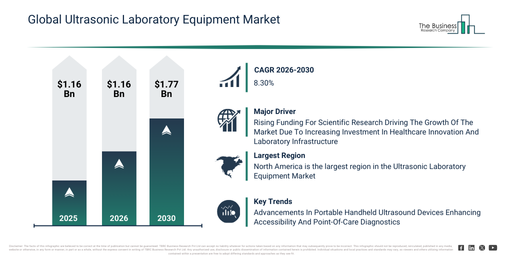
    The market for ultrasonic laboratory equipment has witnessed robust growth in recent years. It is projected to rise from $2.03 billion in 2025 to $2.2 billion in 2026, representing a compound annual growth rate (CAGR) of 8.6%. This growth during the historical period is primarily due to expanding laboratory research, a rising need for consistent sample preparation, growth in pharmaceutical research and development (R&D), broader use of analytical instruments, and improvements in ultrasonic technology. Looking ahead, the market is forecast to reach $3.03 billion by 2030, with a CAGR of 8.3%. This future growth is driven by factors such as the automation of laboratory workflows, increasing investments in material science research, heightened biotech funding, demand for reproducible testing outcomes, and integration with smart laboratory systems. Key trends influencing the market include precision sample processing, advanced ultrasonic homogenization methods, automated lab processes, improved material dispersion techniques, and energy-efficient ultrasonic devices.

    Download A Free Sample Report For Comprehensive Market Insights:

    https://www.thebusinessresearchcompany.com/sample.aspx?id=29234&type=smp

    Factors Propelling Growth in the Ultrasonic Laboratory Equipment Market

    One major contributor to the market’s expansion is the rising financial support for scientific research worldwide. Scientific research is a systematic approach to exploring questions, collecting data, and drawing evidence-based conclusions. With a growing emphasis on healthcare innovation, governments and private organizations are increasing their investments to develop new treatments, enhance diagnostics, and combat emerging diseases. This increase in research funding enables laboratories to procure advanced ultrasonic equipment, improving the precision and efficiency of experiments. For instance, in April 2025, the UK government’s expenditure on research and development surged to $23.3 billion (£17.4 billion) in 2023 from $21.5 billion (£16.1 billion) in 2022, according to the Office for National Statistics. This 8.2% increase highlights the growing support that underpins the ultrasonic laboratory equipment market’s growth.

    The Role of Technological Advances in Boosting Demand

    Besides funding, the continuous development of ultrasonic technologies also fuels market growth. Innovations in ultrasonic equipment enhance sample preparation, homogenization, and dispersion processes, making laboratory workflows more efficient and reliable. The adoption of smart systems and automation in laboratories further supports this trend, allowing for better precision and repeatability in testing, which is critical for research and industrial applications.

    Access The Complete Ultrasonic Laboratory Equipment Market Report:

    https://www.thebusinessresearchcompany.com/report/ultrasonic-laboratory-equipment-global-market-report

    Ultrasonic Laboratory Equipment Market Segmentation and Product Breakdown

    This market is categorized into several segments for a clearer understanding of its scope and applications. By product type, it includes ultrasonic cleaners, probes, homogenizers, bath systems, and processors. Technology-wise, the market covers ultrasonic technology, ultrasonic dispersion technology, and ultrasonic mixing technology. Applications range from material science and biomedical uses to chemical analysis and environmental testing. Distribution channels involve direct sales, third-party distributors, and specialized equipment suppliers. End users consist of research institutions, pharmaceutical companies, and academic laboratories. Subcategories provide further detail, such as types of ultrasonic cleaners (bench top, compact, industrial, large capacity), ultrasonic probes (handheld, high-intensity, low-intensity, laboratory scale), homogenizers (probe-based, cup horn, flow-through, bath), bath systems (standard, heated, high-frequency, large volume), and processors (laboratory, industrial, high-power, portable).

    Industry Trends Highlighting Innovation in Ultrasonic Laboratory Equipment

    Leading companies in this market are focusing on developing cutting-edge products to meet evolving lab needs. A notable trend is the introduction of handheld ultrasound devices designed to reduce reliance on bulky, stationary equipment. These compact and portable devices deliver real-time imaging using high-frequency sound waves, facilitating diagnostic and experimental applications. For example, in September 2023, Mindray, a China-based health tech company, launched its TE Air Wireless Handheld Ultrasound. This device improves laboratory efficiency by fitting easily into tight spaces while providing accurate and consistent performance. It supports connectivity with various lab systems, enhancing its versatility across different research setups. Its portability and easy power options make it ideal for point-of-use applications, ensuring dependable operation across diverse laboratory environments.

    Key Market Players Driving Ultrasonic Laboratory Equipment Development

    The ultrasonic laboratory equipment market features several prominent companies leading the innovation and competitive landscape. These include Crest Ultrasonics Corp., Elma Schmidbauer GmbH, RTUL Ultrasonics Ltd., Hielscher Ultrasonics GmbH, Omegasonics Inc., Orion Ultrasonics, Qsonica LLC, Sonomechanics LLC, SharperTek, Sonicor Incorporated, EUROSONIC Neumann GmbH, Sonics & Materials, Branson Ultrasonics (Emerson), Elmasonic (Elma Ultrasonic), Kinematica AG, Bandelin Electronic GmbH & Co. KG, TechnoSmArt S.r.l., Misonix Inc., Biologics Ltd., and Tianjin Tiansheng Instrument Co. Ltd.

    Regional Outlook and Market Leadership

    In 2025, North America was the leading region for the ultrasonic laboratory equipment market in terms of size. However, the Asia-Pacific region is expected to experience the fastest growth during the forecast period. The market’s geographic coverage includes Asia-Pacific, South East Asia, Western Europe, Eastern Europe, North America, South America, the Middle East, and Africa, offering a broad view of global market trends and opportunities.

    Get in touch with us:

    The Business Research Company: https://www.thebusinessresearchcompany.com/

    Americas: +1 310-496-7795

    Asia: +44 7882 955267 & +91 8897263534

    Europe: +44 7882 955267

    Email us at: marketing@tbrc.info

    Follow us on:

    LinkedIn: https://in.linkedin.com/company/the-business-research-company

    YouTube: https://www.youtube.com/channel/UC24_fI0rV8cR5DxlCpgmyFQ

    Global Market Model: https://www.thebusinessresearchcompany.com/global-market-model
  • Ultracentrifuge Market Forecast Highlights Expansion From $1.57 Billion To $2.35 Billion Through 2030

    Ultracentrifuge Market Forecast Highlights Expansion From $1.57 Billion To $2.35 Billion Through 2030

    Through market attractiveness analysis, total addressable market evaluation, company benchmarking matrices, interactive Excel dashboards, expanded supply chain intelligence, emerging startup coverage, and detailed product insights, The Business Research Company’s 2026 market reports provide more actionable and strategically valuable research.

    The ultracentrifuge market is witnessing significant growth fueled by advances in scientific research and expanding applications across various fields. As biotechnology, molecular biology, and personalized medicine continue to evolve, the demand for ultracentrifuges is rising steadily. This overview explores the market’s size, the key drivers behind its expansion, main segments, strategic developments, and the leading players shaping its future.

    Ultracentrifuge Market Size and Growth Trajectory

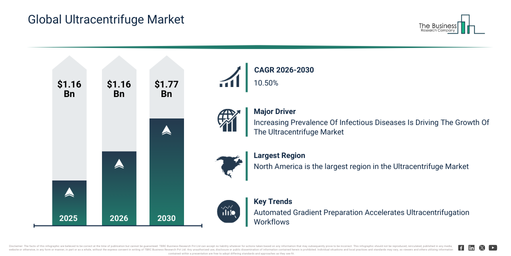
    The ultracentrifuge market has experienced rapid expansion in recent years. It is projected to increase from $1.42 billion in 2025 to $1.58 billion in 2026, growing at a compound annual growth rate (CAGR) of 10.9%. This past growth phase was primarily driven by advancements in molecular biology research, heightened studies on proteins and nucleic acids, the expansion of biotechnology laboratories, increased demand for virus isolation techniques, and the development of academic research institutions. Looking ahead, the market is expected to reach $2.36 billion by 2030, maintaining a strong CAGR of 10.5%. The forecasted growth will be supported by rising use in precision medicine, integration with automated laboratory systems, higher demand for high-throughput centrifugation, growth in biopharmaceutical manufacturing, and expanding applications in polymer and material sciences. Key trends shaping this period include high-speed molecular separations, automation in sample handling, multi-purpose centrifuge platforms, AI-enhanced protocol optimization, as well as remote monitoring and control capabilities.

    Download A Free Sample Report For Comprehensive Market Insights:

    https://www.thebusinessresearchcompany.com/sample.aspx?id=20671&type=smp

    Infectious Disease Prevalence as a Major Growth Factor in the Ultracentrifuge Market

    The increasing incidence of infectious diseases is a significant factor driving the ultracentrifuge market forward. These diseases, caused by bacteria, viruses, fungi, and parasites, have been spreading due to challenges like climate change, urbanization, globalization, and inadequate sanitation. Ultracentrifuges play a critical role in separating and purifying viral pathogens, aiding accurate diagnosis, epidemiological surveillance, and concentrating components necessary for vaccine production. For instance, data from the Centers for Disease Control and Prevention (CDC) in March 2024 showed that reported infectious disease cases in the US rose from 8,320 in 2022 to 9,615 in 2023, marking an increase of 1,295 cases. The rate per 100,000 people also climbed from 2.5 to 2.9 in the same period. This growing prevalence underscores the importance of ultracentrifuges in combating infectious diseases, thereby propelling market growth.

    Rising Demand for Personalized Medicine Boosts Ultracentrifuge Market Expansion

    Another driving force behind the ultracentrifuge market is the increasing demand for personalized medicine. This healthcare approach focuses on tailoring treatment plans to the unique genetic profiles of individual patients. Technological advances in genomics allow for precise identification of genetic variations, supporting bespoke therapies. Ultracentrifuges contribute to this field by enabling accurate separation and analysis of biomolecules such as proteins, nucleic acids, and extracellular vesicles. These capabilities facilitate better diagnostics and the development of targeted treatments, improving outcomes on a patient-specific level. In a recent example, the Personalized Medicine Coalition (PMC) reported that the US Food and Drug Administration (FDA) approved 26 new personalized medicines in 2023, up from 12 approvals in 2022. This surge in personalized medicine is driving demand for ultracentrifuge technologies.

    Access The Complete Ultracentrifuge Market Report:

    https://www.thebusinessresearchcompany.com/report/ultracentrifuge-global-market-report

    Ultracentrifuge Market Segments Generating Revenue

    The ultracentrifuge market is categorized into several key segments:

    By Type: Desktop Centrifuges and Floor Centrifuges.

    For Desktop Centrifuges, subcategories include benchtop ultracentrifuges, microcentrifuges, high-speed desktop centrifuges, and refrigerated desktop centrifuges.

    Floor Centrifuges include large capacity, refrigerated, high-performance, and continuous flow models.

    By Application: Molecular Biology, Biochemistry, and Polymer Science.

    By End-User: Hospitals, Biotechnology and Pharmaceutical Companies, and Academic and Research Institutions.

    How Industry Innovations Are Shaping Ultracentrifuge Market Growth

    Leading companies in the ultracentrifuge sector are focusing on innovative solutions to improve efficiency and reliability. One such advancement is automated gradient preparation, which produces precise density gradients in centrifuge tubes with minimal manual input, enhancing throughput and reproducibility. For example, in April 2025, Beckman Coulter Life Sciences introduced the OptiMATE Gradient Maker. This device speeds up density gradient ultracentrifugation workflows, cutting spin times from as long as 48 hours to under 5 hours while reducing manual tasks such as sealing and method setup. Its plug-and-play design integrates seamlessly with existing laboratory equipment and offers consistent gradient formation, particularly useful for purifying viral vectors like AAV. The system’s intuitive software also shortens operator training time from days to hours, thereby boosting lab productivity.

    Key Players Leading the Ultracentrifuge Market

    Several prominent companies dominate the ultracentrifuge market landscape. These include Beckman Coulter Inc., Thermo Fisher Scientific Inc., Eppendorf AG, Sartorius AG, KUBOTA Corporation, Hettich Instruments, Sigma Laborzentrifugen GmbH, Hitachi Koki Co Ltd, Haier Biomedical, Hunan Xiangyi Laboratory Instrument Development, OHAUS Corporation, BIOBASE Co Ltd, DLAB Scientific, Hanil Scientific Inc., NuAire Inc., QIAGEN N V, Oxford Lab Products, Bio Rad Laboratories Inc., Labnet International Inc., Porter Rayward Scientific, Sichuan Shuke Instruments, Dalong Instruments, Hunan Anjunyan Instruments, Xiangyi Group, LW Scientific, Boekel Scientific, and IKA Werke GmbH & Co KG.

    Geographic Insights Highlighting Ultracentrifuge Demand

    In 2025, North America held the largest share of the ultracentrifuge market. The report covers a broad range of regions, including Asia-Pacific, South East Asia, Western Europe, Eastern Europe, North America, South America, the Middle East, and Africa. While North America remains dominant, emerging markets in Asia-Pacific and South East Asia are expected to experience rapid growth due to increasing research activities and healthcare infrastructure development.

    Get in touch with us:

    The Business Research Company: https://www.thebusinessresearchcompany.com/

    Americas: +1 310-496-7795

    Asia: +44 7882 955267 & +91 8897263534

    Europe: +44 7882 955267

    Email us at: marketing@tbrc.info

    Follow us on:

    LinkedIn: https://in.linkedin.com/company/the-business-research-company

    YouTube: https://www.youtube.com/channel/UC24_fI0rV8cR5DxlCpgmyFQ

    Global Market Model: https://www.thebusinessresearchcompany.com/global-market-model

  • Tumor Embolization Devices Market Expected To Reach $2464.51 Billion By 2030 As Growth Accelerates At 9.2% CAGR

    Tumor Embolization Devices Market Expected To Reach $2464.51 Billion By 2030 As Growth Accelerates At 9.2% CAGR

    Delivering more actionable and strategically valuable research, The Business Research Company’s 2026 market reports feature market attractiveness analysis, total addressable market evaluation, company benchmarking matrices, interactive Excel dashboards, expanded supply chain intelligence, emerging startup coverage, and detailed product insights.

    The tumor embolization devices market has witnessed significant growth recently, driven by advancements in cancer treatment and increasing prevalence of tumors worldwide. With continued innovations and rising healthcare investments, this sector is set to expand further, offering promising opportunities for improved, minimally invasive cancer therapies. Let’s explore the current state, key growth factors, market segmentation, recent technological progress, leading companies, and regional dynamics shaping this market.

    Strong Growth in Tumor Embolization Devices Market Size and Forecast

    The tumor embolization devices market has seen robust expansion over recent years. It is projected to grow from $1587.48 billion in 2025 to $1732.02 billion in 2026, at a compound annual growth rate (CAGR) of 9.1%. This growth reflects increased adoption of interventional oncology procedures, a rising number of solid tumor cases, and enhanced catheter technologies. Looking ahead, the market is expected to reach $2464.52 billion by 2030, growing at a CAGR of 9.2%. Factors supporting this forecast include greater investments in interventional oncology, growing demand for combination therapies, advancements in targeted drug delivery, and a stronger emphasis on organ-preserving treatments. Additionally, the integration of imaging-guided interventions and the rise of minimally invasive oncology methods are key trends fueling market expansion.

    Download A Free Sample Report For Comprehensive Market Insights:

    https://www.thebusinessresearchcompany.com/sample.aspx?id=3352&type=smp

    The Rising Burden of Cancer as a Market Driver

    One of the primary factors propelling the tumor embolization devices market is the increasing global incidence of cancer. Cancer, characterized by uncontrolled cell growth with potential to spread throughout the body, is becoming more common, especially among aging populations. Older individuals face a higher risk due to accumulated genetic changes and prolonged exposure to carcinogens. Tumor embolization devices provide targeted treatments by blocking the blood supply to tumors, slowing their progression and improving patient outcomes. For example, in 2023, the American Cancer Society reported 1,958,310 new cancer cases diagnosed in the United States, surpassing the 1,918,030 cases recorded in 2022. This upward trend in cancer diagnoses worldwide is expected to drive demand for embolization devices in the years ahead.

    Increasing Healthcare Spending as a Growth Catalyst

    Rising healthcare expenditures are playing a crucial role in advancing the tumor embolization devices market. Healthcare spending covers various services, including preventive care, emergency assistance, and nutrition programs, all of which contribute to better health infrastructure and product development. For instance, a May 2023 report from the UK’s Office for National Statistics indicated that healthcare spending in the UK grew by 5.6% between 2022 and 2023, reaching approximately $317.63 billion (£292 billion). This increased financial commitment to healthcare enables the development and wider adoption of tumor embolization technologies, thereby supporting market growth.

    Access The Complete Tumor Embolization Devices Market Report:

    https://www.thebusinessresearchcompany.com/report/tumor-embolization-devices-global-market-report

    How the Tumor Embolization Devices Market is Organized by Key Categories

    The tumor embolization devices market is segmented across several important categories:

    1) By Type: Radioembolic Agents and Non-radioactive Embolic Agents

    2) By Application: Cancer Tumors and Noncancerous Tumors

    3) By End User: Hospitals, Cancer Treatment Centers, Intensive Care Units, and Surgical Centers

    Further breakdown includes:

    – Radioembolic Agents such as Yttrium-90 (Y-90) Microspheres and Holmium-166 Microspheres

    – Non-radioactive Embolic Agents including Drug-Eluting Beads (DEBs), Polyvinyl Alcohol (PVA) Microspheres, Gelatin Sponges, and Liquid Embolic Agents like Onyx and glue-based products

    This structured segmentation helps pinpoint specific areas of growth and innovation within the market.

    Innovations and Technological Advances Driving Market Transformation

    Leading companies in this market are focusing heavily on developing novel therapies and devices to enhance treatment effectiveness. One notable example is Eye90 microspheres, a Y90 radioembolization product designed to treat liver tumors, particularly hepatocellular carcinoma. In May 2023, ABK Biomedical, a Canadian medical device company, received FDA approval to begin a multicenter pivotal trial for Eye90 microspheres. This technology features a proprietary manufacturing process that produces microspheres with uniform size and high radioactivity concentration, enabling targeted radiation delivery to tumors while minimizing damage to healthy tissues. Such innovations are reshaping treatment options and expanding the utility of tumor embolization devices.

    Leading Players Shaping the Tumor Embolization Devices Market

    The competitive landscape of the tumor embolization devices market is dominated by several prominent companies, including Boston Scientific Corporation, Medtronic plc, Terumo Corporation, Sirtex Medical Limited, Merit Medical Systems Inc., Cook Medical LLC, AngioDynamics Inc., Johnson & Johnson, Penumbra Inc., Teleflex Incorporated, Kaneka Corporation, Guerbet, BTI Biotechnology Institute S.L., BTG International, Avinger Inc., Shape Memory Medical Inc., Delcath Systems Inc., Endoshape Inc., InSitu Technologies Inc., Surefire Medical Inc., and Varian Medical Systems Inc. These firms are continuously investing in research and development to maintain market leadership.

    Regional Insights Highlighting Market Leaders and Growth Areas

    In 2025, North America held the largest share in the tumor embolization devices market, reflecting the region’s advanced healthcare infrastructure and high adoption rates of interventional oncology techniques. Asia-Pacific followed as the second-largest market, benefiting from expanding healthcare access and growing cancer prevalence. The report also covers other key regions, including South East Asia, Western Europe, Eastern Europe, South America, the Middle East, and Africa, providing a comprehensive view of the global market landscape.

    Get in touch with us:

    The Business Research Company: https://www.thebusinessresearchcompany.com/

    Americas: +1 310-496-7795

    Asia: +44 7882 955267 & +91 8897263534

    Europe: +44 7882 955267

    Email us at: marketing@tbrc.info

    Follow us on:

    LinkedIn: https://in.linkedin.com/company/the-business-research-company

    YouTube: https://www.youtube.com/channel/UC24_fI0rV8cR5DxlCpgmyFQ

    Global Market Model: https://www.thebusinessresearchcompany.com/global-market-model

  • Tumor Blood Testing Market Set To Grow From $6.78 Billion In 2026 To $11.13 Billion By 2030 At A CAGR Of 13.2%

    Tumor Blood Testing Market Set To Grow From $6.78 Billion In 2026 To $11.13 Billion By 2030 At A CAGR Of 13.2%

    Enhanced with market attractiveness analysis, total addressable market evaluation, company benchmarking matrices, interactive Excel dashboards, expanded supply chain intelligence, emerging startup coverage, and detailed product insights, The Business Research Company’s 2026 market reports deliver more actionable and strategically valuable research.

    The tumor blood testing market is gaining significant traction as advances in medical technology and rising cancer rates drive demand for less invasive diagnostic options. With continuous innovations and expanding applications, this sector is set for rapid growth, presenting valuable opportunities for healthcare providers, researchers, and patients alike. Let’s explore the current market size, key factors propelling growth, leading players, and emerging trends shaping the future of tumor blood testing.

    Rapid Expansion in Tumor Blood Testing Market Size

    The tumor blood testing market has experienced strong growth recently and is projected to rise from $5.98 billion in 2025 to $6.78 billion in 2026, reflecting a compound annual growth rate (CAGR) of 13.3%. This increase during the historical period has been driven by factors such as the rising incidence of cancer, limitations associated with traditional tissue biopsies, advancements in genomic testing technologies, increased funding for oncology research, and heightened demand for non-invasive diagnostic methods. Looking ahead, the market is expected to grow even faster, reaching $11.13 billion by 2030 at a CAGR of 13.2%. Key drivers during the forecast period include the expansion of early cancer screening programs, the integration of AI-enabled genomic analysis, growth in personalized medicine, broader adoption of companion diagnostics, and increased utilization of clinical trials. Important trends shaping the future include wider liquid biopsy use, multi-cancer early detection technologies, monitoring minimal residual disease, personalized oncology testing, and advancements in high-sensitivity biomarker detection.

    Download A Free Sample Report For Comprehensive Market Insights:

    https://www.thebusinessresearchcompany.com/sample.aspx?id=28343&type=smp

    Factors Behind Tumor Blood Testing Market Expansion

    One of the primary factors boosting growth in the tumor blood testing market is the increasing prevalence of cancer worldwide. Aging populations, along with exposure to risk factors such as unhealthy diets, smoking, and environmental pollution, have contributed to a surge in cancer cases. This, in turn, drives demand for early and accurate detection methods. Tumor blood testing offers a minimally invasive way to detect cancer biomarkers circulating in the bloodstream, allowing for earlier diagnosis before symptoms become evident. This enables timely therapeutic intervention, better patient outcomes, and ongoing disease monitoring. For example, in May 2024, the National Cancer Institute reported that as of January 2022, there were approximately 18.1 million cancer survivors in the United States, with projections estimating this number to rise to 26 million by 2040. This rising cancer population underscores the urgent need for improved diagnostic tools like tumor blood testing.

    Key Revenue Drivers in Tumor Blood Testing Market Segmentation

    The tumor blood testing market is segmented into various categories to better understand its dynamics:

    – By Test Type: Circulating Tumor Cells (CTC) Tests, Circulating Tumor DNA (CtDNA) Tests, Exosome-Based Tests, and other types.

    – By Technology: Polymerase Chain Reaction (PCR)-based testing, Next-Generation Sequencing, and Immunoassays.

    – By Cancer Type: Breast, Colorectal, Lung, Prostate, and Melanoma cancers.

    – By Application: Early cancer screening, therapy selection, treatment monitoring, and recurrence monitoring.

    – By End User: Hospitals, diagnostic laboratories, research institutes, and other users.

    Access The Complete Tumor Blood Testing Market Report:

    https://www.thebusinessresearchcompany.com/report/tumor-blood-testing-global-market-report

    Within these segments are further subcategories such as CTC tests focusing on isolation, enumeration, and characterization of tumor cells; CtDNA tests analyzing mutations, methylation, copy number variations, and fragmentation; exosome-based tests profiling proteins, RNA, lipids, and surface markers; and other tests including circulating RNA assays, tumor-educated platelet tests, protein biomarker panels, multiomics blood tests, and immuno-oncology biomarker evaluations.

    Emerging Technologies Shaping Tumor Blood Testing Market Growth

    Leading companies in the tumor blood testing space are heavily focused on pioneering non-invasive liquid biopsy technologies to improve early cancer detection and treatment monitoring. These technologies analyze cancer-related biomarkers from body fluids, presenting a safer alternative to traditional tissue biopsies. For instance, in February 2024, Delfi Diagnostics, a US biotech firm, partnered with UK-based Immunocore Holdings to launch the DELFI-Tumor Fraction (DELFI-TF) assay. This blood test examines cell-free DNA fragments circulating in the blood to evaluate tumor burden and treatment response. The fragmentome-based liquid biopsy offers a cost-effective and minimally invasive option, requiring small plasma volumes and delivering results within two weeks, enhancing patient convenience and clinical decision-making.

    Leading Organizations Driving Competition in Tumor Blood Testing Market

    The tumor blood testing market is highly competitive, with several key players shaping its future. Prominent companies include Bio-Techne Corporation, Roche Holding AG, Thermo Fisher Scientific Inc., Abbott Laboratories, Siemens Healthineers AG, Illumina Inc., Sysmex Corporation, Bio-Rad Laboratories Inc., Natera Inc., Myriad Genetics Inc., Neogenomics Laboratories Inc., Guardant Health Inc., Foundation Medicine Inc., Adaptive Biotechnologies Corporation, Freenome Holdings Inc., Grail Inc., Personal Genome Diagnostics Inc., Exosome Diagnostics Inc., Agena Bioscience Inc., and Menarini Silicon Biosystems S.p.A. These organizations are investing heavily in research and development to create innovative products and expand the reach of tumor blood testing.

    Regional Market Distribution Trends Driving Growth

    In 2025, North America held the largest share of the tumor blood testing market, benefiting from advanced healthcare infrastructure and extensive research activities. Meanwhile, the Asia-Pacific region is anticipated to be the fastest-growing market during the forecast period, due to increasing healthcare investments, growing cancer awareness, and expanding diagnostic capabilities. Other key regions covered in the market report include South East Asia, Western Europe, Eastern Europe, South America, the Middle East, and Africa, each contributing uniquely to global market dynamics and expansion opportunities.

    Get in touch with us:

    The Business Research Company: https://www.thebusinessresearchcompany.com/

    Americas: +1 310-496-7795

    Asia: +44 7882 955267 & +91 8897263534

    Europe: +44 7882 955267

    Email us at: marketing@tbrc.info

    Follow us on:

    LinkedIn: https://in.linkedin.com/company/the-business-research-company

    YouTube: https://www.youtube.com/channel/UC24_fI0rV8cR5DxlCpgmyFQ

    Global Market Model: https://www.thebusinessresearchcompany.com/global-market-model

  • Tumor Ablation Therapy Devices Market Opportunities Are Emerging Beyond Traditional Growth Areas

    Tumor Ablation Therapy Devices Market Opportunities Are Emerging Beyond Traditional Growth Areas

    Through market attractiveness analysis, total addressable market evaluation, company benchmarking matrices, interactive Excel dashboards, expanded supply chain intelligence, emerging startup coverage, and detailed product insights, The Business Research Company’s 2026 market reports provide more actionable and strategically valuable research.

    The tumor ablation therapy devices market has experienced substantial growth recently, driven by advancements in cancer treatment and increasing demand for less invasive options. As cancer rates rise globally, the need for effective and targeted therapies is pushing this market forward. Let’s explore the current market size, the factors fueling its expansion, key segments, industry trends, prominent companies, and regional insights shaping its future.

    Steady Expansion in the Tumor Ablation Therapy Devices Market Size

    The tumor ablation therapy devices market is forecasted to grow significantly over the coming years. It is projected to increase from $0.82 billion in 2025 to $0.95 billion in 2026, representing a strong compound annual growth rate (CAGR) of 15.0%. This growth in the recent past is largely attributable to rising cancer incidence, the establishment of more oncology treatment centers, wider adoption of minimally invasive therapies, improvements in imaging technologies, and a growing preference for treatments that preserve organ function.

    Download A Free Sample Report For Comprehensive Market Insights:

    https://www.thebusinessresearchcompany.com/sample.aspx?id=3351&type=smp

    Looking ahead, the market is expected to expand further and reach $1.61 billion by 2030, with a CAGR of 14.2%. Key drivers during this period include increased investments in precision oncology, higher demand for outpatient cancer treatments, continuous development of advanced ablation technologies, enhanced integration of imaging with therapy systems, and a stronger focus on personalized cancer care. Upcoming trends include the rising use of image-guided ablation systems, greater adoption of minimally invasive tumor ablation procedures, expansion of percutaneous treatment techniques, and the growing popularity of organ-specific ablation technologies.

    The Rising Impact of Cancer Prevalence on Market Growth

    A major force propelling the tumor ablation therapy devices market is the increasing prevalence of cancer worldwide. Cancer ranks as the second leading cause of death, with about one in six deaths globally attributed to the disease. The growing number of cancer cases is closely linked to aging populations, as older adults face a higher lifetime risk of developing various cancers. Tumor ablation procedures are commonly used to treat tumors in organs like the lung, liver, kidney, and bones due to their minimally invasive nature.

    Access The Complete Tumor Ablation Therapy Devices Market Report:

    https://www.thebusinessresearchcompany.com/report/tumor-ablation-therapy-devices-global-market-report

    For example, in 2023, the American Cancer Society projected that 1,958,310 new cancer cases would be diagnosed in the United States, marking an increase from 1,918,030 cases in 2022. Since tumor ablation is an effective option for patients who have not responded well to chemotherapy or radiotherapy, this supports steady demand for ablation devices and fuels market growth.

    Detailed Segmentation of the Tumor Ablation Therapy Devices Market

    This market is categorized by technology, treatment type, application, and end user to better understand growth opportunities. Technologies include Radiofrequency Ablation, Microwave Ablation, Cryoablation, Irreversible Electroporation Ablation, and others. Treatment types are divided into surgical, laparoscopic, and percutaneous methods. Applications span various cancers such as kidney, liver, breast, lung, prostate, and others. End users range from hospitals to oncology clinics and other facilities.

    Further subsegments include monopolar and bipolar devices for Radiofrequency Ablation; high- and low-frequency options for Microwave Ablation; liquid nitrogen and argon gas devices under Cryoablation; NanoKnife systems and high-voltage pulse generators for Irreversible Electroporation; and additional technologies like laser ablation, ultrasound-guided high-intensity focused ultrasound (HIFU), and chemical ablation techniques.

    Innovations and Industry Shifts Reshaping Demand in Tumor Ablation Devices

    Leading companies in this sector are concentrating on developing minimally invasive therapies that provide precise tumor targeting while minimizing damage to surrounding tissues. Such advancements help maintain treatment effectiveness while reducing complications and recovery time.

    For instance, in August 2023, Francis Medical Inc., a US-based provider specializing in minimally invasive cancer treatments, received Breakthrough Device Designation from the FDA for its Vanquish water vapor ablation therapy targeting prostate cancer. This designation aims to accelerate the device’s development and regulatory review, potentially allowing faster patient access. The Vanquish system delivers thermal energy through sterile water via a simple transurethral procedure, destroying cancer cells while protecting nearby tissues and lowering the risk of side effects commonly seen with other prostate cancer treatments.

    Prominent Players Leading the Tumor Ablation Therapy Devices Market

    Several key companies hold significant positions in this market, including Galil Medical Inc., Misonix Inc., HealthTronics Inc., AngioDynamics Inc., Boston Scientific Corporation, Medtronic plc, EDAP TMS S.A., NeuWave Medical Inc., BVM Medical Limited, Erbe Elektromedizin GmbH, Theraclion, INTIO Inc., Olympus Corporation, Stryker Corporation, Merit Medical Systems Inc., Insightec Ltd., Terumo Corporation, Monteris Medical Corporation, IceCure Medical Ltd., Profound Medical Inc., Alpinion Medical Systems Co. Ltd., Sonacare Medical, Hologic Inc., Endocare Inc., and Bovie Medical Corporation.

    Regions Driving Revenue and Market Leadership in Tumor Ablation Therapy Devices

    In 2025, North America emerged as the largest regional market for tumor ablation therapy devices, benefiting from a well-established healthcare infrastructure and high adoption of advanced technologies. Asia-Pacific ranked as the second-largest market, showing promising growth potential due to increasing healthcare investments and rising cancer incidence. The market outlook also covers other areas such as South East Asia, Western Europe, Eastern Europe, South America, the Middle East, and Africa, offering a comprehensive global perspective.

    Get in touch with us:

    The Business Research Company: https://www.thebusinessresearchcompany.com/

    Americas: +1 310-496-7795

    Asia: +44 7882 955267 & +91 8897263534

    Europe: +44 7882 955267

    Email us at: marketing@tbrc.info

    Follow us on:

    LinkedIn: https://in.linkedin.com/company/the-business-research-company

    YouTube: https://www.youtube.com/channel/UC24_fI0rV8cR5DxlCpgmyFQ

    Global Market Model: https://www.thebusinessresearchcompany.com/global-market-model
  • Tumor Ablation Market Expansion Is Opening New Pathways For Strategic Investment

    Tumor Ablation Market Expansion Is Opening New Pathways For Strategic Investment

    Delivering more actionable and strategically valuable research, The Business Research Company’s 2026 market reports feature market attractiveness analysis, total addressable market evaluation, company benchmarking matrices, interactive Excel dashboards, expanded supply chain intelligence, emerging startup coverage, and detailed product insights.

    The tumor ablation market is experiencing rapid expansion as advancements in cancer treatment technologies continue to evolve. Increasing demand for less invasive procedures and precision therapies is reshaping the landscape, paving the way for significant market growth. This overview highlights the market size, growth drivers, key segments, innovations, leading companies, and regional opportunities shaping the tumor ablation industry.

    Steady Growth in Tumor Ablation Market Size and Future Projections

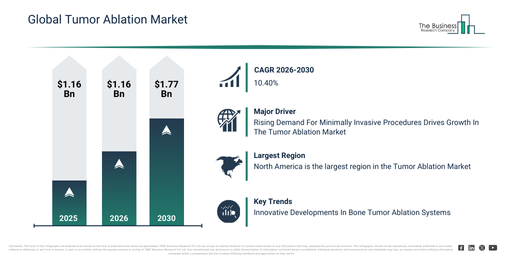
    The tumor ablation market has witnessed swift growth recently and is projected to rise from $1.62 billion in 2025 to $1.81 billion in 2026, reflecting a compound annual growth rate (CAGR) of 11.8%. This growth during the past years is largely due to the increasing cases of solid tumors, higher adoption of minimally invasive cancer therapies, expansion of oncology centers, availability of advanced imaging techniques, and improved treatment outcomes with ablation. Looking ahead, the market is expected to continue its upward trajectory, reaching $2.69 billion by 2030, with a CAGR of 10.4%. Factors contributing to this forecast include growing demand for targeted cancer treatments, rising investments in precision oncology, growth in outpatient cancer care facilities, integration of AI in treatment planning, and a stronger focus on patient-centered cancer management. Key trends anticipated in the coming years are the increased use of minimally invasive ablation methods, widespread adoption of image-guided technologies, preference for thermal ablation techniques, expansion of outpatient tumor treatment settings, and enhanced emphasis on precision oncology.

    Download A Free Sample Report For Comprehensive Market Insights:

    https://www.thebusinessresearchcompany.com/sample.aspx?id=17283&type=smp

    Increasing Popularity of Minimally Invasive Procedures Driving Market Expansion

    One of the primary factors propelling the tumor ablation market is the rising preference for minimally invasive techniques. These procedures, which include robot-assisted surgeries, use small or no incisions, leading to quicker recovery, reduced complications, and less postoperative pain. This shift is fueled by patient demand for faster healing times, advances in surgical robotics, and more accurate imaging-guided treatments. Tumor ablation technologies such as radiofrequency, microwave, and cryoablation align perfectly with these trends by precisely targeting cancerous cells while sparing healthy tissue.

    Supporting Evidence of Growth in Minimally Invasive Approaches

    For example, data from June 2024 released by the American Society of Plastic Surgeons, a US-based non-profit organization, showed a 7% increase in minimally invasive procedures in 2023, outpacing the growth of surgical procedures by 2%. Specifically, hand surgeries including carpal tunnel release, arthritis, and trigger finger treatment reached 207,887 procedures, representing a 2% rise from 2022. This growing shift towards minimally invasive techniques is a significant driver for the expanding tumor ablation market.

    Access The Complete Tumor Ablation Market Report:

    https://www.thebusinessresearchcompany.com/report/tumor-ablation-global-market-report

    Key Segments and Strategic Opportunities in the Tumor Ablation Market

    The tumor ablation market is divided into several important segments in this report:

    1) By Type: Thermal Ablation and Chemical Ablation

    2) By Treatment Method: Percutaneous, Laparoscopic, and Surgical

    3) By Application: Kidney Cancer, Liver Cancer, Breast Cancer, Lung Cancer, Prostate Cancer, and Other Cancers

    4) By End User: Hospitals, Oncology Centers, and Other Healthcare Providers

    Further subcategories under thermal ablation include radiofrequency ablation (RFA), microwave ablation (MWA), cryoablation, laser ablation, and high-intensity focused ultrasound (HIFU). Chemical ablation methods cover ethanol ablation, acetic acid ablation, and transarterial chemoembolization. These segments provide a detailed framework for understanding market dynamics and identifying growth opportunities.

    Innovations Transforming the Tumor Ablation Industry

    Leading companies in the tumor ablation space are developing cutting-edge solutions to improve treatment effectiveness and expand therapeutic options. For instance, specialized bone tumor ablation systems are designed to treat painful bone metastases and benign bone tumors with minimally invasive techniques. A notable example is Medtronic plc, which in March 2024 received FDA 510(k) clearance for its OsteoCool 2.0 bone tumor ablation system. This next-generation device allows for the simultaneous use of four internally cooled probes, enabling treatment of two vertebral bodies at once or creating larger ablation zones in other areas. It delivers 20 watts per channel, more than double the power of competing devices like the Stryker OptaBlate system, significantly enhancing treatment capabilities.

    The Competitive Landscape of the Tumor Ablation Market

    Key players shaping the tumor ablation industry include Medtronic plc, Siemens Healthineers AG, Boston Scientific Corporation, Olympus Corporation, Terumo Corporation, Varian Medical Systems Inc., Merit Medical Systems Inc., Accuray Incorporated, AngioDynamics Inc., EDAP TMS S.A., NeuWave Medical Inc., Mirabilis Medical Inc., STARMed Co. Ltd., Profound Medical Corp., RF Medical Co. Ltd., IceCure Medical Ltd., MedWaves Inc., Chongqing Haifu Medical Technology Co. Ltd., Hologic Inc., and Johnson & Johnson MedTech. These companies are driving innovation, expanding product portfolios, and competing to meet growing market demand.

    Geographical Distribution and Market Growth Opportunities

    In 2025, North America held the largest share of the tumor ablation market, supported by advanced healthcare infrastructure and high adoption rates of innovative technologies. Meanwhile, the Asia-Pacific region is anticipated to be the fastest-growing market during the forecast period, reflecting increased healthcare investments, rising cancer incidence, and expansion of oncology treatment facilities. The tumor ablation market report covers regions including Asia-Pacific, South East Asia, Western Europe, Eastern Europe, North America, South America, the Middle East, and Africa, providing a comprehensive analysis of global growth opportunities.

    Get in touch with us:

    The Business Research Company: https://www.thebusinessresearchcompany.com/

    Americas: +1 310-496-7795

    Asia: +44 7882 955267 & +91 8897263534

    Europe: +44 7882 955267

    Email us at: marketing@tbrc.info

    Follow us on:

    LinkedIn: https://in.linkedin.com/company/the-business-research-company

    YouTube: https://www.youtube.com/channel/UC24_fI0rV8cR5DxlCpgmyFQ

    Global Market Model: https://www.thebusinessresearchcompany.com/global-market-model
  • Tuberculosis Diagnostics Market Trends Are Creating New Opportunities For Industry Leaders

    Tuberculosis Diagnostics Market Trends Are Creating New Opportunities For Industry Leaders

    Enhanced with market attractiveness analysis, total addressable market evaluation, company benchmarking matrices, interactive Excel dashboards, expanded supply chain intelligence, emerging startup coverage, and detailed product insights, The Business Research Company’s 2026 market reports deliver more actionable and strategically valuable research.

    The tuberculosis diagnostics market has been witnessing significant advancement, driven by the critical need for timely and precise detection of tuberculosis infections worldwide. As healthcare systems prioritize early diagnosis and treatment, the market is set to experience robust growth in the coming years. Here is a detailed overview of the current market landscape, its growth factors, leading companies, and emerging trends shaping its future.

    Steady Growth Outlook for the Tuberculosis Diagnostics Market

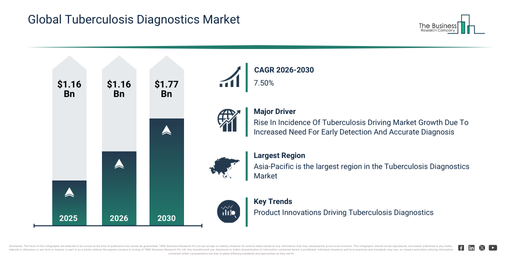
    The tuberculosis diagnostics industry has seen notable expansion in recent years, with its market size expected to rise from $2.34 billion in 2025 to $2.52 billion in 2026, reflecting a compound annual growth rate (CAGR) of 7.9%. Looking ahead, the market is projected to reach $3.37 billion by 2030, growing at a CAGR of 7.5%. This upward trajectory is largely fueled by a combination of factors including the global tuberculosis burden, the expansion of public health screening initiatives, widespread availability of smear microscopy facilities, international funding for tuberculosis control, and the increasing adoption of culture-based diagnostic techniques.

    Download A Free Sample Report For Comprehensive Market Insights:

    https://www.thebusinessresearchcompany.com/sample.aspx?id=8165&type=smp

    Key Factors Accelerating Tuberculosis Diagnostics Market Expansion

    One of the primary drivers behind the tuberculosis diagnostics market growth is the rising incidence of tuberculosis worldwide. Tuberculosis, a contagious bacterial infection mainly affecting the lungs, requires prompt detection to reduce complications and halt transmission. The increasing prevalence of HIV/AIDS, which compromises immune defenses, significantly contributes to the heightened susceptibility to active tuberculosis infections. This has created an urgent need for rapid, accurate, and point-of-care diagnostic solutions that support early treatment and effective disease management.

    Recent data underscores this trend. For example, in October 2025, the UK Health Security Agency reported a 13.6 percent rise in tuberculosis cases in England during 2024 compared to the previous year, with 5,490 notifications in 2024 versus 4,831 in 2023. This surge in TB cases is directly influencing the demand and growth of the tuberculosis diagnostics market globally.

    Access The Complete Tuberculosis Diagnostics Market Report:

    https://www.thebusinessresearchcompany.com/report/tuberculosis-diagnostics-global-market-report

    Detailed Segmentation and Growth Potential in Tuberculosis Diagnostics

    The report segments the tuberculosis diagnostics market in several ways to provide comprehensive insight:

    1) By Test Type: including Radiographic Tests, Nucleic Acid Testing, Cytokine Detection Tests, Drug Resistance Tests, Skin Test / Mantoux Test (TST), Blood/Serology Test, Smear Microscopy Tests, Cell Culture-Based Tests, and Other Test Types.

    2) By Disease Stage: categorized into Latent Tuberculosis and Active Tuberculosis.

    3) By End-User: covering Hospitals and Diagnostic Laboratories, Physician’s Office Laboratories, Reference Laboratories, and Academic and Research Institutions.

    Further breakdown includes specific test types such as Chest X-rays and CT Scans under Radiographic Tests; Polymerase Chain Reaction (PCR) and Nucleic Acid Amplification Tests (NAATs) under Nucleic Acid Testing; Interferon Gamma Release Assays (IGRAs) for Cytokine Detection; GeneXpert MTB/RIF and Line Probe Assays for Drug Resistance; Tuberculin Skin Test (TST) under Skin Test; Serological Tests for Blood or Serology; Acid-Fast Bacilli (AFB) Smear Test in Smear Microscopy; Solid and Liquid Media Cultures under Cell Culture-Based Tests; and other molecular and advanced imaging tests.

    Innovations and Trends Shaping Tuberculosis Diagnostics Industry Growth

    Leading players in this market are heavily investing in innovative product development to enhance tuberculosis diagnostic capabilities. These advancements focus on creating fast, reliable, and comprehensive testing solutions that can identify active TB, latent infections, and drug-resistant strains to ensure timely and targeted treatment. For example, in February 2023, Redcliffe Labs in India introduced the BD MAX MDR TB test, performed on the BD MAX molecular diagnostic system. This test allows clinicians to rapidly detect tuberculosis bacteria along with mutations linked to resistance against key first-line drugs, Isoniazid (INH) and Rifampicin (RIF), facilitating quicker clinical decision-making.

    Major Industry Participants Competing in the Tuberculosis Diagnostics Market

    The tuberculosis diagnostics sector features several prominent companies, including Beckton Dickinson and Company, F. Hoffmann-La Roche Ltd, Qiagen N.V., BioMerieux SA, Danaher Corporation, PerkinElmer, Thermo Fisher Scientific Inc., Creative Diagnostics, Lionex GmbH, Biocartis, Bio-Rad Laboratories India Pvt. Ltd., Zhejiang Di’an Diagnostics Technology Co. Ltd, Kindstar Global, Siemens AG, LumiraDx Limited, TestLine Clinical Diagnostics s.r.o., Hologic, Meridian Bioscience, Abbott Laboratories Immunodiagnostic Systems Holdings PLC, Mesa Biotech Inc, Akonni Biosystems Inc, Epistem Limited, Gen-Probe, Bio Certica, and BixBio. These companies focus on expanding their product portfolios and strengthening their market positions through research and innovation.

    Regional Market Leadership and Emerging Areas of Growth

    In 2025, the Asia-Pacific region emerged as the largest market for tuberculosis diagnostics. The broader geographic scope considered in the market analysis includes Asia-Pacific, South East Asia, Western Europe, Eastern Europe, North America, South America, the Middle East, and Africa. While Asia-Pacific currently leads in market share, other regions continue to demonstrate potential growth opportunities due to the rising tuberculosis burden and healthcare infrastructure improvements.

    Get in touch with us:

    The Business Research Company: https://www.thebusinessresearchcompany.com/

    Americas: +1 310-496-7795

    Asia: +44 7882 955267 & +91 8897263534

    Europe: +44 7882 955267

    Email us at: marketing@tbrc.info

    Follow us on:

    LinkedIn: https://in.linkedin.com/company/the-business-research-company

    YouTube: https://www.youtube.com/channel/UC24_fI0rV8cR5DxlCpgmyFQ

    Global Market Model: https://www.thebusinessresearchcompany.com/global-market-model
  • Tubeless Insulin Pump Market Growth Is Reshaping Competitive Advantage Across The Industry

    Tubeless Insulin Pump Market Growth Is Reshaping Competitive Advantage Across The Industry

    Through market attractiveness analysis, total addressable market evaluation, company benchmarking matrices, interactive Excel dashboards, expanded supply chain intelligence, emerging startup coverage, and detailed product insights, The Business Research Company’s 2026 market reports provide more actionable and strategically valuable research.

    The tubeless insulin pump market is experiencing remarkable growth as it becomes an increasingly preferred method for diabetes management. With advancements in technology and a rising global diabetic population, this sector is positioned for substantial expansion in the coming years. Let’s explore the current market size, key factors driving growth, product segments, industry trends, major players, and regional insights shaping this promising market.

    Rapid Expansion of the Tubeless Insulin Pump Market Size and Revenue

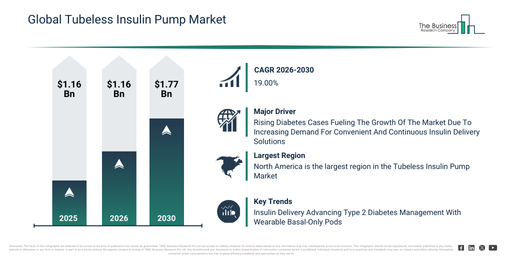
    The market for tubeless insulin pumps has witnessed swift growth recently and is projected to continue this momentum. It is forecasted to increase from $2.2 billion in 2025 to $2.63 billion in 2026, marking a compound annual growth rate (CAGR) of 19.3%. Historically, this expansion was driven by the limited availability of tubeless pumps, dependence on traditional insulin delivery methods, the rising incidence of diabetes, increasing hospital adoption of insulin pumps, and early use of basic continuous glucose monitoring (CGM) systems.

    Download A Free Sample Report For Comprehensive Market Insights:

    https://www.thebusinessresearchcompany.com/sample.aspx?id=27440&type=smp

    Looking ahead, the market is expected to grow even more rapidly, reaching $5.28 billion by 2030 with a CAGR of 19.0%. This future growth will be supported by innovations such as advanced wearable and implantable insulin pumps, widespread integration of artificial intelligence (AI) and smart monitoring systems, expansion of remote patient monitoring services, rising patient awareness and acceptance, as well as the growth of e-commerce and telemedicine platforms. Key trends anticipated during this period include increased adoption of wearable insulin pumps among diabetic patients, seamless integration of CGM with tubeless pumps, demand for Bluetooth-enabled and remote-controlled devices, preference for both disposable and reusable patch pumps, and broader distribution through e-commerce channels.

    Rising Diabetes Cases Fueling Tubeless Insulin Pump Market Growth

    One of the most significant factors propelling the tubeless insulin pump market is the growing prevalence of diabetes worldwide. Diabetes is a chronic condition characterized by high blood sugar levels due to the body’s inability to produce or effectively use insulin. The surge in diabetes cases is mainly linked to increasing obesity rates, often caused by poor diets and lack of physical activity. Tubeless insulin pumps provide continuous and controlled insulin delivery, reducing the need for multiple daily injections and improving blood sugar management for patients.

    Access The Complete Tubeless Insulin Pump Market Report:

    https://www.thebusinessresearchcompany.com/report/tubeless-insulin-pump-global-market-report

    For instance, in June 2023, the Institute for Health Metrics and Evaluation reported that over half a billion people globally were living with diabetes. This number is expected to more than double by 2050, reaching 1.3 billion. Such statistics highlight the expanding pool of potential users driving demand within the tubeless insulin pump market.

    Product and Application Segmentation in the Tubeless Insulin Pump Market

    This market is divided into several segments based on product type, technology, and end users. By product, the categories include wearable insulin pumps and implantable insulin pumps. Technology-wise, the market differentiates between continuous glucose monitoring (CGM) integrated pumps and standard tubeless pumps. In terms of end users, the segmentation covers hospitals, pharmacies, e-commerce platforms, and other users.

    Further subcategories break down wearable insulin pumps into patch pumps, remote-controlled pumps, Bluetooth-enabled pumps, disposable pumps, and reusable pumps. Implantable insulin pumps include programmable implantable pumps, refillable implantable pumps, microelectromechanical system (MEMS)-based pumps, long-acting implantable pumps, and biocompatible coated pumps.

    Innovations and Trends Steering the Tubeless Insulin Pump Industry

    Leading companies in the tubeless insulin pump market are advancing their offerings by developing new solutions such as basal-only insulin pods, which simplify insulin delivery and reduce costs for patients with type 2 diabetes requiring only background insulin. A basal-only insulin pod is a wearable device that continuously delivers background insulin to help control blood glucose levels.

    For example, in April 2023, Insulet Corporation introduced Omnipod GO, a wearable insulin delivery system authorized for adults with type 2 diabetes who use long-acting insulin injections. The Omnipod GO features a tubeless and waterproof pod that delivers rapid-acting insulin continuously for up to 72 hours across seven preset daily rates. Notably, it operates independently without needing a mobile device for regulation.

    Key Players and Competitive Landscape in the Tubeless Insulin Pump Market

    The tubeless insulin pump industry features several prominent companies innovating and competing to capture market share. Some of these key players include F. Hoffmann-La Roche AG, Sanofi SA, Abbott Laboratories, Medtronic plc, Eli Lilly and Company, Becton Dickinson & Company, Fresenius Kabi AG, Terumo Corporation, Insulet Corporation, Tandem Diabetes Care Inc., Ypsomed AG, Ascensia Diabetes Care, MicroTech Medical, Menarini Diagnostics, Bigfoot Biomedical, Debiotech SA, Medtrum Technologies Inc., Diabeloop, SOOIL Development, and Beta Bionics.

    Geographical Analysis Highlights North America’s Lead and Asia-Pacific’s Rapid Growth

    In 2025, North America held the largest share of the tubeless insulin pump market, reflecting strong adoption rates and advanced healthcare infrastructure. However, the Asia-Pacific region is anticipated to be the fastest-growing market throughout the forecast period. This growth is driven by increasing diabetes prevalence, improving healthcare accessibility, and rising awareness across countries in Asia-Pacific. The market report also includes analysis of other regions such as South East Asia, Western Europe, Eastern Europe, South America, the Middle East, and Africa, providing a broad global perspective on market dynamics.

    Get in touch with us:

    The Business Research Company: https://www.thebusinessresearchcompany.com/

    Americas: +1 310-496-7795

    Asia: +44 7882 955267 & +91 8897263534

    Europe: +44 7882 955267

    Email us at: marketing@tbrc.info

    Follow us on:

    LinkedIn: https://in.linkedin.com/company/the-business-research-company

    YouTube: https://www.youtube.com/channel/UC24_fI0rV8cR5DxlCpgmyFQ

    Global Market Model: https://www.thebusinessresearchcompany.com/global-market-model
  • Trocars Market Forecast Signals New Revenue Opportunities Through 2030

    Trocars Market Forecast Signals New Revenue Opportunities Through 2030

    Delivering more actionable and strategically valuable research, The Business Research Company’s 2026 market reports feature market attractiveness analysis, total addressable market evaluation, company benchmarking matrices, interactive Excel dashboards, expanded supply chain intelligence, emerging startup coverage, and detailed product insights.

    The trocars market is experiencing significant growth, driven by advancements in minimally invasive surgical techniques and expanding healthcare infrastructure worldwide. As surgical procedures become increasingly sophisticated and less invasive, the demand for reliable and efficient trocar systems is on the rise. Below, we explore the current market size, key growth drivers, major trends, leading companies, and regional dynamics shaping this evolving sector.

    Strong Market Growth Trajectory in the Trocars Industry

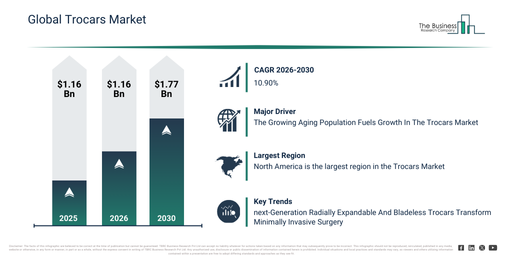
    The trocars market has shown rapid expansion over recent years, with its value projected to increase from $0.95 billion in 2025 to $1.06 billion in 2026, reflecting a robust compound annual growth rate (CAGR) of 11.5%. This upward trend is largely fueled by the growing use of minimally invasive surgeries, wider acceptance of laparoscopic methods, enhancement of hospital surgical facilities, increased attention to infection control, and availability of advanced surgical tools. Moving forward, the market is expected to reach $1.6 billion by 2030, growing at a CAGR of 10.9%. Factors contributing to this forecast include a rise in outpatient surgeries, greater preference for single-use devices, expansion in bariatric and gynecological surgeries, increased emphasis on ergonomic designs for surgeons, and adoption of cutting-edge access technologies. Trending innovations during this period encompass the growing use of bladeless trocar designs, disposable surgical access devices, optical trocars in minimally invasive procedures, ergonomic trocar systems, and heightened focus on patient safety.

    Download A Free Sample Report For Comprehensive Market Insights:

    https://www.thebusinessresearchcompany.com/sample.aspx?id=5298&type=smp

    Demographic Shifts as a Key Driver in the Trocars Market

    One of the primary factors propelling the trocars market is the expanding elderly population, which is associated with a higher prevalence of age-related medical conditions. As the global population ages, there is a corresponding increase in demand for surgical interventions that are less invasive and have quicker recovery times. Laparoscopic surgery, which uses trocars for abdominal access, is increasingly replacing traditional open surgeries among older patients. For instance, data from January 2024 by the Population Reference Bureau indicates that the number of Americans aged 65 and older is projected to rise from 58 million in 2022 to 82 million by 2050, reflecting a 47% increase. This demographic trend strongly supports growth in the trocars market.

    Expanding Surgical Practices Fuel Market Demand

    Beyond demographics, the trocars market is also benefiting from the rising number of outpatient surgical procedures. Hospitals and surgical centers are increasingly adopting minimally invasive techniques that reduce hospital stays and improve patient outcomes. Additionally, the growing focus on surgeon ergonomics is driving demand for advanced trocar systems designed to reduce fatigue and improve procedural precision. The increasing volume of bariatric and gynecologic surgeries further contributes to the expanding market for specialized trocar products.

    Access The Complete Trocars Market Report:

    https://www.thebusinessresearchcompany.com/report/trocars-global-market-report

    Detailed Segmentation and Revenue Opportunities in the Trocars Market

    This market is segmented into several key categories:

    1) Product Types: Disposable trocars, reposable trocars, reusable trocars, and accessories

    2) Tip Designs: Bladeless trocars, optical trocars, bladed trocars, and blunt trocars

    3) Applications: General surgery, gynecological surgery, urological surgery, bariatric surgery, and other surgical areas

    Subcategories include single-use disposable trocars available in various sizes and configurations; reposable trocars designed for multiple uses with easy cleaning and sterilization features; reusable trocars crafted from durable materials for repeated applications; and various accessories such as sheaths, cannulas, and blades.

    Innovations and Trends Shaping the Future of the Trocars Market

    Leading companies in the trocars field are focusing heavily on innovation to meet growing demands for safer, more efficient laparoscopic devices. New-generation trocars feature optimized cannula designs, built-in safety mechanisms, and ergonomic handles to minimize tissue damage and improve surgical outcomes. Unlike traditional models that may rely on rigid structures and manual insertion, these advanced devices provide controlled penetration and reduce complications. A notable example occurred in December 2023 when Xpan Inc., a US-based medical device manufacturer, received FDA 510(k) clearance for its next-generation trocar system. This system offers precise cannula and obturator engineering combined with safety features such as reduced insertion force, safety shields, and ergonomic grips. It is compatible with a broad range of laparoscopic instruments and is applicable across multiple surgical specialties including general surgery, gynecology, urology, and bariatrics, delivering benefits like fewer complications, higher efficiency, and better patient recovery.

    Key Players Leading the Trocars Market Industry

    The trocars market is dominated by several prominent companies, including Johnson & Johnson, B. Braun Melsungen AG, Medtronic plc, Teleflex Incorporated, CONMED Corporation, Applied Medical Resources Corporation, Purple Surgical Manufacturing Ltd., Olympus Corporation, Stryker Corporation, Grena Ltd., Maxer Endoscopy GmbH, Microline Surgical Inc., Ackermann Instrumente GmbH, Reda Instrumente GmbH, Taut Inc., CooperSurgical Inc., MedGyn Products Inc., Unimax Medical Systems Inc., EndoMed Systems GmbH, Seemann Technologies GmbH, and Silex Medical LLC.

    Regional Market Overview and Revenue Leadership

    In 2025, North America held the largest share of the global trocars market, supported by advanced healthcare infrastructure, high adoption of minimally invasive techniques, and favorable reimbursement policies. Europe ranked as the second-largest market for trocars. Other key regions covered in market analyses include Asia-Pacific, South East Asia, Western Europe, Eastern Europe, South America, the Middle East, and Africa. The Asia-Pacific region is expected to witness significant growth in the coming years due to expanding healthcare access, increasing surgical volumes, and rising investments in medical technology.

    Get in touch with us:

    The Business Research Company: https://www.thebusinessresearchcompany.com/

    Americas: +1 310-496-7795

    Asia: +44 7882 955267 & +91 8897263534

    Europe: +44 7882 955267

    Email us at: marketing@tbrc.info

    Follow us on:

    LinkedIn: https://in.linkedin.com/company/the-business-research-company

    YouTube: https://www.youtube.com/channel/UC24_fI0rV8cR5DxlCpgmyFQ

    Global Market Model: https://www.thebusinessresearchcompany.com/global-market-model
  • Treatment Planning Systems And Advanced Image Processing Market Growth Is Accelerating As Industry Transformation Continues

    Treatment Planning Systems And Advanced Image Processing Market Growth Is Accelerating As Industry Transformation Continues

    Enhanced with market attractiveness analysis, total addressable market evaluation, company benchmarking matrices, interactive Excel dashboards, expanded supply chain intelligence, emerging startup coverage, and detailed product insights, The Business Research Company’s 2026 market reports deliver more actionable and strategically valuable research.

    The treatment planning systems and advanced image processing market is experiencing remarkable growth, driven by technological innovations and rising healthcare needs. With the increasing burden of chronic illnesses and cancer worldwide, these systems are becoming indispensable in medical diagnostics and treatment. Below, we explore the market’s size, key drivers, segmentation, competitive landscape, and regional prospects in detail.

    Treatment Planning Systems and Advanced Image Processing Market Size and Growth Outlook

    The market for treatment planning systems and advanced image processing has seen rapid expansion in recent years. It is projected to grow from $2.51 billion in 2025 to $2.79 billion in 2026, representing a compound annual growth rate (CAGR) of 11.2%. This growth during the historical period is largely fueled by the rising prevalence of cancer and chronic diseases, continuous improvements in imaging technologies, greater adoption of radiation therapy, increasing demand for precision medicine, and enhanced hospital infrastructure.

    Download A Free Sample Report For Comprehensive Market Insights:

    https://www.thebusinessresearchcompany.com/sample.aspx?id=25927&type=smp

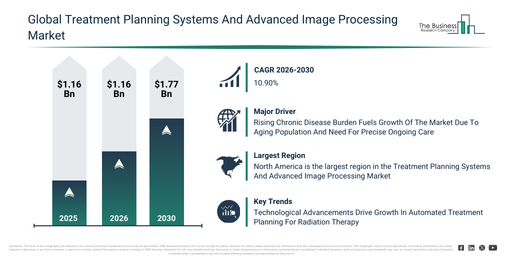
    Looking ahead, the market is expected to continue its rapid trajectory, reaching $4.22 billion by 2030 at a CAGR of 10.9%. The forecasted growth is supported by higher demand for personalized oncology treatments, widespread use of AI-powered treatment planning systems, expansion of cloud-based healthcare platforms, growth of advanced imaging capabilities in emerging markets, and the integration of real-time monitoring and adaptive radiotherapy. Key trends shaping the market include multi-modality imaging integration, customized treatment planning, real-time image-guided therapies, collaborative cloud platforms, and predictive analytics for treatment results.

    Growing Burden of Chronic Diseases as a Market Growth Catalyst

    One of the primary factors driving the expansion of the treatment planning systems and advanced image processing market is the increasing incidence of chronic diseases. Chronic illnesses are long-lasting health conditions requiring continuous care and management, often affecting patients’ quality of life. The aging global population contributes significantly to this rising prevalence, as older individuals are more susceptible to such health issues.

    Access The Complete Treatment Planning Systems And Advanced Image Processing Market Report:

    https://www.thebusinessresearchcompany.com/report/treatment-planning-systems-and-advanced-image-processing-global-market-report

    These advanced systems facilitate the management of chronic diseases by enabling precise diagnosis, targeted treatment plans, and ongoing monitoring, which leads to better accuracy and improved patient outcomes. For instance, according to the Centers for Disease Control and Prevention in April 2025, 76.4% of Americans reported having at least one chronic condition in 2023, with prevalence rates ranging from 59.5% among younger adults to 93.0% in older populations. This growing health challenge is a key driver for market growth.

    Market Segmentation of Treatment Planning Systems and Advanced Image Processing

    This market is segmented into several categories to capture its diverse components and applications. By component, it is divided into advanced image processing software and treatment planning software. Techniques include 3D image reconstruction, in-room imaging, and image registration using graphics processor units (GPUs). Technologies encompass MRI-based planning, CT-based planning, and radiation therapy.

    Applications cover online monitoring, dose accumulation, tracking, adaptive radiotherapy, validation of image registration, and other uses. End-users include hospitals, cancer research institutes, diagnostic and treatment centers, among others. Subsegments further break down into specific software types such as 3D image reconstruction and GPU-based image registration within advanced image processing software, and MRI-based planning, radiation therapy, and CT-based planning within treatment planning software.

    Technological Advancements Driving Competitive Edge in the Market

    Leading companies in the treatment planning systems and advanced image processing market are focusing on innovations like automated treatment planning to improve precision, efficiency, and patient outcomes in radiation therapy. Automated planning uses sophisticated software algorithms and artificial intelligence to create optimized radiation treatment plans with minimal human intervention, enhancing consistency and speed.

    For example, in May 2025, RaySearch Laboratories from Sweden introduced RayStation v2025, which supports adaptive therapy with rapid, automated radiation planning powered by advanced machine learning. This system also supports upright treatment approaches, contributing to more personalized and efficient cancer care.

    Key Players Shaping the Treatment Planning Systems and Advanced Image Processing Market

    The competitive landscape includes several major companies such as Hitachi Ltd, Siemens Healthineers AG, Koninklijke Philips NV, GE HealthCare Technologies Inc, Varian Medical Systems, Elekta AB, Agfa Gevaert Group, Accuray Incorporated, Brainlab AG, Canon Medical Systems Corporation, ViewRay Inc, MIM Software, C RAD AB, IntraOp Medical Corporation, DOSIsoft SA, Mirada Medical Limited, RaySearch Laboratories AB, Philips Radiation Oncology Systems, RaySearch Americas Inc, Mediso Ltd, Spectronic Medical AB, and Advanced Radiotherapy Technologies Inc.

    Regional Market Analysis and Prospects

    In 2025, North America held the largest share of the treatment planning systems and advanced image processing market. However, Asia-Pacific is anticipated to be the fastest-growing region during the forecast period. The market research covers extensive regions including Asia-Pacific, South East Asia, Western Europe, Eastern Europe, North America, South America, the Middle East, and Africa, providing a comprehensive global perspective on emerging opportunities and growth trends.

    Get in touch with us:

    The Business Research Company: https://www.thebusinessresearchcompany.com/

    Americas: +1 310-496-7795

    Asia: +44 7882 955267 & +91 8897263534

    Europe: +44 7882 955267

    Email us at: marketing@tbrc.info

    Follow us on:

    LinkedIn: https://in.linkedin.com/company/the-business-research-company

    YouTube: https://www.youtube.com/channel/UC24_fI0rV8cR5DxlCpgmyFQ

    Global Market Model: https://www.thebusinessresearchcompany.com/global-market-model