Month: June 2026

  • Artificial Intelligence (AI) In Remote Patient Monitoring Market Growth Is Accelerating As Industry Transformation Continues

    Artificial Intelligence (AI) In Remote Patient Monitoring Market Growth Is Accelerating As Industry Transformation Continues

    Enhanced with market attractiveness analysis, total addressable market evaluation, company benchmarking matrices, interactive Excel dashboards, expanded supply chain intelligence, emerging startup coverage, and detailed product insights, The Business Research Company’s 2026 market reports deliver more actionable and strategically valuable research.

    Artificial Intelligence (AI) In Remote Patient Monitoring Market Revenue Growth Supported By A CAGR Of 8.01% Through 2030

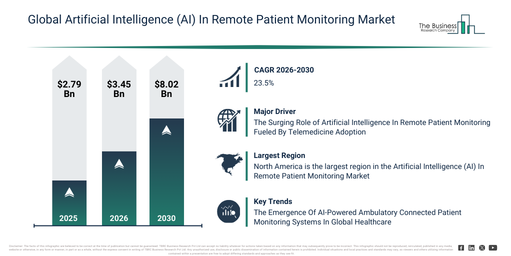
    The market for artificial intelligence in remote patient monitoring has experienced significant expansion, projected to climb from $2.79 billion in 2025 to $3.45 billion in 2026, reflecting a compound annual growth rate of 23.4%. This robust growth observed historically is fueled by several key factors, including the escalating prevalence of chronic diseases, a growing acceptance of telehealth solutions, the proliferation of connected medical devices, a surge in healthcare digitization efforts, and the early adoption of remote monitoring platforms.

    The burgeoning field of artificial intelligence within remote patient monitoring is poised for remarkable expansion over the coming years, projecting a market value reaching $8.02 billion by 2030, driven by a compound annual growth rate of 23.5%. This projected surge is underpinned by several key factors, including a heightened preference for care delivered within the home environment, escalated financial backing for AI-driven healthcare analytics, a broadening scope of individualized treatment plans, the increasing incorporation of remote patient monitoring with electronic health records, and a greater emphasis on proactive health management. Significant developments anticipated during this forecast period encompass the wider implementation of AI-driven predictive monitoring solutions, a rise in the utilization of wearable health-tracking devices, greater integration of platforms providing real-time health insights, the advancement of automated alert systems and decision-support tools, and an intensified focus on the perpetual observation of patient health.

    Download A Free Sample Report For Comprehensive Market Insights:

    https://www.thebusinessresearchcompany.com/sample.aspx?id=13791&type=smp

    Artificial Intelligence (AI) In Remote Patient Monitoring Market Expansion Supported By Key Demand Factors

    The increasing utilization of telemedicine is poised to significantly boost the development of artificial intelligence within the remote patient monitoring sector throughout the upcoming years. Telemedicine encompasses the delivery of healthcare services remotely through the application of telecommunications technologies, including video conferencing, telephone, and digital messaging platforms. Artificial intelligence, when applied to remote patient monitoring and combined with telemedicine, processes the gathered data instantaneously, identifying minor shifts and notifying medical practitioners of potential health concerns before they escalate into critical situations. For example, data released in May 2024 by Eurostat, an official government body situated in Luxembourg, indicated that in 2023, 8.5% of the European Union’s population, falling within the age bracket of 16 to 74 years, utilized online consultations assisted by internet connectivity. Consequently, the widespread embrace of telemedicine is anticipated to be a key driver for the expansion of artificial intelligence in the remote patient monitoring market.

    #Artificial Intelligence (AI) In Remote Patient Monitoring Market Segment Landscape And Growth Potential

    The artificial intelligence (AI) in remote patient monitoring market covered in this report is segmented –

    1) By Solution: Software, Hardware, Services

    2) By Product: Vital Monitors, Special Monitors, Other Products

    3) By Technology: Natural Language Processing, Machine Learning, Speech Recognition

    4) By Application: Diabetes, Respiratory Issues, Cardiovascular Diseases, Sleep Disorder

    Subsegments:

    1) By Software: Predictive Analytics, Data Management, Monitoring Platforms, Mobile Applications

    2) By Hardware: Wearable Devices, Sensors, Medical Devices

    3) By Services: Implementation Services, Training And Education Services, Support And Maintenance Services

    Artificial Intelligence (AI) In Remote Patient Monitoring Market Growth Trends Influencing Competitive Dynamics

    Leading players within the AI for remote patient monitoring sector are concentrating on merging artificial intelligence capabilities with wearable technologies, exemplified by an AI-equipped ambulatory patient tracking system, to enhance their market standing and streamline healthcare services. Such a system represents a sophisticated healthcare approach where artificial intelligence is interwoven with ambulatory monitoring functionalities, facilitating the ongoing surveillance and interpretation of a patient’s physiological signs and health indicators in real-time. To illustrate, during October 2023, Dozee, a medical device manufacturer originating from India, introduced its groundbreaking ‘Dozee Pro Ex,’ an advanced ambulatory patient monitoring system intended for worldwide distribution. This domestically produced innovation incorporates wireless wearable sensors to provide uninterrupted oversight of essential vital signs, encompassing ECG patterns, blood pressure levels, heart rate, oxygen saturation, respiratory rate, and body temperature. A significant feature of ‘Dozee Pro Ex’ is its integrated AI-driven early warning mechanism, which scrutinizes the progressions in vital sign data to issue prompt notifications regarding potential declines in a patient’s health status. The objective of this cutting-edge offering is to transcend the conventional limitations of healthcare, thereby facilitating continuous patient observation around the clock, irrespective of whether the patient is confined to a hospital bed, ambulatory, situated within a medical establishment, or residing at home.

    Artificial Intelligence (AI) In Remote Patient Monitoring Market Competitive Landscape: Who Are The Leading Companies?

    Major companies operating in the artificial intelligence (AI) in remote patient monitoring market are Medtronic plc, Siemens Healthineers, Koninklijke Philips N.V., GE Healthcare, DexCom Inc, Cerner Corporation, Tunstall Healthcare, Connect America LLC, American Well, Biofourmis, Merative L.P., Vivify Health, Current Health, BioIntelliSense, Preventice Solutions, AiCure LLC, Orbita, MobileHelp, EarlySense, Gyant, Myia Labs, Sentrian, Biobeat, ChroniSense Medical Ltd., Somatix Inc., Twistle, HealthWatch Technologies

    Access The Complete Artificial Intelligence (AI) In Remote Patient Monitoring Market Report:

    https://www.thebusinessresearchcompany.com/report/artificial-intelligence-ai-in-remote-patient-monitoring-global-market-report

    Artificial Intelligence (AI) In Remote Patient Monitoring Market Regional Analysis: Which Region Leads By Revenue?

    North Americawas the largest region in the artificial intelligence (AI) in remote patient monitoring market in 2025. Asia-Pacificis expected to be the fastest-growing region in the forecast period. The regions covered in the artificial intelligence (AI) in remote patient monitoring market report are Asia-Pacific, South East Asia, Western Europe, Eastern Europe, North America, South America, Middle East, Africa.

    Get in touch with us:

    The Business Research Company: https://www.thebusinessresearchcompany.com/

    Americas: +1 310-496-7795

    Asia: +44 7882 955267 & +91 8897263534

    Europe: +44 7882 955267

    Email us at: marketing@tbrc.info

    Follow us on:

    LinkedIn: https://in.linkedin.com/company/the-business-research-company

    YouTube: https://www.youtube.com/channel/UC24_fI0rV8cR5DxlCpgmyFQ

    Global Market Model: https://www.thebusinessresearchcompany.com/global-market-model
  • Artificial Intelligence (AI) In Regulatory Affairs Market Outlook Highlights The Next Major Growth Opportunities

    Artificial Intelligence (AI) In Regulatory Affairs Market Outlook Highlights The Next Major Growth Opportunities

    Through market attractiveness analysis, total addressable market evaluation, company benchmarking matrices, interactive Excel dashboards, expanded supply chain intelligence, emerging startup coverage, and detailed product insights, The Business Research Company’s 2026 market reports provide more actionable and strategically valuable research.

    Artificial Intelligence (AI) In Regulatory Affairs Market Value Expansion And Long-Term Growth Outlook

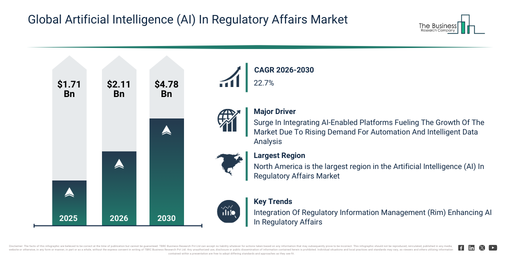
    The artificial intelligence (AI) within the regulatory affairs sector has experienced substantial expansion lately, projected to ascend from $1.71 billion in 2025 to $2.11 billion in 2026, demonstrating a compound annual growth rate (CAGR) of 23.0%. This notable growth during the preceding period is largely due to heightened regulatory intricacy in life sciences, an escalating accumulation of regulatory paperwork, a heightened need for expedited approval timelines, the broader scope of international clinical trials, and the progressive digital transformation of regulatory procedures.

    The market for artificial intelligence in regulatory affairs is poised for substantial expansion, projected to reach $4.78 billion by 2030, underpinned by a compound annual growth rate of 22.7%. This anticipated surge is fueled by several key drivers, including the escalating embrace of comprehensive regulatory automation solutions, greater investment in cloud-based platforms for ensuring compliance, the growing utility of predictive analytics in shaping regulatory strategies, the broader application of AI in pharmacovigilance, and an increased requirement for heightened regulatory efficiency. Throughout this projection period, significant trends are expected to shape the landscape, such as the heightened adoption of AI-powered regulatory intelligence systems, a more pronounced use of automated tools for managing submissions, the increasing integration of natural language processing technologies within compliance frameworks, the continued development and rollout of cloud-based regulatory solutions, and a more intensive focus on continuously monitoring regulatory changes in real-time.

    Download A Free Sample Report For Comprehensive Market Insights:

    https://www.thebusinessresearchcompany.com/sample.aspx?id=30197&type=smp

    #Artificial Intelligence (AI) In Regulatory Affairs Market Growth Drivers And Industry Catalysts

    The expansion of the artificial intelligence (AI) market within regulatory affairs is anticipated to be significantly boosted by the growing integration of AI-powered platforms. These platforms are essentially digital systems that harness AI technologies, including machine learning, natural language processing, and predictive analytics, to automate processes, refine decision-making capabilities, and elevate operational effectiveness across diverse sectors. The increasing adoption of such AI-enabled platforms is fueled by a heightened demand for automation and greater efficiency in handling intricate regulatory requirements, facilitating quicker data analysis and more precise decision outcomes. Within regulatory affairs, AI plays a crucial role by enabling these platforms to simplify compliance procedures, expedite regulatory approvals, and ensure superior data precision, consequently speeding up innovation and the launch of products into the market. A compelling illustration of this trend comes from a report by the UK’s Department for Science, Innovation and Technology (DSIT) in October 2024, which indicated that the UK’s AI industry achieved USD 16.32 billion (£14.2 billion) in revenue for 2023. This figure represents a substantial 34% year-over-year increase, alongside a rise in AI-focused employment to approximately 64,500 individuals. Consequently, the enhanced integration of AI-enabled platforms is a primary catalyst for the upward trajectory of the AI in regulatory affairs market.

    Artificial Intelligence (AI) In Regulatory Affairs Market Categorization By Product Type And Application

    The artificial intelligence (AI) in regulatory affairs market covered in this report is segmented –

    1) By Component: Software Or Platforms, Services

    2) By Deployment Mode: Cloud-based, On-Premises

    3) By Application: Regulatory Intelligence, Data Migration And Integration, Dossier Management, Product Registration And Approvals, Pharmacovigilance And Safety Reporting, Regulatory Submissions And Publishing, Other Applications

    4) By End-User: Pharmaceutical Companies, Biotechnology Companies, Other End-Users

    Subsegments:

    1) By Software Or Platforms: Regulatory Information Management, Document Management, Data Analytics And Insights, Natural Language Processing Tools, Cloud-Based Compliance Solutions, Workflow Automation Systems, Artificial Intelligence-Powered Decision Support, Submission Management Platforms

    2) By Services: Implementation And Integration, Training And Consulting, Support And Maintenance, Regulatory Process Outsourcing, Data Migration And Validation, Compliance Monitoring Services, Managed Services, Customization And Configuration

    #Artificial Intelligence (AI) In Regulatory Affairs Market Trends Influencing Long-Term Demand

    Leading entities within the artificial intelligence (AI) domain for regulatory affairs are prioritizing cutting-edge advancements like Regulatory Information Management (RIM) systems. These integrated solutions are designed to consolidate regulatory data, automate the processes involved in preparing and submitting documents, guarantee adherence to regulations across international markets, and enhance transparency from product inception through its entire lifecycle. Regulatory information management itself describes the structured approach to gathering, organizing, and overseeing regulatory data, associated paperwork, and submissions over the lifespan of a product, thereby ensuring conformity with worldwide regulatory mandates and facilitating smoother interactions with health agencies. As a prime example, in July 2024, ArisGlobal LLC, a software firm headquartered in the United States, unveiled an updated iteration of its LifeSphere Regulatory Platform. This comprehensive, cloud-based system offers complete management of regulatory affairs from start to finish. By incorporating advanced artificial intelligence and large language model functionalities via its LifeSphere NavaX engine, it facilitates the absorption and creation of content, along with providing more profound analytical insights. This unified ecosystem, which consolidates data, content, and operational procedures, has already demonstrated efficiency improvements exceeding 50% and ensures seamless integration with ArisGlobal’s existing safety and quality management systems, marking a significant leap forward for regulatory processes in the life sciences sector.

    Artificial Intelligence (AI) In Regulatory Affairs Market Company Landscape And Strategic Competition

    Major companies operating in the artificial intelligence (AI) in regulatory affairs market are Freyr Software Services Private Limited, Celegence LLC, Wipro Limited, Indegene Limited, Clarivate Plc, Zenovel Pharma Services LLP, RegDesk Inc, Compliance.ai Inc, IONI AI INC., Interfacing Technologies Corporation, OneTrust LLC, Xapien Ltd., SpringsApps Technologies Pvt Ltd., Fairnow Inc., Navitas Life Sciences Private Limited, S&P Global Inc., International Business Machines Corporation, ZS Associates International Inc., Vistaar Technologies Inc., Lexim AI Inc.

    Access The Complete Artificial Intelligence (AI) In Regulatory Affairs Market Report:

    https://www.thebusinessresearchcompany.com/report/global-artificial-intelligence-ai-in-regulatory-affairs-market-report

    Artificial Intelligence (AI) In Regulatory Affairs Market Geographic Distribution And Regional Opportunities

    North Americawas the largest region in the artificial intelligence (AI) in regulatory affairs market in 2025. Asia-Pacificis expected to be the fastest-growing region in the forecast period. The regions covered in the artificial intelligence (AI) in regulatory affairs market report are Asia-Pacific, South East Asia, Western Europe, Eastern Europe, North America, South America, Middle East, Africa.

    Get in touch with us:

    The Business Research Company: https://www.thebusinessresearchcompany.com/

    Americas: +1 310-496-7795

    Asia: +44 7882 955267 & +91 8897263534

    Europe: +44 7882 955267

    Email us at: marketing@tbrc.info

    Follow us on:

    LinkedIn: https://in.linkedin.com/company/the-business-research-company

    YouTube: https://www.youtube.com/channel/UC24_fI0rV8cR5DxlCpgmyFQ

    Global Market Model: https://www.thebusinessresearchcompany.com/global-market-model
  • Artificial Intelligence (AI) In Orthopedic Surgery Market Trends And Growth Drivers Point To Strong Future Potential

    Artificial Intelligence (AI) In Orthopedic Surgery Market Trends And Growth Drivers Point To Strong Future Potential

    Delivering more actionable and strategically valuable research, The Business Research Company’s 2026 market reports feature market attractiveness analysis, total addressable market evaluation, company benchmarking matrices, interactive Excel dashboards, expanded supply chain intelligence, emerging startup coverage, and detailed product insights.

    Artificial Intelligence (AI) In Orthopedic Surgery Market Expected To Reach $0.86 Billion By 2030 At 27.2% CAGR

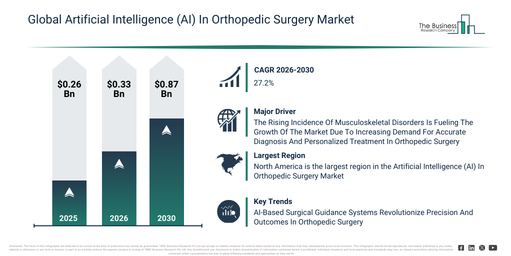
    The market for artificial intelligence (AI) within orthopedic surgery has experienced remarkable expansion. Projections indicate a substantial increase, with the market value expected to climb from $0.26 billion in 2025 to $0.33 billion in 2026, representing a compound annual growth rate of 27.5%. This upward trajectory, observed over recent years, is driven by several key factors including a greater number of orthopedic surgical procedures being performed, significant progress in medical imaging capabilities, the increasing preference for less invasive surgical techniques, the broader implementation of digital systems in healthcare facilities, and a heightened emphasis on achieving greater precision during operations.

    The market for artificial intelligence in orthopedic surgery is poised for substantial expansion, projected to reach $0.87 billion by 2030 with a compound annual growth rate (CAGR) of 27.2%. This anticipated surge is propelled by several key factors: a heightened need for individualized orthopedic care, escalating investments in surgical robotics, broader implementation of AI-driven clinical decision support tools, an amplified emphasis on healthcare outcomes, and the increasing synergy between AI technologies and electronic health records. During this forecast period, significant trends are expected to shape the market, including the wider adoption of AI tools for surgical planning, increased application of computer vision in orthopedic interventions, deeper integration of robotic surgical systems, advancement of predictive analytics for predicting patient results, and improvements in the accuracy of implant positioning.

    Download A Free Sample Report For Comprehensive Market Insights:

    https://www.thebusinessresearchcompany.com/sample.aspx?id=24470&type=smp

    Artificial Intelligence (AI) In Orthopedic Surgery Market Opportunity Drivers: What Is Creating New Revenue Potential?

    The increasing prevalence of musculoskeletal disorders is anticipated to fuel the expansion of the artificial intelligence (AI) in orthopedic surgery sector. These disorders encompass ailments affecting the muscles, bones, joints, tendons, or ligaments, frequently causing discomfort and restricting mobility. Sedentary lifestyles contribute significantly to this trend, as extended periods of inactivity lead to muscle weakening and joint stress. AI in orthopedics plays a crucial role in managing these conditions by enabling accurate and timely diagnoses through sophisticated image analysis and pattern recognition of data. Furthermore, it aids in developing personalized treatment strategies and forecasting patient outcomes, thereby improving both care and recovery. Illustrating this trend, the Office for Health Improvement and Disparities in the UK reported in January 2024 that 18.4% of individuals aged 16 and above were diagnosed with a long-term musculoskeletal condition in 2023, an increase from 17.6% in the preceding year. Consequently, the escalating rates of musculoskeletal disorders are a primary driver for the growth in the artificial intelligence (AI) within orthopedic surgery market.

    Artificial Intelligence (AI) In Orthopedic Surgery Market Segment Analysis And Revenue Opportunities

    The artificial intelligence (AI) in orthopedic surgery market covered in this report is segmented –

    1) By Component Type: Software, Services, Hardware

    2) By Technology: Machine Learning, Natural Language Processing, Computer Vision, Context-Aware Computing

    3) By Anatomy: Knee, Hip, Spine, Other Anatomies

    4) By End-User: Hospitals, Orthopedic Clinics, Other End-Users

    Subsegments:

    1) By Software: Clinical Decision Support Systems (CDSS), Drug Interaction Software, Electronic Health Record (EHR) Integration Modules, Prescription Management Software, Patient Monitoring Software

    2) By Services: Consulting Services, Training and Education, Support and Maintenance, Implementation Services, Drug Distribution Services

    3) By Hardware: Robotic Surgical Systems, Handheld Navigation Devices, Wearable Monitoring Devices, Imaging Systems, Sensors and Actuators, Computing Infrastructure

    Artificial Intelligence (AI) In Orthopedic Surgery Market Innovation Trends Driving Future Development

    Within the AI orthopedic surgery sector, key players are dedicating resources to creating sophisticated technologies like AI-driven surgical navigation systems, aiming to boost accuracy in operations and yield better results for patients. These systems employ real-time information, medical imaging, and forecasting algorithms to aid surgeons in navigating accurately and making informed choices throughout an operation, thereby increasing precision and minimizing the likelihood of mistakes. As an illustration, in April 2025, Proprio, a company from the United States specializing in AI surgical technology, introduced its Paradigm platform, which gained approval from the Food and Drug Administration (FDA). This platform facilitates immediate, three-dimensional, and dynamic measurement and visualization of anatomical structures during surgery, offering surgeons the ability to evaluate and quantify surgical results on the spot. Consequently, the necessity for intraoperative X-rays or CT scans is removed, leading to reduced procedural time and less radiation exposure for patients. This innovation is poised to revolutionize surgical practices, particularly in spine procedures, by delivering ongoing, data-informed assistance and enhancing patient recovery.

    Artificial Intelligence (AI) In Orthopedic Surgery Market Leading Players Shaping Industry Direction

    Major companies operating in the artificial intelligence (AI) in orthopedic surgery market are Medtronic plc, Stryker Corporation, Zimmer Biomet Holdings Inc., Smith & Nephew PLC, Globus Medical Inc., Brainlab AG, Proprio, Augmedics LTD, OrthAlign Inc., Caresyntax, Activ Surgical, THINK Surgical Inc., Perlove Medical, Pixee Medical, Formus Labs, Intuitive Surgical Inc., Johnson & Johnson DePuy Synthes, Renishaw plc, Medacta Group SA, Curexo Inc., Exactech Inc., AlgoSurg Inc., RSIP Vision, Surgalign HOLO Portal Technologies

    Access The Complete Artificial Intelligence (AI) In Orthopedic Surgery Market Report:

    https://www.thebusinessresearchcompany.com/report/artificial-intelligence-ai-in-orthopedic-surgery-global-market-report

    Artificial Intelligence (AI) In Orthopedic Surgery Market Largest Region By Revenue And Market Share

    North Americawas the largest region in the AI in orthopedic surgery market in 2025. The regions covered in the artificial intelligence (AI) in orthopedic surgery market report are Asia-Pacific, South East Asia, Western Europe, Eastern Europe, North America, South America, Middle East, Africa.

    Get in touch with us:

    The Business Research Company: https://www.thebusinessresearchcompany.com/

    Americas: +1 310-496-7795

    Asia: +44 7882 955267 & +91 8897263534

    Europe: +44 7882 955267

    Email us at: marketing@tbrc.info

    Follow us on:

    LinkedIn: https://in.linkedin.com/company/the-business-research-company

    YouTube: https://www.youtube.com/channel/UC24_fI0rV8cR5DxlCpgmyFQ

    Global Market Model: https://www.thebusinessresearchcompany.com/global-market-model
  • Artificial Intelligence (AI) in Hospital Management Market Expansion Is Reshaping Competitive Dynamics Across The Industry

    Artificial Intelligence (AI) in Hospital Management Market Expansion Is Reshaping Competitive Dynamics Across The Industry

    Enhanced with market attractiveness analysis, total addressable market evaluation, company benchmarking matrices, interactive Excel dashboards, expanded supply chain intelligence, emerging startup coverage, and detailed product insights, The Business Research Company’s 2026 market reports deliver more actionable and strategically valuable research.

    #Artificial Intelligence (AI) in Hospital Management Market Size And Revenue Forecast Through 2030

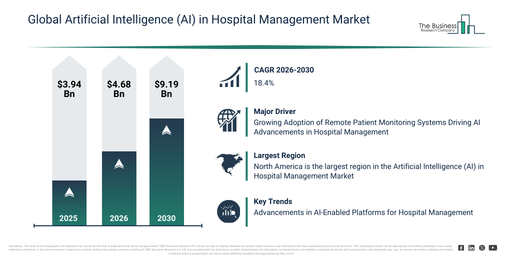
    The market for artificial intelligence (AI) within hospital administration has experienced significant expansion recently. Projected to increase from $3.94 billion in 2025 to $4.68 billion by 2026, this sector is anticipated to advance at a compound annual growth rate of 18.7%. This upward trajectory during the historical period can be ascribed to several factors, including the burgeoning push for digitized hospital operations, escalating numbers of patient admissions, wider assimilation of electronic health records, the persistent drive to curb operational expenditures, and the pioneering application of analytical technologies in the healthcare domain.

    The realm of artificial intelligence within hospital administration is poised for substantial expansion over the coming years, projected to reach a market valuation of $9.19 billion by 2030, exhibiting a compound annual growth rate of 18.4%. This anticipated surge is fueled by escalating investments in smart hospital infrastructure, a heightened need for optimizing operational efficiency, the broader application of AI in patient care management, wider adoption of cloud-based hospital systems, and a pronounced shift towards value-based healthcare. Key developments expected during this period involve a greater embrace of predictive analytics for streamlining hospital operations, increased utilization of AI-powered clinical decision support systems, significant automation of administrative tasks, the expanding scope of AI-driven patient flow management, and improved integration of data for optimizing resource allocation.

    Download A Free Sample Report For Comprehensive Market Insights:

    https://www.thebusinessresearchcompany.com/sample.aspx?id=20474&type=smp

    Artificial Intelligence (AI) in Hospital Management Market Growth Momentum: Which Factors Are Influencing Demand?

    The increasing integration of remote patient monitoring solutions is poised to significantly boost the artificial intelligence (AI) within hospital management market. Remote patient monitoring, a sophisticated technological framework, empowers healthcare professionals to meticulously oversee and manage patient health information off-site. This method of care elevates patient well-being through the utilization of real-time information, prompt interventions, and heightened patient involvement. AI in hospital administration complements remote patient monitoring by offering sophisticated data analysis capabilities, foresight into potential health issues, and tailored treatment suggestions, all contributing to better patient results and streamlined hospital operations. As an illustration, by August 2025, data from the US Department of Health and Human Services indicated that approximately 1 million individuals were enrolled in remote patient monitoring programs in 2024, marking a substantial 27% surge compared to the previous year. Consequently, the expanding utilization of remote patient monitoring systems directly fuels the growth of the artificial intelligence (AI) in hospital management sector.

    Artificial Intelligence (AI) in Hospital Management Market Segmentation And Category Breakdown

    The artificial intelligence (AI) in hospital management market covered in this report is segmented –

    1) By Component: Software, Hardware, Services

    2) By Technology: Computer Vision, Context-Aware Computing, Machine Learning, Natural Language Processing

    3) By Deployment: Cloud-Based, On-Premises

    4) By Application: Patient Care Management, Administrative Processes, Diagnostic Imaging And Radiology, Drug Discovery, Other Applications

    5) By End-User: Healthcare Payers, Hospital And Healthcare Providers, Patients, Pharmaceuticals And Biotechnology Companies, Other End-Users

    Subsegments:

    1) By Software: AI-Based Clinical Decision Support Systems (CDSS), Patient Management Software, Medical Imaging Software, Natural Language Processing (NLP), Administrative Software, Population Health Management Software, AI-Driven Cybersecurity Tools

    2) By Hardware: AI Servers, Wearables and IoT Devices, Medical Imaging Devices, Robotics Systems, AI Chips and Processors, Healthcare Robotics Hardware

    3) By Services: AI Consulting Services, AI System Integration Services, AI Maintenance and Support Services, AI Training and Education Services, Managed AI Services, Analytics as a Service (AaaS)

    Artificial Intelligence (AI) in Hospital Management Market Trends Reshaping Industry Growth

    Leading players within the artificial intelligence (AI) sector serving the hospital management market are actively creating AI-driven systems designed to elevate the precision and effectiveness of hospital functions, patient treatment, and administrative duties. These AI-integrated systems leverage artificial intelligence for data analysis and process automation, thereby assisting hospital administrators in boosting operational performance, enhancing patient care delivery, and refining decision-making capabilities. Illustratively, ZS Associates, a consultancy firm based in the United States, introduced ZAIDYN Connected Health in October 2023. This AI-powered platform is engineered to foster greater patient involvement and yield better health results through tailored interventions and intelligence derived from data analysis. The platform comprises three critical elements—health insights, patient engagement, and connected research—which collaborate to meet existing gaps in care and optimize healthcare processes.

    Artificial Intelligence (AI) in Hospital Management Market Competitive Analysis Of Major Industry Participants

    Major companies operating in the artificial intelligence (AI) in hospital management market are Google LLC, McKesson Corporation, Microsoft Corporation, Amazon Web Service, Johnson & Johnson Services Inc., Intel Corporation, Accenture plc, International Business Machines Corporation, Oracle Corporation, Medtronic plc, SAP SE, Micron Technology Inc., Nvidia Corporation, Capgemini SE, Siemens Healthineers AG, Cognizant Technology Solutions Corporation, Koninklijke Philips N.V., GE HealthCare Technologies Inc., Zebra Medical Vision, Infor Inc., Change Healthcare, Epic Systems Corporation, Nuance Communications Inc., Veradigm Inc., Corti ApS

    Access The Complete Artificial Intelligence (AI) in Hospital Management Market Report:

    https://www.thebusinessresearchcompany.com/report/artificial-intelligence-ai-in-hospital-management-global-market-report

    Artificial Intelligence (AI) in Hospital Management Market Regional Analysis And Leading Geography

    North Americawas the largest region in the artificial intelligence (AI) in hospital management market in 2025. The regions covered in the artificial intelligence (AI) in hospital management market report are Asia-Pacific, South East Asia, Western Europe, Eastern Europe, North America, South America, Middle East, Africa.

    Get in touch with us:

    The Business Research Company: https://www.thebusinessresearchcompany.com/

    Americas: +1 310-496-7795

    Asia: +44 7882 955267 & +91 8897263534

    Europe: +44 7882 955267

    Email us at: marketing@tbrc.info

    Follow us on:

    LinkedIn: https://in.linkedin.com/company/the-business-research-company

    YouTube: https://www.youtube.com/channel/UC24_fI0rV8cR5DxlCpgmyFQ

    Global Market Model: https://www.thebusinessresearchcompany.com/global-market-model
  • Artificial Intelligence (AI) In Drug Discovery Market Forecast Reveals Where Future Industry Value Will Be Created

    Artificial Intelligence (AI) In Drug Discovery Market Forecast Reveals Where Future Industry Value Will Be Created

    Through market attractiveness analysis, total addressable market evaluation, company benchmarking matrices, interactive Excel dashboards, expanded supply chain intelligence, emerging startup coverage, and detailed product insights, The Business Research Company’s 2026 market reports provide more actionable and strategically valuable research.

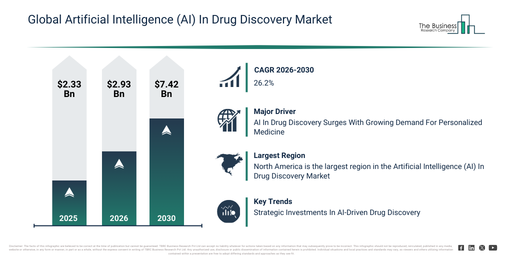
    Artificial Intelligence (AI) In Drug Discovery Market Growth From $2.93 Billion In 2026 To $7.42 Billion By 2030 At A CAGR Of 26.2%

    The market for artificial intelligence in drug discovery has experienced remarkable expansion lately, projected to ascend from $2.33 billion in 2025 to $2.93 billion in 2026, reflecting a formidable compound annual growth rate of 25.9%. This accelerated growth during the preceding period is largely attributable to heightened pharmaceutical research and development expenditures, the escalating intricacy found within drug discovery processes, a greater abundance of both biological and chemical data, the early integration of machine learning techniques within the field of bioinformatics, and a notable increase in cooperative ventures between pharmaceutical companies and technology firms.

    The market for artificial intelligence in drug discovery is poised for substantial expansion in the coming years, projecting a rise to $7.42 billion by 2030 with a compound annual growth rate of 26.2%. This upward trajectory is fueled by several key drivers, including the escalating implementation of generative AI methodologies, a burgeoning need for highly personalized treatments, the broader integration of AI into clinical trial planning, increased financial backing for cloud-based research platforms, and a growing endorsement of AI’s role in pharmaceutical development by regulatory bodies. Significant developments anticipated during this period encompass a heightened utilization of AI for pinpointing therapeutic targets, a greater embrace of deep learning techniques for evaluating potential drug molecules, the more widespread incorporation of virtual screening systems, the advancement of AI-powered tools for refining drug candidates, and a concentrated effort to accelerate the overall drug development process.

    Download A Free Sample Report For Comprehensive Market Insights:

    https://www.thebusinessresearchcompany.com/sample.aspx?id=3411&type=smp

    Artificial Intelligence (AI) In Drug Discovery Market Expansion Drivers: What Is Shaping Future Growth?

    The increasing requirement for tailored medical treatments is anticipated to be a primary catalyst for the expansion of artificial intelligence (AI) within the drug discovery sector. Personalized medicine, characterized by its focus on disease prevention, diagnosis, and treatment tailored to an individual’s unique genetic makeup, proteomic data, or biological characteristics, is seeing greater acceptance due to the heightened demand for accurate, individualized therapeutic strategies. These approaches aim to boost treatment efficacy while minimizing negative side effects. AI plays a crucial role in facilitating this transition by expediting the pinpointing of molecular targets, refining potential drug compounds, and improving the quality of clinical judgments across the entire drug development process. An illustrative example is the U.S. Food and Drug Administration’s approval of 26 novel personalized therapies in 2023, comprising twenty new molecular entities and six gene- or cell-based treatments, as reported by the Personalized Medicine Coalition in February 2024. Consequently, the escalating need for personalized medicine is a significant factor contributing to the growth of AI in drug discovery.

    Artificial Intelligence (AI) In Drug Discovery Market Segment Outlook: Which Categories Are Expanding The Fastest?

    The artificial intelligence (AI) in drug discovery market covered in this report is segmented –

    1) By Technology: Context-Aware Processing, Natural Language Processing, Deep Learning

    2) By Drug Type: Small Molecules, Large Molecules

    3) By Therapeutic Type: Metabolic Disease, Cardiovascular Disease, Oncology, Neurodegenerative Diseases, Anti-Infective Diseases, Respiratory Diseases, Other Therapeutics

    4) By End User: Pharmaceutical Companies, Biopharmaceutical Companies, Academic And Research Institutes, Other End-Users

    Subsegments:

    1) By Context-Aware Processing: Contextual Data Integration, Predictive Modeling, Adaptive Learning Systems

    2) By Natural Language Processing (NLP): Text Mining And Analysis, Drug Interaction Extraction, Clinical Trial Data Analysis

    3) By Deep Learning: Neural Networks, Convolutional Neural Networks (CNNs), Recurrent Neural Networks (RNNs), Reinforcement Learning Applications

    Artificial Intelligence (AI) In Drug Discovery Market Strategic Trends: What Is Defining The Next Phase Of Growth?

    Companies at the forefront of the drug discovery sector are channeling significant capital into AI-driven enterprises, aiming to pinpoint and formulate novel therapeutic agents and subsequently make these advanced models accessible to other pharmaceutical entities. Such calculated investments serve to fuel the crucial research and development phases inherent in discovering new medications, a journey often characterized by substantial expenditure and extended timelines. This infusion of capital empowers companies to propel their drug discovery initiatives forward, ultimately facilitating the introduction of innovative treatments into the market. As an illustration, in July of 2023, Nvidia, a prominent American software developer, allocated $50 million to Recursion Pharmaceuticals, a US-based biotechnology firm employing artificial intelligence in its drug discovery endeavors. This financial backing is slated to bolster Recursion’s capacity to expedite the refinement of its AI models underpinning biological and chemical research, leveraging the cloud infrastructure provided by Nvidia.

    Artificial Intelligence (AI) In Drug Discovery Market Key Companies And Competitive Benchmarking

    Major companies operating in the artificial intelligence (AI) in drug discovery market are Exscientia, Insilico Medicine, Owkin Inc., XtalPi Inc., Standigm Inc., Innoplexus AG, Atomwise, Inc., BenevolentAI, Deep Genomics Inc., NuMedii, Inc., Verge Genomics, Inc., Berg LLC, Cyclica Inc., Iktos, Quris, Adagene Inc., Gero Pte. Ltd., IBM Corporation, Microsoft Corporation, NVIDIA Corporation, Alphabet Inc., DeepMind Technologies Limited, IQVIA Holdings Inc., GNS Healthcare, Inc., GE HealthCare Technologies Inc., Novartis AG, Pfizer Inc., F. Hoffmann-La Roche Ltd., Merck & Co., Inc., AbbVie Inc., AstraZeneca PLC, Amgen Inc., GlaxoSmithKline plc, Johnson & Johnson, Takeda Pharmaceutical Company Limited, Ipsen S.A., Galderma S.A.

    Access The Complete Artificial Intelligence (AI) In Drug Discovery Market Report:

    https://www.thebusinessresearchcompany.com/report/artificial-intelligence-in-drug-discovery-global-market-report

    Artificial Intelligence (AI) In Drug Discovery Market Geographic Analysis: Where Is Demand Growing The Fastest?

    North Americawas the largest region in the artificial intelligence (AI) in drug discovery market in 2025. Western Europewas the second largest region in the global artificial intelligence (AI) in drug discovery market share. The regions covered in the artificial intelligence (AI) in drug discovery market report are Asia-Pacific, South East Asia, Western Europe, Eastern Europe, North America, South America, Middle East, Africa.

    Get in touch with us:

    The Business Research Company: https://www.thebusinessresearchcompany.com/

    Americas: +1 310-496-7795

    Asia: +44 7882 955267 & +91 8897263534

    Europe: +44 7882 955267

    Email us at: marketing@tbrc.info

    Follow us on:

    LinkedIn: https://in.linkedin.com/company/the-business-research-company

    YouTube: https://www.youtube.com/channel/UC24_fI0rV8cR5DxlCpgmyFQ

    Global Market Model: https://www.thebusinessresearchcompany.com/global-market-model
  • Artificial Intelligence (AI) In Aging And Elderly Care Market Growth Through 2030 Creates New Strategic Opportunities

    Artificial Intelligence (AI) In Aging And Elderly Care Market Growth Through 2030 Creates New Strategic Opportunities

    Delivering more actionable and strategically valuable research, The Business Research Company’s 2026 market reports feature market attractiveness analysis, total addressable market evaluation, company benchmarking matrices, interactive Excel dashboards, expanded supply chain intelligence, emerging startup coverage, and detailed product insights.

    Artificial Intelligence (AI) In Aging And Elderly Care Market Expansion Outlook: What Revenue Opportunities Lie Ahead?

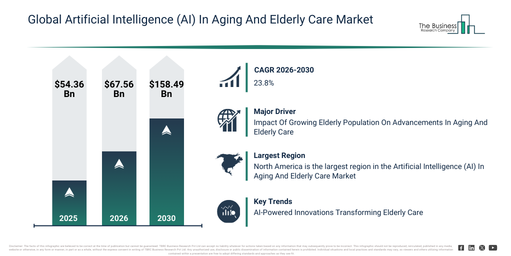
    The market for artificial intelligence (AI) applications in aging and elderly care has witnessed substantial expansion recently, with projections indicating a surge from $54.36 billion in 2025 to $67.56 billion by 2026, representing a compound annual growth rate (CAGR) of 24.3%. This upward trend throughout the historical period is largely attributable to several key factors: an aging global demographic, a rising incidence of chronic diseases, the broader implementation of telehealth, increased utilization of digital health technologies, and a heightened need for assisted living accommodations.

    The artificial intelligence market specifically for aging and elderly care is poised for substantial expansion in the upcoming years, projected to reach a valuation of $158.49 billion by 2030, driven by a compound annual growth rate of 23.8%. This anticipated surge is fueled by escalating investments in AI-powered healthcare solutions, a heightened demand for tailored services for seniors, wider acceptance of smart home technologies for health management, a greater emphasis on proactive rather than reactive healthcare, and the increasing incorporation of robotics into eldercare. Key developments anticipated during this growth phase include the broader implementation of AI-driven health monitoring systems, greater utilization of wearable technology for senior care, increased application of predictive analytics to mitigate health risks, the proliferation of robotic assistance, and a stronger commitment to remote care strategies.

    Download A Free Sample Report For Comprehensive Market Insights:

    https://www.thebusinessresearchcompany.com/sample.aspx?id=20714&type=smp

    Artificial Intelligence (AI) In Aging And Elderly Care Market Development Factors: Which Trends Are Supporting Demand?

    The expansion of artificial intelligence within the elder care sector is strongly linked to the increasing number of senior citizens. This demographic, typically defined as individuals aged 60 or 65 and above, often requires specialized support and services to address health issues and lifestyle adaptations associated with aging. The global trend of a larger elderly populace stems from improved medical care leading to longer lifespans, coupled with lower birth rates that consequently decrease the representation of younger generations. AI is playing a significant role in revolutionizing care for seniors by improving medical treatments, increasing access to services, and fostering greater autonomy. A notable projection from the Population Reference Bureau, a non-profit entity based in the U.S., indicated in January 2024 that the American population aged 65 and older is projected to surge from 58 million in 2022 to 82 million by 2050, representing a substantial 47% escalation. Consequently, this demographic’s share of the overall U.S. population is anticipated to climb from 17% to 23% over the same timeframe, thereby fueling the adoption and advancement of AI in the specialized market for aging and elderly care.

    Artificial Intelligence (AI) In Aging And Elderly Care Market Segment Landscape: Which Areas Lead Market Development?

    The artificial intelligence (AI) in aging and elderly care market covered in this report is segmented –

    1) By Type: Natural Language Processing (NLP) Systems, Robotics And Robotic Assistance, Smart Home Devices And IoT Solutions, Machine Learning And Predictive Analytics, Virtual Health Assistants

    2) By Technology: Wearable Devices, Smart Home Systems, Mobile Apps, Cloud Computing, Internet Of Things (IoT)

    3) By Applications: Fall Detection And Prevention, Medication Management, Remote Health Monitoring, Social Engagement And Companion AI, Cognitive Stimulation And Brain Training

    4) By End User: Home Care Settings, Assisted Living Facilities, Nursing Homes And Long-Term Care Centers, Hospitals And Healthcare Institutions

    Subsegments:

    1) By Natural Language Processing (NLP) Systems: Voice-Activated Assistants, AI-Powered Speech Recognition Systems, NLP for Cognitive Health Monitoring

    2) By Robotics And Robotic Assistance: Elderly Care Robots, Robotic Mobility Assistance Devices, Robotic Companions For Seniors

    3) By Smart Home Devices And IoT Solutions: Smart Sensors (Fall Detection, Monitoring), AI-Enabled Smart Home Automation Systems, Wearable IoT Devices For Health Monitoring

    4) By Machine Learning And Predictive Analytics: AI-Based Health Risk Prediction Models, Machine Learning For Personalized Care Plans, Predictive Analytics For Medication Management

    5) By Virtual Health Assistants: AI-Powered Virtual Care Assistants, Telemedicine Virtual Assistants, Virtual Health Coaching And Support Systems

    Artificial Intelligence (AI) In Aging And Elderly Care Market Transformation Trends: Which Innovations Are Driving Change?

    Leading organizations participating in the artificial intelligence (AI) within the aging and elderly care sector are concentrating their efforts on pioneering advanced solutions, including AI-powered virtual assistants designed to deliver customized support, bolster monitoring efficiency, and elevate the standard of living for older adults. These virtual AI caregivers function as intelligent digital companions that assist with health tracking, medication reminders, social interaction, and emergency notifications, fundamentally empowering seniors to preserve their autonomy and health. As a case in point, in November 2024, Electronic Caregiver Inc., a provider of medical equipment based in the United States, introduced Addison Care+ through the AWS marketplace. This sophisticated AI virtual caregiver aims to transform senior care by improving health oversight, social engagement, and self-sufficiency for the aging population and individuals with long-term health conditions. It provides constant activity monitoring, facilitates the early identification of potential health concerns, and offers detailed care analytics, including medication adherence and critical incident management. Through its integration with AI-enabled remote care services, it streamlines broad deployment across the country, equipping support personnel with forward-thinking instruments to oversee patient well-being and refine the provision of care.

    Artificial Intelligence (AI) In Aging And Elderly Care Market Industry Leaders And Market Competition

    Major companies operating in the artificial intelligence (AI) in aging and elderly care market are Amazon.com Inc., Google LLC, Samsung Electronics Co. Ltd., Microsoft Corporation, Intel Corporation, General Electric Company, International Business Machines Corporation, Oracle Corporation, Medtronic plc, NVIDIA Corporation, Siemens Healthineers AG, Koninklijke Philips N.V., AARP Services Inc., Suki AI Inc., AiCure LLC, Sensi.AI, Orbita Inc., Sensely Inc., CarePredict Inc., Cognivue Corporation, Reemo Health Inc., Canary Health Technologies Inc., Somatix Inc.

    Access The Complete Artificial Intelligence (AI) In Aging And Elderly Care Market Report:

    https://www.thebusinessresearchcompany.com/report/artificial-intelligence-ai-in-aging-and-elderly-care-global-market-report

    Artificial Intelligence (AI) In Aging And Elderly Care Market Global Footprint: Which Region Holds Market Leadership?

    North Americawas the largest region in the artificial intelligence (AI) in aging and elderly care market in 2025. Asia-Pacificis expected to be the fastest-growing region in the forecast period. The regions covered in the artificial intelligence (AI) in aging and elderly care market report are Asia-Pacific, South East Asia, Western Europe, Eastern Europe, North America, South America, Middle East, Africa.

    Get in touch with us:

    The Business Research Company: https://www.thebusinessresearchcompany.com/

    Americas: +1 310-496-7795

    Asia: +44 7882 955267 & +91 8897263534

    Europe: +44 7882 955267

    Email us at: marketing@tbrc.info

    Follow us on:

    LinkedIn: https://in.linkedin.com/company/the-business-research-company

    YouTube: https://www.youtube.com/channel/UC24_fI0rV8cR5DxlCpgmyFQ

    Global Market Model: https://www.thebusinessresearchcompany.com/global-market-model
  • Artificial Intelligence (AI) Heart Sound Digital Twin Analytics Market Size Projected To Increase From $0.83 Billion To $1.91 Billion During The Forecast Period

    Artificial Intelligence (AI) Heart Sound Digital Twin Analytics Market Size Projected To Increase From $0.83 Billion To $1.91 Billion During The Forecast Period

    Enhanced with market attractiveness analysis, total addressable market evaluation, company benchmarking matrices, interactive Excel dashboards, expanded supply chain intelligence, emerging startup coverage, and detailed product insights, The Business Research Company’s 2026 market reports deliver more actionable and strategically valuable research.

    Artificial Intelligence (AI) Heart Sound Digital Twin Analytics Market Growth Potential: How Will Market Size Change Through 2030?

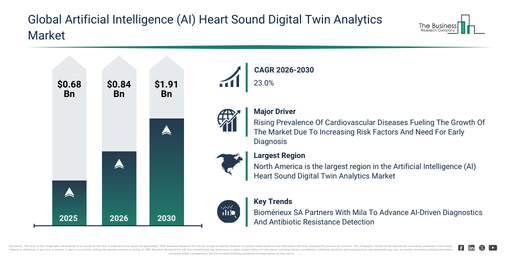
    The digital twin analytics market for artificial intelligence in heart sound analysis has experienced a remarkable surge recently, projected to expand from $0.68 billion in 2025 to $0.84 billion in 2026, reflecting a compound annual growth rate of 23.3%. Factors fueling this expansion during the earlier period include the rising incidence of cardiovascular diseases, improvements in digital auscultation technology, greater adoption of AI in medical diagnoses, the broadening scope of remote patient monitoring, and the accessibility of extensive cardiac data repositories.

    The market for artificial intelligence-powered digital twin analytics of heart sounds is poised for tremendous expansion in the coming years, projecting a surge to $1.91 billion by 2030 with a compound annual growth rate of 23.0%. This anticipated escalation is fueled by a confluence of factors, including a heightened need for proactive identification of cardiac risks, the growing embrace of tailored cardiology approaches, the proliferation of cloud-based analytical tools for clinical applications, a greater emphasis on sustained cardiac surveillance, and the increasing incorporation of AI into healthcare procedures. Key developments shaping this period encompass the wider adoption of digital twin models for cardiac analysis, a greater reliance on AI-driven insights from heart sound data, the broadening scope of remote cardiac monitoring, the more extensive use of wearable devices for heart monitoring, and an elevated focus on diagnostic tools that predict cardiovascular health.

    Download A Free Sample Report For Comprehensive Market Insights:

    https://www.thebusinessresearchcompany.com/sample.aspx?id=28119&type=smp

    Artificial Intelligence (AI) Heart Sound Digital Twin Analytics Market Industry Drivers: What Is Driving Revenue Growth?

    The expanding incidence of heart and circulatory system ailments is anticipated to stimulate the expansion of the artificial intelligence (AI) heart sound digital twin analytics market in the upcoming period. Cardiovascular diseases encompass a spectrum of conditions affecting the heart and blood vessels, such as coronary artery disease, heart failure, stroke, and high blood pressure. The escalating rate of these diseases is largely ascribed to suboptimal dietary habits, with excessive intake of saturated fats, trans fats, added sugars, and sodium contributing to elevated blood pressure, obesity, and high cholesterol levels, all significant risk factors for cardiac issues. AI-driven digital twin analytics for heart sounds aid in the diagnosis of cardiovascular diseases by constructing individualized digital cardiac representations, thus proving beneficial for early detection and ongoing monitoring. These systems alleviate the burden on clinicians by offering prompt interpretations of heart sounds, thereby enhancing diagnostic precision and enabling customized therapeutic approaches. As an illustration, data from the American College of Cardiology (ACC), a non-profit organization of US cardiovascular professionals, indicated in September 2025 that cardiovascular disease (CVD) continues to be the primary contributor to globally measured disability-adjusted life years (DALYs) and mortality according to the Global Burden of Disease (GBD) study, with CVD accounting for 437 million DALYs in 2023. Consequently, the increasing prevalence of cardiovascular diseases is a key driver for the market growth of AI heart sound digital twin analytics.

    The escalating need for individualized medical care is projected to foster the advancement of the market for artificial intelligence (AI) heart sound digital twin analytics. Personalized medicine, a healthcare paradigm that customizes therapeutic and preventive strategies based on an individual’s unique genetic makeup, lifestyle, and environmental factors, is seeing increased demand. This surge is primarily fueled by breakthroughs in genomics, which facilitate the precise identification of genetic variations and the development of bespoke treatments. AI-powered digital twin analytics for heart sounds contribute significantly to personalized medicine by generating patient-specific digital cardiac models, which are ideally suited for tailoring treatments to individual cardiac profiles. By providing real-time analysis of heart sounds, these systems diminish diagnostic uncertainty, leading to improved treatment efficacy and better patient outcomes. For instance, the Personalized Medicine Coalition (PMC), a non-profit entity based in the U.S., reported in February 2024 that the U.S. Food and Drug Administration (FDA) approved 26 novel personalized medicines in 2023, a notable increase compared to the 12 approvals seen in 2022. Therefore, the growing adoption of personalized medicine is a significant factor driving the expansion of the AI heart sound digital twin analytics market.

    Artificial Intelligence (AI) Heart Sound Digital Twin Analytics Market Segments: Where Are The Largest Growth Opportunities?

    The artificial intelligence (AI) heart sound digital twin analytics market covered in this report is segmented –

    1) By Component: Software, Hardware, Services

    2) By Deployment Mode: On-Premises, Cloud

    3) By Application: Cardiology, Remote Patient Monitoring, Clinical Diagnostics, Research, Other Applications

    4) By End-User: Hospitals, Clinics, Research Institutes, Diagnostic Centers, Other End-Users

    Subsegments:

    1) By Software: AI Algorithms And Models, Predictive Analytics Platforms, Simulation And Modeling Tools, Data Integration And Management Software, Visualization And Reporting Dashboards

    2) By Hardware: Sensors, Digital Stethoscopes, Wearable Devices, Edge Devices Or Processing Units, Cloud Or Server Infrastructure

    3) By Services: Implementation And Integration Services, Consulting And Advisory Services, Training And Education Services, Support And Maintenance Services, Data-As-A-Service (DaaS)

    #Artificial Intelligence (AI) Heart Sound Digital Twin Analytics Market Growth Trends: What Is Influencing The Future Outlook?

    Leading entities within the AI-powered cardiac sound digital twin analytics sector are prioritizing the creation of sophisticated devices, exemplified by digital stethoscopes, designed for the meticulous analysis of heart sounds, facilitating prompt disease detection, and underpinning tailored medical treatments. A digital stethoscope, essentially an electronic instrument, serves to magnify and document bodily acoustic signals, incorporating noise suppression capabilities and enabling linkage with mobile applications to refine diagnostic accuracy and streamline information exchange. As a case in point, Eko Health Inc., a prominent digital health firm based in the United States, introduced its CORE 500 digital stethoscope, accompanied by the Eko+ membership program, to the Canadian market in April 2025. This CORE 500 digital stethoscope stands out as a state-of-the-art instrument, featuring proprietary audio technology equipped with three distinct listening modes, the capacity to display electrocardiograms and heart sound tracings, and active noise cancellation to ensure highly accurate auscultation, all while facilitating effortless data acquisition, distribution, and ongoing surveillance. Integral to this offering, the Eko+ membership elevates the device’s utility through AI-driven detection of murmurs and arrhythmias, waveform interpretation, structured examination protocols, and secure data sharing functionalities. The introduction of these advancements equips Canadian healthcare professionals with cutting-edge, AI-driven instrumentation aimed at enhancing cardiovascular and respiratory patient care and ultimately improving health results.

    Artificial Intelligence (AI) Heart Sound Digital Twin Analytics Market Major Participants And Competitive Dynamics

    Major companies operating in the artificial intelligence (AI) heart sound digital twin analytics market are Medtronic plc, Tata Consultancy Services Limited (TCS), Siemens Healthineers AG, Fujifilm Healthcare Corporation, GE Healthcare Technologies Inc., Dassault Systemes SE, Synopsys Inc., Tempus Labs Inc., Biofourmis Inc., HeartFlow Inc., Viz.ai Inc., Aidoc Medical Ltd., Butterfly Network Inc., Eko Health Inc., Shenzhen Minttihealth Co. Ltd., Ultromics Limited, Thinklabs Medical LLC, Acorai AB, Sensydia Corporation, CardioSignal, Cardionics Inc., Ayu Devices Pvt. Ltd., Ai Health Highway India Pvt Ltd., Aevice Health Pte Ltd., CSD Labs, Sanolla Ltd., HeartTronics AI

    Access The Complete Artificial Intelligence (AI) Heart Sound Digital Twin Analytics Market Report:

    https://www.thebusinessresearchcompany.com/report/artificial-intelligence-ai-heart-sound-digital-twin-analytics-global-market-report

    Artificial Intelligence (AI) Heart Sound Digital Twin Analytics Market Regional Distribution: Which Areas Drive Market Expansion?

    North Americawas the largest region in the artificial intelligence (AI) heart sound digital twin analytics market in 2025. The regions covered in the artificial intelligence (AI) heart sound digital twin analytics market report are Asia-Pacific, South East Asia, Western Europe, Eastern Europe, North America, South America, Middle East, Africa.

    Get in touch with us:

    The Business Research Company: https://www.thebusinessresearchcompany.com/

    Americas: +1 310-496-7795

    Asia: +44 7882 955267 & +91 8897263534

    Europe: +44 7882 955267

    Email us at: marketing@tbrc.info

    Follow us on:

    LinkedIn: https://in.linkedin.com/company/the-business-research-company

    YouTube: https://www.youtube.com/channel/UC24_fI0rV8cR5DxlCpgmyFQ

    Global Market Model: https://www.thebusinessresearchcompany.com/global-market-model
  • Artificial Intelligence (AI) Facial Skin Analyzer Market Growth Outlook Reveals A CAGR Of 10.8% And A Market Value Of $1.35 Billion By 2030

    Artificial Intelligence (AI) Facial Skin Analyzer Market Growth Outlook Reveals A CAGR Of 10.8% And A Market Value Of $1.35 Billion By 2030

    Through market attractiveness analysis, total addressable market evaluation, company benchmarking matrices, interactive Excel dashboards, expanded supply chain intelligence, emerging startup coverage, and detailed product insights, The Business Research Company’s 2026 market reports provide more actionable and strategically valuable research.

    Artificial Intelligence (AI) Facial Skin Analyzer Market Value Analysis: What Growth Is Expected Over The Forecast Period?

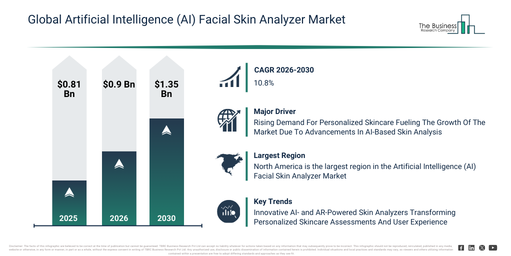
    The market for artificial intelligence (AI) facial skin analyzers has experienced substantial expansion, projecting a rise from its 2025 valuation of $0.81 billion to $0.9 billion by 2026, reflecting a compound annual growth rate (CAGR) of 11.2%. This historical growth trajectory has been propelled by a confluence of factors, including heightened consumer engagement with skincare diagnostics, the proliferation of digital dermatology solutions, increased adoption of advanced cosmetic technologies, the widespread availability of high-resolution imaging equipment, and a growing consumer desire for customized beauty regimens.

    The market for AI facial skin analyzers is poised for substantial expansion, projected to reach $1.35 billion by the year 2030, with a compound annual growth rate (CAGR) of 10.8%. This anticipated surge is fueled by several key factors, including the growing incorporation of artificial intelligence within aesthetic medicine, a rise in virtual consultations for skincare, the increasing development of cosmetic formulations based on data analysis, broader implementation in clinical dermatology, and a greater demand for solutions that offer real-time skin monitoring. Principal developments expected during this forecast period encompass the escalating adoption of AI-powered skin diagnostics, a greater integration of mobile platforms for skin analysis, the expanding utilization of 3D facial imaging technologies, the growth of systems that provide personalized skincare recommendations, and improvements in the accuracy of assessments that consider multiple skin parameters.

    Download A Free Sample Report For Comprehensive Market Insights:

    https://www.thebusinessresearchcompany.com/sample.aspx?id=24469&type=smp

    #Artificial Intelligence (AI) Facial Skin Analyzer Market Growth Factors: Which Forces Are Supporting Market Expansion?

    The artificial intelligence (AI) facial skin analyzer market is poised for expansion, largely fueled by an increasing consumer desire for customized skincare. This trend toward personalized skincare, which focuses on adapting products and routines to an individual’s specific skin type and issues, is being amplified by advancements in AI and skin analysis tools that facilitate bespoke product suggestions aligned with personal dermatological needs. AI-powered facial skin analyzers play a crucial role in achieving this personalization by precisely evaluating an individual’s skin condition and then providing recommendations for products and treatments derived from that data. Illustrating this trend, consumer expenditure on personal care items and services in the US saw a substantial uptick, climbing from $866 in 2022 to $950 in 2023—a growth of 9.7% annually, following a similar 12.3% increase in 2022, as reported by the Bureau of Labor Statistics in December 2024. Consequently, the heightened demand for tailored skincare is the primary catalyst for the expanding market of AI facial skin analyzers.

    Artificial Intelligence (AI) Facial Skin Analyzer Market Segment Analysis: What Are The Major Market Categories?

    The artificial intelligence (AI) facial skin analyzer market covered in this report is segmented –

    1) By Product Type: Portable, Desktop

    2) By Device Type: Mobile App, Web-Based Platform, Standalone Device

    3) By Technology: Artificial intelligence (AI)-Based, Machine Learning, Deep Learning

    4) By Application: Skincare, Aesthetic Treatments, Cosmetics, Medical Diagnosis

    5) By End User: Healthcare, Personal Care, Other End-Users

    Subsegments:

    1) By Portable: Handheld Skin Analyzers, Smartphone-Compatible Devices, Wearable Skin Analyzers

    2) By Desktop: Multi-Parameter Skin Analyzers, 3D Imaging Skin Analyzers, Clinical-Grade Skin Analyzers

    Artificial Intelligence (AI) Facial Skin Analyzer Market Industry Trends: What Changes Are Reshaping Demand?

    Companies dominant in the artificial intelligence facial skin analyzer sector are prioritizing the creation of novel technologies, incorporating AI and augmented reality, to deliver immediate, individualized skin assessments, boost user involvement, and broaden their reach to both consumers and professionals. These advanced analyzers leverage intelligent algorithms and visual enhancements to evaluate skin condition and illustrate the effects of skincare routines instantly, empowering users to make educated decisions through interactive and bespoke evaluations. For example, in early 2024, Flipkart Private Limited, an e-commerce entity based in India, launched its ModiFace Powered Skin Analyzer. This AI-integrated instrument is designed to work fluidly within Flipkart’s mobile application, enabling users to conduct a comprehensive facial skin analysis simply by capturing a selfie and providing some fundamental information. The system employs sophisticated artificial intelligence and augmented reality to assess crucial skin indicators including pores, wrinkles, dark spots, blemishes, and elasticity. Subsequently, it offers personalized skincare suggestions that are precisely matched to an individual’s unique skin characteristics, covering seven distinct phases: cleansing, preparation, treatment, hydration, care, targeted intervention, and protection.

    Artificial Intelligence (AI) Facial Skin Analyzer Market Leading Companies Driving Competitive Growth

    Major companies operating in the artificial intelligence (AI) facial skin analyzer market are JANUS Pro, LUMINI LLC, FotoFinder Systems Inc., Revieve Inc., Canfield Scientific Inc., DermaCompare, HiMirror, SkinVision B.V., Haut.AI, Skintelligent, Perfect Corp, Quantificare, BeautyAI, SkinAI, Syensqo, OKKAMI, UVisio, Meicet Technology Co LTD, Coralai, Zemits, Aram Huvis Co Ltd, Courage + Khazaka Electronic GmbH, Microderm GLO, Pixience, BeautyBio

    Access The Complete Artificial Intelligence (AI) Facial Skin Analyzer Market Report:

    https://www.thebusinessresearchcompany.com/report/artificial-intelligence-ai-facial-skin-analyzer-global-market-report

    Artificial Intelligence (AI) Facial Skin Analyzer Market Leading Geography: Which Region Generates The Most Revenue?

    North Americawas the largest region in the artificial intelligence (AI) facial skin analyzer market in 2025. Asia-Pacificis expected to be the fastest-growing region in the forecast period. The regions covered in the artificial intelligence (AI) facial skin analyzer market report are Asia-Pacific, South East Asia, Western Europe, Eastern Europe, North America, South America, Middle East, Africa.

    Get in touch with us:

    The Business Research Company: https://www.thebusinessresearchcompany.com/

    Americas: +1 310-496-7795

    Asia: +44 7882 955267 & +91 8897263534

    Europe: +44 7882 955267

    Email us at: marketing@tbrc.info

    Follow us on:

    LinkedIn: https://in.linkedin.com/company/the-business-research-company

    YouTube: https://www.youtube.com/channel/UC24_fI0rV8cR5DxlCpgmyFQ

    Global Market Model: https://www.thebusinessresearchcompany.com/global-market-model
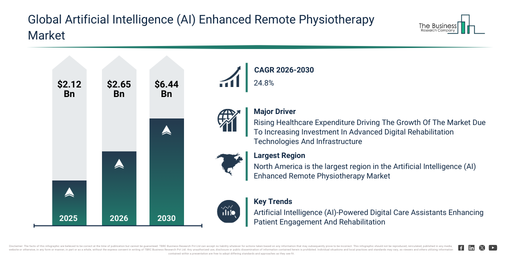
  • Artificial Intelligence (AI) Enhanced Remote Physiotherapy Market Forecast Highlights Expansion From $2.65 Billion To $6.43 Billion Through 2030

    Artificial Intelligence (AI) Enhanced Remote Physiotherapy Market Forecast Highlights Expansion From $2.65 Billion To $6.43 Billion Through 2030

    Delivering more actionable and strategically valuable research, The Business Research Company’s 2026 market reports feature market attractiveness analysis, total addressable market evaluation, company benchmarking matrices, interactive Excel dashboards, expanded supply chain intelligence, emerging startup coverage, and detailed product insights.

    Artificial Intelligence (AI) Enhanced Remote Physiotherapy Market Size Forecast: How Large Could The Market Become By 2030?

    The market for artificial intelligence-powered remote physiotherapy services has experienced considerable expansion. Projections indicate a rise from $2.12 billion in 2025 to $2.65 billion in 2026, demonstrating a compound annual growth rate (CAGR) of 25.1%. Key factors fueling this historical growth trajectory include the widespread adoption of telehealth solutions, an increasing incidence of musculoskeletal conditions, greater utilization of wearable health technology, the proliferation of home-based healthcare approaches, and advancements in remote patient monitoring capabilities.

    Driven by escalating investments in AI-powered rehabilitation solutions, a heightened need for unbroken therapy oversight, the broadening scope of elder care and chronic condition management, the greater incorporation of physiotherapy within digital health frameworks, and a more pronounced emphasis on proactive rehabilitation, the artificial intelligence augmented remote physiotherapy sector is poised for dramatic expansion, projected to reach $6.44 billion by 2030. This remarkable upward trajectory, manifesting as a compound annual growth rate of 24.8%, is further propelled by key market developments including the escalating utilization of AI for motion analysis, the increasing acceptance of wearable physiotherapy gadgets, a surge in demand for tailored exercise regimens, the proliferation of remote rehabilitation services, and a stronger concentration on therapies measured by their results.

    Download A Free Sample Report For Comprehensive Market Insights:

    https://www.thebusinessresearchcompany.com/sample.aspx?id=28907&type=smp

    Artificial Intelligence (AI) Enhanced Remote Physiotherapy Market Demand Drivers: What Is Fueling Industry Growth?

    An upswing in healthcare spending is anticipated to be a primary catalyst for the expansion of the AI-powered remote physiotherapy sector. This increased financial commitment to healthcare services, encompassing treatments, medical devices, facilities, and staff, is fueled by the growing burden of chronic illnesses necessitating sustained and expensive care. Such robust healthcare expenditure facilitates the integration of AI-enhanced remote physiotherapy by permitting increased allocations towards cutting-edge technologies, digital frameworks, and tailored rehabilitation programs. For example, data released in May 2024 by the UK’s Office for National Statistics revealed a notable 5.6% rise in nominal healthcare expenditure between 2022 and 2023, a considerable acceleration from the modest 0.9% growth seen the prior year. Consequently, this escalating investment in healthcare directly contributes to the burgeoning artificial intelligence enhanced remote physiotherapy market.

    Artificial Intelligence (AI) Enhanced Remote Physiotherapy Market Segment Breakdown: Which Categories Generate The Most Revenue?

    The artificial intelligence (AI) enhanced remote physiotherapy market covered in this report is segmented –

    1) By Component: Software, Hardware, Services

    2) By Therapy Type: Musculoskeletal, Neurological, Cardiopulmonary, Pediatric, Geriatric, Other Therapy Types

    3) By Deployment Mode: Cloud-Based, On-Premises

    4) By Application: Rehabilitation, Pain Management, Preventive Care, Other Applications

    5) By End-User: Hospitals And Clinics, Homecare Settings, Rehabilitation Centers, Other End-Users

    Subsegments:

    1) By Software: Virtual Therapy Platforms, Artificial Intelligence Analytics Software, Exercise Prescription Software, Patient Monitoring Software

    2) By Hardware: Wearable Devices, Motion Sensors, Rehabilitation Robotics, Mobile Devices

    3) By Services: Remote Consultation Services, Data Analysis Services, Therapy Session Management Services, Training And Support Services

    Artificial Intelligence (AI) Enhanced Remote Physiotherapy Market Innovation Trends: Which Developments Are Transforming The Industry?

    Companies dominating the AI-driven remote physiotherapy sector are investing in pioneering sophisticated offerings like intelligent digital assistants designed to boost patient involvement and recovery effectiveness. These AI-driven digital assistants function as smart virtual aids, utilizing artificial intelligence to deliver immediate direction, encouragement, and customized responses throughout a patient’s physical therapy regimen. A prime illustration of this is Kaia Health, a US firm specializing in digital therapeutics, which introduced Angela in June 2023; this marked the debut of the sector’s inaugural voice-activated, AI-enhanced digital care assistant aimed at assisting individuals with their physiotherapy exercises at home. This groundbreaking development empowers users via spoken communication, dispensing timely affirmations, exercise instructions, and learning opportunities precisely matched to personal requirements. Integrated within Kaia Health’s AI framework for musculoskeletal (MSK) conditions, this assistant ensures continuous remote support, monitors advancement, and ultimately elevates adherence to therapy, improves recovery results, and cultivates a more immersive, lifelike digital rehabilitation journey.

    Artificial Intelligence (AI) Enhanced Remote Physiotherapy Market Key Players And Strategic Industry Positioning

    Major companies operating in the artificial intelligence (AI) enhanced remote physiotherapy market are Hinge Health Inc., Sword Health, SPRY Inc., Kaia Health Technologies GmbH, XRHealth Inc., Moterum Technologies Inc., Physitrack Group AB., MIRA REHAB LIMITED, Band Connect Inc., CUREosity GmbH, BlueJay Mobile Health Inc., Kinomatic Pty Ltd., Vitrue Health Inc., BioSensics Inc., Wizecare Inc., Limber Health Inc., Akina Inc., Zerapy Inc., Preve Inc., Flok Health Inc.

    Access The Complete Artificial Intelligence (AI) Enhanced Remote Physiotherapy Market Report:

    https://www.thebusinessresearchcompany.com/report/artificial-intelligence-ai-enhanced-remote-physiotherapy-global-market-report

    Artificial Intelligence (AI) Enhanced Remote Physiotherapy Market Regional Outlook: Where Are The Largest Opportunities Located?

    North Americawas the largest region in the artificial intelligence (AI) enhanced remote physiotherapy market in 2025. Asia-Pacificis expected to be the fastest-growing region in the forecast period. The regions covered in the artificial intelligence (AI) enhanced remote physiotherapy market report are Asia-Pacific, South East Asia, Western Europe, Eastern Europe, North America, South America, Middle East, Africa.

    Get in touch with us:

    The Business Research Company: https://www.thebusinessresearchcompany.com/

    Americas: +1 310-496-7795

    Asia: +44 7882 955267 & +91 8897263534

    Europe: +44 7882 955267

    Email us at: marketing@tbrc.info

    Follow us on:

    LinkedIn: https://in.linkedin.com/company/the-business-research-company

    YouTube: https://www.youtube.com/channel/UC24_fI0rV8cR5DxlCpgmyFQ

    Global Market Model: https://www.thebusinessresearchcompany.com/global-market-model
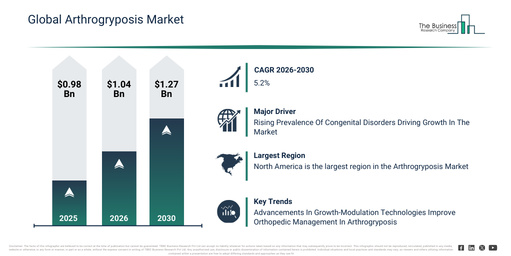
  • Arthrogryposis Market Expected To Reach $1.27 Billion By 2030 As Growth Accelerates At 5.2% CAGR

    Arthrogryposis Market Expected To Reach $1.27 Billion By 2030 As Growth Accelerates At 5.2% CAGR

    Enhanced with market attractiveness analysis, total addressable market evaluation, company benchmarking matrices, interactive Excel dashboards, expanded supply chain intelligence, emerging startup coverage, and detailed product insights, The Business Research Company’s 2026 market reports deliver more actionable and strategically valuable research.

    Arthrogryposis Market Revenue Outlook: What CAGR Is Expected Through 2030?

    The financial landscape for arthrogryposis has demonstrated robust expansion recently, projecting a rise from $0.98 billion in 2025 to $1.04 billion in 2026, reflecting a compound annual growth rate of 5.5%. This historical upswing is largely attributable to a deeper comprehension of congenital conditions, the broadening scope of pediatric orthopedic services, enhanced access to rehabilitative care, the integration of physical therapy methods, and the proliferation of dedicated treatment facilities.

    The arthrogryposis market is projected for substantial expansion in the upcoming years, reaching an estimated $1.27 billion by 2030, driven by a compound annual growth rate of 5.2%. This anticipated surge is underpinned by several key factors, including amplified investments in research pertaining to rare diseases, a growing need for tailored rehabilitation services, the broadening scope of early detection programs, a greater emphasis on enhancing long-term quality of life, and the increasing incorporation of sophisticated diagnostic tools. Significant trends expected to influence this market during the forecast period encompass a heightened focus on prompt diagnosis and intervention, a wider embrace of comprehensive, multi-specialty treatment modalities, increased utilization of cutting-edge diagnostic imaging, the expansion of sustained rehabilitation efforts, and the development of more robust supportive care strategies.

    Download A Free Sample Report For Comprehensive Market Insights:

    https://www.thebusinessresearchcompany.com/sample.aspx?id=21105&type=smp

    Arthrogryposis Market Growth Drivers: What Factors Are Accelerating Expansion?

    The increasing incidence of congenital disorders is anticipated to stimulate the expansion of the arthrogryposis market. Congenital disorders, defined as structural or functional deviations present at birth and arising during fetal development, are becoming more common due to advancements in prenatal detection, environmental influences, genetic alterations, and shifts in lifestyle. Arthrogryposis provides crucial insights into these congenital conditions by illuminating the significance of fetal movement, genetic predispositions, and neuromuscular maturation in the development of musculoskeletal anomalies. Illustratively, the World Health Organization reported in February 2023 that annually, approximately 240,000 infants worldwide die within their first month due to congenital disorders, with an additional estimated 170,000 fatalities occurring between one month and five years of age. Consequently, the escalating prevalence of congenital disorders is a key factor fueling the growth of the arthrogryposis market.

    The expansion of the arthrogryposis market is poised for acceleration due to the growing adoption of telehealth services. These services leverage digital communication technologies, including video conferencing, telephone calls, and online messaging, to deliver healthcare consultations and treatments remotely, thereby enhancing patient convenience and accessibility to medical attention from their residences or other locations. The surge in telehealth is attributed to its inherent benefits such as convenience, broader reach, potential for reduced healthcare expenditures, and improved access to medical services, particularly for individuals in remote or underserved regions. Arthrogryposis patients can significantly benefit from telehealth through remote consultations, facilitating earlier detection and ongoing management of joint contractures, thereby improving access to specialized care for those with movement limitations. For context, the Australian Digital Health Agency noted in May 2024 that over 95,000 healthcare professionals had engaged with telehealth, delivering 118.2 million telehealth services to 18 million individuals over the preceding two years. Therefore, the upward trend in telehealth services is a significant driver for the arthrogryposis market’s growth.

    Arthrogryposis Market Segmentation: How Is The Market Structured Across Key Categories?

    The arthrogryposis market covered in this report is segmented –

    1) By Type: Classic Arthrogryposis, Distal Arthrogryposis, Amyoplasia

    2) By Treatment Type: Occupational Therapists, Physical Therapy, Surgery, Imaging Diagnostics

    3) By Patient Age: Children, Adults

    Subsegments:

    1) By Classic Arthrogryposis: Multiple Joint Involvement, Flexion Contractures, Severe Muscle Weakness, Progressive Arthrogryposis, Intellectual Impairment

    2) By Distal Arthrogryposis: Isolated Limb Involvement, Contractures of Hands and Feet, Distal Joint Contractures, Autosomal Dominant Inheritance

    3) By Amyoplasia: Severe Limb Contractures, Muscle Hypotonia (low muscle tone), No Cognitive Impairment, Symmetric Joint Involvement, Lack Of Muscle Development In Affected Limbs

    Arthrogryposis Market Trends: What Is Shaping Future Industry Growth?

    Leading entities within the arthrogryposis treatment arena are concentrating their efforts on pioneering sophisticated orthopedic interventions, exemplified by guided-growth systems, with the overarching aim of refining deformity correction, alleviating the necessity for extensive surgical procedures, and ultimately fostering improved functional recovery for individuals impacted by the condition. These advanced guided-growth systems facilitate a carefully managed influence on bone alignment throughout a child’s developmental phase, thereby assisting healthcare professionals in progressively rectifying joint contractures while minimizing soft tissue trauma. Illustratively, in the month of June 2023, OrthoPediatrics Corp., a company specializing in pediatric orthopedics based in the United States, introduced a novel growth modulation system incorporating guided implant technology; this innovation provides meticulous control over surgical alignment, allows for minimally invasive implantation, offers patient-specific sizing configurations, integrates seamlessly with conventional surgical instruments, and enhances the surveillance of growth advancement. Engineered to facilitate targeted correction of deformities, this groundbreaking technology presents medical practitioners with a more controlled and less intrusive methodology for addressing the joint abnormalities frequently observed in cases of arthrogryposis.

    Arthrogryposis Market Competitive Landscape And Leading Companies

    Major companies operating in the arthrogryposis market are Boston Children’s Hospital, Seattle Children’s Hospital, Shriners Hospitals for Children, Texas Scottish Rite Hospital for Children, Gillette Children’s Specialty Healthcare, Cleveland Clinic, Johns Hopkins Hospital, Mayo Clinic, Children’s Hospital of Philadelphia, Nationwide Children’s Hospital, Children’s Healthcare of Atlanta, Nemours Children’s Health, Phoenix Children’s Hospital, Cincinnati Children’s Hospital Medical Center, St Jude Children’s Research Hospital, Rady Children’s Hospital San Diego, Children’s National Hospital, Great Ormond Street Hospital, SickKids Hospital Toronto, Royal Children’s Hospital Melbourne

    Access The Complete Arthrogryposis Market Report:

    https://www.thebusinessresearchcompany.com/report/arthrogryposis-global-market-report

    Arthrogryposis Market Geographic Landscape: Which Region Dominates Industry Growth?

    North Americawas the largest region in the arthrogryposis market in 2025. Asia-Pacificis expected to be the fastest-growing region in the forecast period. The regions covered in the arthrogryposis market report are Asia-Pacific, South East Asia, Western Europe, Eastern Europe, North America, South America, Middle East, Africa.

    Get in touch with us:

    The Business Research Company: https://www.thebusinessresearchcompany.com/

    Americas: +1 310-496-7795

    Asia: +44 7882 955267 & +91 8897263534

    Europe: +44 7882 955267

    Email us at: marketing@tbrc.info

    Follow us on:

    LinkedIn: https://in.linkedin.com/company/the-business-research-company

    YouTube: https://www.youtube.com/channel/UC24_fI0rV8cR5DxlCpgmyFQ

    Global Market Model: https://www.thebusinessresearchcompany.com/global-market-model