Month: June 2026

  • Traumatic Brain Injury Diagnostic Equipment Market Outlook Highlights The Next Major Growth Opportunities

    Traumatic Brain Injury Diagnostic Equipment Market Outlook Highlights The Next Major Growth Opportunities

    Through market attractiveness analysis, total addressable market evaluation, company benchmarking matrices, interactive Excel dashboards, expanded supply chain intelligence, emerging startup coverage, and detailed product insights, The Business Research Company’s 2026 market reports provide more actionable and strategically valuable research.

    The traumatic brain injury diagnostic equipment sector has witnessed significant progress lately, driven by advancements in medical technology and increasing awareness of brain injury assessments. This report explores the current market size, key growth drivers, evolving trends, competitive landscape, and regional market dynamics shaping the future of this industry.

    Market Size Expansion and Forecast for the Traumatic Brain Injury Diagnostic Equipment Market

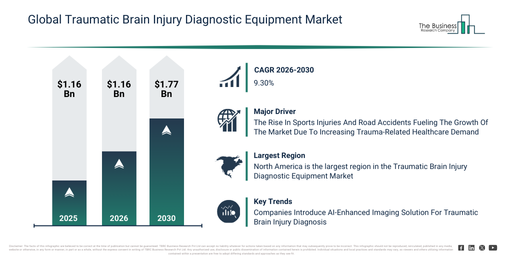
    The market for traumatic brain injury diagnostic equipment has experienced rapid growth in recent years. It is anticipated to rise from $2.41 billion in 2025 to $2.67 billion in 2026, growing at a compound annual growth rate (CAGR) of 11.0%. This upward trend during the historic period is mainly due to the expansion of emergency medical services, increased usage of CT and MRI scanners, heightened awareness about brain injury diagnosis, improvements in hospital imaging infrastructure, and greater availability of specialized diagnostic tools. Moving forward, the market is projected to reach $3.81 billion by 2030, with a CAGR of 9.3%. The forecasted growth is supported by rising investments in smart diagnostic imaging centers, growing demand for real-time brain monitoring devices, the integration of AI-driven diagnostic workflows, broader adoption of portable imaging equipment, and a growing emphasis on rapid trauma diagnosis. Significant trends expected to influence this period include wider use of advanced neuroimaging systems, AI-based diagnostic software, noninvasive diagnostic methods, comprehensive imaging and monitoring platforms, and a stronger focus on early and precise detection.

    Download A Free Sample Report For Comprehensive Market Insights:

    https://www.thebusinessresearchcompany.com/sample.aspx?id=15689&type=smp

    Key Factors Propelling Growth in the Traumatic Brain Injury Diagnostic Equipment Market

    One major factor driving the market’s expansion is the rising incidence of sports-related injuries and road traffic accidents. Sports injuries refer to physical trauma sustained during athletic or recreational activities, while road accidents involve collisions on public roads resulting in trauma or fatalities. The increase in these incidents is fueled by greater participation in sports, higher traffic volumes, distracted driving, and ongoing deficiencies in road safety infrastructure. Traumatic brain injury diagnostic equipment plays a vital role in public health by enabling fast identification, assessment, and monitoring of brain injuries, which supports better treatment decisions, lowers risks of long-term disability, and improves patient outcomes.

    The growing burden of injuries from sports and accidents is clearly reflected in healthcare statistics. For example, in 2025, the National Safety Council (NSC), a US nonprofit organization, reported that approximately 4.4 million individuals were treated in emergency departments in 2024 for injuries related to sports and recreational equipment—a 17% increase compared to 2023. This surge highlights the importance of advanced diagnostic tools, thereby driving the demand for traumatic brain injury diagnostic equipment.

    Access The Complete Traumatic Brain Injury Diagnostic Equipment Market Report:

    https://www.thebusinessresearchcompany.com/report/traumatic-brain-injury-diagnostic-equipment-global-market-report

    Segments Experiencing Rapid Growth in the Traumatic Brain Injury Diagnostic Equipment Market

    The market is categorized based on various classifications to better understand growth areas:

    1) By Device Type: Imaging Devices and Monitoring Devices

    2) By Technique: Noninvasive, Invasive, and Combination Techniques

    3) By End User: Hospitals, Clinics, Diagnostic Centers, and Other Users

    Further breakdown of subsegments includes:

    – Imaging Devices: CT Scanners, MRI Scanners, PET Scanners

    – Monitoring Devices: Intracranial Pressure (ICP) Monitors, EEG (Electroencephalogram) Monitors, Cerebral Oxygenation Monitors, and Blood Flow Monitors

    These segments reveal where innovation and demand are concentrating, with imaging and monitoring technologies playing a critical role in advancing brain injury diagnosis.

    Technological Innovations and Trends Shaping the Market’s Future

    Leading players in the traumatic brain injury diagnostic equipment sector are heavily investing in integrating cutting-edge technologies like AI-based smart speed image-reconstruction. This technology employs artificial intelligence algorithms to quickly reconstruct medical images at improved quality, thereby reducing scan times while enhancing diagnostic accuracy across MRI and CT imaging.

    For instance, in March 2024, Koninklijke Philips N.V., a health tech company from the Netherlands, collaborated with SyntheticMR AB, based in Sweden, to launch the Smart Quant Neuro 3D system. This AI-powered quantitative brain imaging tool is designed to elevate neurology care by improving imaging speed by almost threefold and increasing resolution by up to 65%. It supports faster patient scanning and enhances radiology department efficiency. The system also provides quantitative measures of brain tissues such as myelin volumes, which are essential for proper nerve impulse transmission, allowing objective assessment of traumatic brain injuries that were traditionally evaluated through symptom-based testing.

    Key Players Influencing the Traumatic Brain Injury Diagnostic Equipment Market

    Several prominent companies dominate this market, fostering innovation and competition. Major participants include Hitachi Medical, Canon Medical Systems Corporation, Siemens Healthineers AG, FUJIFILM Medical Systems Inc., Koninklijke Philips N.V., GE Healthcare Technologies, Bruker Corporation, Nihon Kohden Corporation, Carestream Health, Bittium Corporation, Brainlab AG, Esaote SpA, Natus Medical Incorporated, Magstim Co. Ltd., Nico Corporation, BrainCheck Inc., BrainScope Company Inc., NeuroWave Systems Inc., Cerora Inc., and InfraScan Inc.

    Regional Market Overview Highlighting North America’s Leading Position

    In 2025, North America accounted for the largest share of the traumatic brain injury diagnostic equipment market. The report also covers other significant regions including Asia-Pacific, Southeast Asia, Western Europe, Eastern Europe, South America, the Middle East, and Africa. While North America leads in size, other regions are expected to see notable growth owing to increasing healthcare infrastructure development and rising awareness about brain injury diagnostics around the world.

    Get in touch with us:

    The Business Research Company: https://www.thebusinessresearchcompany.com/

    Americas: +1 310-496-7795

    Asia: +44 7882 955267 & +91 8897263534

    Europe: +44 7882 955267

    Email us at: marketing@tbrc.info

    Follow us on:

    LinkedIn: https://in.linkedin.com/company/the-business-research-company

    YouTube: https://www.youtube.com/channel/UC24_fI0rV8cR5DxlCpgmyFQ

    Global Market Model: https://www.thebusinessresearchcompany.com/global-market-model
  • Traumatic Brain Injuries Assessment And Management Devices Market Trends And Growth Drivers Point To Strong Future Potential

    Traumatic Brain Injuries Assessment And Management Devices Market Trends And Growth Drivers Point To Strong Future Potential

    Delivering more actionable and strategically valuable research, The Business Research Company’s 2026 market reports feature market attractiveness analysis, total addressable market evaluation, company benchmarking matrices, interactive Excel dashboards, expanded supply chain intelligence, emerging startup coverage, and detailed product insights.

    The market for traumatic brain injuries assessment and management devices has seen significant growth recently, reflecting advancements in medical technology and increased awareness of brain injury care. This sector is on track for continued expansion as innovations and rising healthcare demands drive progress. Let’s explore the current market size, key growth drivers, major players, and emerging trends shaping this important healthcare segment.

    Current Market Size and Projected Growth in Traumatic Brain Injuries Assessment and Management Devices

    In recent years, the traumatic brain injuries assessment and management devices market has experienced robust growth. It is projected to increase from $3.76 billion in 2025 to $4.1 billion in 2026, representing a compound annual growth rate (CAGR) of 8.9%. This upward trajectory during the historical period is mainly driven by a rise in road accidents and sports-related injuries, expansion of trauma care centers, increased utilization of CT and MRI imaging technologies, greater awareness about brain injury management, and the availability of advanced neurological equipment.

    Download A Free Sample Report For Comprehensive Market Insights:

    https://www.thebusinessresearchcompany.com/sample.aspx?id=15945&type=smp

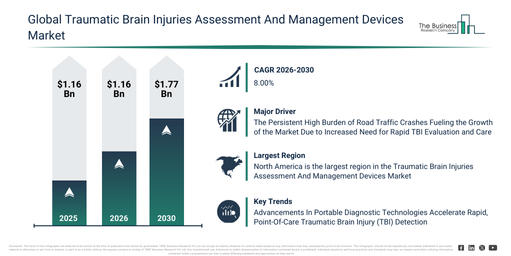
    Looking ahead, the market is anticipated to grow further, reaching a value of $5.58 billion by 2030, with a CAGR of 8.0%. Factors fueling this growth include the increasing adoption of remote patient monitoring technologies, higher investments in neurocritical care infrastructure, expansion of wearable brain monitoring devices, a stronger focus on personalized rehabilitation strategies, and the integration of AI-based clinical decision support tools. Key trends expected to influence the market include wider use of AI-assisted TBI diagnostic tools, continuous brain monitoring system deployments, greater acceptance of portable neurodiagnostic devices, multimodal imaging integration, and an intensified emphasis on early injury detection.

    Primary Factors Contributing to Market Growth

    One of the main drivers behind the expansion of the traumatic brain injuries assessment and management devices market is the persistently high occurrence of road traffic accidents worldwide. These crashes, involving vehicles on public roads, frequently result in injuries, fatalities, and property damage, making them a leading cause of traumatic brain injuries globally. Growth in these incidents is attributed to issues such as distracted driving, speeding, rising vehicle density, and infrastructural shortcomings.

    Access The Complete Traumatic Brain Injuries Assessment And Management Devices Market Report:

    https://www.thebusinessresearchcompany.com/report/traumatic-brain-injuries-assessment-and-management-devices-global-market-report

    The critical role that TBI assessment and management devices play in emergency and acute care settings further supports market growth. These devices enable rapid diagnosis, intracranial pressure monitoring, and continuous neurological evaluation, which are essential for timely and potentially life-saving interventions for accident victims. For example, in August 2025, the International Transport Forum reported that Australia recorded 1,297 road deaths in 2024—a 4% increase compared to the previous year—highlighting the ongoing challenge posed by road traffic crashes and the corresponding demand for effective brain injury management technologies.

    Segmentation of the Traumatic Brain Injuries Assessment and Management Devices Market

    This market is categorized based on various parameters to provide a detailed understanding of its landscape. By device type, the market splits into imaging devices and monitoring devices. In terms of technology, it includes intracranial pressure (ICP) monitoring and brain tissue oxygen monitoring. The end-user segment covers hospitals, diagnostic centers, and other healthcare providers.

    Delving deeper, imaging devices are further classified into computed tomography (CT) scanners, magnetic resonance imaging (MRI) scanners, and positron emission tomography (PET) scanners. Monitoring devices consist of intracranial pressure (ICP) monitors, electroencephalogram (EEG) machines, near-infrared spectroscopy (NIRS) monitors, and transcranial Doppler (TCD) devices.

    Emerging Innovations Shaping the Future of TBI Assessment and Management

    Leading companies and research institutions in the TBI device market are focusing increasingly on developing portable, hand-held diagnostic tools that facilitate rapid evaluation at the point of care, especially in pre-hospital and field environments. These devices leverage cutting-edge technologies such as eye-safe lasers, spectroscopy, and AI-driven analytics to deliver fast, non-invasive brain injury detection immediately after trauma.

    A notable example is from February 2024, when the University of Birmingham in the UK introduced a prototype diagnostic device that combines a class-1 eye-safe laser with Raman spectroscopy to measure biochemical biomarkers at the back of the eye. This device is designed to evolve into a portable, point-of-care tool suited for roadside emergencies, sports venues, and military settings, thereby supporting early triage and informed clinical decision-making through prompt TBI assessment.

    Key Market Players and Competitive Landscape in Traumatic Brain Injuries Devices

    The market features several prominent companies that are instrumental in driving innovation and supplying TBI assessment and management devices globally. These include Abbott Laboratories, Medtronic plc, Siemens Healthineers AG, Philips Healthcare, GE HealthCare Technologies Inc., Canon Medical Systems Corporation, Masimo Corporation, Nihon Kohden Corporation, Natus Medical Incorporated, Neurosoft SA, Cadwell Industries Inc., NeuroPace Inc., Compumedics Limited, Micromed LLC, Electrical Geodesics Inc., ANT Neuro, Neuroelectrics Corporation, BrainScope Company Inc., Hyperfine Research Inc., and Advanced Brain Monitoring Inc.

    Regional Market Insights and Geographic Outlook

    In 2025, North America held the largest share of the traumatic brain injuries assessment and management devices market. However, the Asia-Pacific region is expected to witness the fastest growth during the forecast period. The market analysis includes regions such as Asia-Pacific, South East Asia, Western Europe, Eastern Europe, North America, South America, the Middle East, and Africa, offering a comprehensive view of global market trends and opportunities.

    Get in touch with us:

    The Business Research Company: https://www.thebusinessresearchcompany.com/

    Americas: +1 310-496-7795

    Asia: +44 7882 955267 & +91 8897263534

    Europe: +44 7882 955267

    Email us at: marketing@tbrc.info

    Follow us on:

    LinkedIn: https://in.linkedin.com/company/the-business-research-company

    YouTube: https://www.youtube.com/channel/UC24_fI0rV8cR5DxlCpgmyFQ

    Global Market Model: https://www.thebusinessresearchcompany.com/global-market-model
  • Trauma Fixation Devices And Equipment Market Expansion Is Reshaping Competitive Dynamics Across The Industry

    Trauma Fixation Devices And Equipment Market Expansion Is Reshaping Competitive Dynamics Across The Industry

    Enhanced with market attractiveness analysis, total addressable market evaluation, company benchmarking matrices, interactive Excel dashboards, expanded supply chain intelligence, emerging startup coverage, and detailed product insights, The Business Research Company’s 2026 market reports deliver more actionable and strategically valuable research.

    The trauma fixation devices and equipment sector has experienced steady growth in recent years, driven by various factors affecting patient care and surgical advancements. As the need for effective treatment of fractures and injuries rises worldwide, this market is set to witness notable expansion through 2030. The following analysis explores the current market size, the forces propelling growth, key segments, emerging trends, and leading companies shaping this industry.

    Trauma Fixation Devices and Equipment Market Size and Growth Outlook

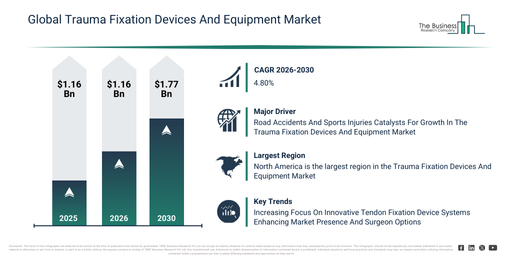
    The trauma fixation devices and equipment market is on a consistent growth trajectory. It is projected to increase from $12.11 billion in 2025 to $12.49 billion in 2026, reflecting a compound annual growth rate (CAGR) of 3.2%. Looking further ahead, the market is expected to reach $15.08 billion by 2030, expanding at a CAGR of 4.8%. This steady rise is supported by factors such as the growing number of road accidents and sports-related injuries, increased orthopedic surgeries, expansion of trauma care facilities, better availability of standardized fixation devices, and improvements in surgical training programs.

    Download A Free Sample Report For Comprehensive Market Insights:

    https://www.thebusinessresearchcompany.com/sample.aspx?id=2403&type=smp

    Key Factors Behind the Rising Demand in the Trauma Fixation Devices Market

    One of the main drivers of market growth is the increasing incidence of road accidents and sports injuries. These injuries result from vehicle collisions and physical trauma during athletic activities, often linked to risky behaviors like speeding or neglecting safety equipment. Trauma fixation devices play a crucial role in treating these injuries by stabilizing fractures, ensuring proper alignment, and supporting faster recovery. For example, the International Transport Forum reported that Australia experienced 1,297 road fatalities in 2024, up 4% from the previous year, highlighting the rising need for effective trauma management solutions.

    Increasing Orthopedic Disease Prevalence Boosts Market Expansion

    Another significant factor accelerating market growth is the rising incidence of orthopedic conditions, which affect the musculoskeletal system. Trauma fixation devices are essential in orthopedics for managing fractures, correcting deformities, and promoting healing. Research published in February 2023 by the National Library of Medicine forecasts substantial increases in joint replacement surgeries, with total hip arthroplasty (THA) and total knee arthroplasty (TKA) procedures expected to reach 1,982,099 and 2,917,959 respectively by 2060. This surge in orthopedic treatments underlines the growing demand for fixation devices.

    Access The Complete Trauma Fixation Devices And Equipment Market Report:

    https://www.thebusinessresearchcompany.com/report/trauma-fixation-devices-and-equipment-global-market-report

    Breakdown of Trauma Fixation Devices and Equipment Market Segments

    This market is categorized across several segments:

    1) Device Type: Internal Fixation Devices and External Fixation Devices

    2) Product Type: Metal Plates and Screws, Pins/Wires, Nails and Rods, Circular Fixators, Hybrid Fixators, and Unilateral Fixators

    3) End-User: Hospitals, Trauma Centers, and Ambulatory Surgical Centers

    Further subdivisions include:

    – Internal Fixation Devices such as Plates and Screws, Intramedullary Nails, Rods and Pins, Bone Screws, and Compression Plates

    – External Fixation Devices including External Fixators, Ring Fixators, Hybrid Fixators, and Soft Tissue Fixators

    Innovations and Trends Driving Changes in the Trauma Fixation Devices Market

    Leading companies in this market are focusing on developing innovative solutions like advanced tendon fixation device systems to differentiate themselves and increase market share. These systems often incorporate resorbable materials with unique chemical and mechanical properties designed for orthopedic surgeries. For example, in July 2024, Anika Therapeutics introduced the Integrity Implant System, a hyaluronic acid-based implant that combines bone and tendon fixation components with single-use arthroscopic tools. This system protects injured tendons and supports healing through a flexible, porous scaffold made from proprietary materials that encourage tissue regeneration while maintaining strength for surgical handling.

    Competitive Landscape in the Trauma Fixation Devices and Equipment Market

    The market features prominent players such as Johnson & Johnson, DePuy Synthes, Stryker Corporation, Smith & Nephew plc, Zimmer Biomet Holdings, Arthrex Inc., B. Braun Group, Orthofix Medical Inc, Xinrong, Suzhou Sunan Zimmered, Double Medical, Jiangsu Trauhui, Wright Medical Group, Greenbone Ortho, Medartis AG, MedSilesia, IlluminOss, CONMED Corporation, Baumer S.A., Biomecanica Group, Engimplan, GMReis, NEOORTHO, Trauma Solutions S.A.C., ZygoFix, CarboFix Orthopedic Ltd, Carevature Medical Ltd, ARNICA FAM PARAND, Tibbi Aletler San.Tic.Ltd.Sti., Atamed, and EgiFix medical.

    Regional Market Dynamics and Growth Hotspots

    In 2025, North America led the trauma fixation devices and equipment market, holding the largest regional share. Western Europe followed as the second-largest market. The broader report also covers regions including Asia-Pacific, South East Asia, Eastern Europe, South America, the Middle East, and Africa, providing a global perspective on demand and growth trends across these key areas.

    Get in touch with us:

    The Business Research Company: https://www.thebusinessresearchcompany.com/

    Americas: +1 310-496-7795

    Asia: +44 7882 955267 & +91 8897263534

    Europe: +44 7882 955267

    Email us at: marketing@tbrc.info

    Follow us on:

    LinkedIn: https://in.linkedin.com/company/the-business-research-company

    YouTube: https://www.youtube.com/channel/UC24_fI0rV8cR5DxlCpgmyFQ

    Global Market Model: https://www.thebusinessresearchcompany.com/global-market-model
  • Transradial Access Products Market Forecast Reveals Where Future Industry Value Will Be Created

    Transradial Access Products Market Forecast Reveals Where Future Industry Value Will Be Created

    Through market attractiveness analysis, total addressable market evaluation, company benchmarking matrices, interactive Excel dashboards, expanded supply chain intelligence, emerging startup coverage, and detailed product insights, The Business Research Company’s 2026 market reports provide more actionable and strategically valuable research.

    The transradial access products market is witnessing significant growth, supported by technological advancements and increasing demand for minimally invasive cardiovascular procedures. This sector is evolving rapidly, driven by rising cases of cardiovascular diseases and innovations aimed at improving patient care. Let’s explore the current market scenario, key growth drivers, segmentation, strategic developments, prominent players, and regional dynamics shaping this market’s future.

    Market Size and Growth Trajectory of the Transradial Access Products Market

    The transradial access products market has experienced swift expansion in recent years. From a market size of $2.47 billion in 2025, it is expected to reach $2.77 billion by 2026, growing at a compound annual growth rate (CAGR) of 12.5%. This historic growth has been driven by factors such as the rising prevalence of coronary artery disease, increased use of angiography procedures, expansion of hospital catheterization labs, successful clinical outcomes of radial artery access, and greater adoption of specialized physician training.

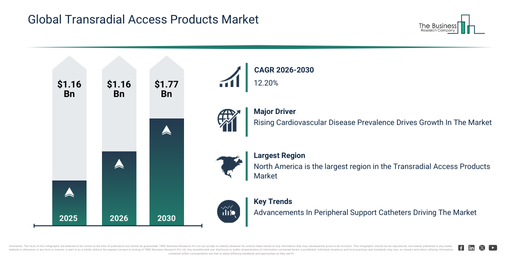
    Looking ahead, the market is projected to continue its upward trajectory, reaching an estimated $4.39 billion by 2030 with a CAGR of 12.2%. The forecast period’s growth will be fueled by the increasing preference for minimally invasive cardiology techniques, a shift toward outpatient procedures, innovations in guidewire materials, heightened focus on patient safety, and the overall rise in cardiac interventions worldwide. Notable trends through this period include transitioning from femoral to radial access, reduced post-procedure complications, growth in interventional cardiology, advancements in hemostatic device designs, and faster patient recovery times.

    Download A Free Sample Report For Comprehensive Market Insights:

    https://www.thebusinessresearchcompany.com/sample.aspx?id=21303&type=smp

    How Cardiovascular Disease Trends Support Expansion of the Transradial Access Products Market

    The growing prevalence of cardiovascular diseases is a major factor propelling the expansion of the transradial access products market. Cardiovascular diseases encompass a wide array of conditions affecting the heart and blood vessels, including coronary artery disease, heart failure, and stroke. The surge in these conditions is linked to lifestyle factors such as inactivity, poor diet, obesity, tobacco use, excessive alcohol intake, and an aging population. These risk factors contribute to higher rates of hypertension, diabetes, and other complications.

    Transradial access products are instrumental in improving treatment outcomes by facilitating minimally invasive catheterization procedures. These products help reduce procedural complications, enhance patient comfort, and speed up recovery. For instance, in January 2024, the American Heart Association reported that the age-adjusted death rate from cardiovascular disease in the US rose to 233.3 per 100,000 people, marking a 4.0% increase from the previous year’s 224.4 per 100,000. This rising burden of cardiovascular conditions is a key driver for the market’s growth.

    Breakdown of Transradial Access Products Market Segments

    This market is organized into several essential categories to provide a clear overview:

    1) By Product Type: Catheters, Guidewires, Sheaths, and Other Products

    2) By Application: Diagnostic and Interventional Procedures, Drug Administration, Blood Transfusion, and Other Uses

    3) By End-User: Hospitals and Clinics, Ambulatory Surgical Centers, and Other Healthcare Facilities

    Within these groups, further subsegments include:

    – Catheters: Diagnostic Catheters, Guiding Catheters, Balloon Catheters

    – Guidewires: Hydrophilic Guidewires, Nitinol Guidewires, Stainless Steel Guidewires

    – Sheaths: Introducer Sheaths, Radial Sheath Sets, Hydrophilic-Coated Sheaths

    – Other Products: Hemostatic Devices, Compression Bands, Vascular Closure Devices

    Access The Complete Transradial Access Products Market Report:

    https://www.thebusinessresearchcompany.com/report/transradial-access-products-global-market-report

    Innovations and Strategic Developments Shaping the Transradial Access Products Market

    Key players in the transradial access products market are focusing on launching innovative solutions to boost procedural efficiency and improve patient outcomes. One notable development is the introduction of peripheral support catheters, designed to provide enhanced support and stability during complex peripheral vascular interventions, such as navigating tortuous vessels or crossing chronic total occlusions.

    For example, in December 2024, Terumo Interventional Systems, part of Terumo Corporation, introduced its R2P NaviCross Peripheral Support Catheter. This product supports guidewire navigation for challenging peripheral vascular procedures, facilitating access to difficult lesions and enhancing intervention success rates. Terumo’s broad portfolio includes catheters, guidewires, sheaths, and other devices used in cardiovascular and peripheral interventions.

    Top Companies Leading the Competitive Landscape of the Transradial Access Products Market

    Several leading companies dominate the transradial access products market, including:

    Johnson & Johnson, Abbott Vascular, Medtronic plc, Boston Scientific Corporation, Terumo Corporation, Edwards Lifesciences Corporation, Teleflex Incorporated, Cook Medical, Biotronik SE & Co., Merit Medical Systems Inc., Penumbra Inc., Angiodynamics Inc., Oscor Inc., Asahi Intecc Co. Ltd., Nipro Medical Corporation, Vascular Solutions Inc., Cardinal Health Inc., BD Interventional, B. Braun Melsungen AG, and Medline Industries LP. These organizations are driving innovation and expanding their product portfolios to maintain competitive advantages.

    Regional Market Insights Highlighting North America’s Leading Position

    In 2025, North America held the largest share of the transradial access products market. The report also covers significant regions such as Asia-Pacific, South East Asia, Western Europe, Eastern Europe, South America, the Middle East, and Africa. While North America leads in market size, emerging regions like Asia-Pacific are expected to witness substantial growth driven by improving healthcare infrastructure and rising cardiovascular disease prevalence.

    Get in touch with us:

    The Business Research Company: https://www.thebusinessresearchcompany.com/

    Americas: +1 310-496-7795

    Asia: +44 7882 955267 & +91 8897263534

    Europe: +44 7882 955267

    Email us at: marketing@tbrc.info

    Follow us on:

    LinkedIn: https://in.linkedin.com/company/the-business-research-company

    YouTube: https://www.youtube.com/channel/UC24_fI0rV8cR5DxlCpgmyFQ

    Global Market Model: https://www.thebusinessresearchcompany.com/global-market-model
  • Transport Media Market Growth Through 2030 Creates New Strategic Opportunities

    Transport Media Market Growth Through 2030 Creates New Strategic Opportunities

    Delivering more actionable and strategically valuable research, The Business Research Company’s 2026 market reports feature market attractiveness analysis, total addressable market evaluation, company benchmarking matrices, interactive Excel dashboards, expanded supply chain intelligence, emerging startup coverage, and detailed product insights.

    The transport media market has demonstrated significant growth recently, driven by advancements in diagnostic testing and laboratory capabilities. This sector plays a crucial role in facilitating safe and efficient specimen transportation, which is essential for accurate disease detection and management. Let’s explore the current market size, key growth drivers, segment classifications, ongoing innovations, major players, and regional dynamics shaping this industry.

    Transport Media Market Size and Expected Growth Trajectory

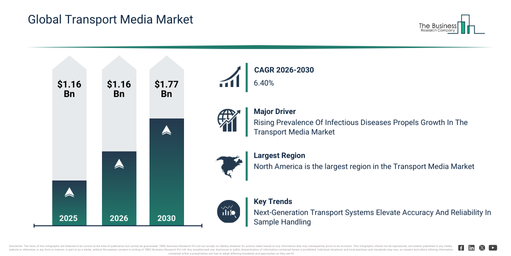
    The transport media market has expanded considerably in recent years. It is projected to increase from $3.3 billion in 2025 to $3.5 billion in 2026, representing a compound annual growth rate (CAGR) of 6.0%. Historical growth has been fueled by increased volumes of diagnostic testing, expanded laboratory-based disease identification, widespread adoption of microbiological tests, strengthening hospital laboratory infrastructure, and a growing reliance on viral transport media.

    Download A Free Sample Report For Comprehensive Market Insights:

    https://www.thebusinessresearchcompany.com/sample.aspx?id=10220&type=smp

    Looking ahead, the market is set to continue this upward trend, reaching $4.48 billion by 2030 with a CAGR of 6.4%. This expansion will be driven by a stronger focus on molecular diagnostics, higher demand for rapid and precise testing methods, growth in decentralized diagnostic centers, greater attention to biospecimen quality, and increased investments in laboratory automation. Key trends expected to influence the market include rising demand for molecular transport media, more frequent use of PCR-compatible transport solutions, enhanced preservation of sample integrity, wider adoption of cold-chain-compatible media, and improved standardization in diagnostic sample transportation.

    Factors Behind the Rising Demand in the Transport Media Market

    One of the major factors propelling growth in the transport media sector is the increasing prevalence of infectious diseases worldwide. These diseases, caused by pathogens like viruses, bacteria, fungi, and parasites, spread through contaminated food, water, and direct transmission. Molecular transport media are vital in minimizing infection risks by enabling safer handling and transit of clinical samples. This safety aspect significantly contributes to market expansion.

    Access The Complete Transport Media Market Report:

    https://www.thebusinessresearchcompany.com/report/transport-media-global-market-report

    For instance, in February 2024, the UK Health Security Agency reported a 10.7% rise in tuberculosis (TB) cases in England, with 4,850 incidents in 2023 compared to 4,380 in 2022. The uptick in infectious disease cases like TB intensifies the need for effective transport media solutions to support timely and accurate diagnostics, thereby accelerating market growth.

    A Closer Look at Transport Media Market Segmentation

    This report outlines the transport media market through several important segments:

    1) Product Types:

    – Viral Transport Media

    – Universal Transport Media

    – Molecular Transport Media

    – Other Products

    2) Indications:

    – Viral Diseases

    – Non-Viral Diseases

    3) End Users:

    – Hospitals

    – Clinics

    – Microbiology Laboratories

    – Other End Users

    Further product subcategories include:

    – Viral Transport Media split into Serum-Based Media and Cell Culture Media

    – Universal Transport Media comprising Buffered Saline and Phosphate-Buffered Saline (PBS)

    – Molecular Transport Media including DNA or RNA Stabilization Solutions and PCR-Compatible Media

    – Other Products featuring Specialized Transport Media and Custom Formulated Media

    Innovations that are Changing the Transport Media Industry

    Major players in this field are actively developing cutting-edge products designed to improve sample integrity during collection and transport, which ensures more reliable diagnostic results. Specimen collection and transport systems are sophisticated media that collect, inactivate, and preserve clinical samples through transit to maintain stability until testing.

    For example, in September 2025, Puritan Medical Products, a US-based company specializing in diagnostic swabs and collection solutions, unveiled the PurSafe Plus Collection & Transport System. This innovation combines a proprietary transport medium with patented flocked swabs engineered to enhance absorption and release of respiratory specimens. Additionally, it inactivates and stabilizes pathogens, including those linked to Severe Acute Respiratory Syndrome Coronavirus 2 (SARS-CoV-2), thereby improving the accuracy of downstream molecular and virology testing.

    Key Companies Leading the Transport Media Market

    Several prominent organizations dominate the transport media industry, including Thermo Fisher Scientific Inc., Becton Dickinson and Company, Hardy Diagnostics, HiMedia Laboratories Pvt. Ltd., Titan Biotech Ltd., Merck KGaA, Lonza Group AG, BioLife Solutions Inc., Copan Diagnostics Inc., Eiken Chemical Co. Ltd., Puritan Medical Products, Trinity Biotech plc, Sarstedt AG & Co., Neogen Corporation, Medical Wire & Equipment Co. Ltd., Creative Diagnostics, MedSchenker, Alifax S.r.l., Beijing Wantai Biological Pharmacy Enterprise Co. Ltd., Sisco Research Laboratories Pvt. Ltd., Falcon Laboratories Inc., LAB M Holdings Ltd., Nissui Pharmaceutical Co. Ltd., Spectrum Chemical Manufacturing Corp., TCS Biosciences Ltd., BioMerieux SA, and Biomed Diagnostics Inc. These companies focus on innovation, strategic positioning, and expanding their global reach.

    Regional Insights Highlighting Growth Opportunities in Transport Media

    As of 2025, North America holds the largest share of the transport media market. The report also covers key regions such as Asia-Pacific, South East Asia, Western Europe, Eastern Europe, South America, the Middle East, and Africa. While North America leads in market size, several emerging regions are expected to contribute significantly to the market’s future expansion due to increased healthcare infrastructure development and rising diagnostic needs.

    Get in touch with us:

    The Business Research Company: https://www.thebusinessresearchcompany.com/

    Americas: +1 310-496-7795

    Asia: +44 7882 955267 & +91 8897263534

    Europe: +44 7882 955267

    Email us at: marketing@tbrc.info

    Follow us on:

    LinkedIn: https://in.linkedin.com/company/the-business-research-company

    YouTube: https://www.youtube.com/channel/UC24_fI0rV8cR5DxlCpgmyFQ

    Global Market Model: https://www.thebusinessresearchcompany.com/global-market-model
  • Transplant Diagnostics Market Size Projected To Increase From $2.24 Billion To $2.95 Billion During The Forecast Period

    Transplant Diagnostics Market Size Projected To Increase From $2.24 Billion To $2.95 Billion During The Forecast Period

    Enhanced with market attractiveness analysis, total addressable market evaluation, company benchmarking matrices, interactive Excel dashboards, expanded supply chain intelligence, emerging startup coverage, and detailed product insights, The Business Research Company’s 2026 market reports deliver more actionable and strategically valuable research.

    The transplant diagnostics sector is experiencing significant growth fueled by advancements in medical technology and rising demand for organ transplantation procedures worldwide. As this field evolves, it is essential to understand the current market size, key growth drivers, major players, and future prospects shaping its trajectory.

    Market Size and Growth Outlook for the Transplant Diagnostics Market

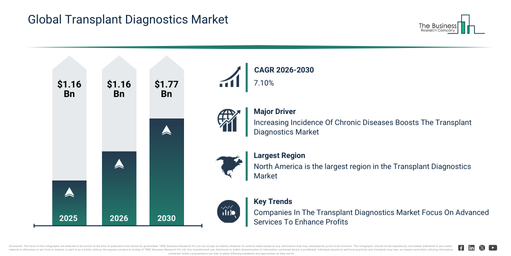
    The transplant diagnostics market has demonstrated strong expansion in recent years. It is projected to increase from $2.07 billion in 2025 to $2.25 billion in 2026, reflecting an annual growth rate of 8.5%. This upward trend during the historical period is largely due to the rising number of organ transplant operations, progress in histocompatibility testing, a growing incidence of immunogenetic disorders, the establishment of more transplant centers, and government support for organ donation initiatives.

    Looking ahead, the market is set to grow further, reaching an estimated $2.96 billion by 2030, with a compound annual growth rate (CAGR) of 7.1%. Factors driving this projected growth include the integration of artificial intelligence and machine learning in diagnostic testing, the adoption of next-generation sequencing (NGS) technologies, expansion in personalized immunotherapy treatments, the rise of cloud-based diagnostic platforms, and increased global awareness of organ donation. Key trends expected to influence the market during the forecast period involve faster histocompatibility testing, AI-enhanced donor-recipient matching, incorporation of molecular diagnostics, high-throughput screening methods, and cloud-based transplant data management systems.

    Download A Free Sample Report For Comprehensive Market Insights:

    https://www.thebusinessresearchcompany.com/sample.aspx?id=2481&type=smp

    Primary Factors Catalyzing Growth in the Transplant Diagnostics Market

    One significant factor propelling the transplant diagnostics market is the rising prevalence of chronic diseases. Chronic illnesses such as diabetes, heart disease, and arthritis are long-term conditions that often require continuous medical care and lifestyle adjustments. Their prevalence is increasing due to unhealthy habits including poor diet, lack of physical activity, and smoking, all of which raise the risk of these conditions.

    Transplant diagnostics play a critical role in managing these diseases by enabling accurate monitoring of organ health and early detection of complications related to transplants. This technology supports better patient outcomes through timely clinical interventions, personalized treatment strategies, and improved long-term organ survival and healthcare management. For instance, in June 2024, the UK’s National Health Service reported an 18% increase in patients diagnosed with non-diabetic hyperglycemia or pre-diabetes, totaling 3,615,330 cases in 2023 compared to 3,065,825 in 2022. Such trends highlight how chronic disease prevalence is enhancing the demand for transplant diagnostics.

    How the Transplant Diagnostics Market Is Organized Across Various Segments

    This market is categorized into several segments to provide a detailed understanding:

    1) By Type: Reagents and Consumables, Instruments, Software and Services

    2) By Transplant Type: Solid Organ Transplant, Stem Cell Transplant

    3) By Organ: Kidney, Liver, Heart, Lung, Pancreas

    4) By Technology: Non-Molecular Assay, Molecular Assay

    5) By End User: Hospitals and Transplant Centers, Research Laboratories and Transplant Centers, Commercial Service Providers

    Further breakdown includes subsegments such as PCR reagents, antibodies and antigens, sample collection kits, and control materials under reagents and consumables; flow cytometers, PCR machines, sequencers, and luminometers within instruments; as well as data analysis software, laboratory information management systems (LIMS), consulting, and technical support services under software and services.

    Access The Complete Transplant Diagnostics Market Report:

    https://www.thebusinessresearchcompany.com/report/transplant-diagnostics-global-market-report

    Emerging Innovations Shaping Future Growth in Transplant Diagnostics

    Leading companies are focusing on launching advanced transplant diagnostic services that enhance accuracy and efficiency in both pre-transplant and post-transplant testing. These cutting-edge offerings are designed to improve patient care and streamline diagnostic workflows.

    For example, in March 2023, Quest Diagnostics introduced Quest Advanced Specialized Transplant Services in the United States. This comprehensive service portfolio includes over 170 specialized transplant and infectious disease tests, longitudinal trend analysis integrated into electronic medical records (EMRs), and 24/7 support with medical consultation to ensure proper test selection and interpretation. Additional features include patient-tailored educational materials and expedited testing at more than 2,100 patient service centers, with results for some tests available within 8 to 24 hours.

    Top Competitors Driving the Transplant Diagnostics Market

    Key players operating in this sector include F. Hoffmann La-Roche AG, Thermo Fisher Scientific Inc., Abbott Laboratories Inc., Becton-Dickinson and Company, Hologic Inc., Illumina Inc., BioMerieux S.A., Grafton Companies, Bio-Rad Laboratories Inc., Sigma-Aldrich Corporation, Qiagen N.V., Immucor Transplant Diagnostics Inc., Luminex Corporation, CareDx Company, One Lambda Inc., Eurobio Scientific Group, Gendx BV, and several others. These companies continue to innovate and expand their service offerings to maintain competitive advantage.

    Regional Breakdown Revealing Market Leaders and Growth Hotspots

    In 2025, North America held the largest share of the transplant diagnostics market, reflecting strong demand and established healthcare infrastructure in the region. Western Europe ranked as the second-largest market. The analysis also covers other geographic areas including Asia-Pacific, South East Asia, Eastern Europe, South America, Middle East, and Africa, with growing interest in transplant diagnostics observed globally.

    Get in touch with us:

    The Business Research Company: https://www.thebusinessresearchcompany.com/

    Americas: +1 310-496-7795

    Asia: +44 7882 955267 & +91 8897263534

    Europe: +44 7882 955267

    Email us at: marketing@tbrc.info

    Follow us on:

    LinkedIn: https://in.linkedin.com/company/the-business-research-company

    YouTube: https://www.youtube.com/channel/UC24_fI0rV8cR5DxlCpgmyFQ

    Global Market Model: https://www.thebusinessresearchcompany.com/global-market-model
  • Transmucosal Drug Delivery Devices Market Growth Outlook Reveals A CAGR Of 8.1% And A Market Value Of $81.52 Billion By 2030

    Transmucosal Drug Delivery Devices Market Growth Outlook Reveals A CAGR Of 8.1% And A Market Value Of $81.52 Billion By 2030

    Through market attractiveness analysis, total addressable market evaluation, company benchmarking matrices, interactive Excel dashboards, expanded supply chain intelligence, emerging startup coverage, and detailed product insights, The Business Research Company’s 2026 market reports provide more actionable and strategically valuable research.

    The market for transmucosal drug delivery devices is gaining traction as new technologies and patient preferences evolve. This sector is seeing considerable growth driven by innovations in drug formulations and delivery methods, alongside increasing demand for non-invasive medication options. Let’s explore the market’s size, key growth drivers, segmentation, leading companies, industry trends, and regional outlook to understand its trajectory through 2030.

    Transmucosal Drug Delivery Devices Market Size and Projected Growth

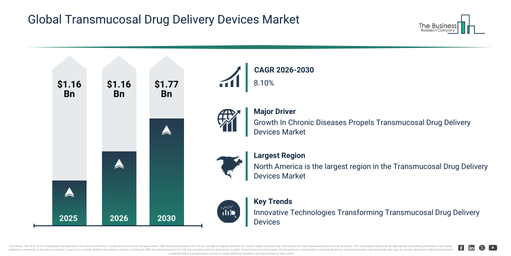
    The transmucosal drug delivery devices market has experienced significant expansion in recent years. It is forecasted to grow from $54.63 billion in 2025 to $59.61 billion in 2026, representing a compound annual growth rate (CAGR) of 9.1%. This historical growth has been fueled by the rise of non-invasive drug delivery methods, an increasing need for pain management therapies, growing use of hormone replacement treatments, pharmaceutical formulation advancements, and broader acceptance of transmucosal therapeutic options. Looking ahead, the market is expected to reach $81.52 billion by 2030, expanding at a CAGR of 8.1%. Factors contributing to this forecast include the development of personalized medicine, rising investments in innovative drug delivery platforms, growing demand for devices suitable for home use, expansion of biologics and peptides, and more regulatory approvals for novel delivery systems. Key trends shaping this future growth involve the adoption of buccal and sublingual drug delivery forms, increased demand for rapid-onset therapies, advancements in microneedle and active delivery technologies, stronger focus on patient-friendly designs, and greater attention to dose accuracy and bioavailability.

    Download A Free Sample Report For Comprehensive Market Insights:

    https://www.thebusinessresearchcompany.com/sample.aspx?id=16812&type=smp

    Important Drivers Supporting Growth in the Transmucosal Drug Delivery Devices Market

    One of the main forces propelling the growth of this market is the increasing prevalence of chronic diseases worldwide. Chronic conditions, which develop slowly and require long-term management, are becoming more common due to factors such as aging populations, lifestyle changes, environmental influences, and urbanization. These diseases often demand consistent and effective medication delivery, which transmucosal devices can provide by ensuring controlled release and improved patient adherence.

    For instance, in June 2024, the National Health Service in the UK reported that 3,615,330 patients registered with general practitioners were diagnosed with non-diabetic hyperglycemia or pre-diabetes in 2023. This figure represents an 18% rise from 3,065,825 cases in 2022, illustrating the growing chronic disease burden that drives demand for innovative drug delivery solutions like transmucosal devices.

    Key Market Segments and Revenue Drivers in the Transmucosal Drug Delivery Devices Industry

    This market is segmented by multiple categories to reflect the diversity of devices and applications:

    1) By Type: Buccal Drug Delivery Devices, Sublingual Drug Delivery Devices, Nasal Drug Delivery Devices, Rectal Drug Delivery Devices, and Vaginal Drug Delivery Devices.

    2) By Drug Type: Buccal Tablets, Oral Sprays, Sublingual Films and Wafers, Gels, Medicated Confectionery, and others.

    3) By Indication: Pain Management, Addiction Treatment, Hormonal Therapies, and other medical uses.

    4) By End User: Academic and research institutions, pharmaceutical and biotech companies, diagnostic laboratories, and hospitals.

    Further sub-segmentation includes specific device types such as Mucoadhesive Buccal Tablets, Buccal Patches, and Buccal Films under buccal delivery; Sublingual Tablets, Films, and Sprays under sublingual delivery; Metered Dose Nasal Sprays, Nasal Powder Devices, and Nasal Gel Applicators under nasal delivery; Rectal Suppositories and Gels; Vaginal Rings, Tablets, and Gels.

    Access The Complete Transmucosal Drug Delivery Devices Market Report:

    https://www.thebusinessresearchcompany.com/report/transmucosal-drug-delivery-devices-global-market-report

    Recent Industry Trends Reshaping the Transmucosal Drug Delivery Devices Market

    Leading players in the transmucosal drug delivery space are increasingly focusing on developing smart platforms that enhance drug absorption and patient convenience. One growing area is proprietary transdermal patch technologies, which deliver medications through the skin with controlled release mechanisms, improving therapeutic outcomes and compliance.

    For example, in January 2024, US biotechnology firm Starton Therapeutics Inc introduced STARSILON, a transdermal patch delivery system designed for prolonged therapeutic delivery of challenging active pharmaceutical ingredients (APIs). This innovation broadens options for transdermal drug delivery, particularly for difficult-to-formulate drugs, enhancing efficacy through sustained release.

    Prominent Companies Competing in the Transmucosal Drug Delivery Devices Sector

    The competition within this market is led by well-known organizations including Johnson & Johnson, Bayer AG, Sanofi SA, Bristol-Myers Squibb Company, Abbott Laboratories, Novartis AG, Viatris Inc., Teva Pharmaceutical Industries Ltd., Catalent Inc., AptarGroup, Glenmark Pharmaceuticals Limited, Stevanato Group S.p.A, Noven Pharmaceuticals, Antares Pharma Inc., Satsuma Pharmaceuticals Inc., AdvaCare Pharma LLP, Lifevision Healthcare Private Limited, SAVA Healthcare Limited, Kaizen Pharmaceuticals Pvt. Ltd., and Maya Biotech Pvt. Ltd. These companies are at the forefront of developing and commercializing advanced transmucosal drug delivery solutions.

    Regional Overview Highlighting Market Opportunities in Transmucosal Drug Delivery Devices

    In 2025, North America held the largest share of the transmucosal drug delivery devices market. Alongside this, the market report covers various regions including Asia-Pacific, South East Asia, Western Europe, Eastern Europe, South America, the Middle East, and Africa. These regions collectively offer significant opportunities as the demand for innovative drug delivery technologies grows globally.

    Get in touch with us:

    The Business Research Company: https://www.thebusinessresearchcompany.com/

    Americas: +1 310-496-7795

    Asia: +44 7882 955267 & +91 8897263534

    Europe: +44 7882 955267

    Email us at: marketing@tbrc.info

    Follow us on:

    LinkedIn: https://in.linkedin.com/company/the-business-research-company

    YouTube: https://www.youtube.com/channel/UC24_fI0rV8cR5DxlCpgmyFQ

    Global Market Model: https://www.thebusinessresearchcompany.com/global-market-model
  • Transfection Reagents And Equipment Market Forecast Highlights Expansion From $1.93 Billion To $2.96 Billion Through 2030

    Transfection Reagents And Equipment Market Forecast Highlights Expansion From $1.93 Billion To $2.96 Billion Through 2030

    Delivering more actionable and strategically valuable research, The Business Research Company’s 2026 market reports feature market attractiveness analysis, total addressable market evaluation, company benchmarking matrices, interactive Excel dashboards, expanded supply chain intelligence, emerging startup coverage, and detailed product insights.

    The market for transfection reagents and equipment has witnessed significant expansion recently, driven by advances in molecular biology and biopharmaceutical research. As scientific exploration and technology continue to evolve, this sector is poised for strong growth through 2030. Below, we explore the market’s size, growth factors, key segments, innovations, leading players, and regional dynamics shaping its future.

    Steady Growth Trajectory in the Transfection Reagents and Equipment Market

    The market value for transfection reagents and equipment is on the rise, moving from $1.74 billion in 2025 to $1.93 billion in 2026, reflecting an impressive compound annual growth rate (CAGR) of 11.2%. This earlier expansion has been largely propelled by heightened molecular biology research, increased use of cell-based assays, the surge in recombinant protein production, expanded genomics research in both academic and industrial settings, and access to advanced transfection chemistries.

    Download A Free Sample Report For Comprehensive Market Insights:

    https://www.thebusinessresearchcompany.com/sample.aspx?id=10780&type=smp

    Forecasted Market Expansion Driven by Cutting-Edge Research

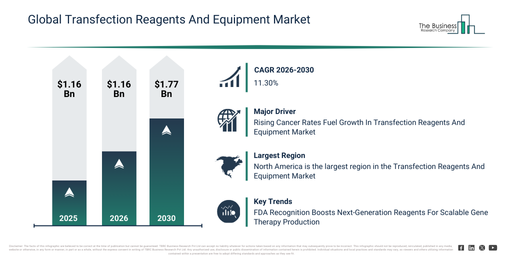
    Looking ahead, the transfection reagents and equipment market is expected to grow rapidly, reaching $2.97 billion by 2030 with a CAGR of 11.3%. This anticipated rise is fueled by wider adoption of CRISPR and gene therapy techniques, an increasing need for scalable transfection platforms, growth in the biopharmaceutical development pipeline, greater investment in precision medicine initiatives, and automation trends in life sciences laboratories. Prominent trends shaping this growth include greater use of high-efficiency transfection reagents, gene-editing compatible delivery systems, non-viral transfection methods, automated transfection instruments, and cell-type specific transfection solutions.

    Growing Cancer Incidence Acts as a Market Growth Catalyst

    One of the main factors driving this market is the worldwide increase in cancer cases. Cancer, characterized by uncontrolled cell growth, heavily relies on transfection reagents in research for introducing genetic material like plasmid DNA or RNA molecules. This enables studies on gene expression, gene silencing, drug screening, and target validation. For example, projections from Cancer Research UK in July 2024 indicate rising cancer incidence rates for most types in the UK between 2023-2025 and 2038-2040, with increases ranging from under 1% for breast cancer to as much as 50% for eye cancer. This trend highlights the growing demand for transfection reagents within cancer research.

    Access The Complete Transfection Reagents And Equipment Market Report:

    https://www.thebusinessresearchcompany.com/report/transfection-reagents-and-equipment-global-market-report

    The Transfection Reagents and Equipment Market’s Core Segmentation

    This market is broken down into several important segments:

    1) By Product Category: Instruments, Reagents, and Kits

    2) By Molecule Type: Plasmid DNA, DNA Oligonucleotides, Small Interfering RNA (SiRNA), Proteins, Ribonucleoprotein Complexes (RNPs), and other molecules

    3) By End User: Biopharmaceutical companies, Contract Research Organizations (CROs), and Academic institutions

    Further subcategories include:

    – Instruments such as Electroporation Systems, Microinjection Systems, and Particle Bombardment Systems

    – Reagents and Kits including Lipid-Based, Polymer-Based, Protein-Based Transfection Reagents, and Nucleic Acid Delivery Kits

    Innovations Shaping the Transfection Reagents and Equipment Market

    Leading companies are pushing the envelope by developing advanced products like GMP-grade AAV transfection reagents aimed at enhancing viral vector production efficiency for gene therapy manufacturing. These reagents comply with regulatory standards and enable high-efficiency genetic delivery into suspension cell cultures for scalable recombinant adeno-associated virus vector production. For instance, in July 2025, Yeasen Biotechnology from China received FDA Drug Master File acceptance for its UltraAAV PEI Transfection Reagent—GMP grade, noted for producing higher viral titers and improved full capsid ratios across multiple AAV serotypes. This advancement supports more efficient manufacturing with less reagent use while meeting stringent clinical and commercial quality standards.

    Prominent Market Participants Steering Industry Progress

    Key players holding significant market positions include Thermo Fisher Scientific Inc., Promega Corporation, Qiagen N.V., Bio-Rad Laboratories Inc., MaxCyte Inc., Lonza Group Ltd., Merck KGaA, Mirus Bio LLC, OriGene Technologies Inc., Altogen Biosystems, Applied Biological Materials Inc., Bex Co. Ltd., Takara Bio Inc., Polyplus-transfection SA, Sigma-Aldrich Corporation, Transfection Technologies Inc., Viromer, ABM Inc., chemicell GmbH, Genlantis, Biontech Laboratories GmbH, Jena Bioscience GmbH, PromoCell GmbH, PerkinElmer Inc., Sartorius AG, Hoffmann-La Roche Ltd., Bio-Techne Corporation, Biotium Inc., and Cell Applications Inc.

    Regional Market Leadership and Growth Outlook

    In 2025, North America held the largest share of the transfection reagents and equipment market. However, the Asia-Pacific region is set to experience the fastest growth over the forecast period. The geographic analysis in the market report includes regions such as Asia-Pacific, South East Asia, Western Europe, Eastern Europe, North America, South America, the Middle East, and Africa, providing a broad view of global market developments.

    Get in touch with us:

    The Business Research Company: https://www.thebusinessresearchcompany.com/

    Americas: +1 310-496-7795

    Asia: +44 7882 955267 & +91 8897263534

    Europe: +44 7882 955267

    Email us at: marketing@tbrc.info

    Follow us on:

    LinkedIn: https://in.linkedin.com/company/the-business-research-company

    YouTube: https://www.youtube.com/channel/UC24_fI0rV8cR5DxlCpgmyFQ

    Global Market Model: https://www.thebusinessresearchcompany.com/global-market-model
  • Transcranial Magnetic Stimulator Market Expected To Reach $2.2 Billion By 2030 As Growth Accelerates At 9.8% CAGR

    Transcranial Magnetic Stimulator Market Expected To Reach $2.2 Billion By 2030 As Growth Accelerates At 9.8% CAGR

    Enhanced with market attractiveness analysis, total addressable market evaluation, company benchmarking matrices, interactive Excel dashboards, expanded supply chain intelligence, emerging startup coverage, and detailed product insights, The Business Research Company’s 2026 market reports deliver more actionable and strategically valuable research.

    The transcranial magnetic stimulator market has been evolving rapidly, driven by increasing demand for innovative neurological treatments and growing awareness of non-pharmacological therapies. This sector is set to continue expanding as new applications and technologies emerge, offering promising solutions for various neurological and psychiatric conditions. Below is a detailed overview of the market’s size, growth factors, key players, trends, and regional insights shaping its future.

    Current Market Size and Expected Growth Trajectory of the Transcranial Magnetic Stimulator Market

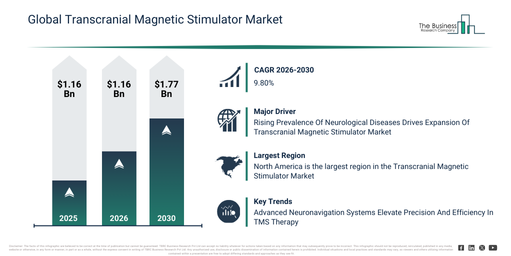
    The transcranial magnetic stimulator market has witnessed notable expansion in recent years. It is projected to grow from $1.39 billion in 2025 to $1.52 billion in 2026, reflecting a compound annual growth rate (CAGR) of 9.5%. This previous growth period was driven by factors such as the rising incidence of depression and neurological disorders, increased awareness about non-drug therapies, the availability of FDA-cleared TMS systems, the growth of mental health clinics, and broader acceptance of neuromodulation treatments. Looking ahead, the market is expected to reach $2.21 billion by 2030, growing at a CAGR of 9.8%. This anticipated rise is fueled by the expanded use of TMS for a wider range of neurological conditions, greater demand for tailored mental health therapies, the growth of outpatient psychiatric services, integration of digital monitoring technologies, and increased investment in neuromodulation research. Key trends include the growing use of non-invasive brain stimulation, expanded applications of repetitive TMS (rTMS) for depression, development of deep TMS (dTMS) clinical uses, a stronger focus on personalized neurostimulation protocols, and the growth of outpatient mental health care.

    Download A Free Sample Report For Comprehensive Market Insights:

    https://www.thebusinessresearchcompany.com/sample.aspx?id=10525&type=smp

    Increasing Prevalence of Neurological Disorders as a Market Growth Driver

    One of the main forces propelling the transcranial magnetic stimulator market is the rising prevalence of neurological diseases worldwide. TMS has demonstrated effective results in managing a range of neurological and psychiatric disorders. It serves as a novel approach to treating conditions such as stroke, spasticity, migraines, dementia, and movement disorders. For example, a December 2022 study by the Parkinson’s Foundation, a US nonprofit organization, reported that the number of people living with Parkinson’s disease (PD) is expected to rise from 930,000 in 2020 to 1.2 million by 2030. This growing patient population highlights the increasing need for effective treatment options, which is expected to support the expansion of the transcranial magnetic stimulator market.

    Rising Acceptance of TMS Technologies and Expanding Clinical Applications

    Another factor contributing to market growth is the broader acceptance and adoption of TMS devices across various neurological and psychiatric fields. As more healthcare providers recognize the benefits of non-pharmacological interventions, the demand for advanced TMS systems continues to rise. The expansion of outpatient psychiatric clinics and integration of digital treatment monitoring further enhance access to and effectiveness of these therapies, thereby driving market growth.

    Access The Complete Transcranial Magnetic Stimulator Market Report:

    https://www.thebusinessresearchcompany.com/report/transcranial-magnetic-stimulator-global-market-report

    Comprehensive Segmentation of the Transcranial Magnetic Stimulator Market

    This market is divided into several key segments to better understand its dynamics:

    1) By Type: including Deep Transcranial Magnetic Stimulation (dTMS) Systems, Repetitive Transcranial Magnetic Stimulation (rTMS) Systems, and Theta Burst Stimulation (TBS) Systems.

    2) By Treatment Protocol: categorized into High-Frequency TMS, Low-Frequency TMS, Intermittent Theta Burst Stimulation (iTBS), and Continuous Theta Burst Stimulation (cTBS).

    3) By Application: covering Major Depressive Disorder (MDD), Treatment-Resistant Depression (TRD), Obsessive-Compulsive Disorder (OCD), Parkinson’s Disease, Alzheimer’s Disease and Other Dementias, Epilepsy, and other medical uses.

    Subcategories include FDA-Approved dTMS systems and coil-based deep stimulation devices for the dTMS segment; standard and navigated rTMS systems under rTMS; and standalone TBS systems as well as TBS-enabled rTMS platforms for the TBS category.

    Innovations and Technological Advances Steering the Transcranial Magnetic Stimulator Market

    Leading companies in this space are focusing on innovative technologies such as neuronavigational-guided TMS systems to improve treatment precision and efficiency. These systems utilize image-based guidance by integrating patient-specific neuroimaging with real-time coil tracking, ensuring accurate and reproducible stimulation during procedures. For instance, in March 2023, MagVenture Inc., a US medical device manufacturer, launched the MagVenture TMS Atlas Neuro Navigation System. This advanced platform enhances coil positioning with a user-friendly, high-precision workflow that saves time and increases reliability. It eliminates line-of-sight issues and offers patients a visual representation of their MRI scans alongside real-time coil tracking, fostering greater patient engagement during treatment.

    Key Players Influencing the Competitive Landscape of the Transcranial Magnetic Stimulator Market

    Several prominent companies dominate the transcranial magnetic stimulator industry, driving innovation and market growth. These include BrainsWay Ltd., Nexstim Plc., The Magstim Company Limited, Neuronetics Inc., MagVenture Inc., MAG & More GmbH, neurocare group AG, Neurosoft, Neuroelectrics, NeuroConn GmbH, Neurofield Inc., Axilum Robotics, Yiruide Neurotech, Brainbox Ltd., Remed Inc., Soterix Medical Inc., Sinovation Medical Technology Co. Ltd., Shenzhen Yingchi Technology Co. Ltd., Wuhan Greentek Bioengineering Co. Ltd., and Vishee Medical Technology Co. Ltd.

    Geographical Overview and Regional Market Leadership in Transcranial Magnetic Stimulators

    North America held the largest market share in the transcranial magnetic stimulator market in 2025. Meanwhile, the Asia-Pacific region is anticipated to be the fastest-growing area throughout the forecast period. The market report covers other significant regions including Southeast Asia, Western Europe, Eastern Europe, South America, the Middle East, and Africa, providing a broad understanding of global market trends and growth opportunities.

    Get in touch with us:

    The Business Research Company: https://www.thebusinessresearchcompany.com/

    Americas: +1 310-496-7795

    Asia: +44 7882 955267 & +91 8897263534

    Europe: +44 7882 955267

    Email us at: marketing@tbrc.info

    Follow us on:

    LinkedIn: https://in.linkedin.com/company/the-business-research-company

    YouTube: https://www.youtube.com/channel/UC24_fI0rV8cR5DxlCpgmyFQ

    Global Market Model: https://www.thebusinessresearchcompany.com/global-market-model
  • Transcatheter Valve Repair System Market Set To Grow From $5.92 Billion In 2026 To $8.41 Billion By 2030 At A CAGR Of 9.2%

    Transcatheter Valve Repair System Market Set To Grow From $5.92 Billion In 2026 To $8.41 Billion By 2030 At A CAGR Of 9.2%

    Through market attractiveness analysis, total addressable market evaluation, company benchmarking matrices, interactive Excel dashboards, expanded supply chain intelligence, emerging startup coverage, and detailed product insights, The Business Research Company’s 2026 market reports provide more actionable and strategically valuable research.

    The transcatheter valve repair system market has experienced notable growth recently, driven by technological advancements and an increasing patient population. This market is poised for further expansion as innovations and rising demand for minimally invasive procedures gain momentum. Below is an in-depth overview of the market’s current status, key growth drivers, segment composition, leading players, and regional dynamics.

    Market Size and Strong Growth Outlook for the Transcatheter Valve Repair System Market

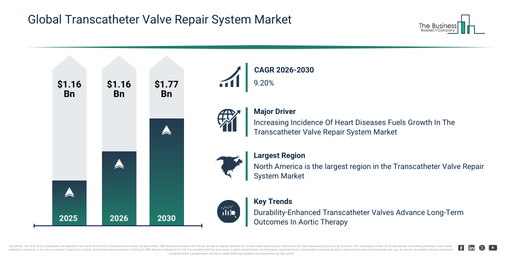
    The transcatheter valve repair system market has seen significant progress, growing from $5.45 billion in 2025 to $5.93 billion in 2026, with a compound annual growth rate (CAGR) of 8.8%. This upward trend is attributed to a greater incidence of valvular heart diseases, an aging population, improvements in catheter navigation technologies, enhanced clinical expertise in transcatheter procedures, and an increase in cardiac specialty centers. Looking ahead, the market is expected to further accelerate, reaching $8.42 billion by 2030 with a CAGR of 9.2%. Factors driving this forecast include a wider adoption of minimally invasive valve repair techniques, growing demand for transcatheter mitral interventions, expansion of structural heart disease programs, innovations in multi-valve repair technologies, and a stronger focus on personalized patient treatment solutions. Key market trends during this period highlight the increasing use of catheter-based valve repairs, heightened interest in mitral valve repair systems, attention to high-risk surgical patients, growth in multi-valve platform development, and advances in device control and navigability.

    Download A Free Sample Report For Comprehensive Market Insights:

    https://www.thebusinessresearchcompany.com/sample.aspx?id=11956&type=smp

    Factors Propelling Market Growth in Transcatheter Valve Repair Systems

    The rising prevalence of heart disease is a major driver propelling the transcatheter valve repair system market. Heart disease encompasses conditions impacting the heart and blood vessels, often necessitating valve replacement procedures. Transcatheter devices play a crucial role in replacing defective aortic valves with artificial ones, particularly in cases of aortic valve disease. For example, in March 2024, the Office for Health Improvement and Disparities (OHID) in England reported that approximately 1,862,500 individuals, or 3% of the population, had a general practitioner diagnosis of coronary heart disease (CHD) in the fiscal year ending 2023. This rising disease burden is directly contributing to the expanding demand for transcatheter valve repair systems.

    Segment Overview and Growth Potential of the Transcatheter Valve Repair System Market

    This market is segmented by product type, application, and end user to provide a detailed understanding of growth opportunities.

    By product type, the market includes:

    – Transcatheter Aortic Valve Replacement (TAVR)

    – Transcatheter Mitral Valve Replacement (TMVR)

    – Transcatheter Pulmonary Valve Replacement (TPVR)

    – Transcatheter Tricuspid Valve Replacement (TTVR)

    Access The Complete Transcatheter Valve Repair System Market Report:

    https://www.thebusinessresearchcompany.com/report/transcatheter-valve-repair-system-global-market-report

    When broken down further, TAVR devices consist of self-expandable, balloon-expandable, and mechanically expanded valves. TMVR includes self-expandable and balloon-expandable devices alongside mitral valve repair systems. TPVR and TTVR segments similarly feature self-expandable and balloon-expandable devices.

    Applications cover conditions such as aortic stenosis and pulmonary stenosis. End users include hospitals, specialty clinics, and other healthcare providers. This segmentation allows for targeted innovation and market expansion in specific areas of valve repair.

    Innovations and Industry Trends Driving Revenue Growth in Transcatheter Valve Repair Systems

    Leading companies in this market are heavily investing in creating valves with enhanced durability to improve long-term patient outcomes. Durability-enhanced transcatheter valves are designed using advanced biomaterials to ensure structural integrity and sustained valve performance over time. For instance, in May 2024, Edwards Lifesciences, a Switzerland-based company specializing in structural heart and critical care technology, launched the SAPIEN 3 Ultra RESILIA valve. This product features proprietary anti-calcification tissue technology intended to reduce valve degeneration and support long-term functionality. Additional benefits include dry-tissue storage and favorable early hemodynamic results, positioning the valve as a promising option for treating aortic valve disease with improved longevity.

    Key Companies Leading the Transcatheter Valve Repair System Market

    The competitive landscape includes several prominent players driving innovation and market growth:

    – Abbott Laboratories

    – Medtronic Plc.

    – Boston Scientific Corporation

    – Edwards Lifesciences Corporation

    – LivaNova Plc.

    – Meril Life Sciences Pvt. Ltd.

    – Cordis Corporation

    – MicroPort Scientific Corporation

    – Biotronik Pvt. Ltd

    – AtriCure Inc.

    – OrbusNeich Medical Group Holdings Limited

    – Venus Medtech (Hangzhou) Inc.

    – Dura LLC

    – HLT Medical Inc.

    – Symetis SA

    – JenaValve Technology Inc.

    – 4C Medical Technologies Inc.

    – Cardiac Dimensions Inc.

    – Valve Solutions Inc.

    – Transcatheter Technologies GmbH

    – Evalve Corporation

    – Colibri Heart Valve LLC

    – Medtentia International Ltd.

    – Coramaze Technologies Ltd.

    – Neovasc Inc.

    – Anteris Technologies Ltd.

    These companies are at the forefront of advancing transcatheter valve technologies to address unmet clinical needs and expand treatment options.

    Regional Market Insights with North America Leading

    In 2025, North America held the largest share of the transcatheter valve repair system market, supported by advanced healthcare infrastructure and high adoption rates of minimally invasive procedures. Meanwhile, the Asia-Pacific region is projected to be the fastest-growing market during the forecast period, driven by increasing healthcare investments and rising prevalence of cardiovascular diseases. The market analysis spans key geographic areas including Asia-Pacific, South East Asia, Western Europe, Eastern Europe, North America, South America, the Middle East, and Africa, offering a comprehensive global perspective on market trends and opportunities.

    Get in touch with us:

    The Business Research Company: https://www.thebusinessresearchcompany.com/

    Americas: +1 310-496-7795

    Asia: +44 7882 955267 & +91 8897263534

    Europe: +44 7882 955267

    Email us at: marketing@tbrc.info

    Follow us on:

    LinkedIn: https://in.linkedin.com/company/the-business-research-company

    YouTube: https://www.youtube.com/channel/UC24_fI0rV8cR5DxlCpgmyFQ

    Global Market Model: https://www.thebusinessresearchcompany.com/global-market-model