Month: June 2026

  • Operating-Room Instrument Sterile Robot Market Expected To Reach $3.6 Billion By 2030 As Growth Accelerates At 13.4% CAGR

    Operating-Room Instrument Sterile Robot Market Expected To Reach $3.6 Billion By 2030 As Growth Accelerates At 13.4% CAGR

    Through market attractiveness analysis, total addressable market evaluation, company benchmarking matrices, interactive Excel dashboards, expanded supply chain intelligence, emerging startup coverage, and detailed product insights, The Business Research Company’s 2026 market reports provide more actionable and strategically valuable research.

    The market for operating-room instrument sterile robots has been evolving swiftly, driven by technological progress and increasing healthcare needs. These specialized robotic systems are becoming essential in modern operating rooms to ensure surgical instruments remain sterile while enhancing procedural efficiency. Let’s explore the market’s current stature, growth drivers, segmentation, innovations, and competitive landscape.

    Market Size and Revenue Projections for Operating-Room Instrument Sterile Robots

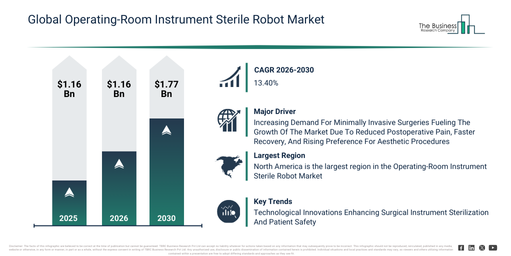
    The operating-room instrument sterile robot market has witnessed significant expansion recently. It is projected to increase from $1.92 billion in 2025 to $2.18 billion in 2026, marking a compound annual growth rate (CAGR) of 13.7%. This increase during the historical period is largely because of higher rates of hospital-acquired infections, wider adoption of robotic-assisted surgeries, improvements in sterilization technologies, a growing demand for efficient procedural workflows, and the overall rise in healthcare robotics.

    Download A Free Sample Report For Comprehensive Market Insights:

    https://www.thebusinessresearchcompany.com/sample.aspx?id=29140&type=smp

    Looking ahead, the market is expected to maintain rapid growth, reaching $3.61 billion by 2030, with a CAGR of 13.4%. Anticipated growth factors include the integration of these robots with smart hospital ecosystems, AI-driven tracking of surgical instruments, expansion of ambulatory surgical centers, the use of advanced chemical sterilization techniques, and more cost-effective robotic systems. Key trends forecasted for the coming years involve automated sterilization workflows, utilization of UV-C and hydrogen peroxide sterilization technologies, mobile sterile instrument robots, enhanced integration with hospital IT infrastructure, and hybrid semi-automated sterilization solutions.

    Main Forces Behind Growth in the Operating-Room Instrument Sterile Robot Market

    One of the primary factors propelling this market forward is the increasing preference for minimally invasive surgeries. These procedures involve small incisions and specialized instruments to minimize tissue damage and speed up patient recovery. The demand for such surgeries has been rising due to benefits like reduced postoperative pain and enhanced patient comfort.

    Access The Complete Operating-Room Instrument Sterile Robot Market Report:

    https://www.thebusinessresearchcompany.com/report/operating-room-instrument-sterile-robot-global-market-report

    Operating-room instrument sterile robots are critical in supporting these surgeries by consistently ensuring instrument sterility, reducing infection risks, and enabling the precision required for delicate operations. For example, in June 2024, the American Society of Plastic Surgeons reported that minimally invasive procedures grew by 7% in 2023, outpacing traditional surgeries by 2%. This growing preference for less invasive surgical methods is a key market driver.

    Additional Market Drivers Encouraging Expansion

    Technological advancements in sterilization methods and robotics continue to support market growth. Innovations that increase the speed, accuracy, and automation of instrument sterilization processes make these robots more attractive to healthcare providers. Moreover, the rising global focus on reducing hospital-acquired infections is encouraging hospitals to adopt automated sterile instrument handling systems.

    Also, the expansion of ambulatory surgical centers and outpatient surgery settings presents new opportunities for these robotic solutions. These centers benefit from efficient, reliable sterilization workflows that sterile instrument robots can provide, boosting procedural turnaround and patient safety.

    Segmentation Overview of the Operating-Room Instrument Sterile Robot Market

    This market can be categorized across multiple dimensions:

    1) Product Type:

    – Fully Automated Instrument Handling Robots

    – Semi-Automated Instrument Handling Robots

    – Hybrid Instrument Management Robots

    2) Sterility Maintenance Technology:

    – UV-C Assisted Instrument Sterility Robots

    – Chemical-Based Local Instrument Sterility Robots

    – Enclosed Sterile Compartment Robots

    – Touchless Handling and Containment Robots

    3) Mobility Type:

    – Mobile Operating-Room Instrument Robots

    – Fixed or Ceiling-Mounted Instrument Robots

    4) Application Area:

    – General Surgery Operating Rooms

    – Orthopedic Surgery Operating Rooms

    – Cardiovascular Surgery Operating Rooms

    – Neurosurgery Operating Rooms

    – Minimally Invasive Surgery Operating Rooms

    5) End-User:

    – Public Hospitals

    – Private Hospitals

    – Specialty Surgical Centers

    – Ambulatory Surgical Centers

    Further breakdowns include various subcategories under each product type, such as autonomous instrument delivery and retrieval robots, staff-assisted robotic handling systems, integrated instrument tracking, and hybrid robots combining multiple functionalities and workflow integration.

    Innovations and Trends Shaping the Future of Operating-Room Instrument Sterile Robots

    Leading players in this market are investing in cutting-edge technologies like whole-room pulsed UV germicidal sterilization. This approach uses bursts of high-intensity ultraviolet light to disinfect entire room surfaces quickly and effectively, reducing microbial contamination in unoccupied operating theaters.

    For example, in February 2023, Xenex Disinfection Services Inc., a US-based innovator, introduced the LightStrike+ system. This device offers rapid microbial reduction on non-porous medical surfaces with built-in safety features and software controls. It complements manual cleaning methods and aims to lower hospital-acquired infection rates, enhancing patient safety and operational efficiency.

    Competitive Landscape and Major Industry Participants

    The operating-room instrument sterile robot market features key players such as Intuitive Surgical Inc., Stryker Corporation, Johnson and Johnson, Medtronic plc, Zimmer Biomet Holdings Inc., Smith and Nephew plc, Asensus Surgical Inc., CMR Surgical Ltd., Medrobotics Corporation, Titan Medical Inc., Avateramedical GmbH, Medicaroid Corporation, Rob Surgical Systems S L, Moon Surgical SAS, SS Innovations International Inc., Virtuoso Surgical Inc., Vicarious Surgical Inc., Noah Medical Corporation, EndoQuest Robotics Inc., and Medical Microinstruments SpA.

    Geographical Market Insights Indicate North America at the Forefront

    North America held the largest share of the operating-room instrument sterile robot market in 2025. However, the Asia-Pacific region is anticipated to be the fastest-growing market during the forecast period. The report covers regions including Asia-Pacific, South East Asia, Western Europe, Eastern Europe, North America, South America, the Middle East, and Africa, providing a thorough understanding of global market trends and opportunities.

    Get in touch with us:

    The Business Research Company: https://www.thebusinessresearchcompany.com/

    Americas: +1 310-496-7795

    Asia: +44 7882 955267 & +91 8897263534

    Europe: +44 7882 955267

    Email us at: marketing@tbrc.info

    Follow us on:

    LinkedIn: https://in.linkedin.com/company/the-business-research-company

    YouTube: https://www.youtube.com/channel/UC24_fI0rV8cR5DxlCpgmyFQ

    Global Market Model: https://www.thebusinessresearchcompany.com/global-market-model
  • Operating Tables And Lights Market Set To Grow From $1.53 Billion In 2026 To $1.79 Billion By 2030 At A CAGR Of 4%

    Operating Tables And Lights Market Set To Grow From $1.53 Billion In 2026 To $1.79 Billion By 2030 At A CAGR Of 4%

    Delivering more actionable and strategically valuable research, The Business Research Company’s 2026 market reports feature market attractiveness analysis, total addressable market evaluation, company benchmarking matrices, interactive Excel dashboards, expanded supply chain intelligence, emerging startup coverage, and detailed product insights.

    The market for operating tables and lights has seen consistent growth, driven by advancements in healthcare and surgical technologies. As the demand for efficient surgical environments continues to rise, this sector is positioned for ongoing expansion. Let’s explore the market size, key factors influencing growth, innovation trends, leading players, and regional prospects shaping this industry.

    Steady Market Expansion Forecast for Operating Tables and Lights

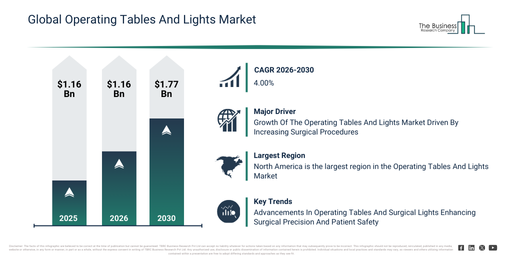
    The operating tables and lights market is on a steady upward trajectory. From $1.47 billion in 2025, the market is projected to reach $1.53 billion by 2026, growing at a compound annual growth rate (CAGR) of 4.5%. This growth during the past years has been influenced by a growing number of surgical procedures across the globe, the expansion of hospital operating rooms, increased investments in advanced surgical infrastructure, a rising preference for minimally invasive surgeries, and enhanced availability of cutting-edge operating room equipment. Looking ahead, the market size is expected to climb to $1.79 billion by 2030 at a CAGR of 4.0%. Factors fueling this forecast include the rising demand for smart operating rooms, a stronger focus on improving surgical workflow efficiency, the growth of outpatient surgical centers, increased investment in energy-efficient medical devices, and the replacement of outdated operating tables and lights. Upcoming trends also involve greater adoption of electrically powered tables, increased use of LED surgical lighting, modular and adjustable table designs, expansion in hybrid operating room technologies, and a deeper focus on surgical ergonomics.

    Download A Free Sample Report For Comprehensive Market Insights:

    https://www.thebusinessresearchcompany.com/sample.aspx?id=17215&type=smp

    The Increasing Number of Surgeries as a Key Growth Driver

    One of the most significant factors driving the operating tables and lights market is the escalating volume of surgical procedures globally. Surgeries involve a range of manual and instrumental techniques used by surgeons to diagnose, treat, or repair health conditions. This surge is largely attributed to an aging population, advancements in medical technology, improved healthcare access, and enhanced diagnostic capabilities. Operating tables and surgical lights are essential tools that contribute to greater precision, safety, and efficiency during operations, ultimately improving patient outcomes. For instance, in November 2023, the Australian Institute of Health and Welfare (AIHW) reported that approximately 735,500 people underwent surgery from public hospital elective surgery waiting lists in 2022–2023, marking an 18% increase compared to the previous year. This data highlights how the rise in surgical procedures fuels demand for advanced operating room equipment, boosting market growth.

    Expansion in Operating Tables and Lights Market Segments

    This market is segmented based on product type, operation method, and end-user categories. The product types include Operating Tables and Operating Room Lights, while operations are divided into Manual Operating Tables and Power Operating Tables. The key end-users consist of Hospitals, Ambulatory Surgical Centers, Emergency Centers, and other healthcare facilities. Within these segments, further subcategories break down into Manual, Electric, Hydraulic, and Surgical Stretcher Tables under Operating Tables. Operating Room Lights are further classified into Ceiling-Mounted Surgical Lights, Wall-Mounted Surgical Lights, Mobile Surgical Lights, and Examination Lights. These varied segments give insight into the broad range of equipment and applications driving the sector.

    Access The Complete Operating Tables And Lights Market Report:

    https://www.thebusinessresearchcompany.com/report/operating-tables-and-lights-global-market-report

    Innovative Solutions Enhancing Surgical Efficiency and Usability

    Leading companies in the operating tables and lights market are heavily investing in innovation to improve surgical precision and patient care. A major focus is on developing user-friendly products designed for ease of use, minimizing the need for extensive training. These products typically feature intuitive controls, straightforward interfaces, and ergonomic designs that enhance the overall user experience in operating rooms. For example, in August 2024, Sweden-based medical technology firm Getinge AB introduced the Maquet Corin operating room table and the Maquet Ezea surgical light. The Maquet Corin table comes with an intuitive interface that simplifies workflows and promotes better teamwork among surgical staff, featuring smart safety functions like collision detection and overload alerts. Meanwhile, the Maquet Ezea light emphasizes durability and user-friendliness, offering robust illumination with advanced features such as eye-sensitive dimming and a high color rendering index for accurate color representation during surgeries.

    Key Players Competing in the Operating Tables and Lights Industry

    Several major companies are influential in the operating tables and lights market. These include Siemens AG, Stryker Corporation, GE Healthcare, STERIS Corporation, Shenzhen Mindray Bio-Medical Electronics Co. Ltd., Drägerwerk AG & Co. KGaA, Getinge AB, Heal Force Bio-Meditech Holdings Limited, AGA Sanitaetsartikel GmbH, Famed Zywiec Sp. z o.o., Alvo Medical Sp. z o.o., Mizuho OSI, Merivaara Corp, Mediland Enterprise Corporation, BenQ Medical Technology, UFSK-International OSYS GmbH, Fazzini SRL, Lojer Oy, Medifa-hesse GmbH & Co. KG, Ningbo Techart Medical Equipment Co. Ltd., and OPT Surgisystems S.R.L. These organizations drive competition and innovation throughout the sector.

    Regional Market Outlook Highlights North America’s Lead

    In 2025, North America held the largest share of the operating tables and lights market. Meanwhile, other important regions covered in market analyses include Asia-Pacific, South East Asia, Western Europe, Eastern Europe, South America, the Middle East, and Africa. These regions are expected to offer varying growth opportunities, with emerging markets showing promising potential for future expansion based on healthcare infrastructure development and rising surgical volumes.

    Get in touch with us:

    The Business Research Company: https://www.thebusinessresearchcompany.com/

    Americas: +1 310-496-7795

    Asia: +44 7882 955267 & +91 8897263534

    Europe: +44 7882 955267

    Email us at: marketing@tbrc.info

    Follow us on:

    LinkedIn: https://in.linkedin.com/company/the-business-research-company

    YouTube: https://www.youtube.com/channel/UC24_fI0rV8cR5DxlCpgmyFQ

    Global Market Model: https://www.thebusinessresearchcompany.com/global-market-model
  • Peripheral Nerve Repair Devices Market Forecast Reveals Where Future Industry Value Will Be Created

    Peripheral Nerve Repair Devices Market Forecast Reveals Where Future Industry Value Will Be Created

    Delivering more actionable and strategically valuable research, The Business Research Company’s 2026 market reports feature market attractiveness analysis, total addressable market evaluation, company benchmarking matrices, interactive Excel dashboards, expanded supply chain intelligence, emerging startup coverage, and detailed product insights.

    The peripheral nerve repair devices sector has witnessed significant progress recently, driven by advancements in medical technology and rising healthcare needs. As the incidence of nerve injuries and neurological conditions grows, this market is set to experience substantial development. Below, we explore the current market size, key drivers, major segments, innovative trends, leading players, and regional dynamics shaping this industry’s future.

    Peripheral Nerve Repair Devices Market Size Expansion and Future Outlook

    The peripheral nerve repair devices market has demonstrated robust growth in recent years. From $6.67 billion in 2025, the market is projected to reach $7.24 billion in 2026, reflecting a compound annual growth rate (CAGR) of 8.5%. This past expansion has been fueled by factors such as rising trauma-related injuries, an increase in reconstructive surgeries, growing adoption of nerve grafting techniques, orthopedic surgery advancements, and progress in microsurgical methods.

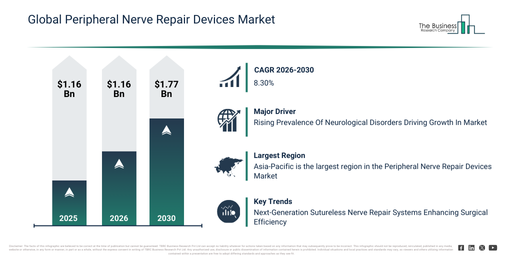
    Looking ahead, the market is expected to continue its upward trajectory, reaching $9.96 billion by 2030 with a CAGR of 8.3%. Key elements driving growth during this forecast include the development of bioengineered nerve scaffolds, the evolution of regenerative medicine, an aging population facing nerve disorders, the adoption of robotic-assisted surgeries, and innovations in synthetic graft materials. Important trends shaping the market involve biodegradable nerve conduits, state-of-the-art nerve regeneration substances, minimally invasive repair approaches, tailored nerve graft solutions, and enhanced surgical handling designs.

    Download A Free Sample Report For Comprehensive Market Insights:

    https://www.thebusinessresearchcompany.com/sample.aspx?id=20922&type=smp

    Factors Propelling Growth in the Peripheral Nerve Repair Devices Market

    One significant driver of market growth is the rising prevalence of neurological disorders globally. These disorders affect the brain, spinal cord, and peripheral nerves, resulting in impaired movement, cognition, and other nervous system functions. The increasing number of cases is largely attributed to an aging population, improved diagnostic technologies, environmental influences, genetic factors, and lifestyle habits such as unhealthy diets and lack of physical activity.

    Peripheral nerve repair devices play a crucial role in managing these disorders by facilitating nerve regeneration, enhancing functional recovery, and promoting healing through methods like electrical stimulation and the use of bioactive materials. For example, data from May 2024, provided by the UK’s Alzheimer’s Society, indicates that around one million people in the UK are living with dementia in 2024, with projections rising to 1.4 million by 2040. This growing patient population underscores the expanding demand for effective nerve repair solutions.

    Peripheral Nerve Repair Devices Market Segmentation and Revenue Contributors

    This market is categorized based on several key factors:

    1) By Device Type: Nerve Grafts, Nerve Protectors, and Nerve Conduits

    2) By Application Area: Extremity Trauma, Breast Neurotization, Carpal and Cubital Tunnel Revision, Oral and Maxillofacial Procedures

    3) By End-User: Hospitals, Ambulatory Surgical Centers, Clinics

    Further subdivision of these categories includes:

    – Nerve Grafts: Autografts, Allografts, Xenografts, Synthetic Nerve Grafts

    – Nerve Protectors: Nerve Wrapping Devices, Nerve Repair Gels and Films, Nerve Protection Matrices, Biodegradable Nerve Protectors

    – Nerve Conduits: Hollow Nerve Conduits, Collagen-Based, Silicone-Based, Tubular, and Biodegradable Nerve Conduits

    These segments highlight the diverse range of products and applications driving revenue and innovation in the market.

    Access The Complete Peripheral Nerve Repair Devices Market Report:

    https://www.thebusinessresearchcompany.com/report/peripheral-nerve-repair-devices-global-market-report

    Innovations Transforming the Peripheral Nerve Repair Devices Industry

    Leading companies in this sector are focusing on breakthrough technologies like sutureless nerve-coaptation to enhance surgical efficiency and improve patient outcomes. These devices allow nerve ends to be aligned and fixed without traditional microsutures, using alternatives such as microhooks, adhesives, or mechanical clips to reduce tissue trauma and shorten operation times.

    For example, in June 2024, BioCircuit Technologies from the US introduced Nerve Tape, a sutureless nerve-repair device featuring a resorbable SIS backing embedded with nitinol microhooks. This product facilitates quick and precise nerve coaptation, simplifying the repair process. Early clinical usage of Nerve Tape exemplifies the progress being made in regenerative medicine, aiming to provide surgeons with more reliable and less complex nerve repair options.

    Key Players Steering the Peripheral Nerve Repair Devices Market

    The market features several prominent companies driving innovation and growth, including Abbott Laboratories Inc., Medtronic Plc, Stryker Corporation, Baxter International Inc., Boston Scientific Corporation, Terumo Corporation, Teleflex Incorporated, Integra LifeSciences Holdings Corporation, LivaNova PLC, Nevro Corp., KLS Martin Group, Axonics Modulation Technologies Inc., Axogen Corporation, Toyobo Co. Ltd., NeuroPace Inc., SPR Therapeutics Inc., Biotronik, Neuraptive Therapeutics Inc., Synovis Micro Companies Alliance Inc., and Synapse Biomedical Inc. These organizations contribute to the development and commercialization of advanced peripheral nerve repair devices globally.

    Geographical Market Leadership and Growth Opportunities

    In 2025, Asia-Pacific held the largest share of the peripheral nerve repair devices market. However, over the forecast period, North America is projected to be the fastest-growing region due to technological advancements, increasing healthcare expenditure, and rising awareness. The market report also covers other important regions including South East Asia, Western Europe, Eastern Europe, South America, the Middle East, and Africa, offering a comprehensive view of global market trends and opportunities.

    Get in touch with us:

    The Business Research Company: https://www.thebusinessresearchcompany.com/

    Americas: +1 310-496-7795

    Asia: +44 7882 955267 & +91 8897263534

    Europe: +44 7882 955267

    Email us at: marketing@tbrc.info

    Follow us on:

    LinkedIn: https://in.linkedin.com/company/the-business-research-company

    YouTube: https://www.youtube.com/channel/UC24_fI0rV8cR5DxlCpgmyFQ

    Global Market Model: https://www.thebusinessresearchcompany.com/global-market-model
  • Operating Room Equipment Market Opportunities Are Emerging Beyond Traditional Growth Areas

    Operating Room Equipment Market Opportunities Are Emerging Beyond Traditional Growth Areas

    Enhanced with market attractiveness analysis, total addressable market evaluation, company benchmarking matrices, interactive Excel dashboards, expanded supply chain intelligence, emerging startup coverage, and detailed product insights, The Business Research Company’s 2026 market reports deliver more actionable and strategically valuable research.

    The operating room equipment market has been experiencing steady expansion fueled by several healthcare trends and technological advancements. This sector plays a critical role in supporting surgical procedures and improving patient outcomes, with increasing investments and innovations shaping its evolving landscape. Below, we explore the current market size, driving forces, key segments, emerging trends, major players, and regional outlooks.

    Steady Growth Forecast for the Operating Room Equipment Market

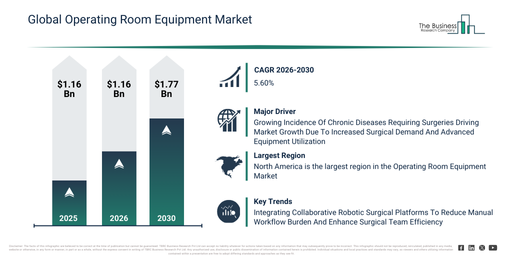
    The market for operating room equipment has seen significant growth in recent years, with its value projected to rise from $17.05 billion in 2025 to $17.95 billion in 2026, marking a compound annual growth rate (CAGR) of 5.2%. This upward trend has been driven by factors such as increases in surgical procedure volumes, expanded hospital infrastructure, a higher number of chronic disease cases necessitating surgery, wider access to advanced surgical technologies, and a growing preference for minimally invasive techniques. Looking ahead, the market is expected to continue this momentum, reaching $22.36 billion by 2030 with a CAGR of 5.6%. Growth in this period will be fueled by investments in smart hospital technologies, demand for real-time surgical data integration, the rise of outpatient and ambulatory surgery centers, enhanced patient safety technologies, and ongoing innovations in surgical equipment design. Key trends expected to influence the market include the adoption of integrated operating room systems, advanced patient monitoring tools, minimally invasive surgical devices, smart anesthesia delivery systems, and efforts to optimize surgical workflows.

    Download A Free Sample Report For Comprehensive Market Insights:

    https://www.thebusinessresearchcompany.com/sample.aspx?id=3804&type=smp

    Rising Burden of Chronic Diseases as a Market Growth Catalyst

    One of the primary factors driving expansion in the operating room equipment market is the increasing prevalence of chronic diseases that require surgical intervention. These long-term medical conditions, which often last for three months or more, are becoming more common due to an aging global population and lifestyle factors such as sedentary behavior and poor dietary habits. This growing chronic disease burden directly impacts demand for sophisticated surgical tools, patient monitoring devices, operating tables, and imaging equipment essential for effective and safe surgeries. For example, in June 2024, the UK’s National Health Service reported that 3,615,330 people registered with a general practitioner were diagnosed with non-diabetic hyperglycemia or pre-diabetes in 2023—an 18% increase from the previous year’s 3,065,825 cases. This rising incidence of conditions requiring surgery is thus a key driver behind the expanding operating room equipment market.

    Segment Breakdown of the Operating Room Equipment Market

    The operating room equipment market is categorized into several important segments to better understand its structure and demand areas. By type, it includes anesthesia devices, endoscopes, operating room lights, operating tables, electrosurgical devices, surgical imaging devices, and patient monitors. Application-wise, it covers cardiovascular surgery, thoracic surgery, neurosurgery, and other types of procedures. In terms of end users, the market serves hospitals, outpatient facilities, and ambulatory surgery centers. Further subsegments detail specific product categories such as anesthesia machines, vaporizers, and anesthesia monitors within anesthesia devices; rigid and flexible endoscopes and accessories; surgical LED and halogen lights; general, specialty, and adjustable operating tables; electrosurgical generators, instruments, and smoke evacuators; surgical imaging equipment like C-arms, ultrasound systems, and intraoperative CT scanners; and patient monitors including multi-parameter, bedside, and portable models.

    Access The Complete Operating Room Equipment Market Report:

    https://www.thebusinessresearchcompany.com/report/operating-room-equipment-global-market-report

    Innovations and Technological Trends Transforming the Operating Room Equipment Market

    Leading companies in this market are increasingly embracing collaborative robotic assistance technologies to reduce manual labor, enhance surgical precision, and improve workflow efficiency in operating rooms. These robotic platforms provide automated control over surgical instruments, stabilized assistance during operations, and workflow optimization features that help reduce physical strain on surgical staff and speed up procedures. For instance, in November 2024, Moon Surgical, a US-based surgical robotics firm, introduced its Maestro Platform at Lee Health. This system supports surgical teams by automating repetitive tasks and enhancing intraoperative consistency, reportedly saving operating rooms the equivalent of 8.3 full working days of surgical technologist time. Such advancements reflect a wider shift toward augmentative robotics aimed at minimizing staff fatigue, avoiding procedural delays, and boosting overall efficiency in surgical environments.

    Prominent Companies Leading the Operating Room Equipment Industry

    The operating room equipment market is shaped by many influential players, including Medtronic, Olympus, GE, Stryker, Philips, Getinge, Drägerwerk, Hill-Rom, Nihon Kohden, Steris, STAAN Bio-Med Engineering, GE Healthcare, Covidien, Philips Healthcare, Smiths Medical, Metran, Siemens Healthcare, Opto Circuits, Fukuda Denshi, Canon Medical Systems, Mindray, Boston Scientific, DePuy Synthes, Simeon Medical, Teleflex, Johnson & Johnson, Alvo Medical, Mizuho OSI, Karl Storz, and KLS Martin Group. These companies are at the forefront of innovation and product development within the operating room equipment space, driving competitive growth and market expansion.

    Regional Outlook Highlighting Market Leaders and Growth Hotspots

    In 2025, North America was the leading region in terms of market size for operating room equipment. However, the Asia-Pacific region is expected to experience the fastest growth rate during the upcoming forecast period. The market analysis encompasses key geographic areas including Asia-Pacific, South East Asia, Western and Eastern Europe, North America, South America, the Middle East, and Africa, providing a comprehensive view of the global operating room equipment market landscape.

    Get in touch with us:

    The Business Research Company: https://www.thebusinessresearchcompany.com/

    Americas: +1 310-496-7795

    Asia: +44 7882 955267 & +91 8897263534

    Europe: +44 7882 955267

    Email us at: marketing@tbrc.info

    Follow us on:

    LinkedIn: https://in.linkedin.com/company/the-business-research-company

    YouTube: https://www.youtube.com/channel/UC24_fI0rV8cR5DxlCpgmyFQ

    Global Market Model: https://www.thebusinessresearchcompany.com/global-market-model
  • Open Surgery Instruments Market Expansion Is Opening New Pathways For Strategic Investment

    Open Surgery Instruments Market Expansion Is Opening New Pathways For Strategic Investment

    Through market attractiveness analysis, total addressable market evaluation, company benchmarking matrices, interactive Excel dashboards, expanded supply chain intelligence, emerging startup coverage, and detailed product insights, The Business Research Company’s 2026 market reports provide more actionable and strategically valuable research.

    The market for open surgery instruments has seen significant growth recently, driven by advances in surgical procedures and healthcare infrastructure. As this sector evolves, it is essential to explore its current size, key growth drivers, major players, and emerging trends that will shape its future trajectory.

    Market Size Evolution and Projected Growth of the Open Surgery Instruments Market

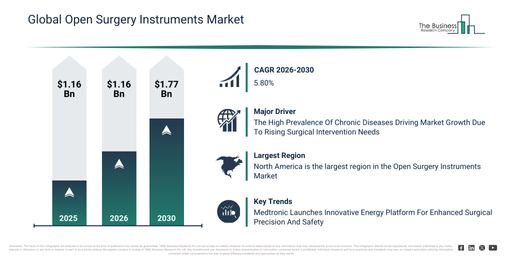
    The open surgery instruments market has experienced robust expansion, with its value expected to rise from $68.04 billion in 2025 to $72.38 billion in 2026, representing a compound annual growth rate (CAGR) of 6.4%. This growth during the historical period is largely linked to an increase in the number of open surgical procedures, the development of hospital surgical facilities, greater availability of skilled surgeons, the growing use of standardized surgical kits, and ongoing improvements in the materials used for instruments. Looking ahead, the market is anticipated to reach $90.57 billion by 2030, growing at a CAGR of 5.8%. Key factors driving this forecast include the adoption of advanced surgical technologies, increased demand for instruments suited to multiple specialties, a rise in complex surgeries, heightened attention to minimizing surgical complications, and substantial investments in upgrading operating rooms. Important trends predicted to influence the market comprise a growing need for precision instruments, wider use of reusable and sterilizable tools, ergonomic designs, expansion of energy-based surgical devices, and an intensified focus on surgical accuracy.

    Download A Free Sample Report For Comprehensive Market Insights:

    https://www.thebusinessresearchcompany.com/sample.aspx?id=17214&type=smp

    Factors Propelling Growth in the Open Surgery Instruments Market

    One of the primary forces fueling the market’s expansion is the rising prevalence of chronic diseases worldwide. These long-lasting conditions, which require ongoing medical management, are becoming more widespread due to lifestyle changes, aging populations, enhanced healthcare access, and genetic factors. Open surgery instruments play a crucial role in improving the surgical treatment of these diseases by enhancing procedural accuracy, shortening recovery times, and ensuring patient safety throughout operations.

    For example, data released in May 2023 by the World Health Organization, an international health agency based in Switzerland, show that non-communicable diseases (NCDs) now account for nearly 75% of global deaths, with projections suggesting this figure could climb to 86% by 2048. This alarming trend underscores how the widespread impact of chronic diseases is directly driving demand for open surgery instruments.

    Key Segments That Drive Revenue in the Open Surgery Instruments Market

    This market is analyzed through several important segments:

    1) Product Categories: Scalpel, Scissors, Forceps, Clamps, Needles and Sutures, Retractors, Suction Devices, Staplers and Clips, and Energy Systems

    2) Application Areas: Cardiothoracic Surgery, Urologic Surgery, Orthopedic Surgery

    3) End Users: Hospitals, Ambulatory Surgery Centers, Clinics

    Each product category is further broken down into subtypes. For example, scalpels include disposable and reusable types; scissors include straight, curved, Metzenbaum, and Mayo scissors; forceps are divided into tissue, surgical, and hemostatic types; clamps include hemostatic, tissue, and surgical clamps; needles and sutures are categorized as surgical needles, absorbable sutures, and non-absorbable sutures; retractors come as handheld or self-retaining; suction devices are either manual or electric; staplers and clips include surgical staplers, hemostatic clips, and skin staplers; and energy systems comprise electrosurgical units, laser energy systems, and ultrasonic energy systems.

    Access The Complete Open Surgery Instruments Market Report:

    https://www.thebusinessresearchcompany.com/report/open-surgery-instruments-global-market-report

    Next-Generation Advancements Defining the Open Surgery Instruments Market

    Leading companies in this space are heavily investing in the development of cutting-edge technologies, such as next-generation surgical energy platforms, which aim to replace traditional electrosurgical devices. These advanced platforms improve surgical precision and safety by dynamically adjusting energy delivery, enhancing vessel sealing, and facilitating more efficient tissue dissection. For instance, in September 2025, Medtronic Plc., a US-based med-tech firm, introduced the Valleylab FT10 Energy Platform in India. This innovation offers versatile energy modes, including monopolar, bipolar, and advanced vessel sealing, designed specifically for open surgeries. It features real-time tissue sensing and optimized energy control, helping surgeons achieve better results while minimizing collateral damage. Integrated with Medtronic’s surgical support services, such as training and workflow optimization, the platform enhances clinical outcomes, improves patient safety, and streamlines surgical procedures.

    Prominent Players and Their Strategic Position in the Open Surgery Instruments Market

    The open surgery instruments market is shaped by several major corporations, including Johnson & Johnson Services Inc., Medtronic, Olympus, Terumo Corporation, B. Braun Medical Ltd., Cook Medical, Teleflex Incorporated, Mölnlycke Health Care AB, Integra LifeSciences Corporation, ConMed Corporation, C.R. Bard Inc., KLS Martin Group, Aspen Surgical Products Inc., Scanlan International Inc., Sklar Surgical Instruments, Grena Ltd., ELMED Incorporated, Aesculap Inc., Medline Industries Inc., and HuFriedyGroup. These companies focus on innovation, product development, and strategic partnerships to maintain competitive advantages in the evolving market.

    Regional Market Leadership and Growth Opportunities

    In 2025, North America held the largest share of the open surgery instruments market. However, Asia-Pacific is projected to be the fastest-growing region throughout the forecast period. The analysis also includes key areas such as South East Asia, Western Europe, Eastern Europe, South America, the Middle East, and Africa, providing a comprehensive global perspective on market trends and growth potential.

    Get in touch with us:

    The Business Research Company: https://www.thebusinessresearchcompany.com/

    Americas: +1 310-496-7795

    Asia: +44 7882 955267 & +91 8897263534

    Europe: +44 7882 955267

    Email us at: marketing@tbrc.info

    Follow us on:

    LinkedIn: https://in.linkedin.com/company/the-business-research-company

    YouTube: https://www.youtube.com/channel/UC24_fI0rV8cR5DxlCpgmyFQ

    Global Market Model: https://www.thebusinessresearchcompany.com/global-market-model
  • Oncology Molecular Diagnostics Market Trends Are Creating New Opportunities For Industry Leaders

    Oncology Molecular Diagnostics Market Trends Are Creating New Opportunities For Industry Leaders

    Delivering more actionable and strategically valuable research, The Business Research Company’s 2026 market reports feature market attractiveness analysis, total addressable market evaluation, company benchmarking matrices, interactive Excel dashboards, expanded supply chain intelligence, emerging startup coverage, and detailed product insights.

    The oncology molecular diagnostics sector is rapidly evolving as advances in technology and growing cancer rates drive demand for more precise testing methods. This market is experiencing significant expansion, fueled by developments in personalized medicine and innovative diagnostic tools that help tailor cancer treatment to individual patients. Let’s explore the current market outlook, key growth factors, segmentation, innovations, competitive players, and regional dynamics shaping this important industry.

    Oncology Molecular Diagnostics Market Size and Growth Outlook

    The oncology molecular diagnostics market has witnessed swift growth in recent years. From a valuation of $5.65 billion in 2025, it is projected to increase to $6.34 billion by 2026, registering a compound annual growth rate (CAGR) of 12.2%. This upward trajectory during the historical period is largely due to the rising prevalence of cancer, widespread adoption of PCR and sequencing technologies, increased funding for oncology research, the expansion of hospital diagnostic capacities, and regulatory approvals for molecular testing procedures.

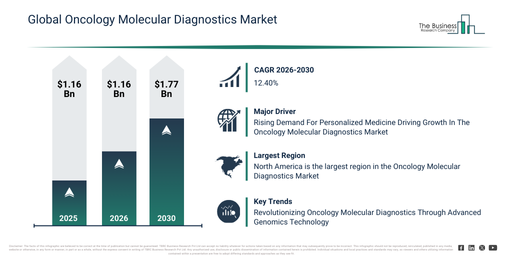
    Looking ahead, the market is expected to accelerate its growth further, reaching $10.13 billion by 2030 with a CAGR of 12.4%. Key factors fueling this expansion include the adoption of precision oncology approaches, advancements in liquid biopsy technologies, heightened demand for personalized cancer treatments, AI-powered data interpretation tools, and growing penetration in emerging markets. Major trends anticipated over the forecast period comprise an increase in companion diagnostics, wider use of liquid biopsies, proliferation of biomarker-based testing, expansion of cancer screening programs, and the rising need for early and accurate cancer detection.

    Download A Free Sample Report For Comprehensive Market Insights:

    https://www.thebusinessresearchcompany.com/sample.aspx?id=3457&type=smp

    Growing Demand for Personalized Medicine Boosting Market Growth

    A significant driver of the oncology molecular diagnostics market is the expanding emphasis on personalized medicine. This approach customizes medical treatment, drug therapies, and healthcare decisions to suit individual patient profiles. Molecular diagnostics play a crucial role by enabling tailored cancer therapies, optimized drug selection, and more precise treatment strategies that enhance patient outcomes and quality of life.

    For example, in February 2024, the Personalized Medicine Coalition, a U.S.-based nonprofit, reported that the FDA approved 16 new personalized therapies for rare disease patients in 2023, up from six approvals in 2022. This surge in personalized treatment approvals highlights the growing reliance on molecular diagnostics to support individualized care, thereby driving market growth.

    How the Oncology Molecular Diagnostics Market Is Categorized

    This market report segments the oncology molecular diagnostics industry into several key categories:

    1) Product: Instruments, Reagents, and Other Products

    2) Technology: Polymerase Chain Reaction (PCR), In-Situ Hybridization (ISH), Isothermal Nucleic Acid Amplification Technology (INNAT), Chips and Microarrays, Sequencing, Mass Spectrometry, Transcription Mediated Amplification (TMA), and other emerging technologies

    3) End User: Hospitals, Diagnostic Centers, Academic and Research Institutes, and other users

    Further subcategories include:

    – Instruments such as PCR machines, sequencers, microarray platforms, and FISH instruments

    – Reagents like DNA and RNA extraction kits, PCR kits, NGS library preparation kits, and diagnostic assay reagents

    – Other products comprising data analysis software, quality control and calibration tools, molecular testing consumables, and oncology biomarkers

    Access The Complete Oncology Molecular Diagnostics Market Report:

    https://www.thebusinessresearchcompany.com/report/oncology-molecular-diagnostics-global-market-report

    Innovations Driving Transformation in Oncology Molecular Diagnostics

    Leading companies in this field are focusing heavily on advancing genomics technologies, including next-generation sequencing for cancer genomes, computational analytics, and innovative tumor modeling. These developments improve the ability to detect cancer early, identify mutations more accurately, and personalize treatment options effectively. As a result, diagnostic precision is enhanced, turnaround times are shortened, and the demand for localized, high-accuracy molecular testing rises.

    For instance, in May 2024, OncoHelix-CoLab, a Canadian precision oncology firm specializing in genomic and immunologic profiling, opened a cutting-edge laboratory at Burjeel Medical City in the UAE. This facility, created in partnership with Burjeel Holdings, enables complex molecular and immunology tests to be performed locally rather than relying on overseas labs. Their offerings include advanced assays for multiple cancer types, such as prostate cancer, supported by collaborations like the one with Nanostics for the ClarityDX Prostate test.

    Major Players Competing in the Oncology Molecular Diagnostics Market

    The oncology molecular diagnostics market features several prominent companies, including F. Hoffmann-La Roche AG, Bayer AG, Thermo Fisher Scientific Inc., Abbott Laboratories, Danaher Corporation, Siemens Healthcare AG, Becton Dickinson and Company, Agilent Technologies Inc., HTG Molecular Diagnostics Inc., Hologic Inc., Illumina Inc., bioMérieux SA, Beckman Coulter Inc., Sysmex Corporation, Bio-Rad Laboratories Inc., Qiagen N.V., Exact Sciences Corp., Bio-Techne Corporation, OPKO Health Inc., Myriad Genetics Inc., Guardant Health AMEA, Veracyte Inc., Adaptive Biotechnologies Corp., Foundation Medicine Inc., Pacific Biosciences of California Inc., NanoString Technologies Inc., and Genomic Health Inc.

    Regional Market Leadership and Revenue Insights

    In 2025, North America dominated the oncology molecular diagnostics market as the largest regional segment. Western Europe held the position as the second largest market globally. Other regions analyzed in the report include Asia-Pacific, South East Asia, Eastern Europe, South America, the Middle East, and Africa, providing a comprehensive perspective on the global market landscape.

    Get in touch with us:

    The Business Research Company: https://www.thebusinessresearchcompany.com/

    Americas: +1 310-496-7795

    Asia: +44 7882 955267 & +91 8897263534

    Europe: +44 7882 955267

    Email us at: marketing@tbrc.info

    Follow us on:

    LinkedIn: https://in.linkedin.com/company/the-business-research-company

    YouTube: https://www.youtube.com/channel/UC24_fI0rV8cR5DxlCpgmyFQ

    Global Market Model: https://www.thebusinessresearchcompany.com/global-market-model
  • Oncology Devices Market Growth Is Reshaping Competitive Advantage Across The Industry

    Oncology Devices Market Growth Is Reshaping Competitive Advantage Across The Industry

    Enhanced with market attractiveness analysis, total addressable market evaluation, company benchmarking matrices, interactive Excel dashboards, expanded supply chain intelligence, emerging startup coverage, and detailed product insights, The Business Research Company’s 2026 market reports deliver more actionable and strategically valuable research.

    The oncology devices market is rapidly evolving, driven by advancements in technology and increasing cancer diagnosis rates worldwide. As healthcare providers strive to improve cancer treatments and early detection, the demand for innovative oncology devices continues to soar. Let’s explore the market’s size, growth factors, key players, and emerging trends shaping the future of this critical healthcare segment.

    Forecasted Expansion of the Oncology Devices Market in the Coming Years

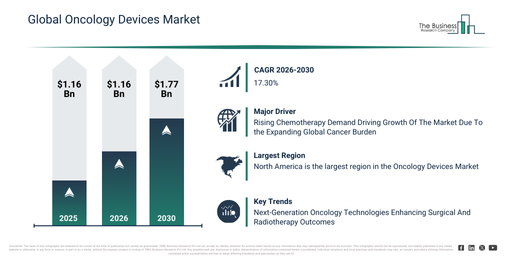
    The oncology devices market has experienced significant growth recently and is anticipated to continue on this trajectory. From $177.72 billion in 2025, it is projected to rise to $210.15 billion in 2026, reflecting a compound annual growth rate (CAGR) of 18.2%. This past growth is largely attributed to the rising global incidence of cancer, the expansion of hospital oncology departments, increasing demand for early diagnostic technologies, availability of advanced imaging devices, and greater awareness around cancer screening initiatives. Looking ahead, the market is expected to reach $397.27 billion by 2030, growing at a CAGR of 17.3%. Factors contributing to this future growth include wider adoption of personalized cancer treatment devices, heightened investments in oncology infrastructure, the growth of outpatient cancer care centers, increased use of AI-powered diagnostic tools, and a stronger focus on precision oncology solutions. Key trends during this period involve the rising uptake of advanced diagnostic devices, image-guided therapies, minimally invasive treatment tools, enhanced radiation therapy technologies, and efforts toward earlier cancer detection.

    Download A Free Sample Report For Comprehensive Market Insights:

    https://www.thebusinessresearchcompany.com/sample.aspx?id=3373&type=smp

    Factors Fueling the Rise of the Oncology Devices Market – Part One

    One of the primary drivers behind the oncology devices market’s expansion is the growing demand for chemotherapy treatments. Chemotherapy, which involves powerful drugs targeting rapidly dividing cells to halt tumor growth, is increasingly sought after due to the rising number of cancer diagnoses worldwide. As more patients are identified, the need for effective and accessible chemotherapy treatments grows accordingly. Oncology devices play a crucial role in supporting chemotherapy by enabling safer and more precise drug delivery and monitoring, which helps improve treatment outcomes and patient safety.

    Factors Fueling the Rise of the Oncology Devices Market – Part Two

    For instance, the U.S. National Cancer Institute projected in January 2025 that the number of new cancer cases in the United States would reach 2.04 million, up from 1.96 million in 2023. This significant increase underscores the expanding need for chemotherapy administration systems and other oncology devices designed to enhance treatment efficacy. Thus, the rising incidence of cancer and the corresponding increase in chemotherapy demand are key factors propelling market growth.

    Access The Complete Oncology Devices Market Report:

    https://www.thebusinessresearchcompany.com/report/oncology-devices-global-market-report

    Breaking Down the Oncology Devices Market Segmentation and Revenue Streams

    The oncology devices market is categorized according to device type, therapy type, and end user. Device types include brachytherapy devices and endoscopic devices. Therapy classifications cover chemotherapy, hormone therapy, biotherapy/immunotherapy, and radiation therapy. End users typically consist of hospitals, cancer research institutes, and other healthcare facilities. Within brachytherapy devices, subsegments involve afterloaders (both high-dose rate and low-dose rate), applicators, seeds, and accessories. Endoscopic devices are further segmented into flexible, rigid, and capsule endoscopes, endoscopic ultrasound systems, and related accessories.

    Key Technological Advances and Market Trends Shaping the Oncology Devices Future

    Leading companies in the oncology devices space are focusing on developing precision-driven and technologically advanced solutions that enhance treatment accuracy, patient safety, and clinical operations. There is a strong emphasis on minimally invasive technologies, improved visualization, and real-time therapy adjustments to support better outcomes across a range of cancers. For example, in April 2025, ZEISS, a medical technology firm based in Germany, obtained FDA 510(k) clearance for its next-generation INTRABEAM 700 system. This robotic-assisted intraoperative radiotherapy platform targets neuro-oncology and breast cancer cases with improved precision, ergonomic design, and seamless integration into surgical workflows. It allows for localized radiation delivery during surgery while minimizing exposure to healthy tissues. By combining advanced imaging, robotics, and treatment planning, the INTRABEAM 700 exemplifies the shift toward sophisticated, patient-focused oncology care.

    Prominent Players Competing in the Oncology Devices Market

    The oncology devices market features several key organizations driving innovation and competition. These include Eckert & Ziegler BEBIG GmbH, Oncura Inc., GE Healthcare, Medtronic plc, Varian Medical Systems Inc., Elekta AB, Theragenics Corporation, Accuray Incorporated, Roche Diagnostics, IBA Group, Biogenex Laboratories, Becton Dickinson and Company, Siemens Healthineers, Philips Healthcare, Hologic Inc., IBA AG, ViewRay Inc., Canon Medical Systems Corporation, Brainlab, PerkinElmer, RaySearch Laboratories, Mevion Medical Systems, Vision RT, IsoRay, RefleXion Medical, Alpha Tau Medical, Nanobiotix, Mirada Medical Ltd., and Navidea Biopharmaceuticals Inc. These companies continuously invest in research and development to offer cutting-edge oncology devices.

    Global Market Distribution and Emerging Regional Opportunities in Oncology Devices

    In 2025, North America dominated the oncology devices market as the largest regional segment. Following closely, Asia-Pacific ranked as the second-largest market. The oncology devices market report also covers important regions such as South East Asia, Western Europe, Eastern Europe, South America, the Middle East, and Africa, providing a comprehensive view of global market dynamics and emerging opportunities across these territories.

    Get in touch with us:

    The Business Research Company: https://www.thebusinessresearchcompany.com/

    Americas: +1 310-496-7795

    Asia: +44 7882 955267 & +91 8897263534

    Europe: +44 7882 955267

    Email us at: marketing@tbrc.info

    Follow us on:

    LinkedIn: https://in.linkedin.com/company/the-business-research-company

    YouTube: https://www.youtube.com/channel/UC24_fI0rV8cR5DxlCpgmyFQ

    Global Market Model: https://www.thebusinessresearchcompany.com/global-market-model
  • Oncology Biomarkers Market Forecast Signals New Revenue Opportunities Through 2030

    Oncology Biomarkers Market Forecast Signals New Revenue Opportunities Through 2030

    Through market attractiveness analysis, total addressable market evaluation, company benchmarking matrices, interactive Excel dashboards, expanded supply chain intelligence, emerging startup coverage, and detailed product insights, The Business Research Company’s 2026 market reports provide more actionable and strategically valuable research.

    The oncology biomarkers market is experiencing rapid expansion, driven by advancements in cancer detection and personalized treatment. As cancer continues to be a major global health challenge, innovations in biomarkers are becoming crucial for early diagnosis and effective therapeutic strategies. Below, we explore the market size, key drivers, industry trends, major players, and regional insights shaping this important sector.

    Oncology Biomarkers Market Size and Growth Projections

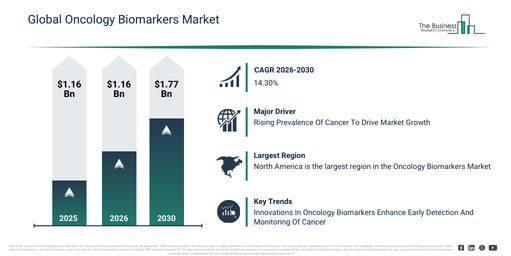
    The oncology biomarkers market has seen significant growth in recent years and is expected to continue on this trajectory. From a valuation of $17.3 billion in 2025, it is projected to rise to $19.73 billion in 2026, representing a compound annual growth rate (CAGR) of 14.1%. Looking further ahead, the market is anticipated to reach $33.63 billion by 2030, with a slightly higher CAGR of 14.3%. This surge reflects the expanding scope of cancer screening initiatives, progress in molecular biology research, greater access to biomarker testing technologies, and stronger collaborations between research institutions and healthcare providers.

    Download A Free Sample Report For Comprehensive Market Insights:

    https://www.thebusinessresearchcompany.com/sample.aspx?id=12493&type=smp

    Key Factors Fueling Growth in Oncology Biomarkers

    One of the major forces propelling the oncology biomarkers market is the increasing incidence of cancer worldwide. Cancer involves the uncontrolled growth of abnormal cells, which can spread throughout the body. Biomarkers help provide detailed insights into the type and characteristics of different cancers by analyzing genes, proteins, and other substances in patients. For example, a February 2024 report from the World Health Organization, based in Switzerland, projects more than 35 million new cancer cases by 2050—an increase of 77% from the estimated 20 million cases in 2022. This rising cancer burden is a critical driver encouraging the development and adoption of oncology biomarkers.

    Additional Growth Drivers Supporting Market Expansion

    Beyond the rising prevalence of cancer, several other factors are stimulating the market. Increasing demand for personalized cancer treatment options is pushing the use of precision diagnostics. Meanwhile, the integration of artificial intelligence for biomarker discovery, rising investments in cancer genomics research, and broader use of liquid biopsy technologies are all contributing to market growth. Furthermore, heightened focus on early detection and ongoing cancer monitoring is fueling demand for more sophisticated biomarker tests and applications.

    Access The Complete Oncology Biomarkers Market Report:

    https://www.thebusinessresearchcompany.com/report/oncology-biomarkers-global-market-report

    Segments Defining the Oncology Biomarkers Market

    This market is segmented based on biomarker types, cancer types, applications, and end users. By biomarker type, categories include protein biomarkers, genetic biomarkers, and other types such as metabolomic, epigenetic, and microRNA biomarkers. Cancer types cover a wide range, including breast, lung, colorectal, prostate, melanoma, leukemia, ovarian, liver cancers, and others. Applications span diagnostics, research and development, prognostics, risk assessment, and more. End users typically comprise hospitals, academic and cancer research centers, and diagnostic laboratories. Further subsegments under protein biomarkers include tumor-specific antigens, circulating tumor cells, and enzymatic biomarkers, while genetic biomarkers involve DNA mutations, gene expression profiles, and single nucleotide polymorphisms.

    Emerging Industry Trends Shaping Oncology Biomarkers Demand

    Leading companies in the oncology diagnostics field are focusing heavily on developing advanced biomarker assays to enhance early cancer detection and monitor minimal residual disease (MRD), which refers to cancer cells remaining post-treatment that may cause relapse. In May 2024, Tempus, a US-based company specializing in AI and precision medicine, introduced a portfolio of MRD tests, including the xM and xM (NeXT Personal Dx) assays developed by Personalis. These tests feature both tumor-naïve and tumor-informed approaches designed to detect early recurrence and track patient response to immunotherapy. Utilizing circulating tumor biomarkers, these assays provide clinicians with sensitive and actionable information to guide treatment decisions.

    Prominent Players Leading the Oncology Biomarkers Market

    The oncology biomarkers market includes several key global companies such as F Hoffmann-La Roche AG, Novartis AG, Thermo Fisher Scientific Inc., Abbott Laboratories, Merck KGaA, Siemens Healthcare GmbH, Becton Dickinson and Company, GE Healthcare Technologies Inc., Eurofins Scientific SE, Agilent Technologies Inc., Hologic Inc., Illumina Inc., bioMerieux SA, Bio-Rad Laboratories Inc., Bruker Corporation, QIAGEN NV, Exact Sciences Corporation, Sysmex Corporation, PerkinElmer Inc., Leica Biosystems, Myriad Genetics Inc., Guardant Health Inc., Enzo Biochem Inc., Biocartis Group NV, Agendia Inc., Epigenomics AG, and OncoDNA SA. These organizations are actively investing in research and technological innovation to maintain their market presence and drive growth.

    Regional Breakdown Highlighting Oncology Biomarkers Market Leaders

    In 2025, North America dominated the oncology biomarkers market in terms of revenue and market share. Alongside North America, other key regions featured in market analyses include Asia-Pacific, South East Asia, Western Europe, Eastern Europe, South America, the Middle East, and Africa. While North America leads currently, emerging markets in Asia-Pacific are expected to exhibit significant growth potential in the coming years.

    Get in touch with us:

    The Business Research Company: https://www.thebusinessresearchcompany.com/

    Americas: +1 310-496-7795

    Asia: +44 7882 955267 & +91 8897263534

    Europe: +44 7882 955267

    Email us at: marketing@tbrc.info

    Follow us on:

    LinkedIn: https://in.linkedin.com/company/the-business-research-company

    YouTube: https://www.youtube.com/channel/UC24_fI0rV8cR5DxlCpgmyFQ

    Global Market Model: https://www.thebusinessresearchcompany.com/global-market-model
  • Ocular Trauma Devices Market Growth Is Accelerating As Industry Transformation Continues

    Ocular Trauma Devices Market Growth Is Accelerating As Industry Transformation Continues

    Delivering more actionable and strategically valuable research, The Business Research Company’s 2026 market reports feature market attractiveness analysis, total addressable market evaluation, company benchmarking matrices, interactive Excel dashboards, expanded supply chain intelligence, emerging startup coverage, and detailed product insights.

    The ocular trauma devices market has experienced significant growth recently, driven by various factors related to eye injuries and advancements in medical technology. This sector is expected to continue expanding as demand rises for effective diagnosis and treatment options for ocular trauma. Let’s explore the current market size, key growth drivers, product segments, major players, and regional dynamics shaping this industry.

    Current Market Size and Growth Forecast for Ocular Trauma Devices

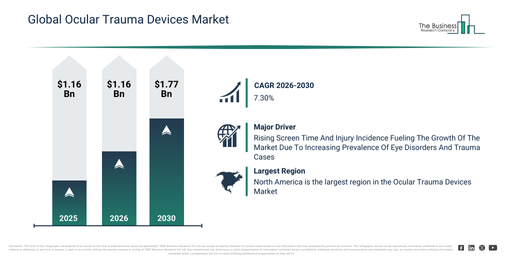
    The ocular trauma devices market has shown strong progress, with its value projected to increase from $3.88 billion in 2025 to $4.17 billion in 2026, representing a compound annual growth rate (CAGR) of 7.5%. This past growth has been driven by several factors, including a rise in road accidents and workplace eye injuries, an increase in sports-related ocular trauma cases, more hospital-based ophthalmic surgeries, wider access to emergency eye care, and better availability of essential ophthalmic surgical instruments. Looking ahead, the market is expected to grow further, reaching $5.53 billion by 2030 with a CAGR of 7.3%. Growth in the coming years will be supported by an aging population susceptible to eye injuries, increased investments in advanced ophthalmic trauma technologies, heightened awareness of early eye injury treatment, expansion of ambulatory surgical centers, and innovations in ocular implants and therapeutic devices. Key trends during this forecast period include a rise in minimally invasive procedures, greater use of disposable ophthalmic devices, demand for rapid point-of-care diagnostics, expansion of specialized trauma care facilities, and advances in microsurgical instruments.

    Download A Free Sample Report For Comprehensive Market Insights:

    https://www.thebusinessresearchcompany.com/sample.aspx?id=25852&type=smp

    Increasing Prevalence of Eye Disorders Supports Market Expansion

    A growing number of eye-related conditions and injuries is a significant factor driving the ocular trauma devices market forward. Eye disorders encompass a wide variety of medical issues and physical traumas impacting vision and eye structure. One important contributor to this rise is the increasing screen time among populations worldwide, which causes eye strain, dry eyes, and a surge in myopia, especially among younger individuals. Ocular trauma devices play a critical role in managing these conditions by facilitating accurate diagnosis, precise surgical interventions, and targeted treatments that help preserve vision and prevent further damage. For instance, data from the National Institutes of Health (NIH) indicates that currently 2.9 million Americans suffer from low eyesight, a figure expected to climb to 5 million by 2030. This trend emphasizes the growing need for effective ocular trauma management, thereby boosting market demand.

    Road Traffic Accidents Significantly Impact Market Demand

    Another important driver of the ocular trauma devices market is the rise in road traffic accidents, which often lead to serious eye injuries requiring immediate care. Road traffic accidents refer to collisions on public roads involving vehicles, pedestrians, or objects, resulting in damage or injury. The increasing number of vehicles on roads worldwide has contributed to greater traffic congestion and a higher likelihood of accidents. Ocular trauma devices provide critical support in these situations by enabling rapid diagnosis and treatment of eye injuries, helping to prevent permanent vision loss and improve recovery outcomes. For example, according to the National Highway Traffic Safety Administration in April 2025, there were 1,820 fewer fatalities on US roads in 2023 compared to previous years, underscoring ongoing safety efforts yet highlighting the continued need for trauma care solutions. This upward trend in road accidents continues to stimulate growth in the ocular trauma devices sector.

    Access The Complete Ocular Trauma Devices Market Report:

    https://www.thebusinessresearchcompany.com/report/ocular-trauma-devices-global-market-report

    Detailed Segmentation of the Ocular Trauma Devices Market

    This market is categorized into several key segments to capture its diverse range of products and applications. By type, the market includes surgical devices, diagnostic devices, therapeutic devices, and protective devices. Device types are further broken down into implants, instruments, and disposables. Severity of trauma is classified as mild, moderate, or severe. Applications cover trauma surgery, retinal detachment, cataract surgery, glaucoma management, and other treatments. End users include hospitals, ophthalmic clinics, ambulatory surgical centers, and other healthcare providers. Subsegments offer more detail, such as surgical devices like microsurgical instruments, ophthalmic sutures, surgical microscopes, phacoemulsification systems, and ophthalmic knives. Diagnostic devices include slit lamps, fundus cameras, optical coherence tomography (OCT) systems, tonometry devices, and ultrasound biomicroscopy. Therapeutic devices comprise ocular implants, drug delivery systems, laser therapy systems, and cryotherapy units. Protective devices consist of eye shields, safety goggles, face shields, ocular bandages, and protective contact lenses.

    Key Players Influencing the Ocular Trauma Devices Industry

    The competition within this market is shaped by several leading companies renowned for their innovation and product portfolios. Notable players include Alcon Inc, Bausch And Lomb Corporation, Johnson And Johnson Vision Care Inc, Carl Zeiss Meditec AG, Topcon Corporation, Leica Microsystems GmbH, BVI Medical Inc, Heidelberg Engineering GmbH, OCULUS Optikgeraete GmbH, Oasis Medical Inc, Ziemer Group AG, Oertli Instrumente AG, FCI SAS, Sonomed Escalon Inc, Innovative Optics Inc, AJL Ophthalmic SA, ARC Laser GmbH, Nidek Co Ltd, MorTan Inc, Haag Streit Group, Volk Optical Inc, and Ellex Medical Lasers Ltd. These companies continue to push technology boundaries and expand their product offerings to meet the evolving needs of ocular trauma care.

    Regional Market Overview and Growth Projections

    In 2025, North America held the largest share of the ocular trauma devices market, driven by well-established healthcare infrastructure and high adoption of advanced technologies. However, the fastest growth over the forecast period is expected in the Asia-Pacific region, fueled by increasing healthcare investments, rising incidence of ocular injuries, and expanding access to eye care services. Other important regions covered in the analysis include South East Asia, Western Europe, Eastern Europe, South America, the Middle East, and Africa, providing a comprehensive view of global market trends and opportunities.

    Get in touch with us:

    The Business Research Company: https://www.thebusinessresearchcompany.com/

    Americas: +1 310-496-7795

    Asia: +44 7882 955267 & +91 8897263534

    Europe: +44 7882 955267

    Email us at: marketing@tbrc.info

    Follow us on:

    LinkedIn: https://in.linkedin.com/company/the-business-research-company

    YouTube: https://www.youtube.com/channel/UC24_fI0rV8cR5DxlCpgmyFQ

    Global Market Model: https://www.thebusinessresearchcompany.com/global-market-model
  • Ocular Implants Market Outlook Highlights The Next Major Growth Opportunities

    Ocular Implants Market Outlook Highlights The Next Major Growth Opportunities

    Enhanced with market attractiveness analysis, total addressable market evaluation, company benchmarking matrices, interactive Excel dashboards, expanded supply chain intelligence, emerging startup coverage, and detailed product insights, The Business Research Company’s 2026 market reports deliver more actionable and strategically valuable research.

    The ocular implants market is experiencing significant growth driven by rising eye-related health issues and advancements in surgical technology. With increasing global demand for vision correction and eye care procedures, the market is positioned for substantial expansion in the coming years. Let’s explore the current market size, key growth drivers, segment details, evolving industry trends, major competitors, and regional insights shaping this sector.

    Ocular Implants Market Size and Future Outlook

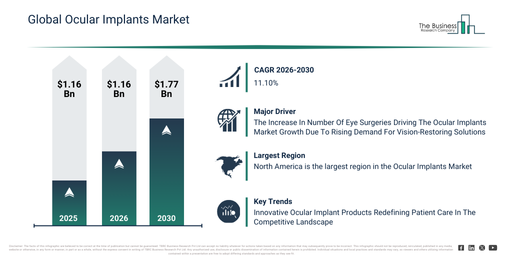
    The ocular implants market has seen rapid growth recently and is projected to continue on this trajectory. It is expected to rise from $16.25 billion in 2025 to $18.16 billion in 2026, reflecting a compound annual growth rate (CAGR) of 11.7%. Looking ahead, the market is forecasted to reach $27.69 billion by 2030, with a CAGR of 11.1%. This impressive growth is largely driven by factors such as the increasing prevalence of cataracts, a rise in ocular trauma cases, expanding ophthalmic surgical procedures, an aging global population, and improvements in surgical techniques. Additionally, the uptake of premium intraocular lens (IOL) technologies, growing demand for vision correction, and advancements in biomaterials are expected to support market expansion. Key trends include the adoption of sophisticated IOL designs, use of minimally invasive glaucoma implants, customized ocular prosthetics, and durable, biocompatible materials.

    Download A Free Sample Report For Comprehensive Market Insights:

    https://www.thebusinessresearchcompany.com/sample.aspx?id=6557&type=smp

    Primary Drivers Behind the Ocular Implants Market Growth

    One of the main factors propelling this market is the rising number of eye surgeries performed globally. Surgical interventions are critical for addressing various vision disorders, including cataracts, glaucoma, and retinal diseases. As populations age—especially in developed countries—the incidence of these conditions increases, thereby boosting demand for surgical solutions involving ocular implants. These implants are essential in replacing or supporting natural eye structures to restore vision and improve surgical outcomes.

    Supporting this trend, data from the Eye Bank Association of America indicates a 2.7% increase in domestic keratoplasty procedures in 2023, rising from 49,597 in 2022 to 50,925. This steady growth in eye surgeries directly drives the need for ocular implants, fueling market expansion.

    Access The Complete Ocular Implants Market Report:

    https://www.thebusinessresearchcompany.com/report/ocular-implants-global-market-report

    Overview of Market Segments in Ocular Implants

    This market can be categorized into various segments based on product types, applications, and end users. The product categories include intraocular lenses (IOLs), corneal implants, orbital implants, and glaucoma implants. Applications cover cataract surgery, glaucoma management and surgery, treatment of corneal disorders and keratoconus, ocular trauma and eye loss management, as well as refractive vision correction. The end-user base primarily consists of specialty eye institutes, hospitals, and clinics.

    Delving deeper, intraocular lenses are further divided into monofocal, multifocal, toric, and accommodative types. Corneal implants include synthetic implants, donor corneal implants, and intracorneal ring segments (ICRS). Orbital implants can be porous or non-porous, while glaucoma implants consist of aqueous shunts or valves and micro-invasive glaucoma surgery (MIGS) devices.

    Innovation Trends Shaping the Ocular Implants Industry

    Leading companies in the ocular implants sector are focusing on producing innovative and premium iris implant products to strengthen their market position. One notable example is the launch of a customizable iris implant designed to provide faster and more personalized patient care.

    In August 2023, HumanOptics Holding AG from Germany introduced the ARTIFICIALIRIS SELECT implant. This premium product offers a wide palette of colors—brown, blue, and green—each available in light, medium, and dark shades. It comes in nine predefined color combinations to ensure rapid availability. Surgeons can use a specialized color chart to match the implant precisely with the patient’s healthy eye, enhancing aesthetic outcomes and patient satisfaction.

    Key Competitors Leading the Ocular Implants Market

    The ocular implants market is dominated by several prominent companies, including Alcon Inc., Bausch & Lomb Inc., Carl Zeiss AG, STAAR Surgical Company, Johnson & Johnson Services Inc., Morcher GmbH, Aurolab Ltd., Cornea Biosciences, KERAMED INC., Price Vision Group, Gulden Ophthalmics Co. Inc., AJL Ophthalmic SA, Hoya Corp., Rayner Intraocular Lenses Limited, Lenstec Inc., SIFI S.p.A., Ophtec BV, HumanOptics AG, Medicontur Medical Engineering Ltd., Hanita Lenses, Omni Lens Pvt. Ltd., EyeKon Medical Inc., FCI Ophthalmics Inc., Santen Pharmaceutical Co. Ltd., Ocular Therapeutix Inc., AcuFocus Inc., Glaukos Corporation, and Ivantis Inc.

    Geographic Markets and Regional Growth Patterns

    In 2025, North America held the largest share of the ocular implants market, benefiting from its advanced healthcare infrastructure and high prevalence of age-related eye conditions. However, the Asia-Pacific region is projected to witness the fastest growth during the forecast period due to increasing healthcare investments, rising awareness, and growing demand for specialized eye care services. The market report covers key regions including Asia-Pacific, South East Asia, Western Europe, Eastern Europe, North America, South America, the Middle East, and Africa—providing a well-rounded view of global market dynamics.

    Get in touch with us:

    The Business Research Company: https://www.thebusinessresearchcompany.com/

    Americas: +1 310-496-7795

    Asia: +44 7882 955267 & +91 8897263534

    Europe: +44 7882 955267

    Email us at: marketing@tbrc.info

    Follow us on:

    LinkedIn: https://in.linkedin.com/company/the-business-research-company

    YouTube: https://www.youtube.com/channel/UC24_fI0rV8cR5DxlCpgmyFQ

    Global Market Model: https://www.thebusinessresearchcompany.com/global-market-model