Month: June 2026

  • Medical Consumables Market Expansion Is Reshaping Competitive Dynamics Across The Industry

    Medical Consumables Market Expansion Is Reshaping Competitive Dynamics Across The Industry

    Delivering more actionable and strategically valuable research, The Business Research Company’s 2026 market reports feature market attractiveness analysis, total addressable market evaluation, company benchmarking matrices, interactive Excel dashboards, expanded supply chain intelligence, emerging startup coverage, and detailed product insights.

    The medical consumables market has witnessed significant growth in recent years, driven by various factors related to healthcare demands and advancements. As the healthcare sector evolves, the need for disposable and efficient medical supplies continues to create new opportunities and challenges for the industry. Below is an overview of the market’s current status, growth drivers, segmentation, emerging trends, key players, and regional dynamics.

    Medical Consumables Market Size and Growth Trajectory

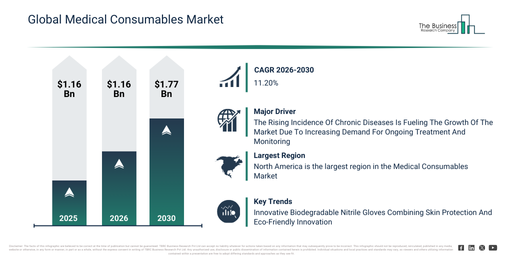
    The medical consumables market has experienced rapid expansion and is projected to continue this trend. The market size is expected to increase from $445.45 billion in 2025 to $495.99 billion in 2026, marking a robust compound annual growth rate (CAGR) of 11.3%. This growth over previous years can be linked to a rise in surgical procedures, a growing incidence of hospital-acquired infections, expansion in healthcare infrastructure, increased consumption of disposable medical products, and stricter regulatory hygiene standards.

    Download A Free Sample Report For Comprehensive Market Insights:

    https://www.thebusinessresearchcompany.com/sample.aspx?id=24293&type=smp

    Looking ahead, the market is anticipated to reach $757.8 billion by 2030, growing at a CAGR of 11.2%. This outlook is supported by factors such as higher demand for home healthcare consumables, greater investment in safety products for healthcare, the increasing needs of an aging population, a stronger focus on sustainable disposable medical supplies, and enhanced emergency preparedness through stockpiling. Key trends expected to shape the market include a surge in single-use medical devices, wider adoption of infection control consumables, growth in non-woven disposable products, emphasis on sterility and safety, and improved supply chain standardization.

    Primary Drivers Behind the Surge in Medical Consumables Demand

    A major factor accelerating growth in the medical consumables market is the rising prevalence of chronic diseases. These long-term health conditions generally develop over time and often require continuous medical management and hygiene maintenance. The increase in chronic disorders is largely attributed to sedentary lifestyles, which contribute to issues like obesity and other health risks. Medical consumables play a crucial role in managing such diseases by helping prevent infections, facilitating symptom control, and enhancing patient comfort during treatment and recovery.

    Access The Complete Medical Consumables Market Report:

    https://www.thebusinessresearchcompany.com/report/medical-consumables-global-market-report

    To illustrate, in February 2024, the World Health Organization, based in Switzerland, projected over 35 million new cancer cases by 2050—a 77% increase from approximately 20 million cases in 2022. This significant rise in chronic illness incidence directly fuels demand for medical consumables used in ongoing care and monitoring, reinforcing the market’s growth trajectory.

    Detailed Segmentation of the Medical Consumables Market

    The medical consumables market is categorized into several segments to address diverse product types, applications, and end-users:

    1) By Product Type: Medical Gloves, Intravenous (IV) Kits, Medical Gauze and Tapes, Disposable Syringes, Sharps Disposable Containers, Catheters, Non-Woven Disposable Products, Surgical Blades, Medicine Cups, and Other Products.

    2) By Application Area: Surgical, Diagnostic, Wound Care, Infection Control, Cardiology, Urology, Oncology, Respiratory, Intravenous (IV) Therapy, and Diabetes Care.

    3) By End-User Group: Hospitals, Home Healthcare, and Other End-Users.

    Within these broad categories, subsegments offer further specificity. For example, medical gloves are divided into examination gloves, surgical gloves, and chemotherapy gloves. Intravenous kits include various components such as catheters, infusion sets, cannulas, and extension sets. Medical gauze and tapes are differentiated by sterility and adhesive properties. Other product subcategories cover items such as alcohol prep pads, bandages, specimen collection containers, thermometers, and disposable tourniquets, among others.

    Emerging Trends Fueling Innovation and Sustainability in Medical Consumables

    Leading companies in the sector are increasingly focusing on innovation, especially in developing eco-friendly products. One notable advancement is the introduction of sustainable nitrile gloves, which combine high performance with environmental benefits. These gloves, made from synthetic rubber, are designed to biodegrade more efficiently than traditional disposable gloves while maintaining durability, chemical resistance, and puncture protection.

    For instance, in September 2024, Mun Australia launched its GloveOn COATS range—biodegradable nitrile examination gloves featuring a unique inner lining with colloidal oatmeal. This ingredient helps soothe and moisturize hands, reducing contact dermatitis risks. Additionally, the gloves include organic additives that speed up biodegradation in landfill conditions, offering healthcare professionals a safer and more sustainable option for hand protection without compromising performance.

    Leading Players Driving Competition in the Medical Consumables Industry

    The medical consumables market features several major companies shaping its competitive landscape. Prominent players include Cardinal Health Inc., Thermo Fisher Scientific Inc., 3M Company, Medline Industries LP, Fresenius Medical Care, Becton Dickinson and Company (BD), Baxter International Inc., Owens & Minor Inc., Terumo Corporation, Smith & Nephew plc, Nipro Corporation, Coloplast A/S, Teleflex Incorporated, Mölnlycke Health Care AB, ConvaTec Group PLC, Ansell Limited, Lohmann & Rauscher GmbH & Co. KG, GPC Medical Ltd., Hindustan Syringes & Medical Devices Ltd., B. Braun Melsungen AG, Hartmann Group (Paul Hartmann AG), Medtronic plc, Vygon SA, ICU Medical Inc., and Merit Medical Systems Inc. These companies play pivotal roles through continuous product innovation, strategic partnerships, and expanding global reach.

    Regional Analysis Highlighting Market Leaders and Growth Hotspots

    In terms of regional market share, North America held the largest portion of the medical consumables market in 2025. However, the Asia-Pacific region is forecasted to experience the fastest growth during the upcoming years. The report covers key geographical segments including Asia-Pacific, South East Asia, Western Europe, Eastern Europe, North America, South America, Middle East, and Africa, providing a broad perspective on market expansion and regional opportunities.

    Get in touch with us:

    The Business Research Company: https://www.thebusinessresearchcompany.com/

    Americas: +1 310-496-7795

    Asia: +44 7882 955267 & +91 8897263534

    Europe: +44 7882 955267

    Email us at: marketing@tbrc.info

    Follow us on:

    LinkedIn: https://in.linkedin.com/company/the-business-research-company

    YouTube: https://www.youtube.com/channel/UC24_fI0rV8cR5DxlCpgmyFQ

    Global Market Model: https://www.thebusinessresearchcompany.com/global-market-model
  • Minimally Invasive Gastrointestinal Surgical Systems Market Outlook Highlights The Next Major Growth Opportunities

    Minimally Invasive Gastrointestinal Surgical Systems Market Outlook Highlights The Next Major Growth Opportunities

    Enhanced with market attractiveness analysis, total addressable market evaluation, company benchmarking matrices, interactive Excel dashboards, expanded supply chain intelligence, emerging startup coverage, and detailed product insights, The Business Research Company’s 2026 market reports deliver more actionable and strategically valuable research.

    The minimally invasive gastrointestinal surgical systems market has seen remarkable growth recently, driven by technological advancements and rising healthcare needs. As medical procedures evolve toward less invasive methods, this sector is positioned for further expansion. Let’s explore the current market size, key growth drivers, prominent players, and emerging trends shaping the future of this dynamic industry.

    Market Size and Projected Growth in the Minimally Invasive Gastrointestinal Surgical Systems Market

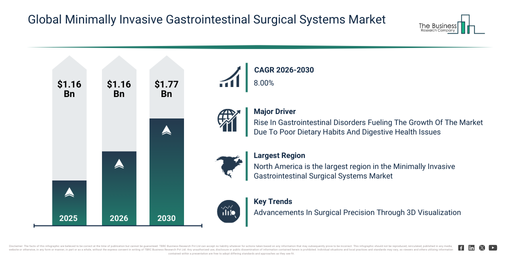
    The market for minimally invasive gastrointestinal surgical systems has grown steadily, with its value rising from $7.22 billion in 2025 to an anticipated $7.81 billion in 2026, representing a compound annual growth rate (CAGR) of 8.2%. This historical growth was primarily influenced by the continued use of conventional open surgeries, limited access to robotic surgical technologies, rising rates of gastrointestinal conditions, improvements in laparoscopic instruments, and widespread adoption of standard endoscopic techniques. Looking ahead, the market is expected to reach $10.61 billion by 2030, growing at a CAGR of 8.0%. Future expansion is anticipated due to breakthroughs in robotic-assisted and augmented reality-guided surgical technologies, increased hospital investments in minimally invasive surgery infrastructure, enhanced surgeon training programs, rising cases of gastrointestinal diseases, and the integration of artificial intelligence to improve surgical precision and planning. Key trends projected for this period include greater adoption of minimally invasive gastrointestinal surgeries, use of advanced imaging and visualization tools, preference for single-incision and natural orifice surgeries, wider deployment of robotic-assisted laparoscopic procedures, and a stronger emphasis on patient safety and recovery.

    Download A Free Sample Report For Comprehensive Market Insights:

    https://www.thebusinessresearchcompany.com/sample.aspx?id=27347&type=smp

    Rising Prevalence of Gastrointestinal Disorders Fueling Market Demand

    An important factor driving the minimally invasive gastrointestinal surgical systems market is the growing incidence of gastrointestinal disorders. These conditions affect the digestive tract—including the stomach, intestines, and related organs—and cause symptoms such as abdominal pain, bloating, diarrhea, and constipation. The increase in gastrointestinal ailments is largely linked to unhealthy eating patterns, particularly high consumption of processed foods and low dietary fiber, which negatively impact digestive health over time. Minimally invasive surgical systems facilitate treatment by enabling precise and efficient interventions that minimize complications and shorten patient recovery times. For example, data from June 2025 published by the UK Health Security Agency reveals that gastrointestinal infections in England rose by 27%, climbing from 96.1 cases per 100,000 people in 2022 to 122.0 in 2024. This upward trend in gastrointestinal diseases directly supports the growth of related surgical systems.

    Technological Advancements Boosting Market Expansion

    The ongoing development and adoption of innovative technologies are propelling the minimally invasive gastrointestinal surgical systems market forward. Enhanced robotic platforms and augmented reality-guided surgeries offer improved precision, visualization, and surgical outcomes. Hospitals and healthcare providers are investing more in these cutting-edge technologies, which also support surgeon education and training in advanced procedures. These factors are expected to significantly influence market growth throughout the forecast period.

    Access The Complete Minimally Invasive Gastrointestinal Surgical Systems Market Report:

    https://www.thebusinessresearchcompany.com/report/minimally-invasive-gastrointestinal-surgical-systems-global-market-report

    Segmentation Overview of the Minimally Invasive Gastrointestinal Surgical Systems Market

    This market is segmented by product type, technology, surgery, application, and end user. Key product categories include endoscopic equipment, laparoscopic instruments, robotic surgical systems, access devices, and visualization systems. The technology segment features traditional laparoscopy, robotic-assisted laparoscopy, single-incision surgery, natural orifice transluminal endoscopic surgery (NOTES), and augmented reality-guided surgery. Surgical procedures covered include adrenalectomy, appendectomy, bariatric surgery, cholecystectomy, colon and rectal surgery, foregut surgery, hernia repair, and other related surgeries. The market also accounts for different applications such as diagnostic, therapeutic, preventive, reconstructive, and palliative uses. End users comprise hospitals, ambulatory surgical centers (ASCs), clinics, research and academic institutions, and healthcare compliance organizations. Subcategories further detail specific instruments like flexible and rigid endoscopes, trocars, multi-port and single-port robotic systems, speculums, and camera systems, among others.

    Innovation Trends Shaping the Future of the Market

    Leading companies in this sector are focusing on innovations that enhance surgical precision and visualization. For instance, integration of an open console with 3D display technology is gaining traction as it offers surgeons a more interactive and detailed visual interface during operations. Notably, in May 2025, Medtronic Plc introduced the Hugo robotic-assisted surgery system in Korea. This system features a modular design and an open console with a 33-inch 3D display, catering to a variety of surgical specialties including urology, gynecology, and general surgery. The launch not only improves surgical accuracy and team communication but also establishes Seoul National University Hospital as a hub for robotic surgery research, education, and clinical practice in Korea.

    Key Players Driving the Minimally Invasive Gastrointestinal Surgical Systems Market

    The competitive landscape includes several major companies such as Johnson & Johnson, Fujifilm Holdings Corporation, Boston Scientific Corporation, Intuitive Surgical Inc., HOYA Corporation, Karl Storz SE & Co. KG, Cook Medical LLC, CONMED Corporation, Applied Medical Resources Corporation, Pentax Medical Corp., Ambu A/S, Richard Wolf GmbH, B. Braun Melsungen AG, W. L. Gore & Associates Inc., Medtronic plc, Olympus Corporation, CMR Surgical, Asensus Surgical, Endo Tools Therapeutics, GI View, Medrobotics, Endotics, EndoQuest Robotics, and Aurora Medical Technologies. These organizations are actively engaged in product development, technological innovation, and strategic partnerships to maintain market leadership.

    Geographic Distribution and Regional Market Outlook

    In terms of regional markets, North America led the minimally invasive gastrointestinal surgical systems sector in 2025. Meanwhile, Asia-Pacific is projected to be the fastest-growing region during the forecast period, driven by increasing healthcare investments, rising disease prevalence, and growing adoption of advanced surgical technologies. The market report covers key regions including Asia-Pacific, South East Asia, Western Europe, Eastern Europe, North America, South America, the Middle East, and Africa, providing a comprehensive view of global market dynamics and opportunities.

    Get in touch with us:

    The Business Research Company: https://www.thebusinessresearchcompany.com/

    Americas: +1 310-496-7795

    Asia: +44 7882 955267 & +91 8897263534

    Europe: +44 7882 955267

    Email us at: marketing@tbrc.info

    Follow us on:

    LinkedIn: https://in.linkedin.com/company/the-business-research-company

    YouTube: https://www.youtube.com/channel/UC24_fI0rV8cR5DxlCpgmyFQ

    Global Market Model: https://www.thebusinessresearchcompany.com/global-market-model
  • Medical Connectors Market Forecast Reveals Where Future Industry Value Will Be Created

    Medical Connectors Market Forecast Reveals Where Future Industry Value Will Be Created

    Enhanced with market attractiveness analysis, total addressable market evaluation, company benchmarking matrices, interactive Excel dashboards, expanded supply chain intelligence, emerging startup coverage, and detailed product insights, The Business Research Company’s 2026 market reports deliver more actionable and strategically valuable research.

    The medical connectors market has been experiencing significant growth in recent years, driven by technological advancements and increasing healthcare demands. As medical procedures become more sophisticated and patient care standards rise, the need for reliable and innovative connector solutions is expanding rapidly. This overview explores the current market size, key growth drivers, major players, and emerging trends shaping this vital sector.

    Medical Connectors Market Size and Expected Growth Trajectory

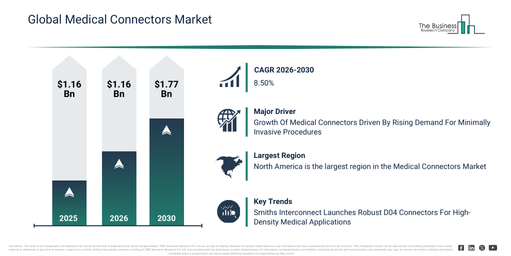
    The market for medical connectors has seen robust expansion, with its value projected to increase from $2.79 billion in 2025 to $3.04 billion in 2026, marking a compound annual growth rate (CAGR) of 8.9%. Historically, this growth was supported by the use of conventional plastic and metal connectors, limited device integration in hospitals, and steady demand in patient monitoring, electrosurgery, and endoscopy applications alongside diagnostic imaging connectivity. Looking ahead, the market is set to reach $4.22 billion by 2030, growing at a CAGR of 8.5%. This anticipated rise is fueled by innovations such as hybrid and push-pull connectors, expanding hospital-grade and LED-lighted cords, better integration with dental and respiratory devices, the growth of ambulatory surgical centers, and a focus on miniaturized, high-frequency RF connectivity. Additional trends include increased adoption of disposable and sterilizable connectors, demand for high-speed embedded connectors, hybrid circular and receptacle systems, and the use of illuminated and magnetic medical connectors as well as customizable surgical cables with strain relief.

    Download A Free Sample Report For Comprehensive Market Insights:

    https://www.thebusinessresearchcompany.com/sample.aspx?id=19569&type=smp

    Key Drivers Behind the Surge in Medical Connectors Demand

    A significant factor propelling the medical connectors market is the growing popularity of minimally invasive procedures. These techniques involve small incisions or non-invasive methods that reduce tissue damage, accelerate recovery, and minimize pain compared to traditional surgeries. The rise in such procedures stems from technological advancements, patient preference for quicker recovery, and the increasing incidence of chronic diseases that benefit from less invasive interventions. Medical connectors play a crucial role in these procedures by ensuring secure and reliable connections between complex device components, such as endoscopes, laparoscopes, and robotic surgical systems.

    Growing Patient Demand for Less Invasive Treatments

    Statistics from the American Society of Plastic Surgeons highlight this trend, showing cosmetic minimally invasive procedures rising from 23.7 million in 2022 to 25.4 million in 2023. This surge reflects an overall shift toward treatments that prioritize patient comfort and efficiency, which in turn is driving the need for advanced medical connectors compatible with these technologies.

    Access The Complete Medical Connectors Market Report:

    https://www.thebusinessresearchcompany.com/report/medical-connectors-global-market-report

    Product and Application Segmentation in the Medical Connectors Market

    This market is divided into several key segments based on product type, material, application, and end-user. Product categories include flat silicone surgical cables, embedded electronic connectors, radio-frequency connectors, disposable plastic connectors, hybrid circular connectors and receptacle systems, power cords with retention systems, lighted hospital-grade cords, magnetic medical connectors, and push-pull connectors. Materials used primarily consist of plastic and metal. Applications cover patient monitoring, electrosurgery, endoscopy, diagnostic imaging, respiratory and dental devices, among others. End-users span hospitals and clinics, diagnostic labs and imaging centers, ambulatory surgical centers, and additional medical facilities. Each product category also has further subsegments, such as customizable flat silicone cables, high-speed and miniature embedded connectors, various types of RF connectors, single-use and sterilizable plastic connectors, multi-pin hybrid circular connectors, hospital-grade power cords with locking features, LED-lighted cords, magnetic charging and data connectors, and specialized push-pull connectors for medical devices.

    Innovations and Competitive Dynamics in the Medical Connectors Industry

    Leading companies are heavily investing in innovative solutions to improve the performance and reliability of medical connectors. A notable focus is on high-density connectors that manage numerous electrical connections within compact spaces, meeting stringent medical standards for durability and sterilization. For example, in April 2024, Smiths Interconnect Inc., a US-based connectivity provider, introduced their D04 connectors designed for high-density applications without compromising durability. These connectors feature an advanced contact design that ensures excellent electrical reliability and signal integrity, which is critical for precise medical device functionality.

    Key Players Driving the Medical Connectors Market Forward

    Several major corporations dominate this market, including Kyocera AVX, TE Connectivity Ltd., Amphenol Corporation, Rosenberger Hochfrequenztechnik GmbH & Co. KG, Molex LLC, Interplex, Smiths Group plc, B. Braun SE, ITT Interconnect Solutions, Nordson Corporation, Stäubli International AG, Samtec Inc., Mouser Electronics Inc., Winchester Interconnect, Lemo S.A., Axon’ Cable, Souriau Sunbank Connection Technologies, Nicomatic, KEL Corporation, Omnetics Connector Corporation, Positronic Industries Inc., Fischer Connectors SA, PalPilot International Corp., and ODU GmbH & Co. KG, along with Qosina Corporation.

    Regional Outlook and Growth Opportunities for Medical Connectors

    In 2025, North America held the largest medical connectors market share, reflecting its advanced healthcare infrastructure and technology adoption. However, the Asia-Pacific region is expected to be the fastest-growing market in the coming years, driven by expanding healthcare facilities, rising medical device usage, and increased investment in healthcare infrastructure. Other regions covered in the market report include South East Asia, Western Europe, Eastern Europe, South America, the Middle East, and Africa, providing a comprehensive global perspective on opportunities and challenges.

    Get in touch with us:

    The Business Research Company: https://www.thebusinessresearchcompany.com/

    Americas: +1 310-496-7795

    Asia: +44 7882 955267 & +91 8897263534

    Europe: +44 7882 955267

    Email us at: marketing@tbrc.info

    Follow us on:

    LinkedIn: https://in.linkedin.com/company/the-business-research-company

    YouTube: https://www.youtube.com/channel/UC24_fI0rV8cR5DxlCpgmyFQ

    Global Market Model: https://www.thebusinessresearchcompany.com/global-market-model
  • Minimally Invasive And Non Invasive Product And Service Market Trends And Growth Drivers Point To Strong Future Potential

    Minimally Invasive And Non Invasive Product And Service Market Trends And Growth Drivers Point To Strong Future Potential

    Through market attractiveness analysis, total addressable market evaluation, company benchmarking matrices, interactive Excel dashboards, expanded supply chain intelligence, emerging startup coverage, and detailed product insights, The Business Research Company’s 2026 market reports provide more actionable and strategically valuable research.

    The minimally invasive and non-invasive product and service market is experiencing significant growth, driven by advancements in medical technology and increasing patient preference for less invasive treatment options. This sector is evolving rapidly, with expanding applications and a focus on improving patient outcomes while reducing recovery times. Let’s explore the market’s size, key growth factors, segment details, major industry players, and regional perspectives to understand its future trajectory.

    Market Size and Growth Outlook for the Minimally Invasive and Non-Invasive Product and Service Market

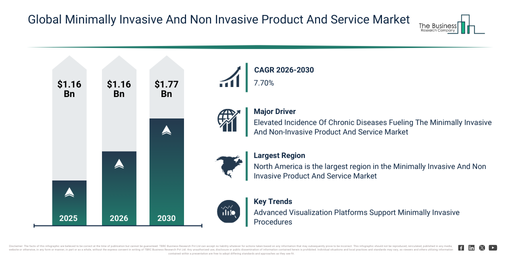
    The market for minimally invasive and non-invasive products and services has shown strong expansion in recent years. It is projected to grow from $148.77 billion in 2025 to $160.81 billion in 2026, representing a compound annual growth rate (CAGR) of 8.1%. This past growth is primarily due to an increasing preference for minimally invasive procedures, improved surgical success rates with fewer complications, the expansion of hospital surgical infrastructure, better availability of advanced imaging technologies, and wider acceptance of non-invasive treatment options.

    Looking ahead, the market is expected to continue its robust growth, reaching $216.48 billion by 2030 at a CAGR of 7.7%. Factors contributing to this growth include rising demand for outpatient and day-care surgeries, greater adoption of robotic surgical platforms, broader use of precision medicine, focus on cost-effective surgical solutions, and the integration of advanced imaging into surgical workflows. Emerging trends during this period include the growing use of image-guided surgical systems, expansion of robotic-assisted minimally invasive procedures, increased application of non-invasive diagnostic tools, development of precision-control surgical instruments, and an enhanced emphasis on patient safety and quicker recovery times.

    Download A Free Sample Report For Comprehensive Market Insights:

    https://www.thebusinessresearchcompany.com/sample.aspx?id=9313&type=smp

    Key Factors Propelling Growth in the Minimally Invasive and Non-Invasive Product and Service Market

    One of the primary drivers fueling this market is the rising prevalence of chronic diseases worldwide. Chronic conditions, defined as long-lasting illnesses typically persisting for three months or more, create a growing demand for treatments that minimize pain and recovery time while allowing patients to maintain daily activities. Minimally invasive and non-invasive procedures offer effective management of these illnesses with fewer disruptions.

    For example, in June 2024, the UK’s National Health Service reported that 3,615,330 people registered with general practitioners were diagnosed with non-diabetic hyperglycemia or pre-diabetes in 2023. This figure represents an 18% increase from 3,065,825 cases in 2022, highlighting the rising burden of chronic disease and reinforcing the market’s potential for expansion.

    Market Segmentation: Growth Opportunities Within the Minimally Invasive and Non-Invasive Product and Service Market

    This market is segmented across several dimensions to capture the full spectrum of products and procedures:

    1) Procedure Type: Minimally Invasive Procedures and Non-Invasive Procedures

    2) Product and Service Category: Diagnostic and Imaging Devices, Monitoring and Assessment Devices, Therapeutic and Treatment Devices, Robotic and Computer-Assisted Systems, and Procedure-Supporting Services

    3) Technology Type: Imaging-Based Technologies, Energy-Based Technologies, Catheter-Free and Incision-Free Technologies, Robotic and Navigation-Assisted Technologies, and Sensor-Based and Digital Health Technologies

    4) Application Area: Cardiovascular Care, Neurology and Brain Health, Gastrointestinal Care, Orthopedic and Musculoskeletal Care, Aesthetic and Cosmetic Care, and Dental and Oral Care

    5) Care Setting: Hospitals, Ambulatory and Outpatient Care Centers, Specialty Clinics, Diagnostic and Imaging Centers, and Home-Based and Remote Care Settings

    Further subcategories include types of minimally invasive procedures such as laparoscopic, endoscopic, catheter-based, robotic-assisted, and image-guided techniques. Non-invasive procedures cover imaging-based diagnostics, energy-based therapies, non-contact monitoring, external device therapies, and digital sensor diagnostics.

    Access The Complete Minimally Invasive And Non Invasive Product And Service Market Report:

    https://www.thebusinessresearchcompany.com/report/minimally-invasive-and-non-invasive-product-and-service-global-market-report

    Emerging Industry Trends Boosting Revenue Growth in the Minimally Invasive and Non-Invasive Market

    Leading players in this market are investing heavily in cutting-edge visualization platforms that combine multiple imaging methods to improve diagnostic accuracy and procedural efficiency. These advanced systems enable clinicians to switch effortlessly between imaging modes and gain detailed insights into surgical fields, enhancing tissue visualization, real-time evaluation, and decision-making.

    For instance, in September 2025, Japan-based medical technology company Olympus introduced the VISERA S OTV-S500 imaging platform. This sophisticated system supports ENT and urology surgeries by integrating white-light imaging, Narrow Band Imaging (NBI), and stroboscopy into one unified interface. It offers high-definition image capture, modality switching for minimally invasive assessments, and better visualization for early disease detection, significantly improving procedural performance, diagnostic confidence, and documentation.

    Key Players and Competitive Landscape in the Minimally Invasive and Non-Invasive Product and Service Market

    The market is shaped by several prominent companies including Medtronic Plc, Olympus Corporation, Smith & Nephew Plc, Stryker Corporation, Teleflex Incorporated, Boston Scientific Corporation, CONMED Corporation, Intuitive Surgical Inc., Fujifilm Holdings Corporation, Zimmer Biomet Holdings Inc., B. Braun Holding GmbH & Co. KG, HOYA Corporation, GE Healthcare, Siemens Healthineers, Koninklijke Philips N.V., Integra LifeSciences Corporation, NuVasive Inc., Surgical Innovations Group Plc, Clarus Medical LLC, Alphatec Holdings Inc., CooperSurgical Inc., Abbott Laboratories, Terumo Medical Corporation, Johnson & Johnson Inc., and AtriCure Inc. These companies are actively advancing their product lines and technologies to maintain leadership in this rapidly evolving market.

    Regional Market Size Leadership and Growth Forecasts for Minimally Invasive and Non-Invasive Products and Services

    In 2025, North America held the largest share of the minimally invasive and non-invasive product and service market. The report also includes comprehensive insights into other regions such as Asia-Pacific, South East Asia, Western Europe, Eastern Europe, South America, the Middle East, and Africa, highlighting varying growth rates and opportunities across these markets.

    Get in touch with us:

    The Business Research Company: https://www.thebusinessresearchcompany.com/

    Americas: +1 310-496-7795

    Asia: +44 7882 955267 & +91 8897263534

    Europe: +44 7882 955267

    Email us at: marketing@tbrc.info

    Follow us on:

    LinkedIn: https://in.linkedin.com/company/the-business-research-company

    YouTube: https://www.youtube.com/channel/UC24_fI0rV8cR5DxlCpgmyFQ

    Global Market Model: https://www.thebusinessresearchcompany.com/global-market-model
  • Medical Composites Market Growth Through 2030 Creates New Strategic Opportunities

    Medical Composites Market Growth Through 2030 Creates New Strategic Opportunities

    Through market attractiveness analysis, total addressable market evaluation, company benchmarking matrices, interactive Excel dashboards, expanded supply chain intelligence, emerging startup coverage, and detailed product insights, The Business Research Company’s 2026 market reports provide more actionable and strategically valuable research.

    The medical composites industry is witnessing significant growth, driven by innovations and expanding applications in healthcare. As these advanced materials become increasingly integral to medical devices and procedures, the market is poised for substantial progress in the coming years. Let’s explore the current market size, growth factors, key players, and emerging trends shaping this field.

    Medical Composites Market Size and Growth Outlook

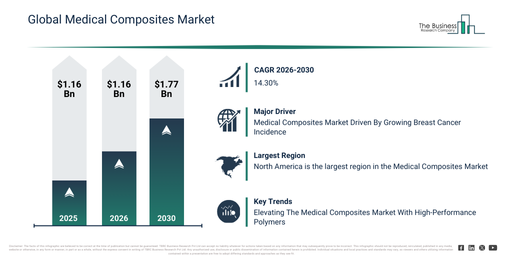
    The medical composites market has experienced rapid expansion in recent years. It is projected to increase from $1.6 billion in 2025 to $1.84 billion in 2026, registering a compound annual growth rate (CAGR) of 14.5%. This past growth has been fueled by the rising use of composites in medical devices, a surge in orthopedic and dental procedures, advancements in material science, growing adoption of minimally invasive surgical tools, and wider availability of composite processing technologies.

    Download A Free Sample Report For Comprehensive Market Insights:

    https://www.thebusinessresearchcompany.com/sample.aspx?id=7489&type=smp

    Looking ahead, the market is expected to continue its strong upward trajectory, reaching $3.13 billion by 2030 with a CAGR of 14.3%. This future growth will be propelled by the rising demand for next-generation implant materials, increased investments in biomedical engineering, expansion of personalized medical devices, a stronger focus on sustainable and recyclable composites, and broader applications in advanced diagnostics. Key trends forecasted to drive the market include the use of advanced composite materials in implants, growing preference for lightweight surgical instruments, higher demand for biocompatible high-strength materials, and enhanced attention to durability and performance in composite applications.

    Drivers Encouraging Expansion in the Medical Composites Market

    One of the major factors accelerating the medical composites market is the growing incidence of breast cancer worldwide. Breast cancer, a malignant tumor affecting breast tissue, requires innovative treatment devices that improve patient comfort and effectiveness. Medical composites serve as essential materials in the production of lightweight, customized radiation therapy devices and implants that enhance treatment outcomes.

    Access The Complete Medical Composites Market Report:

    https://www.thebusinessresearchcompany.com/report/medical-composites-global-market-report

    To illustrate, the Centers for Disease Control and Prevention reported in July 2023 that annually in the United States, approximately 240,000 women and 2,100 men are diagnosed with breast cancer, while about 42,000 women and 500 men succumb to the disease. This rising patient population directly contributes to increased demand for medical composites used in breast cancer care, thus fueling market growth.

    Medical Composites Market Segmentation by Product and Application

    The report divides the medical composites market into several key segments:

    1) Fiber Type: Carbon Fiber, Ceramic Fiber, and Other Fiber Types

    2) Process: Wet Lamination, Prepreg, and Other Processes

    3) Application: Diagnostic Imaging, Composite Body Implants, Surgical Instruments, Dental, and Other Applications

    Additional subcategories include:

    – Carbon Fiber Types: Continuous Carbon Fiber, Short Carbon Fiber, Carbon Fiber Reinforced Polymers (CFRP)

    – Ceramic Fiber Types: Alumina Fiber, Zirconia Fiber

    – Other Fiber Types: Glass Fiber, Aramid Fiber

    How Trends Are Shaping Long-Term Demand in Medical Composites

    Leading companies in the medical composites field are focusing on introducing high-performance polymers to strengthen their market positions. One notable example is Magnolia Trinity PEEK, a medical-grade PEEK composite made up of three clinically validated biomaterials that enhance the performance characteristics needed in medical devices.

    For instance, in October 2023, Superior Polymers, a US polymer manufacturer, launched Magnolia Trinity PEEK, designed specifically for implantable devices that contact bodily fluids or tissues for over 24 hours. This composite combines carbon fiber, hydroxyapatite, and PEEK, offering superior strength, stiffness, and durability, making it a preferred choice for medical device manufacturers.

    Competitive Landscape and Key Players in the Medical Composites Market

    The medical composites market features a number of prominent companies, including 3M Company, Toray Industries Inc, SGL Carbon SE, CeramTec GmbH, Composiflex Inc, Dentsply Sirona Inc, Mitsubishi Chemical Holdings Corporation, Avient Corporation, Zeus Industrial Products Inc, Kulzer GmbH, Den Mat Holdings LLC, Ivoclar Vivadent Inc, Tokuyama Dental Corporation Inc, Teijin Limited, Koninklijke DSM N V, Fillauer LLC, Getinge Group, Hill Rom Holdings Inc, icotec AG, Nippon Sheet Glass Co Ltd, Ossur, Ottobock SE & Co KG, Owens Corning, Shofu Inc, and Stryker Corporation. These players are actively involved in innovation, product development, and strategic partnerships to capture greater market share.

    Regional Market Leadership and Share

    In 2025, North America held the largest share of the medical composites market. The report also examines the market across other major regions including Asia-Pacific, South East Asia, Western Europe, Eastern Europe, South America, the Middle East, and Africa, providing a well-rounded view of global market dynamics.

    Get in touch with us:

    The Business Research Company: https://www.thebusinessresearchcompany.com/

    Americas: +1 310-496-7795

    Asia: +44 7882 955267 & +91 8897263534

    Europe: +44 7882 955267

    Email us at: marketing@tbrc.info

    Follow us on:

    LinkedIn: https://in.linkedin.com/company/the-business-research-company

    YouTube: https://www.youtube.com/channel/UC24_fI0rV8cR5DxlCpgmyFQ

    Global Market Model: https://www.thebusinessresearchcompany.com/global-market-model
  • Medical Coding Market Size Projected To Increase From $20.8 Billion To $30.43 Billion During The Forecast Period

    Medical Coding Market Size Projected To Increase From $20.8 Billion To $30.43 Billion During The Forecast Period

    Delivering more actionable and strategically valuable research, The Business Research Company’s 2026 market reports feature market attractiveness analysis, total addressable market evaluation, company benchmarking matrices, interactive Excel dashboards, expanded supply chain intelligence, emerging startup coverage, and detailed product insights.

    The medical coding industry has experienced rapid expansion recently, driven by the increasing complexity of healthcare documentation and billing processes. As healthcare systems evolve, the demand for efficient, accurate coding solutions continues to rise, setting the stage for substantial market growth. Let’s explore the current market size, key growth drivers, major players, and emerging trends shaping the future of medical coding.

    Medical Coding Market Size and Projected Growth from 2025 to 2030

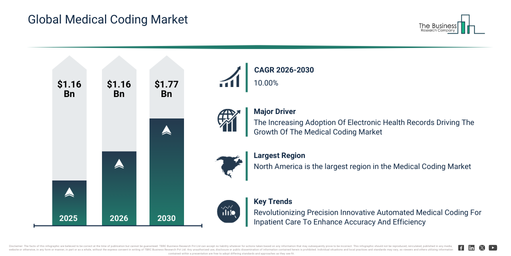
    The medical coding market is on a noteworthy upward trajectory. It is projected to increase from $18.88 billion in 2025 to $20.8 billion in 2026, achieving a compound annual growth rate (CAGR) of 10.1%. This historical growth has been fueled by factors such as escalating volumes of healthcare documentation, the spread of insurance reimbursement models, more complex medical billing standards, widespread use of electronic health records (EHRs), and the need for standardized clinical data. Looking ahead, the market is expected to reach $30.44 billion by 2030, with a steady CAGR of 10.0%. This forecasted growth stems from the rising incorporation of artificial intelligence (AI) and natural language processing, increased demand for value-based care metrics, expansion of telehealth services, a stronger focus on optimizing revenue cycles, and intensified regulatory pressure on coding accuracy.

    Download A Free Sample Report For Comprehensive Market Insights:

    https://www.thebusinessresearchcompany.com/sample.aspx?id=6070&type=smp

    Electronic Health Records as a Primary Growth Driver in the Medical Coding Market

    One of the main factors propelling the medical coding market is the growing adoption of electronic health records. These digital platforms store and manage patient medical histories electronically, allowing healthcare providers quick and secure access to comprehensive health information. Government incentives and healthcare digitization initiatives are encouraging more facilities to transition from paper-based records to these advanced digital systems, improving data accessibility and care coordination. This shift directly benefits medical coding by enabling automated extraction and classification of codes from clinical documentation, streamlining billing processes and minimizing manual errors. For example, in December 2024, the Centers for Disease Control and Prevention (CDC) reported that 88.2% of office-based physicians used electronic health records, with 77.8% adopting certified EHR systems, highlighting the widespread implementation of these technologies.

    Additional Factors Boosting Medical Coding Market Expansion

    Beyond electronic health records, other elements are contributing to the market’s robust growth. Increasing complexity in medical billing requirements necessitates more precise coding services. Additionally, growing regulatory scrutiny emphasizes the importance of accurate coding to avoid compliance issues. The rise of telehealth services also requires adaptable coding solutions, while healthcare providers seek better revenue cycle management to maximize reimbursements. Together, these factors create a strong foundation for ongoing expansion in medical coding.

    Access The Complete Medical Coding Market Report:

    https://www.thebusinessresearchcompany.com/report/medical-coding-global-market-report

    Breakdown of Medical Coding Market Segments and Revenue Sources

    This market is segmented across several key dimensions:

    1) By Component: In-house services and Outsourced solutions

    2) By Classification System: International Classification of Diseases (ICDs), Healthcare Common Procedure Coding System (HCPCS), and Current Procedural Terminology (CPT)

    3) By End User: Diagnostic Centers, Hospitals, and Care Providers

    Further detail includes subcategories such as internal coding staff and in-house software under in-house components, while outsourced services include third-party coding services, remote coding solutions, and hybrid outsourcing models.

    Innovative Trends Shaping the Future of Medical Coding

    Companies within the medical coding market are increasingly focusing on automation and advanced technologies to enhance efficiency and accuracy. One key development is the automation of inpatient care coding, which involves using AI and machine learning to analyze clinical data and extract important information from patient records. For instance, in November 2023, Nym Health, a US-based leader in autonomous medical coding, introduced professional (Profee) coding services tailored for skilled care facilities, observation units, and inpatient stays. Given the high volume of inpatient interactions requiring precise coding and the limited availability of coders, Nym’s offering addresses a critical need by covering diagnostic coding, evaluation and management (E/M) coding, bedside operations coding, modifiers, and provider attribution.

    Top Medical Coding Market Players Influencing Industry Progress

    The competitive landscape of medical coding includes prominent companies such as 3M Company, Advanced Medical Coding Services, AthenaHealth, AAPC (American Association of Professional Coders), Codemasters Inc., EqualizeRCM Services, Alpha Coding Experts LLC, Accurate Medical Coding LLC, American Medical Billing & Coding Services, Apex Medical Billing & Coding, Associated Medical Billing & Coding, Beacon Healthcare Coding, Billing Advantage LLC, Blue Star Medical Billing & Coding, Brite Medical Coding, Care Medical Coding, Central Billing Services LLC, Certified Medical Billing Specialists, Code 1 LLC, Coding Masters, Complete Medical Coding Solutions, Cypress Medical Coding, Data Plus Services, Dedicated Medical Billing & Coding, Empower Medical Billing & Coding Services, Expert Medical Coding, First Class Medical Billing & Coding, Global Medical Billing & Coding, and Greenlight Medical Billing & Coding.

    Geographic Market Insights with Focus on North America and Asia-Pacific

    In 2025, North America led the medical coding market in terms of size. However, the Asia-Pacific region is anticipated to experience the fastest growth throughout the forecast period. The comprehensive market analysis includes regions such as Asia-Pacific, South East Asia, Western Europe, Eastern Europe, North America, South America, the Middle East, and Africa, providing a global perspective on market trends and opportunities.

    Get in touch with us:

    The Business Research Company: https://www.thebusinessresearchcompany.com/

    Americas: +1 310-496-7795

    Asia: +44 7882 955267 & +91 8897263534

    Europe: +44 7882 955267

    Email us at: marketing@tbrc.info

    Follow us on:

    LinkedIn: https://in.linkedin.com/company/the-business-research-company

    YouTube: https://www.youtube.com/channel/UC24_fI0rV8cR5DxlCpgmyFQ

    Global Market Model: https://www.thebusinessresearchcompany.com/global-market-model
  • Minimal Invasive Surgery Devices Market Expansion Is Reshaping Competitive Dynamics Across The Industry

    Minimal Invasive Surgery Devices Market Expansion Is Reshaping Competitive Dynamics Across The Industry

    Delivering more actionable and strategically valuable research, The Business Research Company’s 2026 market reports feature market attractiveness analysis, total addressable market evaluation, company benchmarking matrices, interactive Excel dashboards, expanded supply chain intelligence, emerging startup coverage, and detailed product insights.

    The minimally invasive surgery devices market is gradually evolving, driven by advancements in medical technology and changing healthcare needs. This sector plays a crucial role in improving surgical outcomes and patient recovery times, making it an essential part of modern healthcare. Let’s explore the current market scenario, growth drivers, key companies, trends, and regional insights shaping this market’s future.

    Minimal Invasive Surgery Devices Market Size and Expected Growth

    In recent years, the minimal invasive surgery devices market has seen modest growth. It is projected to increase slightly from $36.61 billion in 2025 to $36.66 billion in 2026, reflecting a very low CAGR of 0.1%. This steady expansion during the historical period is linked to rising surgical procedures, a higher prevalence of chronic illnesses, advancements in laparoscopic techniques, enhanced hospital infrastructure, and a surgeon preference for minimally invasive approaches.

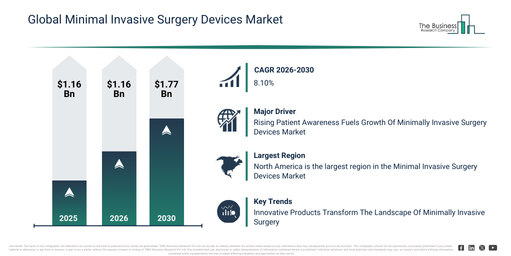
    Looking ahead, the market is expected to expand significantly, reaching $50.02 billion by 2030 with a CAGR of 8.1%. Factors driving this growth include the rise of ambulatory surgical centers, an aging population, demand for quicker recovery methods, improvements in surgical imaging, and increased healthcare spending. Key trends anticipated in the forecast period include the rise of robot-assisted surgeries, greater use of single-use surgical instruments, shorter hospital stays, the growth of outpatient and day-care surgeries, and innovations in visualization technology.

    Download A Free Sample Report For Comprehensive Market Insights:

    https://www.thebusinessresearchcompany.com/sample.aspx?id=2583&type=smp

    Increasing Patient Awareness Boosts Demand for Minimally Invasive Surgery Devices

    A growing number of patients are becoming aware of the benefits of minimally invasive surgeries, which require smaller incisions compared to traditional methods. These procedures result in less pain, reduced hospital stays, minimal scarring, lower risks of bleeding and infection, and decreased tissue damage. For example, in June 2024, the American Society of Plastic Surgeons (ASPS) reported that minimally invasive procedures rose by 7% in 2023, outpacing traditional surgeries by 2%. This rising patient preference is a major factor fueling demand for minimally invasive surgery devices.

    Chronic Disease Prevalence Supports Market Expansion for Minimal Invasive Surgery Devices

    The increasing incidence of chronic diseases is expected to be a vital driver for the minimally invasive surgery market in the coming years. Chronic conditions, which often last three months or more, can seriously affect quality of life and require effective treatment options. Factors like population aging, unhealthy lifestyles, and higher obesity rates contribute to this rise. Minimally invasive surgery offers safer, less painful treatment options that promote faster recovery and fewer complications. For instance, in February 2024, the World Health Organization projected that by 2050, over 35 million new cancer cases will occur globally, a 77% increase from 20 million cases estimated in 2022. Thus, the growing burden of chronic diseases is expected to drive demand in this market throughout the forecast period.

    Access The Complete Minimal Invasive Surgery Devices Market Report:

    https://www.thebusinessresearchcompany.com/report/minimal-invasive-surgery-devices-global-market-report

    Breaking Down the Minimal Invasive Surgery Devices Market Segments

    This market is categorized based on product type, application, and end users. The product types include handheld instruments, inflation devices, cutter instruments, guiding devices, electrosurgical devices, auxiliary devices, and monitoring and visualization equipment. Applications cover laparoscopy, cardiovascular procedures, cosmetic surgery, orthopedic surgery, obstetrics and gynecology, ophthalmology, neurosurgery, urology, and other medical fields. End users comprise hospitals, ambulatory surgical centers (ASCs), and research institutes.

    Further subsegments include handheld instruments such as scissors, forceps, and graspers; inflation devices like balloon inflation devices and CO2 insufflators; cutter instruments divided into mechanical and energy-based cutters; guiding devices including guidewires and sheaths; electrosurgical devices such as generators and pencils; auxiliary tools like suction and irrigation devices; and monitoring and visualization equipment encompassing cameras, monitors, and imaging systems.

    Innovative Trends Enhancing the Minimal Invasive Surgery Devices Market

    Leading companies in this space are focusing on cutting-edge product development to stay competitive. One notable innovation is the creation of microrobotic tools that function like a surgeon’s hand during operations. For example, in June 2023, researchers at the University of Toronto developed a miniature robotic hand for minimally invasive brain surgery, which is controlled by an electromagnetic system. This technology enables surgeons to reach difficult areas in the brain with minimal invasiveness, promising faster patient recovery and improved outcomes.

    Key Players Steering Growth in the Minimal Invasive Surgery Devices Market

    The minimal invasive surgery devices market is shaped by several prominent companies, including Abbott Laboratories, GE Healthcare, Medtronic plc, Siemens Healthineers, Smith & Nephew Plc., Stryker Corporation, Boston Scientific Corporation, Ethicon Inc., B. Braun Melsungen AG, Conmed Corporation, Microline Surgical Inc., Zimmer Biomet Holdings Inc., Aesculap Inc., Koninklijke Philips NV, Cardinal Health Inc., Danaher Corporation, KARL STORZ SE & Co. KG, Richard Wolf GmbH, Cook Medical, Intuitive Surgical Inc., Smiths Medical, Teleflex Incorporated, Terumo Corporation, Merit Medical Systems, AngioDynamics, MicroPort Scientific Corporation, and Lumenis.

    Regional Market Overview Highlighting North America’s Dominance

    In 2025, North America held the largest share in the minimally invasive surgery devices market, maintaining its position as a key geographic region for market activities. Western Europe ranked as the second-largest regional market. Other notable regions covered by the market analysis include Asia-Pacific, South East Asia, Eastern Europe, South America, the Middle East, and Africa. Each region presents unique opportunities and challenges that contribute to the global growth of this market.

    Get in touch with us:

    The Business Research Company: https://www.thebusinessresearchcompany.com/

    Americas: +1 310-496-7795

    Asia: +44 7882 955267 & +91 8897263534

    Europe: +44 7882 955267

    Email us at: marketing@tbrc.info

    Follow us on:

    LinkedIn: https://in.linkedin.com/company/the-business-research-company

    YouTube: https://www.youtube.com/channel/UC24_fI0rV8cR5DxlCpgmyFQ

    Global Market Model: https://www.thebusinessresearchcompany.com/global-market-model
  • Medical Centrifuge Market Growth Outlook Reveals A CAGR Of 7.6% And A Market Value Of $3.07 Billion By 2030

    Medical Centrifuge Market Growth Outlook Reveals A CAGR Of 7.6% And A Market Value Of $3.07 Billion By 2030

    Enhanced with market attractiveness analysis, total addressable market evaluation, company benchmarking matrices, interactive Excel dashboards, expanded supply chain intelligence, emerging startup coverage, and detailed product insights, The Business Research Company’s 2026 market reports deliver more actionable and strategically valuable research.

    The medical centrifuge market is witnessing notable growth, driven by advancements in diagnostic technologies and increasing healthcare demands worldwide. As the healthcare sector evolves, the role of centrifuges in laboratories and clinical settings becomes even more critical, supporting faster and more accurate sample processing. Let’s explore the current market status, growth factors, major players, and emerging trends shaping this industry.

    Medical Centrifuge Market Size and Forecasted Growth

    The medical centrifuge market has seen substantial expansion in recent years. It is projected to rise from $2.13 billion in 2025 to $2.29 billion in 2026, representing a compound annual growth rate (CAGR) of 7.8%. This upward trend during the historical period can be linked to the growth of diagnostic laboratory infrastructure, increased use of blood component separation techniques, higher volumes of clinical testing, expansion of research labs, and broader adoption of centrifugation in medical diagnostics.

    Download A Free Sample Report For Comprehensive Market Insights:

    https://www.thebusinessresearchcompany.com/sample.aspx?id=9388&type=smp

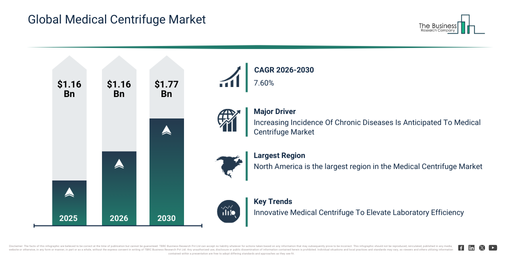
    Looking ahead, the market is expected to maintain strong momentum, reaching $3.08 billion by 2030 with a CAGR of 7.6%. Key factors fueling this growth include rising demand for point-of-care testing devices, increased investments in molecular diagnostics, expansion of decentralized lab facilities, greater emphasis on automation in sample handling, and the growing use of energy-efficient laboratory equipment. Important trends anticipated in the forecast period encompass the growing use of compact and portable centrifuges, heightened demand for high-speed separation technologies, broader incorporation of digital control interfaces, increased application of refrigerated centrifuges, and a stronger focus on improving laboratory workflows.

    Rising Chronic Diseases as a Growth Catalyst for Medical Centrifuges

    One of the major drivers behind the expanding medical centrifuge market is the rising prevalence of chronic diseases. Conditions such as cardiovascular disease, diabetes, cancer, and respiratory illnesses tend to be long-term and require ongoing management. The increasing incidence of these illnesses is largely due to unhealthy lifestyle choices, including sedentary habits and poor diets, which accelerate their development over time.

    Access The Complete Medical Centrifuge Market Report:

    https://www.thebusinessresearchcompany.com/report/medical-centrifuge-global-market-report

    This rise in chronic health issues is pushing healthcare providers and laboratories to adopt advanced sample processing and diagnostic technologies that enhance testing efficiency and support better clinical decision-making. For example, in April 2025, the US Centers for Disease Control and Prevention reported that approximately 76.4% of US adults—around 194 million people—were living with at least one chronic condition in 2023. The prevalence was 59.5% among young adults, 78.4% in midlife adults, and 93.0% among the elderly, highlighting the significant demand for medical centrifuges driven by these health trends.

    Medical Centrifuge Market Segmentation and Product Categories

    The market segments medical centrifuges based on type, capacity, and temperature features. By type, the categories include Bench-Top and Floor-Standing centrifuges. Capacity classifications consist of Microcentrifuge, Medium Capacity Centrifuge, and Large Capacity Centrifuge. Regarding temperature control, centrifuges are divided into Refrigerated and Non-refrigerated models.

    Further subcategories elaborate on the products: Bench-Top centrifuges include Fixed Angle and Swinging Bucket types, while Floor-Standing centrifuges are segmented into Low-Speed, High-Speed, and Ultra-High-Speed variations. This detailed breakdown helps cater to diverse laboratory requirements and application needs.

    Innovations and Trends Shaping the Medical Centrifuge Market

    Companies in the medical centrifuge industry are increasingly focusing on creating versatile and user-friendly products designed to improve laboratory efficiency and operational flexibility. One notable design advancement is the introduction of removable rotors, which allow for quick detachment from the main centrifuge unit. This feature simplifies cleaning, sterilization, and rotor interchangeability for different sample types and testing protocols.

    For example, in August 2023, Boekel Scientific, a US-based manufacturer known for high-quality laboratory instruments, launched a new centrifuge line comprising economy, general-purpose, STAT, and Blood Bank models. These centrifuges come in 6-place, 12-place, and 24-place capacities, all equipped with removable rotors. Additional features include LED light indicators and brushless motors, maintaining the brand’s reputation for durability and quality. Moreover, these devices are dual voltage and meet UL, CSA, and CE certifications, making them suitable for global use.

    Prominent Companies in the Medical Centrifuge Industry

    Key players dominating the medical centrifuge market include a wide range of established firms such as Scilogex LLC, Drucker Diagnostics Inc., Sartorius AG, Thermo Fisher Scientific Inc., Andreas Hettich GmbH & Co. KG, Eppendorf AG, HERMLE Labortechnik GmbH, KUBOTA Corporation, Sigma Laborzentrifugen GmbH, Hitachi Koki Co. Ltd., Labnet International Inc., MSE UK Ltd., REMI GROUP, Centurion Scientific Ltd., LaboGene ApS, MPW MED INSTRUMENTS, Unico Inc., ZIRBUS technology GmbH, NuWind, AccuBioTech Co. Ltd., Danaher Corporation, NuAire Inc., Separation Technology Inc., and Labocon. These companies contribute significantly to innovation, product development, and market expansion worldwide.

    Regional Insights into Medical Centrifuge Market Growth

    In 2025, North America held the largest share of the medical centrifuge market. However, the Asia-Pacific region is expected to experience the fastest growth during the forecast period. The comprehensive market analysis encompasses regions including Asia-Pacific, South East Asia, Western Europe, Eastern Europe, North America, South America, the Middle East, and Africa, providing a broad perspective on global market dynamics.

    Get in touch with us:

    The Business Research Company: https://www.thebusinessresearchcompany.com/

    Americas: +1 310-496-7795

    Asia: +44 7882 955267 & +91 8897263534

    Europe: +44 7882 955267

    Email us at: marketing@tbrc.info

    Follow us on:

    LinkedIn: https://in.linkedin.com/company/the-business-research-company

    YouTube: https://www.youtube.com/channel/UC24_fI0rV8cR5DxlCpgmyFQ

    Global Market Model: https://www.thebusinessresearchcompany.com/global-market-model
  • Microwave Ablation Devices Market Forecast Reveals Where Future Industry Value Will Be Created

    Microwave Ablation Devices Market Forecast Reveals Where Future Industry Value Will Be Created

    Enhanced with market attractiveness analysis, total addressable market evaluation, company benchmarking matrices, interactive Excel dashboards, expanded supply chain intelligence, emerging startup coverage, and detailed product insights, The Business Research Company’s 2026 market reports deliver more actionable and strategically valuable research.

    The market for microwave ablation devices is witnessing strong expansion, driven by technological advancements and growing demand for less invasive cancer treatments. This sector is evolving rapidly as healthcare providers seek more effective and efficient ways to manage tumors, particularly in challenging cancer types. Below is a detailed overview of the current market size, growth drivers, key segments, leading players, and regional dynamics shaping the microwave ablation devices industry.

    Microwave Ablation Devices Market Size Forecast and Growth Outlook

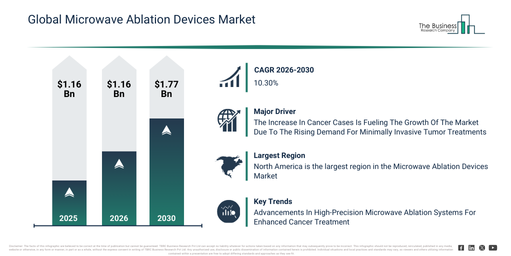
    The microwave ablation devices market has experienced significant growth in recent years and is projected to continue this trend. From a valuation of $0.47 billion in 2025, the market is expected to rise to $0.52 billion in 2026, showing a compound annual growth rate (CAGR) of 10.6%. Historically, this expansion has been fueled by the rising incidence of liver and lung cancers, increased use of radiofrequency ablation techniques, limited availability of advanced surgical options, improvements in medical imaging technology, and the growing hospital infrastructure in developed nations.

    Download A Free Sample Report For Comprehensive Market Insights:

    https://www.thebusinessresearchcompany.com/sample.aspx?id=25836&type=smp

    Looking ahead, the market is anticipated to reach $0.77 billion by 2030, maintaining a strong CAGR of 10.3%. Factors contributing to this projected growth include a greater preference for minimally invasive procedures, integration of artificial intelligence and enhanced imaging technologies, an aging population, healthcare facility expansion in emerging economies, and the need for faster patient recovery times with reduced hospital stays. Key trends expected to influence this market in the forecast period are wider adoption of minimally invasive treatments, optimization of thermal energy application, real-time imaging integration, increased outpatient procedures, and device miniaturization.

    Rising Cancer Prevalence as a Principal Driver for Market Growth

    One of the primary forces propelling the microwave ablation devices market is the increasing number of cancer cases worldwide. Cancer involves the uncontrolled growth of abnormal cells that can spread throughout the body. The rising prevalence is largely due to longer life expectancy, which raises the risk of age-related illnesses, including cancer. Microwave ablation devices target tumor cells by emitting electromagnetic waves that generate heat, effectively destroying cancerous tissue while sparing surrounding healthy areas. This minimally invasive method supports quicker patient recovery and fewer complications.

    Access The Complete Microwave Ablation Devices Market Report:

    https://www.thebusinessresearchcompany.com/report/microwave-ablation-devices-global-market-report

    To illustrate, in February 2024, the World Health Organization, a Switzerland-based intergovernmental organization, projected that by 2050, there will be over 35 million new cancer cases globally. This represents a 77% increase from the estimated 20 million cases reported in 2022. Such a sharp rise in cancer incidence is a key factor driving demand for microwave ablation technologies.

    Additional Market Drivers Encouraging Expansion

    Apart from cancer prevalence, the growing adoption of radiofrequency ablation techniques has supported the microwave ablation devices market’s growth. These procedures offer less invasive alternatives to traditional surgery and have gained popularity due to their reduced risks and shorter recovery periods. Furthermore, advancements in medical imaging have enhanced the accuracy and safety of ablation treatments, encouraging more healthcare providers to adopt these technologies.

    Another important driver is the development of hospital infrastructure, particularly in developed regions where investment in advanced treatment facilities is increasing. This expansion makes cutting-edge ablation devices more accessible to a broader patient base, further propelling market growth.

    Microwave Ablation Devices Market Segmentation Overview

    This market is segmented across several categories to better understand its diverse offerings and applications:

    1) By Product Type:

    – Microwave Ablation Generators

    – Microwave Ablation Applicators and Antennas

    – Integrated Microwave Ablation Systems

    2) By Technology:

    – Solid State Microwave Technology

    – Magnetron-Based Microwave Technology

    – Temperature-Controlled Microwave Ablation Technology

    3) By Frequency Range:

    – 915 Megahertz Microwave Systems

    – 2.45 Gigahertz Microwave Systems

    4) By Application:

    – Oncology

    – Hepatology

    – Pulmonology

    – Urology

    – Nephrology

    – Other Applications

    5) By End User:

    – Hospitals

    – Interventional Radiology Centers

    – Ambulatory Surgical Centers

    – Specialty Clinics

    Subsegment details include variations in generators such as single-channel, multi-channel, portable, cart-based, and high-power models. Applicators and antennas come in single-use, reusable, internally cooled, water cooled, and thin gauge percutaneous types. Integrated systems include image-guided platforms, standalone systems, and multi-modality ablation and navigation technologies.

    Competitive Landscape and Advancements in Microwave Ablation Devices

    Leading companies in the microwave ablation market are heavily investing in developing innovative products that have received regulatory approvals and improve treatment precision and patient outcomes. For example, a high-precision microwave ablation system delivers focused microwave energy to selectively destroy tumors with minimal impact on healthy tissue, enhancing safety and efficacy.

    A notable instance occurred in January 2024, when China-based Hygea Medical Technology Co. Ltd. received FDA clearance for its EXCEED microwave treatment system and EXACT series microwave ablation probes. This followed prior approval from China’s National Medical Products Administration (NMPA) and was achieved through an expedited review process. The FDA approval confirms the safety and effectiveness of Hygea’s devices for treating solid tumors in soft tissues, marking a significant milestone for its international growth, especially in the U.S. market. This system complements existing cancer therapies by offering a precise and minimally invasive thermal ablation option.

    Key Market Players and Their Strategic Positions

    Some of the major companies shaping the microwave ablation devices market include Medtronic plc, Johnson And Johnson Services Inc., Boston Scientific Corporation, AngioDynamics Inc., MicroPort Scientific Corporation, Olympus Corporation, HealthTronics Inc., NeuWave Medical Inc., Perseon Medical BV, Emprint Microwave Ablation System Division, Symple Surgical Inc., MedWaves Inc., TATO Medical Systems, Avecure BV, Surblatec SA, Miramar Labs Inc., Chongqing Haifu Medical Technology Co Ltd, Eco Microwave Inc., Shanghai AOHUA Photoelectric Endoscope Co Ltd, Nanjing Vishee Medical Technology Co Ltd, Hangzhou Wenda Medical Instruments Co Ltd, and Medsphere International.

    Regional Market Insights and Growth Patterns

    In 2025, North America held the largest share of the microwave ablation devices market. However, the Asia-Pacific region is forecasted to exhibit the fastest growth during the coming years. This report covers key geographic areas including Asia-Pacific, South East Asia, Western Europe, Eastern Europe, North America, South America, the Middle East, and Africa, providing a broad perspective on global demand trends.

    Get in touch with us:

    The Business Research Company: https://www.thebusinessresearchcompany.com/

    Americas: +1 310-496-7795

    Asia: +44 7882 955267 & +91 8897263534

    Europe: +44 7882 955267

    Email us at: marketing@tbrc.info

    Follow us on:

    LinkedIn: https://in.linkedin.com/company/the-business-research-company

    YouTube: https://www.youtube.com/channel/UC24_fI0rV8cR5DxlCpgmyFQ

    Global Market Model: https://www.thebusinessresearchcompany.com/global-market-model
  • Medical Carts Market Forecast Highlights Expansion From $3.47 Billion To $6.15 Billion Through 2030

    Medical Carts Market Forecast Highlights Expansion From $3.47 Billion To $6.15 Billion Through 2030

    Through market attractiveness analysis, total addressable market evaluation, company benchmarking matrices, interactive Excel dashboards, expanded supply chain intelligence, emerging startup coverage, and detailed product insights, The Business Research Company’s 2026 market reports provide more actionable and strategically valuable research.

    The medical carts market is experiencing rapid expansion, driven by evolving healthcare needs and technological advancements. As hospitals and clinics continue to modernize their infrastructure and workflows, demand for versatile and efficient medical carts is on the rise. This overview explores the current market size, growth drivers, key segments, strategic innovations, and regional trends shaping the medical carts industry.

    Medical Carts Market Size and Growth Trajectory Through 2030

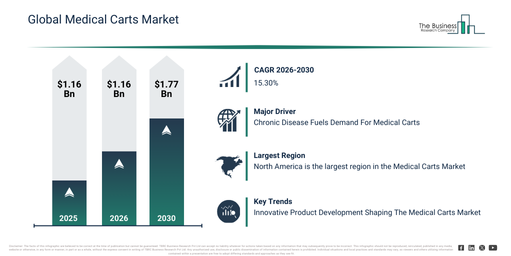
    The medical carts market has seen significant growth recently and is projected to continue this trend. The market size is expected to increase from $3.01 billion in 2025 to $3.48 billion in 2026, reflecting a strong compound annual growth rate (CAGR) of 15.6%. This historic growth is linked to the expansion of hospital infrastructure, a surge in the use of mobile medical equipment, rising demand for streamlined clinical workflows, growth in emergency care facilities, and the availability of standardized medical carts. Looking ahead, the market is anticipated to reach $6.15 billion by 2030, growing at a CAGR of 15.3%. Factors contributing to this future expansion include the rising adoption of digital hospitals, greater integration of IoT-enabled medical devices, the growth of telehealth services, increased focus on automating workflows, and a higher demand for customizable medical carts. Emerging trends to watch are the growing popularity of modular medical cart designs, smart and connected carts, lightweight and ergonomic structures, expanded use of telemedicine carts, and stronger emphasis on infection control features.

    Download A Free Sample Report For Comprehensive Market Insights:

    https://www.thebusinessresearchcompany.com/sample.aspx?id=7230&type=smp

    Increasing Chronic Disease Prevalence as a Market Catalyst

    One of the major forces driving growth in the medical carts market is the rising prevalence of chronic diseases worldwide. Chronic diseases, which last for a year or more and require ongoing medical care, limit daily activities and demand continuous management. Medical carts play a crucial role in chronic disease care by providing healthcare professionals with mobile access to essential medications, necessary equipment, and patient records, enabling timely and effective treatment while improving patient comfort and outcomes. For instance, a January 2023 report from the National Center for Biotechnology Information projects that by 2050, the population aged 50 and older living with at least one chronic illness will nearly double, increasing by 99.5% from 71.522 million in 2020 to 142.66 million. This dramatic rise underscores the expanding need for effective clinical tools such as medical carts.

    Medical Carts Market Breakdown by Type, Material, and End User

    The medical carts market is broadly segmented into categories based on type, material, and end user. By type, the market includes anesthesia carts, emergency carts, procedure carts, and others. Anesthesia carts are further divided into standard and mobile variants. Emergency carts encompass crash carts, trauma carts, and code blue carts. Procedure carts consist of surgical procedure carts, examination carts, and treatment carts, while the other types category includes medication carts, supply carts, and nursing carts. In terms of materials, medical carts are primarily made from metal or plastic. Regarding end users, the market serves hospitals, ambulatory surgical centers, clinics and physician practices, long-term care and nursing facilities, as well as other healthcare settings.

    Access The Complete Medical Carts Market Report:

    https://www.thebusinessresearchcompany.com/report/medical-carts-global-market-report

    Innovations and Technological Advances Steering Market Progress

    Innovation is a key driver in the medical carts industry, with leading companies developing advanced products to improve clinical workflows and ergonomics. One notable advancement is the introduction of powered carts with adjustable height settings, which help healthcare workers maintain better posture, reduce physical strain, and enhance efficiency during patient care. For example, in March 2024, US-based companies Ultralife Corporation and Karta collaborated to launch a medical cart and power solution designed to support laptops, all-in-one systems, and mini PCs used in medical environments. These carts feature adjustable height capabilities, smooth mobility through high-quality castors, and a variety of customizable accessories to fit diverse clinical needs.

    Top Players Defining the Competitive Medical Carts Market

    The medical carts market is shaped by several prominent manufacturers and suppliers. Key players include Harloff Manufacturing Co. Inc., Midmark Corporation, Capsa Healthcare LLC, ITD GmbH, Bergmann Group GmbH & Co. KG, InterMetro Industries Corporation Inc., Waterloo Healthcare Inc., Ergotron Inc., Jaco Inc., Enovate Medical LLC, TouchPoint Medical Inc., Lakeside Manufacturing Inc., Scott-Clark Medical Inc., Medstor Systems USA LLC, Hergo Ergonomic Support Systems Inc., Omnimed Inc., Pedigo Products Inc., Modern Medical Equipment Mfg. Ltd., Bailida Medical, MEDIROLL GmbH, Hammerlit GmbH, and Belintra NV. These companies are continuously innovating to capture market share and meet evolving healthcare requirements.

    Regional Market Leadership and Growth Outlook

    In 2025, North America held the largest share of the medical carts market, driven by advanced healthcare infrastructure and technology adoption. Meanwhile, the Asia-Pacific region is expected to register the fastest growth during the forecast period, fueled by increasing healthcare investments, expanding hospital networks, and growing telehealth adoption. The market report also covers other important regions including South East Asia, Western Europe, Eastern Europe, South America, the Middle East, and Africa, offering a global perspective on market dynamics.

    Get in touch with us:

    The Business Research Company: https://www.thebusinessresearchcompany.com/

    Americas: +1 310-496-7795

    Asia: +44 7882 955267 & +91 8897263534

    Europe: +44 7882 955267

    Email us at: marketing@tbrc.info

    Follow us on:

    LinkedIn: https://in.linkedin.com/company/the-business-research-company

    YouTube: https://www.youtube.com/channel/UC24_fI0rV8cR5DxlCpgmyFQ

    Global Market Model: https://www.thebusinessresearchcompany.com/global-market-model