Month: June 2026

  • Monopolar Electrosurgery Instrument Market Growth Is Accelerating As Industry Transformation Continues

    Monopolar Electrosurgery Instrument Market Growth Is Accelerating As Industry Transformation Continues

    Through market attractiveness analysis, total addressable market evaluation, company benchmarking matrices, interactive Excel dashboards, expanded supply chain intelligence, emerging startup coverage, and detailed product insights, The Business Research Company’s 2026 market reports provide more actionable and strategically valuable research.

    The monopolar electrosurgery instrument market has witnessed substantial growth over recent years, driven by advancements in surgical technology and increasing healthcare demands. As medical procedures evolve with a focus on efficiency and precision, this market is set to continue expanding, offering numerous opportunities for innovation and revenue generation. Let’s explore the current market size, the key factors fueling its growth, the prominent players, and emerging trends shaping its future.

    Monopolar Electrosurgery Instrument Market Size and Growth Outlook

    The market for monopolar electrosurgery instruments has experienced solid expansion, with revenues expected to rise from $2.29 billion in 2025 to $2.41 billion in 2026, reflecting a compound annual growth rate (CAGR) of 5.2%. This historical growth has been driven by the rise in conventional open surgeries, development of hospital infrastructure, widespread use of radiofrequency electrosurgery, increasing cases of chronic diseases requiring surgery, and the cost efficiency of monopolar systems. Looking ahead, the market is forecasted to grow steadily, reaching $2.92 billion by 2030 at a CAGR of 4.9%. Key contributors to this projected growth include the surge in minimally invasive surgical procedures, continuous technological advancements in energy delivery systems, an aging population driving higher surgical volumes, growth of ambulatory surgical centers, and the demand for portable, programmable electrosurgical generators. Trends anticipated to influence the market include wider adoption of minimally invasive techniques, increased focus on advanced energy-based surgical devices, precision surgery with minimized thermal damage, growth of outpatient surgical procedures, and the standardization of electrosurgical safety protocols.

    Download A Free Sample Report For Comprehensive Market Insights:

    https://www.thebusinessresearchcompany.com/sample.aspx?id=25840&type=smp

    Main Drivers Fueling Market Expansion of Monopolar Electrosurgery Instruments

    The rising number of surgical procedures is a significant factor propelling the monopolar electrosurgery instrument market. Surgical operations, performed by trained professionals to treat or repair body issues, are increasing due to the aging population and the associated rise in conditions that require surgical intervention. Monopolar electrosurgery instruments offer precise cutting and effective coagulation, which helps reduce blood loss and enhances surgical efficiency. For example, in April 2025, the British Association of Aesthetic Plastic Surgeons (BAAPS) reported 27,462 cosmetic surgical procedures in 2024, marking a 5% increase from the previous year. This rise in surgeries supports the growing demand for monopolar electrosurgery instruments.

    Increasing Healthcare Spending Supporting Market Growth

    Another crucial driver for the monopolar electrosurgery instrument market is the rise in healthcare expenditures. These expenditures encompass the total costs spent on medical goods and services to maintain or improve health. The increase in healthcare spending is largely due to the higher prevalence of chronic diseases requiring ongoing treatment and long-term care. Monopolar electrosurgery equipment contributes to cost savings by enabling precise, minimally invasive tissue cutting and coagulation, which reduces complications and shortens hospital stays. For instance, between 2023 and 2024, the Office for National Statistics in the UK reported a nominal growth of 6.5% in healthcare expenditure, and a real growth of 2.4% after inflation adjustment. This upward trend in healthcare spending is driving further expansion in the monopolar electrosurgery instrument market.

    Access The Complete Monopolar Electrosurgery Instrument Market Report:

    https://www.thebusinessresearchcompany.com/report/monopolar-electrosurgery-instrument-global-market-report

    How the Monopolar Electrosurgery Instrument Market is Structured by Product and Application

    This market is segmented based on several factors. By type, it includes Hand Instruments, Electrosurgical Generators, Return Electrodes, and Accessories. Technologically, it covers Radiofrequency, Pure Electrosurgical Energy, and Advanced Energy systems. Materials are classified into Stainless Steel and Tungsten. Applications span General Surgery, Plastic Surgery, Otorhinolaryngology, Gynecology, Urology, and other medical fields. End-users consist of Hospitals, Clinics, Ambulatory Surgical Centers, and Academic and Research Institutes. Subcategories further include specific hand instruments like monopolar pencils, forceps, scissors, laparoscopic hooks, and needle or blade electrodes. Electrosurgical generators range from high-frequency and analog to digital/programable, portable, and hybrid energy systems. Return electrodes are divided into disposable, reusable, pediatric, split-type, and solid-type. Accessories encompass connecting cables, footswitches, electrode tips, smoke evacuation devices, and maintenance tools.

    Technological Innovations Defining the Next Phase of Growth in the Monopolar Electrosurgery Instrument Market

    Leading companies in the monopolar electrosurgery instrument market are investing in cutting-edge technologies such as next-generation electrosurgical generators to enhance surgical performance, energy control, and clinical outcomes. These advanced generators feature sophisticated energy modulation, better ignition systems, and intelligent interfaces for precise cutting and coagulation during various surgical procedures. For example, in June 2023, Olympus Corporation from Japan introduced the ESG-410 Electrosurgical Generator. This device includes larger capacitors for faster ignition and improved plasma stability, especially when using large or band resection loops. It also offers an upgraded 8.4-inch LCD touchscreen and wireless foot pedal options to improve ergonomics in the operating room. Designed for urology applications like benign prostatic hyperplasia (BPH) and non-muscle-invasive bladder cancer (NMIBC) treatments, this advanced system speeds up tissue removal and increases energy efficiency, enhancing safety and reliability for both surgeons and patients.

    Key Players and Competitive Landscape in the Monopolar Electrosurgery Instrument Market

    The monopolar electrosurgery instrument market features several prominent companies shaping the competitive environment. Key players include Johnson and Johnson, Medtronic plc, Stryker Corporation, Olympus Corporation, Teleflex Incorporated, Karl Storz SE and Co KG, CONMED Corporation, KLS Martin Group, Erbe Elektromedizin GmbH, Aesculap AG, CooperSurgical Inc, Richard Wolf GmbH, B Braun Melsungen AG, Utah Medical Products Inc, Apyx Medical Corporation, BOWA electronic GmbH and Co KG, Encision Inc, Lamidey Noury Medical SA, Surgical Holdings Ltd, Ace Medical Devices Pvt Ltd, Kavandish System Co, VD Bio Medisystems Pvt Ltd, and Mindray Medical International Limited. These companies focus on innovation, quality, and expanding their product portfolios to meet evolving surgical demands.

    Regional Market Distribution and Growth Potential in the Monopolar Electrosurgery Instrument Sector

    In 2025, North America held the largest share of the monopolar electrosurgery instrument market, benefiting from advanced healthcare infrastructure and high adoption rates. Meanwhile, the Asia-Pacific region is predicted to be the fastest-growing market during the forecast period, supported by rising healthcare investments, growing surgical volumes, and expanding medical infrastructure. The market report covers regions including Asia-Pacific, South East Asia, Western Europe, Eastern Europe, North America, South America, the Middle East, and Africa, providing a global perspective on regional growth opportunities.

    Get in touch with us:

    The Business Research Company: https://www.thebusinessresearchcompany.com/

    Americas: +1 310-496-7795

    Asia: +44 7882 955267 & +91 8897263534

    Europe: +44 7882 955267

    Email us at: marketing@tbrc.info

    Follow us on:

    LinkedIn: https://in.linkedin.com/company/the-business-research-company

    YouTube: https://www.youtube.com/channel/UC24_fI0rV8cR5DxlCpgmyFQ

    Global Market Model: https://www.thebusinessresearchcompany.com/global-market-model
  • Molecular Diagnostics For Sexually Transmitted Diseases Market Outlook Highlights The Next Major Growth Opportunities

    Molecular Diagnostics For Sexually Transmitted Diseases Market Outlook Highlights The Next Major Growth Opportunities

    Delivering more actionable and strategically valuable research, The Business Research Company’s 2026 market reports feature market attractiveness analysis, total addressable market evaluation, company benchmarking matrices, interactive Excel dashboards, expanded supply chain intelligence, emerging startup coverage, and detailed product insights.

    The molecular diagnostics sector for sexually transmitted diseases (STDs) has seen significant momentum recently, driven by advances in technology and rising infection rates. As diagnostic tools become more sophisticated and accessible, the market is poised for substantial growth in the coming years. Let’s explore the current market size, key growth drivers, segmentation, innovations, and regional insights shaping this vital healthcare field.

    Current Market Size and Growth Outlook for Molecular Diagnostics in STDs

    The molecular diagnostics market for sexually transmitted diseases has expanded quickly in recent years. It is projected to grow from $3.67 billion in 2025 to $4.07 billion in 2026, reflecting a compound annual growth rate (CAGR) of 10.7%. Past growth was largely driven by dependence on traditional serological tests, limited access to automated PCR systems, lack of awareness about molecular diagnostics in emerging economies, rising incidence of STDs, and labor-intensive manual testing workflows.

    Download A Free Sample Report For Comprehensive Market Insights:

    https://www.thebusinessresearchcompany.com/sample.aspx?id=27351&type=smp

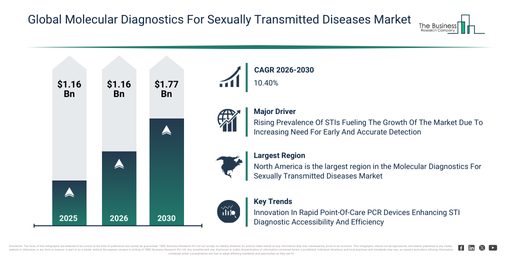
    Looking ahead, the market is expected to surge to $6.05 billion by 2030, maintaining a CAGR of 10.4%. This anticipated expansion is attributed to advancements in automated PCR and nucleic acid extraction technologies, growth of point-of-care molecular diagnostic solutions, improved healthcare infrastructure in developing countries, broader adoption of laboratory information management systems (LIMS), and increased research and development investment in rapid and multiplex diagnostic assays. Leading trends forecasted include rising use of nucleic acid-based testing techniques, expansion of point-of-care diagnostics, demand for fast and accurate STD detection, integration with laboratory information systems, and the growth of automated high-throughput PCR platforms.

    Increasing Prevalence of STDs Boosting Market Demand

    The growing number of sexually transmitted infections worldwide is a significant factor driving the molecular diagnostics market. STDs, caused by bacteria, viruses, and parasites transmitted primarily through sexual contact, affect the reproductive and urinary systems. The rise in infections is mainly due to inconsistent use of protection methods during sexual activity, which facilitates easier disease transmission.

    Access The Complete Molecular Diagnostics For Sexually Transmitted Diseases Market Report:

    https://www.thebusinessresearchcompany.com/report/molecular-diagnostics-for-sexually-transmitted-diseases-global-market-report

    Molecular diagnostics play a crucial role in controlling these infections by enabling early, precise detection of pathogens—even in individuals without symptoms. This leads to timely treatment, reduced spread of infections, and improved patient outcomes. For example, in June 2024, the UK Health Security Agency (UKHSA) reported 401,800 new STI cases in England for 2023, a 4.7% increase from 383,789 cases in 2022. This upward trend in STD prevalence is a key driver for expanding molecular diagnostic solutions.

    Market Segmentation and Revenue Sources in Molecular Diagnostics for STDs

    The molecular diagnostics market for sexually transmitted diseases is segmented into several categories for detailed analysis:

    1) By Product: Instruments and Services, Consumables, and Software

    2) By Technology: Laboratory Testing and Point-of-Care Testing

    3) By Application: Testing for Chlamydia Trachomatis (CT) or Neisseria Gonorrhoeae (NG), Syphilis, Gonorrhea, Herpes Simplex Virus (HSV), Human Papillomavirus (HPV), Human Immunodeficiency Virus (HIV), Trichomonas, Ureaplasma and Mycoplasma, and other infections.

    Further breakdown includes:

    – Instruments and Services such as molecular diagnostic analyzers, automated PCR systems, nucleic acid extraction instruments, diagnostic service providers, maintenance and calibration, and installation/training services.

    – Consumables comprising DNA and RNA extraction kits, PCR reagents, nucleic acid probes, control and reference standards, detection enzymes, and buffers.

    – Software offerings include data interpretation and reporting software, PCR workflow management, laboratory information management systems, diagnostic decision support, and quality control monitoring software.

    Innovative Technologies Driving Transformation in Molecular Diagnostics

    Leading companies in this sector are focusing on innovative solutions like rapid point-of-care PCR devices that enhance diagnostic speed, accuracy, and accessibility. These portable tools combine sample preparation, amplification, and detection in a single unit, allowing for fast, sensitive pathogen identification outside traditional labs.

    For instance, in March 2025, Visby Medical from the US introduced the Visby Medical Women’s Sexual Health Test, a single-use handheld PCR device capable of detecting chlamydia, gonorrhea, and trichomoniasis from vaginal samples within 30 minutes. This device operates without external instruments or cold-chain storage, includes integrated amplification, and delivers lab-quality results on-site to support immediate clinical decisions. It is authorized for prescription home use, making it the first FDA-cleared molecular diagnostic test for multiple STIs usable outside clinical environments. This highlights a shift toward decentralized diagnostics that improve access, especially in underserved or remote populations.

    Key Players Shaping the Molecular Diagnostics for STDs Market

    Several prominent companies are leading the molecular diagnostics market for sexually transmitted diseases, including:

    F. Hoffmann-La Roche Ltd, Thermo Fisher Scientific Inc., Abbott Laboratories, Siemens Healthineers AG, Illumina Inc., Hologic Inc., bioMérieux S.A., QuidelOrtho Corporation, QIAGEN N.V., Cepheid, Sansure Biotech Inc., OraSure Technologies Inc., Meridian Bioscience, Seegene Inc., Visby Medical Inc., Zeesan Biotech, Binx Health Inc., GCC Biotech, GeneProof, and Solone Life Sciences India (P) Ltd.

    Regional Market Leadership and Growth Forecast

    In 2025, North America accounted for the largest share of the molecular diagnostics market for sexually transmitted diseases. Meanwhile, Asia-Pacific is projected to be the fastest-growing region during the forecast period. The analysis covers key regions including Asia-Pacific, South East Asia, Western Europe, Eastern Europe, North America, South America, the Middle East, and Africa, providing a broad perspective on global market dynamics.

    Get in touch with us:

    The Business Research Company: https://www.thebusinessresearchcompany.com/

    Americas: +1 310-496-7795

    Asia: +44 7882 955267 & +91 8897263534

    Europe: +44 7882 955267

    Email us at: marketing@tbrc.info

    Follow us on:

    LinkedIn: https://in.linkedin.com/company/the-business-research-company

    YouTube: https://www.youtube.com/channel/UC24_fI0rV8cR5DxlCpgmyFQ

    Global Market Model: https://www.thebusinessresearchcompany.com/global-market-model
  • Molecular Diagnostics Devices And Equipment Market Trends And Growth Drivers Point To Strong Future Potential

    Molecular Diagnostics Devices And Equipment Market Trends And Growth Drivers Point To Strong Future Potential

    Enhanced with market attractiveness analysis, total addressable market evaluation, company benchmarking matrices, interactive Excel dashboards, expanded supply chain intelligence, emerging startup coverage, and detailed product insights, The Business Research Company’s 2026 market reports deliver more actionable and strategically valuable research.

    The molecular diagnostics devices and equipment market has witnessed significant expansion recently, driven by advances in technology and rising demand for precise medical testing. As diagnostics become more integral to personalized healthcare and disease management, the market is set to continue its robust growth trajectory. The following analysis delves into the market’s current size, growth drivers, segmentation, major players, and regional outlook.

    Molecular Diagnostics Devices and Equipment Market Size and Projected Growth

    In recent years, the molecular diagnostics devices and equipment market has experienced rapid growth. It is projected to increase from $27.23 billion in 2025 to $30.33 billion in 2026, representing a compound annual growth rate (CAGR) of 11.4%. This expansion during the historical period is largely attributed to the rise in infectious disease testing, broader genetic screening initiatives, increased use of molecular diagnostics in cancer care, enhanced sequencing accuracy, and greater clinical recognition of molecular testing’s value.

    Download A Free Sample Report For Comprehensive Market Insights:

    https://www.thebusinessresearchcompany.com/sample.aspx?id=2595&type=smp

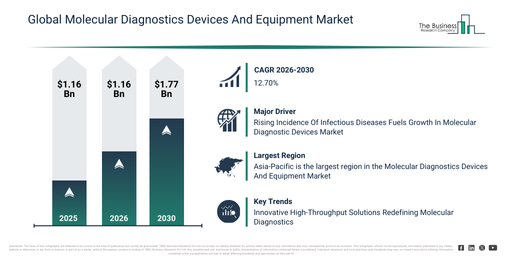
    Looking ahead, the market is expected to accelerate, reaching $48.84 billion by 2030 with a CAGR of 12.7%. The forecast period’s growth factors include rising demand for personalized medicine, increased investments in genomic diagnostics, growth of decentralized molecular testing, wider adoption of automated sample processing technologies, and a stronger focus on early detection of diseases. Key trends shaping this future growth include expanded use of PCR-based testing, next-generation sequencing technologies, integrated diagnostic software and bioinformatics, companion diagnostics, and the push for early and individualized diagnosis.

    Rising Infectious Disease Cases Fueling Molecular Diagnostics Market Expansion

    One of the primary forces propelling growth in the molecular diagnostics devices and equipment market is the increasing prevalence of infectious diseases. These illnesses, caused by bacteria, viruses, fungi, or parasites, can spread from person to person or between animals and humans. Factors such as antimicrobial resistance, globalization and travel, urbanization, socioeconomic inequalities, and an aging population are contributing to the rise in infectious diseases worldwide.

    Access The Complete Molecular Diagnostics Devices And Equipment Market Report:

    https://www.thebusinessresearchcompany.com/report/molecular-diagnostics-devices-and-equipment-global-market-report

    Molecular diagnostic tools play a crucial role in identifying and managing such infections. For example, data from the US Centers for Disease Control and Prevention shows that tuberculosis cases increased from 8,320 in 2022 to 9,615 in 2023, with the incidence rate rising from 2.5 to 2.9 per 100,000 individuals. This growing burden of infectious diseases directly supports expanded demand for molecular diagnostic devices and equipment.

    Breakdown of Molecular Diagnostics Devices and Equipment Market by Segment

    The molecular diagnostics devices and equipment market is segmented based on various categories:

    1) Product type including instruments, reagents and consumables, and software

    2) Technology such as DNA sequencing, polymerase chain reaction (PCR), isothermal nucleic acid amplification technology, transcription mediated amplification (TMA), in situ hybridization, microarrays, mass spectrometry, and others

    3) Application areas including cancer, pharmacogenomics, genetic testing, infectious diseases, prenatal diagnostics, and other uses

    4) End users comprising diagnostic laboratories, hospitals, and other groups

    Further subcategories include specific instruments like PCR machines, nucleic acid analyzers, DNA sequencers, and microarrays. Reagents and consumables cover PCR reagents, DNA probes and primers, sample preparation kits, and control materials. Software segments include data analysis programs, laboratory information management systems (LIMS), bioinformatics software, and integration software for instrumentation.

    Innovations and Trends Shaping Future Prospects in Molecular Diagnostics

    Leading companies in the molecular diagnostics field are innovating by developing high-throughput sample-to-result instruments that improve efficiency and versatility. These systems build on proven extraction and assay technologies, allowing continuous loading of samples and reagents with real random-access operations. Users can run multiple PCR reagents, protocols, and sample types simultaneously, enhancing flexibility.

    For instance, in April 2023, ELITechGroup, a France-based in-vitro diagnostics company, launched such a high-throughput molecular diagnostics instrument. This product aims to streamline workflows and boost diagnostic capabilities, reflecting the broader industry trend of enhancing automation and scalability.

    Top Players Competing in the Molecular Diagnostics Devices and Equipment Market

    Several prominent companies are key players in this market, including F. Hoffmann-La Roche Ltd, QIAGEN N.V., Abbott Laboratories, Danaher Corporation, Biomérieux, Becton Dickinson & Co, Siemens Healthineers AG, Grifols S.A., Sysmex Corporation, Abbott India Limited, Qiagen India Pvt Ltd, Biocartis, Bio-Techne India Private Limited, Cleaver Scientific, Zhejiang Di’an Diagnostics Technology Co. Ltd, Kindstar Global, BGI-Shenzhen, OriGene Technologies, Nippon Becton Dickinson Company, QuantuMDx, Yourgene Health, Genefirst, TestLine, Hologic Inc., Illumina Inc., Cepheid Inc., Agilent Technologies Inc., AutoGenomics, Bio-Rad Laboratories Inc, Ortho Clinical Diagnostics Inc, Sysmex Middle East FZ-LLC, and QIAGEN SA (Pty) Ltd. These companies lead innovation and competition through product development, strategic partnerships, and global reach.

    Regional Analysis Reveals Asia-Pacific as a Key Market for Molecular Diagnostics

    In 2025, Asia-Pacific was the largest market for molecular diagnostics devices and equipment worldwide. This region is also expected to register the fastest growth during the forecast period, driven by increasing healthcare investments, expanding diagnostic infrastructure, and a rising patient population. Other key geographic markets include South East Asia, Western Europe, Eastern Europe, North America, South America, the Middle East, and Africa, each contributing to the global outlook with varied growth dynamics and opportunities.

    Get in touch with us:

    The Business Research Company: https://www.thebusinessresearchcompany.com/

    Americas: +1 310-496-7795

    Asia: +44 7882 955267 & +91 8897263534

    Europe: +44 7882 955267

    Email us at: marketing@tbrc.info

    Follow us on:

    LinkedIn: https://in.linkedin.com/company/the-business-research-company

    YouTube: https://www.youtube.com/channel/UC24_fI0rV8cR5DxlCpgmyFQ

    Global Market Model: https://www.thebusinessresearchcompany.com/global-market-model
  • Molecular Cytogenetics Market Expansion Is Reshaping Competitive Dynamics Across The Industry

    Molecular Cytogenetics Market Expansion Is Reshaping Competitive Dynamics Across The Industry

    Through market attractiveness analysis, total addressable market evaluation, company benchmarking matrices, interactive Excel dashboards, expanded supply chain intelligence, emerging startup coverage, and detailed product insights, The Business Research Company’s 2026 market reports provide more actionable and strategically valuable research.

    The molecular cytogenetics market is experiencing notable growth, driven by advancements in genetic analysis and the increasing need for precise chromosomal diagnostics. This field is rapidly evolving due to rising incidences of genetic conditions and cancer, as well as growing research and clinical applications. Let’s explore the current market size, key growth drivers, prominent segments, industry trends, leading companies, and geographic trends shaping this dynamic market.

    Projected Growth and Market Size of the Molecular Cytogenetics Market

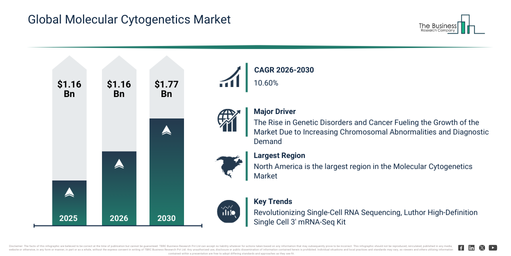
    The molecular cytogenetics market has expanded swiftly in recent years. It is projected to increase from $3.1 billion in 2025 to $3.42 billion in 2026, representing a compound annual growth rate (CAGR) of 10.4%. This growth during the historical period is largely attributed to the rising occurrence of genetic disorders, the expansion of cancer diagnostic testing, the growth of academic and clinical genetics research, the availability of advanced laboratory equipment, and the higher demand for detecting chromosomal abnormalities. Looking ahead, the market is expected to grow further to reach $5.13 billion by 2030, with a CAGR of 10.6%. This anticipated expansion is fueled by the wider adoption of personalized medicine, increased investments in genomic research, growth in precision oncology diagnostics, demand for integrated cytogenetic workflows, and ongoing improvements in imaging and molecular analysis technologies. Key trends shaping the future market include greater use of fluorescence in situ hybridization (FISH) and comparative genomic hybridization (CGH) technologies, expanded genomic profiling in oncology, rising integration of automated cytogenetic platforms, enhanced bioinformatics-driven data interpretation, and a focus on high-throughput cytogenetic analysis.

    Download A Free Sample Report For Comprehensive Market Insights:

    https://www.thebusinessresearchcompany.com/sample.aspx?id=10096&type=smp

    Factors Propelling Molecular Cytogenetics Market Expansion

    The growing prevalence of genetic disorders and cancer is a major force driving demand in the molecular cytogenetics market. Cancer involves the uncontrolled growth and spread of abnormal cells, and its increasing burden stems from genetic predispositions, environmental influences, and age-related risks. As a result, more patients require precise diagnostic evaluations. Molecular cytogenetics plays a crucial role in clinical decision-making by detecting chromosomal abnormalities—such as missing, broken, or rearranged chromosomes—that aid in diagnosing congenital conditions, genetic diseases, and various cancers. For example, in July 2025, the National Blood Authority of Australia reported 2,788 patients living with hereditary haemophilia A (HMA) during 2023–2024, up from 2,681 in the previous year. This rise in genetic disorder cases reinforces the growing need for molecular cytogenetic testing.

    Product and Technology Segments Expanding in the Molecular Cytogenetics Market

    This market is broadly segmented by product types, technologies, applications, and end-users. Product categories include instruments, kits and reagents, software, and services. Key technologies encompassed are comparative genomic hybridization, fluorescence in situ hybridization, karyotyping, and others. Applications cover genetic disorders, cancer, personalized medicines, and additional uses. End-users range from clinical and research laboratories to academic institutions, pharmaceutical companies, biotechnology firms, and other organizations. Subcategories for instruments include FISH systems, microarray platforms, and imaging systems. Kits and reagents are divided into DNA extraction kits, hybridization kits, and staining kits. Software offerings consist of data analysis, image analysis, bioinformatics tools, laboratory information management systems (LIMS), and reporting software. Service categories cover custom research, technical support, consulting, training, and quality control.

    Access The Complete Molecular Cytogenetics Market Report:

    https://www.thebusinessresearchcompany.com/report/molecular-cytogenetics-global-market-report

    Innovations and Trends Influencing the Molecular Cytogenetics Market

    Leading market players are innovating to meet increasing demand and capitalize on new opportunities. For example, in November 2023, Austria-based biotechnology company Lexogen GmbH introduced the LUTHOR High-Definition Single Cell 3′ mRNA-Seq Kit. This groundbreaking product revolutionizes single-cell RNA sequencing by employing an RNA-amplification approach capable of detecting nearly every mRNA molecule within a cell. The kit achieves exceptional sensitivity through its THOR (T7 High-resolution Original RNA amplification) technology, which amplifies RNA directly from original mRNA, overcoming challenges related to low-copy transcripts. This innovation sets new benchmarks in single-cell RNA sequencing, capturing 95% of expressed genes at a one million read depth and enabling the detection of single gene copies within cells.

    Key Players Driving the Molecular Cytogenetics Market Forward

    The competitive landscape of the molecular cytogenetics market includes prominent companies such as Abbott Laboratories, Agilent Technologies Inc, Applied Spectral Imaging, CytoTest Inc, Danaher Corporation, Illumina Inc, PerkinElmer Inc, Thermo Fisher Scientific Inc, Bio-Rad Laboratories Inc, Oxford Gene Technology Limited, Affymetrix Inc, F. Hoffmann-La Roche AG, Cytognomix Inc, Empire Genomics LLC, Genial Genetic Solutions Ltd., BioChain Institute Inc, BioGenex Laboratories Inc, Bio-Techne Corporation, Cytocell Ltd., Kreatech Diagnostics B.V., Leica Biosystems Nussloch GmbH, MetaSystems Group Holding GmbH, SciGene Corporation, SkylineDx B.V., and Roche Diagnostics Corporation. These organizations are at the forefront of research, technology development, and commercialization within the field.

    Geographical Market Trends Highlighting Regional Growth

    In 2025, North America held the largest share of the molecular cytogenetics market. However, Asia-Pacific is forecasted to be the fastest-growing region during the coming years. The market analysis encompasses key regions such as Asia-Pacific, South East Asia, Western Europe, Eastern Europe, North America, South America, the Middle East, and Africa, providing a comprehensive global perspective on market dynamics and regional growth potential.

    Get in touch with us:

    The Business Research Company: https://www.thebusinessresearchcompany.com/

    Americas: +1 310-496-7795

    Asia: +44 7882 955267 & +91 8897263534

    Europe: +44 7882 955267

    Email us at: marketing@tbrc.info

    Follow us on:

    LinkedIn: https://in.linkedin.com/company/the-business-research-company

    YouTube: https://www.youtube.com/channel/UC24_fI0rV8cR5DxlCpgmyFQ

    Global Market Model: https://www.thebusinessresearchcompany.com/global-market-model
  • Mobility Aids And Transportation Equipment Market Forecast Reveals Where Future Industry Value Will Be Created

    Mobility Aids And Transportation Equipment Market Forecast Reveals Where Future Industry Value Will Be Created

    Delivering more actionable and strategically valuable research, The Business Research Company’s 2026 market reports feature market attractiveness analysis, total addressable market evaluation, company benchmarking matrices, interactive Excel dashboards, expanded supply chain intelligence, emerging startup coverage, and detailed product insights.

    The market for mobility aids and transportation equipment has witnessed significant growth, driven by various social and technological factors. With an aging global population and increasing prevalence of mobility challenges, this sector is evolving rapidly. Let’s explore the current market size, key growth drivers, segmentation, innovation trends, leading companies, and regional insights shaping this industry’s future.

    Mobility Aids and Transportation Equipment Market Size and Projected Growth

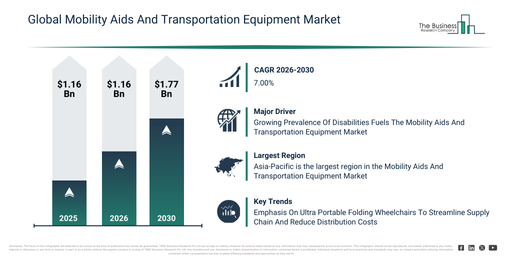
    The mobility aids and transportation equipment market has seen robust expansion over recent years. It is anticipated to increase from $2.89 billion in 2025 to $3.09 billion in 2026, reflecting a compound annual growth rate (CAGR) of 6.8%. Factors such as a growing elderly population, rising incidence of mobility impairments, expanding home healthcare services, greater demand for assistive living devices, and availability of affordable mobility aids have contributed to this growth. Looking ahead, the market size is expected to reach $4.04 billion by 2030, growing at a CAGR of 7.0%. This forecasted growth is driven by the rising adoption of connected healthcare technologies, a stronger focus on independent living solutions, integration of smart home systems with mobility aids, increased demand for energy-efficient equipment, and greater investment in assistive technology innovation. Emerging market trends include the growing preference for smart mobility assistance devices, electrically powered wheelchairs, IoT-enabled mobility aids, lightweight and ergonomic designs, and enhanced emphasis on user comfort and safety.

    Download A Free Sample Report For Comprehensive Market Insights:

    https://www.thebusinessresearchcompany.com/sample.aspx?id=2421&type=smp

    Increasing Prevalence of Disabilities as a Catalyst for Market Expansion

    The rising number of individuals living with disabilities is a significant factor propelling growth in the mobility aids and transportation equipment market. Disabilities, which may include physical, mental, sensory, or cognitive impairments, often limit a person’s ability to perform daily activities or engage fully in society. Mobility aids play a vital role in enhancing the independence and mobility of people facing such challenges. According to a report from March 2023 by the World Health Organization, approximately 1.3 billion people worldwide—representing 16% of the global population or 1 in 6 individuals—experience significant disabilities. This widespread prevalence underlines the growing need for equipment designed to support mobility, which in turn is driving market demand.

    Advancements in Independent Living and Healthcare Services Boosting Market Potential

    Beyond the rising disability rates, increasing attention on independent living and supportive healthcare services further fuels demand for mobility aids. Innovations in healthcare delivery, home care expansion, and the integration of technology into daily living environments are encouraging more people to seek effective mobility solutions. This ongoing shift toward personalized and connected healthcare is enhancing the usability and appeal of transportation equipment and assistive devices.

    Access The Complete Mobility Aids And Transportation Equipment Market Report:

    https://www.thebusinessresearchcompany.com/report/mobility-aids-and-transportation-equipment-global-market-report

    Detailed Segmentation in Mobility Aids and Transportation Equipment Market

    This market is broadly categorized by product type, age group, and end user to better address diverse needs. Product types include electrically powered wheelchairs, manual wheelchairs, walking aids, mobility scooters, stretchers, and stair lifts. Age-related segments cover mobility aids designed specifically for children and for elderly users. End user categories focus primarily on hospitals, clinics, and households. Further subcategories include types of electrically powered wheelchairs such as rear-wheel, front-wheel, mid-wheel, and standing models; manual wheelchairs split into standard, lightweight, folding, and rigid variants; walking aids broken down into crutches, canes, walkers, and rollators; mobility scooters classified as three-wheeled, four-wheeled, and heavy-duty; stretchers subdivided into hydraulic, folding, emergency, and bariatric types; and stair lifts differentiated into straight, curved, outdoor, and platform lifts.

    Innovations Shaping the Mobility Aids and Transportation Equipment Market

    A key trend transforming this market is the focus on ultra-portable folding wheelchairs, which enhance convenience and optimize supply chains by reducing last-mile distribution challenges. These lightweight and compact wheelchairs fold quickly without compromising user support or safety, making them ideal for travel and everyday use. For example, in September 2025, the UK-based company eFOLDi launched the Navigator model, weighing just 12.4 kg (excluding the battery). This wheelchair folds in seconds with no need for disassembly, supports both on- and off-board charging, and accommodates users up to 135 kg. The introduction of such ultra-light, user-friendly mobility solutions reflects a strong industry trend toward products that blend portability, durability, and comfort.

    Leading Companies Driving the Mobility Aids and Transportation Equipment Market

    The competitive landscape features several prominent players steering innovation and market outreach. These include Medline Industries, Hoveround Corporation, Sunrise Medical LLC, OttoBock Healthcare GmbH, Stryker Corporation, GF Health Products Inc., Invacare Corporation, LEVO AG, Permobil AB, Hill-Rom Holdings Inc., Merivaara Corporation, UpLyft, Mobius Mobility, SitnStand, Authority Medical Group, Ease Seating Systems, Matia Mobility, National Seating & Mobility, Pride Mobility Products Corp., Drive Medical Design & Manufacturing, Quantum Rehab, 21st Century Scientific Inc., Ki Mobility, Colours Wheelchair, Motion Composites, Karman Healthcare, Merits Health Products Co. Ltd., Nova Medical Products, Active Mobility Systems, Convaid Products LLC, and R82 Inc.

    Geographical Distribution and Market Leadership

    In 2025, Asia-Pacific emerged as the dominant region in the global mobility aids and transportation equipment market, holding the largest market share. North America ranked as the second-largest region. The market report covers key regions including Asia-Pacific, South East Asia, Western Europe, Eastern Europe, North America, South America, the Middle East, and Africa, providing a comprehensive view of regional market dynamics and growth opportunities.

    Get in touch with us:

    The Business Research Company: https://www.thebusinessresearchcompany.com/

    Americas: +1 310-496-7795

    Asia: +44 7882 955267 & +91 8897263534

    Europe: +44 7882 955267

    Email us at: marketing@tbrc.info

    Follow us on:

    LinkedIn: https://in.linkedin.com/company/the-business-research-company

    YouTube: https://www.youtube.com/channel/UC24_fI0rV8cR5DxlCpgmyFQ

    Global Market Model: https://www.thebusinessresearchcompany.com/global-market-model
  • Mobility Aid Medical Device Market Growth Through 2030 Creates New Strategic Opportunities

    Mobility Aid Medical Device Market Growth Through 2030 Creates New Strategic Opportunities

    Enhanced with market attractiveness analysis, total addressable market evaluation, company benchmarking matrices, interactive Excel dashboards, expanded supply chain intelligence, emerging startup coverage, and detailed product insights, The Business Research Company’s 2026 market reports deliver more actionable and strategically valuable research.

    The mobility aid medical device sector has witnessed significant growth over recent years, driven by various demographic and technological factors. As more people seek enhanced independence and better rehabilitation options, this market is set to experience continued expansion. Let’s explore the current market size, key drivers, segmentation, emerging trends, leading players, and regional outlook to understand the future trajectory of this industry.

    Mobility Aid Medical Device Market Size and Growth Outlook

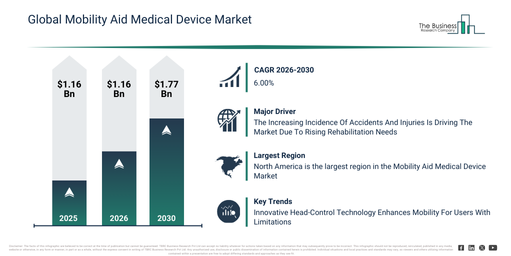
    The market for mobility aid medical devices is showing strong momentum. In 2025, its value is projected at $7.3 billion and is expected to rise to $7.76 billion in 2026, reflecting a compound annual growth rate (CAGR) of 6.3%. Historical growth has been propelled by an aging global population, increasing cases of mobility impairments, development of rehabilitation infrastructure, growing awareness of assistive devices, and advancements in orthopedic and neurological treatments. Looking ahead, the market is forecasted to expand further, reaching $9.78 billion by 2030, with a CAGR of 6.0%. Key factors supporting this growth include continuous innovation in assistive mobility technologies, a growing preference for independent living, rising healthcare spending, broader availability of home healthcare services, and favorable government reimbursement policies. Trends expected to influence the market are the rise of smart and connected mobility aids, AI-powered gait and balance support systems, robotic personal mobility solutions, remote monitoring combined with predictive maintenance, and a shift towards sustainable, lightweight device designs.

    Download A Free Sample Report For Comprehensive Market Insights:

    https://www.thebusinessresearchcompany.com/sample.aspx?id=25838&type=smp

    Factors Fueling Growth in the Mobility Aid Medical Device Market

    One major driver behind the market’s expansion is the growing number of accidents and injuries leading to mobility challenges. These unforeseen incidents, which often cause physical trauma or disability, occur in various settings such as workplaces, public areas, and everyday environments. Factors contributing to the increased frequency of such injuries include hazardous work conditions, physically demanding jobs, an aging workforce, and lapses in safety protocols. As a result, more individuals require mobility aids to regain movement, improve rehabilitation outcomes, and maintain independence during recovery. For example, according to the Bureau of Labor Statistics (BLS) in November 2024, injury cases in healthcare and social assistance sectors in the US rose by 27,800 in 2023, reaching 471,600 incidents. This rise underscores the growing demand for mobility aid medical devices.

    Additional Drivers Propelling Market Expansion

    Besides injuries and accidents, technological advancements in mobility aids are another crucial growth factor. Innovations such as AI-enabled systems and robotics are making devices more user-friendly and effective. Additionally, expanding home-based healthcare services allow more patients to use these devices in comfortable settings, which increases adoption rates. Government policies offering financial support or insurance reimbursement also encourage the use of mobility aids, helping to broaden the market reach.

    Access The Complete Mobility Aid Medical Device Market Report:

    https://www.thebusinessresearchcompany.com/report/mobility-aid-medical-device-global-market-report

    Breakdown of the Mobility Aid Medical Device Market Segments

    This market is divided into distinct segments for a comprehensive understanding:

    1) By Type: Wheelchairs, Walking Aids, Mobility Lifts, Slings, Tricycles, Mobility Scooters

    2) By Age Group: Pediatrics, Adults, Seniors

    3) By Distribution Channel: Online Retail, Pharmacies, Specialty Stores, Medical Equipment Dealers, Direct Sales

    4) By End-User: Hospitals, Home Care Settings, Rehabilitation Centers, Other End-Users

    Further classification within each segment includes:

    – Wheelchairs: Manual, Powered, Pediatric, Sports

    – Walking Aids: Walkers, Rollators, Crutches, Canes

    – Mobility Lifts: Patient Lifts, Stair Lifts, Ceiling Lifts, Vehicle Lifts

    – Slings: Transfer, Positioning, Toilet, Bariatric

    – Tricycles: Adult, Pediatric, Electric, Foldable

    – Mobility Scooters: 3-Wheel, 4-Wheel, Heavy-Duty, Travel or Portable

    Innovations and Trends Shaping the Mobility Aid Medical Device Industry

    Leading companies in this sector are focusing on creating advanced solutions that enhance user independence, especially for those with severe mobility restrictions. For instance, head-controlled drive systems are becoming increasingly popular. These systems allow users to operate powered mobility devices through subtle head movements, offering an intuitive and accessible control method for individuals with limited motor skills.

    A notable example occurred in January 2024 when Sunrise Medical GmbH introduced the Switch-It Vigo Head Control. This German company developed a wireless, discreet headset that accurately tracks small head motions to control powered wheelchairs and connected digital devices. The system’s sophisticated sensors, coupled with customizable app settings, provide users with a comfortable and personalized mobility experience tailored to individual needs.

    Key Players and Competitive Landscape in the Mobility Aid Medical Device Market

    Several prominent firms dominate this market, including Medline Industries LP, Otto Bock HealthCare GmbH, Arjo AB, Invacare Corporation, Sunrise Medical GmbH and Co KG, Drive Medical GmbH and Co KG, Permobil AB, Pride Mobility Products Corporation, Etac AB, GF Health Products Inc., Hoveround Corporation, Carex Health Brands Inc., NOVA Medical Products LLC, MEYRA GmbH, Recare Ltd., Ostrich Mobility Instruments Pvt Ltd, Karman Healthcare Inc., LEVO AG, Magic Mobility Pty Ltd, Shoprider Mobility Products Ltd, Hubang Electric Vehicle Co Ltd, Batec Mobility SLP, and Roma Medical Aids Ltd. These companies compete by focusing on innovation, quality, and expanding product portfolios to meet diverse user needs.

    Regional Market Insights in Mobility Aid Medical Devices

    In 2025, North America led the global mobility aid medical device market in terms of revenue. However, the Asia-Pacific region is anticipated to experience the fastest growth during the forecast period. The market report covers major regions including Asia-Pacific, South East Asia, Western Europe, Eastern Europe, North America, South America, the Middle East, and Africa, offering a comprehensive view of worldwide demand and expansion patterns.

    Get in touch with us:

    The Business Research Company: https://www.thebusinessresearchcompany.com/

    Americas: +1 310-496-7795

    Asia: +44 7882 955267 & +91 8897263534

    Europe: +44 7882 955267

    Email us at: marketing@tbrc.info

    Follow us on:

    LinkedIn: https://in.linkedin.com/company/the-business-research-company

    YouTube: https://www.youtube.com/channel/UC24_fI0rV8cR5DxlCpgmyFQ

    Global Market Model: https://www.thebusinessresearchcompany.com/global-market-model
  • Mobile ECG Devices Market Size Projected To Increase From $131.1 Billion To $182.64 Billion During The Forecast Period

    Mobile ECG Devices Market Size Projected To Increase From $131.1 Billion To $182.64 Billion During The Forecast Period

    Through market attractiveness analysis, total addressable market evaluation, company benchmarking matrices, interactive Excel dashboards, expanded supply chain intelligence, emerging startup coverage, and detailed product insights, The Business Research Company’s 2026 market reports provide more actionable and strategically valuable research.

    The mobile ECG devices market has witnessed impressive growth recently, driven by technological advancements and increasing health awareness worldwide. As cardiovascular conditions continue to rise, the demand for portable, user-friendly ECG solutions is expanding rapidly. Let’s explore the current market size, key growth factors, major players, and future prospects shaping this vital healthcare segment.

    Projected Market Size and Expansion of the Mobile ECG Devices Market

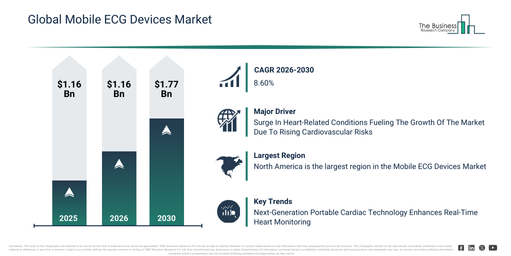
    The mobile ECG devices market has grown significantly in the recent past and is set to continue this upward trajectory. It is forecasted to grow from $121.39 billion in 2025 to $131.1 billion in 2026, reflecting a compound annual growth rate (CAGR) of 8.0%. Looking ahead, the market is expected to reach $182.64 billion by 2030, with an increased CAGR of 8.6%. This expansion is driven by the rising prevalence of cardiovascular diseases, greater adoption of home-based health monitoring solutions, growing demand for non-invasive diagnostic tools, the spread of telehealth services, and improved affordability of portable medical devices. Additionally, the integration of AI-based cardiac analytics and personalized cardiac care approaches are pushing market growth further.

    Download A Free Sample Report For Comprehensive Market Insights:

    https://www.thebusinessresearchcompany.com/sample.aspx?id=12067&type=smp

    Factors Fueling Growth in the Mobile ECG Devices Market

    One of the primary drivers of the mobile ECG devices market is the increasing incidence of heart-related ailments. These include a variety of heart and blood vessel disorders such as coronary heart disease and congenital heart defects. Mobile ECG devices are essential for diagnosing conditions like myocardial infarction and cardiac arrhythmias, which help in managing heart conditions more effectively and reducing the number of unmonitored cases.

    For instance, data released in January 2024 by the American Heart Association showed that the age-adjusted death rate from cardiovascular disease in the U.S. rose to 233.3 per 100,000 in 2024, marking a 4.0% increase from 224.4 per 100,000 in 2023. This alarming rise underscores the urgent need for efficient cardiac monitoring tools, bolstering demand for mobile ECG devices.

    Major Market Segments in the Mobile ECG Devices Industry

    This report categorizes the mobile ECG devices market into several key segments for a detailed understanding:

    1) By Type: Monitoring ECG Systems and Diagnostics ECG Systems

    2) By Modality: Handheld, Pen, Band, and Other Modalities

    3) By End User: Personal Users, Hospitals, Clinics, and Ambulatory Services

    Within these, further classification includes wearable ECG monitors, handheld ECG monitors, and patch-based monitors under Monitoring ECG Systems. Diagnostics ECG Systems include portable ECG devices, smartphone-based ECG devices, and Holter monitors, catering to diverse user needs.

    Access The Complete Mobile ECG Devices Market Report:

    https://www.thebusinessresearchcompany.com/report/mobile-ecg-devices-global-market-report

    Innovations and Industry Trends Driving Mobile ECG Market Growth

    Leading companies in the mobile ECG device market are heavily investing in cutting-edge technologies, particularly AI-powered handheld devices that enhance real-time cardiac monitoring accuracy and improve patient experience. These AI systems analyze health data instantly, providing precise diagnostic insights and facilitating better clinical decisions.

    For example, in July 2025, AliveCor Inc., a U.S.-based medical tech firm, launched the Kardia 12L ECG system in India. This AI-powered device features a unique single-cable design and can detect 35 different cardiac conditions, including myocardial infarction and various arrhythmias. Its lightweight, battery-operated form factor fits easily into a physician’s pocket, allowing for convenient, rapid diagnostics without extensive patient preparation.

    Key Players Leading the Mobile ECG Devices Market

    The competitive landscape of the mobile ECG devices market includes several prominent companies such as Medtronic PLC, Koninklijke Philips N.V., GE Healthcare, Omron Corporation, Mindray Medical International Limited, ZOLL Medical Corporation, Nihon Kohden Corporation, Spacelabs Healthcare, Biotronik SE & Co KG, Fukuda Denshi Co. Ltd., Bittium Biosignals Ltd., Contec Medical Systems Co. Ltd., Schiller AG, Preventice Solutions Inc., BPL Medical Technologies Pvt. Ltd., AliveCor Inc., EB Neuro S.p.A, GETEMED Medical and Information, QT Medical Inc., Qardio Inc., Innomed Medical Inc., MD Biomedical Inc., CardioComm Solutions Inc., Hexoskin, VectraCor Inc., and Cardiocity Limited. These companies are continuously innovating to maintain and expand their market presence.

    Regional Market Distribution and Growth Opportunities

    In 2025, North America represented the largest regional market for mobile ECG devices. However, the Asia-Pacific region is anticipated to experience the fastest growth during the forecast period. The report covers significant regions such as Asia-Pacific, South East Asia, Western Europe, Eastern Europe, North America, South America, as well as the Middle East and Africa, providing a global perspective on emerging opportunities and market dynamics.

    Get in touch with us:

    The Business Research Company: https://www.thebusinessresearchcompany.com/

    Americas: +1 310-496-7795

    Asia: +44 7882 955267 & +91 8897263534

    Europe: +44 7882 955267

    Email us at: marketing@tbrc.info

    Follow us on:

    LinkedIn: https://in.linkedin.com/company/the-business-research-company

    YouTube: https://www.youtube.com/channel/UC24_fI0rV8cR5DxlCpgmyFQ

    Global Market Model: https://www.thebusinessresearchcompany.com/global-market-model
  • Mobile C-arm Market Growth Outlook Reveals A CAGR Of 7.3% And A Market Value Of $2 Billion By 2030

    Mobile C-arm Market Growth Outlook Reveals A CAGR Of 7.3% And A Market Value Of $2 Billion By 2030

    Delivering more actionable and strategically valuable research, The Business Research Company’s 2026 market reports feature market attractiveness analysis, total addressable market evaluation, company benchmarking matrices, interactive Excel dashboards, expanded supply chain intelligence, emerging startup coverage, and detailed product insights.

    The mobile C-arm market has seen significant expansion in recent years, driven by advancements in medical imaging technology and increasing surgical demands. As healthcare providers seek more efficient and precise imaging solutions, the mobile C-arm sector is positioned for continued growth. Below, we explore the market’s current size, key factors propelling its rise, leading players, and promising trends shaping its future.

    Mobile C-arm Market Size and Growth Forecast through 2030

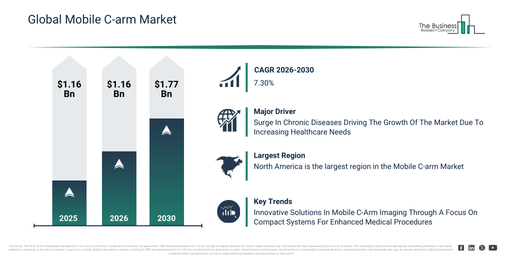
    The mobile C-arm market has experienced strong growth lately, rising from $1.42 billion in 2025 to an estimated $1.51 billion in 2026, reflecting a compound annual growth rate (CAGR) of 6.7%. This expansion has been driven by an increase in orthopedic and trauma surgeries, enhanced hospital imaging infrastructure, a greater reliance on minimally invasive procedures, and the growing need for intraoperative imaging. Additionally, the availability of mobile imaging systems has broadened access to these technologies. Looking ahead, the market is expected to reach $2.01 billion by 2030, growing at a CAGR of 7.3%. Factors contributing to this forecasted growth include the rising use of image-guided surgeries, increased investments in advanced surgical imaging platforms, demand for portable imaging devices, growth of ambulatory surgical centers, and continual advancements in detector and imaging technologies. Key trends powering the market include wider adoption of flat-panel detector C-arms, enhanced high-resolution real-time imaging capabilities, integration of sophisticated imaging software, expansion of hybrid operating rooms, and a stronger emphasis on reducing radiation exposure.

    Download A Free Sample Report For Comprehensive Market Insights:

    https://www.thebusinessresearchcompany.com/sample.aspx?id=12477&type=smp

    Factors Propelling the Mobile C-arm Market Growth

    The mobile C-arm market is being driven by the growing prevalence of chronic diseases worldwide. Chronic illnesses, which persist for three months or longer and tend to worsen over time, increase the need for advanced imaging solutions that support better clinical outcomes. Mobile C-arm devices play a crucial role in managing conditions such as cardiovascular disease and cancer by improving surgical precision and reducing the likelihood of repeat procedures, ultimately lowering healthcare costs. For example, a January 2023 report from the National Library of Medicine in the US highlighted that the population aged 50 and above with at least one chronic condition is expected to nearly double by 2050, reaching 142.66 million. This demographic trend underscores the expanding need for mobile C-arm technology in medical care.

    Mobile C-arm Market Segmentation by Product, Application, and End User

    The mobile C-arm market is categorized into various segments to better understand its revenue streams. By product type, the market includes Mini C-arms, Full-Size C-arms, and Other Product Types. The application segments encompass Orthopedics, Trauma, Cardiovascular, Pain Management, Urology, Gastroenterology, Neurology, and other medical uses. In terms of end users, the market serves Hospitals, Specialty Clinics, and Ambulatory Surgical Centers. Further subcategories break down Mini C-arms into Compact and High-Frequency models, Full-Size C-arms into Fixed, Mobile, and High-Performance variants, and Other Product Types into Specialty C-arms as well as accessories and consumables.

    Access The Complete Mobile C-arm Market Report:

    https://www.thebusinessresearchcompany.com/report/mobile-c-arm-global-market-report

    Innovations and Market Trends Fueling Mobile C-arm Advancements

    Leading companies in the mobile C-arm market are focusing on developing compact and innovative imaging solutions to differentiate themselves and meet clinical demands. Compact mobile C-arm systems are gaining popularity due to their portability and ease of use, benefiting both healthcare providers and patients. For instance, in February 2024, Royal Philips, a technology firm based in the Netherlands, introduced the Zenition 90 Motorized mobile C-arm. This model is notable for its rapid performance and intuitive table-side controls, allowing surgeons greater autonomy during procedures. It delivers high-quality images even for complex vascular surgeries and incorporates automated workflows, a touch screen module for image manipulation, and advanced software features that improve clinical efficiency.

    Top Companies Shaping the Mobile C-arm Market Landscape

    The mobile C-arm industry features several key players, including Siemens Healthineers AG, Koninklijke Philips N.V., GE HealthCare Technologies Inc., Shimadzu Corporation, Hologic Inc., Hitachi Medical Systems, Canon Medical Systems Corporation, Ziehm Imaging GmbH, DMS Group, OrthoScan Inc., and Allengers Medical Systems Limited. Other significant contributors are Eurocolumbus s.r.l., Turner Imaging System, Intermedical S.r.l., Perlong Medical Equipment Co. Ltd., Gemss Medical Systems, ARI Medical Equipment Co. Ltd., SternMed GmbH, Villa Sistemi Medicali S.p.A., MS Westfalia GmbH, Nanjing Perlove Medical Equipment Co. Ltd., Hi-Tech Medi Systems, GMM Group, and Vision Medicaid Equipment Private Limited. These companies continuously invest in research and development to maintain competitive advantage and expand their market presence.

    Geographical Market Leadership and Growth Prospects

    In 2025, North America was the dominant region in terms of revenue for the mobile C-arm market. However, the Asia-Pacific region is expected to experience the fastest growth during the forecast period. The market analysis includes key regions such as Asia-Pacific, South East Asia, Western Europe, Eastern Europe, North America, South America, the Middle East, and Africa, providing a broad perspective on global market dynamics and opportunities.

    Get in touch with us:

    The Business Research Company: https://www.thebusinessresearchcompany.com/

    Americas: +1 310-496-7795

    Asia: +44 7882 955267 & +91 8897263534

    Europe: +44 7882 955267

    Email us at: marketing@tbrc.info

    Follow us on:

    LinkedIn: https://in.linkedin.com/company/the-business-research-company

    YouTube: https://www.youtube.com/channel/UC24_fI0rV8cR5DxlCpgmyFQ

    Global Market Model: https://www.thebusinessresearchcompany.com/global-market-model
  • Mobile Cardiac Telemetry Systems Market Forecast Highlights Expansion From $1.16 Billion To $1.69 Billion Through 2030

    Mobile Cardiac Telemetry Systems Market Forecast Highlights Expansion From $1.16 Billion To $1.69 Billion Through 2030

    Enhanced with market attractiveness analysis, total addressable market evaluation, company benchmarking matrices, interactive Excel dashboards, expanded supply chain intelligence, emerging startup coverage, and detailed product insights, The Business Research Company’s 2026 market reports deliver more actionable and strategically valuable research.

    The mobile cardiac telemetry systems market is witnessing significant momentum as advancements in cardiac care and monitoring technologies continue to evolve. Increasing awareness about cardiovascular health and the need for real-time cardiac monitoring solutions are key factors propelling growth in this sector. Let’s explore the current market size, the main drivers pushing expansion, the segmentation of the market, and the competitive landscape shaping its future.

    Mobile Cardiac Telemetry Systems Market Size and Projected Growth

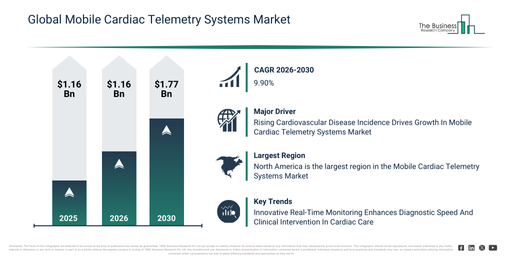
    The market for mobile cardiac telemetry systems has experienced robust growth in recent years. It is expected to rise from $1.06 billion in 2025 to $1.16 billion in 2026, growing at a compound annual growth rate (CAGR) of 10.0%. Looking ahead, the market is forecast to expand further to reach $1.7 billion by 2030, maintaining a CAGR of 9.9%. This growth is underpinned by factors such as the increasing prevalence of cardiovascular diseases, the rising occurrence of arrhythmias, limitations associated with traditional Holter monitors, an aging global population, and the growing adoption of outpatient cardiac diagnostic methods.

    Download A Free Sample Report For Comprehensive Market Insights:

    https://www.thebusinessresearchcompany.com/sample.aspx?id=18674&type=smp

    Key Factors Propelling Mobile Cardiac Telemetry Systems Market Growth

    One major factor fueling this market’s expansion is the rising incidence of cardiovascular diseases globally. These conditions, which include coronary artery disease, heart failure, arrhythmias, and hypertension, lead to serious health risks like heart attacks and strokes. The increasing prevalence is linked to lifestyle risk factors such as sedentary habits, unhealthy diets, obesity, and aging demographics. Mobile cardiac telemetry systems offer continuous, real-time monitoring capabilities that enable early detection of arrhythmias and timely intervention for patients affected by cardiovascular issues.

    The pressing need for effective monitoring is highlighted by recent data. For example, in January 2024, the American Heart Association reported that the age-adjusted death rate from cardiovascular disease in the US rose to 233.3 per 100,000, marking a 4.0% increase compared to 224.4 per 100,000 in 2023. This upward trend signals growing demand for advanced cardiac telemetry solutions that can help reduce cardiovascular morbidity and mortality.

    Access The Complete Mobile Cardiac Telemetry Systems Market Report:

    https://www.thebusinessresearchcompany.com/report/mobile-cardiac-telemetry-systems-global-market-report

    Mobile Cardiac Telemetry Systems Market Segmentation Overview

    This market is categorized into several key segments to reflect product types, service models, and end-use settings. By product, it includes Multiple Lead Mobile Cardiac Telemetry Systems and Mobile Cardiac Telemetry Patches. The monitoring and service models segment encompasses continuous real-time monitoring, intermittent or event-triggered monitoring, prescription-based remote patient monitoring platforms, managed or outsourced monitoring services, device-as-a-service or subscription-based models, as well as hybrid monitoring models. End-use applications cover hospitals, cardiac centers, home care settings, and other facilities.

    Further subcategories break down the product types into wired and wireless multiple lead systems, as well as adhesive and disposable patches, providing a detailed market structure that addresses various clinical needs and technological preferences.

    Innovations Shaping the Mobile Cardiac Telemetry Systems Market

    Leading players in the mobile cardiac telemetry systems arena are focused on developing state-of-the-art wearable ECG devices to improve the accuracy of real-time cardiac data and streamline remote patient management. ECG devices capture the heart’s electrical activity and play a critical role in diagnosing and monitoring cardiovascular conditions.

    For instance, in October 2023, Biotricity Inc., a US-based medical diagnostics firm, introduced BioTresPro, a cutting-edge three-channel wearable cardiac monitor. This device supports uninterrupted real-time telemetry by integrating cellular backup to ensure consistent data transmission. It also offers continuous multi-lead ECG acquisition for superior signal quality and enhanced remote connectivity, even in areas with limited network coverage. These features enable healthcare providers to detect critical cardiac events promptly and make faster clinical decisions during ambulatory monitoring.

    Competitive Landscape and Leading Participants in the Mobile Cardiac Telemetry Systems Market

    The market is highly competitive, with several prominent companies driving innovation and growth. Notable players include Medtronic PLC, Philips Healthcare, Boston Scientific Corporation, iRhythm Technologies Inc., Biotricity Inc., Zoll Medical Corporation, Spacelabs Healthcare, Infobionic Inc., Medicomp Inc., ScottCare Corporation, Medicalgorithmics S.A., Ambucor Health Solutions Inc., Telerhythmics LLC, Vitaphone GmbH, Card Guard, Heart Test Laboratories Inc., Reactdx, Nuvant Health, Bittium Corporation, Fukuda Denshi Co Ltd, GE HealthCare, and Mindray Medical International. These companies are focusing on delivering advanced telemetry solutions to meet the growing demand for remote and continuous cardiac monitoring.

    Regional Distribution and Market Leadership

    In 2025, North America dominated the mobile cardiac telemetry systems market, holding the largest share. Alongside North America, other key regions analyzed in the market report include Asia-Pacific, South East Asia, Western Europe, Eastern Europe, South America, the Middle East, and Africa. The regional insights provide a comprehensive perspective on the global market dynamics and growth opportunities across different geographic areas.

    Get in touch with us:

    The Business Research Company: https://www.thebusinessresearchcompany.com/

    Americas: +1 310-496-7795

    Asia: +44 7882 955267 & +91 8897263534

    Europe: +44 7882 955267

    Email us at: marketing@tbrc.info

    Follow us on:

    LinkedIn: https://in.linkedin.com/company/the-business-research-company

    YouTube: https://www.youtube.com/channel/UC24_fI0rV8cR5DxlCpgmyFQ

    Global Market Model: https://www.thebusinessresearchcompany.com/global-market-model
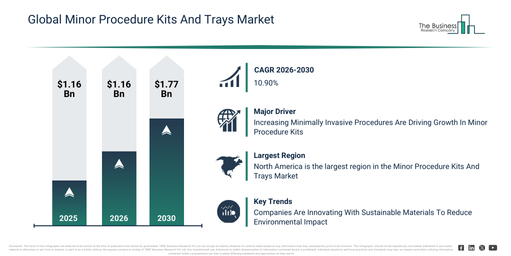
  • Minor Procedure Kits And Trays Market Expected To Reach $13.18 Billion By 2030 As Growth Accelerates At 10.9% CAGR

    Minor Procedure Kits And Trays Market Expected To Reach $13.18 Billion By 2030 As Growth Accelerates At 10.9% CAGR

    Through market attractiveness analysis, total addressable market evaluation, company benchmarking matrices, interactive Excel dashboards, expanded supply chain intelligence, emerging startup coverage, and detailed product insights, The Business Research Company’s 2026 market reports provide more actionable and strategically valuable research.

    The minor procedure kits and trays market has experienced significant advancement recently, reflecting a strong demand for efficient medical solutions. This sector’s rapid expansion is driven by evolving healthcare needs and innovations aimed at improving procedural workflows. Let’s explore the current market size, growth factors, leading players, and emerging trends shaping this industry’s future.

    Market Size and Growth Trajectory of the Minor Procedure Kits and Trays Market

    The market for minor procedure kits and trays has seen swift growth in recent years. It is expected to increase from $7.82 billion in 2025 to $8.7 billion in 2026, representing a compound annual growth rate (CAGR) of 11.3%. The expansion during the historical period is largely due to rising outpatient procedures, the demand for streamlined workflows, increased emphasis on sterility, a surge in emergency room visits, and the standardization of clinical protocols.

    Download A Free Sample Report For Comprehensive Market Insights:

    https://www.thebusinessresearchcompany.com/sample.aspx?id=19596&type=smp

    Looking ahead, the market is projected to continue its rapid ascent, reaching $13.19 billion by 2030 with an anticipated CAGR of 10.9%. This forecasted growth is fueled by the proliferation of urgent care centers, heightened demand for affordable medical procedures, the growth of home care treatments, a shift towards disposable medical supplies, and an increase in minor surgical interventions. Key trends shaping the market include a rising preference for pre-assembled sterile kits, expanded use in outpatient and urgent care environments, a stronger focus on infection prevention and protocol standardization, as well as customizable procedure trays.

    The Growing Need for Minimally Invasive Techniques as a Market Driver

    One of the primary factors propelling growth in the minor procedure kits and trays market is the increasing adoption of minimally invasive procedures. These techniques involve smaller incisions and less tissue disruption compared to traditional surgeries, enabling faster recoveries and fewer complications. Such benefits make minimally invasive procedures highly appealing to both healthcare providers and patients.

    Access The Complete Minor Procedure Kits And Trays Market Report:

    https://www.thebusinessresearchcompany.com/report/minor-procedure-kits-and-trays-global-market-report

    Minor procedure kits and trays play a crucial role in supporting these techniques by supplying pre-assembled, sterile instruments and materials needed for efficient and safe intervention. For example, data from the American Society of Plastic Surgeons indicates that nearly 23.7 million minimally invasive cosmetic surgeries were performed in the United States in 2022, rising by 7% to over 25.4 million in 2023. This clear upward trend in minimally invasive procedures is directly boosting demand for minor procedure kits and trays worldwide.

    Breaking Down the Minor Procedure Kits and Trays Market Segmentation

    The minor procedure kits and trays market can be analyzed through several key segments:

    1) Type: Disposable and Non-Disposable

    2) Material: Polypropylene, Polyethylene, Stainless Steel, Aluminum

    3) Procedure Type: Including Suturing, Wound Care, Biopsy, Injections, and Minor Surgeries

    4) Sterility: Sterile and Non-Sterile

    5) Application: Covering General Practice, Emergency Rooms, Urgent Care, Ambulatory Surgery, and Home Care

    Further distinctions within these categories include disposable kits such as single-use minor procedure kits, pre-packaged disposable trays, and sterile disposable kits. The non-disposable category includes reusable minor procedure kits, customizable trays, and sterilizable kits, catering to diverse clinical needs.

    Sustainability and Innovation Shape Future Market Trends

    Key players in this market are increasingly prioritizing innovation, focusing on developing eco-friendly products to reduce environmental impact. Sustainable materials are designed to minimize plastic waste and lower carbon dioxide equivalent emissions, crucial in high-volume surgical settings.

    An example of this trend is NewGen Surgical Inc.’s introduction in February 2023 of Bio-Based Surgical Compartment Trays. These trays aim to replace single-use plastic products with environmentally responsible alternatives, significantly reducing plastic waste and carbon emissions. Their USDA BioPreferred Certification highlights their commitment to sustainability, especially in procedures with high usage such as ophthalmology.

    Market Leaders Steering Competition in Minor Procedure Kits and Trays

    Several prominent companies are leading the market for minor procedure kits and trays, including:

    Cardinal Health Inc., Johnson & Johnson Services Inc., 3M Company, Medtronic PLC, Becton Dickinson and Company (BD), Stryker Corporation, Henry Schein Inc., Owens & Minor Inc., B. Braun Melsungen AG, Smith & Nephew plc, Steris plc, Teleflex Incorporated, Hartmann Group, Mölnlycke Health Care AB, Halyard Health Inc., Integra LifeSciences Corporation, Aspen Surgical Products Inc., Bioseal LLC, ITL Health Group, Bluekit Medical LLC, and QuickMedical.

    Regional Markets and Growth Hotspots in Minor Procedure Kits and Trays

    In 2025, North America was the largest market for minor procedure kits and trays. However, the Asia-Pacific region is expected to experience the fastest growth during the forecast period. The market coverage also includes regions such as South East Asia, Western Europe, Eastern Europe, South America, the Middle East, and Africa, providing a global perspective on demand and expansion opportunities.

    Get in touch with us:

    The Business Research Company: https://www.thebusinessresearchcompany.com/

    Americas: +1 310-496-7795

    Asia: +44 7882 955267 & +91 8897263534

    Europe: +44 7882 955267

    Email us at: marketing@tbrc.info

    Follow us on:

    LinkedIn: https://in.linkedin.com/company/the-business-research-company

    YouTube: https://www.youtube.com/channel/UC24_fI0rV8cR5DxlCpgmyFQ

    Global Market Model: https://www.thebusinessresearchcompany.com/global-market-model