Month: June 2026

  • Life Science Tools Market Forecast Reveals Where Future Industry Value Will Be Created

    Life Science Tools Market Forecast Reveals Where Future Industry Value Will Be Created

    Enhanced with market attractiveness analysis, total addressable market evaluation, company benchmarking matrices, interactive Excel dashboards, expanded supply chain intelligence, emerging startup coverage, and detailed product insights, The Business Research Company’s 2026 market reports deliver more actionable and strategically valuable research.

    The life science tools sector has experienced remarkable growth lately, driven by advancements in technology and expanding research activities. This expanding market is set to play a crucial role in supporting innovations in healthcare, pharmaceuticals, and biotechnology. Let’s explore the current market size, key growth drivers, major players, and emerging trends shaping this dynamic field.

    Market Size and Expansion Outlook for the Life Science Tools Market

    The life science tools market has witnessed rapid development in recent years. It is projected to increase from $201.37 billion in 2025 to $229.1 billion in 2026, reflecting a robust compound annual growth rate (CAGR) of 13.8%. This historical growth has been influenced by reliance on traditional laboratory instruments, limited availability of premium reagents and consumables, rising pharmaceutical and biotech research, expanding academic and research institutions, and the continued use of manual laboratory processes.

    Looking ahead, the market is expected to accelerate its growth, reaching $379.95 billion by 2030 with a CAGR of 13.5%. This future expansion is largely driven by the adoption of automation and smart laboratory equipment, increased investments in genomics and proteomics research, growing demand for personalized medicine, broader clinical diagnostics and drug discovery applications, and the uptake of cloud-based data analytics and digital lab solutions. Key trends anticipated during this period include widespread use of high-throughput instruments and automation, strong demand for sophisticated consumables and reagents, growth in genomic, proteomic, and cell biology research, rising prominence of contract research organizations (CROs), and enhanced quality control and calibration services.

    Download A Free Sample Report For Comprehensive Market Insights:

    https://www.thebusinessresearchcompany.com/sample.aspx?id=27329&type=smp

    Key Factors Supporting the Growth of the Life Science Tools Market

    One of the major forces propelling the life science tools market is the rising demand for biopharmaceuticals. These are medical therapies produced through biotechnology, which uses living cells or organisms to develop treatments like proteins, antibodies, and vaccines. The appeal of biopharmaceuticals stems from their effectiveness in addressing complex and chronic illnesses beyond the capabilities of traditional small-molecule drugs.

    Life science tools play a vital role in enabling the development and manufacturing of these biopharmaceuticals by providing essential technologies for research, analysis, and quality control throughout drug production. These tools ensure precision, efficiency, and compliance with regulatory standards. For example, in January 2023, Cardinal Health Inc. reported that as of January 2022, the US FDA had approved 33 biosimilar products, with 21 already on the market. By 2023, the number of FDA-approved biosimilars rose to 40, with 25 commercially available, highlighting the growing market demand linked to biopharmaceutical advancements.

    Breaking Down the Life Science Tools Market Segmentation

    The life science tools market is organized into several key segments for a detailed understanding:

    1) Type: Instruments, Consumables, and Services

    2) Technology: Polymerase Chain Reaction (PCR) and Quantitative PCR (qPCR), Sanger Sequencing, Separation Technologies, Flow Cytometry, Nucleic Acid Microarray, Mass Spectrometry, and others

    3) Application: Drug Discovery and Development, Clinical Diagnostics, Genomic and Proteomic Research, Cell Biology Research, and other uses

    4) End-User: Academic and Research Institutions, Biotechnology and Pharmaceutical Companies, Hospitals and Diagnostic Laboratories, Contract Research Organizations (CROs), and Government and Regulatory Agencies

    Further subcategories include instruments such as microscopes, sequencers, analyzers, spectrometers, centrifuges, chromatography systems, and laboratory automation equipment. Consumables cover reagents, kits, culture media, pipettes and tips, plasticware, laboratory chemicals, and assay kits. Services consist of calibration, maintenance and repair, laboratory testing, consulting, training and support, and research and development.

    Access The Complete Life Science Tools Market Report:

    https://www.thebusinessresearchcompany.com/report/life-science-tools-global-market-report

    How Innovation and Technology Trends Are Reshaping Competition in Life Science Tools

    Leading companies in the life science tools market are intensifying efforts to develop innovative technologies like automated sequencing platforms. These platforms enhance the speed, accuracy, and accessibility of genetic analysis, thus accelerating both research and clinical diagnostics. Automated sequencing systems perform DNA or RNA sequencing with minimal manual input through robotics and software, increasing throughput and decreasing errors.

    For instance, in October 2024, Illumina Inc., a US biotechnology firm, introduced the MiSeq i100 series, touted as their simplest and fastest benchtop sequencers. These new systems feature room-temperature kit storage and shipping, which reduces delays caused by reagent thawing and allows for same-day sample-to-analysis workflows. They offer rapid sequencing with run times as short as four hours, cost-effective consumables, and straightforward push-button operation, supporting applications in microbiology, infectious diseases, and oncology. This launch illustrates the market’s evolution towards more efficient, scalable, and user-friendly sequencing tools that empower both researchers and clinicians.

    Main Players Leading the Life Science Tools Market

    The competitive landscape of the life science tools market includes major players such as F. Hoffmann-La Roche Ltd., Merck KGaA, Thermo Fisher Scientific Inc., Danaher Corporation, Agilent Technologies Inc., Lonza Group Ltd., Illumina Inc., Sartorius AG, Shimadzu Corporation, Revvity Inc., Waters Corporation, Bio-Rad Laboratories Inc., Bruker Corporation, Eppendorf AG, Tecan Group Ltd., Bio-Techne Corporation, Takara Bio Inc., GenScript Biotech Corporation, 10x Genomics Inc., and Hamilton Company. These companies constantly innovate to maintain leadership and meet evolving market demands.

    Global Region Analysis and Market Leadership in Life Science Tools

    In 2025, North America held the largest share of the life science tools market. However, the Asia-Pacific region is anticipated to grow at the fastest pace throughout the forecast period. The market report encompasses major geographic regions including Asia-Pacific, South East Asia, Western Europe, Eastern Europe, North America, South America, the Middle East, and Africa, providing a thorough perspective on global market dynamics.

    Get in touch with us:

    The Business Research Company: https://www.thebusinessresearchcompany.com/

    Americas: +1 310-496-7795

    Asia: +44 7882 955267 & +91 8897263534

    Europe: +44 7882 955267

    Email us at: marketing@tbrc.info

    Follow us on:

    LinkedIn: https://in.linkedin.com/company/the-business-research-company

    YouTube: https://www.youtube.com/channel/UC24_fI0rV8cR5DxlCpgmyFQ

    Global Market Model: https://www.thebusinessresearchcompany.com/global-market-model
  • Medical Tubing Market Growth Is Accelerating As Industry Transformation Continues

    Medical Tubing Market Growth Is Accelerating As Industry Transformation Continues

    Through market attractiveness analysis, total addressable market evaluation, company benchmarking matrices, interactive Excel dashboards, expanded supply chain intelligence, emerging startup coverage, and detailed product insights, The Business Research Company’s 2026 market reports provide more actionable and strategically valuable research.

    The medical tubing industry has witnessed significant growth recently, driven by rising healthcare needs and technological advancements. With increasing demand for innovative medical devices and expanding applications across various healthcare sectors, this market is set to experience impressive growth in the coming years. Let’s explore the current market size, growth drivers, segmentation, key trends, leading companies, and regional insights shaping the future of medical tubing.

    Medical Tubing Market Size and Growth Outlook

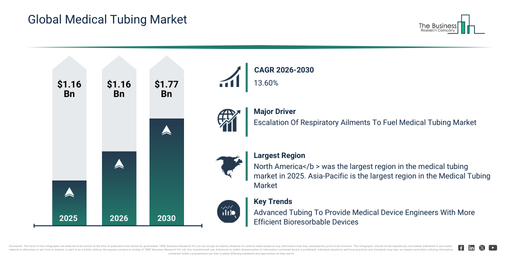
    The medical tubing market has expanded rapidly over the past few years, with its size expected to increase from $14.12 billion in 2025 to $16.04 billion in 2026, reflecting a compound annual growth rate (CAGR) of 13.5%. This past growth has been fueled by the rise in hospital procedural volumes, greater use of intravenous (IV) and catheter devices, higher adoption rates of disposable medical products, expanding biopharmaceutical manufacturing activities, and the availability of advanced polymer materials. Looking ahead, the market is projected to reach $26.7 billion by 2030, growing at a CAGR of 13.6%. The forecast period’s expansion is anticipated to be driven by the rising demand for minimally invasive medical devices, increased investments in biopharmaceutical production, growth of home healthcare applications, heightened focus on patient safety and infection prevention, and the growing use of specialty polymer tubing. Key trends expected to influence the market include a surge in demand for biocompatible tubing materials, customized extrusion of medical tubes, emphasis on sterile single-use tubing systems, expanded drug delivery applications, and improved chemical and heat resistance features.

    Download A Free Sample Report For Comprehensive Market Insights:

    https://www.thebusinessresearchcompany.com/sample.aspx?id=6688&type=smp

    Key Factors Fueling Medical Tubing Market Growth

    One major factor propelling the medical tubing market is the increasing prevalence of respiratory diseases. Conditions such as asthma, lung cancer, and pulmonary fibrosis—often triggered by smoking, air pollution, allergens, and occupational hazards—heighten the need for medical tubing, which forms a critical component of ventilators aiding breathing. For example, according to the Centers for Disease Control and Prevention, tuberculosis cases in the U.S. rose from 8,320 in 2022 to 9,615 in 2023, an increase of 1,295 cases. The incidence rate also jumped from 2.5 to 2.9 per 100,000 people during the same period. This uptick in respiratory illnesses is expected to boost demand for medical tubing solutions.

    Additional Drivers Accelerating Medical Tubing Demand

    Alongside respiratory disease trends, the growing adoption of disposable medical devices and increasing biopharmaceutical manufacturing activities contribute to the market’s growth. The availability and innovation of advanced polymer materials have further enabled the production of high-performance, specialized tubing required in diverse medical applications. Together, these factors create a strong foundation for the medical tubing market’s continued expansion.

    Access The Complete Medical Tubing Market Report:

    https://www.thebusinessresearchcompany.com/report/medical-tubing-global-market-report

    Medical Tubing Market Segmentation Overview

    This market is segmented comprehensively to cover various dimensions:

    1) By Product Type: Silicone, Polyolefins, Polyvinyl Chloride (PVC), Polycarbonates, Fluoropolymers, and Other Products

    2) By Application: Bulk Disposable Tubing, Drug Delivery Systems, Catheters, Biopharmaceutical Laboratory Equipment, and Other Applications

    3) By End-User: Hospitals, Clinics, Ambulatory Surgical Centers, Medical Laboratories, and Other End-Users

    Further product subcategories include:

    – Silicone tubing subdivided into Medical Grade and Reinforced Silicone Tubing

    – Polyolefins including Polyethylene (PE) and Polypropylene (PP) Tubing

    – PVC tubing split into Flexible and Rigid types

    – Polycarbonates divided into Clear and Specialty Tubing

    – Fluoropolymers such as Polytetrafluoroethylene (PTFE) and Fluorinated Ethylene Propylene (FEP) Tubing

    – Other products encompass Thermoplastic Elastomers (TPE), Nylon, and Custom Extruded Tubing

    Innovations Shaping the Medical Tubing Market’s Next Chapter

    Leading companies in the field are developing advanced tubing products that improve performance and patient outcomes. For example, in September 2023, Zeus, a U.S.-based polymer solutions provider, introduced Absorv XSE-oriented tubing—an innovative bioresorbable tubing platform. This product offers a customizable design alternative to metallic implants and supports a wide range of medical uses, including bioresorbable vascular scaffold (BRS) applications beyond coronary artery disease. It addresses limitations of earlier bioresorbable scaffolds by providing consistent wall thickness and customizable absorption rates, enabling more versatile procedures to replace traditional metallic stents.

    Top Companies Driving Competition in Medical Tubing

    Several key players are at the forefront of the medical tubing market, including Saint-Gobain S.A., Freudenberg Medical LLC, W.L. Gore & Associates Inc., Avient Corporation, Raumedic AG, Micro-Tek Corp., NewAge Industries Inc., Axiom Medical Inc., NovoSci Corp., Vanguard Products Corp., Zeus Industrial Products Inc., Absolute Custom Extrusions Inc., Petro Extrusion Technologies Inc., Pexco LLC, GSH Industries Inc., Teleflex Medical OEM LLC, Putnam Plastics Corporation, Tekni-Plex Inc., Nordson Corporation, Qosina Corp., Vesta Inc., Lubrizol Life Science Health, Grayline LLC, Trelleborg Healthcare & Medical, Spectrum Plastics Group Inc., Merit Medical Systems Inc., Applied Plastics Co. Inc., Duke Empirical Inc., Biomerics LLC, Polyzen Inc., and Resonetics LLC. These organizations are actively innovating and expanding their product portfolios to meet evolving healthcare demands.

    Regional Market Leadership and Growth Dynamics

    In 2025, North America held the largest share of the medical tubing market, supported by advanced healthcare infrastructure and strong demand for medical devices. Meanwhile, the Asia-Pacific region is anticipated to be the fastest-growing market during the forecast period, driven by increasing healthcare investments, expanding patient populations, and rising awareness of advanced medical technologies. The medical tubing market report encompasses key regions such as Asia-Pacific, South East Asia, Western Europe, Eastern Europe, North America, South America, the Middle East, and Africa, providing a global perspective on market trends and opportunities.

    Get in touch with us:

    The Business Research Company: https://www.thebusinessresearchcompany.com/

    Americas: +1 310-496-7795

    Asia: +44 7882 955267 & +91 8897263534

    Europe: +44 7882 955267

    Email us at: marketing@tbrc.info

    Follow us on:

    LinkedIn: https://in.linkedin.com/company/the-business-research-company

    YouTube: https://www.youtube.com/channel/UC24_fI0rV8cR5DxlCpgmyFQ

    Global Market Model: https://www.thebusinessresearchcompany.com/global-market-model
  • Life Science And Chemical Instrumentation Market Growth Through 2030 Creates New Strategic Opportunities

    Life Science And Chemical Instrumentation Market Growth Through 2030 Creates New Strategic Opportunities

    Through market attractiveness analysis, total addressable market evaluation, company benchmarking matrices, interactive Excel dashboards, expanded supply chain intelligence, emerging startup coverage, and detailed product insights, The Business Research Company’s 2026 market reports provide more actionable and strategically valuable research.

    The life science and chemical instrumentation sector has seen remarkable growth recently, driven by expanding research activities and technological advancements. As the demand for precise scientific tools increases, this market is poised for significant expansion. Here’s an overview of the current market size, key growth drivers, major players, segment breakdowns, and emerging trends shaping the future.

    Strong Market Growth Forecast for the Life Science and Chemical Instrumentation Market

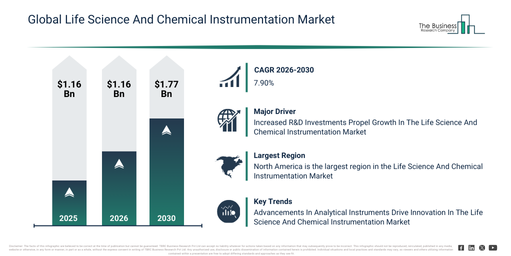
    The life science and chemical instrumentation market has experienced substantial growth in recent years and is set to continue this trajectory. It is projected to rise from $61.82 billion in 2025 to $66.94 billion in 2026, marking a compound annual growth rate (CAGR) of 8.3%. Looking ahead, the market is expected to reach $90.58 billion by 2030, growing at a CAGR of 7.9%. This surge is fueled by the adoption of cutting-edge omics technologies, increased investments in personalized medicine, the expansion of digital laboratory platforms, heightened emphasis on regulatory compliance automation, and growing demand for real-time analytical insights. Key trends include a rising shift toward automated analytical instruments, high-throughput testing systems, integration of laboratory information systems, advancements in precision measurement tools, and a stronger focus on data integrity and regulatory adherence.

    Download A Free Sample Report For Comprehensive Market Insights:

    https://www.thebusinessresearchcompany.com/sample.aspx?id=8902&type=smp

    Increasing Research and Development Investment Boosts Market Demand

    A primary factor propelling the life science and chemical instrumentation market is the rising investment in research and development (R&D). R&D encompasses systematic and innovative efforts to advance scientific knowledge and develop new or improved technologies, products, and processes. Governments worldwide are increasing funding to accelerate technological innovation and maintain economic competitiveness, which is fueling the demand for sophisticated analytical, detection, and measurement instruments essential for high-precision scientific work.

    Government Funding and Its Impact on R&D and Market Growth

    For example, Eurostat reported that research and development expenditure in the European Union rose to 2.26% of GDP in 2023, up from 2.22% in 2022. This growth in public funding supports the expansion of scientific research activities, which directly stimulates demand for the life science and chemical instrumentation market by encouraging companies to adopt advanced laboratory technologies.

    Access The Complete Life Science And Chemical Instrumentation Market Report:

    https://www.thebusinessresearchcompany.com/report/life-science-and-chemical-instrumentation-global-market-report

    Distinct Segments Defining the Life Science and Chemical Instrumentation Market

    This market can be categorized into several key segments based on technology, application, and end user. By technology, it includes Polymerase Chain Reaction (PCR), DNA Sequencers and Amplifiers, Flow Cytometry, Spectroscopy, Electrophoresis, Chromatography, Centrifuges, and other emerging technologies. Applications span areas like Cell Culture and Cell Therapy, Cancer Research, Drug Discovery, Genomics, In Vitro Fertilization, Bioprocessing, Metabolomics, Proteomics, and others. End users consist of Hospitals and Diagnostic Centers, Pharmaceutical and Biotechnology Companies, Contract Research Organizations (CROs), and Academia and Research Institutes.

    Further Breakdown of Key Technologies Within the Market

    Within these categories, PCR technologies include Real-Time PCR, Digital PCR, and Standard PCR. DNA sequencing involves Next-Generation Sequencing (NGS) and Sanger Sequencing. Flow Cytometry covers Cell Sorting and Multiparameter Analysis. Spectroscopy is divided into UV-Vis Spectroscopy, Mass Spectrometry, and Infrared Spectroscopy. Electrophoresis includes Gel and Capillary Electrophoresis. Chromatography features Gas Chromatography (GC) and High-Performance Liquid Chromatography (HPLC). Centrifuges are segmented into Benchtop and Ultracentrifuges, while other technologies include Microarray Technology and Immunoassays.

    Innovations and Efficiency Enhancements Shaping Market Trends

    Leading players in the life science and chemical instrumentation market are focusing heavily on incorporating scalable, energy-efficient analytical technologies to improve lab operations. One notable example is the advancement in next-generation gas chromatography (GC) systems designed to deliver higher throughput with reduced energy consumption and smarter automation. These systems support intelligent operations, minimize consumable usage, and offer seamless integration with complementary instruments.

    Illustration of Next-Generation Technology Adoption by a Market Leader

    For instance, in October 2023, Shimadzu Corporation introduced the Brevis GC-2050, a compact gas chromatography system just 35 cm wide. This model is highly scalable, compatible with auto-samplers, mass spectrometers, and other accessories. It also achieves a 30% reduction in energy consumption compared to traditional units and significantly lowers helium use, promoting environmental sustainability through its intelligent automated features.

    Leading Corporations Driving Competition in the Life Science and Chemical Instrumentation Market

    The market is dominated by several key global companies, including Agilent Technologies Inc., Becton Dickinson and Company, Bio-Rad Laboratories Inc., Bruker Corporation, Danaher Corporation, PerkinElmer Inc., Thermo Fisher Scientific Inc., Waters Corporation, F. Hoffmann-La Roche Ltd., Illumina Inc., Shimadzu Corporation, General Electric Healthcare LLC, Hitachi High-Technologies Corporation, JEOL Ltd., Oxford Instruments PLC, Rigaku Corporation, Sigma-Aldrich Corporation, SRI Instruments, Analytik Jena AG, Biochrom Ltd., BioTek Instruments Inc., Cole-Parmer Instrument Company LLC, Eppendorf AG, Harvard Bioscience Inc., HORIBA Ltd., Labconco Corporation, Mettler-Toledo International Inc., New England Biolabs Inc., and QIAGEN N.V.

    Regional Market Leadership and Emerging Growth Areas

    In terms of regional market share, North America holds the largest portion of the life science and chemical instrumentation market as of 2025. However, the Asia-Pacific region is expected to be the fastest-growing market throughout the forecast period. The market report covers regions including Asia-Pacific, South East Asia, Western Europe, Eastern Europe, North America, South America, the Middle East, and Africa, providing a global perspective on market expansion and opportunities.

    Get in touch with us:

    The Business Research Company: https://www.thebusinessresearchcompany.com/

    Americas: +1 310-496-7795

    Asia: +44 7882 955267 & +91 8897263534

    Europe: +44 7882 955267

    Email us at: marketing@tbrc.info

    Follow us on:

    LinkedIn: https://in.linkedin.com/company/the-business-research-company

    YouTube: https://www.youtube.com/channel/UC24_fI0rV8cR5DxlCpgmyFQ

    Global Market Model: https://www.thebusinessresearchcompany.com/global-market-model
  • Lichen Planus Market Size Projected To Increase From $1.35 Billion To $1.75 Billion During The Forecast Period

    Lichen Planus Market Size Projected To Increase From $1.35 Billion To $1.75 Billion During The Forecast Period

    Delivering more actionable and strategically valuable research, The Business Research Company’s 2026 market reports feature market attractiveness analysis, total addressable market evaluation, company benchmarking matrices, interactive Excel dashboards, expanded supply chain intelligence, emerging startup coverage, and detailed product insights.

    The lichen planus market is showing promising growth, driven by advances in treatment options and increasing awareness of autoimmune skin conditions. As more patients receive diagnoses and therapies improve, this sector is expected to expand steadily in the coming years. Let’s explore the current market size, key growth factors, segmentation, innovation trends, leading companies, and regional insights shaping this field.

    Lichen Planus Market Size and Forecasted Expansion

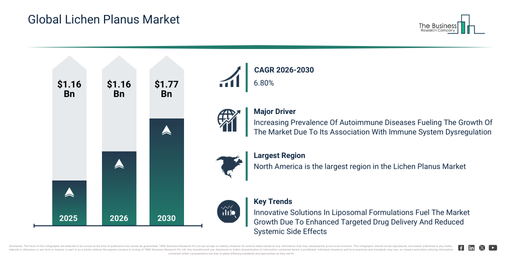
    The market for lichen planus has experienced substantial growth recently, and projections indicate it will increase from $1.26 billion in 2025 to $1.35 billion in 2026, reflecting a compound annual growth rate (CAGR) of 7.1%. This upward trend can be linked to better diagnosis of autoimmune skin disorders, wider availability of corticosteroid treatments, growth in specialized dermatology clinics, heightened clinical awareness, and the use of phototherapy. Looking ahead, the market is expected to reach $1.76 billion by 2030, growing at a CAGR of 6.8%. The forecasted growth is supported by a rising demand for advanced immunotherapies, greater emphasis on managing symptoms over the long term, expansion of biologic drug research, integration of digital dermatology tools, and innovations in targeted anti-inflammatory medications. Key trends shaping this period include increased use of targeted immunomodulatory therapies, combination treatments involving topical and systemic approaches, a focus on chronic disease management, personalized dermatology care, and enhanced patient education and monitoring.

    Download A Free Sample Report For Comprehensive Market Insights:

    https://www.thebusinessresearchcompany.com/sample.aspx?id=24279&type=smp

    Growing Prevalence of Autoimmune Diseases as a Market Driver

    One of the main factors boosting the lichen planus market is the rising occurrence of autoimmune diseases. These disorders occur when the immune system mistakenly attacks the body’s healthy cells, encompassing conditions such as rheumatoid arthritis, lupus, type 1 diabetes, multiple sclerosis, and psoriasis. Genetic factors play a significant role in this increase, with certain gene variations affecting immune regulation and connective tissue health. This overall rise in autoimmune diseases contributes directly to more cases of lichen planus. For example, data from June 2024 by the Australian Institute of Health and Welfare indicated that about 514,000 people (2.0% of the population) were living with rheumatoid arthritis in 2022. This condition accounted for 2.0% of total disease burden and 16% of musculoskeletal disorders in 2023, with 1,322 deaths (5.1 per 100,000 population) reported in 2022, representing 0.7% of all deaths. Such statistics highlight how increasing autoimmune disease prevalence fuels demand within the lichen planus market.

    Segment Overview of the Lichen Planus Market

    This market is divided into several important segments to better understand growth opportunities. By disease type, it covers Lichen Planus, Oral Lichen Planus, Genital Lichen Planus, and Lichen Planus Pigmentosus. Treatment types include topical therapies, systemic therapies, and phototherapy. Routes of administration are classified as topical, oral, and intravenous. End users comprise hospitals, homecare settings, specialty clinics, and other consumers. Each of these categories further breaks down into subtypes; for instance, Lichen Planus includes papular, hypertrophic, actinic, linear, and annular forms; Oral Lichen Planus involves reticular, erosive, atrophic, plaque-like, and bullous variants; Genital Lichen Planus features erosive, papular, annular types, plus vulvovaginal-gingival syndrome; and Lichen Planus Pigmentosus is segmented into diffuse, blotchy, linear, perifollicular, and flexural types. This detailed segmentation helps identify specific areas of growth within the broader market.

    Access The Complete Lichen Planus Market Report:

    https://www.thebusinessresearchcompany.com/report/lichen-planus-global-market-report

    Innovations and New Developments Shaping the Lichen Planus Market

    Leading players in this market are focusing on innovative drug delivery systems, such as liposomal formulations, which improve targeted therapy and minimize systemic side effects. Liposomes are tiny spherical vesicles made from lipid bilayers that encapsulate active drug ingredients, enhancing stability and absorption while allowing precise delivery to affected areas. For example, in February 2025, Lipella Pharmaceuticals Inc., a US biotechnology firm, received FDA approval for an expanded access program (EAP) for LP-310, a liposomal tacrolimus formulation designed to treat oral lichen planus. This program enables patients with serious or life-threatening conditions and unmet treatment needs to access the drug outside of clinical trials before full approval, suggesting potential benefits for improved patient outcomes.

    Top Companies Leading the Lichen Planus Market

    The lichen planus market features several prominent pharmaceutical and biotechnology companies, including Pfizer Inc., Johnson & Johnson Services Inc., F. Hoffmann-La Roche AG, Merck & Co. Inc., AbbVie Inc., Sanofi SA, Bristol-Myers Squibb Company, Novartis AG, GlaxoSmithKline plc, Takeda Pharmaceutical Company, Eli Lilly and Company, Teva Pharmaceutical Industries Ltd., Boehringer Ingelheim International GmbH, Dr. Reddy’s Laboratories Ltd, Amneal Pharmaceuticals Inc., Hikma Pharmaceuticals plc, LEO Pharma A/S, Basilea Pharmaceutica Ltd., UCB S.A., Almirall SA, and Lipella Pharmaceuticals Inc. These organizations play key roles in developing treatments and driving innovation within the lichen planus space.

    Regional Insights Highlighting North America’s Market Leadership

    In 2025, North America held the largest share of the lichen planus market globally. The report also covers major regions such as Asia-Pacific, South East Asia, Western Europe, Eastern Europe, South America, the Middle East, and Africa, providing a comprehensive view of global market trends and growth potential. While North America currently leads in revenue generation, emerging markets are expected to contribute significantly in the coming years.

    Get in touch with us:

    The Business Research Company: https://www.thebusinessresearchcompany.com/

    Americas: +1 310-496-7795

    Asia: +44 7882 955267 & +91 8897263534

    Europe: +44 7882 955267

    Email us at: marketing@tbrc.info

    Follow us on:

    LinkedIn: https://in.linkedin.com/company/the-business-research-company

    YouTube: https://www.youtube.com/channel/UC24_fI0rV8cR5DxlCpgmyFQ

    Global Market Model: https://www.thebusinessresearchcompany.com/global-market-model

  • Library Preparation And Target Enrichment For Next-Generation Sequencing Product Market Growth Outlook Reveals A CAGR Of 11.6% And A Market Value Of $5.95 Billion By 2030

    Library Preparation And Target Enrichment For Next-Generation Sequencing Product Market Growth Outlook Reveals A CAGR Of 11.6% And A Market Value Of $5.95 Billion By 2030

    Enhanced with market attractiveness analysis, total addressable market evaluation, company benchmarking matrices, interactive Excel dashboards, expanded supply chain intelligence, emerging startup coverage, and detailed product insights, The Business Research Company’s 2026 market reports deliver more actionable and strategically valuable research.

    The market for library preparation and target enrichment products used in next-generation sequencing (NGS) has seen rapid growth driven by advances in genomics and increasing research applications. As precision medicine continues to evolve, these technologies are becoming critical in enhancing genomic analysis, leading to promising future expansion. Let’s explore the market size, growth factors, segmentation, emerging trends, key players, and regional insights shaping this sector.

    Current and Projected Market Size of the Library Preparation and Target Enrichment for Next-Generation Sequencing Product Market

    The market size for library preparation and target enrichment products in next-generation sequencing has been expanding swiftly. It is projected to grow from $3.43 billion in 2025 to $3.84 billion in 2026, representing a compound annual growth rate (CAGR) of 11.9%. This growth during the historical period is largely fueled by increased cancer genomics research, broader adoption of NGS platforms, surging demand for targeted sequencing, rising biomarker studies, and improvements in enrichment chemistry. Looking ahead, the market is expected to reach $5.96 billion by 2030, with a CAGR of 11.6%. Factors driving this anticipated growth include the advancement of precision diagnostics, growing use in clinical laboratories, expansion in rare disease testing, innovations improving enrichment efficiency, and stronger regulatory support for genomic research. Key trends shaping the future landscape involve expanding targeted sequencing applications, wider adoption of enrichment kits, demand for affordable sequencing options, growth in clinical genomics testing, and customized panel development.

    Download A Free Sample Report For Comprehensive Market Insights:

    https://www.thebusinessresearchcompany.com/sample.aspx?id=28257&type=smp

    Personalized Medicine as a Major Driver for the NGS Library Preparation and Target Enrichment Market

    One of the primary forces propelling this market forward is the rising demand for personalized medicine, which tailors healthcare based on an individual’s genetic profile, lifestyle, and environment. Advances in genomics have made it possible to precisely identify genetic variations, allowing highly customized treatment approaches. Library preparation and target enrichment products enable this precision by streamlining workflows and focusing sequencing efforts on clinically relevant genomic regions, enhancing diagnostic accuracy and personalized therapy design.

    Supporting this trend, data from February 2024 published by the Personalized Medicine Coalition (PMC) reveals that the U.S. Food and Drug Administration (FDA) approved 26 new personalized medicines in 2023, a significant jump from the 12 approvals in 2022. This increase highlights the growing emphasis on personalized treatments, which is driving demand for efficient NGS library preparation and target enrichment solutions.

    Access The Complete Library Preparation And Target Enrichment For Next-Generation Sequencing Product Market Report:

    https://www.thebusinessresearchcompany.com/report/library-preparation-and-target-enrichment-for-next-generation-sequencing-product-global-market-report

    Segment Breakdown and Strategic Opportunities in the Library Preparation and Target Enrichment for Next-Generation Sequencing Product Market

    This market is segmented based on several key categories to offer a detailed understanding of product and application areas.

    By product type, the market includes Library Preparation Kits, Target Enrichment Kits, Instrument Systems, Reagents, and Consumables and Accessories.

    The technology segment covers Targeted Sequencing, Whole Exome Sequencing, Whole Genome Sequencing, RNA Sequencing, and Single-Cell Sequencing.

    Workflow stages comprise Sample Preparation, Library Construction, Enrichment, Sequencing, and Data Analysis.

    Applications include Clinical Diagnostics, Research and Development, Forensic Applications, and other specialized fields.

    End users span Academic and Research Institutions, Clinical Laboratories, Pharmaceutical and Biotech Companies, Hospitals and Diagnostic Centers, as well as Government and Non-Profit Organizations.

    Further subsegment details encompass various kits such as DNA Fragmentation Kits, Adapter Ligation Kits, Indexing Kits, and PCR Amplification Kits within library preparation; Hybridization Capture Kits, Amplicon-Based Enrichment Kits, Custom Panel Kits, and Pre-Capture Pooling Kits under target enrichment; automated preparation systems and quality control instruments; reagents including DNA polymerases and ligases; and consumables like magnetic beads and pipette tips.

    Innovations and Trends Boosting Efficiency and Capabilities in the Library Preparation and Target Enrichment Market

    Leading companies are investing heavily in innovative products that enhance sequencing efficiency and coverage. Among key innovations are multimodal NGS library preparation kits that allow simultaneous preparation of both DNA and RNA libraries from a single sample. This approach reduces the amount of sample needed, simplifies workflows, and cuts turnaround time while supporting downstream enrichment processes.

    For example, in May 2024, QIAGEN N.V., based in the Netherlands, introduced the QIAseq Multimodal DNA or RNA Library Kit. This kit is the first integrated solution capable of generating DNA and RNA sequencing libraries from one sample, compatible with various sample types including blood, formalin-fixed paraffin-embedded tissue, and cell-free DNA. It offers high sensitivity and variant detection, streamlines multiple lab procedures into a single platform, shortens processing time, and supports compatibility with different sequencing instruments and enrichment panels. Such innovations are vital for advancing research into complex conditions like cancer.

    Key Market Participants Steering Competition in the Library Preparation and Target Enrichment for Next-Generation Sequencing Product Sector

    The competitive landscape includes several major players driving technological progress and market growth. Notable companies in this market are F. Hoffmann-La Roche AG, Thermo Fisher Scientific Inc., Danaher Corporation, Becton Dickinson And Company, Eurofins Scientific SE, Agilent Technologies Inc., Illumina Inc., Sysmex Corporation, Bruker Corporation, Revvity Inc., Bio-Rad Laboratories Inc., QIAGEN N.V., Tecan Group Ltd., Hamilton Company, BGI Genomics Co. Ltd., Takara Bio Inc., Twist Bioscience Corporation, Pacific Biosciences of California Inc., New England Biolabs Inc., Zymo Research Corporation, Lexogen GmbH, and Paragon Genomics Inc.

    These organizations are pivotal in developing cutting-edge solutions and expanding the market’s capabilities to meet increasing demand.

    Regional Landscape and Growth Outlook in the Library Preparation and Target Enrichment for Next-Generation Sequencing Product Market

    North America held the largest share of this market in 2025, benefiting from well-established healthcare infrastructure and strong research funding. Meanwhile, the Asia-Pacific region is forecasted to experience the fastest growth during the coming years, driven by expanding clinical genomics testing, rising healthcare investments, and increasing adoption of innovative NGS technologies. The market analysis encompasses major geographic areas, including Asia-Pacific, South East Asia, Western Europe, Eastern Europe, North America, South America, the Middle East, and Africa, providing a comprehensive view of opportunities and trends worldwide.

    Get in touch with us:

    The Business Research Company: https://www.thebusinessresearchcompany.com/

    Americas: +1 310-496-7795

    Asia: +44 7882 955267 & +91 8897263534

    Europe: +44 7882 955267

    Email us at: marketing@tbrc.info

    Follow us on:

    LinkedIn: https://in.linkedin.com/company/the-business-research-company

    YouTube: https://www.youtube.com/channel/UC24_fI0rV8cR5DxlCpgmyFQ

    Global Market Model: https://www.thebusinessresearchcompany.com/global-market-model

  • Medical Tricorder Market Outlook Highlights The Next Major Growth Opportunities

    Medical Tricorder Market Outlook Highlights The Next Major Growth Opportunities

    Delivering more actionable and strategically valuable research, The Business Research Company’s 2026 market reports feature market attractiveness analysis, total addressable market evaluation, company benchmarking matrices, interactive Excel dashboards, expanded supply chain intelligence, emerging startup coverage, and detailed product insights.

    The medical tricorder market is experiencing swift growth as advancements in healthcare technology and rising healthcare demands drive the need for innovative diagnostic tools. With increasing emphasis on remote and home-based care, this market is expected to expand significantly over the coming years. Let’s explore the current market size, the factors fueling its growth, key players, and the emerging trends shaping its future.

    Market Size and Revenue Forecast for the Medical Tricorder Market

    The medical tricorder market has witnessed rapid expansion recently and is projected to continue this trend. It is expected to increase from $7.71 billion in 2025 to $9.21 billion in 2026, representing a compound annual growth rate (CAGR) of 19.4%. The growth during the past period has been driven by increased usage of portable medical devices, greater demand for quick diagnostic solutions, the rise of telemedicine services, wider availability of compact imaging sensors, and the adoption of digital health platforms.

    Download A Free Sample Report For Comprehensive Market Insights:

    https://www.thebusinessresearchcompany.com/sample.aspx?id=5315&type=smp

    Looking ahead, the market size is forecasted to reach $18.88 billion by 2030 with a CAGR of 19.7%. This anticipated surge is largely due to higher demand for diagnostics at home, growing investments in AI-powered medical technologies, the expansion of remote healthcare delivery systems, increased attention to preventive care, and deeper integration with electronic health records. Key trends expected to influence the market include broader adoption of handheld diagnostic devices, expanded use of AI-driven health assessment tools, integration of wireless medical imaging, growth in point-of-care diagnostics, and a stronger focus on remote patient monitoring.

    Chronic Conditions as a Major Growth Catalyst in the Medical Tricorder Market

    One of the primary drivers behind the medical tricorder market’s growth is the rising incidence of chronic diseases. Chronic conditions—such as diabetes, cardiovascular diseases, cancer, and respiratory illnesses—require ongoing management and continuous health monitoring. The aging populations in developed countries contribute significantly to this trend, as individuals over 65 tend to experience a higher prevalence of multiple chronic ailments due to cumulative health risks and aging-related changes.

    Access The Complete Medical Tricorder Market Report:

    https://www.thebusinessresearchcompany.com/report/medical-tricorder-global-market-report

    This increasing burden of chronic illnesses underscores the demand for advanced diagnostic devices capable of providing continuous monitoring, early complication detection, and real-time disease management through accessible point-of-care solutions. For instance, in June 2024, the UK’s National Health Service reported that 3,615,330 people registered with general practitioners were diagnosed with non-diabetic hyperglycemia or pre-diabetes in 2023. This figure marks an 18% rise from 3,065,825 cases in 2022, highlighting how the growing prevalence of chronic disorders is propelling the medical tricorder market forward.

    Breakdown of Medical Tricorder Market Segments Highlighting Growth Opportunities

    This report segments the medical tricorder market into several important categories:

    1) Device Type: Multi-Parameter Diagnostic Tricorders, Vital Signs Monitoring Tricorders, AI-Enabled Diagnostic Tricorders, Smartphone-Integrated Tricorders, and Wearable-Linked Tricorder Devices

    2) Diagnostic Capability: Cardiovascular Assessment, Respiratory Assessment, Metabolic and Temperature Assessment, Neurological and General Health Assessment, and Multi-Condition Screening

    3) Connectivity Type: Wired Connectivity and Wireless Connectivity

    4) Application Areas: Diagnosis, Continuous or Intermittent Monitoring, Early Disease Screening, and Remote Health Assessment

    5) End Users: Hospitals, Clinics and Primary Care Centers, Home Care Settings, and Remote and Telehealth Providers

    Further subsegments include specific types of multi-parameter diagnostic tricorders such as vital signs and physiological monitoring devices, biochemical and metabolic assessment tools, multi-sensor integrated tricorders, and point-of-care diagnostic units. Vital signs monitoring devices cover cardiovascular, respiratory, temperature, oxygen saturation monitoring, and continuous or spot-check monitoring solutions. AI-enabled tricorders focus on clinical decision support, predictive analytics, symptom analysis, and cloud-based diagnostics. Smartphone-integrated tricorders include app-based diagnostics, sensor-enabled devices, and camera-assisted tools. Wearable-linked tricorders encompass smartwatch-integrated systems, biosensor patches, continuous remote monitoring, and multi-wearable data aggregation technologies.

    Recent Innovations and Transformative Trends in the Medical Tricorder Market

    Leading companies in the medical tricorder space are receiving approvals for smart health-tracking devices that provide real-time health insights by monitoring key metrics like heart rate, physical activity, sleep, and vital signs. These wearable and portable technologies empower users to better manage their wellness.

    For example, in January 2024, France-based Withings launched the BeamO, a 4-in-1 health scanner that combines ECG, pulse oximeter, stethoscope, and thermometer functions into a single compact device. Touted as the thermometer of the future, the BeamO measures temperature via the temporal artery and offers heart and lung health insights. Its electrodes monitor blood oxygen levels and heart rate, enabling a 1-lead ECG similar to the Apple Watch function. Additionally, it captures acoustic soundwaves from the chest or back using a piezoelectric disc, which can be shared with physicians during telehealth consultations, representing a significant advancement in smart medical technology.

    Key Market Players Shaping the Medical Tricorder Industry

    The medical tricorder market features several prominent companies driving innovation and market growth. These include Cloud DX Inc., Scanadu Inc., Basil Leaf Technologies LLC, Healthy.io Ltd., Aidar Health Inc., Accurable Ltd., Care Taker Medical LLC, ChroniSense Medical Ltd., Cardiomo Inc., VitalConnect Inc., Avidhrt Inc., SensoDX II LLC, Final Frontier Medical Devices Inc., Medipense Inc., AliveCor Inc., iHealth Labs Inc., Omron Healthcare Inc., Withings SA, BioTelemetry Inc., Qardio Inc., Empatica Inc., and EarlySense Ltd.

    Regional Market Overview: Where the Medical Tricorder Market Leads

    In 2025, North America held the largest share of the medical tricorder market, reflecting strong healthcare infrastructure and technology adoption. Europe stood as the second-largest market in this sector. The market report also encompasses regions such as Asia-Pacific, South East Asia, Western Europe, Eastern Europe, South America, the Middle East, and Africa, providing a comprehensive view of global market distribution and growth potential.

    Get in touch with us:

    The Business Research Company: https://www.thebusinessresearchcompany.com/

    Americas: +1 310-496-7795

    Asia: +44 7882 955267 & +91 8897263534

    Europe: +44 7882 955267

    Email us at: marketing@tbrc.info

    Follow us on:

    LinkedIn: https://in.linkedin.com/company/the-business-research-company

    YouTube: https://www.youtube.com/channel/UC24_fI0rV8cR5DxlCpgmyFQ

    Global Market Model: https://www.thebusinessresearchcompany.com/global-market-model

  • Library Preparation (Prep) System Market Forecast Highlights Expansion From $1.53 Billion To $2.36 Billion Through 2030

    Library Preparation (Prep) System Market Forecast Highlights Expansion From $1.53 Billion To $2.36 Billion Through 2030

    Through market attractiveness analysis, total addressable market evaluation, company benchmarking matrices, interactive Excel dashboards, expanded supply chain intelligence, emerging startup coverage, and detailed product insights, The Business Research Company’s 2026 market reports provide more actionable and strategically valuable research.

    The library preparation (prep) system market is experiencing significant momentum as advancements in genomic research and personalized medicine continue to gain ground. This sector is witnessing rapid growth, driven by technological progress and increasing demand in clinical and research settings. Below, we explore the market’s size, growth drivers, key players, and future trends shaping this dynamic industry.

    Current Market Size and Projected Growth for Library Preparation Systems

    The market for library preparation systems has expanded swiftly in recent years. Forecasts indicate an increase from $1.37 billion in 2025 to $1.53 billion in 2026, representing a compound annual growth rate (CAGR) of 11.8%. This historical growth is largely fueled by the expanding use of next-generation sequencing (NGS), rising investments in genomic research, growing requirements for sequencing accuracy, the emergence of clinical genomics, and falling costs of sequencing technologies.

    Looking ahead, the market is expected to continue its upward trajectory, reaching $2.36 billion by 2030 with a CAGR of 11.5%. Key factors contributing to this growth include the rise of precision medicine, an increase in clinical sequencing volumes, the integration of automated platforms, the expansion of population genomics initiatives, and demand for quicker turnaround times. Emerging trends such as automation of library preparation workflows, the growing need for high-throughput sequencing, the development of single-cell sequencing preparation, standardization of genomic workflows, and emphasis on reproducibility will shape the market’s future.

    Download A Free Sample Report For Comprehensive Market Insights:

    https://www.thebusinessresearchcompany.com/sample.aspx?id=28256&type=smp

    Personalized Medicine’s Role in Driving Library Preparation System Demand

    One of the primary growth drivers for the library preparation system market is the increasing adoption of personalized medicine. This approach customizes treatment and prevention strategies based on an individual’s genetics, lifestyle, and environment. Breakthroughs in genomics have made it possible to identify genetic variations precisely and tailor treatments accordingly. Library preparation systems are crucial in this process, as they enable the accurate preparation of DNA and RNA samples, facilitating precise genomic analysis. These systems simplify complex workflows, minimize errors, and speed up the development of targeted therapies, thereby enhancing patient-specific outcomes.

    For example, in February 2024, the Personalized Medicine Coalition (PMC), a US-based nonprofit, reported that the U.S. Food and Drug Administration (FDA) approved 26 new personalized medicines in 2023, compared to 12 approvals the previous year. This growing emphasis on personalized medicine continues to fuel demand for advanced library preparation technologies.

    Detailed Segmentation of the Library Preparation System Market

    The library preparation system market can be classified across several dimensions:

    1) Product Type: Manual Library Prep Systems, Automated Library Prep Systems

    2) Technology: Next-Generation Sequencing (NGS), Sanger Sequencing, Microarray

    3) Workflow Stage: Sample Preparation, Library Preparation, Quality Control, Data Analysis

    4) Application: Whole Genome Sequencing, Targeted Sequencing, RNA Sequencing, Exome Sequencing, Metagenomics

    5) End User: Academic and Research Institutes, Pharmaceutical and Biotechnology Companies, Clinical Laboratories, Diagnostics Laboratories

    Access The Complete Library Preparation (Prep) System Market Report:

    https://www.thebusinessresearchcompany.com/report/library-preparation-prep-system-global-market-report

    Further subcategories include:

    – Manual Systems such as DNA Library Prep Kits, RNA Library Prep Kits, Amplicon Kits, Targeted Library Prep Kits, and Low-input or Single-cell Kits

    – Automated Systems including Automated DNA Library Prep Instruments, Automated RNA Library Prep Instruments, High-throughput Platforms, Benchtop Systems, and Integrated NGS Workflow Systems.

    Innovations Shaping the Future of Library Preparation Systems

    Leading companies in this market are investing in cutting-edge solutions like multimodal library preparation kits designed to improve efficiency and research capabilities while reducing manual labor and sample requirements. These kits enable simultaneous processing of DNA and RNA from a single sample, allowing comprehensive genomic and transcriptomic analysis.

    For instance, in May 2024, Qiagen N.V., based in the Netherlands, introduced the QIAseq Multimodal DNA or RNA library kit. This innovative product is the first of its kind to prepare both DNA and RNA libraries simultaneously for next-generation sequencing (NGS), facilitating whole genome and whole transcriptome sequencing from one sample. It features automated workflow integration and optimized chemistry, significantly reducing processing time and sample volume without requiring operator involvement.

    Top Companies Leading the Library Preparation System Market

    The library preparation system market is dominated by major industry players such as F. Hoffmann-La Roche AG, Thermo Fisher Scientific Inc., Siemens Healthineers AG, Agilent Technologies Inc., Illumina Inc., Bio-Rad Laboratories Inc., QIAGEN N.V., Tecan Group Ltd., GenScript Biotech Corporation, Promega Corporation, Takara Bio Inc., Oxford Nanopore Technologies Limited, Pacific Biosciences of California Inc., New England Biolabs Inc., Singleron Biotechnologies Co. Ltd., Bionano Genomics Inc., Automata Technologies Ltd., Zymo Research Corporation, Dolomite Bio Limited, Micronit Microtechnologies B.V., Opentrons Labworks Inc., and EpigenDx Inc. These companies continually focus on innovation and expanding their product portfolios to meet evolving market demands.

    Geographical Trends in the Library Preparation System Market

    In 2025, North America held the largest share of the library preparation system market. However, the Asia-Pacific region is expected to experience the fastest growth during the forecast period. The market overview includes regions such as Asia-Pacific, South East Asia, Western Europe, Eastern Europe, North America, South America, the Middle East, and Africa, providing a comprehensive global perspective on market developments and opportunities.

    Get in touch with us:

    The Business Research Company: https://www.thebusinessresearchcompany.com/

    Americas: +1 310-496-7795

    Asia: +44 7882 955267 & +91 8897263534

    Europe: +44 7882 955267

    Email us at: marketing@tbrc.info

    Follow us on:

    LinkedIn: https://in.linkedin.com/company/the-business-research-company

    YouTube: https://www.youtube.com/channel/UC24_fI0rV8cR5DxlCpgmyFQ

    Global Market Model: https://www.thebusinessresearchcompany.com/global-market-model
  • Leukapheresis Device Market Expected To Reach $1.01 Billion By 2030 As Growth Accelerates At 7.4% CAGR

    Leukapheresis Device Market Expected To Reach $1.01 Billion By 2030 As Growth Accelerates At 7.4% CAGR

    Delivering more actionable and strategically valuable research, The Business Research Company’s 2026 market reports feature market attractiveness analysis, total addressable market evaluation, company benchmarking matrices, interactive Excel dashboards, expanded supply chain intelligence, emerging startup coverage, and detailed product insights.

    The leukapheresis device market is experiencing rapid growth driven by advances in medical technology and increasing demand for specialized treatments. As the prevalence of blood disorders rises and research activity expands, this market is set to evolve significantly in the coming years. Here, we explore the current market size, factors fueling expansion, key players, and emerging trends shaping the future of leukapheresis devices.

    Leukapheresis Device Market Size and Projected Growth Outlook

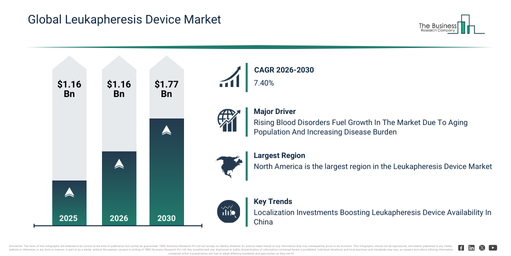
    The leukapheresis device market has seen marked growth recently, with its size expected to increase from $0.7 billion in 2025 to $0.76 billion in 2026, representing a compound annual growth rate (CAGR) of 8.6%. This expansion during the historical period has been driven by factors such as the rising incidence of leukemia and autoimmune diseases, the growing adoption of stem cell therapies, improvements in blood cell separation technologies, an increase in clinical research activities, and the expansion of hospital-based apheresis services. Moving forward, the market is forecasted to reach $1.01 billion by 2030, growing at a CAGR of 7.4%. Key contributors to this anticipated growth include heightened demand for portable leukapheresis devices, the integration of artificial intelligence and automation in equipment, growth in biopharmaceutical research, regulatory approvals for next-generation devices, and increased investment in precision medicine. Important trends expected to influence the market include the development of personalized leukapheresis treatments, minimally invasive apheresis techniques, portable and point-of-care device options, real-time monitoring system integration, and enhanced automation to improve workflow efficiency.

    Download A Free Sample Report For Comprehensive Market Insights:

    https://www.thebusinessresearchcompany.com/sample.aspx?id=25807&type=smp

    Rising Blood Disorders as a Major Growth Catalyst in the Leukapheresis Device Market

    The increasing prevalence of blood-related disorders is a key driver supporting the leukapheresis device market’s expansion. These conditions affect blood cell function or structure, disrupting oxygen transport, immune defenses, or coagulation processes. An aging global population contributes significantly to the rise in these disorders, such as anemia, leukemia, and other hematological diseases, which predominantly affect older adults. Leukapheresis devices play a crucial role by selectively removing excess or abnormal white blood cells from the bloodstream. This helps manage symptoms and reduce complications in illnesses like leukemia and autoimmune diseases.

    Highlighting this trend, the Leukaemia Foundation of Australia reported in March 2024 that about 19,500 Australians were diagnosed with blood cancers including leukemia, lymphoma, and myeloma, with nearly 43% facing substantial out-of-pocket treatment costs. Furthermore, 42% of patients took more than three months off work, underscoring both the growing incidence and the financial burdens associated with these diseases. This situation is fuelling demand for leukapheresis devices as a therapeutic solution.

    Access The Complete Leukapheresis Device Market Report:

    https://www.thebusinessresearchcompany.com/report/leukapheresis-device-global-market-report

    Leukapheresis Device Market Segmentation by Product Types and End Users

    This report breaks down the leukapheresis device market into multiple segments to provide detailed insights. By device type, the market includes therapeutic leukapheresis systems, cytapheresis devices, stem cell collection units, research application systems, leukapheresis columns and cell separators, disposables, and general apheresis devices. Components are segmented into machines, blood collection sets, medical consumables, and filters. End users consist of hospitals, academic research institutes, pharmaceutical and biotechnology companies, blood component providers, and blood centers.

    Further subcategories include therapeutic leukapheresis devices for leukemia treatment, sepsis management, and autoimmune disease care. Cytapheresis covers plateletpheresis, lymphapheresis, and erythrocytapheresis systems. Stem cell collection devices include peripheral blood stem cell collectors, umbilical cord blood collection systems, and bone marrow stem cell apheresis units. Research applications feature cell separation technologies used for development and clinical trials. Leukapheresis columns and separators encompass adsorption columns, membrane-based systems, and centrifugal separators. Disposables involve tubing, needles, catheters, and collection bags. Apheresis devices include continuous flow, portable/mobile, and intermittent flow machines.

    How Regional Manufacturing Efforts Are Transforming the Leukapheresis Device Market

    Leading companies in the leukapheresis device field are increasingly investing in regional manufacturing capabilities to improve access to high-quality devices and support local healthcare infrastructure. Establishing production facilities closer to key markets enables more efficient supply chains, reduces reliance on imports, and lowers costs for advanced blood collection and separation technologies. For example, in November 2024, Terumo Blood and Cell Technologies partnered with its China-based subsidiary, Terumo Medical Products (Hangzhou) Co., Ltd., to launch localized manufacturing in Hangzhou. This initiative focuses on producing widely used leukapheresis devices such as the Trima Accel Automated Blood Collection System and the Spectra Optia Apheresis System, which are essential for therapeutic apheresis, stem cell collection, and blood component separation across China.

    Market Competition and Key Players in the Leukapheresis Device Sector

    The leukapheresis device market features competition among several prominent companies, including Fresenius SE and Co. KGaA, Asahi Kasei Medical Co. Ltd, Baxter International Inc., Grifols S.A., TERUMO BCT INC., Kaneka Corporation, Nikkiso Co. Ltd, Haemonetics Corporation, Miltenyi Biotec GmbH, Macopharma, B. Braun Melsungen AG, Kawasumi Laboratories Inc., Beijing Zksk Technology Co. Ltd, Puriblood Medical Co. Ltd, Fresenius Kabi AG, JMS Co. Ltd, HemaCare Corporation, Medica Group PLC, LivaNova PLC, Cytiva, BioSafe Group SA, and Terumo Corporation. These organizations are continually innovating and expanding their portfolios to meet evolving clinical needs.

    North America Leads the Leukapheresis Device Market by Market Share

    In 2025, North America held the leading position in the global leukapheresis device market. The report covers various geographic regions including Asia-Pacific, South East Asia, Western Europe, Eastern Europe, North America, South America, the Middle East, and Africa, offering a comprehensive view of regional market dynamics and future growth opportunities.

    Get in touch with us:

    The Business Research Company: https://www.thebusinessresearchcompany.com/

    Americas: +1 310-496-7795

    Asia: +44 7882 955267 & +91 8897263534

    Europe: +44 7882 955267

    Email us at: marketing@tbrc.info

    Follow us on:

    LinkedIn: https://in.linkedin.com/company/the-business-research-company

    YouTube: https://www.youtube.com/channel/UC24_fI0rV8cR5DxlCpgmyFQ

    Global Market Model: https://www.thebusinessresearchcompany.com/global-market-model
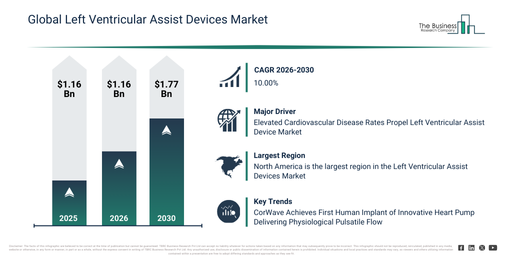
  • Left Ventricular Assist Devices Market Set To Grow From $1.89 Billion In 2026 To $2.78 Billion By 2030 At A CAGR Of 10%

    Left Ventricular Assist Devices Market Set To Grow From $1.89 Billion In 2026 To $2.78 Billion By 2030 At A CAGR Of 10%

    Enhanced with market attractiveness analysis, total addressable market evaluation, company benchmarking matrices, interactive Excel dashboards, expanded supply chain intelligence, emerging startup coverage, and detailed product insights, The Business Research Company’s 2026 market reports deliver more actionable and strategically valuable research.

    The left ventricular assist devices market has experienced significant growth recently, driven by advancements in cardiac care and rising cases of heart failure. As medical technology continues to evolve, this sector is expected to offer promising revenue opportunities and expand rapidly over the coming years. Let’s explore the current market size, key growth drivers, segment breakdowns, industry trends, and leading companies shaping this dynamic field.

    Current Market Size and Growth Projections for Left Ventricular Assist Devices

    The market for left ventricular assist devices has steadily increased, with revenues expected to rise from $1.73 billion in 2025 to $1.9 billion in 2026, reflecting a compound annual growth rate (CAGR) of 9.7%. This expansion during the historical period is mainly due to a higher prevalence of advanced heart failure, limited donor hearts for transplant, the growth of specialized cardiac care facilities, improvements in surgical implantation methods, and greater clinical acceptance of mechanical circulatory support devices. Looking ahead, the market is predicted to grow further to $2.78 billion by 2030 at a CAGR of 10.0%, driven by factors such as an aging population with cardiac conditions, increasing demand for long-term heart failure therapies, innovations in biocompatible materials, enhanced remote monitoring integration, and broader reimbursement policies.

    Download A Free Sample Report For Comprehensive Market Insights:

    https://www.thebusinessresearchcompany.com/sample.aspx?id=12042&type=smp

    Key Factors Propelling the Left Ventricular Assist Devices Market Growth

    The rising incidence of cardiovascular diseases is a major factor encouraging expansion in the left ventricular assist devices market. Cardiovascular diseases encompass various heart and blood vessel disorders, including coronary artery disease and congenital heart defects. In advanced cases of heart failure, left ventricular assist devices support the left ventricle’s pumping function, helping maintain adequate blood flow throughout the body.

    For instance, a report released by the American Heart Association in January 2024 highlighted that the age-adjusted death rate from cardiovascular disease in the United States increased to 233.3 per 100,000 people, marking a 4.0% rise from 224.4 per 100,000 in 2023. This upward trend underscores the growing burden of cardiovascular conditions, which in turn drives demand for left ventricular assist devices.

    Segment Breakdown and Revenue Opportunities Within the Left Ventricular Assist Devices Market

    This market is segmented by device type, flow type, application, and end-user. The main categories include:

    1) Device Type: Percutaneous Left Ventricular Assist Devices and Implantable Left Ventricular Assist Devices

    2) Flow Type: Pulsatile and Non-Pulsatile Devices

    3) Application: Bridge-To-Recovery (BTR) Therapy, Bridge-To-Transplant (BTT) Therapy, Destination Therapy, and Bridge-To-Candidacy (BTC) Therapy

    4) End-User: Cardiology Centers and Hospitals

    Further subsegments include Axial-Flow and Centrifugal-Flow Percutaneous LVADs, as well as Continuous Flow and Pulsatile Flow Implantable LVADs, highlighting the variety of technology adopted in the market.

    Access The Complete Left Ventricular Assist Devices Market Report:

    https://www.thebusinessresearchcompany.com/report/left-ventricular-assist-devices-global-market-report

    Emerging Development Trends Shaping the Future of Left Ventricular Assist Devices

    Leading companies in the market are focusing on next-generation technologies to improve patient outcomes and device performance. One example is the development of wave membrane technology, which aims to replace traditional rotary LVADs by mimicking the natural pulsatility and blood flow characteristics of a healthy heart. This innovation could reduce complications associated with current devices.

    For instance, in September 2025, CorWave SA, a France-based medical device manufacturer, successfully implanted its Left Ventricular Assisting System (LVAS) in a patient at St Vincent’s Hospital in Sydney. This device provides full cardiac support by efficiently unloading the left ventricle while maintaining physiological aortic pulse pressure and consistent valve function. The patient experienced no device-related adverse events during the 30-day primary study period and later underwent successful heart transplantation after 84 days on support. CorWave’s LVAS marks a significant step forward in mechanical circulatory support by offering safe and physiological pulsatile flow.

    Major Players Influencing the Left Ventricular Assist Devices Market Landscape

    Some of the prominent companies driving innovation and market growth in this sector include Abbott Laboratories, Medtronic plc, Terumo Corporation, St. Jude Medical, MAQUET GmbH & Co., LivaNova Plc, Thoratec Corporation, Abiomed Inc, Berlin Heart GmbH, BioVentrix, Cleveland Heart Inc., Jarvik Heart Inc., CorWave SA, SynCardia Systems LLC, NuPulseCV Inc., Fineheart, Procyrion Inc, Carmat SA, BiVACOR Inc, Cardiac Assist Inc., Leviticus Cardio Ltd., Calon Cardio-Technology Ltd, Evaheart Inc., Sunshine Heart Inc., and CH Biomedical Inc. These companies are at the forefront of developing advanced LVAD solutions and expanding patient access.

    Regional Market Overview Highlighting North America’s Leadership

    In 2025, North America emerged as the largest regional market for left ventricular assist devices, benefiting from well-established healthcare infrastructure, increasing cardiovascular disease prevalence, and strong reimbursement frameworks. The market analysis also covers regions including Asia-Pacific, South East Asia, Western Europe, Eastern Europe, South America, Middle East, and Africa, providing a comprehensive global perspective on market dynamics and growth potential.

    Get in touch with us:

    The Business Research Company: https://www.thebusinessresearchcompany.com/

    Americas: +1 310-496-7795

    Asia: +44 7882 955267 & +91 8897263534

    Europe: +44 7882 955267

    Email us at: marketing@tbrc.info

    Follow us on:

    LinkedIn: https://in.linkedin.com/company/the-business-research-company

    YouTube: https://www.youtube.com/channel/UC24_fI0rV8cR5DxlCpgmyFQ

    Global Market Model: https://www.thebusinessresearchcompany.com/global-market-model

  • Left Atrial Appendage Closure Device Market Opportunities Are Emerging Beyond Traditional Growth Areas

    Left Atrial Appendage Closure Device Market Opportunities Are Emerging Beyond Traditional Growth Areas

    Through market attractiveness analysis, total addressable market evaluation, company benchmarking matrices, interactive Excel dashboards, expanded supply chain intelligence, emerging startup coverage, and detailed product insights, The Business Research Company’s 2026 market reports provide more actionable and strategically valuable research.

    The market for left atrial appendage closure devices has seen remarkable expansion recently, driven by various medical advancements and rising health concerns. This sector is anticipated to maintain strong growth through the coming years, fueled by technological progress and increasing patient demand. Let’s explore the current market size, driving factors, segmentation, industry trends, key players, and regional prospects shaping this dynamic landscape.

    Market Size and Growth Outlook of the Left Atrial Appendage Closure Device Market

    The left atrial appendage closure device market has experienced rapid growth in recent years. It is projected to increase from $1.99 billion in 2025 to $2.33 billion in 2026, demonstrating a compound annual growth rate (CAGR) of 17.4%. This historical expansion is linked to the rising prevalence of atrial fibrillation, a growing incidence of strokes among aging populations, the proliferation of interventional cardiology procedures, broader access to minimally invasive cardiac treatments, and improved clinical outcomes data.

    Download A Free Sample Report For Comprehensive Market Insights:

    https://www.thebusinessresearchcompany.com/sample.aspx?id=13474&type=smp

    Looking ahead, the market is expected to continue its strong upward trajectory, reaching $4.37 billion by 2030 with a CAGR of 17.0%. Factors contributing to this forecast include the increasing adoption of non-pharmacological stroke prevention methods, expansion in cardiac catheterization laboratories, heightened demand for personalized cardiac implants, rising investments in treatments for structural heart diseases, and continuous technological innovation in implant materials and delivery systems. Emerging trends in this period feature widespread use of minimally invasive cardiac implants, growing preference for stroke prevention devices, a rise in percutaneous LAA closure procedures, enhanced occlusion device designs, and a focus on patient-specific cardiac solutions.

    Key Drivers Behind the Surge in Left Atrial Appendage Closure Device Demand

    One major factor propelling market expansion is the escalating prevalence of atrial fibrillation. This condition, characterized by irregular and often accelerated heartbeats due to uncoordinated atrial contractions, significantly increases the risk of stroke. Left atrial appendage closure devices play a critical role in managing atrial fibrillation by preventing blood clots from forming or escaping the heart, thereby lowering stroke risk.

    Access The Complete Left Atrial Appendage Closure Device Market Report:

    https://www.thebusinessresearchcompany.com/report/left-atrial-appendage-closure-device-global-market-report

    To illustrate this trend, data from the Centre for Disease Control and Prevention in the United States highlights a sharp rise in atrial fibrillation cases. In 2023, about 12.1 million adults in the US were reported to be living with this condition, more than doubling from approximately 5.2 million in 2022. This surge directly influences the growing demand for LAA closure devices as a vital component of stroke prevention strategies.

    Further Drivers Supporting Market Expansion

    Beyond disease prevalence, the expanding scope of interventional cardiology and minimally invasive treatment options also serve as significant growth catalysts. The evolution of cardiac catheterization labs worldwide and advancements in device technology have facilitated wider adoption of LAA closure procedures. Moreover, increasing investments in structural heart disease research and development encourage innovations in device design and personalized treatment approaches, sustaining the market’s momentum.

    Comprehensive Segmentation of the Left Atrial Appendage Closure Device Market

    This market is divided into key segments for a thorough understanding of its components:

    By Product Type:

    – Epicardial Left Atrial Appendage Devices

    – Endocardial Left Atrial Appendage Devices

    By Procedure:

    – Percutaneous

    – Surgical

    By End-User Setting:

    – Hospitals

    – Ambulatory Surgical Centers

    – Other End-Users

    Delving deeper, epicardial devices include suture-based closure devices, ligation-based closure devices, and clip-based closure devices. Endocardial devices are categorized into plug-based closure devices, disc-based closure devices, and mesh-based closure devices, capturing the varied technological approaches in this field.

    Technological Advancements Reshaping the Market Landscape

    Leading companies in this sector are focusing heavily on innovation to boost procedural accuracy, safety, and patient outcomes. A notable development involves the introduction of expanded-size, radiopaque-marked closure systems with advanced polymer coatings. These improvements enhance visibility during implantation, allow better adaptation to diverse left atrial appendage anatomies, and reduce complications linked to anticoagulation therapy.

    For example, in April 2024, Boston Scientific Japan Co., Ltd. launched the WATCHMAN FLX Pro Left Atrial Appendage Closure System across Japan. The latest model features a new 40mm device size tailored for larger atrial appendages, three radiopaque markers for enhanced imaging visibility, and HEMOCOAT polymer coating known for improving procedural performance and safety. This launch underlines ongoing efforts to refine device capabilities and expand treatment options for patients with non-valvular atrial fibrillation.

    Major Industry Players in the Left Atrial Appendage Closure Device Market

    The competitive landscape includes several prominent companies contributing to market growth and innovation. Some of the key players are Boston Scientific Corporation, Abbott Laboratories, Medtronic plc, AtriCure Inc, Lifetech Scientific Corporation, Occlutech GmbH, Cardia Inc, SentreHEART Inc, Coherex Medical Inc, Lepu Medical Technology Co Ltd, MicroPort Scientific Corporation, NMT Medical Inc, Transcatheter Technologies GmbH, Shanghai Shape Memory Alloy Co Ltd, Braile Biomedica, Innovative Cardiovascular Solutions LLC, Eclipse Medical, PushMed Medical, Cardiawave, and Catheter Precision Inc.

    Regional Market Distribution and Growth Opportunities

    North America held the largest share of the left atrial appendage closure device market in 2025. Besides North America, significant regional markets include Asia-Pacific, South East Asia, Western Europe, Eastern Europe, South America, the Middle East, and Africa. The Asia-Pacific region, in particular, is expected to showcase rapid growth due to improving healthcare infrastructure, rising awareness, and increasing adoption of advanced cardiac treatments.

    In summary, the left atrial appendage closure device market is positioned for substantial growth, driven by rising atrial fibrillation cases, technological advancements, and expanding treatment options worldwide. This momentum is supported by a diverse range of products, procedural innovations, and strong participation from leading industry players across key geographic markets.

    Get in touch with us:

    The Business Research Company: https://www.thebusinessresearchcompany.com/

    Americas: +1 310-496-7795

    Asia: +44 7882 955267 & +91 8897263534

    Europe: +44 7882 955267

    Email us at: marketing@tbrc.info

    Follow us on:

    LinkedIn: https://in.linkedin.com/company/the-business-research-company

    YouTube: https://www.youtube.com/channel/UC24_fI0rV8cR5DxlCpgmyFQ

    Global Market Model: https://www.thebusinessresearchcompany.com/global-market-model