Month: June 2026

  • Cosmetic Lasers Market Expected To Reach $2.22 Billion By 2030 As Growth Accelerates At 5.5% CAGR

    Cosmetic Lasers Market Expected To Reach $2.22 Billion By 2030 As Growth Accelerates At 5.5% CAGR

    Through market attractiveness analysis, total addressable market evaluation, company benchmarking matrices, interactive Excel dashboards, expanded supply chain intelligence, emerging startup coverage, and detailed product insights, The Business Research Company’s 2026 market reports provide more actionable and strategically valuable research.

    The cosmetic lasers industry has experienced significant momentum in recent years, driven by rising consumer interest in aesthetic procedures and advancements in technology. As the market continues to evolve, it is expected to see sustained growth fueled by new innovations and expanding applications. Here, we explore the market’s size, key growth factors, leading players, trends, and regional outlook.

    Market Size Evolution and Growth Forecast in the Cosmetic Lasers Market

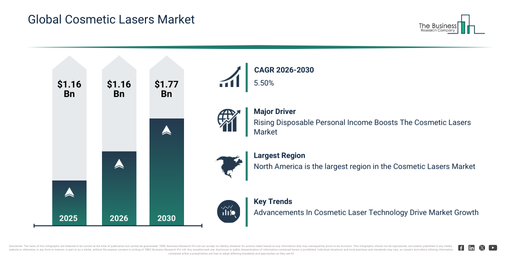
    The cosmetic lasers market has shown considerable growth, expanding from $1.7 billion in 2025 to an estimated $1.8 billion in 2026, reflecting a compound annual growth rate (CAGR) of 5.7%. This upward trend during the historical period is largely attributed to increasing awareness around aesthetic treatments, the proliferation of dermatology and cosmetic clinics, rising disposable incomes among urban populations, a growing incidence of skin disorders, and technological improvements in laser equipment. Looking ahead, the market is projected to reach $2.22 billion by 2030, with a CAGR of 5.5%. Factors behind this forecast include a stronger preference for minimally invasive cosmetic procedures, heightened demand for personalized aesthetic care, growth in medical tourism, wider adoption of advanced laser technologies, and increasing investments in healthcare infrastructure focused on aesthetics. Emerging trends such as multi-platform laser systems, AI-assisted treatment calibration, home-use laser devices, and a focus on precision and safety controls are expected to shape market dynamics.

    Download A Free Sample Report For Comprehensive Market Insights:

    https://www.thebusinessresearchcompany.com/sample.aspx?id=4101&type=smp

    Increasing Disposable Income Boosts Cosmetic Lasers Market Growth

    One of the significant drivers behind the cosmetic lasers market expansion is the rise in disposable personal income. This metric represents the amount of money individuals have available to spend after taxes, influencing their ability to invest in beauty and body care treatments. For example, data from October 2025 shows that in the United States, disposable personal income rose from $21,847 billion in May 2024 to $22,799 billion by May 2025. This increase in available spending power is anticipated to propel further growth in the cosmetic lasers market as more consumers prioritize aesthetic enhancements.

    Additional Factors Supporting Market Expansion

    Besides income growth, the rising incidence of skin conditions and technological progress in laser systems contribute to the expanding market. The continued expansion of dermatology clinics and cosmetic treatment centers worldwide also supports demand. Furthermore, growing urbanization and awareness about aesthetic treatments play crucial roles in attracting a larger customer base for cosmetic laser procedures.

    Access The Complete Cosmetic Lasers Market Report:

    https://www.thebusinessresearchcompany.com/report/cosmetic-lasers-global-market-report

    Segments Offering the Biggest Growth Opportunities in Cosmetic Lasers

    This report divides the cosmetic lasers market into several key segments for better clarity:

    1) By Type: Standalone Lasers and Multiplatform Lasers

    2) By Laser Technology: YAG Laser, Carbon Dioxide Laser, Erbium, Intense Pulsed Light (IPL), Radiofrequency, and Other Lasers

    3) By Application: Hair Removal, Skin Resurfacing, Vascular Lesions, Scar and Acne Removal, Body Contouring, and Other Uses

    4) By End User: Hospitals, Skin Care Clinics, and Cosmetic Surgical Centers

    Further breakdowns include standalone laser types such as CO2, Erbium, Diode, and Nd lasers, as well as multiplatform laser systems including combination, modular, and hybrid devices.

    Innovations and Trends Shaping Future Demand in Cosmetic Lasers

    Leading companies in the cosmetic lasers market are focusing on developing advanced, versatile laser and light-based platforms that cater to multiple aesthetic and dermatological treatments. These multi-application systems combine cutting-edge technologies for enhanced performance and improved patient outcomes. For instance, in April 2024, US-based Cutera, Inc. introduced the xeo+, a next-generation multi-application platform featuring updated technology and redesigned handpieces that enable faster treatments, ease of use, and a better overall patient experience. This innovation highlights the industry’s push toward offering comprehensive solutions that meet evolving clinical needs.

    Additional Trends Influencing the Cosmetic Lasers Sector

    Alongside multi-platform systems, other notable trends include the increasing integration of AI for treatment calibration, the rise of portable and home-use laser devices, and an emphasis on safety and precision controls. These developments reflect the market’s adaptation to consumer demands for personalized, efficient, and minimally invasive cosmetic procedures.

    Key Players Driving the Cosmetic Lasers Market

    The competitive landscape includes prominent companies such as Cynosure Inc., Lumenis, Candela Medical, Solta Medical International Inc., Cutera Inc., El.En. SpA, Alma Lasers Ltd., Sciton Inc., Lynton Lasers Ltd., Aerolase, Strata Skin Sciences, Viora, Bausch Health, MicroAire Surgical, Fotona LLC, Galderma Laboratories LP, Syneron Medical Inc., Arak Medical Equipment Company, Jeisys, and ASP medica. These organizations continue to innovate and expand their market presence through product development and strategic initiatives.

    Regional Market Leadership in Cosmetic Lasers

    As of 2025, North America accounted for the largest share of the cosmetic lasers market, supported by advanced healthcare infrastructure and high consumer demand. Asia-Pacific ranked as the second largest market, exhibiting rapid growth driven by increasing urbanization and rising awareness of aesthetic treatments. The report covers other regions as well, including South East Asia, Western Europe, Eastern Europe, South America, the Middle East, and Africa, providing a comprehensive view of global market trends and opportunities.

    Get in touch with us:

    The Business Research Company: https://www.thebusinessresearchcompany.com/

    Americas: +1 310-496-7795

    Asia: +44 7882 955267 & +91 8897263534

    Europe: +44 7882 955267

    Email us at: marketing@tbrc.info

    Follow us on:

    LinkedIn: https://in.linkedin.com/company/the-business-research-company

    YouTube: https://www.youtube.com/channel/UC24_fI0rV8cR5DxlCpgmyFQ

    Global Market Model: https://www.thebusinessresearchcompany.com/global-market-model
  • Coagulation Markers Market Forecast Highlights Expansion From $1.32 Billion To $1.67 Billion Through 2030

    Coagulation Markers Market Forecast Highlights Expansion From $1.32 Billion To $1.67 Billion Through 2030

    Enhanced with market attractiveness analysis, total addressable market evaluation, company benchmarking matrices, interactive Excel dashboards, expanded supply chain intelligence, emerging startup coverage, and detailed product insights, The Business Research Company’s 2026 market reports deliver more actionable and strategically valuable research.

    The coagulation markers market has witnessed significant growth in recent years, driven by advancing diagnostic techniques and rising health concerns related to blood clotting disorders. As medical technology continues to evolve, this sector is set for further expansion, reflecting increasing demand across healthcare settings worldwide. Let’s explore the current market size, key drivers, segment breakdowns, leading companies, and regional outlook shaping the future of this important market.

    Steady Growth and Future Potential of the Coagulation Markers Market

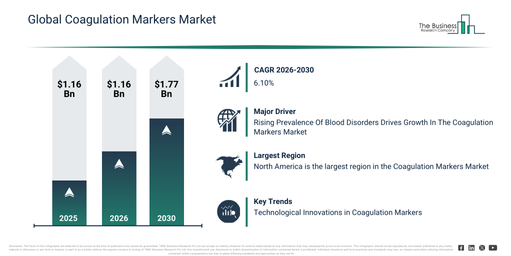
    The coagulation markers market has demonstrated strong growth, expanding from $1.24 billion in 2025 to an anticipated $1.32 billion in 2026, representing a compound annual growth rate (CAGR) of 6.8%. Moving forward, the market is predicted to reach $1.67 billion by 2030, growing at a CAGR of 6.1%. This upward trend is supported by factors such as an aging population prone to clotting complications, increased demand for quick diagnostic tools, expansion of trauma and emergency care services, greater emphasis on preventive assessments for thrombotic risks, and wider adoption of advanced coagulation testing technologies. Emerging trends also include growing use of coagulation markers for early thrombosis detection, expanding applications in emergency and critical care, rising popularity of rapid and point-of-care testing, and integration of coagulation analysis in surgical and trauma settings.

    Download A Free Sample Report For Comprehensive Market Insights:

    https://www.thebusinessresearchcompany.com/sample.aspx?id=17117&type=smp

    Rising Incidence of Blood Disorders Fuels Market Expansion

    The increasing prevalence of blood disorders is a primary factor driving growth in the coagulation markers market. Blood disorders encompass a range of conditions that impair normal blood function. Growing numbers of affected individuals are attributed to ageing populations, heightened awareness, and improved diagnostic techniques. Coagulation markers play a crucial role in diagnosing and managing these conditions by evaluating clotting function, detecting abnormalities, and monitoring treatment efficacy for diseases like hemophilia and thrombosis. For example, data from May 2024 by the Leukaemia Foundation, an Australian non-profit, indicates that approximately 135,000 people in Australia currently live with blood cancer or related disorders, a figure expected to surpass 275,000 by 2035. Such increasing prevalence supports the expanding demand for coagulation markers.

    Breakdown of Coagulation Markers Market by Product and Application

    This market analysis categorizes coagulation markers based on several criteria:

    1) Product Types: D-Dimer Assay, Fibrinogen Assay

    2) Sample Types: Plasma, Whole Blood Sample, Other Samples

    3) Technology Platforms: Fluorescence Immunoassay, Enzyme-Linked Immuno Sorbent Assay (ELISA), Rapid Test, Particle Enhanced Immunoturbidimetric Assay

    4) Applications: Deep Venous Thrombosis (DVT), Pulmonary Embolism (PE), Disseminated Intravascular Coagulation (DIC), Trauma, Other Uses

    5) End Users: Hospitals, Specialty Clinics, Academic and Research Institutes, Diagnostic Laboratories

    Further product subcategories include types of D-Dimer assays like ELISA-based, lateral flow immunoassays, and chemiluminescent immunoassays, as well as fibrinogen assays such as Clauss, functional, and automated methods.

    Access The Complete Coagulation Markers Market Report:

    https://www.thebusinessresearchcompany.com/report/coagulation-markers-global-market-report

    Technological Innovations Shaping Competitive Dynamics in Coagulation Markers

    Leading companies in this market are focusing on technological advancements to enhance the speed and accuracy of diagnosing clot-related disorders. Products like D-dimer kits are critical diagnostic tools measuring D-dimer protein fragments released during clot breakdown, aiding in detecting conditions such as deep vein thrombosis and pulmonary embolism. For instance, in July 2024, Bionote Inc., a US biotechnology firm, introduced the Vcheck D-dimer 5Tests/Kit, an immunodiagnostic product intended for veterinary use. This kit provides five tests per package and helps diagnose thrombosis, sepsis, and disseminated intravascular coagulation (DIC) in animals, illustrating innovation within the coagulation markers field.

    Key Players Competing in the Coagulation Markers Market

    The coagulation markers industry features several prominent companies, including Johnson & Johnson, Abbott Laboratories, Medtronic plc, Boston Scientific Corporation, W L Gore & Associates Inc, Lepu Medical Technology Beijing Co Ltd, MicroPort Scientific Corporation, Berlin Heart GmbH, Syncardia Systems LLC, Occlutech Holding AG, Sahajanand Medical Technologies Pvt Ltd, Xeltis AG, Procyrion Inc, Heartstitch Inc, Cardia Inc, OSYPKA Medical GmbH, On-X Life Technologies Inc, Ventracor Limited, HemoFlow Technologies, and NuPulseCV Inc. These organizations focus on innovation, product development, and strategic partnerships to strengthen their market presence.

    Regional Overview Highlighting Largest Markets and Growth Areas

    In 2025, North America held the largest share of the coagulation markers market. The global market coverage also includes regions such as Asia-Pacific, Southeast Asia, Western Europe, Eastern Europe, South America, the Middle East, and Africa. While North America currently dominates, emerging markets in Asia-Pacific and other regions are expected to offer significant growth opportunities due to rising healthcare infrastructure investments and increasing disease prevalence.

    Get in touch with us:

    The Business Research Company: https://www.thebusinessresearchcompany.com/

    Americas: +1 310-496-7795

    Asia: +44 7882 955267 & +91 8897263534

    Europe: +44 7882 955267

    Email us at: marketing@tbrc.info

    Follow us on:

    LinkedIn: https://in.linkedin.com/company/the-business-research-company

    YouTube: https://www.youtube.com/channel/UC24_fI0rV8cR5DxlCpgmyFQ

    Global Market Model: https://www.thebusinessresearchcompany.com/global-market-model
  • Cosmetic Implants Market Set To Grow From $13.26 Billion In 2026 To $17.55 Billion By 2030 At A CAGR Of 7.3%

    Cosmetic Implants Market Set To Grow From $13.26 Billion In 2026 To $17.55 Billion By 2030 At A CAGR Of 7.3%

    Delivering more actionable and strategically valuable research, The Business Research Company’s 2026 market reports feature market attractiveness analysis, total addressable market evaluation, company benchmarking matrices, interactive Excel dashboards, expanded supply chain intelligence, emerging startup coverage, and detailed product insights.

    The cosmetic implants sector has experienced significant growth recently and is anticipated to continue expanding steadily in the coming years. This market is influenced by technological advancements, shifting consumer preferences, and increasing acceptance of aesthetic enhancement procedures worldwide. Let’s explore the current market size, key growth drivers, segmentation, innovation trends, leading companies, and regional outlook shaping this dynamic industry.

    Market Size and Anticipated Growth Trajectory of the Cosmetic Implants Market

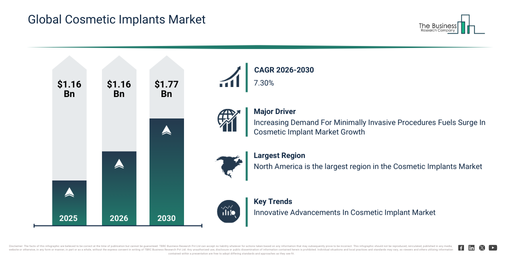
    The cosmetic implants market has shown strong growth in recent years. It is projected to increase from $12.36 billion in 2025 to $13.27 billion in 2026, with a compound annual growth rate (CAGR) of 7.4%. This historical expansion has been fueled by a rise in cosmetic surgery procedures, broader acceptance of aesthetic enhancements, improvements in implant materials, the growing use of dental implants, and greater availability of certified cosmetic surgeons.

    Looking ahead, the market is expected to reach $17.56 billion by 2030, maintaining a CAGR of 7.3%. This forecasted growth is driven by the rising demand for personalized cosmetic solutions, increased attention to facial aesthetics and reconstructive procedures, the booming medical tourism sector for cosmetic treatments, innovations in bioengineered implants, and the expanding regulatory approval for advanced implant materials. Key trends shaping the market include a growing preference for advanced aesthetic techniques, wider adoption of biocompatible materials, increased use of customized implants, growth in minimally invasive surgeries, and a heightened focus on implant safety over the long term.

    Download A Free Sample Report For Comprehensive Market Insights:

    https://www.thebusinessresearchcompany.com/sample.aspx?id=13409&type=smp

    Rising Popularity of Minimally Invasive Procedures Boosting Cosmetic Implants Demand

    One of the primary factors propelling market growth is the increasing preference for minimally invasive cosmetic procedures. These interventions involve smaller incisions or openings, leading to quicker recovery, less pain, minimal scarring, and reduced complication risks. This makes them highly attractive to patients seeking safer and faster treatment options.

    Cosmetic implants complement these minimally invasive techniques by utilizing advanced biocompatible materials that allow for precise placement through smaller incisions. This not only simplifies the surgical process but also enhances patient comfort and speeds up recovery. For example, in June 2024, the American Society of Plastic Surgeons reported a 7% rise in minimally invasive procedures during 2023, outpacing the growth of traditional surgeries by 2%. This trend highlights the escalating market potential driven by minimally invasive approaches.

    Detailed Breakdown of Cosmetic Implants Market Segmentation

    The cosmetic implants market is divided into several key categories for a thorough analysis:

    1) By Raw Material: Polymer, Ceramic, Metal, and Biological

    2) By Application: Dental Implants, Breast Implants, Facial Implants, and Other Applications

    3) By End User: Hospitals, Ambulatory Surgical Centers, Specialty Clinics, and Other Users

    Within these segments, further subcategories provide insight, such as polymer implants including silicone-based, polyurethane-based, and polymethylmethacrylate (PMMA) implants. Ceramic implants are broken down into alumina and zirconia ceramic types. Metal implants include titanium, stainless steel, and cobalt-chromium variants. Biological implants cover collagen, hyaluronic acid, and growth factor-based options.

    Access The Complete Cosmetic Implants Market Report:

    https://www.thebusinessresearchcompany.com/report/cosmetic-implants-global-market-report

    Innovation and Product Development Trends in the Cosmetic Implants Market

    Leading players in the cosmetic implants industry are focusing on developing innovative products to attract more customers and boost revenues. One example is breast tissue dynamic gel, a colorless filler composed of hyaluronic acid and water used to enhance breast size or fullness.

    For instance, in July 2024, GC Aesthetics, a France-based global leader in breast implants and medical devices, launched two new products in Hainan, China: Luna XT and PERLE. The Luna XT implant offers outstanding support for women undergoing both immediate and delayed breast reconstruction, featuring a unique microtextured surface, highly cohesive silicone gel, and a durable shell. Meanwhile, PERLE introduces a novel BioQ-Surface combined with Emunomic Breast Tissue Dynamic Gel, designed to improve patient safety and aesthetic results.

    Top Companies Leading Growth in the Cosmetic Implants Sector

    The cosmetic implants market is dominated by several major companies such as Johnson & Johnson Services Inc., Allergan Inc., Zimmer Biomet Holdings Inc., Dentsply Sirona Inc., Institut Straumann AG, KLS Martin Group, Sientra Inc., Mentor Worldwide LLC, GC Aesthetics plc, Nobel Biocare Holding AG, Megagen Implant Co. Ltd., Groupe Sebbin SAS, Polytech Health & Aesthetics GmbH, Silimed, Spectrum Designs Medical, Alpha Aesthetics Implants, Nagor, Implantech Associations Inc., Surgiform Technology Ltd., and Aesthetic And Reconstructive Technologies (AART) Inc. These organizations are actively contributing to innovation, expanding product portfolios, and increasing market reach globally.

    Geographical Insights Highlighting Regions Driving Cosmetic Implants Market Growth

    In 2025, North America held the largest share of the cosmetic implants market. However, the Asia-Pacific region is expected to experience the fastest growth during the forecast period. This report covers various geographical segments including Asia-Pacific, South East Asia, Western Europe, Eastern Europe, North America, South America, the Middle East, and Africa, providing a comprehensive view of regional market dynamics and opportunities.

    Get in touch with us:

    The Business Research Company: https://www.thebusinessresearchcompany.com/

    Americas: +1 310-496-7795

    Asia: +44 7882 955267 & +91 8897263534

    Europe: +44 7882 955267

    Email us at: marketing@tbrc.info

    Follow us on:

    LinkedIn: https://in.linkedin.com/company/the-business-research-company

    YouTube: https://www.youtube.com/channel/UC24_fI0rV8cR5DxlCpgmyFQ

    Global Market Model: https://www.thebusinessresearchcompany.com/global-market-model
  • Coagulation Analyzer Market Expected To Reach $4.95 Billion By 2030 As Growth Accelerates At 8.8% CAGR

    Coagulation Analyzer Market Expected To Reach $4.95 Billion By 2030 As Growth Accelerates At 8.8% CAGR

    Through market attractiveness analysis, total addressable market evaluation, company benchmarking matrices, interactive Excel dashboards, expanded supply chain intelligence, emerging startup coverage, and detailed product insights, The Business Research Company’s 2026 market reports provide more actionable and strategically valuable research.

    The coagulation analyzer market is experiencing notable growth as advancements in healthcare diagnostics continue to evolve. Rising health concerns and technological improvements are shaping the future of this sector, making it a critical component in effective patient care. Here is an overview of the current market size, key drivers, segmentation, trends, major players, and regional dynamics.

    Coagulation Analyzer Market Size and Projected Growth

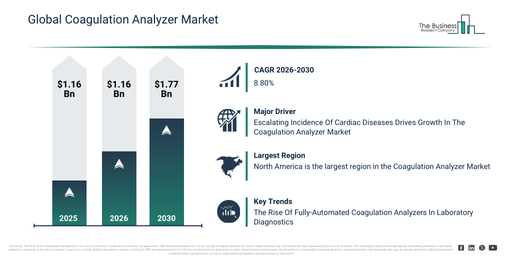
    The coagulation analyzer market has witnessed significant expansion in recent years. It is projected to grow from $3.26 billion in 2025 to $3.53 billion in 2026, registering a compound annual growth rate (CAGR) of 8.2%. This positive trend during the historical period is largely due to the growing prevalence of cardiovascular diseases, increased use of anticoagulant therapy monitoring, enhanced hospital diagnostic infrastructure, adoption of standardized coagulation testing protocols, and a rise in surgical procedures.

    Download A Free Sample Report For Comprehensive Market Insights:

    https://www.thebusinessresearchcompany.com/sample.aspx?id=11991&type=smp

    Looking ahead, the market is expected to advance even further, reaching $4.95 billion by 2030, with a CAGR of 8.8%. Factors propelling growth in this forecast period include the expanding need for rapid coagulation diagnostics, the rise of decentralized testing setups, increased investments in cutting-edge hematology analyzers, a stronger focus on patient safety monitoring, and the integration of intelligent diagnostic platforms. Emerging trends anticipate wider acceptance of fully automated coagulation systems, demand for highly sensitive clotting assays, AI-assisted interpretation of results, growth of point-of-care coagulation testing, and greater emphasis on workflow automation.

    Key Factors Fueling Growth in the Coagulation Analyzer Market

    The rising incidence of cardiac diseases is a major driver supporting the expansion of the coagulation analyzer market. Cardiovascular conditions affect both the heart and blood vessels, requiring precise management of blood clotting parameters. Coagulation analyzers play an essential role in monitoring anticoagulant therapy and preventing complications, thereby improving patient outcomes.

    Access The Complete Coagulation Analyzer Market Report:

    https://www.thebusinessresearchcompany.com/report/coagulation-analyzer-global-market-report

    For instance, in June 2024, the National Health Service in the UK reported that 3,615,330 people registered with general practitioners were diagnosed with non-diabetic hyperglycemia or pre-diabetes in 2023, representing an 18% increase from 3,065,825 cases in 2022. This surge in cardiac-related health issues is directly contributing to growing demand for coagulation testing technologies.

    Breakdown of Coagulation Analyzer Market Segments and Revenue Potential

    This market is categorized into several key segments, including:

    1) Product Type: Semi-automated Coagulation Analyzer and Automated Coagulation Analyzer

    2) Test Type: Prothrombin Time Testing, Fibrinogen Testing, Activated Partial Thromboplastin Time Testing, D-dimer Testing, Anti-factor Xa Testing, and other tests

    3) Technology Type: Optical Technology, Mechanical Technology, and Other Technologies

    4) End User: Hospitals and Clinics, Diagnostic Centers, and Other End-Users

    Further subsegments include types of semi-automated analyzers, such as benchtop and portable models, as well as automated analyzers including fully automated, high-throughput, and point-of-care devices.

    Prominent Trends Shaping the Future Demand for Coagulation Analyzers

    Leading manufacturers in the coagulation analyzer market are pushing the envelope by introducing highly advanced products designed to handle large test volumes with minimal manual input. Fully automated coagulation analyzers are laboratory instruments that perform blood clotting tests automatically, ensuring precise and efficient diagnosis of coagulation disorders without human intervention.

    An example of such innovation is the EXT 9800 fully automated coagulation analyzer launched by Zybio Inc. in March 2024. This device is notable for being the first to employ micro magnetic particle detection, enabling a visual, multi-dimensional analysis of coagulation for enhanced accuracy. It features a modular design with distributed architecture and high-throughput capabilities, offering a lightweight yet comprehensive solution for clinical laboratories. The EXT 9800 represents a significant leap forward in coagulation testing technology.

    Leading Companies Influencing the Coagulation Analyzer Industry

    The coagulation analyzer market is shaped by several key players, including Siemens AG, F. Hoffmann-La Roche Ltd., Abbott Laboratories, Sysmex Corporation, Werfen S.A., Nihon Kohden Corporation, Diagnostica Stago SAS, ARKRAY Inc., Beckman Coulter Inc., Helena Laboratories Corporation, Maccura Biotechnology Co. Ltd., Beijing Succeeder Technology Inc., Trivitron Healthcare Pvt. Ltd., A&T Corporation, ACON Laboratories Inc., Genrui Biotech Inc., Teco Medical Instruments, Eurolyser Diagnostica GmbH, and Meril Life Science Pvt. Ltd., as well as Bioevopeak Co. Ltd.

    Regional Market Overview and Growth Patterns

    In 2025, North America held the largest share in the coagulation analyzer market. However, the Asia-Pacific region is anticipated to grow at the fastest pace during the forecast period. The market report includes analysis of key geographic areas such as Asia-Pacific, South East Asia, Western Europe, Eastern Europe, North America, South America, the Middle East, and Africa, providing a comprehensive view of global market dynamics.

    Get in touch with us:

    The Business Research Company: https://www.thebusinessresearchcompany.com/

    Americas: +1 310-496-7795

    Asia: +44 7882 955267 & +91 8897263534

    Europe: +44 7882 955267

    Email us at: marketing@tbrc.info

    Follow us on:

    LinkedIn: https://in.linkedin.com/company/the-business-research-company

    YouTube: https://www.youtube.com/channel/UC24_fI0rV8cR5DxlCpgmyFQ

    Global Market Model: https://www.thebusinessresearchcompany.com/global-market-model
  • Clot Management Devices Market Set To Grow From $1.92 Billion In 2026 To $2.37 Billion By 2030 At A CAGR Of 5.3%

    Clot Management Devices Market Set To Grow From $1.92 Billion In 2026 To $2.37 Billion By 2030 At A CAGR Of 5.3%

    Delivering more actionable and strategically valuable research, The Business Research Company’s 2026 market reports feature market attractiveness analysis, total addressable market evaluation, company benchmarking matrices, interactive Excel dashboards, expanded supply chain intelligence, emerging startup coverage, and detailed product insights.

    The clot management devices sector is witnessing steady expansion as advancements in medical technology and increasing health concerns drive demand. With the rise in cardiovascular conditions and innovative treatment options, this market is set to experience significant developments. Let’s explore the current market size, growth factors, key players, and emerging trends shaping the future of clot management devices.

    Clot Management Devices Market Size Showing Strong Growth Between 2025 and 2030

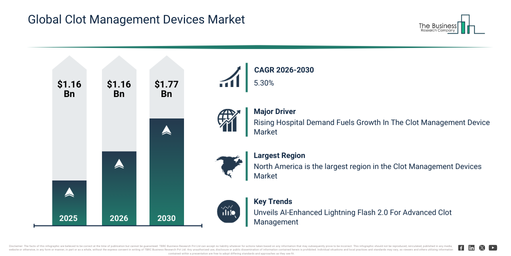
    The clot management devices market has seen notable growth in recent years, with its size expected to rise from $1.82 billion in 2025 to $1.93 billion in 2026, reflecting a compound annual growth rate (CAGR) of 6.0%. This growth during the historical period is largely driven by the increasing incidence of deep vein thrombosis and pulmonary embolism, a rising prevalence of cardiovascular diseases, the growth of interventional radiology procedures, expanded vascular care in hospitals, and heightened awareness surrounding clot-related complications. Looking ahead, the market is projected to continue expanding robustly, reaching $2.37 billion by 2030 with a CAGR of 5.3%. Factors contributing to this forecasted growth include an aging population vulnerable to thrombotic events, increased demand for minimally invasive vascular treatments, a stronger focus on early clot diagnosis and management, the development of advanced stroke and thrombosis centers, and broader adoption of endovascular therapies. Key trends anticipated during this period involve greater use of minimally invasive clot removal methods, rising adoption of mechanical and aspiration thrombectomy devices, emphasis on rapid interventions for acute thrombotic episodes, growth in catheter-based treatments for deep vein thrombosis and pulmonary embolism, and a growing preference for retrievable inferior vena cava filters.

    Download A Free Sample Report For Comprehensive Market Insights:

    https://www.thebusinessresearchcompany.com/sample.aspx?id=15768&type=smp

    Rising Hospital Demand as a Key Driver in the Clot Management Devices Market

    The growing need for hospitals is playing a crucial role in fueling the clot management devices market. Hospitals serve as essential healthcare centers offering treatment and care for various medical conditions, including clot-related disorders such as deep vein thrombosis, pulmonary embolism, and ischemic stroke. Several factors contribute to the rising number of hospitals, such as population growth, urbanization, expanding healthcare access, aging populations, and the rise of medical tourism. In this context, clot management devices provide effective, minimally invasive treatment options that enhance patient safety and improve clinical outcomes. For example, in May 2024, the American Health Care Association reported that the number of hospitals in the US increased to 6,120, up from 5,129 in 2022. This expansion in hospital infrastructure is a significant growth driver for the clot management devices market.

    Core Segments and Breakdown of the Clot Management Devices Market

    This market can be segmented into several categories based on product type, device subtype, and end user. The primary product types include neurovascular embolectomy devices, embolectomy balloon catheters, percutaneous thrombectomy devices, catheter-directed thrombolysis (CDT) devices, and inferior vena cava filters (IVCF). Within percutaneous thrombectomy devices, the key categories are aspiration thrombectomy devices and mechanical thrombectomy devices. The neurovascular embolectomy devices segment further breaks down into aspiration embolectomy devices, mechanical embolectomy devices, and embolectomy balloon catheters, which themselves include high-pressure and low-pressure balloon catheters. CDT devices consist of infusion catheters and guidewires designed specifically for thrombolysis. The inferior vena cava filters segment is divided into permanent and retrievable filter types. End users of these devices primarily encompass diagnostic centers and hospitals.

    Access The Complete Clot Management Devices Market Report:

    https://www.thebusinessresearchcompany.com/report/clot-management-devices-global-market-report

    Innovation Trends Accelerating the Clot Management Devices Market

    Leading companies in the clot management devices industry are continuously innovating to develop advanced technologies that improve treatment outcomes. One notable advancement is the development of computer-assisted vacuum thrombectomy (CAVT) systems, which are designed for efficient removal of blood clots in conditions like deep vein thrombosis and pulmonary embolism. For instance, in April 2024, Penumbra Inc., a US-based medical device manufacturer, introduced the Lightning Flash 2.0 system. This cutting-edge clot aspiration and vacuum thrombectomy technology offers rapid clot removal with enhanced performance by integrating artificial intelligence and sophisticated engineering. It features advanced imaging and suction capabilities, allowing precise clot extraction tailored to various medical scenarios. Such innovations are helping to raise the standard of care in acute and chronic vascular conditions.

    Competitive Landscape and Major Players in the Clot Management Devices Market

    The clot management devices market features a range of prominent companies that influence its development and competitive dynamics. Key players include Bayer AG, Abbott Laboratories, Medtronic plc, Boston Scientific Corporation, B. Braun Melsungen AG, Terumo Corporation, Acandis GmbH & Co KG, Cook Medical, Merit Medical Systems Inc., Penumbra Inc., MicroVention Inc., Inari Medical Inc., AngioDynamics Inc., Argon Medical Devices Inc., LeMaitre Vascular Inc., iVascular SLU, Straub Medical AG, Rapid Medical, C.R. Bard Inc., and InspireMD Inc. These industry leaders are actively investing in research and development to maintain their market positions and meet evolving clinical needs.

    Geographical Market Insights Highlighting Regional Growth Patterns

    In 2025, North America held the largest share of the clot management devices market, driven by advanced healthcare infrastructure and widespread adoption of innovative therapies. Meanwhile, the Asia-Pacific region is expected to experience the fastest growth during the forecast period, fueled by increasing healthcare investments, expanding patient populations, and improving access to advanced medical technologies. Other regions covered in the market analysis include South East Asia, Western Europe, Eastern Europe, South America, the Middle East, and Africa, offering a comprehensive view of global market dynamics.

    Get in touch with us:

    The Business Research Company: https://www.thebusinessresearchcompany.com/

    Americas: +1 310-496-7795

    Asia: +44 7882 955267 & +91 8897263534

    Europe: +44 7882 955267

    Email us at: marketing@tbrc.info

    Follow us on:

    LinkedIn: https://in.linkedin.com/company/the-business-research-company

    YouTube: https://www.youtube.com/channel/UC24_fI0rV8cR5DxlCpgmyFQ

    Global Market Model: https://www.thebusinessresearchcompany.com/global-market-model
  • Cortical Haptic Virtual Reality Glove Market Opportunities Are Emerging Beyond Traditional Growth Areas

    Cortical Haptic Virtual Reality Glove Market Opportunities Are Emerging Beyond Traditional Growth Areas

    Enhanced with market attractiveness analysis, total addressable market evaluation, company benchmarking matrices, interactive Excel dashboards, expanded supply chain intelligence, emerging startup coverage, and detailed product insights, The Business Research Company’s 2026 market reports deliver more actionable and strategically valuable research.

    The market for cortical haptic virtual reality gloves is rapidly evolving, driven by technological advances and increasing adoption across various sectors. This emerging industry is poised for significant expansion, fueled by innovations and growing applications in gaming, healthcare, training, and beyond. Let’s explore the current market size, key growth drivers, leading companies, and future trends shaping this exciting field.

    Cortical Haptic Virtual Reality Glove Market Size and Projected Growth

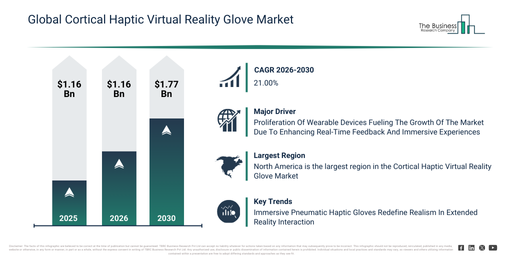
    The cortical haptic virtual reality glove market has experienced remarkable growth in recent years. It is projected to increase from $1.84 billion in 2025 to $2.23 billion in 2026, marking a compound annual growth rate (CAGR) of 21.3%. Factors contributing to this growth during the historical period include the rising popularity of VR gaming and entertainment, early-stage development of haptic glove technologies, expanded use in industrial simulation and training, investments in rehabilitation and healthcare, and advancements in sensor and exoskeleton technology. Looking ahead, the market is set to soar further, reaching $4.79 billion by 2030 with a CAGR of 21.0%. This future expansion will be driven by AI integration for adaptive haptic responses, growth in industrial and engineering training applications, the rise of immersive educational platforms, wireless and soft robotic glove innovations, and an increasing demand for realistic remote and metaverse experiences. Key trends anticipated in the coming years include neural interface-enabled tactile feedback, sophisticated force and vibrotactile sensations, wireless haptic glove breakthroughs, deeper healthcare integration, and high-fidelity simulation and gaming experiences.

    Download A Free Sample Report For Comprehensive Market Insights:

    https://www.thebusinessresearchcompany.com/sample.aspx?id=28185&type=smp

    Wearable Devices as a Catalyst in the Cortical Haptic Virtual Reality Glove Market

    The growing popularity of wearable devices is a major factor propelling the cortical haptic virtual reality glove market forward. These devices, worn on the body, are designed to monitor health, fitness, and provide smart functionalities. The rising health awareness among consumers encourages the adoption of such technology to track vital signs, improve fitness, and manage overall wellbeing. Wearable devices enhance the capabilities of cortical haptic VR gloves by providing real-time, precise feedback, which boosts the realism and effectiveness of virtual environments. This improved interaction simulates touch, pressure, and textures, significantly increasing user engagement and immersion. For example, in April 2025, the UK’s Parliamentary Office of Science and Technology reported that between 2023 and 2024, the National Institute for Health and Care Research (NIHR) and UK Research and Innovation (UKRI) invested £11.5 million ($15.52 million) in 10 projects focused on wearable tech to improve independence for individuals with frailty or long-term disabilities. Such initiatives highlight how wearable devices are playing a crucial role in driving market expansion.

    Market Segmentation Overview of the Cortical Haptic Virtual Reality Glove Industry

    This market is segmented by several key categories, including:

    1) Product Type: Wired Gloves and Wireless Gloves

    2) Technology: Force Feedback, Vibrotactile Feedback, Electroactive Polymer or Soft Actuators

    3) Distribution Channel: Online and Offline

    4) Application: Gaming and Entertainment, Healthcare and Rehabilitation, Industrial and Training

    5) End-User: Consumer, Enterprise or Commercial, Research and Education

    Within product types, wired gloves include subtypes such as exoskeleton gloves, rigid frame gloves, and cable-driven gloves. Wireless gloves comprise soft robotic gloves, finger tracking gloves, and wearable sensor gloves. These diverse segments cater to a wide range of use cases, from immersive gaming to professional training and medical rehabilitation.

    Access The Complete Cortical Haptic Virtual Reality Glove Market Report:

    https://www.thebusinessresearchcompany.com/report/cortical-haptic-virtual-reality-glove-global-market-report

    Innovations and Trends Reinventing the Cortical Haptic Virtual Reality Glove Market

    Leading companies in this sector are focusing on cutting-edge innovations to enhance realism and user interaction. One notable advancement is the development of pneumatic haptic gloves, which use air pressure to deliver precise tactile feedback, offering a more natural feel during virtual interactions. For example, in January 2024, Singapore-based Microtube Technologies launched the HEXR Glove, a wireless pneumatic haptic device that provides high-fidelity tactile sensations without the need for external pumps or bulky equipment. Compatible with major VR, AR, and XR headsets, this glove supports applications across healthcare, education, entertainment, and training, demonstrating how innovation is advancing market potential.

    Key Players Shaping the Cortical Haptic Virtual Reality Glove Market

    Several prominent companies dominate this market, including HaptX Inc, Manus VR, SenseGlove, CyberGlove Systems, VRgluv, Dexta Robotics, BeBop Sensors, Contact CI, NeuroDigital Technologies, Noitom Ltd, Teslasuit, Meta Platforms Inc, Apple Inc, Sony Interactive Entertainment, Razer Inc, bHaptics, Virtuix, Quantanx, Ultraleap, Straythink, ExoGeniX, GestureTek, Tactai, VRGluv, and AxonVR. These firms are investing heavily in research and development to create innovative products that meet evolving consumer and enterprise needs.

    Geographical Breakdown and Regional Market Leadership in Cortical Haptic VR Gloves

    In 2025, North America held the largest share of the cortical haptic virtual reality glove market. However, the Asia-Pacific region is anticipated to experience the fastest growth throughout the forecast period. The market report covers regions such as Asia-Pacific, South East Asia, Western Europe, Eastern Europe, North America, South America, the Middle East, and Africa, providing a detailed global perspective on market trends and opportunities.

    Get in touch with us:

    The Business Research Company: https://www.thebusinessresearchcompany.com/

    Americas: +1 310-496-7795

    Asia: +44 7882 955267 & +91 8897263534

    Europe: +44 7882 955267

    Email us at: marketing@tbrc.info

    Follow us on:

    LinkedIn: https://in.linkedin.com/company/the-business-research-company

    YouTube: https://www.youtube.com/channel/UC24_fI0rV8cR5DxlCpgmyFQ

    Global Market Model: https://www.thebusinessresearchcompany.com/global-market-model
  • Closed-Loop Neuromodulation Processor Market Opportunities Are Emerging Beyond Traditional Growth Areas

    Closed-Loop Neuromodulation Processor Market Opportunities Are Emerging Beyond Traditional Growth Areas

    Enhanced with market attractiveness analysis, total addressable market evaluation, company benchmarking matrices, interactive Excel dashboards, expanded supply chain intelligence, emerging startup coverage, and detailed product insights, The Business Research Company’s 2026 market reports deliver more actionable and strategically valuable research.

    The closed-loop neuromodulation processor market is experiencing significant expansion fueled by advancements in technology and increasing demand for effective neurological treatments. As neurological disorders become more prevalent worldwide, the market is set to witness robust growth driven by innovative solutions and rising adoption across various healthcare settings. Below, we explore the market size, key growth drivers, segment developments, emerging trends, leading companies, and regional prospects shaping this dynamic industry.

    Steady Growth Trajectory in the Closed-Loop Neuromodulation Processor Market

    This market has demonstrated rapid growth recently, with its size projected to rise from $2.52 billion in 2025 to $2.85 billion in 2026 at a strong compound annual growth rate (CAGR) of 13.2%. The historic surge has been propelled by the increasing occurrence of neurological disorders, heightened demand for precise neuromodulation therapies, significant progress in implantable devices, broader use of DBS (Deep Brain Stimulation) and SCS (Spinal Cord Stimulation) systems, and increased research funding in neurotechnology.

    Download A Free Sample Report For Comprehensive Market Insights:

    https://www.thebusinessresearchcompany.com/sample.aspx?id=28175&type=smp

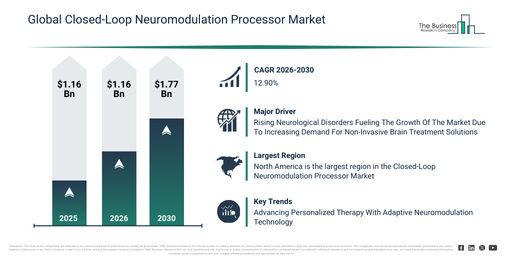
    Looking ahead, the market is anticipated to expand even further, reaching $4.63 billion by 2030 with a CAGR of 12.9%. This anticipated growth will be supported by innovations such as AI-enabled adaptive processors, growing availability of external wearable controllers, integration with telemedicine platforms, expansion of home-based neuromodulation treatments, and rising usage in emerging markets. Important market trends for the forecast period include real-time neural feedback mechanisms, adaptive stimulation algorithms, seamless integration with wearable devices, remote patient monitoring features, and multimodal therapy optimization.

    Increasing Prevalence of Neurological Disorders Boosting Closed-Loop Neuromodulation Processor Demand

    One of the primary factors driving demand in this market is the rising number of neurological disorders globally. These conditions, which affect the brain, spinal cord, or peripheral nerves, can cause impairments in movement, cognition, and sensation. The global aging population is a significant contributor to the increasing incidence of diseases such as Alzheimer’s and Parkinson’s. Closed-loop neuromodulation processors play a crucial role in treating these disorders by continuously monitoring brain activity and delivering targeted electrical stimulation to regulate abnormal neural signals in real time.

    Access The Complete Closed-Loop Neuromodulation Processor Market Report:

    https://www.thebusinessresearchcompany.com/report/closed-loop-neuromodulation-processor-global-market-report

    For example, data from the Institute for Health Metrics and Evaluation indicated that neurological conditions affected 43% of the global population in 2022, with projections suggesting this figure could double by 2050. This alarming rise in neurological disorders is a key driver fueling the growth of the closed-loop neuromodulation processor market.

    Technological Advances and Market Segmentation in Closed-Loop Neuromodulation Processors

    The report breaks down the closed-loop neuromodulation processor market into several critical segments, including:

    1) By Product Type: Implantable Processors and External Processors

    2) By Technology: Deep Brain Stimulation, Spinal Cord Stimulation, Vagus Nerve Stimulation, and Other Technologies

    3) By Application: Chronic Pain Management, Epilepsy, Parkinson’s Disease, Depression, and other uses

    4) By End-User: Hospitals, Specialty Clinics, Research Institutes, and various other healthcare providers

    Further subcategories under Implantable Processors include DBS, SCS, VNS, Sacral Nerve Stimulation (SNS), and Peripheral Nerve Stimulation (PNS) processors. External Processors cover wearable neuromodulation controllers, handheld programming devices, external pulse generators, charging and power management units, and wireless communication interfaces.

    Brain-Computer Interface Integration and Innovations Transforming Market Growth

    Key players in this sector are placing significant emphasis on incorporating brain-computer interface (BCI) technology to enhance therapy precision and tailor treatments to individual patient needs. BCIs enable direct communication between the brain and external devices by interpreting neural signals as commands, thereby allowing real-time monitoring and adaptive neuromodulation therapies.

    A notable example occurred in February 2025 when Medtronic plc received FDA approval for its BrainSense Adaptive Deep Brain Stimulation (aDBS) and BrainSense Electrode Identifier (EI). This system represents one of the largest commercial launches of BCI technology, continuously monitoring brain activity and automatically adjusting stimulation to optimize treatment for Parkinson’s disease. Clinical trials showed that this approach improved symptom control, reduced motor fluctuations, and enhanced patient outcomes compared to traditional continuous DBS.

    Key Players Leading the Closed-Loop Neuromodulation Processor Market

    The competitive landscape of this market is shaped by several prominent companies, including Abbott Laboratories, Medtronic PLC, Boston Scientific Corporation, Beijing PINS Medical, CorTec, NeuroPace, Saluda Medical, NeuSpera Medical, Inbrain Neuroelectronics, Blackrock Neurotech, Great Lakes NeuroTechnologies, SensArs Neuroprosthetics, BioControl Medical, Precision Neuroscience, Motif Neurotech, Synergia Medical, BrainQ Technologies, and Soterix Medical (to some extent).

    Regional Market Dynamics Highlight North America’s Dominance and Asia-Pacific’s Growth Potential

    In 2025, North America held the largest revenue share in the closed-loop neuromodulation processor market. However, the Asia-Pacific region is forecast to be the fastest-growing market throughout the coming years. The comprehensive market analysis also covers South East Asia, Western Europe, Eastern Europe, South America, the Middle East, and Africa, providing a global perspective on evolving regional trends and opportunities.

    Get in touch with us:

    The Business Research Company: https://www.thebusinessresearchcompany.com/

    Americas: +1 310-496-7795

    Asia: +44 7882 955267 & +91 8897263534

    Europe: +44 7882 955267

    Email us at: marketing@tbrc.info

    Follow us on:

    LinkedIn: https://in.linkedin.com/company/the-business-research-company

    YouTube: https://www.youtube.com/channel/UC24_fI0rV8cR5DxlCpgmyFQ

    Global Market Model: https://www.thebusinessresearchcompany.com/global-market-model
  • Closed System Transfer Devices Market Expansion Is Opening New Pathways For Strategic Investment

    Closed System Transfer Devices Market Expansion Is Opening New Pathways For Strategic Investment

    Through market attractiveness analysis, total addressable market evaluation, company benchmarking matrices, interactive Excel dashboards, expanded supply chain intelligence, emerging startup coverage, and detailed product insights, The Business Research Company’s 2026 market reports provide more actionable and strategically valuable research.

    The closed system transfer devices market is experiencing significant growth driven by rising healthcare needs and safety concerns. As regulations tighten and cancer cases increase globally, the demand for safer drug handling solutions continues to accelerate. This overview explores the market size, key growth drivers, leading companies, and future trends shaping this vital healthcare segment.

    Market Size and Projected Growth in the Closed System Transfer Devices Market

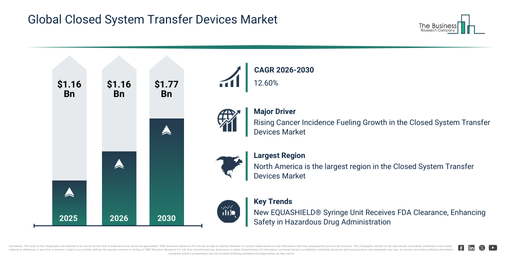
    The closed system transfer devices market has seen rapid expansion in recent years. Valued at $1.18 billion in 2025, it is expected to grow to $1.35 billion in 2026, reflecting a compound annual growth rate (CAGR) of 14.2%. This growth during the historical period has been fueled by the increasing use of hazardous drugs in oncology, heightened awareness about occupational exposure risks, stringent safety guidelines for drug handling, the growth of hospital oncology services, and wider adoption of chemotherapy infusion therapies. Looking ahead, the market is forecasted to reach $2.18 billion by 2030, with a slightly moderated CAGR of 12.6%. Factors contributing to this projected surge include stricter regulatory enforcement related to hazardous drug handling, rising volumes of cancer treatments, enhanced emphasis on workplace safety compliance, global expansion of oncology centers, and increased investment in hospital pharmacy safety infrastructure. Important trends during this period feature broader adoption of closed drug handling systems in oncology, heightened focus on healthcare worker safety, growing preference for needleless closed transfer devices, wider use in hospital pharmacies, and greater standardization of hazardous drug protocols.

    Download A Free Sample Report For Comprehensive Market Insights:

    https://www.thebusinessresearchcompany.com/sample.aspx?id=15767&type=smp

    Key Factors Propelling Growth in the Closed System Transfer Devices Market

    The rising incidence of cancer worldwide is a primary driver of the closed system transfer devices market. Cancer involves the uncontrolled growth and spread of abnormal cells that can invade tissues and metastasize through blood and lymphatic systems. Various factors, such as lifestyle habits, environmental exposures, and infectious agents, contribute to the growing number of cancer cases globally. Closed system transfer devices play an essential role in cancer treatment by protecting healthcare professionals and patients from exposure to hazardous chemotherapy drugs. Their use ensures safer environments in healthcare settings and supports improved treatment outcomes. For example, the World Health Organization (WHO) reported in February 2024 that cancer cases are expected to exceed 35 million by 2050, marking a 77% increase from the estimated 20 million cases projected for 2022. This sharp rise highlights the increasing global burden of cancer.

    Additional Evidence of Cancer’s Impact on Market Demand

    In the United States alone, the National Center for Biotechnology Information (NCBI) projected in January 2023 that there would be 1,958,310 new cancer cases diagnosed and 609,820 cancer-related deaths in 2023. These statistics underscore the substantial need for effective safety measures in cancer treatment, further boosting demand for closed system transfer devices. As cancer cases climb, the necessity for such protective technologies continues to grow, driving ongoing market expansion.

    Access The Complete Closed System Transfer Devices Market Report:

    https://www.thebusinessresearchcompany.com/report/closed-system-transfer-devices-global-market-report

    Market Segments Dominating the Closed System Transfer Devices Industry

    This market is segmented by multiple factors to provide detailed insights into product categories and end users:

    1) By Type: Needleless Systems and Membrane-To-Membrane Systems

    2) By Technology: Diaphragm-Based, Compartmentalized, and Filtration technologies

    3) By Closing Mechanism: Color-To-Color Alignment, Push-To-Turn, Click-To-Lock, and Luer-Lock systems

    4) By End User: Hospitals and Clinics, Oncology Centers, and Other End Users

    Further breakdown includes subsegments such as Needleless Systems comprising Closed Vial Systems, Closed Syringe Systems, and Transfer Device Adapters, while Membrane-To-Membrane Systems include Membrane-To-Membrane Transfer Devices and Filtered Membrane Transfer Devices.

    Innovative Developments Defining the Future of the Closed System Transfer Devices Market

    Leading players in the closed system transfer devices market are prioritizing innovation to enhance safety and usability while meeting stringent healthcare regulations. For instance, syringe units designed for full volume use—meaning they deliver the complete dose without requiring additional mixing—are gaining attention. In October 2023, Equashield, a US-based medical device firm, introduced the EQUASHIELD Syringe Unit, which received FDA clearance for full-volume application. This product prevents vapor escape and contamination of the plunger, offering a safer, more efficient, and cost-effective solution for compounding and administering hazardous drugs.

    Key Players Shaping the Competitive Landscape in the Closed System Transfer Devices Market

    Numerous prominent companies are actively competing in this market, including:

    Cardinal Health Inc., Becton Dickinson and Company, Baxter International Inc., B Braun Melsungen AG, Terumo Corporation, ICU Medical Inc., Amsino International Inc., JMS Co. Ltd., Vygon SA, Codan Medical GmbH, Equashield LLC, Hospira Inc., Nipro Corporation, Simplivia Healthcare Ltd., Practivet Inc., Corvida Medical Inc., Yukon Medical, Caragen Ltd., Insung Medical Co. Ltd., Aegis Medical Technologies, Epic Medical Pte Ltd., and Smiths Medical.

    Regional Market Dynamics and Growth Opportunities in the Closed System Transfer Devices Market

    In 2025, North America accounted for the largest share of the closed system transfer devices market. However, the Asia-Pacific region is anticipated to exhibit the fastest growth rate over the forecast period. The market analysis covers key regions, including Asia-Pacific, Southeast Asia, Western Europe, Eastern Europe, North America, South America, the Middle East, and Africa, offering a comprehensive perspective on global market trends and opportunities.

    Get in touch with us:

    The Business Research Company: https://www.thebusinessresearchcompany.com/

    Americas: +1 310-496-7795

    Asia: +44 7882 955267 & +91 8897263534

    Europe: +44 7882 955267

    Email us at: marketing@tbrc.info

    Follow us on:

    LinkedIn: https://in.linkedin.com/company/the-business-research-company

    YouTube: https://www.youtube.com/channel/UC24_fI0rV8cR5DxlCpgmyFQ

    Global Market Model: https://www.thebusinessresearchcompany.com/global-market-model
  • Coronary Stents Market Expansion Is Opening New Pathways For Strategic Investment

    Coronary Stents Market Expansion Is Opening New Pathways For Strategic Investment

    Through market attractiveness analysis, total addressable market evaluation, company benchmarking matrices, interactive Excel dashboards, expanded supply chain intelligence, emerging startup coverage, and detailed product insights, The Business Research Company’s 2026 market reports provide more actionable and strategically valuable research.

    The coronary stents market has seen significant growth in recent years, driven by various medical and technological advancements. This sector is expected to continue expanding steadily, supported by rising cardiovascular health concerns and innovations in stent design and materials. Let’s delve into the market’s current size, growth drivers, segmentation, strategic developments, key players, and regional prospects.

    Overview of Coronary Stents Market Size and Expected Growth

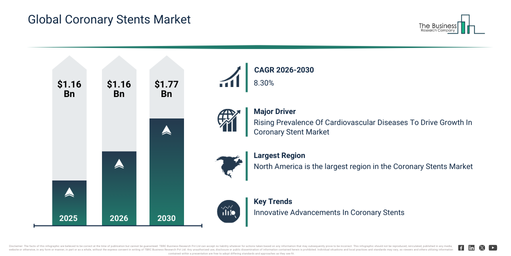
    The coronary stents market has experienced robust growth, increasing from $11.9 billion in 2025 to an anticipated $12.9 billion in 2026. This represents a compound annual growth rate (CAGR) of 8.3%. This positive trend reflects factors such as the growing incidence of coronary artery disease, a rise in percutaneous coronary intervention procedures, improved stent coating technologies, wider availability of interventional cardiology services, and better clinical outcomes associated with coronary stenting.

    Download A Free Sample Report For Comprehensive Market Insights:

    https://www.thebusinessresearchcompany.com/sample.aspx?id=18325&type=smp

    Future Projections for Coronary Stents Market Expansion

    Looking ahead, the coronary stents market is projected to expand further, reaching $17.76 billion by 2030, maintaining a steady CAGR of 8.3%. This anticipated growth stems from an aging population with increased cardiovascular risks, rising demand for minimally invasive cardiac treatments, broader adoption of next-generation stent technologies, greater attention to long-term vessel healing and patient outcomes, and enhanced access to cardiac care, especially in emerging markets. Key trends expected to influence the market include the growing use of drug-eluting and dual therapy stents, preference for minimally invasive procedures, efforts to reduce restenosis and thrombosis, increased utilization of bioresorbable and biodegradable stents, and a rising demand for advanced stent materials and designs.

    Primary Factors Driving Growth in the Coronary Stents Market

    One of the main factors propelling the coronary stents market is the escalating prevalence of cardiovascular diseases (CVDs). These disorders, involving the heart and blood vessels, include coronary artery disease, heart failure, stroke, and hypertension. The rise in CVD cases is linked to aging populations and an increase in risk factors such as obesity, diabetes, sedentary lifestyles, unhealthy diets, and stress. Coronary stents are essential in treating these conditions by reopening narrowed or blocked arteries, thus improving blood flow to the heart and lowering the risk of heart attacks.

    Access The Complete Coronary Stents Market Report:

    https://www.thebusinessresearchcompany.com/report/coronary-stents-global-market-report

    Healthcare Data Reinforces Market Growth Drivers

    For example, in October 2024, the US Centers for Disease Control and Prevention reported that cardiovascular disease caused 919,032 deaths in 2023, accounting for about one in every three deaths nationally. This alarming statistic highlights the critical need for coronary stents, reinforcing their growing demand as a vital treatment option and pushing the market forward.

    Detailed Breakdown of Coronary Stents Market Segmentation

    This report segments the coronary stents market by various categories:

    – Product Type: Dual Therapy Stents, Radioactive Stents, Thrombectomy Stents, Covered Stents, Bioresorbable Stents, Biodegradable Stents, Hybrid Stents, Drug-Eluting Stents, Bare Metal Stents

    – Technology: Laser Cutting, 3D-Printed Stents, Microfabrication, Nanotechnology-Based Stents, Electropolishing, and other technologies

    – Raw Material: Cobalt-Chromium, Stainless Steel, Platinum–Chromium, Nickel–Titanium, Polymer

    – Deployment Method: Self-Expandable Stents, Balloon-Expandable Stents

    – End Use: Hospitals and Ambulatory Surgical Centers, Specialty Clinics, and Other End Uses

    The product types are further divided into subcategories such as sirolimus-, paclitaxel-, and everolimus-eluting dual therapy stents; beta and gamma radiation radioactive stents; manual, mechanical, and hydrodynamic thrombectomy stents; various covered stents including PTFE and ePTFE; bioresorbable stents based on polymer, metal, and ceramic; biodegradable stents like polymeric and magnesium-based; hybrid drug-eluting and biodegradable or metal stents; and drug-eluting stents differentiated by their drug types, as well as several types of bare metal stents.

    Innovative Trends Defining the Coronary Stents Market’s Future

    Leading companies in the market are focusing on developing advanced products, especially drug-eluting stents, which help minimize the need for repeat procedures compared to traditional bare-metal stents. Drug-eluting stents work by slowly releasing medication to prevent artery re-narrowing. For instance, in May 2024, Abbott, a US healthcare firm, introduced the XIENCE Sierra Everolimus Eluting Coronary Stent System in India. This stent features enhanced design elements, a novel delivery system, and specialized sizing options to tackle complex cases. It retains the drug-eluting coating that reduces artery re-blockage risk and is supported by an outstanding safety record from over 120 clinical trials involving more than 120,000 patients.

    Key Players Shaping the Coronary Stents Market Landscape

    The coronary stents market includes a range of prominent companies such as Abbott Laboratories, Medtronic plc, Boston Scientific Corporation, Terumo Corporation, BIOTRONIK SE & Co KG, B Braun Melsungen AG, Biosensors International Group Ltd, MicroPort Scientific Corporation, Lepu Medical Technology Beijing Co Ltd, Meril Life Sciences Pvt Ltd, Stentys SA, Alvimedica, Vascular Concepts, Balton Medical, Cardionovum, HEXACATH, Elixir Medical Corporation, Translumina GmbH, Relisys Medical Devices Ltd, REVA Medical Inc, Sahajanand Medical Technologies Pvt Ltd, Endocor GmbH, Eurocor Tech, Medinol, Q3 Medical Devices, S3V Vascular Technologies, InSitu Technologies, and Minvasys.

    Regional Outlook Highlights for the Coronary Stents Market

    In 2025, North America was the largest regional market for coronary stents. However, the Asia-Pacific region is expected to emerge as the fastest-growing market during the forecast period. This analysis spans key regions such as Asia-Pacific, South East Asia, Western Europe, Eastern Europe, North America, South America, the Middle East, and Africa, providing a thorough global perspective on market opportunities and trends.

    Get in touch with us:

    The Business Research Company: https://www.thebusinessresearchcompany.com/

    Americas: +1 310-496-7795

    Asia: +44 7882 955267 & +91 8897263534

    Europe: +44 7882 955267

    Email us at: marketing@tbrc.info

    Follow us on:

    LinkedIn: https://in.linkedin.com/company/the-business-research-company

    YouTube: https://www.youtube.com/channel/UC24_fI0rV8cR5DxlCpgmyFQ

    Global Market Model: https://www.thebusinessresearchcompany.com/global-market-model
  • Cloning And Mutagenesis Market Trends Are Creating New Opportunities For Industry Leaders

    Cloning And Mutagenesis Market Trends Are Creating New Opportunities For Industry Leaders

    Delivering more actionable and strategically valuable research, The Business Research Company’s 2026 market reports feature market attractiveness analysis, total addressable market evaluation, company benchmarking matrices, interactive Excel dashboards, expanded supply chain intelligence, emerging startup coverage, and detailed product insights.

    The cloning and mutagenesis market is witnessing remarkable growth, driven by advances in genetic research and expanding applications in biotechnology. As demand for personalized healthcare and innovative molecular biology tools increases, this sector is poised for substantial development over the coming years. Let’s explore the current market size, key growth drivers, leading segments, technological innovations, major players, and regional trends shaping this dynamic industry.

    Steady Growth and Market Size Projections in the Cloning and Mutagenesis Sector

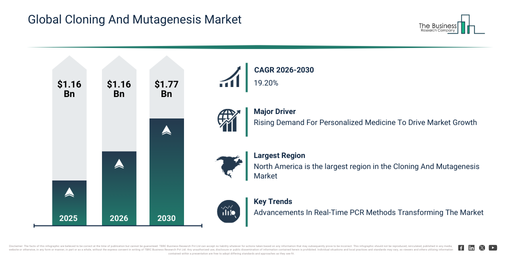
    The cloning and mutagenesis market has experienced rapid expansion in recent years, growing from $3.54 billion in 2025 to an anticipated $4.21 billion in 2026, reflecting a strong compound annual growth rate (CAGR) of 19.1%. This upward trend during the historical period is largely fueled by increased funding for academic research, a surge in recombinant protein studies, broader use of genetic engineering tools, availability of standardized molecular biology kits, and a rise in biotech startups. Looking ahead, the market is expected to reach $8.5 billion by 2030, continuing at an impressive CAGR of 19.2%. This forecasted growth is supported by rising interest in gene function research, expanding synthetic biology applications, growing investments in therapeutic protein development, wider adoption of automated laboratory platforms, and a heightened focus on precise genome editing.

    Download A Free Sample Report For Comprehensive Market Insights:

    https://www.thebusinessresearchcompany.com/sample.aspx?id=10541&type=smp

    Personalized Medicine as a Powerful Growth Engine in the Cloning and Mutagenesis Market

    One of the strongest factors propelling the cloning and mutagenesis market is the increasing demand for personalized medicine. This innovative approach tailors treatments and interventions based on the unique genetic makeup and characteristics of individual patients. Cloning and mutagenesis techniques play vital roles in various areas such as disease modeling, drug discovery, target identification, gene therapy, biomarker research, patient-specific cell therapies, pharmacogenomics, and genome editing aimed at personalized treatment strategies. For instance, in February 2024, the Personalized Medicine Coalition, a US-based nonprofit, reported that the FDA approved 16 new personalized therapies for rare diseases in 2023, a significant increase from 6 approvals in 2022. This surge highlights how personalized medicine is strongly influencing growth in the cloning and mutagenesis market.

    Additional Market Drivers Supporting Cloning and Mutagenesis Industry Expansion

    Beyond personalized medicine, the cloning and mutagenesis market benefits from advancements in synthetic biology and increasing automation in laboratories. These developments enable researchers to conduct experiments more efficiently and with higher accuracy, further encouraging adoption of cloning and mutagenesis technologies. The growing need for high-fidelity cloning kits and sophisticated mutagenesis techniques, such as site-directed mutagenesis and CRISPR-based editing, also contribute to market momentum. Additionally, enhanced focus on reproducibility and precision in molecular biology workflows is driving demand for reliable and standardized products.

    Access The Complete Cloning And Mutagenesis Market Report:

    https://www.thebusinessresearchcompany.com/report/cloning-and-mutagenesis-global-market-report

    Market Segmentation Highlights in the Cloning and Mutagenesis Industry

    This report categorizes the cloning and mutagenesis market into several key segments: by product, technique, and end user. The product categories include cloning kits, mutagenesis kits, and other associated products. Cloning kits are further divided into bacterial, yeast, viral, and plasmid types, while mutagenesis kits comprise site-directed, random, error-prone PCR, and CRISPR or Cas9-based kits. Other products include enzymes, vector systems, and laboratory accessories. Techniques covered include blunt end cloning, Topo PCR cloning, seamless cloning, site-directed mutagenesis, and other methods. End users range from academic and research institutes to biotechnology companies and additional users.

    Innovations and Transformative Technologies Driving Market Evolution

    Leading companies in the cloning and mutagenesis market are actively pursuing advanced techniques like polymerase chain reaction (PCR) to differentiate themselves. PCR is a fundamental method used in molecular biology to amplify specific DNA segments. For example, in April 2023, Bio-Rad Laboratories, a biotechnology firm based in the United States, launched the ID-Check Speciation Solution, a real-time PCR assay designed for meat species identification. This product helps verify animal species in food, feed, and environmental samples with high sensitivity, detecting as little as 0.001% species DNA. The kit targets mitochondrial DNA across various species such as bovine, chicken, duck, goat, horse, sheep, swine, and turkey and incorporates a duplex detection system for improved accuracy and ease of use.

    Key Players Shaping the Cloning and Mutagenesis Market Landscape

    The cloning and mutagenesis market features several prominent companies, including Thermo Fisher Scientific Inc, Takara Bio Inc, Agilent Technologies Inc, New England Biolabs Inc, Merck KGaA, Promega Corporation, Bio-Rad Laboratories Inc, GenScript Biotech Corporation, Codex DNA Inc, Integrated DNA Technologies Inc, Bio-Techne Corporation, Sino Biological Inc, OriGene Technologies Inc, Bioneer Corporation, Lucigen Corporation, Inscripta Inc, Creative Biogene, Biomatik Corporation, TransGen Biotech Co Ltd, Jena Bioscience GmbH, EZBioscience, and Synbio Technologies LLC. These organizations are instrumental in advancing market growth through innovation and strategic initiatives.

    Regional Market Distribution and Growth Outlook

    In 2025, North America held the largest share of the cloning and mutagenesis market. However, the Asia-Pacific region is projected to experience the fastest growth over the forecast period. The market analysis covers multiple geographic regions including Asia-Pacific, South East Asia, Western Europe, Eastern Europe, North America, South America, the Middle East, and Africa, providing a thorough view of global market dynamics and emerging opportunities.

    Get in touch with us:

    The Business Research Company: https://www.thebusinessresearchcompany.com/

    Americas: +1 310-496-7795

    Asia: +44 7882 955267 & +91 8897263534

    Europe: +44 7882 955267

    Email us at: marketing@tbrc.info

    Follow us on:

    LinkedIn: https://in.linkedin.com/company/the-business-research-company

    YouTube: https://www.youtube.com/channel/UC24_fI0rV8cR5DxlCpgmyFQ

    Global Market Model: https://www.thebusinessresearchcompany.com/global-market-model