Month: June 2026

  • Coronary Atherectomy Devices Market Trends Are Creating New Opportunities For Industry Leaders

    Coronary Atherectomy Devices Market Trends Are Creating New Opportunities For Industry Leaders

    Delivering more actionable and strategically valuable research, The Business Research Company’s 2026 market reports feature market attractiveness analysis, total addressable market evaluation, company benchmarking matrices, interactive Excel dashboards, expanded supply chain intelligence, emerging startup coverage, and detailed product insights.

    The coronary atherectomy devices market has seen notable growth recently, driven by advances in cardiovascular care and increasing demand for minimally invasive treatments. As more people worldwide face heart-related health challenges, this market is poised for substantial expansion. Let’s explore the current market size, the factors fueling its growth, segmentation, innovation trends, key players, and regional dynamics shaping the industry’s future.

    Market Size and Growth Trajectory of the Coronary Atherectomy Devices Market

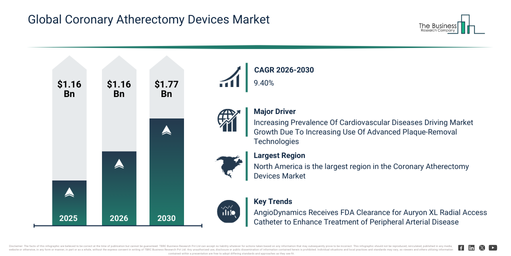
    The coronary atherectomy devices market has experienced rapid development in recent years. It is projected to increase from $0.23 billion in 2025 to $0.26 billion in 2026, reflecting a compound annual growth rate (CAGR) of 10.1%. This historical growth mainly stems from the rising incidence of coronary artery disease, the growing adoption of interventional cardiology procedures, expansion of catheterization labs, an aging population, and clinical validation of atherectomy techniques. Looking ahead, the market is expected to expand further, reaching $0.37 billion by 2030 with a CAGR of 9.4%. Key factors driving this future growth include a surge in demand for complex coronary interventions, wider use of image-guided cardiovascular procedures, increased investments in cardiac care infrastructure, technological improvements enhancing device precision, and broader implementation of minimally invasive treatment methods. Important trends forecasted during this period include expanded use of advanced rotational atherectomy devices, growing preference for minimally invasive coronary procedures, heightened focus on treating calcified lesions, deployment of precision-controlled atherectomy systems, and improved integration with imaging-guided interventions.

    Download A Free Sample Report For Comprehensive Market Insights:

    https://www.thebusinessresearchcompany.com/sample.aspx?id=3345&type=smp

    The Rising Burden of Cardiovascular Diseases Boosting Coronary Atherectomy Devices Market

    One major driver behind the coronary atherectomy devices market is the increasing prevalence of cardiovascular diseases (CVDs), which encompass a range of disorders affecting the heart and blood vessels. These conditions are often linked to plaque accumulation, restricted blood flow, and gradual narrowing of arteries. The escalation in cardiovascular disease cases is closely tied to widespread modifiable risk factors such as high blood pressure, obesity, diabetes, unhealthy diets, sedentary lifestyles, and tobacco use. This growing health challenge heightens the need for minimally invasive tools like coronary atherectomy devices that effectively remove calcified or complex plaques, restore blood flow, and improve outcomes during percutaneous coronary interventions (PCI). For instance, data released in October 2024 by the US Centers for Disease Control and Prevention revealed that in 2023, about one in six cardiovascular disease deaths occurred in adults younger than 65, and overall, cardiovascular disease caused 919,032 deaths—representing one in every three deaths nationally. Such statistics highlight how the rising cardiovascular disease burden is significantly propelling global demand for coronary atherectomy devices.

    Segmentation and Revenue Streams in the Coronary Atherectomy Devices Market

    This market is segmented based on product types, applications, and end users to illustrate its broad scope. The product categories include Directional Atherectomy Devices, Orbital Atherectomy Devices, Photo-Ablative Atherectomy Devices, Rotational Atherectomy Devices, and other related products. Applications span Peripheral Vascular, Cardiovascular, and Coronary Artery Disease treatments. End users primarily consist of Hospitals and Surgical Centers, Ambulatory Care Centers, and Cardiac Specialty Centers. Further subdivisions provide more detail, such as Traditional and Advanced Directional Atherectomy Devices; Single-Wire and Multi-Wire Orbital Atherectomy Devices; Laser-Based and Other Photo-Ablative Devices; Manual and Motorized Rotational Atherectomy Devices; and additional specialized products like Combination Atherectomy Devices and Custom Solutions. This segmentation reflects the diverse technologies and clinical needs driving the market.

    Access The Complete Coronary Atherectomy Devices Market Report:

    https://www.thebusinessresearchcompany.com/report/coronary-atherectomy-devices-global-market-report

    Innovations and Technology Shaping the Future of Coronary Atherectomy Devices

    Leading companies in the coronary atherectomy market are emphasizing innovation to enhance patient care and procedural safety. One notable advancement is the development of radial access catheters, which enable less invasive coronary artery treatments by accessing arteries via the wrist instead of the groin. This approach reduces major bleeding risks and promotes faster patient recovery. For example, in January 2024, AngioDynamics, a US healthcare solutions provider, received FDA 510(k) clearance for its Auryon XL Radial Access Catheter. This 225-cm device, compatible with the Auryon Atherectomy System, offers two diameter sizes and leverages advanced laser technology to treat peripheral arterial disease effectively. Radial access catheters also facilitate treatment of bilateral disease in a single session, supporting improved clinical outcomes and patient convenience.

    Key Market Players Driving Competition in Coronary Atherectomy Devices

    The coronary atherectomy devices market is highly competitive, with several prominent companies leading the field. Major players include Boston Scientific Corporation, Cardiovascular Systems Inc., The Spectranetics Corporation, Medtronic Inc., Avinger Inc., Biotronik SE & Co. KG, Arterial Remodeling Technologies, Straub Medical AG, RA Medical Systems Inc., Shockwave Medical Inc., Terumo Corporation, Abbott Laboratories Inc., Asahi Intecc Co. Ltd., Baylis Medical Company Inc., Cook Medical LLC, Cordis Corporation, Infraredx Inc., Intact Vascular Inc., TriReme Medical LLC, and Volcano Corporation. These organizations focus on technological advancements, expanding product portfolios, and strategic collaborations to retain leadership and meet evolving clinical demands.

    Geographic Distribution and Regional Market Dynamics of Coronary Atherectomy Devices

    Geographically, North America held the largest share of the coronary atherectomy devices market in 2025, reflecting the region’s advanced healthcare infrastructure and high adoption of interventional cardiology procedures. Western Europe ranked as the second-largest market, benefiting from well-established medical device regulations and strong healthcare systems. Meanwhile, Africa remained the smallest regional market due to limited healthcare access and lower adoption rates. The market analysis also includes other important regions such as Asia-Pacific, South East Asia, Eastern Europe, South America, and the Middle East, providing a global perspective on growth opportunities and market challenges.

    Get in touch with us:

    The Business Research Company: https://www.thebusinessresearchcompany.com/

    Americas: +1 310-496-7795

    Asia: +44 7882 955267 & +91 8897263534

    Europe: +44 7882 955267

    Email us at: marketing@tbrc.info

    Follow us on:

    LinkedIn: https://in.linkedin.com/company/the-business-research-company

    YouTube: https://www.youtube.com/channel/UC24_fI0rV8cR5DxlCpgmyFQ

    Global Market Model: https://www.thebusinessresearchcompany.com/global-market-model
  • Clinical Wearable Virtual Reality Market Growth Is Reshaping Competitive Advantage Across The Industry

    Clinical Wearable Virtual Reality Market Growth Is Reshaping Competitive Advantage Across The Industry

    Enhanced with market attractiveness analysis, total addressable market evaluation, company benchmarking matrices, interactive Excel dashboards, expanded supply chain intelligence, emerging startup coverage, and detailed product insights, The Business Research Company’s 2026 market reports deliver more actionable and strategically valuable research.

    The clinical wearable virtual reality industry is gaining significant traction due to its expanding applications in healthcare and technology. With advancements in hardware and software, combined with increasing adoption across various medical fields, this market is set for considerable growth over the coming years. Let’s explore the current market size, key drivers, segmentation, emerging trends, major players, and regional dynamics shaping the clinical wearable virtual reality landscape.

    Clinical Wearable Virtual Reality Market Size and Growth Projections

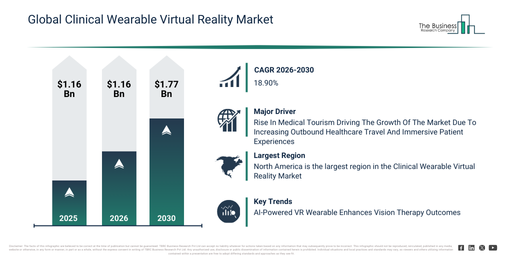
    The clinical wearable virtual reality market has experienced rapid expansion recently and is projected to continue this trend. In 2025, the market size is estimated at $1.74 billion, with growth expected to reach $2.08 billion by 2026, representing a strong compound annual growth rate of 19.2%. This growth reflects increased use of VR in healthcare settings, demand for interactive training modules, improvements in head-mounted display (HMD) technology, rising investments in medical simulation, and the expansion of rehabilitation clinics. Looking further ahead, the market is forecasted to achieve $4.15 billion by 2030, maintaining a robust CAGR of 18.9%. Contributing factors include the broadening scope of telehealth VR solutions, integration with AI-driven diagnostics, tailored VR-based therapy programs, greater acceptance in mental health treatment, and development of lightweight, wireless HMD devices. Key trends expected to influence this growth are patient-specific VR therapies, VR-enabled surgical training, rehabilitation and physiotherapy applications, telehealth-VR integration, and tools for cognitive and mental health monitoring.

    Download A Free Sample Report For Comprehensive Market Insights:

    https://www.thebusinessresearchcompany.com/sample.aspx?id=28172&type=smp

    Factors Propelling Growth in the Clinical Wearable Virtual Reality Market

    One major driver of market growth is the rising medical tourism industry. Medical tourism involves traveling abroad for medical or surgical treatments, often combining healthcare with travel experiences. The trend is growing because many countries offer high-quality medical services at lower prices compared to patients’ home countries. Clinical wearable virtual reality plays a role here by offering immersive pre- and post-treatment experiences such as virtual consultations, pain management, and therapy. For example, the National Institutes of Health (NIH) reported that UK residents traveling abroad for medical treatments increased from about 348,000 in 2022 to 431,000 in 2023. This rise in medical tourism is expected to boost demand for clinical wearable VR solutions.

    Key Drivers Supporting Market Expansion

    Technological advancements have also been pivotal in driving the clinical wearable virtual reality market. Enhanced head-mounted displays and smart glasses, alongside more sophisticated software platforms, are enabling more effective VR applications in clinical settings. The increasing acceptance of VR for pain management, rehabilitation, and patient care management is further accelerating adoption. In addition, growing investment in medical training simulations and rehabilitation clinics contributes to the expanding use of clinical wearable VR devices.

    Access The Complete Clinical Wearable Virtual Reality Market Report:

    https://www.thebusinessresearchcompany.com/report/clinical-wearable-virtual-reality-global-market-report

    Clinical Wearable Virtual Reality Market Segmentation Overview

    This market report categorizes the clinical wearable virtual reality industry into several significant segments. By product type, the market includes Head-Mounted Displays, Smart Glasses, Handheld Devices, and other products. Applications span Pain Management, Rehabilitation, Surgical Training, Patient Care Management, and additional uses. End-users consist of Hospitals, Clinics, Rehabilitation Centers, and other healthcare facilities. Subcategories provide further detail, such as tethered and standalone head-mounted displays; optical see-through and video see-through smart glasses; virtual reality-enabled tablets and smartphones with headset kits; and other devices like haptic feedback gloves, VR treadmills, full-body haptic suits, and motion platforms.

    Innovations and Trends Shaping the Future of Clinical Wearable Virtual Reality

    Industry leaders are increasingly incorporating artificial intelligence to improve the functionality and effectiveness of wearable VR solutions. AI-powered immersive therapy systems are being developed to provide personalized, adaptive exercises for various clinical conditions. These systems track patient progress in real time and adjust difficulty automatically to enhance therapeutic outcomes. As an example, in February 2025, NeuraSim from India partnered with AI healthcare VR company QWR Interactive to introduce BeeVee, an AI-driven VR wearable aimed at treating amblyopia. BeeVee offers immersive exercises that can be used both at clinics and at home under professional supervision, with continuous monitoring and therapy adjustment based on eye-tracking data.

    Additional Emerging Trends in Clinical Wearable VR

    The rise of wireless, lightweight devices enhances patient comfort and usability, promoting wider adoption for home-based therapies and remote monitoring. Integration with telehealth platforms enables seamless communication between patients and healthcare providers, supporting continuous care. VR solutions tailored to mental health and cognitive monitoring are gaining traction, reflecting an increasing focus on holistic patient management. These trends collectively underscore how innovation is propelling the clinical wearable VR market toward broader acceptance and functionality.

    Leading Companies Driving the Clinical Wearable Virtual Reality Market

    Several key players dominate the clinical wearable virtual reality space, including Heru Inc., Vection Technologies, MindMaze SA, XRHealth Inc., Ocutrx Vision Technologies Inc., Health Scholars Inc., AppliedVR, Limbix Inc., SimX Inc., MyndVR Inc., SentiAR Inc., CUREosity GmbH, SyncThink Inc., Virti, ORamaVR, Psious, PrecisionOS Technology Inc., Osso VR, HypnoVR, VerityXR, EON Reality Inc., Bioflight VR, WorldViz, TheraSim Inc., FundamentalVR, PsyTechVR, and VirtaMed AG. These companies are actively developing advanced VR healthcare solutions and expanding their market presence through innovation and strategic partnerships.

    Regional Market Analysis and Growth Prospects

    In 2025, North America held the largest share of the clinical wearable virtual reality market. However, Asia-Pacific is expected to be the fastest-growing region throughout the forecast period. The market analysis covers key geographic zones including Asia-Pacific, South East Asia, Western Europe, Eastern Europe, North America, South America, the Middle East, and Africa, providing a comprehensive understanding of regional market dynamics and opportunities.

    Get in touch with us:

    The Business Research Company: https://www.thebusinessresearchcompany.com/

    Americas: +1 310-496-7795

    Asia: +44 7882 955267 & +91 8897263534

    Europe: +44 7882 955267

    Email us at: marketing@tbrc.info

    Follow us on:

    LinkedIn: https://in.linkedin.com/company/the-business-research-company

    YouTube: https://www.youtube.com/channel/UC24_fI0rV8cR5DxlCpgmyFQ

    Global Market Model: https://www.thebusinessresearchcompany.com/global-market-model
  • Clinical Trial Supplies Market Forecast Signals New Revenue Opportunities Through 2030

    Clinical Trial Supplies Market Forecast Signals New Revenue Opportunities Through 2030

    Through market attractiveness analysis, total addressable market evaluation, company benchmarking matrices, interactive Excel dashboards, expanded supply chain intelligence, emerging startup coverage, and detailed product insights, The Business Research Company’s 2026 market reports provide more actionable and strategically valuable research.

    The clinical trial supplies sector has witnessed notable growth in recent years, reflecting the increasing scale and complexity of clinical research worldwide. As the demand for efficient and reliable supplies rises, the market is set to experience continued expansion. Let’s explore the current market size, key growth drivers, segmentation, industry trends, major players, and regional insights shaping this vital segment of healthcare.

    Market Size and Growth Forecast for the Clinical Trial Supplies Market

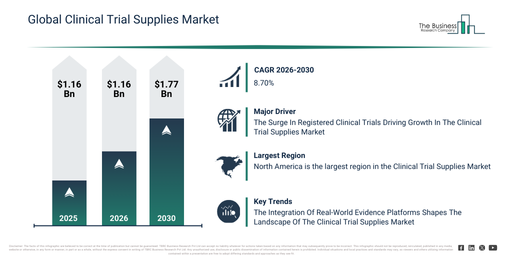
    The clinical trial supplies market has demonstrated strong momentum recently, with its value expected to rise from $2.86 billion in 2025 to $3.1 billion in 2026, marking a compound annual growth rate (CAGR) of 8.3%. This growth during the past period has been driven by factors such as increasing global clinical trial activities, the expansion of multicenter trials, growth in biologics and specialty drugs, outsourcing to contract research organizations (CROs), and improvements in cold-chain logistics infrastructure. Looking ahead, the market is anticipated to grow further to reach $4.33 billion by 2030, at a CAGR of 8.7%. The forecasted rise is supported by the increasing complexity of clinical trial protocols, the growth of decentralized and virtual trials, a stronger focus on patient-centric trial designs, higher investments in digital trial management tools, and tighter regulatory oversight. Leading trends in this period include broader adoption of integrated supply chain platforms, more widespread use of temperature-controlled logistics, demand for comprehensive trial visibility, growth in adaptive packaging and labeling services, and greater attention to compliance and traceability.

    Download A Free Sample Report For Comprehensive Market Insights:

    https://www.thebusinessresearchcompany.com/sample.aspx?id=12133&type=smp

    Driving Forces Behind Growth in the Clinical Trial Supplies Market

    One significant factor propelling the clinical trial supplies market is the rising number of registered clinical trials worldwide. These trials—essential for evaluating new treatments, interventions, and diagnostics—require a reliable supply of pharmaceuticals, medical devices, and other necessary materials to ensure smooth and safe execution. Clinical trial supplies are fundamental to maintaining data integrity and patient safety throughout the research process.

    To illustrate, in May 2023, ClinicalTrials.gov, a database supported by the US National Institutes of Health (NIH), reported approximately 437,533 clinical trials registered globally in 2023, compared to 399,499 in 2022, covering all 50 US states and 221 countries. This steady rise in trial registrations reflects growing research activity and directly boosts demand for clinical trial supplies.

    Access The Complete Clinical Trial Supplies Market Report:

    https://www.thebusinessresearchcompany.com/report/clinical-trial-supplies-global-market-report

    Clinical Trial Supplies Market Segmentation and Revenue Drivers

    The clinical trial supplies market is divided into several key segments for a detailed understanding:

    1) By Services: logistics and distribution, storage and retention, supply chain management, packaging, labeling and blinding, comparator sourcing

    2) By Clinical Trial Phase: Phase I, Phase II, Phase III, Phase IV

    3) By Therapeutic Area: oncology, central nervous system (CNS), cardiovascular, infectious diseases, metabolic disorders, and others

    4) By End User: pharmaceutical and biotech companies, contract research organizations (CROs)

    More specific subcategories include logistics and distribution services like transportation, inventory management, temperature-controlled shipping, and customs clearance; storage solutions with short-term, long-term, and controlled environment options; supply chain management activities such as planning and forecasting, supplier and risk management, and compliance oversight; packaging and labeling services covering primary and secondary packaging, label design, printing, and blinding techniques; and comparator sourcing involving the procurement of reference products, quality control, and regulatory compliance.

    Shifting Industry Trends and Technological Advancements in Clinical Trial Supplies

    Leading companies in the clinical trial supplies sector are adopting cutting-edge technologies to enhance healthcare decision-making, drug development processes, and patient care. They leverage real-world data to generate robust evidence-based insights, ensuring a competitive edge in the market.

    For instance, in April 2023, Komodo Health, a US healthcare tech firm specializing in patient recruitment, site selection, and real-time data monitoring for clinical trials, introduced MapEnhance. This innovative platform integrates a network of specialty data partners into a real-world evidence (RWE) technology system, offering detailed insights into clinical events and patient populations. MapEnhance combines precision molecular diagnostics, high-volume laboratory data for early disease detection, electronic medical records covering clinical visits, and inpatient/outpatient facility chargemasters for comprehensive cost and utilization analysis.

    Key Players and Strategic Market Positions in Clinical Trial Supplies

    The clinical trial supplies market features numerous prominent corporations, including Thermo Fisher Scientific Inc., IQVIA, Eurofins Scientific SE, Parexel International Corporation, ICON PLC, Catalent Inc., Intertek Group PLC, Recipharm AB, World Courier, Almac Group Ltd., Piramal Pharma Solutions, Clinigen Group PLC, Movianto GmbH, Marken Limited, PCI Pharma Services, Rubicon Research Private Limited, Bionical Ltd., Durbin PLC, SIRO Clinpharm Pvt. Ltd., Biocair International Ltd., Ancillare LP., Myonex, Klifo A/S, Alium Medical Limited, ADAllen Pharma, and Sharp Services LLC. These companies play pivotal roles in advancing supply chain innovation and delivering high-quality solutions.

    Regional Market Dynamics Highlighting Growth Hotspots

    In 2025, North America held the largest share of the clinical trial supplies market. However, the Asia-Pacific region is expected to experience the fastest growth during the forecast period. The market analysis encompasses key geographic zones such as Asia-Pacific, South East Asia, Western Europe, Eastern Europe, North America, South America, the Middle East, and Africa, providing a broad perspective on global market trends and opportunities.

    Get in touch with us:

    The Business Research Company: https://www.thebusinessresearchcompany.com/

    Americas: +1 310-496-7795

    Asia: +44 7882 955267 & +91 8897263534

    Europe: +44 7882 955267

    Email us at: marketing@tbrc.info

    Follow us on:

    LinkedIn: https://in.linkedin.com/company/the-business-research-company

    YouTube: https://www.youtube.com/channel/UC24_fI0rV8cR5DxlCpgmyFQ

    Global Market Model: https://www.thebusinessresearchcompany.com/global-market-model
  • Coronary Angiography Devices Market Growth Is Reshaping Competitive Advantage Across The Industry

    Coronary Angiography Devices Market Growth Is Reshaping Competitive Advantage Across The Industry

    Enhanced with market attractiveness analysis, total addressable market evaluation, company benchmarking matrices, interactive Excel dashboards, expanded supply chain intelligence, emerging startup coverage, and detailed product insights, The Business Research Company’s 2026 market reports deliver more actionable and strategically valuable research.

    The coronary angiography devices market has witnessed significant expansion recently, driven by advancements in cardiac care and growing healthcare infrastructure worldwide. With an increasing focus on early diagnosis and treatment of heart diseases, this sector is set to experience continued growth in the coming years. Let’s explore the current market size, key growth drivers, segment breakdown, major players, and regional trends shaping this industry.

    Steady Market Growth and Future Projections in Coronary Angiography Devices

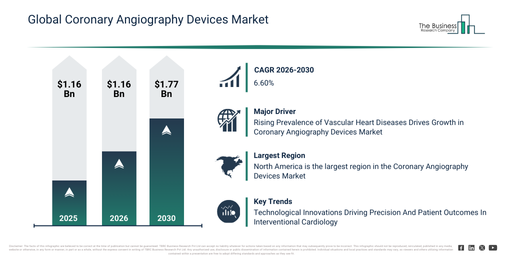
    The market for coronary angiography devices has shown robust growth and is projected to increase from $10.03 billion in 2025 to $10.7 billion in 2026, representing a compound annual growth rate (CAGR) of 6.7%. The expansion during this period is largely attributed to the rising prevalence of coronary artery disease, a higher frequency of cardiac catheterization procedures, the development of hospital cardiac care facilities, wider adoption of x-ray angiography systems, and an enhanced focus on early detection of heart conditions. Looking ahead, the market is expected to reach $13.83 billion by 2030, growing at a CAGR of 6.6%, fueled by factors such as an aging population at greater cardiovascular risk, increased demand for precise coronary diagnostics, expansion of interventional cardiology centers, adoption of image-guided procedures, and a growing emphasis on preventive cardiology. Key trends predicted for the forecast period include a shift toward minimally invasive diagnostic techniques, increased use of advanced imaging technology, heightened demand for accurate coronary visualization, broader application of angiography in early cardiac disease detection, and the integration of diagnostic and therapeutic workflows.

    Download A Free Sample Report For Comprehensive Market Insights:

    https://www.thebusinessresearchcompany.com/sample.aspx?id=18800&type=smp

    Rising Prevalence of Vascular Heart Diseases Boosting Market Demand

    A significant driver behind the growth of the coronary angiography devices market is the increasing incidence of vascular heart diseases. These conditions affect the heart’s blood vessels and are influenced by lifestyle changes, such as poor diet and reduced physical activity, alongside an aging population and rising rates of diabetes and hypertension. Coronary angiography devices play a crucial role in diagnosing these diseases by producing detailed images of coronary arteries, helping healthcare providers pinpoint blockages and abnormalities to guide treatment strategies. For example, in October 2024, the US Centers for Disease Control and Prevention reported that cardiovascular disease caused 919,032 deaths in 2023, accounting for roughly one in every three fatalities. This high prevalence of vascular conditions continues to drive demand for coronary angiography devices.

    Expanding Cardiac Care Infrastructure and Technological Adoption Fueling Market Growth

    Another factor propelling market growth is the ongoing expansion of cardiac care infrastructure and the increasing use of advanced diagnostic technologies. Healthcare facilities worldwide are investing in state-of-the-art imaging systems and catheterization labs to enhance cardiac diagnostics and interventions. This infrastructure growth supports the rising volume of cardiac catheterization procedures and broadens access to high-quality coronary angiography, thereby increasing market demand.

    Access The Complete Coronary Angiography Devices Market Report:

    https://www.thebusinessresearchcompany.com/report/coronary-angiography-devices-global-market-report

    In-Depth Segmentation of the Coronary Angiography Devices Market

    This market is segmented comprehensively by product type, technology, indication, application, and end-user. Product categories include angiography systems, catheters, contrast media, vascular closure devices, balloons, guidewires, and accessories. Technology-wise, the market covers x-ray angiography, computed tomography angiography (CTA), magnetic resonance angiography, and other emerging technologies. Indications include coronary artery disease, valvular heart disease, congenital heart disease, congestive heart failure, and other cardiac conditions. The applications split between diagnostics and therapeutics, while end-users primarily consist of hospitals and clinics, diagnostic and imaging centers, and research institutes. Further subcategories detail specific system types such as 3D or 4D angiography systems and digital subtraction angiography; catheter types including diagnostic and therapeutic variants; contrast media types; vascular closure device categories; balloon types; guidewire classifications; and various supportive accessories.

    Technological Innovations Shaping the Future of Coronary Angiography Devices

    Key players in the coronary angiography devices market are focusing heavily on innovation, particularly the development of next-generation drug-eluting stents. These advanced stents feature improved scaffolding, drug coatings, and delivery mechanisms designed to reduce arterial restenosis and promote better healing of blood vessels. For example, in May 2024, Abbott Laboratories introduced its XIENCE Sierra stent in India, which offers enhanced flexibility, precise deployment, and improved safety. This launch aims to provide cardiologists with better treatment options and raise the standard of care for coronary artery disease, illustrating a broader industry commitment to combining cutting-edge design with clinical needs to improve patient outcomes.

    Established Corporations Leading the Coronary Angiography Devices Market

    The market features several prominent companies including Cardinal Health Inc., Johnson & Johnson Services Inc., Abbott Laboratories, Medtronic plc, Siemens Healthineers AG, Koninklijke Philips N.V., GE HealthCare Technologies Inc., Boston Scientific Corporation, B. Braun Holding GmbH & Co. KG, Terumo Corporation, Nipro Corporation, Shimadzu Corporation, Cook Group Incorporated, ICU Medical Inc., Biotronik SE Co. KG, Merit Medical Systems Inc., Cordis Corporation, Guerbet N.V., AngioDynamics Inc., Canon Medical Systems Corporation, Acist Medical Systems, Medinol Ltd., and Alvimedica. These firms are key contributors to technological advancement, market expansion, and increased access to coronary angiography solutions worldwide.

    Regional Market Dynamics with North America Leading and Asia-Pacific Rising Fast

    In 2025, North America held the largest share of the coronary angiography devices market. However, the Asia-Pacific region is anticipated to experience the fastest growth during the forecast period. The market report covers key geographic areas including Asia-Pacific, South East Asia, Western and Eastern Europe, North America, South America, the Middle East, and Africa, providing a global perspective on trends and opportunities.

    Get in touch with us:

    The Business Research Company: https://www.thebusinessresearchcompany.com/

    Americas: +1 310-496-7795

    Asia: +44 7882 955267 & +91 8897263534

    Europe: +44 7882 955267

    Email us at: marketing@tbrc.info

    Follow us on:

    LinkedIn: https://in.linkedin.com/company/the-business-research-company

    YouTube: https://www.youtube.com/channel/UC24_fI0rV8cR5DxlCpgmyFQ

    Global Market Model: https://www.thebusinessresearchcompany.com/global-market-model
  • Clinical Reference Laboratory Market Growth Is Accelerating As Industry Transformation Continues

    Clinical Reference Laboratory Market Growth Is Accelerating As Industry Transformation Continues

    Delivering more actionable and strategically valuable research, The Business Research Company’s 2026 market reports feature market attractiveness analysis, total addressable market evaluation, company benchmarking matrices, interactive Excel dashboards, expanded supply chain intelligence, emerging startup coverage, and detailed product insights.

    The clinical reference laboratory industry has witnessed significant growth in recent years, fueled by advances in medical technology and an increasing need for accurate diagnostic testing. As healthcare continues to evolve, this sector is positioned to expand further, driven by innovations and rising demand worldwide. Let’s explore the market size, key growth drivers, segmentation, technological advancements, leading players, and regional outlook shaping the industry’s trajectory.

    Strong Expansion Forecast in the Clinical Reference Laboratory Market

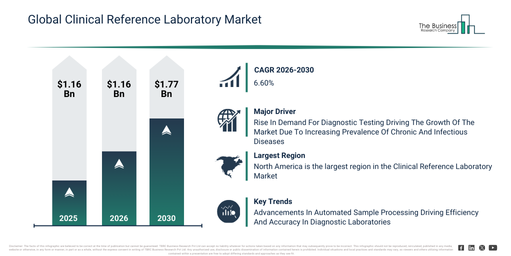
    The clinical reference laboratory market has shown robust growth and is projected to increase from $47 billion in 2025 to $50.24 billion in 2026, reflecting a compound annual growth rate (CAGR) of 6.9%. This past growth has largely been supported by the rising prevalence of chronic diseases, the outsourcing of hospital diagnostics, increased demand for infectious disease testing, stricter regulatory requirements, and consolidation within laboratories.

    Download A Free Sample Report For Comprehensive Market Insights:

    https://www.thebusinessresearchcompany.com/sample.aspx?id=23340&type=smp

    Looking ahead, the market is expected to continue its upward trajectory, reaching $64.93 billion by 2030 with a CAGR of 6.6%. This forecasted growth is mainly driven by the expansion of genomic testing, the adoption of AI-powered diagnostics, the rise of personalized medicine, ongoing digitization in healthcare, and the growing need for population health screening. Key trends during this period include wider application of molecular diagnostics, greater automation in lab testing, growth in high-complexity testing, faster turnaround times for diagnostics, and centralization of testing services.

    Increasing Demand for Diagnostic Testing Fuels Market Growth

    One of the primary factors propelling the clinical reference laboratory market is the growing demand for diagnostic services. Diagnostic testing involves analyzing biological samples to detect, diagnose, and monitor diseases, infections, and medical conditions. Recent advances in medical technology have made these tests more accessible, precise, and efficient.

    Access The Complete Clinical Reference Laboratory Market Report:

    https://www.thebusinessresearchcompany.com/report/clinical-reference-laboratory-global-market-report

    Clinical reference laboratories play a critical role in providing specialized and accurate diagnostic analyses using advanced technologies and standardized methods. These capabilities ensure reliable test outcomes that support early disease detection, treatment decisions, and ongoing patient monitoring across many medical specialties. For example, in April 2024, the UK’s National Health Service (NHS) reported that 376,200 patients were waiting over six weeks for essential diagnostic tests, marking an increase of 21,200 from the previous month. Such statistics highlight the rising demand for diagnostic testing services, which in turn fuels market expansion.

    Detailed Segmentation of the Clinical Reference Laboratory Market

    This market is categorized across several key segments:

    1) By Type: Clinical Chemistry, Genetics Testing, Microbiology and Cytology, Other Types

    2) By Technology: Traditional Laboratory Techniques, Digital Technologies, Automated Testing Platforms, Molecular Diagnostics

    3) By Application: Clinics, Hospitals, Independent Laboratories

    Further subcategories include:

    – Clinical Chemistry: Blood Gas Analysis, Enzyme Testing, Electrolyte Testing, Lipid Panel, Liver Function Testing, Renal Function Testing

    – Genetics Testing: Carrier Screening, Diagnostic Testing, Predictive and Presymptomatic Testing, Pharmacogenomics, Prenatal and Newborn Testing

    – Microbiology and Cytology: Bacterial Culture Testing, Fungal Culture Testing, Viral Testing, Parasitology Testing, Cytopathology

    – Other Types: Immunology Testing, Hematology Testing, Toxicology Testing, Endocrinology Testing

    Advancements in Technology Revolutionizing Clinical Reference Labs

    Leading companies in the clinical reference laboratory space are prioritizing the development of cutting-edge technologies such as automated sample processing platforms. These high-throughput systems utilize robotics and sophisticated software to handle, prepare, and analyze biological samples with minimal human involvement, boosting accuracy, efficiency, and scalability in both diagnostic and research settings.

    For instance, in January 2023, Germany-based QIAGEN NV introduced the EZ2 Connect MDx platform, designed to automate sample processing in diagnostic labs. This in vitro diagnostic (IVD) system can purify DNA and RNA from 24 samples simultaneously within 30 minutes. It employs magnetic-bead technology to extract nucleic acids from diverse sample types like blood plasma, serum, and stool. The platform uses prefilled sealed reagent cartridges, integrated cameras for load verification, and UV decontamination to reduce contamination risks. Additional features include onboard pipetting, heating, and automated piercing of sealed cartridges to streamline operations. The extracted analytes are compatible with downstream technologies such as real-time PCR, digital PCR, and next-generation sequencing.

    Key Players Influencing the Clinical Reference Laboratory Market

    The competitive landscape includes several prominent organizations such as Mayo Clinic Laboratories, Eurofins Scientific, Quest Diagnostics, Sonic Healthcare, Unilabs, ARUP Laboratories, Lancet Laboratories, NeoGenomics Laboratories, Ampath Laboratories, Clinical Reference Laboratory, Al Borg Medical Laboratories, Medsol Diagnostics, Medlabs Group, Cerba International, Lifebrain Group, CRL Diagnostics, Dr. Lal PathLabs, SRL Diagnostics, Synlab International, ACM Global Laboratories, Laboratory Corporation of America (Labcorp), and KingMed Diagnostics.

    Geographical Market Leadership and Growth Prospects

    In 2025, North America held the largest share in the clinical reference laboratory market. However, the Asia-Pacific region is anticipated to experience the fastest growth throughout the forecast period. The market evaluation encompasses major regions including Asia-Pacific, South East Asia, Western Europe, Eastern Europe, North America, South America, the Middle East, and Africa, providing a comprehensive global perspective on market dynamics.

    Get in touch with us:

    The Business Research Company: https://www.thebusinessresearchcompany.com/

    Americas: +1 310-496-7795

    Asia: +44 7882 955267 & +91 8897263534

    Europe: +44 7882 955267

    Email us at: marketing@tbrc.info

    Follow us on:

    LinkedIn: https://in.linkedin.com/company/the-business-research-company

    YouTube: https://www.youtube.com/channel/UC24_fI0rV8cR5DxlCpgmyFQ

    Global Market Model: https://www.thebusinessresearchcompany.com/global-market-model
  • Clinical Oncology Next Generation Sequencing Market Outlook Highlights The Next Major Growth Opportunities

    Clinical Oncology Next Generation Sequencing Market Outlook Highlights The Next Major Growth Opportunities

    Enhanced with market attractiveness analysis, total addressable market evaluation, company benchmarking matrices, interactive Excel dashboards, expanded supply chain intelligence, emerging startup coverage, and detailed product insights, The Business Research Company’s 2026 market reports deliver more actionable and strategically valuable research.

    The clinical oncology next generation sequencing market has been experiencing rapid development, driven by advances in cancer research and technology. As personalized medicine and genomic diagnostics become more integral to cancer care, this market is set to expand significantly over the coming years. Below, we explore the current market size, key growth drivers, segmentation, emerging trends, leading companies, and regional dynamics shaping this sector’s future.

    Clinical Oncology Next Generation Sequencing Market Size and Growth Outlook

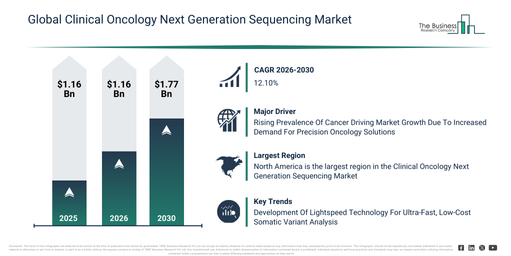
    The market for clinical oncology next generation sequencing is expanding swiftly. It is projected to rise from $0.58 billion in 2025 to $0.66 billion in 2026, marking a compound annual growth rate (CAGR) of 13.3%. This past growth has been fueled by the widening scope of cancer genomics research, more accessible sequencing platforms, increased oncology clinical trials, broader adoption of molecular diagnostics, and falling sequencing costs. Looking ahead, the market is anticipated to reach $1.04 billion by 2030, growing at a CAGR of 12.1%. This future expansion is supported by the growing need for precision oncology, heightened investments in genomic medicine, the proliferation of hospital-based sequencing labs, rising use of targeted cancer treatments, and ongoing innovations in sequencing technologies. Key future trends include the greater adoption of NGS-based cancer diagnostics, rising companion diagnostic applications, deeper integration of bioinformatics with data analytics, expansion of personalized cancer therapies, and an emphasis on detecting rare mutations.

    Download A Free Sample Report For Comprehensive Market Insights:

    https://www.thebusinessresearchcompany.com/sample.aspx?id=3344&type=smp

    Factors Stimulating Growth in the Clinical Oncology Next Generation Sequencing Market

    One of the primary forces driving this market is the increasing prevalence of cancer globally. Cancer, characterized by uncontrolled cell growth and spread, is becoming more common largely due to population aging, as cancer risk notably increases with age. Next generation sequencing plays a crucial role in identifying novel and rare mutations within tumors, providing valuable insights into the molecular characteristics of individual cancers. For example, in February 2024, the World Health Organization, a United Nations public health agency based in Switzerland, projected over 35 million new cancer cases by 2050—a 77% increase from the estimated 20 million cases reported in 2022. This significant rise in cancer incidence is a key factor propelling the demand for advanced sequencing solutions in oncology.

    Additional Drivers Accelerating Market Expansion

    Beyond prevalence, technological advances and broader clinical applications are also fueling market growth. The continual improvements in sequencing speed, accuracy, and cost-effectiveness have made NGS a vital tool for precision oncology. Increased investments in genomic medicine and the establishment of specialized sequencing laboratories in hospitals further enhance the availability and adoption of these technologies. Additionally, the growing use of targeted therapies that rely on detailed genetic information is driving demand for sequencing-based diagnostics.

    Access The Complete Clinical Oncology Next Generation Sequencing Market Report:

    https://www.thebusinessresearchcompany.com/report/clinical-oncology-next-generation-sequencing-global-market-report

    Market Segmentation and Revenue Contributors in Clinical Oncology NGS

    The clinical oncology next generation sequencing market is segmented based on technology, application, and end user. The technology segment includes Ion Semiconductor Sequencing, Pyro-Sequencing, Synthesis Sequencing, Real-Time Sequencing, Ligation Sequencing, Reversible Dye Termination Sequencing, and Nano-Pore Sequencing. Application categories encompass screening, companion diagnostics, and other diagnostic uses. End users are primarily hospital laboratories, clinical research organizations, and diagnostic laboratories.

    Within these categories, further subsegments exist. For Ion Semiconductor Sequencing, products include the Ion Proton System, Ion PGM System, Ion S5 System, and other related technologies. Pyro-Sequencing features 454 Pyrosequencing and other types. Synthesis Sequencing comprises Illumina Sequencing Technology, SOLiD Sequencing Technology, among others. Real-Time Sequencing includes platforms like PacBio RS II System and Sequel System. Ligation Sequencing covers Helicos Single Molecule Sequencing and others. Reversible Dye Termination Sequencing involves Illumina HiSeq, Illumina NextSeq, and additional technologies. Nano-Pore Sequencing includes Oxford Nanopore Technologies’ MinION, GridION, PromethION, and other systems.

    Technological Innovations Driving Clinical Oncology NGS Forward

    Leading companies in the clinical oncology NGS field are heavily investing in software and hardware innovations to improve efficiency and reduce costs. A major focus is on embedding software accelerators that significantly shorten the time and expense of second-level NGS analysis, enabling faster results with fewer computational resources. These advancements support comprehensive genomic profiling and make large-scale cancer panels more accessible to both centralized and decentralized diagnostic labs.

    For example, in January 2024, QIAGEN Digital Insights, a German bioinformatics firm, launched an upgraded version of its CLC Genomics Workbench Premium featuring LightSpeed technology. This upgrade supports somatic cancer secondary analysis and can process a 275-gene cancer panel at 3377× coverage in just six minutes, costing under US$0.72 per test in standard cloud environments. LightSpeed is designed to deliver fast, accurate results while reducing power consumption, and it requires no additional hardware or licenses beyond the existing CLC platform.

    Key Players Driving Competition in the Clinical Oncology NGS Market

    Several prominent companies dominate the clinical oncology NGS market, including Thermo Fisher Scientific, Oxford Nanopore Technologies Ltd., QIAGEN N.V., Myriad Genetics Inc., Illumina Inc., F. Hoffmann-La Roche Ltd., PerkinElmer Inc., Agilent Technologies Inc., Pacific Biosciences of California Inc., Caris Life Sciences, Paradigm Diagnostics, GATC Biotech AG, Macrogen Inc., DNASTAR Inc., Exosome Diagnostics Inc., Biomatters Ltd., Partek Inc., Foundation Medicine Inc., Becton Dickinson and Company (BD), Takara Bio Inc., Knome Inc., Genomatix Software GmbH, CLC bio, GnuBIO Inc., Bio-Rad Laboratories Inc., BGI Genomics Co. Ltd., Guardant Health Inc., Invitae Corporation, Natera Inc., NeoGenomics Laboratories Inc., Sysmex Corporation, Veracyte Inc., Zymo Research Corporation, ArcherDX Inc., Karius Inc., OncoDNA S.A., Personal Genome Diagnostics Inc., and PierianDx Inc. These organizations invest heavily in research and development to maintain their competitive edge and meet evolving market demands.

    Regional Market Dynamics and Growth Opportunities

    In 2025, North America held the largest share of the clinical oncology next generation sequencing market, reflecting its advanced healthcare infrastructure and significant investments in precision medicine. Asia-Pacific ranked as the second-largest region, with substantial growth potential fueled by rising cancer prevalence, expanding healthcare infrastructure, and increasing genomic research activities. Other regions covered in the market analysis include South East Asia, Western Europe, Eastern Europe, South America, the Middle East, and Africa, each contributing differently to the global market landscape.

    Get in touch with us:

    The Business Research Company: https://www.thebusinessresearchcompany.com/

    Americas: +1 310-496-7795

    Asia: +44 7882 955267 & +91 8897263534

    Europe: +44 7882 955267

    Email us at: marketing@tbrc.info

    Follow us on:

    LinkedIn: https://in.linkedin.com/company/the-business-research-company

    YouTube: https://www.youtube.com/channel/UC24_fI0rV8cR5DxlCpgmyFQ

    Global Market Model: https://www.thebusinessresearchcompany.com/global-market-model
  • Corneal Topography Systems Market Forecast Signals New Revenue Opportunities Through 2030

    Corneal Topography Systems Market Forecast Signals New Revenue Opportunities Through 2030

    Through market attractiveness analysis, total addressable market evaluation, company benchmarking matrices, interactive Excel dashboards, expanded supply chain intelligence, emerging startup coverage, and detailed product insights, The Business Research Company’s 2026 market reports provide more actionable and strategically valuable research.

    The corneal topography systems market has been witnessing substantial growth, driven by advancements in eye care technologies and an increasing number of vision-related procedures. As the demand for precise diagnostic tools rises, this market is positioned for continued expansion through the end of the decade. The following sections explore the market size, growth drivers, segmentation, emerging trends, key players, and regional outlook in detail.

    Steady Market Growth of Corneal Topography Systems Through 2030

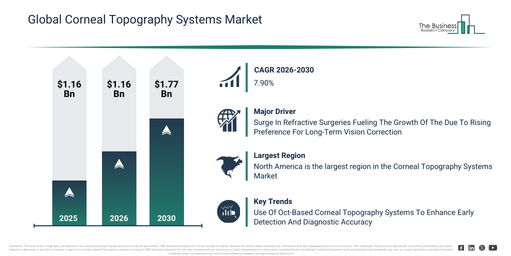
    The market for corneal topography systems has shown impressive growth in recent years. It is projected to increase from $1.17 billion in 2025 to $1.27 billion in 2026, representing a compound annual growth rate (CAGR) of 8.2%. This growth has been fueled by the rising number of refractive surgeries, the growing prevalence of vision disorders, wider adoption of advanced ophthalmic diagnostics, expansion of eye care clinics, and innovations in optical imaging technologies. Looking ahead, the market is expected to continue its upward trajectory, reaching $1.72 billion by 2030 with a CAGR of 7.9%. Key factors supporting this growth include AI-assisted corneal analysis, heightened demand for customized vision correction, an increase in cataract surgeries, growth in outpatient ophthalmology services, and the rise of digital eye health platforms. Notable trends anticipated during this period involve high-resolution corneal mapping, early detection of keratoconus, enhanced planning for refractive surgeries, integrated anterior segment imaging, and non-invasive corneal diagnostics.

    Download A Free Sample Report For Comprehensive Market Insights:

    https://www.thebusinessresearchcompany.com/sample.aspx?id=30244&type=smp

    Rising Refractive Surgeries as a Major Growth Driver for Corneal Topography Systems

    One of the primary forces propelling the corneal topography systems market is the growing demand for refractive surgeries. These procedures reshape the cornea to correct vision issues such as myopia, hyperopia, and astigmatism, offering patients long-term freedom from glasses or contact lenses. The increasing preference for permanent vision correction options is encouraging more individuals to undergo these surgeries. Corneal topography systems play a critical role by delivering detailed corneal maps that allow surgeons to plan precise and personalized treatment strategies, ensuring better safety and outcomes.

    Supporting Evidence Behind Refractive Surgery Demand Impact

    For instance, in March 2023, Massachusetts Eye and Ear, a healthcare provider in the US, reported that 87.8% of myopic eyes treated with LASIK achieved results within ±0.5 diopters of the target refraction, marking an improvement over previous outcomes. This demonstrates how advancements in surgical planning and corneal mapping are fostering higher success rates. Consequently, the rising number of refractive procedures is a key factor boosting demand for corneal topography systems.

    Access The Complete Corneal Topography Systems Market Report:

    https://www.thebusinessresearchcompany.com/report/global-corneal-topography-systems-market-report

    Detailed Market Segmentation and Strategic Opportunities in Corneal Topography Systems

    This market is divided into several segments based on product type, application, and end-user:

    – Product Types include Placido Disc Systems, Scheimpflug Systems, Scanning Slit Systems, and Combined Systems.

    – Applications cover Refractive Surgery Evaluation, Cataract Surgery Evaluation, Contact Lens Fitting, Keratoconus Diagnosis, and other uses.

    – End-Users consist of Hospitals, Ophthalmic Clinics, Ambulatory Surgical Centers, and other categories.

    Further product subcategories are:

    – Placido Disc Systems, including Corneal Topographers and Videokeratoscopes.

    – Scheimpflug Systems, comprising Corneal Tomographers and Anterior Segment Analyzers.

    – Scanning Slit Systems, featuring Slit Scanners, Corneal Profilers, and Topography Analyzers.

    – Combined Systems, such as Placido Scheimpflug Hybrids, Slit Placido Hybrids, and Multi Modal Analyzers.

    This segmentation highlights the range of technologies and applications that offer diverse opportunities for market players.

    Technological Advances and Industry Trends Shaping Corneal Topography Systems Demand

    Leading companies in this market are focusing on integrating corneal topography with electronic health records and Optical Coherence Tomography (OCT)-based imaging to boost diagnostic accuracy. OCT-based topography provides high-resolution, cross-sectional images of both the anterior and posterior corneal surfaces, enabling comprehensive 3D elevation maps. This integration improves early detection of corneal conditions such as keratoconus and corneal ectasia, enhancing patient care and surgical outcomes.

    Innovations Demonstrated by Market Leaders

    For example, in March 2023, Haag-Streit AG, a Swiss medical technology firm, introduced a Corneal Ectasia Display for its Eyestar 900 precision OCT analyzer. This new tool features OCT-based topography that presents detailed elevation data of anterior and posterior corneal surfaces, pachymetry maps, Belin ABCD grading, and additional diagnostic parameters. It supports early detection of keratoconus and ectatic changes and offers 12 mm Class A topography, 18 mm anterior chamber OCT imaging, and an automated workflow for thorough corneal and anterior segment analysis in a single session.

    Key Players Driving Competition within the Corneal Topography Systems Market

    The competitive landscape features a mix of well-established and emerging companies, including Carl Zeiss Meditec AG, Topcon Corporation, Tomey Corporation, OCULUS Optikgeräte GmbH, NIDEK Co. Ltd., SCHWIND eye-tech-solutions GmbH, Medmont International Pty Ltd, Visionix Ltd., Costruzione Strumenti Oftalmici S.r.l., EyeSys Vision Inc., Cassini Technologies Inc., Ziemer Ophthalmic Systems AG, Heidelberg Engineering GmbH, Optopol Technology S.A., MediWorks Co. Ltd., Reichert Technologies Inc., Rexxam Co. Ltd., CSO Italia, Sirius Vision, and Appasamy Associates. These companies continue to innovate and expand their product portfolios to address evolving clinical needs.

    Regional Market Leadership and Growth Prospects

    In 2025, North America held the largest share of the corneal topography systems market, benefiting from advanced healthcare infrastructure and widespread adoption of eye care technologies. Meanwhile, the Asia-Pacific region is projected to register the fastest growth rate during the forecast period. The market report covers major regions including Asia-Pacific, South East Asia, Western Europe, Eastern Europe, North America, South America, the Middle East, and Africa, providing a comprehensive view of global market dynamics.

    Get in touch with us:

    The Business Research Company: https://www.thebusinessresearchcompany.com/

    Americas: +1 310-496-7795

    Asia: +44 7882 955267 & +91 8897263534

    Europe: +44 7882 955267

    Email us at: marketing@tbrc.info

    Follow us on:

    LinkedIn: https://in.linkedin.com/company/the-business-research-company

    YouTube: https://www.youtube.com/channel/UC24_fI0rV8cR5DxlCpgmyFQ

    Global Market Model: https://www.thebusinessresearchcompany.com/global-market-model
  • Clinical Chemistry Analyzers Market Trends And Growth Drivers Point To Strong Future Potential

    Clinical Chemistry Analyzers Market Trends And Growth Drivers Point To Strong Future Potential

    Through market attractiveness analysis, total addressable market evaluation, company benchmarking matrices, interactive Excel dashboards, expanded supply chain intelligence, emerging startup coverage, and detailed product insights, The Business Research Company’s 2026 market reports provide more actionable and strategically valuable research.

    The clinical chemistry analyzers market has experienced significant growth in recent years and continues to expand rapidly. With technological advancements and increasing healthcare needs, this market is set to maintain a strong upward trajectory through 2030. Let’s explore the current market size, key drivers, leading companies, and emerging trends shaping the future of this sector.

    Market Size and Growth Outlook for the Clinical Chemistry Analyzers Market

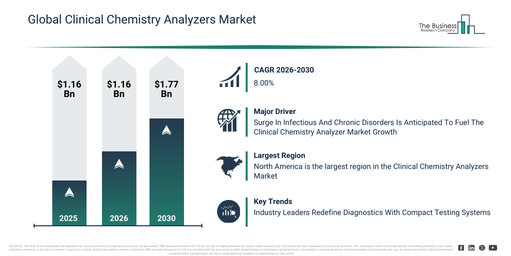
    The clinical chemistry analyzers market is projected to grow steadily, increasing from $15.49 billion in 2025 to $16.63 billion in 2026, representing a compound annual growth rate (CAGR) of 7.3%. This growth during the past years has been fueled by rising diagnostic testing volumes, expanded hospital laboratory infrastructure, a higher prevalence of chronic diseases, greater adoption of automated lab equipment, and the availability of standardized reagents. Looking ahead, the market is expected to reach $22.64 billion by 2030, growing at an accelerated CAGR of 8.0%. Factors contributing to this robust expansion include increasing demand for rapid diagnostic solutions, a shift toward decentralized testing models, rising investments in smart laboratories, a focus on personalized medicine, and the integration of advanced analytics in clinical diagnostics. Key trends forecasted during this period are the growing use of fully automated analyzers, the incorporation of AI-based diagnostic support, the rising need for high-throughput testing systems, growth in point-of-care chemistry testing, and enhanced data connectivity with laboratory information system (LIS) integration.

    Download A Free Sample Report For Comprehensive Market Insights:

    https://www.thebusinessresearchcompany.com/sample.aspx?id=12462&type=smp

    Driving Forces Behind Expansion of the Clinical Chemistry Analyzers Market

    The rising incidence of infectious diseases is a crucial factor propelling the growth of the clinical chemistry analyzers sector. Infectious diseases, caused by harmful pathogens entering the body through food or direct contact, have increased globally, boosting the need for diagnostic testing.

    Additionally, the growing prevalence of chronic diseases, which last for extended periods and often worsen over time, contributes significantly to market demand. Clinical chemistry analyzers are essential tools for analyzing specimens to diagnose and monitor these conditions effectively. For example, the UK Health Security Agency reported a 7% increase in tuberculosis cases in England during the first half of 2023 compared to the same period in 2022, highlighting the ongoing need for diagnostic support in managing infectious diseases. This rising burden of both infectious and chronic illnesses is a major driver for the clinical chemistry analyzers market.

    Segmentation of the Clinical Chemistry Analyzers Market Identifying Growth Opportunities

    This market is systematically categorized into several segments to pinpoint growth areas. By product type, it includes Clinical Chemistry Analyzers, Clinical Chemistry Reagents, and Other Products.

    In terms of analyzer technology, the market breaks down into Semi-Automated Clinical Chemistry Analyzers and Fully Automated Clinical Chemistry Analyzers.

    The test types covered span Basic Metabolic Panels, Electrolyte Panels, Liver Panels, Lipid Profiles, Renal Panels, Thyroid Function Panels, and Specialty Chemical Tests.

    End-users consist of Hospitals, Academic Research Centers, Diagnostic Laboratories, and other facilities.

    Further subcategories include types of clinical chemistry analyzers such as Fully Automated, Semi-Automated, Benchtop, and Portable Analyzers. Reagents are divided into Enzymatic, Immunochemical, Colorimetric, and Control and Calibration Reagents. Other products encompass Quality Control Products, Calibration Standards, and Sample Preparation Kits.

    Access The Complete Clinical Chemistry Analyzers Market Report:

    https://www.thebusinessresearchcompany.com/report/clinical-chemistry-analyzers-global-market-report

    Innovative Industry Trends Driving Revenue Growth in Clinical Chemistry Analyzers

    Leading companies in this market are focusing on developing compact and efficient testing systems designed for portability and ease of use. Such systems are well-suited for a range of environments, from independent labs to satellite healthcare facilities.

    For example, in July 2023, Siemens Healthineers introduced the Atellica CI Analyzer, which supports clinical chemistry testing and immunoassay. This system offers consistent use of reagents and consumables, along with intelligent software integration, making it suitable for both standalone laboratories and healthcare networks. This innovation exemplifies the trend towards smarter, more connected diagnostic equipment that enhances reliability and workflow efficiency.

    Prominent Players Dominating the Clinical Chemistry Analyzers Market

    Key companies that currently hold strong positions in this market include F. Hoffmann-La Roche AG, Abbott Laboratories, Siemens Healthineers AG, Thermo Fisher Scientific Inc., Mindray Medical International Limited, Sysmex Corporation, HORIBA Ltd., Nova Biomedical Corporation, Randox Laboratories Ltd., ELITechGroup, DiaSys Diagnostic Systems GmbH, SNIBE Co. Ltd., EKF Diagnostics Holdings plc, Awareness Technology Inc., Bio Systems Diagnostics Pvt. Ltd., Analyticon Biotechnologies AG, SFRI Medical Diagnostics, Shenzhen Rayto Life and Analytical Sciences Co. Ltd., Biobase Group, Jokoh Co. Ltd., and Dirui Industrial Co. Ltd. These companies are driving innovation and expansion within the sector.

    Regional Market Performance Highlighting Leading Areas for Revenue Generation

    In 2025, North America held the largest share of the clinical chemistry analyzers market, reflecting its well-established healthcare infrastructure and adoption of advanced technologies. The report also covers various important regions including Asia-Pacific, South East Asia, Western Europe, Eastern Europe, South America, Middle East, and Africa, offering a comprehensive global perspective on market trends and growth potential.

    Get in touch with us:

    The Business Research Company: https://www.thebusinessresearchcompany.com/

    Americas: +1 310-496-7795

    Asia: +44 7882 955267 & +91 8897263534

    Europe: +44 7882 955267

    Email us at: marketing@tbrc.info

    Follow us on:

    LinkedIn: https://in.linkedin.com/company/the-business-research-company

    YouTube: https://www.youtube.com/channel/UC24_fI0rV8cR5DxlCpgmyFQ

    Global Market Model: https://www.thebusinessresearchcompany.com/global-market-model
  • Corneal Implants Market Growth Is Accelerating As Industry Transformation Continues

    Corneal Implants Market Growth Is Accelerating As Industry Transformation Continues

    Delivering more actionable and strategically valuable research, The Business Research Company’s 2026 market reports feature market attractiveness analysis, total addressable market evaluation, company benchmarking matrices, interactive Excel dashboards, expanded supply chain intelligence, emerging startup coverage, and detailed product insights.

    The corneal implants market is experiencing notable growth fueled by advances in medical technology and an increasing number of patients requiring vision correction. As eye care evolves, this sector is set to expand steadily with significant developments in implant materials, surgical procedures, and regional demand. Below is a detailed overview of the market size, key growth drivers, segment breakdown, innovation trends, competitive environment, and geographic insights.

    Current and Projected Market Size of the Corneal Implants Market

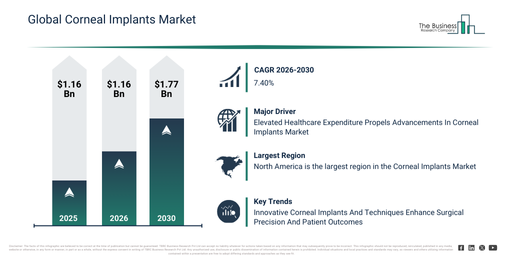
    The corneal implants market has demonstrated strong growth recently, with its value rising from $1.42 billion in 2025 to an anticipated $1.51 billion in 2026, reflecting a compound annual growth rate (CAGR) of 7.0%. This growth during the historical period has been driven by the increasing prevalence of corneal diseases, enhancements in ophthalmic surgical techniques, availability of donor corneas, heightened awareness of vision correction options, and improved surgical instruments. Looking ahead, the market is projected to reach $2.01 billion by 2030, growing at a CAGR of 7.4%. Key factors contributing to this forecast include more investments in regenerative ophthalmology, rising demand for vision restoration surgeries, expansion of sophisticated eye care centers, greater use of bioengineered implants, and a focus on improving the long-term durability of implants. Emerging trends such as the growing use of artificial corneal implants, adoption of advanced keratoplasty methods, emphasis on biocompatible materials, development of specialized ophthalmic surgical centers, and higher precision in corneal transplant procedures are expected to play a major role in shaping the market.

    Download A Free Sample Report For Comprehensive Market Insights:

    https://www.thebusinessresearchcompany.com/sample.aspx?id=10595&type=smp

    What Is Stimulating Expansion in the Corneal Implants Market

    One of the main drivers for growth in this market is the rise in healthcare expenditure globally. Increased spending on health services enables the adoption of cutting-edge technologies and advanced surgical practices within ophthalmology, including corneal implant procedures. For example, according to the UK’s Office of National Statistics, healthcare expenditure in the country grew by 5.6% in nominal terms from 2022 to 2023, a significant increase compared to the 0.9% growth recorded in 2022. This expansion in resources is facilitating the uptake of more sophisticated and effective eye care treatments, thereby boosting corneal implant demand.

    Additional Factors Supporting Market Growth

    Furthermore, the increasing number of patients diagnosed with corneal disorders and a growing awareness of corrective options contribute to the rising market demand. Improvements in surgical instrumentation and techniques also support better outcomes, encouraging both clinicians and patients to opt for corneal implants. The availability of donor corneas and bioengineered alternatives further broadens the treatment possibilities, helping to address the unmet needs in vision restoration.

    Access The Complete Corneal Implants Market Report:

    https://www.thebusinessresearchcompany.com/report/corneal-implants-global-market-report

    Breakdown of the Corneal Implants Market by Type, Procedure, Application, and End-User

    This market is segmented into four primary categories:

    1) Implant Type – which includes Artificial Corneal Implants and Human Corneal Implants

    2) Procedure Type – covering Endothelial Keratoplasty, Penetrating Keratoplasty, and other surgical procedures

    3) Application – encompassing conditions such as Keratoconus, Fuchs Dystrophy, Infectious Keratitis, Corneal Ulcers, and other uses

    4) End-User – including Hospitals, Ophthalmic Centers, and other healthcare providers.

    Within these categories, subsegments provide further detail, such as Artificial Corneal Implants divided into Keratoprosthesis and Artificial Cornea, while Human Corneal Implants include Donor Cornea and Preserved Cornea.

    Innovative Developments Transforming the Corneal Implants Industry

    Leading companies in the corneal implants sector are investing heavily in developing advanced corneal contouring solutions designed to improve vision correction and treat a variety of corneal diseases. These innovations involve sophisticated surgical techniques and devices aimed at reshaping the cornea to restore optical clarity. For instance, in June 2024, CorneaGen, a US-based medical device company specializing in eliminating corneal blindness, introduced Corneal Tissue Addition for Keratoplasty (CTAK). This innovative approach adds donor corneal tissue to the existing cornea instead of replacing it completely, aiming to restore the natural corneal shape and enhance vision for patients with keratoconus.

    Top Players Competing in the Corneal Implants Market

    Several prominent companies are leading the corneal implants market globally. These include Alcon Inc., Bausch & Lomb Incorporated, Johnson & Johnson Vision, ZEISS Group, AJL Ophthalmic SA, CorNeat Vision Ltd., EyeYon Medical Ltd., Precise Bio Inc., CorneaGen, Cornea Biosciences LLC, Linkocare Life Sciences AB, MediPhacos, Coroneo Pty Ltd., KeraMed Inc., DIOPTEX Co. Ltd., HumanOptics AG, Morcher GmbH, Moria SA, DORC International BV, and Aurolab (Aravind Eye Care System). These organizations focus on developing innovative solutions, expanding product portfolios, and strengthening their market presence through strategic partnerships and technological advancements.

    Regional Market Distribution and Growth Opportunities

    In 2025, North America held the largest share of the corneal implants market, driven by advanced healthcare infrastructure and high adoption of new medical technologies. However, the Asia-Pacific region is expected to experience the fastest growth over the forecast period, fueled by increasing healthcare investments, growing awareness about eye health, and expanding ophthalmic care facilities. The market report also covers regions such as South East Asia, Western Europe, Eastern Europe, South America, the Middle East, and Africa, providing a comprehensive perspective on the global market landscape and regional opportunities.

    Get in touch with us:

    The Business Research Company: https://www.thebusinessresearchcompany.com/

    Americas: +1 310-496-7795

    Asia: +44 7882 955267 & +91 8897263534

    Europe: +44 7882 955267

    Email us at: marketing@tbrc.info

    Follow us on:

    LinkedIn: https://in.linkedin.com/company/the-business-research-company

    YouTube: https://www.youtube.com/channel/UC24_fI0rV8cR5DxlCpgmyFQ

    Global Market Model: https://www.thebusinessresearchcompany.com/global-market-model
  • Clear Aligners Market Expansion Is Reshaping Competitive Dynamics Across The Industry

    Clear Aligners Market Expansion Is Reshaping Competitive Dynamics Across The Industry

    Delivering more actionable and strategically valuable research, The Business Research Company’s 2026 market reports feature market attractiveness analysis, total addressable market evaluation, company benchmarking matrices, interactive Excel dashboards, expanded supply chain intelligence, emerging startup coverage, and detailed product insights.

    The clear aligners market has experienced remarkable growth recently, driven by increasing demand for effective and aesthetically pleasing orthodontic solutions. With ongoing advancements in technology and rising awareness of dental health and cosmetic dentistry, this sector is set to expand significantly over the coming years. Below is an overview of the market size, key growth factors, major players, emerging trends, and regional prospects shaping the future of clear aligners.

    Clear Aligners Market Size and Projected Growth Trajectory

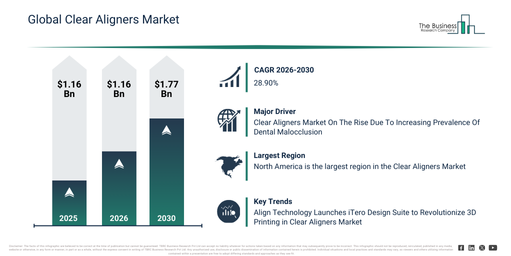
    The clear aligners market has seen rapid expansion and is forecasted to grow from $7.14 billion in 2025 to $9.29 billion in 2026, reflecting an impressive compound annual growth rate (CAGR) of 30.1%. Historically, growth was somewhat restrained due to the high cost of traditional braces, limited awareness of clear aligners, dependence on manual orthodontic planning, a lack of varied materials, and slower adoption in developing regions. Looking ahead, this market is expected to surge further, reaching $25.66 billion by 2030 with a CAGR of 28.9%. This future growth is supported by innovations in digital treatment planning, increased disposable incomes, heightened awareness of cosmetic dentistry, the introduction of new aligner materials such as PETG and PVC, AI integration in orthodontic care, and the expansion of dental clinics offering clear aligners. Key trends include wider adoption among both adults and teenagers, rising demand for removable and customizable aligners, preference for invisible orthodontic options, growth in the number of clinics providing aligners, and ongoing advancements in material technology to improve comfort and durability.

    Download A Free Sample Report For Comprehensive Market Insights:

    https://www.thebusinessresearchcompany.com/sample.aspx?id=3271&type=smp

    Dental Malocclusion as a Primary Growth Driver for Clear Aligners

    One of the chief factors propelling the clear aligners market is the global increase in dental malocclusion cases. Malocclusion is a condition where teeth are misaligned or exhibit an incorrect relationship between the upper and lower dental arches. This issue is widespread and varies across different geographic regions and age groups. Along with dental caries, gingival disease, and dental fluorosis, malocclusion ranks among the most common dental problems worldwide. For instance, in October 2024, the Australian Institute of Health and Welfare reported approximately 87,400 hospitalizations due to preventable dental conditions during 2022–23. Children between 5 and 9 years exhibited the highest rate of such hospitalizations at 12.3 per 1,000 population. This growing prevalence has driven greater adoption of clear aligners as a preferred method for correcting misaligned teeth, thereby fueling market expansion.

    Additional Factors Boosting Demand for Clear Aligners

    Beyond malocclusion rates, rising consumer preference for aesthetic and convenient orthodontic solutions is an important market driver. Patients increasingly favor clear aligners over traditional braces due to their discreet appearance and removability, which offer greater comfort and lifestyle flexibility. Additionally, the accessibility of advanced orthodontic care and growing investments in dental infrastructure worldwide contribute to the escalating demand for clear aligners across age groups.

    Access The Complete Clear Aligners Market Report:

    https://www.thebusinessresearchcompany.com/report/clear-aligners-global-market-report

    Clear Aligners Market Segmentation and Strategic Opportunities

    This market is segmented extensively to capture various product types, user demographics, material innovations, and end users:

    – Product types include Soft, Medium, and Hard aligners.

    – Age groups are divided between Children or Teenagers and Adults.

    – Material types feature Polyurethane Plastic, Polyethylene Terephthalate Glycol (PETG), Poly-Vinyl Chloride (PVC), and other materials.

    – End users consist of Hospitals as well as Dental and Orthodontic Clinics.

    Further distinctions within product categories include Removable Soft Aligners and Invisible Soft Aligners; Customizable Medium Aligners and Hybrid Medium Aligners; and Retainer-Style Hard Aligners. This segmentation allows companies to tailor products to specific patient needs and treatment preferences, enhancing market reach and creating diverse revenue streams.

    Technological Innovations and Industry Trends Shaping the Clear Aligners Market

    Leading firms in the clear aligners sector are leveraging cutting-edge technology to improve treatment precision and efficiency. A prominent trend is the use of 3D-printable models, which enable highly accurate, customized orthodontic solutions. These digital designs are created with specialized software and fabricated layer by layer via 3D printing, allowing for faster production and tailored fit. For example, in July 2024, Align Technology introduced the iTero Design Suite. This platform offers dental professionals an intuitive interface to design models, bite splints, and restorations for in-practice 3D printing. By integrating this software into the Align Digital Platform, practitioners can streamline workflows, reduce treatment times, and enhance patient experiences, highlighting the growing role of digital innovation in clear aligner care.

    Prominent Companies Driving Competition in the Clear Aligners Market

    The clear aligners industry features a competitive landscape with several leading players, including:

    Align Technology Inc., Henry Schein Inc., Dentsply Sirona, Straumann Group, The 3M Company, Envista Holdings Corporation, 3Shape A/S, Argen Corporation, TP Orthodontics Inc., Great Lakes Dental Technologies, Toothsi, ezsmile, SmilePath, SLX Clear Aligners, NewSmile, Aso Aligner, Dr Clear Aligners, Star Smile, Orthodontic Solutions, Clearbite Aligners, Clove Dental, Zenyum, Wood Grove Dental Surgery, Angelalign, Keen Dental, Q&M Dental Holdings, Shenzhen Midway Dental Lab Co Ltd, RYO Dental Clinic, PlusDental, Straight Teeth Direct, Dentelia, DB Orthodontics, Oasis Dental Care, German Dental Clinic Ltd, Colosseum Dental UK (CDUK), Alpha Dental Group, and Portman Dental Care. These companies focus on innovation, expanding product lines, and improving patient care to secure market share.

    Regional Market Outlook Highlighting Growth Hotspots

    North America stood as the largest market for clear aligners in 2025, supported by advanced healthcare infrastructure and higher disposable incomes. Western Europe ranked second in global market share, reflecting growing adoption and technological advancements. Other key markets analyzed include Asia-Pacific, South East Asia, Eastern Europe, South America, the Middle East, and Africa. The expanding awareness of dental aesthetics and investments in orthodontic services across these regions signal strong growth potential worldwide.

    Get in touch with us:

    The Business Research Company: https://www.thebusinessresearchcompany.com/

    Americas: +1 310-496-7795

    Asia: +44 7882 955267 & +91 8897263534

    Europe: +44 7882 955267

    Email us at: marketing@tbrc.info

    Follow us on:

    LinkedIn: https://in.linkedin.com/company/the-business-research-company

    YouTube: https://www.youtube.com/channel/UC24_fI0rV8cR5DxlCpgmyFQ

    Global Market Model: https://www.thebusinessresearchcompany.com/global-market-model