Month: June 2026

  • Clear Aligner Remote Monitoring Market Forecast Reveals Where Future Industry Value Will Be Created

    Clear Aligner Remote Monitoring Market Forecast Reveals Where Future Industry Value Will Be Created

    Enhanced with market attractiveness analysis, total addressable market evaluation, company benchmarking matrices, interactive Excel dashboards, expanded supply chain intelligence, emerging startup coverage, and detailed product insights, The Business Research Company’s 2026 market reports deliver more actionable and strategically valuable research.

    The clear aligner remote monitoring market is rapidly evolving, driven by technological advancements and increasing patient preference for convenient orthodontic care. This sector is experiencing remarkable growth as digital solutions transform how orthodontic treatments are planned and supervised remotely. Let’s explore the market’s current scale, the forces propelling its expansion, key players, and emerging trends shaping its future.

    Clear Aligner Remote Monitoring Market Size and Growth Outlook

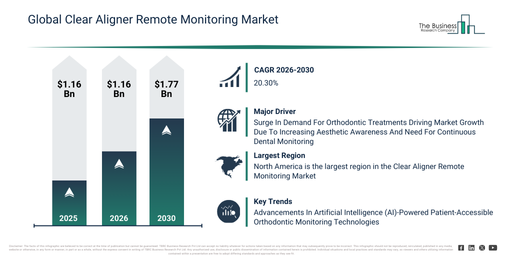
    The clear aligner remote monitoring market is witnessing significant expansion, with its size expected to rise from $1.09 billion in 2025 to $1.31 billion in 2026, marking a robust compound annual growth rate (CAGR) of 20.6%. This past growth has been fueled by the widespread adoption of clear aligners, frequent orthodontic appointments, inefficiencies in traditional in-person monitoring, advancements in digital scanning technologies, and the growing patient demand for aesthetic dental treatments. Moving ahead, the market is projected to reach $2.75 billion by 2030, sustaining a strong CAGR of 20.3%. This anticipated growth is supported by the integration of artificial intelligence (AI) in treatment planning, the expansion of tele-orthodontics services, rising patient inclination for virtual consultations, improvements in mobile monitoring applications, and the global embrace of digital dental technology. Key trends expected to influence this period include AI-powered planning tools, cloud-based monitoring platforms, Internet of Things (IoT)-enabled aligner tracking devices, enhanced 3D imaging and patient scanning techniques, as well as augmented and virtual reality (AR/VR) assisted orthodontic guidance.

    Download A Free Sample Report For Comprehensive Market Insights:

    https://www.thebusinessresearchcompany.com/sample.aspx?id=28980&type=smp

    Factors Behind the Rising Demand for Clear Aligner Remote Monitoring

    The increasing demand for orthodontic treatments is a major factor propelling the clear aligner remote monitoring market. Orthodontic care focuses on correcting misaligned teeth and jaws to improve both function and appearance, which has become more sought after as aesthetic awareness grows. People increasingly desire straighter teeth and better smiles to boost their confidence and overall look. Clear aligner remote monitoring supports these treatments by allowing orthodontists to track patient progress in real time, ensuring teeth are aligning correctly, spotting potential problems early, and providing timely advice without requiring frequent clinic visits.

    For example, in October 2024, data from the Australian Institute of Health and Welfare revealed that in 2022–23, more than half (52%) of Australians aged 15 and older visited dental professionals within the past year, with 58% of those individuals making multiple visits. Additionally, approximately 87,400 hospital admissions were due to dental conditions during the same period. Furthermore, the American Dental Association reported in December 2024 that dental expenditures in the US increased by $4 billion (2.5%) between 2022 and 2023. These statistics highlight the growing demand for orthodontic care and, consequently, the expanding opportunity for remote monitoring solutions.

    Detailed Segmentation of the Clear Aligner Remote Monitoring Market

    The market for clear aligner remote monitoring is categorized into several key segments to better understand its structure and opportunities:

    1) Components: Software, Devices, and Services

    2) Deployment Modes: Cloud-Based and On-Premises Solutions

    3) Applications: Orthodontic Clinics, Dental Hospitals, Direct-To-Consumer Models, and Other Uses

    4) End-Users: Adults, Teenagers, and Children

    Further segmentation within these groups includes software types such as AI-powered treatment planning, patient monitoring apps, data analytics platforms, and cloud management systems. Device categories cover portable scanners, intraoral cameras, 3D imaging equipment, and patient self-scanning kits. Services comprise remote treatment monitoring, teleconsultation, technical support and maintenance, as well as patient training and education programs.

    Access The Complete Clear Aligner Remote Monitoring Market Report:

    https://www.thebusinessresearchcompany.com/report/clear-aligner-remote-monitoring-global-market-report

    Innovative Developments Shaping Competition in the Clear Aligner Remote Monitoring Market

    Leading companies in this space concentrate on creating cutting-edge solutions like portable, cloud-connected scanning devices that improve treatment accuracy, simplify clinical workflows, and allow continuous remote tracking of orthodontic progress. These devices enable patients to capture high-quality dental scans from anywhere, automatically uploading the data to secure cloud platforms for real-time analysis by dental professionals.

    A notable example occurred in June 2024 when Dental Monitoring SAS, a France-based firm specializing in AI-powered orthodontic monitoring technology, launched the ScanBoxpro. This FDA-registered device is designed to deliver consistent imaging over time for precise tracking of aligners, braces, and retainers. It provides detailed occlusal and lateral views, including molar occlusion, and boasts enhanced portability, making it convenient for patients as young as six to conduct their own scans while maintaining accurate remote supervision of their treatment progress.

    Key Players Leading the Clear Aligner Remote Monitoring Market

    The competitive landscape of the clear aligner remote monitoring market features several prominent companies, including:

    3M Company, Henry Schein Inc., Dentsply Sirona, Align Technology Inc., Straumann Group, Glidewell Dental Ceramics Inc., Dental Monitoring SAS, Impress, MakeO, Zenyum Pte. Ltd., Grin, Dentistry.One LLC, Candid Co., OrthoFX, OrthoSnap Corp., Clear Blue Smiles LLC, ProMonitoring, Angelalign Technology Inc., BlueSky Aligners, On Demand Orthodontist, ODONTO Clear Aligners, and Smartee Denti-Technology.

    Geographical Market Presence and Growth Trends

    In 2025, North America held the largest share within the clear aligner remote monitoring market. Looking ahead, the Asia-Pacific region is projected to be the fastest-growing market during the forecast period. The comprehensive market analysis spans multiple regions, including Asia-Pacific, South East Asia, Western Europe, Eastern Europe, North America, South America, the Middle East, and Africa, providing a global perspective on industry trends and growth potential.

    Get in touch with us:

    The Business Research Company: https://www.thebusinessresearchcompany.com/

    Americas: +1 310-496-7795

    Asia: +44 7882 955267 & +91 8897263534

    Europe: +44 7882 955267

    Email us at: marketing@tbrc.info

    Follow us on:

    LinkedIn: https://in.linkedin.com/company/the-business-research-company

    YouTube: https://www.youtube.com/channel/UC24_fI0rV8cR5DxlCpgmyFQ

    Global Market Model: https://www.thebusinessresearchcompany.com/global-market-model
  • Contrast Media Injectors Market Outlook Highlights The Next Major Growth Opportunities

    Contrast Media Injectors Market Outlook Highlights The Next Major Growth Opportunities

    Enhanced with market attractiveness analysis, total addressable market evaluation, company benchmarking matrices, interactive Excel dashboards, expanded supply chain intelligence, emerging startup coverage, and detailed product insights, The Business Research Company’s 2026 market reports deliver more actionable and strategically valuable research.

    The contrast media injectors market is experiencing a notable surge, driven by advancements in diagnostic imaging and a growing emphasis on precision in medical procedures. As healthcare facilities expand their imaging capabilities and embrace automation, this sector is set to witness substantial growth in the coming years. Here’s a detailed insight into the market’s size, key growth factors, emerging trends, and leading players shaping its future.

    Contrast Media Injectors Market Size and Expected Growth

    The size of the contrast media injectors market has expanded significantly over recent years. It is projected to increase from $1.77 billion in 2025 to $1.92 billion in 2026, representing a compound annual growth rate (CAGR) of 8.6%. This upward trend during the historical period has been fueled by the rising number of diagnostic imaging procedures, the growth of radiology departments, wider use of contrast-enhanced imaging techniques, adoption of automated injection systems, and a growing demand for greater procedural accuracy.

    Download A Free Sample Report For Comprehensive Market Insights:

    https://www.thebusinessresearchcompany.com/sample.aspx?id=10187&type=smp

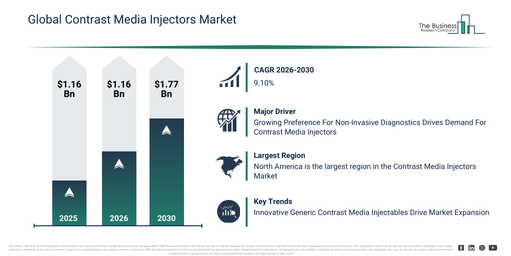
    Looking ahead, the market is anticipated to maintain strong momentum, reaching $2.73 billion by 2030 with an accelerated CAGR of 9.1%. This future expansion is expected to be driven by increased investments in sophisticated imaging infrastructure, a higher uptake of minimally invasive diagnostic methods, growth in outpatient imaging centers, a heightened focus on workflow automation, and enhanced integration of injector systems with imaging software. Key trends shaping this phase include the growing use of dual-head injector systems, the popularity of syringeless injector technology, the incorporation of smart dose management software, the development of MRI-compatible injectors, and a stronger emphasis on patient safety and procedural precision.

    Primary Factors Propelling Contrast Media Injectors Market Growth

    One of the main forces behind the market’s expansion is the rising preference for non-invasive diagnostic methods. These procedures involve medical tests or treatments that don’t require physical entry into the body through natural openings or skin penetration. Contrast media injectors play a vital role in non-invasive imaging techniques such as computed tomography (CT) and magnetic resonance imaging (MRI), increasing the accuracy and efficiency of these diagnostics.

    Access The Complete Contrast Media Injectors Market Report:

    https://www.thebusinessresearchcompany.com/report/contrast-media-injectors-global-market-report

    For instance, the National Health Service (NHS) in the UK reported in November 2024 that during 2023-24, there were 11.4 million diagnostic tests potentially linked to cancer detection or exclusion, marking a 2.8% increase from the previous year’s 11.1 million tests. Additionally, referrals for chest X-rays went up by 1.4%, while pelvic and kidney ultrasounds rose by 5.1% and 1.3%, respectively. This steady growth in non-invasive diagnostic examinations significantly supports the expanding demand for contrast media injectors.

    Breakdown of the Contrast Media Injectors Market by Product and Application

    This market is divided into several segments for a clearer understanding of its scope:

    1) Product Categories: Consumables, Injector Systems, and Accessories

    2) Application Areas: Radiology, Interventional Cardiology, and Interventional Radiology

    3) End-users: Hospitals, Diagnostic Centers, and Ambulatory Surgery Centers

    Further subdivisions include:

    – Consumables such as syringes, tubing, and other disposable items

    – Injector systems categorized into CT injectors, MRI injectors, and angiography injectors

    – Accessories including injector heads and software solutions

    How Innovation and Market Trends are Shaping the Future

    Leading companies in the contrast media injector space are placing strong emphasis on innovation to stay competitive and attract a broader customer base. One notable area of development is generic contrast media injectables—pharmaceutical products containing contrast agents used in imaging procedures to enhance tissue and vessel visibility.

    For example, in August 2023, Fresenius Kabi, a Germany-based pharmaceutical firm, introduced two new injectable drugs in the United States. One is Gadobutrol Injection, a gadolinium-based contrast agent for MRI applications, which adds to their expanding and cost-effective radiology portfolio. The other is Plerixafor Injection, a hematopoietic stem cell mobilizer, further enhancing their lineup of generic oncology injectables. These introductions highlight the push towards affordable and effective imaging agents driven by market demands.

    Key Players and Competitive Landscape in the Contrast Media Injectors Market

    The market is dominated by several prominent companies including Bracco Group, Bayer AG, Guerbet Group, GE HealthCare Technologies Inc., Siemens Healthineers AG, Koninklijke Philips N.V., Canon Medical Systems Corporation, Nemoto Kyorindo Co. Ltd., Ulrich GmbH & Co. KG, ACIST Medical Systems Inc., Imaxeon Pty Ltd., Medtron AG, Apollo RT Co. Ltd., Shenzhen Anke High-tech Co. Ltd., Mindray Medical International Limited, Sino Medical-Device Technology Co. Ltd., Weigao Group, Shenzhen Kenid Medical Devices Co. Ltd., Sanrad Medical Systems, Allengers Medical Systems Limited, and Mediso Medical Imaging Systems Ltd. These companies continue to innovate and expand their portfolios to meet growing demands worldwide.

    Regional Market Shares and Growth Opportunities

    In 2025, North America held the largest market share in the contrast media injectors sector. Meanwhile, the Asia-Pacific region is expected to register the fastest growth rate during the forecast period. The comprehensive regional analysis covers Asia-Pacific, South East Asia, Western Europe, Eastern Europe, North America, South America, the Middle East, and Africa, providing a global perspective on market dynamics and growth potential.

    Get in touch with us:

    The Business Research Company: https://www.thebusinessresearchcompany.com/

    Americas: +1 310-496-7795

    Asia: +44 7882 955267 & +91 8897263534

    Europe: +44 7882 955267

    Email us at: marketing@tbrc.info

    Follow us on:

    LinkedIn: https://in.linkedin.com/company/the-business-research-company

    YouTube: https://www.youtube.com/channel/UC24_fI0rV8cR5DxlCpgmyFQ

    Global Market Model: https://www.thebusinessresearchcompany.com/global-market-model
  • Cleanroom Technology In Healthcare Market Growth Through 2030 Creates New Strategic Opportunities

    Cleanroom Technology In Healthcare Market Growth Through 2030 Creates New Strategic Opportunities

    Through market attractiveness analysis, total addressable market evaluation, company benchmarking matrices, interactive Excel dashboards, expanded supply chain intelligence, emerging startup coverage, and detailed product insights, The Business Research Company’s 2026 market reports provide more actionable and strategically valuable research.

    The healthcare industry is increasingly relying on advanced cleanroom technologies to maintain sterile and contamination-free environments. These technologies are critical in ensuring patient safety and supporting high standards in pharmaceutical and medical device manufacturing. Let’s explore the current market status, growth drivers, key players, and trends shaping the cleanroom technology sector within healthcare.

    Cleanroom Technology in Healthcare Market Size and Expansion Forecast

    The cleanroom technology in healthcare market has witnessed robust growth in recent years. It is projected to rise from $4.67 billion in 2025 to $5.06 billion in 2026, growing at a compound annual growth rate (CAGR) of 8.4%. This growth so far has been driven by factors such as limited access to advanced cleanroom technologies, an expanding pharmaceutical production base, increased awareness about contamination control, and the ongoing use of traditional laboratory environments alongside manual environmental monitoring methods.

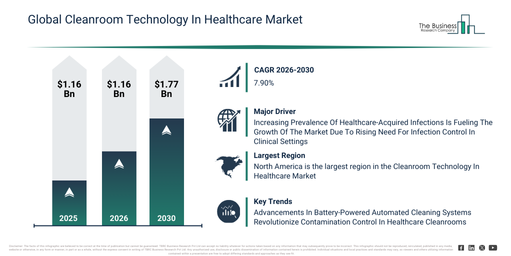
    Looking ahead, the market is expected to continue its upward trajectory, reaching $6.87 billion by 2030 with a CAGR of 7.9%. The forecasted growth will be fueled by advancements in automated and smart cleanroom systems, growing requirements in biotech and medical device manufacturing, stringent regulatory mandates for sterile environments, incorporation of IoT-enabled monitoring technologies, and the development of more hospital-based cleanroom facilities. Key trends anticipated during this period include a greater focus on sterile drug manufacturing environments, broader adoption of sophisticated HVAC and filtration systems, increased use of disposable cleanroom supplies, real-time environmental sensing, and expansion of cleanroom infrastructure in hospitals and research institutions.

    Download A Free Sample Report For Comprehensive Market Insights:

    https://www.thebusinessresearchcompany.com/sample.aspx?id=27258&type=smp

    Rising Healthcare-Acquired Infections as a Major Growth Driver

    One of the main factors propelling the cleanroom technology market in healthcare is the increasing incidence of healthcare-acquired infections (HAIs). These infections occur when patients contract infections during their stay or treatment in medical settings. The rise in HAIs is linked with higher patient volumes and more invasive medical procedures, which heighten exposure risks within healthcare environments.

    Cleanroom technologies play a vital role in reducing HAIs by providing controlled sterile spaces that limit airborne contaminants and pathogens. These environments maintain strict air filtration standards, pressure controls, and hygiene protocols to significantly lower the risk of infections during medical treatments and patient care. For example, in May 2024, the Center for Infectious Disease Research and Policy (CIDRAP) reported that approximately 4.3 million patients in hospitals across the European Union and European Economic Area acquired at least one healthcare-associated infection annually during 2022 and 2023. This growing challenge is directly boosting demand for cleanroom solutions in healthcare facilities.

    Key Product and Application Segments in the Cleanroom Technology Healthcare Market

    This market is segmented into key categories based on components, applications, and end users.

    • By Component: Cleanroom Equipment and Cleanroom Consumables

    • By Application: Drug Manufacturing, Medical Device Manufacturing, and Pathology & Research

    • By End User: Pharmaceutical Industry, Medical Device Industry, Biotechnology Industry, and Hospitals & Diagnostic Centers

    Further breakdowns include types of cleanroom equipment such as air showers, laminar airflow units, HEPA filters, HVAC systems, pass-through systems, lighting, and furniture. Consumables cover items like apparel, gloves, wipes, disinfectants, adhesive mats, swabs, face masks, and tacky rollers.

    Access The Complete Cleanroom Technology In Healthcare Market Report:

    https://www.thebusinessresearchcompany.com/report/cleanroom-technology-in-healthcare-global-market-report

    Innovative Trends Enhancing Cleanroom Technology Demand

    Leading companies are developing cutting-edge products like battery-powered automated cleaning systems that help reduce contamination risks and ease staffing shortages in controlled healthcare environments. These automated machines operate on rechargeable batteries, allowing efficient surface cleaning without requiring continuous manual effort or constant power supply.

    For instance, in March 2025, i-team Global B.V., based in the Netherlands, introduced the SAFE-T product line—the first battery-powered cleanroom floor cleaning solutions worldwide. The range includes models such as SAFE-T-IMOP, SAFE-T-VAC, and SAFE-T-BOT 45, designed specifically for ISO-certified cleanroom environments. These systems feature ULPA 15 filtration technology, ergonomic design, and mechanical scrubbing capabilities to capture over 99.999% of particles as small as 0.1 microns. Their purpose is to lower manual labor, improve cleaning consistency, minimize contamination threats, and address staffing gaps in critical healthcare and high-tech settings.

    Key Players Competing in the Cleanroom Technology in Healthcare Market

    The cleanroom technology market in healthcare includes numerous prominent companies such as Illinois Tool Works Inc, Ecolab Inc, DuPont de Nemours Inc, Filtration Group Corporation, TSI Incorporated, Taikisha Ltd, Ardmac Ltd, Terra Universal Inc, Avant Garde Cleanroom & Engg Solutions Pvt Ltd, Starrco Company Inc, Clean Rooms International Inc, COLANDIS GmbH, Hectra Enviro Systems LLP, Clean Air Products Inc, Dyna Filters Pvt Ltd, ABN Cleanroom Technology NV, Epack Prefab Private Limited, Saakvee Technologies India Private Limited, Airtech Systems, BioPure Group Modular Cleanrooms, GMP Technical Solutions, Integrated Clean Room Technologies, SBRG CleanTech, Contec Cleanroom, Clean Room Synergy, CleanZones LLC, Controlled Environment Structures Inc, Envirco, Environmental Systems Corporation, Flowstar Corporation, Atmos-Tech Industries, Liberty Industries Inc, G-CON Manufacturing, Allied Cleanrooms, aes Clean Technology, and MECART Cleanrooms. These organizations are actively investing in product innovation and expanding their footprint to meet rising demand.

    Regional Market Leadership and Growth Patterns

    In 2025, North America held the largest share of the cleanroom technology in healthcare market. However, the Asia-Pacific region is expected to experience the fastest growth during the forecast period. The market study covers a range of regions including Asia-Pacific, South East Asia, Western Europe, Eastern Europe, North America, South America, the Middle East, and Africa, providing a comprehensive overview of global market dynamics and regional trends.

    Get in touch with us:

    The Business Research Company: https://www.thebusinessresearchcompany.com/

    Americas: +1 310-496-7795

    Asia: +44 7882 955267 & +91 8897263534

    Europe: +44 7882 955267

    Email us at: marketing@tbrc.info

    Follow us on:

    LinkedIn: https://in.linkedin.com/company/the-business-research-company

    YouTube: https://www.youtube.com/channel/UC24_fI0rV8cR5DxlCpgmyFQ

    Global Market Model: https://www.thebusinessresearchcompany.com/global-market-model
  • Clean Room System Integration Solutions Market Size Projected To Increase From $3.92 Billion To $5.35 Billion During The Forecast Period

    Clean Room System Integration Solutions Market Size Projected To Increase From $3.92 Billion To $5.35 Billion During The Forecast Period

    Delivering more actionable and strategically valuable research, The Business Research Company’s 2026 market reports feature market attractiveness analysis, total addressable market evaluation, company benchmarking matrices, interactive Excel dashboards, expanded supply chain intelligence, emerging startup coverage, and detailed product insights.

    The clean room system integration solutions market has been witnessing significant growth, driven by increasing demand across various high-tech industries. As sectors like pharmaceuticals, biotechnology, and electronics expand, the need for sophisticated cleanroom environments becomes more critical. This overview explores market size developments, influential growth factors, key players, technological trends, segment insights, and regional dynamics shaping the future of this specialized industry.

    Steady Market Expansion Forecast in Clean Room System Integration Solutions

    The market for clean room system integration solutions has shown robust growth recently and is projected to continue this upward trajectory. It is expected to increase from $3.61 billion in 2025 to $3.92 billion in 2026, growing at a compound annual growth rate (CAGR) of 8.6%. This growth during the past period is largely due to the limited availability of turnkey cleanroom solutions, heavy reliance on manual installation and integration methods, and the rising production activities in pharmaceutical, biotech, semiconductor, and electronics manufacturing sectors. Additionally, adherence to early contamination control standards has supported this upward trend.

    Download A Free Sample Report For Comprehensive Market Insights:

    https://www.thebusinessresearchcompany.com/sample.aspx?id=27257&type=smp

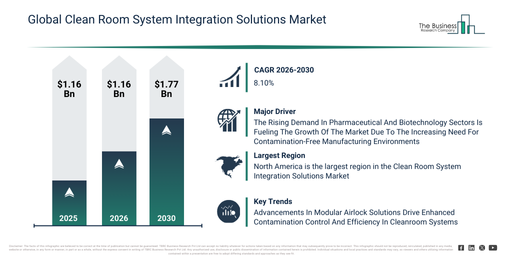
    Looking ahead, the market is anticipated to reach $5.35 billion by 2030, expanding at a CAGR of 8.1%. This forecasted growth is propelled by advancements in smart and Internet of Things (IoT)-enabled cleanroom systems, a growing demand for aseptic and biohazard cleanrooms, and the ongoing expansion of pharmaceutical and biotechnology industries. Other contributing factors include the increasing adoption of sustainable and energy-efficient cleanroom solutions and a heightened requirement for training and certification services. Emerging trends anticipated to influence this market include modular and flexible cleanroom designs, IoT-based monitoring and control systems, stronger regulatory compliance and validation efforts, integration of sophisticated HVAC and air filtration technologies, and growth in consulting, installation, and maintenance offerings.

    Driving Forces Behind Growth in the Clean Room System Integration Solutions Market

    The pharmaceutical and biotechnology sectors are key drivers of the clean room system integration solutions market. These industries focus on the development, production, and distribution of medicines and biological therapies aimed at improving health outcomes and combating diseases. The expansion in these sectors is primarily fueled by increased investments in drug development, as governments and companies allocate substantial funds toward research and innovation to tackle challenging diseases and broaden treatment possibilities.

    Access The Complete Clean Room System Integration Solutions Market Report:

    https://www.thebusinessresearchcompany.com/report/clean-room-system-integration-solutions-global-market-report

    Cleanroom system integration solutions play a vital role by providing contaminant-free, controlled environments that are essential for pharmaceutical and biotech manufacturing operations. They ensure compliance with strict regulatory standards while maintaining product quality. By streamlining equipment and processes, these systems enhance operational efficiency and minimize contamination risks in sensitive production areas. For example, in November 2023, the European Federation of Pharmaceutical Industries and Associations (EFPIA) reported that pharmaceutical production in Europe reached $422,803 million (€390,000 million) in 2023, up from $393,857 million (€363,300 million) in 2022. This growing demand underlines the expanding need for integrated cleanroom solutions.

    Examining Market Segments and Revenue Potentials in Clean Room System Integration

    This market is segmented into several categories, providing a detailed view of revenue opportunities:

    – By Type: Industrial Cleanroom System Integration and Biological Cleanroom System Integration

    – By Equipment Type: Air Filtration Systems, HVAC Systems, Monitoring Systems, Furniture and Storage Equipment, Cleaning Equipment

    – By Service Type: Consulting, Installation, Maintenance, Validation, and Training Services

    – By Technology: Basic Integration Systems, Advanced Smart Systems, and IoT-Enabled Systems

    – By End-User Industry: Pharmaceutical, Biotechnology, Semiconductors, Aerospace, Medical Devices, and Consumer Electronics

    Further subcategories include:

    – Industrial Cleanroom System Integration featuring Hardwall, Softwall, Modular, Stick Built, Monobloc, and Panel Based Cleanrooms

    – Biological Cleanroom System Integration including Negative Pressure, Positive Pressure, Biohazard Containment, Aseptic, Barrier Isolated, and Laminar Flow Cleanrooms

    Innovation Trends Steering the Future of Clean Room System Integration

    Leading companies in the clean room system integration solutions market are focusing on pioneering products like modular airlock solutions designed to improve contamination control and expedite cleanroom installation. These modular airlocks are pre-engineered units that manage personnel and material movement between clean and non-clean areas while maintaining pressure differentials and airflow to reduce contamination risk and preserve cleanroom standards.

    For instance, in April 2024, AES Clean Technology Inc., a US-based provider, launched the Cleanlock module. This innovation incorporates proprietary cleanroom finishes, patented lighting, optimized airflow patterns, and advanced door controls. It aims to accelerate installation timelines, enhance safety onsite, and provide consistent performance, setting new benchmarks for cleanliness and operational efficiency in sectors such as pharmaceuticals, biotechnology, and medical device manufacturing. This launch highlights the rising demand for integrated, prefabricated cleanroom components that can shorten construction phases while ensuring regulatory compliance.

    Key Players Shaping the Clean Room System Integration Solutions Market

    Several prominent companies lead the clean room system integration solutions landscape. These include Lindner Group, GMP Technical Solutions Private Limited, Nortek Air Solutions LLC, Ardmac Limited, AES Clean Technology Inc., Nicomac Srl, Allied Cleanrooms, MAK Clean Air Systems, Starrco & Company Inc., Clean Air Products, Mecart Inc., Airtech Systems India, Abtech Inc., Longden Company, ABN Cleanroom Technology N.V., Dyna Filters Private Limited, Nicomac Taikisha Clean Rooms Pvt. Ltd., Chemietron Clean Tech Private Limited, Dersion Cleanroom Technology Ltd., and Airzen Projects Private Limited. These organizations contribute to industry innovation and service delivery across global markets.

    Regional Market Outlook Highlighting Leaders and Fastest-Growing Areas

    As of 2025, North America held the largest revenue share in the clean room system integration solutions market. However, the Asia-Pacific region is forecasted to be the fastest-growing market over the coming years. The market analysis encompasses key geographical areas including Asia-Pacific, South East Asia, Western and Eastern Europe, North America, South America, the Middle East, and Africa, providing a comprehensive perspective on regional developments and opportunities.

    Get in touch with us:

    The Business Research Company: https://www.thebusinessresearchcompany.com/

    Americas: +1 310-496-7795

    Asia: +44 7882 955267 & +91 8897263534

    Europe: +44 7882 955267

    Email us at: marketing@tbrc.info

    Follow us on:

    LinkedIn: https://in.linkedin.com/company/the-business-research-company

    YouTube: https://www.youtube.com/channel/UC24_fI0rV8cR5DxlCpgmyFQ

    Global Market Model: https://www.thebusinessresearchcompany.com/global-market-model
  • Contrast Injection Lines Market Trends And Growth Drivers Point To Strong Future Potential

    Contrast Injection Lines Market Trends And Growth Drivers Point To Strong Future Potential

    Through market attractiveness analysis, total addressable market evaluation, company benchmarking matrices, interactive Excel dashboards, expanded supply chain intelligence, emerging startup coverage, and detailed product insights, The Business Research Company’s 2026 market reports provide more actionable and strategically valuable research.

    The contrast injection lines market is experiencing significant growth, driven by advancements in medical imaging and increasing healthcare demands. With rising incidences of chronic diseases and enhanced imaging technologies, this market is set to expand steadily in the coming years. Let’s explore the current market size, key drivers, segmentation, industry trends, prominent players, and regional insights that are shaping its future.

    Steady Market Growth and Size Forecast for Contrast Injection Lines

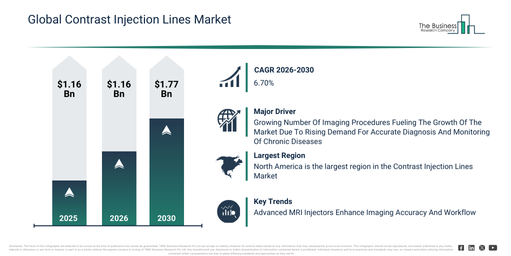
    The contrast injection lines market has demonstrated strong growth recently, with its value increasing from $3.93 billion in 2025 to $4.2 billion in 2026, representing a compound annual growth rate (CAGR) of 7.0%. This upward trend is attributed to the growing use of advanced imaging methods, higher rates of cardiovascular diseases, advancements in non-ionic contrast agents, expansion of healthcare infrastructure, and improved safety protocols in medical devices. Looking ahead, the market is projected to reach $5.45 billion by 2030, growing at a CAGR of 6.7%. Factors such as the rising preference for minimally invasive imaging techniques, AI-assisted imaging integration, expansion of outpatient diagnostic centers, an aging population requiring more scans, and innovations in smart contrast delivery systems are expected to drive this growth. Key trends include precision flow control, improved patient safety features, innovations in disposable versus reusable lines, seamless integration with imaging systems, and automated contrast delivery management solutions.

    Download A Free Sample Report For Comprehensive Market Insights:

    https://www.thebusinessresearchcompany.com/sample.aspx?id=28184&type=smp

    Increasing Demand for Imaging Procedures as a Growth Stimulus

    The rising volume of imaging procedures is a major catalyst propelling the contrast injection lines market. Imaging methods are vital for producing visual internal body images that aid in diagnosing, monitoring, and treating health issues. The increase in chronic conditions necessitates frequent and accurate internal imaging, which in turn fuels demand for contrast injection lines. These lines ensure precise, controlled delivery of contrast agents, which enhance image clarity by highlighting tissues, blood vessels, and abnormalities. Additionally, they contribute to improved diagnostic accuracy, streamline workflow, minimize manual handling, and reduce contamination risks during imaging scans. For example, data from the National Health Service in the UK reported a rise in brain MRI activities referred by general practitioners, from 8,695 in January 2022 to 8,745 in January 2023, illustrating the growing need for such imaging procedures and, consequently, contrast injection lines.

    In-Depth Segmentation of the Contrast Injection Lines Market

    This market is categorized into several segments to better understand revenue opportunities and applications. By type, the contrast injection lines market includes High Pressure Contrast Injection Lines and Low Pressure Contrast Injection Lines. In terms of application, the segments cover Magnetic Resonance Imaging (MRI) examinations, X-Ray examinations, Computed Tomography (CT) examinations, Angiography, and other uses. End users include hospitals, diagnostic imaging centers, specialty clinics, and research institutions. Further subsegments break down high-pressure lines into angiographic, disposable, and dual chamber types, while low-pressure lines include manual injection lines, reusable variants, and syringe-based lines, offering varied options for different medical requirements.

    Access The Complete Contrast Injection Lines Market Report:

    https://www.thebusinessresearchcompany.com/report/contrast-injection-lines-global-market-report

    Technological Innovations Driving Future Growth in Contrast Injection Lines

    Key players in the contrast injection lines market are prioritizing the development of advanced products aimed at improving imaging accuracy and operational efficiency. One such innovation is the magnetic resonance imaging contrast media injector, a device designed to deliver contrast agents automatically and precisely during MRI scans, enhancing the visualization of internal body structures. For instance, in May 2025, Bracco Diagnostics Inc., a US radiology company, introduced the Max 3 syringeless injector system. This device allows direct injection from contrast agent vials without syringes, accelerating patient turnover and reducing waste. It operates wirelessly within MRI rooms up to 50 mT magnetic fields, providing flexible positioning and enhanced safety through its Easy-Click Cassette and SafeConnect technology. This system boosts workflow efficiency, patient safety, and environmental sustainability in MRI contrast administration.

    Key Industry Players Influencing the Contrast Injection Lines Market

    Several leading companies shape the landscape of the contrast injection lines market. These include Bayer AG, GE Healthcare Technologies Inc., Bracco Imaging S.p.A., Merit Medical Systems Inc., Guerbet Group, B. Braun SE, ACIST Medical Systems Inc., Ulrich Medical, Sino Medical-Device Technology Co. Ltd., VIVID Imaging Pvt. Ltd., Medex, Hemant Surgical Industries Limited, Medtron AG, Argon Medical Devices Inc., Apollo RT, George Philips Medical Engineering Pvt. Ltd., Nemoto Kyorindo Co. Ltd., Sequoia Healthcare Limited, Shenzhen Anke High-Tech Co. Ltd., Shenzhen Kenid Medical Devices Co. Ltd., and Shenzhen Basda Medical Apparatus Co. Ltd. These corporations continue to invest in innovation, quality, and safety to maintain their competitive edge.

    Regional Market Leadership and Growth Prospects

    In 2025, North America held the largest share of the contrast injection lines market, driven by advanced healthcare infrastructure and high adoption of cutting-edge imaging technologies. Meanwhile, the Asia-Pacific region is anticipated to be the fastest-growing market throughout the forecast period, benefiting from expanding healthcare access, increasing investment in medical imaging, and growing patient populations. The report also covers important regions such as South East Asia, Western Europe, Eastern Europe, South America, the Middle East, and Africa, providing a comprehensive global market perspective.

    Get in touch with us:

    The Business Research Company: https://www.thebusinessresearchcompany.com/

    Americas: +1 310-496-7795

    Asia: +44 7882 955267 & +91 8897263534

    Europe: +44 7882 955267

    Email us at: marketing@tbrc.info

    Follow us on:

    LinkedIn: https://in.linkedin.com/company/the-business-research-company

    YouTube: https://www.youtube.com/channel/UC24_fI0rV8cR5DxlCpgmyFQ

    Global Market Model: https://www.thebusinessresearchcompany.com/global-market-model

  • Class S Autoclaves Market Growth Outlook Reveals A CAGR Of 10.4% And A Market Value Of $1.89 Billion By 2030

    Class S Autoclaves Market Growth Outlook Reveals A CAGR Of 10.4% And A Market Value Of $1.89 Billion By 2030

    Enhanced with market attractiveness analysis, total addressable market evaluation, company benchmarking matrices, interactive Excel dashboards, expanded supply chain intelligence, emerging startup coverage, and detailed product insights, The Business Research Company’s 2026 market reports deliver more actionable and strategically valuable research.

    The class S autoclaves market has been experiencing significant growth recently, driven by expanding healthcare infrastructure and increasing demand for reliable sterilization solutions. With advancements in technology and rising awareness about infection control, this market is set for robust development in the coming years. Let’s explore the current market size, key growth drivers, important players, and emerging trends shaping this sector.

    Market Size and Growth Trajectory of the Class S Autoclaves Market

    The class S autoclaves market has witnessed swift expansion, rising from $1.16 billion in 2025 to an expected $1.28 billion in 2026, representing a compound annual growth rate (CAGR) of 10.7%. This growth over the past years is primarily fueled by the establishment of new hospitals, an increased demand for dental services, growth in pharmaceutical manufacturing, stricter sterilization regulations, and widespread adoption of tabletop autoclaves in laboratory settings. Looking ahead, the market is projected to grow even faster, reaching $1.9 billion by 2030 at a CAGR of 10.4%. Factors contributing to this forecast include the development of medical infrastructure in emerging economies, innovations in autoclave technology, heightened infection control awareness, integration of digital monitoring systems, and growth in veterinary clinics and research institutions. Key trends anticipated during this period involve automation in sterilization, hospital management system integration, IoT-enabled remote monitoring, energy-efficient sterilization methods, and advanced steam and dry heat cycle optimization.

    Download A Free Sample Report For Comprehensive Market Insights:

    https://www.thebusinessresearchcompany.com/sample.aspx?id=28168&type=smp

    Key Factors Stimulating Demand for Class S Autoclaves

    One of the primary drivers encouraging the market’s expansion is the rising number of surgical procedures worldwide. These interventions, performed by qualified surgeons, are essential for diagnosing, treating, or preventing various health conditions through operative techniques. The growing incidence of surgeries is largely linked to an aging global population, as older adults generally require more medical care and surgical treatments due to chronic illnesses and age-related health challenges. This increased surgical volume directly boosts the need for class S autoclaves, which play a crucial role in sterilizing surgical instruments and maintaining sterile environments within operating rooms.

    To illustrate, in June 2024, the International Society of Aesthetic Plastic Surgery (ISAPS), a US-based professional body, reported that liposuction remained the most frequently performed surgical procedure in 2022 and 2023. Furthermore, plastic surgeons performed over 15.8 million surgical procedures in 2023, marking a 5.5% increase from the previous year. This rising surgical activity underscores the growing demand for reliable sterilization equipment, propelling the expansion of the class S autoclaves market.

    Access The Complete Class S Autoclaves Market Report:

    https://www.thebusinessresearchcompany.com/report/class-s-autoclaves-global-market-report

    How the Class S Autoclaves Market is Structured by Product, Technology, and End-User

    This report categorizes the class S autoclaves market into several key segments:

    1) Product Type: including Top-Loading Autoclaves, Front-Loading Autoclaves, and Tabletop Autoclaves.

    2) Technology: comprising Steam Sterilization, Dry Heat Sterilization, and Ethylene Oxide Sterilization.

    3) Purchase Method: Direct Purchase, Online Purchase, and Distribution Channels.

    4) Application: Medical and Pharmaceutical sectors, Chemical Industry, and Other Uses.

    5) End-User: Hospitals, Dental Clinics, and Veterinary Clinics.

    Further subdivisions include, for Top-Loading Autoclaves: Vertical Chamber, Cylindrical Chamber, Laboratory, and Research types; for Front-Loading Autoclaves: Rectangular Chamber, Horizontal Chamber, Large Capacity, and Clinical models; and for Tabletop Autoclaves: Dental, Medical, Veterinary, and Small Laboratory variants.

    Innovations and Technological Advancements Transforming the Class S Autoclaves Market

    Leading companies in the class S autoclaves market are focusing on enhancing user experience by incorporating advanced features like intuitive touchscreen interfaces. These digital screens simplify autoclave operation by reducing user errors, speeding up sterilization cycles, and allowing easy selection, monitoring, and customization of settings. Such enhancements promote efficient and consistent sterilization outcomes.

    For example, in July 2024, Flight Dental Systems Inc., a Canadian manufacturer, introduced the Clave45+ Steam Sterilizer designed specifically for high-volume dental clinics and laboratories. This autoclave features a large 45-liter stainless steel chamber to accommodate bigger instrument loads, an LCD touchscreen for straightforward cycle selection and programmable controls, and precise regulation of temperature and pressure. Its efficient sterilization cycles reduce downtime, helping dental practices maintain productivity while ensuring instruments meet strict infection control standards.

    Key Industry Players Competing in the Class S Autoclaves Market

    Several prominent companies dominate the class S autoclaves market, including STERIS plc, Getinge AB, Shinva Medical Instrument Co. Ltd., BIOBASE Biodustry (Shandong) Co. Ltd., Belimed AG, Midmark Corporation, Coltene Holding AG, Yamato Scientific Co. Ltd., Dentsply Sirona Inc., Matachana S.A., SciCan Ltd., MELAG Medizintechnik GmbH & Co. KG, Bionics Scientific Technologies (P) Ltd., Tuttnauer USA Co. Ltd., Astell Scientific Ltd., Euronda S.p.A., Consolidated Sterilizer Systems (CSS), ZIRBUS technology GmbH, Crown Steam Group, and Beta Star Life Science Equipment Pvt. Ltd.

    Regional Insights Highlighting Growth Opportunities in the Class S Autoclaves Market

    In 2025, North America ranked as the largest market for class S autoclaves. However, the Asia-Pacific region is expected to register the fastest growth throughout the forecast period. The market analysis encompasses key territories such as Asia-Pacific, South East Asia, Western Europe, Eastern Europe, North America, South America, the Middle East, and Africa, providing a broad perspective on global market trends and regional opportunities.

    Get in touch with us:

    The Business Research Company: https://www.thebusinessresearchcompany.com/

    Americas: +1 310-496-7795

    Asia: +44 7882 955267 & +91 8897263534

    Europe: +44 7882 955267

    Email us at: marketing@tbrc.info

    Follow us on:

    LinkedIn: https://in.linkedin.com/company/the-business-research-company

    YouTube: https://www.youtube.com/channel/UC24_fI0rV8cR5DxlCpgmyFQ

    Global Market Model: https://www.thebusinessresearchcompany.com/global-market-model
  • Circulating Tumor DNA (CtDNA) Methylation Market Forecast Highlights Expansion From $1.67 Billion To $2.74 Billion Through 2030

    Circulating Tumor DNA (CtDNA) Methylation Market Forecast Highlights Expansion From $1.67 Billion To $2.74 Billion Through 2030

    Through market attractiveness analysis, total addressable market evaluation, company benchmarking matrices, interactive Excel dashboards, expanded supply chain intelligence, emerging startup coverage, and detailed product insights, The Business Research Company’s 2026 market reports provide more actionable and strategically valuable research.

    The field of circulating tumor DNA (ctDNA) methylation is experiencing rapid expansion, driven by advances in cancer diagnostics and personalized medicine. As innovations continue to emerge, this market is set to significantly grow in the coming years. Below is an overview of the market’s current state, growth drivers, segmentation, key players, and regional insights that shape its future trajectory.

    Rapid Growth and Market Size Projections in the Circulating Tumor DNA (ctDNA) Methylation Market

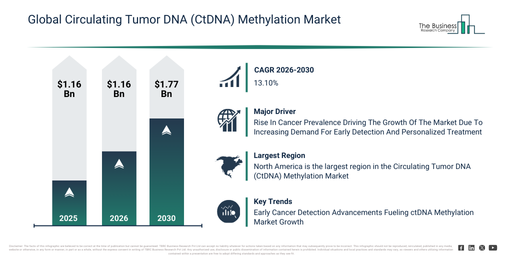
    The circulating tumor DNA (ctDNA) methylation market has witnessed swift development recently and is projected to increase from $1.48 billion in 2025 to $1.68 billion in 2026, reflecting a compound annual growth rate (CAGR) of 13.4%. This historic expansion is largely due to enhancements in methylation detection techniques, the rising use of liquid biopsy procedures, advances in cancer diagnostics, growing clinical research, and an increasing demand for personalized treatment approaches. Looking ahead, the market is expected to continue its momentum, reaching $2.74 billion by 2030 with a CAGR of 13.1%. The projected growth stems from innovations such as targeted methylation panels, AI-driven methylation analysis, early detection initiatives, oncology research developments, and growth in emerging markets. Key trends during this period include epigenetic biomarker analysis, enhanced integration with liquid biopsy, real-time tumor methylation tracking, non-invasive cancer profiling, and the introduction of sophisticated ctDNA methylation kits.

    Download A Free Sample Report For Comprehensive Market Insights:

    https://www.thebusinessresearchcompany.com/sample.aspx?id=28167&type=smp

    Factors Encouraging Expansion in the Circulating Tumor DNA (ctDNA) Methylation Market

    One major factor propelling the circulating tumor DNA (ctDNA) methylation market is the rising incidence of cancer worldwide. Aging populations and lifestyle factors such as unhealthy diet, smoking, and lack of physical activity contribute to increased genetic mutations and tumor formation. ctDNA methylation tests offer a non-invasive and early method to detect cancer, monitor disease progress accurately, and assist in tailoring personalized treatment plans, ensuring prompt and precise medical interventions.

    Data from May 2024 by the National Cancer Institute in the United States highlights this trend, projecting an increase in cancer survivors from 18.1 million in 2022 to 26 million by 2040. This growing patient base further supports the expanding need for ctDNA methylation technologies in clinical practice.

    Market Segmentation Overview for Circulating Tumor DNA (ctDNA) Methylation

    The circulating tumor DNA (ctDNA) methylation market is segmented across multiple dimensions:

    – Product Type: Reagents and kits, instrumentations, software and bioinformatics solutions, and services.

    – Technology: Polymerase Chain Reaction (PCR), Next-Generation Sequencing (NGS), microarray, and other advanced technologies.

    – Sample Type: Blood, urine, saliva, tissue, and other biological samples.

    – Application: Oncology, cardiovascular diseases, neurological disorders, infectious diseases, and other fields.

    – End-User: Hospitals and clinics, research laboratories, diagnostic laboratories, pharmaceutical and biotechnology companies, and academic institutions.

    Access The Complete Circulating Tumor DNA (CtDNA) Methylation Market Report:

    https://www.thebusinessresearchcompany.com/report/circulating-tumor-dna-ctdna-methylation-global-market-report

    Further subcategories include specific reagents and kits like cell-free DNA extraction kits and methylation detection kits; instrumentation such as sequencers and digital PCR systems; software tools covering data analysis and clinical reporting; and services ranging from sample processing to clinical trial support and training.

    Key Market Trends Shaping the Circulating Tumor DNA (ctDNA) Methylation Industry

    Leading companies in this market are focusing on developing multi-cancer early detection (MCED) blood tests that identify cancer-specific methylation patterns in ctDNA. These tests enable early, non-invasive detection across multiple cancer types, improving patient outcomes by facilitating timely treatments and more precise clinical decisions.

    For example, in September 2025, Exact Sciences Corporation, a US molecular diagnostics firm, introduced Cancerguard—a multi-cancer early detection test utilizing ctDNA methylation analysis. Cancerguard detects unique methylation signatures in over 50 cancer types, delivering highly sensitive and non-invasive screening. This innovation offers actionable information for clinicians and supports ongoing patient monitoring and treatment planning, marking a significant advancement in precision oncology.

    Leading Players and Competitive Landscape in the Circulating Tumor DNA (ctDNA) Methylation Market

    Several prominent companies dominate the circulating tumor DNA (ctDNA) methylation market, including Thermo Fisher Scientific Inc., Agilent Technologies Inc., Illumina Inc., Sysmex Corporation, Bio-Rad Laboratories Inc., Exact Sciences Corporation, Qiagen N.V., Natera Inc., BGI Group, Guardant Health Inc., Invitae Corporation, Grail Inc., Genetron Holdings Limited, Buing Rock Biotech Limited, Zymo Research Corp, Agena Bioscience Inc., Phalanx Biotech Group Inc., Epigenomics AG, EpigenDx Inc., Singlera Genomics Inc., and Sampled. These organizations play key roles in innovation, product development, and market expansion.

    Regional Market Share and Growth Prospects in the Circulating Tumor DNA (ctDNA) Methylation Sector

    In 2025, North America held the largest share of the circulating tumor DNA (ctDNA) methylation market. However, the Asia-Pacific region is anticipated to grow at the fastest pace during the forecast period. The market report provides extensive regional coverage including Asia-Pacific, South East Asia, Western Europe, Eastern Europe, North America, South America, the Middle East, and Africa, presenting a comprehensive view of global market dynamics.

    Get in touch with us:

    The Business Research Company: https://www.thebusinessresearchcompany.com/

    Americas: +1 310-496-7795

    Asia: +44 7882 955267 & +91 8897263534

    Europe: +44 7882 955267

    Email us at: marketing@tbrc.info

    Follow us on:

    LinkedIn: https://in.linkedin.com/company/the-business-research-company

    YouTube: https://www.youtube.com/channel/UC24_fI0rV8cR5DxlCpgmyFQ

    Global Market Model: https://www.thebusinessresearchcompany.com/global-market-model
  • Contrast Enhanced Ultrasound Market Expansion Is Reshaping Competitive Dynamics Across The Industry

    Contrast Enhanced Ultrasound Market Expansion Is Reshaping Competitive Dynamics Across The Industry

    Delivering more actionable and strategically valuable research, The Business Research Company’s 2026 market reports feature market attractiveness analysis, total addressable market evaluation, company benchmarking matrices, interactive Excel dashboards, expanded supply chain intelligence, emerging startup coverage, and detailed product insights.

    The contrast enhanced ultrasound market has been experiencing notable growth, driven by advances in imaging technology and increasing demand for safer, radiation-free diagnostic options. This market is on a promising trajectory, supported by rising use in various medical fields and expanding applications in real-time imaging.

    Current and Projected Market Size of Contrast Enhanced Ultrasound

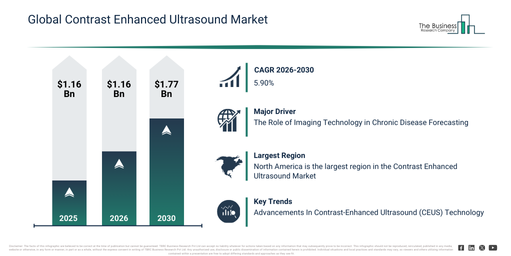
    The size of the contrast enhanced ultrasound market has demonstrated steady growth in recent years. It is anticipated to increase from $2.13 billion in 2025 to $2.26 billion in 2026, reflecting a compound annual growth rate (CAGR) of 5.7%. Factors contributing to this growth include the expanded use of ultrasound imaging, a rising preference for diagnostic methods that avoid radiation, greater availability of contrast agents, growth in cardiovascular diagnostics, and wider adoption of ultrasound in point-of-care environments. Looking further ahead, the market is projected to reach $2.84 billion by 2030, with an expected CAGR of 5.9%. This continued expansion will be fueled by growing demand for real-time functional imaging, increased investments in sophisticated ultrasound systems, a broader range of applications in oncology, a focus on non-invasive imaging techniques, and the approval of new-generation contrast agents. Key trends shaping the market include the growing use of microbubble-based agents, the rising application of contrast enhanced ultrasound in cardiology and oncology, integration of advanced ultrasound software, the emergence of portable CEUS devices, and enhanced emphasis on real-time perfusion imaging.

    Download A Free Sample Report For Comprehensive Market Insights:

    https://www.thebusinessresearchcompany.com/sample.aspx?id=13407&type=smp

    Key Factors Propelling Growth in the Contrast Enhanced Ultrasound Market

    One of the main drivers behind the expansion of the contrast enhanced ultrasound market is the increasing prevalence of chronic diseases. These long-term medical conditions require ongoing monitoring and treatment, and CEUS offers detailed, real-time imaging that supports effective management. Diseases such as liver cirrhosis and vascular conditions linked to hypertension benefit significantly from this technology’s capabilities. For instance, in June 2024, the UK’s National Health Service reported that 3,615,330 people registered with general practitioners were diagnosed with non-diabetic hyperglycemia or pre-diabetes in 2023. This represents an 18% increase over the 3,065,825 cases recorded in 2022, highlighting a growing patient population that may benefit from enhanced diagnostic imaging. This trend underscores the rising demand for contrast enhanced ultrasound as a key tool in chronic disease care.

    Detailed Segmentation of the Contrast Enhanced Ultrasound Market

    The report categorizes the contrast enhanced ultrasound market into several important segments to provide a clearer understanding of the industry landscape:

    1) By Product: Equipment and Contrast Agent

    2) By Technology: Non-targeted and Targeted

    3) By Application: Hospitals, Clinics, and Other Applications

    Within these segments, further breakdown includes:

    – Equipment: Ultrasound Machines and Portable Ultrasound Devices

    – Contrast Agents: Gas-filled Contrast Agents, Microbubble Contrast Agents, and Lipid-based Contrast Agents

    Access The Complete Contrast Enhanced Ultrasound Market Report:

    https://www.thebusinessresearchcompany.com/report/contrast-enhanced-ultrasound-global-market-report

    Innovations and Trends Accelerating Market Growth

    Leading companies in the contrast enhanced ultrasound sector are focusing on developing advanced technologies to improve imaging quality and diagnostic precision. One notable innovation is super-resolution CEUS technology, which enhances the spatial resolution of ultrasound images to provide clearer views of tissue structures and blood vessels. This advancement aids healthcare providers in diagnosing and treating a variety of illnesses, including cancer, liver disease, and vascular disorders. For example, in September 2023, Philips introduced its Microvascular Imaging Super Resolution Contrast-Enhanced Ultrasound system, which applies sophisticated signal processing algorithms to significantly enhance image clarity and detail.

    Competitive Landscape of the Contrast Enhanced Ultrasound Industry

    Several key players dominate the contrast enhanced ultrasound market, offering a broad range of products and technologies. These major companies include General Electric Company, Bayer AG, Siemens Healthcare GmbH, Koninklijke Philips N.V., Shenzhen Mindray Bio-Medical Electronics Co. Ltd., Canon Medical Systems, Lantheus Medical Imaging Inc., Guerbet, Bracco Diagnostic Inc., Esaote S.p.A., Trivitron Healthcare Pvt. Ltd., BK Medical Holding Company Inc., Hitachi Healthcare, Chison Medical Technology Co. Ltd., SANOCHEMIA Pharmazeutika GmbH, SuperSonic Imagine SA, FUJIFILM Visualsonics Inc., Samsung Healthcare, Alpinion Medical Systems, Acusphere Inc., and Solstice Pharmaceuticals B.V.

    Geographical Market Insights and Regional Growth Projections

    In 2025, North America held the largest share of the contrast enhanced ultrasound market. However, the Asia-Pacific region is expected to experience the fastest growth during the forecast period. The market analysis also covers other important regions including South East Asia, Western Europe, Eastern Europe, South America, the Middle East, and Africa, providing a comprehensive view of global market trends and opportunities.

    Get in touch with us:

    The Business Research Company: https://www.thebusinessresearchcompany.com/

    Americas: +1 310-496-7795

    Asia: +44 7882 955267 & +91 8897263534

    Europe: +44 7882 955267

    Email us at: marketing@tbrc.info

    Follow us on:

    LinkedIn: https://in.linkedin.com/company/the-business-research-company

    YouTube: https://www.youtube.com/channel/UC24_fI0rV8cR5DxlCpgmyFQ

    Global Market Model: https://www.thebusinessresearchcompany.com/global-market-model
  • Circulating Tumor Cells Market Expected To Reach $23.88 Billion By 2030 As Growth Accelerates At 12.3% CAGR

    Circulating Tumor Cells Market Expected To Reach $23.88 Billion By 2030 As Growth Accelerates At 12.3% CAGR

    Delivering more actionable and strategically valuable research, The Business Research Company’s 2026 market reports feature market attractiveness analysis, total addressable market evaluation, company benchmarking matrices, interactive Excel dashboards, expanded supply chain intelligence, emerging startup coverage, and detailed product insights.

    The circulating tumor cells market is experiencing significant growth, driven by advances in cancer diagnostics and increasing research activities. As healthcare continues to prioritize early detection and personalized treatment, this market is positioned for substantial expansion. Below is a detailed overview of the market size, key growth drivers, prominent segments, emerging innovations, leading companies, and regional outlook.

    Projected Growth and Market Size of the Circulating Tumor Cells Market

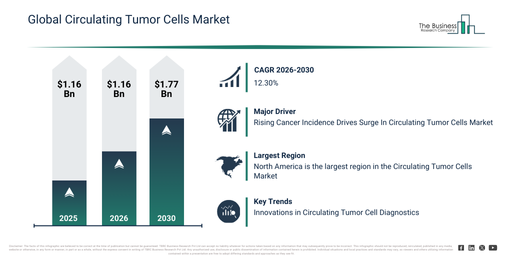
    The circulating tumor cells market has witnessed rapid expansion recently and is anticipated to continue this trajectory. It is expected to rise from $13.27 billion in 2025 to $14.99 billion in 2026, reflecting a compound annual growth rate (CAGR) of 13.0%. This strong growth during the historical period is attributed to the rising incidence of cancer, the broadening scope of oncology research initiatives, increased use of blood-based diagnostic methods, growing preference for minimally invasive testing, and advancements in laboratory technologies. Looking ahead, the market is forecasted to reach $23.88 billion by 2030, growing at a CAGR of 12.3%. Factors fueling future growth include the increasing uptake of personalized oncology diagnostics, more investments in cancer biomarker research, advances in automated cell capture technologies, rising demand for early cancer detection tools, and the integration of artificial intelligence in oncology diagnostics. Key trends anticipated in the forecast period include wider adoption of liquid biopsy techniques, greater use of microfluidic devices for isolating circulating tumor cells, expansion of automated analysis systems, growing applications in oncology research, and an intensified focus on detecting cancer early.

    Download A Free Sample Report For Comprehensive Market Insights:

    https://www.thebusinessresearchcompany.com/sample.aspx?id=8950&type=smp

    Rising Cancer Incidence as a Primary Growth Driver in the Circulating Tumor Cells Market

    One of the dominant factors propelling the circulating tumor cells market is the increasing prevalence of cancer worldwide. Cancer involves abnormal and uncontrollable cell growth that spreads throughout the body. Circulating tumor cells play a crucial role in facilitating early cancer detection and diagnosis, which directly stimulates demand for related diagnostic technologies. For example, in February 2024, the World Health Organization, a global health policy organization based in Switzerland, projected over 35 million new cancer cases by 2050. This figure represents a 77% increase from the estimated 20 million cases recorded in 2022. Such a dramatic rise in cancer incidence underscores the expanding need for circulating tumor cell diagnostics and is a key catalyst for market growth.

    Additional Factors Supporting Expansion in the Circulating Tumor Cells Market

    Beyond cancer prevalence, several other elements are driving market development. These include the widespread adoption of blood-based, minimally invasive diagnostics that are preferred for patient comfort and early detection efficiency. The growing oncology research ecosystem, including biomarker discovery and validation, is also expanding the demand for circulating tumor cell technologies. Additionally, technological improvements such as advanced microfluidic isolation and automated analysis systems are making these diagnostic tools more accessible and reliable, further encouraging their uptake in clinical and research settings.

    Access The Complete Circulating Tumor Cells Market Report:

    https://www.thebusinessresearchcompany.com/report/circulating-tumor-cells-global-market-report

    Detailed Segmentation of the Circulating Tumor Cells Market

    The circulating tumor cells market is defined by several key segments that help identify opportunities and areas of focus:

    1) Product Types: Kits and Reagents, Blood Collection Tubes, Devices or Systems

    2) Technology Categories: CTC Enrichment, CTC Detection, CTC Analysis

    3) Application Areas: Clinical or Liquid Biopsy, and Research

    Within product types, kits and reagents include subcategories such as cell enrichment kits, detection kits, and nucleic acid isolation kits. Blood collection tubes are divided into standard and specialized types. Devices and systems comprise microfluidic devices, automated cell capture systems, and imaging systems. This segmentation offers a comprehensive framework for understanding market dynamics and innovation focus.

    Innovative Advances Shaping the Circulating Tumor Cells Market

    Leading companies in the circulating tumor cells space are developing cutting-edge solutions to meet the growing demand for precise and non-invasive cancer diagnostics. One key innovation is biomarker-specific circulating tumor cell assays, which provide more detailed information by detecting protein expression on tumor cells, rather than simply counting total cells. For instance, in July 2023, Menarini Silicon Biosystems S.p.A., an Italy-based diagnostics firm, introduced the CELLSEARCH CTC test featuring the DLL3 biomarker. Available as a Research Use Only (RUO) service in North America and Europe, this test utilizes the FDA-cleared CELLSEARCH platform to identify circulating tumor cells expressing DLL3—a protein linked to aggressive small-cell lung cancer and neuroendocrine tumors. This assay allows researchers to characterize tumor cell subtypes with poor prognosis, facilitating biopharma research focused on targeted therapies. Such innovations offer vital tools for studying tumor heterogeneity, tracking disease progression, and assessing responses to personalized treatments.

    Key Market Players Driving the Circulating Tumor Cells Industry

    The circulating tumor cells market features numerous influential companies contributing to research, development, and commercialization of diagnostic solutions. Some prominent names include BIOCEPT Inc., Creativ MicroTech Inc., Fluxion Biosciences Inc., Ikonisys Inc., ScreenCell SAS, Aviva Biosciences Corporation, LungLife AI Inc., Menarini Silicon Biosystems S.p.A., Canopus Bioscience Ltd., IVDiagnostics Inc., BioFluidica Inc., Biolidics Limited, Rarecells Diagnostics SAS, Cynvenio Biosystems Inc., ApoCell Inc., Clearbridge BioMedics Pte. Ltd., Celsee Inc., RareCyte Inc., On-chip Biotechnologies Co. Ltd., Bio-Techne Corporation, Qiagen N.V., STEMCELL Technologies Inc., Sysmex Corporation, Miltenyi Biotec GmbH, Thermo Fisher Scientific Inc., Greiner Bio-One International GmbH, and Agilent Technologies Inc. These companies play a pivotal role in advancing circulating tumor cell technologies and expanding their clinical applications.

    Regional Landscape and Market Growth Prospects for Circulating Tumor Cells

    In 2025, North America is expected to maintain its position as the largest market for circulating tumor cells, driven by strong healthcare infrastructure, extensive oncology research, and high adoption of advanced diagnostics. Meanwhile, the Asia-Pacific region is forecasted to be the fastest-growing market during the projection period, fueled by increasing awareness, expanding healthcare access, and rising investments in cancer diagnostics. The market analysis encompasses key geographic areas including Asia-Pacific, South East Asia, Western Europe, Eastern Europe, North America, South America, the Middle East, and Africa, presenting a global perspective on market evolution.

    Get in touch with us:

    The Business Research Company: https://www.thebusinessresearchcompany.com/

    Americas: +1 310-496-7795

    Asia: +44 7882 955267 & +91 8897263534

    Europe: +44 7882 955267

    Email us at: marketing@tbrc.info

    Follow us on:

    LinkedIn: https://in.linkedin.com/company/the-business-research-company

    YouTube: https://www.youtube.com/channel/UC24_fI0rV8cR5DxlCpgmyFQ

    Global Market Model: https://www.thebusinessresearchcompany.com/global-market-model
  • Contract Sterilization Market Forecast Reveals Where Future Industry Value Will Be Created

    Contract Sterilization Market Forecast Reveals Where Future Industry Value Will Be Created

    Enhanced with market attractiveness analysis, total addressable market evaluation, company benchmarking matrices, interactive Excel dashboards, expanded supply chain intelligence, emerging startup coverage, and detailed product insights, The Business Research Company’s 2026 market reports deliver more actionable and strategically valuable research.

    The contract sterilization market is experiencing significant growth, driven by rising demands across various healthcare and industrial sectors. With evolving technologies and stringent regulations emphasizing product sterility, this market is poised for robust expansion in the coming years. Below is a detailed overview of the market size, key growth drivers, important segments, competitive landscape, and regional trends shaping the future of contract sterilization.

    Contract Sterilization Market Size and Growth Projections

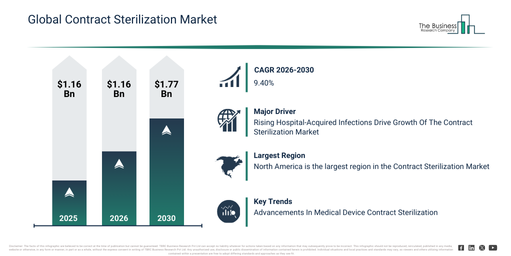
    The contract sterilization market has demonstrated strong growth recently, with its valuation expected to rise from $5.8 billion in 2025 to $6.35 billion in 2026. This increase reflects a compound annual growth rate (CAGR) of 9.5%. Factors contributing to this historic growth include the expansion of medical device manufacturing, higher pharmaceutical production volumes, stricter regulatory mandates for sterilization, development of healthcare infrastructure, and greater adoption of outsourced sterilization services. Looking ahead, the market is forecasted to reach $9.11 billion by 2030, growing at a CAGR of 9.4%, fueled by demand for advanced sterilization technologies, eco-friendly methods, growth in single-use medical devices, investments in biologics and injectables, and heightened regulatory scrutiny.

    Download A Free Sample Report For Comprehensive Market Insights:

    https://www.thebusinessresearchcompany.com/sample.aspx?id=19014&type=smp

    Rising Incidence of Hospital-Acquired Infections Driving Market Demand

    One of the primary factors propelling the contract sterilization market is the growing number of hospital-acquired infections (HAIs). These infections, contracted during a patient’s stay in healthcare facilities, have increased due to the rise of antibiotic-resistant bacteria and the use of invasive devices like catheters and ventilators, which provide pathways for infection. As a result, the need for rigorous sterilization of medical instruments and equipment has become critical to minimizing infection risks. For example, in May 2024, the European Centre for Disease Prevention and Control reported that annually, 4.3 million patients in EU and EEA hospitals acquire at least one healthcare-associated infection, highlighting the urgent demand for effective sterilization solutions.

    How Contract Sterilization Helps Reduce Infection Risks

    Contract sterilization plays a vital role in controlling HAIs by applying standardized, advanced sterilization processes to medical devices, surgical tools, and other healthcare equipment. By thoroughly eliminating harmful microorganisms, these sterilization services ensure safer healthcare environments and compliance with strict safety regulations. The growing reliance on outsourcing these services reflects the increasing complexity and stringent requirements in sterilization protocols, emphasizing the market’s expanding scope.

    Access The Complete Contract Sterilization Market Report:

    https://www.thebusinessresearchcompany.com/report/contract-sterilization-global-market-report

    Segment Breakdown of the Contract Sterilization Market

    This report divides the contract sterilization market into key segments to better understand its structure:

    1) Sterilization Methods: Ethylene Oxide, Gamma Irradiation, Electron Beam, Plasma Sterilization, Vaporized Hydrogen Peroxide

    2) Product Categories: Sterilization Services, Chemical Methods, Validation and Process Support Services

    3) Application Areas: Medical Devices, Pharmaceuticals, Food and Beverage, Cosmetics

    Further detailed subcategories include:

    – Ethylene Oxide: Low Temperature Ethylene Oxide Sterilization, High Concentration Ethylene Oxide Sterilization

    – Gamma Irradiation: Cobalt-60 Gamma Irradiation, Cesium-137 Gamma Irradiation

    – Electron Beam: Industrial Electron Beam Sterilization, Medical Electron Beam Sterilization

    – Plasma Sterilization: Hydrogen Peroxide Plasma Sterilization, Low-Temperature Plasma Sterilization

    – Vaporized Hydrogen Peroxide: Vaporized Hydrogen Peroxide Decontamination, Vaporized Hydrogen Peroxide Sterilization

    Advancements in Contract Sterilization Market and Impact on Competition

    Key players in the contract sterilization market are focusing on expanding their ethylene oxide (EtO) sterilization capacities to meet growing demand for sterile medical devices. EtO sterilization is especially valuable for heat- and moisture-sensitive devices, as it effectively eliminates microbes without damaging the products. For instance, in July 2023, STERIS Corporation enhanced its sterilization capabilities at its Kuala Ketil, Malaysia facility by adding X-ray sterilization alongside existing gamma and EtO services. This facility integrates into STERIS’s global sterilization network, offering comprehensive services compliant with ISO 13485 standards while supporting capacity growth in the Asia-Pacific region.

    Leading Companies Operating in the Contract Sterilization Market

    Notable companies shaping the contract sterilization market include Steris Corporation, Sterigenics International LLC, Nelson Labs & Sterigenics, Steripak Limited, Midwest Sterilization Corporation (MSC), Trinity Sterile Inc., Pacific BioLabs Inc., Steritek, E-Beam Services Inc., Andersen Sterilizers Inc., PAMA Manufacturing and Sterilization, Blue Line Sterilization Services, Medistri SA, NovaSterilis, Noxilizer Inc., Prince Sterilization Services LLC, WuXi AppTec Sterilization Services, BGS Beta-Gamma-Service GmbH & Co. KG, Iotron Industries Canada Inc., and STERIMED Group. These companies compete by innovating services, expanding capacity, and enhancing compliance to meet the complex needs of the healthcare and pharmaceutical industries.

    Regional Market Insights and Growth Patterns

    In 2025, North America held the largest share of the contract sterilization market, benefiting from mature healthcare infrastructure and stringent sterilization standards. Meanwhile, Asia-Pacific is anticipated to experience the fastest growth during the forecast period, driven by rising healthcare investments, expanding medical device manufacturing, and increasing outsourcing of sterilization services. Other regions covered in the analysis include South East Asia, Western Europe, Eastern Europe, South America, the Middle East, and Africa, providing a comprehensive view of market dynamics worldwide.

    Get in touch with us:

    The Business Research Company: https://www.thebusinessresearchcompany.com/

    Americas: +1 310-496-7795

    Asia: +44 7882 955267 & +91 8897263534

    Europe: +44 7882 955267

    Email us at: marketing@tbrc.info

    Follow us on:

    LinkedIn: https://in.linkedin.com/company/the-business-research-company

    YouTube: https://www.youtube.com/channel/UC24_fI0rV8cR5DxlCpgmyFQ

    Global Market Model: https://www.thebusinessresearchcompany.com/global-market-model