Month: June 2026

  • Mucopolysaccharidosis Treatment Market Opportunities Are Emerging Beyond Traditional Growth Areas

    Mucopolysaccharidosis Treatment Market Opportunities Are Emerging Beyond Traditional Growth Areas

    Through market attractiveness analysis, total addressable market evaluation, company benchmarking matrices, interactive Excel dashboards, expanded supply chain intelligence, emerging startup coverage, and detailed product insights, The Business Research Company’s 2026 market reports provide more actionable and strategically valuable research.

    Mucopolysaccharidosis Treatment Market Revenue Outlook: What CAGR Is Expected Through 2030?

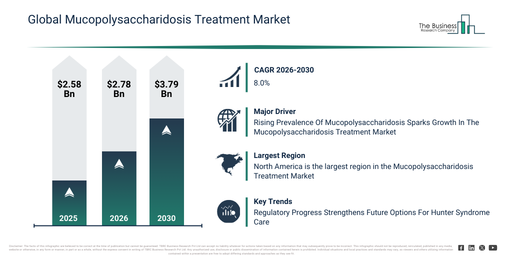
    The market for mucopolysaccharidosis treatments witnessed significant expansion historically and is projected to continue its upward trajectory, expanding from $2.58 billion in 2025 to $2.78 billion in 2026, reflecting a compound annual growth rate of 7.7%. Factors contributing to this growth in past years included a lack of widespread understanding of MPS disorders, the considerable expense associated with treatments, a gradual uptake of enzyme replacement therapies, limited opportunities for clinical research, and a dependence on global pharmaceutical supply chains.

    The global market for mucopolysaccharidosis treatments is poised for substantial expansion over the coming years, projecting a rise to $3.79 billion by 2030, driven by a compound annual growth rate of 8.0%. This anticipated growth trajectory during the forecast period is fueled by several key factors, including intensified research in gene therapy, escalated healthcare expenditures, enhanced initiatives for screening rare diseases, extended insurance coverage, and the proliferation of personalized medicine platforms. Furthermore, the upcoming years are expected to witness significant market developments such as innovations in enzyme replacement therapy, a greater acceptance of stem cell transplantation, the continuous advancement of gene therapy methodologies, a heightened emphasis on early detection and newborn screening, and the establishment of more specialized treatment facilities.

    Download A Free Sample Report For Comprehensive Market Insights:

    https://www.thebusinessresearchcompany.com/sample.aspx?id=11942&type=smp

    Mucopolysaccharidosis Treatment Market Growth Momentum: Which Factors Are Influencing Demand?

    The expanding occurrence of diverse mucopolysaccharidosis types is anticipated to significantly boost the future expansion of the mucopolysaccharidosis treatment market. Mucopolysaccharide, a type of intricate carbohydrate, accumulates within bodily tissues due to a deficiency in the essential enzyme needed for its breakdown. Therapies for mucopolysaccharidosis (MPS) can mitigate disease progression by curtailing glycosaminoglycan (GAG) production within the body, managing presenting symptoms, and preempting complications through a range of treatment modalities. For example, data from the Orphanet Journal of Rare Diseases, a French peer-reviewed open-access medical publication, indicated in July 2024 that the incidence rate for mucopolysaccharidosis IVa (MPS IVa) is approximately 1 per 201,000 live births, although this statistic is believed to fluctuate substantially across different demographic groups. Complementarily, the estimated birth prevalence for Mucopolysaccharidosis VI (MPS VI) falls within the range of 1 in 43,261 to 1 in 1,505,160, contingent upon the specific population studied. Consequently, the heightened incidence of various mucopolysaccharidosis forms is poised to be a primary driver for the mucopolysaccharidosis treatment market.

    Mucopolysaccharidosis Treatment Market Segmentation: How Is The Market Structured Across Key Categories?

    The mucopolysaccharidosis treatment market covered in this report is segmented –

    1) By Treatment: Enzyme Replacement Therapy, Stem Cell Therapy

    2) By Disease: Mucopolysaccharidosis- I, Mucopolysaccharidosis- II, Mucopolysaccharidosis-IV, Mucopolysaccharidosis-VI, Other Diseases

    3) By Route Of Administration: Intravenous, Intracerebroventricular

    4) By End-User: Hospitals, Specialty Clinics, Other End-Users

    Subsegments:

    1) By Enzyme Replacement Therapy: Idursulfase (Elaprase), Laronidase (Aldurazyme), Velaglucerase Alfa (Vpriv), Galsulfase (Naglazyme)

    2) By Stem Cell Therapy: Hematopoietic Stem Cell Transplantation (HSCT), Umbilical Cord Blood Transplantation, Gene Therapy Approaches

    Mucopolysaccharidosis Treatment Market Trends Reshaping Industry Growth

    Leading entities within the MPS II therapeutic landscape are directing their efforts toward pioneering novel treatments, including AAV gene therapies, with the objective of correcting the fundamental genetic causes of the condition and achieving lasting neurological improvement. This advanced form of gene therapy is characterized by its precise genetic modification approach, employing adeno-associated viral vectors to introduce functional genes into brain cells, thereby facilitating sustained production of essential proteins that are either absent or insufficient. Demonstrating this commitment, REGENXBIO Inc., a biotechnology firm based in the United States, announced in August 2025 that the U.S. Food and Drug Administration had prolonged its evaluation period for RGX-121. This review extension was prompted by the incorporation of extended clinical data from all trial participants, which corroborated initial findings related to biomarkers and neurodevelopmental progress. The successful completion of pre-licensure inspections and the lack of identified safety issues suggest continued regulatory advancement, bolstering the prospect of this therapy becoming the inaugural single-administration treatment aimed at addressing the neurological symptoms of MPS II.

    Mucopolysaccharidosis Treatment Market Competitive Landscape And Leading Companies

    Major companies operating in the mucopolysaccharidosis treatment market are BioMarin Pharmaceuticals Inc., Sanofi S.A., Takeda Pharmaceutical Co. Ltd., JCR Pharmaceuticals Co. Ltd., Ultragenyx Pharmaceutical Inc., RegenxBio Inc., Sangamo Therapeutics Inc., Audentes Therapeutics Inc., Abeona Therapeutics Inc., Immusoft Corporation, Neurogene Inc., Mallinckrodt Pharmaceuticals, Green Cross Corporation, Denali Therapeutics Inc., Passage Bio Inc., Homology Medicines Inc., AVROBIO Inc., Rocket Pharmaceuticals Inc., Taysha Gene Therapies Inc., Freeline Therapeutics Holdings plc, 4D Molecular Therapeutics Inc., Sio Gene Therapies Inc., SpliceBio S.L., LogicBio Therapeutics Inc., Orchard Therapeutics plc, Asklepios BioPharmaceutical Inc.

    Access The Complete Mucopolysaccharidosis Treatment Market Report:

    https://www.thebusinessresearchcompany.com/report/mucopolysaccharidosis-treatment-global-market-report

    Mucopolysaccharidosis Treatment Market Regional Analysis And Leading Geography

    North America was the largest region in the mucopolysaccharidosis treatment market in 2025. The regions covered in the mucopolysaccharidosis treatment market report are Asia-Pacific, South East Asia, Western Europe, Eastern Europe, North America, South America, Middle East, Africa.

    Get in touch with us:

    The Business Research Company: https://www.thebusinessresearchcompany.com/

    Americas: +1 310-496-7795

    Asia: +44 7882 955267 & +91 8897263534

    Europe: +44 7882 955267

    Email us at: marketing@tbrc.info

    Follow us on:

    LinkedIn: https://in.linkedin.com/company/the-business-research-company

    YouTube: https://www.youtube.com/channel/UC24_fI0rV8cR5DxlCpgmyFQ

    Global Market Model: https://www.thebusinessresearchcompany.com/global-market-model
  • m-RNA Synthesis Service Market Expansion Is Opening New Pathways For Strategic Investment

    m-RNA Synthesis Service Market Expansion Is Opening New Pathways For Strategic Investment

    Delivering more actionable and strategically valuable research, The Business Research Company’s 2026 market reports feature market attractiveness analysis, total addressable market evaluation, company benchmarking matrices, interactive Excel dashboards, expanded supply chain intelligence, emerging startup coverage, and detailed product insights.

    m-RNA Synthesis Service Market Growth Analysis: How Will Revenue Expand During The Forecast Period?

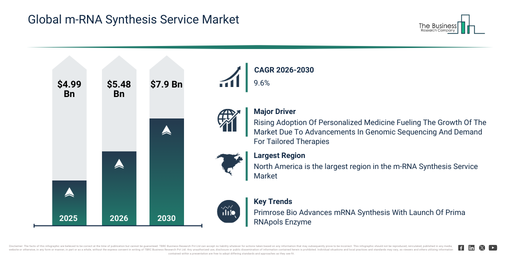
    The market for mRNA synthesis services has experienced robust expansion, escalating from $4.99 billion in 2025 to an anticipated $5.48 billion in 2026, reflecting a compound annual growth rate of 9.9%. This upward trajectory in the historical period is largely attributable to the intensified pace of vaccine development initiatives, augmented financial investments in genetic research endeavors, a broader reach of contract research organizations, the increasing incorporation of mRNA in academic investigations, and significant advancements in the efficiency of transcription technologies.

    The market for mRNA synthesis services is poised for significant expansion, with projections indicating a rise to $7.9 billion by the year 2030, reflecting a compound annual growth rate of 9.6%. This anticipated growth throughout the forecast period is largely fueled by an expanding array of mRNA-based therapeutic candidates, a burgeoning need for tailored medical treatments, and advancements in gene therapy research. Furthermore, the increasing outsourcing of synthesis services, alongside a growing number of regulatory approvals for mRNA products, are key contributors. Emerging trends expected to shape this market include a heightened demand for bespoke mRNA constructs, greater adoption of Good Manufacturing Practice (GMP) grade mRNA production, expanded utilization of scalable in vitro transcription platforms, the proliferation of rapid synthesis services for quick turnaround times, and an intensified emphasis on producing mRNA with exceptional purity.

    Download A Free Sample Report For Comprehensive Market Insights:

    https://www.thebusinessresearchcompany.com/sample.aspx?id=24611&type=smp

    m-RNA Synthesis Service Market Expansion Drivers: What Is Shaping Future Growth?

    The expanding emphasis on tailored medical interventions is poised to be a significant catalyst for the mRNA synthesis service sector’s development. This personalized approach to healthcare, which customizes treatments based on an individual’s unique genetic profile, lifestyle choices, and environmental factors, is gaining traction largely thanks to breakthroughs in genomic sequencing technologies. These advancements facilitate the accurate detection of specific genetic differences that influence disease susceptibility and how a person might respond to particular therapies. mRNA synthesis services play a crucial role by facilitating the swift and accurate creation of mRNA-based treatments designed for individual genetic requirements, thereby paving the way for more impactful and precisely targeted therapies. As an illustration, the Personalized Medicine Coalition reported that in 2023, the FDA authorized 16 novel personalized treatments for individuals battling rare conditions, marking a notable rise from the 6 approvals seen in 2022, with seven of these being oncological medications and three addressing other ailments. Consequently, the heightened attention on personalized medicine is directly fueling the expansion of the mRNA synthesis service market.

    m-RNA Synthesis Service Market Segmentation Trends And Revenue Drivers

    The m-rna synthesis service market covered in this report is segmented –

    1) By Type: mRNA Vaccine Synthesis, mRNA Drug Synthesis

    2) By Application Area: Vaccine Development, Therapeutic Development, Research and Development, Diagnostics

    3) By End-user Industry: Pharmaceutical Companies, Biotechnology Firms, Academic And Research Institutions, Contract Research Organizations (CROs)

    Subsegments:

    1) By mRNA Vaccine Synthesis: Infectious Disease Vaccines, Cancer Vaccines, Personalized Vaccines

    2) By mRNA Drug Synthesis: Protein Replacement Therapies, Gene Editing Therapeutics, Cell Therapy Support

    m-RNA Synthesis Service Market Strategic Trends: What Is Defining The Next Phase Of Growth?

    Companies at the forefront of the mRNA synthesis service sector are concentrating their efforts on pioneering advancements, including novel approaches to RNA polymerase, aiming to elevate the effectiveness, output, and security of mRNA production. These RNA polymerase improvements involve the creation of sophisticated enzymes designed to augment the transcription process, curtail adverse outcomes like the generation of double-stranded RNA, and consequently boost the caliber of mRNA utilized in vaccines and medicinal treatments. As an illustration, in March of 2025, the American biotechnology firm Primrose Bio Inc. introduced Prima RNApols, a product engineered to boost the efficiency and adaptability of mRNA synthesis. This enzyme is characterized by its superior processivity and highly accurate transcription capabilities, facilitating the creation of more extensive and stable mRNA sequences with a lower incidence of errors. Its dependable performance within in vitro transcription frameworks leads to a reduction in contaminants and an increase in the overall yield, presenting a dependable and scalable option for entities involved in the development of mRNA-based therapies. This particular advancement holds considerable significance within the expanding domain of personalized medicine, an area where the accurate and efficient synthesis of mRNA is of paramount importance.

    m-RNA Synthesis Service Market Industry Leaders: Which Organizations Are Driving Competition?

    Major companies operating in the m-rna synthesis service market are Thermo Fisher Scientific Inc., Danaher Corporation, AGC Biologics Inc., Eurofins Scientific SE, Lonza Group AG, Catalent Inc., Samsung Biologics Co. Ltd., WuXi Biologics (Cayman) Inc., GenScript Biotech Corporation, Azenta Inc., Genewiz Inc., New England Biolabs Inc., TransGen Biotech Co. Ltd., Creative Biolabs Inc., Bioneer Corporation, Aldevron LLC, eTheRNA immunotherapies NV, Bio-Synthesis Inc., TriLink BioTechnologies LLC, APExBIO Technology LLC

    Access The Complete m-RNA Synthesis Service Market Report:

    https://www.thebusinessresearchcompany.com/report/m-rna-synthesis-service-global-market-report

    m-RNA Synthesis Service Market Geographic Analysis: Where Is Demand Growing The Fastest?

    North Americawas the largest region in the m-RNA synthesis service market in 2025. Asia-Pacificis expected to be the fastest-growing region in the forecast period. The regions covered in the m-rna synthesis service market report are Asia-Pacific, South East Asia, Western Europe, Eastern Europe, North America, South America, Middle East, Africa.

    Get in touch with us:

    The Business Research Company: https://www.thebusinessresearchcompany.com/

    Americas: +1 310-496-7795

    Asia: +44 7882 955267 & +91 8897263534

    Europe: +44 7882 955267

    Email us at: marketing@tbrc.info

    Follow us on:

    LinkedIn: https://in.linkedin.com/company/the-business-research-company

    YouTube: https://www.youtube.com/channel/UC24_fI0rV8cR5DxlCpgmyFQ

    Global Market Model: https://www.thebusinessresearchcompany.com/global-market-model
  • MRI Contrast Media Market Trends Are Creating New Opportunities For Industry Leaders

    MRI Contrast Media Market Trends Are Creating New Opportunities For Industry Leaders

    Enhanced with market attractiveness analysis, total addressable market evaluation, company benchmarking matrices, interactive Excel dashboards, expanded supply chain intelligence, emerging startup coverage, and detailed product insights, The Business Research Company’s 2026 market reports deliver more actionable and strategically valuable research.

    MRI Contrast Media Market Forecast: What Market Value Is Expected By 2030?

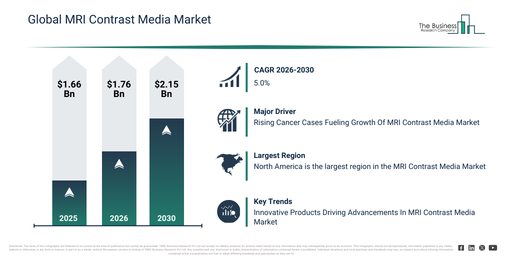
    The market for MRI contrast media has experienced robust expansion lately, with projections indicating a rise from $1.66 billion in 2025 to $1.76 billion in 2026, reflecting a compound annual growth rate (CAGR) of 6.0%. This past growth trajectory has been shaped by escalating needs in diagnostic imaging, a continued dependence on gadolinium-based agents, initial scarcity of comprehensive safety information, an ongoing process of updating medical equipment, and an increase in the occurrence of neurological conditions.

    The market for MRI contrast media is poised for significant expansion over the upcoming years, projecting a reach of $2.15 billion by 2030, driven by a compound annual growth rate of 5.0%. This anticipated growth stems from several key factors, including the broadening reach of cancer screening initiatives, the integration of innovative MRI contrast formulations, an increase in the number of outpatient imaging facilities, escalating investments in radiology research and development, and a heightened emphasis on the creation of safer contrast agents. Key developments shaping the market during this forecast period involve a greater uptake of gadolinium-free contrast agents, increased acceptance of nanoscale contrast materials, the establishment of more comprehensive safety monitoring protocols for contrast media, a rise in MRI scans for diagnosing chronic conditions, and the ongoing development of agents specifically designed for organs and targeted applications.

    Download A Free Sample Report For Comprehensive Market Insights:

    https://www.thebusinessresearchcompany.com/sample.aspx?id=14964&type=smp

    MRI Contrast Media Market Development Factors: Which Trends Are Supporting Demand?

    An increasing incidence of cancer is anticipated to be a primary catalyst for the expansion of the MRI contrast media market. This surge in cancer diagnoses stems from a complex interplay of elements, including demographic shifts, lifestyle choices, environmental exposures, inherited predispositions, and advancements in healthcare. Contrast agents, particularly those formulated with gadolinium-based substances, are instrumental in MRI procedures by modifying tissue magnetic characteristics; this enhancement significantly improves the clarity with which tumors can be identified, measured, and classified, and further assists in evaluating their spread into adjacent structures. As an illustration, data released in January 2024 by the American Cancer Society, a prominent US organization, indicated that the nation was forecast to experience 2,001,140 new cancer diagnoses and 611,720 fatalities in 2024, a rise from the 1,958,310 cases and 609,820 deaths recorded in 2023. Consequently, the escalating numbers of cancer cases directly contribute to the market’s growth trajectory for MRI contrast media.

    MRI Contrast Media Market Segment Analysis Highlighting Growth Areas

    The mri contrast media market covered in this report is segmented –

    1) By Product: Extracellular Contrast Agents, Blood-Pool Agent, Hepatobiliary Agents

    2) By Application: Neurological Disorders, Musculoskeletal Disorders, Cardiovascular Disorders, Cancer Detection, Other Applications

    3) By End-User: Hospitals, Diagnostic And Imaging Centers, Research Institutes, Other End Users

    Subsegments:

    1) By Extracellular Contrast Agents: Gadolinium-Based Contrast Agents (GBCA), Non-Gadolinium-Based Contrast Agents

    2) By Blood-Pool Agent: Macromolecular Agents, Nanoparticle-Based Agents

    3) By Hepatobiliary Agents: Hepatocyte-Specific Agents, Biliary-Specific Agents

    MRI Contrast Media Market Transformation Trends: Which Innovations Are Driving Change?

    Leading entities within the MRI contrast media sector are prioritizing the creation and market release of sophisticated offerings, including macrocyclic gadolinium-based contrast agents (GBCA), aimed at improving both the diagnostic accuracy and safety aspects of MRI examinations. A macrocyclic gadolinium-based contrast agent (GBCA) represents a specific category of imaging enhancement substances utilized in medical diagnostics, most notably in magnetic resonance imaging (MRI). As an illustration, Guerbet, a prominent French supplier of MRI contrast media, introduced Elucirem (gadopiclenol) injection in February 2023. What distinguishes Elucirem (gadopiclenol) injection is its exceptionally stable macrocyclic gadolinium-based contrast agent (GBCA), which boasts the highest relaxivity among its peers for MRI applications. This novel composition of gadopiclenol is particularly remarkable for its efficacy in identifying and delineating lesions characterized by atypical vascularity across diverse areas of the central nervous system, such as the brain, spinal cord, and related structures, as well as throughout the body, covering the head and neck region, thorax, abdomen, pelvis, and the musculoskeletal framework.

    MRI Contrast Media Market Leading Companies: Who Holds Significant Market Presence?

    Major companies operating in the mri contrast media market are Bayer AG, GE Healthcare Technologies Inc., Bracco S.p.A., Guerbet LLC, Lantheus Medical Imaging Inc., Fujifilm Holdings Corporation, Spago Nanomedical AB, Fresenius Kabi AG, Curium Pharma, Miltenyi Biotec B.V. & Co. KG, Polarean Inc., BioPAL Inc., Jiangsu Hengrui Pharmaceutical Co. Ltd., Trivitron Healthcare, Beijing Beilu Pharmaceuticals Company Limited, Taejoon Pharm Co. Ltd., Mediso USA LLC, Nano Therapeutics Pvt. Ltd., Eisai Co. Ltd., Daiichi Sankyo Company Limited, Maruishi Pharmaceutical Co. Ltd., Jodas Expoim Pvt Ltd, Lumiphore Inc., Naviscan Inc.

    Access The Complete MRI Contrast Media Market Report:

    https://www.thebusinessresearchcompany.com/report/mri-contrast-media-global-market-report

    MRI Contrast Media Market Global Footprint: Which Region Holds Market Leadership?

    North Americawas the largest region in the MRI contrast media market in 2025. The regions covered in the mri contrast media market report are Asia-Pacific, South East Asia, Western Europe, Eastern Europe, North America, South America, Middle East, Africa.

    Get in touch with us:

    The Business Research Company: https://www.thebusinessresearchcompany.com/

    Americas: +1 310-496-7795

    Asia: +44 7882 955267 & +91 8897263534

    Europe: +44 7882 955267

    Email us at: marketing@tbrc.info

    Follow us on:

    LinkedIn: https://in.linkedin.com/company/the-business-research-company

    YouTube: https://www.youtube.com/channel/UC24_fI0rV8cR5DxlCpgmyFQ

    Global Market Model: https://www.thebusinessresearchcompany.com/global-market-model
  • Mouthwash Market Growth Is Reshaping Competitive Advantage Across The Industry

    Mouthwash Market Growth Is Reshaping Competitive Advantage Across The Industry

    Delivering more actionable and strategically valuable research, The Business Research Company’s 2026 market reports feature market attractiveness analysis, total addressable market evaluation, company benchmarking matrices, interactive Excel dashboards, expanded supply chain intelligence, emerging startup coverage, and detailed product insights.

    Mouthwash Market Size Outlook: How Fast Will Revenue Grow Through 2030?

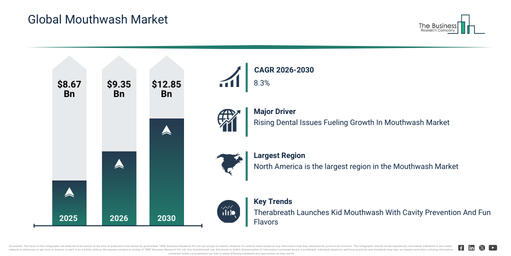
    The market for mouthwash has experienced considerable expansion lately, projecting a rise from $8.67 billion in 2025 to $9.35 billion in 2026, representing a compound annual growth rate of 7.8%. This past growth has been fueled by greater consciousness regarding oral health practices, significant dependence on sales through retail pharmacies, the incorporation of antiseptic components, an increase in broad advertising campaigns, and evolving consumer spending habits within households.

    The global market for mouthwash is poised for substantial expansion over the coming years, projected to reach $12.85 billion by 2030, driven by a compound annual growth rate (CAGR) of 8.3%. This upward trajectory is fueled by several key factors including the broadening reach of e-commerce platforms, a discernible shift towards consumer preference for products derived from natural ingredients, increased public awareness generated by dental health initiatives, continuous product development by industry players, and a greater integration of mouthwash solutions within professional dental care environments. Anticipated significant developments shaping the market during this period involve escalating consumer interest in alcohol-free alternatives, a heightened embrace of botanical and natural mouthwash options, a growing demand for specialized rinses targeting gum health, the diversification of available flavors and options catering to individual consumer tastes, and a pronounced increase in the online availability and sales of mouthwash products.

    Download A Free Sample Report For Comprehensive Market Insights:

    https://www.thebusinessresearchcompany.com/sample.aspx?id=10777&type=smp

    Mouthwash Market Industry Drivers: What Is Driving Revenue Growth?

    The anticipated rise in dental health issues is poised to be a significant catalyst for the expansion of the mouthwash sector. Such dental problems encompass a range of conditions detrimental to oral well-being, such as cavities, periodontal ailments, enamel erosion, and gum infections. Mouthwash plays a crucial role in cavity prevention by effectively diminishing both plaque accumulation and bacterial presence within the oral cavity. Consistent and daily application of mouthwash can be instrumental in combating cavities and safeguarding against the onset of periodontal disease. Illustratively, projections from The Conversation, a non-profit news outlet originating from Australia, indicated in August 2024 that gum disease, currently impacting 42% of the United Kingdom’s populace, is expected to escalate and affect as many as 54% by the year 2050. Consequently, this escalating prevalence of dental afflictions is directly fueling the growth trajectory of the mouthwash market.

    Mouthwash Market Segment Performance And Strategic Opportunities

    The mouthwash market covered in this report is segmented –

    1) By Type: Therapeutic, Cosmetic, Anti-Septic, Other Types

    2) By Flavor: Active Salt, Mint, Fresh Tea, Other Flavors

    3) By Sales: Modern Trade, Departmental Store, Drug Stores, Online Stores, Other Sales

    4) By End-User: Household, Hospital, Dental Clinics

    Subsegments:

    1) By Therapeutic: Fluoride Mouthwash, Antimicrobial Mouthwash, Breath Freshening Mouthwash, Mouthwash For Gum Health, Mouthwash For Dry Mouth

    2) By Cosmetic: Whitening Mouthwash, Refreshing Mouthwash, Flavor-Specific Mouthwash, Alcohol-Free Cosmetic Mouthwash, Herbal Or Natural Cosmetic Mouthwash

    3) By Anti-Septic: Alcohol-Based Anti-Septic Mouthwash, Non-Alcohol Anti-Septic Mouthwash, Chlorhexidine-Based Mouthwash, Essential Oil-Based Anti-Septic Mouthwash, Sodium Bicarbonate Anti-Septic Mouthwash

    4) By Other Types: Children’s Mouthwash, Mouthwash For Orthodontic Patients, Specialty Mouthwash, Alcohol-Free Mouthwash, Mouthwash With Added Ingredients

    #Mouthwash Market Growth Trends: What Is Influencing The Future Outlook?

    Leading participants in the mouthwash sector are intensifying their efforts on creating novel offerings, specifically function-specific mouthwashes, in response to shifting consumer demands and the imperative to stand out in the market. These specialized mouthwashes are crafted to tackle distinct oral health issues, encompassing cavity defense, enamel fortification, alleviation of sensitivity, relief from dry mouth, or catering to children’s oral hygiene, all achieved through unique active components, enhanced flavor profiles, and purer, hypo-allergenic formulations. An illustration of this trend is TheraBreath, an American oral care firm, which, in March of 2023, introduced a mouthwash tailored for children, designed to combat cavities and refresh breath. This particular product, TheraBreath Kid Mouthwash, is notable for being free of alcohol, suitable for vegans, and gluten-free, incorporating sodium fluoride as its active ingredient to promote robust, healthy teeth while minimizing cavity development, and it comes in appealing options like Wacky Watermelon, Strawberry Splash, and Grapes Galore.

    Mouthwash Market Key Players: Which Companies Shape Industry Competition?

    Major companies operating in the mouthwash market are Colgate-Palmolive Company, GlaxoSmithKline PLC, Johnson & Johnson, Reckitt Benckiser Group plc, Hindustan Unilever Limited, Church & Dwight Company Inc., Procter & Gamble Company, Amway Corporation, Lion Corporation, SmartMouth Oral Health Laboratories, Caldwell Consumer Products Corp., Dabur India Ltd, Dr. Organic Ltd, Biotène, The Himalaya Drug Company, 3M Company, Henkel AG & Co. KGaA, Kao Corporation, Koninklijke Philips N.V., ACTEON Group Ltd., Align Technology Inc., Carestream Dental LLC, DENTSPLY SIRONA Inc., Envista Holdings Corporation, FONA Dental s.r.o.

    Access The Complete Mouthwash Market Report:

    https://www.thebusinessresearchcompany.com/report/mouthwash-global-market-report

    Mouthwash Market Regional Distribution: Which Areas Drive Market Expansion?

    North Americawas the largest region in the mouthwash market in 2025.Asia-Pacificis expected to be the fastest-growing region in the global mouthwash market report during the forecast period. The regions covered in the mouthwash market report are Asia-Pacific, South East Asia, Western Europe, Eastern Europe, North America, South America, Middle East, Africa.

    Get in touch with us:

    The Business Research Company: https://www.thebusinessresearchcompany.com/

    Americas: +1 310-496-7795

    Asia: +44 7882 955267 & +91 8897263534

    Europe: +44 7882 955267

    Email us at: marketing@tbrc.info

    Follow us on:

    LinkedIn: https://in.linkedin.com/company/the-business-research-company

    YouTube: https://www.youtube.com/channel/UC24_fI0rV8cR5DxlCpgmyFQ

    Global Market Model: https://www.thebusinessresearchcompany.com/global-market-model

  • Motion Stimulation Therapy Market Forecast Signals New Revenue Opportunities Through 2030

    Motion Stimulation Therapy Market Forecast Signals New Revenue Opportunities Through 2030

    Enhanced with market attractiveness analysis, total addressable market evaluation, company benchmarking matrices, interactive Excel dashboards, expanded supply chain intelligence, emerging startup coverage, and detailed product insights, The Business Research Company’s 2026 market reports deliver more actionable and strategically valuable research.

    Motion Stimulation Therapy Market Size, Value And Growth Trends Through 2030

    In recent times, the market for motion stimulation therapy has experienced robust expansion. Projections indicate a considerable upward trend, with the market anticipated to ascend from $1.96 billion in 2025 to $2.13 billion in 2026, reflecting a compound annual growth rate (CAGR) of 8.7%. This growth observed during the historical period is largely attributable to several key factors: a surge in the incidence of musculoskeletal conditions, a heightened demand for rehabilitation services driven by an aging demographic, increasing validation and adoption of motion-based therapeutic approaches within clinical settings, the broadening of physical therapy facilities, and the wider availability of sophisticated therapeutic technologies.

    Anticipating significant expansion over the ensuing years, the motion stimulation therapy market is projected to reach a valuation of $2.89 billion by 2030, driven by a compound annual growth rate (CAGR) of 7.9%. This anticipated increase stems from several key factors including a heightened need for tailored rehabilitation approaches, the increasing prevalence of remote and at-home therapeutic options, the broadening scope of treatment for neurological conditions, the growing incorporation of artificial intelligence to refine therapy, and augmented financial commitments to rehabilitation technologies within the healthcare sector. Furthermore, the forecast period is marked by several notable trends such as a greater uptake of robotic systems for motion therapy, enhanced integration of sensory feedback mechanisms, the wider application of customized rehabilitation plans, the continued development of home-based motion therapy services, and a more pronounced emphasis on achieving optimal neuromuscular recovery results.

    Download A Free Sample Report For Comprehensive Market Insights:

    https://www.thebusinessresearchcompany.com/sample.aspx?id=27353&type=smp

    Motion Stimulation Therapy Market Growth Factors: Which Forces Are Supporting Market Expansion?

    The growing prevalence of conditions impacting muscles, bones, joints, and related tissues, which lead to discomfort and restricted movement, is anticipated to be a key factor in expanding the market for motion stimulation therapy. This increase in musculoskeletal issues can be attributed, in part, to demographic shifts, specifically the aging of populations worldwide, which naturally correlates with age-related deterioration of joint health and bone mass. Motion stimulation therapy offers a beneficial approach to managing these disorders by facilitating enhanced physical function and alleviating suffering. By delivering focused stimulation to affected body parts, this therapeutic modality aids in accelerating recovery processes and achieving more favorable results for patients. As evidence, data from January 2024, provided by the Office for Health Improvement and Disparities in the UK, indicates that 18.4% of individuals aged 16 and above self-reported long-term musculoskeletal conditions in 2023, a rise from the 17.6% recorded in 2022. Consequently, the escalating rate of musculoskeletal ailments is directly contributing to the expansion of the motion stimulation therapy sector.

    Motion Stimulation Therapy Market Segment Landscape And Growth Potential

    The motion stimulation therapy market covered in this report is segmented –

    1) By Therapy Type: Functional Neuromuscular Motion Stimulation Therapy, Peripheral Motion Stimulation Therapy, Deep Brain Motion Stimulation Therapy, Therapeutic Electrical Motion Stimulation Therapy

    2) By Applications: Neurological Rehabilitation, Pain Management, Musculoskeletal Rehabilitation, Cardiovascular Diseases, Post-Surgical Rehabilitation, Others Applications

    3) By End User: Hospitals, Specialty Clinics, Other End Users

    Subsegments:

    1) By Functional Neuromuscular Motion Stimulation Therapy: Muscle Activation, Nerve Stimulation, Reflex Enhancement

    2) By Peripheral Motion Stimulation Therapy: Limb Motion Stimulation, Joint Motion Stimulation, Soft Tissue Motion Stimulation

    3) By Deep Brain Motion Stimulation Therapy: Subthalamic Nucleus Stimulation, Globus Pallidus Stimulation, Thalamic Stimulation

    4) By Therapeutic Electrical Motion Stimulation Therapy: Transcutaneous Electrical Nerve Stimulation, Functional Electrical Stimulation, Neuromuscular Electrical Stimulation

    Motion Stimulation Therapy Market Industry Trends: What Changes Are Reshaping Demand?

    Leading entities within the motion stimulation therapy sector are dedicating their efforts toward pioneering new approaches, exemplified by the creation of closed-loop spinal cord stimulators, with the aim of refining immediate pain alleviation and elevating patient results. These sophisticated closed-loop spinal cord stimulators function by constantly observing neural transmissions and autonomously modifying stimulation intensity to deliver tailored and efficacious pain management. For demonstration, in April of 2024, Medtronic plc, a medical technology firm headquartered in Ireland, secured authorization from the U.S. Food and Drug Administration (FDA) for its Inceptiv closed-loop rechargeable spinal cord stimulator, intended for addressing chronic pain conditions. This groundbreaking apparatus is engineered to advance motion stimulation therapy by adapting dynamically to a patient’s physical motions and pain intensity. It tracks nerve signals at an impressive rate of fifty times per second, automatically altering stimulation in real-time to ensure uniform, individualized pain relief during everyday pursuits. Furthermore, its compact and slim profile makes it the most understated spinal cord stimulator currently available, boasting complete compatibility for full-body MRI scans at both 1.5Tesla and 3Tesla frequencies, thereby enhancing patient comfort and ensuring seamless access to crucial diagnostic imaging.

    Motion Stimulation Therapy Market Competitive Landscape: Who Are The Leading Companies?

    Major companies operating in the motion stimulation therapy market are Abbott Laboratories, Boston Scientific Corporation, Medtronic plc, Ottobock SE & Co. KGaA, Nevro Corporation, Zynex Medical Inc., BTL Industries Inc., Onward Medical Inc., Enraf-Nonius B.V., Hocoma AG, Tyromotion GmbH, Ekso Bionics Holdings Inc., Mettler Electronics Corporation, Bioness Inc., Restorative Therapies Inc., ARPwave Therapy, Innovative Neurotronics Inc., St. Jude Medical Inc., Technomed Electronics Co Ltd., LivaNova PLC, NeuroMetrix Inc., EMS Physio Ltd., Chattanooga Group

    Access The Complete Motion Stimulation Therapy Market Report:

    https://www.thebusinessresearchcompany.com/report/motion-stimulation-therapy-global-market-report

    Motion Stimulation Therapy Market Leading Geography: Which Region Generates The Most Revenue?

    North Americawas the largest region in the motion simulation therapy market in 2025. The regions covered in the motion stimulation therapy market report are Asia-Pacific, South East Asia, Western Europe, Eastern Europe, North America, South America, Middle East, Africa.

    Get in touch with us:

    The Business Research Company: https://www.thebusinessresearchcompany.com/

    Americas: +1 310-496-7795

    Asia: +44 7882 955267 & +91 8897263534

    Europe: +44 7882 955267

    Email us at: marketing@tbrc.info

    Follow us on:

    LinkedIn: https://in.linkedin.com/company/the-business-research-company

    YouTube: https://www.youtube.com/channel/UC24_fI0rV8cR5DxlCpgmyFQ

    Global Market Model: https://www.thebusinessresearchcompany.com/global-market-model

  • Mosquito Borne Diseases Market Growth Is Accelerating As Industry Transformation Continues

    Mosquito Borne Diseases Market Growth Is Accelerating As Industry Transformation Continues

    Through market attractiveness analysis, total addressable market evaluation, company benchmarking matrices, interactive Excel dashboards, expanded supply chain intelligence, emerging startup coverage, and detailed product insights, The Business Research Company’s 2026 market reports provide more actionable and strategically valuable research.

    Mosquito Borne Diseases Market CAGR Analysis And Future Market Development

    The market for mosquito-borne disease treatments has experienced robust expansion lately, projected to increase from $3.3 billion in 2025 to $3.57 billion in 2026, reflecting a compound annual growth rate (CAGR) of 8.1%. Factors contributing to this upswing during the past period included the geographical spread of mosquitoes due to climate shifts, restricted availability of preventive vaccines, the significant impact of these diseases in tropical areas, reliance on governmental initiatives for vector control, and an increase in reported cases of dengue and malaria.

    The market for diseases transmitted by mosquitoes is poised for substantial expansion over the upcoming years, projected to reach $4.81 billion by 2030, experiencing a compound annual growth rate of 7.8%. This advancement through the forecast period is propelled by several key factors: the emergence of innovative genetic control technologies, the broadening scope of vaccination initiatives, augmented global health financing, the swift integration of digital surveillance for diseases, and a heightened demand for sophisticated mosquito eradication products. Significant developments anticipated during this timeframe encompass an escalating need for precise vector monitoring, greater utilization of artificial intelligence in disease forecasting models, the proliferation of IoT-enabled systems for mosquito observation, a rise in environmentally sound and sustainable approaches to vector management, and the incorporation of digital health platforms for distant monitoring of illnesses.

    Download A Free Sample Report For Comprehensive Market Insights:

    https://www.thebusinessresearchcompany.com/sample.aspx?id=20888&type=smp

    Mosquito Borne Diseases Market Demand Drivers: What Is Fueling Industry Growth?

    International travel’s significant rebound is poised to fuel expansion within the mosquito-borne diseases market. This resurgence in global mobility, fueled by pent-up demand for vacations, business trips, and family gatherings following the pandemic, coupled with enhanced travel affordability and infrastructure development, directly impacts disease transmission. Overseas journeys amplify exposure risks to mosquito-infested regions, aid in the dispersal of vectors carrying pathogens, and complicate the implementation of robust mosquito management strategies. Evidence of this trend is seen in the UN Tourism’s September 2024 report, which noted an influx of roughly 1.1 billion international overnight visitors between January and September 2024, a notable 11% increase from the corresponding period in the previous year. Consequently, the escalating volume of international travel serves as a primary catalyst for the growth observed in the mosquito-borne diseases market.

    Mosquito Borne Diseases Market Categorization By Product Type And Application

    The mosquito borne diseases market covered in this report is segmented –

    1) By Disease Type: Malaria, Dengue, Yellow Fever, West Nile Virus, Chikungunya, Zika Virus, Other Disease Types

    2) By Treatment Type: Medication, Vaccination, Vector Control Methods, Immunotherapy, Supportive Care, Other Treatment Types

    3) By End User: Hospitals, Clinics, Diagnostic Centers, Research Institutes, Government Organizations, Non-Governmental Organizations, Other End Users

    Subsegments:

    1) By Malaria: Plasmodium Falciparum Malaria, Plasmodium Vivax Malaria

    2) By Dengue: Dengue Fever, Severe Dengue (Dengue Hemorrhagic Fever)

    3) By Yellow Fever: Acute Yellow Fever, Chronic Yellow Fever

    4) By West Nile Virus: Neuroinvasive Disease (Encephalitis, Meningitis), Non-neuroinvasive Disease

    5) By Chikungunya: Acute Chikungunya, Chronic Chikungunya

    6) By Zika Virus: Acute Zika Infection, Congenital Zika Syndrome

    7) By Other Disease Types: Japanese Encephalitis, La Crosse Encephalitis, Eastern Equine Encephalitis (EEE)

    Mosquito Borne Diseases Market Innovation Trends: Which Developments Are Transforming The Industry?

    Within the mosquito-borne diseases sector, leading enterprises are committed to creating novel solutions, including sophisticated mosquito repellents, to bolster defenses against illnesses like malaria, dengue, and Zika. These advanced repellents are characterized by their innovative formulations employing enduring and potent components or cutting-edge technologies such as encapsulation, botanical extracts, or wearable apparatus, thereby delivering superior mosquito protection. As an illustration, Mortein, an Australian household insecticide manufacturer, introduced Mortein Smart+ in March 2023, a pioneering liquid vaporizer engineered to shield against mosquito infestations. This device affords a two-hour residual protective effect even post-deactivation, confronting the escalating danger posed by mosquito-borne diseases through enhanced and swifter repellent capabilities. This product introduction underscores Mortein’s commitment to furnishing dependable protective measures for households, particularly in combating mosquito-transmitted ailments.

    Mosquito Borne Diseases Market Company Landscape And Strategic Competition

    Major companies operating in the mosquito borne diseases market are Johnson & Johnson, Merck & Co Inc, Sanofi SA, Novartis AG, GlaxoSmithKline plc, Serum Institute of India Pvt Ltd, Emergent BioSolutions, Valneva SE, Bharat Biotech, Syngenta, Orkin Inc, RTI International, Vector Control International, Clarke Environmental Mosquito Management, Oxitec Ltd, Abbott Laboratories, Takeda Pharmaceuticals, Sun Pharmaceutical Industries Ltd, Pfizer Inc, Roche Holding AG, Moderna Inc, BioNTech SE, CSL Limited, Bayer AG, BASF SE

    Access The Complete Mosquito Borne Diseases Market Report:

    https://www.thebusinessresearchcompany.com/report/mosquito-borne-diseases-global-market-report

    Mosquito Borne Diseases Market Regional Outlook: Where Are The Largest Opportunities Located?

    North Americawas the largest region in the mosquito borne diseases market in 2025. Latin America is expected to be the fastest-growing region in the forecast period. The regions covered in the mosquito borne diseases market report are Asia-Pacific, South East Asia, Western Europe, Eastern Europe, North America, South America, Middle East, Africa.

    Get in touch with us:

    The Business Research Company: https://www.thebusinessresearchcompany.com/

    Americas: +1 310-496-7795

    Asia: +44 7882 955267 & +91 8897263534

    Europe: +44 7882 955267

    Email us at: marketing@tbrc.info

    Follow us on:

    LinkedIn: https://in.linkedin.com/company/the-business-research-company

    YouTube: https://www.youtube.com/channel/UC24_fI0rV8cR5DxlCpgmyFQ

    Global Market Model: https://www.thebusinessresearchcompany.com/global-market-model

  • Monocyte Activation Test Market Outlook Highlights The Next Major Growth Opportunities

    Monocyte Activation Test Market Outlook Highlights The Next Major Growth Opportunities

    Delivering more actionable and strategically valuable research, The Business Research Company’s 2026 market reports feature market attractiveness analysis, total addressable market evaluation, company benchmarking matrices, interactive Excel dashboards, expanded supply chain intelligence, emerging startup coverage, and detailed product insights.

    Monocyte Activation Test Market Expansion From $0.62 Billion In 2026 To $1.07 Billion In 2030

    The market for monocyte activation tests has experienced substantial expansion recently, projected to rise from \$0.54 billion in 2025 to \$0.63 billion in 2026, reflecting a compound annual growth rate of 14.9%. This expansion during the preceding period was fueled by heightened biologics development, increased regulatory focus on pyrogen safety, the shift away from animal testing, broader adoption in pharmaceutical quality control, and increased financial commitment to in vitro testing innovations.

    The market for monocyte activation tests is poised for substantial expansion in the upcoming years, with projections indicating a rise to $1.08 billion by 2030, driven by a compound annual growth rate of 14.6%. This anticipated growth is propelled by several key factors, including the escalating uptake of sophisticated biologics and vaccines, a heightened demand for efficient, high-throughput safety assessments, the broader implementation of automated laboratory processes, increasing regulatory endorsement for testing methodologies that forgo animal usage, and the seamless integration of digital laboratory platforms. Within this forecast period, prominent trends are emerging, such as the growing preference for pyrogen testing methods that eliminate the need for animals, a concurrent rise in the utilization of automated Monocyte Activation Test (MAT) assay systems, enhanced integration of data management software solutions, the expansion of testing solutions that adhere to Good Manufacturing Practice (GMP) standards, and a heightened emphasis on gaining regulatory approval for MAT.

    Download A Free Sample Report For Comprehensive Market Insights:

    https://www.thebusinessresearchcompany.com/sample.aspx?id=24610&type=smp

    Monocyte Activation Test Market Growth Drivers: What Factors Are Accelerating Expansion?

    The escalating number of autoimmune conditions is anticipated to fuel the expansion of the monocyte activation test market. These disorders occur when the body’s own immune system erroneously targets its healthy components instead of defending against external threats. Factors such as increased environmental pollutant exposure are thought to contribute to this rise by disrupting immune system balance and provoking aberrant reactions. Monocyte activation tests are instrumental in identifying autoimmune diseases, offering a dependable method for assessing immune system activity. This enables the detection of abnormal immune responses, which is vital for diagnosing conditions like lupus and rheumatoid arthritis, thereby improving their early identification and management. For example, data from Arthritis Australia indicated in February 2024 that an estimated 562,378 Australians would have rheumatoid arthritis (RA) in 2025, constituting 14% of all arthritis cases that year, with projections suggesting this figure will increase by 33% to 748,721 by 2040. This significant rise of 186,343 individuals with RA compared to 2025 underscores the growing health burden. Consequently, the increasing occurrence of autoimmune disorders serves as a primary driver for the monocyte activation test market.

    Monocyte Activation Test Market Driver: Rise In Healthcare-Associated Infections Driving Market Expansion Due To Growing Need For Advanced Infection Control Solutions

    A surge in healthcare-associated infections is predicted to be a key factor driving the monocyte activation test market forward. These infections are contracted by individuals during their stay in medical facilities. The growing prevalence of hospital-acquired infections is largely attributed to the increased reliance on invasive medical devices, which can serve as conduits for pathogens and elevate the risk of infection. Monocyte activation tests play a role in managing healthcare-associated infections by facilitating the early detection of pyrogens, thereby contributing to the development of safer medical devices and injectable products and mitigating the likelihood of infection-related complications. For instance, a report from the National Library of Medicine in January 2025 detailed that out of 13,654 patients across 218 hospitals, 357 (2.6%) experienced 392 healthcare-associated infections (HAIs), with those affected being more commonly found in large hospitals and critical care units. Therefore, the rising incidence of healthcare-associated infections is stimulating growth in the monocyte activation test market.

    Monocyte Activation Test Market Segment Analysis And Revenue Opportunities

    The monocyte activation test market covered in this report is segmented –

    1) By Product Type: Reagents, Test Kits, Assay Systems, Software Solutions

    2) By Technology: Enzyme-Linked Immunosorbent Assay (ELISA), Flow Cytometry, Polymerase Chain Reaction (PCR), Luminex Technologies

    3) By Distribution Channel: Direct Sales, Distributors Or Third-party Partners, Online Retailers, Institutional Sales

    4) By Application: Drug Development, Vaccine Development, Medical Device Testing, Other Applications

    5) By End-User: Pharmaceutical Companies, Biotechnology Companies, Research Institutions, Hospitals And Laboratories

    Subsegments:

    1) By Reagents: Endotoxin Standards, Cytokine Detection Reagents, Cell Culture Media, Limulus Amebocyte Lysate (LAL) Reagents, Blocking Agents And Buffers

    2) By Test Kits: Quantitative Monocyte Activation Test Kits, Qualitative Monocyte Activation Test Kits, Good Manufacturing Practice (GMP)-Compliant Test Kits, Endotoxin-Specific Test Kits, Pyrogen Detection Kits

    3) By Assay Systems: Benchtop Monocyte Activation Analyzers, Automated High-Throughput Systems, Microplate Readers, Cell Imaging Systems, Flow Cytometry-Based Systems

    4) By Software Solutions: Data Analysis Software, Laboratory Information Management Systems (LIMS) Integration Tools, Compliance And Audit Trail Software, Remote Monitoring And Control Software, Real-Time Result Interpretation Tools

    Monocyte Activation Test Market Trends: What Is Shaping Future Industry Growth?

    In the competitive landscape of the monocyte activation test market, leading corporations are dedicating resources toward the creation of sophisticated MAT solutions, including pyrogen and endotoxin assays, with the overarching objectives of elevating detection sensitivity and refining the identification of immunological reactions. These assays are instrumental in pinpointing fever-inducing agents, notably endotoxins originating from gram-negative bacteria. As an illustration of this trend, FUJIFILM Wako Pure Chemicals Corporation, a prominent Japanese chemical entity, introduced two key products in June 2024: the LumiMAT Pyrogen Detection Kit, representing an advanced in vitro diagnostic tool for pyrogen screening, and PYROSTAR Neo+, a novel recombinant protein reagent engineered for bacterial endotoxin detection. The introduction of these innovations aims to bolster the precision, expediency, and security of pyrogen assessment processes within the pharmaceutical and biotechnology industries.

    Monocyte Activation Test Market Leading Players Shaping Industry Direction

    Major companies operating in the monocyte activation test market are Merck KGaA, Becton Dickinson and Company, Eurofins Scientific, Lonza Group, Charles River Laboratories, Nelson Laboratories LLC, Solvias AG, Labor LS SE and Co. KG, BMG Labtech, Cellular Technology Limited, Creative Biolabs, FUJIFILM Wako Chemicals, Microcoat Biotechnologie GmbH, MAT BioTech B.V., Sanquin Diagnostiek B.V., PyroDex LLC, MAT Research B.V., Minerva Biolabs GmbH, Wickham Micro Limited, Rapid Test Methods Ltd.

    Access The Complete Monocyte Activation Test Market Report:

    https://www.thebusinessresearchcompany.com/report/monocyte-activation-test-global-market-report

    Monocyte Activation Test Market Geographic Landscape: Which Region Dominates Industry Growth?

    North Americawas the largest region in the monocyte activation test market in 2025. Asia-Pacificis expected to be the fastest-growing region in the forecast period. The regions covered in the monocyte activation test market report are Asia-Pacific, South East Asia, Western Europe, Eastern Europe, North America, South America, Middle East, Africa.

    Get in touch with us:

    The Business Research Company: https://www.thebusinessresearchcompany.com/

    Americas: +1 310-496-7795

    Asia: +44 7882 955267 & +91 8897263534

    Europe: +44 7882 955267

    Email us at: marketing@tbrc.info

    Follow us on:

    LinkedIn: https://in.linkedin.com/company/the-business-research-company

    YouTube: https://www.youtube.com/channel/UC24_fI0rV8cR5DxlCpgmyFQ

    Global Market Model: https://www.thebusinessresearchcompany.com/global-market-model
  • Monkey Pox Treatment Market Trends And Growth Drivers Point To Strong Future Potential

    Monkey Pox Treatment Market Trends And Growth Drivers Point To Strong Future Potential

    Enhanced with market attractiveness analysis, total addressable market evaluation, company benchmarking matrices, interactive Excel dashboards, expanded supply chain intelligence, emerging startup coverage, and detailed product insights, The Business Research Company’s 2026 market reports deliver more actionable and strategically valuable research.

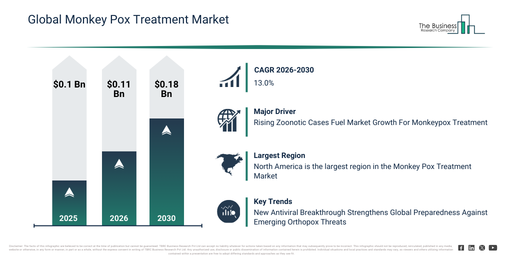
    Monkey Pox Treatment Market Forecast Highlighting Growth From $0.11 Billion To $0.18 Billion

    The market for monkeypox treatments has experienced substantial expansion lately, projected to increase from $0.1 billion in 2025 to $0.11 billion in 2026, reflecting a compound annual growth rate (CAGR) of 13.0%. This recent growth trajectory builds upon factors observed during the historical period, including prior outbreaks in areas where the disease is endemic, insufficient vaccine availability, diagnostic delays stemming from a lack of public awareness, a primary reliance on palliative care measures, and the virus’s global dissemination during the 2022 outbreak.

    The market for monkeypox treatments is poised for substantial expansion in the upcoming years, projected to reach $0.18 billion by 2030 with a compound annual growth rate of 13.0%. This projected growth is fueled by several key factors, including the advancement of antiviral drug pipelines, increased global vaccination efforts, elevated investment in infectious disease research, the utilization of enhanced diagnostic technologies, and the proliferation of government-led preparedness initiatives. During this forecast period, prominent market trends will encompass the development of more targeted antiviral therapies, the implementation of artificial intelligence for predicting outbreaks, the expansion of digital systems for monitoring cases, the greater integration of Internet of Things (IoT) technology in disease surveillance networks, and a growing demand for environmentally sustainable vaccine manufacturing methods.

    Download A Free Sample Report For Comprehensive Market Insights:

    https://www.thebusinessresearchcompany.com/sample.aspx?id=18818&type=smp

    Monkey Pox Treatment Market Growth Factors Supporting Long-Term Expansion

    The monkeypox treatment market is anticipated to experience expansion due to the escalating incidence of zoonotic infections. These infections, which originate in animals and spread to humans via direct contact, contaminated settings, or carriers, are becoming more common. Heightened interaction between people and animals inherently escalates the danger of zoonotic disease transmission. Furthermore, the impacts of climate change exacerbate this peril by broadening the geographical distribution of disease carriers and introducing disease-causing agents into novel territories. Therapies for monkeypox are employed to manage the affliction by directly combating the virus and mitigating the signs and symptoms in affected individuals as well as potentially infected animals. Illustratively, data from the UK Health Security Agency, a governmental body in the United Kingdom, indicated 3,732 confirmed mpox instances in the UK as of August 2024, with an additional 21 cases reported in 2023, bringing the total to 3753. Consequently, the rising rate of zoonotic infections serves as a significant catalyst for the market’s growth in monkeypox treatments.

    Monkey Pox Treatment Market Segmentation And Category Breakdown

    The monkey pox treatment market covered in this report is segmented –

    1) By Treatment Type: Prophylactic Vaccines, Therapeutics

    2) By Dosage Forms: Solid, Liquid, Semi Solid

    3) By Route Of Administration: Oral, Topical, Parenteral

    4) By Distribution Channel: Retail Pharmacies, Hospital Pharmacies, Online Pharmacies

    Subsegments:

    1) By Prophylactic Vaccines: Vaccinia-Based Vaccines, Modified Vaccinia Ankara (MVA) Vaccines

    2) By Therapeutics: Antiviral Agents (Tecovirimat, Brincidofovir), Immune Modulators, Supportive Care Treatments

    Monkey Pox Treatment Market Industry Trends Shaping Future Revenue Growth

    The primary entities within the monkeypox treatment arena are presently engaged in the creation of pioneering treatments, specifically small-molecule antivirals, with the dual aims of bolstering international health readiness and augmenting stockpiling capabilities. These small-molecule antiviral agents function by impeding particular viral proteins, thereby interrupting the propagation of the virus throughout the body, and their capacity for prolonged storage renders them exceptionally suitable for emergency situations. Illustrating this point, in January of 2025, SIGA Technologies, a pharmaceutical firm based in the United States, achieved regulatory approval in Japan for TEPOXX, which consists of 200 mg capsules of tecovirimat, thereby establishing it as that nation’s inaugural antiviral medication designed to combat orthopoxviruses. Evidence from fifteen clinical investigations encompassing more than 800 healthy participants underscores the favorable safety profile of this medication, which also demonstrated measurable pharmacokinetic characteristics within effective dosage parameters and presented significant efficacy in preclinical animal studies, evidenced by reductions in both mortality rates and viral burden. The therapeutic mechanism of this drug involves the inhibition of the VP37 protein found on the exterior of the virus, which in turn impedes the release of the virus from infected cells, thereby facilitating the immune system’s ability to eradicate the infection. To facilitate the establishment of Japan’s strategic national reserve of TEPOXX, SIGA has entered into a collaboration with Japan Biotechno Pharma, appointing them as the exclusive distributor.

    Monkey Pox Treatment Market Competitive Analysis Of Major Industry Participants

    Major companies operating in the monkey pox treatment market are Merck & Co Inc, Sanofi S A, Gilead Sciences Inc, BioNTech SE, Moderna Inc, Novavax Inc, Emergent BioSolutions Inc, Bavarian Nordic A S, SIGA Technologies Inc, Tonix Pharmaceuticals Holding Corp, Chimerix Inc, Emcure Pharmaceuticals Ltd, VBI Vaccines Inc, Pfizer Inc, Regeneron Pharmaceuticals Inc, GeoVax Labs Inc, Zydus Cadila Ltd, Serum Institute of India Pvt Ltd, Biological E Ltd, Dr Reddy’s Laboratories Ltd, Hester Bioscience Ltd, Indian Immunologicals Ltd, Reliance Life Sciences Pvt Ltd, Takeda Pharmaceuticals Co Ltd, KM Biologics Co Ltd, Meridian Bioscience Inc, NanoViricides Inc.

    Access The Complete Monkey Pox Treatment Market Report:

    https://www.thebusinessresearchcompany.com/report/monkey-pox-treatment-global-market-report

    Monkey Pox Treatment Market Largest Region: Which Geography Holds The Highest Market Share?

    North Americawas the largest region in the monkey pox treatment market in 2025. Asia-Pacificis expected to be the fastest-growing region in the forecast period. The regions covered in the monkey pox treatment market report are Asia-Pacific, South East Asia, Western Europe, Eastern Europe, North America, South America, Middle East, Africa.

    Get in touch with us:

    The Business Research Company: https://www.thebusinessresearchcompany.com/

    Americas: +1 310-496-7795

    Asia: +44 7882 955267 & +91 8897263534

    Europe: +44 7882 955267

    Email us at: marketing@tbrc.info

    Follow us on:

    LinkedIn: https://in.linkedin.com/company/the-business-research-company

    YouTube: https://www.youtube.com/channel/UC24_fI0rV8cR5DxlCpgmyFQ

    Global Market Model: https://www.thebusinessresearchcompany.com/global-market-model
  • Monkey Pox Testing Market Expansion Is Reshaping Competitive Dynamics Across The Industry

    Monkey Pox Testing Market Expansion Is Reshaping Competitive Dynamics Across The Industry

    Through market attractiveness analysis, total addressable market evaluation, company benchmarking matrices, interactive Excel dashboards, expanded supply chain intelligence, emerging startup coverage, and detailed product insights, The Business Research Company’s 2026 market reports provide more actionable and strategically valuable research.

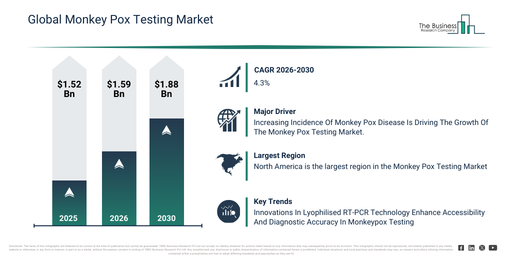
    Monkey Pox Testing Market Revenue Growth Supported By A CAGR Of 1.88% Through 2030

    The market for monkeypox testing has experienced consistent expansion, projecting a rise from $1.52 billion in 2025 to $1.59 billion in 2026, reflecting a compound annual growth rate (CAGR) of 4.4%. This growth trajectory during the preceding period was influenced by factors such as the worldwide dissemination during the 2022 outbreak, constraints in diagnostic capabilities, reliance on centralized laboratory facilities, insufficient availability of test kits, and delays in identifying cases.

    The market for monkeypox testing is projected for consistent expansion over the approaching years, anticipated to reach a value of $1.88 billion by 2030, reflecting a compound annual growth rate of 4.3%. This projected expansion stems from several key drivers, including the scaling up of molecular testing capabilities, a greater embrace of point-of-care diagnostic solutions, amplified government efforts in disease surveillance, increased investment in research endeavors, and advancements in rapid antigen testing technologies. Furthermore, significant trends shaping the market during this forecast period involve the proliferation of sophisticated molecular diagnostic platforms, the integration of artificial intelligence for predicting outbreaks and mapping cases, the growth of internet-of-things enabled remote testing infrastructure, the creation of automated high-throughput testing systems, and a heightened incorporation of cloud-based networks for laboratory data management.

    Download A Free Sample Report For Comprehensive Market Insights:

    https://www.thebusinessresearchcompany.com/sample.aspx?id=18817&type=smp

    Monkey Pox Testing Market Demand Drivers Creating New Revenue Opportunities

    The escalating prevalence of monkeypox is anticipated to serve as a catalyst for the expansion of the monkeypox testing market in the foreseeable future. Monkeypox, a seldom-encountered viral illness, stems from the monkeypox virus, a classification within the orthopoxvirus genus, which shares kinship with the variola virus responsible for smallpox. Factors contributing to the surge in monkeypox occurrences include heightened person-to-person transmission, extensive international travel, and diminished population immunity resulting from the cessation of smallpox vaccination initiatives. The significance of monkeypox testing lies in its capacity to facilitate the early detection of infected individuals, thereby enabling prompt medical intervention and isolation measures crucial for curbing the disease’s propagation. Furthermore, these diagnostic tools are instrumental in monitoring epidemic trajectories and deciphering the virus’s transmission dynamics. As an illustration, World Health Organization (WHO) data from September 2023 indicates that between August 14, 2023, and September 11, 2023, there were 1,131 new confirmed mpox cases reported, accompanied by five additional fatalities linked to the disease. Consequently, the growing incidence of monkeypox is a primary driver behind the growth observed in the monkeypox testing market.

    Monkey Pox Testing Market Segment Outlook: Which Categories Are Expanding The Fastest?

    The monkey pox testing market covered in this report is segmented –

    1) By Technology: Polymerase Chain Reaction (PCR), Lateral Flow Assay (LFA), Other Technologies

    2) By Mode: Laboratory Testing, Point Of Care Testing

    3) By End-Use: Hospitals And Clinics, Diagnostic Laboratories, Other End-Uses

    Subsegments:

    1) By Polymerase Chain Reaction (PCR): Real-Time PCR (qPCR), Reverse Transcription PCR (RT-PCR), Multiplex PCR

    2) By Lateral Flow Assay (LFA): Immunochromatographic Lateral Flow Assays, Rapid Antigen Detection Kits

    3) By Other Technologies: Enzyme-Linked Immunosorbent Assay (ELISA), CRISPR-Based Testing, Serological Tests (Antibody Detection)

    Monkey Pox Testing Market Trends Driving Strategic Industry Expansion

    Companies prominent within the monkeypox testing sector are actively pursuing the creation of sophisticated diagnostic tools, including RT-PCR kits with lyophilized components, to bolster both the ease of access and dependability of testing. The innovation of lyophilized components entails freeze-drying essential reagents, thereby ensuring their stability under normal atmospheric conditions and eliminating the need for refrigerated transport. This advancement diminishes reliance on cold chain infrastructure, facilitates distribution to geographically isolated regions, and upholds the precision and trustworthiness of the tests. A notable instance occurred in August 2024, when Andhra Pradesh MedTech Zone (AMTZ), an Indian entity, collaborated with Transasia Diagnostics to introduce the ErbaMDx Monkeypox RT-PCR Kit. This kit, incorporating lyophilized reagents, gained approval from the Indian Council for Medical Research (ICMR) and secured emergency use authorization from the Central Drugs Standard Control Organisation (CDSCO). It boasts a substantial 12-month shelf life and demonstrates no cross-reactivity with other orthopoxviruses, ensuring highly accurate identification. Its capability for storage and transportation at room temperature renders it particularly well-suited for deployment in remote and resource-constrained environments. Ultimately, this kit contributes to reinforcing India’s readiness for epidemic response by providing accurate, dependable, and readily available monkeypox diagnostic capabilities, even in areas lacking cold chain facilities.

    Monkey Pox Testing Market Key Companies And Competitive Benchmarking

    Major companies operating in the monkey pox testing market are F. Hoffmann-La Roche AG, Thermo Fisher Scientific Inc., Abbott Laboratories, Becton Dickinson and Company, Mayo Clinic Laboratories, Laboratory Corporation of America Holdings, Quest Diagnostics Incorporated, Sonic Healthcare Limited, bioMérieux S.A., Bio-Rad Laboratories Inc., QIAGEN N.V., Cepheid Inc., Aegis Sciences Corporation, Chembio Diagnostics Inc., Flow Health Inc., SeraCare Life Sciences Inc., BioGX Inc., Applied DNA Sciences Inc., CerTest Biotec S.L., Altona Diagnostics GmbH, Creative Biogene Inc., ACON Biotech (Hangzhou) Co Ltd.

    Access The Complete Monkey Pox Testing Market Report:

    https://www.thebusinessresearchcompany.com/report/monkey-pox-testing-global-market-report

    Monkey Pox Testing Market Regional Analysis: Which Region Leads By Revenue?

    North Americawas the largest region in the monkey pox testing market in 2025. Asia-Pacificis expected to be the fastest-growing region in the forecast period. The regions covered in the monkey pox testing market report are Asia-Pacific, South East Asia, Western Europe, Eastern Europe, North America, South America, Middle East, Africa.

    Get in touch with us:

    The Business Research Company: https://www.thebusinessresearchcompany.com/

    Americas: +1 310-496-7795

    Asia: +44 7882 955267 & +91 8897263534

    Europe: +44 7882 955267

    Email us at: marketing@tbrc.info

    Follow us on:

    LinkedIn: https://in.linkedin.com/company/the-business-research-company

    YouTube: https://www.youtube.com/channel/UC24_fI0rV8cR5DxlCpgmyFQ

    Global Market Model: https://www.thebusinessresearchcompany.com/global-market-model

  • Molluscum Contagiosum (MC) Treatment Market Forecast Reveals Where Future Industry Value Will Be Created

    Molluscum Contagiosum (MC) Treatment Market Forecast Reveals Where Future Industry Value Will Be Created

    Delivering more actionable and strategically valuable research, The Business Research Company’s 2026 market reports feature market attractiveness analysis, total addressable market evaluation, company benchmarking matrices, interactive Excel dashboards, expanded supply chain intelligence, emerging startup coverage, and detailed product insights.

    Molluscum Contagiosum (MC) Treatment Market Value Expansion And Long-Term Growth Outlook

    The market for molluscum contagiosum treatments has experienced robust expansion. Projections indicate a rise from $3.1 billion in 2025 to $3.28 billion in 2026, reflecting a compound annual growth rate of 5.8%. Historically, this growth has been influenced by several factors, including a rise in childhood cases, a general lack of awareness regarding available treatments, a tendency for the infection to resolve on its own, challenges in accessing dermatological services, and a gradual uptake of prescription-based therapies.

    The market for molluscum contagiosum (MC) therapies is poised for significant expansion over the upcoming years, projecting a valuation of $4.07 billion by 2030, driven by a compound annual growth rate of 5.6%. This anticipated growth trajectory is fueled by several key factors, including an escalating demand for potent topical treatments, the proliferation of dermatology practices, a discernible shift towards less invasive therapeutic approaches, continuous advancements in product development, and a growing inclination towards self-administered treatments at home. Furthermore, the forecast period is characterized by notable trends such as the emergence of highly targeted dermatological treatments, the incorporation of artificial intelligence for diagnostic assistance, the increasing utilization of digital platforms for treatment oversight, augmented automation within the manufacturing processes of dermatological products, and a broader acceptance of telemedicine and remote patient care models.

    Download A Free Sample Report For Comprehensive Market Insights:

    https://www.thebusinessresearchcompany.com/sample.aspx?id=21225&type=smp

    Molluscum Contagiosum (MC) Treatment Market Expansion Supported By Key Demand Factors

    The increasing preference for less invasive medical interventions is anticipated to be a significant catalyst for the expansion of the molluscum contagiosum treatment market. Procedures categorized as minimally invasive involve minor bodily disruption, often requiring only small cuts or no incisions at all. This heightened demand stems from the advantages these methods offer, including shorter recovery periods, reduced surgical complications, and improved patient results when contrasted with conventional surgical approaches. In the context of molluscum contagiosum, treatments leveraging these minimally invasive techniques, such as cryotherapy and laser therapy, are employed for efficient lesion removal, quicker healing, and minimized scarring. Furthermore, these less invasive options typically necessitate fewer patient visits and are particularly effective for addressing the extensive nature of molluscum contagiosum lesions. Illustratively, the American Academy of Facial Plastic and Reconstructive Surgery, a US non-profit, reported in February 2024 that minimally invasive procedures constituted 83% of all medical interventions in 2023, totaling 35 million procedures, with traditional surgical methods accounting for the balance of 17%. Consequently, the growing popularity of minimally invasive treatments is fueling the growth of the market for molluscum contagiosum therapies.

    Molluscum Contagiosum (MC) Treatment Market Segment Landscape: Which Areas Lead Market Development?

    The molluscum contagiosum (mc) treatment market covered in this report is segmented –

    1) By Type: Molluscum Contagiosum Virus (MCV) -1, Molluscum Contagiosum Virus (MCV) -2, Molluscum Contagiosum Virus (MCV) -3, Molluscum Contagiosum Virus (MCV) -4

    2) By Treatment Type: Topical Therapy, Immune-Modulators And Procedural Treatments

    3) By Distribution Channel: Hospital Pharmacies, Retail Pharmacies, Online Pharmacies Or E‑commerce

    4) By End User: Hospitals, Dermatology Clinics, Homecare Settings, Other End Users

    Molluscum Contagiosum (MC) Treatment Market Growth Trends Influencing Competitive Dynamics

    Within the molluscum contagiosum (MC) treatment arena, key players are channeling efforts into creating novel therapeutic solutions, specifically topical gels, aiming to boost effectiveness, increase patient adherence, and offer non-intrusive treatment modalities. A topical gel constitutes a semi-solid formulation applied directly to the skin or mucosal surfaces for targeted medicinal benefits. As an illustration, in April of 2024, Ligand Pharmaceuticals Incorporated, a biopharmaceutical firm headquartered in the United States, established Pelthos Therapeutics to bring Zelsuvmi (brazier) topical gel, a 10.3% concentration, to market; this represents the inaugural at-home therapy for molluscum contagiosum in individuals aged one year and above that has received approval from the Food and Drug Administration. This nitric oxide-releasing gel functions by impeding viral replication, ultimately resulting in the elimination of the skin lesions. Zelsuvmi presents itself as a method of treatment that bypasses the need for invasive procedures typically performed in a clinical setting, such as cryotherapy or curettage, thereby providing a readily accessible and user-friendly choice for patients from one year of age.

    Molluscum Contagiosum (MC) Treatment Market Industry Leaders And Market Competition

    Major companies operating in the molluscum contagiosum (mc) treatment market are Verrica Pharmaceuticals, Novan Inc., Veloce BioPharma LLC, Polaryx Therapeutics, Aclaris Therapeutics Inc., MedCara Pharmaceuticals LLC, Pelthos Therapeutics Inc., Veradermics, Arcutis Biotherapeutics, Krystal Biotech, Connect Biopharma, AbbVie Inc., Pfizer Inc., Johnson & Johnson, Galderma S.A., LEO Pharma, Amgen, DermBiont, Almirall, Tyris Therapeutics, Abeona Therapeutics, Fibrocell Science, Amryt Pharma, Azitra

    Access The Complete Molluscum Contagiosum (MC) Treatment Market Report:

    https://www.thebusinessresearchcompany.com/report/molluscum-contagiosum-mc-treatment-global-market-report

    Molluscum Contagiosum (MC) Treatment Market Geographic Distribution And Regional Opportunities

    North Americawas the largest region in the molluscum contagiosum (MC) treatment market in 2025. Asia-Pacificis expected to be the fastest-growing region in the forecast period. The regions covered in the molluscum contagiosum (mc) treatment market report are Asia-Pacific, South East Asia, Western Europe, Eastern Europe, North America, South America, Middle East, Africa.

    Get in touch with us:

    The Business Research Company: https://www.thebusinessresearchcompany.com/

    Americas: +1 310-496-7795

    Asia: +44 7882 955267 & +91 8897263534

    Europe: +44 7882 955267

    Email us at: marketing@tbrc.info

    Follow us on:

    LinkedIn: https://in.linkedin.com/company/the-business-research-company

    YouTube: https://www.youtube.com/channel/UC24_fI0rV8cR5DxlCpgmyFQ

    Global Market Model: https://www.thebusinessresearchcompany.com/global-market-model