Month: June 2026

  • Microbiome Sequencing Service Market Expansion Is Reshaping Competitive Dynamics Across The Industry

    Microbiome Sequencing Service Market Expansion Is Reshaping Competitive Dynamics Across The Industry

    Enhanced with market attractiveness analysis, total addressable market evaluation, company benchmarking matrices, interactive Excel dashboards, expanded supply chain intelligence, emerging startup coverage, and detailed product insights, The Business Research Company’s 2026 market reports deliver more actionable and strategically valuable research.

    Microbiome Sequencing Service Market Expansion From $2.84 Billion In 2026 To $5.29 Billion In 2030

    The market for microbiome sequencing services has experienced substantial expansion lately. Projections indicate a growth spurt from $2.43 billion in 2025 to $2.84 billion in 2026, reflecting a compound annual growth rate (CAGR) of 17.1%. This upward trend historically stems from augmented microbiome research endeavors, elevated financial backing for academic investigations, heightened focus on intestinal and dermal microbial communities, the advent of advanced sequencing technologies, and enhanced partnerships between educational institutions and commercial entities.

    The market for microbiome sequencing services is poised for significant expansion over the coming years, with projections indicating a surge to $5.3 billion by 2030, reflecting a compound annual growth rate of 16.8%. This projected growth trajectory is underpinned by several key factors, including the escalating integration of microbiome-based diagnostic tools in clinical settings, a sustained increase in investment directed towards microbiome therapeutic development, the broadening scope of personalized nutrition investigations, the burgeoning application of artificial intelligence in microbial data analysis, and a heightened requirement for comprehensive microbiome studies encompassing large populations. Within the forecast period, prominent trends expected to shape the market landscape encompass a greater demand for high-throughput sequencing capabilities, increased utilization of both shotgun and amplicon sequencing methodologies, a more extensive incorporation of sophisticated bioinformatics processing workflows, the widening array of applications for clinical microbiome research, and a strengthened emphasis on characterizing microbial functionality.

    Download A Free Sample Report For Comprehensive Market Insights:

    https://www.thebusinessresearchcompany.com/sample.aspx?id=28270&type=smp

    Microbiome Sequencing Service Market Growth Factors: Which Forces Are Supporting Market Expansion?

    An increasing prevalence of gastrointestinal afflictions is anticipated to be a key driver for the expansion of the microbiome sequencing service market. These gastrointestinal conditions, affecting the digestive system which encompasses the stomach, intestines, and related organs like the liver, pancreas, and gallbladder, are on the rise due to shifts in lifestyle and dietary patterns. Factors such as increased consumption of processed foods and inadequate fiber intake contribute to an imbalance in the gut’s microbial community. Microbiome sequencing services play a crucial role in managing these gut-related ailments by providing comprehensive information about the composition of gut microbes, thus proving invaluable for the diagnosis and ongoing monitoring of digestive system disorders. These services facilitate the identification of microbial dysbiosis, paving the way for more precise therapeutic strategies, enhanced personalized treatment plans, and ultimately, better management of overall gut health. To illustrate, data from the UK Health Security Agency in June 2025 revealed a 27.0% surge in laboratory reports for Campylobacter, escalating from 96.1 to 122.0 cases per 100,000 individuals between 2022 and 2024 in the UK, underscoring the growing impact of gut-related health issues and consequently fueling the growth trajectory of the microbiome sequencing service market.

    Microbiome Sequencing Service Market Segmentation Trends And Revenue Drivers

    The microbiome sequencing service market covered in this report is segmented –

    1) By Service: Sample Preparation, Sequencing And Library Preparation, Data Analysis

    2) By Technology: Sequencing By Litigation (SBL), Sequencing By Synthesis (SBS), Short Gun Sequencing, Targeted Gene Sequencing, RNA Sequencing, Other Technologies

    3) By Application: Autoimmune Disorder, Cancer, Gastrointestinal Disorders, Other Applications

    4) By End-User: Pharmaceutical And Biotechnology Companies, Academic Research Institutes, Other End-Users

    Subsegments:

    1) By Sample Preparation: Deoxyribonucleic Acid (DNA) Extraction, Ribonucleic Acid (RNA) Extraction, Protein Extraction, Cell Lysis, Library Construction

    2) By Sequencing And Library Preparation: Whole Genome Sequencing, Metagenomic Sequencing, Amplicon Sequencing, Shotgun Sequencing, Targeted Sequencing

    3) By Data Analysis: Taxonomic Profiling, Functional Profiling, Comparative Analysis, Statistical Analysis, Pathway Analysis

    Microbiome Sequencing Service Market Industry Trends: What Changes Are Reshaping Demand?

    Leading entities within the microbiome sequencing service sector are prioritizing the creation of sophisticated offerings, exemplified by automated metagenomics sequencing solutions, aimed at enhancing the effectiveness, precision, and expandability of microbiome investigations and analyses. Such an automated metagenomics sequencing solution represents a complete platform designed for the sequencing and examination of microbial populations, requiring little manual involvement, thereby guaranteeing superior accuracy, consistency, and adaptable processing capabilities. As an illustration, MGI Tech Co. Ltd., a biotechnology firm headquartered in China, introduced its Human Microbiome Metagenomics Sequencing Package in July 2024. This offering provides a seamless, end-to-end workflow that integrates automated sample preparation, nucleic acid isolation, library construction, sequencing, and subsequent data interpretation, facilitating high-volume and economical microbiome research. The system’s proven effectiveness across numerous human fecal samples underscores its reliability and precision, setting a benchmark for extensive human microbiome research endeavors.

    Microbiome Sequencing Service Market Industry Leaders: Which Organizations Are Driving Competition?

    Major companies operating in the microbiome sequencing service market are Eurofins Scientific LLC, Illumina Inc., Charles River Laboratories, QIAGEN N.V., Mérieux NutriSciences Corporation, OraSure Technologies Inc., Zifo RnD Solutions, Novogene Co. Ltd., Oxford Nanopore Technologies Plc, Macrogen Inc., Zymo Research Corporation, CD Genomics, Molzym GmbH & Co. KG (Gradian Diagnostics), Baseclear BV, Psomagen Inc., Mapmygenome, Rancho Biosciences LLC, Boster Biological Technology Ltd., Clinical Microbiomics, Microba Life Sciences Limited

    Access The Complete Microbiome Sequencing Service Market Report:

    https://www.thebusinessresearchcompany.com/report/microbiome-sequencing-service-global-market-report

    Microbiome Sequencing Service Market Largest Region: Which Geography Holds The Highest Market Share?

    North Americawas the largest region in the microbiome sequencing service market in 2025. Asia-Pacific is expected to be the fastest-growing region in the forecast period. The regions covered in the microbiome sequencing service market report are Asia-Pacific, South East Asia, Western Europe, Eastern Europe, North America, South America, Middle East, Africa.

    Get in touch with us:

    The Business Research Company: https://www.thebusinessresearchcompany.com/

    Americas: +1 310-496-7795

    Asia: +44 7882 955267 & +91 8897263534

    Europe: +44 7882 955267

    Email us at: marketing@tbrc.info

    Follow us on:

    LinkedIn: https://in.linkedin.com/company/the-business-research-company

    YouTube: https://www.youtube.com/channel/UC24_fI0rV8cR5DxlCpgmyFQ

    Global Market Model: https://www.thebusinessresearchcompany.com/global-market-model

  • Microbiology And Bacterial Culture Media Market Forecast Reveals Where Future Industry Value Will Be Created

    Microbiology And Bacterial Culture Media Market Forecast Reveals Where Future Industry Value Will Be Created

    Through market attractiveness analysis, total addressable market evaluation, company benchmarking matrices, interactive Excel dashboards, expanded supply chain intelligence, emerging startup coverage, and detailed product insights, The Business Research Company’s 2026 market reports provide more actionable and strategically valuable research.

    Microbiology And Bacterial Culture Media Market Forecast Highlighting Growth From $6.13 Billion To $8.84 Billion

    The market for microbiology and bacterial culture media has experienced robust expansion, projected to increase from $5.59 billion in 2025 to $6.14 billion in 2026, reflecting a compound annual growth rate of 9.8%. This historical growth trajectory is underpinned by several key factors, including the burgeoning pharmaceutical manufacturing sector, a surge in clinical diagnostic testing, heightened demands for food and water safety assessments, the increasing integration of microbiology within research institutions, and the widespread availability of standardized culture media solutions.

    The market for microbiology and bacterial culture media is projected for substantial expansion over the coming years, anticipated to reach $8.85 billion by 2030, fueled by a compound annual growth rate of 9.6%. This upward trajectory in the forecast period is propelled by several key factors: the escalating adoption of swift microbial identification techniques, augmented financial commitments towards quality assurance in the biopharmaceutical sector, the broadening scope of microbiological examinations in developing economies, a greater need for disposable culture media options, and heightened emphasis on automating laboratory processes. Within this same timeframe, notable market trends encompass a surging requirement for chromogenic and selective media formulations, increased utilization of pre-prepared culture media, a growing inclination towards tailored specialty media compositions, the wider implementation of automated microbiological systems, and a more pronounced concentration on preventing contamination.

    Download A Free Sample Report For Comprehensive Market Insights:

    https://www.thebusinessresearchcompany.com/sample.aspx?id=27344&type=smp

    Microbiology And Bacterial Culture Media Market Demand Drivers: What Is Fueling Industry Growth?

    The increasing incidence of infectious diseases is poised to be a significant catalyst for the expansion of the microbiology and bacterial culture media market in the foreseeable future. Infectious diseases, characterized as ailments brought about by pathogenic microorganisms transmissible between individuals, are seeing a surge primarily attributed to escalating antibiotic resistance. This heightened resistance diminishes the efficacy of conventional therapies, consequently enabling infections to endure longer and disseminate more readily. Microbiology and culture media play a crucial role in identifying and fostering the growth of these detrimental microbes, thereby facilitating accurate diagnostic procedures for infectious diseases and guiding the selection of appropriate treatments. As an illustration, data from the Centers for Disease Control and Prevention in March 2024 indicated an increase in tuberculosis cases within the United States, climbing from 8,320 in 2022 to 9,615 in 2023, signifying an augmentation of 1,295 cases. Consequently, the growing prevalence of infectious diseases is directly fueling the advancement of the market for microbiology and bacterial culture media.

    Microbiology And Bacterial Culture Media Market Segment Analysis Highlighting Growth Areas

    The microbiology and bacterial culture media market covered in this report is segmented –

    1) By Product Type: Dehydrated Culture Media, Prepared (Ready-To-Use) Culture Media, Chromogenic And Selective Culture Media, Enriched And Enrichment Media, Other Product Types

    2) By Media Composition: Complex Media, Defined Media, Selective Media, Differential Media, Transport Media

    3) By Formulation: Bulk Packaged Media, Single-Use Media Formats, Custom Or Specialty Formulated Media

    4) By Application: Pharmaceutical And Biopharmaceutical Production, Diagnostics, Food And Water Testing, Bioenergy And Agricultural Research, Cosmetics And Personal Care Applications, Other Applications

    Subsegments:

    1) By Dehydrated Culture Media: Powdered Media, Agar Media, Broth Media

    2) By Prepared (Ready-To-Use) Culture Media: Plates, Slants, Tubes, Bottles

    3) By Chromogenic And Selective Culture Media: Chromogenic Media, Selective Media

    4) By Enriched And Enrichment Media: Enriched Media, Enrichment Broth

    5) By Other Product Types: Synthetic Media, Minimal Media, Transport Media

    Microbiology And Bacterial Culture Media Market Innovation Trends: Which Developments Are Transforming The Industry?

    In the microbiology and bacterial culture media sector, leading enterprises are prioritizing the creation of sophisticated solutions, specifically pre-prepared culture media, to facilitate demanding diagnostic and research processes that require high throughput. These convenient media formulations, which are sterile and already mixed for microbial cultivation, eliminate the necessity of manual preparation. This not only conserves valuable time but also significantly reduces the likelihood of contamination, thereby guaranteeing reliable outcomes in laboratory settings. As an illustration, in April 2025, AnalytiChem, a German entity specializing in laboratory apparatus, reagents, and consumables, unveiled Redipor, a line of ready-to-use culture media. Engineered to adhere to the rigorous specifications and regulatory mandates of microbiologists across diverse life science fields including pharmaceuticals, food and beverage, environmental monitoring, and healthcare, Redipor offers an extensive selection of media formats and packaging choices. This assortment encompasses plates, bottles, tubes, vials, chromogenic and irradiated media, as well as universal operator broth transfer kits, with the capability for tailored modifications to satisfy unique client requirements and regulatory frameworks.

    Microbiology And Bacterial Culture Media Market Leading Companies: Who Holds Significant Market Presence?

    Major companies operating in the microbiology and bacterial culture media market are Thermo Fisher Scientific Inc., Merck KGaA, Becton Dickinson and Company, Nissui Pharmaceutical Co. Ltd., bioMérieux SA, Bio-Rad Laboratories Inc., Neogen Corporation, Eiken Chemical Co. Ltd., Hardy Diagnostics, Teknova Inc., Microbiologics Inc., HiMedia Laboratories Pvt. Ltd., Scharlab S.L., Solabia Group, Conda Laboratories, Biotecnica Instruments S.p.A., Liofilchem S.r.l., Carl Roth GmbH + Co. KG, Central Drug House Pvt. Ltd., Oxoid Limited, Titan Biotech Ltd., Sisco Research Laboratories Pvt. Ltd.

    Access The Complete Microbiology And Bacterial Culture Media Market Report:

    https://www.thebusinessresearchcompany.com/report/microbiology-and-bacterial-culture-media-global-market-report

    Microbiology And Bacterial Culture Media Market Regional Analysis: Which Region Leads By Revenue?

    North Americawas the largest region in the microbiology and bacterial culture media market in 2025. Asia-Pacificis expected to be the fastest-growing region in the forecast period. The regions covered in the microbiology and bacterial culture media market report are Asia-Pacific, South East Asia, Western Europe, Eastern Europe, North America, South America, Middle East, Africa.

    Get in touch with us:

    The Business Research Company: https://www.thebusinessresearchcompany.com/

    Americas: +1 310-496-7795

    Asia: +44 7882 955267 & +91 8897263534

    Europe: +44 7882 955267

    Email us at: marketing@tbrc.info

    Follow us on:

    LinkedIn: https://in.linkedin.com/company/the-business-research-company

    YouTube: https://www.youtube.com/channel/UC24_fI0rV8cR5DxlCpgmyFQ

    Global Market Model: https://www.thebusinessresearchcompany.com/global-market-model
  • Microbiology And Bacterial Culture For Industrial Testing Market Growth Through 2030 Creates New Strategic Opportunities

    Microbiology And Bacterial Culture For Industrial Testing Market Growth Through 2030 Creates New Strategic Opportunities

    Delivering more actionable and strategically valuable research, The Business Research Company’s 2026 market reports feature market attractiveness analysis, total addressable market evaluation, company benchmarking matrices, interactive Excel dashboards, expanded supply chain intelligence, emerging startup coverage, and detailed product insights.

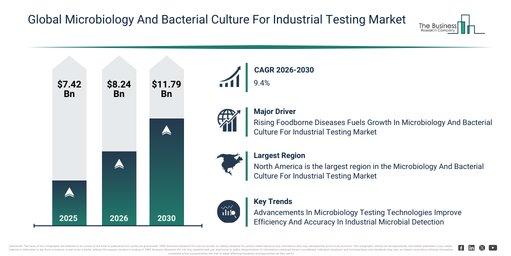
    Microbiology And Bacterial Culture For Industrial Testing Market Revenue Growth Supported By A CAGR Of 11.79% Through 2030

    The market for microbiology and bacterial culture in industrial testing has seen significant expansion recently. Projected to increase from $7.42 billion in 2025 to $8.24 billion in 2026, this sector is experiencing a compound annual growth rate (CAGR) of 11.1%. Factors contributing to this upward trend include a greater incidence of food contamination, heightened demand for regulatory microbiological analysis, the expansion of industrial fermentation, increased pharmaceutical quality assurance testing, and the continued use of traditional culture-based techniques.

    The industrial microbiology and bacterial culture testing sector is poised for considerable expansion over the coming years, with projections indicating a market valuation of $11.79 billion by 2030, spurred by a compound annual growth rate of 9.4%. This upward trajectory is largely fueled by several key factors: an increasing requirement for swift microbial analyses, the proliferation of automated culture instrumentation, a growing emphasis on contamination-free production environments, the burgeoning sectors of bioenergy and agricultural biotechnology, and augmented investments in sophisticated microbial diagnostic tools. Notable developments anticipated during this forecast period encompass the integration of advanced genomic profiling within industrial microbiology, the adoption of cloud-based systems for managing microbial data, the streamlining of culture and testing processes through automation, the utilization of AI for improved microbial identification, and the deployment of IoT-enabled systems for environmental monitoring.

    Download A Free Sample Report For Comprehensive Market Insights:

    https://www.thebusinessresearchcompany.com/sample.aspx?id=15607&type=smp

    Microbiology And Bacterial Culture For Industrial Testing Market Growth Drivers: What Factors Are Accelerating Expansion?

    An increase in foodborne illnesses is anticipated to be a key driver for the expansion of the microbiology and bacterial culture market used in industrial testing. These illnesses stem from the consumption of food or drinks tainted with harmful microbes, toxins, or chemicals. Several elements contribute to the growing number of foodborne disease cases, such as shifts in how food is produced, transported, and eaten, the worldwide nature of food supply networks, insufficient food safety protocols, the spread of antibiotic resistance, the effects of climate change on agriculture, and a greater preference for foods that carry higher risks. Microbiology and bacterial culture play a crucial role in the industrial assessment of foodborne diseases by enabling the identification and detection of disease-causing agents, thereby safeguarding food quality and averting widespread outbreaks through stringent quality assurance. Illustrating this trend, data from the UK Health Security Agency revealed that in 2022, England and Wales recorded 167 instances of listeriosis, a serious infection contracted from consuming food contaminated with Listeria monocytogenes, a slight increase from the 160 cases documented in 2021. Consequently, the escalating rates of foodborne illnesses are fueling the growth of the market for microbiology and bacterial culture in industrial testing.

    Microbiology And Bacterial Culture For Industrial Testing Market Segment Performance And Strategic Opportunities

    The microbiology and bacterial culture for industrial testing market covered in this report is segmented –

    1) By Consumable: Media, Reagents, Sera

    2) By Application: Food And Water Testing, Bioenergy And Agricultural Research, Other Applications

    3) By End User: Industrial Laboratories, Research Laboratories, Food Testing Laboratories, Diagnostic Laboratories, Other End Users

    Subsegments:

    1) By Media: Agar Plates, Broth Media, Selective Media, Differential Media, Transport Media

    2) By Reagents: Staining Reagents (Gram Stain, Acid-Fast Stain), Biochemical Reagents, PCR Reagents, Enzyme-Based Reagents, Chromogenic Reagents

    3) By Sera: Blood Serum, Animal Sera (Bovine Serum), Human Sera, Culture Sera

    Microbiology And Bacterial Culture For Industrial Testing Market Trends: What Is Shaping Future Industry Growth?

    In the industrial microbiology and bacterial culture testing sector, leading enterprises are prioritizing the creation of advanced, pre-prepared culture media plates. These innovations aim to boost the effectiveness of microbial detection, simplify laboratory procedures, and elevate the precision of contamination surveillance within diverse industrial applications. The convenience of ready-to-use plates streamlines the process of quantifying and identifying microbial populations, thereby cutting down on preparation labor and bolstering laboratory safety protocols. A prime illustration of this trend is the launch in February 2023 by Hardy Diagnostics, a prominent US developer of microbiology solutions, of CompactDry TCR. This product is a pre-made, dehydrated culture medium plate engineered for the swift identification and counting of microbes, yielding total aerobic plate counts within a mere 24 hours. It has obtained AOAC PTM certification and boasts a unique, self-spreading format that facilitates straightforward colony observation, improves operator safety, and streamlines the overall microbial testing workflow.

    Microbiology And Bacterial Culture For Industrial Testing Market Key Players: Which Companies Shape Industry Competition?

    Major companies operating in the microbiology and bacterial culture for industrial testing market are Thermo Fisher Scientific Inc., 3M Company, Danaher Corporation, Merck KGaA, Becton Dickinson and Company BD, Avantor Inc., bioMérieux SA, IDEXX Laboratories Inc., Bio-Rad Laboratories Inc., Bruker Microbiology and Diagnostics, Eiken Chemical Co Ltd, Hain Lifescience GmbH, Neogen Corporation, Hardy Diagnostics, LaMotte Company, Himedia Laboratories Pvt Ltd, Titan Biotech Limited, Serosep Ltd, Sartorius AG, Liofilchem Srl, R‑Biopharm AG, MP Biomedicals LLC, CONDALAB, Alpha Teknova Inc.

    Access The Complete Microbiology And Bacterial Culture For Industrial Testing Market Report:

    https://www.thebusinessresearchcompany.com/report/microbiology-and-bacterial-culture-for-industrial-testing-global-market-report

    Microbiology And Bacterial Culture For Industrial Testing Market Geographic Distribution And Regional Opportunities

    North Americawas the largest region in the microbiology and bacterial culture for industrial testing market in 2025. The regions covered in the microbiology and bacterial culture for industrial testing market report are Asia-Pacific, South East Asia, Western Europe, Eastern Europe, North America, South America, Middle East, Africa.

    Get in touch with us:

    The Business Research Company: https://www.thebusinessresearchcompany.com/

    Americas: +1 310-496-7795

    Asia: +44 7882 955267 & +91 8897263534

    Europe: +44 7882 955267

    Email us at: marketing@tbrc.info

    Follow us on:

    LinkedIn: https://in.linkedin.com/company/the-business-research-company

    YouTube: https://www.youtube.com/channel/UC24_fI0rV8cR5DxlCpgmyFQ

    Global Market Model: https://www.thebusinessresearchcompany.com/global-market-model

  • Microbial Identification Methods Market Size Projected To Increase From $5.9 Billion To $7.67 Billion During The Forecast Period

    Microbial Identification Methods Market Size Projected To Increase From $5.9 Billion To $7.67 Billion During The Forecast Period

    Enhanced with market attractiveness analysis, total addressable market evaluation, company benchmarking matrices, interactive Excel dashboards, expanded supply chain intelligence, emerging startup coverage, and detailed product insights, The Business Research Company’s 2026 market reports deliver more actionable and strategically valuable research.

    Microbial Identification Methods Market Value Expansion And Long-Term Growth Outlook

    The market for microbial identification methods has experienced robust expansion recently, projected to increase from $5.49 billion in 2025 to $5.91 billion in 2026, reflecting a compound annual growth rate of 7.7%. Historical growth drivers for this sector include a rise in infectious disease occurrences, the continued utilization of culture-based identification techniques, an increase in food safety analyses, heightened regulatory attention on contamination management, and the broadening scope of clinical diagnostic microbiology.

    The market for microbial identification methods is poised for significant expansion in the upcoming years, with projections indicating a rise to $7.67 billion by 2030, driven by a compound annual growth rate of 6.8%. This projected growth is fueled by several key factors including the increasing uptake of genomic sequencing tests, a growing need for automation within identification processes, advancements in rapid microbial testing technologies, the ongoing integration of digital laboratory infrastructure, and augmented investments in the field of precision microbiology. Anticipated trends shaping this market during the forecast period encompass the incorporation of genomic sequencing into microbial identification practices, the utilization of cloud-based platforms for microbial data analysis, the application of artificial intelligence for microbial classification, the deployment of automated identification systems in industrial settings, and the implementation of IoT-enabled solutions for contamination monitoring.

    Download A Free Sample Report For Comprehensive Market Insights:

    https://www.thebusinessresearchcompany.com/sample.aspx?id=16118&type=smp

    Microbial Identification Methods Market Growth Factors Supporting Long-Term Expansion

    The expanding landscape of infectious diseases is anticipated to be a significant catalyst for the advancement of the microbial identification methods market. These diseases, stemming from the invasion of the body by detrimental agents like viruses, bacteria, fungi, and parasites, encompass conditions such as HIV/AIDS, tuberculosis, and malaria, among others. Factors contributing to the heightened incidence of these illnesses include the rise of antimicrobial resistance, shifts in climate patterns, and the growth of global populations. Microbial identification techniques play an indispensable role in the management of infectious diseases, offering vital data on the causative pathogens to facilitate accurate diagnosis, effective treatment, and proactive prevention strategies, thereby empowering medical practitioners in their clinical decision-making. As an illustration, data from the Government of Canada indicated a notable increase in rabies sample submissions, rising from 135 in October 2022 to 159 in November 2022, underscoring the ongoing impact of infectious agents and consequently bolstering the demand within the microbial identification methods sector.

    Microbial Identification Methods Market Segment Landscape And Growth Potential

    The microbial identification methods market covered in this report is segmented –

    1) By Method: Genotypic, Phenotypic, Proteotypic

    2) By Type: Bacterial Identification System, Microbial Enumeration System, Bacterial Resistance Identification Systems, Microbiology Analyzer, Other Types

    3) By End User: Pharmaceutical And Biotechnology Companies, Hospitals And Diagnostic Laboratories, Food Testing Laboratories, Other End-Users

    Subsegments:

    1) By Genotypic: Polymerase Chain Reaction (PCR), 16S rRNA Sequencing, DNA Microarrays, Next-Generation Sequencing (NGS), Whole Genome Sequencing (WGS), Ribotyping, Fluorescence In Situ Hybridization (FISH), Random Amplified Polymorphic DNA (RAPD) Analysis

    2) By Phenotypic: Culture-Based Methods, Biochemical Testing, Microscopic Examination, Gram Staining, Antibiotic Susceptibility Testing (AST), Growth Pattern Identification, Colony Morphology Characterization

    3) By Proteotypic: Mass Spectrometry (MALDI-TOF MS), Western Blotting, Protein Profiling, Immunoassays (ELISA), Two-Dimensional Gel Electrophoresis

    Microbial Identification Methods Market Industry Trends Shaping Future Revenue Growth

    Leading players within the microbial identification methods market are concentrating on creating novel applications, specifically in vitro diagnostic (IVD) solutions for mycobacteria and fungi, as a strategy to enhance their market standing. These mycobacteria and fungi IVD solutions encompass various products and technologies intended for the detection, identification, and profiling of mycobacterial and fungal disease agents found in patient samples. To illustrate, in April 2023, Bruker Corporation, a prominent US-based entity specializing in scientific instruments for molecular and materials investigation, introduced its MALDI Biotyper IVD software, representing a groundbreaking mycobacteria and fungi IVD offering. This new solution is distinguished by its heightened precision and accelerated pace in microbial identification, utilizing MALDI-TOF mass spectrometry technology. The system facilitates swift identification of mycobacteria and fungi from cultivated samples in a matter of minutes, dramatically shortening the processing duration compared to conventional approaches. Furthermore, these advanced solutions incorporate augmented databases and sophisticated software algorithms, leading to superior specificity and sensitivity, thereby facilitating the accurate identification of an increased variety of mycobacterial and fungal species.

    Microbial Identification Methods Market Competitive Landscape: Who Are The Leading Companies?

    Major companies operating in the microbial identification methods market are Merck KGaA, Thermo Fisher Scientific Inc., Abbott Laboratories, Becton Dickinson and Company, GE Healthcare, Avantor Inc., Eurofins Scientific SE, Lonza Group AG, Sartorius AG, Charles River Laboratories International Inc., bioMerieux SA, Shimadzu Corporation, Waters Corporation, Bio-Rad Laboratories Inc., Bruker Corporation, Qiagen N.V., Beckman Coulter Inc., HiMedia Laboratories, Hardy Diagnostics, LuminUltra Technologies Ltd., Biolog Inc.

    Access The Complete Microbial Identification Methods Market Report:

    https://www.thebusinessresearchcompany.com/report/microbial-identification-methods-global-market-report

    Microbial Identification Methods Market Largest Region By Revenue And Market Share

    North Americawas the largest region in the microbial identification methods market in 2025. The regions covered in the microbial identification methods market report are Asia-Pacific, South East Asia, Western Europe, Eastern Europe, North America, South America, Middle East, Africa.

    Get in touch with us:

    The Business Research Company: https://www.thebusinessresearchcompany.com/

    Americas: +1 310-496-7795

    Asia: +44 7882 955267 & +91 8897263534

    Europe: +44 7882 955267

    Email us at: marketing@tbrc.info

    Follow us on:

    LinkedIn: https://in.linkedin.com/company/the-business-research-company

    YouTube: https://www.youtube.com/channel/UC24_fI0rV8cR5DxlCpgmyFQ

    Global Market Model: https://www.thebusinessresearchcompany.com/global-market-model
  • Microbial Identification Market Growth Outlook Reveals A CAGR Of 13% And A Market Value Of $12.09 Billion By 2030

    Microbial Identification Market Growth Outlook Reveals A CAGR Of 13% And A Market Value Of $12.09 Billion By 2030

    Through market attractiveness analysis, total addressable market evaluation, company benchmarking matrices, interactive Excel dashboards, expanded supply chain intelligence, emerging startup coverage, and detailed product insights, The Business Research Company’s 2026 market reports provide more actionable and strategically valuable research.

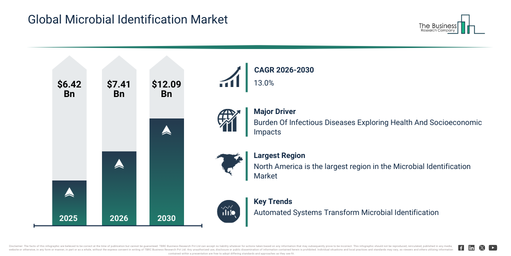
    Microbial Identification Market Expected To Reach $12.09 Billion By 2030 At 13% CAGR

    The global microbial identification market has experienced substantial expansion recently, projected to climb from $6.42 billion in 2025 to $7.41 billion in 2026, reflecting a compound annual growth rate of 15.4%. This past growth trajectory was fueled by several key factors, including a surge in infectious disease occurrences, a continued dependence on traditional culture-based diagnostic methods, the broader implementation of food and water safety initiatives, escalating demands for regulatory adherence, and an increasing utilization of clinical microbiology testing services.

    The microbial identification sector is poised for substantial expansion in the immediate future, with projections indicating a market valuation of $12.09 billion by the year 2030, driven by a compound annual growth rate of 13.0%. This projected surge throughout the forecast period is largely attributable to several key factors: ongoing innovations in sequencing technologies, a heightened need for expedited diagnostic solutions, increasing automation within laboratory procedures, the growing incorporation of digital platforms into microbial analysis, and the broadening scope of applications within pharmaceutical quality assurance. Furthermore, significant trends anticipated during this timeframe include the incorporation of genomic sequencing into microbial identification processes, the utilization of cloud-based systems for managing microbial data, the application of artificial intelligence for assisting in the classification of microorganisms, the deployment of automated identification systems in industrial testing environments, and the leveraging of the Internet of Things (IoT) for enhanced microbial detection monitoring.

    Download A Free Sample Report For Comprehensive Market Insights:

    https://www.thebusinessresearchcompany.com/sample.aspx?id=15606&type=smp

    Microbial Identification Market Demand Drivers Creating New Revenue Opportunities

    The increasing incidence of infections is anticipated to stimulate the expansion of the microbial identification market moving ahead. These maladies, instigated by harmful microbes such as bacteria, viruses, fungi, parasites, or prions, arise from factors like climate shifts, ecological disruption, the ineffectiveness of antimicrobials, compromised immune responses, and natural imbalances. Precisely identifying microbes proves vital for correct diagnoses, effective treatments, monitoring disease patterns, managing epidemics, and promoting responsible antibiotic use when dealing with infectious conditions. Illustrating this trend, data from the Centers for Disease Control and Prevention in March 2024 revealed a surge in tuberculosis cases within the United States, climbing from 8,320 in 2022 to 9,615 in 2023, marking an increase of 1,295 instances. Consequently, the escalating rate of infectious diseases is a key driver for the microbial identification market.

    Microbial Identification Market Categorization By Product Type And Application

    The microbial identification market covered in this report is segmented –

    1) By Products And Services: Instruments, Consumables, Services

    2) By Methods: Phenotypic Methods, Proteotypic Methods, Genotypic Methods

    3) By Application: Diagnostic Application, Environmental Application, Food and Beverages Testing, Pharmaceutical Application, Other Applications

    4) By End User: Pharmaceutical And Biotechnology Industry, Food And Beverage Industry, Water And Environment Industry, Independent Research Laboratories, Diagnostic Laboratories, Hospitals, Other End Users

    Subsegments:

    1) By Instruments: Mass Spectrometers ( Maldi-Tof), Chromatography Systems, Pcr Systems, Microplate Readers, Automated Identification Systems

    2) By Consumables: Reagents And Kits ( Pcr Reagents, Biochemical Reagents), Culture Media, Sample Collection Tools ( Swabs, Vials), Test Strips

    3) By Services: Microbial Identification Services ( Laboratory Testing), Consulting And Training Services, Technical Support Services, Data Analysis Services

    Microbial Identification Market Trends Driving Strategic Industry Expansion

    Key players within the microbial identification sector are concentrating their efforts on creating cutting-edge technologies, like automated sample preparation systems, aimed at boosting the swiftness and precision of microbial identification. These sample preparation platforms represent sophisticated technological frameworks designed to handle and ready biological or clinical specimens for subsequent examination, thereby elevating both efficiency and diagnostic exactitude. As an illustration, during September 2024, Accelerate Diagnostics Inc., a diagnostic firm based in the United States specializing in in vitro diagnostics, secured FDA approval for its Accelerate Arc system. This innovative automated platform is specifically engineered for the rapid identification of microorganisms directly extracted from blood culture samples that have tested positive. Through the automation of the sample preparation phase, particularly via its integration with the Bruker MALDI Biotyper CA System, this comprehensive solution substantially shortens the turnaround time for results. This expedites the commencement of appropriate antibiotic treatments by healthcare providers, leading to enhanced patient prognoses and a diminished likelihood of antibiotic resistance development. The Accelerate Arc system, having obtained FDA clearance, is purposefully designed to optimize the operational workflow within clinical laboratory settings.

    Microbial Identification Market Company Landscape And Strategic Competition

    Major companies operating in the microbial identification market are Merck & Co Inc, ThermoFisher Scientific Inc, Danaher Corporation, Siemens Healthineers, Becton Dickinson and Company, Avantor Inc, Eurofins Scientific Corporation, Beckman Coulter Inc, VWR International LLC, Charles River Laboratories International Inc, PerkinElmer Inc, Wickham Micro Limited, Bruker Corporation, bioMérieux SA, Biolog Inc, Liofilchem Srl, Shimadzu Corporation, Scenker Biological Technology Co Ltd, Agilent Technologies Inc, Bio Rad Laboratories Inc, QIAGEN NV, Roche Diagnostics, Illumina Inc, Oxford Nanopore Technologies

    Access The Complete Microbial Identification Market Report:

    https://www.thebusinessresearchcompany.com/report/microbial-identification-global-market-report

    Microbial Identification Market Regional Analysis And Leading Geography

    North Americawas the largest region in the microbial identification market in 2025. Asia-Pacificis expected to be the fastest-growing region in the forecast period. The regions covered in the microbial identification market report are Asia-Pacific, South East Asia, Western Europe, Eastern Europe, North America, South America, Middle East, Africa.

    Get in touch with us:

    The Business Research Company: https://www.thebusinessresearchcompany.com/

    Americas: +1 310-496-7795

    Asia: +44 7882 955267 & +91 8897263534

    Europe: +44 7882 955267

    Email us at: marketing@tbrc.info

    Follow us on:

    LinkedIn: https://in.linkedin.com/company/the-business-research-company

    YouTube: https://www.youtube.com/channel/UC24_fI0rV8cR5DxlCpgmyFQ

    Global Market Model: https://www.thebusinessresearchcompany.com/global-market-model

  • Microbial Bio-Surfactants Market Forecast Highlights Expansion From $0.99 Billion To $1.71 Billion Through 2030

    Microbial Bio-Surfactants Market Forecast Highlights Expansion From $0.99 Billion To $1.71 Billion Through 2030

    Delivering more actionable and strategically valuable research, The Business Research Company’s 2026 market reports feature market attractiveness analysis, total addressable market evaluation, company benchmarking matrices, interactive Excel dashboards, expanded supply chain intelligence, emerging startup coverage, and detailed product insights.

    Microbial Bio-Surfactants Market Size And Revenue Forecast Through 2030

    The microbial biosurfactants sector experienced a significant expansion lately, projecting a rise from $0.86 billion in 2025 to $0.99 billion in 2026, driven by a compound annual growth rate of 14.9%. This upswing during the historical period stems from stricter environmental mandates concerning synthetic surfactants, initial uptake in oilfield operations and environmental cleanup, breakthroughs in microbial fermentation techniques, escalating needs in industrial cleaning, and heightened research endeavors within green chemistry.

    The microbial bio-surfactants sector is poised for significant expansion in the coming years, projected to reach $1.71 billion by 2030 with a compound annual growth rate of 14.6%. This forward trajectory is underpinned by a confluence of factors, including a heightened demand for environmentally conscious chemical solutions, a broadening array of bio-derived product offerings, increased capital allocation towards industrial biotechnology, and wider acceptance within the personal care and food processing industries, all complemented by a growing emphasis on circular economy principles. Key developments anticipated during this period involve a greater uptake of surface-active agents derived from biological sources, an escalating need for formulations that are benign to the environment, expanding utility in both industrial and agricultural domains, advancements in production methods utilizing fermentation, and a sharpened focus on the inherent biodegradability of these compounds.

    Download A Free Sample Report For Comprehensive Market Insights:

    https://www.thebusinessresearchcompany.com/sample.aspx?id=24605&type=smp

    Microbial Bio-Surfactants Market Expansion Supported By Key Demand Factors

    A significant driver for the expansion of the microbial biosurfactants market is the escalating consumer preference for sustainable goods, which are products manufactured and utilized with a focus on reducing ecological footprints, preserving natural assets, and fostering societal and financial prosperity across their entire existence. This heightened interest in sustainability stems largely from heightened environmental consciousness; individuals are increasingly aware of the ecological consequences of their purchasing decisions and are actively looking for choices that lessen detrimental effects on the Earth. Microbial biosurfactants contribute to this trend by providing environmentally sound, decomposable substitutes that decrease dependence on artificial compounds and mitigate ecological harm. As an illustration, recent data from April 2024, as reported by the National Association of Convenience Stores, confirms this consumer sentiment, revealing that 80% of consumers expressed concern over the environmental implications of their shopping habits, a notable rise from 68% in the previous year and 66% in 2022. Consequently, this amplified demand for eco-conscious products is directly fueling the growth trajectory of the microbial biosurfactants sector.

    Microbial Bio-Surfactants Market Segment Analysis And Revenue Opportunities

    The microbial bio-surfactants market covered in this report is segmented –

    1) By Ionic Character: Anionic Biosurfactants, Cationic Biosurfactants, Non Ionic Biosurfactants, Amphoteric Biosurfactants

    2) By Product: Methyl Ethyl Sulfonates, Alkyl Polyglucosides, Sorbitan Esters, Sophorolipids, Rhamnolipids, Sucrose Esters, Lipopeptides

    3) By Source: Plant Based, Microbial Based, Genetically Engineered Microbial Sources

    4) By Applications: Household Detergents, Agricultural Chemicals, Industrial Cleaners, Food Processing, Oilfield Chemicals, Personal Care, Textiles

    Subsegments:

    1) By Anionic Biosurfactants: Surfactin, Lichenysin, Fatty Acid Salts

    2) By Cationic Biosurfactants: Amino Acid-Based Biosurfactants, Peptide-Lipid Conjugates

    3) By Non-Ionic Biosurfactants: Trehalose Lipids, Mannosylerythritol Lipids, Polyol Lipids

    4) By Amphoteric Biosurfactants: Zwitterionic Glycolipids, Zwitterionic Lipopeptides

    Microbial Bio-Surfactants Market Growth Trends Influencing Competitive Dynamics

    Leading entities within the microbial biosurfactants sector are prioritizing the creation of environmentally conscious alternatives, specifically biosurfactants derived from waste streams, to mitigate ecological harm and decrease manufacturing expenses. These waste-derived biosurfactants are surface-active substances microbes generate by employing discarded materials as their foundational resources, thereby fostering both ecological responsibility and economic viability in their production. Illustratively, in October 2024, AmphiStar BV, a biotech firm headquartered in Belgium, launched AmphiCare and AmphiClean, two novel biosurfactants sourced from waste, targeting the personal and home care industries. AmphiCare delivers superior, mild, and skin-compatible cleansing for personal care items, being entirely formulated from repurposed biological waste and completely devoid of sulfates, palm oil, and petrochemical components, thus substantially lessening its ecological footprint. Correspondingly, AmphiClean provides robust, biodegradable cleaning agents for domestic use, exclusively consuming waste from the food and agricultural sectors. This product efficiently tackles grease and grime while remaining free from palm oil and fossil fuels, ensuring its safety for natural environments.

    Microbial Bio-Surfactants Market Leading Players Shaping Industry Direction

    Major companies operating in the microbial bio-surfactants market are Kaneka Corporation, BASF SE, Evonik Industries AG, Solvay S.A., Givaudan SA, Clariant International AG, Stepan Company, Croda International Plc, AmphiStar BV, Jeneil Biotech Inc., BiOWiSH Technologies Inc., Geocon Products Inc., Holiferm Limited, AGAE Technologies LLC, Biotensidon GmbH, GlycoSurf Inc., Tensiogreen LLC, Locus Performance Ingredients LLC, Toyobo Corporation Ltd., Shaanxi Deguan Biotechnology Co. Ltd.

    Access The Complete Microbial Bio-Surfactants Market Report:

    https://www.thebusinessresearchcompany.com/report/microbial-bio-surfactants-global-market-report

    Microbial Bio-Surfactants Market Geographic Analysis: Where Is Demand Growing The Fastest?

    North Americawas the largest region in the microbial bio-surfactants market in 2025. Asia-Pacificis expected to be the fastest-growing region in the forecast period. The regions covered in the microbial bio-surfactants market report are Asia-Pacific, South East Asia, Western Europe, Eastern Europe, North America, South America, Middle East, Africa.

    Get in touch with us:

    The Business Research Company: https://www.thebusinessresearchcompany.com/

    Americas: +1 310-496-7795

    Asia: +44 7882 955267 & +91 8897263534

    Europe: +44 7882 955267

    Email us at: marketing@tbrc.info

    Follow us on:

    LinkedIn: https://in.linkedin.com/company/the-business-research-company

    YouTube: https://www.youtube.com/channel/UC24_fI0rV8cR5DxlCpgmyFQ

    Global Market Model: https://www.thebusinessresearchcompany.com/global-market-model

  • Microarray Market Expected To Reach $9.1 Billion By 2030 As Growth Accelerates At 10.2% CAGR

    Microarray Market Expected To Reach $9.1 Billion By 2030 As Growth Accelerates At 10.2% CAGR

    Enhanced with market attractiveness analysis, total addressable market evaluation, company benchmarking matrices, interactive Excel dashboards, expanded supply chain intelligence, emerging startup coverage, and detailed product insights, The Business Research Company’s 2026 market reports deliver more actionable and strategically valuable research.

    Microarray Market Growth From $6.16 Billion In 2026 To $9.1 Billion By 2030 At A CAGR Of 10.2%

    The microarray sector has experienced robust expansion lately, projecting a rise from $5.62 billion in 2025 to $6.17 billion by 2026, signifying a compound annual growth rate (CAGR) of 9.8%. This upward trajectory during the past period is credited to several key factors: the increasing embrace of gene expression profiling techniques, significant advancements in DNA sequencing technologies, a heightened application of microarrays within cancer research endeavors, the scaling up of drug discovery initiatives, and a growing incidence of genetic disorders.

    The microarray sector is poised for substantial expansion over the coming years, projecting a market valuation of $9.1 billion by 2030, fueled by a compound annual growth rate of 10.2%. This projected advancement is largely driven by several key factors: a heightened demand for tailored medical treatments, improvements in computational biology tools, greater incorporation of automated processes within microarray procedures, broadened uses in toxicity assessments, and an escalating requirement for extensive genomic data analysis. Notable developments anticipated during this period involve refining microarrays through genomic insights, utilizing cloud platforms for the analysis of microarray data, employing artificial intelligence to better understand gene expression, developing automated manufacturing solutions for microarrays, and implementing IoT technologies for tracking and monitoring samples.

    Download A Free Sample Report For Comprehensive Market Insights:

    https://www.thebusinessresearchcompany.com/sample.aspx?id=10742&type=smp

    Microarray Market Growth Drivers And Industry Catalysts

    The increasing prevalence of cancer diagnoses is anticipated to fuel the expansion of the microarray market. Cancer, characterized by the uncontrolled proliferation and metastasis of certain bodily cells, is seeing a surge primarily due to escalating exposure to known risk factors, environmental chemical influences, an aging demographic, and common malignancies like breast, lung, and bronchial cancers. Microarray technology plays a crucial role in this landscape by enabling researchers to detect alterations in gene expression patterns that may be linked to cancerous development. For example, the American Cancer Society reported in January 2023 that an estimated 9,910 children in the United States under 15 years old received cancer diagnoses, with roughly 1,040 succumbing to the disease in 2023, underscoring how the growing number of cancer cases directly stimulates the market for microarrays.

    Microarray Market Segmentation And Category Breakdown

    The microarray market covered in this report is segmented –

    1) By Type: DNA Microarray, Protein Microarray, Other Types

    2) By Application: Disease Diagnosis, Cancer Genomic Analysis, Drug Discovery, Genomic Sequencing, Expression Analysis, Toxicological Research, Other Applications

    3) By End-User: Pharmaceutical Industry, Biotechnology Industry, Academic and Research Laboratories, Other End-Users

    Subsegments:

    1) By DNA Microarray: CDNA Microarray, Oligonucleotide Microarray, SNP Microarray, Comparative Genomic Hybridization (CGH) Microarray

    2) By Protein Microarray: Antibody Microarray, Antigen Microarray, Receptor Microarray, Enzyme Microarray

    3) By Other Types: Cell Microarray, Tissue Microarray, RNA Microarray

    #Microarray Market Trends Influencing Long-Term Demand

    Leading players within the microarray sector are actively focusing on the creation of chromosomal microarrays as a strategic move to enhance their market standing. Chromosomal Microarray Analysis (CMA) represents a pivotal advancement in genomic medicine, significantly elevating diagnostic capacities. Demonstrating this, Thermo Fisher Scientific, Inc., a prominent US provider of scientific instrumentation and services, introduced the Applied Biosystems CytoScan HD Accel array in August 2023. This new chromosomal microarray is engineered to boost output, efficiency, and financial returns for cytogenetic research facilities, offering an impressive two-day processing period, a notable step forward in the discipline. The Applied Biosystems CytoScan HD Accel array is capable of thoroughly examining the complete human genome, featuring expanded coverage across more than 5,000 crucial genomic areas for detailed analysis of chromosomal variations, proving advantageous for prenatal, postnatal, and oncology-focused investigations.

    Microarray Market Competitive Analysis Of Major Industry Participants

    Major companies operating in the microarray market are Agilent Technologies Inc., Arrayit Corporation, Bio-Rad Laboratories Inc., Danaher Corporation, GE Healthcare Inc., Illumina Inc., Merck KGaA, Microarray Inc., PerkinElmer Inc., Thermo Fisher Scientific Inc., Molecular Devices LLC, RayBiotech Life Inc., Schott Minifab AG, Full Moon Biosystems Inc., CapitalBio Technology Co. Ltd., Roche Diagnostics Ltd., Affymetrix Inc., SCIENION AG, NextGen Sciences Inc., PathogenDx Inc., BioGenomics Limited, BioMicro Systems Inc., Biostatus Limited, Biotechrabbit GmbH, INanoBio Inc.

    Access The Complete Microarray Market Report:

    https://www.thebusinessresearchcompany.com/report/microarray-global-market-report

    Microarray Market Global Footprint: Which Region Holds Market Leadership?

    North Americawas the largest region in the microarray market in 2025.Asia-Pacificis expected to be the fastest-growing region in the global microarray market report during the forecast period. The regions covered in the microarray market report are Asia-Pacific, South East Asia, Western Europe, Eastern Europe, North America, South America, Middle East, Africa.

    Get in touch with us:

    The Business Research Company: https://www.thebusinessresearchcompany.com/

    Americas: +1 310-496-7795

    Asia: +44 7882 955267 & +91 8897263534

    Europe: +44 7882 955267

    Email us at: marketing@tbrc.info

    Follow us on:

    LinkedIn: https://in.linkedin.com/company/the-business-research-company

    YouTube: https://www.youtube.com/channel/UC24_fI0rV8cR5DxlCpgmyFQ

    Global Market Model: https://www.thebusinessresearchcompany.com/global-market-model

  • Micro Computed Tomography Market Set To Grow From $2.25 Billion In 2026 To $3.02 Billion By 2030 At A CAGR Of 7.6%

    Micro Computed Tomography Market Set To Grow From $2.25 Billion In 2026 To $3.02 Billion By 2030 At A CAGR Of 7.6%

    Through market attractiveness analysis, total addressable market evaluation, company benchmarking matrices, interactive Excel dashboards, expanded supply chain intelligence, emerging startup coverage, and detailed product insights, The Business Research Company’s 2026 market reports provide more actionable and strategically valuable research.

    Micro Computed Tomography Market Expansion Outlook: What Revenue Opportunities Lie Ahead?

    Driven by robust expansion in recent times, the micro computed tomography market is projected to expand from $2.09 billion in 2025 to $2.25 billion in 2026, reflecting a compound annual growth rate (CAGR) of 7.8%. This surge in the historical period owes its momentum to a confluence of factors, including the heightened application of micro-CT in material science evaluations, a mounting demand for inspection methods that do not compromise specimen integrity, its increasing integration into orthopedic and dental scientific inquiry, advancements in imaging clarity, and its broadening utility in the examination of geological core samples.

    Projections indicate a robust expansion for the micro computed tomography market, anticipating a significant upswing over the coming years, with its valuation set to reach $3.02 billion by 2030, driven by a compound annual growth rate of 7.6%. This anticipated market expansion during the forecast period stems from a confluence of factors, including the broadening utilization of micro-ct technology within the life sciences and agricultural biotechnology sectors, a greater adoption of automated processes in imaging workflows, a heightened demand for micro-ct systems capable of high-throughput analysis, continuous improvements in imaging software and data analysis capabilities, and a surge in research focused on personalized medicine. Furthermore, key developments expected to shape this market include enhanced precision imaging through the integration of genomic data, the implementation of automated micro-ct systems tailored for smart manufacturing environments, the emergence of cloud-based platforms for 3D imaging analysis, the application of artificial intelligence to aid in the interpretation of microstructural data, and the development of Internet of Things (IoT) integrated micro-ct systems for real-time monitoring.

    Download A Free Sample Report For Comprehensive Market Insights:

    https://www.thebusinessresearchcompany.com/sample.aspx?id=24321&type=smp

    Micro Computed Tomography Market Opportunity Drivers: What Is Creating New Revenue Potential?

    The micro computed tomography market is poised for expansion, fueled by the escalating needs within biomedical research. This field of study, dedicated to unraveling biological mechanisms and ailments through scientific inquiry aims to deepen our understanding of health, pioneer novel therapies, and elevate human well-being. A key catalyst for this burgeoning demand is the heightened emphasis on personalized medicine, a groundbreaking approach that customizes treatments based on an individual’s genetic makeup, thereby enabling more effective and exact healthcare outcomes. Micro-CT technology plays a crucial role in advancing biomedical research by offering detailed, non-destructive imaging capabilities. This allows for an in-depth examination of biological structures, proving invaluable for disease investigation, tissue engineering endeavors, and the advancement of drug discovery. Illustrating this trend, the UK biotech sector experienced substantial advancement in 2024, securing £3.5 billion (approximately $4.4 billion) in investments, a notable 94% surge from the previous year, as reported by the BioIndustry Association (BIA) in January 2025. Consequently, the increasing requirements of biomedical research are serving as a primary driver for the growth of the micro computed tomography market.

    Micro Computed Tomography Market Segment Outlook: Which Categories Are Expanding The Fastest?

    The micro computed tomography market covered in this report is segmented –

    1) By Product Type: In-Vivo, In-Vitro

    2) By Application: Life Sciences, Orthopedics, Dentistry, Agribio, Material Science, Geology Or Oil And Gas Geology

    3) By End User: Industries, Research Institutes, Diagnostic Imaging Labs, Dental Laboratories, Other End Users

    Subsegments:

    1) By In-Vivo: Small Animal Imaging Systems, Live Tissue Imaging, Functional Imaging, Longitudinal Studies

    2) By In-Vitro: Bone And Hard Tissue Analysis, Material Characterization, Industrial Inspection, Ex Vivo Biological Imaging, Forensic Imaging

    Micro Computed Tomography Market Innovation Trends Driving Future Development

    To gain an edge in the micro computed tomography sector, leading organizations are prioritizing the creation of sophisticated solutions, exemplified by systems designed for non-destructive imaging. These advanced tools facilitate in-depth examination of internal compositions at high resolutions, preserving the integrity of the subject matter. Non-destructive imaging encompasses technologies dedicated to acquiring intricate visual data of subjects without inflicting any harm, commonly employed for assessment, evaluation, and quality assurance across diverse fields. As an illustration, back in October 2024, KA Imaging Inc., a medical technology firm headquartered in Canada, unveiled its inCiTe 2.0 3D X-ray microscope. This cutting-edge micro computed tomography apparatus uniquely combines phase contrast and spectral imaging functionalities. Equipped with the BrillianSe detector boasting an 8-micron pixel pitch, this imaging instrument offers superior 3D visualization capabilities for non-destructive evaluations in sectors like aerospace, battery development, and academic research, proving especially useful for analyzing materials with low density and differentiating between various substances within a single examination.

    Micro Computed Tomography Market Key Companies And Competitive Benchmarking

    Major companies operating in the micro computed tomography market are Bruker Corporation, General Electric Company, Hitachi Ltd., Thermo Fisher Scientific Inc., Baker Hughes Company, ZEISS Group, Nikon Corporation, Shimadzu Corporation, Varex Imaging Corporation, Comet Holding AG, ProCon X Ray GmbH, WENZEL Group, Matsusada Precision, Mediso Ltd., Illinois Tool Works Inc., KA Imaging Inc., Scanco Medical AG, North Star Imaging Inc, RX Solutions SAS, TESCAN Group, Rigaku Corporation, TriFoil Imaging Inc, MILabs B V

    Access The Complete Micro Computed Tomography Market Report:

    https://www.thebusinessresearchcompany.com/report/micro-computed-tomography-global-market-report

    Micro Computed Tomography Market Regional Distribution: Which Areas Drive Market Expansion?

    North Americawas the largest region in the micro computed tomography market in 2025. Asia-Pacificis expected to be the fastest-growing region in the forecast period. The regions covered in the micro computed tomography market report are Asia-Pacific, South East Asia, Western Europe, Eastern Europe, North America, South America, Middle East, Africa.

    Get in touch with us:

    The Business Research Company: https://www.thebusinessresearchcompany.com/

    Americas: +1 310-496-7795

    Asia: +44 7882 955267 & +91 8897263534

    Europe: +44 7882 955267

    Email us at: marketing@tbrc.info

    Follow us on:

    LinkedIn: https://in.linkedin.com/company/the-business-research-company

    YouTube: https://www.youtube.com/channel/UC24_fI0rV8cR5DxlCpgmyFQ

    Global Market Model: https://www.thebusinessresearchcompany.com/global-market-model
  • mHealth Apps Market Opportunities Are Emerging Beyond Traditional Growth Areas

    mHealth Apps Market Opportunities Are Emerging Beyond Traditional Growth Areas

    Delivering more actionable and strategically valuable research, The Business Research Company’s 2026 market reports feature market attractiveness analysis, total addressable market evaluation, company benchmarking matrices, interactive Excel dashboards, expanded supply chain intelligence, emerging startup coverage, and detailed product insights.

    mHealth Apps Market Growth Potential: How Will Market Size Change Through 2030?

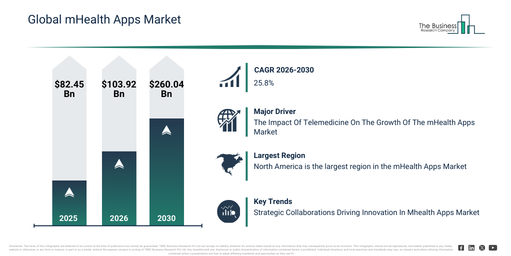
    The mhealth apps market has experienced remarkable expansion lately, projected to surge from $82.45 billion in 2025 to $103.92 billion in 2026, demonstrating a substantial compound annual growth rate of 26.0%. This historical growth trajectory has been fueled by several key factors, including the widespread adoption of smartphones, a rising incidence of chronic illnesses, the increasing integration of wearable health technology, the proliferation of telehealth platforms, and a heightened public awareness regarding the benefits of digital health solutions.

    The mhealth apps market is poised for substantial expansion over the coming years, with projections indicating a surge to $260.04 billion by 2030, driven by a compound annual growth rate of 25.8%. This upward trajectory in the forecasted period is fueled by several key factors, including sophisticated AI in diagnostics, a heightened need for customized health applications, the broader implementation of remote patient monitoring initiatives, the incorporation of genetic data into mobile health solutions, and the growing acceptance of cloud-based healthcare systems. Foremost among the significant trends anticipated during this growth phase are AI-driven predictive health analytics, seamless integration of health data via cloud platforms, the development of IoT-connected remote monitoring networks, enhanced patient engagement through XR technology, and the creation of personalized health applications linked with genomic information.

    Download A Free Sample Report For Comprehensive Market Insights:

    https://www.thebusinessresearchcompany.com/sample.aspx?id=6519&type=smp

    mHealth Apps Market Growth Momentum: Which Factors Are Influencing Demand?

    The expanding utilization of telemedicine is poised to significantly boost the mHealth apps market in the future. This remote healthcare delivery, facilitated by digital communication technologies, enables patients to engage in consultations with medical professionals from a distance. The surge in e-medicine is fueled by a rising consumer preference for healthcare solutions that offer both convenience and accessibility, a trend that was particularly amplified during the COVID-19 pandemic. For the mHealth apps sector, telemedicine provides a crucial advantage by incorporating remote healthcare capabilities, thereby empowering users to seek medical advice and oversee their well-being conveniently through their smartphones. A pertinent example illustrating this trend is the data from May 2024, wherein Eurostat, a governmental body based in Luxembourg, reported that in 2023, a notable 8.5% of individuals across the EU, aged between 16 and 74, engaged in online medical consultations via the internet. Consequently, the growing embrace of telemedicine is a key factor underpinning the expansion of the mHealth app market.

    mHealth Apps Market Segment Landscape: Which Areas Lead Market Development?

    The mhealth apps market covered in this report is segmented –

    1) By App Type: Disease And Treatment Management, Wellness Management, Other App Types

    2) By Connected Medical Devices: Heart Rate Meters, Wearable Fitness Sensor Device, Blood Pressure Monitors, Pulse Oximeters, Other Connected Medical Devices

    3) By Application: Monitoring Services, Fitness Solutions, Diagnostic Services, Treatment Services, Other Applications

    4) By End-User: Physicians, Patients, Insurance Companies, Research Centers, Pharmacy, Biopharmaceutical Companies, Government, Tech Companies, Other End-Users

    Subsegments:

    1) By Disease And Treatment Management: Chronic Disease Management Apps, Medication Adherence Apps, Remote Monitoring Apps

    2) By Wellness Management: Fitness And Exercise Tracking Apps, Nutrition And Diet Apps, Mental Health And Mindfulness Apps

    3) By Other App Types: Health Education And Awareness Apps, Telehealth And Virtual Consultation Apps, Personal Health Record (PHR) Apps

    mHealth Apps Market Trends Reshaping Industry Growth

    Major players in the mHealth apps market are increasingly engaging in strategic collaborations to enhance service reliability and improve patient outcomes. Strategic collaboration refers to a mutually beneficial partnership between two or more independent organizations that work together to achieve shared objectives while aligning with their respective business goals. For example, in October 2023, Cedars-Sinai, a US-based non-profit medical center, partnered with K Health, a US-based primary care company, to launch a mobile application called Cedars-Sinai Connect. Developed in collaboration with the digital primary care startup, the app is designed to offer convenient virtual care services for both new and existing patients in California. Built on K Health’s technology, it provides 24/7 access to virtual care providers for urgent health concerns, same-day primary care appointments, and seamless integration with Cedars-Sinai’s electronic health record system. In addition, the app uses AI-powered chat functionality to streamline patient intake, allowing clinicians to focus more on care delivery while improving access to quality healthcare services.

    mHealth Apps Market Industry Leaders And Market Competition

    Major companies operating in the mhealth apps market are Apple Inc., Johnson & Johnson, Sony Corporation, F. Hoffmann-La Roche Ltd., Sanofi, Orange S.A., Qualcomm Technologies Inc., Abbott Laboratories, GlaxoSmithKline plc, Philips Healthcare, Livongo Health Inc., Azumio Inc., Allscripts Healthcare Solutions Inc., Omron Healthcare Inc., BioTelemetry Inc., Withings S.A., AliveCor Inc., iHealth Labs Inc., Agamatrix Inc., Ovia Health Inc., Nutrimedy Inc., Dr. Pad S.r.l., Diversinet Corporation

    Access The Complete mHealth Apps Market Report:

    https://www.thebusinessresearchcompany.com/report/mhealth-apps-global-market-report

    mHealth Apps Market Leading Geography: Which Region Generates The Most Revenue?

    North Americawas the largest region in the mHealth apps market in 2025. Asia-Pacificis expected to be the fastest-growing region in mHealth apps market share. The regions covered in the mhealth apps market report are Asia-Pacific, South East Asia, Western Europe, Eastern Europe, North America, South America, Middle East, Africa.

    Get in touch with us:

    The Business Research Company: https://www.thebusinessresearchcompany.com/

    Americas: +1 310-496-7795

    Asia: +44 7882 955267 & +91 8897263534

    Europe: +44 7882 955267

    Email us at: marketing@tbrc.info

    Follow us on:

    LinkedIn: https://in.linkedin.com/company/the-business-research-company

    YouTube: https://www.youtube.com/channel/UC24_fI0rV8cR5DxlCpgmyFQ

    Global Market Model: https://www.thebusinessresearchcompany.com/global-market-model
  • Metoprolol Tartrate Market Expansion Is Opening New Pathways For Strategic Investment

    Metoprolol Tartrate Market Expansion Is Opening New Pathways For Strategic Investment

    Enhanced with market attractiveness analysis, total addressable market evaluation, company benchmarking matrices, interactive Excel dashboards, expanded supply chain intelligence, emerging startup coverage, and detailed product insights, The Business Research Company’s 2026 market reports deliver more actionable and strategically valuable research.

    Metoprolol Tartrate Market Value Analysis: What Growth Is Expected Over The Forecast Period?

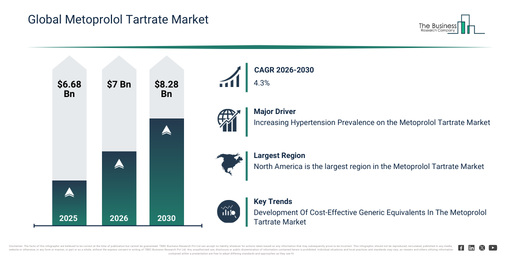
    The market for metoprolol tartrate has experienced consistent expansion recently, with projections indicating a rise from $6.68 billion in 2025 to $7 billion in 2026, representing a compound annual growth rate of 4.7%. This growth trajectory during the historical period is fundamentally linked to escalating hypertension diagnoses, a growing number of cardiovascular ailments, a greater uptake of generic medications, the broadening reach of hospital pharmacy services, and increased public understanding of health matters.

    The metoprolol tartrate market is poised for consistent expansion over the upcoming years, projecting an increase to $8.28 billion by 2030 with a compound annual growth rate (CAGR) of 4.3%. This anticipated growth during the forecast period is largely fueled by improvements in chronic disease management, a rising need for affordable beta-blockers, the increasing reach of online pharmacies, the proliferation of telehealth prescription services, and a heightened emphasis on tailored cardiovascular treatments. Key developments expected to shape the market in the coming years encompass AI-driven monitoring of drug usage, refinement of medication dosages through precision medicine, patient oversight systems integrated with cloud technology, advancements in automated drug production, and the deployment of IoT devices for cardiovascular health tracking.

    Download A Free Sample Report For Comprehensive Market Insights:

    https://www.thebusinessresearchcompany.com/sample.aspx?id=16477&type=smp

    Metoprolol Tartrate Market Expansion Drivers: What Is Shaping Future Growth?

    The escalating incidence of hypertension is anticipated to be a key catalyst for the expansion of the metoprolol tartrate market. Hypertension, often linked to a confluence of lifestyle choices and genetic predispositions, can also stem from other concurrent health issues and is exacerbated by factors such as dietary habits, sedentary lifestyles, excess weight, stress, and an aging demographic. Metoprolol tartrate plays a crucial role in managing this condition by moderating heart rate and reducing the force of the heart’s contractions, consequently lowering blood pressure. Reinforcing this, data from the Centers for Disease Control and Prevention in January 2025 indicated that in 2023, hypertension was identified as a primary or contributing factor in over 664,000 fatalities within the United States, underscoring the direct correlation between rising hypertension rates and the metoprolol tartrate market’s growth.

    Metoprolol Tartrate Market Driver: Increased Healthcare Investment Fueling Market Expansion Through Heightened Health Expenditures

    A significant surge in overall health expenditures is poised to stimulate the progression of the metoprolol tartrate market. This broader category of health spending encompasses all financial outlays for healthcare services, products, and initiatives across governmental, corporate, household, and other organizational levels. The upward trend in these expenditures is primarily influenced by an aging global population and the pervasive nature of chronic ailments, as older individuals typically necessitate more extensive medical attention and continuous management for conditions such as hypertension and other cardiovascular disorders. Consequently, amplified health spending translates into a greater market for metoprolol tartrate, empowering healthcare providers with enhanced financial resources for prescriptions and improving patient accessibility to vital cardiac pharmaceuticals. Illustrating this trend, the American Medical Association reported in April 2025 that US health expenditures experienced a substantial 7.5% increase in 2023, reaching $4.9 trillion, which equates to $14,570 per capita, a considerable leap from the 4.6% growth observed in the preceding year. Therefore, elevated health spending is demonstrably propelling the metoprolol tartrate market forward.

    Metoprolol Tartrate Market Segments: Where Are The Largest Growth Opportunities?

    The metoprolol tartrate market covered in this report is segmented –

    1) By Route Of Administration: Oral, Injectable

    2) By Application: Hypertension, Cardiovascular, Other Applications

    3) By Distribution Channel: Hospital Pharmacies, Retail Pharmacies, Online Pharmacies

    Subsegments:

    1) By Oral: Oral Tablets, Oral Capsules, Extended-Release Oral Formulations

    2) By Injectable: Intravenous Metoprolol Tartrate Injections, Hospital-Administered Injectable Formulations

    Metoprolol Tartrate Market Strategic Trends: What Is Defining The Next Phase Of Growth?

    The metoprolol tartrate market is experiencing a wave of generic product development from key players aiming to offer more affordable options for managing hypertension and related heart issues. These generic alternatives are designed to be bioequivalent to their brand-name counterparts, ensuring they function identically in the body to deliver the same health benefits. A notable development occurred in August 2023 when Lupin Pharmaceuticals, an Indian firm, secured U.S. Food and Drug Administration approval for its generic Metoprolol Succinate Extended-Release Tablets, effectively mirroring the Toprol-XL Tablets. These generic tablets, suitable for treating high blood pressure and chest pain, are now accessible in multiple dosages to accommodate diverse patient requirements, thereby broadening Lupin’s range of cardiovascular generics available in the United States.

    Metoprolol Tartrate Market Major Participants And Competitive Dynamics

    Major companies operating in the metoprolol tartrate market are Pfizer Inc., AstraZeneca plc, Novartis AG, Viatris Inc., Teva Pharmaceutical Industries Ltd., Macleods Pharmaceuticals Ltd., Sun Pharmaceutical Industries Ltd., Intas Pharmaceuticals Ltd., Aurobindo Pharma, Cipla Inc., Hikma Pharmaceuticals PLC, Amneal Pharmaceuticals, Glenmark Pharmaceuticals Ltd., Emcure Pharmaceuticals Ltd., Alembic Pharmaceuticals Inc., Accord Healthcare Inc., Beximco Pharmaceuticals Ltd., Micro Labs Ltd., Inventia Healthcare Pvt. Ltd., Watson Laboratories Inc., Aizant Drug Research Solutions Pvt. Ltd., Zydus Cadila, Validus Pharmaceuticals LLC, Strides Pharma Science Limited, APO-MEDIX Pty Ltd.

    Access The Complete Metoprolol Tartrate Market Report:

    https://www.thebusinessresearchcompany.com/report/metoprolol-tartrate-global-market-report

    Metoprolol Tartrate Market Regional Outlook: Where Are The Largest Opportunities Located?

    North Americawas the largest region in the metoprolol tartrate market in 2025. Asia-Pacificis expected to be the fastest-growing region in the forecast period. The regions covered in the metoprolol tartrate market report are Asia-Pacific, South East Asia, Western Europe, Eastern Europe, North America, South America, Middle East, Africa.

    Get in touch with us:

    The Business Research Company: https://www.thebusinessresearchcompany.com/

    Americas: +1 310-496-7795

    Asia: +44 7882 955267 & +91 8897263534

    Europe: +44 7882 955267

    Email us at: marketing@tbrc.info

    Follow us on:

    LinkedIn: https://in.linkedin.com/company/the-business-research-company

    YouTube: https://www.youtube.com/channel/UC24_fI0rV8cR5DxlCpgmyFQ

    Global Market Model: https://www.thebusinessresearchcompany.com/global-market-model