Month: July 2026

  • In Vitro Diagnostics Enzymes Market Forecast Reveals Where Future Industry Value Will Be Created

    In Vitro Diagnostics Enzymes Market Forecast Reveals Where Future Industry Value Will Be Created

    Through market attractiveness analysis, total addressable market evaluation, company benchmarking matrices, interactive Excel dashboards, expanded supply chain intelligence, emerging startup coverage, and detailed product insights, The Business Research Company’s 2026 market reports provide more actionable and strategically valuable research.

    In Vitro Diagnostics Enzymes Market CAGR Analysis And Future Market Development

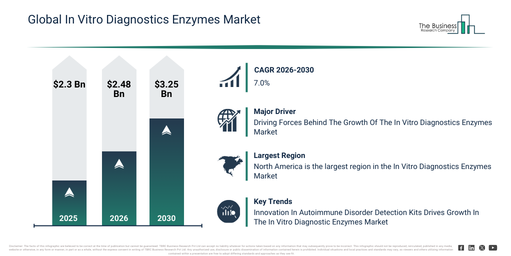
    The in vitro diagnostics enzymes market has experienced robust expansion in recent years. Its valuation is projected to increase from $2.3 billion in 2025 to $2.48 billion in 2026, reflecting a compound annual growth rate (CAGR) of 7.8%. This historical growth has been driven by the prolonged utilization of enzymes within clinical chemistry assays, the broadening of laboratory-based diagnostic testing, the extensive uptake of PCR and molecular diagnostic techniques, advancements in hospital and diagnostic laboratory infrastructure, and a heightened focus on screening for both infectious and chronic diseases.

    Over the next several years, the market for in vitro diagnostics enzymes is anticipated to experience robust expansion. By 2030, its value is projected to reach $3.25 billion, reflecting a compound annual growth rate (CAGR) of 7.0%. This forecasted growth is driven by several factors, including the increasing occurrence of infectious and chronic illnesses, a heightened need for fast and precise diagnostic tools, the expansion of decentralized testing and point-of-care solutions, advancements in personalized and precision medicine, and greater funding for sophisticated molecular diagnostic technologies. Key trends shaping the period include a growing demand for high-specificity enzymes in molecular diagnostics, the expanded application of enzymes in infectious disease test panels, the rising adoption of enzyme-driven point-of-care diagnostics, the development of multiplex diagnostic assays that rely on enzyme systems, and an intensified focus on improving enzyme stability and extending shelf life.

    Download A Free Sample Report For Comprehensive Market Insights:

    https://www.thebusinessresearchcompany.com/sample.aspx?id=15830&type=smp&utm_source=BlogsPR&utm_medium=Paid&utm_campaign=Jul_PR

    In Vitro Diagnostics Enzymes Market Expansion Drivers: What Is Shaping Future Growth?

    The growing incidence of cancer is anticipated to drive forward the expansion of the in vitro diagnostics enzymes market. Cancer is defined as a collection of illnesses where abnormal cells undergo uncontrolled growth and dissemination, capable of invading and harming healthy tissues. This increase in cancer prevalence stems from factors such as infectious agents, immune system irregularities, and hormonal effects. The market for in vitro diagnostics enzymes contributes to cancer management by facilitating precise diagnostic tests that aid in early detection, ongoing disease tracking, therapy selection, and personalized treatment strategies. As an illustration, in February 2024, the Switzerland-based World Health Organization (WHO) reported that worldwide cancer cases are predicted to surpass 0.035 billion by 2050, marking a 77% rise from the estimated 0.02 billion cases recorded in 2022. Consequently, the escalating frequency of cancer is fueling growth in the in vitro diagnostics enzymes market.

    In Vitro Diagnostics Enzymes Market Categorization By Product Type And Application

    The in vitro diagnostics enzymes market covered in this report is segmented –

    1) By Enzyme Type: Proteases, Polymerase And Transcriptase, Ribonuclease, Other Enzyme Types

    2) By Disease Type: Infectious Disease, Diabetes, Oncology, Cardiology, Nephrology, Autoimmune Diseases, Other Disease Types

    3) By Technology: Histology Assays, Molecular Diagnostics, Clinical Chemistry, Other Technologies

    4) By End Use: Pharma And Biotech, Hospital And Diagnostic Labs, Contract Research Organizations (CROs), Academic Labs

    Subsegments:

    1) By Proteases: Trypsin, Pepsin, Proteinase K

    2) By Polymerase And Transcriptase: DNA Polymerase, RNA Polymerase, Reverse Transcriptase

    3) By Ribonuclease: RNase A, RNase H

    4) By Other Enzyme Types: Dehydrogenases, Lipases, Ligases

    In Vitro Diagnostics Enzymes Market Strategic Trends: What Is Defining The Next Phase Of Growth?

    Leading players in the in vitro diagnostic enzymes industry are concentrating on creating innovative offerings like autoimmune disorder detection kits to broaden diagnostic possibilities, enhance early recognition of diseases, and solidify their market position. These detection kits are specialized diagnostic tools that leverage immunoassays, molecular approaches, and antibody detection methods to identify autoantibodies and biomarkers linked to autoimmune conditions, ensuring accurate and prompt diagnosis. For example, in September 2023, NeoDx Biotech Labs Pvt Ltd., an Indian manufacturer of in-vitro diagnostic kits, introduced an autoimmune disorder detection IVD kit featuring sophisticated immunoassays, molecular diagnostics, and precise antibody detection capabilities, delivering high sensitivity and specificity to assist clinicians in achieving faster and more dependable diagnoses of autoimmune diseases.

    In Vitro Diagnostics Enzymes Market Company Landscape And Strategic Competition

    Major companies operating in the in vitro diagnostics enzymes market are F. Hoffmann-La Roche Ltd., Thermo Fisher Scientific Inc., Danaher Corporation, Merck KGaA, Siemens Healthineers AG, Becton Dickinson and Company, Agilent Technologies Inc., Grifols SA, Hologic Inc., PerkinElmer Inc., bioMérieux SA, QuidelOrtho Corporation, Sysmex Corporation, Bio-Rad Laboratories Inc., Qiagen N.V., DiaSorin SpA, Promega Corporation, Randox Laboratories Ltd., Meridian Bioscience Inc., Fujirebio Diagnostics Inc., Sekisui Diagnostics LLC, Trivitron Healthcare, Amicogen Inc., EKF Diagnostics Holdings plc, Advanced Enzymes Technologies Ltd., Biocatalysts Ltd.

    Access The Complete In Vitro Diagnostics Enzymes Market Report:

    https://www.thebusinessresearchcompany.com/report/in-vitro-diagnostics-enzymes-global-market-report?utm_source=BlogsPR&utm_medium=Paid&utm_campaign=Jul_PR

    In Vitro Diagnostics Enzymes Market Geographic Distribution And Regional Opportunities

    North America was the largest region in the in vitro diagnostics enzymes market in 2025. Asia-Pacific is expected to be the fastest-growing region in the forecast period. The regions covered in the in vitro diagnostics enzymes market report are Asia-Pacific, South East Asia, Western Europe, Eastern Europe, North America, South America, Middle East, Africa.

    Get in touch with us:

    The Business Research Company: https://www.thebusinessresearchcompany.com/?utm_source=BlogsPR&utm_medium=Paid&utm_campaign=home_page_test

    Americas: +1 310-496-7795

    Asia: +44 7882 955267 & +91 8897263534

    Europe: +44 7882 955267

    Email us at: marketing@tbrc.info

    Follow us on:

    LinkedIn: https://in.linkedin.com/company/the-business-research-company

    YouTube: https://www.youtube.com/channel/UC24_fI0rV8cR5DxlCpgmyFQ

    Global Market Model: https://www.thebusinessresearchcompany.com/global-market-model
  • In Silico Protein Design Market Growth Through 2030 Creates New Strategic Opportunities

    In Silico Protein Design Market Growth Through 2030 Creates New Strategic Opportunities

    Delivering more actionable and strategically valuable research, The Business Research Company’s 2026 market reports feature market attractiveness analysis, total addressable market evaluation, company benchmarking matrices, interactive Excel dashboards, expanded supply chain intelligence, emerging startup coverage, and detailed product insights.

    In Silico Protein Design Market Expansion From $2.27 Billion In 2026 To $4.86 Billion In 2030

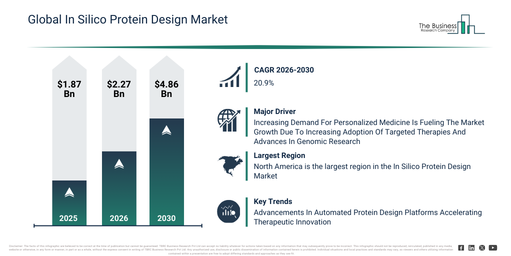
    The in silico protein design market has experienced rapid expansion over recent years. Its value is projected to increase from $1.87 billion in 2025 to $2.27 billion in 2026, representing a compound annual growth rate (CAGR) of 21.2%. This historical growth has been driven by improvements in computational biology tools, a wider availability of protein structure databases, greater adoption of in silico techniques in drug discovery, broader academic bioinformatics research, and a growing need for cost-effective protein design strategies.

    The in silico protein design sector is anticipated to experience substantial expansion over the coming years, with projections indicating a market value reaching $4.86 billion by 2030, representing a robust compound annual growth rate of 20.9%. This growth trajectory during the forecast period is being driven by several key factors, including heightened financial commitments to artificial intelligence-enabled drug discovery, the expanding implementation of customized therapeutic development strategies, the broadening deployment of cloud-based computing capabilities, the accelerated application of automated processes in biological experimentation, and the strengthening of partnerships between biotechnology firms and software developers. Emerging developments shaping this period encompass the widespread incorporation of artificial intelligence-powered protein modeling frameworks, the growing preference for cloud-hosted simulation platforms, the deeper integration of machine learning algorithms into structural prediction methodologies, the progress in computational approaches to enzyme optimization, and the intensified focus on achieving rapid protein structural enhancement

    Download A Free Sample Report For Comprehensive Market Insights:

    https://www.thebusinessresearchcompany.com/sample.aspx?id=28248&type=smp&utm_source=BlogsPR&utm_medium=Paid&utm_campaign=Jul_PR

    In Silico Protein Design Market Development Factors: Which Trends Are Supporting Demand?

    The in silico protein design market is set to expand significantly as the demand for personalized medicine continues to rise. Personalized medicine involves customizing medical treatments and preventive measures based on an individual’s distinct genetic profile, lifestyle, and environment. This growing demand is fueled by progress in genomic technologies and the increasing implementation of value-based care models, which emphasize improving patient outcomes and cutting healthcare costs. In silico protein design facilitates this by enabling the efficient creation of custom therapeutic proteins that match specific patient needs. For example, the Personalized Medicine Coalition (PMC), a US nonprofit, reported in February 2024 that the FDA approved 16 new personalized treatments for rare diseases in 2023, up from just six in 2022. Consequently, the rising push for personalized medicine is propelling the in silico protein design market forward.

    In Silico Protein Design Market Segment Analysis And Revenue Opportunities

    The in silico protein design market covered in this report is segmented –

    1) By Software Type: Cloud-Based Software, On-Premise Software

    2) By Technology Type: Molecular Modelling, Artificial Intelligence And Machine Learning Algorithms, Homology Modelling, Other Technology Types

    3) By Application: Drug Discovery And Development, Enzyme Engineering, Biomarker Discovery, Vaccinology, Academic Research

    4) By End-User: Pharmaceutical And Biotechnology Companies, Academic And Research Institutes, Other End-Users

    Subsegments:

    1) By Cloud-Based Software: Subscription-Based, Pay-Per-Use, Hybrid Cloud

    2) By On-Premise Software: Enterprise License, Perpetual License, Customized Solutions

    In Silico Protein Design Market Transformation Trends: Which Innovations Are Driving Change?

    Major industry participants within the in silico protein design sector are concentrating their efforts on creating sophisticated tools, particularly push-button protein design platforms, aimed at speeding up drug discovery, enhancing treatment effectiveness, and facilitating the development of innovative biologics. These push-button protein design solutions are specialized instruments that empower researchers to generate and alter proteins efficiently through automated, user-friendly workflows, minimizing the need for significant manual intervention. As an example, in July 2025, Latent Labs, a biotechnology firm based in the UK, unveiled Latent-X, a generative AI model made available on a web-based push-button interface. This platform allows users, even those without any programming background, to input their desired targets and engineer macrocycles and mini-binders at the atomic scale. The system achieves hit rates ranging from 91% to 100% for macrocycles and 10% to 64% for mini-binders, delivers picomolar to micromolar binding affinities confirmed through laboratory validation, and generates complete sequences and structures more than ten times quicker than earlier approaches. Such advancements are broadening the user base and simplifying access, thereby accelerating progress in protein-based therapeutics.

    In Silico Protein Design Market Leading Players Shaping Industry Direction

    Major companies operating in the in silico protein design market are Dassault Systèmes SE, Schrödinger Inc., Generate Biomedicines Inc., Insilico Medicine Inc., Chemical Computing Group ULC, Arzeda Corp., Outpace Bio Inc., Evozyne Inc., Cradle Bio B.V., Seismic Therapeutics Inc., Profluent Bio Inc., Nabla Bio Inc., Antiverse Ltd., EvolutionaryScale Inc., RevolKa Ltd., Molecular Discovery Ltd., Inte:Ligand GmbH, Kuano Ltd., AI Proteins Inc., Menten AI Inc.

    Access The Complete In Silico Protein Design Market Report:

    https://www.thebusinessresearchcompany.com/report/in-silico-protein-design-global-market-report?utm_source=BlogsPR&utm_medium=Paid&utm_campaign=Jul_PR

    In Silico Protein Design Market Largest Region By Revenue And Market Share

    North America was the largest region in the in silico protein design market in 2025. Asia-Pacific is expected to be the fastest-growing region in the forecast period. The regions covered in the in silico protein design market report are Asia-Pacific, South East Asia, Western Europe, Eastern Europe, North America, South America, Middle East, Africa.

    Get in touch with us:

    The Business Research Company: https://www.thebusinessresearchcompany.com/?utm_source=BlogsPR&utm_medium=Paid&utm_campaign=home_page_test

    Americas: +1 310-496-7795

    Asia: +44 7882 955267 & +91 8897263534

    Europe: +44 7882 955267

    Email us at: marketing@tbrc.info

    Follow us on:

    LinkedIn: https://in.linkedin.com/company/the-business-research-company

    YouTube: https://www.youtube.com/channel/UC24_fI0rV8cR5DxlCpgmyFQ

    Global Market Model: https://www.thebusinessresearchcompany.com/global-market-model
  • Immunotoxin Market Size Projected To Increase From $71.7 Billion To $96.77 Billion During The Forecast Period

    Immunotoxin Market Size Projected To Increase From $71.7 Billion To $96.77 Billion During The Forecast Period

    Enhanced with market attractiveness analysis, total addressable market evaluation, company benchmarking matrices, interactive Excel dashboards, expanded supply chain intelligence, emerging startup coverage, and detailed product insights, The Business Research Company’s 2026 market reports deliver more actionable and strategically valuable research.

    Immunotoxin Market Forecast Highlighting Growth From $71.7 Billion To $96.77 Billion

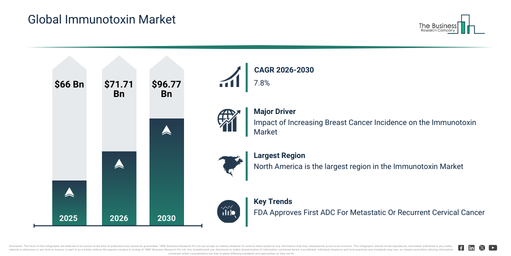
    The immunotoxin market has seen substantial growth over recent years, with projections rising from $66 billion in 2025 to $71.71 billion in 2026, representing a compound annual growth rate (CAGR) of 8.7%. This historical expansion can be credited to the early achievements of antibody-toxin conjugates in cancer research, progress in monoclonal antibody engineering, the demand for more precise cancer treatments, the growth of oncology-centric research facilities, and a deeper comprehension of tumor-specific antigens.

    The immunotoxin market is anticipated to experience robust expansion over the coming years. By 2030, it is projected to reach $96.77 billion, reflecting a compound annual growth rate (CAGR) of 7.8%. Several factors are driving this growth during the forecast period, including an increasing need for precision oncology treatments, the broadening of immunotherapy pipelines, heightened investment in biologic-based cancer therapies, a rising incidence of treatment-resistant cancers, and ongoing progress in protein engineering technologies. Key trends shaping this period encompass a greater emphasis on developing target-specific immunotoxins for cancer treatment, a stronger focus on minimizing off-target toxicity and immunogenicity, wider application of immunotoxins in hematological malignancies, expanded clinical trials for next-generation immunotoxin designs, and sustained investigation into combination immunotoxin approaches.

    Download A Free Sample Report For Comprehensive Market Insights:

    https://www.thebusinessresearchcompany.com/sample.aspx?id=15828&type=smp&utm_source=BlogsPR&utm_medium=Paid&utm_campaign=Jul_PR

    Immunotoxin Market Industry Drivers: What Is Driving Revenue Growth?

    The anticipated rise in breast cancer cases is set to drive forward the expansion of the immunotoxin market. Breast cancer is defined as a malignant growth originating in breast cells, frequently within the ducts or lobules. Its growing prevalence is fueled by enhanced screening initiatives, lifestyle-related risk factors, and extended life expectancy. By offering targeted treatments that specifically eradicate cancerous cells while preserving healthy tissue, the immunotoxin market aids breast cancer therapy, thus yielding fewer side effects than conventional chemotherapy. For example, per the National Breast Cancer Foundation, a U.S.-based entity, as of January 2025, one out of every eight American women will face a breast cancer diagnosis in her lifetime. In 2024, invasive breast cancer is projected to affect approximately 310,720 women and 2,800 men. Consequently, the escalating prevalence of breast cancer is propelling the immunotoxin market’s growth.

    Immunotoxin Market Segmentation And Category Breakdown

    The immunotoxin market covered in this report is segmented –

    1) By Type: Anthrax Based Toxins, Diphtheria Toxin (DT) And Derivatives, Pseudomonas Exotoxin (PE) And Derivatives, Ribosome Inactivating Proteins Based Immunotoxins, Ribonucleases-Based Immunotoxins, Other Types

    2) By Application: Solid Tumors, Leukemias, Other Applications

    3) By End User: Hospitals And Clinics, Cancer And Radiation Therapy Centers, Research Labs, Other End-Users

    Subsegments:

    1) By Anthrax-Based Toxins: Anthrax Lethal Toxin, Anthrax Protective Antigen

    2) By Diphtheria Toxin (DT) And Derivatives: Diphtheria Toxin, DT Fragment-Based Immunotoxins

    3) By Pseudomonas Exotoxin (PE) And Derivatives: PE38-Based Immunotoxins, PE-Based Fusion Proteins

    4) By Ribosome Inactivating Proteins-Based Immunotoxins: Ricin-Based Immunotoxins, Gelonin-Based Immunotoxins

    5) By Ribonucleases-Based Immunotoxins: Onconase-Based Immunotoxins, Binase-Based Immunotoxins

    6) By Other Types: Shiga Toxin-Based Immunotoxins, Other Toxin-Based Immunotoxins

    Immunotoxin Market Growth Trends: What Is Influencing The Future Outlook?

    Leading players in the immunotoxin space are placing a strong emphasis on the creation of next-generation antibody-drug conjugates (ADCs) aimed at boosting treatment precision and effectiveness in oncology, while simultaneously minimizing damage to healthy tissue. ADCs are defined as specialized biopharmaceutical agents that unite a monoclonal antibody with a cytotoxic compound, allowing the toxic component to be accurately delivered to malignant cells displaying a particular antigen. This method leads to superior therapeutic results when set against standard chemotherapy. As a concrete example, in April 2024, Pfizer Inc., a pharmaceutical firm based in the United States, alongside Genmab A/S, a biotechnology company from Denmark, secured full approval from the U.S. FDA for TIVDAK. This ADC is intended for use in individuals suffering from recurrent or metastatic cervical cancer and carries a monomethyl auristatin E compound that disrupts microtubule function, thereby triggering cancer cell death. The therapy exhibited a marked and statistically meaningful extension in overall survival, cementing its role as a hopeful, targeted therapeutic option for those with advanced cervical cancer.

    Immunotoxin Market Competitive Analysis Of Major Industry Participants

    Major companies operating in the immunotoxin market are ImmunoGen Inc., Molecular Templates Inc., Mersana Therapeutics, Seagen Inc., MacroGenics Inc., Sutro Biopharma Inc., Celldex Therapeutics, CytImmune Sciences Inc., Pfizer Inc., Roche Holding AG, AbbVie Inc., Bristol Myers Squibb, AstraZeneca plc, Merck KGaA, BioNTech SE, Ipsen Pharma, Innate Pharma Inc., GenScript, Thermo Fisher Scientific Inc., Enzo Life Sciences Inc.

    Access The Complete Immunotoxin Market Report:

    https://www.thebusinessresearchcompany.com/report/immunotoxin-global-market-report?utm_source=BlogsPR&utm_medium=Paid&utm_campaign=Jul_PR

    Immunotoxin Market Regional Analysis And Leading Geography

    North America was the largest region in the immunotoxin market in 2025. Asia-Pacific is expected to be the fastest-growing region in the forecast period. The regions covered in the immunotoxin market report are Asia-Pacific, South East Asia, Western Europe, Eastern Europe, North America, South America, Middle East, Africa.

    Get in touch with us:

    The Business Research Company: https://www.thebusinessresearchcompany.com/?utm_source=BlogsPR&utm_medium=Paid&utm_campaign=home_page_test

    Americas: +1 310-496-7795

    Asia: +44 7882 955267 & +91 8897263534

    Europe: +44 7882 955267

    Email us at: marketing@tbrc.info

    Follow us on:

    LinkedIn: https://in.linkedin.com/company/the-business-research-company

    YouTube: https://www.youtube.com/channel/UC24_fI0rV8cR5DxlCpgmyFQ

    Global Market Model: https://www.thebusinessresearchcompany.com/global-market-model
  • Immunosuppressants Market Growth Outlook Reveals A CAGR Of 13.1% And A Market Value Of $62.64 Billion By 2030

    Immunosuppressants Market Growth Outlook Reveals A CAGR Of 13.1% And A Market Value Of $62.64 Billion By 2030

    Through market attractiveness analysis, total addressable market evaluation, company benchmarking matrices, interactive Excel dashboards, expanded supply chain intelligence, emerging startup coverage, and detailed product insights, The Business Research Company’s 2026 market reports provide more actionable and strategically valuable research.

    Immunosuppressants Market Revenue Growth Supported By A CAGR Of 62.64% Through 2030

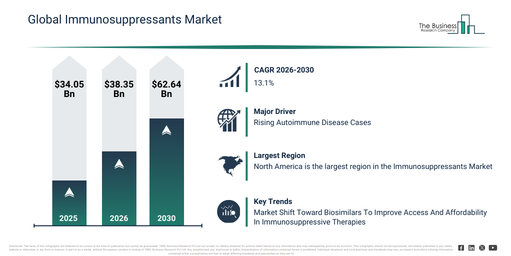
    The immunosuppressants market has experienced rapid expansion in recent years, with projections indicating an increase from $34.05 billion in 2025 to $38.35 billion in 2026, reflecting a compound annual growth rate (CAGR) of 12.6%. This historical growth has been driven by factors such as the rising number of organ transplant procedures, a growing incidence of autoimmune conditions, the widespread use of established corticosteroids, the implementation of immunosuppressive protocols in hospital settings, and the broadening reach of specialty pharmacies.

    Over the upcoming years, the immunosuppressants market is projected to experience rapid expansion, reaching a value of $62.64 billion by 2030 with a compound annual growth rate (CAGR) of 13.1%. This forecasted growth is driven by factors such as increasing transplant survival rates, the rise of monoclonal antibody therapies, the adoption of advanced monitoring technologies, the development of safer drug classes, and broader access in emerging markets. Key trends shaping the market during this period include the growing application of immunosuppressants in organ transplantation, a shift toward targeted and biologic agents, a heightened focus on long-term safety and monitoring, the expansion of these drugs into autoimmune disease treatment, and the increasing adoption of personalized immunosuppression regimens.

    Download A Free Sample Report For Comprehensive Market Insights:

    https://www.thebusinessresearchcompany.com/sample.aspx?id=3467&type=smp&utm_source=BlogsPR&utm_medium=Paid&utm_campaign=Jul_PR

    #Immunosuppressants Market Growth Factors: Which Forces Are Supporting Market Expansion?

    The growing prevalence of autoimmune conditions is anticipated to boost the expansion of the immunosuppressants market. These disorders involve an aberrant immune reaction where the body’s defenses mistakenly assault and harm healthy tissues and organs. Medications that suppress the immune system can aid in managing autoimmune diseases such as rheumatoid arthritis by tempering the excessive immune activity, thereby lessening symptoms and delaying disease advancement. This condition frequently affects older individuals. As an example, data from February 2024 provided by Arthritis Australia, a nonprofit entity based in Australia, indicates that in 2025, around 212,136 men and 362,137 women are expected to have rheumatoid arthritis (RA), with projections suggesting an increase to roughly 280,040 men and 479,828 women by 2040. Consequently, the rising number of autoimmune disease cases will fuel growth in the immunosuppressants market.

    Immunosuppressants Market Segment Outlook: Which Categories Are Expanding The Fastest?

    The immunosuppressants market covered in this report is segmented –

    1) By Drug Class: Corticosteroids, Monoclonal Antibodies (mAbs), Calcineurin Inhibitors, mTOR Inhibitors, Anti-Proliferative Agents, Other Drug Classes

    2) By Indication: Organ Transplantation, Autoimmune Disorders, Non-Autoimmune Inflammatory Diseases

    3) By Distribution Channel: Hospital Pharmacies, Retail Pharmacies, Online Pharmacies

    Subsegments:

    1) By Corticosteroids: Prednisone, Methylprednisolone, Dexamethasone

    2) By Monoclonal Antibodies (mAbs): Anti-TNF Agents, Anti-CD20 Agents, Anti-IL-6 Agents

    3) By Calcineurin Inhibitors: Cyclosporine, Tacrolimus

    4) By mTOR Inhibitors: Sirolimus, Everolimus

    5) By Anti-Proliferative Agents: Azathioprine, Mycophenolate Mofetil

    6) By Other Drug Classes: Co-Stimulation Blockers, JAK Inhibitors

    Immunosuppressants Market Industry Trends: What Changes Are Reshaping Demand?

    Key players in the immunosuppressants market are placing increased emphasis on the creation of sophisticated biologic and biosimilar therapies, aiming to improve the availability of treatments, lower financial burdens on patients, and support more effective long-term management of autoimmune conditions. These novel developments are designed to achieve efficacy and safety levels comparable to those of original biologics, while simultaneously broadening the range of therapeutic options for disorders like rheumatoid arthritis, psoriatic arthritis, and inflammatory bowel disease. For example, in January 2023, the American biopharmaceutical firm Amgen Inc. introduced AMJEVITA as the first biosimilar alternative to HUMIRA available in the United States. This introduction represents a notable achievement within the immunosuppressants sector, as it fosters increased market competition, improves cost-effectiveness, and facilitates wider patient access to biologic therapies. The move is anticipated to hasten the acceptance of biosimilars in treatments for autoimmune diseases and to encourage further progress in the development of affordable immunosuppressant solutions.

    Immunosuppressants Market Key Companies And Competitive Benchmarking

    Major companies operating in the immunosuppressants market are Pfizer Inc., Johnson & Johnson Services Inc., F Hoffmann La Roche Ltd., AbbVie Inc., Novartis AG, Sanofi SA, Bristol-Myers Squibb Co., Mylan Laboratories Inc., Teva Pharmaceuticals USA Inc., Astellas Pharma Inc., Sandoz Inc., Aurobindo Pharma Limited, Hikma Pharmaceuticals plc, Intas Pharmaceuticals Ltd., Zydus Lifesciences Limited, Glenmark Pharmaceuticals Ltd., Fresenius Kabi USA, Lupin Pharmaceuticals Inc., Strides Pharma Inc., Accord Healthcare Ltd., RPG Life Sciences Limited, Genzyme Transgenics Corp., Apotex Inc.

    Access The Complete Immunosuppressants Market Report:

    https://www.thebusinessresearchcompany.com/report/immunosuppressant-global-market-report?utm_source=BlogsPR&utm_medium=Paid&utm_campaign=Jul_PR

    Immunosuppressants Market Geographic Analysis: Where Is Demand Growing The Fastest?

    North America was the largest region in the immunosuppressants market in 2025. The regions covered in the immunosuppressants market report are Asia-Pacific, South East Asia, Western Europe, Eastern Europe, North America, South America, Middle East, Africa.

    Get in touch with us:

    The Business Research Company: https://www.thebusinessresearchcompany.com/?utm_source=BlogsPR&utm_medium=Paid&utm_campaign=home_page_test

    Americas: +1 310-496-7795

    Asia: +44 7882 955267 & +91 8897263534

    Europe: +44 7882 955267

    Email us at: marketing@tbrc.info

    Follow us on:

    LinkedIn: https://in.linkedin.com/company/the-business-research-company

    YouTube: https://www.youtube.com/channel/UC24_fI0rV8cR5DxlCpgmyFQ

    Global Market Model: https://www.thebusinessresearchcompany.com/global-market-model
  • Immuno-Oncology Drugs Market Forecast Highlights Expansion From $136.15 Billion To $226.3 Billion Through 2030

    Immuno-Oncology Drugs Market Forecast Highlights Expansion From $136.15 Billion To $226.3 Billion Through 2030

    Delivering more actionable and strategically valuable research, The Business Research Company’s 2026 market reports feature market attractiveness analysis, total addressable market evaluation, company benchmarking matrices, interactive Excel dashboards, expanded supply chain intelligence, emerging startup coverage, and detailed product insights.

    Immuno-Oncology Drugs Market Value Expansion And Long-Term Growth Outlook

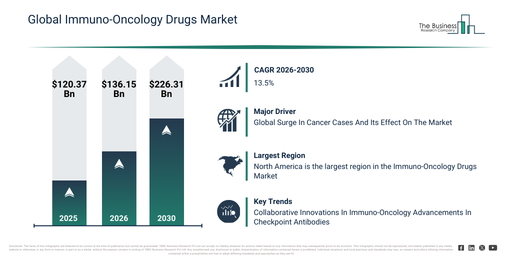
    The market for immuno-oncology drugs has experienced rapid expansion over the past few years. Its value is projected to increase from $120.37 billion in 2025 to $136.15 billion in 2026, reflecting a compound annual growth rate (CAGR) of 13.1%. This historic growth has been driven by factors such as the constrained supply of these therapies, a dependence on traditional chemotherapy, a rising incidence of cancers including melanoma and lung cancer, an uptick in oncology-related research programs, and early-stage regulatory clearances for monoclonal antibodies.

    The immuno-oncology drugs market is anticipated to experience significant expansion over the coming years, with projections indicating it will reach $226.31 billion by 2030, driven by a compound annual growth rate (CAGR) of 13.5%. This forecasted growth is fueled by advancements such as the creation of bispecific antibodies and oncolytic virus therapies, broader deployment of personalized immunotherapy options, greater investments in adoptive cell transfer methods, increased healthcare spending dedicated to cancer care, and the incorporation of digital tools for patient observation and clinical study management. Key trends shaping this period include the widespread use of immune checkpoint inhibitors across diverse cancer types, accelerated development of cancer vaccines and adoptive cell treatments, heightened emphasis on tailored immuno-oncology approaches, expansion of immunotherapy programs within hospitals and ambulatory surgical centers, and a surge in clinical trials and research activity focusing on monoclonal antibodies.

    Download A Free Sample Report For Comprehensive Market Insights:

    https://www.thebusinessresearchcompany.com/sample.aspx?id=3455&type=smp&utm_source=BlogsPR&utm_medium=Paid&utm_campaign=Jul_PR

    Immuno-Oncology Drugs Market Demand Drivers: What Is Fueling Industry Growth?

    The anticipated rise in cancer diagnoses will likely accelerate the expansion of the immuno-oncology drugs market in the future. Cancer involves the uncontrolled growth of abnormal cells, which can invade other parts of the body and disrupt normal physiological processes. An increase in cancer cases is driven by factors like an aging demographic, lifestyle shifts, and enhanced screening techniques that detect the disease earlier. Immuno-oncology medications advance this trend by activating the immune system to precisely identify and destroy malignant cells, offering more accurate and effective therapeutic approaches. For example, in 2023, Cancer Australia, a government agency based in Australia, reported that there were approximately 164,694 new cancer diagnoses and 51,269 fatalities, with the most prevalent types being prostate, breast, melanoma, colorectal, and lung cancers, while rarer forms represented roughly one-third of all diagnoses and accounted for 42% of deaths. Consequently, the growing frequency of cancer occurrences is fueling the progress of the immuno-oncology drugs market.

    Immuno-Oncology Drugs Market Segment Landscape: Which Areas Lead Market Development?

    The immuno-oncology drugs market covered in this report is segmented –

    1) By Type: Immune Checkpoint Inhibitors, Immune System Modulators, Other Monoclonal Antibodies, Cancer Vaccines, Other Types

    2) By Therapeutic Application: Melanoma, Lung Cancer, Blood Cancer, Renal Cell Carcinoma, Bladder Cancer, Other Therapeutic Application

    3) By End-Users: Hospitals, Clinics, Ambulatory Surgical Centers, Other End-Users

    Subsegments:

    1) By Immune Checkpoint Inhibitors: PD-1 Inhibitors, PD-L1 Inhibitors, CTLA-4 Inhibitors

    2) By Immune System Modulators: Cytokines, Interferons, Colony-Stimulating Factors

    3) By Other Monoclonal Antibodies: Targeted Monoclonal Antibodies, Bispecific Antibodies

    4) By Cancer Vaccines: Preventive Cancer Vaccines, Therapeutic Cancer Vaccines

    5) By Other Types: Adoptive Cell Transfer Therapies, Oncolytic Virus Therapies

    Immuno-Oncology Drugs Market Innovation Trends: Which Developments Are Transforming The Industry?

    Major pharmaceutical firms in the immuno-oncology sector are forming alliances aimed at jointly developing and bringing to market a new checkpoint antibody, with the goal of boosting the effectiveness of cancer therapies. Such strategic partnerships facilitate innovation by enabling the exchange of expertise across different disciplines, which accelerates the creation of combination therapies, customized treatment plans, and advanced drug delivery systems. As an example, in March 2023, BioNTech SE, headquartered in Germany, entered into an agreement with OncoC4 Inc, a US-based pharmaceutical organization, to jointly develop and commercialize the anti-CTLA-4 monoclonal antibody candidate ONC-392. This collaboration is intended to expand treatment possibilities for patients with various solid tumors.

    Immuno-Oncology Drugs Market Industry Leaders And Market Competition

    Major companies operating in the immuno-oncology drugs market are F. Hoffmann-La Roche Ltd., Merck & Co., Bristol-Myers Squibb Company, Amgen Inc, Johnson & Johnson, AstraZeneca Plc, Eli Lilly and Company, Novartis International AG, Pfizer Inc., Sanofi S.A., Arlak Biotech, Apikos Pharma, Kolaz biotech, CStone Pharma, CARsgen Therapeutics, JW Therapeutics, BeiGene, Takeda Pharmaceuticals, Astellas Pharma Inc, Otsuka Pharmaceutical Co Ltd, Legend Biotech Co, Zai Lab, Daiichi Pharmaceutical and Sankyo, AQVIDA GmbH, GlaxoSmithKline plc, Affimed Therapeutics, Autolus Therapeutics, Cellectis, Celyad, GammaDelta Therapeutics, Immunocore, Celon Pharma, Veropharm, Biocad, Selvita, OncoArendi Therapeutics Mabion, Fate Therapeutics, Forty-Seven, Arcus Biosciences, Gritstone Oncology, Rakuten Medical, Rubius Therapeutics, Allogene Therapeutics, Celgene Corporation, Bayer AG, Incyte Corporation, Recepta Biopharma, Sandoz Brazil, Life Pharma, Julphar, NewBridge Pharmaceuticals.

    Access The Complete Immuno-Oncology Drugs Market Report:

    https://www.thebusinessresearchcompany.com/report/immuno-oncology-drug-global-market-report?utm_source=BlogsPR&utm_medium=Paid&utm_campaign=Jul_PR

    Immuno-Oncology Drugs Market Global Footprint: Which Region Holds Market Leadership?

    North America was the largest region in the immuno-oncology drugs market in 2025. The regions covered in the immuno-oncology drugs market report are Asia-Pacific, South East Asia, Western Europe, Eastern Europe, North America, South America, Middle East, Africa.

    Get in touch with us:

    The Business Research Company: https://www.thebusinessresearchcompany.com/?utm_source=BlogsPR&utm_medium=Paid&utm_campaign=home_page_test

    Americas: +1 310-496-7795

    Asia: +44 7882 955267 & +91 8897263534

    Europe: +44 7882 955267

    Email us at: marketing@tbrc.info

    Follow us on:

    LinkedIn: https://in.linkedin.com/company/the-business-research-company

    YouTube: https://www.youtube.com/channel/UC24_fI0rV8cR5DxlCpgmyFQ

    Global Market Model: https://www.thebusinessresearchcompany.com/global-market-model
  • Immunology Biosimilars Market Expected To Reach $15.3 Billion By 2030 As Growth Accelerates At 12.8% CAGR

    Immunology Biosimilars Market Expected To Reach $15.3 Billion By 2030 As Growth Accelerates At 12.8% CAGR

    Enhanced with market attractiveness analysis, total addressable market evaluation, company benchmarking matrices, interactive Excel dashboards, expanded supply chain intelligence, emerging startup coverage, and detailed product insights, The Business Research Company’s 2026 market reports deliver more actionable and strategically valuable research.

    Immunology Biosimilars Market Expected To Reach $15.3 Billion By 2030 At 12.8% CAGR

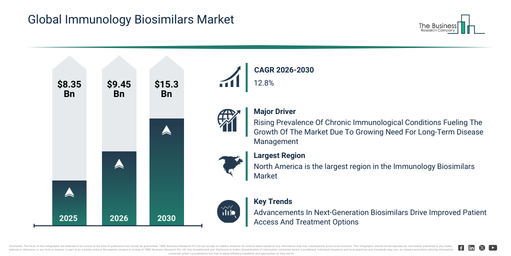
    The immunology biosimilars market has experienced significant expansion over the past few years. Its value is projected to rise from $8.35 billion in 2025 to $9.45 billion in 2026, reflecting a compound annual growth rate (CAGR) of 13.2%. Several factors drove this growth in the historical period, including the elevated expense of original biologics, a restricted supply of biosimilar options, a higher incidence of autoimmune conditions, greater integration of biologics into hospital and clinical settings, and rigorous regulatory approvals for biosimilars.

    The immunology biosimilars market is anticipated to undergo robust expansion over the coming years. Forecasts indicate it will reach a valuation of $15.3 billion by 2030, driven by a compound annual growth rate (CAGR) of 12.8%. Key factors fueling this growth during the forecast period include the creation of more sophisticated biosimilar molecules, an increase in homecare and outpatient treatment alternatives, greater regulatory alignment, heightened patient knowledge and acceptance, and the expansion of both online and hospital pharmacy distribution networks. Prominent trends shaping this period include a higher uptake of monoclonal antibody biosimilars, greater utilization of fusion protein biosimilars, the broadening of recombinant protein therapies, a growing market for interferon-based treatments, and improved access to cost-effective immunology therapies.

    Download A Free Sample Report For Comprehensive Market Insights:

    https://www.thebusinessresearchcompany.com/sample.aspx?id=25789&type=smp&utm_source=BlogsPR&utm_medium=Paid&utm_campaign=Jul_PR

    Immunology Biosimilars Market Growth Drivers: What Factors Are Accelerating Expansion?

    The anticipated expansion of the immunology biosimilars market is being driven by the rising frequency of chronic immunological diseases. These conditions represent long-term disorders where the immune system either attacks the body’s own tissues or fails to function correctly. This increase can be attributed to the growing number of people suffering from persistent immune system dysfunctions that demand ongoing treatment, careful disease monitoring, and sustained medical support. By offering cost-effective and efficient treatment options, immunology biosimilars play a crucial role in managing such diseases; they facilitate long-term care, enhance patient access to necessary therapies, and help regulate immune system irregularities. As an example, data from November 2023 published by the Multiple Sclerosis International Federation (MSIF), a UK-based global nonprofit focusing on MS research and advocacy, indicated that roughly 2.9 million individuals around the world were affected by multiple sclerosis that year. Consequently, the growing prevalence of chronic immunological conditions is fueling progress within the immunology biosimilars market.

    Immunology Biosimilars Market Segments: Where Are The Largest Growth Opportunities?

    The immunology biosimilars market covered in this report is segmented –

    1) By Drug Type: Monoclonal Antibodies, Fusion Proteins, Recombinant Proteins, Interferons, Other Biosimilar Immunomodulators

    2) By Disease: Inflammatory Bowel Disease, Arthritis, Other Diseases

    3) By Distribution Channel: Hospital Pharmacies, Retail Pharmacies, Online Pharmacies, Other Distribution Channels

    4) By End User: Hospitals, Clinics, Homecare Settings, Ambulatory Surgical Centers (ASCs)

    Subsegments:

    1) By Monoclonal Antibodies: Anti-Tumor Necrosis Factor Agents, Anti-Interleukin-6 Agents, Anti-Cluster of Differentiation 20 Agents, Anti-Interleukin-12/23 Agents, Other Monoclonal Antibodies

    2) By Fusion Proteins: Etanercept Biosimilars, Other Fusion Protein Biosimilars

    3) By Recombinant Proteins: Recombinant Human Insulin, Recombinant Human Growth Hormone, Recombinant Human Erythropoietin, Other Recombinant Protein Biosimilars

    4) By Interferons: Interferon Alpha, Interferon Beta, Interferon Gamma

    5) By Other Biosimilar Immunomodulators: Interleukin Inhibitors, Janus Kinase Inhibitors, Other Immunomodulatory Biosimilars

    Immunology Biosimilars Market Trends: What Is Shaping Future Industry Growth?

    Key players within the immunology biosimilars sector are prioritizing next-generation innovations, including potential interchangeability designations, improved formulations offering better stability, and novel delivery mechanisms, all aimed at delivering more affordable and effective treatment pathways for patients. The anticipated interchangeability designation indicates that the biosimilar is likely to satisfy regulatory requirements, enabling pharmacy-level substitution for the reference biologic product without requiring prescriber approval. As an example, Sandoz Group AG, a pharmaceutical firm headquartered in Switzerland, introduced Pyzchiva (ustekinumab-ttwe) in February 2025, a biosimilar referencing Stelara, intended for chronic autoimmune disorders such as plaque psoriasis, psoriatic arthritis, Crohn’s disease, and ulcerative colitis. Developed in collaboration with Samsung Bioepis Co. Ltd., a South Korean biopharmaceutical entity, this launch demonstrates Sandoz’s dedication to increasing the availability of immunology biosimilars by delivering a cost-effective, patient-focused therapy featuring various dosing choices, prolonged stability, and a distinctive capacity for re-refrigeration following initial cold storage.

    Immunology Biosimilars Market Major Participants And Competitive Dynamics

    Major companies operating in the immunology biosimilars market are Pfizer Inc., Novartis AG, Amgen Inc., Sandoz Group AG, Fresenius Kabi AG, Intas Pharmaceuticals Ltd., Dr. Reddy’s Laboratories Ltd., Samsung Bioepis Co. Ltd., Gedeon Richter Plc, Celltrion Inc., Biocon Ltd., Innovent Biologics Inc., Biocad, Mabion S.A.

    Access The Complete Immunology Biosimilars Market Report:

    https://www.thebusinessresearchcompany.com/report/immunology-biosimilars-global-market-report?utm_source=BlogsPR&utm_medium=Paid&utm_campaign=Jul_PR

    Immunology Biosimilars Market Regional Distribution: Which Areas Drive Market Expansion?

    North America was the largest region in the immunology biosimilars market in 2025. Asia-Pacific is expected to be the fastest-growing region in the forecast period. The regions covered in the immunology biosimilars market report are Asia-Pacific, South East Asia, Western Europe, Eastern Europe, North America, South America, Middle East, Africa.

    Get in touch with us:

    The Business Research Company: https://www.thebusinessresearchcompany.com/?utm_source=BlogsPR&utm_medium=Paid&utm_campaign=home_page_test

    Americas: +1 310-496-7795

    Asia: +44 7882 955267 & +91 8897263534

    Europe: +44 7882 955267

    Email us at: marketing@tbrc.info

    Follow us on:

    LinkedIn: https://in.linkedin.com/company/the-business-research-company

    YouTube: https://www.youtube.com/channel/UC24_fI0rV8cR5DxlCpgmyFQ

    Global Market Model: https://www.thebusinessresearchcompany.com/global-market-model
  • Immunohematology Market Set To Grow From $2.69 Billion In 2026 To $3.27 Billion By 2030 At A CAGR Of 5%

    Immunohematology Market Set To Grow From $2.69 Billion In 2026 To $3.27 Billion By 2030 At A CAGR Of 5%

    Through market attractiveness analysis, total addressable market evaluation, company benchmarking matrices, interactive Excel dashboards, expanded supply chain intelligence, emerging startup coverage, and detailed product insights, The Business Research Company’s 2026 market reports provide more actionable and strategically valuable research.

    Immunohematology Market Size And Revenue Forecast Through 2030

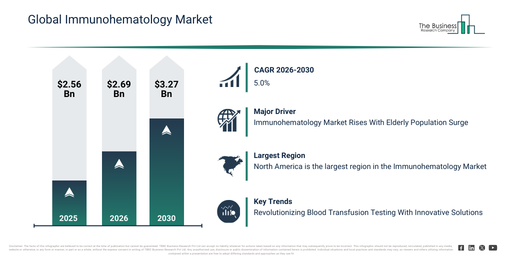
    The immunohematology market has experienced consistent growth over the past several years. From a valuation of $2.56 billion in 2025, it is projected to reach $2.69 billion by 2026, reflecting a compound annual growth rate (CAGR) of 4.9%. This historical expansion has been driven by factors such as the rising incidence of blood disorders, a growing need for secure blood transfusions, the establishment of more blood banks, an increase in the number of diagnostic laboratories, and ongoing improvements in hematology reagents.

    The immunohematology sector is anticipated to experience significant expansion over the coming years. By 2030, its market value is projected to reach $3.27 billion, reflecting a compound annual growth rate (CAGR) of 5.0%. This upward trajectory in the forecast period is driven by factors such as progress in analyzer technology, the application of artificial intelligence within lab diagnostics, a growing focus on precision medicine, the incorporation of digital health platforms, and the widening reach of blood screening initiatives. Key developments shaping this period involve cutting-edge blood typing methods, increased automation in immunohematology procedures, customized approaches to transfusion therapy, immunological diagnostics performed at the point of care, and the seamless connection of laboratory information systems.

    Download A Free Sample Report For Comprehensive Market Insights:

    https://www.thebusinessresearchcompany.com/sample.aspx?id=10295&type=smp&utm_source=BlogsPR&utm_medium=Paid&utm_campaign=Jul_PR

    Immunohematology Market Growth Factors Supporting Long-Term Expansion

    The growth of the immunohematology market is being significantly driven by the aging population in the coming years. This demographic trend, defined by a rising share of elderly individuals within a society, creates a high demand for blood-related medical care. Immunohematology plays a critical role in managing transfusion requirements specific to older adults, ensuring the safe administration of blood products and supporting various healthcare procedures for this group. To illustrate, data from January 2024 published by the Population Reference Bureau, a nonprofit organization based in the United States, indicates that the number of Americans aged 65 and older is projected to increase from 58 million in 2022 to 82 million by 2050, representing a 47% rise. Furthermore, this age cohort’s proportion of the total US population is forecasted to climb from 17% to 23% over that same interval. Consequently, the aging population is a key factor propelling the immunohematology market forward.

    Immunohematology Market Segment Analysis: What Are The Major Market Categories?

    The immunohematology market covered in this report is segmented –

    1) By Product: Analyzers And Systems, Reagents

    2) By Technology: Biochips, Erythrocyte-Magnetized Technology (Met), Gel Cards, Microplates, Polymerase Chain Reaction (PCR)

    3) By Disease: Blood-Related Diseases, HIV, Hepatitis

    4) By Application: Pretransfusion Testing, Investigation Of Immune Hemolysis, Perinatal Testing, Blood Group Phenotyping, Leucocyte And Platelet Serology

    5) By End User: Blood Banks, Diagnostic And Reference Laboratories, Hospitals, Academic And Research Institutes

    Subsegments:

    1) By Analyzers And Systems: Blood Typing Analyzers, Cross-Matching Analyzers, Gel Card Systems

    2) By Reagents: Blood Grouping Reagents, Antisera, Control Serum

    Immunohematology Market Industry Trends Shaping Future Revenue Growth

    Key players in the immunohematology field are directing their efforts toward creating advanced diagnostic tools, including soluble recombinant proteins engineered to counteract the disruptive effects of the cancer drug daratumumab on testing. Such proteins are generated via recombinant DNA methods, preserving their correct structure and biological activity when dissolved in a host system or solution, which supports their utility in both research and medical contexts. As an example, in November 2023, Grifols, S.A., a pharmaceutical firm based in Spain, introduced its Grifols sCD38 product, marking the debut of a soluble recombinant protein in the market. This innovation was crafted to mitigate the obstacles presented by daratumumab in critical blood compatibility assessments for transfusions. Tailored specifically for individuals with multiple myeloma, the solution prevents daratumumab from binding to CD38 sites on red blood cells, thereby enabling accurate results in pre-transfusion evaluations. By streamlining the steps involved in screening, identification, and crossmatching, the Grifols sCD38 solution improves transfusion procedures and reduces delays in delivering essential blood products to patients.

    Immunohematology Market Leading Companies Driving Competitive Growth

    Major companies operating in the immunohematology market are Ortho Clinical Diagnostics Inc., Immunocor Inc., Abbott Laboratories, Siemens Healthineers AG, Grifols S.A., Beckman Coulter Inc., Thermo Fisher Scientific Inc., Becton Dickinson and Company, Merck Co. & KGaA, Bio-Rad Laboratories, Sysmex Corporation, Danaher Corporation, Biosystems S.A., Roche Holdings AG, Mindray Medical International Limited, F.Hoffmann La-Roche Ltd., Biotest AG, Cardinal Health Inc., Quotient Limited, DiaSorin S.p.A., Lorne Laboratories Ltd., Biokit S.A., Avox Technologies, Diagnostic Automation/Cortez Diagnostics Inc., Inno-train Diagnostik GmbH, Drucker Diagnostics Inc., Immundia Diagnostics Pvt. Ltd.

    Access The Complete Immunohematology Market Report:

    https://www.thebusinessresearchcompany.com/report/immunohematology-global-market-report?utm_source=BlogsPR&utm_medium=Paid&utm_campaign=Jul_PR

    Immunohematology Market Leading Geography: Which Region Generates The Most Revenue?

    North America was the largest region in the immunohematology market in 2025. Asia-Pacific is expected to be the fastest-growing region in the global immunohematology market during the forecast period. The regions covered in the immunohematology market report are Asia-Pacific, South East Asia, Western Europe, Eastern Europe, North America, South America, Middle East, Africa.

    Get in touch with us:

    The Business Research Company: https://www.thebusinessresearchcompany.com/?utm_source=BlogsPR&utm_medium=Paid&utm_campaign=home_page_test

    Americas: +1 310-496-7795

    Asia: +44 7882 955267 & +91 8897263534

    Europe: +44 7882 955267

    Email us at: marketing@tbrc.info

    Follow us on:

    LinkedIn: https://in.linkedin.com/company/the-business-research-company

    YouTube: https://www.youtube.com/channel/UC24_fI0rV8cR5DxlCpgmyFQ

    Global Market Model: https://www.thebusinessresearchcompany.com/global-market-model
  • Immunoglobulins Market Opportunities Are Emerging Beyond Traditional Growth Areas

    Immunoglobulins Market Opportunities Are Emerging Beyond Traditional Growth Areas

    Delivering more actionable and strategically valuable research, The Business Research Company’s 2026 market reports feature market attractiveness analysis, total addressable market evaluation, company benchmarking matrices, interactive Excel dashboards, expanded supply chain intelligence, emerging startup coverage, and detailed product insights.

    Immunoglobulins Market Growth From $22.51 Billion In 2026 To $34.52 Billion By 2030 At A CAGR Of 11.3%

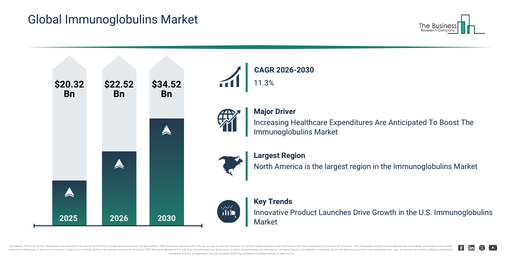
    The immunoglobulins market has seen swift expansion in recent times. Valued at $20.32 billion in 2025, it is projected to reach $22.52 billion by 2026, reflecting a compound annual growth rate (CAGR) of 10.8%. This past growth has been fueled by a rising incidence of immunodeficiency conditions, a growing number of autoimmune disease cases, improvements in hospital facilities, advances in plasma fractionation technology, and heightened awareness regarding antibody-based treatments.

    The market for immunoglobulins is projected to experience rapid expansion over the coming years, reaching a value of $34.52 billion by 2030, reflecting a compound annual growth rate (CAGR) of 11.3%. This anticipated growth during the forecast period is driven by progress in personalized medicine, the creation of innovative monoclonal antibodies, a rise in home-based subcutaneous treatments, the proliferation of biotechnology and research facilities, and enhanced government backing for immunotherapy programs. Key developments shaping the market outlook include the shift toward tailored immunoglobulin therapies, a greater preference for subcutaneous administration methods, heightened demand for intravenous immunoglobulin (IVIG) in autoimmune conditions, the broadening of treatment options for rare immunodeficiency disorders, and progress in monoclonal antibody research.

    Download A Free Sample Report For Comprehensive Market Insights:

    https://www.thebusinessresearchcompany.com/sample.aspx?id=5284&type=smp&utm_source=BlogsPR&utm_medium=Paid&utm_campaign=Jul_PR

    Immunoglobulins Market Demand Drivers Creating New Revenue Opportunities

    The continued rise in healthcare spending is anticipated to drive expansion within the hyperphosphatemia treatment market in the coming period. This condition, which involves managing therapies and medications designed to lower excessive phosphate levels in the bloodstream—often found in individuals with chronic kidney disease or similar disorders—benefits directly from greater financial resources allocated to medical care. Enhanced funding enables wider availability of these interventions, fuels progress in developing more sophisticated treatment options, and refines approaches to patient care. To illustrate, data from the Canadian Institute for Health Information, released in November 2023, shows that Canada’s total annual health expenditure is forecast to hit $344 billion, or roughly $8,740 per person, by the end of that year. That figure represents a 2.8% uptick from 2022, a year which recorded a notably slower growth rate of just 1.5%, signaling a clear resurgence in investment within the health sector. As a result, this upward trend in spending is fueling the momentum behind the hyperphosphatemia treatment market’s growth.

    Immunoglobulins Market Segment Breakdown: Which Categories Generate The Most Revenue?

    The immunoglobulins market covered in this report is segmented –

    1) By Product: IGG, IGA, IGM, IGE, IGD

    2) By Mode Of Delivery: Intravenous Mode Of Delivery, Subcutaneous Mode Of Delivery

    3) By Application: Hypogammaglobulinemia, Chronic Inflammatory demyelinating polyneuropathy (CIDP), Immunodeficiency Disease, Myasthenia Gravis, Idiopathic thrombocytopenic purpura (ITP), Other Applications

    Subsegments:

    1) By IGG (Immunoglobulin G): IVIG (Intravenous Immunoglobulin), SCIG (Subcutaneous Immunoglobulin)

    2) By IGA (Immunoglobulin A): Monoclonal IGA, Polyvalent IGA

    3) By IGM (Immunoglobulin M): Monoclonal IGM, Polyvalent IGM

    4) By IGE (Immunoglobulin E): Allergen-Specific IGE, Monoclonal IGE

    5) By IGD (Immunoglobulin D): Research-Use IGD, Monoclonal IGD

    Immunoglobulins Market Trends Driving Strategic Industry Expansion

    Key players within the immunoglobulins sector are concentrating on creating advanced products, including intravenous immunoglobulins, with the goal of reaching a broader customer base, driving higher sales volumes, and boosting overall revenue. A notable example occurred in September 2024 when GC Biopharma, a biotechnology firm headquartered in South Korea, introduced ALYGLO (Immune Globulin Intravenous, Human-stwk) 10% Liquid into the U.S. market. This product is intended for the management of primary humoral immunodeficiency (PI) in adults aged 17 years and older and is now accessible to patients via specialty pharmacy channels. This launch holds considerable importance because the United States represents the world’s largest marketplace for immunoglobulins, with an estimated value of around $11.6 billion. GC Biopharma has set a target to generate $50 million in sales from ALYGLO during its initial year, and it aspires to escalate this figure to $300 million by 2028. To realize this ambitious growth plan, the company is forging alliances with major U.S. pharmacy benefit managers and specialty pharmacies, entities that play a vital role in the efficient distribution of immunoglobulin therapies.

    Immunoglobulins Market Key Players And Strategic Industry Positioning

    Major companies operating in the immunoglobulins market are Baxter International Inc., CSL Behring LLC, Grifols S. A., Octapharma AG, China Biologic Products Holdings Inc., Kedrion SpA, LFB SA, Biotest AG, Sanquin Blood Supply Foundation, ADMA Biologics Inc., Option Care Health Inc., Shanghai RAAS Blood Products Co. Ltd., Antibody Solutions, Bio Products Laboratory Ltd., Immunovant Inc., Kamada Ltd., Emergent BioSolutions Inc., Fresenius Kabi AG, GlaxoSmithKline plc, Pfizer Inc., Roche Holding AG, Samsung Bioepis Co. Ltd., Takeda Pharmaceutical Company Limited, Teva Pharmaceutical Industries Ltd., Zydus Cadila Healthcare Limited

    Access The Complete Immunoglobulins Market Report:

    https://www.thebusinessresearchcompany.com/report/immunoglobulins-global-market-report?utm_source=BlogsPR&utm_medium=Paid&utm_campaign=Jul_PR

    Immunoglobulins Market Regional Outlook: Where Are The Largest Opportunities Located?

    North America was the largest region in the immunoglobulins market in 2025. Asia-Pacific is expected to be the fastest-growing region in the forecast period. The regions covered in the immunoglobulins market report are Asia-Pacific, South East Asia, Western Europe, Eastern Europe, North America, South America, Middle East, Africa.

    Get in touch with us:

    The Business Research Company: https://www.thebusinessresearchcompany.com/?utm_source=BlogsPR&utm_medium=Paid&utm_campaign=home_page_test

    Americas: +1 310-496-7795

    Asia: +44 7882 955267 & +91 8897263534

    Europe: +44 7882 955267

    Email us at: marketing@tbrc.info

    Follow us on:

    LinkedIn: https://in.linkedin.com/company/the-business-research-company

    YouTube: https://www.youtube.com/channel/UC24_fI0rV8cR5DxlCpgmyFQ

    Global Market Model: https://www.thebusinessresearchcompany.com/global-market-model
  • Immunoglobulin Fusion Protein Market Expansion Is Opening New Pathways For Strategic Investment

    Immunoglobulin Fusion Protein Market Expansion Is Opening New Pathways For Strategic Investment

    Enhanced with market attractiveness analysis, total addressable market evaluation, company benchmarking matrices, interactive Excel dashboards, expanded supply chain intelligence, emerging startup coverage, and detailed product insights, The Business Research Company’s 2026 market reports deliver more actionable and strategically valuable research.

    Immunoglobulin Fusion Protein Market Expansion Outlook: What Revenue Opportunities Lie Ahead?

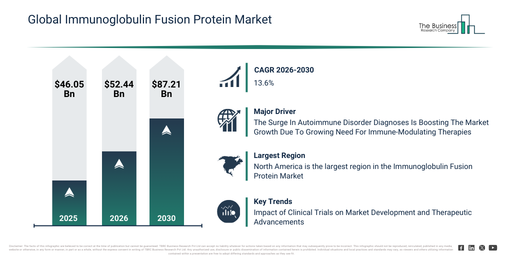
    The market for immunoglobulin fusion proteins has seen substantial expansion over the past few years. Valued at $46.05 billion in 2025, it is projected to reach $52.44 billion by 2026, reflecting a compound annual growth rate (CAGR) of 13.9%. Historical growth was driven by innovation in biologic drugs, the rising burden of autoimmune conditions, the success of monoclonal antibodies, increased adoption of biologics in hospitals, and the ongoing management of chronic diseases.

    The market for immunoglobulin fusion proteins is projected to experience significant expansion shortly, reaching a valuation of $87.21 billion by 2030, driven by a compound annual growth rate (CAGR) of 13.6%. This anticipated rise in the forecast period is fueled by factors such as progress in precision biologic development, a robust pipeline for rare disease therapies, competition from biosimilars, advancements in protein engineering, and a growing demand for long-acting treatments. Key developments expected over this period include an increasing focus on creating long-acting biologics, broader adoption of Fc fusion technologies, wider application in autoimmune and rare disease contexts, enhancements in drug stability and half-life through engineering, and heightened investment in protein engineering platforms.

    Download A Free Sample Report For Comprehensive Market Insights:

    https://www.thebusinessresearchcompany.com/sample.aspx?id=24568&type=smp&utm_source=BlogsPR&utm_medium=Paid&utm_campaign=Jul_PR

    Immunoglobulin Fusion Protein Market Expansion Supported By Key Demand Factors

    The anticipated growth of the immunoglobulin fusion protein market is being driven by the rising incidence of autoimmune disorders. These disorders occur when the immune system mistakenly targets and damages the body’s own healthy cells. This upward trend is largely attributed to a mix of hereditary susceptibility and external triggers like infections or lifestyle factors, which together facilitate the onset of such conditions. Immunoglobulin fusion proteins aid in managing these disorders by modulating immune responses, thereby curbing inflammation and preventing attacks on bodily tissues. For example, Arthritis Australia, a nonprofit based in the country, reported in February 2024 that an estimated 562,378 Australians will have rheumatoid arthritis (RA) in 2025, representing 14% of all arthritis cases. By 2040, this figure is projected to climb by 33% to 748,721 individuals, an increase of 186,343 compared to 2025. As a result, the expanding prevalence of autoimmune diseases is fueling market expansion for immunoglobulin fusion proteins.

    Immunoglobulin Fusion Protein Market Segmentation: How Is The Market Structured Across Key Categories?

    The immunoglobulin fusion protein market covered in this report is segmented –

    1) By Type: Monoclonal Antibodies, Polyclonal Antibodies, Bispecific Antibodies, Recombinant Antibodies

    2) By Drug Class: Immunosuppressive Drugs, Immunostimulatory Drugs

    3) By Mode of Administration: Intravenous, Subcutaneous, Intramuscular

    4) By Application: Autoimmune Disease, Eye Diseases, Diabetes, Hemophilia

    5) By End User: Hospitals, Clinics, Research Institutes

    Subsegments:

    1) By Monoclonal Antibodies: Human Monoclonal Antibodies, Humanized Monoclonal Antibodies, Chimeric Monoclonal Antibodies, Murine Monoclonal Antibodies

    2) By Polyclonal Antibodies: Animal-Derived Polyclonal Antibodies, Human-Derived Polyclonal Antibodies, Recombinant Polyclonal Antibodies

    3) By Bispecific Antibodies: Tandem Single-Chain Variable Fragment, Dual-Variable Domain Antibodies, Bispecific T-Cell Engagers (BiTEs), Dual-Affinity Re-Targeting Antibodies

    4) By Recombinant Antibodies: Fragment Antibodies, Full-Length Recombinant Antibodies, Antibody-Drug Conjugates (ADCs), Engineered Antibody Domains

    Immunoglobulin Fusion Protein Market Growth Trends Influencing Competitive Dynamics

    Key players within the immunoglobulin fusion protein market are actively conducting clinical trials aimed at creating novel products like bispecific antibody fusion proteins, with the goal of improving therapeutic effectiveness and addressing various disease mechanisms. A bispecific antibody fusion protein is a genetically engineered molecule capable of simultaneously targeting two distinct antigens, which advances precision medicine by drawing immune cells toward tumor cells or interrupting multiple signaling pathways. For example, in February 2025, Innovent Biologics, Inc., a biotechnology firm headquartered in China, obtained its second Fast Track Designation (FTD) from the U.S. Food and Drug Administration (FDA) for IBI343, a bispecific antibody fusion protein designed for advanced solid tumors. IBI343 is engineered to concurrently engage tumor-associated antigens and immune effector cells, thereby refining the accuracy and strength of anti-tumor immune reactions. This designation is projected to speed up IBI343’s clinical development and regulatory assessment, highlighting its promise in fulfilling critical unmet needs in cancer care.

    Immunoglobulin Fusion Protein Market Competitive Landscape And Leading Companies

    Major companies operating in the immunoglobulin fusion protein market are Amgen Inc., Pfizer Inc., Swedish Orphan Biovitrum AB (Sobi), Regeneron Pharmaceuticals Inc., Sanofi S.A., AbbVie Inc., Bristol-Myers Squibb Company, Roche Holding AG, Genentech Inc., UCB S.A., AstraZeneca PLC, CSL Behring, Takeda Pharmaceutical Company Limited, Novartis AG, Merck & Co. Inc., Biogen Inc., Horizon Therapeutics (Amgen subsidiary), Kyowa Kirin Co. Ltd., Ultragenyx Pharmaceutical Inc., Apellis Pharmaceuticals Inc., Alexion Pharmaceuticals (AstraZeneca subsidiary), Argenx SE, HanAll Biopharma Co. Ltd., Innovent Biologics Inc., 3SBio Inc.

    Access The Complete Immunoglobulin Fusion Protein Market Report:

    https://www.thebusinessresearchcompany.com/report/immunoglobulin-fusion-protein-global-market-report?utm_source=BlogsPR&utm_medium=Paid&utm_campaign=Jul_PR

    Immunoglobulin Fusion Protein Market Geographic Landscape: Which Region Dominates Industry Growth?

    North America was the largest region in the immunoglobulin fusion proteins market in 2025. Asia-Pacific is expected to be the fastest-growing region in the forecast period. The regions covered in the immunoglobulin fusion protein market report are Asia-Pacific, South East Asia, Western Europe, Eastern Europe, North America, South America, Middle East, Africa.

    Get in touch with us:

    The Business Research Company: https://www.thebusinessresearchcompany.com/?utm_source=BlogsPR&utm_medium=Paid&utm_campaign=home_page_test

    Americas: +1 310-496-7795

    Asia: +44 7882 955267 & +91 8897263534

    Europe: +44 7882 955267

    Email us at: marketing@tbrc.info

    Follow us on:

    LinkedIn: https://in.linkedin.com/company/the-business-research-company

    YouTube: https://www.youtube.com/channel/UC24_fI0rV8cR5DxlCpgmyFQ

    Global Market Model: https://www.thebusinessresearchcompany.com/global-market-model
  • Immunocytokines Market Trends Are Creating New Opportunities For Industry Leaders

    Immunocytokines Market Trends Are Creating New Opportunities For Industry Leaders

    Through market attractiveness analysis, total addressable market evaluation, company benchmarking matrices, interactive Excel dashboards, expanded supply chain intelligence, emerging startup coverage, and detailed product insights, The Business Research Company’s 2026 market reports provide more actionable and strategically valuable research.

    Immunocytokines Market Growth Potential: How Will Market Size Change Through 2030?

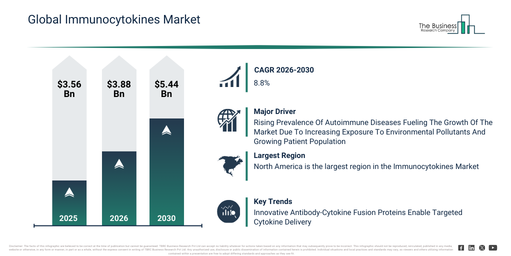
    The immunocytokines market has experienced robust expansion in recent years. From $3.56 billion in 2025, it is projected to reach $3.88 billion by 2026, growing at a compound annual growth rate (CAGR) of 9.0%. This historical growth is driven by the scarce supply of targeted immunocytokine therapies, a continued dependence on standard cytokine treatments, heightened activity in oncology and autoimmune research, a rising number of clinical trials focused on cytokine-based treatments, and the integration of fundamental immune-modulating treatment regimens.

    The immunocytokines market is anticipated to experience robust expansion over the coming years. By 2030, its value is projected to reach $5.44 billion, reflecting a compound annual growth rate (CAGR) of 8.8%. This forecasted growth is driven by the creation of recombinant and modified interleukins, the broadening of tumor necrosis factor-based immunocytokines, heightened investment in antibody-cytokine fusion proteins, greater utilization in personalized cancer and autoimmune therapies, and the combination of immune modulators with advanced delivery mechanisms. Key trends shaping this period include the growing application of immunocytokines in targeted cancer treatments, intensified research into cytokine-based immunotherapies for autoimmune conditions, a heightened emphasis on minimizing systemic toxicity via precise delivery, the proliferation of specialty clinics and research centers employing immunocytokines, and the advancement of fusion proteins that pair cytokines with innovative antibody formats.

    Download A Free Sample Report For Comprehensive Market Insights:

    https://www.thebusinessresearchcompany.com/sample.aspx?id=27315&type=smp&utm_source=BlogsPR&utm_medium=Paid&utm_campaign=Jul_PR

    Immunocytokines Market Growth Drivers And Industry Catalysts

    The anticipated expansion of the immunocytokines market is being driven by the increasing incidence of autoimmune diseases. These disorders arise when the immune system erroneously targets the body’s own healthy cells and tissues. This growing trend is largely attributed to heightened exposure to environmental contaminants, which can disturb immune regulation and provoke attacks on the body’s tissues. By combining precise immune modulation with targeted delivery, immunocytokines offer a compelling solution for managing autoimmune conditions while reducing systemic side effects. Their ability to direct cytokines specifically to inflamed tissues enhances therapeutic efficacy, leading to improved patient outcomes and safety profiles. For example, in February 2024, Arthritis Australia, a non-profit organization based in Australia, projected that 562,378 Australians would be living with rheumatoid arthritis (RA) in 2025, representing 14% of all arthritis cases that year. This figure is forecasted to climb by 33% to 748,721 by 2040, marking an increase of 186,343 individuals compared to 2025. Consequently, the rising prevalence of autoimmune diseases is fueling growth in the immunocytokines market.

    Immunocytokines Market Segmentation Trends And Revenue Drivers

    The immunocytokines market covered in this report is segmented –

    1) By Product Type: Interleukins, Interferons, Tumor Necrosis Factors, Other Product Types

    2) By Mechanism Of Action: Antagonists, Agonists, Immune Modulators

    3) By Application: Cancer, Autoimmune Diseases, Infectious Diseases, Other Applications

    4) By End-User: Hospitals, Research Institutes, Specialty Clinics, Other End-Users

    Subsegments:

    1) By Interleukins: Recombinant Interleukin, Modified Interleukin

    2) By Interferons: Interferon Alpha, Interferon Beta, Interferon Gamma

    3) By Tumor Necrosis Factors: Tumor Necrosis Factor Alpha, Tumor Necrosis Factor Beta, Tumor Necrosis Factor Receptor Fusion Proteins

    4) By Other Product Types: Colony Stimulating Factors, Immunocytokines

    Immunocytokines Market Trends Influencing Long-Term Demand

    Leading players in the immunocytokines sector are increasingly concentrating on the creation of advanced therapies, specifically antibody cytokine fusion proteins, designed to achieve precise cytokine delivery and improve treatment effectiveness while reducing systemic side effects. These fusion proteins represent engineered biologics that merge an antibody’s targeting specificity with a cytokine’s immunomodulatory properties, ensuring direct delivery to disease sites like tumors or inflamed tissues. For example, in July 2023, SunHo BioPharmaceutical Co. Ltd., a biopharmaceutical firm based in China, introduced IBB0979 (B7H3–IL-10 immunocytokine), an innovative antibody-cytokine fusion protein aimed at treating advanced or metastatic solid tumors, which is currently in Phase I/II clinical trials. This therapeutic candidate fuses the tumor-targeting attributes of the B7H3 antibody with the anti-inflammatory and immune-enhancing effects of interleukin-10 (IL-10). IBB0979 is intended to reshape the tumor microenvironment by delivering IL-10 specifically to cells expressing B7H3, thereby mitigating inflammation and amplifying anticancer immune responses, potentially opening up a novel treatment avenue for resistant solid tumors.

    Immunocytokines Market Industry Leaders: Which Organizations Are Driving Competition?

    Major companies operating in the immunocytokines market are Xencor Inc., Philogen S.p.A, Cytimmune Sciences Inc., Cytune Pharma S.A.S.

    Access The Complete Immunocytokines Market Report:

    https://www.thebusinessresearchcompany.com/report/immunocytokines-global-market-report?utm_source=BlogsPR&utm_medium=Paid&utm_campaign=Jul_PR

    Immunocytokines Market Largest Region: Which Geography Holds The Highest Market Share?

    North America was the largest region in the immunocytokines market in 2025. Asia-Pacific is expected to be the fastest-growing region in the forecast period. The regions covered in the immunocytokines market report are Asia-Pacific, South East Asia, Western Europe, Eastern Europe, North America, South America, Middle East, Africa.

    Get in touch with us:

    The Business Research Company: https://www.thebusinessresearchcompany.com/?utm_source=BlogsPR&utm_medium=Paid&utm_campaign=home_page_test

    Americas: +1 310-496-7795

    Asia: +44 7882 955267 & +91 8897263534

    Europe: +44 7882 955267

    Email us at: marketing@tbrc.info

    Follow us on:

    LinkedIn: https://in.linkedin.com/company/the-business-research-company

    YouTube: https://www.youtube.com/channel/UC24_fI0rV8cR5DxlCpgmyFQ

    Global Market Model: https://www.thebusinessresearchcompany.com/global-market-model