Month: July 2026

  • Ileostomy Products Market Growth Is Reshaping Competitive Advantage Across The Industry

    Ileostomy Products Market Growth Is Reshaping Competitive Advantage Across The Industry

    Delivering more actionable and strategically valuable research, The Business Research Company’s 2026 market reports feature market attractiveness analysis, total addressable market evaluation, company benchmarking matrices, interactive Excel dashboards, expanded supply chain intelligence, emerging startup coverage, and detailed product insights.

    Ileostomy Products Market Value Analysis: What Growth Is Expected Over The Forecast Period?

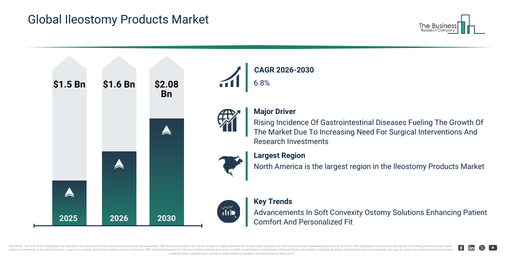
    In recent years, the ileostomy products market has experienced robust growth. Its value is projected to expand from $1.5 billion in 2025 to $1.6 billion in 2026, reflecting a compound annual growth rate (CAGR) of 6.8%. This historic increase has been driven by several factors, including a rise in colorectal and bowel surgeries, improved survival rates following gastrointestinal procedures, the early integration of fundamental ostomy systems, a focus on hospital-based post-surgical care, and a relatively narrow scope of product customization.

    The forecast for the ileostomy products market indicates substantial expansion over the coming years, with an anticipated value of $2.08 billion by 2030, representing a compound annual growth rate (CAGR) of 6.8%. This projected growth during the forecast period is driven by factors such as an expanding elderly demographic, a growing inclination toward home healthcare options, improvements in ostomy materials and adhesives, heightened patient awareness and education, and a rise in the number of outpatient surgical interventions. Key developments shaping the market include an increased demand for long-term ostomy care products, a greater emphasis on skin-friendly and leak-resistant designs, the growing prevalence of home-based ostomy management, the emergence of customizable and individualized solutions, and an intensified focus on comfort and quality-of-life enhancements.

    Download A Free Sample Report For Comprehensive Market Insights:

    https://www.thebusinessresearchcompany.com/sample.aspx?id=24247&type=smp&utm_source=BlogsPR&utm_medium=Paid&utm_campaign=Jul_PR

    Ileostomy Products Market Opportunity Drivers: What Is Creating New Revenue Potential?

    The growth of the ileostomy products market is expected to be driven by the rising prevalence of gastrointestinal diseases in the years ahead. These diseases impact the digestive organs, hindering proper digestion and nutrient uptake. Their increasing occurrence is often attributed to poor dietary habits, including high consumption of processed foods and low fiber intake, which disturb gut health and lead to conditions like IBS and inflammatory bowel disease. Ileostomy products become vital when surgery results in the creation of an ileostomy for managing certain gastrointestinal disorders. They are essential for enabling patients to maintain comfort and hygiene following the bypass or removal of parts of their digestive system. For example, as per the Turkish Journal of Gastroenterology, a Turkey-based publication, as of June 2025, there are currently 6.9 million people worldwide affected by inflammatory bowel disease (IBD). Consequently, this upward trend in gastrointestinal diseases will fuel the expansion of the ileostomy products market.

    Ileostomy Products Market Segment Analysis Highlighting Growth Areas

    The ileostomy products market covered in this report is segmented –

    1) By Type: Ileostomy Drainable Bags, Pouches, Flanges, Barriers, Accessories

    2) By Application: Permanent Ileostomy, Temporary Ileostomy

    3) By End User: Hospitals, Ambulatory Surgical Centers, Clinics, Other End Users

    Subsegments:

    1) By Ileostomy Drainable Bags: One-Piece Drainable Bags, Two-Piece Drainable Bags, Transparent Drainable Bags, Opaque Drainable Bags

    2) By Pouches: One-Piece Pouches, Two-Piece Pouches, Closed-End Pouches, High-Output Pouches, Urostomy Pouches

    3) By Flanges: Flat Flanges, Convex Flanges, Pre-Cut Flanges, Cut-To-Fit Flanges

    4) By Barriers: Skin Barrier Wafers, Extended Wear Barriers, Standard Wear Barriers, Moldable Barriers

    5) By Accessories: Barrier Rings, Barrier Strips, Ostomy Belt, Adhesive Removers, Deodorants, Skin Protectants, Seals And Pastes

    Ileostomy Products Market Innovation Trends Driving Future Development

    Major players in the ileostomy products market are concentrating on the creation of advanced technologies, including soft convexity ostomy solutions, aimed at improving patient comfort. A soft convexity ostomy solution refers to a device featuring a gently curved baseplate that exerts mild pressure around the stoma area. As an example, Convatec Group, a medical products and technology company based in the UK, introduced the Esteem Body with Leak Defense in April 2024. This product from Convatec offers eight different combinations, incorporating four distinct tension points and two levels of convex depth, enabling a personalized fit to achieve optimal stoma protrusion and skin flattening. Such adaptability ensures that every ostomate, considering their individual requirements, can attain the most suitable fit possible. The Leak Defense feature utilizes Convatec’s top-tier adhesives, Durahesive and Modified Stomahesive, integrated with a soft convexity range to establish a leak-proof seal, preventing leaks while guaranteeing consistent wear duration. Furthermore, the new ‘body’ pouch is shaped in a patented ‘8-shape’ design that reduces sagging during filling, thereby boosting both comfort and dependability.

    Ileostomy Products Market Leading Companies: Who Holds Significant Market Presence?

    Major companies operating in the ileostomy products market are 3M Healthcare, B. Braun Melsungen AG, Smith & Nephew Plc, Hollister Incorporated, Coloplast A/S, ConvaTec Group Plc, Salts Healthcare Ltd, Welland Medical Ltd, Alcare Co. Ltd., Torbot Group, Cymed Micro Skin, Perfect Choice Medical Technologies, Schena Ostomy Technologies Inc., Flexicare (Group) Limited, TG Eakin Limited, Merlen Manufacturing Ltd, Pelican Healthcare Ltd, Nu-Hope Labs Inc., PermaType Medical, Fortis Medical Products Inc.

    Access The Complete Ileostomy Products Market Report:

    https://www.thebusinessresearchcompany.com/report/ileostomy-products-global-market-report?utm_source=BlogsPR&utm_medium=Paid&utm_campaign=Jul_PR

    Ileostomy Products Market Regional Analysis: Which Region Leads By Revenue?

    North America was the largest region in the ileostomy products market in 2025. Asia-Pacific is expected to be the fastest-growing region in the forecast period. The regions covered in the ileostomy products market report are Asia-Pacific, South East Asia, Western Europe, Eastern Europe, North America, South America, Middle East, Africa.

    Get in touch with us:

    The Business Research Company: https://www.thebusinessresearchcompany.com/?utm_source=BlogsPR&utm_medium=Paid&utm_campaign=home_page_test

    Americas: +1 310-496-7795

    Asia: +44 7882 955267 & +91 8897263534

    Europe: +44 7882 955267

    Email us at: marketing@tbrc.info

    Follow us on:

    LinkedIn: https://in.linkedin.com/company/the-business-research-company

    YouTube: https://www.youtube.com/channel/UC24_fI0rV8cR5DxlCpgmyFQ

    Global Market Model: https://www.thebusinessresearchcompany.com/global-market-model
  • Ibrutinib Market Forecast Signals New Revenue Opportunities Through 2030

    Ibrutinib Market Forecast Signals New Revenue Opportunities Through 2030

    Enhanced with market attractiveness analysis, total addressable market evaluation, company benchmarking matrices, interactive Excel dashboards, expanded supply chain intelligence, emerging startup coverage, and detailed product insights, The Business Research Company’s 2026 market reports deliver more actionable and strategically valuable research.

    Ibrutinib Market Size Forecast: How Large Could The Market Become By 2030?

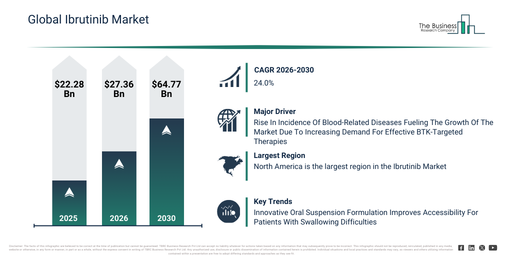
    Over the recent period, the market for ibrutinib has experienced exponential growth. From a valuation of $22.28 billion in 2025, it is projected to reach $27.36 billion by 2026, reflecting a compound annual growth rate (CAGR) of 22.8%. This historical expansion can be linked to a rise in the incidence of B-cell malignancies, regulatory approvals of ibrutinib for CLL and SLL, greater uptake of oral cancer treatments, progress in BTKi research, and heightened awareness surrounding targeted cancer therapies.

    The market for ibrutinib is anticipated to undergo rapid expansion over the coming years. By 2030, its value is projected to reach $64.77 billion, driven by a compound annual growth rate (CAGR) of 24.0%. This forecasted growth can be linked to several factors, including broadening applications in newly addressed hematologic cancers, the emergence of advanced BTK inhibitors, a rise in collaborative efforts between pharmaceutical firms and biotechnology companies, increased commitments to precision oncology, and the proliferation of dedicated oncology treatment facilities. Key developments during this period are likely to encompass targeted BTK inhibition strategies, customized cancer care, the creation of oral small-molecule drugs, the use of combination treatment protocols, and the continued expansion of specialized oncology centers.

    Download A Free Sample Report For Comprehensive Market Insights:

    https://www.thebusinessresearchcompany.com/sample.aspx?id=13250&type=smp&utm_source=BlogsPR&utm_medium=Paid&utm_campaign=Jul_PR

    Ibrutinib Market Growth Momentum: Which Factors Are Influencing Demand?

    The growing prevalence of blood-related disorders is anticipated to boost the expansion of the ibrutinib market in the coming years. Blood-related diseases, which encompass conditions affecting red blood cells, white blood cells, platelets, or plasma, are becoming more common due to aging populations. Older individuals face a heightened risk of disorders such as anemia, leukemia, and clotting issues because of weakened immune systems and accumulated health problems. Ibrutinib addresses these diseases by inhibiting BTK signaling, thereby reducing the proliferation and survival of malignant B-cells. For example, the American Cancer Society, a U.S.-based cancer organization, reported 62,770 new cases of leukemia in 2024, with this figure climbing to 66,890 in 2025. Consequently, the rising incidence of blood-related illnesses is fueling the ibrutinib market’s growth.

    The increasing proportion of elderly individuals is expected to propel the ibrutinib market forward. An aging population, characterized by a higher share of older adults due to longer lifespans and lower birth rates, is expanding as medical advancements enhance life expectancy. Ibrutinib is applied in treating age-related blood cancers more effectively, thereby improving survival rates and overall health outcomes. In January 2024, the Population Reference Bureau, a U.S.-based nonprofit, projected that the number of Americans aged 65 and older would increase from 58 million in 2022 to 82 million by 2050, a 47% rise. This demographic shift will see this age group’s share of the U.S. population grow from 17% to 23% over the same period. Thus, the rise in the aging population is driving the ibrutinib market’s growth.

    Ibrutinib Market Segment Performance And Strategic Opportunities

    The ibrutinib market covered in this report is segmented –

    1) By Type: Capsules, Tablets

    2) By Distribution Channel: Hospital Pharmacies, Retail Pharmacies, Online Pharmacies

    3) By Applications: Chronic Lymphocytic Leukemia (CLL), Small Lymphocytic Lymphoma (SLL), Other Applications

    4) By End-User: Hospitals, Clinics, Specialty Centers, Ambulatory Surgical Centers

    Subsegments:

    1) By Capsules: Hard Gelatin Capsules, Soft Gelatin Capsules

    2) By Tablets: Immediate Release Tablets, Extended Release Tablets

    Ibrutinib Market Trends Reshaping Industry Growth

    Key players in the ibrutinib market are advancing patient-friendly approaches, such as adaptable cancer treatment options that offer flexible formulations for individuals who struggle with swallowing tablets or capsules, thereby enhancing treatment accessibility and ease of use. This type of solution is designed around patient needs, improving convenience and access by providing alternatives like orally disintegrating tablets, chewable forms, granules, or liquid suspensions that are simpler to consume. As an example, in February 2024, Johnson & Johnson, a healthcare firm based in the US, together with its alliance partner Pharmacyclics LLC, a US-based biopharmaceutical company, secured FDA approval for an oral suspension version of IMBRUVICA (ibrutinib). This expanded labeling for IMBRUVICA now covers treatment for adult patients with chronic lymphocytic leukemia (CLL), small lymphocytic lymphoma (SLL), Waldenström’s macroglobulinemia (WM), and chronic graft versus host disease (cGVHD), providing a more convenient option for those who find it difficult to swallow tablets or capsules.

    Ibrutinib Market Key Players: Which Companies Shape Industry Competition?

    Major companies operating in the ibrutinib market are ABBVie Inc., Teva Pharmaceutical Industries Limited, Dr Reddy’s Laboratories Ltd., Apotex Inc., Cipla Limited, Zydus Lifesciences Limited, Sun Pharmaceutical Industries Ltd., Accord Healthcare Limited, Natco Pharma Ltd., Beacon Pharmaceuticals plc, MSN Laboratories Pvt Ltd., Hetero Drugs Ltd., Aurobindo Pharma Ltd., Glenmark Pharmaceuticals Ltd., Mylan N.V., Lupin Limited, Intas Pharmaceuticals Ltd., Cadila Healthcare Ltd., Torrent Pharmaceuticals Ltd., Alembic Pharmaceuticals Ltd.

    Access The Complete Ibrutinib Market Report:

    https://www.thebusinessresearchcompany.com/report/ibrutinib-global-market-report?utm_source=BlogsPR&utm_medium=Paid&utm_campaign=Jul_PR

    Ibrutinib Market Geographic Distribution And Regional Opportunities

    North America was the largest region in the ibrutinib market in 2025. The regions covered in the ibrutinib market report are Asia-Pacific, South East Asia, Western Europe, Eastern Europe, North America, South America, Middle East, Africa.

    Get in touch with us:

    The Business Research Company: https://www.thebusinessresearchcompany.com/?utm_source=BlogsPR&utm_medium=Paid&utm_campaign=home_page_test

    Americas: +1 310-496-7795

    Asia: +44 7882 955267 & +91 8897263534

    Europe: +44 7882 955267

    Email us at: marketing@tbrc.info

    Follow us on:

    LinkedIn: https://in.linkedin.com/company/the-business-research-company

    YouTube: https://www.youtube.com/channel/UC24_fI0rV8cR5DxlCpgmyFQ

    Global Market Model: https://www.thebusinessresearchcompany.com/global-market-model
  • Hypoprothrombinemia Treatment Market Growth Is Accelerating As Industry Transformation Continues

    Hypoprothrombinemia Treatment Market Growth Is Accelerating As Industry Transformation Continues

    Through market attractiveness analysis, total addressable market evaluation, company benchmarking matrices, interactive Excel dashboards, expanded supply chain intelligence, emerging startup coverage, and detailed product insights, The Business Research Company’s 2026 market reports provide more actionable and strategically valuable research.

    Hypoprothrombinemia Treatment Market Revenue Outlook: What CAGR Is Expected Through 2030?

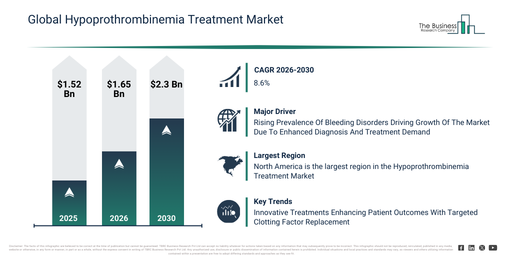
    The market for hypoprothrombinemia treatments has experienced robust expansion in recent years. Forecasts indicate an increase from $1.52 billion in 2025 to $1.65 billion in 2026, reflecting a compound annual growth rate (CAGR) of 8.9%. This past growth has been driven by factors such as the prevalence of vitamin K deficiencies, complications arising from liver disease, the overuse of anticoagulants, established hospital transfusion practices, and inherited clotting disorders.

    The market for hypoprothrombinemia treatments is anticipated to experience robust expansion over the coming years. By 2030, its value is projected to reach $2.3 billion, reflecting a compound annual growth rate (CAGR) of 8.6%. This forecasted growth is driven by several factors, including progress in recombinant clotting factor development, enhancements to emergency care infrastructure, heightened bleeding risks among aging populations, the integration of precision hematology, and the management of coagulation in outpatient settings. Key trends shaping the market during this period encompass a greater utilization of prothrombin complex concentrates, an increasing dependence on therapies that provide rapid coagulation correction, the broadening of vitamin K-based treatment approaches, improved standards for managing emergency bleeding, and a rising preference for recombinant coagulation factors.

    Download A Free Sample Report For Comprehensive Market Insights:

    https://www.thebusinessresearchcompany.com/sample.aspx?id=24566&type=smp&utm_source=BlogsPR&utm_medium=Paid&utm_campaign=Jul_PR

    Hypoprothrombinemia Treatment Market Expansion Drivers: What Is Shaping Future Growth?

    The market for hypoprothrombinemia treatments is anticipated to expand due to the growing frequency of bleeding disorders. These disorders involve impaired blood clotting, resulting in extended or excessive bleeding. This increase is predominantly linked to enhanced diagnostic methods and heightened awareness, which facilitate more precise identification and documentation of such conditions. Treatment for hypoprothrombinemia functions by restoring clotting capabilities in affected patients through the supplementation of deficient prothrombin levels. As an example, BMC Health Services Research—a UK-based journal focusing on healthcare service organization, delivery, and evaluation—reported in November 2024 that between April 2022 and March 2023 in the United Kingdom, 6,662 males were diagnosed with hemophilia A. Of these, 5,032 were adults aged 18 and over, with 2,421 receiving treatment via factor replacement therapy or emicizumab. In the same timeframe, 1,342 males were diagnosed with hemophilia B, including 1,022 adults, of whom 479 underwent factor replacement. Consequently, this rising prevalence of bleeding disorders is forecasted to propel the hypoprothrombinemia treatment market forward.

    The adoption of biosimilars is set to fuel the expansion of the hypoprothrombinemia treatment market. Biosimilars are biologic products that closely mimic an already authorized original biologic, exhibiting no clinically significant disparities in safety or efficacy. Their increasing utilization stems from their capacity to deliver more cost-effective and accessible therapeutic options while preserving comparable safety and effectiveness to original biologics. Within hypoprothrombinemia care, biosimilars serve as economical substitutes for standard clotting factor therapies, enhancing patient access to vital coagulation management. For illustration, Cardinal Health Inc., a US-based healthcare firm, noted in January 2023 that as of January 2022, the U.S. had 33 FDA-approved biosimilar products, with 21 available commercially. By 2023, the count rose to 40 FDA-approved biosimilars, of which 25 were on the market. Hence, the growing use of biosimilars is propelling the hypoprothrombinemia treatment market.

    Hypoprothrombinemia Treatment Market Segment Landscape And Growth Potential

    The hypoprothrombinemia treatment market covered in this report is segmented –

    1) By Type: Type I Deficiency Treatment, Type II Deficiency Treatment

    2) By Drug Type: Vitamin K, Fresh Frozen Plasma, Prothrombin Complex Concentrates, Recombinant Prothrombin

    3) By Indication Based: Vitamin K Deficiency, Liver Diseases, Cirrhosis, Hepatitis, Anticoagulant related Hypoprothrombinemia, Genetic Disorders, Malabsorption Syndromes

    4) By Drug Delivery Method: Oral Delivery, Injectable Delivery, Intravenous, Intramuscular, Transfusion Based Delivery

    5) By End User: Hospitals, Speciality Clinics, Homecare Settings

    Subsegments:

    1) By Type I Deficiency Treatment: Prothrombin Complex Concentrates (PCCs), Fresh Frozen Plasma (FFP), Recombinant Prothrombin, Plasma-derived Coagulation Factors

    2) By Type II Deficiency Treatment: Vitamin K Therapy, Warfarin Reversal Agents, Liver Function Supportive Therapy, Anticoagulant Adjustment Therapies

    Hypoprothrombinemia Treatment Market Strategic Trends: What Is Defining The Next Phase Of Growth?

    Major players in the hypoprothrombinemia treatment space are concentrating on advanced therapeutic approaches, particularly non-activated four-factor prothrombin complex concentrate, to quickly elevate clotting factor levels and lower hemorrhage risks for patients who need immediate anticoagulation reversal. This non-activated four-factor prothrombin complex concentrate (4F-PCC), derived from plasma, incorporates clotting factors II, VII, IX, and X, and is employed to rapidly counteract vitamin K antagonist effects and manage bleeding disorders such as hypoprothrombinemia. For example, in January 2024, Octapharma USA, a healthcare company based in the United States and a subsidiary of Octapharma AG, introduced Balfaxar—a non-activated four-factor prothrombin complex concentrate (4F-PCC) that recently secured FDA approval for the urgent reversal of coagulation deficiencies caused by vitamin K antagonists in adults undergoing emergency surgery or invasive procedures. Comprising essential vitamin K-dependent clotting factors along with antithrombotic proteins, this treatment effectively meets pressing requirements in the management of hypoprothrombinemia.

    Hypoprothrombinemia Treatment Market Competitive Landscape: Who Are The Leading Companies?

    Major companies operating in the hypoprothrombinemia treatment market are Biotest AG, Kedrion Biopharma, LFB S.A., Hualan Biological Engineering Inc., China Biologic Products Holdings Inc., Bio Products Laboratory (BPL), Kamada Ltd., Green Cross Corporation, Shanghai RAAS Blood Products Co. Ltd., SK Plasma Co. Ltd., Emergent BioSolutions Inc., Intas Pharmaceuticals Ltd., Bharat Serums and Vaccines Ltd., ZLB Behring (CSL Behring), Mitsubishi Tanabe Pharma Corporation

    Access The Complete Hypoprothrombinemia Treatment Market Report:

    https://www.thebusinessresearchcompany.com/report/hypoprothrombinemia-treatment-global-market-report?utm_source=BlogsPR&utm_medium=Paid&utm_campaign=Jul_PR

    Hypoprothrombinemia Treatment Market Largest Region By Revenue And Market Share

    North America was the largest region in the hypoprothrombinemia treatment market in 2025. Asia-Pacific is expected to be the fastest-growing region in the forecast period. The regions covered in the hypoprothrombinemia treatment market report are Asia-Pacific, South East Asia, Western Europe, Eastern Europe, North America, South America, Middle East, Africa.

    Get in touch with us:

    The Business Research Company: https://www.thebusinessresearchcompany.com/?utm_source=BlogsPR&utm_medium=Paid&utm_campaign=home_page_test

    Americas: +1 310-496-7795

    Asia: +44 7882 955267 & +91 8897263534

    Europe: +44 7882 955267

    Email us at: marketing@tbrc.info

    Follow us on:

    LinkedIn: https://in.linkedin.com/company/the-business-research-company

    YouTube: https://www.youtube.com/channel/UC24_fI0rV8cR5DxlCpgmyFQ

    Global Market Model: https://www.thebusinessresearchcompany.com/global-market-model
  • Hypoparathyroidism Market Outlook Highlights The Next Major Growth Opportunities

    Hypoparathyroidism Market Outlook Highlights The Next Major Growth Opportunities

    Delivering more actionable and strategically valuable research, The Business Research Company’s 2026 market reports feature market attractiveness analysis, total addressable market evaluation, company benchmarking matrices, interactive Excel dashboards, expanded supply chain intelligence, emerging startup coverage, and detailed product insights.

    Hypoparathyroidism Market Growth Analysis: How Will Revenue Expand During The Forecast Period?

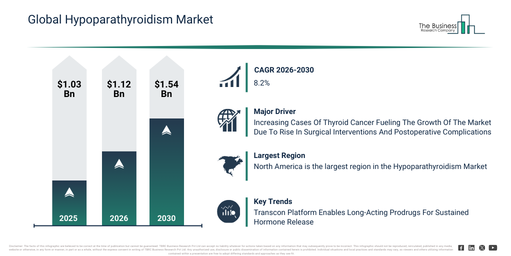
    The market for hypoparathyroidism has experienced robust expansion over the past few years. Valued at $1.03 billion in 2025, it is projected to reach $1.12 billion by 2026, reflecting a compound annual growth rate (CAGR) of 8.6%. This historical growth has been driven by complications arising from thyroid surgery, instances of calcium deficiency, heightened awareness of rare diseases, the availability of endocrine care in hospitals, and access to hormone replacement therapies.

    The hypoparathyroidism market is projected to experience significant expansion over the coming years. By 2030, its valuation is anticipated to reach $1.54 billion, reflecting a compound annual growth rate (CAGR) of 8.2%. This forecasted growth is driven by factors such as progress in recombinant therapy development, enhanced capabilities for diagnosing rare diseases, the implementation of patient adherence initiatives, the growth of specialized clinic networks, and the increasing adoption of precision endocrinology. Key trends shaping this period include a rising number of diagnosed rare endocrine disorders, greater utilization of recombinant parathyroid hormones, an expansion in long-term calcium management treatment options, heightened awareness regarding complications arising from surgical procedures, and the creation of supplementary supportive therapies.

    Download A Free Sample Report For Comprehensive Market Insights:

    https://www.thebusinessresearchcompany.com/sample.aspx?id=24565&type=smp&utm_source=BlogsPR&utm_medium=Paid&utm_campaign=Jul_PR

    Hypoparathyroidism Market Development Factors: Which Trends Are Supporting Demand?

    The anticipated growth of the hypoparathyroidism market is being driven by the rising incidence of thyroid cancer. Thyroid cancer is characterized by abnormal cell proliferation within the thyroid gland, frequently resulting in a neck lump. This uptick in cases is attributed to progress in diagnostic imaging technologies, which facilitate earlier and more frequent identification of small, asymptomatic thyroid nodules. Thyroid cancer exacerbates hypoparathyroidism by necessitating more thyroid surgeries, which may inadvertently harm the parathyroid glands. Such damage causes calcium dysregulation and chronic hormone insufficiency, thereby fueling demand for long-term disease management treatments. For example, the American Cancer Society, a US-based nonprofit, reported in May 2024 that new thyroid cancer cases are projected to increase from 43,720 in 2023 to 44,020 in 2025. Consequently, the surge in thyroid cancer instances is propelling the expansion of the hypoparathyroidism market.

    Hypoparathyroidism Market Categorization By Product Type And Application

    The hypoparathyroidism market covered in this report is segmented –

    1) By Treatment: Hormone Replacement Therapy, Adjunctive Therapies

    2) By Type: Hormone Replacement Therapy, Calcium And Vitamin D Supplements, Emerging Therapies

    3) By Route Of Administration: Oral, Parenteral

    4) By Distribution Channel: Hospital Pharmacy, Retail Pharmacy, Online Pharmacy

    5) By End User: Hospitals, Specialty Clinics, Homecare Settings

    Subsegments:

    1) By Hormone Replacement Therapy: Recombinant Parathyroid Hormone, Parathyroid Hormone Analogues, Calcimimetics, Calcium And Vitamin D Supplements

    2) By Adjunctive Therapies: Magnesium Supplements, Phosphate Binders, Other Supportive Therapies

    Hypoparathyroidism Market Transformation Trends: Which Innovations Are Driving Change?

    Key players in the hypoparathyroidism market are concentrating on advancing treatment options through innovative technologies, particularly those leveraging TransCon technology, to boost therapeutic effectiveness and enhance patient experiences. These TransCon-based therapeutics rely on the Transient Conjugation platform, a proprietary system that refines drug delivery mechanisms. As an example, Ascendis Pharma A/S, a biopharmaceutical firm headquartered in Denmark, unveiled YORVIPATH (palopegteriparatide) in Germany and Austria in January 2024. This marks their second product utilizing TransCon technology and targets adults living with chronic hypoparathyroidism. Designed as a once-daily prodrug of parathyroid hormone (PTH 1-34), YORVIPATH sustains physiological PTH levels throughout a 24-hour cycle, directly tackling the fundamental hormone deficiency inherent in chronic hypoparathyroidism.

    Hypoparathyroidism Market Company Landscape And Strategic Competition

    Major companies operating in the hypoparathyroidism market are Pfizer Inc., F. Hoffmann-La Roche Ltd., Merck & Co Inc., AbbVie Inc., Sanofi S.A., Novartis AG, GlaxoSmithKline plc , Takeda Pharmaceutical Company Limited, Eli Lilly and Company, Amgen Inc., Teva Pharmaceutical Industries Ltd., Dr. Reddy’s Laboratories Ltd., Cipla Limited , Lupin Limited, Torrent Pharmaceuticals Ltd., Eagle Pharmaceuticals Inc., BridgeBio Pharma Inc., Ascendis Pharma A/S, Extend Biosciences Inc., Entera Bio Ltd.

    Access The Complete Hypoparathyroidism Market Report:

    https://www.thebusinessresearchcompany.com/report/hypoparathyroidism-global-market-report?utm_source=BlogsPR&utm_medium=Paid&utm_campaign=Jul_PR

    Hypoparathyroidism Market Regional Analysis And Leading Geography

    North America was the largest region in the hypoparathyroidism market in 2025. Asia-Pacific is expected to be the fastest-growing region in the forecast period. The regions covered in the hypoparathyroidism market report are Asia-Pacific, South East Asia, Western Europe, Eastern Europe, North America, South America, Middle East, Africa.

    Get in touch with us:

    The Business Research Company: https://www.thebusinessresearchcompany.com/?utm_source=BlogsPR&utm_medium=Paid&utm_campaign=home_page_test

    Americas: +1 310-496-7795

    Asia: +44 7882 955267 & +91 8897263534

    Europe: +44 7882 955267

    Email us at: marketing@tbrc.info

    Follow us on:

    LinkedIn: https://in.linkedin.com/company/the-business-research-company

    YouTube: https://www.youtube.com/channel/UC24_fI0rV8cR5DxlCpgmyFQ

    Global Market Model: https://www.thebusinessresearchcompany.com/global-market-model
  • Hypolipidemics Market Trends And Growth Drivers Point To Strong Future Potential

    Hypolipidemics Market Trends And Growth Drivers Point To Strong Future Potential

    Enhanced with market attractiveness analysis, total addressable market evaluation, company benchmarking matrices, interactive Excel dashboards, expanded supply chain intelligence, emerging startup coverage, and detailed product insights, The Business Research Company’s 2026 market reports deliver more actionable and strategically valuable research.

    Hypolipidemics Market Forecast: What Market Value Is Expected By 2030?

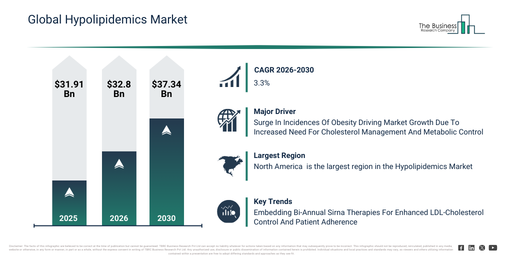
    Over recent years, the hypolipidemics market has experienced consistent expansion. Its valuation is projected to rise from $31.91 billion in 2025 to $32.8 billion in 2026, reflecting a compound annual growth rate (CAGR) of 2.8%. This historical growth has been driven by several factors, including the increasing incidence of cardiovascular diseases, the broad utilization of statins, a higher frequency of cholesterol screening, enhanced availability of vital cardiovascular medications, and the widening reach of hospital and pharmacy networks.

    The hypolipidemics market is projected to undergo stable expansion over the coming years, reaching $37.34 billion by 2030, with a compound annual growth rate (CAGR) of 3.3%. This forecasted growth is driven by an aging global population, a higher prevalence of dyslipidemia, a stronger emphasis on preventive cardiology, the emergence of combination lipid therapies, and better healthcare access in developing regions. Key developments anticipated during this period include longer-term use of lipid-lowering medications, greater uptake of combination hypolipidemic drugs, a heightened focus on preventive cardiovascular pharmacotherapy, wider adoption of generic statins, and more rigorous tracking of cholesterol management results.

    Download A Free Sample Report For Comprehensive Market Insights:

    https://www.thebusinessresearchcompany.com/sample.aspx?id=2435&type=smp&utm_source=BlogsPR&utm_medium=Paid&utm_campaign=Jul_PR

    Hypolipidemics Market Industry Drivers: What Is Driving Revenue Growth?

    The increasing prevalence of obesity is anticipated to drive forward the expansion of the hypolipidemic drugs market in the coming period. Obesity represents a persistent metabolic disorder marked by an abnormal buildup of body fat, which frequently contributes to heightened cholesterol levels, diminished insulin sensitivity, and a greater likelihood of cardiovascular issues. This rising trend in obesity cases is largely driven by a higher intake of heavily processed, energy-dense food products, along with reduced physical activity resulting from contemporary sedentary habits. Hypolipidemic medications are employed in the management of obesity to reduce elevated cholesterol levels, which can act as a contributing factor to heart-related problems in individuals with excess adipose tissue. For example, as reported in October 2025 by Forbes, a business media outlet based in the United States, the rate of adult obesity in the country stood at 40.3%, with rates among women at 41.3% and men at 39.2%, while globally, the prevalence of obesity in children and adolescents aged between 5 and 19 years reached 9.4%. Consequently, the growing frequency of obesity cases is fueling the progress of the hypolipidemic drug market.

    Hypolipidemics Market Segment Analysis And Revenue Opportunities

    The hypolipidemics market covered in this report is segmented –

    1) By Product Type: HMG-CoA Reductase Inhibitors, Nicotinic Acid Drugs

    2) By Drug Type: Statins, Bile Acid Sequestrants, Cholesterol Absorption Inhibitors, PCSK9 Inhibitors, Other Drug Types

    3) By Application: Hospital, Clinics, Pharmacy

    Subsegments:

    1) By HMG-CoA Reductase Inhibitors: Atorvastatin, Rosuvastatin, Simvastatin, Lovastatin, Pravastatin, Fluvastatin

    2) By Nicotinic Acid Drugs: Niacin (Vitamin B3), Extended-release Niacin

    Hypolipidemics Market Growth Trends: What Is Influencing The Future Outlook?

    Leading players in the hypolipidemics sector are prioritizing innovation and advanced formulation strategies, particularly through siRNA-based therapies that lower LDL cholesterol with just two administrations per year. These treatments are designed to enhance patient compliance, lessen the therapeutic burden, and provide sustained lipid regulation with fewer required injections. By pairing powerful lipid-reducing action with convenient dosing schedules, they aim to improve both clinical results and patients’ everyday well-being. A notable example is Novartis, a Swiss pharmaceutical firm, which secured FDA clearance in July 2025 for its product Leqvio (inclisiran) as a first-line option for individuals needing LDL cholesterol reduction, thereby expanding access to its twice-yearly regimen. Inclisiran operates by employing RNA interference to suppress the PCSK9 gene in the liver, delivering ongoing reductions in LDL levels through only two doses annually. This regulatory milestone highlights a broader movement within the hypolipidemics market toward long-lasting, highly effective medicines that promote sustained cardiovascular risk management while minimizing dosing frequency.

    Hypolipidemics Market Leading Players Shaping Industry Direction

    Major companies operating in the hypolipidemics market are Pfizer Inc., AstraZeneca Plc, Novartis AG, Sanofi-Aventis, Merck Sharp & Dohme B.V., Amgen Plc, Abbott Laboratories Limited, Daiichi Sankyo Company Limited, Kowa Company Ltd., Viatris Inc., Teva Pharmaceutical Industries Ltd., Sun Pharmaceutical Industries Limited, Dr. Reddy’s Laboratories Ltd., Lupin Limited, Zydus Lifesciences Limited, Torrent Pharmaceuticals Ltd., Cipla Limited, Wockhardt Limited, Alembic Pharmaceuticals Limited, Intas Pharmaceuticals Ltd.

    Access The Complete Hypolipidemics Market Report:

    https://www.thebusinessresearchcompany.com/report/hypolipidemics-global-market-report?utm_source=BlogsPR&utm_medium=Paid&utm_campaign=Jul_PR

    Hypolipidemics Market Geographic Analysis: Where Is Demand Growing The Fastest?

    North America was the largest region in the hypolipidemic drugs market in 2025. The Middle East is expected to be the fastest-growing region in the hypolipidemic drugs market during the forecast period. The regions covered in the hypolipidemics market report are Asia-Pacific, South East Asia, Western Europe, Eastern Europe, North America, South America, Middle East, Africa.

    Get in touch with us:

    The Business Research Company: https://www.thebusinessresearchcompany.com/?utm_source=BlogsPR&utm_medium=Paid&utm_campaign=home_page_test

    Americas: +1 310-496-7795

    Asia: +44 7882 955267 & +91 8897263534

    Europe: +44 7882 955267

    Email us at: marketing@tbrc.info

    Follow us on:

    LinkedIn: https://in.linkedin.com/company/the-business-research-company

    YouTube: https://www.youtube.com/channel/UC24_fI0rV8cR5DxlCpgmyFQ

    Global Market Model: https://www.thebusinessresearchcompany.com/global-market-model
  • Hyperuricemia Drugs Market Expansion Is Reshaping Competitive Dynamics Across The Industry

    Hyperuricemia Drugs Market Expansion Is Reshaping Competitive Dynamics Across The Industry

    Through market attractiveness analysis, total addressable market evaluation, company benchmarking matrices, interactive Excel dashboards, expanded supply chain intelligence, emerging startup coverage, and detailed product insights, The Business Research Company’s 2026 market reports provide more actionable and strategically valuable research.

    Hyperuricemia Drugs Market Size Outlook: How Fast Will Revenue Grow Through 2030?

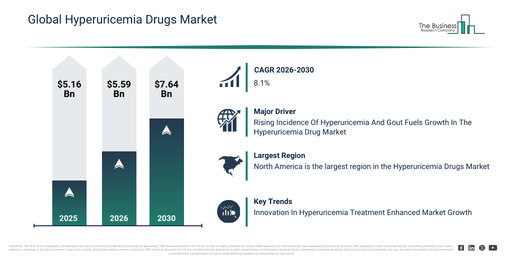
    The hyperuricemia drugs market experienced significant expansion in recent years. Its valuation is projected to rise from $5.16 billion in 2025 to $5.59 billion in 2026, achieving a compound annual growth rate (CAGR) of 8.4%. This historical growth was driven by factors such as the restricted supply of advanced therapies for hyperuricemia, a higher prevalence of gout and kidney stones, insufficient patient education regarding uric acid control, continued dependence on conventional anti-inflammatory treatments, and the development of hospital and clinic facilities.

    The hyperuricemia drugs market is projected to experience robust expansion over the coming years. By 2030, its value is anticipated to reach $7.64 billion, driven by a compound annual growth rate (CAGR) of 8.1%. This upward trajectory during the forecast period is fuelled by several factors: the creation of selective uric acid reabsorption inhibitors (SURI), a greater reliance on combination therapy, heightened public awareness around preventive care and lifestyle adjustments, the growth of homecare services, and expanding government initiatives targeting metabolic disorder management. Key developments shaping the forecast period involve a growing incidence of hyperuricemia and gout, a rising use of xanthine oxidase inhibitors and uricosuric agents, progress in combination therapy alongside supportive care drugs, the proliferation of homecare and specialty clinics for managing hyperuricemia, and an intensified focus on lifestyle changes and preventive care supplements.

    Download A Free Sample Report For Comprehensive Market Insights:

    https://www.thebusinessresearchcompany.com/sample.aspx?id=19517&type=smp&utm_source=BlogsPR&utm_medium=Paid&utm_campaign=Jul_PR

    #Hyperuricemia Drugs Market Growth Factors: Which Forces Are Supporting Market Expansion?

    The hyperuricemia drug market is set to expand due to the growing prevalence of hyperuricemia and gout. Hyperuricemia involves abnormally high uric acid levels in the blood, which may result in gout—a painful arthritic condition triggered by urate crystal deposits in joints. Several elements affect the occurrence of these conditions, including genetic factors, dietary patterns (especially high purine consumption), obesity, renal function, lifestyle behaviors (such as alcohol use and insufficient hydration), specific medications, and chronic illnesses like hypertension and diabetes. Medications for hyperuricemia are vital for managing uric acid levels, thereby hindering the onset or progression of hyperuricemia and gout by minimizing uric acid accumulation and easing associated discomfort. An illustration is provided by data from The Lancet, a UK-based medical journal, which in July 2024 indicated that globally in 2020, gout affected males at 3.26 times the rate of females, with its prevalence rising with age, and projected around 95.8 million cases by 2050. As a result, the increasing frequency of hyperuricemia and gout is fueling growth in the market for hyperuricemia drugs.

    Hyperuricemia Drugs Market Segmentation And Category Breakdown

    The hyperuricemia drugs market covered in this report is segmented –

    1) By Type: Asymptomatic Hyperuricemia, Symptomatic Hyperuricemia, Other Types

    2) By Drugs: Nonsteroidal Anti-Inflammatory Drugs, Xanthine Oxidase Inhibitors, Selective Uric Acid Reabsorption Inhibitor (SURI), Uricosuric Agents, Other Drugs

    3) By Diseases: Gout, Kidney Stone, Other Diseases

    4) By End-User: Hospitals, Homecare, Specialty Clinics, Other End-Users

    Subsegments:

    1) By Asymptomatic Hyperuricemia: Uric Acid Lowering Agents, Lifestyle Modification Supplements

    2) By Symptomatic Hyperuricemia: Anti-Inflammatory Drugs, Uric Acid Inhibitors

    3) By Other Types: Combination Therapy, Dietary Supplements

    Hyperuricemia Drugs Market Industry Trends: What Changes Are Reshaping Demand?

    Key players in the hyperuricemia drug market are concentrating on creating innovative products, including therapeutic equivalent generic versions, in order to deliver affordable options that improve patient access to gout therapies. These therapeutic equivalent generics contain the identical active ingredient as their branded counterparts, are delivered via the same dosage form, and are anticipated to offer comparable clinical effectiveness and safety profiles. As an example, in January 2024, Lupin, a pharmaceutical firm based in India, secured approval from U.S. health authorities for Febuxostat Tablets (in 40 mg and 80 mg strengths) and Varenicline Tablets (available in 0.5 mg and 1 mg dosages). These generic medications are designed to offer more economical choices for individuals needing hyperuricemia treatment (through Febuxostat) and smoking cessation support (via Varenicline). By bringing these generics to market, Lupin aims to boost accessibility to vital drugs, establish a presence in the U.S. pharmaceutical landscape, and assist patients by supplying cost-efficient treatment alternatives for their medical needs.

    Hyperuricemia Drugs Market Competitive Analysis Of Major Industry Participants

    Major companies operating in the hyperuricemia drugs market are Pfizer Inc., Merck & Co., Bayer AG, Sanofi SA, AstraZeneca plc, Novartis AG, Boehringer Ingelheim International GmbH, Teva Pharmaceuticals, Teijin Pharma Limited, Sun Pharmaceutical Industries Ltd., Dr. Reddy’s Laboratories Ltd., Hikma Pharmaceuticals PLC, Amneal Pharmaceuticals Inc., Glenmark Pharmaceuticals Ltd., Kissei Pharmaceutical Co. Ltd., Fuji Yakuhin Co. Ltd.

    Access The Complete Hyperuricemia Drugs Market Report:

    https://www.thebusinessresearchcompany.com/report/hyperuricemia-drugs-global-market-report?utm_source=BlogsPR&utm_medium=Paid&utm_campaign=Jul_PR

    Hyperuricemia Drugs Market Global Footprint: Which Region Holds Market Leadership?

    North America was the largest region in the hyperuricemia drugs market in 2025. The regions covered in the hyperuricemia drugs market report are Asia-Pacific, South East Asia, Western Europe, Eastern Europe, North America, South America, Middle East, Africa.

    Get in touch with us:

    The Business Research Company: https://www.thebusinessresearchcompany.com/?utm_source=BlogsPR&utm_medium=Paid&utm_campaign=home_page_test

    Americas: +1 310-496-7795

    Asia: +44 7882 955267 & +91 8897263534

    Europe: +44 7882 955267

    Email us at: marketing@tbrc.info

    Follow us on:

    LinkedIn: https://in.linkedin.com/company/the-business-research-company

    YouTube: https://www.youtube.com/channel/UC24_fI0rV8cR5DxlCpgmyFQ

    Global Market Model: https://www.thebusinessresearchcompany.com/global-market-model
  • Hyperphosphatemia Treatment Market Forecast Reveals Where Future Industry Value Will Be Created

    Hyperphosphatemia Treatment Market Forecast Reveals Where Future Industry Value Will Be Created

    Delivering more actionable and strategically valuable research, The Business Research Company’s 2026 market reports feature market attractiveness analysis, total addressable market evaluation, company benchmarking matrices, interactive Excel dashboards, expanded supply chain intelligence, emerging startup coverage, and detailed product insights.

    Hyperphosphatemia Treatment Market Size, Value And Growth Trends Through 2030

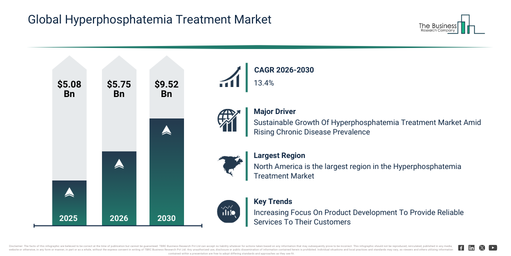
    The market for hyperphosphatemia treatments has experienced significant expansion in recent years. Projected to rise from $5.08 billion in 2025 to $5.75 billion in 2026, it reflects a compound annual growth rate (CAGR) of 13.2%. Factors driving historical growth include a high prevalence of renal failure, low awareness regarding phosphate control, constraints of existing therapies, treatment delivery primarily within hospital settings, and heavy reliance on calcium-based phosphate binders.

    The market for hyperphosphatemia treatment is anticipated to experience swift expansion in the coming years, reaching a value of $9.52 billion by 2030, with a compound annual growth rate (CAGR) of 13.4%. This forecasted growth is driven by progress in non-calcium-based phosphate binders, the incorporation of digital health monitoring tools, a growing emphasis on precision medicine, heightened investment in new therapeutic approaches, and the broadening of e-pharmacy platforms. Key trends shaping this period include a higher incidence of chronic kidney disease, greater usage of phosphate binders, an upswing in home-based dialysis procedures, the widening of hospital pharmacy networks, and the creation of innovative therapies for hyperphosphatemia.

    Download A Free Sample Report For Comprehensive Market Insights:

    https://www.thebusinessresearchcompany.com/sample.aspx?id=5852&type=smp&utm_source=BlogsPR&utm_medium=Paid&utm_campaign=Jul_PR

    Hyperphosphatemia Treatment Market Demand Drivers: What Is Fueling Industry Growth?

    The growth of the hyperphosphatemia treatment market is being propelled by a rise in chronic disease cases among patients. These non-communicable illnesses demand ongoing, long-term care. Most of these chronic conditions include cardiovascular diseases, chronic kidney disease, chronic respiratory disorders, hyperparathyroidism, diabetes, and cancer. For example, in September 2023, the World Health Organization, a UN specialized agency headquartered in Switzerland, reported that non-communicable diseases—also known as chronic diseases—cause 41 million deaths globally each year, accounting for 74% of all fatalities. Additionally, in February 2023, SingleCare Services LLC, a healthcare savings platform based in the United States, noted that kidney disease prevalence is on the rise, with approximately 1 million individuals dying annually from untreated kidney failure. A growing incidence of hyperphosphatemia among patients with end-stage renal disease (ESRD) is further fueling the demand for hyperphosphatemia treatments.

    Hyperphosphatemia Treatment Market Segment Outlook: Which Categories Are Expanding The Fastest?

    The hyperphosphatemia treatment market covered in this report is segmented –

    1) By Product: Sevelamer, Calcium-Based Phosphate Binders, Iron-Based Phosphate Binders, Lanthanum Carbonate, Other products

    2) By Distribution channel: Hospital Pharmacy, Retail Pharmacy, Online stores

    3) By End-User: Chronic Kidney Disease (CKD) Patients on Dialysis, Non-Dialysis CKD Patients, Post-Kidney Transplant Patients

    Subsegments:

    1) By Sevelamer: Sevelamer Hydrochloride, Sevelamer Carbonate

    2) By Calcium-Based Phosphate Binders: Calcium Acetate, Calcium Carbonate

    3) By Iron-Based Phosphate Binders: Ferric Citrate, Ferric Sulfate

    4) By Lanthanum Carbonate: Lanthanum Carbonate Hydrate

    5) By Other Products: Magnesium-Based Phosphate Binders, Novel Phosphate Binders

    Hyperphosphatemia Treatment Market Innovation Trends: Which Developments Are Transforming The Industry?

    Leading firms in the hyperphosphatemia treatment sector are prioritizing innovative product creation, including Xphozah, aimed at boosting their market earnings. Xphozah is developed to address hyperphosphatemia, a condition involving excess phosphorus that leads to calcium depletion from bones and other body parts. As an example, in October 2023, Ardelyx Inc., a US-based biopharmaceutical enterprise, secured approval for Xphozah. This medication was authorized to treat hyperphosphatemia, which strips calcium from bones and other areas. High phosphorus levels can cause fragile bones, joint discomfort, muscle cramps, and skin irritation. The FDA has sanctioned this drug for patients who have not adequately responded to phosphate binder therapies—the prevailing standard of care for this condition—or who cannot tolerate them.

    Hyperphosphatemia Treatment Market Key Companies And Competitive Benchmarking

    Major companies operating in the hyperphosphatemia treatment market are Sanofi SA, Akebia Therapeutics Inc., Ardelyx Inc., Astellas Pharma Inc., Fresenius Medical Care AG & Co. KGaA, Lupin Limited, Sun Pharmaceutical Industries Ltd., Takeda Pharmaceutical Company Limited, Ultragenyx Pharmaceutical Inc., Unicycive Therapeutics Inc., Vifor Pharma Management Ltd., Zeria Pharmaceutical Co. Ltd., Amgen Inc., AstraZeneca plc, Baxter International Inc., Kyowa Kirin Co. Ltd., Ipsen, Shionogi & Co. Ltd., Otsuka Pharmaceutical Co. Ltd., Bayer AG, Boehringer Ingelheim International GmbH, Novartis International AG

    Access The Complete Hyperphosphatemia Treatment Market Report:

    https://www.thebusinessresearchcompany.com/report/hyperphosphatemia-treatment-global-market-report?utm_source=BlogsPR&utm_medium=Paid&utm_campaign=Jul_PR

    Hyperphosphatemia Treatment Market Regional Distribution: Which Areas Drive Market Expansion?

    North America was the largest region in the hyperphosphatemia treatment market in 2025. Asia-Pacific is expected to be the fastest-growing region in the forecast period. The regions covered in the hyperphosphatemia treatment market report are Asia-Pacific, South East Asia, Western Europe, Eastern Europe, North America, South America, Middle East, Africa.

    Get in touch with us:

    The Business Research Company: https://www.thebusinessresearchcompany.com/?utm_source=BlogsPR&utm_medium=Paid&utm_campaign=home_page_test

    Americas: +1 310-496-7795

    Asia: +44 7882 955267 & +91 8897263534

    Europe: +44 7882 955267

    Email us at: marketing@tbrc.info

    Follow us on:

    LinkedIn: https://in.linkedin.com/company/the-business-research-company

    YouTube: https://www.youtube.com/channel/UC24_fI0rV8cR5DxlCpgmyFQ

    Global Market Model: https://www.thebusinessresearchcompany.com/global-market-model
  • Hyper-Personalized Medicine Market Growth Through 2030 Creates New Strategic Opportunities

    Hyper-Personalized Medicine Market Growth Through 2030 Creates New Strategic Opportunities

    Enhanced with market attractiveness analysis, total addressable market evaluation, company benchmarking matrices, interactive Excel dashboards, expanded supply chain intelligence, emerging startup coverage, and detailed product insights, The Business Research Company’s 2026 market reports deliver more actionable and strategically valuable research.

    Hyper-Personalized Medicine Market CAGR Analysis And Future Market Development

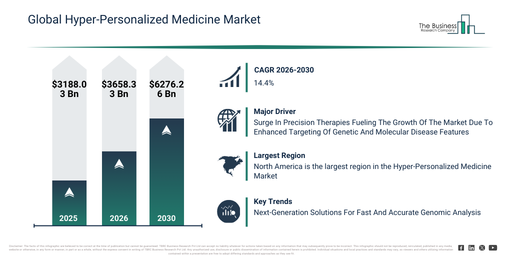
    The hyper-personalized medicine market has experienced rapid expansion in recent years. Projected to increase from $3,188.03 billion in 2025 to $3,658.33 billion in 2026, this growth is driven by a compound annual growth rate (CAGR) of 14.8%. The historical period’s expansion has been influenced by several factors, including the constrained supply of personalized medicine options, a dependence on standard treatment methods, rising patient preferences for individualized therapies, heightened funding for genomic studies, and the initial implementation of molecular diagnostics.

    The hyper-personalized medicine sector is anticipated to experience strong expansion over the coming years, reaching a projected value of $6276.26 billion by 2030, with a compound annual growth rate (CAGR) of 14.4%. This forecasted growth is driven by progress in gene and cell therapies, the integration of artificial intelligence and bioinformatics into everyday clinical practice, the broadening of precision nutrition and wellness programs, increasing governmental backing for tailored medical approaches, and a higher uptake of companion diagnostics and liquid biopsy techniques. Key developments shaping the market include the rise of AI-powered clinical decision support tools, the wider application of customized treatment strategies and precise surgical methods, a growing reliance on telehealth and remote health monitoring, a stronger emphasis on nutrigenomics and personalized nutrition plans, and the continued advancement of RNA-based and targeted drug therapies.

    Download A Free Sample Report For Comprehensive Market Insights:

    https://www.thebusinessresearchcompany.com/sample.aspx?id=27313&type=smp&utm_source=BlogsPR&utm_medium=Paid&utm_campaign=Jul_PR

    Hyper-Personalized Medicine Market Growth Drivers: What Factors Are Accelerating Expansion?

    The expanding need for precision therapies is anticipated to fuel the advancement of the hyper-personalized medicine market in the coming period. These therapies are medical interventions that zero in on particular genetic, molecular, or cellular aspects of a condition, allowing for more efficacious and customized treatments while reducing side effects when contrasted with conventional approaches. Their growing use stems from the capacity to address distinct disease characteristics, producing superior and individually tailored outcomes. Within this context, hyper-personalized medicine enhances precision therapies by crafting treatments that account for a person’s unique genetic, molecular, and lifestyle details, thus boosting effectiveness and lowering the risk of adverse reactions. To illustrate, in February 2024, the Personalized Medicine Coalition—a nonprofit entity based in the United States—reported that the FDA cleared 16 new personalized therapies for individuals with rare diseases in 2023, a jump from 6 in 2022. This upward trend in precision therapy adoption is consequently propelling the expansion of the hyper-personalized medicine market.

    Hyper-Personalized Medicine Market Segment Landscape: Which Areas Lead Market Development?

    The hyper-personalized medicine market covered in this report is segmented –

    1) By Product: Hyper Personalized Medicine Diagnostics, Hyper Personalized Medicine Therapeutics, Hyper Personalized Medical Care, Hyper Personalized Nutrition And Wellness

    2) By Technology: Genomics, Proteomics, Bioinformatics, Metabolomics

    3) By Application: Oncology, Neurology, Blood Transfusion Safety, Diabetes, Autoimmune Diseases, Cardiology

    4) By End User: Hospitals, Diagnostic Centers, Research And Academic Institutes

    Subsegments:

    1) By Hyper Personalized Medicine Diagnostics: Genomic Sequencing, Biomarker Testing, Molecular Diagnostics, Companion Diagnostics, Liquid Biopsy

    2) By Hyper Personalized Medicine Therapeutics: Targeted Drug Therapies, Gene Therapy, Cell Therapy, Immunotherapy, RNA-based Therapeutics

    3) By Hyper Personalized Medical Care: Telemedicine And Remote Monitoring, Personalized Treatment Plans, AI-driven Clinical Decision Support, Patient-specific Rehabilitation, Precision Surgery

    4) By Hyper Personalized Nutrition And Wellness: Nutrigenomics, Personalized Diet Plans, Microbiome Analysis, Customized Supplements, Wellness Coaching And Monitoring

    Hyper-Personalized Medicine Market Trends: What Is Shaping Future Industry Growth?

    Major players in the hyper-personalized medicine field are placing a strong emphasis on breakthrough technologies, especially accelerated whole-genome sequencing (WGS) analysis platforms, to address the rising need for quicker and more precise genomic data, AI-enhanced clinical support systems, and scalable companion diagnostics that facilitate truly tailored therapies and dosage regimens. These accelerated WGS analysis platforms are sophisticated software-based systems that convert unprocessed genomic data into actionable clinical information at high speed, empowering clinicians and researchers to reach faster and more accurate conclusions for diagnosis and treatment. By way of example, in May 2024, SOPHiA GENETICS SA, a healthcare and diagnostics firm headquartered in Switzerland that leverages data-driven approaches, unveiled a new WGS application aimed at providing fully analyzed whole-genome insights within an expedited timeframe for medical professionals and researchers. Featuring comprehensive end-to-end automated workflows—spanning from raw FASTQ files to variant interpretation—it utilizes cloud infrastructure and refined algorithms to reduce processing durations. Furthermore, it includes integrated clinical decision-support features for oncology and rare disease cases, enables scalability for hospitals and biotech entities, and frequently delivers analyzed reports on the same day.

    Hyper-Personalized Medicine Market Industry Leaders And Market Competition

    Major companies operating in the hyper-personalized medicine market are Pfizer Inc., Johnson & Johnson, Roche Holding AG, Bayer AG, Sanofi S.A., Bristol-Myers Squibb Company, AstraZeneca PLC, Abbott Laboratories, Novartis AG, Danaher Corporation, Amgen Inc., Merck KGaA, GE Healthcare Technologies Inc., Biogen Inc., Illumina Inc., Guardant Health Inc., Berry Genomics Co. Ltd., Sophia Genetics SA, Mapmygenome, InnoCare Pharma.

    Access The Complete Hyper-Personalized Medicine Market Report:

    https://www.thebusinessresearchcompany.com/report/hyper-personalized-medicine-global-market-report?utm_source=BlogsPR&utm_medium=Paid&utm_campaign=Jul_PR

    Hyper-Personalized Medicine Market Leading Geography: Which Region Generates The Most Revenue?

    North America was the largest region in the hyper-personalized medicine market in 2025. Asia-Pacific is expected to be the fastest-growing region in the forecast period. The regions covered in the hyper-personalized medicine market report are Asia-Pacific, South East Asia, Western Europe, Eastern Europe, North America, South America, Middle East, Africa.

    Get in touch with us:

    The Business Research Company: https://www.thebusinessresearchcompany.com/?utm_source=BlogsPR&utm_medium=Paid&utm_campaign=home_page_test

    Americas: +1 310-496-7795

    Asia: +44 7882 955267 & +91 8897263534

    Europe: +44 7882 955267

    Email us at: marketing@tbrc.info

    Follow us on:

    LinkedIn: https://in.linkedin.com/company/the-business-research-company

    YouTube: https://www.youtube.com/channel/UC24_fI0rV8cR5DxlCpgmyFQ

    Global Market Model: https://www.thebusinessresearchcompany.com/global-market-model
  • Hyperlipidemia Drugs Market Size Projected To Increase From $26.16 Billion To $32.31 Billion During The Forecast Period

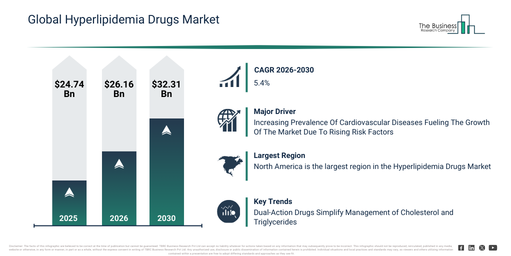
    Hyperlipidemia Drugs Market Size Projected To Increase From $26.16 Billion To $32.31 Billion During The Forecast Period

    Through market attractiveness analysis, total addressable market evaluation, company benchmarking matrices, interactive Excel dashboards, expanded supply chain intelligence, emerging startup coverage, and detailed product insights, The Business Research Company’s 2026 market reports provide more actionable and strategically valuable research.

    Hyperlipidemia Drugs Market Expansion From $26.16 Billion In 2026 To $32.31 Billion In 2030

    The market for hyperlipidemia medications has experienced a notable expansion in recent years. A projected increase from $24.74 billion in 2025 to $26.16 billion in 2026 is anticipated, reflecting a compound annual growth rate of 5.7%. This historic growth has been driven by factors including a higher incidence of hyperlipidemia, an expanding elderly demographic, a growing rate of cardiovascular conditions, restricted availability of sophisticated lipid-lowering treatments, and advancements in healthcare infrastructure.

    The market for hyperlipidemia drugs is anticipated to experience robust expansion over the coming years. By 2030, it is projected to reach a value of $32.31 billion, reflecting a compound annual growth rate (CAGR) of 5.4%. This forecasted growth is driven by factors such as the introduction of novel PCSK9 inhibitors and inclisiran, the increasing use of combination therapies, a growing emphasis on personalized medicine, higher healthcare spending directed at cardiovascular care, and the incorporation of digital health monitoring tools. Key trends expected to shape the forecast period include a rising preference for statins and PCSK9 inhibitors, a greater reliance on combination therapy approaches for managing hyperlipidemia, heightened awareness regarding cardiovascular disease prevention, broader access through hospital and retail pharmacy networks, and an escalating demand for customized lipid-reducing treatments.

    Download A Free Sample Report For Comprehensive Market Insights:

    https://www.thebusinessresearchcompany.com/sample.aspx?id=27312&type=smp&utm_source=BlogsPR&utm_medium=Paid&utm_campaign=Jul_PR

    Hyperlipidemia Drugs Market Growth Factors Supporting Long-Term Expansion

    The anticipated growth of the hyperlipidemia drugs market is significantly driven by the rising incidence of cardiovascular diseases. These diseases encompass a range of conditions affecting the heart and blood vessels, including coronary heart disease, heart failure, stroke, and hypertension. Poor dietary habits—characterized by high intake of saturated fats, trans fats, added sugars, and sodium—serve as the primary cause, leading to elevated blood pressure, obesity, and increased cholesterol levels. By effectively reducing harmful cholesterol and triglycerides, hyperlipidemia drugs play a crucial role in managing cardiovascular conditions. Such therapies simplify treatment regimens, decrease complication risks, and enhance patient outcomes. According to the Centers for Disease Control and Prevention (October 2024), cardiovascular disease caused 919,032 deaths in 2023, representing one in every three fatalities. Coronary heart disease was the most common form, and approximately one-sixth of these deaths occurred in adults under 65. Consequently, the growing prevalence of cardiovascular diseases directly fuels the expansion of the hyperlipidemia drugs market.

    Hyperlipidemia Drugs Market Segments: Where Are The Largest Growth Opportunities?

    The hyperlipidemia drugs market covered in this report is segmented –

    1) By Drug Class: Statins, Bile Acid Sequestrants, Cholesterol Absorption Inhibitors, Fibric Acid Derivatives, Proprotein Convertase Subtilisin Or Kexin Type 9 (PCSK9) Inhibitors, Combination, Miscellaneous

    2) By Route Of Administration: Oral, Parenteral, Other Route Of Administrations

    3) By Distribution Channel: Hospital Pharmacies, Online Pharmacies, Retail Pharmacies

    4) By End User: Hospitals, Clinics, Other End Users

    Subsegments:

    1) By Statins: Atorvastatin, Rosuvastatin, Simvastatin, Pravastatin, Fluvastatin, Lovastatin, Pitavastatin

    2) By Bile Acid Sequestrants: Cholestyramine, Colesevelam, Colestipol

    3) By Cholesterol Absorption Inhibitors: Ezetimibe, Ezetimibe-Simvastatin Combination

    4) By Fibric Acid Derivatives: Fenofibrate, Gemfibrozil, Bezafibrate, Ciprofibrate

    5) By Proprotein Convertase Subtilisin Or Kexin Type 9 (PCSK9) Inhibitors: Evolocumab, Alirocumab, Inclisiran

    6) By Combination: Statin + Ezetimibe, Statin + Niacin, Statin + Omega-3, Statin + Bile Acid Sequestrant, Fixed-Dose Combinations (FDCs) Of Statins + Antihypertensives

    7) By Miscellaneous: Niacin (Nicotinic Acid), Omega-3 Fatty Acids (EPA/DHA), Lomitapide, Mipomersen, Bempedoic Acid

    Hyperlipidemia Drugs Market Industry Trends Shaping Future Revenue Growth

    Leading players in the hyperlipidemia drugs sector are prioritizing the creation of advanced therapeutic approaches, like combination regimens, aimed at improving efficacy and simplifying treatment protocols to support better cardiovascular health. The concept of combination therapies involves administering two or more distinct medications together within a single treatment plan, targeting a disease with greater effectiveness than any one drug could achieve alone. A recent example occurred in June 2024, when Daewoong Bio Inc., a pharmaceutical firm based in South Korea, introduced the CRA-TG Soft Capsule. This combination product merges rosuvastatin with omega-3 fatty acids to address hyperlipidemia in patients. Rosuvastatin works by suppressing cholesterol production in the liver, thereby lowering detrimental low-density lipoprotein (LDL) levels circulating in the bloodstream, whereas omega-3 fatty acids serve as a dietary supplement to diminish triglyceride levels in individuals experiencing high triglycerides. The formulation employs patented multi-layer capsule coating technology to boost ingredient stability and tolerability, all while preserving a standard capsule size.

    Hyperlipidemia Drugs Market Major Participants And Competitive Dynamics

    Major companies operating in the hyperlipidemia drugs market are Pfizer Inc., Merck & Co. Inc., AbbVie Inc., Sanofi S.A., Bristol-Myers Squibb Company, AstraZeneca plc, Novartis AG, GlaxoSmithKline plc, Amgen Inc., Takeda Pharmaceutical Company Limited, Boehringer Ingelheim GmbH, Teva Pharmaceutical Industries Ltd., Regeneron Pharmaceuticals Inc., Daiichi Sankyo Company Limited, Sun Pharmaceutical Industries Ltd., STADA Arzneimittel AG, Aurobindo Pharma Ltd., Zydus Lifesciences Limited, Lupin Limited, Glenmark Pharmaceuticals Ltd.

    Access The Complete Hyperlipidemia Drugs Market Report:

    https://www.thebusinessresearchcompany.com/report/hyperlipidemia-drugs-global-market-report?utm_source=BlogsPR&utm_medium=Paid&utm_campaign=Jul_PR

    Hyperlipidemia Drugs Market Regional Outlook: Where Are The Largest Opportunities Located?

    North America was the largest region in the hyperlipidemia drugs market in 2025. Asia-Pacific is expected to be the fastest-growing region in the forecast period. The regions covered in the hyperlipidemia drugs market report are Asia-Pacific, South East Asia, Western Europe, Eastern Europe, North America, South America, Middle East, Africa.

    Get in touch with us:

    The Business Research Company: https://www.thebusinessresearchcompany.com/?utm_source=BlogsPR&utm_medium=Paid&utm_campaign=home_page_test

    Americas: +1 310-496-7795

    Asia: +44 7882 955267 & +91 8897263534

    Europe: +44 7882 955267

    Email us at: marketing@tbrc.info

    Follow us on:

    LinkedIn: https://in.linkedin.com/company/the-business-research-company

    YouTube: https://www.youtube.com/channel/UC24_fI0rV8cR5DxlCpgmyFQ

    Global Market Model: https://www.thebusinessresearchcompany.com/global-market-model
  • Hydroxychloroquine Market Growth Outlook Reveals A CAGR Of 6.6% And A Market Value Of $3.25 Billion By 2030

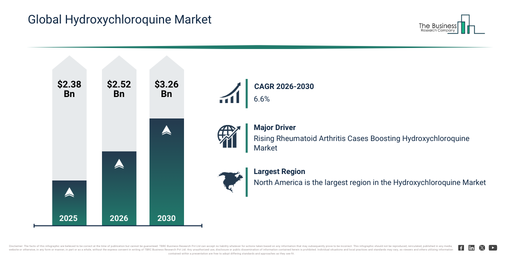
    Hydroxychloroquine Market Growth Outlook Reveals A CAGR Of 6.6% And A Market Value Of $3.25 Billion By 2030

    Delivering more actionable and strategically valuable research, The Business Research Company’s 2026 market reports feature market attractiveness analysis, total addressable market evaluation, company benchmarking matrices, interactive Excel dashboards, expanded supply chain intelligence, emerging startup coverage, and detailed product insights.

    Hydroxychloroquine Market Forecast Highlighting Growth From $2.52 Billion To $3.25 Billion

    The market for hydroxychloroquine has experienced robust expansion in recent years. A steady increase is projected from the 2025 valuation of $2.38 billion to an anticipated $2.52 billion by 2026, reflecting a compound annual growth rate (CAGR) of 6.2%. Factors driving the growth during the historical period include the significant presence of malaria in endemic areas, its well-documented application in managing autoimmune diseases, a growing understanding of its therapeutic advantages, widespread availability through both hospital and retail pharmacy networks, and its escalating use in clinical settings for conditions such as rheumatoid arthritis and lupus.

    The hydroxychloroquine market is projected to experience robust expansion over the coming years, with its value anticipated to reach $3.26 billion by 2030, reflecting a compound annual growth rate of 6.6%. This forecasted growth is driven by factors such as ongoing research into its applications for COVID-19, the creation of novel formulations and delivery systems, the rise of online pharmacy platforms, enhanced government initiatives targeting malaria prevention, and heightened investments in clinical trials along with off-label studies. Key trends shaping the market during this period include a growing reliance on hydroxychloroquine for both malaria prevention and treatment, increased adoption in managing rheumatoid arthritis and lupus, an uptick in off-label usage and clinical investigations related to COVID-19, the proliferation of tablet forms and injectable versions, and expanded distribution through hospital networks, online channels, and retail pharmacies.

    Download A Free Sample Report For Comprehensive Market Insights:

    https://www.thebusinessresearchcompany.com/sample.aspx?id=3235&type=smp&utm_source=BlogsPR&utm_medium=Paid&utm_campaign=Jul_PR

    Hydroxychloroquine Market Demand Drivers Creating New Revenue Opportunities

    The increasing prevalence of rheumatoid arthritis is anticipated to drive expansion in the hydroxychloroquine market in the coming period. Rheumatoid arthritis is defined as an autoimmune and inflammatory disorder wherein the immune system mistakenly attacks healthy cells within the body, resulting in inflammation in the affected areas. Hydroxychloroquine proves advantageous for managing rheumatoid arthritis because it helps lower inflammation and ease symptoms, thereby enhancing the overall well-being of numerous patients. To illustrate, in June 2023, the Centers for Disease Control and Prevention, a health protection agency based in the United States, reported that 54.4 million adults in the U.S. had been diagnosed with arthritis, with this figure expected to climb to 78 million by 2040. Consequently, the rising incidence of rheumatoid arthritis is predicted to fuel the hydroxychloroquine market.

    Hydroxychloroquine Market Driver: Impact Of Rising Healthcare Expenditure On The Growth Of The Hydroxychloroquine Market

    Growth in the hydroxychloroquine market is expected to be propelled by the increase in healthcare spending in the near future. Healthcare expenditure denotes the overall amount of resources, often quantified in monetary terms, that a country, organization, or individual dedicates to health services and products. This rise in healthcare outlay is influenced by various elements, such as an aging demographic, the widespread nature of chronic illnesses, progress in medical technology, and heightened consumer demands for high-quality care. Hydroxychloroquine has the potential to mitigate climbing healthcare expenses by providing an economical treatment option for various conditions, thereby lessening dependence on more costly medical procedures. As an example, in November 2023, the Canadian Institute for Health Information, a non-profit entity based in Canada, indicated that total health expenditure is estimated to hit $344 billion in 2023, showing a slight increase of 2.8% over the prior year. Thus, the uptick in healthcare expenditure is fueling the advancement of the hydroxychloroquine market.

    Hydroxychloroquine Market Segment Analysis: What Are The Major Market Categories?

    The hydroxychloroquine market covered in this report is segmented –

    1) By Drug Activity: Anti-Malarial Drug, Anti-Rheumatic Drug, Lupus Suppressant Drug, Anti COVID-19 Drug, Other Drug Activity

    2) By Formulation: Tablets, Injection

    3) By Application: Malaria, Rheumatoid Arthritis, Lupus Erythematosus, COVID-19, Other Applications

    4) By Distribution Channel: Hospital Pharmacy, Online Pharmacy, Specialty Drug Stores, Retail Pharmacy

    Subsegments:

    1) By Anti-Malarial Drug: Treatment Of Malaria, Prophylaxis For Malaria

    2) By Anti-Rheumatic Drug: Treatment Of Rheumatoid Arthritis, Treatment Of Juvenile Idiopathic Arthritis

    3) By Lupus Suppressant Drug: Treatment Of Systemic Lupus Erythematosus

    4) By Anti COVID-19 Drug: Treatment Of COVID-19 Symptoms

    5) By Other Drug Activity: Treatment Of Other Autoimmune Disorders, Additional Off-label uses

    Hydroxychloroquine Market Leading Companies Driving Competitive Growth

    Major companies operating in the hydroxychloroquine market are Bayer AG, Dr. Reddy’s Laboratories Ltd., Zydus Group, Ipca Laboratories Ltd., Wallace Pharma, Teva Pharmaceuticals Inc., Mylan Pharmaceuticals Inc., Novartis AG, Intas Pharmaceuticals Ltd., Lupin Limited, Shanghai Zhongxi Sanwei Pharmaceutical Co. Ltd., Torrent Pharmaceuticals Ltd., Hikma Pharmaceuticals plc, Sandoz International GmbH, Cipla Limited, Shenhua Pharmaceutical Co. Ltd., Sanofi S.A., Macleod Pharmaceuticals Ltd., Laurus Labs, TAJ Pharmaceuticals, Wuhan Wuyao Pharmaceutical Co. Ltd., Concordia Healthcare, Pfizer Inc., Cadila Pharmaceuticals, Hetero Drugs Ltd., Jubilant Generics Limited, Alembic Pharmaceuticals Limited, Sun Pharmaceutical Industries Ltd., Aurobindo Pharma USA Inc., Alkem Laboratories Ltd., Glenmark Pharmaceuticals Ltd., Unichem Laboratories Ltd., Wockhardt Limited, Emcure Pharmaceuticals Ltd., Strides Pharma Science Ltd., Indoco Remedies Ltd.

    Access The Complete Hydroxychloroquine Market Report:

    https://www.thebusinessresearchcompany.com/report/hydroxychloroquines-global-market-report?utm_source=BlogsPR&utm_medium=Paid&utm_campaign=Jul_PR

    Hydroxychloroquine Market Geographic Landscape: Which Region Dominates Industry Growth?

    North America was the largest region in the hydroxychloroquine market in 2025. Middle East is expected to be the fastest-growing region in the hydroxychloroquine market report. The regions covered in the hydroxychloroquine market report are Asia-Pacific, South East Asia, Western Europe, Eastern Europe, North America, South America, Middle East, Africa.

    Get in touch with us:

    The Business Research Company: https://www.thebusinessresearchcompany.com/?utm_source=BlogsPR&utm_medium=Paid&utm_campaign=home_page_test

    Americas: +1 310-496-7795

    Asia: +44 7882 955267 & +91 8897263534

    Europe: +44 7882 955267

    Email us at: marketing@tbrc.info

    Follow us on:

    LinkedIn: https://in.linkedin.com/company/the-business-research-company

    YouTube: https://www.youtube.com/channel/UC24_fI0rV8cR5DxlCpgmyFQ

    Global Market Model: https://www.thebusinessresearchcompany.com/global-market-model