Month: July 2026

  • Artificial Intelligence (AI) Psychological Counseling Market Forecast Highlights Expansion From $5.39 Billion To $10.77 Billion Through 2030

    Artificial Intelligence (AI) Psychological Counseling Market Forecast Highlights Expansion From $5.39 Billion To $10.77 Billion Through 2030

    Through market attractiveness analysis, total addressable market evaluation, company benchmarking matrices, interactive Excel dashboards, expanded supply chain intelligence, emerging startup coverage, and detailed product insights, The Business Research Company’s 2026 market reports provide more actionable and strategically valuable research.

    Artificial Intelligence (AI) Psychological Counseling Market Revenue Growth Supported By A CAGR Of 10.77% Through 2030

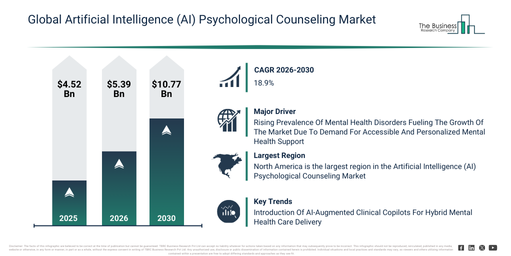
    The artificial intelligence (AI) psychological counseling market has experienced substantial growth in its size over recent years. This market is projected to expand from $4.52 billion in 2025 to $5.39 billion in 2026, achieving a compound annual growth rate (CAGR) of 19.2%. Historically, this expansion has been driven by the increasing integration of AI tools in mental health, greater investment in digital therapeutics, heightened public awareness of mental health issues, the broader reach of telehealth platforms, and foundational developments in natural language processing (NLP) and machine learning applications.

    The artificial intelligence (AI) psychological counseling market is anticipated to experience substantial growth in the coming years, with its size projected to reach $10.77 billion by 2030, exhibiting a compound annual growth rate (CAGR) of 18.9%. This expansion during the forecast period stems from factors such as a heightened demand for individualized mental health support, the increasing embrace of cloud-based AI counseling, a rise in the integration of wearables and IoT for patient monitoring, the development of hybrid human-AI therapy models, and growing investments in AI mental health startups. Significant trends anticipated over this period encompass technological progress in generative AI and natural language processing (NLP), breakthroughs in multimodal AI analytics, the creation of tailored AI interventions, ongoing research into explainable AI (XAI), and seamless integration with digital therapeutics and telehealth platforms.

    Download A Free Sample Report For Comprehensive Market Insights:

    https://www.thebusinessresearchcompany.com/sample.aspx?id=30518&type=smp&utm_source=Blogs&utm_medium=Paid&utm_campaign=Jul_PR

    Artificial Intelligence (AI) Psychological Counseling Market Expansion Drivers: What Is Shaping Future Growth?

    The increasing occurrence of mental health conditions is anticipated to drive the expansion of the artificial intelligence (AI) psychological counseling market in the future. These disorders are defined as states that considerably impact an individual’s feelings, cognition, actions, and general psychological well-being. The surge in mental health issues stems from increased stress associated with contemporary lifestyles, encompassing job demands, social detachment, and continuous digital engagement. Artificial intelligence (AI) psychological counseling aids in tackling mental health disorders by delivering customized, readily available, and expandable mental health assistance via virtual engagements and information-based analyses. This technology enhances patient results through facilitating prompt intervention, ongoing observation, and personalized therapeutic advice. For example, data from May 2024, released by the American Psychiatric Association, a US-based non-profit organization, indicated that in 2024, 43% of adults reported elevated anxiety compared to the previous year, a rise from 37% in 2023 and 32% in 2022. Consequently, the growing prevalence of mental health disorders is fueling the expansion of the artificial intelligence (AI) psychological counseling market.

    Artificial Intelligence (AI) Psychological Counseling Market Segments: Where Are The Largest Growth Opportunities?

    The artificial intelligence (AI) psychological counseling market covered in this report is segmented –

    1) By Component: Software, Hardware, Services

    2) By Deployment Mode: On-Premises, Cloud

    3) By Application: Clinical Therapy, Self-Help Tools, Mental Health Monitoring, Other Applications

    4) By End-User: Hospitals, Clinics, Research Institutes, Other End-Users

    Subsegments:

    1) By Software: Virtual Counseling Platforms, Emotion Recognition Algorithms, Natural Language Understanding Systems, Behavioral Analytics Software, Therapy Session Management Tools

    2) By Hardware: Wearable Monitoring Devices, Smart Therapeutic Headsets, Sensor Enabled Biofeedback Devices, Mental Health Tracking Devices, Home Based Diagnostic Tools

    3) By Services: Online Counseling Services, Professional Therapy Support Services, Technical Integration And Deployment Services, Training And Consultation Services, Maintenance And Remote Monitoring Services

    Artificial Intelligence (AI) Psychological Counseling Market Strategic Trends: What Is Defining The Next Phase Of Growth?

    Leading companies operating in the artificial intelligence (AI) psychological counseling market are concentrating on developing advanced mental health solutions, such as AI-powered clinical copilots, to enhance the efficiency and effectiveness of human therapists. AI-powered clinical copilots are artificial intelligence-driven software tools designed to assist healthcare professionals in clinical decision-making, documentation, and workflow management, thereby improving efficiency, accuracy, and patient care. For instance, in November 2024, Wysa Inc., a US-based provider of AI-driven mental health support, unveiled Wysa Copilot. The platform is designed to elevate mental health therapy by seamlessly integrating AI support with human clinical care, offering secure, real-time and asynchronous messaging for patient-therapist communication. This solution enables clinicians to push AI-guided tools to patients, monitor their progress through automated assessments, and receive alerts for crisis situations, effectively bridging the gap between digital self-help and professional therapy.

    Artificial Intelligence (AI) Psychological Counseling Market Major Participants And Competitive Dynamics

    Major companies operating in the artificial intelligence (AI) psychological counseling market are Lyra Health Inc., Noom Inc., Headspace Health Inc., Spring Health Inc., Cerebral Inc., Calm.com Inc., SonderMind Inc., WellDoc Inc., Meru Health Inc., Woebot Health Inc., Mindstrong Health Inc., Cognito Therapeutics Inc., Hume AI Inc., Wysa Ltd., Limbic Limited, RealizedCare Inc., Naluri Hidup Sdn Bhd, Youper Inc., Elomia Inc., Replika Inc., Videra Health Inc.

    Access The Complete Artificial Intelligence (AI) Psychological Counseling Market Report:

    https://www.thebusinessresearchcompany.com/report/artificial-intelligence-ai-psychological-counseling-market-report?utm_source=Blogs&utm_medium=Paid&utm_campaign=Jul_PR

    Artificial Intelligence (AI) Psychological Counseling Market Geographic Analysis: Where Is Demand Growing The Fastest?

    North America was the largest region in the artificial intelligence (AI) psychological counseling market in 2025. Asia-Pacific is expected to be the fastest-growing region in the forecast period. The regions covered in the artificial intelligence (AI) psychological counseling market report are Asia-Pacific, South East Asia, Western Europe, Eastern Europe, North America, South America, Middle East, Africa.

    Get in touch with us:

    The Business Research Company: https://www.thebusinessresearchcompany.com/

    Americas: +1 310-496-7795

    Asia: +44 7882 955267 & +91 8897263534

    Europe: +44 7882 955267

    Email us at: marketing@tbrc.info

    Follow us on:

    LinkedIn: https://in.linkedin.com/company/the-business-research-company

    YouTube: https://www.youtube.com/channel/UC24_fI0rV8cR5DxlCpgmyFQ

    Global Market Model: https://www.thebusinessresearchcompany.com/global-market-model
  • Artificial Intelligence (AI) Mental Service Robot Market Opportunities Are Emerging Beyond Traditional Growth Areas

    Artificial Intelligence (AI) Mental Service Robot Market Opportunities Are Emerging Beyond Traditional Growth Areas

    Through market attractiveness analysis, total addressable market evaluation, company benchmarking matrices, interactive Excel dashboards, expanded supply chain intelligence, emerging startup coverage, and detailed product insights, The Business Research Company’s 2026 market reports provide more actionable and strategically valuable research.

    #Artificial Intelligence (AI) Mental Service Robot Market Size And Revenue Forecast Through 2030

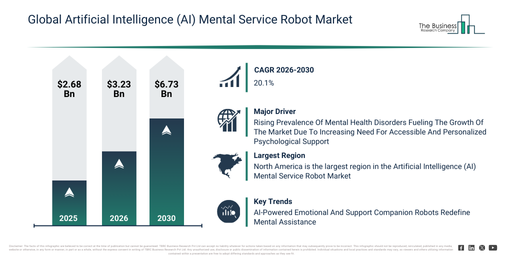
    The artificial intelligence (AI) mental service robot market has experienced substantial expansion in recent years. Projections indicate this market will ascend from $2.68 billion in 2025 to $3.23 billion in 2026, demonstrating a compound annual growth rate (CAGR) of 20.4%. The factors contributing to its historical growth include heightened mental-health awareness, rising stress and anxiety levels, an expanding elderly demographic, the wider adoption of digital health, and an increasing requirement for personalized emotional support.

    The artificial intelligence (AI) mental service robot market is poised for substantial expansion in the coming years. It is projected to achieve a size of $6.73 billion by 2030, demonstrating a compound annual growth rate (CAGR) of 20.1%. This anticipated growth throughout the forecast period is driven by factors such as the increasing adoption of AI mental service robots, their growing integration with telehealth platforms, rising investment in healthcare robotics, the expansion of corporate wellness programs, and an escalating demand for cognitive-behavioral and mindfulness support. Significant trends for this period include technological progress in emotion recognition, innovations in conversational AI and NLP, dedicated research and development in cognitive-behavioral assistance, advancements in human-robot interaction, and further developments in cloud-based AI and data analytics.

    Download A Free Sample Report For Comprehensive Market Insights:

    https://www.thebusinessresearchcompany.com/sample.aspx?id=30515&type=smp&utm_source=Blogs&utm_medium=Paid&utm_campaign=Jul_PR

    #Artificial Intelligence (AI) Mental Service Robot Market Growth Factors: Which Forces Are Supporting Market Expansion?

    The escalating occurrence of mental health conditions is anticipated to fuel the expansion of the artificial intelligence (AI) mental service robot market in the future. These conditions denote ailments that significantly impact an individual’s feelings, cognition, conduct, and general psychological well-being. The rise in mental health disorders is attributed to increasing stress from contemporary living, encompassing demands from work, social detachment, and continuous digital engagement. Artificial intelligence (AI) mental service robots contribute to tackling mental health issues by offering patients interactive, customized assistance and oversight. They improve the availability and regularity of care through real-time advice, behavioral direction, and emotional aid, complementing conventional therapeutic approaches. For instance, in May 2024, as per the American Psychiatric Association, a US-based non-profit organization, in 2024, 43% of adults report feeling more anxious than they did the year before, an increase from 37% in 2023 and 32% in 2022. Consequently, the growing frequency of mental health disorders is propelling the development of the artificial intelligence (AI) mental service robot market.

    Artificial Intelligence (AI) Mental Service Robot Market Segmentation: How Is The Market Structured Across Key Categories?

    The artificial intelligence (AI) mental service robot market covered in this report is segmented –

    1) By Component: Hardware, Software, Services

    2) By Type: Humanoid Or Anthropomorphic, Animal-Like Or Companion, Screen Or Virtual Assistants

    3) By Technology: Natural Language Processing, Machine Learning, Computer Vision, Emotional Recognition

    4) By Sales Channel: Direct Manufacturer Sales, Robotics Distributors, Online Sales Channels, Health-Technology Integrators

    5) By End Use: Health Care Facilities, Educational Institutions, Home Care, Research Institutes

    Subsegments:

    1) By Hardware: Sensors And Actuators, Cameras And Vision Modules, Processors And Control Units, Mobility And Locomotion Components, Communication And Connectivity Modules, Structural And Body Components

    2) By Software: Natural Language Understanding Software, Emotion Recognition Software, Learning And Adaptation Software, Interaction And Behavior Control Software, Navigation And Environmental Mapping Software, Safety And Compliance Monitoring Software

    3) By Services: Installation And Setup Services, Customization And Configuration Services, Training And User Support Services, Maintenance And Repair Services, System Integration Services, Remote Monitoring And Update Services

    Artificial Intelligence (AI) Mental Service Robot Market Industry Trends: What Changes Are Reshaping Demand?

    Leading companies operating within the artificial intelligence (AI) mental service robot market are concentrating on developing advanced products, such as AI-driven emotional support systems, to improve mental well-being, offer therapy, and combat loneliness. These AI emotional support systems are intelligent platforms embedded in companion robots that can understand, respond to, and adapt to a user’s emotional state through conversation, touch, and personalized interactions. For instance, in January 2025, Mind with Heart Robotics Co. Ltd., a China-based robotics company, unveiled AnAn, a bionic AI-powered panda cub robot. This advanced biomimetic robot features a patented tactile sensing system where realistic fur covers more than 10 tactile sensor suites, allowing it to react to touch with distinct sounds. It incorporates an intelligent AI Brain with core and long-term memory and reminder functions, serving as a personal assistant for seniors and providing personalized companionship without human intervention. Additionally, a dedicated app is included for customizing the panda’s personality and connecting users to a global community, expanding its therapeutic applications and fostering emotional bonds for individuals across various demographics.

    Artificial Intelligence (AI) Mental Service Robot Market Competitive Landscape And Leading Companies

    Major companies operating in the artificial intelligence (AI) mental service robot market are Sony Group Corporation, UBTECH Robotics Corp. Ltd., Emotix Private Limited, GROOVE X Inc., Soul Machines Limited, Hanson Robotics Ltd., Blue Frog Robotics S.A.S., Realbotix Corp, LuxAI S.A., Yukai Engineering Inc., RoboKind Inc., PAL Robotics S.L., PARO Robots U.S. Inc., Tombot Inc., Pandorabots Inc., Embodied Inc., Luvozo Public Benefit Corporation, Intuition Robotics Ltd., Furhat Robotics AB, Kindroid Inc.

    Access The Complete Artificial Intelligence (AI) Mental Service Robot Market Report:

    https://www.thebusinessresearchcompany.com/report/artificial-intelligence-ai-mental-service-robot-market-report?utm_source=Blogs&utm_medium=Paid&utm_campaign=Jul_PR

    Artificial Intelligence (AI) Mental Service Robot Market Leading Geography: Which Region Generates The Most Revenue?

    North America was the largest region in the artificial intelligence (AI) mental service robot market in 2025. Asia-Pacific is expected to be the fastest-growing region in the forecast period. The regions covered in the artificial intelligence (AI) mental service robot market report are Asia-Pacific, South East Asia, Western Europe, Eastern Europe, North America, South America, Middle East, Africa.

    Get in touch with us:

    The Business Research Company: https://www.thebusinessresearchcompany.com/

    Americas: +1 310-496-7795

    Asia: +44 7882 955267 & +91 8897263534

    Europe: +44 7882 955267

    Email us at: marketing@tbrc.info

    Follow us on:

    LinkedIn: https://in.linkedin.com/company/the-business-research-company

    YouTube: https://www.youtube.com/channel/UC24_fI0rV8cR5DxlCpgmyFQ

    Global Market Model: https://www.thebusinessresearchcompany.com/global-market-model
  • Artificial Intelligence (AI) Arrhythmia Burden Analytics Market Growth Outlook Reveals A CAGR Of 28.9% And A Market Value Of $8.72 Billion By 2030

    Artificial Intelligence (AI) Arrhythmia Burden Analytics Market Growth Outlook Reveals A CAGR Of 28.9% And A Market Value Of $8.72 Billion By 2030

    Through market attractiveness analysis, total addressable market evaluation, company benchmarking matrices, interactive Excel dashboards, expanded supply chain intelligence, emerging startup coverage, and detailed product insights, The Business Research Company’s 2026 market reports provide more actionable and strategically valuable research.

    Artificial Intelligence (AI) Arrhythmia Burden Analytics Market Expansion From $3.16 Billion In 2026 To $8.72 Billion In 2030

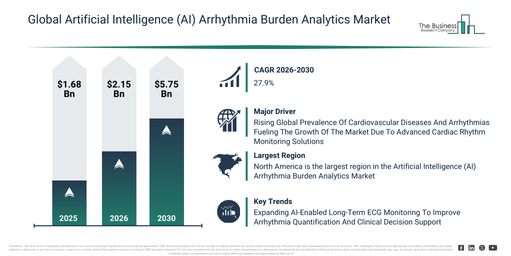
    The artificial intelligence (AI) arrhythmia burden analytics market has experienced substantial expansion in recent years. Its valuation is predicted to rise from $1.68 billion in 2025 to $2.15 billion in 2026, achieving a compound annual growth rate (CAGR) of 28.2%. This historical growth can be linked to the increasing occurrence of cardiovascular diseases, the wider embrace of wearable ECG monitors, a growing requirement for early arrhythmia detection, the expansion of remote patient monitoring platforms, and heightened investment in digital health infrastructure.

    The artificial intelligence (AI) arrhythmia burden analytics market is projected to experience rapid expansion over the upcoming years. This market is anticipated to reach $5.75 billion by 2030, demonstrating a compound annual growth rate (CAGR) of 27.9%. Several factors will drive this growth during the forecast period, including the greater integration of AI within healthcare IT systems, an increased emphasis on predictive and personalized cardiac care, the growing adoption of cloud-based AI solutions, expanded AI research and development efforts, and enhanced regulatory backing for AI-powered medical devices. Key trends anticipated during this period encompass breakthroughs in predictive algorithms, continuous progress in cloud-based deployment strategies, the integration of technology with wearable devices, substantial investment in data analytics platforms, and the creation of AI-enabled diagnostic software.

    Download A Free Sample Report For Comprehensive Market Insights:

    https://www.thebusinessresearchcompany.com/sample.aspx?id=30503&type=smp&utm_source=Blogs&utm_medium=Paid&utm_campaign=Jul_PR

    #Artificial Intelligence (AI) Arrhythmia Burden Analytics Market Growth Factors: Which Forces Are Supporting Market Expansion?

    The expanding worldwide occurrence of cardiovascular diseases and arrhythmias is anticipated to fuel the growth of the artificial intelligence (AI) arrhythmia burden analytics market in the coming years. These conditions encompass an increasing number of individuals globally suffering from heart and blood vessel disorders, including irregular heart rhythms such as atrial fibrillation, which represent significant causes of death and disability across the globe. This increase in prevalence is linked to an aging population and greater exposure to risk factors like hypertension, obesity, and diabetes, all of which raise the chance of developing arrhythmias. Artificial intelligence (AI) arrhythmia burden analytics supports the management of cardiovascular diseases and arrhythmias by offering continuous, precise analysis of cardiac rhythm data, thereby enhancing the early identification and treatment of arrhythmic events. For example, according to the Centers for Disease Control and Prevention, a Switzerland-based public health agency, in August 2025, individuals with chronic and mental health conditions account for 90% of the nation’s 4.9 trillion dollars in annual health care spending. More than 84,000 Americans succumb to heart disease or stroke each year, with cardiovascular disease costs expected to reach approximately 2 trillion dollars by 2050. Consequently, the increasing global prevalence of cardiovascular diseases and arrhythmias is propelling the expansion of the artificial intelligence (AI) arrhythmia burden analytics market.

    Artificial Intelligence (AI) Arrhythmia Burden Analytics Market Segment Breakdown: Which Categories Generate The Most Revenue?

    The artificial intelligence (AI) arrhythmia burden analytics market covered in this report is segmented –

    1) By Component: Software, Hardware, Services

    2) By Technology: Machine Learning (ML), Deep Learning (DL), Natural Language Processing (NLP)

    3) By Deployment Mode: On-Premises, Cloud-Based

    4) By Application: Arrhythmia Detection, Burden Quantification, Predictive Risk Assessment, Treatment Efficacy Monitoring, Clinical Decision Support

    5) By End-User: Healthcare Providers, Diagnostic Centers, Academic And Research Institutes, Other End-Users

    Subsegments:

    1) By Software: Data Management, Predictive Analytics, Visualization Tools, Reporting Platforms, Algorithm Development

    2) By Hardware: Monitoring Devices, Wearable Sensors, Data Storage Units, Processing Units, Connectivity Modules

    3) By Services: Consulting Services, Implementation Services, Maintenance And Support, Training Services, Cloud Hosting Services

    Artificial Intelligence (AI) Arrhythmia Burden Analytics Market Industry Trends: What Changes Are Reshaping Demand?

    Companies operating within the artificial intelligence (AI) arrhythmia burden analytics market are concentrating on developing advanced offerings, such as AI-powered arrhythmia detection systems, to enhance diagnostic accuracy, improve patient adherence, and minimize the risk of misdiagnosis and repeat testing. These AI-driven arrhythmia detection systems incorporate sophisticated algorithms within cardiac monitors, automatically analyzing continuous electrocardiogram (ECG) data to precisely identify and categorize irregular heart rhythms. For instance, in May 2025, iRhythm Technologies, a US-based digital health company, introduced its Zio ECG Recording and Analysis System in Japan. This system is a prescription-only, long-term continuous monitoring solution that features a deep-learned artificial intelligence (AI) algorithm approved by Japan’s Pharmaceuticals and Medical Devices Agency (PMDA). It consists of a patch-based monitor worn for up to 14 days and an accompanying analysis service that provides comprehensive reports, enabling the smooth detection of 13 arrhythmia types without imposing significant patient burden. The system also includes certified clinical review and is linked to a high diagnostic yield and low retesting rates, ultimately improving clinical efficiency for healthcare providers.

    Artificial Intelligence (AI) Arrhythmia Burden Analytics Market Key Players And Strategic Industry Positioning

    Major companies operating in the artificial intelligence (AI) arrhythmia burden analytics market are Medtronic plc, Koninklijke Philips N.V., GE HealthCare Technologies Inc., Boston Scientific Corporation, iRhythm Technologies Inc., Bittium Corporation, Cardiac Rhythm Management, AliveCor Inc., VivaLNK Inc., Biotricity Inc., InfoBionic Inc., Cardiac Insight Inc., Cortrium ApS, Eko Health Inc., CardioComm Solutions Inc., Medi-Lynx Cardiac Monitoring LLC, QT Medical Inc., Wearable Sensors Ltd., HeartVista Inc., iCardiac Technologies Inc.

    Access The Complete Artificial Intelligence (AI) Arrhythmia Burden Analytics Market Report:

    https://www.thebusinessresearchcompany.com/report/artificial-intelligence-ai-arrhythmia-burden-analytics-market-report?utm_source=Blogs&utm_medium=Paid&utm_campaign=Jul_PR

    Artificial Intelligence (AI) Arrhythmia Burden Analytics Market Regional Outlook: Where Are The Largest Opportunities Located?

    North America was the largest region in the artificial intelligence (AI) arrhythmia burden analytics market in 2025. Asia-Pacific is expected to be the fastest-growing region in the forecast period. The regions covered in the artificial intelligence (AI) arrhythmia burden analytics market report are Asia-Pacific, South East Asia, Western Europe, Eastern Europe, North America, South America, Middle East, Africa.

    Get in touch with us:

    The Business Research Company: https://www.thebusinessresearchcompany.com/

    Americas: +1 310-496-7795

    Asia: +44 7882 955267 & +91 8897263534

    Europe: +44 7882 955267

    Email us at: marketing@tbrc.info

    Follow us on:

    LinkedIn: https://in.linkedin.com/company/the-business-research-company

    YouTube: https://www.youtube.com/channel/UC24_fI0rV8cR5DxlCpgmyFQ

    Global Market Model: https://www.thebusinessresearchcompany.com/global-market-model

  • Blood Pressure Telemonitoring Hubs Market Outlook Highlights The Next Major Growth Opportunities

    Blood Pressure Telemonitoring Hubs Market Outlook Highlights The Next Major Growth Opportunities

    Delivering more actionable and strategically valuable research, The Business Research Company’s 2026 market reports feature market attractiveness analysis, total addressable market evaluation, company benchmarking matrices, interactive Excel dashboards, expanded supply chain intelligence, emerging startup coverage, and detailed product insights.

    Blood Pressure Telemonitoring Hubs Market Forecast: What Market Value Is Expected By 2030?

    The blood pressure telemonitoring hubs market has experienced substantial growth in its size over recent years. Its expansion is projected to continue, reaching $1.62 billion in 2026 from $1.41 billion in 2025, at a compound annual growth rate (CAGR) of 15.2%. This historical growth is attributable to several factors, including the rising occurrence of hypertension, the increasing embrace of home healthcare solutions, the heightened demand for ongoing patient surveillance, the broader application of digital health instruments, and an uptick in patient understanding regarding self-monitoring.

    The blood pressure telemonitoring hubs market size is anticipated to undergo significant expansion over the next few years. It is projected to climb to $2.82 billion by 2030, driven by a compound annual growth rate (CAGR) of 14.9%. This expected growth during the forecast period can be attributed to several factors, including the increasing need for remote monitoring solutions, the greater integration of smart connected devices, a noticeable move towards preventive healthcare, expanding support for telehealth reimbursement, and a heightened emphasis on managing chronic diseases. Prominent trends for this period involve technological progress in telemonitoring platforms, new developments in wireless blood pressure devices, advancements in analytics powered by artificial intelligence, ongoing research and development in remote patient monitoring systems, and enhancements in cloud-based health data integration.

    Download A Free Sample Report For Comprehensive Market Insights:

    https://www.thebusinessresearchcompany.com/sample.aspx?id=30541&type=smp&utm_source=Blogs&utm_medium=Paid&utm_campaign=Jul_PR

    Blood Pressure Telemonitoring Hubs Market Development Factors: Which Trends Are Supporting Demand?

    The increasing occurrence of chronic illnesses is anticipated to fuel the expansion of the blood pressure telemonitoring hubs market. These long-lasting health conditions, including hypertension, diabetes, and cardiovascular ailments, necessitate continuous oversight and management. The rise in chronic diseases is attributed to an aging global population coupled with common unhealthy lifestyle choices like lack of physical activity, inadequate diet, tobacco use, and excessive drinking, leading to conditions such as obesity, hypertension, and diabetes over time. Blood pressure telemonitoring hubs aid in managing chronic diseases by providing interconnected devices and data platforms that relay real-time blood pressure measurements to medical professionals, thereby enhancing disease control and decreasing hospitalizations. For example, in June 2024, according to the National Health Service, a UK-based government department, 3,615,330 individuals registered with a general practitioner (GP) were diagnosed with non-diabetic hyperglycemia or pre-diabetes (a condition with elevated blood sugar levels, not high enough to be classified as diabetes) in 2023, marking an 18% increase from 3,065,825 cases in 2022. Consequently, the increasing prevalence of chronic illnesses is fostering the expansion of the blood pressure telemonitoring hubs market.

    Blood Pressure Telemonitoring Hubs Market Segmentation: How Is The Market Structured Across Key Categories?

    The blood pressure telemonitoring hubs market covered in this report is segmented –

    1) By Component: Hardware, Software, Services

    2) By Connectivity: Wired, Wireless

    3) By Technology: Bluetooth Enabled Monitoring, WiFi Connected Devices, Cloud-Based Telemonitoring Platforms, Internet-Of-Things (IoT) Enabled Devices, Artificial Intelligence (AI) Integrated Systems

    4) By Application: Hypertension Management, Cardiovascular Disease Monitoring, Remote Patient Tracking, Post-surgical Care, Chronic Disease Surveillance

    5) By End-User: Home Care Settings, Hospitals And Clinics, Ambulatory Surgical Centers, Telemedicine Providers, Corporate Wellness Programs

    Subsegments:

    1) By Hardware: Connected Blood Pressure Monitors, Wireless Monitoring Hubs, Digital Arm Cuff Devices, Wearable Blood Pressure Sensors, Portable Telemonitoring Units

    2) By Software: Remote Monitoring Applications, Cloud Data Management Platforms, Digital Health Analytics Systems, Patient Data Visualization Tools, Telehealth Integration Software

    3) By Services: Remote Patient Monitoring Services, Technical Support And Maintenance Services, Device Installation And Setup Services, Data Management And Reporting Services, Telehealth Assistance Services

    Blood Pressure Telemonitoring Hubs Market Transformation Trends: Which Innovations Are Driving Change?

    Leading companies operating within the blood pressure telemonitoring hubs market are concentrating on developing advanced technological solutions, such as oscillometric blood pressure measurement methods, to enhance accessibility, accuracy, and patient engagement in managing blood pressure. The oscillometric blood pressure measurement method describes a non-invasive approach for obtaining blood pressure readings, which works by detecting pressure oscillations within an inflatable cuff caused by arterial blood flow during the cuff’s deflation. For example, in October 2025, uTime Limited, a technology company based in China, launched a smartwatch equipped with integrated blood pressure monitoring. This device utilizes the oscillometric method to deliver accurate, continuous blood pressure tracking directly on the wrist, having been certified under China’s NMPA Class II Medical Device Registration. The smartwatch merges this clinically recognized technique with seamless integration into telemonitoring hubs, thereby allowing users and healthcare providers to access real-time blood pressure data, monitor trends over time, and support proactive health decisions.

    Blood Pressure Telemonitoring Hubs Market Competitive Landscape And Leading Companies

    Major companies operating in the blood pressure telemonitoring hubs market are GE Healthcare Technologies Inc., Koninklijke Philips N.V., Masimo Corporation, Beurer GmbH, Microlife Corporation, OMRON Healthcare Inc., Athelas Inc., Withings, HealthSnap Inc., A&D Medical Inc., Cadence Solutions Inc., TimeDoc Health Inc., iHealth Labs Inc., Health Recovery Solutions (HRS), ForaCare Suisse AG, Validic Inc., CareSimple, CarePredict Inc., Zephyr Technology Corporation, Accuhealth Inc., Luscii Healthtech B.V., RPM Healthcare LLC

    Access The Complete Blood Pressure Telemonitoring Hubs Market Report:

    https://www.thebusinessresearchcompany.com/report/blood-pressure-telemonitoring-hubs-market-report?utm_source=Blogs&utm_medium=Paid&utm_campaign=Jul_PR

    Blood Pressure Telemonitoring Hubs Market Regional Analysis And Leading Geography

    North America was the largest region in the blood pressure telemonitoring hubs in 2025. Asia-Pacific is expected to be the fastest-growing region in the forecast period. The regions covered in the blood pressure telemonitoring hubs market report are Asia-Pacific, South East Asia, Western Europe, Eastern Europe, North America, South America, Middle East, Africa.

    Get in touch with us:

    The Business Research Company: https://www.thebusinessresearchcompany.com/

    Americas: +1 310-496-7795

    Asia: +44 7882 955267 & +91 8897263534

    Europe: +44 7882 955267

    Email us at: marketing@tbrc.info

    Follow us on:

    LinkedIn: https://in.linkedin.com/company/the-business-research-company

    YouTube: https://www.youtube.com/channel/UC24_fI0rV8cR5DxlCpgmyFQ

    Global Market Model: https://www.thebusinessresearchcompany.com/global-market-model
  • Bioprinting Market Expansion Is Reshaping Competitive Dynamics Across The Industry

    Bioprinting Market Expansion Is Reshaping Competitive Dynamics Across The Industry

    Through market attractiveness analysis, total addressable market evaluation, company benchmarking matrices, interactive Excel dashboards, expanded supply chain intelligence, emerging startup coverage, and detailed product insights, The Business Research Company’s 2026 market reports provide more actionable and strategically valuable research.

    Bioprinting Market Size, Value And Growth Trends Through 2030

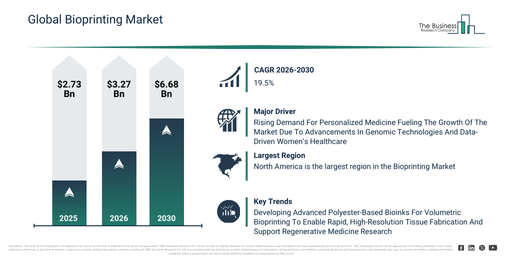
    The bioprinting market has seen rapid growth in recent years. It is forecast to expand from $2.73 billion in 2025 to $3.27 billion in 2026, at a compound annual growth rate (CAGR) of 19.8%. This historical growth can be attributed to factors such as increasing demand for tissue reconstruction, a growing need for organ transplants, the rising prevalence of chronic diseases, a scarcity of donor organs, and an expanding aging population.

    The bioprinting market is projected to experience swift expansion over the coming years. This market is anticipated to reach $6.68 billion by 2030, demonstrating a compound annual growth rate (CAGR) of 19.5%. Factors contributing to this growth during the projected period include a rising need for regenerative medicine, broader applications in drug assessment and creation, increased R&D expenditures, the escalating occurrence of chronic illnesses, and a heightened focus on personalized medical treatments. Significant trends observed within the forecast timeframe encompass technological improvements in bioprinting equipment, breakthroughs in bioinks and biomaterials, the creation of tailored 3D tissue and organ constructs, expanded utilization in the pharmaceutical sector for drug development and trials, and the expansion of joint public and private research initiatives in biofabrication.

    Download A Free Sample Report For Comprehensive Market Insights:

    https://www.thebusinessresearchcompany.com/sample.aspx?id=30539&type=smp&utm_source=Blogs&utm_medium=Paid&utm_campaign=Jul_PR

    #Bioprinting Market Growth Factors: Which Forces Are Supporting Market Expansion?

    The escalating requirement for personalized medicine is anticipated to fuel the expansion of the bioprinting market in the future. Personalized medicine involves a medical strategy that customizes therapies for individual patients, considering their genetic makeup, environmental influences, and lifestyle choices to optimize health outcomes and enhance care. The increased need for personalized medicine stems from developments in genomic technologies, which facilitate accurate identification of genetic variations and enable customized treatments for individuals. Bioprinting supports personalized medicine by allowing the creation of patient-specific tissues and organ constructs tailored to unique biological profiles. This improves treatment precision through customized drug screening, regenerative medical therapies, and more accurate forecasts of patient responses. For instance, in February 2024, the US-based nonprofit organization Personalized Medicine Coalition (PMC) stated that the U.S. Food and Drug Administration (FDA) approved 26 new personalized medicines in 2023, which signifies a substantial increase from the 12 approvals in 2022. Consequently, the rising demand for personalized medicine is propelling the growth of the bioprinting market.

    Bioprinting Market Segment Analysis Highlighting Growth Areas

    The bioprinting market covered in this report is segmented –

    1) By Product: 3D Bioprinters, Bioinks, 3D Bioprinted Products And Services

    2) By Material: Living Cells, Hydrogels, Extracellular Matrices, Biomaterials, Other Materials

    3) By Technology: Inkjet Bioprinting, Extrusion Bioprinting, Laser-Assisted Bioprinting, Magnetic Levitation Bioprinting, Other Technologies

    4) By Application: Tissue Engineering, Regenerative Medicine, Drug Development, Research, Other Applications

    5) By End-User: Academic And Research Institutes, Pharmaceutical And Biotechnology Companies, Hospitals And Clinics, Other End-Users

    Subsegments:

    1) By 3D Bioprinters: Inkjet Bioprinters, Extrusion Bioprinters, Laser Assisted Bioprinters, Magnetic Levitation Bioprinters, Microvalve Bioprinters

    2) By Bioinks: Natural Polymer Bioinks, Synthetic Polymer Bioinks, Composite Bioinks, Cell Laden Bioinks, Extracellular Matrix Based Bioinks

    3) By 3D Bioprinted Products And Services: Bioprinted Tissue Models, Bioprinted Organ Models, Custom Bioprinting Services, Disease Modeling Products, Regenerative Medicine Constructs

    Bioprinting Market Industry Trends: What Changes Are Reshaping Demand?

    Leading companies in the bioprinting market are channeling their efforts into developing advanced resin materials, such as polyester-based volumetric bioprinting resins, to enable the rapid manufacturing of complex tissue constructs with high resolution and biocompatibility. Polyester-based volumetric bioprinting resins are specifically designed to create entire three-dimensional structures simultaneously instead of through a layer-by-layer process, thereby supporting intricate tissue models vital for regenerative medicine and tissue engineering research. An illustrative example occurred in May 2025, when BIO INX, a Belgium-based bioink technology company, and Readily3D, a Switzerland-based bioprinter developer, jointly introduced READYPCL INX. This polyester-based resin facilitates high-speed volumetric printing, achieving resolutions as fine as 100 µm. The resin is notable for its robust mechanical performance, full biodegradability, and adherence to ISO 10993-5 biocompatibility, making it well-suited for complex bone and cartilage applications. This product launch marks a significant progression in bioprinting technology by integrating speed, precision, and biocompatibility to bolster next-generation tissue engineering and regenerative medicine research.

    Bioprinting Market Leading Companies: Who Holds Significant Market Presence?

    Major companies operating in the bioprinting market are GeSiM GmbH, Poietis SAS, Stratasys Ltd., BICO Group AB, Cyfuse Biomedical K.K., Inventia Life Science Pty Ltd., Aspect Biosystems Ltd., CollPlant Biotechnologies Ltd., Pandorum Technologies Pvt. Ltd., ROKIT Healthcare Inc., Prellis Biologics Inc., 3D Systems Corporation, RegenHU Ltd., REGEMAT 3D S.L., 3DBio Therapeutics Inc., Brinter Ltd., Allevi Inc., Next Big Innovation Labs, Precise Bio Inc., TissueLabs Inc., Fluicell AB, XLife Sciences, Organovo Holdings Inc.

    Access The Complete Bioprinting Market Report:

    https://www.thebusinessresearchcompany.com/report/bioprinting-market-report?utm_source=Blogs&utm_medium=Paid&utm_campaign=Jul_PR

    Bioprinting Market Global Footprint: Which Region Holds Market Leadership?

    North America was the largest region in the bioprinting market in 2025. Asia-Pacific is expected to be the fastest-growing region in the forecast period. The regions covered in the bioprinting market report are Asia-Pacific, South East Asia, Western Europe, Eastern Europe, North America, South America, Middle East, Africa.

    Get in touch with us:

    The Business Research Company: https://www.thebusinessresearchcompany.com/

    Americas: +1 310-496-7795

    Asia: +44 7882 955267 & +91 8897263534

    Europe: +44 7882 955267

    Email us at: marketing@tbrc.info

    Follow us on:

    LinkedIn: https://in.linkedin.com/company/the-business-research-company

    YouTube: https://www.youtube.com/channel/UC24_fI0rV8cR5DxlCpgmyFQ

    Global Market Model: https://www.thebusinessresearchcompany.com/global-market-model
  • Automatic Cardiopulmonary Resuscitation (CPR) Devices Market Expansion Is Opening New Pathways For Strategic Investment

    Automatic Cardiopulmonary Resuscitation (CPR) Devices Market Expansion Is Opening New Pathways For Strategic Investment

    Through market attractiveness analysis, total addressable market evaluation, company benchmarking matrices, interactive Excel dashboards, expanded supply chain intelligence, emerging startup coverage, and detailed product insights, The Business Research Company’s 2026 market reports provide more actionable and strategically valuable research.

    Automatic Cardiopulmonary Resuscitation (CPR) Devices Market Expansion Outlook: What Revenue Opportunities Lie Ahead?

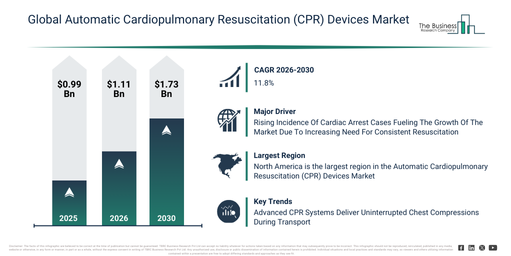
    The automatic CPR devices market size has seen significant expansion in recent years. It is projected to increase from $0.99 billion in 2025 to $1.11 billion in 2026, demonstrating a compound annual growth rate (CAGR) of 12.0%. This past growth can be attributed to the rising occurrence of cardiac arrest cases, the increasing adoption of mechanical CPR devices by hospitals and EMS, a growing focus on enhancing resuscitation quality, the expansion of emergency medical infrastructure, and a developing preference for hands-free CPR during transport.

    The automatic CPR devices market size is projected to experience substantial growth in the coming years. This market is expected to expand to $1.73 billion by 2030, achieving a compound annual growth rate (CAGR) of 11.8%. This projected increase during the forecast period is driven by factors such as the increasing integration of automated CPR with AEDs, rising investments in advanced life-support systems, the growing adoption of robotic and electromechanical CPR technologies, an expansion of critical-care equipment budgets in hospitals, and a heightened demand for consistent, high-quality CPR performance. Significant trends for the forecast period involve technological advancements in automated CPR mechanisms, innovations in lightweight portable CPR devices, progress in real-time feedback and sensor analytics, research and development focused on AI-enabled compression optimization, and improvements in connected and data-driven emergency response systems.

    Download A Free Sample Report For Comprehensive Market Insights:

    https://www.thebusinessresearchcompany.com/sample.aspx?id=30530&type=smp&utm_source=Blogs&utm_medium=Paid&utm_campaign=Jul_PR

    Automatic Cardiopulmonary Resuscitation (CPR) Devices Market Expansion Drivers: What Is Shaping Future Growth?

    The increasing frequency of cardiac arrest incidents is anticipated to drive expansion in the automatic cardiopulmonary resuscitation (CPR) devices market. Cardiac arrest signifies an abrupt cessation of blood circulation due to the heart’s inability to pump efficiently, frequently triggered by an electrical dysfunction within the heart. The climb in cardiac arrest occurrences is primarily attributable to increasing rates of cardiovascular disease, obesity, high blood pressure, and diabetes, conditions that impair cardiac function and lead to irregular heart rhythms. Automatic cardiopulmonary resuscitation (CPR) devices play a crucial role in handling cardiac arrest by delivering uninterrupted, accurate chest compressions, thereby guaranteeing adequate blood flow during critical situations. These devices enhance patient survival and recovery prospects through sustained resuscitation efforts until specialized medical assistance becomes available. For example, data from Hato Hone St John, a charitable ambulance service provider based in New Zealand, indicated that in February 2025, 2,547 individuals received treatment for cardiac arrest in 2024. This marked a 3.6 percent rise compared to 2023, with a significant 72 percent of these incidents happening at home. Consequently, the escalating number of cardiac arrest incidents is stimulating expansion within the automatic cardiopulmonary resuscitation (CPR) devices market.

    Automatic Cardiopulmonary Resuscitation (CPR) Devices Market Segment Analysis: What Are The Major Market Categories?

    The automatic cardiopulmonary resuscitation (cpr) devices market covered in this report is segmented –

    1) By Device Type: Piston-Based Mechanical CPR Devices, Load-Distributing Band (LDB) Devices, Pneumatic Compression Vest Systems, Active Compression–Decompression (ACD) Devices, Automated External Defibrillators (AEDs) With CPR Assist Features

    2) By Portability/Setting: Portable Devices, Fixed Devices

    3) By Technology: Mechanical Technology, Electromechanical Technology, Robotic Technology

    4) By Application: Cardiac Arrest (OHCA And IHCA), Respiratory Failure With Secondary Cardiac Compromise, Severe Trauma-Related Arrest, Post-Surgical Cardiac Support, Multi-Patient Emergency Response (Mass-Casualty Scenarios)

    5) By End User: Hospitals (Emergency Departments, ICUs, Cath Labs), Emergency Medical Services (EMS) And Ambulances, Ambulatory Surgical Centers, Public Access And First Responder Units (Fire, Police, Security), Home Care Settings

    Subsegments:

    1) By Piston-Based Mechanical CPR Devices: Single-Piston Systems, Dual-Piston Systems, Battery-Powered Piston Devices, Manual Override Systems

    2) By Load-Distributing Band Devices: Single-Patient Use Bands, Reusable Band Systems, Battery-Powered Band Drivers, Integrated Compression Feedback Systems

    3) By Pneumatic Compression Vest Systems: Adjustable Vest Systems, Single-Size Vest Systems, High-Frequency Oscillation Vests, Integrated Ventilation Support Systems

    4) By Active Compression–Decompression Devices: Manual Lever Devices, Battery-Assisted Devices, Integrated Suction Cup Systems, Depth And Rate Monitoring Systems

    5) By Automated External Defibrillators With CPR Assist Features: Fully Automated Compression Devices, Audio-Visual Feedback Systems, Integrated Metronome And Sensor Guides, Pediatric And Adult Dual-Mode Systems

    Automatic Cardiopulmonary Resuscitation (CPR) Devices Market Strategic Trends: What Is Defining The Next Phase Of Growth?

    Leading companies active in the automatic cardiopulmonary resuscitation (CPR) devices market are concentrating on developing advanced products, such as automated mechanical CPR devices, to ensure steady resuscitation during crucial air medical missions. Automated mechanical CPR devices are medical instruments designed to automatically deliver consistent, controlled chest compressions during cardiopulmonary resuscitation. For instance, in May 2025, Air Methods Corporation, a US-based air medical service provider, unveiled the ZOLL AutoPulse NXT, an automated mechanical CPR device. This platform is engineered to provide continuous compressions without interruption during patient loading and flight, incorporating a compact, X-ray translucent design that accommodates all aircraft in their fleet. The solution also ensures compatibility with ECMO and PCI-capable facility transport protocols to expedite the quality of care for cardiac arrest patients and improve survival rates in emergency aeromedical scenarios.

    Automatic Cardiopulmonary Resuscitation (CPR) Devices Market Leading Companies Driving Competitive Growth

    Major companies operating in the automatic cardiopulmonary resuscitation (cpr) devices market are Stryker Corporation, Mindray Bio-Medical Electronics Co. Ltd., ZOLL Medical Corporation, Nihon Kohden Corporation, Schiller AG, WEINMANN Emergency Medical Technology GmbH & Co. KG, Mediana Co. Ltd., Defibtech LLC, AAT Alber Antriebstechnik, GS Elektromedizinische Geräte G. Stemple GmbH, SunLife Science, Ambulanc Tech Co. Ltd., Michigan Instruments Inc., CPR Therapeutics Inc., Faith Biotech Co. Ltd., Inovytec Medical Solutions Ltd., Landswick Medical, Zhuhai Kindway Medical Science & Technology Co. Ltd., Shenzhen Bangvo Technology Co. Ltd., Beijing M&B Electronic Instruments Co. Ltd.

    Access The Complete Automatic Cardiopulmonary Resuscitation (CPR) Devices Market Report:

    https://www.thebusinessresearchcompany.com/report/automatic-cardiopulmonary-resuscitation-cpr-devices-market-report?utm_source=Blogs&utm_medium=Paid&utm_campaign=Jul_PR

    Automatic Cardiopulmonary Resuscitation (CPR) Devices Market Regional Analysis And Leading Geography

    North America was the largest region in the automatic CPR devices market in 2025. Asia-Pacific is expected to be the fastest-growing region in the forecast period. The regions covered in the automatic cardiopulmonary resuscitation (cpr) devices market report are Asia-Pacific, South East Asia, Western Europe, Eastern Europe, North America, South America, Middle East, Africa.

    Get in touch with us:

    The Business Research Company: https://www.thebusinessresearchcompany.com/

    Americas: +1 310-496-7795

    Asia: +44 7882 955267 & +91 8897263534

    Europe: +44 7882 955267

    Email us at: marketing@tbrc.info

    Follow us on:

    LinkedIn: https://in.linkedin.com/company/the-business-research-company

    YouTube: https://www.youtube.com/channel/UC24_fI0rV8cR5DxlCpgmyFQ

    Global Market Model: https://www.thebusinessresearchcompany.com/global-market-model
  • Automated Tray Management For Operating Room (OR) Implants Market Trends Are Creating New Opportunities For Industry Leaders

    Automated Tray Management For Operating Room (OR) Implants Market Trends Are Creating New Opportunities For Industry Leaders

    Delivering more actionable and strategically valuable research, The Business Research Company’s 2026 market reports feature market attractiveness analysis, total addressable market evaluation, company benchmarking matrices, interactive Excel dashboards, expanded supply chain intelligence, emerging startup coverage, and detailed product insights.

    Automated Tray Management For Operating Room (OR) Implants Market Growth Potential: How Will Market Size Change Through 2030?

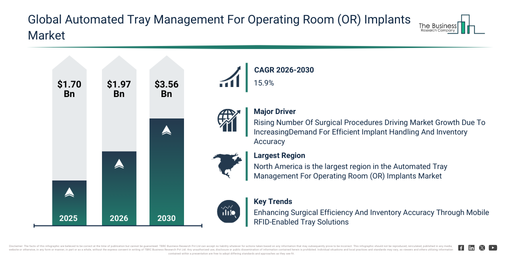
    The market size for automated tray management for OR implants has experienced rapid expansion in recent years. It is forecast to increase from $1.70 billion in 2025 to $1.97 billion in 2026, achieving a compound annual growth rate (CAGR) of 16.2%. This historical growth can be attributed to a heightened focus on surgical workflow efficiency, the increasing adoption of instrument tracking systems, a growing demand for sterilization accuracy, the expansion of hospital digitalization efforts, and an increasing need for error reduction in operating rooms.

    The market size for automated tray management for OR implants is expected to witness substantial growth in the upcoming years. It is projected to achieve a value of $3.56 billion by 2030, expanding at a compound annual growth rate (CAGR) of 15.9%. This projected growth throughout the forecast period can be attributed to increasing investment in healthcare automation, the rising integration of cloud-based tray management solutions, a growing demand for real-time instrument visibility, the expansion of digital transformation initiatives in hospitals, and a greater emphasis on compliance with patient safety standards. Key trends anticipated during this period include technological advancements in automated tray systems, innovations in AI-driven tracking solutions, developments in IoT-enabled monitoring platforms, ongoing research and development in sterilization automation, and progress in predictive analytics for OR management.

    Download A Free Sample Report For Comprehensive Market Insights:

    https://www.thebusinessresearchcompany.com/sample.aspx?id=30529&type=smp&utm_source=Blogs&utm_medium=Paid&utm_campaign=Jul_PR

    Automated Tray Management For Operating Room (OR) Implants Market Development Factors: Which Trends Are Supporting Demand?

    An increase in surgical procedures is projected to fuel the expansion of the automated tray management for operating room (OR) implants market in the coming years. These procedures encompass common orthopedic operations such as hip/knee replacements and spinal fusions, as well as ophthalmologic procedures like cataract surgeries, frequently performed on older individuals to alleviate mobility and vision problems. The growing volume of surgeries stems from an aging demographic that requires more interventions for chronic ailments, including joint replacements and cardiovascular treatments. Automated tray management for operating room (OR) implants facilitates these surgeries by digitally arranging, tracking, and getting surgical trays and implants ready, ensuring the right instruments are on hand precisely when needed, thereby cutting down on human errors and unproductive time. For example, in May 2025, the World Health Organization, a public health body based in Switzerland, reported that over 300 million surgical procedures occurred globally in 2023, up from 290 million in 2022, signifying a 3.4 % rise in surgical activity and underscoring the escalating need for efficient, error-reducing solutions within operating rooms. Consequently, the rising number of surgeries is propelling the growth of the automated tray management for operating room (OR) implants market.

    Automated Tray Management For Operating Room (OR) Implants Market Segment Breakdown: Which Categories Generate The Most Revenue?

    The automated tray management for operating room (or) implants market covered in this report is segmented –

    1) By Component: Software, Hardware, Services

    2) By Deployment Mode: On-Premises, Cloud-Based

    3) By Application: Orthopedic Implants, Cardiovascular Implants, Neurosurgical Implants, Other Applications

    4) By End User: Hospitals, Ambulatory Surgical Centers, Specialty Clinics, Other End-Users

    Subsegments:

    1) By Software: Electronic Health Record Integration, Predictive Analytics Platforms, Risk Scoring Systems, Clinical Decision Support Tools

    2) By Hardware: Servers, Sensors, Monitoring Devices, Data Storage Devices

    3) By Services: Data Analytics Services, Predictive Modeling Services, Integration And Deployment Services, Training And Support Services, Monitoring And Reporting Services

    Automated Tray Management For Operating Room (OR) Implants Market Transformation Trends: Which Innovations Are Driving Change?

    Companies operating in the automated tray management for operating room (OR) implants market are focusing on creating advanced systems, such as mobile RFID-enabled inventory management solutions. These systems are designed to automate the real-time tracking of surgical trays, implant supplies, and inventory, ultimately reducing setup time and improving operational efficiency. Mobile RFID-enabled inventory management refers to adaptable mobile case carts equipped with integrated RFID readers and software that continuously gather item-level usage and location data. This technology enables the seamless tracking of implant kits, surgical supplies, and procedural trays without requiring manual scanning. For instance, in July 2024, Mobile Aspects, a US-based healthcare logistics technology company, launched SurgiCart. This RFID-enabled mobile case cart is tailored for hospital procedural environments, providing automated inventory visibility, real-time implant and supply tracking, and direct integration with electronic health records (EHRs) for quicker documentation and compliance. SurgiCart features integrated RFID tracking for both tray and implant status, offers mobility to support multi-area procedures without physically moving supplies, and includes automated EHR documentation to enhance surgical readiness and minimize errors, signifying a notable improvement in perioperative tray and implant management.

    Automated Tray Management For Operating Room (OR) Implants Market Key Players And Strategic Industry Positioning

    Major companies operating in the automated tray management for operating room (or) implants market are Becton Dickinson and Company, STERIS plc, Zebra Technologies Corporation, Getinge Group, Belimed AG, InVita Healthcare Technologies LLC, GAO RFID Inc., Censis Technologies Inc., Terso Solutions Inc., Xerafy Singapore Pte. Ltd., Mobile Aspects Inc., RFID4U, RFID Discovery Inc., STANLEY Healthcare Solutions Inc., Paragon Data Systems Inc., Haldor Advanced Technologies Ltd., IDENTI Medical Ltd., RFID Canada Inc., SpaTrack Medical Ltd., CaseChek Inc.

    Access The Complete Automated Tray Management For Operating Room (OR) Implants Market Report:

    https://www.thebusinessresearchcompany.com/report/automated-tray-management-for-operating-room-or-implants-market-report?utm_source=Blogs&utm_medium=Paid&utm_campaign=Jul_PR

    Automated Tray Management For Operating Room (OR) Implants Market Geographic Analysis: Where Is Demand Growing The Fastest?

    North America was the largest region in the automated tray management for OR implants market in 2025. Asia-Pacific is expected to be the fastest-growing region in the forecast period. The regions covered in the automated tray management for operating room (or) implants market report are Asia-Pacific, South East Asia, Western Europe, Eastern Europe, North America, South America, Middle East, Africa.

    Get in touch with us:

    The Business Research Company: https://www.thebusinessresearchcompany.com/

    Americas: +1 310-496-7795

    Asia: +44 7882 955267 & +91 8897263534

    Europe: +44 7882 955267

    Email us at: marketing@tbrc.info

    Follow us on:

    LinkedIn: https://in.linkedin.com/company/the-business-research-company

    YouTube: https://www.youtube.com/channel/UC24_fI0rV8cR5DxlCpgmyFQ

    Global Market Model: https://www.thebusinessresearchcompany.com/global-market-model
  • Automated Peritoneal Dialysis Market Growth Is Reshaping Competitive Advantage Across The Industry

    Automated Peritoneal Dialysis Market Growth Is Reshaping Competitive Advantage Across The Industry

    Enhanced with market attractiveness analysis, total addressable market evaluation, company benchmarking matrices, interactive Excel dashboards, expanded supply chain intelligence, emerging startup coverage, and detailed product insights, The Business Research Company’s 2026 market reports deliver more actionable and strategically valuable research.

    Automated Peritoneal Dialysis Market Value Analysis: What Growth Is Expected Over The Forecast Period?

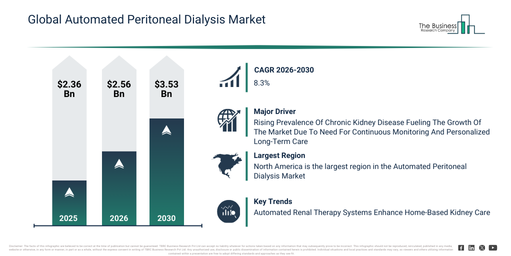
    The automated peritoneal dialysis market has experienced strong expansion in recent years. It is projected to increase from $2.36 billion in 2025 to $2.56 billion in 2026, achieving a compound annual growth rate (CAGR) of 8.7%. The market’s growth in the historic period stemmed from the rising prevalence of chronic kidney disease, growing demand for home-based dialysis, increasing adoption of automated peritoneal dialysis, a rising geriatric population prone to renal complications, and the expansion of patient awareness and education about APD.

    The automated peritoneal dialysis market is projected to experience substantial expansion in the coming years. This market is forecast to reach $3.53 billion by 2030, exhibiting a compound annual growth rate (CAGR) of 8.3%. Several factors are driving this expansion during the forecast period, including a heightened emphasis on patient-centric care, the increasing uptake of hybrid and portable APD systems, greater investments in research and development, the broadening of home dialysis initiatives in developing markets, and enhanced healthcare spending alongside supportive reimbursement policies. Key trends anticipated in the forecast period encompass progress in automated cycler technology, the incorporation of technology with telehealth and remote patient monitoring, advancements in disposable sets and consumables, ongoing research and development into biocompatible PD solutions, and the integration of data analytics and AI for optimizing treatment.

    Download A Free Sample Report For Comprehensive Market Insights:

    https://www.thebusinessresearchcompany.com/sample.aspx?id=30528&type=smp&utm_source=Blogs&utm_medium=Paid&utm_campaign=Jul_PR

    Automated Peritoneal Dialysis Market Industry Drivers: What Is Driving Revenue Growth?

    The increasing incidence of chronic kidney disease is anticipated to boost the expansion of the automated peritoneal dialysis market in the future. Chronic kidney disease is defined as a persistent ailment where the kidneys fail to function optimally, resulting in waste and fluid buildup within the body. Its growing occurrence is primarily attributed to the rising cases of diabetes and high blood pressure, which, over time, harm renal blood vessels and hinder the kidneys’ capacity for efficient waste filtration. Automated peritoneal dialysis assists in managing chronic kidney disease by providing accurate, pre-programmed dialysis treatments requiring minimal human involvement, frequently administered while sleeping. This method enhances patient results by improving the regularity of treatment, easing the workload on caregivers, and fostering a higher quality of life via adaptable home care solutions. As an illustration, data from June 2023, compiled by Kidney Research UK, a United Kingdom based non profit organization, indicated that around 7.2 million individuals in the United Kingdom were afflicted with chronic kidney disease, accounting for more than 10% of the populace. Among these, 3.25 million were in advanced stages, and 3.9 million were in early stages, with projections showing the total number of affected people reaching 7.61 million by 2033. Consequently, the increasing occurrence of chronic kidney disease is fueling the expansion of the automated peritoneal dialysis market.

    Automated Peritoneal Dialysis Market Segmentation: How Is The Market Structured Across Key Categories?

    The automated peritoneal dialysis market covered in this report is segmented –

    1) By Product Type: Cyclers, Peritoneal Dialysis Solutions, Accessories

    2) By Disease Type: End-Stage Renal Disease (ESRD), Chronic Kidney Disease (CKD)

    3) By Application: Treatment, Training And Education, Research And Development

    4) By End-User: Hospitals, Clinics, Home Care Settings

    Subsegments:

    1) By Cyclers: Home Use Cycler Devices, Portable Cycler Devices, Continuous Ambulatory Compatible Cyclers, Touchscreen Enabled Cyclers, Remote Monitoring Enabled Cyclers

    2) By Peritoneal Dialysis Solutions: Glucose Based Solutions, Icodextrin Based Solutions, Amino Acid Based Solutions, Low Glucose Degradation Solutions, Neutral Ph Balanced Solutions

    3) By Accessories: Transfer Sets, Catheter Sets, Tubing And Connectors, Drain Bags, Solution Warmers

    #Automated Peritoneal Dialysis Market Growth Trends: What Is Influencing The Future Outlook?

    Major companies operating in the automated peritoneal dialysis market are concentrating on creating sophisticated renal therapy solutions, specifically automated peritoneal dialysis (APD) systems, aiming to enhance patient results, lessen the workload on caregivers, and facilitate kidney care at home. Such a system functions as an automated device that conducts dialysis exchanges, usually during the night, by regulating fluid movement based on pre-set treatment plans, thus offering greater convenience, safety, and compliance than traditional manual dialysis. As an illustration, in May 2025, By Onyks Inc., a medical device firm located in the US, secured FDA 510(k) clearance for its X1 automated peritoneal dialysis (APD) cycler, intended to revolutionize the management of chronic kidney disease. This automated peritoneal dialysis system combines intuitive automation with precise regulation of dwell times, fluid volumes, and treatment cycles, facilitating personalized therapy while reducing demands on both patients and caregivers. This introduction highlights the growing embrace of interconnected, automated dialysis technologies that enable effective treatment delivery in both healthcare facilities and home environments.

    Automated Peritoneal Dialysis Market Competitive Landscape And Leading Companies

    Major companies operating in the automated peritoneal dialysis market are Fresenius Medical Care, Asahi Kasei Medical Co. Ltd., Toray Industries, Baxter International, DaVita Inc., Terumo Corporation, Diaverum AB, WEGO Blood Purification, Satellite Healthcare, JMS Co. Ltd., Zhejiang Tiancheng Medical Technology Co. Ltd, Kawasumi Laboratories Inc., Weigao Group, Mitra Industries Pvt. Ltd., Infomed Fluids S.r.l., Debiotech, Medionics International Inc, Renax Biomedical Tech Co. Ltd., Shenzhen Shenkang Medtech Co. Ltd., Newsol Technologies Inc., Shenzhen Landwind Industry Co. Ltd

    Access The Complete Automated Peritoneal Dialysis Market Report:

    https://www.thebusinessresearchcompany.com/report/automated-peritoneal-dialysis-market-report?utm_source=Blogs&utm_medium=Paid&utm_campaign=Jul_PR

    Automated Peritoneal Dialysis Market Global Footprint: Which Region Holds Market Leadership?

    North America was the largest region in the automated peritoneal dialysis market in 2025. Asia-Pacific is expected to be the fastest-growing region in the forecast period. The regions covered in the automated peritoneal dialysis market report are Asia-Pacific, South East Asia, Western Europe, Eastern Europe, North America, South America, Middle East, Africa.

    Get in touch with us:

    The Business Research Company: https://www.thebusinessresearchcompany.com/

    Americas: +1 310-496-7795

    Asia: +44 7882 955267 & +91 8897263534

    Europe: +44 7882 955267

    Email us at: marketing@tbrc.info

    Follow us on:

    LinkedIn: https://in.linkedin.com/company/the-business-research-company

    YouTube: https://www.youtube.com/channel/UC24_fI0rV8cR5DxlCpgmyFQ

    Global Market Model: https://www.thebusinessresearchcompany.com/global-market-model
  • Automated Drug Compounding Systems Market Forecast Signals New Revenue Opportunities Through 2030

    Automated Drug Compounding Systems Market Forecast Signals New Revenue Opportunities Through 2030

    Through market attractiveness analysis, total addressable market evaluation, company benchmarking matrices, interactive Excel dashboards, expanded supply chain intelligence, emerging startup coverage, and detailed product insights, The Business Research Company’s 2026 market reports provide more actionable and strategically valuable research.

    Automated Drug Compounding Systems Market Size Forecast: How Large Could The Market Become By 2030?

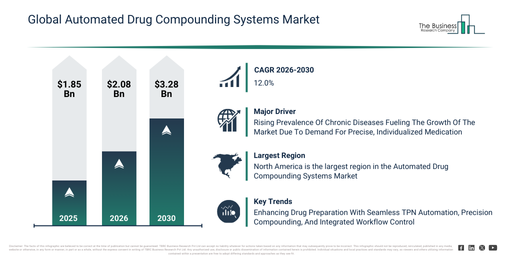
    In recent years, the automated drug compounding systems market size has seen rapid growth. This market is expected to increase from $1.85 billion in 2025 to $2.08 billion in 2026, demonstrating a compound annual growth rate (CAGR) of 12.3%. The expansion observed in previous periods is attributable to the increasing uptake of automated systems in hospital pharmacies, the growing imperative to minimize medication errors, a heightened focus on sterile and precise drug preparation, the increasing workload for pharmacy staff, and the rising demand for time-efficient compounding processes.

    The automated drug compounding systems market size is projected for substantial expansion in the coming years. This market is anticipated to reach $3.28 billion by 2030, exhibiting a compound annual growth rate (CAGR) of 12.0%. This forecasted expansion is linked to factors such as increased investment in healthcare automation, greater integration of software and automated instruments, the escalating demand for uniformity in drug compounding, a heightened emphasis on minimizing contamination hazards, rising hospital expenditure on automation infrastructure, and the growing requirement for enhanced operational efficiency within pharmacies. Significant developments expected during this period encompass progress in robotic-assisted drug compounding technologies, advancements in software integration for managing pharmacies, the incorporation of artificial intelligence to reduce errors in compounding procedures, enhancements in real-time monitoring and quality control systems, and novel approaches in automated sterile compounding methods.

    Download A Free Sample Report For Comprehensive Market Insights:

    https://www.thebusinessresearchcompany.com/sample.aspx?id=30527&type=smp&utm_source=Blogs&utm_medium=Paid&utm_campaign=Jul_PR

    #Automated Drug Compounding Systems Market Growth Factors: Which Forces Are Supporting Market Expansion?

    The anticipated expansion of the automated drug compounding systems market is linked to the rising occurrence of chronic diseases. These are enduring health issues, such as diabetes, heart disease, and arthritis, that typically advance slowly and demand continuous medical care and lifestyle adjustments for symptom control and complication prevention. The growth in chronic diseases is largely attributable to unhealthy lifestyle choices, including poor diet, lack of physical activity, and smoking, which heighten the risk of conditions like diabetes, heart disease, and obesity. Automated drug compounding systems assist in managing chronic conditions by accurately preparing custom medications suited to individual patient requirements. They enhance the precision and uniformity of treatment, thereby minimizing errors and improving long-term therapeutic results. For example, in June 2024, data from the National Health Service, a UK-based government department, showed that 3,615,330 people registered with a general practitioner (GP) were diagnosed with non-diabetic hyperglycemia or pre-diabetes (a condition with elevated blood sugar levels, not high enough to be classified as diabetes) in 2023, representing an 18% rise from 3,065,825 cases in 2022. Consequently, the growing incidence of chronic diseases is a key factor propelling the automated drug compounding systems market. The scarcity of qualified pharmacy personnel is anticipated to boost the expansion of the automated drug compounding systems market in the coming years. This deficit pertains to the restricted availability of pharmacists and technicians trained to safely prepare and dispense medications across various healthcare settings like hospitals, clinics, and compounding pharmacies. The increasing shortage of skilled pharmacy staff stems from growing patient volumes and the rising incidence of chronic diseases that necessitate meticulous pharmaceutical care. Automated drug compounding systems decrease dependency on human pharmacy staff by facilitating the precise, consistent, and efficient preparation of medications with minimal manual involvement, thereby lowering the chances of errors and easing the workload for pharmacy teams. For example, in August 2024, the National Center for Health Workforce Studies, a US-based health workforce research organization, forecasted a deficit of 4,980 pharmacists over the next 15 years, extending to 2036, even as the overall demand for pharmacists is predicted to increase by 3% from 2022 to 2032, highlighting concerns amidst declining application rates. Hence, the shortage of skilled pharmacy staff is a significant factor driving the growth of the automated drug compounding systems market.

    Automated Drug Compounding Systems Market Segmentation Trends And Revenue Drivers

    The automated drug compounding systems market covered in this report is segmented –

    1) By Product: Robotic Compounding Systems, Automated Liquid Compounding Systems, Tablet And Capsule Dispensers, Injectable Compounding Robots, IV Admixture Systems, Oral Liquid Compounding Systems

    2) By Component: Equipment, Software, Consumables, Services

    3) By Technology: Robotic-Based Systems, Semi-Automated Systems, Gravimetric Dosing Systems, Volumetric Dosing Systems, Hybrid Dosing Systems

    4) By End-User: Hospitals, Clinics, Retail Pharmacies, Compounding Pharmacies, Pharmaceutical Manufacturers

    Subsegments:

    1) By Robotic Compounding Systems: Fully Automated Sterile Compounding Robots, Hazardous Drug Compounding Robots, Non-Hazardous Drug Compounding Robots, High-Throughput Pharmacy Robots, Closed-System Robotic Compounding Units

    2) By Automated Liquid Compounding Systems: Large-Volume Parenteral (LVP) Compounding Systems, Small-Volume Parenteral (SVP) Compounding Systems, Multi-Drug Liquid Compounding Units, Volumetric And Gravimetric Liquid Compounding Systems, Pediatric Liquid Dosing Compounding Systems

    3) By Tablet and Capsule Dispensers: Automated Tablet Counting Dispensers, Unit-Dose Packaging Systems, Multi-Dose Blister Dispensing Units, Capsule Filling and Dispensing Systems, High-Speed Pharmacy Dispensing Robots

    4) By Injectable Compounding Robots: Chemotherapy Drug Compounding Robots, TPN (Total Parenteral Nutrition) Compounding Robots, High-Precision Syringe Preparation Robots, Sterile Injectable Filling Robots, Hazardous Injectable Handling Systems

    5) By IV Admixture Systems: Automated IV Bag Filling Systems, IV Nutrition (TPN) Admixture Systems, IV Antibiotic Admixture Devices, Pharmacy Cleanroom IV Automation Units, Closed-System IV Compounding Systems

    6) By Oral Liquid Compounding Systems: Pediatric Oral Liquid Compounding Machines, Flavoring & Suspension Mixing Systems, Multi-Ingredient Oral Liquid Compounding Units, Gravimetric Oral Solution Compounding Systems, Low-Volume Oral Dosing Compounding Systems

    Automated Drug Compounding Systems Market Industry Trends: What Changes Are Reshaping Demand?

    Major companies in the automated drug compounding systems market are focusing on developing advanced solutions, such as total parenteral nutrition (TPN) automation systems, to boost accuracy, safety, and efficiency in producing personalized intravenous formulations. A total parenteral nutrition (TPN) automation system functions as a compounding platform that not only automates the mixing and dispensing of total parenteral nutrition (TPN) solutions but also integrates prescription validation and workflow management tools to minimize human error and ensure sterile, high-quality preparation. For example, in May 2025, MediServ Co. Ltd., launched the APEX TPN Compounding System in Riyadh, initiating a new era of precision and automation for parenteral nutrition workflows. The system, presented with its EasyComp integration software, enhances the total parenteral nutrition (TPN) process by linking validated prescriptions directly to sterile, accurate compounding, thereby streamlining pharmacy operations and reducing manual tasks.

    #Automated Drug Compounding Systems Market Industry Leaders: Which Organizations Are Driving Competition?

    Major companies operating in the automated drug compounding systems market are Becton Dickinson and Company, Baxter International Inc., B. Braun Melsungen AG, Fresenius Kabi AG, ICU Medical Inc., Omnicell Inc., Eckert & Ziegler SE, Swisslog Healthcare AG, EQUASHIELD Medical Ltd., Trasis S.A., Loccioni Group S.p.A., ARxIUM Inc., Comecer S.p.A., Tema Sinergie S.p.A., Epic Medical Pte. Ltd., IBA Radiopharma Solutions S.A., Steriline S.r.l., Elysia-Raytest GmbH, Curifylabs OY, Kapsam Health Solutions Pvt. Ltd.

    Access The Complete Automated Drug Compounding Systems Market Report:

    https://www.thebusinessresearchcompany.com/report/automated-drug-compounding-systems-market-report?utm_source=Blogs&utm_medium=Paid&utm_campaign=Jul_PR

    Automated Drug Compounding Systems Market Regional Distribution: Which Areas Drive Market Expansion?

    North America was the largest region in the automated drug compounding Systems market in 2025. Asia-Pacific is expected to be the fastest-growing region in the forecast period. The regions covered in the automated drug compounding systems market report are Asia-Pacific, South East Asia, Western Europe, Eastern Europe, North America, South America, Middle East, Africa.

    Get in touch with us:

    The Business Research Company: https://www.thebusinessresearchcompany.com/

    Americas: +1 310-496-7795

    Asia: +44 7882 955267 & +91 8897263534

    Europe: +44 7882 955267

    Email us at: marketing@tbrc.info

    Follow us on:

    LinkedIn: https://in.linkedin.com/company/the-business-research-company

    YouTube: https://www.youtube.com/channel/UC24_fI0rV8cR5DxlCpgmyFQ

    Global Market Model: https://www.thebusinessresearchcompany.com/global-market-model
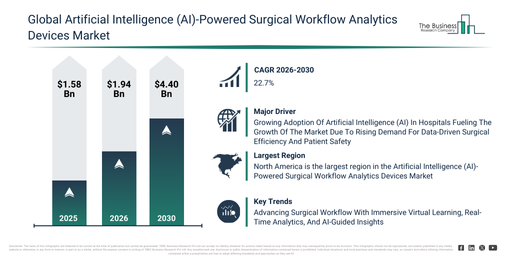
  • Artificial Intelligence (AI)-Powered Surgical Workflow Analytics Devices Market Outlook Highlights The Next Major Growth Opportunities

    Artificial Intelligence (AI)-Powered Surgical Workflow Analytics Devices Market Outlook Highlights The Next Major Growth Opportunities

    Enhanced with market attractiveness analysis, total addressable market evaluation, company benchmarking matrices, interactive Excel dashboards, expanded supply chain intelligence, emerging startup coverage, and detailed product insights, The Business Research Company’s 2026 market reports deliver more actionable and strategically valuable research.

    Artificial Intelligence (AI)-Powered Surgical Workflow Analytics Devices Market Growth Analysis: How Will Revenue Expand During The Forecast Period?

    The artificial intelligence (AI)-powered surgical workflow analytics devices market has seen substantial growth in recent years. This market is expected to expand from $1.58 billion in 2025 to $1.94 billion in 2026, achieving a compound annual growth rate (CAGR) of 23.0%. The historical growth of this market can be linked to the rising adoption of minimally invasive surgeries, increased healthcare expenditure on digital transformation, the growing integration of AI in robotic surgery systems, a broadening focus on operational efficiency in hospitals, and a rise in partnerships between tech and medtech firms.

    The artificial intelligence (AI)-powered surgical workflow analytics devices market is projected to undergo substantial expansion in the upcoming years. Its valuation is expected to reach $4.40 billion by 2030, demonstrating a compound annual growth rate (CAGR) of 22.7%. This anticipated growth can be attributed to several factors, including the increasing need for real-time surgical workflow optimization, the rising adoption of predictive analytics in surgical procedures, a heightened demand for integrating hardware and software platforms, the expansion of cloud-based deployment models, and growing investments in digital health transformation and smart hospital initiatives. Noteworthy trends during this period encompass innovations in real-time surgical analytics platforms, advancements in AI-driven decision support systems, the integration of technology with robotic and minimally invasive surgeries, the development of interoperable solutions for existing hospital IT systems, and investments in professional services for AI implementation.

    Download A Free Sample Report For Comprehensive Market Insights:

    https://www.thebusinessresearchcompany.com/sample.aspx?id=30525&type=smp&utm_source=Blogs&utm_medium=Paid&utm_campaign=Jul_PR

    Artificial Intelligence (AI)-Powered Surgical Workflow Analytics Devices Market Growth Drivers: What Factors Are Accelerating Expansion?

    The increasing implementation of artificial intelligence (AI) within healthcare facilities is anticipated to fuel the expansion of the AI-powered surgical workflow analytics devices market moving ahead. This adoption involves the expanded utilization of AI-driven solutions to examine clinical information, streamline hospital processes, and assist decision-making throughout diagnostics, treatment, and surgical interventions. The increasing embrace of AI in hospitals stems from its capability to automate administrative functions such as scheduling, billing, and record-keeping, thereby decreasing staff burden and errors, and allowing more concentration on patient care. AI-powered surgical workflow analytics devices enhance AI’s role in hospitals by evaluating real-time surgical data, pinpointing workflow bottlenecks, forecasting potential risks, and facilitating data-driven enhancements in operating room efficiency and patient safety. As an illustration, in September 2025, data from the Assistant Secretary for Technology Policy, a US government agency, indicated that in 2024, 71% of hospitals utilized predictive AI integrated with electronic health records (EHR), an increase from 66% in 2023, with approximately 7 in 10 hospitals reporting predictive AI use in 2024. Consequently, the expanding implementation of artificial intelligence (AI) in medical facilities is fueling the expansion of the AI-powered surgical workflow analytics devices market.

    Artificial Intelligence (AI)-Powered Surgical Workflow Analytics Devices Market Segment Performance And Strategic Opportunities

    The artificial intelligence (AI)-powered surgical workflow analytics devices market covered in this report is segmented –

    1) By Component: Hardware, Software, Services

    2) By Deployment Mode: On-Premises, Cloud-Based

    3) By Application: Preoperative Planning, Intraoperative Guidance, Postoperative Analysis, Workflow Optimization, Other Applications

    4) By End-User: Hospitals, Ambulatory Surgical Centers, Specialty Clinics, Other End-Users

    Subsegments:

    1) By Hardware: Surgical Robots, Imaging Devices, Monitoring Equipment, Sensors, Data Storage Devices

    2) By Software: Workflow Management Software, Predictive Analytics Software, Visualization Software, Data Integration Software, Performance Optimization Software

    3) By Services: Installation And Implementation Services, Maintenance And Support Services, Training And Education Services, Consulting Services, Data Analysis And Reporting Services

    Artificial Intelligence (AI)-Powered Surgical Workflow Analytics Devices Market Trends: What Is Shaping Future Industry Growth?

    Leading companies in the artificial intelligence (AI)-powered surgical workflow analytics devices market are concentrating on creating sophisticated tools, such as immersive virtual learning environments, to enhance surgical planning, team preparation, and intraoperative performance. An immersive virtual learning environment is an interactive, simulated digital space where medical professionals can engage with realistic procedural situations, receive contextual guidance, and practice complex techniques in a risk-free setting, thereby improving both learning outcomes and procedural proficiency. For example, in April 2024, Medtronic plc, a US-based medical technology company, introduced 14 new Performance Insights algorithms, featuring novel Live Stream technology and AI analysis capabilities for laparoscopic and robotic-assisted procedures. This solution incorporates immersive virtual learning environments, granting surgical teams access to AI-guided visualization, performance feedback, and procedural analytics during both training and live operations. These environments utilize real-time data and artificial intelligence to generate dynamic simulations of patient anatomy and surgical workflows, aiding clinicians in refining their techniques and anticipating clinical needs.

    Artificial Intelligence (AI)-Powered Surgical Workflow Analytics Devices Market Key Players: Which Companies Shape Industry Competition?

    Major companies operating in the artificial intelligence (AI)-powered surgical workflow analytics devices market are Medtronic Plc, Johnson & Johnson, Koninklijke Philips N.V., Olympus Corporation, Caresyntax GmbH, Proximie Ltd., Surgical Theater Inc., Surgical Safety Technologies Inc., RSIP Vision Ltd., Surgical Directions Inc., Activ Surgical Inc., Leap Rail Inc., Livedata Inc., Omnimed Inc., Theator Inc., Intuitive Surgical Inc., Copient Health Inc., Pixee Medical SAS, Moon Surgical Inc., ExplORer Surgical Corp.

    Access The Complete Artificial Intelligence (AI)-Powered Surgical Workflow Analytics Devices Market Report:

    https://www.thebusinessresearchcompany.com/report/artificial-intelligence-ai-powered-surgical-workflow-analytics-devices-market-report?utm_source=Blogs&utm_medium=Paid&utm_campaign=Jul_PR

    Artificial Intelligence (AI)-Powered Surgical Workflow Analytics Devices Market Regional Outlook: Where Are The Largest Opportunities Located?

    North America was the largest region in the artificial intelligence (AI)-powered surgical workflow analytics devices market in 2025. Asia-Pacific is expected to be the fastest-growing region in the forecast period. The regions covered in the artificial intelligence (AI)-powered surgical workflow analytics devices market report are Asia-Pacific, South East Asia, Western Europe, Eastern Europe, North America, South America, Middle East, Africa.

    Get in touch with us:

    The Business Research Company: https://www.thebusinessresearchcompany.com/

    Americas: +1 310-496-7795

    Asia: +44 7882 955267 & +91 8897263534

    Europe: +44 7882 955267

    Email us at: marketing@tbrc.info

    Follow us on:

    LinkedIn: https://in.linkedin.com/company/the-business-research-company

    YouTube: https://www.youtube.com/channel/UC24_fI0rV8cR5DxlCpgmyFQ

    Global Market Model: https://www.thebusinessresearchcompany.com/global-market-model