Month: October 2026

  • Risperidone Market Growth Forecast: Market Size, Key Trends And Emerging Opportunities Through 2030

    Risperidone Market Growth Forecast: Market Size, Key Trends And Emerging Opportunities Through 2030

    Featuring market attractiveness scoring, total addressable market sizing, company benchmarking matrices, interactive Excel dashboards, deeper supply chain intelligence, emerging startup tracking, and granular product-level insights, The Business Research Company’s 2026 market reports are built to deliver research that is both more actionable and more strategically valuable.

    Risperidone Market Growth Analysis: How Will Revenue Trend Over The Forecast Period?

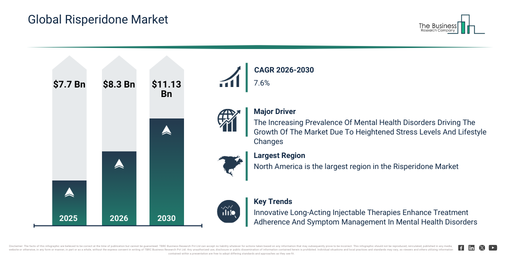
    The risperidone market size has seen robust growth in recent years. It is anticipated to expand from $7.7 billion in 2025 to $8.3 billion in 2026, demonstrating a compound annual growth rate (CAGR) of 7.8%. The reasons for this historical growth include the increasing prevalence of schizophrenia and bipolar disorder, widespread clinical acceptance of atypical antipsychotics, the availability of generic risperidone formulations, the expansion of mental health treatment programs, and improved psychiatric diagnosis rates.

    The risperidone market is projected to experience substantial expansion in the coming years, reaching $11.13 billion in 2030 at a compound annual growth rate (CAGR) of 7.6%. This anticipated growth during the forecast period is fueled by several factors, including a heightened demand for long-acting antipsychotic injections, an increased emphasis on personalized psychiatric care, the broadening of community mental health services, the expanding adoption of digital mental health monitoring, and an expanding elderly patient demographic. Key trends observed over the forecast period encompass a rising preference for long-acting injectable formulations, the increasing application of extended-release tablets, a stronger emphasis on solutions for patient adherence, the development of expanded pediatric and geriatric dosage forms, and improved monitoring of treatment outcomes.

    Get A Free Sample Report With In-Depth Market Insights:

    https://thebusinessresearchcompany.com/sample_request?id=74853380&type=smp&name=Risperidone%20Market%20Report%202026&utm_source=Blogs&utm_medium=Paid&utm_campaign=Oct_PR

    Risperidone Market Growth Factors Behind Sustained Expansion

    The anticipated expansion of the risperidone market is directly linked to the rising occurrence of mental health conditions. These conditions encompass a broad spectrum of issues that affect an individual’s mood, thought processes, and behavior, often resulting in significant distress or impairment in daily functioning. The increasing prevalence of mental health disorders primarily stems from elevated stress levels and modern lifestyle changes that disrupt emotional equilibrium, sleep patterns, and overall psychological well-being. Risperidone effectively assists in managing these disorders by balancing neurotransmitters in the brain, which in turn reduces symptoms such as agitation, hallucinations, and mood swings, thereby supporting overall emotional stability. For instance, in March 2023, the Alzheimer’s Association, a US-based nonprofit voluntary health organization, reported that in 2023, approximately 6.7 million Americans aged 65 and older are living with Alzheimer’s dementia, a number projected to rise to 13.8 million by 2060. Consequently, the escalating incidence of mental health disorders is a key driver for the growth of the risperidone market.

    Risperidone Market Segmentation And Category Overview

    The risperidone market covered in this report is segmented –

    1) By Product Type: Tablets, Oral Solution, Injectable

    2) By Patient Age Group: Pediatric Patients, Adult Patients, Elderly Patients

    3) By Application: Schizophrenia, Bipolar Disorder, Autism, Other Applications

    4) By Distribution Channel: Hospital Pharmacies, Retail Pharmacies, Online Pharmacies, Clinic Pharmacies

    5) By End-Users: Hospitals, Homecare, Specialty Clinics, Ambulatory Surgical Centers, Other End Users

    Subsegments:

    1) By Tablets: Standard Release, Extended Release, Orally Disintegrating

    2) By Oral Solution: Flavored Solution, Unflavored Solution, Concentrated Solution

    3) By Injectable: Long Acting Injection, Short Acting Injection, Depot Injection

    Risperidone Market Industry Trends Fueling Future Revenue Growth

    Leading companies within the risperidone market are concentrating on creating inventive solutions, such as long-acting injectable formulations, to enhance patient adherence and improve treatment results. These long-acting injectable formulations are specifically designed medications that progressively release risperidone over time, enabling less frequent administration while sustaining consistent therapeutic effects. As an illustration, in January 2023, Luye Pharma Group Ltd., a pharmaceutical company based in China, obtained approval from the U.S. Food and Drug Administration (FDA) for Rykindo (risperidone). This extended-release injectable formulation is intended for the treatment of schizophrenia in adults, and for use as either monotherapy or in conjunction with lithium or valproate for the ongoing treatment of bipolar I disorder in adults. This biweekly intramuscular risperidone injection leverages Luye Pharma’s advanced microsphere technology, facilitating a long-acting, sustained-release delivery that helps manage symptoms in both schizophrenia and bipolar I disorder. The formulation offers a swift onset of action for rapid symptom alleviation and allows for quick elimination post-discontinuation, providing healthcare professionals greater adaptability in tailoring treatment plans to individual patient requirements.

    Risperidone Market Competitive Analysis Of Leading Industry Participants

    Major companies operating in the risperidone market are Teva Pharmaceutical Industries Ltd., Sandoz International GmbH, Sun Pharmaceutical Industries Ltd., Apotex Inc., Cipla Limited., Dr. Reddy’s Laboratories Ltd., Hikma Pharmaceuticals PLC, Zydus Cadila Healthcare Ltd, Alkem Laboratories Ltd., Amneal Pharmaceuticals LLC, Natco Pharma Limited., Strides Pharma Science Limited., RPG Life Sciences Limited., Jubilant Cadista Pharmaceuticals Inc., ICROM S.p.A., Accord Healthcare Ltd., Ambica Pharma Machines Pvt. Ltd., Gonane Pharma Private Limited., Janssen Pharmaceuticals, LGM Pharma

    View The Full Risperidone Market Report:

    https://thebusinessresearchcompany.com/report/risperidone-global-market-report?utm_source=Blogs&utm_medium=Paid&utm_campaign=Oct_PR

    Risperidone Market Regional Distribution: Which Areas Power Market Growth?

    North America was the largest region in the risperidone market in 2025. Asia-Pacific is expected to be the fastest-growing region in the forecast period. The regions covered in the risperidone market report are Asia-Pacific, South East Asia, Western Europe, Eastern Europe, North America, South America, Middle East, Africa.

    Reach Out To Our Team:

    The Business Research Company: https://www.thebusinessresearchcompany.com/

    Americas: +1 310-496-7795

    Asia: +44 7882 955267 & +91 8897263534

    Europe: +44 7882 955267

    Email us at: marketing@tbrc.info

    Follow us on:

    LinkedIn: https://in.linkedin.com/company/the-business-research-company

    YouTube: https://www.youtube.com/channel/UC24_fI0rV8cR5DxlCpgmyFQ

    Global Market Model: https://www.thebusinessresearchcompany.com/global-market-model

  • Ribonucleic Acid Interference (RNAi) Technology Market CAGR Forecast Through 2030: Key Trends Shaping Industry Expansion

    Ribonucleic Acid Interference (RNAi) Technology Market CAGR Forecast Through 2030: Key Trends Shaping Industry Expansion

    Built to provide research that’s more actionable and strategically valuable, The Business Research Company’s 2026 market reports include market attractiveness analysis, total addressable market sizing, company benchmarking matrices, interactive Excel dashboards, broader supply chain intelligence, emerging startup tracking, and in-depth product insights.

    Ribonucleic Acid Interference (RNAi) Technology Market Forecast: What Value Will The Market Reach By 2030?

    The ribonucleic acid interference (rnai) technology market has experienced rapid expansion in recent years. It is forecast to grow from $4.43 billion in 2025 to $5.14 billion in 2026, maintaining a compound annual growth rate (CAGR) of 15.9%. This historical growth can be attributed to several factors, including advancements in molecular biology research, the initial clinical success of rnai therapeutics, the broadening of academic gene research programs, the accessibility of robust screening libraries, and the development of biotech innovation ecosystems.

    The ribonucleic acid interference (rnai) technology market size is projected to experience swift expansion in the coming years. It is anticipated to reach $9.19 billion in 2030, demonstrating a compound annual growth rate (CAGR) of 15.6%. This growth during the forecast period can be attributed to the increasing commercialization of RNAi-based pharmaceuticals, a rise in investments targeting rare disease therapeutics, the broadening of nanoparticle delivery technologies, expanding pharmaceutical partnerships, and greater regulatory acceptance of gene-silencing treatments. Prominent trends throughout the forecast period involve the increasing adoption of gene silencing therapies, a rising utilization of siRNA-based drug platforms, the growing integration of RNAi into precision medicine, the expansion of targeted genetic disease treatments, and optimized delivery systems.

    Get A Free Sample Report With In-Depth Market Insights:

    https://thebusinessresearchcompany.com/sample_request?id=15131886&type=smp&name=Ribonucleic%20Acid%20Interference%20%28RNAi%29%20Technology%20Market%20Report%202026&utm_source=Blogs&utm_medium=Paid&utm_campaign=Oct_PR

    Ribonucleic Acid Interference (RNAi) Technology Market Demand Drivers Opening New Revenue Streams

    The increasing demand for targeted therapeutics is anticipated to propel the ribonucleic acid interference (RNAi) technology market’s growth moving forward. Targeted therapies are treatments specifically designed to identify and inhibit molecular abnormalities in cancer or other diseases, aiming to improve treatment precision and minimize harm to healthy cells. The rising emphasis on targeted therapies is primarily driven by advancements in precision medicine, which facilitates personalized, more effective treatments based on individual genetic profiles. Ribonucleic Acid Interference (RNAi) Technology enhances the demand for targeted therapeutics by enabling precise gene silencing to treat genetic and rare diseases. It supports the development of highly specific and effective treatments, fostering innovation in personalized medicine. For instance, in December 2024, according to the American Society of Gene & Cell Therapy (ASGCT), a US-based non-profit medical and scientific organization, the Food and Drug Administration (FDA) approved 6 gene therapy products in 2023, an increase from 5 approvals in 2022. Therefore, the escalating requirement for targeted therapeutics is driving the expansion of the ribonucleic acid interference (RNAi) technology market.

    Ribonucleic Acid Interference (RNAi) Technology Market Segment Outlook: Which Categories Are Growing Fastest?

    The ribonucleic acid interference (rnai) technology market covered in this report is segmented –

    1) By Product: Micro Ribonucleic Acid (miRNA), Small Interfering Ribonucleic Acid (siRNA), Other Products

    2) By Delivery Method: Viral Vectors, Nanoparticles, Chemical Modifications, Physical Methods

    3) By Application: Therapeutics, Drug Discovery, Agriculture, Diagnostics

    4) By End-User: Pharmaceutical And Biotechnology Companies, Academic And Research Institutes, Contract Research Organizations (CROs) And Contract Manufacturing Organizations (CMOs)

    Subsegments:

    1) By Micro Ribonucleic Acid (miRNA): Micro Ribonucleic Acid Mimics, Micro Ribonucleic Acid Inhibitors, Micro Ribonucleic Acid Expression Vectors, Micro Ribonucleic Acid Profiling And Quantification Kits

    2) By Small Interfering Ribonucleic Acid (siRNA): Small Interfering Ribonucleic Acid Synthetic Duplexes, Small Interfering Ribonucleic Acid Dicer Substrate Molecules, Small Interfering Ribonucleic Acid Self Delivering Conjugates, Small Interfering Ribonucleic Acid N Acetylgalactosamine Conjugates

    3) By Other Products: Short Hairpin Ribonucleic Acid Expression Constructs, Ribonucleic Acid Interference Screening Libraries, Ribonucleic Acid Interference Transfection Reagents, Micro Ribonucleic Acid And Small Interfering Ribonucleic Acid Research Kits

    Ribonucleic Acid Interference (RNAi) Technology Market Trends Powering Strategic Industry Growth

    Prominent companies within the ribonucleic acid interference (RNAi) technology market are focusing on platform integration, including strategic funding and support, to optimize the development, delivery, and commercialization of RNA interference (RNAi) therapeutics. This strategy aims to foster a sustainable pipeline of numerous programs across various disease areas. Strategic funding and support involve securing investments and resources from venture capital, industry partners, and other stakeholders to accelerate the research, development, and market launch of RNA interference (RNAi) therapeutics. As an illustration, in October 2024, City Therapeutics Inc., a US-based biopharmaceutical company, received $135 million in Series A financing led by ARCH Venture Partners, with additional participation from other leading life sciences investors, to advance the future of RNA interference (RNAi)-based medicine. This funding will facilitate the development of RNAi-based medicine by leveraging its proprietary lipid nanoparticle (LNP) delivery platform, which is engineered to target tissues beyond the liver with high precision. This platform is designed to overcome a key historical limitation in the field, thereby enabling the development of therapies for an expanded range of genetic disorders.

    Ribonucleic Acid Interference (RNAi) Technology Market Leading Companies And Competitive Benchmarking

    Major companies operating in the ribonucleic acid interference (rnai) technology market are F. Hoffmann-La Roche AG, Merck KGaA, Novartis AG, Thermo Fisher Scientific Inc., Danaher Corporation, Revvity Inc., QIAGEN N.V., Alnylam Pharmaceuticals Inc., Ionis Pharmaceuticals Inc., GenScript Biotech Corporation, Promega Corporation, Arrowhead Pharmaceuticals Inc., Silence Therapeutics plc, Creative Biolabs Inc., Bioneer Corporation, Genevant Sciences Ltd., Gradalis Inc., Altogen Labs LLC, Sirnaomics Inc., Altogen Biosystems Inc.

    View The Full Ribonucleic Acid Interference (RNAi) Technology Market Report:

    https://thebusinessresearchcompany.com/report/global-ribonucleic-acid-interference-rnai-technology-market-report?utm_source=Blogs&utm_medium=Paid&utm_campaign=Oct_PR

    Ribonucleic Acid Interference (RNAi) Technology Market Leading Geography: Which Region Contributes The Most Revenue?

    North America was the largest region in the ribonucleic acid interference (RNAi) technology market in 2025. Asia-Pacific is expected to be the fastest-growing region in the forecast period. The regions covered in the ribonucleic acid interference (rnai) technology market report are Asia-Pacific, South East Asia, Western Europe, Eastern Europe, North America, South America, Middle East, Africa.

    Reach Out To Our Team:

    The Business Research Company: https://www.thebusinessresearchcompany.com/

    Americas: +1 310-496-7795

    Asia: +44 7882 955267 & +91 8897263534

    Europe: +44 7882 955267

    Email us at: marketing@tbrc.info

    Follow us on:

    LinkedIn: https://in.linkedin.com/company/the-business-research-company

    YouTube: https://www.youtube.com/channel/UC24_fI0rV8cR5DxlCpgmyFQ

    Global Market Model: https://www.thebusinessresearchcompany.com/global-market-model

  • Ribonucleic Acid (RNA)-Based Oncolytic Therapy Market To Witness 18.4% CAGR Growth Through 2030: Key Industry Drivers

    Ribonucleic Acid (RNA)-Based Oncolytic Therapy Market To Witness 18.4% CAGR Growth Through 2030: Key Industry Drivers

    Backed by market attractiveness analysis, total addressable market sizing, company benchmarking matrices, interactive Excel dashboards, wider supply chain intelligence, emerging startup coverage, and detailed product-level insights, The Business Research Company’s 2026 market reports are designed to offer research that is more actionable and strategically valuable than ever.

    Ribonucleic Acid (RNA)-Based Oncolytic Therapy Market Size Outlook: How Quickly Will Revenue Expand Through 2030?

    The ribonucleic acid (rna)-based oncolytic therapy market has experienced rapid expansion in recent years. This market is projected to increase from $2.12 billion in 2025 to $2.51 billion in 2026, achieving a compound annual growth rate (CAGR) of 18.7%. Historically, this growth was influenced by advancements in cancer virology research, a deeper understanding of tumor immunology, the availability of clinical trial infrastructure, a rise in oncology research funding, and the early success seen in oncolytic virus studies.

    The ribonucleic acid (rna)-based oncolytic therapy market size is projected to experience substantial expansion over the upcoming years. This market is set to reach $4.94 billion by 2030, exhibiting a compound annual growth rate (CAGR) of 18.4%. This anticipated growth during the forecast period is primarily driven by factors such as the increasing approvals of rna-based cancer therapies, a growing demand for personalized oncology treatments, the expansion of immuno-oncology pipelines, rising investment in gene and cell therapies, and progress in rna delivery system technologies. Key trends anticipated for the forecast period encompass the escalating advancement of rna virus engineering, a rise in the adoption of combination oncolytic therapies, an intensified focus on activating the immune system, the broadening of targeted tumor-specific rna therapies, and improved integration of precision oncology tools.

    Get A Free Sample Report With In-Depth Market Insights:

    https://thebusinessresearchcompany.com/sample_request?id=89190689&type=smp&name=Ribonucleic%20Acid%20%28RNA%29-Based%20Oncolytic%20Therapy%20Market%20Report%202026&utm_source=Blogs&utm_medium=Paid&utm_campaign=Oct_PR

    Ribonucleic Acid (RNA)-Based Oncolytic Therapy Market Growth Backed By Core Demand Fundamentals

    The increasing embrace of personalized medicine is anticipated to fuel the expansion of the RNA-based oncolytic therapy market in the coming period. This approach involves medical interventions specifically crafted for a patient’s unique genetic makeup, leading to enhanced effectiveness and fewer negative side effects. Its uptake is rising because a greater number of healthcare entities and practitioners acknowledge its capacity to improve patient results via focused treatments and accurate diagnostic methods. RNA-based oncolytic therapy holds a significant position in cancer treatment, complementing the rise of personalized medicine to offer therapies that are both targeted and specific to individual patients. As an illustration, in February 2024, the Personalized Medicine Coalition, a US-based advocacy group advocating for customized medical solutions, reported that the FDA sanctioned 16 novel personalized treatments for patients with rare diseases in 2023, an increase from 6 approvals in 2022. Consequently, the escalating acceptance of personalized medicine is a key driver for the RNA-based oncolytic therapy market.

    Ribonucleic Acid (RNA)-Based Oncolytic Therapy Market Segment Landscape: Which Areas Lead Development?

    The ribonucleic acid (rna)-based oncolytic therapy market covered in this report is segmented –

    1) By Therapy Type: Messenger Ribonucleic Acid (mRNA)-Based Oncolytic Therapy, Small Interfering Ribonucleic Acid (siRNA)-Based Oncolytic Therapy, Micro Ribonucleic Acid (miRNA)-Based Oncolytic Therapy, Other Therapy Types

    2) By Route Of Administration: Intravenous, Intratumoral, Other Route Of Administrations

    3) By Application: Breast Cancer, Lung Cancer, Colorectal Cancer, Prostate Cancer, Melanoma, Other Applications

    4) By End-User: Hospitals, Cancer Research Institutes, Specialty Clinics, Other End-Users

    Subsegments:

    1) By Messenger Ribonucleic Acid (mRNA)-Based Oncolytic Therapy: Self-Amplifying mRNA (saRNA), Non-Replicating mRNA, Circular RNA (circRNA)-Based mRNA therapy

    2) By Small Interfering Ribonucleic Acid (siRNA)-Based Oncolytic Therapy: Chemically Modified siRNA, Nanoparticle-Delivered siRNA, Conjugated siRNA

    3) By Micro Ribonucleic Acid (miRNA)-Based Oncolytic Therapy: miRNA Mimics, miRNA Inhibitors (Antagomirs), miRNA Aponges Or Decoys

    4) By Other Therapy Types: Long Non-Coding RNA (lncRNA)-Based Therapies, Short Hairpin RNA (shRNA)-Based Therapies, Aptamer-RNA Based Oncolytic Agents

    Ribonucleic Acid (RNA)-Based Oncolytic Therapy Market Growth Trends Reshaping The Competitive Landscape

    Leading companies operating in the ribonucleic acid (RNA)-based oncolytic therapy market are concentrating on developing technological advancements, notably synthetic messenger RNA (mRNA) technology, to boost tumor-targeting efficiency, enhance immune activation, and achieve more precise and durable cancer treatment results. Synthetic messenger RNA (mRNA) technology represents a biotechnology approach that involves designing and delivering lab-made mRNA sequences to direct cells in producing specific therapeutic proteins for disease treatment, including cancer. For instance, in June 2024, CSPC Pharmaceutical Group Limited, a China-based pharmaceutical company, received regulatory approval in China to commence clinical trials for SYS6020, its synthetic mRNA-based cancer cell therapy. This development signifies a major progression in the country’s messenger RNA therapeutics landscape. SYS6020 employs mRNA-lipid nanoparticle technology to selectively target and eliminate myeloma cancer cells with minimal adverse effects, while also demonstrating potential applications in the treatment of certain autoimmune diseases.

    Ribonucleic Acid (RNA)-Based Oncolytic Therapy Market Industry Leaders And Competitive Landscape

    Major companies operating in the ribonucleic acid (rna)-based oncolytic therapy market are AstraZeneca PLC, Moderna Inc., BioNTech SE, Gritstone Bio Inc., Orna Therapeutics Inc., Strand Therapeutics Inc., Oncolytics Biotech Inc., Anima Biotech Inc., eTheRNA immunotherapies NV, Vyriad Inc., Haya Therapeutics Inc., Virogin Biotech Inc., Providence Therapeutics Holdings Inc., Sirnaomics Inc., Humane Genomics Inc., Replicate Bioscience Inc., Abogen Biosciences Inc., Chimeron Bio Inc., Aro Biotherapeutics Inc., TransCode Therapeutics Inc.

    View The Full Ribonucleic Acid (RNA)-Based Oncolytic Therapy Market Report:

    https://thebusinessresearchcompany.com/report/ribonucleic-acid-rna-based-oncolytic-therapy-global-market-report?utm_source=Blogs&utm_medium=Paid&utm_campaign=Oct_PR

    Ribonucleic Acid (RNA)-Based Oncolytic Therapy Market Regional Outlook: Where Is Opportunity Concentrated?

    North America was the largest region in the ribonucleic acid (RNA)-based oncolytic therapy market in 2025. Asia-Pacific is expected to be the fastest-growing region in the forecast period. The regions covered in the ribonucleic acid (rna)-based oncolytic therapy market report are Asia-Pacific, South East Asia, Western Europe, Eastern Europe, North America, South America, Middle East, Africa.

    Reach Out To Our Team:

    The Business Research Company: https://www.thebusinessresearchcompany.com/

    Americas: +1 310-496-7795

    Asia: +44 7882 955267 & +91 8897263534

    Europe: +44 7882 955267

    Email us at: marketing@tbrc.info

    Follow us on:

    LinkedIn: https://in.linkedin.com/company/the-business-research-company

    YouTube: https://www.youtube.com/channel/UC24_fI0rV8cR5DxlCpgmyFQ

    Global Market Model: https://www.thebusinessresearchcompany.com/global-market-model

  • Ribonucleic Acid (RNA) Therapy Clinical Trials Market Projected For Strong Expansion Through 2030: Key Trends And Future Outlook

    Ribonucleic Acid (RNA) Therapy Clinical Trials Market Projected For Strong Expansion Through 2030: Key Trends And Future Outlook

    Featuring market attractiveness scoring, total addressable market sizing, company benchmarking matrices, interactive Excel dashboards, deeper supply chain intelligence, emerging startup tracking, and granular product-level insights, The Business Research Company’s 2026 market reports are built to deliver research that is both more actionable and more strategically valuable.

    Ribonucleic Acid (RNA) Therapy Clinical Trials Market Size, Value And Growth Trajectory Through 2030

    The ribonucleic acid (rna) therapy clinical trials market has shown consistent expansion recently. Its size is projected to increase from $2.7 billion in 2025 to $2.83 billion in 2026, exhibiting a compound annual growth rate (CAGR) of 4.8%. Historically, this growth can be linked to factors such as limited rna-based therapeutic alternatives, the high expenses of initial clinical trials, hurdles in obtaining regulatory approvals, insufficient understanding of rna therapies, and a dependence on conventional treatment methods.

    The ribonucleic acid (rna) therapy clinical trials market size is anticipated to demonstrate steady expansion in the coming years. It is projected to increase to $3.4 billion in 2030, achieving a compound annual growth rate (CAGR) of 4.7%. This growth over the forecast period can be attributed to enhancements in rna delivery technologies, increased funding for rare disease and anticancer research, strengthening collaboration between biotech and pharma companies, the growing adoption of personalized medicine approaches, and the broadening of global clinical trial networks. Prominent trends for the forecast period include a rising number of rna therapy clinical trials across diverse therapeutic areas, an intensified focus on rare disease and anticancer rna therapeutics, the expansion of mRNA vaccine and self-amplifying rna therapy trials, the integration of CRISPR and rna editing-based therapy trials, and the incorporation of advanced delivery platforms along with oligonucleotide conjugates.

    Get A Free Sample Report With In-Depth Market Insights:

    https://thebusinessresearchcompany.com/sample_request?id=63661000&type=smp&name=Ribonucleic%20Acid%20%28RNA%29%20Therapy%20Clinical%20Trials%20Market%20Report%202026&utm_source=Blogs&utm_medium=Paid&utm_campaign=Oct_PR

    Ribonucleic Acid (RNA) Therapy Clinical Trials Market Growth Catalysts And Demand Drivers

    The expanding impact of infectious diseases is projected to drive the expansion of the ribonucleic acid (RNA) therapy clinical trials market in the future. These diseases are conditions resulting from pathogenic microorganisms like bacteria, viruses, fungi, or parasites that enter the body, reproduce, and compromise health. A primary factor contributing to the increase in infectious diseases is the surge in worldwide travel, enabling swift dissemination of pathogens across different areas and populations. Ribonucleic acid (RNA) therapy clinical trials play a role in combating infectious diseases by facilitating the creation and assessment of specific treatments capable of rapidly adjusting to new pathogens. For instance, in April 2025, a report from the Minnesota Department of Health, a US-based state agency, highlighted that in 2024, the percentage of HIV cases among males aged 35 to 39 saw an increase from 10% in 2023 to 17%. Consequently, the growing prevalence of infectious diseases is fueling the expansion of the ribonucleic acid (RNA) therapy clinical trials market.

    Ribonucleic Acid (RNA) Therapy Clinical Trials Market Segments: Where Is Growth Concentrated?

    The ribonucleic acid (rna) therapy clinical trials market covered in this report is segmented –

    1) By Modality: Ribonucleic Acid (RNA) Interference, Antisense Therapy, Messenger Ribonucleic Acid (RNA), Oligonucleotide, Non-Antisense, Non-Ribonucleic Acid Interference (RNAi)

    2) By Clinical Trials Phase: Phase I, Phase II, Phase III, Phase IV

    3) By Therapeutic Areas: Rare Diseases, Anti-Infective, Anticancer, Neurological, Alimentary Or Metabolic, Musculoskeletal, Cardiovascular Respiratory, Sensory, Other Therapeutic Areas

    Subsegments:

    1) By Ribonucleic Acid (RNA) Interference: Small Interfering RNA (siRNA) Therapy Trials, MicroRNA (miRNA)-Based Therapy Trials, Short Hairpin RNA (shRNA) Therapy Trials, Dicer Substrate RNA Therapy Trials

    2) By Antisense Therapy: Gapmer Antisense Oligonucleotide Trials, Steric Blocking Antisense Trials, Splice-Switching Antisense Oligonucleotide Trials, Antisense Oligonucleotide-Conjugated Delivery Trials

    3) By Messenger Ribonucleic Acid (RNA): mRNA-Based Vaccines Trials, Self-Amplifying mRNA (saRNA) Therapy Trials, Non-Replicating mRNA Therapy Trials, Circular mRNA Therapy Trials

    4) By Oligonucleotide: Phosphorothioate Oligonucleotide Trials, Peptide Nucleic Acid (PNA) Trials, Locked Nucleic Acid (LNA) Trials, Morpholino Oligonucleotide Trials

    5) By Non-Antisense: RNA Aptamer Therapy Trials, Guide RNA (gRNA)-Mediated CRISPR Trials, RNA Editing Therapy Trials, RNA Scaffolding Or Regulatory RNA Therapy Trials

    6) By Non-Ribonucleic Acid Interference (RNAi): Ribozymes Therapy Trials, RNA Decoys Or Sponge RNA Trials, Long Non-Coding RNA (lncRNA) Therapy Trials, Small Activating RNA (saRNA) Therapy Trials

    Ribonucleic Acid (RNA) Therapy Clinical Trials Market Trends Shaping Long-Term Demand

    Leading companies in the ribonucleic acid (RNA) therapy clinical trials market are concentrating on creating novel approaches, such as studies involving RNA-based antisense oligonucleotide therapy, to home in on particular genetic sequences, regulate gene expression, and deliver highly accurate treatments for both genetic and rare conditions. An RNA-based antisense oligonucleotide therapy clinical trial examines the application of brief synthetic RNA strands designed to attach to specific messenger RNA targets, with the goal of altering gene expression and addressing genetic ailments. For example, in December 2024, the French biotechnology firm Sepul Bio commenced the LUNA Phase 2b clinical trial. This trial aims to assess ultevursen, an RNA-based antisense oligonucleotide therapy, which targets mutations in exon 13 of the USH2A gene responsible for retinitis pigmentosa (RP) and Usher syndrome type 2a. This study is a two-year, double-masked, randomized, sham-controlled investigation planned to recruit 81 adults and children aged eight and above from various sites globally. The therapy is intended for patients diagnosed with RP or non-syndromic RP resulting from exon 13 mutations in USH2A, verifiable through genetic testing. The initiation of the LUNA trial follows encouraging outcomes from preceding Phase 1/2 studies, where ultevursen demonstrated improvements in visual acuity, retinal sensitivity, and retinal structure.

    Ribonucleic Acid (RNA) Therapy Clinical Trials Market Key Participants And Competitive Landscape

    Major companies operating in the ribonucleic acid (rna) therapy clinical trials market are Pfizer Inc., AstraZeneca plc, Novartis AG, GlaxoSmithKline plc, Moderna Inc., BioNTech SE, Biogen Inc., Daiichi Sankyo Company Limited, Alnylam Pharmaceuticals Inc., Sarepta Therapeutics Inc., Ionis Pharmaceuticals Inc., Arrowhead Pharmaceuticals Inc., Arcturus Therapeutics Holdings Inc., Cartesian Therapeutics Inc., CureVac N.V., Orna Therapeutics Inc., Silence Therapeutics plc, ETHRIS GmbH, ProQR Therapeutics N.V., Lexeo Therapeutics Inc., Avidity Biosciences Inc., Aro Biotherapeutics Company, Wave Life Sciences Ltd.

    View The Full Ribonucleic Acid (RNA) Therapy Clinical Trials Market Report:

    https://thebusinessresearchcompany.com/report/ribonucleic-acid-rna-therapy-clinical-trials-global-market-report?utm_source=Blogs&utm_medium=Paid&utm_campaign=Oct_PR

    Ribonucleic Acid (RNA) Therapy Clinical Trials Market Geographic Landscape: Which Region Leads Industry Growth?

    North America was the largest region in the ribonucleic acid (RNA) therapy clinical trials market in 2025. Asia-Pacific is expected to be the fastest-growing region in the forecast period. The regions covered in the ribonucleic acid (rna) therapy clinical trials market report are Asia-Pacific, South East Asia, Western Europe, Eastern Europe, North America, South America, Middle East, Africa.

    Reach Out To Our Team:

    The Business Research Company: https://www.thebusinessresearchcompany.com/

    Americas: +1 310-496-7795

    Asia: +44 7882 955267 & +91 8897263534

    Europe: +44 7882 955267

    Email us at: marketing@tbrc.info

    Follow us on:

    LinkedIn: https://in.linkedin.com/company/the-business-research-company

    YouTube: https://www.youtube.com/channel/UC24_fI0rV8cR5DxlCpgmyFQ

    Global Market Model: https://www.thebusinessresearchcompany.com/global-market-model

  • Ribonucleic Acid (RNA) Editing Market Outlook 2026–2030: Growth Trends, Market Dynamics And Emerging Opportunities

    Ribonucleic Acid (RNA) Editing Market Outlook 2026–2030: Growth Trends, Market Dynamics And Emerging Opportunities

    Built to provide research that’s more actionable and strategically valuable, The Business Research Company’s 2026 market reports include market attractiveness analysis, total addressable market sizing, company benchmarking matrices, interactive Excel dashboards, broader supply chain intelligence, emerging startup tracking, and in-depth product insights.

    Ribonucleic Acid (RNA) Editing Market CAGR Outlook And Future Development

    The ribonucleic acid (rna) editing market has experienced substantial growth in recent years. It is forecast to grow from $17.55 billion in 2025 to $19.09 billion in 2026, achieving a compound annual growth rate (CAGR) of 8.8%. The historical growth of this market can be attributed to several factors, including the limited availability of rna editing technologies, an escalating prevalence of genetic disorders, initial research into cancer-targeted rna therapies, a scarcity of standardized editing protocols, and an increase in academic research within the field of molecular biology.

    The ribonucleic acid (rna) editing market is anticipated to experience substantial growth over the coming years, with projections indicating it will reach $26.48 billion by 2030, exhibiting a compound annual growth rate (CAGR) of 8.5%. This growth in the forecast period is driven by factors such as the development of adenosine deaminase acting on rna (adar)-mediated editing, increased investment in precision medicine, the integration of rna editing with gene therapy, the expansion of clinical trials for rna therapeutics, and a rise in collaborations between biotech and pharmaceutical companies. Noteworthy trends for this period include advancements in messenger rna (mrna) editing technologies, the development of transfer rna (trna) therapeutic applications, an expansion of ribosomal rna (rrna) modulation research, a heightened focus on treatments for cancer and genetic disorders, and the adoption of site-directed and base editing techniques.

    Get A Free Sample Report With In-Depth Market Insights:

    https://thebusinessresearchcompany.com/sample_request?id=47715825&type=smp&name=Ribonucleic%20Acid%20%28RNA%29%20Editing%20Market%20Report%202026&utm_source=Blogs&utm_medium=Paid&utm_campaign=Oct_PR

    Ribonucleic Acid (RNA) Editing Market Opportunity Drivers: What’s Unlocking New Revenue Potential?

    An increase in genetic disorders is anticipated to boost the expansion of the ribonucleic acid (RNA) editing market in the future. These disorders are conditions resulting from alterations or mutations within an individual’s genetic material, which can be passed down from parents or emerge without prior inheritance. The prevalence of genetic disorders is on the rise, attributed to an increase in parental age, given that older parents face a greater likelihood of transmitting chromosomal abnormalities. Ribonucleic acid (RNA) editing offers a therapeutic approach for genetic disorders by rectifying mutations directly within the RNA, thereby enabling cells to generate functional proteins without modifying the fundamental DNA structure. As an illustration, data from May 2024, provided by the Centers for Disease Control and Prevention (CDC), a US-based public health agency, indicates that sickle cell disease (SCD) impacts approximately 100,000 people in the United States. Consequently, the growing incidence of genetic disorders serves as a primary impetus for the expansion of the ribonucleic acid (RNA) editing market.

    Ribonucleic Acid (RNA) Editing Market Segment Analysis: What Are The Core Market Categories?

    The ribonucleic acid (rna) editing market covered in this report is segmented –

    1) By Type: Messenger Ribonucleic Acid (RNA) Modification, Transfer Ribonucleic Acid (RNA) Modification, Ribosomal Ribonucleic Acid (RNA) Modification

    2) By Technique: Insertion Or Deletion, Deamination

    3) By Application: Cancer, Genetic Disorders, Temporary Maladies

    Subsegments:

    1) By Messenger Ribonucleic Acid(RNA) (Mrna) Modification: Base Editing, Adenosine Deaminase Acting On Ribonucleic Acid (RNA)-Mediated Editing, Site-Directed Ribonucleic Acid (RNA) Editing

    2) By Transfer Ribonucleic Acid (RNA) (Trna) Modification: Pseudouridylation, Transfer Ribonucleic Acid Splicing, Inosine Modification

    3) By Ribosomal Ribonucleic Acid (RNA) (Rrna) Modification: Pseudouridylation, Ribosomal Ribonucleic Acid (RNA) Maturation Pathway Modulation, Site-Specific Ribosomal Ribonucleic Acid (RNA) Editing

    Ribonucleic Acid (RNA) Editing Market Innovation Trends Shaping Future Development

    Leading companies in the ribonucleic acid (RNA) editing market are prioritizing the creation of novel strategies, such as in vivo gene editing, to facilitate the precise and effective correction of disease-causing mutations within living organisms. In vivo gene editing describes the direct modification of genes within the cells of a living entity to fix genetic defects or alter gene activity for therapeutic applications. For example, in April 2024, the Rett Syndrome Research Trust, a US-based non-profit organization, initiated the MECP2 Editing Consortium to propel gene editing therapies for Rett syndrome forward. This undertaking gathers six leading laboratories to develop DNA and RNA editing treatments that address the genetic basis of Rett syndrome, with the intention of accelerating their move into clinical trials. Its cooperative framework encourages quicker development by combining specialized knowledge to deliver accurate and potentially curative remedies for this grave neurological condition.

    Ribonucleic Acid (RNA) Editing Market Top Companies Driving Competitive Growth

    Major companies operating in the ribonucleic acid (rna) editing market are Beam Therapeutics Inc., EdiGene Inc., Deep Genomics Incorporated, ADARx Pharmaceuticals Inc., Storm Therapeutics Limited, Ascidian Therapeutics Inc., Korro Bio Inc., Shape TX.

    View The Full Ribonucleic Acid (RNA) Editing Market Report:

    https://thebusinessresearchcompany.com/report/ribonucleic-acid-rna-editing-global-market-report?utm_source=Blogs&utm_medium=Paid&utm_campaign=Oct_PR

    Ribonucleic Acid (RNA) Editing Market Largest Region: Which Geography Holds The Biggest Share?

    North America was the largest region in the ribonucleic acid (RNA) editing market in 2025. Asia-Pacific is expected to be the fastest-growing region in the forecast period. The regions covered in the ribonucleic acid (rna) editing market report are Asia-Pacific, South East Asia, Western Europe, Eastern Europe, North America, South America, Middle East, Africa.

    Reach Out To Our Team:

    The Business Research Company: https://www.thebusinessresearchcompany.com/

    Americas: +1 310-496-7795

    Asia: +44 7882 955267 & +91 8897263534

    Europe: +44 7882 955267

    Email us at: marketing@tbrc.info

    Follow us on:

    LinkedIn: https://in.linkedin.com/company/the-business-research-company

    YouTube: https://www.youtube.com/channel/UC24_fI0rV8cR5DxlCpgmyFQ

    Global Market Model: https://www.thebusinessresearchcompany.com/global-market-model
  • Rhinovirus Infections Drug Market Growth Outlook From $1.47 Billion In 2026 To $2.04 Billion By 2030

    Rhinovirus Infections Drug Market Growth Outlook From $1.47 Billion In 2026 To $2.04 Billion By 2030

    Backed by market attractiveness analysis, total addressable market sizing, company benchmarking matrices, interactive Excel dashboards, wider supply chain intelligence, emerging startup coverage, and detailed product-level insights, The Business Research Company’s 2026 market reports are designed to offer research that is more actionable and strategically valuable than ever.

    Rhinovirus Infections Drug Market Set To Climb From $1.47 Billion In 2026 To $2.04 Billion By 2030

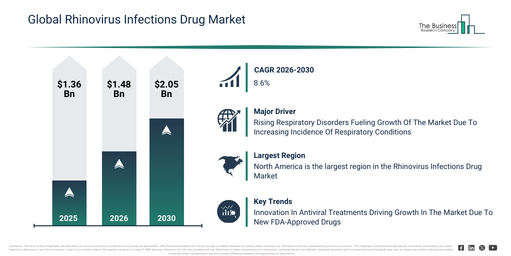
    The rhinovirus infections drug market size has experienced significant expansion in recent years. It is anticipated to grow from $1.36 billion in 2025 to $1.48 billion in 2026, achieving a compound annual growth rate (CAGR) of 8.8%. The historical growth can be ascribed to a high incidence of the common cold, limited antiviral options, widespread use of over-the-counter drugs, seasonal infection patterns, and consumer demand for fast relief.

    The rhinovirus infections drug market size is projected to expand significantly over the coming years. This market is set to reach $2.05 billion in 2030, exhibiting a compound annual growth rate (CAGR) of 8.6%. This anticipated growth during the forecast period is fueled by advancements in antiviral research, better viral targeting technologies, increased awareness of respiratory infections, progress in pediatric drug development, and innovations in nasal delivery methods. Key developments expected during this period include increased research into antiviral treatments for the common cold, a greater emphasis on therapies that reduce symptoms, the proliferation of nasal spray formulations, a heightened interest in immune-modulating drugs, and a move towards preventive respiratory healthcare.

    Get A Free Sample Report With In-Depth Market Insights:

    https://thebusinessresearchcompany.com/sample_request?id=94910066&type=smp&name=Rhinovirus%20Infections%20Drug%20Market%20Report%202026&utm_source=Blogs&utm_medium=Paid&utm_campaign=Oct_PR

    Rhinovirus Infections Drug Market Growth Momentum: What Factors Are Shaping Demand?

    A growing number of respiratory disorders is anticipated to stimulate the expansion of the rhinovirus infections drug market in the coming period. Respiratory disorders are medical conditions that affect the lungs and airways, leading to breathing difficulties such as asthma, chronic obstructive pulmonary disease (COPD), and pneumonia. The rise in these disorders is primarily attributed to increasing air pollution and exposure to occupational hazards, which contribute to the greater prevalence of conditions like asthma, COPD, and pneumonia in affected populations. Rhinovirus infections drugs assist in treating respiratory disorders by targeting viral replication, reducing inflammation, and alleviating symptoms to improve respiratory function. For instance, according to the Office for Health Improvement & Disparities, a UK-based government agency, in June 2025, England recorded 854,922 emergency respiratory-related hospital admissions in the year ending 2024, at a rate of 1,428 per 100,000 people, marking a 7% increase from the previous year. Therefore, the increasing incidence of respiratory disorders is a key driver for growth in the rhinovirus infections drug market.

    Rhinovirus Infections Drug Market Segment Breakdown: Which Categories Lead On Revenue?

    The rhinovirus infections drug market covered in this report is segmented –

    1) By Product: Antivirals, Immunomodulators, Vaccines, Nasal Sprays, Symptomatic Treatments

    2) By Patient Age Group: Infants, Children, Adults, Elderly

    3) By Route Of Administration: Oral, Intranasal, Injectable

    4) By Indication: Common Cold, Asthma Exacerbation, Chronic Obstructive Pulmonary Disease (COPD) Exacerbation, Other Indications

    5) By Distribution Channel: Hospital Pharmacies, Retail Pharmacies, Online Pharmacies, Specialty Pharmacies

    Subsegments:

    1) By Antivirals: Pleconaril, Vapendavir, Rupintrivir, Other Antivirals

    2) By Immunomodulators: Interferons, Toll-Like Receptor Agonists, Other Immunomodulators

    3) By Vaccines: Live Attenuated Vaccines, Inactivated Vaccines, Recombinant Vaccines

    4) By Nasal Sprays: Antihistamine Nasal Sprays, Decongestant Nasal Sprays, Steroid Nasal Sprays, Saline Nasal Sprays

    5) By Symptomatic Treatments: Analgesics, Antipyretics, Cough Suppressants, Expectorants, Antihistamines

    Rhinovirus Infections Drug Market Trends Redefining Industry Growth

    Leading companies in the rhinovirus infections drug market are concentrating on creating innovative products, such as antiviral medications, to improve treatment efficacy, lessen symptom severity, and accelerate patient recovery. Antiviral drugs combat viral infections by hindering viral replication within the body. These medications can effectively manage influenza, HIV, hepatitis, and rhinovirus. Some antivirals prevent viruses from entering host cells, while others stop their replication or assembly. For instance, in March 2025, Altesa BioSciences Inc., a US-based biotechnology company, obtained clearance from the U.S. Food and Drug Administration (FDA) for its Investigational New Drug (IND) application for vapendavir, aimed at treating rhinovirus infections in individuals with COPD. Vapendavir is an oral broad-spectrum antiviral drug that works by preventing rhinovirus from entering and replicating within human cells. It has demonstrated effectiveness against 97% of rhinoviruses and other respiratory enteroviruses. Altesa BioSciences maintains exclusive global rights for the development, manufacturing, and commercialization of vapendavir. The drug is intended to provide targeted treatment for vulnerable populations, including those with COPD and asthma.

    Rhinovirus Infections Drug Market Leading Players And Competitive Positioning

    Major companies operating in the rhinovirus infections drug market are Pfizer Inc., Teva Pharmaceutical Industries Ltd., Cocrystal Pharma Inc., Biota Pharmaceuticals Inc., Romark Laboratories L.C., Altamira Therapeutics Ltd., Pneumagen Ltd., AIM ImmunoTech Inc., hVIVO Services Limited, Maxwell Biosciences Inc., Altesa BioSciences Inc., Via Nova Therapeutics Inc., MetP Pharma AG, Ntvirin Pharma, GlaxoSmithKline plc, Johnson & Johnson, Sanofi S.A., Bayer AG, Cipla Limited, Reckitt Benckiser Group plc

    View The Full Rhinovirus Infections Drug Market Report:

    https://thebusinessresearchcompany.com/report/rhinovirus-infections-drug-global-market-report?utm_source=Blogs&utm_medium=Paid&utm_campaign=Oct_PR

    Rhinovirus Infections Drug Market Regional Analysis: Which Geography Leads On Revenue?

    North America was the largest region in the rhinovirus infection drug market in 2025. Asia-Pacific is expected to be the fastest-growing region in the forecast period. The regions covered in the rhinovirus infections drug market report are Asia-Pacific, South East Asia, Western Europe, Eastern Europe, North America, South America, Middle East, Africa.

    Reach Out To Our Team:

    The Business Research Company: https://www.thebusinessresearchcompany.com/

    Americas: +1 310-496-7795

    Asia: +44 7882 955267 & +91 8897263534

    Europe: +44 7882 955267

    Email us at: marketing@tbrc.info

    Follow us on:

    LinkedIn: https://in.linkedin.com/company/the-business-research-company

    YouTube: https://www.youtube.com/channel/UC24_fI0rV8cR5DxlCpgmyFQ

    Global Market Model: https://www.thebusinessresearchcompany.com/global-market-model
  • Rheumatology Therapeutics Market Forecast To Reach $54.16 Billion By 2030: Key Growth Drivers And Industry Trends

    Rheumatology Therapeutics Market Forecast To Reach $54.16 Billion By 2030: Key Growth Drivers And Industry Trends

    Featuring market attractiveness scoring, total addressable market sizing, company benchmarking matrices, interactive Excel dashboards, deeper supply chain intelligence, emerging startup tracking, and granular product-level insights, The Business Research Company’s 2026 market reports are built to deliver research that is both more actionable and more strategically valuable.

    Rheumatology Therapeutics Market Forecast: Value Set To Climb From $46.16 Billion To $54.16 Billion

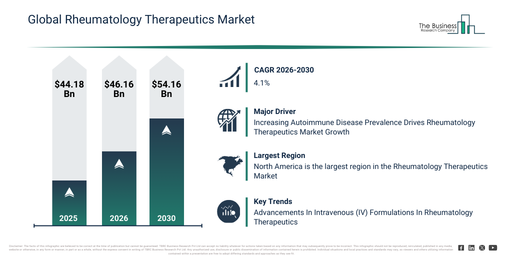
    The rheumatology therapeutics market size has experienced consistent growth in recent years. It is anticipated to expand from $44.18 billion in 2025 to $46.16 billion in 2026, achieving a compound annual growth rate (CAGR) of 4.5%. This historical expansion can be attributed to the rising incidence of rheumatoid arthritis and osteoarthritis, increased access to NSAIDs and corticosteroids, better diagnostic methods for rheumatic diseases, improved healthcare accessibility in mature markets, and an uptick in the use of conventional synthetic DMARDs.

    The rheumatology therapeutics market is projected to experience consistent expansion over the upcoming years. This market is anticipated to reach $54.16 billion in 2030, exhibiting a compound annual growth rate (CAGR) of 4.1%. Factors contributing to this growth trajectory during the projection period include an escalating demand for biologic DMARDs, a rising elderly demographic suffering from chronic joint conditions, enhanced recognition of the importance of prompt diagnosis and intervention, the proliferation of targeted synthetic DMARDs, and increased spending on chronic illness care. Key developments expected within the forecast timeframe encompass the expanding acceptance of biologic and targeted DMARDs, a move towards proactive and intensive disease management, greater application of combination therapies for rheumatic conditions, an elevated emphasis on sustained disease remission, and the broadening of individualized treatment strategies within rheumatology.

    Get A Free Sample Report With In-Depth Market Insights:

    https://thebusinessresearchcompany.com/sample_request?id=53998594&type=smp&name=Rheumatology%20Therapeutics%20Market%20Report%202026&utm_source=Blogs&utm_medium=Paid&utm_campaign=Oct_PR

    Rheumatology Therapeutics Market Expansion Drivers: What’s Shaping Future Growth?

    The expanding incidence of autoimmune conditions is anticipated to fuel the expansion of the rheumatology therapeutics market in the future. An autoimmune disease is characterized by the immune system erroneously targeting and harming the body’s own tissues. The increasing occurrence of autoimmune diseases stems from a blend of genetic, environmental, and lifestyle elements, alongside heightened awareness and more sophisticated diagnostic methods. Rheumatology therapeutics are essential for autoimmune diseases to control inflammation, ease symptoms, and avert harm to joints and tissues resulting from the immune system’s assault on the body. For example, in June 2024, data from the Australian Institute of Health and Welfare, an Australia-based government agency, indicated that approximately 514,000 people in Australia, representing 2.0% of the population, were estimated to have been living with rheumatoid arthritis in 2022. In 2023, rheumatoid arthritis was responsible for 2.0% of the total disease burden and 16% of the burden for all musculoskeletal conditions. Consequently, the escalating prevalence of autoimmune diseases is a key driver for the growth of the rheumatology therapeutics market.

    Rheumatology Therapeutics Market Segmentation: How Does The Market Break Down By Category?

    The rheumatology therapeutics market covered in this report is segmented –

    1) By Drug Class: Disease Modifying Anti-Rheumatic Drugs, Nonsteroidal Anti-Inflammatory Drugs, Corticosteroids, Uric Acid Drugs, Other Drugs Classes

    2) By Distribution Channel: Hospital Pharmacy, Retail Pharmacy, Online Pharmacy

    3) By Disease Indication: Rheumatoid Arthritis, Osteoarthritis, Gout, Psoriatic Arthritis, Ankylosing Spondylitis, Other Disease Indications

    Subsegments:

    1) By Disease Modifying Anti-Rheumatic Drugs (DMARDs): Conventional Synthetic DMARDs, Biologic DMARDs, Targeted Synthetic DMARDs

    2) By Nonsteroidal Anti-Inflammatory Drugs (NSAIDs): COX-2 Inhibitors, Traditional NSAIDs

    3) By Corticosteroids: Oral Corticosteroids, Injectable Corticosteroids, Topical Corticosteroids

    4) By Uric Acid Drugs: Uric Acid Lowering Agents, Uricosuric Agents, Pegloticase

    5) By Other Drug Classes: Immunosuppressants, Biologic Therapies, Analgesics

    Rheumatology Therapeutics Market Strategic Trends: What Defines The Next Growth Phase?

    Leading companies within the rheumatology therapeutics market are innovating, introducing solutions such as intravenous (IV) formulations to improve treatment effectiveness and patient convenience. An intravenous (IV) formulation describes a medicine or substance administered directly into a vein using a needle or catheter. For instance, in October 2023, Novartis AG, a pharmaceutical firm based in Switzerland, announced the US Food and Drug Administration (FDA) had granted approval for Cosentyx, an intravenous (IV) formulation. This particular version of Cosentyx holds unique approval for treating adults diagnosed with psoriatic arthritis (PsA), ankylosing spondylitis (AS), and non-radiographic axial spondyloarthritis (nr-axSpA). Its mechanism involves specifically targeting and inhibiting interleukin-17A (IL-17A), making it the sole non-tumor necrosis factor alpha (TNF-a) IV treatment available for these specific ailments.

    Rheumatology Therapeutics Market Competitive Overview And Top Companies

    Major companies operating in the rheumatology therapeutics market are Pfizer Inc., Johnson & Johnson, AbbVie Inc., Roche Holding AG, Merck & Co. Inc., Bristol-Myers Squibb Company, Novartis AG, Eli Lilly and Company, Amgen Inc., UCB S.A., Sanofi SA, AstraZeneca PLC, Takeda Pharmaceutical Company Limited, Boehringer Ingelheim International GmbH, Gilead Sciences Inc., Regeneron Pharmaceuticals Inc., Biogen Inc., Janssen Biotech, Genentech Inc., Galapagos NV

    View The Full Rheumatology Therapeutics Market Report:

    https://thebusinessresearchcompany.com/report/rheumatology-therapeutics-global-market-report?utm_source=Blogs&utm_medium=Paid&utm_campaign=Oct_PR

    Rheumatology Therapeutics Market Geographic Spread And Regional Opportunities

    North America was the largest region in the rheumatology therapeutics market in 2025. Asia-Pacific is expected to be the fastest-growing region in the forecast period. The regions covered in the rheumatology therapeutics market report are Asia-Pacific, South East Asia, Western Europe, Eastern Europe, North America, South America, Middle East, Africa.

    Reach Out To Our Team:

    The Business Research Company: https://www.thebusinessresearchcompany.com/

    Americas: +1 310-496-7795

    Asia: +44 7882 955267 & +91 8897263534

    Europe: +44 7882 955267

    Email us at: marketing@tbrc.info

    Follow us on:

    LinkedIn: https://in.linkedin.com/company/the-business-research-company

    YouTube: https://www.youtube.com/channel/UC24_fI0rV8cR5DxlCpgmyFQ

    Global Market Model: https://www.thebusinessresearchcompany.com/global-market-model
  • Rheumatoid Arthritis Drugs Market Research 2026: Market Size, Trends, Segments And Growth Forecast

    Rheumatoid Arthritis Drugs Market Research 2026: Market Size, Trends, Segments And Growth Forecast

    Built to provide research that’s more actionable and strategically valuable, The Business Research Company’s 2026 market reports include market attractiveness analysis, total addressable market sizing, company benchmarking matrices, interactive Excel dashboards, broader supply chain intelligence, emerging startup tracking, and in-depth product insights.

    Rheumatoid Arthritis Drugs Market Revenue Growth On Track For A 2.5% CAGR Through 2030

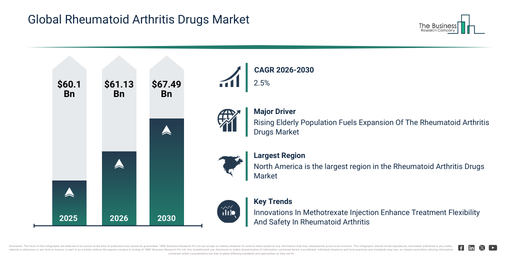
    The rheumatoid arthritis drugs market size has shown a modest increase in recent years. It is anticipated to grow from $60.1 billion in 2025 to $61.13 billion in 2026, at a compound annual growth rate (CAGR) of 1.7%. This growth observed in the past can be ascribed to the rising prevalence of rheumatoid arthritis, increased awareness and diagnosis rates, the expansion of healthcare infrastructure, strong adoption of traditional DMARDs, and favorable reimbursement for established therapies.

    The rheumatoid arthritis drugs market is projected to experience consistent expansion over the upcoming years. By 2030, this market is anticipated to reach a valuation of $67.49 billion, expanding at a compound annual growth rate (CAGR) of 2.5%. Key drivers for this projected growth include the escalating demand for biologics and BRMs, increased adoption of biosimilars, progress in precision medicine, the proliferation of online pharmacy channels, and a growing elderly population. Significant trends observed during this period encompass the broadening application of biologic and targeted therapies, the increasing embrace of early and aggressive treatment approaches, more frequent use of combination drug regimens, a heightened emphasis on personalized treatment protocols, and the increasing role of biosimilars in rheumatoid arthritis management.

    Get A Free Sample Report With In-Depth Market Insights:

    https://thebusinessresearchcompany.com/sample_request?id=46997194&type=smp&name=Rheumatoid%20Arthritis%20Drugs%20Market%20Report%202026&utm_source=Blogs&utm_medium=Paid&utm_campaign=Oct_PR

    Rheumatoid Arthritis Drugs Market Development Factors: What’s Supporting Demand?

    The burgeoning elderly population is anticipated to propel the rheumatoid arthritis drugs market forward. This demographic, defined as individuals aged 65 years or older, constitutes an increasingly larger segment of the general population, a trend primarily influenced by extended life expectancy and declining fertility rates worldwide. Given that rheumatoid arthritis disproportionately affects older individuals, this expansion of the elderly cohort generates heightened demand for effective RA therapies, particularly newer options such as JAK inhibitors and targeted synthetic DMARDs, which may offer better tolerability for older patients. For example, according to a January 2024 report by the Kenya-based nonprofit Population Reference Bureau, the population of Americans aged 65 and older is projected to increase from 58 million in 2022 to 82 million by 2050, a 47% growth. Concurrently, this age group’s proportion of the overall population is forecast to rise from 17% to 23% within the same timeframe. Thus, the expanding elderly population is a significant factor driving the growth of the rheumatoid arthritis drugs market.

    Rheumatoid Arthritis Drugs Market Segment Trends And Revenue Contributors

    The rheumatoid arthritis drugs market covered in this report is segmented –

    1) By Drug Type: Nonsteroidal Anti-Inflammatory Drugs (NSAIDs), Corticosteroids, Disease-Modifying Antirheumatic Drugs (DMARDs), Biologic Response Modifiers (BRMs), Other Drug Types

    2) By Route Of Administration: Oral, Parenteral, Topical, Other Route Of Administrations

    3) By Distribution Channel: Hospital Pharmacy, Retail Pharmacy, Online Pharmacy

    Subsegments:

    1) By Nonsteroidal Anti-Inflammatory Drugs (NSAIDs): Ibuprofen, Naproxen, Diclofenac, Indomethacin

    2) By Corticosteroids: Prednisone, Methylprednisolone, Dexamethasone

    3) By Disease-Modifying Antirheumatic Drugs: Methotrexate, Sulfasalazine, Hydroxychloroquine, Leflunomide

    4) By Biologic Response Modifiers: Tumor Necrosis Factor (TNF) Inhibitors, Interleukin Inhibitors, B-cell Inhibitors

    5) By Other Drug Types: Janus Kinase Inhibitors, Other Novel Therapies

    Rheumatoid Arthritis Drugs Market Transformation Trends: What Innovations Are Driving Change?

    Companies operating in the rheumatoid arthritis drugs market are increasingly focusing on developing advanced solutions, such as flexible-dose methotrexate injections, aimed at enhancing treatment effectiveness, improving patient safety, and offering more convenient administration options. These flexible-dose methotrexate injections offer various strengths, specifically designed for adult patients with active RA, thereby enabling individualized therapy and more effective management of disease activity. A notable example occurred in December 2023, when China Medical System Holdings Limited, a China-based investment holding company primarily engaged in medicine production, received acceptance from the National Medical Products Administration for its New Drug Application for an additional rheumatoid arthritis indication of Methotrexate Injection. This product, specifically developed for adult RA patients, has demonstrated in clinical trials that it is not inferior to methotrexate tablets, indicating a trend of earlier and improved efficacy alongside reduced gastrointestinal side effects. Already approved for severe psoriasis in China, the injection is also marketed in over 40 countries, highlighting its established clinical utility and extensive global presence.

    Rheumatoid Arthritis Drugs Market Competitive Landscape: Which Companies Lead The Industry?

    Major companies operating in the rheumatoid arthritis drugs market are Pfizer Inc., AbbVie Inc., Amgen Inc., Novartis AG, Eli Lilly and Company, F-Hoffmann La Roche AG, Bristol-Myers Squibb Company, Johnson & Johnson Inc., Teva Pharmaceuticals Industries Ltd., Sun Pharmaceutical Industries Ltd., Sanofi S.A, Regeneron Pharmaceuticals Inc., Galapagos NV, Takeda Pharmaceutical Company Limited, Mitsubishi Tanabe Pharma Corporation, UCB S.A., Roche Holding AG, Mallinckrodt Pharmaceuticals, AstraZeneca PLC, Bayer AG

    View The Full Rheumatoid Arthritis Drugs Market Report:

    https://thebusinessresearchcompany.com/report/rheumatoid-arthritis-drugs-global-market-report?utm_source=Blogs&utm_medium=Paid&utm_campaign=Oct_PR

    Rheumatoid Arthritis Drugs Market Top Region By Revenue And Market Share

    North America was the largest region in the rheumatoid arthritis drugs market in 2025.North America is expected to be the fastest-growing region in the global rheumatoid arthritis market report during the forecast period. The regions covered in the rheumatoid arthritis drugs market report are Asia-Pacific, South East Asia, Western Europe, Eastern Europe, North America, South America, Middle East, Africa.

    Reach Out To Our Team:

    The Business Research Company: https://www.thebusinessresearchcompany.com/

    Americas: +1 310-496-7795

    Asia: +44 7882 955267 & +91 8897263534

    Europe: +44 7882 955267

    Email us at: marketing@tbrc.info

    Follow us on:

    LinkedIn: https://in.linkedin.com/company/the-business-research-company

    YouTube: https://www.youtube.com/channel/UC24_fI0rV8cR5DxlCpgmyFQ

    Global Market Model: https://www.thebusinessresearchcompany.com/global-market-model
  • Retinal Disorder Treatment Market Forecast 2026: Market Size, Competitive Landscape And Growth Drivers

    Retinal Disorder Treatment Market Forecast 2026: Market Size, Competitive Landscape And Growth Drivers

    Backed by market attractiveness analysis, total addressable market sizing, company benchmarking matrices, interactive Excel dashboards, wider supply chain intelligence, emerging startup coverage, and detailed product-level insights, The Business Research Company’s 2026 market reports are designed to offer research that is more actionable and strategically valuable than ever.

    Retinal Disorder Treatment Market Value Growth And Long-Term Outlook

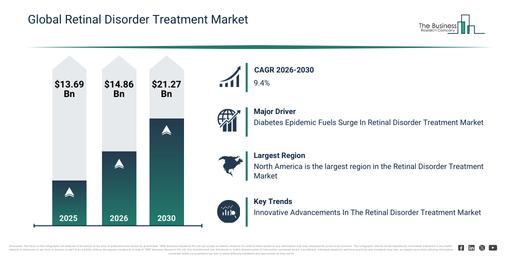
    The retinal disorder treatment market has shown significant expansion in recent years. Its valuation is projected to rise from $13.69 billion in 2025 to $14.86 billion in 2026, registering a compound annual growth rate (CAGR) of 8.6%. This past growth can be ascribed to several factors, including the increasing occurrence of age-related macular degeneration, the worldwide rise in the diabetic population, the establishment of more ophthalmology clinics and specialized hospitals, progress in retinal imaging technologies, and better public understanding of retinal conditions.

    The retinal disorder treatment market is anticipated to experience substantial expansion over the upcoming years, projected to achieve a valuation of $21.27 billion in 2030, exhibiting a compound annual growth rate (CAGR) of 9.4%. This expansion during the forecast period is fueled by several factors, including the creation of extended-duration retinal medications, a rise in the approval of innovative biologics and gene therapies, broader availability of eye care in developing regions, increased funding for ophthalmic studies, and a growing need for customized retinal care. Key developments expected during this period involve the increasing adoption of anti-VEGF treatments, a move towards less invasive retinal procedures, a preference for drug formulations that release medication over time, the broader application of combined therapeutic strategies, and a rise in the utilization of tools for monitoring vision at home.

    Get A Free Sample Report With In-Depth Market Insights:

    https://thebusinessresearchcompany.com/sample_request?id=89180419&type=smp&name=Retinal%20Disorder%20Treatment%20Market%20Report%202026&utm_source=Blogs&utm_medium=Paid&utm_campaign=Oct_PR

    Retinal Disorder Treatment Market Industry Drivers: What’s Behind The Revenue Growth?

    The future expansion of the retinal disorder treatment market is anticipated to be fueled by the rising incidence of diabetes. Diabetes is a long-term health condition marked by high blood sugar levels, occurring when the body fails to produce sufficient insulin or use it properly. Among individuals with diabetes, diabetic retinopathy stands as the most prevalent retinal condition. This condition arises from damage to the retina’s blood vessels, potentially resulting in hemorrhage, fluid seepage, and the formation of new vascular structures. Treatments for retinal disorders often involve laser technology to seal off leaky blood vessels or eliminate irregular ones. As an illustration, the National Health Service (NHS), a UK government body, reported in June 2024 that in 2023, an extra 549,000 people in England were identified as being at risk of developing type 2 diabetes. This increased the total number of individuals with non-diabetic hyperglycemia, also known as pre-diabetes, recorded by GPs to 3,615,330. This figure demonstrates a substantial rise from the 3,065,825 recorded in 2022. Consequently, the expanding occurrence of diabetes is propelling the growth of the retinal disorder treatment market.

    Retinal Disorder Treatment Market Segment Analysis Spotlighting Growth Areas

    The retinal disorder treatment market covered in this report is segmented –

    1) By Type: Macular Degeneration, Diabetic Retinopathy, Other Types

    2) By Dosage Form: Gels, Eye Solutions, Capsules And Tablets, Eye Drops, Ointments

    3) By Distribution Channel: Hospital Pharmacy, Online Pharmacy, Retail Pharmacy

    Subsegments:

    1) By Macular Degeneration: Dry Macular Degeneration, Wet Macular Degeneration

    2) By Diabetic Retinopathy: Non-Proliferative Diabetic Retinopathy, Proliferative Diabetic Retinopathy

    3) By Other Types: Retinal Detachment, Retinitis Pigmentosa, Uveitis, Other Retinal Disorders

    #Retinal Disorder Treatment Market Growth Trends: What’s Shaping The Future Outlook?

    Key players in the retinal disorder treatment market are introducing novel products, such as geographic atrophy therapies, to cater to expanded customer bases, enhance sales, and boost revenue. Current therapeutic approaches for geographic atrophy primarily aim to manage symptoms, decelerate the disease’s advancement, and assist individuals in coping with visual impairment. For example, in August 2023, Astellas Pharma Inc., a Japanese pharmaceutical company, announced that IZERVAY had received approval from the U.S. Food and Drug Administration (FDA). IZERVAY, functioning as a new complement C5 inhibitor, is notable as the sole approved treatment for geographic atrophy (GA) that has demonstrated a statistically significant reduction (p<0.01) in the rate of GA progression at the 12-month primary endpoint in two Phase 3 clinical trials. This distinct attribute establishes IZERVAY (avacincaptad pegol intravitreal solution) as an indicated and effective therapy for GA secondary to age-related macular degeneration (AMD).

    Retinal Disorder Treatment Market Leading Companies: Who Holds The Strongest Market Presence?

    Major companies operating in the retinal disorder treatment market are Pfizer Inc., F. Hoffmann-La Roche Ltd., AbbVie Inc., Bayer AG, Novartis AG, Regeneron Pharmaceuticals Inc., Genentech Inc., Santen Pharmaceutical Co. Ltd., Apellis Pharmaceuticals Inc., Alimera Sciences Inc., Ocular Therapeutix Inc., EyePoint Pharmaceuticals Inc., Adverum Biotechnologies Inc., Kodiak Sciences Inc., Acucela Inc., IVERIC bio Inc., Oxurion NV, Graybug Vision Inc., Clearside Biomedical Inc., Ophthotech Corporation, Opthea Limited, PanOptica Inc., ThromboGenics NV

    View The Full Retinal Disorder Treatment Market Report:

    https://thebusinessresearchcompany.com/report/retinal-disorder-treatment-global-market-report?utm_source=Blogs&utm_medium=Paid&utm_campaign=Oct_PR

    Retinal Disorder Treatment Market Regional Analysis And Top Geography

    North America was the largest region in the retinal disorder treatment market in 2025. Asia-Pacific is expected to be the fastest-growing region in the forecast period. The regions covered in the retinal disorder treatment market report are Asia-Pacific, South East Asia, Western Europe, Eastern Europe, North America, South America, Middle East, Africa.

    Reach Out To Our Team:

    The Business Research Company: https://www.thebusinessresearchcompany.com/

    Americas: +1 310-496-7795

    Asia: +44 7882 955267 & +91 8897263534

    Europe: +44 7882 955267

    Email us at: marketing@tbrc.info

    Follow us on:

    LinkedIn: https://in.linkedin.com/company/the-business-research-company

    YouTube: https://www.youtube.com/channel/UC24_fI0rV8cR5DxlCpgmyFQ

    Global Market Model: https://www.thebusinessresearchcompany.com/global-market-model
  • Retinal Biologics Market Size In 2026: Regional Growth, Key Segments And Future Outlook

    Retinal Biologics Market Size In 2026: Regional Growth, Key Segments And Future Outlook

    Featuring market attractiveness scoring, total addressable market sizing, company benchmarking matrices, interactive Excel dashboards, deeper supply chain intelligence, emerging startup tracking, and granular product-level insights, The Business Research Company’s 2026 market reports are built to deliver research that is both more actionable and more strategically valuable.

    Retinal Biologics Market Poised To Hit $49.03 Billion By 2030 With A 11.9% CAGR

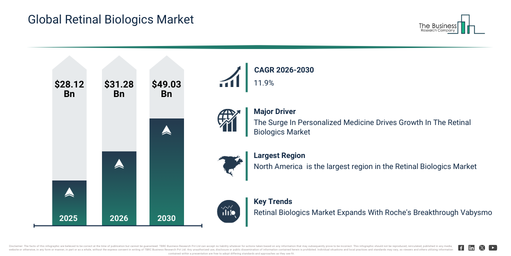
    The retinal biologics market has experienced swift expansion in recent years. Its value is projected to rise from $28.12 billion in 2025 to $31.28 billion in 2026, with a compound annual growth rate (CAGR) of 11.2%. The historical growth of this market can be attributed to the increasing prevalence of age-related macular degeneration, a rising diabetic population, the clinical success of monoclonal antibody therapies, growing ophthalmology healthcare expenditure, and improvements in diagnostic imaging technologies.

    The retinal biologics market size is projected to experience substantial growth over the next few years. It is forecast to expand to $49.03 billion in 2030, achieving a compound annual growth rate (CAGR) of 11.9%. This expansion during the forecast period is attributable to progress in retinal biologic drug delivery systems, the expansion of biologics in development for retinal diseases, the rising embrace of personalized ophthalmic therapies, improvements in ophthalmology infrastructure within emerging markets, and an increasing need for treatments with extended duration. Key trends anticipated in this period include the development of long-acting retinal biologic formulations, a surge in the adoption of anti-VEGF biologics, a transition towards less invasive intraocular therapies, a wider application of biologics for diabetic eye conditions, and the proliferation of specialty retina clinics.

    Get A Free Sample Report With In-Depth Market Insights:

    https://thebusinessresearchcompany.com/sample_request?id=76102681&type=smp&name=Retinal%20Biologics%20Market%20Report%202026&utm_source=Blogs&utm_medium=Paid&utm_campaign=Oct_PR

    Retinal Biologics Market Growth Factors: What’s Supporting Expansion?

    The increasing demand for personalized medicine is expected to stimulate the expansion of the retinal biologics market moving forward. Personalized medicine involves customizing medical treatment to an individual’s distinct genetic makeup, which offers more effective and accurate healthcare interventions. In the context of retinal biologics, personalized medicine is employed to tailor treatment strategies based on individual genetic and molecular profiles, thereby optimizing efficacy and minimizing adverse effects. As an illustration, in February 2024, data from the Personalised Medicine Coalition, a US-based hospital and healthcare organization, showed that the FDA granted approval to 16 new personalized treatments for rare disease patients in 2023, an increase from 6 in 2022. Therefore, the growing need for personalized medicine is a key driver for the retinal biologics market’s growth.

    Retinal Biologics Market Segment Performance And Emerging Opportunities

    The retinal biologics market covered in this report is segmented –

    1) By Drug Class: Vascular Endothelial Growth Factor (VEGF)-A Antagonist, Tumor Necrosis Factor (TNF)-A Inhibitor

    2) By Indication: Macular Degeneration, Diabetic Retinopathy, Uveitis, Diabetic Macular Edema, Other Indications

    3) By Distribution Channel: Hospitals, Pharmacies, Specialty Clinics, Online Pharmacies, Other Distribution Channels

    Subsegments:

    1) By Vascular Endothelial Growth Factor (VEGF)-A Antagonist: Monoclonal Antibodies, Small Molecule Inhibitors

    2) By Tumor Necrosis Factor (TNF)-A Inhibitor: Monoclonal Antibodies, Fusion Proteins

    Retinal Biologics Market Industry Trends: What’s Reshaping Demand?

    Key players in the retinal biologics market are concentrating on creating innovative solutions, including bispecific antibodies, aimed at boosting treatment effectiveness, minimizing retinal damage, and bettering visual results. These biologic therapies, known as bispecific antibodies, are engineered to concurrently address two distinct pathways contributing to disease progression, thereby delivering enhanced therapeutic advantages. As an illustration, in May 2023, the Switzerland-based healthcare firm F. Hoffmann-La Roche Ltd. disclosed that its supplemental biologics license application (sBLA) for Vabysmo (faricimab), intended for treating macular edema after retinal vein occlusion (RVO), had been accepted by the U.S. Food and Drug Administration. This acceptance stemmed from two Phase III trials demonstrating early and sustained visual enhancement with Vabysmo, successfully meeting the primary endpoint of non-inferiority compared to aflibercept. This particular product represents the initial bispecific antibody approved for ocular use in managing neovascular or ‘wet’ age-related macular degeneration and diabetic macular edema. Additional research revealed no retinal blood vessel leakage in patients treated with Vabysmo, a finding contrasting with those treated with aflibercept.

    Retinal Biologics Market Key Players: Which Companies Lead Industry Competition?

    Major companies operating in the retinal biologics market are Regeneron Pharmaceuticals Inc., AbbVie Inc., MeiraGTx Limited, Oxurion NV, Novartis AG, Spark Therapeutics Inc., Bayer AG, Santen Pharmaceutical Co. Ltd., EyePoint Pharmaceuticals Inc., Iveric Bio Inc., Kodiak Sciences Inc., Alimera Sciences Inc., Acucela Inc., Clearside Biomedical Inc., Ophthotech Corporation, Aerie Pharmaceuticals Inc., Ocular Therapeutix Inc., Fidia Farmaceutici S.p.A, Roche Holding AG, Amgen Inc., Biogen Inc., Genentech Inc., Allergan PLC

    View The Full Retinal Biologics Market Report:

    https://thebusinessresearchcompany.com/report/retinal-biologics-global-market-report?utm_source=Blogs&utm_medium=Paid&utm_campaign=Oct_PR

    Retinal Biologics Market Geographic Analysis: Where Is Demand Rising Fastest?

    North America was the largest region in the retinal biologics market in 2025. Asia-Pacific is expected to be the fastest-growing region in the forecast period. The regions covered in the retinal biologics market report are Asia-Pacific, South East Asia, Western Europe, Eastern Europe, North America, South America, Middle East, Africa.

    Reach Out To Our Team:

    The Business Research Company: https://www.thebusinessresearchcompany.com/

    Americas: +1 310-496-7795

    Asia: +44 7882 955267 & +91 8897263534

    Europe: +44 7882 955267

    Email us at: marketing@tbrc.info

    Follow us on:

    LinkedIn: https://in.linkedin.com/company/the-business-research-company

    YouTube: https://www.youtube.com/channel/UC24_fI0rV8cR5DxlCpgmyFQ

    Global Market Model: https://www.thebusinessresearchcompany.com/global-market-model