Month: October 2026

  • Regenerative Aesthetics Market Forecast To 2030: Starting From $28.88 Billion In 2026

    Regenerative Aesthetics Market Forecast To 2030: Starting From $28.88 Billion In 2026

    Backed by market attractiveness analysis, total addressable market sizing, company benchmarking matrices, interactive Excel dashboards, wider supply chain intelligence, emerging startup coverage, and detailed product-level insights, The Business Research Company’s 2026 market reports are designed to offer research that is more actionable and strategically valuable than ever.

    Regenerative Aesthetics Market Size, Value And Growth Trajectory Through 2030

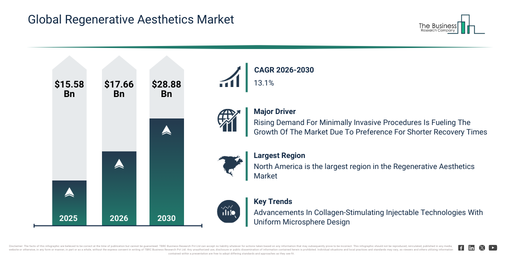
    The regenerative aesthetics market has experienced swift expansion in recent years. It will grow from $15.58 billion in 2025 to $17.66 billion in 2026 at a compound annual growth rate (CAGR) of 13.4%. The market’s historic expansion can be attributed to the limited availability of regenerative aesthetic products, a reliance on traditional cosmetic procedures, growing awareness of aesthetic treatments, an increasing number of dermatology and aesthetic clinics, and the early adoption of stem cell-based therapies.

    The regenerative aesthetics market is projected to experience swift expansion over the coming years. This market is set to reach $28.88 billion in 2030, exhibiting a compound annual growth rate (CAGR) of 13.1%. This anticipated growth is largely due to the advancement of exosome and peptide-based treatments, the wider availability of regenerative products for home use, increased funding for formulations enriched with growth factors, the incorporation of digital monitoring and tele-aesthetics, and a growing consumer inclination towards natural and durable outcomes. Key trends expected during this period involve the increasing adoption of exosome-based therapies for rejuvenating skin and hair, a rise in the application of platelet-rich plasma (prp) and autologous conditioned serum, a surging need for treatments aimed at scar reduction and wound healing, the expansion of anti-inflammatory and combined regenerative therapies, and a growing inclination towards aesthetic procedures that are minimally invasive and offer a natural appearance.

    Get A Free Sample Report With In-Depth Market Insights:

    https://thebusinessresearchcompany.com/sample_request?id=27405&type=smp&name=Regenerative%20Aesthetics%20Market%20Report%202026&utm_source=Blogs&utm_medium=Paid&utm_campaign=Oct_PR

    Regenerative Aesthetics Market Industry Drivers: What’s Behind The Revenue Growth?

    The anticipated expansion of the regenerative aesthetics market is fueled by the increasing demand for minimally invasive procedures. These procedures involve medical or surgical methods carried out via small incisions or natural bodily apertures, as opposed to extensive surgical openings. The surge in minimally invasive procedures stems from a growing inclination towards quicker recovery periods, enabling individuals to swiftly return to their everyday routines. Regenerative aesthetics complements minimally invasive procedures by leveraging the body’s inherent healing mechanisms to achieve enduring enhancements with minimal recovery time. As an illustration, in June 2024, data from the American Society of Plastic Surgeons, a US-based non-profit organization, revealed that hyaluronic acid filler minimally invasive procedures reached 5.29 million in 2023, representing an 8% rise compared to 2022. Consequently, the increasing requirement for minimally invasive procedures is stimulating growth within the regenerative aesthetics market.

    Regenerative Aesthetics Market Segment Trends And Revenue Contributors

    The regenerative aesthetics market covered in this report is segmented –

    1) By Product Type: Exosome-Based Therapies, Other Product Types

    2) By Application: Skin Rejuvenation, Hair Restoration, Scar Reduction And Wound Healing, Anti-Inflammatory Treatments, Combination Therapies

    3) By End-User: Aesthetic Clinics, Dermatology Clinics, Home Use

    Subsegments:

    1) By Exosome-Based Therapies: Stem Cell Derived Exosomes, Platelet Derived Exosomes, Plant Derived Exosomes

    2) By Other Product Types: Platelet Rich Plasma, Autologous Conditioned Serum, Peptide Based Products, Growth Factor Enriched Formulations

    #Regenerative Aesthetics Market Growth Trends: What’s Shaping The Future Outlook?

    Leading companies within the regenerative aesthetics market are concentrating on developing innovative technologies, such as uniform microsphere technology, to provide advanced collagen-stimulating injectables that offer a smoother application, precise treatment, and consistent outcomes. Uniform microsphere technology represents a formulation design that generates microspheres of even size and shape, thereby ensuring smooth injection, accurate placement, and consistent therapeutic performance. For example, in July 2025, Koru Pharma Co. Ltd., a biopharmaceutical company based in South Korea, unveiled Reversal Neo, a next-generation collagen-stimulating injectable created from high-purity Poly-L-Lactic Acid (PLLA) engineered to deliver smoother injection performance, enhanced precision, and long-lasting, natural-looking aesthetic results. Reversal Neo introduces a next-generation collagen biostimulator comprising 200 mg of high-purity Poly-L-Lactic Acid (PLLA) and features a uniform microsphere structure for silkier, more precise injections. Its advanced formulation ensures ongoing collagen regeneration for natural and enduring results, while the product also provides excellent biocompatibility, minimal inflammation, and heightened patient comfort.

    Regenerative Aesthetics Market Competitive Landscape: Which Companies Lead The Industry?

    Major companies operating in the regenerative aesthetics market are ABG Lab LLC, Koru Pharma Co. Ltd., Global Stem Cells Group, Cytori Therapeutics Inc., Aesthetic Regenerative Therapies Inc., EmCyte Corp., Geneo, Plasmolifting World GmbH, ReGen Lab, RepliCel Life Sciences Inc.,

    View The Full Regenerative Aesthetics Market Report:

    https://thebusinessresearchcompany.com/report/regenerative-aesthetics-global-market-report?utm_source=Blogs&utm_medium=Paid&utm_campaign=Oct_PR

    Regenerative Aesthetics Market Geographic Analysis: Where Is Demand Accelerating Fastest?

    North America was the largest region in the regenerative aesthetics market in 2025. Asia-Pacific is expected to be the fastest-growing region in the forecast period. The regions covered in the regenerative aesthetics market report are Asia-Pacific, South East Asia, Western Europe, Eastern Europe, North America, South America, Middle East, Africa.

    Reach Out To Our Team:

    The Business Research Company: https://www.thebusinessresearchcompany.com/

    Americas: +1 310-496-7795

    Asia: +44 7882 955267 & +91 8897263534

    Europe: +44 7882 955267

    Email us at: marketing@tbrc.info

    Follow us on:

    LinkedIn: https://in.linkedin.com/company/the-business-research-company

    YouTube: https://www.youtube.com/channel/UC24_fI0rV8cR5DxlCpgmyFQ

    Global Market Model: https://www.thebusinessresearchcompany.com/global-market-model

  • Raynauds Disease Treatment Market Size In 2026 And Beyond: Understanding Future Growth Potential

    Raynauds Disease Treatment Market Size In 2026 And Beyond: Understanding Future Growth Potential

    Featuring market attractiveness scoring, total addressable market sizing, company benchmarking matrices, interactive Excel dashboards, deeper supply chain intelligence, emerging startup tracking, and granular product-level insights, The Business Research Company’s 2026 market reports are built to deliver research that is both more actionable and more strategically valuable.

    Raynauds Disease Treatment Market CAGR Outlook And Future Development

    The raynauds disease treatment market has experienced significant growth over recent years. It is projected to expand from $1.49 billion in 2025 to $1.6 billion in 2026, showing a compound annual growth rate (CAGR) of 7.6%. The market’s growth during the historical period was influenced by factors including limited awareness of raynauds disease, a dependency on conventional medication, the development of hospital and specialty clinic infrastructure, a shortage of homecare alternatives, and seasonal shifts in demand.

    The raynauds disease treatment market is projected for significant expansion in the coming years. This market is anticipated to reach $2.13 billion by 2030, exhibiting a compound annual growth rate (CAGR) of 7.3%. This projected growth is driven by several factors including the emergence of new pharmacological treatments, the increasing use of wearable thermal therapy devices, heightened focus on preventive care and lifestyle management, the expansion of homecare and telehealth provisions, and the integration of digital health monitoring alongside biofeedback technologies. Key trends expected during this period involve a greater uptake of calcium channel blockers and vasodilators, a surge in the utilization of thermal therapy devices and biofeedback systems, an increasing inclination towards minimally invasive surgical interventions, the broadening of homecare and specialty clinic environments, and a significant emphasis on lifestyle and stress management initiatives.

    Get A Free Sample Report With In-Depth Market Insights:

    https://thebusinessresearchcompany.com/sample_request?id=81639936&type=smp&name=Raynauds%20Disease%20Treatment%20Market%20Report%202026&utm_source=Blogs&utm_medium=Paid&utm_campaign=Oct_PR

    Raynauds Disease Treatment Market Growth Factors: What’s Supporting Expansion?

    The rising occurrence of autoimmune conditions is anticipated to fuel the expansion of the raynauds disease treatment market. These conditions are characterized by the immune system mistakenly attacking healthy body tissues, leading to inflammation and damage. The growing prevalence of autoimmune diseases is linked to individuals residing in more urbanized and hygienic settings, which results in reduced immune system training, alongside contemporary lifestyle elements such as poor nutrition, stress, and environmental contaminants. Raynaud’s disease treatment aids autoimmune conditions by facilitating better symptom management, minimizing tissue harm, and averting complications stemming from impaired blood flow. For example, Clinical Trials Arena, a UK platform focused on clinical trials and pharmaceutical developments, reported in February 2024 that global rheumatoid arthritis (RA) cases are projected to increase significantly, with prevalence expected to climb by 80.2% and impact nearly 1% of the global population by 2050. Consequently, the increasing prevalence of autoimmune diseases is propelling the growth of the raynauds disease treatment market.

    Raynauds Disease Treatment Market Segment Analysis Spotlighting Growth Areas

    The raynauds disease treatment market covered in this report is segmented –

    1) By Treatment Type: Medication, Thermal Therapies, Surgical Procedures, Alteative Therapies

    2) By Drug Class: Calcium Channel Blockers, Vasodilators, Antiplatelet Agents

    3) By Route of Administration: Oral, Topical, Injectable, Intravenous

    4) By End-User: Hospitals, Specialty Clinics, Homecare Settings, Pharmacies

    Subsegments:

    1) By Medication: Calcium Channel Blockers, Alpha Blockers, Vasodilators, Topical Nitrates, Selective Serotonin Reuptake Inhibitors (SSRIs), Phosphodiesterase Inhibitors, Angiotensin Receptor Blockers (ARBs)

    2) By Thermal Therapies: Hand Warmers, Thermal Gloves, Heated Pads, Biofeedback-Controlled Thermal Devices

    3) By Surgical Procedures: Sympathectomy, Nerve Decompression Surgery, Vascular Surgery

    4) By Alternative Therapies: Acupuncture, Biofeedback Therapy, Herbal Remedies, Nutritional Supplements, Stress Management Techniques

    Raynauds Disease Treatment Market Industry Trends: What’s Reshaping Demand?

    Leading companies in the raynauds disease treatment market are concentrating on developing innovative solutions for managing Raynaud’s disease, such as oral calcium channel blockers designed to improve blood flow by relaxing and widening blood vessels, thereby lessening the frequency and intensity of vasospastic attacks. An oral calcium channel blocker is a medication taken by mouth that aids in relaxing and widening blood vessels by impeding calcium entry into the muscle cells of the heart and blood vessel walls. For instance, in June 2023, Aisa Pharma Inc., a US-based clinical-stage biopharmaceutical company, commenced the second phase of its Phase 2b RECONNOITER trial. This trial is evaluating Profervia (cilnidipine), an oral calcium channel blocker, for the treatment of Raynaud’s phenomenon in individuals with systemic sclerosis (SSc). This initiative follows promising results from the first phase, where Profervia demonstrated a greater reduction in both Raynaud’s attack frequency and SSc disease severity compared to other calcium channel blockers, alongside exhibiting a favorable safety profile and good tolerability. The ongoing trial, which is progressing with a 20 mg dose, aims to address the urgent need for effective therapies for Raynaud’s in SSc, a condition currently without approved treatments.

    Raynauds Disease Treatment Market Leading Companies: Who Holds The Strongest Market Presence?

    Major companies operating in the raynauds disease treatment market are Pfizer Inc., Johnson & Johnson, Bayer AG, Novartis AG, Sanofi SA, AstraZeneca PLC, GlaxoSmithKline plc, Takeda Pharmaceutical Company Limited, Merck & Co. Inc., Teva Pharmaceutical Industries Ltd., CSL Vifor, Orion Corporation, Apricus Biosciences Inc., Vicore Pharma Holding AB, MediQuest Therapeutics Inc., Gesynta Pharma AB, Aisa Pharma Inc., Abbott Laboratories, Boehringer Ingelheim International GmbH, Viatris Inc., Lupin Limited, Sun Pharmaceutical Industries Ltd., Dr. Reddy’s Laboratories Ltd., Cipla Limited, Torrent Pharmaceuticals Ltd., Zydus Lifesciences Ltd., Aurobindo Pharma Ltd., Glenmark Pharmaceuticals Ltd., Intas Pharmaceuticals Ltd., Hikma Pharmaceuticals PLC, Alkem Laboratories Ltd.

    View The Full Raynauds Disease Treatment Market Report:

    https://thebusinessresearchcompany.com/report/raynauds-disease-treatment-global-market-report?utm_source=Blogs&utm_medium=Paid&utm_campaign=Oct_PR

    Raynauds Disease Treatment Market Global Footprint: Which Region Leads The Industry?

    North America was the largest region in the raynauds disease treatment market in 2025. Asia-Pacific is expected to be the fastest-growing region in the forecast period. The regions covered in the raynauds disease treatment market report are Asia-Pacific, South East Asia, Western Europe, Eastern Europe, North America, South America, Middle East, Africa.

    Reach Out To Our Team:

    The Business Research Company: https://www.thebusinessresearchcompany.com/

    Americas: +1 310-496-7795

    Asia: +44 7882 955267 & +91 8897263534

    Europe: +44 7882 955267

    Email us at: marketing@tbrc.info

    Follow us on:

    LinkedIn: https://in.linkedin.com/company/the-business-research-company

    YouTube: https://www.youtube.com/channel/UC24_fI0rV8cR5DxlCpgmyFQ

    Global Market Model: https://www.thebusinessresearchcompany.com/global-market-model

  • Rare Kidney Diseases Market Reaches $4.88 Billion In 2026: Key Developments Shaping Expansion

    Rare Kidney Diseases Market Reaches $4.88 Billion In 2026: Key Developments Shaping Expansion

    Built to provide research that’s more actionable and strategically valuable, The Business Research Company’s 2026 market reports include market attractiveness analysis, total addressable market sizing, company benchmarking matrices, interactive Excel dashboards, broader supply chain intelligence, emerging startup tracking, and in-depth product insights.

    Rare Kidney Diseases Market Set To Climb From $3.31 Billion In 2026 To $4.88 Billion By 2030

    The rare kidney diseases market size has seen robust growth over recent years. It is forecast to grow from $3.03 billion in 2025 to $3.32 billion in 2026, at a compound annual growth rate (CAGR) of 9.5%. The expansion witnessed in the past can be ascribed to several factors, including the scarcity of treatment options for rare renal disorders, increasing understanding of genetic kidney diseases, a rise in the prevalence of autoimmune-related nephropathies, the establishment of more nephrology specialty care centers, and the early adoption of immunosuppressive therapies.

    The rare kidney diseases market is anticipated to experience substantial growth over the next few years. It is projected to expand to $4.88 billion in 2030, demonstrating a compound annual growth rate (CAGR) of 10.2%. This market’s expansion during the forecast period can be attributed to advancements in genomics-based drug discovery, an increase in orphan drug approvals, greater investment in rare disease research, the growing application of personalized medicine strategies, and an expanding pipeline of complement and immune-targeted therapies. Noteworthy trends for the same period include a heightened focus on targeted therapies for rare renal disorders, increased clinical trial activity for orphan kidney drugs, the rising adoption of biologics in immune-mediated kidney diseases, the spread of companion diagnostics for early disease detection, and more regulatory incentives for rare disease drug development.

    Get A Free Sample Report With In-Depth Market Insights:

    https://thebusinessresearchcompany.com/sample_request?id=28386678&type=smp&name=Rare%20Kidney%20Diseases%20Market%20Report%202026&utm_source=Blogs&utm_medium=Paid&utm_campaign=Oct_PR

    Rare Kidney Diseases Market Demand Drivers: What’s Powering Industry Growth?

    The rising occurrence of chronic kidney disease (CKD) significantly contributes to the rare kidney disease market. CKD is defined as a disorder where kidneys are damaged and cannot properly filter blood. This increased prevalence of chronic kidney diseases heightens the chances of patients developing rare kidney diseases, subsequently boosting the demand for therapeutics for these conditions. For example, in August 2025, the National Kidney Foundation, Inc., a U.S.-based voluntary nonprofit health organization, reported that the Senate approved a $5 million increase in the FY 2026 Labor, Health and Human Services, and Education appropriations bill to support kidney transplant reform and early detection efforts. This funding increase brings the total for the Organ Procurement and Transplantation Network (OPTN) Modernization Initiative to $59 million. Thus, the growing prevalence of chronic kidney disease (CKD) will drive the rare kidney disease market.

    Rare Kidney Diseases Market Segment Performance And Emerging Opportunities

    The rare kidney diseases market covered in this report is segmented –

    1) By Target Indication: IgA Nephropathy, Lupus Nephritis, Focal Segmental Glomerular Sclerosis, Membranous Nephropathy, C3 Glomerulopathy, Other Target Indications

    2) By Type Of Molecule: Small Molecules, Biologics

    3) By Route Of administration: Oral, Intravenous, Subcutaneous, Other Routes Of Administration

    Subsegments:

    1) By IgA Nephropathy: Immunosuppressive Therapy, Supportive Care And Symptomatic Management

    2) By Lupus Nephritis: Corticosteroids, Antimalarial Agents, Biologics

    3) By Focal Segmental Glomerular Sclerosis (FSGS): Corticosteroids, Angiotensin Receptor Blockers (ARBs), Other Immunosuppressive Agents

    4) By Membranous Nephropathy: Corticosteroids, Immunosuppressive Therapy, Monoclonal Antibodies

    5) By C3 Glomerulopathy: Complement Inhibitors, Supportive Care, Immunosuppressive Therapies

    6) By Other Target Indications: Alport Syndrome, Thin Basement Membrane Nephropathy, Other Rare Kidney Disorders

    Rare Kidney Diseases Market Innovation Trends: What Developments Are Reshaping The Industry?

    Major companies within the rare kidney diseases market are primarily directing their efforts towards the development of non-immunosuppressive therapies for managing these conditions. This distinctive non-immunosuppressive treatment offers a unique approach for patients afflicted with progressive kidney diseases, a feat not achievable by conventional therapies currently utilized for rare kidney diseases. As an illustration, in February 2023, Travere Therapeutics, a biopharmaceutical firm based in the US, unveiled sparsentan, commercially known as Filspari. This medication stands as the inaugural non-immunosuppressive therapy granted approval for primary immunoglobulin A nephropathy (IgAN). Filspari operates with a unique mode of action by obstructing angiotensin and endothelin receptors. This particular characteristic differentiates Filspari from angiotensin-targeting ACE inhibitors and ARBs, which are familiar medications primarily prescribed for hypertension but have been repurposed for IgAN treatment due to their capacity to reduce blood pressure within the kidney.

    Rare Kidney Diseases Market Key Players: Which Companies Lead Industry Competition?

    Major companies operating in the rare kidney diseases market are Merck & Co. Inc., Novartis AG, Sanofi S.A, AstraZeneca plc, Otsuka Pharmaceutical Co Ltd., Alexion Pharmaceuticals Inc., Horizon Therapeutics plc., Recordati S.p.A., Amicus Therapeutics Inc., Akebia Therapeutics Inc., Travere Therapeutics, FibroGen Inc., Aurinia Pharmaceuticals Inc., Calliditas Therapeutics AB, Apellis Pharmaceuticals Inc., Protalix Biotherapeutics Inc., ChemoCentryx Inc., Omeros Corporation, Celtaxsys Inc., Corbus Pharmaceuticals Holdings Inc., Chinook Therapeutics Inc., OxThera AB, Advicenne Pharma SA, Reata Pharmaceuticals Inc.

    View The Full Rare Kidney Diseases Market Report:

    https://thebusinessresearchcompany.com/report/rare-kidney-diseases-global-market-report?utm_source=Blogs&utm_medium=Paid&utm_campaign=Oct_PR

    Rare Kidney Diseases Market Regional Distribution: Which Areas Power Market Growth?

    North America was the leading region in the rare kidney disease market in 2025. The regions covered in the rare kidney diseases market report are Asia-Pacific, South East Asia, Western Europe, Eastern Europe, North America, South America, Middle East, Africa.

    Reach Out To Our Team:

    The Business Research Company: https://www.thebusinessresearchcompany.com/

    Americas: +1 310-496-7795

    Asia: +44 7882 955267 & +91 8897263534

    Europe: +44 7882 955267

    Email us at: marketing@tbrc.info

    Follow us on:

    LinkedIn: https://in.linkedin.com/company/the-business-research-company

    YouTube: https://www.youtube.com/channel/UC24_fI0rV8cR5DxlCpgmyFQ

    Global Market Model: https://www.thebusinessresearchcompany.com/global-market-model

  • Rare Gastrointestinal Diseases Treatment Market Growth Outlook For 2026: Drivers, Trends And Future Opportunities

    Rare Gastrointestinal Diseases Treatment Market Growth Outlook For 2026: Drivers, Trends And Future Opportunities

    Backed by market attractiveness analysis, total addressable market sizing, company benchmarking matrices, interactive Excel dashboards, wider supply chain intelligence, emerging startup coverage, and detailed product-level insights, The Business Research Company’s 2026 market reports are designed to offer research that is more actionable and strategically valuable than ever.

    Rare Gastrointestinal Diseases Treatment Market Forecast: Value Set To Climb From $1.53 Billion To $1.9 Billion

    The rare gastrointestinal diseases treatment market has seen substantial growth in recent years. Its valuation is set to rise from $1.45 billion in 2025 to $1.53 billion in 2026, demonstrating a compound annual growth rate (CAGR) of 5.9%. Historically, this expansion can be attributed to an increased awareness of rare GI disorders, the proliferation of specialty gastroenterology centers, the accessibility of immunosuppressive and anti-inflammatory drugs, heightened clinical research endeavors, and more precise diagnostic methods.

    The rare gastrointestinal diseases treatment market is projected to experience robust expansion over the coming years. This market is anticipated to reach $1.91 billion by 2030, exhibiting a compound annual growth rate (CAGR) of 5.6%. This anticipated growth is driven by factors such as the accelerated development of orphan drugs, increased investments in rare disease research, wider acceptance of biologic therapies, the broadening scope of precision medicine, and improved patient access to sophisticated treatments. Key trends during this period are expected to include a greater uptake of targeted biologic therapies, a heightened emphasis on personalized treatment plans, the expanding utilization of advanced diagnostic tools, the proliferation of enzyme replacement therapies, and more integrated digital patient monitoring systems.

    Get A Free Sample Report With In-Depth Market Insights:

    https://thebusinessresearchcompany.com/sample_request?id=77424897&type=smp&name=Rare%20Gastrointestinal%20Diseases%20Treatment%20Market%20Report%202026&utm_source=Blogs&utm_medium=Paid&utm_campaign=Oct_PR

    Rare Gastrointestinal Diseases Treatment Market Growth Drivers: What’s Behind The Acceleration?

    The burgeoning field of diagnostic testing is anticipated to drive the future expansion of the rare gastrointestinal diseases treatment market. Diagnostic tests encompass medical evaluations conducted to identify, diagnose, or monitor various diseases, conditions, or infections within a patient. The heightened demand for these tests is largely attributed to growing awareness regarding the significance of detecting diseases early, thereby enabling timely interventions and improved patient outcomes. Such testing plays a vital role in the treatment of rare gastrointestinal diseases by facilitating the early and accurate identification of underlying conditions. It contributes to uncovering specific disease pathways, supporting customized treatment plans, and elevating patient results through prompt action. For example, in December 2024, the National Health Service, a UK-based government department, reported that the volume of diagnostic tests performed reached 2,544,809 in 2024, marking an increase from 2,312,030 in 2023. Therefore, the upward trend in diagnostic testing is actively fueling the growth of the rare gastrointestinal diseases treatment market.

    Rare Gastrointestinal Diseases Treatment Market Segment Landscape And Growth Outlook

    The rare gastrointestinal diseases treatment market covered in this report is segmented –

    1) By Type: Drugs, Device

    2) By Route Of Administration: Oral, Intravenous (IV) Or Injectable, Subcutaneous, Other Routes Of Administration

    3) By Application: Eosinophilic Gastroenteritis, Hercksprung’s Disease, Chronic Intestinal Pseudo-Obstruction

    4) By End User: Hospitals, Research Institutes, Other End Users

    Subsegments:

    1) By Drugs: Anti-Inflammatory Drugs, Immunosuppressive Agents, Biologic Therapies, Antibiotics, Proton Pump Inhibitors, Corticosteroids, Enzyme Replacement Therapies

    2) By Devices: Endoscopic Devices, Diagnostic Imaging Systems, Surgical Instruments, Feeding Tubes, Stent Devices, Biopsy Devices

    Rare Gastrointestinal Diseases Treatment Market Trends: What’s Defining The Industry’s Next Phase?

    Companies actively engaged in the rare gastrointestinal diseases treatment market are concentrating on creating advanced therapies, such as fully human monoclonal antibodies, to address disease pathways and enhance results for patients. Fully human monoclonal antibodies are laboratory-developed antibodies composed entirely of human proteins, designed to specifically identify and engage with molecules responsible for diseases, thereby precisely blocking or modifying them to boost treatment efficacy and minimize adverse reactions. As an illustration, in August 2023, Regeneron Pharmaceuticals Inc., a US-based biotechnology firm, obtained U.S. Food and Drug Administration (FDA) authorization for Veopoz (pozelimab-bbfg) for CHAPLE disease, which is a rare, severe inherited gastrointestinal condition. Veopoz is a fully human monoclonal antibody engineered to target complement factor C5, aiding in the regulation of the hyperactive complement system that contributes to protein loss and gastrointestinal harm in individuals with CHAPLE. This precise mode of action tackles the root cause of the ailment, thereby averting debilitating symptoms and potentially life-threatening issues.

    Rare Gastrointestinal Diseases Treatment Market Competitive Landscape: Who Leads The Industry?

    Major companies operating in the rare gastrointestinal diseases treatment market are Johnson & Johnson, Merck & Co. Inc., Pfizer Inc., Bayer AG, Sanofi S.A., Zealand Pharma A/S, Novartis AG, AstraZeneca plc, GlaxoSmithKline plc, Eli Lilly and Company, Takeda Pharmaceutical Company Limited, Teva Pharmaceutical Industries Ltd., Regeneron Pharmaceuticals Inc., Ipsen S.A., PTC Therapeutics Inc., Ironwood Pharmaceuticals Inc., Mirum Pharmaceuticals Inc., Albireo Pharma Inc., Orphalan S.A., Ellodi Pharmaceuticals Inc.

    View The Full Rare Gastrointestinal Diseases Treatment Market Report:

    https://thebusinessresearchcompany.com/report/rare-gastrointestinal-diseases-treatment-global-market-report?utm_source=Blogs&utm_medium=Paid&utm_campaign=Oct_PR

    Rare Gastrointestinal Diseases Treatment Market Leading Geography: Which Region Contributes The Most Revenue?

    North America was the largest region in the rare gastrointestinal diseases treatment market in 2025. The regions covered in the rare gastrointestinal diseases treatment market report are Asia-Pacific, South East Asia, Western Europe, Eastern Europe, North America, South America, Middle East, Africa.

    Reach Out To Our Team:

    The Business Research Company: https://www.thebusinessresearchcompany.com/

    Americas: +1 310-496-7795

    Asia: +44 7882 955267 & +91 8897263534

    Europe: +44 7882 955267

    Email us at: marketing@tbrc.info

    Follow us on:

    LinkedIn: https://in.linkedin.com/company/the-business-research-company

    YouTube: https://www.youtube.com/channel/UC24_fI0rV8cR5DxlCpgmyFQ

    Global Market Model: https://www.thebusinessresearchcompany.com/global-market-model

  • Rare Epilepsy Syndromes Therapeutics Market Size Forecast From 2026 To 2030: Key Industry Trends

    Rare Epilepsy Syndromes Therapeutics Market Size Forecast From 2026 To 2030: Key Industry Trends

    Featuring market attractiveness scoring, total addressable market sizing, company benchmarking matrices, interactive Excel dashboards, deeper supply chain intelligence, emerging startup tracking, and granular product-level insights, The Business Research Company’s 2026 market reports are built to deliver research that is both more actionable and more strategically valuable.

    Rare Epilepsy Syndromes Therapeutics Market Revenue Growth On Track For A 8.4% CAGR Through 2030

    The rare epilepsy syndromes therapeutics market has experienced substantial expansion in recent years. It will grow from $2.25 billion in 2025 to $2.45 billion in 2026 at a compound annual growth rate (CAGR) of 8.6%. The historical growth in this market segment can be ascribed to improved diagnosis of rare epilepsy syndromes, the increasing availability of specialized neurology centers, the expansion of orphan drug approvals, growing clinical research in epilepsy, and rising awareness among healthcare providers.

    The rare epilepsy syndromes therapeutics market size is projected to experience robust expansion over the coming years. It is anticipated to reach $3.38 billion in 2030, exhibiting a compound annual growth rate (CAGR) of 8.4%. This expansion during the projection period is primarily driven by factors such as the increasing progress in gene and cell therapies, the growing need for individualized epilepsy treatment, the broadening of advanced neurostimulation alternatives, escalating investment in rare neurology studies, and a greater emphasis on sustained disease management. Key trends observed within the forecast period encompass the heightened development of targeted antiepileptic interventions, the increasing acceptance of cannabinoid-derived treatments, a sharpened focus on genetically informed epilepsy solutions, the broader application of precision neurology methodologies, and an improved incorporation of diverse treatment strategies.

    Get A Free Sample Report With In-Depth Market Insights:

    https://thebusinessresearchcompany.com/sample_request?id=10783609&type=smp&name=Rare%20Epilepsy%20Syndromes%20Therapeutics%20Market%20Report%202026&utm_source=Blogs&utm_medium=Paid&utm_campaign=Oct_PR

    Rare Epilepsy Syndromes Therapeutics Market Growth Factors Behind Sustained Expansion

    The future expansion of the rare epilepsy syndromes therapeutics market is anticipated to be driven by the rising occurrence of rare diseases. These conditions are defined as medical ailments impacting a small segment of the populace, frequently being chronic, severe, and challenging to identify or manage. This surge in rare disease prevalence stems from broader newborn and genomic screening efforts, which enlarge the pool of diagnosed patients, thereby boosting the need for orphan drug services for patient identification, clinical trials, and access initiatives. Therapeutics designed for rare epilepsy syndromes aid rare diseases by providing focused treatments to manage seizures, improve patient results, and address critical voids where current treatment choices are insufficient. As an illustration, the Food and Drug Administration, a US federal agency, reported in November 2024 that over 7,000 rare diseases affect more than 30 million individuals in the United States. Consequently, the expanding occurrence of rare diseases is fueling the development of the rare epilepsy syndromes therapeutics market.

    Rare Epilepsy Syndromes Therapeutics Market Breakdown By Product Type And Application

    The rare epilepsy syndromes therapeutics market covered in this report is segmented –

    1) By Drug Type: Antiepileptic Drugs, Steroids, Cannabinoids, Ketogenic Diet, Other Drug Types

    2) By Syndrome Type: Dravet Syndrome, Lennox-Gastaut Syndrome, Sturge-Weber Syndrome, Rasmussen’s Encephalitis, Other Syndrome Types

    3) By Route Of Administration: Oral, Intravenous, Other Route Of Administrations

    4) By Distribution Channel: Hospital Pharmacies, Retail Pharmacies, Online Pharmacies, Other Distribution Channels

    Subsegments:

    1) By Antiepileptic Drugs: Sodium Channel Blockers, Gamma-Aminobutyric Acid Modulators, Calcium Channel Blockers, Glutamate Inhibitors, Mixed Mechanism Agents

    2) By Steroids: Corticosteroids, Adrenocorticotropic Hormone, Immunosuppressive Steroids

    3) By Cannabinoids: Cannabidiol-Based Therapies, Tetrahydrocannabinol-Based Therapies, Synthetic Cannabinoid Formulations

    4) By Ketogenic Diet: Classic Ketogenic Diet, Modified Atkins Diet, Low Glycemic Index Treatment, Medium Chain Triglyceride Diet

    5) By Other Drug Types: Gene Therapies, Enzyme Replacement Therapies, Neurostimulation Therapies, Investigational Orphan Drugs

    Rare Epilepsy Syndromes Therapeutics Market Industry Trends Fueling Future Revenue Growth

    Major companies operating in the rare epilepsy syndromes therapeutics are increasingly focusing on developing novel treatment approaches by forming strategic collaborations to enhance their research capabilities and broaden their range of therapies. These strategic collaborations encompass partnerships among pharmaceutical companies, biotech firms, and research institutions, which pool resources and expertise to accelerate drug development and expand treatment options for rare epilepsy syndromes. For instance, in February 2025, Biogen Inc., a US-based biotechnology company, and Stoke Therapeutics, a US-based clinical-stage biotechnology company, entered into an agreement to develop and commercialize zorevunersen. This compound is an investigational antisense oligonucleotide intended to treat Dravet syndrome, a severe genetic epilepsy marked by refractory seizures and neurodevelopmental impairments. This alliance combines Stoke’s RNA technology with Biogen’s neurology expertise to address a significant unmet need for a disease-modifying therapy for Dravet syndrome patients worldwide. Zorevunersen works by aiming to boost NaV1.1 protein production by targeting the SCN1A gene mutation responsible for Dravet syndrome, and early studies have indicated promising reductions in seizures and enhancements in cognitive abilities.

    Rare Epilepsy Syndromes Therapeutics Market Company Landscape And Competitive Strategy

    Major companies operating in the rare epilepsy syndromes therapeutics market are Roche Holding AG, Pfizer Inc., Medtronic plc, Takeda Pharmaceutical Company Limited, Biogen Inc., UCB Pharma Limited, Eisai Co. Ltd., Jazz Pharmaceuticals plc, Lundbeck A/S, SK Biopharmaceuticals Co. Ltd., LivaNova plc, PTC Therapeutics, Supernus Pharmaceuticals Inc., Regenxbio Inc., NeuroPace Inc., Encoded Therapeutics Inc., Neurelis Inc., Capsida Biotherapeutics, Stoke Therapeutics Inc., Xenon Pharmaceuticals Inc., Praxis Precision Medicines, Ovid Therapeutics Inc.

    View The Full Rare Epilepsy Syndromes Therapeutics Market Report:

    https://thebusinessresearchcompany.com/report/rare-epilepsy-syndromes-therapeutics-global-market-report?utm_source=Blogs&utm_medium=Paid&utm_campaign=Oct_PR

    Rare Epilepsy Syndromes Therapeutics Market Regional Outlook: Where Is Opportunity Concentrated?

    North America was the largest region in the rare epilepsy syndromes therapeutics market in 2025. The regions covered in the rare epilepsy syndromes therapeutics market report are Asia-Pacific, South East Asia, Western Europe, Eastern Europe, North America, South America, Middle East, Africa.

    Reach Out To Our Team:

    The Business Research Company: https://www.thebusinessresearchcompany.com/

    Americas: +1 310-496-7795

    Asia: +44 7882 955267 & +91 8897263534

    Europe: +44 7882 955267

    Email us at: marketing@tbrc.info

    Follow us on:

    LinkedIn: https://in.linkedin.com/company/the-business-research-company

    YouTube: https://www.youtube.com/channel/UC24_fI0rV8cR5DxlCpgmyFQ

    Global Market Model: https://www.thebusinessresearchcompany.com/global-market-model
  • Rare Diseases Treatment Market 2026: Market Size, Growth Drivers And Emerging Opportunities

    Rare Diseases Treatment Market 2026: Market Size, Growth Drivers And Emerging Opportunities

    Built to provide research that’s more actionable and strategically valuable, The Business Research Company’s 2026 market reports include market attractiveness analysis, total addressable market sizing, company benchmarking matrices, interactive Excel dashboards, broader supply chain intelligence, emerging startup tracking, and in-depth product insights.

    Rare Diseases Treatment Market Value Growth And Long-Term Outlook

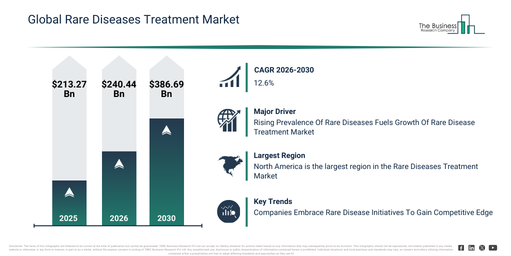
    The rare diseases treatment market size has seen significant growth in recent years. It is anticipated to expand from $213.27 billion in 2025 to $240.44 billion in 2026, achieving a compound annual growth rate (CAGR) of 12.7%. This past growth can be attributed to several factors including increased awareness of rare diseases, progress in biologics and gene therapies, the rising prevalence of rare diseases, government support for orphan drugs, and the establishment of specialized healthcare infrastructure.

    The rare diseases treatment market is projected to experience substantial growth in the coming years. Its valuation is set to reach $386.69 billion by 2030, exhibiting a compound annual growth rate (CAGR) of 12.6%. This expansion during the forecast period can be attributed to the increasing adoption of personalized medicine, a burgeoning pipeline of orphan drugs, technological innovations in drug delivery, heightened collaboration between pharmaceutical and biotechnology companies, and the broader establishment of global rare disease patient registries. Key developments anticipated over this period encompass individualized treatment strategies, an increase in orphan drug development, sophisticated drug delivery mechanisms, the standardization of regulations for rare diseases, and healthcare models centered around patients.

    Get A Free Sample Report With In-Depth Market Insights:

    https://thebusinessresearchcompany.com/sample_request?id=84589394&type=smp&name=Rare%20Diseases%20Treatment%20Market%20Report%202026&utm_source=Blogs&utm_medium=Paid&utm_campaign=Oct_PR

    Rare Diseases Treatment Market Demand Drivers Opening New Revenue Streams

    The escalating impact of rare diseases is a key driver for the rare disease treatment market. These conditions are defined by their affect on a very small portion of the population compared to more common illnesses. The rising number of cases and fatalities attributed to rare diseases are generating demand for effective treatment options. Rare disease treatments are crucial for managing conditions that frequently lack standard therapeutic approaches by improving patient outcomes, lessening the burden of the disease, and thereby enhancing the quality of life for those afflicted. For instance, in August 2024, the International Federation of Medical Students’ Associations (IFMSA), a Denmark-based federation of medical student associations, reported that approximately 300 million people globally (with study estimates varying between 263 and 446 million) are living with a rare disease, which constitutes between 3.5% and 5.9% of the world’s population (6–9). Consequently, the increasing prevalence of rare diseases is propelling the rare disease treatment market forward.

    Rare Diseases Treatment Market Segment Analysis And Revenue Potential

    The rare diseases treatment market covered in this report is segmented –

    1) By Drug Type: Originator Drugs (Patented Molecules), Generic Drugs

    2) By Drug Class: Biologics, Organic Compounds

    3) By Mode Of Administration: Injectable, Oral, Other Modes Of Administration

    4) By Therapeutic Area: Cancer, Neurological Conditions, Cardiovascular Conditions, Musculoskeletal Conditions, Hematologic Disorders, Infectious Diseases, Metabolic Disorders, Endocrine Disorders, Other Therapeutic Areas

    5) By Distribution Channel: Hospital Pharmacies, Specialty Pharmacies, Retail Pharmacies

    Subsegments:

    1) By Originator Drugs: Monoclonal Antibodies, Enzyme Replacement Therapies, Gene Therapies, Small Molecule Drugs

    2) By Generic Drugs: Generic Monoclonal Antibodies, Generic Enzyme Replacement Therapies, Generic Small Molecule Drugs, Biosimilars

    Rare Diseases Treatment Market Trends Powering Strategic Industry Growth

    Major companies operating in the rare disease treatment market are intensifying their efforts to introduce rare disease initiatives to gain a competitive edge. These rare disease initiatives refer to coordinated endeavors, programs, or activities undertaken by various stakeholders, including governments, research institutions, and pharmaceutical companies, to address the unique challenges associated with rare diseases. For instance, in October 2023, the Oxford-Harrington Rare Disease Centre, a UK-based research institution, launched the Therapeutics Accelerator, which is dedicated to advancing innovative treatments for rare diseases. This unique transatlantic initiative aims to identify, fund, and propel breakthrough academic discoveries to introduce 40 potentially life-changing therapies into clinical trials over the next decade. Operating on a non-profit/for-profit model, the Accelerator plans to allocate funding of up to £200 million to support new projects, targeting regulatory approvals in key markets such as the United States, the United Kingdom, and Europe.

    Rare Diseases Treatment Market Key Players Shaping Industry Direction

    Major companies operating in the rare diseases treatment market are AbbVie Inc., Actelion Pharmaceuticals Ltd, Alexion Pharmaceuticals Inc., Celgene Corporation, Johnson & Johnson, Novartis AG, Pfizer Inc, Sanofi S.A., Merck & Co. Inc., Vertex Pharmaceuticals, Takeda Pharmaceutical Company, Abeona Therapeutics Inc., Akcea Therapeutics Inc., Alnylam Pharmaceuticals Inc., Amicus Therapeutics Inc., BioMarin Pharmaceutical Inc., bluebird bio Inc., Catalyst Pharmaceuticals Inc., Cerecor Inc., CSL Behring Ltd., Dicerna Pharmaceuticals Inc., Genzyme Corporation, Horizon Therapeutics plc, Intercept Pharmaceuticals Inc., Ionis Pharmaceuticals Inc.

    View The Full Rare Diseases Treatment Market Report:

    https://thebusinessresearchcompany.com/report/rare-diseases-treatment-global-market-report?utm_source=Blogs&utm_medium=Paid&utm_campaign=Oct_PR

    Rare Diseases Treatment Market Geographic Landscape: Which Region Leads Industry Growth?

    North America was the largest region in the rare disease treatment market in 2025. The regions covered in the rare diseases treatment market report are Asia-Pacific, South East Asia, Western Europe, Eastern Europe, North America, South America, Middle East, Africa.

    Reach Out To Our Team:

    The Business Research Company: https://www.thebusinessresearchcompany.com/

    Americas: +1 310-496-7795

    Asia: +44 7882 955267 & +91 8897263534

    Europe: +44 7882 955267

    Email us at: marketing@tbrc.info

    Follow us on:

    LinkedIn: https://in.linkedin.com/company/the-business-research-company

    YouTube: https://www.youtube.com/channel/UC24_fI0rV8cR5DxlCpgmyFQ

    Global Market Model: https://www.thebusinessresearchcompany.com/global-market-model

  • Rare Disease Pharmaceutical Service Market Set To Expand From $245.13 Billion In 2026: Growth Outlook Through 2030

    Rare Disease Pharmaceutical Service Market Set To Expand From $245.13 Billion In 2026: Growth Outlook Through 2030

    Backed by market attractiveness analysis, total addressable market sizing, company benchmarking matrices, interactive Excel dashboards, wider supply chain intelligence, emerging startup coverage, and detailed product-level insights, The Business Research Company’s 2026 market reports are designed to offer research that is more actionable and strategically valuable than ever.

    Rare Disease Pharmaceutical Service Market Poised To Hit $245.13 Billion By 2030 With A 12.9% CAGR

    The rare disease pharmaceutical service market has experienced rapid expansion in recent years. It is projected to increase from $133.4 billion in 2025 to $150.96 billion in 2026, achieving a compound annual growth rate (CAGR) of 13.2%. This historic growth can be attributed to the rise in orphan drug development programs, improvements in rare disease diagnosis rates, the expansion of clinical research infrastructure, growing regulatory incentives for rare diseases, and increased engagement from specialized service providers.

    The rare disease pharmaceutical service market is anticipated to show significant expansion in the next few years. It is projected to achieve a value of $245.14 billion in 2030, demonstrating a compound annual growth rate (CAGR) of 12.9%. The factors contributing to this growth during the forecast period include the increasing outsourcing of rare disease development tasks, the rising adoption of digital platforms for clinical trials, the expansion of global rare disease pipelines, a growing focus on generating real-world evidence, and an increasing need for specialized regulatory expertise. Major trends expected in this period encompass a growing demand for integrated rare disease services, an increased focus on providing end-to-end drug development support, a stronger emphasis on patient-centric care models, the expansion of regulatory and market access services, and enhanced use of data-driven clinical management.

    Get A Free Sample Report With In-Depth Market Insights:

    https://thebusinessresearchcompany.com/sample_request?id=45205221&type=smp&name=Rare%20Disease%20Pharmaceutical%20Service%20Market%20Report%202026&utm_source=Blogs&utm_medium=Paid&utm_campaign=Oct_PR

    Rare Disease Pharmaceutical Service Market Growth Backed By Core Demand Fundamentals

    The future expansion of the rare disease pharmaceutical service market is anticipated to be significantly influenced by the increasing adoption of personalized medicine. This medical approach involves treatments specifically tailored to individual genetic profiles, leading to improved efficacy and a reduction in adverse effects. The growth of personalized medicine is propelled by advancements in genomics, biomarker research, and data analytics, which facilitate the customization of treatments based on an individual’s genetic profile. This customization enhances effectiveness, minimizes side effects, and addresses unmet patient needs more precisely than traditional, generalized therapies. Pharmaceutical Service plays a supportive role in personalized medicine by developing targeted therapies, leveraging genetic and biomarker data, and providing customized treatment solutions that cater to the unique requirements of individual patients. For instance, in February 2024, according to the Personalized Medicine Coalition, a US-based non-profit organization, in 2023, the FDA approved 16 new personalized treatments for rare disease patients, compared to 6 approvals in 2022. Consequently, the rise of personalized medicine is a crucial factor driving the growth of the rare disease pharmaceutical service market.

    Rare Disease Pharmaceutical Service Market Segmentation And Category Overview

    The rare disease pharmaceutical service market covered in this report is segmented –

    1) By Types: Drug Discovery, Clinical Trials, Other Types

    2) By Application: Congenital And Genetic Diseases, Tumors And Cancer, Endocrine Diseases

    3) By End User: Pharmaceutical Companies, Biotechnology Companies, Academic And Research Institutions, Hospitals And Specialty Clinics, Contract Research Organizations (CROs) And Contract Development And Manufacturing Organizations (CDMOs), Diagnostic Laboratories And Genetic Testing Centers

    Subsegments:

    1) By Drug Discovery: Target Identification And Validation, Preclinical Research And Toxicology Studies, Biomarker Discovery And Validation, Genomic And Proteomic Analysis, Computational Drug Design And Modeling, High-Throughput Screening (HTS), Lead Optimization And Candidate Selection

    2) By Clinical Trials: Clinical Trial Design And Protocol Development, Patient Recruitment And Retention, Site Management And Monitoring, Regulatory Affairs And Compliance Support, Data Management And Biostatistics, Pharmacovigilance And Safety Monitoring, Real-World Evidence (RWE) And Post-Marketing Studies

    3) By Other Types: Market Access And Pricing Strategy, Health Economics And Outcomes Research (HEOR), Regulatory Affairs And Compliance Services, Manufacturing And CMC (Chemistry, Manufacturing, and Controls) Support, Medical Affairs And Scientific Communication, Post-Marketing Surveillance, Consulting And Strategic Advisory

    Rare Disease Pharmaceutical Service Market Growth Trends Reshaping The Competitive Landscape

    Companies operating within the rare disease pharmaceutical service market are progressively focusing on developing innovative treatment strategies, such as acetylleucine, to enhance treatment effectiveness, improve patient outcomes, and address unmet needs in rare neurological and metabolic disorders. Acetylleucine, a modified amino acid (N-acetyl-L-leucine), serves as a therapeutic agent to support motor function, balance, and overall neurological health in affected patients. For example, in September 2024, IntraBio, a US-based biopharmaceutical company, received FDA approval for AQNEURSA, which is the first stand-alone therapy for Niemann-Pick Disease Type C, a rare, life-threatening neurodegenerative disorder. This milestone is noteworthy because the treatment demonstrated rapid and significant improvements in neurological symptoms, providing a groundbreaking therapeutic option for both pediatric and adult patients living with this rare disease.

    Rare Disease Pharmaceutical Service Market Competitive Analysis Of Leading Industry Participants

    Major companies operating in the rare disease pharmaceutical service market are Johnson & Johnson, Merck & Co. Inc., Pfizer Inc., AbbVie Inc., Sanofi S.A., Novartis AG, AstraZeneca PLC, GlaxoSmithKline PLC (GSK), Takeda Pharmaceutical Company Limited, Amgen Inc., Biogen Inc., Chiesi Farmaceutici S.p.A., Recordati Industria Chimica e Farmaceutica S.p.A., BioMarin Pharmaceutical Inc., Sarepta Therapeutics Inc., Ultragenyx Pharmaceutical Inc., Amicus Therapeutics Inc., Travere Therapeutics Inc., Sciensus Healthcare Ltd., SOM Innovation Biotech S.L.

    View The Full Rare Disease Pharmaceutical Service Market Report:

    https://thebusinessresearchcompany.com/report/rare-disease-pharmaceutical-service-global-market-report?utm_source=Blogs&utm_medium=Paid&utm_campaign=Oct_PR

    Rare Disease Pharmaceutical Service Market Largest Region: Which Geography Holds The Biggest Share?

    North America was the largest region in the rare disease pharmaceutical service market in 2025. The regions covered in the rare disease pharmaceutical service market report are Asia-Pacific, South East Asia, Western Europe, Eastern Europe, North America, South America, Middle East, Africa.

    Reach Out To Our Team:

    The Business Research Company: https://www.thebusinessresearchcompany.com/

    Americas: +1 310-496-7795

    Asia: +44 7882 955267 & +91 8897263534

    Europe: +44 7882 955267

    Email us at: marketing@tbrc.info

    Follow us on:

    LinkedIn: https://in.linkedin.com/company/the-business-research-company

    YouTube: https://www.youtube.com/channel/UC24_fI0rV8cR5DxlCpgmyFQ

    Global Market Model: https://www.thebusinessresearchcompany.com/global-market-model
  • Rare Disease Genome Editing Market Size And Growth In 2026: Key Factors Shaping Future Demand

    Rare Disease Genome Editing Market Size And Growth In 2026: Key Factors Shaping Future Demand

    Featuring market attractiveness scoring, total addressable market sizing, company benchmarking matrices, interactive Excel dashboards, deeper supply chain intelligence, emerging startup tracking, and granular product-level insights, The Business Research Company’s 2026 market reports are built to deliver research that is both more actionable and more strategically valuable.

    Rare Disease Genome Editing Market Size And Revenue Outlook Through 2030

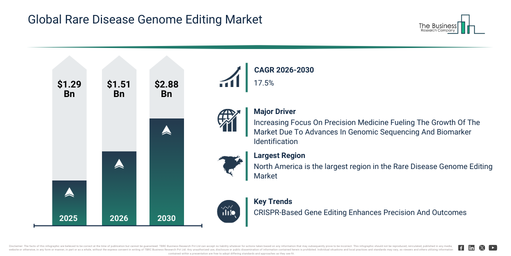
    The market size for rare disease genome editing has experienced swift expansion recently. This market is projected to expand from $1.29 billion in 2025 to $1.51 billion in 2026, demonstrating a compound annual growth rate (CAGR) of 17.8%. Historically, this growth can be ascribed to several factors including progress in gene editing technologies, a rise in the identification of rare genetic mutations, increased funding for genomic research, initial successes in gene therapy trials, and expanding academic research endeavors.

    The rare disease genome editing market is anticipated to experience substantial growth in the coming years. It is forecast to expand to $2.88 billion in 2030, demonstrating a compound annual growth rate (CAGR) of 17.5%. This growth throughout the forecast period can be attributed to several factors, including increased investment in curative rare disease therapies, a rising acceptance of precision medicine approaches, the expansion of clinical genome editing trials, growing regulatory support for orphan drugs, and increased collaboration between biotech companies and healthcare providers. Notable trends during this period are expected to encompass the increasing adoption of CRISPR-based therapeutics, a rising focus on gene editing for monogenic disorders, the growing utilization of personalized genome editing approaches, the expansion of advanced editing platforms, and enhanced integration of genomic data analytics.

    Get A Free Sample Report With In-Depth Market Insights:

    https://thebusinessresearchcompany.com/sample_request?id=58085563&type=smp&name=Rare%20Disease%20Genome%20Editing%20Market%20Report%202026&utm_source=Blogs&utm_medium=Paid&utm_campaign=Oct_PR

    Rare Disease Genome Editing Market Growth Catalysts And Demand Drivers

    An escalating emphasis on precision medicine is anticipated to fuel the expansion of the rare disease genome editing market in the future. This tailored healthcare methodology leverages an individual’s genetic makeup, environmental factors, and lifestyle choices to deliver more precise and efficacious therapies. The heightened interest in precision medicine stems from progress in genomic sequencing and the identification of biomarkers, which facilitate accurate detection and the development of targeted treatments. The rare disease genome editing market plays a crucial role in advancing precision medicine by allowing for the specific correction of genetic mutations, thereby enhancing the personalization and efficacy of treatments. This technology improves healthcare by tackling the fundamental causes of rare conditions, leading to better patient results and a decreased dependence on managing symptoms alone. Illustratively, in March 2024, Novotech, an Australia-based biotechnology firm, reported that in 2023, out of 217 FDA-approved oncology treatments, 43% were precision oncology treatments, with 78 of these integrating DNA or NGS-detectable biomarkers. Consequently, the growing concentration on precision medicine is a key impetus for the expansion of the rare disease genome editing market.

    Rare Disease Genome Editing Market Segment Outlook: Which Categories Are Growing Fastest?

    The rare disease genome editing market covered in this report is segmented –

    1) By Technology: Clustered Regularly Interspaced Short Palindromic Repeats (CRISPR) Or CRISPR-Associated Protein 9, Transcription Activator-Like Effector Nucleases (TALEN), Zinc Finger Nucleases (ZFN), Other Technologies

    2) By Disease Type: Monogenic Disorders, Multifactorial Disorders, Chromosomal Disorders

    3) By Application: Therapeutics, Research

    4) By End User: Biotechnology And Pharmaceutical Companies, Academic And Government Research Institutes, Hospitals

    Subsegments:

    1) By Clustered Regularly Interspaced Short Palindromic Repeats (CRISPR) Or CRISPR-Associated Protein 9: Clustered Regularly Interspaced Short Palindromic Repeats (CRISPR)-Associated Protein 9, Clustered Regularly Interspaced Short Palindromic Repeats (CRISPR)-Associated Protein 12, Clustered Regularly Interspaced Short Palindromic Repeats (CRISPR)-Associated Protein 13, Base Editing, Prime Editing

    2) By Transcription Activator-Like Effector Nucleases (TALEN): Standard Transcription Activator-Like Effector Nucleases (TALEN), Designer Transcription Activator-Like Effector Nucleases (dTALEN), Transcription Activator-Like Effector Nucleases (TALEN) Paired Nucleases

    3) By Zinc Finger Nucleases (ZFN): Standard Zinc Finger Nucleases (ZFN), Engineered Zinc Finger Nucleases (ZFN), Modular Zinc Finger Nucleases (ZFN)

    4) By Other Technologies: Meganucleases, Ribonucleic Acid (RNA)-Guided Nucleases, Clustered Regularly Interspaced Short Palindromic Repeats (CRISPR)-Associated Transposases

    Rare Disease Genome Editing Market Trends Shaping Long-Term Demand

    Leading companies within the rare disease genome editing market are prioritizing the development of advanced therapeutic platforms, specifically CRISPR-based gene editing systems. This focus aims to enhance treatment precision, improve therapeutic outcomes, and address genetic diseases previously considered incurable. CRISPR-based gene editing systems represent innovative technologies enabling precise modifications to the genome, thereby allowing for the correction of genetic defects or the introduction of therapeutic genes into cells. For example, in December 2023, Vertex Pharmaceuticals Inc., a US-based biopharmaceutical company, partnered with CRISPR Therapeutics Inc., a US-based biotechnology research company, and obtained conditional marketing authorization from the United Kingdom (U.K.) Medicines and Healthcare products Regulatory Agency (MHRA) for CASGEVY (exagamglogene autotemcel, exa-cel). This treatment is indicated for patients aged 12 and older with sickle cell disease (SCD) and recurrent vaso-occlusive crises, or those with transfusion-dependent beta thalassemia (TDT). CASGEVY functions by editing a patient’s hematopoietic stem cells to reactivate fetal hemoglobin production, which in turn reduces or eliminates disease symptoms and presents a potential functional cure for these conditions.

    Rare Disease Genome Editing Market Leading Companies And Competitive Benchmarking

    Major companies operating in the rare disease genome editing market are Regeneron Pharmaceuticals Inc., Sarepta Therapeutics Inc., Ultragenyx Pharmaceutical Inc., Beam Therapeutics Inc., CRISPR Therapeutics AG, Rocket Pharmaceuticals Inc., Sangamo Therapeutics Inc., Arcturus Therapeutics Holdings Inc., Editas Medicine Inc., Krystal Biotech Inc., Caribou Biosciences Inc, Bluebird Bio Inc., SpliceBio S.L., Cellectis SA, Generation Bio Co., iECURE Inc., Affinia Therapeutics Inc., Precision Biosciences Inc., Intellia Therapeutics Inc., MeiraGTx Holdings plc

    View The Full Rare Disease Genome Editing Market Report:

    https://thebusinessresearchcompany.com/report/rare-disease-genome-editing-global-market-report?utm_source=Blogs&utm_medium=Paid&utm_campaign=Oct_PR

    Rare Disease Genome Editing Market Regional Analysis: Which Geography Leads On Revenue?

    North America was the largest region in the rare disease genome editing market in 2025. Asia-Pacific is expected to be the fastest-growing region in the forecast period. The regions covered in the rare disease genome editing market report are Asia-Pacific, South East Asia, Western Europe, Eastern Europe, North America, South America, Middle East, Africa.

    Reach Out To Our Team:

    The Business Research Company: https://www.thebusinessresearchcompany.com/

    Americas: +1 310-496-7795

    Asia: +44 7882 955267 & +91 8897263534

    Europe: +44 7882 955267

    Email us at: marketing@tbrc.info

    Follow us on:

    LinkedIn: https://in.linkedin.com/company/the-business-research-company

    YouTube: https://www.youtube.com/channel/UC24_fI0rV8cR5DxlCpgmyFQ

    Global Market Model: https://www.thebusinessresearchcompany.com/global-market-model
  • Ranibizumab Market Forecast 2026–2030: Market Size, Trends And Growth Opportunities

    Ranibizumab Market Forecast 2026–2030: Market Size, Trends And Growth Opportunities

    Built to provide research that’s more actionable and strategically valuable, The Business Research Company’s 2026 market reports include market attractiveness analysis, total addressable market sizing, company benchmarking matrices, interactive Excel dashboards, broader supply chain intelligence, emerging startup tracking, and in-depth product insights.

    Ranibizumab Market Growth From $2.86 Billion In 2026 To $3.3 Billion By 2030 At A CAGR Of 3.6%

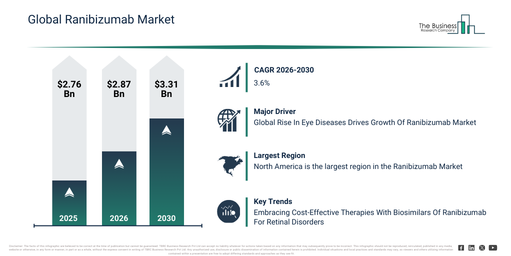
    The ranibizumab market size has shown consistent expansion in recent years. This market is expected to increase from $2.76 billion in 2025 to $2.87 billion in 2026, exhibiting a compound annual growth rate (CAGR) of 4.0%. Historically, this growth has been driven by factors including the rising prevalence of age-related macular degeneration, the clinical validation of anti-VEGF therapy’s effectiveness, the increasing incidence of diabetic retinopathy, enhancements in diagnostic imaging for retinal disorders, and the early regulatory approvals received for ranibizumab.

    The ranibizumab market is anticipated to experience consistent expansion in the coming years. It is projected to reach $3.31 billion by 2030, demonstrating a compound annual growth rate (CAGR) of 3.6%. Factors contributing to this growth include a globally expanding aging population, an increase in worldwide diabetes prevalence, broader availability of advanced ophthalmic care, a rise in the use of intravitreal injections, and continuous enhancements in retinal disease screening efforts. Significant trends during this period encompass a surge in the adoption of anti-VEGF therapies for retinal conditions, a developing preference for prefilled syringe formulations, a greater need for treating diabetic eye disorders, an increase in specialized ophthalmology care facilities, and enhanced application of long-term maintenance therapy for chronic retinal diseases.

    Get A Free Sample Report With In-Depth Market Insights:

    https://thebusinessresearchcompany.com/sample_request?id=49306245&type=smp&name=Ranibizumab%20Market%20Report%202026&utm_source=Blogs&utm_medium=Paid&utm_campaign=Oct_PR

    Ranibizumab Market Opportunity Drivers: What’s Unlocking New Revenue Potential?

    The expanding occurrence of eye conditions is projected to boost the growth of the ranibizumab market in the coming years. Eye diseases encompass a variety of ailments that affect the eyes, potentially leading to impaired vision and ocular health. The increasing prevalence of these conditions is attributed to factors such as aging populations, changes in lifestyle, and a rise in chronic illnesses like diabetes. Ranibizumab is utilized in the treatment of conditions such as age-related macular degeneration and diabetic retinopathy, thereby aiding in the reduction of vision impairment amidst the growing prevalence of eye diseases. For instance, in August 2023, the World Health Organization (WHO), a Switzerland-based intergovernmental organization, reported that approximately 2.2 billion people globally experience either near or distance vision impairment. Therefore, the escalating prevalence of eye diseases will propel the growth of the ranibizumab market.

    Ranibizumab Market Segment Landscape: Which Areas Lead Development?

    The ranibizumab market covered in this report is segmented –

    1) By Product: Single Use Prefilled Syringe, Single Use Glass Vial

    2) By Application: Wet Age Related Macular Degeneration (AMD), Diabetic Retinopathy (DR), Diabetic Macular Edema (DME), Myopic Choroidal Neovascularization (MCNV), Retinal Vein Occlusion (RVO)

    3) By Distribution Channel: Hospital Pharmacies, Online Pharmacies, Other Distribution Channels

    Subsegments:

    1) By Single Use Prefilled Syringe: 0.3 Ml Syringe, 0.5 Ml Syringe, 1 Ml Syringe, Other Volume Variants

    2) By Single Use Glass Vial: 0.5 Mg Or 0.05 Ml Vial, 1.0 Mg Or 0.1 Ml Vial, 2.0 Mg Or 0.2 Ml Vial, Other Volume Variants

    Ranibizumab Market Innovation Trends Shaping Future Development

    Companies primarily engaged in the ranibizumab market are increasingly concentrating on cost-effective therapeutic options, such as ranibizumab biosimilars, aimed at treating and preventing vision impairment in patients with retinal disorders. A ranibizumab biosimilar is a biological medicine that exhibits high similarity to the original ranibizumab, yet it is marketed under a distinct brand name, thereby providing a more affordable alternative while ensuring comparable efficacy and safety profiles. For example, in April 2024, Formycon AG, a biotechnology company from Germany, and Bioeq AG, a biopharmaceutical company based in Switzerland, jointly announced the commercial launch of FYB201, a biosimilar to Lucentis (Ranibizumab), in Canada and Switzerland. This introduction followed the receipt of marketing authorization from Health Canada, under the brand name Ranopto, and from Swissmedic, under the brand name Ranivisio. FYB201 offers a new, high-quality, effective, and affordable treatment solution for individuals suffering from severe retinal diseases, having already established its importance as a cost-effective treatment option for patients in the USA and various parts of Europe.

    Ranibizumab Market Industry Leaders And Competitive Landscape

    Major companies operating in the ranibizumab market are F. Hoffmann-La Roche AG, Genentech Inc., Bayer AG, Novartis AG, Biocon Limited, Samsung Biologics Co Ltd, Celltrion Healthcare Co Ltd, Formycon AG, Coherus BioSciences Inc, Xbrane Biopharma AB, Alvotech, Stada Arzneimittel AG, Sun Pharmaceutical Industries Ltd, Dr. Reddy’s Laboratories Ltd, Cipla Limited, Lupin Limited, Glenmark Pharmaceuticals Limited, Intas Pharmaceuticals Ltd, Enzene Biosciences Ltd, Amman Pharmaceutical Industries

    View The Full Ranibizumab Market Report:

    https://thebusinessresearchcompany.com/report/ranibizumab-global-market-report?utm_source=Blogs&utm_medium=Paid&utm_campaign=Oct_PR

    Ranibizumab Market Geographic Spread And Regional Opportunities

    North America was the largest region in the ranibizumab market in 2025. The regions covered in the ranibizumab market report are Asia-Pacific, South East Asia, Western Europe, Eastern Europe, North America, South America, Middle East, Africa.

    Reach Out To Our Team:

    The Business Research Company: https://www.thebusinessresearchcompany.com/

    Americas: +1 310-496-7795

    Asia: +44 7882 955267 & +91 8897263534

    Europe: +44 7882 955267

    Email us at: marketing@tbrc.info

    Follow us on:

    LinkedIn: https://in.linkedin.com/company/the-business-research-company

    YouTube: https://www.youtube.com/channel/UC24_fI0rV8cR5DxlCpgmyFQ

    Global Market Model: https://www.thebusinessresearchcompany.com/global-market-model
  • Radiopharmaceuticals Market Size Reaches $8.24 Billion In 2026: What Is Driving Growth?

    Radiopharmaceuticals Market Size Reaches $8.24 Billion In 2026: What Is Driving Growth?

    Backed by market attractiveness analysis, total addressable market sizing, company benchmarking matrices, interactive Excel dashboards, wider supply chain intelligence, emerging startup coverage, and detailed product-level insights, The Business Research Company’s 2026 market reports are designed to offer research that is more actionable and strategically valuable than ever.

    Radiopharmaceuticals Market Expansion Outlook: What Revenue Opportunities Are Ahead?

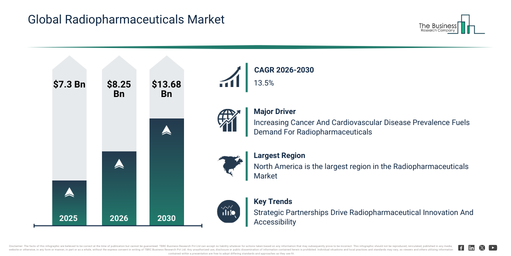
    The radiopharmaceuticals market size has experienced rapid expansion in recent years. This market is projected to expand from $7.3 billion in 2025 to reach $8.25 billion in 2026, demonstrating a compound annual growth rate (CAGR) of 13.0%. Historically, this growth has been driven by factors such as the increasing adoption of nuclear imaging technologies, a rise in cancer diagnosis rates, the ready availability of radioisotopes, the expansion of hospital-based nuclear medicine facilities, and successful regulatory approvals for diagnostic agents.

    The radiopharmaceuticals market is anticipated to observe considerable expansion over the next few years. It is forecast to grow to $13.68 billion in 2030, achieving a compound annual growth rate (CAGR) of 13.5%. This growth during the projected period stems from developments in precision oncology, a rising demand for targeted radiotherapies, the increase in diagnostic imaging centers, investments in cyclotron infrastructure, and technological improvements in isotope production. Key trends for the forecast period encompass an increasing utilization of radiopharmaceuticals in oncology, the growth of theranostics applications, the broadening of PET and SPECT imaging, enhanced development of targeted radiotherapies, and improvements in nuclear medicine infrastructure.

    Get A Free Sample Report With In-Depth Market Insights:

    https://thebusinessresearchcompany.com/sample_request?id=32074186&type=smp&name=Radiopharmaceuticals%20Market%20Report%202026&utm_source=Blogs&utm_medium=Paid&utm_campaign=Oct_PR

    Radiopharmaceuticals Market Growth Momentum: What Factors Are Shaping Demand?

    The rising incidence of cancer and cardiovascular diseases is anticipated to fuel the demand for the radiopharmaceuticals market. Radiopharmaceuticals are becoming recognized as a secure and potent therapeutic choice, surpassing traditional medicines. They offer radiologists an advantage in managing cancer and cardiovascular diseases, thanks to benefits like targeted therapy. Globally, cancer ranks as the second leading cause of fatality, accounting for approximately 1 in 6 deaths. For example, in April 2024, data from the International Agency for Research on Cancer (IARC), a specialized agency based in France, revealed that in 2022, almost 20 million new cancer cases and 9.7 million deaths linked to cancer were recorded worldwide. These figures are forecast to escalate by 2040, reaching an annual total of 29.9 million new cases and 15.3 million deaths. Consequently, the growing number of cancer and cardiovascular disease cases is poised to significantly boost the demand for radiopharmaceuticals in their treatment.

    Radiopharmaceuticals Market Segments: Where Is Growth Concentrated?

    The radiopharmaceuticals market covered in this report is segmented –

    1) By Type: Diagnostic, Therapeutic

    2) By Application: Oncology, Cardiology, Gastroenterology, Neuroendocrinology, Musculoskeletal, Respiratory, Nephrology, Other Applications

    3) By End User: Hospitals And Ambulatory Surgical Centers, Diagnostic Centers, Cancer Research Institutes

    Subsegments:

    1) By Diagnostic: Positron Emission Tomography (PET) Radiopharmaceuticals, Single Photon Emission Computed Tomography (SPECT) Radiopharmaceuticals

    2) By Therapeutic: Alpha Emitters, Beta Emitters, Brachytherapy

    Radiopharmaceuticals Market Trends Redefining Industry Growth

    Major companies operating in the radiopharmaceuticals market are increasingly forming strategic partnerships to accelerate innovation and expand access to advanced diagnostic and therapeutic solutions. These collaborations focus on enhancing radiopharmaceutical development, strengthening regional production capabilities, and supporting the growing demand for precision imaging and targeted therapies. For instance, in June 2023, the University of Pittsburgh Medical Center (UPMC), a US-based hospital system, partnered with PharmaLogic Holdings Corporation to co-develop and manufacture new radiopharmaceuticals at a Pittsburgh facility. The partnership aims to expand patient and clinician access to cutting-edge diagnostic and therapeutic agents that are not currently available in nearby regions. Under the non-exclusive agreement, UPMC and PharmaLogic will translate experimental radiopharmaceuticals into clinically useful medications, supporting broader commercialization and accelerating the adoption of novel nuclear medicine treatments.

    Radiopharmaceuticals Market Key Participants And Competitive Landscape

    Major companies operating in the radiopharmaceuticals market are Cardinal Health, Curium Pharma, Siemens Healthineers AG, Novartis AG, General Electric Company (GE), IBA Group, Bayer AG, Lantheus Medical Imaging Inc., Bracco Imaging S.p.A., Eckert & Ziegler, Nihon Medi-Physics Co. Ltd., Fujifilm Corporation, ANSTO, Yantai Dongcheng Pharmaceutical Group Co. Ltd., Bracco Imaging SpA., Canon Inc., China Isotope & Radiation Corporation (CIRC), Alliance Medical, Advanced Accelerator Applications, JSC Isotope, Pharm-Sintez, Synektik SA, Polatom, RadioMedic sro, ÚJV Rež, Actinium Pharmaceuticals Inc., Alseres Pharmaceuticals Inc., Avid Radiopharmaceuticals, Fusion Pharmaceuticals, Peregrine Pharmaceuticals Inc., PETNET Solutions Inc., Positron Corporation, Triad Isotopes Inc., Telix Pharmaceuticals, Rosatom, Alliance Medical Group, Hologic Inc., Segami Corporation, Eczacýbaþý-Monrol Nuclear Products, NTP Radioisotopes.

    View The Full Radiopharmaceuticals Market Report:

    https://thebusinessresearchcompany.com/report/Radiopharmaceutical-global-market-report?utm_source=Blogs&utm_medium=Paid&utm_campaign=Oct_PR

    Radiopharmaceuticals Market Top Region By Revenue And Market Share

    North America was the largest region in the global radiopharmaceuticals market in 2025. The Middle East is expected to be the fastest growing region in the forecast period. The regions covered in the radiopharmaceuticals market report are Asia-Pacific, South East Asia, Western Europe, Eastern Europe, North America, South America, Middle East, Africa.

    Reach Out To Our Team:

    The Business Research Company: https://www.thebusinessresearchcompany.com/

    Americas: +1 310-496-7795

    Asia: +44 7882 955267 & +91 8897263534

    Europe: +44 7882 955267

    Email us at: marketing@tbrc.info

    Follow us on:

    LinkedIn: https://in.linkedin.com/company/the-business-research-company

    YouTube: https://www.youtube.com/channel/UC24_fI0rV8cR5DxlCpgmyFQ

    Global Market Model: https://www.thebusinessresearchcompany.com/global-market-model