Month: October 2026

  • Peptide And Oligonucleotide CDMO Market Reaches $4.02 Billion In 2026: Key Developments Shaping Expansion

    Peptide And Oligonucleotide CDMO Market Reaches $4.02 Billion In 2026: Key Developments Shaping Expansion

    Built to provide research that’s more actionable and strategically valuable, The Business Research Company’s 2026 market reports include market attractiveness analysis, total addressable market sizing, company benchmarking matrices, interactive Excel dashboards, broader supply chain intelligence, emerging startup tracking, and in-depth product insights.

    Peptide And Oligonucleotide CDMO Market Size Outlook: How Quickly Will Revenue Expand Through 2030?

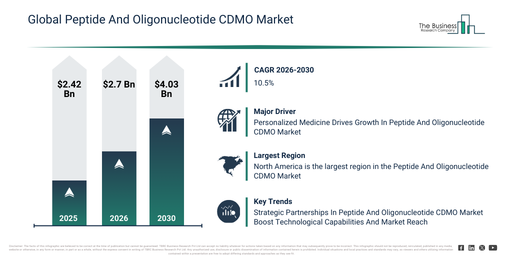
    The peptide and oligonucleotide cdmo market size has shown rapid expansion in recent years. It is anticipated to increase from $2.42 billion in 2025 to $2.7 billion in 2026, achieving a compound annual growth rate (CAGR) of 11.9%. This historical growth can be attributed to several factors, including the surge in peptide-based therapeutics, the increasing complexity associated with synthetic oligonucleotides, the restricted in-house manufacturing capabilities among drug developers, the growing demands for regulatory compliance, and the early embrace of antisense and peptide drugs.

    The peptide and oligonucleotide cdmo market size is poised for significant expansion in the upcoming years, with projections indicating it will reach $4.03 billion in 2030, growing at a compound annual growth rate (CAGR) of 10.5%. This anticipated growth can be attributed to the expanding pipelines of oligonucleotide therapeutics, increased investment in rare disease and oncology drugs, a rising need for swift production of clinical trial materials, a growing inclination towards specialized CDMO partnerships, and progress in solid-phase synthesis technologies. Major developments foreseen during this period include a surge in the outsourcing of peptide and oligonucleotide manufacturing, an escalating demand for cGMP-compliant complex molecule production, the expansion of comprehensive development and manufacturing services, an increased focus on high-potency and high-purity therapeutics, and the broader adoption of scalable and flexible manufacturing platforms.

    Get A Free Sample Report With In-Depth Market Insights:

    https://thebusinessresearchcompany.com/sample_request?id=75236026&type=smp&name=Peptide%20And%20Oligonucleotide%20CDMO%20Market%20Report%202026&utm_source=Blogs&utm_medium=Paid&utm_campaign=Oct_PR

    Peptide And Oligonucleotide CDMO Market Opportunity Drivers: What’s Unlocking New Revenue Potential?

    The increasing acceptance of personalized medicine is anticipated to significantly advance the peptide and oligonucleotide CDMO markets in the foreseeable future. Personalized medicine defines a healthcare methodology that customizes medical decisions and therapeutic approaches to specific individual attributes, such as genetics, environmental factors, and lifestyle. This rising embrace of personalized medicine can be attributed to several elements, including breakthroughs in genomic technologies, an enhanced comprehension of disease mechanisms at a molecular level, and the demand for more effective and targeted treatment options uniquely suited to patients’ genetic profiles and medical histories. Peptide and oligonucleotide contract development and manufacturing organizations (CDMOs) are pivotal in personalized medicine, as they produce customized therapeutic peptides and oligonucleotides precisely tailored to individual patient needs. A notable example is from February 2024, where, according to the Personalized Medicine Coalition, a UK-based organization dedicated to promoting personalized medicine, the Food and Drug Administration’s (FDA) Center for Drug Evaluation and Research (CDER) approved 16 new personalized treatments for rare disease patients, a rise from 6 in 2022. Hence, the increasing adoption of personalized medicine is fundamentally propelling the expansion of the peptide and oligonucleotide CDMO market.

    Peptide And Oligonucleotide CDMO Market Segments: Where Is Growth Concentrated?

    The peptide and oligonucleotide cdmo market covered in this report is segmented –

    1) By Product: Peptides, Oligonucleotides

    2) By Service Type: Contract Development, Contract Manufacturing,

    3) By Application: Therapeutics, Research Applications, Diagnostics, Other Applications

    4) By End User: Biopharmaceutical Companies, Pharmaceutical Companies, Research Institutes, Academic and Government Organizations, Other End Users

    Subsegments:

    1) By Peptides: Active Pharmaceutical Ingredients (Apis), Peptide Drug Products, Peptide Synthesis And Manufacturing Services

    2) By Oligonucleotides: Antisense Oligonucleotides, Sirna And Mrna Oligonucleotides, Oligonucleotide Synthesis And Manufacturing Services

    Peptide And Oligonucleotide CDMO Market Innovation Trends Shaping Future Development

    Leading firms in the peptide and oligonucleotide CDMO market are prioritizing the formation of strategic alliances to improve their range of services, broaden their technological capacities, and extend their market presence. Such partnerships, particularly for peptide development and production, signify joint ventures between two entities dedicated to creating and manufacturing peptide-based treatments. An example of this is the collaboration in May 2023 between PolyPeptide Group AG, a US-based contract development and manufacturing organization (CDMO), and Numaferm GmbH, a Germany-based biotechnology firm, specifically for peptide development and production. The objective of this alliance is to leverage PolyPeptide’s cGMP manufacturing capabilities and market penetration, combined with Numaferm’s specialized knowledge in sustainable peptide manufacturing and biochemical production systems. Their joint focus is on exploring and developing appropriate peptide candidates, aiming for a more environmentally friendly production of peptide-based APIs.

    Peptide And Oligonucleotide CDMO Market Key Participants And Competitive Landscape

    Major companies operating in the peptide and oligonucleotide cdmo market are Thermo Fisher Scientific Inc., Merck KGaA, Ajinomoto Co. Inc., Lonza Group Ag, Wuxi Apptec Co. Ltd., Catalent Inc., Piramal Pharma Ltd, Curia Global Inc., Almac Group, Euroapi SA., CordenPharma International, Bachem Holding AG, Genscript Biotech Corporation, PolyPeptide Group, Rentschler Biopharma SE, Ambiopharm Inc, ScinoPharm, Senn Chemicals AG, Aurigene Pharmaceutical Services, Creative Peptides, Sylentis S.A.

    View The Full Peptide And Oligonucleotide CDMO Market Report:

    https://thebusinessresearchcompany.com/report/peptide-and-oligonucleotide-cdmo-global-market-report?utm_source=Blogs&utm_medium=Paid&utm_campaign=Oct_PR

    Peptide And Oligonucleotide CDMO Market Largest Region By Revenue And Market Share

    North America was the largest region in the peptide and oligonucleotide CDMO market in 2025. Asia-Pacific is expected to be the fastest-growing region in the forecast period. The regions covered in the peptide and oligonucleotide cdmo market report are Asia-Pacific, South East Asia, Western Europe, Eastern Europe, North America, South America, Middle East, Africa.

    Reach Out To Our Team:

    The Business Research Company: https://www.thebusinessresearchcompany.com/

    Americas: +1 310-496-7795

    Asia: +44 7882 955267 & +91 8897263534

    Europe: +44 7882 955267

    Email us at: marketing@tbrc.info

    Follow us on:

    LinkedIn: https://in.linkedin.com/company/the-business-research-company

    YouTube: https://www.youtube.com/channel/UC24_fI0rV8cR5DxlCpgmyFQ

    Global Market Model: https://www.thebusinessresearchcompany.com/global-market-model

  • Peptide And Anticoagulant Drugs Market Growth Outlook For 2026: Drivers, Trends And Future Opportunities

    Peptide And Anticoagulant Drugs Market Growth Outlook For 2026: Drivers, Trends And Future Opportunities

    Backed by market attractiveness analysis, total addressable market sizing, company benchmarking matrices, interactive Excel dashboards, wider supply chain intelligence, emerging startup coverage, and detailed product-level insights, The Business Research Company’s 2026 market reports are designed to offer research that is more actionable and strategically valuable than ever.

    Peptide And Anticoagulant Drugs Market Size, Value And Growth Trajectory Through 2030

    The peptide and anticoagulant drugs market has demonstrated robust growth in recent years. Looking ahead, its size is forecast to increase from $1.54 billion in 2025 to $1.7 billion in 2026, achieving a compound annual growth rate (CAGR) of 10.0%. The expansion observed in the past period can be primarily attributed to the rising incidence of cardiovascular diseases, the widespread use of anticoagulants in hospitals, the clinical success of peptide therapeutics, an increase in surgical procedures, and the broadening of thrombosis treatment guidelines.

    The market for peptide and anticoagulant drugs is projected to experience substantial expansion in the coming years. This market is anticipated to reach a valuation of $2.47 billion by 2030, exhibiting a compound annual growth rate (CAGR) of 9.9%. Several factors will fuel this growth during the forecast period, including an aging worldwide population, the rising incidence of blood clotting disorders, a greater need for more secure anticoagulant treatments, the expansion of development pipelines for peptide drugs, and their increasing use in outpatient settings. Key developments expected over this period encompass a greater acceptance of peptide-based therapeutic solutions, the expanded application of anticoagulants in cardiovascular treatment, a heightened demand for targeted thrombin inhibitors, broader applications for injectable peptide drugs, and an intensified emphasis on preventing thrombotic conditions.

    Get A Free Sample Report With In-Depth Market Insights:

    https://thebusinessresearchcompany.com/sample_request?id=22389647&type=smp&name=Peptide%20And%20Anticoagulant%20Drugs%20Market%20Report%202026&utm_source=Blogs&utm_medium=Paid&utm_campaign=Oct_PR

    Peptide And Anticoagulant Drugs Market Growth Momentum: What Factors Are Shaping Demand?

    The growing occurrence of chronic illnesses is anticipated to propel the expansion of the peptide and anticoagulant drugs market. These conditions are defined as long-term health problems that endure for extended periods, often years or a lifetime. The increasing prevalence of chronic diseases is fueled by elements such as aging populations, unhealthy lifestyles, and a higher incidence of risk factors including obesity, hypertension, and diabetes. Peptide and anticoagulant drugs are utilized in managing chronic conditions like cardiovascular diseases, thrombosis, and stroke, achieving improved patient outcomes by preventing blood clots and targeting specific disease pathways. For example, reports from the Centers for Disease Control and Prevention in May 2023 indicated that heart disease and cancer deaths reached 695,547 in 2022. Consequently, the rising prevalence of chronic diseases is driving the growth of the peptide and anticoagulant drugs market.

    Peptide And Anticoagulant Drugs Market Segment Analysis: What Are The Core Market Categories?

    The peptide and anticoagulant drugs market covered in this report is segmented –

    1) By Type: Peptide Drugs, Anticoagulant Drugs, Peptide-Based Anticoagulant Drugs, Synthetic Peptide Drugs, Recombinant Peptide Drugs

    2) By Route Of Administration: Oral, Injectable, Other Routes Of Administration

    3) By Distribution Channel: Hospital Pharmacy, Retail Pharmacy, Online Pharmacy, Other Distribution Channels

    4) By Application: Infectious Diseases, Gynecology, Cancer, Diabetes, Cardiology, Osteoporosis, Other Applications

    5) By End-users: Hospitals, Specialty Clinics, Homecare, Other End-users

    Subsegments:

    1) By Peptide Drugs: Therapeutic Peptides, Hormonal Peptides, Metabolic Peptides, Cardiovascular Peptides, Oncology Peptides

    2) By Anticoagulant Drugs: Direct Thrombin Inhibitors, Factor Xa Inhibitors, Heparin And Heparin Derivatives, Vitamin K Antagonists

    3) By Peptide-Based Anticoagulant Drugs: Hirudin And Hirudin Analogues, Bivalirudin, Other Peptide Thrombin Inhibitors

    4) By Synthetic Peptide Drugs: Solid-Phase Synthesized Peptides, Long-Acting Synthetic Peptides, Modified Synthetic Peptides

    5) By Recombinant Peptide Drugs: Recombinant Therapeutic Peptides, Recombinant Hormonal Peptides, Recombinant Metabolic Peptides

    Peptide And Anticoagulant Drugs Market Trends Redefining Industry Growth

    Leading firms within the peptide and anticoagulant drugs market are prioritizing improvements in anticoagulant treatments, particularly oral anticoagulants, with the goals of boosting effectiveness, increasing patient adherence, and lowering the likelihood of bleeding issues. These oral medications work by being orally administered to hinder clotting factors in the bloodstream, thereby preventing the formation of blood clots. A notable example occurred in April 2024, when Cadrenal Therapeutics Inc., a US-based pharmaceutical entity, was granted Orphan Drug Designation (ODD) by the U.S. Food and Drug Administration (FDA) for tecarfarin, an oral anticoagulant in its advanced development phase. Tecarfarin is conceived as an innovative, reversible blood thinner, intended to diminish the incidence of heart attacks, strokes, and fatalities linked to blood clots in individuals suffering from rare cardiovascular conditions. This ODD specifically covers the prevention of thromboembolism and thrombosis in patients who have received implanted mechanical circulatory support devices, such as left ventricular assist devices (LVADs), right ventricular assist devices (RVADs), ventricular assist devices (VADs), biventricular assist devices, and total artificial hearts.

    Peptide And Anticoagulant Drugs Market Top Companies Driving Competitive Growth

    Major companies operating in the peptide and anticoagulant drugs market are Pfizer Inc., Merck & Co. Inc., Bayer AG, Sanofi S.A., F. Hoffmann-La Roche Ltd, Novartis AG, Novo Nordisk A/S, Boehringer Ingelheim International GmbH, Bristol-Myers Squibb Company, Abbott Laboratories, Baxter International Inc., Viatris Inc., Sun Pharmaceutical Industries Limited, Bachem Holding AG, Bharat Serums and Vaccines Limited, Wockhardt Limited, AmbioPharm Inc., Circle Pharma Inc., Teva Pharmaceutical Industries Ltd., Shionogi & Co. Ltd.

    View The Full Peptide And Anticoagulant Drugs Market Report:

    https://thebusinessresearchcompany.com/report/peptide-and-anticoagulant-drugs-global-market-report?utm_source=Blogs&utm_medium=Paid&utm_campaign=Oct_PR

    Peptide And Anticoagulant Drugs Market Regional Analysis And Leading Geography

    North America was the largest region in the peptide and anticoagulant drugs market in 2025. Asia-Pacific is expected to be the fastest-growing region in the forecast period. The regions covered in the peptide and anticoagulant drugs market report are Asia-Pacific, South East Asia, Western Europe, Eastern Europe, North America, South America, Middle East, Africa.

    Reach Out To Our Team:

    The Business Research Company: https://www.thebusinessresearchcompany.com/

    Americas: +1 310-496-7795

    Asia: +44 7882 955267 & +91 8897263534

    Europe: +44 7882 955267

    Email us at: marketing@tbrc.info

    Follow us on:

    LinkedIn: https://in.linkedin.com/company/the-business-research-company

    YouTube: https://www.youtube.com/channel/UC24_fI0rV8cR5DxlCpgmyFQ

    Global Market Model: https://www.thebusinessresearchcompany.com/global-market-model
  • Pentavalent Market Size Forecast From 2026 To 2030: Key Industry Trends

    Pentavalent Market Size Forecast From 2026 To 2030: Key Industry Trends

    Featuring market attractiveness scoring, total addressable market sizing, company benchmarking matrices, interactive Excel dashboards, deeper supply chain intelligence, emerging startup tracking, and granular product-level insights, The Business Research Company’s 2026 market reports are built to deliver research that is both more actionable and more strategically valuable.

    Pentavalent Market CAGR Outlook And Future Development

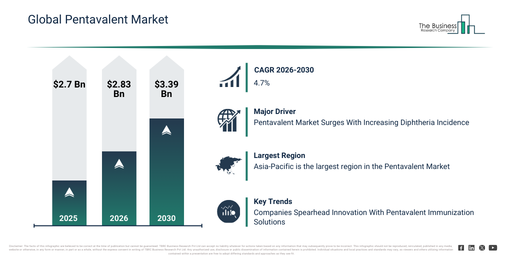
    The pentavalent market’s size has demonstrated steady growth in recent years. It will grow from $2.7 billion in 2025 to $2.83 billion in 2026 at a compound annual growth rate (CAGR) of 4.6%. This historical expansion can be attributed to increasing infant mortality rates, restricted access to vaccines, the widespread occurrence of rotavirus infections, government-led vaccination programs, and global public health initiatives.

    The pentavalent market size is expected to experience consistent growth in the coming years. It is projected to reach $3.39 billion by 2030, demonstrating a compound annual growth rate (CAGR) of 4.7%. This expansion during the forecast period can be attributed to technological advancements in vaccine development, increasing healthcare expenditure, the broadening of immunization programs in developing countries, partnerships between pharmaceutical companies, and the integration of digital tracking for vaccine coverage. Key trends anticipated in this period include an increase in infant immunization initiatives, government funding for vaccine research and development, the expansion of public health infrastructure, growing awareness of rotavirus prevention, and the development of cold chain logistics.

    Get A Free Sample Report With In-Depth Market Insights:

    https://thebusinessresearchcompany.com/sample_request?id=65564636&type=smp&name=Pentavalent%20Market%20Report%202026&utm_source=Blogs&utm_medium=Paid&utm_campaign=Oct_PR

    Pentavalent Market Expansion Drivers: What’s Shaping Future Growth?

    The increasing incidence of diphtheria is projected to bolster the expansion of the pentavalent market moving forward. Diphtheria is a severe and highly communicable illness caused by the bacterium Corynebacterium diphtheriae, which can lead to significant difficulties with eating and breathing, as well as the potential development of skin ulcers. The pentavalent vaccine offers protection to children against diphtheria through a three-dose immunization schedule, thus the rising prevalence of this disease has increased the demand for pentavalent vaccines. For instance, according to the European Centre for Disease Prevention and Control, a Europe-based government agency, in July 2025, a total of 126 laboratory-confirmed cases of C. diphtheriae ST574 were identified across Germany, including 55 cases in 2022, 49 cases in 2023, 18 cases in 2024, and at least 4 cases in 2025. Therefore, the growing prevalence of diphtheria is a key factor propelling the growth of the pentavalent market. The expanding healthcare spending is anticipated to stimulate the advancement of the pentavalent market. Healthcare expenditure refers to the aggregate financial and other resources allocated to the provision of health services over a specified duration. In the context of the pentavalent market, healthcare expenditure represents the financial resources dedicated to the development, production, distribution, and administration of vaccines that offer protection against five distinct diseases. For instance, the Centers for Medicare & Medicaid Services, a U.S.-based agency responsible for managing the Medicare and Medicaid programs, reported in December 2024 that U.S. health care expenditures rose by 7.5% in 2023, reaching $4.9 trillion, which equates to approximately $14,570 per individual. Consequently, the uptick in healthcare expenditure is a significant factor driving the growth of the pentavalent market.

    Pentavalent Market Segment Breakdown: Which Categories Lead On Revenue?

    The pentavalent market covered in this report is segmented –

    1) By Type: Pentavalent Vaccines (DTP-HepB-Hib combination), Other Combination Vaccines

    2) By Formulation Type: Lyophilized, Liquid

    3) By Application: Hospitals Pharmacies, Retail Pharmacies, Online Pharmacies

    Subsegments:

    1) By Pentavalent Vaccines (DTP-HepB-Hib combination): DTP-HepB-Hib (Whole Cell), DTP-HepB-Hib (Acellular)

    2) By Other Combination Vaccines: Hexavalent Vaccines

    Pentavalent Market Strategic Trends: What Defines The Next Growth Phase?

    Leading companies in the pentavalent market are concentrating on developing innovative solutions, such as pentavalent immunization vaccines. These are combination vaccines designed to offer protection against five distinct diseases. For instance, in October 2023, Pfizer, a US-based pharmaceutical company, announced FDA approval for its ‘Penbraya’ pentavalent vaccine. This vaccine is the initial and sole pentavalent option providing protection against the five most prevalent meningococcal serogroups, namely A, B, C, W-135, and Y, for individuals aged 10 through 25 years. The vaccine merges elements from the Trumenba meningococcal group B vaccine and the Nimenrix meningococcal groups A, C, W-135, and Y conjugate vaccine. Penbraya has been identified as effective in providing protection against the five meningococcal serogroups responsible for the majority of global cases of invasive meningococcal disease.

    Pentavalent Market Leading Players And Competitive Positioning

    Major companies operating in the pentavalent market are Pfizer Inc., Merck & Co Inc., Sanofi SA, GlaxoSmithKline plc, Shandong Xinhua Pharmaceutical Company Limited, PT Bio Farma (Persero), Shantha Biotechnics Limited, Biological E. Limited, Serum Institute of India Private Limited, Indian Immunologicals Limited, Incepta Pharmaceuticals Limited, Shanghai Institute of Biological Products Co Ltd., Changchun Changsheng Biotechnology Co Ltd., Adimmune Corporation, AJ Vaccines, Albert David Limited, PanGen Biotech Inc., Bharat Biotech International Limited, Vacsera Ltd., Pasteur Institute of India, Zydus Cadila Healthcare Limited, EuBiologics Co Ltd.

    View The Full Pentavalent Market Report:

    https://thebusinessresearchcompany.com/report/pentavalent-global-market-report?utm_source=Blogs&utm_medium=Paid&utm_campaign=Oct_PR

    Pentavalent Market Geographic Analysis: Where Is Demand Accelerating Fastest?

    Asia-Pacific was the largest region in the pentavalent market in 2025. The regions covered in the pentavalent market report are Asia-Pacific, South East Asia, Western Europe, Eastern Europe, North America, South America, Middle East, Africa.

    Reach Out To Our Team:

    The Business Research Company: https://www.thebusinessresearchcompany.com/

    Americas: +1 310-496-7795

    Asia: +44 7882 955267 & +91 8897263534

    Europe: +44 7882 955267

    Email us at: marketing@tbrc.info

    Follow us on:

    LinkedIn: https://in.linkedin.com/company/the-business-research-company

    YouTube: https://www.youtube.com/channel/UC24_fI0rV8cR5DxlCpgmyFQ

    Global Market Model: https://www.thebusinessresearchcompany.com/global-market-model
  • Pegfilgrastim Biosimilars Market 2026: Market Size, Growth Drivers And Emerging Opportunities

    Pegfilgrastim Biosimilars Market 2026: Market Size, Growth Drivers And Emerging Opportunities

    Built to provide research that’s more actionable and strategically valuable, The Business Research Company’s 2026 market reports include market attractiveness analysis, total addressable market sizing, company benchmarking matrices, interactive Excel dashboards, broader supply chain intelligence, emerging startup tracking, and in-depth product insights.

    Pegfilgrastim Biosimilars Market Set To Climb From $2.04 Billion In 2026 To $2.65 Billion By 2030

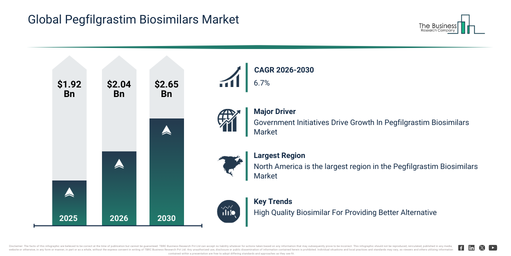
    The pegfilgrastim biosimilars market size has experienced significant expansion in recent years. It is projected to increase from $1.92 billion in 2025 to $2.04 billion in 2026, exhibiting a compound annual growth rate (CAGR) of 6.3%. This historical growth can be linked to the high cost of originator pegfilgrastim, the limited availability of biosimilars, an expanding cancer patient population, a rise in chemotherapy procedures, and enhanced awareness of neutropenia management.

    The pegfilgrastim biosimilars market size is anticipated to demonstrate robust expansion in the coming years. It is projected to grow to $2.65 billion in 2030, achieving a compound annual growth rate (CAGR) of 6.7%. This increase during the forecast period can be attributed to the launch of new biosimilars, increasing adoption in supportive oncology care, expansion of hospital and retail pharmacy networks, government incentives for biosimilar usage, and rising investments in stem cell transplantation therapies. Major trends expected over the forecast period include the increasing use of pegfilgrastim biosimilars in supportive cancer care, the broadening of hospital and retail pharmacy distribution channels, a greater emphasis on reducing chemotherapy-induced neutropenia, growth in hematopoietic and peripheral blood stem cell transplantation applications, and rising investments in the treatment of chronic and severe congenital neutropenia.

    Get A Free Sample Report With In-Depth Market Insights:

    https://thebusinessresearchcompany.com/sample_request?id=70577897&type=smp&name=Pegfilgrastim%20Biosimilars%20Market%20Report%202026&utm_source=Blogs&utm_medium=Paid&utm_campaign=Oct_PR

    Pegfilgrastim Biosimilars Market Development Factors: What’s Supporting Demand?

    Governmental efforts to advance biosimilar development are anticipated to propel the pegfilgrastim biosimilars market. Authorities globally are prioritizing biosimilar development, primarily due to their cost-effectiveness. In the United States, the Food and Drug Administration (FDA) initiated a Biosimilar Action Plan aimed at broadening treatment options. Concurrently, the Australian government reinforced its commitment to the Biosimilar Awareness Initiative, supporting the Generic and Biosimilar Medicines Association with a $5 million grant to bolster general biosimilar education and promote their appropriate dispensing, prescription, and use. These collective government initiatives, by fostering increased production and awareness of biosimilars, consequently contribute to the expansion of the pegfilgrastim biosimilars market.

    Pegfilgrastim Biosimilars Market Segmentation: How Does The Market Break Down By Category?

    The pegfilgrastim biosimilars market covered in this report is segmented –

    1) By Application: Chemotherapy Treatment, Transplantation, Other Applications

    2) By Distribution Channel: Hospital Pharmacies, Retail Pharmacies, Mail-Order Pharmacies

    3) By Route of Administration: Prefilled Syringes (PFS), On-body Injectors (OBI), Other Routes

    Subsegments:

    1) By Chemotherapy Treatment: Supportive Care for Cancer Patients, Reduction of Chemotherapy-Induced Neutropenia

    2) By Transplantation: Hematopoietic Stem Cell Transplantation, Peripheral Blood Stem Cell Transplantation

    3) By Other Applications: Treatment of Chronic Neutropenia, Treatment of Severe Congenital Neutropenia

    Pegfilgrastim Biosimilars Market Transformation Trends: What Innovations Are Driving Change?

    Leading companies in the pegfilgrastim biosimilars market are concentrating on technological breakthroughs in biopharmaceuticals, particularly in high-quality biosimilars, to offer safe, effective, and readily available alternatives to original biologic treatments for cancer patients. High-quality biosimilars are defined as biologic medications that closely match the reference product in terms of structure, function, safety, and efficacy. For example, in February 2023, Fresenius Kabi, a Germany-based healthcare enterprise specializing in pharmaceuticals and medical technologies, introduced Stimufend, its inaugural pegfilgrastim biosimilar in the U.S. Stimufend helps prevent and treat chemotherapy-induced neutropenia and is provided as a 6 mg/0.6 mL solution in a single-use pre-filled syringe equipped with an integrated needle guard. Through the combination of advanced biosimilar development and user-friendly delivery, Stimufend signifies a technological leap forward in making superior biologic therapies more widely accessible.

    Pegfilgrastim Biosimilars Market Competitive Overview And Top Companies

    Major companies operating in the pegfilgrastim biosimilars market are Amgen, Mylan N.V., Sandoz (a Novartis division), Teva Pharmaceutical Industries Ltd., Biocon, Pfizer, Celltrion Healthcare, Coherus BioSciences, Gedeon Richter, Fresenius Kabi, Hetero Labs, Intas Pharmaceuticals, LG Chem, Merck KGaA, Zydus Cadila, Aurobindo Pharma, Apotex Inc., Dr. Reddy’s Laboratories, Stada Arzneimittel AG, Shanghai Henlius Biotech, Alvotech, EirGenix, Kye Pharmaceuticals, CinnaGen, Boryung Pharmaceutical, Sinopharm

    View The Full Pegfilgrastim Biosimilars Market Report:

    https://thebusinessresearchcompany.com/report/Pegfilgrastim-Biosimilar-global-market-report?utm_source=Blogs&utm_medium=Paid&utm_campaign=Oct_PR

    Pegfilgrastim Biosimilars Market Global Footprint: Which Region Leads The Industry?

    North America was the largest region in the pegfilgrastim biosimilars market in 2025. Middle East is expected to be the fastest growing region in the global pegfilgrastim biosimilars market share during the forecast period. The regions covered in the pegfilgrastim biosimilars market report are Asia-Pacific, South East Asia, Western Europe, Eastern Europe, North America, South America, Middle East, Africa.

    Reach Out To Our Team:

    The Business Research Company: https://www.thebusinessresearchcompany.com/

    Americas: +1 310-496-7795

    Asia: +44 7882 955267 & +91 8897263534

    Europe: +44 7882 955267

    Email us at: marketing@tbrc.info

    Follow us on:

    LinkedIn: https://in.linkedin.com/company/the-business-research-company

    YouTube: https://www.youtube.com/channel/UC24_fI0rV8cR5DxlCpgmyFQ

    Global Market Model: https://www.thebusinessresearchcompany.com/global-market-model
  • Pediatric Vaccine Market Set To Expand From $107.8 Billion In 2026: Growth Outlook Through 2030

    Pediatric Vaccine Market Set To Expand From $107.8 Billion In 2026: Growth Outlook Through 2030

    Backed by market attractiveness analysis, total addressable market sizing, company benchmarking matrices, interactive Excel dashboards, wider supply chain intelligence, emerging startup coverage, and detailed product-level insights, The Business Research Company’s 2026 market reports are designed to offer research that is more actionable and strategically valuable than ever.

    Pediatric Vaccine Market Forecast: Value Set To Climb From $65.01 Billion To $107.8 Billion

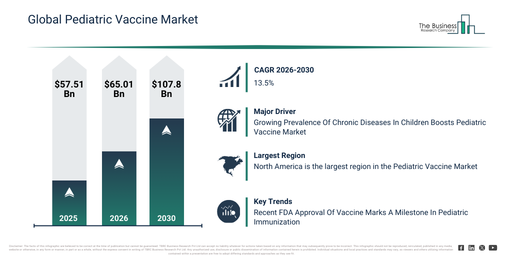
    The pediatric vaccine market size has experienced rapid expansion in recent years. This market is projected to increase from $57.51 billion in 2025 to $65.01 billion in 2026, demonstrating a compound annual growth rate (CAGR) of 13.0%. Historically, this growth is attributable to factors such as the increasing occurrence of preventable childhood illnesses, government-sponsored immunization initiatives, innovations in vaccine adjuvants, heightened understanding of pediatric health, and the expansion of cold chain infrastructure.

    The pediatric vaccine market is poised for significant expansion in the coming years. It is forecasted to reach $107.8 billion in 2030, demonstrating a compound annual growth rate (CAGR) of 13.5%. The impetus for this growth during the projection period stems from advancements in mRNA and DNA vaccines, increased investment in pediatric vaccine research and development, the integration of digital health monitoring, the broadening of healthcare infrastructure in emerging markets, and strategic alliances between biotech companies and global health organizations. Noteworthy trends anticipated in the forecast period include a sharpened focus on vaccine availability in low-income areas, the increasing adoption of combination vaccines, the enlargement of school-based immunization programs, the creation of new pediatric vaccines for rare conditions, and a rise in public-private partnerships dedicated to vaccine research.

    Get A Free Sample Report With In-Depth Market Insights:

    https://thebusinessresearchcompany.com/sample_request?id=40219487&type=smp&name=Pediatric%20Vaccine%20Market%20Report%202026&utm_source=Blogs&utm_medium=Paid&utm_campaign=Oct_PR

    Pediatric Vaccine Market Industry Drivers: What’s Behind The Revenue Growth?

    The escalating occurrence of chronic ailments like tuberculosis, diphtheria, and pneumonia among individuals aged 15 and under is set to boost the pediatric vaccines market. Children and adolescents living with chronic conditions face a heightened risk of severe outcomes and complications from infectious diseases. As an illustration, in June 2024, the National Health Service, a UK government body, reported that 3,615,330 individuals registered with a general practitioner (GP) received a diagnosis of non-diabetic hyperglycemia or pre-diabetes (a condition with elevated blood sugar levels, not high enough to be classified as diabetes) in 2023. This figure represents an 18% rise from 3,065,825 cases recorded in 2022. Consequently, the increasing prevalence of chronic diseases is propelling the expansion of the pediatric vaccine market.

    Pediatric Vaccine Market Segment Trends And Revenue Contributors

    The pediatric vaccine market covered in this report is segmented –

    1) By Vaccine Type: Monovalent, Multivalent

    2) By Technology: Live Attenuated, Inactivated, Toxoid, Conjugate, Other Technologies

    3) By Application: Infectious Disease, Allergy, Cancer

    Subsegments:

    1) By Monovalent: Single Antigen Vaccines, Specific Disease Vaccines

    2) By Multivalent: Combination Vaccines, Polyvalent Vaccines

    #Pediatric Vaccine Market Growth Trends: What’s Shaping The Future Outlook?

    Companies operating within the pediatric vaccine market are concentrating on securing product approvals to better satisfy the demands of their current consumers. ABRYSVO is an FDA-authorized vaccine intended for use in pregnant women to prevent lower respiratory tract disease (LRTD) and severe LRTD caused by respiratory syncytial virus (RSV) in children up to 6 months of age. For instance, in August 2023, Pfizer Inc., a US-based pharmaceutical manufacturing company, announced the U.S. FDA approval of Pfizer’s ABRYSVO vaccine for the avoidance of Respiratory Syncytial Virus (RSV) in Infants through the active immunization of pregnant women 32-36 weeks gestational age. This constitutes the first and only maternal vaccination approved in the United States designed to help protect newborns against lower respiratory tract illness (LRTD) and severe LRTD caused by RSV from birth to six months of age.

    Pediatric Vaccine Market Competitive Landscape: Which Companies Lead The Industry?

    Major companies operating in the pediatric vaccine market are Merck & Co. Inc., Serum Institute of India Pvt. Ltd., Sanofi SA, Pfizer Inc., GlaxoSmithKline PLC, Sinovac Biotech Ltd, Zydus Cadila, Indian Immunologicals Limited, Panacea Biotec, Takeda Pharmaceutical Company, Daiichi Sankyo, CSL Limited, Sinopharm, Walvax Biotechnology, Fosun Pharma, MCM Vaccine Company, Seqirus, Johnson & Johnson, Connaught Laboratories Inc., Wyeth-Ayerst, Ataulfo de Paiva Foundation, Bio-Manguinhos – Institute of Technology on Immunobiologicals, Butantan Institute, Ezequiel Dias Foundation (FUNED), Sinergium

    View The Full Pediatric Vaccine Market Report:

    https://thebusinessresearchcompany.com/report/pediatric-vaccine-global-market-report?utm_source=Blogs&utm_medium=Paid&utm_campaign=Oct_PR

    Pediatric Vaccine Market Regional Distribution: Which Areas Power Market Growth?

    North America was the largest region in the pediatric vaccine market in 2025. Middle East is expected to be the largest growing region in the global pediatric vaccine market share during the forecast period. The regions covered in the pediatric vaccine market report are Asia-Pacific, South East Asia, Western Europe, Eastern Europe, North America, South America, Middle East, Africa.

    Reach Out To Our Team:

    The Business Research Company: https://www.thebusinessresearchcompany.com/

    Americas: +1 310-496-7795

    Asia: +44 7882 955267 & +91 8897263534

    Europe: +44 7882 955267

    Email us at: marketing@tbrc.info

    Follow us on:

    LinkedIn: https://in.linkedin.com/company/the-business-research-company

    YouTube: https://www.youtube.com/channel/UC24_fI0rV8cR5DxlCpgmyFQ

    Global Market Model: https://www.thebusinessresearchcompany.com/global-market-model
  • Pediatric Supplements Market Size And Growth In 2026: Key Factors Shaping Future Demand

    Pediatric Supplements Market Size And Growth In 2026: Key Factors Shaping Future Demand

    Featuring market attractiveness scoring, total addressable market sizing, company benchmarking matrices, interactive Excel dashboards, deeper supply chain intelligence, emerging startup tracking, and granular product-level insights, The Business Research Company’s 2026 market reports are built to deliver research that is both more actionable and more strategically valuable.

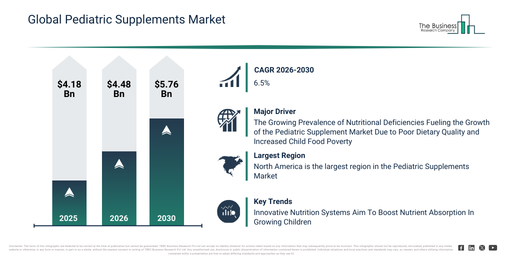
    Pediatric Supplements Market Revenue Growth On Track For A 6.5% CAGR Through 2030

    The pediatric supplements market has experienced robust expansion over the past few years. Projections indicate it will expand from $4.18 billion in 2025 to reach $4.48 billion in 2026, demonstrating a compound annual growth rate (CAGR) of 7.2%. This historical growth can be linked to several factors, such as the increasing prevalence of micronutrient deficiencies in children, a rising pediatric population in developing economies, limited dietary diversity among children, growing parental awareness of child nutrition, and physician recommendations for supplemental nutrition.

    The pediatric supplements market size is projected to experience substantial expansion in the coming years. It will grow to $5.76 billion in 2030 at a compound annual growth rate (CAGR) of 6.5%. This projected growth can be attributed to an increased emphasis on preventive pediatric healthcare, the expansion of functional nutrition for children, a rising demand for personalized pediatric supplements, the broadening of e-commerce distribution channels, and advancements in palatable supplement delivery formats. Significant trends during the forecast period include a growing demand for immunity-focused pediatric nutrition, the increasing favorability of gummy and chewable supplement formats, greater adoption of probiotics for pediatric gut health, the proliferation of age-specific and condition-specific formulations, and an enhanced focus on clean label and sugar-reduced pediatric supplements.

    Get A Free Sample Report With In-Depth Market Insights:

    https://thebusinessresearchcompany.com/sample_request?id=88517805&type=smp&name=Pediatric%20Supplements%20Market%20Report%202026&utm_source=Blogs&utm_medium=Paid&utm_campaign=Oct_PR

    Pediatric Supplements Market Growth Factors: What’s Supporting Expansion?

    The increasing occurrence of nutritional shortfalls is anticipated to fuel the expansion of the pediatric supplement market in the future. These deficiencies arise when youngsters do not consume sufficient quantities of vital vitamins, minerals, and macronutrients essential for proper growth, mental development, and immune system function. A significant factor contributing to these nutrient gaps is the increased consumption of heavily processed foods, which often lack nutrient density and are rich in sugars, unhealthy fats, and empty calories. Pediatric supplements play a crucial role in supporting children’s health by addressing insufficient dietary intake and guaranteeing that they acquire the necessary nutrients for optimal development. For example, in May 2025, data from the World Health Organization, an intergovernmental body based in Switzerland, indicated that in 2023, 30.7% of women aged 15–49 years and 35.5% of pregnant women within the identical age bracket suffered from anaemia. Consequently, the rising incidence of nutritional deficiencies is propelling the growth within the pediatric supplement market.

    Pediatric Supplements Market Segment Analysis Spotlighting Growth Areas

    The pediatric supplements market covered in this report is segmented –

    1) By Product Type: Vitamins, Minerals, Probiotics, Omega-3 Fatty Acids, Amino Acids, Other Product Types

    2) By Form: Gummies, Chewable, Liquids, Powders, Tablets, Other Forms

    3) By Distribution Channel: Pharmacies, Supermarkets Or Hypermarkets, Online Retailers, Specialty Stores, Other Distribution Channels

    4) By Age Group: Infants, Toddlers, Middle Childhood, Adolescents

    5) By Application: Immunity Enhancement, Brain And Cognitive Support, Bone And Teeth Support, Gastrointestinal Support, General Well-Being, Other Applications

    Subsegments:

    1) By Vitamins: Vitamin A, Vitamin B (B1, B2, B3, B6, B12), Vitamin C, Vitamin D, Vitamin E, Vitamin K, Multivitamins

    2) By Minerals: Calcium, Iron, Magnesium, Zinc, Potassium, Selenium

    3) By Probiotics: Lactobacillus, Bifidobacterium, Streptococcus Thermophilus, Other Probiotic Strains

    4) By Omega-3 Fatty Acids: DHA (Docosahexaenoic Acid), EPA (Eicosapentaenoic Acid), ALA (Alpha-Linolenic Acid)

    5) By Amino Acids: L-Arginine, L-Carnitine, L-Glutamine, L-Leucine, L-Isoleucine, L-Valine

    6) By Other Product Types: Herbal Supplements, Protein Supplements, Fiber Supplements, Enzyme Supplements

    Pediatric Supplements Market Industry Trends: What’s Reshaping Demand?

    Major companies operating in the pediatric supplement market are increasingly prioritizing the development of innovative nutrition systems, such as enhanced-absorption formulations, to improve nutrient uptake and address growing concerns regarding deficiencies in children. Enhanced-absorption formulations are specialized supplement designs that utilize techniques like nanoencapsulation, emulsification, or chelated minerals to help the body absorb nutrients more efficiently than standard products. For instance, in November 2023, Abbott Laboratories, a US-based healthcare company, introduced its new PediaSure with Nutri-Pull System, a clinically designed pediatric drink formulated with 37 nutrients, including CPPs and vitamins K2, D, and C, to support catch-up growth and better mineral absorption in children. The product is available in chocolate, vanilla, and kesar badam flavors and is intended for use when a child’s regular diet may not sufficiently provide or absorb growth-critical minerals.

    Pediatric Supplements Market Leading Companies: Who Holds The Strongest Market Presence?

    Major companies operating in the pediatric supplements market are Nestlé S.A., Abbott, Danone S.A., Reckitt Benckiser Group plc, Bayer AG, Johnson & Johnson, Sanofi S.A., Pfizer Inc., Perrigo Company plc, Church & Dwight Co. Inc., Otsuka Pharmaceutical Co. Ltd., Hero Nutritionals Inc., Himalaya Wellness Company, Bioglan Pty Ltd, Zarbee’s LLC, SmartyPants Vitamins, Nordic Naturals Inc., Nature’s Way Products LLC, Garden of Life LLC, ChildLife Essentials

    View The Full Pediatric Supplements Market Report:

    https://thebusinessresearchcompany.com/report/pediatric-supplements-global-market-report?utm_source=Blogs&utm_medium=Paid&utm_campaign=Oct_PR

    Pediatric Supplements Market Leading Geography: Which Region Contributes The Most Revenue?

    North America was the largest region in the pediatric supplements market in 2025. Asia-Pacific is expected to be the fastest-growing region in the forecast period. The regions covered in the pediatric supplements market report are Asia-Pacific, South East Asia, Western Europe, Eastern Europe, North America, South America, Middle East, Africa.

    Reach Out To Our Team:

    The Business Research Company: https://www.thebusinessresearchcompany.com/

    Americas: +1 310-496-7795

    Asia: +44 7882 955267 & +91 8897263534

    Europe: +44 7882 955267

    Email us at: marketing@tbrc.info

    Follow us on:

    LinkedIn: https://in.linkedin.com/company/the-business-research-company

    YouTube: https://www.youtube.com/channel/UC24_fI0rV8cR5DxlCpgmyFQ

    Global Market Model: https://www.thebusinessresearchcompany.com/global-market-model
  • Pediatric Drugs Market Forecast 2026–2030: Market Size, Trends And Growth Opportunities

    Pediatric Drugs Market Forecast 2026–2030: Market Size, Trends And Growth Opportunities

    Built to provide research that’s more actionable and strategically valuable, The Business Research Company’s 2026 market reports include market attractiveness analysis, total addressable market sizing, company benchmarking matrices, interactive Excel dashboards, broader supply chain intelligence, emerging startup tracking, and in-depth product insights.

    Pediatric Drugs Market Value Growth And Long-Term Outlook

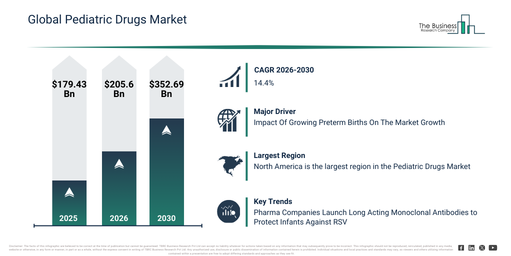
    The pediatric drugs market has experienced significant expansion in recent years. Its value is expected to rise from $179.43 billion in 2025 to $205.6 billion in 2026, at a compound annual growth rate (CAGR) of 14.6%. This historical growth can be attributed to the high prevalence of pediatric infectious diseases, the expansion of vaccination and treatment programs, an increase in pediatric hospital infrastructure, improved access to child healthcare, and heightened awareness of pediatric medication safety.

    The pediatric drugs market is anticipated to experience substantial expansion over the upcoming years, projected to reach $352.69 billion in 2030 at a compound annual growth rate (CAGR) of 14.4%. This projected increase is driven by several factors, including a growing pediatric population in developing regions, an rise in chronic illnesses among children, increased funding for pediatric drug research, broader child-centric healthcare initiatives, and a greater need for secure pediatric treatments. Key developments expected during this period involve a heightened demand for drug formulations suitable for different ages, an increased emphasis on precise pediatric dosing, wider adoption of liquid and chewable medications for children, an expansion in managing chronic diseases in pediatric patients, and greater regulatory focus on clinical trials involving children.

    Get A Free Sample Report With In-Depth Market Insights:

    https://thebusinessresearchcompany.com/sample_request?id=84275605&type=smp&name=Pediatric%20Drugs%20Market%20Report%202026&utm_source=Blogs&utm_medium=Paid&utm_campaign=Oct_PR

    Pediatric Drugs Market Demand Drivers: What’s Powering Industry Growth?

    An increase in preterm births is anticipated to drive the expansion of the pediatric drugs market going forward. Preterm births are defined as infants delivered prior to 37 weeks of pregnancy, a period shorter than the typical 40-week gestation period. This rise in preterm births is attributed to various factors, including increased maternal age, lifestyle choices, medical conditions, multiple pregnancies, and inadequate prenatal care. Pediatric drugs are essential in aiding the health and development of preterm infants, offering targeted treatments for challenges such as respiratory problems, infections, and nutritional gaps. As an illustration, in 2023, according to Tommy’s, a UK-based charity organization, the percentage of premature live births in England and Wales rose to 8.1%, up from 7.9% in 2022, corresponding to more than 48,000 babies born prematurely in that year. Consequently, the growing number of preterm births is propelling the growth of the pediatric drugs market.

    Pediatric Drugs Market Segment Performance And Emerging Opportunities

    The pediatric drugs market covered in this report is segmented –

    1) By Type: Respiratory Disorder Drugs, Autoimmune Disorder Drugs, Gastrointestinal Drugs, Cardiovascular Drugs

    2) By Route Of Administration: Oral, Topical, Parenteral, Other Route Of Administrations

    3) By Distribution Channel: Hospital Pharmacy, Retail Pharmacy, Online Pharmacy, Other Distribution Channels

    4) By End-Users: Hospitals, Specialty Clinics, Homecare, Other End-Users

    Subsegments:

    1) By Respiratory Disorder Drugs: Asthma Medications, Cystic Fibrosis Treatments, Bronchodilators, Corticosteroids

    2) By Autoimmune Disorder Drugs: Immunosuppressants, Biologic Therapies, Disease-Modifying Antirheumatic Drugs (DMARDs)

    3) By Gastrointestinal Drugs: Proton Pump Inhibitors (PPIs), Antiemetics, Antidiarrheals, Laxatives

    4) By Cardiovascular Drugs: Antihypertensive Medications, Heart Failure Treatments, Antiarrhythmic Drugs, Lipid-lowering Agents

    Pediatric Drugs Market Innovation Trends: What Developments Are Reshaping The Industry?

    Key companies operating within the pediatric drugs market are progressively launching long-acting monoclonal antibodies to combat infectious diseases in infants, including extended half-life therapies for RSV prevention. A long-acting monoclonal antibody functions as a biologic, engineered to persist in the bloodstream for an extended period, thereby ensuring sustained protection with fewer administrations. For instance, in June 2025, Merck, a pharmaceutical company based in the US, secured FDA approval for clesrovimab (Enflonsia), a fully human monoclonal antibody developed to prevent respiratory syncytial virus (RSV) in infants. Clesrovimab achieves an extended half-life through improved Fc receptor binding, provides durable protection across the initial RSV season, and can be given as a single intramuscular dose.

    Pediatric Drugs Market Key Players: Which Companies Lead Industry Competition?

    Major companies operating in the pediatric drugs market are Pfizer Inc., Johnson & Johnson, Merck & Co. Inc., Bayer AG, Sanofi S.A., Bristol-Myers Squibb, AstraZeneca Plc, Novartis AG, GlaxoSmithKline plc, Takeda Pharmaceutical Company, Eli Lilly and Co., Gilead Sciences Inc., Amgen Inc., Teva Pharmaceutical Industries Ltd., Otsuka Pharmaceutical Co. Ltd., Vertex Pharmaceuticals, UCB Pharma, Sun Pharmaceutical Industries Ltd., Perrigo Company, Shionogi & Co. Ltd., Mallinckrodt, Torrent Pharmaceuticals Ltd, Sarepta Therapeutics, Zydus Cadila

    View The Full Pediatric Drugs Market Report:

    https://thebusinessresearchcompany.com/report/pediatric-drugs-global-market-report?utm_source=Blogs&utm_medium=Paid&utm_campaign=Oct_PR

    Pediatric Drugs Market Regional Outlook: Where Is Opportunity Concentrated?

    North America was the largest region in the pediatric drugs market in 2025. Asia-Pacific is expected to be the fastest-growing region in the forecast period. The regions covered in the pediatric drugs market report are Asia-Pacific, South East Asia, Western Europe, Eastern Europe, North America, South America, Middle East, Africa.

    Reach Out To Our Team:

    The Business Research Company: https://www.thebusinessresearchcompany.com/

    Americas: +1 310-496-7795

    Asia: +44 7882 955267 & +91 8897263534

    Europe: +44 7882 955267

    Email us at: marketing@tbrc.info

    Follow us on:

    LinkedIn: https://in.linkedin.com/company/the-business-research-company

    YouTube: https://www.youtube.com/channel/UC24_fI0rV8cR5DxlCpgmyFQ

    Global Market Model: https://www.thebusinessresearchcompany.com/global-market-model

  • Pediatric Asthma Treatment Market Size Reaches $12.31 Billion In 2026: What Is Driving Growth?

    Pediatric Asthma Treatment Market Size Reaches $12.31 Billion In 2026: What Is Driving Growth?

    Backed by market attractiveness analysis, total addressable market sizing, company benchmarking matrices, interactive Excel dashboards, wider supply chain intelligence, emerging startup coverage, and detailed product-level insights, The Business Research Company’s 2026 market reports are designed to offer research that is more actionable and strategically valuable than ever.

    Pediatric Asthma Treatment Market Poised To Hit $15.14 Billion By 2030 With A 5.3% CAGR

    The pediatric asthma treatment market has experienced substantial expansion in recent years. This market is projected to expand from $11.65 billion in 2025 to $12.31 billion in 2026, registering a compound annual growth rate (CAGR) of 5.7%. Historically, this expansion has been driven by factors such as the restricted availability of medications specifically designed for pediatric asthma, a strong reliance on hospital-based care, the rising incidence of childhood asthma, heightened awareness among caregivers, and the widespread use of traditional inhalers and short-acting beta agonists.

    The pediatric asthma treatment market is projected to experience substantial expansion over the coming years. It is anticipated to reach a valuation of $15.14 billion by 2030, exhibiting a compound annual growth rate (CAGR) of 5.3%. This projected increase during the forecast period is driven by factors such as the advancement of biologics and combination therapies, the incorporation of digital health monitoring devices, the extension of home care services, growing adoption of online pharmacies, and an increase in regulatory approvals for pediatric asthma medications. Key developments expected during this period include a greater emphasis on personalized pediatric asthma treatments, increased utilization of biologic therapies and combination inhalers, a rise in home care and remote patient monitoring solutions, the broadening of online and retail pharmacy distribution channels, and a concerted focus on early diagnosis and preventive asthma management.

    Get A Free Sample Report With In-Depth Market Insights:

    https://thebusinessresearchcompany.com/sample_request?id=24423383&type=smp&name=Pediatric%20Asthma%20Treatment%20Market%20Report%202026&utm_source=Blogs&utm_medium=Paid&utm_campaign=Oct_PR

    Pediatric Asthma Treatment Market Growth Drivers: What’s Behind The Acceleration?

    The rising occurrence of respiratory infections is projected to stimulate the growth of the pediatric asthma treatment market moving forward. Respiratory infections are defined as illnesses originating from viruses, bacteria, or other pathogens affecting the respiratory tract, encompassing the nose, throat, airways, and lungs. The growing prevalence of respiratory infections is primarily attributed to increasing air pollution, given that exposure to pollutants such as particulate matter and nitrogen dioxide compromises the respiratory system, rendering individuals more prone to infections. Pediatric asthma treatment assists in diminishing the frequency and severity of respiratory infections by improving airway function and reducing inflammation, which in turn lowers susceptibility to infectious triggers. For instance, in June 2024, according to the Australian Institute of Health and Welfare, an Australia-based government agency, in 2023, chronic obstructive pulmonary disease contributed to 3.6% of the total disease burden and represented 50% of the total burden of respiratory conditions. Consequently, the increasing prevalence of respiratory infections drives the expansion of the pediatric asthma treatment market.

    Pediatric Asthma Treatment Market Segment Landscape And Growth Outlook

    The pediatric asthma treatment market covered in this report is segmented –

    1) By Type: Long-Term Control Medications, Quick-Relief Medications, Other Types

    2) By Drug Class: Inhaled Corticosteroids, Long-Acting Beta Agonists, Leukotriene Modifiers, Antihistamines, Biologics

    3) By Route Of Administration: Oral Route, Nasal Route, Injectable Route

    4) By Distribution Channel: Hospital Pharmacies, Retail Pharmacies, Online Pharmacies

    5) By End User: Hospitals, Clinics, Home Care, Other End users

    Subsegments:

    1) By Long-Term Control Medications: Inhaled Corticosteroids, Leukotriene Modifiers, Long-Acting Beta Agonists, Combination Inhalers, Biologic Therapies

    2) By Quick-Relief Medications: Short-Acting Beta Agonists, Anticholinergics, Systemic Corticosteroids

    3) By Other Types: Immunotherapy, Methylxanthines, Alternative Therapies

    Pediatric Asthma Treatment Market Trends: What’s Defining The Industry’s Next Phase?

    Major companies in the pediatric asthma treatment market are concentrating on developing innovative therapies, such as monoclonal antibodies, to target and reduce airway inflammation in children. Monoclonal antibodies are laboratory-made proteins designed to mimic the immune system’s ability to fight off harmful pathogens by specifically targeting certain cells or substances. For instance, in April 2024, AstraZeneca PLC, a UK-based pharmaceutical and biotechnology company, received U.S. Food and Drug Administration approval for FASENRA (benralizumab) as an add-on maintenance treatment for children aged 6 to 11 years with severe asthma characterized by an eosinophilic phenotype. This antibody is designed to reduce asthma exacerbations and improve symptom control by targeting and eliminating eosinophils. Fasenra is administered via subcutaneous injection once every 4 weeks for the first three doses, followed by once every 8 weeks, with pediatric dosing adjusted based on body weight.

    Pediatric Asthma Treatment Market Competitive Landscape: Who Leads The Industry?

    Major companies operating in the pediatric asthma treatment market are Pfizer Inc., Merck And Co Inc., Novartis AG, Sanofi S.A., AstraZeneca plc, GlaxoSmithKline plc, Takeda Pharmaceutical Company Limited, Amgen Inc., Boehringer Ingelheim International GmbH, Viatris Inc., Teva Pharmaceutical Industries Limited, Regeneron Pharmaceuticals Inc., Sun Pharmaceutical Industries Limited, Genentech Inc., Chiesi Farmaceutici S.p.A, Dr. Reddy’s Laboratories Ltd, Cipla Ltd, Lupin Limited, Zydus Lifesciences Ltd.

    View The Full Pediatric Asthma Treatment Market Report:

    https://thebusinessresearchcompany.com/report/pediatric-asthma-treatment-global-market-report?utm_source=Blogs&utm_medium=Paid&utm_campaign=Oct_PR

    Pediatric Asthma Treatment Market Geographic Landscape: Which Region Leads Industry Growth?

    North America was the largest region in the pediatric asthma treatment market in 2025. Asia-Pacific is expected to be the fastest-growing region in the forecast period. The regions covered in the pediatric asthma treatment market report are Asia-Pacific, South East Asia, Western Europe, Eastern Europe, North America, South America, Middle East, Africa.

    Reach Out To Our Team:

    The Business Research Company: https://www.thebusinessresearchcompany.com/

    Americas: +1 310-496-7795

    Asia: +44 7882 955267 & +91 8897263534

    Europe: +44 7882 955267

    Email us at: marketing@tbrc.info

    Follow us on:

    LinkedIn: https://in.linkedin.com/company/the-business-research-company

    YouTube: https://www.youtube.com/channel/UC24_fI0rV8cR5DxlCpgmyFQ

    Global Market Model: https://www.thebusinessresearchcompany.com/global-market-model

  • Peanut Allergy Treatment Market Valued At $0.8 Billion In 2026: Key Trends And Growth Drivers

    Peanut Allergy Treatment Market Valued At $0.8 Billion In 2026: Key Trends And Growth Drivers

    Featuring market attractiveness scoring, total addressable market sizing, company benchmarking matrices, interactive Excel dashboards, deeper supply chain intelligence, emerging startup tracking, and granular product-level insights, The Business Research Company’s 2026 market reports are built to deliver research that is both more actionable and more strategically valuable.

    Peanut Allergy Treatment Market Size And Revenue Outlook Through 2030

    The peanut allergy treatment market has expanded quickly in recent years. Its valuation is set to increase from $0.5 billion in 2025 to $0.55 billion in 2026, demonstrating a compound annual growth rate (CAGR) of 10.8%. Historically, this growth can be linked to the increasing occurrence of peanut allergies in children, the insufficient efficacy of avoidance-only management, a rise in food allergy diagnoses, a significant dependence on epinephrine for emergency care, and heightened awareness among medical professionals.

    The peanut allergy treatment market size is anticipated to experience robust expansion over the next few years. It is predicted to reach $0.8 billion by 2030, exhibiting a compound annual growth rate (CAGR) of 9.7%. This growth during the forecast period is fueled by advancements in immunotherapy technologies, an increase in approvals for disease-modifying treatments, a rising demand for preventive allergy care, the expansion of biologics targeting allergic pathways, and growing investment in food allergy research. Significant trends anticipated include the increasing adoption of oral immunotherapy for peanut desensitization, a growing use of epicutaneous immunotherapy patches, greater integration of biologic therapies in allergy treatment, the expansion of pediatric-focused peanut allergy treatments, and a stronger emphasis on long-term allergy management solutions.

    Get A Free Sample Report With In-Depth Market Insights:

    https://thebusinessresearchcompany.com/sample_request?id=54183085&type=smp&name=Peanut%20Allergy%20Treatment%20Market%20Report%202026&utm_source=Blogs&utm_medium=Paid&utm_campaign=Oct_PR

    Peanut Allergy Treatment Market Growth Factors Behind Sustained Expansion

    The future expansion of the peanut allergy treatment market is expected to be propelled by investments in research and development for allergy treatments. Research and development (R&D) investment refers to the financial resources allocated by companies, organizations, or governments towards activities aimed at innovation, product development, and technological advancement. This investment in R&D for allergy treatments is crucial for advancing peanut allergy therapies, as it fosters the creation of innovative immunotherapies and desensitization techniques. These innovations aim to reduce allergic reactions and improve the quality of life for those affected by peanut allergies. For instance, in January 2024, the Victorian Government announced a strategic $12 million investment in Aravax, an Australia-based clinical-stage biotechnology company, to significantly advance global peanut allergy treatment. This funding is part of a broader $66 million round aimed at developing Aravax’s innovative immunotherapy, PVX108. This initiative has secured Phase 2 trial approvals from both the U.S. Food and Drug Administration (FDA) and Australia’s Therapeutic Goods Administration (TGA), underscoring its potential impact on public health worldwide. Therefore, investment in research and development of allergy treatments is driving the growth of the peanut allergy treatment market.

    Peanut Allergy Treatment Market Breakdown By Product Type And Application

    The peanut allergy treatment market covered in this report is segmented –

    1) By Drug Class: Antihistamines, Immunotherapies, Epinephrine, Other Drug Classes

    2) By Route Of Administration: Injectable, Oral, Other Routes Of Administration

    3) By Distribution Channel: Retail Pharmacy, Hospital Pharmacy, Other Distribution Channels

    Subsegments:

    1) By Antihistamines: Oral Antihistamines, Topical Antihistamines

    2) By Immunotherapies: Oral Immunotherapy (OIT), Sublingual Immunotherapy (SLIT), Epicutaneous Immunotherapy (EPIT)

    3) By Epinephrine: Epinephrine Auto-Injectors, Epinephrine Inhalers

    4) By Other Drug Classes: Leukotriene Receptor Antagonists, Monoclonal Antibodies, Corticosteroids

    Peanut Allergy Treatment Market Industry Trends Fueling Future Revenue Growth

    Leading companies in the peanut allergy treatment market are prioritizing the development of biologic therapies, such as anti-IgE monoclonal antibodies, to provide more targeted and effective solutions for managing peanut allergies, with the goal of improving patient outcomes and quality of life. These anti-IgE monoclonal antibodies are therapeutic agents designed to specifically target and neutralize immunoglobulin E (IgE) antibodies in the body. For instance, in February 2024, Novartis Pharmaceuticals Corporation, a Switzerland-based pharmaceutical company, obtained approval from the Food and Drug Administration (FDA) for Xolair (omalizumab). This medication is designed to lessen allergic reactions, including anaphylaxis, in patients aged 1 year and above who have IgE-mediated food allergies. The approval was granted based on data from the NIH-sponsored Phase III OUtMATCH study, which indicated significant improvements in food allergy tolerance among patients treated with Xolair when compared to those given a placebo.

    Peanut Allergy Treatment Market Company Landscape And Competitive Strategy

    Major companies operating in the peanut allergy treatment market are Pfizer Inc., F. Hoffmann-La Roche AG, Sanofi SA, Novartis AG, Takeda Pharmaceutical Company Limited, Viatris Inc., Regeneron Pharmaceuticals Inc., Hikma Pharmaceuticals plc, ALK-Abelló A/S, Amneal Pharmaceuticals Inc., Amphastar Pharmaceuticals Inc, Stallergenes Greer plc, kaleo Inc., Aquestive Therapeutics Inc., Vedanta Biosciences Inc., Aimmune Therapeutics Inc., AnaptysBio Inc., Alladapt Immunotherapeutics Inc., Aravax Pty Ltd, Intrommune Therapeutics Inc., IgGenix Inc., DBV Technologies SA, Camallergy Ltd., HAL Allergy Group, Prota Therapeutics Pty Ltd.

    View The Full Peanut Allergy Treatment Market Report:

    https://thebusinessresearchcompany.com/report/peanut-allergy-treatment-global-market-report?utm_source=Blogs&utm_medium=Paid&utm_campaign=Oct_PR

    Peanut Allergy Treatment Market Largest Region: Which Geography Holds The Biggest Share?

    North America was the largest region in the peanut allergy treatment market in 2025. Asia-Pacific is expected to be the fastest-growing region in the forecast period. The regions covered in the peanut allergy treatment market report are Asia-Pacific, South East Asia, Western Europe, Eastern Europe, North America, South America, Middle East, Africa.

    Reach Out To Our Team:

    The Business Research Company: https://www.thebusinessresearchcompany.com/

    Americas: +1 310-496-7795

    Asia: +44 7882 955267 & +91 8897263534

    Europe: +44 7882 955267

    Email us at: marketing@tbrc.info

    Follow us on:

    LinkedIn: https://in.linkedin.com/company/the-business-research-company

    YouTube: https://www.youtube.com/channel/UC24_fI0rV8cR5DxlCpgmyFQ

    Global Market Model: https://www.thebusinessresearchcompany.com/global-market-model

  • PD-1 and PDL1 Inhibitors/ Immune Checkpoint Inhibitors Market Size In 2026: Growth Outlook And Forecast Through 2030

    PD-1 and PDL1 Inhibitors/ Immune Checkpoint Inhibitors Market Size In 2026: Growth Outlook And Forecast Through 2030

    Built to provide research that’s more actionable and strategically valuable, The Business Research Company’s 2026 market reports include market attractiveness analysis, total addressable market sizing, company benchmarking matrices, interactive Excel dashboards, broader supply chain intelligence, emerging startup tracking, and in-depth product insights.

    PD-1 and PDL1 Inhibitors/ Immune Checkpoint Inhibitors Market Growth From $59.83 Billion In 2026 To $103.27 Billion By 2030 At A CAGR Of 14.6%

    The pd-1 and pdl1 inhibitors/ immune checkpoint inhibitors market size has experienced swift expansion in recent years. It is projected to increase from $52.49 billion in 2025 to $59.83 billion in 2026, exhibiting a compound annual growth rate (CAGR) of 14.0%. The growth witnessed in the past period can be attributed to elements such as the escalating global cancer prevalence, the early clinical achievements of PD-1 and PDL1 inhibitors, significant investment in oncology R&D, regulatory authorizations for first-generation checkpoint inhibitors, and rising healthcare spending on cancer therapies.

    The pd-1 and pdl1 inhibitors/ immune checkpoint inhibitors market is expected to undergo rapid growth in the coming years. It is forecast to grow to $103.27 billion in 2030, exhibiting a compound annual growth rate (CAGR) of 14.6%. The expansion during the forecast period is attributable to increasing demand for personalized cancer treatment, the broadening of clinical trials for combination therapies, more approvals in emerging markets, enhanced patient survival outcomes, and greater adoption in both solid and hematological malignancies. Significant trends for the forecast period include the expansion of combination immunotherapy regimens, a growing reliance on biomarker-based patient selection, increasing approvals across multiple cancer indications, rising use in earlier stages of cancer treatment, and a robust pipeline of next-generation checkpoint inhibitors.

    Get A Free Sample Report With In-Depth Market Insights:

    https://thebusinessresearchcompany.com/sample_request?id=10358561&type=smp&name=PD-1%20and%20PDL1%20Inhibitors%2F%20Immune%20Checkpoint%20Inhibitors%20Market%20Report%202026&utm_source=Blogs&utm_medium=Paid&utm_campaign=Oct_PR

    PD-1 and PDL1 Inhibitors/ Immune Checkpoint Inhibitors Market Demand Drivers Opening New Revenue Streams

    An escalating occurrence of cancer cases is anticipated to drive the expansion of the PD-1 and PDL1 Inhibitors/ Immune checkpoint inhibitors market moving forward. Cancer is a condition characterized by certain cells growing uncontrollably and spreading to other areas of the body. PD-1 and PD-L1 inhibitors aid in treating cancer by leveraging the body’s own immune system to combat cancer cells. Hence, the increasing instances of cancer contribute to the growth of the PD-1 and PDL1 Inhibitors/ Immune checkpoint inhibitors market. For example, in February 2024, the World Health Organization, a Switzerland-based intergovernmental organization, projected over 35 million new cancer cases by 2050. This figure represents a 77% increase compared to the estimated 20 million cases in 2022. Therefore, the rise in cancer prevalence will fuel the growth of the PD-1 and PDL1 Inhibitors/ Immune checkpoint inhibitors market.

    PD-1 and PDL1 Inhibitors/ Immune Checkpoint Inhibitors Market Segment Analysis And Revenue Potential

    The pd-1 and pdl1 inhibitors/ immune checkpoint inhibitors market covered in this report is segmented –

    1) By Product: Nivolumab, Pembrolizumab, Atezolizumab, Avelumab, Durvalumab

    2) By Distribution Channel: Hospital pharmacies, Retail pharmacies, Online pharmacies

    3) By Application: Lung Cancer, Bladder Cancer, Melanoma, Hodgkin Lymphoma, Colorectal Cancer, Other Applications

    4) By End-Users : Hospitals, Specialty Clinics, Academic and Research Institutions

    PD-1 and PDL1 Inhibitors/ Immune Checkpoint Inhibitors Market Trends Powering Strategic Industry Growth

    Leading entities within the PD-1 and PDL1 inhibitors/immune checkpoint inhibitors market are prioritizing the creation of cutting-edge immuno-oncology solutions aimed at improving treatment effectiveness and expanding patient access. These immuno-oncology approaches leverage the body’s own immune system to identify and eradicate cancer cells, simultaneously minimizing harm to healthy tissues. An illustrative example occurred in September 2023 when BeiGene, an oncology firm based in China, reacquired complete control over the PD-1 inhibitor tislelizumab from Novartis, subsequently introducing it in Europe as Tevimbra for patients with previously treated esophageal squamous cell carcinoma. This therapy exhibits promise for both initial and subsequent treatment indications, granting BeiGene complete authority over its pricing and market approach. Tislelizumab remains under continuous clinical investigation, encompassing a phase 3 trial that combines it with ociperlimab and chemotherapy for metastatic non-small cell lung cancer, along with a midstage investigation involving a LAG-3 agent for colorectal cancer. This underscores the increasing focus on combined treatment modalities and adaptable commercialization tactics within the fiercely competitive immune checkpoint inhibitor sector.

    PD-1 and PDL1 Inhibitors/ Immune Checkpoint Inhibitors Market Key Players Shaping Industry Direction

    Major companies operating in the pd-1 and pdl1 inhibitors/ immune checkpoint inhibitors market are Bristol-Myers Squibb Company, Merck and Company, F. Hoffmann-La Roche AG, Amgen Inc., AstraZeneca plc, Pfizer Inc., Regeneron Pharmaceuticals Inc., BeiGene Ltd, Shanghai Jhunsi Biosciences Ltd., Akeso Inc., Alphamab Oncology, Eli Lilly and Company, Xencor Inc., Jiangsu Alphamab Biopharmaceuticals Co. Ltd, Laekna Therapeutics, Genentech Inc., Tracon Pharmaceuticals Inc., Hangzhou Sumgen Co. Ltd, Agenus Inc., Celldex Therapeutics Inc., CytomX Therapeutics Inc.

    View The Full PD-1 and PDL1 Inhibitors/ Immune Checkpoint Inhibitors Market Report:

    https://thebusinessresearchcompany.com/report/PD-1-and-PDL1-inhibitors-or-immune-checkpoint-inhibitors-global-market-report?utm_source=Blogs&utm_medium=Paid&utm_campaign=Oct_PR

    PD-1 and PDL1 Inhibitors/ Immune Checkpoint Inhibitors Market Regional Analysis: Which Geography Leads On Revenue?

    North America was the largest region in the PD-1 and PDL1 inhibitors market in 2025. The regions covered in the pd-1 and pdl1 inhibitors/ immune checkpoint inhibitors market report are Asia-Pacific, South East Asia, Western Europe, Eastern Europe, North America, South America, Middle East, Africa.

    Reach Out To Our Team:

    The Business Research Company: https://www.thebusinessresearchcompany.com/

    Americas: +1 310-496-7795

    Asia: +44 7882 955267 & +91 8897263534

    Europe: +44 7882 955267

    Email us at: marketing@tbrc.info

    Follow us on:

    LinkedIn: https://in.linkedin.com/company/the-business-research-company

    YouTube: https://www.youtube.com/channel/UC24_fI0rV8cR5DxlCpgmyFQ

    Global Market Model: https://www.thebusinessresearchcompany.com/global-market-model