Month: October 2026

  • Anticoagulants Market 2026: Market Size, Growth Drivers And Emerging Opportunities

    Anticoagulants Market 2026: Market Size, Growth Drivers And Emerging Opportunities

    Featuring market attractiveness scoring, total addressable market sizing, company benchmarking matrices, interactive Excel dashboards, deeper supply chain intelligence, emerging startup tracking, and granular product-level insights, The Business Research Company’s 2026 market reports are built to deliver research that is both more actionable and more strategically valuable.

    Anticoagulants Market Forecast: Value Set To Climb From $60.41 Billion To $97.06 Billion

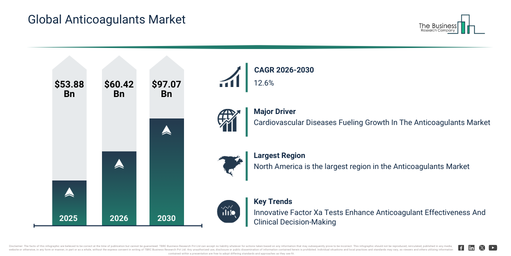
    The anticoagulants market size has seen rapid growth in recent years. This market is expected to expand from $53.88 billion in 2025 to $60.42 billion in 2026, achieving a compound annual growth rate (CAGR) of 12.1%. The increase observed in previous periods is attributable to factors such as the high prevalence of cardiovascular diseases, the rising incidence of venous thromboembolism, the long-standing use of warfarin, the expansion of hospital-based treatments, and increasing awareness regarding stroke prevention.

    The anticoagulants market is projected for substantial expansion over the coming years. Its value is forecast to climb to $97.07 billion by 2030, demonstrating a compound annual growth rate (CAGR) of 12.6%. Key drivers contributing to this expansion throughout the forecast period include an expanding atrial fibrillation patient base, the wider application of factor Xa inhibitors, better safety profiles for NOACs, an increase in outpatient anticoagulation care, and greater market penetration in developing regions. Prominent trends expected over the forecast horizon encompass the increasing embrace of direct oral anticoagulants, a move away from injectable to oral treatment methods, more prevalent long-term anticoagulation therapy, greater attention to patient compliance and safety, and wider integration into preventive cardiovascular care.

    Get A Free Sample Report With In-Depth Market Insights:

    https://www.thebusinessresearchcompany.com/sample.aspx?id=5230&type=smp&utm_source=Blogs&utm_medium=Paid&utm_campaign=Oct_PR

    Anticoagulants Market Growth Catalysts And Demand Drivers

    Rising instances of cardiovascular diseases (CVDs) are significantly propelling the expansion of the anticoagulants market over the coming years. CVDs, which are a category of heart and blood vessel problems, represent the primary source of death worldwide, with low- and middle-income nations accounting for three-quarters of CVD deaths. Anticoagulation pharmacotherapy, specifically direct oral anticoagulants, is utilized to minimize thrombosis in a variety of cardiovascular situations. For instance, in September 2025, the British Heart Foundation, a UK-based charity, reported that across the UK, more than 7.6 million people, comprising over 4 million men and more than 3.6 million women, are living with cardiovascular disease. Driven by an aging population and improved survival rates, projections indicate that the number of affected individuals may rise by around 1 million by 2030 and by approximately 2 million by 2040. Therefore, the increasing number of cardiovascular diseases fuels the growth of the anticoagulants market.

    Anticoagulants Market Segmentation And Category Overview

    The anticoagulants market covered in this report is segmented –

    1) By Drug Class: Factor Xa Inhibitor, Heparin And LMWH, Vitamin K Antagonist, Other Drug Classes

    2) By Route Of Administration: Oral Anticoagulant, Injectable Anticoagulant

    3) By Distribution Channel: Hospital Pharmacy, Retail Pharmacy, Online Pharmacy

    4) By Application: Venous Thromboembolism, Atrial Fibrillation Or Flutter, Coronary Artery Disease, Other Applications

    5) By End User: Hospitals, Homecare, Specialty Centers, Other End-Users

    Subsegments:

    1) By Factor Xa Inhibitor: Rivaroxaban, Apixaban, Edoxaban, Betrixaban

    2) By Heparin And LMWH (Low Molecular Weight Heparin): Unfractionated Heparin, Enoxaparin, Dalteparin, Tinzaparin

    3) By Vitamin K Antagonist: Warfarin, Acenocoumarol, Phenprocoumon

    4) By Other Drug Classes: Direct Thrombin Inhibitors, Novel Oral Anticoagulants (NOACs)

    Anticoagulants Market Trends Shaping Long-Term Demand

    Leading companies in the anticoagulants market are concentrating on developing advanced solutions, including factor Xa inhibitor tests, to meet the increasing demand for diagnostics. This demand arises from the expanded use of direct oral anticoagulants for preventing strokes and addressing other serious cardiovascular conditions. Factor Xa Inhibitor Tests are assessments specifically designed to evaluate the effectiveness and safety of anticoagulant medications that selectively inhibit factor Xa, thereby hindering blood clot formation across various medical situations. For instance, in February 2024, F. Hoffmann-La Roche Ltd., a Switzerland-based biotechnology company, launched its apixaban, edoxaban, and rivaroxaban coagulation tests. These newly introduced coagulation tests for Factor Xa inhibitors utilize Roche’s innovative reagent cassette concept, guaranteeing high-quality results and efficient sample processing while also providing standardization and automation to enhance laboratory workflows. These tests are crucial as they aid clinical decision-making for patients using direct oral anticoagulants for stroke prevention, thereby addressing the rising global need for effective diagnostics in managing serious conditions like coronary artery disease and peripheral arterial disease.

    Anticoagulants Market Competitive Analysis Of Leading Industry Participants

    Major companies operating in the anticoagulants market are GlaxoSmithKline plc, Leo Pharma A/S, Amphastar Pharmaceuticals Inc., Bayer AG, Boehringer Ingelheim International GmbH, Daiichi Sankyo Company Limited, Eisai Co. Ltd., Mylan N.V., Pfizer Inc., Sanofi S.A., Apotex Inc., Aspen Pharmacare Holdings Limited, AstraZeneca plc, Bristol-Myers Squibb Company, Dr. Reddy’s Laboratories Ltd., Fresenius Kabi AG, Hikma Pharmaceuticals plc, Johnson & Johnson, Lupin Limited, Mitsubishi Tanabe Pharma Corporation, Natco Pharma Limited, Novartis International AG, Portola Pharmaceuticals Inc., Strides Pharma Science Limited, Sun Pharmaceutical Industries Limited, Teva Pharmaceutical Industries Limited, Torrent Pharmaceuticals Limited, and Zydus Cadila Healthcare Limited.

    View The Full Anticoagulants Market Report:

    https://www.thebusinessresearchcompany.com/report/anticoagulant-global-market-report?utm_source=Blogs&utm_medium=Paid&utm_campaign=Oct_PR

    Anticoagulants Market Top Region By Revenue And Market Share

    North America was the largest region in the anticoagulants market in 2025. The regions covered in the anticoagulants market report are Asia-Pacific, South East Asia, Western Europe, Eastern Europe, North America, South America, Middle East, Africa.

    Reach Out To Our Team:

    The Business Research Company: https://www.thebusinessresearchcompany.com/

    Americas: +1 310-496-7795

    Asia: +44 7882 955267 & +91 8897263534

    Europe: +44 7882 955267

    Email us at: marketing@tbrc.info

    Follow us on:

    LinkedIn: https://in.linkedin.com/company/the-business-research-company

    YouTube: https://www.youtube.com/channel/UC24_fI0rV8cR5DxlCpgmyFQ

    Global Market Model: https://www.thebusinessresearchcompany.com/global-market-model
  • Anticoagulant Reversal Drugs Market Set To Expand From $2.65 Billion In 2026: Growth Outlook Through 2030

    Anticoagulant Reversal Drugs Market Set To Expand From $2.65 Billion In 2026: Growth Outlook Through 2030

    Built to provide research that’s more actionable and strategically valuable, The Business Research Company’s 2026 market reports include market attractiveness analysis, total addressable market sizing, company benchmarking matrices, interactive Excel dashboards, broader supply chain intelligence, emerging startup tracking, and in-depth product insights.

    Anticoagulant Reversal Drugs Market Revenue Growth On Track For A 9.8% CAGR Through 2030

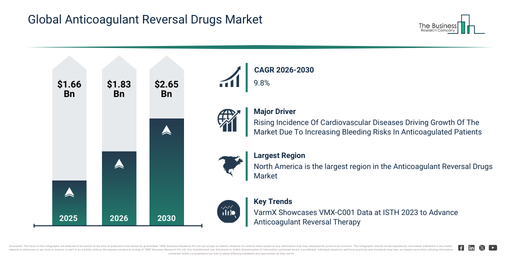
    The market size for anticoagulant reversal drugs has experienced robust expansion over recent years. Projections indicate it will increase from $1.66 billion in 2025 to $1.83 billion in 2026, demonstrating a compound annual growth rate (CAGR) of 9.9%. This historical growth has been driven by factors such as the greater adoption of anticoagulant medications, a rise in bleeding emergencies, the clinical authorization of reversal agents, the expansion of emergency medical facilities, and an increase in surgical interventions.

    The anticoagulant reversal drugs market is projected to experience substantial expansion in the coming years. It is forecast to reach $2.65 billion in 2030, exhibiting a compound annual growth rate (CAGR) of 9.8%. This anticipated growth during the forecast period is primarily driven by factors such as the increasing utilization of direct oral anticoagulants, a growing elderly demographic, the expansion of trauma care infrastructure, the rising need for swift-acting reversal medications, and enhancements in emergency response systems. Key trends expected during this period involve the increasing application of emergency reversal therapies, greater acceptance of DOAC reversal agents, escalating requirements within critical care environments, the development of more extensive hospital emergency protocols, and an amplified emphasis on achieving rapid hemostasis.

    Get A Free Sample Report With In-Depth Market Insights:

    https://www.thebusinessresearchcompany.com/sample.aspx?id=23308&type=smp&utm_source=Blogs&utm_medium=Paid&utm_campaign=Oct_PR

    Anticoagulant Reversal Drugs Market Opportunity Drivers: What’s Unlocking New Revenue Potential?

    The increasing occurrence of cardiovascular diseases is anticipated to propel the growth of the anticoagulant reversal drugs market going forward. These conditions, known as CVDs, represent a range of disorders affecting the heart and blood vessels, including examples such as coronary artery disease, stroke, and heart failure. The rise in cardiovascular diseases is primarily attributable to unhealthy lifestyles, as factors like increased consumption of processed foods, physical inactivity, and high stress levels contribute to obesity, hypertension, and diabetes. Anticoagulant reversal drugs are essential in cardiovascular disease management to counteract the dangers of excessive bleeding, given that patients on blood thinners for conditions such as atrial fibrillation or deep vein thrombosis may experience life-threatening hemorrhages requiring rapid reversal to restore normal blood clotting. For instance, in December 2024, data from the Office for Health Improvement and Disparities, a UK-based government department, revealed that in the financial year ending March 2023, 1,879,000 people (3%) in England had a general practice (GP) diagnosis of coronary heart disease (CHD). The disparity in heart failure admission rates across local authorities is more pronounced than for CHD, showing a fourfold difference between regions and peaking at 396.5 admissions per 100,000 people in Hounslow. Consequently, the rising incidence of cardiovascular diseases is a key driver for the growth of the anticoagulant reversal drugs market.

    Anticoagulant Reversal Drugs Market Segment Outlook: Which Categories Are Growing Fastest?

    The anticoagulant reversal drugs market covered in this report is segmented –

    1) By Product Type: Prothrombin Complex Concentrates, Phytonadione (Vitamin K), Andexanet Alfa, Idarucizumab, Protamine, Other Product Types

    2) By Route of Administration: Injectable, Oral

    3) By Distribution Channel: Hospital Pharmacy, Retail Pharmacy

    4) By Application: Direct Oral Anticoagulant (DOAC) Reversal, Warfarin Reversal, Heparin And Low-Molecular-Weight Heparin (LMWH) Reversal, Other Applications

    Subsegments:

    1) By Prothrombin Complex Concentrates (PCCs): 3-Factor PCC, 4-Factor PCC, Activated PCC (aPCC)

    2) By Phytonadione (Vitamin K): Oral Vitamin K, Intravenous (IV) Vitamin K, Subcutaneous (SC) Vitamin K

    3) By Andexanet Alfa: Reversal of Factor Xa Inhibitors (Apixaban, Rivaroxaban), Off-label Usage In Other Anticoagulants

    4) By Idarucizumab: Reversal of Dabigatran-induced Anticoagulation, Emergency Surgical Reversal

    5) By Protamine: Protamine Sulfate For Heparin Reversal, Protamine Variants For Low Molecular Weight Heparin (LMWH) Reversal

    6) By Other Product Types: Recombinant Factor VIIa (rFVIIa), Fresh Frozen Plasma (FFP), Desmopressin (DDAVP), Activated Charcoal (For DOAC Reversal)

    Anticoagulant Reversal Drugs Market Innovation Trends Shaping Future Development

    Major companies operating in the anticoagulant reversal drugs market are prioritizing innovative therapeutic development, including targeted reversal agents for direct oral anticoagulants (DOACs), to enhance patient safety and ensure controlled anticoagulation management. Targeted Anticoagulant Reversal Agents enable the rapid return to normal coagulation, precise monitoring through surrogate endpoints, and improved clinical management for patients at risk of bleeding or those needing urgent procedures. For example, in June 2023, VarmX, a US-based biotechnology company, showcased preliminary data for its lead compound VMX-C001 by presenting two abstracts at the International Society on Thrombosis and Haemostasis (ISTH) Congress in Montreal. These presentations demonstrated the compound’s potential as a DOAC reversal agent and emphasized the effectiveness of dRVVT and dPT assays in sensitively monitoring FXa inhibitor activity, thereby supporting further clinical development and validating surrogate endpoints for ongoing studies.

    Anticoagulant Reversal Drugs Market Leading Companies And Competitive Benchmarking

    Major companies operating in the anticoagulant reversal drugs market are Pfizer Inc., Bristol-Myers Squibb Company, AstraZeneca PLC, Takeda Pharmaceutical Company Limited, Boehringer Ingelheim International GmbH, CSL Behring LLC, Octapharma AG, Daiichi Sankyo Company Limited, Portola Pharmaceuticals Inc., Amphastar Pharmaceuticals Inc., Teva Pharmaceutical Industries Ltd., Amneal Pharmaceuticals LLC, AMAG Pharmaceuticals Inc., Glenmark Pharmaceuticals Inc. USA, Dr. Reddy’s Laboratories Ltd., Transo-Pharm USA LLC, Join Hub Pharma, Baxter International Inc., Grifols S.A., Kedrion Biopharma Inc.

    View The Full Anticoagulant Reversal Drugs Market Report:

    https://www.thebusinessresearchcompany.com/report/anticoagulant-reversal-drugs-global-market-report?utm_source=Blogs&utm_medium=Paid&utm_campaign=Oct_PR

    Anticoagulant Reversal Drugs Market Regional Analysis And Top Geography

    North America was the largest region in the anticoagulant reversal drugs market in 2025. The regions covered in the anticoagulant reversal drugs market report are Asia-Pacific, South East Asia, Western Europe, Eastern Europe, North America, South America, Middle East, Africa.

    Reach Out To Our Team:

    The Business Research Company: https://www.thebusinessresearchcompany.com/

    Americas: +1 310-496-7795

    Asia: +44 7882 955267 & +91 8897263534

    Europe: +44 7882 955267

    Email us at: marketing@tbrc.info

    Follow us on:

    LinkedIn: https://in.linkedin.com/company/the-business-research-company

    YouTube: https://www.youtube.com/channel/UC24_fI0rV8cR5DxlCpgmyFQ

    Global Market Model: https://www.thebusinessresearchcompany.com/global-market-model
  • Anticholinergic Drugs Market Size And Growth In 2026: Key Factors Shaping Future Demand

    Anticholinergic Drugs Market Size And Growth In 2026: Key Factors Shaping Future Demand

    Backed by market attractiveness analysis, total addressable market sizing, company benchmarking matrices, interactive Excel dashboards, wider supply chain intelligence, emerging startup coverage, and detailed product-level insights, The Business Research Company’s 2026 market reports are designed to offer research that is more actionable and strategically valuable than ever.

    Anticholinergic Drugs Market Value Growth And Long-Term Outlook

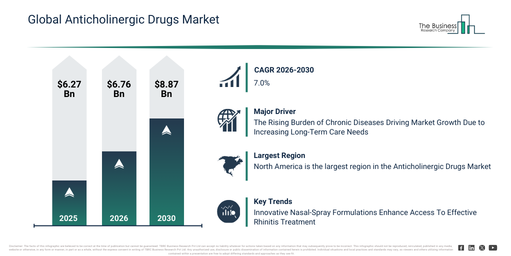
    The anticholinergic drugs market has experienced substantial growth in recent years. Its market size is anticipated to expand from $6.27 billion in 2025 to $6.76 billion in 2026, registering a compound annual growth rate (CAGR) of 7.8%. The historical expansion of this market can be attributed to several factors including the rising prevalence of neurological disorders, an increasing geriatric population, the expansion of hospital infrastructure, the growth of pharmaceutical research, and a higher demand for muscle spasm treatments.

    The anticholinergic drugs market is projected to experience substantial expansion over the upcoming years. It is anticipated to reach a valuation of $8.87 billion by 2030, exhibiting a compound annual growth rate (CAGR) of 7.0%. This growth during the forecast period is attributable to advancements in drug formulation, the increasing preference for parenteral administration methods, heightened awareness regarding overactive bladder treatments, the expansion of online pharmacy sales, and therapeutic breakthroughs in chronic obstructive pulmonary disease. Key trends anticipated over the forecast timeframe encompass the creation of new anticholinergic therapies, the growing elderly demographic along with related health conditions, the increasing occurrence of neurological and muscular ailments, the broadening reach of hospital and retail pharmacy networks, and the rise in both oral and parenteral drug administration.

    Get A Free Sample Report With In-Depth Market Insights:

    https://www.thebusinessresearchcompany.com/sample.aspx?id=16340&type=smp&utm_source=Blogs&utm_medium=Paid&utm_campaign=Oct_PR

    Anticholinergic Drugs Market Growth Momentum: What Factors Are Shaping Demand?

    The expansion of the anticholinergic drugs market moving forward is projected to be propelled by the rising occurrence of chronic diseases. Chronic diseases are enduring medical conditions that necessitate ongoing treatment and monitoring, frequently having a substantial impact on daily life and overall quality of life. The surge in chronic disease cases is linked to evolving lifestyles, genetic predispositions, and heightened exposure to environmental pollutants, chemicals, and toxins. Anticholinergic drugs play a role in chronic disease management by decreasing excessive cholinergic activity in the body, thereby assisting in symptom management and improving patient outcomes. As an illustration, in April 2024, the U.S. Centers for Disease Control and Prevention (CDC), a US-based national public health agency, reported that in 2023, 76.4% of American adults (around 194 million people) had at least one chronic condition, and 51.4% (about 130 million) were afflicted with multiple chronic conditions. Therefore, the increasing prevalence of chronic diseases is a key factor driving the growth of the anticholinergic drugs market.

    Anticholinergic Drugs Market Segment Landscape: Which Areas Lead Development?

    The anticholinergic drugs market covered in this report is segmented –

    1) By Type: Synthetic Compounds, Natural, Semi-Synthetic Compounds

    2) By Route Of Administration: Parental, Oral, Topical

    3) By Application: Overactive Bladder, Parkinson Disease, Chronic Obstructive Pulmonary Disease, Muscle Spasms, Irritable Bowel Syndrome

    4) By Distribution Channel: Hospital Pharmacies, Retail Pharmacies, Online Pharmacies

    Subsegments:

    1) By Synthetic Compounds: Muscarinic Receptor Antagonists, Nicotinic Receptor Antagonists, Long-Acting Synthetic Anticholinergics, Short-Acting Synthetic Anticholinergics

    2) By Natural: Belladonna Alkaloids, Scopolamine (Hyoscine), Plant-Derived Anticholinergic Extracts

    3) By Semi-Synthetic Compounds: Atropine-Derived Semi-Synthetic Anticholinergics, Scopolamine-Modified Semi-Synthetic Compounds, Quaternary Ammonium Semi-Synthetic Anticholinergics

    Anticholinergic Drugs Market Trends Redefining Industry Growth

    Leading companies in the anticholinergic drugs market are concentrating on developing novel solutions, such as sophisticated nasal-spray generic formulations, to enhance treatment efficacy and broaden patient reach. These advanced nasal-spray generic formulations are improved versions of existing nasal medications, engineered to deliver drugs more efficiently and consistently for superior patient outcomes. For instance, in July 2025, Lupin Ltd, an India-based pharmaceutical company, introduced Ipratropium Bromide Nasal Spray to the United States market; this product is a generic equivalent to the branded nasal solution, offered in 0.03% and 0.06% strengths. This product incorporates the anticholinergic agent ipratropium bromide, formulated as a nasal solution, and functions by blocking muscarinic receptors in the nasal mucosa to lessen excessive secretions. It carries indications for both adult and paediatric use in cases of allergic and non-allergic rhinitis/rhinorrhea, offers a more convenient delivery method compared to intramuscular or systemic anticholinergic alternatives, and expands patient access by providing a more affordable generic option.

    Anticholinergic Drugs Market Industry Leaders And Competitive Landscape

    Major companies operating in the anticholinergic drugs market are Pfizer Inc., Abbvie Inc., Sanofi SA, AstraZeneca plc, Novartis AG, Glaxosmithkline plc, Boehringer Ingelheim International GmbH, Astellas Pharma Inc., Sun Pharmaceutical Industries Ltd., Macleods Pharmaceuticals Ltd., Perrigo Company plc, Aurobindo Pharma Limited, Torrent Pharmaceuticals Ltd., Hikma Pharmaceuticals plc, Endo International plc, Lupin Limited, Glenmark Pharmaceuticals Ltd., Alkem Laboratories Limited, Indivior plc, Hisamitsu Pharmaceutical Co. Inc., Viatris Inc.

    View The Full Anticholinergic Drugs Market Report:

    https://www.thebusinessresearchcompany.com/report/anticholinergic-drugs-global-market-report?utm_source=Blogs&utm_medium=Paid&utm_campaign=Oct_PR

    Anticholinergic Drugs Market Geographic Analysis: Where Is Demand Rising Fastest?

    North America was the largest region in the anticholinergic drugs market in 2025. Asia- Pacific is expected to be the fastest-growing region in the forecast period. The regions covered in the anticholinergic drugs market report are Asia-Pacific, South East Asia, Western Europe, Eastern Europe, North America, South America, Middle East, Africa.

    Reach Out To Our Team:

    The Business Research Company: https://www.thebusinessresearchcompany.com/

    Americas: +1 310-496-7795

    Asia: +44 7882 955267 & +91 8897263534

    Europe: +44 7882 955267

    Email us at: marketing@tbrc.info

    Follow us on:

    LinkedIn: https://in.linkedin.com/company/the-business-research-company

    YouTube: https://www.youtube.com/channel/UC24_fI0rV8cR5DxlCpgmyFQ

    Global Market Model: https://www.thebusinessresearchcompany.com/global-market-model

  • Anti-CD20 Monoclonal Antibodies Market Forecast 2026–2030: Market Size, Trends And Growth Opportunities

    Anti-CD20 Monoclonal Antibodies Market Forecast 2026–2030: Market Size, Trends And Growth Opportunities

    Featuring market attractiveness scoring, total addressable market sizing, company benchmarking matrices, interactive Excel dashboards, deeper supply chain intelligence, emerging startup tracking, and granular product-level insights, The Business Research Company’s 2026 market reports are built to deliver research that is both more actionable and more strategically valuable.

    Anti-CD20 Monoclonal Antibodies Market Poised To Hit $12.94 Billion By 2030 With A 7.5% CAGR

    The anti-cd20 monoclonal antibodies market size has observed strong growth in recent years. It is projected to expand from $9 billion in 2025 to $9.7 billion in 2026, demonstrating a compound annual growth rate (CAGR) of 7.8%. The historical growth of the market can be linked to the approval and extensive use of rituximab, the increasing prevalence of non-hodgkin’s lymphoma and chronic lymphocytic leukemia, heightened awareness of targeted therapies, the presence of hospital pharmacy distribution channels, and the wider adoption of intravenous administration routes.

    The market size for anti-cd20 monoclonal antibodies is set to experience significant expansion in the coming years. It is projected to achieve a value of $12.94 billion by 2030, with a compound annual growth rate (CAGR) of 7.5%. This growth over the forecast period is fueled by the introduction of obinutuzumab and ofatumumab biosimilars, the wider acceptance of subcutaneous formulations, increased investment in research and academic institutions, the expansion of ambulatory care facilities, and the rising need for anti-cd20 treatments in various autoimmune diseases. Prominent trends for the forecast duration include the increasing use of monoclonal antibody therapies for b-cell malignancies, the ongoing development of biosimilars and next-generation anti-cd20 antibodies, the broader availability of subcutaneous and patient-friendly administration methods, a heightened focus on personalized and targeted immunotherapy, and an uptick in clinical trials and research in both autoimmune and oncology fields.

    Get A Free Sample Report With In-Depth Market Insights:

    https://www.thebusinessresearchcompany.com/sample.aspx?id=25693&type=smp&utm_source=Blogs&utm_medium=Paid&utm_campaign=Oct_PR

    Anti-CD20 Monoclonal Antibodies Market Expansion Drivers: What’s Shaping Future Growth?

    An anticipated increase in autoimmune diseases is projected to drive the expansion of the anti-CD20 monoclonal antibodies market. These conditions manifest when the body’s immune system mistakenly targets its own cells as harmful, initiating an attack. The rise in autoimmune diseases is linked to increased exposure to environmental pollutants, which can disrupt immune regulation and provoke assaults on bodily tissues. Anti-CD20 monoclonal antibodies offer a treatment for autoimmune diseases by eradicating B cells, which are involved in generating autoantibodies and inflammation, thereby assisting in modulating immune responses and alleviating disease symptoms. Illustratively, Arthritis Australia, a non-profit organization based in Australia, reported in February 2024 that approximately 562,378 Australians are anticipated to have RA in 2025, constituting 14% of all arthritis cases for that year. Projections indicate a 33% increase by 2040, reaching 748,721 people, which signifies an additional 186,343 Australians living with RA in 2040 compared to 2025. Consequently, the increasing prevalence of autoimmune diseases is stimulating the growth of the anti-CD20 monoclonal antibodies market.

    Anti-CD20 Monoclonal Antibodies Market Segments: Where Is Growth Concentrated?

    The anti-cd20 monoclonal antibodies market covered in this report is segmented –

    1) By Product Type: Rituximab, Obinutuzumab, Ofatumumab, Other Product Types

    2) By Route Of Administration: Intravenous, Subcutaneous

    3) By Distribution Channel: Hospital Pharmacies, Retail Pharmacies, Online Pharmacies

    4) By Application: Non-Hodgkin’s Lymphoma (NHL), Chronic Lymphocytic Leukemia (Cll), Rheumatoid Arthritis, Multiple Sclerosis, Pemphigus Vulgaris, Other Applications

    5) By End-User: Hospitals, Surgical Centers and Diagnostic Centers, Maternity Centers, Ambulatory Care Centers, Research And Academia, Other End-Users

    Subsegments:

    1) By Rituximab: Rituxan, Truxima, Ruxience, Reditux

    2) By Obinutuzumab: Gazyva, Biosimilar Candidates

    3) By Ofatumumab: Arzerra, Kesimpta

    4) By Other Product Types: Ublituximab, Veltuzumab, Ocrelizumab, Mosunetuzumab

    Anti-CD20 Monoclonal Antibodies Market Strategic Trends: What Defines The Next Growth Phase?

    Leading companies within the anti-CD20 monoclonal antibody market are concentrating on creating sophisticated products, including obinutuzumab, to more efficiently combat resistant or recurrent B-cell malignancies. This product, obinutuzumab, functions as a humanized type II anti-CD20 monoclonal antibody, engineered to locate and eliminate CD20-positive B cells implicated in specific blood cancers and autoimmune conditions. An example of this progress is from March 2025, when Roche, a biopharmaceutical firm headquartered in Switzerland, disclosed that the US Food and Drug Administration (FDA) had granted acceptance to a supplemental Biologics License Application (sBLA) for Gazyva/Gazyvaro (obinutuzumab) intended for the management of lupus nephritis. This acceptance stems from favorable outcomes observed in the Phase III REGENCY study, which demonstrated an enhanced complete renal response (CRR) when administered alongside standard therapy, compared to standard therapy by itself. Consequently, Gazyva/Gazyvaro stands as the sole anti-CD20 monoclonal antibody to exhibit this particular advantage in treating lupus nephritis, a serious inflammatory condition resulting from lupus that can culminate in kidney failure.

    Anti-CD20 Monoclonal Antibodies Market Key Participants And Competitive Landscape

    Major companies operating in the anti-cd20 monoclonal antibodies market are F. Hoffmann-La Roche Ltd., Novartis AG, Biogen Idec, TG Therapeutics, Celltrion Inc., Shanghai Henlius Biotech Inc., Innovent Biologics, Dr. Reddy’s Laboratories Ltd., Genmab A/S, AbbVie Inc., Pfizer Inc., Teva Pharmaceutical Industries Ltd., Chugai Pharmaceutical Co. Ltd., Sanofi SA, Bristol-Myers Squibb Company, Samsung Bioepis, Sandoz International GmbH, Amneal Pharmaceuticals LLC, Viatris Inc., Intas Pharmaceuticals Ltd., Lupin Limited, Zydus Lifesciences Ltd., Aurobindo Pharma Ltd., Biocon Biologics Ltd., Fresenius Kabi AG, Sun Pharmaceutical Industries Ltd., Hetero Biopharma Ltd., Reliance Life Sciences Pvt. Ltd., Adello Biologics, Mabion SA, mAbxience, Probiomed S.A. de C.V., Prestige Biopharma Ltd., CinnaGen Co., JHL Biotech Inc., Amgen Biologics Pvt. Ltd.

    View The Full Anti-CD20 Monoclonal Antibodies Market Report:

    https://www.thebusinessresearchcompany.com/report/anti-cd20-monoclonal-antibodies-global-market-report?utm_source=Blogs&utm_medium=Paid&utm_campaign=Oct_PR

    Anti-CD20 Monoclonal Antibodies Market Global Footprint: Which Region Leads The Market?

    North America was the largest region in the Anti-CD20 monoclonal antibodies market in 2025. Asia-Pacific is expected to be the fastest-growing region in the forecast period. The regions covered in the anti-cd20 monoclonal antibodies market report are Asia-Pacific, South East Asia, Western Europe, Eastern Europe, North America, South America, Middle East, Africa.

    Reach Out To Our Team:

    The Business Research Company: https://www.thebusinessresearchcompany.com/

    Americas: +1 310-496-7795

    Asia: +44 7882 955267 & +91 8897263534

    Europe: +44 7882 955267

    Email us at: marketing@tbrc.info

    Follow us on:

    LinkedIn: https://in.linkedin.com/company/the-business-research-company

    YouTube: https://www.youtube.com/channel/UC24_fI0rV8cR5DxlCpgmyFQ

    Global Market Model: https://www.thebusinessresearchcompany.com/global-market-model

  • Anti-Cancer MAbS Market Size Reaches $78.11 Billion In 2026: What Is Driving Growth?

    Anti-Cancer MAbS Market Size Reaches $78.11 Billion In 2026: What Is Driving Growth?

    Built to provide research that’s more actionable and strategically valuable, The Business Research Company’s 2026 market reports include market attractiveness analysis, total addressable market sizing, company benchmarking matrices, interactive Excel dashboards, broader supply chain intelligence, emerging startup tracking, and in-depth product insights.

    Anti-Cancer MAbS Market Size And Revenue Outlook Through 2030

    The anti-cancer mabs market size has experienced significant expansion in recent years. It is anticipated to grow from $71.25 billion in 2025 to $78.12 billion in 2026, achieving a compound annual growth rate (CAGR) of 9.6%. This historical development can be ascribed to several contributing factors, including the rising global incidence of cancer, the clinical effectiveness of monoclonal antibodies, substantial investment in oncology research and development, successful regulatory approvals for biologics, and improved survival outcomes for individuals undergoing cancer treatment.

    The anti-cancer mabs market is projected to experience substantial expansion in the coming years, reaching $112.41 billion by 2030, demonstrating a compound annual growth rate (CAGR) of 9.5%. This expansion during the forecast period is fueled by several factors, including the progress in personalized cancer medicine, the growing availability of biosimilar mAbs, increased expenditure on oncology healthcare, advancements in antibody engineering, and wider access to biologic therapies. Key developments anticipated within this period encompass the increasing integration of targeted immunotherapies, the broader development of humanized and bispecific antibodies, the expanding application of combination cancer therapies, a heightened emphasis on precision oncology, and enhanced manufacturing scalability for mAbs.

    Get A Free Sample Report With In-Depth Market Insights:

    https://www.thebusinessresearchcompany.com/sample.aspx?id=9041&type=smp&utm_source=Blogs&utm_medium=Paid&utm_campaign=Oct_PR

    Anti-Cancer MAbS Market Development Factors: What’s Supporting Demand?

    The growing global incidence of cancer is anticipated to fuel the expansion of the anticancer mAbs market in the coming years. Cancer encompasses a variety of diseases defined by uncontrolled cellular multiplication, with the capacity to infiltrate and harm healthy bodily tissues. This rising prevalence of cancer is attributable to aging populations, shifts in lifestyle, environmental exposures, and advancements in diagnostic technologies leading to higher detection rates. Anticancer monoclonal antibodies (mAbs) are engineered to attach to specific proteins on cancerous cells, leveraging genetically modified versions of the immune system’s natural antibodies to pinpoint and eliminate these cells. Consequently, a higher prevalence of cancer increases the demand for the anticancer mAbs market. For instance, in February 2024, the World Health Organization (WHO), a Switzerland-based United Nations agency, projected that new cancer cases in 2050 are set to exceed 35 million, marking a 77% increase compared to the estimated 20 million cases in 2022. Therefore, the increasing prevalence of cancer worldwide is a key driver for the growth of the anticancer mAbs market.

    Anti-Cancer MAbS Market Segment Analysis: What Are The Core Market Categories?

    The anti-cancer mabs market covered in this report is segmented –

    1) By Type: Murine Antibodies, Chimeric Antibodies, Humanized Antibodies, Other Types

    2) By Application: Blood Cancer, Breast Cancer, Lung Cancer, Melanoma, Colorectal Cancer, Liver Cancer, Other Applications

    3) By End User: Hospitals, Research Institutes, Other End Users

    Subsegments:

    1) By Murine Antibodies: Murine IgG, Murine IgM, Other Murine Isotypes

    2) By Chimeric Antibodies: Chimeric IgG, Chimeric IgM, Other Chimeric Isotypes

    3) By Humanized Antibodies: Humanized IgG, Humanized IgM, Other Humanized Isotypes

    4) By Other Types: Fully Human Antibodies, Bispecific Antibodies, Conjugated Antibodies, Other Novel Formats

    Anti-Cancer MAbS Market Transformation Trends: What Innovations Are Driving Change?

    Leading companies in the anti-cancer monoclonal antibodies (mAbs) market are concentrating on developing innovative solutions, like early-phase clinical trials, to advance novel therapeutic candidates and enhance their competitive standing. Clinical trials are structured research studies conducted in human participants to evaluate the safety, dosing, and therapeutic effectiveness of new medical interventions, including targeted antibodies and radioimmunotherapies. For instance, in April 2023, Y-mAbs Therapeutics Inc., a US-based clinical biopharmaceutical company, initiated a Phase I clinical trial assessing GD2-SADA, a pre-targeted radioimmunotherapy designed for GD2-positive solid tumors such as small cell lung cancer, sarcoma, and malignant melanoma. This therapy employs a two-step mechanism where the SADA protein first selectively binds to GD2-expressing tumor cells, followed by the administration of the radioactive ligand 177Lu-DOTA, which attaches to the SADA protein to deliver targeted radiation. This aims to maximize tumor cell destruction while minimizing radiation exposure to healthy tissues.

    Anti-Cancer MAbS Market Top Companies Driving Competitive Growth

    Major companies operating in the anti-cancer mabs market are Amgen Inc., Bristol Myers Squibb Company, Eli Lilly and Company, F. Hoffmann-La Roche Ltd., GlaxoSmithKline plc, Johnson & Johnson, Novartis AG, Merck & Co. Inc., Spectrum Pharmaceuticals Inc., AstraZeneca plc., Pfizer Inc., Gilead Sciences Inc., Bayer HealthCare, ImmunoGen Inc., Genentech Inc., AbbVie Inc., Takeda Pharmaceuticals, Seattle Genetics, Regeneron Pharmaceuticals, Celgene, Ipsen, Daiichi Sankyo, ADC Therapeutics, MacroGenics Inc., Zymeworks Inc.

    View The Full Anti-Cancer MAbS Market Report:

    https://www.thebusinessresearchcompany.com/report/anti-cancer-mabs-global-market-report?utm_source=Blogs&utm_medium=Paid&utm_campaign=Oct_PR

    Anti-Cancer MAbS Market Regional Split: Which Areas Are Fueling Growth?

    North America was the largest region in the anti-cancer MAbS market in 2025. Asia-Pacific is expected to be the fastest-growing region in the anti-cancer MAbS market during the forecast period. The regions covered in the anti-cancer mabs market report are Asia-Pacific, South East Asia, Western Europe, Eastern Europe, North America, South America, Middle East, Africa.

    Reach Out To Our Team:

    The Business Research Company: https://www.thebusinessresearchcompany.com/

    Americas: +1 310-496-7795

    Asia: +44 7882 955267 & +91 8897263534

    Europe: +44 7882 955267

    Email us at: marketing@tbrc.info

    Follow us on:

    LinkedIn: https://in.linkedin.com/company/the-business-research-company

    YouTube: https://www.youtube.com/channel/UC24_fI0rV8cR5DxlCpgmyFQ

    Global Market Model: https://www.thebusinessresearchcompany.com/global-market-model
  • Antibody Fragments Market Valued At $17.56 Billion In 2026: Key Trends And Growth Drivers

    Antibody Fragments Market Valued At $17.56 Billion In 2026: Key Trends And Growth Drivers

    Backed by market attractiveness analysis, total addressable market sizing, company benchmarking matrices, interactive Excel dashboards, wider supply chain intelligence, emerging startup coverage, and detailed product-level insights, The Business Research Company’s 2026 market reports are designed to offer research that is more actionable and strategically valuable than ever.

    Antibody Fragments Market Growth From $12.31 Billion In 2026 To $17.56 Billion By 2030 At A CAGR Of 9.3%

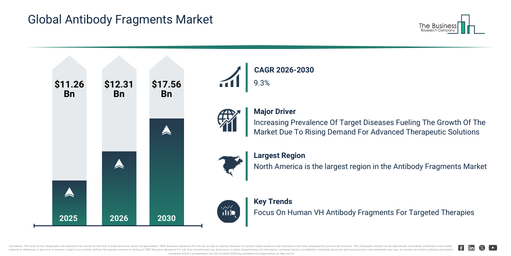
    The antibody fragments market size has experienced significant expansion in recent years. It is anticipated to grow from $11.26 billion in 2025 to $12.31 billion in 2026, reflecting a compound annual growth rate (CAGR) of 9.3%. This historical growth can be attributed to the advancement of monoclonal antibody technologies, the clinical success of antibody-derived therapies, the increasing research into cancer biologics, the broader expansion of diagnostic antibody usage, and enhanced investment in biologics research and development.

    The antibody fragments market is set for substantial growth over the next few years, with projections indicating it will reach $17.56 billion by 2030, growing at a compound annual growth rate (CAGR) of 9.3%. This expansion during the forecast period can be attributed to the rise in targeted cancer therapies, the widening scope of antibody fragment pipelines, an increasing demand for precision biologics, the expanding application in companion diagnostics, and innovations within recombinant antibody engineering. Prominent trends for this period include the rising adoption of fragment-based biologics, their increasing utilization in oncology and specific therapeutic interventions, a growing demand for high-penetration antibody formats, the broadening of diagnostic applications, and an enhanced focus on treatments designed for reduced immunogenicity.

    Get A Free Sample Report With In-Depth Market Insights:

    https://www.thebusinessresearchcompany.com/sample.aspx?id=23307&type=smp&utm_source=Blogs&utm_medium=Paid&utm_campaign=Oct_PR

    Antibody Fragments Market Industry Drivers: What’s Behind The Revenue Growth?

    The anticipated expansion of the antibody fragments market is driven by the rising occurrence of target diseases. These are specific illnesses or health conditions that medical interventions or research aim to prevent, manage, or cure. Key target diseases encompass cancer, infectious diseases, and bacterial infections. The elevated incidence of these target diseases primarily stems from unhealthy lifestyle choices and pollution, which weaken the body’s defenses, leading to chronic illnesses. Antibody fragments present highly specific, targeted, and adaptable therapeutic options for various diseases, often with reduced side effects compared to traditional therapies. Their capacity for customization and engineering to target specific ailments renders them an increasingly valuable tool in modern medicine. For instance, a January 2025 report from the American Cancer Society, a US-based non-profit organization, projects 2,041,910 new cancer cases and 618,120 cancer deaths in the United States in 2025. This represents an increase from 2,001,140 new cases and 611,720 deaths reported in 2024. Hence, the growing prevalence of target diseases is a key factor propelling the growth of the antibody fragments market.

    Antibody Fragments Market Segment Breakdown: Which Categories Lead On Revenue?

    The antibody fragments market covered in this report is segmented –

    1) By Type: F(ab) Fragments, F(ab’)2 Fragments, Single-Chain Variable Fragments (scFvs), Single Domain Antibody Fragments (sdAbs), Other Types

    2) By Specificity: Monoclonal Antibody, Polyclonal Antibody

    3) By Delivery Method: Intravenous (IV), Subcutaneous (SC)

    4) By Application: Cancer, Immunodeficiencies, Other Applications

    5) By End User: Pharmaceutical Companies, Biotechnology Companies, Research Institutions, Diagnostic Laboratories, Contract Research Organizations (CROs)

    Subsegments:

    1) By F(ab) Fragments: Recombinant F(ab) Fragments, Enzymatically Derived F(ab) Fragments

    2) By F(ab’)2 Fragments: Pepsin-Derived F(ab’)2 Fragments, Recombinant F(ab’)2 Fragments

    3) By Single-Chain Variable Fragments (scFvs): Bacterial-Produced Single-Chain Variable Fragments (scFvs), Mammalian Cell-Produced Single-Chain Variable Fragments (scFvs), Yeast-Produced Single-Chain Variable Fragments (scFvs)

    4) By Single Domain Antibody Fragments (sdAbs): Camelid-Derived Single Domain Antibody Fragments (sdAbs), Shark-Derived Single Domain Antibody Fragments (sdAbs), Synthetic Single Domain Antibody Fragments (sdAbs)

    5) By Other Types: Bispecific Antibody Fragments, Multispecific Antibody Fragments, Fusion Protein Antibody Fragments

    #Antibody Fragments Market Growth Trends: What’s Shaping The Future Outlook?

    Leading companies within the antibody fragments market are concentrating on advancing clinical trials to create novel products, including human VH antibody fragments. This endeavor aims to bolster the efficacy of targeted therapies and mitigate immunogenicity in addressing conditions like cancers, autoimmune disorders, and infectious diseases. A human VH antibody fragment represents the variable domain of a human antibody’s heavy chain, which possesses the ability to independently bind to antigens. It contributes to the formation of antibody fragments by acting as the crucial antigen-binding region, frequently employed either in isolation or combined with other molecules to produce compact, stable, and high-affinity therapeutic or diagnostic antibodies. As an illustration, Zai Lab Limited, a pharmaceutical company based in China, commenced a global Phase 2 clinical trial in May 2024 to assess the effectiveness and safety of ZL-1102. This ZL-1102 is a groundbreaking human VH antibody fragment (Humabody) designed to target IL-17. Its development focuses on a topical therapy for mild-to-moderate chronic plaque psoriasis, with the objective of enhancing treatment precision and diminishing systemic side effects and immunogenic reactions.

    Antibody Fragments Market Leading Players And Competitive Positioning

    Major companies operating in the antibody fragments market are Pfizer Inc., Johnson & Johnson Services Inc., F. Hoffmann-La Roche AG, AbbVie Inc., Sanofi S.A., AstraZeneca PLC, Novartis AG, GSK plc, Eli Lilly and Company, Amgen Inc., Boehringer Ingelheim International GmbH, Regeneron Pharmaceuticals Inc., Biogen Inc., UCB S.A., Bio-Rad Laboratories Inc., Genmab A/S, WuXi Biologics Co. Ltd., Abcam plc, MacroGenics Inc., Harbour BioMed, Creative Biolabs Inc.

    View The Full Antibody Fragments Market Report:

    https://www.thebusinessresearchcompany.com/report/antibody-fragments-global-market-report?utm_source=Blogs&utm_medium=Paid&utm_campaign=Oct_PR

    Antibody Fragments Market Top Region: Where Does Most Revenue Come From?

    North America was the largest region in the antibody fragments market in 2025. Asia-Pacific is expected to be the fastest-growing region in the forecast period. The regions covered in the antibody fragments market report are Asia-Pacific, South East Asia, Western Europe, Eastern Europe, North America, South America, Middle East, Africa.

    Reach Out To Our Team:

    The Business Research Company: https://www.thebusinessresearchcompany.com/

    Americas: +1 310-496-7795

    Asia: +44 7882 955267 & +91 8897263534

    Europe: +44 7882 955267

    Email us at: marketing@tbrc.info

    Follow us on:

    LinkedIn: https://in.linkedin.com/company/the-business-research-company

    YouTube: https://www.youtube.com/channel/UC24_fI0rV8cR5DxlCpgmyFQ

    Global Market Model: https://www.thebusinessresearchcompany.com/global-market-model
  • Antibody Drug Conjugates Contract Manufacturing Market Size In 2026: Growth Outlook And Forecast Through 2030

    Antibody Drug Conjugates Contract Manufacturing Market Size In 2026: Growth Outlook And Forecast Through 2030

    Featuring market attractiveness scoring, total addressable market sizing, company benchmarking matrices, interactive Excel dashboards, deeper supply chain intelligence, emerging startup tracking, and granular product-level insights, The Business Research Company’s 2026 market reports are built to deliver research that is both more actionable and more strategically valuable.

    Antibody Drug Conjugates Contract Manufacturing Market Expansion Outlook: What Revenue Opportunities Are Ahead?

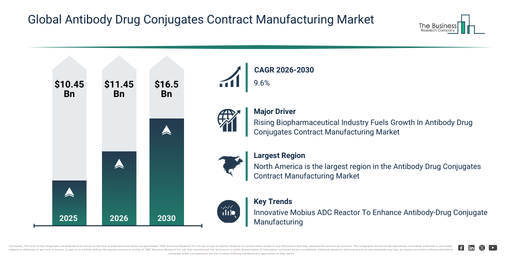
    The antibody drug conjugates contract manufacturing market has experienced robust expansion over recent years. The market is projected to expand from $10.45 billion in 2025 to $11.45 billion in 2026, demonstrating a compound annual growth rate (CAGR) of 9.5%. Historically, this expansion can be ascribed to factors such as growth in targeted cancer therapies, the complexity of adc production, limited in-house manufacturing capabilities, the early clinical success of adcs, and stringent regulatory compliance requirements.

    The antibody drug conjugates contract manufacturing market is set for substantial growth over the next few years. It is predicted to expand to $16.5 billion in 2030, achieving a compound annual growth rate (CAGR) of 9.6%. This anticipated growth is attributed to factors such as the broadening of oncology pipelines, an increase in approvals for ADC therapies, a rising need for commercial-scale production, investments in specialized manufacturing facilities, and enduring CDMO partnerships. Significant trends expected during this period include the escalating outsourcing of complex biologic manufacturing, an increasing demand for oncology-focused CDMO services, a greater emphasis on handling high-potency payloads, the expansion of clinical-stage ADC manufacturing, and a higher adoption of advanced conjugation technologies.

    Get A Free Sample Report With In-Depth Market Insights:

    https://www.thebusinessresearchcompany.com/sample.aspx?id=18954&type=smp&utm_source=Blogs&utm_medium=Paid&utm_campaign=Oct_PR

    Antibody Drug Conjugates Contract Manufacturing Market Growth Factors: What’s Supporting Expansion?

    The expanding biopharmaceutical industry is anticipated to fuel the progress of the antibody-drug conjugates contract manufacturing market in the future. This industry segment concentrates on creating, manufacturing, and bringing to market medicines originating from biological sources, employing biotechnology and molecular biology to develop novel therapies and interventions. Its growth is driven by swift progress in biotechnology, an increasing need for personalized medical solutions, and greater financial commitments to research and development for pioneering treatments and cures. Antibody-drug conjugates (ADCs) contract manufacturing aids the biopharmaceutical industry by providing expert production services essential for the advancement and market introduction of these sophisticated therapies. This allows biopharmaceutical companies to effectively ramp up manufacturing and maintain stringent quality controls, enabling them to focus on their primary research and development activities. As an illustration, data from the European Federation of Pharmaceutical Industries and Associations (EFPIA), a Belgium-based trade group representing Europe’s pharmaceutical sector, showed that total pharmaceutical output in Europe reached €390,000 million ($422,803 million) in 2023, a rise from €363,300 million ($393,857 million) in 2022. Consequently, the expanding biopharmaceutical industry is a key factor propelling the development of the antibody-drug conjugates contract manufacturing market.

    Antibody Drug Conjugates Contract Manufacturing Market Segmentation: How Does The Market Break Down By Category?

    The antibody drug conjugates contract manufacturing market covered in this report is segmented –

    1) By Type: Immunoglobulin G1(Igg1), Immunoglobulin G4(Igg4)

    2) By Linker: Cleavable Linker, Non-Cleavable Linker

    3) By Condition: Myeloma, Lymphoma, Breast Cancer, Other Conditions

    4) By Phase: Clinical, Commercial

    Subsegments:

    1) By Immunoglobulin G1 (IgG1): High-Effector Function ADCs, Fc-Mediated Cytotoxicity-Enabled ADCs, Stable Conjugation IgG1 ADCs, Oncology-Targeted IgG1 ADCs

    2) By Immunoglobulin G4 (IgG4): Reduced Effector Function ADCs, Low Immunogenicity IgG4 ADCs, Site-Specific Conjugation IgG4 ADCs, Precision-Targeted IgG4 ADCs

    Antibody Drug Conjugates Contract Manufacturing Market Industry Trends: What’s Reshaping Demand?

    Major companies operating in the antibody-drug conjugates contract manufacturing market are concentrating on developing innovative products, such as single-use reactors, with the goal of enhancing production flexibility, reducing contamination risks, and streamlining the manufacturing process, thereby ultimately improving the efficiency and scalability of ADC production. Single-use reactors are revolutionizing the field of antibody-drug conjugates (ADCs) contract manufacturing by providing an adaptable, effective, and contamination-free method for producing these intricate biologics. For instance, in September 2024, MilliporeSigma, a US-based life science company, introduced the Mobius ADC Reactor, which is a single-use reactor. The Mobius ADC Reactor is specifically engineered to manufacture antibody-drug conjugates (ADCs) efficiently. This reactor integrates advanced mixing and control technologies designed to streamline conjugation, enhance scalability, and improve consistency. Such an innovative reactor supports higher yields and better quality control in ADC production, addressing the growing demand for targeted cancer therapies that offer improved safety and efficacy.

    Antibody Drug Conjugates Contract Manufacturing Market Competitive Overview And Top Companies

    Major companies operating in the antibody drug conjugates contract manufacturing market are Lonza Group AG, Catalent Inc., Recipharm AB, Curia, KBI Biopharma, Alcami Corporation, BioVectra Inc., Axplora, Abzena PLC, Cerbios-Pharma SA, Aurigene Pharmaceutical Services Ltd., Sterling Pharma Solutions, Formosa Laboratories, Avid Bioservices Inc., EirGenix Inc., Creative Biolabs, Sartorius AG, Sigma-Aldrich, ImmunoGen Inc., Eli Lilly and Company

    View The Full Antibody Drug Conjugates Contract Manufacturing Market Report:

    https://www.thebusinessresearchcompany.com/report/antibody-drug-conjugates-contract-manufacturing-global-market-report?utm_source=Blogs&utm_medium=Paid&utm_campaign=Oct_PR

    Antibody Drug Conjugates Contract Manufacturing Market Regional Breakdown: Where Is Demand Concentrated?

    North America was the largest region in the antibody drug conjugates contract manufacturing market in 2025. Asia-Pacific is expected to be the fastest-growing region in the forecast period. The regions covered in the antibody drug conjugates contract manufacturing market report are Asia-Pacific, South East Asia, Western Europe, Eastern Europe, North America, South America, Middle East, Africa.

    Reach Out To Our Team:

    The Business Research Company: https://www.thebusinessresearchcompany.com/

    Americas: +1 310-496-7795

    Asia: +44 7882 955267 & +91 8897263534

    Europe: +44 7882 955267

    Email us at: marketing@tbrc.info

    Follow us on:

    LinkedIn: https://in.linkedin.com/company/the-business-research-company

    YouTube: https://www.youtube.com/channel/UC24_fI0rV8cR5DxlCpgmyFQ

    Global Market Model: https://www.thebusinessresearchcompany.com/global-market-model

  • Antibody Drug Conjugates Market Trends Supporting 23.3% CAGR Growth Through 2030

    Antibody Drug Conjugates Market Trends Supporting 23.3% CAGR Growth Through 2030

    Built to provide research that’s more actionable and strategically valuable, The Business Research Company’s 2026 market reports include market attractiveness analysis, total addressable market sizing, company benchmarking matrices, interactive Excel dashboards, broader supply chain intelligence, emerging startup tracking, and in-depth product insights.

    Antibody Drug Conjugates Market Growth Potential: How Will Market Size Shift Through 2030?

    The antibody drug conjugates market size has experienced significant expansion in recent years. It is anticipated to increase from $16.53 billion in 2025 to $20.28 billion in 2026, registering a compound annual growth rate (CAGR) of 22.7%. This historical growth can be attributed to the rising prevalence of cancer, advancements in monoclonal antibody technology, increased adoption of targeted therapies, a surge in clinical trials for oncology drugs, and supportive regulatory environments.

    The antibody drug conjugates market is anticipated to undergo significant expansion over the next few years. It is projected to achieve a valuation of $46.95 billion by 2030, exhibiting a compound annual growth rate (CAGR) of 23.3%. This growth during the forecast period can be attributed to a heightened demand for personalized medicine, the emergence of new antibody drug conjugates with superior safety profiles, the integration of artificial intelligence in drug discovery, penetration into developing markets, and strategic alliances between biotech and pharmaceutical companies. Noteworthy trends for the upcoming period include optimizing targeted drug delivery, advancing novel linker and payload technologies, exploring combination therapies with immunotherapy, broadening the scope of oncology indications, and developing individualized cancer treatment plans.

    Get A Free Sample Report With In-Depth Market Insights:

    https://www.thebusinessresearchcompany.com/sample.aspx?id=2569&type=smp&utm_source=Blogs&utm_medium=Paid&utm_campaign=Oct_PR

    Antibody Drug Conjugates Market Demand Drivers: What’s Powering Industry Growth?

    The rising volume of clinical trial studies is anticipated to drive the antibody drug conjugates market in the coming years. Clinical trials involve research investigations where volunteers participate to assess novel treatments, interventions, or tests for preventing, detecting, treating, or managing various medical conditions or diseases. Antibody-drug conjugates have become a crucial class of anti-cancer drugs, with a swift increase in the number of these conjugates progressing through clinical trials for treating solid tumors and blood-related cancers. For example, in December 2024, data from the Association of the British Pharmaceutical Industry (ABPI), a UK-based trade association, indicated a rise in the total number of industry clinical trials launched in the UK, from 411 trials in 2022 to 426 in 2023. Consequently, the growing number of clinical trial studies is fueling the antibody drug conjugates market.

    Antibody Drug Conjugates Market Segment Trends And Revenue Contributors

    The antibody drug conjugates market covered in this report is segmented –

    1) By Type: Monoclonal Antibodies, Linker, Drug/Toxin, Other Types

    2) By Product Brand: Adcertis, Kadcyla, Other Product Brands

    3) By Technology: Immunogen Technology, Seattle Genetics Technology, Immunomedics Technology, Other Technology

    4) By Application: Blood Cancer, Breast Cancer, Ovarian Cancer, Lung Cancer, Brain Tumor, Other Applications

    5) By End User: Hospital, Clinics, Other End Users

    Subsegments:

    1) By Monoclonal Antibodies: IgG-based Monoclonal Antibodies, IgM-based Monoclonal Antibodies, Bispecific Antibodies

    2) By Linker: Cleavable Linkers, Non-cleavable Linkers, Stable Linkers

    3) By Drug/Toxin: Cytotoxic Drugs, Chemotherapeutic Agents, Radioisotopes

    4) By Other Types: Enzyme-Targeted ADCs, Antibody-Drug Conjugates with Immune Modulators

    Antibody Drug Conjugates Market Innovation Trends: What Developments Are Reshaping The Industry?

    Major companies in the antibody-drug conjugates field are introducing innovative breakthrough conjugates, such as the first single-use reactor specifically designed for manufacturing antibody drug conjugates (ADCs). This initial single-use reactor, created for producing antibody-drug conjugates (ADCs), enables faster, more flexible, and contamination-free manufacturing of these targeted cancer therapies by removing the necessity for cleaning and sterilization between batches. For instance, in September 2024, Merck & Co., Inc., a US-based pharmaceutical company, unveiled the Mobius ADC reactor. To satisfy the increasing demand for more efficient and safer manufacturing processes for antibody-drug conjugates (ADCs), this inventive reactor addresses the unique challenges of ADC production, delivering a 70% boost in efficiency while substantially decreasing the dangers of cross-contamination and the laborious cleaning demanded by traditional stainless steel or glass reactors. The Mobius ADC Reactor incorporates Ultimus Film technology, improving bag strength, durability, and leak resistance to ensure excellent product quality.

    Antibody Drug Conjugates Market Competitive Landscape: Which Companies Lead The Industry?

    Major companies operating in the antibody drug conjugates market are Pfizer Inc., F. Hoffmann-La Roche Ltd., AbbVie Inc., AstraZeneca plc, Takeda Pharmaceutical Company Limited, Millennium Pharmaceuticals Inc., Gilead Sciences Inc., Daiichi Sankyo Company Limited, Sorrento Therapeutics Inc., Astellas Pharma Inc., Seagen Inc., Synthon BV, Genentech Inc., ImmunoGen Inc., Nordic Nanovector ASA, ADC Therapeutics SA, Immunomedics Inc., Mersana Therapeutics Inc., Heidelberg Pharma AG, Celldex Therapeutics Inc., Oxford BioTherapeutics, Concortis Biotherapeutics Corp., Antikor BioPharma Ltd., Eisai Co. Ltd., Merck KGaA

    View The Full Antibody Drug Conjugates Market Report:

    https://www.thebusinessresearchcompany.com/report/antibody-drug-conjugates-global-market-report?utm_source=Blogs&utm_medium=Paid&utm_campaign=Oct_PR

    Antibody Drug Conjugates Market Geographic Landscape: Which Region Dominates Industry Growth?

    North America was the largest region in the antibody-drug conjugates (ADCs) market in 2025. The Middle East is expected to be the fastest-growing region in the global antibody drug conjugates market share during the forecast period. The regions covered in the antibody drug conjugates market report are Asia-Pacific, South East Asia, Western Europe, Eastern Europe, North America, South America, Middle East, Africa.

    Reach Out To Our Team:

    The Business Research Company: https://www.thebusinessresearchcompany.com/

    Americas: +1 310-496-7795

    Asia: +44 7882 955267 & +91 8897263534

    Europe: +44 7882 955267

    Email us at: marketing@tbrc.info

    Follow us on:

    LinkedIn: https://in.linkedin.com/company/the-business-research-company

    YouTube: https://www.youtube.com/channel/UC24_fI0rV8cR5DxlCpgmyFQ

    Global Market Model: https://www.thebusinessresearchcompany.com/global-market-model
  • Antibody Discovery Market Forecast Highlights A $15.79 Billion Opportunity For Industry Participants

    Antibody Discovery Market Forecast Highlights A $15.79 Billion Opportunity For Industry Participants

    Backed by market attractiveness analysis, total addressable market sizing, company benchmarking matrices, interactive Excel dashboards, wider supply chain intelligence, emerging startup coverage, and detailed product-level insights, The Business Research Company’s 2026 market reports are designed to offer research that is more actionable and strategically valuable than ever.

    Antibody Discovery Market Value Analysis: What Growth Lies Ahead Over The Forecast Period?

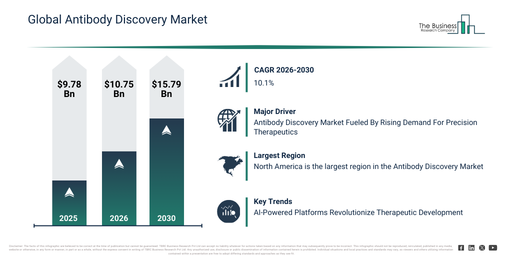
    The antibody discovery market size has shown significant expansion in recent years. It is anticipated to increase from $9.78 billion in 2025 to $10.75 billion in 2026, achieving a compound annual growth rate (CAGR) of 9.8%. The historical growth of this market can be linked to heightened R&D investments in antibody discovery, the growing occurrence of infectious and chronic diseases, innovations in hybridoma technology, government financial support for biotechnology research, and collaborations between academic institutions and pharmaceutical entities.

    The antibody discovery market size is projected to undergo substantial expansion over the coming years. This market is forecasted to reach $15.79 billion by 2030, exhibiting a compound annual growth rate (CAGR) of 10.1%. Several factors are driving this anticipated growth during the forecast period, including an increased demand for personalized medicine, the integration of AI and ML in drug discovery processes, the expanding biologics market, the incorporation of high-throughput screening platforms, and a heightened emphasis on immunotherapy and targeted therapies. Notable trends expected in this period encompass advancements in high-throughput screening techniques, innovations in monoclonal antibodies, the development of personalized antibody therapeutics, the evolution of multi-specific antibodies, and breakthroughs in synthetic antibody engineering.

    Get A Free Sample Report With In-Depth Market Insights:

    https://www.thebusinessresearchcompany.com/sample.aspx?id=13783&type=smp&utm_source=Blogs&utm_medium=Paid&utm_campaign=Oct_PR

    Antibody Discovery Market Growth Drivers: What’s Behind The Acceleration?

    The increasing requirement for precision therapeutics is projected to fuel the expansion of the antibody discovery market in the future. Precision therapeutics, also known as personalized therapeutics, refers to the tailoring of medical treatment plans and interventions to the individual characteristics of each patient. Within precision therapeutics, antibody discovery facilitates the development of targeted therapies, such as monoclonal antibodies, which are designed to interact specifically and precisely with disease-related molecules or cells for more effective and personalized treatment. For example, in March 2024, according to the IQVIA Holdings Inc., a US-based provider of advanced analytics, technology solutions, and clinical research services for the life sciences and healthcare industries, global spending on cell and gene therapies surged to $5.9 billion in 2023, marking an increase of 38% from 2022. Consequently, the growing need for precision therapeutics will drive the growth of the antibody discovery market.

    Antibody Discovery Market Segment Analysis Spotlighting Growth Areas

    The antibody discovery market covered in this report is segmented –

    1) By Methods: Phage Display, Hybridoma, Other Methods

    2) By Antibody Type: Humanized Antibody, Human Antibody, Chimeric Antibody, Murine Antibody

    3) By End Users: Pharmaceutical And Biotechnology Industry, Research Laboratory, Academic Laboratory

    Subsegments:

    1) By Phage Display: Selection And Screening Techniques, Optimization Methods

    2) By Hybridoma: Monoclonal Antibody Production, Screening And Selection Processes

    3) By Other Methods: Transgenic Mouse Technology, B-Cell Engineering, Single-Cell Sorting Techniques

    Antibody Discovery Market Trends: What’s Defining The Industry’s Next Phase?

    Leading companies within the antibody discovery market are implementing innovative technologies, such as AI-powered computational antibody drug discovery platforms, to boost the efficiency and accuracy of antibody development. An AI-based computational antibody drug discovery platform utilizes artificial intelligence and computational methods to accelerate the identification and optimization of therapeutic antibodies. For instance, in October 2023, SwiftPharma BV, a Belgium-based entity specializing in recombinant proteins derived from a unique plant-based system, launched an AI-driven antibody discovery platform. This advanced tool integrates artificial intelligence, big data, machine learning, and phage display techniques to quickly predict high-specificity and high-affinity antibody-antigen binding. This methodology, which is comparable to natural language processing, generates a wide array of antibody variations, enabling SwiftPharma to construct extensive antibody libraries effectively. This sophisticated system significantly speeds up the identification of prospective antibody drugs.

    Antibody Discovery Market Leading Companies: Who Holds The Strongest Market Presence?

    Major companies operating in the antibody discovery market are Charles River Laboratories, WuXi Biologics, Genmab A/S, Evotec, ChemPartner, Aragen Life Science Pvt. Ltd., GenScript Technology Corporation, Biocytogen, Twist Bioscience, BioDuro-Sundia, Fairjourney Biologics S.A., Harbour BioMed, Rockland Immunochemicals, Creative Biolabs, Synbio Technologies, ImmunoPrecise, Ablexis, Myrio Therapeutics, Antibody Solutions, MabSilico

    View The Full Antibody Discovery Market Report:

    https://www.thebusinessresearchcompany.com/report/antibody-discovery-global-market-report?utm_source=Blogs&utm_medium=Paid&utm_campaign=Oct_PR

    Antibody Discovery Market Largest Region: Which Geography Holds The Highest Market Share?

    North America was the largest region in the antibody discovery market in 2025. Asia-Pacific is expected to be the fastest-growing region in the forecast period. The regions covered in the antibody discovery market report are Asia-Pacific, South East Asia, Western Europe, Eastern Europe, North America, South America, Middle East, Africa.

    Reach Out To Our Team:

    The Business Research Company: https://www.thebusinessresearchcompany.com/

    Americas: +1 310-496-7795

    Asia: +44 7882 955267 & +91 8897263534

    Europe: +44 7882 955267

    Email us at: marketing@tbrc.info

    Follow us on:

    LinkedIn: https://in.linkedin.com/company/the-business-research-company

    YouTube: https://www.youtube.com/channel/UC24_fI0rV8cR5DxlCpgmyFQ

    Global Market Model: https://www.thebusinessresearchcompany.com/global-market-model
  • Antibiotics Market Analysis: How The Industry Is Evolving Toward A $115.81 Billion Future

    Antibiotics Market Analysis: How The Industry Is Evolving Toward A $115.81 Billion Future

    Featuring market attractiveness scoring, total addressable market sizing, company benchmarking matrices, interactive Excel dashboards, deeper supply chain intelligence, emerging startup tracking, and granular product-level insights, The Business Research Company’s 2026 market reports are built to deliver research that is both more actionable and more strategically valuable.

    Antibiotics Market Size Forecast: How Big Could The Market Get By 2030?

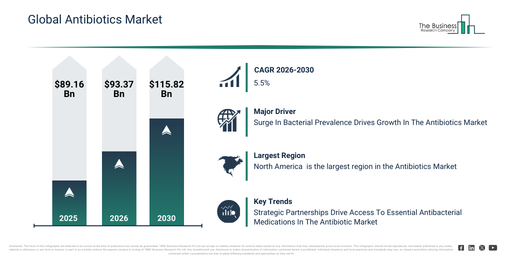
    The antibiotics market has experienced consistent growth over recent years. Its expansion is projected from $89.16 billion in 2025 to reach $93.37 billion by 2026, demonstrating a compound annual growth rate (CAGR) of 4.7%. Historically, this growth has been fueled by factors such as the increasing occurrence of bacterial infections, a heightened demand for broad-spectrum antibiotics, the development of hospital infrastructure, progress in generic drug production, and various government health programs.

    The size of the antibiotics market is projected to experience substantial expansion over the upcoming years. This market is predicted to reach $115.82 billion by 2030, demonstrating a compound annual growth rate (CAGR) of 5.5%. This anticipated growth during the forecast period is primarily driven by factors such as the escalating issue of antibiotic resistance, a heightened emphasis on precision medicine, the expansion of personalized healthcare solutions, innovations in drug delivery technologies, and the widening reach of emerging markets. Key trends anticipated during this period encompass effective antibiotic resistance management strategies, the creation of new antibiotic treatments, the adoption of personalized antibiotic therapies, the broadening of hospital and retail distribution channels, and an uptick in measures for outbreak and infection control.

    Get A Free Sample Report With In-Depth Market Insights:

    https://www.thebusinessresearchcompany.com/sample.aspx?id=11923&type=smp&utm_source=Blogs&utm_medium=Paid&utm_campaign=Oct_PR

    Antibiotics Market Growth Factors Behind Sustained Expansion

    The growing incidence of bacterial infections is projected to propel the antibiotics market forward. These infections, originating from pathogenic bacteria, can lead to severe conditions such as cholera, typhoid, and sepsis, which necessitate effective antibiotic treatment to avert complications and mortalities. Antibiotics are highly beneficial in managing and preventing bacterial diseases by inhibiting bacterial growth. For instance, in December 2023, preliminary data from Member States, as reported by the World Health Organization (WHO), a Switzerland-based intergovernmental organization, indicated that as of 15 November 2023, the number of reported cases had surpassed those of 2022, totaling over 610,000 cases and 3,500 deaths, which resulted in a case fatality rate (CFR) of 0.6%. Consequently, the increasing prevalence of bacterial infections is fueling the expansion of the antibiotics market.

    Antibiotics Market Segment Performance And Emerging Opportunities

    The antibiotics market covered in this report is segmented –

    1) By Drug Class: Penicillin, Cephalosporin, Aminoglycosides, Tetracycline, Macrolides, Fluoroquinolones, Sulfonamides, Other Classes

    2) By Spectrum Of Activity: Broad-spectrum Antibiotic, Narrow-spectrum Antibiotic

    3) By Route Of Administration: Oral, Intravenous, Other Routes

    4) By Distribution Channel: Hospital Pharmacy, Retail Pharmacy, Online Pharmacy

    5) By Application: Skin Infections, Respiratory Infections, Urinary Tract Infections, Septicemia, Ear Infections, Gastrointestinal Infections, Other Applications

    Subsegments:

    1) By Penicillin: Natural Penicillins, Aminopenicillins, Penicillinase-resistant Penicillins, Extended-spectrum Penicillins

    2) By Cephalosporin: First-generation, Second-generation, Third-generation, Fourth-generation, Fifth-generation

    3) By Aminoglycosides: Gentamicin, Tobramycin, Amikacin, Neomycin

    4) By Tetracycline: Tetracycline, Doxycycline, Minocycline, Oxytetracycline

    5) By Macrolides: Erythromycin, Azithromycin, Clarithromycin

    6) By Fluoroquinolones: Ciprofloxacin, Levofloxacin, Moxifloxacin, Ofloxacin

    7) By Sulfonamides: Sulfamethoxazole, Sulfadiazine, Sulfasalazine

    8) By Other Classes: Glycopeptides, Lipopeptides, Streptogramins, Polymyxins

    Antibiotics Market Industry Trends Fueling Future Revenue Growth

    Leading companies in the antibiotics market are adopting a strategic partnership approach to enhance the availability of novel antibacterial drugs. Strategic partnerships involve a process where companies leverage each other’s strengths and resources to achieve mutual benefits and success. For instance, in June 2024, Orchid Pharma Limited, an India-based pharmaceutical company, announced a partnership with Cipla Limited, another India-based pharmaceutical company, to efficiently launch and distribute Cefepime-Enmetazobactam in India. This collaboration brings together Orchid Pharma’s innovative drug development capabilities with Cipla’s extensive distribution network to introduce Cefepime-Enmetazobactam, an antibiotic approved for treating complicated urinary tract infections and pneumonia. The aim is to improve access to this critical medication across India, while also addressing the increasing challenge of antimicrobial resistance (AMR) and promoting responsible antibiotic stewardship among healthcare providers.

    Antibiotics Market Key Players: Which Companies Lead Industry Competition?

    Major companies operating in the antibiotics market are Pfizer Inc., Johnson & Johnson, F. Hoffmann-La Roche AG, Merck & Co Inc., AbbVie Inc., Bayer AG, Novartis AG, Sanofi SA, Bristol Myers Squibb (BMS), AstraZeneca plc, Abbott Laboratories, GlaxoSmithKline plc (GSK), Eli Lilly and Company, Gilead Sciences Inc., Boehringer Ingelheim, Viatris Inc, Teva Pharmaceutical Industries Ltd., Astellas Pharma Inc., Daiichi Sankyo Company, Sun Pharmaceutical Industries Limited, Cipla Ltd., Ferring Pharmaceuticals, Hikma Pharmaceuticals plc, Lupin Pharmaceuticals Inc., Torrent Pharmaceuticals Ltd., Glenmark Pharmaceuticals Limited, Basilea Pharmaceutica Ltd., Paratek Pharmaceuticals Inc., Spero Therapeutics Inc., Nabriva Therapeutics Plc

    View The Full Antibiotics Market Report:

    https://www.thebusinessresearchcompany.com/report/antibiotics-global-market-report?utm_source=Blogs&utm_medium=Paid&utm_campaign=Oct_PR

    Antibiotics Market Regional Analysis: Which Region Leads By Revenue?

    North America was the largest region in the antibiotics market in 2025. Asia-Pacific is expected to be the fastest-growing region in the forecast period. The regions covered in the antibiotics market report are Asia-Pacific, South East Asia, Western Europe, Eastern Europe, North America, South America, Middle East, Africa.

    Reach Out To Our Team:

    The Business Research Company: https://www.thebusinessresearchcompany.com/

    Americas: +1 310-496-7795

    Asia: +44 7882 955267 & +91 8897263534

    Europe: +44 7882 955267

    Email us at: marketing@tbrc.info

    Follow us on:

    LinkedIn: https://in.linkedin.com/company/the-business-research-company

    YouTube: https://www.youtube.com/channel/UC24_fI0rV8cR5DxlCpgmyFQ

    Global Market Model: https://www.thebusinessresearchcompany.com/global-market-model