Month: October 2026

  • Point Of Care (POC) Tuberculosis (TB) Ultra-Sensitive Nucleic Acid Amplification Test (NAAT) Market To Witness 13.5% CAGR Growth Through 2030: Key Industry Drivers

    Point Of Care (POC) Tuberculosis (TB) Ultra-Sensitive Nucleic Acid Amplification Test (NAAT) Market To Witness 13.5% CAGR Growth Through 2030: Key Industry Drivers

    Featuring market attractiveness scoring, total addressable market sizing, company benchmarking matrices, interactive Excel dashboards, deeper supply chain intelligence, emerging startup tracking, and granular product-level insights, The Business Research Company’s 2026 market reports are built to deliver research that is both more actionable and more strategically valuable.

    Point Of Care (POC) Tuberculosis (TB) Ultra-Sensitive Nucleic Acid Amplification Test (NAAT) Market Size, Value And Growth Trajectory Through 2030

    The market size for the point of care (POC) tuberculosis (TB) ultra-sensitive nucleic acid amplification test (NAAT) has seen rapid expansion recently. It is projected to increase from $0.88 billion in 2025 to $1 billion in 2026, demonstrating a compound annual growth rate (CAGR) of 13.3%. This historical growth can be attributed to several factors, including the rising prevalence of tuberculosis, the adoption of conventional molecular diagnostics, increasing government health initiatives, the expansion of hospital networks, and a growing awareness of the benefits of early diagnosis.

    The point of care (POC) tuberculosis (TB) ultra-sensitive nucleic acid amplification test (NAAT) market is projected for swift expansion in the coming years. By 2030, its valuation is anticipated to reach $1.66 billion, exhibiting a compound annual growth rate (CAGR) of 13.5%. This growth during the forecast period is propelled by factors such as the rising demand for ultra-sensitive point-of-care testing, the incorporation of AI into diagnostic assays, the expansion of decentralized healthcare services, increased investment in swift nucleic acid amplification technologies, and greater funding for tuberculosis control initiatives. Key developments expected during this period involve rapid point-of-care testing, highly sensitive nucleic acid amplification, automated diagnostic platforms, compact and portable testing devices, and seamless integration with electronic health records.

    Get A Free Sample Report With In-Depth Market Insights:

    https://thebusinessresearchcompany.com/sample_request?id=89211925&type=smp&name=Point%20Of%20Care%20%28POC%29%20Tuberculosis%20%28TB%29%20Ultra-Sensitive%20Nucleic%20Acid%20Amplification%20Test%20%28NAAT%29%20Market%20Report%202026&utm_source=Blogs&utm_medium=Paid&utm_campaign=Oct_PR

    Point Of Care (POC) Tuberculosis (TB) Ultra-Sensitive Nucleic Acid Amplification Test (NAAT) Market Demand Drivers: What’s Powering Industry Growth?

    The anticipated expansion of the point of care (POC) tuberculosis (TB) ultra-sensitive nucleic acid amplification test (NAAT) market is linked to the growing occurrence of infectious diseases. These conditions are defined as illnesses arising from pathogenic microbes like bacteria, viruses, parasites, or fungi, which can transmit directly or indirectly among people. The increasing density of the global population is a key factor behind the heightened prevalence of infectious diseases, as it boosts transmission risks and facilitates disease dissemination. Point-of-care tuberculosis ultra-sensitive nucleic acid amplification testing contributes to managing the increasing burden of infectious diseases by offering swift, highly sensitive, and decentralized pathogen detection, thereby enhancing early diagnosis and improving disease control initiatives. As an illustration, the UK Health Security Agency, a government health body in the UK, reported in March 2025 that tuberculosis instances in England rose by 13% in 2024, totaling 5,480 cases, up from 4,850 cases in 2023. Consequently, the expanding incidence of infectious diseases is propelling the market for the point of care (POC) tuberculosis (TB) ultra-sensitive nucleic acid amplification test (NAAT).

    Point Of Care (POC) Tuberculosis (TB) Ultra-Sensitive Nucleic Acid Amplification Test (NAAT) Market Segment Performance And Emerging Opportunities

    The point of care (POC) tuberculosis (TB) ultra-sensitive nucleic acid amplification test (NAAT) market covered in this report is segmented –

    1) By Technology: Polymerase Chain Reaction Based Nucleic Acid Amplification Testing, Isothermal Amplification, Other Technologies

    2) By Product Type: Instruments, Reagents And Consumables, Software

    3) By Sample Type: Sputum, Blood, Urine, Other Sample Types

    4) By End User: Hospitals And Clinics, Diagnostic Laboratories, Research Institutes, Other End Users

    Subsegments:

    1) By Polymerase Chain Reaction Based Nucleic Acid Amplification Testing: Real Time Polymerase Chain Reaction, Digital Polymerase Chain Reaction, Multiplex Polymerase Chain Reaction, Nested Polymerase Chain Reaction

    2) By Isothermal Amplification: Loop Mediated Isothermal Amplification, Recombinase Polymerase Amplification, Nucleic Acid Sequence Based Amplification, Strand Displacement Amplification

    3) By Other Technologies: Transcription Mediated Amplification, Helicase Dependent Amplification, Rolling Circle Amplification, Branched DNA Amplification

    Point Of Care (POC) Tuberculosis (TB) Ultra-Sensitive Nucleic Acid Amplification Test (NAAT) Market Innovation Trends: What Developments Are Reshaping The Industry?

    Major companies in the point of care (POC) tuberculosis (TB) ultra-sensitive nucleic acid amplification test (NAAT) market are focusing on regulatory validation and international prequalification programs to improve quality assurance, accelerate global adoption, and enhance access to highly sensitive diagnostic solutions. Prequalification is a regulatory assessment that evaluates in vitro diagnostic products for compliance with international standards of quality, safety, and performance, thereby enabling procurement by global health agencies and deployment in resource-limited settings. For instance, in December 2024, the World Health Organization, a Switzerland-based intergovernmental organization, announced the first prequalification of an Xpert MTB/RIF, an ultra-tuberculosis diagnostic test, under its regulatory assessment framework. This milestone supports the expansion of reliable and rapid TB detection tools, particularly across low- and middle-income countries. Leveraging advanced nucleic acid amplification technology, cartridge-based automated systems, and rapid result turnaround capabilities, the solution facilitates decentralized testing, improves early case detection, and strengthens drug-resistance identification. It is specifically engineered for deployment in primary healthcare facilities and remote regions with limited laboratory infrastructure, thus enhancing surveillance capacity, reducing diagnostic delays, and supporting global tuberculosis control and antimicrobial resistance management initiatives.

    Point Of Care (POC) Tuberculosis (TB) Ultra-Sensitive Nucleic Acid Amplification Test (NAAT) Market Top Companies Driving Competitive Growth

    Major companies operating in the point of care (POC) tuberculosis (TB) ultra-sensitive nucleic acid amplification test (NAAT) market are (POC) tuberculosis (TB) ultra-sensitive nucleic acid amplification test (NAAT) market are F. Hoffmann-La Roche AG, Abbott Laboratories, Danaher Corporation, QIAGEN N.V., SD BIOSENSOR Inc., Eiken Chemical Co. Ltd, Oxford Nanopore Technologies Ltd, Molbio Diagnostics Limited, Sansure Biotech Inc., CapitalBio Corporation, QuantuMDx Group Limited, Tata Medical Diagnostics Limited, Ustar Biotechnologies, Mylab Discovery Solutions Private Limited, GenoScreen SAS, Co-Diagnostics Inc., Longhorn Vaccines Diagnostics LLC, Akonni Biosystems Inc., Zeesan Biotech Co. Ltd, Redcliffe labs.

    View The Full Point Of Care (POC) Tuberculosis (TB) Ultra-Sensitive Nucleic Acid Amplification Test (NAAT) Market Report:

    https://thebusinessresearchcompany.com/report/point-of-care-poc-tuberculosis-tb-ultra-sensitive-nucleic-acid-amplification-test-naat-market-report?utm_source=Blogs&utm_medium=Paid&utm_campaign=Oct_PR

    Point Of Care (POC) Tuberculosis (TB) Ultra-Sensitive Nucleic Acid Amplification Test (NAAT) Market Global Footprint: Which Region Leads The Market?

    North America was the largest region in the point of care (POC) tuberculosis (TB) ultra-sensitive nucleic acid amplification test (NAAT) market in 2025. Asia-Pacific is expected to be the fastest-growing region in the forecast period. The regions covered in the point of care (POC) tuberculosis (TB) ultra-sensitive nucleic acid amplification test (NAAT) market report are Asia-Pacific, South East Asia, Western Europe, Eastern Europe, North America, South America, Middle East, Africa.

    Reach Out To Our Team:

    The Business Research Company: https://www.thebusinessresearchcompany.com/

    Americas: +1 310-496-7795

    Asia: +44 7882 955267 & +91 8897263534

    Europe: +44 7882 955267

    Email us at: marketing@tbrc.info

    Follow us on:

    LinkedIn: https://in.linkedin.com/company/the-business-research-company

    YouTube: https://www.youtube.com/channel/UC24_fI0rV8cR5DxlCpgmyFQ

    Global Market Model: https://www.thebusinessresearchcompany.com/global-market-model
  • Photoaging Treatment Market Forecast To Reach $8.96 Billion By 2030: Key Growth Drivers And Industry Trends

    Photoaging Treatment Market Forecast To Reach $8.96 Billion By 2030: Key Growth Drivers And Industry Trends

    Built to provide research that’s more actionable and strategically valuable, The Business Research Company’s 2026 market reports include market attractiveness analysis, total addressable market sizing, company benchmarking matrices, interactive Excel dashboards, broader supply chain intelligence, emerging startup tracking, and in-depth product insights.

    Photoaging Treatment Market Revenue Growth On Track For A 7.6% CAGR Through 2030

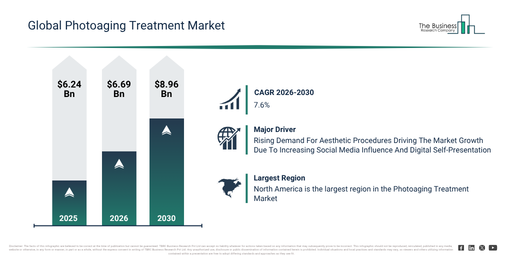
    The photoaging treatment market has experienced robust expansion in recent years. It is forecast to grow from $6.24 billion in 2025 to $6.69 billion in 2026, demonstrating a compound annual growth rate (CAGR) of 7.3%. This historical growth can be attributed to several factors including rising awareness of photoaging effects, increasing demand for cosmetic dermatology, the adoption of laser and light therapies, the expansion of aesthetic clinics, and increased consumer spending on skincare.

    The photoaging treatment market is set to experience significant expansion in the coming years, with its size anticipated to reach $8.96 billion in 2030, demonstrating a compound annual growth rate (CAGR) of 7.6%. This projected growth during the forecast period is propelled by the increasing adoption of AI-driven diagnostics, the development of home-use anti-photoaging products, an uptick in minimally invasive procedures, the integration of wearable skin monitoring devices, and the wider availability of personalized treatment plans. Prominent trends expected in this timeframe include AI-powered skin analysis, innovations in non-invasive treatments, tailored photoaging therapies, the incorporation of teledermatology platforms, and advanced collagen stimulation techniques.

    Get A Free Sample Report With In-Depth Market Insights:

    https://thebusinessresearchcompany.com/sample_request?id=62697609&type=smp&name=Photoaging%20Treatment%20Market%20Report%202026&utm_source=Blogs&utm_medium=Paid&utm_campaign=Oct_PR

    Photoaging Treatment Market Growth Backed By Core Demand Fundamentals

    The growing need for aesthetic procedures is projected to fuel the expansion of the photoaging treatment market moving forward. These procedures encompass medical or cosmetic interventions aimed at improving physical appearance and tackling visible signs of aging. The surge in demand for aesthetic services stems largely from the impact of social media and the desire for optimal digital self-representation, as individuals strive to present their best selves in online content. This, in turn, amplifies interest in appearance-enhancing therapies. The heightened understanding and acceptance of aesthetic interventions stimulate the need for photoaging treatment options that diminish wrinkles, sun damage, and age spots. For instance, the American Society of Plastic Surgeons, a US-based professional body, reported in June 2024 that liposuction remained the most sought-after plastic surgery in 2023, with 347,782 procedures performed, marking a 7% rise from 2022. Consequently, the increasing demand for aesthetic procedures is a key factor driving the growth of the photoaging treatment market. The expanding exposure to ultraviolet (UV) radiation is anticipated to boost the growth of the photoaging treatment market moving forward. UV radiation exposure refers to the quantity of UV rays, from either natural sunlight or artificial sources, that reach and impact the skin and eyes. This rise in UV exposure is linked to a greater participation in outdoor activities, as extended periods spent outside without adequate sun protection lead to higher overall UV radiation absorption. Photoaging treatments play a role in managing UV radiation exposure by mending and lessening visible skin damage, such as wrinkles, hyperpigmentation, and loss of skin firmness, all resulting from prolonged UV exposure. As an illustration, the Australian Bureau of Statistics, an Australia-based government entity, indicated in September 2024 that approximately 60.6% of Australians spent over 15 minutes outdoors during peak UV times between November 2023 and February 2024. During these high-UV periods, men were more prone to exposure (64.8%) compared to women (56.6%). Thus, the increasing ultraviolet radiation exposure is a significant factor propelling the photoaging treatment market’s expansion.

    Photoaging Treatment Market Segmentation And Category Overview

    The photoaging treatment market covered in this report is segmented –

    1) By Treatment Type: Laser And Light Based Therapies, Chemical Peels And Exfoliation, Injectables And Fillers, Topical And Home Use Treatments, Microneedling And Energy Devices, Other Treatment Types

    2) By Target Concern: Fine Lines And Wrinkles, Hyperpigmentation And Melasma, Texture And Enlarged Pores, Actinic Damage And Roughness, Photo Induced Skin Laxity

    3) By Sales Channel: Retail And Electronic Commerce, Dermatology Clinics, Aesthetic Centers And Medical Spas, Pharmacies, Hospital Outpatient Departments

    4) By Application: Pigmentation, Wrinkles And Fine Lines, Laxity, Vascular Lesions

    5) By End User: Dermatology Clinics And Medical Spas, Hospitals And Cosmetic Surgery Centers, Beauty Salons And Wellness Centers, Home And Over The Counter Consumers, Other End Users

    Subsegments:

    1) By Laser And Light Based Therapies: Ablative Laser Treatments, Non Ablative Laser Treatments, Fractional Laser Treatments, Intense Pulsed Light Treatments, Photodynamic Light Treatments, Skin Resurfacing Laser Treatments

    2) By Chemical Peels And Exfoliation: Superficial Chemical Peels, Medium Depth Chemical Peels, Deep Chemical Peels, Enzyme Based Peels, Glycolic Acid Peels, Salicylic Acid Peels, Mechanical Exfoliation Treatments

    3) By Injectables And Fillers: Botulinum Toxin Treatments, Hyaluronic Acid Fillers, Collagen Stimulating Fillers, Calcium Based Fillers, Polymeric Dermal Fillers, Skin Booster Injections

    4) By Topical And Home Use Treatments: Retinoid Based Creams, Antioxidant Based Serums, Peptide Based Treatments, Growth Factor Based Creams, Sunscreen And Photoprotection Products, Moisturizing And Barrier Repair Creams, Pigmentation Correcting Treatments

    5) By Microneedling And Energy Devices: Traditional Microneedling Treatments, Radiofrequency Assisted Microneedling, Ultrasound Based Skin Tightening, Thermal Energy Based Devices, Home Use Microneedling Devices, Combination Energy Treatments

    6) By Other Treatment Types: Dermabrasion Treatments, Oxygen Based Facial Treatments, Platelet Rich Plasma Treatments, Cryotherapy Based Treatments, Skin Tightening Procedures, Combination Therapy Treatments

    Photoaging Treatment Market Competitive Landscape: Who Leads The Industry?

    Major companies operating in the photoaging treatment market are Johnson & Johnson, Procter & Gamble Company, Unilever PLC, L’Oréal S.A., Beiersdorf AG, The Estée Lauder Companies Inc., Shiseido Company Limited, Shanghai Fosun Pharmaceutical Group Co. Ltd., BTL Industries Inc., Merz Pharma GmbH & Co. KGaA, IBSA Institut Biochimique SA, InMode Ltd., ISDIN SA, Evolus Inc., Medytox Inc., Bain Capital LP, Sciton Inc., Venus Concept Inc., Aerolase Corp., Teoxane SA, Dermaceutic Laboratoire SA.

    View The Full Photoaging Treatment Market Report:

    https://thebusinessresearchcompany.com/report/photoaging-treatment-market-report?utm_source=Blogs&utm_medium=Paid&utm_campaign=Oct_PR

    Photoaging Treatment Market Geographic Landscape: Which Region Dominates Industry Growth?

    North America was the largest region in the photoaging treatment market in 2025. Asia-Pacific is expected to be the fastest-growing region in the forecast period. The regions covered in the photoaging treatment market report are Asia-Pacific, South East Asia, Western Europe, Eastern Europe, North America, South America, Middle East, Africa.

    Reach Out To Our Team:

    The Business Research Company: https://www.thebusinessresearchcompany.com/

    Americas: +1 310-496-7795

    Asia: +44 7882 955267 & +91 8897263534

    Europe: +44 7882 955267

    Email us at: marketing@tbrc.info

    Follow us on:

    LinkedIn: https://in.linkedin.com/company/the-business-research-company

    YouTube: https://www.youtube.com/channel/UC24_fI0rV8cR5DxlCpgmyFQ

    Global Market Model: https://www.thebusinessresearchcompany.com/global-market-model
  • Pharmaceutical Supply Chain Integrity Market Research 2026: Market Size, Trends, Segments And Growth Forecast

    Pharmaceutical Supply Chain Integrity Market Research 2026: Market Size, Trends, Segments And Growth Forecast

    Backed by market attractiveness analysis, total addressable market sizing, company benchmarking matrices, interactive Excel dashboards, wider supply chain intelligence, emerging startup coverage, and detailed product-level insights, The Business Research Company’s 2026 market reports are designed to offer research that is more actionable and strategically valuable than ever.

    Pharmaceutical Supply Chain Integrity Market Value Growth And Long-Term Outlook

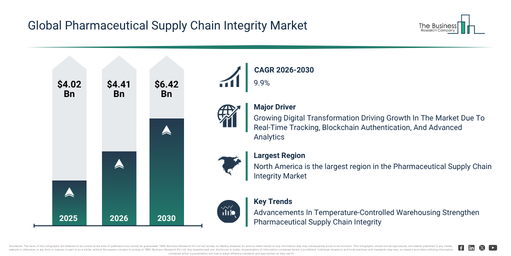
    The pharmaceutical supply chain integrity market has seen substantial growth in recent years. It is projected to expand from $4.02 billion in 2025 to $4.41 billion in 2026, exhibiting a compound annual growth rate (CAGR) of 9.6%. The market’s expansion in previous periods is linked to a rise in counterfeit drug incidents, various regulatory compliance mandates, the growth of international pharmaceutical trade, the widespread adoption of barcode and serialization technology, and an increasing demand for supply chain transparency.

    The pharmaceutical supply chain integrity market is projected for significant expansion in the coming years. Its valuation is anticipated to reach $6.42 billion by 2030, exhibiting a compound annual growth rate (CAGR) of 9.9%. This anticipated increase over the forecast period is driven by factors such as the integration of AI-powered monitoring systems, the deployment of cloud-based track and trace implementation, the broadening scope of healthcare and pharmaceutical logistics, the incorporation of IoT-enabled devices, and the application of predictive analytics for supply chain integrity. Key developments expected during this forecast period include the widespread use of real-time track and trace solutions, enhancements in cold chain monitoring, the implementation of automated serialization processes, connectivity with ERP and SCM systems, and proactive risk management for supply chain.

    Get A Free Sample Report With In-Depth Market Insights:

    https://thebusinessresearchcompany.com/sample_request?id=20163402&type=smp&name=Pharmaceutical%20Supply%20Chain%20Integrity%20Market%20Report%202026&utm_source=Blogs&utm_medium=Paid&utm_campaign=Oct_PR

    Pharmaceutical Supply Chain Integrity Market Growth Catalysts And Demand Drivers

    The increasing trend of digital transformation is anticipated to boost the expansion of the pharmaceutical supply chain integrity market in the future. This transformation involves embedding digital technologies across all business functions to optimize operations, enrich customer interactions, and foster innovation. Its rise is attributed to the necessity for businesses to leverage digital tools for enhanced efficiency, rapid adaptation to market shifts, and maintaining a competitive edge. For the pharmaceutical supply chain’s integrity, digital transformation facilitates real-time tracking, authentication via blockchain, and sophisticated analytics. These capabilities are crucial for combating counterfeit medications, upholding regulatory standards, and preserving product quality across the entire supply chain. As an illustration, a report from November 2023 by the Central Digital and Data Office, a UK government body, indicated that the government’s emphasis on digital transformation led to a 9% increase in the Government Digital and Data profession in the last half-year, bringing the total professionals in this area to 28,337. Consequently, the expanding scope of digital transformation is fueling the expansion of the pharmaceutical supply chain integrity market.

    Pharmaceutical Supply Chain Integrity Market Segment Outlook: Which Categories Are Growing Fastest?

    The pharmaceutical supply chain integrity market covered in this report is segmented –

    1) By Component: Software, Hardware, Services

    2) By Technology: Serialization, Track And Trace Systems, Radio Frequency Identification Systems

    3) By Deployment Mode: Cloud-Based Solutions, On-Premises Solutions

    4) By Application: Manufacturers, Distributors, Wholesalers, Pharmacies, Hospitals, Other Applications

    5) By End-User: Pharmaceutical Companies, Healthcare Providers, Logistics Providers, Other End Users

    Subsegments:

    1) By Software: Track and Trace Software, Cold Chain Monitoring Software, Serialization Software

    2) By Hardware: Barcode Scanners, Serialization Printers, Trackers And IoT Devices

    3) By Services: Consulting Services, Maintenance And Support Services, Integration And Implementation Services

    Pharmaceutical Supply Chain Integrity Market Trends Shaping Long-Term Demand

    Major companies within the pharmaceutical supply chain integrity market are concentrating on developing advanced solutions like temperature-controlled warehousing to safeguard drug safety, maintain product efficacy, and adhere to regulatory standards throughout the supply chain. Temperature-controlled warehousing refers to storage facilities engineered to sustain specific temperature ranges to preserve the quality, safety, and efficacy of temperature-sensitive pharmaceutical products across the entire supply chain. For instance, in August 2025, Celcius Logistics Solutions Private Limited, an India-based cold chain logistics company, unveiled Celcius+, a dedicated temperature-controlled pharma cold chain division, with an initial investment of $0.006 billion (₹50 crore). This initiative highlights GDP compliance, real-time surveillance via telematics and CCTV, AI-optimized routes, and a fleet of 100 reefer vehicles to minimize wastage and ensure supply chain integrity from manufacturers to end-users.

    Pharmaceutical Supply Chain Integrity Market Company Landscape And Competitive Strategy

    Major companies operating in the pharmaceutical supply chain integrity market are Avery Dennison Corporation, Zebra Technologies Corporation, Testo SE & Co. KGaA, Marchesini Group S.p.A., Uhlmann Pac-Systeme GmbH & Co. KG, WIPOTEC GmbH, Schreiner Group GmbH & Co. KG, Antares Vision S.p.A., Controlant hf., TraceLink Inc., Optel Group Inc., Tive Inc., Roambee Corporation, Digimarc Corporation, SEA Vision S.r.l., ParkourSC Inc., Aeologic Technologies Private Limited, Kezzler AS, ACVISS Technologies Private Limited, Ciphercode Technologies Private Limited, AlpVision SA, Covectra Inc., Veratrak Ltd., PharmaSecure Inc., and Tracekey Solutions GmbH.

    View The Full Pharmaceutical Supply Chain Integrity Market Report:

    https://thebusinessresearchcompany.com/report/pharmaceutical-supply-chain-integrity-market-report?utm_source=Blogs&utm_medium=Paid&utm_campaign=Oct_PR

    Pharmaceutical Supply Chain Integrity Market Largest Region: Which Geography Holds The Highest Market Share?

    North America was the largest region in the pharmaceutical supply chain integrity market in 2025. Asia-Pacific is expected to be the fastest-growing region in the forecast period. The regions covered in the pharmaceutical supply chain integrity market report are Asia-Pacific, South East Asia, Western Europe, Eastern Europe, North America, South America, Middle East, Africa.

    Reach Out To Our Team:

    The Business Research Company: https://www.thebusinessresearchcompany.com/

    Americas: +1 310-496-7795

    Asia: +44 7882 955267 & +91 8897263534

    Europe: +44 7882 955267

    Email us at: marketing@tbrc.info

    Follow us on:

    LinkedIn: https://in.linkedin.com/company/the-business-research-company

    YouTube: https://www.youtube.com/channel/UC24_fI0rV8cR5DxlCpgmyFQ

    Global Market Model: https://www.thebusinessresearchcompany.com/global-market-model
  • Pharmaceutical And Life Sciences Real World Evidence Market Forecast 2026: Market Size, Competitive Landscape And Growth Drivers

    Pharmaceutical And Life Sciences Real World Evidence Market Forecast 2026: Market Size, Competitive Landscape And Growth Drivers

    Featuring market attractiveness scoring, total addressable market sizing, company benchmarking matrices, interactive Excel dashboards, deeper supply chain intelligence, emerging startup tracking, and granular product-level insights, The Business Research Company’s 2026 market reports are built to deliver research that is both more actionable and more strategically valuable.

    Pharmaceutical And Life Sciences Real World Evidence Market Poised To Hit $5.6 Billion By 2030 With A 11.9% CAGR

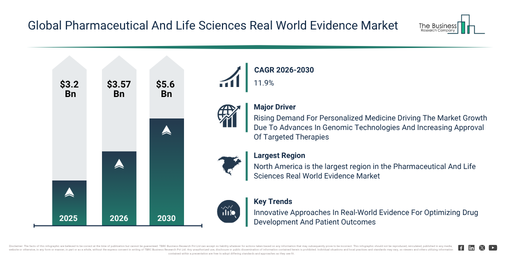
    The pharmaceutical and life sciences real world evidence market has experienced significant growth in recent years. This market is anticipated to expand from $3.2 billion in 2025 to $3.57 billion in 2026, with a compound annual growth rate (CAGR) of 11.7%. Historically, this expansion has been propelled by the increasing integration of electronic health records, an intensified focus on drug safety monitoring, the development of patient registries, a growing need for evidence-based decision making, and an uptick in pharmaceutical research and development investments.

    The pharmaceutical and life sciences real world evidence market size is projected to experience substantial growth in the coming years. It is forecast to grow to $5.6 billion in 2030, achieving a compound annual growth rate (CAGR) of 11.9%. The expansion during the forecast period is attributable to the integration of AI-driven analytics, the proliferation of RWE platforms and dashboards, the adoption of predictive modeling tools, increased collaboration between payers and pharma entities, and the rising prominence of real-world evidence in personalized medicine. Prominent trends anticipated for this period involve the integration of various real-world data sources, predictive modeling for drug outcomes, the generation of patient-centric evidence, optimized regulatory compliance, and the application of advanced analytics for market access.

    Get A Free Sample Report With In-Depth Market Insights:

    https://thebusinessresearchcompany.com/sample_request?id=36643682&type=smp&name=Pharmaceutical%20And%20Life%20Sciences%20Real%20World%20Evidence%20Market%20Report%202026&utm_source=Blogs&utm_medium=Paid&utm_campaign=Oct_PR

    Pharmaceutical And Life Sciences Real World Evidence Market Opportunity Drivers: What’s Unlocking New Revenue Potential?

    The increasing need for personalized medicine is anticipated to drive expansion in the pharmaceutical and life sciences real-world evidence market moving ahead. This approach, known as personalized medicine, tailors healthcare and therapeutic interventions according to an individual patient’s distinct biological and personal attributes. Its adoption is on the rise, attributed to breakthroughs in genomic technologies that empower healthcare providers to rapidly and precisely analyze a patient’s genetic data, thereby facilitating more precise and impactful treatments. Within pharmaceutical and life sciences, real-world evidence supports personalized medicine by scrutinizing actual patient data to determine the most effective and safe treatments for particular patient subgroups. As an illustration, in February 2024, data from the Personalized Medicine Coalition, a US-based non-profit organization, indicated that in 2023, the FDA approved 16 new personalized treatments for rare disease patients, an increase from six in 2022. These newly authorized personalized treatments for 2023 further comprised seven cancer drugs and three for other diseases and conditions. Consequently, the increasing need for personalized medicine is fueling the expansion of the pharmaceutical and life sciences real-world evidence market.

    Pharmaceutical And Life Sciences Real World Evidence Market Segment Landscape: Which Areas Lead Development?

    The pharmaceutical and life sciences real world evidence market covered in this report is segmented –

    1) By Component: Services, Software, Data Sets

    2) By Evidence: Descriptive Studies, Analytical Studies, Patient-Reported Outcomes

    3) By Real-World Data Sources: Medical Claims, Clinical Trials, Clinical Setting, Patient Powered, Other Real-World Data Sources

    4) By Application: Drug Discovery And Development Support, Regulatory Submission And Label Expansion, Market Access And Reimbursement Strategy, Drug Safety And Pharmacovigilance Monitoring, Treatment Decision Support And Clinical Optimization, Comparative Effectiveness And Outcomes Research

    5) By End-User: Pharmaceutical And Biopharmaceutical Companies, Healthcare Payers And Providers, Medical Technology Companies, Regulatory And Health Technology Assessment Bodies, Contract Research Organizations And Academic Research Institutions

    Subsegments:

    1) By Services: Consulting Services, Regulatory Services Or Support, Data Management Services Or Data Integration

    2) By Software: RWE Platforms And Dashboards, Predictive Modeling Or Analytics Tools

    3) By Data Sets: Electronic Health Records, Patient Registries, Claims And Billing Data

    Pharmaceutical And Life Sciences Real World Evidence Market Innovation Trends Shaping Future Development

    Leading companies in the pharmaceutical and life sciences real-world evidence market are focusing on creating integrated data-driven platforms. These platforms are designed to enhance the effectiveness of clinical trials, improve patient participation, and support submissions for regulatory approval and health economics. Such integrated data-driven platforms combine diverse real-world data sources, including patient-reported outcomes and information from wearable devices, into organized modules. This approach simplifies processes like recruitment, screening, enrollment, and ongoing patient interactions. For instance, in September 2023, Maxis Clinical Sciences, a US-based boutique consulting firm, introduced a comprehensive real-world evidence solution aimed at supporting patient-focused clinical research and drug development. This platform integrates multiple data streams into pre-configured operational modules, which facilitates faster trial execution and aids in securing regulatory approvals, conducting health economics and outcomes research (HEOR), and developing drug repurposing strategies.

    Pharmaceutical And Life Sciences Real World Evidence Market Key Players Shaping Industry Direction

    Major companies operating in the pharmaceutical and life sciences real world evidence market are UnitedHealth Group Incorporated, Oracle Corporation, IQVIA Holdings Inc., ICON plc, Parexel International Corporation, Cegedim SA, Veradigm Inc., Tempus AI Inc., Saama Technologies LLC, Komodo Health Inc., Owkin Inc., Trinity Life Sciences LLC, TriNetX LLC, OM1 Inc., HealthVerity Inc., Claritas Rx Inc., PurpleLab Inc., Atropos Health PBC, EvidentIQ Group GmbH, CuriMeta Inc., Medaffcon Oy, and Mahalo Health Inc.

    View The Full Pharmaceutical And Life Sciences Real World Evidence Market Report:

    https://thebusinessresearchcompany.com/report/pharmaceutical-and-life-sciences-real-world-evidence-market-report?utm_source=Blogs&utm_medium=Paid&utm_campaign=Oct_PR

    Pharmaceutical And Life Sciences Real World Evidence Market Regional Analysis: Which Region Leads By Revenue?

    North America was the largest region in the pharmaceutical and life sciences real world evidence market in 2025. Asia-Pacific is expected to be the fastest-growing region in the forecast period. The regions covered in the pharmaceutical and life sciences real world evidence market report are Asia-Pacific, South East Asia, Western Europe, Eastern Europe, North America, South America, Middle East, Africa.

    Reach Out To Our Team:

    The Business Research Company: https://www.thebusinessresearchcompany.com/

    Americas: +1 310-496-7795

    Asia: +44 7882 955267 & +91 8897263534

    Europe: +44 7882 955267

    Email us at: marketing@tbrc.info

    Follow us on:

    LinkedIn: https://in.linkedin.com/company/the-business-research-company

    YouTube: https://www.youtube.com/channel/UC24_fI0rV8cR5DxlCpgmyFQ

    Global Market Model: https://www.thebusinessresearchcompany.com/global-market-model
  • Personalized Circulating Tumor Deoxyribonucleic Acid (ctDNA) Fingerprint Panels Market Size In 2026: Regional Growth, Key Segments And Future Outlook

    Personalized Circulating Tumor Deoxyribonucleic Acid (ctDNA) Fingerprint Panels Market Size In 2026: Regional Growth, Key Segments And Future Outlook

    Built to provide research that’s more actionable and strategically valuable, The Business Research Company’s 2026 market reports include market attractiveness analysis, total addressable market sizing, company benchmarking matrices, interactive Excel dashboards, broader supply chain intelligence, emerging startup tracking, and in-depth product insights.

    Personalized Circulating Tumor Deoxyribonucleic Acid (ctDNA) Fingerprint Panels Market Size And Revenue Outlook Through 2030

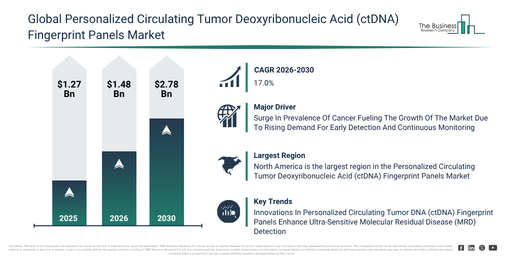
    The personalized circulating tumor deoxyribonucleic acid (ctDNA) fingerprint panels market has seen significant expansion in recent years. Its value is forecast to rise from $1.27 billion in 2025 to $1.48 billion in 2026, at a compound annual growth rate (CAGR) of 16.7%. Historically, this growth can be attributed to several factors including the increasing prevalence of cancer, breakthroughs in next-generation sequencing, a rising demand for non-invasive diagnostic methods, expanding research into genomic biomarkers, and supportive regulatory environments for precision medicine.

    The personalized circulating tumor deoxyribonucleic acid (ctDNA) fingerprint panels market size is set for significant expansion in the coming years. It will grow to $2.78 billion in 2030 at a compound annual growth rate (CAGR) of 17.0%. This growth during the forecast period can be attributed to the adoption of AI-powered genomic analysis, the expansion of personalized oncology programs, integration with hospital information systems, increasing investments in ctDNA panels, and the demand for real-time treatment monitoring. Prominent trends anticipated in the forecast period include personalized ctDNA assay development, longitudinal cancer monitoring, integration with clinical decision support systems, non-invasive disease tracking, and AI-driven mutation analysis.

    Get A Free Sample Report With In-Depth Market Insights:

    https://thebusinessresearchcompany.com/sample_request?id=52332308&type=smp&name=Personalized%20Circulating%20Tumor%20Deoxyribonucleic%20Acid%20%28ctDNA%29%20Fingerprint%20Panels%20Market%20Report%202026&utm_source=Blogs&utm_medium=Paid&utm_campaign=Oct_PR

    Personalized Circulating Tumor Deoxyribonucleic Acid (ctDNA) Fingerprint Panels Market Growth Momentum: What Factors Are Shaping Demand?

    The escalating incidence of cancer is anticipated to drive the expansion of the personalized circulating tumor deoxyribonucleic acid (ctDNA) fingerprint panels market in the foreseeable future. Cancer is characterized by a group of diseases involving the unchecked propagation of aberrant cells, which possess the capability to invade adjacent tissues and disseminate throughout the body. The rise in cancer cases is attributable to several factors, including extended lifespans, enhanced capabilities for early diagnosis, and advancements in therapy that enable patients to live longer with the condition. Personalized circulating tumor DNA fingerprint panels play a crucial role in cancer management by facilitating prompt identification, continuous oversight, and accurate regulation of tumor progression, thereby enhancing patient survival rates and guiding specific treatment approaches. For instance, in October 2025, the American Cancer Society, a US-based nonprofit organization dedicated to cancer research and advocacy, reported approximately 18.6 million cancer survivors in the US, constituting slightly more than 5% of the population, with forecasts indicating an increase to 22 million by 2035. Consequently, the growing prevalence of cancer is a key factor propelling the growth of the personalized circulating tumor deoxyribonucleic acid (ctDNA) fingerprint panels market.

    Personalized Circulating Tumor Deoxyribonucleic Acid (ctDNA) Fingerprint Panels Market Segments: Where Is Growth Concentrated?

    The personalized circulating tumor deoxyribonucleic acid (ctDNA) fingerprint panels market covered in this report is segmented –

    1) By Product Type: Single Gene Panels, Multi Gene Panels, Comprehensive Genomic Panels

    2) By Cancer Type: Lung Cancer, Breast Cancer, Colorectal Cancer, Pancreatic Cancer, Gastrointestinal Cancer, Hematological Malignancy

    3) By Technology: Next Generation Sequencing, Polymerase Chain Reaction Based, Other Technologies

    4) By Application: Oncology, Non Invasive Prenatal Testing, Transplantation, Other Applications

    5) By End User: Hospitals And Clinics, Diagnostic Laboratories, Research Institutes, Other End Users

    Subsegments:

    1) By Single Gene Panels: Tumor Specific Mutation Panels, Actionable Mutation Panels, Hereditary Cancer Panels

    2) By Multi Gene Panels: Targeted Cancer Panels, Disease Specific Panels, Therapy Guidance Panels

    3) By Comprehensive Genomic Panels: Pan Cancer Panels, Whole Exome Panels, Whole Genome Panel

    Personalized Circulating Tumor Deoxyribonucleic Acid (ctDNA) Fingerprint Panels Market Trends Redefining Industry Growth

    Leading companies within the personalized circulating tumor deoxyribonucleic acid (ctDNA) fingerprint panels market are concentrating on developing highly sensitive, tumor-informed genome-based assays. These advancements aim to improve early cancer detection, monitor patient response to treatment, and identify molecular residual disease (MRD) with greater accuracy. Such ultra-sensitive, tumor-informed, genome-based assays are sophisticated molecular diagnostic tools designed to identify and track specific tumor mutations in patients, thereby enabling the detection of extremely minute quantities of circulating tumor DNA (ctDNA) in the bloodstream. For example, in April 2025, Natera Inc., a US-based molecular diagnostics company, announced the extensive clinical launch of its ultra-sensitive Signatera Genome MRD test. This test employs whole-genome sequencing (WGS) to create highly individualized ctDNA fingerprint panels, custom-designed to each patient’s specific tumor profile. This method significantly increases the number of tumor variants that can be tracked and enhances detection sensitivity even at ultra-low ctDNA levels. This innovation strengthens MRD monitoring capabilities across numerous cancer types, supporting earlier intervention and facilitating more informed treatment decisions.

    Personalized Circulating Tumor Deoxyribonucleic Acid (ctDNA) Fingerprint Panels Market Competitive Analysis Of Leading Industry Participants

    Major companies operating in the personalized circulating tumor deoxyribonucleic acid (ctdna) fingerprint panels market are F. Hoffmann-La Roche Ltd, Thermo Fisher Scientific Inc., Laboratory Corporation of America Holdings, Agilent Technologies Inc., Illumina Inc., Sysmex Corporation, Bio-Rad Laboratories Inc., QIAGEN N.V., Natera Inc., Myriad Genetics Inc., NeoGenomics Laboratories Inc., Guardant Health Inc., Pacific Biosciences of California Inc., Burning Rock Biotech Limited, Personalis Inc., Biodesix Inc., OneCell Diagnostics Pvt. Ltd., CD Genomics, Creative Biolabs Inc., Predicine Inc., BioCreatrix Pte. Ltd., OncoDNA SA, Lucence Diagnostics Pte Ltd., Singlera Genomics Inc., Nonacus Ltd.

    View The Full Personalized Circulating Tumor Deoxyribonucleic Acid (ctDNA) Fingerprint Panels Market Report:

    https://thebusinessresearchcompany.com/report/personalized-circulating-tumor-deoxyribonucleic-acid-ctdna-fingerprint-panels-market-report?utm_source=Blogs&utm_medium=Paid&utm_campaign=Oct_PR

    Personalized Circulating Tumor Deoxyribonucleic Acid (ctDNA) Fingerprint Panels Market Geographic Distribution And Regional Opportunities

    North America was the largest region in the personalized circulating tumor deoxyribonucleic acid (ctDNA) fingerprint panels market in 2025. Asia-Pacific is expected to be the fastest-growing region in the forecast period. The regions covered in the personalized circulating tumor deoxyribonucleic acid (ctDNA) fingerprint panels market report are Asia-Pacific, South East Asia, Western Europe, Eastern Europe, North America, South America, Middle East, Africa.

    Reach Out To Our Team:

    The Business Research Company: https://www.thebusinessresearchcompany.com/

    Americas: +1 310-496-7795

    Asia: +44 7882 955267 & +91 8897263534

    Europe: +44 7882 955267

    Email us at: marketing@tbrc.info

    Follow us on:

    LinkedIn: https://in.linkedin.com/company/the-business-research-company

    YouTube: https://www.youtube.com/channel/UC24_fI0rV8cR5DxlCpgmyFQ

    Global Market Model: https://www.thebusinessresearchcompany.com/global-market-model
  • Peripheral Intravascular Lithotripsy Market Analysis: $1.46 Billion Market Size In 2026 And Future Growth Prospects

    Peripheral Intravascular Lithotripsy Market Analysis: $1.46 Billion Market Size In 2026 And Future Growth Prospects

    Featuring market attractiveness scoring, total addressable market sizing, company benchmarking matrices, interactive Excel dashboards, deeper supply chain intelligence, emerging startup tracking, and granular product-level insights, The Business Research Company’s 2026 market reports are built to deliver research that is both more actionable and more strategically valuable.

    Peripheral Intravascular Lithotripsy Market Expansion Outlook: What Revenue Opportunities Are Ahead?

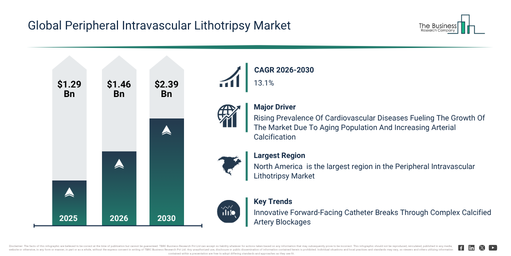
    The peripheral intravascular lithotripsy market size has experienced rapid expansion in recent years. It is projected to grow from $1.29 billion in 2025 to $1.46 billion in 2026, exhibiting a compound annual growth rate (CAGR) of 12.9%. This historical growth can be attributed to contributing factors such as the rising prevalence of peripheral artery disease, the adoption of traditional angioplasty techniques, an increasing geriatric population, the demand for safer vascular interventions, and the expansion of hospital cardiovascular departments.

    The peripheral intravascular lithotripsy market is projected to experience substantial expansion in the coming years. This market is forecast to reach $2.39 billion in 2030, exhibiting a compound annual growth rate (CAGR) of 13.1%. The anticipated growth during this period stems from factors such as the increasing adoption of intravascular lithotripsy devices, their integration with sophisticated imaging modalities, a rising demand for precise vascular treatments, the proliferation of ambulatory surgical centers, and significant investments in innovative next-generation IVL catheters. Key trends defining the forecast horizon encompass the increasing embrace of minimally invasive treatments, advancements in catheter technologies, seamless integration with imaging systems, tailored pad management solutions, and capabilities for real-time procedure monitoring.

    Get A Free Sample Report With In-Depth Market Insights:

    https://thebusinessresearchcompany.com/sample_request?id=28763102&type=smp&name=Peripheral%20Intravascular%20Lithotripsy%20Market%20Report%202026&utm_source=Blogs&utm_medium=Paid&utm_campaign=Oct_PR

    Peripheral Intravascular Lithotripsy Market Development Factors: What’s Supporting Demand?

    An increasing number of cardiovascular disease cases is projected to boost the peripheral intravascular lithotripsy market’s expansion in the future. These conditions encompass ailments impacting the heart and blood vessels, such as coronary heart disease, stroke, heart failure, and arrhythmias. The incidence of cardiovascular diseases is increasing, primarily driven by aging populations, given that older age substantially elevates the likelihood of developing cardiac and vascular issues, especially for individuals aged over 65. Peripheral intravascular lithotripsy aids in managing cardiovascular diseases by effectively disintegrating calcified arterial plaques, thereby enhancing vessel flexibility and optimizing blood flow to mitigate the danger of ischemic complications. For example, data from the Joint Strategic Needs Assessment, a community health center in the UK, indicated that by February 2025, cardiovascular disease deaths in Blackpool rose from 178 in 2022 to 185 in 2023. Consequently, the growing occurrence of cardiovascular diseases is fueling the expansion of the peripheral intravascular lithotripsy market.

    Peripheral Intravascular Lithotripsy Market Segment Breakdown: Which Categories Lead On Revenue?

    The peripheral intravascular lithotripsy market covered in this report is segmented –

    1) By Device Component: Intravascular Lithotripsy (IVL) Catheters, Generator or Console Systems, Accessories or Connectors

    2) By Indication: Peripheral Artery Disease (PAD), Dialysis Access Lesions, Coronary, Other Indications

    3) By Application: Femoral-Popliteal, Iliac Artery, Infrapopliteal

    4) By End-User: Hospitals, Ambulatory Surgical Centers, Specialty Vascular Clinics

    Subsegments:

    1) By Intravascular Lithotripsy (IVL) Catheters: Peripheral Catheters, Coronary Catheters, Forward Facing Catheters, Specialty Catheters

    2) By Generator or Console Systems: Portable Generators, Stationary Generators, Integrated Console Systems, Battery Operated Systems

    3) By Accessories or Connectors: Connector Cables, Adapters, Guidewires, Catheter Tips

    Peripheral Intravascular Lithotripsy Market Transformation Trends: What Innovations Are Driving Change?

    Leading companies in the peripheral intravascular lithotripsy market are concentrating on creating sophisticated offerings, such as larger-diameter catheters, to address intricate calcification in major peripheral vessels and enhance patient outcomes. These larger-diameter IVL catheters are advanced tools engineered to emit sonic pressure waves, modifying calcified plaque in arteries like the iliac and common femoral, which pose challenges for conventional treatment methods. As an example, in March 2025, Shockwave Medical Inc., a US medical device firm, introduced the Shockwave Javelin Peripheral IVL Catheter after securing approval from the U.S. Food and Drug Administration (FDA). This represents an innovative forward IVL platform specifically designed to alter calcium and navigate severely narrowed vessels, which are difficult for traditional devices to manage. The Javelin catheter boasts a 150 cm working length and a solitary distal emitter, able to produce up to 120 shockwave pulses. These pulses generate a spherical energy field that projects past the catheter tip, positioning lithotripsy nearer to the calcium than balloon-based IVL systems. This significantly improves clinicians’ capacity to address subtotal blockages and intricate calcified lesions throughout the peripheral anatomy, potentially boosting procedural success rates and patient outcomes.

    Peripheral Intravascular Lithotripsy Market Industry Leaders And Competitive Landscape

    Major companies operating in the peripheral intravascular lithotripsy market are Johnson & Johnson, Boston Scientific Corporation, MicroPort Scientific Corporation, Meril Life Sciences Pvt. Ltd., Lepu Medical Technology Co Ltd., Biosensors International Group Ltd., Amplitude Vascular Systems Inc., AVS Pulse Inc., Genesis MedTech Pte Ltd, Jiangsu Pupeng Medical Technology Co Ltd., Elixir Medical Corporation, Spectrumedics International, FastWave Medical Inc., Cardiovascular Systems Inc., Suzhou Zhonghui Medical Technology Co Ltd.

    View The Full Peripheral Intravascular Lithotripsy Market Report:

    https://thebusinessresearchcompany.com/report/peripheral-intravascular-lithotripsy-market-report?utm_source=Blogs&utm_medium=Paid&utm_campaign=Oct_PR

    Peripheral Intravascular Lithotripsy Market Regional Analysis And Leading Geography

    North America was the largest region in the peripheral intravascular lithotripsy market in 2025. Asia-Pacific is expected to be the fastest-growing region in the forecast period. The regions covered in the peripheral intravascular lithotripsy market report are Asia-Pacific, South East Asia, Western Europe, Eastern Europe, North America, South America, Middle East, Africa.

    Reach Out To Our Team:

    The Business Research Company: https://www.thebusinessresearchcompany.com/

    Americas: +1 310-496-7795

    Asia: +44 7882 955267 & +91 8897263534

    Europe: +44 7882 955267

    Email us at: marketing@tbrc.info

    Follow us on:

    LinkedIn: https://in.linkedin.com/company/the-business-research-company

    YouTube: https://www.youtube.com/channel/UC24_fI0rV8cR5DxlCpgmyFQ

    Global Market Model: https://www.thebusinessresearchcompany.com/global-market-model
  • Pediatric Allergy Care Market 2026 Market Size And Growth Forecast: Key Trends To Watch

    Pediatric Allergy Care Market 2026 Market Size And Growth Forecast: Key Trends To Watch

    Built to provide research that’s more actionable and strategically valuable, The Business Research Company’s 2026 market reports include market attractiveness analysis, total addressable market sizing, company benchmarking matrices, interactive Excel dashboards, broader supply chain intelligence, emerging startup tracking, and in-depth product insights.

    Pediatric Allergy Care Market Growth Potential: How Will Market Size Shift Through 2030?

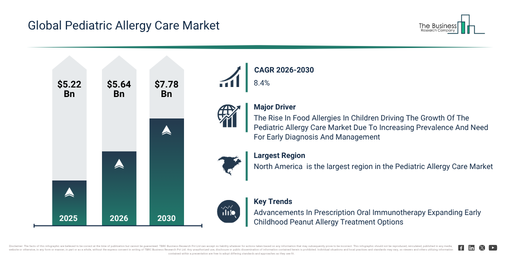
    The pediatric allergy care market size has shown strong growth over recent years. It is anticipated to expand from $5.22 billion in 2025 to $5.64 billion in 2026, achieving a compound annual growth rate (CAGR) of 8.1%. The historical increase can be linked to the rising occurrence of pediatric allergies, enhanced awareness among parents, the progress in pediatric immunotherapy, the implementation of traditional allergy testing methods, and the establishment of specialty allergy clinics.

    The pediatric allergy care market is projected to experience substantial growth over the coming years, reaching $7.78 billion by 2030, demonstrating a compound annual growth rate (CAGR) of 8.4%. This anticipated expansion is primarily driven by the increasing availability of telehealth services, the uptake of AI-driven diagnostic tools, the development of personalized treatment plans incorporating genomics, the broader integration of digital health platforms, and a rising need for remote monitoring solutions. Throughout the forecast period, significant trends are expected to encompass further telehealth expansion, advanced personalized allergy management strategies, continuous remote symptom monitoring, seamless integration with existing pediatric care platforms, and improved digital prescription management.

    Get A Free Sample Report With In-Depth Market Insights:

    https://thebusinessresearchcompany.com/sample_request?id=83338683&type=smp&name=Pediatric%20Allergy%20Care%20Market%20Report%202026&utm_source=Blogs&utm_medium=Paid&utm_campaign=Oct_PR

    Pediatric Allergy Care Market Industry Drivers: What’s Behind The Revenue Growth?

    The increasing occurrence of food allergies in children is anticipated to drive the future expansion of the pediatric allergy care market. These allergies represent immune system reactions that manifest when a child’s body incorrectly identifies specific foods as harmful, leading to symptoms that can range from mild, such as hives or stomach upset, to severe reactions like anaphylaxis. The growing incidence of food allergies among children is linked to the hygiene hypothesis, which suggests that reduced early childhood exposure to microbes results in an underdeveloped immune system that overreacts to harmless foods. Pediatric allergy care assists children with food allergies by providing prompt diagnosis, customized management strategies, and educational support to prevent allergic reactions and enhance their overall quality of life. For instance, in January 2026, according to the Centers for Disease Control and Prevention, a US-based public health agency, the percentage of children diagnosed with a food allergy increased to 5.3% in 2024 from 3.5% in 2023. Thus, the rising incidence of food allergies in children is a primary factor fueling the growth of the pediatric allergy care market.

    Pediatric Allergy Care Market Segmentation: How Does The Market Break Down By Category?

    The pediatric allergy care market covered in this report is segmented –

    1) By Care Modality: Drug Therapy, Allergy Testing, Pediatric Immunotherapy, Telehealth And Support

    2) By Condition Type: Asthma, Food Allergy, Allergic Rhinitis, Eczema, Anaphylaxis

    3) By Application: Pediatric Asthma Care, Food Allergy Diagnostics, Allergic Rhinitis And Eczema Integrated Management, Anaphylaxis Prevention, Immunotherapy Programs

    4) By End User: Specialty Allergy Clinics, Hospitals, Diagnostic Laboratories, Telehealth Providers, Other End Users

    Subsegments:

    1) By Drug Therapy: Antihistamine Medications, Corticosteroid Medications, Leukotriene Receptor Antagonists, Biologic Therapies, Epinephrine Auto Injector Treatments

    2) By Allergy Testing: Skin Prick Testing, Intradermal Testing, Patch Testing, Specific Immunoglobulin E Blood Testing, Oral Food Challenge Testing

    3) By Pediatric Immunotherapy: Subcutaneous Immunotherapy, Sublingual Immunotherapy, Oral Immunotherapy, Epicutaneous Immunotherapy, Cluster Immunotherapy

    4) By Telehealth And Support: Virtual Consultation Services, Remote Symptom Monitoring, Digital Prescription Management, Caregiver Education Programs, Mobile Health Application Support

    #Pediatric Allergy Care Market Growth Trends: What’s Shaping The Future Outlook?

    Leading firms within the pediatric allergy care market are prioritizing the creation of novel treatments, including prescription oral immunotherapy (OIT), aimed at desensitizing young patients to allergens and mitigating the potential for severe allergic responses. Prescription oral immunotherapy (OIT) is a clinically monitored therapy where patients are progressively exposed to minute, escalating quantities of an allergen, like peanuts, to foster tolerance and diminish the likelihood of intense allergic episodes. As an illustration, in February 2025, Stallergenes Greer International AG, a biopharmaceutical company headquartered in Switzerland, introduced Palforzia Oral Immunotherapy (OIT) in the U.S. for children aged 1 to 3 years. This launch broadened its prior approval to encompass toddlers with diagnosed peanut allergies. This treatment involves defatted peanut allergen powder, given orally via a structured regimen comprising initial dose increases, progressive up-dosing, and routine daily maintenance. Its purpose is to lessen allergic reactions, such as anaphylaxis, following unintentional peanut exposure. Distinctive features include precise age-based dosing and its application in conjunction with a peanut-avoidant diet to cultivate tolerance. Such therapy addresses a crucial unmet requirement for very young children, providing a proactive solution that goes beyond mere avoidance and emergency interventions, with the capacity to alter the natural progression of peanut allergy during early childhood.

    Pediatric Allergy Care Market Key Participants And Competitive Landscape

    Major companies operating in the pediatric allergy care market are market are AstraZeneca PLC, Thermo Fisher Scientific Inc., Abbott Laboratories, Quest Diagnostics Incorporated, Medicover Woman & Child Hospital, Nemours Children’s Health, EUROIMMUN Medizinische Labordiagnostika AG, ALK-Abelló A/S, Stallergenes Greer S.A., Rainbow Children’s Hospital, Continental Hospitals, Viracor Eurofins, R-Biopharm AESKU.GROUP GmbH And Co. KG, Apollo Cradle And Children’s Hospital, Hycor Biomedical Inc., AESKU.GROUP GmbH, Ankura Hospital for Women And Children, Nectar Allergy And Asthma, Ann And Robert H. Lurie Children’s Hospital of Chicago, DBV Technologies S.A.

    View The Full Pediatric Allergy Care Market Report:

    https://thebusinessresearchcompany.com/report/pediatric-allergy-care-market-report?utm_source=Blogs&utm_medium=Paid&utm_campaign=Oct_PR

    Pediatric Allergy Care Market Geographic Analysis: Where Is Demand Accelerating Fastest?

    North America was the largest region in the pediatric allergy care market in 2025. Asia-Pacific is expected to be the fastest-growing region in the forecast period. The regions covered in the pediatric allergy care market report are Asia-Pacific, South East Asia, Western Europe, Eastern Europe, North America, South America, Middle East, Africa.

    Reach Out To Our Team:

    The Business Research Company: https://www.thebusinessresearchcompany.com/

    Americas: +1 310-496-7795

    Asia: +44 7882 955267 & +91 8897263534

    Europe: +44 7882 955267

    Email us at: marketing@tbrc.info

    Follow us on:

    LinkedIn: https://in.linkedin.com/company/the-business-research-company

    YouTube: https://www.youtube.com/channel/UC24_fI0rV8cR5DxlCpgmyFQ

    Global Market Model: https://www.thebusinessresearchcompany.com/global-market-model
  • Pathogen Air Monitoring Market Size Forecast: How The Industry Is Expected To Grow From 2026 To 2030

    Pathogen Air Monitoring Market Size Forecast: How The Industry Is Expected To Grow From 2026 To 2030

    Backed by market attractiveness analysis, total addressable market sizing, company benchmarking matrices, interactive Excel dashboards, wider supply chain intelligence, emerging startup coverage, and detailed product-level insights, The Business Research Company’s 2026 market reports are designed to offer research that is more actionable and strategically valuable than ever.

    Pathogen Air Monitoring Market Value Analysis: What Growth Lies Ahead Over The Forecast Period?

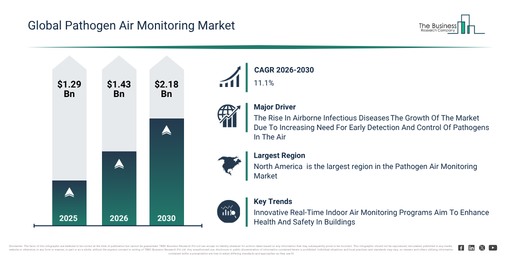
    The pathogen air monitoring market size has expanded considerably in recent years. It is projected to increase from $1.29 billion in 2025 to $1.43 billion in 2026, achieving a compound annual growth rate (CAGR) of 10.8%. This past growth can be attributed to several factors, including heightened awareness of hospital-acquired infections, the implementation of traditional air sampling techniques, stringent hygiene regulations, the expansion of pharmaceutical manufacturing, and an increasing demand for environmental monitoring.

    The pathogen air monitoring market is projected for substantial expansion over the coming years. By 2030, this market is forecast to reach $2.18 billion, exhibiting a compound annual growth rate (CAGR) of 11.1%. This growth during the forecast period is fueled by factors such as the increasing adoption of AI-powered pathogen detection, the integration of IoT-enabled monitoring devices, the expansion of healthcare infrastructure, a rising demand for real-time analytics, and greater investment in predictive infection control. Key trends identified for this period encompass real-time pathogen detection, sophisticated air quality analytics, the deployment of automated monitoring systems, seamless integration with laboratory information systems, and advanced predictive infection risk modeling.

    Get A Free Sample Report With In-Depth Market Insights:

    https://thebusinessresearchcompany.com/sample_request?id=20280787&type=smp&name=Pathogen%20Air%20Monitoring%20Market%20Report%202026&utm_source=Blogs&utm_medium=Paid&utm_campaign=Oct_PR

    Pathogen Air Monitoring Market Growth Factors: What’s Supporting Expansion?

    The pathogen air monitoring market is anticipated to expand due to a rising occurrence of airborne infectious diseases. These illnesses are caused by microorganisms that disperse through tiny airborne droplets or aerosols, which susceptible individuals can inhale, exemplified by influenza, tuberculosis, measles, and COVID 19. The increase in airborne infectious diseases is fueled by growing urbanization, as denser populations and close human contact facilitate the rapid spread of airborne pathogens. Pathogen air monitoring aids in managing airborne infectious diseases by enabling the early identification of harmful microorganisms in the air, allowing for timely interventions to lessen transmission risks and protect public health. For instance, in March 2024, according to the Centers for Disease Control and Prevention, a US-based government agency, the number of tuberculosis cases in the United States increased from 8,320 in 2022 to 9,615 in 2023. Consequently, the growing incidence of airborne infectious diseases is a key factor driving the growth of the pathogen air monitoring market.

    Pathogen Air Monitoring Market Segment Trends And Revenue Contributors

    The pathogen air monitoring market covered in this report is segmented –

    1) By Product Type: Instruments, Consumables, Software, Services

    2) By Sampling Technique: Active Monitoring, Passive Monitoring, Real-Time Monitoring, Other Sampling Techniques

    3) By Application: Healthcare Facilities, Pharmaceutical And Biotechnology Companies, Food And Beverage Industry, Public Spaces, Other Applications

    4) By End-User: Hospitals And Clinics, Laboratories, Industrial, Commercial, Other End-Users

    Subsegments:

    1) By Instruments: Air Samplers, Bioaerosol Detectors, Microbial Air Impactors, Particle Counters, Air Quality Monitoring Systems

    2) By Consumables: Sampling Filters, Culture Media Plates, Collection Swabs, Sampling Cartridges, Reagent Kits

    3) By Software: Data Management Software, Air Quality Analysis Software, Real Time Monitoring Software, Reporting And Compliance Software, Predictive Analytics Platforms

    4) By Services: Installation Services, Calibration Services, Maintenance Services, Laboratory Testing Services, Environmental Assessment Services

    Pathogen Air Monitoring Market Industry Trends: What’s Reshaping Demand?

    Leading companies within the pathogen air monitoring market are devising innovative solutions, such as real-time indoor air quality monitoring programs, aimed at detecting and mitigating airborne health risks. These real-time indoor air quality monitoring programs are systems that consistently track air pollutants, pathogens, and environmental conditions inside structures, providing immediate data and alerts for improved indoor environments. For example, in April 2024, the Advanced Research Projects Agency, a US-based research funding agency, introduced BREATHE, a real-time indoor air quality monitoring program, with the goal of developing advanced building systems to monitor and enhance indoor air quality across the nation. The program intends to integrate real-time sensors, data analytics, and automated building controls to identify and reduce airborne pollutants and pathogens. It collaborates with universities, research institutions, and private companies to design and test inventive solutions that boost occupant health and safety. By fostering smarter, health-focused buildings, BREATHE strives to establish new standards for indoor environmental quality in schools, offices, and public spaces.

    Pathogen Air Monitoring Market Top Companies Driving Competitive Growth

    Major companies operating in the pathogen air monitoring market are Thermo Fisher Scientific Inc., Honeywell International Inc., Merck KGaA, Agilent Technologies Inc., bioMérieux S.A., Sartorius AG, Shimadzu Corporation, Camfil AB, TSI Incorporated, Particle Measuring Systems Inc., Bertin Technologies S.A.S., Poppy Inc., Lighthouse Worldwide Solutions Inc., Dycor Technologies Ltd., AeroCollect Inc., InnovaPrep LLC, MBV AG, SafeTraces Inc., Health Enviro Testing Inc., Sensio Air Inc.

    View The Full Pathogen Air Monitoring Market Report:

    https://thebusinessresearchcompany.com/report/pathogen-air-monitoring-market-report?utm_source=Blogs&utm_medium=Paid&utm_campaign=Oct_PR

    Pathogen Air Monitoring Market Global Footprint: Which Region Leads The Industry?

    North America was the largest region in the pathogen air monitoring market in 2025. Asia-Pacific is expected to be the fastest-growing region in the forecast period. The regions covered in the pathogen air monitoring market report are Asia-Pacific, South East Asia, Western Europe, Eastern Europe, North America, South America, Middle East, Africa.

    Reach Out To Our Team:

    The Business Research Company: https://www.thebusinessresearchcompany.com/

    Americas: +1 310-496-7795

    Asia: +44 7882 955267 & +91 8897263534

    Europe: +44 7882 955267

    Email us at: marketing@tbrc.info

    Follow us on:

    LinkedIn: https://in.linkedin.com/company/the-business-research-company

    YouTube: https://www.youtube.com/channel/UC24_fI0rV8cR5DxlCpgmyFQ

    Global Market Model: https://www.thebusinessresearchcompany.com/global-market-model
  • Pan-Ethnic Carrier Screening Programs Market Size And Forecast 2026–2030: Trends Driving Industry Expansion

    Pan-Ethnic Carrier Screening Programs Market Size And Forecast 2026–2030: Trends Driving Industry Expansion

    Backed by market attractiveness analysis, total addressable market sizing, company benchmarking matrices, interactive Excel dashboards, wider supply chain intelligence, emerging startup coverage, and detailed product-level insights, The Business Research Company’s 2026 market reports are designed to offer research that is more actionable and strategically valuable than ever.

    Pan-Ethnic Carrier Screening Programs Market Growth Analysis: How Will Revenue Trend Over The Forecast Period?

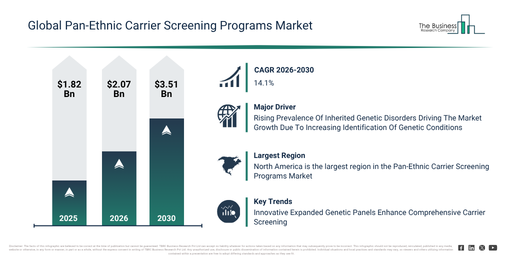
    The pan-ethnic carrier screening programs market has seen rapid expansion in recent years. Its value is expected to increase from $1.82 billion in 2025 to $2.07 billion in 2026, achieving a compound annual growth rate (CAGR) of 13.9%. Historically, this growth can be attributed to the decreasing expenses of genetic sequencing technologies, a heightened awareness of inherited genetic disorders, an increase in prenatal and preconception testing programs, the broadening of diagnostic laboratory infrastructure, and a surging demand for identifying disease risks early.

    The pan-ethnic carrier screening programs market is poised for significant expansion in the coming years. Projections indicate it will reach $3.51 billion in 2030, exhibiting a compound annual growth rate (CAGR) of 14.1%. This anticipated growth during the forecast period is propelled by factors such as the increasing uptake of comprehensive genomic panels, the rising incorporation of AI into variant interpretation, the expansion of tele-genetic counseling services, increasing governmental backing for preventive healthcare initiatives, and a greater emphasis on personalized reproductive planning. Key trends foreseen over this period involve the growing adoption of expanded multi-gene carrier screening panels, an escalating demand for preconception genetic risk assessment, the increasing integration of carrier screening into standard prenatal care, the broadening of universal population-based screening initiatives, and an enhanced focus on ensuring equitable access to genetic testing services.

    Get A Free Sample Report With In-Depth Market Insights:

    https://thebusinessresearchcompany.com/sample_request?id=50992638&type=smp&name=Pan-Ethnic%20Carrier%20Screening%20Programs%20Market%20Report%202026&utm_source=Blogs&utm_medium=Paid&utm_campaign=Oct_PR

    Pan-Ethnic Carrier Screening Programs Market Growth Factors Behind Sustained Expansion

    The increasing occurrence of inherited genetic disorders is anticipated to boost the expansion of the pan ethnic carrier screening programs market in the future. These disorders are defined as medical conditions resulting from genetic alterations or mutations in an individual’s genes, transmitted from parents to offspring. The incidence of inherited genetic disorders is expanding because of advancements in genetic testing and screening, which are now identifying a greater number of previously undetected cases. Pan-ethnic carrier screening programs play a crucial role in managing these conditions by providing extensive genetic testing for individuals and couples from various backgrounds, allowing for the early detection of carriers, facilitating informed decisions regarding reproduction, and enabling proactive healthcare strategies to mitigate the risk of transmitting genetic conditions. For example, in October 2024, the National Health Service (NHS) England, a UK government department, reported that a groundbreaking study in NHS hospitals is currently testing hundreds of newborns for more than 200 rare genetic conditions, with plans to screen up to 100,000 babies throughout England. Consequently, the growing occurrence of inherited genetic disorders is a key factor propelling the expansion of the pan ethnic carrier screening programs market.

    Pan-Ethnic Carrier Screening Programs Market Segment Landscape And Growth Outlook

    The pan-ethnic carrier screening programs market covered in this report is segmented –

    1) By Test Type: Expanded Carrier Screening, Targeted Carrier Screening

    2) By Technology: Deoxyribonucleic Acid (DNA) Sequencing, Polymerase Chain Reaction (PCR), Microarray, Other Technologies

    3) By Application: Preconception, Prenatal, Newborn

    4) By End-User: Hospitals And Clinics, Diagnostic Laboratories, Research Institutes, Other End-Users

    Subsegments:

    1) By Expanded Carrier Screening: Comprehensive Multi Gene Panels, Disease Specific Expanded Panels, Preconception Expanded Panels, Prenatal Expanded Panels, Universal Population Based Panels

    2) By Targeted Carrier Screening: Ethnicity Based Screening Panels, Family History Based Panels, Single Condition Carrier Testing, High Risk Population Panels, Condition Specific Targeted Panels

    Pan-Ethnic Carrier Screening Programs Market Industry Trends Fueling Future Revenue Growth

    Companies leading in the pan-ethnic carrier screening programs market are concentrating on developing inventive products, such as expanded genetic panels, to improve the early detection of inherited conditions across diverse populations. These expanded genetic panels are comprehensive tests designed to screen hundreds of genes for inherited conditions, assisting in the early identification of carrier status and guiding informed reproductive decisions for varied populations. For instance, in February 2023, Fulgent Genetics, a U.S.-based technology and clinical diagnostics company, unveiled the Beacon787 expanded genetic panels for carrier screening. This innovative solution encompasses 787 genes, including all American College of Medical Genetics and Genomics (ACMG) tier 3 genes recommended for universal carrier screening. Beacon787 employs Fulgent’s proprietary platform and bioinformatics algorithms to detect pseudogenes, accurately call copy number variants, and optimize turnaround time, reducing the need for redundant confirmatory testing. These expanded genetic panels offer actionable insights for women and couples planning pregnancy by pinpointing previously unknown carrier risks, thereby supporting informed reproductive decisions. Its high analytical sensitivity and pan-ethnic design position it as a next-generation option compared to conventional panels with limited gene coverage.

    Pan-Ethnic Carrier Screening Programs Market Competitive Landscape: Which Companies Lead The Industry?

    Major companies operating in the pan-ethnic carrier screening programs market are Thermo Fisher Scientific Inc., Laboratory Corporation of America Holdings (LabCorp), Quest Diagnostics Incorporated, Eurofins Scientific SE, Illumina Inc., Natera Inc., Myriad Genetics Inc., Fulgent Genetics Inc., BillionToOne Inc., Ambry Genetics Corp, PathGroup LLC, 23andMe Inc., Color Health Inc., Centogene N.V., Baylor Genetics LLC, PreventionGenetics LLC, FamilyTreeDNA, Sema4 Inc., BGI Genomics Co, MedGenome Labs Ltd.

    View The Full Pan-Ethnic Carrier Screening Programs Market Report:

    https://thebusinessresearchcompany.com/report/pan-ethnic-carrier-screening-programs-market-report?utm_source=Blogs&utm_medium=Paid&utm_campaign=Oct_PR

    Pan-Ethnic Carrier Screening Programs Market Regional Outlook: Where Is Opportunity Concentrated?

    North America was the largest region in the pan-ethnic carrier screening programs market in 2025. Asia-Pacific is expected to be the fastest-growing region in the forecast period. The regions covered in the pan-ethnic carrier screening programs market report are Asia-Pacific, South East Asia, Western Europe, Eastern Europe, North America, South America, Middle East, Africa.

    Reach Out To Our Team:

    The Business Research Company: https://www.thebusinessresearchcompany.com/

    Americas: +1 310-496-7795

    Asia: +44 7882 955267 & +91 8897263534

    Europe: +44 7882 955267

    Email us at: marketing@tbrc.info

    Follow us on:

    LinkedIn: https://in.linkedin.com/company/the-business-research-company

    YouTube: https://www.youtube.com/channel/UC24_fI0rV8cR5DxlCpgmyFQ

    Global Market Model: https://www.thebusinessresearchcompany.com/global-market-model
  • Ozone Sterilization Systems Market Analysis 2026: Market Size, Growth Trends And Industry Outlook

    Ozone Sterilization Systems Market Analysis 2026: Market Size, Growth Trends And Industry Outlook

    Backed by market attractiveness analysis, total addressable market sizing, company benchmarking matrices, interactive Excel dashboards, wider supply chain intelligence, emerging startup coverage, and detailed product-level insights, The Business Research Company’s 2026 market reports are designed to offer research that is more actionable and strategically valuable than ever.

    Ozone Sterilization Systems Market Size, Value And Growth Trajectory Through 2030

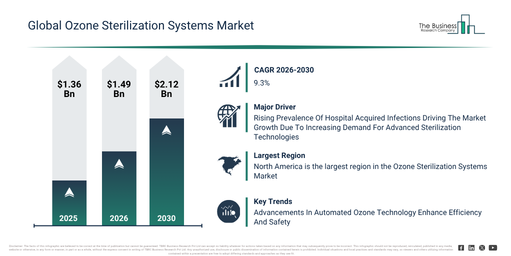
    The ozone sterilization systems market has shown significant growth recently. This market is projected to expand from $1.36 billion in 2025 to reach $1.49 billion by 2026, demonstrating a compound annual growth rate (CAGR) of 9.1%. Key factors driving this historical growth include an escalating incidence of hospital-acquired infections, a heightened understanding of eco-friendly sterilization techniques, an increase in food safety regulations, the enlargement of healthcare infrastructure, and a growing need for swift disinfection solutions.

    The market for ozone sterilization systems is projected to experience substantial expansion over the coming years. Its valuation is set to reach $2.12 billion by 2030, exhibiting a compound annual growth rate (CAGR) of 9.3%. This anticipated growth during the forecast period stems from factors such as increased investment in intelligent disinfection systems, the growing embrace of automated and interconnected sterilization equipment, the expansion within the pharmaceutical and biotechnology sectors, a heightened demand for environmentally friendly sanitation methods, and more stringent regulatory requirements for infection management. Key trends anticipated during this period encompass the wider acceptance of portable ozone sterilization systems, an escalating need for disinfection options free of chemicals, the increasing incorporation of automated sterilization chambers, the broadened application of ozone sterilization in water treatment, and an amplified emphasis on industrial ozone systems with high capacities.

    Get A Free Sample Report With In-Depth Market Insights:

    https://thebusinessresearchcompany.com/sample_request?id=23238346&type=smp&name=Ozone%20Sterilization%20Systems%20Market%20Report%202026&utm_source=Blogs&utm_medium=Paid&utm_campaign=Oct_PR

    Ozone Sterilization Systems Market Growth Catalysts And Demand Drivers

    The increasing incidence of hospital-acquired infections is projected to boost the expansion of the ozone sterilization systems market moving forward. These infections, commonly known as HAIs, are illnesses that patients contract while receiving medical care within a healthcare establishment. The rise in hospital-acquired infections is attributed to the increased adoption of invasive medical procedures and devices, which offer more pathways for disease-causing agents to enter the body and initiate infections. Ozone sterilization technology aids in mitigating hospital-acquired infections by efficiently eradicating bacteria, viruses, and other harmful microorganisms from medical apparatus, surfaces, and ambient air in healthcare environments, thereby fostering a safer setting for patients and reducing the likelihood of infection spread. For example, in May 2024, data from the Center for Infectious Disease Research and Policy (CIDRAP), a US-based disease research body, indicated that approximately 4.3 million patients in hospitals across the European Union and European Economic Area contracted at least one healthcare-associated infection annually in 2022 and 2023. Consequently, the growing occurrence of hospital-acquired infections is propelling the development of the ozone sterilization systems market.

    Ozone Sterilization Systems Market Segmentation And Category Overview

    The ozone sterilization systems market covered in this report is segmented –

    1) By Product Type: Portable Ozone Sterilization Systems, Fixed Ozone Sterilization Systems

    2) By Distribution Channel: Direct Sales, Distributors, Online Sales, Other Distribution Channels

    3) By Application: Healthcare Facilities, Laboratories, Food Processing, Water Treatment, Pharmaceutical, Other Applications

    4) By End-User: Hospitals And Clinics, Research Institutes, Food And Beverage Industry, Industrial, Other End-Users

    Subsegments:

    1) By Portable Ozone Sterilization Systems: Handheld Ozone Sterilizers, Tabletop Ozone Sterilization Units, Mobile Cart Based Ozone Systems, Battery Operated Ozone Sterilizers, Compact Laboratory Ozone Sterilizers, Portable Room Ozone Disinfection Units, Portable Water Ozone Sterilizers, Portable Air Ozone Sterilizers

    2) By Fixed Ozone Sterilization Systems: Large Chamber Ozone Sterilization Systems, Industrial Scale Ozone Sterilizers, Built In Ozone Sterilization Chambers, Integrated Cleanroom Ozone Systems, Centralized Ozone Disinfection Systems, Fixed Pipeline Ozone Sterilization Units, High Capacity Ozone Sterilization Systems, Automated Fixed Ozone Sterilizers

    Ozone Sterilization Systems Market Trends Shaping Long-Term Demand

    Leading companies operating in the ozone sterilization systems market are concentrating on creating innovative solutions, such as automatic ozone generation equipment, to ensure efficient, chemical-free sterilization of both water and air. Automatic ozone generation equipment functions by producing ozone on-demand from oxygen and automatically regulating its output, thereby facilitating effective disinfection of water and air without requiring harmful chemicals. For instance, in October 2024, Salher Ibérica S.L., a Spain-based manufacturer of water treatment equipment, introduced OZ Wizard, a cutting-edge automatic ozone generation system for water and environmental protection. The OZ Wizard system incorporates advanced ozone generators integrated with automated control units that adjust ozone output based on real-time parameters, and its compact, modular design enables straightforward integration with existing water treatment infrastructures. Its functionalities include continuous monitoring, precise dosing, and adaptability across various applications, including municipal water plants, industrial wastewater treatment, and environmental sterilization, offering high sterilization efficiency and reduced chemical usage. Key advantages of the OZ Wizard include enhanced operational safety, diminished reliance on traditional disinfectants, and improved water quality outcomes.

    Ozone Sterilization Systems Market Key Players Shaping Industry Direction

    Major companies operating in the ozone sterilization systems market are Toshiba Corporation, Xylem Inc., ESCO International Ltd., Novatec S.r.l., Salher Ibérica S.L., Ozone Solutions Inc., Guangzhou Quanju Ozone Technology Co. Ltd., Ozone Engineers Inc., Absolute Ozone LLC, Lenntech B.V., Ozonetech Systems AB, Biozone Scientific International Inc., O3 Pure LLC, Primozone Production AB, Oxyzone Pty Ltd, Ozone Safe Food Technologies Inc., Ozonator Industries Inc., Ozone Environmental Technology Sdn Bhd, Ecozone Technologies Ltd., Enaly Ozone Generator Inc., Ozone Technologies & Systems India Pvt. Ltd.

    View The Full Ozone Sterilization Systems Market Report:

    https://thebusinessresearchcompany.com/report/ozone-sterilization-systems-market-report?utm_source=Blogs&utm_medium=Paid&utm_campaign=Oct_PR

    Ozone Sterilization Systems Market Regional Analysis: Which Geography Leads On Revenue?

    North America was the largest region in the ozone sterilization systems market in 2025. Asia-Pacific is expected to be the fastest-growing region in the forecast period. The regions covered in the ozone sterilization systems market report are Asia-Pacific, South East Asia, Western Europe, Eastern Europe, North America, South America, Middle East, Africa.

    Reach Out To Our Team:

    The Business Research Company: https://www.thebusinessresearchcompany.com/

    Americas: +1 310-496-7795

    Asia: +44 7882 955267 & +91 8897263534

    Europe: +44 7882 955267

    Email us at: marketing@tbrc.info

    Follow us on:

    LinkedIn: https://in.linkedin.com/company/the-business-research-company

    YouTube: https://www.youtube.com/channel/UC24_fI0rV8cR5DxlCpgmyFQ

    Global Market Model: https://www.thebusinessresearchcompany.com/global-market-model