Author: Marketing Posting

  • Artificial Intelligence (AI) Facial Skin Analyzer Market To Grow From $0.9 Billion To $1.35 Billion By 2030: Key Drivers Explained

    Artificial Intelligence (AI) Facial Skin Analyzer Market To Grow From $0.9 Billion To $1.35 Billion By 2030: Key Drivers Explained

    The Business Research Company’s 2026 market reports combine market attractiveness scoring, total addressable market sizing, company benchmarking matrices, interactive Excel dashboards, deeper supply chain intelligence, emerging startup tracking, and granular product-level insights to deliver research that is more actionable and strategically valuable.

    Artificial Intelligence (AI) Facial Skin Analyzer Market Revenue Forecast: $0.9 Billion In 2026 Rising To $1.35 Billion In 2030

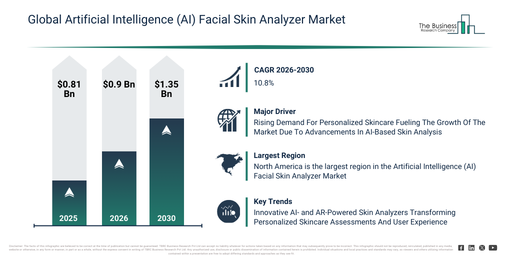
    The artificial intelligence (AI) facial skin analyzer market has experienced rapid expansion in its size over recent years. This market is projected to expand from $0.81 billion in 2025 to $0.9 billion in 2026, demonstrating a compound annual growth rate (CAGR) of 11.2%. This historical growth can be linked to several factors, including a heightened consumer interest in skincare analysis, the proliferation of digital dermatology instruments, increased adoption of cosmetic technology, the presence of advanced high-resolution imaging devices, and a growing need for customized beauty solutions.

    The artificial intelligence (AI) facial skin analyzer market is projected for substantial expansion over the coming years, with its size expected to reach $1.35 billion by 2030, demonstrating a compound annual growth rate (CAGR) of 10.8%. This anticipated growth is driven by several factors, including the increasing incorporation of AI in aesthetic medicine, the rising prevalence of virtual skincare consultations, the advancement of data-centric cosmetic formulation, wider implementation in clinical dermatology environments, and the escalating need for real-time skin monitoring solutions. Key developments anticipated during this period encompass the growing uptake of AI-powered skin diagnostics, the increasing integration of mobile platforms for skin analysis, the expanded application of 3D facial imaging technologies, the proliferation of customized skincare recommendation systems, and improved precision in multi-parameter skin evaluations.

    Free Sample Report: Artificial Intelligence (AI) Facial Skin Analyzer Market Size, Trends And Forecast To 2030:

    https://thebusinessresearchcompany.com/sample_request?id=22959364&type=smp&name=Artificial%20Intelligence%20%28AI%29%20Facial%20Skin%20Analyzer%20Market%20Report%202026&utm_source=Blogs&utm_medium=Paid&utm_campaign=Nov_PR

    Artificial Intelligence (AI) Facial Skin Analyzer Market Growth Catalyst: What Is Creating New Demand?

    The increasing need for customized skincare solutions is anticipated to drive the expansion of the artificial intelligence (AI) facial skin analyzer market in the future. These solutions focus on customizing products and routines to match an individual’s specific skin attributes and issues. The growth in personalized skincare solutions stems from the expanding application of AI and skin analysis technologies, which facilitate customized product suggestions aligning with individual skin requirements. Artificial Intelligence (AI) facial skin analyzers aid in personalizing skincare by precisely evaluating individual skin conditions and producing data-informed, tailored recommendations for products and treatments. Consequently, the escalating demand for personalized skincare solutions is fueling the development of the artificial intelligence (AI) facial skin analyzer market.

    Artificial Intelligence (AI) Facial Skin Analyzer Market Segment Overview: Categories Covered In The 2026 Report

    The artificial intelligence (AI) facial skin analyzer market covered in this report is segmented –

    1) By Product Type: Portable, Desktop

    2) By Device Type: Mobile App, Web-Based Platform, Standalone Device

    3) By Technology: Artificial intelligence (AI)-Based, Machine Learning, Deep Learning

    4) By Application: Skincare, Aesthetic Treatments, Cosmetics, Medical Diagnosis

    5) By End User: Healthcare, Personal Care, Other End-Users

    Subsegments:

    1) By Portable: Handheld Skin Analyzers, Smartphone-Compatible Devices, Wearable Skin Analyzers

    2) By Desktop: Multi-Parameter Skin Analyzers, 3D Imaging Skin Analyzers, Clinical-Grade Skin Analyzers

    How Are Leading Companies Shaping Artificial Intelligence (AI) Facial Skin Analyzer Market Trends?

    Leading companies operating in the artificial intelligence (AI) facial skin analyzer market are concentrating on developing innovative solutions, such as AI and augmented reality (AR)-powered skin analyzers. These innovations aim to deliver real-time, personalized skincare assessments, boost user engagement, and broaden accessibility across both consumer and professional segments. AI- and AR-enabled skin analyzers utilize intelligent algorithms and augmented visuals to evaluate skin health and present instantaneous skincare effects, thereby assisting users in making informed choices through interactive, customized analysis.

    Artificial Intelligence (AI) Facial Skin Analyzer Market Players: Key Companies Shaping Competition

    Major companies operating in the artificial intelligence (AI) facial skin analyzer market are JANUS Pro, LUMINI LLC, FotoFinder Systems Inc., Revieve Inc., Canfield Scientific Inc., DermaCompare, HiMirror, SkinVision B.V., Haut.AI, Skintelligent, Perfect Corp, Quantificare, BeautyAI, SkinAI, Syensqo, OKKAMI, UVisio, Meicet Technology Co LTD, Coralai, Zemits, Aram Huvis Co Ltd, Courage + Khazaka Electronic GmbH, Microderm GLO, Pixience, BeautyBio

    Access Complete Artificial Intelligence (AI) Facial Skin Analyzer Market Data, Forecasts And Competitive Insights:

    https://thebusinessresearchcompany.com/report/artificial-intelligence-ai-facial-skin-analyzer-global-market-report?utm_source=Blogs&utm_medium=Paid&utm_campaign=Nov_PR

    Artificial Intelligence (AI) Facial Skin Analyzer Market Regional Performance And Geographic Coverage

    North America was the largest region in the artificial intelligence (AI) facial skin analyzer market in 2025. Asia-Pacific is expected to be the fastest-growing region in the forecast period. The regions covered in the artificial intelligence (AI) facial skin analyzer market report are Asia-Pacific, South East Asia, Western Europe, Eastern Europe, North America, South America, Middle East, Africa.

    Reach Out To Our Team:

    The Business Research Company: https://www.thebusinessresearchcompany.com/

    Americas: +1 310-496-7795

    Asia: +44 7882 955267 & +91 8897263534

    Europe: +44 7882 955267

    Email us at: marketing@tbrc.info

    Follow us on:

    LinkedIn: https://in.linkedin.com/company/the-business-research-company

    YouTube: https://www.youtube.com/channel/UC24_fI0rV8cR5DxlCpgmyFQ

    Global Market Model: https://www.thebusinessresearchcompany.com/global-market-model
  • Women’s Digital Health Market Trends Supporting 21.4% CAGR Growth Through 2030

    Women’s Digital Health Market Trends Supporting 21.4% CAGR Growth Through 2030

    Backed by market attractiveness analysis, total addressable market sizing, company benchmarking matrices, interactive Excel dashboards, wider supply chain intelligence, emerging startup coverage, and detailed product-level insights, The Business Research Company’s 2026 market reports are designed to offer research that is more actionable and strategically valuable than ever.

    Women’s Digital Health Market Growth Potential: How Will Market Size Shift Through 2030?

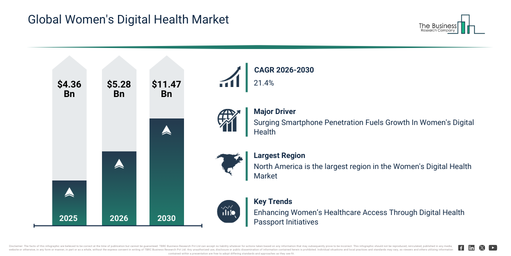
    The women’s digital health market has witnessed substantial growth in recent years. It is anticipated to expand from $4.36 billion in 2025 to $5.28 billion in 2026, exhibiting a compound annual growth rate (CAGR) of 20.9%. The historical progression of this market is largely due to factors such as increased smartphone adoption among women, a heightened awareness of health requirements specific to women, the emergence of numerous digital health startups, broader acceptance of telehealth services, and a greater emphasis on preventive healthcare.

    The women’s digital health market size is projected to expand significantly in the coming years. It is anticipated to reach $11.47 billion by 2030, exhibiting a compound annual growth rate (CAGR) of 21.4%. This expansion throughout the forecast period stems from factors such as a heightened demand for personalized healthcare options, greater investments in femtech innovation, the broadening of AI-enabled diagnostic tools, wider embrace of connected health ecosystems, and an intensified focus on data-driven women’s healthcare. Key trends expected during this period involve the increased uptake of personalized digital care platforms, a surge in the application of AI-driven health insights, greater integration of wearables with health applications, the broadening of remote monitoring solutions, and a stronger emphasis on preventive and holistic care.

    Get A Free Sample Report With In-Depth Market Insights:

    https://thebusinessresearchcompany.com/sample_request?id=89046297&type=smp&name=Women%27s%20Digital%20Health%20Market%20Report%202026&utm_source=Blogs&utm_medium=Paid&utm_campaign=Nov_PR

    Women’s Digital Health Market Growth Backed By Core Demand Fundamentals

    The future expansion of women’s digital health is projected to be driven by the increasing rate of smartphone penetration, which indicates the proportion of the population owning and utilizing smartphones. Smartphone applications have emerged as a widely used resource in women’s health, providing access to a broad spectrum of health information, from monitoring menstrual cycles to overseeing pregnancy and fertility. This growing use of mobile devices empowers women to easily obtain health details and resources, fostering a more proactive approach to managing their health. Consequently, the rising smartphone penetration is a key factor propelling the growth of women’s digital health.

    Women’s Digital Health Market Segment Analysis: What Are The Core Market Categories?

    The women’s digital health market covered in this report is segmented –

    1) By Type: Mobile Apps, Wearable Devices, Diagnostic Tools, Instruments, Services

    2) By Component: Software, Services, Hardware

    3) By Application: Reproductive Health, General Healthcare, Wellness, Pregnancy, Nursing Care, Pelvic Care

    Subsegments:

    1) By Mobile Apps: Health and Fitness Apps, Menstrual Tracking Apps, Mental Health Apps, Pregnancy And Parenting Apps

    2) By Wearable Devices: Fitness Trackers, Smartwatches, Health Monitoring Devices

    3) By Diagnostic Tools: At-home Testing Kits, Telehealth Platforms for Diagnostics, Remote Monitoring Tools

    4) By Instruments: Health Monitoring Devices, Diagnostic Tools

    5) By Services: Telemedicine Services, Health Coaching Platforms, Educational Services

    Women’s Digital Health Market Growth Trends Reshaping The Competitive Landscape

    Key companies active in the women’s digital health market are concentrating on offering technologically advanced solutions, such as the digital health passport initiative, to improve access to customized healthcare. The digital health passport initiative refers to a digital platform designed to enable individuals to manage and share their health information securely and efficiently.

    Women’s Digital Health Market Top Companies Driving Competitive Growth

    Major companies operating in the women’s digital health market are Flo Health Inc, Natural Cycles, Elvie, Bellabeat, Clue by Biowink, MobileODT Ltd., Glow, Veera Health, Biowink GmbH, Ava AG, Hims & Hers Health, Inc, The Women’s Wellness Centre, Elara Health, myGynaeDoc, Maven Clinic, Kindbody, Allara Health, Tia, Hera Med Ltd

    View The Full Women’s Digital Health Market Report:

    https://thebusinessresearchcompany.com/report/womens-digital-health-global-market-report?utm_source=Blogs&utm_medium=Paid&utm_campaign=Nov_PR

    Women’s Digital Health Market Top Region: Where Does Most Revenue Come From?

    North America was the largest region in the women’s digital health market in 2025. Asia-Pacific is expected to be the fastest-growing region in the forecast period. The regions covered in the women’s digital health market report are Asia-Pacific, South East Asia, Western Europe, Eastern Europe, North America, South America, Middle East, Africa.

    Reach Out To Our Team:

    The Business Research Company: https://www.thebusinessresearchcompany.com/

    Americas: +1 310-496-7795

    Asia: +44 7882 955267 & +91 8897263534

    Europe: +44 7882 955267

    Email us at: marketing@tbrc.info

    Follow us on:

    LinkedIn: https://in.linkedin.com/company/the-business-research-company

    YouTube: https://www.youtube.com/channel/UC24_fI0rV8cR5DxlCpgmyFQ

    Global Market Model: https://www.thebusinessresearchcompany.com/global-market-model
  • Artificial Intelligence (AI) Enhanced Remote Physiotherapy Market Worth $2.65 Billion In 2026: What The Latest Data Shows

    Artificial Intelligence (AI) Enhanced Remote Physiotherapy Market Worth $2.65 Billion In 2026: What The Latest Data Shows

    Market attractiveness scoring, total addressable market sizing, company benchmarking matrices, interactive Excel dashboards, deeper supply chain intelligence, emerging startup tracking, and granular product-level insights are among the key offerings featured in The Business Research Company’s 2026 market reports, designed to deliver more actionable and strategically valuable research.

    Artificial Intelligence (AI) Enhanced Remote Physiotherapy Market Size Overview: From Historical Performance To The 2030 Forecast

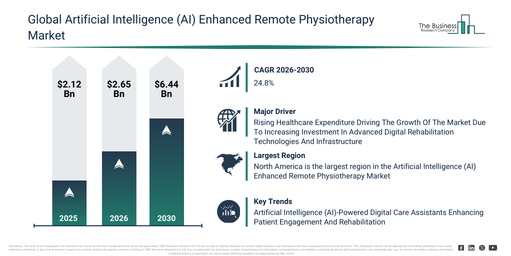
    The artificial intelligence (AI) enhanced remote physiotherapy market has experienced substantial growth in recent years. This market is projected to expand from $2.12 billion in 2025 to $2.65 billion in 2026, achieving a compound annual growth rate (CAGR) of 25.1%. Historically, its expansion has been driven by the broadening of telehealth services, an increase in musculoskeletal disorders, greater adoption of wearable health devices, the evolution of home-based care models, and improvements in remote monitoring technologies.

    The artificial intelligence (AI) enhanced remote physiotherapy market is anticipated to experience substantial growth in the coming years, projected to reach $6.44 billion by 2030, with a compound annual growth rate (CAGR) of 24.8%. This expansion during the forecast period is driven by increasing investments in AI-driven rehabilitation platforms, a rising demand for continuous therapy monitoring, the expansion of geriatric and chronic care programs, the growing integration of physiotherapy with digital health ecosystems, and an increasing focus on preventive rehabilitation. Notable trends for the forecast period include the expanding use of AI-based motion tracking, the rising adoption of wearable physiotherapy devices, a growing demand for personalized exercise programs, the broadening of remote rehabilitation platforms, and an enhanced focus on outcome-based therapy.

    Get A Free Sample Of The Business Research Company’s Artificial Intelligence (AI) Enhanced Remote Physiotherapy Market Report:

    https://thebusinessresearchcompany.com/sample_request?id=13343448&type=smp&name=Artificial%20Intelligence%20%28AI%29%20Enhanced%20Remote%20Physiotherapy%20Market%20Report%202026&utm_source=Blogs&utm_medium=Paid&utm_campaign=Nov_PR

    What Factor Is Increasing Demand In The Artificial Intelligence (AI) Enhanced Remote Physiotherapy Market?

    Rising healthcare spending is anticipated to boost the expansion of the artificial intelligence (AI) enhanced remote physiotherapy market in the coming years. This expenditure represents the total funds allocated to healthcare services, encompassing medical interventions, equipment, infrastructure, and staff, by governments, individuals, and private organizations. The increase in healthcare spending is attributed to the growing occurrence of chronic illnesses, which demand prolonged and expensive care. Such expenditure facilitates the uptake of artificial intelligence (AI)–enhanced remote physiotherapy by enabling increased investment in cutting-edge technologies, digital frameworks, and tailored rehabilitation options. Consequently, the escalating healthcare expenditure is fueling the growth of the artificial intelligence (AI) enhanced remote physiotherapy market.

    Which Segments Make Up The Artificial Intelligence (AI) Enhanced Remote Physiotherapy Market?

    The artificial intelligence (AI) enhanced remote physiotherapy market covered in this report is segmented –

    1) By Component: Software, Hardware, Services

    2) By Therapy Type: Musculoskeletal, Neurological, Cardiopulmonary, Pediatric, Geriatric, Other Therapy Types

    3) By Deployment Mode: Cloud-Based, On-Premises

    4) By Application: Rehabilitation, Pain Management, Preventive Care, Other Applications

    5) By End-User: Hospitals And Clinics, Homecare Settings, Rehabilitation Centers, Other End-Users

    Subsegments:

    1) By Software: Virtual Therapy Platforms, Artificial Intelligence Analytics Software, Exercise Prescription Software, Patient Monitoring Software

    2) By Hardware: Wearable Devices, Motion Sensors, Rehabilitation Robotics, Mobile Devices

    3) By Services: Remote Consultation Services, Data Analysis Services, Therapy Session Management Services, Training And Support Services

    Artificial Intelligence (AI) Enhanced Remote Physiotherapy Market Emerging Trends: What Are Industry Leaders Focusing On?

    Major companies within the artificial intelligence (AI) enhanced remote physiotherapy market are concentrating on developing sophisticated solutions, such as AI-powered digital care assistants, to elevate patient engagement and rehabilitation outcomes. An AI-powered digital care assistant functions as an intelligent virtual companion that utilizes artificial intelligence to deliver real-time guidance, motivation, and personalized feedback throughout physical therapy sessions.

    Major Companies To Know In The Artificial Intelligence (AI) Enhanced Remote Physiotherapy Market

    Major companies operating in the artificial intelligence (AI) enhanced remote physiotherapy market are Hinge Health Inc., Sword Health, SPRY Inc., Kaia Health Technologies GmbH, XRHealth Inc., Moterum Technologies Inc., Physitrack Group AB., MIRA REHAB LIMITED, Band Connect Inc., CUREosity GmbH, BlueJay Mobile Health Inc., Kinomatic Pty Ltd., Vitrue Health Inc., BioSensics Inc., Wizecare Inc., Limber Health Inc., Akina Inc., Zerapy Inc., Preve Inc., Flok Health Inc.

    Read The In-Depth Artificial Intelligence (AI) Enhanced Remote Physiotherapy Market Report:

    https://thebusinessresearchcompany.com/report/artificial-intelligence-ai-enhanced-remote-physiotherapy-global-market-report?utm_source=Blogs&utm_medium=Paid&utm_campaign=Nov_PR

    Artificial Intelligence (AI) Enhanced Remote Physiotherapy Market Regional Landscape: Largest Region In 2025

    North America was the largest region in the artificial intelligence (AI) enhanced remote physiotherapy market in 2025. Asia-Pacific is expected to be the fastest-growing region in the forecast period. The regions covered in the artificial intelligence (AI) enhanced remote physiotherapy market report are Asia-Pacific, South East Asia, Western Europe, Eastern Europe, North America, South America, Middle East, Africa.

    Reach Out To Our Team:

    The Business Research Company: https://www.thebusinessresearchcompany.com/

    Americas: +1 310-496-7795

    Asia: +44 7882 955267 & +91 8897263534

    Europe: +44 7882 955267

    Email us at: marketing@tbrc.info

    Follow us on:

    LinkedIn: https://in.linkedin.com/company/the-business-research-company

    YouTube: https://www.youtube.com/channel/UC24_fI0rV8cR5DxlCpgmyFQ

    Global Market Model: https://www.thebusinessresearchcompany.com/global-market-model
  • Arthrogryposis Market Competitive Landscape: Boston Children’s Hospital And Other Key Players

    Arthrogryposis Market Competitive Landscape: Boston Children’s Hospital And Other Key Players

    Designed to make market research more actionable and strategically valuable, The Business Research Company’s 2026 market reports feature market attractiveness scoring, total addressable market sizing, company benchmarking matrices, interactive Excel dashboards, deeper supply chain intelligence, emerging startup tracking, and granular product-level insights.

    What Is The Projected CAGR Of The Arthrogryposis Market Through 2030?

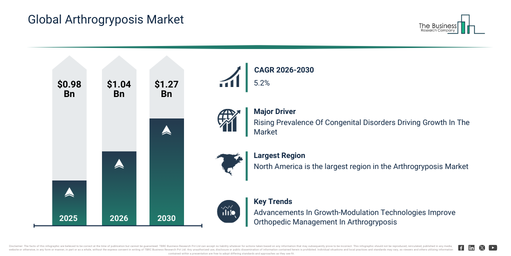
    The arthrogryposis market has demonstrated substantial growth over recent years. It is forecast to increase from $0.98 billion in 2025 to $1.04 billion in 2026, achieving a compound annual growth rate (CAGR) of 5.5%. The expansion witnessed in prior periods stems from various factors, including an enhanced clinical understanding of congenital disorders, the broadening of pediatric orthopedic care, improved access to rehabilitation services, the adoption of physical therapy interventions, and the rise of specialized treatment centers.

    The arthrogryposis market is anticipated to experience robust expansion over the coming years, with projections indicating it will reach $1.27 billion by 2030, demonstrating a compound annual growth rate (CAGR) of 5.2%. This growth throughout the forecast period is attributed to factors such as enhanced investments in rare disease research, a rising demand for personalized rehabilitation programs, broadened early screening initiatives, an escalating emphasis on improving long-term quality of life, and the increasing incorporation of advanced diagnostic technologies. Key trends expected during this period involve a heightened focus on early diagnosis and intervention, the increasing embrace of multidisciplinary treatment strategies, wider application of advanced imaging diagnostics, the expansion of long-term rehabilitation programs, and refined supportive care approaches.

    Claim Your Free Arthrogryposis Market Sample Report With Key Data And Trends:

    https://thebusinessresearchcompany.com/sample_request?id=57963896&type=smp&name=Arthrogryposis%20Market%20Report%202026&utm_source=Blogs&utm_medium=Paid&utm_campaign=Nov_PR

    Arthrogryposis Market Demand Analysis: The Driving Force Behind Expansion

    The expansion of the arthrogryposis market is anticipated to be fueled by the growing occurrence of congenital disorders. These are structural or functional irregularities originating during fetal development and present at birth. The surge in congenital disorder cases stems from progress in prenatal diagnostics, environmental factors, genetic mutations, and shifts in lifestyle. Arthrogryposis aids in comprehending these conditions by emphasizing the significance of fetal movement, genetic elements, and neuromuscular development in the context of musculoskeletal abnormalities. Consequently, the increasing incidence of congenital disorders is a key factor propelling the arthrogryposis market.

    Breaking Down The Arthrogryposis Market By Segment

    The arthrogryposis market covered in this report is segmented –

    1) By Type: Classic Arthrogryposis, Distal Arthrogryposis, Amyoplasia

    2) By Treatment Type: Occupational Therapists, Physical Therapy, Surgery, Imaging Diagnostics

    3) By Patient Age: Children, Adults

    Subsegments:

    1) By Classic Arthrogryposis: Multiple Joint Involvement, Flexion Contractures, Severe Muscle Weakness, Progressive Arthrogryposis, Intellectual Impairment

    2) By Distal Arthrogryposis: Isolated Limb Involvement, Contractures of Hands and Feet, Distal Joint Contractures, Autosomal Dominant Inheritance

    3) By Amyoplasia: Severe Limb Contractures, Muscle Hypotonia (low muscle tone), No Cognitive Impairment, Symmetric Joint Involvement, Lack Of Muscle Development In Affected Limbs

    Top Trend Influencing The Arthrogryposis Market Outlook

    Leading companies in the arthrogryposis treatment market are concentrating on creating sophisticated orthopedic solutions, such as guided-growth systems, to enhance the correction of deformities, lessen the burden of surgery, and support superior functional results for affected individuals. These guided-growth systems enable precise modulation of bone alignment during a child’s development, assisting clinicians in progressively correcting joint contractures with minimal tissue disruption.

    Arthrogryposis Market Competitive Landscape And Major Players

    Major companies operating in the arthrogryposis market are Boston Children’s Hospital, Seattle Children’s Hospital, Shriners Hospitals for Children, Texas Scottish Rite Hospital for Children, Gillette Children’s Specialty Healthcare, Cleveland Clinic, Johns Hopkins Hospital, Mayo Clinic, Children’s Hospital of Philadelphia, Nationwide Children’s Hospital, Children’s Healthcare of Atlanta, Nemours Children’s Health, Phoenix Children’s Hospital, Cincinnati Children’s Hospital Medical Center, St Jude Children’s Research Hospital, Rady Children’s Hospital San Diego, Children’s National Hospital, Great Ormond Street Hospital, SickKids Hospital Toronto, Royal Children’s Hospital Melbourne

    Read The Full Arthrogryposis Market Report By The Business Research Company:

    https://thebusinessresearchcompany.com/report/arthrogryposis-global-market-report?utm_source=Blogs&utm_medium=Paid&utm_campaign=Nov_PR

    Where Is The Arthrogryposis Market Largest? Key Regional Insights

    North America was the largest region in the arthrogryposis market in 2025. Asia-Pacific is expected to be the fastest-growing region in the forecast period. The regions covered in the arthrogryposis market report are Asia-Pacific, South East Asia, Western Europe, Eastern Europe, North America, South America, Middle East, Africa.

    Reach Out To Our Team:

    The Business Research Company: https://www.thebusinessresearchcompany.com/

    Americas: +1 310-496-7795

    Asia: +44 7882 955267 & +91 8897263534

    Europe: +44 7882 955267

    Email us at: marketing@tbrc.info

    Follow us on:

    LinkedIn: https://in.linkedin.com/company/the-business-research-company

    YouTube: https://www.youtube.com/channel/UC24_fI0rV8cR5DxlCpgmyFQ

    Global Market Model: https://www.thebusinessresearchcompany.com/global-market-model
  • Wolff Parkinson White Syndrome Market Forecast Highlights A $1.55 Billion Opportunity For Industry Participants

    Wolff Parkinson White Syndrome Market Forecast Highlights A $1.55 Billion Opportunity For Industry Participants

    Featuring market attractiveness scoring, total addressable market sizing, company benchmarking matrices, interactive Excel dashboards, deeper supply chain intelligence, emerging startup tracking, and granular product-level insights, The Business Research Company’s 2026 market reports are built to deliver research that is both more actionable and more strategically valuable.

    Wolff Parkinson White Syndrome Market Value Analysis: What Growth Lies Ahead Over The Forecast Period?

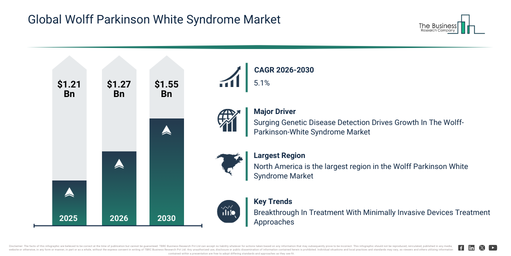
    The wolff parkinson white syndrome market has shown consistent expansion over recent years. It is forecast to increase from $1.21 billion in 2025 to $1.27 billion in 2026, achieving a compound annual growth rate (CAGR) of 5.0%. The expansion observed in prior periods can be attributed to enhancements in cardiac diagnostic technologies, broader access to ECG testing, increased utilization of pharmacological management, the growth of cardiac care facilities, and a rising awareness of arrhythmia disorders.

    The Wolff Parkinson White Syndrome market is projected to experience robust growth in the upcoming years. It is forecast to expand to $1.55 billion by 2030, achieving a compound annual growth rate (CAGR) of 5.1%. This projected growth throughout the forecast period is primarily driven by the increasing integration of advanced ablation technologies, escalating investments in cardiac electrophysiology research, the expansion of wearable cardiac monitoring devices, a heightened emphasis on early intervention strategies, and a growing demand for personalized cardiac care. Furthermore, major trends anticipated during this period include a rising adoption of catheter ablation procedures, ongoing advancements in electrophysiological mapping techniques, the expanding utilization of continuous cardiac monitoring, the broadening of minimally invasive treatment options, and an intensified focus on early and accurate diagnosis.

    Get A Free Sample Report With In-Depth Market Insights:

    https://thebusinessresearchcompany.com/sample_request?id=75088866&type=smp&name=Wolff%20Parkinson%20White%20Syndrome%20Market%20Report%202026&utm_source=Blogs&utm_medium=Paid&utm_campaign=Nov_PR

    Wolff Parkinson White Syndrome Market Growth Catalysts And Demand Drivers

    The wolff parkinson’s white syndrome market is projected to grow significantly due to an increase in the identification of genetic diseases. Genetic disorders can stem from a single gene mutation, multiple gene mutations, a combination of gene mutations and environmental influences, or damage to chromosomes. The rising prevalence of genetic disease detection will consequently boost the demand for Wolff Parkinson white syndrome testing and treatment. Therefore, the increased detection of genetic diseases is a primary driver for the expansion of the wolff parkinson white syndrome market.

    Wolff Parkinson White Syndrome Market Segment Breakdown: Which Categories Lead On Revenue?

    The wolff parkinson white syndrome market covered in this report is segmented –

    1) By Type: Type A, Type B

    2) By Diagnosis: Electrocardiogram (ECG), Electrophysiological Testing, Other Diagnosis

    3) By Treatment: Drugs, Cardio Version, Radiofrequency Catheter Ablation, Surgery, Artificial pacemaker, Other Treatments

    4) By End User: Hospitals And Clinics, Academic And Research, Other End-Users

    Subsegments:

    1) By Type A: Accessory Pathways (Left-sided), Clinical Manifestations

    2) By Type B: Accessory Pathways (Right-sided), Clinical Manifestations

    Wolff Parkinson White Syndrome Market Trends Shaping Long-Term Demand

    Leading companies in the wolff parkinson’s white syndrome market are developing advanced machines and devices, such as minimally invasive procedure devices, to deliver improved treatment courses and solutions. A minimally invasive procedure device is a medical instrument utilized for performing surgical interventions with minimal harm to the body’s tissues.

    Wolff Parkinson White Syndrome Market Leading Players And Competitive Positioning

    Major companies operating in the wolff parkinson white syndrome market are Medtronic PLC, Abbott Laboratories, Boston Scientific Corporation, Biotronik SE & Co. KG, Koninklijke Philips N.V., MicroPort Scientific Corporation, AtriCure Inc., CardioFocus Inc., Catheter Precision Inc., Imricor Medical Systems Inc., Lepu Medical Technology Beijing Co. Ltd., Osypka AG, Stereotaxis Inc., Japan Lifeline Co. Ltd., CathRx Ltd., GE Healthcare, Siemens Healthineers AG, Baylis Medical Company Inc., Acutus Medical Inc., EP Solutions SA, Schwarzer Cardiotek GmbH, General Electric Company, Nihon Kohden Corporation

    View The Full Wolff Parkinson White Syndrome Market Report:

    https://thebusinessresearchcompany.com/report/wolff-parkinson-white-syndrome-global-market-report?utm_source=Blogs&utm_medium=Paid&utm_campaign=Nov_PR

    Wolff Parkinson White Syndrome Market Regional Breakdown: Where Is Demand Concentrated?

    North America was the largest region in the Wolff Parkinson white syndrome market share in 2025. The regions covered in the wolff parkinson white syndrome market report are Asia-Pacific, South East Asia, Western Europe, Eastern Europe, North America, South America, Middle East, Africa.

    Reach Out To Our Team:

    The Business Research Company: https://www.thebusinessresearchcompany.com/

    Americas: +1 310-496-7795

    Asia: +44 7882 955267 & +91 8897263534

    Europe: +44 7882 955267

    Email us at: marketing@tbrc.info

    Follow us on:

    LinkedIn: https://in.linkedin.com/company/the-business-research-company

    YouTube: https://www.youtube.com/channel/UC24_fI0rV8cR5DxlCpgmyFQ

    Global Market Model: https://www.thebusinessresearchcompany.com/global-market-model
  • North America Leads The Arthralgia Market: Regional Analysis And 2030 Forecast

    North America Leads The Arthralgia Market: Regional Analysis And 2030 Forecast

    The Business Research Company’s 2026 market reports are designed to deliver research that is more actionable and strategically valuable. Key offerings include market attractiveness scoring, total addressable market sizing, company benchmarking matrices, interactive Excel dashboards, deeper supply chain intelligence, emerging startup tracking, and granular product-level insights.

    Arthralgia Market Revenue Projected To Rise To $8.26 Billion By 2030

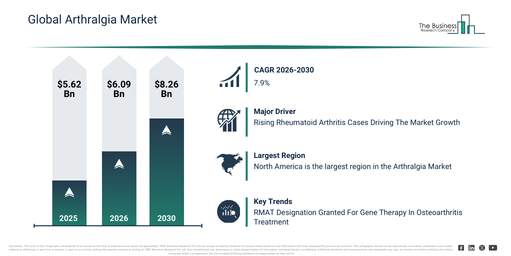
    The arthralgia market has experienced significant expansion in recent years. Projections indicate it will grow from $5.62 billion in 2025 to reach $6.09 billion by 2026, demonstrating a compound annual growth rate (CAGR) of 8.2%. This historical growth is attributable to factors such as the increasing incidence of joint disorders, the aging global population, heightened understanding of musculoskeletal well-being, the proliferation of pharmaceutical solutions for pain management, and the expansion of outpatient orthopedic services.

    The arthralgia market is projected to experience substantial expansion in the coming years. Its value is anticipated to reach $8.26 billion by 2030, demonstrating a compound annual growth rate (CAGR) of 7.9%. This growth during the forecast period can be attributed to several factors, such as the rising demand for tailored treatment plans, increased acceptance of biologic and targeted treatments, the wider availability of home-based pain management options, an emphasis on managing symptoms over the long term, and greater investment in research related to joint health. Key developments expected in this period involve the greater integration of personalized pain management methods, an increase in combination treatment strategies, a heightened focus on the early detection of joint conditions, the broadening of non-invasive pain relief methods, and the improvement of patient-centric treatment frameworks.

    Want Deeper Arthralgia Market Insights? Get A Free Sample Report:

    https://thebusinessresearchcompany.com/sample_request?id=72886482&type=smp&name=Arthralgia%20Market%20Report%202026&utm_source=Blogs&utm_medium=Paid&utm_campaign=Nov_PR

    Primary Growth Driver Shaping The Arthralgia Market Outlook

    The expanding prevalence of rheumatoid arthritis cases is anticipated to drive the future expansion of the arthralgia market. Rheumatoid arthritis is a long-term autoimmune condition predominantly impacting joints, leading to inflammation, discomfort, and possible joint deterioration. The growing incidence of rheumatoid arthritis is linked to an aging demographic, inherited susceptibility, shifts in lifestyle, and environmental elements such as smoking and pollution. Rheumatoid arthritis (RA) induces arthralgia by initiating persistent inflammation within the joints, resulting in pain, rigidity, and escalating damage. Consequently, the expanding occurrence of rheumatoid arthritis cases is propelling the growth of the arthralgia market.

    Arthralgia Market Structure: A Detailed Look At Segments And Subsegments

    The arthralgia market covered in this report is segmented –

    1) By Cause: Osteoarthritis, Rheumatoid Arthritis, Gout, Psoriatic Arthritis, Lupus, Injuries, Infections, Other Causes

    2) By Treatment Type: Medications, Therapies, Surgical Interventions, Lifestyle And Home Remedies

    3) By Route Of Administration: Oral, Injectable, Topical, Transdermal

    4) By Distribution Channel: Hospital Pharmacies, Retail Pharmacies, Online Pharmacies

    5) By End User: Hospital, Clinics, Homecare Settings, Rehabilitation Centers

    Subsegments:

    1) By Osteoarthritis: Knee Osteoarthritis, Hip Osteoarthritis, Hand Osteoarthritis, Spine Osteoarthritis, Shoulder Osteoarthritis

    2) By Rheumatoid Arthritis: Seropositive Rheumatoid Arthritis, Seronegative Rheumatoid Arthritis, Juvenile Rheumatoid Arthritis, Early-Onset Rheumatoid Arthritis

    3) By Gout: Primary Gout, Secondary Gout, Gouty Arthritis

    4) By Psoriatic Arthritis: Symmetric Psoriatic Arthritis, Asymmetric Psoriatic Arthritis, Psoriatic Spondylitis, Distal Interphalangeal Predominant Psoriatic Arthritis

    5) By Lupus: Systemic Lupus Erythematosus (SLE), Discoid Lupus Erythematosus, Drug-induced Lupus, Neonatal Lupus

    6) By Injuries: Sports-related Injuries, Trauma and Fractures, Sprains and Strains, Tendon or Ligament Damage

    7) By Infections: Septic Arthritis, Viral Arthritis, Bacterial Infections, Fungal Infections

    8) By Other Causes: Fibromyalgia, Overuse Injuries, Sarcoidosis, Ankylosing Spondylitis, Crystal-induced Arthritis

    Arthralgia Market Innovation And Strategy Trends Among Leading Companies

    Leading companies within the arthralgia market are focusing on developing novel therapies, such as RMAT-designated gene therapy, to provide patients with advanced treatments that offer lasting pain relief and improved joint function. RMAT-designated gene therapy refers to a treatment that has received Regenerative Medicine Advanced Therapy (RMAT) designation from the FDA, a status that accelerates the development and review of innovative gene therapies for serious or life-threatening conditions.

    Top Companies Competing In The Arthralgia Market

    Major companies operating in the arthralgia market are Pfizer Inc., Johnson & Johnson Services Inc., AbbVie Inc., Sanofi S.A., Bristol-Myers Squibb Company, AstraZeneca PLC, Novartis AG, GlaxoSmithKline PLC, Eli Lilly and Company, Amgen Inc., Teva Pharmaceutical Industries Ltd., Regeneron Pharmaceuticals Inc., Astellas Pharma Inc., Biogen Inc., UCB S.A., Hikma Pharmaceuticals PLC, Ferring Pharmaceuticals, KD Pharma Group S.A., SI-BONE Inc., Xalud Therapeutics Inc., Incannex Healthcare Limited, Cytonics Corporation

    View The Complete Arthralgia Market Study With Segment And Regional Data:

    https://thebusinessresearchcompany.com/report/arthralgia-global-market-report?utm_source=Blogs&utm_medium=Paid&utm_campaign=Nov_PR

    Arthralgia Market Regional Outlook Across Major Geographies

    North America was the largest region in the arthralgia market in 2025. The regions covered in the arthralgia market report are Asia-Pacific, South East Asia, Western Europe, Eastern Europe, North America, South America, Middle East, Africa.

    Reach Out To Our Team:

    The Business Research Company: https://www.thebusinessresearchcompany.com/

    Americas: +1 310-496-7795

    Asia: +44 7882 955267 & +91 8897263534

    Europe: +44 7882 955267

    Email us at: marketing@tbrc.info

    Follow us on:

    LinkedIn: https://in.linkedin.com/company/the-business-research-company

    YouTube: https://www.youtube.com/channel/UC24_fI0rV8cR5DxlCpgmyFQ

    Global Market Model: https://www.thebusinessresearchcompany.com/global-market-model
  • Arteriovenous Malformations Market Trends 2026: Spotlight On Advancements In Liquid Embolic System Procedural Sets For Neurovascular Care

    Arteriovenous Malformations Market Trends 2026: Spotlight On Advancements In Liquid Embolic System Procedural Sets For Neurovascular Care

    With a focus on actionable insights and strategic value, The Business Research Company’s 2026 market reports include market attractiveness scoring, total addressable market sizing, company benchmarking matrices, interactive Excel dashboards, deeper supply chain intelligence, emerging startup tracking, and granular product-level insights.

    Arteriovenous Malformations Market Size Analysis: Historical Growth And Future Revenue Projections

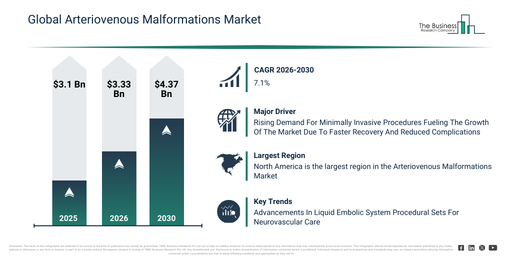
    The arteriovenous malformations market size has experienced substantial growth in recent years. It is projected to expand from $3.1 billion in 2025 to $3.33 billion in 2026, demonstrating a compound annual growth rate (CAGR) of 7.3%. Historically, this market’s expansion was driven by factors such as enhancements in neuroimaging technologies, heightened clinical awareness of avm conditions, the proliferation of specialized neurosurgical centers, the adoption of endovascular embolization techniques, and the growth of hospital-based neurological care.

    The arteriovenous malformations market is anticipated to experience substantial expansion over the upcoming years. This market is projected to reach $4.37 billion by 2030, exhibiting a compound annual growth rate (CAGR) of 7.1%. This projected growth can be attributed to several factors, including a heightened demand for precision diagnostics, increased investments in neurovascular research, broader adoption of minimally invasive treatments, a greater emphasis on personalized treatment planning, and the expanding availability of advanced interventional devices. Key trends anticipated during the forecast period involve a rising acceptance of advanced neuroimaging diagnostics, an increased utilization of minimally invasive endovascular treatments, an intensified focus on timely and precise diagnosis, the broadening of multidisciplinary treatment strategies, and improved monitoring of outcomes following treatment.

    Preview The Arteriovenous Malformations Market Report With A Free Sample:

    https://thebusinessresearchcompany.com/sample_request?id=45215083&type=smp&name=Arteriovenous%20Malformations%20Market%20Report%202026&utm_source=Blogs&utm_medium=Paid&utm_campaign=Nov_PR

    Arteriovenous Malformations Market Drivers: What Is Fueling Demand Through 2030?

    The arteriovenous malformations market is projected to expand driven by the growing demand for minimally invasive procedures. Minimally invasive procedures involve surgical or therapeutic interventions performed using small incisions or catheter-based techniques to minimize trauma, shorten recovery periods, and reduce complications. The heightened preference for these surgeries stems from their quicker recovery times, as smaller incisions result in less tissue damage and faster healing. This enables patients to resume their daily activities more rapidly than with conventional open surgeries, making them a favored option for both patients and healthcare providers. Arteriovenous malformations benefit from minimally invasive approaches through advanced techniques such as endovascular embolization, which employs catheters and image guidance to manage abnormal blood flow without open surgery, leading to decreased risks, quicker recovery, and enhanced patient outcomes. Consequently, the rising adoption of minimally invasive procedures is fueling the growth of the arteriovenous malformations market.

    Arteriovenous Malformations Market Segmentation Analysis: Core Categories And Subcategories

    The arteriovenous malformations market covered in this report is segmented –

    1) By Type: True Arteriovenous Malformation, Occult Or Cryptic, Cavernous Malformations, Venous Malformation, Hemangioma, Dural Fistula, Other Types

    2) By Diagnosis: Physical examination, Brain Scans, Other Diagnosis

    3) By Treatment: Endovascular Embolization, Neurosurgery

    4) By Age Group: Adult Patients, Pediatric Patients

    5) By End-User: Hospitals And Clinics, Research laboratories, Other End-Users

    Subsegments:

    1) By True Arteriovenous Malformation: Pial AVMs, Spinal AVMs, Brain AVMs, Extremity AVMs, Visceral AVMs

    2) By Occult or Cryptic: Micro-AVMs, Hidden AVMs, Asymptomatic AVMs, Deep-Seated AVMs, Small-Scale AVMs

    3) By Cavernous Malformations: Cerebral Cavernous Malformations (CCMs), Spinal Cavernous Malformations, Familial Cavernous Malformations, Solitary Cavernous Malformations, Multiple Cavernous Malformations

    4) By Venous Malformation: Superficial Venous Malformations, Deep Venous Malformations, Mixed Venous Malformations, Syndromic Venous Malformations, Blue Rubber Bleb Nevus Syndrome

    5) By Hemangioma: Infantile Hemangiomas, Capillary Hemangiomas, Lobular Capillary Hemangiomas, Cavernous Hemangiomas, Compound Hemangiomas

    6) By Dural Fistula: Cranial Dural Arteriovenous Fistula (dAVF), Spinal Dural Arteriovenous Fistula, Direct Dural AV Fistula, Indirect Dural AV Fistula, High-Flow Dural Fistula

    7) By Other Types: Lymphatic Malformations, Mixed Vascular Malformations, Arteriovenous Aneurysms, Hereditary Hemorrhagic Telangiectasia (HHT)-Associated AVMs, Rare Congenital AVMs

    Which Trends Will Define The Arteriovenous Malformations Market Through 2030?

    Leading companies in the arteriovenous malformations market are concentrating on technological advancements, such as liquid embolic system procedural sets, to streamline treatment methods and improve patient outcomes. A liquid embolic system procedural set refers to a pre-assembled, sterilized kit containing essential components for delivering liquid embolic agents to treat vascular abnormalities like arteriovenous malformations (AVMs).

    Arteriovenous Malformations Market Major Companies And Industry Participants

    Major companies operating in the arteriovenous malformations market are Johnson And Johnson Services Inc, Medtronic Plc, Stryker Corporation, Terumo Corporation, Penumbra Inc, Cook Medical LLC, Elekta AB, Merit Medical Systems Inc, Balt LLC, Shape Memory Medical Inc, MicroVention Inc, Cerenovus, Brainlab AG, Boston Scientific Corporation, Abbott Laboratories, B Braun Melsungen AG, Siemens Healthineers AG, GE Healthcare Technologies Inc, Koninklijke Philips NV, Canon Medical Systems Corporation, Toshiba Medical Systems Corporation

    Buy The Full Arteriovenous Malformations Global Market Report 2026:

    https://thebusinessresearchcompany.com/report/arteriovenous-malformations-global-market-report?utm_source=Blogs&utm_medium=Paid&utm_campaign=Nov_PR

    Arteriovenous Malformations Market Geographic Analysis: Which Region Accounts For The Biggest Share?

    North America was the largest region in the arteriovenous malformations market in 2025. Asia-Pacific is expected to be the fastest-growing region in the forecast period. The regions covered in the arteriovenous malformations market report are Asia-Pacific, South East Asia, Western Europe, Eastern Europe, North America, South America, Middle East, Africa.

    Reach Out To Our Team:

    The Business Research Company: https://www.thebusinessresearchcompany.com/

    Americas: +1 310-496-7795

    Asia: +44 7882 955267 & +91 8897263534

    Europe: +44 7882 955267

    Email us at: marketing@tbrc.info

    Follow us on:

    LinkedIn: https://in.linkedin.com/company/the-business-research-company

    YouTube: https://www.youtube.com/channel/UC24_fI0rV8cR5DxlCpgmyFQ

    Global Market Model: https://www.thebusinessresearchcompany.com/global-market-model
  • AR/VR Medical Simulation Market Growth Driven By Increasing Number Of Surgeries: Outlook To 2030

    AR/VR Medical Simulation Market Growth Driven By Increasing Number Of Surgeries: Outlook To 2030

    The Business Research Company’s 2026 market reports combine market attractiveness scoring, total addressable market sizing, company benchmarking matrices, interactive Excel dashboards, deeper supply chain intelligence, emerging startup tracking, and granular product-level insights to deliver research that is more actionable and strategically valuable.

    What Is The AR/VR Medical Simulation Market Growth Rate? A 17.1% CAGR Outlook Through 2030

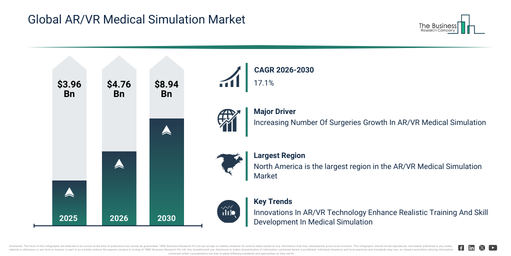
    The ar/vr medical simulation market size has experienced rapid expansion in recent years. It is projected to increase from $3.96 billion in 2025 to $4.76 billion in 2026, demonstrating a compound annual growth rate (CAGR) of 20.3%. The historical increase can be attributed to the growth of medical education programs, a rising demand for standardized clinical training, the broader adoption of digital learning tools in healthcare, the evolution of simulation-based education models, and the accessibility of advanced visualization technologies.

    The ar/vr medical simulation market size is expected to see rapid growth in the next few years. It will grow to $8.94 billion in 2030 at a compound annual growth rate (CAGR) of 17.1%. The growth in the forecast period can be attributed to increasing investments in virtual medical education, rising demand for remote and scalable training solutions, expansion of ai-driven medical simulation software, growing focus on patient safety outcomes, increasing adoption of vr-based surgical rehearsal. Major trends in the forecast period include increasing adoption of immersive clinical training platforms, rising use of virtual surgical simulation tools, growing demand for remote medical training solutions, expansion of scenario-based medical education programs, enhanced focus on skill assessment and feedback.

    Access A Free Sample Of The Latest AR/VR Medical Simulation Market Analysis:

    https://thebusinessresearchcompany.com/sample_request?id=62042866&type=smp&name=AR%2FVR%20Medical%20Simulation%20Market%20Report%202026&utm_source=Blogs&utm_medium=Paid&utm_campaign=Nov_PR

    Why Is The AR/VR Medical Simulation Market Growing? The Key Demand Driver Explained

    An increasing number of surgeries is anticipated to propel the AR/VR medical simulation market forward. Surgeries, defined as medical procedures performed by a surgeon to treat a condition or disease, are on the rise due to factors such as an aging population, advancements in medical technology, and a growing burden of chronic diseases. In the context of surgeries, Augmented reality (AR) and virtual reality (VR) medical simulations enhance training, improve surgical outcomes, and elevate patient care by offering a secure and effective platform for learning, skill development, and preoperative planning. Consequently, the increasing volume of surgeries is driving the expansion of the AR/VR medical simulation market.

    What Are The Main Segments Of The AR/VR Medical Simulation Market?

    The ar/vr medical simulation market covered in this report is segmented –

    1) By Product And Service: Medical Simulation Anatomical Models, Web Based Simulation, Medical Simulation Software, Simulation Training Services

    2) By Application: Medical Education, Patient Care Management, Other Applications

    3) By End-Users: Hospitals And Healthcare Institutions, Medical Schools And Universities

    Subsegments:

    1) By Medical Simulation Anatomical Models: Physical Models, AR Or VR Models

    2) By Web-Based Simulation: Online Training Platforms, Virtual Learning Modules

    3) By Medical Simulation Software: Patient Simulation Software, Surgical Simulation Software, Scenario-Based Training Software

    4) By Simulation Training Services: Instructor-Led Training, Remote Simulation Training, Technical Support And Maintenance

    AR/VR Medical Simulation Market Trend Analysis: Where Leading Companies Are Focusing

    Key players within the AR/VR medical simulation market are prioritizing the development of advanced solutions, such as AI-integrated immersive training platforms, to improve surgical accuracy, refine skill assessment, and strengthen clinical preparedness. These AI-enhanced immersive training platforms combine virtual reality environments with real-time feedback and intelligent analytics, allowing them to replicate complex surgical conditions and facilitate more effective training outcomes.

    Which Companies Are Major Players In The AR/VR Medical Simulation Market?

    Major companies operating in the ar/vr medical simulation market are Siemens AG, Koninklijke Philips N.V., GE HealthCare Technologies Inc., Intuitive Surgical Operations Inc., CAE Inc., 3D Systems Healthcare Inc., Surgical Science Sweden AB, Eon Reality Inc., Gaumard Scientific Co., Osso VR Inc., FundamentalVR, Mentice AB, Limbs & Things Ltd., Kyoto Kagaku Co. Ltd., VirtaMed AG, BioDigital Inc., Vuzix Corporation, Oxford Medical Simulation, Laerdal Medical AS, AppliedVR Inc., SimforHealth, Precision OS, Medical Realities, UbiSim Inc., GigXR, Virtual Education Systems (VRpatients), MedVR Education, PeriopSim, InfiVR.com

    Get The Complete AR/VR Medical Simulation Market Analysis Here:

    https://thebusinessresearchcompany.com/report/ar-or-vr-medical-simulation-global-market-report?utm_source=Blogs&utm_medium=Paid&utm_campaign=Nov_PR

    Which Region Held The Largest Share Of The AR/VR Medical Simulation Market In 2025?

    North America was the largest region in the AR/VR medical simulation market in 2025. Asia-Pacific is expected to be the fastest growing region in the forecast period. The regions covered in the ar/vr medical simulation market report are Asia-Pacific, South East Asia, Western Europe, Eastern Europe, North America, South America, Middle East, Africa.

    Reach Out To Our Team:

    The Business Research Company: https://www.thebusinessresearchcompany.com/

    Americas: +1 310-496-7795

    Asia: +44 7882 955267 & +91 8897263534

    Europe: +44 7882 955267

    Email us at: marketing@tbrc.info

    Follow us on:

    LinkedIn: https://in.linkedin.com/company/the-business-research-company

    YouTube: https://www.youtube.com/channel/UC24_fI0rV8cR5DxlCpgmyFQ

    Global Market Model: https://www.thebusinessresearchcompany.com/global-market-model
  • Wiskott-Aldrich Syndrome Treatment Market Analysis: How The Industry Is Evolving Toward A $1.42 Billion Future

    Wiskott-Aldrich Syndrome Treatment Market Analysis: How The Industry Is Evolving Toward A $1.42 Billion Future

    Built to provide research that’s more actionable and strategically valuable, The Business Research Company’s 2026 market reports include market attractiveness analysis, total addressable market sizing, company benchmarking matrices, interactive Excel dashboards, broader supply chain intelligence, emerging startup tracking, and in-depth product insights.

    Wiskott-Aldrich Syndrome Treatment Market Size Forecast: How Big Could The Market Get By 2030?

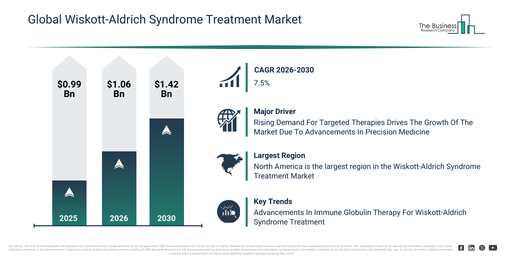
    The wiskott-aldrich syndrome treatment market size has experienced robust expansion in recent years. It is projected to grow from $0.99 billion in 2025 to $1.06 billion in 2026, demonstrating a compound annual growth rate (CAGR) of 7.8%. Historically, this growth can be ascribed to advancements in immunodeficiency diagnosis methods, more widespread availability of immunoglobulin replacement therapy, the enlargement of pediatric specialty care centers, enhanced survival via supportive treatments, and increasing clinical research activity.

    The wiskott-aldrich syndrome treatment market is projected to experience robust expansion in the coming years, with its size anticipated to reach $1.42 billion by 2030, growing at a compound annual growth rate (CAGR) of 7.5%. This growth during the forecast period is attributable to the increasing adoption of gene therapy solutions, rising investments in rare disease research, expansion of advanced diagnostic capabilities, growing availability of curative treatment options, and an increasing focus on the long-term quality of life for patients. Major trends expected in the forecast period include the increasing adoption of stem cell transplantation, advancements in gene therapy approaches, a growing focus on personalized immunodeficiency treatments, the expansion of early genetic screening programs, and enhanced development of long-term disease management protocols.

    Get A Free Sample Report With In-Depth Market Insights:

    https://thebusinessresearchcompany.com/sample_request?id=80789419&type=smp&name=Wiskott-Aldrich%20Syndrome%20Treatment%20Market%20Report%202026&utm_source=Blogs&utm_medium=Paid&utm_campaign=Nov_PR

    Wiskott-Aldrich Syndrome Treatment Market Opportunity Drivers: What’s Unlocking New Revenue Potential?

    The future expansion of the wiskott-aldrich syndrome treatment market is expected to be propelled by the growing demand for targeted therapies. These treatments concentrate on specific molecules or pathways involved in disease progression, particularly in cancer, to selectively attack abnormal cells while minimizing harm to normal ones. Precision medicine drives the advancement of targeted therapies, improving their efficacy by addressing specific genetic mutations and simultaneously reducing side effects. Targeted therapies, including gene therapy, contribute to correcting the defective WAS gene, thereby restoring immune function and platelet production. This leads to improved patient outcomes and a reduced reliance on lifelong treatments. Thus, the escalating demand for targeted therapies is a significant impetus for the growth of the wiskott-aldrich syndrome treatment market.

    Wiskott-Aldrich Syndrome Treatment Market Segmentation: How Does The Market Break Down By Category?

    The wiskott-aldrich syndrome treatment market covered in this report is segmented –

    1) By Treatment Type: Immunoglobulin Replacement Therapy, Antibiotic Therapy, Stem Cell Transplantation, Gene Therapy

    2) By Diagnosis: Blood tests, Genetic testing, Other Diagnosis

    3) By Distribution Channel: Hospital Pharmacy, Retail Pharmacy, Online Pharmacies, Other Distribution Channels

    4) By End-User: Hospitals, Research Institutes, Specialty Clinics

    Subsegments:

    1) By Immunoglobulin Replacement Therapy: Intravenous Immunoglobulin (IVIG), Subcutaneous Immunoglobulin (SCIG)

    2) By Antibiotic Therapy: Broad-Spectrum Antibiotics, Narrow-Spectrum Antibiotics

    3) By Stem Cell Transplantation: Allogeneic Hematopoietic Stem Cell Transplantation (HSCT), Autologous Stem Cell Transplantation

    4) By Gene Therapy: Lentiviral Vector-Based Gene Therapy, Retroviral Vector-Based Gene Therapy

    Wiskott-Aldrich Syndrome Treatment Market Innovation Trends Shaping Future Development

    Leading companies in the wiskott-aldrich syndrome treatment market are concentrating on developing innovative products, such as intravenous immune globulin, to enhance immune system function and manage infections. Immune globulin intravenous (IVIG) is a therapeutic approach that delivers purified human immunoglobulin G (IgG) antibodies directly into the bloodstream to boost immune capabilities. It is utilized for managing immune deficiencies, autoimmune diseases, and infections by providing passive immunity and regulating immune responses.

    Wiskott-Aldrich Syndrome Treatment Market Competitive Overview And Top Companies

    Major companies operating in the wiskott-aldrich syndrome treatment market are Pfizer Inc., Boston Children’s Hospital, Grifols S A, The Children’s Hospital of Philadelphia, Seattle Children’s Research Institute, CSL Behring LLC, GC Biopharma USA Inc, St Jude Children’s Research Hospital, Great Ormond Street Hospital, Octapharma AG, Bio Products Laboratory Limited, ADMA Biologics Inc, Orchard Therapeutics plc, Genethon, Yposkesi, Rocket Pharmaceuticals, Autolus Therapeutics, Bluebird Bio, Kedrion Biopharma Inc, GlaxoSmithKline Plc, Merck & Co Ltd, Takeda Pharmaceutical Company Limited

    View The Full Wiskott-Aldrich Syndrome Treatment Market Report:

    https://thebusinessresearchcompany.com/report/wiskott-aldrich-syndrome-treatment-global-market-report?utm_source=Blogs&utm_medium=Paid&utm_campaign=Nov_PR

    Wiskott-Aldrich Syndrome Treatment Market Geographic Landscape: Which Region Leads Industry Growth?

    North America was the largest region in the wiskott-aldrich syndrome treatment market in 2025. The regions covered in the wiskott-aldrich syndrome treatment market report are Asia-Pacific, South East Asia, Western Europe, Eastern Europe, North America, South America, Middle East, Africa.

    Reach Out To Our Team:

    The Business Research Company: https://www.thebusinessresearchcompany.com/

    Americas: +1 310-496-7795

    Asia: +44 7882 955267 & +91 8897263534

    Europe: +44 7882 955267

    Email us at: marketing@tbrc.info

    Follow us on:

    LinkedIn: https://in.linkedin.com/company/the-business-research-company

    YouTube: https://www.youtube.com/channel/UC24_fI0rV8cR5DxlCpgmyFQ

    Global Market Model: https://www.thebusinessresearchcompany.com/global-market-model
  • Wilms Tumor Protein Market Outlook Through 2030: Understanding The Growth Opportunity

    Wilms Tumor Protein Market Outlook Through 2030: Understanding The Growth Opportunity

    Backed by market attractiveness analysis, total addressable market sizing, company benchmarking matrices, interactive Excel dashboards, wider supply chain intelligence, emerging startup coverage, and detailed product-level insights, The Business Research Company’s 2026 market reports are designed to offer research that is more actionable and strategically valuable than ever.

    Wilms Tumor Protein Market Revenue Outlook: What CAGR Lies Ahead Through 2030?

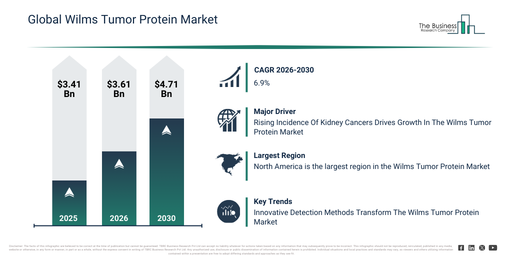
    The wilms tumor protein market has experienced robust growth over recent years. This market is anticipated to increase from $3.41 billion in 2025 to $3.61 billion in 2026, exhibiting a compound annual growth rate (CAGR) of 5.8%. The expansion observed in the historic period is attributable to several factors, including the broadening of molecular biology research, a rise in the application of immunohistochemistry techniques, an increasing demand for cancer biomarkers, advancements in recombinant protein production, and elevated investment in academic research.

    The market size for Wilms tumor protein is projected to experience substantial expansion in the coming years. It is anticipated to reach $4.71 billion by 2030, exhibiting a compound annual growth rate (CAGR) of 6.9%. This projected growth is driven by several factors, including the increasing embrace of precision medicine approaches, a growing need for targeted cancer diagnostics, the widening scope of gene-based therapeutic investigations, the increasing incorporation of biomarkers into treatment strategies, and rising investment in oncology research. Key developments during this period are expected to involve the increased application of wt1 as a cancer biomarker, a surging demand for molecular diagnostic instruments, the greater adoption of targeted research reagents, an expansion of translational oncology studies, and a heightened emphasis on gene expression analysis.

    Get A Free Sample Report With In-Depth Market Insights:

    https://thebusinessresearchcompany.com/sample_request?id=69291088&type=smp&name=Wilms%20Tumor%20Protein%20Market%20Report%202026&utm_source=Blogs&utm_medium=Paid&utm_campaign=Nov_PR

    Wilms Tumor Protein Market Growth Momentum: What Factors Are Shaping Demand?

    The rising prevalence of kidney cancers is anticipated to fuel the expansion of the wilms tumor protein market moving forward. Kidney cancer is a malignancy that originates in the kidneys, marked by the abnormal proliferation of cells within the kidney tissue. WT1 expression can be beneficial in diagnosing kidney cancer, especially when the tumor is minute or difficult to biopsy. Hence, the increasing instances of kidney cancers are expected to drive the growth of the Wilms tumor protein market.

    Wilms Tumor Protein Market Segment Trends And Revenue Contributors

    The wilms tumor protein market covered in this report is segmented –

    1) By Product Type: Antibodies, Assay Kits, Recombinant Proteins, Other Types

    2) By Detection Method: Immunohistochemistry (IHC), Enzyme-Linked Immunosorbent Assay (ELISA), Western Blotting, Polymerase Chain Reaction (PCR), Other Methods

    3) By Application: Cancer Diagnosis, Cancer Treatment, Research And Development, Other Applications

    4) By End User: Hospitals, Diagnostic Laboratories, Research Institutes, Other End Users

    Subsegments:

    1) By Antibodies: Monoclonal Antibodies, Polyclonal Antibodies

    2) By Assay Kits: ELISA Kits, Western Blot Kits, Immunohistochemistry (IHC) Kits

    3) By Recombinant Proteins: Full-Length Recombinant Proteins, Domain-Specific Recombinant Proteins

    4) By Other Types: Small Molecule Inhibitors, Gene Editing Tools

    Wilms Tumor Protein Market Trends Redefining Industry Growth

    Leading companies operating in the Wilms tumor protein market are focusing on developing advanced detection methods, such as enzyme-linked immunosorbent assay (ELISA), to deliver dependable services to their customers. Enzyme-linked immunosorbent assay (ELISA) is a highly sensitive and specific technique that utilizes specialized enzymes which attach to antibodies in blood to identify host cell proteins (HCPs).

    Wilms Tumor Protein Market Competitive Landscape: Which Companies Lead The Industry?

    Major companies operating in the wilms tumor protein market are Thermo Fisher Scientific Inc., Abcam plc, BioLegend Inc., Cell Signaling Technology Inc., Genetex Inc., Proteintech Group Inc., Novus Biologicals LLC, OriGene Technologies Inc., Boster Biological Technology, ZS Genetics Inc., Sino Biological Inc., LI-COR Inc., QIAGEN NV, PerkinElmer Inc., Oxford Nanopore Technologies plc, Pacific Biosciences of California Inc., Santa Cruz Biotechnology Inc., SELLAS Life Sciences Inc., Immatics NV, TapImmune Inc., Generex Biotechnology Corp, BrightPath Biotherapeutics Inc.

    View The Full Wilms Tumor Protein Market Report:

    https://thebusinessresearchcompany.com/report/wilms-tumor-protein-global-market-report?utm_source=Blogs&utm_medium=Paid&utm_campaign=Nov_PR

    Wilms Tumor Protein Market Largest Region: Which Geography Holds The Biggest Share?

    North America was the largest region in the wilms tumor protein market in 2025. The regions covered in the wilms tumor protein market report are Asia-Pacific, South East Asia, Western Europe, Eastern Europe, North America, South America, Middle East, Africa.

    Reach Out To Our Team:

    The Business Research Company: https://www.thebusinessresearchcompany.com/

    Americas: +1 310-496-7795

    Asia: +44 7882 955267 & +91 8897263534

    Europe: +44 7882 955267

    Email us at: marketing@tbrc.info

    Follow us on:

    LinkedIn: https://in.linkedin.com/company/the-business-research-company

    YouTube: https://www.youtube.com/channel/UC24_fI0rV8cR5DxlCpgmyFQ

    Global Market Model: https://www.thebusinessresearchcompany.com/global-market-model