Author: Marketing Posting

  • Typhoid Vi Polysaccharide Vaccine Market Forecast To Reach $15.51 Billion By 2030: Key Growth Drivers And Industry Trends

    Typhoid Vi Polysaccharide Vaccine Market Forecast To Reach $15.51 Billion By 2030: Key Growth Drivers And Industry Trends

    Featuring market attractiveness scoring, total addressable market sizing, company benchmarking matrices, interactive Excel dashboards, deeper supply chain intelligence, emerging startup tracking, and granular product-level insights, The Business Research Company’s 2026 market reports are built to deliver research that is both more actionable and more strategically valuable.

    Typhoid Vi Polysaccharide Vaccine Market Forecast: What Value Will The Market Reach By 2030?

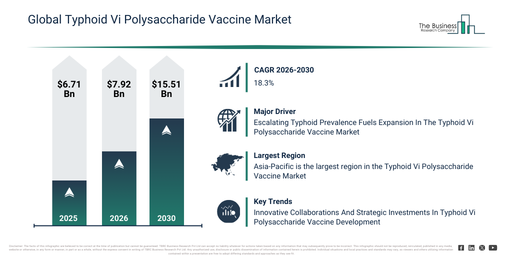
    The market size for the typhoid vi polysaccharide vaccine has experienced substantial growth in recent years. This market is projected to expand from $6.71 billion in 2025 to reach $7.92 billion in 2026, demonstrating a compound annual growth rate (CAGR) of 18.1%. Historically, this expansion has been driven by factors such as the broadening of national immunization schedules, a heightened understanding of typhoid prevention, the presence of various polysaccharide vaccine formulations, the proliferation of public vaccination campaigns, and backing from international health organizations.

    The typhoid Vi polysaccharide vaccine market is projected to experience substantial growth in the next few years. It is anticipated to expand to $15.51 billion by 2030, achieving a compound annual growth rate (CAGR) of 18.3%. This expansion during the forecast period is driven by an increasing focus on widespread immunization in endemic regions, rising investments in vaccine manufacturing capacity, the broadening of adult vaccination programs, a growing emphasis on travel-related immunization, and the increasing adoption of enhanced vaccine storage technologies. Major trends expected in this period include an increase in government-led immunization initiatives, a rising demand for pediatric vaccination coverage, a growing focus on preventive healthcare strategies, the expansion of public-private vaccine distribution models, and an enhanced emphasis on cold chain optimization.

    Get A Free Sample Report With In-Depth Market Insights:

    https://thebusinessresearchcompany.com/sample_request?id=34322546&type=smp&name=Typhoid%20Vi%20Polysaccharide%20Vaccine%20Market%20Report%202026&utm_source=Blogs&utm_medium=Paid&utm_campaign=Nov_PR

    Typhoid Vi Polysaccharide Vaccine Market Expansion Drivers: What’s Shaping Future Growth?

    The increasing incidence of typhoid is projected to stimulate the expansion of the typhoid Vi polysaccharide vaccine market in the future. Typhoid, a potentially fatal infection caused by the bacterium Salmonella Typhi, commonly spreads through the consumption of tainted food or beverages. Factors contributing to the rise in typhoid cases include inadequate sanitation, compromised water supplies, swift urban development, and greater exposure to contaminated sustenance and water. The typhoid Vi polysaccharide vaccine market contributes to addressing this issue by supplying immunization to adults and children aged 2 years and above, thereby offering defensive immunity against Salmonella enterica serovar Typhi and alleviating the impact of typhoid fever in affected areas. The growing prevalence of typhoid is fueling the development of the typhoid Vi polysaccharide vaccine market.

    Typhoid Vi Polysaccharide Vaccine Market Breakdown By Product Type And Application

    The typhoid vi polysaccharide vaccine market covered in this report is segmented –

    1) By Type: Child, Adult

    2) By Route Of Administration: Oral, Parenteral

    3) By Application: Government Institution, Private Sector, Other Applications

    Subsegments:

    1) By Child: Pediatric Formulations, Age-Specific Dosages

    2) By Adult: Standard Adult Formulations, High-Risk Population Formulations

    Typhoid Vi Polysaccharide Vaccine Market Strategic Trends: What Defines The Next Growth Phase?

    Companies active in the typhoid Vi polysaccharide vaccine market are working to strengthen their position by making strategic investments, such as forming funding collaborations for advanced vaccine delivery platforms, with the goal of accelerating innovation and broadening global immunization efforts. These funding partnerships for next-generation vaccine delivery platforms represent joint investment initiatives focused on developing enhanced typhoid vaccination technologies, especially those that are needle-free, thermostable, and simple to administer, thereby improving accessibility, coverage, and compliance in regions with limited resources.

    Typhoid Vi Polysaccharide Vaccine Market Company Landscape And Competitive Strategy

    Major companies operating in the typhoid vi polysaccharide vaccine market are Sanofi S.A., Merck & Co. Inc., PT Bio Farma, Bharat Biotech International Limited, Bio-Med Pvt. Ltd., Hualan Biological Engineering Inc., Indian Immunologicals Limited, Serum Institute of India Limited, Biological E Limited, Panacea Biotec Limited, Zydus Lifesciences Limited, Beijing Minhai Biotechnology Co. Ltd., Lanzhou Institute of Biological Products Co. Ltd., Chengdu Institute of Biological Products Co. Ltd., Wuhan Institute of Biological Products Co. Ltd., Eubiologics Co. Ltd., Incepta Vaccine Limited, GC Pharma, KM Biologics Inc., Bharat Immunologicals and Biologicals Corporation Limited, Sinovac Biotech Ltd., Bio Farma Indonesia

    View The Full Typhoid Vi Polysaccharide Vaccine Market Report:

    https://thebusinessresearchcompany.com/report/typhoid-Vi-polysaccharide-vaccine-global-market-report?utm_source=Blogs&utm_medium=Paid&utm_campaign=Nov_PR

    Typhoid Vi Polysaccharide Vaccine Market Largest Region: Which Geography Holds The Biggest Share?

    Asia-Pacific was the largest region in the typhoid Vi polysaccharide vaccine market share in 2025. The regions covered in the typhoid vi polysaccharide vaccine market report are Asia-Pacific, South East Asia, Western Europe, Eastern Europe, North America, South America, Middle East, Africa.

    Reach Out To Our Team:

    The Business Research Company: https://www.thebusinessresearchcompany.com/

    Americas: +1 310-496-7795

    Asia: +44 7882 955267 & +91 8897263534

    Europe: +44 7882 955267

    Email us at: marketing@tbrc.info

    Follow us on:

    LinkedIn: https://in.linkedin.com/company/the-business-research-company

    YouTube: https://www.youtube.com/channel/UC24_fI0rV8cR5DxlCpgmyFQ

    Global Market Model: https://www.thebusinessresearchcompany.com/global-market-model
  • Typhoid Antibody Testing Market Research 2026: Market Size, Trends, Segments And Growth Forecast

    Typhoid Antibody Testing Market Research 2026: Market Size, Trends, Segments And Growth Forecast

    Built to provide research that’s more actionable and strategically valuable, The Business Research Company’s 2026 market reports include market attractiveness analysis, total addressable market sizing, company benchmarking matrices, interactive Excel dashboards, broader supply chain intelligence, emerging startup tracking, and in-depth product insights.

    Typhoid Antibody Testing Market Size Outlook: How Quickly Will Revenue Expand Through 2030?

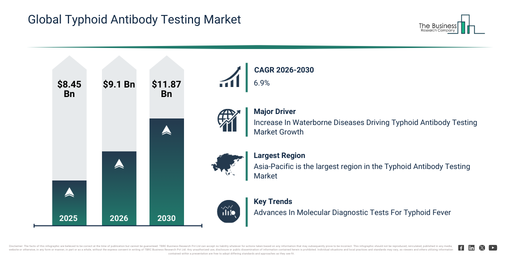
    The typhoid antibody testing market has demonstrated significant expansion in recent years. Its valuation is projected to increase from $8.45 billion in 2025 to $9.1 billion in 2026, advancing at a compound annual growth rate (CAGR) of 7.8%. This historical growth can be linked to factors including the escalating prevalence of typhoid fever in endemic regions, the enlargement of public health screening programs, the broader availability of serological testing methods, the expansion of diagnostic laboratory networks, and a heightened awareness of infectious disease management.

    The typhoid antibody testing market is projected to experience robust expansion over the coming years. This market is forecast to reach $11.87 billion by 2030, exhibiting a compound annual growth rate (CAGR) of 6.9%. This anticipated growth during the forecast period is attributable to several factors, including a heightened need for swift and precise diagnostics, the proliferation of decentralized testing centers, increased capital directed towards sophisticated immunoassay technologies, a stronger emphasis on preparing for disease outbreaks, and the wider integration of digital laboratory systems. Key trends anticipated within this period involve the greater uptake of rapid diagnostic test kits, an escalating demand for point-of-care typhoid testing, a broader application of ELISA-based assays, the advancement of laboratory automation in diagnostic procedures, and a sharpened focus on detecting diseases early.

    Get A Free Sample Report With In-Depth Market Insights:

    https://thebusinessresearchcompany.com/sample_request?id=30633818&type=smp&name=Typhoid%20Antibody%20Testing%20Market%20Report%202026&utm_source=Blogs&utm_medium=Paid&utm_campaign=Nov_PR

    Typhoid Antibody Testing Market Development Factors: What’s Supporting Demand?

    An anticipated increase in waterborne diseases is projected to drive the expansion of the typhoid antibody testing market in the future. These are conditions resulting from pathogenic microorganisms spread via tainted water. Factors contributing to this rise include inadequate sanitation and hygiene, insufficient access to potable water, swift urban development, shifts in climate, and agricultural runoff. Typhoid antibody testing plays a crucial role in addressing this trend by allowing for prompt diagnosis, verification, and oversight of treatment effectiveness, which helps in identifying typhoid fever carriers and implementing preventative strategies against waterborne infections. The growing prevalence of waterborne diseases is fueling the expansion of the typhoid antibody testing market.

    Typhoid Antibody Testing Market Segment Analysis And Revenue Potential

    The typhoid antibody testing market covered in this report is segmented –

    1) By Product Type: Rapid Serological Tests, Hem-agglutination And Co-agglutination, Counter Immunoelectrophoresis, Typhidot Test, Widal Test

    2) By Paratyphi Type: Paratyphi A, Paratyphi B, Paratyphi C

    3) By End-User: Hospitals, Serological Testing Centers, Clinics, Diagnostic Centers, Other End Users

    Subsegments:

    1) By Rapid Serological Tests: Lateral Flow Immunoassays (LFIA), Immunochromatographic Tests (ICT), Enzyme-Linked Immunosorbent Assays (ELISA)

    2) By Hem-agglutination And Co-agglutination: Hemagglutination Assay, Co-agglutination Assay

    3) By Counter Immunoelectrophoresis: Gel-Based Counter Immunoelectrophoresis, Paper-Based Counter Immunoelectrophoresis

    4) By Typhidot Test: Typhidot-M (IgM) Test, Typhidot-G (IgG) Test

    5) By Widal Test: Tube Widal Test, Slide Widal Test

    Typhoid Antibody Testing Market Transformation Trends: What Innovations Are Driving Change?

    Leading companies within the typhoid antibody testing market are concentrating on developing innovative products, such as molecular diagnostic tests, to improve the accuracy and speed of typhoid fever diagnosis. These molecular diagnostic tests offer high sensitivity and specificity, facilitating the precise and rapid detection of pathogens like Salmonella Typhi in cases of typhoid fever.

    Typhoid Antibody Testing Market Key Players Shaping Industry Direction

    Major companies operating in the typhoid antibody testing market are Thermo Fisher Scientific Inc., Abbott Laboratories, Siemens Healthineers AG, Quest Diagnostics Inc., bioMerieux SA, Bio-Rad Laboratories Inc., DiaSorin S.p.A., Meridian Bioscience Inc., Sekisui Diagnostics, CTK Biotech Inc., Creative Diagnostics, Fortress Diagnostics Ltd., CerTest Biotec S.L, InBios International Inc., J. Mitra & Co. Pvt. Ltd, AccuBioTech Co. Ltd, Vanguard Diagnostics Pvt. Ltd., Suburban Diagnostics India Private Limited, Biorex Diagnostics, Genebio Healthcare Private Limited, ICT Diagnostics

    View The Full Typhoid Antibody Testing Market Report:

    https://thebusinessresearchcompany.com/report/typhoid-antibody-testing-global-market-report?utm_source=Blogs&utm_medium=Paid&utm_campaign=Nov_PR

    Typhoid Antibody Testing Market Regional Analysis: Which Geography Leads On Revenue?

    Asia-Pacific was the largest region in the typhoid antibody testing market in 2025. The regions covered in the typhoid antibody testing market report are Asia-Pacific, South East Asia, Western Europe, Eastern Europe, North America, South America, Middle East, Africa.

    Reach Out To Our Team:

    The Business Research Company: https://www.thebusinessresearchcompany.com/

    Americas: +1 310-496-7795

    Asia: +44 7882 955267 & +91 8897263534

    Europe: +44 7882 955267

    Email us at: marketing@tbrc.info

    Follow us on:

    LinkedIn: https://in.linkedin.com/company/the-business-research-company

    YouTube: https://www.youtube.com/channel/UC24_fI0rV8cR5DxlCpgmyFQ

    Global Market Model: https://www.thebusinessresearchcompany.com/global-market-model
  • Type 2 Diabetes Market Forecast 2026: Market Size, Competitive Landscape And Growth Drivers

    Type 2 Diabetes Market Forecast 2026: Market Size, Competitive Landscape And Growth Drivers

    Backed by market attractiveness analysis, total addressable market sizing, company benchmarking matrices, interactive Excel dashboards, wider supply chain intelligence, emerging startup coverage, and detailed product-level insights, The Business Research Company’s 2026 market reports are designed to offer research that is more actionable and strategically valuable than ever.

    Type 2 Diabetes Market Size, Value And Growth Trajectory Through 2030

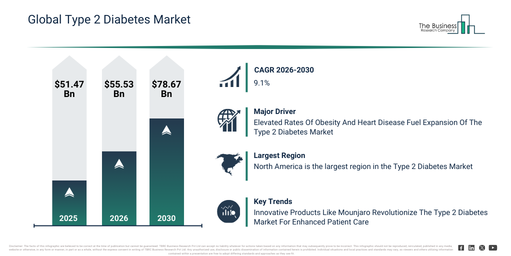
    The type 2 diabetes market has experienced substantial expansion in recent years. Projections indicate that this market will expand from $51.47 billion in 2025 to $55.53 billion in 2026, demonstrating a compound annual growth rate (CAGR) of 7.9%. Historically, this growth has been driven by factors such as the increasing global prevalence of obesity, more sedentary lifestyles, the wider availability of oral antidiabetic drugs, an increase in screening for metabolic disorders, and enhanced access to primary diabetes care.

    The type 2 diabetes market is poised for significant growth in the coming years. It is projected to achieve a value of $78.67 billion by 2030, exhibiting a compound annual growth rate (CAGR) of 9.1%. This anticipated growth can be attributed to several factors including a surging demand for therapies focused on weight management, the increasing adoption of personalized diabetes treatment plans, the expansion of digital therapeutic platforms, a heightened focus on preventive diabetes management strategies, and rising investments in next-generation antidiabetic drugs. Prominent trends observed during this forecast period include the increasing uptake of GLP-1 receptor agonists, an elevated focus on cardiometabolic risk management, the expanding use of combination drug therapies, the development of treatment approaches integrated with lifestyle, and a stronger emphasis on achieving long-term glycemic control.

    Get A Free Sample Report With In-Depth Market Insights:

    https://thebusinessresearchcompany.com/sample_request?id=18275237&type=smp&name=Type%202%20Diabetes%20Market%20Report%202026&utm_source=Blogs&utm_medium=Paid&utm_campaign=Nov_PR

    Type 2 Diabetes Market Industry Drivers: What’s Behind The Revenue Growth?

    The type 2 diabetes market is anticipated to experience growth driven by the escalating rates of obesity and heart disease in the foreseeable future. Obesity is a medical state where an unhealthy amount of excess body fat has accumulated, whereas heart disease refers to various conditions impacting the heart and blood vessels. Increased body weight raises the risk of insulin resistance, leading to elevated blood sugar levels and the development of type 2 diabetes. Conversely, high blood sugar levels have the potential to damage blood vessels and the nerves controlling the heart and blood vessels, contributing to heart disease. The rising prevalence of obesity and heart disease is propelling the expansion of the type 2 diabetes market.

    Type 2 Diabetes Market Segmentation And Category Overview

    The type 2 diabetes market covered in this report is segmented –

    1) By Drug Class: Dipeptidyl Peptidase-4 (DPP-4) Inhibitors, Glucagon-Like Peptide-1 (GLP-1) Receptor Agonists, Thiazolidinediones, Alpha-Glucosidase Inhibitors, Sulfonylureas And Insulin Secretagogues, Biguanides, SodiumGlucose Cotransporter 2 Inhibitors, Other Drug Classes

    2) By Application: Glycemic Control, Cardiovascular Safety, Hypoglycemia Avoidance, Other Applications

    3) By End-User: Children, Adults

    Subsegments:

    1) By Dipeptidyl Peptidase-4 (DPP-4) Inhibitors: Sitagliptin, Saxagliptin, Linagliptin, Alogliptin

    2) By Glucagon-Like Peptide-1 (GLP-1) Receptor Agonists: Liraglutide, Semaglutide, Dulaglutide, Exenatide

    3) By Thiazolidinediones: Pioglitazone, Rosiglitazone

    4) By Alpha-Glucosidase Inhibitors: Acarbose, Miglitol

    5) By Sulfonylureas And Insulin Secretagogues: Glimepiride, Glipizide, Glyburide

    6) By Biguanides: Metformin, Buformin, Phenformin

    7) By Sodium-Glucose Cotransporter 2 Inhibitors: Canagliflozin, Dapagliflozin, Empagliflozin

    8) By Other Drug Classes: Amylin Analogues, Bile Acid Sequestrants, Dopamine Agonists

    #Type 2 Diabetes Market Growth Trends: What’s Shaping The Future Outlook?

    Major companies within the type 2 diabetes market are concentrating on developing advanced solutions, such as extended-indication SGLT2/GLP-1 combination therapies, to provide improved glycemic control, mitigate comorbidities, and enhance patient adherence. Extended-indication SGLT2/GLP-1 combination therapies are pharmaceutical regimens that combine sodium-glucose co-transporter-2 (SGLT2) inhibitors and glucagon-like peptide-1 (GLP-1) receptor agonists (or their fixed-dose combinations) to simultaneously target blood glucose regulation, obesity, cardiovascular, and renal outcomes in patients with type 2 diabetes.

    Type 2 Diabetes Market Competitive Analysis Of Leading Industry Participants

    Major companies operating in the type 2 diabetes market are F. Hoffmann-La Roche AG, Merck and Co. Inc, Novartis AG, AstraZeneca plc, Abbott Laboratories, Sanofi SA, Medtronic plc, Takeda Pharmaceutical Company, GlaxoSmithKline plc, Eli Lilly and Company, Novo Nordisk A/S, Johnson And Johnson Private Limited, Daiichi Sankyo Co. Ltd, Boehringer Ingelheim International GmbH, Dexcom Inc, Amgen Inc., Insulet Corporation, Ascensia Diabetes Care, Beta Bionics, Onduo LLC, DarioHealth, One Drop, Bigfoot Biomedical Inc., Digbi Health, MySugr GmbH, Senseonics Holdings Inc., Provention Bio Inc., Vida Health Inc., Diathrive Health

    View The Full Type 2 Diabetes Market Report:

    https://thebusinessresearchcompany.com/report/type-2-diabetes-global-market-report?utm_source=Blogs&utm_medium=Paid&utm_campaign=Nov_PR

    Type 2 Diabetes Market Geographic Spread And Regional Opportunities

    North America was the largest region in the type 2 diabetes market in 2025. Europe is expected to be the fastest-growing region in the forecast period. The regions covered in the type 2 diabetes market report are Asia-Pacific, South East Asia, Western Europe, Eastern Europe, North America, South America, Middle East, Africa.

    Reach Out To Our Team:

    The Business Research Company: https://www.thebusinessresearchcompany.com/

    Americas: +1 310-496-7795

    Asia: +44 7882 955267 & +91 8897263534

    Europe: +44 7882 955267

    Email us at: marketing@tbrc.info

    Follow us on:

    LinkedIn: https://in.linkedin.com/company/the-business-research-company

    YouTube: https://www.youtube.com/channel/UC24_fI0rV8cR5DxlCpgmyFQ

    Global Market Model: https://www.thebusinessresearchcompany.com/global-market-model
  • Type 1 Diabetes Market Size In 2026: Regional Growth, Key Segments And Future Outlook

    Type 1 Diabetes Market Size In 2026: Regional Growth, Key Segments And Future Outlook

    Featuring market attractiveness scoring, total addressable market sizing, company benchmarking matrices, interactive Excel dashboards, deeper supply chain intelligence, emerging startup tracking, and granular product-level insights, The Business Research Company’s 2026 market reports are built to deliver research that is both more actionable and more strategically valuable.

    Type 1 Diabetes Market CAGR Outlook And Future Development

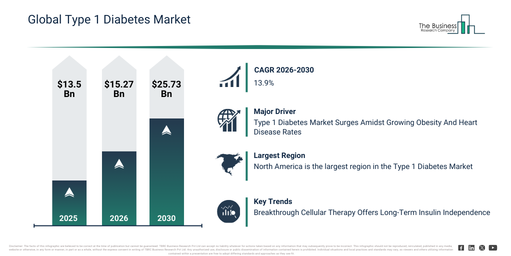
    The type 1 diabetes market has experienced swift expansion over recent years. It is projected to climb from $13.5 billion in 2025 to $15.27 billion by 2026, achieving a compound annual growth rate (CAGR) of 13.1%. The historical period’s growth can be attributed to enhanced availability of insulin analogs, increased diagnosis rates among pediatric populations, the proliferation of diabetes specialty care centers, greater awareness of autoimmune diabetes, and progress in glucose monitoring technologies.

    The market for type 1 diabetes is projected to experience substantial expansion over the upcoming years, anticipating a growth to $25.73 billion by 2030, at a compound annual growth rate (CAGR) of 13.9%. This projected growth is driven by several factors such as the increasing integration of closed-loop insulin delivery systems, heightened investments in immunotherapy research, a greater emphasis on treatments that modify the disease’s progression, the proliferation of digital platforms for diabetes management, and an escalating need for care models centered around the patient. Key trends anticipated during this period encompass the widespread uptake of continuous glucose monitoring systems, the increasing utilization of insulin pump technologies, a stronger focus on individualized insulin therapy, the development of combination therapy strategies, and an intensified commitment to early diagnosis and effective disease management.

    Get A Free Sample Report With In-Depth Market Insights:

    https://thebusinessresearchcompany.com/sample_request?id=98327276&type=smp&name=Type%201%20Diabetes%20Market%20Report%202026&utm_source=Blogs&utm_medium=Paid&utm_campaign=Nov_PR

    Type 1 Diabetes Market Growth Factors: What’s Supporting Expansion?

    The expanding female population is anticipated to drive the growth of the Turner syndrome market moving forward. This demographic refers to the total count of females residing in a specific region or globally at a particular time. The rise in the female population is primarily attributed to higher female life expectancy, supported by advancements in healthcare systems and evolving demographic patterns. The Turner syndrome market offers support to the female population through various interventions like growth hormone therapy, estrogen replacement, and comprehensive multidisciplinary care, all of which enhance physical development, reproductive health, and long-term well-being. The growing female population is a significant factor propelling the expansion of the Turner syndrome market.

    Type 1 Diabetes Market Segment Outlook: Which Categories Are Growing Fastest?

    The type 1 diabetes market covered in this report is segmented –

    1) By Product Type: Rapid Acting Insulin Analogs, Long-Acting Insulin Analogs, Premix Insulin Analogs, Others Product Types

    2) By Device: Insulin Pump, Insulin Pen, Blood Glucose Meter

    3) By Application: Childrens, Adults

    4) By End-User: Hospital, Research Institutes, Home Care

    Subsegments:

    1) By Rapid Acting Insulin Analogs: Insulin Lispro, Insulin Aspart, Insulin Glulisine

    2) By Long-Acting Insulin Analogs: Insulin Detemir, Insulin Glargine, Insulin Degludec

    3) By Premix Insulin Analogs: Premixed Insulin Lispro, Premixed Insulin Aspart, Premixed Insulin Glargine

    4) By Other Product Types: Insulin Pumps, Continuous Glucose Monitoring Systems, Non-Insulin Medications, Combination Therapies

    Type 1 Diabetes Market Industry Trends: What’s Reshaping Demand?

    Major companies operating in the type 1 diabetes market are prioritizing the creation of advanced therapies, including allogeneic islet cell transplantation, to facilitate functional beta-cell replacement and reduce insulin dependency for patients. Allogeneic islet cell transplantation entails the infusion of pancreatic islet cells from a donor into the patient’s hepatic portal vein, with the goal of restoring the body’s own insulin production and decreasing both the frequency of hypoglycemic episodes and insulin injections.

    Type 1 Diabetes Market Leading Companies And Competitive Benchmarking

    Major companies operating in the type 1 diabetes market are Johnson and Johnson Limited, Merck and Co. Inc., Sanofi-Aventis LLC, Abbott Laboratories, Medtronic Plc, Eli Lilly and Co Ltd, Novo Nordisk A/S, Dexcom Inc, Insulet Corporation, Tandem Diabetes Care Inc, Adaptive Biotechnologies Corporation, Xeris Pharmaceuticals Inc, MannKind Corporation, Biocon Ltd, Virta Health Corp, Bigfoot Biomedical Inc, ViaCyte Inc, Beta Bionics Inc, Adocia SA, Senseonics Holdings Inc, Zealand Pharmaceuticals A/S, Provention Bio Inc

    View The Full Type 1 Diabetes Market Report:

    https://thebusinessresearchcompany.com/report/type-1-diabetes-global-market-report?utm_source=Blogs&utm_medium=Paid&utm_campaign=Nov_PR

    Type 1 Diabetes Market Top Region By Revenue And Market Share

    North America was the largest region in the type 1 diabetes market in 2025. The regions covered in the type 1 diabetes market report are Asia-Pacific, South East Asia, Western Europe, Eastern Europe, North America, South America, Middle East, Africa.

    Reach Out To Our Team:

    The Business Research Company: https://www.thebusinessresearchcompany.com/

    Americas: +1 310-496-7795

    Asia: +44 7882 955267 & +91 8897263534

    Europe: +44 7882 955267

    Email us at: marketing@tbrc.info

    Follow us on:

    LinkedIn: https://in.linkedin.com/company/the-business-research-company

    YouTube: https://www.youtube.com/channel/UC24_fI0rV8cR5DxlCpgmyFQ

    Global Market Model: https://www.thebusinessresearchcompany.com/global-market-model
  • Twin-Twin Transfusion Syndrome Treatment Market Growth Forecast Through 2030: Market Size And Trends In 2026

    Twin-Twin Transfusion Syndrome Treatment Market Growth Forecast Through 2030: Market Size And Trends In 2026

    Built to provide research that’s more actionable and strategically valuable, The Business Research Company’s 2026 market reports include market attractiveness analysis, total addressable market sizing, company benchmarking matrices, interactive Excel dashboards, broader supply chain intelligence, emerging startup tracking, and in-depth product insights.

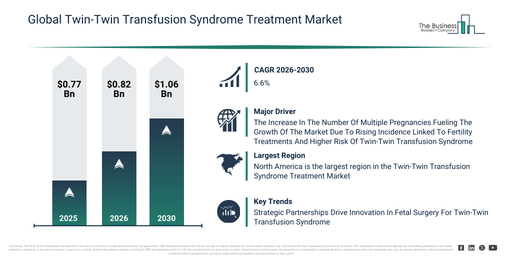
    Twin-Twin Transfusion Syndrome Treatment Market Set To Climb From $0.82 Billion In 2026 To $1.06 Billion By 2030

    The twin-twin transfusion syndrome treatment market size has experienced robust growth recently. It is projected to expand from $0.77 billion in 2025 to $0.82 billion in 2026, exhibiting a compound annual growth rate (CAGR) of 6.8%. This historical growth can be attributed to factors such as the enhanced utilization of prenatal ultrasound screening, progress in fetal medicine techniques, increased awareness of monochorionic twin risks, the widespread availability of laser photocoagulation procedures, and the expansion of maternal healthcare services.

    The twin-twin transfusion syndrome treatment market is projected to experience substantial expansion in the coming years. This market is set to reach $1.06 billion by 2030, exhibiting a compound annual growth rate (CAGR) of 6.6%. This anticipated growth is driven by developments in minimally invasive fetal surgery, increasing investments in maternal-fetal medicine, the proliferation of specialized prenatal care facilities, a heightened demand for prompt intervention therapies, and enhanced survival rates for affected twins. Key developments during this period will encompass the wider adoption of fetoscopic laser treatments, an increase in advanced prenatal imaging utilization, a stronger focus on early diagnosis of TTTS, the growth of specialized fetal surgery centers, and advancements in multidisciplinary maternal-fetal care.

    Get A Free Sample Report With In-Depth Market Insights:

    https://thebusinessresearchcompany.com/sample_request?id=33011232&type=smp&name=Twin-Twin%20Transfusion%20Syndrome%20Treatment%20Market%20Report%202026&utm_source=Blogs&utm_medium=Paid&utm_campaign=Nov_PR

    Twin-Twin Transfusion Syndrome Treatment Market Demand Drivers: What’s Powering Industry Growth?

    The rising prevalence of multiple pregnancies is anticipated to fuel the expansion of the twin-twin transfusion syndrome treatment market in the future. Multiple pregnancies happen when a woman carries more than one fetus concurrently, encompassing twins, triplets, or more. This increase in multiple pregnancies primarily stems from fertility treatments that encourage the ovaries to produce multiple eggs. Treatments for twin-twin transfusion syndrome in such pregnancies address unusual blood vessel connections within the shared placenta, working to re-establish an even blood flow between the fetuses. This action considerably improves survival rates and diminishes the likelihood of complications for both twins. The growing number of multiple pregnancies is propelling the twin-twin transfusion syndrome treatment market.

    Twin-Twin Transfusion Syndrome Treatment Market Segment Landscape: Which Areas Lead Development?

    The twin-twin transfusion syndrome treatment market covered in this report is segmented –

    1) By Treatment Type: Laser Therapy, Surgery, Blood Transfusion, Medication

    2) By Diagnosis Method: Ultrasound, Blood Tests, Amniocentesis

    3) By Mode Of Administration: Injectable, Oral, Other Modes Of Administration

    4) By Symptoms: Breathlessness, Tightness In The Abdomen, Rapid Expansion Of Abdomen, Rapid Weight Gain, Pressure On The Stomach, Premature Contractions

    5) By End-User: Hospitals, Homecare, Specialty Clinics, Other End-Users

    Subsegments:-

    1) By Laser Therapy: Fetoscopic Laser Photocoagulation, Selective Laser Ablation, Solomon Technique

    2) By Surgery: Amnioreduction Surgery, Septostomy, Fetoscopic Cord Coagulation

    3) By Blood Transfusion: Intrauterine Transfusion (IUT), Intraperitoneal Transfusion, Intravascular Transfusion

    4) By Medication: Tocolytics, Corticosteroids, Anti-Inflammatory Drugs, Antibiotics

    Twin-Twin Transfusion Syndrome Treatment Market Innovation Trends: What Developments Are Reshaping The Industry?

    Leading companies within the twin-twin transfusion syndrome treatment market are concentrating on strategic alliances to accelerate the development and commercialization of advanced therapeutic solutions. A strategic partnership involves a long-term collaboration between independent organizations aiming to achieve common business objectives. This enables each party to capitalize on shared strengths, resources, or market reach for mutual gain.

    Twin-Twin Transfusion Syndrome Treatment Market Industry Leaders And Competitive Landscape

    Major companies operating in the twin-twin transfusion syndrome treatment market are Mayo Foundation for Medical Education and Research, USF Health, Johns Hopkins Medicine, University Hospitals, Seattle Children’s Hospital, Texas Children’s Hospital, Cincinnati Children’s Hospital Medical Center, Apollo Hospitals, Tampa General Hospital, Children’s Hospital Colorado, UCSF Health, King’s College Hospital, The Children’s Hospital of Philadelphia, Riley Children’s Health, Yale School of Medicine, Lurie Children’s Hospital, Rainbow Children’s Hospital, UNC Department of Obstetrics & Gynecology, UC Davis Fetal Care and Treatment Center, SJD Barcelona Children’s Hospital, Children’s Minnesota Midwest Fetal Care Center, Boston Children’s Hospital, Nationwide Children’s Hospital Fetal Center

    View The Full Twin-Twin Transfusion Syndrome Treatment Market Report:

    https://thebusinessresearchcompany.com/report/twin-twin-transfusion-syndrome-treatment-global-market-report?utm_source=Blogs&utm_medium=Paid&utm_campaign=Nov_PR

    Twin-Twin Transfusion Syndrome Treatment Market Regional Analysis And Top Geography

    North America was the largest region in the twin-twin transfusion syndrome treatment market in 2025. The regions covered in the twin-twin transfusion syndrome treatment market report are Asia-Pacific, South East Asia, Western Europe, Eastern Europe, North America, South America, Middle East, Africa.

    Reach Out To Our Team:

    The Business Research Company: https://www.thebusinessresearchcompany.com/

    Americas: +1 310-496-7795

    Asia: +44 7882 955267 & +91 8897263534

    Europe: +44 7882 955267

    Email us at: marketing@tbrc.info

    Follow us on:

    LinkedIn: https://in.linkedin.com/company/the-business-research-company

    YouTube: https://www.youtube.com/channel/UC24_fI0rV8cR5DxlCpgmyFQ

    Global Market Model: https://www.thebusinessresearchcompany.com/global-market-model
  • Turner Syndrome Market Analysis: $2.73 Billion Market Size In 2026 And Future Growth Prospects

    Turner Syndrome Market Analysis: $2.73 Billion Market Size In 2026 And Future Growth Prospects

    Backed by market attractiveness analysis, total addressable market sizing, company benchmarking matrices, interactive Excel dashboards, wider supply chain intelligence, emerging startup coverage, and detailed product-level insights, The Business Research Company’s 2026 market reports are designed to offer research that is more actionable and strategically valuable than ever.

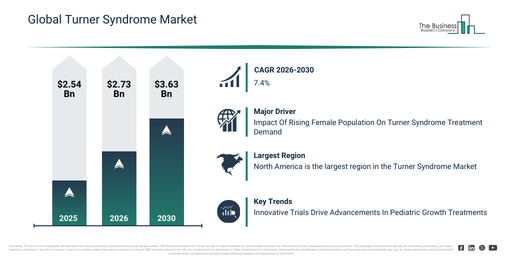
    Turner Syndrome Market Forecast: Value Set To Climb From $2.73 Billion To $3.63 Billion

    The turner syndrome market size has experienced significant expansion in recent years. It is projected to increase from $2.54 billion in 2025 to $2.73 billion in 2026, exhibiting a compound annual growth rate (CAGR) of 7.6%. Historically, this market growth has stemmed from heightened awareness of genetic disorders, the accessibility of recombinant growth hormones, the spread of pediatric endocrinology services, enhanced diagnostic karyotyping techniques, and increasing patient advocacy initiatives.

    The turner syndrome market size is anticipated to experience robust expansion over the next few years. It is projected to achieve a value of $3.63 billion by 2030, progressing at a compound annual growth rate (CAGR) of 7.4%. This projected growth can be ascribed to progress in genetic screening methods, the increasing implementation of personalized hormone treatments, the broadening of home-based care options, augmented investment in research for rare diseases, and better long-term patient results. Prominent developments expected in the forecast period include an elevated focus on early genetic identification, the rising uptake of growth hormone treatments, an increasing emphasis on continuous disease management, the expansion of multidisciplinary care approaches, and enhanced patient monitoring initiatives.

    Get A Free Sample Report With In-Depth Market Insights:

    https://thebusinessresearchcompany.com/sample_request?id=50177129&type=smp&name=Turner%20Syndrome%20Market%20Report%202026&utm_source=Blogs&utm_medium=Paid&utm_campaign=Nov_PR

    Turner Syndrome Market Growth Drivers: What’s Behind The Acceleration?

    The expanding female populace is projected to drive the future expansion of the Turner syndrome market. This demographic segment represents the total count of women residing in a particular area or worldwide at a given moment. The rise in the female population is fueled by a longer life expectancy among women, thanks to advancements in healthcare and shifts in demographic patterns. The Turner syndrome market assists the female demographic through provisions such as growth hormone therapy, estrogen replacement, and comprehensive multidisciplinary care, all of which contribute to better physical growth, reproductive health, and sustained overall well-being. The growing female population is propelling the expansion of the Turner syndrome market.

    Turner Syndrome Market Segments: Where Is Growth Concentrated?

    The turner syndrome market covered in this report is segmented –

    1) By Type: Classical Turner Syndrome, Mosaic Turner syndrome

    2) By Therapy Type: Growth Hormone Therapy, Estrogen And Progesteron, Replacement Therapy, Other Therapy Types

    3) By Drug Type: Norditropin, Oxandrolone, Humatrope, Somatropin, Oxandrin, Genotropin, Nutropin, Zomacton

    4) By End-User: Hospitals, Homecare, Specialty Clinics, Surgical Centres, Other End-Users

    Subsegments:

    1) By Classical Turner Syndrome: Complete Monosomy X, X Chromosome Deletion

    2) By Mosaic Turner Syndrome: Mosaicism With 45,X/46,XX Karyotype, Mosaicism With 45,X/46,XY Karyotype

    Turner Syndrome Market Trends: What’s Defining The Industry’s Next Phase?

    Companies active in the Turner syndrome market are intensifying their focus on clinical trials to develop innovative products, such as pediatric growth hormone medications, designed to effectively stimulate growth, improve height outcomes, and support the overall development of children with growth hormone deficiencies or growth-related disorders. Pediatric growth hormone medications refer to synthetic or recombinant hormone treatments utilized to stimulate growth and development in children diagnosed with growth hormone deficiency (GHD) or other medical conditions affecting height and growth.

    Turner Syndrome Market Key Participants And Competitive Landscape

    Major companies operating in the turner syndrome market are Pfizer Inc., Novartis AG, Eli Lilly and Company, Novo Nordisk, Merck KGaA, Teva Pharmaceutical Industries Ltd., Sandoz International GmbH, Genentech Inc., Ipsen Pharma, Ferring Pharmaceutical, BioMarin Pharmaceutical Inc., Ascendis Pharma, CRISPR Therapeutics AG, Alnylam Pharmaceuticals Inc., Sangamo Therapeutics Inc., Ultragenyx Pharmaceutical Inc., BridgeBio Pharma Inc., Travere Therapeutics Inc., REGENXBIO Inc., Avalo Therapeutics Inc., Taysha Gene Therapies Inc., Asklepion Therapeutics Inc.

    View The Full Turner Syndrome Market Report:

    https://thebusinessresearchcompany.com/report/turner-syndrome-global-market-report?utm_source=Blogs&utm_medium=Paid&utm_campaign=Nov_PR

    Turner Syndrome Market Geographic Analysis: Where Is Demand Rising Fastest?

    North America was the largest region in the turner syndrome market in 2025. Asia-Pacific is expected to be the fastest-growing region in the forecast period. The regions covered in the turner syndrome market report are Asia-Pacific, South East Asia, Western Europe, Eastern Europe, North America, South America, Middle East, Africa.

    Reach Out To Our Team:

    The Business Research Company: https://www.thebusinessresearchcompany.com/

    Americas: +1 310-496-7795

    Asia: +44 7882 955267 & +91 8897263534

    Europe: +44 7882 955267

    Email us at: marketing@tbrc.info

    Follow us on:

    LinkedIn: https://in.linkedin.com/company/the-business-research-company

    YouTube: https://www.youtube.com/channel/UC24_fI0rV8cR5DxlCpgmyFQ

    Global Market Model: https://www.thebusinessresearchcompany.com/global-market-model
  • Tumor Profiling Market 2026 Market Size And Growth Forecast: Key Trends To Watch

    Tumor Profiling Market 2026 Market Size And Growth Forecast: Key Trends To Watch

    Featuring market attractiveness scoring, total addressable market sizing, company benchmarking matrices, interactive Excel dashboards, deeper supply chain intelligence, emerging startup tracking, and granular product-level insights, The Business Research Company’s 2026 market reports are built to deliver research that is both more actionable and more strategically valuable.

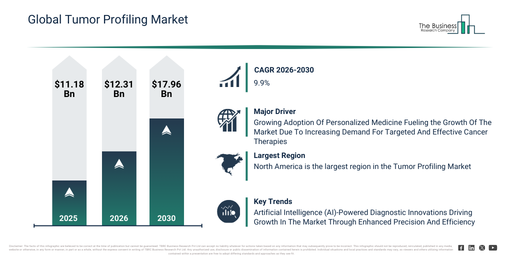
    Tumor Profiling Market Revenue Growth On Track For A 9.9% CAGR Through 2030

    The tumor profiling market size has experienced rapid expansion in recent years. This market is projected to expand from $11.18 billion in 2025 to $12.31 billion in 2026, demonstrating a compound annual growth rate (CAGR) of 10.1%. Historically, this growth has been fueled by factors such as increasing cancer incidence rates, the expansion of molecular diagnostics laboratories, a rise in the use of targeted cancer therapies, advancements in sequencing technologies, and an increase in oncology research funding.

    The tumor profiling market is projected to experience substantial growth in the upcoming years. By 2030, this market is anticipated to reach $17.96 billion, exhibiting a compound annual growth rate (CAGR) of 9.9%. This expansion during the forecast period is driven by factors such as the increasing embrace of precision oncology, a rising need for individualized cancer treatments, improvements in bioinformatics platforms, the broader availability of companion diagnostics, and increased funding for translational cancer research. Key trends expected during this period involve the wider implementation of next-generation sequencing, the growing application of multi-omics profiling methods, increased incorporation of AI-powered data analysis, the broadening scope of personalized oncology applications, and a heightened emphasis on identifying new biomarkers.

    Get A Free Sample Report With In-Depth Market Insights:

    https://thebusinessresearchcompany.com/sample_request?id=59226683&type=smp&name=Tumor%20Profiling%20Market%20Report%202026&utm_source=Blogs&utm_medium=Paid&utm_campaign=Nov_PR

    Tumor Profiling Market Growth Factors Behind Sustained Expansion

    The escalating demand for personalized medicine is projected to propel the expansion of the tumor profiling market moving forward. Personalized medicine defines a strategy that customizes healthcare treatments based on each patient’s unique characteristics. This uptick is motivated by patients seeking more precise therapies that deliver superior outcomes and fewer adverse effects when contrasted with conventional treatments. Tumor profiling aids personalized medicine by pinpointing specific genetic mutations and biomarkers within a patient’s tumor, thereby enabling targeted therapies and reducing side effects. The growing need for personalized medicine is driving growth in the tumor profiling market.

    Tumor Profiling Market Segment Analysis: What Are The Core Market Categories?

    The tumor profiling market covered in this report is segmented –

    1) By Technique: Genomics, Proteomics, Epigenetics, Metabolomics

    2) By Technology: Sequencing Techniques, Quantitative Polymerase Chain Reaction (qPCR), Immunohistochemistry, In Situ Hybridization (ISH), Microarray

    3) By Application: Personalized Cancer Medicine, Oncological Diagnostics, Research

    Subsegments:

    1) By Genomics: Next-Generation Sequencing (NGS), Polymerase Chain Reaction (PCR), Microarrays, Sanger sequencing

    2) By Proteomics: Mass Spectrometry (MS), Protein Microarrays, Immunohistochemistry (IHC), Western Blotting

    3) By Epigenetics: DNA Methylation Analysis, Chromatin Immunoprecipitation Sequencing (ChIP-seq), Histone Modification Profiling, Non-Coding RNA Analysis

    4) By Metabolomics: Nuclear Magnetic Resonance (NMR) Spectroscopy, Gas Chromatography-Mass Spectrometry (GC-MS), Liquid Chromatography-Mass Spectrometry (LC-MS), Capillary Electrophoresis-Mass Spectrometry (CE-MS)

    Tumor Profiling Market Industry Trends Fueling Future Revenue Growth

    Leading firms within the tumor profiling market are concentrating on the creation of advanced solutions, notably artificial intelligence (AI)-powered diagnostic tools, aiming to boost the accuracy and efficiency of cancer treatment. AI itself refers to the application of sophisticated computational methods for analyzing complex genomic, proteomic, and clinical data, which in turn facilitates quicker diagnoses, personalized treatment strategies, and enhanced monitoring of disease progression. For example, in January 2025, Panakeia Technologies LTD, a UK-based company specializing in AI-driven software for cancer diagnosis and treatment, unveiled PANProfiler Colon. This AI-driven software solution is specifically engineered to profile key molecular biomarkers, such as microsatellite instability (MSI) and mismatch repair deficiency (dMMR), directly from H and E-stained images of colon cancer tissue samples. This digital instrument enables rapid and accurate molecular profiling of tumors, which is crucial for diagnosing colorectal cancer, identifying instances of Lynch syndrome, and informing tailored treatment decisions.

    Tumor Profiling Market Top Companies Driving Competitive Growth

    Major companies operating in the tumor profiling market are F. Hoffmann-La Roche AG, Thermo Fisher Scientific Inc., Agilent Technologies Inc., Hologic Inc., Illumina Inc., Sysmex Corporation, QIAGEN N.V., Exact Sciences Corporation, Guardant Health Inc., GenScript Biotech Corporation, NeoGenomics Inc., Caris Life Sciences Inc., Tempus Inc., Foundation Medicine Inc., NanoString Technologies Inc., Personalis Inc., Boreal Genomics Inc., Strand Life Sciences Pvt. Ltd., HTG Molecular Diagnostics Inc., Lucence Health Inc., Predictive Oncology Inc.

    View The Full Tumor Profiling Market Report:

    https://thebusinessresearchcompany.com/report/tumor-profiling-global-market-report?utm_source=Blogs&utm_medium=Paid&utm_campaign=Nov_PR

    Tumor Profiling Market Global Footprint: Which Region Leads The Market?

    North America was the largest region in the tumor profiling market in 2025. Asia-Pacific is expected to be the fastest-growing region in the forecast period. The regions covered in the tumor profiling market report are Asia-Pacific, South East Asia, Western Europe, Eastern Europe, North America, South America, Middle East, Africa.

    Reach Out To Our Team:

    The Business Research Company: https://www.thebusinessresearchcompany.com/

    Americas: +1 310-496-7795

    Asia: +44 7882 955267 & +91 8897263534

    Europe: +44 7882 955267

    Email us at: marketing@tbrc.info

    Follow us on:

    LinkedIn: https://in.linkedin.com/company/the-business-research-company

    YouTube: https://www.youtube.com/channel/UC24_fI0rV8cR5DxlCpgmyFQ

    Global Market Model: https://www.thebusinessresearchcompany.com/global-market-model
  • Tumor Microenvironment Market Size Forecast: How The Industry Is Expected To Grow From 2026 To 2030

    Tumor Microenvironment Market Size Forecast: How The Industry Is Expected To Grow From 2026 To 2030

    Built to provide research that’s more actionable and strategically valuable, The Business Research Company’s 2026 market reports include market attractiveness analysis, total addressable market sizing, company benchmarking matrices, interactive Excel dashboards, broader supply chain intelligence, emerging startup tracking, and in-depth product insights.

    Tumor Microenvironment Market Value Growth And Long-Term Outlook

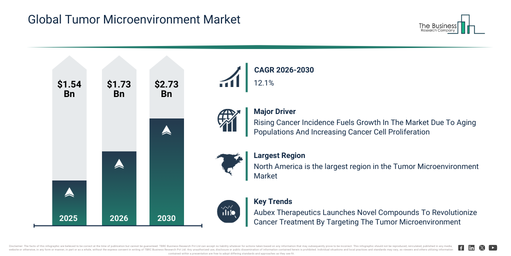
    The tumor microenvironment market has experienced rapid growth in recent years. It is projected to increase from $1.54 billion in 2025 to $1.73 billion in 2026, at a compound annual growth rate (CAGR) of 12.4%. The expansion observed in the past can be attributed to advancements in cancer biology research, an enhanced understanding of tumor-immune interactions, the expansion of immuno-oncology pipelines, a rise in academic and clinical cancer research, and the availability of advanced laboratory technologies.

    The tumor microenvironment market is projected to experience substantial expansion in the coming years. This market is anticipated to reach a valuation of $2.73 billion by 2030, driven by a compound annual growth rate (CAGR) of 12.1%. Factors contributing to this growth over the projected period include increased financial commitments to personalized oncology treatments, a heightened need for advanced immunotherapies, the broadening scope of translational cancer research, a surge in partnerships between pharmaceutical companies and research institutions, and an uptick in oncology-related clinical trials. Key developments expected during this timeframe involve a greater emphasis on strategies for modulating immune cells, the escalating creation of TME-targeted treatments, a wider adoption of patient grouping based on biomarkers, an increase in combined immunotherapy methods, and improved utilization of sophisticated molecular profiling techniques.

    Get A Free Sample Report With In-Depth Market Insights:

    https://thebusinessresearchcompany.com/sample_request?id=19452207&type=smp&name=Tumor%20Microenvironment%20Market%20Report%202026&utm_source=Blogs&utm_medium=Paid&utm_campaign=Nov_PR

    Tumor Microenvironment Market Demand Drivers Opening New Revenue Streams

    The expansion of the tumor microenvironment market is anticipated to be driven by the growing occurrence of cancer. Cancer describes a collection of illnesses marked by the unregulated division and spread of aberrant cells within the body. The increasing frequency of cancer can be linked to aging populations, given that the likelihood of developing cancer escalates with age due to extended exposure to environmental elements and a reduced capacity for cellular damage repair within the body. The tumor microenvironment (TME) aids cancer by delivering vital nutrients, facilitating immune system evasion, and promoting the multiplication and spread of cancer cells via signaling mechanisms and communication with adjacent cells and the extracellular matrix. The increasing prevalence of cancer is fueling the growth of the tumor microenvironment market.

    Tumor Microenvironment Market Segment Breakdown: Which Categories Lead On Revenue?

    The tumor microenvironment market covered in this report is segmented –

    1) By Cancer Type: Lung Cancer, Colorectal Cancer, Breast Cancer, Prostate Cancer, Bladder Cancer, Kidney Cancer, Other Cancer Types

    2) By Target: T Cells, Tumor-Associated Macrophages (TAMs), Myeloid-Derived Suppressor Cells (MDSCs), Cancer-Associated Fibroblasts (CAFs), Regulatory T Cells (Tregs), Other Targets

    3) By Therapy: Monoclonal Antibodies, Cytokines, Cancer Vaccines, Oncolytic Viruses, Adoptive Cell Therapies, Other Therapies

    4) By End User: Biopharmaceutical Companies, Hospitals, Diagnostic Laboratories, Research Institutes, Contract Research Organizations, Other End Users

    Subsegments:

    1) By Lung Cancer: Non-Small Cell Lung Cancer (NSCLC), Small Cell Lung Cancer (SCLC)

    2) By Colorectal Cancer: Colon Cancer, Rectal Cancer

    3) By Breast Cancer: Hormone Receptor Positive Breast Cancer, Triple-Negative Breast Cancer, HER2-Positive Breast Cancer

    4) By Prostate Cancer: Hormone-Sensitive Prostate Cancer, Castration-Resistant Prostate Cancer

    5) By Bladder Cancer: Non-Muscle Invasive Bladder Cancer (NMIBC), Muscle Invasive Bladder Cancer (MIBC)

    6) By Kidney Cancer: Renal Cell Carcinoma (RCC), Urothelial Carcinoma of the Renal Pelvis

    7) By Other Cancer Types: Pancreatic Cancer, Head and Neck Cancer, Ovarian Cancer

    Tumor Microenvironment Market Trends Powering Strategic Industry Growth

    Leading companies active in the tumor microenvironment market are concentrating on developing advanced treatment methods, such as targeted therapies, to boost treatment effectiveness and counteract resistance mechanisms. Targeted treatments are specific therapies engineered to identify and attack cancer cells based on unique molecular markers, largely sparing healthy cells.

    Tumor Microenvironment Market Leading Players And Competitive Positioning

    Major companies operating in the tumor microenvironment market are Pfizer Inc., Johnson & Johnson, Merck & Co. Inc., AbbVie Inc., Bayer AG, Sanofi S.A., AstraZeneca plc, Novartis International AG, GlaxoSmithKline plc, Takeda Pharmaceutical Company Limited, Eli Lilly and Company, Gilead Sciences Inc., Amgen Inc., Boehringer Ingelheim GmbH, Regeneron Pharmaceuticals Inc., Genentech Inc., BeiGene Ltd., MacroGenics Inc., Arcus Biosciences Inc., Adaptimmune Therapeutics plc

    View The Full Tumor Microenvironment Market Report:

    https://thebusinessresearchcompany.com/report/tumor-microenvironment-global-market-report?utm_source=Blogs&utm_medium=Paid&utm_campaign=Nov_PR

    Tumor Microenvironment Market Regional Split: Which Areas Are Fueling Growth?

    North America was the largest region in the tumor microenvironment market in 2025. Asia-Pacific is expected to be the fastest-growing region in the forecast period. The regions covered in the tumor microenvironment market report are Asia-Pacific, South East Asia, Western Europe, Eastern Europe, North America, South America, Middle East, Africa.

    Reach Out To Our Team:

    The Business Research Company: https://www.thebusinessresearchcompany.com/

    Americas: +1 310-496-7795

    Asia: +44 7882 955267 & +91 8897263534

    Europe: +44 7882 955267

    Email us at: marketing@tbrc.info

    Follow us on:

    LinkedIn: https://in.linkedin.com/company/the-business-research-company

    YouTube: https://www.youtube.com/channel/UC24_fI0rV8cR5DxlCpgmyFQ

    Global Market Model: https://www.thebusinessresearchcompany.com/global-market-model
  • Tumor Marker Testing Market Reaches $27.23 Billion In 2026: Forecast And Growth Opportunities

    Tumor Marker Testing Market Reaches $27.23 Billion In 2026: Forecast And Growth Opportunities

    Backed by market attractiveness analysis, total addressable market sizing, company benchmarking matrices, interactive Excel dashboards, wider supply chain intelligence, emerging startup coverage, and detailed product-level insights, The Business Research Company’s 2026 market reports are designed to offer research that is more actionable and strategically valuable than ever.

    Tumor Marker Testing Market Poised To Hit $27.23 Billion By 2030 With A 7.9% CAGR

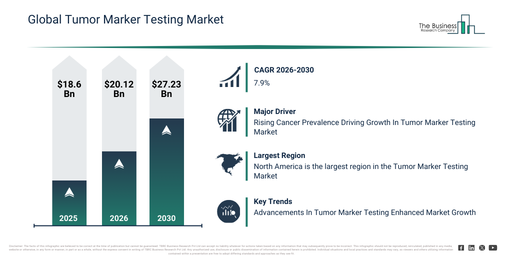
    The market for tumor marker testing has experienced robust expansion in recent years. This sector is projected to grow from $18.6 billion in 2025 to $20.12 billion in 2026, exhibiting a compound annual growth rate (CAGR) of 8.2%. The historical increase can be attributed to several factors, including rising cancer incidence rates, the broader implementation of laboratory diagnostics in oncology, the expansion of hospital-based cancer testing, the availability of established biochemical markers, and the development of diagnostic laboratory networks.

    The tumor marker testing market size is projected for substantial expansion over the coming years. It is estimated to reach $27.23 billion by 2030, exhibiting a compound annual growth rate (CAGR) of 7.9%. This anticipated growth during the forecast period is primarily driven by an increased need for early cancer detection, the growing embrace of precision oncology methods, the broadening scope of companion diagnostics, the expanded application of biomarkers in selecting therapies, and ongoing breakthroughs in cancer biomarker research. Significant trends identified for this period encompass the rising acceptance of multiplex tumor marker panels, the increased utilization of blood-based cancer diagnostics, the deeper incorporation of tumor markers into treatment monitoring, the growth of early cancer screening initiatives, and a sharpened focus on individualized oncology care.

    Get A Free Sample Report With In-Depth Market Insights:

    https://thebusinessresearchcompany.com/sample_request?id=64529548&type=smp&name=Tumor%20Marker%20Testing%20Market%20Report%202026&utm_source=Blogs&utm_medium=Paid&utm_campaign=Nov_PR

    Tumor Marker Testing Market Growth Backed By Core Demand Fundamentals

    The rising incidence of cancer is anticipated to boost the tumor marker testing market in the coming years. Cancer is characterized as a condition involving the uncontrolled proliferation of abnormal cells within the body. These cells have the capacity to invade nearby tissues and disseminate to other bodily regions via the blood and lymph systems. The escalating rates of cancer are attributable to factors such as aging demographics, greater environmental exposures, shifts in lifestyle, and advancements in detection and diagnosis. Tumor marker testing is employed for the diagnosis, monitoring of treatment efficacy, and detection of recurrence in various cancers by assessing specific substances produced by malignant cells. The increasing prevalence of cancer is propelling the growth of the tumor marker testing market.

    Tumor Marker Testing Market Segmentation: How Does The Market Break Down By Category?

    The tumor marker testing market covered in this report is segmented –

    1) By Product: Biochemical Markers, Oncogenes, Growth Factors, Hormones, Colony Stimulating Factors, Lymphokines

    2) By Methods: Screening, Imaging, Theranostics, Other Methods

    3) By Application: Hospitals, Commercial Or Private Laboratories, Physician Offices Or Group Practices, Cancer Clinics, Ambulatory Care Centers

    Subsegments:

    1) By Biochemical Markers: Alpha-fetoprotein (AFP), Prostate-Specific Antigen (PSA), Carcinoembryonic Antigen (CEA), Cancer Antigen 125 (CA 125), Cancer Antigen 19-9 (CA 19-9), Human Chorionic Gonadotropin (hCG)

    2) By Oncogenes: HER2 Or neu, KRAS, BRAF, EGFR (Epidermal Growth Factor Receptor), c-MYC, p53

    3) By Growth Factors: Vascular Endothelial Growth Factor (VEGF), Platelet-Derived Growth Factor (PDGF), Transforming Growth Factor-beta (TGF-ß), Fibroblast Growth Factor (FGF), Insulin-like Growth Factor (IGF)

    4) By Hormones: Estrogen Receptors (ER), Progesterone Receptors (PR), Thyroglobulin, Calcitonin, Adrenocorticotropic Hormone (ACTH), Gastrin

    5) By Colony Stimulating Factors: Granulocyte Colony-Stimulating Factor (G-CSF), Granulocyte-Macrophage Colony-Stimulating Factor (GM-CSF), Macrophage Colony-Stimulating Factor (M-CSF)

    6) By Lymphokines: Interleukin-2 (IL-2), Interferon-gamma (IFN-?), Tumor Necrosis Factor-alpha (TNF-a), Interleukin-6 (IL-6)

    Tumor Marker Testing Market Growth Trends Reshaping The Competitive Landscape

    Leading companies in the tumor marker testing market are increasingly concentrating on creating sophisticated tests, including molecular testing solutions, to gain a competitive edge. These molecular testing solutions refer to advanced diagnostic methods that examine genetic material (DNA or RNA) to identify mutations, pathogens, or specific biomarkers at a molecular level.

    Tumor Marker Testing Market Competitive Overview And Top Companies

    Major companies operating in the tumor marker testing market are Thermo Fisher Scientific Inc., Abbott Laboratories, F. Hoffmann-La Roche AG, Danaher Corporation, Siemens Healthineers AG, Becton Dickinson and Company (BD), Quest Diagnostics Inc., Agilent Technologies Inc, Hologic Inc., Illumina Inc., bioMérieux SA, Bio-Rad Laboratories Inc., Qiagen N.V., DiaSorin S.p.A., Myriad Genetics, Ortho Clinical Diagnostics PLC, Veracyte Inc., Biodesix Inc., Biocept Inc., Proteomedix AG, OncoCyte Corporation, Biocartis NV

    View The Full Tumor Marker Testing Market Report:

    https://thebusinessresearchcompany.com/report/tumor-marker-testing-global-market-report?utm_source=Blogs&utm_medium=Paid&utm_campaign=Nov_PR

    Tumor Marker Testing Market Top Region: Where Does Most Revenue Come From?

    North America was the largest region in the tumor marker testing market in 2025. The regions covered in the tumor marker testing market report are Asia-Pacific, South East Asia, Western Europe, Eastern Europe, North America, South America, Middle East, Africa.

    Reach Out To Our Team:

    The Business Research Company: https://www.thebusinessresearchcompany.com/

    Americas: +1 310-496-7795

    Asia: +44 7882 955267 & +91 8897263534

    Europe: +44 7882 955267

    Email us at: marketing@tbrc.info

    Follow us on:

    LinkedIn: https://in.linkedin.com/company/the-business-research-company

    YouTube: https://www.youtube.com/channel/UC24_fI0rV8cR5DxlCpgmyFQ

    Global Market Model: https://www.thebusinessresearchcompany.com/global-market-model
  • Tubular External Fixation System Market Growth In 2026: Market Size, Key Drivers And Future Outlook

    Tubular External Fixation System Market Growth In 2026: Market Size, Key Drivers And Future Outlook

    Featuring market attractiveness scoring, total addressable market sizing, company benchmarking matrices, interactive Excel dashboards, deeper supply chain intelligence, emerging startup tracking, and granular product-level insights, The Business Research Company’s 2026 market reports are built to deliver research that is both more actionable and more strategically valuable.

    Tubular External Fixation System Market Size And Revenue Outlook Through 2030

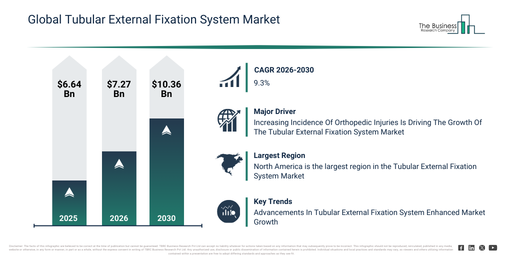
    The tubular external fixation system market size has experienced strong growth in recent years. It is projected to expand from $6.64 billion in 2025 to $7.27 billion in 2026, demonstrating a compound annual growth rate (CAGR) of 9.6%. The historical growth of this market can be attributed to factors such as an increasing incidence of road traffic accidents, a rising prevalence of complex fractures, the expansion of trauma care centers, broader acceptance of external fixation in orthopedics, and the availability of advanced fixation materials.

    The tubular external fixation system market is projected for substantial expansion in the coming years, anticipated to reach $10.36 billion by 2030, demonstrating a compound annual growth rate (CAGR) of 9.3%. This expansion is driven by several factors, including the increasing need for prompt fracture stabilization, a rise in orthopedic surgical procedures, a greater emphasis on patient-centered recovery approaches, the development of healthcare facilities in developing economies, and continuous advancements in fixation system designs. Key developments expected during this timeframe encompass the wider acceptance of modular external fixation systems, a heightened preference for lightweight fixation materials, a growing interest in minimally invasive orthopedic techniques, the broadening scope of trauma and emergency care uses, and an increased priority on ensuring fixation stability and promoting patient mobility.

    Get A Free Sample Report With In-Depth Market Insights:

    https://thebusinessresearchcompany.com/sample_request?id=72631345&type=smp&name=Tubular%20External%20Fixation%20System%20Market%20Report%202026&utm_source=Blogs&utm_medium=Paid&utm_campaign=Nov_PR

    Tubular External Fixation System Market Growth Catalysts And Demand Drivers

    A rise in orthopedic injuries is projected to boost the expansion of the tubular external fixation system market in the future. These injuries involve harm or trauma to the musculoskeletal framework, encompassing bones, joints, ligaments, tendons, and muscles. The frequency of orthopedic injuries is on an upward trend, attributable to various elements such as heightened engagement in sports and physical pursuits, an older demographic more susceptible to falls and fractures, and inactive routines that result in enfeebled muscles and joints. Such a system proves beneficial for orthopedic injuries by offering stable and customizable support for fractured or compromised bones, all while causing minimal disturbance to adjacent tissues. The rising occurrence of orthopedic injuries serves as a primary driver for the expansion of the tubular external fixation system market.

    Tubular External Fixation System Market Segment Trends And Revenue Contributors

    The tubular external fixation system market covered in this report is segmented –

    1) By Type: Tibia External Fixation System, Knee External Fixation System, Femur External Fixation System, Ankle External Fixation System, Pelvis External Fixation System, Elbow External Fixation System, Other Types

    2) By Fixation Type: Unilateral And Bilateral, Circular, Hybrid And Other Fixation Types

    3) By Application: Hospitals And Clinics, Rehabilitation Center, Other Applications

    Subsegments:

    1) By Tibia External Fixation System: Unilateral Tibia Fixation, Bilateral Tibia Fixation

    2) By Knee External Fixation System: Unilateral Knee Fixation, Bilateral Knee Fixation

    3) By Femur External Fixation System: Unilateral Femur Fixation, Bilateral Femur Fixation

    4) By Ankle External Fixation System: Unilateral Ankle Fixation, Bilateral Ankle Fixation

    5) By Pelvis External Fixation System: Unilateral Pelvis Fixation, Bilateral Pelvis Fixation

    6) By Elbow External Fixation System: Unilateral Elbow Fixation, Bilateral Elbow Fixation

    7) By Other Types: Shoulder External Fixation System, Wrist External Fixation System

    Tubular External Fixation System Market Trends Shaping Long-Term Demand

    Companies operating in the tubular external fixation system market are increasingly focusing on developing advanced solutions, such as stable external fixation systems, to improve patient outcomes and enhance the efficiency of orthopedic treatments. A stable external fixation system is a specialized medical device designed to externally immobilize and stabilize fractures, ensuring proper bone alignment throughout the healing process.

    Tubular External Fixation System Market Competitive Landscape: Which Companies Lead The Industry?

    Major companies operating in the tubular external fixation system market are Johnson & Johnson, Zimmer Biomet Holdings Inc., NuVasive Inc., Globus Medical Inc., Lepu Medical Technology Co Ltd., Wright Medical Group N.V., Orthofix Medical Inc., Aesculap Inc., Medartis Holding AG, Acumed LLC, KLS Martin Group GmbH & Co. KG, OrthoPediatrics Corp., OsteoMed LLC, Narang Medical Limited, Citieffe S.r.l., GPC Medical Limited, WishBone Medical Inc., Siora Surgicals Pvt. Ltd., Spinamer Health Products Inc., HankilTech Medical Co Ltd., TAEYEON Medical Co Ltd., TASARIMMED Medical Devices Ltd., Zimed Medical Co Ltd., Selaz Medical Devices S.A.

    View The Full Tubular External Fixation System Market Report:

    https://thebusinessresearchcompany.com/report/tubular-external-fixation-system-global-market-report?utm_source=Blogs&utm_medium=Paid&utm_campaign=Nov_PR

    Tubular External Fixation System Market Regional Breakdown: Where Is Demand Concentrated?

    North America was the largest region in the tubular external fixation system market in 2025. The regions covered in the tubular external fixation system market report are Asia-Pacific, South East Asia, Western Europe, Eastern Europe, North America, South America, Middle East, Africa.

    Reach Out To Our Team:

    The Business Research Company: https://www.thebusinessresearchcompany.com/

    Americas: +1 310-496-7795

    Asia: +44 7882 955267 & +91 8897263534

    Europe: +44 7882 955267

    Email us at: marketing@tbrc.info

    Follow us on:

    LinkedIn: https://in.linkedin.com/company/the-business-research-company

    YouTube: https://www.youtube.com/channel/UC24_fI0rV8cR5DxlCpgmyFQ

    Global Market Model: https://www.thebusinessresearchcompany.com/global-market-model