Category: Healthcare Services

  • Genomics Services Market Growth In 2026: Market Size, Key Drivers And Future Outlook

    Genomics Services Market Growth In 2026: Market Size, Key Drivers And Future Outlook

    Built to provide research that’s more actionable and strategically valuable, The Business Research Company’s 2026 market reports include market attractiveness analysis, total addressable market sizing, company benchmarking matrices, interactive Excel dashboards, broader supply chain intelligence, emerging startup tracking, and in-depth product insights.

    Genomics Services Market Size And Revenue Outlook Through 2030

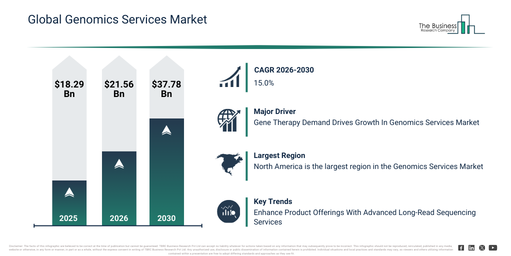
    The genomics services market size has seen rapid expansion in recent years. It is forecast to increase from $18.29 billion in 2025 to $21.56 billion in 2026, achieving a compound annual growth rate (CAGR) of 17.9%. This historical growth can be linked to early adoption by research institutes, the commercialization of sequencing services, an increase in biopharma research, the availability of skilled bioinformaticians, and the broadening of laboratory services.

    The genomics services market is projected to experience rapid expansion in the coming years. It is anticipated to grow to $37.78 billion by 2030, demonstrating a compound annual growth rate (CAGR) of 15.0%. This growth during the forecast period can be attributed to factors such as the integration into routine clinical care, a rising demand for preventive genomics, the expansion of companion diagnostics, digital health integration, and the proliferation of genomics startups. Significant trends for the forecast period include an increasing demand for sequencing and interpretation services, the broadening of personalized genomic health services, a rise in the outsourcing of genomic analysis, growing adoption of clinical genomics services, and the development of population-scale genomics projects.

    Get A Free Sample Report With In-Depth Market Insights:

    https://thebusinessresearchcompany.com/sample_request?id=41913825&type=smp&name=Genomics%20Services%20Market%20Report%202026&utm_source=Blogs&utm_medium=Paid&utm_campaign=Nov_PR

    Genomics Services Market Demand Drivers Opening New Revenue Streams

    The growing need for gene therapy is anticipated to boost the expansion of the genomics services market in the coming years. Gene therapy is a medical approach designed to treat or prevent illnesses by addressing the underlying genetic problem. It provides targeted interventions for genetic and chronic diseases by correcting their fundamental genetic causes. Genomic services play a vital role in gene therapy by assisting in targeting the appropriate tissue, quantifying and characterizing viral vectors, and evaluating the risk of shedding. As an illustration, in April 2024, the U.S. Food and Drug Administration (FDA), a US-based government regulatory agency, indicated that over 80% of rare diseases have a recognized genetic basis. The FDA has sanctioned 22 gene therapy products, with most being for rare conditions. Thus, the increasing demand for gene therapy is propelling the growth of the genomics services market.

    Genomics Services Market Segment Landscape And Growth Outlook

    The genomics services market covered in this report is segmented –

    1) By Product: Instruments Or Systems Or Software, Consumables And Reagents

    2) By Services Type: Gene Expression Services (RNASeq), Epigenomics Services, Genotyping, Next-Generation Sequencing, Sanger Sequencing, Other Service Types

    3) By End-User: Research Institutes, Healthcare Facilities And Diagnostic Centers, Pharmaceutical And Biotechnological Companies, Contract Research Organizations (CROs), Other End Users

    Subsegments:

    1) By Instruments Or Systems Or Software: Sequencing Instruments and Platforms, Bioinformatics and Genomic Data Analysis Software

    2) By Consumables And Reagents: Library Preparation Kits and Sample Preparation Reagents, Sequencing Reagents and Flow Cells

    Genomics Services Market Transformation Trends: What Innovations Are Driving Change?

    Major entities within the genomics services market are prioritizing the expansion of their product portfolios by integrating advanced services like sophisticated long-read sequencing to meet the escalating demand for comprehensive genomic analysis and personalized medicine. These advanced long-read sequencing services employ cutting-edge technologies to examine genetic material with longer sequence reads, thereby enabling a more thorough and accurate characterization of DNA and RNA. For instance, in April 2024, Clinical-Microbiomics A/S, a biotechnology company headquartered in Denmark, launched advanced long-read sequencing services that encompass 16S, ITS, 18S rRNA, isolate, and metagenomics sequencing services. These offerings are specifically designed to fulfill the exacting standards of academic, clinical, and industrial researchers, providing exceptional resolution and quality in microbial analysis. The enhanced long-read sequencing capabilities, which cover a wide spectrum of sequencing options, aim to redefine the benchmarks for microbial analysis and microbiome research. These developments signify a considerable advancement in microbiome research, furnishing researchers with intricate insights into microbial communities and facilitating revolutionary discoveries in the domain.

    Genomics Services Market Competitive Landscape: Who Leads The Industry?

    Major companies operating in the genomics services market are Thermo Fisher Scientific Inc., Danaher Corporation, Laboratory Corporation of America Holdings, Quest Diagnostics Incorporated, Eurofins Scientific SE, Agilent Technologies Inc., Illumina Inc., PerkinElmer Inc., QIAGEN Inc., LGC Limited, Myriad Genetics Inc., Q2 Solutions Inc., BGI Genomics Inc., 10x Genomics Inc., Invitae Corporation, Fulgent Genetics Inc., 23andMe Inc., Oxford Nanopore Technologies plc, Color Genomics Inc., GENEWIZ Inc., Foundation Medicine Inc., Pacific Biosciences Inc., Avance Biosciences Inc., Macrogen Inc

    View The Full Genomics Services Market Report:

    https://thebusinessresearchcompany.com/report/genomics-services-global-market-report?utm_source=Blogs&utm_medium=Paid&utm_campaign=Nov_PR

    Genomics Services Market Regional Breakdown: Where Is Demand Concentrated?

    North America was the largest region in the genomics services market in 2025. Asia-Pacific is expected to be the fastest-growing region in the forecast period. The regions covered in the genomics services market report are Asia-Pacific, South East Asia, Western Europe, Eastern Europe, North America, South America, Middle East, Africa.

    Reach Out To Our Team:

    The Business Research Company: https://www.thebusinessresearchcompany.com/

    Americas: +1 310-496-7795

    Asia: +44 7882 955267 & +91 8897263534

    Europe: +44 7882 955267

    Email us at: marketing@tbrc.info

    Follow us on:

    LinkedIn: https://in.linkedin.com/company/the-business-research-company

    YouTube: https://www.youtube.com/channel/UC24_fI0rV8cR5DxlCpgmyFQ

    Global Market Model: https://www.thebusinessresearchcompany.com/global-market-model
  • Genomics Market Size And Forecast 2026–2030: Trends Driving Industry Expansion

    Genomics Market Size And Forecast 2026–2030: Trends Driving Industry Expansion

    Backed by market attractiveness analysis, total addressable market sizing, company benchmarking matrices, interactive Excel dashboards, wider supply chain intelligence, emerging startup coverage, and detailed product-level insights, The Business Research Company’s 2026 market reports are designed to offer research that is more actionable and strategically valuable than ever.

    Genomics Market Growth From $58.44 Billion In 2026 To $107.56 Billion By 2030 At A CAGR Of 16.5%

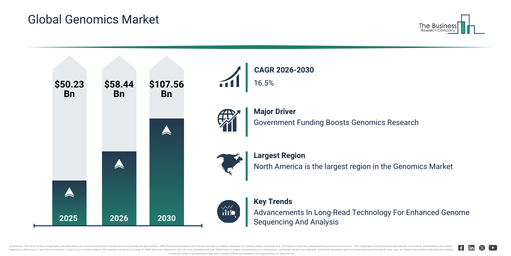
    The genomics market has experienced significant expansion in recent years. Its valuation is projected to increase from $50.23 billion in 2025 to $58.44 billion in 2026, demonstrating a compound annual growth rate (CAGR) of 16.3%. Historically, this growth has been driven by factors such as the successful completion of the human genome project, innovations in sequencing technology, the expansion of academic genomics research, governmental funding efforts, and a reduction in sequencing expenses.

    The genomics market is expected to demonstrate significant expansion in the upcoming years. By 2030, its valuation is predicted to reach $107.56 billion, growing at a compound annual growth rate (CAGR) of 16.5%. This growth throughout the forecast period can be attributed to initiatives in population genomics, enhanced integration with healthcare systems, the expansion of agricultural genomics, increased investment from the biopharmaceutical sector, and the development of multi-omics platforms. Prominent trends for the forecast period include the enlargement of large-scale genomic research programs, increasing uptake of next-generation sequencing, a rising demand for precision medicine solutions, greater application of genomics in drug discovery, and heightened investment in genomic infrastructure.

    Get A Free Sample Report With In-Depth Market Insights:

    https://thebusinessresearchcompany.com/sample_request?id=36765048&type=smp&name=Genomics%20Market%20Report%202026&utm_source=Blogs&utm_medium=Paid&utm_campaign=Nov_PR

    Genomics Market Growth Backed By Core Demand Fundamentals

    Increased government funding allocated for genomics research is a key factor boosting the expansion of the single-cell genomics market. This governmental financial support is directed towards initiatives aimed at unraveling the intricacies of the human genome, identifying the genomic underpinnings of health and illness, and guaranteeing the secure application of genomics to improve patient care and societal well-being via collaboration among government, public, and private entities. A notable example is provided by the National Human Genome Research Institute, a US-based government research body, which reported in March 2024 that the President’s Budget request for FY 2025 for NHGRI amounts to $663.7 million. This figure represents an increase of $3.2 million from the final allocation in FY 2023. Consequently, the growing governmental investment in genomics research is projected to fuel the overall growth of the genomics market.

    Genomics Market Breakdown By Product Type And Application

    The genomics market covered in this report is segmented –

    1) By Product Type: Instrument, Reagents

    2) By Process: Cell Isolation, Sample Preparation, Genomic Analysis

    3) By End User: Academic Institutes, Biopharmaceutical Companies, Clinical Research Institutes

    Subsegments:

    1) By Instrument: Systems, Service Contracts, Software

    2) By Reagents: Kits, Consumables

    #Genomics Market Growth Trends: What’s Shaping The Future Outlook?

    Key firms in the genomics market concentrate on technological improvements, such as long read technology, aimed at boosting genome sequencing accuracy, facilitating the examination of more extensive and intricate genetic segments, and delivering enhanced understanding of genetic variations previously challenging to identify. This technology within genomics sequences extended DNA or RNA portions for more exact and thorough genetic analysis, thereby improving the identification of complex variations and disease markers. Illustratively, in March 2023, Illumina Inc., a US-based biotechnology enterprise, unveiled Illumina’s Complete Long Read Prep. This product offers an efficient, low-input method for whole-genome sequencing, delivering both long- and short-read data from a single instrument, featuring simplified procedures and requiring less material than competing technologies.

    Genomics Market Company Landscape And Competitive Strategy

    Major companies operating in the genomics market are 10X Genomics Inc., Qiagen NV, Standard BioTools Inc., Illumina Inc., Affymetrix Inc., Angle plc, Denovo Sciences Inc., Diagnologix LLC, DNA Electronics Ltd., Epic Sciences, Kellbenx Inc., Resolution Bioscience Inc., Wafergen Bio-systems Inc., Yikon Genomics Co. Ltd., Thermo Fisher Scientific Inc., Beckman Coulter Inc., Bio-Rad Laboratories Inc., Cell Microsystems Inc., CellSorter, CYTENA GmbH, Dolomite Bio Limited, Agilent Technologies Inc., Fluxion Biosciences Inc., BGI Group, Oxford Nanopore Technologies Ltd., Pacific Biosciences of California Inc., Eurofins Scientific SE, PerkinElmer Inc.

    View The Full Genomics Market Report:

    https://thebusinessresearchcompany.com/report/Genomics-Global-Market-Report?utm_source=Blogs&utm_medium=Paid&utm_campaign=Nov_PR

    Genomics Market Geographic Landscape: Which Region Leads Industry Growth?

    North America was the largest region in the genomics market in 2025. Western Europe was the second largest region in the genomics market. The regions covered in the genomics market report are Asia-Pacific, South East Asia, Western Europe, Eastern Europe, North America, South America, Middle East, Africa.

    Reach Out To Our Team:

    The Business Research Company: https://www.thebusinessresearchcompany.com/

    Americas: +1 310-496-7795

    Asia: +44 7882 955267 & +91 8897263534

    Europe: +44 7882 955267

    Email us at: marketing@tbrc.info

    Follow us on:

    LinkedIn: https://in.linkedin.com/company/the-business-research-company

    YouTube: https://www.youtube.com/channel/UC24_fI0rV8cR5DxlCpgmyFQ

    Global Market Model: https://www.thebusinessresearchcompany.com/global-market-model
  • Genomic Urine Testing Market 2026 Outlook: Market Size, CAGR And Key Growth Opportunities

    Genomic Urine Testing Market 2026 Outlook: Market Size, CAGR And Key Growth Opportunities

    Featuring market attractiveness scoring, total addressable market sizing, company benchmarking matrices, interactive Excel dashboards, deeper supply chain intelligence, emerging startup tracking, and granular product-level insights, The Business Research Company’s 2026 market reports are built to deliver research that is both more actionable and more strategically valuable.

    Genomic Urine Testing Market Expansion Outlook: What Revenue Opportunities Are Ahead?

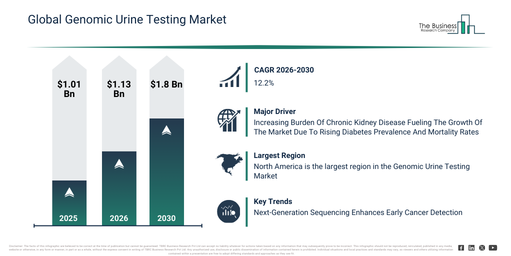
    The genomic urine testing market size has seen rapid expansion in recent years. Its value is expected to rise from $1.01 billion in 2025 to $1.13 billion by 2026, demonstrating a compound annual growth rate (CAGR) of 12.5%. The historical growth experienced in this sector is due to advancements in molecular diagnostics, the demand for non-invasive testing, initial biomarker research, the adoption of genomic assays by laboratories, and the overall growth in oncology diagnostics.

    The genomic urine testing market is projected to experience swift expansion in the coming years. By 2030, its value is anticipated to reach $1.8 billion, demonstrating a compound annual growth rate (CAGR) of 12.2%. Key factors driving this growth during the forecast period include the integration of such testing with routine health screenings, its expanded application in detecting infectious diseases, advancements in technological sensitivity, the increasing need for personalized monitoring, and robust clinical validation studies. Significant trends expected in this period encompass the growing acceptance of non-invasive diagnostic tests, the increased application of genomic biomarkers for disease identification, a heightened demand for tools for early cancer screening, the broadening of personalized diagnostic methods, and intensified research into urinary genomic profiling.

    Get A Free Sample Report With In-Depth Market Insights:

    https://thebusinessresearchcompany.com/sample_request?id=23408&type=smp&name=Genomic%20Urine%20Testing%20Market%20Report%202026&utm_source=Blogs&utm_medium=Paid&utm_campaign=Nov_PR

    Genomic Urine Testing Market Growth Catalysts And Demand Drivers

    The rising prevalence of chronic kidney disease is projected to drive the expansion of the genomic urine testing market in the future. Chronic kidney disease (CKD) is defined as a state where kidneys are impaired, rendering them unable to efficiently filter blood, resulting in the accumulation of waste products and fluids within the body. The increasing incidence of diabetes contributes to the growing burden of CKD, given that elevated blood sugar levels harm renal blood vessels, thereby compromising their waste-filtering capacity. Genomic urine testing assists in managing chronic kidney disease through its capacity for early identification of genetic markers, facilitating prompt interventions and tailored treatment strategies. This testing improves patient results by allowing for more precise monitoring and slowing the advancement of the disease. For example, in November 2025, The American Journal of Managed Care, a US-based peer-reviewed medical publication, reported that 788 million adults aged 20 and older were living with CKD in 2023. Consequently, the escalating burden of chronic kidney disease fuels the expansion of the genomic urine testing market.

    Genomic Urine Testing Market Segment Analysis And Revenue Potential

    The genomic urine testing market covered in this report is segmented –

    1) By Testing Type: Deoxyribonucleic Acid (DNA) Testing, Ribonucleic Acid (RNA) Testing, Microbial Testing, Epigenetic Testing

    2) By Distribution Channel: Hospital Pharmacies, Mail Order Pharmacies, Speciality Pharmacies

    3) By Application: Cancer Diagnosis, Infectious Diseases, Genetic Disorder Screening, Health Monitoring

    4) By End-User: Hospitals And Clinics, Diagnostic Laboratories, Research And Academic Institutions, Other End Users

    Subsegments:

    1) By Deoxyribonucleic Acid Testing: Germline Mutation Analysis, Somatic Mutation Detection, Copy Number Variation (CNV) Testing, Single Nucleotide Polymorphism Analysis

    2) By Ribonucleic Acid Testing: Gene Expression Profiling, Messenger Ribonucleic Acid Analysis, Non-coding Ribonucleic Acid Detection, Fusion Transcript Detection

    3) By Microbial Testing: Urinary Microbiome Profiling, Pathogen Identification, Antimicrobial Resistance Gene Detection, Quantitative Microbial Load Analysis

    4) By Epigenetic Testing: Deoxyribonucleic Acid Methylation Analysis, Histone Modification Profiling, Chromatin Accessibility Testing

    Genomic Urine Testing Market Industry Trends: What’s Reshaping Demand?

    Leading companies active in the genomic urine testing market are prioritizing the development of innovative solutions, such as next-generation sequencing, to enhance the precision, sensitivity, and early detection capabilities of non-invasive diagnostic tests for various diseases. Next-generation sequencing (NGS) is an advanced DNA sequencing technology that enables the rapid, accurate, and large-scale analysis of genetic material by simultaneously sequencing millions of deoxyribonucleic acid (DNA) fragments. For instance, in May 2023, Convergent Genomics Inc., a US-based biotechnology company, launched the genomic urine test UroAmp. This test utilizes next-generation deoxyribonucleic acid (DNA) sequencing to analyze mutations in 60 genes associated with bladder cancer, allowing for early detection up to 12 years before clinical symptoms emerge. It provides detailed genetic insights to assist with diagnosis, treatment decisions, and recurrence monitoring, offering higher accuracy than traditional methods like cytology and cystoscopy.

    Genomic Urine Testing Market Key Players Shaping Industry Direction

    Major companies operating in the genomic urine testing market are Eurofins Scientific SE, Thermo Fisher Scientific, Abbott Laboratories, Laboratory Corporation of America Holdings, Hologic Inc., Illumina Inc., Myriad Genetics Inc., ARUP Laboratories, MedGenome Labs Ltd, GENETWORx LLC, MDxHealth SA, Nucleix Ltd., ?Pacific Edge Ltd, Convergent Genomics Inc., LynxDx Inc., miR Scientific, RYND Biotech, UGenDx Ltd

    View The Full Genomic Urine Testing Market Report:

    https://thebusinessresearchcompany.com/report/genomic-urine-testing-global-market-report?utm_source=Blogs&utm_medium=Paid&utm_campaign=Nov_PR

    Genomic Urine Testing Market Largest Region: Which Geography Holds The Biggest Share?

    North America was the largest region in the genomic urine testing market in 2025. Asia-Pacific is expected to be the fastest-growing region in the forecast period. The regions covered in the genomic urine testing market report are Asia-Pacific, South East Asia, Western Europe, Eastern Europe, North America, South America, Middle East, Africa.

    Reach Out To Our Team:

    The Business Research Company: https://www.thebusinessresearchcompany.com/

    Americas: +1 310-496-7795

    Asia: +44 7882 955267 & +91 8897263534

    Europe: +44 7882 955267

    Email us at: marketing@tbrc.info

    Follow us on:

    LinkedIn: https://in.linkedin.com/company/the-business-research-company

    YouTube: https://www.youtube.com/channel/UC24_fI0rV8cR5DxlCpgmyFQ

    Global Market Model: https://www.thebusinessresearchcompany.com/global-market-model
  • Genomic Selection Platform Market Size Growth: From $2.66 Billion In 2026 To $4.96 Billion By 2030

    Genomic Selection Platform Market Size Growth: From $2.66 Billion In 2026 To $4.96 Billion By 2030

    Built to provide research that’s more actionable and strategically valuable, The Business Research Company’s 2026 market reports include market attractiveness analysis, total addressable market sizing, company benchmarking matrices, interactive Excel dashboards, broader supply chain intelligence, emerging startup tracking, and in-depth product insights.

    Genomic Selection Platform Market Growth Potential: How Will Market Size Shift Through 2030?

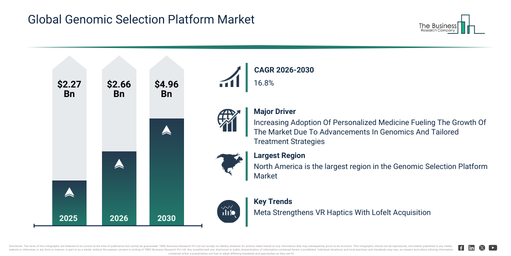
    The genomic selection platform market size has experienced significant growth in recent years. It is projected to expand from $2.27 billion in 2025 to $2.66 billion in 2026, at a compound annual growth rate (CAGR) of 17.1%. The historical increase can be ascribed to the expansion of molecular breeding programs, enhanced availability of genotyping technologies, the adoption of statistical genomics models, a surging demand for quicker breeding cycles, and increasing research investments in genetics.

    The genomic selection platform market is projected to experience swift expansion over the coming years. By 2030, this market is anticipated to reach a valuation of $4.96 billion, demonstrating a compound annual growth rate (CAGR) of 16.8%. This projected increase can be linked to several factors, including the greater integration of genomic selection within agriculture, the growing application of predictive analytics in breeding programs, the broadening scope of sustainable crop and livestock development, the increasing combination of genomics with precision agriculture, and improvements in cloud-native genomic platforms. Key developments expected during this timeframe encompass the wider embrace of AI-powered genomic prediction models, the increasing utilization of high-throughput genotyping platforms, the deeper incorporation of cloud-based breeding analytics, the proliferation of predictive breeding decision support systems, and a heightened emphasis on the accuracy of trait-based selection.

    Get A Free Sample Report With In-Depth Market Insights:

    https://thebusinessresearchcompany.com/sample_request?id=25050361&type=smp&name=Genomic%20Selection%20Platform%20Market%20Report%202026&utm_source=Blogs&utm_medium=Paid&utm_campaign=Nov_PR

    Genomic Selection Platform Market Opportunity Drivers: What’s Unlocking New Revenue Potential?

    The rising embrace of personalized medicine is projected to stimulate expansion in the Genomic Selection Platform Market moving forward. This medical strategy involves customizing treatment and preventative measures based on an individual’s distinct genetic profile, lifestyle, and environmental factors. Its growing popularity stems mainly from breakthroughs in genomics, which allow for the accurate detection of genetic variations and the creation of bespoke therapies for patients. Genomic Selection Platforms facilitate personalized medicine by offering exact genomic data, thereby proving highly suitable for customizing patient treatments. These platforms minimize guesswork in choosing therapies through predicting responses to interventions, thereby enhancing treatment efficacy and patient results. As an illustration, in February 2024, the Personalized Medicine Coalition (PMC), a US-based nonprofit, reported that the U.S. Food and Drug Administration (FDA) sanctioned 26 new personalized medicines in 2023, marking a substantial rise from the 12 approved in 2022. Consequently, the expanding use of personalized medicine is propelling the advancement of the Genomic Selection Platform Market.

    Genomic Selection Platform Market Segmentation And Category Overview

    The genomic selection platform market covered in this report is segmented –

    1) By Component: Software, Hardware, Services

    2) By Deployment Mode: On-Premises, Cloud-Based

    3) By Application: Plant Breeding, Animal Breeding, Human Genomics, Other Applications

    4) By End-User: Research Institutes, Biotechnology Companies, Agricultural Organizations, Other End-Users

    Subsegments:

    1) By Software: Genomic Data Management Software, Bioinformatics And Statistical Analysis Tools, DNA Or RNA Sequencing Data Processing Software, Genomic Prediction And Modeling Software, Cloud-Based Genomic Platforms, Workflow Automation And Integration Tools

    2) By Hardware: Next-Generation Sequencing (NGS) Systems, Polymerase Chain Reaction (PCR) Instruments, Microarray Analyzers, High-Performance Computing (HPC) Systems, Data Storage Servers, Laboratory Automation And Robotics

    3) By Services: Sequencing And Genotyping Services, Data Analysis And Interpretation Services, Cloud Hosting And Data Storage Services, Custom Bioinformatics Solutions, Training And Technical Support Services, Consulting And Implementation Services

    Genomic Selection Platform Market Innovation Trends: What Developments Are Reshaping The Industry?

    Key companies active in the genomic selection platform market are concentrating on creating novel solutions, such as targeted sequencing platforms, to enhance trait prediction and accelerate breeding initiatives. Targeted sequencing platforms are defined as genomic technologies and systems designed to sequence specific regions of the genome rather than the entire genome. For instance, in October 2024, Element Biosciences Inc., a US-based life sciences technology company, launched Trinity, an innovative targeted sequencing platform that streamlines exome capture by integrating traditionally complex steps directly into its AVITI System. This platform removes the requirement for specialized equipment, reduces manual work by up to five hours, and offers a one-hour hybridization option for same-day results, making it ideal for time-sensitive studies. Trinity’s capabilities extend to supporting custom panels across diverse applications, including oncology, respiratory diseases, and minimal residual disease (MRD). It delivers faster, more cost-effective, and more accessible sequencing, marking the first major advancement in exome capture.

    Genomic Selection Platform Market Competitive Analysis Of Leading Industry Participants

    Major companies operating in the genomic selection platform market are F. Hoffmann-La Roche Ltd, Thermo Fisher Scientific Inc., GE Healthcare Technologies Inc., Eurofins Scientific SE, Agilent Technologies Inc., Illumina Inc., Beckman Coulter Inc., Bio-Rad Laboratories Inc., QIAGEN N.V., MGI Tech Co. Ltd., Azenta Inc., 10x Genomics Inc., Oxford Nanopore Technologies plc, Ultima Genomics Inc., Element Biosciences Inc., DNAnexus Inc., Deep Genomics Inc., Epigene Labs Inc., Quotient Therapeutics Inc., Evogene Ltd., Nebula Genomics Inc., Verinomics Inc., InEdita Bio Inc., GenEmbryomics Inc., Enigma Genomics Inc.

    View The Full Genomic Selection Platform Market Report:

    https://thebusinessresearchcompany.com/report/genomic-selection-platform-global-market-report?utm_source=Blogs&utm_medium=Paid&utm_campaign=Nov_PR

    Genomic Selection Platform Market Regional Analysis: Which Geography Leads On Revenue?

    North America was the largest region in the genomic selection platform market in 2025. The regions covered in the genomic selection platform market report are Asia-Pacific, South East Asia, Western Europe, Eastern Europe, North America, South America, Middle East, Africa.

    Reach Out To Our Team:

    The Business Research Company: https://www.thebusinessresearchcompany.com/

    Americas: +1 310-496-7795

    Asia: +44 7882 955267 & +91 8897263534

    Europe: +44 7882 955267

    Email us at: marketing@tbrc.info

    Follow us on:

    LinkedIn: https://in.linkedin.com/company/the-business-research-company

    YouTube: https://www.youtube.com/channel/UC24_fI0rV8cR5DxlCpgmyFQ

    Global Market Model: https://www.thebusinessresearchcompany.com/global-market-model

  • Genomic Data Clean-Room Platforms Market Analysis 2026: Market Size, Growth Trends And Industry Outlook

    Genomic Data Clean-Room Platforms Market Analysis 2026: Market Size, Growth Trends And Industry Outlook

    Backed by market attractiveness analysis, total addressable market sizing, company benchmarking matrices, interactive Excel dashboards, wider supply chain intelligence, emerging startup coverage, and detailed product-level insights, The Business Research Company’s 2026 market reports are designed to offer research that is more actionable and strategically valuable than ever.

    Genomic Data Clean-Room Platforms Market Value Analysis: What Growth Lies Ahead Over The Forecast Period?

    The genomic data clean-room platforms market has experienced significant expansion in recent years. It is anticipated to grow from $1.89 billion in 2025 to $2.32 billion in 2026, achieving a compound annual growth rate (CAGR) of 22.7%. The market’s past growth is primarily attributable to the increasing volume of genomic sequencing data, rising data privacy and compliance requirements, the expansion of collaborative biomedical research initiatives, the growing adoption of cloud computing in life sciences, and increasing demand for secure data sharing frameworks.

    The genomic data clean-room platforms market is projected to experience substantial growth over the coming years. It is forecast to reach $5.27 billion by 2030, exhibiting a compound annual growth rate (CAGR) of 22.7%. This expansion during the forecast period can be attributed to factors such as increased investments in precision medicine programs, a rising adoption of federated data analysis models, the broadening of population-scale genomics projects, a growing emphasis on cross-border research collaboration, and advancements in privacy-enhancing computation technologies. Key trends anticipated in this period include the increased uptake of privacy-preserving genomic data collaboration platforms, the expanding integration of secure multi-party computation frameworks, the growing deployment of cloud-based genomic clean-room environments, the development of regulatory-compliant data governance architectures, and a stronger focus on secure cross-organization genomic analytics.

    Get A Free Sample Report With In-Depth Market Insights:

    https://thebusinessresearchcompany.com/sample_request?id=69837183&type=smp&name=Genomic%20Data%20Clean-Room%20Platforms%20Market%20Report%202026&utm_source=Blogs&utm_medium=Paid&utm_campaign=Nov_PR

    Genomic Data Clean-Room Platforms Market Growth Momentum: What Factors Are Shaping Demand?

    The increasing need for secure sharing of genomic data is projected to boost the expansion of the genomic data clean-room platforms market in the future. Secure genomic data sharing involves exchanging and utilizing genomic information while safeguarding individual privacy and adhering to regulatory guidelines. This surge in demand stems from improved research collaboration, as it enables wider access to pseudonymized genomic datasets without compromising patient privacy. Genomic data clean-room platforms address this requirement by offering controlled settings where researchers can access and examine sensitive genomic datasets, guaranteeing privacy, compliance, and data security. For example, in June 2024, the National Library of Medicine, a US-based federal government agency, reported that South Korea revised its health data guidelines. This change removed the “reserved” status for pseudonymized genomic data, with >90% expert consensus, thereby facilitating the use of datasets derived from 872 individuals (comprising 642,563 SNPs and 13 STRs), where 90–98% of STRs corresponded to matching SNPs, a figure that increased to 99–100% with 30 STRs. Consequently, the increasing need for secure genomic data sharing will propel the genomic data clean-room platforms market.

    Genomic Data Clean-Room Platforms Market Segment Outlook: Which Categories Are Growing Fastest?

    The genomic data clean-room platforms market covered in this report is segmented –

    1) By Component: Software, Services

    2) By Deployment Mode: On-Premises, Cloud-Based

    3) By Application: Pharmaceutical And Biotechnology Companies, Research And Academic Institutions, Healthcare Providers, Contract Research Organizations, Other Applications

    4) By End-User: Hospitals, Research Centers, Diagnostic Laboratories, Other End-Users

    Subsegments:

    1) By Software: Data Integration, Data Analysis, Security And Compliance, Visualization Tools, Workflow Management

    2) By Services: Consulting, Implementation, Support And Maintenance, Training, Custom Development

    Genomic Data Clean-Room Platforms Market Trends: What’s Defining The Industry’s Next Phase?

    Major companies in the genomic data clean-room platforms market are increasingly expanding cloud-based solutions to enhance scalability, security, and collaboration in managing genomic data. Cloud-native infrastructures enable the hosting, storage, and analysis of genomic datasets entirely within cloud environments, offering flexible compute resources, secure access controls, and integrated storage without the need for local infrastructure. For instance, in 2024, SOPHiA GENETICS, a Switzerland-based cloud-native healthcare technology company, introduced an improved whole genome sequencing analytics solution that leverages cloud platforms to deliver faster, more secure, and scalable insights for researchers and clinicians. Such innovations are facilitating efficient, privacy-preserving genomic data analysis, fostering collaborative research, and stimulating growth in the genomic data clean-room platforms market.

    Genomic Data Clean-Room Platforms Market Leading Companies And Competitive Benchmarking

    Major companies operating in the genomic data clean-room platforms market are Amazon Web Services Incorporated, BC Platforms Aktiengesellschaft, IQVIA Incorporated, Illumina Incorporated, Snowflake Incorporated, Palantir Technologies Incorporated, Qiagen, Datavant Incorporated, Databricks Incorporated, Foundation Medicine Incorporated, Flatiron Health Incorporated, Verily Life Sciences LLC, Genomics England Limited, Velsera, Elucidata Incorporated, DNAnexus Incorporated, Lifebit Biotech Limited, Congenica, Genestack Limited, KnetMiner

    View The Full Genomic Data Clean-Room Platforms Market Report:

    https://thebusinessresearchcompany.com/report/genomic-data-clean-room-platforms-global-market-report?utm_source=Blogs&utm_medium=Paid&utm_campaign=Nov_PR

    Genomic Data Clean-Room Platforms Market Geographic Spread And Regional Opportunities

    North America was the largest region in the genomic data clean-room platforms market in 2025. The regions covered in the genomic data clean-room platforms market report are Asia-Pacific, South East Asia, Western Europe, Eastern Europe, North America, South America, Middle East, Africa.

    Reach Out To Our Team:

    The Business Research Company: https://www.thebusinessresearchcompany.com/

    Americas: +1 310-496-7795

    Asia: +44 7882 955267 & +91 8897263534

    Europe: +44 7882 955267

    Email us at: marketing@tbrc.info

    Follow us on:

    LinkedIn: https://in.linkedin.com/company/the-business-research-company

    YouTube: https://www.youtube.com/channel/UC24_fI0rV8cR5DxlCpgmyFQ

    Global Market Model: https://www.thebusinessresearchcompany.com/global-market-model

  • Genomic Data Analysis And Interpretation Market Growth To $4.05 Billion Creates New Opportunities Across The Industry

    Genomic Data Analysis And Interpretation Market Growth To $4.05 Billion Creates New Opportunities Across The Industry

    Featuring market attractiveness scoring, total addressable market sizing, company benchmarking matrices, interactive Excel dashboards, deeper supply chain intelligence, emerging startup tracking, and granular product-level insights, The Business Research Company’s 2026 market reports are built to deliver research that is both more actionable and more strategically valuable.

    Genomic Data Analysis And Interpretation Market Size Forecast: How Big Could The Market Get By 2030?

    The genomic data analysis and interpretation market size has expanded significantly in recent years. It is projected to expand from $2.19 billion in 2025 to $2.48 billion in 2026, achieving a compound annual growth rate (CAGR) of 13.1%. This historical growth can be attributed to several factors, including the increasing prevalence of next-generation sequencing, the enlargement of genomic databases, the initial uptake of bioinformatics tools, demand from academic research, and the reduction in sequencing expenses.

    The genomic data analysis and interpretation market is projected for significant expansion in the coming years. By 2030, this market is anticipated to reach $4.05 billion, exhibiting a compound annual growth rate (CAGR) of 13.0%. Key drivers for this growth during the forecast period include the increasing number of population genomics initiatives, enhanced integration with electronic health records, a rising need for real-time data analysis, breakthroughs in AI algorithms, and the broadening scope of precision medicine. Noteworthy trends expected over the forecast horizon encompass a surge in the uptake of bioinformatics software platforms, greater application of AI in variant interpretation, an escalating call for cloud-based genomic analysis, the wider deployment of personalized medicine applications, and more frequent incorporation of genomic data into clinical decision-making processes.

    Get A Free Sample Report With In-Depth Market Insights:

    https://thebusinessresearchcompany.com/sample_request?id=54541719&type=smp&name=Genomic%20Data%20Analysis%20And%20Interpretation%20Market%20Report%202026&utm_source=Blogs&utm_medium=Paid&utm_campaign=Nov_PR

    Genomic Data Analysis And Interpretation Market Expansion Drivers: What’s Shaping Future Growth?

    The projected increase in cancer cases is set to propel the expansion of the genomic data analysis and interpretation market moving forward. Cancer is characterized by the uncontrolled proliferation and spread of abnormal cells within the body, often infiltrating other tissues and organs. The rise in cancer incidents is attributed to an aging population, lifestyle modifications including smoking and poor diet, environmental pollution, and enhanced detection methods leading to earlier diagnosis. Genomic data analysis and interpretation in oncology assist in pinpointing genetic mutations, biomarkers, and personalized treatment approaches for improved patient outcomes. For instance, in May 2024, data from the National Cancer Institute, a US-based government agency, indicated approximately 18.1 million cancer survivors in the United States. This figure is anticipated to reach 22.5 million by 2032. By 2040, it is expected that the number of new cancer cases annually will amount to 29.9 million, with cancer-related deaths estimated to climb to 15.3 million. Therefore, the growing number of cancer cases is a key driver for the growth of the genomic data analysis and interpretation market.

    Genomic Data Analysis And Interpretation Market Segment Landscape: Which Areas Lead Development?

    The genomic data analysis and interpretation market covered in this report is segmented –

    1) By Product: Software, Services

    2) By Application: Functional Genomics, Real-time Polymerase Chain Reaction (PCR), Transfection, Single Nucleotide Polymorphisms (SNP) Analysis, Mutational Analysis, Microarray Analysis, Ribonucleic Acid (RNA) Interference, Pathway Analysis

    3) By End User: Research And Academic Institutions, Biotechnology And Biopharmaceutical Companies, Hospitals And Diagnostic Laboratories, Contract Research Organizations, Forensic Laboratories, Other End Users

    Subsegments:

    1) By Software: Data Analysis Software, Genome Sequencing Software, Bioinformatics Software, Variant Analysis Software, Cloud-Based Genomic Software, Other Software Solutions

    2) By Services: Genomic Data Analysis Services, Genome Sequencing Services, Bioinformatics Services, Consulting Services, Interpretation And Reporting Services, Cloud-Based Genomic Services, Other Services

    Genomic Data Analysis And Interpretation Market Industry Trends Fueling Future Revenue Growth

    Leading firms in the genomic data analysis and interpretation market are prioritizing the creation of novel services, like advanced long-read sequencing, to enhance their market competitiveness. These advanced long-read sequencing offerings utilize state-of-the-art technologies for analyzing genetic material, yielding extended sequence reads that enable a more thorough and precise description of DNA and RNA. For example, in April 2024, Clinical-Microbiomics A/S, a biotechnology firm from Denmark, introduced its Advanced Long-Read 16S, ITS, 18S, Isolate, and metagenomics sequencing services. The aim of these services is to cater to the requirements of researchers across academic, clinical, and industrial sectors. By producing longer reads, these services offer enhanced resolution insights into microbial communities, facilitating the differentiation of closely related organisms and associating particular functions with them. Furthermore, the information gathered via long-read sequencing aids in building high-quality metagenome-assembled genomes, thus offering a more exact and holistic comprehension of the microbial ecosystem.

    Genomic Data Analysis And Interpretation Market Industry Leaders And Competitive Landscape

    Major companies operating in the genomic data analysis and interpretation market are F. Hoffmann-La Roche AG, Thermo Fisher Scientific Inc., Agilent Technologies Inc., Illumina Inc., Bio-Rad Laboratories Inc., QIAGEN N.V., Beijing Genomics Institute (BGI) Genomics Co. Ltd, Guardant Health Inc., 10x Genomics Inc., Oxford Nanopore Technologies Inc., Pacific Biosciences of California Inc., SOPHiA GENETICS Inc., DNAnexus Inc., Seven Bridges Genomics Inc., ASURAGEN INC., Fabric Genomics Inc., DNASTAR Inc., Genoox, Golden Helix Inc., Partek Inc., SoftGenetics LLC, Cantada Bio, Geneyx Genomex Ltd., Freenome Holdings Inc, BlueBee Inc.

    View The Full Genomic Data Analysis And Interpretation Market Report:

    https://thebusinessresearchcompany.com/report/genomic-data-analysis-and-interpretation-global-market-report?utm_source=Blogs&utm_medium=Paid&utm_campaign=Nov_PR

    Genomic Data Analysis And Interpretation Market Top Region By Revenue And Market Share

    North America was the largest region in the genomic data analysis and interpretation market in 2025. Asia-Pacific is expected to be the fastest-growing region in the forecast period. The regions covered in the genomic data analysis and interpretation market report are Asia-Pacific, South East Asia, Western Europe, Eastern Europe, North America, South America, Middle East, Africa.

    Reach Out To Our Team:

    The Business Research Company: https://www.thebusinessresearchcompany.com/

    Americas: +1 310-496-7795

    Asia: +44 7882 955267 & +91 8897263534

    Europe: +44 7882 955267

    Email us at: marketing@tbrc.info

    Follow us on:

    LinkedIn: https://in.linkedin.com/company/the-business-research-company

    YouTube: https://www.youtube.com/channel/UC24_fI0rV8cR5DxlCpgmyFQ

    Global Market Model: https://www.thebusinessresearchcompany.com/global-market-model

  • Genomic Biomarkers Market Forecast: Breaking Down The Numbers Behind Future Expansion

    Genomic Biomarkers Market Forecast: Breaking Down The Numbers Behind Future Expansion

    Built to provide research that’s more actionable and strategically valuable, The Business Research Company’s 2026 market reports include market attractiveness analysis, total addressable market sizing, company benchmarking matrices, interactive Excel dashboards, broader supply chain intelligence, emerging startup tracking, and in-depth product insights.

    Genomic Biomarkers Market Revenue Outlook: What CAGR Lies Ahead Through 2030?

    The genomic biomarkers market has experienced significant expansion in its size over recent years. It is anticipated to increase from $8.72 billion in 2025 to $10.24 billion in 2026, at a compound annual growth rate (CAGR) of 17.5%. The historical expansion of this market can be attributed to several factors, including developments in genomic sequencing technologies, a broadening of oncology-focused biomarker research, the increased adoption of personalized treatment approaches, enhancements in clinical validation frameworks, and the growing availability of genomic databases.

    The genomic biomarkers market is projected to experience substantial expansion in the coming years, with its value set to reach $19.33 billion by 2030, exhibiting a compound annual growth rate (CAGR) of 17.2%. This anticipated growth during the forecast period is fueled by several factors, including escalating investments in precision medicine initiatives, a heightened need for tools facilitating early disease detection, the broadening scope of biomarker-driven drug development, the escalating incorporation of AI into biomarker analysis, and strengthened regulatory backing for individualized treatments. Key developments anticipated in this period encompass the wider embrace of biomarker-guided precision medicine, greater assimilation of genomic data into clinical decision processes, the expanding application of companion diagnostics, the proliferation of multi-omics biomarker platforms, and a reinforced emphasis on clinical validation benchmarks.

    Get A Free Sample Report With In-Depth Market Insights:

    https://thebusinessresearchcompany.com/sample_request?id=67935811&type=smp&name=Genomic%20Biomarkers%20Market%20Report%202026&utm_source=Blogs&utm_medium=Paid&utm_campaign=Nov_PR

    Genomic Biomarkers Market Development Factors: What’s Supporting Demand?

    The growing need for personalized medicine is anticipated to fuel the expansion of the genomic biomarkers market in the coming years. Personalized medicine, alternatively known as precision medicine, represents a medical strategy that customizes healthcare decisions and therapies to align with each patient’s individual traits, primarily drawing upon their genetic and genomic information. This heightened demand for personalized medicine is attributed to several factors, including an increasing emphasis on patient-centered care, advancements in genetic sequencing and analysis, a patient-centric methodology, and the utilization of EHRs for storing and examining patient data. Genomic biomarkers are crucial in personalized medicine, empowering healthcare providers to tailor medical treatments specifically to an individual’s unique genetic composition. This method, also referred to as precision medicine, aims to optimize treatment effectiveness and minimize adverse effects by taking into account the genetic disparities among individuals. As an illustration, in February 2024, the Personalized Medicine Coalition, a US-based professional membership organization, indicated that the FDA approved 16 new personalized treatments for rare disease patients in 2023, an increase from six in 2022. Thus, the escalating demand for personalized medicine is a key driver for the growth of the genomic biomarkers market.

    Genomic Biomarkers Market Segments: Where Is Growth Concentrated?

    The genomic biomarkers market covered in this report is segmented –

    1) By Type: Predictive Biomarkers, Prognostic Biomarkers

    2) By Disease Indication: Oncology, Cardiovascular Diseases, Neurological Diseases, Renal Disorders, Other Disease Indications

    3) By Validation: Analytical Validation, Clinical Validation, Clinical Utility

    4) By End-User: Hospitals, Diagnostic Centers, Other End-Users

    Subsegments:

    1) By Predictive Biomarkers: Drug Response Biomarkers, Companion Diagnostics Biomarkers, Pharmacodynamic Biomarkers, Predictive Genetic Markers for Disease Susceptibility

    2) By Prognostic Biomarkers: Cancer Prognostic Biomarkers, Cardiovascular Disease Prognostic Biomarkers, Neurodegenerative Disease Prognostic Biomarkers, Infectious Disease Prognostic Biomarkers

    Genomic Biomarkers Market Trends Powering Strategic Industry Growth

    Companies operating in the genomic biomarkers market are primarily focused on developing novel products, including lung reagents, to improve the detection of specific genetic mutations in lung cancer, elevate diagnostic accuracy, and enable personalized treatment strategies by utilizing advanced genomic technologies. Lung reagents are defined as specialized chemical or biological substances utilized in diagnostic tests, research, or medical procedures concerning the lungs, thereby assisting in precision medicine by informing treatment choices based on the cancer’s unique genetic profile. For instance, in December 2023, Biofidelity, a UK-based company specializing in the development of advanced genomic assays and precision diagnostics, unveiled ASPYRE-Lung reagents. These ASPYRE-Lung reagents are engineered to identify critical genetic mutations and alterations found in lung cancer, which are essential for guiding targeted therapies and personalized treatment approaches.

    Genomic Biomarkers Market Key Participants And Competitive Landscape

    Major companies operating in the genomic biomarkers market are Thermo Fisher Scientific Inc., Roche Diagnostics International Ltd., Illumina Inc., PerkinElmer Inc., Almac Group, Azenta Inc., Novogene Corporation, Oxford Nanopore Technologies Ltd., Celerion, Quanterix Corporation, Bio-Rad Laboratories Inc., NantHealth Inc., Centogene N.V., Sophia Genetics SA, Envisagenics, Deep Genomics, Creative Diagnostics, Macrogen Inc., Guardant Health Inc., Sema4

    View The Full Genomic Biomarkers Market Report:

    https://thebusinessresearchcompany.com/report/genomic-biomarkers-global-market-report?utm_source=Blogs&utm_medium=Paid&utm_campaign=Nov_PR

    Genomic Biomarkers Market Regional Analysis And Top Geography

    North America was the largest region in the genomic biomarkers market in 2025. Asia-Pacific is expected to be the fastest-growing region in the forecast period. The regions covered in the genomic biomarkers market report are Asia-Pacific, South East Asia, Western Europe, Eastern Europe, North America, South America, Middle East, Africa.

    Reach Out To Our Team:

    The Business Research Company: https://www.thebusinessresearchcompany.com/

    Americas: +1 310-496-7795

    Asia: +44 7882 955267 & +91 8897263534

    Europe: +44 7882 955267

    Email us at: marketing@tbrc.info

    Follow us on:

    LinkedIn: https://in.linkedin.com/company/the-business-research-company

    YouTube: https://www.youtube.com/channel/UC24_fI0rV8cR5DxlCpgmyFQ

    Global Market Model: https://www.thebusinessresearchcompany.com/global-market-model

  • Genome-Wide Association Studies Market Expected To Grow At 13.4% CAGR Through 2030: What Businesses Need To Know

    Genome-Wide Association Studies Market Expected To Grow At 13.4% CAGR Through 2030: What Businesses Need To Know

    Backed by market attractiveness analysis, total addressable market sizing, company benchmarking matrices, interactive Excel dashboards, wider supply chain intelligence, emerging startup coverage, and detailed product-level insights, The Business Research Company’s 2026 market reports are designed to offer research that is more actionable and strategically valuable than ever.

    Genome-Wide Association Studies Market Growth Analysis: How Will Revenue Trend Over The Forecast Period?

    The genome-wide association studies market has experienced substantial expansion in recent years. Its valuation is anticipated to rise from $2.27 billion in 2025 to $2.58 billion in 2026, demonstrating a compound annual growth rate (CAGR) of 13.7%. This expansion during the historical period is primarily due to the broadening of genetic research initiatives, the increased availability of genomic datasets, an uptick in academic population studies, the rising adoption of genotyping technologies, and advancements in data analysis capabilities.

    The genome-wide association studies market size is anticipated to undergo significant expansion over the forthcoming years. It is projected to reach $4.26 billion by 2030, driven by a compound annual growth rate (CAGR) of 13.4%. The impetus for this growth in the forecast period can be linked to the escalating demand for precision medicine insights, increasing investments in genomic analytics platforms, the broadening scope of AI-driven genetic research, an expanding pharmaceutical interest in target discovery, and a greater emphasis on predictive healthcare models. Prominent trends within this period include the increased embrace of large-scale population genomics studies, the rising adoption of advanced bioinformatics platforms, the deeper integration of GWAS in drug discovery, the expansion of personalized medicine research programs, and an enhanced focus on disease risk prediction.

    Get A Free Sample Report With In-Depth Market Insights:

    https://thebusinessresearchcompany.com/sample_request?id=19142480&type=smp&name=Genome-Wide%20Association%20Studies%20Market%20Report%202026&utm_source=Blogs&utm_medium=Paid&utm_campaign=Nov_PR

    Genome-Wide Association Studies Market Industry Drivers: What’s Behind The Revenue Growth?

    The increasing demand for personalized medicine is projected to drive the expansion of the genome-wide association studies market. Personalized medicine represents a healthcare strategy that customizes treatment and prevention plans to align with an individual’s specific genetic profile, lifestyle, and environmental factors. The growing adoption of this approach stems primarily from innovations in genomics, which facilitate the accurate identification of genetic variations and the development of bespoke treatments. Genome-wide association studies (GWAS) are crucial for personalized medicine, as they pinpoint genetic variations associated with diseases, thereby enabling the creation of targeted treatment strategies. These studies contribute to better healthcare outcomes by offering insights into individual risk profiles and supporting precision therapies. For example, in February 2024, the Personalized Medicine Coalition (PMC), a US-based nonprofit organization, noted that the U.S. Food and Drug Administration (FDA) approved 26 new personalized medicines in 2023, a considerable increase from the 12 approved in 2022. Consequently, the rising demand for personalized medicine is a key factor propelling the growth of the genome-wide association studies market.

    Genome-Wide Association Studies Market Segment Analysis: What Are The Core Market Categories?

    The genome-wide association studies market covered in this report is segmented –

    1) By Product Type: Genotyping Services, Genotyping Kits And Reagents, Software And Data Analysis Tools, Other Product Types

    2) By Application: Drug Discovery, Disease Risk Assessment, Personalized Medicine, Other Applications

    3) By End-User: Pharmaceutical And Biotechnology Companies, Academic And Research Institutes, Hospitals And Clinics, Other End-Users

    Subsegments:

    1) By Genotyping Services: Whole Genome Sequencing (Wgs), Exome Sequencing, Targeted Genotyping

    2) By Genotyping Kits And Reagents: Dna Extraction Kits, Sequencing Reagents, Library Preparation Kits

    3) By Software And Data Analysis Tools: Bioinformatics Platforms, Data Visualization Tools, Statistical Analysis Software

    4) By Other Product Types: Sample Collection Devices, Quality Control Tools, Laboratory Consumables

    Genome-Wide Association Studies Market Growth Trends Reshaping The Competitive Landscape

    Leading companies in the genome-wide association studies market are focused on developing innovative solutions, such as advanced research platforms, to accelerate disease discovery and personalized medicine applications. An advanced research platform is an integrated system of tools and technologies that enables large-scale genomic data generation, analysis, and interpretation specifically for genome-wide association studies. For example, in January 2025, 23andMe Holding Co., a US-based biotechnology company, launched Discover23, a consumer-focused platform designed for genetic insights and ancestry exploration. It allows biopharma collaborators to access comprehensive genetic data within a trusted environment powered by Lifebit. The platform offers analysis-ready genome-wide association studies (GWAS) on over 1,000 disease cohorts, which are derived from billions of phenotypic data points collected from millions of consenting participants. The goal of this advanced research platform is to speed up drug discovery by aiding researchers in identifying novel disease biology and potential drug targets, thereby improving clinical trial success, all while ensuring participant privacy.

    Genome-Wide Association Studies Market Top Companies Driving Competitive Growth

    Major companies operating in the genome-wide association studies market are F. Hoffmann-La Roche AG, AstraZeneca plc, Thermo Fisher Scientific Inc., GlaxoSmithKline plc, Regeneron Pharmaceuticals Inc., Eurofins Scientific SE, Laboratory Corporation of America Holdings, Daiichi Sankyo Company Limited, Agilent Technologies Inc., Illumina Inc., Revvity Inc., QIAGEN N.V., Databricks Inc., Broad Institute of MIT and Harvard, BGI Genomics Co. Ltd., deCODE genetics Inc., Genomics England Ltd., CD Genomics Inc., Veritas Genetics Inc., Finngen, The Wellcome Sanger Institute

    View The Full Genome-Wide Association Studies Market Report:

    https://thebusinessresearchcompany.com/report/genome-wide-association-studies-global-market-report?utm_source=Blogs&utm_medium=Paid&utm_campaign=Nov_PR

    Genome-Wide Association Studies Market Geographic Analysis: Where Is Demand Rising Fastest?

    North America was the largest region in the genome-wide association studies market in 2025. The regions covered in the genome-wide association studies market report are Asia-Pacific, South East Asia, Western Europe, Eastern Europe, North America, South America, Middle East, Africa.

    Reach Out To Our Team:

    The Business Research Company: https://www.thebusinessresearchcompany.com/

    Americas: +1 310-496-7795

    Asia: +44 7882 955267 & +91 8897263534

    Europe: +44 7882 955267

    Email us at: marketing@tbrc.info

    Follow us on:

    LinkedIn: https://in.linkedin.com/company/the-business-research-company

    YouTube: https://www.youtube.com/channel/UC24_fI0rV8cR5DxlCpgmyFQ

    Global Market Model: https://www.thebusinessresearchcompany.com/global-market-model

  • Genome Editing/Genome Engineering Market Forecast To Reach $24.53 Billion By 2030: Key Trends Explained

    Genome Editing/Genome Engineering Market Forecast To Reach $24.53 Billion By 2030: Key Trends Explained

    Featuring market attractiveness scoring, total addressable market sizing, company benchmarking matrices, interactive Excel dashboards, deeper supply chain intelligence, emerging startup tracking, and granular product-level insights, The Business Research Company’s 2026 market reports are built to deliver research that is both more actionable and more strategically valuable.

    Genome Editing/Genome Engineering Market Forecast: What Value Will The Market Reach By 2030?

    The genome editing/genome engineering market has witnessed rapid expansion in recent years. It is anticipated to expand from $10.17 billion in 2025 to $12.15 billion in 2026, achieving a compound annual growth rate (CAGR) of 19.5%. This historical growth can be attributed to key factors including the discovery of genome editing techniques, their initial applications in research, the widespread availability of molecular biology tools, an increase in academic research funding, and the growing demand for disease modeling.

    The genome editing/genome engineering market is projected for substantial expansion in the coming years. It is forecast to achieve a size of $24.53 billion by 2030, demonstrating a compound annual growth rate (CAGR) of 19.2%. This anticipated growth can be attributed to the clinical translation of gene editing therapies, the broadening field of agricultural genomics, enhancements in editing accuracy, the creation of ethical frameworks, and the commercialization of genome editing services. Significant trends during the forecast period involve the rising adoption of CRISPR-based editing tools, the wider application of genome editing in disease research, an increased utilization of cell line engineering applications, a growing need for precision gene modification, and augmented academic and government research funding.

    Get A Free Sample Report With In-Depth Market Insights:

    https://thebusinessresearchcompany.com/sample_request?id=44111459&type=smp&name=Genome%20Editing%2FGenome%20Engineering%20Market%20Report%202026&utm_source=Blogs&utm_medium=Paid&utm_campaign=Nov_PR

    Genome Editing/Genome Engineering Market Growth Factors: What’s Supporting Expansion?

    The genome editing and genome engineering market’s growth is projected to be propelled by an escalation in research pursuits. These pursuits involve systematic and organized efforts undertaken by individuals, teams, or institutions to collect, analyze, interpret, and generate new knowledge or insights in a particular field of study. Genome editing and genome engineering have become pivotal catalysts in the expanding volume of research activities, significantly transforming the landscape of scientific exploration. These groundbreaking tools empower researchers to meticulously modify and comprehend the intricate genetic fabric of organisms, offering unparalleled precision and versatility. For instance, in July 2023, according to National Institute of Neurological Disorders and Stroke, a US-based government research institute, reported that NIH awards more than $140 million to help accelerate genome editing approaches from the lab to the clinic. Therefore, an increase in research activities is driving the genome editing and genome engineering market.

    Genome Editing/Genome Engineering Market Segment Breakdown: Which Categories Lead On Revenue?

    The genome editing/genome engineering market covered in this report is segmented –

    1) By Product And Service: Reagents And Consumables, Software And Systems, Services

    2) By Technology: CRISPR, TALEN, ZFN, Antisense, Other Technologies

    3) By Application: Cell Line Engineering, Genetic Engineering, Diagnostic Applications, Drug Discovery And Development, Other Applications

    4) By End User: Biotechnology Companies, Pharmaceutical Companies, Academic And Government Research Institutes

    Subsegments:

    1) By Reagents And Consumables: CRISPR Or Cas9 Kits, TALENs Kits, Zinc Finger Nucleases (ZFNs), Donor DNA Templates, Nucleotide Reagents

    2) By Software And Systems: Genome Editing Design Software, Analysis And Visualization Tools, Workflow Management Systems

    3) By Services: Gene Synthesis And Cloning Services, Custom Genome Editing Services, Consulting Services For Genome Editing Projects

    Genome Editing/Genome Engineering Market Trends Shaping Long-Term Demand

    Major companies are engaging in collaborations and partnerships to strengthen their standing in the genome editing and genome engineering market. A strategic business partnership refers to a structured affiliation between two or more commercial enterprises, typically formalized through one or more business agreements or contracts. For instance, in April 2024, Regeneron Pharmaceuticals, a US-based biopharmaceutical company focused on developing medicines in immunology, oncology, and genetic diseases, entered into a collaboration with Mammoth Biosciences, a US-based biotech firm founded by Jennifer Doudna that specializes in CRISPR-based gene editing. Through this partnership, Regeneron aims to leverage Mammoth’s ultra-small CRISPR platforms together with Regeneron’s delivery technologies to accelerate the development of in vivo gene editing therapies for tissues beyond the liver, thereby expanding Regeneron’s therapeutic pipeline and technological reach. Mammoth Biosciences is a U.S.-based company providing CRISPR-based genome editing systems, including its proprietary small Cas enzymes, for therapeutic and diagnostic applications.

    Genome Editing/Genome Engineering Market Leading Players And Competitive Positioning

    Major companies operating in the genome editing/genome engineering market are Thermo Fisher Scientific Inc., Merck Group, Genscript Biotech Corp, Sangamo Therapeutics Inc., Lonza Group AG, Editas Medicine Inc., CRISPR Therapeutics AG, Agilent Technologies Inc., Intellia Therapeutics, bluebird bio Inc., Transposagen Biopharmaceuticals Inc., Tecan Trading AG, Precision BioSciences, PerkinElmer Inc., Cellectis S.A, Applied StemCell Inc., Bio-Rad Laboratories Inc., Bio-Techne, Creative Biogene, Cyagen Biosciences, Dharmacon Inc., Eurofins Genomics LLC, Evotec SE, GeneCopoeia Inc., Genewiz, Horizon Discovery Group PLC, Inscripta Inc., Integrated DNA Technologies Inc., MaxCyte Inc., New England Biolabs, Novartis International AG.

    View The Full Genome Editing/Genome Engineering Market Report:

    https://thebusinessresearchcompany.com/report/genome-editing-or-genome-engineering-global-market-report?utm_source=Blogs&utm_medium=Paid&utm_campaign=Nov_PR

    Genome Editing/Genome Engineering Market Global Footprint: Which Region Leads The Market?

    North America was the largest region in the gene editing/genome engineering market in 2025. Asia-Pacific is expected to be the fastest-growing region in the genome editing/genome engineering market report during the forecast period. The regions covered in the genome editing/genome engineering market report are Asia-Pacific, South East Asia, Western Europe, Eastern Europe, North America, South America, Middle East, Africa.

    Reach Out To Our Team:

    The Business Research Company: https://www.thebusinessresearchcompany.com/

    Americas: +1 310-496-7795

    Asia: +44 7882 955267 & +91 8897263534

    Europe: +44 7882 955267

    Email us at: marketing@tbrc.info

    Follow us on:

    LinkedIn: https://in.linkedin.com/company/the-business-research-company

    YouTube: https://www.youtube.com/channel/UC24_fI0rV8cR5DxlCpgmyFQ

    Global Market Model: https://www.thebusinessresearchcompany.com/global-market-model

  • Genital Warts Market Size Forecast From 2026 To 2030: Key Industry Trends

    Genital Warts Market Size Forecast From 2026 To 2030: Key Industry Trends

    Built to provide research that’s more actionable and strategically valuable, The Business Research Company’s 2026 market reports include market attractiveness analysis, total addressable market sizing, company benchmarking matrices, interactive Excel dashboards, broader supply chain intelligence, emerging startup tracking, and in-depth product insights.

    Genital Warts Market Size Outlook: How Quickly Will Revenue Expand Through 2030?

    The genital warts market size has experienced robust expansion in recent years. It is projected to grow from $2.06 billion in 2025 to $2.17 billion in 2026, at a compound annual growth rate (CAGR) of 5.1%. This past growth can be ascribed to factors including the high prevalence of hpv infections, the availability of topical drugs, the early adoption of ablative procedures, sexual health awareness programs, and clinical treatment guidelines.

    The genital warts market is projected to experience substantial expansion in the coming years. Its valuation is anticipated to reach $2.65 billion by 2030, exhibiting a compound annual growth rate (CAGR) of 5.1%. This growth during the forecast period is attributable to factors such as broader HPV vaccination coverage, the emergence of innovative topical agents, an increase in outpatient treatment options, proactive early screening initiatives, and patients’ increasing inclination towards non-invasive care. Key trends projected for the forecast period encompass a greater uptake of topical treatment therapies, heightened awareness regarding HPV-related infections, a surging demand for minimally invasive ablative treatments, the expansion of preventive HPV vaccination programs, and a rise in the utilization of home-based treatment solutions.

    Get A Free Sample Report With In-Depth Market Insights:

    https://thebusinessresearchcompany.com/sample_request?id=45466186&type=smp&name=Genital%20Warts%20Market%20Report%202026&utm_source=Blogs&utm_medium=Paid&utm_campaign=Nov_PR

    Genital Warts Market Demand Drivers: What’s Powering Industry Growth?

    The escalating occurrence of sexually transmitted infections (STIs) is set to stimulate expansion within the genital warts market in the coming period. STIs are ailments predominantly passed on via sexual interaction, encompassing vaginal, anal, and oral sex, stemming from bacterial, viral, or parasitic origins. The frequency of STIs is on the rise, attributed to factors such as heightened sexual activity, insufficient protective measures, and restricted availability of educational and medical facilities. Genital warts, themselves a prevalent sexually transmitted infection (STI), are triggered by particular strains of the human papillomavirus (HPV) and transmitted through direct skin contact during sexual encounters. A relevant example is the report from the Centers for Disease Control and Prevention, a US-based government public health agency, which stated in September 2025 that over 2.2 million cases of chlamydia, gonorrhea, and syphilis were documented in 2024. Consequently, the expanding incidence of sexually transmitted infections (STIs) is a key factor propelling the development of the genital warts market.

    Genital Warts Market Segmentation: How Does The Market Break Down By Category?

    The genital warts market covered in this report is segmented –

    1) By Drug Type: Imiquimod, Podophyllin, Podofilox, Trichloroacetic Acid

    2) By Treatment: Chemical Treatment, Ablative Treatment, Preventive Treatment, Other Treatments

    3) By Gender: Female, Male

    4) By End Users: Hospitals, Clinics, Home Care Settings

    Subsegments:

    1) By Imiquimod: Imiquimod Cream 5%, Imiquimod Cream 3.75%

    2) By Podophyllin: Podophyllin Resin 10%, Podophyllin Resin 25%

    3) By Podofilox: Podofilox Gel 0.5%, Podofilox Solution 0.5%

    4) By Trichloroacetic Acid: Trichloroacetic Acid 80-90%, Trichloroacetic Acid 50-70%

    Genital Warts Market Innovation Trends Shaping Future Development

    Leading firms in the genital warts market are creating new treatment solutions, including innovative dermatology medications, to tackle the difficulties experienced by individuals with this condition. Dermatology drugs are newly formulated pharmaceutical or therapeutic agents specifically intended for the treatment of various skin conditions, including genital warts. For example, in March 2023, Verrica Pharmaceuticals Inc., a US-based dermatology pharmaceutical company, obtained New Chemical Entity (NCE) status for its investigational drug, YCANTH. YCANTH is under development for treating genital warts and has successfully completed its phase 2 trials. Achieving FDA NCE status grants the company a minimum of five years of protection against generic competitors.

    Genital Warts Market Competitive Overview And Top Companies

    Major companies operating in the genital warts market are Merck & Co. Inc, Teva Pharmaceutical Industries Ltd, Sun Pharmaceuticals, Perrigo Company plc, Glenmark Pharmaceutical Inc, Taro Pharmaceutical Industries Ltd, ANI Pharmaceuticals Inc, Verrica Pharmaceuticals Inc, CryoConcepts LP, CryoIQ Global AB, Cassiopea Inc, GlaxoSmithKline plc, Pfizer Inc, Bayer AG, Astellas Pharma Inc, Amgen Inc, Boehringer Ingelheim, Johnson & Johnson, Eli Lilly and Company, Novan Inc

    View The Full Genital Warts Market Report:

    https://thebusinessresearchcompany.com/report/genital-warts-global-market-report?utm_source=Blogs&utm_medium=Paid&utm_campaign=Nov_PR

    Genital Warts Market Regional Split: Which Areas Are Fueling Growth?

    North America was the largest region in the genital warts market in 2025. Asia-Pacific is expected to be the fastest-growing region in the forecast period. The regions covered in the genital warts market report are Asia-Pacific, South East Asia, Western Europe, Eastern Europe, North America, South America, Middle East, Africa.

    Reach Out To Our Team:

    The Business Research Company: https://www.thebusinessresearchcompany.com/

    Americas: +1 310-496-7795

    Asia: +44 7882 955267 & +91 8897263534

    Europe: +44 7882 955267

    Email us at: marketing@tbrc.info

    Follow us on:

    LinkedIn: https://in.linkedin.com/company/the-business-research-company

    YouTube: https://www.youtube.com/channel/UC24_fI0rV8cR5DxlCpgmyFQ

    Global Market Model: https://www.thebusinessresearchcompany.com/global-market-model