Category: Healthcare Services

  • Genital Herpes Market 2026: Market Size, Growth Drivers And Emerging Opportunities

    Genital Herpes Market 2026: Market Size, Growth Drivers And Emerging Opportunities

    Backed by market attractiveness analysis, total addressable market sizing, company benchmarking matrices, interactive Excel dashboards, wider supply chain intelligence, emerging startup coverage, and detailed product-level insights, The Business Research Company’s 2026 market reports are designed to offer research that is more actionable and strategically valuable than ever.

    Genital Herpes Market Size, Value And Growth Trajectory Through 2030

    The genital herpes market size has demonstrated significant expansion in recent years. It is anticipated to increase from $2.34 billion in 2025 to $2.49 billion in 2026, achieving a compound annual growth rate (CAGR) of 6.8%. This historical growth can be credited to the high prevalence of hsv infections, the availability of antiviral drugs, various public health screening initiatives, comprehensive sexual health education programs, and established clinical diagnosis protocols.

    The genital herpes market is projected to witness robust expansion over the next few years, with its size expected to reach $3.15 billion by 2030, exhibiting a compound annual growth rate (CAGR) of 6.0%. This anticipated growth during the forecast period is driven by factors such as the creation of preventive vaccines, the proliferation of rapid diagnostic tools, advancements in patient adherence therapies, the emergence of digital sexual health services, and improved access to healthcare. Key trends during this period are foreseen to include an increased reliance on antiviral suppressive therapy, heightened awareness leading to earlier diagnosis of STIs, an escalating demand for point-of-care diagnostic tests, the broadening of preventive sexual health programs, and an intensified focus on managing long-term symptoms.

    Get A Free Sample Report With In-Depth Market Insights:

    https://thebusinessresearchcompany.com/sample_request?id=52136691&type=smp&name=Genital%20Herpes%20Market%20Report%202026&utm_source=Blogs&utm_medium=Paid&utm_campaign=Nov_PR

    Genital Herpes Market Growth Drivers: What’s Behind The Acceleration?

    Increased attention to sexual health is projected to boost the expansion of the genital herpes market moving ahead. This heightened emphasis on sexual health originates from a growing acknowledgment of its crucial impact on general well-being and life quality. Sexual health services for genital herpes largely encompass diagnosis, therapy, guidance, and continuous care to assist individuals in handling flare-ups, averting spread, and dealing with emotional and relational issues linked to the condition. As an illustration, the Centers for Disease Control and Prevention, a US-based government public health agency, indicated in September 2025 that over 2.2 million cases of chlamydia, gonorrhea, and syphilis were documented in 2024. Consequently, the heightened focus on sexual health is anticipated to fuel the expansion of the genital herpes market.

    Genital Herpes Market Segment Trends And Revenue Contributors

    The genital herpes market covered in this report is segmented –

    1) By Type: Diagnosis, Treatment

    2) By Route Of Administration: Oral, Injectable, Topical

    3) By Distribution Channel: Hospital Pharmacy, Retail Pharmacy, Other Distribution Channel

    Subsegments:

    1) By Diagnosis: Polymerase Chain Reaction (PCR) Tests, Viral Culture Tests, Blood Antibody Tests (Serology), Antigen Detection Tests, Point-Of-Care Rapid Tests

    2) By Treatment: Antiviral Medications, Acyclovir, Valacyclovir, Famciclovir, Topical Treatments, Acyclovir Cream, Docosanol Cream, Preventive Therapies, Suppressive Therapy, Prophylactic Vaccines (Under Development), Pain Management Medications, Analgesics, Topical Anesthetics

    Genital Herpes Market Trends Redefining Industry Growth

    Major companies operating within the genital herpes market are increasingly establishing strategic partnerships to enhance their technological capacities and expand their market penetration. A strategic partnership involves collaboration among organizations that combine their resources, knowledge, and efforts to accomplish mutual objectives. For example, in December 2024, Changchun Baike Biotechnology, a China-based biotechnology company, and Zhuhai Livanda Biotechnology, a China-based biopharmaceutical company, collectively received authorization from China’s National Medical Products Administration to begin clinical trials for LVRNA101. This multi-component mRNA vaccine, intended for Herpes Simplex Virus Type 2 (HSV-2, genital herpes), is formulated to generate both humoral and cellular immune responses utilizing advanced mRNA technology.

    Genital Herpes Market Competitive Landscape: Which Companies Lead The Industry?

    Major companies operating in the genital herpes market are Merck & Co Inc, Abbott Laboratories, GlaxoSmithKline plc, Viatris Inc, Teva Pharmaceuticals Inc, Sandoz Inc, Valeant Pharmaceuticals International Inc, Sun Pharmaceutical Industries Ltd, Dr Reddy’s Laboratories Ltd, Apotex Inc, Zydus Group, Genocea Biosciences Inc, Glenmark Pharmaceuticals Inc, Maruho Co Ltd, Eurocine Vaccines AB, Vical Incorporated, Gilead Sciences Inc, Johnson & Johnson Inc, AstraZeneca plc, Moderna Inc, Assembly Biosciences Inc

    View The Full Genital Herpes Market Report:

    https://thebusinessresearchcompany.com/report/genital-herpes-global-market-report?utm_source=Blogs&utm_medium=Paid&utm_campaign=Nov_PR

    Genital Herpes Market Top Region: Where Does Most Revenue Come From?

    North America was the largest region in the genital herpes market in 2025. The regions covered in the genital herpes market report are Asia-Pacific, South East Asia, Western Europe, Eastern Europe, North America, South America, Middle East, Africa.

    Reach Out To Our Team:

    The Business Research Company: https://www.thebusinessresearchcompany.com/

    Americas: +1 310-496-7795

    Asia: +44 7882 955267 & +91 8897263534

    Europe: +44 7882 955267

    Email us at: marketing@tbrc.info

    Follow us on:

    LinkedIn: https://in.linkedin.com/company/the-business-research-company

    YouTube: https://www.youtube.com/channel/UC24_fI0rV8cR5DxlCpgmyFQ

    Global Market Model: https://www.thebusinessresearchcompany.com/global-market-model

  • Genetic Toxicology Testing Market Set To Expand From $2.74 Billion In 2026: Growth Outlook Through 2030

    Genetic Toxicology Testing Market Set To Expand From $2.74 Billion In 2026: Growth Outlook Through 2030

    Featuring market attractiveness scoring, total addressable market sizing, company benchmarking matrices, interactive Excel dashboards, deeper supply chain intelligence, emerging startup tracking, and granular product-level insights, The Business Research Company’s 2026 market reports are built to deliver research that is both more actionable and more strategically valuable.

    Genetic Toxicology Testing Market CAGR Outlook And Future Development

    The genetic toxicology testing market has experienced significant growth in recent years. It is forecast to expand from $1.8 billion in 2025 to $1.98 billion in 2026, demonstrating a compound annual growth rate (CAGR) of 10.0%. This historical expansion can be attributed to regulatory safety mandates, the increasing pharmaceutical research and development, the initial implementation of in vivo testing, oversight of industrial chemicals, and various environmental health investigations.

    The genetic toxicology testing market is set for significant expansion in the coming years. Projections indicate it will reach $2.74 billion by 2030, exhibiting a compound annual growth rate (CAGR) of 8.4%. This anticipated growth during the forecast period stems from factors such as a move towards alternative testing approaches, the establishment of more stringent regulatory guidelines, an increase in biologics development, the growing need for safer chemical products, and advancements in toxicogenomics. Key trends expected over this period involve a heightened application of genotoxicity testing in drug development, the broader integration of in vitro genetic toxicology assays, an intensified regulatory emphasis on chemical safety evaluation, the extension of environmental genotoxicity assessments, and a greater requirement for pharmaceutical safety investigations.

    Get A Free Sample Report With In-Depth Market Insights:

    https://thebusinessresearchcompany.com/sample_request?id=80309180&type=smp&name=Genetic%20Toxicology%20Testing%20Market%20Report%202026&utm_source=Blogs&utm_medium=Paid&utm_campaign=Nov_PR

    Genetic Toxicology Testing Market Growth Factors Behind Sustained Expansion

    The future expansion of the genetic toxicology testing market is anticipated to be propelled by the growing requirement for personalized medicine. Personalized medicine constitutes a medical framework that customizes healthcare choices, methods, interventions, and products for individual patients, based on their anticipated response or disease susceptibility. The personalized medicine market has experienced substantial positive momentum due to genetic advancements, a deeper understanding of diseases, the availability of biomarker-based diagnostics, value-based healthcare initiatives, and its integration into clinical practice and research. Genetic toxicology testing contributes to personalized medicine by supplying vital information regarding genetic variability, susceptibility to genotoxic agents, and treatment outcomes. For instance, in February 2024, the Personalized Medicine Coalition, a US-based non-profit organization, stated that in 2023, the FDA approved 16 new personalized medicines for rare disease patients, an increase from six in 2022. Therefore, the escalating demand for personalized medicine is a key driver for the genetic toxicology testing market.

    Genetic Toxicology Testing Market Segment Analysis Spotlighting Growth Areas

    The genetic toxicology testing market covered in this report is segmented –

    1) By Testing Method: In Vitro, In Vivo

    2) By Product: Services, Reagents And Consumables, Assays

    3) By Application: Healthcare Industry, Food Industry, Cosmetics Industry, Agriculture Industry, Other Applications

    Subsegments:

    1) By In Vitro: Ames Test, Micronucleus Assay, Comet Assay, Chromosomal Aberration Test, Cell Transformation Assay

    2) By In Vivo: Micronucleus Test (Rodent), Comet Assay (In Vivo), Bone Marrow Chromosomal Aberration Test, Dominant Lethal Test (Rodent)

    Genetic Toxicology Testing Market Strategic Trends: What Defines The Next Growth Phase?

    Leading companies operating in the genetic toxicology testing market are concentrating on developing innovative drug screening platforms, such as high throughput transcriptomics, to enhance accuracy and efficiency in identifying potential genetic toxins. High throughput transcriptomics refers to a technology-driven approach that allows large-scale measurement of gene expression (the transcriptome) across many samples in parallel, typically using methods like RNA sequencing (RNA-seq). This enables researchers to assess, in a high-throughput manner, how compounds (e.g., drugs or chemicals) perturb global cellular gene expression, helping predict toxicological effects, modes of action (MOA), and potential genotoxicity. For instance, in September 2024, Toxys, a Netherlands based biotech company specializing in in vitro toxicology solutions, launched MutaTracker, a mammalian cell based mutagenicity and genotoxicity assay that integrates its established ToxTracker reporter system with error corrected single molecule mutation sequencing (SMM seq). This platform enables ultra-sensitive detection of point mutations (as rare as 1 in 107 bases) and provides detailed insight into the genotoxic mode of action, improving accuracy and reducing false positives compared to traditional cytogenetic assays.

    Genetic Toxicology Testing Market Leading Companies: Who Holds The Strongest Market Presence?

    Major companies operating in the genetic toxicology testing market are F. Hoffmann-La Roche Ltd., Thermo Fisher Scientific Inc., Merck KGaA, Laboratory Corporation of America Holdings, Eurofins Scientific SE, SGS SA, WuXi AppTec, Intertek Group plc, Charles River Laboratories International Inc., PerkinElmer Inc., Bio-Rad Laboratories Inc., Fraunhofer ITEM, Jubilant Life Sciences Limited, Evotec SE, Inotiv Inc., Promega Corporation, Syngene International Limited, Nelson Laboratories LLC, Instem, Frontage Laboratories Inc., Creative Bioarray, Creative Biolabs Inc., Gentronix Limited, MB Research Laboratories

    View The Full Genetic Toxicology Testing Market Report:

    https://thebusinessresearchcompany.com/report/genetic-toxicology-testing-global-market-report?utm_source=Blogs&utm_medium=Paid&utm_campaign=Nov_PR

    Genetic Toxicology Testing Market Regional Breakdown: Where Is Demand Concentrated?

    North America was the largest region in the genetic toxicology testing market in 2025. Asia-Pacific is expected to be the fastest-growing region in the forecast period. The regions covered in the genetic toxicology testing market report are Asia-Pacific, South East Asia, Western Europe, Eastern Europe, North America, South America, Middle East, Africa.

    Reach Out To Our Team:

    The Business Research Company: https://www.thebusinessresearchcompany.com/

    Americas: +1 310-496-7795

    Asia: +44 7882 955267 & +91 8897263534

    Europe: +44 7882 955267

    Email us at: marketing@tbrc.info

    Follow us on:

    LinkedIn: https://in.linkedin.com/company/the-business-research-company

    YouTube: https://www.youtube.com/channel/UC24_fI0rV8cR5DxlCpgmyFQ

    Global Market Model: https://www.thebusinessresearchcompany.com/global-market-model

  • Genetic Testing Services Market Size And Growth In 2026: Key Factors Shaping Future Demand

    Genetic Testing Services Market Size And Growth In 2026: Key Factors Shaping Future Demand

    Built to provide research that’s more actionable and strategically valuable, The Business Research Company’s 2026 market reports include market attractiveness analysis, total addressable market sizing, company benchmarking matrices, interactive Excel dashboards, broader supply chain intelligence, emerging startup tracking, and in-depth product insights.

    Genetic Testing Services Market Set To Climb From $23.75 Billion In 2026 To $34.09 Billion By 2030

    The genetic testing services market size has seen rapid growth over recent years. It is anticipated to expand from $21.36 billion in 2025 to $23.75 billion in 2026, exhibiting a compound annual growth rate (CAGR) of 11.2%. The past growth in this market can be attributed to several factors including rising consumer interest in ancestry testing, the introduction of advanced sequencing technologies, its initial uptake in academic research, increasing public awareness of inherited diseases, and the expansion of laboratory services.

    The genetic testing services market is projected to experience substantial expansion over the upcoming years. This market is anticipated to reach $34.09 billion by 2030, demonstrating a compound annual growth rate (CAGR) of 9.5%. Factors contributing to this growth during the forecast period include the incorporation of genomics into standard healthcare, the increasing need for personalized health insights, the proliferation of digital health platforms, enhanced regulatory clarity for testing services, and the advancement of preventive medicine. Key trends expected over the forecast period encompass the rise of direct-to-consumer genetic testing services, a growing need for disease risk assessment services, the broadening of prenatal and newborn genetic services, a surge in the uptake of ancestry and genealogy testing, and greater utilization of genetic counseling services.

    Get A Free Sample Report With In-Depth Market Insights:

    https://thebusinessresearchcompany.com/sample_request?id=83425043&type=smp&name=Genetic%20Testing%20Services%20Market%20Report%202026&utm_source=Blogs&utm_medium=Paid&utm_campaign=Nov_PR

    Genetic Testing Services Market Demand Drivers Opening New Revenue Streams

    The anticipated expansion of the genetic testing services market is linked to the rising occurrence of genetic disorders. These disorders stem from DNA irregularities in individuals, resulting in physical or developmental issues. Several factors contribute to this growing prevalence, including heightened awareness, better diagnostic methods, broader genetic screening, and an uptick in consanguineous marriages within certain demographics. The use of genetic testing services is expanding for diagnosing, predicting outcomes, and guiding treatment choices for those with genetic conditions, thereby facilitating tailored medical care and family planning approaches aligned with an individual’s genetic profile. As an illustration, the World Health Organization (WHO), a Switzerland-based specialized agency of the United Nations dedicated to international public health, reported in February 2023 that congenital diseases led to an estimated 240,000 baby deaths worldwide annually within 28 days of birth. Furthermore, data from the Centers for Disease Control and Prevention, a US-based government agency, indicates that approximately 6,000 babies are born annually in the United States with Down syndrome, representing about 1 in every 700 babies. Consequently, the rising occurrence of genetic disorders is a key impetus for the genetic testing services market.

    Genetic Testing Services Market Segment Performance And Emerging Opportunities

    The genetic testing services market covered in this report is segmented –

    1) By Type: Predictive Testing, Carrier Testing, Prenatal Testing, Newborn Screening, Other Types

    2) By Disease: Cancer Disease, Metabolic Disease, Cardiovascular Disease, Other Diseases

    3) By End User: Diagnostic Laboratories, Hospitals And Clinics, Academic Institutes And Research Centers, Other End Users

    Subsegments:

    1) By Predictive Testing: Cancer Predisposition Testing, Heart Disease Risk Testing, Neurological Disorder Risk Testing, Other Predictive Tests

    2) By Carrier Testing: Carrier Screening For Single-Gene Disorders, Carrier Screening For Multifactorial Conditions, Carrier Screening For Inherited Genetic Conditions, Other Carrier Tests

    3) By Prenatal Testing: Non-Invasive Prenatal Testing (NIPT), Amniocentesis, Chorionic Villus Sampling (CVS), Ultrasound-Combined Genetic Testing, Other Prenatal Tests

    4) By Newborn Screening: Metabolic Disorder Screening, Genetic Disorder Screening, Hearing Loss Screening, Endocrine Disorder Screening, Other Newborn Screening Tests

    5) By Other Types: Pharmacogenetic Testing, Forensic Genetic Testing, Ancestry And Genetic Genealogy Testing, Paternity Testing, Other Specialized Genetic Tests

    Genetic Testing Services Market Transformation Trends: What Innovations Are Driving Change?

    Leading companies in the genetic testing services market are prioritizing the creation of advanced technological solutions, such as cancer screening tests, to improve precision, broaden testing abilities, and enhance overall patient results. Cancer screening tests are routine, periodic examinations performed on individuals showing no symptoms, aimed at the early detection of cancer indicators. The goal of these tests is to identify cancerous or precancerous conditions before symptoms become apparent, leading to more effective treatment. For example, in May 2025, Guardant Health, a United States based provider of precision oncology diagnostics, including blood based liquid biopsies and genetic profiling, introduced the Guardant Hereditary Cancer test. This initiative expanded its genetic testing services into hereditary cancer risk assessment, thereby strengthening its screening and prevention platform within oncology care. Guardant Health’s test features a blood-based 82-gene hereditary cancer panel that can be utilized with Guardant360 from the same sample, providing prompt results within 2–3 weeks for an optimized inherited cancer risk detection process.

    Genetic Testing Services Market Key Players: Which Companies Lead Industry Competition?

    Major companies operating in the genetic testing services market are F. Hoffmann-La Roche Ltd, Thermo Fisher Scientific Inc., Abbott Laboratories, Danaher Corporation, Laboratory Corporation of America Holdings (LabCorp), Quest Diagnostics Incorporated, Eurofins Scientific SE, SGS SA, Agilent Technologies, Hologic Inc., Illumina Inc., PerkinElmer Inc., bioMérieux SA, Bio-Rad Laboratories Inc., QIAGEN N.V., Natera Inc., Myriad Genetics Inc., BGI Genomics Co. Ltd., Invitae Corporation, NeoGenomics Laboratories Inc, 23andMe Holding Co, Berry Genomics Co. Ltd, Pacific Biosciences of California Inc, Ambry Genetics Corporation, Biocartis SA, CENTOGENE N.V., Blueprint Genetics Oy, Igenomix, Veritas Genetics

    View The Full Genetic Testing Services Market Report:

    https://thebusinessresearchcompany.com/report/genetic-testing-services-global-market-report?utm_source=Blogs&utm_medium=Paid&utm_campaign=Nov_PR

    Genetic Testing Services Market Geographic Landscape: Which Region Leads Industry Growth?

    North America was the largest region in the genetic testing services market in 2025. The regions covered in the genetic testing services market report are Asia-Pacific, South East Asia, Western Europe, Eastern Europe, North America, South America, Middle East, Africa.

    Reach Out To Our Team:

    The Business Research Company: https://www.thebusinessresearchcompany.com/

    Americas: +1 310-496-7795

    Asia: +44 7882 955267 & +91 8897263534

    Europe: +44 7882 955267

    Email us at: marketing@tbrc.info

    Follow us on:

    LinkedIn: https://in.linkedin.com/company/the-business-research-company

    YouTube: https://www.youtube.com/channel/UC24_fI0rV8cR5DxlCpgmyFQ

    Global Market Model: https://www.thebusinessresearchcompany.com/global-market-model
  • Genetic Testing Market Forecast 2026–2030: Market Size, Trends And Growth Opportunities

    Genetic Testing Market Forecast 2026–2030: Market Size, Trends And Growth Opportunities

    Backed by market attractiveness analysis, total addressable market sizing, company benchmarking matrices, interactive Excel dashboards, wider supply chain intelligence, emerging startup coverage, and detailed product-level insights, The Business Research Company’s 2026 market reports are designed to offer research that is more actionable and strategically valuable than ever.

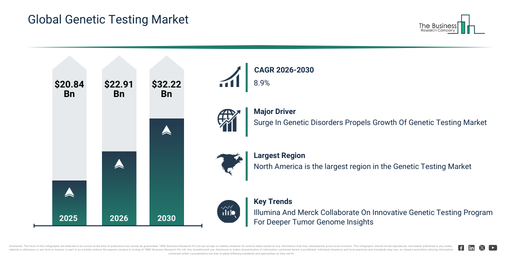
    Genetic Testing Market Forecast: Value Set To Climb From $22.91 Billion To $32.22 Billion

    The genetic testing market size has shown significant growth in recent years. It is projected to expand from $20.84 billion in 2025 to $22.91 billion in 2026, achieving a compound annual growth rate (CAGR) of 9.9%. This historical growth can be linked to improvements in molecular biology, reductions in DNA sequencing expenses, greater public awareness of genetic disorders, an increase in diagnostic laboratories, and its early application in oncology.

    The genetic testing market is projected to experience substantial expansion in the coming years, with its size anticipated to reach $32.22 billion by 2030, driven by a compound annual growth rate of 8.9%. This forecast growth is attributed to several factors including the advancement of personalized medicine, the integration of genetic data into clinical decisions, the increasing burden of chronic diseases, the expansion of preventive healthcare initiatives, and enhancements in genetic counseling services. Major trends expected within this period include the rising adoption of predictive genetic testing, the growing application of prenatal and newborn screening, an increased demand for pharmacogenomics testing, the widening scope of cancer genetic diagnostics, and the greater availability of direct-to-consumer genetic tests.

    Get A Free Sample Report With In-Depth Market Insights:

    https://thebusinessresearchcompany.com/sample_request?id=74471600&type=smp&name=Genetic%20Testing%20Market%20Report%202026&utm_source=Blogs&utm_medium=Paid&utm_campaign=Nov_PR

    Genetic Testing Market Growth Backed By Core Demand Fundamentals

    The increasing occurrence of genetic disorders is projected to propel the growth of the genetic testing market. These disorders are conditions that can cause symptoms at birth, while others emerge over time. Genetic testing can aid in diagnosing a genetic issue and provide information about the chances of developing cancer. For instance, in 2024, a report by the World Health Organization, a Switzerland-based Intergovernmental organization, highlighted that genetic disorders and congenital abnormalities affect 2%-5% of live births and account for 30% of pediatric hospital admissions, leading to about 50% of childhood deaths in industrialized countries. Therefore, the rising prevalence of genetic disorders is driving the genetic testing market.

    Genetic Testing Market Segment Landscape And Growth Outlook

    The genetic testing market covered in this report is segmented –

    1) By Type: Predictive Testing, Carrier Testing, Prenatal And Newborn Testing, Diagnostic Testing, Pharmacogenomics Testing, Nutrigenomic Testing, Other Types

    2) By Technology: Cytogenetic Testing, Biochemical Testing, Molecular Testing

    3) By Application: Cancer Diagnosis, Genetic Disease Diagnosis, Cardiovascular Disease Diagnosis, Other Applications

    4) By End User: Hospitals And Clinics, Diagnostic Laboratories And Centres, Other End Users

    Subsegments:

    1) By Predictive Testing: Genetic Risk Assessment, Family History-Based Testing

    2) By Carrier Testing: Single Gene Carrier Testing, Expanded Carrier Screening

    3) By Prenatal And Newborn Testing: Non-Invasive Prenatal Testing (NIPT), Newborn Screening Tests

    4) By Diagnostic Testing: Confirmatory Genetic Testing, Clinical Diagnostic Testing

    5) By Pharmacogenomics Testing: Drug Response Testing, Adverse Drug Reaction Testing

    6) By Nutrigenomic Testing: Dietary Response Testing, Metabolism Testing

    7) By Other Types: Ancestry Testing, Whole Genome Sequencing

    #Genetic Testing Market Growth Trends: What’s Shaping The Future Outlook?

    Companies operating within the genetic testing market are actively creating innovative solutions, including AI-driven genomic interpretation algorithms, to meet the increasing demand for improved variant classification, enhanced diagnostic accuracy, and greater diversity in precision healthcare. AI-based genomic interpretation tools analyze vast genetic datasets to identify pathogenic variants with greater efficiency than traditional manual or rule-based approaches, providing quicker insights, reduced uncertainty, and higher predictive accuracy in genetic testing. As an illustration, in June 2023, Illumina, Inc., a U.S.-based biotechnology and medical equipment company, unveiled PrimateAI-3D. This innovative artificial intelligence algorithm is engineered to predict disease-causing genetic mutations. The tool utilizes a 3D structural comprehension of proteins and evolutionary comparisons across primate species to prioritize potentially pathogenic variants. It improves large-scale genomic interpretation, accelerates precision medicine, and streamlines diagnostic workflows by enabling researchers and clinicians to more accurately assess genetic risk. PrimateAI-3D supports faster, more reliable detection of clinically relevant mutations, ultimately strengthening genetic testing capabilities.

    Genetic Testing Market Competitive Landscape: Who Leads The Industry?

    Major companies operating in the genetic testing market are Myriad Genetics Inc, Illumina Inc, Abbott Laboratories, Eurofins Scientific, Danaher Corporation, F. Hoffmann-La Roche Ltd, Quest Diagnostics Incorporated, Qiagen NV, Thermo Fisher Scientific Inc., BioRad Laboratories Inc., BGI, Berry Genomics Co. Ltd, Daan Gene Co. Ltd, Annoroad Gene Technology Co. Ltd, Igenomix, Circle DNA, Centogene, Probably Genetic, Genome Biologics, WuXi NextCODE, Genomtec, Testgene, Evogen Lab, Phosphorus, Helix, 10x Genomics, Quantgene, DNALabs, Deep Genomics, Hologic Inc, Molecular Biology & Genetics Laboratory, IVI MIDDLE EAST FERTILITY CLINIC, Bio Certica

    View The Full Genetic Testing Market Report:

    https://thebusinessresearchcompany.com/report/genetic-testing-global-market-report?utm_source=Blogs&utm_medium=Paid&utm_campaign=Nov_PR

    Genetic Testing Market Largest Region: Which Geography Holds The Biggest Share?

    North America was the largest region in the genetic testing market in 2025. Asia-Pacific is expected to be the fastest-growing region in the forecast period. The regions covered in the genetic testing market report are Asia-Pacific, South East Asia, Western Europe, Eastern Europe, North America, South America, Middle East, Africa.

    Reach Out To Our Team:

    The Business Research Company: https://www.thebusinessresearchcompany.com/

    Americas: +1 310-496-7795

    Asia: +44 7882 955267 & +91 8897263534

    Europe: +44 7882 955267

    Email us at: marketing@tbrc.info

    Follow us on:

    LinkedIn: https://in.linkedin.com/company/the-business-research-company

    YouTube: https://www.youtube.com/channel/UC24_fI0rV8cR5DxlCpgmyFQ

    Global Market Model: https://www.thebusinessresearchcompany.com/global-market-model
  • Genetic Engineering Plant Genomics Market Size Reaches $53.65 Billion In 2026: What Is Driving Growth?

    Genetic Engineering Plant Genomics Market Size Reaches $53.65 Billion In 2026: What Is Driving Growth?

    Featuring market attractiveness scoring, total addressable market sizing, company benchmarking matrices, interactive Excel dashboards, deeper supply chain intelligence, emerging startup tracking, and granular product-level insights, The Business Research Company’s 2026 market reports are built to deliver research that is both more actionable and more strategically valuable.

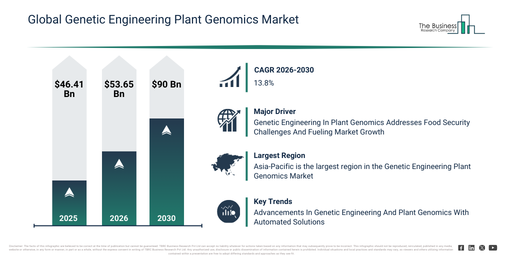
    Genetic Engineering Plant Genomics Market Revenue Growth On Track For A 13.8% CAGR Through 2030

    The genetic engineering plant genomics market size has seen swift expansion in recent years. It is projected to increase from $46.41 billion in 2025 to $53.65 billion in 2026, exhibiting a compound annual growth rate (CAGR) of 15.6%. This historical growth can be ascribed to progress in plant biotechnology research, an escalating need for improved crop yields, the wider adoption of genetically modified crop cultivation, enhancements in sequencing technologies, and increasing financial support for research from both public and private sectors.

    The genetic engineering plant genomics market is projected to experience substantial expansion in the coming years. This market is forecast to reach $90 billion by 2030, demonstrating a compound annual growth rate (CAGR) of 13.8%. This anticipated growth is driven by factors such as the increasing adoption of precision breeding techniques, a heightened focus on climate-resilient crops, broader regulatory approvals for genome editing, increasing investments in sustainable agricultural technologies, and a rising demand for crop traits that are efficient in resource use. Key trends anticipated during this period involve the wider adoption of CRISPR-based genome editing in crops, a growing emphasis on plant varieties resilient to abiotic stress, the increasing integration of genomic data analytics, an expansion in the development of trait-specific crops, and a stronger focus on sustainable crop improvement.

    Get A Free Sample Report With In-Depth Market Insights:

    https://thebusinessresearchcompany.com/sample_request?id=75159259&type=smp&name=Genetic%20Engineering%20Plant%20Genomics%20Market%20Report%202026&utm_source=Blogs&utm_medium=Paid&utm_campaign=Nov_PR

    Genetic Engineering Plant Genomics Market Growth Catalysts And Demand Drivers

    The future expansion of the genetic engineering plant genomics market is anticipated to be driven by increasing worries about food security. Food security describes a state where all individuals consistently have dependable access to sufficient, safe, and nourishing food to maintain an active and healthy life. These heightened concerns about food security stem from factors such as climate change, economic instability, and a growing global population, all of which jeopardize the availability and accessibility of food. Genetic engineering in plant genomics enhances food security by developing crops more resilient to pests, diseases, and environmental stresses, thereby increasing agricultural productivity and the stability of the food supply. For instance, in January 2025, according to the US Department of Agriculture, a US-based government agency responsible for food security statistics, 13.5 percent of US households, or 18.0 million households, were food insecure at some time during 2023, compared with 12.8 percent or 17.0 million households in 2022. Therefore, rising concerns for food security are expected to propel the growth of the genetic engineering plant genomics market.

    Genetic Engineering Plant Genomics Market Breakdown By Product Type And Application

    The genetic engineering plant genomics market covered in this report is segmented –

    1) By Type: Molecular Engineering, Genetic Engineering And Genome Editing, Other Types

    2) By Trait: Yield Improvement, Disease Resistance, Herbicide Tolerance And Insect Resistance, Abiotic Stress Tolerance

    3) By Application: Cereals And Grains, Oilseeds And Pulses, Fruits And Vegetables, Sugar Crops, Ornamentals, Alfalfa

    Subsegments:

    1) By Molecular Engineering: Gene Synthesis And Cloning, Protein Engineering, Enzyme Engineering, Marker-Assisted Selection

    2) By Genetic Engineering And Genome Editing: CRISPR/Cas9 Technology, TALENs (Transcription Activator-Like Effector Nucleases), ZFNs (Zinc Finger Nucleases), RNA Interference (RNAi), Agrobacterium-mediated Transformation

    3) By Other Types: Synthetic Biology In Plant Genomics, Epigenetic Engineering, Horizontal Gene Transfer

    Genetic Engineering Plant Genomics Market Industry Trends: What’s Reshaping Demand?

    Companies in the genetic engineering plant genomics market are prioritizing technological advancements, including automated molecular breeding genotyping solutions, to boost the precision and efficiency of crop breeding processes. An automated molecular breeding genotyping solution is a system that leverages computerized technologies and software to efficiently and accurately process large volumes of plant samples, thereby streamlining genetic analysis for breeding programs. For instance, in June 2024, MGI Tech, a China-based biotechnology company, launched a complete workflow solution tailored for agricultural large-scale low-pass whole genome sequencing. This new solution encompasses an automated full-process product portfolio specifically engineered for large-scale molecular breeding and genotyping of agricultural diploid species. Enhanced by MGI’s automation platforms, the low-pass WGS solution overcomes conventional library preparation limitations by achieving ultra-high throughput with minimal tools. It enables rapid, cost-effective large-scale library preparation and supports high throughput using the DNBSEQ-T7 sequencer, as well as medium throughput with the DNBSEQ-G400 benchtop sequencer, making it ideal for agricultural genomics research.

    Genetic Engineering Plant Genomics Market Company Landscape And Competitive Strategy

    Major companies operating in the genetic engineering plant genomics market are BASF SE, Bayer AG, Thermo Fisher Scientific Inc., Suntory Holdings Limited, Corteva Inc., DuPont de Nemours Inc, Eurofins Scientific SE, Agilent Technologies Inc, ADAMA Ltd, Illumina Inc, PerkinElmer Inc., Beckman Coulter Inc., Bio-Rad Laboratories, Zhejiang Xinan Chemical Industrial Group Co Ltd, UPL Limited, Qiagen N.V., Novogene Co Ltd, KWS SAAT SE & Co KGaA, Vilmorin & Cie, Neogen Corporation, Rubicon Genomics Inc, Verdesian Life Sciences LLC, GeneWiz Inc, Genotypic Technology Pvt Ltd, Syngenta AG, Keygene NV

    View The Full Genetic Engineering Plant Genomics Market Report:

    https://thebusinessresearchcompany.com/report/genetic-engineering-plant-genomics-global-market-report?utm_source=Blogs&utm_medium=Paid&utm_campaign=Nov_PR

    Genetic Engineering Plant Genomics Market Regional Analysis: Which Geography Leads On Revenue?

    Asia-Pacific was the largest region in the genetic engineering plant genomics market in 2025. The regions covered in the genetic engineering plant genomics market report are Asia-Pacific, South East Asia, Western Europe, Eastern Europe, North America, South America, Middle East, Africa.

    Reach Out To Our Team:

    The Business Research Company: https://www.thebusinessresearchcompany.com/

    Americas: +1 310-496-7795

    Asia: +44 7882 955267 & +91 8897263534

    Europe: +44 7882 955267

    Email us at: marketing@tbrc.info

    Follow us on:

    LinkedIn: https://in.linkedin.com/company/the-business-research-company

    YouTube: https://www.youtube.com/channel/UC24_fI0rV8cR5DxlCpgmyFQ

    Global Market Model: https://www.thebusinessresearchcompany.com/global-market-model
  • Genetic Counseling Market Valued At $3.54 Billion In 2026: Key Trends And Growth Drivers

    Genetic Counseling Market Valued At $3.54 Billion In 2026: Key Trends And Growth Drivers

    Built to provide research that’s more actionable and strategically valuable, The Business Research Company’s 2026 market reports include market attractiveness analysis, total addressable market sizing, company benchmarking matrices, interactive Excel dashboards, broader supply chain intelligence, emerging startup tracking, and in-depth product insights.

    Genetic Counseling Market Value Growth And Long-Term Outlook

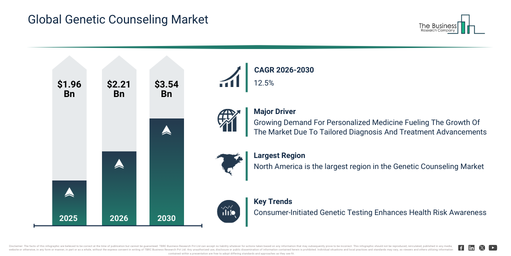
    The genetic counseling market has recently experienced rapid expansion. It is projected to increase from $1.96 billion in 2025 to $2.21 billion in 2026, at a compound annual growth rate (CAGR) of 12.8%. This historical growth can be attributed to several factors, including heightened awareness of inherited genetic conditions, broader availability of genetic testing, an increase in the incidence of hereditary disorders, the expansion of prenatal and preconception screening programs, and improved access to diagnostic laboratories.

    The genetic counseling market is projected to experience swift expansion over the coming years. This market is predicted to reach $3.54 billion by 2030, exhibiting a compound annual growth rate (CAGR) of 12.5%. This anticipated growth during the forecast period is primarily driven by several factors, including the wider acceptance of population-scale genetic screening, the increasing utilization of digital counseling platforms, the broadening of personalized medicine initiatives, a heightened emphasis on preventive healthcare, and the greater incorporation of genetic information into clinical decision processes. Key developments expected within this forecast timeframe encompass the expanding use of tele-genetic counseling services, a rising need for carrier screening programs, the ongoing incorporation of digital genetic risk assessment tools, the wider availability of preventive and proactive genetic testing, and a stronger emphasis on individualized patient education.

    Get A Free Sample Report With In-Depth Market Insights:

    https://thebusinessresearchcompany.com/sample_request?id=53582276&type=smp&name=Genetic%20Counseling%20Market%20Report%202026&utm_source=Blogs&utm_medium=Paid&utm_campaign=Nov_PR

    Genetic Counseling Market Opportunity Drivers: What’s Unlocking New Revenue Potential?

    The increasing requirement for personalized medicine is anticipated to drive the expansion of the genetic counseling market in the foreseeable future. Personalized medicine is a medical approach that customizes treatments for individual patients, considering their genetic, environmental, and lifestyle factors to optimize outcomes and enhance care. The rising demand for this tailored medical approach stems from advancements in genomic technologies, which facilitate the precise identification of genetic variations and the development of individualized treatments. Genetic counseling supports personalized medicine by delivering specific insights derived from an individual’s genetic profile, leading to more accurate diagnoses and treatment plans. It improves patient care by guiding risk assessments, treatment decisions, and preventive strategies, thereby enhancing overall healthcare outcomes. For instance, in February 2024, the Personalized Medicine Coalition (PMC), a US-based nonprofit organization, reported that the U.S. Food and Drug Administration (FDA) approved 26 new personalized medicines in 2023, a notable increase from the 12 approved in 2022. Therefore, the growing demand for personalized medicine is a primary driver for the growth of the genetic counseling market.

    Genetic Counseling Market Segment Analysis And Revenue Potential

    The genetic counseling market covered in this report is segmented –

    1) By Service Type: Preconception Counseling, Prenatal Counseling, Carrier Screening, Cancer Risk Assessment

    2) By Patient Type: Individuals With Genetic Disorders, Pregnant Women, Family Members Of Individuals With Genetic Disorders

    3) By Delivery Mode: In-Person, Telehealth

    4) By Application: Proactive Risk Assessment, Genetic Consultation For Intent-To-Treat Patients (ITT), Prenatal And Preconception Care, Pediatric Care, Other Applications

    5) By End-User: Hospitals, Clinics, Diagnostic Laboratories, Research Institutes, Other End-Users

    Subsegments:

    1) By Preconception Counseling: Family History Evaluation, Genetic Risk Assessment, Carrier Status Analysis

    2) By Prenatal Counseling: Non-Invasive Prenatal Testing, Amniocentesis Guidance, Ultrasound Risk Evaluation

    3) By Carrier Screening: Targeted Mutation Analysis, Panel-Based Screening, Expanded Carrier Testing

    4) By Cancer Risk Assessment: Breast Cancer (BRCA1 And BRCA2) Gene Mutation Analysis, Hereditary Cancer Panel Testing, Predictive Genetic Testing

    Genetic Counseling Market Innovation Trends: What Developments Are Reshaping The Industry?

    Leading firms within the genetic counseling market are concentrating on creating novel solutions, including consumer-initiated genetic testing platforms, to enhance ease of access, individual customization, and prompt identification of health risks. These platforms enable individuals to procure genetic tests directly and obtain tailored insights without needing to consult a healthcare professional. As an example, in July 2023, Quest Diagnostics Inc., a diagnostic information services company headquartered in the US, introduced Genetic Insights, which is a consumer-initiated genetic testing offering. This particular test empowers individuals to gain access to practical health risk information, such as genetic tendencies for specific ailments, without the necessity of a doctor’s referral. The purpose of this strategic product is to equip individuals with knowledge regarding their possible genetic susceptibility to various inherited health conditions, complemented by comprehensive health reports and availability of expert genetic counseling. This advancement boosts convenience, encourages proactive health management, and corresponds with the increasing consumer demand for direct-to-consumer (DTC) genetic testing solutions.

    Genetic Counseling Market Key Players Shaping Industry Direction

    Major companies operating in the genetic counseling market are Labcorp Holdings Inc., Quest Diagnostics Incorporated, Natera Inc., Myriad Genetics Inc., MedGenome Diagnostics Private Limited, GeneDx LLC, Color Health Inc., Ambry Genetics Corporation, Genome Medical Inc., Lilac Insights Private Limited, InformedDNA Inc., GeneScreen Counseling Inc., Anderson Diagnostics & Labs Private Limited, MyGeneCounsel LLC, Genetic Counselling India LLP, Genomic Valley Bharat Limited, Tandem Genetics LLC, Metis Genetics LLC, Sanmati Genetic Counseling Center, Invitae Corporation, Centogene N.V.

    View The Full Genetic Counseling Market Report:

    https://thebusinessresearchcompany.com/report/genetic-counseling-global-market-report?utm_source=Blogs&utm_medium=Paid&utm_campaign=Nov_PR

    Genetic Counseling Market Geographic Spread And Regional Opportunities

    North America was the largest region in the genetic counseling market in 2025. Asia-Pacific is expected to be the fastest-growing region in the forecast period. The regions covered in the genetic counseling market report are Asia-Pacific, South East Asia, Western Europe, Eastern Europe, North America, South America, Middle East, Africa.

    Reach Out To Our Team:

    The Business Research Company: https://www.thebusinessresearchcompany.com/

    Americas: +1 310-496-7795

    Asia: +44 7882 955267 & +91 8897263534

    Europe: +44 7882 955267

    Email us at: marketing@tbrc.info

    Follow us on:

    LinkedIn: https://in.linkedin.com/company/the-business-research-company

    YouTube: https://www.youtube.com/channel/UC24_fI0rV8cR5DxlCpgmyFQ

    Global Market Model: https://www.thebusinessresearchcompany.com/global-market-model
  • Generative Artificial Intelligence (AI) In Drug Discovery Market Size In 2026: Growth Outlook And Forecast Through 2030

    Generative Artificial Intelligence (AI) In Drug Discovery Market Size In 2026: Growth Outlook And Forecast Through 2030

    Backed by market attractiveness analysis, total addressable market sizing, company benchmarking matrices, interactive Excel dashboards, wider supply chain intelligence, emerging startup coverage, and detailed product-level insights, The Business Research Company’s 2026 market reports are designed to offer research that is more actionable and strategically valuable than ever.

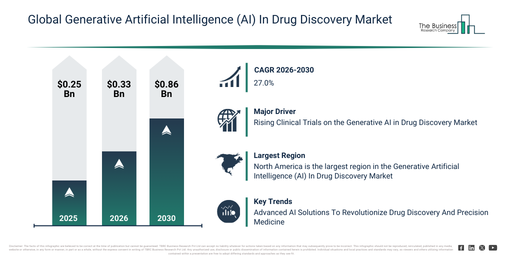
    Generative Artificial Intelligence (AI) In Drug Discovery Market Poised To Hit $0.86 Billion By 2030 With A 27% CAGR

    The generative artificial intelligence (AI) in drug discovery market size has experienced substantial expansion in recent years. Its value is anticipated to rise from $0.25 billion in 2025 to $0.33 billion in 2026, achieving a compound annual growth rate (CAGR) of 30.6%. This historical growth can be linked to elevated drug development costs, the evolution of computational chemistry, the increasing availability of biological datasets, the integration of machine learning tools, and considerable pharmaceutical R&D investment.

    The market for generative artificial intelligence (AI) in drug discovery is projected to experience substantial expansion over the coming years. This market is forecast to reach $0.86 billion by 2030, exhibiting a compound annual growth rate (CAGR) of 27.0%. Key factors driving this growth during the forecast period include the integration of generative models into discovery pipelines, a heightened demand for more rapid drug discovery, the broadening scope of biologics optimization, increased collaboration between AI companies and pharmaceutical firms, and a decrease in time-to-market. Noteworthy trends anticipated in the same period involve the increasing adoption of AI-driven molecule generation, a surge in the application of deep learning for drug design, the broadening of small molecule discovery applications, enhanced integration of AI in lead optimization, and the acceleration of early-stage drug development processes.

    Get A Free Sample Report With In-Depth Market Insights:

    https://thebusinessresearchcompany.com/sample_request?id=53386160&type=smp&name=Generative%20Artificial%20Intelligence%20%28AI%29%20In%20Drug%20Discovery%20Market%20Report%202026&utm_source=Blogs&utm_medium=Paid&utm_campaign=Nov_PR

    Generative Artificial Intelligence (AI) In Drug Discovery Market Growth Momentum: What Factors Are Shaping Demand?

    The expanding volume of clinical trials is anticipated to boost the advancement of generative AI in the drug discovery market. These trials, involving human participants, evaluate the safety and effectiveness of new medical treatments or procedures, aiming to gather scientific evidence for their human application. This increase in trials is primarily attributed to progress in medical research, a greater burden of disease, evolving regulatory frameworks, globalized clinical research efforts, patient advocacy and awareness, market competition, technological breakthroughs, and increased funding opportunities. Data from clinical trials powers generative AI models, accelerating drug discovery by forecasting interactions and designing compounds. This collaboration fosters personalized medicine, enhances treatment effectiveness, improves patient results, and transforms the pharmaceutical sector. For example, according to Pharmaceutical Technology, a UK-based business news and media company, in January 2025, 3,213 trials are scheduled to commence this year, including 823 in Phase I and 1,102 in Phase II. Consistent with 2024, oncology is projected to be the leading therapeutic area, accounting for 946 trials, followed by the central nervous system with 686 trials, and then cardiovascular considerably behind with 258 trials. Consequently, the increasing number of clinical trials is propelling the expansion of generative AI in the drug discovery market.

    Generative Artificial Intelligence (AI) In Drug Discovery Market Segmentation And Category Overview

    The generative artificial intelligence (AI) in drug discovery market covered in this report is segmented –

    1) By Type: Small Molecule, Large Molecule

    2) By Technology: Deep Learning, Machine Learning, Reinforcement Learning, Molecular Docking, Quantum Computing

    3) By End-User: Pharmaceutical And Biotechnology Companies, Academic And Research Institutions, Contract Research Organizations (CROs), Other End-Users

    Subsegments:

    1) By Small Molecule: Drug Design And Optimization, Lead Discovery And Identification, Toxicology Prediction, Molecular Property Prediction, ADMET (Absorption, Distribution, Metabolism, Excretion, And Toxicity) Prediction

    2) By Large Molecule: Protein Structure Prediction, Antibody Design, Biologics Optimization, Peptide Design, Biopharmaceutical Discovery And Optimization

    Generative Artificial Intelligence (AI) In Drug Discovery Market Trends: What’s Defining The Industry’s Next Phase?

    Key companies active in the generative AI in the drug discovery market are crafting advanced AI-driven instruments to speed up drug discovery processes. These AI-powered tools hasten drug development by streamlining drug discovery, design, and clinical trials through predictive analytics and machine learning. They improve efficiency in areas such as target identification and compound screening, including virtual screening using AI, preclinical development, regulatory compliance, and manufacturing processes. For instance, in May 2023, Google Cloud, a US-based cloud computing service provided by Google, launched two cutting-edge AI-powered solutions. These solutions, named the Target and Lead Identification Suite and the Multiomics Suite, aim to enhance drug discovery and precision medicine across biotech, pharmaceutical, and public sector organizations. The Target and Lead Identification Suite assists researchers in understanding amino acid functions and predicting protein structures, while the Multiomics Suite expedites the analysis and comprehension of genomic data, making the development of personalized treatments simpler.

    Generative Artificial Intelligence (AI) In Drug Discovery Market Competitive Analysis Of Leading Industry Participants

    Major companies operating in the generative artificial intelligence (AI) in drug discovery market are Bayer AG, NVIDIA Corporation, Merck KGaA, IBM Research, Schrödinger Inc., Valo Health, BenevolentAI, XtalPi Inc., Insilico Medicine Inc., Recursion Pharmaceuticals Inc., Exscientia, Atomwise Inc., InveniAI LLC, Healx, Aitia, Cloud Pharmaceuticals Inc., Optibrium, Aiforia, BioSymetrics Inc., Collaborations Pharmaceuticals Inc., MAbSilico, Reverie Labs, Standigm Inc., DeepMatter Group Limited, Variational AI Inc

    View The Full Generative Artificial Intelligence (AI) In Drug Discovery Market Report:

    https://thebusinessresearchcompany.com/report/generative-artificial-intelligence-ai-in-drug-discovery-global-market-report?utm_source=Blogs&utm_medium=Paid&utm_campaign=Nov_PR

    Generative Artificial Intelligence (AI) In Drug Discovery Market Top Region By Revenue And Market Share

    North America was the largest region in the generative AI in drug discovery market in 2025. Asia-Pacific is expected to be the fastest-growing region in the forecast period. The regions covered in the generative artificial intelligence (AI) in drug discovery market report are Asia-Pacific, South East Asia, Western Europe, Eastern Europe, North America, South America, Middle East, Africa.

    Reach Out To Our Team:

    The Business Research Company: https://www.thebusinessresearchcompany.com/

    Americas: +1 310-496-7795

    Asia: +44 7882 955267 & +91 8897263534

    Europe: +44 7882 955267

    Email us at: marketing@tbrc.info

    Follow us on:

    LinkedIn: https://in.linkedin.com/company/the-business-research-company

    YouTube: https://www.youtube.com/channel/UC24_fI0rV8cR5DxlCpgmyFQ

    Global Market Model: https://www.thebusinessresearchcompany.com/global-market-model
  • Generative AI In Healthcare Market Trends Supporting 31.1% CAGR Growth Through 2030

    Generative AI In Healthcare Market Trends Supporting 31.1% CAGR Growth Through 2030

    Featuring market attractiveness scoring, total addressable market sizing, company benchmarking matrices, interactive Excel dashboards, deeper supply chain intelligence, emerging startup tracking, and granular product-level insights, The Business Research Company’s 2026 market reports are built to deliver research that is both more actionable and more strategically valuable.

    Generative AI In Healthcare Market Size And Revenue Outlook Through 2030

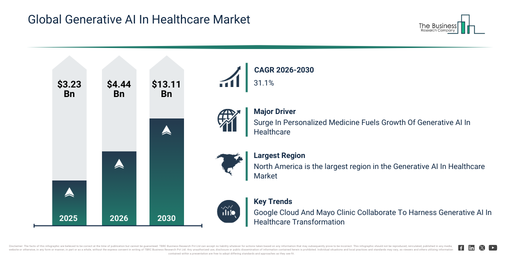
    The generative ai in healthcare market size has experienced significant expansion in recent years. It is projected to increase from $3.23 billion in 2025 to $4.44 billion in 2026, demonstrating a compound annual growth rate (CAGR) of 37.2%. Historically, this growth has been influenced by the digitization of healthcare data, advancements in machine learning algorithms, the proliferation of electronic health records, increased investment in healthcare IT, and a rising demand for efficiency.

    The generative AI in healthcare market is expected to undergo rapid growth over the next few years, with projections indicating it will reach $13.11 billion by 2030, demonstrating a compound annual growth rate (CAGR) of 31.1%. This expansion during the forecast period is driven by factors such as the increasing regulatory acceptance of AI tools, a rise in clinical AI adoption, broader utilization of real-world data, enhanced hospital automation, and AI-powered personalized care. Significant trends anticipated during this period include the expanded use of AI-assisted clinical decision support, a wider application of AI in medical imaging analysis, the growing adoption of virtual nursing assistants, the integration of AI into workflow automation, and an increasing reliance on predictive healthcare analytics.

    Get A Free Sample Report With In-Depth Market Insights:

    https://thebusinessresearchcompany.com/sample_request?id=45415713&type=smp&name=Generative%20AI%20In%20Healthcare%20Market%20Report%202026&utm_source=Blogs&utm_medium=Paid&utm_campaign=Nov_PR

    Generative AI In Healthcare Market Expansion Drivers: What’s Shaping Future Growth?

    The escalating need for personalized medicine is anticipated to stimulate the expansion of the generative AI in healthcare market moving forward. Personalized medicine, alternatively termed precision medicine, represents an innovative medical treatment strategy that accounts for individual variations in genes, environment, and lifestyle. This increasing demand is driven by factors such as advancements in genomics, an enhanced comprehension of disease mechanisms, and the aspiration for more potent and targeted therapies. Generative AI in healthcare utilizes algorithms to process vast amounts of patient data, including genetic profiles and medical histories, to devise personalized treatment strategies and predictions tailored to individual patient requirements and characteristics. For instance, in February 2024, the Personalized Medicine Coalition, a UK-based organization advocating for personalized medicine, stated that the FDA’s (the U.S. Food and Drug Administration’s) CDER (Center for Drug Evaluation and Research) authorized 16 novel personalized treatments for rare disease patients in 2023, a notable rise from 6 in 2022. Among these approved personalized treatments were seven medications specifically for cancer treatment and three designed to address various other diseases and conditions. Consequently, the rising demand for personalized medicine is a key impetus for the growth of the generative AI in healthcare market.

    Generative AI In Healthcare Market Segment Outlook: Which Categories Are Growing Fastest?

    The generative ai in healthcare market covered in this report is segmented –

    1) By Component: Solutions, Services

    2) By Function: AI-Assisted Robotic Surgery, Virtual Nursing Assistants, Aid Clinical Judgment Or Diagnosis, Workflow And Administrative Tasks, Image Analysis

    3) By Application: Clinical, System

    4) By End User: Hospitals And Clinics, Clinical Research, Healthcare Organizations, Diagnostic Centers, Other End Users

    Subsegments:

    1) By Solutions: Diagnostic Imaging Analysis, Drug Discovery And Development Tools, Personalized Treatment Planning, AI-Powered Clinical Decision Support

    2) By Services: Consulting and Advisory Services, Implementation And Integration Services, Support And Maintenance Services, Training And Education Services

    Generative AI In Healthcare Market Industry Trends Fueling Future Revenue Growth

    Leading enterprises within the generative AI in healthcare market are concentrating on establishing strategic alliances to create new technologies and achieve a competitive edge. These collaborative efforts are essential for advancing generative AI in healthcare by harnessing the combined strengths and resources of multiple entities to craft innovative solutions, enhance the efficiency of clinical procedures, and resolve critical healthcare issues. As an illustration, in June 2023, Google, a technology company based in the US, collaborated with Mayo Clinic, a US-based nonprofit organization dedicated to clinical practices, to embed generative AI into healthcare. This partnership intends to capitalize on generative AI’s capabilities to streamline operations and elevate healthcare delivery by uncovering previously inaccessible data and enabling real-time, tailored interactions. Its initial focus will be on Enterprise Search in Gen App Builder to improve clinical workflows and patient outcomes, all while ensuring compliance with HIPAA (Health Insurance Portability and Accountability Act).

    Generative AI In Healthcare Market Leading Companies And Competitive Benchmarking

    Major companies operating in the generative ai in healthcare market are Alphabet Inc., Microsoft Corporation, Amazon Web Services Inc., Johnson & Johnson Services Inc., Siemens AG, Intel Corporation, IBM Watson Health Corporation, Oracle Corporation, Nvidia Corporation, Epic Systems Corporation, Persistent Systems Private Limited, Tempus Labs Inc., Eleks Inc., Verge Genomics Inc., PathAI Inc., BenevolentAI Ltd, Abridge AI Inc., Absci Corporation, Atomwise Inc., Syntegra, Insilico Medicine, DiagnaMed Holdings Corp.

    View The Full Generative AI In Healthcare Market Report:

    https://thebusinessresearchcompany.com/report/generative-ai-in-healthcare-global-market-report?utm_source=Blogs&utm_medium=Paid&utm_campaign=Nov_PR

    Generative AI In Healthcare Market Regional Analysis And Top Geography

    North America was the largest region in the generative AI In healthcare market in 2025. Asia-Pacific is expected to be the fastest-growing region in the forecast period. The regions covered in the generative ai in healthcare market report are Asia-Pacific, South East Asia, Western Europe, Eastern Europe, North America, South America, Middle East, Africa.

    Reach Out To Our Team:

    The Business Research Company: https://www.thebusinessresearchcompany.com/

    Americas: +1 310-496-7795

    Asia: +44 7882 955267 & +91 8897263534

    Europe: +44 7882 955267

    Email us at: marketing@tbrc.info

    Follow us on:

    LinkedIn: https://in.linkedin.com/company/the-business-research-company

    YouTube: https://www.youtube.com/channel/UC24_fI0rV8cR5DxlCpgmyFQ

    Global Market Model: https://www.thebusinessresearchcompany.com/global-market-model
  • Generalized Anxiety Disorder Market Forecast Highlights A $9.72 Billion Opportunity For Industry Participants

    Generalized Anxiety Disorder Market Forecast Highlights A $9.72 Billion Opportunity For Industry Participants

    Built to provide research that’s more actionable and strategically valuable, The Business Research Company’s 2026 market reports include market attractiveness analysis, total addressable market sizing, company benchmarking matrices, interactive Excel dashboards, broader supply chain intelligence, emerging startup tracking, and in-depth product insights.

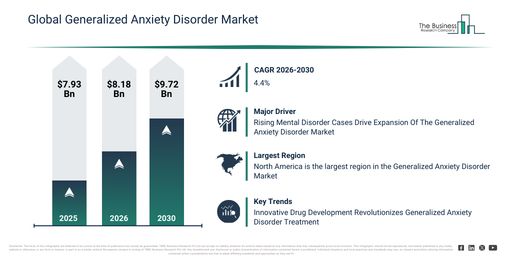
    Generalized Anxiety Disorder Market Growth From $8.18 Billion In 2026 To $9.72 Billion By 2030 At A CAGR Of 4.4%

    The generalized anxiety disorder market size has shown consistent growth over recent years. It is projected to expand from $7.93 billion in 2025 to $8.18 billion in 2026, achieving a compound annual growth rate (CAGR) of 3.2%. The historical increase can be attributed to several factors including rising mental health awareness, the widespread availability of antidepressants, the expansion of psychiatric services, prevailing societal stress factors, and advancements in primary care diagnosis.

    The market for generalized anxiety disorder is projected to experience consistent expansion over the upcoming years. This market is anticipated to reach $9.72 billion by 2030, exhibiting a compound annual growth rate (CAGR) of 4.4%. Factors contributing to this growth trajectory during the projection period include the rise of digital therapeutics, the escalating demand for tailored mental healthcare solutions, a surge in telehealth utilization, an emphasis on proactive mental well-being, and advancements in neuromodulation treatments. Key trends anticipated within the forecast timeframe encompass the growing acceptance of cognitive behavioral therapy, a heightened reliance on pharmaceutical treatments for anxiety, the proliferation of digital platforms for mental health, the broadening scope of remote and telepsychiatry offerings, and an enhanced public understanding of mental health conditions.

    Get A Free Sample Report With In-Depth Market Insights:

    https://thebusinessresearchcompany.com/sample_request?id=14073471&type=smp&name=Generalized%20Anxiety%20Disorder%20Market%20Report%202026&utm_source=Blogs&utm_medium=Paid&utm_campaign=Nov_PR

    Generalized Anxiety Disorder Market Development Factors: What’s Supporting Demand?

    The increasing incidence of mental disorder cases within the healthcare industry is fueling the growth of the generalized anxiety disorder market. A mental disorder, alternatively termed a mental illness, encompasses a broad spectrum of conditions that impact an individual’s thoughts, emotions, behaviors, and overall mental well-being. Mental health disorders commonly observed alongside generalized anxiety disorder include phobias, panic disorder, post-traumatic stress disorder (PTSD), and obsessive-compulsive disorder (OCD), and effectively managing these conditions is vital for individuals to sustain healthy relationships and improve their quality of life. For instance, in November 2023, according to the Stress in America 2023 survey published by American Psychological Association, a US-based professional organization, adults aged 35 to 44 experienced the most significant rise in mental health diagnoses, with 45% reporting a mental illness in 2023 compared with 31%. However, adults ages 18 to 34 still reported the highest rate of mental illnesses at 50% in 2023. Consequently, the rising number of mental disorder cases is expected to propel the growth of the generalized anxiety disorder market.

    Generalized Anxiety Disorder Market Segment Landscape: Which Areas Lead Development?

    The generalized anxiety disorder market covered in this report is segmented –

    1) By Type: Panic Disorder, Agoraphobia, Generalized Anxiety, Social Anxiety, Specific Phobia, Other Types

    2) By Therapies: Interpersonal Therapy, Behavior Therapy, Cognitive Behavioral Therapy, Mindfulness Based Cognitive Therapy

    3) By Device: Deep Brain Stimulation, Electroconvulsive Therapy, Transcranial Magnetic Stimulation, Vagus Nerve Stimulation

    4) By End-User: Hospitals, Homecare, Specialty Clinics, Other End-Users

    Subsegments:

    1) By Panic Disorder: Recurrent Panic Attacks, Unexpected Panic Attacks

    2) By Agoraphobia: Situational Phobia, Open Spaces Anxiety

    3) By Generalized Anxiety: Chronic Worry, Excessive Anxiety

    4) By Social Anxiety: Performance Anxiety, Interaction Anxiety

    5) By Specific Phobia: Animal Phobia, Environmental Phobia, Situational Phobia

    6) By Other Type: Separation Anxiety Disorder, Selective Mutism, Post-Traumatic Stress Disorder (PTSD)

    Generalized Anxiety Disorder Market Trends Powering Strategic Industry Growth

    Major companies operating within the generalized anxiety disorder market are actively developing innovative drugs, such as MM-120, and securing approvals for the treatment of generalized anxiety disorder to more effectively cater to their existing consumers. Novel medications like MM-120 are designed to improve the management and results associated with this mental health condition. For instance, in September 2023, Mind Medicine Inc. (MindMed), a U.S.-based biotech company focused on psychedelic-inspired therapies, finalized the enrollment process for its Phase 2b trial of MM 120 (lysergide D-tartrate) intended for generalized anxiety disorder (GAD). With this significant achievement, MindMed aims to generate comprehensive efficacy and safety data to facilitate the continued development of MM 120 as a new therapeutic option for GAD. MM 120 functions as a small-molecule partial agonist of the 5 HT2A receptor, formulated to enhance neuroplasticity and serotonin signaling to improve mood and anxiety, and it exhibited a dose-dependent reduction in anxiety symptoms during the trial.

    Generalized Anxiety Disorder Market Industry Leaders And Competitive Landscape

    Major companies operating in the generalized anxiety disorder market are Alkermes plc, Pfizer Inc., F. Hoffmann-La Roche AG, Sanofi SA, Bristol-Myers Squibb, GlaxoSmithKline plc, Johnson And Johnson Private Limited, Teva Pharmaceutical Industries Ltd., Otsuka Holdings Co. Ltd., Mylan N.V., Sumitomo Pharma Co. Ltd., Forest Laboratories Inc., H. Lundbeck A/S, Neurocrine Biosciences Inc., Actavis Pharmaceutical Company, Eli Lilly and Company, Mind Medicine Inc., Sage Therapeutics Inc., VistaGen Therapeutics Inc.

    View The Full Generalized Anxiety Disorder Market Report:

    https://thebusinessresearchcompany.com/report/generalized-anxiety-disorder-global-market-report?utm_source=Blogs&utm_medium=Paid&utm_campaign=Nov_PR

    Generalized Anxiety Disorder Market Geographic Analysis: Where Is Demand Rising Fastest?

    North America was the largest region in the generalized anxiety disorder market in 2025. The regions covered in the generalized anxiety disorder market report are Asia-Pacific, South East Asia, Western Europe, Eastern Europe, North America, South America, Middle East, Africa.

    Reach Out To Our Team:

    The Business Research Company: https://www.thebusinessresearchcompany.com/

    Americas: +1 310-496-7795

    Asia: +44 7882 955267 & +91 8897263534

    Europe: +44 7882 955267

    Email us at: marketing@tbrc.info

    Follow us on:

    LinkedIn: https://in.linkedin.com/company/the-business-research-company

    YouTube: https://www.youtube.com/channel/UC24_fI0rV8cR5DxlCpgmyFQ

    Global Market Model: https://www.thebusinessresearchcompany.com/global-market-model
  • General Medical And Surgical Hospitals Market Analysis: How The Industry Is Evolving Toward A $4767.92 Billion Future

    General Medical And Surgical Hospitals Market Analysis: How The Industry Is Evolving Toward A $4767.92 Billion Future

    Backed by market attractiveness analysis, total addressable market sizing, company benchmarking matrices, interactive Excel dashboards, wider supply chain intelligence, emerging startup coverage, and detailed product-level insights, The Business Research Company’s 2026 market reports are designed to offer research that is more actionable and strategically valuable than ever.

    General Medical And Surgical Hospitals Market Expansion Outlook: What Revenue Opportunities Are Ahead?

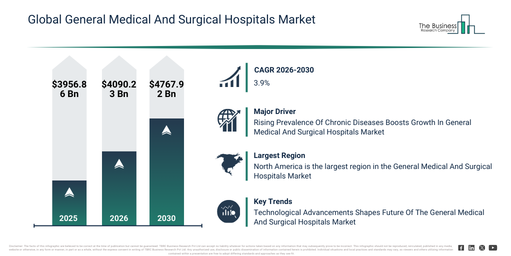
    The market size for general medical and surgical hospitals has exhibited consistent expansion over recent years. The sector is projected to expand from $3956.86 billion in 2025 to $4090.23 billion in 2026, driven by a compound annual growth rate (CAGR) of 3.4%. Historically, this expansion can be ascribed to several factors, including an increasing population, the development of urban healthcare infrastructure, government funding for healthcare, a surge in chronic diseases, and the provision of hospital-based diagnostic services.

    The market size for general medical and surgical hospitals is projected to experience consistent expansion over the upcoming years. It is expected to reach $4767.92 billion by 2030, demonstrating a compound annual growth rate (CAGR) of 3.9%. This anticipated growth throughout the forecast period stems from factors such as an expanding aging population, the wider adoption of value-based care models, the integration of smart hospital technologies, an increase in surgical procedure volumes, and improved access to healthcare services. Key trends anticipated during this period involve the broadening of integrated inpatient and outpatient services, the increasing uptake of digital health records, a heightened emphasis on multispecialty care provision, a surge in demand for emergency and critical care services, and the incorporation of telemedicine into hospital operations.

    Get A Free Sample Report With In-Depth Market Insights:

    https://thebusinessresearchcompany.com/sample_request?id=54265675&type=smp&name=General%20Medical%20And%20Surgical%20Hospitals%20Market%20Report%202026&utm_source=Blogs&utm_medium=Paid&utm_campaign=Nov_PR

    General Medical And Surgical Hospitals Market Industry Drivers: What’s Behind The Revenue Growth?

    The escalating presence of chronic diseases is projected to drive the growth of the general medical and surgical hospitals market. These conditions typically develop slowly over time and last for a minimum of three months. To mitigate avoidable hospitalizations and adverse events, healthcare organizations are implementing chronic disease management programs, aiming to manage the health of patients with chronic conditions more effectively. This allows general medical and surgical hospitals to benefit from these initiatives by decreasing healthcare costs and improving patient outcomes. As an illustration, in April 2025, the Centers for Disease Control and Prevention, a US-based federal government agency, reported that in 2023, approximately 194 million American adults, which includes 6 in 10 young adults, 8 in 10 midlife adults, and 9 in 10 older adults, stated they had 1 or more conditions. Notably, the prevalence of chronic conditions among young adults rose by 7.0 percentage points. Therefore, the increasing prevalence of chronic diseases is indeed a key driver for the general medical and surgical hospital market.

    General Medical And Surgical Hospitals Market Segments: Where Is Growth Concentrated?

    The general medical and surgical hospitals market covered in this report is segmented –

    1) By Service Type: Inpatient Service, Outpatient Services

    2) By Hospital Type: Private Hospital, State-Owned Hospital, Public And Community Hospital

    3) By Service Areas: Acute Care, Cardiovascular, Cancer Care, Neurorehabilitation And Psychiatry Services, Pathology Lab, Diagnostics, And Imaging, Obstetrics And Gynecology, Other Services

    Subsegments:

    1) By Inpatient Service: Emergency Services, Surgical Services, Maternity Services, Intensive Care Services, Rehabilitation Services

    2) By Outpatient Services: Diagnostic Services, Surgical Procedures, Preventive Care, Rehabilitation Services, Telemedicine Services

    General Medical And Surgical Hospitals Market Growth Trends Reshaping The Competitive Landscape

    Major companies operating in the general medical and surgical hospitals market are focusing on developing innovative solutions, such as AI-enabled cloud-based imaging platforms, to address the growing demand for enhanced diagnostic workflows, remote accessibility, and improved operational efficiency. These AI-powered cloud imaging platforms integrate advanced analytics, remote reading capabilities, and centralized data access, streamlining radiology operations more effectively than traditional on-premise PACS systems. They provide faster image processing, scalable storage, improved collaboration, and reduced IT maintenance. For instance, in November 2023, Koninklijke Philips NV, a Netherlands-based health technology company, unveiled Philips HealthSuite Imaging, an inventive cloud-based PACS solution crafted to optimize radiology workflows. This platform, built on Amazon Web Services (AWS), incorporates features such as high-speed remote diagnostic reading, integrated reporting modules, and AI-enabled workflow orchestration. Its cloud-native architecture minimizes IT infrastructure burden, ensures secure data delivery, and enhances clinician collaboration, thereby improving patient care. The solution delivers scalable performance, real-time accessibility, and seamless integration with existing hospital systems.

    General Medical And Surgical Hospitals Market Key Participants And Competitive Landscape

    Major companies operating in the general medical and surgical hospitals market are Mayo Clinic Health System, HCA Healthcare Inc., Cleveland Clinic, Spire Healthcare Group PLC, Ramsay Health Care Ltd., Ascension, Community Health Systems Inc., Tenet Healthcare Corporation, Fortis Healthcare Ltd., Apollo Hospitals Enterprise Ltd., The Johns Hopkins Health System Corporation, IHH Healthcare Berhad, The University of California San Francisco Medical Center, Massachusetts General Hospital, Cedars-Sinai Medical Center, NewYork-Presbyterian Hospital, UCLA Medical Center, Brigham and Women’s Hospital, Stanford Health Care, Hospital of the University of Pennsylvania, Houston Methodist Hospital, Barnes-Jewish Hospital, Mount Sinai Hospital, Cincinnati Children’s Hospital Medical Center, Emory University Hospital, Northwestern Memorial Hospital, NYU Langone Hospitals, UPMC Presbyterian Shadyside, Vanderbilt University Medical Center, University of Michigan Hospitals-Michigan Medicine, Wake Forest Baptist Medical Center, Indiana University Health Medical Center, Oregon Health & Science University Hospital, University of Chicago Medical Center, Duke University Hospital, Thomas Jefferson University Hospitals, Yale New Haven Hospital, UC San Diego Health

    View The Full General Medical And Surgical Hospitals Market Report:

    https://thebusinessresearchcompany.com/report/general-medical-and-surgical-hospitals-global-market-report?utm_source=Blogs&utm_medium=Paid&utm_campaign=Nov_PR

    General Medical And Surgical Hospitals Market Global Footprint: Which Region Leads The Market?

    North America was the largest region in the general medical and surgical hospitals market in 2025. Asia-Pacific is expected to be the fastest-growing region in the general medical and surgical hospitals market report during the forecast period. The regions covered in the general medical and surgical hospitals market report are Asia-Pacific, South East Asia, Western Europe, Eastern Europe, North America, South America, Middle East, Africa.

    Reach Out To Our Team:

    The Business Research Company: https://www.thebusinessresearchcompany.com/

    Americas: +1 310-496-7795

    Asia: +44 7882 955267 & +91 8897263534

    Europe: +44 7882 955267

    Email us at: marketing@tbrc.info

    Follow us on:

    LinkedIn: https://in.linkedin.com/company/the-business-research-company

    YouTube: https://www.youtube.com/channel/UC24_fI0rV8cR5DxlCpgmyFQ

    Global Market Model: https://www.thebusinessresearchcompany.com/global-market-model