Category: Healthcare Services

  • Virtual Patient Avatars Market Size In 2026: Regional Growth, Key Segments And Future Outlook

    Virtual Patient Avatars Market Size In 2026: Regional Growth, Key Segments And Future Outlook

    Built to provide research that’s more actionable and strategically valuable, The Business Research Company’s 2026 market reports include market attractiveness analysis, total addressable market sizing, company benchmarking matrices, interactive Excel dashboards, broader supply chain intelligence, emerging startup tracking, and in-depth product insights.

    Virtual Patient Avatars Market Expansion Outlook: What Revenue Opportunities Are Ahead?

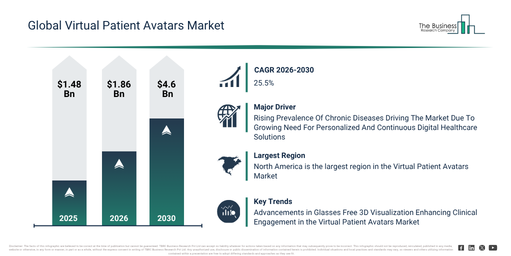
    The virtual patient avatars market has experienced substantial growth in recent years. It is projected to expand from $1.48 billion in 2025 to $1.86 billion in 2026, exhibiting a compound annual growth rate (CAGR) of 25.3%. The historical increase in this market can be attributed to several factors, including the increasing adoption of simulation-based medical training, the integration of basic digital health records, a rising demand for personalized medicine, the growth of academic and research institutes, and the expansion of clinical trial activities.

    The virtual patient avatars market is projected to experience substantial expansion in the coming years. Its valuation is anticipated to reach $4.6 billion by 2030, exhibiting a compound annual growth rate (CAGR) of 25.5%. This projected increase during the forecast period is driven by factors such as AI-driven predictive analytics, the incorporation of multi-omics data, cloud-based avatar deployment, the broadening of virtual therapy solutions, and the implementation of immersive AR/VR platforms for medical education. Key developments anticipated over this period encompass real-time patient simulation, predictive disease modeling, personalized therapy planning, integration with electronic health records, and the emergence of virtual clinical trial platforms.

    Get A Free Sample Report With In-Depth Market Insights:

    https://thebusinessresearchcompany.com/sample_request?id=98633247&type=smp&name=Virtual%20Patient%20Avatars%20Market%20Report%202026&utm_source=Blogs&utm_medium=Paid&utm_campaign=Oct_PR

    Virtual Patient Avatars Market Demand Drivers Opening New Revenue Streams

    The increasing burden of chronic diseases is projected to stimulate the expansion of the virtual patient avatars market moving forward. Long-term illnesses such as cardiovascular disorders, diabetes, cancer, and respiratory diseases necessitate continuous monitoring, tailored treatment plans, and sustained patient engagement, thereby escalating the demand for advanced digital healthcare solutions. The rising frequency and intensity of chronic diseases are influenced by factors like sedentary lifestyles, aging populations, and unhealthy dietary habits, which heighten the risk of obesity, diabetes, and cardiovascular disease. Virtual patient avatars empower clinicians and researchers to simulate disease progression, customize therapies, and enhance patient education and adherence, positioning them as valuable tools for managing complex chronic conditions and supporting clinical decision-making. For instance, in June 2025, according to the Office for Health Improvement and Disparities (OHID), a UK-based government organization, emergency admissions for respiratory diseases in England increased between 2023 and 2024, with particularly sharp rises for chronic conditions such as COPD (9%) and adult asthma (17%). Therefore, the increasing prevalence of chronic diseases is driving the growth of the virtual patient avatars market.

    Virtual Patient Avatars Market Segment Trends And Revenue Contributors

    The virtual patient avatars market covered in this report is segmented –

    1) By Component: Software, Services

    2) By Technology: AI-Based, Virtual Reality Or Augmented Reality-Based, 3D Modeling, Other Technologies

    3) By Deployment Mode: Cloud-Based, On-Premise

    4) By Application: Medical Training, Patient Education, Therapy And Rehabilitation, Clinical Trials, Other Applications

    5) By End-User: Hospitals And Clinics, Academic And Research Institutes, Pharmaceutical And Biotechnology Companies, Other End-Users

    Subsegments:

    1) By Software: Anatomy Visualization Software, Simulation And Modeling Software, Analytics And Assessment Tools

    2) By Services: Installation And Integration, Training Services, Content Customization, Support And Maintenance

    Virtual Patient Avatars Market Trends Powering Strategic Industry Growth

    Major companies in the virtual patient avatars market are focusing on developing advanced solutions like glasses-free 3D visualization to improve clinical communication and patient understanding. Glasses-free 3D visualization is an imaging method that converts traditional CT and MRI scans into spatially accurate three-dimensional representations, enabling clinicians and patients to view anatomy together in real time, enhancing clarity and shared decision-making. For instance, in November 2025, Avatar Medical and Barco, a France-based medtech company, introduced Eonis Vision, which features integrated 3D visualization software and an autostereoscopic medical display. This solution combines software and hardware to transform medical imaging into lifelike anatomical avatars within the exam room. It instantly converts imaging scans into interactive three-dimensional models without manual segmentation, allowing real-time rendering designed for clinical speed and accuracy. The system launches directly from the patient’s medical record and connects with existing imaging infrastructure to maintain routine workflows. The display provides natural depth perception without requiring headsets or specialized goggles, supporting collaborative visualization and clearer consultation experiences.

    Virtual Patient Avatars Market Key Players Shaping Industry Direction

    Major companies operating in the virtual patient avatars market are CAE Healthcare, Laerdal Medical, InSimu, Immersive Labz, Osso VR, BioDigital Inc., VirtaMed AG, Oxford Medical Simulation, Shadow Health (Elsevier), SimX Inc., Brahmarsive, Virtual Medical Coaching, SimforHealth, GIGXR Inc., Health Scholars, Body Interact, Medscape (WebMD), VirtaMed, 3D Systems (Simbionix), Patient Communication Simulations (PCS), MedVR Education.

    View The Full Virtual Patient Avatars Market Report:

    https://thebusinessresearchcompany.com/report/virtual-patient-avatars-market-report?utm_source=Blogs&utm_medium=Paid&utm_campaign=Oct_PR

    Virtual Patient Avatars Market Regional Analysis: Which Geography Leads On Revenue?

    North America was the largest region in the virtual patient avatars market in 2025. Asia-Pacific is expected to be the fastest-growing region in the forecast period. The regions covered in the virtual patient avatars market report are Asia-Pacific, South East Asia, Western Europe, Eastern Europe, North America, South America, Middle East, Africa.

    Reach Out To Our Team:

    The Business Research Company: https://www.thebusinessresearchcompany.com/

    Americas: +1 310-496-7795

    Asia: +44 7882 955267 & +91 8897263534

    Europe: +44 7882 955267

    Email us at: marketing@tbrc.info

    Follow us on:

    LinkedIn: https://in.linkedin.com/company/the-business-research-company

    YouTube: https://www.youtube.com/channel/UC24_fI0rV8cR5DxlCpgmyFQ

    Global Market Model: https://www.thebusinessresearchcompany.com/global-market-model

  • Viral Genome Sequencing Market Size Forecast: How The Industry Is Expected To Grow From 2026 To 2030

    Viral Genome Sequencing Market Size Forecast: How The Industry Is Expected To Grow From 2026 To 2030

    Backed by market attractiveness analysis, total addressable market sizing, company benchmarking matrices, interactive Excel dashboards, wider supply chain intelligence, emerging startup coverage, and detailed product-level insights, The Business Research Company’s 2026 market reports are designed to offer research that is more actionable and strategically valuable than ever.

    Viral Genome Sequencing Market Revenue Outlook: What CAGR Lies Ahead Through 2030?

    The viral genome sequencing market size has demonstrated significant expansion in recent years. This market is expected to surge from $6.71 billion in 2025 to $7.72 billion in 2026, achieving a compound annual growth rate (CAGR) of 14.9%. Historically, this growth has been fueled by factors such as the increasing frequency of viral outbreaks, the integration of next-generation sequencing, the advancement of clinical diagnostics, government financial support for research, and the rising demand for epidemiological studies.

    The viral genome sequencing market size is anticipated to experience swift expansion over the coming years. It is projected to reach $13.57 billion in 2030, exhibiting a compound annual growth rate (CAGR) of 15.1%. This growth during the projected period can be attributed to several factors, including AI-driven genome analysis, the expansion of vaccine development initiatives, the uptake of portable sequencing technologies, their integration with predictive bioinformatics, and a growing emphasis on real-time pathogen monitoring. Key trends anticipated within this forecast period encompass high-throughput viral genome sequencing, the development of portable sequencing devices, their integration with advanced bioinformatics platforms, automated sample processing, and real-time mutation tracking.

    Get A Free Sample Report With In-Depth Market Insights:

    https://thebusinessresearchcompany.com/sample_request?id=46888988&type=smp&name=Viral%20Genome%20Sequencing%20Market%20Report%202026&utm_source=Blogs&utm_medium=Paid&utm_campaign=Oct_PR

    Viral Genome Sequencing Market Growth Momentum: What Factors Are Shaping Demand?

    The future expansion of the viral genome sequencing market is anticipated to be fueled by the escalating occurrence of infectious diseases. These illnesses, brought on by harmful microorganisms, are experiencing a continuous global increase, driven by factors such as a rise in international travel, urban development, and swift cross-border spread of pathogens. The mounting impact of these diseases has prompted governments and health systems to reinforce their genomic surveillance and outbreak response capacities. Viral genome sequencing is crucial in managing infectious diseases by facilitating quick identification of viral types, tracking genetic changes, mapping transmission routes, and aiding focused public health strategies. For example, in February 2026, data from the Centers for Disease Control and Prevention (CDC), a US-based government department, indicated that in 2026, influenza led to roughly 290,000–450,000 hospitalizations and 34,000–53,000 deaths each year in the United States, alongside RSV causing an estimated 190,000–350,000 hospitalizations and 10,000–23,000 deaths. Consequently, the rising incidence of infectious diseases is set to stimulate the growth of the viral genome sequencing market.

    Viral Genome Sequencing Market Breakdown By Product Type And Application

    The viral genome sequencing market covered in this report is segmented –

    1) By Sequencing Technology: Next-Generation Sequencing, Sanger Sequencing, Third-Generation Sequencing

    2) By Sample Type: Blood, Nasal Or Throat Swabs, Saliva, Other Sample Types

    3) By Application: Clinical Diagnostics, Research, Epidemiology, Vaccine Development, Other Applications

    4) By End-User: Hospitals And Clinics, Research Institutes, Pharmaceutical And Biotechnology Companies, Other End-Users

    Subsegments:

    1) By Next-Generation Sequencing: Sequencing By Synthesis, Ion Semiconductor Sequencing, Reversible Terminator Chemistry Sequencing, Targeted Amplicon Sequencing, Whole Genome Shotgun Sequencing

    2) By Sanger Sequencing: Capillary Electrophoresis Sequencing, Automated Fluorescent Chain Termination Sequencing, Dideoxy Chain Termination Sequencing, Low Throughput Mutation Verification Sequencing, Plasmid Insert Verification Sequencing

    3) By Third-Generation Sequencing: Single Molecule Real Time Sequencing, Nanopore Based Sequencing, Zero Mode Waveguide Sequencing, Long Read Direct Ribonucleic Acid Sequencing, Real Time Field Deployable Sequencing

    Viral Genome Sequencing Market Trends Redefining Industry Growth

    Leading companies active in the viral genome sequencing market are prioritizing technological advancements in long-read sequencing, such as benchtop long-read sequencing platforms, to achieve a competitive advantage. A benchtop long-read sequencing platform is an integrated laboratory system crafted to generate highly accurate, extended nucleotide sequences from viral genomes within a small footprint, enabling extensive structural variant detection, improved genome assembly, and faster turnaround times for pathogen characterization. This strengthens surveillance capabilities, supports outbreak response efforts, and enhances research precision, although it necessitates higher capital investment and advanced data analysis infrastructure at scale. For instance, in November 2024, Pacific Biosciences, a US-based biotechnology company, unveiled the Revio benchtop HiFi sequencing platform. This platform delivers high-fidelity long reads, offers increased throughput compared to older systems, and features a scalable configuration for clinical and research laboratories, thereby improving viral mutation tracking and genome completeness within the viral genome sequencing market.

    Viral Genome Sequencing Market Key Participants And Competitive Landscape

    Major companies operating in the viral genome sequencing market are F. Hoffmann‑La Roche Ltd., Thermo Fisher Scientific Inc., Agilent Technologies Inc., Illumina Inc., PerkinElmer Inc., Bio‑Rad Laboratories Inc., QIAGEN N.V., Integrated DNA Technologies Inc., GenScript Biotech Corporation, Novogene Co. Ltd., Takara Bio Inc., Twist Bioscience Corporation, Oxford Nanopore Technologies Ltd., Pacific Biosciences of California Inc., Genewiz, Macrogen Inc., MedGenome Labs Ltd., Eurofins Scientific SE, CD Genomics, BGI Genomics Co. Ltd.

    View The Full Viral Genome Sequencing Market Report:

    https://thebusinessresearchcompany.com/report/viral-genome-sequencing-market-report?utm_source=Blogs&utm_medium=Paid&utm_campaign=Oct_PR

    Viral Genome Sequencing Market Geographic Analysis: Where Is Demand Rising Fastest?

    North America was the largest region in the viral genome sequencing market in 2025. Asia-Pacific is expected to be the fastest-growing region in the forecast period. The regions covered in the viral genome sequencing market report are Asia-Pacific, South East Asia, Western Europe, Eastern Europe, North America, South America, Middle East, Africa.

    Reach Out To Our Team:

    The Business Research Company: https://www.thebusinessresearchcompany.com/

    Americas: +1 310-496-7795

    Asia: +44 7882 955267 & +91 8897263534

    Europe: +44 7882 955267

    Email us at: marketing@tbrc.info

    Follow us on:

    LinkedIn: https://in.linkedin.com/company/the-business-research-company

    YouTube: https://www.youtube.com/channel/UC24_fI0rV8cR5DxlCpgmyFQ

    Global Market Model: https://www.thebusinessresearchcompany.com/global-market-model

  • Urine Tumor Deoxyribonucleic Acid (DNA) Testing Market Size And Forecast 2026–2030: Trends Driving Industry Expansion

    Urine Tumor Deoxyribonucleic Acid (DNA) Testing Market Size And Forecast 2026–2030: Trends Driving Industry Expansion

    Backed by market attractiveness analysis, total addressable market sizing, company benchmarking matrices, interactive Excel dashboards, wider supply chain intelligence, emerging startup coverage, and detailed product-level insights, The Business Research Company’s 2026 market reports are designed to offer research that is more actionable and strategically valuable than ever.

    Urine Tumor Deoxyribonucleic Acid (DNA) Testing Market Size Outlook: How Quickly Will Revenue Expand Through 2030?

    The urine tumor deoxyribonucleic acid (DNA) testing market has experienced substantial expansion in recent years. It is forecast to grow from $1.18 billion in 2025 to $1.36 billion in 2026, demonstrating a compound annual growth rate (CAGR) of 14.6%. The historical surge in this market can be attributed to various factors, including the increasing incidence of urinary cancers, the adoption of pcr-based urine testing, advancements in sequencing technologies, a growing awareness of early cancer detection, and the expansion of hospital diagnostic facilities.

    The urine tumor deoxyribonucleic acid (DNA) testing market size is poised for significant expansion in the foreseeable future. This market is expected to expand to $2.36 billion in 2030, demonstrating a compound annual growth rate (CAGR) of 14.9%. The projected growth can be attributed to several factors such as AI-driven urine DNA analysis, the development of multiplex and high-throughput assays, the broadening scope of personalized medicine, integration with electronic health records, and an increasing demand for non-invasive monitoring solutions. Key trends anticipated during this period include non-invasive cancer monitoring, advancements in liquid biopsy, AI-powered genetic analysis, high-sensitivity urine DNA detection, and the integration of these systems with clinical decision support systems.

    Get A Free Sample Report With In-Depth Market Insights:

    https://thebusinessresearchcompany.com/sample_request?id=79218814&type=smp&name=Urine%20Tumor%20Deoxyribonucleic%20Acid%20%28DNA%29%20Testing%20Market%20Report%202026&utm_source=Blogs&utm_medium=Paid&utm_campaign=Oct_PR

    Urine Tumor Deoxyribonucleic Acid (DNA) Testing Market Industry Drivers: What’s Behind The Revenue Growth?

    The rising prevalence of urological cancers is projected to fuel the expansion of the urine tumor deoxyribonucleic acid (DNA) testing market in the upcoming years. These cancers affect the urinary system and male reproductive organs, specifically the kidneys, bladder, prostate, and testes, with their occurrence primarily increasing due to aging demographics, given that cancer risk escalates with advancing age. Urine tumor DNA testing plays a crucial role in managing urological cancers by enabling the non-invasive identification of cancer-specific genetic mutations in urine, thereby facilitating prompt diagnosis, continuous disease monitoring, and tailored treatment planning. As an example, in December 2025, Cancer Australia, an Australia-based government department, noted an estimated 28,868 new prostate cancer cases were diagnosed, accounting for approximately 30% of all new cancer diagnoses among men. Consequently, the growing incidence of urological cancers is anticipated to propel the demand for urine tumor deoxyribonucleic acid (DNA) testing.

    Urine Tumor Deoxyribonucleic Acid (DNA) Testing Market Segment Outlook: Which Categories Are Growing Fastest?

    The urine tumor deoxyribonucleic acid (DNA) testing market covered in this report is segmented –

    1) By Technology: Polymerase Chain Reaction-based, Next-Generation Sequencing, Other technologies

    2) By Product Type: Assay Kits, Instruments, Services

    3) By Cancer Type: Bladder Cancer, Prostate Cancer, Kidney Cancer, Other Cancer Types

    4) By Sample Type: First-Morning Urine, Random Urine Samples, Catheterized Urine Samples

    5) By End-User: Hospitals, Diagnostic Laboratories, Research Institutes, Other End-Users

    Subsegments:

    1) By Polymerase Chain Reaction Based: Real Time Polymerase Chain Reaction, Digital Polymerase Chain Reaction, Multiplex Polymerase Chain Reaction, Reverse Transcription Polymerase Chain Reaction

    2) By Next Generation Sequencing: Whole Genome Sequencing, Targeted Gene Sequencing, Exome Sequencing, Transcriptome Sequencing

    3) By Other Technologies: Microarray Based Testing, Hybridization Based Assays, Mass Spectrometry Based Analysis, Fluorescence In Situ Hybridization

    #Urine Tumor Deoxyribonucleic Acid (DNA) Testing Market Growth Trends: What’s Shaping The Future Outlook?

    Leading companies in the urine tumor deoxyribonucleic acid (DNA) testing market are increasingly concentrating on developing advanced solutions, such as urine-based liquid biopsy platforms, to facilitate non-invasive cancer detection, improve diagnostic accuracy, and support personalized treatment planning. These urine-based liquid biopsy platforms are non-invasive diagnostic systems engineered to detect and analyze tumor-derived DNA and other biomarkers from urine samples for cancer identification, monitoring, and assessment of disease progression. For instance, in September 2024, PreAnalytiX, a joint venture between QIAGEN, a Netherlands-based sample-to-insight provider, and Becton, Dickinson and Company, a US-based medical technology firm, introduced a novel urine-based liquid biopsy solution designed to enable high-quality DNA stabilization and extraction for subsequent molecular analyses. This platform, developed for both clinical and research applications, features standardized urine collection, efficient DNA preservation, and compatibility with next-generation sequencing workflows, thereby assisting in early cancer detection, accurate biomarker assessment, and enhanced patient management.

    Urine Tumor Deoxyribonucleic Acid (DNA) Testing Market Competitive Overview And Top Companies

    Major companies operating in the urine tumor deoxyribonucleic acid (DNA) testing market are Roche Diagnostics, Thermo Fisher Scientific Inc., Abbott Laboratories, Illumina Inc., QIAGEN N.V., Bio-Techne Corporation, NeoGenomics Laboratories Inc., Freenome Holdings Inc., MDxHealth SA, Biodesix Inc., Sysmex Inostics GmbH, Pacific Edge Limited, Apostle Inc., Lucence Diagnostics, Pangea Laboratory, Nucleix Ltd, Genomica Lab, Vesica Health, Biocept Inc., Promis Diagnostics Inc.

    View The Full Urine Tumor Deoxyribonucleic Acid (DNA) Testing Market Report:

    https://thebusinessresearchcompany.com/report/urine-tumor-deoxyribonucleic-acid-dna-testing-market-report?utm_source=Blogs&utm_medium=Paid&utm_campaign=Oct_PR

    Urine Tumor Deoxyribonucleic Acid (DNA) Testing Market Top Region: Where Does Most Revenue Come From?

    North America was the largest region in the urine tumor deoxyribonucleic acid (DNA) market in 2025. Asia-Pacific is expected to be the fastest-growing region in the forecast period. The regions covered in the urine tumor deoxyribonucleic acid (DNA) testing market report are Asia-Pacific, South East Asia, Western Europe, Eastern Europe, North America, South America, Middle East, Africa.

    Reach Out To Our Team:

    The Business Research Company: https://www.thebusinessresearchcompany.com/

    Americas: +1 310-496-7795

    Asia: +44 7882 955267 & +91 8897263534

    Europe: +44 7882 955267

    Email us at: marketing@tbrc.info

    Follow us on:

    LinkedIn: https://in.linkedin.com/company/the-business-research-company

    YouTube: https://www.youtube.com/channel/UC24_fI0rV8cR5DxlCpgmyFQ

    Global Market Model: https://www.thebusinessresearchcompany.com/global-market-model
  • Tumor-Informed Minimal Residual Disease (MRD) Tests Market 2026 Outlook: Market Size, CAGR And Key Growth Opportunities

    Tumor-Informed Minimal Residual Disease (MRD) Tests Market 2026 Outlook: Market Size, CAGR And Key Growth Opportunities

    Featuring market attractiveness scoring, total addressable market sizing, company benchmarking matrices, interactive Excel dashboards, deeper supply chain intelligence, emerging startup tracking, and granular product-level insights, The Business Research Company’s 2026 market reports are built to deliver research that is both more actionable and more strategically valuable.

    Tumor-Informed Minimal Residual Disease (MRD) Tests Market Size, Value And Growth Trajectory Through 2030

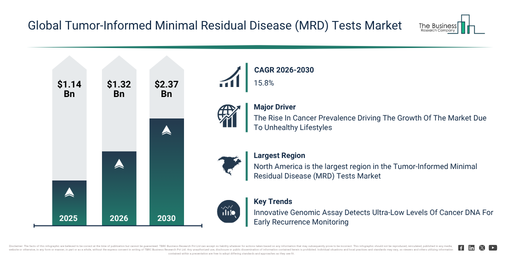
    The tumor-informed minimal residual disease (MRD) tests market size has experienced considerable expansion in recent years. This market is forecasted to grow from $1.14 billion in 2025 to $1.32 billion in 2026, achieving a compound annual growth rate (CAGR) of 15.6%. The historical growth of this market can be attributed to several factors including the rising prevalence of cancer, continuous advancements in genetic sequencing, the increasing demand for post-treatment monitoring, various regulatory approvals for molecular diagnostics, and the broader adoption of PCR and NGS technologies.

    The tumor-informed minimal residual disease (MRD) tests market is anticipated to experience swift expansion over the coming years. Its valuation is projected to reach $2.37 billion by 2030, exhibiting a compound annual growth rate (CAGR) of 15.8%. This expansion during the forecast period is primarily fueled by factors such as the rise of personalized medicine, the application of AI-driven data analytics for MRD, increased oncology research, the creation of non-invasive diagnostic assays, and the incorporation of these systems into hospital IT infrastructure. Key developments expected during this period involve personalized MRD monitoring, integration with clinical decision support tools, non-invasive sample analysis, detection of high-sensitivity ctDNA, and models for predicting disease recurrence.

    Get A Free Sample Report With In-Depth Market Insights:

    https://thebusinessresearchcompany.com/sample_request?id=58198541&type=smp&name=Tumor-Informed%20Minimal%20Residual%20Disease%20%28MRD%29%20Tests%20Market%20Report%202026&utm_source=Blogs&utm_medium=Paid&utm_campaign=Oct_PR

    Tumor-Informed Minimal Residual Disease (MRD) Tests Market Growth Factors: What’s Supporting Expansion?

    The expanding occurrence of cancer is anticipated to fuel the expansion of the tumor-informed minimal residual disease (MRD) tests market in the future. Cancer is defined as a collection of illnesses marked by the unregulated proliferation and division of atypical cells, capable of infiltrating adjacent tissues and disseminating throughout the body. The rising incidence of cancer stems from unhealthy habits such as inadequate nutrition, insufficient exercise, tobacco use, and excessive alcohol intake, all of which elevate the likelihood of developing diverse cancer forms. Tumor-informed minimal residual disease (MRD) tests assist in cancer management by identifying minute quantities of cancer-specific genetic material post-treatment, thereby allowing for prompt detection of recurrence and informing tailored treatment choices. For example, in February 2024, the World Health Organization, an international body based in Switzerland focused on global health policy and public health, projected that more than 35 million new cancer cases will arise in 2050, representing a 77% surge from the approximate 20 million cases in 2022. Consequently, the increasing prevalence of cancer is accelerating the swift expansion of the tumor-informed minimal residual disease (MRD) tests market.

    Tumor-Informed Minimal Residual Disease (MRD) Tests Market Segment Landscape: Which Areas Lead Development?

    The tumor-informed minimal residual disease (MRD) tests market covered in this report is segmented –

    1) By Technology: Next-Generation Sequencing, Polymerase Chain Reaction (PCR)-based, Other Technologies

    2) By Product Type: Assay Kits, Instruments, Software, Services

    3) By Sample Type: Peripheral Blood (Ctdna), Bone Marrow, Tissue Biopsy, Other Body Fluids

    4) By Application: Colorectal Cancer, Lung Cancer, Breast Cancer, Hematological Malignancies, Other Applications

    5) By End-User: Hospitals, Diagnostic Laboratories, Research Institutes, Other End-Users

    Subsegments:

    1) By Next-Generation Sequencing: Targeted Sequencing, Whole Genome Sequencing, Whole Exome Sequencing, Single Cell Sequencing, Other Sequencing Approaches

    2) By Polymerase Chain Reaction (PCR)-Based: Digital Polymerase Chain Reaction, Real Time Polymerase Chain Reaction, Multiplex Polymerase Chain Reaction, Other Polymerase Chain Reaction Methods

    3) By Other Technologies: Hybrid Capture Based, Bead Based Assays, Electrochemical Detection, Other Emerging Technologies

    Tumor-Informed Minimal Residual Disease (MRD) Tests Market Industry Trends: What’s Reshaping Demand?

    Major companies within the tumor informed minimal residual disease (MRD) tests market are concentrating on developing novel solutions, such as tissue informed whole genome sequencing (WGS) MRD assays, designed to detect extremely low levels of circulating tumor DNA for the early monitoring of cancer recurrence and treatment response. A tissue-informed whole genome sequencing (WGS) MRD assay functions by using a patient’s tumor tissue to pinpoint specific genetic mutations, then tracking these mutations in blood samples to identify minimal residual disease at very low levels. As an illustration, in September 2025, Foundation Medicine, Inc., a US-based precision medicine company, introduced the Tissue-informed WGS MRD test via the FlexOMx Lab. This innovative, tumor-informed whole-genome sequencing test for molecular residual disease is purposed for research across early- to late-stage cancers. It accurately tracks hundreds to thousands of tumor-specific variants in circulating tumor DNA, facilitating the precise detection of minimal residual disease even at minute tumor levels, while also supplying comprehensive genomic profiling to enhance understanding of recurrence and treatment resistance in clinical studies.

    Tumor-Informed Minimal Residual Disease (MRD) Tests Market Competitive Landscape: Which Companies Lead The Industry?

    Major companies operating in the tumor-informed minimal residual disease (MRD) tests market are Roche Diagnostics International Ltd., Thermo Fisher Scientific Inc., Laboratory Corporation of America Holdings, ICON Public Limited Company, Illumina Inc., Bio-Rad Laboratories Inc., Exact Sciences Corporation, QIAGEN N.V., Integrated DNA Technologies Inc., Natera Inc., NeoGenomics Laboratories Inc., Veracyte Inc., Foundation Medicine Inc., Adaptive Biotechnologies Corporation, Genetron Holdings Limited, Burning Rock Biotech Co Ltd., Personalis Inc., Foresight Diagnostics Inc., Predicine Inc., Guardant Health Inc.

    View The Full Tumor-Informed Minimal Residual Disease (MRD) Tests Market Report:

    https://thebusinessresearchcompany.com/report/tumor-informed-minimal-residual-disease-mrd-tests-market-report?utm_source=Blogs&utm_medium=Paid&utm_campaign=Oct_PR

    Tumor-Informed Minimal Residual Disease (MRD) Tests Market Regional Breakdown: Where Is Demand Concentrated?

    North America was the largest region in the tumor-informed minimal residual disease (MRD) tests market in 2025. Asia-Pacific is expected to be the fastest-growing region in the forecast period. The regions covered in the tumor-informed minimal residual disease (MRD) tests market report are Asia-Pacific, South East Asia, Western Europe, Eastern Europe, North America, South America, Middle East, Africa.

    Reach Out To Our Team:

    The Business Research Company: https://www.thebusinessresearchcompany.com/

    Americas: +1 310-496-7795

    Asia: +44 7882 955267 & +91 8897263534

    Europe: +44 7882 955267

    Email us at: marketing@tbrc.info

    Follow us on:

    LinkedIn: https://in.linkedin.com/company/the-business-research-company

    YouTube: https://www.youtube.com/channel/UC24_fI0rV8cR5DxlCpgmyFQ

    Global Market Model: https://www.thebusinessresearchcompany.com/global-market-model
  • Thoracentesis And Paracentesis Market Size Reaches $1.6 Billion In 2026: What Is Driving Growth?

    Thoracentesis And Paracentesis Market Size Reaches $1.6 Billion In 2026: What Is Driving Growth?

    Featuring market attractiveness scoring, total addressable market sizing, company benchmarking matrices, interactive Excel dashboards, deeper supply chain intelligence, emerging startup tracking, and granular product-level insights, The Business Research Company’s 2026 market reports are built to deliver research that is both more actionable and more strategically valuable.

    Thoracentesis And Paracentesis Market Size Forecast: How Big Could The Market Get By 2030?

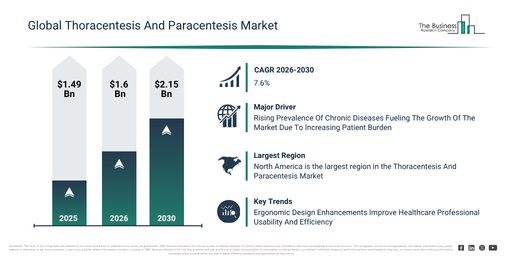
    The thoracentesis and paracentesis market size has experienced robust expansion in recent years. Its value is projected to increase from $1.49 billion in 2025 to $1.6 billion in 2026, showing a compound annual growth rate (CAGR) of 7.4%. The growth observed in the past can be attributed to several factors including the rising prevalence of ascites and pleural effusion, the widespread adoption of conventional thoracentesis and paracentesis procedures, improvements in hospital infrastructure, increasing awareness of minimally invasive procedures, and a growing demand for diagnostic and therapeutic procedures.

    The thoracentesis and paracentesis market is projected to experience substantial expansion in the coming years. It will grow to $2.15 billion in 2030 at a compound annual growth rate (CAGR) of 7.6%. This anticipated growth over the forecast period is primarily driven by factors such as the increasing acceptance of ultrasound-guided procedures, the creation of sophisticated thoracentesis and paracentesis kits, the incorporation of digital solutions for procedural management, the proliferation of ambulatory surgical centers, and dedicated efforts towards improving patient safety and procedural effectiveness. Key developments expected during this period encompass the widespread adoption of ultrasound-guided procedures, the rise of minimally invasive techniques, the convenience of point-of-care fluid drainage, improved safety protocols for procedures, and the availability of specialized therapeutic kits tailored for specific procedures.

    Get A Free Sample Report With In-Depth Market Insights:

    https://thebusinessresearchcompany.com/sample_request?id=96534162&type=smp&name=Thoracentesis%20And%20Paracentesis%20Market%20Report%202026&utm_source=Blogs&utm_medium=Paid&utm_campaign=Oct_PR

    Thoracentesis And Paracentesis Market Growth Factors: What’s Supporting Expansion?

    The increasing occurrence of chronic diseases is anticipated to drive the expansion of the thoracentesis and paracentesis market moving forward. These long-term health issues endure for extended periods, frequently advance gradually, and usually demand continuous care rather than a definitive cure. The increase in chronic disease prevalence is partly linked to sedentary habits, as extended sitting and limited physical activity elevate the risk of conditions like heart ailments and diabetes. Thoracentesis and paracentesis aid in managing chronic diseases through minimally invasive procedures that remove excess fluid from the pleural or abdominal cavities, thereby easing symptoms and enhancing patient well-being. These procedures facilitate prompt monitoring and treatment for conditions such as heart failure, liver disease, and cancers, leading to fewer complications and an improved overall disease management and quality of life. For example, in April 2025, data from the Centers for Disease Control and Prevention, a US-based government agency, showed that in 2023, around 76.4% of U.S. adults (194 million) had at least one chronic condition, with 51.4% (131 million) suffering from multiple chronic conditions. Consequently, the growing prevalence of chronic diseases is a key factor propelling the growth of the thoracentesis and paracentesis market. Increased healthcare spending is anticipated to boost the growth of the thoracentesis and paracentesis market in the future. Healthcare spending encompasses all financial outlays for medical services, products, and public health initiatives aimed at preventing, diagnosing, treating, and managing diseases, as well as preserving general health. The heightened need for healthcare expenditure stems from the growing incidence of chronic diseases, which necessitate long-term and expensive care. Thoracentesis and paracentesis contribute to lowering healthcare costs by facilitating minimally invasive fluid extraction, thereby shortening hospitalizations, reducing complication rates, and decreasing the reliance on expensive interventions. For example, in May 2024, the Office for National Statistics, a UK-based government department, reported that total healthcare expenditure rose by 5.6% in nominal terms in 2023, representing a 0.9% growth compared to 2022. Thus, the escalating healthcare spending is a key factor propelling the growth of the thoracentesis and paracentesis market.

    Thoracentesis And Paracentesis Market Segment Outlook: Which Categories Are Growing Fastest?

    The thoracentesis and paracentesis market covered in this report is segmented –

    1) By Procedure Type: Ultrasound-Guided Procedures, Blind Or Conventional Procedures

    2) By Product Type: Thoracentesis Kits, Paracentesis Kits, Other Product Types

    3) By Indication: Ascites, Pleural Effusion, Empyema, Hemothorax

    4) By Application: Diagnostic, Therapeutic

    5) By End User: Hospitals, Clinics, Ambulatory Surgical Centers, Other End Users

    Subsegments:

    1) By Ultrasound-Guided Procedures: Diagnostic Ultrasound Guided Procedure, Therapeutic Ultrasound Guided Procedure, Emergency Ultrasound Guided Procedure

    2) By Blind Or Conventional Procedures: Diagnostic Blind Procedure, Therapeutic Blind Procedure, Emergency Blind Procedure

    Thoracentesis And Paracentesis Market Industry Trends: What’s Reshaping Demand?

    Major companies operating in the thoracentesis and paracentesis market are concentrating on developing advanced technological solutions, such as fluid drainage automation, to elevate procedural safety, lessen patient discomfort, boost clinical efficiency, and enable continuous monitoring for improved treatment outcomes. Fluid drainage automation refers to the deployment of devices or systems to automatically manage the removal of bodily fluids from cavities, controlling flow, pressure, and safety to enhance operational efficiency and patient comfort. For instance, in January 2024, Laborie Medical Technologies Inc., a US-based medical technology company, launched the RenovarP Centesis System. This is a fluid drainage device that builds upon an existing paracentesis pump by including an expanded indication for thoracentesis. It incorporates design improvements to its handle and nest, thereby enhancing the overall user experience for healthcare professionals. The system offers a secure, effective, and minimally invasive method for draining fluid from the abdomen (paracentesis) and chest (thoracentesis), aiming to improve patient comfort and shorten recovery times.

    Thoracentesis And Paracentesis Market Competitive Landscape: Who Leads The Industry?

    Major companies operating in the thoracentesis paracentesis market are Cardinal Health Inc., Medtronic plc, Becton Dickinson Company, Boston Scientific Corporation, Teleflex Incorporated, Cook Medical LLC, Merit Medical Systems Inc., Redax S.p.A., Avanos Medical Inc., Poly Medicure Ltd., Axiom Medical Inc., Angiplast Private Limited, Utah Medical Products Inc., Mermaid Medical A/S, PFM Medical AG, ITL Australia Pty Ltd, ATMOS MedizinTechnik GmbH & Co. KG, Vygon SA, PolyMed Medical Devices Pvt. Ltd., Sterimed Medical Devices Pvt. Ltd., Blue Neem Medical Devices Pvt. Ltd.

    View The Full Thoracentesis And Paracentesis Market Report:

    https://thebusinessresearchcompany.com/report/thoracentesis-and-paracentesis-market-report?utm_source=Blogs&utm_medium=Paid&utm_campaign=Oct_PR

    Thoracentesis And Paracentesis Market Geographic Landscape: Which Region Leads Industry Growth?

    North America was the largest region in the thoracentesis and paracentesis market in 2025. Asia-Pacific is expected to be the fastest-growing region in the forecast period. The regions covered in the thoracentesis and paracentesis market report are Asia-Pacific, South East Asia, Western Europe, Eastern Europe, North America, South America, Middle East, Africa.

    Reach Out To Our Team:

    The Business Research Company: https://www.thebusinessresearchcompany.com/

    Americas: +1 310-496-7795

    Asia: +44 7882 955267 & +91 8897263534

    Europe: +44 7882 955267

    Email us at: marketing@tbrc.info

    Follow us on:

    LinkedIn: https://in.linkedin.com/company/the-business-research-company

    YouTube: https://www.youtube.com/channel/UC24_fI0rV8cR5DxlCpgmyFQ

    Global Market Model: https://www.thebusinessresearchcompany.com/global-market-model
  • Telemedicine Triage Artificial Intelligence (AI) Market Analysis: How The Industry Is Evolving Toward A $7.13 Billion Future

    Telemedicine Triage Artificial Intelligence (AI) Market Analysis: How The Industry Is Evolving Toward A $7.13 Billion Future

    Backed by market attractiveness analysis, total addressable market sizing, company benchmarking matrices, interactive Excel dashboards, wider supply chain intelligence, emerging startup coverage, and detailed product-level insights, The Business Research Company’s 2026 market reports are designed to offer research that is more actionable and strategically valuable than ever.

    Telemedicine Triage Artificial Intelligence (AI) Market Size, Value And Growth Trajectory Through 2030

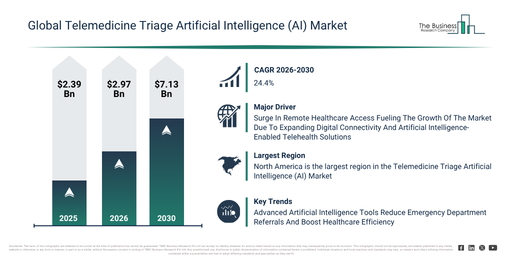
    The telemedicine triage artificial intelligence (AI) market size has experienced significant expansion in recent years. This market is forecast to increase from $2.39 billion in 2025 to $2.97 billion in 2026, at a compound annual growth rate (CAGR) of 24.2%. During the historic period, this growth was influenced by factors including a rising demand for telehealth services, the implementation of basic digital triage tools, escalating challenges in healthcare access, an increase in chronic disease prevalence, and the initial adoption of remote monitoring devices.

    The telemedicine triage artificial intelligence (AI) market is projected to experience significant expansion in the coming years. Its valuation is anticipated to reach $7.13 billion by 2030, propelled by a compound annual growth rate (CAGR) of 24.4%. This projected growth is driven by several factors, including advancements in AI algorithms, the proliferation of cloud-based healthcare platforms, supportive regulatory frameworks for digital health, integration with wearable medical devices, and a growing patient inclination towards virtual consultations. Noteworthy trends during this period encompass AI-powered symptom assessment, remote patient monitoring, predictive care prioritization, integration with electronic health records, and telehealth workflow automation.

    Get A Free Sample Report With In-Depth Market Insights:

    https://thebusinessresearchcompany.com/sample_request?id=88798550&type=smp&name=Telemedicine%20Triage%20Artificial%20Intelligence%20%28AI%29%20Market%20Report%202026&utm_source=Blogs&utm_medium=Paid&utm_campaign=Oct_PR

    Telemedicine Triage Artificial Intelligence (AI) Market Growth Backed By Core Demand Fundamentals

    The future expansion of the telemedicine triage artificial intelligence (AI) market is anticipated due to the growing need for remote healthcare access. Remote healthcare access enables patients to obtain medical or dental advice, consultations, and care remotely via digital tools like telemedicine platforms, mobile applications, and online portals. Enhanced digital connectivity is a key factor boosting remote healthcare access, allowing patients to get medical consultations without needing to attend physical healthcare facilities. Telemedicine triage artificial intelligence (AI) improves remote healthcare access by rapidly evaluating patient symptoms, ranking care requirements, and guiding individuals to suitable virtual or in-person services, eliminating the need for an initial physical appointment. For example, data from FAIR Health Inc., a US non-profit, indicates that in April 2023, national telehealth usage in 2023 saw a 7.3% increase, moving from 5.5% of medical claim lines in December 2022 to 5.9% in January 2023. Consequently, the rising demand for remote healthcare is propelling the expansion of the telemedicine triage artificial intelligence (AI) market.

    Telemedicine Triage Artificial Intelligence (AI) Market Segmentation: How Does The Market Break Down By Category?

    The telemedicine triage artificial intelligence (AI) market covered in this report is segmented –

    1) By Component: Software, Hardware, Services

    2) By Deployment Mode: Cloud Based, On Premises

    3) By Application: Primary Care, Emergency Care, Specialty Care, Mental Health, Other Applications

    4) By End User: Hospitals, Clinics, Telehealth Providers, Homecare, Other End Users

    Subsegments:

    1) By Software: Symptom Checker, Virtual Consultation Platform, Decision Support System, Patient Monitoring Software, Electronic Health Record Integration, Analytics And Reporting Tools

    2) By Hardware: Wearable Devices, Remote Monitoring Devices, Imaging Devices, Diagnostic Devices, Mobile Devices, Server And Storage Infrastructure

    3) By Services: Implementation And Integration Services, Consulting Services, Maintenance And Support Services, Training And Education Services, Cloud Hosting Services, Data Security And Compliance Services

    Telemedicine Triage Artificial Intelligence (AI) Market Growth Trends Reshaping The Competitive Landscape

    Major companies operating in the telemedicine triage artificial intelligence (AI) market are concentrating on developing advanced offerings, such as neurosymbolic AI-driven conversational systems. This focus aims to boost efficiency, enhance clinical safety, and reduce diagnostic uncertainty along with the burden of manual triage. Neurosymbolic AI denotes sophisticated AI mechanisms that merge large language models with structured medical knowledge to reason, validate its logic, and deliver transparent, medically sound guidance. For instance, in January 2026, Infermedica Sp. z o.o., a digital health technology company based in Poland, introduced Conversational Triage as part of its Infermedica 2.0 initiative. This is an agentic AI tool that utilizes a patented neurosymbolic paradigm, ensuring every interaction is anchored in medical knowledge and guidelines, thereby significantly reducing the risk of AI hallucinations and unclear decision-making. It incorporates automatic reasoning and explanation functionality, allowing for seamless adherence to clinical safety standards without relying on operator guesswork. The tool also integrates with multi-agent systems for tasks such as scheduling and EHR coordination, expanding its utility and lowering operational costs for healthcare providers.

    Telemedicine Triage Artificial Intelligence (AI) Market Industry Leaders And Competitive Landscape

    Major companies operating in the telemedicine triage artificial intelligence (AI) market are Google LLC, Microsoft Corporation, Ping An Healthcare Technology Company Ltd., Pager Inc., American Well Corporation, K Health Inc., HealthTap Inc., Ada Health GmbH, Florence Healthcare Inc., Doctorlink Ltd., Infermedica sp. z o.o., Binah.ai Ltd., TriageLogic LLC, MyTriage AI, eVisit Inc., Clearstep Health, Mediktor S.L., Your.MD Limited, Fabric Health Inc., Buoy Health Inc.

    View The Full Telemedicine Triage Artificial Intelligence (AI) Market Report:

    https://thebusinessresearchcompany.com/report/telemedicine-triage-artificial-intelligence-ai-market-report?utm_source=Blogs&utm_medium=Paid&utm_campaign=Oct_PR

    Telemedicine Triage Artificial Intelligence (AI) Market Regional Analysis And Top Geography

    North America was the largest region in the telemedicine triage artificial intelligence (AI) market in 2025. Asia-Pacific is expected to be the fastest-growing region in the forecast period. The regions covered in the telemedicine triage artificial intelligence (AI) market report are Asia-Pacific, South East Asia, Western Europe, Eastern Europe, North America, South America, Middle East, Africa.

    Reach Out To Our Team:

    The Business Research Company: https://www.thebusinessresearchcompany.com/

    Americas: +1 310-496-7795

    Asia: +44 7882 955267 & +91 8897263534

    Europe: +44 7882 955267

    Email us at: marketing@tbrc.info

    Follow us on:

    LinkedIn: https://in.linkedin.com/company/the-business-research-company

    YouTube: https://www.youtube.com/channel/UC24_fI0rV8cR5DxlCpgmyFQ

    Global Market Model: https://www.thebusinessresearchcompany.com/global-market-model
  • Sperm Freezing Services Market Growth Forecast: Market Size, Key Trends And Emerging Opportunities Through 2030

    Sperm Freezing Services Market Growth Forecast: Market Size, Key Trends And Emerging Opportunities Through 2030

    Built to provide research that’s more actionable and strategically valuable, The Business Research Company’s 2026 market reports include market attractiveness analysis, total addressable market sizing, company benchmarking matrices, interactive Excel dashboards, broader supply chain intelligence, emerging startup tracking, and in-depth product insights.

    Sperm Freezing Services Market Size Outlook: How Quickly Will Revenue Expand Through 2030?

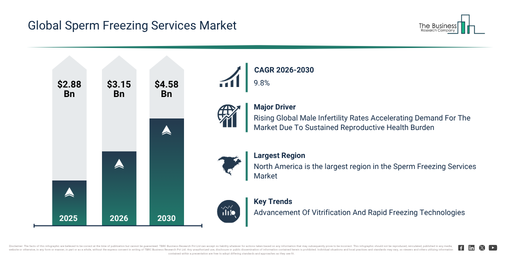
    The sperm freezing services market has experienced robust expansion in recent years. It is forecast to grow from $2.88 billion in 2025 to $3.15 billion in 2026, registering a compound annual growth rate (CAGR) of 9.5%. The market’s past growth is attributable to heightened awareness of male fertility preservation, an increasing number of fertility clinics, the adoption of conventional sperm freezing methods, a rise in cancer treatment procedures, and expanding in-vitro fertilization (IVF) procedures.

    The sperm freezing services market is anticipated to experience robust expansion over the coming years. It is projected to reach $4.58 billion by 2030, exhibiting a compound annual growth rate (CAGR) of 9.8%. This anticipated growth during the forecast period is primarily driven by factors such as the integration of AI and automation into sperm processing, a rising demand for at-home collection solutions, continuous technological advancements in cryogenic storage techniques, an increasing emphasis on customized fertility treatments, and the global spread of fertility preservation initiatives. Key developments anticipated in this period encompass automated sperm collection mechanisms, real-time monitoring of samples, enhanced cryogenic storage methods, AI-powered fertility evaluations, and a broader availability of home collection kits.

    Get A Free Sample Report With In-Depth Market Insights:

    https://thebusinessresearchcompany.com/sample_request?id=87255161&type=smp&name=Sperm%20Freezing%20Services%20Market%20Report%202026&utm_source=Blogs&utm_medium=Paid&utm_campaign=Oct_PR

    Sperm Freezing Services Market Expansion Drivers: What’s Shaping Future Growth?

    The increasing occurrence of male infertility is anticipated to stimulate expansion within the sperm freezing services market in the future. Male infertility refers to a medical state where a man’s reproductive system hinders conception with a fertile partner subsequent to 12 months of consistent unprotected intercourse, stemming from compromised sperm production, function, or delivery. This increase in male infertility prevalence is attributed to greater exposure to lifestyle and environmental risk factors, which detrimentally impact sperm quality and overall reproductive health. Sperm freezing services offer a solution to male infertility by enabling the preservation of viable sperm prior to any further deterioration, thus facilitating assisted reproductive procedures and long-term family planning. For example, data from April 2023, released by the World Health Organization, a global health authority based in Switzerland, indicates that around 17.5% of adults globally face infertility at some point in their lives. Prevalence stands at 17.8% in high-income nations versus 16.5% in low- and middle-income nations, highlighting a persistent and significant reproductive health challenge across various regions, encompassing male-related factors. Consequently, the growing incidence of male infertility is stimulating the expansion of the sperm freezing services market.

    Sperm Freezing Services Market Segment Performance And Emerging Opportunities

    The sperm freezing services market covered in this report is segmented –

    1) By Service Type: Onsite Sperm Freezing, Offsite Sperm Freezing, Home Collection Kits

    2) By Storage Duration: Short Term Storage, Long Term Storage

    3) By Age Group: Below 30 Years, 30 To 40 Years, Above 40 Years

    4) By Application: Fertility Preservation, Cancer Treatment, Donor Insemination, Other Applications

    5) By End User: Fertility Clinics, Hospitals, Cryobanks, Research Institutes, Other End Users

    Subsegments:

    1) By Onsite Sperm Freezing: Clinical Facility Collection, Hospital-Based Collection, Fertility Center Collection, Same Day Freezing Service, Emergency Fertility Preservation, Long Term Storage Service, Short Term Storage Service

    2) By Offsite Sperm Freezing: Partner Clinic Collection, Diagnostic Laboratory Collection, Mobile Collection Service, Satellite Center Collection, Physician Referred Collection, Cryogenic Transport Service, Centralized Storage Service

    3) By Home Collection Kits: Standard Home Collection Kit, Express Delivery Collection Kit, Temperature Controlled Shipping Kit, Discreet Packaging Collection Kit, Prepaid Return Shipping Kit, Extended Storage Option Kit, Instruction Assisted Collection Kit

    Sperm Freezing Services Market Strategic Trends: What Defines The Next Growth Phase?

    Leading entities within the sperm freezing services market are concentrating on creating affordable and readily available options, including setting up sperm banks, to assist individuals dealing with infertility. A sperm bank is defined as a dedicated center responsible for gathering, examining, preparing, preserving, and supplying human sperm for various assisted reproductive techniques, including artificial insemination and in vitro fertilization (IVF). As an illustration, in November, Cama Hospital in India received approval to establish an ART bank, which incorporates sperm freezing capabilities. This offering is intended to assist individuals experiencing infertility and cancer patients desiring to maintain their fertility prior to treatments that could compromise it. The hospital provides these services through the state’s health insurance program, Mahatma Jyotiba Phule Jan Arogya Yojana, making them complimentary for qualifying patients, thus considerably easing the financial strain often encountered at private facilities where expenses can be high. This endeavor seeks to deliver advanced reproductive healthcare at little to no expense, enhancing access for individuals requiring such support.

    Sperm Freezing Services Market Competitive Landscape: Which Companies Lead The Industry?

    Major companies operating in the sperm freezing services market are New England Cryogenic Center Inc., Seattle Sperm Bank, Cryos International Sperm & Egg Bank, Fairfax Cryobank, California Cryobank, Xytex Corporation, Legacy (Digital Sperm Banking), Cryogenic Laboratories Inc., ReproTech Ltd., London Sperm Bank, European Sperm Bank, Androcryos, CryoGam Colorado, Indian Spermtech, Cryobank America LLC, Sperm Bank of California, Denmark Nordic Cryobank, Manhattan Cryobank, NW Cryobank, Shanghai Human Sperm Bank, SpermFreez, Baby Quest Cryobank Pvt. Ltd., Nordic Cryobank Group.

    View The Full Sperm Freezing Services Market Report:

    https://thebusinessresearchcompany.com/report/sperm-freezing-services-market-report?utm_source=Blogs&utm_medium=Paid&utm_campaign=Oct_PR

    Sperm Freezing Services Market Regional Outlook: Where Is Opportunity Concentrated?

    North America was the largest region in the sperm freezing services market in 2025. Asia-Pacific is expected to be the fastest-growing region in the forecast period. The regions covered in the sperm freezing services market report are Asia-Pacific, South East Asia, Western Europe, Eastern Europe, North America, South America, Middle East, Africa.

    Reach Out To Our Team:

    The Business Research Company: https://www.thebusinessresearchcompany.com/

    Americas: +1 310-496-7795

    Asia: +44 7882 955267 & +91 8897263534

    Europe: +44 7882 955267

    Email us at: marketing@tbrc.info

    Follow us on:

    LinkedIn: https://in.linkedin.com/company/the-business-research-company

    YouTube: https://www.youtube.com/channel/UC24_fI0rV8cR5DxlCpgmyFQ

    Global Market Model: https://www.thebusinessresearchcompany.com/global-market-model
  • Single-Cell Expression Quantitative Trait Locus (eQTL) Clinical Workflows Market Outlook 2026–2030: Growth Trends, Market Dynamics And Emerging Opportunities

    Single-Cell Expression Quantitative Trait Locus (eQTL) Clinical Workflows Market Outlook 2026–2030: Growth Trends, Market Dynamics And Emerging Opportunities

    Backed by market attractiveness analysis, total addressable market sizing, company benchmarking matrices, interactive Excel dashboards, wider supply chain intelligence, emerging startup coverage, and detailed product-level insights, The Business Research Company’s 2026 market reports are designed to offer research that is more actionable and strategically valuable than ever.

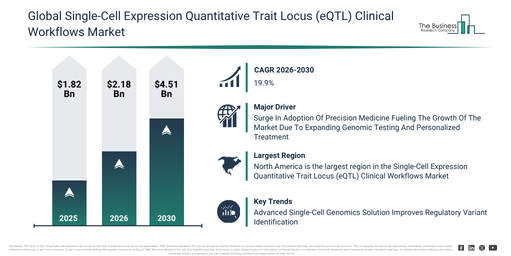
    Single-Cell Expression Quantitative Trait Locus (eQTL) Clinical Workflows Market Forecast: Value Set To Climb From $2.18 Billion To $4.51 Billion

    The single-cell expression quantitative trait locus (eqtl) clinical workflows market has experienced rapid expansion in recent years. This market is projected to expand from $1.82 billion in 2025 to $2.18 billion in 2026, achieving a compound annual growth rate (CAGR) of 19.6%. Historically, this growth can be attributed to factors such as the adoption of bulk sequencing methods, rising investment in genomics research, increasing demand for disease biomarker identification, limited automation in workflows, and reliance on manual data analysis.

    The single-cell expression quantitative trait locus (eqtl) clinical workflows market size is projected to experience swift expansion in the coming years. This market is set to reach $4.51 billion by 2030, showing a compound annual growth rate (CAGR) of 19.9%. The anticipated increase during this period stems from factors such as the rise of AI-driven analysis tools, the increasing embrace of single-cell sequencing technologies, the broadening of personalized medicine efforts, the incorporation of cloud-based platforms, and the automation of sample and library preparation processes. Key developments expected within the forecast timeframe encompass single-cell sequencing integration, sophisticated computational analysis, detailed gene expression mapping, streamlined automated workflow pipelines, and the identification of predictive biomarkers.

    Get A Free Sample Report With In-Depth Market Insights:

    https://thebusinessresearchcompany.com/sample_request?id=27900895&type=smp&name=Single-Cell%20Expression%20Quantitative%20Trait%20Locus%20%28eQTL%29%20Clinical%20Workflows%20Market%20Report%202026&utm_source=Blogs&utm_medium=Paid&utm_campaign=Oct_PR

    Single-Cell Expression Quantitative Trait Locus (eQTL) Clinical Workflows Market Demand Drivers: What’s Powering Industry Growth?

    The expansion of the single-cell expression quantitative trait locus (eQTL) clinical workflows market is anticipated to be driven by the increasing integration of precision medicine. Precision medicine customizes disease prevention, diagnosis, and treatment approaches for individual patients, considering their unique genetic makeup, lifestyle, and environment. Its growing adoption is a response to the escalating global prevalence of intricate and chronic diseases that demand highly specific and tailored treatment strategies. Single-cell expression quantitative trait locus (eQTL) clinical workflows bolster the uptake of precision medicine by facilitating high-resolution examination of gene expression variations at the individual cell level, thereby aiding in the discovery of patient-specific therapeutic targets. They also simplify complex genomic data processing and interpretation, reducing the period from sample acquisition to meaningful insights, and consequently improving personalized treatment strategies and clinical decision-making. For example, in February 2024, the Personalized Medicine Coalition, a US-based educational and advocacy organization, stated that in 2023, the FDA sanctioned 16 novel personalized treatments for rare disease patients, a rise from 6 in 2022. Consequently, the increasing embrace of precision medicine is propelling the growth of the single-cell expression quantitative trait locus (eQTL) clinical workflows market.

    Single-Cell Expression Quantitative Trait Locus (eQTL) Clinical Workflows Market Segmentation And Category Overview

    The single-cell expression quantitative trait locus (eQTL) clinical workflows market covered in this report is segmented –

    1) By Workflow Type: Sample Preparation, Library Preparation, Sequencing, Data Analysis, Other Workflow Types

    2) By Technology: Ribonucleic Acid Sequencing, Microarray, Polymerase Chain Reaction (PCR)-Based, Other Technologies

    3) By Application: Disease Research, Drug Discovery And Development, Personalized Medicine, Other Applications

    4) By End-User: Hospitals And Clinics, Research Institutes, Pharmaceutical And Biotechnology Companies, Other End Users

    Subsegments:

    1) By Sample Preparation: Cell Isolation, Cell Sorting, Cell Lysis, Nucleic Acid Extraction, Quality Control Assessment

    2) By Library Preparation: Ribonucleic Acid Fragmentation, Complementary Deoxyribonucleic Acid Synthesis, Adapter Ligation, Amplification, Library Quality Control

    3) By Sequencing: Whole Transcriptome Sequencing, Targeted Sequencing, Single Cell Sequencing, High Throughput Sequencing, Paired End Sequencing

    4) By Data Analysis: Read Alignment, Expression Quantification, Variant Calling, Expression Quantitative Trait Loci Mapping, Statistical Analysis

    5) By Other Workflow Types: Data Integration, Validation Studies, Reporting And Documentation, Regulatory Compliance, Data Storage And Management

    Single-Cell Expression Quantitative Trait Locus (eQTL) Clinical Workflows Market Innovation Trends: What Developments Are Reshaping The Industry?

    Major companies engaged in the single-cell expression quantitative trait locus (eQTL) clinical workflows market are prioritizing the creation of novel solutions, such as those based on whole genome sequencing (WGS) eQTL workflows, to allow for precise, cell-type-specific genetic analysis and to propel personalized medicine forward. Whole genome sequencing (WGS)-based eQTL workflows are analytical methodologies that merge whole-genome sequencing data with gene expression data to pinpoint genetic variants that control gene expression levels. For example, in January 2023, Singleron Biotechnologies Ltd., a biotechnology company based in Germany, unveiled a new single-cell eQTL analysis workflow as an addition to their sequencing service. This workflow operates as a bioinformatic pipeline that leverages scRNA-seq and WGS data to predict cell-type-specific eQTLs, empowering researchers to examine the link between genetic variation and gene expression levels with high granularity. This offering is perfectly suited for clients conducting population studies and seeking combined wet lab and computational assistance, presenting an optimized solution for clarifying the molecular mechanisms of disease and augmenting Singleron’s well-established single-cell multi-omics sequencing services.

    Single-Cell Expression Quantitative Trait Locus (eQTL) Clinical Workflows Market Competitive Analysis Of Leading Industry Participants

    Major companies operating in the single-cell expression quantitative trait locus (eQTL) clinical workflows market are Thermo Fisher Scientific Inc., Becton Dickinson Company, Illumina Inc., Bio-Rad Laboratories Inc., QIAGEN N.V., 10x Genomics Inc., BGI Genomics Co. Ltd., Novogene Co. Ltd., Takara Bio Inc., Standard BioTools Inc., Singleron Biotechnologies GmbH, Mission Bio Inc., Active Motif Inc., Admera Health LLC, Atrandi Biosciences UAB, SeqWell Inc., S2 Genomics Inc., Honeycomb Biotechnologies Inc., Roche Sequencing Solutions Inc., Cell Microsystems Inc.

    View The Full Single-Cell Expression Quantitative Trait Locus (eQTL) Clinical Workflows Market Report:

    https://thebusinessresearchcompany.com/report/single-cell-expression-quantitative-trait-locus-eqtl-clinical-workflows-market-report?utm_source=Blogs&utm_medium=Paid&utm_campaign=Oct_PR

    Single-Cell Expression Quantitative Trait Locus (eQTL) Clinical Workflows Market Geographic Spread And Regional Opportunities

    North America was the largest region in the single-cell expression quantitative trait locus (eQTL) clinical workflows market in 2025. Asia-Pacific is expected to be the fastest-growing region in the forecast period. The regions covered in the single-cell expression quantitative trait locus (eQTL) clinical workflows market report are Asia-Pacific, South East Asia, Western Europe, Eastern Europe, North America, South America, Middle East, Africa.

    Reach Out To Our Team:

    The Business Research Company: https://www.thebusinessresearchcompany.com/

    Americas: +1 310-496-7795

    Asia: +44 7882 955267 & +91 8897263534

    Europe: +44 7882 955267

    Email us at: marketing@tbrc.info

    Follow us on:

    LinkedIn: https://in.linkedin.com/company/the-business-research-company

    YouTube: https://www.youtube.com/channel/UC24_fI0rV8cR5DxlCpgmyFQ

    Global Market Model: https://www.thebusinessresearchcompany.com/global-market-model
  • Sequencer As A Service Market Size In 2026: Regional Growth, Key Segments And Future Outlook

    Sequencer As A Service Market Size In 2026: Regional Growth, Key Segments And Future Outlook

    Built to provide research that’s more actionable and strategically valuable, The Business Research Company’s 2026 market reports include market attractiveness analysis, total addressable market sizing, company benchmarking matrices, interactive Excel dashboards, broader supply chain intelligence, emerging startup tracking, and in-depth product insights.

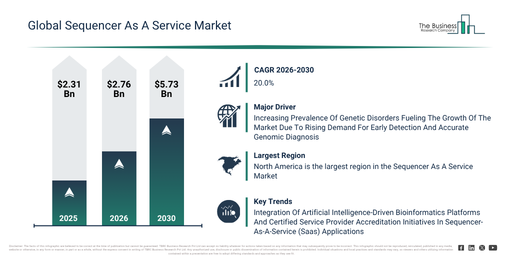
    Sequencer As A Service Market Growth From $2.76 Billion In 2026 To $5.73 Billion By 2030 At A CAGR Of 20%

    The sequencer as a service market has experienced swift expansion in recent years. This market is anticipated to increase its value from $2.31 billion in 2025 to $2.76 billion in 2026, demonstrating a compound annual growth rate (CAGR) of 19.8%. The historical growth can be attributed to several factors, including the escalating demand for genomic research, restricted access to in-house sequencing platforms, the significant expense of sequencing instruments, the proliferation of personalized medicine initiatives, and enhanced collaborations between research institutes and sequencing providers.

    The sequencer as a service market is anticipated to undergo significant expansion in the coming years. It is projected to achieve a valuation of $5.73 billion by 2030, demonstrating a compound annual growth rate (CAGR) of 20.0%. The expansion during the forecast period is propelled by the increasing acceptance of cloud-based sequencing solutions, the growing need for high-throughput sequencing services, the integration of AI-driven bioinformatics analysis, the broader application of clinical genomics, and the rise in outsourcing of sequencing tasks. Noteworthy trends for the forecast period involve cloud-based sequencing services, automated sample preparation, cohesive bioinformatics solutions, pay-per-use sequencing frameworks, and scalable genomic data management.

    Get A Free Sample Report With In-Depth Market Insights:

    https://thebusinessresearchcompany.com/sample_request?id=84454046&type=smp&name=Sequencer%20As%20A%20Service%20Market%20Report%202026&utm_source=Blogs&utm_medium=Paid&utm_campaign=Oct_PR

    Sequencer As A Service Market Growth Catalysts And Demand Drivers

    The anticipated expansion of the sequencer as a service market is significantly driven by the rising occurrence of genetic disorders. These medical conditions stem from anomalies in an individual’s deoxyribonucleic acid, which can be inherited from either parent or emerge from new mutations. The heightened incidence of genetic disorders is partly attributed to increasing parental age, given that older parents face a greater likelihood of transmitting genetic mutations to their offspring. Sequencer as a service offers a solution to genetic disorders by enabling scalable, on-demand access to sophisticated DNA and RNA sequencing technologies, facilitating prompt detection and precise diagnosis. This service alleviates infrastructure and operational complexities for laboratories and healthcare entities by providing cloud-based data analysis and specialized support, thereby enhancing precision medicine outcomes and research productivity. For example, data from May 2024, released by the UK’s National Health Service, indicated that 17,000 individuals are affected by sickle cell disease, an inherited genetic blood disorder, with approximately 250 new diagnoses annually. Consequently, the expanding prevalence of genetic disorders is a primary catalyst for the growth of the sequencer as a service market.

    Sequencer As A Service Market Segment Breakdown: Which Categories Lead On Revenue?

    The sequencer as a service market covered in this report is segmented –

    1) By Component: Software, Hardware, Services

    2) By Service Type: Sample Preparation Services, Library Preparation Services, Sequencing Execution Services, Bioinformatics Analysis Services, Data Storage And Management Services, Integrated End-to-End Sequencing Services

    3) By Deployment Mode: Cloud-Based, On-Premises

    4) By Application: Clinical Diagnostics, Oncology Research, Rare Disease Research, Infectious Disease Surveillance, Drug Discovery And Development, Agrigenomics, Forensic Genomics, Reproductive Health Testing, Personalized Medicine Research

    5) By End-User: Hospitals And Clinics, Research Institutes, Pharmaceutical And Biotechnology Companies, Academic Institutions, Other End Users

    Subsegments:

    1) By Software: Bioinformatics Analysis Platforms, Sequence Data Management Systems, Variant Interpretation Tools, Workflow Automation Software, Cloud-Based Data Processing Platforms

    2) By Hardware: High Throughput Sequencing Instruments, Sample Preparation Systems, Laboratory Automation Equipment, Data Storage Servers, High Performance Computing Infrastructure

    3) By Services: Sample Processing Services, Library Preparation Services, Sequencing Execution Services, Bioinformatics Interpretation Services, Data Storage And Management Services, Consulting And Technical Support Services

    Sequencer As A Service Market Trends Shaping Long-Term Demand

    Leading firms in the sequencer as a service market are prioritizing the integration of artificial intelligence-driven bioinformatics platforms, specifically the certified provider accreditation initiative, to elevate service quality, ensure technical adherence, and streamline workflow standardization across various genomics and single-cell analysis applications. The certified provider accreditation initiative itself is a structured framework where an entity officially acknowledges and licenses external service providers or collaborators that fulfill specified criteria for technical skill, operational excellence, and regulatory compliance. An illustrative example occurred in July 2024, when Parse Biosciences, a Seattle-based company specializing in single-cell sequencing solutions, unveiled its Certified Service Provider Program aimed at expanding the availability of scalable single-cell analysis. This program facilitates collaboration between researchers and accredited providers like SeqMatic and Eurofins Clinical Enterprise, who offer comprehensive, end-to-end workflows covering solutions such as Evercode Whole Transcriptome, Evercode TCR, CRISPR Detect, Gene Capture, and Evercode BCR, thereby enabling high-throughput capture of full-length BCR sequences alongside gene expression. This commitment guarantees proficient sample management, consistent workflow practices, and superior quality outcomes, positioning it as an optimal solution for both initial pilot studies and regular large-scale single-cell endeavors.

    Sequencer As A Service Market Leading Players And Competitive Positioning

    Major companies operating in the sequencer as a service market are Admera Health, ArrayGen Technologies, BGI Genomics Co. Ltd., CD Genomics Inc., Element Biosciences, Eurofins Scientific SE, Gene by Gene, GENEWIZ Germany GmbH, Illumina Inc., Karkinos Healthcare, Lucigen, Macrogen Inc., MedGenome Labs Ltd., Novogene Co. Ltd., Quest Diagnostics, SeqMatic LLC, SeqWell, Strand Life Sciences Pvt. Ltd., Veritas Genetics, Yaazh Xenomics.

    View The Full Sequencer As A Service Market Report:

    https://thebusinessresearchcompany.com/report/sequencer-as-a-service-market-report?utm_source=Blogs&utm_medium=Paid&utm_campaign=Oct_PR

    Sequencer As A Service Market Regional Split: Which Areas Are Fueling Growth?

    North America was the largest region in the sequencer as a service market in 2025. Asia-Pacific is expected to be the fastest-growing region in the forecast period. The regions covered in the sequencer as a service market report are Asia-Pacific, South East Asia, Western Europe, Eastern Europe, North America, South America, Middle East, Africa.

    Reach Out To Our Team:

    The Business Research Company: https://www.thebusinessresearchcompany.com/

    Americas: +1 310-496-7795

    Asia: +44 7882 955267 & +91 8897263534

    Europe: +44 7882 955267

    Email us at: marketing@tbrc.info

    Follow us on:

    LinkedIn: https://in.linkedin.com/company/the-business-research-company

    YouTube: https://www.youtube.com/channel/UC24_fI0rV8cR5DxlCpgmyFQ

    Global Market Model: https://www.thebusinessresearchcompany.com/global-market-model
  • Revenue Cycle Copilots Market Size In 2026 And Beyond: Understanding Future Growth Potential

    Revenue Cycle Copilots Market Size In 2026 And Beyond: Understanding Future Growth Potential

    Built to provide research that’s more actionable and strategically valuable, The Business Research Company’s 2026 market reports include market attractiveness analysis, total addressable market sizing, company benchmarking matrices, interactive Excel dashboards, broader supply chain intelligence, emerging startup tracking, and in-depth product insights.

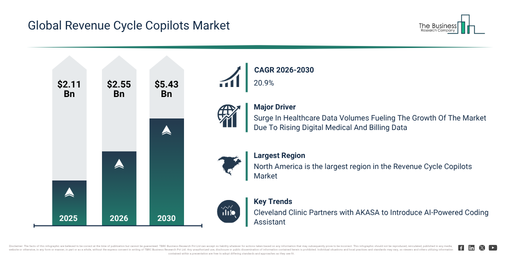
    Revenue Cycle Copilots Market Forecast: Value Set To Climb From $2.55 Billion To $5.43 Billion

    The revenue cycle copilots market has seen significant expansion in recent years. It will grow from $2.11 billion in 2025 to $2.55 billion in 2026 at a compound annual growth rate (CAGR) of 20.6%. This historical development can be attributed to several factors including manual revenue cycle processes, the increasing intricacy of healthcare billing, the expansion of hospital and clinic networks, an elevated focus on financial performance, and the adoption of standalone software solutions.

    The revenue cycle copilots market size is expected to experience substantial growth in the coming years, with projections indicating it will reach $5.43 billion in 2030, exhibiting a compound annual growth rate (CAGR) of 20.9%. This expansion during the forecast period is attributed to several factors, including AI-driven automation in the revenue cycle, an increase in cloud-based deployment, integration with electronic health records (EHR), a growing demand for predictive analytics in billing, and the broadening of revenue cycle consulting services. Prominent trends anticipated in the forecast period encompass automated billing and coding, optimization of claims accuracy, enhancement of the patient financial experience, automation of revenue analytics and reporting, and improved efficiency in denial management.

    Get A Free Sample Report With In-Depth Market Insights:

    https://thebusinessresearchcompany.com/sample_request?id=83353068&type=smp&name=Revenue%20Cycle%20Copilots%20Market%20Report%202026&utm_source=Blogs&utm_medium=Paid&utm_campaign=Oct_PR

    Revenue Cycle Copilots Market Growth Catalysts And Demand Drivers

    The anticipated expansion of the revenue cycle copilots market throughout the forecast period is largely attributed to the accelerated increase in healthcare data volumes. These volumes encompass the expanding digital information originating from sources such as electronic health records (EHRs), various diagnostic systems, medical imaging, billing platforms, and interconnected healthcare technologies. The broad implementation of EHRs and digital health solutions has led to a significant influx of both structured and unstructured clinical and financial data, thereby fostering an increasing demand for sophisticated data processing and analytical functionalities. Revenue cycle copilots effectively tackle this issue by employing AI-driven automation to efficiently process, analyze, and manage intricate billing and clinical datasets, subsequently enhancing coding accuracy, operational efficiency, and overall revenue cycle performance. For example, data from February 2025 published by Healthcare Asia Magazine, a Singapore-based healthcare industry publication, indicated that the healthcare sector contributed close to 30% of the world’s data volume, with its data experiencing a compound annual growth rate roughly 6% greater than that observed in the manufacturing industry. Consequently, the increasing healthcare data volumes are propelling the expansion of the revenue cycle copilots market.

    Revenue Cycle Copilots Market Segment Analysis: What Are The Core Market Categories?

    The revenue cycle copilots market covered in this report is segmented –

    1) By Component: Software, Services

    2) By Deployment Mode: On-Premises, Cloud-Based

    3) By Organization Size: Small And Medium Healthcare Providers, Large Hospitals Healthcare Systems

    4) By Application: Hospitals, Clinics, Ambulatory Surgical Centers, Specialty Practices, Other Applications

    5) By End-User: Healthcare Providers, Payers, Other End Users

    Subsegments:

    1) By Software: Billing And Coding Software, Claims Management Software, Patient Financial Experience Software, Revenue Analytics And Reporting Software, Payment Processing Software

    2) By Services: Revenue Cycle Consulting Services, Medical Coding And Billing Services, Payment Posting And Reconciliation Services, Denial Management Services, Training And Support Services

    Revenue Cycle Copilots Market Trends Shaping Long-Term Demand

    Leading companies in the revenue cycle copilots market are prioritizing the development of artificial intelligence-driven coding assistance, specifically generative AI tools designed to automatically interpret clinical documentation and suggest accurate medical codes to streamline billing and enhance revenue cycle efficiency. These sophisticated platforms integrate natural language understanding with health-specific coding logic to minimize manual work, improve precision, and decrease claim rejections, concurrently enabling staff to concentrate on more strategic responsibilities. For instance, in April 2025, Cleveland Clinic, a US-based health system, partnered with AKASA to launch AI-driven revenue cycle tools, including an AI-powered coding assistant capable of reviewing clinical documents in seconds and processing large volumes rapidly to support efficient, accurate mid-cycle coding. While such innovations undoubtedly advance automation and fiscal outcomes, validating clinical context accuracy and ensuring integration with diverse electronic health record systems continue to present challenges.

    Revenue Cycle Copilots Market Competitive Overview And Top Companies

    Major companies operating in the revenue cycle copilots market are UnitedHealth Group, Oracle Corporation, GE Healthcare, Cognizant Technology Solutions Corporation, Experian Health, Athenahealth Inc., Conifer Health Solutions, eClinicalWorks LLC, Waystar Inc., Meditech, NextGen Healthcare Inc., Infinx Healthcare, FinThrive Inc., Cedar, AKASA, CombineHealth, Epic Systems Corporation, RapidClaims, Allscripts Healthcare Solutions Inc., AGS Health, Olive AI Inc., nThrive Inc.

    View The Full Revenue Cycle Copilots Market Report:

    https://thebusinessresearchcompany.com/report/revenue-cycle-copilots-market-report?utm_source=Blogs&utm_medium=Paid&utm_campaign=Oct_PR

    Revenue Cycle Copilots Market Leading Geography: Which Region Contributes The Most Revenue?

    North America was the largest region in the revenue cycle copilots market in 2025. Asia-Pacific is expected to be the fastest-growing region in the forecast period. The regions covered in the revenue cycle copilots market report are Asia-Pacific, South East Asia, Western Europe, Eastern Europe, North America, South America, Middle East, Africa.

    Reach Out To Our Team:

    The Business Research Company: https://www.thebusinessresearchcompany.com/

    Americas: +1 310-496-7795

    Asia: +44 7882 955267 & +91 8897263534

    Europe: +44 7882 955267

    Email us at: marketing@tbrc.info

    Follow us on:

    LinkedIn: https://in.linkedin.com/company/the-business-research-company

    YouTube: https://www.youtube.com/channel/UC24_fI0rV8cR5DxlCpgmyFQ

    Global Market Model: https://www.thebusinessresearchcompany.com/global-market-model