Category: Healthcare Services

  • Hospice Indoor Air Quality (IAQ) Monitoring Market Analysis Through 2030: Market Size, Growth Trends And Industry Outlook

    Hospice Indoor Air Quality (IAQ) Monitoring Market Analysis Through 2030: Market Size, Growth Trends And Industry Outlook

    Backed by market attractiveness analysis, total addressable market sizing, company benchmarking matrices, interactive Excel dashboards, wider supply chain intelligence, emerging startup coverage, and detailed product-level insights, The Business Research Company’s 2026 market reports are designed to offer research that is more actionable and strategically valuable than ever.

    Hospice Indoor Air Quality (IAQ) Monitoring Market Value Analysis: What Growth Lies Ahead Over The Forecast Period?

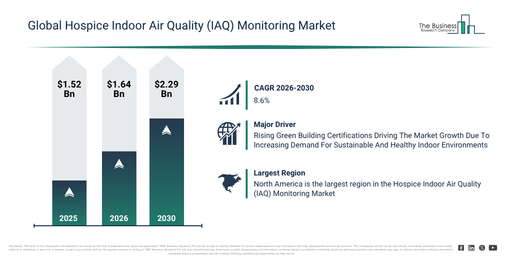
    The hospice indoor air quality (IAQ) monitoring market has experienced substantial growth in recent years. It is projected to increase from $1.52 billion in 2025 to $1.64 billion in 2026, achieving a compound annual growth rate (CAGR) of 8.4%. Historically, this growth has been driven by heightened awareness of indoor air pollution risks, growing respiratory health concerns among elderly patients, the expansion of hospice and palliative care facilities, evolving regulatory standards for healthcare environments, and the implementation of basic sensor-based monitoring systems.

    The hospice indoor air quality (IAQ) monitoring market is set for significant expansion in the coming years, with projections indicating it will reach $2.29 billion in 2030, exhibiting a compound annual growth rate (CAGR) of 8.6%. This anticipated growth is primarily driven by the increasing adoption of smart healthcare infrastructure, greater investment in patient-centric care environments, the growing integration of AI-driven air quality analytics, the expansion of home-based hospice services, and a stronger emphasis on sustainable and energy-efficient ventilation systems. Furthermore, major trends anticipated for this forecast period include the wider deployment of zoned IAQ monitoring systems, an escalating demand for real-time air quality alerts, enhanced integration of IAQ data with HVAC systems, the proliferation of portable multifunction IAQ devices, and a heightened focus on infection control and respiratory comfort.

    Get A Free Sample Report With In-Depth Market Insights:

    https://thebusinessresearchcompany.com/sample_request?id=63673973&type=smp&name=Hospice%20Indoor%20Air%20Quality%20%28IAQ%29%20Monitoring%20Market%20Report%202026&utm_source=Blogs&utm_medium=Paid&utm_campaign=Oct_PR

    Hospice Indoor Air Quality (IAQ) Monitoring Market Demand Drivers: What’s Powering Industry Growth?

    The expansion of green building certifications is anticipated to fuel the demand for the hospice indoor air quality (IAQ) monitoring market in the coming years. These certifications are official recognitions given to structures that fulfill criteria for sustainability, energy efficiency, and a reduced environmental footprint. The increase in such certifications stems from heightened environmental consciousness, which in turn boosts the desire for buildings designed to conserve resources and lower carbon emissions. Hospice IAQ monitoring plays a crucial role in achieving green building certifications by offering ongoing data on air quality, thereby guaranteeing healthy indoor conditions, mitigating pollutants, and assisting in meeting the sustainability and wellness benchmarks necessary for certification. For example, the Green Building Council, a US-based non-profit organization, reported in July 2024 that more than 46,000 residential projects obtained LEED green building certification, indicating an increase of almost 5% in new registrations when compared to 2023. Consequently, the proliferation of green building certifications is a key factor propelling the expansion of the hospice indoor air quality (IAQ) monitoring market. Escalating pollution levels are projected to drive the expansion of the hospice indoor air quality (IAQ) monitoring market in the future. These levels denote the amount of detrimental substances present in air, water, or soil, which can adversely affect health and the environment. The rise in pollution levels is attributed to swift industrialization, leading to the discharge of significant quantities of noxious gases, particulates, and chemicals into the surroundings, thereby degrading air and water quality and impacting public health. Hospice IAQ monitoring assists in managing pollution by consistently identifying airborne contaminants and facilitating prompt ventilation or filtration actions, thereby cultivating a healthier and safer setting for patients and personnel. For example, the United States Environmental Protection Agency, a US-based government agency, reported in February 2026 that roughly 64 million tons of pollutants were discharged into the atmosphere across the United States in 2024. Consequently, the escalating pollution levels are a significant catalyst for the growth of the hospice indoor air quality (IAQ) monitoring market.

    Hospice Indoor Air Quality (IAQ) Monitoring Market Segment Outlook: Which Categories Are Growing Fastest?

    The hospice indoor air quality (IAQ) monitoring market covered in this report is segmented –

    1) By Product Type: Portable Monitors, Fixed Monitors, Wearable Devices, Other Product Types

    2) By Pollutant Type: Particulate Matter, Carbon Dioxide, Volatile Organic Compounds, Biological Contaminants, Other Pollutant Types

    3) By Technology: Sensor-Based, Internet of Things (IoT)-Enabled, Wireless, Other Technologies

    4) By Application: Patient Rooms, Common Areas, Administrative Offices, Other Applications

    5) By End-User: Hospices, Palliative Care Centers, Home Care Settings, Other End-Users

    Subsegments:

    1) By Portable Monitors: Handheld Monitors, Tabletop Portable Stations, Portable Multifunction Devices

    2) By Fixed Monitors: Wall Mounted Fixed Monitors, Networked Fixed Systems, Zoned IAQ Monitoring

    3) By Wearable Devices: Pendant Wearables, Wrist Mounted Monitors, Badge Style Devices

    4) By Other Product Types: Environmental Sensor Kits, Integrated Smart Building Sensors, Retrofit Add On Sensors

    Hospice Indoor Air Quality (IAQ) Monitoring Market Leading Companies And Competitive Benchmarking

    Major companies operating in the hospice indoor air quality (IAQ) monitoring market are Thermo Fisher Scientific Inc., Honeywell International Incorporated, Johnson Controls International plc, Carrier Global Corporation, Trane Technologies plc., Emerson Electric Company, SGS SA, HORIBA Ltd., Camfil AB, Sensirion Aktiengesellschaft, TSI Incorporated, Siemens Aktiengesellschaft, IQAir AG, Airthings ASA, Awair Inc., BGE Indoor Air Quality Solutions Ltd., Testo SE & Co. Kommanditgesellschaft auf Aktien, Anewtech Systems, Aeroqual Limited, Critical Environment Technologies Canada Inc., DevineAir Limited.

    View The Full Hospice Indoor Air Quality (IAQ) Monitoring Market Report:

    https://thebusinessresearchcompany.com/report/hospice-indoor-air-quality-iaq-monitoring-market-report?utm_source=Blogs&utm_medium=Paid&utm_campaign=Oct_PR

    Hospice Indoor Air Quality (IAQ) Monitoring Market Largest Region By Revenue And Market Share

    North America was the largest region in the hospice indoor air quality (IAQ) monitoring market in 2025. Asia-Pacific is expected to be the fastest-growing region in the forecast period. The regions covered in the hospice indoor air quality (IAQ) monitoring market report are Asia-Pacific, South East Asia, Western Europe, Eastern Europe, North America, South America, Middle East, Africa.

    Reach Out To Our Team:

    The Business Research Company: https://www.thebusinessresearchcompany.com/

    Americas: +1 310-496-7795

    Asia: +44 7882 955267 & +91 8897263534

    Europe: +44 7882 955267

    Email us at: marketing@tbrc.info

    Follow us on:

    LinkedIn: https://in.linkedin.com/company/the-business-research-company

    YouTube: https://www.youtube.com/channel/UC24_fI0rV8cR5DxlCpgmyFQ

    Global Market Model: https://www.thebusinessresearchcompany.com/global-market-model
  • Hereditary Actionable Disorders Screen (HADS) Inherited Predisposition Screening (IPS) Variant Panel Market To Witness 12.6% CAGR Growth Through 2030: Key Industry Drivers

    Hereditary Actionable Disorders Screen (HADS) Inherited Predisposition Screening (IPS) Variant Panel Market To Witness 12.6% CAGR Growth Through 2030: Key Industry Drivers

    Featuring market attractiveness scoring, total addressable market sizing, company benchmarking matrices, interactive Excel dashboards, deeper supply chain intelligence, emerging startup tracking, and granular product-level insights, The Business Research Company’s 2026 market reports are built to deliver research that is both more actionable and more strategically valuable.

    Hereditary Actionable Disorders Screen (HADS) Inherited Predisposition Screening (IPS) Variant Panel Market Forecast: What Value Will The Market Reach By 2030?

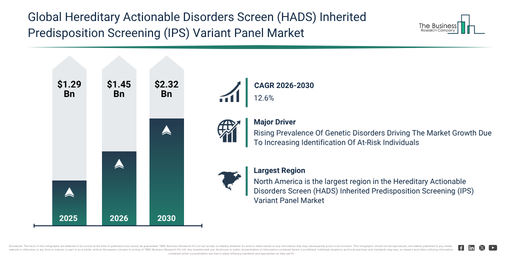
    The hereditary actionable disorders screen (HADS) inherited predisposition screening (IPS) variant panel market size has witnessed substantial growth in recent years. It will grow from $1.29 billion in 2025 to $1.45 billion in 2026 at a compound annual growth rate (CAGR) of 12.3%. The expansion observed in the past can be attributed to increased awareness of hereditary cancer syndromes, the proliferation of clinical genetic testing services, the decreasing cost of sequencing technologies, a rise in the prevalence of inherited cardiovascular disorders, and the increasing adoption of evidence-based screening guidelines.

    The market for the hereditary actionable disorders screen (HADS) inherited predisposition screening (IPS) variant panel is anticipated to undergo rapid expansion in the coming years. It is projected to reach $2.32 billion in 2030, showing a compound annual growth rate (CAGR) of 12.6%. This increase during the forecast period is attributable to the expanding integration of genomic data into routine clinical practices, a rising need for population-level genetic screening, increased investments in precision medicine initiatives, the broadening of reimbursement policies for genetic testing, and the continuous development of multi-gene actionable panels. Significant trends over the forecast period involve the growing adoption of targeted germline variant panels, an escalating demand for preventive genetic screening programs, the enhanced integration of hereditary cancer risk assessments, the proliferation of evidence-based clinical intervention protocols, and a heightened emphasis on the early detection of inherited cardiovascular disorders.

    Get A Free Sample Report With In-Depth Market Insights:

    https://thebusinessresearchcompany.com/sample_request?id=72145526&type=smp&name=Hereditary%20Actionable%20Disorders%20Screen%20%28HADS%29%20Inherited%20Predisposition%20Screening%20%28IPS%29%20Variant%20Panel%20Market%20Report%202026&utm_source=Blogs&utm_medium=Paid&utm_campaign=Oct_PR

    Hereditary Actionable Disorders Screen (HADS) Inherited Predisposition Screening (IPS) Variant Panel Market Growth Backed By Core Demand Fundamentals

    The increasing occurrence of genetic disorders is projected to fuel the expansion of the HADS inherited predisposition screening (IPS) variant panel market. Genetic disorders are conditions stemming from alterations or mutations in an individual’s DNA, which can be passed down from parents or emerge spontaneously. The rise in genetic disorder prevalence is attributed to advancements in genetic testing and screening, leading to the identification of more previously undiagnosed cases, alongside heightened awareness among medical professionals and the public. The HADS IPS variant panel assists in detecting inherited genetic mutations and predispositions in individuals, thereby facilitating early diagnosis, personalized risk evaluation, and informed healthcare decisions to manage or prevent the onset of genetic disorders. For instance, in October 2024, according to the National Health Service (NHS) England, a UK-based government department, as part of a groundbreaking study in NHS hospitals, several hundred newborns have already undergone testing for more than 200 rare genetic conditions, with the initiative aiming to screen up to 100,000 babies across England. Consequently, the growing prevalence of genetic disorders is stimulating the growth of the HADS inherited predisposition screening (IPS) variant panel market. The expanding adoption of personalized medicine is anticipated to drive forward the HADS inherited predisposition screening (IPS) variant panel market. Personalized medicine involves medical treatments specifically designed for individual patients, based on their unique genetic profiles, biomarkers, and molecular characteristics. The increased embrace of personalized medicine is due to innovations in genomic sequencing technologies, which have significantly lowered costs and improved accessibility, enabling widespread genetic profiling in clinical environments. The HADS inherited predisposition screening (IPS) variant panel supports personalized medicine by identifying an individual’s specific genetic risk variants, empowering clinicians to customize prevention tactics, early interventions, and treatment plans uniquely tailored to each patient’s inherited predisposition. For example, in February 2024, the Personalized Medicine Coalition, a US-based non-profit organization, reported that in 2023, the U.S. Food and Drug Administration (FDA) approved 16 new personalized treatments for patients with rare diseases, marking a substantial increase from the six approvals in 2022. Therefore, the increasing adoption of personalized medicine is a key driver for the growth of the HADS inherited predisposition screening (IPS) variant panel market.

    Hereditary Actionable Disorders Screen (HADS) Inherited Predisposition Screening (IPS) Variant Panel Market Segment Breakdown: Which Categories Lead On Revenue?

    The hereditary actionable disorders screen (HADS) inherited predisposition screening (IPS) variant panel market covered in this report is segmented –

    1) By Technology: Polymerase Chain Reaction, Next Generation Sequencing, Microarray, Other Technologies

    2) By Product Type: Assay Kits, Reagents, Instruments, Software

    3) By Application: Clinical Diagnostics, Research, Personalized Medicine, Oncology, Other Applications

    4) By End-User: Hospitals And Clinics, Diagnostic Laboratories, Research Institutes, Other End Users

    Subsegments:

    1) By Polymerase Chain Reaction: Real Time Polymerase Chain Reaction, Digital Polymerase Chain Reaction, Multiplex Polymerase Chain Reaction, Allele Specific Polymerase Chain Reaction, Other Polymerase Chain Reaction Methods

    2) By Next Generation Sequencing: Targeted Sequencing, Whole Genome Sequencing, Whole Exome Sequencing, Single Cell Sequencing, Other Sequencing Approaches

    3) By Microarray: Single Nucleotide Polymorphism Array, Comparative Genomic Hybridization Array, Gene Expression Array, Methylation Array, Other Microarray Technologies

    4) By Other Technologies: Hybrid Capture Based, Bead Based Assays, Electrochemical Detection, Optical Detection, Other Emerging Technologies

    Hereditary Actionable Disorders Screen (HADS) Inherited Predisposition Screening (IPS) Variant Panel Market Leading Players And Competitive Positioning

    Major companies operating in the hereditary actionable disorders screen (HADS) inherited predisposition screening (IPS) variant panel market are Helix Inc.

    View The Full Hereditary Actionable Disorders Screen (HADS) Inherited Predisposition Screening (IPS) Variant Panel Market Report:

    https://thebusinessresearchcompany.com/report/hereditary-actionable-disorders-screen-hads-inherited-predisposition-screening-ips-variant-panel-market-report?utm_source=Blogs&utm_medium=Paid&utm_campaign=Oct_PR

    Hereditary Actionable Disorders Screen (HADS) Inherited Predisposition Screening (IPS) Variant Panel Market Regional Distribution: Which Areas Power Market Growth?

    North America was the largest region in the hereditary actionable disorders screen (HADS) inherited predisposition screening (IPS) variant panel market in 2025. Asia-Pacific is expected to be the fastest-growing region in the forecast period. The regions covered in the hereditary actionable disorders screen (HADS) inherited predisposition screening (IPS) variant panel market report are Asia-Pacific, South East Asia, Western Europe, Eastern Europe, North America, South America, Middle East, Africa.

    Reach Out To Our Team:

    The Business Research Company: https://www.thebusinessresearchcompany.com/

    Americas: +1 310-496-7795

    Asia: +44 7882 955267 & +91 8897263534

    Europe: +44 7882 955267

    Email us at: marketing@tbrc.info

    Follow us on:

    LinkedIn: https://in.linkedin.com/company/the-business-research-company

    YouTube: https://www.youtube.com/channel/UC24_fI0rV8cR5DxlCpgmyFQ

    Global Market Model: https://www.thebusinessresearchcompany.com/global-market-model

  • Hepatitis C Virus (HCV) Viral Load Testing Market Projected For Strong Expansion Through 2030: Key Trends And Future Outlook

    Hepatitis C Virus (HCV) Viral Load Testing Market Projected For Strong Expansion Through 2030: Key Trends And Future Outlook

    Built to provide research that’s more actionable and strategically valuable, The Business Research Company’s 2026 market reports include market attractiveness analysis, total addressable market sizing, company benchmarking matrices, interactive Excel dashboards, broader supply chain intelligence, emerging startup tracking, and in-depth product insights.

    Hepatitis C Virus (HCV) Viral Load Testing Market Size Outlook: How Quickly Will Revenue Expand Through 2030?

    The market for hepatitis c virus (hcv) viral load testing has demonstrated robust expansion over the past few years. This market is projected to expand from $1.39 billion in 2025 to $1.48 billion in 2026, exhibiting a compound annual growth rate (CAGR) of 7.2%. Factors contributing to its historical growth include the escalating worldwide occurrence of hepatitis c infections, heightened consciousness regarding prompt diagnosis, the development of diagnostic laboratory facilities, the embrace of nucleic acid amplification techniques, and the increasing access to antiviral treatments.

    The market for hepatitis c virus (hcv) viral load testing is anticipated to experience robust expansion in the coming years. This market is projected to reach $1.98 billion by 2030, demonstrating a compound annual growth rate (CAGR) of 7.4%. Factors contributing to this projected growth include a rise in government screening initiatives, an increasing need for precise viral load monitoring, the proliferation of decentralized testing sites, greater investment in molecular diagnostics, and innovations in high-sensitivity HCV RNA assays. Key developments expected during this timeframe encompass a wider uptake of real-time PCR-based viral load testing, an escalating requirement for prompt detection and treatment response tracking, the expanded deployment of automated high-throughput diagnostic platforms, the growth of point-of-care HCV RNA testing solutions, and enhanced standardization of viral load quantification assays.

    Get A Free Sample Report With In-Depth Market Insights:

    https://thebusinessresearchcompany.com/sample_request?id=75863008&type=smp&name=Hepatitis%20C%20Virus%20%28HCV%29%20Viral%20Load%20Testing%20Market%20Report%202026&utm_source=Blogs&utm_medium=Paid&utm_campaign=Oct_PR

    Hepatitis C Virus (HCV) Viral Load Testing Market Growth Catalysts And Demand Drivers

    The expansion of personalized medicine is anticipated to fuel the future growth of the hepatitis C virus (HCV) viral load testing market. Personalized medicine represents a healthcare approach that customizes medical interventions and treatments based on an individual’s genetic profile, lifestyle, and environmental factors to achieve optimal clinical outcomes. The increasing adoption of personalized medicine is propelled by advancements in genomic technologies, which enable precise disease identification and targeted therapies, thereby improving treatment effectiveness while minimizing side effects. Hepatitis C viral load testing supports personalized medicine by quantifying the amount of virus present in a patient’s blood, allowing clinicians to tailor antiviral therapy selection, dosage, and treatment duration according to individual responses and disease severity. For instance, in February 2024, the Personalized Medicine Coalition, a US-based non-profit organization, reported that in 2023, the FDA approved 16 new personalized treatments for rare disease patients, an increase from six in 2022, including seven cancer drugs and three therapies for other diseases and conditions. As a result, the development of personalized medicine is driving the growth of the hepatitis C virus (HCV) viral load testing market.

    Hepatitis C Virus (HCV) Viral Load Testing Market Segmentation: How Does The Market Break Down By Category?

    The hepatitis c virus (hcv) viral load testing market covered in this report is segmented –

    1) By Technology: Polymerase Chain Reaction, Nucleic Acid Sequence-Based Amplification, Transcription-Mediated Amplification, Other Technologies

    2) By Product Type: Instruments, Kits And Reagents, Software And Services

    3) By Sample Type: Blood, Plasma, Serum, Other Sample Types

    4) By End User: Hospitals And Clinics, Diagnostic Laboratories, Blood Banks, Other End Users

    Subsegments:

    1) By Polymerase Chain Reaction: Real Time Polymerase Chain Reaction, Digital Polymerase Chain Reaction, Nested Polymerase Chain Reaction, Reverse Transcription Polymerase Chain Reaction

    2) By Nucleic Acid Sequence-Based Amplification: Real Time Nucleic Acid Sequence-Based Amplification, Standard Nucleic Acid Sequence-Based Amplification

    3) By Transcription-Mediated Amplification: Real Time Transcription-Mediated Amplification, Isothermal Transcription-Mediated Amplification

    4) By Other Technologies: Branched Deoxyribonucleic Acid Assay, Signal Mediated Amplification Of Ribonucleic Acid, Hybrid Capture Assay

    Hepatitis C Virus (HCV) Viral Load Testing Market Trends Shaping Long-Term Demand

    Major companies operating in the hepatitis C virus (HCV) viral load testing market are focusing on obtaining regulatory approvals to expand access to rapid and highly accurate molecular diagnostic solutions. Regulatory approvals enable commercial distribution and clinical adoption of advanced nucleic acid amplification tests (NAATs), improving early diagnosis, treatment initiation, and disease monitoring. For instance, in August 2025, Cepheid Inc., a US-based molecular diagnostics company, obtained a medical device license from Health Canada for its Xpert HCV Viral Load test. This assay is designed to detect and quantify hepatitis C virus (HCV) RNA and is conducted on Cepheid’s GeneXpert System platform. The test delivers automated, real-time PCR-based results, enabling faster clinical decision-making, enhanced patient management, and broader access to decentralized HCV testing services.

    Hepatitis C Virus (HCV) Viral Load Testing Market Competitive Overview And Top Companies

    Major companies operating in the hepatitis c virus (hcv) viral load testing market are F. Hoffmann-La Roche Ltd., Thermo Fisher Scientific Inc., Abbott Laboratories, Siemens Healthineers, Danaher Corporation, Hologic Inc., Revvity, Bio-Rad Laboratories Inc., Qiagen N.V., Cepheid Inc., BioPerfectus Technologies Co. Ltd., Enzo Biochem Inc., Vela Diagnostics International Pte. Ltd., Altona Diagnostics GmbH, Certest Biotec S.L., Molbio Diagnostics Private Limited, 3B BlackBio Dx Limited, Anatolia Geneworks, GeneProof a.s., Sacace Biotechnologies S.r.l.

    View The Full Hepatitis C Virus (HCV) Viral Load Testing Market Report:

    https://thebusinessresearchcompany.com/report/hepatitis-c-virus-hcv-viral-load-testing-market-report?utm_source=Blogs&utm_medium=Paid&utm_campaign=Oct_PR

    Hepatitis C Virus (HCV) Viral Load Testing Market Leading Geography: Which Region Contributes The Most Revenue?

    North America was the largest region in the hcv viral load testing market in 2025. Asia-Pacific is expected to be the fastest-growing region in the forecast period. The regions covered in the hcv viral load testing market report are Asia-Pacific, South East Asia, Western Europe, Eastern Europe, North America, South America, Middle East, Africa.

    Reach Out To Our Team:

    The Business Research Company: https://www.thebusinessresearchcompany.com/

    Americas: +1 310-496-7795

    Asia: +44 7882 955267 & +91 8897263534

    Europe: +44 7882 955267

    Email us at: marketing@tbrc.info

    Follow us on:

    LinkedIn: https://in.linkedin.com/company/the-business-research-company

    YouTube: https://www.youtube.com/channel/UC24_fI0rV8cR5DxlCpgmyFQ

    Global Market Model: https://www.thebusinessresearchcompany.com/global-market-model
  • Health Economics And Outcomes Research (HEOR) Analytics Platform Market Forecast To Reach $3.53 Billion By 2030: Key Growth Drivers And Industry Trends

    Health Economics And Outcomes Research (HEOR) Analytics Platform Market Forecast To Reach $3.53 Billion By 2030: Key Growth Drivers And Industry Trends

    Built to provide research that’s more actionable and strategically valuable, The Business Research Company’s 2026 market reports include market attractiveness analysis, total addressable market sizing, company benchmarking matrices, interactive Excel dashboards, broader supply chain intelligence, emerging startup tracking, and in-depth product insights.

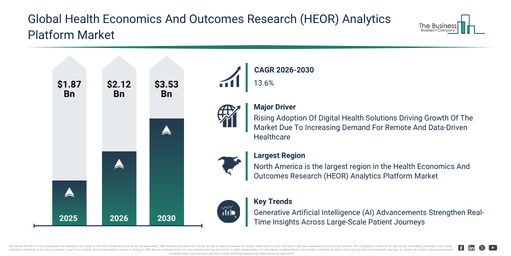
    Health Economics And Outcomes Research (HEOR) Analytics Platform Market Set To Climb From $2.12 Billion In 2026 To $3.53 Billion By 2030

    The health economics and outcomes research (HEOR) analytics platform market has experienced substantial expansion in recent years. This market is set to expand from $1.87 billion in 2025 to $2.12 billion in 2026, registering a compound annual growth rate (CAGR) of 13.4%. The historical development can be ascribed to escalating healthcare expenditure pressures, more rigorous regulatory obligations for reimbursement acceptance, the proliferation of clinical trial data production, the diversification of real-world data sources, and the uptake of digital health analytics instruments.

    The market size for health economics and outcomes research (HEOR) analytics platforms is projected to experience substantial growth in the upcoming years. It is expected to expand to $3.53 billion in 2030, exhibiting a compound annual growth rate (CAGR) of 13.6%. This anticipated growth during the forecast period is driven by factors such as a greater move towards value-based care models, the increasing utilization of AI-driven predictive health economics models, a rising need for personalized treatment outcome analysis, the expansion of cloud-based healthcare analytics platforms, and enhanced collaboration between payers and pharmaceutical companies. Significant trends for this period encompass the growing adoption of real-world evidence analytics, an increasing demand for value-based healthcare assessment, the rising integration of clinical and claims data platforms, the proliferation of cost-effectiveness modeling tools, and an amplified focus on reimbursement and market access analytics.

    Get A Free Sample Report With In-Depth Market Insights:

    https://thebusinessresearchcompany.com/sample_request?id=36599645&type=smp&name=Health%20Economics%20And%20Outcomes%20Research%20%28HEOR%29%20Analytics%20Platform%20Market%20Report%202026&utm_source=Blogs&utm_medium=Paid&utm_campaign=Oct_PR

    Health Economics And Outcomes Research (HEOR) Analytics Platform Market Expansion Drivers: What’s Shaping Future Growth?

    The rising prevalence of digital health solutions is anticipated to boost the expansion of the health economics and outcomes research (HEOR) analytics platform market in the future. These solutions are technology-based tools and platforms that facilitate remote healthcare, health tracking, and medical decisions guided by data. The demand for these digital solutions is growing due to an increasing need for accessible and convenient healthcare services from a distance. A health economics and outcomes research analytics platform plays a crucial role in supporting digital health solutions by offering data-driven insights into clinical effectiveness, cost-efficiency, and patient results, which helps healthcare providers and developers prove value, refine interventions, and inform evidence-based decisions. For example, in August 2025, the US Department of Health and Human Services, a US-based government administration, reported that in 2024, approximately 1 million enrollees utilized remote patient monitoring, marking a 27 percent increase from 2023. Consequently, the widespread use of digital health solutions is a key factor propelling the health economics and outcomes research (HEOR) analytics platform market’s growth. The expansion of clinical research is anticipated to drive the health economics and outcomes research (HEOR) analytics platform market’s growth in the foreseeable future. Clinical research encompasses the study of medical treatments, processes, or interventions in human subjects to produce data that enhances health outcomes. The increase in clinical research is a result of the growing demand for innovative and successful treatments to combat evolving diseases and address unmet medical requirements. This research aids health economics and outcomes research (HEOR) analytics platforms by supplying real-world and trial-specific patient data. This data is vital for evaluating treatment efficacy, cost-effectiveness, and overall health results, thereby supporting evidence-based decision-making in healthcare. For instance, in December 2024, the Association of the British Pharmaceutical Industry (ABPI), a UK-based trade association, reported that the number of industry clinical trials launched in the UK rose to 426 in 2023, up from 411 in 2022. Thus, the advancement in clinical research is a significant factor contributing to the expansion of the health economics and outcomes research (HEOR) analytics platform market.

    Health Economics And Outcomes Research (HEOR) Analytics Platform Market Segment Performance And Emerging Opportunities

    The health economics and outcomes research (HEOR) analytics platform market covered in this report is segmented –

    1) By Component: Software, Services

    2) By Deployment Mode: On-Premises, Cloud-Based

    3) By Organization Size: Large Enterprises, Small And Medium Enterprises

    4) By Application: Clinical Trial Data Analysis, Real-World Evidence (RWE) Studies, Cost-Effectiveness Analysis, Patient-Reported Outcomes (PROs) Analysis, Market Access And Reimbursement

    5) By End-User: Hospitals, Research Organizations, Pharmaceutical And Biotech Companies, Contract Research Organizations (CROs), Other End-Users

    Subsegments:

    1) By Software: Data Management Software, Predictive Analytics Software, Real World Evidence Software, Visualization And Reporting Software, Decision Support Software

    2) By Services: Consulting Services, Implementation Services, Training Services, Support And Maintenance Services, Data Integration Services

    Health Economics And Outcomes Research (HEOR) Analytics Platform Market Strategic Trends: What Defines The Next Growth Phase?

    Companies operating in the health economics outcomes research (HEOR) analytics platform market are actively developing innovative solutions, including real-world data analytics, to support evidence-based healthcare decision-making. Real-world data analytics involves leveraging data from routine clinical practice and other practical sources to assess healthcare outcomes and guide decisions. An example is Komodo Health Inc., a US-based healthcare technology company, which in September 2024 introduced MapAI and MapExplorer. These are generative AI improvements for its MapLab platform, focusing on delivering real-time insights derived from 330 million patient journeys within its Healthcare Map database. The platform combines large-scale de-identified patient-level data with advanced AI models to assist life sciences companies, payers, and providers in accelerating research, refining value-based care strategies, and advancing health economics and outcomes research through quicker, data-informed choices.

    Health Economics And Outcomes Research (HEOR) Analytics Platform Market Company Landscape And Competitive Strategy

    Major companies operating in the health economics outcomes research (HEOR) analytics platform market are McKesson Corporation, Cardinal Health Inc., Oracle Corporation, IQVIA Holdings Inc., McKinsey & Company Inc., ICON plc, Syneos Health, Parexel International, Kantar Health LLC, SAS Institute Inc., EVERSANA LLC, Axtria Inc., Westat Inc., GlobalData Plc, Analysis Group Inc., Precision AQ, Aetion Inc., Veramed Inc., SidekickHealth Inc., Epistemix Inc.

    View The Full Health Economics And Outcomes Research (HEOR) Analytics Platform Market Report:

    https://thebusinessresearchcompany.com/report/health-economics-and-outcomes-research-heor-analytics-platform-market-report?utm_source=Blogs&utm_medium=Paid&utm_campaign=Oct_PR

    Health Economics And Outcomes Research (HEOR) Analytics Platform Market Largest Region: Which Geography Holds The Biggest Share?

    North America was the largest region in the health economics outcomes research (HEOR) analytics platform market in 2025. Asia-Pacific is expected to be the fastest-growing region in the forecast period. The regions covered in the health economics outcomes research (HEOR) analytics platform market report are Asia-Pacific, South East Asia, Western Europe, Eastern Europe, North America, South America, Middle East, Africa.

    Reach Out To Our Team:

    The Business Research Company: https://www.thebusinessresearchcompany.com/

    Americas: +1 310-496-7795

    Asia: +44 7882 955267 & +91 8897263534

    Europe: +44 7882 955267

    Email us at: marketing@tbrc.info

    Follow us on:

    LinkedIn: https://in.linkedin.com/company/the-business-research-company

    YouTube: https://www.youtube.com/channel/UC24_fI0rV8cR5DxlCpgmyFQ

    Global Market Model: https://www.thebusinessresearchcompany.com/global-market-model
  • Genotype-Phenotype Registry Platforms Market 2026 Market Size And Growth Forecast: Key Trends To Watch

    Genotype-Phenotype Registry Platforms Market 2026 Market Size And Growth Forecast: Key Trends To Watch

    Built to provide research that’s more actionable and strategically valuable, The Business Research Company’s 2026 market reports include market attractiveness analysis, total addressable market sizing, company benchmarking matrices, interactive Excel dashboards, broader supply chain intelligence, emerging startup tracking, and in-depth product insights.

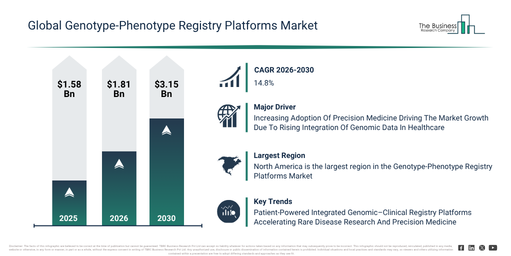
    Genotype-Phenotype Registry Platforms Market Growth From $1.81 Billion In 2026 To $3.15 Billion By 2030 At A CAGR Of 14.8%

    The genotype-phenotype registry platforms market size has experienced significant growth in recent years. The market is projected to expand from $1.58 billion in 2025 to $1.81 billion in 2026, at a compound annual growth rate (CAGR) of 14.5%. This historical growth can be attributed to several factors, including an increase in genomic sequencing initiatives, a rising prevalence of rare and genetic disorders, the expansion of clinical research databases, growing adoption of electronic health records, and the development of standardized genomic data frameworks.

    The market for genotype-phenotype registry platforms is anticipated to experience significant expansion over the coming years. This market is projected to reach a valuation of $3.15 billion by 2030, demonstrating a compound annual growth rate (CAGR) of 14.8%. This anticipated growth during the forecast period stems from factors such as heightened investment in precision medicine initiatives, the increasing uptake of AI-powered tools for genotype-phenotype correlation, the broadening of global collaborative research networks, an intensifying regulatory focus on the interoperability of genomic data, and a greater need for generating real-world evidence. Key trends identified for the forecast period encompass the increasing standardization of genotype–phenotype data models, an escalating demand for interoperable registry platforms, the enhanced integration of clinical and genomic data streams, the broadening of rare disease registry efforts, and a heightened focus on robust data governance frameworks.

    Get A Free Sample Report With In-Depth Market Insights:

    https://thebusinessresearchcompany.com/sample_request?id=76167295&type=smp&name=Genotype-Phenotype%20Registry%20Platforms%20Market%20Report%202026&utm_source=Blogs&utm_medium=Paid&utm_campaign=Oct_PR

    Genotype-Phenotype Registry Platforms Market Growth Factors Behind Sustained Expansion

    The anticipated expansion of the genotype-phenotype registry platforms market is linked to the growing embrace of precision medicine. This medical strategy customizes disease prevention and treatment plans, considering a person’s unique genetic makeup, environmental factors, and lifestyle choices. Its uptake is accelerating, driven by swift progress in genomic sequencing technologies, which have enhanced the accuracy, accessibility, and affordability of genetic testing for standard clinical application. These platforms facilitate precision medicine through the systematic collection, integration, and analysis of extensive genetic and clinical data. This empowers researchers and healthcare professionals to pinpoint significant connections between genetic differences and disease traits, leading to more precise diagnoses, tailored treatment choices, and better patient results. An illustrative example is provided by the Personalized Medicine Coalition, a US-based non-profit, which reported in February 2024 that in 2023, the U.S. Food and Drug Administration (FDA) sanctioned 16 novel personalized therapies for rare disease patients. This represented a notable rise from six approvals in 2022, encompassing seven cancer medications and three treatments for other ailments and conditions. Consequently, the expanding use of precision medicine is propelling the development of the genotype-phenotype registry platforms market.

    Genotype-Phenotype Registry Platforms Market Segment Landscape: Which Areas Lead Development?

    The genotype-phenotype registry platforms market covered in this report is segmented –

    1) By Component: Software, Services

    2) By Deployment Mode: Cloud-Based, On-Premises

    3) By Application: Clinical Research, Rare Disease Studies, Precision Medicine, Drug Discovery, Other Applications

    4) By End-User: Hospitals And Clinics, Research Institutes, Biopharmaceutical Companies, Other End Users

    Subsegments:

    1) By Software: Data Integration And Harmonization Software, Genotype And Phenotype Data Analysis Software, Registry Management And Reporting Software, Data Visualization And Dashboard Software, Interoperability And Application Programming Interface Software

    2) By Services: Implementation And System Integration Services, Data Curation And Annotation Services, Maintenance And Technical Support Services, Cloud Hosting And Infrastructure Management Services, Regulatory Compliance And Security Services

    Genotype-Phenotype Registry Platforms Market Industry Trends Fueling Future Revenue Growth

    Leading companies active in the genotype-phenotype registry platforms market are concentrating on developing innovative solutions, such as integrated genomic-clinical registry platforms, to enhance the generation of real-world evidence, expedite rare disease research, and support initiatives in precision medicine. Integrated genomic-clinical registry platforms are secure digital systems that merge patients’ genetic (genomic) data with their clinical (phenotypic) health records within a centralized database. This helps researchers and healthcare providers pinpoint genotype-phenotype correlations, produce real-world evidence, accelerate drug development, and refine precision medicine-based patient care. As an example, in October 2023, DEBRA America, a US-based patient advocacy organization, partnered with LunaDNA, a US-based health and genomic data platform, to launch an integrated genomic–clinical registry platform for epidermolysis bullosa (EB). This platform was designed as a secure, patient-powered system to collect and integrate comprehensive health and genetic data from affected individuals and families. The registry empowers participants to aggregate electronic health records from multiple providers and, where relevant, contribute genomic data within a protected, consent-driven environment, thereby functioning as a fully integrated genomic-clinical registry platform.

    Genotype-Phenotype Registry Platforms Market Top Companies Driving Competitive Growth

    Major companies operating in the genotype-phenotype registry platforms market are Thermo Fisher Scientific Inc., BC Platforms AG, Illumina Inc., BGI Genomics Co. Ltd., Invitae Corporation, 23andMe Inc., GeneDx Inc., Color Genomics Inc., deCODE genetics ehf, MedGenome Labs Ltd., DNAnexus Inc., SOPHiA GENETICS SA, Human Longevity Inc., Ancestry.com LLC, Centogene AG, Genomics England Limited, Fabric Genomics Inc., Sano Genetics Inc., Congenica Ltd., GenePlanet d.o.o., OpenClinica LLC, Genomelink Inc., Nebula Genomics Inc., PhenoTips Inc., LunaDNA Inc.

    View The Full Genotype-Phenotype Registry Platforms Market Report:

    https://thebusinessresearchcompany.com/report/genotype-phenotype-registry-platforms-market-report?utm_source=Blogs&utm_medium=Paid&utm_campaign=Oct_PR

    Genotype-Phenotype Registry Platforms Market Global Footprint: Which Region Leads The Market?

    North America was the largest region in the genotype-phenotype registry platforms market in 2025. Asia-Pacific is expected to be the fastest-growing region in the forecast period. The regions covered in the genotype-phenotype registry platforms market report are Asia-Pacific, South East Asia, Western Europe, Eastern Europe, North America, South America, Middle East, Africa.

    Reach Out To Our Team:

    The Business Research Company: https://www.thebusinessresearchcompany.com/

    Americas: +1 310-496-7795

    Asia: +44 7882 955267 & +91 8897263534

    Europe: +44 7882 955267

    Email us at: marketing@tbrc.info

    Follow us on:

    LinkedIn: https://in.linkedin.com/company/the-business-research-company

    YouTube: https://www.youtube.com/channel/UC24_fI0rV8cR5DxlCpgmyFQ

    Global Market Model: https://www.thebusinessresearchcompany.com/global-market-model
  • Genomic Variant Prioritization Artificial Intelligence (AI) Market Size Forecast: How The Industry Is Expected To Grow From 2026 To 2030

    Genomic Variant Prioritization Artificial Intelligence (AI) Market Size Forecast: How The Industry Is Expected To Grow From 2026 To 2030

    Backed by market attractiveness analysis, total addressable market sizing, company benchmarking matrices, interactive Excel dashboards, wider supply chain intelligence, emerging startup coverage, and detailed product-level insights, The Business Research Company’s 2026 market reports are designed to offer research that is more actionable and strategically valuable than ever.

    Genomic Variant Prioritization Artificial Intelligence (AI) Market Expansion Outlook: What Revenue Opportunities Are Ahead?

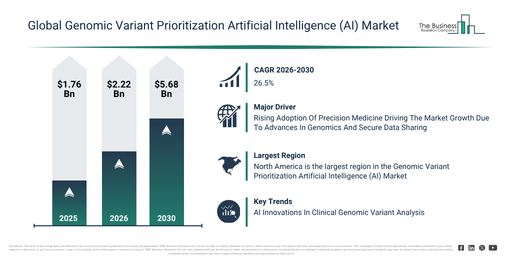
    The market size for genomic variant prioritization artificial intelligence (AI) has shown significant expansion in recent years. This market is projected to increase from $1.76 billion in 2025 to $2.22 billion in 2026, demonstrating a compound annual growth rate (CAGR) of 26.2%. The expansion observed historically can be attributed to the rising adoption of next-generation sequencing, increased accessibility of genomic databases, the growing prevalence of rare genetic disorders, the broadening of bioinformatics research initiatives, and the decreasing cost of genome sequencing.

    The genomic variant prioritization artificial intelligence (AI) market size is forecast to undergo significant expansion over the next few years. It is projected to achieve a valuation of $5.68 billion in 2030, demonstrating a compound annual growth rate (CAGR) of 26.5%. This anticipated growth is primarily driven by factors such as the increasing demand for precision medicine applications, the rising integration of AI within clinical genomics, the proliferation of population genomics programs, escalating investments from pharmaceutical and biotechnology companies, and the ongoing development of scalable cloud-based genomic analytics platforms. Prominent trends throughout the forecast period include the increasing adoption of AI-driven variant filtering platforms, a growing integration of multi-omics data in prioritization models, the expansion of clinical-grade interpretation and reporting tools, a rising need for automated genomic workflow management, and the development of explainable AI models for clinical decision support.

    Get A Free Sample Report With In-Depth Market Insights:

    https://thebusinessresearchcompany.com/sample_request?id=28612885&type=smp&name=Genomic%20Variant%20Prioritization%20Artificial%20Intelligence%20%28AI%29%20Market%20Report%202026&utm_source=Blogs&utm_medium=Paid&utm_campaign=Oct_PR

    Genomic Variant Prioritization Artificial Intelligence (AI) Market Demand Drivers Opening New Revenue Streams

    The increasing use of precision medicine is anticipated to fuel the expansion of the genomic variant prioritization artificial intelligence market in the future. This approach involves tailoring healthcare strategies specifically for individual patients, taking into account their unique genetic profile, environmental factors, and lifestyle choices. The growth of precision medicine is linked to developments in genomics, enabling healthcare professionals to examine genetic profiles and formulate more effective, targeted treatments with reduced side effects. Within research and clinical genomics processes, genomic variant prioritization artificial intelligence assists precision medicine by examining and ordering genetic variants. This helps pinpoint those variants most probable to cause disease or affect how a patient responds to treatment, facilitating more precise therapeutic choices. An example of this trend is seen in February 2024, when the U.S. Food and Drug Administration approved 16 new personalized treatments for rare disease patients in 2023, a significant rise from six in 2022, as reported by the US-based non-profit organization the Personalized Medicine Coalition. This demonstrates the rapid expansion of drug development influenced by precision medicine. Consequently, the increased adoption of precision medicine is a key factor propelling the expansion of the genomic variant prioritization artificial intelligence market.

    Genomic Variant Prioritization Artificial Intelligence (AI) Market Segments: Where Is Growth Concentrated?

    The genomic variant prioritization artificial intelligence (AI) market covered in this report is segmented –

    1) By Component: Software, Hardware, Services

    2) By Deployment Mode: On-Premise Deployment, Cloud-Based Deployment, Hybrid Deployment

    3) By Application: Rare Disease Diagnosis, Oncology And Cancer Genomics, Pharmacogenomics, Prenatal And Reproductive Health Testing, Population Genomics And Research, Infectious Disease Genomics

    4) By End-User: Hospitals And Clinics, Research Institutes, Pharmaceutical And Biotechnology Companies, Other End-Users

    Subsegments:

    1) By Software: Variant Annotation Software, Variant Filtering And Prioritization Software, Clinical Interpretation And Reporting Software, Genomic Data Visualization Software, Workflow Management And Pipeline Automation Software, Database Integration And Knowledgebase Software

    2) By Hardware: High Performance Computing Servers, Graphics Processing Accelerators, Data Storage Systems, Network Infrastructure Equipment, Bioinformatics Workstations

    3) By Services: Genomic Data Analysis Services, System Integration And Deployment Services, Cloud Migration And Infrastructure Management Services, Consulting And Training Services, Maintenance And Technical Support Services

    Genomic Variant Prioritization Artificial Intelligence (AI) Market Trends Powering Strategic Industry Growth

    Prominent companies within the genomic variant prioritization artificial intelligence (AI) market are dedicated to creating novel solutions, including phenotype-driven variant scoring, aiming to enhance the precision and effectiveness of identifying clinically significant genetic variants for diagnostic purposes and tailored treatment plans. This phenotype-driven approach ranks genetic variants according to their probability of accounting for a patient’s manifest clinical characteristics or signs. As an illustration, in October 2024, SeqOne S.A.S., a clinical genomics software firm based in Switzerland, unveiled DiagAI Score, an explainable AI instrument designed for genomic variant prioritization within whole-exome and whole-genome sequencing processes. The system assigns a 0–100 score that evaluates variants based on pathogenicity, phenotype correlation through PhenoGenius, inheritance models, and quality indicators, thereby condensing thousands of variants into a refined list of fewer than 18 potential candidates, achieving 95–96% sensitivity in disease-specific validation studies.

    Genomic Variant Prioritization Artificial Intelligence (AI) Market Leading Players And Competitive Positioning

    Major companies operating in the genomic variant prioritization artificial intelligence (AI) market are F. Hoffmann-La Roche Ltd., Thermo Fisher Scientific Inc., Illumina Inc., QIAGEN N.V., Natera Inc., Myriad Genetics Inc., Tempus AI Inc., ​SOPHiA GENETICS SA, CENTOGENE N.V., Genomenon Inc., Deep Genomics Inc., Fabric Genomics Inc., Strand Life Sciences Pvt. Ltd., PierianDx Inc., Eurofins Scientific SE, Congenica Ltd., SeqOne Genomics SAS, Golden Helix Inc., PhenoTips Inc., Saphetor SA, Euformatics Ltd., enGenome s.r.l., Nostos Genomics Ltd., and Humanome.AI Inc.

    View The Full Genomic Variant Prioritization Artificial Intelligence (AI) Market Report:

    https://thebusinessresearchcompany.com/report/genomic-variant-prioritization-artificial-intelligence-ai-market-report?utm_source=Blogs&utm_medium=Paid&utm_campaign=Oct_PR

    Genomic Variant Prioritization Artificial Intelligence (AI) Market Regional Split: Which Areas Are Fueling Growth?

    North America was the largest region in the genomic variant prioritization artificial intelligence (AI) market in 2025. Asia-Pacific is expected to be the fastest-growing region in the forecast period. The regions covered in the genomic variant prioritization artificial intelligence (AI) market report are Asia-Pacific, South East Asia, Western Europe, Eastern Europe, North America, South America, Middle East, Africa.

    Reach Out To Our Team:

    The Business Research Company: https://www.thebusinessresearchcompany.com/

    Americas: +1 310-496-7795

    Asia: +44 7882 955267 & +91 8897263534

    Europe: +44 7882 955267

    Email us at: marketing@tbrc.info

    Follow us on:

    LinkedIn: https://in.linkedin.com/company/the-business-research-company

    YouTube: https://www.youtube.com/channel/UC24_fI0rV8cR5DxlCpgmyFQ

    Global Market Model: https://www.thebusinessresearchcompany.com/global-market-model
  • Gene Panel Reconciliation Services Market Growth In 2026: Market Size, Key Drivers And Future Outlook

    Built to provide research that’s more actionable and strategically valuable, The Business Research Company’s 2026 market reports include market attractiveness analysis, total addressable market sizing, company benchmarking matrices, interactive Excel dashboards, broader supply chain intelligence, emerging startup tracking, and in-depth product insights.

    Gene Panel Reconciliation Services Market Value Analysis: What Growth Lies Ahead Over The Forecast Period?

    The gene panel reconciliation services market size has experienced swift expansion in recent years. It is projected to increase from $1.34 billion in 2025 to $1.5 billion in 2026, registering a compound annual growth rate (CAGR) of 12.0%. The growth observed in the past can be attributed to the wider adoption of clinical genetic testing, the rising incidence of rare and hereditary diseases, the increased utilization of next-generation sequencing, the growing requirement for accurate variant classification, and the establishment of clinical genomic databases.

    The gene panel reconciliation services market is projected to undergo rapid expansion over the next few years, reaching $2.38 billion in 2030 with a compound annual growth rate (CAGR) of 12.3%. This growth during the forecast period is driven by factors such as the increasing need for precision medicine approaches, greater incorporation of AI in variant interpretation, the broadening of multi-omics data integration, heightened regulatory scrutiny on genetic test standardization, and more collaborations between diagnostic laboratories and research institutions. Prominent trends anticipated in this period encompass a rise in the standardization of genetic testing panels, an increasing demand for cross-platform data harmonization, wider adoption of guideline-aligned variant interpretation, the expansion of disease-specific gene panel optimization, and a growing emphasis on regulatory-compliant genomic reporting.

    Get A Free Sample Report With In-Depth Market Insights:

    https://thebusinessresearchcompany.com/sample_request?id=86527854&type=smp&name=Gene%20Panel%20Reconciliation%20Services%20Market%20Report%202026&utm_source=Blogs&utm_medium=Paid&utm_campaign=Oct_PR

    Gene Panel Reconciliation Services Market Growth Catalysts And Demand Drivers

    Anticipated growth in the gene panel reconciliation services market is linked to the increasing need for precision medicine. This medical approach tailors prevention, diagnosis, and treatment to an individual’s unique genetic profile, environment, and lifestyle factors. The escalating utilization of genetic and molecular information in healthcare is fueling the demand for precision medicine, as it empowers physicians to deliver more specific and efficacious treatments. Gene panel reconciliation services support precision medicine by ensuring genetic test outcomes from diverse origins are accurately interpreted, harmonized, and unified, thereby enabling healthcare providers to make informed, customized treatment choices based on thorough and dependable genomic data. For instance, in February 2024, according to the Personalized Medicine Coalition (PMC), a US-based organization, in 2023, the U.S. Food and Drug Administration (FDA) granted approval to 16 novel personalized therapies designed for rare disease patients, an increase from the six such treatments approved in 2022. Consequently, the increasing demand for precision medicine is a key factor driving the expansion of the gene panel reconciliation services market.

    Gene Panel Reconciliation Services Market Segment Breakdown: Which Categories Lead On Revenue?

    The gene panel reconciliation services market covered in this report is segmented –

    1) By Service Type: Panel Design, Data Harmonization, Variant Interpretation, Reporting, Other Service Types

    2) By Technology: Next Generation Sequencing, Polymerase Chain Reaction, Microarray, Sanger Sequencing

    3) By Application: Oncology, Cardiology, Neurology, Pharmacogenomics, Rare Disease Diagnostics

    4) By End-User: Hospitals And Clinics, Diagnostic Laboratories, Research Institutes, Other End Users

    Subsegments:

    1) By Panel Design: Gene Panel Customization Services, Target Gene Selection Services, Panel Optimization And Validation Services, Clinical Requirement Based Panel Design Services, Disease Specific Gene Panel Development Services

    2) By Data Harmonization: Genomic Data Standardization Services, Cross Platform Data Integration Services, Variant Nomenclature Alignment Services, Reference Database Mapping Services, Multi Source Genomic Data Harmonization Services

    3) By Variant Interpretation: Clinical Variant Classification Services, Pathogenicity Assessment Services, Evidence Based Variant Interpretation Services, Guideline Aligned Variant Interpretation Services, Literature And Database Driven Variant Analysis Services

    4) By Reporting: Clinical Genomic Reporting Services, Standardized Variant Reporting Services, Custom Report Generation Services, Regulatory Compliant Reporting Services, Physician And Laboratory Oriented Reporting Services

    5) By Other Service Types: Quality Assurance And Validation Services, Regulatory And Compliance Support Services, Workflow Integration And Support Services, Ongoing Panel Update And Maintenance Services, Consulting And Advisory Services

    Gene Panel Reconciliation Services Market Competitive Landscape: Which Companies Lead The Industry?

    Major companies operating in the gene panel reconciliation services market are F. Hoffmann-La Roche Ltd., Thermo Fisher Scientific Inc., IQVIA Holdings Inc., Laboratory Corporation of America Holdings, Eurofins Scientific SE, Illumina Inc., Natera Inc., Myriad Genetics Inc., 10x Genomics Inc., NeoGenomics Laboratories Inc., ARUP Laboratories Inc., Invitae Corporation, Ambry Genetics Corporation, GeneDx Inc., GenomOncology Inc., SOPHiA GENETICS SA, Centogene NV, DNAnexus Inc., Genomind Inc., Fabric Genomics Inc., PierianDx Inc., Congenica Ltd.

    View The Full Gene Panel Reconciliation Services Market Report:

    https://thebusinessresearchcompany.com/report/gene-panel-reconciliation-services-market-report?utm_source=Blogs&utm_medium=Paid&utm_campaign=Oct_PR

    Gene Panel Reconciliation Services Market Regional Breakdown: Where Is Demand Concentrated?

    North America was the largest region in the gene panel reconciliation services market in 2025. Asia-Pacific is expected to be the fastest-growing region in the forecast period. The regions covered in the gene panel reconciliation services market report are Asia-Pacific, South East Asia, Western Europe, Eastern Europe, North America, South America, Middle East, Africa.

    Reach Out To Our Team:

    The Business Research Company: https://www.thebusinessresearchcompany.com/

    Americas: +1 310-496-7795

    Asia: +44 7882 955267 & +91 8897263534

    Europe: +44 7882 955267

    Email us at: marketing@tbrc.info

    Follow us on:

    LinkedIn: https://in.linkedin.com/company/the-business-research-company

    YouTube: https://www.youtube.com/channel/UC24_fI0rV8cR5DxlCpgmyFQ

    Global Market Model: https://www.thebusinessresearchcompany.com/global-market-model
  • Stuttering Treatment Market 2026: Market Size, Growth Drivers And Emerging Opportunities

    Stuttering Treatment Market 2026: Market Size, Growth Drivers And Emerging Opportunities

    Backed by market attractiveness analysis, total addressable market sizing, company benchmarking matrices, interactive Excel dashboards, wider supply chain intelligence, emerging startup coverage, and detailed product-level insights, The Business Research Company’s 2026 market reports are designed to offer research that is more actionable and strategically valuable than ever.

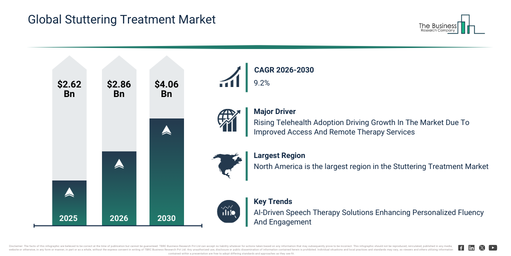
    Stuttering Treatment Market Growth From $2.86 Billion In 2026 To $4.06 Billion By 2030 At A CAGR Of 9.2%

    The stuttering treatment market has seen robust growth in recent years. It is projected to expand from $2.62 billion in 2025 to $2.86 billion in 2026, demonstrating a compound annual growth rate (CAGR) of 8.9%. This historical growth can be attributed to factors such as increased awareness of speech disorders, the expansion of speech therapy clinics, the proliferation of school screening programs, the broader availability of pediatric therapy services, and the early application of fluency shaping methods.

    The stuttering treatment market is anticipated to experience robust expansion in the upcoming years, with its valuation expected to reach $4.06 billion by 2030, growing at a compound annual growth rate (CAGR) of 9.2%. This growth over the forecast period is attributed to several factors including the increasing embrace of teletherapy, the rising incorporation of mental health services into speech care, the proliferation of digital therapy platforms, enhanced insurance coverage for speech therapy, and an uptick in early diagnosis rates. Prominent trends for the forecast period encompass a growing uptake of app-based speech therapy, increased utilization of virtual speech therapy sessions, an expansion of early childhood fluency programs, greater integration of behavioral counseling, and more widespread use of assistive fluency devices.

    Get A Free Sample Report With In-Depth Market Insights:

    https://thebusinessresearchcompany.com/sample_request?id=65680183&type=smp&name=Stuttering%20Treatment%20Market%20Report%202026&utm_source=Blogs&utm_medium=Paid&utm_campaign=Oct_PR

    Stuttering Treatment Market Growth Momentum: What Factors Are Shaping Demand?

    The increasing integration of telehealth services is projected to fuel the expansion of the stuttering treatment market in the coming years. Telehealth involves delivering healthcare support from a distance through various digital communication platforms, such as video consultations, mobile applications, and online therapy platforms. Its prevalence is on the rise as it improves individuals’ ability to access care, especially for those in remote or less-served regions, while simultaneously reducing the need for travel and removing scheduling obstacles. Stuttering treatment is particularly well-suited for telehealth delivery, given that speech therapy sessions can be effectively conducted through live video interactions. Telehealth allows patients to receive continuous, convenient, and tailored speech therapy directly from their homes, which can enhance therapy adherence and broaden access to qualified speech-language pathologists. For instance, in September 2024, the Australian Bureau of Statistics (ABS), Australia’s national statistical agency, indicated that in 2023–24, 83.5% of males reported utilizing telehealth services, an increase from 78.6% in 2022–23. Consequently, the rising uptake of telehealth is propelling the growth of the stuttering treatment market.

    Stuttering Treatment Market Segment Landscape And Growth Outlook

    The stuttering treatment market covered in this report is segmented –

    1) By Treatment Type: Speech Therapy; Digital And App-Based Therapy; Pharmacological Treatment; Assistive Devices And Wearables

    2) By Age Group: Children; Adolescents; Adults

    3) By End User: Speech And Language Clinics; Hospitals And Rehabilitation Centers; Schools And Educational Institutions; Direct-To-Consumer Platforms

    Subsegments:

    1) By Speech Therapy: Articulation Therapy; Fluency Shaping Therapy; Stuttering Modification Therapy; Cognitive Behavioral Therapy

    2) By Digital And App-Based Therapy: Mobile Application Based Therapy; Online Video Therapy Sessions; Virtual Reality Based Therapy; Interactive Software Tools

    3) By Pharmacological Treatment: Anti Anxiety Medication; Dopamine Modulators; Beta Blockers; Other Prescription Drugs

    4) By Assistive Devices And Wearables: Speech Feedback Devices; Delayed Auditory Feedback Devices; Electronic Fluency Devices; Wearable Therapy Devices

    Stuttering Treatment Market Trends Redefining Industry Growth

    Leading companies within the stuttering treatment market are increasingly prioritizing the development of cutting-edge solutions, notably AI-powered speech therapy applications, with the goal of enhancing personalization, improving adherence to therapy, and fostering superior speech fluency outcomes. These AI-powered speech therapy applications function as digital platforms that utilize artificial intelligence to analyze speech patterns, deliver immediate feedback, and provide customized therapy exercises specifically designed to help individuals manage stuttering more effectively. Such innovations offer scalable, continuous intervention outside conventional clinical environments. As an illustration, in December 2025, Iyaso Softwares Private Limited, an India-based health technology company, unveiled Eloquent, an AI-powered speech therapy application crafted to assist individuals who stutter in boosting fluency and speaking confidence through consistent practice. The app integrates evidence-based techniques, including gentle onsets, rhythmic speech, and simulated real-life conversations. The company stated that users who regularly engaged in daily sessions observed measurable improvements in stuttering severity and speaking confidence, thereby highlighting the potential effectiveness of AI-enabled, app-based therapy solutions.

    Stuttering Treatment Market Top Companies Driving Competitive Growth

    Major companies operating in the stuttering treatment market are Mayo Clinic, Cleveland Clinic, Vanderbilt Health, Houston Methodist, Texas Children’s Hospital, Boston Children’s Hospital, Apollo Hospitals Enterprise Limited, Practo Technologies Pvt. Ltd. (Practo), Ruby Hall Clinic, All India Institute of Speech and Hearing (AIISH) Mysore, McGuire Programme, Perley Health, Tender Palm Super Speciality Hospital, American Institute for Stuttering (AIS), Wasatch Speech & Language Center, Michael Palin Centre for Stammering, National Stuttering Association, Speech & Stuttering Institute, Australian Stuttering Research Centre, Curtin Stuttering Treatment Clinic

    View The Full Stuttering Treatment Market Report:

    https://thebusinessresearchcompany.com/report/stuttering-treatment-market-report?utm_source=Blogs&utm_medium=Paid&utm_campaign=Oct_PR

    Stuttering Treatment Market Global Footprint: Which Region Leads The Industry?

    North America was the largest region in the stuttering treatment market in 2025. Asia-Pacific is expected to be the fastest-growing region in the forecast period. The regions covered in the stuttering treatment market report are Asia-Pacific, South East Asia, Western Europe, Eastern Europe, North America, South America, Middle East, Africa.

    Reach Out To Our Team:

    The Business Research Company: https://www.thebusinessresearchcompany.com/

    Americas: +1 310-496-7795

    Asia: +44 7882 955267 & +91 8897263534

    Europe: +44 7882 955267

    Email us at: marketing@tbrc.info

    Follow us on:

    LinkedIn: https://in.linkedin.com/company/the-business-research-company

    YouTube: https://www.youtube.com/channel/UC24_fI0rV8cR5DxlCpgmyFQ

    Global Market Model: https://www.thebusinessresearchcompany.com/global-market-model
  • Sleep Diagnostics Artificial Intelligence Market Analysis: How The Industry Is Evolving Toward A $2.68 Billion Future

    Sleep Diagnostics Artificial Intelligence Market Analysis: How The Industry Is Evolving Toward A $2.68 Billion Future

    Backed by market attractiveness analysis, total addressable market sizing, company benchmarking matrices, interactive Excel dashboards, wider supply chain intelligence, emerging startup coverage, and detailed product-level insights, The Business Research Company’s 2026 market reports are designed to offer research that is more actionable and strategically valuable than ever.

    Sleep Diagnostics Artificial Intelligence Market Size, Value And Growth Trajectory Through 2030

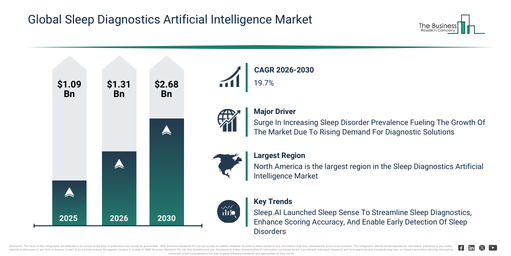
    The sleep diagnostics artificial intelligence market has experienced significant expansion recently. Projections indicate it will escalate from $1.09 billion in 2025 to $1.31 billion in 2026, achieving a compound annual growth rate (CAGR) of 19.4%. This historical growth was primarily driven by an increase in sleep disorder cases, the proliferation of wearable devices, a surge in digital health analytics, more sleep lab studies, and a demand for quicker diagnostic methods.

    The sleep diagnostics artificial intelligence market is anticipated to experience significant expansion over the coming years. Projections indicate it will reach $2.68 billion by 2030, demonstrating a robust compound annual growth rate (CAGR) of 19.7%. This projected increase during the forecast period is driven by several factors, including the uptake of AI clinical decision tools, the growing prevalence of remote sleep monitoring, an increase in home based diagnostics, the emergence of personalized sleep therapy, and its integration with various digital health platforms. Additionally, key trends expected during this period involve AI based sleep stage scoring, wearable integrated sleep analytics, cloud based sleep diagnostic platforms, the development of predictive sleep disorder models, and automated polysomnography interpretation.

    Get A Free Sample Report With In-Depth Market Insights:

    https://thebusinessresearchcompany.com/sample_request?id=38474838&type=smp&name=Sleep%20Diagnostics%20Artificial%20Intelligence%20Market%20Report%202026&utm_source=Blogs&utm_medium=Paid&utm_campaign=Oct_PR

    Sleep Diagnostics Artificial Intelligence Market Growth Backed By Core Demand Fundamentals

    The anticipated expansion of the sleep diagnostics artificial intelligence market is expected to be propelled by the increasing occurrence of sleep disorders. These conditions are defined as medical issues that disrupt typical sleep patterns, affecting the quality, timing, or duration of sleep and leading to daytime discomfort or reduced functioning. This rising prevalence is attributed to factors such as aging populations, lifestyle-related stress, and a greater awareness of sleep health, which collectively have boosted screening, diagnosis, and reporting. Sleep diagnostics artificial intelligence assists in tackling sleep disorders by enabling automated, accurate, and scalable analysis of sleep data, thus supporting early detection, personalized treatment, and enhanced clinical outcomes. For example, in November 2023, NHS England indicated that 64.9% of young people aged 17 to 23 reported experiencing sleep problems three or more times in the previous week, underscoring a growing burden of sleep-related issues and an increased necessity for diagnostic solutions. As a result, the rising prevalence of sleep disorders stands as a primary driver of growth in the sleep diagnostics artificial intelligence market.

    Sleep Diagnostics Artificial Intelligence Market Segmentation: How Does The Market Break Down By Category?

    The sleep diagnostics artificial intelligence market covered in this report is segmented –

    1) By Component: Software; Hardware; Services

    2) By Technology: Machine Learning; Deep Learning; Natural Language Processing; Ensemble Learning

    3) By Deployment Mode: On Premises; Cloud Based

    4) By Application: Sleep Apnea; Insomnia; Narcolepsy; Restless Legs Syndrome; Circadian Rhythm Disorders; Other Applications

    5) By End User: Hospitals; Sleep Centers And Clinics; Home Care Settings; Research Institutes; Other End Users

    Subsegments:

    1) By Software: Sleep Scoring Software; Predictive Analytics Software; Electronic Health Record Integration Software

    2) By Hardware: Wearable Devices; Portable Diagnostic Devices; In Lab Monitoring Equipment

    3) By Services: Consulting Services; Implementation Services; Maintenance And Support Services

    Sleep Diagnostics Artificial Intelligence Market Growth Trends Reshaping The Competitive Landscape

    Major companies within the sleep diagnostics artificial intelligence market are concentrating on technological enhancements in automated sleep scoring, aiming to decrease clinician dependency and diagnostic variability, primarily through frictionless sleep monitoring technology, to secure a competitive advantage. Frictionless sleep monitoring technology is defined as a contactless, AI-powered system designed to automatically capture and analyze sleep patterns, stages, and disturbances without the need for wearable devices, thereby enabling accurate and convenient sleep diagnostics. As an illustration, in December 2025, Sleep.ai, a U.S.-based digital health company, launched Sleep Sense, a frictionless sleep monitoring technology that transforms any smartphone into a privacy-aware sleep sensor, allowing for near-universal sleep data capture without wearables or manual input. This system utilizes advanced AI boundary detection alongside hybrid spatio-temporal models to precisely identify bedtime and wake time, offering accuracy comparable to PSG-validated trackers. Moreover, through its multimodal contextual modeling, it analyzes various signals, including motion, ambient light, and device usage patterns, to generate reliable sleep insights even when data is noisy or limited.

    Sleep Diagnostics Artificial Intelligence Market Industry Leaders And Competitive Landscape

    Major companies operating in the sleep diagnostics artificial intelligence market are ResMed Inc., Neurosoft Ltd., Nox Health Inc., Itamar Medical Ltd., Compumedics Limited, Beacon Biosignals Inc., Onera Health Inc., EnsoData Inc., SleepImage Inc., Zeto Inc., HoneyNaps Co. Ltd., SOMNOmedics GmbH, SleepScore Labs, Nox Medical A/S, Sleep.AI Inc., Sleepacta S.r.l.

    View The Full Sleep Diagnostics Artificial Intelligence Market Report:

    https://thebusinessresearchcompany.com/report/sleep-diagnostics-artificial-intelligence-market-report?utm_source=Blogs&utm_medium=Paid&utm_campaign=Oct_PR

    Sleep Diagnostics Artificial Intelligence Market Regional Analysis And Top Geography

    North America was the largest region in the sleep diagnostics artificial intelligence (AI) market in 2025. Asia-Pacific is expected to be the fastest-growing region in the forecast period. The regions covered in the sleep diagnostics artificial intelligence market report are Asia-Pacific, South East Asia, Western Europe, Eastern Europe, North America, South America, Middle East, Africa.

    Reach Out To Our Team:

    The Business Research Company: https://www.thebusinessresearchcompany.com/

    Americas: +1 310-496-7795

    Asia: +44 7882 955267 & +91 8897263534

    Europe: +44 7882 955267

    Email us at: marketing@tbrc.info

    Follow us on:

    LinkedIn: https://in.linkedin.com/company/the-business-research-company

    YouTube: https://www.youtube.com/channel/UC24_fI0rV8cR5DxlCpgmyFQ

    Global Market Model: https://www.thebusinessresearchcompany.com/global-market-model

  • Retinal Detachment Diagnostic Market Outlook From 2026 To 2030: Key Growth Factors And Future Opportunities

    Retinal Detachment Diagnostic Market Outlook From 2026 To 2030: Key Growth Factors And Future Opportunities

    Featuring market attractiveness scoring, total addressable market sizing, company benchmarking matrices, interactive Excel dashboards, deeper supply chain intelligence, emerging startup tracking, and granular product-level insights, The Business Research Company’s 2026 market reports are built to deliver research that is both more actionable and more strategically valuable.

    Retinal Detachment Diagnostic Market Forecast: What Value Will The Market Reach By 2030?

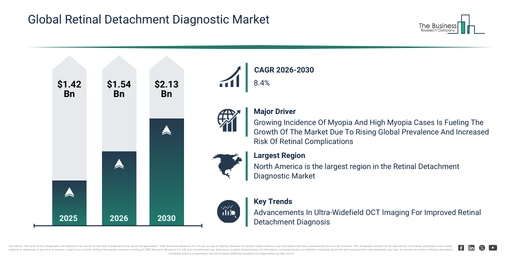
    The retinal detachment diagnostic market size has shown robust growth over recent years. It is projected to increase from $1.42 billion in 2025 to $1.54 billion in 2026, at a compound annual growth rate (CAGR) of 8.2%. The market’s expansion in the past period is attributed to an escalation in diabetic eye disease cases, an increase in ophthalmic imaging centers, heightened awareness of retinal disorders, the expansion of hospital eye clinics, and the early adoption of OCT scanners.

    The retinal detachment diagnostic market is projected to experience substantial growth over the next few years. It is forecasted to expand to $2.13 billion in 2030, showing a compound annual growth rate (CAGR) of 8.4%. This anticipated expansion can be attributed to an increasing aging population, a rising need for early vision diagnosis, the growth of remote eye screening initiatives, increased investment in ophthalmic imaging, and a higher prevalence of myopia and diabetes. Significant trends anticipated during the forecast period include the expanding application of optical coherence tomography imaging, greater acceptance of teleophthalmology screening services, the deployment of digital fundus photography systems, increased utilization of AI-assisted retinal image analysis, and a higher deployment of portable ophthalmic ultrasound devices.

    Get A Free Sample Report With In-Depth Market Insights:

    https://thebusinessresearchcompany.com/sample_request?id=71256914&type=smp&name=Retinal%20Detachment%20Diagnostic%20Market%20Report%202026&utm_source=Blogs&utm_medium=Paid&utm_campaign=Oct_PR

    Retinal Detachment Diagnostic Market Growth Momentum: What Factors Are Shaping Demand?

    An increasing occurrence of myopia and high myopia conditions is projected to drive expansion in the retinal detachment diagnostic market moving ahead. These conditions denote the rising commonness of nearsightedness and acute nearsightedness, which hinder clear distant sight and heighten the potential for significant ocular issues. The surge in myopia and high myopia cases, attributed to extended screen time and less outdoor engagement, is intensifying ocular strain, resulting in earlier development and quicker advancement of refractive impairments. Retinal detachment diagnostics assist in managing myopia and high myopia by facilitating the prompt identification of retinal problems, backing opportune medical intervention, and lessening the likelihood of profound vision impairment. For example, data from July 2025, provided by Woo University, a US-based non-profit organization, indicates that 30% of the global population is currently myopic, a figure anticipated to climb to almost 50% by 2050, impacting approximately 5 billion individuals. Consequently, the escalating incidence of myopia and high myopia cases is fueling the expansion of the retinal detachment diagnostic market.

    Retinal Detachment Diagnostic Market Segment Analysis Spotlighting Growth Areas

    The retinal detachment diagnostic market covered in this report is segmented –

    1) By Disease Type: Tractional Retinal Detachment; Rhegmatogenous Retinal Detachment

    2) By Diagnostic Type: Fundus Photography; Ophthalmoscopy; Optical Coherence Tomography Scanners; Fundus Cameras; Ophthalmic Ultrasound Imaging Systems; Ophthalmic A Scan Ultrasound; Ophthalmic B Scan Ultrasound

    3) By Technology: Imaging Based Diagnostics; Non Imaging Clinical Examination; Advanced Digital Ophthalmic Systems

    4) By Application: Vitreo Retinal Disorders; Cataract; Glaucoma; Refractive Disorders

    5) By End Use: Hospitals And Eye Clinics; Academic And Research Laboratories; Other End Uses

    Subsegments:

    1) By Tractional Retinal Detachment: Diabetic Tractional Retinal Detachment; Proliferative Vitreoretinopathy Related Tractional Retinal Detachment; Inflammatory Tractional Retinal Detachment; Trauma Induced Tractional Retinal Detachment; Post Surgical Tractional Retinal Detachment; Neovascularization Associated Tractional Retinal Detachment

    2) By Rhegmatogenous Retinal Detachment: Superior Break Rhegmatogenous Retinal Detachment; Inferior Break Rhegmatogenous Retinal Detachment; Giant Retinal Tear Related Rhegmatogenous Retinal Detachment; Lattice Degeneration Related Rhegmatogenous Retinal Detachment; Trauma Related Rhegmatogenous Retinal Detachment; Myopic Degeneration Related Rhegmatogenous Retinal Detachment; Post Cataract Surgery Rhegmatogenous Retinal Detachment

    Retinal Detachment Diagnostic Market Trends Redefining Industry Growth

    Major companies in the retinal detachment diagnostic market are concentrating on developing advanced imaging solutions, such as ultra-widefield optical coherence tomography (OCT), to improve detection accuracy, enhance visualization of the peripheral retina, and support the early identification of retinal tears and detachments. Ultra-widefield OCT is an imaging technology that captures high-resolution, wide-angle views of the retina, enabling clinicians to identify subtle or peripheral retinal abnormalities that could otherwise be overlooked. For instance, in March 2025, Optos PLC, a UK-based retinal imaging company, launched MonacoPro, its next-generation ultra-widefield SLO and spectral domain retinal imaging system. Created to assist eye care professionals with better diagnostic precision and workflow efficiency, MonacoPro includes high-quality OCT imaging, integrated 200° optomap visualization, and the new AreaAssist tool, which automates area measurement and analysis, collectively boosting clinicians’ ability to detect retinal detachments and other ocular pathologies.

    Retinal Detachment Diagnostic Market Competitive Overview And Top Companies

    Major companies operating in the retinal detachment diagnostic market are Canon Inc., Essilor International S.A., NIDEK Co Ltd., Alcon Inc., Nikon Corporation, Kowa Company Ltd., Carl Zeiss Meditec AG, Topcon Corporation, Tomey Corporation, Forus Health Pvt Ltd., Reichert Technologies, Optos plc, Revenio Group, Visionix USA Inc., Haag-Streit Group, Optomed Plc, Remidio Innovative Solutions, Intelligent Retinal Imaging Systems (IRIS), Santec Corporation, and D‑EYE Srl.

    View The Full Retinal Detachment Diagnostic Market Report:

    https://thebusinessresearchcompany.com/report/retinal-detachment-diagnostic-market-report?utm_source=Blogs&utm_medium=Paid&utm_campaign=Oct_PR

    Retinal Detachment Diagnostic Market Leading Geography: Which Region Contributes The Most Revenue?

    North America was the largest region in the retinal detachment diagnostic market in 2025. Asia-Pacific is expected to be the fastest-growing region in the forecast period. The regions covered in the retinal detachment diagnostic market report are Asia-Pacific, South East Asia, Western Europe, Eastern Europe, North America, South America, Middle East, Africa.

    Reach Out To Our Team:

    The Business Research Company: https://www.thebusinessresearchcompany.com/

    Americas: +1 310-496-7795

    Asia: +44 7882 955267 & +91 8897263534

    Europe: +44 7882 955267

    Email us at: marketing@tbrc.info

    Follow us on:

    LinkedIn: https://in.linkedin.com/company/the-business-research-company

    YouTube: https://www.youtube.com/channel/UC24_fI0rV8cR5DxlCpgmyFQ

    Global Market Model: https://www.thebusinessresearchcompany.com/global-market-model