Category: Healthcare Services

  • Mobile Health (mHealth) Ecosystem Market Growth Outlook: Why Analysts Expect Continued Expansion

    Mobile Health (mHealth) Ecosystem Market Growth Outlook: Why Analysts Expect Continued Expansion

    Backed by market attractiveness analysis, total addressable market sizing, company benchmarking matrices, interactive Excel dashboards, wider supply chain intelligence, emerging startup coverage, and detailed product-level insights, The Business Research Company’s 2026 market reports are designed to offer research that is more actionable and strategically valuable than ever.

    Mobile Health (mHealth) Ecosystem Market CAGR Outlook And Future Development

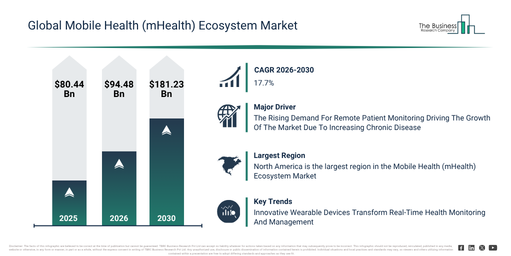
    The mobile health (mHealth) ecosystem market has experienced considerable growth in recent years. Its size is anticipated to escalate from $80.44 billion in 2025 to $94.48 billion in 2026, achieving a compound annual growth rate (CAGR) of 17.4%. Historically, this expansion has been driven by several factors, including the global rise in smartphone penetration, the increasing prevalence of chronic diseases, a greater acceptance of telehealth, the expansion of healthcare digitization efforts, and a growing patient demand for convenient healthcare access.

    The mobile health (mHealth) ecosystem market size is poised for significant expansion in the next few years. It is projected to achieve a valuation of $181.23 billion by 2030, exhibiting a compound annual growth rate (CAGR) of 17.7%. This anticipated growth is fueled by factors such as the increasing integration of AI-powered health analytics, a rising demand for personalized mobile healthcare solutions, the proliferation of 5G-enabled health services, heightened investment in digital health infrastructure, and the expanded use of predictive health monitoring tools. Notable trends for this forecast period encompass the wider adoption of remote patient monitoring applications, greater synergy between wearable health devices and mobile platforms, an escalating need for chronic disease management solutions, the broadening of telemedicine and virtual consultation services, and an increased focus on interoperable health data systems.

    Get A Free Sample Report With In-Depth Market Insights:

    https://thebusinessresearchcompany.com/sample_request?id=71810004&type=smp&name=Mobile%20Health%20%28mHealth%29%20Ecosystem%20Market%20Report%202026&utm_source=Blogs&utm_medium=Paid&utm_campaign=Oct_PR

    Mobile Health (mHealth) Ecosystem Market Growth Factors: What’s Supporting Expansion?

    The growing requirement for remote patient monitoring (RPM) is anticipated to boost the development of the mobile health (mHealth) ecosystem market. RPM involves employing digital tools to collect and transmit patients’ health information from distant locations to healthcare providers for continuous monitoring, management, and prompt intervention. The need for RPM is increasing due to the rising occurrence of chronic conditions, particularly among high-risk and aging populations, where consistent health tracking supports more effective management of ailments such as diabetes, heart disease, and hypertension outside conventional clinical settings. The mHealth ecosystem facilitates RPM by integrating wearable devices, mobile applications, and cloud-based analytics platforms to support uninterrupted data collection, remote clinical oversight, and care coordination. For instance, in August 2025, according to the Office of Inspector General, a US-based independent organization, the number of Medicare enrollees using remote patient monitoring reached nearly 1 million in 2024, representing a 27% increase compared to 2023. Therefore, the escalating demand for remote patient monitoring is fueling the growth of the mobile health (mHealth) ecosystem market.

    Mobile Health (mHealth) Ecosystem Market Segment Breakdown: Which Categories Lead On Revenue?

    The mobile health (mHealth) ecosystem market covered in this report is segmented –

    1) By Component: Devices, Software, Services

    2) By Business Model: Direct-to-Consumer, Business-to-Business, Business-to-Government

    3) By Deployment Mode: On-Premises, Cloud

    4) By Application: Chronic Disease Management, Fitness And Wellness, Remote Monitoring, Diagnostics, Other Applications

    5) By End-User: Hospitals, Clinics, Home Healthcare, Other End-Users

    Subsegments:

    1) By Devices: Wearable Devices, Portable Monitoring Devices, Diagnostic Devices, Fitness Trackers

    2) By Software: Health Management Applications, Remote Patient Monitoring Platforms, Electronic Health Records Software, Telemedicine Software

    3) By Services: Remote Monitoring Services, Data Analytics Services, Healthcare Consultation Services, Disease Management Services

    Mobile Health (mHealth) Ecosystem Market Industry Trends: What’s Reshaping Demand?

    Key companies operating within the mobile health (mHealth) ecosystem market are prioritizing the development of cutting-edge products, such as wearable health monitoring devices, to enable continuous tracking and management of users’ health and well-being. Wearable health monitoring devices are electronic gadgets affixed to the body that consistently monitor and document essential health metrics, including heart rate, activity levels, sleep patterns, and blood oxygen. For example, in September 2024, Apple Inc., a US-based consumer technology company, released the Apple Watch and AirPods Pro 2, introducing wearable devices equipped with advanced health-monitoring functionalities. The Apple Watch launched sleep apnea notifications by employing a breathing disturbances metric to detect interruptions in breathing during sleep, assisting users in identifying a condition that impacts more than a billion people globally. Simultaneously, AirPods Pro 2 improved hearing health with features like loud sound reduction, a clinical-grade hearing test, and an over-the-counter hearing aid alternative for individuals with mild to moderate hearing loss.

    Mobile Health (mHealth) Ecosystem Market Competitive Overview And Top Companies

    Major companies operating in the mobile health (mHealth) ecosystem market are Apple Inc., Samsung Electronics Co Ltd., AT And T Inc., Huawei Technologies Co Ltd., Vodafone Group Plc, Xiaomi Corporation, Medtronic PLC, Koninklijke Philips N.V, GE HealthCare Technologies Inc, Omron Healthcare Inc., Garmin Ltd., ResMed Inc., Dexcom Inc., Steelcase Inc., Masimo Corporation, Polar Electro Oy, Whoop Inc., AliveCor Inc., iHealth Lab Inc., AirStrip Technologies Inc., and Oura Health Ltd.

    View The Full Mobile Health (mHealth) Ecosystem Market Report:

    https://thebusinessresearchcompany.com/report/mobile-health-mhealth-ecosystem-market-report?utm_source=Blogs&utm_medium=Paid&utm_campaign=Oct_PR

    Mobile Health (mHealth) Ecosystem Market Leading Geography: Which Region Contributes The Most Revenue?

    North America was the largest region in the mobile health (mHealth) ecosystem market in 2025. Asia-Pacific is expected to be the fastest-growing region in the forecast period. The regions covered in the mobile health (mHealth) ecosystem market report are Asia-Pacific, South East Asia, Western Europe, Eastern Europe, North America, South America, Middle East, Africa.

    Reach Out To Our Team:

    The Business Research Company: https://www.thebusinessresearchcompany.com/

    Americas: +1 310-496-7795

    Asia: +44 7882 955267 & +91 8897263534

    Europe: +44 7882 955267

    Email us at: marketing@tbrc.info

    Follow us on:

    LinkedIn: https://in.linkedin.com/company/the-business-research-company

    YouTube: https://www.youtube.com/channel/UC24_fI0rV8cR5DxlCpgmyFQ

    Global Market Model: https://www.thebusinessresearchcompany.com/global-market-model
  • Mental Health-Sleep Overlap Market Forecast To Reach $8.44 Billion By 2030: Key Trends Explained

    Mental Health-Sleep Overlap Market Forecast To Reach $8.44 Billion By 2030: Key Trends Explained

    Featuring market attractiveness scoring, total addressable market sizing, company benchmarking matrices, interactive Excel dashboards, deeper supply chain intelligence, emerging startup tracking, and granular product-level insights, The Business Research Company’s 2026 market reports are built to deliver research that is both more actionable and more strategically valuable.

    Mental Health-Sleep Overlap Market Value Analysis: What Growth Lies Ahead Over The Forecast Period?

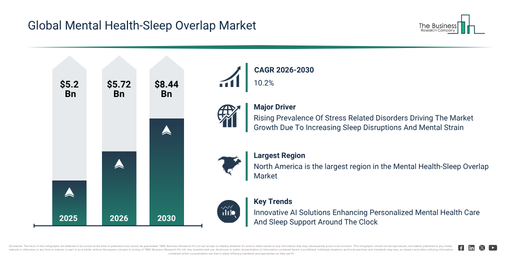
    The mental health-sleep overlap market has shown strong expansion in recent years. It is forecast to rise from $5.2 billion in 2025 to $5.72 billion in 2026, achieving a compound annual growth rate (CAGR) of 10.0%. This historical growth can be attributed to factors such as the increasing prevalence of anxiety and depression disorders, growing recognition of sleep disorders, wider acceptance of behavioral therapy, the rise of telehealth services for mental health, and enhanced research into sleep and circadian rhythm science.

    The mental health-sleep overlap market is projected to experience substantial expansion in the coming years, with its size forecast to reach $8.44 billion in 2030, growing at a compound annual growth rate (CAGR) of 10.2%. This anticipated growth during the forecast period can be attributed to various factors, including the increasing adoption of personalized sleep-mental health treatment plans, greater use of AI-driven behavioral analytics, rising employer investment in mental wellness programs, the expansion of remote patient monitoring technologies, and the increasing integration of sleep biomarkers in psychiatric care. Key trends expected over this period involve a greater integration of sleep assessment into mental health screening, the rising adoption of combined CBT-I and CBT treatment programs, a growing demand for digital tools to monitor sleep and mood, the expansion of tele-psychiatry services addressing sleep disorders, and an increased focus on preventive mental health and sleep wellness programs.

    Get A Free Sample Report With In-Depth Market Insights:

    https://thebusinessresearchcompany.com/sample_request?id=80399960&type=smp&name=Mental%20Health-Sleep%20Overlap%20Market%20Report%202026&utm_source=Blogs&utm_medium=Paid&utm_campaign=Oct_PR

    Mental Health-Sleep Overlap Market Development Factors: What’s Supporting Demand?

    The increasing occurrence of stress-related conditions is anticipated to fuel the expansion of the mental health–sleep overlap market in the future. These disorders are defined as states where prolonged encounters with psychological or environmental pressures lead to manifestations such as anxiety, depression, difficulties in emotional regulation, and hindered daily activities. Their incidence is growing because of ongoing exposure to persistent psychosocial stressors, including work pressures, financial strain, social challenges, and lifestyle changes that surpass individual coping abilities and detrimentally impact mental well-being. A strong connection exists between stress-related conditions and sleep disturbances, given that chronic stress interferes with neurobiological functions crucial for mood control and circadian cycles, resulting in issues like insomnia, fragmented sleep, or hypersomnia. As an illustration, data from May 2024, stemming from the 2024 annual mental health poll carried out by the American Psychiatric Association, a US-based organization, indicated that in 2024, 43% of adults reported elevated anxiety levels compared to the prior year, an increase from 37% in 2023 and 32% in 2022. Consequently, the expanding occurrence of stress-related conditions is propelling the growth of the mental health–sleep overlap market.

    Mental Health-Sleep Overlap Market Segment Landscape: Which Areas Lead Development?

    The mental health-sleep overlap market covered in this report is segmented –

    1) By Treatment And Service Mix: Psychiatric Pharmacotherapy With Sleep Impact, Cognitive Behavioral Therapy (CBT-I) + Cognitive Behavioral Therapy (CBT) Integrated Programs, Tele-Psychiatry Or Therapy Services, Digital Monitoring And Relapse Prevention Tools, Adjunct Devices

    2) By Age Group: Pediatric, Adult, Geriatric

    3) By Delivery Mode: Mobile Applications, Web-Based Platforms, Telehealth Integrations

    4) By Application: Preventive Healthcare And Wellness, Clinical Treatment And Disease Management, Long-Term Care And Assisted Living

    5) By End User Or Channel: Outpatient Mental Health Clinics, Telehealth Platforms, Hospitals Or Behavioral Health Centers, Employer Or Payer Programs, Other End Users

    Subsegments:

    1) By Psychiatric Pharmacotherapy With Sleep Impact: Antidepressant Medications, Anxiolytic Medications, Mood Stabilizing Agents, Atypical Antipsychotic Medications, Sedative Hypnotic Medications

    2) By Cognitive Behavioral Therapy (CBT-I) + Cognitive Behavioral Therapy (CBT) Integrated Programs: Sleep Restriction Therapy Programs, Stimulus Control Therapy Programs, Cognitive Restructuring Therapy, Relaxation Training Programs, Mindfulness-Based Behavioral Therapy

    3) By Tele-Psychiatry Or Therapy Services: Video Consultation Services, Audio-Based Therapy Sessions, Text-Based Counseling Platforms, Remote Psychological Assessment Services, Virtual Group Therapy Programs

    4) By Digital Monitoring And Relapse Prevention Tools: Sleep Pattern Tracking Software, Mood Monitoring Applications, Behavioral Analytics Platforms, Predictive Risk Assessment Tools, Remote Patient Monitoring Dashboards

    5) By Adjunct Devices: Light Therapy Lamps, Smart Sleep Tracking Watches, Biometric Monitoring Bands, Heart Rate Variability Sensors, Circadian Rhythm Regulation Devices

    Mental Health-Sleep Overlap Market Transformation Trends: What Innovations Are Driving Change?

    Leading companies in the mental health-sleep overlap sector are concentrating on developing advanced solutions, such as artificial intelligence (AI)-powered mental health platforms, to deliver personalized, continuous support for issues related to stress and sleep. These AI-driven mental health platforms are digital tools that utilize AI to offer individualized mental health assistance, including real-time advice, coping mechanisms, and symptom monitoring, thereby assisting users in managing stress, improving sleep, and accessing care at any time without needing to wait for in-person appointments. For instance, in October 2025, Lyra Health, a US-based digital mental health company, introduced Lyra AI, a clinical-grade AI platform engineered to provide personalized mental health support. Lyra AI integrates sophisticated conversational AI with the existing Lyra Empower platform to offer 24/7 guidance for difficulties like stress, burnout, and sleep disturbances. The platform blends digital skill-building exercises with live provider sessions, incorporates a risk-flagging system that escalates urgent situations to human clinicians, and adheres to stringent clinical and ethical benchmarks through its Polaris Principles. Its applications include enhancing sleep quality, alleviating stress, and supporting overall mental wellness, delivering scalable, evidence-based care while maintaining human oversight.

    Mental Health-Sleep Overlap Market Leading Players And Competitive Positioning

    Major companies operating in the mental health-sleep overlap market are Johnson & Johnson, Koninklijke Philips N.V., Teladoc Health, Lyra Health Inc., Headspace Health Inc., Included Health Inc., Talkspace Inc., Spring Health, Whoop Inc., Transcarent Inc., Calm.com Inc., Modern Health Inc., Unmind Ltd., Big Health Inc., Click Therapeutics Inc., Welldoc Inc., Quartet Health Inc., Meru Health Inc., Ieso Digital Health Ltd., Wysa LTD., Oura Health Oy.

    View The Full Mental Health-Sleep Overlap Market Report:

    https://thebusinessresearchcompany.com/report/mental-health-sleep-overlap-market-report?utm_source=Blogs&utm_medium=Paid&utm_campaign=Oct_PR

    Mental Health-Sleep Overlap Market Regional Split: Which Areas Are Fueling Growth?

    North America was the largest region in the mental health-sleep overlap market in 2025. Asia-Pacific is expected to be the fastest-growing region in the forecast period. The regions covered in the mental health-sleep overlap market report are Asia-Pacific, South East Asia, Western Europe, Eastern Europe, North America, South America, Middle East, Africa.

    Reach Out To Our Team:

    The Business Research Company: https://www.thebusinessresearchcompany.com/

    Americas: +1 310-496-7795

    Asia: +44 7882 955267 & +91 8897263534

    Europe: +44 7882 955267

    Email us at: marketing@tbrc.info

    Follow us on:

    LinkedIn: https://in.linkedin.com/company/the-business-research-company

    YouTube: https://www.youtube.com/channel/UC24_fI0rV8cR5DxlCpgmyFQ

    Global Market Model: https://www.thebusinessresearchcompany.com/global-market-model
  • Low-Dose Computed Tomography (CT) Lung Screening Programs Market Size Forecast: How The Industry Is Expected To Grow From 2026 To 2030

    Low-Dose Computed Tomography (CT) Lung Screening Programs Market Size Forecast: How The Industry Is Expected To Grow From 2026 To 2030

    Backed by market attractiveness analysis, total addressable market sizing, company benchmarking matrices, interactive Excel dashboards, wider supply chain intelligence, emerging startup coverage, and detailed product-level insights, The Business Research Company’s 2026 market reports are designed to offer research that is more actionable and strategically valuable than ever.

    Low-Dose Computed Tomography (CT) Lung Screening Programs Market Growth Potential: How Will Market Size Shift Through 2030?

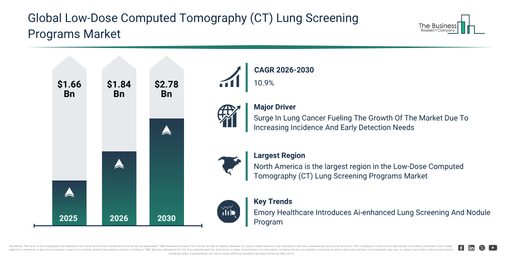
    The low-dose computed tomography (CT) lung screening programs market has witnessed rapid growth in recent years. Its size is expected to increase from $1.66 billion in 2025 to $1.84 billion in 2026, achieving a compound annual growth rate (CAGR) of 10.7%. This historical expansion can be attributed to the rising prevalence of lung cancer cases, increasing awareness about early cancer detection, growing recommendations from clinical guidelines, the expansion of hospital-based screening infrastructure, and increasing healthcare reimbursement support.

    The low-dose computed tomography (CT) lung screening programs market is poised for significant expansion in the coming years. This market is projected to reach $2.78 billion by 2030, exhibiting a compound annual growth rate (CAGR) of 10.9%. Factors contributing to this growth over the forecast period include the increasing integration of AI in CT screening, the broadening of precision oncology efforts, a surge in investments in mobile healthcare models, the greater incorporation of telehealth for consultations, and the development of more public-private collaborations in preventive health. Key developments anticipated during this timeframe involve an increase in government-backed lung cancer screening programs, a higher uptake of mobile screening facilities in remote regions, the enhanced bundling of smoking cessation support with screening, a greater focus on identifying patients based on risk, and the broadening of services for radiology interpretation and subsequent monitoring.

    Get A Free Sample Report With In-Depth Market Insights:

    https://thebusinessresearchcompany.com/sample_request?id=64834292&type=smp&name=Low-Dose%20Computed%20Tomography%20%28CT%29%20Lung%20Screening%20Programs%20Market%20Report%202026&utm_source=Blogs&utm_medium=Paid&utm_campaign=Oct_PR

    Low-Dose Computed Tomography (CT) Lung Screening Programs Market Growth Drivers: What’s Behind The Acceleration?

    The increasing prevalence of lung cancer is a significant factor propelling the expansion of the low-dose computed tomography (CT) lung screening programs market. This disease, a malignancy developing in lung tissue, involves the uncontrolled proliferation of abnormal cells, frequently showing no symptoms until its later stages. Its rising occurrence is largely attributable to ongoing tobacco consumption, supplemented by other risk factors such as exposure to environmental pollutants and workplace carcinogens. Low-dose CT lung screening programs are vital for managing lung cancer, facilitating the early identification of tumors, especially in high-risk individuals like long-term smokers. As an illustration, the Australian Government reported in February 2026 that approximately 15,108 new instances of lung cancer were identified in 2025, constituting 9.0% of all new cancer diagnoses. Consequently, the growing impact of lung cancer is fostering the development of the low-dose computed tomography (CT) lung screening programs market.

    Low-Dose Computed Tomography (CT) Lung Screening Programs Market Segment Breakdown: Which Categories Lead On Revenue?

    The low-dose computed tomography (CT) lung screening programs market covered in this report is segmented –

    1) By Type: Hospital-Based, Independent Imaging Centers, Mobile Screening Units

    2) By Service: Screening Services, Diagnostic Follow-Up Services, Radiology Interpretation Services, Patient Identification And Risk Assessment Services, Program Management Services, Telehealth And Remote Consultation Services

    3) By Technology: Standard Low-Dose CT Screening, AI-Assisted/Computer-Aided Detection (CAD) Screening, Integrated Smoking Cessation And Screening Programs

    4) By Application: Early Detection, Risk Assessment, Follow-Up Monitoring

    5) By End User: Hospitals And Multi-Specialty Clinics, Standalone Diagnostic Imaging Centers, Mobile Screening Service Providers, Government And Public Health Agencies, Private Healthcare Networks And Insurance Providers, Employer And Corporate Wellness Programs, Academic And Research Institutions, Community Health Centers

    Subsegments:

    1) By Hospital-Based: Outpatient Department, Inpatient Department, Radiology Department

    2) By Independent Imaging Centers: Standalone Imaging Clinics, Diagnostic Centers, Specialized Lung Screening Centers

    3) By Mobile Screening Units: Bus-Based Screening Units, Van-Based Screening Units, Temporary Pop-Up Screening Units

    Low-Dose Computed Tomography (CT) Lung Screening Programs Market Trends: What’s Defining The Industry’s Next Phase?

    Leading companies in the low-dose computed tomography (CT) lung screening programs market are concentrating on developing advanced solutions, notably artificial intelligence (AI)–assisted nodule detection, to improve early cancer discovery, enhance diagnostic precision, and streamline patient management. AI-assisted nodule detection specifically utilizes machine-learning algorithms within lung screening programs to automatically identify, characterize, and prioritize pulmonary nodules found on low-dose CT scans, enabling prompt follow-up and intervention. As an illustration, in December 2025, Emory Healthcare, a US-based health system, unveiled the Emory Healthcare Lung Screening and Nodule Program, which incorporates low-dose CT screening with AI-enhanced imaging technology. This program supports multidisciplinary care by integrating advanced diagnostic and treatment options, including robot-assisted bronchoscopy, minimally invasive lung cancer surgery, and coordinated care navigation, thereby facilitating early diagnosis, personalized treatment planning, and improved patient outcomes across several metro Atlanta locations.

    Low-Dose Computed Tomography (CT) Lung Screening Programs Market Key Players Shaping Industry Direction

    Major companies operating in the low-dose computed tomography (CT) lung screening programs market are Hitachi Medical Systems America Inc., Medtronic plc, Siemens Healthineers AG, Koninklijke Philips N.V., GE HealthCare Inc., Mayo Clinic, Columbia University Herbert Irving Comprehensive Cancer Center, Duke University Health System, Emory Healthcare, Canon Medical Systems Corporation, RadNet Inc., University of Tennessee Medical Center, McLeod Health, Holy Cross Health, Lima Memorial Health System, Memorial Sloan Kettering Cancer Center, Independence Health System, Weill Cornell Medicine & NewYork-Presbyterian Mobile Unit, Optellum Ltd., 4DMedical Pty Ltd.

    View The Full Low-Dose Computed Tomography (CT) Lung Screening Programs Market Report:

    https://thebusinessresearchcompany.com/report/low-dose-computed-tomography-ct-lung-screening-programs-market-report?utm_source=Blogs&utm_medium=Paid&utm_campaign=Oct_PR

    Low-Dose Computed Tomography (CT) Lung Screening Programs Market Regional Analysis: Which Geography Leads On Revenue?

    North America was the largest region in the low-dose computed tomography (CT) lung screening programs market in 2025. Asia-Pacific is expected to be the fastest-growing region in the forecast period. The regions covered in the low-dose computed tomography (CT) lung screening programs market report are Asia-Pacific, South East Asia, Western Europe, Eastern Europe, North America, South America, Middle East, Africa.

    Reach Out To Our Team:

    The Business Research Company: https://www.thebusinessresearchcompany.com/

    Americas: +1 310-496-7795

    Asia: +44 7882 955267 & +91 8897263534

    Europe: +44 7882 955267

    Email us at: marketing@tbrc.info

    Follow us on:

    LinkedIn: https://in.linkedin.com/company/the-business-research-company

    YouTube: https://www.youtube.com/channel/UC24_fI0rV8cR5DxlCpgmyFQ

    Global Market Model: https://www.thebusinessresearchcompany.com/global-market-model
  • Latex And Occupational Allergy Market Size In 2026 And Beyond: Understanding Future Growth Potential

    Latex And Occupational Allergy Market Size In 2026 And Beyond: Understanding Future Growth Potential

    Built to provide research that’s more actionable and strategically valuable, The Business Research Company’s 2026 market reports include market attractiveness analysis, total addressable market sizing, company benchmarking matrices, interactive Excel dashboards, broader supply chain intelligence, emerging startup tracking, and in-depth product insights.

    Latex And Occupational Allergy Market CAGR Outlook And Future Development

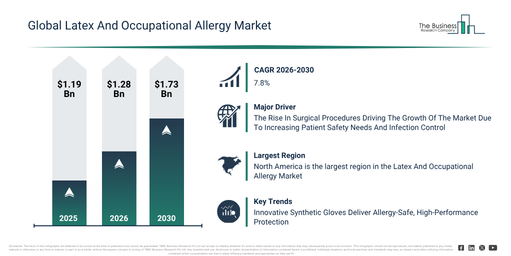
    The market size for latex and occupational allergies has demonstrated robust growth in recent years. This market is expected to expand from $1.19 billion in 2025 to $1.28 billion in 2026, progressing at a compound annual growth rate (CAGR) of 7.5%. Key drivers behind the historical period’s expansion include the escalating prevalence of occupational allergies, a heightened use of latex gloves in healthcare environments, an increasing regulatory emphasis on worker safety, the broadening of hospital and laboratory infrastructure, and a rise in reported instances of latex-induced anaphylaxis.

    The market size for latex and occupational allergy is projected to experience robust growth in the coming years. It is expected to expand to $1.73 billion in 2030, achieving a compound annual growth rate (CAGR) of 7.8 percent. This anticipated growth during the forecast period is attributable to an increasing demand for medical supplies that are latex-free, greater investment in allergy diagnostic technologies, the proliferation of workplace health surveillance programs, the expansion of industrial safety compliance standards, and a rise in awareness campaigns concerning occupational allergies. Noteworthy trends identified for the forecast period include the increasing adoption of alternatives that are latex-free, the growing implementation of occupational health screening programs, heightened awareness regarding workplace allergen exposure risks, the expansion of rapid diagnostic testing for latex-specific IgE, and a stronger emphasis on preventive workplace safety policies.

    Get A Free Sample Report With In-Depth Market Insights:

    https://thebusinessresearchcompany.com/sample_request?id=90754743&type=smp&name=Latex%20And%20Occupational%20Allergy%20Market%20Report%202026&utm_source=Blogs&utm_medium=Paid&utm_campaign=Oct_PR

    Latex And Occupational Allergy Market Development Factors: What’s Supporting Demand?

    The growing volume of surgical interventions is anticipated to boost the expansion of the latex and occupational allergy market in the future. These medical operations involve making cuts, manipulating, or excising tissues to identify, address, or mend various injuries, illnesses, or anomalies. Several factors contribute to the rise in surgical procedures, including the rising occurrence of chronic conditions, a maturing global population, and progress in medical technology enabling more viable and successful operations. This increase in surgeries leads to greater latex exposure for both medical personnel and patients, thereby stimulating the need for efficient solutions within the Latex and Occupational Allergy sector. As an illustration, the 2024 annual report from Intuitive Surgical Inc., a US-based medical device company, noted that about 2,683,000 surgical procedures were performed using da Vinci surgical systems, an increase from approximately 2,286,000 procedures in 2023 and 1,875,000 procedures in 2022, demonstrating consistent year-on-year growth in usage. Consequently, the increasing frequency of surgical procedures is propelling the growth of the latex and occupational allergy market.

    Latex And Occupational Allergy Market Segmentation And Category Overview

    The latex and occupational allergy market covered in this report is segmented –

    1) By Product Type: Latex-specific IgE Testing, Patch Testing Systems, Latex-free Product Alternatives, Occupational Health Screening Programs, Clinical Management Solutions

    2) By Treatment Type: Epinephrine injections (emergency management of severe reactions), Antihistamines and allergy medications, Avoidance strategies and substitution with latex-free materials

    3) By Reaction Or Allergy Type: Allergic contact dermatitis (Type IV hypersensitivity), Immediate hypersensitivity (Type I reactions, including anaphylaxis), Other mild to moderate reactions

    4) By Application Setting: Healthcare Facilities, Industrial Manufacturing, Food Service Operations, Educational Institutions, Other Occupational Environments

    5) By End-User: Hospitals and Clinics, Occupational Health Centers, Diagnostic Laboratories, Government and Regulatory Agencies, Industrial Laboratories and Workplaces

    Subsegments:

    1) By Latex-Specific Immunoglobulin E Testing: Enzyme-Linked Immunosorbent Assay Testing, Fluorescent Enzyme Immunoassay Testing, Radioallergosorbent Testing, Rapid Diagnostic Testing

    2) By Patch Testing Systems: Standard Patch Test Panels, Customized Patch Test Panels, Ready-To-Use Patch Kits, Allergen-Specific Patch Strips

    3) By Latex-Free Product Alternatives: Nitrile Gloves, Vinyl Gloves, Neoprene Gloves, Polyisoprene Gloves

    4) By Occupational Health Screening Programs: Pre-Employment Screening Programs, Periodic Health Surveillance Programs, Risk Assessment Programs, Workplace Exposure Monitoring Programs

    5) By Clinical Management Solutions: Pharmacological Treatment Solutions, Immunotherapy Solutions, Emergency Anaphylaxis Management Solutions, Patient Education and Counseling Programs

    Latex And Occupational Allergy Market Transformation Trends: What Innovations Are Driving Change?

    Major companies operating in the latex and occupational allergy market are concentrating on developing innovative solutions, such as synthetic disposable latex gloves, to offer latex-free, allergy-safe alternatives with superior performance and durability. Synthetic disposable latex gloves are single-use items made from a synthetic material that mimics natural latex’s flexibility and feel but contains no natural latex proteins, thereby reducing allergy risks. For instance, in April 2025, Intco Medical Technology Co. Ltd., a China-based manufacturing company, launched its Synte Synthetic Disposable Latex Gloves, which boast a material composition free from natural latex proteins and conventional accelerators, comply with EN455, EN374, Food and Drug Administration, and European conformity standards, and improve supply chain stability by reducing reliance on natural rubber plantations. These gloves deliver an optimal combination of comfort, robust protective performance, and environmental benefits, catering to professionals who require reliable, allergy-safe hand protection in various applications.

    Latex And Occupational Allergy Market Competitive Landscape: Which Companies Lead The Industry?

    Major companies operating in the latex and occupational allergy market are Thermo Fisher Scientific Incorporated, Honeywell International Incorporated, 3M Company, Siemens Healthineers Aktiengesellschaft, Medline Industries Inc., Quest Diagnostics Inc., Eurofins Scientific SE, EUROIMMUN Medizinische Labordiagnostika Aktiengesellschaft, Bio-Rad Laboratories Inc., Ansell Limited, ALK‑Abelló A/S, Top Glove Corporation Berhad, Hartalega Holdings Berhad, Kossan Rubber Industries Berhad, R-Biopharm Aktiengesellschaft, HYCOR Biomedical Inc., AESKU.GROUP GmbH And Co. KG, RFB Latex Limited, TG Medical Sdn Bhd, SHIELD Scientific Limited.

    View The Full Latex And Occupational Allergy Market Report:

    https://thebusinessresearchcompany.com/report/latex-and-occupational-allergy-market-report?utm_source=Blogs&utm_medium=Paid&utm_campaign=Oct_PR

    Latex And Occupational Allergy Market Regional Breakdown: Where Is Demand Concentrated?

    North America was the largest region in the latex and occupational allergy market in 2025. Asia-Pacific is expected to be the fastest-growing region in the forecast period. The regions covered in the latex and occupational allergy market report are Asia-Pacific, South East Asia, Western Europe, Eastern Europe, North America, South America, Middle East, Africa.

    Reach Out To Our Team:

    The Business Research Company: https://www.thebusinessresearchcompany.com/

    Americas: +1 310-496-7795

    Asia: +44 7882 955267 & +91 8897263534

    Europe: +44 7882 955267

    Email us at: marketing@tbrc.info

    Follow us on:

    LinkedIn: https://in.linkedin.com/company/the-business-research-company

    YouTube: https://www.youtube.com/channel/UC24_fI0rV8cR5DxlCpgmyFQ

    Global Market Model: https://www.thebusinessresearchcompany.com/global-market-model
  • Intravenous (IV) Therapy Membership Market Valued At $3.32 Billion In 2026: Key Trends And Growth Drivers

    Intravenous (IV) Therapy Membership Market Valued At $3.32 Billion In 2026: Key Trends And Growth Drivers

    Built to provide research that’s more actionable and strategically valuable, The Business Research Company’s 2026 market reports include market attractiveness analysis, total addressable market sizing, company benchmarking matrices, interactive Excel dashboards, broader supply chain intelligence, emerging startup tracking, and in-depth product insights.

    Intravenous (IV) Therapy Membership Market Growth Potential: How Will Market Size Shift Through 2030?

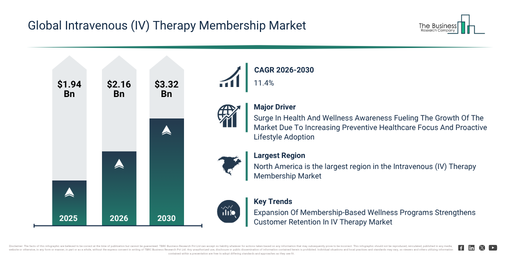
    The intravenous (IV) therapy membership market size has seen rapid expansion in recent years. This market is projected to expand from $1.94 billion in 2025 to $2.16 billion in 2026, demonstrating a compound annual growth rate (CAGR) of 11.2%. Factors contributing to this historical growth include an escalating consumer emphasis on preventive healthcare, a surging demand for hydration and vitamin infusion therapies, increased disposable income allocated to wellness services, the proliferation of boutique wellness clinics, and heightened awareness concerning immunity and energy-boosting treatments.

    The intravenous (IV) therapy membership market size is projected to undergo substantial expansion in the coming years. It is expected to reach $3.32 billion in 2030, demonstrating a compound annual growth rate (CAGR) of 11.4%. This growth during the forecast period can be attributed to a heightened interest in personalized health optimization, increased corporate investment in employee wellness benefits, the rising adoption of digital booking and subscription platforms, expanding demand for concierge and in-home healthcare services, and a greater focus on anti-aging and recovery therapies. Significant trends anticipated in this period include the wider embrace of subscription-based wellness models, an escalating demand for preventive and performance-oriented IV therapies, the increasing popularity of at-home IV infusion services, the development of customized nutrient therapy plans, and the proliferation of corporate wellness membership programs.

    Get A Free Sample Report With In-Depth Market Insights:

    https://thebusinessresearchcompany.com/sample_request?id=77717902&type=smp&name=Intravenous%20%28IV%29%20Therapy%20Membership%20Market%20Report%202026&utm_source=Blogs&utm_medium=Paid&utm_campaign=Oct_PR

    Intravenous (IV) Therapy Membership Market Opportunity Drivers: What’s Unlocking New Revenue Potential?

    The increasing focus on health and wellness is projected to advance the IV therapy membership market moving forward. This health and wellness awareness signifies an expanding understanding and deliberate adoption of behaviors, products, and services that support physical, mental, and overall well-being. The growth in health and wellness awareness is fueled by a stronger emphasis on preventive healthcare, as individuals proactively embrace healthier lifestyles to mitigate the risk of chronic conditions and enhance long-term health. IV therapy membership contributes to health and wellness awareness by fostering regular preventive care through scheduled nutrient infusions, assisting individuals in actively managing hydration, immunity, and general well-being. For example, in June 2024, data from the International Food Information Council (IFIC), a US-based non-profit organization, revealed that the percentage of Americans following a specific diet or eating pattern over the past year remained substantial at 54%. Most people aim to increase their protein intake, with interest climbing from 59% in 2022 to 67% in 2023, and reaching 71% in 2024. Additionally, about half of consumers are endeavoring to consume more fresh foods, which are widely considered the healthiest dietary choices. Hence, the escalating health and wellness awareness is propelling the growth of the IV therapy membership market.

    Intravenous (IV) Therapy Membership Market Segment Performance And Emerging Opportunities

    The intravenous (IV) therapy membership market covered in this report is segmented –

    1) By Membership Tier: Basic (Starter), Standard (Wellness), Premium (Elite), Family Or Group Plans

    2) By Service Type: Hydration Therapy, Vitamin Therapy, Detox Therapy, Beauty Therapy, Immunity Boosting, Other Service Types

    3) By Frequency Or Subscription Plan: Weekly Memberships, Biweekly Memberships, Monthly Memberships, Custom Or Flexible Memberships

    4) By Distribution Channel: In-Clinic, At-Home, Online Platforms

    5) By End User: Individuals, Corporate Or Employees, Athletes And Fitness Enthusiasts, Medical Or Clinical Patients

    Subsegments:

    1) By Basic (Starter): Single Session Plan, Limited Monthly Infusion Plan, Introductory Detox Plan, Hydration Only Plan, Essential Vitamin Plan

    2) By Standard (Wellness): Monthly Wellness Infusion Plan, Immunity Boost Plan, Energy Enhancement Plan, Recovery And Performance Plan, Seasonal Preventive Care Plan

    3) By Premium (Elite): Unlimited Monthly Infusion Plan, Customized Nutrient Therapy Plan, Priority Booking And Concierge Plan, Comprehensive Anti Aging Plan, Executive Health Optimization Plan

    4) By Family Or Group Plans: Couple Wellness Plan, Family Preventive Care Plan, Corporate Employee Wellness Plan, Group Detox Program Plan, Shared Membership Bundle Plan

    Intravenous (IV) Therapy Membership Market Innovation Trends Shaping Future Development

    Major companies operating in the IV therapy membership market are prioritizing the development of structured membership programs to enhance client retention, boost consistent revenue streams, and expand the availability of preventative wellness services. These structured membership programs function as systematic subscription models, providing customers with access to pre-defined services, products, or benefits at regular intervals, which helps reinforce long-term customer commitment, establish predictable recurring income, and ensure affordable, continuous access to necessary services or treatments. For instance, in August 2025, REVIV Global, a UK-based wellness and IV therapy provider, announced the introduction of its IV therapy membership programs, crafted to provide adaptable monthly treatment options, exclusive pricing advantages, and individualized wellness solutions. This program allows members to receive routine hydration and vitamin infusions customized to their health objectives, promoting sustained customer engagement and consistent wellness management while fortifying the company’s subscription-based service framework.

    Intravenous (IV) Therapy Membership Market Leading Players And Competitive Positioning

    Major companies operating in the intravenous (IV) therapy membership market are The I.V. Doc LLC, Elixir IV LLC, The IV League LLC, Mobile IV Drip LLC, REVIV Global Limited, Liquivida Franchising LLC, Hydrate IV Bar LLC, DripIV Therapy Hydration LLC, GIV Wellness LLC, The IV Lounge LLC, Prime IV Hydration Wellness LLC, PurelyIV LLC, Vitamin Injections London Ltd, GLO IV Spa LLC, Core IV Therapy LLC, IV Drips LLC, PureDropIV LLC, Drip Hydration LLC, Longiva Wellness LLC, IV Therapy Greece PC, Refresh Biohacking Clinic LLC, Pure Drip IV LLC.

    View The Full Intravenous (IV) Therapy Membership Market Report:

    https://thebusinessresearchcompany.com/report/intravenous-iv-therapy-membership-market-report?utm_source=Blogs&utm_medium=Paid&utm_campaign=Oct_PR

    Intravenous (IV) Therapy Membership Market Regional Distribution: Which Areas Power Market Growth?

    North America was the largest region in the intravenous (IV) therapy membership market in 2025. Asia-Pacific is expected to be the fastest-growing region in the forecast period. The regions covered in the intravenous (IV) therapy membership market report are Asia-Pacific, South East Asia, Western Europe, Eastern Europe, North America, South America, Middle East, Africa.

    Reach Out To Our Team:

    The Business Research Company: https://www.thebusinessresearchcompany.com/

    Americas: +1 310-496-7795

    Asia: +44 7882 955267 & +91 8897263534

    Europe: +44 7882 955267

    Email us at: marketing@tbrc.info

    Follow us on:

    LinkedIn: https://in.linkedin.com/company/the-business-research-company

    YouTube: https://www.youtube.com/channel/UC24_fI0rV8cR5DxlCpgmyFQ

    Global Market Model: https://www.thebusinessresearchcompany.com/global-market-model
  • Internet Of Things (IoT)-Powered Virtual Hospitals And Telemedicine 2.0 Market Analysis: How The Industry Is Evolving Toward A $332.57 Billion Future

    Internet Of Things (IoT)-Powered Virtual Hospitals And Telemedicine 2.0 Market Analysis: How The Industry Is Evolving Toward A $332.57 Billion Future

    Backed by market attractiveness analysis, total addressable market sizing, company benchmarking matrices, interactive Excel dashboards, wider supply chain intelligence, emerging startup coverage, and detailed product-level insights, The Business Research Company’s 2026 market reports are designed to offer research that is more actionable and strategically valuable than ever.

    Internet Of Things (IoT)-Powered Virtual Hospitals And Telemedicine 2.0 Market Growth Analysis: How Will Revenue Trend Over The Forecast Period?

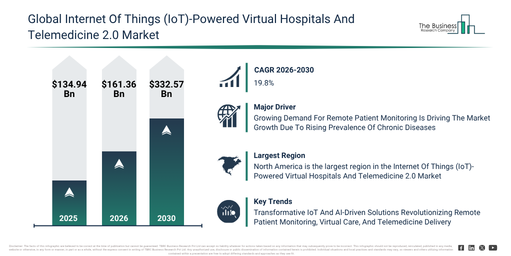
    The market for Internet of Things (IoT)-powered virtual hospitals and telemedicine 2.0 has experienced significant expansion recently. This market is projected to expand from $134.94 billion in 2025 to $161.36 billion in 2026, exhibiting a compound annual growth rate (CAGR) of 19.6%.

    The 0 market has also shown rapid expansion in recent years. Its valuation is anticipated to increase from $4.55 billion in 2025 to $5.36 billion in 2026, achieving a compound annual growth rate (CAGR) of 17.6%.

    Historically, this expansion has been driven by factors such as the increasing need for remote healthcare services, the growing incidence of chronic illnesses, enhanced internet adoption in healthcare, the proliferation of telemedicine platforms, and the desire for economical care solutions.

    The Internet of Things (IoT)-powered virtual hospitals and telemedicine 2.0 market is anticipated to experience substantial growth over the next few years. This sector is projected to expand to $332.57 billion in 2030, showing a compound annual growth rate (CAGR) of 19.8%. The projected increase during the forecast period is largely due to factors like the increasing adoption of AI-driven diagnostics, the expanding use of cloud-based healthcare infrastructure, a growing elderly population, the proliferation of connected medical devices, and a heightened emphasis on personalized and preventive healthcare. Major developments expected in this period include the wider application of hospital-at-home care models, a rise in continuous remote patient monitoring, the integration of virtual intensive care units (tele-icu), the expansion of digital chronic disease management programs, and the increasing deployment of smart wearable health devices.

    Get A Free Sample Report With In-Depth Market Insights:

    https://thebusinessresearchcompany.com/sample_request?id=50755095&type=smp&name=Internet%20Of%20Things%20%28IoT%29-Powered%20Virtual%20Hospitals%20And%20Telemedicine%202.0%20Market%20Report%202026&utm_source=Blogs&utm_medium=Paid&utm_campaign=Oct_PR

    Internet Of Things (IoT)-Powered Virtual Hospitals And Telemedicine 2.0 Market Industry Drivers: What’s Behind The Revenue Growth?

    The increasing need for remote patient monitoring is anticipated to drive the expansion of the internet of things (IoT)-powered virtual hospitals and telemedicine 2.0 market in the future. Remote patient monitoring involves utilizing linked digital tools to gather and send individuals’ physiological health data from their homes or other non-clinical locations to medical professionals, enabling constant oversight and prompt treatment. This demand is escalating because of the growing occurrence of chronic illnesses, where individuals with long-term ailments necessitate ongoing supervision and immediate medical care, something infrequent physical appointments cannot adequately provide. internet of things (IoT)-powered virtual hospitals and Telemedicine 2.0 improve remote patient monitoring by linking smart devices, real-time data systems, and virtual care platforms, facilitating uninterrupted patient observation and prompt medical interventions beyond conventional hospital environments. As an illustration, in August 2025, the Office of Inspector General (OIG), a US-based independent organization, reported a substantial increase in Medicare beneficiaries utilizing remote patient monitoring, nearly reaching 1 million in 2024, which signifies a 27% rise from 2023. Consequently, the expanding need for remote patient monitoring is indeed propelling the growth of the internet of things (IoT)-powered virtual hospitals and telemedicine 2.0 market.

    Internet Of Things (IoT)-Powered Virtual Hospitals And Telemedicine 2.0 Market Segmentation And Category Overview

    The internet of things (IoT)-powered virtual hospitals and telemedicine 2.0 market covered in this report is segmented –

    1) By Component: Hardware, Software, Services

    2) By Technology: Internet Of Things (IoT) Devices And Sensors, Telemedicine Platform

    3) By Deployment: Cloud-Based, On-Premises, Hybrid

    4) By Application: Chronic Disease Management, Emergency Care And Triage, Mental Health Services, Post Surgery Monitoring, Elderly Care And Assisted Living

    5) By End User: Healthcare Provider Organizations, Public Health And Government Agencies, Health Insurance Payers, Home Care And Individual Patients

    Subsegments:

    1) By Hardware: Remote Patient Monitoring Devices, Wearable Health Monitoring Devices, Medical Sensors And Biosensors, Connected Diagnostic Devices, Home Care Medical Equipment, Smart Medical Imaging Devices

    2) By Software: Virtual Care Platform Software, Clinical Decision Support Software, Remote Monitoring And Data Analytics Software, Electronic Health Record Integration Software, Telemedicine Management Software, Artificial Intelligence Enabled Care Coordination Software

    3) By Services: Virtual Clinical Consultation Services, Remote Patient Monitoring Services, Tele Intensive Care Unit Services, Virtual Ward And Hospital At Home Services, Tele Pharmacy And Medication Management Services, Technical Support And System Integration Services

    #Internet Of Things (IoT)-Powered Virtual Hospitals And Telemedicine 2.0 Market Growth Trends: What’s Shaping The Future Outlook?

    Major companies operating in the internet of things (IoT)-powered virtual hospitals and telemedicine 2.0 market are focusing on developing innovative solutions, such as artificial intelligence (AI)-driven remote patient management systems, to enable continuous patient monitoring, improve care outcomes, and reduce hospital readmissions. These AI-driven remote patient management systems are platforms that utilize AI algorithms to continuously collect, analyze, and interpret patient health data from IoT devices and wearables, assisting healthcare providers in detecting early warning signs, personalizing treatment plans, and proactively managing patient care, all without requiring in-person visits. For instance, in February 2025, Validic Inc., a US-based healthcare technology company, launched the Validic Inform Health IoT platform and Remote Patient Management solutions powered by generative AI, available through AWS Marketplace. The platform connects hundreds of personal health data sources, streaming real-world data into client applications for comprehensive patient engagement, while the Remote Patient Management solutions leverage AI to generate actionable insights, detect trends, and streamline clinician workflows. Together, these solutions integrate logistics and patient service desk support for device provisioning and onboarding, enabling healthcare providers to deliver continuous, personalized care across multiple clinical programs without relying on fragmented point solutions.

    Internet Of Things (IoT)-Powered Virtual Hospitals And Telemedicine 2.0 Market Company Landscape And Competitive Strategy

    Major companies operating in the internet of things (IoT)-powered virtual hospitals and telemedicine 2.0 market are F. Hoffmann-La Roche AG, Medtronic plc, Koninklijke Philips N.V., GE HealthCare Technologies Inc., Omron Healthcare Co. Ltd., Teladoc Health Inc., Advantech Co. Ltd., Oura Health Oy, Digi International Inc., TMA Solutions, American Well Corporation, Biofourmis Inc., HealthSnap Inc., Viz.ai Inc., AMC Health Inc., Accuhealth Technologies LLC, Mend VIP Inc., Heidi Health Pty Ltd, GlobalMedia Group LLC, CareSimple Inc., and NuraLogix Corporation.

    View The Full Internet Of Things (IoT)-Powered Virtual Hospitals And Telemedicine 2.0 Market Report:

    https://thebusinessresearchcompany.com/report/internet-of-things-iot-powered-virtual-hospitals-and-telemedicine-20-market-report?utm_source=Blogs&utm_medium=Paid&utm_campaign=Oct_PR

    Internet Of Things (IoT)-Powered Virtual Hospitals And Telemedicine 2.0 Market Largest Region: Which Geography Holds The Biggest Share?

    North America was the largest region in the internet of things (IoT)-powered virtual hospitals and telemedicine 2.0 market in 2025. Asia-Pacific is expected to be the fastest-growing region in the forecast period. The regions covered in the internet of things (IoT)-powered virtual hospitals and telemedicine 2.0 market report are Asia-Pacific, South East Asia, Western Europe, Eastern Europe, North America, South America, Middle East, Africa.

    Reach Out To Our Team:

    The Business Research Company: https://www.thebusinessresearchcompany.com/

    Americas: +1 310-496-7795

    Asia: +44 7882 955267 & +91 8897263534

    Europe: +44 7882 955267

    Email us at: marketing@tbrc.info

    Follow us on:

    LinkedIn: https://in.linkedin.com/company/the-business-research-company

    YouTube: https://www.youtube.com/channel/UC24_fI0rV8cR5DxlCpgmyFQ

    Global Market Model: https://www.thebusinessresearchcompany.com/global-market-model
  • Internet Of Things (IoT) And Virtual Hospital Market Outlook Through 2030: Understanding The Growth Opportunity

    Internet Of Things (IoT) And Virtual Hospital Market Outlook Through 2030: Understanding The Growth Opportunity

    Featuring market attractiveness scoring, total addressable market sizing, company benchmarking matrices, interactive Excel dashboards, deeper supply chain intelligence, emerging startup tracking, and granular product-level insights, The Business Research Company’s 2026 market reports are built to deliver research that is both more actionable and more strategically valuable.

    Internet Of Things (IoT) And Virtual Hospital Market Forecast: What Value Will The Market Reach By 2030?

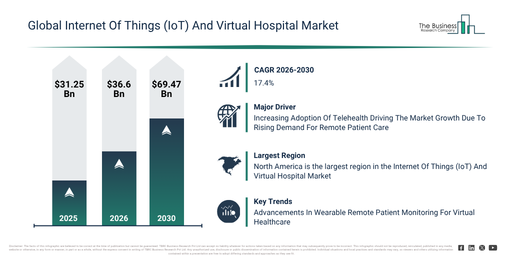
    The internet of things (IoT) and virtual hospital market size has experienced rapid expansion in recent years. This market is expected to grow from $31.25 billion in 2025 to $36.6 billion in 2026, at a compound annual growth rate (CAGR) of 17.1%. The growth observed in the historical period is attributable to several factors, including the rising prevalence of chronic diseases, increasing healthcare digitization initiatives, growing internet penetration, the expansion of telemedicine services, and an increasing demand for cost-effective healthcare delivery.

    The internet of things (IoT) and virtual hospital market is projected to experience rapid growth in the next few years. It is anticipated to reach $69.47 billion in 2030, demonstrating a compound annual growth rate (CAGR) of 17.4%. This expansion during the forecast period can be attributed to increased investment in connected healthcare infrastructure, the rising adoption of AI-driven clinical decision support, a growing demand for home-based healthcare services, expanding government support for digital health programs, and the increasing integration of smart medical sensors and wearable devices. Significant trends in the forecast period include the broader adoption of remote patient monitoring solutions, the expansion of virtual consultation platforms, the growing deployment of wearable health devices, the rising integration of telemedicine in chronic disease management, and an increasing demand for cloud-based health applications.

    Get A Free Sample Report With In-Depth Market Insights:

    https://thebusinessresearchcompany.com/sample_request?id=25469903&type=smp&name=Internet%20Of%20Things%20%28IoT%29%20And%20Virtual%20Hospital%20Market%20Report%202026&utm_source=Blogs&utm_medium=Paid&utm_campaign=Oct_PR

    Internet Of Things (IoT) And Virtual Hospital Market Growth Factors: What’s Supporting Expansion?

    The growing adoption of telehealth is projected to drive the expansion of the Internet of Things (IoT) and the virtual hospital market moving forward. Telehealth refers to utilizing digital communication technologies to offer healthcare services, consultations, and remote patient monitoring without requiring physical visits. The increasing embrace of telehealth stems from improved access to high-speed internet, allowing patients to conveniently connect with healthcare providers, receive timely care, and overcome various barriers. Internet of Things (IoT) and virtual hospital technologies enhance telehealth by enabling real-time patient supervision, seamless data exchange, and distant medical consultations, which collectively improve care efficiency, personalize treatment, and broaden access to healthcare services regardless of location. For example, in April 2023, FAIR Health Inc., a US-based non-profit organization, reported a national telehealth usage increase of 7.3%, rising from 5.5% of medical claim lines in December 2022 to 5.9% in January 2023. Thus, the increasing adoption of telehealth is a key driver for the growth of the Internet of Things (IoT) and the virtual hospital market.

    Internet Of Things (IoT) And Virtual Hospital Market Segment Outlook: Which Categories Are Growing Fastest?

    The internet of things (IoT) and virtual hospital market covered in this report is segmented –

    1) By Component: Hardware, Software, Services

    2) By Technology: Internet Of Things Medical Devices, Cloud Computing Platforms, Artificial Intelligence And Analytics, Wireless Communication Technologies

    3) By Deployment Mode: Cloud Based, On Premises, Hybrid

    4) By Application: Remote Patient Monitoring, Telemedicine, Store And Forward Telemedicine, Mobile Health, Other Applications

    5) By End User: Hospitals And Surgical Centers, Clinical Research Organizations, Government And Defense Organizations, Research And Diagnostics Laboratories

    Subsegments:

    1) By Hardware: Patient Monitoring Devices, Wearable Health Devices, Smart Medical Sensors, Connected Imaging Devices, Home Diagnostic Equipment, Telehealth Kiosks

    2) By Software: Remote Patient Monitoring Platforms, Virtual Care Management Systems, Clinical Workflow Software, Health Data Analytics Platforms, Device Integration Software, Cloud Based Health Applications

    3) By Services: Remote Clinical Monitoring Services, Virtual Consultation Services, System Integration Services, Technical Support Services, Data Management Services, Training And Education Services

    Internet Of Things (IoT) And Virtual Hospital Market Industry Trends: What’s Reshaping Demand?

    Leading firms in the Internet of Things (IoT) and virtual hospital market are concentrating on creating novel solutions, specifically wearable remote vital signs monitoring systems, to facilitate ongoing, real-time patient oversight beyond conventional hospital environments. These wearable systems are small, sensor-integrated devices placed on the body, constantly tracking health indicators like heart rate, blood oxygen, temperature, and respiratory rate, which assists clinicians in real-time patient monitoring, early detection of health problems, and remote care delivery without the need for hospital attendance. As an illustration, in May 2024, Sempulse Corporation, a US-based manufacturer of medical devices, introduced the Sempulse Halo Vital Signs Monitoring System, a wearable remote vital sign monitoring solution that obtained U.S. Food and Drug Administration (FDA) 510(k) clearance. The Halo system incorporates a compact, non-invasive sensor, worn either behind the ear or on the neck, which continuously gathers various vital signs and relays them through Bluetooth to the LiveCharts mobile application. This system connects with the Command Cloud platform, offering centralized remote oversight, automated notifications, and support for clinical decisions, thereby allowing healthcare professionals to effectively supervise patients in hospitals, at home, or in field environments. The widespread use of these wearable technologies is fueling the expansion of virtual hospitals, enhancing patient results, and lowering healthcare expenditures.

    Internet Of Things (IoT) And Virtual Hospital Market Key Players Shaping Industry Direction

    Major companies operating in the internet of things (IoT) and virtual hospital market are Amazon.com Inc., Microsoft Corporation, F. Hoffmann-La Roche AG, Oracle Corporation, Medtronic plc, Siemens Healthineers AG, Koninklijke Philips N.V., GE HealthCare Technologies Inc., Cadence Solutions Inc., Teladoc Health Inc., Masimo Corporation, iRhythm Technologies Inc., American Well Corporation, Withings SA, Ada Health GmbH, Doxy.me Inc., Tyto Care Ltd., Cloudbreak Health LLC, VSee Health Inc., BioIntelliSense Inc., and Huma Therapeutics Limited.

    View The Full Internet Of Things (IoT) And Virtual Hospital Market Report:

    https://thebusinessresearchcompany.com/report/internet-of-things-iot-and-virtual-hospital-market-report?utm_source=Blogs&utm_medium=Paid&utm_campaign=Oct_PR

    Internet Of Things (IoT) And Virtual Hospital Market Regional Analysis: Which Geography Leads On Revenue?

    North America was the largest region in the internet of things (IoT) and virtual hospital market in 2025. Asia-Pacific is expected to be the fastest-growing region in the forecast period. The regions covered in the internet of things (IoT) and virtual hospital market report are Asia-Pacific, South East Asia, Western Europe, Eastern Europe, North America, South America, Middle East, Africa.

    Reach Out To Our Team:

    The Business Research Company: https://www.thebusinessresearchcompany.com/

    Americas: +1 310-496-7795

    Asia: +44 7882 955267 & +91 8897263534

    Europe: +44 7882 955267

    Email us at: marketing@tbrc.info

    Follow us on:

    LinkedIn: https://in.linkedin.com/company/the-business-research-company

    YouTube: https://www.youtube.com/channel/UC24_fI0rV8cR5DxlCpgmyFQ

    Global Market Model: https://www.thebusinessresearchcompany.com/global-market-model
  • Insulin Resistance Biomarker Panels Market Growth Outlook: Why Analysts Expect Continued Expansion

    Insulin Resistance Biomarker Panels Market Growth Outlook: Why Analysts Expect Continued Expansion

    Backed by market attractiveness analysis, total addressable market sizing, company benchmarking matrices, interactive Excel dashboards, wider supply chain intelligence, emerging startup coverage, and detailed product-level insights, The Business Research Company’s 2026 market reports are designed to offer research that is more actionable and strategically valuable than ever.

    Insulin Resistance Biomarker Panels Market Size, Value And Growth Trajectory Through 2030

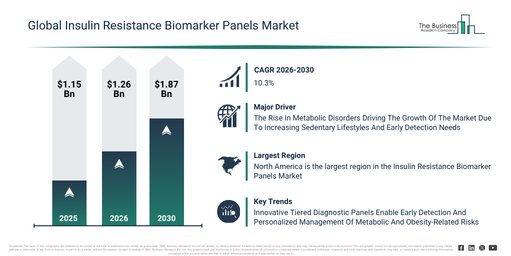
    The insulin resistance biomarker panels market has experienced significant growth in recent years. It is forecast to increase from $1.15 billion in 2025 to $1.26 billion in 2026, achieving a compound annual growth rate (CAGR) of 10.1%. The expansion observed in prior periods is attributable to factors such as the rising prevalence of type 2 diabetes, increasing obesity rates, a growing awareness of metabolic syndrome, the expansion of clinical diagnostic laboratories, and an increasing focus on early disease detection.

    The market for insulin resistance biomarker panels is projected to experience substantial expansion in the coming years. This market is anticipated to reach $1.87 billion by 2030, exhibiting a compound annual growth rate (CAGR) of 10.3%. Factors contributing to this growth during the forecast period include the increasing demand for tailored treatment approaches, the greater incorporation of biomarker panels into preventive healthcare, the surging uptake of sophisticated multiplex assays, the expansion of health screening initiatives in developing markets, and enhanced investment in metabolic research and innovation. Key trends expected over the forecast horizon encompass the wider acceptance of multi-biomarker panels, a heightened need for preventive metabolic health screening, the expanding utilization of point-of-care testing tools, the broadening of cardiometabolic risk evaluation programs, and an intensified clinical emphasis on identifying diabetes risk at an early stage.

    Get A Free Sample Report With In-Depth Market Insights:

    https://thebusinessresearchcompany.com/sample_request?id=39120998&type=smp&name=Insulin%20Resistance%20Biomarker%20Panels%20Market%20Report%202026&utm_source=Blogs&utm_medium=Paid&utm_campaign=Oct_PR

    Insulin Resistance Biomarker Panels Market Growth Drivers: What’s Behind The Acceleration?

    The expansion of the insulin resistance biomarker panels market is projected to be driven by the increasing occurrence of metabolic disorders. Metabolic disorders are medical conditions where the body’s natural chemical processes are disturbed, leading to metabolic imbalances such as diabetes, obesity, and thyroid disorders. The escalating prevalence of these disorders is mainly attributed to progressively sedentary lifestyles, which diminish physical activity and disrupt the body’s regular metabolism. Insulin resistance biomarker panels aid in managing metabolic disorders by enabling early detection and precise monitoring of insulin resistance, allowing for timely intervention to prevent or handle conditions like type 2 diabetes and complications linked to obesity. For instance, in 2023, according to the National Health Service, a UK-based government department, the number of individuals in England with non-diabetic hyperglycemia, or pre-diabetes, registered with a GP increased from 3,065,825 in 2022 to 3,615,330 in 2023. Thus, the growing prevalence of metabolic disorders is propelling the growth of the insulin resistance biomarker panels market.

    Insulin Resistance Biomarker Panels Market Segments: Where Is Growth Concentrated?

    The insulin resistance biomarker panels market covered in this report is segmented –

    1) By Product Type: Single Biomarker Panels, Multi-Biomarker Panels

    2) By Sample Type: Blood, Plasma, Serum, Other Sample Types

    3) By Technology or Platform: Immunoassays, Clinical Chemistry Analyzers, Mass Spectrometry, Multiplex Assays, Point of Care Devices

    4) By Application: Diabetes Risk Assessment, Metabolic Syndrome Diagnosis, Obesity Related Metabolic Analysis, Clinical Disease Monitoring, Preventive Health Screening

    5) By End-User: Hospitals and Clinics, Diagnostic Laboratories, Research Institutes

    Subsegments:

    1) By Single Biomarker Panels: Fasting Insulin Biomarker Panels, Fasting Glucose Biomarker Panels, C Peptide Biomarker Panels, Adiponectin Biomarker Panels, Inflammatory Marker Biomarker Panels

    2) By Multi-Biomarker Panels: Glucose and Insulin Combination Panels, Hormonal and Adipokine Biomarker Panels, Inflammatory and Metabolic Biomarker Panels, Comprehensive Metabolic Biomarker Panels, Cardiometabolic Risk Biomarker Panels

    Insulin Resistance Biomarker Panels Market Trends: What’s Defining The Industry’s Next Phase?

    Major companies operating within the insulin resistance biomarker panels market are concentrating on developing advanced testing solutions, such as tiered metabolic health panels, to address the increasing prevalence of obesity, support evolving therapies, and deliver comprehensive clinical understanding. Tiered metabolic health panels represent a structured collection of diagnostic blood test packages, organized into distinct levels or tiers based on their depth, complexity, and the number of biomarkers analyzed for assessing metabolic health. For example, in December 2025, Agilus Diagnostics Ltd., an India-based diagnostic service provider, introduced the Complete Care Vital Shape test suite (Lite, Core, and Ultra). This suite comprises a structured portfolio of up to 86 parameters, engineered for more intelligent weight management and metabolic health monitoring, incorporating tiered panels that feature advanced markers such as leptin, adiponectin, and HOMA-IR. The suite allows for the early detection of insulin resistance and comprehensive metabolic risk assessment, which is particularly relevant amidst the growing global utilization of GLP-1–based therapies for obesity, providing clinicians with deeper insights for preventive and personalized care without necessitating multiple test orders.

    Insulin Resistance Biomarker Panels Market Leading Companies And Competitive Benchmarking

    Major companies operating in the insulin resistance biomarker panels market are Laboratory Corporation of America Holdings, Quest Diagnostics Incorporated, Eurofins Scientific SE, Cleveland Clinic Laboratories, Sonic Healthcare Limited, SYNLAB International GmbH, Unilabs AB, BioReference Health LLC, Dr. Lal PathLabs Limited, Life Extension Clinical Laboratory Inc., Metropolis Healthcare Limited, Everly Health Inc., Boston Heart Diagnostics Corporation, Genova Diagnostics Inc., Metabolon Inc., Vibrant America LLC, ZRT Laboratory LLC, Superpower Health Inc, DiagnosTechs Inc., Ulta Lab Tests LLC.

    View The Full Insulin Resistance Biomarker Panels Market Report:

    https://thebusinessresearchcompany.com/report/insulin-resistance-biomarker-panels-market-report?utm_source=Blogs&utm_medium=Paid&utm_campaign=Oct_PR

    Insulin Resistance Biomarker Panels Market Top Region By Revenue And Market Share

    North America was the largest region in the insulin resistance biomarker panels market in 2025. Asia-Pacific is expected to be the fastest-growing region in the forecast period. The regions covered in the insulin resistance biomarker panels market report are Asia-Pacific, South East Asia, Western Europe, Eastern Europe, North America, South America, Middle East, Africa.

    Reach Out To Our Team:

    The Business Research Company: https://www.thebusinessresearchcompany.com/

    Americas: +1 310-496-7795

    Asia: +44 7882 955267 & +91 8897263534

    Europe: +44 7882 955267

    Email us at: marketing@tbrc.info

    Follow us on:

    LinkedIn: https://in.linkedin.com/company/the-business-research-company

    YouTube: https://www.youtube.com/channel/UC24_fI0rV8cR5DxlCpgmyFQ

    Global Market Model: https://www.thebusinessresearchcompany.com/global-market-model
  • Human Leukocyte Antigen (HLA) Typing For Oncology Immunotherapy Market Expected To Grow At 8% CAGR Through 2030: What Businesses Need To Know

    Human Leukocyte Antigen (HLA) Typing For Oncology Immunotherapy Market Expected To Grow At 8% CAGR Through 2030: What Businesses Need To Know

    Backed by market attractiveness analysis, total addressable market sizing, company benchmarking matrices, interactive Excel dashboards, wider supply chain intelligence, emerging startup coverage, and detailed product-level insights, The Business Research Company’s 2026 market reports are designed to offer research that is more actionable and strategically valuable than ever.

    Human Leukocyte Antigen (HLA) Typing For Oncology Immunotherapy Market Expansion Outlook: What Revenue Opportunities Are Ahead?

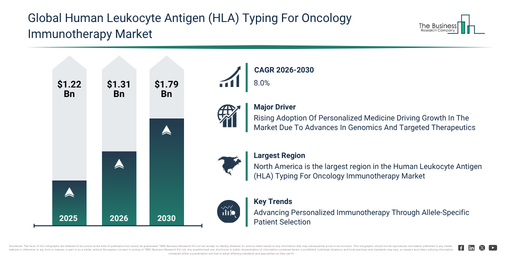
    The human leukocyte antigen (HLA) typing for oncology immunotherapy market size has experienced significant expansion in recent years. This market is anticipated to expand from $1.22 billion in 2025 to $1.31 billion in 2026, demonstrating a compound annual growth rate (CAGR) of 7.8%. Factors contributing to its growth in the past include the increasing global incidence of cancer, advancements in PCR and sequencing technologies, the growing embrace of precision oncology strategies, an uptick in clinical research for immunotherapies, and the broader application of biomarker-driven treatment selection.

    The human leukocyte antigen (HLA) typing for oncology immunotherapy market is projected to experience robust expansion over the coming years. This market is forecast to reach $1.79 billion by 2030, exhibiting a compound annual growth rate (CAGR) of 8.0%. This anticipated growth is driven by factors such as an expanding pipeline of cell and gene therapies, increased investment in personalized immunotherapy research, a growing need for companion diagnostics, the global expansion of oncology clinical trials, and enhanced regulatory backing for precision medicine. Key trends anticipated during this period encompass the wider adoption of next-generation sequencing-based HLA typing, greater integration of HLA profiling into adoptive T-cell therapies, increased utilization of high-resolution HLA typing in clinical trials, the proliferation of personalized cancer vaccine development, and an intensified focus on predictive immune compatibility testing.

    Get A Free Sample Report With In-Depth Market Insights:

    https://thebusinessresearchcompany.com/sample_request?id=79521900&type=smp&name=Human%20Leukocyte%20Antigen%20%28HLA%29%20Typing%20For%20Oncology%20Immunotherapy%20Market%20Report%202026&utm_source=Blogs&utm_medium=Paid&utm_campaign=Oct_PR

    Human Leukocyte Antigen (HLA) Typing For Oncology Immunotherapy Market Industry Drivers: What’s Behind The Revenue Growth?

    The increasing adoption of personalized medicine is anticipated to propel the expansion of the human leukocyte antigen (HLA) typing for oncology immunotherapy market. Personalized medicine involves customizing medical treatments and healthcare decisions based on an individual’s unique genetic, molecular, and clinical characteristics, aiming for more precise and effective therapies. Its rise is primarily attributed to advancements in genomics, which enable clinicians to identify specific genetic variations influencing disease risk and drug responses, leading to more targeted and impactful treatments. Human leukocyte antigen typing is instrumental in personalized oncology immunotherapy by determining a patient’s distinct immune profile, thereby allowing for tailored treatments that optimize tumor antigen recognition and immune response. For example, the US-based nonprofit Personalized Medicine Coalition reported in February 2024 that the FDA approved 16 new personalized treatments for rare disease patients in 2023, a notable increase from 6 in 2022. The 2023 approvals further included 7 cancer drugs and 3 for other diseases and conditions. This growing embrace of personalized medicine is thus a significant factor driving the growth of the human leukocyte antigen (HLA) typing for oncology immunotherapy market.

    Human Leukocyte Antigen (HLA) Typing For Oncology Immunotherapy Market Segment Analysis And Revenue Potential

    The human leukocyte antigen (HLA) typing for oncology immunotherapy market covered in this report is segmented –

    1) By Technology: Polymerase Chain Reaction (PCR)-Based, Sequencing-Based, Sequence-Specific Oligonucleotide (SSO), Sequence-Specific Primer (SSP), Other Technologies

    2) By Product Type: Reagents And Kits, Instruments, Software

    3) By Application: Cancer Diagnosis, Personalized Medicine, Research, Clinical Trials, Other Applications

    4) By End-User: Hospitals And Diagnostic Laboratories, Research Institutes, Academic Centers, Pharmaceutical And Biotechnology Companies, Other End-Users

    Subsegments:

    1) By Polymerase Chain Reaction Based: Real Time Polymerase Chain Reaction, Nested Polymerase Chain Reaction, Multiplex Polymerase Chain Reaction, Digital Polymerase Chain Reaction

    2) By Sequencing Based: Next Generation Sequencing, Sanger Sequencing, Whole Genome Sequencing, Targeted Gene Sequencing

    3) By Sequence Specific Oligonucleotide: Luminex Based Sequence Specific Oligonucleotide, Microarray Based Sequence Specific Oligonucleotide, Bead Based Sequence Specific Oligonucleotide, Plate Based Sequence Specific Oligonucleotide

    4) By Sequence Specific Primer: Conventional Sequence Specific Primer, Multiplex Sequence Specific Primer, Real Time Sequence Specific Primer, Nested Sequence Specific Primer

    5) By Other Technologies: Flow Cytometry Based Typing, Mass Spectrometry Based Typing, Immunoassay Based Typing, Hybridization Based Typing

    #Human Leukocyte Antigen (HLA) Typing For Oncology Immunotherapy Market Growth Trends: What’s Shaping The Future Outlook?

    Major companies within the human leukocyte antigen (HLA) typing for oncology immunotherapy market are concentrating on developing innovative solutions, such as allele-specific patient selection, to enhance personalized immunotherapy efficacy and improve clinical outcomes. Allele-specific patient selection involves identifying patients based on their specific HLA gene variants to tailor immunotherapy for optimal effectiveness. For instance, in August 2024, Thermo Fisher Scientific Inc., a US-based biotechnology company, received approval from the FDA for the SeCore HLA typing kit for use as a companion diagnostic with a T-cell receptor therapy for synovial sarcoma. This approval significantly expands HLA sequencing from transplant diagnostics into oncology immunotherapy by enabling precise patient selection for TCR-based treatments targeting tumor antigens.

    Human Leukocyte Antigen (HLA) Typing For Oncology Immunotherapy Market Key Players Shaping Industry Direction

    Major companies operating in the human leukocyte antigen (HLA) typing for oncology immunotherapy market are Thermo Fisher Scientific Inc., Danaher Corporation, Becton, Dickinson Company, Eurofins Scientific SE, Illumina Inc., Werfen, QIAGEN N.V., Versiti Inc., CareDx Inc., Oxford Nanopore Technologies Plc., Pacific Biosciences of California Inc., Takara Bio Inc., HistoGenetics LLC, Biofortuna Limited, Bio‑Rad Laboratories Inc., DKMS Life Science Lab, ClinImmune Inc., BGI Genomics Co. Ltd., Immudex A/S, ProImmune Ltd.

    View The Full Human Leukocyte Antigen (HLA) Typing For Oncology Immunotherapy Market Report:

    https://thebusinessresearchcompany.com/report/human-leukocyte-antigen-hla-typing-for-oncology-immunotherapy-market-report?utm_source=Blogs&utm_medium=Paid&utm_campaign=Oct_PR

    Human Leukocyte Antigen (HLA) Typing For Oncology Immunotherapy Market Regional Analysis: Which Region Leads By Revenue?

    North America was the largest region in the human leukocyte antigen (HLA) typing for oncology immunotherapy market in 2025. Asia-Pacific is expected to be the fastest-growing region in the forecast period. The regions covered in the human leukocyte antigen (HLA) typing for oncology immunotherapy market report are Asia-Pacific, South East Asia, Western Europe, Eastern Europe, North America, South America, Middle East, Africa.

    Reach Out To Our Team:

    The Business Research Company: https://www.thebusinessresearchcompany.com/

    Americas: +1 310-496-7795

    Asia: +44 7882 955267 & +91 8897263534

    Europe: +44 7882 955267

    Email us at: marketing@tbrc.info

    Follow us on:

    LinkedIn: https://in.linkedin.com/company/the-business-research-company

    YouTube: https://www.youtube.com/channel/UC24_fI0rV8cR5DxlCpgmyFQ

    Global Market Model: https://www.thebusinessresearchcompany.com/global-market-model
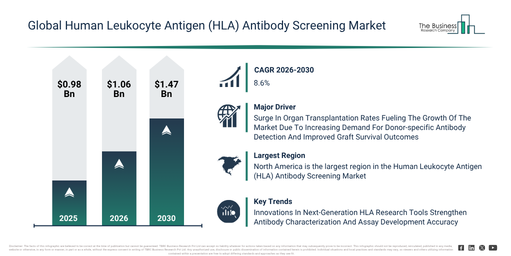
  • Human Leukocyte Antigen (HLA) Antibody Screening Market Forecast To Reach $1.47 Billion By 2030: Key Trends Explained

    Human Leukocyte Antigen (HLA) Antibody Screening Market Forecast To Reach $1.47 Billion By 2030: Key Trends Explained

    Featuring market attractiveness scoring, total addressable market sizing, company benchmarking matrices, interactive Excel dashboards, deeper supply chain intelligence, emerging startup tracking, and granular product-level insights, The Business Research Company’s 2026 market reports are built to deliver research that is both more actionable and more strategically valuable.

    Human Leukocyte Antigen (HLA) Antibody Screening Market Growth Potential: How Will Market Size Shift Through 2030?

    The human leukocyte antigen (HLA) antibody screening market has experienced substantial growth in its size over recent years. This market is projected to expand from $0.98 billion in 2025 to $1.06 billion by 2026, demonstrating a compound annual growth rate (CAGR) of 8.4%. Historically, this expansion can be linked to several factors, including an escalating number of organ transplant operations, a higher occurrence of end-stage organ failure, enhanced understanding of transplant rejection dangers, the broadening scope of transfusion medicine practices, and advancements in immunoassay platform technology.

    The human leukocyte antigen (HLA) antibody screening market is expected to experience significant expansion in the coming years. Its valuation is projected to reach $1.47 billion by 2030, demonstrating a compound annual growth rate (CAGR) of 8.6%. This anticipated growth during the forecast period is driven by factors such as the increasing need for precise transplant matching, the wider adoption of multiplex bead-based assays, rising investments in transplant immunology research, the broadening of transplant programs in developing markets, and technological advancements in automated HLA antibody screening systems. Dominant trends during this period include the growing utilization of single antigen bead assays for superior sensitivity, an increasing demand for thorough pre-transplant immunological risk assessments, the expanded application of high-throughput flow cytometry in HLA screening, the development of post-transplant antibody monitoring protocols, and enhanced standardization of HLA antibody detection methodologies.

    Get A Free Sample Report With In-Depth Market Insights:

    https://thebusinessresearchcompany.com/sample_request?id=72197599&type=smp&name=Human%20Leukocyte%20Antigen%20%28HLA%29%20Antibody%20Screening%20Market%20Report%202026&utm_source=Blogs&utm_medium=Paid&utm_campaign=Oct_PR

    Human Leukocyte Antigen (HLA) Antibody Screening Market Growth Factors: What’s Supporting Expansion?

    The increasing rates of organ transplantation are anticipated to drive the future expansion of the HLA antibody screening market. Organ transplantation rates quantify the total number of organ transplant operations performed within a specific population over a period, typically expressed annually or per million people. This surge in transplantation procedures is largely a result of the escalating burden of chronic and end-stage diseases; as more patients progress to organ failure, the demand for organ replacement therapies concurrently rises. HLA antibody screening significantly contributes to higher organ transplantation success by ensuring superior donor-recipient compatibility before surgery, thereby reducing the likelihood of immune-mediated rejection. This process minimizes graft loss and complications, enhances long-term transplant outcomes, and facilitates more effective utilization of available donor organs. For example, in January 2025, the Health Resources and Services Administration, a US-based agency of the Department of Health and Human Services, reported that lung transplants saw the highest proportional increase between 2023 and 2024, climbing from 3,026 procedures to 3,340, which indicates a 10.4% growth. Thus, the escalating organ transplantation rates are propelling the growth of the HLA antibody screening market.

    Human Leukocyte Antigen (HLA) Antibody Screening Market Segmentation And Category Overview

    The human leukocyte antigen (HLA) antibody screening market covered in this report is segmented –

    1) By Technology: Enzyme-Linked Immunosorbent Assay (ELISA), Flow Cytometry, Luminex, Other Technologies

    2) By Product Type: Reagents And Kits, Instruments, Software

    3) By Target Class: Human Leukocyte Antigen Class I Antibodies, Human Leukocyte Antigen Class II Antibodies, Non- Human Leukocyte Antigen Antibodies

    4) By Application: Pre-Transplant Screening, Post-Transplant Monitoring, Transfusion Medicine, Research Applications

    5) By End-User: Hospitals And Transplant Centers, Diagnostic Laboratories, Research Institutes, Other End-Users

    Subsegments:

    1) By Enzyme Linked Immunosorbent Assay: Direct Enzyme Linked Immunosorbent Assay, Indirect Enzyme Linked Immunosorbent Assay, Sandwich Enzyme Linked Immunosorbent Assay, Competitive Enzyme Linked Immunosorbent Assay

    2) By Flow Cytometry: Conventional Flow Cytometry, Bead Based Flow Cytometry, Imaging Flow Cytometry, High Throughput Flow Cytometry

    3) By Luminex: Single Antigen Luminex Assay, Multi Antigen Luminex Assay, Bead Based Multiplex Luminex Assay, Custom Luminex Panels

    4) By Other Technologies: Western Blotting, Radioimmunoassay, Complement Dependent Cytotoxicity Assay, Microarray Based Assay

    Human Leukocyte Antigen (HLA) Antibody Screening Market Industry Trends: What’s Reshaping Demand?

    Major companies in the HLA antibody screening market are concentrating on developing advanced HLA research instruments to enhance the accuracy of immune checkpoint research, antibody validation, and assay development. These next-generation HLA research tools integrate innovative recombinant reagents, multiplexed analytical platforms, and high-resolution molecular technologies, which enable precise profiling of HLA molecules and how they interact with antibodies. For example, in November 2025, HLA Protein Technologies, a US-based biotechnology company, unveiled its sHLA-G Monomer and Tetramer Portfolio, an advanced HLA research tool that supports high-fidelity checkpoint biology studies, target validation, and assay development. This portfolio offers structurally validated recombinant HLA-G reagents, optimized for immune receptor interaction studies, thereby facilitating improved characterization of HLA-associated antibodies and driving progress in transplant immunology, oncology, and immune tolerance research applications.

    Human Leukocyte Antigen (HLA) Antibody Screening Market Competitive Analysis Of Leading Industry Participants

    Major companies operating in the human leukocyte antigen (HLA) antibody screening market are Hoffmann-La Roche AG, Thermo Fisher Scientific Inc., Abbott Laboratories, Becton Dickinson Company, Laboratory Corporation of America Holdings, Quest Diagnostics Incorporated, Grifols S A, Beckman Coulter Inc., Bio Rad Laboratories Inc., QIAGEN N V, Takara Bio Inc., Fujirebio Inc., CareDx Inc., Histogenetics LLC, Creative Biolabs Inc., Biofortuna Ltd., Stanford Blood Center, GenDx B V, Omixon Biocomputing Ltd., BAG Diagnostics GmbH, Scisco Genetics Inc., TBG Diagnostics Ltd., American Red Cross.

    View The Full Human Leukocyte Antigen (HLA) Antibody Screening Market Report:

    https://thebusinessresearchcompany.com/report/human-leukocyte-antigen-hla-antibody-screening-market-report?utm_source=Blogs&utm_medium=Paid&utm_campaign=Oct_PR

    Human Leukocyte Antigen (HLA) Antibody Screening Market Geographic Distribution And Regional Opportunities

    North America was the largest region in the human leukocyte antigen (HLA) antibody screening market in 2025. Asia-Pacific is expected to be the fastest-growing region in the forecast period. The regions covered in the human leukocyte antigen (HLA) antibody screening market report are Asia-Pacific, South East Asia, Western Europe, Eastern Europe, North America, South America, Middle East, Africa.

    Reach Out To Our Team:

    The Business Research Company: https://www.thebusinessresearchcompany.com/

    Americas: +1 310-496-7795

    Asia: +44 7882 955267 & +91 8897263534

    Europe: +44 7882 955267

    Email us at: marketing@tbrc.info

    Follow us on:

    LinkedIn: https://in.linkedin.com/company/the-business-research-company

    YouTube: https://www.youtube.com/channel/UC24_fI0rV8cR5DxlCpgmyFQ

    Global Market Model: https://www.thebusinessresearchcompany.com/global-market-model