Category: Healthcare Services

  • Rare Disease Registries Market Size Reaches $1.82 Billion In 2026: What Is Driving Growth?

    Rare Disease Registries Market Size Reaches $1.82 Billion In 2026: What Is Driving Growth?

    Featuring market attractiveness scoring, total addressable market sizing, company benchmarking matrices, interactive Excel dashboards, deeper supply chain intelligence, emerging startup tracking, and granular product-level insights, The Business Research Company’s 2026 market reports are built to deliver research that is both more actionable and more strategically valuable.

    Rare Disease Registries Market Value Analysis: What Growth Lies Ahead Over The Forecast Period?

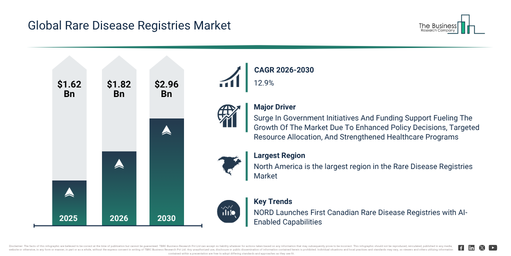
    The rare disease registries market size has seen swift expansion in recent years. It will grow from $1.62 billion in 2025 to $1.82 billion in 2026 at a compound annual growth rate (CAGR) of 12.6%. The expansion observed historically stems from factors such as increasing awareness of rare diseases, a rise in clinical research activities, the development of hospital and population-based registries, regulatory frameworks supporting patient data collection, and the limited availability of structured patient data.

    The rare disease registries market size is anticipated to undergo significant expansion in the coming years. It will grow to $2.96 billion in 2030 at a compound annual growth rate (CAGR) of 12.9%. This growth during the forecast period is propelled by factors such as the adoption of AI-driven registry solutions, the integration of genomic and omics data, the expansion of personalized medicine initiatives, investment in cloud-based interoperable platforms, and enhanced patient engagement and data sharing. Prominent trends for the forecast period encompass real-time patient data collection, integration with electronic health records (EHR), advanced data analytics specific to rare diseases, optimization of patient recruitment and retention, and the implementation of interoperable registry platforms.

    Get A Free Sample Report With In-Depth Market Insights:

    https://thebusinessresearchcompany.com/sample_request?id=94515903&type=smp&name=Rare%20Disease%20Registries%20Market%20Report%202026&utm_source=Blogs&utm_medium=Paid&utm_campaign=Oct_PR

    Rare Disease Registries Market Growth Drivers: What’s Behind The Acceleration?

    The rare disease registries market is anticipated to expand over the forecast period, primarily driven by increasing government initiatives and financial assistance. Such government initiatives and funding support encompass public-sector endeavors and investments aimed at strengthening healthcare infrastructure, fostering innovation, and improving service delivery. The rising public funding signifies efforts to enhance data-informed policymaking, optimize resource distribution, and improve outcomes for underserved patient populations, including individuals affected by rare diseases. Rare disease registries play a crucial role in achieving these objectives by aggregating comprehensive patient data that guides policy decisions, facilitates targeted funding allocation, and enables the development and evaluation of effective healthcare and research programs. For instance, in February 2025, the UK government’s central executive authority allocated approximately £26 billion ($35 billion) over two years to bolster the health and care system, reinforcing investment in data infrastructure and population health initiatives. Thus, the growing government initiatives and funding support are propelling the expansion of the rare disease registries market.

    Rare Disease Registries Market Segment Analysis And Revenue Potential

    The rare disease registries market covered in this report is segmented –

    1) By Type: Product Registries, Health Services Registries, Disease Registries

    2) By Database Type: Population-based, Hospital-based

    3) By Software: Standalone, Integrated

    4) By Function: Data Collection, Data Analysis, Patient Recruitment, Other Functions

    5) By End-User: Pharmaceutical Companies, Research Organizations, Hospitals, Government Agencies, Other End-Users

    Subsegments:

    1) By Product Registries: Drug Product Registries, Biologic Product Registries, Medical Device Registries, Gene Therapy Product Registries

    2) By Health Services Registries: Hospital Based Registries, Clinic Based Registries, National Health Program Registries, Insurance Claims Registries

    3) By Disease Registries: Genetic Disorder Registries, Metabolic Disorder Registries, Neurological Disorder Registries, Oncology Rare Disease Registries

    Rare Disease Registries Market Trends: What’s Defining The Industry’s Next Phase?

    Major companies operating within the rare disease registries market are concentrating on developing sophisticated products, such as an AI-enabled patient registry infrastructure, to enhance real-time data capture, patient monitoring, and research insights across rare diseases. An AI-enabled patient registry infrastructure denotes registry systems that utilize artificial intelligence to efficiently process, analyze, and interpret large-scale patient and clinical data, thereby facilitating predictive analytics, natural history modeling, and real-world evidence generation. For instance, in May 2024, the National Organization for Rare Disorders (NORD), a US-based non-profit advocacy organization dedicated to individuals with rare diseases and the organizations that serve them, introduced the inaugural Canadian rare disease patient registries on its IAMRARE platform for phenylketonuria (PKU) and mucopolysaccharidoses (MPS). This initiative enables real-time cooperative data collection, supports multiple languages and regional consent requirements, and provides valuable insights for clinical trial eligibility, tracking disease progression, and evaluating treatments.

    Rare Disease Registries Market Key Participants And Competitive Landscape

    Major companies operating in the rare disease registries market are disease registries market are Deloitte Touche Tohmatsu Limited, International Business Machines Corporation, Oracle Corporation, BC Platforms Ltd., IQVIA Holdings Inc., ICON plc, Veeva Systems Inc., Alira Health Inc., Phastar Ltd., HealthVerity Inc., OM1 Inc., Synapse Laboratory, Castor EDC, RedCap Cloud, Within3 Inc., Sage Bionetworks, National Organization for Rare Disorders Inc., RTI Health Solutions, ArborMetrix Inc., Evado Clinical Systems Ltd., ClinCapture LLC, Global Vision Technologies Inc., Genetic Alliance UK, Pulse Infoframe.

    View The Full Rare Disease Registries Market Report:

    https://thebusinessresearchcompany.com/report/rare-disease-registries-market-report?utm_source=Blogs&utm_medium=Paid&utm_campaign=Oct_PR

    Rare Disease Registries Market Geographic Analysis: Where Is Demand Rising Fastest?

    North America was the largest region in the rare disease registries market in 2025. Asia-Pacific is expected to be the fastest-growing region in the forecast period. The regions covered in the rare disease registries market report are Asia-Pacific, South East Asia, Western Europe, Eastern Europe, North America, South America, Middle East, Africa.

    Reach Out To Our Team:

    The Business Research Company: https://www.thebusinessresearchcompany.com/

    Americas: +1 310-496-7795

    Asia: +44 7882 955267 & +91 8897263534

    Europe: +44 7882 955267

    Email us at: marketing@tbrc.info

    Follow us on:

    LinkedIn: https://in.linkedin.com/company/the-business-research-company

    YouTube: https://www.youtube.com/channel/UC24_fI0rV8cR5DxlCpgmyFQ

    Global Market Model: https://www.thebusinessresearchcompany.com/global-market-model
  • Quantum Dermatology Market Forecast Highlights A $5.08 Billion Opportunity For Industry Participants

    Quantum Dermatology Market Forecast Highlights A $5.08 Billion Opportunity For Industry Participants

    Built to provide research that’s more actionable and strategically valuable, The Business Research Company’s 2026 market reports include market attractiveness analysis, total addressable market sizing, company benchmarking matrices, interactive Excel dashboards, broader supply chain intelligence, emerging startup tracking, and in-depth product insights.

    Quantum Dermatology Market Forecast: What Value Will The Market Reach By 2030?

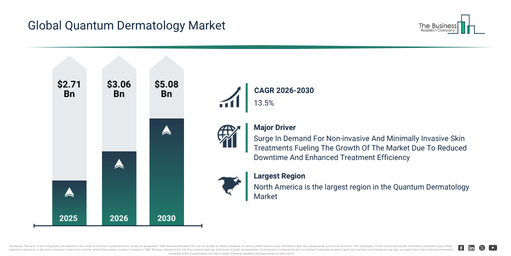
    The quantum dermatology market has witnessed rapid growth in recent years. It is anticipated to expand from $2.71 billion in 2025 to $3.06 billion in 2026, exhibiting a compound annual growth rate (CAGR) of 13.2%. This historical expansion can be ascribed to elements like the escalating demand for cosmetic procedures, continuous advancements in laser and IPL technologies, the proliferation of aesthetic clinics, a heightened awareness of skin health, and the increasing adoption of multi-technology systems.

    The quantum dermatology market is projected to experience substantial expansion over the next few years, with its valuation expected to reach $5.08 billion by 2030, exhibiting a compound annual growth rate (CAGR) of 13.5%. This growth throughout the forecast period can be primarily attributed to the integration of AI in dermatology, the expansion of dermatology clinics, the increasing demand for personalized skin treatments, the adoption of combination systems, and the growth of non-invasive rejuvenation therapies. Prominent trends anticipated in this timeframe include minimally invasive treatment techniques, personalized dermatology solutions, AI-driven skin analysis, non-invasive skin rejuvenation therapies, and real-time treatment monitoring.

    Get A Free Sample Report With In-Depth Market Insights:

    https://thebusinessresearchcompany.com/sample_request?id=22539878&type=smp&name=Quantum%20Dermatology%20Market%20Report%202026&utm_source=Blogs&utm_medium=Paid&utm_campaign=Oct_PR

    Quantum Dermatology Market Growth Catalysts And Demand Drivers

    The rising preference for non-invasive and minimally invasive skin treatments is anticipated to fuel the expansion of the quantum dermatology market. These treatments involve procedures that improve skin appearance or health without major surgical intervention, employing technologies such as laser, energy-based devices, injectables, and light-based methods. Patients increasingly favor these options due to benefits like shorter recovery periods, less discomfort, reduced complication risks, and quicker return to daily activities. Quantum dermatology supports this trend by leveraging sophisticated, precision-focused dermatological technologies and data-driven treatment strategies to enhance procedural accuracy, improve clinical results, and minimize tissue damage and healing time. For instance, in September 2025, Hansard – UK Parliament reported that 7.7 million individuals in the UK underwent cosmetic and dermatological procedures, which included minimally invasive treatments, marking a 12% rise compared to 2023. Consequently, the growing demand for non-invasive and minimally invasive skin treatments is a key driver for the quantum dermatology market’s growth. An increase in healthcare spending is projected to advance the quantum dermatology market. Healthcare expenditure refers to the aggregate spending by both public and private sectors on medical services, products, and initiatives aimed at maintaining and enhancing health. This rise in spending is primarily due to an aging demographic, as a growing number of elderly individuals require more frequent and intricate medical attention. Quantum dermatology assists in controlling healthcare costs by offering advanced, accurate, and non-invasive skin treatments, thereby lessening the necessity for extended therapies and hospital stays. As an illustration, in April 2025, the Office for National Statistics, a UK-based government department, noted that healthcare spending increased by 6.5% in nominal terms and 2.4% in real terms between 2023 and 2024. Thus, the escalating healthcare expenditure is propelling the expansion of the quantum dermatology market.

    Quantum Dermatology Market Segments: Where Is Growth Concentrated?

    The quantum dermatology market covered in this report is segmented –

    1) By Technology: Laser-Based Systems, Intense Pulsed Light (IPL) Systems, Combination Systems, Other Technologies

    2) By Treatment Type: Hair Removal, Pigmented Lesions Treatment, Skin Firming And Tightening, Wrinkle Reduction And Rejuvenation, Vascular Lesion Treatment

    3) By Application: Aesthetic And Cosmetic Treatments, Dermatology Procedures, Skin Rejuvenation Therapies, Hair Reduction Treatments

    4) By End User: Dermatology Clinics, Professional Clinics And Aesthetic Practitioners, Beauty Salons And Spas, Hospitals And Medical Aesthetic Centers, Medical Institutions, Individual Consumers

    Subsegments:

    1) By Laser-Based Systems: Fractional Laser Systems, Ablative Laser Systems, Non Ablative Laser Systems, Pulsed Laser Systems

    2) By Intense Pulsed Light Systems: Hair Removal Systems, Skin Rejuvenation Systems, Vascular Lesion Treatment Systems, Pigmentation Treatment Systems

    3) By Combination Systems: Laser And Intense Pulsed Light Systems, Laser And Radio Frequency Systems, Intense Pulsed Light And Radio Frequency Systems, Other Multi Technology Systems

    4) By Other Technologies: Radio Frequency Systems, Ultrasound Based Systems, Cryotherapy Systems, Photodynamic Therapy Systems

    Quantum Dermatology Market Competitive Landscape: Which Companies Lead The Industry?

    Major companies operating in the quantum dermatology market are Bruker Corporation, El.En. S.p.A., InMode Ltd., Shenzhen GSD Tech Co. Ltd., IDS Medical Systems (IDSMED), Sciton Inc., Strata Skin Sciences Inc., HONKON, Beijing ADSS Development Co. Ltd., Sharplight Technologies Ltd., Hironic Co. Ltd., Aerolase Corporation, Union Medical Co. Ltd., Zimmer MedizinSysteme GmbH, Wontech Co. Ltd., Lynton Lasers Ltd., DEKA M.E.L.A. Srl, DermaSensor Inc., Lasering USA, Telea Medical, Beijing Sincoheren, Eunsung Global Corp., Astiland Medical Aesthetics Technology Co. Ltd., BioWave Health Care.

    View The Full Quantum Dermatology Market Report:

    https://thebusinessresearchcompany.com/report/quantum-dermatology-market-report?utm_source=Blogs&utm_medium=Paid&utm_campaign=Oct_PR

    Quantum Dermatology Market Regional Breakdown: Where Is Demand Concentrated?

    North America was the largest region in the quantum dermatology market in 2025. Asia-Pacific is expected to be the fastest-growing region in the forecast period. The regions covered in the quantum dermatology market report are Asia-Pacific, South East Asia, Western Europe, Eastern Europe, North America, South America, Middle East, Africa.

    Reach Out To Our Team:

    The Business Research Company: https://www.thebusinessresearchcompany.com/

    Americas: +1 310-496-7795

    Asia: +44 7882 955267 & +91 8897263534

    Europe: +44 7882 955267

    Email us at: marketing@tbrc.info

    Follow us on:

    LinkedIn: https://in.linkedin.com/company/the-business-research-company

    YouTube: https://www.youtube.com/channel/UC24_fI0rV8cR5DxlCpgmyFQ

    Global Market Model: https://www.thebusinessresearchcompany.com/global-market-model
  • Protein Structure Prediction Platforms Market Growth Potential: What The Latest Forecast Reveals

    Protein Structure Prediction Platforms Market Growth Potential: What The Latest Forecast Reveals

    Built to provide research that’s more actionable and strategically valuable, The Business Research Company’s 2026 market reports include market attractiveness analysis, total addressable market sizing, company benchmarking matrices, interactive Excel dashboards, broader supply chain intelligence, emerging startup tracking, and in-depth product insights.

    Protein Structure Prediction Platforms Market CAGR Outlook And Future Development

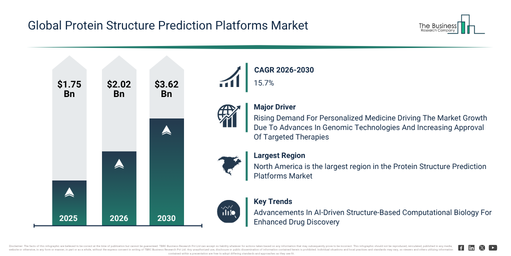
    The protein structure prediction platforms market has experienced rapid growth in recent years. It is projected to expand from $1.75 billion in 2025 to $2.02 billion in 2026, at a compound annual growth rate (CAGR) of 15.5%. This historical expansion can be attributed to several factors, including a reliance on experimental methods such as x-ray crystallography and NMR spectroscopy, limited computational resources, the early adoption of homology modeling techniques, an increasing demand for drug discovery, and the development of academic research in proteomics.

    The protein structure prediction platforms market size is anticipated to experience significant expansion in the coming years. It is projected to achieve a valuation of $3.62 billion by 2030, growing at a compound annual growth rate (CAGR) of 15.7%. This growth over the forecast period is fueled by factors such as the increasing adoption of advanced AI and ML algorithms, the expansion of cloud-based platforms, their integration with biopharmaceutical pipelines, rising investments in computational biology, and a growing demand for high-throughput protein modeling. Key trends emerging in this period include AI-driven protein structure prediction, the prevalence of cloud-based computational platforms, deeper integration with drug discovery pipelines, advancements in real-time molecular modeling, and the application of predictive disease research analytics.

    Get A Free Sample Report With In-Depth Market Insights:

    https://thebusinessresearchcompany.com/sample_request?id=26424289&type=smp&name=Protein%20Structure%20Prediction%20Platforms%20Market%20Report%202026&utm_source=Blogs&utm_medium=Paid&utm_campaign=Oct_PR

    Protein Structure Prediction Platforms Market Expansion Drivers: What’s Shaping Future Growth?

    The rising demand for personalized medicine is projected to stimulate the growth of the protein structure prediction platforms market in the future. Personalized medicine defines a strategy that customizes healthcare and treatments according to a patient’s specific biological and individual traits. The uptake of personalized medicine is expanding due to progress in genomic technologies, which empower healthcare professionals to rapidly and precisely examine a patient’s genetic data, thereby facilitating more focused and efficacious therapies. Within research and drug development, protein structure prediction platforms assist personalized medicine by enabling scientists to model patient-specific protein variants, comprehend mutation-driven structural alterations, and formulate targeted treatments for genetically identified patient groups. For example, in February 2024, information from the Personalized Medicine Coalition, a US-based non-profit organization, indicated that the U.S. Food and Drug Administration approved 16 new personalized treatments for rare disease patients in 2023, a rise from six in 2022. Consequently, the increasing need for personalized medicine is a key factor propelling the expansion of the protein structure prediction platforms market.

    Protein Structure Prediction Platforms Market Segmentation: How Does The Market Break Down By Category?

    The protein structure prediction platforms market covered in this report is segmented –

    1) By Component: Software, Services

    2) By Technology: Artificial Intelligence-based, Homology Modeling, Ab Initio, Threading, Hybrid Methods

    3) By Deployment Mode: Cloud-Based, On-Premises

    4) By Application: Drug Discovery, Disease Research, Academic Research, Biotechnology, Other Applications

    5) By End-User: Pharmaceutical And Biotechnology Companies, Academic And Research Institutes, Contract Research Organizations, Other End Users

    Subsegments:

    1) By Software: Structure Prediction Software, Molecular Modeling Software, Visualization And Analysis Software, Database Management Software, Workflow Automation And Simulation Software

    2) By Services: Consulting And Implementation Services, Integration And Customization Services, Training And Technical Support Services, Maintenance And Upgrade Services, Data Analysis And Computational Services

    Protein Structure Prediction Platforms Market Strategic Trends: What Defines The Next Growth Phase?

    Major companies operating in the protein structure prediction platforms market are focusing on developing innovative solutions such as, structure-based computational biology technologies to accelerate drug discovery, enable accurate protein modeling, and enhance target identification through advanced molecular simulations and AI-driven structural analysis. These systems leverage three-dimensional protein structure data, molecular modeling, and simulation algorithms to analyze biomolecular interactions and support rational drug design. For instance, in March 2024, Basecamp Research, a UK-based AI-driven biotechnology company, launched BaseFold, a deep learning model designed to improve 3D protein structure prediction for large and complex proteins. By augmenting AlphaFold2 with its proprietary BaseGraph dataset derived from global biodiversity sources, BaseFold demonstrated up to six-fold improvements in predictive accuracy and three-fold enhancements in small-molecule docking performance in internal benchmarks. Such advances underpin next-generation protein structure prediction platforms by improving the modeling of protein classes that have been underrepresented in public datasets, thereby supporting AI-driven drug discovery efforts.

    Protein Structure Prediction Platforms Market Key Players Shaping Industry Direction

    Major companies operating in the protein structure prediction platforms market are IBM Corporation, Thermo Fisher Scientific Inc., Dassault Systèmes SE, Charles River Laboratories International Inc., Bruker Corporation, Revvity Inc., DeepMind Technologies Limited, Schrödinger Inc., BenevolentAI Limited, Nimbus Therapeutics Inc., Arzeda Corporation, Relay Therapeutics Inc., LabVantage Solutions Inc., Genesis Therapeutics Inc., Bioinformatics Solutions Inc., Chemical Computing Group ULC, Insilico Medicine Inc., Cloud Pharmaceuticals Inc., Peptone Ltd., Molecular Forecaster Inc., Acellera Ltd., CD BioSciences, and ProteinLab.ai Inc.

    View The Full Protein Structure Prediction Platforms Market Report:

    https://thebusinessresearchcompany.com/report/protein-structure-prediction-platforms-market-report?utm_source=Blogs&utm_medium=Paid&utm_campaign=Oct_PR

    Protein Structure Prediction Platforms Market Regional Analysis: Which Region Leads By Revenue?

    North America was the largest region in the protein structure prediction platforms market in 2025. Asia-Pacific is expected to be the fastest-growing region in the forecast period. The regions covered in the protein structure prediction platforms market report are Asia-Pacific, South East Asia, Western Europe, Eastern Europe, North America, South America, Middle East, Africa.

    Reach Out To Our Team:

    The Business Research Company: https://www.thebusinessresearchcompany.com/

    Americas: +1 310-496-7795

    Asia: +44 7882 955267 & +91 8897263534

    Europe: +44 7882 955267

    Email us at: marketing@tbrc.info

    Follow us on:

    LinkedIn: https://in.linkedin.com/company/the-business-research-company

    YouTube: https://www.youtube.com/channel/UC24_fI0rV8cR5DxlCpgmyFQ

    Global Market Model: https://www.thebusinessresearchcompany.com/global-market-model
  • Population Genomic Screening Programs Market Growth Forecast: Market Size, Key Trends And Emerging Opportunities Through 2030

    Population Genomic Screening Programs Market Growth Forecast: Market Size, Key Trends And Emerging Opportunities Through 2030

    Built to provide research that’s more actionable and strategically valuable, The Business Research Company’s 2026 market reports include market attractiveness analysis, total addressable market sizing, company benchmarking matrices, interactive Excel dashboards, broader supply chain intelligence, emerging startup tracking, and in-depth product insights.

    Population Genomic Screening Programs Market Forecast: What Value Will The Market Reach By 2030?

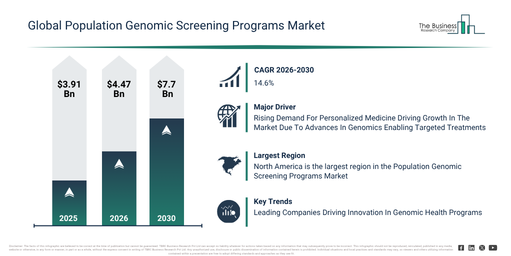
    The size of the population genomic screening programs market has experienced rapid growth in recent years. This market is projected to expand from $3.91 billion in 2025 to $4.47 billion in 2026, demonstrating a compound annual growth rate (CAGR) of 14.3%. Historically, this expansion has been driven by increased awareness of hereditary diseases, the implementation of newborn screening programs, advancements in sequencing technologies, growing government health initiatives, and the development of healthcare infrastructure.

    The market for population genomic screening programs is projected to experience substantial expansion over the upcoming years. Its value is set to reach $7.7 billion in 2030, showing a compound annual growth rate (CAGR) of 14.6%. This anticipated growth during the forecast period stems from factors such as the broadening of adult and carrier screening initiatives, the incorporation of AI-based genomic analysis tools, connectivity with digital health platforms, a rising need for individualized medicine, and increased investment in population genomic research. Key developments expected in this period encompass comprehensive genetic risk evaluation across populations, linking with electronic health records (EHR), AI-powered variant interpretation, tailored preventive health schemes, and adherence to data security and privacy regulations.

    Get A Free Sample Report With In-Depth Market Insights:

    https://thebusinessresearchcompany.com/sample_request?id=74694922&type=smp&name=Population%20Genomic%20Screening%20Programs%20Market%20Report%202026&utm_source=Blogs&utm_medium=Paid&utm_campaign=Oct_PR

    Population Genomic Screening Programs Market Industry Drivers: What’s Behind The Revenue Growth?

    The increasing need for individualized healthcare approaches is anticipated to boost the expansion of the population genomic screening programs market. This approach, personalized medicine, customizes medical interventions and health choices according to a person’s genetic makeup, environmental factors, and lifestyle, aiming to enhance treatment efficacy and safety. Its rising uptake is propelled by developments in genomics and molecular diagnostics, allowing medical professionals to gain deeper insights into genetic differences and administer more accurate, focused therapies, thereby improving patient results and minimizing negative reactions. Population genomic screening programs are fundamental to the advancement of personalized medicine, as they identify genetic variations and risk factors linked to diseases within broad and varied populations. Such programs facilitate the early detection of disease risks, the categorization of patient groups, and the creation of customized prevention and treatment plans for individuals and for public health initiatives. As an illustration, in February 2024, the Personalized Medicine Coalition, a U.S.-based non-profit organization, stated that in 2023 the U.S. Food and Drug Administration (FDA) sanctioned 16 new personalized treatments for rare disease patients, an increase from six approvals in 2022. Consequently, the expanding demand for personalized medicine is fueling the growth of the population genomic screening programs market.

    Population Genomic Screening Programs Market Segment Trends And Revenue Contributors

    The population genomic screening programs market covered in this report is segmented –

    1) By Program Type: Newborn Screening, Adult Screening, Carrier Screening, Pharmacogenomics, Other Program Types

    2) By Program Model: National Screening Programs, Regional Screening Programs, Institution Based Screening, Direct To Consumer Screening

    3) By Technology: Next Generation Sequencing, Microarray, Polymerase Chain Reaction, Other Technologies

    4) By Application: Rare Disease Detection, Cancer Risk Assessment, Pharmacogenomics, Chronic Disease Prediction, Other Applications

    5) By End-User: Hospitals, Research Institutes, Government Agencies, Diagnostic Laboratories, Other End-Users

    Subsegments:

    1) By Newborn Screening: Rare Disease Screening, Metabolic Disorder Screening, Immunodeficiency Disorder Screening, Neurological Disorder Screening, Endocrine Disorder Screening

    2) By Adult Screening: Hereditary Cancer Risk Screening, Cardiovascular Genetic Risk Screening, Neurodegenerative Disease Risk Screening, Preventive Health Risk Screening, Late Onset Genetic Disorder Screening

    3) By Carrier Screening: Preconception Carrier Screening, Prenatal Carrier Screening, Expanded Carrier Screening, Recessive Disorder Carrier Screening, Population Based Carrier Screening

    4) By Pharmacogenomics: Drug Response Prediction Testing, Adverse Drug Reaction Risk Testing, Dose Optimization Testing, Therapeutic Selection Testing, Medication Safety Testing

    5) By Other Program Types: Polygenic Risk Assessment Programs, Predictive Genomic Health Programs, Preventive Genomic Screening Programs, Population Risk Stratification Programs, Research Based Genomic Screening Programs

    #Population Genomic Screening Programs Market Growth Trends: What’s Shaping The Future Outlook?

    Leading companies operating in the population genomic screening programs market are concentrating on developing innovative solutions, such as hereditary risk assessment, to facilitate the early identification of genetic predispositions, guide personalized prevention strategies, and enhance long-term health outcomes. Hereditary risk assessment involves evaluating an individual’s probability of developing specific genetic disorders or diseases, based on their inherited genetic variants and family medical history. For instance, in November 2023, Helix OpCo, LLC, a US-based population genomics and clinical technology company, partnered with Cone Health, a US-based not-for-profit network of healthcare providers, to launch a population genomics initiative aimed at advancing precision medicine in North Carolina. This program utilizes Helix’s comprehensive platform to furnish actionable precision medicine insights, thereby enabling earlier interventions, fostering community wellness efforts, and improving health equity across Alamance, Forsyth, Guilford, Rockingham, and Randolph counties and beyond.

    Population Genomic Screening Programs Market Industry Leaders And Competitive Landscape

    Major companies operating in the population genomic screening programs market are F. Hoffmann-La Roche AG, Thermo Fisher Scientific Inc., Quest Diagnostics Incorporated, Illumina Inc., Natera Inc., Myriad Genetics Inc., BGI Genomics Co. Ltd., Guardant Health Inc., Fulgent Genetics Inc., Ambry Genetics Corporation, Pacific Biosciences of California Inc., Color Genomics Inc., Helix OpCo Inc., Personalis Inc., CENTOGENE N.V., ProPhase Labs Inc., DNAnexus Inc., Genomics England Limited, Eurofins Genomics Germany GmbH, Sema4 Inc., Mapmygenome India Private Limited, Gencove Inc.

    View The Full Population Genomic Screening Programs Market Report:

    https://thebusinessresearchcompany.com/report/population-genomic-screening-programs-market-report?utm_source=Blogs&utm_medium=Paid&utm_campaign=Oct_PR

    Population Genomic Screening Programs Market Regional Analysis And Top Geography

    North America was the largest region in the population genomic screening programs market in 2025. Asia-Pacific is expected to be the fastest-growing region in the forecast period. The regions covered in the population genomic screening programs market report are Asia-Pacific, South East Asia, Western Europe, Eastern Europe, North America, South America, Middle East, Africa.

    Reach Out To Our Team:

    The Business Research Company: https://www.thebusinessresearchcompany.com/

    Americas: +1 310-496-7795

    Asia: +44 7882 955267 & +91 8897263534

    Europe: +44 7882 955267

    Email us at: marketing@tbrc.info

    Follow us on:

    LinkedIn: https://in.linkedin.com/company/the-business-research-company

    YouTube: https://www.youtube.com/channel/UC24_fI0rV8cR5DxlCpgmyFQ

    Global Market Model: https://www.thebusinessresearchcompany.com/global-market-model
  • Personalized Circulating Tumor Deoxyribonucleic Acid (ctDNA) Fingerprint Panels Market Size In 2026: Regional Growth, Key Segments And Future Outlook

    Personalized Circulating Tumor Deoxyribonucleic Acid (ctDNA) Fingerprint Panels Market Size In 2026: Regional Growth, Key Segments And Future Outlook

    Built to provide research that’s more actionable and strategically valuable, The Business Research Company’s 2026 market reports include market attractiveness analysis, total addressable market sizing, company benchmarking matrices, interactive Excel dashboards, broader supply chain intelligence, emerging startup tracking, and in-depth product insights.

    Personalized Circulating Tumor Deoxyribonucleic Acid (ctDNA) Fingerprint Panels Market Size And Revenue Outlook Through 2030

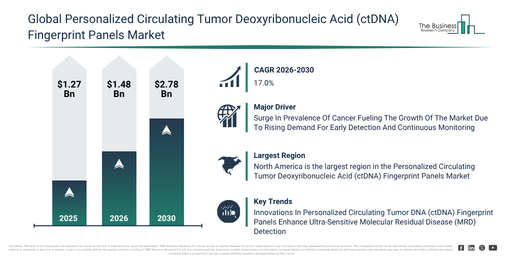
    The personalized circulating tumor deoxyribonucleic acid (ctDNA) fingerprint panels market has seen significant expansion in recent years. Its value is forecast to rise from $1.27 billion in 2025 to $1.48 billion in 2026, at a compound annual growth rate (CAGR) of 16.7%. Historically, this growth can be attributed to several factors including the increasing prevalence of cancer, breakthroughs in next-generation sequencing, a rising demand for non-invasive diagnostic methods, expanding research into genomic biomarkers, and supportive regulatory environments for precision medicine.

    The personalized circulating tumor deoxyribonucleic acid (ctDNA) fingerprint panels market size is set for significant expansion in the coming years. It will grow to $2.78 billion in 2030 at a compound annual growth rate (CAGR) of 17.0%. This growth during the forecast period can be attributed to the adoption of AI-powered genomic analysis, the expansion of personalized oncology programs, integration with hospital information systems, increasing investments in ctDNA panels, and the demand for real-time treatment monitoring. Prominent trends anticipated in the forecast period include personalized ctDNA assay development, longitudinal cancer monitoring, integration with clinical decision support systems, non-invasive disease tracking, and AI-driven mutation analysis.

    Get A Free Sample Report With In-Depth Market Insights:

    https://thebusinessresearchcompany.com/sample_request?id=52332308&type=smp&name=Personalized%20Circulating%20Tumor%20Deoxyribonucleic%20Acid%20%28ctDNA%29%20Fingerprint%20Panels%20Market%20Report%202026&utm_source=Blogs&utm_medium=Paid&utm_campaign=Oct_PR

    Personalized Circulating Tumor Deoxyribonucleic Acid (ctDNA) Fingerprint Panels Market Growth Momentum: What Factors Are Shaping Demand?

    The escalating incidence of cancer is anticipated to drive the expansion of the personalized circulating tumor deoxyribonucleic acid (ctDNA) fingerprint panels market in the foreseeable future. Cancer is characterized by a group of diseases involving the unchecked propagation of aberrant cells, which possess the capability to invade adjacent tissues and disseminate throughout the body. The rise in cancer cases is attributable to several factors, including extended lifespans, enhanced capabilities for early diagnosis, and advancements in therapy that enable patients to live longer with the condition. Personalized circulating tumor DNA fingerprint panels play a crucial role in cancer management by facilitating prompt identification, continuous oversight, and accurate regulation of tumor progression, thereby enhancing patient survival rates and guiding specific treatment approaches. For instance, in October 2025, the American Cancer Society, a US-based nonprofit organization dedicated to cancer research and advocacy, reported approximately 18.6 million cancer survivors in the US, constituting slightly more than 5% of the population, with forecasts indicating an increase to 22 million by 2035. Consequently, the growing prevalence of cancer is a key factor propelling the growth of the personalized circulating tumor deoxyribonucleic acid (ctDNA) fingerprint panels market.

    Personalized Circulating Tumor Deoxyribonucleic Acid (ctDNA) Fingerprint Panels Market Segments: Where Is Growth Concentrated?

    The personalized circulating tumor deoxyribonucleic acid (ctDNA) fingerprint panels market covered in this report is segmented –

    1) By Product Type: Single Gene Panels, Multi Gene Panels, Comprehensive Genomic Panels

    2) By Cancer Type: Lung Cancer, Breast Cancer, Colorectal Cancer, Pancreatic Cancer, Gastrointestinal Cancer, Hematological Malignancy

    3) By Technology: Next Generation Sequencing, Polymerase Chain Reaction Based, Other Technologies

    4) By Application: Oncology, Non Invasive Prenatal Testing, Transplantation, Other Applications

    5) By End User: Hospitals And Clinics, Diagnostic Laboratories, Research Institutes, Other End Users

    Subsegments:

    1) By Single Gene Panels: Tumor Specific Mutation Panels, Actionable Mutation Panels, Hereditary Cancer Panels

    2) By Multi Gene Panels: Targeted Cancer Panels, Disease Specific Panels, Therapy Guidance Panels

    3) By Comprehensive Genomic Panels: Pan Cancer Panels, Whole Exome Panels, Whole Genome Panel

    Personalized Circulating Tumor Deoxyribonucleic Acid (ctDNA) Fingerprint Panels Market Trends Redefining Industry Growth

    Leading companies within the personalized circulating tumor deoxyribonucleic acid (ctDNA) fingerprint panels market are concentrating on developing highly sensitive, tumor-informed genome-based assays. These advancements aim to improve early cancer detection, monitor patient response to treatment, and identify molecular residual disease (MRD) with greater accuracy. Such ultra-sensitive, tumor-informed, genome-based assays are sophisticated molecular diagnostic tools designed to identify and track specific tumor mutations in patients, thereby enabling the detection of extremely minute quantities of circulating tumor DNA (ctDNA) in the bloodstream. For example, in April 2025, Natera Inc., a US-based molecular diagnostics company, announced the extensive clinical launch of its ultra-sensitive Signatera Genome MRD test. This test employs whole-genome sequencing (WGS) to create highly individualized ctDNA fingerprint panels, custom-designed to each patient’s specific tumor profile. This method significantly increases the number of tumor variants that can be tracked and enhances detection sensitivity even at ultra-low ctDNA levels. This innovation strengthens MRD monitoring capabilities across numerous cancer types, supporting earlier intervention and facilitating more informed treatment decisions.

    Personalized Circulating Tumor Deoxyribonucleic Acid (ctDNA) Fingerprint Panels Market Competitive Analysis Of Leading Industry Participants

    Major companies operating in the personalized circulating tumor deoxyribonucleic acid (ctdna) fingerprint panels market are F. Hoffmann-La Roche Ltd, Thermo Fisher Scientific Inc., Laboratory Corporation of America Holdings, Agilent Technologies Inc., Illumina Inc., Sysmex Corporation, Bio-Rad Laboratories Inc., QIAGEN N.V., Natera Inc., Myriad Genetics Inc., NeoGenomics Laboratories Inc., Guardant Health Inc., Pacific Biosciences of California Inc., Burning Rock Biotech Limited, Personalis Inc., Biodesix Inc., OneCell Diagnostics Pvt. Ltd., CD Genomics, Creative Biolabs Inc., Predicine Inc., BioCreatrix Pte. Ltd., OncoDNA SA, Lucence Diagnostics Pte Ltd., Singlera Genomics Inc., Nonacus Ltd.

    View The Full Personalized Circulating Tumor Deoxyribonucleic Acid (ctDNA) Fingerprint Panels Market Report:

    https://thebusinessresearchcompany.com/report/personalized-circulating-tumor-deoxyribonucleic-acid-ctdna-fingerprint-panels-market-report?utm_source=Blogs&utm_medium=Paid&utm_campaign=Oct_PR

    Personalized Circulating Tumor Deoxyribonucleic Acid (ctDNA) Fingerprint Panels Market Geographic Distribution And Regional Opportunities

    North America was the largest region in the personalized circulating tumor deoxyribonucleic acid (ctDNA) fingerprint panels market in 2025. Asia-Pacific is expected to be the fastest-growing region in the forecast period. The regions covered in the personalized circulating tumor deoxyribonucleic acid (ctDNA) fingerprint panels market report are Asia-Pacific, South East Asia, Western Europe, Eastern Europe, North America, South America, Middle East, Africa.

    Reach Out To Our Team:

    The Business Research Company: https://www.thebusinessresearchcompany.com/

    Americas: +1 310-496-7795

    Asia: +44 7882 955267 & +91 8897263534

    Europe: +44 7882 955267

    Email us at: marketing@tbrc.info

    Follow us on:

    LinkedIn: https://in.linkedin.com/company/the-business-research-company

    YouTube: https://www.youtube.com/channel/UC24_fI0rV8cR5DxlCpgmyFQ

    Global Market Model: https://www.thebusinessresearchcompany.com/global-market-model
  • Pediatric Allergy Care Market 2026 Market Size And Growth Forecast: Key Trends To Watch

    Pediatric Allergy Care Market 2026 Market Size And Growth Forecast: Key Trends To Watch

    Built to provide research that’s more actionable and strategically valuable, The Business Research Company’s 2026 market reports include market attractiveness analysis, total addressable market sizing, company benchmarking matrices, interactive Excel dashboards, broader supply chain intelligence, emerging startup tracking, and in-depth product insights.

    Pediatric Allergy Care Market Growth Potential: How Will Market Size Shift Through 2030?

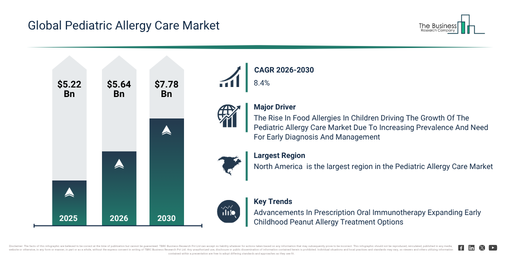
    The pediatric allergy care market size has shown strong growth over recent years. It is anticipated to expand from $5.22 billion in 2025 to $5.64 billion in 2026, achieving a compound annual growth rate (CAGR) of 8.1%. The historical increase can be linked to the rising occurrence of pediatric allergies, enhanced awareness among parents, the progress in pediatric immunotherapy, the implementation of traditional allergy testing methods, and the establishment of specialty allergy clinics.

    The pediatric allergy care market is projected to experience substantial growth over the coming years, reaching $7.78 billion by 2030, demonstrating a compound annual growth rate (CAGR) of 8.4%. This anticipated expansion is primarily driven by the increasing availability of telehealth services, the uptake of AI-driven diagnostic tools, the development of personalized treatment plans incorporating genomics, the broader integration of digital health platforms, and a rising need for remote monitoring solutions. Throughout the forecast period, significant trends are expected to encompass further telehealth expansion, advanced personalized allergy management strategies, continuous remote symptom monitoring, seamless integration with existing pediatric care platforms, and improved digital prescription management.

    Get A Free Sample Report With In-Depth Market Insights:

    https://thebusinessresearchcompany.com/sample_request?id=83338683&type=smp&name=Pediatric%20Allergy%20Care%20Market%20Report%202026&utm_source=Blogs&utm_medium=Paid&utm_campaign=Oct_PR

    Pediatric Allergy Care Market Industry Drivers: What’s Behind The Revenue Growth?

    The increasing occurrence of food allergies in children is anticipated to drive the future expansion of the pediatric allergy care market. These allergies represent immune system reactions that manifest when a child’s body incorrectly identifies specific foods as harmful, leading to symptoms that can range from mild, such as hives or stomach upset, to severe reactions like anaphylaxis. The growing incidence of food allergies among children is linked to the hygiene hypothesis, which suggests that reduced early childhood exposure to microbes results in an underdeveloped immune system that overreacts to harmless foods. Pediatric allergy care assists children with food allergies by providing prompt diagnosis, customized management strategies, and educational support to prevent allergic reactions and enhance their overall quality of life. For instance, in January 2026, according to the Centers for Disease Control and Prevention, a US-based public health agency, the percentage of children diagnosed with a food allergy increased to 5.3% in 2024 from 3.5% in 2023. Thus, the rising incidence of food allergies in children is a primary factor fueling the growth of the pediatric allergy care market.

    Pediatric Allergy Care Market Segmentation: How Does The Market Break Down By Category?

    The pediatric allergy care market covered in this report is segmented –

    1) By Care Modality: Drug Therapy, Allergy Testing, Pediatric Immunotherapy, Telehealth And Support

    2) By Condition Type: Asthma, Food Allergy, Allergic Rhinitis, Eczema, Anaphylaxis

    3) By Application: Pediatric Asthma Care, Food Allergy Diagnostics, Allergic Rhinitis And Eczema Integrated Management, Anaphylaxis Prevention, Immunotherapy Programs

    4) By End User: Specialty Allergy Clinics, Hospitals, Diagnostic Laboratories, Telehealth Providers, Other End Users

    Subsegments:

    1) By Drug Therapy: Antihistamine Medications, Corticosteroid Medications, Leukotriene Receptor Antagonists, Biologic Therapies, Epinephrine Auto Injector Treatments

    2) By Allergy Testing: Skin Prick Testing, Intradermal Testing, Patch Testing, Specific Immunoglobulin E Blood Testing, Oral Food Challenge Testing

    3) By Pediatric Immunotherapy: Subcutaneous Immunotherapy, Sublingual Immunotherapy, Oral Immunotherapy, Epicutaneous Immunotherapy, Cluster Immunotherapy

    4) By Telehealth And Support: Virtual Consultation Services, Remote Symptom Monitoring, Digital Prescription Management, Caregiver Education Programs, Mobile Health Application Support

    #Pediatric Allergy Care Market Growth Trends: What’s Shaping The Future Outlook?

    Leading firms within the pediatric allergy care market are prioritizing the creation of novel treatments, including prescription oral immunotherapy (OIT), aimed at desensitizing young patients to allergens and mitigating the potential for severe allergic responses. Prescription oral immunotherapy (OIT) is a clinically monitored therapy where patients are progressively exposed to minute, escalating quantities of an allergen, like peanuts, to foster tolerance and diminish the likelihood of intense allergic episodes. As an illustration, in February 2025, Stallergenes Greer International AG, a biopharmaceutical company headquartered in Switzerland, introduced Palforzia Oral Immunotherapy (OIT) in the U.S. for children aged 1 to 3 years. This launch broadened its prior approval to encompass toddlers with diagnosed peanut allergies. This treatment involves defatted peanut allergen powder, given orally via a structured regimen comprising initial dose increases, progressive up-dosing, and routine daily maintenance. Its purpose is to lessen allergic reactions, such as anaphylaxis, following unintentional peanut exposure. Distinctive features include precise age-based dosing and its application in conjunction with a peanut-avoidant diet to cultivate tolerance. Such therapy addresses a crucial unmet requirement for very young children, providing a proactive solution that goes beyond mere avoidance and emergency interventions, with the capacity to alter the natural progression of peanut allergy during early childhood.

    Pediatric Allergy Care Market Key Participants And Competitive Landscape

    Major companies operating in the pediatric allergy care market are market are AstraZeneca PLC, Thermo Fisher Scientific Inc., Abbott Laboratories, Quest Diagnostics Incorporated, Medicover Woman & Child Hospital, Nemours Children’s Health, EUROIMMUN Medizinische Labordiagnostika AG, ALK-Abelló A/S, Stallergenes Greer S.A., Rainbow Children’s Hospital, Continental Hospitals, Viracor Eurofins, R-Biopharm AESKU.GROUP GmbH And Co. KG, Apollo Cradle And Children’s Hospital, Hycor Biomedical Inc., AESKU.GROUP GmbH, Ankura Hospital for Women And Children, Nectar Allergy And Asthma, Ann And Robert H. Lurie Children’s Hospital of Chicago, DBV Technologies S.A.

    View The Full Pediatric Allergy Care Market Report:

    https://thebusinessresearchcompany.com/report/pediatric-allergy-care-market-report?utm_source=Blogs&utm_medium=Paid&utm_campaign=Oct_PR

    Pediatric Allergy Care Market Geographic Analysis: Where Is Demand Accelerating Fastest?

    North America was the largest region in the pediatric allergy care market in 2025. Asia-Pacific is expected to be the fastest-growing region in the forecast period. The regions covered in the pediatric allergy care market report are Asia-Pacific, South East Asia, Western Europe, Eastern Europe, North America, South America, Middle East, Africa.

    Reach Out To Our Team:

    The Business Research Company: https://www.thebusinessresearchcompany.com/

    Americas: +1 310-496-7795

    Asia: +44 7882 955267 & +91 8897263534

    Europe: +44 7882 955267

    Email us at: marketing@tbrc.info

    Follow us on:

    LinkedIn: https://in.linkedin.com/company/the-business-research-company

    YouTube: https://www.youtube.com/channel/UC24_fI0rV8cR5DxlCpgmyFQ

    Global Market Model: https://www.thebusinessresearchcompany.com/global-market-model
  • Pan-Ethnic Carrier Screening Programs Market Size And Forecast 2026–2030: Trends Driving Industry Expansion

    Pan-Ethnic Carrier Screening Programs Market Size And Forecast 2026–2030: Trends Driving Industry Expansion

    Backed by market attractiveness analysis, total addressable market sizing, company benchmarking matrices, interactive Excel dashboards, wider supply chain intelligence, emerging startup coverage, and detailed product-level insights, The Business Research Company’s 2026 market reports are designed to offer research that is more actionable and strategically valuable than ever.

    Pan-Ethnic Carrier Screening Programs Market Growth Analysis: How Will Revenue Trend Over The Forecast Period?

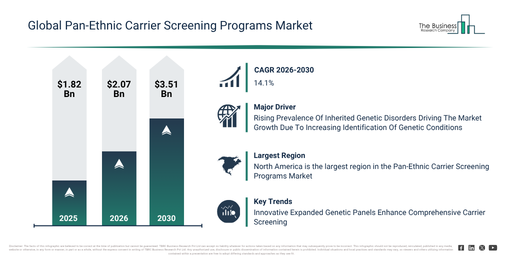
    The pan-ethnic carrier screening programs market has seen rapid expansion in recent years. Its value is expected to increase from $1.82 billion in 2025 to $2.07 billion in 2026, achieving a compound annual growth rate (CAGR) of 13.9%. Historically, this growth can be attributed to the decreasing expenses of genetic sequencing technologies, a heightened awareness of inherited genetic disorders, an increase in prenatal and preconception testing programs, the broadening of diagnostic laboratory infrastructure, and a surging demand for identifying disease risks early.

    The pan-ethnic carrier screening programs market is poised for significant expansion in the coming years. Projections indicate it will reach $3.51 billion in 2030, exhibiting a compound annual growth rate (CAGR) of 14.1%. This anticipated growth during the forecast period is propelled by factors such as the increasing uptake of comprehensive genomic panels, the rising incorporation of AI into variant interpretation, the expansion of tele-genetic counseling services, increasing governmental backing for preventive healthcare initiatives, and a greater emphasis on personalized reproductive planning. Key trends foreseen over this period involve the growing adoption of expanded multi-gene carrier screening panels, an escalating demand for preconception genetic risk assessment, the increasing integration of carrier screening into standard prenatal care, the broadening of universal population-based screening initiatives, and an enhanced focus on ensuring equitable access to genetic testing services.

    Get A Free Sample Report With In-Depth Market Insights:

    https://thebusinessresearchcompany.com/sample_request?id=50992638&type=smp&name=Pan-Ethnic%20Carrier%20Screening%20Programs%20Market%20Report%202026&utm_source=Blogs&utm_medium=Paid&utm_campaign=Oct_PR

    Pan-Ethnic Carrier Screening Programs Market Growth Factors Behind Sustained Expansion

    The increasing occurrence of inherited genetic disorders is anticipated to boost the expansion of the pan ethnic carrier screening programs market in the future. These disorders are defined as medical conditions resulting from genetic alterations or mutations in an individual’s genes, transmitted from parents to offspring. The incidence of inherited genetic disorders is expanding because of advancements in genetic testing and screening, which are now identifying a greater number of previously undetected cases. Pan-ethnic carrier screening programs play a crucial role in managing these conditions by providing extensive genetic testing for individuals and couples from various backgrounds, allowing for the early detection of carriers, facilitating informed decisions regarding reproduction, and enabling proactive healthcare strategies to mitigate the risk of transmitting genetic conditions. For example, in October 2024, the National Health Service (NHS) England, a UK government department, reported that a groundbreaking study in NHS hospitals is currently testing hundreds of newborns for more than 200 rare genetic conditions, with plans to screen up to 100,000 babies throughout England. Consequently, the growing occurrence of inherited genetic disorders is a key factor propelling the expansion of the pan ethnic carrier screening programs market.

    Pan-Ethnic Carrier Screening Programs Market Segment Landscape And Growth Outlook

    The pan-ethnic carrier screening programs market covered in this report is segmented –

    1) By Test Type: Expanded Carrier Screening, Targeted Carrier Screening

    2) By Technology: Deoxyribonucleic Acid (DNA) Sequencing, Polymerase Chain Reaction (PCR), Microarray, Other Technologies

    3) By Application: Preconception, Prenatal, Newborn

    4) By End-User: Hospitals And Clinics, Diagnostic Laboratories, Research Institutes, Other End-Users

    Subsegments:

    1) By Expanded Carrier Screening: Comprehensive Multi Gene Panels, Disease Specific Expanded Panels, Preconception Expanded Panels, Prenatal Expanded Panels, Universal Population Based Panels

    2) By Targeted Carrier Screening: Ethnicity Based Screening Panels, Family History Based Panels, Single Condition Carrier Testing, High Risk Population Panels, Condition Specific Targeted Panels

    Pan-Ethnic Carrier Screening Programs Market Industry Trends Fueling Future Revenue Growth

    Companies leading in the pan-ethnic carrier screening programs market are concentrating on developing inventive products, such as expanded genetic panels, to improve the early detection of inherited conditions across diverse populations. These expanded genetic panels are comprehensive tests designed to screen hundreds of genes for inherited conditions, assisting in the early identification of carrier status and guiding informed reproductive decisions for varied populations. For instance, in February 2023, Fulgent Genetics, a U.S.-based technology and clinical diagnostics company, unveiled the Beacon787 expanded genetic panels for carrier screening. This innovative solution encompasses 787 genes, including all American College of Medical Genetics and Genomics (ACMG) tier 3 genes recommended for universal carrier screening. Beacon787 employs Fulgent’s proprietary platform and bioinformatics algorithms to detect pseudogenes, accurately call copy number variants, and optimize turnaround time, reducing the need for redundant confirmatory testing. These expanded genetic panels offer actionable insights for women and couples planning pregnancy by pinpointing previously unknown carrier risks, thereby supporting informed reproductive decisions. Its high analytical sensitivity and pan-ethnic design position it as a next-generation option compared to conventional panels with limited gene coverage.

    Pan-Ethnic Carrier Screening Programs Market Competitive Landscape: Which Companies Lead The Industry?

    Major companies operating in the pan-ethnic carrier screening programs market are Thermo Fisher Scientific Inc., Laboratory Corporation of America Holdings (LabCorp), Quest Diagnostics Incorporated, Eurofins Scientific SE, Illumina Inc., Natera Inc., Myriad Genetics Inc., Fulgent Genetics Inc., BillionToOne Inc., Ambry Genetics Corp, PathGroup LLC, 23andMe Inc., Color Health Inc., Centogene N.V., Baylor Genetics LLC, PreventionGenetics LLC, FamilyTreeDNA, Sema4 Inc., BGI Genomics Co, MedGenome Labs Ltd.

    View The Full Pan-Ethnic Carrier Screening Programs Market Report:

    https://thebusinessresearchcompany.com/report/pan-ethnic-carrier-screening-programs-market-report?utm_source=Blogs&utm_medium=Paid&utm_campaign=Oct_PR

    Pan-Ethnic Carrier Screening Programs Market Regional Outlook: Where Is Opportunity Concentrated?

    North America was the largest region in the pan-ethnic carrier screening programs market in 2025. Asia-Pacific is expected to be the fastest-growing region in the forecast period. The regions covered in the pan-ethnic carrier screening programs market report are Asia-Pacific, South East Asia, Western Europe, Eastern Europe, North America, South America, Middle East, Africa.

    Reach Out To Our Team:

    The Business Research Company: https://www.thebusinessresearchcompany.com/

    Americas: +1 310-496-7795

    Asia: +44 7882 955267 & +91 8897263534

    Europe: +44 7882 955267

    Email us at: marketing@tbrc.info

    Follow us on:

    LinkedIn: https://in.linkedin.com/company/the-business-research-company

    YouTube: https://www.youtube.com/channel/UC24_fI0rV8cR5DxlCpgmyFQ

    Global Market Model: https://www.thebusinessresearchcompany.com/global-market-model
  • Orthopedic Surgery Tourism Market Forecast To 2030: Starting From $14.7 Billion In 2026

    Orthopedic Surgery Tourism Market Forecast To 2030: Starting From $14.7 Billion In 2026

    Featuring market attractiveness scoring, total addressable market sizing, company benchmarking matrices, interactive Excel dashboards, deeper supply chain intelligence, emerging startup tracking, and granular product-level insights, The Business Research Company’s 2026 market reports are built to deliver research that is both more actionable and more strategically valuable.

    Orthopedic Surgery Tourism Market CAGR Outlook And Future Development

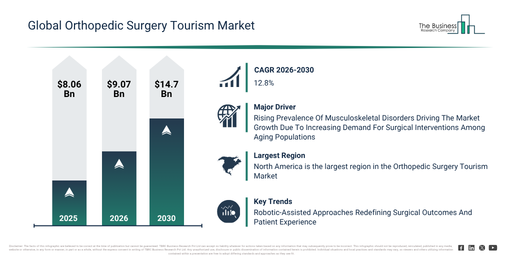
    The orthopedic surgery tourism market has experienced considerable growth in recent years. Its projected expansion will see it increase from $8.06 billion in 2025 to $9.07 billion in 2026, achieving a compound annual growth rate (CAGR) of 12.6%. This historical development is linked to factors such as the increasing global prevalence of musculoskeletal disorders, extended waiting periods for orthopedic surgeries in developed nations, disparities in healthcare costs across different regions, the development of medical tourism infrastructure, and a growing understanding of international orthopedic expertise.

    The orthopedic surgery tourism market is anticipated to experience significant expansion over the next few years, projected to reach $14.7 billion by 2030, demonstrating a compound annual growth rate (CAGR) of 12.8%. This foreseen growth is driven by factors such as the increasing adoption of robotic-assisted orthopedic surgeries, rising preference for minimally invasive procedures, broader international insurance coverage for medical travel, a growing elderly demographic requiring joint replacement, and increased investment in specialized orthopedic hospitals. Noteworthy trends during this forecast period include a surge in cross-border demand for joint replacement procedures, a growing inclination towards cost-effective orthopedic surgeries, the expansion of internationally accredited orthopedic centers, the development of integrated surgery and rehabilitation packages, and an increase in collaborations among medical travel facilitators.

    Get A Free Sample Report With In-Depth Market Insights:

    https://thebusinessresearchcompany.com/sample_request?id=30587093&type=smp&name=Orthopedic%20Surgery%20Tourism%20Market%20Report%202026&utm_source=Blogs&utm_medium=Paid&utm_campaign=Oct_PR

    Orthopedic Surgery Tourism Market Opportunity Drivers: What’s Unlocking New Revenue Potential?

    The increasing occurrence of musculoskeletal disorders is anticipated to fuel the expansion of the orthopedic surgery tourism market in the future. Musculoskeletal disorders (MSDs) refer to ailments impacting muscles, bones, joints, and associated connective tissues, potentially hindering movement and normal function. The rise in musculoskeletal disorders is mainly attributed to the aging demographics in developed nations, given that elderly individuals are more susceptible to joint deterioration, persistent pain, and restrictions in mobility. For patients with musculoskeletal disorders, orthopedic surgery tourism offers a chance to access premium orthopedic operations overseas, benefiting from skilled surgeons, advanced medical facilities, and extensive rehabilitation programs designed to restore joint function, relieve discomfort, and enhance everyday mobility. An example illustrating this trend is data from January 2024, released by the Office for Health Improvement and Disparities, a UK government body, which reported that 18.4% of individuals aged 16 and above had long-term musculoskeletal conditions in 2023, an uptick from 17.6% recorded in 2022. Consequently, the expanding incidence of musculoskeletal disorders is propelling the development of the orthopedic surgery tourism market.

    Orthopedic Surgery Tourism Market Segment Outlook: Which Categories Are Growing Fastest?

    The orthopedic surgery tourism market covered in this report is segmented –

    1) By Surgery Type: Joint Replacement, Spine Surgery, Sports Medicine, Trauma Surgery, Arthroscopic Surgery, Other Surgery Types

    2) By Patient Type: Domestic, International

    3) By Age Group: Pediatric, Adult, Geriatric

    4) By Service Provider: Hospitals, Specialty Clinics, Ambulatory Surgical Centers, Other Service Providers

    Subsegments:

    1) By Joint Replacement: Total Knee Replacement, Partial Knee Replacement, Total Hip Replacement, Hip Resurfacing, Total Shoulder Replacement, Reverse Shoulder Replacement, Elbow Joint Replacement, Ankle Joint Replacement

    2) By Spine Surgery: Spinal Fusion Surgery, Artificial Disc Replacement, Laminectomy Surgery, Discectomy Surgery, Foraminotomy Surgery, Scoliosis Correction Surgery, Kyphoplasty Procedure, Vertebroplasty Procedure

    3) By Sports Medicine: Anterior Cruciate Ligament Reconstruction, Posterior Cruciate Ligament Reconstruction, Meniscus Repair Surgery, Rotator Cuff Repair Surgery, Shoulder Labral Repair, Tendon Repair Surgery, Cartilage Restoration Procedure, Ulnar Collateral Ligament Reconstruction

    4) By Trauma Surgery: Open Reduction And Internal Fixation, External Fixation Procedure, Fracture Repair Surgery, Intramedullary Nailing Procedure, Complex Pelvic Fracture Surgery, Clavicle Fracture Surgery, Hip Fracture Surgery, Multiple Trauma Reconstruction

    5) By Arthroscopic Surgery: Knee Arthroscopy, Shoulder Arthroscopy, Hip Arthroscopy, Ankle Arthroscopy, Elbow Arthroscopy, Wrist Arthroscopy, Subacromial Decompression Procedure, Synovectomy Procedure

    6) By Other Surgery Types: Osteotomy Procedure, Limb Lengthening Surgery, Bone Grafting Procedure, Joint Revision Surgery, Pediatric Orthopedic Surgery, Orthopedic Oncology Surgery, Hand Surgery, Foot Reconstruction Surgery

    Orthopedic Surgery Tourism Market Innovation Trends Shaping Future Development

    Leading companies in the orthopedic surgery tourism sector are focused on developing advanced solutions, such as robotic-assisted knee replacement systems, to improve surgical accuracy and speed up patient recovery. These sophisticated surgical technologies provide precise guidance to surgeons during knee replacement procedures, ensuring accurate implant placement, minimizing tissue damage, and accelerating patient recuperation. For instance, in April 2023, Pristyn Care, an India-based healthcare technology company, unveiled Cuvis Robotic-Assisted Knee Replacement Surgery, an innovative robotic-assisted technology designed to enhance precision and patient outcomes for orthopedic surgery tourism. The Cuvis system integrates pre-operative 3D planning with robotic guidance during the operation, enabling surgeons to customize the procedure for each patient’s unique anatomy. A robotic arm ensures exact bone cuts and implant positioning, thereby reducing surgical errors and post-operative complications. Robotic-assisted techniques like Cuvis support quicker recovery, less pain, and improved long-term functionality, making them a significant advancement for patients traveling for orthopedic surgery.

    Orthopedic Surgery Tourism Market Competitive Analysis Of Leading Industry Participants

    Major companies operating in the orthopedic surgery tourism market are Asklepios Kliniken GmbH, Acibadem Healthcare Group, Apollo Hospitals Enterprise Limited, Fortis Healthcare Limited, KPJ Healthcare Berhad, Raffles Medical Group Ltd, Pristyn Care Pvt. Ltd., Shalby Limited, Gleneagles Global Hospitals Pvt. Ltd., PlacidWay Inc., Tour2India4Health Pvt. Ltd., Medmonks Pvt. Ltd., Medsurge India Pvt. Ltd., Healthbase Inc., Vaidam Health Pvt. Ltd., IndiCure Health Tours Pvt. Ltd., MyMedTrip Inc., HealthTrip Inc., Medtripz Pvt. Ltd., MedGinnie Pvt. Ltd.

    View The Full Orthopedic Surgery Tourism Market Report:

    https://thebusinessresearchcompany.com/report/orthopedic-surgery-tourism-market-report?utm_source=Blogs&utm_medium=Paid&utm_campaign=Oct_PR

    Orthopedic Surgery Tourism Market Geographic Spread And Regional Opportunities

    North America was the largest region in the orthopedic surgery tourism market in 2025. Asia-Pacific is expected to be the fastest-growing region in the forecast period. The regions covered in the orthopedic surgery tourism market report are Asia-Pacific, South East Asia, Western Europe, Eastern Europe, North America, South America, Middle East, Africa.

    Reach Out To Our Team:

    The Business Research Company: https://www.thebusinessresearchcompany.com/

    Americas: +1 310-496-7795

    Asia: +44 7882 955267 & +91 8897263534

    Europe: +44 7882 955267

    Email us at: marketing@tbrc.info

    Follow us on:

    LinkedIn: https://in.linkedin.com/company/the-business-research-company

    YouTube: https://www.youtube.com/channel/UC24_fI0rV8cR5DxlCpgmyFQ

    Global Market Model: https://www.thebusinessresearchcompany.com/global-market-model
  • Oncology Treatment Tourism Market Growth Outlook For 2026: Drivers, Trends And Future Opportunities

    Oncology Treatment Tourism Market Growth Outlook For 2026: Drivers, Trends And Future Opportunities

    Featuring market attractiveness scoring, total addressable market sizing, company benchmarking matrices, interactive Excel dashboards, deeper supply chain intelligence, emerging startup tracking, and granular product-level insights, The Business Research Company’s 2026 market reports are built to deliver research that is both more actionable and more strategically valuable.

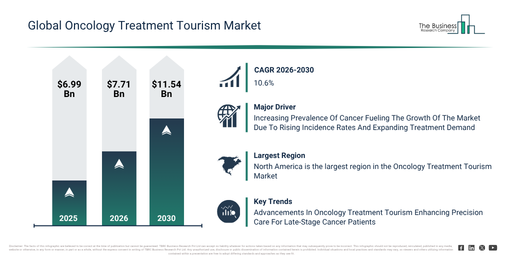
    Oncology Treatment Tourism Market Revenue Growth On Track For A 10.6% CAGR Through 2030

    The oncology treatment tourism market has experienced rapid expansion in recent years. It is projected to increase from $6.99 billion in 2025 to $7.71 billion in 2026, at a compound annual growth rate (CAGR) of 10.4%. The historic growth of this market can be attributed to factors including the rising global prevalence of cancer, the high expenses of oncology treatment in developed nations, restricted access to advanced therapies within home countries, the development of medical tourism infrastructure, and increasing awareness of international treatment options.

    The oncology treatment tourism market size is anticipated to undergo rapid expansion over the next few years. It is projected to increase to $11.54 billion in 2030, exhibiting a compound annual growth rate (CAGR) of 10.6%. This growth during the forecast period is fueled by the increased embrace of personalized oncology therapies, the broadening of international insurance coverage for cross-border medical services, rising investment in specialized cancer treatment centers, a surging demand for shorter treatment waiting periods, and greater cooperation among healthcare providers globally. Significant trends expected in the forecast period encompass enhanced cross-border accessibility to advanced cancer therapies, a growing need for cost-effective oncology treatments, the proliferation of international cancer centers of excellence, an increase in partnerships between hospitals and medical tourism agencies, and a rising preference for comprehensive treatment and hospitality packages.

    Get A Free Sample Report With In-Depth Market Insights:

    https://thebusinessresearchcompany.com/sample_request?id=35801232&type=smp&name=Oncology%20Treatment%20Tourism%20Market%20Report%202026&utm_source=Blogs&utm_medium=Paid&utm_campaign=Oct_PR

    Oncology Treatment Tourism Market Development Factors: What’s Supporting Demand?

    The expanding occurrence of cancer is projected to stimulate the expansion of the oncology treatment tourism market in the future. Cancer refers to a collection of illnesses marked by the unregulated proliferation and dissemination of atypical cells within the body, capable of invading adjacent tissues and spreading to remote organs. The escalation in cancer cases stems from aging demographics, given that older individuals face an elevated likelihood of acquiring genetic mutations that may result in cancer. Oncology treatment tourism assists cancer patients by facilitating access to sophisticated therapies, expert oncologists, and novel treatment approaches that might not be easily accessible in their native countries. It contributes to lowering treatment expenses and wait times, concurrently providing extensive care packages, thereby enhancing accessibility, ensuring continuity of care, and boosting overall treatment outcomes. For example, in February 2024, the World Health Organization, an international organization based in Switzerland, projected that more than 35 million new cancer cases are anticipated by 2050, representing a 77% increase from the 20 million cases recorded in 2022. Consequently, the rising occurrence of cancer is fueling the expansion of the oncology treatment tourism market.

    Oncology Treatment Tourism Market Segment Analysis: What Are The Core Market Categories?

    The oncology treatment tourism market covered in this report is segmented –

    1) By Treatment Type: Chemotherapy, Radiation Therapy, Immunotherapy, Targeted Therapy, Surgical Oncology, Other Treatment Types

    2) By Patient Profile: Adults, Pediatrics, Geriatrics

    3) By Booking Channel: Direct, Online Platforms, Medical Tourism Agencies

    4) By Service Provider: Hospitals, Specialty Clinics, Cancer Centers, Other Services

    Subsegments:

    1) By Chemotherapy: Adjuvant Chemotherapy, Neoadjuvant Chemotherapy, Palliative Chemotherapy, Combination Chemotherapy

    2) By Immunotherapy: Immune Checkpoint Inhibitor Therapy, Monoclonal Antibody Therapy, Cancer Vaccine Therapy, Adoptive Cell Transfer Therapy

    3) By Radiation Therapy: External Beam Radiation Therapy, Intensity Modulated Radiation Therapy, Image Guided Radiation Therapy, Brachytherapy

    4) By Targeted Therapy: Small Molecule Targeted Therapy, Monoclonal Antibody Targeted Therapy, Angiogenesis Inhibitor Therapy, Hormone Targeted Therapy

    5) By Surgical Oncology: Minimally Invasive Surgery, Robotic Assisted Surgery, Open Cancer Surgery, Cytoreductive Surgery

    6) By Other Treatment Types: Hormone Therapy, Stem Cell Transplantation, Hyperthermia Therapy, Photodynamic Therapy

    Oncology Treatment Tourism Market Transformation Trends: What Innovations Are Driving Change?

    Leading companies within the oncology treatment tourism market are concentrating on developing sophisticated solutions, particularly advanced oncology therapeutics, to improve the accuracy of treatment and clinical results for individuals with late-stage cancer. Advanced oncology therapeutics refers to a category of innovative medical interventions designed to target cancer at the molecular, cellular, or genetic level. For instance, in September 2025, Booking Health, a Germany-based medical travel facilitator, expanded its services to enhance international access to advanced stage 4 cancer treatments, including immunotherapy, CAR T-cell therapy, and theranostics. The platform offers extensive coordination for patients, encompassing second opinions, personalized treatment plans, travel logistics, and follow-up care. By connecting patients with highly certified German hospitals such as LMU Klinikum, these services facilitate access to cutting-edge oncology options like HIPEC, PIPAC, and radioembolization (Y-90), which are intended to boost survival outcomes, refine treatment precision, and support patient-centered cancer care.

    Oncology Treatment Tourism Market Key Participants And Competitive Landscape

    Major companies operating in the oncology treatment tourism market are Mayo Clinic, Memorial Sloan Kettering Cancer Center, Cleveland Clinic, Johns Hopkins Medicine, Apollo Hospitals, Charité-Universitätsmedizin Berlin, Sheba Medical Center, Dana-Farber Cancer Institute, The Royal Marsden Hospital, Seoul National University Hospital, Clínica Universidad de Navarra, Karolinska University Hospital, Institut Curie, Istituto Nazionale dei Tumori, Asan Medical Center, Netherlands Cancer Institute, The Christie NHS Foundation Trust, Cancer Institute Hospital of JFCR, HCG Cancer Centre, Princess Margaret Cancer Centre, MD Anderson Cancer Center.

    View The Full Oncology Treatment Tourism Market Report:

    https://thebusinessresearchcompany.com/report/oncology-treatment-tourism-market-report?utm_source=Blogs&utm_medium=Paid&utm_campaign=Oct_PR

    Oncology Treatment Tourism Market Geographic Analysis: Where Is Demand Rising Fastest?

    North America was the largest region in the oncology treatment tourism market in 2025. Asia-Pacific is expected to be the fastest-growing region in the forecast period. The regions covered in the oncology treatment tourism market report are Asia-Pacific, South East Asia, Western Europe, Eastern Europe, North America, South America, Middle East, Africa.

    Reach Out To Our Team:

    The Business Research Company: https://www.thebusinessresearchcompany.com/

    Americas: +1 310-496-7795

    Asia: +44 7882 955267 & +91 8897263534

    Europe: +44 7882 955267

    Email us at: marketing@tbrc.info

    Follow us on:

    LinkedIn: https://in.linkedin.com/company/the-business-research-company

    YouTube: https://www.youtube.com/channel/UC24_fI0rV8cR5DxlCpgmyFQ

    Global Market Model: https://www.thebusinessresearchcompany.com/global-market-model
  • Nanobody-Based Diagnostics Market Forecast Highlights A $2.07 Billion Opportunity For Industry Participants

    Nanobody-Based Diagnostics Market Forecast Highlights A $2.07 Billion Opportunity For Industry Participants

    Built to provide research that’s more actionable and strategically valuable, The Business Research Company’s 2026 market reports include market attractiveness analysis, total addressable market sizing, company benchmarking matrices, interactive Excel dashboards, broader supply chain intelligence, emerging startup tracking, and in-depth product insights.

    Nanobody-Based Diagnostics Market Growth Analysis: How Will Revenue Trend Over The Forecast Period?

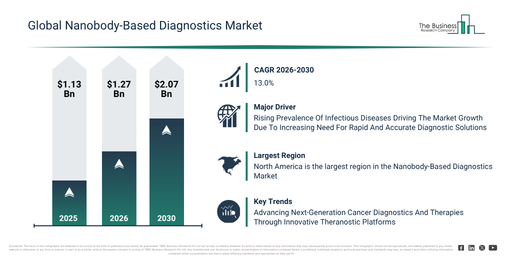
    The nanobody-based diagnostics market size has demonstrated rapid expansion in recent years. Projections indicate it will grow from $1.13 billion in 2025 to $1.27 billion in 2026, achieving a compound annual growth rate (CAGR) of 12.7%. The market’s historical growth is attributable to several factors, including advancements in antibody engineering technologies, an escalating prevalence of infectious diseases, a rise in cancer diagnostics demand, increased research funding in immunodiagnostics, and the proliferation of rapid diagnostic testing platforms.

    The nanobody-based diagnostics market is projected to experience swift expansion over the coming years. Its valuation is anticipated to reach $2.07 billion by 2030, demonstrating a compound annual growth rate (CAGR) of 13.0%. Several factors are contributing to this growth during the forecast period, including an escalating need for precision diagnostics, greater integration of AI-driven assay analysis instruments, the surging uptake of microfluidic biosensor technologies, the broadening scope of decentralized diagnostic testing, and a heightened emphasis on biomarkers for early disease detection. Key trends observed over the forecast duration encompass the increasing acceptance of lateral flow nanobody assays, a heightened requirement for high-affinity single-domain antibody reagents, the expanding incorporation of nanobodies into point-of-care diagnostic solutions, the proliferation of platforms for multiplexed biomarker detection, and the growing application of nanobody-centric imaging in monitoring diseases.

    Get A Free Sample Report With In-Depth Market Insights:

    https://thebusinessresearchcompany.com/sample_request?id=36295748&type=smp&name=Nanobody-Based%20Diagnostics%20Market%20Report%202026&utm_source=Blogs&utm_medium=Paid&utm_campaign=Oct_PR

    Nanobody-Based Diagnostics Market Growth Momentum: What Factors Are Shaping Demand?

    The increasing incidence of infectious diseases is anticipated to fuel the expansion of the nanobody based diagnostics market in the future. These diseases are defined as conditions resulting from harmful microorganisms like bacteria, viruses, fungi, or parasites, capable of spreading between individuals or via contaminated surroundings. The rise in infectious disease prevalence is attributed to increased human interaction, which facilitates pathogen transmission within populations. Nanobody-based diagnostic tools offer quick, highly specific, and sensitive identification of infectious agents, allowing for prompt diagnosis and intervention. This, in turn, helps manage the propagation of these diseases and enhances patient recovery. For example, in March 2024, the Centers for Disease Control and Prevention, a US-based government agency, reported that tuberculosis cases climbed from 8,320 in 2022 to 9,615 in 2023, representing an increase of 1,295 cases. Consequently, the growing occurrence of infectious diseases is a key factor driving the nanobody based diagnostics market. The escalating healthcare investments are projected to stimulate the expansion of the nanobody based diagnostics market moving forward. Healthcare investments involve the channeling of funds by governments, entities, and medical providers to upgrade medical infrastructure, services, technology, and overall healthcare provision. These investments are growing due to a heightened demand for sophisticated medical services and modern technologies aimed at enhancing patient care and health outcomes. Such funding fosters the advancement and adoption of nanobody based diagnostics by financing cutting-edge research, upgrading laboratory facilities, and empowering healthcare providers to deploy advanced diagnostic tools for more precise and prompt disease identification. For instance, in January 2026, the Centers for Medicare & Medicaid Services, a US-based government agency, reported that in 2024, Medicare spending saw a 7.8% rise, reaching $1,118.0 billion and constituting 21% of total national health expenditures (NHE), concurrently, Medicaid spending increased by 6.6% to $931.7 billion, making up 18% of total NHE. Thus, the increase in healthcare investments is propelling the growth of the nanobody based diagnostics market.

    Nanobody-Based Diagnostics Market Segment Outlook: Which Categories Are Growing Fastest?

    The nanobody-based diagnostics market covered in this report is segmented –

    1) By Technology: Immunoassays, Molecular Diagnostics, Biosensor-Based Detection, Fluorescence And Imaging Diagnostics

    2) By Product Type: Reagents, Kits, Instruments, Other Product Types

    3) By Application: Infectious Diseases, Oncology, Autoimmune Disorders, Cardiovascular Diseases, Other Applications

    4) By End-User: Hospitals And Clinics, Diagnostic Laboratories, Research Institutes, Other End Users

    Subsegments:

    1) By Immunoassays: Enzyme Linked Immunosorbent Assay, Western Blotting, Lateral Flow Assay, Radioimmunoassay

    2) By Molecular Diagnostics: Polymerase Chain Reaction Based Assays, Nucleic Acid Hybridization, Next Generation Sequencing, Isothermal Amplification Techniques

    3) By Biosensor Based Detection: Electrochemical Biosensors, Optical Biosensors, Piezoelectric Biosensors, Microfluidic Biosensors

    4) By Fluorescence and Imaging Diagnostics: Fluorescence Microscopy, Flow Cytometry, Fluorescence In Situ Hybridization, Molecular Imaging Techniques

    Nanobody-Based Diagnostics Market Trends Redefining Industry Growth

    Major companies operating in the nanobody-based diagnostics market are prioritizing the development of innovative solutions, including advanced nanobody platforms, to enhance the accuracy and speed of disease detection. These sophisticated nanobody platforms employ small, single-domain antibodies known for their high specificity and stability, which enables more rapid tissue penetration, improved targeting of disease biomarkers, and superior diagnostic and therapeutic effectiveness compared to conventional antibodies. For example, in September 2025, Cyclotek Pty Ltd, an Australia-based radiopharmaceutical company, was awarded a CRC-P Round 16 grant by the Australian Government to advance a nanobody-based theranostic platform for cancer. This project, undertaken in collaboration with the University of Melbourne, Revela Bio Inc., and several local SMEs, concentrates on creating targeted diagnostics and therapeutics that leverage nanobodies against the Fibroblast Activation Protein (FAP), a biomarker highly expressed in aggressive cancers such as lung, pancreatic, and ovarian cancer. Nanobodies merge the precise targeting of antibodies with the pharmacokinetics of small molecules, rendering them highly suitable for both diagnostic imaging and therapeutic applications. The initiative aims to develop advanced radiolabelling chemistry, conduct pre-clinical evaluations, and progress to first-in-human clinical trials, thereby enabling Cyclotek Pty Ltd to scale and commercialize this innovative platform across Australia, New Zealand, and the broader Asia-Pacific region.

    Nanobody-Based Diagnostics Market Industry Leaders And Competitive Landscape

    Major companies operating in the nanobody-based diagnostics market are Sanofi S.A., Thermo Fisher Scientific Inc., Merck KGaA, Agilent Technologies Inc., PerkinElmer Inc., Bruker Corporation, Bio-Rad Laboratories Inc., GenScript Biotech Corporation, Biocytogen LLC, Sino Biological Inc., Abzena plc, NanoTemper Technologies GmbH, RayBiotech Inc., Proteintech Group Inc., Creative Biolabs Inc., Isogenica Ltd., Beroni Group Limited, Immudex ApS, Cyclotek Pty Ltd, NanoTag Biotechnologies GmbH.

    View The Full Nanobody-Based Diagnostics Market Report:

    https://thebusinessresearchcompany.com/report/nanobody-based-diagnostics-market-report?utm_source=Blogs&utm_medium=Paid&utm_campaign=Oct_PR

    Nanobody-Based Diagnostics Market Regional Analysis And Leading Geography

    North America was the largest region in the nanobody-based diagnostics market in 2025. Asia-Pacific is expected to be the fastest-growing region in the forecast period. The regions covered in the nanobody-based diagnostics market report are Asia-Pacific, South East Asia, Western Europe, Eastern Europe, North America, South America, Middle East, Africa.

    Reach Out To Our Team:

    The Business Research Company: https://www.thebusinessresearchcompany.com/

    Americas: +1 310-496-7795

    Asia: +44 7882 955267 & +91 8897263534

    Europe: +44 7882 955267

    Email us at: marketing@tbrc.info

    Follow us on:

    LinkedIn: https://in.linkedin.com/company/the-business-research-company

    YouTube: https://www.youtube.com/channel/UC24_fI0rV8cR5DxlCpgmyFQ

    Global Market Model: https://www.thebusinessresearchcompany.com/global-market-model