Category: Healthcare Services

  • Stem Cell Manufacturing Market Expansion Is Opening New Pathways For Strategic Investment

    Stem Cell Manufacturing Market Expansion Is Opening New Pathways For Strategic Investment

    Through market attractiveness analysis, total addressable market evaluation, company benchmarking matrices, interactive Excel dashboards, expanded supply chain intelligence, emerging startup coverage, and detailed product insights, The Business Research Company’s 2026 market reports provide more actionable and strategically valuable research.

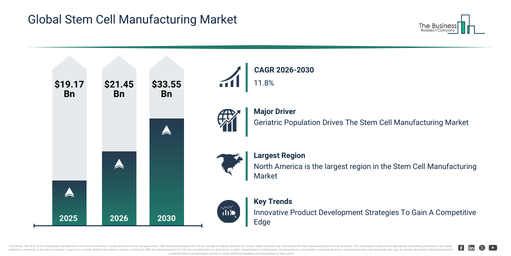
    Stem Cell Manufacturing Market Forecast Highlighting Growth From $21.45 Billion To $33.55 Billion

    Fueled by accelerating advancements and increased investment, the stem cell manufacturing market experienced significant expansion, projected to increase from $19.17 billion in 2025 to $21.45 billion by 2026, reflecting a robust compound annual growth rate of 11.9%. Developments during the preceding period that spurred this upward trajectory included a surge in clinical trials, the successful approval of stem cell therapies, substantial capital infusion into bioprocessing, the establishment of supportive regulatory structures, and the growing adoption of contract manufacturing services.

    Anticipate substantial expansion within the stem cell manufacturing sector over the coming years, projecting a market valuation of $33.55 billion by 2030, driven by an 11.8% compound annual growth rate. This anticipated surge is bolstered by several key factors, including the increasing capacity for commercial-scale therapy production, advancements in cost-reduction technologies, the adoption of decentralized manufacturing approaches, sophisticated cell expansion methodologies, and a global movement toward regulatory harmonization. During this forecast period, significant trends are expected to shape the industry, such as the widespread implementation of closed-system bioreactors, the development of scalable manufacturing platforms, enhanced automation in cell expansion processes, adherence to quality-by-design principles, and advancements in cryopreservation techniques.

    Download A Free Sample Report For Comprehensive Market Insights:

    https://www.thebusinessresearchcompany.com/sample.aspx?id=9402&type=smp

    Stem Cell Manufacturing Market Expansion Supported By Key Demand Factors

    An increasing number of elderly individuals, defined as those aged 65 and above, is anticipated to stimulate expansion within the stem cell manufacturing sector. This demographic group often experiences a decline in immune function and faces a higher susceptibility to various ailments associated with aging, including chronic conditions. Stem cell manufacturing offers a promising avenue for combating these age-related diseases. Illustrating this trend, data from the Population Reference Bureau, a non-profit entity based in Kenya, indicated in January 2024 that the number of Americans aged 65 or older is projected to surge from 58 million in 2022 to 82 million by 2050, signifying a substantial 47% growth. Concurrently, this demographic’s proportion of the total population is forecasted to climb from 17% to 23% over the same timeframe, directly contributing to the upward trajectory of the stem cell manufacturing market.

    Stem Cell Manufacturing Market Segment Analysis: What Are The Major Market Categories?

    The stem cell manufacturing market covered in this report is segmented –

    1) By Product: Consumables, Instruments, Stem Cell Lines

    2) By Application: Research Applications, Clinical Application, Cell And Tissue Banking Applications

    3) By End User: Pharmaceutical And Biotechnology Companies, Academic Institutes, Research Laboratories And Contract Research Organizations, Hospitals And Surgical Centers, Cell And Tissue Banks, Other End Users

    Subsegments:

    1) By Consumables: Media And Reagents, Cell Culture Vessels, Assay Kits

    2) By Instruments: Bioreactors, Cell Counters, Flow Cytometers

    3) By Stem Cell Lines: Embryonic Stem Cell Lines, Adult Stem Cell Lines, Induced Pluripotent Stem Cell Lines (iPSCs)

    Stem Cell Manufacturing Market Growth Trends Influencing Competitive Dynamics

    Leading entities within the stem cell manufacturing sector are prioritizing the creation of novel offerings, exemplified by GM-grade protein, aiming to solidify their market standing. This GM-grade designation signifies that protein powders and associated products adhere to rigorous quality and safety benchmarks. A notable development occurred in November 2023 when ACROBiosystems Inc., a US entity supplying recombinant proteins and essential reagents, introduced its GM-grade DLL4 protein. This specific product is a soluble, recombinant iteration of Delta-like Ligand 4 (DLL4), a pivotal signaling molecule fundamental to stem cell maturation and specialization. The accessibility of GMP-grade DLL4 represents a crucial advancement for pioneering stem cell therapies, furnishing a reliable, high-caliber, and scalable provision of this vital protein. DLL4 is recognized for its capacity to foster the self-replication and proliferation of hematopoietic stem cells (HSCs), which serve as the foundational cells for all blood components and can be incorporated into in vitro stem cell cultures to bolster HSC proliferation and differentiation.

    Stem Cell Manufacturing Market Leading Companies Driving Competitive Growth

    Major companies operating in the stem cell manufacturing market are Thermo Fisher Scientific Inc., Merck Millipore, Stemcell Technologies, Fujifilm Holdings Corporation, Takara Bio Group, Lonza Group AG, Sartorius AG, Bio-Rad Laboratories, Becton Dickinson and Company, Bio-Techne Corporation, Miltenyi Biotec, Terumo BCT Inc., Corning Inc., Eppendorf AG, ViaCyte Inc., Merck KGaA, Danaher Corporation, Vericel Corporation, American Cryostem Corporation, Cellgenix GMBH, Aspen Neuroscience Inc., Magenta Therapeutics Inc, Pluristem Therapeutics Inc., Takeda Pharmaceutical Company Limited, AbbVie Inc., 3D Biomatrix Inc., Worthington Biochemical Corporation, Bico Group

    Access The Complete Stem Cell Manufacturing Market Report:

    https://www.thebusinessresearchcompany.com/report/stem-cell-manufacturing-global-market-report

    Stem Cell Manufacturing Market Largest Region By Revenue And Market Share

    North Americawas the largest region in the stem cell manufacturing market in 2025. Europe was the second-largest region in the stem cell manufacturing market. The regions covered in the stem cell manufacturing market report are Asia-Pacific, South East Asia, Western Europe, Eastern Europe, North America, South America, Middle East, Africa.

    Get in touch with us:

    The Business Research Company: https://www.thebusinessresearchcompany.com/

    Americas: +1 310-496-7795

    Asia: +44 7882 955267 & +91 8897263534

    Europe: +44 7882 955267

    Email us at: marketing@tbrc.info

    Follow us on:

    LinkedIn: https://in.linkedin.com/company/the-business-research-company

    YouTube: https://www.youtube.com/channel/UC24_fI0rV8cR5DxlCpgmyFQ

    Global Market Model: https://www.thebusinessresearchcompany.com/global-market-model
  • Stem Cell Cryopreservation Market Trends Are Creating New Opportunities For Industry Leaders

    Stem Cell Cryopreservation Market Trends Are Creating New Opportunities For Industry Leaders

    Delivering more actionable and strategically valuable research, The Business Research Company’s 2026 market reports feature market attractiveness analysis, total addressable market evaluation, company benchmarking matrices, interactive Excel dashboards, expanded supply chain intelligence, emerging startup coverage, and detailed product insights.

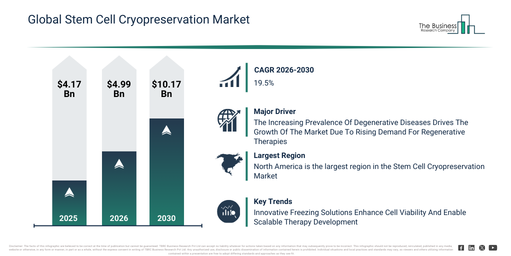
    Stem Cell Cryopreservation Market Revenue Growth Supported By A CAGR Of 10.17% Through 2030

    The market for cryopreserving stem cells has experienced significant expansion. Projections indicate a rise from $4.17 billion in 2025 to $4.99 billion in 2026, demonstrating a compounded annual growth rate of 19.8%. This upward trend during the past period is largely due to the proliferation of stem cell banking programs, the escalating utilization of cryopreservation techniques in scientific research, a surge in in-vitro fertilization (IVF) and reproductive therapies, a growing need for extended cell storage solutions, and advancements in cryogenic preservation technologies.

    The market for preserving stem cells through freezing is poised for substantial expansion in the upcoming years, projecting a rise to $10.17 billion by 2030, driven by a compelling compound annual growth rate of 19.5%. This projected surge is largely fueled by the escalating acceptance of regenerative medicine treatments, augmented investments in biobanking facilities, a heightened need for personalized medicine storage, the broadening of clinical cell therapy development, and a greater emphasis on established storage methodologies. Key developments anticipated during this same timeframe include a greater call for extended stem cell storage solutions, increased utilization of sophisticated cryoprotective agents, the growing implementation of automated freezing systems, an enlargement of stem cell banking services, and a more pronounced dedication to safeguarding cell viability.

    Download A Free Sample Report For Comprehensive Market Insights:

    https://www.thebusinessresearchcompany.com/sample.aspx?id=30405&type=smp

    Stem Cell Cryopreservation Market Growth Drivers And Industry Catalysts

    The escalating incidence of conditions characterized by progressive decline in tissue or organ structure and function is anticipated to be a primary catalyst for the expansion of the stem cell cryopreservation market. This rise in degenerative diseases is largely attributable to an expanding elderly demographic, as age-related cellular and tissue degradation increases susceptibility to these ailments. Stem cell cryopreservation offers a method for preserving the viability of stem cells over extended periods, thereby ensuring a dependable supply for regenerative treatments aimed at repairing or replacing compromised tissues affected by degenerative conditions. As an illustration, the Alzheimer’s Association reported in March 2023 that roughly 6.7 million Americans aged 65 and above were affected by Alzheimer’s dementia, with projections indicating this figure could reach 13.8 million by 2060. Consequently, the heightened occurrence of degenerative diseases directly fuels the increasing demand within the stem cell cryopreservation sector.

    Stem Cell Cryopreservation Market Segment Breakdown: Which Categories Generate The Most Revenue?

    The stem cell cryopreservation market covered in this report is segmented –

    1) By Type: Embryonic Stem Cell, Adult Stem Cell, Induced Pluripotent Stem Cell

    2) By Application: Cell Freezing Media, Equipment And Consumables

    3) By End User: Biopharmaceutical Companies, Research Institutes, Blood Banks, In Vitro Fertilization (IVF) Clinics

    Subsegments:

    1) By Embryonic Stem Cell: Human Embryonic Stem Cell, Mouse Embryonic Stem Cell, Primate Embryonic Stem Cell, Other Embryonic Stem Cells

    2) By Adult Stem Cell: Hematopoietic Stem Cell, Mesenchymal Stem Cell, Neural Stem Cell, Epithelial Stem Cell

    3) By Induced Pluripotent Stem Cell: Fibroblast-Derived iPSC, Blood Cell-Derived iPSC, Epithelial Cell-Derived iPSC

    #Stem Cell Cryopreservation Market Trends Influencing Long-Term Demand

    Companies actively participating in the stem cell cryopreservation sector are emphasizing the creation of novel approaches, including sophisticated cryopreservation mediums and automation-compatible freezing apparatus, aimed at improving cell survival rates after thawing and expediting advancements in stem cell treatments. These cutting-edge cryopreservation mediums are meticulously crafted solutions designed to safeguard stem cells throughout the freezing and thawing phases, thereby preserving their viability and operational capacity. Concurrently, automation-friendly freezing systems represent equipment or methodologies instituted to facilitate large-scale, repeatable, and automated cell freezing processes. Illustrating this trend, in April of 2024, the American biotechnology firm Pluristyx, Inc. introduced PluriFreeze, a proprietary cryopreservation medium. This sophisticated product is specifically engineered to optimize the freezing and thawing procedures for pluripotent stem cells and other delicate cell categories, thereby guaranteeing superior post-thaw viability and maintaining their functional integrity. Owing to its completely synthetic composition, free from animal-derived elements and possessing low viscosity, PluriFreeze is exceptionally well-suited for automated and extensive cell production operations. The system is further supported by the PluriPrep wash solution, which is devoid of DMSO and permits extended processing windows. Formulated from components designated as Generally Recognized as Safe (GRAS), this medium ensures dependable, consistent, and secure cryopreservation suitable for both research endeavors and clinical applications. This release, by synergizing effortlessly with platforms like PluriBank, fortifies the entire stem cell cryopreservation pipeline, offering effective and scalable solutions that span from initial laboratory investigations to eventual clinical deployment.

    Stem Cell Cryopreservation Market Key Players And Strategic Industry Positioning

    Major companies operating in the stem cell cryopreservation market are Thermo Fisher Scientific Inc., Danaher Corporation, Corning Incorporated, Lonza Group Ltd., Sartorius AG, Eppendorf SE, Vitalant Inc., BioLife Solutions Inc., Cryoviva Biotech Private Limited., HiMedia Laboratories Private Limited, Cryo-Cell International Inc., Celularity Inc., PromoCell GmbH, Creative Biolabs Inc., StemCyte Inc., Reprocell Inc., OriGen Biomedical Inc., American CryoStem Corporation, Ossium Health Inc., Pluristyx Inc.

    Access The Complete Stem Cell Cryopreservation Market Report:

    https://www.thebusinessresearchcompany.com/report/global-stem-cell-cryopreservation-market-report

    Stem Cell Cryopreservation Market Regional Analysis And Leading Geography

    North Americawas the largest region in the stem cell cryopreservation market in 2025. Asia-Pacificis expected to be the fastest-growing region in the forecast period. The regions covered in the stem cell cryopreservation market report are Asia-Pacific, South East Asia, Western Europe, Eastern Europe, North America, South America, Middle East, Africa.

    Get in touch with us:

    The Business Research Company: https://www.thebusinessresearchcompany.com/

    Americas: +1 310-496-7795

    Asia: +44 7882 955267 & +91 8897263534

    Europe: +44 7882 955267

    Email us at: marketing@tbrc.info

    Follow us on:

    LinkedIn: https://in.linkedin.com/company/the-business-research-company

    YouTube: https://www.youtube.com/channel/UC24_fI0rV8cR5DxlCpgmyFQ

    Global Market Model: https://www.thebusinessresearchcompany.com/global-market-model
  • Stem Cell Characterization Kits Market Growth Is Reshaping Competitive Advantage Across The Industry

    Stem Cell Characterization Kits Market Growth Is Reshaping Competitive Advantage Across The Industry

    Enhanced with market attractiveness analysis, total addressable market evaluation, company benchmarking matrices, interactive Excel dashboards, expanded supply chain intelligence, emerging startup coverage, and detailed product insights, The Business Research Company’s 2026 market reports deliver more actionable and strategically valuable research.

    Stem Cell Characterization Kits Market Value Expansion And Long-Term Growth Outlook

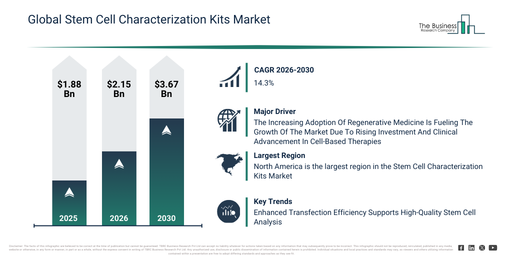
    The stem cell characterization kits market has experienced strong growth in recent years. The market is projected to increase from $1.88 billion in 2025 to $2.15 billion in 2026, reflecting a compound annual growth rate (CAGR) of 14.5%. This historical growth has been driven by the expansion of stem cell research initiatives, growing demand for cell quality assessment and validation, increased use of stem cells in drug discovery, stronger collaboration between academic institutions and industry organizations, and the availability of advanced analytical technologies.

    The market for stem cell characterization kits is projected to experience significant expansion over the coming years, reaching an estimated $3.67 billion by 2030, with a compound annual growth rate of 14.3%. This anticipated growth is fueled by several key factors, including heightened regulatory oversight in the realm of cell-based therapies, a growing need for consistent and standardized methods for characterization, the escalating scale of clinical-grade stem cell manufacturing, increased financial backing for translational research initiatives, and the wider application of sophisticated omics-based kits. Looking ahead, prominent trends shaping this market include the greater acceptance of kits designed for multi-parameter characterization, a heightened emphasis on quality control within stem cell research, the increasing utilization of flow cytometry-based kits, the ongoing development of standardized protocols for stem cell validation, and a stronger focus on ensuring data reproducibility.

    Download A Free Sample Report For Comprehensive Market Insights:

    https://www.thebusinessresearchcompany.com/sample.aspx?id=30404&type=smp

    Stem Cell Characterization Kits Market Opportunity Drivers: What Is Creating New Revenue Potential?

    The increasing adoption of regenerative medicine is expected to drive the growth of the stem cell characterization kits market. Regenerative medicine encompasses medical strategies aimed at repairing, replacing, or regenerating human cells, tissues, and organs to restore normal biological function. Its adoption is accelerating as governments, research organizations, and healthcare institutions continue to increase investments in cell-based therapies, which have demonstrated improved clinical outcomes compared with traditional treatment approaches. Stem cell characterization kits play a crucial role in regenerative medicine by helping researchers verify stem cell identity, purity, and differentiation status, ensuring consistency and quality throughout therapeutic development. For instance, in November 2025, according to the Food and Drug Administration (FDA), the agency received 35 regenerative medicine advanced therapy (RMAT) designation requests in fiscal year 2023, compared with 30 requests in fiscal year 2022, reflecting growing activity in the field. Consequently, the expanding adoption of regenerative medicine is fueling demand for stem cell characterization kits.

    Stem Cell Characterization Kits Market Segmentation: How Is The Market Structured Across Key Categories?

    The stem cell characterization kits market covered in this report is segmented –

    1) By Type: Embryonic Stem Cells, Mesenchymal Stem Cells, Induced Pluripotent Stem Cells

    2) By Technology: Flow Cytometry-Based Kits, Immunocytochemistry-Based Kits, Enzyme-Linked Immunosorbent Assay-Based Kits, Western Blot-Based Kits, Microarray and Next-Generation Sequencing Kits

    3) By End-User: Biopharmaceutical Companies, Contract Research Organizations, Academics and Research Institutes, Biotechnology Companies

    Subsegments:

    1) By Embryonic Stem Cells: Human Embryonic Stem Cells, Mouse Embryonic Stem Cells

    2) By Mesenchymal Stem Cells: Bone Marrow Derived Mesenchymal Stem Cells, Adipose Tissue Derived Mesenchymal Stem Cells, Umbilical Cord Derived Mesenchymal Stem Cells

    3) By Induced Pluripotent Stem Cells: Patient Derived Induced Pluripotent Stem Cells, Gene Edited Induced Pluripotent Stem Cells, Disease Model Induced Pluripotent Stem Cells

    Stem Cell Characterization Kits Market Innovation Trends Driving Future Development

    In the competitive landscape of the stem cell characterization kits market, leading enterprises are prioritizing innovations like microfluidic mechanoporation. This advanced method facilitates superior intracellular delivery of substances, critically ensuring the continued viability and characteristic traits of stem cells, which is essential for precise subsequent analysis. Microfluidic mechanoporation operates by employing carefully regulated mechanical forces within minuscule fluidic pathways to transiently permeabilize cell membranes, thereby achieving efficient molecular introduction into the cells. As an illustration of this progress, in July of 2024, STEMCELL Technologies, a prominent Canadian biotechnology firm, introduced its CellPore Transfection System. This comprehensive solution integrates a laboratory instrument with the CellPore Transfection Kit 300, which includes disposable delivery cartridges and leverages swift, regulated cell shape alteration within microfluidic channels to execute mechanoporation. The system is engineered to deliver molecules effectively into challenging cell types and primary cells, all while preserving cellular integrity for subsequent analytical procedures.

    Stem Cell Characterization Kits Market Competitive Landscape And Leading Companies

    Major companies operating in the stem cell characterization kits market are Thermo Fisher Scientific Inc., BD Biosciences, Corning Incorporated, Bruker Spatial Biology, STEMCELL Technologies Inc., Miltenyi Biotec B.V. & Co. KG, Takara Bio Inc., Cyagen Biosciences Inc., GeneTex Inc., Creative Bioarray LLC, Creative Biolabs Inc., Ncardia GmbH, REPROCELL Inc., ScienCell Research Laboratories Inc., Cosmo Bio USA Inc., ImmunoStep S.L., Celprogen Inc., Cloud-Clone Corp., Pluristyx Inc., Enzo Life Sciences Inc.

    Access The Complete Stem Cell Characterization Kits Market Report:

    https://www.thebusinessresearchcompany.com/report/global-stem-cell-characterization-kits-market-report

    Stem Cell Characterization Kits Market Geographic Analysis: Where Is Demand Growing The Fastest?

    North Americawas the largest region in the stem cell characterization kits market in 2025. Asia-Pacificis expected to be the fastest-growing region in the forecast period. The regions covered in the stem cell characterization kits market report are Asia-Pacific, South East Asia, Western Europe, Eastern Europe, North America, South America, Middle East, Africa.

    Get in touch with us:

    The Business Research Company: https://www.thebusinessresearchcompany.com/

    Americas: +1 310-496-7795

    Asia: +44 7882 955267 & +91 8897263534

    Europe: +44 7882 955267

    Email us at: marketing@tbrc.info

    Follow us on:

    LinkedIn: https://in.linkedin.com/company/the-business-research-company

    YouTube: https://www.youtube.com/channel/UC24_fI0rV8cR5DxlCpgmyFQ

    Global Market Model: https://www.thebusinessresearchcompany.com/global-market-model
  • Stem Cell Assay Market Forecast Signals New Revenue Opportunities Through 2030

    Stem Cell Assay Market Forecast Signals New Revenue Opportunities Through 2030

    Through market attractiveness analysis, total addressable market evaluation, company benchmarking matrices, interactive Excel dashboards, expanded supply chain intelligence, emerging startup coverage, and detailed product insights, The Business Research Company’s 2026 market reports provide more actionable and strategically valuable research.

    Stem Cell Assay Market Expected To Reach $7.74 Billion By 2030 At 22.1% CAGR

    The market for stem cell assays has experienced substantial expansion, projected to increase from $2.84 billion in 2025 to $3.48 billion in 2026, reflecting a compound annual growth rate of 22.4%. This past growth trajectory has been fueled by escalating stem cell research initiatives, amplified academic financial support, a growing need for novel drug discovery, the increasing integration of laboratory automation, and advancements in regenerative medicine clinical trials.

    The market for stem cell assays is poised for significant expansion, with projections indicating a substantial rise to $7.74 billion by 2030, driven by a compound annual growth rate (CAGR) of 22.1%. This accelerated expansion in the upcoming years is anticipated to be fueled by several key factors, including advancements in cell-based therapy research, an increasing need for standardized assay methodologies, widespread adoption in pharmaceutical drug screening processes, the integration of artificial intelligence for assay data interpretation, and the emergence of innovative biotechnology ventures. Pertaining to the prevailing trends during this forecast period, key developments include the proliferation of high-throughput assay platforms, a growing emphasis on functional stem cell characterization, the seamless integration of these assays with omics technologies, the implementation of automated cell viability assessments, and the wider availability of standardized assay kits.

    Download A Free Sample Report For Comprehensive Market Insights:

    https://www.thebusinessresearchcompany.com/sample.aspx?id=7701&type=smp

    Stem Cell Assay Market Growth Momentum: Which Factors Are Influencing Demand?

    The growing prevalence of chronic diseases is anticipated to support the expansion of the stem cell assay market in the coming years. Chronic diseases are medical conditions that typically persist for three months or more and may progressively worsen over time. Stem cells offer significant therapeutic potential for treating a variety of conditions, including chronic illnesses, by enabling the development of new antibodies and specialized cells that can aid in disease management and treatment, particularly for conditions such as cancer. For example, in March 2024, according to the Government of the United Kingdom, more than 1,862,500 people in England were diagnosed with coronary heart disease (CHD) during the financial year ending in 2023, accounting for 3% of the population. As a result, the rising burden of chronic diseases is contributing to the growth of the stem cell assay market.

    Stem Cell Assay Market Segmentation Trends And Revenue Drivers

    The stem cell assay market covered in this report is segmented –

    1) By Assay Type: Cell Viability And Toxicity Assays, Cell Apoptosis Assays, Cell Function Assays, Cell Identification Assays, Isolation And Purification Assays, Cell Differentiation Assay, Other Types

    2) By Product: Instruments, Detection kit

    3) By Application: Regenerative Medicine And Therapy Development, Drug Discovery And Development, Clinical Research

    4) By End User: Government Research Institutes, Private Research Institutes, Industry Research

    Subsegments:

    1) By Cell Viability and Toxicity Assays: MTT Assay, Resazurin Assay, ATP Assay, LDH Release Assay

    2) By Cell Apoptosis Assays: Caspase Activity Assays, Annexin V Staining Assays, TUNEL Assay, Cell Death Detection Assays

    3) By Cell Function Assays: Proliferation Assays, Migration And Invasion Assays, Differentiation Assays

    4) By Cell Identification Assays: Flow Cytometry-Based Assays, Surface Marker Characterization, Immunocytochemistry Assays

    5) By Isolation and Purification Assays: Magnetic-Activated Cell Sorting (MACS), Fluorescence-Activated Cell Sorting (FACS), Density Gradient Centrifugation

    6) By Cell Differentiation Assay: Lineage-Specific Differentiation Assays, Gene Expression Analysis During Differentiation

    7) By Other Types: 3D Culture Assays, High-Content Screening Assays, Biomarker Discovery Assays

    Stem Cell Assay Market Trends Reshaping Industry Growth

    Leading players within the stem cell assay sector are prioritizing innovations like advanced solutions for tissue dissociation and sample preparation. These developments aim to bolster cell viability, optimize processing speeds, and ensure greater consistency in research outcomes. Sophisticated dissociation technologies facilitate automated, gentle, and standardized handling of intricate tissues, thereby producing superior single-cell suspensions crucial for subsequent stem cell studies, regenerative therapies, and cell-based analyses. Illustrating this trend, STEMCELL Technologies, a Canadian firm noted for its stem cell research tools, launched the STEMprep Tissue Dissociator System in June 2025. This integrated system combines mechanical and enzymatic breakdown methods to streamline and expedite tissue processing. Offering programmable routines, contained operations, and dependable cell recovery rates, it empowers scientists to cut down processing duration, reduce inconsistencies, and boost assay dependability, ultimately accelerating breakthroughs in stem cell science and translational medicine.

    Stem Cell Assay Market Industry Leaders: Which Organizations Are Driving Competition?

    Major companies operating in the stem cell assay market are Thermo Fisher Scientific Inc., Merck KGaA, Danaher Corporation, Becton Dickinson and Company, Bio-Rad Laboratories Inc., PerkinElmer Inc., Agilent Technologies Inc., Promega Corporation, Cell Biolabs Inc., Miltenyi Biotec GmbH, STEMCELL Technologies Inc., Bio-Techne Corporation, Charles River Laboratories International Inc., Hemogenix Inc., Lonza Group AG, Takara Bio Inc., Creative Bioarray, AAT Bioquest Inc., BPS Bioscience Inc., Enzo Life Sciences Inc., PromoCell GmbH, Biotium Inc., Geno Technology Inc., Abcam plc, ReachBio Research Labs. Inc., Sartorius AG, Eppendorf AG, Corning Incorporated, MEDIPOST Co. Ltd., Anterogen Co. Ltd., Corestemchemon Inc., Pharmicell Inc., NuVasive Inc., RTI Surgical Holdings Inc., AlloSource LifeSource Services Inc., JCR Pharmaceuticals Co. Ltd.

    Access The Complete Stem Cell Assay Market Report:

    https://www.thebusinessresearchcompany.com/report/stem-cell-assay-global-market-report

    Stem Cell Assay Market Global Footprint: Which Region Holds Market Leadership?

    North Americawas the largest region in the stem cell assay market share in 2025. Asia-Pacificis expected to be the fastest-growing region in the forecast period. The regions covered in the stem cell assay market report are Asia-Pacific, South East Asia, Western Europe, Eastern Europe, North America, South America, Middle East, Africa.

    Get in touch with us:

    The Business Research Company: https://www.thebusinessresearchcompany.com/

    Americas: +1 310-496-7795

    Asia: +44 7882 955267 & +91 8897263534

    Europe: +44 7882 955267

    Email us at: marketing@tbrc.info

    Follow us on:

    LinkedIn: https://in.linkedin.com/company/the-business-research-company

    YouTube: https://www.youtube.com/channel/UC24_fI0rV8cR5DxlCpgmyFQ

    Global Market Model: https://www.thebusinessresearchcompany.com/global-market-model
  • Stem Cell Antibody Market Growth Is Accelerating As Industry Transformation Continues

    Stem Cell Antibody Market Growth Is Accelerating As Industry Transformation Continues

    Delivering more actionable and strategically valuable research, The Business Research Company’s 2026 market reports feature market attractiveness analysis, total addressable market evaluation, company benchmarking matrices, interactive Excel dashboards, expanded supply chain intelligence, emerging startup coverage, and detailed product insights.

    Stem Cell Antibody Market Size And Revenue Forecast Through 2030

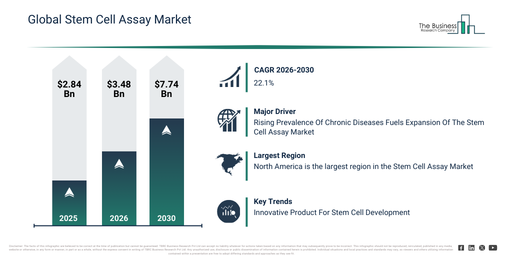
    The marketplace for stem cell antibodies has experienced substantial expansion recently, with projections indicating a rise from $4.45 billion in 2025 to $4.98 billion in 2026, reflecting a compound annual growth rate of 11.9%. Factors contributing to this historical growth include a surge in stem cell research endeavors, the increasing accessibility of monoclonal antibody technologies, augmented funding for academic and clinical investigations, a growing need for tools used in cell identification, and advancements in antibody engineering.

    Anticipating a swift expansion, the stem cell antibody market is projected to reach approximately $7.73 billion by the year 2030, demonstrating a compound annual growth rate of 11.6% during the forecast period. This upward trajectory is fueled by several key factors including greater utilization of sophisticated regenerative treatments, escalating need for precise research instruments, broadening biopharmaceutical research endeavors, intensified investments in antibody advancements, and a growing reliance on stem cell diagnostics. Within this timeframe, notable market developments are expected to include a heightened application of monoclonal antibodies in stem cell investigations, a surge in the demand for recombinant antibodies, expanding roles in regenerative medicine development, growth in bespoke antibody manufacturing services, and a more pronounced emphasis on targeting specific markers.

    Download A Free Sample Report For Comprehensive Market Insights:

    https://www.thebusinessresearchcompany.com/sample.aspx?id=30403&type=smp

    Stem Cell Antibody Market Expansion Drivers: What Is Shaping Future Growth?

    An increasing occurrence of chronic illnesses is anticipated to fuel the expansion of the stem cell antibody market. These long-term health conditions, characterized by their gradual onset and protracted duration, necessitate ongoing medical attention, and their growing prevalence is partly attributed to sedentary lifestyles where prolonged inactivity elevates the risk of conditions like cardiovascular disease and diabetes. Stem cell antibodies play a crucial role in managing chronic diseases by facilitating the accurate detection and isolation of stem cells, which are invaluable for research and the advancement of therapeutic strategies. These antibodies contribute to the development of focused treatments by assisting in the monitoring and modification of stem cell behavior, thereby enhancing the efficacy of regenerative medicine and individualized treatment plans. Illustratively, in June 2024, data from the UK’s National Health Service revealed that in 2023, a total of 3,615,330 individuals registered with a general practitioner received a diagnosis of non-diabetic hyperglycemia or pre-diabetes, representing an 18% surge from the 3,065,825 cases recorded in 2022. Consequently, the escalating incidence of chronic diseases is a significant driver for the stem cell antibody market’s growth.

    The escalating demand for tailored medical interventions is poised to stimulate the expansion of the stem cell antibody market. Personalized medicine, which customizes treatments according to an individual’s unique genetic makeup, environmental exposures, and lifestyle, aims to maximize treatment effectiveness and enhance patient care. This growing need for personalized healthcare is propelled by breakthroughs in genomic technologies, allowing for the precise identification of genetic differences and the subsequent development of individualized therapies. Stem cell antibodies are instrumental in advancing personalized medicine by facilitating the accurate pinpointing and targeting of specific stem cell populations, making them essential for the creation of bespoke treatments and diagnostic tools. They contribute to improved therapeutic precision through the enablement of focused interventions, thereby bolstering the effectiveness of regenerative treatments and therapies designed for specific diseases. As an example, in February 2024, the Personalized Medicine Coalition (PMC) in the US reported that the Food and Drug Administration (FDA) authorized 26 novel personalized medicines in 2023, a notable increase from the 12 approvals granted in 2022. Therefore, the increasing market pull for personalized medicine is a key factor driving the growth of the stem cell antibody sector.

    Stem Cell Antibody Market Segment Analysis Highlighting Growth Areas

    The stem cell antibody market covered in this report is segmented –

    1) By Type of Antibody: Monoclonal Antibodies, Polyclonal Antibodies, Recombinant Antibodies, Bispecific Antibodies

    2) By Product Formulation: Liquid Formulations, Lyophilized Formulations, Conjugated Antibodies, Unconjugated Antibodies

    3) By Application: Research, Clinical Diagnostics, Therapeutic Use, Protein Purification

    4) By End User: Academic Institutions, Pharmaceutical Companies, Biotechnology Firms, Hospitals and Diagnostic Laboratories

    Subsegments:

    1) By Monoclonal Antibodies: Humanized Monoclonal Antibodies, Chimeric Monoclonal Antibodies, Murine Monoclonal Antibodies, Fully Human Monoclonal Antibodies

    2) By Polyclonal Antibodies: Animal-Derived Polyclonal Antibodies, Recombinant Polyclonal Antibodies, Affinity-Purified Polyclonal Antibodies, Secondary Polyclonal Antibodies

    3) By Recombinant Antibodies: Single-Chain Variable Fragment Antibodies, Fragment Antigen-Binding Antibodies, Nanobodies, Chimeric Recombinant Antibodies

    4) By Bispecific Antibodies: Stem Cell Marker–Dual Targeting Bispecific Antibodies, Stem Cell Marker–Reporter Conjugatable Bispecific Antibodies, Stem Cell–Microenvironment Interaction Bispecific Antibodies, Stem Cell Isolation and Enrichment Bispecific Antibodies

    Stem Cell Antibody Market Leading Companies: Who Holds Significant Market Presence?

    Major companies operating in the stem cell antibody market are Thermo Fisher Scientific Inc., Merck KGaA, Bio-Rad Laboratories Inc., Bio-Techne Corporation, STEMCELL Technologies Inc., Miltenyi Biotec GmbH, Cell Signaling Technology Inc., OriGene Technologies Inc., Enzo Life Sciences Inc., GeneTex Inc., Proteintech Group Inc., Rockland Immunochemicals Inc., Bioss Antibodies Inc., ReproCELL Inc., Jackson ImmunoResearch Laboratories Inc., Lucerna-Chem AG, LifeSpan BioSciences Inc., Creative Biogene Inc., MyBioSource Inc., Imgenex Inc., Amsbio LLC

    Access The Complete Stem Cell Antibody Market Report:

    https://www.thebusinessresearchcompany.com/report/global-stem-cell-antibody-market-report

    Stem Cell Antibody Market Regional Distribution: Which Areas Drive Market Expansion?

    North Americawas the largest region in the stem cell antibody market in 2025. Asia-Pacificis expected to be the fastest-growing region in the forecast period. The regions covered in the stem cell antibody market report are Asia-Pacific, South East Asia, Western Europe, Eastern Europe, North America, South America, Middle East, Africa.

    Get in touch with us:

    The Business Research Company: https://www.thebusinessresearchcompany.com/

    Americas: +1 310-496-7795

    Asia: +44 7882 955267 & +91 8897263534

    Europe: +44 7882 955267

    Email us at: marketing@tbrc.info

    Follow us on:

    LinkedIn: https://in.linkedin.com/company/the-business-research-company

    YouTube: https://www.youtube.com/channel/UC24_fI0rV8cR5DxlCpgmyFQ

    Global Market Model: https://www.thebusinessresearchcompany.com/global-market-model
  • Stem Cell Market Outlook Highlights The Next Major Growth Opportunities

    Stem Cell Market Outlook Highlights The Next Major Growth Opportunities

    Enhanced with market attractiveness analysis, total addressable market evaluation, company benchmarking matrices, interactive Excel dashboards, expanded supply chain intelligence, emerging startup coverage, and detailed product insights, The Business Research Company’s 2026 market reports deliver more actionable and strategically valuable research.

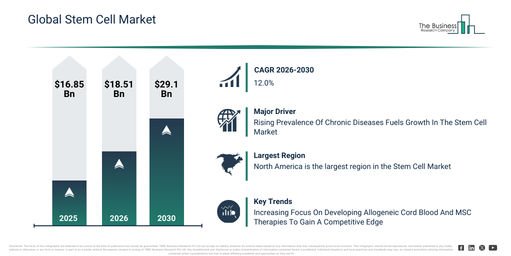
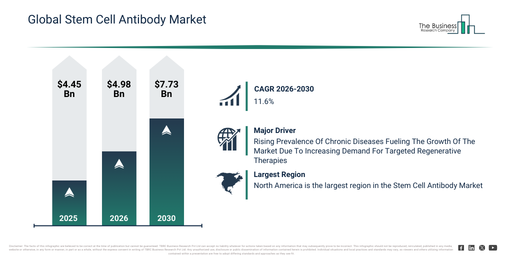
    Stem Cell Market Growth From $18.5 Billion In 2026 To $29.1 Billion By 2030 At A CAGR Of 12%

    The global stem cell market demonstrated robust expansion recently, projected to increase from $16.85 billion in 2025 to $18.51 billion in 2026, reflecting a compound annual growth rate of 9.9%. This upswing during the past period was underpinned by progress in cell biology investigations, a broader scope of clinical trials focused on regenerative therapies, the escalating application of stem cells in pharmaceutical development, the augmentation of biobanking facilities, and heightened financial commitments to life sciences research.

    The global stem cell market is poised for substantial expansion over the coming decade, projecting a valuation of $29.1 billion by the year 2030, propelled by a compound annual growth rate of 12.0%. This anticipated surge is largely fueled by a confluence of factors, including a greater number of stem cell therapy approvals, a heightened desire for customized medical treatments, the scaling up of stem cell production facilities, the increasing use of automated systems in cell processing, and augmented global spending on healthcare. Key developments anticipated within this timeframe involve significant progress in regenerative medicine, a rise in the use of induced pluripotent stem cells, the greater incorporation of artificial intelligence into stem cell research and development, the broadening availability of stem cell banking services, and a strengthened emphasis on establishing uniform manufacturing standards.

    Download A Free Sample Report For Comprehensive Market Insights:

    https://www.thebusinessresearchcompany.com/sample.aspx?id=2584&type=smp

    Stem Cell Market Development Factors: Which Trends Are Supporting Demand?

    The escalating global incidence of chronic ailments significantly propels the expansion of the stem cell market, as stem cell therapy involves utilizing these cells for disease prevention or treatment. While bone marrow transplantation stands as the predominant form of stem cell therapy currently employed, therapies leveraging umbilical cord blood are also gaining traction. Presently, the most common application of stem cell treatment involves the infusion of blood stem cells, aimed at addressing conditions affecting the blood and immune systems or reconstituting these systems post-cancer treatments. Illustrating this trend, data from the Australian Institute of Health and Welfare (AIHW) indicated in July 2024 that chronic conditions were responsible for 78% of the total disease burden causing fatalities in Australia, a rise compared to prior periods. Consequently, the worldwide surge in chronic disease prevalence acts as a key driver for the growth of the stem cell market.

    Stem Cell Market Segment Performance And Strategic Opportunities

    The stem cell market covered in this report is segmented –

    1) By Source: Autologous, Allogeneic

    2) By Product Type: Adult Stem Cell, Human Embryonic Stem Cell, Induced Pluripotent Stem Cell, Other Products

    3) By Application: Regenerative Medicine, Drug Discovery And Development

    Subsegments:

    1) By Autologous: Bone Marrow-Derived Stem Cells, Adipose Tissue-Derived Stem Cells, Peripheral Blood Stem Cells

    2) By Allogeneic: Bone Marrow-Derived Stem Cells, Umbilical Cord Blood Stem Cells, Peripheral Blood Stem Cells From Donors

    Stem Cell Market Transformation Trends: Which Innovations Are Driving Change?

    Key players within the stem cell sector are actively pursuing the creation of cutting-edge treatments, specifically allogeneic cord blood and mesenchymal stem cell (MSC) therapies, in their bid for market leadership. These allogeneic cord blood therapies leverage hematopoietic stem cells sourced from donated umbilical cord blood, aiming to repair or rebuild the blood and immune systems of individuals suffering from hematologic or immunologic conditions. Illustrating this trend, StemCyte Inc., a biotechnology firm based in the United States, introduced REGENECYTE in November 2024. This product represents an allogeneic cord blood stem cell therapy designed for transplantation in patients afflicted with disorders of the blood and immune system. REGENECYTE provides readily available, stored progenitor cells from donors, facilitating immediate treatment without the prolonged wait times typically involved in donor identification and cell procurement. While this innovation enhances treatment accessibility for those without suitable matches and aids in expanding treatment capacity, it also presents potential hurdles concerning logistical coordination and the long-term reliability of cell engraftment.

    Stem Cell Market Key Players: Which Companies Shape Industry Competition?

    Major companies operating in the stem cell market are Danaher Corporation, Cryo-Cell International Inc., Daiichi Sankyo Company Limited, Lonza Group Ltd, PerkinElmer Inc., CellGenix GmbH, China Cord Blood Corporation, Organogenesis Holdings Inc., LifeCell International, Cord Blood America Inc., StemCyte Inc., Cryoviva India, Cordlife Group Limited, Thermo Fisher Scientific Inc., CordVida, Cryo Stemcell Inc., Pluristem Therapeutics Inc., Mesoblast Limited, Americord Registry LLC, Smart Cells International, Athersys Inc., ReeLabs Pvt. Ltd., Cytori Therapeutics Inc., Esperite N.V., Stemade Biotech, ViaCord, Aldagen Inc, Isto Biologics, Brainstorm Cell Therapeutics Inc.

    Access The Complete Stem Cell Market Report:

    https://www.thebusinessresearchcompany.com/report/stem-cell-global-market-report

    Stem Cell Market Leading Geography: Which Region Generates The Most Revenue?

    North Americawas the largest region in the stem cell market in 2025. Western Europewas the second largest region in the global stem cell market share. The regions covered in the stem cell market report are Asia-Pacific, South East Asia, Western Europe, Eastern Europe, North America, South America, Middle East, Africa.

    Get in touch with us:

    The Business Research Company: https://www.thebusinessresearchcompany.com/

    Americas: +1 310-496-7795

    Asia: +44 7882 955267 & +91 8897263534

    Europe: +44 7882 955267

    Email us at: marketing@tbrc.info

    Follow us on:

    LinkedIn: https://in.linkedin.com/company/the-business-research-company

    YouTube: https://www.youtube.com/channel/UC24_fI0rV8cR5DxlCpgmyFQ

    Global Market Model: https://www.thebusinessresearchcompany.com/global-market-model
  • Status Epilepticus Market Trends And Growth Drivers Point To Strong Future Potential

    Status Epilepticus Market Trends And Growth Drivers Point To Strong Future Potential

    Through market attractiveness analysis, total addressable market evaluation, company benchmarking matrices, interactive Excel dashboards, expanded supply chain intelligence, emerging startup coverage, and detailed product insights, The Business Research Company’s 2026 market reports provide more actionable and strategically valuable research.

    Status Epilepticus Market Expansion Outlook: What Revenue Opportunities Lie Ahead?

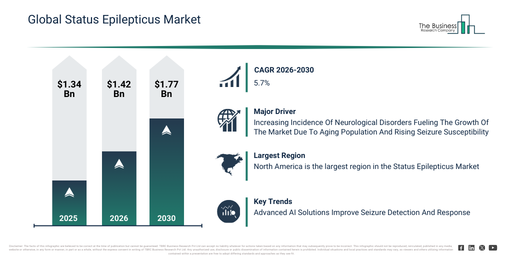
    The market for status epilepticus treatments has experienced robust expansion lately, and this upward trend is projected to continue. Specifically, the market value is anticipated to climb from $1.34 billion in 2025 to $1.42 billion in 2026, reflecting a compound annual growth rate of 6.0%. This historical growth pathway has been primarily fueled by several key factors, including a rise in the incidence of epilepsy, the broadening of emergency neurological care capabilities, the accessibility of both older and newer antiepileptic medications, an increase in hospitalizations related to seizures, and enhanced recognition of status epilepticus among medical professionals.

    The market for status epilepticus treatments is poised for significant expansion over the upcoming years, projected to reach $1.77 billion by 2030 with a compound annual growth rate of 5.7%. This anticipated growth is fueled by several key factors, including advancements in the creation of new anticonvulsant medications, increased financial backing for neuromodulation technologies, wider availability of digital tools for seizure monitoring, a greater emphasis on individualized epilepsy care plans, and a heightened focus on swift treatment protocols. In the coming forecast period, key trends driving this market include a stronger emphasis on emergent seizure management, a rise in the utilization of sophisticated antiepileptic therapies, increased deployment of hospital-based neuromodulation equipment, broader implementation of early diagnostic and monitoring solutions, and a more pronounced concentration on optimizing critical care procedures.

    Download A Free Sample Report For Comprehensive Market Insights:

    https://www.thebusinessresearchcompany.com/sample.aspx?id=25911&type=smp

    Status Epilepticus Market Industry Drivers: What Is Driving Revenue Growth?

    The escalating rates of neurological conditions are anticipated to be a primary driver for the expansion of the status epilepticus market. These conditions, impacting the brain, spinal cord, and nervous system, manifest in various ways, including difficulties with thinking, movement, and sensation. A significant factor contributing to the rise in neurological disorders is the aging demographic worldwide, as the aging process inherently compromises neuronal function, diminishes the brain’s ability to adapt, and heightens oxidative stress, thereby facilitating the onset and advancement of such ailments. By disrupting typical brain function, neurological disorders elevate the likelihood of individuals experiencing status epilepticus, characterized by prolonged seizures. These disorders also augment the probability of seizures happening again due to compromised neuronal stability, underscoring the critical importance of swift identification and robust treatment approaches. As an illustration, by June 30, 2024, the United Kingdom’s National Health Service reported that 487,432 individuals had been diagnosed with dementia, a degenerative brain condition affecting memory, cognitive abilities, and daily functioning, showing a rise of 3,155 cases from May 31, 2024. Consequently, the growing occurrence of neurological disorders is fueling the expansion of the status epilepticus market.

    Status Epilepticus Market Segment Landscape And Growth Potential

    The status epilepticus market covered in this report is segmented –

    1) By Type: Convulsive Status Epileptics, Non-Convulsive Status Epileptics

    2) By Medication: First Generation, Second Generation, Third Generation

    3) By Drug: Ganaxolone, Diazepam, Phenobarbital, Phenytoin And Fosphenytoin, Valproate, Other Drugs

    4) By Distribution Channel: Hospital Pharmacies, Online Pharmacies, Retail Pharmacies

    Subsegments:

    1) By Convulsive Status Epilepticus: Generalized Tonic–Clonic Status Epilepticus (GTCS SE), Focal Onset With Bilateral Tonic–Clonic Generalization, Myoclonic Status Epilepticus

    2) By Non-Convulsive Status Epilepticus (NCSE): Absence Status Epilepticus, Complex Partial Status Epilepticus, Subtle Status Epilepticus

    #Status Epilepticus Market Growth Trends: What Is Influencing The Future Outlook?

    The primary players within the status epilepticus market are directing their efforts toward pioneering innovative solutions, notably incorporating artificial intelligence (AI) into diagnostic tools, with the aim of refining seizure identification, expediting clinical decisions, and boosting the overall effectiveness of neurological patient management. These AI-driven diagnostic systems are essentially sophisticated software frameworks that harness the power of artificial intelligence to process brain activity data as it occurs, thereby facilitating swift recognition of seizure occurrences and enabling prompt intervention in critical care environments. As an illustration of this trend, a notable development occurred in October 2023 when Ceribell Inc., a medical technology firm based in the United States, introduced ClarityPro AI; this AI-powered diagnostic software is specifically engineered for the identification and ongoing observation of status epilepticus. This advanced platform interfaces smoothly with Ceribell’s existing EEG systems, offering continuous, up-to-the-minute seizure analysis directly at the patient’s bedside, and crucially aids healthcare professionals in administering prompt treatment, ultimately leading to better patient results in urgent neurological care scenarios.

    Status Epilepticus Market Competitive Landscape: Who Are The Leading Companies?

    Major companies operating in the status epilepticus market are Pfizer Inc., Novartis AG, Takeda Pharmaceutical Company Limited, Bausch Health Companies Inc., Eisai Co. Ltd., Dr. Reddy’s Laboratories, Hikma Pharmaceuticals plc, Mylan N.V., Lupin Pharmaceuticals Limited, Torrent Pharmaceuticals Ltd., Neuraxpharm, Ligand Pharmaceuticals Incorporated, Rafa Laboratories Ltd., Aquestive Therapeutics, Nobelpharma Co. Ltd., Neurelis Inc., SAGE Therapeutics, Immedica Pharma AB, Sedor Pharmaceuticals, Crossject SA.

    Access The Complete Status Epilepticus Market Report:

    https://www.thebusinessresearchcompany.com/report/status-epilepticus-global-market-report

    Status Epilepticus Market Regional Outlook: Where Are The Largest Opportunities Located?

    North Americawas the largest region in the status epilepticus market in 2025. The regions covered in the status epilepticus market report are Asia-Pacific, South East Asia, Western Europe, Eastern Europe, North America, South America, Middle East, Africa.

    Get in touch with us:

    The Business Research Company: https://www.thebusinessresearchcompany.com/

    Americas: +1 310-496-7795

    Asia: +44 7882 955267 & +91 8897263534

    Europe: +44 7882 955267

    Email us at: marketing@tbrc.info

    Follow us on:

    LinkedIn: https://in.linkedin.com/company/the-business-research-company

    YouTube: https://www.youtube.com/channel/UC24_fI0rV8cR5DxlCpgmyFQ

    Global Market Model: https://www.thebusinessresearchcompany.com/global-market-model
  • Starter Cultures Market Expansion Is Reshaping Competitive Dynamics Across The Industry

    Starter Cultures Market Expansion Is Reshaping Competitive Dynamics Across The Industry

    Delivering more actionable and strategically valuable research, The Business Research Company’s 2026 market reports feature market attractiveness analysis, total addressable market evaluation, company benchmarking matrices, interactive Excel dashboards, expanded supply chain intelligence, emerging startup coverage, and detailed product insights.

    Starter Cultures Market Growth Potential: How Will Market Size Change Through 2030?

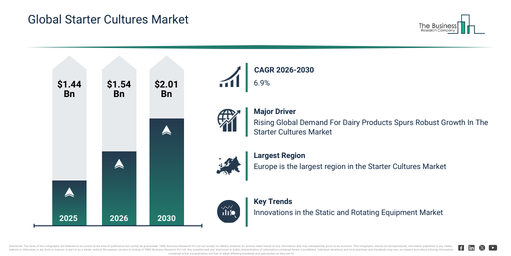
    The global market for starter cultures has experienced robust expansion recently. Projections indicate a growth from $1.44 billion in 2025 to $1.54 billion in 2026, reflecting a compound annual growth rate of 6.6%. Key factors driving this historical expansion include escalating dairy consumption, increased adoption of industrial fermentation processes, rising demand for processed foods, significant advancements in microbial research, and the growing necessity for food standardization.

    The starter cultures market is poised for robust expansion in the upcoming years, with projections indicating a rise to $2.01 billion by 2030, driven by a compound annual growth rate (CAGR) of 6.9%. This anticipated increase over the forecast period is largely fueled by the burgeoning plant-based food fermentation sector, a growing consumer appetite for functional foods, advancements in precision fermentation, the expansion of food processing in emerging markets, and a greater emphasis on sustainable culture production methods. Key developments anticipated within this timeframe are the increasing prevalence of customized microbial blends, a surge in demand for non-dairy fermentation cultures, the availability of shelf-stable starter solutions, the development of cultures that enhance flavor profiles, and the growing integration of probiotics into food products.

    Download A Free Sample Report For Comprehensive Market Insights:

    https://www.thebusinessresearchcompany.com/sample.aspx?id=8200&type=smp

    Starter Cultures Market Growth Factors: Which Forces Are Supporting Market Expansion?

    Fueling the expansion of the starter cultures market is a burgeoning consumer appetite for dairy goods. These milk-derived products are seeing increased popularity due to a growing inclination towards protein-fortified diets and a heightened understanding of their health advantages. As essential elements in crafting fermented dairy items like yogurt, cheese, and an array of other milk-based foods, starter cultures directly benefit from this rising demand. Illustrating this trend, the United States Department of Agriculture reported that in April 2025, total cheese output in the U.S., excluding cottage cheese varieties, reached 14.2 billion pounds, representing a 0.7 percent uptick from the preceding year’s levels. Consequently, a greater demand for dairy products translates into a direct impetus for the starter cultures market’s advancement.

    Starter Cultures Market Categorization By Product Type And Application

    The starter cultures market covered in this report is segmented –

    1) By Microorganism: Bacteria, Yeast, Molds

    2) By Composition: Multi-Strain Mix, Single Strain, Multi-Strain

    3) By Form: Freeze-Dried, Frozen

    4) By Application: Dairy And Dairy Products, Meat And Seafood, Alcoholic Beverages, Other Applications

    Subsegments:

    1) By Bacteria: Lactic Acid Bacteria (LAB), Non-Lactic Acid Bacteria

    2) By Yeast: Baker’s Yeast, Brewer’s Yeast, Other Yeasts

    3) By Molds: Filamentous Fungi, Other Molds

    Starter Cultures Market Industry Trends: What Changes Are Reshaping Demand?

    Leading enterprises involved in the static and rotating equipment sectors are introducing groundbreaking solutions like intelligent rotating equipment oversight to satisfy pressing market needs. This intelligent oversight entails a system designed for the persistent surveillance of rotating machinery, including pumps and motors, by closely observing vital operational metrics. Illustratively, in June of 2024, the German chemical firm Henkel debuted Henkel’s Loctite Pulse Smart Rotating Equipment Monitoring, a system featuring a simple plug-and-play sensor setup capable of tracking six crucial data points to boost equipment dependability. Complementing this, the Smart Pipes and Tanks Leak Detection technology leverages carbon nanotube sensors for the prompt identification of hydrocarbon leaks, thereby elevating both safety standards and environmental responsibility.

    Starter Cultures Market Company Landscape And Strategic Competition

    Major companies operating in the starter cultures market are Chr. Hansen Holding A/S, Lallemand Inc., Koninklijke DSM N.V., Sacco System S.r.l., LB Bulgaricum AD, International Flavors & Fragrances Inc., Biochem Srl, Wyeast Laboratories Inc., Mad Millie Pty Ltd, Futura Ingredients AB, Angel Yeast Co. Ltd., Benebios Inc., Benny Impex, Mediterranea Biotecnologie Srl, Bioprox Healthcare SAS, Codex-ing Biotech Ingredients Inc., CSK Food Enrichment B.V., Danisco A/S, Lesaffre et Compagnie, DSM Food Specialties B.V., Abiasa Corporativo S.A. de C.V.

    Access The Complete Starter Cultures Market Report:

    https://www.thebusinessresearchcompany.com/report/starter-cultures-global-market-report

    Starter Cultures Market Geographic Landscape: Which Region Dominates Industry Growth?

    Europewas the largest region in the starter cultures market in 2025. Asia-Pacificis expected to be the fastest-growing region in the forecast period. The regions covered in the starter cultures market report are Asia-Pacific, South East Asia, Western Europe, Eastern Europe, North America, South America, Middle East, Africa.

    Get in touch with us:

    The Business Research Company: https://www.thebusinessresearchcompany.com/

    Americas: +1 310-496-7795

    Asia: +44 7882 955267 & +91 8897263534

    Europe: +44 7882 955267

    Email us at: marketing@tbrc.info

    Follow us on:

    LinkedIn: https://in.linkedin.com/company/the-business-research-company

    YouTube: https://www.youtube.com/channel/UC24_fI0rV8cR5DxlCpgmyFQ

    Global Market Model: https://www.thebusinessresearchcompany.com/global-market-model
  • Sports Medicine Devices Market Forecast Reveals Where Future Industry Value Will Be Created

    Sports Medicine Devices Market Forecast Reveals Where Future Industry Value Will Be Created

    Enhanced with market attractiveness analysis, total addressable market evaluation, company benchmarking matrices, interactive Excel dashboards, expanded supply chain intelligence, emerging startup coverage, and detailed product insights, The Business Research Company’s 2026 market reports deliver more actionable and strategically valuable research.

    Sports Medicine Devices Market Value Analysis: What Growth Is Expected Over The Forecast Period?

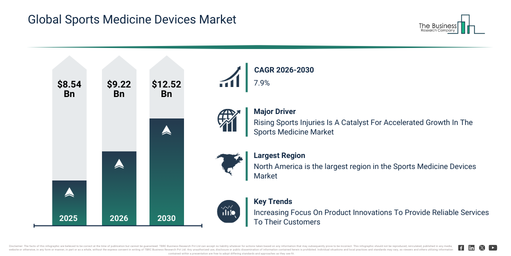
    The sports medicine devices sector has experienced substantial expansion lately, projecting a rise from $8.54 billion in 2025 to $9.22 billion in 2026, reflecting a compound annual growth rate of 8.0%. This robust historical expansion is underpinned by several key factors, including escalating engagement in sports, advancements in orthopedic technologies, increased financial commitments within professional sports, heightened consciousness regarding injury prevention strategies, and the development of rehabilitation facilities.

    Foreseeing a robust expansion, the sports medicine devices sector is poised for significant advancement over the coming years, projecting a market value of $12.52 billion by 2030 with a compound annual growth rate of 7.9%. This anticipated surge is fueled by several key factors, including the increasing adoption of wearable technology for injury surveillance, a rise in outpatient surgical procedures for athletes, the development of individualized recovery plans, the burgeoning potential of emerging athlete demographics, and the ongoing trend toward miniaturization in technological components. Within this projected growth phase, prominent market dynamics are expected to encompass innovative developments in arthroscopic devices, the integration of intelligent rehabilitation equipment, the utilization of lighter materials for implants, the introduction of accelerated recovery methodologies, and the seamless incorporation of performance tracking capabilities.

    Download A Free Sample Report For Comprehensive Market Insights:

    https://www.thebusinessresearchcompany.com/sample.aspx?id=9162&type=smp

    Sports Medicine Devices Market Demand Drivers: What Is Fueling Industry Growth?

    The burgeoning incidence of sports-related injuries is poised to be a significant catalyst for the expansion of the sports medicine market. These injuries, incurred during athletic activities or physical exertion, affect not only professional athletes but also the general populace, often stemming from direct trauma, repetitive strain, or excessive force. As sports medicine offers therapeutic interventions and rehabilitative services for such injuries, a rise in their occurrence directly fuels market expansion. To illustrate, data from Insideworldfootball, a UK news outlet, indicated that during the 2023-24 season, a total of 4,123 sports injuries were recorded, representing a 4% escalation from the previous 2022-23 season. Consequently, this upward trend in sports injuries is a key driver for the burgeoning sports medicine market.

    Sports Medicine Devices Market Segment Analysis And Revenue Opportunities

    The sports medicine devices market covered in this report is segmented –

    1) By Product: Implants, Fracture And Ligament Repair Products, Arthroscopy Devices, Prosthetics, Other Products

    2) By Injury Type: Knee Injuries, Shoulder Injuries, Foot And Ankle Injuries, Back And Spine Injuries, Hip And Groin Injuries

    3) By End User: Hospitals, Ambulatory Surgery Centers, Physiotherapy Centers And Clinics

    Subsegments:

    1) By Implants: Joint Implants, Soft Tissue Implants, Bone Implants

    2) By Fracture And Ligament Repair Products: Plates And Screws, Pins And Wires, Ligament Grafts

    3) By Arthroscopy Devices: Arthroscopes, Surgical Instruments, Visualization Systems

    4) By Prosthetics: Lower Limb Prosthetics, Upper Limb Prosthetics, Adaptive Devices

    5) By Other Products: Braces And Supports, Rehabilitation Equipment, Diagnostic Tools

    Sports Medicine Devices Market Innovation Trends: Which Developments Are Transforming The Industry?

    Key players within the sports medicine sector are strategically leveraging digital avenues, including dedicated product websites, to boost their market income. Maruho Medical’s revamped online presence now effectively showcases its diverse product offerings and highlights the company’s commitment to pioneering advancements in soft tissue fixation for sports-related injuries. In a significant move in March 2023, Maruho Co. Ltd., a pharmaceutical firm headquartered in Japan, unveiled a newly designed website to fuel its onward trajectory of expansion. This upgraded platform prominently features the recently launched apollo knotless anchor alongside the company’s full spectrum of products. This initiative aims to provide essential resources for both clients and the sales force, while also paving the way for Maruho’s future innovations within its soft tissue repair segment. The anchor’s unique knotless fixation capability offers distinct benefits in certain surgical contexts, aligning perfectly with the overarching objective of introducing cutting-edge soft tissue fixation methodologies into the field of sports medicine.

    Sports Medicine Devices Market Leading Players Shaping Industry Direction

    Major companies operating in the sports medicine devices market are Arthrex Inc., Conmed Corporation, DJO LLC, Johnson & Johnson Services Inc., Stryker Corp., Smith & Nephew plc, Breg Inc., Mueller Sports Inc., Wright Medical Group NV, Medtronic Inc., RTI Surgical Holdings Inc., Performance Health International Limited, Karl Storz SE & Co. KG, Bauerfeind AG, MedShape Inc., Cramer Products Inc., RôG Sports Medicine, Zimmer Biomet Holdings Inc., Mitek Sports Medicine, DonJoy Orthopedics, Össur public limited company, Otto Bock HealthCare GmbH, Bledsoe Brace Systems, Acumed LLC

    Access The Complete Sports Medicine Devices Market Report:

    https://www.thebusinessresearchcompany.com/report/sports-medicine-global-market-report

    Sports Medicine Devices Market Largest Region: Which Geography Holds The Highest Market Share?

    North Americawas the largest region in the sports medicine market in 2025. The regions covered in the sports medicine devices market report are Asia-Pacific, South East Asia, Western Europe, Eastern Europe, North America, South America, Middle East, Africa.

    Get in touch with us:

    The Business Research Company: https://www.thebusinessresearchcompany.com/

    Americas: +1 310-496-7795

    Asia: +44 7882 955267 & +91 8897263534

    Europe: +44 7882 955267

    Email us at: marketing@tbrc.info

    Follow us on:

    LinkedIn: https://in.linkedin.com/company/the-business-research-company

    YouTube: https://www.youtube.com/channel/UC24_fI0rV8cR5DxlCpgmyFQ

    Global Market Model: https://www.thebusinessresearchcompany.com/global-market-model
  • Sports Injury Prediction Market Growth Through 2030 Creates New Strategic Opportunities

    Sports Injury Prediction Market Growth Through 2030 Creates New Strategic Opportunities

    Through market attractiveness analysis, total addressable market evaluation, company benchmarking matrices, interactive Excel dashboards, expanded supply chain intelligence, emerging startup coverage, and detailed product insights, The Business Research Company’s 2026 market reports provide more actionable and strategically valuable research.

    Sports Injury Prediction Market Size Forecast: How Large Could The Market Become By 2030?

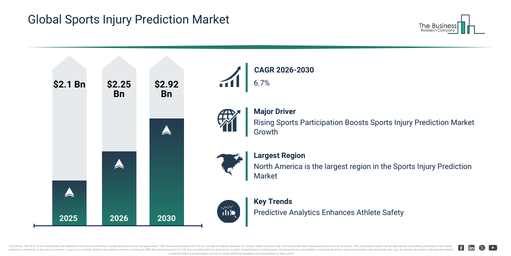
    The sports injury prediction market has experienced robust expansion, projected to increase from $2.1 billion in 2025 to $2.25 billion in 2026, reflecting a compound annual growth rate of 7.1%. Factors contributing to this significant growth during the historical period include the advancing professionalization within sports, the heightened development of athlete performance analytics, a growing emphasis on preventing injuries, expanded research in sports science, and the increasing accessibility of wearable monitoring devices.

    The sports injury prediction market is on a robust growth trajectory, projected to reach $2.92 billion by 2030, with a compound annual growth rate of 6.7%. This expansion is propelled by several key factors, including a growing need for tailored injury prevention strategies, increased acceptance within recreational and junior athletic circles, the proliferation of advanced AI for predictive analytics, closer ties with recovery technologies, and heightened investment in sports wellness platforms. Significant developments anticipated during this period involve greater utilization of wearable sensors for athlete oversight, wider implementation of AI for assessing injury risk, seamless integration of systems that track performance live, broader availability of tools that optimize training based on data, and a heightened emphasis on proactive healthcare in sports.

    Download A Free Sample Report For Comprehensive Market Insights:

    https://www.thebusinessresearchcompany.com/sample.aspx?id=20649&type=smp

    Sports Injury Prediction Market Growth Drivers: What Factors Are Accelerating Expansion?

    The increasing engagement in athletic pursuits and leisure pastimes is anticipated to fuel the expansion of the sports injury prediction market. These activities, encompassing both organized sports and informal recreational endeavors, are undertaken for both amusement and physical conditioning. Factors such as heightened health consciousness, improved availability of venues, and the pursuit of stress reduction and pleasure are contributing to this surge in participation. The advantages of sports injury prediction are manifold, assisting in the prevention of harm, enhancement of training regimens, and facilitation of secure and accelerated recuperation, thereby rendering these activities safer and more gratifying. As an illustration, data from March 2024, provided by the Sports & Fitness Industry Association, indicated that 242 million individuals in the United States, representing approximately 79% of the population aged six and above, engaged in at least one sport, fitness, or outdoor pursuit, a 2.2% increase compared to 2022. Consequently, this heightened level of participation in sports and recreational activities is a key driver for the growth of the sports injury prediction market.

    Sports Injury Prediction Market Segmentation And Category Breakdown

    The sports injury prediction market covered in this report is segmented –

    1) By Systems: Hardware, Software

    2) By Technology: Motion Capture, Player Activity Tracking, Vital Sign Monitoring, Sensor Based Technology, Image Based Technology, Machine Learning, Other Technologies

    3) By Sports Type: Cricket, Football, Soccer, Rugby, Basketball, Baseball, Racing, Other Sport Types

    4) By Application: Performance Assessment, Injury Risk Analysis, Activity Monitoring, Recovery And Post Injury Care, Biomechanics, Other Applications

    Subsegments:

    1) By Hardware: Wearable Sensors And Devices, Smart Clothing With Embedded Sensors, Monitoring Devices (e.g., Heart Rate Monitors, Motion Sensors), Video Analysis Systems, Biomechanical Measurement Tools

    2) By Software: Injury Prediction Analytics Platforms, Machine Learning And AI-Based Solutions, Data Management Software For Athlete Monitoring, Mobile Applications For Injury Tracking, Performance Analysis And Risk Assessment Tools

    Sports Injury Prediction Market Trends: What Is Shaping Future Industry Growth?

    Within the sports injury prediction sector, leading entities are prioritizing enhancements in technology, specifically leveraging predictive analytics and machine learning methodologies to solidify their market standing. These advanced analytical approaches entail employing data-centric strategies to forecast subsequent results by examining past information. As a concrete illustration, in February of 2024, Players Health, an American enterprise specializing in sports technology and health services, unveiled NIL Insurance for Collectives. This offering incorporates predictive analytics to evaluate potential risks and deliver customized insurance plans for athletes. The underlying objective of this pioneering solution is to safeguard athletes against monetary setbacks stemming from injuries, thereby mirroring a burgeoning movement towards anticipatory injury management in athletic pursuits. The incorporation of these cutting-edge technologies not only bolsters athlete security but also refines team effectiveness by minimizing periods of inactivity attributable to injuries, notwithstanding existing apprehensions regarding data confidentiality and the precision of these prognostications.

    Sports Injury Prediction Market Competitive Analysis Of Major Industry Participants

    Major companies operating in the sports injury prediction market are Microsoft Corporation, International Business Machines Corporation, Zebra Technologies Inc., CA Technologies, Firstbeat, Xsens Technologies, Kitman Labs, PlayerMaker, Sparta Science, Fusion Sport’s, Zephyr Technologies, Catapult Sports, STATSports, Orreco Ltd, PhysiMax Technologies, Hawkin Dynamics Inc., Simi Reality Motion Systems, Vald Performance, Beyond Pulse, DorsaVi Ltd, Plantiga, Protxx Inc., Motus Global

    Access The Complete Sports Injury Prediction Market Report:

    https://www.thebusinessresearchcompany.com/report/sports-injury-prediction-global-market-report

    Sports Injury Prediction Market Regional Analysis: Which Region Leads By Revenue?

    North Americawas the largest region in the sports injury prediction market in 2025. Asia-Pacificis expected to be the fastest-growing region in the forecast period. The regions covered in the sports injury prediction market report are Asia-Pacific, South East Asia, Western Europe, Eastern Europe, North America, South America, Middle East, Africa.

    Get in touch with us:

    The Business Research Company: https://www.thebusinessresearchcompany.com/

    Americas: +1 310-496-7795

    Asia: +44 7882 955267 & +91 8897263534

    Europe: +44 7882 955267

    Email us at: marketing@tbrc.info

    Follow us on:

    LinkedIn: https://in.linkedin.com/company/the-business-research-company

    YouTube: https://www.youtube.com/channel/UC24_fI0rV8cR5DxlCpgmyFQ

    Global Market Model: https://www.thebusinessresearchcompany.com/global-market-model