Category: Healthcare Services

  • Specimen Validity Testing Market Growth Is Accelerating As Industry Transformation Continues

    Specimen Validity Testing Market Growth Is Accelerating As Industry Transformation Continues

    Enhanced with market attractiveness analysis, total addressable market evaluation, company benchmarking matrices, interactive Excel dashboards, expanded supply chain intelligence, emerging startup coverage, and detailed product insights, The Business Research Company’s 2026 market reports deliver more actionable and strategically valuable research.

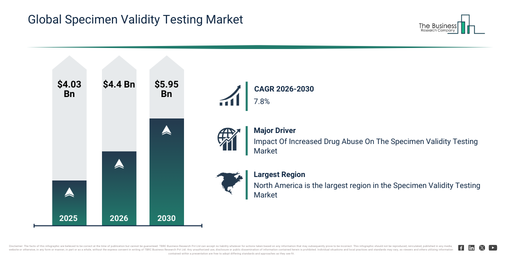
    Specimen Validity Testing Market Expected To Reach $5.95 Billion By 2030 At 7.8% CAGR

    Expanding robustly, the specimen validity testing market has witnessed significant advancement lately, projected to ascend from $4.03 billion in 2025 to $4.4 billion by 2026, reflecting a compound annual growth rate (CAGR) of 9.3%. This historical expansion has been fueled by several key factors, including the burgeoning field of workplace drug testing, the increasing implementation of regulatory requirements for urine analysis, a notable surge in substance abuse incidents, the escalating demand for forensic testing services, and the continuous expansion of clinical laboratory operations.

    The market for specimen validity testing is poised for significant expansion over the coming years, projected to reach $5.95 billion by 2030, driven by a compound annual growth rate of 7.8%. This anticipated growth is fueled by several factors, including the increasing utilization of oral fluid testing methods, enhancements in the sensitivity of assay technologies, a rise in probation and legal testing requirements, the proliferation of point-of-care testing solutions, and greater penetration into emerging markets. Key developments shaping the forecast period involve a greater emphasis on adulterant detection capabilities, the automation of validity testing processes, seamless integration with laboratory information systems, the development of rapid testing kits, and an overall expansion of drug screening programs in the workplace.

    Download A Free Sample Report For Comprehensive Market Insights:

    https://www.thebusinessresearchcompany.com/sample.aspx?id=15673&type=smp

    Specimen Validity Testing Market Demand Drivers: What Is Fueling Industry Growth?

    The escalating issue of drug abuse is poised to stimulate advancement within the specimen validity testing sector. Drug abuse encompasses the habitual, excessive, or improper consumption of legal or illicit substances for reasons outside of medical necessity. Contributing factors to this rise include the opioid crisis, an increase in mental health challenges, obstacles in accessing care and support systems, and societal portrayals of substance use. Specimen validity testing (SVT) employs techniques that scrutinize various indicators like pH levels, specific gravity, creatinine concentration, and temperature to detect adulterants and foreign substances. Evidence from the Office for National Statistics in the UK highlights this trend, reporting that in 2023, England and Wales documented 5,448 fatalities attributed to drug poisoning, an 11.0% surge from the 4,907 deaths recorded in 2022. Consequently, the growing prevalence of drug abuse is anticipated to fuel the expansion of the specimen validity testing market.

    Heightened spending within the healthcare industry is anticipated to be a significant catalyst for the expansion of the specimen validity testing market. This broader category of healthcare spending involves the total financial outlay by individuals, entities, or governmental bodies toward the prevention, treatment, and management of health-related conditions. The upward trajectory in healthcare expenditure is largely attributed to ongoing progress in medical technology; cutting-edge diagnostic instruments, novel therapeutic interventions, and innovative treatment modalities frequently entail substantial costs, thereby contributing to a higher overall financial commitment in healthcare. Consequently, increased healthcare investments bolster the specimen validity testing market by furnishing the necessary capital for sophisticated technologies, specialized workforce training, and upgraded laboratory facilities, all of which contribute to improved testing precision and trustworthiness. Illustrating this financial trend, the Centers for Medicare & Medicaid Services in the U.S. reported in December 2024 that by 2023, national healthcare expenditures had climbed by 7.5%, reaching $4.9 trillion, which equates to approximately $14,570 per person. Therefore, the sustained increase in healthcare expenditures is serving as a primary driver for the specimen validity testing market’s growth.

    Specimen Validity Testing Market Categorization By Product Type And Application

    The specimen validity testing market covered in this report is segmented –

    1) By Product And Service: Products, Service

    2) By Testing Type: Laboratory Testing, Rapid Or Point-Of-Care Testing

    3) By End-User: Drug Rehabilitation Centers, Drug Screening Laboratories, Pain Management Centers, Criminal Justice And Law Enforcement Agencies, Other End-Users

    Subsegments:

    1) By Products: Reagents And Assay Kits, Controls And Calibrators, Specimen Collection Devices, Analyzers And Instruments

    2) By Service: Laboratory Testing Services, Point-Of-Care Testing Services

    Specimen Validity Testing Market Company Landscape And Strategic Competition

    Major companies operating in the specimen validity testing market are Thermo Fisher Scientific Inc., Abbott Laboratories, Danaher Corporation, Siemens Healthineers , Medline Industries Inc., Becton, Dickinson and Company, Laboratory Corporation, Quest Diagnostics Incorporated, Alere Inc., Clinical Reference Laboratory Inc., Precision Diagnostics, ACM Global Laboratories, Millennium Health, Omega Laboratories Inc., Dominion Diagnostics, CannAmm, Sciteck Inc., Starplex Scientific Inc., Vision Diagnostics Inc., Premier Biotech Inc., Alfa Scientific Designs, Express Diagnostics, American Bio Medica Corporation, Titan Biotech Ltd., SureHire, Miraclean Technology Co. Ltd

    Access The Complete Specimen Validity Testing Market Report:

    https://www.thebusinessresearchcompany.com/report/specimen-validity-testing-global-market-report

    Specimen Validity Testing Market Regional Analysis: Which Region Leads By Revenue?

    North Americawas the largest region in the specimen validity testing market in 2025. Asia-Pacificis expected to be the fastest-growing region in the forecast period. The regions covered in the specimen validity testing market report are Asia-Pacific, South East Asia, Western Europe, Eastern Europe, North America, South America, Middle East, Africa.

    Get in touch with us:

    The Business Research Company: https://www.thebusinessresearchcompany.com/

    Americas: +1 310-496-7795

    Asia: +44 7882 955267 & +91 8897263534

    Europe: +44 7882 955267

    Email us at: marketing@tbrc.info

    Follow us on:

    LinkedIn: https://in.linkedin.com/company/the-business-research-company

    YouTube: https://www.youtube.com/channel/UC24_fI0rV8cR5DxlCpgmyFQ

    Global Market Model: https://www.thebusinessresearchcompany.com/global-market-model
  • Specific Immunoglobulin G Subclass 4 (IgG4) Testing Market Outlook Highlights The Next Major Growth Opportunities

    Specific Immunoglobulin G Subclass 4 (IgG4) Testing Market Outlook Highlights The Next Major Growth Opportunities

    Through market attractiveness analysis, total addressable market evaluation, company benchmarking matrices, interactive Excel dashboards, expanded supply chain intelligence, emerging startup coverage, and detailed product insights, The Business Research Company’s 2026 market reports provide more actionable and strategically valuable research.

    Specific Immunoglobulin G Subclass 4 (IgG4) Testing Market Size And Revenue Forecast Through 2030

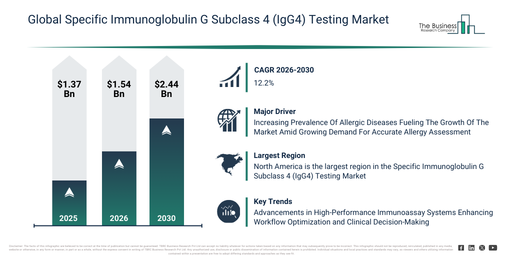
    The market valuation for immunoglobulin G subclass 4 (IgG4) testing has experienced considerable expansion lately, projected to advance from $1.37 billion in 2025 to $1.54 billion by 2026, reflecting a compound annual growth rate (CAGR) of 12.4%. Factors contributing to this growth during the preceding period include a heightened understanding of IgG4-related disorders, the broadening reach of diagnostic laboratory services, an increased reliance on antibody detection methods for diagnosis, enhancements in immunoassay technologies, and a surge in clinical research endeavors.

    The global market for specific immunoglobulin G4 (IgG4) testing is poised for substantial expansion, projecting to reach $2.44 billion by 2030, driven by a robust compound annual growth rate of 12.2%. This anticipated surge through the forecast period is fueled by several key factors, including a heightened need for precision diagnostics, the proliferation of hospital-based testing sites, increased capital allocated towards laboratory automation, a greater uptake of sophisticated immunology panels, and a stronger emphasis on the early identification of diseases. Furthermore, the coming years are expected to witness significant trends such as a growing preference for specialized immunoassays, an escalating demand for diagnostics related to autoimmune disorders, a broader integration of IgG4 testing into routine clinical procedures, the continued mechanization of immunology laboratories, and a heightened commitment to diagnostic precision.

    Download A Free Sample Report For Comprehensive Market Insights:

    https://www.thebusinessresearchcompany.com/sample.aspx?id=30400&type=smp

    Specific Immunoglobulin G Subclass 4 (IgG4) Testing Market Growth Drivers: What Factors Are Accelerating Expansion?

    The rising incidence of conditions like food allergies, eczema, asthma, and hay fever, which stem from the immune system’s overreaction to innocuous substances, is anticipated to be a key catalyst for the expansion of the specific immunoglobulin G subclass 4 (IgG4) testing market. Changes in eating habits, including a greater intake of heavily processed foods, are altering the gut microbiome and consequently heightening the risk of developing allergies, contributing to this upward trend in allergic disease prevalence. The function of specific IgG4 testing is to evaluate the body’s immune reactions associated with ongoing contact with allergens, thereby assisting healthcare professionals in deciphering tolerance mechanisms and comprehending intricate immunological responses related to allergies. To illustrate, in May 2024, data from the Food Standards Agency, a regulatory organization in the United Kingdom focused on food safety and safeguarding public health, indicated that approximately 6% of adults in the UK, equating to 2.4 million individuals, had a medically confirmed food allergy. Consequently, the escalating rates of allergic conditions are directly fueling the growth trajectory of the specific IgG4 testing market.

    Specific Immunoglobulin G Subclass 4 (IgG4) Testing Market Segment Analysis And Revenue Opportunities

    The specific immunoglobulin g subclass 4 (igg4) testing market covered in this report is segmented –

    1) By Product Type: Reagents And Kits, Instruments, Services

    2) By Application: Allergy Diagnosis, Autoimmune Disease Diagnosis, Research, Other Applications

    3) By End-User: Hospitals And Clinics, Diagnostic Laboratories, Research Institutes, Other End-Users

    Subsegments:

    1) By Reagents And Kits: Purification Reagents, Detection Reagents, Assay Kits, Calibrators, Controls

    2) By Instruments: Automated Analyzers, Enzyme Linked Immunoassay Readers, Microplate Washers, Sample Preparation Systems, Laboratory Automation Platforms

    3) By Services: Testing Services, Validation Services, Quality Assurance Services, Custom Assay Development Services, Technical Support Services

    Specific Immunoglobulin G Subclass 4 (IgG4) Testing Market Trends: What Is Shaping Future Industry Growth?

    Leading players within the IgG4 testing market are prioritizing the integration of cutting-edge advancements in their testing systems and approaches, notably employing high-sensitivity immunoassay technology to elevate the precision, analytical effectiveness, and diagnostic trustworthiness of their assays. These sophisticated high-sensitivity immunoassays function as advanced detection frameworks, leveraging carefully selected antibodies, potent signal amplification chemistries, and streamlined assay procedures to accurately measure minute quantities of target substances with exceptional exactitude, consequently offering benefits like lower detection thresholds, exceptional specificity, and dependable outcome consistency. As an illustration, in September of 2025, Alta DiagnoTech, a United States entity specializing in in-vitro diagnostic immunoassay solutions, introduced its ELISA Kits for IVD Immunology Testing, a collection of high-sensitivity immunoassay products engineered for the precise measurement of biomarkers essential for a wide spectrum of immunological investigations. These kits are characterized by their heightened assay sensitivity, robust production consistency, and extensive utility within immunological testing protocols, thereby augmenting the dependability of tests, the rigor of analytical measurements, and the overall assurance in diagnostic outcomes within the field of immunology.

    Specific Immunoglobulin G Subclass 4 (IgG4) Testing Market Leading Players Shaping Industry Direction

    Major companies operating in the specific immunoglobulin g subclass 4 (igg4) testing market are F Hoffmann La Roche Ltd., Thermo Fisher Scientific Inc., Abbott Laboratories, Siemens Healthineers AG, Mayo Clinic Laboratories, Laboratory Corporation of America Holdings, Quest Diagnostics Incorporated, Eurofins Scientific SE, Revvity, Randox Laboratories Ltd, NeoGenomics Laboratories Inc., ARUP Laboratories, Dr Lal PathLabs Limited, Metropolis Healthcare Ltd, ProSci Incorporated, Leinco Technologies Incorporated, MyBioSource Inc., Boster Biological Technology, PROTIA Inc., Creative Diagnostics LLC.

    Access The Complete Specific Immunoglobulin G Subclass 4 (IgG4) Testing Market Report:

    https://www.thebusinessresearchcompany.com/report/global-specific-immunoglobulin-g-subclass-4-igg4-testing-market-report

    Specific Immunoglobulin G Subclass 4 (IgG4) Testing Market Geographic Distribution And Regional Opportunities

    North Americawas the largest region in the specific immunoglobulin G subclass 4 (IgG4) testing market in 2025. Asia-Pacificis expected to be the fastest-growing region in the forecast period. The regions covered in the specific immunoglobulin g subclass 4 (igg4) testing market report are Asia-Pacific, South East Asia, Western Europe, Eastern Europe, North America, South America, Middle East, Africa.

    Get in touch with us:

    The Business Research Company: https://www.thebusinessresearchcompany.com/

    Americas: +1 310-496-7795

    Asia: +44 7882 955267 & +91 8897263534

    Europe: +44 7882 955267

    Email us at: marketing@tbrc.info

    Follow us on:

    LinkedIn: https://in.linkedin.com/company/the-business-research-company

    YouTube: https://www.youtube.com/channel/UC24_fI0rV8cR5DxlCpgmyFQ

    Global Market Model: https://www.thebusinessresearchcompany.com/global-market-model
  • Specialty PACS Market Trends And Growth Drivers Point To Strong Future Potential

    Specialty PACS Market Trends And Growth Drivers Point To Strong Future Potential

    Delivering more actionable and strategically valuable research, The Business Research Company’s 2026 market reports feature market attractiveness analysis, total addressable market evaluation, company benchmarking matrices, interactive Excel dashboards, expanded supply chain intelligence, emerging startup coverage, and detailed product insights.

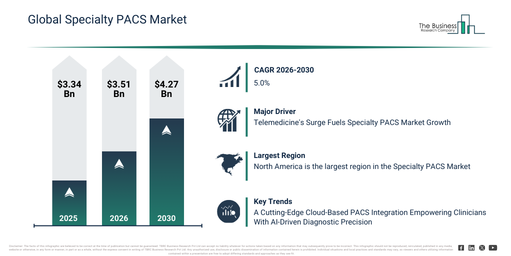
    Specialty PACS Market Growth From $3.51 Billion In 2026 To $4.26 Billion By 2030 At A CAGR Of 5%

    In recent times, the market for specialty pacs has experienced robust expansion. Projections indicate a rise from $3.34 billion in 2025 to $3.51 billion in 2026, charting a compound annual growth rate (CAGR) of 5.1%. Key factors fueling this growth during the preceding period include an increase in medical imaging procedures, widespread adoption of hospital digitalization, escalating demands on radiology departments, progress in imaging technologies, and regulatory encouragement for the implementation of digital record-keeping systems.

    The market for specialty PACS is projected to experience consistent expansion in the coming years, reaching an estimated value of $4.27 billion by 2030, fueled by a compound annual growth rate of 5.0%. This anticipated growth throughout the forecast period is largely driven by several key factors, including the increasing adoption of AI-powered diagnostic tools, a rising demand for specialized medical care, the migration of imaging systems to cloud platforms, the expanding reach of tele-radiology services, and regulatory pushes for data interoperability. Significant trends shaping this period are expected to involve imaging workflows that are increasingly tailored to subspecialties, the use of AI to aid in image interpretation, the deployment of PACS solutions in the cloud, seamless integration with Electronic Health Record (EHR) systems, and enhanced capabilities for remote diagnostic collaboration.

    Download A Free Sample Report For Comprehensive Market Insights:

    https://www.thebusinessresearchcompany.com/sample.aspx?id=14209&type=smp

    Specialty PACS Market Growth Factors Supporting Long-Term Expansion

    The expansion of the specialty PACS market is anticipated to be driven by an increasing emphasis on telemedicine, a method of remote healthcare delivery utilizing technologies such as phone calls, video conferencing, and other digital communications. Specialty PACS solutions are intrinsically connected to the burgeoning trend of telemedicine, as they are crucial for enabling remote access to medical imagery, supporting collaborative diagnostic efforts, and enhancing patient care across diverse medical fields, notably radiology. Illustratively, data from the Australian Bureau of Statistics, a government body in Australia, revealed that in November 2023, approximately 23.6% of individuals engaged in a telehealth consultation with a general practitioner, underscoring the rising adoption of remote healthcare. Consequently, the heightened prominence of telemedicine is serving as a catalyst for the advancement of the specialty PACS market.

    Specialty PACS Market Segmentation And Category Breakdown

    The specialty pacs market covered in this report is segmented –

    1) By Type: Radiology PACS, Cardiology PACS, Pathology PACS, Ophthalmology PACS, Orthopedics PACS, Oncology PACS, Dermatology PACS, Neurology PACS, Endoscopy PACS, Women’s Health PACS

    2) By Deployment Model: On-Premise, Cloud-Based

    3) By End-User: Hospitals, Ambulatory Surgery Centers And Clinics, Diagnostic Imaging Centers

    Subsegments:

    1) By Radiology PACS: Diagnostic Imaging PACS, Workflow Management PACS

    2) By Cardiology PACS: Cardiac Imaging PACS, Electrocardiogram (ECG) PACS

    3) By Pathology PACS: Digital Pathology PACS, Anatomic Pathology PACS

    4) By Ophthalmology PACS: Retinal Imaging PACS, Optical Coherence Tomography (OCT) PACS

    5) By Orthopedics PACS: Musculoskeletal Imaging PACS, Surgical PACS

    6) By Oncology PACS: Radiation Therapy PACS, Oncology Imaging PACS

    7) By Dermatology PACS: Skin Imaging PACS, Teledermatology PACS

    8) By Neurology PACS: Neuroimaging PACS, EEG And EMG PACS

    9) By Endoscopy PACS: Gastrointestinal Endoscopy PACS, Bronchoscopy PACS

    10) By Women’s Health PACS: Mammography PACS, Obstetric And Gynecological Imaging PACS

    Specialty PACS Market Industry Trends Shaping Future Revenue Growth

    Leading participants within the specialized Picture Archiving and Communication System (PACS) sector are prioritizing the development of novel products equipped with artificial intelligence (AI) and machine learning (ML) capabilities in an effort to boost their financial performance. The integration of AI and ML is intended to usher in advanced, cloud-native PACS solutions and enhance AI-driven instruments that assist medical professionals. As an illustration, Koninklijke Philips N.V., a Dutch technology firm, unveiled HealthSuite Imaging on Amazon Web Services (AWS) in November 2023, a move designed to facilitate the deployment of next-generation PACS to the cloud and expand AI-powered functionalities for clinicians. This cloud-based framework is engineered to empower radiologists and healthcare providers to adopt emerging features more rapidly, optimize operational processes, and elevate the quality of patient care. Through its partnership with AWS, Philips is positioned to deliver superior image access speeds, enhanced dependability, and streamlined data management for medical practitioners throughout the complete imaging process, from initial treatment to subsequent monitoring. Furthermore, this alliance with AWS will propel AI advancements in healthcare by utilizing foundation models accessible via Amazon Bedrock, thereby expediting more precise diagnoses and automating routine administrative duties.

    Specialty PACS Market Competitive Analysis Of Major Industry Participants

    Major companies operating in the specialty pacs market are McKesson Corporation, Siemens AG, International Business Machines Corporation, Oracle Corporation, Canon Inc., Fujifilm Holdings Corporation, Koninklijke Philips N.V., Topcon Corporation, Neusoft Medical Systems Co. Ltd., Carestream Health Inc., Agfa HealthCare NV, Hitachi Healthcare Systems Inc., Sectra AB, Intelerad Medical Systems Inc., INFINITT Healthcare Co. Ltd., NantHealth Inc., Advanced Data Systems Inc., Mach7 Technologies Ltd., Novarad Corporation, Telemis S.A., Escalon Medical Corp., Sonomed Escalon Solutions Inc., EyePACS LLC, Visbion Limited

    Access The Complete Specialty PACS Market Report:

    https://www.thebusinessresearchcompany.com/report/specialty-pacs-global-market-report

    Specialty PACS Market Largest Region By Revenue And Market Share

    North Americawas the largest region in the specialty PACS market in 2025. Asia-Pacificis expected to be the fastest-growing region in the forecast period. The regions covered in the specialty pacs market report are Asia-Pacific, South East Asia, Western Europe, Eastern Europe, North America, South America, Middle East, Africa.

    Get in touch with us:

    The Business Research Company: https://www.thebusinessresearchcompany.com/

    Americas: +1 310-496-7795

    Asia: +44 7882 955267 & +91 8897263534

    Europe: +44 7882 955267

    Email us at: marketing@tbrc.info

    Follow us on:

    LinkedIn: https://in.linkedin.com/company/the-business-research-company

    YouTube: https://www.youtube.com/channel/UC24_fI0rV8cR5DxlCpgmyFQ

    Global Market Model: https://www.thebusinessresearchcompany.com/global-market-model
  • Spatial Genomics And Transcriptomics Market Expansion Is Reshaping Competitive Dynamics Across The Industry

    Spatial Genomics And Transcriptomics Market Expansion Is Reshaping Competitive Dynamics Across The Industry

    Enhanced with market attractiveness analysis, total addressable market evaluation, company benchmarking matrices, interactive Excel dashboards, expanded supply chain intelligence, emerging startup coverage, and detailed product insights, The Business Research Company’s 2026 market reports deliver more actionable and strategically valuable research.

    Spatial Genomics And Transcriptomics Market Expansion Outlook: What Revenue Opportunities Lie Ahead?

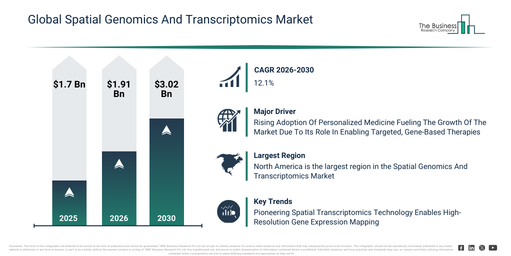
    The market for spatial genomics and transcriptomics has demonstrated considerable expansion lately, projecting a rise from \$1.7 billion in 2025 to \$1.91 billion in 2026, fueled by a compound annual growth rate of 12.4%. This historical growth trajectory has been significantly influenced by progress in genomics, the expanding field of transcriptomics research, breakthroughs in oncology biomarker identification, decreasing costs associated with sequencing technologies, and increased investment in research activities.

    The market for spatial genomics and transcriptomics is poised for substantial expansion over the coming years, projected to reach $3.02 billion by 2030, propelled by a compound annual growth rate of 12.1%. This anticipated growth trajectory is fueled by several key factors, including the increasing demand for personalized oncology treatments, advancements in drug discovery processes, the burgeoning field of single-cell analysis, the continued development of computational biology, and a heightened emphasis on translating research into clinical applications. Furthermore, prominent trends shaping this market during the forecast period encompass the evolution of spatial mapping technologies, the integration of artificial intelligence for data analytics, a growing adoption of these techniques in oncology research, the expansion of collaborations between academic institutions, and a notable increase in investment from pharmaceutical companies.

    Download A Free Sample Report For Comprehensive Market Insights:

    https://www.thebusinessresearchcompany.com/sample.aspx?id=24405&type=smp

    Spatial Genomics And Transcriptomics Market Demand Drivers Creating New Revenue Opportunities

    The expanding embrace of personalized medicine is poised to invigorate the spatial genomics and transcriptomics sector. This tailored medical paradigm, which customizes treatments according to a patient’s genetic profile, lifestyle, and environmental influences to optimize therapeutic results and mitigate adverse reactions, is experiencing heightened demand fueled by breakthroughs in genetic research. These advancements facilitate more accurate therapies designed for an individual’s distinct genetic composition, ultimately improving patient prognoses. Spatial genomics and transcriptomics are instrumental in advancing personalized medicine by mapping the exact locations and expressions of genes within biological tissues, thereby facilitating the development of targeted therapeutic approaches founded on a patient’s specific molecular characteristics. Illustrating this trend, the Personalized Medicine Coalition reported that the FDA authorized 16 novel personalized treatments for individuals with rare conditions in 2023, a notable escalation from the 6 approvals granted in 2022. Consequently, the growing implementation of personalized medicine directly contributes to the expansion of the spatial genomics and transcriptomics market.

    Spatial Genomics And Transcriptomics Market Segment Outlook: Which Categories Are Expanding The Fastest?

    The spatial genomics and transcriptomics market covered in this report is segmented –

    1) By Product: Instruments, Consumables, Software

    2) By Technology: Spatial Transcriptomics, Sequencing-Based Methods, Immunohistochemistry (IHC), Microscopy-Based RNA Imaging Techniques, Spatial Genomics

    3) By Application: Diagnostics, Translation Research, Drug Discovery And Development, Single Cell Analysis, Cell Biology, Other Applications

    4) By End-User: Pharmaceutical And Biotechnology Companies, Contract Research Organizations, Academic And Research Institutes

    Subsegments:

    1) By Instruments: Sequencing Platforms, Imaging Systems, Fluorescence Microscopes, Slide Scanners, Flow Cytometers

    2) By Consumables: Reagents And Kits, Slides And Coverslips, Probes And Tags, Sample Preparation Consumables

    3) By Software: Data Analysis And Visualization Tools, Image Analysis Software, Workflow Management Software, Cloud-Based Analytics Platforms

    Spatial Genomics And Transcriptomics Market Trends Driving Strategic Industry Expansion

    Illumina Inc., a prominent US biotechnology firm, unveiled a groundbreaking spatial transcriptomics technology in February 2025, designed to revolutionize the study of gene expression within tissue structures. This advanced method allows for precise mapping of RNA molecules, preserving their original positions within tissue samples and thereby offering unparalleled insights into cellular and molecular organization. The newly developed capability boasts a ninefold increase in capture area and fourfold enhancement in resolution compared to previous techniques, facilitating comprehensive, unbiased, whole-transcriptome analysis with exceptional sensitivity. Furthermore, its seamless integration with Illumina’s NextSeq and NovaSeq sequencing instruments, along with its incorporation into the Illumina Connected Multiomics platform, streamlines multifaceted multiomic data interpretation for researchers in the spatial genomics and transcriptomics arena.

    Spatial Genomics And Transcriptomics Market Key Companies And Competitive Benchmarking

    Major companies operating in the spatial genomics and transcriptomics market are Thermo Fisher Scientific Inc., Danaher Corporation, Merck KGaA, Agilent Technologies Inc., Illumina Inc., Bio-Rad Laboratories Inc., Bruker Corporation, Bio-Techne Corporation, 10x Genomics Inc., Standard BioTools Inc., Akoya Biosciences Inc., Seven Bridges Genomics, Vizgen Inc., Lunaphore Technologies SA., Parse Biosciences, Indica Labs Inc., Resolve Biosciences GmbH., RareCyte Inc., Ionpath Inc., Dovetail Genomics, S2 Genomics Inc., BioSpyder Technologies Inc.

    Access The Complete Spatial Genomics And Transcriptomics Market Report:

    https://www.thebusinessresearchcompany.com/report/spatial-genomics-and-transcriptomics-global-market-report

    Spatial Genomics And Transcriptomics Market Regional Analysis And Leading Geography

    North Americawas the largest region in the spatial genomics and transcriptomics market in 2025. Asia-Pacificis expected to be the fastest-growing region in the forecast period. The regions covered in the spatial genomics and transcriptomics market report are Asia-Pacific, South East Asia, Western Europe, Eastern Europe, North America, South America, Middle East, Africa.

    Get in touch with us:

    The Business Research Company: https://www.thebusinessresearchcompany.com/

    Americas: +1 310-496-7795

    Asia: +44 7882 955267 & +91 8897263534

    Europe: +44 7882 955267

    Email us at: marketing@tbrc.info

    Follow us on:

    LinkedIn: https://in.linkedin.com/company/the-business-research-company

    YouTube: https://www.youtube.com/channel/UC24_fI0rV8cR5DxlCpgmyFQ

    Global Market Model: https://www.thebusinessresearchcompany.com/global-market-model
  • Spasmodic Dysphonia Treatment Market Forecast Reveals Where Future Industry Value Will Be Created

    Spasmodic Dysphonia Treatment Market Forecast Reveals Where Future Industry Value Will Be Created

    Through market attractiveness analysis, total addressable market evaluation, company benchmarking matrices, interactive Excel dashboards, expanded supply chain intelligence, emerging startup coverage, and detailed product insights, The Business Research Company’s 2026 market reports provide more actionable and strategically valuable research.

    Spasmodic Dysphonia Treatment Market Growth Potential: How Will Market Size Change Through 2030?

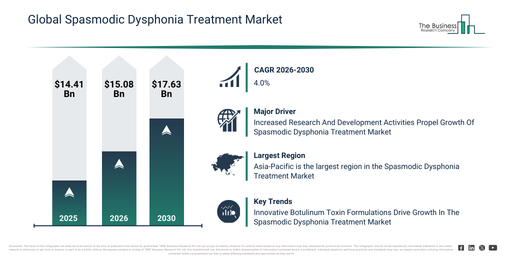
    The market for spasmodic dysphonia treatments has experienced a consistent upward trajectory, expanding from $14.41 billion in 2025 to an projected $15.08 billion by 2026, reflecting a compound annual growth rate of 4.6%. This historical expansion is largely a result of increased accessibility to botulinum toxin therapies, advancements in neurological research, enhanced diagnostic capabilities among specialists, heightened public awareness campaigns, and the ongoing push toward standardized treatment protocols.

    Anticipate a consistent expansion for the spasmodic dysphonia treatment sector, projecting a valuation of $17.63 billion by 2030. This upward trajectory, fueled by a compound annual growth rate (CAGR) of 4.0%, is underpinned by several key drivers including proactive early diagnosis efforts, the innovation of new treatment methodologies, the proliferation of specialized medical facilities, an increasing elderly demographic, and the heightened influence of patient support groups. Dominating the landscape within this projection are the amplified utilization of botulinum toxin therapies, a more significant incorporation of voice rehabilitation programs, heightened awareness regarding diagnostic capabilities, the further development of specialized treatment centers, and expanded patient outreach and educational campaigns.

    Download A Free Sample Report For Comprehensive Market Insights:

    https://www.thebusinessresearchcompany.com/sample.aspx?id=17261&type=smp

    Spasmodic Dysphonia Treatment Market Expansion Supported By Key Demand Factors

    The growing investment in research and development initiatives is anticipated to fuel the expansion of the spasmodic dysphonia treatment market. Such activities involve dedicated efforts to uncover new information, pioneer novel technologies, or refine current offerings. The surge in R&D is evident through technological progress, governmental support, the development of sustainable innovations, and virtual design processes. Within the realm of spasmodic dysphonia treatment, R&D plays a vital role in deepening our understanding of the condition, enhancing treatment efficacy, and improving the lives of those affected. For example, in 2023, the UK government significantly boosted its R&D spending, reaching £17.4 billion, an 8.2% increase from the previous year’s £16.1 billion, according to the Office for National Statistics. This heightened focus on research and development is a key factor driving the spasmodic dysphonia treatment market forward.

    Spasmodic Dysphonia Treatment Market Driver: Impact Of Rising Healthcare Expenditure On The Market Due To Advancements In Medical Technology And Improved Access To Care

    Increased spending on healthcare is poised to drive the advancement of the spasmodic dysphonia treatment market. This spending encompasses all financial outlays by individuals, entities, and governments for health maintenance, treatment, and overall management of medical conditions. The upward trend in healthcare expenditure is largely attributable to innovations in medical technology, as cutting-edge diagnostic equipment, therapeutic interventions, and novel treatments often incur greater costs, thus inflating overall health spending. Elevated healthcare investments facilitate access to specialized treatments for spasmodic dysphonia, support groundbreaking research, contribute to professional training, and ultimately make care more accessible and impactful for patients suffering from this condition. Illustratively, U.S. healthcare expenditures saw a 7.5% rise in 2023, reaching $4.9 trillion or approximately $14,570 per person, as reported by the Centers for Medicare & Medicaid Services in December 2024. Consequently, this escalation in healthcare expenditure is a significant catalyst for the growth observed in the spasmodic dysphonia treatment market.

    Spasmodic Dysphonia Treatment Market Segment Landscape: Which Areas Lead Market Development?

    The spasmodic dysphonia treatment market covered in this report is segmented –

    1) By Type: Drugs, Preventive Vaccines, Oxygen Therapy

    2) By Treatment: Therapy, Direct Microlaryngoscopy, Pulse Dye Laser, Botox Injections Or Injection Laryngoplasty, Minimally Invasive Approaches, Surgery, Voice therapy, Laryngeal Desensitization, Respiratory Re-training, Other Treatments

    3) By Route Of Administration: Oral, Parenteral, Other Routes Of Administration

    4) By Distribution Channel: Hospital Pharmacy, Online Pharmacy, Retail Pharmacy

    5) By End User: Hospitals, Homecare, Specialty Clinics, Other End Users

    Subsegments:

    1) By Drugs: Botulinum Toxin Injections, Anticholinergic Drugs, Muscle Relaxants

    2) By Preventive Vaccines: Botulinum Toxin Vaccine, Other Preventive Vaccines

    3) By Oxygen Therapy: Hyperbaric Oxygen Therapy, Normobaric Oxygen Therapy

    Spasmodic Dysphonia Treatment Market Growth Trends Influencing Competitive Dynamics

    Leading players within the spasmodic dysphonia treatment sector are directing their efforts toward creating advanced treatment options, specifically highlighting botulinum toxin type A formulations, to meet the unique requirements of individuals affected by this disorder. These botulinum toxin type A preparations are specific pharmaceutical renditions of botulinum toxin type A, a protein originating from the Clostridium botulinum bacterium that exhibits neurotoxic properties. These preparations are employed therapeutically and cosmetically, achieving temporary muscle paralysis or obstructing nerve transmissions, principally through the inhibition of acetylcholine release at the neuromuscular junction. Illustrating this, in March of 2024, Hugel Inc., a biopharmaceutical firm headquartered in South Korea, introduced Letybo, a botulinum toxin product that has secured approval from the Food and Drug Administration (FDA), an independent regulatory body in the United States. This recently sanctioned botulinum toxin is characterized by its exceptionally pure composition, which in turn minimizes unwanted side effects and guarantees predictable results. Its distinct molecular architecture contributes to a quicker onset of action and extended duration of efficacy. This regulatory endorsement serves as a testament to Hugel’s commitment to thorough scientific evaluation and high standards of quality, positioning Letybo as a significant offering in the field of aesthetic treatments.

    Spasmodic Dysphonia Treatment Market Industry Leaders And Market Competition

    Major companies operating in the spasmodic dysphonia treatment market are Johnson & Johnson Services Inc., AbbVie Inc., Mylan, Eisai Co. Ltd, GALDERMA, Ipsen Pharma, Daewoong Pharmaceutical Co. Ltd., Merz Pharma GmbH & Co. KGaA, Supernus Pharmaceuticals Inc., US WorldMeds, Candela Medical Corporation, HUGEL Inc., Evolus Inc., Revance Therapeutics Inc., Gufic Biosciences, Teijin Pharma, Suneva Medical, Healis Therapeutics, Medytox, ATGC Co. Ltd., Metabiologics Inc.

    Access The Complete Spasmodic Dysphonia Treatment Market Report:

    https://www.thebusinessresearchcompany.com/report/spasmodic-dysphonia-treatment-global-market-report

    Spasmodic Dysphonia Treatment Market Geographic Analysis: Where Is Demand Growing The Fastest?

    Asia-Pacificwas the largest region in the spasmodic dysphonia treatment market in 2025. The regions covered in the spasmodic dysphonia treatment market report are Asia-Pacific, South East Asia, Western Europe, Eastern Europe, North America, South America, Middle East, Africa.

    Get in touch with us:

    The Business Research Company: https://www.thebusinessresearchcompany.com/

    Americas: +1 310-496-7795

    Asia: +44 7882 955267 & +91 8897263534

    Europe: +44 7882 955267

    Email us at: marketing@tbrc.info

    Follow us on:

    LinkedIn: https://in.linkedin.com/company/the-business-research-company

    YouTube: https://www.youtube.com/channel/UC24_fI0rV8cR5DxlCpgmyFQ

    Global Market Model: https://www.thebusinessresearchcompany.com/global-market-model
  • Somatostatin Analogs Market Growth Through 2030 Creates New Strategic Opportunities

    Somatostatin Analogs Market Growth Through 2030 Creates New Strategic Opportunities

    Delivering more actionable and strategically valuable research, The Business Research Company’s 2026 market reports feature market attractiveness analysis, total addressable market evaluation, company benchmarking matrices, interactive Excel dashboards, expanded supply chain intelligence, emerging startup coverage, and detailed product insights.

    Somatostatin Analogs Market Value Analysis: What Growth Is Expected Over The Forecast Period?

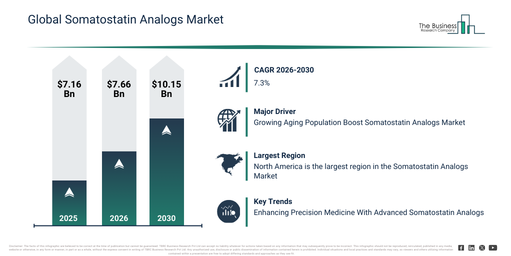
    The market for somatostatin analogs has experienced robust expansion recently, projected to advance from a value of $7.16 billion in 2025 to $7.66 billion in 2026, reflecting a compound annual growth rate of 7.1%. Key factors contributing to this expansion during the preceding period included an increase in the diagnosis of neuroendocrine tumors, the widespread occurrence of hormone disorders, accumulating evidence of clinical effectiveness, the preference of specialist physicians for prescribing these treatments, and improved accessibility within hospital settings.

    The somatostatin analogs market is poised for significant expansion in the coming years, projected to reach $10.15 billion by 2030, experiencing a compound annual growth rate of 7.3%. This anticipated surge is driven by several key factors including the introduction of biosimilar alternatives, the widening scope of approved uses for these drugs, a growing elderly demographic, enhanced diagnostic capabilities, and favorable reimbursement policies for specialized pharmaceuticals. During this forecast period, prominent market trends will involve an increase in long-acting injectable formulations, the broadening of therapeutic applications for neuroendocrine tumors, a heightened emphasis on ensuring better patient adherence to treatment, the ongoing development of biosimilars, and a general upward trajectory in hospital-administered therapies.

    Download A Free Sample Report For Comprehensive Market Insights:

    https://www.thebusinessresearchcompany.com/sample.aspx?id=10840&type=smp

    Somatostatin Analogs Market Growth Drivers And Industry Catalysts

    The increasing prevalence of an aging populace is poised to stimulate the expansion of the somatostatin analogs market. This demographic trend, distinguished by a larger segment of individuals aged 65 and above, is intrinsically linked to a greater likelihood of conditions requiring somatostatin analog treatments, consequently fueling market demand. Illustratively, data from the UK Parliament’s House of Commons Library in July 2024 indicates that in 2022, the United Kingdom had 12.7 million residents aged 65 or older, constituting 19% of the nation’s populace. Projections suggest this figure will escalate to 22.1 million by 2072, representing 27% of the total population. Consequently, the demographic shift towards an older population is a significant impetus for the somatostatin analogs market’s growth.

    Somatostatin Analogs Market Segments: Where Are The Largest Growth Opportunities?

    The somatostatin analogs market covered in this report is segmented –

    1) By Type: Octreotide, Lanreotide, Pasireotide

    2) By Treatment: Acromegaly, Cushing’s Syndrome, Neuroendocrine Tumors, Carcinoid Syndrome, Other Treatments

    3) By End User: Hospital, Pharmaceutical Companies

    Subsegments:

    1) By Octreotide: Long-Acting Release (LAR) Formulations, Short-Acting Formulations

    2) By Lanreotide: Depot Formulations, Injectable Formulations

    3) By Pasireotide: Long-Acting Injectable Formulations, Subcutaneous Formulations

    #Somatostatin Analogs Market Trends Influencing Long-Term Demand

    Key players within the somatostatin analogs market are directing their efforts towards pioneering novel therapeutics, notably targeted radiopharmaceuticals, with the aim of improving the accuracy and efficacy of oncological interventions, particularly for individuals diagnosed with somatostatin receptor-positive malignancies. These targeted radiopharmaceuticals represent sophisticated therapeutic agents that integrate radioactive isotopes with specific molecules engineered to attach exclusively to neoplastic cells, thereby facilitating the precise administration of therapeutic radiation directly to tumorous areas while simultaneously curtailing exposure to adjacent healthy tissues. Exemplifying this innovation, Lantheus, a radiopharmaceutical enterprise based in the United States, introduced Lutetium Lu 177 Dotatate in January 2024. This radiolabeled somatostatin analog serves as a crucial component in peptide receptor radionuclide therapy (PRRT), employed for managing advanced neuroendocrine tumors that exhibit somatostatin receptor positivity. Evidence from clinical investigations indicates a substantial enhancement in progression-free survival and response rates when contrasted with conventional somatostatin analogs such as octreotide. Consequently, it emerges as a critical treatment avenue for patients experiencing disease progression despite undergoing prior therapeutic regimens. The inherent targeting mechanism enables potent tumor containment with reduced systemic absorption, thereby augmenting the overall beneficial impact of the treatment in the management of neuroendocrine cancers.

    Somatostatin Analogs Market Major Participants And Competitive Dynamics

    Major companies operating in the somatostatin analogs market are Novartis International AG, Pfizer Inc., Sun Pharmaceutical Industries Limited, Midatech Pharma plc, Crinetics Pharmaceuticals Inc., Peptron Inc., Teva Pharmaceutical Industries Ltd., Camurus AB, Bayer Aktiengesellschaft, Cadila Healthcare Limited, Amneal Pharmaceuticals Inc., Recordati S.p.A., Amryt Pharma plc, Ipsen Pharma SA, Fresenius Kabi AG, Chiasma Inc., Merck KGaA, Sanofi S.A., Sandoz International GmbH, Takeda Pharmaceutical Company Limited, Viatris Inc., AstraZeneca plc, Johnson & Johnson, Genentech Inc., OctreoPharm Sciences GmbH

    Access The Complete Somatostatin Analogs Market Report:

    https://www.thebusinessresearchcompany.com/report/somatostatin-analogs-global-market-report

    Somatostatin Analogs Market Global Footprint: Which Region Holds Market Leadership?

    North Americawas the largest region in the global somatostatin analogs treatment market in 2025.Asia-Pacificis expected to be the fastest-growing region in the forecast period. The regions covered in the somatostatin analogs market report are Asia-Pacific, South East Asia, Western Europe, Eastern Europe, North America, South America, Middle East, Africa.

    Get in touch with us:

    The Business Research Company: https://www.thebusinessresearchcompany.com/

    Americas: +1 310-496-7795

    Asia: +44 7882 955267 & +91 8897263534

    Europe: +44 7882 955267

    Email us at: marketing@tbrc.info

    Follow us on:

    LinkedIn: https://in.linkedin.com/company/the-business-research-company

    YouTube: https://www.youtube.com/channel/UC24_fI0rV8cR5DxlCpgmyFQ

    Global Market Model: https://www.thebusinessresearchcompany.com/global-market-model
  • Solid Tumor Testing Market Size Projected To Increase From $32.11 Billion To $43.19 Billion During The Forecast Period

    Solid Tumor Testing Market Size Projected To Increase From $32.11 Billion To $43.19 Billion During The Forecast Period

    Enhanced with market attractiveness analysis, total addressable market evaluation, company benchmarking matrices, interactive Excel dashboards, expanded supply chain intelligence, emerging startup coverage, and detailed product insights, The Business Research Company’s 2026 market reports deliver more actionable and strategically valuable research.

    Solid Tumor Testing Market Size Forecast: How Large Could The Market Become By 2030?

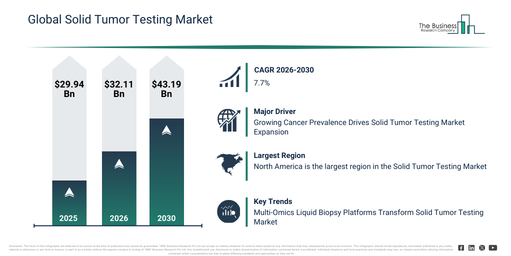
    In the realm of solid tumor diagnostics, a robust expansion has been observed lately, with the market projected to surge from $29.94 billion in 2025 to $32.11 billion by 2026, reflecting a compound annual growth rate of 7.3%. This previous period of growth was propelled by significant developments in cancer detection methodologies, the identification of novel biomarkers, the increased automation within pathology workflows, a heightened general awareness surrounding oncology, and the implementation of various screening programs.

    The market for solid tumor testing is poised for significant expansion over the coming years, projected to reach $43.19 billion by 2030, reflecting a compound annual growth rate of 7.7%. This anticipated surge is fueled by escalating demand for individualized treatment strategies, a heightened emphasis on early disease diagnosis, the broadening application of genomic analyses, the integration of artificial intelligence in diagnostic processes, and a general increase in oncology-focused research initiatives. Key developments expected to shape this market during the forecast period encompass a rise in liquid biopsy utilization, greater adoption of next-generation sequencing technologies, expanded implementation of companion diagnostics, the incorporation of AI in pathological assessments, and a greater prevalence of cancer screening programs.

    Download A Free Sample Report For Comprehensive Market Insights:

    https://www.thebusinessresearchcompany.com/sample.aspx?id=12658&type=smp

    Solid Tumor Testing Market Opportunity Drivers: What Is Creating New Revenue Potential?

    The expanding occurrence of cancer is anticipated to be the primary catalyst for the advancement of the solid tumor testing sector in the future. Cancer, characterized by uncontrolled proliferation and dissemination of the body’s abnormal cells, refers to these rogue cells. These aberrant cells, designated as cancer cells, possess the capacity to infiltrate adjacent tissues and organs, and in certain scenarios, to metastasize to distant bodily locations via the circulatory or lymphatic pathways. Constituting approximately 90% of adult cancers, solid tumors represent the predominant form. Solid tumor testing serves the crucial purpose of identifying malignant cells within the bloodstream of individuals afflicted with solid tumors, even at stages where the malignancy remains undetectable through conventional imaging techniques. As an illustration, in July 2024, data sourced from the Australian Institute of Health and Welfare, a governmental entity based in Australia, indicated that in 2023, an estimated 165,000 individuals in Australia received a new cancer diagnosis. This figure translates to a daily incidence exceeding 450 cases, with males accounting for approximately 55% of these newly identified cancers. Consequently, the escalating incidence of cancer is demonstrably fueling the expansion of the solid tumor testing market.

    Solid Tumor Testing Market Segment Analysis: What Are The Major Market Categories?

    The solid tumor testing market covered in this report is segmented –

    1) By Type: Genetic Testing, Conventional Testing

    2) By Cancer Type: Breast Cancer, Lung Cancer, Colorectal Cancer, Prostate Cancer, Cervical Cancer

    3) By Application: Clinical, Research

    4) By End-Users: Hospitals, Pharmaceutical And Biotechnology Companies, Contract Research Organizations, Academic Research Institutions

    Subsegments:

    1) By Genetic Testing: Next-Generation Sequencing (NGS), Polymerase Chain Reaction (PCR), Fluorescence In Situ Hybridization (FISH)

    2) By Conventional Testing: Histopathology, Cytology, Imaging Techniques

    Solid Tumor Testing Market Innovation Trends Driving Future Development

    Within the solid tumor testing sector, leading enterprises are concentrating their efforts on advancing novel solutions, specifically liquid biopsy platforms tailored for solid tumor analysis. These platforms involve a range of technologies and methodologies employed to scrutinize bodily fluids, predominantly blood, in pursuit of cancer-associated biomarkers. A case in point is PrognomiQ, a United States-based healthcare firm, which introduced its multi-omics liquid biopsy platform in January of 2023. Following this launch, PrognomiQ has commenced the subsequent phase of its product evolution by initiating a prospective clinical study involving 15,000 participants, with the initial patient having already been enrolled. The impetus behind this undertaking stems from the recognized capacity of multi-omics markers to effectively differentiate between cancerous conditions and non-cancerous controls.

    Solid Tumor Testing Market Leading Companies Driving Competitive Growth

    Major companies operating in the solid tumor testing market are Johnson & Johnson Ltd, Roche Diagnostics Corporation, Thermo Fisher Scientific Inc., Abbott Molecular Inc., Becton Dickinson And Company BD, Quest Diagnostics Incorporated, Tosoh Corporation, Agilent Technologies Inc., bioMerieux Inc., Beckman Coulter Inc., Bio-Rad Laboratories Inc., QIAGEN GmbH, Miltenyi Biotec GmbH, Natera Inc., Myriad Genetics Inc., Invitae Corporation, Guardant Health Inc., Foundation Medicine Inc., Epic Sciences Inc., Biocare Medical LLC, Agena Bioscience Inc., Caris Life Sciences Inc., 20/20 Gene Systems Inc., Grail Inc., Avant Diagnostics Inc., Genomic Testing Cooperative, Anixa Biosciences Inc., Cellular Biomedicine Group

    Access The Complete Solid Tumor Testing Market Report:

    https://www.thebusinessresearchcompany.com/report/solid-tumor-testing-global-market-report

    Solid Tumor Testing Market Regional Distribution: Which Areas Drive Market Expansion?

    North Americawas the largest region in the solid tumor testing market in 2025. Asia-Pacificis expected to be the fastest-growing region in the forecast period. The regions covered in the solid tumor testing market report are Asia-Pacific, South East Asia, Western Europe, Eastern Europe, North America, South America, Middle East, Africa.

    Get in touch with us:

    The Business Research Company: https://www.thebusinessresearchcompany.com/

    Americas: +1 310-496-7795

    Asia: +44 7882 955267 & +91 8897263534

    Europe: +44 7882 955267

    Email us at: marketing@tbrc.info

    Follow us on:

    LinkedIn: https://in.linkedin.com/company/the-business-research-company

    YouTube: https://www.youtube.com/channel/UC24_fI0rV8cR5DxlCpgmyFQ

    Global Market Model: https://www.thebusinessresearchcompany.com/global-market-model
  • Solid Tumor Cancer Treatment Market Growth Outlook Reveals A CAGR Of 13.6% And A Market Value Of $501.27 Billion By 2030

    Solid Tumor Cancer Treatment Market Growth Outlook Reveals A CAGR Of 13.6% And A Market Value Of $501.27 Billion By 2030

    Through market attractiveness analysis, total addressable market evaluation, company benchmarking matrices, interactive Excel dashboards, expanded supply chain intelligence, emerging startup coverage, and detailed product insights, The Business Research Company’s 2026 market reports provide more actionable and strategically valuable research.

    Solid Tumor Cancer Treatment Market Revenue Outlook: What CAGR Is Expected Through 2030?

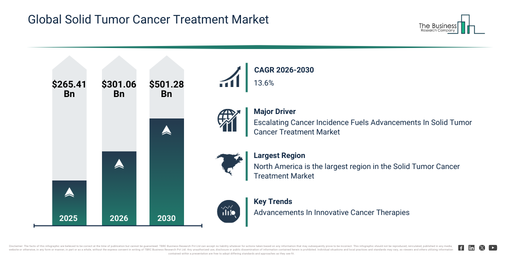
    The market for treating solid tumors has experienced substantial expansion recently, with projections indicating its value will increase from $265.41 billion in 2025 to $301.06 billion in 2026, reflecting a compound annual growth rate of 13.4%. This surge in the historical period is underpinned by factors such as an increasing prevalence of cancer, greater utilization of chemotherapy regimens, enhancements in radiation therapy techniques, amplified investment in oncology research, and more effective early detection methods.

    Foreseen to experience substantial expansion over the coming years, the solid tumor cancer treatment market is projected to reach a valuation of $501.28 billion by 2030, advancing at a compound annual growth rate (CAGR) of 13.6%. This upswing throughout the projected timeframe is anticipated to be fueled by the increasing number of immunotherapy approvals, a robust pipeline of targeted drugs, the wider embrace of personalized medicine approaches, the ongoing development of oncology infrastructure, and enhancements in patient survival rates. Key developments shaping this market during the forecast period are expected to include the proliferation of checkpoint inhibitors, the broadening application of tumor-agnostic therapies, a greater reliance on combination treatment regimens, the accelerated adoption of biomarker-driven treatments, and the expansion of outpatient oncology services.

    Download A Free Sample Report For Comprehensive Market Insights:

    https://www.thebusinessresearchcompany.com/sample.aspx?id=9909&type=smp

    Solid Tumor Cancer Treatment Market Growth Momentum: Which Factors Are Influencing Demand?

    The escalating prevalence of cancer is a primary driver propelling the expansion of the solid tumor cancer treatment sector. Cancer, a critical ailment characterized by the rapid and unchecked proliferation of the body’s cells leading to aberrant growths, necessitates specialized interventions. Solid tumor cancer treatment specifically targets the removal of these localized masses from patients diagnosed with the disease. Illustrating this trend, data from the World Health Organization, a Geneva-headquartered global health authority, indicated that in 2022, close to 20 million individuals were newly diagnosed with cancer, a condition that unfortunately led to around 10 million fatalities. Furthermore, demographic forecasts anticipate a substantial surge in cancer cases, potentially reaching 35 million annually by the year 2050, which represents a 77% escalation compared to the 2022 statistics. Lung cancer emerged as the most frequently identified type, contributing approximately 2.5 million new diagnoses, equivalent to one in every eight cancer cases globally, and constituting 12.4% of all cancer diagnoses worldwide. Consequently, this mounting cancer incidence directly fuels the advancement of the solid tumor cancer treatment market.

    Solid Tumor Cancer Treatment Market Segment Breakdown: Which Categories Generate The Most Revenue?

    The solid tumor cancer treatment market covered in this report is segmented –

    1) By Type: Chemotherapy, Targeted Therapy, Immunotherapy, Hormone Therapy, Surgical Procedures

    2) By Application: Breast Cancer, Cervical Cancer, Colorectal Cancer, Lung Cancer, Prostate Cancer, Other Applications

    3) By End-Users: Hospitals, Research Institutes, Homecare

    Subsegments:

    1) By Chemotherapy: Alkylating Agents, Antimetabolites, Anthracyclines, Mitotic Inhibitors

    2) By Targeted Therapy: Monoclonal Antibodies, Small Molecule Inhibitors, Signal Transduction Inhibitors

    3) By Immunotherapy: Checkpoint Inhibitors, CAR T-Cell Therapy, Cancer Vaccines

    4) By Hormone Therapy: Aromatase Inhibitors, Anti-Androgens, Selective Estrogen Receptor Modulators (SERMs)

    5) By Surgical Procedures: Tumor Resection, Laparoscopic Surgery, Robotic-Assisted Surgery

    Solid Tumor Cancer Treatment Market Trends Reshaping Industry Growth

    Leading corporations within the solid tumor cancer therapeutics arena are concentrating their efforts on the creation of sophisticated immunotherapies, precision medicines, and cell-derived interventions with the goal of enhancing patient results and broadening the scope of available treatments. As an illustration, in July of 2025, Dispatch Bio, a biotechnology firm headquartered in the United States, commenced its activities with the objective of developing versatile treatments applicable to various solid tumors. This enterprise endeavors to propel innovative therapeutic strategies designed to address a wide spectrum of solid tumor malignancies, boost treatment effectiveness across diverse patient groups, and expedite the progress of adaptable cancer immunotherapies, thereby potentially revolutionizing established treatment protocols and improving sustained survival rates.

    Solid Tumor Cancer Treatment Market Key Players And Strategic Industry Positioning

    Major companies operating in the solid tumor cancer treatment market are AstraZeneca plc, Amgen Inc., Bristol Myers Squibb & Company, Eli Lilly & Company, F Hoffmann La Roche Ltd, Merck & Co Inc, Novartis AG, Pfizer Inc, Olympus Medical Systems, Astellas Pharma Inc, GlaxoSmithKline plc, Takeda Pharmaceutical Company Ltd, Celldex Therapeutics Inc, AbbVie Inc, Bayer AG, Eisai Co Ltd, Exelixis Inc, Genentech Inc, Gilead Sciences Inc, Incyte Corporation, Ipsen Biopharmaceuticals Inc, Karyopharm Therapeutics Inc, Kyowa Kirin Co Ltd, MorphoSys AG, Regeneron Pharmaceuticals Inc, Sanofi SA, Seattle Genetics Inc, Spectrum Pharmaceuticals Inc, Taiho Pharmaceutical Co Ltd, Verastem Inc, Zymeworks Inc

    Access The Complete Solid Tumor Cancer Treatment Market Report:

    https://www.thebusinessresearchcompany.com/report/solid-tumor-cancer-treatment-global-market-report

    Solid Tumor Cancer Treatment Market Leading Geography: Which Region Generates The Most Revenue?

    North Americawas the largest region in the solid tumor cancer treatment market in 2025. The regions covered in the solid tumor cancer treatment market report are Asia-Pacific, South East Asia, Western Europe, Eastern Europe, North America, South America, Middle East, Africa.

    Get in touch with us:

    The Business Research Company: https://www.thebusinessresearchcompany.com/

    Americas: +1 310-496-7795

    Asia: +44 7882 955267 & +91 8897263534

    Europe: +44 7882 955267

    Email us at: marketing@tbrc.info

    Follow us on:

    LinkedIn: https://in.linkedin.com/company/the-business-research-company

    YouTube: https://www.youtube.com/channel/UC24_fI0rV8cR5DxlCpgmyFQ

    Global Market Model: https://www.thebusinessresearchcompany.com/global-market-model
  • Soft Tissue Sarcoma Market Forecast Highlights Expansion From $3.7 Billion To $5.17 Billion Through 2030

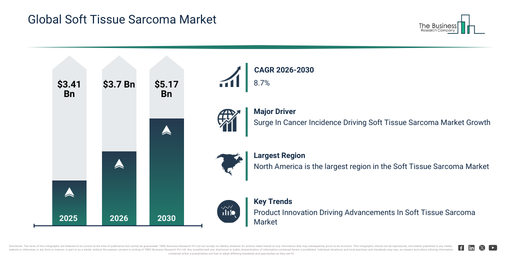
    Soft Tissue Sarcoma Market Forecast Highlights Expansion From $3.7 Billion To $5.17 Billion Through 2030

    Delivering more actionable and strategically valuable research, The Business Research Company’s 2026 market reports feature market attractiveness analysis, total addressable market evaluation, company benchmarking matrices, interactive Excel dashboards, expanded supply chain intelligence, emerging startup coverage, and detailed product insights.

    Soft Tissue Sarcoma Market Growth Analysis: How Will Revenue Expand During The Forecast Period?

    The market for soft tissue sarcoma treatments has experienced robust expansion lately, projected to increase from $3.41 billion in 2025 to $3.7 billion in 2026, reflecting an 8.4% compound annual growth rate. This expansion during the past period is associated with enhancements in cancer detection methods, increased investment in oncology research, a greater understanding of uncommon cancers, wider access to chemotherapy, and progress in surgical techniques.

    Projected to experience significant expansion, the soft tissue sarcoma market is anticipated to reach $5.17 billion by 2030, exhibiting a compound annual growth rate of 8.7%. This upward trajectory in the upcoming years is propelled by advancements such as the introduction of new drug therapies, the increasing utilization of immunotherapies, a rise in molecular testing capabilities, a growing demand for tailored patient treatments, and considerable development in oncology infrastructure. Key developments shaping this period will likely involve a greater adoption of targeted treatment approaches, a more widespread implementation of genetic profiling, the broader application of combined treatment strategies, an uptick in participation in clinical trials, and a movement towards integrated, multidisciplinary patient care models.

    Download A Free Sample Report For Comprehensive Market Insights:

    https://www.thebusinessresearchcompany.com/sample.aspx?id=12211&type=smp

    Soft Tissue Sarcoma Market Expansion Drivers: What Is Shaping Future Growth?

    The increasing prevalence of cancer is anticipated to be a significant driver for the expansion of the soft tissue sarcoma market. Cancer, characterized by the uncontrolled proliferation of abnormal cells that can invade surrounding tissues or metastasize to distant sites, encompasses a wide spectrum of diseases affecting any bodily organ or tissue. This escalating rate of cancer diagnoses necessitates a greater demand for diagnostic tools, treatment options, and supportive interventions tailored to the specific needs of individuals suffering from various forms of cancer, including sarcoma, thereby stimulating the soft tissue sarcoma market. For example, data from the Australian Institute of Health and Welfare indicated that in 2023, approximately 165,000 new cancer cases were identified in Australia, translating to over 450 daily diagnoses, with males accounting for roughly 55% of these instances. Consequently, the growing incidence of cancer directly fuels the growth trajectory of the soft tissue sarcoma market.

    Soft Tissue Sarcoma Market Segmentation: How Is The Market Structured Across Key Categories?

    The soft tissue sarcoma market covered in this report is segmented –

    1) By Treatment: Targeted Therapy, Chemotherapy, Anti-Angiogenesis Drugs, Radiation Therapy, Other Treatments

    2) By Route Of Administration: Oral, Parenteral, Other Route Of Administrations

    3) By End-Users: Hospitals, Homecare, Specialty Centers, Other End-Users

    Subsegments:

    1) By Targeted Therapy: Tyrosine Kinase Inhibitors (TKIs), Monoclonal Antibodies, Immunotherapy Agents

    2) By Chemotherapy: Doxorubicin, Ifosfamide, Gemcitabine, Other Chemotherapeutic Agents

    3) By Anti-Angiogenesis Drugs: Bevacizumab, Pazopanib, Axitinib, Other Anti-Angiogenesis Agents

    4) By Radiation Therapy: External Beam Radiation Therapy (EBRT), Brachytherapy

    5) By Other Treatments: Surgery, Clinical Trials, Supportive Care

    Soft Tissue Sarcoma Market Strategic Trends: What Is Defining The Next Phase Of Growth?

    In the realm of soft tissue sarcoma, leading entities are actively engaged in the development of novel offerings to enhance their market standing, exemplified by Mercy’s November 2023 launch of The Chen Chemotherapy Model. This pioneering AI-powered texting initiative, established by the US non-profit Catholic healthcare provider, aims to preemptively mitigate chemotherapy-induced hospital admissions. The system employs an intelligent texting interface that dispatches daily dispatches to chemotherapy patients throughout the week, with the exception of weekends and public holidays. These messages present a tiered symptom list, encompassing conditions such as diarrhea, pain, fever, fatigue, nausea or vomiting, or the absence of any symptoms. Recipients can indicate and categorize their experienced symptoms, and depending on their input, the data can be forwarded to their medical professional. The overarching objective is the early detection of potential complications and the implementation of timely interventions before symptom severity escalates, thereby underscoring Mercy’s dedication to integrating technological advancements for superior patient outcomes within the scope of chemotherapy treatment.

    Soft Tissue Sarcoma Market Competitive Landscape And Leading Companies

    Major companies operating in the soft tissue sarcoma market are Pfizer Inc., Johnson & Johnson, Roche Holding AG, F. Hoffmann-La Roche Ltd., AbbVie Inc., Bayer AG, Novartis AG, Sanofi SA, Bristol Myers Squibb, AstraZeneca plc, GlaxoSmithKline plc, Takeda Pharmaceutical Company Limited, Eli Lilly and Company, Merck & Co. Inc., Amgen Inc., Teva Pharmaceutical Industries Ltd., Mylan N.V., Astellas Pharma Inc., Daiichi Sankyo Company Limited, Sun Pharmaceutical Industries Ltd., Aurobindo Pharma Limited, Dr. Reddy’s Laboratories Ltd., Lupin Ltd., Philogen S.p.A., Taiho Pharmaceutical Co.Ltd., Nanobiotix S.A.

    Access The Complete Soft Tissue Sarcoma Market Report:

    https://www.thebusinessresearchcompany.com/report/soft-tissue-sarcoma-global-market-report

    Soft Tissue Sarcoma Market Regional Outlook: Where Are The Largest Opportunities Located?

    North Americawas the largest region in the soft tissue sarcoma market in 2025. Asia-Pacificis expected to be the fastest-growing region in the soft tissue sarcoma market report during the forecast period. The regions covered in the soft tissue sarcoma market report are Asia-Pacific, South East Asia, Western Europe, Eastern Europe, North America, South America, Middle East, Africa.

    Get in touch with us:

    The Business Research Company: https://www.thebusinessresearchcompany.com/

    Americas: +1 310-496-7795

    Asia: +44 7882 955267 & +91 8897263534

    Europe: +44 7882 955267

    Email us at: marketing@tbrc.info

    Follow us on:

    LinkedIn: https://in.linkedin.com/company/the-business-research-company

    YouTube: https://www.youtube.com/channel/UC24_fI0rV8cR5DxlCpgmyFQ

    Global Market Model: https://www.thebusinessresearchcompany.com/global-market-model
  • Soft Tissue Repair Market Expected To Reach $17.73 Billion By 2030 As Growth Accelerates At 5% CAGR

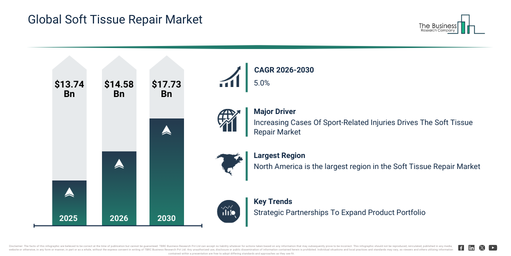
    Soft Tissue Repair Market Expected To Reach $17.73 Billion By 2030 As Growth Accelerates At 5% CAGR

    Enhanced with market attractiveness analysis, total addressable market evaluation, company benchmarking matrices, interactive Excel dashboards, expanded supply chain intelligence, emerging startup coverage, and detailed product insights, The Business Research Company’s 2026 market reports deliver more actionable and strategically valuable research.

    Soft Tissue Repair Market Forecast: What Market Value Is Expected By 2030?

    The market for soft tissue repair has experienced significant expansion, projected to climb from an estimated $13.74 billion in 2025 to $14.58 billion by 2026, reflecting a compound annual growth rate of 6.1%. This robust expansion in recent times is largely a consequence of escalating sports-related injuries, an increase in orthopedic procedures, a growing elderly demographic, a rise in trauma incidents, and advancements in surgical methodologies.

    Anticipating a robust upward trajectory, the soft tissue repair market is poised for significant expansion, projected to reach a substantial valuation of $17.73 billion by the year 2030, underpinned by a compound annual growth rate of 5.0%. This anticipated escalation throughout the forecast period is largely fueled by several key drivers, including the broadening application of regenerative therapies, a steadily increasing consumer preference for accelerated recovery times, the burgeoning popularity of minimally invasive surgical techniques, continuous advancements in biomaterial science, and an expanding reach of healthcare services. Furthermore, several dominant trends are expected to shape the market landscape, such as a heightened reliance on biologic grafts, a rise in surgical interventions for sports-related injuries, the increasing integration of absorbable implant technologies, a shift towards outpatient surgical settings, and ongoing innovation in the development of tissue scaffolding solutions.

    Download A Free Sample Report For Comprehensive Market Insights:

    https://www.thebusinessresearchcompany.com/sample.aspx?id=4111&type=smp

    Soft Tissue Repair Market Development Factors: Which Trends Are Supporting Demand?

    The historical expansion of the soft tissue repair market was significantly influenced by a rise in sports-related injuries, which are common occurrences during athletic activities and exercise. Soft tissues, defined as those that support, connect, or enclose other bodily structures and organs, are particularly susceptible to damage in sports, making these injuries highly prevalent. As an illustration, data from the Australian Institute of Health and Welfare indicates that for the 2023–24 period, rugby union and league in Australia had the highest rates of sports injury hospitalizations relative to the number of people participating, with approximately 1,400 hospitalizations for every 100,000 participants. Consequently, the escalating frequency of injuries sustained through sports activities served as a primary driver for the growth observed in the soft tissue repair market.

    Soft Tissue Repair Market Segmentation Trends And Revenue Drivers

    The soft tissue repair market covered in this report is segmented –

    1) By Product: Fixation Devices, Tissue Patch or Mesh, Laparoscopic Instruments

    2) By Application: Hernia Repair, Dural Repair, Skin Repair, Vaginal Sling Procedures, Orthopedic Repair, Dental Repair, Breast Reconstruction Repair

    3) By End User: Hospitals, Clinics, Research And Academic Institutes, Other End Users

    Subsegments:

    1) By Fixation Devices: Suture Anchors, Tacks And Staples, Bioabsorbable Fixation Devices, Screws And Plates

    2) By Tissue Patch or Mesh: Synthetic Mesh, Biological Mesh, Composite Mesh, Expandable Mesh

    3) By Laparoscopic Instruments: Laparoscopic Graspers, Laparoscopic Scissors, Laparoscopic Needle Holders, Laparoscopic Trocars And Cannulas

    Soft Tissue Repair Market Transformation Trends: Which Innovations Are Driving Change?

    Companies making significant headway in the soft tissue repair sector are prioritizing collaborative alliances to broaden their product offerings. These collaborations involve businesses pooling their unique capabilities and assets for shared gains. A prime example occurred in August 2023 when 3D Systems, a provider of integrated 3D printing solutions, print materials, software, manufacturing services, and healthcare innovations originating from the US, joined forces with Theradaptive. This partnership aims to propel advancements in orthopedic and soft tissue repair through pioneering regenerative treatments. Under this arrangement, the 3D printed medical devices developed by 3D Systems will be enhanced with Theradaptive’s adaptable protein-based coatings, designed to foster bone and tissue regeneration. Theradaptive itself is dedicated to creating novel therapeutic approaches aimed at restoring individuals’ quality of life.

    Soft Tissue Repair Market Industry Leaders: Which Organizations Are Driving Competition?

    Major companies operating in the soft tissue repair market are Organogenesis Inc., Stryker Corporation, Johnson & Johnson Pvt Ltd, Arthrex Inc., CryoLife Inc., Integra Lifesciences Corporation, Wright Medical Technology Inc., Smith & Nephew plc, C R Bard Inc., Medtronic PLC, Zimmer Biomet Holdings Inc., LifeNet Health Inc., Isto Biologics Company Inc., Covidien plc, LifeCell Corporation, Baxter Healthcare Corporation, Acelity L P Inc., Artivion Inc., Medprin Biotech GmbH, Cook Group Inc., Ethicon US LLC, RTI Surgical Inc., Tornier Inc., Atrium Medical Corporation, Coloplast Corp., ConvaTec Group Plc, Kinetic Concepts Inc., Molnlycke Health Care AB

    Access The Complete Soft Tissue Repair Market Report:

    https://www.thebusinessresearchcompany.com/report/soft-tissue-repair-global-market-report

    Soft Tissue Repair Market Geographic Landscape: Which Region Dominates Industry Growth?

    North Americawas the largest region in the soft tissue repair market in 2025. Asia-Pacificregion is predicted to record fastest growth over the forecast period. The regions covered in the soft tissue repair market report are Asia-Pacific, South East Asia, Western Europe, Eastern Europe, North America, South America, Middle East, Africa.

    Get in touch with us:

    The Business Research Company: https://www.thebusinessresearchcompany.com/

    Americas: +1 310-496-7795

    Asia: +44 7882 955267 & +91 8897263534

    Europe: +44 7882 955267

    Email us at: marketing@tbrc.info

    Follow us on:

    LinkedIn: https://in.linkedin.com/company/the-business-research-company

    YouTube: https://www.youtube.com/channel/UC24_fI0rV8cR5DxlCpgmyFQ

    Global Market Model: https://www.thebusinessresearchcompany.com/global-market-model