Category: Healthcare Services

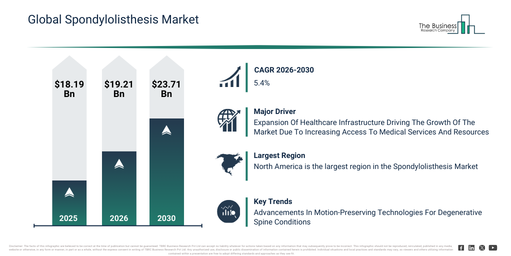
  • Spondylolisthesis Market Size Projected To Increase From $19.21 Billion To $23.71 Billion During The Forecast Period

    Spondylolisthesis Market Size Projected To Increase From $19.21 Billion To $23.71 Billion During The Forecast Period

    Delivering more actionable and strategically valuable research, The Business Research Company’s 2026 market reports feature market attractiveness analysis, total addressable market evaluation, company benchmarking matrices, interactive Excel dashboards, expanded supply chain intelligence, emerging startup coverage, and detailed product insights.

    Spondylolisthesis Market Revenue Outlook: What CAGR Is Expected Through 2030?

    The market for spondylolisthesis is showing robust expansion, projected to reach $19.21 billion in 2026 from its 2025 valuation of $18.19 billion, reflecting a compound annual growth rate of 5.6%. Factors contributing to this growth during the historical period include a rise in instances of spinal instability, improvements in diagnostic imaging technologies, the expansion of orthopedic surgical procedures, increased engagement with physical therapy services, and a higher frequency of sports-related injuries.

    The spondylolisthesis market is poised for significant expansion over the coming years, projected to reach $23.71 billion by 2030, driven by a compound annual growth rate of 5.4%. This anticipated growth is fueled by several key factors, including progress in technological fixation, the development of tailored surgical approaches, an increase in outpatient spine procedures, enhanced diagnostic precision, and the demographic shift towards an aging global population. During this forecast period, primary trends that will shape the market include a heightened focus on early detection, the adoption of less invasive spinal fixation techniques, greater reliance on advanced imaging technologies, individualized surgical strategy development, and the broader integration of non-surgical treatment methods.

    Download A Free Sample Report For Comprehensive Market Insights:

    https://www.thebusinessresearchcompany.com/sample.aspx?id=23527&type=smp

    Spondylolisthesis Market Growth Factors Supporting Long-Term Expansion

    The growth trajectory of the spondylolisthesis market is anticipated to be significantly influenced by the ongoing enhancement of healthcare infrastructure. This infrastructure encompasses the foundational physical structures, operational systems, and necessary resources fundamental to delivering high-quality medical care. Such expansion stems from an escalating need for readily available and sophisticated medical services, as current facilities frequently fall short in addressing the rising patient volume and the intricate care demands. By ensuring the presence of adequate medical establishments, competent healthcare providers, and efficient distribution networks, robust healthcare infrastructure directly facilitates the treatment of spondylolisthesis, ensuring timely and effective medication access for patients. Illustrating this trend, the Centers for Medicare & Medicaid Services reported in December 2024 that U.S. healthcare spending escalated by 7.5% in 2023, reaching an aggregate of $4.9 trillion, which translates to approximately $14,570 per person; consequently, the development of healthcare infrastructure serves as a key catalyst for the expansion of the spondylolisthesis market.

    Spondylolisthesis Market Segment Outlook: Which Categories Are Expanding The Fastest?

    The spondylolisthesis market covered in this report is segmented –

    1) By Type: Degenerative Spondylolisthesis, Isthmic Spondylolisthesis, Congenital Spondylolisthesis, Traumatic Spondylolisthesis, Pathological Spondylolisthesis

    2) By Treatment: Non-Surgical, Surgical

    3) By Diagnosis: X-Ray, MRI (Magnetic Resonance Imaging), CT Scan (Computed Tomography), Physical Examination

    4) By End User: Hospitals, Ambulatory Surgical Centers (ASCs), Specialty Clinics, Rehabilitation Centers

    Subsegments:

    1) By Degenerative Spondylolisthesis: Mild (Grade I), Moderate (Grade II), Severe (Grade III and above)

    2) By Isthmic Spondylolisthesis: Lytic Isthmic Spondylolisthesis, Elongated Isthmic Spondylolisthesis, Acute Fracture Isthmic Spondylolisthesis

    3) By Congenital Spondylolisthesis: Dysplastic Spondylolisthesis, Sacral Dome Abnormalities

    4) By Traumatic Spondylolisthesis: Acute Traumatic Spondylolisthesis, Post-surgical Traumatic Spondylolisthesis

    5) By Pathological Spondylolisthesis: Tumor-related Spondylolisthesis, Infection-related Spondylolisthesis, Osteoporosis-related Spondylolisthesis

    Spondylolisthesis Market Industry Trends Shaping Future Revenue Growth

    Leading corporations within the spondylolisthesis sector are prioritizing the incorporation of cutting-edge technologies, including sophisticated spinal implant solutions, with the objective of refining surgical results, safeguarding patient mobility, and elevating overall well-being. These advanced spinal implant systems represent a novel approach aimed at stabilizing the spine while concurrently allowing for movement, thereby presenting a more advantageous option compared to conventional spinal fusion methods. Illustratively, in June of 2023, Premia Spine, a medical device firm headquartered in the United States, obtained clearance from the FDA for its TOPS System; this marked a significant milestone as it became the initial lumbar spine implant to establish a documented advantage over lumbar fusion in the treatment of grade I degenerative spondylolisthesis accompanied by spinal stenosis. This groundbreaking innovation fundamentally alters the landscape of spinal surgery, substituting the compromised facet joint and lamina with a mechanical device capable of facilitating controlled movement across flexion, extension, lateral bending, and axial rotation. Through the dual benefits of preserved motion and enhanced stability, the TOPS System is instrumental in diminishing the incidence of post-surgical complications and expediting the recuperation period. A defining characteristic of this system is its motion-preserving architecture, which circumvents the necessity for spinal fusion, consequently affording patients a potent and less intrusive therapeutic avenue that promises enhanced long-term mobility and superior functional recoveries.

    Spondylolisthesis Market Key Companies And Competitive Benchmarking

    Major companies operating in the spondylolisthesis market are Johnson & Johnson, Medtronic? plc, Stryker? Corporation, Zimmer Biomet?, Globus Medical?, Orthofix? Medical Inc., Alphatec Holdings?, RTI Surgical?, B. Braun AG, SeaSpine?, SI-Bone?, Spinal Elements?, Surgalign?, Sharma Orthopedic?, Saluda Medical?, Wenzel Spine?, Premia Spine?, Innovasis?, SpineNet?, VySpine?

    Access The Complete Spondylolisthesis Market Report:

    https://www.thebusinessresearchcompany.com/report/spondylolisthesis-global-market-report

    Spondylolisthesis Market Geographic Distribution And Regional Opportunities

    North Americawas the largest region in the spondylolisthesis market in 2025. The regions covered in the spondylolisthesis market report are Asia-Pacific, South East Asia, Western Europe, Eastern Europe, North America, South America, Middle East, Africa.

    Get in touch with us:

    The Business Research Company: https://www.thebusinessresearchcompany.com/

    Americas: +1 310-496-7795

    Asia: +44 7882 955267 & +91 8897263534

    Europe: +44 7882 955267

    Email us at: marketing@tbrc.info

    Follow us on:

    LinkedIn: https://in.linkedin.com/company/the-business-research-company

    YouTube: https://www.youtube.com/channel/UC24_fI0rV8cR5DxlCpgmyFQ

    Global Market Model: https://www.thebusinessresearchcompany.com/global-market-model
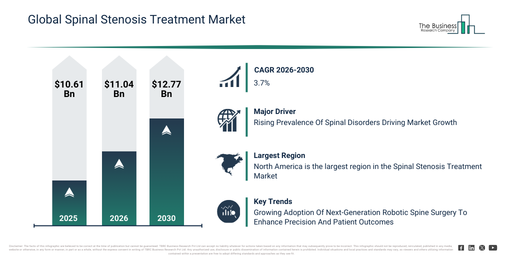
  • Spinal Stenosis Treatment Market Growth Outlook Reveals A CAGR Of 3.7% And A Market Value Of $12.77 Billion By 2030

    Spinal Stenosis Treatment Market Growth Outlook Reveals A CAGR Of 3.7% And A Market Value Of $12.77 Billion By 2030

    Enhanced with market attractiveness analysis, total addressable market evaluation, company benchmarking matrices, interactive Excel dashboards, expanded supply chain intelligence, emerging startup coverage, and detailed product insights, The Business Research Company’s 2026 market reports deliver more actionable and strategically valuable research.

    Spinal Stenosis Treatment Market Growth Analysis: How Will Revenue Expand During The Forecast Period?

    The market for spinal stenosis treatments has experienced consistent expansion, projected to increase from $10.61 billion in 2025 to $11.04 billion in 2026, demonstrating a compound annual growth rate of 4.0%. Factors fueling this historical growth include an increasing prevalence of degenerative spinal conditions, a broader adoption of physical therapy, advancements in pharmaceutical pain management strategies, enhanced diagnostic capabilities, and growing awareness surrounding non-surgical treatment options.

    Anticipate a consistent expansion within the spinal stenosis treatment sector over the upcoming years, projecting a market valuation of $12.77 billion by 2030, underpinned by a compound annual growth rate of 3.7%. This projected trajectory is fueled by developments in sophisticated interventional pain management techniques, tailored treatment strategies, the increasing prevalence of tele-rehabilitation, a diminished reliance on surgical interventions, and the implementation of extended care paradigms. Key developments shaping this period will involve integrated therapeutic methodologies, image-guided procedures, a greater embrace of non-surgical alternatives, customized rehabilitation programs, and the burgeoning trend of outpatient care models.

    Download A Free Sample Report For Comprehensive Market Insights:

    https://www.thebusinessresearchcompany.com/sample.aspx?id=21289&type=smp

    Spinal Stenosis Treatment Market Demand Drivers Creating New Revenue Opportunities

    The increasing occurrence of spinal conditions is anticipated to fuel the expansion of the spinal stenosis treatment market. Spinal disorders encompass ailments impacting the spine’s skeletal structure, intervertebral discs, neural pathways, or surrounding tissues, leading to discomfort, reduced movement, or neurological manifestations. Factors contributing to the heightened incidence of these spinal issues include an aging population, predominantly sedentary lifestyles, obesity, improper posture, occupational hazards, and advancements in diagnostic capabilities. Treatments for spinal stenosis are employed within the scope of managing spinal disorders to relieve pressure on nerves, mitigate pain, and enhance functional mobility in ailments such as degenerative disc disease and herniated discs. Illustratively, the Spinal Cord, Inc., a US-based entity specializing in medical devices, reported in May 2023 that approximately 18,000 new cases of spinal cord injury (SCI) are documented annually in the United States, with an estimated 302,000 individuals nationwide currently managing SCI. Consequently, the escalating prevalence of spinal disorders is serving as a significant driver for the growth observed in the spinal stenosis treatment market.

    Spinal Stenosis Treatment Market Segment Landscape: Which Areas Lead Market Development?

    The spinal stenosis treatment market covered in this report is segmented –

    1) By Type: Cervical Stenosis, Lumbar Stenosis

    2) By Treatment: Medication, Physical Therapy, Surgery, Other Treatments

    3) By End Users: Hospitals, Homecare, Specialty Clinics, Other End-Users

    Subsegments:

    1) By Cervical Stenosis: Physical Therapy, Medications, Spinal Injections, Decompression Surgery, Spinal Fusion

    2) By Lumbar Stenosis: Pain Management, Epidural Steroid Injections, Minimally Invasive Procedures, Laminectomy, Artificial Disc Replacement

    Spinal Stenosis Treatment Market Trends Driving Strategic Industry Expansion

    Major companies in the spinal stenosis treatment market are increasingly focusing on technological advancements such as robotic-assisted minimally invasive spine surgery to enhance surgical accuracy, minimize post-operative complications, and shorten patient recovery times. Robotic surgical systems offer improved navigation, real-time imaging capabilities, and precise implant placement, which contribute to better clinical outcomes and greater procedural efficiency. For example, in July 2025, Yas Clinic, a UAE-based research-driven healthcare provider, launched an advanced robotic spine surgery program aimed at treating complex spinal conditions, including lumbar and cervical stenosis, with improved safety, reduced tissue disruption, and faster rehabilitation. By integrating next-generation robotic technologies into surgical workflows, this initiative further supports the adoption of minimally invasive techniques and reflects the broader industry shift toward precision-driven and patient-centric approaches in spinal stenosis treatment.

    Spinal Stenosis Treatment Market Industry Leaders And Market Competition

    Major companies operating in the spinal stenosis treatment market are Johnson & Johnson, Medtronic plc, Zimmer Biomet Holdings Inc., Sumitomo Dainippon Pharma Co. Ltd, Ono Pharmaceutical Co. Ltd, Stryker Corporation, Globus Medical Inc., Orthofix Holdings Inc., Aesculap Implant Systems LLC, Alphatec Spine Inc, RTI Surgical Holdings Inc, B. Braun Melsungen AG, Spinal Elements Inc., Xtant Medical Holdings Inc., Precision Spine Inc., Spineart SA, Yungjin Pharm Co. Ltd, Zavation Medical Products LLC, Aurora Spine Corporation, Empirical Spine Inc.

    Access The Complete Spinal Stenosis Treatment Market Report:

    https://www.thebusinessresearchcompany.com/report/spinal-stenosis-treatment-global-market-report

    Spinal Stenosis Treatment Market Largest Region By Revenue And Market Share

    North Americawas the largest region in the spinal stenosis treatment market in 2025. Asia-Pacificis expected to be the fastest-growing region in the forecast period. The regions covered in the spinal stenosis treatment market report are Asia-Pacific, South East Asia, Western Europe, Eastern Europe, North America, South America, Middle East, Africa.

    Get in touch with us:

    The Business Research Company: https://www.thebusinessresearchcompany.com/

    Americas: +1 310-496-7795

    Asia: +44 7882 955267 & +91 8897263534

    Europe: +44 7882 955267

    Email us at: marketing@tbrc.info

    Follow us on:

    LinkedIn: https://in.linkedin.com/company/the-business-research-company

    YouTube: https://www.youtube.com/channel/UC24_fI0rV8cR5DxlCpgmyFQ

    Global Market Model: https://www.thebusinessresearchcompany.com/global-market-model
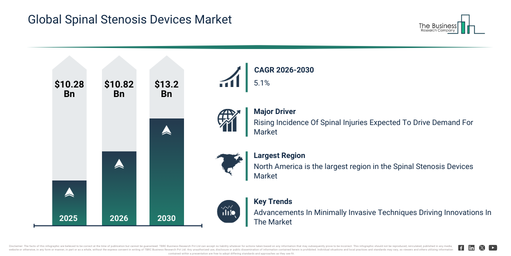
  • Spinal Stenosis Devices Market Forecast Highlights Expansion From $10.81 Billion To $13.19 Billion Through 2030

    Spinal Stenosis Devices Market Forecast Highlights Expansion From $10.81 Billion To $13.19 Billion Through 2030

    Through market attractiveness analysis, total addressable market evaluation, company benchmarking matrices, interactive Excel dashboards, expanded supply chain intelligence, emerging startup coverage, and detailed product insights, The Business Research Company’s 2026 market reports provide more actionable and strategically valuable research.

    Spinal Stenosis Devices Market Forecast: What Market Value Is Expected By 2030?

    The market for spinal stenosis devices has experienced robust expansion lately, projected to ascend from $10.28 billion in 2025 to $10.82 billion in 2026, reflecting a compound annual growth rate of 5.2%. This historical growth trajectory has been fueled by a confluence of factors including a rise in lumbar stenosis instances, an aging global population, progressive developments in surgical methodologies, continuous innovation within orthopedic device technology, and the expansion of dedicated hospital spine programs.

    The market for spinal stenosis devices is poised for significant expansion over the coming years, projected to reach $13.2 billion by 2030, reflecting a compound annual growth rate of 5.1%. This anticipated growth trajectory is fueled by several key factors including advancements in next-generation implant designs, an increasing requirement for non-fusion devices, the expanding footprint of ambulatory surgery centers, enhancements in technological materials, and a growing patient inclination towards minimally invasive treatment approaches. Dominating the trends expected during this forecast period are motion-preserving implants, decompression devices that are minimally invasive, the development of superior biocompatible materials, procedures involving shorter recovery times, and the increasing prevalence of outpatient interventions for spinal conditions.

    Download A Free Sample Report For Comprehensive Market Insights:

    https://www.thebusinessresearchcompany.com/sample.aspx?id=20966&type=smp

    Spinal Stenosis Devices Market Expansion Supported By Key Demand Factors

    The increasing frequency of spinal trauma is anticipated to be a primary catalyst for the expansion of the spinal stenosis devices market. Spinal injuries, characterized by damage to the spinal cord or its associated components, are specifically defined as physical harm that disrupts the transmission of motor and sensory signals, potentially resulting in diminished movement, functionality, and sensation below the point of injury. This upward trend in spinal injuries is largely due to a greater number of accidents, including vehicle collisions and falls, especially affecting elderly individuals, coupled with a rise in non-traumatic causes such as age-related degenerative conditions. Spinal stenosis devices offer focused alleviation and structural reinforcement by easing pressure on nerves, correcting spinal alignment, and boosting mobility, consequently leading to a marked enhancement in the life quality of patients suffering from spinal injuries. Highlighting this, the National Spinal Cord Injury Statistical Center reported in May 2023 that approximately 18,000 new spinal injuries occur annually in the US, translating to an incidence rate of 54 cases per million people. Moreover, it’s estimated that roughly 302,000 individuals in the United States have endured a traumatic spinal cord injury. Consequently, the escalating occurrence of spinal injuries is directly fueling the growth trajectory of the spinal stenosis devices market.

    Spinal Stenosis Devices Market Segments: Where Are The Largest Growth Opportunities?

    The spinal stenosis devices market covered in this report is segmented –

    1) By Product Type: Interspinous Spacers, Stabilization Systems, Spinal Arthroplasty System, Interbody Fusion Devices

    2) By Application: Lumbar Spinal Stenosis, Cervical Spinal Stenosis, Thoracic Spinal Stenosis

    3) By End User: Hospitals, Ambulatory Surgical Centres, Others End Users

    Subsegments:

    1) By Interspinous Spacers: Single-Level Spacers, Multi-Level Spacers, Expandable Spacers

    2) By Stabilization Systems: Pedicle Screw Systems, Lateral Screw Systems, Dynamic Stabilization Systems

    3) By Spinal Arthroplasty System: Cervical Arthroplasty Systems, Lumbar Arthroplasty Systems, Artificial Disc Replacements

    4) By Interbody Fusion Devices: PEEK (Polyetheretherketone) Devices, Titanium Interbody Devices, Bioactive And Biocompatible Devices

    Spinal Stenosis Devices Market Growth Trends Influencing Competitive Dynamics

    Companies leading the spinal stenosis devices sector are prioritizing innovation in areas like less invasive surgical approaches, aiming to boost surgical accuracy and expedite patient recuperation. Such minimally invasive procedures involve employing diminutive incisions, sometimes termed ports, to reach internal anatomical structures, thereby substantially mitigating bodily trauma. These methodologies require specialized tools such as scopes and cannulas, permitting medical practitioners to conduct operations with reduced discomfort, quicker convalescence, and diminished probabilities of adverse outcomes in contrast to conventional open interventions. As an illustration, in January 2024, Accelus, a medical solutions provider from the United States specializing in spinal surgery advancements, introduced its linesider modular-cortical system. This innovation empowers surgeons to insert screw shafts at an earlier stage of spinal implant operations and tailor implant configurations using interchangeable tulips and rods, presenting both open modular and cortical modular configurations to suit diverse surgical strategies. Spinal implants play a crucial role in reinforcing and stabilizing the vertebral column during surgical interventions, assisting in the correction of structural abnormalities, bone breaks, or wear-and-tear conditions, ultimately enhancing an individual’s physical capabilities and overall well-being.

    Spinal Stenosis Devices Market Major Participants And Competitive Dynamics

    Major companies operating in the spinal stenosis devices market are Johnson & Johnson, Medtronic plc, Stryker Corporation, Boston Scientific Corporation, Zimmer Biomet Holdings Inc., Globus Medical Inc., NuVasive Inc., Orthofix Medical Inc., B. Braun Melsungen AG, Xtant Medical, Alphatec Holdings Inc., Vertos Medical Inc., Spineart SA, Spine Wave Inc., Spinal Simplicity LLC, Premia Spine, Meril Life Sciences Pvt. Ltd., Empirical Spine Inc., K2M Group Holdings Inc., RTI Surgical Inc., Camber Spine, SeaSpine Holdings Corporation

    Access The Complete Spinal Stenosis Devices Market Report:

    https://www.thebusinessresearchcompany.com/report/spinal-stenosis-devices-global-market-report

    Spinal Stenosis Devices Market Regional Analysis And Leading Geography

    North Americawas the largest region in the spinal stenosis devices market in 2025. Asia-Pacificis expected to be the fastest-growing region in the forecast period. The regions covered in the spinal stenosis devices market report are Asia-Pacific, South East Asia, Western Europe, Eastern Europe, North America, South America, Middle East, Africa.

    Get in touch with us:

    The Business Research Company: https://www.thebusinessresearchcompany.com/

    Americas: +1 310-496-7795

    Asia: +44 7882 955267 & +91 8897263534

    Europe: +44 7882 955267

    Email us at: marketing@tbrc.info

    Follow us on:

    LinkedIn: https://in.linkedin.com/company/the-business-research-company

    YouTube: https://www.youtube.com/channel/UC24_fI0rV8cR5DxlCpgmyFQ

    Global Market Model: https://www.thebusinessresearchcompany.com/global-market-model
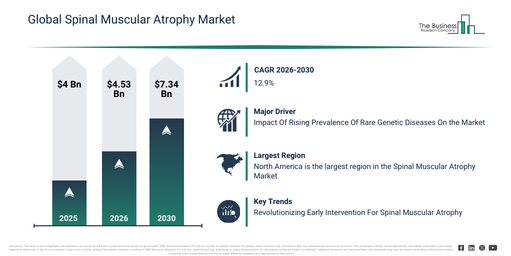
  • Spinal Muscular Atrophy Market Expected To Reach $7.34 Billion By 2030 As Growth Accelerates At 12.9% CAGR

    Spinal Muscular Atrophy Market Expected To Reach $7.34 Billion By 2030 As Growth Accelerates At 12.9% CAGR

    Delivering more actionable and strategically valuable research, The Business Research Company’s 2026 market reports feature market attractiveness analysis, total addressable market evaluation, company benchmarking matrices, interactive Excel dashboards, expanded supply chain intelligence, emerging startup coverage, and detailed product insights.

    Spinal Muscular Atrophy Market Size Outlook: How Fast Will Revenue Grow Through 2030?

    The global market for spinal muscular atrophy treatments has experienced substantial expansion lately, with projections indicating continued robust growth. It is anticipated to increase from an estimated $4 billion in 2025 to $4.53 billion in 2026, demonstrating a compound annual growth rate of 13.2%. This upward trajectory, in the period leading up to these figures, has been fueled by several key factors including the successful regulatory approval of novel SMA therapies, a rise in the adoption of genetic testing for early detection, heightened awareness campaigns spearheaded by patient advocacy organizations, increased investment in clinical research for SMA, and dedicated funding initiatives for rare diseases.

    The market for spinal muscular atrophy is poised for substantial expansion over the upcoming years, projecting a market valuation of $7.34 billion by 2030, driven by a compound annual growth rate (CAGR) of 12.9%. This anticipated surge in the forecast period is fueled by advancements in next-generation gene therapies, the increasing implementation of global screening initiatives, broadened access to treatments, enhanced survival rates for patients, and ongoing development within the drug pipeline. Key developments shaping the market during this timeframe encompass the emphasis on early genetic diagnosis, the proliferation of disease-modifying therapies, the establishment of newborn screening programs, the adoption of personalized treatment strategies, and a greater focus on comprehensive, long-term management of the disease.

    Download A Free Sample Report For Comprehensive Market Insights:

    https://www.thebusinessresearchcompany.com/sample.aspx?id=20965&type=smp

    Spinal Muscular Atrophy Market Growth Drivers And Industry Catalysts

    The expansion of the spinal muscular atrophy market is set to be significantly influenced by the increasing incidence of rare genetic disorders. These less common genetic conditions, stemming from gene mutations that impact a small fraction of individuals, frequently lead to serious, long-term health issues. Factors such as enhanced diagnostic tools, heightened public awareness, and greater availability of genetic testing contribute to the greater identification and reporting of these rare diseases. Spinal muscular atrophy (SMA) serves as a prime example of a rare genetic condition, illustrating both the complexities and potential advancements in the study of inherited illnesses and underscoring the critical need for continued research into genetic disorders. For illustration, as reported in July 2023 by the Office for National Statistics in the UK, genetic evaluation of the SMN1 gene has facilitated detailed epidemiological investigations, indicating that SMA affects approximately 1 in every 10,000 to 20,000 live births, with over 95% of diagnosed individuals exhibiting a homozygous deletion of the SMN1 gene. Consequently, the growing occurrence of rare genetic diseases is anticipated to be a key driver for the spinal muscular atrophy market’s development.

    Spinal Muscular Atrophy Market Segment Analysis: What Are The Major Market Categories?

    The spinal muscular atrophy market covered in this report is segmented –

    1) By Type: Type 1 (Severe), Type 2 (Intermediate), Type 3 (Mild), Type 4 (Adult)

    2) By Age: Pediatric, Adults

    3) By Treatment: Drug Therapy, Gene Therapy

    4) By End User: Hospital pharmacy, Online pharmacy, Retail pharmacy

    Subsegments:

    1) By Type 1 (Severe): Infantile-Onset SMA, Severe Progressive SMA

    2) By Type 2 (Intermediate): Early-Onset SMA, Non-progressive SMA

    3) By Type 3 (Mild): Juvenile-Onset SMA, Mild Progressive SMA

    4) By Type 4 (Adult): Adult-Onset SMA, Late-Onset SMA

    #Spinal Muscular Atrophy Market Trends Influencing Long-Term Demand

    The spinal muscular atrophy market is witnessing significant advancements from leading entities, with a focus on novel drug formulations like dry syrup designed to boost patient compliance and simplify medication intake, particularly for pediatric individuals and those experiencing challenges with swallowing. This reconstitutable powdered medicine is often recommended for children and patients unable to swallow pills or capsules. A prime example of this progress occurred in September 2024 when Chugai Pharmaceutical Co., Ltd. of Japan secured approval from the Ministry of Health, Labour and Welfare for an expanded use of their medication Evrysdi (risdiplam), now encompassing pre-symptomatic spinal muscular atrophy (SMA) and applicable to infants younger than two months. This development is highly significant as it permits the commencement of treatment at a stage before symptom onset, thereby offering improved therapeutic results for young patients. The basis for this regulatory endorsement was derived from the RAINBOWFISH study, which investigated the safety and effectiveness of Evrysdi in infants diagnosed with SMA but not yet exhibiting symptoms; remarkably, infants who received the treatment demonstrated the attainment of developmental milestones, including the ability to sit without support and enhanced motor functions within a year, highlighting the profound impact of early intervention facilitated by this drug on the course of the condition.

    Spinal Muscular Atrophy Market Leading Companies Driving Competitive Growth

    Major companies operating in the spinal muscular atrophy market are Pfizer Inc., F. Hoffmann-La Roche Ltd, Bayer AG, Novartis AG, Biogen Inc., Chugai Pharmaceutical Co. Ltd., Genentech Inc., PTC Therapeutics Inc., Ionis Pharmaceuticals Inc., RegenXBio Inc., Cytokinetics Inc., AveXis Inc., Scholar Rock Inc., Genethon, CANbridge Pharmaceuticals Inc., NMD Pharma A/S, Hanugen Therapeutics Inc., Beijing Jinlan Gene Technology Co. Ltd, Sarepta Therapeutics, Amicus Therapeutics, Audentes Therapeutics, Solid Biosciences

    Access The Complete Spinal Muscular Atrophy Market Report:

    https://www.thebusinessresearchcompany.com/report/spinal-muscular-atrophy-global-market-report

    Spinal Muscular Atrophy Market Geographic Analysis: Where Is Demand Growing The Fastest?

    North Americawas the largest region in the spinal muscular atrophy market in 2025. Asia-Pacificis expected to be the fastest-growing region in the forecast period. The regions covered in the spinal muscular atrophy market report are Asia-Pacific, South East Asia, Western Europe, Eastern Europe, North America, South America, Middle East, Africa.

    Get in touch with us:

    The Business Research Company: https://www.thebusinessresearchcompany.com/

    Americas: +1 310-496-7795

    Asia: +44 7882 955267 & +91 8897263534

    Europe: +44 7882 955267

    Email us at: marketing@tbrc.info

    Follow us on:

    LinkedIn: https://in.linkedin.com/company/the-business-research-company

    YouTube: https://www.youtube.com/channel/UC24_fI0rV8cR5DxlCpgmyFQ

    Global Market Model: https://www.thebusinessresearchcompany.com/global-market-model
  • Spinal Imaging Market Set To Grow From $2.49 Billion In 2026 To $3.37 Billion By 2030 At A CAGR Of 7.9%

    Spinal Imaging Market Set To Grow From $2.49 Billion In 2026 To $3.37 Billion By 2030 At A CAGR Of 7.9%

    Enhanced with market attractiveness analysis, total addressable market evaluation, company benchmarking matrices, interactive Excel dashboards, expanded supply chain intelligence, emerging startup coverage, and detailed product insights, The Business Research Company’s 2026 market reports deliver more actionable and strategically valuable research.

    Spinal Imaging Market Size, Value And Growth Trends Through 2030

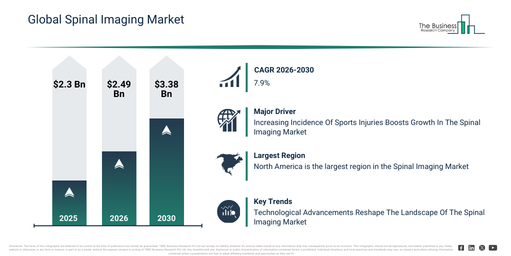
    The market for spinal imaging will experience robust expansion, increasing from USD 2.3 billion in 2025 to USD 2.49 billion in 2026, reflecting a compounded annual growth rate of 8.4%. This upward trajectory during the period under review is fueled by several key factors including a rise in spinal injury incidents, continuous innovation in imaging technologies, the proliferation of specialized diagnostic facilities, enhancements in healthcare infrastructure, and demographic shifts towards an older population.

    The market for spinal imaging is poised for considerable expansion, projected to reach $3.38 billion by 2030 with a compound annual growth rate of 7.9%. This anticipated growth trajectory is fueled by several key factors, including enhanced diagnostic precision through artificial intelligence, an increasing need for early disease detection, the burgeoning outpatient imaging sector, the adoption of cloud-based solutions for image management, and the utilization of spinal imaging for planning minimally invasive surgical procedures. Over the forecast period, significant market trends are expected to emerge, such as the development of higher-resolution imaging techniques, the application of AI in analyzing spinal images, seamless integration with surgical planning software, a greater reliance on MRI and CT scans, and the automation of imaging workflows.

    Download A Free Sample Report For Comprehensive Market Insights:

    https://www.thebusinessresearchcompany.com/sample.aspx?id=7741&type=smp

    Spinal Imaging Market Opportunity Drivers: What Is Creating New Revenue Potential?

    An escalating number of sports-related injuries is anticipated to be a significant catalyst for the expansion of the spinal imaging market in the future. These injuries, encompassing harm sustained during athletic pursuits, can vary considerably in severity and impact different anatomical regions. Spinal imaging plays a crucial role in addressing sports injuries by furnishing precise diagnostic data, thereby enabling medical practitioners to evaluate the degree of spinal trauma and devise appropriate therapeutic strategies. Illustratively, as of April 2024, data from the World Health Organization (WHO), a global UN entity headquartered in Switzerland, indicates that approximately 17 million individuals worldwide are living with spinal cord injuries (SCI), and an additional 2.5 million cases were documented in 2023. This represents a 15 percent surge compared to 2022, with a notable 25 percent of these injuries being attributable to sports participation. Consequently, the increasing frequency of sports injuries is directly contributing to the upward trajectory of the spinal imaging market.

    Spinal Imaging Market Segment Breakdown: Which Categories Generate The Most Revenue?

    The spinal imaging market covered in this report is segmented –

    1) By Product: X-Ray, Computed Tomography (CT), Magnetic Resonance Imaging (MRI), Ultrasound

    2) By Application: Spinal Infection, Vertebral Fractures, Spinal Cancer, Spinal Cord And Nerve Compressions, Other Applications

    3) By End-User: Hospital, Diagnostic Imaging Center, Ambulatory Care Center

    Subsegments:

    1) By X-Ray: Standard X-Ray, Fluoroscopy, Digital X-Ray

    2) By Computed Tomography (CT): Spiral CT, Cone Beam CT, High-Resolution CT

    3) By Magnetic Resonance Imaging (MRI): Closed MRI, Open MRI, Functional MRI (fMRI)

    4) By Ultrasound: Diagnostic Ultrasound, Interventional Ultrasound, 3D Or 4D Ultrasound

    Spinal Imaging Market Innovation Trends Driving Future Development

    Major players in the spinal imaging sector are prioritizing the enhancement of imaging performance, network interoperability, and healthcare provision within radiology departments through technological progress. These advancements are designed to foster better teamwork among radiology specialists, refine operational processes, and address the increasing need for sophisticated diagnostic imaging tools. As an illustration, in October 2024, Koninklijke Philips N.V., a Dutch firm specializing in health technology and imaging systems, introduced the Philips Radiology Operations Command Center (ROCC), an innovative, universally compatible platform engineered to bolster immediate communication among radiology personnel. This system facilitates virtual teamwork among technicians, radiologists, and imaging managers spread across various locations, utilizing secure telepresence functions. By dismantling established communication obstacles and consolidating management, ROCC markedly boosts operational effectiveness and simplifies the delivery of imaging healthcare in dispersed radiology environments.

    Spinal Imaging Market Key Players And Strategic Industry Positioning

    Major companies operating in the spinal imaging market are Hitachi Ltd., Medtronic plc, Siemens Healthineers AG, Fujifilm Corporation, Koninklijke Philips N.V., GE Healthcare Company, Shenzhen Mindray Bio-Medical Electronics Co Ltd., Canon Medical Systems Corporation, Shimadzu Corporation, Bruker Corporation, Carl Zeiss Meditec AG, Carestream Health Inc., Toshiba Medical Systems Inc., Samsung Medison Co Ltd., Ramsoft Technologies Private Limited, Mediso Ltd., 7D Surgical Inc., Esaote SpA, NeuroLogica Corporation, Planmed Oy, CurveBeam Inc., Mindray Bio-Medical Electronics Co Ltd

    Access The Complete Spinal Imaging Market Report:

    https://www.thebusinessresearchcompany.com/report/spinal-imaging-global-market-report

    Spinal Imaging Market Global Footprint: Which Region Holds Market Leadership?

    North Americawas the largest region in the spinal imaging market in 2025. Asia-Pacificis expected to be the fastest-growing region in the spinal imaging market share during the forecast period. The regions covered in the spinal imaging market report are Asia-Pacific, South East Asia, Western Europe, Eastern Europe, North America, South America, Middle East, Africa.

    Get in touch with us:

    The Business Research Company: https://www.thebusinessresearchcompany.com/

    Americas: +1 310-496-7795

    Asia: +44 7882 955267 & +91 8897263534

    Europe: +44 7882 955267

    Email us at: marketing@tbrc.info

    Follow us on:

    LinkedIn: https://in.linkedin.com/company/the-business-research-company

    YouTube: https://www.youtube.com/channel/UC24_fI0rV8cR5DxlCpgmyFQ

    Global Market Model: https://www.thebusinessresearchcompany.com/global-market-model
  • Spinal Cord Stimulation Market Opportunities Are Emerging Beyond Traditional Growth Areas

    Spinal Cord Stimulation Market Opportunities Are Emerging Beyond Traditional Growth Areas

    Through market attractiveness analysis, total addressable market evaluation, company benchmarking matrices, interactive Excel dashboards, expanded supply chain intelligence, emerging startup coverage, and detailed product insights, The Business Research Company’s 2026 market reports provide more actionable and strategically valuable research.

    Spinal Cord Stimulation Market CAGR Analysis And Future Market Development

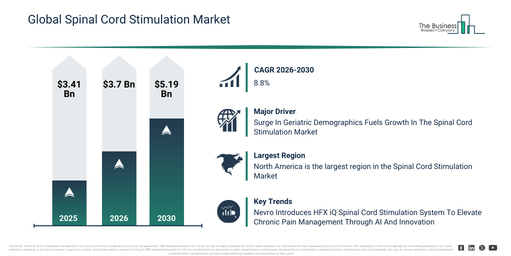
    Spinal cord stimulation for managing chronic pain is projected to experience robust expansion, escalating from an estimated $3.41 billion in 2025 to $3.7 billion in 2026, reflecting a compound annual growth rate of 8.5%. This upward trajectory in the historical period has been fueled by a confluence of factors, including the rising incidence of chronic back pain, a burgeoning demand for non-opioid pain relief solutions, significant progress in implantable electronic technologies, an increase in specialized pain management facilities, and supportive reimbursement frameworks.

    Anticipate a robust expansion within the spinal cord stimulation sector, projecting a market valuation reaching $5.19 billion by the year 2030, propelled by a compound annual growth rate of 8.8%. This anticipated increase throughout the forecast period is largely fueled by advancements such as AI-driven optimization of stimulation, the broadening of applications beyond typical pain management, the ongoing trend of technological miniaturization, an increasing elderly demographic, and a growing preference for sustained pain management solutions. Key developments shaping this market’s trajectory include the emergence of closed-loop stimulation systems, the prevalence of rechargeable implantable devices, the implementation of individualized neuromodulation programming, an increase in outpatient implantation procedures, and the seamless integration with digital pain monitoring technologies.

    Download A Free Sample Report For Comprehensive Market Insights:

    https://www.thebusinessresearchcompany.com/sample.aspx?id=12180&type=smp

    Spinal Cord Stimulation Market Growth Momentum: Which Factors Are Influencing Demand?

    A growing elderly demographic is anticipated to be a significant driver for the expansion of the spinal cord stimulation market. As individuals reach the age of 65 and beyond, they often face unique health and social challenges intrinsically linked with aging. This demographic shift presents a substantial market opportunity, as the prevalence of age-related conditions and persistent pain is set to rise, subsequently increasing the need for spinal cord stimulation treatments and contributing to market growth. Supporting this trend, projections from the World Health Organization indicate that by 2030, one-sixth of the global population will be over 60, a figure expected to double to 2.1 billion by 2050, underscoring the increasing influence of the geriatric population on the spinal cord stimulation market.

    Spinal Cord Stimulation Market Segmentation: How Is The Market Structured Across Key Categories?

    The spinal cord stimulation market covered in this report is segmented –

    1) By Product: Rechargeable, Non-rechargeable

    2) By Application: Failed Back Surgery Syndrome (FBSS), Degenerative Disc Disease (DDD), Complex Regional Pain Syndrome (CRPS), Arachnoiditis, Other Disease Indications

    3) By End User: Hospitals, Ambulatory Surgery Centers, Specialty Clinics

    Subsegments:

    1) By Rechargeable: Implantable Pulse Generators (IPGs), Rechargeable Lead Systems

    2) By Non-Rechargeable: Non-Rechargeable Implantable Pulse Generators (IPGs), Non-Rechargeable Lead Systems

    Spinal Cord Stimulation Market Trends Reshaping Industry Growth

    Pioneering entities within the spinal cord stimulation arena are prioritizing the creation of forward-thinking solutions, including the Spinal Cord Stimulation System, aiming to substantially enhance therapeutic outcomes for spinal cord stimulation. This medical system operates by surgically placing electrodes adjacent to the spinal cord to manage persistent pain conditions. Illustrating this trend, Nevro, a US-based innovator in chronic pain management devices, introduced its revolutionary HFX iQ Spinal Cord Stimulation System in March 2023. This system stands out due to its pioneering integration of artificial intelligence, enabling customized pain management through instantaneous modifications informed by extensive clinical information. Featuring the proprietary HFX algorithm and robust pain control capabilities, this device signifies not only a major leap forward in spinal cord stimulation treatments but also enriches the market with novel, empirically supported, and AI-driven options for those suffering from enduring pain.

    Spinal Cord Stimulation Market Competitive Landscape And Leading Companies

    Major companies operating in the spinal cord stimulation market are Abbott Laboratories,Medtronic PLC,Boston Scientific Corp.,LivaNova PLC,Globus Medical Inc.,ZimVie Inc.,Avanos Medical Inc.,Nevro Corp.,Saluda Medical Pty. Ltd.,Neuros Medical Inc.,Cirtec Medical Corp.,Mainstay Medical International plc,Gimer Medical,Stimwave Technologies,Vertiflex Inc.,SPR Therapeutics,Stimgenics Inc.,Axonics Modulation Technologies Inc.,Bioness Inc.,Nuvectra Corporation,Precision Spine Inc.,Vertiflex SCS Division

    Access The Complete Spinal Cord Stimulation Market Report:

    https://www.thebusinessresearchcompany.com/report/spinal-cord-stimulation-global-market-report

    Spinal Cord Stimulation Market Regional Distribution: Which Areas Drive Market Expansion?

    North America was the largest region in the spinal cord stimulation market in 2025. Asia-Pacific is expected to be the fastest-growing region in the forecast period. The regions covered in the spinal cord stimulation market report are Asia-Pacific, South East Asia, Western Europe, Eastern Europe, North America, South America, Middle East, Africa.

    Get in touch with us:

    The Business Research Company: https://www.thebusinessresearchcompany.com/

    Americas: +1 310-496-7795

    Asia: +44 7882 955267 & +91 8897263534

    Europe: +44 7882 955267

    Email us at: marketing@tbrc.info

    Follow us on:

    LinkedIn: https://in.linkedin.com/company/the-business-research-company

    YouTube: https://www.youtube.com/channel/UC24_fI0rV8cR5DxlCpgmyFQ

    Global Market Model: https://www.thebusinessresearchcompany.com/global-market-model
  • Spina Bifida In-Utero Market Expansion Is Opening New Pathways For Strategic Investment

    Spina Bifida In-Utero Market Expansion Is Opening New Pathways For Strategic Investment

    Delivering more actionable and strategically valuable research, The Business Research Company’s 2026 market reports feature market attractiveness analysis, total addressable market evaluation, company benchmarking matrices, interactive Excel dashboards, expanded supply chain intelligence, emerging startup coverage, and detailed product insights.

    Spina Bifida In-Utero Market Expansion From $2.89 Billion In 2026 To $4.06 Billion In 2030

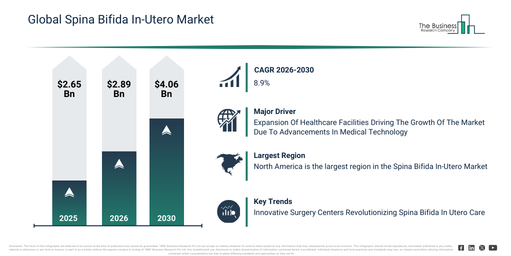
    The market for in-utero spina bifida treatments has experienced robust expansion recently, projected to increase from $2.65 billion in 2025 to $2.89 billion in 2026, reflecting a compound annual growth rate of 9.1%. This historical growth trajectory has been fueled by factors including improvements in prenatal diagnostic capabilities, an increase in specialized care for high-risk pregnancies, ongoing clinical investigations into fetal surgical interventions, the broadening of specialized medical facilities, and heightened public understanding of birth defects.

    The market for in-utero spina bifida treatments is poised for significant expansion, projected to reach $4.06 billion by 2030, reflecting a compound annual growth rate (CAGR) of 8.9%. This anticipated growth trajectory is fueled by several key factors, including the increasing embrace of minimally invasive fetal surgical procedures, enhancements in surgical success rates, the proliferation of specialized maternal-fetal care facilities, advancements in surgical instrumentation, and the ongoing evolution of clinical best practices. Within this forecast period, prominent trends are expected to emerge, such as the further development of fetal surgery methodologies, wider adoption of early prenatal diagnostic methods, the establishment of comprehensive multidisciplinary teams focused on fetal well-being, the introduction of refined surgical instruments, and ultimately, improvements in both maternal and fetal health outcomes.

    Download A Free Sample Report For Comprehensive Market Insights:

    https://www.thebusinessresearchcompany.com/sample.aspx?id=22150&type=smp

    Spina Bifida In-Utero Market Expansion Drivers: What Is Shaping Future Growth?

    The expansion of medical institutions is anticipated to be a key driver for the spina bifida in-utero market’s advancement. These facilities encompass the fundamental infrastructure, technological systems, and crucial resources required for delivering high-quality healthcare services. Growth in healthcare infrastructure stems from progress in medical science and technology; innovations like remote patient monitoring, robotic surgical procedures, and artificial intelligence-powered diagnostic tools necessitate updated facilities, specialized equipment, and improved healthcare systems to boost patient results and operational efficiency. Such medical facilities are instrumental in supporting the spina bifida in-utero sector by facilitating access to therapies grounded in scientific evidence, skilled healthcare practitioners, and cutting-edge treatment approaches, all contributing to enhanced recovery and a superior quality of life for patients regarding this condition. As an illustration, in January 2024, data from the American Hospital Association, a US-based non-profit entity, indicated that the United States housed 6,120 hospitals in 2024. Consequently, the developing healthcare infrastructure is fueling the spina bifida in-utero market’s upward trajectory.

    Spina Bifida In-Utero Market Segmentation Trends And Revenue Drivers

    The spina bifida in-utero market covered in this report is segmented –

    1) By Type: Myelomeningocele, Meningocele, Occulta

    2) By Diagnosis: Ultrasound, Magnetic Resonance Imaging (MRI), Amniocentesis

    3) By Treatment: Surgery, Postnatal Surgery, Medication Management

    4) By End-User: Hospitals, Specialty Clinics, Ambulatory Surgical Centers

    Subsegments:

    1) By Myelomeningocele: Open Myelomeningocele, Closed Myelomeningocele, Lumbosacral Myelomeningocele, Thoracic Myelomeningocele, Cervical Myelomeningocele

    2) By Meningocele: Cranial Meningocele, Spinal Meningocele, Occipital Meningocele, Frontal Meningocele, Parietal Meningocele

    3) By Occulta: Lumbosacral Spina Bifida Occulta, Sacral Spina Bifida Occulta, Isolated Spina Bifida Occulta, Complex Spina Bifida Occulta, Tethered Cord Syndrome Associated Occulta

    Spina Bifida In-Utero Market Strategic Trends: What Is Defining The Next Phase Of Growth?

    Within the spina bifida in utero market, leading entities are pioneering the creation of specialized centers, exemplified by surgical facilities designed to incorporate sophisticated imaging technologies alongside minimally invasive approaches for prenatal interventions. A surgery center, in essence, is a dedicated establishment designed for performing surgical operations on a same-day basis, thus obviating the necessity for prolonged hospital stays. As an illustration, January 2025 saw Wadia Hospital, located in India, inaugurate a facility dedicated to providing fetal surgery for cases of open spina bifida. This newly established center expertly merges state-of-the-art surgical methodologies with a collaborative, team-based strategy, facilitating early interventions that hold the potential to mitigate complications and ultimately enhance the long-term health trajectory for infants diagnosed with this condition. The primary objective of this center is to elevate the accuracy of surgical procedures and the overall quality of patient care, signifying significant progress for families confronting the complexities associated with open spina bifida.

    Spina Bifida In-Utero Market Industry Leaders: Which Organizations Are Driving Competition?

    Major companies operating in the spina bifida in-utero market are Mayo Clinic, GE HealthCare, UC San Francisco, Children’s Health, Memorial Hermann Health System, Oregon Health & Science University, Seattle Children’s, Texas Children’s, Children’s Hospital of Philadelphia, UW Health, UC Davis, UCSF Health, Burjeel Hospital, UT Physicians, Riley Children’s Health, Yale Medicine, Focused Ultrasound Foundation, Boston Children’s Hospital, Johns Hopkins Hospital, Cleveland Clinic, Mount Sinai Health System, Stanford Health Care

    Access The Complete Spina Bifida In-Utero Market Report:

    https://www.thebusinessresearchcompany.com/report/spina-bifida-in-utero-global-market-report

    Spina Bifida In-Utero Market Leading Geography: Which Region Generates The Most Revenue?

    North Americawas the largest region in the spina bifida in utero market in 2025. Asia-Pacificis expected to be the fastest-growing region in the forecast period. The regions covered in the spina bifida in-utero market report are Asia-Pacific, South East Asia, Western Europe, Eastern Europe, North America, South America, Middle East, Africa.

    Get in touch with us:

    The Business Research Company: https://www.thebusinessresearchcompany.com/

    Americas: +1 310-496-7795

    Asia: +44 7882 955267 & +91 8897263534

    Europe: +44 7882 955267

    Email us at: marketing@tbrc.info

    Follow us on:

    LinkedIn: https://in.linkedin.com/company/the-business-research-company

    YouTube: https://www.youtube.com/channel/UC24_fI0rV8cR5DxlCpgmyFQ

    Global Market Model: https://www.thebusinessresearchcompany.com/global-market-model
  • Speech Impairment Market Trends Are Creating New Opportunities For Industry Leaders

    Speech Impairment Market Trends Are Creating New Opportunities For Industry Leaders

    Enhanced with market attractiveness analysis, total addressable market evaluation, company benchmarking matrices, interactive Excel dashboards, expanded supply chain intelligence, emerging startup coverage, and detailed product insights, The Business Research Company’s 2026 market reports deliver more actionable and strategically valuable research.

    Speech Impairment Market Forecast Highlighting Growth From $11.33 Billion To $14.07 Billion

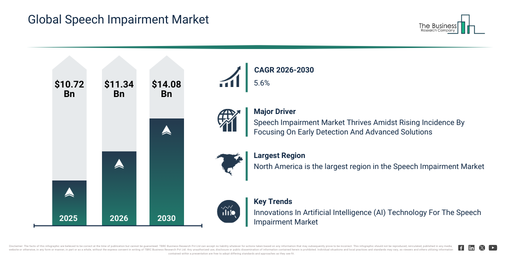
    The speech impairment market experienced substantial expansion recently, projecting a rise from $10.72 billion in 2025 to $11.34 billion in 2026, signifying a 5.7% compound annual growth rate. This historical upward trend is linked to increased stroke occurrences, instances of traumatic brain injury, the broadening availability of rehabilitation services, greater awareness surrounding assistive technologies, and the proliferation of clinical speech therapy.

    The market for speech impairment solutions is poised for significant expansion, projected to reach $14.08 billion by the year 2030, reflecting a compound annual growth rate of 5.6%. This anticipated surge is fueled by several key drivers, including sophisticated progress in AI-driven speech synthesis, an increasing prevalence of neurological conditions necessitating specialized care, the growing adoption of home healthcare services, enhanced reimbursement frameworks for assistive technologies, and the trend towards miniaturization in technological devices. Furthermore, several prominent trends are expected to shape this market during the forecast period, such as the increased utilization of speech-generating devices, the emergence of AI-powered voice restoration tools, the proliferation of home-based rehabilitation initiatives, the development of mobile applications designed to aid individuals with speech impediments, and a greater integration of these solutions within comprehensive neurological care plans.

    Download A Free Sample Report For Comprehensive Market Insights:

    https://www.thebusinessresearchcompany.com/sample.aspx?id=13935&type=smp

    Speech Impairment Market Development Factors: Which Trends Are Supporting Demand?

    A surge in the occurrence of speech disorders is anticipated to stimulate expansion within the speech impairment market. These disorders, characterized by difficulties in producing the sounds essential for spoken language, necessitate greater availability of precise diagnostic instruments, therapeutic interventions, and supportive technologies. Consequently, this escalating demand is poised to foster advancements and financial backing for the creation of novel solutions aimed at individuals facing speech challenges, as exemplified by the reported statistic from the UK Parliament detailing 369,941 pupils in England identified with speech, language, and communication needs during the 2023/24 academic year, underscoring the direct correlation between rising speech disorder incidence and market growth.

    Speech Impairment Market Segment Analysis Highlighting Growth Areas

    The speech impairment market covered in this report is segmented –

    1) By Type: Speech Disorder, Language Disorder, Apraxia, Autism Spectrum Disorder (ASD), Other Types

    2) By Age: Pediatrics, Adults, Elderly

    3) By End-User: Specialty Clinics, Rehabilitation Centers, Speech Therapy Centers, Bilingual Classes, Hospitals, Community Health Centers

    Subsegments:

    1) By Speech Disorder: Stuttering, Dysarthria, Voice Disorders

    2) By Language Disorder: Expressive Language Disorder, Receptive Language Disorder, Mixed Language Disorder

    3) By Apraxia: Childhood Apraxia Of Speech, Acquired Apraxia Of Speech

    4) By Autism Spectrum Disorder (ASD): Nonverbal Communication Challenges, Social Communication Challenges

    5) By Other Types: Selective Mutism, Articulation Disorder, Phonological Disorder

    Speech Impairment Market Transformation Trends: Which Innovations Are Driving Change?

    Leading corporations within the speech impairment sector are heavily investing in cutting-edge advancements like artificial intelligence (AI) to engineer sophisticated instruments and remedies that facilitate enhanced communication for those facing speech difficulties. AI, in essence, involves the replication of human cognitive functions through automated means, particularly by computational systems. As an illustration, in September 2023, Voiceitt, an enterprise originating from Israel renowned for its automatic speech recognition technology, unveiled AI-driven speech recognition solutions. These AI-powered systems are meticulously crafted with individuals possessing speech impairments in mind. Such technological innovation empowers users to interact more proficiently with both human counterparts and electronic gadgets by leveraging bespoke voice profiles, benefiting individuals whose speech deviates from typical patterns due to various conditions including cerebral palsy, Parkinson’s disease, Down syndrome, and stroke aftermath.

    Speech Impairment Market Leading Companies: Who Holds Significant Market Presence?

    Major companies operating in the speech impairment market are LifePoint Health, Nuance Communications Inc., Reliant Rehabilitation, Therapy Solutions Inc., Tobii Dynavox, Humanus Corporation, Speechmatics, Lingraphica, Acapela Group, ReadSpeaker, John McGivney Children’s Centre, Rehabilitation Associates Inc., AbleNet Inc., Saltillo Corporation, LumenVox LLC, AssistiveWare, Speak AI, Cognixion, Dynaread Technologies, CereProc, Vocapia Research, NeuroSpeech Technologies

    Access The Complete Speech Impairment Market Report:

    https://www.thebusinessresearchcompany.com/report/speech-impairment-global-market-report

    Speech Impairment Market Regional Outlook: Where Are The Largest Opportunities Located?

    North Americawas the largest region in the speech impairment market in 2025. Asia-Pacificis expected to be the fastest-growing region in the forecast period. The regions covered in the speech impairment market report are Asia-Pacific, South East Asia, Western Europe, Eastern Europe, North America, South America, Middle East, Africa.

    Get in touch with us:

    The Business Research Company: https://www.thebusinessresearchcompany.com/

    Americas: +1 310-496-7795

    Asia: +44 7882 955267 & +91 8897263534

    Europe: +44 7882 955267

    Email us at: marketing@tbrc.info

    Follow us on:

    LinkedIn: https://in.linkedin.com/company/the-business-research-company

    YouTube: https://www.youtube.com/channel/UC24_fI0rV8cR5DxlCpgmyFQ

    Global Market Model: https://www.thebusinessresearchcompany.com/global-market-model
  • Speech And Language Disorder Market Growth Is Reshaping Competitive Advantage Across The Industry

    Speech And Language Disorder Market Growth Is Reshaping Competitive Advantage Across The Industry

    Through market attractiveness analysis, total addressable market evaluation, company benchmarking matrices, interactive Excel dashboards, expanded supply chain intelligence, emerging startup coverage, and detailed product insights, The Business Research Company’s 2026 market reports provide more actionable and strategically valuable research.

    Speech And Language Disorder Market Revenue Growth Supported By A CAGR Of 12.8% Through 2030

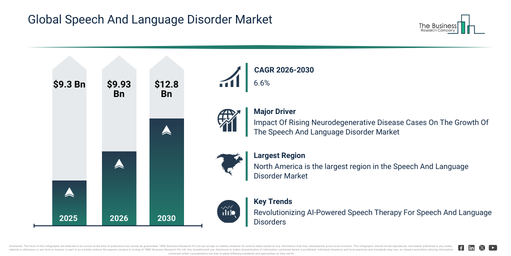
    The global market for speech and language disorders has experienced robust expansion recently, projecting a rise from $9.3 billion in 2025 to $9.93 billion in 2026, reflecting a compound annual growth rate of 6.7%. Key drivers behind this historical market growth include a surge in the identification of speech-related issues, the proliferation of specialized educational initiatives, an increase in the number of speech therapy centers, heightened parental consciousness regarding these conditions, and the implementation of interventions within educational settings.

    The global market for speech and language disorder treatments is poised for significant expansion, projected to reach $12.8 billion by the year 2030, reflecting a compound annual growth rate of 6.6% over the foreseeable future. This upward trajectory is anticipated to be fueled by an increasing willingness to cover telehealth services, the growing integration of artificial intelligence in therapeutic approaches, a noted scarcity of qualified speech therapists, the rising prevalence of speech-related challenges in an aging demographic, and the enhanced accessibility of digital therapeutic solutions. Key developments shaping this market in the coming years are expected to encompass the proliferation of tele-speech therapy platforms, the implementation of AI-powered language assessment instruments, the expansion of early childhood identification initiatives, the customization of therapeutic interventions, and the increasing use of mobile applications for therapy delivery.

    Download A Free Sample Report For Comprehensive Market Insights:

    https://www.thebusinessresearchcompany.com/sample.aspx?id=18740&type=smp

    Speech And Language Disorder Market Industry Drivers: What Is Driving Revenue Growth?

    The escalating incidence of neurodegenerative conditions is anticipated to be a significant catalyst for the expansion of the speech and language disorder market in the foreseeable future. These neurodegenerative ailments, a category encompassing conditions like Alzheimer’s, Parkinson’s, and ALS, are defined by the steady and irreversible deterioration of nerve cells, which consequently results in deficits in cognitive function, motor skills, and overall capabilities. Factors contributing to the rise in these diseases include an aging global demographic, extended lifespans, and heightened awareness and diagnostic capabilities concerning these ailments. Therapeutic interventions for speech and language disorders offer crucial understanding of disease advancement and contribute to an improved quality of life for those impacted, addressing both practical and emotional well-being. For example, data from the Centers for Disease Control and Prevention indicated that in April 2023, approximately 6.7 million individuals in the United States were living with Alzheimer’s disease, a number projected to approach 14 million by 2060. Consequently, the growing prevalence of neurodegenerative diseases serves as a primary driver for the growth trajectory of the speech and language disorder market.

    Speech And Language Disorder Market Segment Performance And Strategic Opportunities

    The speech and language disorder market covered in this report is segmented –

    1) By Type: Hardware, Software

    2) By Category: Adults, Pediatrics

    3) By Disorder Type: Articulation Disorders, Phonological Disorders, Voice Disorders Or Resonance Disorders, Language Disorders, Other Disorder Types

    4) By Cause: Stroke, Injury, Neurodegenerative Diseases, Other Causes

    5) By End User: Healthcare Facilities, Speech Therapy Centers, Rehabilitation Centers, Other End Users

    Subsegments:

    1) By Hardware: Assistive Devices, Wearable Devices

    2) By Software: Speech Recognition Software, Speech Therapy Applications, Language Processing Software, Cognitive Training Software

    #Speech And Language Disorder Market Growth Trends: What Is Influencing The Future Outlook?

    Leading corporations within the speech and language disorder sector are prioritizing the creation of cutting-edge solutions, including AI-driven speech therapy systems, to broaden access, boost treatment effectiveness, and cater to the growing need for tailored and impactful therapeutic approaches. These AI-powered speech therapy platforms represent sophisticated software or systems that leverage artificial intelligence to facilitate remote speech rehabilitation. As an illustration, in August of 2023, Better Speech LLC, an American entity offering speech therapy, unveiled Jessica, a groundbreaking AI speech therapist designed to provide customized therapy sessions accessible on any device, around the clock. Jessica refines and improves speech patterns by employing technologies such as voice recognition and natural language processing, thereby rendering therapy more accessible, cost-effective, and engaging.

    Speech And Language Disorder Market Key Players: Which Companies Shape Industry Competition?

    Major companies operating in the speech and language disorder market are Kindred Healthcare LLC, Nuance Communications Inc., Reliant Rehabilitation Holdings Inc., BenchMark Physical Therapy Institute LLC, Children’s Hospital of Eastern Ontario, National Institute of Physical Medicine and Rehabilitation, Amplio Learning Technologies Inc., John McGivney Children’s Centre, Expressable Inc., Rehabilitation Associates Inc., Constant Therapy Health Inc., Genesis Rehab Services LLC, Powerback Rehabilitation, Smart Speech Therapy LLC, Speech Therapy Solutions Inc., Speech Plus, Speech Pathways LLC, Canary Speech Inc., Imanyco Inc., Voiceitt Inc., Tactus Therapy Solutions Ltd, Virtual Speech Center Inc.

    Access The Complete Speech And Language Disorder Market Report:

    https://www.thebusinessresearchcompany.com/report/speech-and-language-disorder-global-market-report

    Speech And Language Disorder Market Geographic Landscape: Which Region Dominates Industry Growth?

    North Americawas the largest region in the speech and language disorder market in 2025. The regions covered in the speech and language disorder market report are Asia-Pacific, South East Asia, Western Europe, Eastern Europe, North America, South America, Middle East, Africa.

    Get in touch with us:

    The Business Research Company: https://www.thebusinessresearchcompany.com/

    Americas: +1 310-496-7795

    Asia: +44 7882 955267 & +91 8897263534

    Europe: +44 7882 955267

    Email us at: marketing@tbrc.info

    Follow us on:

    LinkedIn: https://in.linkedin.com/company/the-business-research-company

    YouTube: https://www.youtube.com/channel/UC24_fI0rV8cR5DxlCpgmyFQ

    Global Market Model: https://www.thebusinessresearchcompany.com/global-market-model
  • Spectrum Water Treatment And Healthcare Devices Market Forecast Signals New Revenue Opportunities Through 2030

    Spectrum Water Treatment And Healthcare Devices Market Forecast Signals New Revenue Opportunities Through 2030

    Delivering more actionable and strategically valuable research, The Business Research Company’s 2026 market reports feature market attractiveness analysis, total addressable market evaluation, company benchmarking matrices, interactive Excel dashboards, expanded supply chain intelligence, emerging startup coverage, and detailed product insights.

    Spectrum Water Treatment And Healthcare Devices Market Value Expansion And Long-Term Growth Outlook

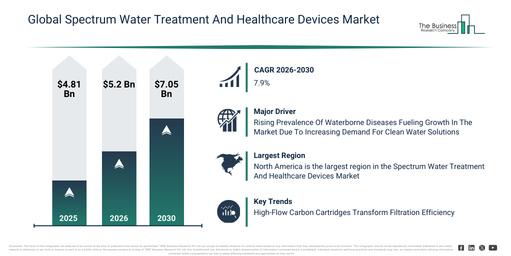
    The market for spectrum water treatment and healthcare devices experienced robust expansion recently, projecting a growth from \$4.81 billion in 2025 to \$5.2 billion in 2026, reflecting a compound annual growth rate of 8.1%. Key factors fueling this historical expansion include enhancements in hospital infrastructure, escalating concerns regarding water contamination, the implementation of infection prevention strategies, the establishment of regulatory standards for water quality, and a heightened demand for dialysis-grade water.

    The global market for spectrum water treatment and healthcare devices is poised for considerable expansion, projecting a valuation of $7.05 billion by 2030, driven by a compound annual growth rate of 7.9%. This anticipated surge in the foreseeable future is underpinned by several key factors, including the increasing implementation of intelligent water management solutions, the proliferation of ambulatory care settings, capital infusions focused on environmental responsibility, advancements in purification technologies, and the burgeoning healthcare sectors in developing economies. Dominant trends shaping this market during the forecast period encompass sophisticated filtration methodologies, continuous water quality assessment, streamlined medical treatment apparatuses, surfaces with antimicrobial properties, and purification systems optimized for energy conservation.

    Download A Free Sample Report For Comprehensive Market Insights:

    https://www.thebusinessresearchcompany.com/sample.aspx?id=24406&type=smp

    Spectrum Water Treatment And Healthcare Devices Market Growth Factors: Which Forces Are Supporting Market Expansion?

    The increasing occurrence of illnesses transmitted through water is anticipated to serve as a primary catalyst for the expansion of the spectrum water treatment and healthcare devices market. Such waterborne ailments stem from pathogenic organisms present in unsafe water, potentially causing infections upon consumption or dermal exposure. This rise is largely attributable to insufficient access to potable water and proper sanitation systems, which results in the contamination of vital drinking water reserves. Spectrum water treatment and healthcare devices play a crucial role in purifying and sanitizing water by efficiently eliminating dangerous microbes and impurities, thus curbing the proliferation of waterborne diseases. To illustrate, as of March 2024, the Centers for Disease Control and Prevention (CDC) reported that in the United States each year, waterborne pathogens contribute to 7.15 million instances of sickness, lead to 118,000 hospital admissions, and tragically result in 6,630 deaths. Consequently, the escalating incidence of waterborne diseases will undoubtedly stimulate demand and foster growth within the spectrum water treatment and healthcare devices market.

    Spectrum Water Treatment And Healthcare Devices Market Segment Landscape And Growth Potential

    The spectrum water treatment and healthcare devices market covered in this report is segmented –

    1) By Product Type: Water Treatment Devices, Healthcare Devices, Combination Systems

    2) By Technology Type: Filtration Technology, Reverse Osmosis, Ultraviolet (UV) Treatment, Electrochemical Treatment

    3) By Distribution Channel: Online Sales, Retail Outlets, Direct Sales, Distributors And Resellers

    4) By Application: Drinking Water Treatment, Wastewater Treatment, Surgical And Medical Applications, Pharmaceutical Manufacturing

    5) By End-User: Residential, Commercial, Industrial, Healthcare Facilities

    Subsegments:

    1) By Water Treatment Devices: Filtration Systems, Reverse Osmosis Systems, Ultraviolet (UV) Treatment Systems, Electrochemical Treatment Systems, Softening Systems, Distillation Systems

    2) By Healthcare Devices: Diagnostic Devices, Therapeutic Devices, Monitoring Devices, Surgical Instruments, Medical Sterilization Equipment

    3) By Combination Systems: Integrated Water And Healthcare Systems, Hybrid Water Filtration And Medical Treatment Units, Water Treatment Systems With Medical Monitoring Functions

    Spectrum Water Treatment And Healthcare Devices Market Industry Trends: What Changes Are Reshaping Demand?

    Within the water treatment and healthcare devices sector, key players are investing in the evolution of water purification methods, particularly emphasizing innovations like high-flow carbon cartridges. The objective of these advancements is to elevate filtration effectiveness, boost the elimination of impurities, and satisfy the increasing global need for secure and superior drinking water across homes, businesses, and medical facilities. These high-flow carbon cartridges function as sophisticated filtration units engineered to extract undesirable elements like chlorine, sediment, and unwanted tastes from water while maintaining a robust flow rate, thereby streamlining and accelerating the purification process. Illustrating this trend, Spectrum Filtration, a prominent UK-based provider of water treatment solutions, introduced its FibreOnyx cartridge line in January 2025. This innovative range leverages cutting-edge fiber technology to refine water filtration performance through enhanced debris retention capabilities and optimized flow rates, offering specialized solutions for general carbon filtration, lead mitigation, electroplating processes, and the removal of chloramine, catering to a broad spectrum of contaminants and diverse industrial, domestic, and commercial requirements.

    Spectrum Water Treatment And Healthcare Devices Market Competitive Landscape: Who Are The Leading Companies?

    Major companies operating in the spectrum water treatment and healthcare devices market are Ecolab Inc., Xylem Inc., Veolia Water Technologies & Solutions, Trojan Technologies Inc., Pall Corporation, Wabag, Ion Exchange India Ltd., Kinetico, Spectrum Filtration, Spectrum Water Technology, Netsol Water, Aquafine Corporation, SUEZ Water Technologies & Solutions, Aqua Filsep Inc., AquaIonizer Pro, Greentivity Enviro Solutions, Sombansi Enviro Engg, LIT UV Technology GmbH, Pentair Water, Dow Water and Process Solutions, H2O Innovation, Toray Industries, Kurita Water Industries, Aquatech International

    Access The Complete Spectrum Water Treatment And Healthcare Devices Market Report:

    https://www.thebusinessresearchcompany.com/report/spectrum-water-treatment-and-healthcare-devices-global-market-report

    Spectrum Water Treatment And Healthcare Devices Market Largest Region: Which Geography Holds The Highest Market Share?

    North Americawas the largest region in the spectrum water treatment and healthcare devices market in 2025. Asia-Pacificis expected to be the fastest-growing region in the forecast period. The regions covered in the spectrum water treatment and healthcare devices market report are Asia-Pacific, South East Asia, Western Europe, Eastern Europe, North America, South America, Middle East, Africa.

    Get in touch with us:

    The Business Research Company: https://www.thebusinessresearchcompany.com/

    Americas: +1 310-496-7795

    Asia: +44 7882 955267 & +91 8897263534

    Europe: +44 7882 955267

    Email us at: marketing@tbrc.info

    Follow us on:

    LinkedIn: https://in.linkedin.com/company/the-business-research-company

    YouTube: https://www.youtube.com/channel/UC24_fI0rV8cR5DxlCpgmyFQ

    Global Market Model: https://www.thebusinessresearchcompany.com/global-market-model