Category: Healthcare Services

  • Global Early Phase Clinical Trial Outsourcing Market Analysis For 2026–2030 With Strategic Insights

    Global Early Phase Clinical Trial Outsourcing Market Analysis For 2026–2030 With Strategic Insights

    The Business Research Company’s 2026 market reports feature enhanced tools like market attractiveness analysis, TAM assessment, and company scoring matrices, along with interactive dashboards, deeper supply chain insights, and startup coverage strengthening the depth, usability, and strategic value of insights.

    What Are The Market Size Estimates For The Early Phase Clinical Trial Outsourcing Market In 2026 And 2030?

    The early phase clinical trial outsourcing market has experienced substantial growth over recent years. Anticipated growth for this market is from $9.53 billion in 2025 to $10.39 billion in 2026, achieving a compound annual growth rate (CAGR) of 9.0%. The historical increase can be linked to the growing complexity of drug development pipelines, greater cost pressures faced by pharmaceutical sponsors, an uptick in biotech startup operations, the evolving requirement for regulatory knowledge, and a heightened reliance on expert clinical research organizations.

    The early phase clinical trial outsourcing market is anticipated to experience substantial expansion over the coming years. It is projected to reach $14.8 billion by 2030, demonstrating a compound annual growth rate (CAGR) of 9.2%. This growth throughout the forecast period stems from factors such as the greater acceptance of decentralized trial components, an increased emphasis on precision medicine investigations, the enlargement of rare disease clinical research, the expanding application of AI-powered trial analytics, and the growing worldwide alignment of early-phase regulations. Key developments expected during this period involve more outsourcing of phase I clinical studies, a heightened need for integrated early-phase CRO services, increased utilization of data-centric trial design methodologies, the broadening of adaptive and first-in-human trials, and a stronger focus on expediting study timelines.

    Access Your Free Sample Report For In-Depth Market Analysis:

    https://www.thebusinessresearchcompany.com/sample.aspx?id=33097&type=smp

    Which Key Drivers Are Affecting The Early Phase Clinical Trial Outsourcing Market Development?

    The early-phase clinical trial outsourcing market is projected to expand due to the escalating focus on personalized medicine. Personalized medicine signifies the growing commitment in healthcare and life sciences to develop and deliver treatments specifically adapted for individual patients or clearly defined patient subgroups, determined by their genetic and molecular characteristics. This increased emphasis on personalized medicine is mainly driven by progress in genomic sequencing and molecular diagnostics, which allow for the accurate identification of disease-specific genetic and biomarker profiles. Early-phase clinical trial outsourcing contributes to personalized medicine and targeted therapies by providing specialized knowledge, adaptable trial designs, and capabilities for biomarker-led studies, facilitating precise patient stratification and rapid proof-of-concept validation. As an illustration, in February 2024, the Personalized Medicine Coalition (PMC), a US-based nonprofit organization, reported that personalized therapies for rare diseases more than doubled, increasing from 6 in 2022 to 16 in 2023. Therefore, the heightened focus on personalized medicine is propelling the growth of the early-phase clinical trial outsourcing market.

    How Are Different Segments Classified In The Early Phase Clinical Trial Outsourcing Market Segment Analysis?

    The early phase clinical trial outsourcing market covered in this report is segmented –

    1) By Type: Regulatory Services; Clinical Data Management (CDM); Medical Writing; Site Management; Pharmacovigilance (PV); Risk-Based Monitoring; Bio Statistical Services; Protocol Development; Other Types

    2) By Therapeutic Area: Oncology; Central Nervous System (CNS) And Neurology; Cardiovascular And Metabolic Diseases; Infectious Diseases; Immunology And Inflammatory Diseases; Rare Diseases And Genetic Disorders

    3) By Trial Phase: Phase 0; Phase 1; Phase 2

    4) By Applications: Pharmaceutical Companies; Biopharmaceutical Companies; Drug Discovery Companies; Medical Devices Companies; Other Applications

    Subsegments:

    1) By Regulatory Services: Regulatory Strategy Planning; Regulatory Submission Preparation; Health Authority Liaison; Ethics Committee Submission Management; Regulatory Compliance Auditing; Trial Registration Support

    2) By Clinical Data Management (CDM): Case Report Form Design; Data Entry And Validation; Database Development And Maintenance; Data Cleaning And Query Management; Clinical Data Integration; Data Lock And Archival

    3) By Medical Writing: Clinical Study Protocol Writing; Investigator Brochure Development; Clinical Study Report Writing; Informed Consent Document Preparation; Regulatory Dossier Writing; Scientific Publication Support

    4) By Site Management: Site Feasibility Assessment; Site Selection And Initiation; Investigator Training And Support; Site Performance Management; Site Close Out Services; Vendor Coordination At Site Level

    5) By Pharmacovigilance (PV): Safety Data Collection; Adverse Event Processing; Serious Adverse Event Reporting; Safety Database Management; Signal Detection And Evaluation; Periodic Safety Report Preparation

    6) By Risk-Based Monitoring: Risk Assessment And Categorization; Centralized Monitoring Activities; Key Risk Indicator Development; Remote Monitoring Services; On Site Monitoring Optimization; Monitoring Plan Design

    7) By Bio Statistical Services: Statistical Analysis Plan Development; Sample Size Determination; Randomization Design; Interim Analysis; Final Statistical Analysis; Data Interpretation And Reporting

    8) By Protocol Development: Study Design Consulting; Endpoint Definition; Eligibility Criteria Development; Schedule Of Assessments Design; Protocol Amendment Management; Feasibility Driven Protocol Optimization

    9) By Other Types: Clinical Trial Supply Management; Patient Recruitment Support; Quality Assurance Services; Trial Master File Management; Vendor And Project Management

    What Trends Are Transforming The Early Phase Clinical Trial Outsourcing Market?

    Companies operating within the early-phase clinical trial outsourcing market are prioritizing technological innovations in decentralized and hybrid early-phase clinical trial approaches, including integrated early development trial ecosystems. This strategic emphasis addresses the escalating need among biotechnology sponsors for quicker execution, enhanced scientific rigor, and diminished risk in early-stage clinical development. Integrated early development trial ecosystems are defined as specially constructed clinical research settings that bring together specialized infrastructure, seasoned early-phase investigators, continuous safety monitoring, and optimized regulatory and operational procedures, thus fostering improved efficiency and uniformity in early-phase studies. As an illustration, in October 2025, Avance Clinical, an Australia-based contract research organization (CRO), revealed the establishment of a Dedicated Center of Excellence. This initiative is designed to expedite early-phase biotech trials, thereby improving operational efficiency, scientific precision, and market entry speed for nascent biotechnology firms. The Dedicated Center of Excellence provides a unified early-phase trial environment that combines specialized clinical facilities, proficient early-phase investigators, and synchronized operational management to hasten study initiation and completion.

    Who Are The Companies Driving Activity In The Early Phase Clinical Trial Outsourcing Market?

    Major companies operating in the early phase clinical trial outsourcing market are IQVIA Holdings Inc., ICON plc, Syneos Health Inc., Parexel International Corporation, Medpace Holdings Inc., Pharmaron Beijing Co. Ltd., Premier Research Group Limited, ProPharma Group Holdings Inc., Precision for Medicine Group LLC, Worldwide Clinical Trials LLC, Catalyst Clinical Research LLC, Avance Clinical Pty Ltd, Quanticate International Ltd, Clinilabs Drug Development Corporation, Optimapharm d.o.o., RICe – Richmond Pharmacology Ltd, Novotech Health Holdings Pty Ltd, CMIC Holdings Co. Ltd., Medpace Reference Laboratories Inc., iNGENu CRO Pty Ltd

    Get The Full Early Phase Clinical Trial Outsourcing Market Report:

    https://www.thebusinessresearchcompany.com/report/early-phase-clinical-trial-outsourcing-market-report

    Which Region Dominates The Early Phase Clinical Trial Outsourcing Market By Market Share?

    North America was the largest region in the early phase clinical trial outsourcing market in 2025. Asia-Pacific is expected to be the fastest-growing region in the forecast period. The regions covered in the early phase clinical trial outsourcing market report are Asia-Pacific, South East Asia, Western Europe, Eastern Europe, North America, South America, Middle East, Africa.

    Request A Customized Early Phase Clinical Trial Outsourcing Market Report For Competitive Insights:

    https://www.thebusinessresearchcompany.com/customise?id=33097&type=smp

    Browse Through More Reports Similar to the Global Early Phase Clinical Trial Outsourcing Market 2026, By The Business Research Company

    Biomarker Clinical Phase Outsourcing Services Market Report 2026

    https://www.thebusinessresearchcompany.com/report/biomarker-clinical-phase-outsourcing-services-global-market-report

    Advanced Therapeutics Pharmaceutical Outsourcing Market Report 2026

    https://www.thebusinessresearchcompany.com/report/advanced-therapeutics-pharmaceutical-outsourcing-global-market-report

    Clinical Trial Supply And Logistics Market Report 2026

    https://www.thebusinessresearchcompany.com/report/clinical-trial-supply-and-logistics-global-market-report

    Get in touch with us:

    The Business Research Company: https://www.thebusinessresearchcompany.com/

    Americas +1 310-496-7795

    Asia +44 7882 955267 & +91 8897263534

    Europe +44 7882 955267

    Email us at info@tbrc.info

    Follow us on:

    LinkedIn: https://in.linkedin.com/company/the-business-research-company

    YouTube: https://www.youtube.com/channel/UC24_fI0rV8cR5DxlCpgmyFQ

    Global Market Model: https://www.thebusinessresearchcompany.com/global-market-model
  • Dental Service Organization Market Growth Analysis 2026–2030 Highlighting Innovation And Competitive Landscape

    Dental Service Organization Market Growth Analysis 2026–2030 Highlighting Innovation And Competitive Landscape

    The Business Research Company’s 2026 market reports feature enhanced tools like market attractiveness analysis, TAM assessment, and company scoring matrices, along with interactive dashboards, deeper supply chain insights, and startup coverage strengthening the depth, usability, and strategic value of insights.

    How Is The Market Size Of The Dental Service Organization Market Expected To Change From 2026 To 2030?

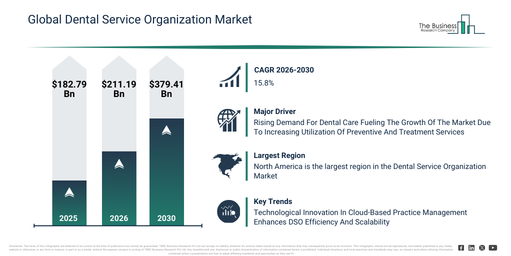
    The dental service organization market has experienced rapid growth in recent years. It is projected to increase from $182.79 billion in 2025 to $211.19 billion in 2026, achieving a compound annual growth rate (CAGR) of 15.5%. The market’s past growth is attributable to several factors, including the increasing administrative burden on dental practices, rising operating costs in independent clinics, the expansion of private dental practices, a growing demand for professional management services, and the adoption of electronic health records.

    The dental service organization market size is predicted to undergo rapid growth over the next few years. It is forecast to expand to $379.41 billion in 2030, demonstrating a compound annual growth rate (CAGR) of 15.8%. This projected growth can be attributed to the increasing consolidation of dental practices, a rising demand for scalable dental service platforms, the growing adoption of tele-dentistry services, the expansion of data-driven patient acquisition strategies, and the increasing utilization of AI-based diagnostics support. Major trends expected in this forecast period include the increasing adoption of centralized practice management models, the rising use of AI-driven scheduling and billing systems, the growing integration of digital patient records, the expansion of multi-specialty dental networks, and an enhanced focus on operational efficiency and standardization.

    Access Your Free Sample Report For In-Depth Market Analysis:

    https://www.thebusinessresearchcompany.com/sample.aspx?id=33086&type=smp

    Which Factors Are Influencing The Growth Of The Dental Service Organization Market?

    The increasing need for dental care is anticipated to drive the expansion of the dental service organization market in the future. Dental care encompasses the prevention, diagnosis, treatment, and management of conditions impacting the teeth, gums, and oral cavity, including regular checkups, cleanings, restorative procedures, and specialized treatments essential for maintaining oral health and overall well-being. This demand for dental care is rising due to heightened awareness of oral health and preventive dentistry, which encourages greater use of routine examinations and treatments. Dental service organizations support dental care by offering centralized management, technology investments, and operational assistance, empowering dental practices to deliver more accessible, efficient, and high-quality patient services. For instance, in August 2024, according to the NHS Business Services Authority, a UK-based government agency, in 2023/24, approximately 34 million courses of dental treatment were delivered, marking a 4.3% year-over-year increase, while around 18 million adult patients were treated in the 24 months ending March 2024, and total units of dental activity rose by 3.4% compared to 2022/23 to reach 73 million, indicating steady growth in overall dental service utilization. Consequently, the growing demand for dental care is a significant driver for the dental service organization market’s advancement.

    Which Segment Categories Are Included In The Dental Service Organization Market Segment Analysis?

    The dental service organization market covered in this report is segmented –

    1) By Type of Services: General Dentistry; Pediatric Dentistry; Orthodontics; Oral Maxillofacial Surgery; Periodontics; Cosmetic Dentistry; Endodontics; Prosthodontics

    2) By Practice Model: Single Specialty; Multi-Specialty; Corporate Owned; Independent Practitioner Networks; Franchise Models

    3) By Patient Demographics: Pediatric Patients; Adult Patients; Geriatric Patients; Special Needs Patients; Preventive Care Patients

    4) By Technology Utilization: Traditional Practices; Digital Records Management; Treatment Planning Software; Tele-dentistry Services; 3D Imaging And Printing Technologies; Artificial Intelligence (AI)-Driven Diagnostics

    5) By End-User: General Dentists; Dental Surgeons And Specialists

    Subsegments:

    1) By General Dentistry: Preventive Dental Care; Routine Oral Examinations; Dental Fillings And Restorations; Oral Health Education; Basic Tooth Extractions

    2) By Pediatric Dentistry: Infant Oral Health Care; Child Preventive Dental Services; Pediatric Restorative Dentistry; Behavior Management Dentistry; Special Needs Pediatric Dentistry

    3) By Orthodontics: Metal Braces Treatment; Ceramic Braces Treatment; Clear Aligner Therapy; Lingual Orthodontics; Early Interceptive Orthodontics

    4) By Oral Maxillofacial Surgery: Tooth Extraction Surgery; Dental Implant Surgery; Corrective Jaw Surgery; Facial Trauma Surgery; Oral Pathology Treatment

    5) By Periodontics: Gum Disease Treatment; Scaling And Root Planning; Periodontal Surgery; Gum Grafting Procedures; Dental Implant Maintenance

    6) By Cosmetic Dentistry: Teeth Whitening Services; Dental Veneers Treatment; Cosmetic Bonding; Smile Makeover Services; Aesthetic Dental Contouring

    7) By Endodontics: Root Canal Treatment; Endodontic Retreatment; Apical Surgery; Traumatic Dental Injury Management; Pulp Therapy

    8) By Prosthodontics: Dental Crowns And Bridges; Complete Dentures; Partial Dentures; Implant Supported Prosthetics

    Which Trends Are Influencing Demand In The Dental Service Organization Market?

    Leading companies in the dental service organization market are increasingly emphasizing technological innovations, such as integrated cloud-based practice management platforms, to enhance operational efficiency, support multi-location expansion, and strengthen centralized oversight. These platforms refer to enterprise software systems that enable dental service organizations to manage administrative, financial, clinical, and patient engagement functions across numerous affiliated practices through a single digital infrastructure. For instance, in February 2024, Planet DDS, a US-based dental technology company, introduced Denticon Reimagined, an enhanced cloud-based dental practice management platform specifically designed for large dental groups and DSOs. This platform provides advanced analytics for real-time performance tracking, built-in patient communication and engagement tools, and scalable cloud architecture that supports centralized billing, scheduling, and reporting across multiple locations.

    Who Are The Active Companies Shaping The Dental Service Organization Market?

    Major companies operating in the dental service organization market are Heartland Dental LLC, Aspen Dental Management Inc., Smile Brands Inc., Western Dental Services Inc., Dental Care Alliance LLC, Great Expressions Dental Centers LLC, Dykema Gossett PLLC, Affordable Dentures & Implants LLC, MB2 Dental Solutions LLC, InterDent Service Corporation, Guardian Dentistry Partners LLC, Benevis LLC, Specialty1 Partners LLC, Pacific Dental Services LLC, Bluetree Dental LLC, iDental Group LLC, Affordable Care LLC, Lollipop Dental LLC, Straine Dental Management LLC, Family Dental Care LLC.

    Get The Full Dental Service Organization Market Report:

    https://www.thebusinessresearchcompany.com/report/dental-service-organization-market-report

    Which Region Is The Top Contributor To The Dental Service Organization Market By Share?

    North America was the largest region in the dental service organization market in 2025. Asia-Pacific is expected to be the fastest-growing region in the forecast period. The regions covered in the dental service organization market report are Asia-Pacific, South East Asia, Western Europe, Eastern Europe, North America, South America, Middle East, Africa.

    Request A Customized Dental Service Organization Market Report For Competitive Insights:

    https://www.thebusinessresearchcompany.com/customise?id=33086&type=smp

    Browse Through More Reports Similar to the Global Dental Service Organization Market 2026, By The Business Research Company

    Dental Services Market 2026

    https://www.thebusinessresearchcompany.com/report/dental-services-market

    Dental Services Market 2026

    https://www.thebusinessresearchcompany.com/report/dental-services-market

    Dental Practice Management Market Report 2026

    https://www.thebusinessresearchcompany.com/report/dental-practice-management-global-market-report

    Get in touch with us:

    The Business Research Company: https://www.thebusinessresearchcompany.com/

    Americas +1 310-496-7795

    Asia +44 7882 955267 & +91 8897263534

    Europe +44 7882 955267

    Email us at info@tbrc.info

    Follow us on:

    LinkedIn: https://in.linkedin.com/company/the-business-research-company

    YouTube: https://www.youtube.com/channel/UC24_fI0rV8cR5DxlCpgmyFQ

    Global Market Model: https://www.thebusinessresearchcompany.com/global-market-model

  • Custom Recombinant Protein Production Services Market Outlook For 2026–2030 Covering Growth Drivers And Industry Trends

    Custom Recombinant Protein Production Services Market Outlook For 2026–2030 Covering Growth Drivers And Industry Trends

    The Business Research Company’s 2026 market reports feature enhanced tools like market attractiveness analysis, TAM assessment, and company scoring matrices, along with interactive dashboards, deeper supply chain insights, and startup coverage strengthening the depth, usability, and strategic value of insights.

    How Much Growth In Market Value Is Expected For The Custom Recombinant Protein Production Services Market Between 2026 And 2030?

    The custom recombinant protein production services market has experienced substantial growth in recent years. It is projected to increase from $5.79 billion in 2025 to $6.47 billion in 2026, achieving a compound annual growth rate (CAGR) of 11.8%. This historical expansion can be attributed to the proliferation of academic and clinical research activities, the greater utilization of recombinant proteins in drug discovery, the development of biopharmaceutical R&D pipelines, the emergence of advanced expression technologies, and an escalating demand for specialized research services.

    The custom recombinant protein production services market is anticipated to experience substantial growth in the upcoming years, with its size projected to reach $10.21 billion by 2030, exhibiting a compound annual growth rate (CAGR) of 12.1%. This expansion during the forecast period can be attributed to factors such as the escalating development of biologics and biosimilars, rising investments in precision medicine, the ongoing expansion of contract research outsourcing, a growing demand for scalable protein production, and the increasing adoption of advanced purification technologies. Significant trends expected during this period include a heightened demand for custom protein expression services, the rising use of mammalian expression systems, a growing focus on high-purity protein production, the expansion of rapid turnaround research services, and an enhanced emphasis on quality control and validation.

    Access Your Free Sample Report For In-Depth Market Analysis:

    https://www.thebusinessresearchcompany.com/sample.aspx?id=33077&type=smp

    Which Key Factors Are Driving The Custom Recombinant Protein Production Services Market Growth?

    An increasing emphasis on targeted and personalized therapies is anticipated to drive the expansion of the custom recombinant protein production services market moving ahead. These therapies involve medical interventions tailored to individual patient attributes, including genetic profiles or particular disease markers, aiming to enhance treatment efficacy and minimize adverse reactions. The growth in targeted and personalized therapies stems from advancements in precision medicine, allowing treatments to be customized for individual patient biology, thereby bettering clinical results and therapeutic effectiveness. Custom recombinant protein production services facilitate targeted and personalized therapies by supplying precisely engineered proteins essential for patient-specific drug creation, biomarker identification, and sophisticated biologic treatments. For example, in February 2024, the Personalized Medicine Coalition, a US-based hospital and health care entity, reported that in 2023, the FDA authorized 16 new personalized treatments for patients with rare diseases, an increase from six in 2022. Consequently, the heightened emphasis on targeted and personalized therapies is propelling the expansion of the custom recombinant protein production services market.

    What Are The Different Segment Types In The Custom Recombinant Protein Production Services Market Segment Breakdown?

    The custom recombinant protein production services market covered in this report is segmented –

    1) By Product: Antibodies; Enzymes; Cytokines; Growth Factors; Recombinant Hormones

    2) By Expression System: Mammalian; Bacteria; Insect; Yeast; Other Expression Systems

    3) By Application: Drug Discovery; Biopharmaceutical Production; Diagnostics Development; Academic Research; Industrial Enzymes

    4) By End User: Research Institutes; Biotechnology And Pharmaceutical Companies; Contract Research Organizations (CROs); Other End-Users

    Subsegments:

    1) By Antibodies: Monoclonal Antibodies; Polyclonal Antibodies; Chimeric Antibodies; Humanized Antibodies; Single Chain Antibodies

    2) By Enzymes: Proteases; Lipases; Amylases; Cellulases; Polymerases

    3) By Cytokines: Interleukins; Interferons; Tumor Necrosis Factors; Colony Stimulating Factors; Chemokines

    4) By Growth Factors: Epidermal Growth Factors; Fibroblast Growth Factors; Vascular Endothelial Growth Factors; Transforming Growth Factors; Platelet Derived Growth Factors

    5) By Recombinant Hormones: Insulin; Erythropoietin; Growth Hormone; Thyroid Stimulating Hormone; Follicle Stimulating Hormone

    Which Trends Are Guiding The Direction Of The Custom Recombinant Protein Production Services Market?

    Major companies operating in the custom recombinant protein production services market are prioritizing the introduction of innovative microbial expression platforms, including proprietary E. coli expression systems, to boost protein production, enhance scalability, and reduce costs, thereby expediting the delivery of next-generation biologics. A proprietary E. coli expression system refers to a specialized, engineered E. coli bacterial strain employed for producing recombinant proteins and plasmid DNA with high yield, stability, and efficiency, often customized for specific biotechnological or pharmaceutical applications. As an illustration, in March 2025, WuXi Biologics (Cayman) Inc., a China-based contract research, development, and manufacturing organization (CRDMO), unveiled its new EffiX Microbial Expression Platform. This platform achieves impressive titers exceeding 15 g/L for non-mAb recombinant proteins and more than 1 g/L for plasmid DNA. EffiX is positioned as a comprehensive offering for the development and manufacturing of microbial-derived biologics, improving scalability, quality, and productivity across the biopharmaceutical industry.

    Who Are The Well-Known Companies In The Custom Recombinant Protein Production Services Market?

    Major companies operating in the custom recombinant protein production services market are Thermo Fisher Scientific Inc., Merck KGaA, Applied Biological Materials Inc., R&D Systems Inc., GenScript Biotech Corporation, Sino Biological Inc, Biointron Biological Inc., OriGene Technologies Inc., Crown Bioscience Inc., Premas Biotech, Eurofins Discovery, ATUM, BPS Bioscience Inc., Novoprotein Scientific Inc., Kempbio Inc., Proteos Inc., Trenzyme GmbH, LakePharma Inc., Icosagen AS, and ProteoGenix SAS.

    Get The Full Custom Recombinant Protein Production Services Market Report:

    https://www.thebusinessresearchcompany.com/report/custom-recombinant-protein-production-services-market-report

    Which Geographic Region Dominates The Custom Recombinant Protein Production Services Market?

    North America was the largest region in the custom recombinant protein production services market in 2025. Asia-Pacific is expected to be the fastest-growing region in the forecast period. The regions covered in the custom recombinant protein production services market report are Asia-Pacific, South East Asia, Western Europe, Eastern Europe, North America, South America, Middle East, Africa.

    Request A Customized Custom Recombinant Protein Production Services Market Report For Competitive Insights:

    https://www.thebusinessresearchcompany.com/customise?id=33077&type=smp

    Browse Through More Reports Similar to the Global Custom Recombinant Protein Production Services Market 2026, By The Business Research Company

    Recombinant Proteins Market Report 2026

    https://www.thebusinessresearchcompany.com/report/recombinant-proteins-global-market-report

    Protein Engineering Market Report 2026

    https://www.thebusinessresearchcompany.com/report/protein-engineering-global-market-report

    Cell And Gene Therapy Supply Chain Or Logistics Market Report 2026

    https://www.thebusinessresearchcompany.com/report/cell-and-gene-therapy-supply-chain-or-logistics-global-market-report

    Get in touch with us:

    The Business Research Company: https://www.thebusinessresearchcompany.com/

    Americas +1 310-496-7795

    Asia +44 7882 955267 & +91 8897263534

    Europe +44 7882 955267

    Email us at info@tbrc.info

    Follow us on:

    LinkedIn: https://in.linkedin.com/company/the-business-research-company

    YouTube: https://www.youtube.com/channel/UC24_fI0rV8cR5DxlCpgmyFQ

    Global Market Model: https://www.thebusinessresearchcompany.com/global-market-model
  • Rising Smartphone Adoption Driving Growth in the Consumer mHealth Market Due to Increasing Accessibility and Convenience of Digital Health Services Is Contributing To Changes In The Consumer mHealth Market

    Rising Smartphone Adoption Driving Growth in the Consumer mHealth Market Due to Increasing Accessibility and Convenience of Digital Health Services Is Contributing To Changes In The Consumer mHealth Market

    The Business Research Company’s 2026 market reports feature enhanced tools like market attractiveness analysis, TAM assessment, and company scoring matrices, along with interactive dashboards, deeper supply chain insights, and startup coverage strengthening the depth, usability, and strategic value of insights.

    How Does The Market Size Of The Consumer mHealth Market Compare Between 2026 And 2030?

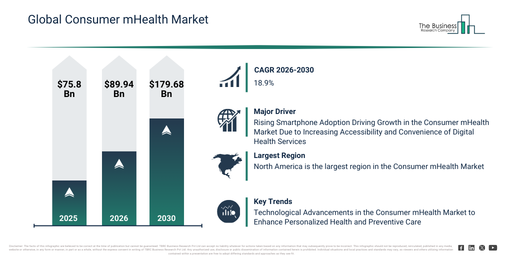
    The consumer mhealth market size has undergone rapid expansion in recent years. It is anticipated to increase from $75.8 billion in 2025 to $89.94 billion in 2026, showing a compound annual growth rate (CAGR) of 18.7%. The expansion observed in the historic period can be attributed to factors such as the rise in smartphone and wearable penetration, increasing consumer health awareness, the expansion of fitness and wellness applications, the adoption of mobile health platforms, and a rising demand for self-managed healthcare.

    The consumer mhealth market is anticipated to experience substantial expansion in the coming years. By 2030, its valuation is projected to reach $179.68 billion, demonstrating a compound annual growth rate (CAGR) of 18.9%. This projected increase is driven by factors such as the wider uptake of tailored digital health solutions, the growing incorporation of artificial intelligence (AI) into consumer health applications, the broadening of remote monitoring for long-term illnesses, a heightened emphasis on managing mental well-being, and a surging need for wellness insights based on data. Key developments during this period are expected to involve a greater prevalence of wearable health tracking devices, an increased utilization of AI-powered wellness analytics, more widespread integration of remote health monitoring, the proliferation of individualized health coaching platforms, and a strengthened commitment to preventative healthcare strategies.

    Access Your Free Sample Report For In-Depth Market Analysis:

    https://www.thebusinessresearchcompany.com/sample.aspx?id=33073&type=smp

    Which Major Drivers Are Influencing The Expansion Of The Consumer mHealth Market?

    The expanding use of smartphones is anticipated to fuel the expansion of the consumer mobile health (mHealth) sector in the foreseeable future. Smartphone adoption indicates the degree to which people or households possess and actively utilize smartphones, typically quantified by the proportion of mobile users equipped with smartphone-enabled devices. The extensive accessibility of economical mobile internet and smartphones has led to a notable surge in adoption figures. Enhanced smartphone penetration facilitates broader access to mobile health applications, remote monitoring solutions, fitness tracking devices, and telehealth services, consequently enlarging the consumer mHealth market. For example, as reported by Priori Data, a Germany-based market intelligence platform, in January 2025, smartphone adoption in the U.S. maintained its consistent ascent, increasing from around 311 million users in 2023 to roughly 316 million in 2024. Consequently, the rising rate of smartphone adoption is propelling the expansion of the consumer mHealth market.

    How Is The Consumer mHealth Market Organized By Segment Classification?

    The consumer mhealth market covered in this report is segmented –

    1) By Product Type: Wearable Devices; Mobile Health Apps; Telemedicine; Other Product Types

    2) By Technology: Bluetooth; Wireless Fidelity (Wi Fi); Near-Field Communication (NFC); Cloud-Based Platforms

    3) By Application: Healthcare; Fitness; Wellness; Chronic Disease Management; Mental Health

    4) By End-User: Hospitals; Clinics; Home Healthcare; Individuals

    Subsegments:

    1) By Wearable Devices: Smart Watches; Fitness Trackers; Smart Bands; Health Monitoring Patches; Wearable Medical Sensors

    2) By Mobile Health Apps: Fitness And Wellness Apps; Chronic Disease Management Apps; Medication Reminder Apps; Mental Health And Stress Management Apps; Nutrition And Diet Tracking Apps

    3) By Telemedicine: Virtual Doctor Consultation Platforms; Remote Patient Monitoring Solutions; Telepsychiatry Services; Teleconsultation And Follow Up Services; Digital Prescription And Reporting Platforms

    4) By Other Product Types: Connected Medical Devices; Home Health Monitoring Systems; Health Data Management Platforms; Wellness And Preventive Care Solutions

    Which Trends Are Shaping The Consumer mHealth Market?

    Major companies operating in the consumer mHealth market are prioritizing technological advancements, such as AI-integrated preventive health diagnostics platforms. This focus is driven by the increasing consumer awareness of proactive health management and chronic condition prevention, which in turn fuels a growing demand for personalized, real-time health insights and early disease detection. AI-integrated preventive health diagnostics platforms merge traditional biometric data collection (like wearables or blood tests) with artificial intelligence to offer predictive analytics, longitudinal tracking, and actionable health insights. These platforms go beyond standard single-point measurements by correlating lifestyle patterns with clinical biomarkers, thereby providing a more holistic view of wellbeing. For instance, in July 2025, Ultrahuman Healthcare, an India-based health-tech company, introduced Blood Vision, an innovative AI-enabled preventive blood-testing and diagnostics service. This service integrates data from over 100 biomarkers with real-time wearable lifestyle data gathered by its Ultrahuman Ring AIR and related devices, providing users with a comprehensive longitudinal health profile, personalized recommendations, and clinician-grade summaries.

    Who Are The Industry Participants Involved In The Consumer mHealth Market?

    Major companies operating in the consumer mhealth market are Apple Inc., Samsung Electronics Co. Ltd., Abbott Laboratories, Medtronic plc, Philips Healthcare, Omron Healthcare Inc., Dexcom Inc., Teladoc Health Inc., Athenahealth Inc., Masimo Corporation, Fitbit Inc, Veradigm Inc., Ada Health GmbH, Withings, MyFitnessPal Inc., AliveCor Inc., AgaMatrix Inc., DarioHealth Corp., Ovia Health Inc., Higi SH LLC

    Get The Full Consumer mHealth Market Report:

    https://www.thebusinessresearchcompany.com/report/consumer-mhealth-market-report

    Where Is The Consumer mHealth Market Primarily Concentrated By Region?

    North America was the largest region in the consumer mHealth market in 2025. Asia-Pacific is expected to be the fastest-growing region in the forecast period. The regions covered in the consumer mhealth market report are Asia-Pacific, South East Asia, Western Europe, Eastern Europe, North America, South America, Middle East, Africa.

    Request A Customized Consumer mHealth Market Report For Competitive Insights:

    https://www.thebusinessresearchcompany.com/customise?id=33073&type=smp

    Browse Through More Reports Similar to the Global Consumer mHealth Market 2026, By The Business Research Company

    Consumer Healthcare Market Report 2026

    https://www.thebusinessresearchcompany.com/report/consumer-healthcare-global-market-report

    Mhealth Apps Market Report 2026

    https://www.thebusinessresearchcompany.com/report/mhealth-apps-global-market-report

    Healthcare Advertising Market Report 2026

    https://www.thebusinessresearchcompany.com/report/healthcare-advertising-global-market-report

    Get in touch with us:

    The Business Research Company: https://www.thebusinessresearchcompany.com/

    Americas +1 310-496-7795

    Asia +44 7882 955267 & +91 8897263534

    Europe +44 7882 955267

    Email us at info@tbrc.info

    Follow us on:

    LinkedIn: https://in.linkedin.com/company/the-business-research-company

    YouTube: https://www.youtube.com/channel/UC24_fI0rV8cR5DxlCpgmyFQ

    Global Market Model: https://www.thebusinessresearchcompany.com/global-market-model
  • The Clinically Isolated Syndrome Market Is Evolving Due To Growing Emphasis On Personalized Medicine Fueling The Growth Of The Market Due To Tailored Early Diagnosis, Prognosis, And Disease-modifying Treatment Decisions

    The Clinically Isolated Syndrome Market Is Evolving Due To Growing Emphasis On Personalized Medicine Fueling The Growth Of The Market Due To Tailored Early Diagnosis, Prognosis, And Disease-modifying Treatment Decisions

    The Business Research Company’s 2026 market reports feature enhanced tools like market attractiveness analysis, TAM assessment, and company scoring matrices, along with interactive dashboards, deeper supply chain insights, and startup coverage strengthening the depth, usability, and strategic value of insights.

    What Is The Forecasted Market Size Trajectory Of The Clinically Isolated Syndrome Market From 2026 To 2030?

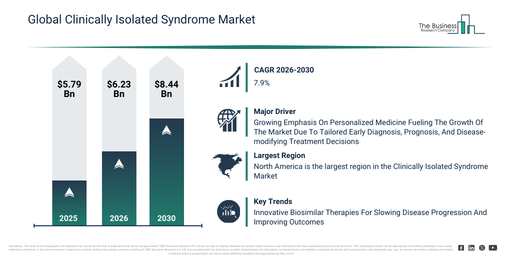
    The clinically isolated syndrome market has shown robust growth over recent years. It is anticipated to expand from $5.79 billion in 2025 to $6.23 billion in 2026, exhibiting a compound annual growth rate (CAGR) of 7.6%. This historical expansion can be attributed to several factors including better access to magnetic resonance imaging diagnostics, heightened awareness of early neurological symptoms, the proliferation of neurology specialty clinics, the embrace of disease-modifying therapies, and the presence of standardized diagnostic protocols.

    The clinically isolated syndrome market is projected to experience substantial growth in the upcoming years, with its valuation expected to reach $8.44 billion by 2030, driven by a compound annual growth rate (CAGR) of 7.9%. This anticipated expansion during the forecast period is largely attributable to an increasing emphasis on early multiple sclerosis prevention, the rising application of artificial intelligence in neurodiagnostics, the broadening availability of remote patient monitoring solutions, increasing investment in biomarker research, and a growing demand for personalized neurological care. Key trends anticipated in the forecast period include the expanded use of advanced neuroimaging analytics, a rising adoption of early intervention treatment strategies, the wider integration of digital patient monitoring platforms, an expansion in biomarker-based risk assessment, and a heightened focus on personalized disease management.

    Access Your Free Sample Report For In-Depth Market Analysis:

    https://www.thebusinessresearchcompany.com/sample.aspx?id=33067&type=smp

    What Key Drivers Are Fueling The Growth Of The Clinically Isolated Syndrome Market?

    The increased focus on personalized medicine is expected to stimulate the expansion of the clinically isolated syndrome market in the coming years. Personalized medicine involves a medical methodology that customizes treatment and prevention strategies according to an individual’s genetic makeup, lifestyle, and environmental factors. The emphasis on personalized medicine is escalating because of its potential to enhance treatment effectiveness and minimize adverse reactions by targeting therapies to specific patient profiles. Within clinically isolated syndrome, personalized medicine enables healthcare professionals to tailor early diagnostic, prognostic, and disease-modifying treatment decisions based on individual patient biomarkers, imaging patterns, and risk profiles, aiming to postpone or prevent the progression to multiple sclerosis. For example, in February 2024, the Personalized Medicine Coalition, a US-based non-profit entity, noted that in 2023, the US Food and Drug Administration (FDA) authorized 16 new personalized treatments for rare disease patients, indicating a considerable rise from the six approvals in 2022. Thus, the growing importance of personalized medicine is propelling the growth of the clinically isolated syndrome market.

    Which Segments Define The Clinically Isolated Syndrome Market Segment Structure?

    The clinically isolated syndrome market covered in this report is segmented –

    1) By Product And Service Type: Diagnostic Services; Disease-Modifying Therapies; Monitoring And Management Services; Digital Monitoring And Decision Support Tools

    2) By Drug Class: Interferon Beta; Glatiramer Acetate; Monoclonal Antibodies; Oral Immunomodulators; Other Drug Classes

    3) By Route Of Administration: Oral; Injectable; Intravenous

    4) By End User: Hospitals; Neurology Clinics; Diagnostic Centers; Home Care Settings

    Subsegments:

    1) By Diagnostic Services: Magnetic Resonance Imaging Diagnostic Services; Cerebrospinal Fluid Analysis Services; Evoked Potential Testing Services; Neurological Examination Services; Laboratory Biomarker Testing Services; Advanced Imaging Interpretation Services

    2) By Disease-Modifying Therapies: Injectable Immunomodulatory Therapies; Oral Disease Modifying Therapies; Monoclonal Antibody Based Therapies; Corticosteroid Based Therapies; Emerging Pharmacological Therapies

    3) By Monitoring And Management Services: Clinical Follow Up Monitoring Services; Relapse Management Services; Physical And Cognitive Rehabilitation Services; Patient Counseling And Support Services; Long Term Disease Management Programs

    4) By Digital Monitoring And Decision Support Tools: Remote Patient Monitoring Platforms; Clinical Decision Support Software; Mobile Health Applications; Artificial Intelligence Based Analytics Tools; Electronic Health Record Integrated Solutions

    What Trends Are Influencing The Clinically Isolated Syndrome Market?

    Leading companies in the clinically isolated syndrome market are concentrating on creating advanced treatments, including biosimilar disease-modifying therapies, aimed at decelerating disease progression, decreasing relapse frequency, and enhancing long-term neurological health. These biosimilar disease-modifying therapies are biological medications that closely resemble an established reference biologic, engineered to alter the core disease mechanism instead of merely alleviating symptoms, all while providing equivalent safety, effectiveness, and quality. An example of this is the approval in August 2023 by the FDA for Tyruko (natalizumab-sztn), developed by Sandoz, a generic and biosimilar medicines firm based in Switzerland. This product is the inaugural and sole biosimilar for treating relapsing forms of multiple sclerosis (MS). Its primary objective is to diminish MS relapses by up to 70%, impede the advancement of disability, and restrict the formation of new brain lesions by blocking immune cells from entering the central nervous system. This treatment is given through IV infusion every four weeks, under a REMS program due to the risk of PML. Significant advantages encompass its comparable efficacy, safety, and immunogenicity when contrasted with the original product. Furthermore, its planned US launch in November 2025 is expected to provide substantial cost benefits and expanded availability for individuals with highly active disease who have not responded to alternative treatments.

    Who Are The Established Players Within The Clinically Isolated Syndrome Market?

    Major companies operating in the clinically isolated syndrome market are F. Hoffmann-La Roche Ltd., Bayer AG., Sanofi S.A., Novartis AG., Bristol-Myers Squibb Company, Siemens Healthineers AG., Merck KGaA, GE HealthCare, Teva Pharmaceutical Industries Ltd., Laboratory Corporation of America Holdings, Biogen Inc., Atara Biotherapeutics, Cipla Limited, Lupin Limited, Alembic Pharmaceuticals, TG Therapeutics Inc., Metropolis Healthcare, Mapi Pharma, Cortechs.AI Inc., Polpharma Biologics

    Get The Full Clinically Isolated Syndrome Market Report:

    https://www.thebusinessresearchcompany.com/report/clinically-isolated-syndrome-market-report

    Which Region Has The Greatest Market Share In The Clinically Isolated Syndrome Market?

    North America was the largest region in the clinically isolated syndrome market in 2025. Asia-Pacific is expected to be the fastest-growing region in the forecast period. The regions covered in the clinically isolated syndrome market report are Asia-Pacific, South East Asia, Western Europe, Eastern Europe, North America, South America, Middle East, Africa.

    Request A Customized Clinically Isolated Syndrome Market Report For Competitive Insights:

    https://www.thebusinessresearchcompany.com/customise?id=33067&type=smp

    Browse Through More Reports Similar to the Global Clinically Isolated Syndrome Market 2026, By The Business Research Company

    Rare Diseases Treatment Market Report 2026

    https://www.thebusinessresearchcompany.com/report/rare-diseases-treatment-global-market-report

    Rare Neurological Disease Treatment Market Report 2026

    https://www.thebusinessresearchcompany.com/report/rare-neurological-disease-treatment-global-market-report

    Rare Disease Diagnostics Market Report 2026

    https://www.thebusinessresearchcompany.com/report/rare-disease-diagnostics-global-market-report

    Get in touch with us:

    The Business Research Company: https://www.thebusinessresearchcompany.com/

    Americas +1 310-496-7795

    Asia +44 7882 955267 & +91 8897263534

    Europe +44 7882 955267

    Email us at info@tbrc.info

    Follow us on:

    LinkedIn: https://in.linkedin.com/company/the-business-research-company

    YouTube: https://www.youtube.com/channel/UC24_fI0rV8cR5DxlCpgmyFQ

    Global Market Model: https://www.thebusinessresearchcompany.com/global-market-model

  • The Chronic Idiopathic Urticaria Treatment Market Is Witnessing Impact From The Increasing Focus On Biologics Is Fueling Market Growth Due To High Demand For Targeted Therapies

    The Chronic Idiopathic Urticaria Treatment Market Is Witnessing Impact From The Increasing Focus On Biologics Is Fueling Market Growth Due To High Demand For Targeted Therapies

    The Business Research Company’s 2026 market reports feature enhanced tools like market attractiveness analysis, TAM assessment, and company scoring matrices, along with interactive dashboards, deeper supply chain insights, and startup coverage strengthening the depth, usability, and strategic value of insights.

    By 2030, What Market Size Is The Chronic Idiopathic Urticaria Treatment Market Expected To Reach Based On Its 2026 Value?

    The chronic idiopathic urticaria treatment market has experienced robust expansion in recent years. It is anticipated to grow from $7.24 billion in 2025 to $7.89 billion in 2026, progressing at a compound annual growth rate (CAGR) of 9.0%. This historical growth can be primarily attributed to several factors, including the increasing diagnosis of chronic urticaria, the accessibility of second-line antihistamine therapies, the widespread adoption of stepwise treatment protocols, the expansion of allergy specialty clinics, and the rising utilization of immunomodulatory drugs.

    The chronic idiopathic urticaria treatment market is projected to experience substantial expansion in the coming years. This market is anticipated to reach a valuation of $11.23 billion by 2030, demonstrating a compound annual growth rate (CAGR) of 9.2%. Several factors contribute to this growth over the projected period, including a heightened demand for biologic therapies, a growing emphasis on individualized immunology care, the proliferation of digital tools for disease management, increased investment in new urticaria treatments, and improved patient understanding and adherence to treatment regimens. Key trends anticipated during the forecast period encompass a greater uptake of biologic treatments for patients who do not respond to conventional therapies, an expanding utilization of tailored treatment approaches, the increasing incorporation of digital instruments for symptom tracking, a broader availability of injectable therapeutic choices, and an intensified commitment to achieving sustained disease management.

    Access Your Free Sample Report For In-Depth Market Analysis:

    https://www.thebusinessresearchcompany.com/sample.aspx?id=33064&type=smp

    Which Primary Drivers Are Impacting The Chronic Idiopathic Urticaria Treatment Market Growth?

    An escalating emphasis on biologic therapies is projected to fuel the expansion of the chronic idiopathic urticaria treatment market in the coming period. These therapeutic agents, known as biologics, originate from living entities or their constituents and are designed to specifically target immune system pathways for disease management. This heightened focus on biologics stems from breakthroughs in biotechnology and immunology, facilitating the creation of more accurate and potent therapies that address the core mechanisms of immune-driven ailments, rather than just alleviating their symptoms. Specifically for chronic idiopathic urticaria, biologics target the fundamental immune pathways and mast cell activation involved, thereby transforming treatment approaches and offering patients superior, enduring symptom management. As an illustration, in February 2025, the World Health Organization (WHO), an intergovernmental body situated in Switzerland, reported that its 2023 WHO Essential Medicines List featured 81 biologic therapies, constituting more than 15% of all medications on the list. Consequently, the intensifying concentration on biologics is acting as a catalyst for the expansion of the chronic idiopathic urticaria treatment market.

    How Is Segmentation Applied In The Chronic Idiopathic Urticaria Treatment Market Segment Analysis?

    The chronic idiopathic urticaria treatment market covered in this report is segmented –

    1) By Types: Tablets; Capsules; Creams; Lotions; Injections

    2) By Drug Class: Antihistamines; Corticosteroids; Leukotriene Receptor Antagonists; Immunosuppressants; Biologic Therapies; Other Drug Class

    3) By Route Of Administration: Oral; Injectable; Topical

    4) By Distribution Channel: Hospital Pharmacies; Retail Pharmacies; Online Pharmacies

    Subsegments:

    1) By Tablets: Immediate Release Tablets; Extended Release Tablets; Enteric Coated Tablets; Chewable Tablets; Orally Disintegrating Tablets

    2) By Capsules: Hard Gelatin Capsules; Soft Gelatin Capsules; Sustained Release Capsules; Delayed Release Capsules

    3) By Creams: Medicated Topical Creams; Anti Inflammatory Creams; Antifungal Creams; Antibacterial Creams; Moisturizing Therapeutic Creams

    4) By Lotions: Medicated Therapeutic Lotions; Anti Inflammatory Lotions; Antiseptic Lotions; Moisturizing Lotions; Specialty Dermatological Lotions

    5) By Injections: Intravenous Injections; Intramuscular Injections; Subcutaneous Injections; Pre Filled Syringe Injections; Auto Injector Based Injections

    Which Trends Are Shaping Growth In The Chronic Idiopathic Urticaria Treatment Market?

    Leading companies within the chronic idiopathic urticaria treatment market are concentrating on creating novel solutions, particularly monoclonal antibody therapies, aimed at delivering precise and enduring relief to individuals who do not respond to conventional treatments. These monoclonal antibody therapies represent biologic medications engineered to specifically target elements of the immune system, including immunoglobulin E (IgE) and other inflammatory agents responsible for chronic hives, thereby providing a more accurate mechanism of action than typical antihistamines or corticosteroids. As an example, in September 2025, Celltrion Inc., a biopharmaceutical enterprise based in South Korea, introduced Omriclo, an omalizumab biosimilar, into the market in Norway. This product contains the identical active monoclonal antibody found in Xolair, operates by neutralizing circulating IgE, and is administered through subcutaneous injection. Its distinguishing characteristics encompass its status as a first-to-market drug in Europe, improved availability via local distribution networks, and the possibility of generating cost efficiencies for healthcare systems. The therapy is designed for chronic idiopathic urticaria patients who continue to experience symptoms even with standard treatment, serving as a biologic substitute for traditional interventions and contributing to better symptom control, fewer flare-ups, and the potential for an elevated overall quality of life by lessening dependence on prolonged antihistamine or corticosteroid usage.

    Who Are The Companies Participating In The Chronic Idiopathic Urticaria Treatment Market Environment?

    Major companies operating in the chronic idiopathic urticaria treatment market are F. Hoffmann-La Roche Ltd., Sanofi S.A., Novartis AG., AstraZeneca PLC, GlaxoSmithKline plc, Teva Pharmaceutical Industries Ltd., Regeneron Pharmaceuticals Inc., Incyte Corporation, Dr. Reddy’s Laboratories Ltd., Celltrion Inc., Yuhan Corporation, Kiniksa Pharmaceuticals Ltd., Celldex Therapeutics Inc., Septerna Therapeutics Inc., Carna Biosciences Inc., United BioPharma Inc., Recludix Pharma Inc., Jasper Therapeutics Inc., Evommune Inc., ARS Pharmaceuticals Inc

    Get The Full Chronic Idiopathic Urticaria Treatment Market Report:

    https://www.thebusinessresearchcompany.com/report/chronic-idiopathic-urticaria-treatment-market-report

    Where Is The Chronic Idiopathic Urticaria Treatment Market Most Concentrated Geographically?

    North America was the largest region in the chronic idiopathic urticaria treatment market in 2025. Asia-Pacific is expected to be the fastest-growing region in the forecast period. The regions covered in the chronic idiopathic urticaria treatment market report are Asia-Pacific, South East Asia, Western Europe, Eastern Europe, North America, South America, Middle East, Africa.

    Request A Customized Chronic Idiopathic Urticaria Treatment Market Report For Competitive Insights:

    https://www.thebusinessresearchcompany.com/customise?id=33064&type=smp

    Browse Through More Reports Similar to the Global Chronic Idiopathic Urticaria Treatment Market 2026, By The Business Research Company

    Chronic Spontaneous Urticaria Market Report 2026

    https://www.thebusinessresearchcompany.com/report/chronic-spontaneous-urticaria-global-market-report

    Allergic Rhinitis Drugs Market Report 2026

    https://www.thebusinessresearchcompany.com/report/allergic-rhinitis-drugs-global-market-report

    Allergy Treatment Market Report 2026

    https://www.thebusinessresearchcompany.com/report/allergy-treatment-global-market-report

    Get in touch with us:

    The Business Research Company: https://www.thebusinessresearchcompany.com/

    Americas +1 310-496-7795

    Asia +44 7882 955267 & +91 8897263534

    Europe +44 7882 955267

    Email us at info@tbrc.info

    Follow us on:

    LinkedIn: https://in.linkedin.com/company/the-business-research-company

    YouTube: https://www.youtube.com/channel/UC24_fI0rV8cR5DxlCpgmyFQ

    Global Market Model: https://www.thebusinessresearchcompany.com/global-market-model
  • Cheek Augmentation Market Analysis With Focus On Growth Potential And Future Outlook

    Cheek Augmentation Market Analysis With Focus On Growth Potential And Future Outlook

    The Business Research Company’s 2026 market reports feature enhanced tools like market attractiveness analysis, TAM assessment, and company scoring matrices, along with interactive dashboards, deeper supply chain insights, and startup coverage strengthening the depth, usability, and strategic value of insights.

    How Is The Market Size Of The Cheek Augmentation Market Expected To Scale Between 2026 And 2030?

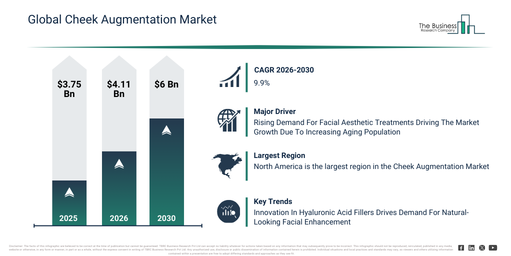
    The cheek augmentation market has observed robust expansion in recent years. This market is expected to increase from $3.75 billion in 2025 to $4.11 billion in 2026, registering a compound annual growth rate (CAGR) of 9.7%. The surge during the preceding period can be linked to the growing acceptance of cosmetic procedures, the rise of medical aesthetics clinics, the accessibility of advanced dermal fillers, the escalating influence of aesthetic medicine, and the proliferation of urban cosmetic service providers.

    The cheek augmentation market is projected to experience substantial expansion over the coming years, reaching $6 billion by 2030, demonstrating a compound annual growth rate (CAGR) of 9.9%. This expansion during the forecast period is driven by several factors, including the rising demand for less invasive cosmetic procedures, the increasing use of AI-assisted facial analysis, the growth of medical tourism focused on aesthetics, a heightened emphasis on customized beauty solutions, and greater financial commitments to aesthetic technology platforms. Key trends anticipated in this period encompass the greater application of 3D facial imaging for treatment strategizing, an increasing call for non-surgical injectable treatments, a stronger inclination towards bespoke aesthetic designs, the broadening scope of minimally invasive facial contouring, and an intensified pursuit of natural-appearing outcomes.

    Access Your Free Sample Report For In-Depth Market Analysis:

    https://www.thebusinessresearchcompany.com/sample.aspx?id=33062&type=smp

    Which Important Drivers Are Guiding The Cheek Augmentation Market Growth?

    The anticipated expansion of the cheek augmentation market is projected to be driven by the increasing demand for facial aesthetic treatments. These treatments are cosmetic interventions crafted to enhance or rejuvenate facial features, thereby boosting appearance and self-confidence. This growing demand for facial aesthetic treatments is attributed to an expanding aging demographic desiring a youthful look, with natural facial volume loss and wrinkles motivating numerous individuals to seek procedures that restore youthfulness and improve self-confidence. Cheek augmentation complements facial aesthetic treatments by replenishing mid-face volume, refining facial contours, correcting symmetry, and providing a natural lifting effect, all contributing to a more youthful, balanced, and rejuvenated overall facial appearance. For example, in June 2024, the American Society of Plastic Surgeons, a US-based non-profit organization, reported that minimally invasive procedures climbed by 7% in 2023, exceeding surgical procedures by 2%. While plastic surgeries themselves increased by 5%, minimally invasive procedures showed a 7% year-over-year growth. Hence, the escalating demand for facial aesthetic treatments is undeniably a key driver for the expansion of the cheek augmentation market.

    Which Segment Types Are Examined In The Cheek Augmentation Market Segment Study?

    The cheek augmentation market covered in this report is segmented –

    1) By Procedure Type: Surgical Cheek Implants; Injectable Fillers; Fat Grafting Or Autologous Fat Transfer

    2) By Product: Derma Fillers; Implant; Malar Implant; Submalar Implant; Combined Implant; Other Products

    3) By Technique: Minimally Invasive Procedures; Conventional Surgical Procedures

    4) By End-User: Specialty Aesthetic Clinics Market; Medical Spas Market; Hospitals Market

    Subsegments:

    1) By Surgical Cheek Implants: Silicone Implants; Porous Polyethylene Implants; Anatomical Implants

    2) By Injectable Fillers: Hyaluronic Acid Fillers; Calcium Hydroxylapatite Fillers; Poly L Lactic Acid Fillers; Polymethyl Methacrylate Fillers

    3) By Fat Grafting Or Autologous Fat Transfer: Micro Fat Grafting; Nano Fat Grafting; Structural Fat Grafting

    What Trends Are Influencing The Evolution Of The Cheek Augmentation Market?

    Major companies operating in the cheek augmentation market are concentrating on developing innovative products, such as advanced hyaluronic acid-based dermal fillers, to boost facial volume and contour with improved safety and longer-lasting results. These advanced hyaluronic acid-based dermal fillers are injectable gels formulated to mimic the body’s natural hyaluronic acid, thereby helping to restore cheek volume, enhance contour, and improve facial symmetry by attracting and retaining moisture for a smoother, more youthful appearance. For instance, in January 2026, Revance Therapeutics Inc., a US-based pharmaceutical company, and TEOXANE SA., a Switzerland-based manufacturing company, received U.S. Food and Drug Administration (FDA) approval for RHA Dynamic Volume, a next-generation hyaluronic acid dermal filler developed for cheek augmentation and the correction of age-related midface contour deficiencies. The product is engineered using Preserved Network Technology, a gentle, heat-free crosslinking process that helps maintain the natural structure of hyaluronic acid, resulting in high dynamic strength, elasticity, and durability compared with conventional fillers. It is designed to provide deep structural support while adapting to facial movement, allowing natural-looking results both at rest and in motion, and has demonstrated comparable clinical effectiveness with fewer treatment sessions and touch-ups in late-stage clinical studies.

    Which Players Are Part Of The Competitive Landscape Of The Cheek Augmentation Market?

    Major companies operating in the cheek augmentation market are AbbVie Inc., LG Chem Life Sciences Ltd., Stryker Corporation, Zimmer Biomet Holdings Inc., Merz Aesthetics GmbH, KLS Martin Group, Sinclair Pharma Limited, Medartis Holding AG, Hugel Inc., Revance Therapeutics Inc., Medytox Inc., Anika Therapeutics Inc., Croma-Pharma GmbH, GC Aesthetics Ltd., Regen Lab SA, Teoxane Laboratories SA, Human Med AG, BioPlus Co. Ltd., Polytech Health & Aesthetics GmbH, and Sebbin Group.

    Get The Full Cheek Augmentation Market Report:

    https://www.thebusinessresearchcompany.com/report/cheek-augmentation-market-report

    Which Region Is The Largest In The Cheek Augmentation Market?

    North America was the largest region in the cheek augmentation market in 2025. Asia-Pacific is expected to be the fastest-growing region in the forecast period. The regions covered in the cheek augmentation market report are Asia-Pacific, South East Asia, Western Europe, Eastern Europe, North America, South America, Middle East, Africa.

    Request A Customized Cheek Augmentation Market Report For Competitive Insights:

    https://www.thebusinessresearchcompany.com/customise?id=33062&type=smp

    Browse Through More Reports Similar to the Global Cheek Augmentation Market 2026, By The Business Research Company

    Chin Augmentation Market Report 2026

    https://www.thebusinessresearchcompany.com/report/chin-augmentation-global-market-report

    Human Augmentation Market Report 2026

    https://www.thebusinessresearchcompany.com/report/human-augmentation-global-market-report

    Buttock Augmentation Market Report 2026

    https://www.thebusinessresearchcompany.com/report/buttock-augmentation-global-market-report

    Get in touch with us:

    The Business Research Company: https://www.thebusinessresearchcompany.com/

    Americas +1 310-496-7795

    Asia +44 7882 955267 & +91 8897263534

    Europe +44 7882 955267

    Email us at info@tbrc.info

    Follow us on:

    LinkedIn: https://in.linkedin.com/company/the-business-research-company

    YouTube: https://www.youtube.com/channel/UC24_fI0rV8cR5DxlCpgmyFQ

    Global Market Model: https://www.thebusinessresearchcompany.com/global-market-model

  • Cell And Gene Therapy Contract Research Organization Market Developments Shaping Growth Across The Forecast Period

    Cell And Gene Therapy Contract Research Organization Market Developments Shaping Growth Across The Forecast Period

    The Business Research Company’s 2026 market reports feature enhanced tools like market attractiveness analysis, TAM assessment, and company scoring matrices, along with interactive dashboards, deeper supply chain insights, and startup coverage strengthening the depth, usability, and strategic value of insights.

    How Large Will The Cell And Gene Therapy Contract Research Organization Market Be By 2030 Compared To Its 2026 Market Size?

    The cell and gene therapy contract research organization market has experienced significant expansion in recent years. This market is projected to grow from $6.92 billion in 2025 to $7.76 billion in 2026, achieving a compound annual growth rate (CAGR) of 12.1%. Historically, this growth has been driven by an increasing number of early-stage cell and gene therapy programs, limited internal development capabilities, the expansion of rare disease research pipelines, escalating regulatory complexity in advanced therapies, and a rising dependence on external research expertise.

    The cell and gene therapy contract research organization market size is anticipated to undergo substantial growth in the upcoming period. This market is set to reach $12.36 billion by 2030, exhibiting a compound annual growth rate (CAGR) of 12.3%. This forecasted growth is primarily fueled by a rise in clinical trial engagement for gene therapies, the broadening scope of personalized medicine development, increasing capital allocation towards oncology and genetic disorder studies, a heightened need for quicker development schedules, and more frequent partnerships between biotechnology companies and Contract Research Organizations. Prominent trends anticipated in the forecast period are a greater reliance on external providers for cell and gene therapy investigations, an escalating requirement for comprehensive preclinical and clinical service offerings, an intensified emphasis on regulatory and compliance knowledge, the broadening provision of vector development and production assistance, and the improved application of data-informed trial oversight.

    Access Your Free Sample Report For In-Depth Market Analysis:

    https://www.thebusinessresearchcompany.com/sample.aspx?id=33057&type=smp

    What Key Factors Are Shaping The Cell And Gene Therapy Contract Research Organization Market Landscape?

    The increasing emphasis on personalized medicine and targeted treatments is anticipated to drive the expansion of the cell and gene therapy contract research organization (CRO) market in the future. Personalized medicine and targeted therapeutics encompass creating treatments specifically designed for unique genetic, molecular, or cellular profiles, aiming to enhance effectiveness and minimize side effects. The attention on personalized medicine is growing because regulators and healthcare systems are increasingly prioritizing therapies based on precision to tackle intricate diseases and attain improved clinical outcomes. Cell and gene therapy contract research organizations (CROs) assist personalized medicine through offering expert preclinical, clinical, and regulatory services essential for the development, testing, and validation of intricate gene- and cell-based therapeutic products. As an illustration, in April 2025, the Personalized Medicine Coalition, a US-based nonprofit organization, reported that the Food and Drug Administration (FDA) approved 18 personalized medicines in 2024, which represented roughly 38% of all newly approved therapeutic molecular entities. Consequently, the growing emphasis on personalized medicine and targeted therapeutics is stimulating the expansion of the cell and gene therapy contract research organization (CRO) market.

    Which Segment Categories Are Included In The Cell And Gene Therapy Contract Research Organization Market Segment Analysis?

    The cell and gene therapy contract research organization market covered in this report is segmented –

    1) By Type: Preclinical Contract Research Organization; Clinical Stage Contract Research Organization; Other Types

    2) By Service: Project And Clinical Trial Management; Regulatory Strategy; Data Management And Medical Writing; Clinical Monitoring; Quality Management And Good Manufacturing Practice Compliance; Biostatistics And Safety Monitoring; Patient And Site Recruitment; Technology Transfer; Other Services

    3) By Indication: Oncology; Central Nervous System Disorders; Infectious Diseases; Immunological Disorders; Cardiovascular Diseases; Respiratory Diseases; Diabetes; Ophthalmology; Pain Management; Other Indications

    4) By Modality: Cell-Based Therapies; Gene Therapies; Gene-Modified Cell Therapies

    5) By Application: Hospital; Research Institute; Other Applications

    Subsegments:

    1) By Preclinical Contract Research Organization: In Vitro Testing Services; In Vivo Animal Model Services; Toxicology And Safety Assessment; Other Preclinical Services

    2) By Clinical Stage Contract Research Organization: Phase I Clinical Trial Services; Phase II Clinical Trial Services; Phase III Clinical Trial Services; Other Clinical Stage Services

    3) By Other Types: Regulatory Consulting Services; Process Development Services; Manufacturing Support Services; Other Support Services

    What Market Trends Are Affecting The Cell And Gene Therapy Contract Research Organization Market?

    Companies active within the cell and gene therapy contract research organization (CRO) market are concentrating on creating novel solutions, including expanded laboratory and analytical services. Their aim is to improve therapy development efficiency, regulatory compliance, and research precision through the provision of advanced facilities, specialized equipment, and comprehensive cell and gene therapy testing functionalities. These expanded laboratory and analytical services signify contract research organization (CRO) provisions designed to boost capacity, facilitate intricate assay execution, and assist sponsors throughout the entire development process for advanced cell and gene therapies. As an illustration, in August 2025, Labcorp Holdings Inc., a US-based healthcare firm, enlarged its cell and gene therapy laboratory situated in madison, wisconsin. This expansion bolstered its abilities in cell characterization, vector analytics, and testing that adheres to regulations. This enlarged facility offers specialized infrastructure tailored for complex cell and gene therapy workflows, supports high-throughput sample processing, and integrates sophisticated analytical platforms, establishing it as a complete solution for expediting cell and gene therapy research and development.

    Who Are The Active Companies Shaping The Cell And Gene Therapy Contract Research Organization Market?

    Major companies operating in the cell and gene therapy contract research organization market are Thermo Fisher Scientific Inc., IQVIA Holdings Inc., Laboratory Corporation of America Holdings (Labcorp), ICON plc, WuXi AppTec Co. Ltd., Syneos Health Inc., Charles River Laboratories International Inc., Parexel International Corporation, Fortrea Holdings Inc., CMIC Co. Ltd., Medpace Holdings Inc., PharmaLex GmbH, Premier Research International LLC, Worldwide Clinical Trials Inc., Novotech (Australia) Pty Ltd., Precision for Medicine Inc., Syngene International Limited, Allucent Inc., TFS HealthScience AB, QPS Holdings LLC, Altasciences Company Inc., Veristat LLC, Linical Co. Ltd., Aixial Group, ProRelix Research LLC

    Get The Full Cell And Gene Therapy Contract Research Organization Market Report:

    https://www.thebusinessresearchcompany.com/report/cell-and-gene-therapy-contract-research-organization-market-report

    Which Geographic Region Dominates The Cell And Gene Therapy Contract Research Organization Market?

    North America was the largest region in the cell and gene therapy contract research organization (CRO) market in 2025. Asia-Pacific is expected to be the fastest-growing region in the forecast period. The regions covered in the cell and gene therapy contract research organization market report are Asia-Pacific, South East Asia, Western Europe, Eastern Europe, North America, South America, Middle East, Africa.

    Request A Customized Cell And Gene Therapy Contract Research Organization Market Report For Competitive Insights:

    https://www.thebusinessresearchcompany.com/customise?id=33057&type=smp

    Browse Through More Reports Similar to the Global Cell And Gene Therapy Contract Research Organization Market 2026, By The Business Research Company

    Cell And Gene Therapy Contract Development And Manufacturing Organization Cdmo Market Report 2026

    https://www.thebusinessresearchcompany.com/report/cell-and-gene-therapy-contract-development-and-manufacturing-organization-cdmo-global-market-report

    Cell And Gene Therapy Clinical Trial Services Market Report 2026

    https://www.thebusinessresearchcompany.com/report/cell-and-gene-therapy-clinical-trial-services-global-market-report

    Cell And Gene Therapy Supply Chain Or Logistics Market Report 2026

    https://www.thebusinessresearchcompany.com/report/cell-and-gene-therapy-supply-chain-or-logistics-global-market-report

    Get in touch with us:

    The Business Research Company: https://www.thebusinessresearchcompany.com/

    Americas +1 310-496-7795

    Asia +44 7882 955267 & +91 8897263534

    Europe +44 7882 955267

    Email us at info@tbrc.info

    Follow us on:

    LinkedIn: https://in.linkedin.com/company/the-business-research-company

    YouTube: https://www.youtube.com/channel/UC24_fI0rV8cR5DxlCpgmyFQ

    Global Market Model: https://www.thebusinessresearchcompany.com/global-market-model
  • Cardiovascular Genetic Testing Market Overview 2026–2030 With Insights On Industry Developments

    Cardiovascular Genetic Testing Market Overview 2026–2030 With Insights On Industry Developments

    The Business Research Company’s 2026 market reports feature enhanced tools like market attractiveness analysis, TAM assessment, and company scoring matrices, along with interactive dashboards, deeper supply chain insights, and startup coverage strengthening the depth, usability, and strategic value of insights.

    From Its 2026 Market Size, What Value Is The Cardiovascular Genetic Testing Market Projected To Reach By 2030?

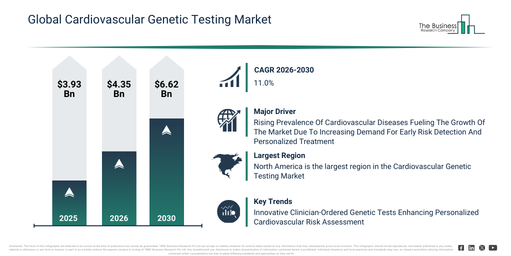
    The cardiovascular genetic testing market size has recently experienced rapid expansion. This market is projected to grow from $3.93 billion in 2025 to $4.35 billion in 2026, achieving a compound annual growth rate (CAGR) of 10.8%. Historically, this growth can be attributed to several factors including increasing awareness of inherited cardiovascular disorders, the expansion of molecular diagnostic capabilities, the declining costs of genetic sequencing, the growing use of genetic counseling services, and increased research in cardiovascular genomics.

    The cardiovascular genetic testing market size is projected to experience significant expansion in the coming years, with an expected increase to $6.62 billion by 2030, reflecting a compound annual growth rate (CAGR) of 11.0%. This growth during the forecast period is primarily driven by the escalating demand for precision medicine, the rising acceptance of population-based genetic screening, the expanding use of AI in variant interpretation, the increasing integration of genomics into clinical decision-making, and a heightened focus on preventive cardiovascular healthcare. Major developments anticipated in this period include the increased adoption of predictive genetic risk assessment, the rising utilization of multigene panel testing, the deeper integration of bioinformatics and AI analytics, the broadening applications of pharmacogenomic testing, and an enhanced emphasis on personalized cardiovascular care.

    Access Your Free Sample Report For In-Depth Market Analysis:

    https://www.thebusinessresearchcompany.com/sample.aspx?id=33054&type=smp

    Which Key Factors Are Driving The Cardiovascular Genetic Testing Market Growth?

    The escalating incidence of cardiovascular diseases is projected to spur the expansion of the cardiovascular genetic testing market in the foreseeable future. Cardiovascular diseases (CVDs) represent a category of ailments affecting the heart and blood vessels, encompassing conditions such as heart attacks, strokes, and hypertension. The rise in cardiovascular disease prevalence is primarily due to increasingly sedentary lifestyles linked to urbanization, which contribute to conditions like obesity, hypertension, and various metabolic disorders. This growing occurrence of cardiovascular diseases boosts the demand for cardiovascular genetic testing, as early detection of genetic risks allows for personalized prevention and treatment strategies aimed at diminishing the likelihood of severe heart complications. For instance, in January 2024, the American Heart Association, a US-based non-profit organization, reported that the age-adjusted death rate from cardiovascular disease climbed to 233.3 per 100,000 in 2024, an increase of 4.0% from 224.4 per 100,000 in 2023. Thus, the rising prevalence of cardiovascular disease is a significant catalyst for the growth of the cardiovascular genetic testing market.

    Which Segment Classifications Are Used In The Cardiovascular Genetic Testing Market Segment Analysis?

    The cardiovascular genetic testing market covered in this report is segmented –

    1) By Testing Type: Predictive Testing; Carrier Testing; Prenatal And Newborn Testing; Diagnostic Testing; Pharmacogenomic Testing; Other Testing Types

    2) By Disease: Inherited Cardiomyopathies; Hypertrophic Cardiomyopathy (HCM); Dilated Cardiomyopathy (DCM); Arrhythmia; Aortopathies; Other Diseases

    3) By Technology: Cytogenetic Testing; Biochemical Testing; Molecular Testing

    4) By Application: Chromosome Analysis; Genetic Disease Diagnosis; Cardiovascular Disease Diagnosis; Other Applications

    5) By End User: Hospitals And Clinics; Diagnostic Laboratories; Research Institutions; Genetic Counseling Centers; Pharmaceutical Companies; Direct-To-Consumer Testing

    Subsegments:

    1) By Predictive Testing: Presymptomatic Risk Assessment; Familial Variant Screening; Polygenic Risk Evaluation; Late Onset Disease Prediction; Susceptibility Gene Testing

    2) By Carrier Testing: Autosomal Recessive Carrier Screening; Linked Carrier Screening; Expanded Carrier Screening Panels; Single Gene Carrier Screening; Family History Based Carrier Testing

    3) By Prenatal And Newborn Testing: Non Invasive Prenatal Genetic Testing; Invasive Prenatal Diagnostic Testing; Newborn Metabolic Screening; Congenital Heart Disease Genetic Screening; Neonatal Gene Panel Testing

    4) By Diagnostic Testing: Single Gene Diagnostic Testing; Multigene Panel Diagnostic Testing; Whole Exome Diagnostic Testing; Whole Genome Diagnostic Testing; Variant Confirmation Testing

    5) By Pharmacogenomic Testing: Drug Response Gene Testing; Adverse Drug Reaction Risk Testing; Dose Optimization Genetic Testing; Anticoagulant Response Testing; Cardiovascular Drug Metabolism Testing

    6) By Other Testing Types: Cascade Family Testing; Population Based Genetic Screening; Research Use Genetic Testing; Confirmatory Follow Up Testing; Clinical Trial Genetic Testing

    Which Trends Are Guiding The Direction Of The Cardiovascular Genetic Testing Market?

    Leading companies within the cardiovascular genetic testing market are prioritizing the creation of novel solutions, such as clinician-ordered tests. These tests aim to confirm medical necessity and customize testing to a patient’s specific health status, thereby cutting down on redundant testing and expenses. A clinician-ordered test is a medical examination or diagnostic process initiated by a healthcare professional to assess, monitor, or guide a patient’s health management. For instance, in September 2025, Mass General Brigham, a US-based integrated academic healthcare system, in partnership with Broad Clinical Labs, a US-based genomic data generation laboratory, and Mass General Brigham Laboratory for Molecular Medicine, a US-based molecular diagnostic laboratory, introduced a genetic test. This test assesses the inherited risk for eight cardiovascular conditions, including atrial fibrillation, coronary artery disease, type 2 diabetes, elevated lipoprotein(a), hypercholesterolemia, hypertension, thoracic aortic aneurysm, and venous thromboembolism. Offered on a self-pay basis, its development leveraged genotype and clinical data from 236,393 individuals from the NIH’s All of Us Research Program. The integration of publicly available polygenic risk scores for each condition was achieved using PRSmix, an elastic-net modeling approach that combines multiple component scores into a single, comprehensive risk score per disease. High-resolution genetic data is gathered through a clinical blended genome-exome assay at Broad Clinical Labs, while the CLIA-certified Mass General Brigham Laboratory for Molecular Medicine is responsible for interpreting the findings and generating patient-friendly reports.

    Which Firms Are Contributing To The Cardiovascular Genetic Testing Market Ecosystem?

    Major companies operating in the cardiovascular genetic testing market are Labcorp Holdings Inc., Quest Diagnostics Inc., ICON plc, Illumina Inc., Apollo Hospitals, OPKO Health Inc., Revvity Inc., ARUP Laboratories Inc., Mayo Clinic Laboratories, Fulgent Genetics Inc., MedGenome Inc., Genome Medical, PreventionGenetics, Eurofins Genomics LLC, Blueprint Genetics Inc., MapmyGenome, GENinCode, Allelica Srl, Rocket Pharma Inc., and Health in Code SL.

    Get The Full Cardiovascular Genetic Testing Market Report:

    https://www.thebusinessresearchcompany.com/report/cardiovascular-genetic-testing-market-report

    Which Region Has The Greatest Market Share In The Cardiovascular Genetic Testing Market?

    North America was the largest region in the cardiovascular genetic testing market in 2025. Asia-Pacific is expected to be the fastest-growing region in the forecast period. The regions covered in the cardiovascular genetic testing market report are Asia-Pacific, South East Asia, Western Europe, Eastern Europe, North America, South America, Middle East, Africa.

    Request A Customized Cardiovascular Genetic Testing Market Report For Competitive Insights:

    https://www.thebusinessresearchcompany.com/customise?id=33054&type=smp

    Browse Through More Reports Similar to the Global Cardiovascular Genetic Testing Market 2026, By The Business Research Company

    Cardiovascular Clinical Trials Market Report 2026

    https://www.thebusinessresearchcompany.com/report/cardiovascular-clinical-trials-global-market-report

    Genetic Testing Market Report 2026

    https://www.thebusinessresearchcompany.com/report/genetic-testing-global-market-report

    Direct To Consumer Dtc Genetic Testing Market Report 2026

    https://www.thebusinessresearchcompany.com/report/direct-to-consumer-dtc-genetic-testing-global-market-report

    Get in touch with us:

    The Business Research Company: https://www.thebusinessresearchcompany.com/

    Americas +1 310-496-7795

    Asia +44 7882 955267 & +91 8897263534

    Europe +44 7882 955267

    Email us at info@tbrc.info

    Follow us on:

    LinkedIn: https://in.linkedin.com/company/the-business-research-company

    YouTube: https://www.youtube.com/channel/UC24_fI0rV8cR5DxlCpgmyFQ

    Global Market Model: https://www.thebusinessresearchcompany.com/global-market-model
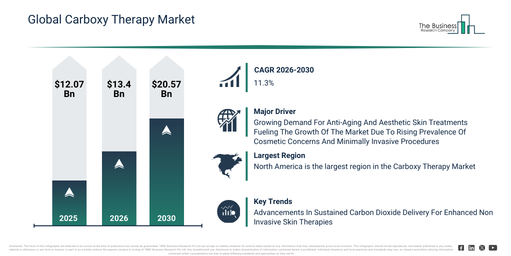
  • Carboxy Therapy Market Analysis Covering Growth Drivers And Future Outlook

    Carboxy Therapy Market Analysis Covering Growth Drivers And Future Outlook

    The Business Research Company’s 2026 market reports feature enhanced tools like market attractiveness analysis, TAM assessment, and company scoring matrices, along with interactive dashboards, deeper supply chain insights, and startup coverage strengthening the depth, usability, and strategic value of insights.

    What Is The Estimated Market Size Of The Carboxy Therapy Market In 2026, And How Will Its Value Evolve By 2030?

    The carboxy therapy market has experienced swift expansion recently. Forecasts indicate it will expand from $12.07 billion in 2025 to $13.4 billion by 2026, demonstrating a compound annual growth rate (CAGR) of 11.1%. Historically, this growth can be ascribed to an increase in aesthetic medicine procedures, heightened consumer awareness of minimally invasive treatment options, greater access to professional aesthetic devices, the proliferation of dermatology and cosmetic clinics, and broader embrace of aesthetic therapies.

    The carboxy therapy market size is anticipated to undergo significant expansion in the coming years. It is projected to reach $20.57 billion by 2030, exhibiting a compound annual growth rate (CAGR) of 11.3%. This expected growth throughout the forecast period can be attributed to a heightened demand for personalized cosmetic treatments, the increasing adoption of regenerative medicine techniques, the broadening scope of wellness and preventive care services, a growing emphasis on evidence-based aesthetic outcomes, and rising investments in advanced therapy devices. Prominent trends for the forecast period encompass the increasing implementation of personalized aesthetic treatment protocols, the rising integration of combination therapy approaches, the proliferation of non-invasive skin rejuvenation procedures, an intensified focus on collagen stimulation therapies, and an enhanced demand for clinical outcome monitoring.

    Access Your Free Sample Report For In-Depth Market Analysis:

    https://www.thebusinessresearchcompany.com/sample.aspx?id=33052&type=smp

    Which Major Drivers Are Influencing The Expansion Of The Carboxy Therapy Market?

    The increasing occurrence of skin aging and various cosmetic issues is anticipated to fuel the expansion of the carboxy therapy market. These skin aging and cosmetic concerns manifest as visible indicators like wrinkles, fine lines, skin laxity, dark circles, cellulite, and an uneven skin texture, affecting individuals across all age groups globally. The rising prevalence of these concerns stems from extended exposure to ultraviolet radiation, environmental pollutants, and lifestyle choices that contribute to accelerated collagen degradation and skin deterioration. Carboxy therapy effectively targets these skin aging and cosmetic issues by boosting microcirculation, improving oxygen supply, and encouraging collagen regeneration, thus treating various aesthetic conditions via a minimally invasive method. A relevant illustration of this trend is the data from June 2024, where the International Society of Aesthetic Plastic Surgery, a US-based professional organization, reported a substantial surge in facial and head aesthetic procedures in 2023 compared to the preceding year, reaching more than 6.5 million interventions and showing a 19.6% increase. Consequently, the rising incidence of skin aging and cosmetic concerns is indeed propelling the growth of the carboxy therapy market.

    Which Segments Define The Carboxy Therapy Market Segment Structure?

    The carboxy therapy market covered in this report is segmented –

    1) By Service Category: Aesthetic Rejuvenation Services; Therapeutic Medical Treatments; Rehabilitative And Sports Medicine; Post Surgical Recovery Programs

    2) By Product Type: Professional Devices; At-Home Kits

    3) By Gas Type: Carbon Dioxide; Oxygen

    4) By Application: Stretch Marks; Cellulite; Alopecia; Psoriasis; Dark Circles

    5) By End User: Aesthetic Clinics And Dermatology Centers; Hospitals And Medical Centers; Wellness And Spa Centers

    Subsegments:

    1) By Aesthetic Rejuvenation Services: Facial Skin Tightening Treatments; Body Contouring Treatments; Cellulite Reduction Treatments; Stretch Mark Reduction Treatments; Scar Appearance Improvement Treatments; Skin Texture And Tone Enhancement Treatments

    2) By Therapeutic Medical Treatments: Chronic Wound Management Treatments; Peripheral Vascular Disorder Treatments; Dermatological Condition Treatments; Pain Management Treatments; Circulatory Disorder Treatments

    3) By Rehabilitative And Sports Medicine: Muscle Injury Recovery Treatments; Joint Pain Relief Treatments; Soft Tissue Rehabilitation Treatments; Sports Injury Recovery Treatments; Inflammation Reduction Treatments

    4) By Post Surgical Recovery Programs: Postoperative Scar Management Treatments; Edema Reduction Treatments; Tissue Healing Support Treatments; Fibrosis Reduction Treatments; Circulation Improvement Treatments

    Which Trends Are Shaping The Carboxy Therapy Market?

    Leading companies in the carboxy therapy market are concentrating on developing innovative solutions, such as patented sustained carbon dioxide delivery systems for professional-grade carboxytherapy treatments. This effort aims to satisfy the increasing demand for safer, more effective non-invasive aesthetic and regenerative skin therapies. Patented sustained carbon dioxide delivery systems are sophisticated formulations and device technologies engineered to gradually release carbon dioxide over an extended period. This design enables deeper skin absorption and enhanced circulation compared to traditional fast-acting gels and packs that quickly dissipate upon contact. For instance, in August 2025, Lumisque Skincare, a US-based clinical skincare and biomedical company, announced advancements in its CO2Lift carboxytherapy treatment. This featured a patented lactone hydrolysis system designed to steadily release carbon dioxide for more than an hour, supporting deeper tissue absorption and broader therapeutic use. The CO2Lift system is being integrated by physicians and aesthetic practitioners for non-invasive skin regeneration, wound healing support, and enhanced microcirculation, providing a professional-grade alternative to traditional consumer-grade CO2 products. Lumisque’s clinical validation and physician adoption underscore the technology’s capacity to elevate carboxy therapy beyond basic cosmetic applications, reflecting continuous innovation within the market.

    Who Are The Established Players Within The Carboxy Therapy Market?

    Major companies operating in the carboxy therapy market are Cynosure Inc., Alma Lasers Ltd., Cosmopro Srl, Cocoon Medical Ltd., MBE Medical Divisions GmbH, Carbossiterapia Italiana Srl, DTA Medical GmbH, Alvi Prague Co., Kastner-Praxisbedarf GmbH, MEDAiON Plasma GmbH, Beijing Jontelaser Technologies Co. Ltd., HyaCorp GmbH, Sublime Skin Ltd., Hyaluronic GmbH, Aesthetic Solutions Ltd., RevitaLaze GmbH, Medcos GmbH, Mezopharma GmbH, Advon Technologies Pvt. Ltd., and Solana Beauty Technology Co. Ltd.

    Get The Full Carboxy Therapy Market Report:

    https://www.thebusinessresearchcompany.com/report/carboxy-therapy-market-report

    Which Region Holds The Highest Market Share In The Carboxy Therapy Market?

    North America was the largest region in the carboxy therapy market in 2025. Asia-Pacific is expected to be the fastest-growing region in the forecast period. The regions covered in the carboxy therapy market report are Asia-Pacific, South East Asia, Western Europe, Eastern Europe, North America, South America, Middle East, Africa.

    Request A Customized Carboxy Therapy Market Report For Competitive Insights:

    https://www.thebusinessresearchcompany.com/customise?id=33052&type=smp

    Browse Through More Reports Similar to the Global Carboxy Therapy Market 2026, By The Business Research Company

    Cell And Genes Therapy Market Report 2026

    https://www.thebusinessresearchcompany.com/report/cell-and-genes-therapy-global-market-report

    Music Therapy Market Report 2026

    https://www.thebusinessresearchcompany.com/report/music-therapy-global-market-report

    Advanced Therapy Medicinal Products Contract Development And Manufacturing Organization Cdmo Market Report 2026

    https://www.thebusinessresearchcompany.com/report/advanced-therapy-medicinal-products-contract-development-and-manufacturing-organization-cdmo-global-market-report

    Get in touch with us:

    The Business Research Company: https://www.thebusinessresearchcompany.com/

    Americas +1 310-496-7795

    Asia +44 7882 955267 & +91 8897263534

    Europe +44 7882 955267

    Email us at info@tbrc.info

    Follow us on:

    LinkedIn: https://in.linkedin.com/company/the-business-research-company

    YouTube: https://www.youtube.com/channel/UC24_fI0rV8cR5DxlCpgmyFQ

    Global Market Model: https://www.thebusinessresearchcompany.com/global-market-model