Category: Healthcare Services

  • Blastomycosis Treatment Market Revenue Growth Forecast To Reach $1.06 Billion By 2030 At 7.9% CAGR

    Blastomycosis Treatment Market Revenue Growth Forecast To Reach $1.06 Billion By 2030 At 7.9% CAGR

    The Business Research Company’s 2026 market reports feature enhanced tools like market attractiveness analysis, TAM assessment, and company scoring matrices, along with interactive dashboards, deeper supply chain insights, and startup coverage strengthening the depth, usability, and strategic value of insights.

    What Changes In Market Value Are Expected For The Blastomycosis Treatment Market Over The 2026–2030 Period?

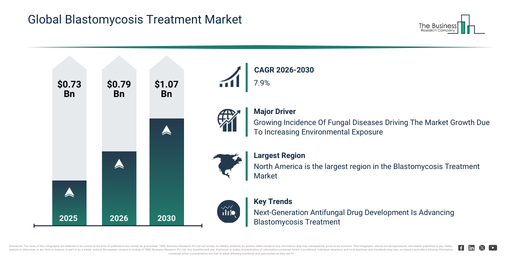
    The blastomycosis treatment market has demonstrated significant growth in recent years. It is projected to increase from $0.73 billion in 2025 to $0.79 billion in 2026, achieving a compound annual growth rate (CAGR) of 7.6%. This historical expansion can be attributed to improved awareness of systemic fungal infections, the availability of antifungal drug therapies, the expansion of diagnostic laboratory services, increased clinical recognition of blastomycosis cases, and the growth of infectious disease treatment programs.

    The market for blastomycosis treatments is projected to experience robust expansion over the coming years. This market is anticipated to reach $1.07 billion by 2030, exhibiting a compound annual growth rate (CAGR) of 7.9%. Several factors contribute to this projected growth, including a heightened emphasis on prompt and precise diagnosis, the ongoing advancement of superior antifungal formulations, the expansion of specialized centers for infectious diseases, an increasing embrace of tailored treatment methodologies, and greater investment in research related to fungal diseases. Key trends expected during this period involve a greater uptake of sophisticated diagnostic procedures, the expanding application of targeted antifungal interventions, wider implementation of therapeutic drug monitoring, an intensified commitment to detecting diseases early, and improved incorporation of clinical decision support systems.

    Access Your Free Sample Report For In-Depth Market Analysis:

    https://www.thebusinessresearchcompany.com/sample.aspx?id=33044&type=smp

    Which Primary Drivers Are Impacting The Blastomycosis Treatment Market Growth?

    The expanding occurrence of fungal illnesses is projected to fuel the progression of the blastomycosis treatment market in the future. These infections are brought on by disease-causing fungi, which can enter the body through breathing, direct touch, or contact with the environment. The increased frequency of fungal diseases is largely attributed to climate-related environmental shifts, where heightened rainfall and inundation foster damp, organic soil conditions that encourage the spread of fungal spores and subsequent exposure in humans. The escalating prevalence of fungal infections necessitates effective treatment options, as prompt identification and appropriate antifungal regimens are crucial for averting severe health issues and lowering fatality rates. For example, in May 2025, the UK Health Security Agency, a UK-based government organization, reported a 4% increase in bloodstream infections linked to yeast in 2024 compared to 2023, moving from 2,170 to 2,247 recorded instances. Consequently, the rising incidence of fungal diseases is stimulating the expansion of the blastomycosis treatment market.

    What Segment Categories Shape The Blastomycosis Treatment Market Segment Landscape?

    The blastomycosis treatment market covered in this report is segmented –

    1) By Treatment Type: Antifungal Drugs; Surgical Intervention

    2) By Anatomy: Lung; Bones; Central Nervous System; Other Anatomy

    3) By Dosage: Tablet; Injection; Capsule; Other Dosage forms

    4) By Route Of Administration: Intravenous; Oral; Other Route Of Administrations

    5) By End-User: Hospitals; Outpatient Clinics; Diagnostic Laboratories

    Subsegments:

    1) By Antifungal Drugs: Azole Antifungal Agents; Polyene Antifungal Agents; Echinocandin Antifungal Agents; Oral Antifungal Formulations; Intravenous Antifungal Formulations

    2) By Surgical Intervention: Lesion Debridement Procedures; Abscess Drainage Procedures; Lung Resection Procedures; Soft Tissue Excision Procedures

    Which Trends Are Shaping Growth In The Blastomycosis Treatment Market?

    Leading companies in the blastomycosis treatment market are concentrating on developing advanced solutions, such as antifungal drug development, to achieve improved treatment efficacy, enhanced safety profiles, and a stronger position in addressing unmet needs for severe systemic fungal infections. Antifungal drug development involves the creation of antifungal therapies designed to improve upon existing treatments by enhancing efficacy, reducing toxicity, overcoming drug resistance, and offering better dosing, formulation, or delivery options. For example, in June 2024, Elion Therapeutics, a US-based biotechnology company, announced that Elion Therapeutics’ SF001 is a next-generation polyene antifungal and a novel analog of amphotericin B, a drug long established as a first-line treatment for severe systemic fungal infections, including blastomycosis. While the press release specifically mentions invasive fungal infections such as aspergillosis, the mechanism of action of SF001 as an amphotericin B derivative, designed to retain broad-spectrum antifungal activity while reducing toxicity, makes it relevant to the treatment of blastomycosis as well. In other words, because amphotericin B is effective against Blastomyces dermatitidis, a drug built on its structure and function, like SF001, is logically connected to blastomycosis therapy.

    Who Are The Companies Operating Across The Blastomycosis Treatment Market Value Chain?

    Major companies operating in the blastomycosis treatment market are Johnson & Johnson, Pfizer Inc., AbbVie Inc., Merck & Co. Inc., Bayer AG, Sanofi S.A., Novartis AG, AstraZeneca plc, Bristol-Myers Squibb Company, Thermo Fisher Scientific Inc., GlaxoSmithKline plc, Eli Lilly and Company, Takeda Pharmaceutical Company Limited, Gilead Sciences Inc., Teva Pharmaceutical Industries Ltd., Viatris Inc., Astellas Pharma Inc., bioMérieux SA, Cipla Ltd., Lupin Limited, SCYNEXIS Inc., and F2G Ltd.

    Get The Full Blastomycosis Treatment Market Report:

    https://www.thebusinessresearchcompany.com/report/blastomycosis-treatment-market-report

    Which Region Leads The Blastomycosis Treatment Market In Terms Of Market Share?

    North America was the largest region in the blastomycosis treatment market in 2025. Asia-Pacific is expected to be the fastest-growing region in the forecast period. The regions covered in the blastomycosis treatment market report are Asia-Pacific, South East Asia, Western Europe, Eastern Europe, North America, South America, Middle East, Africa.

    Request A Customized Blastomycosis Treatment Market Report For Competitive Insights:

    https://www.thebusinessresearchcompany.com/customise?id=33044&type=smp

    Browse Through More Reports Similar to the Global Blastomycosis Treatment Market 2026, By The Business Research Company

    Mycosis Fungoides Treatment Market Report 2026

    https://www.thebusinessresearchcompany.com/report/mycosis-fungoides-treatment-global-market-report

    Onychomycosis Treatment Market Report 2026

    https://www.thebusinessresearchcompany.com/report/onychomycosis-treatment-global-market-report

    Onychomycosis Market Report 2026

    https://www.thebusinessresearchcompany.com/report/onychomycosis-global-market-report

    Get in touch with us:

    The Business Research Company: https://www.thebusinessresearchcompany.com/

    Americas +1 310-496-7795

    Asia +44 7882 955267 & +91 8897263534

    Europe +44 7882 955267

    Email us at info@tbrc.info

    Follow us on:

    LinkedIn: https://in.linkedin.com/company/the-business-research-company

    YouTube: https://www.youtube.com/channel/UC24_fI0rV8cR5DxlCpgmyFQ

    Global Market Model: https://www.thebusinessresearchcompany.com/global-market-model
  • At-Home Lab Testing Market Forecast 2026–2030 Highlighting Expansion Across Industries

    At-Home Lab Testing Market Forecast 2026–2030 Highlighting Expansion Across Industries

    The Business Research Company’s 2026 market reports feature enhanced tools like market attractiveness analysis, TAM assessment, and company scoring matrices, along with interactive dashboards, deeper supply chain insights, and startup coverage strengthening the depth, usability, and strategic value of insights.

    What Are The Market Size Estimates For The At-Home Lab Testing Market In 2026 And 2030?

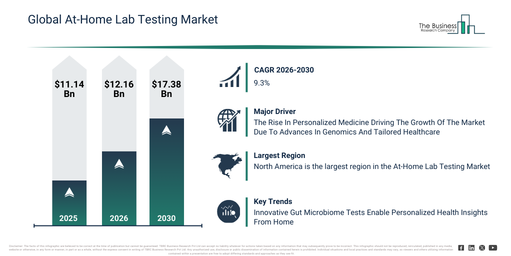
    The at-home lab testing market has experienced robust expansion in recent years. It is projected to grow from $11.14 billion in 2025 to $12.16 billion in 2026, at a compound annual growth rate (CAGR) of 9.1%. The market’s past growth can be attributed to an increasing consumer preference for home-based healthcare, the expansion of telehealth services, a rising awareness of preventive diagnostics, the growing availability of mail-in testing kits, and advancements in laboratory processing technologies.

    The at-home lab testing market is anticipated to undergo significant expansion in the coming years. Its size is projected to reach $17.38 billion by 2030, demonstrating a compound annual growth rate (CAGR) of 9.3%. This growth during the forecast period is primarily driven by an increasing desire for personalized health insights, the rising embrace of genetic and hormone testing, the broadening of digital diagnostics ecosystems, escalating investments in home healthcare services, and a heightened focus on data-driven health management. Concurrently, major developments expected in this period include a greater adoption of self-collection diagnostic kits, a rising need for remote health monitoring solutions, the expanding integration of digital health platforms, an increase in direct-to-consumer testing services, and an enhanced emphasis on preventive healthcare.

    Access Your Free Sample Report For In-Depth Market Analysis:

    https://www.thebusinessresearchcompany.com/sample.aspx?id=33029&type=smp

    Which Strong Drivers Are Impacting The At-Home Lab Testing Market Growth?

    The increasing prevalence of personalized medicine is anticipated to fuel the expansion of the at-home lab testing market moving forward. This approach involves customizing disease prevention, diagnosis, and treatment based on an individual’s unique genetic, environmental, and lifestyle characteristics. Its growth stems from advancements in genomics, enabling the analysis of an individual’s genetic profile to customize medical treatments and interventions, leading to more accurate, effective, and targeted healthcare results. Furthermore, personalized medicine improves at-home lab testing by adapting diagnostic methods and advice to an individual’s genetic, lifestyle, and health status, thus providing more precise, actionable, and accessible healthcare insights. As an illustration, in February 2024, the US-based non-profit organization, the Personalized Medicine Coalition, disclosed that in 2023, the FDA sanctioned 16 novel personalized treatments for rare disease patients, an increase from six in 2022. The approvals for 2023 also encompassed seven cancer drugs and three for other diseases and conditions. Consequently, the expansion of personalized medicine is stimulating the development of the at-home lab testing market.

    Which Segment Categories Are Included In The At-Home Lab Testing Market Segment Analysis?

    The at-home lab testing market covered in this report is segmented –

    1) By Test Type: Glucose Test Kits; Infectious Disease Test Kits; Pregnancy And Fertility Test Kits; Cholesterol And Lipid Test Kits; Genetic Test Kits; Hormone Test Kits; Allergy Test Kits; Drug And Alcohol Test Kits; Coagulation And INR Test Kits; Other Test Kits

    2) By Sample Type: Blood; Saliva; Urine; Swab Samples; Other Sample Types

    3) By Distribution Channel: Hospital Pharmacies; Retail Pharmacies; Online Pharmacies

    4) By End User: Individuals; Healthcare Providers; Employers And Organizations; Other End Users

    Subsegments:

    1) By Glucose Test Kits: Blood Glucose Monitoring Kits; Continuous Glucose Monitoring Kits; Post Meal Glucose Test Kits; Fasting Glucose Test Kits

    2) By Infectious Disease Test Kits: Viral Infection Test Kits; Bacterial Infection Test Kits; Respiratory Infection Test Kits; Sexually Transmitted Infection Test Kits

    3) By Pregnancy And Fertility Test Kits: Pregnancy Detection Test Kits; Ovulation Prediction Test Kits; Fertility Hormone Test Kits; Early Pregnancy Confirmation Test Kits

    4) By Cholesterol And Lipid Test Kits: Total Cholesterol Test Kits; High Density Lipoprotein Cholesterol Test Kits; Low Density Lipoprotein Cholesterol Test Kits; Triglyceride Test Kits

    5) By Genetic Test Kits: Ancestry Genetic Test Kits; Health Risk Genetic Test Kits; Carrier Screening Test Kits; Personalized Genetic Wellness Test Kits

    6) By Hormone Test Kits: Thyroid Hormone Test Kits; Reproductive Hormone Test Kits; Stress Hormone Test Kits; Metabolic Hormone Test Kits

    7) By Allergy Test Kits: Food Allergy Test Kits; Environmental Allergy Test Kits; Pet Allergy Test Kits; Respiratory Allergy Test Kits

    8) By Drug And Alcohol Test Kits: Alcohol Detection Test Kits; Prescription Drug Test Kits; Illicit Drug Test Kits; Multi Substance Test Kits

    9) By Coagulation And INR Test Kits: Prothrombin Time Test Kits; International Normalized Ratio Monitoring Kits; Blood Clotting Function Test Kits; Anticoagulant Therapy Monitoring Test Kits

    10) By Other Test Kits: Vitamin Deficiency Test Kits; Metabolic Health Test Kits; Kidney Function Test Kits; Liver Function Test Kits

    Which Trends Are Contributing To Changes In The At-Home Lab Testing Market?

    Major companies in the at-home lab testing market are focusing on creating innovative solutions, such as direct-to-consumer gut microbiome test kits, to deliver personalized health insights without the need for clinic visits. A direct-to-consumer gut microbiome test kit allows individuals to collect a sample at home and receive an analysis of their gut bacteria and tailored health insights, bypassing a doctor’s appointment. For example, in January 2025, CJ Bioscience Inc., a biotech firm based in South Korea, launched its gut microbiome testing service, SMILE GUT, with the goal of enabling personalized nutrition recommendations. This service permits users to collect a stool sample at home and receive a detailed breakdown of their gut bacterial composition. Utilizing AI and a database containing over 140,000 profiles, the test produces a Gut Microbiome Index score and points out areas for dietary or probiotic modifications. The company also provides personalized food and supplement guidance, supporting comprehensive gut health and paving the way for customized functional food products.

    Who Are The Active Companies Shaping The At-Home Lab Testing Market?

    Major companies operating in the at-home lab testing market are Roche Diagnostics AG, Abbott Laboratories, Siemens Healthineers AG, Becton, Dickinson and Company, Laboratory Corporation of America Holdings, Quest Diagnostics Incorporated, QuidelOrtho Corporation, OraSure Technologies Inc., 23andMe Holding Co., Everlywell Inc., Tiny Health Inc., Acon Laboratories Inc., Vault Health Inc., iHealth Labs Inc., Healthy.io Ltd., Getlabs Inc., Thriva Ltd., BioIQ Inc., myLAB Box LLC, Medichecks.com Ltd.

    Get The Full At-Home Lab Testing Market Report:

    https://www.thebusinessresearchcompany.com/report/at-home-lab-testing-market-report

    Where Is The At-Home Lab Testing Market Primarily Concentrated By Region?

    North America was the largest region in the at-home lab testings market in 2025. Asia-Pacific is expected to be the fastest-growing region in the forecast period. The regions covered in the at-home lab testing market report are Asia-Pacific, South East Asia, Western Europe, Eastern Europe, North America, South America, Middle East, Africa.

    Request A Customized At-Home Lab Testing Market Report For Competitive Insights:

    https://www.thebusinessresearchcompany.com/customise?id=33029&type=smp

    Browse Through More Reports Similar to the Global At-Home Lab Testing Market 2026, By The Business Research Company

    Laboratory Testing Services Market Report 2026

    https://www.thebusinessresearchcompany.com/report/laboratory-testing-services-global-market-report

    Direct To Consumer Dtc Laboratory Testing Market Report 2026

    https://www.thebusinessresearchcompany.com/report/direct-to-consumer-dtc-laboratory-testing-global-market-report

    Laboratory Testing Services Market Report 2026

    https://www.thebusinessresearchcompany.com/report/laboratory-testing-services-global-market-report

    Get in touch with us:

    The Business Research Company: https://www.thebusinessresearchcompany.com/

    Americas +1 310-496-7795

    Asia +44 7882 955267 & +91 8897263534

    Europe +44 7882 955267

    Email us at info@tbrc.info

    Follow us on:

    LinkedIn: https://in.linkedin.com/company/the-business-research-company

    YouTube: https://www.youtube.com/channel/UC24_fI0rV8cR5DxlCpgmyFQ

    Global Market Model: https://www.thebusinessresearchcompany.com/global-market-model

  • Global Artificial Intelligence (AI) In Disease Outbreak Prediction Market Analysis For 2026–2030 With Strategic Insights

    Global Artificial Intelligence (AI) In Disease Outbreak Prediction Market Analysis For 2026–2030 With Strategic Insights

    The Business Research Company’s 2026 market reports feature enhanced tools like market attractiveness analysis, TAM assessment, and company scoring matrices, along with interactive dashboards, deeper supply chain insights, and startup coverage strengthening the depth, usability, and strategic value of insights.

    What Expansion In Market Value Is Forecasted For The Artificial Intelligence (AI) In Disease Outbreak Prediction Market Between 2026 And 2030?

    The artificial intelligence (AI) in disease outbreak prediction market size has experienced significant expansion in recent years. It is anticipated to increase from $2.44 billion in 2025 to $3.09 billion in 2026, demonstrating a compound annual growth rate (CAGR) of 26.7%. This historic growth can be linked to the rising occurrence of infectious disease outbreaks, the expansion of public health surveillance programs, increased digitization of health data, the early application of AI analytics in epidemiology, and strengthened cooperation among health agencies.

    The market for artificial intelligence (AI) in disease outbreak prediction is projected to experience rapid expansion in the coming years. This market is anticipated to reach $8.02 billion by 2030, exhibiting a compound annual growth rate (CAGR) of 27.0%. Factors contributing to this growth over the forecast period include the broadening of predictive public health infrastructure, increased investments in AI-powered disease preparedness, the expanding application of real-time health monitoring data, greater incorporation of climate and mobility analytics, and the growth of global health intelligence networks. Key trends for this period encompass the escalating utilization of real-time epidemiological modeling, enhanced integration of mobility and environmental data, the increasing implementation of AI-driven surveillance dashboards, the enlargement of predictive risk assessment platforms, and a heightened emphasis on early warning systems.

    Access Your Free Sample Report For In-Depth Market Analysis:

    https://www.thebusinessresearchcompany.com/sample.aspx?id=33023&type=smp

    What Key Factors Are Shaping The Artificial Intelligence (AI) In Disease Outbreak Prediction Market Landscape?

    The escalating financial commitments towards digital health infrastructure are projected to stimulate the expansion of the artificial intelligence in disease outbreak prediction market moving ahead. Digital health infrastructure encompasses integrated digital systems, platforms, data networks, and technologies that enable the secure collection, sharing, analysis, and application of health information to bolster healthcare provision, public health oversight, and informed decision-making. The surge in funding for digital health infrastructure is driven by the imperative for more streamlined, interconnected, and data-centric healthcare systems that improve care delivery, accessibility, and operational effectiveness. Artificial intelligence in disease outbreak prediction harnesses digital health infrastructure by leveraging extensive, real-time health data for the early identification of disease patterns and swift public health responses, positioning advanced digital systems as a crucial bedrock for such AI applications. For instance, in May 2023, according to the Australian Department of Health and Aged Care, an Australia-based government department, an investment of around $6.1 billion was announced to fortify Medicare, which included $2.2 billion for new and amended PBS listings, $259.5 million for vital health infrastructure, and a $951.2 million digital health package. Consequently, the increasing investments in digital health infrastructure are fostering the growth of the artificial intelligence in disease outbreak prediction market.

    How Is The Artificial Intelligence (AI) In Disease Outbreak Prediction Market Broken Down By Segment Categories?

    The artificial intelligence (AI) in disease outbreak prediction market covered in this report is segmented –

    1) By Component: Software; Hardware; Services

    2) By Deployment Mode: On-Premises; Cloud

    3) By Application: Healthcare Providers; Government Agencies; Research Institutes; Pharmaceutical Companies; Other Applications

    4) By End-User: Hospitals And Clinics; Public Health Organizations; Academic And Research Centers; Other End Users

    Subsegments:

    1) By Software: Machine Learning Platforms; Predictive Analytics Software; Data Visualization Software; Epidemiological Modeling Software; Cloud-Based Analytics Software

    2) By Hardware: Health Monitoring Device; Geographic Information System Devices; Wearable Health Trackers; Diagnostic Devices; Sensor Devices

    3) By Services: Disease Surveillance Services; Outbreak Modeling Services; Predictive Analytics Services; Public Health Consulting; Data Integration Services; Epidemiological Risk Assessment

    What Market Trends Are Affecting The Artificial Intelligence (AI) In Disease Outbreak Prediction Market?

    Leading companies within the artificial intelligence in disease outbreak prediction market are prioritizing the development of sophisticated solutions, such as AI-powered global disease surveillance platforms, to enhance early outbreak detection, quicken response times, and bolster public health readiness. These artificial intelligence–driven global disease surveillance platforms represent systems that employ artificial intelligence, machine learning, and natural language processing to scrutinize extensive global data sources, including news reports, public health records, airline travel data, and environmental indicators, to pinpoint potential disease outbreaks sooner than conventional surveillance approaches. For example, in August 2024, BlueDot, a digital health and artificial intelligence company based in Canada, introduced its cutting-edge global infectious disease surveillance solution, crafted to significantly decrease manual detection periods. The platform utilizes advanced AI models to constantly scan and interpret global data in near real time, diminishing manual detection efforts by nearly 90%. This improved functionality empowers health authorities and organizations to identify emerging infectious threats more swiftly, evaluate risks more precisely, and enact timely containment measures.

    Which Players Are Present In The Artificial Intelligence (AI) In Disease Outbreak Prediction Market Space?

    Major companies operating in the artificial intelligence (AI) in disease outbreak prediction market are Amazon Web Services Inc., Oracle Corporation, SAP SE, Siemens Healthineers AG, SAS Institute Inc., Clarivate Plc, Tempus AI Inc., Seegene Inc., Ginkgo Bioworks Inc., Dataminr Inc., Komodo Health Inc., H2O.ai, Evidation Health Inc., Qventus Inc., Airfinity Ltd., SparkBeyond Inc., Blue Dot Inc., GIDEON Informatics Inc., Hyfe Inc., EPIWATCH Pty Ltd., EpiDetect AI Inc.

    Get The Full Artificial Intelligence (AI) In Disease Outbreak Prediction Market Report:

    https://www.thebusinessresearchcompany.com/report/artificial-intelligence-ai-in-disease-outbreak-prediction-market-report

    Which Region Has The Greatest Market Share In The Artificial Intelligence (AI) In Disease Outbreak Prediction Market?

    North America was the largest region in the artificial intelligence in disease outbreak prediction in 2025. Asia-Pacific is expected to be the fastest-growing region in the forecast period. The regions covered in the artificial intelligence (AI) in disease outbreak prediction market report are Asia-Pacific, South East Asia, Western Europe, Eastern Europe, North America, South America, Middle East, Africa.

    Request A Customized Artificial Intelligence (AI) In Disease Outbreak Prediction Market Report For Competitive Insights:

    https://www.thebusinessresearchcompany.com/customise?id=33023&type=smp

    Browse Through More Reports Similar to the Global Artificial Intelligence (AI) In Disease Outbreak Prediction Market 2026, By The Business Research Company

    Artificial Intelligence In Epidemiology Market Report 2026

    https://www.thebusinessresearchcompany.com/report/artificial-intelligence-in-epidemiology-global-market-report

    Artificial Intelligence Ai In Predictive Toxicology Market Report 2026

    https://www.thebusinessresearchcompany.com/report/artificial-intelligence-ai-in-predictive-toxicology-global-market-report

    Artificial Intelligence Ai In Respiratory Diseases Market Report 2026

    https://www.thebusinessresearchcompany.com/report/artificial-intelligence-ai-in-respiratory-diseases-global-market-report

    Get in touch with us:

    The Business Research Company: https://www.thebusinessresearchcompany.com/

    Americas +1 310-496-7795

    Asia +44 7882 955267 & +91 8897263534

    Europe +44 7882 955267

    Email us at info@tbrc.info

    Follow us on:

    LinkedIn: https://in.linkedin.com/company/the-business-research-company

    YouTube: https://www.youtube.com/channel/UC24_fI0rV8cR5DxlCpgmyFQ

    Global Market Model: https://www.thebusinessresearchcompany.com/global-market-model
  • Acellular Therapy Market Forecast Through 2030 With Insights On Market Patterns And Developments

    Acellular Therapy Market Forecast Through 2030 With Insights On Market Patterns And Developments

    The Business Research Company’s 2026 market reports feature enhanced tools like market attractiveness analysis, TAM assessment, and company scoring matrices, along with interactive dashboards, deeper supply chain insights, and startup coverage strengthening the depth, usability, and strategic value of insights.

    How Much Growth In Market Value Is Expected For The Acellular Therapy Market Between 2026 And 2030?

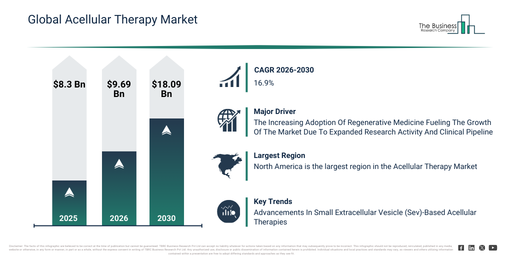
    The acellular therapy market has experienced rapid expansion recently. Projections indicate it will increase from $8.3 billion in 2025 to $9.69 billion by 2026, exhibiting a compound annual growth rate (CAGR) of 16.7%. Historically, this expansion has been driven by factors such as enhanced research in regenerative medicine, the early clinical acceptance of acellular matrices, a rising need for immune-safe therapies, the broadening of wound care uses, and advancements in biomaterial processing methods.

    The acellular therapy market is set for considerable expansion in the near future, with projections indicating a rise to $18.09 billion by 2030, exhibiting a compound annual growth rate (CAGR) of 16.9%. This expansion during the forecast period is fueled by several factors, including an escalating demand for customized regenerative treatments, increased financial commitments to cutting-edge biomaterials, a broadening array of clinical uses for acellular therapies, a reinforced emphasis on scalable regenerative solutions, and augmented regulatory backing for non-cellular therapies. Significant patterns anticipated during this timeframe encompass the growing adoption of growth factor-based treatments, an increase in the application of extracellular matrix scaffolds, a heightened focus on cell-free regenerative approaches, the wider availability of ready-to-use regenerative products, and better integration of translational research frameworks.

    Access Your Free Sample Report For In-Depth Market Analysis:

    https://www.thebusinessresearchcompany.com/sample.aspx?id=33006&type=smp

    Which Major Drivers Are Influencing The Expansion Of The Acellular Therapy Market?

    The anticipated expansion of the acellular therapy market is linked to the rising acceptance of regenerative medicine. Regenerative medicine encompasses medical strategies focused on repairing, replacing, or regenerating human cells, tissues, or organs, utilizing biological processes and treatments to reinstate natural function. The uptake of regenerative medicine is growing due to the worldwide increase in biotechnology research, characterized by a higher number of developers, more extensive product pipelines, and wider therapeutic investigations. Acellular therapy (AT) plays a supportive role in this trend by offering bioactive, cell-free therapeutic substances like extracellular vesicles, secretomes, and various other biologically active constituents, thereby complementing regenerative strategies through improved safety and consistent dosing. For example, as reported in June 2024 by the Centre for Commercialization of Regenerative Medicine (CCRM), a regenerative medicine organization based in Canada, the global count of cell and gene therapy developers reached 2,848 by April 2024, representing an 11% increase from quarter four (Q4) 2023. Additionally, 1,751 active regenerative medicine clinical trials were underway worldwide as of April 2024, indicating ongoing clinical involvement and expansion in regenerative research efforts. Consequently, the expanding embrace of regenerative medicine is propelling the market for acellular therapy forward.

    How Is The Acellular Therapy Market Segmented Across Different Segment Categories?

    The acellular therapy market covered in this report is segmented –

    1) By Type: Acellular Dermal Matrices; Acellular Amniotic Membranes; Acellular Umbilical Cord Products; Other Types

    2) By Disease: Parkinson’s; Alzheimer’s; Chronic Wounds; Sclerosis; Cancer

    3) By Scaffold: Fused Deposition Modeling (FDM); Cell Laden Hydrogel; Extracellular Matrix (ECM); Selective Laser Sintering (SLS)

    4) By Application: Hepatology; Orthopedic; Cardiology; Neurology; Oncology; Gastroenterology

    5) By End-User: Hospitals; Clinics; Ambulatory Surgical Centers; Research Institutes

    Subsegments:

    1) By Acellular Dermal Matrices: Human Derived Dermal Matrices; Animal Derived Dermal Matrices; Cross Linked Dermal Matrices; Non Cross Linked Dermal Matrices

    2) By Acellular Amniotic Membranes: Cryopreserved Amniotic Membranes; Dehydrated Amniotic Membranes; Lyophilized Amniotic Membranes; Laminated Amniotic Membranes

    3) By Acellular Umbilical Cord Products: Wharton Jelly Based Products; Umbilical Cord Patch Products; Umbilical Cord Powder Products; Umbilical Cord Sheet Products

    4) By Other Types: Acellular Cartilage Matrices; Acellular Bone Matrices; Acellular Vascular Grafts; Acellular Tendon And Ligament Scaffolds

    Which Trends Are Shaping The Acellular Therapy Market?

    Major companies operating in the acellular therapy market are concentrating on developing small extracellular vesicle (sEV) therapies, aiming to improve tissue regeneration, decrease inflammation, and modify immune responses by directly delivering bioactive vesicles to affected tissues without introducing living cells. Small extracellular vesicle (sEV) therapies are defined as acellular products derived from cultured cells that transport proteins, ribonucleic acids (RNAs), and signaling molecules, facilitating targeted regulation of cellular activity, repair of damaged tissue, and immunomodulation. For example, in march 2025, evast bio, a US-based biotechnology company, introduced a small extracellular vesicle (sEV) therapy for knee osteoarthritis, which was specifically designed to address key challenges present in inflammatory joint disease. This therapy delivers exosomes to inflamed cartilage, promoting the regeneration of the cartilage extracellular matrix, reducing inflammatory markers, and enhancing joint function, thereby establishing it as a pioneering acellular therapy (AT) for musculoskeletal inflammation and a blueprint for future extracellular vesicle (sEV) based treatments.

    Which Organizations Play A Role In The Acellular Therapy Market Landscape?

    Major companies operating in the acellular therapy market are Thermo Fisher Scientific, FUJIFILM Holdings Corp., Lonza Group AG, Smith+Nephew, Charles River Laboratories, Sartorius AG, Integra LifeSciences, AGC Biologics, Organogenesis Holdings Inc., MiMedx Group Inc., Vericel Corporation, Avita Medical, Capricor Therapeutics, RoosterBio Inc., Creative Biolabs, Evox Therapeutics Ltd., ILIAS Biologics, Aruna Biomedical, Stem Cell Medicine Ltd., Aegle Therapeutics Corp, Direct Biologics LLC., BioCardia Inc., BioRestorative Therapies Inc., and EverZom.

    Get The Full Acellular Therapy Market Report:

    https://www.thebusinessresearchcompany.com/report/acellular-therapy-market-report

    Which Region Is The Largest In The Acellular Therapy Market?

    North America was the largest region in the acellular therapy market in 2025. Asia-Pacific is expected to be the fastest-growing region in the forecast period. The regions covered in the acellular therapy market report are Asia-Pacific, South East Asia, Western Europe, Eastern Europe, North America, South America, Middle East, Africa.

    Request A Customized Acellular Therapy Market Report For Competitive Insights:

    https://www.thebusinessresearchcompany.com/customise?id=33006&type=smp

    Browse Through More Reports Similar to the Global Acellular Therapy Market 2026, By The Business Research Company

    Clinical Trial Equipment And Ancillary Solutions Market Report 2026

    https://www.thebusinessresearchcompany.com/report/clinical-trial-equipment-and-ancillary-solutions-global-market-report

    Ace Inhibitors Market Report 2026

    https://www.thebusinessresearchcompany.com/report/ace-inhibitors-global-market-report

    Clinical Trial Supply And Logistics Market Report 2026

    https://www.thebusinessresearchcompany.com/report/clinical-trial-supply-and-logistics-global-market-report

    Get in touch with us:

    The Business Research Company: https://www.thebusinessresearchcompany.com/

    Americas +1 310-496-7795

    Asia +44 7882 955267 & +91 8897263534

    Europe +44 7882 955267

    Email us at info@tbrc.info

    Follow us on:

    LinkedIn: https://in.linkedin.com/company/the-business-research-company

    YouTube: https://www.youtube.com/channel/UC24_fI0rV8cR5DxlCpgmyFQ

    Global Market Model: https://www.thebusinessresearchcompany.com/global-market-model

  • Upskilling Platforms  Market Forecast With Insights On Demand And Industry Growth

    Upskilling Platforms Market Forecast With Insights On Demand And Industry Growth

    The Business Research Company’s 2026 market reports feature enhanced tools like market attractiveness analysis, TAM assessment, and company scoring matrices, along with interactive dashboards, deeper supply chain insights, and startup coverage strengthening the depth, usability, and strategic value of insights.

    What Are The Market Size Estimates For The Upskilling Platforms Market In 2026 And 2030?

    The upskilling platforms market has witnessed substantial growth in its size in recent years. This market is forecasted to increase from $7.36 billion in 2025 to $8.31 billion in 2026, achieving a compound annual growth rate (CAGR) of 12.9%. The expansion observed in the historic period is attributable to several factors, including the escalating demands for workforce capabilities, a rise in digital literacy initiatives, increased employer investment in staff development, broader access to online learning content, and a growing emphasis on employee retention strategies.

    The upskilling platforms market is anticipated to experience substantial expansion in the coming years, projected to reach $13.35 billion by 2030, at a compound annual growth rate (CAGR) of 12.6%. This forecasted increase is driven by factors such as the increasing demand for ongoing professional development, a heightened focus on competencies specific to job roles, the rising need for validated skill credentials, an expanding emphasis on learning outcomes tied to performance, and the growing significance of tailored learning paths. Key developments expected during this period include skill assessments powered by technology, personalized learning driven by artificial intelligence, content recommendations based on machine learning, training simulations utilizing virtual reality, and practical learning experiences enhanced by augmented reality.

    Access Your Free Sample Report For In-Depth Market Analysis:

    https://www.thebusinessresearchcompany.com/sample.aspx?id=30775&type=smp

    What Key Factors Are Affecting The Upskilling Platforms Market Demand?

    The increasing need for ongoing education is projected to drive the expansion of the upskilling platforms market in the future. Continuous learning involves professionals consistently updating and gaining new skills throughout their careers to adapt to changing job demands and technological advancements. The heightened demand for continuous learning stems from rapid technological progress and evolving skill needs, rendering conventional, fixed qualifications inadequate, thus prompting both employees and employers to prioritize consistent training. Upskilling platforms facilitate continuous learning by offering structured, easily accessible, and scalable educational solutions, empowering individuals to acquire new expertise and maintain their competitive edge. For instance, the World Economic Forum, an international advocacy non-governmental organization based in Switzerland, reported in January 2025 that the proportion of the global workforce having undertaken training, reskilling, or upskilling initiatives climbed to 50 % in 2025 from 41 % in 2023, indicating a greater involvement in continuous learning activities across various sectors. Consequently, the expanding need for continuous learning is fueling the development of the upskilling platforms market.

    How Is The Upskilling Platforms Market Broken Down By Segment Categories?

    The upskilling platforms market covered in this report is segmented –

    1) By Type: Industry-Specific Courses, Professional Certifications, Soft Skills Training, Coding Courses, Leadership Development

    2) By Deployment Mode: Cloud-Based, On-Premise, Hybrid

    3) By Technology Utilized: Learning Management Systems (LMS), Mobile Learning Apps, Gamified Learning Platforms, Artificial Intelligence

    4) By Delivery Mode: Self-Paced Learning, Instructor-Led Training, Blended Learning

    5) By Application: Corporate Employees, Students, Freelancers, Job Seekers, Professionals

    Subsegments:

    1) By Industry-Specific Courses: Healthcare Training, Manufacturing Training, Finance And Banking Training, Information Technology Training, Retail And Customer Service Training

    2) By Professional Certifications: Project Management Certifications, Information Security Certifications, Human Resources Certifications, Marketing Certifications, Finance And Accounting Certifications

    3) By Soft Skills Training: Communication Skills, Teamwork And Collaboration, Time Management, Emotional Intelligence, Conflict Resolution

    4) By Coding Courses: Web Development, Mobile App Development, Data Science And Analytics, Software Engineering, Cybersecurity

    5) By Leadership Development: Executive Leadership, Team Leadership, Change Management, Strategic Thinking, Coaching And Mentoring

    What Trends Are Influencing Changes In The Upskilling Platforms Market?

    Major companies active within the upskilling platforms market are prioritizing the development of comprehensive training packages, including AI-powered skills development programs, with the aim of delivering personalized learning trajectories, boosting employee productivity, and closing the rapidly evolving digital skill gaps across various organizations. AI-powered skills development programs are defined as training efforts that utilize artificial intelligence to customize learning paths, analyze existing skill gaps, and provide adaptive content and feedback, thereby allowing learners to build relevant capabilities more efficiently. For instance, in June 2025, Udemy Inc., a US-based AI-powered skills development platform, unveiled new AI Fluency Packages, an AI-powered skills development program. This offering includes an AI Readiness Package with 50 curated courses and structured introductions to core AI concepts, along with access to the Udemy AI Assistant for real-time coaching, and an AI Growth Package which features over 800 specialized courses and more than 30 role-specific learning paths, multilingual support, certification preparation, and AI Skills Mapping to personalize workforce learning at scale. These packages are characterized by structured, multi-level AI skill development, real-time AI-assisted coaching, and role-aligned learning paths to support both foundational and advanced capabilities, enabling professionals and teams to gain practical AI application skills and drive measurable business outcomes, reflecting a strategic shift towards integrated, scalable upskilling solutions tailored to changing workforce demands.

    Which Players Are Present In The Upskilling Platforms Market Space?

    Major companies operating in the upskilling platforms market are upGrad Education Private Limited, Udemy Inc., Coursera Inc., Cisco Networking Academy, Simplilearn Solutions Inc., Skillsoft Corporation, MasterClass Inc., HackerRank Inc., Degreed Inc., Codecademy Inc., Udacity Inc., Emeritus Institute of Management, Great Learning Education Services, Thinkific Labs Inc., Edureka Learning Center Pvt. Ltd., SANS Institute, OpenSesame Inc., Khan Academy Inc., DataCamp Inc., Skillshare Inc., Springboard Inc., Alison Technologies Limited, Dataquest Inc., LeetCode Inc.

    Get The Full Upskilling Platforms Market Report:

    https://www.thebusinessresearchcompany.com/report/upskilling-platforms-market-report

    Which Geographic Region Dominates The Upskilling Platforms Market?

    North America was the largest region in the upskilling platforms market in 2025. Asia-Pacific is expected to be the fastest-growing region in the forecast period. The regions covered in the upskilling platforms market report are Asia-Pacific, South East Asia, Western Europe, Eastern Europe, North America, South America, Middle East, Africa.

    Request A Customized Upskilling Platforms Market Report For Competitive Insights:

    https://www.thebusinessresearchcompany.com/customise?id=30775&type=smp

    Browse Through More Reports Similar to the Global Upskilling Platforms Market 2026, By The Business Research Company

    Integrated Systems Market Report 2026

    https://www.thebusinessresearchcompany.com/report/integrated-systems-global-market-report

    Data Destruction Services Market Report 2026

    https://www.thebusinessresearchcompany.com/report/data-destruction-services-global-market-report

    content services platforms global market report

    https://www.thebusinessresearchcompany.com/report/content-services-platforms-global-market-report

    Get in touch with us:

    The Business Research Company: https://www.thebusinessresearchcompany.com/

    Americas +1 310-496-7795

    Asia +44 7882 955267 & +91 8897263534

    Europe +44 7882 955267

    Email us at info@tbrc.info

    Follow us on:

    LinkedIn: https://in.linkedin.com/company/the-business-research-company

    YouTube: https://www.youtube.com/channel/UC24_fI0rV8cR5DxlCpgmyFQ

    Global Market Model: https://www.thebusinessresearchcompany.com/global-market-model

  • Spinel Cathode Materials  Market Insights Highlighting Opportunities Supporting Growth To 2030

    Spinel Cathode Materials Market Insights Highlighting Opportunities Supporting Growth To 2030

    The Business Research Company’s 2026 market reports feature enhanced tools like market attractiveness analysis, TAM assessment, and company scoring matrices, along with interactive dashboards, deeper supply chain insights, and startup coverage strengthening the depth, usability, and strategic value of insights.

    From Its 2026 Market Size, What Value Is The Spinel Cathode Materials Market Projected To Reach By 2030?

    The spinel cathode materials market size has experienced rapid expansion in recent years. This market is projected to expand from $1.61 billion in 2025 to $1.77 billion in 2026, demonstrating a compound annual growth rate (CAGR) of 10.1%. Historically, this growth has been driven by factors such as the surging demand for lithium-ion batteries, the increasing application of LMO cathodes in consumer electronics, the growing preference for economical battery chemistries, the scale-up of initial EV production capabilities, and a heightened focus on battery safety and thermal stability.

    The spinel cathode materials market size is predicted to undergo substantial growth over the next few years. It is expected to expand to $2.57 billion by 2030, achieving a compound annual growth rate (CAGR) of 9.8%. This expansion during the forecast period is primarily driven by the increasing production of electric vehicles, the wider adoption of energy storage systems, a rising need for high-voltage spinel materials, the expansion of battery gigafactory investments, and a growing preference for cobalt-free cathode chemistries. Significant trends anticipated during this period include technological advancements in high-voltage spinels, innovations concerning doped and coated spinel formulations, new developments in advanced processing techniques, ongoing research and development into fast-charging materials, and progress in nanostructured spinel cathodes.

    Access Your Free Sample Report For In-Depth Market Analysis:

    https://www.thebusinessresearchcompany.com/sample.aspx?id=30761&type=smp

    Which Key Drivers Are Affecting The Spinel Cathode Materials Market Development?

    The swift expansion of electric vehicles is projected to boost the growth of the spinel cathode materials market moving forward. Electric vehicles (EVs) are automobiles that operate on electric motors, utilizing energy stored in rechargeable batteries, and offer transportation that is cleaner, quieter, and more efficient than traditional fuel-powered vehicles. The increasing demand for electric vehicles is primarily driven by rising fuel costs, as EVs present a more cost-effective option compared to conventional gasoline-powered cars. For instance, in August 2024, the U.S. Energy Information Administration (EIA), a US-based Department of Energy’s statistical agency, reported that in the second quarter of 2024, the share of electric and hybrid vehicle sales in the U.S. rose to 18.7% of total new light-duty vehicle sales, up from 17.8% in the first quarter of 2024. Therefore, the significant growth in electric vehicles is propelling the expansion of the spinel cathode materials market.

    How Is The Spinel Cathode Materials Market Segmented Across Different Segment Categories?

    The spinel cathode materials market covered in this report is segmented –

    1) By Product Type: Lithium Manganese Oxide (LiMn2O4) Spinel Cathodes, High-Voltage Spinel (LiNi0.5Mn1.5O4) Cathodes, Doped Spinel Cathodes, Coated Or Surface-Modified Spinel Materials, High-Purity Spinel Precursor Materials

    2) By Purity Or Grade: Battery-Grade Spinel Cathode Materials, High-Purity Research Grade Spinel Materials, Industrial-Grade Spinel Materials

    3) By Processing Or Manufacturing Method: Solid-State Synthesized Spinel Materials, Co-Precipitation Processed Spinel Materials, Hydrothermal Or Sol-Gel Synthesized Spinel Materials, Spray-Dried Or Advanced Processed Spinel Materials

    4) By Distribution Channel: Direct Sales (Factory Gate), Distributors And Material Suppliers, Custom Formulation And Contract Manufacturing

    5) By End-User Industry: Battery Manufacturers, Automotive Original Equipment Manufacturer (OEMs), Consumer Electronics Manufacturers, Energy Storage Solution Providers, Research And Material Science Laboratories

    Subsegment:

    1) By Lithium Manganese Oxide Spinel Cathodes: High Purity, Low Cost, Long Life, High Power, Standard Grade

    2) By High Voltage Spinel Cathodes: Cobalt Free, Nickel Rich, Manganese Rich, Long Cycle, High Energy

    3) By Doped Spinel Cathodes: Magnesium Doped, Aluminum Doped, Chromium Doped, Titanium Doped, Iron Doped

    4) By Coated or Surface-Modified Spinel Materials: Alumina Coated, Carbon Coated, Phosphate Coated, Oxide Coated, Polymer Coated

    5) By High-Purity Spinel Precursor Materials: Lithium Precursors, Manganese Precursors, Nickel Precursors, Cobalt Precursors, Mixed Metal Precursors

    What Trends Are Transforming The Spinel Cathode Materials Market?

    Leading companies in the Spinel Cathode Materials market are prioritizing the development of advanced battery technologies, such as high-voltage solid-state battery solutions, to boost energy density and safety. A high-voltage solid-state solution describes a sustainable and safer battery technology that replaces traditional liquid electrolytes with solid ones, thereby lessening leakage risks, enhancing thermal stability, and supporting a longer battery life. For example, in October 2025, Yonsei University, a South Korea-based research institution, unveiled the LiCl–4Li2TiF6 fluoride solid electrolyte. This substance facilitates the creation of all-solid-state batteries that can operate safely beyond 5 volts, overcoming a significant stability hurdle that has constrained other solid electrolytes. The innovation includes a protective coating mechanism that prevents interfacial degradation when used with high-voltage cathodes, achieving a record areal capacity of 35.3 mAh/cm². It also features compatibility with affordable materials such as Zr-based systems, which is expected to lower manufacturing costs and improve commercial viability for next-generation electric vehicles and grid storage, indicating a fundamental change in battery design.

    Which Organizations Play A Role In The Spinel Cathode Materials Market Landscape?

    Major companies operating in the spinel cathode materials market are BASF SE, Mitsubishi Chemical Corporation, Umicore N.V., Samsung SDI Co. Ltd., Sumitomo Metal Mining Co. Ltd., POSCO Chemical Co. Ltd., Targray Technology International Inc., L&F Co. Ltd., Tanaka Chemical Corporation, Toda Kogyo Corporation, NEI Corporation, LG Chem Ltd., Advanced Lithium Electrochemistry Co. Ltd., Hitachi Chemical Co. Ltd., American Elements Inc., Nichia Corporation, Altairnano Inc., Gelon LIB Group Co. Ltd., Guangdong Brunp Recycling Technology Co. Ltd., Terui Battery Materials (Chongqing Terui) Co. Ltd.

    Get The Full Spinel Cathode Materials Market Report:

    https://www.thebusinessresearchcompany.com/report/spinel-cathode-materials-market-report

    Which Region Holds The Highest Market Share In The Spinel Cathode Materials Market?

    North America was the largest region in the spinel cathode materials market in 2025. Asia-Pacific is expected to be the fastest-growing region in the forecast period. The regions covered in the spinel cathode materials market report are Asia-Pacific, South East Asia, Western Europe, Eastern Europe, North America, South America, Middle East, Africa.

    Request A Customized Spinel Cathode Materials Market Report For Competitive Insights:

    https://www.thebusinessresearchcompany.com/customise?id=30761&type=smp

    Browse Through More Reports Similar to the Global Spinel Cathode Materials Market 2026, By The Business Research Company

    Cathode Materials Market Report 2026

    https://www.thebusinessresearchcompany.com/report/cathode-materials-global-market-report

    Advanced Materials Market Report 2026

    https://www.thebusinessresearchcompany.com/report/advanced-materials-global-market-report

    battery materials global market report

    https://www.thebusinessresearchcompany.com/report/battery-materials-global-market-report

    Get in touch with us:

    The Business Research Company: https://www.thebusinessresearchcompany.com/

    Americas +1 310-496-7795

    Asia +44 7882 955267 & +91 8897263534

    Europe +44 7882 955267

    Email us at info@tbrc.info

    Follow us on:

    LinkedIn: https://in.linkedin.com/company/the-business-research-company

    YouTube: https://www.youtube.com/channel/UC24_fI0rV8cR5DxlCpgmyFQ

    Global Market Model: https://www.thebusinessresearchcompany.com/global-market-model
  • Smart Home Medical System  Market Revenue Projected To Hit $27.93 Billion By 2030 With 15.1% CAGR

    Smart Home Medical System Market Revenue Projected To Hit $27.93 Billion By 2030 With 15.1% CAGR

    The Business Research Company’s 2026 market reports feature enhanced tools like market attractiveness analysis, TAM assessment, and company scoring matrices, along with interactive dashboards, deeper supply chain insights, and startup coverage strengthening the depth, usability, and strategic value of insights.

    What Changes In Market Value Are Expected For The Smart Home Medical System Market Over The 2026–2030 Period?

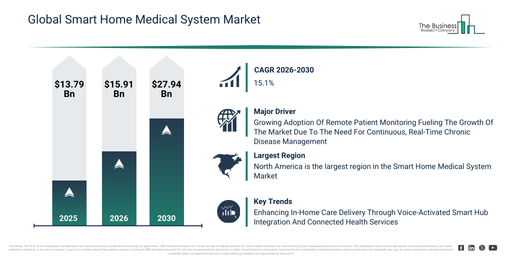
    The smart home medical system market has seen a swift expansion in its scale over the past few years. Projections indicate it will expand from $13.79 billion in 2025 to reach $15.91 billion by 2026, exhibiting a compound annual growth rate (CAGR) of 15.4%. Historically, this expansion has stemmed from the increasing adoption of wearable health devices, heightened awareness of home healthcare, a surge in demand for remote patient monitoring, the broader expansion of IoT connectivity in homes, and the increasing prevalence of chronic diseases.

    The smart home medical system market size is anticipated to undergo significant expansion over the next few years. It is projected to reach $27.94 billion by 2030, demonstrating a compound annual growth rate (CAGR) of 15.1%. This projected growth can be ascribed to increasing investment in smart home healthcare infrastructure, the escalating integration of artificial intelligence (AI) and IoT within medical systems, the broadening scope of telemedicine services, enhanced government backing for home-based healthcare, and a growing consumer inclination towards personalized healthcare. Prominent developments expected in the forecast period include technological improvements in sensor precision, innovations in artificial intelligence (AI)-powered health monitoring, progress in telehealth system integration, ongoing research and development in predictive health analytics, and advancements in wireless and cloud-based health platforms.

    Access Your Free Sample Report For In-Depth Market Analysis:

    https://www.thebusinessresearchcompany.com/sample.aspx?id=30747&type=smp

    Which Key Factors Are Driving The Smart Home Medical System Market Growth?

    The increasing integration of remote patient monitoring is anticipated to drive the expansion of the smart home medical system market in the future. Remote patient monitoring involves utilizing interconnected medical devices and digital platforms to gather, send, and examine patient health information away from conventional clinical environments, thereby facilitating ongoing management of long-term health issues. The uptake of remote patient monitoring is escalating because of the rising occurrence of chronic respiratory diseases, where consistent oversight aids in symptom management and averts hospital admissions. Smart home medical systems facilitate remote patient monitoring through the incorporation of connected devices designed to monitor vital signs, ensure medication compliance, and track daily health routines. These systems enhance patient care by allowing for real-time data transfer, prompt identification of health problems, and rapid medical interventions by healthcare professionals. As an illustration, data from December 2025, provided by Intuition Labs, a US-based healthcare technology firm, indicates that almost 50 million Americans currently employ some type of remote patient monitoring device, 80% of Americans hold a positive view regarding the inclusion of remote patient monitoring in healthcare, and by 2025, more than 71 million Americans, making up 26% of the population, are projected to utilize some form of remote patient monitoring service. Consequently, the expanding use of remote patient monitoring is fueling the development of the smart home medical system market.

    How Is The Smart Home Medical System Market Categorized Across Its Segment Groups?

    The smart home medical system market covered in this report is segmented –

    1) By Component: Hardware, Software, Services

    2) By Technology: Internet Of Things (IoT), Artificial Intelligence (AI), Cloud Computing, Wearable Technology

    3) By Applications: Remote Patient Monitoring, Chronic Disease Management, Elderly Care, Home-Based Recovery, Emergency Assistance, Preventive And Wellness Monitoring

    4) By End User: Patients, Caregivers, Healthcare Providers, Insurance Companies

    Subsegments:

    1) By Hardware: Health Monitoring Devices, Medication Management Devices, Emergency Alert Devices, Diagnostic Equipment, Connectivity Modules

    2) By Software: Data Analytics Platforms, Remote Monitoring Applications, Telehealth Management Software, Visualization And Reporting Tools, Artificial Intelligence Enabled Software

    3) By Services: Installation And Setup Services, Maintenance And Support Services, Remote Patient Monitoring Services, Training And Consultation Services, Data Management Services

    Which Trends Are Guiding The Direction Of The Smart Home Medical System Market?

    Leading companies within the smart home medical system sector are concentrating on developing advanced solutions, such as voice-activated smart hubs, to enhance accessibility, facilitate real-time monitoring, and enable smooth interaction among patients, caregivers, and healthcare providers. A voice-activated smart hub functions as a central in-home medical control system, leveraging voice recognition and integrated sensors to allow for hands-free engagement, trigger alerts, coordinate care workflows, and support daily health and safety needs, particularly beneficial for older adults and individuals managing chronic conditions. For example, in September 2024, Aloe Care Health Inc., a US-based provider of connected care and remote monitoring solutions, launched its new division, Aloe Care Health Solutions. This division was established to deliver a comprehensive, turnkey solution that addresses the increasing requirements of healthcare organizations including Medicare Advantage, Medicaid, Home Health, and Senior Living providers. Its offerings include a data-centric platform and an array of devices featuring a patented Smart Hub, integrating technologies like a radar fall detector and the Withings Sleep Tracking Mat. This setup enables AI-driven fall prediction, helps avoid emergency room visits, and provides smarter triage without requiring constant caregiver intervention. The system also incorporates a flexible, customizable platform designed to adapt to individual needs, thereby assisting healthcare partners in achieving superior health outcomes, controlling costs, and improving member satisfaction.

    Which Firms Are Influencing Competition In The Smart Home Medical System Market?

    Major companies operating in the smart home medical system market are Abbott Laboratories, Medtronic plc, Koninklijke Philips N.V., Omron Healthcare Inc., ResMed Inc., Dexcom Inc., Teladoc Health Inc., Masimo Corporation, Tunstall Healthcare Group Ltd., iRhythm Technologies Inc., Athelas Inc., Withings SA, HealthSnap Inc., Current Health Ltd., AliveCor Inc., Cadence Care Inc., Qardio Inc., Empatica Inc., Vivify Health Inc., BioIntelliSense Inc., CarePredict Inc., HealthBeacon plc, Sensara BV, Essence SmartCare Ltd.

    Get The Full Smart Home Medical System Market Report:

    https://www.thebusinessresearchcompany.com/report/smart-home-medical-system-market-report

    Which Region Is The Top Contributor To The Smart Home Medical System Market By Share?

    North America was the largest region in the smart home medical system market in 2025. Asia-Pacific is expected to be the fastest-growing region in the forecast period. The regions covered in the smart home medical system market report are Asia-Pacific, South East Asia, Western Europe, Eastern Europe, North America, South America, Middle East, Africa.

    Request A Customized Smart Home Medical System Market Report For Competitive Insights:

    https://www.thebusinessresearchcompany.com/customise?id=30747&type=smp

    Browse Through More Reports Similar to the Global Smart Home Medical System Market 2026, By The Business Research Company

    Home Healthcare Software Market Report 2026

    https://www.thebusinessresearchcompany.com/report/home-healthcare-software-global-market-report

    Smart Healthcare Products Market Report 2026

    https://www.thebusinessresearchcompany.com/report/smart-healthcare-products-global-market-report

    healthcare automation global market report

    https://www.thebusinessresearchcompany.com/report/healthcare-automation-global-market-report

    Get in touch with us:

    The Business Research Company: https://www.thebusinessresearchcompany.com/

    Americas +1 310-496-7795

    Asia +44 7882 955267 & +91 8897263534

    Europe +44 7882 955267

    Email us at info@tbrc.info

    Follow us on:

    LinkedIn: https://in.linkedin.com/company/the-business-research-company

    YouTube: https://www.youtube.com/channel/UC24_fI0rV8cR5DxlCpgmyFQ

    Global Market Model: https://www.thebusinessresearchcompany.com/global-market-model
  • Single-Detector Gamma Camera  Market Forecast 2026–2030 Highlighting Expansion Across Industries

    Single-Detector Gamma Camera Market Forecast 2026–2030 Highlighting Expansion Across Industries

    The Business Research Company’s 2026 market reports feature enhanced tools like market attractiveness analysis, TAM assessment, and company scoring matrices, along with interactive dashboards, deeper supply chain insights, and startup coverage strengthening the depth, usability, and strategic value of insights.

    How Is The Market Size Of The Single-Detector Gamma Camera Market Expected To Scale Between 2026 And 2030?

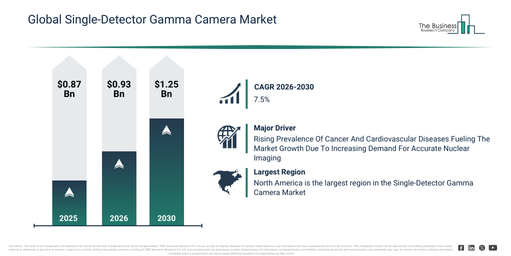
    The market size for single-detector gamma cameras has demonstrated robust growth in recent years. This market is anticipated to expand from $0.87 billion in 2025 to $0.93 billion in 2026, achieving a compound annual growth rate (CAGR) of 7.8%. Historically, this growth was primarily due to the increasing incidence of chronic diseases, greater adoption of nuclear medicine diagnostics, a rising elderly population, the expansion of healthcare infrastructure, and the growing need for early disease detection.

    The market for single-detector gamma cameras is set for significant expansion in the upcoming years, with projections indicating it will reach $1.25 billion by 2030, demonstrating a compound annual growth rate (CAGR) of 7.5%. This increase is primarily attributed to the rising global incidence of cancer and cardiovascular conditions, increased spending on healthcare infrastructure, particularly in emerging markets, the growing adoption of advanced gamma camera systems, the expanded utilization of nuclear medicine in both diagnostics and research, and an elevated demand for non-invasive diagnostic imaging. Major trends expected in this period include technological advancements in detector and imaging systems, innovations within hybrid imaging, the development of digital and solid-state gamma cameras, continuous research and development of novel radiopharmaceuticals and imaging protocols, and the increasing integration of artificial intelligence (AI) alongside automated image processing.

    Access Your Free Sample Report For In-Depth Market Analysis:

    https://www.thebusinessresearchcompany.com/sample.aspx?id=30743&type=smp

    What Key Drivers Are Fueling The Growth Of The Single-Detector Gamma Camera Market?

    The increasing occurrence of cancer and cardiovascular ailments is anticipated to drive the expansion of the single-detector gamma camera market in the future. The prevalence of these conditions indicates the number of individuals within a specific population who are afflicted with any form of cancer or heart and blood vessel disorder at a particular time or over a period. This prevalence is escalating as populations grow older and are exposed to risk factors like poor diets and sedentary lifestyles, making them more susceptible. The single-detector gamma camera aids in identifying cancer and cardiovascular diseases by delivering essential nuclear imaging, allowing medical professionals to pinpoint, evaluate, and track functional alterations in organs impacted by cancer and heart conditions. For example, in August 2025, the Centers for Disease Control and Prevention, a public health agency based in Switzerland, reported that 90% of the country’s 4.9 trillion dollars in yearly healthcare expenditure is linked to people with chronic and mental health issues. Furthermore, over 84,000 Americans die annually from heart disease or stroke, and the costs associated with cardiovascular diseases are projected to hit approximately $2 trillion by 2050. Consequently, the growing incidence of cancer and cardiovascular diseases is stimulating the growth of the single-detector gamma camera market.

    Which Segment Categories Are Included In The Single-Detector Gamma Camera Market Segment Analysis?

    The single-detector gamma camera market covered in this report is segmented –

    1) By Type Of Detector: High-Energy General-Purpose Gamma Cameras, Low-Energy High-Resolution Gamma Cameras, Specialized Gamma Cameras

    2) By Type Or Design: Stationary Type Single-Detector Gamma Camera, Mobile Type Single-Detector Gamma Camera Or Single-Head Mobile Gamma Cameras

    3) By Technology: Static Imaging, Dynamic Imaging, Tomographic Imaging (Single Photon Emission Computed Tomography (SPECT)), Quantitative Imaging

    4) By Application: Oncology, Cardiology, Neurology, Bone Scintigraphy, Pulmonary Scintigraphy

    5) By End-User: Hospitals, Diagnostic Imaging Centers, Research Institutions, Outpatient Clinics

    Subsegments:

    1) By High-Energy General-Purpose Gamma Cameras: Cardiac Imaging Gamma Cameras, Whole-Body Imaging Gamma Cameras, Multi-Purpose Imaging Gamma Cameras

    2) By Low-Energy High-Resolution Gamma Cameras: Thyroid Imaging Gamma Cameras, Bone Scintigraphy Gamma Cameras, Renal Imaging Gamma Cameras

    3) By Specialized Gamma Cameras: Cardiac SPECT Imaging Gamma Cameras, Brain SPECT Imaging Gamma Cameras, Liver SPECT Imaging Gamma Cameras

    Who Are The Active Companies Shaping The Single-Detector Gamma Camera Market?

    Major companies operating in the single-detector gamma camera market are Siemens Healthineers AG, GE HealthCare Technologies Inc., Koninklijke Philips N.V., Canon Medical Systems Corporation, Digirad Corporation, Serac Life Sciences Limited, Biodex Medical Systems Inc., Beijing Huitai Medical Equipment Co. Ltd., Electronic & Engineering Co. Private Limited, DVS Medical Inc., NUVIATech Instruments, Dilon Technologies Inc., Serac Imaging Systems Limited, RadRays Medical Technology, AdvanScint Imaging Solutions, MedNova Imaging Ltd., GBT Medical Technologies, United Imaging Healthcare Co. Ltd.

    Get The Full Single-Detector Gamma Camera Market Report:

    https://www.thebusinessresearchcompany.com/report/single-detector-gamma-camera-market-report

    Which Region Is The Leading Market For The Single-Detector Gamma Camera Market?

    North America was the largest region in the single-detector gamma camera market in 2025. Asia-Pacific is expected to be the fastest-growing region in the forecast period. The regions covered in the single-detector gamma camera market report are Asia-Pacific, South East Asia, Western Europe, Eastern Europe, North America, South America, Middle East, Africa.

    Request A Customized Single-Detector Gamma Camera Market Report For Competitive Insights:

    https://www.thebusinessresearchcompany.com/customise?id=30743&type=smp

    Browse Through More Reports Similar to the Global Single-Detector Gamma Camera Market 2026, By The Business Research Company

    X Ray Detectors Market Report 2026

    https://www.thebusinessresearchcompany.com/report/x-ray-detectors-global-market-report

    Surveillance Camera Market Report 2026

    https://www.thebusinessresearchcompany.com/report/surveillance-camera-global-market-report

    single photon emission computed tomography SPECT global market report

    https://www.thebusinessresearchcompany.com/report/single-photon-emission-computed-tomography-spect-global-market-report

    Get in touch with us:

    The Business Research Company: https://www.thebusinessresearchcompany.com/

    Americas +1 310-496-7795

    Asia +44 7882 955267 & +91 8897263534

    Europe +44 7882 955267

    Email us at info@tbrc.info

    Follow us on:

    LinkedIn: https://in.linkedin.com/company/the-business-research-company

    YouTube: https://www.youtube.com/channel/UC24_fI0rV8cR5DxlCpgmyFQ

    Global Market Model: https://www.thebusinessresearchcompany.com/global-market-model
  • Semiconductor Timing Integrated Circuit (IC)  Market Outlook 2026–2030 Driven By Growth Factors And Projections

    Semiconductor Timing Integrated Circuit (IC) Market Outlook 2026–2030 Driven By Growth Factors And Projections

    The Business Research Company’s 2026 market reports feature enhanced tools like market attractiveness analysis, TAM assessment, and company scoring matrices, along with interactive dashboards, deeper supply chain insights, and startup coverage strengthening the depth, usability, and strategic value of insights.

    How Will The Market Value Of The Semiconductor Timing Integrated Circuit (IC) Market Progress Between 2026 And 2030?

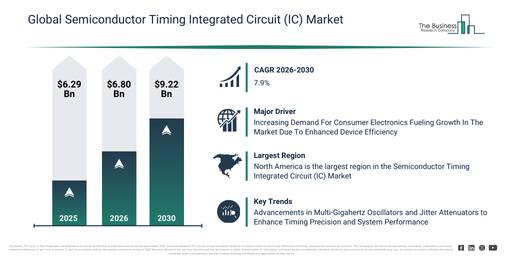
    The semiconductor timing IC market size has experienced robust expansion over recent years. Forecasts suggest it will grow from $6.29 billion in 2025 to $6.80 billion in 2026, exhibiting a compound annual growth rate (CAGR) of 8.2%. The historical increase can be ascribed to several factors, including heightened demand for consumer electronics, the growing adoption of communication systems, greater integration within automotive electronics, the expansion of industrial automation, and the increasing deployment in healthcare devices.

    The semiconductor timing IC market size is projected for robust expansion over the coming years, set to reach $9.22 billion in 2030 with a compound annual growth rate (CAGR) of 7.9%. This projected growth is fueled by factors such as the increasing adoption of 5G and telecommunication infrastructure, the rising demand for low-power timing solutions, the expanding deployment of IoT and connected devices, the growth of data centers and cloud computing, and the crucial integration into electric vehicles and smart automotive systems. Significant trends in this period are expected to involve technological progress in mixed-signal and digital timing ICs, innovations in programmable and multi-output clock generators, the development of low-power and high-precision timing ICs, ongoing research and development in automotive and electric vehicle timing solutions, and advancements in crystal oscillators and jitter attenuation technologies.

    Access Your Free Sample Report For In-Depth Market Analysis:

    https://www.thebusinessresearchcompany.com/sample.aspx?id=30740&type=smp

    What Key Factors Are Affecting The Semiconductor Timing Integrated Circuit (IC) Market Demand?

    The future expansion of the semiconductor timing integrated circuit (IC) market is anticipated to be fueled by the rising need for consumer electronics. These products encompass electronic gadgets crafted for daily personal or domestic applications, predominantly for leisure, interaction, and enjoyment. Unlike industrial or professional equipment, they are characterized by their focus on non-commercial uses within homes or daily routines. The escalating demand for consumer electronics stems from rapid technological progress, with newer and enhanced devices captivating a larger consumer base and promoting regular updates. Semiconductor timing ICs facilitate this demand by delivering accurate timing and synchronization to devices, thereby guaranteeing their efficient and dependable operation. For example, data from June 2025, provided by the Australian Bureau of Statistics (ABS), an Australia-based official national statistical agency, revealed that in 2025, retail sales of electrical and electronic goods increased by 3.9% in that single month, signifying a continuous rise in consumer demand for electronics. This increase demonstrates a stronger consumer spending trend compared to the beginning of the year. Consequently, the growing requirement for consumer electronics is propelling the expansion of the semiconductor timing integrated circuit (IC) market.

    What Are The Different Segment Types In The Semiconductor Timing Integrated Circuit (IC) Market Segment Breakdown?

    The semiconductor timing integrated circuit (ic) market covered in this report is segmented –

    1) By Type Of Timing Integrated Circuit (IC): Crystal Oscillators, Real-Time Clock (RTC) Integrated Circuits (ICs), Frequency Synthesizers, Programmable Timing Integrated Circuits (IC), Clock Buffers and Clock Distribution Integrated Circuits (IC)

    2) By Technology: Analog Timing ICs, Digital Timing ICs, Mixed-Signal Timing ICs, Low-Power Timing ICs

    3) By Distribution Channel: Direct Sales, Distributors and Resellers, Online Platforms, Value-Added Resellers (VARs)

    4) By Application: Communication Systems, Consumer Electronics, Automotive Electronics, Industrial Automation, Healthcare Devices

    5) By End-User Sector: Telecommunications, Information Technology (IT) And Computing, Consumer Goods, Medical Equipment, Automotive

    Subsegments:

    1) By Crystal Oscillators: Surface Mount Device Oscillators, Through Hole Oscillators, Temperature Compensated Crystal Oscillators, Voltage Controlled Crystal Oscillators, Oven Controlled Crystal Oscillators

    2) By Real-Time Clock (RTC) Integrated Circuits: Serial Interface Real-Time Clocks, Parallel Interface Real-Time Clocks, Integrated Battery Backup Real-Time Clocks, Low Power Real-Time Clocks

    3) By Frequency Synthesizers: Integer Frequency Synthesizers, Fractional Frequency Synthesizers, Direct Digital Synthesizers, Phase Locked Loop Synthesizers

    4) By Programmable Timing Integrated Circuits: Digitally Controlled Oscillators, Programmable Clock Generators, Configurable Delay Lines, Frequency Agile Timing Controllers

    5) By Clock Buffers and Clock Distribution Integrated Circuits: Fanout Buffers, Clock Multiplexers, Jitter Attenuating Clock Buffers, Zero Delay Buffers, Differential Clock Distributors

    What Trends Are Influencing Changes In The Semiconductor Timing Integrated Circuit (IC) Market?

    Leading firms in the semiconductor timing integrated circuit (IC) market are concentrating on creating items like multi-gigahertz oscillators and jitter attenuators to satisfy the growing need for ultra-low jitter, high-frequency, and thermally robust timing solutions for AI, 5G, and advanced computing systems. These multi-gigahertz oscillators and jitter attenuators are specialized integrated circuits crafted to produce and stabilize rapid clock signals, offering femtosecond-level precision along with programmable output flexibility. This capability surpasses conventional analog timing solutions, which frequently exhibit greater jitter and constrained thermal stability. As an example, in June 2025, Mixed-Signal Devices, a US-based semiconductor company, introduced its MS11X0 oscillator and MS15X0 jitter attenuator families. This innovative collection provides an output frequency of up to 2 GHz, ultra-low jitter (down to 19 fs RMS), ±20 ppm thermal stability, and comes in compact CMOS packages. These particular devices incorporate factory-programmable outputs, adaptive DSP-based timing engines, and strong environmental resilience, rendering them appropriate for AI compute fabrics, 5G network synchronization, coherent optics, and high-speed SerDes interfaces. They also integrate CMOS precision and Virtual Crystal architecture, which together streamline clock tree design, decrease component counts, and boost reliability throughout intricate electronic systems.

    Who Are The Well-Known Companies In The Semiconductor Timing Integrated Circuit (IC) Market?

    Major companies operating in the semiconductor timing integrated circuit (ic) market are Texas Instruments Incorporated, STMicroelectronics N.V., Infineon Technologies AG, KYOCERA Corporation, NXP Semiconductors N.V., Murata Manufacturing Co. Ltd., Analog Devices Inc., Renesas Electronics Corporation, Seiko Epson Corporation, ON Semiconductor Corporation, Skyworks Solutions Inc., Microchip Technology Incorporated, ROHM Co. Ltd., MaxLinear Inc., Vishay Intertechnology Inc., Diodes Incorporated, Nuvoton Technology Corporation, Silicon Laboratories Inc., Semtech Corporation, SiTime Corporation, Rakon Limited, Abracon LLC

    Get The Full Semiconductor Timing Integrated Circuit (IC) Market Report:

    https://www.thebusinessresearchcompany.com/report/semiconductor-timing-integrated-circuit-ic-market-report

    Which Region Has The Greatest Market Share In The Semiconductor Timing Integrated Circuit (IC) Market?

    North America was the largest region in the mobile semiconductor timing IC market in 2025. Asia-Pacific is expected to be the fastest-growing region in the forecast period. The regions covered in the semiconductor timing integrated circuit (ic) market report are Asia-Pacific, South East Asia, Western Europe, Eastern Europe, North America, South America, Middle East, Africa.

    Request A Customized Semiconductor Timing Integrated Circuit (IC) Market Report For Competitive Insights:

    https://www.thebusinessresearchcompany.com/customise?id=30740&type=smp

    Browse Through More Reports Similar to the Global Semiconductor Timing Integrated Circuit (IC) Market 2026, By The Business Research Company

    Gate Driver Integrated Circuit Ic Market Report 2026

    https://www.thebusinessresearchcompany.com/report/gate-driver-integrated-circuit-ic-global-market-report

    Timing Devices Market Report 2026

    https://www.thebusinessresearchcompany.com/report/timing-devices-global-market-report

    integrated circuits global market report

    https://www.thebusinessresearchcompany.com/report/integrated-circuits-global-market-report

    Get in touch with us:

    The Business Research Company: https://www.thebusinessresearchcompany.com/

    Americas +1 310-496-7795

    Asia +44 7882 955267 & +91 8897263534

    Europe +44 7882 955267

    Email us at info@tbrc.info

    Follow us on:

    LinkedIn: https://in.linkedin.com/company/the-business-research-company

    YouTube: https://www.youtube.com/channel/UC24_fI0rV8cR5DxlCpgmyFQ

    Global Market Model: https://www.thebusinessresearchcompany.com/global-market-model
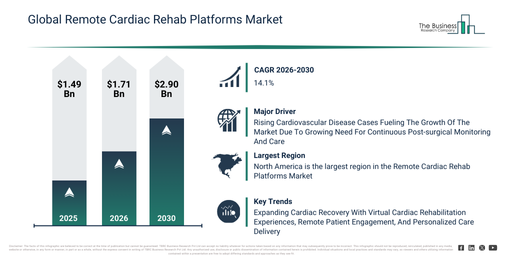
  • The Remote Cardiac Rehab Platforms  Market Is Evolving Due To Rising Cardiovascular Disease Cases Fueling The Growth Of The Market Due To Growing Need For Continuous Post-surgical Monitoring And Care

    The Remote Cardiac Rehab Platforms Market Is Evolving Due To Rising Cardiovascular Disease Cases Fueling The Growth Of The Market Due To Growing Need For Continuous Post-surgical Monitoring And Care

    The Business Research Company’s 2026 market reports feature enhanced tools like market attractiveness analysis, TAM assessment, and company scoring matrices, along with interactive dashboards, deeper supply chain insights, and startup coverage strengthening the depth, usability, and strategic value of insights.

    What Is The Estimated Market Size Of The Remote Cardiac Rehab Platforms Market In 2026, And How Will Its Value Evolve By 2030?

    The remote cardiac rehab platforms market size has seen rapid growth in recent years. It is projected to expand from $1.49 billion in 2025 to $1.71 billion in 2026, at a compound annual growth rate (CAGR) of 14.4%. This historical growth can be attributed to factors such as the increasing prevalence of cardiovascular diseases, a growing aging population, rising awareness about cardiac health, the expansion of telehealth infrastructure, and increasing hospital readmission rates.

    The market for remote cardiac rehab platforms is projected to experience substantial expansion over the coming years. This sector is anticipated to reach a valuation of $2.90 billion by 2030, exhibiting a compound annual growth rate (CAGR) of 14.1%. The expected increase during this period can be attributed to several factors, including the increasing uptake of remote monitoring platforms, a growing patient preference for rehabilitation conducted at home, greater spending on digital solutions within healthcare, broader insurance coverage for remote therapy, and the enhanced integration of wearable devices with rehabilitation programs. Key developments anticipated in the forecast period encompass technological improvements in wearable sensors, advancements in digital rehabilitation software, progress in artificial intelligence-driven patient monitoring, continued research and development in telecardiology, and the integration of mobile applications with remote rehabilitation platforms.

    Access Your Free Sample Report For In-Depth Market Analysis:

    https://www.thebusinessresearchcompany.com/sample.aspx?id=30724&type=smp

    What Key Factors Are Shaping The Remote Cardiac Rehab Platforms Market Landscape?

    The increasing occurrence of cardiovascular diseases is projected to boost the expansion of the remote cardiac rehabilitation platforms market moving ahead. This refers to a growing number of heart-related conditions, like coronary artery disease and heart failure, which necessitate surgical procedures and ongoing care. The increase in these cases is fueled by progress in surgical methods and an aging population, consequently generating a greater need for easily accessible post-operative recovery options. Such platforms facilitate the development of complete recovery programs by allowing continuous tracking of patient vital signs and providing structured exercise therapy in the comfort of patients’ homes. As an illustration, in May 2025, the Japanese Association for Thoracic Surgery, a professional body in Japan focused on thoracic surgery, reported that Japan performed 63,427 cardiovascular surgeries in 2023. This marked a 3.0% rise from the 61,606 surgeries conducted in 2022. Consequently, the growing prevalence of cardiovascular disease cases is propelling the expansion of the remote cardiac rehabilitation platforms market.

    Which Segment Types Are Examined In The Remote Cardiac Rehab Platforms Market Segment Study?

    The remote cardiac rehab platforms market covered in this report is segmented –

    1) By Component: Software, Hardware, Services

    2) By Delivery Mode: Web-based, Cloud-based, On-premises

    3) By Application: Chronic Heart Failure, Post-Myocardial Infarction, Hypertension, Arrhythmia, Other Applications

    4) By End User: Hospitals and Clinics, Home Care Settings, Cardiac Rehabilitation Centers, Other End Users

    Subsegments:

    1) By Software: Platform, Patient Application, Clinician Dashboard, Administrative And Billing Module

    2) By Hardware: Wearable Devices, Electrocardiogram(ECG) Monitors, Blood Pressure Monitors, Heart Rate Monitors

    3) By Services: Remote Monitoring, Virtual Consultation, Patient Education, Technical Support

    What Market Trends Are Affecting The Remote Cardiac Rehab Platforms Market?

    Leading companies in the remote cardiac rehabilitation platforms market are prioritizing the creation of advanced telehealth solutions, such as virtual cardiac rehabilitation experiences. These efforts are designed to broaden access to vital rehab programs, enhance patient participation, and support tailored cardiovascular recovery outside of conventional clinical environments. A virtual cardiac rehabilitation experience is characterized as a structured digital care pathway that provides exercise guidance, educational resources, symptom monitoring, and clinician feedback through remote platforms. This approach enables patients to engage in comprehensive cardiac rehabilitation from their homes or community settings while maintaining professional clinical oversight. For instance, in October 2025, WakeMed Health & Hospitals, a US-based healthcare system, launched a virtual cardiac rehabilitation experience specifically for patients recovering from heart procedures or managing chronic heart conditions. This initiative employs connected tools, remote monitoring capabilities, and telehealth coaching to guide patients through personalized rehab plans, track their progress, and deliver real-time support from clinicians, thereby helping to overcome challenges such as lengthy travel, scheduling difficulties, and limited facility availability. The introduction of such programs underscores a growing focus on integrating virtual experiences into cardiac rehabilitation to boost convenience, adherence, and health outcomes. Through the incorporation of a virtual cardiac rehabilitation experience into their remote care offerings, WakeMed and Recora are facilitating wider participation in evidence-based rehabilitation, improving care continuity, and promoting long-term cardiovascular wellness for a broad spectrum of patients.

    Which Players Are Part Of The Competitive Landscape Of The Remote Cardiac Rehab Platforms Market?

    Major companies operating in the remote cardiac rehab platforms market are Philips Healthcare, Teladoc Health Inc., Sword Health Inc., BioFourmis Inc., Dozee Health, Wellframe Inc., Health Recovery Solutions, Biotricity Inc., Vivalink Inc., Lyfe, Carda Health Inc., Chanl Health Inc., Fourth Frontier, Heartbeat Health Inc., Life365 Inc., Liva Healthcare, Movn Health, Prevounce, Recora LLC, Veta Health Co.

    Get The Full Remote Cardiac Rehab Platforms Market Report:

    https://www.thebusinessresearchcompany.com/report/remote-cardiac-rehab-platforms-market-report

    Which Region Is The Top Contributor To The Remote Cardiac Rehab Platforms Market By Share?

    North America was the largest region in the remote cardiac rehab platforms market in 2025. Asia-Pacific is expected to be the fastest-growing region in the forecast period. The regions covered in the remote cardiac rehab platforms market report are Asia-Pacific, South East Asia, Western Europe, Eastern Europe, North America, South America, Middle East, Africa.

    Request A Customized Remote Cardiac Rehab Platforms Market Report For Competitive Insights:

    https://www.thebusinessresearchcompany.com/customise?id=30724&type=smp

    Browse Through More Reports Similar to the Global Remote Cardiac Rehab Platforms Market 2026, By The Business Research Company

    Remote Cardiac Monitoring Market Report 2026

    https://www.thebusinessresearchcompany.com/report/remote-cardiac-monitoring-global-market-report

    Smart Portable Rehabilitation Devices Market Report 2026

    https://www.thebusinessresearchcompany.com/report/smart-portable-rehabilitation-devices-global-market-report

    mobile cardiac telemetry systems global market report

    https://www.thebusinessresearchcompany.com/report/mobile-cardiac-telemetry-systems-global-market-report

    Get in touch with us:

    The Business Research Company: https://www.thebusinessresearchcompany.com/

    Americas +1 310-496-7795

    Asia +44 7882 955267 & +91 8897263534

    Europe +44 7882 955267

    Email us at info@tbrc.info

    Follow us on:

    LinkedIn: https://in.linkedin.com/company/the-business-research-company

    YouTube: https://www.youtube.com/channel/UC24_fI0rV8cR5DxlCpgmyFQ

    Global Market Model: https://www.thebusinessresearchcompany.com/global-market-model