Category: Healthcare Services

  • The Rise Of Increasing Diabetic Patient Population Fueling The Growth Of The Market Due To Rising Prevalence Of Chronic Ulcers And Slow-healing Wounds Is Influencing The Regenerative Wound Care  Market

    The Rise Of Increasing Diabetic Patient Population Fueling The Growth Of The Market Due To Rising Prevalence Of Chronic Ulcers And Slow-healing Wounds Is Influencing The Regenerative Wound Care Market

    The Business Research Company’s 2026 market reports feature enhanced tools like market attractiveness analysis, TAM assessment, and company scoring matrices, along with interactive dashboards, deeper supply chain insights, and startup coverage strengthening the depth, usability, and strategic value of insights.

    How Does The Market Size Of The Regenerative Wound Care Market Compare Between 2026 And 2030?

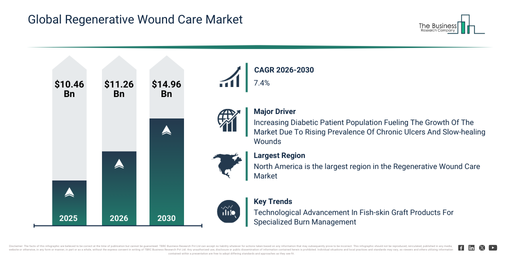
    The regenerative wound care market size has experienced robust expansion in recent years. Looking ahead, it is projected to expand from $10.46 billion in 2025 to $11.26 billion in 2026, demonstrating a compound annual growth rate (CAGR) of 7.6%. This historical growth can be attributed to several factors, including the increasing prevalence of chronic wounds, a growing geriatric population, the rising incidence of diabetes and obesity, the expansion of healthcare infrastructure, and heightened awareness regarding advanced wound care therapies.

    The regenerative wound care market is anticipated to experience substantial expansion over the upcoming years. Its valuation is projected to reach $14.96 billion by 2030, exhibiting a compound annual growth rate (CAGR) of 7.4%. This expected growth during the forecast period can be linked to factors such as the increasing acceptance of regenerative wound care products, a surge in investments directed towards biotechnology startups, the broader incorporation of artificial intelligence in wound management practices, the expansion of home healthcare services, and an escalating need for customized wound care treatments. Key trends identified for the forecast period encompass technological progress in bioengineered skin substitutes, breakthroughs in stem cell therapies, the evolution of growth factor-based treatments, ongoing research and development in scaffold-based wound healing techniques, and enhancements in wound monitoring devices.

    Access Your Free Sample Report For In-Depth Market Analysis:

    https://www.thebusinessresearchcompany.com/sample.aspx?id=30723&type=smp

    Which Factors Are Influencing The Growth Of The Regenerative Wound Care Market?

    The growing number of individuals with diabetes is anticipated to fuel the expansion of the regenerative wound care market in the future. This rising diabetic patient population indicates a global increase in diabetes mellitus, a chronic condition frequently associated with complications such as poor circulation and neuropathy, which lead to difficult-to-heal wounds. Advances in diabetes management and heightened awareness contribute to the identification of this expanding patient group, emphasizing the critical demand for sophisticated therapies to prevent complications like foot ulcers. Regenerative wound care aids in creating optimal healing environments by employing bioactive materials and cellular therapies to stimulate tissue repair and closure in complex diabetic wounds. For instance, in July 2025, according to the International Diabetes Federation, a Belgium-based umbrella organization of national diabetes associations, in 2024, diabetes affected 11.10% of the global population, corresponding to 589 million adults, and is projected to reach 12.95% and 853 million by 2050. Thus, the increasing diabetic patient population is a key driver for the growth of the regenerative wound care market.

    How Are Different Segments Classified In The Regenerative Wound Care Market Segment Analysis?

    The regenerative wound care market covered in this report is segmented –

    1) By Product Type: Autologous Stem Cells, Biological Skin Substitutes, Tissue Or Multiple Tissue Platforms, Fetal Skin, Regenerative Wound Care Devices, Other Product Types

    2) By Wound Type: Chronic Wounds, Diabetic Foot Ulcers (DFUs), Venous Leg Ulcers (VLUs), Pressure Ulcers (Injuries), Acute Wounds, Surgical And Traumatic Wounds, Burn Wounds

    3) By Technology: Active Therapies, Scaffold-Based Therapies, Combination Products

    4) By End Users: Hospitals, Ambulatory Surgical Centers, Burn Care Centers And Wound Clinics, Other End Users

    Subsegments:

    1) By Autologous Stem Cells: Bone Marrow Derived Stem Cells, Adipose Derived Stem Cells, Peripheral Blood Stem Cells

    2) By Biological Skin Substitutes: Allogeneic Skin, Xenogeneic Skin, Composite Skin Substitutes

    3) By Tissue Or Multiple Tissue Platforms: Extracellular Matrix, Amniotic Membrane, Collagen Matrix

    4) By Fetal Skin: Amniotic Epithelial Cells, Dermal Fibroblasts

    5) By Regenerative Wound Care Devices: Negative Pressure Wound Therapy Devices, Bioengineered Tissue Scaffolds, Wound Dressings

    6) By Other Product Types: Growth Factors, Platelet Rich Plasma, Cellular Therapy Products

    Which Trends Are Influencing Demand In The Regenerative Wound Care Market?

    Companies operating within the regenerative wound care market are intensifying their focus on technological advancements, exemplified by the introduction of specialized fish-skin graft products that maintain their natural structure and omega-3 fatty acids. These advanced grafts are engineered to treat intricate burn wounds by supplying a bioactive scaffold that promotes cellular growth and tissue regeneration, often customized for particular anatomical areas such as the hands to improve application efficiency and functional recovery. For instance, in January 2023, Kerecis Limited, an Iceland-based medical device company, revealed the release of two new products for the burn market: GraftGuide Mano and GraftGuide Micro. These products are made from full-thickness fish dermis, processed using Kerecis’ proprietary EnviroIntact method, which preserves the skin’s original 3D structure and fatty acids. GraftGuide Mano is specifically designed to cover the complex 3D structure of the hand, thereby facilitating the management of second-degree burns.

    Who Are The Companies Driving Activity In The Regenerative Wound Care Market?

    Major companies operating in the regenerative wound care market are Stryker Corporation, Smith & Nephew plc, Convatec Group plc, Molnlycke Health Care AB, Integra LifeSciences Holdings Corporation, Angelini Pharma SpA, Organogenesis Holdings Inc.., MiMedx Group Inc., Fidia Farmaceutici SpA, Vericel Corporation, BioHorizons IPH Inc., Anika Therapeutics Inc., Kerecis Ltd., AVITA Medical Inc., Aroa Biosurgery Limited, Skye Biologics Inc., Tissue Regenix Group plc, PolarityTE Inc., Regenio, Acelity L.P. Inc.

    Get The Full Regenerative Wound Care Market Report:

    https://www.thebusinessresearchcompany.com/report/regenerative-wound-care-market-report

    Which Region Represents The Largest Share Of The Regenerative Wound Care Market?

    North America was the largest region in the regenerative wound care market in 2025. Asia-Pacific is expected to be the fastest-growing region in the forecast period. The regions covered in the regenerative wound care market report are Asia-Pacific, South East Asia, Western Europe, Eastern Europe, North America, South America, Middle East, Africa.

    Request A Customized Regenerative Wound Care Market Report For Competitive Insights:

    https://www.thebusinessresearchcompany.com/customise?id=30723&type=smp

    Browse Through More Reports Similar to the Global Regenerative Wound Care Market 2026, By The Business Research Company

    Chronic Wound Care Market Report 2026

    https://www.thebusinessresearchcompany.com/report/chronic-wound-care-global-market-report

    Active Wound Care Market Report 2026

    https://www.thebusinessresearchcompany.com/report/active-wound-care-global-market-report

    advanced wound care global market report

    https://www.thebusinessresearchcompany.com/report/advanced-wound-care-global-market-report

    Get in touch with us:

    The Business Research Company: https://www.thebusinessresearchcompany.com/

    Americas +1 310-496-7795

    Asia +44 7882 955267 & +91 8897263534

    Europe +44 7882 955267

    Email us at info@tbrc.info

    Follow us on:

    LinkedIn: https://in.linkedin.com/company/the-business-research-company

    YouTube: https://www.youtube.com/channel/UC24_fI0rV8cR5DxlCpgmyFQ

    Global Market Model: https://www.thebusinessresearchcompany.com/global-market-model
  • Empowering Retailers With In-House Recommerce Software, Streamlined Operations, And Enhanced Customer Engagement Is Playing A Role In Shaping The Recommerce Marketplaces for Retailers  Market

    Empowering Retailers With In-House Recommerce Software, Streamlined Operations, And Enhanced Customer Engagement Is Playing A Role In Shaping The Recommerce Marketplaces for Retailers Market

    The Business Research Company’s 2026 market reports feature enhanced tools like market attractiveness analysis, TAM assessment, and company scoring matrices, along with interactive dashboards, deeper supply chain insights, and startup coverage strengthening the depth, usability, and strategic value of insights.

    What Is The Forecasted Market Size Trajectory Of The Recommerce Marketplaces for Retailers Market From 2026 To 2030?

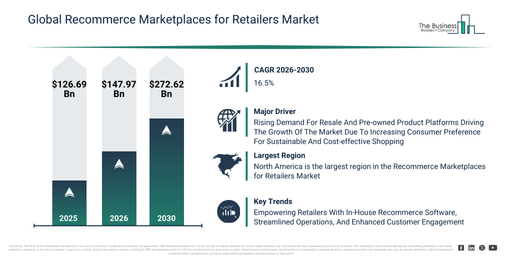
    The market size for recommerce marketplaces dedicated to retailers has seen rapid growth recently. It is forecast to increase from $126.69 billion in 2025 to $147.97 billion in 2026, achieving a compound annual growth rate (CAGR) of 16.8%. This historical expansion can be attributed to factors like the increasing consumer adoption of online shopping, a heightened demand for convenience and quick delivery, broader smartphone and internet penetration, an increase in product variety on e-commerce platforms, and growing trust in digital payment systems.

    The recommerce marketplaces for retailers market size is anticipated to experience substantial expansion in the coming years. By 2030, this market is projected to reach $272.62 billion, exhibiting a compound annual growth rate (CAGR) of 16.5%. This growth is primarily driven by a heightened emphasis on individualized experiences and AI-powered suggestions, the wider implementation of omnichannel retail approaches, increasing capital directed towards logistics and supply chain automation, the broadening scope of cross-border e-commerce, and a greater commitment to sustainability and circular economy principles. Key developments expected during this timeframe include breakthroughs in artificial intelligence for predicting demand and tailoring user experiences, novelties in augmented reality and virtual try-on solutions, progress in automated warehousing and robotics, ongoing research and development in secure payment and blockchain innovations, and the rise of hyperlocal delivery alongside same-day shipping methods.

    Access Your Free Sample Report For In-Depth Market Analysis:

    https://www.thebusinessresearchcompany.com/sample.aspx?id=30722&type=smp

    What Leading Drivers Are Supporting The Recommerce Marketplaces for Retailers Market Expansion?

    The expansion of the recommerce marketplaces for retailers market is projected to be fueled by the increasing demand for resale and pre-owned product platforms. These platforms signify a growing consumer inclination towards buying and selling items that have been previously owned, influenced by evolving perspectives on value, environmental responsibility, and cost-effectiveness. Shopper engagement with resale and pre-owned platforms is escalating, as consumers increasingly look for economical choices and emphasize sustainable practices amid wider economic challenges and ecological worries. Recommerce marketplaces for retailers facilitate these platforms by establishing organized and verified resale channels, broadening the availability of various pre-owned products, and streamlining transactions to meet consumer demands. For example, projections indicate that in 2025, data from ThredUp Inc., a US-based online resale platform, shows that 63% of consumers purchasing secondhand apparel in 2023 did so online, marking an increase of 17 percentage points from 2022. Additionally, 52% of all consumers engaged in secondhand apparel shopping. Furthermore, new shoppers are anticipated to contribute 65% of the additional secondhand spending by 2028, with Generation Z and Millennials together comprising 65% of this group, which is a 5 percentage points rise from 2022. Consequently, the expanding demand for resale and pre-owned product platforms is fueling the expansion of the recommerce marketplaces for retailers market.

    How Is The Recommerce Marketplaces for Retailers Market Categorized Across Its Segment Groups?

    The recommerce marketplaces for retailers market covered in this report is segmented –

    1) By Product Type: Apparel And Footwear, Electronics, Home Goods, Books And Media, Luxury Goods, Other Product Types

    2) By Business Model: Business-To-Business (B2B), Business-To-Consumer (B2C), Consumer-To-Consumer (C2C)

    3) By Platform: Online, Offline

    4) By End-User: Retailers, Brands, Consumers

    Subsegments:

    1) By Apparel And Footwear: Casual Wear, Formal Wear, Sportswear, Footwear, Accessories, Outerwear

    2) By Electronics: Smartphones, Laptops, Tablets, Televisions, Cameras, Wearable Devices, Home Appliances

    3) By Home Goods: Furniture, Home Decor, Kitchenware, Bedding And Linen, Lighting, Storage Solutions

    4) By Books And Media: Books, Magazines, Music Media, Movies, Video Games, Educational Materials

    5) By Luxury Goods: Designer Clothing, Luxury Handbags, Watches, Jewelry, Footwear, Accessories

    6) By Other Product Types: Sports Equipment, Toys And Games, Baby Products, Pet Supplies, Collectibles, Miscellaneous Items

    What Emerging Trends Are Seen In The Recommerce Marketplaces for Retailers Market?

    Companies operating within the recommerce marketplaces for retailers market are increasingly focusing on developing advanced technologies, such as proprietary software, to enhance operational efficiency, inventory control, and customer experience in the second-hand retail sector. In-house software refers to exclusive digital platforms created and managed by a company for the internal administration of core business processes, facilitating improved customization, oversight, and integration with existing systems. For instance, in May 2024, BuyBay GmbH, a Germany-based e-commerce solutions provider, launched its own recommerce software specifically designed for retailers. This platform enables businesses to effectively manage returned, pre-owned, or refurbished items, integrate them into their sales channels, and optimize the resale process. The software empowers retailers to streamline recommerce operations, improve customer satisfaction, and generate new revenue streams from sustainable product lifecycles.

    Which Firms Are Influencing Competition In The Recommerce Marketplaces for Retailers Market?

    Major companies operating in the recommerce marketplaces for retailers market are Farfetch UK Limited, Aptos Inc., ThredUp Inc., Upstream Commerce Ltd., Trove Recommerce Inc., Recommerce Group SAS, Yerdle Recommerce Services, Archive Resale Inc., Reflaunt S.A., Recurate Inc., reverse.supply GmbH, Troquer S.A. de C.V., ResaleAI Inc., Save Your Wardrobe Ltd., SuperCircle Inc., RecommerceX Ltd., Reshop Inc., Circularity.io, Sellier Knightsbridge Ltd., Sort A Brick Ltd.

    Get The Full Recommerce Marketplaces for Retailers Market Report:

    https://www.thebusinessresearchcompany.com/report/recommerce-marketplaces-for-retailers-market-report

    Which Geographic Region Dominates The Recommerce Marketplaces for Retailers Market?

    North America was the largest region in the recommerce marketplaces for retailers market in 2025. Asia-Pacific is expected to be the fastest-growing region in the forecast period. The regions covered in the recommerce marketplaces for retailers market report are Asia-Pacific, South East Asia, Western Europe, Eastern Europe, North America, South America, Middle East, Africa.

    Request A Customized Recommerce Marketplaces for Retailers Market Report For Competitive Insights:

    https://www.thebusinessresearchcompany.com/customise?id=30722&type=smp

    Browse Through More Reports Similar to the Global Recommerce Marketplaces for Retailers Market 2026, By The Business Research Company

    Miscellaneous Store Retailers Market Report 2026

    https://www.thebusinessresearchcompany.com/report/miscellaneous-store-retailers-global-market-report

    Retail E Commerce Market Report 2026

    https://www.thebusinessresearchcompany.com/report/retail-e-commerce-global-market-report

    retail and wholesale global market report

    https://www.thebusinessresearchcompany.com/report/retail-and-wholesale-global-market-report

    Get in touch with us:

    The Business Research Company: https://www.thebusinessresearchcompany.com/

    Americas +1 310-496-7795

    Asia +44 7882 955267 & +91 8897263534

    Europe +44 7882 955267

    Email us at info@tbrc.info

    Follow us on:

    LinkedIn: https://in.linkedin.com/company/the-business-research-company

    YouTube: https://www.youtube.com/channel/UC24_fI0rV8cR5DxlCpgmyFQ

    Global Market Model: https://www.thebusinessresearchcompany.com/global-market-model
  • Psychological Healing Service  Market Forecast Showing Industry Progress And Growth Trends

    Psychological Healing Service Market Forecast Showing Industry Progress And Growth Trends

    The Business Research Company’s 2026 market reports feature enhanced tools like market attractiveness analysis, TAM assessment, and company scoring matrices, along with interactive dashboards, deeper supply chain insights, and startup coverage strengthening the depth, usability, and strategic value of insights.

    What Is The Anticipated Rise In Market Value Of The Psychological Healing Service Market During The Forecast Period?

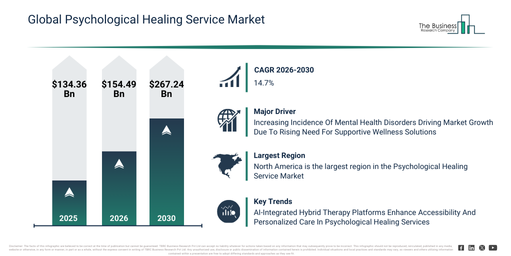
    The psychological healing service market has experienced rapid expansion in recent years. It is projected to grow from $134.36 billion in 2025 to $154.49 billion in 2026, at a compound annual growth rate (CAGR) of 15.0%. This growth in the historic period is attributable to factors such as increasing awareness of mental health, the growing adoption of online therapy platforms, a rising prevalence of stress and anxiety disorders, the expansion of corporate mental wellness programs, and growing government and NGO mental health initiatives.

    The psychological healing service market is projected for significant expansion over the coming years. It is anticipated to reach $267.24 billion by 2030, exhibiting a compound annual growth rate (CAGR) of 14.7%. This projected growth stems from several factors, including the rising need for individualized therapy options, the increasing incorporation of AI and digital resources into therapeutic practices, an elevated emphasis on proactive mental health support, broader mental health insurance coverage, and enhanced partnerships between medical professionals and digital platforms. Key trends anticipated during this period encompass technological progress in telehealth systems, novel AI-driven mental health interventions, the evolution of immersive VR and AR-based treatments, ongoing research and development in comprehensive and holistic therapeutic approaches, and improvements in data-centric personalized mental well-being instruments.

    Access Your Free Sample Report For In-Depth Market Analysis:

    https://www.thebusinessresearchcompany.com/sample.aspx?id=30713&type=smp

    What Key Drivers Are Fueling The Growth Of The Psychological Healing Service Market?

    The increasing occurrence of mental health conditions is projected to boost the growth of the psychological healing service market. These conditions encompass a broad spectrum of issues impacting an individual’s mood, thought processes, and behavior, frequently resulting in distress or difficulties with daily activities. The growing commonness of mental disorders stems from heightened exposure to ongoing stress and negative life events that surpass personal coping abilities, thus triggering psychological impairments. Psychological healing services are crucial for addressing mental health disorders by offering structured evaluations, guidance, and proven therapies that assist individuals in processing their emotions, acquiring coping mechanisms, and enhancing their overall psychological robustness. For instance, in October 2025, the Institute for Health Metrics and Evaluation, a US-based health research organization, reported that in 2023, mental disorders impacted 15% of the global populace, accounting for 17% of total years lived with disability globally, highlighting the increasing effect of mental health challenges. Consequently, the widespread presence of mental disorders is fueling the expansion of the psychological healing service market.

    How Is The Psychological Healing Service Market Broken Down By Segment Categories?

    The psychological healing service market covered in this report is segmented –

    1) By Therapy Type: Cognitive Behavioral Therapy, Psychoanalysis, Humanistic Therapy, Integrative Therapy

    2) By Target Disorder Or Focus Area: Anxiety And Depression, Stress Management And Burnout Trauma, Addiction, Eating Disorders, Relationship

    3) By Duration Of Service: Short-Term Therapy, Long-Term Therapy, Crisis Intervention

    4) By Target Audience: Adults, Children, Adolescents, Elderly

    Subsegments:

    1) By Cognitive Behavioral Therapy: Behavioral Activation, Exposure Therapy, Cognitive Restructuring, Problem-Solving Therapy, Dialectical Behavior Approach

    2) By Psychoanalysis: Free Association Method, Dream Interpretation Method, Transference Analysis, Object Relations Approach, Ego Psychology Approach

    3) By Humanistic Therapy: Person Centered Therapy, Gestalt Therapy, Existential Therapy, Emotion Focused Therapy, Client Directed Approach

    4) By Integrative Therapy: Multimodal Therapy, Holistic Therapy, Mind Body Integration, Eclectic Therapy, Unified Psychotherapy Approach

    What Trends Are Influencing The Psychological Healing Service Market?

    Major companies operating in the psychological healing service market are focusing on developing sophisticated platforms, such as AI-integrated hybrid therapy solutions, to improve accessibility, ensure continuity, and offer personalized care for mental health support. These AI-integrated hybrid therapy platforms combine artificial intelligence tools with structured human clinician involvement to deliver extensive digital assistance, customized therapeutic pathways, automated assessments, real-time messaging, and continuous patient engagement during the periods between scheduled care. For instance, in November 2024, Wysa Ltd, a UK-based digital mental health technology company, launched Wysa Copilot, an AI-integrated platform blending digital and human therapy. This platform incorporates AI-guided tools, secure real-time and asynchronous communication, and automated monitoring to support clinicians in managing their caseloads more efficiently and maintaining patient engagement beyond traditional therapy sessions. The platform additionally includes personalized care pathways and evidence-based tools assigned by clinicians to assist users in managing symptoms like anxiety and depression in between professional sessions.

    Which Players Are Present In The Psychological Healing Service Market Space?

    Major companies operating in the psychological healing service market are UnitedHealth Group Incorporated, CVS Health Corporation, Universal Health Services Inc., The MENTOR Network, Acadia Healthcare Company Inc., BetterHelp Inc., Spring Health Inc., Lyra Health Inc., CareTech Holdings plc, Magellan Health Inc., ComPsych Corporation, Ginger.io Inc., Hazelden Betty Ford Foundation, Path Mental Health Inc., Talkspace Inc., Centerstone, Brightside Health Inc., Ginger.io Inc., SonderMind Inc., Modern Health Inc., Two Chairs Inc., Vita Health Group Ltd., Kooth plc, Vita Health Group Ltd., Amaha Health Private Limited

    Get The Full Psychological Healing Service Market Report:

    https://www.thebusinessresearchcompany.com/report/psychological-healing-service-market-report

    Which Region Accounts For The Largest Portion Of The Psychological Healing Service Market?

    North America was the largest region in the psychological healing service market in 2025. Asia-Pacific is expected to be the fastest-growing region in the forecast period. The regions covered in the psychological healing service market report are Asia-Pacific, South East Asia, Western Europe, Eastern Europe, North America, South America, Middle East, Africa.

    Request A Customized Psychological Healing Service Market Report For Competitive Insights:

    https://www.thebusinessresearchcompany.com/customise?id=30713&type=smp

    Browse Through More Reports Similar to the Global Psychological Healing Service Market 2026, By The Business Research Company

    Emotional Counseling Service Market Report 2026

    https://www.thebusinessresearchcompany.com/report/emotional-counseling-service-global-market-report

    Online Therapy Services Market Report 2026

    https://www.thebusinessresearchcompany.com/report/online-therapy-services-global-market-report

    behavioral therapy global market report

    https://www.thebusinessresearchcompany.com/report/behavioral-therapy-global-market-report

    Get in touch with us:

    The Business Research Company: https://www.thebusinessresearchcompany.com/

    Americas +1 310-496-7795

    Asia +44 7882 955267 & +91 8897263534

    Europe +44 7882 955267

    Email us at info@tbrc.info

    Follow us on:

    LinkedIn: https://in.linkedin.com/company/the-business-research-company

    YouTube: https://www.youtube.com/channel/UC24_fI0rV8cR5DxlCpgmyFQ

    Global Market Model: https://www.thebusinessresearchcompany.com/global-market-model
  • Project Scheduling Artificial Intelligence (AI)  Market Future Trends Influencing Growth Through 2030

    Project Scheduling Artificial Intelligence (AI) Market Future Trends Influencing Growth Through 2030

    The Business Research Company’s 2026 market reports feature enhanced tools like market attractiveness analysis, TAM assessment, and company scoring matrices, along with interactive dashboards, deeper supply chain insights, and startup coverage strengthening the depth, usability, and strategic value of insights.

    How Is The Market Size Of The Project Scheduling Artificial Intelligence (AI) Market Expected To Scale Between 2026 And 2030?

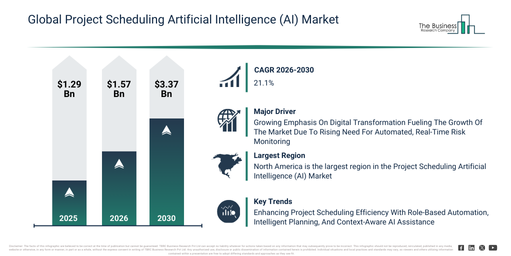
    The project scheduling artificial intelligence (AI) market size has experienced substantial growth in recent years. It is anticipated to increase from $1.29 billion in 2025 to $1.57 billion in 2026, exhibiting a compound annual growth rate (CAGR) of 21.4%. This historical expansion can be primarily linked to the growing adoption of digital project management tools, a heightened requirement for efficient scheduling in complex projects, the increasing utilization of data analytics for planning, the broadened integration of automation in operations, and a sharper focus on optimizing costs and timelines.

    The project scheduling artificial intelligence (AI) market size is projected to experience rapid expansion over the coming years. This market is anticipated to reach a valuation of $3.37 billion by 2030, exhibiting a compound annual growth rate (CAGR) of 21.1%. This expansion during the projection period stems from several factors, including an increasing need for predictive scheduling functionalities, the escalating integration of artificial intelligence (AI)-powered workflows, wider application of machine learning in resource allocation, a heightened emphasis on obtaining real-time project visibility, and the increasing uptake of intelligent automation within project planning. Key trends foreseen for the forecast period encompass advances in artificial intelligence (AI)-based scheduling technologies, novel developments in predictive project planning systems, progress in intelligent automation platforms, continuous research and development efforts in machine learning optimization, and the emergence of enhancements in autonomous scheduling solutions.

    Access Your Free Sample Report For In-Depth Market Analysis:

    https://www.thebusinessresearchcompany.com/sample.aspx?id=30712&type=smp

    Which Drivers Are Supporting The Project Scheduling Artificial Intelligence (AI) Market Growth?

    The increasing focus on digital transformation is anticipated to boost the project scheduling artificial intelligence (AI) market’s expansion. This involves implementing digital technologies to refine business operations, elevate customer experiences, and foster innovation within an organization. The push for digital transformation intensifies as companies strive to offer quicker, more tailored, and smoother customer interactions to maintain their competitive edge. Project scheduling artificial intelligence (AI) supports digital transformation efforts by automating planning processes, optimizing the allocation of resources, and forecasting project timelines. It boosts operational effectiveness and improves decision-making through real-time data provision, delay minimization, and facilitating data-informed oversight of intricate projects. A notable illustration is the digital infrastructure program, which, according to the UK-based Office for National Statistics in July 2024, secured an investment of $535 million (£434 million) by 2022, with a further $907 million (£736 million) earmarked for 2023 to 2025. Consequently, the heightened focus on digital initiatives is a key factor stimulating the expansion of the project scheduling artificial intelligence (AI) market.

    What Are The Different Segment Types In The Project Scheduling Artificial Intelligence (AI) Market Segment Breakdown?

    The project scheduling artificial intelligence (AI) market covered in this report is segmented –

    1) By Component: Software, Services

    2) By Deployment Mode: Cloud, On-Premises

    3) By Enterprise Size: Large Enterprises, Small And Medium Enterprise

    4) By Applications: Construction, Information Technology And Telecommunication, Manufacturing, Healthcare, Banking, Financial Services, And Insurance, Education, Others Applications

    5) By End-Users: Enterprises, Project Management Offices, Consultants, Others End Users

    Subsegments:

    1) By Software: Project Planning Software, Task Prioritization Software, Resource Management Software, Predictive Scheduling Software, Workflow Automation Software, Risk Forecasting Software

    2) By Services: Implementation Services, Integration Services, Consulting Services, Support And Maintenance Services, Training And Education Services, Process Optimization Services

    Which Trends Are Expected To Impact The Project Scheduling Artificial Intelligence (AI) Market?

    Key companies operating in the project scheduling artificial intelligence (AI) market are concentrating on developing advanced AI-powered capabilities, such as AI-powered assistants, to enhance productivity, improve decision-making, and lessen manual administrative efforts. AI-powered assistants are defined as integrated tools within software platforms that utilize artificial intelligence to automate workflows, generate content, and analyze project data. For instance, in May 2023, ClickUp Inc., a US-based company specializing in productivity and project management software, launched its AI-powered assistant, ClickUp AI. This native, role-based AI assistant integrates directly into the workspace to provide over 100 optimized tools for various functions, enabling teams to instantly generate summaries, improve writing, and structure content like tables and meeting agendas, thereby accelerating project execution and reducing manual administrative overhead. The solution embeds AI directly into workflows to assist with task prioritization, project timelines, documentation, summaries, and action item generation, allowing teams to plan and execute projects more efficiently.

    Who Are The Well-Known Companies In The Project Scheduling Artificial Intelligence (AI) Market?

    Major companies operating in the project scheduling artificial intelligence (AI) market are Microsoft Corporation, Siemens Aktiengesellschaft, International Business Machines Corporation, Oracle Corporation, SAP SE, ServiceNow Inc., Adobe Inc., Autodesk Inc., Atlassian Corporation plc, Trimble Inc., Zoho Corporation Pvt. Ltd., Procore Technologies Inc., Monday.com Ltd., Asana Inc., Airtable Inc., Redbooth Inc., Mango Technologies Inc., nTask Inc., Easy Projects Inc., Float App Ltd.

    Get The Full Project Scheduling Artificial Intelligence (AI) Market Report:

    https://www.thebusinessresearchcompany.com/report/project-scheduling-artificial-intelligence-ai-market-report

    Which Region Holds The Highest Market Share In The Project Scheduling Artificial Intelligence (AI) Market?

    North America was the largest region in the project scheduling artificial intelligence (AI) market in 2025. Asia-Pacific is expected to be the fastest-growing region in the forecast period. The regions covered in the project scheduling artificial intelligence (AI) market report are Asia-Pacific, South East Asia, Western Europe, Eastern Europe, North America, South America, Middle East, Africa.

    Request A Customized Project Scheduling Artificial Intelligence (AI) Market Report For Competitive Insights:

    https://www.thebusinessresearchcompany.com/customise?id=30712&type=smp

    Browse Through More Reports Similar to the Global Project Scheduling Artificial Intelligence (AI) Market 2026, By The Business Research Company

    Ai In Project Management Market Report 2026

    https://www.thebusinessresearchcompany.com/report/ai-in-project-management-global-market-report

    Artificial Intelligence Ai Studio Market Report 2026

    https://www.thebusinessresearchcompany.com/report/artificial-intelligence-ai-studio-global-market-report

    software development ai global market report

    https://www.thebusinessresearchcompany.com/report/software-development-ai-global-market-report

    Get in touch with us:

    The Business Research Company: https://www.thebusinessresearchcompany.com/

    Americas +1 310-496-7795

    Asia +44 7882 955267 & +91 8897263534

    Europe +44 7882 955267

    Email us at info@tbrc.info

    Follow us on:

    LinkedIn: https://in.linkedin.com/company/the-business-research-company

    YouTube: https://www.youtube.com/channel/UC24_fI0rV8cR5DxlCpgmyFQ

    Global Market Model: https://www.thebusinessresearchcompany.com/global-market-model
  • Neurology Services  Market Insights Highlighting Opportunities Supporting Growth To 2030

    Neurology Services Market Insights Highlighting Opportunities Supporting Growth To 2030

    The Business Research Company’s 2026 market reports feature enhanced tools like market attractiveness analysis, TAM assessment, and company scoring matrices, along with interactive dashboards, deeper supply chain insights, and startup coverage strengthening the depth, usability, and strategic value of insights.

    How Much Growth In Market Value Is Expected For The Neurology Services Market Between 2026 And 2030?

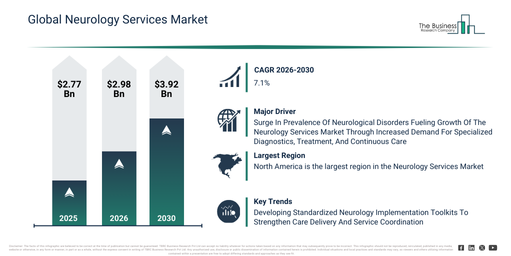
    The neurology services market has experienced significant growth in recent years. Its valuation is expected to rise from $2.77 billion in 2025 to $2.98 billion in 2026, achieving a compound annual growth rate (CAGR) of 7.4%. This historical expansion can be attributed to several factors including the rising prevalence of stroke and epilepsy, the increasing aging population, advancements in neuroimaging technologies, higher healthcare spending, and the proliferation of specialized neurology clinics.

    The neurology services market size is expected to experience significant growth in the coming years. It is projected to reach $3.92 billion in 2030, showing a compound annual growth rate (CAGR) of 7.1%. The expansion during the forecast period is attributable to increasing demand for tele-neurology services, the growing burden of chronic neurological disorders, rising investments in neuroscience research, the adoption of artificial intelligence in neurological diagnostics, and the expansion of outpatient neurology services. Major developments anticipated in the forecast period include greater use of remote neurological monitoring, integration of artificial intelligence-driven decision support tools, growing preference for minimally invasive neurosurgical procedures, increasing focus on personalized neurology care, and expansion of multidisciplinary neurorehabilitation programs.

    Access Your Free Sample Report For In-Depth Market Analysis:

    https://www.thebusinessresearchcompany.com/sample.aspx?id=30677&type=smp

    What Key Factors Are Shaping The Neurology Services Market Landscape?

    The increasing occurrence of neurological disorders is projected to fuel the expansion of the neurology services market in the coming years. These disorders encompass conditions impacting the brain, spinal cord, nerves, or muscles, such as stroke, Alzheimer’s disease, epilepsy, migraine, and various other nervous system ailments, representing a primary global cause of disability and disease burden. The surge in neurological disorders can be attributed to an aging global population and enhanced survival rates from chronic illnesses, necessitating long-term neurological care for more individuals. Neurology Services play a crucial role in public health by offering specialized diagnostics, advanced imaging, therapeutic interventions, and ongoing monitoring for those with neurological conditions. For example, in October 2025, the World Health Organization (WHO), a Switzerland-based health organization, reported that more than 3 billion people globally were affected by neurological conditions, which is over 40% of the global population, highlighting a significant disease burden and a pressing demand for broadened specialized neurological care services worldwide. Consequently, the escalating prevalence of neurological disorders is propelling the growth of the neurology services market.

    How Are Different Segments Classified In The Neurology Services Market Segment Analysis?

    The neurology services market covered in this report is segmented –

    1) By Service: Diagnostic Service, Monitoring Service, Therapeutics Service, Surgical Service

    2) By Indication: Attention-deficit And Hyperactivity Disorder (ADHD), Mental Health, Stroke, Concussion, Dementia, Multiple Sclerosis, Psychotic Disorder, Other Neurological Diseases

    3) By Payment Model: Fee-For-Service, Value-Based Care And Bundled Payments, Capitation Models

    4) By End User: Hospitals And Specialty Clinics, Outpatient Neurology Centers, Rehabilitation Centers, Home Healthcare Services, Telemedicine Platforms

    Subsegments:

    1) By Diagnostic Service: Neurological Imaging, Electroencephalography Evaluation, Electromyography Assessment, Neurovascular Evaluation, Cognitive Function Testing, Neuropsychological Assessment

    2) By Monitoring Service: Neurological Intensive Care Monitoring, Intraoperative Neuromonitoring, Long-Term Epilepsy Monitoring, Neurophysiological Monitoring, Remote Neurological Monitoring

    3) By Therapeutics Service: Pharmacological Therapy, Physical Therapy, Occupational Therapy, Speech And Language Therapy, Behavioral Therapy, Cognitive Rehabilitation Therapy

    4) By Surgical Service: Minimally Invasive Neurosurgery, Functional Neurosurgery, Stereotactic Neurosurgery

    What Market Trends Are Affecting The Neurology Services Market?

    Leading companies in the neurology services market are concentrating on developing standardized planning and implementation resources, such as uniform neurology comprehensive toolkits, to fortify neurology care systems, enhance service coordination, and align national healthcare delivery with global neurological health objectives. Standardized neurology implementation toolkits are defined as structured guidance frameworks that aid policymakers and healthcare planners in designing, prioritizing, and integrating neurological services across health systems, ensuring consistent diagnosis, treatment, and long-term care for neurological disorders. For instance, in July 2024, the World Health Organization (WHO), a Switzerland-based intergovernmental health organization, introduced a neurological disorders implementation toolkit to assist countries in improving diagnosis, treatment, and care provision as part of the Intersectoral Global Action Plan on Epilepsy and Other Neurological Disorders. This toolkit offers practical guidance on governance, service integration, workforce planning, and monitoring, thereby enabling countries to systematically improve national neurology services and strengthen health system responses to neurological conditions.

    Who Are The Companies Driving Activity In The Neurology Services Market?

    Major companies operating in the neurology services market are HCA Healthcare Inc., Ascension Health plc, Mass General Brigham Inc., University of Pittsburgh Medical Center, Banner Health, Mayo Clinic, Ramsay Health Care Limited, NYU Langone Health, Cleveland Clinic Foundation, Mount Sinai Health System, Johns Hopkins University School of Medicine, UCLA Health, Cedars-Sinai Medical Center, Teladoc Health Inc., Stanford Health Care, Apollo Hospitals Enterprise Limited, Fortis Healthcare Limited, Narayana Health Limited, Aster DM Healthcare Limited, American Well Corporation, Manipal Health Enterprises, The Walton Centre NHS Foundation, Barrow Neurological Institute, NeuroSpine Group

    Get The Full Neurology Services Market Report:

    https://www.thebusinessresearchcompany.com/report/neurology-services-market-report

    Which Region Is The Leading Market For The Neurology Services Market?

    North America was the largest region in the neurology services market in 2025. Asia-Pacific is expected to be the fastest-growing region in the forecast period. The regions covered in the neurology services market report are Asia-Pacific, South East Asia, Western Europe, Eastern Europe, North America, South America, Middle East, Africa.

    Request A Customized Neurology Services Market Report For Competitive Insights:

    https://www.thebusinessresearchcompany.com/customise?id=30677&type=smp

    Browse Through More Reports Similar to the Global Neurology Services Market 2026, By The Business Research Company

    Nephrologists Market Report 2020 2030 Covid 19 Implications And Growth 2026

    https://www.thebusinessresearchcompany.com/report/nephrologists-market-global-report-2020-2030-covid-19-implications-and-growth

    Neurology Monitoring Market Report 2026

    https://www.thebusinessresearchcompany.com/report/neurology-monitoring-global-market-report

    interventional oncology devices global market report

    https://www.thebusinessresearchcompany.com/report/interventional-oncology-devices-global-market-report

    Get in touch with us:

    The Business Research Company: https://www.thebusinessresearchcompany.com/

    Americas +1 310-496-7795

    Asia +44 7882 955267 & +91 8897263534

    Europe +44 7882 955267

    Email us at info@tbrc.info

    Follow us on:

    LinkedIn: https://in.linkedin.com/company/the-business-research-company

    YouTube: https://www.youtube.com/channel/UC24_fI0rV8cR5DxlCpgmyFQ

    Global Market Model: https://www.thebusinessresearchcompany.com/global-market-model
  • Global Neuro Immunoassay  Market Expected To Reach $4.27 Billion By 2030 With 8.2% CAGR

    Global Neuro Immunoassay Market Expected To Reach $4.27 Billion By 2030 With 8.2% CAGR

    The Business Research Company’s 2026 market reports feature enhanced tools like market attractiveness analysis, TAM assessment, and company scoring matrices, along with interactive dashboards, deeper supply chain insights, and startup coverage strengthening the depth, usability, and strategic value of insights.

    What Is The Estimated Market Size Of The Neuro Immunoassay Market In 2026, And How Will Its Value Evolve By 2030?

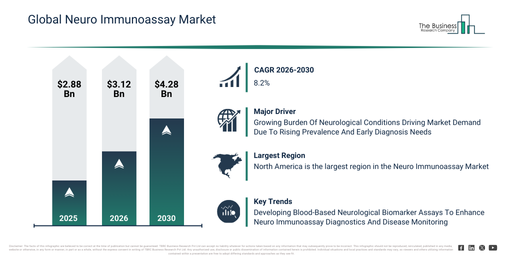
    The market size for neuro immunoassay (NIA) solutions has demonstrated robust expansion over recent years. This sector is anticipated to increase from $2.88 billion in 2025 to $3.12 billion by 2026, achieving a compound annual growth rate (CAGR) of 8.5%. Throughout the preceding period, this growth can be ascribed to factors such as the increasing requirement for accurate neurological diagnostics, the broader integration of immunoassay techniques in neuroscience investigations, the rising occurrence of neurodegenerative conditions, the enlargement of clinical and research laboratories, and an intensified focus on early disease identification and ongoing oversight.

    The market size for neuro immunoassay (NIA) is set to experience substantial expansion in the coming years. It is projected to reach $4.28 billion by 2030, displaying a compound annual growth rate (CAGR) of 8.2%. The anticipated growth during this forecast period can be ascribed to the increasing integration of neuro immunoassay (NIA) with artificial intelligence (AI) for data analysis, escalating investment in biomarker discovery, the wider adoption of personalized medicine and therapeutic monitoring, the expansion of high-throughput screening platforms, and an increased demand for automated and precise immunoassay systems. Prominent trends throughout the forecast period include innovations driven by technology in assay sensitivity and specificity, progress in artificial intelligence (AI)-enabled data interpretation, advancements in multiplexed and lab-on-a-chip immunoassay systems, growing research and development focused on neuro biomarker identification, and new developments in integrated and automated neurodiagnostic platforms.

    Access Your Free Sample Report For In-Depth Market Analysis:

    https://www.thebusinessresearchcompany.com/sample.aspx?id=30676&type=smp

    Which Factors Are Influencing The Growth Of The Neuro Immunoassay Market?

    The growing occurrence of neurological conditions is anticipated to fuel the expansion of the neuro immunoassay market in the future. These disorders refer to health issues impacting the brain, spinal cord, and nerves, which hinder typical nervous system operation and result in deficits in movement, thought processes, perception, conduct, or general bodily regulation. The rising incidence of these conditions stems from detrimental lifestyle choices such as inadequate nutrition, lack of physical activity, smoking, heavy alcohol intake, and persistent stress. Neuro immunoassays are instrumental in identifying particular biomarkers within the nervous system, thereby aiding in prompt diagnosis and precise treatment for individuals with neurological ailments. For example, in April 2024, the National Institutes of Health (NIH), a US-based government agency, reported that approximately 6.9 million Americans aged 65 and above are presently affected by Alzheimer’s dementia, a number anticipated to almost double to 13.8 million by 2060. Consequently, the expanding occurrence of neurological disorders is a key impetus for the neuro immunoassay market.

    How Is The Neuro Immunoassay Market Categorized Across Its Segment Groups?

    The neuro immunoassay market covered in this report is segmented –

    1) By Product Type: Reagents And Kits, Analyzers

    2) By Technology: Radioimmunoassays (RIA), Polymerase Chain Reaction (PCR), Enzyme-Linked Immunosorbent Assay (ELISA), Western Blot, Rapid Tests, Enzyme-Linked Immunospot Assay (ELISPOT)

    3) By Analyte Or Biomarker Type: Amyloid-Beta (Aß), Tau Protein (p-Tau), Alpha-Synuclein (a-syn), Neurofilament Light Chain (NfL), Autoantibodies, Cytokines, Glial Fibrillary Acidic Protein (GFAP), Neuron-Specific Enolase (NSE), Ubiquitin C-Terminal Hydrolase L1 (UCH-L1), Brain-Derived Neurotrophic Factor (BDNF)

    4) By Application: Alzheimer’s Disease, Parkinson’s Disease (PD), Huntington’s Disease, Amyotrophic Lateral Sclerosis (ALS), Spinal Muscular Atrophy (SMA)

    5) By End-User: Hospitals, Clinics, Academic Organizations, Biopharmaceutical Companies, Pharmaceutical Companies, Other End-Users

    Subsegments:

    1) By Reagents And Kits: Enzyme Linked Immunosorbent Assay Reagents, Western Blotting Kits, Multiplex Assay Kits

    2) By Analyzers: Automated Immunoassay Analysers, Point Of Care Immunoassay Analysers, High Throughput Immunoassay Analysers

    Which Trends Are Influencing Demand In The Neuro Immunoassay Market?

    Major companies operating in the neuro immunoassay market are concentrating on developing advanced solutions, such as blood-based neurological biomarker assays, to improve disease monitoring, enhance prognostic accuracy, and support clinical decision-making for neurological disorders. Blood-based neurological biomarker assays are defined as tests that measure specific proteins, like Neurofilament Light Chain (NfL), within human serum or plasma to evaluate neuronal injury and disease activity. For instance, in June 2024, Siemens Healthineers, a Germany-based in vitro diagnostics company, obtained CE marking for its Neurofilament Light Chain blood test, intended for use on the Atellica IM Analyzer and ADVIA Centaur systems. This test quantifies NfL levels to assist in predicting neuronal injury risk in adults with relapsing multiple sclerosis, acting as a complement to clinical, imaging, and laboratory assessments, and the CE mark confirms compliance with European In Vitro Diagnostic Regulations, thereby extending access to standardized neuro immunoassay diagnostics across European laboratories.

    Which Firms Are Influencing Competition In The Neuro Immunoassay Market?

    Major companies operating in the neuro immunoassay market are Thermo Fisher Scientific Inc., Merck KGaA, Bio-Rad Laboratories Inc., GenScript Biotech Corporation, Abcam plc, BioLegend Inc., Meso Scale Diagnostics LLC, Sino Biological Inc., Quanterix Corporation, Cusabio Technology LLC, OriGene Technologies Inc., Elabscience Biotechnology Inc., RayBiotech Life Inc., Enzo Life Sciences Inc., Rockland Immunochemicals Inc., Assay Genie Ltd., Novus Biologicals LLC, Creative Diagnostics, MyBioSource Inc., Immuno-Biological Laboratories Co. Ltd., Boster Biological Technology, Cloud-Clone Corp., FineTest Biotech Inc., Abbexa Ltd.

    Get The Full Neuro Immunoassay Market Report:

    https://www.thebusinessresearchcompany.com/report/neuro-immunoassay-market-report

    Where Is The Neuro Immunoassay Market Primarily Concentrated By Region?

    North America was the largest region in the neuro immunoassay (NIA) market in 2025. Asia-Pacific is expected to be the fastest-growing region in the forecast period. The regions covered in the neuro immunoassay market report are Asia-Pacific, South East Asia, Western Europe, Eastern Europe, North America, South America, Middle East, Africa.

    Request A Customized Neuro Immunoassay Market Report For Competitive Insights:

    https://www.thebusinessresearchcompany.com/customise?id=30676&type=smp

    Browse Through More Reports Similar to the Global Neuro Immunoassay Market 2026, By The Business Research Company

    Immunoassay Market Report 2026

    https://www.thebusinessresearchcompany.com/report/immunoassay-global-market-report

    Immunohematology Market Report 2026

    https://www.thebusinessresearchcompany.com/report/immunohematology-global-market-report

    immunomodulator global market report

    https://www.thebusinessresearchcompany.com/report/immunomodulator-global-market-report

    Get in touch with us:

    The Business Research Company: https://www.thebusinessresearchcompany.com/

    Americas +1 310-496-7795

    Asia +44 7882 955267 & +91 8897263534

    Europe +44 7882 955267

    Email us at info@tbrc.info

    Follow us on:

    LinkedIn: https://in.linkedin.com/company/the-business-research-company

    YouTube: https://www.youtube.com/channel/UC24_fI0rV8cR5DxlCpgmyFQ

    Global Market Model: https://www.thebusinessresearchcompany.com/global-market-model

  • Molecular Biology Automatic Analyzer  Market Growth Expected To Reach $3.91 Billion By 2030 At 8.8% CAGR

    Molecular Biology Automatic Analyzer Market Growth Expected To Reach $3.91 Billion By 2030 At 8.8% CAGR

    The Business Research Company’s 2026 market reports feature enhanced tools like market attractiveness analysis, TAM assessment, and company scoring matrices, along with interactive dashboards, deeper supply chain insights, and startup coverage strengthening the depth, usability, and strategic value of insights.

    How Is The Market Size Of The Molecular Biology Automatic Analyzer Market Expected To Scale Between 2026 And 2030?

    The molecular biology automatic analyzer market size has experienced strong growth in recent years. It is anticipated to increase from $2.56 billion in 2025 to $2.79 billion in 2026, progressing at a compound annual growth rate (CAGR) of 9.1%. This expansion during the historic period can be attributed to factors such as the increasing adoption of automated lab equipment, the growing demand for molecular diagnostics, rising investment in genomic research, the expansion of biotechnology research centers, and the increasing prevalence of chronic and infectious diseases.

    The molecular biology automatic analyzer market size is projected to experience robust expansion over the coming years. It is anticipated to grow to $3.91 billion by 2030, exhibiting a compound annual growth rate (CAGR) of 8.8%. This growth during the forecast period can be attributed to an increasing focus on personalized medicine, the rising integration of AI and robotics in laboratories, a growing demand for high-throughput sequencing, the expansion of molecular diagnostics in emerging markets, and increasing investment in cell and gene therapy development. Major trends during the forecast period include technological advancements in automation and AI, innovations in high-throughput molecular analysis, developments in multi-omics research, ongoing research and developments in gene editing technologies, and improvements in technology for sample preparation and assay accuracy.

    Access Your Free Sample Report For In-Depth Market Analysis:

    https://www.thebusinessresearchcompany.com/sample.aspx?id=30664&type=smp

    What Key Factors Are Affecting The Molecular Biology Automatic Analyzer Market Demand?

    The growing occurrence of infectious diseases is anticipated to boost the expansion of the molecular biology automatic analyzer market in the future. These diseases are conditions resulting from detrimental microorganisms like bacteria, viruses, fungi, or parasites that enter and reproduce within the body, causing symptoms and health issues. An increase in global travel contributes to the surge in infectious diseases, facilitating the rapid dissemination of pathogens across different regions and populations. Molecular biology automatic analyzers assist in diagnosing infectious diseases through their ability to quickly identify and measure pathogens at a genetic level with precision. These analyzers enhance patient results by allowing for prompt, accurate, and effective detection of infections, which in turn leads to timely treatment. As an example, in February 2024, data from the UK Health Security Agency, a government body in the UK, indicated that tuberculosis (a bacterial infection mainly affecting the lungs) instances in England climbed to 4,850 in 2023, marking a 10.7% rise from 4,380 cases in 2022. Consequently, the rising occurrence of infectious diseases is fueling the expansion of the molecular biology automatic analyzer market.

    How Is The Molecular Biology Automatic Analyzer Market Organized By Segment Classification?

    The molecular biology automatic analyzer market covered in this report is segmented –

    1) By Product Type: Real-Time PCR Systems, Next-Generation Sequencing Systems, Automated Nucleic Acid Extraction Systems, Microarray Analysis Systems, Integrated Sample-To-Answer Molecular Analyzers

    2) By Technology: Optical Technologies, Mass Spectrometry, Microfluidics Technology, Isothermal Nucleic Acid Amplification, Digital PCR Technology

    3) By Throughput And Scale: High-Throughput Systems, Mid-Throughput Systems, Low-Throughput Systems

    4) By Application: Genetic Research, Clinical Diagnostics, Infectious Disease Testing, Oncology And Precision Medicine, Pharmacogenomics, Forensic And Environmental Testing

    5) By End-User: Hospitals And Diagnostic Laboratories, Academic And Research Institutions, Biotechnology And Pharmaceutical Companies, Contract Research Organizations, Public Health Laboratories

    Subsegments:

    1) By Real-Time PCR Systems: Quantitative Polymerase Chain Reaction Instruments, Digital Polymerase Chain Reaction Instruments, High Throughput Polymerase Chain Reaction Platforms, Portable Polymerase Chain Reaction Devices, Multiplex Polymerase Chain Reaction Systems

    2) By Next-Generation Sequencing Systems: Whole Genome Sequencing Platforms, Whole Exome Sequencing Platforms, Targeted Gene Sequencing Platforms, Single Cell Sequencing Systems, Long Read Sequencing Instruments

    3) By Automated Nucleic Acid Extraction Systems: Magnetic Bead Based Extraction Instruments, Cartridge Based Extraction Systems, Automated Liquid Handling Extraction Platforms, High Throughput Extraction Workstations, Portable Nucleic Acid Extraction Devices

    4) By Microarray Analysis Systems: Deoxyribonucleic Acid Microarray Platforms, Ribonucleic Acid Expression Microarray Systems, Protein Microarray Platforms, Single Nucleotide Polymorphism Genotyping Microarrays, High Density Microarray Scanners

    5) By Integrated Sample-To-Answer Molecular Analyzers: Cartridge Based Sample To Result Systems, Fully Automated Point Of Care Molecular Platforms, Closed Tube Integrated Analysis Systems, High Throughput Sample To Answer Workstations, Portable Integrated Molecular Diagnostic Devices

    What Trends Are Influencing Changes In The Molecular Biology Automatic Analyzer Market?

    Major companies engaged in the molecular biology automatic analyzer market are focusing on developing advanced diagnostic technologies, such as efficient digital PCR platforms, to enhance sensitivity, accuracy, and throughput in nucleic acid quantification for clinical and research applications. An efficient digital PCR platform refers to an automated system that partitions samples into thousands of microreactions, enabling precise, absolute quantification of target DNA or RNA sequences with minimal bias, supporting reliable detection of low-abundance biomarkers and enhancing diagnostic confidence. For instance, in September 2024, QIAGEN N.V., a Netherlands-based molecular diagnostics and life science tools company, launched the QIAcuity Dx digital PCR system for clinical testing in oncology. The platform integrates digital PCR technology with an automated workflow, allowing laboratories to perform high-precision quantification of genetic targets relevant to cancer diagnostics and therapy monitoring. The system’s efficient digital PCR capabilities support robust data quality, simplified operation, and rapid turnaround times for clinical test results.

    Who Are The Industry Participants Involved In The Molecular Biology Automatic Analyzer Market?

    Major companies operating in the molecular biology automatic analyzer market are Thermo Fisher Scientific Inc., Becton Dickinson and Company, Siemens Healthineers AG, Agilent Technologies Inc., Illumina Inc., Hologic Inc., PerkinElmer Inc., bioMérieux SA, Sysmex Corporation, QIAGEN N.V., Bio-Rad Laboratories Inc., Roche Diagnostics, Hamilton Robotics, Tecan Group Ltd., Eppendorf SE, Takara Bio Inc., BGI Genomics Co. Ltd., Analytik Jena AG, Seegene Inc., Abbott Molecular Inc.

    Get The Full Molecular Biology Automatic Analyzer Market Report:

    https://www.thebusinessresearchcompany.com/report/molecular-biology-automatic-analyzer-market-report

    Which Region Leads The Molecular Biology Automatic Analyzer Market In Terms Of Market Share?

    North America was the largest region in the molecular biology automatic analyzer market in 2025. Asia-Pacific is expected to be the fastest-growing region in the forecast period. The regions covered in the molecular biology automatic analyzer market report are Asia-Pacific, South East Asia, Western Europe, Eastern Europe, North America, South America, Middle East, Africa.

    Request A Customized Molecular Biology Automatic Analyzer Market Report For Competitive Insights:

    https://www.thebusinessresearchcompany.com/customise?id=30664&type=smp

    Browse Through More Reports Similar to the Global Molecular Biology Automatic Analyzer Market 2026, By The Business Research Company

    Fully Automatic Biochemistry Analyzer Market Report 2026

    https://www.thebusinessresearchcompany.com/report/fully-automatic-biochemistry-analyzer-global-market-report

    Biochemistry Analyzer Market Report 2026

    https://www.thebusinessresearchcompany.com/report/biochemistry-analyzer-global-market-report

    bioprocess analyzers global market report

    https://www.thebusinessresearchcompany.com/report/bioprocess-analyzers-global-market-report

    Get in touch with us:

    The Business Research Company: https://www.thebusinessresearchcompany.com/

    Americas +1 310-496-7795

    Asia +44 7882 955267 & +91 8897263534

    Europe +44 7882 955267

    Email us at info@tbrc.info

    Follow us on:

    LinkedIn: https://in.linkedin.com/company/the-business-research-company

    YouTube: https://www.youtube.com/channel/UC24_fI0rV8cR5DxlCpgmyFQ

    Global Market Model: https://www.thebusinessresearchcompany.com/global-market-model
  • Global Mixed Reality Head-Mounted Display  Market Analysis For 2026–2030 With Strategic Insights

    Global Mixed Reality Head-Mounted Display Market Analysis For 2026–2030 With Strategic Insights

    The Business Research Company’s 2026 market reports feature enhanced tools like market attractiveness analysis, TAM assessment, and company scoring matrices, along with interactive dashboards, deeper supply chain insights, and startup coverage strengthening the depth, usability, and strategic value of insights.

    How Will The Market Value Of The Mixed Reality Head-Mounted Display Market Progress Between 2026 And 2030?

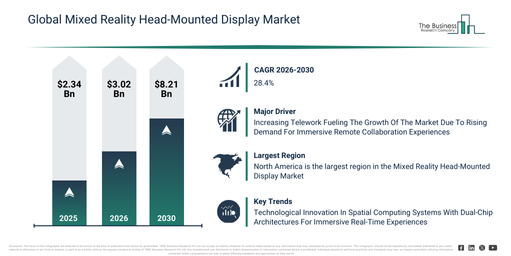
    The mixed reality head-mounted display market size has experienced rapid growth in recent years. It is projected to increase from $2.34 billion in 2025 to $3.02 billion in 2026, achieving a compound annual growth rate (CAGR) of 28.7%. The expansion observed in the historic period can be attributed to the increasing adoption of virtual reality, a rising demand for immersive experiences, the growing integration of augmented reality, the expansion of gaming applications, and the development of enterprise training solutions.

    The mixed reality head-mounted display market size is projected to experience substantial growth over the next few years. By 2030, this market is anticipated to reach $8.21 billion, demonstrating a compound annual growth rate (CAGR) of 28.4%. This growth trajectory during the forecast period can be attributed to escalating investment in mixed reality research, its increasing utilization in industrial applications, a rise in adoption within healthcare, the expansion of remote collaboration tools, and its growing implementation in education. Key trends for the forecast period encompass technological advancements in optics and sensors, innovations in artificial intelligence integration, developments in spatial computing, research and development focused on ergonomics, and technological improvements in cloud and edge rendering.

    Access Your Free Sample Report For In-Depth Market Analysis:

    https://www.thebusinessresearchcompany.com/sample.aspx?id=30658&type=smp

    What Significant Factors Are Influencing The Mixed Reality Head-Mounted Display Market Expansion?

    The expanding trend towards telework is projected to boost the growth of the mixed reality head-mounted display market moving forward. Telework describes arrangements where employees fulfill their job responsibilities from home or remote locations by utilizing digital communication and collaboration tools. This shift towards teleworking is increasing as organizations recognize that remote work models can reduce operational expenses, broaden access to a global talent pool, and improve employee work–life balance while sustaining or even enhancing productivity. Mixed reality head-mounted displays support telework by facilitating immersive virtual collaboration and remote visualization of work environments. They improve productivity and communication, allowing users to interact with 3D content, conduct virtual meetings, and carry out remote assistance tasks as if physically present on-site. For instance, in March 2025, according to the U.S. Bureau of Labor Statistics, a US-based federal agency, 35.5 million people teleworked or worked from home for compensation in the first quarter of 2024. This figure was up by 5.1 million over the year, representing 22.9 percent of individuals at work, compared with 19.6 percent in 2023. Consequently, the increasing prevalence of telework is a key driver for the growth of the mixed reality head-mounted display market.

    How Is The Mixed Reality Head-Mounted Display Market Segmented Across Different Segment Categories?

    The mixed reality head-mounted display market covered in this report is segmented –

    1) By Component: Hardware, Software, Services

    2) By Product Type: Standalone, Tethered

    3) By Technology: Virtual Reality, Augmented Reality, Mixed Reality

    4) By Application: Gaming And Entertainment, Healthcare, Education And Training, Industrial And Manufacturing, Retail, Other Applications

    5) By End-User: Consumer, Commercial, Enterprise, Other End-Users

    Subsegments:

    1) By Hardware: Display Panel, Optical Engine, Sensor Module, Processing Unit, Connectivity Module, Battery System, Input And Control Interface

    2) By Software: Operating Platform, Application Software, Development Tools, Content Management Software, Spatial Mapping Software

    3) By Services: Integration And Deployment Service, Consulting Service, Training And Support Service, Maintenance And Upgrade Service, Managed Service

    What Trends Are Affecting The Direction Of The Mixed Reality Head-Mounted Display Market?

    Leading companies in the mixed reality head-mounted display market are concentrating on developing sophisticated products, such as dual-chip silicon architectures, to process high-resolution visual data with exceptionally low latency. Dual-chip silicon architectures refer to designs where two separate silicon dies or chips are closely integrated within a single package. This setup enables them to share computing workloads, enhance performance, and improve power or cost efficiency compared to a single monolithic chip. For instance, in June 2023, Apple Inc., a US-based technology company, unveiled Apple Vision Pro, its first spatial computer, powered by visionOS. The device incorporates a distinctive dual-chip design, featuring the M2 chip for powerful standalone performance and the brand-new R1 chip, which processes input from 12 cameras, five sensors, and six microphones to stream images to the micro-OLED display system within 12 milliseconds—a speed eight times faster than the blink of an eye.

    Which Organizations Play A Role In The Mixed Reality Head-Mounted Display Market Landscape?

    Major companies operating in the mixed reality head-mounted display market are Apple Inc., Google LLC, Microsoft Corporation, Samsung Electronics Co. Ltd., Meta Platforms Inc., Sony Group Corporation, Panasonic Holdings Corporation, HP Inc., Canon Inc., ASUSTeK Computer Inc., Seiko Epson Corporation, Acer Inc., XREAL Inc., HTC Corporation, Rokid Corporation Ltd., Pimax Innovation Inc., Varjo Technologies Oy, Deepoon Virtual Reality Co. Ltd., IrisVision Global Inc., Vrgineers Inc., NuEyes Technologies Inc.

    Get The Full Mixed Reality Head-Mounted Display Market Report:

    https://www.thebusinessresearchcompany.com/report/mixed-reality-head-mounted-display-market-report

    Which Region Is The Top Contributor To The Mixed Reality Head-Mounted Display Market By Share?

    North America was the largest region in the mixed reality head-mounted display market in 2025. Asia-Pacific is expected to be the fastest-growing region in the forecast period. The regions covered in the mixed reality head-mounted display market report are Asia-Pacific, South East Asia, Western Europe, Eastern Europe, North America, South America, Middle East, Africa.

    Request A Customized Mixed Reality Head-Mounted Display Market Report For Competitive Insights:

    https://www.thebusinessresearchcompany.com/customise?id=30658&type=smp

    Browse Through More Reports Similar to the Global Mixed Reality Head-Mounted Display Market 2026, By The Business Research Company

    Head Mount Display Market Report 2026

    https://www.thebusinessresearchcompany.com/report/head-mount-display-global-market-report

    Extended Reality Display Market Report 2026

    https://www.thebusinessresearchcompany.com/report/extended-reality-display-global-market-report

    aerospace helmet mounted display global market report

    https://www.thebusinessresearchcompany.com/report/aerospace-helmet-mounted-display-global-market-report

    Get in touch with us:

    The Business Research Company: https://www.thebusinessresearchcompany.com/

    Americas +1 310-496-7795

    Asia +44 7882 955267 & +91 8897263534

    Europe +44 7882 955267

    Email us at info@tbrc.info

    Follow us on:

    LinkedIn: https://in.linkedin.com/company/the-business-research-company

    YouTube: https://www.youtube.com/channel/UC24_fI0rV8cR5DxlCpgmyFQ

    Global Market Model: https://www.thebusinessresearchcompany.com/global-market-model

  • Medical Release Liner  Market Forecast 2026–2030 Presenting Long-Term Industry Insights

    Medical Release Liner Market Forecast 2026–2030 Presenting Long-Term Industry Insights

    The Business Research Company’s 2026 market reports feature enhanced tools like market attractiveness analysis, TAM assessment, and company scoring matrices, along with interactive dashboards, deeper supply chain insights, and startup coverage strengthening the depth, usability, and strategic value of insights.

    How Large Will The Medical Release Liner Market Be By 2030 Compared To Its 2026 Market Size?

    The medical release liner market has experienced robust expansion in recent years. It is projected to grow from $2.86 billion in 2025 to $3.06 billion in 2026, exhibiting a compound annual growth rate (CAGR) of 6.8%. This historical growth can be attributed to the expanding healthcare industry and medical device manufacturing, the increasing adoption of silicone-coated and film-based liners, rising demand for single-use and disposable medical products, the proliferation of pharmaceutical and drug delivery applications, and the tightening regulatory standards for sterility and quality.

    The medical release liner market is projected to experience substantial expansion over the upcoming years. By 2030, this market is anticipated to reach a valuation of $3.94 billion, demonstrating a compound annual growth rate (CAGR) of 6.5%. This projected growth is driven by several factors including the greater acceptance of multi-layer and specialized liners, increased capital allocation towards healthcare infrastructure in developing regions, a rising need for high-precision adhesive uses, an intensified focus on ensuring patient safety and product dependability, and expanded research and development efforts in advanced liner materials. Key trends expected during this period involve enhancements in silicone and polymer coatings, the creation of multi-layer and specialized liners, the incorporation of automated production and precise coating technologies, research and development into biocompatible and antimicrobial liners, and pioneering advancements in eco-friendly and recyclable liner options.

    Access Your Free Sample Report For In-Depth Market Analysis:

    https://www.thebusinessresearchcompany.com/sample.aspx?id=30653&type=smp

    Which Key Drivers Are Affecting The Medical Release Liner Market Development?

    An anticipated rise in surgical procedure volumes is projected to boost the expansion of the medical release liner market in the future. This increase in surgical volumes denotes a greater frequency of both invasive and non-invasive medical interventions conducted for addressing injuries, illnesses, and physical anomalies. The surge in surgical procedure volumes is fueled by progress in surgical methodologies and an expanding elderly demographic, creating a demand for dependable and sterile medical supplies essential for optimal patient treatment. Medical release liners contribute to developing effective wound care products by safeguarding the adhesive component of surgical dressings and transdermal patches before application, thereby guaranteeing sterility and user-friendliness. For example, data from December 2024, provided by the UK Health Security Agency, a UK government body focused on public health protection, indicated that 135,619 surgical operations were reported for surveillance during the financial year 2023 to 2024, showing an 8.4% rise compared to the financial year 2022 to 2023. Moreover, mandatory orthopaedic surveillance saw a 7.3% increase in submitted operations (from 102,027 operations to 109,491 operations), and voluntary surveillance recorded a 13.3% growth (from 23,070 operations to 26,128 operations). Consequently, the expanding volume of surgical procedures is acting as a catalyst for the growth of the medical release liner market.

    What Segment Categories Shape The Medical Release Liner Market Segment Landscape?

    The medical release liner market covered in this report is segmented –

    1) By Type Of Material: Polyethylene, Polypropylene, Paper, Silicone, Other Type Of Materials

    2) By Release Coating Type: Silicone Coated, Polymer Coated, Foil Coated, Other Release Coating Types

    3) By Substrate Material: Paper-Based Liners, Film-Based Liners, Foil-Based Liners, Composite And Multi-layer Liners

    4) By Distribution Channel: Direct Sales To Medical Device Oems, Distribution Via Converters And Formulators, Sales Through Raw Material Distributors

    5) By End-User Industry: Healthcare, Food And Beverage, Electronics, Automotive, Other End-user Industrys

    Subsegments:

    1) By Polyethylene: Low Density Polyethylene, High Density Polyethylene, Linear Low Density Polyethylene, Cross-Linked Polyethylene, Co-Extruded Polyethylene

    2) By Polypropylene: Homopolymer Polypropylene, Random Copolymer Polypropylene, Block Copolymer Polypropylene, Filled Polypropylene, Oriented Polypropylene

    3) By Paper: Kraft Paper, Glassine Paper, Coated Paper, Laminated Paper, Specialty Paper

    4) By Silicone: Silicone Coated Paper, Silicone Coated Film, Medical Grade Silicone, Liquid Silicone Coating, High Temperature Silicone

    5) By Other Type Of Materials: Polyester (PET), Polyvinyl Chloride (PVC), Polyamide (PA), Fluoropolymer-Based Liners

    What Trends Are Transforming The Medical Release Liner Market?

    Companies operating in the medical release liner market are focusing on creating advanced products, like comprehensive data-integrated health platforms, to enhance treatment personalization, improve patient outcomes, and reduce healing time and associated complications. Such platforms are sophisticated digital systems designed to analyze and correlate multiple streams of individual health data, providing tailored nutritional and lifestyle guidance that optimizes the body’s natural healing processes. For example, in September 2024, InsideTracker, a US-based personalized health analytics company, launched Nutrition DeepDive. This detailed food and supplement tracker assesses an individual’s nutrition within the context of their unique blood biomarkers, genetic data, and fitness tracker information. While not a direct therapeutic, this platform demonstrates the advanced, holistic data integration crucial for contemporary regenerative health strategies. By synthesizing these diverse data sets, it delivers personalized insights into dietary needs and supplement regimens that can support overall systemic health, encompassing factors essential for optimal wound healing, such as inflammation control, immune function, and protein synthesis. This capability enables precise, data-driven lifestyle interventions that can complement and bolster regenerative wound care protocols, with the goal of improving recovery efficiency and long-term skin health for patients.

    Who Are The Companies Operating Across The Medical Release Liner Market Value Chain?

    Major companies operating in the medical release liner market are Avery Dennison Corp., Mondi Group, Huhtamaki Oyj, AHLstrom Oyj, Lintec Corporation, UPM Raflatac Inc., Felix Schoeller Group, Loparex LLC, Flexcon Company Inc., ITASA, Twin Rivers Paper Company, Acucote Inc., Laufenberg GmbH, The Griff Network, Siliconature Corp., CoreTech Films, Advanced Coated Products Ltd., Xinfeng Group, Celestik Inc., Papertec Inc., Anhui Guangtai Group, Fox River Associates LLC, Brentwood Plastic Inc.

    Get The Full Medical Release Liner Market Report:

    https://www.thebusinessresearchcompany.com/report/medical-release-liner-market-report

    Which Region Is The Leading Market For The Medical Release Liner Market?

    North America was the largest region in the medical release liner market in 2025. Asia-Pacific is expected to be the fastest-growing region in the forecast period. The regions covered in the medical release liner market report are Asia-Pacific, South East Asia, Western Europe, Eastern Europe, North America, South America, Middle East, Africa.

    Request A Customized Medical Release Liner Market Report For Competitive Insights:

    https://www.thebusinessresearchcompany.com/customise?id=30653&type=smp

    Browse Through More Reports Similar to the Global Medical Release Liner Market 2026, By The Business Research Company

    Controlled Release Drug Delivery Market Report 2026

    https://www.thebusinessresearchcompany.com/report/controlled-release-drug-delivery-global-market-report

    Sterile Medical Packaging Market Report 2026

    https://www.thebusinessresearchcompany.com/report/sterile-medical-packaging-global-market-report

    surgical hooks global market report

    https://www.thebusinessresearchcompany.com/report/surgical-hooks-global-market-report

    Get in touch with us:

    The Business Research Company: https://www.thebusinessresearchcompany.com/

    Americas +1 310-496-7795

    Asia +44 7882 955267 & +91 8897263534

    Europe +44 7882 955267

    Email us at info@tbrc.info

    Follow us on:

    LinkedIn: https://in.linkedin.com/company/the-business-research-company

    YouTube: https://www.youtube.com/channel/UC24_fI0rV8cR5DxlCpgmyFQ

    Global Market Model: https://www.thebusinessresearchcompany.com/global-market-model
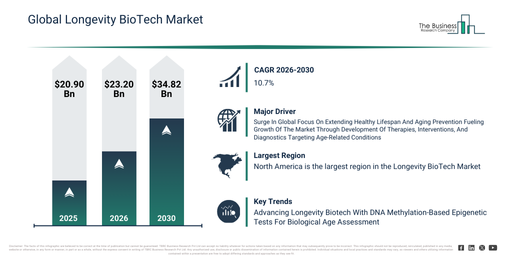
  • The Rise Of Advancing Longevity Biotech With DNA Methylation-Based Epigenetic Tests For Biological Age Assessment Is Influencing The Longevity BioTech  Market

    The Rise Of Advancing Longevity Biotech With DNA Methylation-Based Epigenetic Tests For Biological Age Assessment Is Influencing The Longevity BioTech Market

    The Business Research Company’s 2026 market reports feature enhanced tools like market attractiveness analysis, TAM assessment, and company scoring matrices, along with interactive dashboards, deeper supply chain insights, and startup coverage strengthening the depth, usability, and strategic value of insights.

    What Is The Forecasted Market Size Trajectory Of The Longevity BioTech Market From 2026 To 2030?

    The longevity biotech market has seen rapid expansion in recent years. It is projected to increase from $20.90 billion in 2025 to $23.20 billion in 2026, achieving a compound annual growth rate (CAGR) of 11.0%. Historically, this growth is largely attributable to greater investment in anti-aging research, an increasing prevalence of age-related chronic diseases, a developing interest in extending healthspan, enhanced funding from biotech venture capital, and the growing adoption of genetic and cellular therapies.

    The longevity biotech market size is expected to show significant expansion in the upcoming years. It is projected to reach $34.82 billion by 2030, growing at a compound annual growth rate (CAGR) of 10.7%. This forecasted growth can be linked to the broadening of regenerative medicine development, an increase in alliances between pharmaceutical companies and longevity biotech enterprises, the growing need for gene-based treatments, the rise of personalized wellness diagnostic tools, and improved cooperation among research institutions and biotech firms. Prominent trends expected in this period involve advancements in cellular rejuvenation therapies, progress in gene-editing technologies, breakthroughs in stem-cell-based regeneration, novel developments in senolytic drug formulation, and innovative approaches in epigenetic reprogramming tools.

    Access Your Free Sample Report For In-Depth Market Analysis:

    https://www.thebusinessresearchcompany.com/sample.aspx?id=30639&type=smp

    What Primary Drivers Are Shaping The Longevity BioTech Market?

    The longevity biotech market is expected to grow due to an increasing focus on extending healthy lifespans and preventing age-related decline. Healthy aging encompasses maintaining functional ability, delaying the onset of age-related diseases, and supporting physical and mental well-being across one’s life. This heightened emphasis on healthy aging is a result of demographic shifts, particularly rapidly expanding elderly populations, which have intensified the demand for medical innovation and preventive health solutions. Longevity biotechnology supports this goal by developing therapies, diagnostics, and preventative interventions that target the biological mechanisms of aging, improve cellular resilience, and reduce the risk of age-related conditions. For instance, in November 2023, according to the World Health Organization, a Geneva-based global health authority, the global population aged 60 years and older is projected to increase from 1.1 billion in 2023 to 1.4 billion by 2030 and reach 2.1 billion by 2050, highlighting the accelerating scale of aging-related health challenges. Therefore, the increasing global focus on extending healthy lifespan and preventing aging is driving the growth of the longevity biotech market.

    How Is The Longevity BioTech Market Broken Down By Segment Categories?

    The longevity biotech market covered in this report is segmented –

    1) By Service: Longevity Consultation, Biological Age Testing, Preventive Health Programs

    2) By Therapeutic Approach: Senolytics, Gene Therapies, Regenerative Medicine, Metabolic Modulators, Mitochondrial Therapies

    3) By Technology: Gene Editing Technology, Artificial Intelligence And Machine Learning, Stem Cell And Regenerative Medicine, Multi-Omics Analysis Platforms, Advanced Drug Screening

    4) By Application: Healthcare, Biotech, Pharmaceuticals, Wellness, Aging Population

    5) By End User: Clinics, Hospitals, Research Institutes, Direct-To-Consumer

    Subsegments:

    1) By Longevity Consultation: Initial Health Assessment, Personalized Longevity Planning, Lifestyle And Nutrition Counseling, Risk Assessment And Mitigation Planning, Follow-Up Longevity Monitoring, Genetic And Epigenetic Review

    2) By Biological Age Testing: DNA Methylation Age Testing, Telomere Length Testing, Metabolic Age Assessment, Inflammatory Biomarker Testing, Hormonal Age Profiling, Organ-Specific Aging Analysis

    3) By Preventive Health Programs: Chronic Disease Prevention Programs, Nutrition And Diet Optimization Plans, Fitness And Mobility Enhancement Programs, Stress And Sleep Management Programs, Immune Strengthening Protocols, Personalized Supplementation Programs

    What Trends Are Affecting The Growth Of The Longevity BioTech Market?

    Leading companies within the longevity biotech market are primarily engaged in creating biological-age diagnostic tools, such as DNA methylation-based epigenetic Index tests, which are designed to quantify biological age and aging rates specific to different systems. These epigenetic Index tests function by measuring DNA methylation patterns at CpG sites to provide a biological-age estimate. Companies then leverage this estimate as a crucial outcome measure for both product development and consumer feedback. An illustrative example occurred in March 2023, when Elysium Health, a U.S.-based life-science company, unveiled the TIME-A longitudinal research study, directly connected to its Index epigenetic test. This initiative involves enrolling current Index users, merging their survey and epigenetic data for longitudinal mapping, and granting participants access to system-level biological-age readouts.

    Which Players Are Present In The Longevity BioTech Market Space?

    Major companies operating in the longevity biotech market are Insilico Medicine Inc., Calico Life Sciences LLC, Retro Biosciences Inc., Altos Labs Inc., LyGenesis Inc., NewLimit Inc., Halia Therapeutics Inc., Life Biosciences Inc., BioAge Labs Inc., Rubedo Life Sciences Inc., Juvenescence Limited, Cambrian BioPharma Inc., Elevian Inc., Oisin Biotechnologies Inc., Rejuvenate Bio Inc., Unity Biotechnology Inc., Cleara Biotech B.V., Junevity Inc., Liv Longevity Labs, Genflow Biosciences plc, Centenara Labs AG

    Get The Full Longevity BioTech Market Report:

    https://www.thebusinessresearchcompany.com/report/longevity-biotech-market-report

    Which Region Is The Largest In The Longevity BioTech Market?

    North America was the largest region in the longevity biotech market in 2025. Asia-Pacific is expected to be the fastest-growing region in the forecast period. The regions covered in the longevity biotech market report are Asia-Pacific, South East Asia, Western Europe, Eastern Europe, North America, South America, Middle East, Africa.

    Request A Customized Longevity BioTech Market Report For Competitive Insights:

    https://www.thebusinessresearchcompany.com/customise?id=30639&type=smp

    Browse Through More Reports Similar to the Global Longevity BioTech Market 2026, By The Business Research Company

    Bioenergy Market Report 2026

    https://www.thebusinessresearchcompany.com/report/bioenergy-global-market-report

    Biotech Ingredient Market Report 2026

    https://www.thebusinessresearchcompany.com/report/biotech-ingredient-global-market-report

    bionics global market report

    https://www.thebusinessresearchcompany.com/report/bionics-global-market-report

    Get in touch with us:

    The Business Research Company: https://www.thebusinessresearchcompany.com/

    Americas +1 310-496-7795

    Asia +44 7882 955267 & +91 8897263534

    Europe +44 7882 955267

    Email us at info@tbrc.info

    Follow us on:

    LinkedIn: https://in.linkedin.com/company/the-business-research-company

    YouTube: https://www.youtube.com/channel/UC24_fI0rV8cR5DxlCpgmyFQ

    Global Market Model: https://www.thebusinessresearchcompany.com/global-market-model