Category: Healthcare Services

  • Urinary Tract Cancer Market Overview Covering Key Growth Drivers and Future Outlook

    Urinary Tract Cancer Market Overview Covering Key Growth Drivers and Future Outlook

    The Business Research Company’s 2026 market reports feature enhanced tools like market attractiveness analysis, TAM assessment, and company scoring matrices, along with interactive dashboards, deeper supply chain insights, and startup coverage strengthening the depth, usability, and strategic value of insights.

    What Changes In Market Value Are Expected For The Urinary Tract Cancer Market Over The 2026–2030 Period?

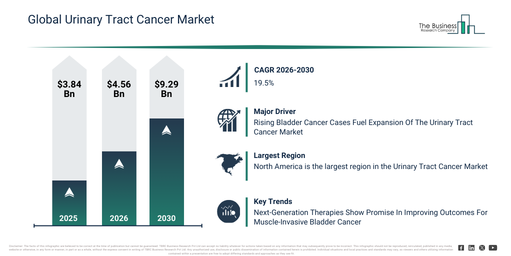
    The urinary tract cancer market size has seen rapid growth in recent years. It is anticipated to expand from $3.84 billion in 2025 to $4.56 billion in 2026, at a compound annual growth rate (CAGR) of 18.7%. The growth observed in the historic period stems from increasing smoking-related cancer incidence, rising exposure to occupational carcinogens, improvements in cancer diagnostic capabilities, expansion of oncology treatment centers, and growing awareness of urinary tract cancers.

    The urinary tract cancer market is anticipated to experience substantial growth in the forthcoming years. It is predicted to expand to $9.29 billion by 2030, demonstrating a compound annual growth rate (CAGR) of 19.5%. This projected increase is largely due to escalating investments in personalized oncology treatments, the rising adoption of immunotherapy techniques, the proliferation of AI-assisted diagnostic instruments, a heightened emphasis on early screening initiatives, and advancements in minimally invasive cancer surgery. Key developments during this period will include the increasing use of targeted cancer therapies, a greater reliance on advanced diagnostic imaging techniques, the deeper integration of precision oncology approaches, the broadening of multimodal treatment strategies, and an intensified focus on prompt cancer detection.

    Access Your Free Sample Report For In-Depth Market Analysis:

    https://www.thebusinessresearchcompany.com/sample.aspx?id=13059&type=smp

    Which Major Drivers Are Influencing The Expansion Of The Urinary Tract Cancer Market?

    The increasing occurrence of bladder cancer is projected to stimulate the expansion of the urinary tract cancer market. Bladder cancer involves the formation of malignant cells within the urinary bladder, a hollow pelvic organ designed to hold urine from the kidneys before excretion. This elevated prevalence consequently drives a higher need for diagnostic instruments, screening techniques, and treatment alternatives for those affected by urinary tract cancer. For example, in January 2023, a report from the American Cancer Society Inc., a US-based non-profit focused on cancer awareness, indicated that projected urinary system cancer cases rose to 168,560 in 2023, marking a 2.66% surge from 164,190 in 2022 in the United States. Thus, the rising incidence of bladder cancer is poised to fuel the growth of the urinary tract cancer market.

    Which Segment Categories Are Included In The Urinary Tract Cancer Market Segment Analysis?

    The urinary tract cancer market covered in this report is segmented –

    1) By Cancer Type: Bladder Cancer, Urethral Cancer, Ureteric And Renal Pelvic Cancer

    2) By Treatment: Chemotherapy, Intravesical Therapy, Radiation Therapy, Surgery

    3) By Diagnostic Techniques: Cystoscopy, Transurethral Resection Of The Tumor, Imaging Tests, Urine Analyses, Other Diagnostic Techniques

    4) By Distribution Channel: Retail Pharmacy, Online Pharmacy

    Subsegments:

    1) By Bladder Cancer: Transitional Cell Carcinoma, Squamous Cell Carcinoma, Adenocarcinoma

    2) By Urethral Cancer: Urethral Carcinoma, Urethral Tumors

    3) By Ureteric And Renal Pelvic Cancer: Ureteric Cancer, Renal Pelvic Cancer

    Which Trends Are Shaping The Urinary Tract Cancer Market?

    Major companies within the urinary tract cancer market are prioritizing the introduction of advanced therapies, such as antibody-drug conjugate (ADC) and immune-checkpoint inhibitor combination treatments, in an effort to provide more effective and customized outcomes for urothelial carcinoma. Antibody-drug conjugate immune-checkpoint inhibitor combination treatments are new therapeutic approaches that merge targeted cytotoxic ADCs with checkpoint inhibitors to both destroy tumor cells and stimulate immune system activation, thus improving response rates and survival in urinary tract cancers. For example, in November 2025, Astellas Pharma Inc., a Japan-based healthcare and pharmaceutical company, obtained approval from the U.S. Food and Drug Administration (FDA) for PADCEV (enfortumab vedotin-ejfv) + KEYTRUDA (pembrolizumab) for the neoadjuvant and adjuvant treatment of muscle-invasive bladder cancer. This regimen incorporates a Nectin-4-directed ADC component combined with PD-1 immune-checkpoint blockade, a design intended to reduce recurrence, progression, or death by ~60% compared to surgery alone, and follows a regulatory process with a target action date of April 7, 2026, under the FDA’s Priority Review program.

    Who Are The Active Companies Shaping The Urinary Tract Cancer Market?

    Major companies operating in the urinary tract cancer market are Pfizer Inc., Johnson & Johnson, F. Hoffmann-La Roche Ltd, Merck KGaA, Bayer AG, Novartis AG, Bristol-Myers Squibb Company, AstraZeneca PLC, GlaxoSmithKline PLC (GSK), Eli Lilly and Company, Amgen Inc., Astellas Pharma Inc., Eisai Co. Ltd., Boehringer Ingelheim GmbH, Incyte Corporation, Seagen Inc., Exelixis Inc., UroGen Pharma Inc., Mersana Therapeutics, Spectrum Pharmaceuticals

    Get The Full Urinary Tract Cancer Market Report:

    https://www.thebusinessresearchcompany.com/report/urinary-tract-cancer-global-market-report

    Which Region Is The Leading Market For The Urinary Tract Cancer Market?

    North America was the largest region in the urinary tract cancer market in 2025. The regions covered in the urinary tract cancer market report are Asia-Pacific, South East Asia, Western Europe, Eastern Europe, North America, South America, Middle East, Africa.

    Request A Customized Urinary Tract Cancer Market Report For Competitive Insights:

    https://www.thebusinessresearchcompany.com/report/urinary-tract-cancer-global-market-report

    Browse Through More Reports Similar to the Global Urinary Tract Cancer Market 2026, By The Business Research Company

    Adrenocortical Carcinoma Market Report 2026

    https://www.thebusinessresearchcompany.com/report/adrenocortical-carcinoma-global-market-report

    Bladder Cancer Drugs Market Report

    https://www.thebusinessresearchcompany.com/report/bladder-cancer-drugs-global-market-report

    Urothelial Carcinoma Treatment Market Report

    https://www.thebusinessresearchcompany.com/report/urothelial-carcinoma-treatment-global-market-report

    Get in touch with us:

    The Business Research Company: https://www.thebusinessresearchcompany.com/

    Americas +1 310-496-7795

    Asia +44 7882 955267 & +91 8897263534

    Europe +44 7882 955267

    Email us at info@tbrc.info

    Follow us on:

    LinkedIn: https://in.linkedin.com/company/the-business-research-company

    YouTube: https://www.youtube.com/channel/UC24_fI0rV8cR5DxlCpgmyFQ

    Global Market Model: https://www.thebusinessresearchcompany.com/global-market-model
  • Urinary Stents (Ureteral Stents) Market Insights Highlighting Growth Opportunities Through 2030

    Urinary Stents (Ureteral Stents) Market Insights Highlighting Growth Opportunities Through 2030

    The Business Research Company’s 2026 market reports feature enhanced tools like market attractiveness analysis, TAM assessment, and company scoring matrices, along with interactive dashboards, deeper supply chain insights, and startup coverage strengthening the depth, usability, and strategic value of insights.

    By 2030, What Market Size Is The Urinary Stents Or Ureteral Stents Market Expected To Reach Based On Its 2026 Value?

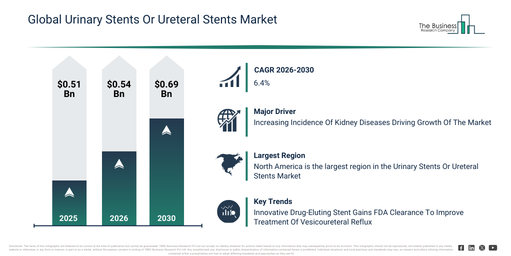
    The urinary stents or ureteral stents market size has experienced robust growth in recent years. This market is anticipated to expand from $0.51 billion in 2025 to $0.54 billion in 2026, achieving a compound annual growth rate (CAGR) of 6.6%. The historical expansion of this market can be attributed to several factors, including the increasing occurrence of kidney stone cases, a rising volume of urological surgeries, advancements in imaging and stent placement techniques, broader acceptance of ureteral stents, and the ongoing expansion of hospital-based urology departments.

    The market for urinary stents or ureteral stents is expected to achieve substantial growth in the upcoming years, expanding to $0.69 billion by 2030, with a compound annual growth rate (CAGR) of 6.4%. This projected growth during the forecast period is driven by factors such as an increasing demand for next-generation stent materials, a heightened focus on infection-resistant designs, the expansion of outpatient urological procedures, a greater adoption of precision-guided stent placement, and advancements in bioresorbable stent technology. Significant trends anticipated during this period include the increasing use of biodegradable stent materials, a rising need for long-term ureteral drainage solutions, the growing application of minimally invasive urological procedures, the expansion of customized stent designs, and an enhanced emphasis on patient comfort and safety.

    Access Your Free Sample Report For In-Depth Market Analysis:

    https://www.thebusinessresearchcompany.com/sample.aspx?id=20987&type=smp

    What Key Drivers Are Fueling The Growth Of The Urinary Stents Or Ureteral Stents Market?

    The rising occurrence of renal conditions is projected to stimulate the expansion of the urinary stents or ureteral stents market in the future. Renal conditions encompass ailments like chronic kidney disease (CKD), kidney stones, blockages in the urinary tract, and infections that compromise the kidneys’ structure and operation. The surge in kidney diseases is primarily due to the escalating prevalence of diabetes and hypertension, which are the main metabolic contributors to kidney damage. The urinary stents or ureteral stents market aids this development by averting urinary obstructions, ensuring continuous urine flow, and protecting kidney function in individuals with CKD, stones, or other obstructive issues. For example, in June 2023, data from Kidney Research UK, a UK-based charitable body focused on research and advocacy to enhance the understanding, prevention, and treatment of kidney diseases, revealed that an estimated 7.19 million people in the UK were impacted by chronic kidney disease in 2023, constituting over 10% of the UK population and predicted to climb to 7.61 million people by 2033. Consequently, the increasing incidence of kidney diseases is fueling the growth of the urinary stents or ureteral stents market.

    How Is The Urinary Stents Or Ureteral Stents Market Broken Down By Segment Categories?

    The urinary stents or ureteral stents market covered in this report is segmented –

    1) By Product Type: Open End Stents, Closed End Stents, Double Pigtail Stents, Multiloop Stents

    2) By Material: Metallic Stents, Polymer Stents, Biodegradable Hydrogel Stents

    3) By Application: Kidney Stones, Kidney Failure, Urinary Tract Infection, Other Applications

    4) By End-User: Hospitals And Specialty Centers, Ambulatory Surgical Centers, Academic and Research Institutes

    Subsegments:

    1) By Open End Stents: Standard Open End Ureteral Stents, Silicone Open End Stents

    2) By Closed End Stents: Standard Closed End Ureteral Stents, Anti-reflux Closed End Stents

    3) By Double Pigtail Stents: Coiled Double Pigtail Stents, Silicone Double Pigtail Stents

    4) By Multiloop Stents: Metallic Multiloop Stents, Polymeric Multiloop Stents

    What Trends Are Influencing The Urinary Stents Or Ureteral Stents Market?

    Major companies in the urinary and ureteral stents market are focusing on developing innovative solutions such as drug-eluting stents to reduce infections, prevent encrustation, and improve patient outcomes. A drug-eluting device is a medical device, such as a stent, that slowly releases medication to prevent complications like infection, inflammation, or tissue blockage. For instance, in January 2025, University Hospitals (UH), a US-based nonprofit academic medical center, announced that the FDA has granted 510(k) clearance to the RELIEF ureteral stent for the prevention of vesicoureteral reflux. The RELIEF stent features a suture-tethered, floating bladder coil that allows natural opening and closing of the ureteral orifice, reducing backflow of urine and minimizing bladder irritation. Clinical studies demonstrated that the stent effectively prevents reflux while improving patient comfort compared with conventional ureteral stents. UH plans to integrate the RELIEF stent into its urology practice to enhance treatment outcomes for patients with vesicoureteral reflux.

    Which Players Are Present In The Urinary Stents Or Ureteral Stents Market Space?

    Major companies operating in the urinary stents or ureteral stents market are Boston Scientific Corporation, Coloplast A/S, Teleflex Incorporated, Cook Medical LLC, Merit Medical Systems Inc., Lepu Medical Technology Co. Ltd., Applied Medical Resources Corporation, Well Lead Medical Co. Ltd., Micro-Tech Nanjing Co. Ltd., Medi-Globe GmbH, Pnn Medical A/S, Rocamed SAM, HydrUStent SA, Urovision GmbH, MED PRO MEDICAL B.V., Medtronic plc, B Braun Melsungen AG, Allium Medical Solutions Ltd, Richard Wolf GmbH, KARL STORZ SE & Co. KG

    Get The Full Urinary Stents Or Ureteral Stents Market Report:

    https://www.thebusinessresearchcompany.com/report/urinary-stents-or-ureteral-stents-global-market-report

    Where Is The Urinary Stents Or Ureteral Stents Market Primarily Concentrated By Region?

    North America was the largest region in the urinary stents or ureteral stents market in 2025. Asia-Pacific is expected to be the fastest-growing region in the forecast period. The regions covered in the urinary stents or ureteral stents market report are Asia-Pacific, South East Asia, Western Europe, Eastern Europe, North America, South America, Middle East, Africa.

    Request A Customized Urinary Stents Or Ureteral Stents Market Report For Competitive Insights:

    https://www.thebusinessresearchcompany.com/report/urinary-stents-or-ureteral-stents-global-market-report

    Browse Through More Reports Similar to the Global Urinary Stents Or Ureteral Stents Market 2026, By The Business Research Company

    Bioabsorbable Stents Market Report 2026

    https://www.thebusinessresearchcompany.com/report/bioabsorbable-stents-global-market-report

    Drug Eluting Stent Market Report

    https://www.thebusinessresearchcompany.com/report/drug-eluting-stent-global-market-report

    Coronary Stents Market Report

    https://www.thebusinessresearchcompany.com/report/coronary-stents-global-market-report

    Get in touch with us:

    The Business Research Company: https://www.thebusinessresearchcompany.com/

    Americas +1 310-496-7795

    Asia +44 7882 955267 & +91 8897263534

    Europe +44 7882 955267

    Email us at info@tbrc.info

    Follow us on:

    LinkedIn: https://in.linkedin.com/company/the-business-research-company

    YouTube: https://www.youtube.com/channel/UC24_fI0rV8cR5DxlCpgmyFQ

    Global Market Model: https://www.thebusinessresearchcompany.com/global-market-model
  • Global Urinary Retention Therapeutics Market Forecast to Reach $4.97 Billion by 2030 at 7% CAGR

    Global Urinary Retention Therapeutics Market Forecast to Reach $4.97 Billion by 2030 at 7% CAGR

    The Business Research Company’s 2026 market reports feature enhanced tools like market attractiveness analysis, TAM assessment, and company scoring matrices, along with interactive dashboards, deeper supply chain insights, and startup coverage strengthening the depth, usability, and strategic value of insights.

    What Is The Anticipated Rise In Market Value Of The Urinary Retention Therapeutics Market During The Forecast Period?

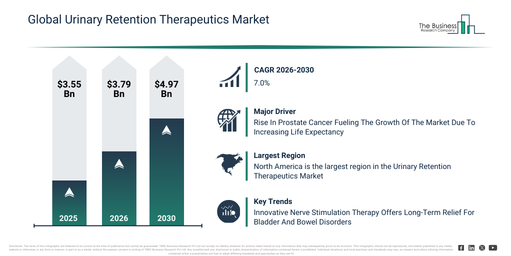
    The urinary retention therapeutics market has demonstrated strong growth in recent years. It is projected to expand from $3.55 billion in 2025 to $3.79 billion in 2026, achieving a compound annual growth rate (CAGR) of 7.0%. The historical increase can be ascribed to factors such as the rising prevalence of prostate-related disorders, an increasing incidence of neurological conditions, enhanced diagnostic accuracy for bladder dysfunction, the availability of diverse pharmacological options, and the expansion of hospital-based urology services.

    The urinary retention therapeutics market is projected to grow significantly in the next few years, reaching a size of $4.97 billion by 2030, with a compound annual growth rate (CAGR) of 7.0%. This growth in the forecast period can be attributed to the rising demand for targeted drug therapies, increased investments in urological research, the expanding use of digital patient monitoring, the growth of outpatient therapeutic care, and the development of next-generation bladder control medications. Key trends anticipated during this period include an increase in the use of combination drug therapies, the rising adoption of personalized bladder treatment plans, a growing emphasis on minimally invasive therapeutic options, the expansion of novel pharmacological agents, and enhanced monitoring of bladder function outcomes.

    Access Your Free Sample Report For In-Depth Market Analysis:

    https://www.thebusinessresearchcompany.com/sample.aspx?id=23553&type=smp

    Which Drivers Are Supporting The Urinary Retention Therapeutics Market Growth?

    The escalating instances of prostate cancer are anticipated to stimulate the expansion of the urinary retention therapeutics market in the foreseeable future. Prostate cancer is defined as a malignant condition characterized by the uncontrolled proliferation of cells within the prostate gland. The rising incidence is attributed to aging male populations, leading to more individuals entering high-risk age categories. Urinary retention therapeutics contributes to this growth by offering treatments and devices aimed at managing urinary flow blockages, which are frequently caused by prostate enlargement or urethral obstruction linked to tumors. For instance, in January 2023, according to the American Cancer Society Facts and Figures, a US-based professional organization, the number of new prostate cancer cases in the US is projected to increase from 268,490 in 2022 to 288,300 in 2023. The fatalities due to prostate cancer are also expected to experience a slight rise, from 34,500 in 2022 to 34,700 in 2023. Consequently, the increasing cases of prostate cancer are propelling the growth of the urinary retention therapeutics market.

    What Are The Different Segment Types In The Urinary Retention Therapeutics Market Segment Breakdown?

    The urinary retention therapeutics market covered in this report is segmented –

    1) By Drug Class: 5-Alpha-Reductase Inhibitor And Alpha-Blocker Drugs, Anticholinergic Or Antispasmodic Agents, Antidepressants, Skeletal Muscle Relaxants, Topical Estrogens, Other Drugs

    2) By Incontinence Type: Stress Incontinence, Urge Incontinence, Over-Flow Incontinence, Mixed Incontinence, Other Incontinence Types

    3) By Administration Route: Oral, Intravesical, Intravenous, Transdermal

    4) By Distribution Channel: Retail Pharmacy, Hospital Pharmacy, Online Pharmacy

    Subsegments:

    1) By 5-Alpha-Reductase Inhibitor And Alpha-Blocker Drugs: Finasteride, Dutasteride, Tamsulosin, Alfuzosin, Terazosin, Doxazosin

    2) By Anticholinergic or Antispasmodic Agents: Oxybutynin, Tolterodine, Solifenacin, Darifenacin, Trospium, Fesoterodine

    3) By Antidepressants: Imipramine, Amitriptyline, Duloxetine

    4) By Skeletal Muscle Relaxants: Baclofen, Tizanidine, Diazepam, Cyclobenzaprine

    5) By Topical Estrogens: Estradiol Cream, Conjugated Estrogens, Estriol Vaginal Cream

    6) By Other Drugs: Botulinum Toxin (Botox), Mirabegron, Desmopressin

    Which Trends Are Expected To Impact The Urinary Retention Therapeutics Market?

    Leading companies in the urinary retention therapeutics market are concentrating on developing innovative solutions such as sacral nerve stimulators to improve bladder control, enhance patient quality of life, and reduce dependence. A sacral nerve stimulator is a medical device that delivers mild electrical impulses to the sacral nerves near the lower spine to help control bladder and bowel function. For instance, in November 2024, Medtronic plc, an Ireland-based medical technology company, launched the FDA-approved InterStim X Sacral Neuromodulation (SNM) system in India, designed to treat overactive bladder (OAB), chronic fecal incontinence (FI), and non-obstructive urinary retention. This therapy functions by delivering personalized sacral nerve stimulation, targeting nerve signals that regulate bladder and bowel functions to mitigate symptoms like frequent urination and incontinence. The treatment is conducted in two stages, beginning with a trial phase using an external stimulator, followed by the implantation of a pulse generator if successful, and the device provides a long battery life of over 10 years without recharging.

    Who Are The Well-Known Companies In The Urinary Retention Therapeutics Market?

    Major companies operating in the urinary retention therapeutics market are Pfizer Inc. , Merck KGaA , Abbvie Inc. , Bayer AG , Sanofi SA , GlaxoSmithKline Plc. , Medtronic Plc , Boston Scientific Corp. , Sumitomo Pharma Inc. , Ipsen Pharma , Coloplast A/S , Dr. Reddy’s Laboratories , Cipla Limited , Amneal Pharmaceuticals Inc. , Ferring Pharmaceuticals , Astellas Pharma Inc. , Johnson & Johnson , Teva Pharmaceutical Industries Ltd. , Novartis International AG , Takeda Pharmaceutical Company Limited , Boehringer Ingelheim International GmbH , UroGen Pharma Ltd.

    Get The Full Urinary Retention Therapeutics Market Report:

    https://www.thebusinessresearchcompany.com/report/urinary-retention-therapeutics-global-market-report

    Which Region Has The Greatest Market Share In The Urinary Retention Therapeutics Market?

    North America was the largest region in the urinary retention therapeutics market in 2025. Asia-Pacific is expected to be the fastest-growing region in the forecast period. The regions covered in the urinary retention therapeutics market report are Asia-Pacific, South East Asia, Western Europe, Eastern Europe, North America, South America, Middle East, Africa.

    Request A Customized Urinary Retention Therapeutics Market Report For Competitive Insights:

    https://www.thebusinessresearchcompany.com/report/urinary-retention-therapeutics-global-market-report

    Browse Through More Reports Similar to the Global Urinary Retention Therapeutics Market 2026, By The Business Research Company

    Urinary Tract Infection Treatment Market Report 2026

    https://www.thebusinessresearchcompany.com/report/urinary-tract-infection-treatment-global-market-report

    Urinary Incontinence And Pelvic Organ Prolapse Devices And Equipment Market Report

    https://www.thebusinessresearchcompany.com/report/urinary-incontinence-and-pelvic-organ-prolapse-devices-and-equipment-global-market-report

    Uncomplicated Urinary Tract Infection Treatment Market Report

    https://www.thebusinessresearchcompany.com/report/uncomplicated-urinary-tract-infection-treatment-global-market-report

    Get in touch with us:

    The Business Research Company: https://www.thebusinessresearchcompany.com/

    Americas +1 310-496-7795

    Asia +44 7882 955267 & +91 8897263534

    Europe +44 7882 955267

    Email us at info@tbrc.info

    Follow us on:

    LinkedIn: https://in.linkedin.com/company/the-business-research-company

    YouTube: https://www.youtube.com/channel/UC24_fI0rV8cR5DxlCpgmyFQ

    Global Market Model: https://www.thebusinessresearchcompany.com/global-market-model
  • Urinary Incontinence Market Outlook Projected to Reach $18.84 Billion by 2030

    Urinary Incontinence Market Outlook Projected to Reach $18.84 Billion by 2030

    The Business Research Company’s 2026 market reports feature enhanced tools like market attractiveness analysis, TAM assessment, and company scoring matrices, along with interactive dashboards, deeper supply chain insights, and startup coverage strengthening the depth, usability, and strategic value of insights.

    How Is The Market Size Of The Urinary Incontinence Market Expected To Scale Between 2026 And 2030?

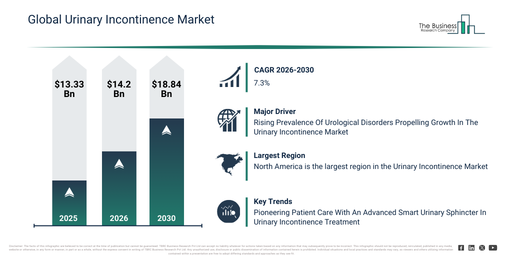
    The urinary incontinence market has demonstrated substantial growth in recent years. It is anticipated to expand from $13.33 billion in 2025 to $14.2 billion in 2026, achieving a compound annual growth rate (CAGR) of 6.6%. The historical surge can be attributed to an expanding aging population, an increasing occurrence of obesity-related conditions, a higher frequency of childbirth-related pelvic disorders, enhanced access to diagnostic healthcare services, and a rising awareness concerning urinary health issues.

    The urinary incontinence market is anticipated to experience robust expansion in the coming years. By 2030, its valuation is projected to reach $18.84 billion, demonstrating a compound annual growth rate (CAGR) of 7.3%. This projected growth stems from several factors, including the increasing implementation of personalized treatment approaches, a rise in the use of digital health monitoring tools, an expanding need for non-surgical therapies, a greater emphasis on preventive urological care, and innovations in incontinence treatment devices. Significant developments expected during this period involve a greater uptake of sophisticated diagnostic methods, an increased preference for minimally invasive treatment alternatives, an intensified focus on pelvic floor rehabilitation techniques, the proliferation of home-based solutions for managing incontinence, and improved public understanding of urinary health conditions.

    Access Your Free Sample Report For In-Depth Market Analysis:

    https://www.thebusinessresearchcompany.com/sample.aspx?id=12946&type=smp

    What Key Factors Are Affecting The Urinary Incontinence Market Demand?

    The rising occurrence of urological conditions is anticipated to fuel the expansion of the urinary incontinence market in the future. These disorders encompass health issues impacting the urinary system and male reproductive organs, such as the kidneys, bladder, ureters, urethra, prostate, and testes. The growing frequency of urological disorders stems from an escalating disease burden, influenced by an aging global populace and shifts in lifestyle-related health. In response, the urinary incontinence market facilitates this development by offering diagnostic instruments, therapeutic goods, and sophisticated treatment options to meet the evolving needs of patients. As an example, the American Cancer Society, a US-based voluntary cancer awareness organization, reported in January 2023 that the projected count of urinary bladder cancer cases amounted to 82,290 in 2023. This figure indicates an upward trend from previous years, coinciding with the continued rise in the overall disease burden. Consequently, the expanding occurrence of urological disorders is set to stimulate the growth of the urinary incontinence market.

    Which Segment Classifications Are Used In The Urinary Incontinence Market Segment Analysis?

    The urinary incontinence market covered in this report is segmented –

    1) By Type: Urge Incontinence, Stress Incontinence, Overflow Incontinence, Functional Incontinence

    2) By Treatment Type: Medication, Devices, Other Treatments

    3) By Route Of Administration: Oral, Parenteral, Other Routes Of Administration

    4) By Diagnosis: Physical Exam, Pad Test, Urodynamic Testing, Cystoscopy, Stress Test, Ultrasound, Urine Samples

    5) By End-Users: Hospitals, Specialty Clinics, Homecare, Other End-Users

    Subsegments:

    1) By Urge Incontinence: Overactive Bladder, Urinary Urgency

    2) By Stress Incontinence: Involuntary Leakage During Physical Activity, Coughing Or Sneezing

    3) By Overflow Incontinence: Chronic Urinary Retention, Frequent Or Constant Dribbling

    4) By Functional Incontinence: Cognitive Impairment, Physical Limitations

    What Trends Are Influencing Changes In The Urinary Incontinence Market?

    Companies within the urinary incontinence market are prioritizing the creation of novel solutions, including intelligent, automated artificial urinary sphincters and sophisticated minimally invasive devices, with the goal of improving treatment efficacy and patient well-being. These modern technologies, such as smart, automated artificial urinary sphincters and advanced minimally invasive devices, are designed to enhance bladder control through automatic urine flow management and provide patients with less invasive and more comfortable treatment alternatives. For instance, in July 2023, UroMems SAS, a France-based biotechnology firm, successfully implanted its UroActive smart, automated artificial urinary sphincter (AUS) in a female patient suffering from stress urinary incontinence (SUI) among women. The innovative UroActive device functions via a myoelectrical mechanical system (MEMS), engineered to meet the critical need for a definitive solution for SUI in women. The surgical procedure, which received regulatory approval from the French equivalent of the FDA, was performed with robotic assistance at La Pitié-Salpêtrière University Hospital in Paris. UroActive’s adaptable and smart features, combined with its minimally invasive technique, are intended to elevate patients’ quality of life.

    Which Firms Are Contributing To The Urinary Incontinence Market Ecosystem?

    Major companies operating in the urinary incontinence market are Teleflex Incorporated, Ethicon Inc., Laborie Medical Technologies Corp., NeoTract Inc., Promedon GmbH, Caldera Medical Inc, Cook Medical Inc, Cook Group Inc, ConvaTec Group PLC, Boston Scientific Corporation, Coloplast A/S, B Braun Melsungen AG, Medtronic plc, Hollister Incorporated, Becton Dickinson and Company, A.M.I. GmbH, Atlantic Therapeutics Group Ltd, InControl Medical, Zephyr Surgical Implants

    Get The Full Urinary Incontinence Market Report:

    https://www.thebusinessresearchcompany.com/report/urinary-incontinence-global-market-report

    Which Region Accounts For The Largest Portion Of The Urinary Incontinence Market?

    North America was the largest region in the urinary incontinence market in 2025. The regions covered in the urinary incontinence market report are Asia-Pacific, South East Asia, Western Europe, Eastern Europe, North America, South America, Middle East, Africa.

    Request A Customized Urinary Incontinence Market Report For Competitive Insights:

    https://www.thebusinessresearchcompany.com/report/urinary-incontinence-global-market-report

    Browse Through More Reports Similar to the Global Urinary Incontinence Market 2026, By The Business Research Company

    Disposable Incontinence Products Market Report 2026

    https://www.thebusinessresearchcompany.com/report/disposable-incontinence-products-global-market-report

    Incontinence And Ostomy Care Products Market Report

    https://www.thebusinessresearchcompany.com/report/incontinence-and-ostomy-care-products-global-market-report

    Urinary Incontinence And Pelvic Organ Prolapse Devices And Equipment Market Report

    https://www.thebusinessresearchcompany.com/report/urinary-incontinence-and-pelvic-organ-prolapse-devices-and-equipment-global-market-report

    Get in touch with us:

    The Business Research Company: https://www.thebusinessresearchcompany.com/

    Americas +1 310-496-7795

    Asia +44 7882 955267 & +91 8897263534

    Europe +44 7882 955267

    Email us at info@tbrc.info

    Follow us on:

    LinkedIn: https://in.linkedin.com/company/the-business-research-company

    YouTube: https://www.youtube.com/channel/UC24_fI0rV8cR5DxlCpgmyFQ

    Global Market Model: https://www.thebusinessresearchcompany.com/global-market-model
  • Urinalysis Market Revenue Expected to Reach $5.91 Billion by 2030 at 9.1% CAGR

    Urinalysis Market Revenue Expected to Reach $5.91 Billion by 2030 at 9.1% CAGR

    The Business Research Company’s 2026 market reports feature enhanced tools like market attractiveness analysis, TAM assessment, and company scoring matrices, along with interactive dashboards, deeper supply chain insights, and startup coverage strengthening the depth, usability, and strategic value of insights.

    What Level Of Market Value Growth Is Predicted For The Urinalysis Market From 2026 To 2030?

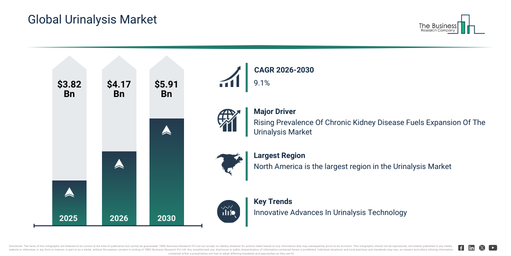
    The urinalysis market has experienced substantial growth in recent years. This market is projected to expand from $3.82 billion in 2025 to $4.17 billion in 2026, demonstrating a compound annual growth rate (CAGR) of 9.2%. Factors contributing to its historical expansion include the increasing prevalence of diabetes and kidney diseases, the growth of clinical diagnostic laboratories, a heightened demand for routine health screening, greater adoption of laboratory automation, and enhanced availability of consumables.

    The urinalysis market is projected to experience substantial expansion in the coming years. By 2030, its valuation is anticipated to reach $5.91 billion, growing at a compound annual growth rate (CAGR) of 9.1%. This anticipated growth during the forecast period is primarily driven by factors such as a heightened demand for swift diagnostic tests, an escalating emphasis on preventive healthcare measures, the broadening scope of home healthcare diagnostics, the increasing incorporation of AI-powered interpretation tools, and a rise in healthcare expenditure allocated to diagnostics. Key trends anticipated during this period involve a greater uptake of automated urinalysis analyzers, an increased utilization of point-of-care testing kits, the expanding integration of digital systems for result management, the widening availability of home-based urinalysis testing, and an intensified commitment to improving diagnostic accuracy.

    Access Your Free Sample Report For In-Depth Market Analysis:

    https://www.thebusinessresearchcompany.com/sample.aspx?id=8623&type=smp

    Which Primary Drivers Are Impacting The Urinalysis Market Growth?

    The increasing prevalence of chronic kidney disease is anticipated to propel the growth of the urinalysis market. Kidney disease is defined as a medical condition where the kidneys are damaged and become unable to effectively filter waste and excess fluids from the blood. The rising incidence of chronic kidney disease is largely due to escalating rates of diabetes, which can gradually impair kidney function over time. Urinalysis aids in identifying early signs of kidney disease by detecting abnormalities in urine, such as protein, blood, or waste imbalances, which reflect declining kidney function. For example, in June 2023, according to publications by the Oxford University Press, a UK-based department of the University of Oxford, the prevalence of chronic kidney disease (CKD) in the UK is projected to rise by 4%, increasing from 8.27 million to 8.61 million individuals between 2022 and 2032. Therefore, the growing prevalence of chronic kidney disease is driving the expansion of the urinalysis market.

    How Is The Urinalysis Market Organized By Segment Classification?

    The urinalysis market covered in this report is segmented –

    1) By Test Type: Pregnancy And Fertility Tests, Biochemical Urinalysis, Sediment Urinalysis

    2) By Product: Consumables, Instruments

    3) By Application: Urinary Tract Infections (UTIs), Kidney Disease, Liver Disease, Diabetes, Hypertension, Other Applications

    4) By End Users: Diagnostic Laboratories, Hospitals And Clinics, Home Care Settings, Research Laboratories And Institutes

    Subsegments:

    1) By Pregnancy And Fertility Tests: Urine Pregnancy Tests, Ovulation Prediction Tests

    2) By Biochemical Urinalysis: Dipstick Tests, Reagent Strip Tests, Microalbumin Tests

    3) By Sediment Urinalysis: Microscopic Examination, Chemical Analysis Of Sediment, Culture Tests

    Which Trends Are Shaping Growth In The Urinalysis Market?

    Major companies engaged in the urinalysis market are prioritizing the development of innovative products, such as urine particle analyzers, to secure a competitive advantage. Urine analyzers are clinical instruments utilized for automated urine testing, featuring capabilities for detecting and quantifying multiple analytes. These urine particle analyzers provide greater accuracy and precision than traditional manual microscopy, contributing to the standardization of urine particle analysis and a reduction in inter-observer variability. As an illustration, in April 2023, Sysmex Europe SE, a Germany-based provider of automated in vitro diagnostics, launched the UF-1500 Fully Automated Urine Particle Analyzer. This device is specifically engineered to achieve significant footprint reductions (by about 30%1) while delivering high levels of performance and usability. It employs the same cutting-edge fluorescence flow cytometry technology as the flagship UF-5000 and addresses a range of customer demands. These include the necessity for a fully automated urinalysis workstation in both developed and emerging markets, as well as providing backup and satellite systems for extensive facilities that have previously installed the UN-Series, in addition to supporting connectivity with UC-3500 urine chemistry analyzers.

    Who Are The Industry Participants Involved In The Urinalysis Market?

    Major companies operating in the urinalysis market are Siemens Healthineers AG, F. Hoffmann-La Roche Ltd., Cardinal Health Inc., Abbott Laboratories, Danaher Corporation, Beckman Coulter Inc., Sysmex Corporation, ARKRAY Inc., ACON Laboratories Inc., Bio-Rad Laboratories Inc., URIT Medical Electronic Group Co Ltd., 77 Elektronika Kft, Thermo Fisher Scientific Inc., Teco Diagnostics, Mindray Medical International Limited, Quidel Corporation, Becton Dickinson and Company, EKF Diagnostics, Shenzhen Mindray Bio-Medical Electronics Co. Ltd., Guangzhou Wondfo Biotech Co. Ltd., Chembio Diagnostic Systems Inc

    Get The Full Urinalysis Market Report:

    https://www.thebusinessresearchcompany.com/report/urinalysis-global-market-report

    Which Region Holds The Highest Market Share In The Urinalysis Market?

    North America was the largest region in the urinalysis market in 2025. The regions covered in the urinalysis market report are Asia-Pacific, South East Asia, Western Europe, Eastern Europe, North America, South America, Middle East, Africa.

    Request A Customized Urinalysis Market Report For Competitive Insights:

    https://www.thebusinessresearchcompany.com/report/urinalysis-global-market-report

    Browse Through More Reports Similar to the Global Urinalysis Market 2026, By The Business Research Company

    Kidney Dialysis Market Report 2026

    https://www.thebusinessresearchcompany.com/report/kidney-dialysis-global-market-report

    Urology Surgical Instruments Market Report

    https://www.thebusinessresearchcompany.com/report/urology-surgical-instruments-global-market-report

    Hemodialysis Market Report

    https://www.thebusinessresearchcompany.com/report/hemodialysis-global-market-report

    Get in touch with us:

    The Business Research Company: https://www.thebusinessresearchcompany.com/

    Americas +1 310-496-7795

    Asia +44 7882 955267 & +91 8897263534

    Europe +44 7882 955267

    Email us at info@tbrc.info

    Follow us on:

    LinkedIn: https://in.linkedin.com/company/the-business-research-company

    YouTube: https://www.youtube.com/channel/UC24_fI0rV8cR5DxlCpgmyFQ

    Global Market Model: https://www.thebusinessresearchcompany.com/global-market-model
  • Urgent Care Center Market Forecast to Reach $38.79 Billion by 2030 with Steady Growth

    Urgent Care Center Market Forecast to Reach $38.79 Billion by 2030 with Steady Growth

    The Business Research Company’s 2026 market reports feature enhanced tools like market attractiveness analysis, TAM assessment, and company scoring matrices, along with interactive dashboards, deeper supply chain insights, and startup coverage strengthening the depth, usability, and strategic value of insights.

    How Will The Market Value Of The Urgent Care Center Market Progress Between 2026 And 2030?

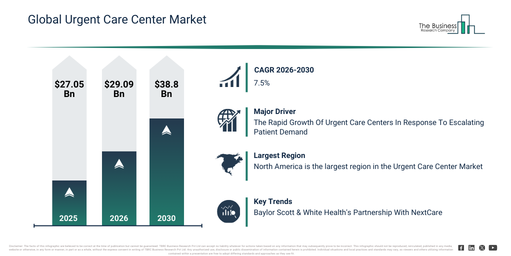
    The urgent care center market has shown significant expansion in recent times. It is anticipated to grow from $27.05 billion in 2025 to $29.09 billion in 2026, reflecting a compound annual growth rate (CAGR) of 7.5%. This past growth is largely due to factors such as an increasing patient preference for immediate care, rising congestion in emergency departments, the expansion of retail healthcare models, growing urban population density, and improved access to diagnostic tools.

    The urgent care center market is projected to experience substantial expansion in the coming years, reaching $38.8 billion by 2030, exhibiting a compound annual growth rate (CAGR) of 7.5%. This anticipated growth during the forecast period is primarily driven by factors such as enhanced investments in urgent care facilities, a growing need for healthcare services delivered outside traditional settings, the expansion of urgent care options supported by employers, the increasing adoption of digital check-in methods, and a greater emphasis on delivering care efficiently and affordably. Key trends expected over this period involve the increased establishment of clinics leveraging technology, the greater incorporation of digital systems for patient management, a heightened focus on swift diagnostic services, the proliferation of care models offering extended hours, and a reinforced commitment to standardizing care practices.

    Access Your Free Sample Report For In-Depth Market Analysis:

    https://www.thebusinessresearchcompany.com/sample.aspx?id=8807&type=smp

    What Significant Factors Are Influencing The Urgent Care Center Market Expansion?

    The future expansion of the urgent care center market is projected to be driven by an increase in patient demand for these facilities. Patient demand refers to the desire, need, or request from individuals seeking medical attention to address their health concerns. It encompasses various factors prompting individuals to seek medical care, covering everything from preventive services and routine check-ups to treating acute illnesses or managing chronic conditions. The notable surge in patient demand for healthcare services has been met by the increased utilization of urgent care centers. These facilities play a critical role in addressing the growing requirement for immediate medical attention, offering a convenient and easily accessible alternative to traditional healthcare settings. As patients look for timely and cost-effective solutions for non-emergent conditions, urgent care centers provide extended operating hours, efficient care for minor injuries and illnesses, and a diverse array of services. For instance, in August 2023, the Urgent Care Association, a US-based healthcare membership organization, reported that urgent care centers treated nearly 206 million non-emergent cases in 2022, with the total number of centers rising to 14,075 and further increasing to 14,382 by June 2023. Therefore, a rise in patient demand for urgent care centers is propelling the urgent care centers market.

    Which Segments Define The Urgent Care Center Market Segment Structure?

    The urgent care center market covered in this report is segmented –

    1) By Service: Trauma Or Injury Services, Vaccination Services, Acute Illness Treatment Solutions, Other Services

    2) By Ownership: Corporate Owned, Hospital Owned, Physician Owned, Other Ownerships

    3) By Patient Age Group: Pediatrics (0–17 years), Adults (18–64 years), Geriatrics (65 years and above), All-Age And General Population

    Subsegments:

    1) By Trauma Or Injury Services: Minor Injury Treatment, Fracture Care, Laceration Repair

    2) By Vaccination Services: Routine Immunizations, Travel Vaccinations, Flu Shots

    3) By Acute Illness Treatment Solutions: Cold And Flu Treatment, Gastrointestinal Issues, Skin Infections And Rashes

    4) By Other Services: Diagnostic Services, Physical Exams, Occupational Health Services

    What Trends Are Affecting The Direction Of The Urgent Care Center Market?

    Major companies active in the urgent care center market are engaging in strategic partnerships to enhance their market position. A business strategic partnership signifies a structured collaboration between two or more commercial enterprises, typically established through various business agreements or contracts. For instance, in July 2023, Baylor Scott & White Health, a US-based healthcare system, forged a partnership with NextCare. This collaboration is designed to incorporate 41 urgent care centers into BSWH’s network and provide the state’s largest nonprofit health system with a foothold in new markets, including Abilene, San Antonio, and Houston. NextCare functions as a US-based healthcare provider, delivering primary, virtual, and urgent care services.

    Who Are The Established Players Within The Urgent Care Center Market?

    Major companies operating in the urgent care center market are NextCare Holdings Inc., Concentra Inc., HCA Healthcare Inc., MedExpress Urgent Care, American Family Care, FastMed Urgent Care, CareNow Healthcare Private Limited, St Joseph’s Health Care London, U.S. HealthWorks Inc., CityMD Healthcare Private Limited, GoHealth Urgent Care, CareSpot Urgent Care, Dignity Health Care, United Health Group, Texas MedClinic, Patient First Corporation, Aurora Urgent Care, Bellin Health Systems, MD Now Medical Centers Inc., ZOOM Care, Adventist Healthcare, AtlantiCare, CRH Healthcare LLC, Excel Urgent Care, Premier Health Partners, Summit Health, AFC Urgent Care, CityDoc Urgent Care, Fast Pace Medical Clinic PLLC, Geisinger Careworks

    Get The Full Urgent Care Center Market Report:

    https://www.thebusinessresearchcompany.com/report/urgent-care-center-global-market-report

    Where Is The Urgent Care Center Market Most Concentrated Geographically?

    North America was the largest region in the urgent care center market share in 2025. Asia-Pacific is expected to be the fastest-growing region in the forecast period. The regions covered in the urgent care center market report are Asia-Pacific, South East Asia, Western Europe, Eastern Europe, North America, South America, Middle East, Africa.

    Request A Customized Urgent Care Center Market Report For Competitive Insights:

    https://www.thebusinessresearchcompany.com/report/urgent-care-center-global-market-report

    Browse Through More Reports Similar to the Global Urgent Care Center Market 2026, By The Business Research Company

    Urgent Care Apps Market Report 2026

    https://www.thebusinessresearchcompany.com/report/urgent-care-apps-global-market-report

    Hospital Emergency Department Market Report

    https://www.thebusinessresearchcompany.com/report/hospital-emergency-department-global-market-report

    Care Services Market Report

    https://www.thebusinessresearchcompany.com/report/care-services-global-market-report

    Get in touch with us:

    The Business Research Company: https://www.thebusinessresearchcompany.com/

    Americas +1 310-496-7795

    Asia +44 7882 955267 & +91 8897263534

    Europe +44 7882 955267

    Email us at info@tbrc.info

    Follow us on:

    LinkedIn: https://in.linkedin.com/company/the-business-research-company

    YouTube: https://www.youtube.com/channel/UC24_fI0rV8cR5DxlCpgmyFQ

    Global Market Model: https://www.thebusinessresearchcompany.com/global-market-model
  • Urgent Care Apps Market Expansion to $23.47 Billion by 2030 at 39.1% CAGR

    Urgent Care Apps Market Expansion to $23.47 Billion by 2030 at 39.1% CAGR

    The Business Research Company’s 2026 market reports feature enhanced tools like market attractiveness analysis, TAM assessment, and company scoring matrices, along with interactive dashboards, deeper supply chain insights, and startup coverage strengthening the depth, usability, and strategic value of insights.

    What Are The Market Size Estimates For The Urgent Care Apps Market In 2026 And 2030?

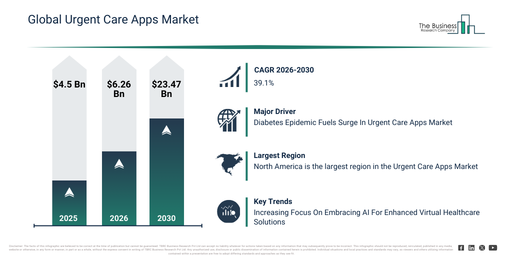
    The market size for urgent care apps has experienced substantial growth in recent times. This market is projected to expand from $4.5 billion in 2025 to reach $6.26 billion by 2026, exhibiting a compound annual growth rate (CAGR) of 39.1%. Historically, this expansion has been driven by increasing smartphone penetration, growth in digital health adoption, rising demand for on-demand healthcare access, expansion of urgent care networks, and improved mobile internet availability.

    The urgent care apps market is projected to experience substantial growth in the foreseeable future, with its size anticipated to reach $23.47 billion by 2030, demonstrating a compound annual growth rate (CAGR) of 39.1%. This expansion during the forecast period can be attributed to several factors, including increasing investments in digital health platforms, a rising demand for remote triage solutions, the expansion of value-based care models, the growing integration of AI in patient engagement, and increasing regulatory support for telehealth. Furthermore, major trends characterizing this period include a greater adoption of telehealth-integrated urgent care apps, the increasing use of AI-based symptom triage, the growing deployment of real-time care navigation tools, the expansion of wearable-connected emergency applications, and an enhanced focus on patient data security.

    Access Your Free Sample Report For In-Depth Market Analysis:

    https://www.thebusinessresearchcompany.com/sample.aspx?id=14216&type=smp

    Which Important Drivers Are Guiding The Urgent Care Apps Market Growth?

    The increasing incidence of chronic illnesses, such as diabetes, is anticipated to boost the expansion of the urgent care apps market in the future. A chronic condition is defined as a persistent medical ailment typically enduring three months or more, often requiring continuous oversight and management. Diabetes, a chronic metabolic disorder, involves elevated blood glucose levels, which can progressively cause significant harm to organs such as the heart and blood vessels. These urgent care applications offer significant assistance to diabetic individuals by enabling more effective health management, enhancing their quality of life, and alleviating pressure on healthcare infrastructure. Furthermore, these tools aid diabetic patients in logging and tracking their symptoms, facilitating the recognition of health patterns and trends. For example, data from January 2023, provided by the US government agency, the National Institutes of Health, indicates that by 2035, 35.66% (ranging from 33.36–36.04) of adults aged 50 and above are projected to suffer from at least one chronic condition. This figure is then expected to increase to 47.81% (with a range of 46.09–49.71) by the year 2050. Consequently, the expanding occurrence of chronic illnesses, including diabetes, is acting as a key driver for the urgent care apps market’s expansion.

    How Is The Urgent Care Apps Market Segmented Across Different Segment Categories?

    The urgent care apps market covered in this report is segmented –

    1) By Type: Pre-Hospital Emergency Care And Triaging Apps, In-Hospital Communication And Collaboration Apps, Post-Hospital Apps

    2) By Technology: Phone-Based Apps, Web-Based Apps, Wearable Patient-Centric Apps

    3) By Clinical Area: Trauma, Stroke, Cardiac Conditions, Other Clinical Areas

    Subsegments:

    1) By Pre-Hospital Emergency Care And Triaging Apps: Symptom Checker Apps, Triage Apps, Remote Patient Monitoring Apps

    2) By In-Hospital Communication And Collaboration Apps: Secure Messaging Apps, Team Collaboration Tools, Patient Management Systems

    3) By Post-Hospital Apps: Follow-Up Care Apps, Medication Management Apps, Telehealth Apps

    What Trends Are Influencing The Evolution Of The Urgent Care Apps Market?

    Major companies operating within the urgent care apps market are increasingly focusing on deploying advanced technological solutions, such as AI-enabled urgent care applications including the Cedars-Sinai Connect app, to secure a competitive edge. The Cedars-Sinai Connect app itself is a digital health initiative that employs artificial intelligence (AI) technology to provide users with rapid and convenient access to medical services. These programs allow users to pinpoint and obtain support from the closest urgent care centers, alongside acquiring information regarding urgent and emergency medical conditions. For example, in October 2023, Cedars-Sinai, a US-based health science and medical center, introduced the Cedars-Sinai Connect app. This novel artificial intelligence-driven mHealth application, catering to patients in the USA, offers virtual care solutions for a variety of clinical conditions. The app facilitates same-day primary care appointments and 24/7 virtual access to medical specialists for immediate treatment. Patients can utilize the app to receive care for numerous ailments, such as type 2 diabetes, headaches, colds, anxiety, wellness visits, and to obtain expert referrals. This AI-enabled application permits both new and existing patients to submit their symptoms and health information through a structured intake process. Upon evaluating the data, the app forwards it to a medical expert for assessment, after which the patient and healthcare professional can communicate via video.

    Which Organizations Play A Role In The Urgent Care Apps Market Landscape?

    Major companies operating in the urgent care apps market are Teladoc Health, HeyDoctor, American Well, Carbon Health, Doctor on Demand, MDLive, Akira, Lemonaid Health, PlushCare, 98point6, HealthTap, Medici, K Health, MeMD, Maple, CareClix, LiveHealth Online, Push Doctor, Zocdoc, Brave Care, GoodRx Care, Sesame Care, RelyMD, Doctoranytime

    Get The Full Urgent Care Apps Market Report:

    https://www.thebusinessresearchcompany.com/report/urgent-care-apps-global-market-report

    Which Region Dominates The Urgent Care Apps Market By Market Share?

    North America was the largest region in the urgent care apps market in 2025. Asia-Pacific is expected to be the fastest-growing region in the forecast period. The regions covered in the urgent care apps market report are Asia-Pacific, South East Asia, Western Europe, Eastern Europe, North America, South America, Middle East, Africa.

    Request A Customized Urgent Care Apps Market Report For Competitive Insights:

    https://www.thebusinessresearchcompany.com/report/urgent-care-apps-global-market-report

    Browse Through More Reports Similar to the Global Urgent Care Apps Market 2026, By The Business Research Company

    Urgent Care Center Market Report 2026

    https://www.thebusinessresearchcompany.com/report/urgent-care-center-global-market-report

    Patient Centric Healthcare App Market Report

    https://www.thebusinessresearchcompany.com/report/patient-centric-healthcare-app-global-market-report

    Disease Management Apps Market Report

    https://www.thebusinessresearchcompany.com/report/disease-management-apps-global-market-report

    Get in touch with us:

    The Business Research Company: https://www.thebusinessresearchcompany.com/

    Americas +1 310-496-7795

    Asia +44 7882 955267 & +91 8897263534

    Europe +44 7882 955267

    Email us at info@tbrc.info

    Follow us on:

    LinkedIn: https://in.linkedin.com/company/the-business-research-company

    YouTube: https://www.youtube.com/channel/UC24_fI0rV8cR5DxlCpgmyFQ

    Global Market Model: https://www.thebusinessresearchcompany.com/global-market-model
  • Ureteroscope Market Revenue Forecast to $1.53 Billion by 2030

    Ureteroscope Market Revenue Forecast to $1.53 Billion by 2030

    The Business Research Company’s 2026 market reports feature enhanced tools like market attractiveness analysis, TAM assessment, and company scoring matrices, along with interactive dashboards, deeper supply chain insights, and startup coverage strengthening the depth, usability, and strategic value of insights.

    What Expansion In Market Value Is Forecasted For The Ureteroscope Market Between 2026 And 2030?

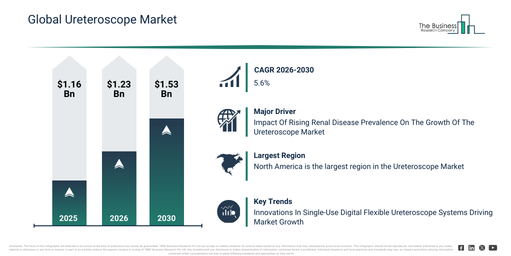
    The ureteroscope market size has demonstrated substantial growth over the past few years. The market is forecasted to expand from $1.16 billion in 2025 to $1.23 billion by 2026, achieving a compound annual growth rate (CAGR) of 6.3%. This historical expansion is largely due to factors such as the increasing occurrence of urolithiasis, the widening scope of urology specialty services, heightened hospital spending on endoscopy equipment, a surge in the use of minimally invasive diagnostics, and improved access to qualified urologists.

    The ureteroscope market size is anticipated to experience significant expansion over the next few years. This market is expected to reach $1.53 billion by 2030, demonstrating a compound annual growth rate (CAGR) of 5.6%. This projected growth during the forecast period is attributable to an escalating demand for disposable endoscopic devices, a rising prevalence of kidney disorders, the expansion of outpatient urology procedures, technological progress in digital imaging, and an increasing emphasis on patient safety. Prominent trends expected in the forecast period include the increasing adoption of single-use ureteroscopes, a growing requirement for high-definition imaging devices, a rising preference for flexible ureteroscopes, the broadening of minimally invasive urological procedures, and an enhanced focus on infection control measures.

    Access Your Free Sample Report For In-Depth Market Analysis:

    https://www.thebusinessresearchcompany.com/sample.aspx?id=16562&type=smp

    What Major Factors Are Driving The Ureteroscope Market Forward?

    The rising incidence of renal conditions is anticipated to fuel the expansion of the ureteroscope market in the future. Renal diseases, also known as kidney diseases, encompass various conditions impacting the kidneys’ function and structure. Several elements contribute to the widespread occurrence of renal diseases, such as genetic predispositions, lifestyle choices, environmental factors, and existing health issues. Ureteroscopes assist in managing renal diseases by allowing for the minimally invasive diagnosis and treatment of kidney stones, tumors, strictures, and blockages, offering accurate visualization and access within the urinary tract. As an example, data from Kidney Research UK, a charitable organization in the UK focused on kidney disease research and advocacy, indicated that in June 2023, approximately 7.19 million individuals in the UK suffered from chronic kidney disease that year, accounting for over 10% of the UK population, with projections showing an rise to 7.61 million by 2033. Consequently, the growing occurrence of renal diseases is stimulating expansion within the ureteroscope market.

    What Are The Main Segments Within The Ureteroscope Market Segment Structure?

    The ureteroscope market covered in this report is segmented –

    1) By Product: Digital Ureteroscopes, Flexible Ureteroscopes, Rigid Ureteroscope, Semi-Rigid Ureteroscopes, Fiberoptic Ureteroscopes

    2) By Application: Urinary Stricture, Urolithiasis, Kidney Cancer, Diagnostics

    3) By End-User: Ambulatory Surgical Centers, Specialty Clinics, Hospitals, Urology Clinics, Diagnostic Centers, Endoscopic Clinic, Other End-Users

    Subsegments:

    1) By Digital Ureteroscopes: Standard Digital Ureteroscopes, High-Definition (HD) Digital Ureteroscopes, Single-Use Digital Ureteroscopes

    2) By Flexible Ureteroscopes: Semi-Flexible Ureteroscopes, Fully Flexible Ureteroscopes, Single-Use Flexible Ureteroscopes

    3) By Rigid Ureteroscope: Standard Rigid Ureteroscopes, High-Definition (HD) Rigid Ureteroscopes, Single-Use Rigid Ureteroscopes

    4) By Semi-Rigid Ureteroscopes: Standard Semi-Rigid Ureteroscopes, Flexible Semi-Rigid Ureteroscopes

    5) By Fiberoptic Ureteroscopes: Standard Fiberoptic Ureteroscopes, High-Performance Fiberoptic Ureteroscopes

    Which Trends Are Impacting The Progress Of The Ureteroscope Market?

    Major companies operating in the ureteroscope market are engaged in developing innovative products, such as single-use digital flexible ureteroscope systems, to enhance patient safety by reducing the risk of cross-contamination. These single-use digital flexible ureteroscope systems are disposable ureteroscopes crafted for a single procedure, featuring flexible shafts and advanced digital imaging technology. For instance, in February 2023, Boston Scientific, a US-based medical device manufacturing company, secured approval from the U.S. Food and Drug Administration (FDA) for the LithoVue Elite System, a single-use digital flexible ureteroscope system. This system provides advanced image quality, intrarenal pressure monitoring, direct control over image and video capture, and streamlined integration with existing operating room visualization towers and endoscopic monitors. An integrated sensor within the system allows urologists to monitor intrarenal pressure in real-time during procedures, facilitating informed, pressure-related decisions.

    Who Are The Companies Participating In The Ureteroscope Market?

    Major companies operating in the ureteroscope market are Siemens Healthineers AG, Stryker Healthcare, Boston Scientific Corporation, Olympus Corporation, Karl Storz SE & Co. KG, Richard Wolf GmbH, PENTAX Medical, Dornier MedTech, Cogentix Medical, Henke-Sass Wolf GmbH, Merit Medical Systems, Ambu A/S, Elmed Medical Systems Inc, OPCOM Medical Inc, Maxer Endoscopy GmbH, Rocamed SAM, NeoScope Inc, Teleflex Incorporated, Medtronic plc, Hoya Corporation

    Get The Full Ureteroscope Market Report:

    https://www.thebusinessresearchcompany.com/report/ureteroscope-global-market-report

    Which Region Is The Largest In The Ureteroscope Market?

    North America was the largest region in the ureteroscope market in 2025. Asia-Pacific is expected to be the fastest-growing region in the forecast period. The regions covered in the ureteroscope market report are Asia-Pacific, South East Asia, Western Europe, Eastern Europe, North America, South America, Middle East, Africa.

    Request A Customized Ureteroscope Market Report For Competitive Insights:

    https://www.thebusinessresearchcompany.com/report/ureteroscope-global-market-report

    Browse Through More Reports Similar to the Global Ureteroscope Market 2026, By The Business Research Company

    Urology Surgical Instruments Market Report 2026

    https://www.thebusinessresearchcompany.com/report/urology-surgical-instruments-global-market-report

    Urology Devices Market Report

    https://www.thebusinessresearchcompany.com/report/urology-devices-global-market-report

    Nephrology And Urology Devices Market Report

    https://www.thebusinessresearchcompany.com/report/nephrology-and-urology-devices-global-market-report

    Get in touch with us:

    The Business Research Company: https://www.thebusinessresearchcompany.com/

    Americas +1 310-496-7795

    Asia +44 7882 955267 & +91 8897263534

    Europe +44 7882 955267

    Email us at info@tbrc.info

    Follow us on:

    LinkedIn: https://in.linkedin.com/company/the-business-research-company

    YouTube: https://www.youtube.com/channel/UC24_fI0rV8cR5DxlCpgmyFQ

    Global Market Model: https://www.thebusinessresearchcompany.com/global-market-model
  • Global Upstream Bioprocessing Market Growth to $23.99 Billion by 2030

    Global Upstream Bioprocessing Market Growth to $23.99 Billion by 2030

    The Business Research Company’s 2026 market reports feature enhanced tools like market attractiveness analysis, TAM assessment, and company scoring matrices, along with interactive dashboards, deeper supply chain insights, and startup coverage strengthening the depth, usability, and strategic value of insights.

    How Large Will The Upstream Bioprocessing Market Be By 2030 Compared To Its 2026 Market Size?

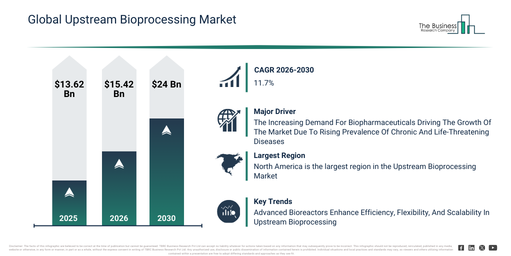
    The upstream bioprocessing market size has experienced swift expansion in recent years. It is projected to grow from $13.62 billion in 2025 to $15.42 billion in 2026, at a compound annual growth rate (CAGR) of 13.2%. This historic growth is attributable to several factors, including an expansion in biologics development pipelines, increased vaccine manufacturing capacity, rising investments in biopharmaceutical R&D, the growing adoption of cell-based therapies, and the demand for scalable upstream platforms.

    The upstream bioprocessing market size is projected for substantial expansion in the coming years. It is expected to grow to $24 billion by 2030, driven by a compound annual growth rate (CAGR) of 11.7%. This forecasted growth can be attributed to the escalating development of monoclonal antibodies and vaccines, the increasing embrace of continuous bioprocessing methods, the enlargement of CDMO outsourcing approaches, an intensifying focus on process automation, and a rising regulatory emphasis on consistent quality. Prominent trends throughout this period include the wider adoption of single-use bioprocessing systems, the increasing deployment of advanced cell culture media, the growing integration of automated bioreactors, the expansion of outsourced upstream processing models, and an enhanced focus on process reproducibility and yield optimization.

    Access Your Free Sample Report For In-Depth Market Analysis:

    https://www.thebusinessresearchcompany.com/sample.aspx?id=15950&type=smp

    Which Key Drivers Are Affecting The Upstream Bioprocessing Market Development?

    A projected increase in the demand for biopharmaceuticals is anticipated to fuel the expansion of the upstream bioprocessing market. Biopharmaceuticals are medical products developed through biotechnology, generally utilizing living entities like cells or microbes, for the treatment, prevention, or diagnosis of various ailments. This escalating demand for biopharmaceuticals largely stems from the growing incidence of chronic and severe diseases, given that these treatments provide focused and efficacious options leading to better patient results. Upstream bioprocessing plays a crucial role in advancing biopharmaceutical creation by refining cell culture environments and manufacturing procedures, consequently boosting the yield, caliber, and uniformity of therapeutic proteins and other biologics. For instance, in January 2023, Cardinal Health Inc., a US-based healthcare company, reported that as of January 2022, the US had 33 biosimilar products approved by the FDA, with 21 of them available on the market. By 2023, the total of FDA-approved biosimilars climbed to 40, with 25 commercially available. Consequently, the rising demand for biopharmaceuticals is stimulating the growth of the upstream bioprocessing market.

    How Is Segmentation Applied In The Upstream Bioprocessing Market Segment Analysis?

    The upstream bioprocessing market covered in this report is segmented –

    1) By Product Type: Bioreactors, Fermenters, Cell Culture Media, Filters, Bags And Containers

    2) By Workflow: Media Preparation, Cell Culture, Cell Separation

    3) By Usage type: Single-Use, Multi-Use

    4) By Mode: In House, Outsourced

    5) By End User: Contract Development and Manufacturing Organization (CDMOs) Or Contract Research Organization (CROs), Research And Academic Institutes, Biopharmaceutical Companies

    Subsegments:

    1) By Bioreactors: Single-Use Bioreactors, Multi-Use Bioreactors

    2) By Fermenters: Laboratory Fermenters, Pilot Scale Fermenters, Industrial Fermenters

    3) By Cell Culture Media: Powdered Media, Liquid Media

    4) By Filters: Sterile Filters, Air Filters, Capsule Filters

    5) By Bags And Containers: Single-Use Bags, Bioprocess Containers, Storage Bags

    What Trends Are Transforming The Upstream Bioprocessing Market?

    Leading companies in the upstream bioprocessing market are concentrating on developing advanced bioreactors to fulfill the requirements of cell culture processes, thereby boosting performance, adaptability, and expandability. Bioreactors serve as crucial instruments in upstream bioprocessing, enabling the efficient and controlled production of biopharmaceuticals through cell culture and biomolecule synthesis. For instance, in April 2023, Cytiva, a US-based supplier of life sciences products and solutions, unveiled X-platform bioreactors specifically designed to simplify single-use upstream bioprocessing operations. These bioreactors are comprised of a tank, a cabinet assembly, and a human-machine interface (HMI). This modular construction facilitates flexible setups without the need for custom hardware or disposable bags. User-friendly aspects include an optimized vessel featuring a full-opening door, baffles, and enhanced cable management. Moreover, the online Bioreactor Scaler tool aids in determining the most effective parameters for successful scale-up.

    Who Are The Companies Participating In The Upstream Bioprocessing Market Environment?

    Major companies operating in the upstream bioprocessing market are Thermo Fisher Scientific Inc., Danaher Corp, Merck KGaA, GE HealthCare Technologies, Corning Inc., AGC Biologics, Avantor, Boehringer Ingelheim International GmbH, Catalent Inc., Sartorius AG, Bio-Rad Laboratories Inc., Samsung Biologics Co. Ltd., Eppendorf AG, Repligen Corporation, Takara Bio Inc., KBI Biopharma Inc., Rentschler Biopharma SE, Just Biotherapeutics Inc., PBS Biotech Inc., Applikon Biotechnology, Getinge AB

    Get The Full Upstream Bioprocessing Market Report:

    https://www.thebusinessresearchcompany.com/report/upstream-bioprocessing-global-market-report

    Which Region Leads The Upstream Bioprocessing Market In Terms Of Market Share?

    North America was the largest region in the upstream bioprocessing market in 2025. Asia-Pacific is expected to be the fastest-growing region in the forecast period. The regions covered in the upstream bioprocessing market report are Asia-Pacific, South East Asia, Western Europe, Eastern Europe, North America, South America, Middle East, Africa.

    Request A Customized Upstream Bioprocessing Market Report For Competitive Insights:

    https://www.thebusinessresearchcompany.com/report/upstream-bioprocessing-global-market-report

    Browse Through More Reports Similar to the Global Upstream Bioprocessing Market 2026, By The Business Research Company

    Downstream Processing Market Report 2026

    https://www.thebusinessresearchcompany.com/report/downstream-processing-global-market-report

    Large And Small Scale Bioprocessing Market Report

    https://www.thebusinessresearchcompany.com/report/large-and-small-scale-bioprocessing-global-market-report

    Single Use Bioprocessing Market Report

    https://www.thebusinessresearchcompany.com/report/single-use-bioprocessing-global-market-report

    Get in touch with us:

    The Business Research Company: https://www.thebusinessresearchcompany.com/

    Americas +1 310-496-7795

    Asia +44 7882 955267 & +91 8897263534

    Europe +44 7882 955267

    Email us at info@tbrc.info

    Follow us on:

    LinkedIn: https://in.linkedin.com/company/the-business-research-company

    YouTube: https://www.youtube.com/channel/UC24_fI0rV8cR5DxlCpgmyFQ

    Global Market Model: https://www.thebusinessresearchcompany.com/global-market-model
  • Upadacitinib Market Expected to Reach $2.89 Billion by 2030

    Upadacitinib Market Expected to Reach $2.89 Billion by 2030

    The Business Research Company’s 2026 market reports feature enhanced tools like market attractiveness analysis, TAM assessment, and company scoring matrices, along with interactive dashboards, deeper supply chain insights, and startup coverage strengthening the depth, usability, and strategic value of insights.

    What Is The Projected Increase In Market Value Of The Upadacitinib Market During 2026–2030?

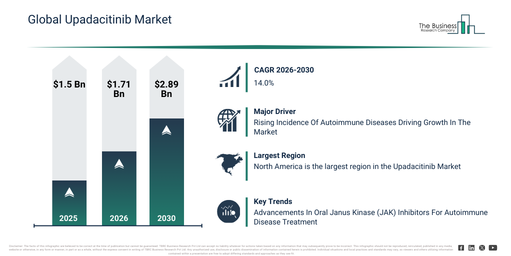
    The upadacitinib market has experienced significant expansion in recent years. It is projected to grow from $1.5 billion in 2025 to $1.71 billion in 2026, demonstrating a compound annual growth rate (CAGR) of 14.1%. This historical growth can be attributed to factors such as the increasing prevalence of rheumatoid arthritis, the limitations observed in conventional DMARDs, a growing demand for targeted therapies, the availability of oral treatment options, and the expansion of specialty care services.

    The upadacitinib market is projected for swift expansion in the coming years, reaching $2.89 billion by 2030, driven by a compound annual growth rate (CAGR) of 14.0%. This anticipated growth during the forecast period is fueled by factors such as a rise in clinical approvals for novel indications, a heightened emphasis on personalized autoimmune treatments, the broadening of oral immunotherapy pipelines, increased investments in inflammatory disease research, and the greater uptake of advanced small molecule drugs. Key trends expected over this period involve a surge in the adoption of JAK inhibitor therapies, an escalating preference for oral targeted treatments, the expanding utilization of small molecule immunomodulators, a wider array of autoimmune disease indications, and an intensified focus on managing diseases over the long term.

    Access Your Free Sample Report For In-Depth Market Analysis:

    https://www.thebusinessresearchcompany.com/sample.aspx?id=21311&type=smp

    What Factors Are Contributing To The Growth Of The Upadacitinib Market?

    The growing occurrence of autoimmune diseases is anticipated to boost the upadacitinib market’s expansion moving forward. Autoimmune diseases are conditions where the immune system mistakenly attacks the body’s healthy cells, perceiving them as foreign invaders. The prevalence of these diseases is influenced by genetic predisposition, environmental catalysts, and alterations in lifestyle and immune system behavior. Upadacitinib aids in autoimmune conditions by specifically targeting and inhibiting JAK1, which effectively reduces inflammation and modulates the immune response in ailments such as rheumatoid arthritis and psoriatic arthritis. For instance, in February 2024, according to Arthritis Australia, an Australia-based non-profit organization, an estimated 212,136 males and 362,137 females are projected to have rheumatoid arthritis (RA) in 2025. These numbers are expected to increase by 2040 to approximately 280,040 males and 479,828 females. Therefore, the escalating incidence of autoimmune diseases is stimulating the growth of the upadacitinib market.

    What Segment Categories Shape The Upadacitinib Market Segment Landscape?

    The upadacitinib market covered in this report is segmented –

    1) By Drug Classes: Janus Kinase Inhibitors, Antirheumatic Agents, Small Molecule Drugs

    2) By Application: Rheumatoid Arthritis, Psoriatic Arthritis, Crohn’s Disease

    3) By End-User: Hospitals, Homecare, Specialty Clinics, Other End-Users

    Subsegments:

    1) By Janus Kinase Inhibitors: JAK1 Inhibitors, JAK2 Inhibitors, JAK3 Inhibitors, TYK2 Inhibitors

    2) By Antirheumatic Agents: Disease-Modifying Antirheumatic Drugs (DMARDs), Biologic DMARDs, Conventional Synthetic DMARDs

    3) By Small Molecule Drugs: Oral Small Molecule Drugs, Topical Small Molecule Drugs

    What Trends Are Shaping The Future Of The Upadacitinib Market?

    Companies operating in the upadacitinib market are focusing on developing innovative products like oral Janus kinase (JAK) inhibitors to broaden treatment options for autoimmune diseases. Oral Janus kinase inhibitors are small-molecule medications that block Janus kinase enzymes, suppressing immune overactivation and inflammation to effectively treat autoimmune and inflammatory conditions. For instance, in April 2023, AbbVie Inc., a US-based pharmaceutical company, announced that RINVOQ (upadacitinib) received European Commission approval for treating moderately to severely active Crohn’s disease. This oral formulation permits once-daily administration, improving both convenience and adherence for patients. The oral delivery method also provides a quicker onset of action compared to traditional treatments, making it simpler for patients to follow their prescribed plans.

    Who Are The Companies Operating Across The Upadacitinib Market Value Chain?

    Major companies operating in the upadacitinib market are AbbVie Inc, Pfizer Inc, Eli Lilly and Company, Incyte Corporation, Novartis AG, GlaxoSmithKline plc, Bristol-Myers Squibb Company, Sanofi SA, Takeda Pharmaceutical Company Ltd, Astellas Pharma Inc, AstraZeneca PLC, Gilead Sciences Inc, Teva Pharmaceutical Industries Ltd, Mitsubishi Tanabe Pharma Corporation, Kyowa Hakko Kirin Co Ltd, Galapagos NV, UCB SA, Daiichi Sankyo Company Ltd, Horizon Therapeutics plc, Regeneron Pharmaceuticals Inc.

    Get The Full Upadacitinib Market Report:

    https://www.thebusinessresearchcompany.com/report/upadacitinib-global-market-report

    Which Region Leads The Upadacitinib Market In Overall Market Size?

    North America was the largest region in the upadacitinib market in 2025. Asia-Pacific is expected to be the fastest-growing region in the forecast period. The regions covered in the upadacitinib market report are Asia-Pacific, South East Asia, Western Europe, Eastern Europe, North America, South America, Middle East, Africa.

    Request A Customized Upadacitinib Market Report For Competitive Insights:

    https://www.thebusinessresearchcompany.com/report/upadacitinib-global-market-report

    Browse Through More Reports Similar to the Global Upadacitinib Market 2026, By The Business Research Company

    Denosumab Market Report 2026

    https://www.thebusinessresearchcompany.com/report/denosumab-global-market-report

    Macadamia Market Report

    https://www.thebusinessresearchcompany.com/report/macadamia-global-market-report

    Capecitabine Market Report

    https://www.thebusinessresearchcompany.com/report/capecitabine-global-market-report

    Get in touch with us:

    The Business Research Company: https://www.thebusinessresearchcompany.com/

    Americas +1 310-496-7795

    Asia +44 7882 955267 & +91 8897263534

    Europe +44 7882 955267

    Email us at info@tbrc.info

    Follow us on:

    LinkedIn: https://in.linkedin.com/company/the-business-research-company

    YouTube: https://www.youtube.com/channel/UC24_fI0rV8cR5DxlCpgmyFQ

    Global Market Model: https://www.thebusinessresearchcompany.com/global-market-model